Category: Pharmaceuticals

  • Protein Purification Equipment Market Analysis Covering Growth Drivers And Future Outlook

    Protein Purification Equipment Market Analysis Covering Growth Drivers And Future Outlook

    The Business Research Company’s 2026 market reports feature enhanced tools like market attractiveness analysis, TAM assessment, and company scoring matrices, along with interactive dashboards, deeper supply chain insights, and startup coverage strengthening the depth, usability, and strategic value of insights.

    What Is The Anticipated Rise In Market Value Of The Protein Purification Equipment Market During The Forecast Period?

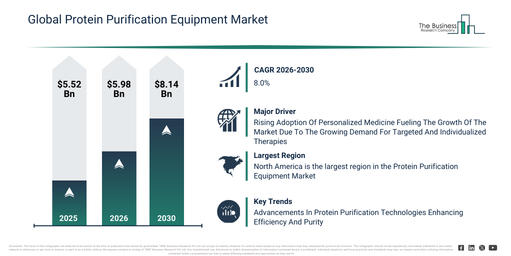
    The protein purification equipment market has experienced robust growth in recent years. Projections indicate it will expand from $5.52 billion in 2025 to reach $5.98 billion by 2026, demonstrating a compound annual growth rate (CAGR) of 8.3%. This historical expansion is primarily due to increased biopharmaceutical research activities, the expansion of vaccine development programs, a rising adoption of recombinant proteins, the broader use of chromatography-based purification techniques, and the ready availability of sophisticated laboratory instrumentation.

    The protein purification equipment market is poised for significant expansion in the coming years. It is projected to achieve a size of $8.14 billion by 2030, progressing at a compound annual growth rate (CAGR) of 8.0%. This anticipated growth can be attributed to several factors, including the increasing demand for biologics and biosimilars, a rise in investments targeting protein-based therapeutics, the broadening scope of precision medicine research, the growing utilization of high-throughput purification workflows, and an uptick in outsourcing to contract research organizations (CROs). Furthermore, major trends foreseen in this period encompass the increasing adoption of automated chromatography systems, a rising need for high-purity protein isolation, the expanding application of affinity and ion exchange technologies, the proliferation of modular and scalable purification platforms, and an enhanced focus on preserving sample integrity.

    Access Your Free Sample Report For In-Depth Market Analysis:

    https://www.thebusinessresearchcompany.com/sample.aspx?id=29158&type=smp

    Which Factors Are Influencing The Growth Of The Protein Purification Equipment Market?

    The protein purification equipment market is anticipated to experience growth driven by the increasing emphasis on personalized medicine. This approach involves tailoring treatments for patients with chronic or genetic diseases based on their unique genes, environment, and lifestyle. The rising adoption of personalized medicine stems from the growing requirement for targeted treatments for persistent and challenging conditions. Protein purification instruments play a vital role by enabling the isolation and analysis of specific proteins, which is essential for developing personalized therapies customized for individual patients. For instance, in February 2024, the Personalized Medicine Coalition, a US-based non-profit organization, reported that the FDA approved 16 new personalized treatments for rare diseases in 2023, marking a considerable rise from the six approvals in 2022. Therefore, the heightened focus on personalized medicine is a significant impetus for the protein purification equipment market’s expansion.

    Which Segment Categories Are Included In The Protein Purification Equipment Market Segment Analysis?

    The protein purification equipment market covered in this report is segmented –

    1) By Product Type: Chromatography Systems, Electrophoresis Systems, Protein Fractionation Systems, Protein Concentration Systems, Other Product Types

    2) By Technology: Ion Exchange Chromatography, Affinity Chromatography, Size Exclusion Chromatography, High-Performance Liquid Chromatography, Other Technologies

    3) By Application: Drug Discovery, Vaccine Preparation, Genetic Engineering, Other Applications

    4) By End-User: Pharmaceutical And Biotechnological Companies, Academic Research Institutes, Contract Research Organizations, Other End-Users

    Subsegments:

    1) By Chromatography Systems: Affinity Chromatography Systems, Ion Exchange Chromatography Systems, Size Exclusion Chromatography Systems, Hydrophobic Interaction Chromatography Systems, Mixed Mode Chromatography Systems

    2) By Electrophoresis Systems: Polyacrylamide Gel Electrophoresis Systems, Capillary Electrophoresis Systems, Isoelectric Focusing Electrophoresis Systems, Two Dimensional Electrophoresis Systems, Agarose Gel Electrophoresis Systems

    3) By Protein Fractionation Systems: Ultrafiltration Fractionation Systems, Precipitation Based Fractionation Systems, Centrifugation Fractionation Systems, Membrane Based Fractionation Systems, Field Flow Fractionation Systems

    4) By Protein Concentration Systems: Centrifugal Concentration Systems, Ultrafiltration Concentration Systems, Lyophilization Concentration Systems, Precipitation Based Concentration Systems, Vacuum Evaporation Concentration Systems

    5) By Other Product Types: Magnetic Bead Based Protein Purification Systems, Spin Column Protein Purification Systems, Dialysis Protein Purification Systems, Microplate Based Protein Purification Systems, Filter Based Protein Purification Systems

    Which Trends Are Guiding The Direction Of The Protein Purification Equipment Market?

    Major companies within the protein purification equipment market are concentrating on advancing technologies, specifically protein purification techniques, to allow for precise isolation of target proteins, guaranteeing high purity and functionality for research and therapeutic uses. Protein purification technologies involve methods and approaches used to separate and acquire proteins in a pure state from complex biological samples, based on their distinctive features. For example, in November 2023, Cytiva, a US-based biotechnology company, unveiled Protein Select, a protein purification technology. This technology aims to streamline and accelerate the purification of recombinant proteins. By employing a self-cleaving traceless tag alongside a corresponding affinity chromatography resin, it standardizes the purification for any protein without requiring specific binding partners. Protein Select technology facilitates researchers in obtaining highly pure, native proteins via a simple protocol, free from tag residues. Ultimately, process developers can achieve protein purification that is faster, simpler, and more efficient.

    Who Are The Active Companies Shaping The Protein Purification Equipment Market?

    Major companies operating in the protein purification equipment market are Roche Diagnostics, Repligen Corporation, Thermo Fisher Scientific Inc., Danaher Corporation, Merck KGaA, GE Healthcare Technologies Inc., Becton, Dickinson and Company (BD), ECOLAB Inc., Lonza Group Ltd., Tosoh Corporation, Agilent Technologies Inc., Sartorius AG, Shimadzu Corporation, PerkinElmer Inc., Waters Corporation, JSR Corporation, Bio-Rad Laboratories inc., Qiagen N.V., Tecan Group Ltd., Eppendorf AG, Bio-Techne Corporation, Promega Corporation, Takara Bio Inc., Biotage AB, Shanghai Biotechnology Corporation, I&L Biosystems GmbH, LabGeni, PromoChrom Technologies Ltd., Inscinstech Co. Ltd., Taidu Biotech Co. Ltd.

    Get The Full Protein Purification Equipment Market Report:

    https://www.thebusinessresearchcompany.com/report/protein-purification-equipment-global-market-report

    Which Geographic Region Dominates The Protein Purification Equipment Market?

    North America was the largest region in the protein purification equipment market in 2025. Asia-Pacific is expected to be the fastest-growing region in the forecast period. The regions covered in the protein purification equipment market report are Asia-Pacific, South East Asia, Western Europe, Eastern Europe, North America, South America, Middle East, Africa.

    Request A Customized Protein Purification Equipment Market Report For Competitive Insights:

    https://www.thebusinessresearchcompany.com/report/protein-purification-equipment-global-market-report

    Browse Through More Reports Similar to the Global Protein Purification Equipment Market 2026, By The Business Research Company

    Protein Purification And Isolation Market Report 2026

    https://www.thebusinessresearchcompany.com/report/protein-purification-and-isolation-global-market-report

    Blood Purification Equipment Market Report 2026

    https://www.thebusinessresearchcompany.com/report/blood-purification-equipment-global-market-report

    Protein Assays Market Report 2026

    https://www.thebusinessresearchcompany.com/report/protein-assays-global-market-report

    Get in touch with us:

    The Business Research Company: https://www.thebusinessresearchcompany.com/

    Americas +1 310-496-7795

    Asia +44 7882 955267 & +91 8897263534

    Europe +44 7882 955267

    Email us at: marketing@tbrc.info

    Follow us on:

    LinkedIn: https://in.linkedin.com/company/the-business-research-company

    YouTube: https://www.youtube.com/channel/UC24_fI0rV8cR5DxlCpgmyFQ

    Global Market Model: https://www.thebusinessresearchcompany.com/global-market-model
  • Protein Purification and Isolation Market Insights Highlighting Opportunities Supporting Growth To 2030

    Protein Purification and Isolation Market Insights Highlighting Opportunities Supporting Growth To 2030

    The Business Research Company’s 2026 market reports feature enhanced tools like market attractiveness analysis, TAM assessment, and company scoring matrices, along with interactive dashboards, deeper supply chain insights, and startup coverage strengthening the depth, usability, and strategic value of insights.

    How Is The Market Size Of The Protein Purification and Isolation Market Expected To Scale Between 2026 And 2030?

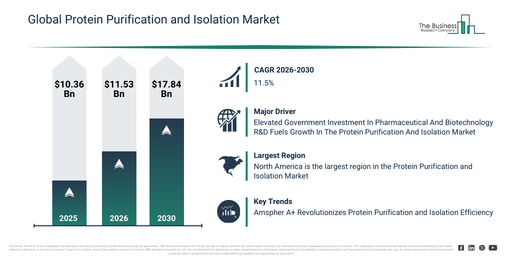
    The protein purification and isolation market has experienced substantial expansion in recent years. Its size is expected to increase from $10.36 billion in 2025 to $11.53 billion in 2026, achieving a compound annual growth rate (CAGR) of 11.3%. This past growth is largely due to progress in chromatography techniques, the rising need for protein therapeutics, the development of biotechnology research, the implementation of automated laboratory equipment, and the widening scope of contract research organizations.

    The protein purification and isolation market is poised for significant expansion in the coming years. It is projected to reach $17.84 billion by 2030, demonstrating a compound annual growth rate (CAGR) of 11.5%. This anticipated growth during the forecast period is largely driven by the emergence of novel protein biomarkers, an increase in precision medicine applications, the integration of AI into protein purification, the expansion of proteomics services, and growing collaborations between pharmaceutical and biotechnology companies. Prominent trends within this period are expected to include high-throughput protein screening, single-cell protein analysis, automation in protein isolation workflows, advanced purification reagents and consumables, and the integration of proteomics with drug discovery.

    Access Your Free Sample Report For In-Depth Market Analysis:

    https://www.thebusinessresearchcompany.com/sample.aspx?id=7467&type=smp

    What Leading Drivers Are Supporting The Protein Purification and Isolation Market Expansion?

    The expansion of the protein purification and isolation market is anticipated to be driven by greater government investment in pharmaceutical and biotechnology research and development. Research and development involves acquiring knowledge to innovate new products or enhance current offerings. Elevated R&D expenditure facilitates the creation of sophisticated protein purification techniques and yields advantages like purified hormone growth factors, DNA polymerases, and reverse transcriptase. As an illustration, in March 2023, the White House, the official residence and workplace of the President of the United States, reported that its budget designated over $3.4 billion for Cancer Moonshot-related research and development. This funding supports various research initiatives in laboratory, clinical, public health, and environmental health across numerous departments and agencies. Out of this total, $2.9 billion is specifically allocated to the Department of Health and Human Services to bolster Cancer Moonshot endeavors at the National Cancer Institute and ARPA-H. Furthermore, the budget places a high priority on veteran suicide prevention and mental health, with more than $135 million designated for the Department of Veterans Affairs’ medical care. Consequently, the rising government investment in research and development within pharmaceuticals and biotechnology is propelling the expansion of the protein purification and isolation markets.

    How Is The Protein Purification and Isolation Market Broken Down By Segment Categories?

    The protein purification and isolation market covered in this report is segmented –

    1) By Product: Instruments, Consumables

    2) By Technology: Ultrafiltration, Precipitation, Preparative Chromatography, Electrophoresis, Western Blotting, Dialysis And Diafiltration, Centrifugation

    3) By Application: Drug Screening, Protein-Protein Interaction Studies, Biomarker Discovery, Target Identification, Protein Therapeutics, Disease Diagnostics And Monitoring

    4) By End User: Academic Medical Institutes, Hospitals And Diagnostic Centers, Pharmaceutical And Biotechnology Companies, Contract Research Organizations

    Subsegments:

    1) By Instruments: Chromatography Systems, Centrifuges, Electrophoresis Systems, Filtration Systems, Other Instruments

    2) By Consumables: Resins And Media, Columns, Kits And Reagents, Membranes, Other Consumables

    What Trends Are Affecting The Growth Of The Protein Purification and Isolation Market?

    Major companies operating in the protein purification and isolation market are introducing advanced products, such as Amspher A+, to improve the efficiency and effectiveness of protein separation processes, thereby enhancing yield and purity in biopharmaceutical applications. For instance, in September 2024, JSR Life Sciences, LLC., a US-based biotechnology company, unveiled Amsphere A+. This product incorporates proprietary protein ligand and advanced polymer technology, outperforming its predecessor, Amsphere A3, in terms of binding capacity, alkali stability, and pressure-flow characteristics. These developments result in increased efficiency within the production process. Overall, Amsphere A+ signifies a substantial advancement in performance.

    Which Players Are Present In The Protein Purification and Isolation Market Space?

    Major companies operating in the protein purification and isolation market are Abcam PLC, Agilent Technologies Inc, Thermo Fisher Scientific Inc., Bio-Rad Laboratories Inc., BioVision Inc., Norgen Biotek Corp., GE Healthcare Technologies Inc., GEA Group AG, Expedeon Ltd., Creative Biostructure, Qiagen NV, Geno Technology Inc., The Merck Group, Labome, Promega Corporation, OPRL Biosciences Pvt. Ltd., Purolite LLC, Takara Bio Inc., F. Hoffmann-La Roche Ltd, Sigma-Aldrich Chemicals Private Limited, Cygnus Technologies LLC, Novasep, Kinnakeet Biotechnology LLC, Cambryn Biologics LLC, Worthington Biochemical Corporation, GenScript Biotech Corporation, Creative BioMart, OriGene Technologies Inc., Proteintech Group Inc., Rockland Immunochemicals Inc., Sino Biological Inc.

    Get The Full Protein Purification and Isolation Market Report:

    https://www.thebusinessresearchcompany.com/report/protein-purification-and-isolation-global-market-report

    Which Region Is The Leading Market For The Protein Purification and Isolation Market?

    North America was the largest region in the protein purification and isolation market in 2025. The regions covered in the protein purification and isolation market report are Asia-Pacific, South East Asia, Western Europe, Eastern Europe, North America, South America, Middle East, Africa.

    Request A Customized Protein Purification and Isolation Market Report For Competitive Insights:

    https://www.thebusinessresearchcompany.com/report/protein-purification-and-isolation-global-market-report

    Browse Through More Reports Similar to the Global Protein Purification and Isolation Market 2026, By The Business Research Company

    Protein Purification And Isolation Market Report 2026

    https://www.thebusinessresearchcompany.com/report/protein-purification-and-isolation-global-market-report

    Nucleic Acid Isolation And Purification Market Report 2026

    https://www.thebusinessresearchcompany.com/report/nucleic-acid-isolation-and-purification-global-market-report

    Protein Extracts From Single Cell Protein And Other Conventional Sources Market Report 2026

    https://www.thebusinessresearchcompany.com/report/protein-extracts-from-single-cell-protein-and-other-conventional-sources-global-market-report

    Get in touch with us:

    The Business Research Company: https://www.thebusinessresearchcompany.com/

    Americas +1 310-496-7795

    Asia +44 7882 955267 & +91 8897263534

    Europe +44 7882 955267

    Email us at: marketing@tbrc.info

    Follow us on:

    LinkedIn: https://in.linkedin.com/company/the-business-research-company

    YouTube: https://www.youtube.com/channel/UC24_fI0rV8cR5DxlCpgmyFQ

    Global Market Model: https://www.thebusinessresearchcompany.com/global-market-model
  • Global Protein Labeling Market Expected To Reach $2.21 Billion By 2030 With 5.1% CAGR

    Global Protein Labeling Market Expected To Reach $2.21 Billion By 2030 With 5.1% CAGR

    The Business Research Company’s 2026 market reports feature enhanced tools like market attractiveness analysis, TAM assessment, and company scoring matrices, along with interactive dashboards, deeper supply chain insights, and startup coverage strengthening the depth, usability, and strategic value of insights.

    What Level Of Market Value Growth Is Predicted For The Protein Labeling Market From 2026 To 2030?

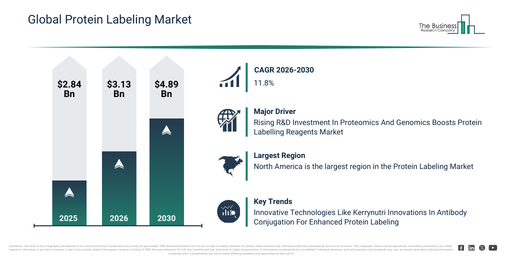
    The protein labeling market has seen rapid expansion in recent years. This market is expected to grow from $2.84 billion in 2025 to $3.13 billion in 2026, exhibiting a compound annual growth rate (CAGR) of 10.1%. The historical increase in this market can be attributed to several factors including the limited availability of specialized protein labels, a reliance on traditional fluorescent dyes, a growing demand for cell-based assays, increasing research efforts in proteomics, and the adoption of enzyme-conjugated labeling techniques.

    The protein labeling market is projected to experience substantial expansion in the coming years. Its valuation is anticipated to reach $4.89 billion by 2030, demonstrating a compound annual growth rate (CAGR) of 11.8%. This anticipated growth during the forecast period is driven by several factors, including the creation of new fluorophore probes, increased utilization of recombinant and modified proteins, greater uptake of automated labeling platforms, advancements in proteomics and genomics studies, and the growing incorporation of protein labeling with mass spectrometry and high-throughput assays. Key trends foreseen during this period involve an escalating demand for fluorescent and chemiluminescent protein labels, the growing application of recombinant and modified proteins in research, the wider acceptance of both in-vitro and in-vivo labeling methods, broadening uses in cell-based assays and fluorescence microscopy, and the increased deployment of monoclonal antibodies in immunological techniques and protein micro assays.

    Access Your Free Sample Report For In-Depth Market Analysis:

    https://www.thebusinessresearchcompany.com/sample.aspx?id=3417&type=smp

    Which Key Factors Are Driving The Protein Labeling Market Growth?

    The protein labeling reagents market is experiencing growth, propelled by heightened spending on the research and development of proteomics and genomics. Proteomics involves the study of the comprehensive protein composition within a cell, tissue, or organism. Essential to proteomic profiling strategies are protein labeling techniques employed prior to separation and analysis. For example, in 2023, the Office for National Statistics, a UK-based, government agency, reported that the UK government’s net expenditure on research and development (R&D) rose to £17.4 ($22.1 billion) billion, an increase from £16.1 billion ($20.45 billion) in 2022, marking an 8.2% rise. Consequently, the escalating investment in proteomics and genomics research and development is driving this market.

    What Are The Different Segment Types In The Protein Labeling Market Segment Breakdown?

    The protein labeling market covered in this report is segmented –

    1) By Product: Reagents, Protein, Enzymes, Probes/ Tags, Monoclonal Antibodies

    2) By Labeling Method: In-vitro Labeling, In-vivo Labeling

    3) By Application: Cell Based-Assay, Fluorescence Microscopy, Immunological Techniques, Mass Spectrometry, Protein Micro Assay

    Subsegments:

    1) By Reagents: Fluorescent Dyes, Enzyme Labels, Chemiluminescent Reagents, Radioactive Labels

    2) By Protein: Recombinant Proteins, Native Proteins, Modified Proteins

    3) By Enzymes: Alkaline Phosphatase, Horseradish Peroxidase, Other Enzymatic Labels

    4) By Probes Or Tags: Biotin Labels, Antibody Tags, Fluorophore Probes, Affinity Tags

    5) By Monoclonal Antibodies: Primary Monoclonal Antibodies, Secondary Monoclonal Antibodies, Conjugated Monoclonal Antibodies

    Which Trends Are Shaping The Protein Labeling Market?

    Leading companies within the protein labeling market are concentrating on developing innovative solutions, such as the conjugation of antibodies to StarBright dyes, to boost detection sensitivity, expand multiplexing capabilities, and enhance overall assay performance. StarBright dyes are known as bright, photostable fluorescent dyes specifically designed for high-performance labeling of antibodies and proteins. As an illustration, in January 2025, Bio-Rad Laboratories Inc., a life sciences company based in the US, introduced the TrailBlazer Tag and TrailBlazer StarBright Dye Label Kits. These kits allow researchers to efficiently conjugate antibodies to StarBright dyes for use in advanced flow cytometry and imaging applications. The introduction of these kits simplifies the labeling process, sharpens signal clarity, and facilitates complex multi-color experiments within biomedical research.

    Who Are The Well-Known Companies In The Protein Labeling Market?

    Major companies operating in the protein labeling market are Thermo Fisher Scientific Inc., Merck KGaA, PerkinElmer Inc., GE HealthCare Technologies Inc., F. Hoffmann-La Roche AG, Agilent Technologies Inc., BIO-RAD LABORATORIES, LI-COR Inc., Promega Corporation, Eurogentec S.A., Luminex Corporation, New England Biolabs Inc., Abcam plc., TriLink BioTechnologies LLC., Waters Corporation, AMETEK Inc., HORIBA Ltd., Spectris plc., METTLER TOLEDO International Inc., Shimadzu Corporation, Hitachi High-Tech Corporation.

    Get The Full Protein Labeling Market Report:

    https://www.thebusinessresearchcompany.com/report/protein-labelings-global-market-report

    Where Is The Protein Labeling Market Primarily Concentrated By Region?

    North America was the largest region in the protein labeling market in 2025. The regions covered in the protein labeling market report are Asia-Pacific, South East Asia, Western Europe, Eastern Europe, North America, South America, Middle East, Africa.

    Request A Customized Protein Labeling Market Report For Competitive Insights:

    https://www.thebusinessresearchcompany.com/report/protein-labelings-global-market-report

    Browse Through More Reports Similar to the Global Protein Labeling Market 2026, By The Business Research Company

    Protein Expression Market Report 2026

    https://www.thebusinessresearchcompany.com/report/protein-expression-global-market-report

    Biostimulants Market Report 2026

    https://www.thebusinessresearchcompany.com/report/biostimulants-global-market-report

    Therapeutic Proteins Market Report 2026

    https://www.thebusinessresearchcompany.com/report/therapeutic-proteins-global-market-report

    Get in touch with us:

    The Business Research Company: https://www.thebusinessresearchcompany.com/

    Americas +1 310-496-7795

    Asia +44 7882 955267 & +91 8897263534

    Europe +44 7882 955267

    Email us at: marketing@tbrc.info

    Follow us on:

    LinkedIn: https://in.linkedin.com/company/the-business-research-company

    YouTube: https://www.youtube.com/channel/UC24_fI0rV8cR5DxlCpgmyFQ

    Global Market Model: https://www.thebusinessresearchcompany.com/global-market-model
  • Protein Inhibitors Market Future Outlook Showing Growth Toward $2.43 Billion By 2030

    Protein Inhibitors Market Future Outlook Showing Growth Toward $2.43 Billion By 2030

    The Business Research Company’s 2026 market reports feature enhanced tools like market attractiveness analysis, TAM assessment, and company scoring matrices, along with interactive dashboards, deeper supply chain insights, and startup coverage strengthening the depth, usability, and strategic value of insights.

    How Will The Market Value Of The Protein Inhibitors Market Progress Between 2026 And 2030?

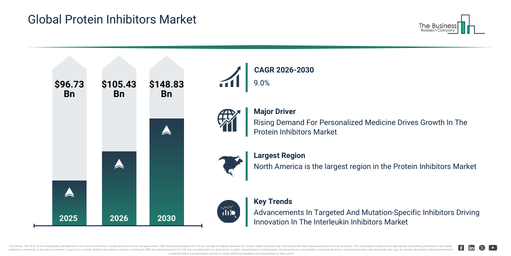
    The protein inhibitors market has shown strong growth in recent years. It is projected to increase from $96.73 billion in 2025 to $105.43 billion in 2026, achieving a compound annual growth rate (CAGR) of 9.0%. This historical growth can be attributed to several factors including the limited availability of protein inhibitor therapies, a reliance on conventional chemotherapy, the rising prevalence of cancer and inflammatory diseases, growing awareness of targeted therapies, and the adoption of hospital pharmacy distribution channels.

    The protein inhibitors market is projected to experience substantial expansion over the coming years. It is anticipated to reach a valuation of $148.83 billion by 2030, exhibiting a compound annual growth rate (CAGR) of 9.0%. This growth trajectory during the forecast period is propelled by factors such as the emergence of selective and non-selective kinase inhibitors, progress in biologic monoclonal antibodies, the increasing reach of online pharmacies and digital distribution channels, heightened research into protein degradation technologies, and growing investments in personalized protein inhibitor therapies. Key trends anticipated during this period encompass a surging demand for targeted protein inhibitor treatments, the broadening use of protein kinase inhibitors in oncology, the proliferation of monoclonal antibody-based therapies, an uptick in the adoption of combination therapy products, and a strategic emphasis on small molecule and peptide-based inhibitors.

    Access Your Free Sample Report For In-Depth Market Analysis:

    https://www.thebusinessresearchcompany.com/sample.aspx?id=3429&type=smp

    What Primary Drivers Are Shaping The Protein Inhibitors Market?

    The escalating demand for personalized medicine is set to fuel the expansion of the protein inhibitors market moving ahead. Personalized medicine involves customizing medical treatments to an individual’s unique genetic composition, thus delivering more effective and precise healthcare solutions. Crucially, protein inhibitors are utilized in personalized medicine to target specific proteins, allowing for disease treatment aligned with an individual’s genetic profile. As an illustration, the Personalized Medicine Coalition, a US-based professional membership organization, reported in February 2024 that the FDA authorized 16 novel personalized treatments for rare disease patients in 2023, marking an increase from six approvals in 2022. Of the 35 therapeutic NMEs, about 34%, equivalent to 12, are designated as personalized medicines by the Personalized Medicine Coalition (PMC). Thus, the growing demand for personalized medicine directly contributes to the expansion of the protein inhibitors market.

    Which Segment Classifications Are Used In The Protein Inhibitors Market Segment Analysis?

    The protein inhibitors market covered in this report is segmented –

    1) By Product: Protein Kinase Inhibitors, Monoclonal Antibody, Other Products

    2) By Application: Oncology, Inflammatory Diseases, Other Applications

    3) By Distribution Channel: Hospital Pharmacies, Independent Pharmacies, Online Pharmacies

    Subsegments:

    1) By Protein Kinase Inhibitors: Selective Kinase Inhibitors, Non-selective Kinase Inhibitors, Small Molecule Kinase Inhibitors, Biologic Kinase Inhibitors

    2) By Monoclonal Antibodies: Chimeric Monoclonal Antibodies, Humanized Monoclonal Antibodies, Fully Human Monoclonal Antibodies, Conjugated Monoclonal Antibodies

    3) By Other Products: Peptide Inhibitors, Protein Degradation Technologies, Small Molecule Inhibitors, Combination Therapy Products

    What Trends Are Influencing The Protein Inhibitors Market?

    Leading firms within the protein inhibitors market are prioritizing the creation of advanced solutions, including tyrosine kinase inhibitors, designed to pinpoint particular signaling pathways, boost treatment effectiveness, and better patient results for cancer and various chronic illnesses. A tyrosine kinase inhibitor (TKI) is a medication category that works by inhibiting tyrosine kinases, enzymes crucial for activating proteins linked to cell signaling, growth, and division, thus contributing to the suppression of cancerous or atypical cell proliferation. An illustrative example is from April 2024, when F. Hoffmann-La Roche AG, a healthcare firm based in Switzerland, secured FDA approval for Alecensa (alectinib). This marked its recognition as the initial adjuvant therapy for individuals suffering from ALK-positive early-stage non-small cell lung cancer (NSCLC) following surgical tumor removal.

    Which Firms Are Contributing To The Protein Inhibitors Market Ecosystem?

    Major companies operating in the protein inhibitors market are Bayer AG, AstraZeneca plc, F. Hoffmann-La Roche Ltd., Teva Pharmaceutical Industries Ltd., Apotex Inc., Novartis International AG, GlaxoSmithKline plc, Pfizer Inc., Boehringer Ingelheim International GmbH, Abbott Laboratories, Amgen Inc., Baxter International Inc., Merck & Co. Inc., AbbVie Inc., Bristol Myers Squibb Company, Biogen Inc., Eli Lilly and Company, Gilead Sciences Inc., Johnson & Johnson, Regeneron Pharmaceuticals Inc., Sanofi S.A., Takeda Pharmaceutical Company Limited, Vertex Pharmaceuticals Inc., Lonza Group AG, Catalent Inc., Thermo Fisher Scientific Inc., Charles River Laboratories International Inc., WuXi AppTec Co. Ltd.

    Get The Full Protein Inhibitors Market Report:

    https://www.thebusinessresearchcompany.com/report/protein-inhibitor-global-market-report

    Which Region Has The Greatest Market Share In The Protein Inhibitors Market?

    North America was the largest region in the protein inhibitors market in 2025. The regions covered in the protein inhibitors market report are Asia-Pacific, South East Asia, Western Europe, Eastern Europe, North America, South America, Middle East, Africa.

    Request A Customized Protein Inhibitors Market Report For Competitive Insights:

    https://www.thebusinessresearchcompany.com/report/protein-inhibitor-global-market-report

    Browse Through More Reports Similar to the Global Protein Inhibitors Market 2026, By The Business Research Company

    Biologics Market 2026

    https://www.thebusinessresearchcompany.com/report/biologics-market

    Protein Expression Market Report 2026

    https://www.thebusinessresearchcompany.com/report/protein-expression-global-market-report

    Biostimulants Market Report 2026

    https://www.thebusinessresearchcompany.com/report/biostimulants-global-market-report

    Get in touch with us:

    The Business Research Company: https://www.thebusinessresearchcompany.com/

    Americas +1 310-496-7795

    Asia +44 7882 955267 & +91 8897263534

    Europe +44 7882 955267

    Email us at: marketing@tbrc.info

    Follow us on:

    LinkedIn: https://in.linkedin.com/company/the-business-research-company

    YouTube: https://www.youtube.com/channel/UC24_fI0rV8cR5DxlCpgmyFQ

    Global Market Model: https://www.thebusinessresearchcompany.com/global-market-model
  • Protein Hydrolysis Enzymes Market Revenue Growth Forecast To Reach $2.34 Billion By 2030 At 10.8% CAGR

    Protein Hydrolysis Enzymes Market Revenue Growth Forecast To Reach $2.34 Billion By 2030 At 10.8% CAGR

    The Business Research Company’s 2026 market reports feature enhanced tools like market attractiveness analysis, TAM assessment, and company scoring matrices, along with interactive dashboards, deeper supply chain insights, and startup coverage strengthening the depth, usability, and strategic value of insights.

    What Are The Market Size Estimates For The Protein Hydrolysis Enzymes Market In 2026 And 2030?

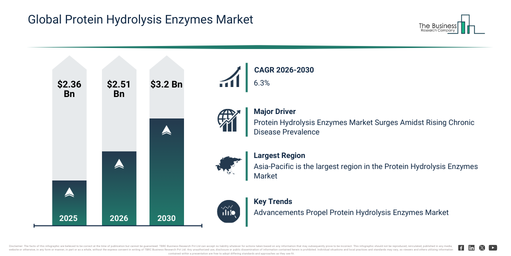
    The protein hydrolysis enzymes market size has experienced strong growth in recent years. It is anticipated to increase from $2.36 billion in 2025 to $2.51 billion in 2026, with a compound annual growth rate (CAGR) of 6.3%. The growth observed in the past can be attributed to several factors, including the increasing demand for functional foods, the greater use of protein in animal feed, the expansion of the dairy and beverage industries, advancements in fermentation techniques, and a rising awareness regarding protein quality.

    The protein hydrolysis enzymes market size is projected for substantial expansion over the upcoming years, reaching $3.2 billion by 2030, exhibiting a compound annual growth rate (CAGR) of 6.3%. This anticipated growth is driven by factors such as the increasing demand for plant-based protein products, the integration of enzyme solutions within nutraceuticals, the expanding processed food sector, a heightened focus on protein digestibility and bioavailability, and advances in enzyme technology research and development. Key developments expected during this period involve enzyme-based protein modification, new plant-derived enzyme innovations, formulations offering high-solubility proteins, low-viscosity protein solutions, and specialized protein hydrolysates.

    Access Your Free Sample Report For In-Depth Market Analysis:

    https://www.thebusinessresearchcompany.com/sample.aspx?id=9113&type=smp

    Which Major Drivers Are Influencing The Expansion Of The Protein Hydrolysis Enzymes Market?

    The protein hydrolysis enzymes market is expected to grow due to a rising prevalence of chronic diseases. A chronic disease is defined as a health condition in individuals that progresses over time, is persistent, or leads to long-term effects. Protein hydrolysis, aided by enzymes, generates highly physiologically active peptides. These peptides are capable of preventing cancer and other ailments by regulating antioxidant enzymes, serving as a critical control point for the body’s pro-inflammatory processes. Consequently, an increasing incidence of chronic diseases is anticipated to boost the demand for protein hydrolysis enzymes. As an illustration, in June 2024, the National Health Service, a UK-based government department, reported that 3,615,330 individuals registered with a general practitioner (GP) were diagnosed with non-diabetic hyperglycemia or pre-diabetes (a condition with elevated blood sugar levels, not high enough to be classified as diabetes) in 2023. This figure marked an 18% increase from 3,065,825 cases observed in 2022. Therefore, the expanding prevalence of chronic diseases is a key driver for the growth of the protein hydrolysis enzymes market.

    How Is The Protein Hydrolysis Enzymes Market Organized By Segment Classification?

    The protein hydrolysis enzymes market covered in this report is segmented –

    1) By Type: Microorganisms, Animals, Plants

    2) By Method Of Production: Extraction, Fermentation

    3) By Application: Detergent And Cleaning, Food And Beverage, Animal Feed, Textile, Dairy, Other Applications

    Subsegments:

    1) By Microorganisms: Bacterial Enzymes, Fungal Enzymes, Yeast-Derived Enzymes

    2) By Animals: Animal-Derived Enzymes, Rennet

    3) By Plants: Plant-Derived Enzymes, Seed-Derived Enzymes

    Which Trends Are Shaping Growth In The Protein Hydrolysis Enzymes Market?

    Leading companies within the protein hydrolysis enzyme market are emphasizing technological advancements, such as optimized enzyme blends, to improve nutrient digestion, boost animal performance, and tackle specific issues in livestock production. An optimized enzyme blend is a carefully prepared mix of various enzymes created to enhance the digestion and utilization of nutrients in animal feed. For instance, in March 2023, International Flavors & Fragrances Inc., a US-based food and health ingredient provider, launched Axtra PRIME, a new optimized enzyme blend developed to improve nutrient digestion and enhance piglet performance in animal nutrition. This innovative solution addresses key challenges in piglet production, particularly during weaning, by incorporating xylanase, beta-glucanase, alpha-amylase, and protease enzymes to support healthier growth and more efficient feed utilization.

    Who Are The Industry Participants Involved In The Protein Hydrolysis Enzymes Market?

    Major companies operating in the protein hydrolysis enzymes market are Novozymes A/S, Royal DSM, DuPont de Nemours Inc., AB Enzymes GmbH, Advanced Enzyme Technologies, Dyadic International Inc., Jiangsu Boli Bioproducts Co. Ltd., Specialty Enzymes & Biotechnologies Co, Solvay Enzymes, Amano Enzyme Inc., Biocatalysts, Rossari Biotech Limited, Enzyme Solutions, DSM Nutritional Products, Chr. Hansen Holding A/S, Noor Enzymes, Enzyme Development Corporation, Enzyme Supplies Limited, Enzyme Innovation, Enzybel Group

    Get The Full Protein Hydrolysis Enzymes Market Report:

    https://www.thebusinessresearchcompany.com/report/protein-hydrolysis-enzymes-global-market-report

    Which Region Accounts For The Largest Portion Of The Protein Hydrolysis Enzymes Market?

    Asia-Pacific was the largest region in the protein hydrolysis enzymes market in 2025. Asia-Pacific is expected to be the fastest-growing region in the protein hydrolysis enzymes market during the forecast period. The regions covered in the protein hydrolysis enzymes market report are Asia-Pacific, South East Asia, Western Europe, Eastern Europe, North America, South America, Middle East, Africa.

    Request A Customized Protein Hydrolysis Enzymes Market Report For Competitive Insights:

    https://www.thebusinessresearchcompany.com/report/protein-hydrolysis-enzymes-global-market-report

    Browse Through More Reports Similar to the Global Protein Hydrolysis Enzymes Market 2026, By The Business Research Company

    Protein Hydrolysis Enzymes Market Report 2026

    https://www.thebusinessresearchcompany.com/report/protein-hydrolysis-enzymes-global-market-report

    Hydrolase Enzymes Market Report 2026

    https://www.thebusinessresearchcompany.com/report/hydrolase-enzymes-global-market-report

    Enzyme Market Report 2026

    https://www.thebusinessresearchcompany.com/report/enzyme-global-market-report

    Get in touch with us:

    The Business Research Company: https://www.thebusinessresearchcompany.com/

    Americas +1 310-496-7795

    Asia +44 7882 955267 & +91 8897263534

    Europe +44 7882 955267

    Email us at: marketing@tbrc.info

    Follow us on:

    LinkedIn: https://in.linkedin.com/company/the-business-research-company

    YouTube: https://www.youtube.com/channel/UC24_fI0rV8cR5DxlCpgmyFQ

    Global Market Model: https://www.thebusinessresearchcompany.com/global-market-model
  • Protein Degradation Therapy Market Expected To Grow Steadily And Approach $4.1 Billion By 2030

    Protein Degradation Therapy Market Expected To Grow Steadily And Approach $4.1 Billion By 2030

    The Business Research Company’s 2026 market reports feature enhanced tools like market attractiveness analysis, TAM assessment, and company scoring matrices, along with interactive dashboards, deeper supply chain insights, and startup coverage strengthening the depth, usability, and strategic value of insights.

    What Expansion In Market Value Is Forecasted For The Protein Degradation Therapy Market Between 2026 And 2030?

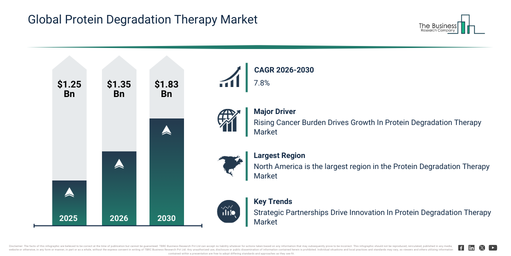
    The protein degradation therapy market size has demonstrated significant expansion in recent years. This market is set to expand from $1.25 billion in 2025 to $1.35 billion in 2026, progressing at a compound annual growth rate (CAGR) of 8.1%. Factors contributing to this historical growth include advancements in molecular biology research, the widening scope of targeted cancer therapies, a deeper understanding of protein dysfunction in illnesses, initial successes in clinical trials, and an increase in venture capital funding for biotechnology.

    The protein degradation therapy market is projected to experience substantial expansion over the upcoming years. This market is anticipated to reach $1.83 billion by 2030, exhibiting a compound annual growth rate (CAGR) of 7.8%. Factors contributing to this growth during the projected timeframe include a rising demand for new cancer treatments, increasing financial commitments to precision oncology, the broadening of protein degradation platforms, heightened clinical trial engagement, and enhanced regulatory backing for pioneering therapeutics. Key trends expected over the forecast period encompass the accelerated development of targeted protein degraders, a greater emphasis on oncology applications, increased capital flowing into protac-based therapies, an expanding pipeline of clinical candidates, and strengthened partnerships between pharmaceutical and biotechnology companies.

    Access Your Free Sample Report For In-Depth Market Analysis:

    https://www.thebusinessresearchcompany.com/sample.aspx?id=20603&type=smp

    What Key Drivers Are Fueling The Growth Of The Protein Degradation Therapy Market?

    The protein degradation therapy market is anticipated to grow due to the increasing global burden of cancer. Cancer refers to a collection of diseases characterized by the uncontrolled growth and spread of abnormal cells within the body. The rise in cancer rates is largely attributed to a combination of factors, notably the aging population, which is a significant contributor. Additionally, lifestyle elements such as smoking, unhealthy diets, insufficient physical activity, and escalating obesity rates have heightened the risk of various cancers. Protein degradation therapy is essential for cancer treatment because it specifically targets and eliminates proteins that promote cancer growth and survival, potentially overcoming resistance to existing treatments. For instance, in February 2024, a report published by the World Health Organization, a Switzerland-based intergovernmental organization, projected that over 35 million new cancer cases are expected by 2050, representing a 77% increase from the estimated 20 million cases in 2022. Moreover, high human development index (HDI) countries are forecast to experience the largest absolute increase, with an additional 4.8 million new cases predicted in 2050 compared with 2022 estimates. Therefore, the growing incidence of cancer is a key driver for the protein degradation therapy market’s expansion.

    Which Segments Define The Protein Degradation Therapy Market Segment Structure?

    The protein degradation therapy market covered in this report is segmented –

    1) By Type: Bavdegalutamide (ARV – 110), Vepdegestrant (ARV – 471)

    2) By Application: Oncology, Neurodegenerative Diseases, Infectious Diseases, Other Applications

    3) By End-User: Pharmaceutical Companies, Biotechnology Companies, Academic And Research Institutes

    Subsegments:

    1) By Bavdegalutamide (ARV-110): Androgen Receptor Degraders, Prostate Cancer Therapy

    2) By Vepdegestrant (ARV-471): Estrogen Receptor Degraders, Breast Cancer Therapy

    What Trends Are Affecting The Direction Of The Protein Degradation Therapy Market?

    Leading companies within the protein degradation therapy market are adopting a strategic partnership approach to cultivate advanced therapies, leverage diverse expertise, pool resources, and accelerate the identification and progression of new drug candidates aimed at disease-causing proteins. These collaborations involve firms utilizing each other’s strengths and assets to achieve reciprocal benefits and collective success. For example, in February 2024, Arvinas, a U.S.-based biotechnology company, unveiled its initial oral PROTAC degrader, ARV-102, engineered to traverse the blood-brain barrier and specifically target LRRK2 for applications in neurodegenerative diseases. The ARV-102 molecule possesses oral bioavailability, a brain-penetrant characteristic, and strong specificity for LRRK2. This innovation enhances company pipelines by addressing targets previously considered undruggable, yet challenges persist regarding long-term safety, manufacturing complexities, and pharmacokinetic optimization given its larger molecular structure.

    Who Are The Established Players Within The Protein Degradation Therapy Market?

    Major companies operating in the protein degradation therapy market are Relay Therapeutics, Arvinas Holding Company LLC, Kymera Therapeutics, Nurix Therapeutics, Vividion Therapeutics, Mission Therapeutics Ltd., C4 Therapeutics Inc., Cullgen Inc., Frontier Medicines, Foghorn Therapeutics, Aileron Therapeutics, Ribometrix Inc., Nimbus Therapeutics, Jnana Therapeutics, KSQ Therapeutics, Stoke Therapeutics, Flare Therapeutics, Accent Therapeutics, Monte Rosa Therapeutics, Lycia Therapeutics, Dialectic Therapeutics, Amphista Therapeutics, Biotheryx Inc., Cedilla Therapeutics, Dewpoint Therapeutics Inc

    Get The Full Protein Degradation Therapy Market Report:

    https://www.thebusinessresearchcompany.com/report/protein-degradation-therapy-global-market-report

    Which Region Holds The Highest Market Share In The Protein Degradation Therapy Market?

    North America was the largest region in the protein degradation therapy market in 2025. Asia-Pacific is expected to be the fastest-growing region in the forecast period. The regions covered in the protein degradation therapy market report are Asia-Pacific, South East Asia, Western Europe, Eastern Europe, North America, South America, Middle East, Africa.

    Request A Customized Protein Degradation Therapy Market Report For Competitive Insights:

    https://www.thebusinessresearchcompany.com/report/protein-degradation-therapy-global-market-report

    Browse Through More Reports Similar to the Global Protein Degradation Therapy Market 2026, By The Business Research Company

    Home Infusion Therapy Market Report 2026

    https://www.thebusinessresearchcompany.com/report/home-infusion-therapy-global-market-report

    Car T Therapy Market Report 2026

    https://www.thebusinessresearchcompany.com/report/car-t-therapy-global-market-report

    Aromatherapy Market Report 2026

    https://www.thebusinessresearchcompany.com/report/aromatherapy-global-market-report

    Get in touch with us:

    The Business Research Company: https://www.thebusinessresearchcompany.com/

    Americas +1 310-496-7795

    Asia +44 7882 955267 & +91 8897263534

    Europe +44 7882 955267

    Email us at: marketing@tbrc.info

    Follow us on:

    LinkedIn: https://in.linkedin.com/company/the-business-research-company

    YouTube: https://www.youtube.com/channel/UC24_fI0rV8cR5DxlCpgmyFQ

    Global Market Model: https://www.thebusinessresearchcompany.com/global-market-model
  • Proteasome Inhibitors Market Expansion Forecast Reaching $3.27 Billion By 2030 At 7.7% CAGR

    Proteasome Inhibitors Market Expansion Forecast Reaching $3.27 Billion By 2030 At 7.7% CAGR

    The Business Research Company’s 2026 market reports feature enhanced tools like market attractiveness analysis, TAM assessment, and company scoring matrices, along with interactive dashboards, deeper supply chain insights, and startup coverage strengthening the depth, usability, and strategic value of insights.

    How Large Will The Proteasome Inhibitors Market Be By 2030 Compared To Its 2026 Market Size?

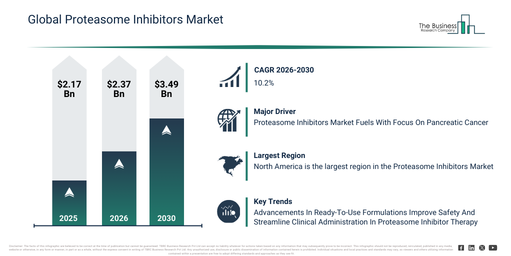
    The proteasome inhibitors market has experienced robust expansion recently. This market is projected to expand from $2.17 billion in 2025 to $2.37 billion in 2026, achieving a compound annual growth rate (CAGR) of 9.2%. Historically, this growth can be attributed to the approval of the initial proteasome inhibitors, the increasing prevalence of multiple myeloma, rising investment in oncology research, advancements in cancer diagnostics, and the expansion of hospital oncology departments.

    The proteasome inhibitors market is projected to experience substantial expansion over the upcoming years, with its size forecast to reach $3.49 billion by 2030, driven by a compound annual growth rate (CAGR) of 10.2%. This growth in the forecast period is primarily attributed to the broadening of the proteasome inhibitor pipeline, the integration of AI in drug discovery, a rising demand for combination therapies, the development of oral formulations, and the expansion of emerging oncology markets. Significant trends anticipated during this period include personalized cancer therapies, targeted proteasome inhibition, the ongoing development of combination therapies, improved drug delivery systems, and an expansion of clinical trials.

    Access Your Free Sample Report For In-Depth Market Analysis:

    https://www.thebusinessresearchcompany.com/sample.aspx?id=12251&type=smp

    Which Drivers Are Supporting The Proteasome Inhibitors Market Growth?

    The growing occurrence of pancreatic cancer is projected to boost the expansion of the proteasome inhibitors market moving forward. This malignancy originates in the pancreas, an organ situated in the abdomen behind the stomach. Proteasome inhibitors are chiefly employed in treating pancreatic cancer, as proteasomes significantly contribute to cancer cell survival and proliferation by breaking down proteins that govern cell cycle and apoptosis. These inhibitors impede the survival of cancer cells and restrict tumor development and spread. For example, reports from the American Cancer Society, a US-based health body, indicated in January 2024 that approximately 64,050 adults in the US had been diagnosed with pancreatic cancer by 2023, with 50,550 deaths from the disease. Subsequently, these figures climbed to 66,440 diagnoses and 51,750 deaths. Consequently, the rising incidence of pancreatic cancer is a key factor propelling the expansion of the proteasome inhibitors market.

    How Is The Proteasome Inhibitors Market Segmented Across Different Segment Categories?

    The proteasome inhibitors market covered in this report is segmented –

    1) By Product: Velcade, Kyprolis, Ninlaro, Other Products

    2) By Drugs: Bortezomib, Carfilzomib, Ixazomib

    3) By Indication: Lymphoma, Mantle Cell Lymphoma, Multiple Myeloma

    4) By Distribution Channel: Hospital Pharmacy, Online Pharmacy, Retail Pharmacy

    5) By End-User: Hospital, Specialty Clinics, Other End-Users

    Subsegments:

    1) By Velcade: Injectable Velcade (Bortezomib), Oral Formulations

    2) By Kyprolis: Injectable Kyprolis (Carfilzomib), Combination Therapies With Kyprolis

    3) By Ninlaro: Oral Ninlaro (Ixazomib), Combination Therapies With Ninlaro

    4) By Other Products: Investigational Proteasome Inhibitors, Combination Products

    What Trends Are Influencing The Evolution Of The Proteasome Inhibitors Market?

    Companies operating within the proteasome inhibitors market are concentrating on introducing advanced, pre-prepared formulations to enhance treatment efficacy, simplify clinical administration, and improve patient safety. Ready-to-use injectable products eliminate the necessity for on-site reconstitution, thereby reducing preparation time, minimizing dosing errors, and supporting more streamlined oncology care. For instance, in April 2025, Amneal Pharmaceuticals Inc., a US-based specialty pharmaceutical company, launched BORUZU, the first ready-to-use bortezomib injection indicated for multiple myeloma and mantle cell lymphoma. This formulation is designed to improve clinical workflow by enabling direct administration without reconstitution, assisting healthcare providers in delivering faster and more reliable proteasome inhibitor therapy in outpatient and hospital settings.

    Which Organizations Play A Role In The Proteasome Inhibitors Market Landscape?

    Major companies operating in the proteasome inhibitors market are Pfizer Inc., Johnson And Johnson, Onyx Pharmaceuticals Inc., Progenra Inc., Nurix Inc., Cephalon Inc., Cleave Therapeutics, Apotex Inc., Amgen Inc., Takeda Pharmaceutical Company Limited, Millennium Pharmaceuticals, Bristol-Myers Squibb Company, Janssen Pharmaceuticals, AbbVie, Karyopharm Therapeutics, OncoArendi Therapeutics, Novartis AG, GlaxoSmithKline plc, Sanofi S.A., Eli Lilly and Company

    Get The Full Proteasome Inhibitors Market Report:

    https://www.thebusinessresearchcompany.com/report/proteasome-inhibitors-global-market-report

    Where Is The Proteasome Inhibitors Market Most Concentrated Geographically?

    North America was the largest region in the proteasome inhibitors market in 2025. The regions covered in the proteasome inhibitors market report are Asia-Pacific, South East Asia, Western Europe, Eastern Europe, North America, South America, Middle East, Africa.

    Request A Customized Proteasome Inhibitors Market Report For Competitive Insights:

    https://www.thebusinessresearchcompany.com/report/proteasome-inhibitors-global-market-report

    Browse Through More Reports Similar to the Global Proteasome Inhibitors Market 2026, By The Business Research Company

    Proteasome Inhibitors Market Report 2026

    https://www.thebusinessresearchcompany.com/report/proteasome-inhibitors-global-market-report

    Proteases Market Report 2026

    https://www.thebusinessresearchcompany.com/report/proteases-global-market-report

    Serine Proteases Market Report 2026

    https://www.thebusinessresearchcompany.com/report/serine-proteases-global-market-report

    Get in touch with us:

    The Business Research Company: https://www.thebusinessresearchcompany.com/

    Americas +1 310-496-7795

    Asia +44 7882 955267 & +91 8897263534

    Europe +44 7882 955267

    Email us at: marketing@tbrc.info

    Follow us on:

    LinkedIn: https://in.linkedin.com/company/the-business-research-company

    YouTube: https://www.youtube.com/channel/UC24_fI0rV8cR5DxlCpgmyFQ

    Global Market Model: https://www.thebusinessresearchcompany.com/global-market-model
  • Prostate Cancer Therapeutics Market Revenue Projected To Hit $14.79 Billion By 2030 With 7.3% CAGR

    Prostate Cancer Therapeutics Market Revenue Projected To Hit $14.79 Billion By 2030 With 7.3% CAGR

    The Business Research Company’s 2026 market reports feature enhanced tools like market attractiveness analysis, TAM assessment, and company scoring matrices, along with interactive dashboards, deeper supply chain insights, and startup coverage strengthening the depth, usability, and strategic value of insights.

    What Is The Projected Increase In Market Value Of The Prostate Cancer Therapeutics Market During 2026–2030?

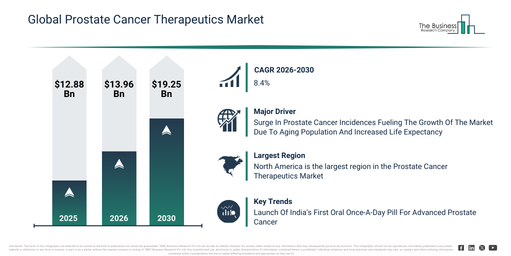
    The prostate cancer therapeutics market size has observed substantial growth in recent years. It is projected to expand from $12.88 billion in 2025 to $13.96 billion in 2026, at a compound annual growth rate (CAGR) of 8.4%. The increase during the historical period is attributable to a rising incidence of prostate cancer, an aging male demographic, advancements in oncology drugs, the provision of hospital-based cancer care, and increased cancer screening efforts.

    The prostate cancer therapeutics market is anticipated to show significant expansion in the coming years. Its size is projected to reach $19.25 billion by 2030, exhibiting a compound annual growth rate (CAGR) of 8.4%. This growth during the forecast period is propelled by factors such as the adoption of precision oncology, the emergence of biomarker-driven therapies, the rise in oral oncology drugs, an expanding pipeline of immunotherapies, and increased healthcare expenditure. Notable trends expected in this period involve the increasing uptake of targeted therapies, a rise in the use of PARP inhibitors, the broader application of immunotherapy in oncology, a transition towards oral cancer medications, and treatment selection guided by precision medicine.

    Access Your Free Sample Report For In-Depth Market Analysis:

    https://www.thebusinessresearchcompany.com/sample.aspx?id=24389&type=smp

    What Key Factors Are Affecting The Prostate Cancer Therapeutics Market Demand?

    The increasing occurrence of prostate cancer is projected to drive the growth of the prostate cancer therapeutics market in the coming years. Prostate cancer is a condition where malignant cells develop within the tissues of the prostate gland, typically impacting older men. The incidence of prostate cancer is rising due to an aging population, as the risk of developing this disease substantially increases with age, and longer life expectancy means more men live long enough to be affected. Prostate cancer therapeutics aid in managing the disease by targeting cancer cells, decelerating its progression, and improving the quality of life through treatments such as surgery, radiation, hormone therapy, and contemporary alternatives like immunotherapy. For instance, in January 2025, according to Prostate Cancer UK, a UK-based nonprofit cancer research and advocacy organization, the number of men diagnosed with prostate cancer rose from 50,751 cases in 2022 to 55,033 cases in 2023. Therefore, the escalating incidence of prostate cancer is stimulating the expansion of the prostate cancer therapeutics market.

    What Are The Main Segments Within The Prostate Cancer Therapeutics Market Segment Structure?

    The prostate cancer therapeutics market covered in this report is segmented –

    1) By Therapy: Hormonal Therapy, Chemotherapy, Immunotherapy, Targeted Therapy, Other Therapies

    2) By Drug Class: Androgen Receptor Inhibitors, GnRH Receptor Antagonists, PARP Inhibitors, Immune Checkpoint Inhibitors, Other Drug Classes

    3) By Route Of Administration: Oral, Injectable

    4) By Distribution Channel: Hospital Pharmacies, Retail Pharmacies

    5) By End User: Clinics, Hospitals, Other End Users

    Subsegments:

    1) By Hormonal Therapy: Luteinizing Hormone-Releasing Hormone (LHRH) Agonists, LHRH Antagonists, Anti-Androgens, Androgen Synthesis Inhibitors

    2) By Chemotherapy: Docetaxel, Cabazitaxel, Mitoxantrone, Combination Chemotherapy Regimens

    3) By Immunotherapy: Sipuleucel-T, Immune Checkpoint Inhibitors, Cancer Vaccines

    4) By Targeted Therapy: PARP Inhibitors, Radioligand Therapy

    5) By Other Therapies: Radiotherapy, Bone-Targeted Therapies, Cryotherapy, High-Intensity Focused Ultrasound

    Which Trends Are Impacting The Progress Of The Prostate Cancer Therapeutics Market?

    Leading companies within the prostate cancer therapeutics market are concentrating on developing advanced innovative treatments, such as an oral daily pill for advanced prostate cancer, to improve patient adherence and overall treatment results. This oral once-a-day pill for advanced prostate cancer refers to therapies designed for daily intake to manage metastatic castration-resistant prostate cancer by inhibiting testosterone’s impact on cancer cells. For example, in January 2024, Zydus Lifesciences, an India-based company, launched Rexigo, India’s first oral once-a-day pill containing relugolix for patients with advanced prostate cancer. This convenient and affordable substitute for injectable hormone therapies swiftly lowers testosterone, assisting in the control of cancer growth while also providing an enhanced cardiovascular safety profile. Being an oral therapy, it eliminates the requirement for injectable treatments that necessitate administration by healthcare providers, thus offering greater convenience for patients. This introduction marks a substantial progression in prostate cancer management in India, presenting patients and doctors with a novel, convenient, safe, and cost-effective therapeutic option.

    Who Are The Companies Participating In The Prostate Cancer Therapeutics Market?

    Major companies operating in the prostate cancer therapeutics market are Johnson & Johnson, Merck & Co. Inc., AbbVie Inc., Novartis AG, AstraZeneca plc, Sanofi S.A., Astellas Pharma Inc., Jiangsu Hengrui Medicine Co. Ltd., Telix Pharmaceuticals, Bayer AG, Curium Pharma SAS, Dendreon Pharmaceuticals, Myovant Sciences GmbH, Clovis Oncology Inc., Ipsen S.A., Veru Inc., Bristol-Myers Squibb Company, F. Hoffmann-La Roche Ltd, Dendreon Pharmaceuticals LLC, Pfizer Inc., Ferring B.V.

    Get The Full Prostate Cancer Therapeutics Market Report:

    https://www.thebusinessresearchcompany.com/report/prostate-cancer-therapeutics-global-market-report

    Which Region Dominates The Prostate Cancer Therapeutics Market By Market Share?

    North America was the largest region in the prostate cancer therapeutics market in 2025. Asia-Pacific is expected to be the fastest-growing region in the forecast period. The regions covered in the prostate cancer therapeutics market report are Asia-Pacific, South East Asia, Western Europe, Eastern Europe, North America, South America, Middle East, Africa.

    Request A Customized Prostate Cancer Therapeutics Market Report For Competitive Insights:

    https://www.thebusinessresearchcompany.com/report/prostate-cancer-therapeutics-global-market-report

    Browse Through More Reports Similar to the Global Prostate Cancer Therapeutics Market 2026, By The Business Research Company

    Prostate Cancer Drugs Market Report 2026

    https://www.thebusinessresearchcompany.com/report/prostate-cancer-drugs-global-market-report

    Metastatic Cancer Drugs Market Report 2026

    https://www.thebusinessresearchcompany.com/report/metastatic-cancer-drugs-global-market-report

    Urothelial Cancer Drugs Market Report 2026

    https://www.thebusinessresearchcompany.com/report/urothelial-cancer-drugs-global-market-report

    Get in touch with us:

    The Business Research Company: https://www.thebusinessresearchcompany.com/

    Americas +1 310-496-7795

    Asia +44 7882 955267 & +91 8897263534

    Europe +44 7882 955267

    Email us at: marketing@tbrc.info

    Follow us on:

    LinkedIn: https://in.linkedin.com/company/the-business-research-company

    YouTube: https://www.youtube.com/channel/UC24_fI0rV8cR5DxlCpgmyFQ

    Global Market Model: https://www.thebusinessresearchcompany.com/global-market-model
  • Global Prostate Cancer Drugs Market Set To Expand To $2.61 Billion By 2030 At 11% CAGR

    Global Prostate Cancer Drugs Market Set To Expand To $2.61 Billion By 2030 At 11% CAGR

    The Business Research Company’s 2026 market reports feature enhanced tools like market attractiveness analysis, TAM assessment, and company scoring matrices, along with interactive dashboards, deeper supply chain insights, and startup coverage strengthening the depth, usability, and strategic value of insights.

    How Is The Market Size Of The Prostate Cancer Drugs Market Expected To Change From 2026 To 2030?

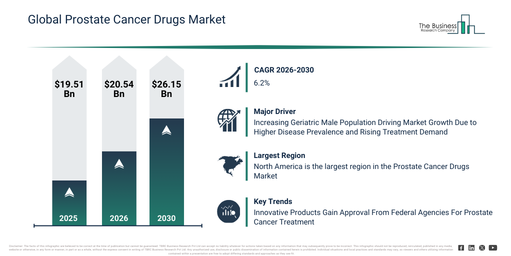
    The prostate cancer drugs market has experienced substantial growth in recent times. Projections indicate it will expand from $19.51 billion in 2025 to $20.54 billion by 2026, demonstrating a compound annual growth rate (CAGR) of 5.3%. Historically, this expansion is attributable to factors such as an aging male population, increased prostate cancer screening, widespread hormone therapy adoption, the expansion of oncology clinics, and rising cancer awareness.

    The prostate cancer drugs market size is projected to experience robust expansion over the coming years. Its value is anticipated to reach $26.15 billion by 2030, exhibiting a compound annual growth rate (CAGR) of 6.2%. This anticipated growth during the forecast period stems from factors such as an increase in targeted and immunotherapy medications, a rising prevalence of advanced prostate cancer cases, enhanced personalization of treatments, wider availability of healthcare, and increased expenditure on oncology. Key developments expected in this period include the increased application of hormonal therapy in initial treatments, greater uptake of targeted prostate cancer drugs, an intensified focus on castration-resistant prostate cancer, the broader implementation of combination therapy strategies, and an expansion of hospital-centric prostate cancer services.

    Access Your Free Sample Report For In-Depth Market Analysis:

    https://www.thebusinessresearchcompany.com/sample.aspx?id=2592&type=smp

    Which Primary Drivers Are Impacting The Prostate Cancer Drugs Market Growth?

    The increasing men geriatric population is expected to propel the growth of the prostate cancer drugs market going forward. This demographic refers to males aged 65 and older, who typically experience a higher prevalence of age-related health conditions and require specialized medical attention. The rise in this aging male population is attributed to improved healthcare access, declining mortality rates, and longer lifespans globally. This growing geriatric male population supports the prostate cancer drugs market by expanding the pool of patients needing hormonal therapies, immunotherapies, chemotherapy, and targeted medicines for disease management and enhanced survival. For instance, in February 2025, according to the World Health Organization, a Switzerland-based international public health organization, global life expectancy at birth reached 73.3 years in 2024, and the number of people aged 60 and older worldwide is projected to increase from 1.1 billion in 2023 to 1.4 billion by 2030. Therefore, the increasing men geriatric population is driving the growth of the prostate cancer market.

    How Is Segmentation Applied In The Prostate Cancer Drugs Market Segment Analysis?

    The prostate cancer drugs market covered in this report is segmented –

    1) By Type: Hormone Sensitive Prostate Cancer, Hormone Refractory Prostate Cancer

    2) By Therapy: Hormonal Therapy, Chemotherapy, Immunotherapy, Targeted Therapy

    3) By End User: Hospitals, Clinics, Other End-Users

    Subsegments:

    1) By Hormone Sensitive Prostate Cancer: Early-Stage Prostate Cancer, Locally Advanced Prostate Cancer, Metastatic Prostate Cancer

    2) By Hormone Refractory Prostate Cancer: Castration-Resistant Prostate Cancer (CRPC), Metastatic Castration-Resistant Prostate Cancer (mCRPC)

    What Trends Are Transforming The Prostate Cancer Drugs Market?

    Leading firms in the prostate cancer drugs market coordinate their initiatives to launch novel products and secure regulatory approval, aiming to boost their market earnings. The journey of drug creation and its subsequent approval is protracted and intricate, making it crucial for pharmaceutical developers to grasp the regulatory frameworks and commercialization strategies required to guarantee adequate safety and efficacy. A case in point is June 2023, when UK-based AstraZeneca PLC and US-based Merck & Co. Inc. jointly declared that the United States Food and Drug Administration’s (USFDA), a US federal agency under the Department of Health and Human Services, had approved LYNPARZA (olaparib) Plus Abiraterone and Prednisone or Prednisolone for the treatment of adult patients with BRCA-Mutated Metastatic Castration-Resistant Prostate Cancer (mCRPC). LYNPARZAplus abi/pred exhibited notable clinical advancements in both radiographic progression-free survival (rPFS) and overall survival (OS) when contrasted with abi/pred used alone in patients with BRCAm mCRPC. This finding stemmed from an exploratory subgroup analysis of the Phase 3 PROpel trial, which was instrumental in securing this approval.

    Who Are The Companies Participating In The Prostate Cancer Drugs Market Environment?

    Major companies operating in the prostate cancer drugs market are Astellas Pharma Inc., AstraZeneca PLC, Johnson & Johnson, Sanofi S.A., Bayer AG, Abbott Laboratories, Pfizer Inc., Novartis International AG, F. Hoffmann-La Roche Ltd., Tolmar Inc., AbbVie Inc., Siemens Healthineers AG, Genomic Health Inc., OPKO Health Inc., Siemens Healthcare GmbH, MDxHealth SA, Myriad Genetics Inc., Janssen Biotech Inc., Clovis Oncology Inc., Merck Sharp & Dohme Corp., Dendreon Corporation, Ferring Pharmaceuticals Inc., Ipsen Biopharmaceuticals Inc., Merck & Co. Inc., Eli Lilly and Company Inc., Bristol-Myers Squibb Company, Takeda Pharmaceutical Company Limited, Novartis AG, Amgen Inc., Regeneron Pharmaceuticals Inc., Exelixis Inc.

    Get The Full Prostate Cancer Drugs Market Report:

    https://www.thebusinessresearchcompany.com/report/prostate-cancer-drugs-global-market-report

    Which Region Is The Largest In The Prostate Cancer Drugs Market?

    North America was the largest region in the prostate cancer drugs market in 2025. Middle East is expected to be the fastest-growing region in the prostate cancer drugs market during the forecast period. The regions covered in the prostate cancer drugs market report are Asia-Pacific, South East Asia, Western Europe, Eastern Europe, North America, South America, Middle East, Africa.

    Request A Customized Prostate Cancer Drugs Market Report For Competitive Insights:

    https://www.thebusinessresearchcompany.com/report/prostate-cancer-drugs-global-market-report

    Browse Through More Reports Similar to the Global Prostate Cancer Drugs Market 2026, By The Business Research Company

    Prostate Cancer Drugs Market Report 2026

    https://www.thebusinessresearchcompany.com/report/prostate-cancer-drugs-global-market-report

    Metastatic Cancer Drugs Market Report 2026

    https://www.thebusinessresearchcompany.com/report/metastatic-cancer-drugs-global-market-report

    Bladder Cancer Drugs Market Report 2026

    https://www.thebusinessresearchcompany.com/report/bladder-cancer-drugs-global-market-report

    Get in touch with us:

    The Business Research Company: https://www.thebusinessresearchcompany.com/

    Americas +1 310-496-7795

    Asia +44 7882 955267 & +91 8897263534

    Europe +44 7882 955267

    Email us at: marketing@tbrc.info

    Follow us on:

    LinkedIn: https://in.linkedin.com/company/the-business-research-company

    YouTube: https://www.youtube.com/channel/UC24_fI0rV8cR5DxlCpgmyFQ

    Global Market Model: https://www.thebusinessresearchcompany.com/global-market-model
  • Propranolol Drug Market Growth Expected To Reach $4.34 Billion By 2030 At 6% CAGR

    Propranolol Drug Market Growth Expected To Reach $4.34 Billion By 2030 At 6% CAGR

    The Business Research Company’s 2026 market reports feature enhanced tools like market attractiveness analysis, TAM assessment, and company scoring matrices, along with interactive dashboards, deeper supply chain insights, and startup coverage strengthening the depth, usability, and strategic value of insights.

    From Its 2026 Market Size, What Value Is The Propranolol Drug Market Projected To Reach By 2030?

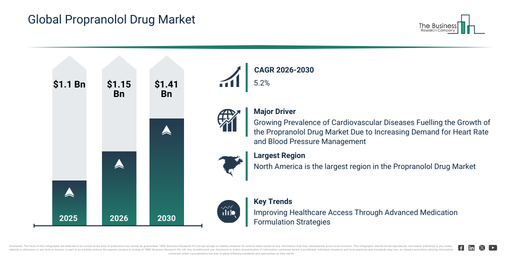
    The propranolol drug market size has experienced substantial growth in recent years. It is anticipated to increase from $1.1 billion in 2025 to $1.15 billion in 2026, achieving a compound annual growth rate (CAGR) of 5.2%. The expansion observed in the historic period can be attributed to the significant prevalence of hypertension, extensive epilepsy treatment options, the drug’s low-cost availability, its common hospital-based prescribing, and its incorporation into national formularies.

    The propranolol drug market is anticipated to experience significant expansion over the coming years. Its valuation is projected to reach $1.41 billion by 2030, demonstrating a compound annual growth rate (CAGR) of 5.2%. This projected growth is driven by factors such as an aging demographic, the increase in mental health conditions, the need for economical treatments, the broadening of generic drug markets, and enhanced outpatient care services. Key trends anticipated during this period encompass a steady requirement for treatments for cardiovascular ailments, rising application in managing anxiety and migraines, the proliferation of generic propranolol options, the development of extended-release formulations, and its incorporation into essential medicines initiatives.

    Access Your Free Sample Report For In-Depth Market Analysis:

    https://www.thebusinessresearchcompany.com/sample.aspx?id=24388&type=smp

    What Significant Factors Are Influencing The Propranolol Drug Market Expansion?

    The increasing incidence of cardiovascular diseases is anticipated to fuel the expansion of the propranolol drug market moving forward. Cardiovascular diseases (CVDs) refer to a collection of conditions impacting the heart and blood vessels, including ailments such as coronary artery disease, heart failure, and stroke. The escalation in cardiovascular diseases can be linked to unhealthy dietary habits, where consuming excessive amounts of processed foods and fats leads to higher cholesterol levels, thereby elevating heart risks. The propranolol drug aids in managing cardiovascular conditions by regulating heart rate and lowering blood pressure, making it suitable for individuals with hypertension and arrhythmias. It enhances cardiac function and reduces the likelihood of heart attacks and strokes, thus improving overall cardiovascular health. For instance, in October 2024, information from the Centers for Disease Control and Prevention (CDC), a US-based government public health agency, indicated that 919,032 people in the US died from cardiovascular disease in 2023, accounting for approximately one in every three deaths nationwide. Consequently, the rising occurrence of cardiovascular diseases is stimulating the growth of the propranolol drug market.

    What Segment Categories Shape The Propranolol Drug Market Segment Landscape?

    The propranolol drug market covered in this report is segmented –

    1) By Dosage: Tablets, Injectable Solutions, Extended-Release Capsules, Oral Solution

    2) By Indication-Based: Hypertension, Angina Pectoris, Migraine Prevention, Post-Traumatic Stress Disorder (PTSD), Essential Tremors, Therapeutic Options In Anxiety Disorders

    3) By End-User: Hospitals, Clinics, Home Healthcare Settings, Nursing Homes

    Subsegments:

    1) By Tablets: Standard Tablets, Chewable Tablets, Film-Coated Tablets

    2) By Injectable Solutions: Intravenous Solutions, Intramuscular Solutions, Pre-Filled Syringes

    3) By Extended-Release Capsules: 60 Milligrams (mg), 80 Milligrams (mg), 120 Milligrams (mg), 160 Milligrams (mg)

    4) By Oral Solution: Liquid Suspension, Concentrated Oral Solution, Ready-To-Use Oral Solution

    What Trends Are Shaping The Future Of The Propranolol Drug Market?

    Leading companies within the propranolol drug market are concentrating on developing sophisticated products, such as propranolol drugs employing extended-release formulations, aiming to bolster patient adherence and elevate overall therapeutic outcomes. These extended-release formulations are specifically designed to gradually release the medication over an extended period, thereby ensuring sustained therapeutic effects and diminishing the necessity for frequent dosing, consequently improving patient adherence and treatment efficacy. A notable example is the launch of Propranolol long-acting capsules by Lupin Pharma Canada Ltd., a Canada-based pharmaceutical company, in August 2023, addressing the discontinuation of Inderal long-acting (LA). This new extended-release formulation, available in doses of 60 mg, 80 mg, 120 mg, and 160 mg, provides Canadian patients with consistent symptom relief and enhanced adherence, ultimately improving overall treatment outcomes and healthcare access.

    Who Are The Companies Operating Across The Propranolol Drug Market Value Chain?

    Major companies operating in the propranolol drug market are Pfizer Inc., Teva Pharmaceutical Industries Ltd., Boehringer Ingelheim International GmbH, Sandoz Group AG, Fresenius Kabi AG, Cipla Limited, Hikma Pharmaceuticals PLC, Amneal Pharmaceuticals Inc., Lupin Limited, Alkem Laboratories Ltd., Torrent Pharmaceuticals Ltd., Ipca Laboratories Limited, Mankind Pharma Ltd., Lannett Company Inc., Jubilant Pharma Holdings Inc., Actiza Pharmaceutical Private Limited, Mylan Laboratories Inc., Neurocon Inc., Neuracle Lifesciences Pvt. Ltd., Yabang Pharmaceutical Group Co. Ltd.

    Get The Full Propranolol Drug Market Report:

    https://www.thebusinessresearchcompany.com/report/propranolol-drug-global-market-report

    Which Region Leads The Propranolol Drug Market In Terms Of Market Share?

    North America was the largest region in the propranolol drug market in 2025. The regions covered in the propranolol drug market report are Asia-Pacific, South East Asia, Western Europe, Eastern Europe, North America, South America, Middle East, Africa.

    Request A Customized Propranolol Drug Market Report For Competitive Insights:

    https://www.thebusinessresearchcompany.com/report/propranolol-drug-global-market-report

    Browse Through More Reports Similar to the Global Propranolol Drug Market 2026, By The Business Research Company

    Propanol Market Report 2026

    https://www.thebusinessresearchcompany.com/report/propanol-global-market-report

    Theranostics Market Report 2026

    https://www.thebusinessresearchcompany.com/report/theranostics-global-market-report

    Osimertinib Drugs Market Report 2026

    https://www.thebusinessresearchcompany.com/report/osimertinib-drugs-global-market-report

    Get in touch with us:

    The Business Research Company: https://www.thebusinessresearchcompany.com/

    Americas +1 310-496-7795

    Asia +44 7882 955267 & +91 8897263534

    Europe +44 7882 955267

    Email us at: marketing@tbrc.info

    Follow us on:

    LinkedIn: https://in.linkedin.com/company/the-business-research-company

    YouTube: https://www.youtube.com/channel/UC24_fI0rV8cR5DxlCpgmyFQ

    Global Market Model: https://www.thebusinessresearchcompany.com/global-market-model