Category: Pharmaceuticals

  • Growth In The Non-Viral Gene Delivery Technologies Market Is Being Driven By Rising Adoption Of Targeted Therapies Driving Growth Of The Due To Advancements In Personalized Medicine

    Growth In The Non-Viral Gene Delivery Technologies Market Is Being Driven By Rising Adoption Of Targeted Therapies Driving Growth Of The Due To Advancements In Personalized Medicine

    The Business Research Company’s 2026 market reports feature enhanced tools like market attractiveness analysis, TAM assessment, and company scoring matrices, along with interactive dashboards, deeper supply chain insights, and startup coverage strengthening the depth, usability, and strategic value of insights.

    How Does The Market Size Of The Non-Viral Gene Delivery Technologies Market Compare Between 2026 And 2030?

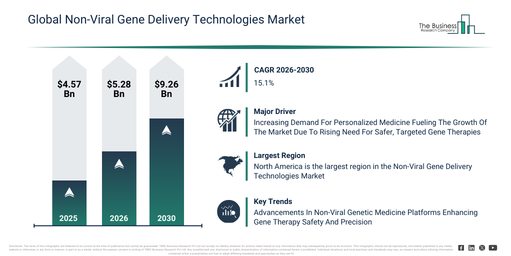
    The non-viral gene delivery technologies market size has seen rapid expansion in recent years. It is anticipated to increase from $4.57 billion in 2025 to $5.28 billion in 2026, with a compound annual growth rate (CAGR) of 15.5%. This historical growth can be attributed to several factors, including a reliance on viral delivery methods, the limited availability of non-viral transfection reagents, a rising interest in gene therapy research, the increasing adoption of plasmid dna and mrna delivery kits, and the use of electroporation and various physical delivery techniques.

    The non-viral gene delivery technologies market is expected to experience substantial expansion in the coming years, with its size projected to reach $9.26 billion in 2030, growing at a compound annual growth rate (CAGR) of 15.1%. This anticipated growth is attributed to factors such as the development of advanced lipid and polymer nanoparticles, the expansion of pre-formulated nanoparticle technologies, increasing investment in gene editing and RNAi therapeutics, a rising demand for personalized gene therapy solutions, and the integration of high-throughput and automated delivery platforms. Major trends foreseen for this period include a greater adoption of lipid-based and polymer-based non-viral delivery systems, an increase in CRISPR and Cas9 gene editing applications, growing demand for RNAi and DNA vaccine delivery platforms, the expansion of ex-vivo and in-vivo gene therapy research, and the development of cell-specific and targeted gene delivery reagents.

    Access Your Free Sample Report For In-Depth Market Analysis:

    https://www.thebusinessresearchcompany.com/sample.aspx?id=27367&type=smp

    What Key Factors Are Affecting The Non-Viral Gene Delivery Technologies Market Demand?

    The escalating need for personalized medicine is projected to stimulate expansion within the non-viral gene delivery technologies market in the coming period. This medical methodology, personalized medicine, tailors prevention, diagnosis, and treatment by considering an individual’s distinct genetic composition, way of life, and environmental factors. The rising need for personalized medicine stems from breakthroughs in genomic sequencing technologies, enabling more precise diagnoses, focused treatments, and better patient-specific therapeutic results. This heightened emphasis on personalized medicine fuels the demand for non-viral gene delivery technologies because these provide safer and more flexible ways to introduce therapeutic genes suited to a person’s genetic profile, circumventing the dangers linked with viral vectors. An illustration of this trend is seen in February 2024, when the Personalized Medicine Coalition, a US-based non-profit body, reported that the Food and Drug Administration (FDA) sanctioned 16 new personalized treatments for rare disease patients in 2023, which is an increase from 6 approvals in 2022. Consequently, the expanding requirement for personalized medicine is propelling the development of the non-viral gene delivery technologies market.

    How Is The Non-Viral Gene Delivery Technologies Market Organized By Segment Classification?

    The non-viral gene delivery technologies market covered in this report is segmented –

    1) By Product: Reagents And Kits, Delivery Devices, Pre-Formulated Nanoparticles

    2) By Delivery: In-Vitro, In-Vivo, Ex-Vivo

    3) By Technology: Electroporation, Lipid-Based Transfection, Polymer-Based Transfection, Physical Methods (Microinjection, Gene Gun), Nanoparticles

    4) By Application: Gene Therapy, Deoxyribonucleic Acid (DNA) Vaccines, Ribonucleic Acid Interference (RNAi), Clustered Regularly Interspaced Short Palindromic Repeats (CRISPR) Or Cas9 Gene Editing, Protein Expression

    5) By End-Use: Biotechnology And Biopharmaceutical Companies, Research And Academic Institutes, Other End-Uses

    Subsegments:

    1) By Reagents And Kits: Transfection Reagents, Plasmid Deoxyribonucleic Acid (DNA) Kits, Messenger Ribonucleic Acid (RNA) Delivery Kits, Small Interfering Ribonucleic Acid (RNA) Delivery Kits, Clustered Regularly Interspaced Short Palindromic Repeats Associated Protein Reagents, Cell-Specific Delivery Reagents

    2) By Delivery Devices: Electroporation Systems, Microinjection Systems, Gene Guns Or Biolistic Delivery Devices, Ultrasound-Mediated Delivery Devices, Hydrodynamic Gene Delivery Systems

    3) By Pre-Formulated Nanoparticles: Lipid-Based Nanoparticles, Polymer-Based Nanoparticles, Gold-Based Nanoparticles, Dendrimer-Based Nanoparticles, Carbon Nanotube-Based Nanoparticles, Inorganic Compound-Based Nanoparticles

    What Trends Are Influencing The Non-Viral Gene Delivery Technologies Market?

    Leading companies within the non-viral gene delivery market are concentrating on developing advanced solutions, such as non-viral genetic medicine platforms, to enhance the safety and effectiveness of gene therapies. A non-viral genetic medicine platform is a technology designed to introduce therapeutic genes or nucleic acids into cells without the use of viruses, thereby minimizing immune reactions and safety concerns, and enabling precise and controlled gene therapy delivery for a multitude of diseases. For instance, in October 2023, Generation Bio Co., a US-based biotechnology company focused on genetic medicine development, unveiled immune-quiet DNA (iqDNA). This novel DNA represents an optimized variant of their closed-ended DNA (ceDNA) that successfully evades innate immune detection, exhibiting cytokine levels and tolerability comparable to chemically modified mRNA in studies involving mice and non-human primates when administered via their lipid nanoparticle (LNP) system. Owing to iqDNA’s superior tolerability, Generation Bio is progressing with this as the primary DNA cargo in all its initiatives, including its foremost hemophilia A program.

    Who Are The Industry Participants Involved In The Non-Viral Gene Delivery Technologies Market?

    Major companies operating in the non-viral gene delivery technologies market are Thermo Fisher Scientific Inc., Danaher Corporation, Merck KGaA, Evonik Industries AG, Moderna Inc., Lonza Group AG, Bio-Rad Laboratories Inc., Takara Bio Inc., GenScript Biotech Corporation, ReCode Therapeutics Inc., Altogen Biosystems Inc., Generation Bio, Indee Labs Inc.

    Get The Full Non-Viral Gene Delivery Technologies Market Report:

    https://www.thebusinessresearchcompany.com/report/non-viral-gene-delivery-technologies-global-market-report

    Which Region Accounts For The Largest Portion Of The Non-Viral Gene Delivery Technologies Market?

    North America was the largest region in the non-viral gene delivery technologies market in 2025. Asia-Pacific is expected to be the fastest-growing region in the forecast period. The regions covered in the non-viral gene delivery technologies market report are Asia-Pacific, South East Asia, Western Europe, Eastern Europe, North America, South America, Middle East, Africa.

    Request A Customized Non-Viral Gene Delivery Technologies Market Report For Competitive Insights:

    https://www.thebusinessresearchcompany.com/report/non-viral-gene-delivery-technologies-global-market-report

    Browse Through More Reports Similar to the Global Non-Viral Gene Delivery Technologies Market 2026, By The Business Research Company

    Low Density Polyethylene Market Report 2026

    https://www.thebusinessresearchcompany.com/report/low-density-polyethylene-global-market-report

    Polyethylene Pipes Market Report 2026

    https://www.thebusinessresearchcompany.com/report/polyethylene-pipes-global-market-report

    High Density Polyethylene Market Report 2026

    https://www.thebusinessresearchcompany.com/report/high-density-polyethylene-global-market-report

    Get in touch with us:

    The Business Research Company: https://www.thebusinessresearchcompany.com/

    Americas +1 310-496-7795

    Asia +44 7882 955267 & +91 8897263534

    Europe +44 7882 955267

    Email us at: marketing@tbrc.info

    Follow us on:

    LinkedIn: https://in.linkedin.com/company/the-business-research-company

    YouTube: https://www.youtube.com/channel/UC24_fI0rV8cR5DxlCpgmyFQ

    Global Market Model: https://www.thebusinessresearchcompany.com/global-market-model
  • Non-Viral Drug Delivery Systems Market Analysis With Focus On Growth Potential And Future Outlook

    Non-Viral Drug Delivery Systems Market Analysis With Focus On Growth Potential And Future Outlook

    The Business Research Company’s 2026 market reports feature enhanced tools like market attractiveness analysis, TAM assessment, and company scoring matrices, along with interactive dashboards, deeper supply chain insights, and startup coverage strengthening the depth, usability, and strategic value of insights.

    What Is The Forecasted Market Size Trajectory Of The Non-Viral Drug Delivery Systems Market From 2026 To 2030?

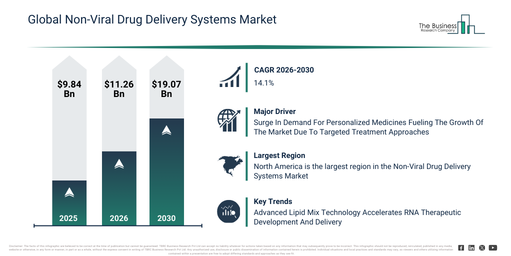
    The market size for non-viral drug delivery systems has experienced rapid expansion in recent years. This market is projected to grow from $9.84 billion in 2025 to $11.26 billion in 2026, demonstrating a compound annual growth rate (CAGR) of 14.4%. The historical growth can be attributed to factors such as a reliance on viral delivery methods, limited awareness of non-viral techniques, the development of emerging biologics, the establishment of initial regulatory frameworks for drug delivery, and an early academic research focus on nanoparticles.

    The non-viral drug delivery systems market size is projected to experience significant expansion in the upcoming years. It is expected to reach $19.07 billion by 2030, demonstrating a compound annual growth rate (CAGR) of 14.1%. This market’s growth during the forecast period is attributable to breakthroughs in polymer-based carriers, the increasing prevalence of RNA and DNA therapeutics, heightened investment in personalized medicine, the growth of contract development and manufacturing organizations (CDMOs), and more collaborations between pharmaceutical firms and academic institutions. Dominant trends anticipated in this period encompass the growing acceptance of non-viral delivery platforms for targeted therapies, increased utilization of nanoparticles and liposome-based carriers, a focus on mitigating immune responses and improving safety, the advancement of personalized medicine and targeted therapeutics, and the widening scope of CDMOs and academic research partnerships.

    Access Your Free Sample Report For In-Depth Market Analysis:

    https://www.thebusinessresearchcompany.com/sample.aspx?id=24628&type=smp

    Which Primary Drivers Are Impacting The Non-Viral Drug Delivery Systems Market Growth?

    The expanding need for personalized medicines is projected to fuel the advancement of the non-viral drug delivery systems market moving forward. Personalized medicine refers to a medical methodology that tailors treatment to an individual’s distinct genetic makeup, lifestyle, and environment. The demand for personalized medicine is escalating because it facilitates more effective treatments by specifically targeting the root causes of disease in each patient. Non-viral systems play a crucial role in personalized medicine by safely conveying drugs or genes to cells, minimizing risks, and improving the precision of treatment. For instance, in February 2024, according to the Personalized Medicine Coalition, a US-based non-profit organization, in 2023, the FDA gave approval to 16 new personalized therapies for patients with rare diseases, which was an increase from 6 approvals in 2022. Hence, the increasing demand for personalized medicines is a primary driver for the growth of the non-viral drug delivery systems market.

    Which Segments Define The Non-Viral Drug Delivery Systems Market Segment Structure?

    The non-viral drug delivery systems market covered in this report is segmented –

    1) By Type Of Molecule Delivered: Biologics, Small Molecules

    2) By Type Of Biologics Delivered: Ribonucleic Acid (RNA), Deoxyribonucleic Acid (DNA), Proteins or Peptides, Antibodies

    3) By End User: Pharmaceutical And Biotechnology Companies, Academic And Research Institutes, Contract Development And Manufacturing Organizations (CDMOs), Hospitals And Clinics

    Subsegments:

    1) By Biologics: Peptides, Proteins, Monoclonal Antibodies, RNA-based Therapeutics, DNA-based Therapies

    2) By Small Molecules: Chemotherapeutics, Anti-inflammatories, Antivirals, Antibiotics, Hormonal Drugs

    Which Trends Are Shaping Growth In The Non-Viral Drug Delivery Systems Market?

    Leading companies within the non-viral drug delivery system market are directing their efforts towards advanced technologies, specifically pre-optimized ionizable lipid mix systems, to streamline the development and delivery processes for RNA-based therapeutics. A pre-optimized ionizable lipid mix system functions as a formulation technology adept at efficiently encapsulating RNA molecules into lipid nanoparticles, thereby ensuring high stability, protecting the payload, and facilitating targeted delivery for gene-based drug applications. As an illustration, in September 2024, Cytiva, a US-based biotechnology company, unveiled an RNA delivery LNP kit compatible with its NanoAssemblr Ignite and Ignite+ platforms. This particular system incorporates a ready-to-use ionizable lipid mix, which allows for quick screening of RNA payloads and validation of effective delivery, especially pertinent in the context of developing infectious disease vaccines. Furthermore, it integrates smoothly with automated microfluidic platforms, supports scalable manufacturing via GMP-grade components, and provides protocols along with proof-of-concept data to guide users from the initial stages of discovery through to clinical evaluation.

    Who Are The Established Players Within The Non-Viral Drug Delivery Systems Market?

    Major companies operating in the non-viral drug delivery systems market are Evonik Industries AG, Cytiva, Arcturus Therapeutics Holdings Inc., CureVac N.V., PolyPid Ltd, Ethris GmbH, Entos Pharmaceuticals Inc., Liquidia Technologies Inc., ReCode Therapeutics Inc., Enable Injections Inc., GenEdit Inc., N4 Pharma Plc, Hopewell Therapeutics Inc., Tiba Biotech LLC, Vesigen Therapeutics Inc., Carmine Therapeutics Inc., Evox Therapeutics Ltd, InnoCore Pharmaceuticals BV, Nanomerics Ltd, DelSiTech Ltd, Curapath Inc.

    Get The Full Non-Viral Drug Delivery Systems Market Report:

    https://www.thebusinessresearchcompany.com/report/non-viral-drug-delivery-systems-global-market-report

    Which Region Holds The Highest Market Share In The Non-Viral Drug Delivery Systems Market?

    North America was the largest region in the non-viral drug delivery systems market in 2025. Asia-Pacific is expected to be the fastest-growing region in the forecast period. The regions covered in the non-viral drug delivery systems market report are Asia-Pacific, South East Asia, Western Europe, Eastern Europe, North America, South America, Middle East, Africa.

    Request A Customized Non-Viral Drug Delivery Systems Market Report For Competitive Insights:

    https://www.thebusinessresearchcompany.com/report/non-viral-drug-delivery-systems-global-market-report

    Browse Through More Reports Similar to the Global Non-Viral Drug Delivery Systems Market 2026, By The Business Research Company

    Advanced Drug Delivery Systems Market Report 2026

    https://www.thebusinessresearchcompany.com/report/advanced-drug-delivery-systems-global-market-report

    Electronic Drug Delivery Systems Market Report 2026

    https://www.thebusinessresearchcompany.com/report/electronic-drug-delivery-systems-global-market-report

    Pharmaceutical Drug Delivery Market Report 2026

    https://www.thebusinessresearchcompany.com/report/pharmaceutical-drug-delivery-global-market-report

    Get in touch with us:

    The Business Research Company: https://www.thebusinessresearchcompany.com/

    Americas +1 310-496-7795

    Asia +44 7882 955267 & +91 8897263534

    Europe +44 7882 955267

    Email us at: marketing@tbrc.info

    Follow us on:

    LinkedIn: https://in.linkedin.com/company/the-business-research-company

    YouTube: https://www.youtube.com/channel/UC24_fI0rV8cR5DxlCpgmyFQ

    Global Market Model: https://www.thebusinessresearchcompany.com/global-market-model
  • Non-Therapeutic Biomolecules Market Forecast Showing Industry Progress And Growth Trends

    Non-Therapeutic Biomolecules Market Forecast Showing Industry Progress And Growth Trends

    The Business Research Company’s 2026 market reports feature enhanced tools like market attractiveness analysis, TAM assessment, and company scoring matrices, along with interactive dashboards, deeper supply chain insights, and startup coverage strengthening the depth, usability, and strategic value of insights.

    How Much Will The Market Value Of The Non-Therapeutic Biomolecules Market Grow Between 2026 And 2030?

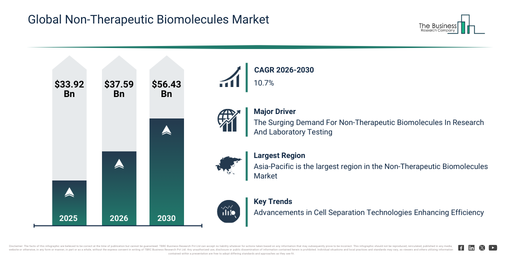
    The non-therapeutic biomolecules market has experienced rapid expansion in recent years. It is projected to grow from $33.92 billion in 2025 to $37.59 billion in 2026, at a compound annual growth rate (CAGR) of 10.8%. This historical growth can be attributed to several factors, including the rising demand for research biomolecules, increased adoption in in vitro diagnostics, growth within pharmaceutical research, advancements in recombinant protein technology, and an increase in collaborations between biotech firms.

    The non-therapeutic biomolecules market is poised for significant expansion in the coming years. Projections indicate it will reach a size of $56.43 billion by 2030, exhibiting a compound annual growth rate (CAGR) of 10.7%. This growth during the forecast period is primarily driven by several factors, including the proliferation of synthetic biomolecule applications, increased financial backing for precision medicine, wider adoption in agricultural biotechnology, a heightened emphasis on environmentally friendly and scalable methods for biomolecule production, and advancements in automated biomolecule synthesis technologies. Key developments anticipated within the same period encompass sophisticated protein engineering, high-throughput screening methodologies, sustainable approaches to biomolecule creation, cell-free biomolecule synthesis, and adaptable biomolecule platforms.

    Access Your Free Sample Report For In-Depth Market Analysis:

    https://www.thebusinessresearchcompany.com/sample.aspx?id=8769&type=smp

    What Significant Factors Are Influencing The Non-Therapeutic Biomolecules Market Expansion?

    The non-therapeutic biomolecules market is anticipated to expand due to the escalating volume of research and laboratory testing. Laboratory testing refers to medical procedures that involve analyzing samples of blood, urine, or other substances from the body to diagnose and monitor diseases and to formulate treatment strategies. Conversely, research involves creating new knowledge or creatively applying existing knowledge to develop new concepts, theories, and understandings. In laboratory testing, non-therapeutic biomolecules are employed to measure the presence or concentration of biomarker molecules that indicate disease, thereby enhancing the sensitivity and specificity of the tests. For instance, in July 2024, the National Health Service (NHS), a UK-based hospital and health care provider, reported that diagnostic activity surpassed pre-pandemic levels in 2023, with a 21% increase in tests performed in May 2024 compared to 2023. Consequently, the rapidly increasing number of research and laboratory testing is driving the growth of the non-therapeutic biomolecules market.

    How Is The Non-Therapeutic Biomolecules Market Segmented Across Different Segment Categories?

    The non-therapeutic biomolecules market covered in this report is segmented –

    1) By Trad Pharma: Enzymes, Recombinant Proteins, Plasmids, Peptides, Oligonucleotides, Monoclonal Antibodies

    2) By End User: Research, Pharma, In Vitro Diagnostics(IVD)

    3) By Application: Diagnostic Equipment, Therapeutic Equipment, Monitoring Or Imaging Equipment, Laboratory Or Research Equipment, Rehabilitation Or Mobility Support

    Subsegments:

    1) By Enzymes: Industrial Enzymes, Diagnostic Enzymes

    2) By Recombinant Proteins: Antigens, Cytokines, Growth Factors

    3) By Plasmids: Research Plasmids, Expression Plasmids

    4) By Peptides: Antimicrobial Peptides, Signaling Peptides

    5) By Oligonucleotides: Antisense Oligonucleotides, RNAi Oligonucleotides

    6) By Monoclonal Antibodies: Research Antibodies, Diagnostic Antibodies

    What Trends Are Affecting The Direction Of The Non-Therapeutic Biomolecules Market?

    Leading companies in the non-therapeutic biomolecules market are prioritizing the development of new cell separation technology to boost throughput and refine processes, thereby gaining a competitive advantage. This innovative kit, intended solely for research, aims to provide scientists with an essential answer to biological and lab workflow challenges. For instance, in May 2023, AcouSort AB, a biotechnology firm from Sweden, introduced the AcouTrap 3 system. This system integrates the distinct properties of acoustofluidics, merging sound waves with microfluidics, to present an efficient method for isolating cells and extracellular vesicles within a single operational sequence. The AcouTrap 3 system utilizes gentle acoustic trapping technology, allowing scientists to process a greater number of samples with enhanced cell viability and reduced loss compared to conventional column- or bead-based techniques, consequently improving productivity and optimizing laboratory functions.

    Which Organizations Play A Role In The Non-Therapeutic Biomolecules Market Landscape?

    Major companies operating in the non-therapeutic biomolecules market are Amgen Inc., Genentech Inc., Merck KGaA, Lonza Group AG, Bio-Rad Laboratories Inc., Thermo Fisher Scientific Inc., Agilent Technologies Inc., Charles River Laboratories International Inc., GE Healthcare Life Sciences, Fujifilm Diosynth Biotechnologies, Evonik Industries AG, Seikagaku Corporation, Takeda Pharmaceutical Company Limited, MilliporeSigma, Covance Inc., Sartorius AG, Sanofi S.A., CordenPharma International, Bayer AG, WuXi AppTec, Ginkgo Bioworks, Eppendorf AG, Bio-Techne Corporation, Vectalys, Avid Bioservices Inc.

    Get The Full Non-Therapeutic Biomolecules Market Report:

    https://www.thebusinessresearchcompany.com/report/non-therapeutic-biomolecules-global-market-report

    Where Is The Non-Therapeutic Biomolecules Market Most Concentrated Geographically?

    Asia-Pacific was the largest region in the non-therapeutic biomolecules market share in 2025. The regions covered in the non-therapeutic biomolecules market report are Asia-Pacific, South East Asia, Western Europe, Eastern Europe, North America, South America, Middle East, Africa.

    Request A Customized Non-Therapeutic Biomolecules Market Report For Competitive Insights:

    https://www.thebusinessresearchcompany.com/report/non-therapeutic-biomolecules-global-market-report

    Browse Through More Reports Similar to the Global Non-Therapeutic Biomolecules Market 2026, By The Business Research Company

    Non Therapeutic Biomolecules Market Report 2026

    https://www.thebusinessresearchcompany.com/report/non-therapeutic-biomolecules-global-market-report

    Peptide Therapeutics Market Report 2026

    https://www.thebusinessresearchcompany.com/report/peptide-therapeutics-global-market-report

    Bioengineered Protein Drugs Market Report 2026

    https://www.thebusinessresearchcompany.com/report/bioengineered-protein-drugs-global-market-report

    Get in touch with us:

    The Business Research Company: https://www.thebusinessresearchcompany.com/

    Americas +1 310-496-7795

    Asia +44 7882 955267 & +91 8897263534

    Europe +44 7882 955267

    Email us at: marketing@tbrc.info

    Follow us on:

    LinkedIn: https://in.linkedin.com/company/the-business-research-company

    YouTube: https://www.youtube.com/channel/UC24_fI0rV8cR5DxlCpgmyFQ

    Global Market Model: https://www.thebusinessresearchcompany.com/global-market-model
  • Non-Steroidal Anti-inflammatory Drugs Market Future Trends Influencing Growth Through 2030

    Non-Steroidal Anti-inflammatory Drugs Market Future Trends Influencing Growth Through 2030

    The Business Research Company’s 2026 market reports feature enhanced tools like market attractiveness analysis, TAM assessment, and company scoring matrices, along with interactive dashboards, deeper supply chain insights, and startup coverage strengthening the depth, usability, and strategic value of insights.

    What Changes In Market Value Are Expected For The Non-Steroidal Anti-inflammatory Drugs Market Over The 2026–2030 Period?

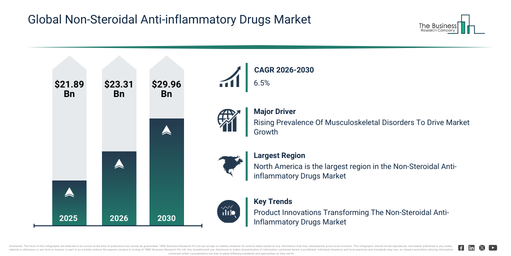
    The non-steroidal anti-inflammatory drugs market has shown robust expansion in recent years. It is projected to rise from $21.89 billion in 2025 to $23.31 billion in 2026, at a compound annual growth rate (CAGR) of 6.5%. This growth in prior periods can be attributed to the increasing prevalence of arthritis and musculoskeletal disorders, greater awareness of pain management therapies, the expanding geriatric population, the proliferation of retail pharmacies, and advancements in drug formulation technologies.

    The market for non-steroidal anti-inflammatory drugs is projected to experience robust expansion over the coming years. This market is forecast to reach $29.96 billion by 2030, demonstrating a compound annual growth rate (CAGR) of 6.5%. This anticipated growth during the forecast period is driven by factors such as the increasing adoption of personalized medicine, the expansion of e-pharmacy platforms, enhanced research and development into new NSAID formulations, a greater prevalence of chronic inflammatory conditions, and the incorporation of digital health tools for monitoring pain. Key trends anticipated for the forecast period encompass tailored pain management solutions, a growing consumer demand for over-the-counter anti-inflammatory medications, the creation of fast-acting formulations, an emphasis on managing chronic pain and arthritis, and the broadening of online pharmacy distribution channels.

    Access Your Free Sample Report For In-Depth Market Analysis:

    https://www.thebusinessresearchcompany.com/sample.aspx?id=8023&type=smp

    Which Important Drivers Are Guiding The Non-Steroidal Anti-inflammatory Drugs Market Growth?

    The non-steroidal anti-inflammatory drugs (NSAIDs) market and related pain management solutions are projected to grow going forward, driven by the increasing prevalence of chronic pain. Chronic pain is defined as persistent or recurrent pain lasting three months or longer, stemming from conditions such as arthritis, fibromyalgia, back pain, neuropathic pain, and other musculoskeletal disorders. These conditions considerably impact patients’ quality of life and frequently necessitate long-term management, including medication, physical therapy, and supportive care. The growing occurrence of chronic pain consequently increases the demand for effective pain relief therapies, such as NSAIDs and other analgesic formulations. For example, in October 2024, the National Center for Biotechnology Information, a US-based federal government research and information organization, stated that 24.3% of adults reported experiencing chronic pain, with 8.5% of adults reporting high-impact chronic pain that limits daily activities. Therefore, the expanding number of individuals suffering from chronic pain is expected to boost the demand for pain management therapies, thereby supporting the growth of the NSAIDs market and associated products.

    What Are The Main Segments Within The Non-Steroidal Anti-inflammatory Drugs Market Segment Structure?

    The non-steroidal anti-inflammatory drugs market covered in this report is segmented –

    1) By Route Of Administration: Oral, Topical, Other Route Of Administration

    2) By Disease Indication: Arthritis, Migraine, Ophthalmic Diseases, Other Disease Indications

    3) By Distribution Channel: Hospital Pharmacy, Retail Pharmacy, Online Pharmacy

    Subsegments:

    1) By Oral: Tablets, Capsules, Liquids Or Solutions

    2) By Topical: Gels, Creams, Patches

    3) By Other Route Of Administration: Injectable (Intravenous And Intramuscular), Suppositories

    What Trends Are Influencing The Evolution Of The Non-Steroidal Anti-inflammatory Drugs Market?

    Key companies operating in the non-steroidal anti-inflammatory drugs (NSAIDs) market are prioritizing the development of innovative solutions, such as analgesic–gastroprotective combination formulations. This focus aims to address the growing demand for efficient pain relief while mitigating the gastrointestinal risks commonly linked to prolonged NSAID usage. These dual-action technologies pair an NSAID with a protective agent to sustain anti-inflammatory efficacy and simultaneously prevent stomach irritation, presenting a safer alternative to traditional single-agent NSAIDs. For example, in March 2024, Endo International plc, an Ireland-based pharmaceutical company, launched ibuprofen-famotidine 800 mg/26.6 mg tablets. This advanced formulation combines the pain-relieving and anti-inflammatory properties of ibuprofen with the gastroprotective benefits of famotidine. This tablet with dual functionality is engineered to relieve pain while reducing gastrointestinal side effects like ulcers or irritation, which frequently arise from extended NSAID therapy, thereby enhancing safety and improving patient adherence.

    Who Are The Companies Participating In The Non-Steroidal Anti-inflammatory Drugs Market?

    Major companies operating in the non-steroidal anti-inflammatory drugs market are Pfizer Inc., Bayer AG, Johnson & Johnson, Sun Pharmaceutical Industries Ltd., Assertio Therapeutics Inc., Iroko Pharmaceuticals Inc., Perrigo Company PLC, Hikma Pharmaceuticals PLC, Glenmark Pharmaceuticals Limited, Aspen Pharmacare Holdings Limited, Sagent Pharmaceuticals Inc., Advanced Pharma Inc., Akorn Operating Company LLC, Alembic Pharmaceuticals Limited, Torrent Pharmaceuticals Limited, Lupin Limited, Cipla Limited, Zydus Cadila Healthcare Limited, Aurobindo Pharma Limited, Sanofi S.A., GlaxoSmithKline PLC, Horizon Therapeutics PLC, Novartis AG, Roche Holding AG, AbbVie Inc., Bristol-Myers Squibb Company

    Get The Full Non-Steroidal Anti-inflammatory Drugs Market Report:

    https://www.thebusinessresearchcompany.com/report/non-steroidal-anti-inflammatory-drugs-global-market-report

    Which Region Dominates The Non-Steroidal Anti-inflammatory Drugs Market By Market Share?

    North America was the largest region in the non-steroidal anti-inflammatory drugs market in 2025. Asia-Pacific is expected to be the fastest-growing region in the non-steroidal anti-inflammatory drugs market during the forecast period. The regions covered in the non-steroidal anti-inflammatory drugs market report are Asia-Pacific, South East Asia, Western Europe, Eastern Europe, North America, South America, Middle East, Africa.

    Request A Customized Non-Steroidal Anti-inflammatory Drugs Market Report For Competitive Insights:

    https://www.thebusinessresearchcompany.com/report/non-steroidal-anti-inflammatory-drugs-global-market-report

    Browse Through More Reports Similar to the Global Non-Steroidal Anti-inflammatory Drugs Market 2026, By The Business Research Company

    Non Steroidal Anti Inflammatory Drugs Market Report 2026

    https://www.thebusinessresearchcompany.com/report/non-steroidal-anti-inflammatory-drugs-global-market-report

    Anti Inflammatory Therapeutics Market Report 2026

    https://www.thebusinessresearchcompany.com/report/anti-inflammatory-therapeutics-global-market-report

    Rheumatoid Arthritis Drugs Market Report 2026

    https://www.thebusinessresearchcompany.com/report/rheumatoid-arthritis-drugs-global-market-report

    Get in touch with us:

    The Business Research Company: https://www.thebusinessresearchcompany.com/

    Americas +1 310-496-7795

    Asia +44 7882 955267 & +91 8897263534

    Europe +44 7882 955267

    Email us at: marketing@tbrc.info

    Follow us on:

    LinkedIn: https://in.linkedin.com/company/the-business-research-company

    YouTube: https://www.youtube.com/channel/UC24_fI0rV8cR5DxlCpgmyFQ

    Global Market Model: https://www.thebusinessresearchcompany.com/global-market-model
  • Non-Opioid Pain Treatment Market Growth Patterns And Forecast Outlook Through 2030

    Non-Opioid Pain Treatment Market Growth Patterns And Forecast Outlook Through 2030

    The Business Research Company’s 2026 market reports feature enhanced tools like market attractiveness analysis, TAM assessment, and company scoring matrices, along with interactive dashboards, deeper supply chain insights, and startup coverage strengthening the depth, usability, and strategic value of insights.

    By 2030, What Market Size Is The Non-Opioid Pain Treatment Market Expected To Reach Based On Its 2026 Value?

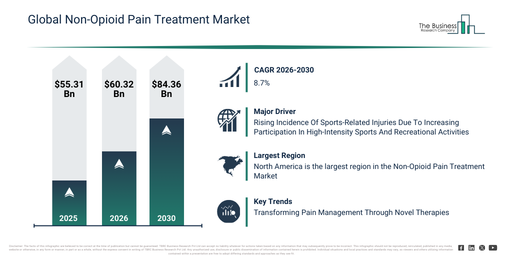
    The non-opioid pain treatment market size has shown robust expansion in recent years. This market is anticipated to expand from $55.31 billion in 2025 to $60.32 billion in 2026, achieving a compound annual growth rate (CAGR) of 9.1%. Factors contributing to its historical growth include the increasing prevalence of chronic pain conditions, growing awareness regarding opioid-related risks, limited availability of non-opioid alternatives, a rise in orthopedic and musculoskeletal procedures, and an expansion of hospital and clinic infrastructure dedicated to pain management.

    The non-opioid pain treatment market is projected to experience substantial expansion over the upcoming years. Its value is anticipated to reach $84.36 billion by 2030, demonstrating a compound annual growth rate (CAGR) of 8.7%. This projected growth during the forecast period can be ascribed to several factors, including the advancement of innovative non-opioid therapeutic options, the broader implementation of digital health monitoring and telemedicine for pain management, an increasing uptake of combination therapies, escalating government initiatives aimed at pain management, and a growing influx of investment into personalized pain care and alternative treatments. Key developments anticipated in this period encompass the rising embrace of non-opioid approaches to pain management, an uptick in the utilization of medical cannabis and omega-3 fatty acid supplements, an increase in topical and injectable products for pain relief, the extension of pain management services within hospitals and clinics, and the incorporation of non-pharmacological interventions such as acupuncture and TENS.

    Access Your Free Sample Report For In-Depth Market Analysis:

    https://www.thebusinessresearchcompany.com/sample.aspx?id=27366&type=smp

    What Major Factors Are Driving The Non-Opioid Pain Treatment Market Forward?

    The escalating prevalence of sports-related injuries is anticipated to drive the future growth of the non-opioid pain treatment market. These injuries are defined as physical harm incurred during or as a consequence of sports or exercise activities. The increased occurrence of sports injuries is attributed to higher participation in high-intensity sports and recreational activities, exposing athletes to an elevated risk of physical trauma. Non-opioid pain treatment is effective for managing sports-related injuries by providing significant pain relief and reducing inflammation without the dangers linked to opioid use, thus fostering faster recuperation, improved functional ability, and safer sustained management. As an illustration, in October 2024, figures from Howden Group Holdings Ltd, a UK-based insurance intermediary company, revealed that Europe’s top five football leagues registered 4,123 injuries during the 2023-24 season, signifying a 4% increase compared to the previous season. Therefore, the expanding incidence of sports-related injuries is a key driver for the growth of the non-opioid pain treatment market.

    How Is Segmentation Applied In The Non-Opioid Pain Treatment Market Segment Analysis?

    The non-opioid pain treatment market covered in this report is segmented –

    1) By Product: Medical Cannabis, Menthol-Containing, Omega 3 Fatty Acid-Containing, Botulinum Toxins, Capsaicin-Derived, Other Products

    2) By Drug Class: Nonsteroidal Anti-Inflammatory Drugs (Nsaids), Acetaminophen, Local Anesthetics, Antidepressants, Anticonvulsants, Corticosteroids, Other Drug Classes

    3) By Route Of Administration: Oral, Topical, Injectable, Other Route Of Administrations

    4) By Distribution Channel: Hospitals Pharmacies, Retail Pharmacies, Drug Stores, Mail Order Pharmacies

    5) By Application: Orthopedic And Musculoskeletal Pain, Postoperative Pain, Cancer Pain, Neuropathic Pain, Other Applications

    Subsegments:

    1) By Medical Cannabis: Cannabidiol Based Products, Tetrahydrocannabinol Based Products, Combined Cannabinoid Products

    2) By Menthol Containing: Topical Creams, Gels, Sprays

    3) By Omega 3 Fatty Acid Containing: Fish Oil Derived Supplements, Algae Derived Supplements, Krill Oil Derived Supplements

    4) By Botulinum Toxins: Onabotulinumtoxin A, Abobotulinumtoxin A, Incobotulinumtoxin A

    5) By Capsaicin Derived: Low Concentration Creams, High Concentration Patches, Nasal Sprays

    6) By Other Products: Magnesium Based Products, Acupuncture Devices, Transcutaneous Electrical Nerve Stimulation Devices

    Which Trends Are Impacting The Progress Of The Non-Opioid Pain Treatment Market?

    Leading companies operating within the non-opioid pain treatment market are prioritizing innovations in drug formulations, particularly non-opioid oral treatments, to provide effective pain relief and mitigate the risks associated with opioid use and addiction. Non-opioid oral treatment refers to pain-relieving medications administered orally that exclude opioids and function through alternative mechanisms, such as reducing inflammation, modulating nerve signals, or acting on specific receptors, to manage pain without the addiction potential or respiratory depression frequently linked to opioids. For instance, in July 2025, Vertex Pharmaceuticals Incorporated, a US-based biotechnology company, launched JOURNAVX, a pioneering non-opioid therapy designed to offer effective relief for moderate-to-severe acute pain. This cutting-edge non-opioid treatment employs targeted modulation of pain pathways, features a favorable safety profile, and delivers a rapid onset of action, thereby enabling strong pain control, a reduced dependency potential, and enhanced patient well-being. It ensures focused pain management, lowers addiction risks, and supports faster recovery and an improved quality of life for patients experiencing acute pain.

    Who Are The Companies Participating In The Non-Opioid Pain Treatment Market Environment?

    Major companies operating in the non-opioid pain treatment market are Pfizer Inc., Johnson & Johnson Services Inc., AbbVie Inc, Novartis AG, GSK plc, Amgen Inc., Teva Pharmaceutical Industries Limited, Vertex Pharmaceuticals Incorporated, SUN PHARMACEUTICAL INDUSTRIES LIMITED, Perrigo Company Public Limited Company, Dr. Reddy’s Laboratories, HIKMA PHARMACEUTICALS PUBLIC LIMITED COMPANY, Pacira BioSciences Inc, Heron Therapeutics Inc, AFT Pharmaceuticals Limited, Vivozon Pharmaceutical Co. Ltd, Levicept Ltd, Algiax Pharmaceuticals GmbH, Latigo Biotherapeutics Inc, Hyloris Pharmaceuticals SA

    Get The Full Non-Opioid Pain Treatment Market Report:

    https://www.thebusinessresearchcompany.com/report/non-opioid-pain-treatment-global-market-report

    Which Region Is The Largest In The Non-Opioid Pain Treatment Market?

    North America was the largest region in the non-opioid pain treatment market in 2025. Asia-Pacific is expected to be the fastest-growing region in the forecast period. The regions covered in the non-opioid pain treatment market report are Asia-Pacific, South East Asia, Western Europe, Eastern Europe, North America, South America, Middle East, Africa.

    Request A Customized Non-Opioid Pain Treatment Market Report For Competitive Insights:

    https://www.thebusinessresearchcompany.com/report/non-opioid-pain-treatment-global-market-report

    Browse Through More Reports Similar to the Global Non-Opioid Pain Treatment Market 2026, By The Business Research Company

    Polyethylene Pipes Market Report 2026

    https://www.thebusinessresearchcompany.com/report/polyethylene-pipes-global-market-report

    Polyethylene Pipes Market Report 2026

    https://www.thebusinessresearchcompany.com/report/polyethylene-pipes-global-market-report

    Polyolefin Pipes Market Report 2026

    https://www.thebusinessresearchcompany.com/report/polyolefin-pipes-global-market-report

    Get in touch with us:

    The Business Research Company: https://www.thebusinessresearchcompany.com/

    Americas +1 310-496-7795

    Asia +44 7882 955267 & +91 8897263534

    Europe +44 7882 955267

    Email us at: marketing@tbrc.info

    Follow us on:

    LinkedIn: https://in.linkedin.com/company/the-business-research-company

    YouTube: https://www.youtube.com/channel/UC24_fI0rV8cR5DxlCpgmyFQ

    Global Market Model: https://www.thebusinessresearchcompany.com/global-market-model
  • Non-Opioid Pain Patch Market Insights On Growth Drivers, Trends, And Opportunities

    Non-Opioid Pain Patch Market Insights On Growth Drivers, Trends, And Opportunities

    The Business Research Company’s 2026 market reports feature enhanced tools like market attractiveness analysis, TAM assessment, and company scoring matrices, along with interactive dashboards, deeper supply chain insights, and startup coverage strengthening the depth, usability, and strategic value of insights.

    What Is The Anticipated Rise In Market Value Of The Non-Opioid Pain Patch Market During The Forecast Period?

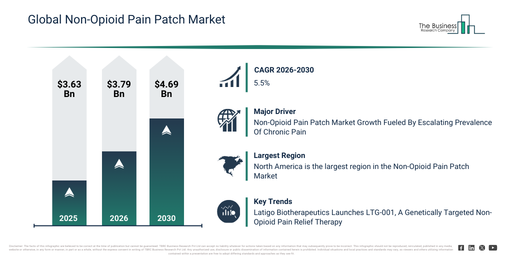
    The non-opioid pain patch market has experienced consistent expansion in recent years. It is anticipated to expand from $3.63 billion in 2025 to $3.79 billion in 2026, demonstrating a compound annual growth rate (CAGR) of 4.6%. This historical growth can be attributed to several factors such as opioid dependency concerns, an increasing incidence of musculoskeletal disorders, the growth in aging population, the expansion of retail pharmacy networks, and physician preference for localized pain treatment.

    The non-opioid pain patch market is anticipated to experience robust growth in the upcoming years, with its size projected to reach $4.69 billion in 2030, reflecting a compound annual growth rate (CAGR) of 5.5%. This growth throughout the forecast period is driven by factors such as the increasing prevalence of chronic pain, strengthened regulatory support for non-opioid treatments, advancements in transdermal drug delivery technology, growing patient awareness regarding addiction-free therapies, and expansion into neuropathic pain indications. Key trends for the forecast period include a rising preference for non-addictive pain management, an increased adoption of topical and localized therapies, the expansion of over-the-counter and prescription hybrid patches, a greater demand for chronic pain management solutions, and innovation in patch adhesion and drug delivery duration.

    Access Your Free Sample Report For In-Depth Market Analysis:

    https://www.thebusinessresearchcompany.com/sample.aspx?id=12230&type=smp

    Which Key Drivers Are Affecting The Non-Opioid Pain Patch Market Development?

    An increase in chronic pain cases is projected to drive the expansion of the non-opioid pain patch market in the future. Chronic pain is defined as intense discomfort persisting over a prolonged duration or present alongside another health issue. These patches offer relief for mild to moderate pain, addressing conditions such as headaches, muscular discomfort, arthritis, backaches, and various other forms of pain. As an illustration, data from November 2024, provided by the Centers for Disease Control and Prevention, a national public health agency in the US, indicated that approximately 24.3% of adults in 2023 reported experiencing chronic pain. Of these, 8.5%—roughly one-third of the affected population—suffered from high-impact chronic pain, with a greater occurrence observed in women compared to men. Consequently, the growing incidence of chronic pain is a key factor boosting the non-opioid pain patch market.

    What Segment Categories Shape The Non-Opioid Pain Patch Market Segment Landscape?

    The non-opioid pain patch market covered in this report is segmented –

    1) By Patch: Lidocaine Patches, Diclofenac Patches, Capsaicin Patches, Ketoprofen Patches, Other Patches

    2) By Distribution Channel: Hospital Pharmacies, Retail Pharmacies, Other Distribution Channels

    3) By Indication: Musculoskeletal Pain, Neuropathic Pain

    Subsegments:

    1) By Lidocaine Patches: 5% Lidocaine Patch, Other Concentrations

    2) By Diclofenac Patches: 1.3% Diclofenac Patch, Other Concentrations

    3) By Capsaicin Patches: 8% Capsaicin Patch, Other Concentrations

    4) By Ketoprofen Patches: 5% Ketoprofen Patch, Other Concentrations

    5) By Other Patches: Combination Patches, Herbal Extract Patches, Other Non-Opioid Patches

    What Trends Are Transforming The Non-Opioid Pain Patch Market?

    Leading companies within the non-opioid pain patch market are developing innovative products, including genetically validated targets medicine. This approach involves creating drugs that specifically target biological pathways directly connected to disease, grounded in robust genetic evidence. Such a method enhances the effectiveness of treatment and reduces the likelihood of side effects. For example, in February 2024, Latigo Biotherapeutics Inc., a US-based biotechnology company, introduced the LTG-001. This compound serves as a selective inhibitor of the Nav1.8 sodium channel, which is predominantly expressed in peripheral nerve cells. By targeting this particular channel, LTG-001 aims to block pain signals at their source, potentially delivering effective pain relief without affecting the central nervous system. Results from Phase 1 clinical trials indicated that LTG-001 has a Tmax (time to maximum concentration) of approximately 1.5 hours, suggesting a rapid commencement of pain relief. This attribute is especially significant for managing both acute and chronic pain. LTG-001 is designed for oral administration, offering greater convenience for patients compared to injectable or topical therapies. This delivery method can improve patient compliance and ease of use.

    Who Are The Companies Operating Across The Non-Opioid Pain Patch Market Value Chain?

    Major companies operating in the non-opioid pain patch market are Hisamitsu Pharmaceutical Co. Inc., Teikoku Pharma USA Inc., Noven Pharmaceuticals Inc., Johnson & Johnson Services Inc., Pfizer Inc., Grünenthal GmbH, Mylan N.V., Teva Pharmaceutical Industries Ltd., Bayer AG, Iroko Pharmaceuticals LLC, Scilex Pharmaceuticals Inc., Zosano Pharma Corporation, Adynxx Inc., BioElectronics Corporation, NeuroMetrix Inc., Virpax Pharmaceuticals Inc., Novartis AG, DURECT Corporation, Eli Lilly and Company, Endo Pharmaceuticals Inc.

    Get The Full Non-Opioid Pain Patch Market Report:

    https://www.thebusinessresearchcompany.com/report/non-opioid-pain-patch-global-market-report

    Which Region Leads The Non-Opioid Pain Patch Market In Terms Of Market Share?

    North America was the largest region in the non-opioid pain patch market in 2025. Asia-Pacific is expected to be the fastest-growing region in the non-opioid pain patch market report during the forecast period. The regions covered in the non-opioid pain patch market report are Asia-Pacific, South East Asia, Western Europe, Eastern Europe, North America, South America, Middle East, Africa.

    Request A Customized Non-Opioid Pain Patch Market Report For Competitive Insights:

    https://www.thebusinessresearchcompany.com/report/non-opioid-pain-patch-global-market-report

    Browse Through More Reports Similar to the Global Non-Opioid Pain Patch Market 2026, By The Business Research Company

    Non Opioid Pain Patch Market Report 2026

    https://www.thebusinessresearchcompany.com/report/non-opioid-pain-patch-global-market-report

    Pain Patch Market Report 2026

    https://www.thebusinessresearchcompany.com/report/pain-patch-global-market-report

    Pain Management Drugs Market Report 2026

    https://www.thebusinessresearchcompany.com/report/pain-management-drugs-global-market-report

    Get in touch with us:

    The Business Research Company: https://www.thebusinessresearchcompany.com/

    Americas +1 310-496-7795

    Asia +44 7882 955267 & +91 8897263534

    Europe +44 7882 955267

    Email us at: marketing@tbrc.info

    Follow us on:

    LinkedIn: https://in.linkedin.com/company/the-business-research-company

    YouTube: https://www.youtube.com/channel/UC24_fI0rV8cR5DxlCpgmyFQ

    Global Market Model: https://www.thebusinessresearchcompany.com/global-market-model
  • Non-injectable Insulin Market Developments Shaping Growth Across The Forecast Period

    Non-injectable Insulin Market Developments Shaping Growth Across The Forecast Period

    The Business Research Company’s 2026 market reports feature enhanced tools like market attractiveness analysis, TAM assessment, and company scoring matrices, along with interactive dashboards, deeper supply chain insights, and startup coverage strengthening the depth, usability, and strategic value of insights.

    How Is The Market Size Of The Non-injectable Insulin Market Expected To Scale Between 2026 And 2030?

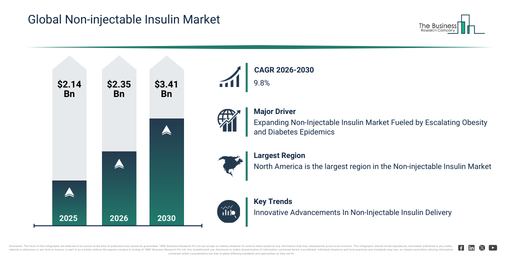
    The non-injectable insulin market has experienced significant expansion over recent years. It is projected to grow from $2.14 billion in 2025 to $2.35 billion in 2026, achieving a compound annual growth rate (CAGR) of 9.9%. The market’s historical development can be attributed to the increasing occurrence of diabetes, a rising patient preference for non-injective treatments, ongoing advancements in insulin formulation, various government initiatives aimed at promoting diabetes care, and heightened awareness concerning diabetes complications.

    The non-injectable insulin market is anticipated to experience robust expansion over the coming years. This market is projected to reach $3.41 billion by 2030, demonstrating a compound annual growth rate (CAGR) of 9.8%. Factors driving this growth during the projected period include innovations in oral and inhalable insulin technologies, the adoption of digital health solutions, an increasing elderly demographic, the development of healthcare infrastructure in burgeoning markets, and tailored medical strategies for diabetes management. Key developments anticipated within the forecast timeframe encompass oral insulin delivery methods, pulmonary insulin inhalers, patient-focused diabetes care, non-invasive monitoring and dosing techniques, and breakthroughs in formulations to enhance bioavailability.

    Access Your Free Sample Report For In-Depth Market Analysis:

    https://www.thebusinessresearchcompany.com/sample.aspx?id=13888&type=smp

    What Factors Are Contributing To The Growth Of The Non-injectable Insulin Market?

    The increasing challenges of obesity and diabetes are anticipated to drive expansion in the non-injectable insulin market in the future. Obesity describes a state of excessive body fat accumulation, typically stemming from an imbalance in calorie consumption versus expenditure. Meanwhile, diabetes mellitus, or simply diabetes, encompasses metabolic conditions marked by persistently elevated blood sugar. Non-injectable insulin offers a treatment for both diabetes and obesity, potentially enhancing patient management by overcoming obstacles to traditional insulin therapy, providing possible advantages for weight control, and presenting more accessible treatment choices. For example, data from June 2023, shared by the Institute for Health Metrics and Evaluation, a US-based public health research institute, indicated that over half a billion people globally were diagnosed with diabetes. This figure is projected to more than double, reaching 1.3 billion people by 2050. Consequently, the growing prevalence of obesity and diabetes is fueling the expansion of the non-injectable insulin market.

    Which Segment Types Are Examined In The Non-injectable Insulin Market Segment Study?

    The non-injectable insulin market covered in this report is segmented –

    1) By Insulin Type: Oral Insulin, Inhaled Insulin, Nasal Insulin, Buccal Or Sublingual Insulin, Transdermal Insulin

    2) By Product: Pills, Sprays, Other Products

    3) By Distribution Channel: Hospital Pharmacies, Online Pharmacies, Drug Stores

    Subsegments:

    1) By Oral Insulin: Oral Insulin Tablets, Oral Insulin Capsules, Enteric-Coated Oral Insulin, Nanoparticle-Based Oral Insulin

    2) By Inhaled Insulin: Dry Powder Inhaled Insulin, Aerosolized Insulin, Pulmonary Insulin Delivery Systems

    3) By Nasal Insulin: Nasal Spray Insulin, Nasal Gel Insulin, Nasal Powder Insulin

    4) By Buccal Or Sublingual Insulin: Buccal Spray Insulin, Sublingual Insulin Films, Oral Mucosal Insulin Drops

    5) By Transdermal Insulin: Insulin Patches, Microneedle-Free Transdermal Systems, Iontophoresis-Based Insulin Delivery

    What Trends Are Shaping The Future Of The Non-injectable Insulin Market?

    Leading companies in the non-injectable insulin market are concentrating on groundbreaking developments in drug delivery methods, such as needle-free oral insulin sprays, to enhance the lives of individuals managing their diabetes with multiple insulin injections. A needle-free insulin spray serves as a painless and non-invasive option for regulating blood glucose, providing a convenient choice as doses can be directly administered into the mouth. For instance, in November 2023, NiedlFree Technologies, an India-based technology platform, unveiled Ozulin, an oral insulin spray. This oral insulin spray aims to offer a more accessible solution for people with diabetes, especially those who may find conventional injectable insulin methods difficult. If approved, Ozulin possesses the capability to revolutionize diabetes care, presenting a more convenient and pain-free substitute for insulin injections.

    Which Players Are Part Of The Competitive Landscape Of The Non-injectable Insulin Market?

    Major companies operating in the non-injectable insulin market are Novo Nordisk A/S, Eli Lilly and Company, Sanofi S.A., Pfizer Inc., Novartis AG, Merck & Co. Inc., AstraZeneca, Takeda Pharmaceutical, Abbott Laboratories, MannKind Corporation, Biocon Limited, Sun Pharmaceutical Industries Ltd., Dr. Reddy’s Laboratories Limited, Cipla Limited, Lupin Pharmaceuticals, Glenmark Pharmaceuticals, Torrent Pharmaceuticals, Wockhardt Limited, Teva Pharmaceutical Industries Ltd., F. Hoffmann-La Roche Ltd.

    Get The Full Non-injectable Insulin Market Report:

    https://www.thebusinessresearchcompany.com/report/non-injectable-insulin-global-market-report

    Which Region Leads The Non-injectable Insulin Market In Overall Market Size?

    North America was the largest region in the non-injectable insulin market in 2025. Asia-Pacific is expected to be the fastest-growing region in the forecast period. The regions covered in the non-injectable insulin market report are Asia-Pacific, South East Asia, Western Europe, Eastern Europe, North America, South America, Middle East, Africa.

    Request A Customized Non-injectable Insulin Market Report For Competitive Insights:

    https://www.thebusinessresearchcompany.com/report/non-injectable-insulin-global-market-report

    Browse Through More Reports Similar to the Global Non-injectable Insulin Market 2026, By The Business Research Company

    Non Injectable Insulin Market Report 2026

    https://www.thebusinessresearchcompany.com/report/non-injectable-insulin-global-market-report

    Insuman Market Report 2026

    https://www.thebusinessresearchcompany.com/report/insuman-global-market-report

    Oem Insulation Market Report 2026

    https://www.thebusinessresearchcompany.com/report/oem-insulation-global-market-report

    Get in touch with us:

    The Business Research Company: https://www.thebusinessresearchcompany.com/

    Americas +1 310-496-7795

    Asia +44 7882 955267 & +91 8897263534

    Europe +44 7882 955267

    Email us at: marketing@tbrc.info

    Follow us on:

    LinkedIn: https://in.linkedin.com/company/the-business-research-company

    YouTube: https://www.youtube.com/channel/UC24_fI0rV8cR5DxlCpgmyFQ

    Global Market Model: https://www.thebusinessresearchcompany.com/global-market-model
  • The mRNA Therapeutics CDMO Market Is Evolving Due To Surging Demand For Aesthetic Procedures Fuels Growth In The Botulinum Toxin

    The mRNA Therapeutics CDMO Market Is Evolving Due To Surging Demand For Aesthetic Procedures Fuels Growth In The Botulinum Toxin

    The Business Research Company’s 2026 market reports feature enhanced tools like market attractiveness analysis, TAM assessment, and company scoring matrices, along with interactive dashboards, deeper supply chain insights, and startup coverage strengthening the depth, usability, and strategic value of insights.

    How Much Growth In Market Value Is Expected For The mRNA Therapeutics CDMO Market Between 2026 And 2030?

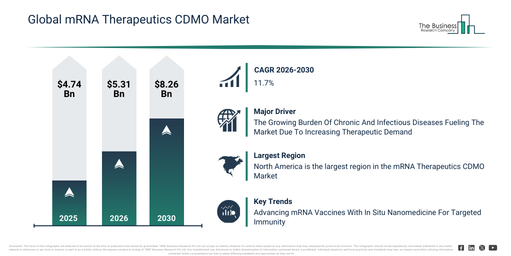
    The mrna therapeutics cdmo market has seen rapid expansion in recent years. It is projected to grow from $4.74 billion in 2025 to $5.31 billion in 2026, at a compound annual growth rate (CAGR) of 12.0%. The market’s historic growth was influenced by the restricted availability of specialized mrna cdmo services, a dependence on in-house pharmaceutical manufacturing, an increase in infectious disease outbreaks, the implementation of early-stage analytical testing, and the broadening of academic and research collaborations.

    The mrna therapeutics cdmo market is projected to experience swift expansion over the coming years. By 2030, its valuation is anticipated to reach $8.26 billion, demonstrating a compound annual growth rate (CAGR) of 11.7%. This projected growth is driven by several factors, including increasing investments in mrna therapeutics development, innovations in plasmid DNA and mrna synthesis technologies, the expansion of cancer immunotherapy and protein replacement treatments, a growing need for fill-finish solutions, and the broadening of collaborations between biotechnology firms and CDMOs. Key trends anticipated during this period encompass a surge in the outsourcing of mrna development and production, a heightened emphasis on lipid nanoparticle (LNP) formulation techniques, the enlargement of viral vaccine and cancer immunotherapy portfolios, improved regulatory adherence and quality control protocols, and the wider uptake of analytical and bioanalytical laboratory provisions.

    Access Your Free Sample Report For In-Depth Market Analysis:

    https://www.thebusinessresearchcompany.com/sample.aspx?id=25841&type=smp

    What Significant Factors Are Influencing The mRNA Therapeutics CDMO Market Expansion?

    The increasing prevalence of chronic and infectious diseases is anticipated to fuel the expansion of the mRNA therapeutics CDMO market in the coming years. These diseases refer to enduring medical conditions like diabetes, cardiovascular disorders, and asthma, alongside illnesses stemming from harmful microorganisms such as viruses, bacteria, and parasites, which can transmit between individuals directly or indirectly. The rise in chronic and infectious diseases is attributable to an aging global population, which is more vulnerable to both prolonged illnesses and infections. The mRNA therapeutics CDMO supports the fight against chronic and infectious diseases by offering comprehensive development and manufacturing services, thus speeding up the delivery of precise, customized mRNA treatments to patients. As an illustration, in October 2024, the World Health Organization, a Switzerland-based international public health organization, reported that around 8.2 million individuals received a new tuberculosis diagnosis in 2023, an increase from approximately 7.5 million in 2022, underscoring the escalating global impact of infectious diseases. Consequently, the rising occurrence of chronic and infectious diseases is a key factor propelling the growth of the mRNA therapeutics CDMO market.

    Which Segment Types Are Examined In The mRNA Therapeutics CDMO Market Segment Study?

    The mrna therapeutics cdmo market covered in this report is segmented –

    1) By Type Of Service: Development Services, Manufacturing Services, Laboratory Services

    2) By Indication: Infectious Diseases, Metabolic And Genetic Diseases, Cardiovascular And Cerebrovascular Diseases

    3) By Application: Viral Vaccines, Protein Replacement Therapies, Cancer Immunotherapies

    4) By End User: Pharmaceutical Companies, Biotechnology Companies, Academic Institutions, Research Organizations

    Subsegments:

    1) By Development Services: Process Development, Analytical Method Development, Formulation Development, Regulatory Support

    2) By Manufacturing Services: Plasmid DNA Manufacturing, mRNA Synthesis, Lipid Nanoparticle (LNP) Formulation, Fill-Finish Services

    3) By Laboratory Services: Quality Control Testing, Stability Testing, Bioanalytical Testing, Preclinical Testing

    What Emerging Trends Are Seen In The mRNA Therapeutics CDMO Market?

    Major companies operating in the mRNA therapeutics CDMO market are prioritizing the development of innovative solutions, such as in situ nanomedicine vaccines, to enhance the effectiveness and precision of mRNA-based vaccines through targeted immune stimulation. An in situ nanomedicine vaccine is a next-generation mRNA-based therapeutic designed to generate nanomedicines within the patient’s body, facilitating targeted delivery and customized immune activation via engineered transgene expression. For instance, in January 2025, Esphera SynBio Inc., a Canada-based biotechnology company, launched a new project supported by the CQDM Quantum Leap program. This initiative aims to improve first-generation lipid nanoparticle or messenger RNA (LNP/mRNA) vaccines by incorporating proprietary transgene designs that induce in vivo production of immunostimulatory nanomedicines. This approach enables precise antigen delivery and tailored immune responses, positioning the technology as a potential breakthrough in vaccine innovation.

    Which Players Are Part Of The Competitive Landscape Of The mRNA Therapeutics CDMO Market?

    Major companies operating in the mrna therapeutics cdmo market are Thermo Fisher Scientific Inc., Danaher Corporation, Merck KGaA, FUJIFILM Holdings Corporation, Evonik Industries AG, AGC Biologics GmbH, Eurofins Scientific SA, Samsung Biologics Co. Ltd., Wuxi Biologics, Recipharm AB, EMERGENT BioSolutions Inc., Genscript Biotech, Ginkgo Bioworks Holdings Inc., Corden Pharma Corp., TriLink BioTechnologies LLC, Biocina Pty Ltd., Aldevron LLC, Synbio Technologies LLC, etherna manufacturing, Bio-Synthesis Inc., Biomay AG.

    Get The Full mRNA Therapeutics CDMO Market Report:

    https://www.thebusinessresearchcompany.com/report/mrna-therapeutics-cdmo-global-market-report

    Which Region Holds The Highest Market Share In The mRNA Therapeutics CDMO Market?

    North America was the largest region in the mRNA therapeutics CDMO market in 2025. Asia-Pacific is expected to be the fastest-growing region in the forecast period. The regions covered in the mrna therapeutics cdmo market report are Asia-Pacific, South East Asia, Western Europe, Eastern Europe, North America, South America, Middle East, Africa.

    Request A Customized mRNA Therapeutics CDMO Market Report For Competitive Insights:

    https://www.thebusinessresearchcompany.com/report/mrna-therapeutics-cdmo-global-market-report

    Browse Through More Reports Similar to the Global mRNA Therapeutics CDMO Market 2026, By The Business Research Company

    Mrna Therapeutics Market Report 2026

    https://www.thebusinessresearchcompany.com/report/mrna-therapeutics-global-market-report

    Mrna Cancer Vaccines And Therapeutics Market Report 2026

    https://www.thebusinessresearchcompany.com/report/mrna-cancer-vaccines-and-therapeutics-global-market-report

    Peptide And Oligonucleotide Cdmo Market Report 2026

    https://www.thebusinessresearchcompany.com/report/peptide-and-oligonucleotide-cdmo-global-market-report

    Get in touch with us:

    The Business Research Company: https://www.thebusinessresearchcompany.com/

    Americas +1 310-496-7795

    Asia +44 7882 955267 & +91 8897263534

    Europe +44 7882 955267

    Email us at: marketing@tbrc.info

    Follow us on:

    LinkedIn: https://in.linkedin.com/company/the-business-research-company

    YouTube: https://www.youtube.com/channel/UC24_fI0rV8cR5DxlCpgmyFQ

    Global Market Model: https://www.thebusinessresearchcompany.com/global-market-model
  • The Rise Of Innovations in Botanical Supplements: Enhancing Health with Plant-Derived Ingredients Is Influencing The mRNA Therapeutics Market

    The Rise Of Innovations in Botanical Supplements: Enhancing Health with Plant-Derived Ingredients Is Influencing The mRNA Therapeutics Market

    The Business Research Company’s 2026 market reports feature enhanced tools like market attractiveness analysis, TAM assessment, and company scoring matrices, along with interactive dashboards, deeper supply chain insights, and startup coverage strengthening the depth, usability, and strategic value of insights.

    What Is The Estimated Market Size Of The mRNA Therapeutics Market In 2026, And How Will Its Value Evolve By 2030?

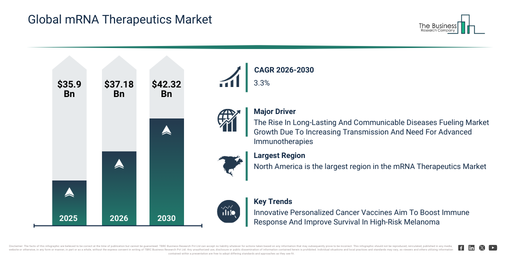
    The mrna therapeutics market has experienced consistent expansion over recent years. It is projected to increase from $35.9 billion in 2025 to $37.18 billion in 2026, demonstrating a compound annual growth rate (CAGR) of 3.6%. The historical rise can be ascribed to the significant achievements of mrna vaccines in treating infectious diseases, advancements in nucleic acid delivery technologies, a deeper comprehension of gene expression control, early research confirming mrna-based protein synthesis, and robust public financial backing for mrna research platforms.

    The mrna therapeutics market is projected to experience consistent expansion over the upcoming years. Its valuation is anticipated to reach $42.32 billion by 2030, achieving a compound annual growth rate (CAGR) of 3.3%. This anticipated growth during the forecast period stems from factors such as an escalating need for targeted and individualized treatments, the broader application of mrna technologies in areas like oncology and rare diseases, increased biopharmaceutical funding for mrna development pipelines, a growing volume of mrna medications advancing into clinical trials, and crucial alliances formed between biotechnology companies and research institutions. Key trends expected within this period encompass the diversification of mrna therapeutics beyond vaccine development, an intensified focus on mrna-based protein replacement therapies, a burgeoning clinical development pipeline for mrna drugs not intended as vaccines, heightened financial commitments to lipid nanoparticle delivery technologies, and the rapid enhancement of comprehensive mrna manufacturing infrastructures.

    Access Your Free Sample Report For In-Depth Market Analysis:

    https://www.thebusinessresearchcompany.com/sample.aspx?id=17205&type=smp

    Which Important Drivers Are Guiding The mRNA Therapeutics Market Growth?

    The expanding occurrence of chronic and transmissible illnesses is projected to fuel the expansion of the mRNA therapeutics market in the future. These long-lasting and communicable diseases are conditions that endure for prolonged durations and can be transmitted from person to person, encompassing ailments like tuberculosis, HIV/AIDS, and hepatitis. The escalation of these diseases stems from factors such as enhanced global travel and deficiencies in healthcare systems, which promote higher transmission rates and impede efficient disease management. mRNA therapeutics aid in better disease control by swiftly enabling the body to generate proteins that bolster immune responses, thereby accelerating the creation of specific vaccines and treatments. For example, in March 2024, data from the Centers for Disease Control and Prevention, a US-based government agency, showed that tuberculosis cases rose from 8,320 in 2022 to 9,615 in 2023, marking an increase of 1,295 cases. Consequently, the growing prevalence of long-lasting and communicable diseases is propelling the growth of the mRNA therapeutics market.

    How Are Different Segments Classified In The mRNA Therapeutics Market Segment Analysis?

    The mrna therapeutics market covered in this report is segmented –

    1) By Product: Vaccines, Drugs

    2) By Application: Infectious Diseases, Oncology, Rare Genetic Diseases, Respiratory Diseases, Other Applications

    3) By End Use: Hospitals And Clinics, Research Organizations, Other End Uses

    Subsegments:

    1) By Vaccines: Infectious Disease Vaccines, Cancer Vaccines, Other Therapeutic Vaccines

    2) By Drugs: Oncology Drugs, Cardiovascular Drugs, Autoimmune Disease Drugs, Other mRNA-Based Drugs

    Which Trends Are Guiding The Direction Of The mRNA Therapeutics Market?

    Leading companies operating within the mRNA therapeutics market are concentrating on the development of innovative solutions, such as personalized neoantigen vaccines, to improve immune responses and enhance survival outcomes for cancer patients. These personalized neoantigen vaccines are cancer therapies uniquely crafted for each patient, utilizing specific tumor mutations to stimulate the immune system to identify and eliminate cancer cells. For example, in July 2023, Merck & Co., Inc., a US-based research-intensive biopharmaceutical company, collaborated with Moderna Therapeutics, Inc., a US-based biotechnology company, to launch a Phase 3 randomized clinical trial (V940-001). This trial aims to evaluate mRNA-4157 (V940) in conjunction with KEYTRUDA® (pembrolizumab) for use as an adjuvant treatment in patients with resected high-risk (Stage IIB-IV) melanoma. This particular study follows the positive results obtained from the Phase 2b KEYNOTE-942/mRNA-4157-P201 trial, which indicated a significant benefit of the combination over KEYTRUDA alone in decreasing the risk of recurrence and distant metastasis. The Phase 3 trial seeks to confirm these findings by assessing relapse-free survival and distant metastasis-free survival as its primary and secondary endpoints, respectively.

    Who Are The Companies Driving Activity In The mRNA Therapeutics Market?

    Major companies operating in the mrna therapeutics market are Pfizer Inc., Novartis AG, Sanofi AG, AstraZeneca plc, GlaxoSmithKline plc, Hoffmann-La Roche AG, Moderna Therapeutics Inc, BioNTech SE, Vertex Pharmaceuticals Incorporated, Catalent Inc, Alnylam Pharmaceuticals Inc, Sarepta Therapeutics Inc, Arcturus Therapeutics Holdings Inc, CureVac N.V, Ethris GMBH, eTheRNA immunotherapies NV, In-Cell-Art S.A.S., Nutcracker Therapeutics Inc, SCM LifeScience Co Ltd, Suzhou Abogen Biosciences Co Ltd, Tiba Biotech LLC, CSPC Pharmaceutical Group, CRISPR Therapeutics AG

    Get The Full mRNA Therapeutics Market Report:

    https://www.thebusinessresearchcompany.com/report/mrna-therapeutics-global-market-report

    Where Is The mRNA Therapeutics Market Most Concentrated Geographically?

    North America was the largest region in the mRNA therapeutics market in 2025. Asia-Pacific is expected to be the fastest-growing region in the forecast period. The regions covered in the mrna therapeutics market report are Asia-Pacific, South East Asia, Western Europe, Eastern Europe, North America, South America, Middle East, Africa.

    Request A Customized mRNA Therapeutics Market Report For Competitive Insights:

    https://www.thebusinessresearchcompany.com/report/mrna-therapeutics-global-market-report

    Browse Through More Reports Similar to the Global mRNA Therapeutics Market 2026, By The Business Research Company

    Mrna Therapeutics Market Report 2026

    https://www.thebusinessresearchcompany.com/report/mrna-therapeutics-global-market-report

    Ribose Nucleic Acid Rna Based Therapeutics Market Report 2026

    https://www.thebusinessresearchcompany.com/report/ribose-nucleic-acid-rna-based-therapeutics-global-market-report

    Rna Targeting Small Molecules Therapeutics Market Report 2026

    https://www.thebusinessresearchcompany.com/report/rna-targeting-small-molecules-therapeutics-global-market-report

    Get in touch with us:

    The Business Research Company: https://www.thebusinessresearchcompany.com/

    Americas +1 310-496-7795

    Asia +44 7882 955267 & +91 8897263534

    Europe +44 7882 955267

    Email us at: marketing@tbrc.info

    Follow us on:

    LinkedIn: https://in.linkedin.com/company/the-business-research-company

    YouTube: https://www.youtube.com/channel/UC24_fI0rV8cR5DxlCpgmyFQ

    Global Market Model: https://www.thebusinessresearchcompany.com/global-market-model
  • The Increasing Prevalence Of Osteoporosis Is Driving The Growth Of The Due To Its Impact On Bone Density And Fracture Risk Is Playing A Role In Shaping The mRNA Cancer Vaccines And Therapeutics Market

    The Increasing Prevalence Of Osteoporosis Is Driving The Growth Of The Due To Its Impact On Bone Density And Fracture Risk Is Playing A Role In Shaping The mRNA Cancer Vaccines And Therapeutics Market

    The Business Research Company’s 2026 market reports feature enhanced tools like market attractiveness analysis, TAM assessment, and company scoring matrices, along with interactive dashboards, deeper supply chain insights, and startup coverage strengthening the depth, usability, and strategic value of insights.

    How Does The Market Size Of The mRNA Cancer Vaccines And Therapeutics Market Compare Between 2026 And 2030?

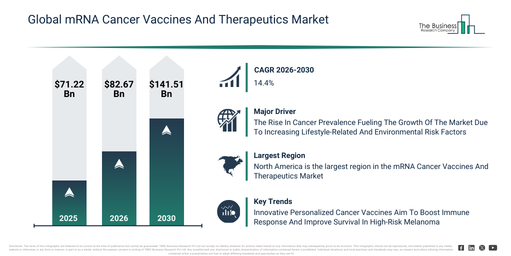
    The mrna cancer vaccines and therapeutics market size has experienced significant expansion in recent years. This market is set to expand from $71.22 billion in 2025 to $82.67 billion in 2026, reflecting a compound annual growth rate (CAGR) of 16.1%. The expansion observed in the past period is attributable to the triumphs of mrna platforms in infectious disease vaccines, progress in cancer immunology research, a deepening comprehension of tumor antigens, initial clinical validation of mrna cancer therapies, and increasing public and private investments in oncology innovation.

    The mrna cancer vaccines and therapeutics market size is expected to undergo rapid expansion over the next few years. This market is projected to grow to $141.51 billion by 2030, achieving a compound annual growth rate (CAGR) of 14.4%. The anticipated growth during this forecast period can be linked to the increasing global prevalence of cancer, the escalating need for personalized and targeted cancer treatments, an expansion in mrna manufacturing capabilities, a rise in oncology clinical trials utilizing mrna platforms, and strategic collaborations among biotech and pharmaceutical enterprises. Significant trends for the forecast timeframe include the increasing adoption of personalized cancer vaccines, the extension of mrna-based therapeutics beyond oncology applications, a heightened focus on developing neoantigen-specific vaccines, an enlarged clinical pipeline for mrna cancer immunotherapies, and greater investment in scalable mrna manufacturing platforms.

    Access Your Free Sample Report For In-Depth Market Analysis:

    https://www.thebusinessresearchcompany.com/sample.aspx?id=17204&type=smp

    What Major Factors Are Driving The mRNA Cancer Vaccines And Therapeutics Market Forward?

    The growing incidence of cancer is anticipated to fuel the expansion of the mRNA cancer vaccine and therapeutic market in the future. Cancer represents a collection of illnesses marked by the unregulated proliferation and dissemination of atypical cells, which can infiltrate and harm healthy tissues. This heightened occurrence of cancer is primarily linked to elements like inactive lifestyles, inadequate nutrition, and exposure to environmental contaminants, each contributing to an elevated risk for diverse forms of malignancy. mRNA cancer vaccines and therapeutics are pivotal in advancing cancer treatment, facilitating tailored, precise immune reactions that aid the body in more efficiently recognizing and eradicating cancer cells, consequently enhancing therapeutic results. As an illustration, in January 2024, data from the American Cancer Society, Inc., a US-based cancer advocacy organization, projects that the United States will experience over 611,000 cancer-related deaths in 2024, equating to more than 1,600 fatalities daily. Consequently, the expanding prevalence of cancer is propelling the growth of the mRNA cancer vaccine and therapeutic market.

    How Is The mRNA Cancer Vaccines And Therapeutics Market Categorized Across Its Segment Groups?

    The mrna cancer vaccines and therapeutics market covered in this report is segmented –

    1) By Type: Adeno Carcinomas, Mucinous Carcinomas, Adenosquamous Carcinomas

    2) By Application: Cancer, Other Applications

    3) By End User: Hospitals And Clinics, Ambulatory Surgical Centers, Research Institutes, Other End Users

    Subsegments:

    1) By Adeno Carcinomas: Lung Adenocarcinomas, Colon Adenocarcinomas, Prostate Adenocarcinomas

    2) By Mucinous Carcinomas: Mucinous Ovarian Cancer, Mucinous Breast Cancer, Mucinous Colorectal Cancer

    3) By Adenosquamous Carcinomas: Pancreatic Adenosquamous Carcinoma, Cervical Adenosquamous Carcinoma, Esophageal Adenosquamous Carcinoma

    What Trends Are Affecting The Growth Of The mRNA Cancer Vaccines And Therapeutics Market?

    Major companies operating in the mRNA cancer vaccines and therapeutics market are focusing on developing innovative solutions, such as personalized neoantigen vaccines, to enhance immune response and improve survival outcomes in cancer patients. Personalized neoantigen vaccines are cancer therapies designed for each patient, utilizing unique tumor-specific mutations to stimulate the immune system to target and destroy cancer cells. For instance, in July 2023, Merck & Co., Inc., a US-based research-intensive biopharmaceutical company, partnered with Moderna Therapeutics, Inc., a US-based biotechnology company, to initiate a Phase 3 randomized clinical trial (V940-001) to evaluate mRNA-4157 (V940) in combination with KEYTRUDA (pembrolizumab) as an adjuvant treatment for patients with resected high-risk (Stage IIB-IV) melanoma. This study follows positive results from the Phase 2b KEYNOTE-942/mRNA-4157-P201 trial, which showed a meaningful benefit of the combination over KEYTRUDA alone in reducing recurrence and distant metastasis risk. The Phase 3 trial aims to confirm these findings by assessing relapse-free survival and distant metastasis-free survival as primary and secondary endpoints, respectively.

    Which Firms Are Influencing Competition In The mRNA Cancer Vaccines And Therapeutics Market?

    Major companies operating in the mrna cancer vaccines and therapeutics market are BioNTech SE, Moderna Therapeutics Inc., CureVac N.V., Arcturus Therapeutics Holdings Inc., Immatics Biotechnologies GmbH, Argos Therapeutics Inc., Anima Biotech, Translate Bio, eTheRNA Immunotherapies NV, Gritstone bio Inc., Neon Therapeutics, Codiak BioSciences, Cartesian Therapeutics, Replimune Group Inc., Precision BioSciences, Acuitas Therapeutics, Ethris GmbH, Strand Therapeutics, Crown Bioscience, Roche (Hoffmann-La Roche AG)

    Get The Full mRNA Cancer Vaccines And Therapeutics Market Report:

    https://www.thebusinessresearchcompany.com/report/mrna-cancer-vaccines-and-therapeutics-global-market-report

    Which Region Dominates The mRNA Cancer Vaccines And Therapeutics Market By Market Share?

    North America was the largest region in the mRNA cancer vaccination and therapeutics market in 2025. Asia-Pacific is expected to be the fastest-growing region in the forecast period. The regions covered in the mrna cancer vaccines and therapeutics market report are Asia-Pacific, South East Asia, Western Europe, Eastern Europe, North America, South America, Middle East, Africa.

    Request A Customized mRNA Cancer Vaccines And Therapeutics Market Report For Competitive Insights:

    https://www.thebusinessresearchcompany.com/report/mrna-cancer-vaccines-and-therapeutics-global-market-report

    Browse Through More Reports Similar to the Global mRNA Cancer Vaccines And Therapeutics Market 2026, By The Business Research Company

    Mrna Cancer Vaccines And Therapeutics Market Report 2026

    https://www.thebusinessresearchcompany.com/report/mrna-cancer-vaccines-and-therapeutics-global-market-report

    Therapeutic Bcg Vaccines Market Report 2026

    https://www.thebusinessresearchcompany.com/report/therapeutic-bcg-vaccines-global-market-report

    Mrna Therapeutics Market Report 2026

    https://www.thebusinessresearchcompany.com/report/mrna-therapeutics-global-market-report

    Get in touch with us:

    The Business Research Company: https://www.thebusinessresearchcompany.com/

    Americas +1 310-496-7795

    Asia +44 7882 955267 & +91 8897263534

    Europe +44 7882 955267

    Email us at: marketing@tbrc.info

    Follow us on:

    LinkedIn: https://in.linkedin.com/company/the-business-research-company

    YouTube: https://www.youtube.com/channel/UC24_fI0rV8cR5DxlCpgmyFQ

    Global Market Model: https://www.thebusinessresearchcompany.com/global-market-model