Category: Pharmaceuticals

  • Monoclonal Antibody Therapeutics Market Analysis With Focus On Growth Potential And Future Outlook

    Monoclonal Antibody Therapeutics Market Analysis With Focus On Growth Potential And Future Outlook

    The Business Research Company’s 2026 market reports feature enhanced tools like market attractiveness analysis, TAM assessment, and company scoring matrices, along with interactive dashboards, deeper supply chain insights, and startup coverage strengthening the depth, usability, and strategic value of insights.

    What Changes In Market Value Are Expected For The Monoclonal Antibody Therapeutics Market Over The 2026–2030 Period?

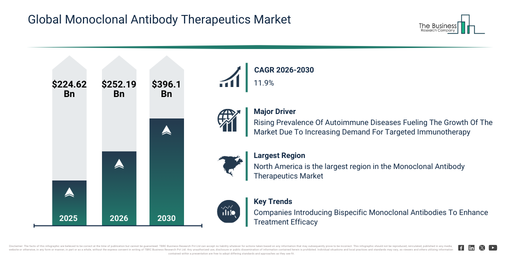
    The monoclonal antibody therapeutics market size has undergone rapid expansion in recent years. It is anticipated to grow from $224.62 billion in 2025 to $252.19 billion in 2026, achieving a compound annual growth rate (CAGR) of 12.3%. The market’s historic growth was primarily influenced by factors including limited antibody engineering technologies, the early adoption in oncology therapeutics, a reliance on traditional clinical trial methods, constrained biologics manufacturing capacity, and an increasing awareness of targeted therapies.

    The monoclonal antibody therapeutics market is poised for significant expansion over the next few years. It is projected to achieve a value of $396.1 billion by 2030, growing at a compound annual growth rate (CAGR) of 11.9%. This expected growth during the forecast period is driven by various factors, including advancements in bispecific and multi-specific antibodies, increased production of biologics and fusion proteins, a rise in the prevalence of autoimmune and infectious diseases, broader adoption by hospitals and private clinics, and the integration of AI and automation into drug discovery. Prominent trends for this period encompass increased investment in monoclonal antibody research and development, the widening application of oncology and autoimmune therapeutics, a greater uptake of antibody-drug conjugates, an increase in personalized and targeted therapies, and improvements in clinical trial infrastructure and biomanufacturing capabilities.

    Access Your Free Sample Report For In-Depth Market Analysis:

    https://www.thebusinessresearchcompany.com/sample.aspx?id=25839&type=smp

    Which Strong Drivers Are Impacting The Monoclonal Antibody Therapeutics Market Growth?

    An increasing incidence of autoimmune conditions is projected to drive expansion within the monoclonal antibody therapeutics market in the future. These diseases are characterized by the body’s immune system erroneously attacking its own healthy tissues and organs, mistaking them for foreign invaders, which results in persistent inflammation and tissue harm. The growing occurrence of autoimmune diseases can be attributed to environmental shifts, with greater exposure to contaminants and modified microbial surroundings thought to provoke atypical immune reactions in predisposed individuals. Monoclonal antibody treatments prove beneficial for autoimmune disorders because they accurately target and inhibit particular immune pathways that cause inflammation and tissue destruction, thereby alleviating symptoms and decelerating disease advancement. For example, data from November 2023, provided by the Multiple Sclerosis International Federation (MSIF), a UK-based international nonprofit organization, indicated that approximately 2.9 million individuals globally were affected by multiple sclerosis, an autoimmune and immune-mediated condition, in 2023. Consequently, the increasing incidence of autoimmune diseases is fueling the expansion of the monoclonal antibody therapeutics market.

    Which Segment Categories Are Included In The Monoclonal Antibody Therapeutics Market Segment Analysis?

    The monoclonal antibody therapeutics market covered in this report is segmented –

    1) By Product Type: Naked, Fusion Protein, Antibody Fragment, Conjugate, Multi-Specific

    2) By Therapy Area: Autoimmune And Inflammatory Disorders, Oncology, Hematology, Ophthalmology, Other Therapy Areas

    3) By Application: Cancer, Autoimmune Diseases, Infection, Hematological Diseases, Other Applications

    4) By End User: Hospitals, Private Clinics, Research Institute

    Subsegments:

    1) By Naked: Fully Human Antibodies, Humanized Antibodies, Chimeric Antibodies

    2) By Fusion Protein: Receptor Fusion Proteins, Ligand Fusion Proteins

    3) By Antibody Fragment: Single-Chain Variable Fragment, Fab Fragments, Diabodies

    4) By Conjugate: Antibody-Drug Conjugates, Radioimmunoconjugates, Immunotoxins

    5) By Multi-Specific: Bispecific Antibodies, Trispecific Antibodies, T-Cell Engagers

    Which Trends Are Shaping Growth In The Monoclonal Antibody Therapeutics Market?

    Leading companies within the monoclonal antibody therapeutics market are concentrating on bringing forth novel solutions, including bispecific monoclonal antibodies, aimed at boosting treatment effectiveness through concurrent targeting of two distinct antigens or epitopes. These specialized engineered antibodies possess the capability to simultaneously attach to two separate antigens or two different epitopes located on the same antigen. As an illustration, in March 2024, the Swiss pharmaceutical firm Roche Holding AG introduced Vabysmo (faricimab-svoa), a bispecific monoclonal antibody developed for ocular conditions, specifically intended for treating neovascular (wet) age-related macular degeneration (nAMD), diabetic macular edema (DME), and macular edema resulting from retinal vein occlusion (RVO). This medication targets both VEGF-A and Angiopoietin-2 (Ang-2), which helps to provide enhanced vascular stability and diminish retinal fluid leakage. The dual-target mechanism of Vabysmo enables prolonged dosing intervals of up to four months, substantially easing the treatment load for patients.

    Who Are The Active Companies Shaping The Monoclonal Antibody Therapeutics Market?

    Major companies operating in the monoclonal antibody therapeutics market are Pfizer Inc., Johnson & Johnson, F. Hoffmann-La Roche AG, Merck & Co. Inc., AbbVie Inc., Sanofi SA, Bristol-Myers Squibb Company, AstraZeneca plc, Novartis AG, GlaxoSmithKline plc, Takeda Pharmaceutical Company Limited, Eli Lilly and Company, Amgen Inc., Regeneron Pharmaceuticals Inc., Biogen Inc., Daiichi Sankyo Company Limited, UCB S.A., Genmab A/S, ADC Therapeutics, Y-mAbs Therapeutics.

    Get The Full Monoclonal Antibody Therapeutics Market Report:

    https://www.thebusinessresearchcompany.com/report/monoclonal-antibody-therapeutics-global-market-report

    Which Region Leads The Monoclonal Antibody Therapeutics Market In Overall Market Size?

    North America was the largest region in the monoclonal antibody therapeutics market in 2025. Asia-Pacific is expected to be the fastest-growing region in the forecast period. The regions covered in the monoclonal antibody therapeutics market report are Asia-Pacific, South East Asia, Western Europe, Eastern Europe, North America, South America, Middle East, Africa.

    Request A Customized Monoclonal Antibody Therapeutics Market Report For Competitive Insights:

    https://www.thebusinessresearchcompany.com/report/monoclonal-antibody-therapeutics-global-market-report

    Browse Through More Reports Similar to the Global Monoclonal Antibody Therapeutics Market 2026, By The Business Research Company

    Monoclonal Antibodies Market Report 2026

    https://www.thebusinessresearchcompany.com/report/monoclonal-antibodies-global-market-report

    Next Generation Antibody Therapeutics Market Report 2026

    https://www.thebusinessresearchcompany.com/report/next-generation-antibody-therapeutics-global-market-report

    Polyclonal Antibodies Market Report 2026

    https://www.thebusinessresearchcompany.com/report/polyclonal-antibodies-global-market-report

    Get in touch with us:

    The Business Research Company: https://www.thebusinessresearchcompany.com/

    Americas +1 310-496-7795

    Asia +44 7882 955267 & +91 8897263534

    Europe +44 7882 955267

    Email us at: marketing@tbrc.info

    Follow us on:

    LinkedIn: https://in.linkedin.com/company/the-business-research-company

    YouTube: https://www.youtube.com/channel/UC24_fI0rV8cR5DxlCpgmyFQ

    Global Market Model: https://www.thebusinessresearchcompany.com/global-market-model
  • Lyme Disease Vaccine Market Growth Expected To Reach $2.22 Billion By 2030 At 11.7% CAGR

    Lyme Disease Vaccine Market Growth Expected To Reach $2.22 Billion By 2030 At 11.7% CAGR

    The Business Research Company’s 2026 market reports feature enhanced tools like market attractiveness analysis, TAM assessment, and company scoring matrices, along with interactive dashboards, deeper supply chain insights, and startup coverage strengthening the depth, usability, and strategic value of insights.

    How Is The Market Size Of The Lyme Disease Vaccine Market Expected To Scale Between 2026 And 2030?

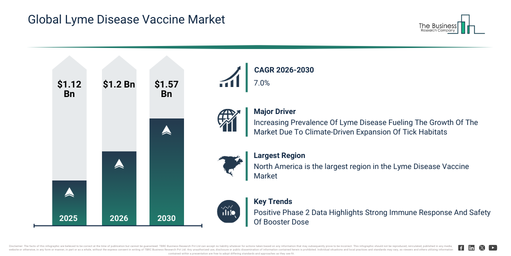
    The lyme disease vaccine market has shown robust expansion in recent years. It is anticipated to grow from $1.12 billion in 2025 to $1.2 billion in 2026, achieving a compound annual growth rate (CAGR) of 7.3%. The historical development of this market is attributable to a rising incidence of lyme disease in endemic areas, the past limitations of solely antibiotic-based treatment methods, initial vaccine research efforts, increased public understanding of tick-borne infections, and improvements in public health surveillance.

    The lyme disease vaccine market is anticipated to undergo significant expansion over the coming years. This market is projected to reach $1.57 billion by 2030, exhibiting a compound annual growth rate (CAGR) of 7.0%. This predicted growth can be ascribed to several factors, including the spread of vaccination initiatives in regions where the disease is prevalent, greater financial commitment towards preventing infectious diseases, progress in developing advanced vaccine technologies, an uptick in the use of combination vaccines, and an intensified worldwide effort to manage zoonotic diseases. Key developments expected during this period involve improvements in recombinant vaccine technologies, a heightened emphasis on proactive immunization strategies, an increase in clinical studies for illnesses transmitted by ticks, a growing demand for enduring immunity options, and strengthening partnerships between public and private health entities.

    Access Your Free Sample Report For In-Depth Market Analysis:

    https://www.thebusinessresearchcompany.com/sample.aspx?id=30317&type=smp

    Which Major Drivers Are Influencing The Expansion Of The Lyme Disease Vaccine Market?

    The rising incidence of Lyme disease is projected to fuel the expansion of the Lyme disease vaccine market moving forward. Lyme disease, a tick-borne ailment caused by Borrelia bacteria, manifests with fever, fatigue, and a rash, and can potentially lead to severe joint, heart, or neurological issues if left untreated. This increased prevalence of Lyme disease is attributed to climate change, where warmer temperatures and milder winters extend tick habitats, thereby heightening human exposure to infected ticks. Lyme disease vaccines contribute to prevention by educating the immune system to recognize and combat Borrelia bacteria, thereby lowering the chances of infection. They simplify the management of the disease by offering long-term protection, which enhances public health outcomes. For instance, in March 2025, according to the Centers for Disease Control and Prevention, a US-based federal health agency, approximately 89,000 cases of Lyme disease were reported in the United States in 2023, while alternative estimation methods suggest that around 476,000 individuals might be diagnosed and treated for Lyme disease annually. Therefore, the growing prevalence of Lyme disease is a primary driver for the Lyme disease vaccine market’s growth.

    What Segment Categories Shape The Lyme Disease Vaccine Market Segment Landscape?

    The lyme disease vaccine market covered in this report is segmented –

    1) By Vaccine Type: Recombinant Vaccines, Subunit Vaccines, Live Attenuated Vaccines, Other Vaccine Types

    2) By Technology: Lymphocytic Transformation Test, Urine Antigen Testing, Immunofluorescent Staining Nucleic Acid Test, Serological Test

    3) By Age Group: Pediatric, Adult, Geriatric

    4) By Distribution Channel: Hospitals And Clinics, Pharmacies, Government Supply, Other Distribution Channels

    5) By End User: Hospitals, Clinical Laboratories, Other End Users

    Subsegments:

    1) By Recombinant Vaccines: Protein-Based Recombinant Vaccines, Vector-Based Recombinant Vaccines, Deoxyribonucleic Acid (DNA)-Based Recombinant Vaccines

    2) By Subunit Vaccines: Protein Subunit Vaccines, Polysaccharide Subunit Vaccines, Conjugate Subunit Vaccines

    3) By Live Attenuated Vaccines: Naturally Attenuated Vaccines, Genetically Attenuated Vaccines, Temperature-Sensitive Attenuated Vaccines

    4) By Other Vaccine Types: Toxoid Vaccines, Inactivated Vaccines, Vectored Vaccines

    Which Trends Are Shaping The Lyme Disease Vaccine Market?

    Leading companies within the Lyme disease vaccine market are concentrating on developing their advanced product candidates, particularly booster vaccines, with the aim of addressing medical gaps, bolstering immune defense, and streamlining vaccination schedules. Booster vaccines are supplemental doses administered following initial immunization to re-establish or strengthen sustained immunity. For example, in September 2025, Valneva SE, a France-based biotechnology firm, verified encouraging immunogenicity and safety results from its continuing Phase 2 study for the Lyme disease vaccine candidate, VLA15. This is a multivalent vaccine designed to instruct the immune system to generate antibodies targeting OspA proteins found on Borrelia bacteria. When a tick bite occurs, these antibodies intercept the bacteria within the tick, thereby preventing human infection. The robust immune reaction and positive safety profile observed after a third booster dose mirrored findings from earlier annual booster doses, further confirming its alignment with the expected advantages of a yearly vaccination before each Lyme season. This booster approach seeks to offer ongoing protection against Lyme disease, highlighting the possibility of an annual pre-exposure season booster to simplify safeguarding for individuals at risk.

    Who Are The Companies Operating Across The Lyme Disease Vaccine Market Value Chain?

    Major companies operating in the lyme disease vaccine market are Pfizer Inc., Merck & Co. Inc., Sanofi S.A., Boehringer Ingelheim GmbH, University of Pennsylvania, Elanco Animal Health Incorporated, Zoetis Inc., Emergent BioSolutions Inc., Bavarian Nordic A/S, Aegis Life Inc., Bioveta a.s., Dynavax Technologies Corporation, Valneva SE, MassBiologics of UMass Chan Medical School, Inovio Pharmaceuticals Inc., US Biologic Inc., Blue Lake Biotechnology Inc.

    Get The Full Lyme Disease Vaccine Market Report:

    https://www.thebusinessresearchcompany.com/report/global-lyme-disease-vaccine-market-report

    Which Region Represents The Largest Share Of The Lyme Disease Vaccine Market?

    North America was the largest region in the Lyme disease vaccine market in 2025. Asia-Pacific is expected to be the fastest-growing region in the forecast period. The regions covered in the lyme disease vaccine market report are Asia-Pacific, South East Asia, Western Europe, Eastern Europe, North America, South America, Middle East, Africa.

    Request A Customized Lyme Disease Vaccine Market Report For Competitive Insights:

    https://www.thebusinessresearchcompany.com/report/global-lyme-disease-vaccine-market-report

    Browse Through More Reports Similar to the Global Lyme Disease Vaccine Market 2026, By The Business Research Company

    Vaccines Market Report 2026

    https://www.thebusinessresearchcompany.com/report/vaccines-global-market-report

    Dog Vaccines Market Report 2026

    https://www.thebusinessresearchcompany.com/report/dog-vaccines-global-market-report

    Therapeutic Bcg Vaccines Market Report 2026

    https://www.thebusinessresearchcompany.com/report/therapeutic-bcg-vaccines-global-market-report

    Get in touch with us:

    The Business Research Company: https://www.thebusinessresearchcompany.com/

    Americas +1 310-496-7795

    Asia +44 7882 955267 & +91 8897263534

    Europe +44 7882 955267

    Email us at: marketing@tbrc.info

    Follow us on:

    LinkedIn: https://in.linkedin.com/company/the-business-research-company

    YouTube: https://www.youtube.com/channel/UC24_fI0rV8cR5DxlCpgmyFQ

    Global Market Model: https://www.thebusinessresearchcompany.com/global-market-model
  • Monoclonal Antibodies (MAs) Market Forecast Showing Industry Progress And Growth Trends

    Monoclonal Antibodies (MAs) Market Forecast Showing Industry Progress And Growth Trends

    The Business Research Company’s 2026 market reports feature enhanced tools like market attractiveness analysis, TAM assessment, and company scoring matrices, along with interactive dashboards, deeper supply chain insights, and startup coverage strengthening the depth, usability, and strategic value of insights.

    By 2030, What Market Size Is The Monoclonal Antibodies (MAs) Market Expected To Reach Based On Its 2026 Value?

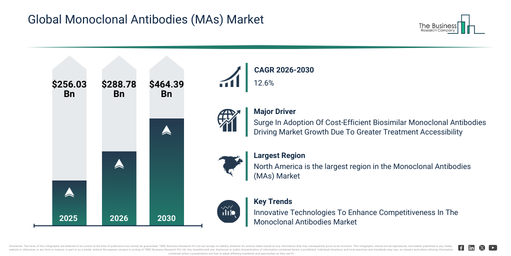
    The monoclonal antibodies (mas) market size has observed rapid expansion in recent years. It is anticipated to expand from $256.03 billion in 2025 to $288.78 billion in 2026, achieving a compound annual growth rate (CAGR) of 12.8%. The historical growth of this market stemmed from progress in antibody engineering, an increasing burden of cancer and autoimmune diseases, broader approvals for biologics, enhanced infusion center infrastructure, and higher healthcare spending.

    The market size for monoclonal antibodies (mAbs) is forecast to undergo significant expansion in the upcoming years. It is projected to reach a value of $464.39 billion by 2030, driven by a compound annual growth rate (CAGR) of 12.6%. This anticipated growth during the forecast period is primarily due to several factors, including the expanding pipelines of targeted biologics, their increasing application in chronic conditions, the growing prevalence of biosimilars, the rising acceptance of immunotherapy, and the development of more specialty clinics. Furthermore, major trends anticipated in this period involve a heightened demand for biologic-based treatments, greater utilization of monoclonal antibodies in oncology, the broadening of infusion-based treatment settings, increased adoption of humanized and fully human mAbs, and a stronger emphasis on long-term immunotherapy approaches.

    Access Your Free Sample Report For In-Depth Market Analysis:

    https://www.thebusinessresearchcompany.com/sample.aspx?id=2554&type=smp

    What Key Factors Are Shaping The Monoclonal Antibodies (MAs) Market Landscape?

    The expanding presence of economical biosimilar monoclonal antibodies is anticipated to fuel the expansion of the monoclonal antibody market. These are pharmaceutical products designed to possess characteristics akin to an already authorized biological medication. Their increased uptake stems from rising patient demand for accessible biologic treatments, the expiry of patents for prominent branded monoclonal antibodies, and favorable regulatory frameworks that promote their development and market entry. The wider acceptance of affordable biosimilar monoclonal antibodies boosts the monoclonal antibody sector by broadening access to therapies, lowering healthcare costs, and fostering competitive innovation among drug producers. For example, the World Health Organization, a Switzerland-based United Nations agency focused on global public health, indicated in February 2025 that biosimilars are approximately 60% less expensive than original biologic drugs, offering considerable cost benefits that can enhance access to vital biologic treatments. Consequently, the growing availability of economical biosimilar monoclonal antibodies is propelling the expansion of the monoclonal antibody market.

    How Is The Monoclonal Antibodies (MAs) Market Broken Down By Segment Categories?

    The monoclonal antibodies (mas) market covered in this report is segmented –

    1) By Source: Murine, Chimeric, Humanized, Human

    2) By Application: Anti-Cancer, Immunological, Anti-Infective Monoclonal Antibodies (MAs), Neuropharmacological, Cardiovascular And Cerebrovascular, Other Applications

    3) By End Users: Hospitals, Private Clinics, Research Institute

    Subsegments:

    1) By Murine: Fully Murine MAbs, Murine-Derived MAbs

    2) By Chimeric: Chimeric MAbs With Murine Variable Regions, Chimeric MAbs With Human Constant Regions

    3) By Humanized: Humanized MAbs With Minor Murine Components, Fully Humanized MAbs

    4) By Human: Fully Human MAbs, Engineered Human MAbs

    What Trends Are Affecting The Direction Of The Monoclonal Antibodies (MAs) Market?

    Prominent entities within the monoclonal antibodies market are implementing cutting-edge technologies like RenMice to secure a competitive advantage. RenMice substantially aids in the investigation of diverse antibody-based treatments, such as fully human monoclonal antibodies, bispecific antibodies, bispecific antibody-drug conjugates (BsADCs), nanobodies, fully human T-cell receptors (TCRs), and TCR-mimic antibodies. As an illustration, Biocytogen Pharmaceuticals, a China-based international biotech company that drives the research and development of new drugs with innovative technologies, unveiled the RenMice series in September 2023. This collection encompasses a selection of independently created fully human antibody mice and TCR mice, all of which possess proprietary intellectual property.

    Which Players Are Present In The Monoclonal Antibodies (MAs) Market Space?

    Major companies operating in the monoclonal antibodies (mas) market are Johnson & Johnson, Merck & Co. Inc., AbbVie Inc., Amgen Inc., Novartis International AG, Pfizer Inc., Thermo Fisher Scientific Inc., Eli Lilly and Company, Bristol-Myers Squibb Company, F. Hoffmann-La Roche Ltd., Sanofi S.A., Abbott Laboratories, Daiichi Sankyo Company Ltd., Seattle Genetics Inc., Shanghai Junshi Biosciences Co. Ltd., GenScript Biotech Corporation, Sigma-Aldrich Co. LLC, AbGenomics Inc., ADC Therapeutics SA, Agensys Inc., Alexion Pharmaceuticals Inc., ALMAC Group Ltd., Ambrx Biopharma Inc., Astellas Pharma Inc., Celgene Corporation, Celldex Therapeutics Inc., Baxter International Inc., Fresenius SE & Co. KGaA, Hikma Pharmaceuticals plc, Jiangsu Hengrui Medicine Co. Ltd., Piramal Enterprises Ltd., CD BioSciences Inc., Creative Biolabs Inc., Advanced ChemTech Inc., Tonbo Biosciences Inc., GlaxoSmithKline plc

    Get The Full Monoclonal Antibodies (MAs) Market Report:

    https://www.thebusinessresearchcompany.com/report/monoclonal-antibodies-global-market-report

    Which Region Is The Top Contributor To The Monoclonal Antibodies (MAs) Market By Share?

    North America was the largest region in the monoclonal antibodies (MAbS) market in 2025. The regions covered in the monoclonal antibodies (mas) market report are Asia-Pacific, South East Asia, Western Europe, Eastern Europe, North America, South America, Middle East, Africa.

    Request A Customized Monoclonal Antibodies (MAs) Market Report For Competitive Insights:

    https://www.thebusinessresearchcompany.com/report/monoclonal-antibodies-global-market-report

    Browse Through More Reports Similar to the Global Monoclonal Antibodies (MAs) Market 2026, By The Business Research Company

    Monoclonal Antibodies Market Report 2026

    https://www.thebusinessresearchcompany.com/report/monoclonal-antibodies-global-market-report

    Polyclonal Antibodies Market Report 2026

    https://www.thebusinessresearchcompany.com/report/polyclonal-antibodies-global-market-report

    Diagnostic Specialty Antibodies Market Report 2026

    https://www.thebusinessresearchcompany.com/report/diagnostic-specialty-antibodies-global-market-report

    Get in touch with us:

    The Business Research Company: https://www.thebusinessresearchcompany.com/

    Americas +1 310-496-7795

    Asia +44 7882 955267 & +91 8897263534

    Europe +44 7882 955267

    Email us at: marketing@tbrc.info

    Follow us on:

    LinkedIn: https://in.linkedin.com/company/the-business-research-company

    YouTube: https://www.youtube.com/channel/UC24_fI0rV8cR5DxlCpgmyFQ

    Global Market Model: https://www.thebusinessresearchcompany.com/global-market-model
  • Lung Cancer Drugs Market Forecast 2026–2030 Highlighting Expansion Across Industries

    Lung Cancer Drugs Market Forecast 2026–2030 Highlighting Expansion Across Industries

    The Business Research Company’s 2026 market reports feature enhanced tools like market attractiveness analysis, TAM assessment, and company scoring matrices, along with interactive dashboards, deeper supply chain insights, and startup coverage strengthening the depth, usability, and strategic value of insights.

    What Level Of Market Value Growth Is Predicted For The Lung Cancer Drugs Market From 2026 To 2030?

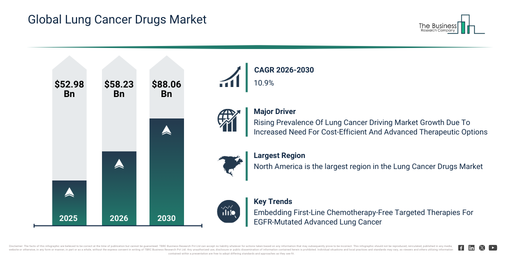
    The lung cancer drugs market has experienced substantial expansion in recent years. It is anticipated to increase from $52.98 billion in 2025 to $58.23 billion in 2026, exhibiting a compound annual growth rate (CAGR) of 9.9%. The market’s historic growth can be attributed to several factors including elevated smoking prevalence, a rise in lung cancer incidence, widespread adoption of chemotherapy, the expansion of oncology hospitals, and improved availability of generic cancer drugs.

    The lung cancer drugs market is projected to grow rapidly over the next few years, reaching $88.06 billion by 2030 at a compound annual growth rate (CAGR) of 10.9%. This expansion during the forecast period is attributed to the rise of targeted and immunotherapy drugs, increased lung cancer screening rates, growing healthcare expenditure in oncology, an aging population, and an increase in approvals for combination therapies. Significant trends anticipated for this period include the rising adoption of targeted lung cancer treatments, a greater use of combination drug regimens, an intensified focus on early-stage lung cancer therapy, the expansion of personalized treatment protocols, and an increase in hospital-based administration of oncology drugs.

    Access Your Free Sample Report For In-Depth Market Analysis:

    https://www.thebusinessresearchcompany.com/sample.aspx?id=2567&type=smp

    What Key Drivers Are Fueling The Growth Of The Lung Cancer Drugs Market?

    The expansion of the lung cancer drugs market is anticipated to be fueled by the growing incidence of lung cancer. As a critical and life-threatening malignancy, lung cancer necessitates prompt and effective therapeutic interventions, encompassing chemotherapy, targeted treatments, immunotherapies, and combination regimens to enhance patient survival rates. The increasing number of lung cancer diagnoses stems largely from environmental pollutants, carcinogen exposure, and genetic predispositions, which together contribute to cellular mutations in the lungs, even among individuals who do not smoke. This heightened prevalence of lung cancer underpins the lung cancer drugs market by stimulating the need for more advanced treatment options designed to prolong life expectancy, decelerate tumor progression, and elevate patients’ overall quality of life. For example, the American Cancer Society, a US-based voluntary health organization dedicated to eradicating cancer, estimated in January 2023 that approximately 238,340 new cases of lung cancer (comprising 117,550 in men and 120,790 in women) and about 127,070 fatalities from lung cancer (with 67,160 in men and 59,910 in women) would occur in 2023. Consequently, the escalating rate of lung cancer prevalence is a significant impetus for the growth of the lung cancer drugs market.

    Which Segment Types Are Examined In The Lung Cancer Drugs Market Segment Study?

    The lung cancer drugs market covered in this report is segmented –

    1) By Drugs: Gemzar, Paraplatin, Taxotere, Navelbine, Avastin, Tarceva, Iressa, Other Drugs

    2) By Disease Type: Small cell lung cancer (SCLC), Non-small cell lung cancer (NSCLC)

    3) By End User: Hospitals, Clinics, Other End-Users

    What Trends Are Influencing The Lung Cancer Drugs Market?

    Major companies operating in the lung cancer drugs market are prioritizing product innovation and new formulations, specifically chemotherapy-free combination therapies aimed at EGFR mutations. The goal of these innovations is to enhance treatment efficacy, reduce systemic toxicity, and improve the quality of life for patients with advanced non-small cell lung cancer (NSCLC). These advanced therapies enable precision oncology methods, offering specific inhibition of molecular pathways that drive tumor growth. For instance, in August 2024, Johnson & Johnson, a US-based pharmaceutical company, secured U.S. FDA approval for Rybrevant plus Lazcluze as a first-line, chemotherapy-free treatment for patients with EGFR-mutated advanced NSCLC. This combination therapy is designed to achieve dual inhibition of EGFR and MET pathways, providing heightened anti-tumor activity while reducing exposure to the side effects of conventional chemotherapy. This approval reflects a growing direction within the lung cancer market towards personalized, targeted treatment regimens that improve patient outcomes and experiences by decreasing the reliance on traditional chemotherapy.

    Which Players Are Part Of The Competitive Landscape Of The Lung Cancer Drugs Market?

    Major companies operating in the lung cancer drugs market are Bristol-Myers Squibb Company, Merck & Co. Inc., F. Hoffmann-La Roche Ltd., Novartis AG, Pfizer Inc., GlaxoSmithKline plc, Sanofi S.A., Sun Pharmaceutical Industries Ltd., Celgene Corporation, Mylan N.V., Ono Pharmaceutical Co. Ltd., Teva Pharmaceutical Industries Ltd., Takeda Pharmaceutical Company Limited, Ziopharm Oncology Inc., Menarini Group, AstraZeneca PLC, AbbVie Inc., Bayer AG, Boehringer Ingelheim International GmbH, Daiichi Sankyo Company Limited, Eli Lilly and Company Inc., Johnson & Johnson, Amgen Inc., Array BioPharma Inc., Astellas Pharma Inc., Clovis Oncology Inc., Eisai Co. Ltd., Exelixis Inc., Genentech Inc., Gilead Sciences Inc., Incyte Corporation, Ipsen Biopharmaceuticals Inc., Kyowa Kirin Co. Ltd., Loxo Oncology Inc., MedImmune LLC

    Get The Full Lung Cancer Drugs Market Report:

    https://www.thebusinessresearchcompany.com/report/lung-cancer-drugs-global-market-report

    Which Geographic Region Dominates The Lung Cancer Drugs Market?

    North America was the largest region in the lung cancer drugs market in 2025. Middle East is expected to be the fastest-growing region in the lung cancer drugs market during the forecast period. The regions covered in the lung cancer drugs market report are Asia-Pacific, South East Asia, Western Europe, Eastern Europe, North America, South America, Middle East, Africa.

    Request A Customized Lung Cancer Drugs Market Report For Competitive Insights:

    https://www.thebusinessresearchcompany.com/report/lung-cancer-drugs-global-market-report

    Browse Through More Reports Similar to the Global Lung Cancer Drugs Market 2026, By The Business Research Company

    Lung Cancer Drugs Market Report 2026

    https://www.thebusinessresearchcompany.com/report/lung-cancer-drugs-global-market-report

    Non Small Cell Lung Cancer Nsclc Market Report 2026

    https://www.thebusinessresearchcompany.com/report/non-small-cell-lung-cancer-nsclc-global-market-report

    Non Small Cell Lung Cancer Nsclc Market Report 2026

    https://www.thebusinessresearchcompany.com/report/non-small-cell-lung-cancer-nsclc-global-market-report

    Get in touch with us:

    The Business Research Company: https://www.thebusinessresearchcompany.com/

    Americas +1 310-496-7795

    Asia +44 7882 955267 & +91 8897263534

    Europe +44 7882 955267

    Email us at: marketing@tbrc.info

    Follow us on:

    LinkedIn: https://in.linkedin.com/company/the-business-research-company

    YouTube: https://www.youtube.com/channel/UC24_fI0rV8cR5DxlCpgmyFQ

    Global Market Model: https://www.thebusinessresearchcompany.com/global-market-model
  • Global Lumbosacral Radicular Pain Management Market Analysis For 2026–2030 With Strategic Insights

    Global Lumbosacral Radicular Pain Management Market Analysis For 2026–2030 With Strategic Insights

    The Business Research Company’s 2026 market reports feature enhanced tools like market attractiveness analysis, TAM assessment, and company scoring matrices, along with interactive dashboards, deeper supply chain insights, and startup coverage strengthening the depth, usability, and strategic value of insights.

    How Will The Market Value Of The Lumbosacral Radicular Pain Management Market Progress Between 2026 And 2030?

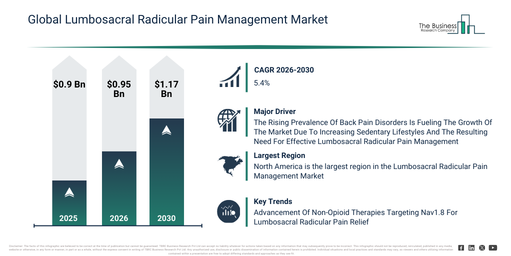
    The lumbosacral radicular pain management market has experienced robust growth in recent times. Projections indicate its expansion from $0.9 billion in 2025 to $0.95 billion in 2026, achieving a compound annual growth rate (CAGR) of 5.7%. Historically, this growth is attributable to factors such as the increasing incidence of spinal disc disorders, the common use of pharmacological solutions for pain relief, widespread hospital-based pain treatment options, a rise in orthopedic consultations, and the expansion of physical therapy services.

    The lumbosacral radicular pain management market size is anticipated to undergo substantial growth over the coming years. It is forecasted to reach $1.17 billion by 2030, growing at a compound annual growth rate (CAGR) of 5.4%. This expansion during the projection period stems from factors such as an aging population, the escalating need for long-term pain solutions, the increasing embrace of non-invasive treatments, the proliferation of home-based rehabilitation, and breakthroughs in pain diagnostics. Key trends influencing the forecast period include a heightened preference for multimodal pain management, a greater adoption of non-opioid therapies, an enlargement of physical therapy-driven interventions, a surging demand for minimally invasive pain procedures, and the integration of customized pain management plans.

    Access Your Free Sample Report For In-Depth Market Analysis:

    https://www.thebusinessresearchcompany.com/sample.aspx?id=24592&type=smp

    Which Drivers Are Supporting The Lumbosacral Radicular Pain Management Market Growth?

    The increasing occurrence of back pain conditions is anticipated to drive the expansion of the lumbosacral radicular pain management market moving forward. Back pain disorders encompass various ailments impacting the spine, muscles, or nerves of the back, leading to unease or pain. The growing incidence of these disorders is attributed to inactive lifestyles that contribute to weakened back muscles, resulting in poor posture and chronic discomfort. Lumbosacral radicular pain management focuses on alleviating nerve root irritation in the lower back, thereby diminishing pain and swelling. This approach also helps restore physical movement and enhance one’s overall well-being. For example, in June 2024, data from the Australian Institute of Health and Welfare, a government body based in Australia, revealed that in 2023, back problems were the third leading contributor to disease burden in Australia, accounting for 4.3% of the country’s total disease burden. Consequently, the increasing occurrence of back pain conditions stimulates the growth of the lumbosacral radicular pain management market.

    How Are Different Segments Classified In The Lumbosacral Radicular Pain Management Market Segment Analysis?

    The lumbosacral radicular pain management market covered in this report is segmented –

    1) By Medication: Non-Steroidal Anti-Inflammatory Drugs, Opioids, Antidepressants, Anticonvulsants, Steroids

    2) By Physical Therapy: Manual Therapy, Exercise Therapy, Electrotherapy, Thermal Therapy, Hydrotherapy

    3) By Route Of Administration: Oral, Topical

    4) By End-User: Hospital Pharmacy, Retail Pharmacy, Online Pharmacy

    Subsegments:

    1) By Non-Steroidal Anti-Inflammatory Drugs: Ibuprofen, Naproxen, Diclofenac, Celecoxib, Etoricoxib

    2) By Opioids: Tramadol, Oxycodone, Morphine, Hydrocodone, Fentanyl

    3) By Antidepressants: Amitriptyline, Nortriptyline, Duloxetine, Desvenlafaxine, Venlafaxine

    4) By Anticonvulsants: Gabapentin, Pregabalin, Carbamazepine, Lamotrigine, Topiramate

    5) By Steroids: Dexamethasone, Methylprednisolone, Prednisone, Triamcinolone, Hydrocortison

    Which Trends Are Shaping Growth In The Lumbosacral Radicular Pain Management Market?

    Leading companies in the lumbosacral radicular pain management market are concentrating on developing advanced treatments, such as investigational oral NaV1.8 pain signal inhibitors, to offer a non-opioid alternative for long-lasting pain relief. An investigational oral NaV1.8 pain signal inhibitor is a trial-stage medication designed to target the NaV1.8 sodium channel, a key pathway for transmitting pain through sensory nerves. For instance, in December 2024, Vertex Pharmaceuticals, a US-based biotech company, announced results from its Phase 2 study of suzetrigine for painful lumbosacral radiculopathy (LSR). The study met its primary endpoint, showing a statistically significant and clinically meaningful reduction in pain from baseline in the suzetrigine group. Suzetrigine was generally well tolerated, with no serious adverse events reported. Vertex plans to address the high placebo response in future Phase 3 trials to better assess the drug’s efficacy.

    Who Are The Companies Driving Activity In The Lumbosacral Radicular Pain Management Market?

    Major companies operating in the lumbosacral radicular pain management market are Pfizer Inc., Johnson & Johnson Services Inc., Bayer AG, Sanofi SA, Bristol-Myers Squibb, AstraZeneca plc, Novartis AG, GSK plc, Medtronic plc, Eli Lilly and Company, Amgen Inc, Koninklijke Philips NV, Stryker Corporation, Teva Pharmaceutical Industries Ltd, Boston Scientific Corporation, Dr Reddy’s Laboratories Ltd, NuVasive Inc., Nobel Biocare Holdings AG, Ultradent Products Inc., Nevro Corp., Zynex Inc., Eliem Therapeutics, Vertebral Technologies Inc., Semnur Pharmaceuticals Inc.

    Get The Full Lumbosacral Radicular Pain Management Market Report:

    https://www.thebusinessresearchcompany.com/report/lumbosacral-radicular-pain-management-global-market-report

    Which Region Is The Leading Market For The Lumbosacral Radicular Pain Management Market?

    North America was the largest region in the lumbosacral radicular pain management market in 2025. Asia-Pacific is expected to be the fastest-growing region in the forecast period. The regions covered in the lumbosacral radicular pain management market report are Asia-Pacific, South East Asia, Western Europe, Eastern Europe, North America, South America, Middle East, Africa.

    Request A Customized Lumbosacral Radicular Pain Management Market Report For Competitive Insights:

    https://www.thebusinessresearchcompany.com/report/lumbosacral-radicular-pain-management-global-market-report

    Browse Through More Reports Similar to the Global Lumbosacral Radicular Pain Management Market 2026, By The Business Research Company

    Pain Management Drugs Market Report 2026

    https://www.thebusinessresearchcompany.com/report/pain-management-drugs-global-market-report

    Joint Pain Injections Market Report 2026

    https://www.thebusinessresearchcompany.com/report/joint-pain-injections-global-market-report

    Topical Pain Relief Market Report 2026

    https://www.thebusinessresearchcompany.com/report/topical-pain-relief-global-market-report

    Get in touch with us:

    The Business Research Company: https://www.thebusinessresearchcompany.com/

    Americas +1 310-496-7795

    Asia +44 7882 955267 & +91 8897263534

    Europe +44 7882 955267

    Email us at: marketing@tbrc.info

    Follow us on:

    LinkedIn: https://in.linkedin.com/company/the-business-research-company

    YouTube: https://www.youtube.com/channel/UC24_fI0rV8cR5DxlCpgmyFQ

    Global Market Model: https://www.thebusinessresearchcompany.com/global-market-model
  • Molecular Targeted Therapy Market Future Trends Influencing Growth Through 2030

    Molecular Targeted Therapy Market Future Trends Influencing Growth Through 2030

    The Business Research Company’s 2026 market reports feature enhanced tools like market attractiveness analysis, TAM assessment, and company scoring matrices, along with interactive dashboards, deeper supply chain insights, and startup coverage strengthening the depth, usability, and strategic value of insights.

    What Is The Anticipated Rise In Market Value Of The Molecular Targeted Therapy Market During The Forecast Period?

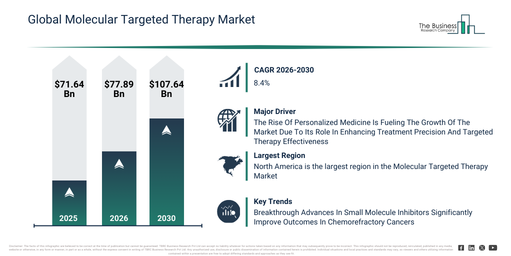
    The molecular targeted therapy market has experienced strong growth in recent years. This market is forecast to increase from $71.64 billion in 2025 to $77.89 billion in 2026, achieving a compound annual growth rate (CAGR) of 8.7%. Historically, this expansion has been driven by advancements in cancer genomics research, the development of monoclonal antibodies, a rise in oncology drug approvals, the proliferation of hospital oncology centers, and the expansion of clinical trials.

    The market size for molecular targeted therapy is forecast to exhibit substantial growth over the next few years. It is projected to expand to $107.64 billion by 2030, achieving a compound annual growth rate (CAGR) of 8.4%. This expansion during the forecast period is primarily driven by the increasing demand for personalized cancer treatment, wider adoption of next-generation sequencing, innovations in AI-driven drug discovery, the rising global oncology burden, and favorable targeted therapy reimbursement policies. Significant trends expected in this period include the broadening of precision oncology, enhanced adoption of biomarker-based therapies, the development of more targeted cancer drug pipelines, the integration of companion diagnostics, and the growing application of combination targeted therapies.

    Access Your Free Sample Report For In-Depth Market Analysis:

    https://www.thebusinessresearchcompany.com/sample.aspx?id=24609&type=smp

    Which Factors Are Influencing The Growth Of The Molecular Targeted Therapy Market?

    The anticipated expansion of the molecular targeted therapy market is primarily fueled by the growing prevalence of personalized medicine. This healthcare strategy involves tailoring treatments and preventive measures to an individual’s unique genetic makeup, lifestyle choices, and environmental exposures. The surge in personalized medicine is largely due to the increasing availability of genetic data, which facilitates the development of therapies precisely matched to individual genomes, leading to improved effectiveness and reduced adverse reactions. Personalized medicine plays a crucial role in supporting molecular targeted therapy by identifying specific genetic mutations or biomarkers within a patient’s tumor, thereby enabling the selection of treatments that directly target these abnormalities. This methodology significantly enhances treatment accuracy while minimizing damage to healthy cells. As an illustration, the Personalized Medicine Coalition, a US-based hospital and health care organization, reported in February 2024 that the FDA sanctioned 16 novel personalized treatments for patients with rare diseases in 2023, an increase from 6 approvals in 2022. Consequently, the rise of personalized medicine stands as a significant driver for the growth of the molecular targeted therapy market.

    What Are The Different Segment Types In The Molecular Targeted Therapy Market Segment Breakdown?

    The molecular targeted therapy market covered in this report is segmented –

    1) By Therapy Type: Monoclonal Antibodies, Small Molecule Inhibitors, Gene Therapy, Cell Therapy

    2) By Mode Of Administration: Oral, Injectable, Topical, Intravenous

    3) By Application: Lung Cancer, Breast Cancer, Colorectal Cancer, Leukemia, Other Applications

    4) By End-User: Hospitals, Clinics, Research Laboratories, Diagnostic Centers

    Subsegments:

    1) By Monoclonal Antibodies: Naked Monoclonal Antibodies, Conjugated Monoclonal Antibodies, Bispecific Monoclonal Antibodies

    2) By Small Molecule Inhibitors: Tyrosine Kinase Inhibitors (TKIs), Proteasome Inhibitors, Poly Adenosine Diphosphate (ADP) Ribose Polymerase (PARP) Inhibitors, Mechanistic Target Of Rapamycin (mTOR) Inhibitors

    3) By Gene Therapy: Viral Vector-Based Gene Therapy, Non-Viral Vector-Based Gene Therapy, Genome Editing

    4) By Cell Therapy: Chimeric Antigen Receptor T-Cell Therapy, T-Cell Receptor (TCR) Therapy, Tumor-Infiltrating Lymphocytes (TILs) Therapy, Dendritic Cell Therapy

    What Trends Are Influencing The Evolution Of The Molecular Targeted Therapy Market?

    Key companies operating in the molecular targeted therapy market are prioritizing the development of advanced products, such as small molecule inhibitors, to enhance patient outcomes across various cancers and chronic ailments. Small molecule inhibitors are minute compounds capable of easily penetrating cells to suppress specific proteins that drive disease. For instance, in January 2025, Amgen Inc., a US-based pharmaceutical company, introduced Lumakras (sotorasib) in conjunction with Vectibix (panitumumab), which obtained approval from the US Food and Drug Administration (FDA), a US-based government organization. This therapy is formulated for adult patients with KRAS G12C-mutated metastatic colorectal cancer who have previously received fluoropyrimidine-, oxaliplatin-, and irinotecan-based chemotherapy, as confirmed by an FDA-approved test. This authorization stems from the Phase 3 CodeBreaK 300 trial, which indicated that the combination more than doubled progression-free survival compared to the investigated standard of care, positioning it as the first targeted therapy to demonstrate such a benefit in this chemorefractory patient group.

    Who Are The Well-Known Companies In The Molecular Targeted Therapy Market?

    Major companies operating in the molecular targeted therapy market are Pfizer Inc., Merck & Co. Inc., AbbVie Inc., Sanofi S.A., Bristol-Myers Squibb Company, AstraZeneca PLC, Amgen Inc., Regeneron Pharmaceuticals, Vertex Pharmaceuticals Incorporated, Novartis AG, Incyte Corporation, Exelixis Inc., IDEAYA Biosciences Inc., Prelude Therapeutics Incorporated, Gamida Cell Ltd., Adaptimmune Therapeutics plc, Engine Biosciences Pte. Ltd., Krystal Biotech Inc., Sotio Biotech a.s., Cybrexa Therapeutics Inc.

    Get The Full Molecular Targeted Therapy Market Report:

    https://www.thebusinessresearchcompany.com/report/molecular-targeted-therapy-global-market-report

    Which Region Represents The Largest Share Of The Molecular Targeted Therapy Market?

    North America was the largest region in the molecular targeted therapy market in 2025. Asia-Pacific is expected to be the fastest-growing region in the forecast period. The regions covered in the molecular targeted therapy market report are Asia-Pacific, South East Asia, Western Europe, Eastern Europe, North America, South America, Middle East, Africa.

    Request A Customized Molecular Targeted Therapy Market Report For Competitive Insights:

    https://www.thebusinessresearchcompany.com/report/molecular-targeted-therapy-global-market-report

    Browse Through More Reports Similar to the Global Molecular Targeted Therapy Market 2026, By The Business Research Company

    Targeted Therapy Market Report 2026

    https://www.thebusinessresearchcompany.com/report/targeted-therapy-global-market-report

    Cancer Immunotherapy Drug Discovery Outsourcing Market Report 2026

    https://www.thebusinessresearchcompany.com/report/cancer-immunotherapy-drug-discovery-outsourcing-global-market-report

    Advanced Therapeutics Pharmaceutical Outsourcing Market Report 2026

    https://www.thebusinessresearchcompany.com/report/advanced-therapeutics-pharmaceutical-outsourcing-global-market-report

    Get in touch with us:

    The Business Research Company: https://www.thebusinessresearchcompany.com/

    Americas +1 310-496-7795

    Asia +44 7882 955267 & +91 8897263534

    Europe +44 7882 955267

    Email us at: marketing@tbrc.info

    Follow us on:

    LinkedIn: https://in.linkedin.com/company/the-business-research-company

    YouTube: https://www.youtube.com/channel/UC24_fI0rV8cR5DxlCpgmyFQ

    Global Market Model: https://www.thebusinessresearchcompany.com/global-market-model
  • Lumbosacral Radicular Pain Market Outlook 2026–2030 Driven By Growth Factors And Projections

    Lumbosacral Radicular Pain Market Outlook 2026–2030 Driven By Growth Factors And Projections

    The Business Research Company’s 2026 market reports feature enhanced tools like market attractiveness analysis, TAM assessment, and company scoring matrices, along with interactive dashboards, deeper supply chain insights, and startup coverage strengthening the depth, usability, and strategic value of insights.

    What Are The Market Size Estimates For The Lumbosacral Radicular Pain Market In 2026 And 2030?

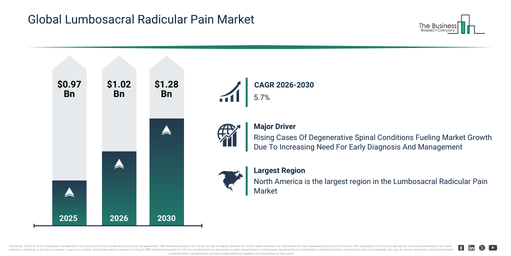
    The lumbosacral radicular pain market size has experienced significant expansion in recent years. This market is set to increase from $0.97 billion in 2025 to $1.02 billion in 2026, exhibiting a compound annual growth rate (CAGR) of 6.0%. The strong growth observed in the past can be ascribed to elements such as an aging population, the occurrence of spinal degenerative disorders, the use of opioid-based pain management, the presence of hospital pain clinics, and the volume of orthopedic surgery procedures.

    The lumbosacral radicular pain market size is projected for substantial expansion over the next few years. It is forecast to reach $1.28 billion by 2030, demonstrating a compound annual growth rate (CAGR) of 5.7%. This anticipated growth can be linked to the increased adoption of non-opioid pain therapies, the prevalence of outpatient pain procedures, the use of digital pain monitoring tools, advances in minimally invasive spine technologies, and the extension of rehabilitation programs. Prominent trends throughout the forecast period encompass a rising application of multimodal pain management, an increase in interventional spine procedures, a greater need for non-opioid therapies, the broadening of rehabilitation-based care, and the utilization of minimally invasive pain treatments.

    Access Your Free Sample Report For In-Depth Market Analysis:

    https://www.thebusinessresearchcompany.com/sample.aspx?id=24591&type=smp

    What Key Factors Are Affecting The Lumbosacral Radicular Pain Market Demand?

    The increasing incidence of degenerative spinal conditions is anticipated to fuel the expansion of the lumbosacral radicular pain market moving forward. These conditions describe a collection of ailments resulting from the progressive deterioration of the spine over time. The surge in degenerative spinal conditions arises from aging populations and lifestyle elements that heighten the likelihood of spinal wear and nerve compression, thereby increasing the necessity for diagnosis and treatment. Lumbosacral radicular pain plays a role in pinpointing underlying degenerative spinal issues by signaling nerve root irritation or compression, which aids in clinical assessment and management. For instance, in May 2023, as per the University of Sydney, an Australia-based public university, it is projected that over 800 million people globally will experience back discomfort by 2050. Hence, the rising prevalence of degenerative spinal conditions is a primary factor driving the growth of the lumbosacral radicular pain market.

    How Is The Lumbosacral Radicular Pain Market Categorized Across Its Segment Groups?

    The lumbosacral radicular pain market covered in this report is segmented –

    1) By Treatment Type: Pharmacological Treatment, Non-Pharmacological Treatment, Interventional Procedures

    2) By Route Of Administration: Oral, Topical, Injectable, Implantable

    3) By Distribution Channel: Hospital Pharmacies, Retail Pharmacies, Online Pharmacies

    4) By End User: Hospitals, Specialty Clinics, Rehabilitation Centers, Homecare Settings

    Subsegments:

    1) By Pharmacological Treatment: Nonsteroidal Anti-Inflammatory Drugs, Opioids, Anticonvulsants, Antidepressants, Muscle Relaxants, Corticosteroids

    2) By Non-Pharmacological Treatment: Physical Therapy, Exercise And Rehabilitation Programs, Chiropractic Care, Acupuncture, Cognitive Behavioral Therapy, Heat And Cold Therapy

    3) By Interventional Procedures: Epidural Steroid Injections, Radiofrequency Ablation, Nerve Root Blocks, Spinal Cord Stimulation, Minimally Invasive Decompression, Intrathecal Drug Delivery Systems

    Which Firms Are Influencing Competition In The Lumbosacral Radicular Pain Market?

    Major companies operating in the lumbosacral radicular pain market are Medtronic plc, Boston Scientific Corporation, Nevro Corp., SPR Therapeutics, Saluda Medical Pty Ltd., Nalu Medical Inc., Abbott Neuromodulation, Stryker Corporation, Zimmer Biomet Holdings Inc., Globus Medical Inc., NuVasive Inc., Orthofix Medical Inc., B. Braun Melsungen AG, Teleflex Incorporated, Merit Medical Systems Inc., Avanos Medical Inc., Halyard Health Inc., Terumo Corporation, Baxter International Inc., Fresenius Kabi AG, Hikma Pharmaceuticals PLC, Pfizer CentreOne, Teva Pharmaceutical Industries Ltd., Mallinckrodt Pharmaceuticals, Sun Pharmaceutical Industries Ltd., Lupin Limited, Zydus Lifesciences Ltd., Cipla Ltd., Dr. Reddy’s Laboratories Ltd., Amneal Pharmaceuticals Inc., Perrigo Company plc

    Get The Full Lumbosacral Radicular Pain Market Report:

    https://www.thebusinessresearchcompany.com/report/lumbosacral-radicular-pain-global-market-report

    Where Is The Lumbosacral Radicular Pain Market Primarily Concentrated By Region?

    North America was the largest region in the lumbosacral radicular pain market in 2025. The regions covered in the lumbosacral radicular pain market report are Asia-Pacific, South East Asia, Western Europe, Eastern Europe, North America, South America, Middle East, Africa.

    Request A Customized Lumbosacral Radicular Pain Market Report For Competitive Insights:

    https://www.thebusinessresearchcompany.com/report/lumbosacral-radicular-pain-global-market-report

    Browse Through More Reports Similar to the Global Lumbosacral Radicular Pain Market 2026, By The Business Research Company

    Joint Pain Injections Market Report 2026

    https://www.thebusinessresearchcompany.com/report/joint-pain-injections-global-market-report

    Neuropathic Pain Market Report 2026

    https://www.thebusinessresearchcompany.com/report/neuropathic-pain-global-market-report

    Chronic Pain Market Report 2026

    https://www.thebusinessresearchcompany.com/report/chronic-pain-global-market-report

    Get in touch with us:

    The Business Research Company: https://www.thebusinessresearchcompany.com/

    Americas +1 310-496-7795

    Asia +44 7882 955267 & +91 8897263534

    Europe +44 7882 955267

    Email us at: marketing@tbrc.info

    Follow us on:

    LinkedIn: https://in.linkedin.com/company/the-business-research-company

    YouTube: https://www.youtube.com/channel/UC24_fI0rV8cR5DxlCpgmyFQ

    Global Market Model: https://www.thebusinessresearchcompany.com/global-market-model
  • Modular Fill-Finish Micro-Factory Market Growth Patterns And Forecast Outlook Through 2030

    Modular Fill-Finish Micro-Factory Market Growth Patterns And Forecast Outlook Through 2030

    The Business Research Company’s 2026 market reports feature enhanced tools like market attractiveness analysis, TAM assessment, and company scoring matrices, along with interactive dashboards, deeper supply chain insights, and startup coverage strengthening the depth, usability, and strategic value of insights.

    How Is The Market Size Of The Modular Fill-Finish Micro-Factory Market Expected To Scale Between 2026 And 2030?

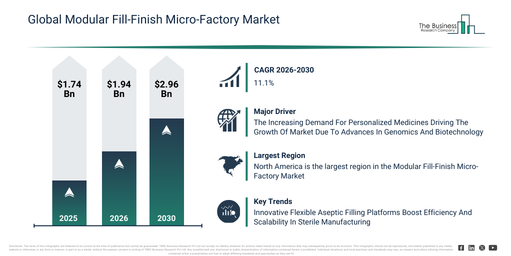
    The modular fill-finish micro-factory market has experienced swift expansion in recent years. This market is projected to grow from $1.74 billion in 2025 to $1.94 billion in 2026, showcasing a compound annual growth rate (CAGR) of 11.4%. Historically, its growth has been influenced by the expansion of biologics manufacturing, increasing vaccine production requirements, the broadening of contract manufacturing services, rising demand for sterile injectable drugs, and the initial adoption of modular production concepts.

    The modular fill-finish micro-factory market is anticipated to undergo significant expansion in the coming years. Its value is projected to climb to $2.96 billion by 2030, demonstrating a compound annual growth rate (CAGR) of 11.1%. This progression during the forecast period stems from increased capital allocation to decentralized manufacturing, an escalating requirement for facilities capable of producing rapid-response vaccines, the broadening scope of personalized medicine fabrication, an intensified concentration on operational versatility, and the increasing acceptance of modular setups by regulatory bodies. Noteworthy trends for the forecast period encompass a wider rollout of modular sterile manufacturing units, the growing adoption of robotic fill-finish systems, an escalating need for expedited manufacturing scale-up, the growth of prefabricated GMP facilities, and a sharpened emphasis on adaptable production capacities.

    Access Your Free Sample Report For In-Depth Market Analysis:

    https://www.thebusinessresearchcompany.com/sample.aspx?id=29131&type=smp

    What Leading Drivers Are Supporting The Modular Fill-Finish Micro-Factory Market Expansion?

    The escalating need for personalized medicines is projected to fuel the expansion of the modular fill-finish micro-factory market moving forward. Personalized medicine defines a medical methodology that customizes the prevention, diagnosis, and treatment of illnesses according to an individual’s genetic, environmental, and lifestyle elements. The heightened desire for personalized medicines stems from breakthroughs in genomics and biotechnology, enabling treatments specifically tailored to a person’s genetic makeup for enhanced effectiveness and safety. Modular fill-finish micro-factories facilitate the production of personalized medicines by allowing for adaptable, small-scale, and rapid manufacturing processes designed to suit individual patient requirements. For instance, in February 2024, as per the Personalized Medicine Coalition, a US-based non-profit organization, in 2023, the FDA approved 16 new personalized therapies for patients with rare diseases, indicating a considerable increase from the six approvals recorded in 2022. Thus, the rising demand for personalized medicines is propelling the growth of the modular fill-finish micro-factory market.

    Which Segment Classifications Are Used In The Modular Fill-Finish Micro-Factory Market Segment Analysis?

    The modular fill-finish micro-factory market covered in this report is segmented –

    1) By Product Type: Automated Modular Fill-Finish Systems, Semi-Automated Modular Fill-Finish Systems, Manual Modular Fill-Finish Systems

    2) By Scale: Clinical, Commercial

    3) By Application: Pharmaceuticals, Biotechnology, Contract Manufacturing Organizations, Other Applications

    4) By End-User: Pharmaceutical Companies, Biotech Companies, Research Institutes, Other End-Users

    Subsegments:

    1) By Automated Modular Fill-Finish Systems: Robotic Filling Units, Automated Capping Units, Automated Labeling Units, Sterile Transfer Systems, Integrated Packaging Modules

    2) By Semi-Automated Modular Fill-Finish Systems: Semi-Automated Filling Machines, Semi-Automated Capping Machines, Semi-Automated Labeling Machines, Semi-Automated Transfer Systems, Partially Integrated Packaging Units

    3) By Manual Modular Fill-Finish Systems: Manual Filling Stations, Manual Capping Stations, Manual Labeling Stations, Manual Transfer Tools, Manual Packaging Workstations

    Which Trends Are Impacting The Progress Of The Modular Fill-Finish Micro-Factory Market?

    Leading companies in the modular fill-finish micro-factory market are concentrating on developing innovative solutions, such as flexible and interchangeable aseptic filling platforms, to improve production efficiency, precision, and scalability in sterile manufacturing. These advanced systems are engineered to handle multiple container types and batch sizes within a sterile environment, enabling rapid configuration changes to support diverse product and production needs. For example, in February 2025, Recipharm AB, a Sweden-based contract development and manufacturing organization, introduced a new modular sterile filling system. This system is designed to support process development, pilot-scale, and clinical supply manufacturing, operating within a Grade A isolator and fully complying with Good Manufacturing Practice (GMP) standards to facilitate a completely GMP-compliant aseptic filling process. Optimized for small-batch production, ranging from 500 to 50,000 units per batch, it offers exceptional flexibility through interchangeable modules compatible with various product types, including syringes and vials. Its cost-efficient design limits high-value product loss to less than 500 mL, making it particularly suitable for clinical development projects in rare diseases, cell and gene therapies, and other advanced modalities.

    Which Firms Are Contributing To The Modular Fill-Finish Micro-Factory Market Ecosystem?

    Major companies operating in the modular fill-finish micro-factory market are Groninger And Co. GmbH, Lonza Group AG, Sartorius AG, Turner Industries Group LLC, ATS Life Sciences Systems Inc., IMA Group S.p.A., Recipharm AB, Syntegon Technology GmbH, Truking Technology Limited, Optima Packaging Group GmbH, Marchesini Group SPA, Tofflon Science and Technology Co. Ltd., Comecer S.p.A., G-CON Manufacturing Inc., Aseptic Technologies S.A., Steriline S.r.l., Colanar AG, Litek Pharma Solutions Co. Ltd., SKAN AG, Modular Mobile Facility.

    Get The Full Modular Fill-Finish Micro-Factory Market Report:

    https://www.thebusinessresearchcompany.com/report/modular-fill-finish-micro-factory-global-market-report

    Which Geographic Region Dominates The Modular Fill-Finish Micro-Factory Market?

    North America was the largest region in the modular fill-finish micro-factory market in 2025. Asia-Pacific is expected to be the fastest-growing region in the forecast period. The regions covered in the modular fill-finish micro-factory market report are Asia-Pacific, South East Asia, Western Europe, Eastern Europe, North America, South America, Middle East, Africa.

    Request A Customized Modular Fill-Finish Micro-Factory Market Report For Competitive Insights:

    https://www.thebusinessresearchcompany.com/report/modular-fill-finish-micro-factory-global-market-report

    Browse Through More Reports Similar to the Global Modular Fill-Finish Micro-Factory Market 2026, By The Business Research Company

    Fill Finish Manufacturing Market Report 2026

    https://www.thebusinessresearchcompany.com/report/fill-finish-manufacturing-global-market-report

    Fill Finish Pharmaceutical Contract Manufacturing Market Report 2026

    https://www.thebusinessresearchcompany.com/report/fill-finish-pharmaceutical-contract-manufacturing-global-market-report

    Filling Machines Market Report 2026

    https://www.thebusinessresearchcompany.com/report/filling-machines-global-market-report

    Get in touch with us:

    The Business Research Company: https://www.thebusinessresearchcompany.com/

    Americas +1 310-496-7795

    Asia +44 7882 955267 & +91 8897263534

    Europe +44 7882 955267

    Email us at: marketing@tbrc.info

    Follow us on:

    LinkedIn: https://in.linkedin.com/company/the-business-research-company

    YouTube: https://www.youtube.com/channel/UC24_fI0rV8cR5DxlCpgmyFQ

    Global Market Model: https://www.thebusinessresearchcompany.com/global-market-model
  • Losartan Potassium Active Pharmaceutical Ingredient (API) Market Developments And Opportunities Across 2026–2030

    Losartan Potassium Active Pharmaceutical Ingredient (API) Market Developments And Opportunities Across 2026–2030

    The Business Research Company’s 2026 market reports feature enhanced tools like market attractiveness analysis, TAM assessment, and company scoring matrices, along with interactive dashboards, deeper supply chain insights, and startup coverage strengthening the depth, usability, and strategic value of insights.

    What Expansion In Market Value Is Forecasted For The Losartan Potassium Active Pharmaceutical Ingredient (API) Market Between 2026 And 2030?

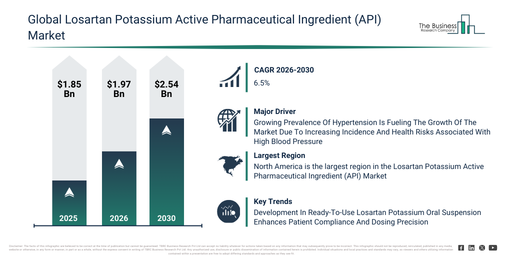
    The losartan potassium active pharmaceutical ingredient (api) market size has experienced robust growth in recent years. It is projected to increase from $1.85 billion in 2025 to $1.97 billion in 2026, exhibiting a compound annual growth rate (CAGR) of 6.5%. The historical expansion of this market can be attributed to the rising prevalence of hypertension, the expiration of branded drug patents, the growth of generic pharmaceutical manufacturing, an increased demand for cardiovascular drugs, and the broader expansion of global pharmaceutical supply chains.

    The losartan potassium active pharmaceutical ingredient (api) market size is projected to experience substantial growth in the coming years, reaching $2.54 billion by 2030, driven by a compound annual growth rate (CAGR) of 6.5%. This anticipated expansion is fueled by factors such as the increasing burden of cardiovascular disease, heightened demand from developing markets, continuous advancements in API manufacturing technologies, a growing emphasis on sustainable pharmaceutical production, and the broadening applications in chronic kidney disease treatment. Key trends observed during this period involve a surge in demand for generic losartan formulations, the expanding adoption of continuous flow API manufacturing methods, a greater focus on developing cost-efficient antihypertensive APIs, the wider use of losartan API in combination therapies, and an increased commitment to producing regulatory-compliant APIs.

    Access Your Free Sample Report For In-Depth Market Analysis:

    https://www.thebusinessresearchcompany.com/sample.aspx?id=24285&type=smp

    Which Primary Drivers Are Impacting The Losartan Potassium Active Pharmaceutical Ingredient (API) Market Growth?

    The increasing occurrence of high blood pressure is anticipated to boost expansion in the losartan potassium active pharmaceutical ingredient (API) market moving ahead. Hypertension describes a state characterized by consistently elevated blood pressure, potentially increasing the risk of cardiovascular disease, strokes, and various other serious health issues. The rising frequency of hypertension is associated with diets high in sodium and convenience foods, contributing to water retention and greater stress on the heart. Losartan potassium assists in managing hypertension through its action of inhibiting angiotensin II, a hormone responsible for constricting blood vessels. This medication aids in relaxing and expanding these vessels, thereby reducing blood pressure and lessening the burden on the heart. As an illustration, in September 2025, data from the World Health Organization (WHO), the worldwide health body headquartered in Geneva, Switzerland, indicated that approximately 1.4 billion adults between 30 and 79 years old suffered from hypertension in 2024, an increase from roughly 1.3 billion adults in 2022. Consequently, the expanding occurrence of hypertension is propelling the development of the losartan potassium active pharmaceutical ingredient (API) market.

    How Are Segments Identified Within The Losartan Potassium Active Pharmaceutical Ingredient (API) Market Segment Framework?

    The losartan potassium active pharmaceutical ingredient (api) market covered in this report is segmented –

    1) By Product Type: Tablet, Capsule, Other Product Types

    2) By Production Method: Synthetic Route, Continuous Flow Production

    3) By Distribution Channel: Online Pharmacies, Hospital Pharmacies, Retail Pharmacies, Other Distribution Channels

    4) By Application: Hypertension, Heart Failure, Chronic Kidney Diseases, Other Applications

    5) By End-User: Hospitals, Clinics, Pharmaceutical Companies

    Subsegments:

    1) By Tablet: Immediate-Release Tablets, Extended-Release Tablets, Film-Coated Tablets, Orally Disintegrating Tablets

    2) By Capsule: Hard Gelatin Capsules, Modified-Release Capsules

    3) By Other Product Types: Bulk Active Pharmaceutical Ingredient (API) Powder, Granules For Suspension, Pre-Formulated Intermediates

    What Trends Are Influencing The Evolution Of The Losartan Potassium Active Pharmaceutical Ingredient (API) Market?

    Leading companies in the losartan potassium active pharmaceutical ingredient (API) market are focused on developing innovative products and securing approvals, such as losartan potassium oral suspension, to improve patient adherence and expand therapeutic applications. Losartan potassium oral suspension is a liquid form of the medication losartan potassium, designed for individuals who have difficulty swallowing tablets. For instance, in March 2025, Scienture Holdings Inc., a US-based biopharmaceutical company, received Food and Drug Administration (FDA) approval for Arbli. Arbli is a ready-to-use liquid formulation indicated for hypertension, for reducing stroke risk in hypertensive patients with left ventricular hypertrophy, and for diabetic nephropathy in type 2 diabetes patients. It allows for precise dosing without compounding and is supplied as a 165 mL peppermint-flavored suspension (10 mg/mL) with an 18-month shelf life at room temperature.

    Who Are The Companies Competing Within The Losartan Potassium Active Pharmaceutical Ingredient (API) Market?

    Major companies operating in the losartan potassium active pharmaceutical ingredient (api) market are Teva Pharmaceutical Industries Ltd, Sun Pharmaceutical Industries Ltd, Aurobindo Pharma Ltd, Dr. Reddy’s Laboratories, Cadila Pharmaceuticals Ltd, Lupin Ltd, Zydus Lifesciences Ltd, Alkem Laboratories Ltd, IPCA Laboratories Ltd, Alembic Pharmaceuticals Ltd, Granules India Limited, Vasudha Pharma Chem Ltd, IOL Chemicals and Pharmaceuticals Limited, Unichem Laboratories Ltd, Global Pharma Tek, Hetero Drugs Ltd, Manus Aktteva Biopharma LLP, Wellona Pharma, Atom pharma, Sinoway Industrial Co. Ltd, Cerata Pharmaceuticals LLP

    Get The Full Losartan Potassium Active Pharmaceutical Ingredient (API) Market Report:

    https://www.thebusinessresearchcompany.com/report/losartan-potassium-active-pharmaceutical-ingredient-api-global-market-report

    Which Region Has The Greatest Market Share In The Losartan Potassium Active Pharmaceutical Ingredient (API) Market?

    North America was the largest region in the losartan potassium API market in 2025. Asia-Pacific is expected to be the fastest-growing region in the forecast period. The regions covered in the losartan potassium active pharmaceutical ingredient (api) market report are Asia-Pacific, South East Asia, Western Europe, Eastern Europe, North America, South America, Middle East, Africa.

    Request A Customized Losartan Potassium Active Pharmaceutical Ingredient (API) Market Report For Competitive Insights:

    https://www.thebusinessresearchcompany.com/report/losartan-potassium-active-pharmaceutical-ingredient-api-global-market-report

    Browse Through More Reports Similar to the Global Losartan Potassium Active Pharmaceutical Ingredient (API) Market 2026, By The Business Research Company

    Active Pharmaceutical Ingredients Market Report 2026

    https://www.thebusinessresearchcompany.com/report/active-pharmaceutical-ingredients-global-market-report

    Pharmaceuticals Market 2026

    https://www.thebusinessresearchcompany.com/report/pharmaceuticals-market

    Veterinary Active Pharmaceutical Ingredients Manufacturing Market Report 2026

    https://www.thebusinessresearchcompany.com/report/veterinary-active-pharmaceutical-ingredients-manufacturing-global-market-report

    Get in touch with us:

    The Business Research Company: https://www.thebusinessresearchcompany.com/

    Americas +1 310-496-7795

    Asia +44 7882 955267 & +91 8897263534

    Europe +44 7882 955267

    Email us at: marketing@tbrc.info

    Follow us on:

    LinkedIn: https://in.linkedin.com/company/the-business-research-company

    YouTube: https://www.youtube.com/channel/UC24_fI0rV8cR5DxlCpgmyFQ

    Global Market Model: https://www.thebusinessresearchcompany.com/global-market-model
  • Minimal Residual Disease Testing Market Insights On Growth Drivers, Trends, And Opportunities

    Minimal Residual Disease Testing Market Insights On Growth Drivers, Trends, And Opportunities

    The Business Research Company’s 2026 market reports feature enhanced tools like market attractiveness analysis, TAM assessment, and company scoring matrices, along with interactive dashboards, deeper supply chain insights, and startup coverage strengthening the depth, usability, and strategic value of insights.

    What Level Of Market Value Growth Is Predicted For The Minimal Residual Disease Testing Market From 2026 To 2030?

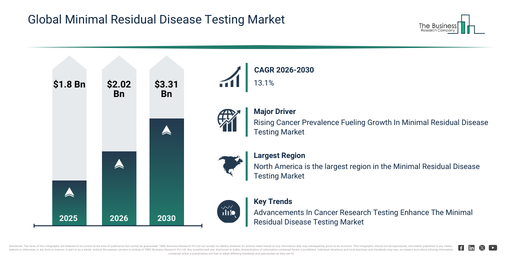
    The minimal residual disease testing market has experienced substantial expansion in recent years. It is projected to increase from $1.8 billion in 2025 to $2.02 billion in 2026, exhibiting a compound annual growth rate (CAGR) of 12.5%. The historical growth of this market can be attributed to the rising prevalence of hematological malignancies, advancements in molecular diagnostic technologies, heightened awareness about minimal residual disease, increased adoption of precision medicine, and supportive government healthcare initiatives.

    The minimal residual disease testing market is projected to experience substantial expansion in the coming years. It is anticipated to reach $3.31 billion by 2030, demonstrating a compound annual growth rate (CAGR) of 13.1%. This growth during the forecast period can be attributed to factors such as technological progress in nGS and digital PCR, increased funding for cancer research, growing partnerships between diagnostic and pharmaceutical firms, the escalating need for personalized treatment oversight, and the development of healthcare infrastructure in emerging markets. Key trends anticipated for this period encompass the widespread adoption of liquid biopsy, customized cancer monitoring, enhancements in early detection and prognosis, the incorporation of molecular diagnostics, and the broadening of oncology research.

    Access Your Free Sample Report For In-Depth Market Analysis:

    https://www.thebusinessresearchcompany.com/sample.aspx?id=9970&type=smp

    Which Key Factors Are Driving The Minimal Residual Disease Testing Market Growth?

    The escalating incidence of cancer is projected to propel the expansion of the minimal residual disease testing market moving forward. Cancer describes a state where certain body cells multiply uncontrollably and spread to other areas of the body. Minimal residual disease testing, a highly sensitive technique for identifying cancer cells in the human body, is primarily utilized for detecting cancer stages. This capability assists cancer patients in preventing the disease at an early stage, thereby boosting the minimal residual disease testing market. For instance, in January 2023, the National Institutes of Health (NIH), a U.S.-based government agency, reported that 1,958,310 new cancer cases and 609,820 cancer deaths occurred in the United States during 2023. Consequently, the increasing prevalence of cancer is a significant driver for the growth of the minimal residual disease testing market.

    How Is The Minimal Residual Disease Testing Market Organized By Segment Classification?

    The minimal residual disease testing market covered in this report is segmented –

    1) By Test Type: DNA – Based Test, RNA- Based Test, Immunological Test

    2) By Technology: Flow Cytometry, Polymerase Chain Reaction (PCR), Next-Generation Sequencing (NGS), Other Technologies

    3) By Application: Hematological Malignancies, Leukemia, Lymphoma, Solid Tumors, Other Application

    4) By End User: Hospitals And Specialty Clinics, Diagnostic Laboratories, Academic And Research Institutes, Other End Users

    Subsegments:

    1) By DNA-Based Test: Polymerase Chain Reaction (PCR) Tests, Next-Generation Sequencing (NGS), Digital PCR

    2) By RNA-Based Test: Reverse Transcription PCR (RT-PCR), RNA Sequencing, Quantitative PCR (qPCR)

    3) By Immunological Test: Flow Cytometry, Enzyme-Linked Immunosorbent Assay (ELISA), Immunohistochemistry

    What Trends Are Transforming The Minimal Residual Disease Testing Market?

    Leading firms within the minimal residual disease testing market are introducing cancer research testing solutions designed to boost detection sensitivity, refine treatment monitoring, and further precision medicine strategies for improved patient results. The IDT Archer FUSIONPlex Core Solid Tumor Panel is a targeted next-generation sequencing assay employed for identifying gene fusions and mutations in solid tumors, thereby supporting precision oncology and choices regarding treatment. For example, in April 2023, Integrated DNA Technologies (IDT), a US-based genomic solutions provider, introduced the IDT Archer FUSIONPlex Core Solid Tumor Panel, an improved cancer research testing solution that now provides broadened and optimized coverage for single nucleotide variants (SNVs) and indels. This RNA-based sequencing assay streamlines the detection of fusions and variant calling in solid tumors, requiring only a single sample input and presenting researchers with a scalable, user-friendly option that conserves time, resources, and expenses.

    Who Are The Industry Participants Involved In The Minimal Residual Disease Testing Market?

    Major companies operating in the minimal residual disease testing market are Natera Inc., Guardant Health Inc., Laboratory Corporation of America Holdings, QIAGEN NV, F. Hoffmann-La Roche Ltd., Bio-Techne Corporation, Bio-Rad Laboratories Inc., Sysmex Corporation, Exact Sciences Corporation, GRAIL LLC, Veracyte Inc., Cergentis B.V, Mdxhealth SA, NeoGenomics Laboratories Inc., Adaptive Biotechnologies, Thermo Fisher Scientific Inc., Siemens Healthineers AG, PerkinElmer Inc., Agilent Technologies Inc., ArcherDx Inc., Asuragen Inc., Becton Dickinson and Company, Cepheid Inc., Fluidigm Corporation, Illumina Inc., Invitae Corporation, Luminex Corporation, Menarini Silicon Biosystems S.p.A.

    Get The Full Minimal Residual Disease Testing Market Report:

    https://www.thebusinessresearchcompany.com/report/minimal-residual-disease-testing-global-market-report

    Which Region Is The Leading Market For The Minimal Residual Disease Testing Market?

    North America was the largest region in the minimal residual disease testing market in 2025. The regions covered in the minimal residual disease testing market report are Asia-Pacific, South East Asia, Western Europe, Eastern Europe, North America, South America, Middle East, Africa.

    Request A Customized Minimal Residual Disease Testing Market Report For Competitive Insights:

    https://www.thebusinessresearchcompany.com/report/minimal-residual-disease-testing-global-market-report

    Browse Through More Reports Similar to the Global Minimal Residual Disease Testing Market 2026, By The Business Research Company

    Minimal Residual Disease Testing Market Report 2026

    https://www.thebusinessresearchcompany.com/report/minimal-residual-disease-testing-global-market-report

    Rare Disease Diagnostics Market Report 2026

    https://www.thebusinessresearchcompany.com/report/rare-disease-diagnostics-global-market-report

    Infectious Disease Diagnostics Testing Market Report 2026

    https://www.thebusinessresearchcompany.com/report/infectious-disease-diagnostics-testing-global-market-report

    Get in touch with us:

    The Business Research Company: https://www.thebusinessresearchcompany.com/

    Americas +1 310-496-7795

    Asia +44 7882 955267 & +91 8897263534

    Europe +44 7882 955267

    Email us at: marketing@tbrc.info

    Follow us on:

    LinkedIn: https://in.linkedin.com/company/the-business-research-company

    YouTube: https://www.youtube.com/channel/UC24_fI0rV8cR5DxlCpgmyFQ

    Global Market Model: https://www.thebusinessresearchcompany.com/global-market-model