Category: Pharmaceuticals

  • Multiple Myeloma Drugs Market Growth Analysis 2026–2030 Highlighting Innovation And Competitive Landscape

    Multiple Myeloma Drugs Market Growth Analysis 2026–2030 Highlighting Innovation And Competitive Landscape

    The Business Research Company’s 2026 market reports feature enhanced tools like market attractiveness analysis, TAM assessment, and company scoring matrices, along with interactive dashboards, deeper supply chain insights, and startup coverage strengthening the depth, usability, and strategic value of insights.

    What Expansion In Market Value Is Forecasted For The Multiple Myeloma Drugs Market Between 2026 And 2030?

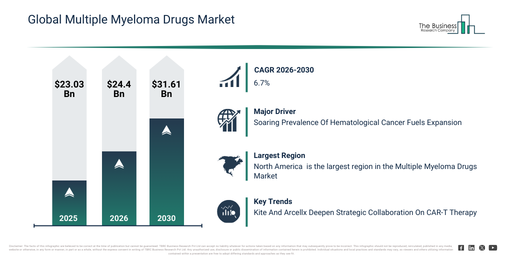
    The multiple myeloma drugs market has experienced robust expansion in recent years. It is projected to increase from $23.03 billion in 2025 to $24.4 billion by 2026, achieving a compound annual growth rate (CAGR) of 6.0%. The historical growth of this market stemmed from several factors, including the increasing prevalence of multiple myeloma, the approval of novel immunomodulatory drugs, rising awareness about plasma cell cancers, the development of proteasome inhibitors, and the expansion of hospital pharmacy networks.

    The multiple myeloma drugs market is projected to experience substantial expansion over the coming years, set to reach a valuation of $31.61 billion by 2030, exhibiting a compound annual growth rate (CAGR) of 6.7%. Factors contributing to this anticipated growth include the increasing adoption of precision medicine, heightened investment in biologic therapies, the growing geriatric population, the widening reach of online pharmacy distribution, and breakthroughs in monoclonal antibody treatments. Key trends expected during the forecast period encompass the development of personalized therapies, the use of combination drug regimens, a focus on bone health management in multiple myeloma, advancements in targeted drug delivery systems, and the expansion of clinical trials.

    Access Your Free Sample Report For In-Depth Market Analysis:

    https://www.thebusinessresearchcompany.com/sample.aspx?id=11943&type=smp

    Which Major Drivers Are Influencing The Expansion Of The Multiple Myeloma Drugs Market?

    The rising occurrence of hematological cancer is anticipated to fuel the expansion of the multiple myeloma drugs market in the future. These types of cancers originate in tissues responsible for blood formation, such as bone marrow, or within immune system cells, encompassing conditions like leukemia, lymphoma, and multiple myeloma, among others. Medications for multiple myeloma frequently manage various myeloma by eradicating and curbing the proliferation of cancer cells. This is achieved by inhibiting cell division through the activation of multiple enzymatic processes, while also aiding in maintaining bone strength and alleviating discomfort in weakening bone. As an illustration, in January 2023, data from the American Cancer Society (ACS), a US-based health body focused on cancer eradication, reported approximately 59,610 new diagnoses of leukemia, alongside about 20,380 instances of acute myeloid leukemia (AML). Furthermore, the overall fatalities linked to leukemia reached 23,710. Consequently, the expanding incidence of hematological cancer is propelling the growth of the multiple myeloma drugs market.

    Which Segments Define The Multiple Myeloma Drugs Market Segment Structure?

    The multiple myeloma drugs market covered in this report is segmented –

    1) By Drug Type: Immunomodulatory Drugs, Proteasome Inhibitors, Histone Deacetylase Inhibitors, Monoclonal Antibody Drugs, Steroids, Other Drug Types

    2) By Therapy: Targeted Therapy, Biologic Therapy, Chemotherapy, Other Therapies

    3) By Distribution Channel: Hospital Pharmacies, Retail Pharmacies, Online Pharmacies, Other Distribution Channels

    4) By End-User: Men, Women

    Subsegments:

    1) By Immunomodulatory Drugs: Lenalidomide, Thalidomide, Pomalidomide

    2) By Proteasome Inhibitors: Bortezomib, Carfilzomib, Ixazomib

    3) By Histone Deacetylase Inhibitors: Panobinostat, Romidepsin

    4) By Monoclonal Antibody Drugs: Daratumumab, Elotuzumab, Isatuximab

    5) By Steroids: Dexamethasone, Prednisone

    6) By Other Drug Types: Alkylating Agents, Antimetabolites, New Experimental Drugs

    What Trends Are Transforming The Multiple Myeloma Drugs Market?

    Leading companies in the multiple myeloma drug market are enhancing their collaborative strategies for co-developing cell therapies, broadening their partnerships to accelerate the advancement and commercialization of next-generation CAR T products. These strategic alliances facilitate the sharing of resources, mitigate risks, and enable faster expansion for novel therapies. For example, in May 2024, Kite Pharma, a US-based biopharmaceutical company, and Arcellx, Inc., a US-based clinical-stage biotechnology company, provided important operational updates for their collaborative BCMA CAR T therapy, anitocabtagene autoleucel (anito cel). The companies presented the design of a global Phase 3 trial, named iMMagine 3, which will assess anito cel in patients with relapsed or refractory multiple myeloma who have previously undergone treatment with both an immunomodulatory drug (IMiD) and an anti-CD38 monoclonal antibody. This trial is projected to enroll approximately 450 patients globally.

    Who Are The Established Players Within The Multiple Myeloma Drugs Market?

    Major companies operating in the multiple myeloma drugs market are Pfizer Inc., Johnson & Johnson Pvt. Ltd, Merck & Co. Inc., AbbVie Inc., Roche Holding AG, Novartis AG, Bristol-Myers Squibb Company, Takeda Pharmaceutical Company Limited, Eli Lilly and Company, Kite Pharma Inc, Amgen Inc., Teva Pharmaceutical Industries Ltd., Cipla Ltd., ONO Pharmaceutical Co. Ltd., BieGene Ltd., Onyx Pharmaceuticals Inc., Karyopharm Therapeutics Inc., Poseida Therapeutics Inc., ImmunoGen Inc., PharmaMar SA

    Get The Full Multiple Myeloma Drugs Market Report:

    https://www.thebusinessresearchcompany.com/report/multiple-myeloma-drugs-global-market-report

    Which Geographic Region Dominates The Multiple Myeloma Drugs Market?

    North America was the largest region in the multiple myeloma drugs market in 2025. The regions covered in the multiple myeloma drugs market report are Asia-Pacific, South East Asia, Western Europe, Eastern Europe, North America, South America, Middle East, Africa.

    Request A Customized Multiple Myeloma Drugs Market Report For Competitive Insights:

    https://www.thebusinessresearchcompany.com/report/multiple-myeloma-drugs-global-market-report

    Browse Through More Reports Similar to the Global Multiple Myeloma Drugs Market 2026, By The Business Research Company

    Multiple Myeloma Drugs Market Report 2026

    https://www.thebusinessresearchcompany.com/report/multiple-myeloma-drugs-global-market-report

    Multiple Myeloma Market Report 2026

    https://www.thebusinessresearchcompany.com/report/multiple-myeloma-global-market-report

    Myeloproliferative Disorders Drugs Market Report 2026

    https://www.thebusinessresearchcompany.com/report/myeloproliferative-disorders-drugs-global-market-report

    Get in touch with us:

    The Business Research Company: https://www.thebusinessresearchcompany.com/

    Americas +1 310-496-7795

    Asia +44 7882 955267 & +91 8897263534

    Europe +44 7882 955267

    Email us at: marketing@tbrc.info

    Follow us on:

    LinkedIn: https://in.linkedin.com/company/the-business-research-company

    YouTube: https://www.youtube.com/channel/UC24_fI0rV8cR5DxlCpgmyFQ

    Global Market Model: https://www.thebusinessresearchcompany.com/global-market-model
  • Multidrug Resistant Bacteria Market Forecast Through 2030 With Insights On Market Patterns And Developments

    Multidrug Resistant Bacteria Market Forecast Through 2030 With Insights On Market Patterns And Developments

    The Business Research Company’s 2026 market reports feature enhanced tools like market attractiveness analysis, TAM assessment, and company scoring matrices, along with interactive dashboards, deeper supply chain insights, and startup coverage strengthening the depth, usability, and strategic value of insights.

    How Large Will The Multidrug Resistant Bacteria Market Be By 2030 Compared To Its 2026 Market Size?

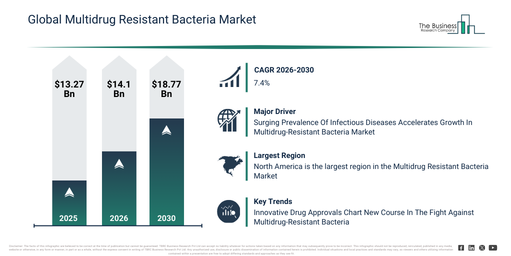
    The multidrug resistant bacteria market has demonstrated robust expansion over recent years. It is projected to grow from $13.27 billion in 2025 to $14.1 billion in 2026, exhibiting a compound annual growth rate (CAGR) of 6.2%. The historical increase can be attributed to factors such as the overuse of antibiotics in hospitals, inadequate infection control protocols, slow adoption of rapid diagnostics, limited treatment options for resistant strains, and a high incidence of bloodstream infections.

    The market for multidrug-resistant bacteria is anticipated to experience substantial expansion in the coming years. This market is projected to reach $18.77 billion by 2030, exhibiting a compound annual growth rate (CAGR) of 7.4%. Factors contributing to this growth during the forecast period include greater investment in antimicrobial research and development, the uptake of AI-powered diagnostic tools, the evolution of precision medicine treatments, governmental efforts to curb antimicrobial resistance (AMR), and the broader availability of homecare and outpatient services for infection management. Key trends anticipated over the forecast period encompass a surge in hospital-acquired infections, a rise in initiatives promoting awareness of antibiotic resistance, the creation of innovative antibacterial treatments, an increase in point-of-care diagnostic technologies, and the expansion of home healthcare provisions.

    Access Your Free Sample Report For In-Depth Market Analysis:

    https://www.thebusinessresearchcompany.com/sample.aspx?id=13044&type=smp

    What Key Drivers Are Fueling The Growth Of The Multidrug Resistant Bacteria Market?

    The expanding occurrence of infectious diseases is anticipated to fuel the expansion of the multidrug-resistant bacteria market in the future. Infectious illnesses are defined as conditions caused by detrimental microorganisms, including bacteria, viruses, fungi, or parasites. Multidrug-resistant bacteria have a strong connection with infectious diseases because they can trigger infections that are challenging to manage with standard antibiotics. These bacterial strains have acquired immunity to numerous antibiotics, thereby diminishing their vulnerability to medicines typically employed against bacterial infections. As an illustration, in November 2023, a report from the Centers for Disease Control and Prevention, a national public health agency based in the USA, highlighted that the count of tuberculosis patients in the USA rose from 8,320 in 2022 to 9,615 in 2023, marking an increment of 1,295 cases. Consequently, the rising incidence of infectious diseases will propel the multidrug-resistant bacteria market.

    How Is The Multidrug Resistant Bacteria Market Segmented Across Different Segment Categories?

    The multidrug resistant bacteria market covered in this report is segmented –

    1) By Disease: Urinary Tract Infection, Intra-Abdominal Infections, Blood Stream Infections, Clostridium Difficile Infections, Acute Bacterial Skin And Skin Structure Infections, Hospital Acquired Bacterial Pneumonia, Acquired Bacterial Pneumonia, Other Diseases

    2) By Drug Class: Oxazolidinones, Lipoglycopeptides, Tetracyclines, Cephalosporins, Combination Therapies, Other Drug Classes

    3) By Route Of Administration: Oral, Parenteral, Other Routes Of Administration

    4) By End-User: Hospitals, Specialty Clinics, Homecare, Other End-Users

    Subsegments:

    1) By Urinary Tract Infection: Cystitis, Pyelonephritis

    2) By Intra-Abdominal Infections: Appendicitis, Peritonitis

    3) By Blood Stream Infections: Bacteremia, Sepsis

    4) By Clostridium Difficile Infections: Mild CDI, Severe CDI

    5) By Acute Bacterial Skin And Skin Structure Infections: Cellulitis, Abscesses

    6) By Hospital Acquired Bacterial Pneumonia: Ventilator-Associated Pneumonia, Hospital-Acquired Pneumonia

    7) By Acquired Bacterial Pneumonia: Community-Acquired Pneumonia, Aspiration Pneumonia

    8) By Other Diseases: Bone and Joint Infections, Endocarditis

    What Trends Are Shaping The Future Of The Multidrug Resistant Bacteria Market?

    Companies operating within the multidrug-resistant bacteria market are concentrating on developing innovative medications and securing approvals to address the demands of an evolving consumer base. The authorization of drugs for multidrug-resistant bacteria is essential for curbing the spread of antibiotic resistance. For example, in May 2023, Entasis Therapeutics Inc., a US-based biotech company, obtained Food and Drug Administration (FDA) approval for Xacduor. This combination antibiotic is designed to treat hospital-acquired bacterial pneumonia (HABP) and ventilator-associated bacterial pneumonia (VAP) caused by acinetobacter baumannii, a pathogen that is often difficult to treat. Xacduor comprises ceftolozane, a cephalosporin antibiotic, and tedizolid phosphate, a novel compound belonging to the oxazolidinone class. Moreover, it offers a new treatment option for patients infected with Acinetobacter baumannii who have not responded to other therapies. The drug is administered via injection, combining the antibiotic beta-lactam sulbactam with the broad-spectrum beta-lactamase inhibitor durlobactam, which diminishes acinetobacter resistance and allows the antibiotic to function effectively.

    Which Organizations Play A Role In The Multidrug Resistant Bacteria Market Landscape?

    Major companies operating in the multidrug resistant bacteria market are Pfizer Inc., Johnson And Johnson Private Limited, F. Hoffmann-La Roche Ltd., Merck And Co. Inc., Bayer AG, Novartis AG, Sanofi S.A., Bristol-Myers Squibb Company, AstraZeneca plc, GlaxoSmithKline plc, Eli Lilly and Company, Boehringer Ingelheim International GmbH, Gilead Sciences Inc., Teva Pharmaceutical Industries Ltd., Mylan N.V., Dr. Reddy’s Laboratories Ltd., Lupin Pharmaceuticals Inc., BioMarin Pharmaceuticals Inc., Zydus Lifesciences Limited, Glenmark Pharmaceuticals Ltd., Sun Pharmaceutical Industries Ltd., Alkem Laboratories, Wockhardt Ltd., Basilea Pharmaceutica Ltd., Paratek Pharmaceuticals Inc., Theravance Biopharma Inc., Melinta Therapeutics Inc., Armata Pharmaceuticals Inc., Tetraphase Pharmaceuticals Inc.

    Get The Full Multidrug Resistant Bacteria Market Report:

    https://www.thebusinessresearchcompany.com/report/multidrug-resistant-bacteria-global-market-report

    Which Region Is The Leading Market For The Multidrug Resistant Bacteria Market?

    North America was the largest region in the multidrug-resistant bacteria market in 2025. The regions covered in the multidrug resistant bacteria market report are Asia-Pacific, South East Asia, Western Europe, Eastern Europe, North America, South America, Middle East, Africa.

    Request A Customized Multidrug Resistant Bacteria Market Report For Competitive Insights:

    https://www.thebusinessresearchcompany.com/report/multidrug-resistant-bacteria-global-market-report

    Browse Through More Reports Similar to the Global Multidrug Resistant Bacteria Market 2026, By The Business Research Company

    Multidrug Resistant Bacteria Market Report 2026

    https://www.thebusinessresearchcompany.com/report/multidrug-resistant-bacteria-global-market-report

    Antibiotic Resistance Market Report 2026

    https://www.thebusinessresearchcompany.com/report/antibiotic-resistance-global-market-report

    Antibiotics Market Report 2026

    https://www.thebusinessresearchcompany.com/report/antibiotics-global-market-report

    Get in touch with us:

    The Business Research Company: https://www.thebusinessresearchcompany.com/

    Americas +1 310-496-7795

    Asia +44 7882 955267 & +91 8897263534

    Europe +44 7882 955267

    Email us at: marketing@tbrc.info

    Follow us on:

    LinkedIn: https://in.linkedin.com/company/the-business-research-company

    YouTube: https://www.youtube.com/channel/UC24_fI0rV8cR5DxlCpgmyFQ

    Global Market Model: https://www.thebusinessresearchcompany.com/global-market-model
  • Mass Spectrometry Imaging Market Forecast Highlighting Key Trends And Expansion Potential

    Mass Spectrometry Imaging Market Forecast Highlighting Key Trends And Expansion Potential

    The Business Research Company’s 2026 market reports feature enhanced tools like market attractiveness analysis, TAM assessment, and company scoring matrices, along with interactive dashboards, deeper supply chain insights, and startup coverage strengthening the depth, usability, and strategic value of insights.

    How Is The Market Size Of The Mass Spectrometry Imaging Market Expected To Change From 2026 To 2030?

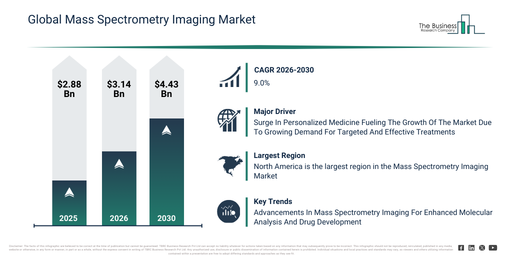
    The mass spectrometry imaging market has demonstrated robust growth in recent years. It is projected to expand from $2.88 billion in 2025 to $3.14 billion in 2026, at a compound annual growth rate (CAGR) of 9.1%. This growth during the historic period is attributable to advancements in mass spectrometry technologies, an increase in proteomics and metabolomics research, enhanced funding for life sciences research, a rising demand for molecular imaging tools, and the expansion of academic research institutions.

    The mass spectrometry imaging market is projected to experience robust expansion over the coming years. Its valuation is anticipated to reach $4.43 billion by 2030, demonstrating a compound annual growth rate (CAGR) of 9.0%. This anticipated growth during the forecast period is primarily driven by the expansion of precision medicine applications, the growing embrace of spatial biology methodologies, increased investments in pharmaceutical R&D, breakthroughs in AI-powered data analysis, and the broader implementation of clinical research uses. Key trends expected over the forecast horizon encompass the wider acceptance of MSI in identifying biomarkers, its escalating application in cancer studies, the increasing convergence of sophisticated imaging with data analytics, the proliferation of high-resolution mass spectrometry systems, and a heightened need for spatial omics innovations.

    Access Your Free Sample Report For In-Depth Market Analysis:

    https://www.thebusinessresearchcompany.com/sample.aspx?id=24288&type=smp

    Which Important Drivers Are Guiding The Mass Spectrometry Imaging Market Growth?

    The increasing need for individualized medicine is anticipated to drive the expansion of the mass spectrometry imaging market in the future. Personalized medicine tailors healthcare solutions for every patient, taking into account their unique genetic composition, surroundings, and way of life to enhance treatment efficacy. Genomic progress fuels the development of personalized medicine, facilitating targeted therapies derived from genetic profiles, thereby boosting their effectiveness and minimizing adverse reactions. Mass spectrometry imaging assists personalized medicine through the generation of elaborate molecular maps of tissues, aiding in the discovery of disease biomarkers, and facilitating the creation of targeted therapies specifically designed for individual patient characteristics. As an illustration, in February 2024, the Personalized Medicine Coalition, a US-based non-profit organization, reported that the FDA approved 16 new personalized treatments for patients with rare diseases in 2023, which represents a substantial rise from the six approved in 2022. Consequently, the expanding demand for personalized medicine is propelling the growth of the mass spectrometry imaging market.

    What Are The Key Segment Divisions In The Mass Spectrometry Imaging Market Segment Structure?

    The mass spectrometry imaging market covered in this report is segmented –

    1) By Product Type: Instruments, Consumables, Services

    2) By Technology: Matrix-Assisted Laser Desorption Or Ionization (MALDI), Secondary Ion Mass Spectrometry (SIMS), Desorption Electrospray Ionization (DESI), Magnetic Sector Mass Spectrometry, Time-of-Flight Mass Spectrometry (TOFMS), Other Technologies

    3) By Application: Proteomics, Metabolomics, Glycomics, Other Applications

    4) By End-User: Pharmaceutical and Biotechnology Companies, Government and Academic Institutions, Other End-Users

    Subsegments:

    1) By Instruments: High-Resolution Mass Spectrometers, Imaging Mass Spectrometers, Matrix-Assisted Laser Desorption Or Ionization Time-of-Flight System, Liquid Chromatography-Mass Spectrometry System, Quadrupole Time-of-Flight Mass Spectrometers, Tandem Mass Spectrometers

    2) By Consumables: Reagents And Chemicals, Sample Preparation Kits, Mass Spectrometry Plates And Slides, Calibration Standards, Solvents And Buffers

    3) By Services: Installation And Maintenance Services, Data Analysis And Software Services, Training And Support Services, Consultation And Customization Services

    What Trends Are Influencing The Evolution Of The Mass Spectrometry Imaging Market?

    Leading firms within the Mass Spectrometry Imaging (MSI) market are prioritizing the creation of sophisticated technologies, including desorption electrospray ionization, to facilitate more precise and comprehensive molecular analysis across diverse applications. Desorption electrospray ionization (DESI) functions as an ionization technique, extracting ions from surfaces under ambient conditions through the application of a charged solvent spray. This method allows for the direct examination of solid samples, like biological tissues, eliminating the requirement for prior sample preparation or extraction. As an example, in June 2023, Waters Corporation, a US-based analytical laboratory instrument manufacturing firm, introduced a targeted imaging mass spectrometer. This instrument improves tissue analysis by offering heightened sensitivity and increased speed. Furthermore, it delivers more accurate small-molecule drug analysis, along with superior resolution in targeted imaging. Its capabilities include quicker detection, which streamlines biological research. The device enhances both accuracy and efficiency, thereby greatly assisting research procedures. This advancement contributes to sophisticated drug development and biological investigation through the provision of detailed, high-quality data.

    Which Organizations Are Engaged In The Mass Spectrometry Imaging Market?

    Major companies operating in the mass spectrometry imaging market are Thermo Fisher Scientific Inc., Danaher Corporation, Hitachi High-Tech Corporation, Shimadzu Corporation, Waters Corporation, Bruker Corporation, Horiba Scientific, JEOL Ltd., SCIEX, Analytik Jena AG, Standard BioTools, TOFWERK AG, Advion Inc., MassTech Inc., CovalX AG, ImaBiotech SAS, MassAnalytica LLC, Ionwerks Inc., Biognosys AG, Spectroswiss Sàrl

    Get The Full Mass Spectrometry Imaging Market Report:

    https://www.thebusinessresearchcompany.com/report/mass-spectrometry-imaging-global-market-report

    Where Is The Mass Spectrometry Imaging Market Primarily Concentrated By Region?

    North America was the largest region in the mass spectrometry imaging market in 2025. Asia-Pacific is expected to be the fastest-growing region in the forecast period. The regions covered in the mass spectrometry imaging market report are Asia-Pacific, South East Asia, Western Europe, Eastern Europe, North America, South America, Middle East, Africa.

    Request A Customized Mass Spectrometry Imaging Market Report For Competitive Insights:

    https://www.thebusinessresearchcompany.com/report/mass-spectrometry-imaging-global-market-report

    Browse Through More Reports Similar to the Global Mass Spectrometry Imaging Market 2026, By The Business Research Company

    Mass Spectrometry Market Report 2026

    https://www.thebusinessresearchcompany.com/report/mass-spectrometry-global-market-report

    Imaging Chemicals Market Report 2026

    https://www.thebusinessresearchcompany.com/report/imaging-chemicals-global-market-report

    Liquid Chromatography Mass Spectrometry Lc Ms Market Report 2026

    https://www.thebusinessresearchcompany.com/report/liquid-chromatography-mass-spectrometry-lc-ms-global-market-report

    Get in touch with us:

    The Business Research Company: https://www.thebusinessresearchcompany.com/

    Americas +1 310-496-7795

    Asia +44 7882 955267 & +91 8897263534

    Europe +44 7882 955267

    Email us at: marketing@tbrc.info

    Follow us on:

    LinkedIn: https://in.linkedin.com/company/the-business-research-company

    YouTube: https://www.youtube.com/channel/UC24_fI0rV8cR5DxlCpgmyFQ

    Global Market Model: https://www.thebusinessresearchcompany.com/global-market-model
  • Mucolipidosis II Market Outlook For 2026–2030 Covering Growth Drivers And Industry Trends

    Mucolipidosis II Market Outlook For 2026–2030 Covering Growth Drivers And Industry Trends

    The Business Research Company’s 2026 market reports feature enhanced tools like market attractiveness analysis, TAM assessment, and company scoring matrices, along with interactive dashboards, deeper supply chain insights, and startup coverage strengthening the depth, usability, and strategic value of insights.

    What Is The Projected Increase In Market Value Of The Mucolipidosis II Market During 2026–2030?

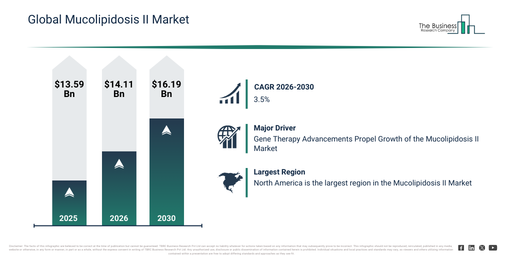
    The mucolipidosis ii market size has demonstrated consistent growth in recent years. It is forecast to increase from $13.59 billion in 2025 to $14.11 billion in 2026, achieving a compound annual growth rate (CAGR) of 3.8%. This historical growth can be attributed to several factors including the limited availability of treatment options for lysosomal storage disorders, improved early identification of enzyme deficiency disorders, a growing awareness of rare pediatric diseases, the initial development of supportive and palliative care strategies, and a past focus on symptom-based management.

    The mucolipidosis ii market size is anticipated to demonstrate consistent expansion over the upcoming years. It is projected to reach $16.19 billion by 2030, advancing at a compound annual growth rate (CAGR) of 3.5%. This growth during the forecast period can be attributed to progress in gene therapy research, increasing investment in the development of orphan drugs, enhanced government support for rare disease research, the broadening of enzyme replacement therapy pipelines, and a rise in collaborations between biotechnology companies and research institutions. Prominent trends expected in the forecast timeframe include an intensified focus on rare genetic disorder research, the expansion of experimental and gene-based therapies, a growing emphasis on multidisciplinary symptom management, an increase in clinical trials for enzyme and stem cell therapies, and improved early diagnosis through advanced screening techniques.

    Access Your Free Sample Report For In-Depth Market Analysis:

    https://www.thebusinessresearchcompany.com/sample.aspx?id=16746&type=smp

    Which Drivers Are Supporting The Mucolipidosis II Market Growth?

    The growing prevalence of gene therapy is anticipated to fuel the expansion of the mucolipidosis II market in the future. Gene therapy, a sophisticated medical procedure, seeks to manage or prevent genetic conditions by rectifying defective genes or implanting new genes into a patient’s cells via techniques like gene addition, gene editing, gene silencing, and gene regulation. This therapeutic approach presents a promising solution for ML II by targeting the underlying genetic cause of the condition, specifically by inserting a functional gene copy into patient cells to re-establish enzyme production. For example, data from January 2024, shared by the American Society of Gene & Cell Therapy, indicated that in the fourth quarter, gene therapies undergoing Phase III clinical trials saw a 10% increase, representing the initial quarterly growth observed since the third quarter of 2022. Consequently, the increasing adoption and development of gene therapy will propel the mucolipidosis II market.

    What Are The Main Segments Within The Mucolipidosis II Market Segment Structure?

    The mucolipidosis ii market covered in this report is segmented –

    1) By Treatment: Antibiotics, Physical Therapy, Hip Replacement, Experimental Therapies, Other Treatments

    2) By Mode Of Administration: Injectable, Oral, Other Modes Of Administration

    3) By Symptoms: Deafness, Lack Of Muscle Tone (Hypotonia), Abnormal Spine Curvature, Changing Proportion of Mental Retardation, Low Growth Of Gross And Fine Motor Skills, Other Symptoms

    4) By End-User: Hospitals, Homecare, Specialty Clinics, Other End-Users

    Subsegments:

    1) By Antibiotics: Antibiotics For Respiratory Infections, Antibiotics For Preventive Care, Intravenous Antibiotics, Oral Antibiotics For Chronic Infections, Antibiotic Therapy For Secondary Infections, Antibiotics For Treating Urinary Tract Infections (UTIS)

    2) By Physical Therapy: Range Of Motion Exercises, Strengthening And Conditioning Exercises, Respiratory Therapy And Pulmonary Rehabilitation, Gait Training And Balance Exercises, Hydrotherapy, Occupational Therapy For Daily Activities, Posture Correction And Spine Support, Stretching And Flexibility Programs

    3) By Hip Replacement: Total Hip Arthroplasty (THA), Hip Resurfacing Surgery, Minimally Invasive Hip Replacement, Ceramic-On-Ceramic Hip Implants, Hip Replacement With Metal-On-Polyethylene, Revision Hip Surgery For Failed Implants, Robotic-Assisted Hip Replacement Surgery, Hip Joint Stabilization Techniques

    4) By Experimental Therapies: Gene Therapy For Mucolipidosis II, Enzyme Replacement Therapy (ERT), Stem Cell Therapy For Mucolipidosis II, Chaperone Therapy For Lysosomal Storage Disorders, Small Molecule Drugs Targeting Cellular Pathways, Experimental Drug Trials (Phase I, II, III), Molecular Chaperones To Improve Enzyme Function, Immunomodulatory Therapies

    5) By Other Treatments: Pain Management (Non-Opioid And Opioid Treatments), Nutritional Support And Diet Modification, Surgical Interventions For Organ Dysfunction, Cognitive And Neurodevelopmental Support, Cardiovascular Care (Heart Monitoring, Medications), Hearing And Vision Supportive Therapies, Psychiatric Support And Behavioral Therapy, Palliative Care And End-Of-Life Management

    Who Are The Companies Participating In The Mucolipidosis II Market?

    Major companies operating in the mucolipidosis ii market are Pfizer Inc., Merck & Co. Inc., Sanofi S.A., Novartis AG, Takeda Pharmaceutical Company Limited, Teva Pharmaceutical Industries Ltd., Sun Pharmaceutical Industries Limited, Jazz Pharmaceuticals, Cipla Limited, Lupin Limited, Zydus Lifesciences Limited, Alembic Pharmaceuticals, Ultragenyx Pharmaceutical Inc., Regenxbio Inc., Denali Therapeutics Inc., Mylan N.V., Intellia Therapeutics Inc., Avrobio Inc., Orchard Therapeutics plc, Lysogene S.A., Sio Gene Therapies, Homology Medicines Inc., Abeona Therapeutics Inc

    Get The Full Mucolipidosis II Market Report:

    https://www.thebusinessresearchcompany.com/report/mucolipidosis-ii-global-market-report

    Where Is The Mucolipidosis II Market Primarily Concentrated By Region?

    North America was the largest region in the mucolipidosis II market in 2025. The regions covered in the mucolipidosis ii market report are Asia-Pacific, South East Asia, Western Europe, Eastern Europe, North America, South America, Middle East, Africa.

    Request A Customized Mucolipidosis II Market Report For Competitive Insights:

    https://www.thebusinessresearchcompany.com/report/mucolipidosis-ii-global-market-report

    Browse Through More Reports Similar to the Global Mucolipidosis II Market 2026, By The Business Research Company

    Mucolipidosis Ii Market Report 2026

    https://www.thebusinessresearchcompany.com/report/mucolipidosis-ii-global-market-report

    Mucopolysaccharidosis Treatment Market Report 2026

    https://www.thebusinessresearchcompany.com/report/mucopolysaccharidosis-treatment-global-market-report

    Clopidogrel Market Report 2026

    https://www.thebusinessresearchcompany.com/report/clopidogrel-global-market-report

    Get in touch with us:

    The Business Research Company: https://www.thebusinessresearchcompany.com/

    Americas +1 310-496-7795

    Asia +44 7882 955267 & +91 8897263534

    Europe +44 7882 955267

    Email us at: marketing@tbrc.info

    Follow us on:

    LinkedIn: https://in.linkedin.com/company/the-business-research-company

    YouTube: https://www.youtube.com/channel/UC24_fI0rV8cR5DxlCpgmyFQ

    Global Market Model: https://www.thebusinessresearchcompany.com/global-market-model
  • Mantle Cell Lymphoma Therapeutics Market Analysis Covering Growth Drivers And Future Outlook

    Mantle Cell Lymphoma Therapeutics Market Analysis Covering Growth Drivers And Future Outlook

    The Business Research Company’s 2026 market reports feature enhanced tools like market attractiveness analysis, TAM assessment, and company scoring matrices, along with interactive dashboards, deeper supply chain insights, and startup coverage strengthening the depth, usability, and strategic value of insights.

    From Its 2026 Market Size, What Value Is The Mantle Cell Lymphoma Therapeutics Market Projected To Reach By 2030?

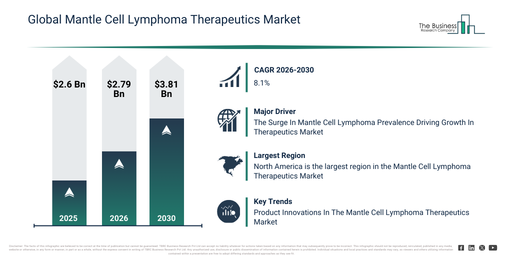
    The mantle cell lymphoma therapeutics market size has experienced robust expansion in recent years. This market is anticipated to expand from $2.6 billion in 2025 to $2.79 billion in 2026, demonstrating a compound annual growth rate (CAGR) of 7.4%. The growth witnessed in the past can be ascribed to an escalating incidence of mantle cell lymphoma, continuous advancements in chemotherapeutic agents, increased uptake by hospitals and research institutes, the proliferation of monoclonal antibody therapies, and enhancements in parenteral administration techniques.

    The mantle cell lymphoma therapeutics market is projected to experience substantial expansion in the coming years. Its value is predicted to reach $3.81 billion by 2030, driven by an 8.1% compound annual growth rate (CAGR). This anticipated growth during the forecast period is primarily fueled by the broader application of targeted and combination therapies, the increasing prevalence of oral BTK and BCL2 inhibitors, the implementation of precision medicine strategies, greater financial commitment to immunotherapy research, and an expanding elderly patient demographic. Key developments expected in the forecast period encompass the broadening scope of targeted therapies, progress in immunotherapy, wider acceptance of oral therapeutics, the incorporation of personalized medicine, and the ongoing creation of combination therapies.

    Access Your Free Sample Report For In-Depth Market Analysis:

    https://www.thebusinessresearchcompany.com/sample.aspx?id=10813&type=smp

    What Major Factors Are Driving The Mantle Cell Lymphoma Therapeutics Market Forward?

    The growing incidence of mantle cell lymphoma is projected to stimulate the expansion of the mantle cell lymphoma therapeutics market moving forward. Mantle cell lymphoma (MCL), a type of non-Hodgkin lymphoma (NHL), is a cancer that impacts the lymphatic system. Mantle Cell Lymphoma therapeutics play a vital role in treating and managing the condition, thereby helping to reduce the disease’s prevalence, enhance patient outcomes, prolong survival, and decrease the overall disease burden. For example, Lymphoma Action, a UK-based charity focused on lymphoma, stated in February 2024 that around 600 individuals are diagnosed with mantle cell lymphoma in the UK each year. This condition is more frequently observed in men than women and typically affects those who are middle-aged or older. Therefore, the increasing prevalence of mantle cell lymphoma is a significant driver for the growth of the mantle cell lymphoma therapeutics market.

    Which Segment Categories Are Included In The Mantle Cell Lymphoma Therapeutics Market Segment Analysis?

    The mantle cell lymphoma therapeutics market covered in this report is segmented –

    1) By Type: Combination Therapy, Monotherapy

    2) By Mechanism of Action: Bruton Tyrosine Kinase Inhibitors, Alkylating Agents, Deoxyribonucleic Acid Synthesis Inhibitors, Microtubule Inhibitors, Monoclonal Antibodies, Other Mechanisms

    3) By Route of Administration: Oral, Parenteral

    4) By Application: Hospital, Research Institute, Other Applications

    Subsegments:

    1) By Combination Therapy: Chemotherapy Combinations, Targeted Therapy Combinations, Immunotherapy Combinations

    2) By Monotherapy: Single-Agent Chemotherapy, Targeted Therapy Monotherapy, Immunotherapy Monotherapy

    Which Trends Are Impacting The Progress Of The Mantle Cell Lymphoma Therapeutics Market?

    Leading companies in the mantle cell lymphoma therapeutics market are engaged in developing advanced products, such as kinase inhibitors, to cater to a broader customer base, generate increased sales, and boost revenue. A kinase inhibitor is a pharmaceutical agent engineered to disrupt the activity of enzymes known as kinases. For example, in January 2023, Eli Lilly and Company, a US-based pharmaceutical firm, announced that the U.S. Food and Drug Administration (FDA) had granted approval for Jaypirca (pirtobrutinib, 100 mg & 50 mg tablets). This drug is indicated for adult patients who have experienced a relapse or resistance to earlier mantle cell lymphoma (MCL) treatments. Jaypirca is notable as a highly selective kinase inhibitor, utilizing a unique binding approach. It is distinguished by its capacity to re-establish BTK inhibition in mantle cell lymphoma (MCL) patients who have previously received treatment with covalent BTK inhibitors such as ibrutinib, acalabrutinib, or zanubrutinib, thereby expanding the therapeutic benefits of targeting the BTK pathway.

    Who Are The Active Companies Shaping The Mantle Cell Lymphoma Therapeutics Market?

    Major companies operating in the mantle cell lymphoma therapeutics market are AstraZeneca plc, Celgene Corporation, Takeda Pharmaceutical Company Limited, Bayer Aktiengesellschaft, Eli Lilly and Company, Amgen Inc., GlaxoSmithKline plc, Kite Pharma Inc., Gilead Sciences Inc., AbbVie Inc., Bristol-Myers Squibb Company, Novartis AG, Merck & Co. Inc., Juno Therapeutics Inc., Nurix Therapeutics Inc., Janssen Biotech Inc., TG Therapeutics Inc., F. Hoffmann-La Roche AG, Astellas Pharma Inc., BeiGene Ltd., Daiichi Sankyo Company Limited, Eisai Co. Ltd., Hutchison China MediTech Limited, Incyte Corporation

    Get The Full Mantle Cell Lymphoma Therapeutics Market Report:

    https://www.thebusinessresearchcompany.com/report/mantle-cell-lymphoma-therapeutics-global-market-report

    Which Region Has The Greatest Market Share In The Mantle Cell Lymphoma Therapeutics Market?

    North America was the largest region in the global mantle cell lymphoma therapeutics market in 2025. The regions covered in the mantle cell lymphoma therapeutics market report are Asia-Pacific, South East Asia, Western Europe, Eastern Europe, North America, South America, Middle East, Africa.

    Request A Customized Mantle Cell Lymphoma Therapeutics Market Report For Competitive Insights:

    https://www.thebusinessresearchcompany.com/report/mantle-cell-lymphoma-therapeutics-global-market-report

    Browse Through More Reports Similar to the Global Mantle Cell Lymphoma Therapeutics Market 2026, By The Business Research Company

    Mantle Cell Lymphoma Therapeutics Market Report 2026

    https://www.thebusinessresearchcompany.com/report/mantle-cell-lymphoma-therapeutics-global-market-report

    Diffuse Large B Cell Lymphoma Therapeutics Market Report 2026

    https://www.thebusinessresearchcompany.com/report/diffuse-large-b-cell-lymphoma-therapeutics-global-market-report

    Emphysema Market Report 2026

    https://www.thebusinessresearchcompany.com/report/emphysema-global-market-report

    Get in touch with us:

    The Business Research Company: https://www.thebusinessresearchcompany.com/

    Americas +1 310-496-7795

    Asia +44 7882 955267 & +91 8897263534

    Europe +44 7882 955267

    Email us at: marketing@tbrc.info

    Follow us on:

    LinkedIn: https://in.linkedin.com/company/the-business-research-company

    YouTube: https://www.youtube.com/channel/UC24_fI0rV8cR5DxlCpgmyFQ

    Global Market Model: https://www.thebusinessresearchcompany.com/global-market-model
  • Rising Prevalence Of Brain Diseases Boosts Brain Health Supplements Is Supporting Expansion In The mTOR Inhibitors Market

    Rising Prevalence Of Brain Diseases Boosts Brain Health Supplements Is Supporting Expansion In The mTOR Inhibitors Market

    The Business Research Company’s 2026 market reports feature enhanced tools like market attractiveness analysis, TAM assessment, and company scoring matrices, along with interactive dashboards, deeper supply chain insights, and startup coverage strengthening the depth, usability, and strategic value of insights.

    How Is The Market Size Of The mTOR Inhibitors Market Expected To Change From 2026 To 2030?

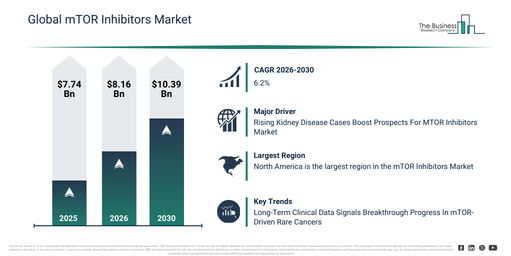
    The mtor inhibitors market has shown substantial growth in recent years. This market is projected to expand from $7.74 billion in 2025 to $8.16 billion in 2026, achieving a compound annual growth rate (CAGR) of 5.5%. Historically, this growth can be attributed to several factors including the rising prevalence of cancer, increasing demand for targeted therapies, the early adoption of rapamycin-based treatments, a rise in clinical trials, and advancements in molecular biology research.

    The mtor inhibitors market size is anticipated to undergo significant expansion over the next few years. It is forecast to achieve a valuation of $10.39 billion by 2030, demonstrating a compound annual growth rate (CAGR) of 6.2%. This anticipated growth during the forecast period is propelled by an increasing focus on precision medicine, the expansion of combination therapies, a rise in organ transplantation procedures, the increasing adoption of oral and intravenous mtor inhibitors, and sustained investment in research and development for novel mtor inhibitors. Prominent developments for the forecast period include the advancement of personalized cancer therapies, new combination therapy approaches, the emergence of targeted drug delivery systems, an expansion into various oncology and transplant indications, and enhanced R&D in oral and intravenous formulations.

    Access Your Free Sample Report For In-Depth Market Analysis:

    https://www.thebusinessresearchcompany.com/sample.aspx?id=10860&type=smp

    What Key Factors Are Affecting The mTOR Inhibitors Market Demand?

    The increasing incidence of kidney diseases is anticipated to propel the expansion of the mTOR inhibitors market going forward. Kidney disease refers to a state where the organs gradually deteriorate and lose their functional ability. mTOR inhibitors are utilized in the treatment of various kidney illnesses. Immunosuppressive therapies, including mTOR inhibitors such as sirolimus and everolimus, are employed to prevent renal allograft rejection. As the worldwide prevalence of kidney diseases continues to climb, the demand for mTOR inhibitors is rising. For instance, in May 2024, the American Cancer Society, a US-based non-profit organization, estimated approximately 81,610 new kidney cancer cases (52,380 men and 29,230 women) are expected in the United States in 2024, along with an estimated 14,390 deaths (9,450 men and 4,940 women). Therefore, the growth of the mTOR inhibitors market will be driven by the escalating prevalence of kidney diseases.

    How Is Segmentation Applied In The mTOR Inhibitors Market Segment Analysis?

    The mtor inhibitors market covered in this report is segmented –

    1) By Product Type: Rapamune, Afinitor, Torisel, Zortress, Other Product Types

    2) By Indication: Oncology, Immunosuppressant, Organ Transplantation, Other Indications

    3) By Route of Administration: Oral, Intravenous

    4) By Application: Tumor Treatment, Kidney Transplant, Other Applications

    5) By Distribution Channel: Hospital Pharmacies, Retail Pharmacies, Online Pharmacies

    What Market Trends Are Affecting The mTOR Inhibitors Market?

    Leading companies within the mTOR inhibitor market are concentrating on developing long-term clinical information to enhance the effectiveness and sustained benefits of treatments for extremely rare cancers, such as malignant perivascular epithelioid cell tumors (PEComa). Extended follow-up studies furnish insights into ongoing responses and overall survival, aiding in the optimization of therapeutic strategies for patients with limited options. For example, in March 2024, Aadi Bioscience, Inc., a U.S.-based biopharmaceutical company, made public the three-year follow-up results from its Phase 2 AMPECT trial concerning FYARRO (nab-sirolimus) in malignant PEComa. As per Aadi, the findings showed a median duration of response of approximately 40 months and a median overall survival surpassing 53 months, indicating a substantial improvement over historical outcomes. These discoveries emphasize an expanding inclination in the mTOR inhibitor market: companies are prioritizing sustained clinical benefit and prolonged patient outcomes to reinforce the therapeutic approach for metastatic PEComa.

    Who Are The Companies Participating In The mTOR Inhibitors Market Environment?

    Major companies operating in the mtor inhibitors market are Novartis AG, Pfizer Inc., Teva Pharmaceutical Industries Ltd., Hikma Pharmaceuticals plc, Exelixis Inc., Dr. Reddy’s Laboratories Ltd., Zydus Lifesciences Limited, Accord Healthcare Inc., Par Pharmaceutical, AbbVie Inc., GlaxoSmithKline plc, Biocon Limited, Alkem Laboratories Ltd., Gland Pharma Ltd., Apotex Inc., Glenmark Pharmaceuticals Ltd., AstraZeneca plc, Bristol-Myers Squibb Company, Eli Lilly and Company, Merck & Co. Inc., Bayer AG, Boehringer Ingelheim International GmbH

    Get The Full mTOR Inhibitors Market Report:

    https://www.thebusinessresearchcompany.com/report/mtor-inhibitors-global-market-report

    Which Region Has The Greatest Market Share In The mTOR Inhibitors Market?

    North America was the largest region in the mTOR inhibitors market in 2025. Asia-Pacific is expected to be the fastest-growing region in the forecast period. The regions covered in the mtor inhibitors market report are Asia-Pacific, South East Asia, Western Europe, Eastern Europe, North America, South America, Middle East, Africa.

    Request A Customized mTOR Inhibitors Market Report For Competitive Insights:

    https://www.thebusinessresearchcompany.com/report/mtor-inhibitors-global-market-report

    Browse Through More Reports Similar to the Global mTOR Inhibitors Market 2026, By The Business Research Company

    Mtor Inhibitors Market Report 2026

    https://www.thebusinessresearchcompany.com/report/mtor-inhibitors-global-market-report

    Kinase Inhibitors Market Report 2026

    https://www.thebusinessresearchcompany.com/report/kinase-inhibitors-global-market-report

    Ace Inhibitors Market Report 2026

    https://www.thebusinessresearchcompany.com/report/ace-inhibitors-global-market-report

    Get in touch with us:

    The Business Research Company: https://www.thebusinessresearchcompany.com/

    Americas +1 310-496-7795

    Asia +44 7882 955267 & +91 8897263534

    Europe +44 7882 955267

    Email us at: marketing@tbrc.info

    Follow us on:

    LinkedIn: https://in.linkedin.com/company/the-business-research-company

    YouTube: https://www.youtube.com/channel/UC24_fI0rV8cR5DxlCpgmyFQ

    Global Market Model: https://www.thebusinessresearchcompany.com/global-market-model
  • Male Infertility Market Insights Highlighting Opportunities Supporting Growth To 2030

    Male Infertility Market Insights Highlighting Opportunities Supporting Growth To 2030

    The Business Research Company’s 2026 market reports feature enhanced tools like market attractiveness analysis, TAM assessment, and company scoring matrices, along with interactive dashboards, deeper supply chain insights, and startup coverage strengthening the depth, usability, and strategic value of insights.

    How Much Growth In Market Value Is Expected For The Male Infertility Market Between 2026 And 2030?

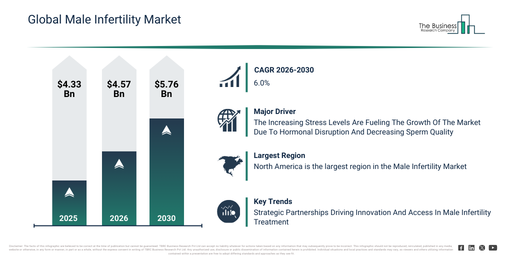
    The male infertility market size has seen substantial growth recently. It is set to expand from $4.33 billion in 2025 to $4.57 billion in 2026, achieving a compound annual growth rate (CAGR) of 5.6%. This historical expansion can be attributed to a global decline in sperm quality, the heightened prevalence of lifestyle-related infertility, the proliferation of fertility clinics, increasing acceptance of ART procedures, and advancements in semen analysis techniques.

    The male infertility market size is projected to experience substantial expansion over the upcoming years. This market is projected to reach $5.76 billion by 2030, exhibiting a compound annual growth rate (CAGR) of 6.0%. This anticipated growth is driven by several factors, including an increase in infertility rates linked to environmental elements, a heightened demand for IVF and ICSI procedures, innovations in fertility diagnostics, a growing understanding of male reproductive health, and wider availability of fertility treatments in developing regions. Key trends during this period encompass the increasing embrace of assisted reproductive technologies, a greater reliance on sophisticated sperm diagnostic tests, an escalating emphasis on hormonal and targeted drug therapies, the broadening of microsurgical interventions for male infertility, and enhanced recognition leading to earlier diagnosis of male infertility.

    Access Your Free Sample Report For In-Depth Market Analysis:

    https://www.thebusinessresearchcompany.com/sample.aspx?id=24286&type=smp

    Which Key Drivers Are Affecting The Male Infertility Market Development?

    Elevated stress levels are projected to drive the expansion of the male infertility market in the future. Stress levels refer to the degree of emotional, physical, or mental strain encountered in demanding situations or pressures. The rise in stress levels primarily stems from escalating work demands, where constant pressure and high expectations lead to burnout, disrupting mental well-being and work-life balance. Heightened stress can interfere with hormone balance, reduce sperm quality, and impair sexual function, contributing to male infertility. Chronic stress disrupts cortisol and testosterone levels, leading to an increase in infertility cases. For instance, in May 2024, according to the American Psychiatric Association, a US-based professional organization of psychologists, 43% of adults in the US reported feeling more anxious in 2024, compared to 37% in 2023 and 32% in 2022, indicating a consistent upward trend in anxiety levels. Thus, increasing stress levels are a key driver for the growth of the male infertility market.

    How Is The Male Infertility Market Broken Down By Segment Categories?

    The male infertility market covered in this report is segmented –

    1) By Treatment Type: Medication, Surgery, Assisted Reproductive Technology

    2) By Test Type: Sperm Agglutination, Deoxyribonucleic Acid Fragmentation Technique, Oxidative Stress Analysis, Computer Assisted Semen Analysis, Sperm Penetration Assay, Other Test Types

    3) By Distribution Channel: Hospitals Pharmacies, Pharmacies And Drug Stores, Online Pharmacies

    4) By End-User: Hospitals And Clinics, Fertility Centers, Research Institutes, Other End-Users

    Subsegments:

    1) By Medication: Hormone Treatments, Gonadotropins, Antibiotics, Antiestrogens, Dopamine Agonists

    2) By Surgery: Varicocelectomy, Vasovasostomy, Epididymovasostomy, Transurethral Resection of the Ejaculatory Duct (TURED), Sperm Retrieval Procedures

    3) By Assisted Reproductive Technology (ART): In Vitro Fertilization (IVF), Intracytoplasmic Sperm Injection (ICSI), Intrauterine Insemination (IUI), Sperm Donation, Cryopreservation Of Sperm

    What Trends Are Transforming The Male Infertility Market?

    Leading companies within the male infertility market are prioritizing strategic partnership approaches to broaden the availability of cutting-edge fertility treatments across worldwide markets. Such partnerships represent collaborative efforts between entities, combining their respective resources and specialized knowledge to accomplish mutual objectives, thereby stimulating innovation, extending market presence, and strengthening research and development activities. As an illustration, in June 2024, Ferring Pharmaceuticals, a pharmaceutical company based in Switzerland, formed a partnership with Posterity Health, a US-based male fertility clinic, to introduce a male fertility program on Ferring’s Fertility Out Loud platform designed to inform men about their fertility. This initiative provides a confidential online assessment and educational materials crafted by reproductive urologists to help men gain insight into their fertility status and diminish the societal stigma associated with male infertility, which contributes to as much as 50% of all infertility cases. The program endeavors to enable men to act proactively, potentially enhancing a couple’s journey to parenthood by addressing male fertility concerns earlier and more conveniently through digital tools and telehealth services.

    Which Players Are Present In The Male Infertility Market Space?

    Major companies operating in the male infertility market are Novartis AG, Amgen Inc., Teva Pharmaceutical Industries Ltd., Intas Pharmaceuticals Ltd., NYU Langone Hospitals, Sun Pharmaceutical Industries Ltd., Cipla Limited, Ferring Pharmaceuticals, Fortis Healthcare, Vitrolife, Max Healthcare, CinnaGen Co., Aytu BioScience Inc., Zydus Hospitals and Healthcare Research Private Limited, Apricus Biosciences Inc., SCSA Diagnostics Inc., Andrology Solutions, Halotech DNA, Indira IVF, Conduit Pharmaceuticals, Shree IVF Clinics

    Get The Full Male Infertility Market Report:

    https://www.thebusinessresearchcompany.com/report/male-infertility-global-market-report

    Which Region Accounts For The Largest Portion Of The Male Infertility Market?

    North America was the largest region in the male infertility market in 2025. The regions covered in the male infertility market report are Asia-Pacific, South East Asia, Western Europe, Eastern Europe, North America, South America, Middle East, Africa.

    Request A Customized Male Infertility Market Report For Competitive Insights:

    https://www.thebusinessresearchcompany.com/report/male-infertility-global-market-report

    Browse Through More Reports Similar to the Global Male Infertility Market 2026, By The Business Research Company

    Male Fertility Market Report 2026

    https://www.thebusinessresearchcompany.com/report/male-fertility-global-market-report

    Infertility Treatment Market Report 2026

    https://www.thebusinessresearchcompany.com/report/infertility-treatment-global-market-report

    Fertility Drugs Market Report 2026

    https://www.thebusinessresearchcompany.com/report/fertility-drugs-global-market-report

    Get in touch with us:

    The Business Research Company: https://www.thebusinessresearchcompany.com/

    Americas +1 310-496-7795

    Asia +44 7882 955267 & +91 8897263534

    Europe +44 7882 955267

    Email us at: marketing@tbrc.info

    Follow us on:

    LinkedIn: https://in.linkedin.com/company/the-business-research-company

    YouTube: https://www.youtube.com/channel/UC24_fI0rV8cR5DxlCpgmyFQ

    Global Market Model: https://www.thebusinessresearchcompany.com/global-market-model
  • Global Male Hypogonadism Market Expected To Reach $1.38 Billion By 2030 With 9.2% CAGR

    Global Male Hypogonadism Market Expected To Reach $1.38 Billion By 2030 With 9.2% CAGR

    The Business Research Company’s 2026 market reports feature enhanced tools like market attractiveness analysis, TAM assessment, and company scoring matrices, along with interactive dashboards, deeper supply chain insights, and startup coverage strengthening the depth, usability, and strategic value of insights.

    What Is The Estimated Market Size Of The Male Hypogonadism Market In 2026, And How Will Its Value Evolve By 2030?

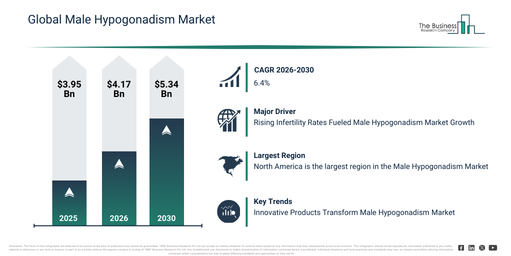
    The male hypogonadism market size has demonstrated robust growth in recent years. It is anticipated to expand from $3.95 billion in 2025 to $4.17 billion in 2026, at a compound annual growth rate (CAGR) of 5.6%. This historical increase can be attributed to the rising prevalence of hypogonadism, increased awareness regarding testosterone deficiency, the growing aging male population, continuous advancements in hormone replacement therapies, and a greater adoption of diagnostic testing by physicians.

    The male hypogonadism market is projected to experience substantial expansion over the upcoming years. It is anticipated to reach $5.34 billion by 2030, exhibiting a compound annual growth rate (CAGR) of 6.4%. This anticipated growth during the forecast period stems from factors such as the broadening of personalized medicine, the incorporation of AI into diagnosis and treatment, an increase in telehealth services, the growing embrace of advanced drug delivery systems, and enhanced investment in male hormonal research. Key developments expected during this period encompass personalized testosterone therapy, the development of minimally invasive drug delivery systems, initiatives for male hormonal health awareness, the incorporation of telemedicine into hormonal treatment, and the widening of chronic disease management services.

    Access Your Free Sample Report For In-Depth Market Analysis:

    https://www.thebusinessresearchcompany.com/sample.aspx?id=9969&type=smp

    What Factors Are Contributing To The Growth Of The Male Hypogonadism Market?

    The escalating infertility rates are anticipated to propel the growth of the male hypogonadism market in the future. Infertility is defined as a condition impacting the male or female reproductive system, characterized by the inability to achieve pregnancy after a minimum of 12 months of consistent, unprotected sexual activity. Male hypogonadism, which can result in diminished sperm production and infertility, is recognized as a potential contributor to male infertility. Consequently, the rising incidence of male infertility is projected to drive the growth of the male hypogonadism market. For instance, in February 2023, the Office for National Statistics, a UK-based government department, reported that 31.8% of all live births in England and Wales were to non-UK-born mothers, an increase from 30.3% in 2022. Additionally, 37.3% of live births had at least one parent born outside the UK, up from 35.8% in 2022. Therefore, an increase in the infertility rate is driving the growth of the male hypogonadism market.

    What Are The Different Segment Types In The Male Hypogonadism Market Segment Breakdown?

    The male hypogonadism market covered in this report is segmented –

    1) By Type: Klinefelters Syndrome, Kallmann Syndrome, Pituitary Disorders, Other Types

    2) By Drug Delivery: Topical Gels, Injectables, Transdermal Patches, Other Drug Deliveries

    3) By Therapy: Testosterone Therapy, Gonadotropin-Releasing Hormone Therapy

    Subsegments:

    1) By Klinefelter’s Syndrome: 47,XXY Syndrome, Other Variants

    2) By Kallmann Syndrome: Isolated Kallmann Syndrome, Syndromic Kallmann Syndrome

    3) By Pituitary Disorders: Hypopituitarism, Pituitary Tumors, Other Pituitary Disorders

    4) By Other Types: Androgen Insensitivity Syndrome, Testicular Dysgenesis Syndrome, Genetic Mutations And Disorders

    What Trends Are Shaping The Future Of The Male Hypogonadism Market?

    Leading companies active in the male hypogonadism market are dedicating efforts to creating innovative products, such as digital-first platforms. These platforms aim to engage patients through telemedicine, provide educational resources, and streamline access to treatments, thereby transforming care for male hypogonadism while enhancing patient support and ease of therapy access. As an illustration, in October 2024, LifeMD, Inc., a US-based provider of virtual primary care services, launched TestoRx, a direct-to-consumer telehealth service for testosterone replacement therapy, offered under its Rex MD men’s health brand. This program encompasses an initial virtual consultation and requisite blood testing, treatment choices including both testosterone replacement and alternative therapies to boost endogenous hormone production, and ongoing telehealth visits with follow-up care.

    Who Are The Well-Known Companies In The Male Hypogonadism Market?

    Major companies operating in the male hypogonadism market are Pfizer Inc., Bayer AG, Eli Lilly and Company Ltd., Endo International plc., Merck & Co. Inc., Teva Pharmaceutical Industries Ltd., AbbVie Inc., Perrigo Company plc, IBSA Institut Biochimique SA, Sun Pharmaceutical Industries Limited, Antares Pharma Inc., Besins Healthcare Ltd., Clarus Therapeutics Holdings Inc., Lipocine Inc., Myovant Sciences Ltd., Sandoz International GmbH, TherapeuticsMD Inc., Viking Therapeutics Inc., Shionogi & Co. Ltd., Ferring Pharmaceuticals

    Get The Full Male Hypogonadism Market Report:

    https://www.thebusinessresearchcompany.com/report/male-hypogonadism-global-market-report

    Which Region Holds The Highest Market Share In The Male Hypogonadism Market?

    North America was the largest region in the male hypogonadism market in 2025. Asia-Pacific is expected to be the fastest-growing region in the male hypogonadism market report during the forecast period. The regions covered in the male hypogonadism market report are Asia-Pacific, South East Asia, Western Europe, Eastern Europe, North America, South America, Middle East, Africa.

    Request A Customized Male Hypogonadism Market Report For Competitive Insights:

    https://www.thebusinessresearchcompany.com/report/male-hypogonadism-global-market-report

    Browse Through More Reports Similar to the Global Male Hypogonadism Market 2026, By The Business Research Company

    Male Hypogonadism Market Report 2026

    https://www.thebusinessresearchcompany.com/report/male-hypogonadism-global-market-report

    Male Fertility Market Report 2026

    https://www.thebusinessresearchcompany.com/report/male-fertility-global-market-report

    Human Chorionic Gonadotropin Market Report 2026

    https://www.thebusinessresearchcompany.com/report/human-chorionic-gonadotropin-global-market-report

    Get in touch with us:

    The Business Research Company: https://www.thebusinessresearchcompany.com/

    Americas +1 310-496-7795

    Asia +44 7882 955267 & +91 8897263534

    Europe +44 7882 955267

    Email us at: marketing@tbrc.info

    Follow us on:

    LinkedIn: https://in.linkedin.com/company/the-business-research-company

    YouTube: https://www.youtube.com/channel/UC24_fI0rV8cR5DxlCpgmyFQ

    Global Market Model: https://www.thebusinessresearchcompany.com/global-market-model
  • Rising Neurological Disorders Fueling The Growth Of The Due To Aging Population And Increasing Motor Impairments Is Contributing To Changes In The MSI-H And dMMR Market

    Rising Neurological Disorders Fueling The Growth Of The Due To Aging Population And Increasing Motor Impairments Is Contributing To Changes In The MSI-H And dMMR Market

    The Business Research Company’s 2026 market reports feature enhanced tools like market attractiveness analysis, TAM assessment, and company scoring matrices, along with interactive dashboards, deeper supply chain insights, and startup coverage strengthening the depth, usability, and strategic value of insights.

    From Its 2026 Market Size, What Value Is The MSI-H And dMMR Market Projected To Reach By 2030?

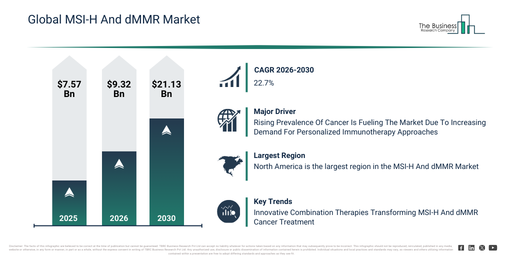
    The market size for msi-h and dmmr has seen substantial growth in recent years. It is projected to expand from $7.57 billion in 2025 to $9.32 billion in 2026, exhibiting a compound annual growth rate (CAGR) of 23.1%. The increase observed in the past can be credited to the discovery of msi-h and dmmr biomarkers, the initial success of immune checkpoint inhibitors, the escalating incidence of colorectal and endometrial cancer, the broadening scope of molecular diagnostics, and regulatory approvals for therapies based on biomarkers.

    The msi-h and dmmr market size is anticipated to experience substantial growth in the coming years. It is projected to reach $21.13 billion by 2030, demonstrating a compound annual growth rate (CAGR) of 22.7%. This expansion during the forecast period is fueled by factors such as the increasing adoption of precision oncology, the growing application of genomic testing in cancer care, the broadening of immunotherapy indications, rising investments in biomarker research, and the accumulation of clinical evidence supporting tumor-agnostic approaches. Prominent trends within this period are expected to include the heightened use of immunotherapy for msi-h and dmmr tumors, increased reliance on companion diagnostics for patient stratification, an elevated focus on tumor-agnostic cancer treatments, the proliferation of combination immunotherapy regimens, and enhanced awareness of biomarker-driven oncology.

    Access Your Free Sample Report For In-Depth Market Analysis:

    https://www.thebusinessresearchcompany.com/sample.aspx?id=24324&type=smp

    Which Primary Drivers Are Impacting The MSI-H And dMMR Market Growth?

    The MSI-H and dMMR market is expected to experience growth due to the increasing prevalence of cancer. Cancer is a group of diseases defined by the uncontrolled multiplication and spread of abnormal cells within the body. This escalation in cancer cases is primarily linked to aging populations, as the risk of developing cancer significantly rises with age, owing to the cumulative impact of genetic mutations and prolonged exposure to various risk factors over time. In cancer treatment, MSI-H and dMMR are utilized to identify tumors that exhibit high mutation rates due to deficiencies in DNA repair mechanisms. These biomarkers are crucial for guiding immunotherapy decisions, given that such tumors often respond better to immune checkpoint inhibitors, and they also provide insights into patient prognosis and potential genetic syndromes. For example, in January 2024, the American Cancer Society, a US-based non-profit organization, indicated that in 2023, the United States was estimated to have 1,958,310 new cancer cases and 609,820 cancer-related deaths. These figures are projected to climb in 2024, with approximately 2,001,140 new cancer cases and 611,720 deaths anticipated, thereby highlighting a continuous rise in cancer incidence and mortality. Hence, the growing prevalence of cancer is a key driver for the expansion of the MSI-H and dMMR market.

    What Segment Categories Shape The MSI-H And dMMR Market Segment Landscape?

    The msi-h and dmmr market covered in this report is segmented –

    1) By Treatment Type: Immune Checkpoint Inhibitors (ICIs), Combination Therapy

    2) By Indication: Endometrial, Gastric, Colorectal Cancer, Small Intestine Cancer, Cervical Cancer, Other Indications

    3) By Stage: Early Stages, Advanced Stages

    4) By End User: Hospitals, Oncology Clinics, Research Institutions, Homecare

    Subsegments:

    1) By Immune Checkpoint Inhibitors (ICIs): Programmed Cell Death Protein 1 Inhibitors, Programmed Cell Death Ligand 1 Inhibitors, Cytotoxic T-Lymphocyte Antigen 4 Inhibitors

    2) By Combination Therapy: Immune Checkpoint Inhibitor + Chemotherapy, Immune Checkpoint Inhibitor + Targeted Therapy, Immune Checkpoint Inhibitor + Radiation Therapy, Immune Checkpoint Inhibitor + Other Immunotherapies

    Which Trends Are Influencing Demand In The MSI-H And dMMR Market?

    Leading companies in the MSI-H and dMMR market are concentrating on developing innovative treatments, such as combination therapy, to boost treatment effectiveness and improve patient outcomes. Combination therapy for MSI-H and dMMR cancers involves utilizing two or more treatment methods, frequently immunotherapy agents like checkpoint inhibitors, or integrating immunotherapy with chemotherapy, targeted therapy, or radiation. This strategy aims to enhance treatment response, overcome resistance, and extend survival for patients with tumors that exhibit high microsatellite instability or deficient mismatch repair. For instance, in April 2025, Bristol-Myers Squibb Company, a US-based pharmaceutical firm, secured United States Food and Drug Administration (FDA) approval for the combination of nivolumab (Opdivo) and ipilimumab (Yervoy) as a first-line therapy for metastatic colorectal cancer (mCRC) with microsatellite instability-high (MSI-H) or mismatch repair deficient (dMMR) features, thereby advancing treatment options for this challenging cancer subtype. This approval signifies a major milestone in the management of MSI-H and dMMR cancers, as it introduces an effective new therapeutic choice that targets multiple pathways to enhance patient survival and response rates, addressing unmet medical needs in this patient population.

    Who Are The Companies Operating Across The MSI-H And dMMR Market Value Chain?

    Major companies operating in the msi-h and dmmr market are Pfizer Inc., F. Hoffmann-La Roche Ltd, Merck & Co. Inc., AbbVie Inc., Bayer AG, Novartis International AG, AstraZeneca PLC, Bristol-Myers Squibb Company, GSK plc., Takeda Pharmaceutical Company, Incyte Corporation, Exact Sciences Corp., BeiGene LTD., Summit Therapeutics Inc., Tempus Labs Inc., Guardant Health, NeoGenomics Laboratories Inc., Promega Corporation, Caris Life Sciences, and Owkin.

    Get The Full MSI-H And dMMR Market Report:

    https://www.thebusinessresearchcompany.com/report/msi-h-and-dmmr-global-market-report

    Which Region Accounts For The Largest Portion Of The MSI-H And dMMR Market?

    North America was the largest region in the MSI-H and dMMR market in 2025. The regions covered in the msi-h and dmmr market report are Asia-Pacific, South East Asia, Western Europe, Eastern Europe, North America, South America, Middle East, Africa.

    Request A Customized MSI-H And dMMR Market Report For Competitive Insights:

    https://www.thebusinessresearchcompany.com/report/msi-h-and-dmmr-global-market-report

    Browse Through More Reports Similar to the Global MSI-H And dMMR Market 2026, By The Business Research Company

    Automotive Human Machine Interface Hmi Market Report 2026

    https://www.thebusinessresearchcompany.com/report/automotive-human-machine-interface-hmi-global-market-report

    Electronic Data Interchange Edi Software Market Report 2026

    https://www.thebusinessresearchcompany.com/report/electronic-data-interchange-edi-software-global-market-report

    Digital Aerospace Mro Market Report 2026

    https://www.thebusinessresearchcompany.com/report/digital-aerospace-mro-global-market-report

    Get in touch with us:

    The Business Research Company: https://www.thebusinessresearchcompany.com/

    Americas +1 310-496-7795

    Asia +44 7882 955267 & +91 8897263534

    Europe +44 7882 955267

    Email us at: marketing@tbrc.info

    Follow us on:

    LinkedIn: https://in.linkedin.com/company/the-business-research-company

    YouTube: https://www.youtube.com/channel/UC24_fI0rV8cR5DxlCpgmyFQ

    Global Market Model: https://www.thebusinessresearchcompany.com/global-market-model
  • The mRNA Therapeutics CDMO Market Is Evolving Due To Surging Demand For Aesthetic Procedures Fuels Growth In The Botulinum Toxin

    The mRNA Therapeutics CDMO Market Is Evolving Due To Surging Demand For Aesthetic Procedures Fuels Growth In The Botulinum Toxin

    The Business Research Company’s 2026 market reports feature enhanced tools like market attractiveness analysis, TAM assessment, and company scoring matrices, along with interactive dashboards, deeper supply chain insights, and startup coverage strengthening the depth, usability, and strategic value of insights.

    How Much Growth In Market Value Is Expected For The mRNA Therapeutics CDMO Market Between 2026 And 2030?

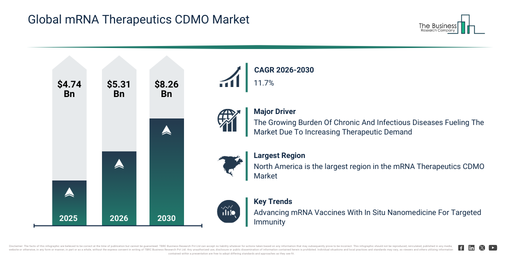
    The mrna therapeutics cdmo market has seen rapid expansion in recent years. It is projected to grow from $4.74 billion in 2025 to $5.31 billion in 2026, at a compound annual growth rate (CAGR) of 12.0%. The market’s historic growth was influenced by the restricted availability of specialized mrna cdmo services, a dependence on in-house pharmaceutical manufacturing, an increase in infectious disease outbreaks, the implementation of early-stage analytical testing, and the broadening of academic and research collaborations.

    The mrna therapeutics cdmo market is projected to experience swift expansion over the coming years. By 2030, its valuation is anticipated to reach $8.26 billion, demonstrating a compound annual growth rate (CAGR) of 11.7%. This projected growth is driven by several factors, including increasing investments in mrna therapeutics development, innovations in plasmid DNA and mrna synthesis technologies, the expansion of cancer immunotherapy and protein replacement treatments, a growing need for fill-finish solutions, and the broadening of collaborations between biotechnology firms and CDMOs. Key trends anticipated during this period encompass a surge in the outsourcing of mrna development and production, a heightened emphasis on lipid nanoparticle (LNP) formulation techniques, the enlargement of viral vaccine and cancer immunotherapy portfolios, improved regulatory adherence and quality control protocols, and the wider uptake of analytical and bioanalytical laboratory provisions.

    Access Your Free Sample Report For In-Depth Market Analysis:

    https://www.thebusinessresearchcompany.com/sample.aspx?id=25841&type=smp

    What Significant Factors Are Influencing The mRNA Therapeutics CDMO Market Expansion?

    The increasing prevalence of chronic and infectious diseases is anticipated to fuel the expansion of the mRNA therapeutics CDMO market in the coming years. These diseases refer to enduring medical conditions like diabetes, cardiovascular disorders, and asthma, alongside illnesses stemming from harmful microorganisms such as viruses, bacteria, and parasites, which can transmit between individuals directly or indirectly. The rise in chronic and infectious diseases is attributable to an aging global population, which is more vulnerable to both prolonged illnesses and infections. The mRNA therapeutics CDMO supports the fight against chronic and infectious diseases by offering comprehensive development and manufacturing services, thus speeding up the delivery of precise, customized mRNA treatments to patients. As an illustration, in October 2024, the World Health Organization, a Switzerland-based international public health organization, reported that around 8.2 million individuals received a new tuberculosis diagnosis in 2023, an increase from approximately 7.5 million in 2022, underscoring the escalating global impact of infectious diseases. Consequently, the rising occurrence of chronic and infectious diseases is a key factor propelling the growth of the mRNA therapeutics CDMO market.

    Which Segment Types Are Examined In The mRNA Therapeutics CDMO Market Segment Study?

    The mrna therapeutics cdmo market covered in this report is segmented –

    1) By Type Of Service: Development Services, Manufacturing Services, Laboratory Services

    2) By Indication: Infectious Diseases, Metabolic And Genetic Diseases, Cardiovascular And Cerebrovascular Diseases

    3) By Application: Viral Vaccines, Protein Replacement Therapies, Cancer Immunotherapies

    4) By End User: Pharmaceutical Companies, Biotechnology Companies, Academic Institutions, Research Organizations

    Subsegments:

    1) By Development Services: Process Development, Analytical Method Development, Formulation Development, Regulatory Support

    2) By Manufacturing Services: Plasmid DNA Manufacturing, mRNA Synthesis, Lipid Nanoparticle (LNP) Formulation, Fill-Finish Services

    3) By Laboratory Services: Quality Control Testing, Stability Testing, Bioanalytical Testing, Preclinical Testing

    What Emerging Trends Are Seen In The mRNA Therapeutics CDMO Market?

    Major companies operating in the mRNA therapeutics CDMO market are prioritizing the development of innovative solutions, such as in situ nanomedicine vaccines, to enhance the effectiveness and precision of mRNA-based vaccines through targeted immune stimulation. An in situ nanomedicine vaccine is a next-generation mRNA-based therapeutic designed to generate nanomedicines within the patient’s body, facilitating targeted delivery and customized immune activation via engineered transgene expression. For instance, in January 2025, Esphera SynBio Inc., a Canada-based biotechnology company, launched a new project supported by the CQDM Quantum Leap program. This initiative aims to improve first-generation lipid nanoparticle or messenger RNA (LNP/mRNA) vaccines by incorporating proprietary transgene designs that induce in vivo production of immunostimulatory nanomedicines. This approach enables precise antigen delivery and tailored immune responses, positioning the technology as a potential breakthrough in vaccine innovation.

    Which Players Are Part Of The Competitive Landscape Of The mRNA Therapeutics CDMO Market?

    Major companies operating in the mrna therapeutics cdmo market are Thermo Fisher Scientific Inc., Danaher Corporation, Merck KGaA, FUJIFILM Holdings Corporation, Evonik Industries AG, AGC Biologics GmbH, Eurofins Scientific SA, Samsung Biologics Co. Ltd., Wuxi Biologics, Recipharm AB, EMERGENT BioSolutions Inc., Genscript Biotech, Ginkgo Bioworks Holdings Inc., Corden Pharma Corp., TriLink BioTechnologies LLC, Biocina Pty Ltd., Aldevron LLC, Synbio Technologies LLC, etherna manufacturing, Bio-Synthesis Inc., Biomay AG.

    Get The Full mRNA Therapeutics CDMO Market Report:

    https://www.thebusinessresearchcompany.com/report/mrna-therapeutics-cdmo-global-market-report

    Which Region Holds The Highest Market Share In The mRNA Therapeutics CDMO Market?

    North America was the largest region in the mRNA therapeutics CDMO market in 2025. Asia-Pacific is expected to be the fastest-growing region in the forecast period. The regions covered in the mrna therapeutics cdmo market report are Asia-Pacific, South East Asia, Western Europe, Eastern Europe, North America, South America, Middle East, Africa.

    Request A Customized mRNA Therapeutics CDMO Market Report For Competitive Insights:

    https://www.thebusinessresearchcompany.com/report/mrna-therapeutics-cdmo-global-market-report

    Browse Through More Reports Similar to the Global mRNA Therapeutics CDMO Market 2026, By The Business Research Company

    Mrna Therapeutics Market Report 2026

    https://www.thebusinessresearchcompany.com/report/mrna-therapeutics-global-market-report

    Mrna Cancer Vaccines And Therapeutics Market Report 2026

    https://www.thebusinessresearchcompany.com/report/mrna-cancer-vaccines-and-therapeutics-global-market-report

    Peptide And Oligonucleotide Cdmo Market Report 2026

    https://www.thebusinessresearchcompany.com/report/peptide-and-oligonucleotide-cdmo-global-market-report

    Get in touch with us:

    The Business Research Company: https://www.thebusinessresearchcompany.com/

    Americas +1 310-496-7795

    Asia +44 7882 955267 & +91 8897263534

    Europe +44 7882 955267

    Email us at: marketing@tbrc.info

    Follow us on:

    LinkedIn: https://in.linkedin.com/company/the-business-research-company

    YouTube: https://www.youtube.com/channel/UC24_fI0rV8cR5DxlCpgmyFQ

    Global Market Model: https://www.thebusinessresearchcompany.com/global-market-model