Category: Pharmaceuticals

  • Aryl Hydrocarbon Receptor Market Analysis Covering Growth Drivers And Future Outlook

    Aryl Hydrocarbon Receptor Market Analysis Covering Growth Drivers And Future Outlook

    The Business Research Company’s 2026 market reports feature enhanced tools like market attractiveness analysis, TAM assessment, and company scoring matrices, along with interactive dashboards, deeper supply chain insights, and startup coverage strengthening the depth, usability, and strategic value of insights.

    What Is The Forecasted Market Size Trajectory Of The Aryl Hydrocarbon Receptor Market From 2026 To 2030?

    The aryl hydrocarbon receptor market has experienced robust growth in its size over recent years. Projections indicate it will expand from $4.97 billion in 2025 to $5.34 billion in 2026, demonstrating a compound annual growth rate (CAGR) of 7.5%. Historically, this growth can be ascribed to several factors, including advancements in molecular biology, an increasing burden of autoimmune diseases, heightened academic research efforts, the enlargement of biotech funding, and refined receptor targeting technologies.

    The aryl hydrocarbon receptor market is projected for substantial growth over the upcoming years, with an anticipated rise to $7.12 billion by 2030, reflecting a compound annual growth rate (CAGR) of 7.5%. This expansion during the forecast period is primarily driven by advancements in novel immunotherapies, the broadening scope of precision medicine, increased investment in inflammation research, a rise in clinical trials, and the proliferation of biotech startups. Key trends expected during the same period include heightened research into immune modulation therapies, the growing development of selective AHR modulators, a sharpened focus on autoimmune and inflammatory diseases, the expansion of preclinical and early-stage trials, and strengthened collaboration between pharmaceutical and biotechnology companies.

    Access Your Free Sample Report For In-Depth Market Analysis:

    https://www.thebusinessresearchcompany.com/sample.aspx?id=21106&type=smp

    Which Factors Are Influencing The Growth Of The Aryl Hydrocarbon Receptor Market?

    An anticipated expansion of the aryl hydrocarbon receptor market is driven by the increasing prevalence of autoimmune diseases and chronic conditions. These are defined as prolonged health problems where the body’s immune system functions incorrectly or health challenges endure over time. This increase can be attributed to several factors including genetic predispositions, environmental influences, lifestyle choices, imbalances in gut health, and advancements in diagnostic methods. Aryl hydrocarbon receptor (AHR) agonists have the capacity to modify immune responses and reduce inflammation, thereby providing potential treatment advantages for autoimmune diseases and chronic conditions through their ability to control T-cell differentiation and the overall function of immune cells. To illustrate, data from May 2023, sourced from the University of Oxford, a UK-based research university, indicates that approximately one in ten people suffer from autoimmune disorders, specifically showing an impact on 13% of women and 7% of men across 19 studied autoimmune diseases. Consequently, the growing incidence of autoimmune diseases and chronic conditions is a key factor propelling the aryl hydrocarbon receptor (AHR) agonist market.

    Which Segment Types Are Examined In The Aryl Hydrocarbon Receptor Market Segment Study?

    The aryl hydrocarbon receptor market covered in this report is segmented –

    1) By Type: CB-993113, CDR-914K058, Cinnabarinic Acid, Other Types

    2) By Distribution Channel: Direct Sales, Online Platforms, Distributors, Retail Pharmacies, Wholesale Suppliers

    3) By Application: Hepatocellular Carcinoma, Multiple Sclerosis, Obesity, Osteoporosis, Other Applications

    4) By End-User Industry: Pharmaceuticals, Biotechnology, Agriculture, Environmental Consultancy, Research Institutions

    Subsegments:

    1) By CB-993113: Preclinical Stage CB-993113, Clinical Trials of CB-993113, Targeted Applications of CB-993113

    2) By CDR-914K058: Preclinical Development of CDR-914K058, CDR-914K058 in Immunological Disorders, Targeted Therapeutic Areas for CDR-914K058

    3) By Cinnabarinic Acid: Mechanism Of Action Of Cinnabarinic Acid, Cinnabarinic Acid In Inflammatory Conditions, Potential Applications In Neurodegenerative Diseases

    4) By Other Types: Synthetic Aryl Hydrocarbon Receptor Agonists, Natural Aryl Hydrocarbon Receptor Ligands, Novel Aryl Hydrocarbon Receptor Modulators

    Which Trends Are Influencing Demand In The Aryl Hydrocarbon Receptor Market?

    Leading firms in the Aryl Hydrocarbon Receptor (AhR) market are prioritizing new product development and formulations, specifically advanced AhR modulators. Their goal is to create precise treatments for immune-related and inflammatory conditions, enhance safety, and broaden the available therapies for patients lacking adequate options. These modulators function by engaging with the AhR pathway, allowing for the regulation of immune responses. This opens up possibilities for exact treatments for ailments such as graft-versus-host disease, autoimmune disorders, and chronic inflammatory diseases. As an example, in May 2025, Equillium, a US-based biopharmaceutical company, unveiled its latest EQ504 program. This initiative involves an Aryl Hydrocarbon Receptor modulator specifically engineered to target crucial immune pathways for superior anti-inflammatory effects. The EQ504 program aims to provide enhanced selectivity and fewer unintended effects, allowing for more efficient modulation of immune responses with reduced toxicity. This introduction highlights the prevailing market trend towards precise immune modulation, where advanced AhR-targeted therapies are designed to tackle intricate inflammatory pathways and deliver innovative solutions for patients with restricted treatment alternatives.

    Which Players Are Part Of The Competitive Landscape Of The Aryl Hydrocarbon Receptor Market?

    Major companies operating in the aryl hydrocarbon receptor market are Bayer AG, Eli Lilly and Company, Organon & Co., Sigma-Aldrich Corporation, Bio-Techne Corporation, Abcam plc, R&D Systems Inc., Dermavant Sciences Inc., Cayman Chemical Company, Enzo Life Sciences Inc., Tocris Bioscience, Ikena Oncology Inc., MedChemExpress LLC, Hercules Pharmaceuticals BV, Active Biotech AB, AnTolRx Inc., Aqilion AB, Azora Therapeutics Australia Pty Ltd, Sol-Gel Technologies Ltd., Actavalon Inc.

    Get The Full Aryl Hydrocarbon Receptor Market Report:

    https://www.thebusinessresearchcompany.com/report/aryl-hydrocarbon-receptor-global-market-report

    Which Region Leads The Aryl Hydrocarbon Receptor Market In Terms Of Market Share?

    North America was the largest region in the aryl hydrocarbon receptor market in 2025. Asia-Pacific is expected to be the fastest-growing region in the forecast period. The regions covered in the aryl hydrocarbon receptor market report are Asia-Pacific, South East Asia, Western Europe, Eastern Europe, North America, South America, Middle East, Africa.

    Request A Customized Aryl Hydrocarbon Receptor Market Report For Competitive Insights:

    https://www.thebusinessresearchcompany.com/report/aryl-hydrocarbon-receptor-global-market-report

    Browse Through More Reports Similar to the Global Aryl Hydrocarbon Receptor Market 2026, By The Business Research Company

    Cc Chemokine Receptor Type 5 Market Report 2026

    https://www.thebusinessresearchcompany.com/report/cc-chemokine-receptor-type-5-global-market-report

    G Protein Coupled Receptors Market Report 2026

    https://www.thebusinessresearchcompany.com/report/g-protein-coupled-receptors-global-market-report

    Muscarinic Acetylcholine Receptor Market Report 2026

    https://www.thebusinessresearchcompany.com/report/muscarinic-acetylcholine-receptor-global-market-report

    Get in touch with us:

    The Business Research Company: https://www.thebusinessresearchcompany.com/

    Americas +1 310-496-7795

    Asia +44 7882 955267 & +91 8897263534

    Europe +44 7882 955267

    Email us at: marketing@tbrc.info

    Follow us on:

    LinkedIn: https://in.linkedin.com/company/the-business-research-company

    YouTube: https://www.youtube.com/channel/UC24_fI0rV8cR5DxlCpgmyFQ

    Global Market Model: https://www.thebusinessresearchcompany.com/global-market-model
  • Artificial Tears Market Insights Highlighting Opportunities Supporting Growth To 2030

    Artificial Tears Market Insights Highlighting Opportunities Supporting Growth To 2030

    The Business Research Company’s 2026 market reports feature enhanced tools like market attractiveness analysis, TAM assessment, and company scoring matrices, along with interactive dashboards, deeper supply chain insights, and startup coverage strengthening the depth, usability, and strategic value of insights.

    How Much Will The Market Value Of The Artificial Tears Market Grow Between 2026 And 2030?

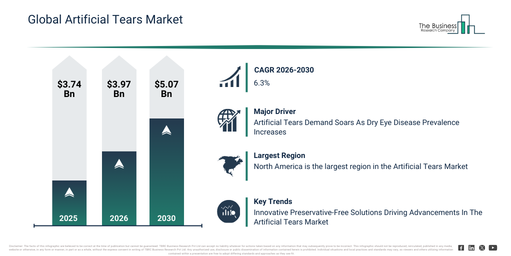
    The market for artificial tears has experienced robust expansion in recent times. The market is forecasted to expand from $3.74 billion in 2025 to $3.97 billion in 2026, achieving a compound annual growth rate (CAGR) of 6.1%. Historically, this growth has been driven by factors such as the rising occurrence of dry eye syndrome, an increased adoption of contact lenses, heightened public awareness concerning eye care, the introduction of multi-purpose eye drops, and the involvement of prominent market participants.

    The artificial tears market is projected to experience substantial growth over the next few years. It is anticipated to expand to $5.07 billion by 2030, driven by a compound annual growth rate (CAGR) of 6.3%. This growth during the forecast period is attributable to several factors, including innovation in preservative-free and high molecular weight formulations, the expansion of e-commerce and online pharmacy channels, an increasing geriatric population, technological advancements in drug delivery, and the market’s expansion into emerging regions. Significant trends anticipated in this period encompass an increase in prescription and over-the-counter eye drop sales, the rising prevalence of dry eye syndrome, heightened awareness of eye health and preventive care, the development of preservative-free formulations, and the continued expansion of online pharmacy and e-commerce channels.

    Access Your Free Sample Report For In-Depth Market Analysis:

    https://www.thebusinessresearchcompany.com/sample.aspx?id=13799&type=smp

    What Leading Drivers Are Supporting The Artificial Tears Market Expansion?

    The increasing occurrence of dry eye disease is anticipated to drive the expansion of the artificial tear market in the future. This condition arises when the eyes fail to generate sufficient tears, or when the produced tears are inadequate in quality, resulting in irritation and discomfort. Artificial tears serve to augment the natural production of tears, thereby offering lubrication and alleviating symptoms for individuals with dry eyes. An illustrative example highlights this trend: in February 2024, Eyes On Eyecare, a US-based digital media and education company, reported that the clinical emphasis on dry eye is forecast to increase by 13.89%, moving from 37.23% in 2023 to 42.4% in 2024. Consequently, the growing incidence of dry eye disease is a key factor propelling the expansion of the artificial tear market.

    How Are Different Segments Classified In The Artificial Tears Market Segment Analysis?

    The artificial tears market covered in this report is segmented –

    1) By Type: Glycerin Tears, Cellulose Tears, Oil-Based Emulsion Tears, Polyethylene Glycol-based Tears, Sodium Hyaluronate Based Artificial Tears, Propylene Glycol-based Tears

    2) By Dosage: Suspensions, Solution, Ointment, Emulsion, Gel

    3) By Indication: Dry Eye Syndrome, Contact Lens Moisture Retention, Other Indications

    4) By Distribution: Retail Pharmacies, Hospital Pharmacies, Online Pharmacies, Ophthalmic Stores

    Subsegments:

    1) By Glycerin Tears: Preserved Glycerin Tears, Preservative-Free Glycerin Tears

    2) By Cellulose Tears: Hydroxypropyl Methylcellulose (HPMC) Tears, Carboxymethylcellulose (CMC) Tears

    3) By Oil-Based Emulsion Tears: Mineral Oil-based Tears, Castor Oil-based Tears

    4) By Polyethylene Glycol-based Tears: PEG 400 Tears, PEG 3350 Tears

    5) By Sodium Hyaluronate Based Artificial Tears: Low Molecular Weight Sodium Hyaluronate Tears, High Molecular Weight Sodium Hyaluronate Tears

    6) By Propylene Glycol-based Tears: Preserved Propylene Glycol Tears, Preservative-Free Propylene Glycol Tears

    What Emerging Trends Are Seen In The Artificial Tears Market?

    Leading companies in the artificial tears market are prioritizing the creation of sophisticated preservative-free formulations to enhance ocular comfort, decrease irritation, and improve treatment adherence for individuals with dry eye disease. Preservative-free eye drops are developed to minimize toxicity to the ocular surface and enable safer long-term application. For example, in February 2025, Alcon Inc., a Switzerland-based eye care company, released Systane Pro PF, designed to alleviate dry eye symptoms and promote general ocular health. This product provides improved lubrication and relief, serving patients with sensitive eyes and ongoing dry eye conditions. This particular launch underscores the increasing focus on patient-focused, safer, and more potent treatment options in the artificial tears market.

    Who Are The Companies Driving Activity In The Artificial Tears Market?

    Major companies operating in the artificial tears market are Pfizer Inc, Johnson & Johnson, AbbVie Inc, Novartis AG, Abbott Laboratories, Otsuka Pharmaceutical Co Ltd, Alcon, Bausch Health Companies Inc, Sun Pharmaceutical Industries Ltd, Dr Reddys Laboratories Ltd, Santen Pharmaceutical Co Ltd, Lupin Limited, Rohto Pharmaceutical Co Ltd, Prestige Consumer Healthcare Inc, Thea Pharma Inc, Sentiss Pharma Pvt Ltd, VISUfarma BV, Similasan Corporation, Eyevance Pharmaceuticals LLC, Nicox SA, I MED Pharma Inc, Velocity Pharma LLC

    Get The Full Artificial Tears Market Report:

    https://www.thebusinessresearchcompany.com/report/artificial-tears-global-market-report

    Which Region Leads The Artificial Tears Market In Overall Market Size?

    North America was the largest region in the artificial tears market in 2025. Asia-Pacific is expected to be the fastest-growing region in the forecast period. The regions covered in the artificial tears market report are Asia-Pacific, South East Asia, Western Europe, Eastern Europe, North America, South America, Middle East, Africa.

    Request A Customized Artificial Tears Market Report For Competitive Insights:

    https://www.thebusinessresearchcompany.com/report/artificial-tears-global-market-report

    Browse Through More Reports Similar to the Global Artificial Tears Market 2026, By The Business Research Company

    Artificial Tears Market Report 2026

    https://www.thebusinessresearchcompany.com/report/artificial-tears-global-market-report

    Cryotherapy Market Report 2026

    https://www.thebusinessresearchcompany.com/report/cryotherapy-global-market-report

    Artificial Saliva Market Report 2026

    https://www.thebusinessresearchcompany.com/report/artificial-saliva-global-market-report

    Get in touch with us:

    The Business Research Company: https://www.thebusinessresearchcompany.com/

    Americas +1 310-496-7795

    Asia +44 7882 955267 & +91 8897263534

    Europe +44 7882 955267

    Email us at: marketing@tbrc.info

    Follow us on:

    LinkedIn: https://in.linkedin.com/company/the-business-research-company

    YouTube: https://www.youtube.com/channel/UC24_fI0rV8cR5DxlCpgmyFQ

    Global Market Model: https://www.thebusinessresearchcompany.com/global-market-model
  • Artificial Intelligence (AI) In Predictive Toxicology Market Forecast 2026–2030 Highlighting Expansion Across Industries

    Artificial Intelligence (AI) In Predictive Toxicology Market Forecast 2026–2030 Highlighting Expansion Across Industries

    The Business Research Company’s 2026 market reports feature enhanced tools like market attractiveness analysis, TAM assessment, and company scoring matrices, along with interactive dashboards, deeper supply chain insights, and startup coverage strengthening the depth, usability, and strategic value of insights.

    What Changes In Market Value Are Expected For The Artificial Intelligence (AI) In Predictive Toxicology Market Over The 2026–2030 Period?

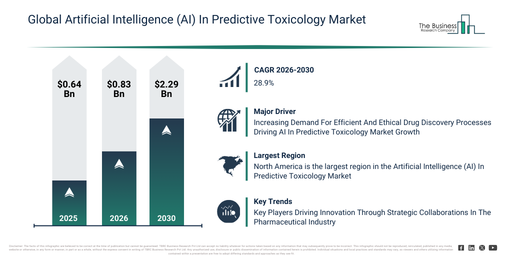
    In recent years, the artificial intelligence (ai) in predictive toxicology market has expanded significantly. Forecasts indicate it will increase from $0.64 billion in 2025 to $0.83 billion in 2026, demonstrating a compound annual growth rate (CAGR) of 29.3%. Historically, this expansion has been driven by factors such as a growing demand for safer chemicals, increased pharmaceutical research and development, mounting regulatory pressure concerning chemical safety, the early embrace of computational toxicology, and advancements in bioinformatics tools.

    The artificial intelligence (ai) in predictive toxicology market size is anticipated to experience significant expansion over the coming years. This market is projected to reach $2.29 billion by 2030, driven by a compound annual growth rate (CAGR) of 28.9%. Several factors are contributing to this growth during the forecast period, including the increased embrace of AI-powered predictive models, the proliferation of cloud-based toxicology platforms, the incorporation of genomics and chemical information, enhanced partnerships between pharmaceutical and biotechnology firms, and the surging need for swift chemical safety evaluations. Key trends expected over the forecast period encompass the merging of multi-omics data for predicting toxicity, computer-based (in silico) drug toxicity modeling, expedited toxicological screening processes, AI-led chemical prioritization, and the management of toxicology data through cloud solutions.

    Access Your Free Sample Report For In-Depth Market Analysis:

    https://www.thebusinessresearchcompany.com/sample.aspx?id=14253&type=smp

    Which Key Factors Are Driving The Artificial Intelligence (AI) In Predictive Toxicology Market Growth?

    The growing need for effective and ethical drug discovery processes is expected to drive the expansion of the artificial intelligence (AI) in predictive toxicology market in the future. Drug discovery is an intricate and dynamic endeavor that involves systematically exploring, synthesizing, and evaluating chemical compounds to identify potential therapeutic agents capable of alleviating diseases and improving overall well-being. Efficient and ethical drug discovery processes achieve this by leveraging advanced technologies and prioritizing responsible research practices in the development of new therapeutic agents. This demand for efficient and ethical drug discovery processes is fueled by the rising prevalence of chronic diseases, the increasing adoption of personalized medicine, and a greater incidence of age-related illnesses. Artificial intelligence (AI) in predictive toxicology enhances drug discovery by efficiently analyzing extensive datasets to predict potential toxicological outcomes, thereby accelerating drug development while ensuring ethical standards are met. For instance, in 2023, according to Office for National Statistics, a UK-based, government agency, the UK government’s net spending on research and development (R&D) rose to £17.4 billion ($22.1 billion) in 2023, up from £16.1 billion ($20.45 billion) in 2022, indicating an 8.2% increase. Therefore, the increasing demand for efficient and ethical drug discovery processes is a significant driver for the growth of the artificial intelligence (AI) in predictive toxicology market.

    How Is The Artificial Intelligence (AI) In Predictive Toxicology Market Categorized Across Its Segment Groups?

    The artificial intelligence (ai) in predictive toxicology market covered in this report is segmented –

    1) By Component: Solution, Services

    2) By Technology: Machine Learning, Other Technologies

    3) By Toxicity Endpoints: Genotoxicity, Hepatotoxicity, Neurotoxicity, Cardiotoxicity, Other Toxicity Endpoints

    4) By End User: Pharmaceutical And Biotechnology Companies, Chemical And Cosmetics, Contract Research Organizations, Other End Users

    Subsegments:

    1) By Solution: Software Platforms, Data Analysis Tools, Predictive Modeling Solutions, Database And Information Systems

    2) By Services: Consulting Services, Training And Support Services, Data Management And Integration Services, Research And Development Services

    Which Trends Are Guiding The Direction Of The Artificial Intelligence (AI) In Predictive Toxicology Market?

    Leading companies within the artificial intelligence (AI) predictive toxicology market are employing strategic collaboration tactics to strengthen their market footprint and drive innovation. These partnerships are designed to utilize AI and machine learning technologies for refining the prediction and evaluation of toxicity in chemical compounds and pharmaceuticals. As an illustration, in January 2024, SyntheticGestalt, an AI research and development firm from the UK specializing in AI drug discovery solutions, formed a partnership with Enamine, a Ukraine-based supplier of chemical building blocks, screening compounds, and integrated drug discovery services. Their joint objective is to create a suite of AI models that will enable the generation of synthetically accessible, biologically active compounds, concurrently optimizing their physicochemical and ADME or Tox (Absorption, Distribution, Metabolism, and Excretion or Toxicity) characteristics. These models are intended for application in SyntheticGestalt’s compound discovery initiatives, serving both academic clients and pharmaceutical enterprises through their offerings. Enamine has made its extensive Enamine REAL database, which comprises 38 billion molecules, accessible. SyntheticGestalt plans to integrate this database into its Drug Discovery Service, where it will deploy proprietary AI models to forecast the physicochemical and ADME or Tox properties of compounds. The service is poised to promptly recommend enhanced alternative compounds for any identified with issues.

    Which Firms Are Influencing Competition In The Artificial Intelligence (AI) In Predictive Toxicology Market?

    Major companies operating in the artificial intelligence (ai) in predictive toxicology market are Certara Inc, Schrödinger Inc, Instem plc, Simulations Plus Inc, Lhasa Limited, Chemaxon Ltd, Algorithme Pharma, Benevolent AI, Berg Health, Biovista Inc, Recursion Pharmaceuticals Inc, Exscientia plc, Insilico Medicine Inc, Celsius Therapeutics Inc, ArisGlobal, Merative L.P., BioTeam Inc, Leadscope Inc, MultiCASE Inc, ACD Labs, Optibrium Ltd, Chemotargets SL, Toxys BV

    Get The Full Artificial Intelligence (AI) In Predictive Toxicology Market Report:

    https://www.thebusinessresearchcompany.com/report/artificial-intelligence-ai-in-predictive-toxicology-global-market-report

    Which Region Is The Top Contributor To The Artificial Intelligence (AI) In Predictive Toxicology Market By Share?

    North America was the largest region in the artificial intelligence (AI) in predictive toxicology market in 2025. Asia-Pacific is expected to be the fastest-growing region in the forecast period. The regions covered in the artificial intelligence (ai) in predictive toxicology market report are Asia-Pacific, South East Asia, Western Europe, Eastern Europe, North America, South America, Middle East, Africa.

    Request A Customized Artificial Intelligence (AI) In Predictive Toxicology Market Report For Competitive Insights:

    https://www.thebusinessresearchcompany.com/report/artificial-intelligence-ai-in-predictive-toxicology-global-market-report

    Browse Through More Reports Similar to the Global Artificial Intelligence (AI) In Predictive Toxicology Market 2026, By The Business Research Company

    Artificial Intelligence Ai In Predictive Toxicology Market Report 2026

    https://www.thebusinessresearchcompany.com/report/artificial-intelligence-ai-in-predictive-toxicology-global-market-report

    Artificial Intelligence In Drug Discovery Market Report 2026

    https://www.thebusinessresearchcompany.com/report/artificial-intelligence-in-drug-discovery-global-market-report

    Artificial Intelligence Ai In Biopharmaceuticals Market Report 2026

    https://www.thebusinessresearchcompany.com/report/artificial-intelligence-ai-in-biopharmaceuticals-global-market-report

    Get in touch with us:

    The Business Research Company: https://www.thebusinessresearchcompany.com/

    Americas +1 310-496-7795

    Asia +44 7882 955267 & +91 8897263534

    Europe +44 7882 955267

    Email us at: marketing@tbrc.info

    Follow us on:

    LinkedIn: https://in.linkedin.com/company/the-business-research-company

    YouTube: https://www.youtube.com/channel/UC24_fI0rV8cR5DxlCpgmyFQ

    Global Market Model: https://www.thebusinessresearchcompany.com/global-market-model

  • Global Artificial Intelligence (AI) In Biopharmaceuticals Market Analysis For 2026–2030 With Strategic Insights

    Global Artificial Intelligence (AI) In Biopharmaceuticals Market Analysis For 2026–2030 With Strategic Insights

    The Business Research Company’s 2026 market reports feature enhanced tools like market attractiveness analysis, TAM assessment, and company scoring matrices, along with interactive dashboards, deeper supply chain insights, and startup coverage strengthening the depth, usability, and strategic value of insights.

    By 2030, What Market Size Is The Artificial Intelligence (AI) In Biopharmaceuticals Market Expected To Reach Based On Its 2026 Value?

    The market for artificial intelligence (ai) in biopharmaceuticals has experienced significant expansion in recent years. This sector is anticipated to expand from $2.1 billion in 2025 to $2.79 billion in 2026, achieving a compound annual growth rate (CAGR) of 33.0%. Historically, this growth has been driven by factors such as the early adoption of ai in pharma research, increasing computational power, rising investment in biopharmaceutical r&d, integration of omics data, and the growth of cloud-based data storage.

    The artificial intelligence (ai) in biopharmaceuticals market size is projected to experience substantial expansion in the coming years. This market is set to reach $8.77 billion by 2030, exhibiting a compound annual growth rate (CAGR) of 33.1%. This anticipated growth throughout the forecast period stems from factors such as advancements in machine learning algorithms, the expansion of ai-enabled lab equipment, wider adoption of predictive analytics, an increase in collaborative ai-biopharma platforms, and government incentives supporting ai-driven healthcare. Key trends shaping the forecast period encompass ai-driven drug discovery, predictive analytics applied to clinical trials, enhanced automation in laboratory processes, integration of real-world data, and the optimization of personalized treatments.

    Access Your Free Sample Report For In-Depth Market Analysis:

    https://www.thebusinessresearchcompany.com/sample.aspx?id=14251&type=smp

    What Primary Drivers Are Shaping The Artificial Intelligence (AI) In Biopharmaceuticals Market?

    The increasing incidence of chronic illnesses is projected to fuel the expansion of the artificial intelligence (AI) in biopharmaceuticals market moving forward. These long-term conditions typically advance gradually and can persist for years or even a lifetime. Their development stems from factors such as lifestyle choices, an aging demographic, genetic predispositions, and environmental influences. AI in biopharmaceuticals is increasingly utilized for managing chronic diseases due to its capacity to analyze vast amounts of diverse data, identify patterns, and personalize treatment approaches. For instance, in April 2025, data from the Centers for Disease Control and Prevention (CDC), a US-based federal agency, indicated that in 2023, approximately 194 million U.S. adults, or 76.4%, reported having at least one chronic condition. The prevalence was recorded as 59.5% among young adults, 78.4% among midlife adults, and 93.0% among older adults. As a result, the escalating prevalence of chronic diseases is a significant driver for the growth of artificial intelligence (AI) in the biopharmaceuticals market.

    How Are Segments Identified Within The Artificial Intelligence (AI) In Biopharmaceuticals Market Segment Framework?

    The artificial intelligence (ai) in biopharmaceuticals market covered in this report is segmented –

    1) By Offering: Hardware, Software, Services

    2) By Deployment: Cloud, On-Premises

    3) By Technology: Machine Learning, Natural Language Processing, Deep Learning, Other Technologies

    4) By Application: Drug Discovery, Precision Medicine

    5) By End-Users: Manufacturers, Contract Research Organizations, Academic And Government Research Institutes

    Subsegments:

    1) By Hardware: High-Performance Computing Systems, AI-Enabled Laboratory Equipment, Data Storage Solutions

    2) By Software: Drug Discovery Platforms, Predictive Analytics Tools, Natural Language Processing Solutions

    3) By Services: Consulting Services, Implementation And Integration Services, Data Management And Analytics Services, Training And Support Services

    What Trends Are Affecting The Growth Of The Artificial Intelligence (AI) In Biopharmaceuticals Market?

    Major companies in biopharmaceuticals utilizing artificial intelligence (AI) are concentrating on developing innovative advancements, such as AI-powered target and lead identification suites, to accelerate drug discovery and precision medicine, thereby transforming life sciences organizations. These solutions for drug discovery and precision medicine encompass a variety of innovative approaches to developing new drugs and tailoring treatments to individual patients. For instance, in May 2023, Google LLC, a US-based provider of cloud computing services, launched two new AI-powered tools called target and lead identification suites, designed to help researchers predict and understand the structure of proteins, which is a fundamental part of drug development. Additionally, this suite will assist researchers in ingesting, storing, analyzing, and sharing large amounts of genomic data, which is crucial for precision medicine. Also, these tools aim to streamline the drug discovery process, reduce costs, and bring new treatments to market faster. By providing efficient data management, accurate predictions of protein structures, and advanced genomic analysis capabilities, these tools aim to revolutionize drug development processes and improve patient outcomes.

    Who Are The Companies Competing Within The Artificial Intelligence (AI) In Biopharmaceuticals Market?

    Major companies operating in the artificial intelligence (ai) in biopharmaceuticals market are Exscientia Limited, DeepMind Technologies Limited, Schrödinger Inc., XtalPi Inc., ConcertAI Inc., Insilico Medicine Inc., Recursion Pharmaceuticals, BenevolentAI, BioXcel Therapeutics, Atomwise Inc., BioAge Labs Inc., GNS Healthcare, Berg Health, Deep 6 AI Inc., Cloud Pharmaceuticals Inc., Numerate Inc., AI Therapeutics, Envisagenics, twoXAR Inc., Cyclica Inc.

    Get The Full Artificial Intelligence (AI) In Biopharmaceuticals Market Report:

    https://www.thebusinessresearchcompany.com/report/artificial-intelligence-ai-in-biopharmaceuticals-global-market-report

    Which Region Represents The Largest Share Of The Artificial Intelligence (AI) In Biopharmaceuticals Market?

    North America was the largest region in the artificial intelligence (AI) in biopharmaceuticals market in 2025. Asia-Pacific is expected to be the fastest-growing region in the forecast period. The regions covered in the artificial intelligence (ai) in biopharmaceuticals market report are Asia-Pacific, South East Asia, Western Europe, Eastern Europe, North America, South America, Middle East, Africa.

    Request A Customized Artificial Intelligence (AI) In Biopharmaceuticals Market Report For Competitive Insights:

    https://www.thebusinessresearchcompany.com/report/artificial-intelligence-ai-in-biopharmaceuticals-global-market-report

    Browse Through More Reports Similar to the Global Artificial Intelligence (AI) In Biopharmaceuticals Market 2026, By The Business Research Company

    Artificial Intelligence Ai In Biopharmaceuticals Market Report 2026

    https://www.thebusinessresearchcompany.com/report/artificial-intelligence-ai-in-biopharmaceuticals-global-market-report

    Artificial Intelligence In Drug Discovery Market Report 2026

    https://www.thebusinessresearchcompany.com/report/artificial-intelligence-in-drug-discovery-global-market-report

    Artificial Intelligence Ai In Precision Medicine Market Report 2026

    https://www.thebusinessresearchcompany.com/report/artificial-intelligence-ai-in-precision-medicine-global-market-report

    Get in touch with us:

    The Business Research Company: https://www.thebusinessresearchcompany.com/

    Americas +1 310-496-7795

    Asia +44 7882 955267 & +91 8897263534

    Europe +44 7882 955267

    Email us at: marketing@tbrc.info

    Follow us on:

    LinkedIn: https://in.linkedin.com/company/the-business-research-company

    YouTube: https://www.youtube.com/channel/UC24_fI0rV8cR5DxlCpgmyFQ

    Global Market Model: https://www.thebusinessresearchcompany.com/global-market-model

  • Arthritis Monoclonal Antibodies Market Outlook 2026–2030 Driven By Growth Factors And Projections

    Arthritis Monoclonal Antibodies Market Outlook 2026–2030 Driven By Growth Factors And Projections

    The Business Research Company’s 2026 market reports feature enhanced tools like market attractiveness analysis, TAM assessment, and company scoring matrices, along with interactive dashboards, deeper supply chain insights, and startup coverage strengthening the depth, usability, and strategic value of insights.

    What Is The Anticipated Rise In Market Value Of The Arthritis Monoclonal Antibodies Market During The Forecast Period?

    The arthritis monoclonal antibodies market has demonstrated significant expansion in recent years. Its valuation is set to increase from $66.45 billion in 2025 to $71.66 billion in 2026, progressing at a compound annual growth rate (CAGR) of 7.8%. The historical growth of this market is linked to factors such as the increasing prevalence of rheumatoid arthritis, the limited effectiveness of conventional dmards, a growing awareness of biologic therapies, the expansion of hospital-based rheumatology care, and rising healthcare expenditure.

    The arthritis monoclonal antibodies market is anticipated to experience robust expansion over the coming years. Its valuation is projected to reach $98.46 billion by 2030, progressing at a compound annual growth rate (CAGR) of 8.3%. This anticipated growth during the forecast period is fueled by several factors, including the advancement of next-generation monoclonal antibodies, a rise in the introduction of biosimilars, the expansion of personalized immunotherapy methods, an increasing elderly demographic suffering from arthritis, and enhanced reimbursement policies for biologics. Key developments anticipated in the forecast timeframe encompass a greater embrace of biologic treatments for autoimmune arthritis, a growing inclination towards targeted monoclonal antibody therapies, an increase in proactive and intensive treatment strategies, the wider availability of biosimilars for arthritis monoclonal antibodies, and better patient access via hospitals and specialized clinics.

    Access Your Free Sample Report For In-Depth Market Analysis:

    https://www.thebusinessresearchcompany.com/sample.aspx?id=3449&type=smp

    Which Major Drivers Are Influencing The Expansion Of The Arthritis Monoclonal Antibodies Market?

    The rising approvals for personalized medicines are anticipated to propel the arthritis monoclonal antibody market moving forward. Personalized medicines are defined as therapeutic products or treatments customized for the individual patient, developed based on a patient’s genetic, biomarker, phenotypic, or psychosocial characteristics that can predict their response to a treatment. Monoclonal antibodies (mABs) represent the latest generation of drugs that align with the personalized medicine paradigm and offer the potential to enhance patient outcomes and healthcare efficiency. For instance, in February 2024, a report from the Personalized Medicine Coalition, a US-based non-profit organization promoting the adoption of personalized medicine, highlighted the importance of 26 newly approved personalized treatments, 19 expanded indications for existing personalized medicines, and 17 notable new or expanded indications for 12 diagnostic testing products. Consequently, the increasing approvals for personalized medicines are a driving force for the arthritis monoclonal antibody market.

    What Are The Key Segment Divisions In The Arthritis Monoclonal Antibodies Market Segment Structure?

    The arthritis monoclonal antibodies market covered in this report is segmented –

    1) By Drug: Remicade, Humira, Enbrel, Rituxan, Orencia, Actemra, Simponi, Cimzia, Remsima

    2) By Application: Rheumatoid Arthritis, Osteoarthritis, Psoriatic Arthritis, Ankylosing Spondylitis, Fibromyalgia, Other Applications

    3) By End-Use: Hospitals, Research Institutes, Other End-Users

    Which Trends Are Shaping The Arthritis Monoclonal Antibodies Market?

    Leading companies in the arthritis monoclonal antibody market are introducing new biosimilar versions, such as Hulio, to make treatment more affordable. Hulio is a biosimilar equivalent of AbbVie’s highly successful rheumatoid arthritis medication, Humira. For example, in July 2023, Biocon Biologics, an India-based subsidiary of Biocon Limited dedicated to biosimilar therapy development, launched Hulio (adalimumab-fkjp), a biosimilar counterpart to Humira. This monoclonal antibody, prescribed for conditions like rheumatoid arthritis and psoriatic arthritis, is priced 5% lower than Humira, which is presently listed at $6,922 per carton.

    Which Organizations Are Engaged In The Arthritis Monoclonal Antibodies Market?

    Major companies operating in the arthritis monoclonal antibodies market are Johnson & Johnson, Hoffmann-La Roche Ltd., Novartis AG, Pfizer Inc., AbbVie Inc., Amgen Inc., Genentech Inc., GlaxoSmithKline plc., AstraZeneca plc, Bristol Myers Squibb, Eli Lilly and Company, Thermo Fisher Scientific Inc., Sanofi SA, Daiichi Sankyo Company Ltd., Seattle Genetics, Teva Pharmaceutical Industries Ltd., Shanghai Junshi Biosciences Co. Ltd., GenScript Biotech Corporation, Sigma-Aldrich Co. LLC, AbGenomics Corp., ADC Therapeutics SA, Agensys Inc., Alexion Pharmaceuticals Inc., ALMAC Group Ltd., Ambrx Inc., Astellas Pharma Inc., Celgene Corporation, Celldex Therapeutics Inc., Boehringer Ingelheim International GmbH, Celltrion Inc., HanAll Biopharma Co. Ltd., Merck & Co. Inc., Mitsubishi Tanabe Pharma Corporation, Regeneron Pharmaceuticals Inc., Samsung Bioepis Co. Ltd.

    Get The Full Arthritis Monoclonal Antibodies Market Report:

    https://www.thebusinessresearchcompany.com/report/arthritis-monoclonal-antibodie-global-market-report

    Which Geographic Region Dominates The Arthritis Monoclonal Antibodies Market?

    North America was the largest region in the arthritis monoclonal antibodies market in 2025. The regions covered in the arthritis monoclonal antibodies market report are Asia-Pacific, South East Asia, Western Europe, Eastern Europe, North America, South America, Middle East, Africa.

    Request A Customized Arthritis Monoclonal Antibodies Market Report For Competitive Insights:

    https://www.thebusinessresearchcompany.com/report/arthritis-monoclonal-antibodie-global-market-report

    Browse Through More Reports Similar to the Global Arthritis Monoclonal Antibodies Market 2026, By The Business Research Company

    Musculoskeletal Disorder Drugs Market Report 2026

    https://www.thebusinessresearchcompany.com/report/musculoskeletal-disorder-drugs-global-market-report

    Microbiome Therapeutics Market Report 2026

    https://www.thebusinessresearchcompany.com/report/microbiome-therapeutics-global-market-report

    Orthobiologics Devices And Equipment Market Report 2026

    https://www.thebusinessresearchcompany.com/report/orthobiologics-devices-and-equipment-global-market-report

    Get in touch with us:

    The Business Research Company: https://www.thebusinessresearchcompany.com/

    Americas +1 310-496-7795

    Asia +44 7882 955267 & +91 8897263534

    Europe +44 7882 955267

    Email us at: marketing@tbrc.info

    Follow us on:

    LinkedIn: https://in.linkedin.com/company/the-business-research-company

    YouTube: https://www.youtube.com/channel/UC24_fI0rV8cR5DxlCpgmyFQ

    Global Market Model: https://www.thebusinessresearchcompany.com/global-market-model
  • Arthritic Therapeutic Market Developments And Opportunities Across 2026–2030

    Arthritic Therapeutic Market Developments And Opportunities Across 2026–2030

    The Business Research Company’s 2026 market reports feature enhanced tools like market attractiveness analysis, TAM assessment, and company scoring matrices, along with interactive dashboards, deeper supply chain insights, and startup coverage strengthening the depth, usability, and strategic value of insights.

    How Is The Market Size Of The Arthritic Therapeutic Market Expected To Scale Between 2026 And 2030?

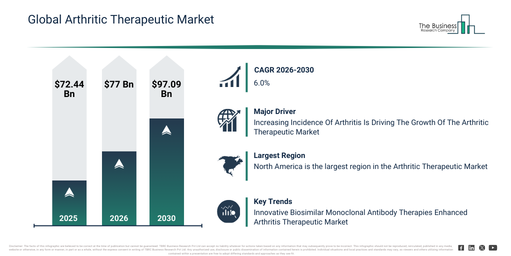
    The arthritic therapeutic market has demonstrated robust growth in recent years. It is anticipated to increase from $72.44 billion in 2025 to $77 billion in 2026, at a compound annual growth rate (CAGR) of 6.3%. This historical expansion can be attributed to several factors, including the increasing global prevalence of arthritis, an expanding geriatric population, restricted access to advanced therapeutics, a heightened awareness of arthritis management, and the development of hospital and clinic infrastructure.

    The arthritic therapeutic market is anticipated to experience substantial expansion over the upcoming years, with its size projected to reach $97.09 billion by 2030, exhibiting a compound annual growth rate (CAGR) of 6.0%. This projected growth during the forecast period is fueled by several factors, including the emergence of novel biologics and focused treatments, a surge in the utilization of telemedicine and remote patient observation, the incorporation of digital health solutions, heightened investment in arthritis research and clinical studies, and the expansion of tailored medical strategies for arthritis. Furthermore, key trends expected within this period encompass a growing uptake of biologic and targeted therapies for arthritis, a heightened demand for individualized arthritis management programs, an increase in home-based physical therapy and rehabilitation services, the broadening of online pharmacies and digital distribution networks, and a reinforced emphasis on early detection and preventive care for arthritis.

    Access Your Free Sample Report For In-Depth Market Analysis:

    https://www.thebusinessresearchcompany.com/sample.aspx?id=19297&type=smp

    What Key Drivers Are Fueling The Growth Of The Arthritic Therapeutic Market?

    The rising occurrence of arthritis is projected to drive the expansion of the arthritic therapeutic market in the future. Arthritis encompasses over 100 conditions, primarily defined by joint discomfort and swelling. The frequency of arthritis is escalating, attributable to an aging populace, higher obesity levels, and lifestyle elements that exacerbate joint strain and inflammation. Treatments for arthritis work to ease symptoms, diminish inflammation, and enhance joint functionality, thereby improving the general quality of life for individuals impacted. For example, a report from June 2024, released by the Australian Institute of Health and Welfare, an Australia-based government body, indicated that around 514,000 individuals (2.0% of the population) were afflicted with rheumatoid arthritis in 2022. Rheumatoid arthritis constituted 2.0% of the overall disease burden and accounted for 16% of the complete burden for all musculoskeletal conditions during 2023. Consequently, the rising prevalence of arthritis is fueling the expansion of the arthritic therapeutic market.

    Which Segment Categories Are Included In The Arthritic Therapeutic Market Segment Analysis?

    The arthritic therapeutic market covered in this report is segmented –

    1) By Drug Class: Tumor Necrosis Factor (TNF) Inhibitors, Interleukin Inhibitors, Nonsteroidal Anti-Inflammatory Drugs (NSAIDs), Corticosteroids, Xanthine Oxidase Inhibitors, Other Drug Classes

    2) By Route Of Administration: Oral, Parenteral, Topical

    3) By Type: Psoriatic Arthritis, Rheumatoid Arthritis, Osteoarthritis, Gout, Other Types

    4) By Distribution Channel: Hospital Pharmacies, Retail Pharmacies, Online Pharmacies

    Subsegments:

    1) By Tumor Necrosis Factor (TNF) Inhibitors: Adalimumab, Etanercept, Infliximab, Certolizumab Pegol, Golimumab

    2) By Interleukin Inhibitors: Interleukin-6 (IL-6) Inhibitors, Interleukin-1 (IL-1) Inhibitors, Interleukin-17 (IL-17) Inhibitors, Interleukin-23 (IL-23) Inhibitors

    3) By Nonsteroidal Anti-Inflammatory Drugs (NSAIDs): Ibuprofen, Naproxen, Diclofenac, Celecoxib, Meloxicam

    4) By Corticosteroids: Prednisone, Methylprednisolone, Hydrocortisone, Dexamethasone

    5) By Xanthine Oxidase Inhibitors: Allopurinol, Febuxostat

    6) By Other Drug Classes: Disease-Modifying Antirheumatic Drugs (DMARDs), Janus Kinase (JAK) Inhibitors, Biologic DMARDs, Topical Analgesics, Opioid Pain Medications

    What Trends Are Influencing The Arthritic Therapeutic Market?

    Leading companies in the arthritis therapeutic market are concentrating on developing innovative solutions, such as biosimilar monoclonal antibody-based treatments, to boost treatment efficacy and cut costs. These biosimilar monoclonal antibody-based therapies are treatments designed to closely replicate and mimic the effectiveness of original monoclonal antibodies, providing similar therapeutic benefits at a potentially lower cost. For instance, in May 2024, Bio-Thera Solutions Ltd., a China-based biopharmaceutical company, launched TOFIDENCE, an intravenous biosimilar monoclonal antibody formulation based on ACTEMRA. TOFIDENCE (tocilizumab-bavi) has been developed to be a biosimilar to the reference drug ACTEMRA and is approved for treating moderately to severely active rheumatoid arthritis, polyarticular juvenile idiopathic arthritis, and systemic juvenile idiopathic arthritis.

    Who Are The Active Companies Shaping The Arthritic Therapeutic Market?

    Major companies operating in the arthritic therapeutic market are Pfizer Inc., Johnson & Johnson, Hoffmann-La Roche Ltd, Merck & Co Inc., AbbVie Inc., Sanofi S.A., Bristol-Myers Squibb Company, AstraZeneca Pharma AB, GlaxoSmithKline plc, Eli Lilly and Company, Amgen Inc., Gilead Sciences Inc., Regeneron Pharmaceuticals Inc., Astellas Pharma Inc., Biogen Inc., Vertex Pharmaceuticals Incorporated, Zimmer Biomet Holdings Inc., UCB Pharma S.A., Incyte Corporation, Celltrion Inc., Mallinckrodt Pharmaceuticals, Genentech Inc., Anika Therapeutics Inc., Medac GmbH

    Get The Full Arthritic Therapeutic Market Report:

    https://www.thebusinessresearchcompany.com/report/arthritic-therapeutic-global-market-report

    Which Region Is The Leading Market For The Arthritic Therapeutic Market?

    North America was the largest region in the arthritic therapeutic market in 2025. The regions covered in the arthritic therapeutic market report are Asia-Pacific, South East Asia, Western Europe, Eastern Europe, North America, South America, Middle East, Africa.

    Request A Customized Arthritic Therapeutic Market Report For Competitive Insights:

    https://www.thebusinessresearchcompany.com/report/arthritic-therapeutic-global-market-report

    Browse Through More Reports Similar to the Global Arthritic Therapeutic Market 2026, By The Business Research Company

    Mantle Cell Lymphoma Therapeutics Market Report 2026

    https://www.thebusinessresearchcompany.com/report/mantle-cell-lymphoma-therapeutics-global-market-report

    Glycomic Therapeutics Market Report 2026

    https://www.thebusinessresearchcompany.com/report/glycomic-therapeutics-global-market-report

    Pruritus Therapeutics Market Report 2026

    https://www.thebusinessresearchcompany.com/report/pruritus-therapeutics-global-market-report

    Get in touch with us:

    The Business Research Company: https://www.thebusinessresearchcompany.com/

    Americas +1 310-496-7795

    Asia +44 7882 955267 & +91 8897263534

    Europe +44 7882 955267

    Email us at: marketing@tbrc.info

    Follow us on:

    LinkedIn: https://in.linkedin.com/company/the-business-research-company

    YouTube: https://www.youtube.com/channel/UC24_fI0rV8cR5DxlCpgmyFQ

    Global Market Model: https://www.thebusinessresearchcompany.com/global-market-model
  • Artery Stenosis Drug Market Forecast 2026–2030 Presenting Long-Term Industry Insights

    Artery Stenosis Drug Market Forecast 2026–2030 Presenting Long-Term Industry Insights

    The Business Research Company’s 2026 market reports feature enhanced tools like market attractiveness analysis, TAM assessment, and company scoring matrices, along with interactive dashboards, deeper supply chain insights, and startup coverage strengthening the depth, usability, and strategic value of insights.

    What Level Of Market Value Growth Is Predicted For The Artery Stenosis Drug Market From 2026 To 2030?

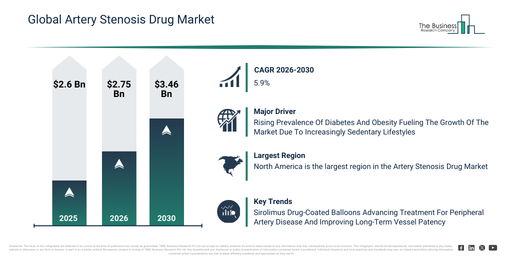
    The artery stenosis drug market has experienced robust growth in recent years. This market is projected to expand from $2.6 billion in 2025 to $2.75 billion in 2026, demonstrating a compound annual growth rate (CAGR) of 5.9%. Historically, this expansion has been driven by factors such as the prevalence of cardiovascular disease, the increasing aging population, the widespread adoption of statin therapy, a higher incidence of hypertension, and the expansion of hospital cardiology services.

    The artery stenosis drug market is anticipated to show robust growth in the coming years. It is projected to expand to $3.46 billion by 2030, demonstrating a compound annual growth rate (CAGR) of 5.9%. This growth during the forecast period is attributable to several factors such as a heightened focus on preventive cardiology, the establishment of early diagnosis programs, an increase in the uptake of combination therapies, more effective chronic disease management, and the availability of outpatient cardiovascular care. Key trends identified for the same period encompass a growing application of combination cardiovascular therapy, wider adoption of preventive drug regimens, an expansion in long-term statin therapy, broader access to geriatric vascular care, and a significant emphasis on preventing strokes and heart attacks.

    Access Your Free Sample Report For In-Depth Market Analysis:

    https://www.thebusinessresearchcompany.com/sample.aspx?id=24151&type=smp

    Which Drivers Are Supporting The Artery Stenosis Drug Market Growth?

    The expanding occurrence of diabetes and obesity is projected to fuel the expansion of the artery stenosis drug market in the future. Diabetes is a chronic ailment characterized by inadequate insulin production or inefficient insulin utilization, leading to high blood sugar, while obesity is a medical state defined by excessive body fat, which heightens the risk of various health complications. The escalation in diabetes and obesity is attributed to insufficient regular physical activity, stemming from increasingly inactive professional settings and leisure pursuits involving screens, both contributing to weight gain and insulin resistance. Medications for artery stenosis are essential for individuals with diabetes and obesity because these conditions encourage arterial plaque formation, thereby elevating the danger of heart attacks and strokes. For example, in September 2023, the World Health Organization, a Switzerland-based specialized agency of the United Nations, reported 2.0 million deaths due to diabetes. Consequently, the increasing incidence of diabetes and obesity is stimulating expansion within the artery stenosis drug market.

    How Is The Artery Stenosis Drug Market Broken Down By Segment Categories?

    The artery stenosis drug market covered in this report is segmented –

    1) By Drug Type: Antiplatelet Agents, Anticoagulants, Statins, Beta Blockers

    2) By Mechanism Of Action: Platelet Aggregation Inhibitors, Thrombin Inhibitors, HMG-CoA Reductase Inhibitors, Beta-Adrenergic Antagonists

    3) By Route Of Administration: Oral, Injectable, Transdermal

    4) By Patient Type: Adults, Geriatric, Pediatric

    Subsegments:

    1) By Antiplatelet Agents: Aspirin, Clopidogrel, Ticagrelor, Prasugrel, Dipyridamole

    2) By Anticoagulants: Warfarin, Heparin, Low Molecular Weight Heparins, Direct Oral Anticoagulants (DOACs)

    3) By Statins: Atorvastatin, Simvastatin, Rosuvastatin, Pravastatin, Lovastatin

    4) By Beta Blockers: Metoprolol, Atenolol, Propranolol, Carvedilol, Bisoprolol

    Which Trends Are Shaping Growth In The Artery Stenosis Drug Market?

    Leading companies in the artery stenosis drug market are concentrating on developing advanced therapeutic options, such as sirolimus drug-coated balloons, to meet unmet medical needs in treating peripheral artery disease. These sirolimus drug-coated balloons function as medical devices that merge balloon angioplasty with targeted drug delivery, releasing sirolimus, an antiproliferative agent, directly into the arterial wall during inflation to prevent restenosis and enhance long-term vessel patency. As an illustration, in November 2024, Cordis Corporation, a US-based cardiovascular medical device company, revealed favorable 24-month outcomes from the Selution SFA Japan trial, showcasing the efficacy of its Selution SLR sirolimus drug-coated balloon for superficial femoral artery disease treatment. The data demonstrated a primary patency rate of 86.8% at 24 months, coupled with a low target lesion revascularization rate of 6.6%, signifying prolonged vessel openness and a decreased necessity for repeated interventions. The Selution SLR balloon provides a sustained and regulated release of sirolimus to the arterial wall, which inhibits excessive tissue growth leading to re-narrowing, all while ensuring excellent safety profiles for patients suffering from peripheral artery stenosis.

    Which Players Are Present In The Artery Stenosis Drug Market Space?

    Major companies operating in the artery stenosis drug market are Pfizer Inc., Bayer AG, Bristol-Myers Squibb Company, AstraZeneca PLC, Novartis AG, Sanofi S.A., Merck & Co. Inc., Johnson & Johnson Services Inc., GSK plc, Boehringer Ingelheim, Daiichi Sankyo Company Limited, Eli Lilly and Company, Otsuka Pharmaceutical Co. Ltd., Teva Pharmaceutical Industries Ltd., Sun Pharmaceutical Industries Ltd., Dr. Reddy’s Laboratories Ltd., Cipla Limited, Lupin Limited, Aurobindo Pharma Limited, Zydus Lifesciences Limited

    Get The Full Artery Stenosis Drug Market Report:

    https://www.thebusinessresearchcompany.com/report/artery-stenosis-drug-global-market-report

    Where Is The Artery Stenosis Drug Market Primarily Concentrated By Region?

    North America was the largest region in the artery stenosis drug market in 2025. The regions covered in the artery stenosis drug market report are Asia-Pacific, South East Asia, Western Europe, Eastern Europe, North America, South America, Middle East, Africa.

    Request A Customized Artery Stenosis Drug Market Report For Competitive Insights:

    https://www.thebusinessresearchcompany.com/report/artery-stenosis-drug-global-market-report

    Browse Through More Reports Similar to the Global Artery Stenosis Drug Market 2026, By The Business Research Company

    Vascular Stent Market Report 2026

    https://www.thebusinessresearchcompany.com/report/vascular-stent-global-market-report

    Drug Eluting Stent Market Report 2026

    https://www.thebusinessresearchcompany.com/report/drug-eluting-stent-global-market-report

    Atherosclerosis Drugs Market Report 2026

    https://www.thebusinessresearchcompany.com/report/atherosclerosis-drugs-global-market-report

    Get in touch with us:

    The Business Research Company: https://www.thebusinessresearchcompany.com/

    Americas +1 310-496-7795

    Asia +44 7882 955267 & +91 8897263534

    Europe +44 7882 955267

    Email us at: marketing@tbrc.info

    Follow us on:

    LinkedIn: https://in.linkedin.com/company/the-business-research-company

    YouTube: https://www.youtube.com/channel/UC24_fI0rV8cR5DxlCpgmyFQ

    Global Market Model: https://www.thebusinessresearchcompany.com/global-market-model

  • Anti-Tumor Drugs Market Analysis With Focus On Growth Potential And Future Outlook

    Anti-Tumor Drugs Market Analysis With Focus On Growth Potential And Future Outlook

    The Business Research Company’s 2026 market reports feature enhanced tools like market attractiveness analysis, TAM assessment, and company scoring matrices, along with interactive dashboards, deeper supply chain insights, and startup coverage strengthening the depth, usability, and strategic value of insights.

    What Is The Forecasted Market Size Trajectory Of The Anti-Tumor Drugs Market From 2026 To 2030?

    The anti-tumor drugs market size has experienced significant expansion recently. It is projected to increase from $206.81 billion in 2025 to $229.63 billion by 2026, at a compound annual growth rate (CAGR) of 11.0%. This historical growth can be attributed to the restricted availability of targeted therapy drugs, a continued dependence on conventional cytotoxic drugs, the rising occurrence of major cancers, the establishment of fundamental hospital pharmacy infrastructure, and increased awareness regarding cancer treatment choices.

    The anti-tumor drugs market is projected to experience significant expansion over the coming years. This market is forecast to reach a valuation of $345.02 billion by 2030, exhibiting a compound annual growth rate (CAGR) of 10.7%. Factors contributing to this anticipated growth include progress in gene therapy and immunotherapy, the broadening of precision medicine programs, increased investments in pharmaceutical research and development, the rise in online pharmacy usage, and the creation of innovative drug delivery methods. Key trends for the forecast period encompass a greater embrace of personalized cancer treatments, enhanced capital allocation towards immunotherapy and targeted interventions, the broadening availability of injectable and oral anti-tumor drug formulations, an expansion in hospital and oncology clinic pharmacy services, and a heightened emphasis on drug safety, adherence, and pharmacovigilance.

    Access Your Free Sample Report For In-Depth Market Analysis:

    https://www.thebusinessresearchcompany.com/sample.aspx?id=25697&type=smp

    What Leading Drivers Are Supporting The Anti-Tumor Drugs Market Expansion?

    The rising occurrence of cancer is projected to fuel the expansion of the anti-tumor drugs market in the future. Cancer constitutes a collection of illnesses marked by the unchecked proliferation and dissemination of atypical cells within the body, capable of infiltrating adjacent tissues and possibly migrating to other regions via the circulatory and lymphatic systems. This escalating incidence of cancer stems largely from detrimental lifestyle choices like inadequate nutrition, insufficient physical exercise, tobacco use, heavy alcohol intake, and extended exposure to environmental contaminants, all of which substantially elevate the likelihood of developing diverse forms of cancer. Anti-tumor drugs function to combat cancer by specifically targeting and eradicating malignant cells, thereby hindering tumor development and stalling the advancement of the illness. As an illustration, in October 2025, data from the National Health Service (NHS), a UK-based governmental health organization, revealed 354,820 new cancer diagnoses in 2023, averaging 972 daily, marking an increase of 8,605 compared to 2022. Consequently, the rising prevalence of cancer is a key factor propelling the expansion of the anti-tumor drug market.

    How Is The Anti-Tumor Drugs Market Categorized Across Its Segment Groups?

    The anti-tumor drugs market covered in this report is segmented –

    1) By Drug Type: Cytotoxic Drugs, Targeted Therapy Drugs, Hormonal Therapy Drugs, Immunotherapy Drugs, Other Drug Types

    2) By Cancer Type: Lung Cancer, Breast Cancer, Colorectal Cancer, Prostate Cancer, Other Cancer Types

    3) By Route of Administration: Oral, Injectable, Other Routes Of Administration

    4) By Distribution Channel: Hospital Pharmacies, Retail Pharmacies, Online Pharmacies, Other Distribution Channels

    Subsegments:

    1) By Cytotoxic Drugs: Alkylating Agents, Antimetabolites, Plant Alkaloids, Antitumor Antibiotics, Other Cytotoxic Drugs

    2) By Targeted Therapy Drugs: Monoclonal Antibodies, Tyrosine Kinase Inhibitors, Mechanistic Target Of Rapamycin Inhibitors, Poly Polymerase Inhibitors, Other Targeted Therapy Drugs

    3) By Hormonal Therapy Drugs: Selective Estrogen Receptor Modulators, Aromatase Inhibitors, Luteinizing Hormone-Releasing Hormone Agonists, Anti-Androgens, Other Hormonal Therapy Drugs

    4) By Immunotherapy Drugs: Checkpoint Inhibitors, Chimeric Antigen Receptor T-Cell Therapy, Cancer Vaccines, Cytokines, Other Immunotherapy Drugs

    5) By Other Drug Types: Gene Therapy Drugs, Anti-Angiogenic Agents, Radioisotope-Based Drugs, Photodynamic Therapy Agents

    What Trends Are Affecting The Growth Of The Anti-Tumor Drugs Market?

    Major companies within the anti-tumor drugs market are concentrating on creating innovative therapies, such as specific breast cancer treatments, to improve therapeutic results in hormone receptor-positive metastatic cases. This targeted breast cancer treatment involves precision therapies that directly influence cancer cell growth pathways, thereby minimizing harm to healthy cells and enhancing patient tolerance. For instance, in January 2023, Sun Pharmaceutical Industries Ltd., an India-based pharmaceutical company, launched Palbociclib, a new anti-cancer drug for treating advanced breast cancer in India. Palbociclib acts as a highly selective oral inhibitor of cyclin-dependent kinases 4 and 6 (CDK4/6), which are crucial for regulating cell cycle progression. By blocking the transition from the G1 to S phase, the drug triggers cell cycle arrest, consequently inhibiting tumor growth. Its primary application is for hormone receptor-positive, HER2-negative advanced breast cancer, targeting the unregulated multiplication of cancer cells.

    Which Firms Are Influencing Competition In The Anti-Tumor Drugs Market?

    Major companies operating in the anti-tumor drugs market are Pfizer Inc, Johnson And Johnson, Roche Holding AG, Merck And Co. Inc., AbbVie Inc., Bayer AG, Sanofi S.A., Bristol-Myers Squibb Company, AstraZeneca PLC, Novartis AG., GlaxoSmithKline plc, Eli Lilly And Company, Gilead Sciences Inc., Amgen Inc., Boehringer Ingelheim GmbH, Astellas Pharma Inc., Incyte Corporation, BeOne Medicines Inc., Getwell Oncology Pvt Ltd., Shanghai Haihe Pharmaceutical Co. Ltd.

    Get The Full Anti-Tumor Drugs Market Report:

    https://www.thebusinessresearchcompany.com/report/anti-tumor-drugs-global-market-report

    Which Geographic Region Dominates The Anti-Tumor Drugs Market?

    North America was the largest region in the anti-tumor drugs market in 2025. Asia-Pacific is expected to be the fastest-growing region in the forecast period. The regions covered in the anti-tumor drugs market report are Asia-Pacific, South East Asia, Western Europe, Eastern Europe, North America, South America, Middle East, Africa.

    Request A Customized Anti-Tumor Drugs Market Report For Competitive Insights:

    https://www.thebusinessresearchcompany.com/report/anti-tumor-drugs-global-market-report

    Browse Through More Reports Similar to the Global Anti-Tumor Drugs Market 2026, By The Business Research Company

    Oncology Drugs Market 2026

    https://www.thebusinessresearchcompany.com/report/oncology-drugs-market

    Oncology Drugs Market 2026

    https://www.thebusinessresearchcompany.com/report/oncology-drugs-market

    Brain Tumor Drugs Market Report 2026

    https://www.thebusinessresearchcompany.com/report/brain-tumor-drugs-global-market-report

    Get in touch with us:

    The Business Research Company: https://www.thebusinessresearchcompany.com/

    Americas +1 310-496-7795

    Asia +44 7882 955267 & +91 8897263534

    Europe +44 7882 955267

    Email us at: marketing@tbrc.info

    Follow us on:

    LinkedIn: https://in.linkedin.com/company/the-business-research-company

    YouTube: https://www.youtube.com/channel/UC24_fI0rV8cR5DxlCpgmyFQ

    Global Market Model: https://www.thebusinessresearchcompany.com/global-market-model
  • Aripiprazole Market Growth Analysis 2026–2030 Highlighting Innovation And Competitive Landscape

    Aripiprazole Market Growth Analysis 2026–2030 Highlighting Innovation And Competitive Landscape

    The Business Research Company’s 2026 market reports feature enhanced tools like market attractiveness analysis, TAM assessment, and company scoring matrices, along with interactive dashboards, deeper supply chain insights, and startup coverage strengthening the depth, usability, and strategic value of insights.

    How Will The Market Value Of The Aripiprazole Market Progress Between 2026 And 2030?

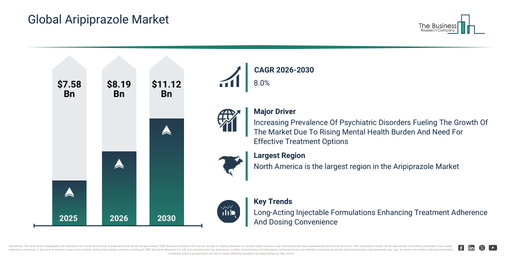
    The aripiprazole market has experienced significant growth over recent years. It is anticipated to expand from $7.58 billion in 2025 to $8.19 billion in 2026, reflecting a compound annual growth rate (CAGR) of 8.0%. This historical growth can be ascribed to factors such as schizophrenia prevalence, an increase in bipolar disorder diagnoses, new antipsychotic drug approvals, heightened mental health awareness, and the expansion of hospital psychiatry facilities.

    The aripiprazole market is poised for substantial growth over the next few years. It is forecast to expand to $11.12 billion by 2030, achieving a compound annual growth rate (CAGR) of 8.0%. The anticipated rise during this period can be attributed to several factors, including the increasing adoption of long-acting injectables, a growing number of treatment-resistant depression cases, expanding generic drug penetration, increased pediatric mental health diagnoses, and the expansion of outpatient psychiatry services. Significant trends expected during the forecast timeframe encompass its augmented use as an adjunct therapy for depression, the proliferation of long-acting injectable antipsychotics, an enlarged focus on pediatric and adolescent psychiatry, a rising demand for mood stabilization therapies, and the wider acceptance of generic aripiprazole.

    Access Your Free Sample Report For In-Depth Market Analysis:

    https://www.thebusinessresearchcompany.com/sample.aspx?id=24150&type=smp

    What Key Factors Are Affecting The Aripiprazole Market Demand?

    The increasing incidence of psychiatric disorders is projected to boost the growth of the aripiprazole market in the foreseeable future. Psychiatric disorders encompass a variety of mental health conditions that impact an individual’s thinking, emotions, behavior, and overall functioning. The rise in the prevalence of psychiatric disorders can be attributed to factors such as chronic stress, social isolation, and the pressures of modern lifestyles affecting mental well-being. Aripiprazole assists in managing psychiatric disorders by stabilizing dopamine and serotonin activity in the brain, making it effective for conditions like schizophrenia, bipolar disorder, and major depressive disorder. It enhances symptom management through flexible dosing options, which improves treatment adherence and the overall quality of life for patients. For instance, according to the American Psychiatric Association, a US-based health association, its annual mental health poll revealed that 43 percent of United States adults reported feeling more anxious in 2024 than in the preceding year, an increase from 37 percent in 2023 and 32 percent in 2022. Therefore, the escalating prevalence of psychiatric disorders is a significant driver for the aripiprazole market. The expanding healthcare expenditure is anticipated to fuel the growth of the aripiprazole market moving forward. Healthcare expenditure refers to the total funds disbursed on medical services, treatments, facilities, research, and public health initiatives to maintain or improve health outcomes. The heightened demand for healthcare expenditure is a consequence of the rising occurrence of chronic mental health conditions, which necessitate continuous treatment, medication, and long-term care support. Healthcare expenditure facilitates the adoption of aripiprazole by supporting access to advanced mental health treatments, ensuring a consistent supply of medication, and enhancing patient care. It strengthens healthcare systems by funding long-term therapies, thus improving treatment outcomes for psychiatric disorders. For example, in December 2024, data from the Centers for Medicare and Medicaid Services (CMS), a US-based federal agency, indicated that national health expenditures (NHE) grew by 7.5% to $4.9 trillion in 2023, accounting for 17.6% of gross domestic product (GDP). Furthermore, between 2023 and 2032, average national health expenditures (NHE) are projected to increase at an average annual rate of 5.6%, which will lead to an increase in the health spending share of gross domestic product (GDP) from 17.3% in 2022 to 19.7% in 2032. Consequently, the growing healthcare expenditure is propelling the growth of the aripiprazole market.

    What Are The Different Segment Types In The Aripiprazole Market Segment Breakdown?

    The aripiprazole market covered in this report is segmented –

    1) By Indication: Schizophrenia, Bipolar Disorder, Major Depressive Disorder, Autism Spectrum Disorder

    2) By Patient Demographics: Pediatric Patients, Adult Patients, Geriatric Patients

    3) By Dosage Form: Oral Tablets, Oral Solution, Injectable

    4) By Distribution Channel: Hospital Pharmacy, Retail Pharmacy, Online Pharmacy

    Subsegments:

    1) By Schizophrenia: Acute Schizophrenia, Maintenance Treatment for Schizophrenia

    2) By Bipolar Disorder: Bipolar I Disorder, Bipolar II Disorder, Bipolar Depression

    3) By Major Depressive Disorder: Treatment-Resistant Depression, Acute Major Depressive Disorder

    4) By Autism Spectrum Disorder: Irritability Associated with Autism, Aggressive Behavior in Autism

    What Trends Are Affecting The Direction Of The Aripiprazole Market?

    Leading companies in the aripiprazole market are prioritizing the creation of innovative products and securing approvals, such as product line extensions, to improve treatment adherence, broaden therapeutic applications, and sustain market competitiveness following patent expiration. A product line extension describes the strategy of introducing new variations of an existing product under the same brand, typically through alterations in formulation, dosage, packaging, or delivery mechanisms, aimed at expanding the product’s market reach or addressing evolving patient requirements without modifying the core compound. For instance, in March 2024, Otsuka Pharmaceutical Co. Ltd., a Japan-based pharmaceutical company, obtained approval from Japan’s Ministry of Health, Labour and Welfare (MHLW) for Abilify Asimtufii, a long-acting injectable formulation of aripiprazole administered once every two months for the management of schizophrenia. This formulation functions by providing a sustained release of aripiprazole through a ready-to-use aqueous suspension, allowing for once-every-two-month dosing that lessens injection frequency compared to monthly formulations, thereby boosting treatment adherence and convenience for patients while maintaining therapeutic efficacy in controlling schizophrenia symptoms.

    Who Are The Well-Known Companies In The Aripiprazole Market?

    Major companies operating in the aripiprazole market are Novartis AG, Teva Pharmaceutical Industries Ltd., Hetero Drugs, Sun Pharmaceutical Industries Ltd., Cipla Limited, Zydus Lifesciences, Neuland Laboratories Ltd., Ipca Laboratories Limited, Jubilant Pharmova, MSN Laboratories Pvt. Ltd., Harman Finochem Ltd., SMS Pharmaceuticals, Erregierre S.p.A., Tiefenbacher API + Ingredients GmbH & Co. KG, Alkem Laboratories Ltd., Suraj Laboratories Pvt. Ltd, Octavius Pharma Pvt. Ltd., Tooba Pharmaceuticals Private Limited, Senores Pharmaceuticals Pvt. Ltd., Gonane Pharma.

    Get The Full Aripiprazole Market Report:

    https://www.thebusinessresearchcompany.com/report/aripiprazole-global-market-report

    Which Region Has The Greatest Market Share In The Aripiprazole Market?

    North America was the largest region in the aripiprazole market in 2025. Asia-Pacific is expected to be the fastest-growing region in the forecast period. The regions covered in the aripiprazole market report are Asia-Pacific, South East Asia, Western Europe, Eastern Europe, North America, South America, Middle East, Africa.

    Request A Customized Aripiprazole Market Report For Competitive Insights:

    https://www.thebusinessresearchcompany.com/report/aripiprazole-global-market-report

    Browse Through More Reports Similar to the Global Aripiprazole Market 2026, By The Business Research Company

    Alexipharmic Drugs Market Report 2026

    https://www.thebusinessresearchcompany.com/report/alexipharmic-drugs-global-market-report

    Omeprazole Market Report 2026

    https://www.thebusinessresearchcompany.com/report/omeprazole-global-market-report

    Benzodiazepine Drugs Market Report 2026

    https://www.thebusinessresearchcompany.com/report/benzodiazepine-drugs-global-market-report

    Get in touch with us:

    The Business Research Company: https://www.thebusinessresearchcompany.com/

    Americas +1 310-496-7795

    Asia +44 7882 955267 & +91 8897263534

    Europe +44 7882 955267

    Email us at: marketing@tbrc.info

    Follow us on:

    LinkedIn: https://in.linkedin.com/company/the-business-research-company

    YouTube: https://www.youtube.com/channel/UC24_fI0rV8cR5DxlCpgmyFQ

    Global Market Model: https://www.thebusinessresearchcompany.com/global-market-model
  • Anti-Thyroid Drugs Market Forecast Showing Industry Progress And Growth Trends

    Anti-Thyroid Drugs Market Forecast Showing Industry Progress And Growth Trends

    The Business Research Company’s 2026 market reports feature enhanced tools like market attractiveness analysis, TAM assessment, and company scoring matrices, along with interactive dashboards, deeper supply chain insights, and startup coverage strengthening the depth, usability, and strategic value of insights.

    How Much Will The Market Value Of The Anti-Thyroid Drugs Market Grow Between 2026 And 2030?

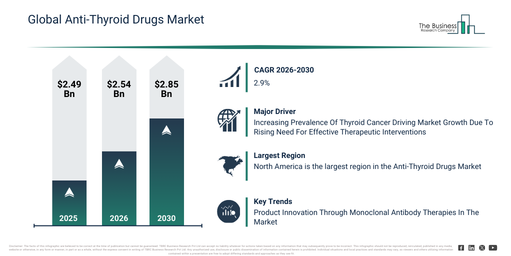
    The anti-thyroid drugs market has experienced modest expansion recently. Its size is expected to increase from $2.49 billion in 2025 to $2.54 billion in 2026, exhibiting a compound annual growth rate (CAGR) of 2.0%. The expansion observed historically can be linked to the significant occurrence of hyperthyroidism, the existence of oral treatment options, widespread diagnostic screening, well-developed endocrine medical services, and their application in radiation safety.

    The anti-thyroid drugs market size is projected to experience consistent expansion over the upcoming years. It is predicted to reach $2.85 billion by 2030, demonstrating a compound annual growth rate (CAGR) of 2.9%. This anticipated growth during the forecast period is attributable to an increase in autoimmune thyroid conditions, enhanced screening initiatives, improved access to healthcare services, advancements in thyroid regulation treatments, and an aging demographic. Key trends anticipated over the same period encompass a greater number of diagnosed thyroid disorders, the expanded application of thionamide-based medications, wider availability of outpatient thyroid care, more frequent monitoring of hormone concentrations, and advancements in drug safety profiles.

    Access Your Free Sample Report For In-Depth Market Analysis:

    https://www.thebusinessresearchcompany.com/sample.aspx?id=3401&type=smp

    Which Key Factors Are Driving The Anti-Thyroid Drugs Market Growth?

    The expanding incidence of thyroid cancer is projected to fuel the expansion of the anti-thyroid drugs market moving forward. Thyroid cancer, a condition affecting the thyroid gland—located near the base of the throat and responsible for producing hormones that regulate various bodily functions like body temperature, heart rate, blood pressure, and weight—is becoming more common. This rise in prevalence is largely attributable to increased exposure to medical radiation and environmental carcinogens. Anti-thyroid drugs facilitate the early detection of thyroid cancer, which can significantly enhance treatment outcomes. As an illustration, data from August 2023, released by the American Society of Clinical Oncology, a US-based organization for oncologists and surgeons, indicated that in the United States, approximately 43,720 adults (comprising 12,540 men and 31,180 women) received a thyroid cancer diagnosis in 2023, with an estimated 2,120 deaths (970 men and 1,150 women) from the disease anticipated in the same year. Consequently, the increasing occurrence of thyroid cancer is driving the growth of the anti-thyroid drugs market.

    How Are Segments Identified Within The Anti-Thyroid Drugs Market Segment Framework?

    The anti-thyroid drugs market covered in this report is segmented –

    1) By Drug Type: Thionamides (Inhibition Of Hormone Synthesis), Iodides (Inhibition Of Hormone Release)

    2) By Route of Administration: Oral, Intravenous, Other Route Of Administration

    3) By Distribution Channel: Wholesaler Or Distributors, Retail Chain, Online Distribution, Other Distribution Channels

    Subsegments:

    1) By Thionamides (Inhibition Of Hormone Synthesis): Methimazole, Propylthiouracil

    2) By Iodides (Inhibition Of Hormone Release): Potassium Iodide, Lugol’s Iodine Solution

    Which Trends Are Shaping The Anti-Thyroid Drugs Market?

    Major companies operating in the anti-thyroid drugs market are focusing on innovating products, such as monoclonal antibodies, to improve patient outcomes, reduce adverse effects, and strengthen their competitive position. Monoclonal antibodies refer to laboratory-engineered proteins that precisely target specific molecules in the body to help treat diseases more effectively. For instance, in March 2025, Innovent Biologics, Inc., a China-based biotechnology company, announced the approval of SYCUME, an anti-IGF-1R monoclonal antibody, by China’s National Medical Products Administration (NMPA) for the treatment of thyroid eye disease (TED). SYCUME is the first drug of its kind approved in China and the second worldwide, offering a new, effective treatment option that significantly reduces proptosis and inflammation while improving patients’ quality of life. The approval is based on positive clinical trial results demonstrating SYCUME’s ability to address the unmet needs of TED patients, providing a safer, more accessible alternative to existing therapies.

    Who Are The Companies Competing Within The Anti-Thyroid Drugs Market?

    Major companies operating in the anti-thyroid drugs market are Mylan N.V., Abbott Laboratories, GlaxoSmithKline plc, Merck & Co., Pfizer Inc., Allergan plc, RLC LABS Inc., Lannett Company Inc., Sanofi S.A., Novartis AG, Teva Pharmaceutical Industries Ltd., Aspen Pharmacare Holdings Limited, Aurobindo Pharma Limited, Dr. Reddy’s Laboratories Ltd., Sun Pharmaceutical Industries Ltd., Cipla Inc., Lupin Limited, Cadila Healthcare Limited, Torrent Pharmaceuticals Ltd., Alkem Laboratories Ltd., Akorn Inc.

    Get The Full Anti-Thyroid Drugs Market Report:

    https://www.thebusinessresearchcompany.com/report/anti-thyroid-drugs-global-market-report

    Which Region Is The Leading Market For The Anti-Thyroid Drugs Market?

    North America was the largest region in the anti-thyroid drugs market in 2025. The Middle East is expected to be the fastest-growing region in the anti-thyroid drugs market during the forecast period. The regions covered in the anti-thyroid drugs market report are Asia-Pacific, South East Asia, Western Europe, Eastern Europe, North America, South America, Middle East, Africa.

    Request A Customized Anti-Thyroid Drugs Market Report For Competitive Insights:

    https://www.thebusinessresearchcompany.com/report/anti-thyroid-drugs-global-market-report

    Browse Through More Reports Similar to the Global Anti-Thyroid Drugs Market 2026, By The Business Research Company

    Anti Thyroid Drugs Market Report 2026

    https://www.thebusinessresearchcompany.com/report/anti-thyroid-drugs-global-market-report

    Thyroid Cancer Drugs Market Report 2026

    https://www.thebusinessresearchcompany.com/report/thyroid-cancer-drugs-global-market-report

    Anti Infective Drugs Market 2026

    https://www.thebusinessresearchcompany.com/report/anti-infective-drugs-market

    Get in touch with us:

    The Business Research Company: https://www.thebusinessresearchcompany.com/

    Americas +1 310-496-7795

    Asia +44 7882 955267 & +91 8897263534

    Europe +44 7882 955267

    Email us at: marketing@tbrc.info

    Follow us on:

    LinkedIn: https://in.linkedin.com/company/the-business-research-company

    YouTube: https://www.youtube.com/channel/UC24_fI0rV8cR5DxlCpgmyFQ

    Global Market Model: https://www.thebusinessresearchcompany.com/global-market-model