Category: Pharmaceuticals

  • Automated Liquid Handling Systems Market Growth Analysis 2026–2030 Highlighting Innovation And Competitive Landscape

    Automated Liquid Handling Systems Market Growth Analysis 2026–2030 Highlighting Innovation And Competitive Landscape

    The Business Research Company’s 2026 market reports feature enhanced tools like market attractiveness analysis, TAM assessment, and company scoring matrices, along with interactive dashboards, deeper supply chain insights, and startup coverage strengthening the depth, usability, and strategic value of insights.

    How Much Growth In Market Value Is Expected For The Automated Liquid Handling Systems Market Between 2026 And 2030?

    The automated liquid handling systems market has demonstrated robust expansion in recent years. This market is set to increase from $4.19 billion in 2025 to $4.49 billion in 2026, achieving a compound annual growth rate (CAGR) of 7.2%. The growth observed in the past period can be primarily ascribed to the escalating integration of automated liquid handling in pharmaceutical research, the necessity for high-throughput screening, the growing requirement for accuracy in sample preparation, the advancement of biotechnology and genomics research, and the proliferation of contract research organizations.

    The automated liquid handling systems market is projected to experience substantial expansion in the coming years. By 2030, its valuation is anticipated to reach $5.73 billion, demonstrating a compound annual growth rate (CAGR) of 6.3%. This growth during the forecast period is propelled by factors such as the incorporation of AI and machine learning for optimizing protocols, increasing need for laboratory automation in developing regions, the evolution of multi-channel and robotic liquid handling solutions, a heightened focus on personalized medicine, and innovations in modular and adaptable liquid handling platforms. Key trends for the upcoming period encompass automated high-throughput screening, the reduction in size of liquid handling instruments, their seamless connection with lab information management systems (LIMS), versatile and modular system architectures, and improved accuracy and exactness in liquid handling operations.

    Access Your Free Sample Report For In-Depth Market Analysis:

    https://www.thebusinessresearchcompany.com/sample.aspx?id=14850&type=smp

    Which Key Drivers Are Affecting The Automated Liquid Handling Systems Market Development?

    The expanding occurrence of chronic illnesses is anticipated to propel the growth of the automated liquid handling systems market going forward. A chronic condition is defined as a persistent health issue that can be managed but typically cannot be entirely cured. This increasing prevalence of chronic diseases arises from heightened consumption of processed foods, inactive lifestyles characterized by prolonged sitting, and reduced physical activity. Automated liquid handling systems provide advantages such as improved accuracy, reproducibility, and throughput when compared to manual pipetting, rendering them indispensable in the pharmaceutical and biotechnology industries. For instance, in April 2025, according to the Centers for Disease Control and Prevention (CDC), a US-based federal agency, approximately 194 million U.S. adults, or 76.4%, reported having at least one chronic condition in 2023. The prevalence stood at 59.5% among young adults, 78.4% among midlife adults, and 93.0% among older adults. Therefore, the growing prevalence of chronic disease is driving the growth of the automated liquid handling systems market.

    Which Segments Define The Automated Liquid Handling Systems Market Segment Structure?

    The automated liquid handling systems market covered in this report is segmented –

    1) By Type: Automated Liquid Handling System, Semi-automated Liquid Handling System

    2) By Application: Drug Discovery And ADME-Tox Research, Cancer And Genomic Research, Bioprocessing Or Biotechnology, Other Applications

    3) By End User: Contract Research Organizations, Pharmaceutical And Biotechnology, Academic And Research Institutes

    Subsegments:

    1) By Automated Liquid Handling System: Single-Channel Automated Systems, Multi-Channel Automated Systems, Integrated Liquid Handling Systems, Robotic Liquid Handling Systems

    2) By Semi-Automated Liquid Handling System: Manual-Supported Semi-Automated Systems, Partially Automated Pipetting Systems, Semi-Automated Dispensing Systems

    What Trends Are Influencing The Evolution Of The Automated Liquid Handling Systems Market?

    Leading firms within the automated liquid handling systems market are prioritizing the creation of advanced platforms aimed at improving accuracy, processing capacity, and operational fluidity in life science and laboratory settings. Such systems incorporate sophisticated robotics, protocols guided by software, and adaptable modular structures to facilitate scalable, high-volume sample handling. An example is the announcement by Tecan US Inc., a US-based laboratory automation company, in February 2025, of Veya, its new liquid handling platform engineered to offer superior adaptability, rapidity, and consistency throughout various laboratory processes. The intuitive user interface, inherent automation features, and seamless integration with subsequent analytical instruments of this platform are intended to optimize lab procedures, minimize human error, and expedite research and diagnostic results.

    Who Are The Established Players Within The Automated Liquid Handling Systems Market?

    Major companies operating in the automated liquid handling systems market are Thermo Fisher Scientific Inc, Danaher Corporation, Agilent Technologies, PerkinElmer Inc, Eppendorf AG, Tecan Group Ltd, Hamilton Company, Formulatrix Inc, Analytik Jena AG, Gilson Inc, Corning Inc, Bio Rad Laboratories Inc, Qiagen NV, Becton Dickinson and Company, Lonza Group AG, Mettler Toledo International Inc, Sartorius AG, SPT Labtech Ltd, Opentrons Labworks Inc, Beijing TXTB Science and Technology Co Ltd

    Get The Full Automated Liquid Handling Systems Market Report:

    https://www.thebusinessresearchcompany.com/report/automated-liquid-handling-systems-global-market-report

    Where Is The Automated Liquid Handling Systems Market Primarily Concentrated By Region?

    North America was the largest region in the automated liquid handling systems market in 2025. Asia Pacific is expected to be the fastest-growing region in the forecast period. The regions covered in the automated liquid handling systems market report are Asia-Pacific, South East Asia, Western Europe, Eastern Europe, North America, South America, Middle East, Africa.

    Request A Customized Automated Liquid Handling Systems Market Report For Competitive Insights:

    https://www.thebusinessresearchcompany.com/report/automated-liquid-handling-systems-global-market-report

    Browse Through More Reports Similar to the Global Automated Liquid Handling Systems Market 2026, By The Business Research Company

    Automated Liquid Handling Systems Market Report 2026

    https://www.thebusinessresearchcompany.com/report/automated-liquid-handling-systems-global-market-report

    Automated Liquid Handling Technologies Market Report 2026

    https://www.thebusinessresearchcompany.com/report/automated-liquid-handling-technologies-global-market-report

    Liquid Handling Systems Market Report 2026

    https://www.thebusinessresearchcompany.com/report/liquid-handling-systems-global-market-report

    Get in touch with us:

    The Business Research Company: https://www.thebusinessresearchcompany.com/

    Americas +1 310-496-7795

    Asia +44 7882 955267 & +91 8897263534

    Europe +44 7882 955267

    Email us at: marketing@tbrc.info

    Follow us on:

    LinkedIn: https://in.linkedin.com/company/the-business-research-company

    YouTube: https://www.youtube.com/channel/UC24_fI0rV8cR5DxlCpgmyFQ

    Global Market Model: https://www.thebusinessresearchcompany.com/global-market-model
  • Autologous Stem Cell And Non-Stem Cell Based Therapies Market Forecast Through 2030 With Insights On Market Patterns And Developments

    Autologous Stem Cell And Non-Stem Cell Based Therapies Market Forecast Through 2030 With Insights On Market Patterns And Developments

    The Business Research Company’s 2026 market reports feature enhanced tools like market attractiveness analysis, TAM assessment, and company scoring matrices, along with interactive dashboards, deeper supply chain insights, and startup coverage strengthening the depth, usability, and strategic value of insights.

    What Is The Estimated Market Size Of The Autologous Stem Cell And Non-Stem Cell Based Therapies Market In 2026, And How Will Its Value Evolve By 2030?

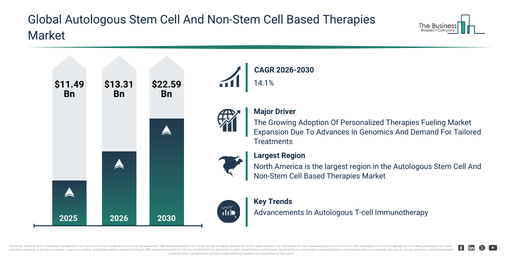
    The market for autologous stem cell and non-stem cell based therapies has demonstrated rapid expansion in recent years. Its value is forecast to increase from $11.49 billion in 2025 to $13.31 billion in 2026, achieving a compound annual growth rate (CAGR) of 15.8%. This historical growth can be ascribed to several factors including the rising prevalence of degenerative disorders, advancements in stem cell isolation techniques, increasing awareness of regenerative medicine, the early adoption of autologous therapies in developed countries, and government initiatives supporting cell-based therapies.

    The autologous stem cell and non-stem cell based therapies market is projected to experience rapid expansion over the next few years. It is expected to reach $22.59 billion by 2030, with a compound annual growth rate (CAGR) of 14.1%. This growth during the forecast period can be attributed to increasing investment in personalized medicine, the expansion of cell therapy manufacturing infrastructure, the integration of AI in cell therapy development, a rising demand in emerging markets, and the development of combination cell-based therapies. Significant trends anticipated in the forecast period include personalized regenerative therapies, immunomodulatory cell therapies, minimally invasive autologous treatments, innovations in cell expansion and manufacturing, and advanced tissue engineering solutions.

    Access Your Free Sample Report For In-Depth Market Analysis:

    https://www.thebusinessresearchcompany.com/sample.aspx?id=15729&type=smp

    What Factors Are Contributing To The Growth Of The Autologous Stem Cell And Non-Stem Cell Based Therapies Market?

    The increasing acceptance of personalized therapies is projected to fuel the expansion of the autologous stem cell and non–stem cell-based therapies market moving forward. Personalized therapies are medical interventions specifically tailored to an individual’s unique genetic makeup, lifestyle, and clinical characteristics, aiming to maximize treatment effectiveness and minimize negative side effects. The surge in personalized therapies is largely due to significant advancements in genomics and biomarker-driven drug development, coupled with an increasing patient demand for targeted, more effective treatment options. Autologous stem cell and non–stem cell-based therapies are pivotal in this trend, as they utilize a patient’s own cells and genetic information to provide highly customized therapeutic solutions, leading to better outcomes and fewer complications. For example, in February 2024, data from the Personalized Medicine Coalition (PMC), a US-based organization, indicated that in 2023, 20 out of 53 new therapeutic molecular entities approved by the U.S. Food and Drug Administration, roughly 38%, were designated as personalized medicines, illustrating the swift growth of precision-based treatment methods. Consequently, the rising adoption of personalized therapies is driving the expansion of the autologous stem cell and non–stem cell-based therapies market.

    How Is The Autologous Stem Cell And Non-Stem Cell Based Therapies Market Segmented Across Different Segment Categories?

    The autologous stem cell and non-stem cell based therapies market covered in this report is segmented –

    1) By Type: Autologous Stem Cells, Autologous Non-Stem Cells, Other Types

    2) By Application: Cancer, Neurodegenerative Disorders, Cardiovascular Disease, Orthopedic Diseases, Other Applications

    3) By End-User: Hospitals, Ambulatory Surgical Centers, Research Facilities, Other End Users

    Subsegments:

    1) By Autologous Stem Cells: Hematopoietic Stem Cells, Mesenchymal Stem Cells, Neural Stem Cells, Endothelial Stem Cells

    2) By Autologous Non-Stem Cells: Platelet-Rich Plasma (Prp), Adipose-Derived Cells, Peripheral Blood Cells

    3) By Other Types: Exosome-Based Therapies, Tissue-Engineered Constructs

    Which Trends Are Impacting The Progress Of The Autologous Stem Cell And Non-Stem Cell Based Therapies Market?

    Leading enterprises in the autologous stem cell and non-stem cell-based therapies market are advancing tumor-derived autologous T cell immunotherapy to improve personalized cancer treatment strategies. This type of immunotherapy functions by extracting T cells from a patient’s tumor, culturing and activating them in a laboratory, and then reinfusing them into the patient to strengthen the immune system’s precise ability to target and eliminate cancer cells. As an illustration, in February 2024, Iovance Biotherapeutics, a US-based biotechnology company, secured accelerated approval from the Food and Drug Administration, a US-based federal agency, for Amtagvi (lifileucel). This marked the first cellular therapy authorized for treating adult patients with melanoma. Lifileucel is a tumor-derived autologous T-cell immunotherapy. It consists of a patient’s own naturally occurring immune cells known as tumor-infiltrating lymphocytes (TILs). This process empowers the patient’s immune system to identify and attack the cancer more efficiently.

    Which Organizations Play A Role In The Autologous Stem Cell And Non-Stem Cell Based Therapies Market Landscape?

    Major companies operating in the autologous stem cell and non-stem cell based therapies market are Bayer AG, Novartis AG, Takeda Pharmaceutical Company Limited, Gilead Sciences Inc., Merck & Co. Inc., Stemcell Technologies Inc., Dendreon Corporation, Vericel Corporation, Sangamo Therapeutics Inc., NEOSTEM, Orgenesis Inc., Adaptimmune Therapeutics, Stempeutics Research Pvt Ltd., MEDIPOST, Castle Creek Biosciences Inc., BrainStorm Cell Limited, Athersys Inc., Cytori Therapeutics Inc., Opexa Therapeutics, Gamida Cell, Regen BioPharma Inc., RepliCel Life Sciences, InGeneron Inc., BioCardia Inc., ReNeuron Group

    Get The Full Autologous Stem Cell And Non-Stem Cell Based Therapies Market Report:

    https://www.thebusinessresearchcompany.com/report/autologous-stem-cell-and-non-stem-cell-based-therapies-global-market-report

    Which Region Has The Greatest Market Share In The Autologous Stem Cell And Non-Stem Cell Based Therapies Market?

    North America was the largest region in the autologous stem cell and non-stem cell based therapies market in 2025. Asia-Pacific is expected to be the fastest-growing region in the forecast period. The regions covered in the autologous stem cell and non-stem cell based therapies market report are Asia-Pacific, South East Asia, Western Europe, Eastern Europe, North America, South America, Middle East, Africa.

    Request A Customized Autologous Stem Cell And Non-Stem Cell Based Therapies Market Report For Competitive Insights:

    https://www.thebusinessresearchcompany.com/report/autologous-stem-cell-and-non-stem-cell-based-therapies-global-market-report

    Browse Through More Reports Similar to the Global Autologous Stem Cell And Non-Stem Cell Based Therapies Market 2026, By The Business Research Company

    Autologous Stem Cell And Non Stem Cell Based Therapies Market Report 2026

    https://www.thebusinessresearchcompany.com/report/autologous-stem-cell-and-non-stem-cell-based-therapies-global-market-report

    Autologous Cell Therapy Market Report 2026

    https://www.thebusinessresearchcompany.com/report/autologous-cell-therapy-global-market-report

    Stem Cells Therapy Market Report 2026

    https://www.thebusinessresearchcompany.com/report/stem-cells-therapy-global-market-report

    Get in touch with us:

    The Business Research Company: https://www.thebusinessresearchcompany.com/

    Americas +1 310-496-7795

    Asia +44 7882 955267 & +91 8897263534

    Europe +44 7882 955267

    Email us at: marketing@tbrc.info

    Follow us on:

    LinkedIn: https://in.linkedin.com/company/the-business-research-company

    YouTube: https://www.youtube.com/channel/UC24_fI0rV8cR5DxlCpgmyFQ

    Global Market Model: https://www.thebusinessresearchcompany.com/global-market-model

  • Autoimmune Monoclonal Antibody Market Outlook For 2026–2030 Covering Growth Drivers And Industry Trends

    Autoimmune Monoclonal Antibody Market Outlook For 2026–2030 Covering Growth Drivers And Industry Trends

    The Business Research Company’s 2026 market reports feature enhanced tools like market attractiveness analysis, TAM assessment, and company scoring matrices, along with interactive dashboards, deeper supply chain insights, and startup coverage strengthening the depth, usability, and strategic value of insights.

    How Does The Market Size Of The Autoimmune Monoclonal Antibody Market Compare Between 2026 And 2030?

    The autoimmune monoclonal antibody market has experienced substantial expansion in recent years. Its valuation is anticipated to rise from $70.86 billion in 2025 to $76.6 billion in 2026, achieving a compound annual growth rate (CAGR) of 8.1%. Key drivers for this historical growth include autoimmune disease prevalence, biologic drug approvals, the expansion of hospital infusion centers, improved chronic inflammation management, and the proliferation of specialty clinics.

    The market for autoimmune monoclonal antibodies is poised for robust expansion in the upcoming years. It is projected to attain a value of $104.57 billion by 2030, exhibiting a compound annual growth rate (CAGR) of 8.1%. This expected progression during the forecast period stems from factors such as advancements in precision immunology, enhanced biosimilar penetration, the creation of long-acting antibodies, the practicality of outpatient biologic administration, and individualized autoimmune therapy. Prominent trends throughout this period involve an increased uptake of targeted biologic treatments, a wider scope in developing fully human antibodies, their growing application in chronic autoimmune conditions, a rising preference for subcutaneous delivery, and an emphasis on sustained disease management.

    Access Your Free Sample Report For In-Depth Market Analysis:

    https://www.thebusinessresearchcompany.com/sample.aspx?id=24162&type=smp

    Which Strong Drivers Are Impacting The Autoimmune Monoclonal Antibody Market Growth?

    The future growth of the autoimmune monoclonal antibody market is anticipated to be driven by the rising demand for biologics. Biologics are a class of medical products derived from living organisms or their components, employed in the treatment, prevention, or diagnosis of diseases. The increased demand for biologics is mainly due to their effectiveness in treating complex conditions such as cancer, autoimmune disorders, and genetic conditions, especially when traditional therapies are less successful. Autoimmune monoclonal antibodies enhance biologic treatments by offering targeted immune modulation, making them effective for controlling overactive immune responses. They facilitate precise treatment, thereby reducing the need for broad immunosuppressants, which improves patient outcomes and minimizes side effects. For instance, in June 2024, data from Cardinal Health Inc., a US-based healthcare company, indicated that there were 40 Food and Drug Administration (FDA) approved biosimilar products in 2023, with 25 commercially available in the US market, showing an increase from 33 biosimilar products in 2022. Therefore, the escalating demand for biologics is propelling the expansion of the autoimmune monoclonal antibody market.

    What Are The Main Segments Within The Autoimmune Monoclonal Antibody Market Segment Structure?

    The autoimmune monoclonal antibody market covered in this report is segmented –

    1) By Type: Immunoglobulin G Monoclonal Antibodies, Immunoglobulin M Monoclonal Antibodies, Chimeric Monoclonal Antibodies, Fully Human Monoclonal Antibodies

    2) By  Route Of Administration: Subcutaneous, Intravenous, Intramuscular

    3) By Application: Rheumatoid Arthritis, Multiple Sclerosis, Systemic Lupus Erythematosus, Psoriasis, Inflammatory Bowel Disease

    4) By Distribution Channel: Hospital Pharmacy, Online Pharmacy, Retail Pharmacy

    5) By End User: Hospitals, Outpatient Clinics, Homecare Settings, Research Institutions

    Subsegments:

    1) By Immunoglobulin G (IgG) Monoclonal Antibodies: Immunoglobulin G1 (IgG1), Immunoglobulin G2 (IgG2), Immunoglobulin G3 (IgG3), Immunoglobulin G4 (IgG4)

    2) By Immunoglobulin M (IgM) Monoclonal Antibodies: Pentameric Immunoglobulin M (IgM), Hexameric Immunoglobulin M (IgM)

    3) By Chimeric Monoclonal Antibodies: Murine Variable Region + Human Constant Region, Humanized Variable Region + Murine Constant Region

    4) By Fully Human Monoclonal Antibodies: Phage Display-Derived, Transgenic Mouse-Derived, Fully Human Hybridoma-Derived

    What Trends Are Transforming The Autoimmune Monoclonal Antibody Market?

    Leading firms in the autoimmune monoclonal antibody sector are concentrating on creating novel solutions, notably through biosimilar development, to improve safety, effectiveness, and overall quality. This development involves producing biological products that are highly comparable, safe, and effective to already approved biologics, utilizing cutting-edge biotechnology, extensive analytical testing, and clinical research to establish equivalent quality, efficacy, and safety for the purpose of regulatory clearance. An example of this is the launch of YESINTEK by Biocon Biologics Limited, an India-based biopharmaceutical company, in February 2025. This biosimilar addresses autoimmune conditions like Crohn’s disease, ulcerative colitis, and psoriasis by targeting and suppressing the activity of interleukin-12 and interleukin-23, thereby reducing inflammation and modulating the immune response. By mimicking the reference product stelara, Yesintek aids in long-term disease management and expands patient access to biologic treatments.

    Who Are The Companies Participating In The Autoimmune Monoclonal Antibody Market?

    Major companies operating in the autoimmune monoclonal antibody market are Johnson & Johnson, F. Hoffmann-La Roche Ltd, Pfizer Inc., Merck & Co. Inc., AbbVie Inc., Novartis AG, Sanofi S.A., Bristol-Myers Squibb Company, AstraZeneca PLC, Eli Lilly and Company, Amgen Inc., Teva Pharmaceutical Industries Ltd., Regeneron Pharmaceuticals Inc., UCB S.A., Genmab A/S, Zymeworks Inc., Xencor Inc., Immutep Limited, Cue Biopharma Inc., Santa Ana Bio Inc.

    Get The Full Autoimmune Monoclonal Antibody Market Report:

    https://www.thebusinessresearchcompany.com/report/autoimmune-monoclonal-antibody-global-market-report

    Which Region Accounts For The Largest Portion Of The Autoimmune Monoclonal Antibody Market?

    North America was the largest region in the autoimmune monoclonal antibody market in 2025. Asia-Pacific is expected to be the fastest-growing region in the forecast period. The regions covered in the autoimmune monoclonal antibody market report are Asia-Pacific, South East Asia, Western Europe, Eastern Europe, North America, South America, Middle East, Africa.

    Request A Customized Autoimmune Monoclonal Antibody Market Report For Competitive Insights:

    https://www.thebusinessresearchcompany.com/report/autoimmune-monoclonal-antibody-global-market-report

    Browse Through More Reports Similar to the Global Autoimmune Monoclonal Antibody Market 2026, By The Business Research Company

    Autoimmune Disease Diagnosis Market Report 2026

    https://www.thebusinessresearchcompany.com/report/autoimmune-disease-diagnosis-global-market-report

    Autoimmune Treatment Market Report 2026

    https://www.thebusinessresearchcompany.com/report/autoimmune-treatment-global-market-report

    Monoclonal Antibodies Market Report 2026

    https://www.thebusinessresearchcompany.com/report/monoclonal-antibodies-global-market-report

    Get in touch with us:

    The Business Research Company: https://www.thebusinessresearchcompany.com/

    Americas +1 310-496-7795

    Asia +44 7882 955267 & +91 8897263534

    Europe +44 7882 955267

    Email us at: marketing@tbrc.info

    Follow us on:

    LinkedIn: https://in.linkedin.com/company/the-business-research-company

    YouTube: https://www.youtube.com/channel/UC24_fI0rV8cR5DxlCpgmyFQ

    Global Market Model: https://www.thebusinessresearchcompany.com/global-market-model
  • Rising Incidence Of Bone Marrow Cancer Fuels Growth Of Daratumumab/Darzalex Is Supporting Expansion In The Autoimmune Hemolytic Anemia Treatment Market

    Rising Incidence Of Bone Marrow Cancer Fuels Growth Of Daratumumab/Darzalex Is Supporting Expansion In The Autoimmune Hemolytic Anemia Treatment Market

    The Business Research Company’s 2026 market reports feature enhanced tools like market attractiveness analysis, TAM assessment, and company scoring matrices, along with interactive dashboards, deeper supply chain insights, and startup coverage strengthening the depth, usability, and strategic value of insights.

    What Is The Forecasted Market Size Trajectory Of The Autoimmune Hemolytic Anemia Treatment Market From 2026 To 2030?

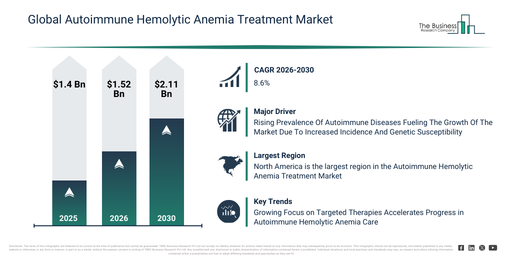
    The autoimmune hemolytic anemia treatment market size has demonstrated significant expansion in recent years. It is anticipated to increase from $1.4 billion in 2025 to $1.52 billion in 2026, progressing at a compound annual growth rate (CAGR) of 8.6%. The expansion observed in prior periods is linked to the prevalence of autoimmune disorders, advancements in anemia diagnosis, the application of corticosteroids, the provision of hospital hematology services, and greater awareness regarding blood disorders.

    The autoimmune hemolytic anemia treatment market is projected to experience substantial expansion in the coming years, anticipated to reach $2.11 billion by 2030, exhibiting a compound annual growth rate (CAGR) of 8.6%. This projected growth can be attributed to several factors, including the advancement of targeted immunotherapy, the implementation of personalized treatment protocols, the availability of improved early diagnostic tools, enhanced long-term disease management strategies, and ongoing research into biologic therapies. Key trends expected during this period involve an increased reliance on corticosteroid therapy, the growing acceptance of immunosuppressive agents, a wider array of second-line treatment alternatives, an emphasis on earlier diagnosis and consistent monitoring, and a concerted effort to mitigate treatment-associated complications.

    Access Your Free Sample Report For In-Depth Market Analysis:

    https://www.thebusinessresearchcompany.com/sample.aspx?id=24161&type=smp

    What Key Factors Are Shaping The Autoimmune Hemolytic Anemia Treatment Market Landscape?

    The increasing occurrence of autoimmune diseases is anticipated to boost the expansion of the autoimmune hemolytic anemia treatment market in the future. Autoimmune disorders are conditions where the immune system erroneously attacks the body’s healthy tissues, resulting in inflammation and harm. This surge in autoimmune disease prevalence is primarily fueled by genetic susceptibility, rendering individuals more prone to developing these conditions. Managing the complications of autoimmune diseases critically involves the treatment of autoimmune hemolytic anemia, which works by targeting and lessening the immune system’s destruction of red blood cells. For example, data from May 2023, provided by the National Institute for Health and Care Research (NIHR), a UK organization that funds, supports, and delivers health and care research to improve people’s health and well-being, indicates that a study involving 22 million people showed autoimmune disorders currently affect approximately one in ten individuals. Specifically, 19 autoimmune diseases impact about 10% of the population, comprising 13% of women and 7% of men. Consequently, the expanding prevalence of autoimmune diseases is poised to fuel the growth of the autoimmune hemolytic anemia treatment market.

    How Is Segmentation Applied In The Autoimmune Hemolytic Anemia Treatment Market Segment Analysis?

    The autoimmune hemolytic anemia treatment market covered in this report is segmented –

    1) By Type: Warm Autoimmune Hemolytic Anemia, Cold Autoimmune Hemolytic Anemia, Other Types

    2) By Drug Class: Corticosteroids, Immunosuppressive Agents, Other Drug Classes

    3) By Route Of Administration: Injectable, Oral, Other Route Of Administrations

    4) By Distribution Channel: Hospital Pharmacy, Retail Pharmacy, Online Pharmacy

    Subsegments:

    1) By Warm Autoimmune Hemolytic Anemia: Primary Warm Autoimmune Hemolytic Anemia, Secondary Warm Autoimmune Hemolytic Anemia

    2) By Cold Autoimmune Hemolytic Anemia: Primary Cold Agglutinin Disease (CAD), Secondary Cold Autoimmune Hemolytic Anemia

    3) By Other Types: Mixed-Type Autoimmune Hemolytic Anemia, Paroxysmal Cold Hemoglobinuria (PCH), Drug-Induced Autoimmune Hemolytic Anemia

    What Trends Are Shaping The Future Of The Autoimmune Hemolytic Anemia Treatment Market?

    Leading firms within the autoimmune hemolytic anemia (AIHA) treatment market are prioritizing the development of targeted immunotherapies with the goal of enhancing disease management, lessening hemolysis, and providing patients with safer long-term treatment solutions. These specific immunotherapies work by adjusting particular immune pathways that cause the breakdown of red blood cells, thus tackling the core autoimmune process instead of merely alleviating symptoms. An example of this is seen in June 2025, when HUTCHMED, a biopharmaceutical firm from China, commenced its Phase II/III registration trial (ESLIM-02) to assess sovleplenib, which is a selective Syk inhibitor, for its effectiveness in treating warm autoimmune hemolytic anemia (wAIHA). The purpose of this trial is to determine how well the drug can prevent immune-driven hemolysis, raise hemoglobin levels, and present a new treatment choice for patients who have few other options.

    Who Are The Companies Participating In The Autoimmune Hemolytic Anemia Treatment Market Environment?

    Major companies operating in the autoimmune hemolytic anemia treatment market are Johnson & Johnson, F. Hoffmann-La Roche Ltd., AbbVie Inc., Sanofi SA, Novartis AG, Amgen Inc., Incyte Corporation, Alexion Pharmaceuticals Inc., Hutchison China MediTech Limited, BioCryst Pharmaceuticals Inc., Annexon Inc., Rigel Pharmaceuticals Inc., Nanjing IASO Biotherapeutics Co. Ltd., Apellis Pharmaceuticals Inc., Momenta Pharmaceuticals Inc., Zenas BioPharma Inc., Immunovant Sciences GmbH, Alpine Immune Sciences Inc., Agios Pharmaceuticals Inc., Kezar Life Sciences Inc.

    Get The Full Autoimmune Hemolytic Anemia Treatment Market Report:

    https://www.thebusinessresearchcompany.com/report/autoimmune-hemolytic-anemia-treatment-global-market-report

    Which Region Holds The Highest Market Share In The Autoimmune Hemolytic Anemia Treatment Market?

    North America was the largest region in the autoimmune hemolytic anemia treatment market in 2025. Asia-Pacific is expected to be the fastest-growing region in the forecast period. The regions covered in the autoimmune hemolytic anemia treatment market report are Asia-Pacific, South East Asia, Western Europe, Eastern Europe, North America, South America, Middle East, Africa.

    Request A Customized Autoimmune Hemolytic Anemia Treatment Market Report For Competitive Insights:

    https://www.thebusinessresearchcompany.com/report/autoimmune-hemolytic-anemia-treatment-global-market-report

    Browse Through More Reports Similar to the Global Autoimmune Hemolytic Anemia Treatment Market 2026, By The Business Research Company

    Autoimmune Treatment Market Report 2026

    https://www.thebusinessresearchcompany.com/report/autoimmune-treatment-global-market-report

    Anemia And Other Blood Disorder Drugs Market Report 2026

    https://www.thebusinessresearchcompany.com/report/anemia-and-other-blood-disorder-drugs-global-market-report

    Chemotherapy Induced Anemia Market Report 2026

    https://www.thebusinessresearchcompany.com/report/chemotherapy-induced-anemia-global-market-report

    Get in touch with us:

    The Business Research Company: https://www.thebusinessresearchcompany.com/

    Americas +1 310-496-7795

    Asia +44 7882 955267 & +91 8897263534

    Europe +44 7882 955267

    Email us at: marketing@tbrc.info

    Follow us on:

    LinkedIn: https://in.linkedin.com/company/the-business-research-company

    YouTube: https://www.youtube.com/channel/UC24_fI0rV8cR5DxlCpgmyFQ

    Global Market Model: https://www.thebusinessresearchcompany.com/global-market-model

  • Rising Prevalence Of Infectious Diseases And Its Impact On The Is Contributing To Changes In The Autoimmune Gastrointestinal Dysmotility Market

    Rising Prevalence Of Infectious Diseases And Its Impact On The Is Contributing To Changes In The Autoimmune Gastrointestinal Dysmotility Market

    The Business Research Company’s 2026 market reports feature enhanced tools like market attractiveness analysis, TAM assessment, and company scoring matrices, along with interactive dashboards, deeper supply chain insights, and startup coverage strengthening the depth, usability, and strategic value of insights.

    How Much Will The Market Value Of The Autoimmune Gastrointestinal Dysmotility Market Grow Between 2026 And 2030?

    The autoimmune gastrointestinal dysmotility market has experienced robust growth in recent years. It is forecast to grow from $1.82 billion in 2025 to $1.92 billion in 2026, achieving a compound annual growth rate (CAGR) of 5.5%. The historical expansion of this market can be attributed to factors such as increased autoimmune disease diagnosis, the prevalence of gastroparesis, the expansion of hospital gastroenterology services, the usage of immunosuppressive drugs, and greater awareness of rare diseases.

    The autoimmune gastrointestinal dysmotility market is anticipated to show considerable growth over the next few years, with its size projected to reach $2.63 billion by 2030, expanding at a compound annual growth rate (CAGR) of 8.2%. This growth throughout the forecast period is fueled by improvements in early diagnostics, personalized treatment approaches, the rising demand for long-term care, the increased use of home-based nutrition therapy, and the expansion of autoimmune research. Significant trends during this period are expected to include heightened recognition of rare gastrointestinal disorders, an increase in the utilization of immunosuppressive treatments, the broader implementation of nutritional and dietary management, the growing adoption of multidisciplinary care approaches, and an emphasis on long-term symptom management.

    Access Your Free Sample Report For In-Depth Market Analysis:

    https://www.thebusinessresearchcompany.com/sample.aspx?id=24160&type=smp

    Which Factors Are Influencing The Growth Of The Autoimmune Gastrointestinal Dysmotility Market?

    The rise in clinical trials is projected to fuel the expansion of the autoimmune gastrointestinal dysmotility market in the future. These research investigations assess the safety, effectiveness, and best application of medical interventions, such as medications, biologics, devices, and treatment strategies, in human subjects to enhance medical understanding and patient care. The growing volume of clinical trials mainly stems from broadened regulatory guidelines necessitating trial registration, increased investment in pharmaceutical research and development, and the rapid progression of innovation in new therapeutic approaches like immunotherapies and biologics for autoimmune conditions impacting gastrointestinal motility. For autoimmune gastrointestinal dysmotility, clinical trials contribute to improving treatment options by systematically evaluating novel immunosuppressive therapies, prokinetic agents, and biologics, determining optimal treatment protocols for managing these motility disorders, and laying down evidence-based methods that facilitate regulatory approvals and the clinical adoption of pioneering therapies aimed at autoimmune-driven gastrointestinal dysfunction. For instance, in November 2025, according to ClinicalTrials.gov, a US-based clinical trials registry managed by the National Institutes of Health, the total number of registered clinical studies reached 477,203 at the end of 2023 (comprising 437,493 cumulative and 39,710 new registrations) and increased to 520,877 at the end of 2024 (comprising 477,203 cumulative and 43,674 new registrations), representing a 9.1% year-on-year increase in total registered studies. Consequently, the increasing number of clinical trials is stimulating growth within the autoimmune gastrointestinal dysmotility market.

    What Segment Categories Shape The Autoimmune Gastrointestinal Dysmotility Market Segment Landscape?

    The autoimmune gastrointestinal dysmotility market covered in this report is segmented –

    1) By Treatment Type: Medications, Surgical Interventions, Dietary Management, Physical Therapy

    2) By Drug Class: Prokinetic Agents, Anti-Inflammatory Drugs, Immunosuppressive Drugs, Antibiotics

    3) By Disease Type: Gastroparesis, Chronic Intestinal Pseudo-Obstruction (Cipo), Functional Dyspepsia, Irritable Bowel Syndrome (Ibs)

    4) By Distribution Channel: Hospital Pharmacy, Retail Pharmacy, Online Pharmacies, Other Distribution Channels

    5) By End User: Hospitals, Clinics, Home Care Settings, Research Institutions

    Subsegments:

    1) By Medications: Immunosuppressants, Corticosteroids, Prokinetic Agents, Antiemetics, Antispasmodics, Antibiotics

    2) By Surgical Interventions: Gastrostomy, Jejunostomy, Colostomy, Ileostomy, Pyloroplasty, Colectomy

    3) By Dietary Management: Enteral Nutrition, Parenteral Nutrition, Gluten-Free Diet, Elemental Diet, Small Frequent Meals

    4) By Physical Therapy: Pelvic Floor Therapy, Abdominal Massage Therapy, Neuromuscular Electrical Stimulation (NMES), Biofeedback Therapy, Respiratory Muscle Training, Postural Training

    Who Are The Companies Operating Across The Autoimmune Gastrointestinal Dysmotility Market Value Chain?

    Major companies operating in the autoimmune gastrointestinal dysmotility market are AbbVie Inc., GlaxoSmithKline plc, Takeda Pharmaceutical Company Limited, Teva Pharmaceutical Industries Ltd., Chugai Pharmaceutical Co. Ltd., Zeria Pharmaceutical Co. Ltd., Ironwood Pharmaceuticals Inc., Vanda Pharmaceuticals Inc., Dr. Falk Pharma GmbH, Rose Pharma LLC, Parvus Therapeutics Inc., CinDome Pharma Inc., Neurogastrx Inc., Renexxion LLC, ISOThrive Inc., Ambrose Healthcare Inc., AnTolRx Inc., Enteralia Bioscience S.r.l., Immunic Inc., Mozart Therapeutics Inc.

    Get The Full Autoimmune Gastrointestinal Dysmotility Market Report:

    https://www.thebusinessresearchcompany.com/report/autoimmune-gastrointestinal-dysmotility-global-market-report

    Where Is The Autoimmune Gastrointestinal Dysmotility Market Most Concentrated Geographically?

    North America was the largest region in the autoimmune gastrointestinal dysmotility market in 2025. The regions covered in the autoimmune gastrointestinal dysmotility market report are Asia-Pacific, South East Asia, Western Europe, Eastern Europe, North America, South America, Middle East, Africa.

    Request A Customized Autoimmune Gastrointestinal Dysmotility Market Report For Competitive Insights:

    https://www.thebusinessresearchcompany.com/report/autoimmune-gastrointestinal-dysmotility-global-market-report

    Browse Through More Reports Similar to the Global Autoimmune Gastrointestinal Dysmotility Market 2026, By The Business Research Company

    Autoimmune Disease Diagnosis Market Report 2026

    https://www.thebusinessresearchcompany.com/report/autoimmune-disease-diagnosis-global-market-report

    Autoimmune Treatment Market Report 2026

    https://www.thebusinessresearchcompany.com/report/autoimmune-treatment-global-market-report

    Veterinary Autoimmune Disease Therapeutics Market Report 2026

    https://www.thebusinessresearchcompany.com/report/veterinary-autoimmune-disease-therapeutics-global-market-report

    Get in touch with us:

    The Business Research Company: https://www.thebusinessresearchcompany.com/

    Americas +1 310-496-7795

    Asia +44 7882 955267 & +91 8897263534

    Europe +44 7882 955267

    Email us at: marketing@tbrc.info

    Follow us on:

    LinkedIn: https://in.linkedin.com/company/the-business-research-company

    YouTube: https://www.youtube.com/channel/UC24_fI0rV8cR5DxlCpgmyFQ

    Global Market Model: https://www.thebusinessresearchcompany.com/global-market-model

  • The Autacoids And Related Drug Market Is Evolving Due To Market Growth Driven By Increasing Pediatric Cancer Cases

    The Autacoids And Related Drug Market Is Evolving Due To Market Growth Driven By Increasing Pediatric Cancer Cases

    The Business Research Company’s 2026 market reports feature enhanced tools like market attractiveness analysis, TAM assessment, and company scoring matrices, along with interactive dashboards, deeper supply chain insights, and startup coverage strengthening the depth, usability, and strategic value of insights.

    What Changes In Market Value Are Expected For The Autacoids And Related Drug Market Over The 2026–2030 Period?

    The market size for autacoids and associated drugs has seen robust expansion over recent years. This market is projected to expand from $52.81 billion in 2025 to $55.87 billion by 2026, exhibiting a compound annual growth rate (CAGR) of 5.8%. Historically, this growth can be ascribed to factors such as the prevalence of inflammatory diseases, the increasing incidence of allergies, the burden of cardiovascular disorders, advancements in gastrointestinal disorder treatments, and the expansion of hospital pharmacology.

    The market for autacoids and associated drugs is projected to experience robust expansion over the coming years. This market is forecast to reach $70.07 billion by 2030, driven by a compound annual growth rate (CAGR) of 5.8%. Factors contributing to this anticipated growth include the increasing adoption of precision pharmacology, advancements in receptor-targeted drug development, the expansion of chronic disease management, broader outpatient treatment options, and the utilization of combination therapies. Key trends during this projection period involve their wider application in managing inflammatory diseases, a heightened emphasis on drug actions specific to receptors, increasing demand for targeted autacoid modulators, greater deployment in cardiovascular and respiratory care, and a surge in the adoption of combination therapies.

    Access Your Free Sample Report For In-Depth Market Analysis:

    https://www.thebusinessresearchcompany.com/sample.aspx?id=24159&type=smp

    What Leading Drivers Are Supporting The Autacoids And Related Drug Market Expansion?

    The growing occurrence of cardiovascular ailments is projected to boost the expansion of the autacoids and related drugs market moving ahead. These diseases encompass various conditions impacting the heart and circulatory system, such as coronary artery disease, cardiac insufficiency, cerebrovascular accidents, and high blood pressure. A significant factor contributing to the rise in cardiovascular diseases is unhealthy eating habits, where excessive intake of saturated and trans fats, sugars, and sodium leads to hypertension, weight gain, and increased cholesterol, all critical contributors to heart conditions. Autacoids and related drugs improve cardiovascular well-being by regulating blood vessel tension and inflammatory responses, which is vital in managing conditions like high blood pressure and heart failure. Therapeutic agents that target pathways involving nitric oxide, endothelin, and prostacyclin aid in restoring the proper functioning of the endothelium, thereby encouraging the widening of blood vessels and lessening vascular resistance. For example, in September 2023, the World Health Organization, an intergovernmental body based in Switzerland, reported 17.9 million deaths due to cardiovascular diseases. Consequently, the rising incidence of cardiovascular diseases is fueling the expansion of the autacoids and related drugs market.

    Which Segment Types Are Examined In The Autacoids And Related Drug Market Segment Study?

    The autacoids and related drug market covered in this report is segmented –

    1) By Type: Histamines, Prostaglandins, Leukotrienes, Serotonin, Bradykinin

    2) By Administration: Oral, Injectable, Topical, Intranasal, Inhalation

    3) By Application: Cardiovascular Disorders, Inflammatory Diseases, Respiratory Disorders, Allergies, Gastrointestinal Disorders

    4) By End User: Hospitals, Clinics, Homecare, Pharmacies

    Subsegments:

    1) By Histamines: H1 Receptor Antagonists, H2 Receptor Antagonists, H3 Receptor Antagonists, H4 Receptor Antagonists, Histamine Agonists

    2) By Prostaglandins: Prostaglandin E1 (PGE1) Analogs, Prostaglandin E2 (PGE2) Analogs, Prostaglandin F2a (PGF2a) Analogs, Prostaglandin I2 (PGI2) Analogs, Prostaglandin D2 (PGD2) Analogs

    3) By Leukotrienes: Leukotriene Receptor Antagonists (LTRAs), 5-Lipoxygenase Inhibitors, Leukotriene Synthesis Inhibitors

    4) By Serotonin: 5-HT1 Receptor Agonists, 5-HT2 Receptor Antagonists, 5-HT3 Receptor Antagonists, 5-HT4 Receptor Agonists, 5-HT6 And 5-HT7 Modulators

    5) By Bradykinin: Bradykinin B1 Receptor Antagonists, Bradykinin B2 Receptor Antagonists, Bradykinin Receptor Agonists

    What Market Trends Are Affecting The Autacoids And Related Drug Market?

    Companies operating in the autacoids and related drug sector are focusing on developing innovative products, including antihistamines, with the goal of enhancing therapeutic efficacy, reducing adverse effects, and addressing emerging allergic and inflammatory conditions with improved precision and safety. Antihistamines are medications designed to block the effects of histamine, a chemical released by the immune system during an allergic reaction. For instance, in March 2023, Tiefenbacher Pharmaceuticals, a Germany-based pharmaceuticals company, launched Bilastine as an over-the-counter (OTC) medicine in Germany, representing a significant advancement in improving access to effective allergy treatments. These 20 mg Bilastine tablets provide a non-sedating, second-generation antihistamine solution for patients experiencing allergic symptoms such as hay fever and urticaria.

    Which Players Are Part Of The Competitive Landscape Of The Autacoids And Related Drug Market?

    Major companies operating in the autacoids and related drug market are Sanofi S.A., Fresenius SE & Co. KGaA, Dr. Reddy’s Laboratories Limited, EUROAPI S.A., Pfizer CentreOne, Cayman Chemical Company, Tokyo Chemical Industry Co. Ltd., Avanti Polar Lipids Inc., Kyowa Pharma Chemical Co. Ltd., Nicox S.A., Glentham Life Sciences Ltd., LGM Pharma Inc., chemBlink Inc., ZellBio GmbH, AquigenBio LLC, BOC Sciences Inc., Yarrow Chem Products Pvt. Ltd., LEBSA S.A., VDK NaturaSyn S.A., Enzo Life Sciences Inc.

    Get The Full Autacoids And Related Drug Market Report:

    https://www.thebusinessresearchcompany.com/report/autacoids-and-related-drug-global-market-report

    Which Region Dominates The Autacoids And Related Drug Market By Market Share?

    North America was the largest region in the autacoids and related drug market in 2025. Asia-Pacific is expected to be the fastest-growing region in the forecast period. The regions covered in the autacoids and related drug market report are Asia-Pacific, South East Asia, Western Europe, Eastern Europe, North America, South America, Middle East, Africa.

    Request A Customized Autacoids And Related Drug Market Report For Competitive Insights:

    https://www.thebusinessresearchcompany.com/report/autacoids-and-related-drug-global-market-report

    Browse Through More Reports Similar to the Global Autacoids And Related Drug Market 2026, By The Business Research Company

    Rheumatoid Arthritis Drugs Market Report 2026

    https://www.thebusinessresearchcompany.com/report/rheumatoid-arthritis-drugs-global-market-report

    Rheumatoid Arthritis Drugs Market Report 2026

    https://www.thebusinessresearchcompany.com/report/rheumatoid-arthritis-drugs-global-market-report

    Antacids Market Report 2026

    https://www.thebusinessresearchcompany.com/report/antacids-global-market-report

    Get in touch with us:

    The Business Research Company: https://www.thebusinessresearchcompany.com/

    Americas +1 310-496-7795

    Asia +44 7882 955267 & +91 8897263534

    Europe +44 7882 955267

    Email us at: marketing@tbrc.info

    Follow us on:

    LinkedIn: https://in.linkedin.com/company/the-business-research-company

    YouTube: https://www.youtube.com/channel/UC24_fI0rV8cR5DxlCpgmyFQ

    Global Market Model: https://www.thebusinessresearchcompany.com/global-market-model
  • The Rise Of Focus On Innovation And Regulatory Approvals To Gain Competitive Edge Is Influencing The Aurora Kinase B Market

    The Rise Of Focus On Innovation And Regulatory Approvals To Gain Competitive Edge Is Influencing The Aurora Kinase B Market

    The Business Research Company’s 2026 market reports feature enhanced tools like market attractiveness analysis, TAM assessment, and company scoring matrices, along with interactive dashboards, deeper supply chain insights, and startup coverage strengthening the depth, usability, and strategic value of insights.

    By 2030, What Market Size Is The Aurora Kinase B Market Expected To Reach Based On Its 2026 Value?

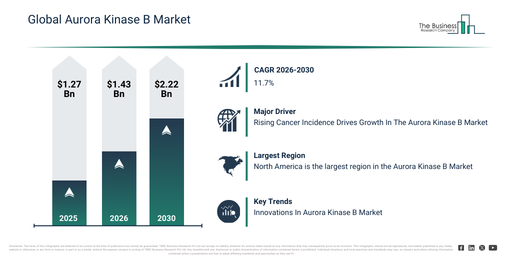
    The aurora kinase b market size has witnessed swift growth over recent years. It is projected to expand from $1.27 billion in 2025 to $1.43 billion in 2026, achieving a compound annual growth rate (CAGR) of 12.0%. This historical increase can be attributed to various factors such as advancements in molecular oncology research, the identification of aurora kinase b as a cancer target, the expansion of clinical trial infrastructure, escalating investment in targeted cancer therapies, and progress in kinase inhibitor development.

    The aurora kinase b market size is projected for substantial expansion in the coming years. It is anticipated to reach $2.22 billion by 2030, demonstrating a compound annual growth rate (CAGR) of 11.7%. This growth over the forecast period stems from escalating demand for precision cancer therapeutics, the broadening of personalized medicine approaches, increased activity in oncology clinical trials, rising investments in novel kinase inhibitors, and improved regulatory support for targeted oncology drugs. Significant trends during this period include the accelerated development of selective aurora kinase b inhibitors, a heightened emphasis on combination oncology therapies, the expansion of precision oncology drug pipelines, an increasing focus on mitotic targeted therapies, and enhanced biomarker-based patient stratification.

    Access Your Free Sample Report For In-Depth Market Analysis:

    https://www.thebusinessresearchcompany.com/sample.aspx?id=20496&type=smp

    Which Key Factors Are Driving The Aurora Kinase B Market Growth?

    The growing occurrence of cancer is predicted to propel the expansion of the aurora kinase B market in the future. Cancer is defined as a range of diseases marked by the uncontrolled proliferation and dissemination of abnormal cells, capable of invading nearby tissues and spreading to other body parts. The increase in cancer cases is attributed to factors like an aging populace, evolving lifestyles, environmental exposures, and enhanced detection and diagnosis. Aurora kinase B is crucial in mitosis, and its overexpression is connected to chromosomal instability and cancer advancement. It is frequently targeted in cancer therapies because of its involvement in tumor cell division. For example, the World Health Organization reported that an estimated 20 million new cancer cases were recorded in 2022, alongside 9.7 million deaths. By 2050, new cancer cases are anticipated to surpass 35 million, representing a 77% increase from 2022. Consequently, the rising incidence of cancer is driving the growth of the aurora kinase B market.

    How Are Different Segments Classified In The Aurora Kinase B Market Segment Analysis?

    The aurora kinase b market covered in this report is segmented –

    1) By Type: AZD-2811, CS-2164, Danusertib, Ilorasertib, NMI-900, Other Types

    2) By Application: Anaplastic Large Cell Lymphoma, Kidney Cancer, Lung Cancer, Prostate Cancer, Other Applications

    3) By End-User: Hospitals, Research Institutes, Diagnostic Laboratories, Other End-Users

    Subsegments:

    1) By AZD-2811: Phase I Clinical Trials AZD-2811, Preclinical Development of AZD-2811, AZD-2811 in Combination Therapy, Targeted Cancer Treatment with AZD-2811

    2) By CS-2164: Phase II Clinical Trials CS-2164, Preclinical Development of CS-2164, CS-2164 in Targeted Cancer Therapy, CS-2164 Combination Therapy in Clinical Studies

    3) By Danusertib: Phase III Clinical Trials Danusertib, Danusertib for Hematological Malignancies, Danusertib for Solid Tumors, Combination Therapy with Danusertib

    4) By Ilorasertib: Preclinical Development of Ilorasertib, Ilorasertib in Solid Tumor Treatment, Phase I and II Clinical Trials of Ilorasertib, Ilorasertib in Combination with Chemotherapies

    5) By NMI-900: NMI-900 in Early-Stage Clinical Trials, NMI-900 for Targeted Cancer Therapy, Preclinical Studies of NMI-900, NMI-900 Combination Therapy Trials

    6) By Other Types: Other Aurora Kinase B Inhibitors in Development, Novel Targeted Aurora Kinase B Drugs, Combination Therapies Involving Aurora Kinase B Inhibitors, Investigational Aurora Kinase B Inhibitors in Oncology

    Which Trends Are Influencing Demand In The Aurora Kinase B Market?

    Major entities in the aurora kinase B market are developing novel products, such as aurora kinase inhibitors, designed to specifically disrupt crucial processes in cell division. These inhibitors are drugs engineered to block the activity of Aurora kinases, which are critical for cell division, thereby interrupting cancer cell proliferation and potentially reducing tumor growth. For instance, in June 2023, Ellipses Pharma, a UK-based biotechnology company, announced U.S. Food and Drug Administration (FDA) approval for its EP0042, a dual FLT-3 and Aurora kinase inhibitor. EP0042 is under development as a treatment for acute myeloid leukemia (AML) and functions as an inhibitor targeting both FLT3 and Aurora kinase. This strategy is specifically formulated for AML patients who have become resistant to FLT3 inhibitors. Research has demonstrated that dual inhibition of FLT3 and Aurora kinase can overcome acquired resistance to selective FLT3 inhibition both in vitro and in vivo.

    Who Are The Companies Driving Activity In The Aurora Kinase B Market?

    Major companies operating in the aurora kinase b market are Pfizer Inc., Johnson & Johnson, Roche Holding AG, Merck & Co. Inc., AbbVie Inc., Sanofi SA, Bristol-Myers Squibb Company, AstraZeneca PLC, Novartis AG, GlaxoSmithKline plc, Takeda Pharmaceutical Company Limited, Boehringer Ingelheim International GmbH, Amgen Inc., Astellas Pharma Inc., Promega Corporation, Rigel Pharmaceuticals Inc., Tocris Bioscience, BPS Bioscience Inc., Advenchen Laboratories LLC, Shenzhen Chipscreen Biosciences Co. Ltd., Cyclacel Pharmaceuticals Inc., Sareum Holdings plc

    Get The Full Aurora Kinase B Market Report:

    https://www.thebusinessresearchcompany.com/report/aurora-kinase-b-global-market-report

    Which Region Is The Largest In The Aurora Kinase B Market?

    North America was the largest region in the aurora kinase B market in 2025. Asia-Pacific is expected to be the fastest-growing region in the forecast period. The regions covered in the aurora kinase b market report are Asia-Pacific, South East Asia, Western Europe, Eastern Europe, North America, South America, Middle East, Africa.

    Request A Customized Aurora Kinase B Market Report For Competitive Insights:

    https://www.thebusinessresearchcompany.com/report/aurora-kinase-b-global-market-report

    Browse Through More Reports Similar to the Global Aurora Kinase B Market 2026, By The Business Research Company

    Cancer Biologics Market Report 2026

    https://www.thebusinessresearchcompany.com/report/cancer-biologics-global-market-report

    Skin Cancer Drugs Market Report 2026

    https://www.thebusinessresearchcompany.com/report/skin-cancer-drugs-global-market-report

    Pancreatic Cancer Drugs Market Report 2026

    https://www.thebusinessresearchcompany.com/report/pancreatic-cancer-drugs-global-market-report

    Get in touch with us:

    The Business Research Company: https://www.thebusinessresearchcompany.com/

    Americas +1 310-496-7795

    Asia +44 7882 955267 & +91 8897263534

    Europe +44 7882 955267

    Email us at: marketing@tbrc.info

    Follow us on:

    LinkedIn: https://in.linkedin.com/company/the-business-research-company

    YouTube: https://www.youtube.com/channel/UC24_fI0rV8cR5DxlCpgmyFQ

    Global Market Model: https://www.thebusinessresearchcompany.com/global-market-model

  • Is Playing A Role In Shaping The Atypical Hemolytic Uremic Syndrome Treatment Market

    Is Playing A Role In Shaping The Atypical Hemolytic Uremic Syndrome Treatment Market

    The Business Research Company’s 2026 market reports feature enhanced tools like market attractiveness analysis, TAM assessment, and company scoring matrices, along with interactive dashboards, deeper supply chain insights, and startup coverage strengthening the depth, usability, and strategic value of insights.

    What Is The Anticipated Rise In Market Value Of The Atypical Hemolytic Uremic Syndrome Treatment Market During The Forecast Period?

    The atypical hemolytic uremic syndrome treatment market size has experienced robust expansion over the past few years. This market is projected to expand from $1.73 billion in 2025 to reach $1.86 billion by 2026, demonstrating a compound annual growth rate (CAGR) of 7.2%. Historically, this market’s expansion can be linked to factors such as increasing rare disease diagnoses, wider adoption of plasma exchange, a rise in kidney failure cases, approvals of biologic drugs, and the enlargement of hospital nephrology departments.

    The atypical hemolytic uremic syndrome treatment market size is anticipated to expand significantly over the coming years. It is projected to reach $2.46 billion by 2030, exhibiting a compound annual growth rate (CAGR) of 7.2%. This expansion during the forecast period is fueled by factors such as the embrace of precision medicine, ongoing research into the complement pathway, incentives for orphan drugs, the establishment of genetic screening programs, and advancements in biologics. Prominent developments expected in the forecast period encompass an escalation in complement inhibitor therapy utilization, the expansion of genetic diagnostic testing, enhanced long-term disease management strategies, a rise in the uptake of targeted biologics, and a heightened focus on ensuring access to treatments for rare diseases.

    Access Your Free Sample Report For In-Depth Market Analysis:

    https://www.thebusinessresearchcompany.com/sample.aspx?id=24156&type=smp

    What Primary Drivers Are Shaping The Atypical Hemolytic Uremic Syndrome Treatment Market?

    The increasing need for targeted therapies is anticipated to drive the expansion of the atypical hemolytic uremic syndrome treatment market in the future. These therapies are defined as medical interventions that precisely pinpoint and disrupt molecular pathways contributing to disease development and progression. The growing interest in targeted therapies stems from their capacity to deliver more accurate treatments with reduced adverse effects, enhance patient results, and present options beyond conventional, less focused treatments. Atypical hemolytic uremic syndrome (aHUS) treatment aligns with targeted therapies by directly inhibiting the excessive activation of the complement system, identified as the primary cause of the condition, thereby enabling precise intervention that limits harm to blood vessels and kidneys. As an illustration, data from NHS England, a UK-based government body, indicated that in England, during October 2023, 11 million hormone replacement therapy (HRT) items were prescribed, representing a 47% increase from 2021–22, with approximately 2.3 million patients obtaining prescriptions, signifying a 29% year-on-year rise. Consequently, the increasing need for targeted therapies is fostering expansion within the atypical hemolytic uremic syndrome treatment market.

    How Is The Atypical Hemolytic Uremic Syndrome Treatment Market Categorized Across Its Segment Groups?

    The atypical hemolytic uremic syndrome treatment market covered in this report is segmented –

    1) By Treatment Type: Complement Inhibitors, Plasma Exchange Therapy, Supportive Care, Antibiotics

    2) By Route of Administration: Intravenous, Subcutaneous, Oral

    3) By Technology: Genetic Testing And Diagnostic Tools, Realtime Monitoring And Complement Activation Technologies, Treatment Delivery Systems, Digital Health Solutions

    4) By End User: Hospital, Speciality Clinics, Home care Settings, Ambulatory Care Centres

    Subsegments:

    1) By Complement Inhibitors: Eculizumab, Ravulizumab, C5 Inhibitors, Factor H Inhibitors

    2) By Plasma Exchange Therapy: Fresh Frozen Plasma (FFP) Exchange, Therapeutic Plasma Exchange (TPE), Plasma Filtration

    3) By Supportive Care: Dialysis, Kidney Transplantation, Red Blood Cell Transfusions, Platelet Transfusions, Anticoagulants

    4) By Antibiotics: Broad-Spectrum Antibiotics, Targeted Antibiotics, Prophylactic Antibiotics

    What Emerging Trends Are Seen In The Atypical Hemolytic Uremic Syndrome Treatment Market?

    Companies operating within the atypical hemolytic uremic syndrome treatment market are concentrating on developing innovative therapeutic options, such as monoclonal antibody drugs, to enhance targeted complement inhibition and improve patient outcomes. Monoclonal antibody drugs are synthesized proteins created in laboratories that replicate the immune system’s defense against harmful pathogens by precisely targeting and attaching to specific proteins involved in disease processes. For example, in January 2025, AstraZeneca Pharma India Limited, an India-based biopharmaceutical company, obtained approval from the Central Drugs Standard Control Organisation (CDSCO) to import, sell, and distribute eculizumab (marketed as Soliris) within India. These monoclonal antibodies specifically bind to complement protein C5, preventing its cleavage and thereby blocking the formation of the terminal complement complex, which is implicated in immune-mediated cell destruction. It is utilized in the management of rare and severe conditions like paroxysmal nocturnal hemoglobinuria (PNH), atypical hemolytic uremic syndrome (aHUS), generalized myasthenia gravis, and neuromyelitis optica spectrum disorder by preventing complement-mediated damage.

    Which Firms Are Influencing Competition In The Atypical Hemolytic Uremic Syndrome Treatment Market?

    Major companies operating in the atypical hemolytic uremic syndrome treatment market are F. Hoffmann-La Roche Ltd., Bristol-Myers Squibb Company, AstraZeneca plc, Novartis AG, Amgen Inc., Teva Pharmaceutical Industries Ltd., Chugai Pharmaceutical Co. Ltd., Alnylam Pharmaceuticals Inc., Vifor Pharma Ltd., Samsung Bioepis Co. Ltd., Fuji Pharma Co. Ltd., Aevitas Therapeutics Inc., Pharmasyntez JSC, Omeros Corporation, ChemoCentryx Inc., ISU Abxis Co. Ltd., Greenovation Biotech GmbH, Akari Therapeutics plc, NovelMed Therapeutics Inc., Eleva GmbH.

    Get The Full Atypical Hemolytic Uremic Syndrome Treatment Market Report:

    https://www.thebusinessresearchcompany.com/report/atypical-hemolytic-uremic-syndrome-treatment-global-market-report

    Which Region Leads The Atypical Hemolytic Uremic Syndrome Treatment Market In Terms Of Market Share?

    North America was the largest region in the atypical hemolytic uremic syndrome treatment market in 2025. Asia-Pacific is expected to be the fastest-growing region in the forecast period. The regions covered in the atypical hemolytic uremic syndrome treatment market report are Asia-Pacific, South East Asia, Western Europe, Eastern Europe, North America, South America, Middle East, Africa.

    Request A Customized Atypical Hemolytic Uremic Syndrome Treatment Market Report For Competitive Insights:

    https://www.thebusinessresearchcompany.com/report/atypical-hemolytic-uremic-syndrome-treatment-global-market-report

    Browse Through More Reports Similar to the Global Atypical Hemolytic Uremic Syndrome Treatment Market 2026, By The Business Research Company

    Hemodialysis Market Report 2026

    https://www.thebusinessresearchcompany.com/report/hemodialysis-global-market-report

    Urea Cycle Disorders Treatment Market Report 2026

    https://www.thebusinessresearchcompany.com/report/urea-cycle-disorders-treatment-global-market-report

    Hemoglobinopathies Treatment Market Report 2026

    https://www.thebusinessresearchcompany.com/report/hemoglobinopathies-treatment-global-market-report

    Get in touch with us:

    The Business Research Company: https://www.thebusinessresearchcompany.com/

    Americas +1 310-496-7795

    Asia +44 7882 955267 & +91 8897263534

    Europe +44 7882 955267

    Email us at: marketing@tbrc.info

    Follow us on:

    LinkedIn: https://in.linkedin.com/company/the-business-research-company

    YouTube: https://www.youtube.com/channel/UC24_fI0rV8cR5DxlCpgmyFQ

    Global Market Model: https://www.thebusinessresearchcompany.com/global-market-model

  • The Attention Deficit Hyperactivity Disorder (ADHD) Therapeutics Market Is Witnessing Impact From Rising Anthrax Incidence Driving Growth In Cyfendus

    The Attention Deficit Hyperactivity Disorder (ADHD) Therapeutics Market Is Witnessing Impact From Rising Anthrax Incidence Driving Growth In Cyfendus

    The Business Research Company’s 2026 market reports feature enhanced tools like market attractiveness analysis, TAM assessment, and company scoring matrices, along with interactive dashboards, deeper supply chain insights, and startup coverage strengthening the depth, usability, and strategic value of insights.

    How Is The Market Size Of The Attention Deficit Hyperactivity Disorder (ADHD) Therapeutics Market Expected To Scale Between 2026 And 2030?

    The attention deficit hyperactivity disorder (adhd) therapeutics market has experienced significant expansion in recent times. Its value is projected to increase from $13.97 billion in 2025 to $14.67 billion in 2026, demonstrating a compound annual growth rate (CAGR) of 5.0%. The historical development of this market is a result of several factors, including higher rates of ADHD diagnosis, enhanced public awareness regarding mental health, the availability of stimulant medications, an uptick in ADHD cases among children, and the creation of early intervention initiatives.

    The attention deficit hyperactivity disorder (adhd) therapeutics market size is anticipated to experience robust expansion in the coming years. It is projected to grow to $17.86 billion in 2030, achieving a compound annual growth rate (CAGR) of 5.0%. This growth throughout the forecast period can be attributed to several factors, including advancements in precision medicine for ADHD, the increasing adoption of digital therapeutics, the expansion of telehealth platforms, the integration of AI in ADHD management, and a rise in adult ADHD diagnoses. Significant trends expected during the forecast period encompass personalized ADHD treatment programs, the development of telehealth and remote ADHD management solutions, the increasing use of digital therapeutics and mobile applications for ADHD, the growth of non-pharmacological interventions, and the integration of behavioral and cognitive therapies.

    Access Your Free Sample Report For In-Depth Market Analysis:

    https://www.thebusinessresearchcompany.com/sample.aspx?id=14042&type=smp

    Which Major Drivers Are Influencing The Expansion Of The Attention Deficit Hyperactivity Disorder (ADHD) Therapeutics Market?

    The increasing prevalence of attention-deficit hyperactivity disorder is anticipated to drive the expansion of the attention-deficit hyperactivity disorder (ADHD) therapeutics market. This rising prevalence signifies a growing number of individuals diagnosed with this neurodevelopmental disorder over time. ADHS therapeutics are developed to address the multifaceted nature of the condition, aiming to improve symptom management, reduce functional impairment, enhance quality of life, and foster overall well-being for those affected by ADHD. For instance, in May 2025, according to NHS England Digital, a UK-based national information and technology partner, an estimated 2,498,000 individuals in England were living with ADHD, which includes both diagnosed and undiagnosed cases. Therefore, the increasing prevalence of ADHD is a primary factor fueling the growth of the attention-deficit hyperactivity disorder (ADHD) therapeutic market.

    How Are Segments Identified Within The Attention Deficit Hyperactivity Disorder (ADHD) Therapeutics Market Segment Framework?

    The attention deficit hyperactivity disorder (adhd) therapeutics market covered in this report is segmented –

    1) By Drug Type: Stimulants, Non-Stimulants

    2) By Psychotherapy: Behavior Therapy, Cognitive Behavioral Therapy, Family Therapy

    3) By Age Group: Pediatric And Adolescent, Adult

    4) By Distribution Channel: Hospital Pharmacies, Specialty Clinics, Retail Pharmacies

    Subsegments:

    1) By Stimulants: Amphetamine-Based Stimulants, Methylphenidate-Based Stimulants

    2) By Non-Stimulants: Atomoxetine, Guanfacine, Clonidine

    Which Trends Are Guiding The Direction Of The Attention Deficit Hyperactivity Disorder (ADHD) Therapeutics Market?

    Major companies within the attention-deficit hyperactivity disorder (ADHD) therapeutics market are prioritizing the development of digital innovations, including Endeavor over-the-counter (OTC) versions of digital therapeutics for ADHD. This strategic focus aims to satisfy the increasing need for digital solutions and the growing demand for remote healthcare services. Digital therapeutics represent evidence-based therapeutic interventions, powered by sophisticated software programs, designed to prevent, manage, or treat a medical condition or illness. These interventions are adaptable for independent use or as a complement to traditional medical treatments. Illustratively, in June 2023, Akili, a US-based digital health firm, rolled out an over-the-counter (OTC) variant of its video game-based digital therapeutic tailored for adults with attention-deficit hyperactivity disorder (ADHD). This OTC product, EndeavorOTC, is engineered to improve attention, time management, and organizational proficiencies. This introduction follows the positive reception of Akili’s FDA-authorized prescription video game treatment, EndeavorRx, which is prescribed for children with ADHD. The OTC version now offers adults a non-drug treatment alternative for addressing ADHD symptoms.

    Who Are The Companies Competing Within The Attention Deficit Hyperactivity Disorder (ADHD) Therapeutics Market?

    Major companies operating in the attention deficit hyperactivity disorder (adhd) therapeutics market are Pfizer Inc, Johnson & Johnson, Novartis AG, GlaxoSmithKline plc, Takeda Pharmaceutical Company Limited, Eli Lilly and Company, Otsuka Pharmaceutical Co Ltd, UCB S.A., Amneal Pharmaceuticals LLC, Lupin Limited, Mallinckrodt Pharmaceuticals Inc, Arbor Pharmaceuticals LLC, Tris Pharma Inc, NEOS Therapeutic Inc, Rhodes Pharmaceuticals L.P., KemPharm Inc, Ironshore Pharmaceuticals Inc, Purdue Pharma L.P., Aevi Genomic Medicine, Highland Therapeutics Inc

    Get The Full Attention Deficit Hyperactivity Disorder (ADHD) Therapeutics Market Report:

    https://www.thebusinessresearchcompany.com/report/attention-deficit-hyperactivity-disorder-adhd-therapeutics-global-market-report

    Which Region Leads The Attention Deficit Hyperactivity Disorder (ADHD) Therapeutics Market In Overall Market Size?

    North America was the largest region in the attention deficit hyperactivity disorder (ADHD) therapeutic market in 2025. Asia-Pacific is expected to be the fastest-growing region in the forecast period. The regions covered in the attention deficit hyperactivity disorder (adhd) therapeutics market report are Asia-Pacific, South East Asia, Western Europe, Eastern Europe, North America, South America, Middle East, Africa.

    Request A Customized Attention Deficit Hyperactivity Disorder (ADHD) Therapeutics Market Report For Competitive Insights:

    https://www.thebusinessresearchcompany.com/report/attention-deficit-hyperactivity-disorder-adhd-therapeutics-global-market-report

    Browse Through More Reports Similar to the Global Attention Deficit Hyperactivity Disorder (ADHD) Therapeutics Market 2026, By The Business Research Company

    Attention Deficit Hyperactivity Disorder Adhd Therapeutics Market Report 2026

    https://www.thebusinessresearchcompany.com/report/attention-deficit-hyperactivity-disorder-adhd-therapeutics-global-market-report

    Bipolar Disorder Therapeutics Market Report 2026

    https://www.thebusinessresearchcompany.com/report/bipolar-disorder-therapeutics-global-market-report

    Autism Spectrum Disorders Treatment Market Report 2026

    https://www.thebusinessresearchcompany.com/report/autism-spectrum-disorders-treatment-global-market-report

    Get in touch with us:

    The Business Research Company: https://www.thebusinessresearchcompany.com/

    Americas +1 310-496-7795

    Asia +44 7882 955267 & +91 8897263534

    Europe +44 7882 955267

    Email us at: marketing@tbrc.info

    Follow us on:

    LinkedIn: https://in.linkedin.com/company/the-business-research-company

    YouTube: https://www.youtube.com/channel/UC24_fI0rV8cR5DxlCpgmyFQ

    Global Market Model: https://www.thebusinessresearchcompany.com/global-market-model

  • Growth In The Atopic Dermatitis Cream Market Is Being Driven By Rising Prevalence Of Immunodeficiency Diseases Driving The Growth

    Growth In The Atopic Dermatitis Cream Market Is Being Driven By Rising Prevalence Of Immunodeficiency Diseases Driving The Growth

    The Business Research Company’s 2026 market reports feature enhanced tools like market attractiveness analysis, TAM assessment, and company scoring matrices, along with interactive dashboards, deeper supply chain insights, and startup coverage strengthening the depth, usability, and strategic value of insights.

    What Level Of Market Value Growth Is Predicted For The Atopic Dermatitis Cream Market From 2026 To 2030?

    The atopic dermatitis cream market has experienced significant growth in recent years. This market is forecast to increase from $5.42 billion in 2025 to $5.89 billion in 2026, achieving a compound annual growth rate (CAGR) of 8.6%. The historical expansion of this market is attributable to several factors, including the increasing prevalence of atopic dermatitis among various age groups, heightened awareness regarding chronic eczema management, the wider availability of topical corticosteroid therapies, an increase in dermatologist consultations, and the expansion of retail dermatology products.

    The atopic dermatitis cream market is anticipated to experience substantial growth over the coming years. This market is projected to reach $8.11 billion by 2030, exhibiting a compound annual growth rate (CAGR) of 8.3%. This projected growth is attributable to several factors, including the expanding development of targeted topical therapies, a heightened demand for personalized dermatology treatments, the broadening reach of online pharmacy distribution, an increasing emphasis on long-term skin barrier restoration, and the greater adoption of non-steroidal innovations. Key trends anticipated during this forecast period encompass the increasing use of non-steroidal anti-inflammatory creams, a surging demand for barrier repair and ceramide-based formulations, an expanding preference for steroid-sparing treatment alternatives, the proliferation of pediatric-safe topical therapies, and a heightened focus on managing long-term flares.

    Access Your Free Sample Report For In-Depth Market Analysis:

    https://www.thebusinessresearchcompany.com/sample.aspx?id=28144&type=smp

    What Key Drivers Are Fueling The Growth Of The Atopic Dermatitis Cream Market?

    The increasing occurrence of eczema is anticipated to fuel the expansion of the atopic dermatitis cream market in the future. Eczema is a dermatological condition that manifests as itching, redness, dryness, and inflammation. As a greater number of people experience allergies and sensitive skin issues, the need for eczema care is rising, consequently boosting the demand for effective treatments and skincare solutions. Atopic dermatitis cream aids in managing eczema by reducing inflammation, alleviating itching, restoring the skin’s protective barrier, and preventing additional irritation or infection, thereby fostering recovery and sustained skin well-being in affected zones. For example, in December 2024, the Royal Australian College of General Practitioners, an Australia-based research institute, stated that around 16% of Australians are impacted by eczema, with approximately 25% of these instances classified as severe. This rise in the prevalence of eczema is therefore a key driver for the growth of the atopic dermatitis cream market.

    What Are The Key Segment Divisions In The Atopic Dermatitis Cream Market Segment Structure?

    The atopic dermatitis cream market covered in this report is segmented –

    1) By Product Type: Corticosteroid Creams, Calcineurin Inhibitor Creams, PDE4 Inhibitor Creams, Moisturizing Creams, Other Product Types

    2) By Age Group: Pediatric, Adult, Geriatric

    3) By Distribution Channel: Hospital Pharmacies, Retail Pharmacies, Online Pharmacies, Other Distribution Channels

    Subsegments:

    1) By Corticosteroid Creams: Low-Potency Corticosteroids, Medium-Potency Corticosteroids, High-Potency Corticosteroids, Ultra-High Potency Corticosteroids

    2) By Calcineurin Inhibitor Creams: Tacrolimus Ointment, Pimecrolimus Cream, Other Calcineurin Inhibitors

    3) By PDE4 Inhibitor Creams: Crisaborole Ointment, Roflumilast Cream, Other PDE4 Inhibitors

    4) By Moisturizing Creams: Emollient-Based Moisturizers, Humectant-Based Moisturizers, Occlusive Moisturizers, Ceramide-Containing Moisturizers

    5) By Other Product Types: JAK Inhibitor Creams, Antihistamine Creams, Herbal Or Natural Topical Creams, Combination Creams

    What Trends Are Affecting The Growth Of The Atopic Dermatitis Cream Market?

    Leading companies in the atopic dermatitis cream market are concentrating on developing innovative steroid-free treatments, enhancing patient accessibility through insurance and support initiatives, and ensuring sustained disease management with safer topical options. Steroid-free therapies serve as alternatives to corticosteroids, addressing inflammation and skin issues safely without the associated steroid risks. For instance, in July 2024, Arcutis Biotherapeutics Inc., a US-based biopharmaceutical company, launched ZORYVE (roflumilast) cream 0.15% in the U.S. for managing mild to moderate atopic dermatitis in adults and children aged six and older. This once-daily, steroid-free cream is formulated to offer swift relief from itching, improve disease clearance, and support long-term control without the typical adverse effects linked to conventional topical therapies. ZORYVE is currently available via pharmacies with immediate insurance coverage through agreements with select pharmacy benefit managers (PBMs).

    Which Organizations Are Engaged In The Atopic Dermatitis Cream Market?

    Major companies operating in the atopic dermatitis cream market are Pfizer Inc., AbbVie Inc., Bayer AG, Sanofi S.A., AstraZeneca plc, GlaxoSmithKline plc, Eli Lilly and Company, Teva Pharmaceutical Industries Ltd., Viatris Inc, Regeneron Pharmaceuticals Inc., Astellas Pharma Inc., Bausch Health Companies Inc., Organon & Co., Galderma S.A., Incyte Corporation, Leo Pharma A/S, Almirall S.A., Boehringer Ingelheim, Arcutis Biotherapeutics Inc., Medimetriks Pharmaceuticals Inc.

    Get The Full Atopic Dermatitis Cream Market Report:

    https://www.thebusinessresearchcompany.com/report/atopic-dermatitis-cream-global-market-report

    Which Region Is The Top Contributor To The Atopic Dermatitis Cream Market By Share?

    North America was the largest region in the atopic dermatitis cream market in 2025. Asia-Pacific is expected to be the fastest-growing region in the forecast period. The regions covered in the atopic dermatitis cream market report are Asia-Pacific, South East Asia, Western Europe, Eastern Europe, North America, South America, Middle East, Africa.

    Request A Customized Atopic Dermatitis Cream Market Report For Competitive Insights:

    https://www.thebusinessresearchcompany.com/report/atopic-dermatitis-cream-global-market-report

    Browse Through More Reports Similar to the Global Atopic Dermatitis Cream Market 2026, By The Business Research Company

    Atopic Dermatitis Market Report 2026

    https://www.thebusinessresearchcompany.com/report/atopic-dermatitis-global-market-report

    Dermatitis Drugs Market Report 2026

    https://www.thebusinessresearchcompany.com/report/dermatitis-drugs-global-market-report

    Daily Cleansing Cream Market Report 2026

    https://www.thebusinessresearchcompany.com/report/daily-cleansing-cream-global-market-report

    Get in touch with us:

    The Business Research Company: https://www.thebusinessresearchcompany.com/

    Americas +1 310-496-7795

    Asia +44 7882 955267 & +91 8897263534

    Europe +44 7882 955267

    Email us at: marketing@tbrc.info

    Follow us on:

    LinkedIn: https://in.linkedin.com/company/the-business-research-company

    YouTube: https://www.youtube.com/channel/UC24_fI0rV8cR5DxlCpgmyFQ

    Global Market Model: https://www.thebusinessresearchcompany.com/global-market-model