Category: Pharmaceuticals

  • Bisphosphonates Market Analysis With Focus On Growth Potential And Future Outlook

    Bisphosphonates Market Analysis With Focus On Growth Potential And Future Outlook

    The Business Research Company’s 2026 market reports feature enhanced tools like market attractiveness analysis, TAM assessment, and company scoring matrices, along with interactive dashboards, deeper supply chain insights, and startup coverage strengthening the depth, usability, and strategic value of insights.

    What Is The Anticipated Rise In Market Value Of The Bisphosphonates Market During The Forecast Period?

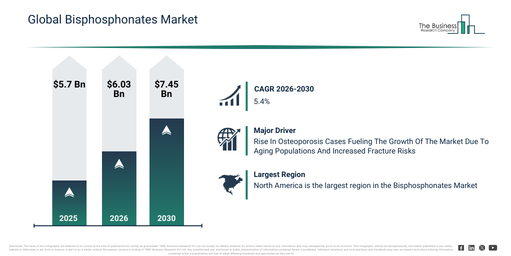
    The bisphosphonates market size has shown strong growth in recent years. It is anticipated to expand from $5.7 billion in 2025 to $6.03 billion in 2026, demonstrating a compound annual growth rate (CAGR) of 5.8%. This historical growth can be ascribed to an aging population’s expansion, the prevalence of postmenopausal osteoporosis, physician-led bone density screening, hospital-based osteoporosis management, and the adoption of injectable bisphosphonates.

    The bisphosphonates market is anticipated to experience substantial expansion in the upcoming years, with its size projected to reach $7.45 billion by 2030, reflecting a compound annual growth rate (CAGR) of 5.4%. This projected growth throughout the forecast period stems from factors such as an expanding older population, the availability of home-based osteoporosis treatment, a preference for long-acting drug formulations, enhanced public awareness regarding bone health, and the increasing market penetration of generic drugs. Significant trends expected during this period involve a rising demand for osteoporosis therapies, increased utilization of long-acting injectable treatments, the wider availability of generic bisphosphonate medications, a greater emphasis on preventing fractures, and the adoption of integrated bone health regimens.

    Access Your Free Sample Report For In-Depth Market Analysis:

    https://www.thebusinessresearchcompany.com/sample.aspx?id=24483&type=smp

    Which Factors Are Influencing The Growth Of The Bisphosphonates Market?

    The rising occurrence of osteoporosis is anticipated to drive expansion in the bisphosphonates market. This medical condition involves bone weakening, making them fragile and more susceptible to fractures. Its increasing prevalence is largely attributed to the world’s aging population, which naturally experiences a decline in bone density, alongside lifestyle influences and inadequate preventative measures. Bisphosphonates aid in treating osteoporosis by inhibiting bone degradation, thereby strengthening bones and lowering fracture risk. For example, Healthy Bones Australia, an Australian organization focused on bone health, reported in August 2024 that in 2023, approximately 193,482 fractures were linked to osteoporosis and osteopenia, with a projected increase of 34% to 237,632 fractures by 2033. Consequently, the growing prevalence of osteoporosis is fueling the expansion of the bisphosphonates market.

    How Is The Bisphosphonates Market Segmented Across Different Segment Categories?

    The bisphosphonates market covered in this report is segmented –

    1) By Type: Alendronate, Ibandronate, Risedronate, Zoledronic Acid

    2) By Route Of Administration: Oral, Intravenous

    3) By Distribution Channel: Hospital Pharmacies, Retail Pharmacies, Online Pharmacies, Other Distribution Channels

    4) By Application: Osteoporosis, Paget’s Disease, Bone Metastasis, Other Application

    5) By End-User: Hospitals, Clinics, Homecare Settings, Pharmaceutical Retail

    Subsegments:

    1) By Alendronate: Oral Tablets, Once-Weekly Formulation, Combination With Vitamin D, Generic Alendronate

    2) By Ibandronate: Oral Tablets, Monthly Oral Formulation, Intravenous Injection, Generic Ibandronate

    3) By Risedronate: Immediate-Release Tablets, Delayed-Release Tablets, Weekly And Monthly Dosing, Combination With Calcium

    4) By Zoledronic Acid: Intravenous Infusion, Annual Dosing, Oncology Use, Osteoporosis Use, Generic Zoledronic Acid

    Which Organizations Play A Role In The Bisphosphonates Market Landscape?

    Major companies operating in the bisphosphonates market are Merck & Co. Inc., Novartis AG, Teva Pharmaceutical Industries Ltd., Sun Pharmaceutical Industries Ltd., Apotex Inc., Aurobindo Pharma Ltd., Dr. Reddy’s Laboratories Ltd., Cipla Ltd., Alkem Laboratories, Strides Pharma Science Limited, GSK plc, Viatris Inc., Sandoz, Lupin Limited, Zydus Lifesciences Ltd., Torrent Pharmaceuticals Ltd., Glenmark Pharmaceuticals Ltd., Hikma Pharmaceuticals PLC, Fresenius Kabi, Alembic Pharmaceuticals Ltd.

    Get The Full Bisphosphonates Market Report:

    https://www.thebusinessresearchcompany.com/report/bisphosphonates-global-market-report

    Which Region Leads The Bisphosphonates Market In Overall Market Size?

    North America was the largest region in the bisphosphonates market in 2025. Asia-Pacific is expected to be the fastest-growing region in the forecast period. The regions covered in the bisphosphonates market report are Asia-Pacific, South East Asia, Western Europe, Eastern Europe, North America, South America, Middle East, Africa.

    Request A Customized Bisphosphonates Market Report For Competitive Insights:

    https://www.thebusinessresearchcompany.com/report/bisphosphonates-global-market-report

    Browse Through More Reports Similar to the Global Bisphosphonates Market 2026, By The Business Research Company

    Phosphonates Market Report 2026

    https://www.thebusinessresearchcompany.com/report/phosphonates-global-market-report

    Osteoporosis Drugs Market Report 2026

    https://www.thebusinessresearchcompany.com/report/osteoporosis-drugs-global-market-report

    Pharmaceuticals Market Report 2026

    https://www.thebusinessresearchcompany.com/report/pharmaceuticals-global-market-report

    Get in touch with us:

    The Business Research Company: https://www.thebusinessresearchcompany.com/

    Americas +1 310-496-7795

    Asia +44 7882 955267 & +91 8897263534

    Europe +44 7882 955267

    Email us at: marketing@tbrc.info

    Follow us on:

    LinkedIn: https://in.linkedin.com/company/the-business-research-company

    YouTube: https://www.youtube.com/channel/UC24_fI0rV8cR5DxlCpgmyFQ

    Global Market Model: https://www.thebusinessresearchcompany.com/global-market-model
  • Bisphosphonate Drug Market Forecast Showing Industry Progress And Growth Trends

    Bisphosphonate Drug Market Forecast Showing Industry Progress And Growth Trends

    The Business Research Company’s 2026 market reports feature enhanced tools like market attractiveness analysis, TAM assessment, and company scoring matrices, along with interactive dashboards, deeper supply chain insights, and startup coverage strengthening the depth, usability, and strategic value of insights.

    How Is The Market Size Of The Bisphosphonate Drug Market Expected To Scale Between 2026 And 2030?

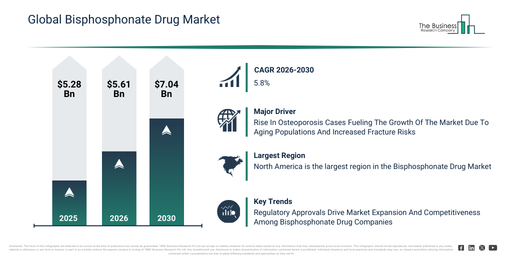
    The bisphosphonate drug market has experienced substantial growth in recent years. It is projected to expand from $5.28 billion in 2025 to $5.61 billion in 2026, exhibiting a compound annual growth rate (CAGR) of 6.2%. Historically, this expansion has been driven by the prevalence of osteoporosis, an aging population, the implementation of hospital bone care protocols, various fracture prevention programs, and the adoption of oral bisphosphonates.

    The bisphosphonate drug market size is anticipated to undergo substantial growth in the upcoming years. This market is projected to expand to $7.04 billion by 2030, achieving a compound annual growth rate (CAGR) of 5.8%. The increase observed during the forecast period can be attributed to the rising geriatric population, the uptake of injectable therapies, supportive care in oncology, the expansion of generic drugs, and a concentrated effort on preventive bone health. Prominent trends within the forecast period include augmented utilization in postmenopausal osteoporosis, a shift towards injectable long-acting formulations, the proliferation of generic bisphosphonate drugs, extended treatment for cancer-related bone loss, and an emphasis on reducing fracture risk.

    Access Your Free Sample Report For In-Depth Market Analysis:

    https://www.thebusinessresearchcompany.com/sample.aspx?id=24482&type=smp

    What Leading Drivers Are Supporting The Bisphosphonate Drug Market Expansion?

    The bisphosphonates drug market is anticipated to expand due to the rising occurrence of osteoporosis. This condition involves bones becoming fragile and susceptible to fractures, resulting from diminished bone density. Its growing prevalence can largely be attributed to the world’s aging population, given that bone density naturally decreases with advancing age, alongside contributing factors such as lifestyle choices and inadequate preventive measures. Bisphosphonate medications address osteoporosis by impeding bone degradation, thereby reinforcing bones and lowering fracture susceptibility. As an illustration, Healthy Bones Australia, an Australia-based organization dedicated to bone health research and advocacy, reported in August 2024 that as of 2023, an estimated 193,482 fractures were associated with osteoporosis and osteopenia, with projections showing this figure climbing by 34% to 237,632 fractures by 2033. Consequently, the rising incidence of osteoporosis is stimulating expansion within the bisphosphonates drug market.

    What Are The Main Segments Within The Bisphosphonate Drug Market Segment Structure?

    The bisphosphonate drug market covered in this report is segmented –

    1) By Type: Alendronate, Risedronate, Zoledronic Acid

    2) By Mode Of Delivery: Oral, Intravenous

    3) By Distribution Channel: Hospital Pharmacies, Retail Pharmacies, Online Pharmacies, Other Distribution Channels

    4) By Application: Postmenopausal Osteoporosis, Men With Osteoporosis, Paget’s Disease, Bone Loss Caused By Cancer Treatment, Glucocorticoid Induced Osteoporosis, Other Applications

    5) By End User: Hospitals, Clinics, Homecare Settings, Other End Users

    Subsegments:

    1) By Alendronate: Oral Alendronate Tablets, Effervescent Alendronate Tablets, Alendronate Combination Drugs, Generic Alendronate, Branded Alendronate

    2) By Risedronate: Immediate-Release Risedronate Tablets, Delayed-Release Risedronate Tablets, Risedronate Combination Drugs, Generic Risedronate, Branded Risedronate

    3) By Zoledronic Acid: Intravenous Zoledronic Acid, Single-Dose Infusion, Multiple-Dose Regimens, Generic Zoledronic Acid, Branded Zoledronic Acid

    4) By Other Types: Ibandronate (Oral And IV Forms), Etidronate, Pamidronate, Tiludronate, Experimental Or Pipeline Bisphosphonates

    What Trends Are Affecting The Direction Of The Bisphosphonate Drug Market?

    Key companies active in the bisphosphonate drug market are primarily concerned with securing regulatory approvals to broaden their product reach, boost market competitiveness, and uphold compliance with evolving safety and efficacy benchmarks. Regulatory approvals are formal permissions from governmental health organizations, which permit businesses to legally sell and promote their medications once their safety and effectiveness have been demonstrated. For example, in March 2025, Celltrion, Inc., a biopharmaceutical enterprise based in South Korea, was granted U.S. FDA approval for its biosimilars STOBOCLO (denosumab-bmwo) and OSENVELT (denosumab-bmwo). STOBOCLO is prescribed for a range of osteoporosis-related issues, including the management of osteoporosis in postmenopausal women and men, glucocorticoid-induced osteoporosis, and bone loss experienced by patients undergoing particular cancer treatments. Meanwhile, OSENVELT is sanctioned for cancer-related skeletal conditions such as the prevention of bone complications in patients with multiple myeloma or bone metastases, the treatment of giant cell tumor of bone, and the control of hypercalcemia of malignancy.

    Who Are The Companies Participating In The Bisphosphonate Drug Market?

    Major companies operating in the bisphosphonate drug market are Mylan N.V., Sandoz International GmbH, Fresenius Kabi AG, Lupin Limited, Glenmark Pharmaceuticals Ltd., Torrent Pharmaceuticals Ltd., Cadila Pharmaceuticals Ltd., Alembic Pharmaceuticals Ltd., Micro Labs Ltd., Wockhardt Ltd., Macleods Pharmaceuticals Ltd., Emcure Pharmaceuticals Ltd., Intas Pharmaceuticals Ltd., Granules India Ltd., IPCA Laboratories Ltd., Jubilant Pharmova Ltd., Accord Healthcare Ltd., Aarti Drugs Ltd., Shilpa Medicare Ltd., Indoco Remedies Ltd., Unichem Laboratories Ltd., Alvogen Inc., Perrigo Company plc, ANI Pharmaceuticals Inc., Endo International plc

    Get The Full Bisphosphonate Drug Market Report:

    https://www.thebusinessresearchcompany.com/report/bisphosphonate-drug-global-market-report

    Which Region Is The Top Contributor To The Bisphosphonate Drug Market By Share?

    North America was the largest region in the bisphosphonate drug market in 2025. Asia-Pacific is expected to be the fastest-growing region in the forecast period. The regions covered in the bisphosphonate drug market report are Asia-Pacific, South East Asia, Western Europe, Eastern Europe, North America, South America, Middle East, Africa.

    Request A Customized Bisphosphonate Drug Market Report For Competitive Insights:

    https://www.thebusinessresearchcompany.com/report/bisphosphonate-drug-global-market-report

    Browse Through More Reports Similar to the Global Bisphosphonate Drug Market 2026, By The Business Research Company

    Phosphonates Market Report 2026

    https://www.thebusinessresearchcompany.com/report/phosphonates-global-market-report

    Osteoporosis Drugs Market Report 2026

    https://www.thebusinessresearchcompany.com/report/osteoporosis-drugs-global-market-report

    Pharmaceuticals Market Report 2026

    https://www.thebusinessresearchcompany.com/report/pharmaceuticals-global-market-report

    Get in touch with us:

    The Business Research Company: https://www.thebusinessresearchcompany.com/

    Americas +1 310-496-7795

    Asia +44 7882 955267 & +91 8897263534

    Europe +44 7882 955267

    Email us at: marketing@tbrc.info

    Follow us on:

    LinkedIn: https://in.linkedin.com/company/the-business-research-company

    YouTube: https://www.youtube.com/channel/UC24_fI0rV8cR5DxlCpgmyFQ

    Global Market Model: https://www.thebusinessresearchcompany.com/global-market-model
  • Bi-Specific MAbS Market Growth Patterns And Forecast Outlook Through 2030

    Bi-Specific MAbS Market Growth Patterns And Forecast Outlook Through 2030

    The Business Research Company’s 2026 market reports feature enhanced tools like market attractiveness analysis, TAM assessment, and company scoring matrices, along with interactive dashboards, deeper supply chain insights, and startup coverage strengthening the depth, usability, and strategic value of insights.

    How Will The Market Value Of The Bi-Specific MAbS Market Progress Between 2026 And 2030?

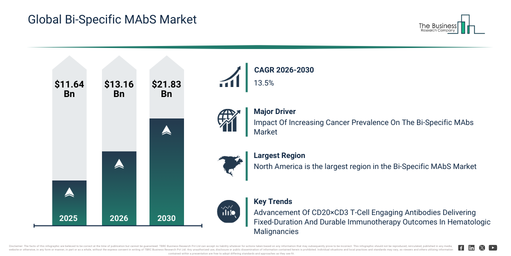
    The bi-specific mabs market has demonstrated rapid expansion in recent years. Its valuation is anticipated to climb from $11.64 billion in 2025 to $13.16 billion in 2026, reflecting a compound annual growth rate (CAGR) of 13.0%. The growth observed in prior periods is attributable to the approval of first bsabs therapies, the increasing occurrence of hematological cancers, the early integration of monoclonal antibodies, significant investment in oncology r&d, and an uptick in hospital-based clinical trials.

    The bi-specific mabs market size is expected to experience rapid expansion over the next few years. It is projected to reach $21.83 billion by 2030, with a compound annual growth rate (CAGR) of 13.5%. This growth during the forecast period can be attributed to advancements in gene and cell therapy integration, an expanding bsabs pipeline, increased research and development funding for rare diseases, a rise in precision medicine adoption, and the emergence of novel bsabs delivery platforms. Major trends anticipated in the forecast period include the expansion of tumor immunotherapy applications, the development of multi-targeted bi-specific antibodies, growth in hemophilia and rare disease treatments, advancements in in vitro and in vivo platforms, and increasing collaborations between pharmaceutical and biotech firms.

    Access Your Free Sample Report For In-Depth Market Analysis:

    https://www.thebusinessresearchcompany.com/sample.aspx?id=3390&type=smp

    What Primary Drivers Are Shaping The Bi-Specific MAbS Market?

    The escalating occurrence of cancer and other persistent ailments is anticipated to drive the expansion of the bispecific monoclonal antibodies market throughout the forecast period. Bispecific monoclonal antibodies are formulated for managing various cancers, infectious diseases, central nervous system disorders, and autoimmune disorders. These antibodies are deemed superior in efficacy compared to traditional monoclonal antibodies (moAbs) as they engage two or more tumor antigens on cells, thereby impeding cancer progression. For example, in 2023, the Cancer Facts & Figures 2023 report from the American Cancer Society (ACS), a US-based voluntary health organization, projected around 609,820 cancer-related deaths in the USA. Hence, the increasing burden of chronic conditions, including cancer, is expected to heighten the demand for bi-specific MAbs for their successful treatment.

    What Segment Categories Shape The Bi-Specific MAbS Market Segment Landscape?

    The bi-specific mabs market covered in this report is segmented –

    1) By Drug: Catumaxomab (Removab), Blinatumomab, Duligotumab, Emicizumab, Amivantamab, Faricimab, Teclistamab

    2) By Product Type: In Vivo, In Vitro

    3) By Indication: Cancer, Haemophilia A, Ophthalmic

    4) By End Use: Hospitals, Research Institutes, Other End-Users

    Subsegments:

    1) By Catumaxomab (Removab): Cancer Therapy, Targeting EpCAM and CD3

    2) By Blinatumomab: Acute Lymphoblastic Leukemia (ALL) Treatment, Targeting CD19 and CD3

    3) By Duligotumab: Oncology Treatments, Targeting Epidermal Growth Factor Receptor (EGFR)

    4) By Emicizumab: Hemophilia A Treatment, Targeting Factor IXa and Factor X

    5) By Amivantamab: Non-Small Cell Lung Cancer (NSCLC) Therapy, Targeting EGFR And MET

    6) By Faricimab: Ophthalmology Treatment (Wet Age-related Macular Degeneration, Diabetic Macular Edema), Targeting Angiopoietin-2 And VEGF-A

    7) By Teclistamab: Multiple Myeloma Treatment, Targeting BCMA and CD3

    Which Trends Are Impacting The Progress Of The Bi-Specific MAbS Market?

    Leading companies operating in the bi-specific mAbs market are prioritizing technological advancements, notably CD20 × CD3 T-cell engaging bispecific antibodies. This strategic focus is driven by the escalating demand for more effective, off-the-shelf immunotherapies for hematological malignancies, which also offer fixed-duration treatment courses. A CD20 × CD3 bispecific antibody is engineered to bridge T cells and B cells by simultaneously binding CD3 on T cells and CD20 on B cells, thereby initiating T-cell–mediated elimination of malignant B cells. Unlike traditional monoclonal antibodies that target only B cells or T-cell checkpoints, this design precisely harnesses immune effector function. For example, in June 2023, Roche AG, a Switzerland-based biopharmaceutical company, launched Columvi (glofitamab-gxbm), a CD20×CD3 bispecific T-cell engager. Columvi possesses a novel 2:1 structural format, incorporating two CD20-binding domains and one CD3-binding domain. It is administered as a fixed-duration therapy, lasting approximately 8.5 months, and is intended to provide durable responses in patients with relapsed or refractory diffuse large B-cell lymphoma (DLBCL). Its fixed-duration regimen offers the potential for a treatment-free interval post-therapy, distinguishing it from continuous treatment approaches, and has demonstrated strong efficacy in clinical trials with a manageable safety profile.

    Who Are The Companies Operating Across The Bi-Specific MAbS Market Value Chain?

    Major companies operating in the bi-specific mabs market are F. Hoffmann-La Roche AG, Amgen Inc, Johnson & Johnson, Kyowa Kirin, Zai Lab, Alphamab Oncology, Celldex Therapeutics, Biocon, EpimAb Biotherapeutics, ABL Bio, Takeda Pharmaceuticals, Innovent Biologics, Merck & Co Inc, Eli Lilly Company Inc., AbbVie Inc, Bayer AG, Pfizer Inc, Novartis AG, GlaxoSmithKline, AstraZeneca, Cytiva, Bristol Myers Squibb, AbCellera, BioMarin Pharmaceuticals, Sanofi S.A., Novo Nordisk A/S, Aspen Pharmacare, Baxter International

    Get The Full Bi-Specific MAbS Market Report:

    https://www.thebusinessresearchcompany.com/report/bi-specific-mab-global-market-report

    Which Geographic Region Dominates The Bi-Specific MAbS Market?

    North America was the largest region in the bi-specific MAbs market in 2025. The regions covered in the bi-specific mabs market report are Asia-Pacific, South East Asia, Western Europe, Eastern Europe, North America, South America, Middle East, Africa.

    Request A Customized Bi-Specific MAbS Market Report For Competitive Insights:

    https://www.thebusinessresearchcompany.com/report/bi-specific-mab-global-market-report

    Browse Through More Reports Similar to the Global Bi-Specific MAbS Market 2026, By The Business Research Company

    Monoclonal Antibodies Market Report 2026

    https://www.thebusinessresearchcompany.com/report/monoclonal-antibodies-global-market-report

    Bi Specific Mab Market Report 2026

    https://www.thebusinessresearchcompany.com/report/bi-specific-mab-global-market-report

    Anti Cancer Mabs Market Report 2026

    https://www.thebusinessresearchcompany.com/report/anti-cancer-mabs-global-market-report

    Get in touch with us:

    The Business Research Company: https://www.thebusinessresearchcompany.com/

    Americas +1 310-496-7795

    Asia +44 7882 955267 & +91 8897263534

    Europe +44 7882 955267

    Email us at: marketing@tbrc.info

    Follow us on:

    LinkedIn: https://in.linkedin.com/company/the-business-research-company

    YouTube: https://www.youtube.com/channel/UC24_fI0rV8cR5DxlCpgmyFQ

    Global Market Model: https://www.thebusinessresearchcompany.com/global-market-model
  • Bisoprolol Market Insights On Growth Drivers, Trends, And Opportunities

    Bisoprolol Market Insights On Growth Drivers, Trends, And Opportunities

    The Business Research Company’s 2026 market reports feature enhanced tools like market attractiveness analysis, TAM assessment, and company scoring matrices, along with interactive dashboards, deeper supply chain insights, and startup coverage strengthening the depth, usability, and strategic value of insights.

    What Are The Market Size Estimates For The Bisoprolol Market In 2026 And 2030?

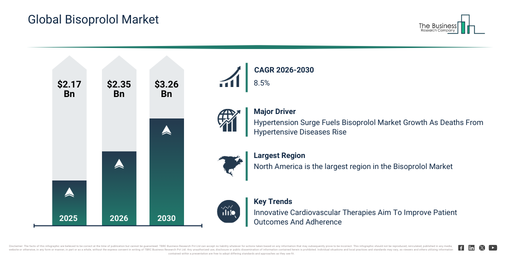
    The market for bisoprolol has experienced significant expansion recently. Projections indicate its size will increase from $2.17 billion in 2025 to $2.35 billion by 2026, demonstrating a compound annual growth rate (CAGR) of 8.5%. This historical expansion is primarily due to factors such as the frequent occurrence of hypertension, the proven clinical effectiveness of beta-blockers, a rising elderly population, the expansion of hospital-based cardiac care, and extensive prescription by physicians.

    The bisoprolol market is projected to experience substantial expansion in the coming years, with its size anticipated to reach $3.26 billion by 2030, growing at a compound annual growth rate (CAGR) of 8.5%. This growth during the forecast period is primarily driven by the escalating burden of cardiovascular diseases, enhanced access to generic medications, an increase in outpatient cardiac management, the broadening of pharmacy networks, and improved treatment adherence programs. Key trends expected over the forecast period include a rising prevalence of cardiovascular disorders, the expanding application of beta-blockers in chronic care, greater adoption of generic cardiovascular drugs, the growth of retail and hospital pharmacies, and an intensified focus on long-term blood pressure management.

    Access Your Free Sample Report For In-Depth Market Analysis:

    https://www.thebusinessresearchcompany.com/sample.aspx?id=18977&type=smp

    Which Major Drivers Are Influencing The Expansion Of The Bisoprolol Market?

    The anticipated expansion of the bisoprolol market is intrinsically linked to the growing occurrence of hypertension. This medical condition is defined by consistently elevated blood pressure levels that exceed the normal physiological range. The rising prevalence of hypertension is attributed to factors such as sedentary lifestyles and increasing obesity rates. The bisoprolol market supports hypertension management by effectively lowering blood pressure, thereby reducing cardiac workload and improving overall blood flow. For instance, in February 2024, the Singapore Ministry of Health, a government health authority based in Singapore, reported that the prevalence of hypertension among adults reached 36.1% in 2023, marking an increase from 33.0% in 2022, which signifies a substantial year-on-year rise. Consequently, the increasing prevalence of hypertension is a primary driver for the growth of the bisoprolol market.

    Which Segment Types Are Examined In The Bisoprolol Market Segment Study?

    The bisoprolol market covered in this report is segmented –

    1) By Type: Tablet, Capsule

    2) By Distribution Channels: Hospital Pharmacies, Retail Pharmacies, Other Distribution Channels

    3) By Application: High Blood Pressure, Coronary Heart Disease, Angina Pectoris, Other Applications

    Subsegments:

    1) By Tablet: Immediate-Release Tablets, Extended-Release Tablets

    2) By Capsule: Immediate-Release Capsules, Extended-Release Capsules, Hard Gelatin Capsules

    What Trends Are Transforming The Bisoprolol Market?

    Leading companies in the bisoprolol market are prioritizing the development of innovative solutions, such as fixed-dose combinations and extended-release formulations. These efforts aim to improve patient adherence, enhance cardiovascular outcomes, and overcome the limitations of conventional therapies. Fixed-dose combinations involve medicines that merge two or more active drugs into a single pill to simplify treatment, while extended-release formulations are designed to release the drug gradually over time, ensuring longer-lasting effects and reduced dosing frequency. As an illustration, in June 2025, Cadila Pharmaceuticals Limited, an India-based pharmaceutical company, introduced Biscado (Bisoprolol) in India, marking its entry into the beta-blocker therapy segment for managing cardiovascular diseases. This product is a highly cardioselective beta-1 adrenergic blocker, indicated for addressing high blood pressure, angina, and chronic heart failure by reducing heart rate and blood pressure to ease the heart’s workload. Its clinical backing includes studies showing significant reductions in mortality, sudden cardiac death, and hospitalizations for heart failure. Biscado is accessible in once-daily dosing and as fixed-dose combinations with other antihypertensive agents, which aligns with global cardiovascular treatment guidelines and supports improved patient adherence in India.

    Which Players Are Part Of The Competitive Landscape Of The Bisoprolol Market?

    Major companies operating in the bisoprolol market are Merck & Co. Inc., Abbott Healthcare Pvt Ltd, Novartis AG, Teva Pharmaceutical Industries Ltd, Aurobindo Pharma Limited, Intas Pharmaceuticals Limited, Cipla Limited, Hikma Pharmaceuticals, Lupin Limited, Dr. Reddy’s Laboratories Limited, Glenmark Pharmaceuticals Limited, Alkem Laboratories Limited, Ipca Laboratories Limited, Medreich Limited, Alembic Pharmaceuticals Limited, Accord Healthcare Limited, Zydus Lifesciences Limited, Zentiva Group, Taj Pharmaceuticals Limited, Torrent Pharmaceuticals Limited, Suanfarma, Rusan Healthcare Limited, VHB Lifesciences Limited, Synnat Pharmaceuticals, Vidakem Lifesciences Pvt Ltd, Pluviaendo Pharmaceuticals

    Get The Full Bisoprolol Market Report:

    https://www.thebusinessresearchcompany.com/report/bisoprolol-global-market-report

    Which Region Is The Leading Market For The Bisoprolol Market?

    North America was the largest region in the bisoprolol market in 2025. The regions covered in the bisoprolol market report are Asia-Pacific, South East Asia, Western Europe, Eastern Europe, North America, South America, Middle East, Africa.

    Request A Customized Bisoprolol Market Report For Competitive Insights:

    https://www.thebusinessresearchcompany.com/report/bisoprolol-global-market-report

    Browse Through More Reports Similar to the Global Bisoprolol Market 2026, By The Business Research Company

    Metoprolol Tartrate Market Report 2026

    https://www.thebusinessresearchcompany.com/report/metoprolol-tartrate-global-market-report

    Bi Specific Mab Market Report 2026

    https://www.thebusinessresearchcompany.com/report/bi-specific-mab-global-market-report

    Clopidogrel Market Report 2026

    https://www.thebusinessresearchcompany.com/report/clopidogrel-global-market-report

    Get in touch with us:

    The Business Research Company: https://www.thebusinessresearchcompany.com/

    Americas +1 310-496-7795

    Asia +44 7882 955267 & +91 8897263534

    Europe +44 7882 955267

    Email us at: marketing@tbrc.info

    Follow us on:

    LinkedIn: https://in.linkedin.com/company/the-business-research-company

    YouTube: https://www.youtube.com/channel/UC24_fI0rV8cR5DxlCpgmyFQ

    Global Market Model: https://www.thebusinessresearchcompany.com/global-market-model
  • Bismuth Subsalicylate Market Developments Shaping Growth Across The Forecast Period

    Bismuth Subsalicylate Market Developments Shaping Growth Across The Forecast Period

    The Business Research Company’s 2026 market reports feature enhanced tools like market attractiveness analysis, TAM assessment, and company scoring matrices, along with interactive dashboards, deeper supply chain insights, and startup coverage strengthening the depth, usability, and strategic value of insights.

    What Expansion In Market Value Is Forecasted For The Bismuth Subsalicylate Market Between 2026 And 2030?

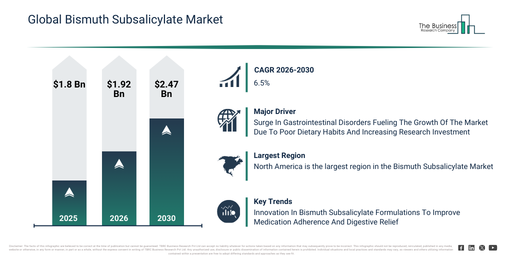
    The bismuth subsalicylate market has experienced substantial expansion in recent years. It is projected to increase from $1.8 billion in 2025 to $1.92 billion in 2026, with a compound annual growth rate (CAGR) of 6.6%. The historical growth can be attributed to several factors including the widespread prevalence of gastrointestinal disorders, readily available OTC drugs, the increasing expansion of retail pharmacies, evolving consumer trends in self-medication, and a heightened awareness of digestive health.

    The market for bismuth subsalicylate is projected to experience robust expansion over the coming years. By 2030, its value is anticipated to reach $2.47 billion, advancing at a compound annual growth rate (CAGR) of 6.5%. This anticipated growth during the forecast period stems from factors such as increased adoption of preventive healthcare, a heightened need for safe over-the-counter (OTC) treatments, the expansion of pediatric digestive health solutions, deeper entry into emerging markets, and advancements in liquid formulation technologies. Key trends for this period encompass an increasing need for OTC solutions for gastrointestinal discomfort, the development of more child-friendly product forms, a rise in the use of preventive digestive care, broader accessibility via retail outlets, and an emphasis on offerings free from alcohol and sugar.

    Access Your Free Sample Report For In-Depth Market Analysis:

    https://www.thebusinessresearchcompany.com/sample.aspx?id=24173&type=smp

    What Key Drivers Are Fueling The Growth Of The Bismuth Subsalicylate Market?

    The increasing incidence of gastrointestinal (GI) disorders is expected to drive the expansion of the bismuth subsalicylate market. These conditions affect the digestive tract—encompassing the stomach, intestines, and related organs—and manifest as symptoms like pain, bloating, and irregular bowel movements. A key factor contributing to the surge in GI disorders is poor nutrition, characterized by excessive consumption of processed foods and inadequate fiber, which disrupts gut microbiota balance and impairs digestion. Bismuth subsalicylate offers relief for diarrhea associated with GI disorders by mitigating gut inflammation and hindering the proliferation of specific bacteria that cause digestive distress. As an illustration, projections from population-based registry data published by Nature in April 2025, a UK-based peer-reviewed scientific journal, indicate that the prevalence of inflammatory bowel disease (IBD) in Canada is predicted to climb from 0.83% in 2025 to 0.96% in 2035 and further to 1.05% by 2043, assuming consistent incidence rates. This implies roughly 321,000 Canadians will be living with IBD in 2025, with figures rising to 372,000 in 2035 and 407,000 by 2043. Consequently, the rising occurrence of gastrointestinal disorders will stimulate growth in the bismuth subsalicylate market.

    How Are Different Segments Classified In The Bismuth Subsalicylate Market Segment Analysis?

    The bismuth subsalicylate market covered in this report is segmented –

    1) By Product: Bismuth Subsalicylate Tablets, Bismuth Subsalicylate Suspension, Bismuth Subsalicylate Chewable Tablets

    2) By Distribution Channel: Online Pharmacies, Retail Pharmacies, Supermarkets Or Hypermarkets, Health And Wellness Stores

    3) By Application: Gastrointestinal Disorders, Diarrhea, Nausea, Heartburn, Indigestion

    4) By End-User: Adult Consumers, Pediatric Consumers, Healthcare Professionals, Caretakers And Guardians

    Subsegments:

    1) By Bismuth Subsalicylate Tablets: Prescription Tablets, Over-The-Counter (OTC) Tablets, Coated Tablets, Uncoated Tablets

    2) By Bismuth Subsalicylate Suspension: Flavored Suspension, Unflavored Suspension, Alcohol-Free Suspension, Sugar-Free Suspension

    3) By Bismuth Subsalicylate Chewable Tablets: Adult Chewable Tablets, Pediatric Chewable Tablets, Mint-Flavored Chewable Tablets, Fruit-Flavored Chewable Tablets

    What Trends Are Shaping The Future Of The Bismuth Subsalicylate Market?

    Key players in the bismuth subsalicylate market are concentrating on creating enhanced products, such as chewable tablets, to promote greater compliance with prescribed medication or supplement routines. Chewable tablets are solid medicinal or supplementary preparations meant to be masticated before swallowing, which simplifies their intake and allows for more rapid absorption. For example, in May 2025, Wonderbelly, a pharmaceutical firm located in the US, unveiled its Dye-Free Alternative to Pepto-Bismol (Bismuth Subsalicylate). These multi-symptom relief chewable tablets effectively treat upset stomach, diarrhea, indigestion, and nausea. They incorporate bismuth subsalicylate, the same active component as Pepto-Bismol, but are manufactured without the inclusion of dyes or talc.

    Who Are The Companies Driving Activity In The Bismuth Subsalicylate Market?

    Major companies operating in the bismuth subsalicylate market are Procter & Gamble, GlaxoSmithKline Plc, Perrigo Company Plc, Siegfried AG, Laboratorios Imperiales S.A. de C.V., Shandong Xinhua Pharmaceutical Co. Ltd., Alpha Chemika, JQC (Huayin) Pharmaceutical Co. Ltd., Chr. Olesen Group, Vital Materials Co. Ltd., Shanpar Industries Pvt. Ltd., OCB Pharmaceutical, Muby Chemicals, A. B. Enterprises, Samuh Laxmi, Lumax Pharmaceutical Labs Pvt. Ltd., GB Nitrochem Pvt. Ltd., Indian Platinum Private Limited, Organs Bio Lab Private Limited, Maan Medex Private Limited

    Get The Full Bismuth Subsalicylate Market Report:

    https://www.thebusinessresearchcompany.com/report/bismuth-subsalicylate-global-market-report

    Where Is The Bismuth Subsalicylate Market Primarily Concentrated By Region?

    North America was the largest region in the bismuth subsalicylate market in 2025. Asia-Pacific is expected to be the fastest-growing region in the forecast period. The regions covered in the bismuth subsalicylate market report are Asia-Pacific, South East Asia, Western Europe, Eastern Europe, North America, South America, Middle East, Africa.

    Request A Customized Bismuth Subsalicylate Market Report For Competitive Insights:

    https://www.thebusinessresearchcompany.com/report/bismuth-subsalicylate-global-market-report

    Browse Through More Reports Similar to the Global Bismuth Subsalicylate Market 2026, By The Business Research Company

    Octyl Salicylate Market Report 2026

    https://www.thebusinessresearchcompany.com/report/octyl-salicylate-global-market-report

    Polymethyl Methacrylate Market Report 2026

    https://www.thebusinessresearchcompany.com/report/polymethyl-methacrylate-global-market-report

    Sodium Cocoyl Isethionate Market Report 2026

    https://www.thebusinessresearchcompany.com/report/sodium-cocoyl-isethionate-global-market-report

    Get in touch with us:

    The Business Research Company: https://www.thebusinessresearchcompany.com/

    Americas +1 310-496-7795

    Asia +44 7882 955267 & +91 8897263534

    Europe +44 7882 955267

    Email us at: marketing@tbrc.info

    Follow us on:

    LinkedIn: https://in.linkedin.com/company/the-business-research-company

    YouTube: https://www.youtube.com/channel/UC24_fI0rV8cR5DxlCpgmyFQ

    Global Market Model: https://www.thebusinessresearchcompany.com/global-market-model

  • Bipolar Disorder Drugs And Treatment Market Forecast With Insights On Demand And Industry Growth

    Bipolar Disorder Drugs And Treatment Market Forecast With Insights On Demand And Industry Growth

    The Business Research Company’s 2026 market reports feature enhanced tools like market attractiveness analysis, TAM assessment, and company scoring matrices, along with interactive dashboards, deeper supply chain insights, and startup coverage strengthening the depth, usability, and strategic value of insights.

    How Large Will The Bipolar Disorder Drugs And Treatment Market Be By 2030 Compared To Its 2026 Market Size?

    The bipolar disorder drugs and treatment market size has experienced strong growth in recent years. It is anticipated to expand from $8.16 billion in 2025 to $8.63 billion in 2026, demonstrating a compound annual growth rate (CAGR) of 5.8%. The historical growth in this market can be attributed to increased mental health awareness, the expansion of antidepressant usage, improvements in psychiatric hospital infrastructure, the availability of mood stabilizers, and higher diagnosis rates.

    The market for bipolar disorder drugs and treatments is projected to experience substantial expansion over the coming years. By 2030, this market is anticipated to reach $10.83 billion, demonstrating a compound annual growth rate (CAGR) of 5.8%. Factors contributing to this growth during the forecast period include advancements in precision psychiatry, the emergence of long-acting injectable medications, the integration of digital mental health solutions, tailored treatment planning, and the increased availability of outpatient psychiatric care. Key trends defining the forecast period involve a greater utilization of combination drug therapies, an escalating embrace of long-term mood stabilization strategies, a broader prescribing of atypical antipsychotics, an enhanced focus on preventing relapses, and improved programs designed to boost treatment adherence.

    Access Your Free Sample Report For In-Depth Market Analysis:

    https://www.thebusinessresearchcompany.com/sample.aspx?id=24171&type=smp

    Which Drivers Are Supporting The Bipolar Disorder Drugs And Treatment Market Growth?

    A rise in the occurrence of mental health conditions is expected to boost the expansion of the bipolar disorder drugs and treatment market over the next few years. These disorders are defined as conditions impacting an individual’s thoughts, emotions, actions, or state of mind, frequently hindering their everyday activities and overall wellness. The escalation of mental health issues stems from heightened chronic stress prevalent in contemporary lifestyles, where persistent strains concerning employment, financial stability, and societal expectations can undermine emotional health and result in enduring psychological difficulties. For mental health disorders, bipolar disorder drugs and treatment offer advantages by assisting in the stabilization of mood swings, a crucial aspect for enhancing emotional control and diminishing how often and how intensely disruptive episodes linked to these conditions occur. As an illustration, data from 2024, provided by the National Alliance On Mental Illness, a US-based organization, indicates that for individuals in the U.S. between 18 and 44 years old, psychosis spectrum and mood disorders contribute to almost 600,000 yearly hospitalizations. Consequently, the expanding prevalence of mental health conditions will propel the development of the bipolar disorder drugs and treatment market.

    How Is The Bipolar Disorder Drugs And Treatment Market Categorized Across Its Segment Groups?

    The bipolar disorder drugs and treatment market covered in this report is segmented –

    1) By Types: Mood Stabilizers, Anticonvulsants, Antipsychotic Drugs, Antidepressant Drugs, Anti-Anxiety Drugs

    2) By Route Of Administration: Oral, Parenteral, Other Routes Of Administration

    3) By Bipolar Disorder: Bipolar I Disorder, Bipolar II Disorder, Cyclothymic Disorder

    4) By Distribution Channel: Hospital Pharmacies, Retail Pharmacies, Online Pharmacies

    Subsegments:

    1) By Mood Stabilizers: Lithium Carbonate, Lamotrigine, Valproate

    2) By Anticonvulsants: Carbamazepine, Oxcarbazepine, Topiramate

    3) By Antipsychotic Drugs: Olanzapine, Risperidone, Quetiapine, Aripiprazole

    4) By Antidepressant Drugs: Selective Serotonin Reuptake Inhibitors (SSRIs), Serotonin-Norepinephrine Reuptake Inhibitors (SNRIs), Tricyclic Antidepressants (TCAs)

    5) By Anti-Anxiety Drugs: Benzodiazepines, Buspirone

    Which Trends Are Contributing To Changes In The Bipolar Disorder Drugs And Treatment Market?

    Leading companies in the bipolar disorder drugs and treatment market are concentrating on developing innovative solutions, such as extended-release injectable formulations, to offer consistent and prolonged therapeutic effects. These extended-release injectable formulations are treatments designed to slowly release medication into the bloodstream over time, which reduces the need for daily dosing and promotes stable therapeutic outcomes. For example, in January 2023, Luye Pharma, a China-based pharmaceutical company, announced the U.S. Food and Drug Administration (FDA) approval for Rykindo (risperidone). This long-acting injectable suspension is indicated for treating adult schizophrenia and can be used as a stand-alone treatment or in combination with lithium or valproate for adult bipolar I disorder. It incorporates a unique microsphere technology platform developed by Luye Pharma. This medicine is administered through an intramuscular injection every two weeks, thereby providing long-acting effects. The active ingredient, risperidone, is delivered using extended-release microsphere technology, ensuring a sustained release over time.

    Which Firms Are Influencing Competition In The Bipolar Disorder Drugs And Treatment Market?

    Major companies operating in the bipolar disorder drugs and treatment market are Pfizer Inc., Johnson & Johnson, Merck & Co. Inc., AbbVie Inc., Novartis AG, Sanofi S.A., Bristol-Myers Squibb Company, AstraZeneca PLC, GSK PLC, Takeda Pharmaceutical Company Limited, Eli Lilly and Company, Teva Pharmaceutical Industries Ltd., Boehringer Ingelheim International GmbH, Otsuka Holdings Co. Ltd., Astellas Pharma Inc., Sumitomo Pharma America Inc., Dr. Reddy’s Laboratories Ltd., H. Lundbeck A/S, Cipla Limited, Gedeon Richter Plc, Lupin Limited, Neurocrine Biosciences Inc., Alkermes Plc.

    Get The Full Bipolar Disorder Drugs And Treatment Market Report:

    https://www.thebusinessresearchcompany.com/report/bipolar-disorder-drugs-and-treatment-global-market-report

    Which Region Has The Greatest Market Share In The Bipolar Disorder Drugs And Treatment Market?

    North America was the largest region in the bipolar disorder drugs and treatment market in 2025. Asia-Pacific is expected to be the fastest-growing region in the forecast period. The regions covered in the bipolar disorder drugs and treatment market report are Asia-Pacific, South East Asia, Western Europe, Eastern Europe, North America, South America, Middle East, Africa.

    Request A Customized Bipolar Disorder Drugs And Treatment Market Report For Competitive Insights:

    https://www.thebusinessresearchcompany.com/report/bipolar-disorder-drugs-and-treatment-global-market-report

    Browse Through More Reports Similar to the Global Bipolar Disorder Drugs And Treatment Market 2026, By The Business Research Company

    Bipolar Disorder Therapeutics Market Report 2026

    https://www.thebusinessresearchcompany.com/report/bipolar-disorder-therapeutics-global-market-report

    Music Therapy Market Report 2026

    https://www.thebusinessresearchcompany.com/report/music-therapy-global-market-report

    Antidepressant Market Report 2026

    https://www.thebusinessresearchcompany.com/report/antidepressant-global-market-report

    Get in touch with us:

    The Business Research Company: https://www.thebusinessresearchcompany.com/

    Americas +1 310-496-7795

    Asia +44 7882 955267 & +91 8897263534

    Europe +44 7882 955267

    Email us at: marketing@tbrc.info

    Follow us on:

    LinkedIn: https://in.linkedin.com/company/the-business-research-company

    YouTube: https://www.youtube.com/channel/UC24_fI0rV8cR5DxlCpgmyFQ

    Global Market Model: https://www.thebusinessresearchcompany.com/global-market-model
  • Biotech Ingredient Market Outlook Highlighting Key Drivers And Market Evolution

    Biotech Ingredient Market Outlook Highlighting Key Drivers And Market Evolution

    The Business Research Company’s 2026 market reports feature enhanced tools like market attractiveness analysis, TAM assessment, and company scoring matrices, along with interactive dashboards, deeper supply chain insights, and startup coverage strengthening the depth, usability, and strategic value of insights.

    What Is The Projected Increase In Market Value Of The Biotech Ingredient Market During 2026–2030?

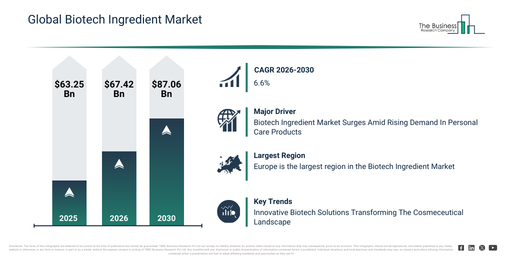
    The biotech ingredient market has experienced significant growth in recent years. It is projected to increase from $63.25 billion in 2025 to $67.42 billion in 2026, representing a compound annual growth rate (CAGR) of 6.6%. This historical expansion can be attributed to an increasing demand for natural and safe ingredients, advances in microbial fermentation technologies, a growing awareness of biotech applications in food and personal care, rising consumer preference for sustainable ingredients, and the early adoption of yeast- and algae-based compounds.

    The size of the biotech ingredient market is projected to experience substantial expansion over the upcoming years. This market is anticipated to reach $87.06 billion by 2030, exhibiting a compound annual growth rate (CAGR) of 6.6%. The projected growth during this period stems from several factors, including the expansion of precision medicine and personalized nutrition, augmented governmental backing for biotech research and development, the scaling up of microbial and yeast expression systems, the integration of AI and automation into production processes, and the expanding utilization across the cosmetics, cleaning products, and food sectors. Key trends expected during the forecast timeframe encompass progress in synthetic biology, novelties in microbial engineering, the development of economical ingredient manufacturing, adherence to regulatory compliance and safety standards, and broadening applications in food, personal care, and cleaning sectors.

    Access Your Free Sample Report For In-Depth Market Analysis:

    https://www.thebusinessresearchcompany.com/sample.aspx?id=9817&type=smp

    What Key Factors Are Affecting The Biotech Ingredient Market Demand?

    The rising demand for personal care products is projected to fuel the expansion of the biotech ingredient market. These products encompass a wide range of items used for personal hygiene and cosmetic enhancement. Biotech ingredients in personal care products contribute to a smaller environmental footprint, promote sustainability, ensure consistent quality, lower allergenic risks, improve biocompatibility, boost effectiveness, and lessen reliance on petrochemicals. For example, in December 2024, data from the Bureau of Labor Statistics, a US-based government agency, indicated that the average yearly spending on personal care products and services increased from $866 per consumer unit in 2022 to $950 per consumer unit in 2023. Consequently, this escalating demand for personal care products is a key driver for the growth of the biotech ingredient market.

    How Are Segments Identified Within The Biotech Ingredient Market Segment Framework?

    The biotech ingredient market covered in this report is segmented –

    1) By Type: Active Pharmaceutical Ingredients, Biosimilars

    2) By Expression Systems: Mammalian Expression Systems, Microbial Expression Systems, Yeast Expression Systems, Plant Expression Systems, Insect Expression Systems

    3) By Application: Food And Beverages, Personal Care And Cosmetics, Cleaning Products, Other Applications

    Subsegments:

    1) By Active Pharmaceutical Ingredients (APIs): Biologic APIs, Synthetic APIs

    2) By Biosimilars: Monoclonal Antibodies, Recombinant Proteins, Insulin Biosimilars

    What Market Trends Are Affecting The Biotech Ingredient Market?

    Major companies within the biotech ingredient market are focusing on the creation of innovative solutions, such as advanced biotechnology-based ingredient platforms, to address the increasing demand for high-performance, sustainable, and next-generation cosmetic and personal care formulations. These biotechnology-driven ingredients harness enzymatic and bio-based processes to form novel molecular structures with enhanced functionality, delivering superior performance, scalability, and environmental advantages compared to traditional chemically synthesized ingredients. For instance, in March 2023, International Flavors & Fragrances Inc., a US-based manufacturer of fragrance, biotech solutions, cosmetic energetics, and organic health ingredients, launched Aurist AGC, a novel biopolymer for hair care. This demonstrates the new DEB platform’s potential by utilizing IFF’s comprehensive biotechnology functionality to ensure sustained and high-performance glamour solutions that can genuinely contribute to change in the cosmeceutical industry. The ingredient employs IFF’s proprietary Designed Enzymatic Biopolymers (DEB) technology, an advanced biotechnology capable of producing novel bio-based polysaccharides with distinct structures and product features.

    Who Are The Companies Competing Within The Biotech Ingredient Market?

    Major companies operating in the biotech ingredient market are Merck & Co. Inc., Sanofi S.A., AbbVie Inc., International Flavors & Fragrance (IFF) Inc., Novartis AG, Pfizer Inc., Teva Pharmaceutical Industries Ltd., Mylan Inc., Boehringer Ingelheim International GmbH., AstraZeneca plc., Givaudan, Firmenich SA, Amyris Inc., Advanced BioTech, Sollice Biotech, Novocap S.A., Eli Lilly, Bristol-Myers Squibb Company, GlaxoSmithKline plc., F. Hoffmann-La Roche AG, Biogen Inc., Amgen Inc., Johnson & Johnson, Genentech Inc., Regeneron Pharmaceuticals Inc., Vertex Pharmaceuticals Incorporated, Alexion Pharmaceuticals Inc., Celgene Corporation, Gilead Sciences Inc., BioMarin Pharmaceutical Inc., Incyte Corporation, Seattle Genetics Inc., Alnylam Pharmaceuticals Inc., Ionis Pharmaceuticals Inc., Moderna Inc., Editas Medicine Inc., Intellia Therapeutics Inc., Sangamo Therapeutics Inc., Bluebird Bio Inc., Spark Therapeutics Inc.

    Get The Full Biotech Ingredient Market Report:

    https://www.thebusinessresearchcompany.com/report/biotech-ingredient-global-market-report

    Which Region Accounts For The Largest Portion Of The Biotech Ingredient Market?

    Europe was the largest region in the biotech ingredient market in 2025. Asia-Pacific is expected to be the fastest-growing region in the biotech ingredients market report during the forecast period. The regions covered in the biotech ingredient market report are Asia-Pacific, South East Asia, Western Europe, Eastern Europe, North America, South America, Middle East, Africa.

    Request A Customized Biotech Ingredient Market Report For Competitive Insights:

    https://www.thebusinessresearchcompany.com/report/biotech-ingredient-global-market-report

    Browse Through More Reports Similar to the Global Biotech Ingredient Market 2026, By The Business Research Company

    Biotech Ingredient Market Report 2026

    https://www.thebusinessresearchcompany.com/report/biotech-ingredient-global-market-report

    Bioactive Ingredients Market Report 2026

    https://www.thebusinessresearchcompany.com/report/bioactive-ingredients-global-market-report

    Ingredients Market Report 2026

    https://www.thebusinessresearchcompany.com/report/ingredients-global-market-report

    Get in touch with us:

    The Business Research Company: https://www.thebusinessresearchcompany.com/

    Americas +1 310-496-7795

    Asia +44 7882 955267 & +91 8897263534

    Europe +44 7882 955267

    Email us at: marketing@tbrc.info

    Follow us on:

    LinkedIn: https://in.linkedin.com/company/the-business-research-company

    YouTube: https://www.youtube.com/channel/UC24_fI0rV8cR5DxlCpgmyFQ

    Global Market Model: https://www.thebusinessresearchcompany.com/global-market-model

  • Biotech Collaborations Market Overview 2026–2030 With Insights On Industry Developments

    Biotech Collaborations Market Overview 2026–2030 With Insights On Industry Developments

    The Business Research Company’s 2026 market reports feature enhanced tools like market attractiveness analysis, TAM assessment, and company scoring matrices, along with interactive dashboards, deeper supply chain insights, and startup coverage strengthening the depth, usability, and strategic value of insights.

    How Is The Market Size Of The Biotech Collaborations Market Expected To Change From 2026 To 2030?

    The biotech collaborations market size has seen substantial growth in recent years. This market is set to expand from $94.35 billion in 2025 to $105.07 billion in 2026, exhibiting a compound annual growth rate (CAGR) of 11.4%. The historical expansion can be attributed to several factors including the increasing complexity of drug development pipelines, rising costs of clinical trials, the expansion of translational research initiatives, the growth of venture-backed biotech startups, and the increased role of academic research.

    The biotech collaborations market size is anticipated to undergo substantial growth in the upcoming years. It is forecast to expand to $159.77 billion by 2030, demonstrating a compound annual growth rate (CAGR) of 11.0%. This expansion during the forecast period is primarily driven by an intensified focus on precision medicine collaborations, the increasing adoption of data-driven drug discovery partnerships, the broadening of public-private research programs, a rising interest in platform-based biotech alliances, and the progressive globalization of clinical research. Significant trends for the forecast period include a surge in strategic R&D partnerships among biotech firms, greater reliance on licensing and co-development models, increased collaboration with academic research institutes, the proliferation of cross-border biotech alliances, and an augmented emphasis on risk-sharing innovation.

    Access Your Free Sample Report For In-Depth Market Analysis:

    https://www.thebusinessresearchcompany.com/sample.aspx?id=28151&type=smp

    Which Primary Drivers Are Impacting The Biotech Collaborations Market Growth?

    The rising need for personalized medicine is projected to fuel the expansion of the biotech collaborations market in the future. Personalized medicine is defined as a healthcare strategy that customizes treatment and prevention plans based on an individual’s distinct genetic profile, lifestyle, and environmental factors. Its growing acceptance largely stems from progress in genomics, allowing for accurate identification of genetic differences and the development of specific treatments for patients. Collaborations in biotechnology hasten the progress of personalized medicine by integrating specialized knowledge and cutting-edge technologies, facilitating the creation of targeted therapies for individual patients. These partnerships shorten research durations and boost success rates, thereby improving the effectiveness of treatments and patient results. As an illustration, in February 2024, the U.S. Food and Drug Administration (FDA) approved 26 new personalized medicines in 2023, a considerable rise from the 12 approved in 2022, according to the US-based nonprofit organization, Personalized Medicine Coalition (PMC). Consequently, the escalating demand for personalized medicine is a key driver for the growth of the biotech collaborations market.

    What Are The Key Segment Divisions In The Biotech Collaborations Market Segment Structure?

    The biotech collaborations market covered in this report is segmented –

    1) By Collaboration Type: Research And Development Collaborations, Licensing Agreements, Joint Ventures, Mergers Or Acquisitions, Other Collaborations

    2) By Application: Drug Discovery, Clinical Research, Diagnostics, Therapeutics, Other Applications

    3) By End User: Pharmaceutical Companies, Biotechnology Firms, Academic And Research Institutes, Other End-Users

    Subsegments:

    1) By Research And Development Collaborations: Preclinical Research, Clinical Trials, Translational Research, Drug Discovery

    2) By Licensing Agreements: Exclusive Licensing, Non Exclusive Licensing, In Licensing, Out Licensing

    3) By Joint Ventures: Strategic Alliance, Co Development, Co Marketing, Technology Sharing

    4) By Mergers Or Acquisitions: Horizontal Merger, Vertical Merger, Conglomerate Merger, Acquisition Of Assets

    5) By Other Collaborations: Research Consortium, Public Private Partnership, Academic Collaboration, Contract Research

    Which Trends Are Influencing Demand In The Biotech Collaborations Market?

    Leading companies in the biotech collaborations market are concentrating on developing innovative solutions, such as artificial intelligence-powered drug discovery platforms, to accelerate the identification of new therapeutics and enhance research and development efficiency. These AI-driven drug discovery platforms employ advanced algorithms and machine learning to analyze biological data, predict drug-target interactions, and streamline the development of novel treatments. For example, in January 2025, Iktos S.A.S., a biotechnology company from France, partnered with Cube Biotech GmbH, a German biotechnology company, to create new small molecule agonists targeting the amylin receptor, which is a promising therapeutic target for cardiometabolic disorders like obesity, diabetes, and metabolic dysfunction-associated steatotic hepatitis (MASH). This alliance utilizes Iktos’ generative AI-driven drug discovery and robotic synthesis platform together with Cube Biotech’s advanced NativeMP membrane protein technology, protein stabilization methods, and expertise in biophysical assays. The collaboration intends to accelerate drug discovery timelines, improve success rates, and more effectively address challenging membrane protein targets, potentially offering therapies that could be more efficient and cost-effective than current treatments such as GLP-1 receptor agonists.

    Which Organizations Are Engaged In The Biotech Collaborations Market?

    Major companies operating in the biotech collaborations market are Johnson And Johnson, F. Hoffmann-La Roche Ltd., Merck And Co. Inc., Pfizer Inc., AbbVie Inc., Bayer AG, Sanofi S.A., Novartis AG, AstraZeneca plc, Bristol-Myers Squibb Company, GlaxoSmithKline plc, Eli Lilly And Company, Novo Nordisk A/S, Takeda Pharmaceutical Company Limited, Amgen Inc., Gilead Sciences Inc., C.H. Boehringer Sohn AG & Co. KG, CSL Limited., Regeneron Pharmaceuticals Inc., Vertex Pharmaceuticals Incorporated, Biogen Inc.

    Get The Full Biotech Collaborations Market Report:

    https://www.thebusinessresearchcompany.com/report/biotech-collaborations-global-market-report

    Which Region Holds The Highest Market Share In The Biotech Collaborations Market?

    North America was the largest region in the biotech collaborations market in 2025. The regions covered in the biotech collaborations market report are Asia-Pacific, South East Asia, Western Europe, Eastern Europe, North America, South America, Middle East, Africa.

    Request A Customized Biotech Collaborations Market Report For Competitive Insights:

    https://www.thebusinessresearchcompany.com/report/biotech-collaborations-global-market-report

    Browse Through More Reports Similar to the Global Biotech Collaborations Market 2026, By The Business Research Company

    Biotechnology Services Market Report 2026

    https://www.thebusinessresearchcompany.com/report/biotechnology-services-global-market-report

    Biotech Ingredient Market Report 2026

    https://www.thebusinessresearchcompany.com/report/biotech-ingredient-global-market-report

    Bioengineering Technology Market Report 2026

    https://www.thebusinessresearchcompany.com/report/bioengineering-technology-global-market-report

    Get in touch with us:

    The Business Research Company: https://www.thebusinessresearchcompany.com/

    Americas +1 310-496-7795

    Asia +44 7882 955267 & +91 8897263534

    Europe +44 7882 955267

    Email us at: marketing@tbrc.info

    Follow us on:

    LinkedIn: https://in.linkedin.com/company/the-business-research-company

    YouTube: https://www.youtube.com/channel/UC24_fI0rV8cR5DxlCpgmyFQ

    Global Market Model: https://www.thebusinessresearchcompany.com/global-market-model
  • Biosimilars Market Forecast Highlighting Key Drivers And Expansion Potential

    Biosimilars Market Forecast Highlighting Key Drivers And Expansion Potential

    The Business Research Company’s 2026 market reports feature enhanced tools like market attractiveness analysis, TAM assessment, and company scoring matrices, along with interactive dashboards, deeper supply chain insights, and startup coverage strengthening the depth, usability, and strategic value of insights.

    From Its 2026 Market Size, What Value Is The Biosimilars Market Projected To Reach By 2030?

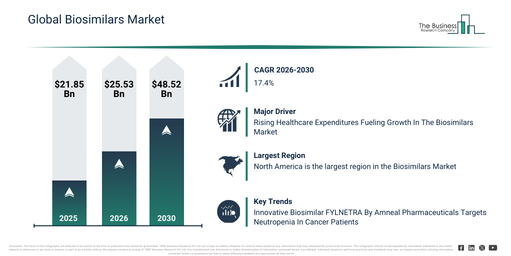
    The biosimilars market has demonstrated significant expansion in recent years. It is anticipated to increase from $21.85 billion in 2025 to $25.53 billion in 2026, exhibiting a compound annual growth rate (CAGR) of 16.9%. The growth observed in the historic period is largely attributable to the rising prevalence of chronic and autoimmune diseases, the significant expense associated with originator biologics, an increasing demand for cost-effective therapies, continuous advancements in biopharmaceutical research and development, and the developing healthcare infrastructure in emerging economies.

    The biosimilars market is projected to experience substantial expansion in the coming years. By 2030, its value is anticipated to reach $48.52 billion, demonstrating a compound annual growth rate (CAGR) of 17.4%. This projected growth during the forecast period stems from factors such as the patent expiration of key biologics, a rise in the uptake of biosimilars for oncology and autoimmune treatments, favorable government incentives and policies, expanded manufacturing capacities in asia-pacific, and an increase in collaborations between biopharmaceutical firms and contract manufacturing organizations. Key trends observed for this period encompass the development of personalized biosimilars, more economical biologics production, improved regulatory alignment and adherence, the expansion of biosimilar markets in developing regions, and strategic alliances and partnerships.

    Access Your Free Sample Report For In-Depth Market Analysis:

    https://www.thebusinessresearchcompany.com/sample.aspx?id=2807&type=smp

    What Significant Factors Are Influencing The Biosimilars Market Expansion?

    The increasing healthcare expenditures are projected to drive the expansion of the biosimilars market moving forward. Healthcare expenditures denote the overall spending on healthcare products and services within a particular population or medical system. The biosimilars market aids in diminishing healthcare expenditures by presenting more economical options compared to costly biologic drugs, thus reducing treatment costs for patients and healthcare systems. For instance, in March 2024, data from the Health Foundation, a UK-based independent charity and think tank, showed that in the most recently confirmed year for spending data, 2022/23, total health expenditures in England amounted to £182 billion ($196.78 billion). Although planned health spending is set to climb to £192 billion ($207.59 billion) by 2024/25, inflation will result in only a slight real-term increase of 0.6% compared to the 2023/24 fiscal year. Consequently, the rising healthcare expenditures are propelling the growth of the biosimilars market.

    Which Segment Categories Are Included In The Biosimilars Market Segment Analysis?

    The biosimilars market covered in this report is segmented –

    1) By Type: Monoclonal Antibodies, Insulin, Erythropoietin, Granulocyte-Colony Stimulating Factor, Other Hormones

    2) By Protein Type: Recombinant Non-glycosylated Proteins, Recombinant Glycosylated Proteins

    3) By Application: Oncology, Chronic And Autoimmune Diseases, Growth Hormone Deficiency, Infectious Diseases, Other Applications

    Subsegments:

    1) By Monoclonal Antibodies: IgG Biosimilars, Non-IgG Biosimilars

    2) By Insulin: Rapid-Acting Insulin Biosimilars, Long-Acting Insulin Biosimilars, Premixed Insulin Biosimilars

    3) By Erythropoietin: Epoetin Alfa Biosimilars, Darbepoetin Alfa Biosimilars

    4) By Granulocyte-Colony Stimulating Factor (G-CSF): Filgrastim Biosimilars, Pegfilgrastim Biosimilars

    5) By Other Hormones: Growth Hormones, Hormonal Replacement Therapy Biosimilars

    What Emerging Trends Are Seen In The Biosimilars Market?

    Leading entities within the biosimilars sector prioritize the creation of groundbreaking products to secure a competitive advantage. FYLNETRA, a leukocyte growth factor, is prescribed to reduce the occurrence of infection, particularly febrile neutropenia, in individuals with non-myeloid malignancies who are undergoing myelosuppressive anti-cancer drug treatments that carry a clinically notable risk of febrile neutropenia. An illustrative case occurred in May 2023, when Amneal Pharmaceuticals Inc., a pharmaceutical firm based in the US, commercially introduced FYLNETRA (pegfilgrastim-pbbk), which is a biosimilar drug mirroring Neulasta, provided in a pre-filled, single-dose syringe. The drug FYLNETRA addresses neutropenia (a condition characterized by low levels of neutrophils, a crucial type of white blood cell for combating infection), a common side effect for patients undergoing chemotherapy.

    Who Are The Active Companies Shaping The Biosimilars Market?

    Major companies operating in the biosimilars market are Amgen, Novartis AG, Samsung Bioepis Co. Ltd., Viatris, Celltrion Inc., Coherus Biosciences, Eli Lilly and Company, Dr. Reddy’s Laboratories, Roche India Pvt Ltd, Abbott India Limited, Wuxi Biologics, Shanghai Henlius Biotech, Innovent Biologics, Hisun Pharma, 3SBio, Beijing ShuangLu Pharmaceuticals, Qilu Pharmaceutical, Kyowa Hakko Kirin, Takeda, Mitsubishi Tanabe, AGC Biologics, Bio-Thera, Sandoz Pty Ltd, Apotex Pty Ltd, Cadila Pharmaceuticals, BiosanaPharma, GlaxoSmithKline, AstraZeneca, Bayer, Merck, Boehringer Ingelheim, Sanofi, Fresenius Kabi, Napp Pharmaceuticals, Mundipharma Deutschland GmbH & Co. KG, Geropharm, Valenta, NovaMedica, SynBio, Rani Therapeutics, Johnson & Johnson, Biogen Inc., Aché, Eurofarma, Teva Pharmaceuticals, Oramed Pharmaceuticals, Entera Bio, Julphar, Hikma Pharmaceuticals, BIOPHARMA-MEA, NeoTX, AID Genomics Limited, Altis Biologics, Cipla Medpro South Africa, Next Biosciences, Viome, Inqaba Biotechnical Industries (Pty)

    Get The Full Biosimilars Market Report:

    https://www.thebusinessresearchcompany.com/report/biosimilar-global-market-report

    Where Is The Biosimilars Market Most Concentrated Geographically?

    North America was the largest region in the global biosimilars market in 2025. Middle East is expected to be the fastest-growing region in the forecast period. The regions covered in the biosimilars market report are Asia-Pacific, South East Asia, Western Europe, Eastern Europe, North America, South America, Middle East, Africa.

    Request A Customized Biosimilars Market Report For Competitive Insights:

    https://www.thebusinessresearchcompany.com/report/biosimilar-global-market-report

    Browse Through More Reports Similar to the Global Biosimilars Market 2026, By The Business Research Company

    Biosimilar Market Report 2026

    https://www.thebusinessresearchcompany.com/report/biosimilar-global-market-report

    Biosimilar Market Report 2026

    https://www.thebusinessresearchcompany.com/report/biosimilar-global-market-report

    Bevacizumab Biosimilars Market Report 2026

    https://www.thebusinessresearchcompany.com/report/bevacizumab-biosimilars-global-market-report

    Get in touch with us:

    The Business Research Company: https://www.thebusinessresearchcompany.com/

    Americas +1 310-496-7795

    Asia +44 7882 955267 & +91 8897263534

    Europe +44 7882 955267

    Email us at: marketing@tbrc.info

    Follow us on:

    LinkedIn: https://in.linkedin.com/company/the-business-research-company

    YouTube: https://www.youtube.com/channel/UC24_fI0rV8cR5DxlCpgmyFQ

    Global Market Model: https://www.thebusinessresearchcompany.com/global-market-model

  • Biosimilar Therapeutic Peptides Market Analysis Covering Growth Drivers And Future Outlook

    Biosimilar Therapeutic Peptides Market Analysis Covering Growth Drivers And Future Outlook

    The Business Research Company’s 2026 market reports feature enhanced tools like market attractiveness analysis, TAM assessment, and company scoring matrices, along with interactive dashboards, deeper supply chain insights, and startup coverage strengthening the depth, usability, and strategic value of insights.

    How Much Growth In Market Value Is Expected For The Biosimilar Therapeutic Peptides Market Between 2026 And 2030?

    The biosimilar therapeutic peptides market has experienced substantial expansion in recent years. This market is anticipated to increase from $3.5 billion in 2025 to $3.9 billion in 2026, with a compound annual growth rate (CAGR) of 11.5%. Historically, the expansion can be credited to the constrained availability of biosimilar peptides, a reliance on innovative peptide therapies, the increasing prevalence of cancer and metabolic disorders, greater awareness of peptide-based treatments, and the development of parenteral administration methods.

    The biosimilar therapeutic peptides market size is projected to experience swift expansion over the coming years. This market is anticipated to reach $6.11 billion by 2030, demonstrating a compound annual growth rate (CAGR) of 11.9%. Factors contributing to this growth during the forecast period include the introduction of combination and prolonged-action peptides, the expansion of generic peptide manufacturing, the increasing use of transdermal delivery methods, heightened investment in peptide research and development, and rising healthcare spending on peptide therapeutics. Key trends expected within the forecast timeframe encompass a growing need for biosimilar therapeutic peptides in cancer therapy, the development of peptide-based treatments for metabolic and cardiovascular conditions, a greater uptake of long-acting and combination peptides, the broadening of parenteral and transdermal administration pathways, and an emphasis on affordable generic peptides along with their availability in developing markets.

    Access Your Free Sample Report For In-Depth Market Analysis:

    https://www.thebusinessresearchcompany.com/sample.aspx?id=3423&type=smp

    Which Important Drivers Are Guiding The Biosimilar Therapeutic Peptides Market Growth?

    The increasing occurrence of chronic diseases is anticipated to propel the biosimilar therapeutic peptide market. These enduring medical conditions demand ongoing management and treatment, frequently spanning years or an entire lifetime. The growing prevalence of such diseases creates a substantial need for economical treatment solutions, positioning biosimilar therapeutic peptides as a compelling option due to their affordability and potential to enhance patient access while bolstering healthcare system sustainability. Furthermore, market expansion is supported by regulatory endorsements and robust clinical evidence. For example, according to the Centers for Disease Control and Prevention (CDC), a US-based federal agency, a report in April 2025 indicated that roughly 194 million U.S. adults, representing 76.4%, had at least one chronic condition in 2023. This prevalence was noted at 59.5% among young adults, 78.4% among midlife adults, and 93.0% among older adults. Therefore, the widespread presence of chronic illnesses is projected to drive the growth of the biosimilar therapeutic peptides market.

    How Is The Biosimilar Therapeutic Peptides Market Broken Down By Segment Categories?

    The biosimilar therapeutic peptides market covered in this report is segmented –

    1) By Type: Innovative, Generic

    2) By Route Of Administration: Parenteral Route, Transdermal Route, Other Route Of Administrations

    3) By Application: Cancer, Cardiovascular, Central Nervous Systems, Metabolic Disorders, Infection, Hematological Disorders, Gastrointestinal Disorders, Dermatology, Respiratory Disorders

    Subsegments:

    1) By Innovative: Long-Acting Peptides, Combination Peptides

    2) By Generic: Monoclonal Antibodies, Hormones, Enzymes

    Which Trends Are Guiding The Direction Of The Biosimilar Therapeutic Peptides Market?

    Major companies in the biosimilar therapeutic peptide market are creating research platforms focused on optimizing peptide synthesis, increasing production efficiency, and ensuring uniform quality from discovery through commercialization. The Biodrug Design Accelerator serves as a platform for managing research processes in peptide drug discovery, which many consider a promising area in new drug development. For example, in May 2023, Fujitsu Limited, a US-based toy manufacturing and entertainment company, introduced the Biodrug Design Accelerator platform to expedite peptide drug discovery research. This accelerator will assist peptide drug discovery scientists in pharmaceutical companies to quicken and enhance the efficiency of peptide drug development, specifically by streamlining the design, make, test, analyze (DMTA) cycles. This ultimately leads to a faster and more informed design of peptide drug candidates and improves communication among scientists regarding synthesis and testing.

    Which Players Are Present In The Biosimilar Therapeutic Peptides Market Space?

    Major companies operating in the biosimilar therapeutic peptides market are Pfizer Inc., Merck & Co. Inc., Novartis AG, Sanofi SA, Takeda Pharmaceuticals Co. Ltd., Eli Lilly and Company, Novo Nordisk A/S, Apotex Inc., Teva Pharmaceuticals Industries Ltd., Sandoz International GmbH, Lonza Inc., Stada Arzneimittel AG, Ipsen S.A, Biocon Biopharmaceuticals Pvt. Ltd., Dr. Reddy’s Laboratories Ltd., Alvogen Pharma US Inc., Corden Pharma GmbH, Bachem Holding AG, PolyPeptide Laboratories Ltd.

    Get The Full Biosimilar Therapeutic Peptides Market Report:

    https://www.thebusinessresearchcompany.com/report/biosimilar-therapeutic-peptide-global-market-report

    Which Region Dominates The Biosimilar Therapeutic Peptides Market By Market Share?

    North America was the largest region in the biosimilar therapeutics peptides market in 2025. Middle East is expected to be the fastest growing region in the biosimilar therapeutic peptides market report during the forecast period. The regions covered in the biosimilar therapeutic peptides market report are Asia-Pacific, South East Asia, Western Europe, Eastern Europe, North America, South America, Middle East, Africa.

    Request A Customized Biosimilar Therapeutic Peptides Market Report For Competitive Insights:

    https://www.thebusinessresearchcompany.com/report/biosimilar-therapeutic-peptide-global-market-report

    Browse Through More Reports Similar to the Global Biosimilar Therapeutic Peptides Market 2026, By The Business Research Company

    Biosimilar Therapeutic Peptide Market Report 2026

    https://www.thebusinessresearchcompany.com/report/biosimilar-therapeutic-peptide-global-market-report

    Pharmaceutical Drugs And Biologics Logistics Market 2026

    https://www.thebusinessresearchcompany.com/report/pharmaceutical-drugs-and-biologics-logistics-market

    Therapeutic Dental Equipment Market Report 2026

    https://www.thebusinessresearchcompany.com/report/therapeutic-dental-equipment-global-market-report

    Get in touch with us:

    The Business Research Company: https://www.thebusinessresearchcompany.com/

    Americas +1 310-496-7795

    Asia +44 7882 955267 & +91 8897263534

    Europe +44 7882 955267

    Email us at: marketing@tbrc.info

    Follow us on:

    LinkedIn: https://in.linkedin.com/company/the-business-research-company

    YouTube: https://www.youtube.com/channel/UC24_fI0rV8cR5DxlCpgmyFQ

    Global Market Model: https://www.thebusinessresearchcompany.com/global-market-model