Category: Pharmaceuticals

  • Biosimilar Monoclonal Antibodies Market Insights Highlighting Opportunities Supporting Growth To 2030

    Biosimilar Monoclonal Antibodies Market Insights Highlighting Opportunities Supporting Growth To 2030

    The Business Research Company’s 2026 market reports feature enhanced tools like market attractiveness analysis, TAM assessment, and company scoring matrices, along with interactive dashboards, deeper supply chain insights, and startup coverage strengthening the depth, usability, and strategic value of insights.

    What Is The Estimated Market Size Of The Biosimilar Monoclonal Antibodies Market In 2026, And How Will Its Value Evolve By 2030?

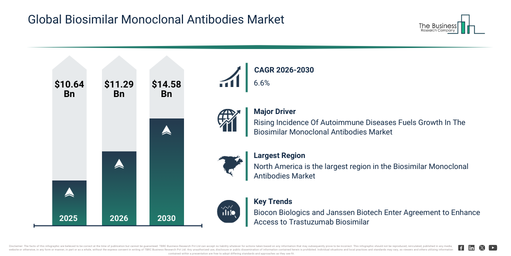
    The biosimilar monoclonal antibodies market size has shown significant expansion in recent years. It is anticipated to expand from $10.64 billion in 2025 to $11.29 billion in 2026, achieving a compound annual growth rate (CAGR) of 6.2%. The past growth can be ascribed to several factors, including the high cost of originator biologics, the increasing burden of chronic and autoimmune diseases, the expiration of patents for blockbuster monoclonal antibodies, rising healthcare expenditure, and a gradual improvement in regulatory clarity for biosimilars.

    The biosimilar monoclonal antibodies market is anticipated to experience substantial expansion in the coming years. This market is projected to reach $14.58 billion by 2030, demonstrating a compound annual growth rate (CAGR) of 6.6%. The drivers for this growth during the forecast period include the expanding pipelines of biosimilars, a rising demand for cost-effective biologic treatments, an increase in approvals in emerging markets, advancements in biopharmaceutical manufacturing, and supportive government policies encouraging biosimilar adoption. Major trends expected in the forecast period encompass the increasing uptake of economical biosimilar monoclonal antibodies, a broader application of biosimilars in oncology and autoimmune disorders, growing acceptance from both physicians and patients, the expansion of regulatory approvals across global markets, and an elevated focus on improving access to biologic therapies.

    Access Your Free Sample Report For In-Depth Market Analysis:

    https://www.thebusinessresearchcompany.com/sample.aspx?id=3412&type=smp

    What Major Factors Are Driving The Biosimilar Monoclonal Antibodies Market Forward?

    An anticipated increase in autoimmune diseases is set to boost the expansion of the biosimilar monoclonal antibodies market in the future. These conditions involve the immune system erroneously attacking the body’s own tissues and organs. The escalation of autoimmune diseases is largely attributable to greater exposure to environmental factors like pollution and chemicals, which can disturb immune equilibrium and encourage irregular immune reactions. Biosimilar monoclonal antibodies offer a solution to the growing prevalence of autoimmune diseases by supplying cost-effective, efficacious, and readily available targeted treatments that regulate excessive immune responses in patients. For example, data from February 2024, provided by Arthritis Australia, an Australia-based non-profit organization, indicates that in 2025, an estimated 212,136 males and 362,137 females are projected to have rheumatoid arthritis (RA). These figures are anticipated to climb by 2040 to approximately 280,040 males and 479,828 females. Consequently, the increasing occurrence of autoimmune diseases is propelling the expansion of the biosimilar monoclonal antibodies market.

    What Are The Different Segment Types In The Biosimilar Monoclonal Antibodies Market Segment Breakdown?

    The biosimilar monoclonal antibodies market covered in this report is segmented –

    1) By Type: Biopharmaceuticals, Other Types

    2) By Compound: Infliximab, Rituximab, Abciximab, Trastuzumab, Adalimumab, Bevacizumab

    3) By Application: Chronic & Autoimmune Diseases, Oncology, Other Applications

    Subsegments:

    1) By Biopharmaceuticals: Monoclonal Antibodies, Recombinant Proteins, Vaccines, Other Biopharmaceuticals

    2) By Other Types: Antibody-Drug Conjugates, Fusion Proteins, Biosimilars Of Other Biologics

    What Trends Are Affecting The Growth Of The Biosimilar Monoclonal Antibodies Market?

    Leading companies in the biosimilar monoclonal antibody market are developing biosimilar versions of monoclonal antibodies to provide cost-effective alternatives to original therapies, thus improving access and affordability in healthcare. An intravenous formulation refers to an antibody preparation designed for direct administration into the bloodstream through a vein for rapid therapeutic effect. For instance, in May 2024, Bio-Thera Solutions, a China-based biopharmaceutical company, and Biogen Inc., a US-based biopharmaceutical company, launched TOFIDENCE (tocilizumab-bavi) in an intravenous formulation in the United States. The U.S. Food and Drug Administration had approved TOFIDENCE in September 2023 for treating moderately to severely active rheumatoid arthritis, polyarticular juvenile idiopathic arthritis, and systemic juvenile idiopathic arthritis. At its launch, TOFIDENCE is available in three vial sizes: 80 mg/4 mL, 200 mg/10 mL, and 400 mg/20 mL for intravenous infusion, with subcutaneous formulations scheduled for future release.

    Who Are The Well-Known Companies In The Biosimilar Monoclonal Antibodies Market?

    Major companies operating in the biosimilar monoclonal antibodies market are Pfizer Inc., Novartis AG, AbbVie Inc., Coherus BioSciences, Biocon Limited, Amgen Inc., Boehringer Ingelheim International GmbH, Celltrion Inc., BioXpress Therapeutics SA, Intas Pharmaceuticals Limited, Genor BioPharma Co. Ltd., BIOCAD, Dr. Reddy’s Laboratories Ltd., 3SBio Inc., Reliance Life Sciences, Hisun Pharmaceuticals, Celgen Biopharmaceuticals, Torrent Pharmaceuticals Ltd., Cadila Healthcare Ltd., Shanghai Henlius Biotech Inc., Teva Pharmaceutical Industries Ltd., Alvotech, Xentria Inc., Lazuline Biotech Private Limited, Epygen Biotech Pvt Ltd., Mabpharm Limited, Qilu Pharmaceutical Co. Ltd., Chiatai Tianqing Pharmaceutical Group Co. Ltd., YL Biologics Ltd., Aprogen Biologics, UNDBIO Co Ltd., Samsung Bioepis Co. Ltd., ISU Abxis Corp., Bio-Rad Laboratories Inc.

    Get The Full Biosimilar Monoclonal Antibodies Market Report:

    https://www.thebusinessresearchcompany.com/report/biosimilar-monoclonal-antibodie-global-market-report

    Which Region Is The Largest In The Biosimilar Monoclonal Antibodies Market?

    North America was the largest region in the biosimilar monoclonal antibodies market in 2025. The regions covered in the biosimilar monoclonal antibodies market report are Asia-Pacific, South East Asia, Western Europe, Eastern Europe, North America, South America, Middle East, Africa.

    Request A Customized Biosimilar Monoclonal Antibodies Market Report For Competitive Insights:

    https://www.thebusinessresearchcompany.com/report/biosimilar-monoclonal-antibodie-global-market-report

    Browse Through More Reports Similar to the Global Biosimilar Monoclonal Antibodies Market 2026, By The Business Research Company

    Biologics Market 2026

    https://www.thebusinessresearchcompany.com/report/biologics-market

    Pharmaceutical Drugs And Biologics Logistics Market 2026

    https://www.thebusinessresearchcompany.com/report/pharmaceutical-drugs-and-biologics-logistics-market

    Anti Asthmatics And Copd Drugs Market 2026

    https://www.thebusinessresearchcompany.com/report/anti-asthmatics-and-copd-drugs-market

    Get in touch with us:

    The Business Research Company: https://www.thebusinessresearchcompany.com/

    Americas +1 310-496-7795

    Asia +44 7882 955267 & +91 8897263534

    Europe +44 7882 955267

    Email us at: marketing@tbrc.info

    Follow us on:

    LinkedIn: https://in.linkedin.com/company/the-business-research-company

    YouTube: https://www.youtube.com/channel/UC24_fI0rV8cR5DxlCpgmyFQ

    Global Market Model: https://www.thebusinessresearchcompany.com/global-market-model

  • Biosimilar Lymphocyte Modulator Market Forecast 2026–2030 Highlighting Expansion Across Industries

    Biosimilar Lymphocyte Modulator Market Forecast 2026–2030 Highlighting Expansion Across Industries

    The Business Research Company’s 2026 market reports feature enhanced tools like market attractiveness analysis, TAM assessment, and company scoring matrices, along with interactive dashboards, deeper supply chain insights, and startup coverage strengthening the depth, usability, and strategic value of insights.

    How Does The Market Size Of The Biosimilar Lymphocyte Modulator Market Compare Between 2026 And 2030?

    The market for biosimilar lymphocyte modulators has experienced rapid expansion in recent years. This market is projected to grow from $2.1 billion in 2025 to $2.32 billion in 2026, at a compound annual growth rate (CAGR) of 10.6%. The historical growth can be attributed to several factors, including the high cost of branded biologics, the rising prevalence of autoimmune diseases, the growing incidence of cancer, restricted access to innovative therapies, and increasing healthcare expenditure.

    The biosimilar lymphocyte modulator market is anticipated to show significant expansion in the coming years, with its size projected to reach $3.53 billion by 2030, exhibiting a compound annual growth rate (CAGR) of 11.1%. This growth during the forecast period is primarily fueled by the expiration of patents for reference biologics, the expanding development pipelines for biosimilars, increasing confidence among physicians regarding biosimilar products, the broader reach of online pharmacy distribution channels, and rising government initiatives supporting biosimilar adoption. Key trends expected in the forecast period include the increasing adoption of biosimilar lymphocyte modulators for cost-effective therapies, a growing demand for treatments in autoimmune and oncology fields, enhanced acceptance of biosimilars within clinical practice, the expansion of treatment options for conditions like multiple sclerosis and multiple myeloma, and improved regulatory frameworks that support biosimilar approvals.

    Access Your Free Sample Report For In-Depth Market Analysis:

    https://www.thebusinessresearchcompany.com/sample.aspx?id=3434&type=smp

    Which Key Drivers Are Affecting The Biosimilar Lymphocyte Modulator Market Development?

    The expanding occurrence of autoimmune conditions is anticipated to drive the advancement of the biosimilar lymphocyte modulator market in the future. These diseases encompass various disorders where the immune system erroneously targets and assaults the body’s own tissues and organs. The increase in autoimmune conditions is largely fueled by heightened environmental factors like pollution and chemicals, which can upset immune system equilibrium and encourage atypical immune reactions. Biosimilar lymphocyte modulators aid in managing autoimmune diseases by adjusting the immune system’s function, diminishing inflammation, and easing associated symptoms. For instance, data from February 2024, provided by Arthritis Australia, an Australia-based non-profit organization, projects that in 2025, an estimated 212,136 males and 362,137 females will have rheumatoid arthritis (RA). These numbers are anticipated to increase by 2040 to roughly 280,040 males and 479,828 females. Consequently, the increasing prevalence of autoimmune conditions is fueling the expansion of the biosimilar lymphocyte modulator market.

    Which Segment Classifications Are Used In The Biosimilar Lymphocyte Modulator Market Segment Analysis?

    The biosimilar lymphocyte modulator market covered in this report is segmented –

    1) By Drug: Campath-1H, Natalizumab Biosimilar, Efalizumab – A1089-Anti-CD11a Biosimilar, Anti-CD38 Daratumumab Biosimilar, Anti-CS1 Elotuzumab Biosimilar

    2) By Disease: Arthritis, Diabetes, Multiple Myeloma, Enterocolitis, Multiple Sclerosis, Psoriasis, Other Diseases

    3) By Distribution Channel: Online Pharmacies, Direct To Consumer

    Which Trends Are Shaping The Biosimilar Lymphocyte Modulator Market?

    Major companies in the biosimilar lymphocyte modulator market are developing biosimilar versions of key lymphocyte modulator drugs to gain a competitive advantage within the industry. Idacio (adalimumab-aacf) serves as a tumor necrosis factor (TNF) blocker and is a biosimilar to Humira (adalimumab). For example, in July 2023, Fresenius Kabi AG, a healthcare company based in Germany, launched the citrate-free biosimilar Idacio (adalimumab-aacf) for managing chronic autoimmune diseases in the US. It is offered in the US in a self-administered prefilled syringe and a self-administered pre-filled pen (autoinjector) to aid dosing for its approved indications.

    Which Firms Are Contributing To The Biosimilar Lymphocyte Modulator Market Ecosystem?

    Major companies operating in the biosimilar lymphocyte modulator market are Pfizer Inc., Celltrion Inc., Genentech Inc., Novartis AG, Sandoz International GmbH, Fresenius Kabi AG, Biocon Ltd., Dr. Reddy’s Laboratories Ltd., Intas Pharmaceuticals Ltd., Lupin Limited, Stada Arzneimittel AG, Zydus Cadila, Hetero Drugs Limited, Torrent Pharmaceuticals Ltd., Glenmark Pharmaceuticals Ltd., Alvotech, Coherus BioSciences, Innovent Biologics, Shanghai Henlius Biotech, BioXpress Therapeutics SA, Mabion SA, Polpharma Biologics, Prestige BioPharma, Qilu Pharmaceutical, Shanghai Fosun Pharmaceutical Group Co. Ltd., Wockhardt Ltd., Amega Biotech

    Get The Full Biosimilar Lymphocyte Modulator Market Report:

    https://www.thebusinessresearchcompany.com/report/biosimilar-lymphocytes-modulator-global-market-report

    Which Region Leads The Biosimilar Lymphocyte Modulator Market In Terms Of Market Share?

    North America was the largest region in the biosimilar lymphocyte modulator market in 2025. Middle East is expected to be the fastest-growing region in the biosimilar lymphocyte modulator market report during the forecast period. The regions covered in the biosimilar lymphocyte modulator market report are Asia-Pacific, South East Asia, Western Europe, Eastern Europe, North America, South America, Middle East, Africa.

    Request A Customized Biosimilar Lymphocyte Modulator Market Report For Competitive Insights:

    https://www.thebusinessresearchcompany.com/report/biosimilar-lymphocytes-modulator-global-market-report

    Browse Through More Reports Similar to the Global Biosimilar Lymphocyte Modulator Market 2026, By The Business Research Company

    Cellulars Immunotherapy Market Report 2026

    https://www.thebusinessresearchcompany.com/report/cellulars-immunotherapy-global-market-report

    Oral Biologics And Biosimilar Drug Market Report 2026

    https://www.thebusinessresearchcompany.com/report/oral-biologics-and-biosimilar-drug-global-market-report

    Colorectal Cancer Drugs Market Report 2026

    https://www.thebusinessresearchcompany.com/report/colorectal-cancer-drugs-global-market-report

    Get in touch with us:

    The Business Research Company: https://www.thebusinessresearchcompany.com/

    Americas +1 310-496-7795

    Asia +44 7882 955267 & +91 8897263534

    Europe +44 7882 955267

    Email us at: marketing@tbrc.info

    Follow us on:

    LinkedIn: https://in.linkedin.com/company/the-business-research-company

    YouTube: https://www.youtube.com/channel/UC24_fI0rV8cR5DxlCpgmyFQ

    Global Market Model: https://www.thebusinessresearchcompany.com/global-market-model
  • Global Biosimilar Interleukins Market Analysis For 2026–2030 With Strategic Insights

    Global Biosimilar Interleukins Market Analysis For 2026–2030 With Strategic Insights

    The Business Research Company’s 2026 market reports feature enhanced tools like market attractiveness analysis, TAM assessment, and company scoring matrices, along with interactive dashboards, deeper supply chain insights, and startup coverage strengthening the depth, usability, and strategic value of insights.

    What Is The Forecasted Market Size Trajectory Of The Biosimilar Interleukins Market From 2026 To 2030?

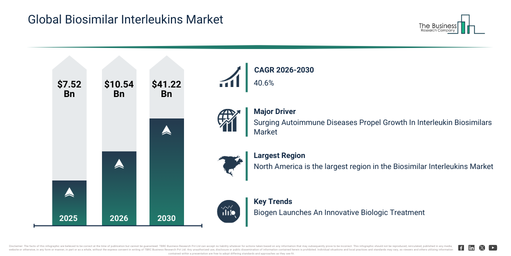
    The market size for biosimilar interleukins has witnessed substantial exponential growth in recent years. It is projected to expand from $7.52 billion in 2025 to $10.54 billion in 2026, demonstrating a compound annual growth rate (CAGR) of 40.2%. The historical expansion of this market can be attributed to various factors, such as the elevated cost of originator interleukin biologics, the rising prevalence of autoimmune and inflammatory diseases, the increasing impact of rheumatoid arthritis and psoriasis, restricted patient access to biologic therapies, and an enhanced awareness of biologics in immune modulation.

    The biosimilar interleukins market size is projected to experience substantial growth in the upcoming years, with an anticipated rise to $41.22 billion by 2030, driven by a compound annual growth rate (CAGR) of 40.6%. This expansion during the forecast period is primarily attributed to factors such as the expiry of patents for branded interleukins, the increasing number of biosimilar candidates in clinical development, greater physician acceptance of biosimilars, supportive government policies promoting biosimilar utilization, and the rising demand for affordable biologic treatments for cancer and immunological conditions. Key trends expected in the forecast period include the increasing adoption of biosimilar interleukins in the treatment of autoimmune diseases, a growing demand for cost-effective alternatives to originator biologics, the broadening of biosimilar approvals across multiple indications, expanded application of interleukins in managing chronic inflammatory disorders, and the reinforcement of regulatory frameworks that foster biosimilar uptake.

    Access Your Free Sample Report For In-Depth Market Analysis:

    https://www.thebusinessresearchcompany.com/sample.aspx?id=3433&type=smp

    What Factors Are Contributing To The Growth Of The Biosimilar Interleukins Market?

    The rising occurrence of autoimmune conditions like psoriasis and rheumatoid arthritis is projected to fuel the expansion of the interleukin biosimilars market over the prediction period. These disorders occur when the body’s immune cells fail to differentiate between healthy cells and harmful antibodies. Biologic medicines, including anti-interleukin antibodies, have demonstrated considerable clinical advantages in regulating, proliferating, activating, and migrating these cells. As an illustration, reports from February 2024 by the National Institutes of Health (NIH), a US-based biomedical research agency, indicate global annual increases in the incidence and prevalence of autoimmune diseases are estimated at 19.1% and 12.5% respectively. Consequently, the growing prevalence of autoimmune diseases is boosting demand for the biosimilar interleukins market and is anticipated to propel market growth.

    How Is The Biosimilar Interleukins Market Organized By Segment Classification?

    The biosimilar interleukins market covered in this report is segmented –

    1) By Type: IL-17, IL-23, IL-1, IL-5, IL-6

    2) By Application: Psoriasis, Psoriatic Arthritis, Rheumatoid Arthritis, Asthma, Inflammatory Bowel Disease (IBD), Other Applications

    3) By Distribution Channel: Hospital Pharmacies, Online Pharmacies, Retail Pharmacies, Clinics, Research Institutes

    Subsegments:

    1) By IL-17: Autoimmune Disease Treatment, Inflammatory Disease Management

    2) By IL-23: Psoriasis Treatment, Inflammatory Bowel Disease (IBD) Treatment

    3) By IL-1: Rheumatoid Arthritis Management, Other Autoimmune Disorders

    4) By IL-5: Asthma Treatment, Eosinophilic Disorders

    5) By IL-6: Rheumatoid Arthritis Management, Inflammatory Disease Treatment

    What Trends Are Influencing The Biosimilar Interleukins Market?

    Companies operating within the biosimilar interleukins market are innovating new products, such as Tofidence (tocilizumab-bavi), to boost their profitability. Tofidence, a monoclonal antibody, works by targeting and attaching to interleukin-6 receptors, and is employed in managing various inflammatory autoimmune disorders. For instance, in September 2023, Biogen Inc., a US-based biotechnology company, obtained FDA approval for Tofidence (tocilizumab-bavi) as the first biosimilar referencing Genentech’s Actemra (tocilizumab). Tofidence is administered through intravenous infusion and has gained approval for the treatment of severely active rheumatoid arthritis, polyarticular juvenile idiopathic arthritis, and systemic juvenile idiopathic arthritis.

    Who Are The Industry Participants Involved In The Biosimilar Interleukins Market?

    Major companies operating in the biosimilar interleukins market are Mabpharm Limitied, Gedeon Richter plc, Bio-Thera Solutions Ltd., Sunshine Guojian Pharmaceutical, Stada Arzneimittel AG, Teva Pharmaceutical Industries, 3SBio Inc., Shanghai Fosun Pharmaceuticals, Novartis AG, Pfizer Inc., Amgen Inc., F. Hoffmann-La Roche AG, Sanofi SA, Merck & Co. Inc., GlaxoSmithKline plc, Eli Lilly and Company, AstraZeneca plc, Qilu Pharmaceutical, Tonghua Dongbao, PROBIOMED S.A. de C.V., Biosidus S.A., LG Life Sciences, Viatris Inc.

    Get The Full Biosimilar Interleukins Market Report:

    https://www.thebusinessresearchcompany.com/report/biosimilar-interleukin-global-market-report

    Which Region Leads The Biosimilar Interleukins Market In Overall Market Size?

    North America was the largest region in the biosimilar interleukins market in 2025. The regions covered in the biosimilar interleukins market report are Asia-Pacific, South East Asia, Western Europe, Eastern Europe, North America, South America, Middle East, Africa.

    Request A Customized Biosimilar Interleukins Market Report For Competitive Insights:

    https://www.thebusinessresearchcompany.com/report/biosimilar-interleukin-global-market-report

    Browse Through More Reports Similar to the Global Biosimilar Interleukins Market 2026, By The Business Research Company

    Generic Pharmaceuticals Market Report 2026

    https://www.thebusinessresearchcompany.com/report/generic-pharmaceuticals-global-market-report

    Biosimilar Market Report 2026

    https://www.thebusinessresearchcompany.com/report/biosimilar-global-market-report

    Oncology Biosimilar Market Report 2026

    https://www.thebusinessresearchcompany.com/report/oncology-biosimilar-global-market-report

    Get in touch with us:

    The Business Research Company: https://www.thebusinessresearchcompany.com/

    Americas +1 310-496-7795

    Asia +44 7882 955267 & +91 8897263534

    Europe +44 7882 955267

    Email us at: marketing@tbrc.info

    Follow us on:

    LinkedIn: https://in.linkedin.com/company/the-business-research-company

    YouTube: https://www.youtube.com/channel/UC24_fI0rV8cR5DxlCpgmyFQ

    Global Market Model: https://www.thebusinessresearchcompany.com/global-market-model

  • Biosimilar Hormones Market Outlook 2026–2030 Driven By Growth Factors And Projections

    Biosimilar Hormones Market Outlook 2026–2030 Driven By Growth Factors And Projections

    The Business Research Company’s 2026 market reports feature enhanced tools like market attractiveness analysis, TAM assessment, and company scoring matrices, along with interactive dashboards, deeper supply chain insights, and startup coverage strengthening the depth, usability, and strategic value of insights.

    How Much Will The Market Value Of The Biosimilar Hormones Market Grow Between 2026 And 2030?

    The biosimilar hormones market has experienced rapid expansion in its size over recent years. It is projected to increase from $6.22 billion in 2025 to $7.68 billion in 2026, demonstrating a compound annual growth rate (CAGR) of 23.5%. The historical growth of this market was driven by factors such as the rising prevalence of diabetes and hormonal disorders, the significant cost of branded hormone therapies, an increasing aging population, growing awareness of hormone replacement therapies, and the expansion of hospital and retail pharmacy networks.

    The biosimilar hormones market size is projected to undergo substantial expansion in the upcoming years, with an anticipated value of $18.12 billion by 2030, exhibiting a compound annual growth rate (CAGR) of 23.9%. This projected growth throughout the forecast period can be largely attributed to the expiration of patents for significant biologic hormones, bolstered regulatory support for biosimilars, a burgeoning demand for affordable endocrine treatments, the proliferation of online pharmacy distribution channels, and increased investment in biosimilar research and development. Noteworthy trends expected in this timeframe include the increasing adoption of biosimilar hormones as economical alternatives, a rising need for insulin and growth hormone biosimilars, enhanced acceptance of biosimilar hormone therapies among medical professionals, the expanded application of biosimilars in chronic and lifestyle-related illnesses, and streamlined regulatory pathways supporting biosimilar approvals.

    Access Your Free Sample Report For In-Depth Market Analysis:

    https://www.thebusinessresearchcompany.com/sample.aspx?id=3432&type=smp

    Which Strong Drivers Are Impacting The Biosimilar Hormones Market Growth?

    The increasing financial outlay on healthcare is anticipated to drive the expansion of the biosimilar hormones market in the future. This outlay encompasses all funds expended by individuals, entities, or states for the prevention, treatment, and management of various health issues. The rise in healthcare spending stems from progress in medical technology, where novel diagnostic methods, therapeutic approaches, and innovative treatments frequently incur greater expenses, consequently boosting total health sector spending. An increase in healthcare costs stimulates the adoption of biosimilar hormones, driven by a greater need for economical treatments and broader patient accessibility throughout healthcare frameworks. For example, data from December 2024, provided by the US-based Centers for Medicare & Medicaid Services (the body managing Medicare and Medicaid), indicated that in 2023, U.S. health care expenditures grew by 7.5%, reaching $4.9 trillion, which equates to approximately $14,570 per person. Consequently, the expanding healthcare expenditure is fueling the growth of the biosimilar hormones market.

    Which Segments Define The Biosimilar Hormones Market Segment Structure?

    The biosimilar hormones market covered in this report is segmented –

    1) By Type: Teriparatide Biosimilars, Follitropin Alfa Biosimilars, Insulin Biosimilars, Somatropin Biosimilars, Other Types

    2) By Application: Research & Biotechnology, Therapeutics, Other Applications

    3) By Distribution Channel: Hospital And Retail Pharmacy, Online Pharmacy/pharmacy, Specialty Clinics

    Subsegments:

    1) By Teriparatide Biosimilars: Osteoporosis Treatment, Bone Health Maintenance

    2) By Follitropin Alfa Biosimilars: Infertility Treatment, Assisted Reproductive Technology (ART)

    3) By Insulin Biosimilars: Type 1 Diabetes Management, Type 2 Diabetes Management

    4) By Somatropin Biosimilars: Growth Hormone Deficiency Treatment, Pediatric Growth Disorders

    5) By Other Types: Thyroid Hormones, Corticosteroids

    Which Trends Are Shaping Growth In The Biosimilar Hormones Market?

    Major companies in the biosimilar hormones market are developing new products, such as the Sogroya (somapacitan-beco) injection, to boost their profitability. Sogroya (somapacitan-beco) is a prescribed analogue of human growth hormone (GH) used for individuals diagnosed with growth hormone deficiency (GHD). For instance, in April 2023, Novo Nordisk, a pharmaceutical company from Denmark, obtained FDA approval for a new indication for Sogroya (somapacitan-beco) injection for treating children aged 2.5 years and older who experience growth failure due to insufficient endogenous growth hormone secretion. Sogroya distinguishes itself as the sole once-weekly growth hormone (GH) therapy designed for both children and adults. This approval was based on results from the phase 3 REAL4 trial, which demonstrated Sogroya’s efficacy in addressing growth hormone deficiency (GHD) in pediatric patients.

    Who Are The Established Players Within The Biosimilar Hormones Market?

    Major companies operating in the biosimilar hormones market are Teva Pharmaceutical Industries Ltd., Gedeon Richter Plc., Intas Pharmaceuticals Ltd., Biocon Limited, Mylan, Sanofi, Sandoz Group AG, LG Life Sciences, Ferring Pharmaceuticals, GC Pharma, Pfizer Inc., Dr. Reddy’s Laboratories, Amgen Inc., Eli Lilly and Company, Celltrion Inc., Samsungbioepis Co.Ltd, Merck & Co., Biogen Inc., Boehringer Ingelheim, Alvotech, Cipla Limited, Lupin Ltd., Stada Arzneimittel AG, Torrent Pharmaceuticals, Zydus Cadila, Accord Healthcare, Hetero Drugs, Wockhardt

    Get The Full Biosimilar Hormones Market Report:

    https://www.thebusinessresearchcompany.com/report/biosimilar-hormone-global-market-report

    Which Region Is The Top Contributor To The Biosimilar Hormones Market By Share?

    North America was the largest region in the biosimilar hormones market in 2025. The regions covered in the biosimilar hormones market report are Asia-Pacific, South East Asia, Western Europe, Eastern Europe, North America, South America, Middle East, Africa.

    Request A Customized Biosimilar Hormones Market Report For Competitive Insights:

    https://www.thebusinessresearchcompany.com/report/biosimilar-hormone-global-market-report

    Browse Through More Reports Similar to the Global Biosimilar Hormones Market 2026, By The Business Research Company

    Hormonal Contraceptives Market Report 2026

    https://www.thebusinessresearchcompany.com/report/hormonal-contraceptives-global-market-report

    Biosimilar Growth Hormone Market Report 2026

    https://www.thebusinessresearchcompany.com/report/biosimilar-growth-hormone-global-market-report

    Parathyroid Hormones Market Report 2026

    https://www.thebusinessresearchcompany.com/report/parathyroid-hormones-global-market-report

    Get in touch with us:

    The Business Research Company: https://www.thebusinessresearchcompany.com/

    Americas +1 310-496-7795

    Asia +44 7882 955267 & +91 8897263534

    Europe +44 7882 955267

    Email us at: marketing@tbrc.info

    Follow us on:

    LinkedIn: https://in.linkedin.com/company/the-business-research-company

    YouTube: https://www.youtube.com/channel/UC24_fI0rV8cR5DxlCpgmyFQ

    Global Market Model: https://www.thebusinessresearchcompany.com/global-market-model
  • Biosimilar Growth Hormones Market Developments And Opportunities Across 2026–2030

    Biosimilar Growth Hormones Market Developments And Opportunities Across 2026–2030

    The Business Research Company’s 2026 market reports feature enhanced tools like market attractiveness analysis, TAM assessment, and company scoring matrices, along with interactive dashboards, deeper supply chain insights, and startup coverage strengthening the depth, usability, and strategic value of insights.

    What Changes In Market Value Are Expected For The Biosimilar Growth Hormones Market Over The 2026–2030 Period?

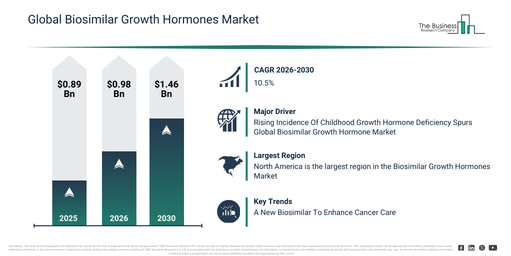
    The biosimilar growth hormones market size has seen significant expansion in recent years. It is projected to increase from $0.89 billion in 2025 to $0.98 billion in 2026, achieving a compound annual growth rate (CAGR) of 10.1%. The historic period’s growth can be attributed to factors such as the high cost of branded growth hormone therapies, the increasing prevalence of growth hormone deficiency, a rise in pediatric growth disorder diagnoses, limited access to affordable treatment options, and a dependence on hospital-based administration.

    The biosimilar growth hormones market is projected for significant expansion in the coming years. This market is anticipated to reach $1.46 billion by 2030, exhibiting a compound annual growth rate (CAGR) of 10.5%. This projected growth is driven by several factors including the expiration of patents for branded growth hormones, an increase in biosimilar approvals, the wider availability of self-administration therapies, heightened awareness of growth disorders, and increased healthcare spending in developing regions. Key trends anticipated during this period involve the greater acceptance of affordable biosimilar growth hormones, a surge in demand for both pediatric and adult growth hormone treatments, a rising inclination towards subcutaneous self-administration, the growth of online pharmacies and specialized clinics, and enhanced regulatory approval for biosimilars.

    Access Your Free Sample Report For In-Depth Market Analysis:

    https://www.thebusinessresearchcompany.com/sample.aspx?id=3391&type=smp

    What Key Factors Are Shaping The Biosimilar Growth Hormones Market Landscape?

    The expansion of the global biosimilar growth hormone market is significantly influenced by the increasing number of children affected by growth hormone deficiency. This condition arises from damage to either the pituitary gland or hypothalamus, which can be attributed to an abnormal formation present before birth (congenital) or something that developed during or after birth (acquired). For example, in September 2023, Hormones Australia, a source from the Endocrine Society of Australia (ESA) – which serves as an Australia-based national authority for the treatment of endocrine related conditions and disease – reported that growth hormone deficiency is estimated to affect 2 to 3 out of every 10,000 people. Hence, the rising prevalence of growth deficiencies in children acts as a key driver for the biosimilar growth hormones industry.

    How Is The Biosimilar Growth Hormones Market Segmented Across Different Segment Categories?

    The biosimilar growth hormones market covered in this report is segmented –

    1) By Route Of Administration: Subcutaneous, Intramuscular, Oral

    2) By Application: Growth Hormone Deficiency, Turner Syndrome, Idiopathic Short Stature, Prader Willi Syndrome, Other Applications

    3) By Distribution Channel: Hospital And Retail Pharmacy, Online Pharmacy/ePharmacy, Specialty Clinics

    Subsegments:

    1) By Subcutaneous: Self-administration, Professional Administration

    2) By Intramuscular: Pediatric Care, Adult Care

    3) By Oral: Tablets, Capsules

    What Trends Are Affecting The Direction Of The Biosimilar Growth Hormones Market?

    Major companies operating in the biosimilar growth hormones market are creating innovative solutions, including human growth hormone, to improve the effectiveness and affordability of treatments for growth hormone deficiencies. Growth hormone solutions refer to medical interventions or supplements designed to stimulate or replace human growth hormone (HGH) in the body, addressing growth deficiencies or anti-aging objectives. For instance, in June 2023, Pfizer Inc., a US-based pharmaceutical company, and OPKO Health Inc., a US-based healthcare company, secured US Food and Drug Administration (FDA) approval for NGENLA (somatrogon-ghla). This product is a once-weekly injectable human growth hormone treatment developed for pediatric patients experiencing growth hormone deficiency (GHD). This extended-release growth hormone therapy provides an alternative to daily injections, which can enhance patient adherence and convenience for both patients and their caregivers. The approval was granted based on clinical studies that established its efficacy and safety, marking a significant advancement in growth hormone therapies.

    Which Organizations Play A Role In The Biosimilar Growth Hormones Market Landscape?

    Major companies operating in the biosimilar growth hormones market are Amega Biotech, Biosidus S.A., Eli Lilly and Company, Ferring Pharmaceuticals, Genetech Inc., Merck & Co. Inc., Novartis AG, Novo Nordisk A/S, Sanofi S.A., USV Private Limited, Zhongshan Hygene Biopharm Co. Ltd., Biopartners And LG Chem, Boehringer Ingelheim International GmbH, Celltrion Inc., Dr. Reddy’s Laboratories Ltd., Gedeon Richter Plc., Genor Biopharma Co. Ltd., Hetero Drugs Limited, Intas Pharmaceuticals Ltd., LG Chem Ltd., Lupin Limited, Mabion S.A., Mundipharma International Limited, Panacea Biotec Limited, Pfenex Inc., PlantForm Corporation

    Get The Full Biosimilar Growth Hormones Market Report:

    https://www.thebusinessresearchcompany.com/report/biosimilar-growth-hormone-global-market-report

    Which Region Represents The Largest Share Of The Biosimilar Growth Hormones Market?

    North America was the largest region in the biosimilar growth hormone market in 2025. The Middle East is expected to be the fastest-growing region in the biosimilar growth hormones market report during the forecast period. The regions covered in the biosimilar growth hormones market report are Asia-Pacific, South East Asia, Western Europe, Eastern Europe, North America, South America, Middle East, Africa.

    Request A Customized Biosimilar Growth Hormones Market Report For Competitive Insights:

    https://www.thebusinessresearchcompany.com/report/biosimilar-growth-hormone-global-market-report

    Browse Through More Reports Similar to the Global Biosimilar Growth Hormones Market 2026, By The Business Research Company

    Hormonal Contraceptives Market Report 2026

    https://www.thebusinessresearchcompany.com/report/hormonal-contraceptives-global-market-report

    Parathyroid Hormones Market Report 2026

    https://www.thebusinessresearchcompany.com/report/parathyroid-hormones-global-market-report

    Biosimilar Hormone Market Report 2026

    https://www.thebusinessresearchcompany.com/report/biosimilar-hormone-global-market-report

    Get in touch with us:

    The Business Research Company: https://www.thebusinessresearchcompany.com/

    Americas +1 310-496-7795

    Asia +44 7882 955267 & +91 8897263534

    Europe +44 7882 955267

    Email us at: marketing@tbrc.info

    Follow us on:

    LinkedIn: https://in.linkedin.com/company/the-business-research-company

    YouTube: https://www.youtube.com/channel/UC24_fI0rV8cR5DxlCpgmyFQ

    Global Market Model: https://www.thebusinessresearchcompany.com/global-market-model
  • Biosimilar Contract Manufacturing Market Forecast 2026–2030 Presenting Long-Term Industry Insights

    Biosimilar Contract Manufacturing Market Forecast 2026–2030 Presenting Long-Term Industry Insights

    The Business Research Company’s 2026 market reports feature enhanced tools like market attractiveness analysis, TAM assessment, and company scoring matrices, along with interactive dashboards, deeper supply chain insights, and startup coverage strengthening the depth, usability, and strategic value of insights.

    By 2030, What Market Size Is The Biosimilar Contract Manufacturing Market Expected To Reach Based On Its 2026 Value?

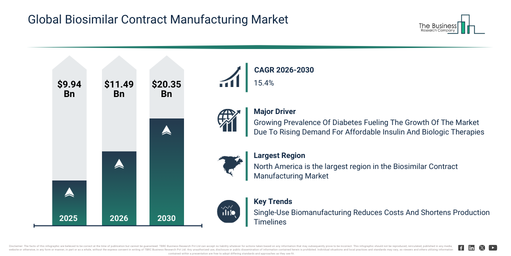
    The biosimilar contract manufacturing market has seen significant expansion in recent years. This market is set to expand from $9.94 billion in 2025 to $11.49 billion in 2026, exhibiting a compound annual growth rate (CAGR) of 15.7%. The historical progression of this market can be linked to several factors, including the expiry of reference biologic patents, the early adoption of biosimilar development initiatives, an increase in contract manufacturing alliances, evolving regulatory directives for biosimilars, and a rising incidence of chronic diseases.

    The biosimilar contract manufacturing market is projected to experience substantial expansion over the next few years. It is forecast to reach $20.35 billion by 2030, demonstrating a compound annual growth rate (CAGR) of 15.4%. This growth throughout the forecast period stems from factors such as a rise in biosimilar approvals across international markets, mounting pressure to decrease the costs of biologic treatments, the expansion of biosimilar development pipelines, increasing investments in large-scale production facilities, and advances in process optimization technologies. Significant trends for the forecast period include an increase in the outsourcing of biosimilar manufacturing, a heightened demand for cost-effective production platforms, an expanding focus on analytical and quality control provisions, the broader adoption of mammalian cell-based manufacturing, and a strengthened commitment to regulatory compliance.

    Access Your Free Sample Report For In-Depth Market Analysis:

    https://www.thebusinessresearchcompany.com/sample.aspx?id=30215&type=smp

    Which Factors Are Influencing The Growth Of The Biosimilar Contract Manufacturing Market?

    The increasing incidence of diabetes is projected to boost the expansion of the biosimilar contract manufacturing market in the future. Diabetes prevalence describes the percentage of individuals within a population who have diabetes at a particular moment, indicating a continuous requirement for treatment and lifelong therapeutic needs. This rise in diabetes cases stems from more sedentary lifestyles and unhealthy eating habits, which contribute to obesity, insulin resistance, and a greater occurrence of type 2 diabetes. Biosimilar contract manufacturing aids in managing diabetes by facilitating the economical, large-scale creation of biosimilar insulin and associated biologics. This process guarantees consistent quality and adherence to regulations, thereby making sophisticated treatments more accessible to patients. Consequently, it improves the cost-effectiveness of treatments and broadens worldwide access to vital diabetes care. For example, in June 2024, data from the National Health Service, a UK-based government department, showed that 3,615,330 individuals registered with a general practitioner (GP) were diagnosed with non-diabetic hyperglycemia or pre-diabetes in 2023, representing an 18% rise from 3,065,825 cases in 2022. Thus, the rising occurrence of diabetes is propelling the growth of the biosimilar contract manufacturing market.

    What Are The Main Segments Within The Biosimilar Contract Manufacturing Market Segment Structure?

    The biosimilar contract manufacturing market covered in this report is segmented –

    1) By Product Type: Monoclonal Antibodies, Insulin, Erythropoietin, Granulocyte Colony-Stimulating Factor, Other Product Types

    2) By Service Type: Process Development, Analytical And Quality Control, Fill And Finish Operations, Packaging, Other Service Types

    3) By Source: Mammalian, Non-mammalian

    4) By Application: Oncology, Autoimmune Diseases, Blood Disorders, Growth Hormone Deficiency, Other Applications

    5) By End-Use: Pharmaceutical Companies, Biotech Companies

    Subsegments:

    1) By Monoclonal Antibodies: Chimeric Monoclonal Antibodies, Humanized Monoclonal Antibodies, Fully Human Monoclonal Antibodies, Bispecific Monoclonal Antibodies

    2) By Insulin: Rapid Acting Insulin, Short Acting Insulin, Intermediate Acting Insulin, Long Acting Insulin, Premixed Insulin

    3) By Erythropoietin: Alpha Erythropoietin, Beta Erythropoietin, Darbepoetin Alfa, Continuous Erythropoietin Receptor Activators

    4) By Granulocyte Colony-Stimulating Factor: Filgrastim, Pegfilgrastim, Lenograstim, Long Acting Granulocyte Colony-Stimulating Factor

    5) By Other Product Types: Interferons, Interleukins, Fusion Proteins, Enzyme Therapeutics, Hormonal Biologics

    What Trends Are Influencing The Evolution Of The Biosimilar Contract Manufacturing Market?

    Major companies within the biosimilar contract manufacturing market are prioritizing the development of production facilities, such as mirrored single-use plants, to expedite technology transfer, scale-up processes, and commercial reliability. Mirrored single-use plants are defined as facilities comprising identical production suites that operate with disposable bioprocess equipment and unified digital systems, allowing for rapid changeovers, consistent quality across various sites, and a diminished risk of contamination. For example, in September 2025, Rezon Bio, a Poland-based contract development and manufacturing organization (CDMO), launched two mirrored-capability single-use biomanufacturing sites that cover the entire spectrum from cell line development to commercial GMP supply. This strategy facilitates quicker technology transfer and flexible scale-up for biosimilars with reduced downtime, simultaneously improving batch-to-batch consistency through standardized suites, integrated analytics, and logistics automation. Additionally, it lowers the total cost of ownership for sponsors by minimizing cleaning validation requirements, shortening development and manufacturing timelines, and de-risking expansion initiatives.

    Who Are The Companies Participating In The Biosimilar Contract Manufacturing Market?

    Major companies operating in the biosimilar contract manufacturing market are Thermo Fisher Scientific Inc., Biocon Limited, Lonza Group AG, Samsung Biologics Co. Ltd., WuXi Biologics (Cayman) Inc., Laboratorios Farmacéuticos Rovi S.A., Vetter Pharma-Fertigung GmbH & Co. KG, National Resilience Inc., Porton Pharma Solutions Co. Ltd., Syngene International Limited, Rentschler Biopharma SE, Boehringer Ingelheim International GmbH, Enzene Biosciences Ltd., Prestige Biologics Co. Ltd., Mabion S.A., HALIX B.V., BioConnection B.V., BioCina Pty Ltd, Mycenax Biotech Inc., Polpharma Biologics S.A.

    Get The Full Biosimilar Contract Manufacturing Market Report:

    https://www.thebusinessresearchcompany.com/report/global-biosimilar-contract-manufacturing-market-report

    Which Geographic Region Dominates The Biosimilar Contract Manufacturing Market?

    North America was the largest region in the biosimilar contract manufacturing market in 2025. Asia-Pacific is expected to be the fastest-growing region in the forecast period. The regions covered in the biosimilar contract manufacturing market report are Asia-Pacific, South East Asia, Western Europe, Eastern Europe, North America, South America, Middle East, Africa.

    Request A Customized Biosimilar Contract Manufacturing Market Report For Competitive Insights:

    https://www.thebusinessresearchcompany.com/report/global-biosimilar-contract-manufacturing-market-report

    Browse Through More Reports Similar to the Global Biosimilar Contract Manufacturing Market 2026, By The Business Research Company

    Biopharmaceuticals Contract Manufacturing Market Report 2026

    https://www.thebusinessresearchcompany.com/report/biopharmaceuticals-contract-manufacturing-global-market-report

    Medical Device Contract Manufacturing Market Report 2026

    https://www.thebusinessresearchcompany.com/report/medical-device-contract-manufacturing-global-market-report

    Food Contract Manufacturing Market Report 2026

    https://www.thebusinessresearchcompany.com/report/food-contract-manufacturing-global-market-report

    Get in touch with us:

    The Business Research Company: https://www.thebusinessresearchcompany.com/

    Americas +1 310-496-7795

    Asia +44 7882 955267 & +91 8897263534

    Europe +44 7882 955267

    Email us at: marketing@tbrc.info

    Follow us on:

    LinkedIn: https://in.linkedin.com/company/the-business-research-company

    YouTube: https://www.youtube.com/channel/UC24_fI0rV8cR5DxlCpgmyFQ

    Global Market Model: https://www.thebusinessresearchcompany.com/global-market-model
  • Bioprocess Analyzers Market Growth Analysis 2026–2030 Highlighting Innovation And Competitive Landscape

    Bioprocess Analyzers Market Growth Analysis 2026–2030 Highlighting Innovation And Competitive Landscape

    The Business Research Company’s 2026 market reports feature enhanced tools like market attractiveness analysis, TAM assessment, and company scoring matrices, along with interactive dashboards, deeper supply chain insights, and startup coverage strengthening the depth, usability, and strategic value of insights.

    What Is The Anticipated Rise In Market Value Of The Bioprocess Analyzers Market During The Forecast Period?

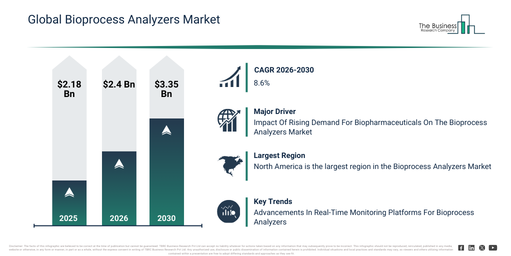
    The market size for bioprocess analyzers has experienced rapid expansion in recent years. This market is projected to grow from $2.18 billion in 2025 to $2.4 billion in 2026, reflecting a compound annual growth rate (CAGR) of 10.1%. Historically, this growth has been attributed to factors such as growing biopharmaceutical production, rising adoption of automation in labs, increasing demand for biologics, regulatory compliance requirements, and advancement in sensor technologies.

    The bioprocess analyzers market size is anticipated to experience substantial expansion over the upcoming years. This market is projected to reach $3.35 billion by 2030, exhibiting a compound annual growth rate (CAGR) of 8.6%. The drivers behind this projected growth include the wider adoption of personalized medicine, the incorporation of AI into bioprocessing, the increasing need for continuous manufacturing, the expansion of contract manufacturing organizations (CMOs), and the creation of miniaturized analytical systems. Significant trends anticipated during this period encompass real-time bioprocess monitoring, the integration of Process Analytical Technology (PAT), advancements in high-throughput screening and automation, the evolution of sophisticated sensors, and the application of Quality-by-Design (QbD) principles.

    Access Your Free Sample Report For In-Depth Market Analysis:

    https://www.thebusinessresearchcompany.com/sample.aspx?id=14865&type=smp

    What Leading Drivers Are Supporting The Bioprocess Analyzers Market Expansion?

    The growing need for biopharmaceuticals is expected to advance the bioprocess analyzer market moving forward. Biopharmaceuticals are pharmaceutical products originating from biological sources, such as living organisms or their components. The biopharmaceutical industry is expanding due to creative research and development efforts that lead to the creation of novel biologics and biosimilars. Bioprocess analyzers are employed to oversee various parameters during the creation of biopharmaceuticals, including cell growth, protein expression, and product purity. For instance, in January 2024, IQVIA, a US-based provider of biopharmaceutical development services, indicated that global biotech spending is projected to exceed $892 billion by 2028. Therefore, the increased demand for biopharmaceuticals will propel the growth of the bioprocess analyzer market.

    How Is Segmentation Applied In The Bioprocess Analyzers Market Segment Analysis?

    The bioprocess analyzers market covered in this report is segmented –

    1) By Product: Instruments, Consumables

    2) By Application: Antibiotics, Recombinant Proteins, Biosimilars, Other Applications

    3) By End-User: Biopharmaceutical Companies, Contract Manufacturing Organizations, Contract Research Organizations, Other End Users

    Subsegments:

    1) By Instruments: Spectrometers, Chromatographs, pH Or DO Analyzers, Gas Analyzers, Offline Analyzers

    2) By Consumables: Reagents, Sensors, Calibration Kits

    Which Trends Are Impacting The Progress Of The Bioprocess Analyzers Market?

    Leading companies in the bioprocess analyzer market are focusing on developing advanced solutions, such as optical in-line analyzers, to gain a competitive advantage. Optical in-line analyzers are instruments that utilize optical technology to provide real-time monitoring and analysis of critical parameters in bioprocessing applications. For instance, in September 2023, 908 Devices Inc., a US-based chemical and biochemical analysis company, launched MAVERICK, an advanced optical in-line analyzer that provides real-time monitoring and control of essential factors such as glucose, lactate, and total biomass in mammalian cell cultures. Biopharmaceutical experts can leverage the device’s comprehensive process fingerprint data to fine-tune large-scale bioprocesses. Its user-friendly design simplifies tasks for scientists and engineers, accelerating the development of cell culture media and the creation of effective feeding and control plans. It employs Raman spectroscopy to measure various important process parameters in real time, including glucose, lactate, and biomass, in bioreactors. MAVERICK is designed to improve process comprehension, optimize performance, and ensure batch-to-batch reproducibility in cell culture automation for biologic production with the CHO (Chinese hamster ovary) or HEK293 (human embryonic kidney 293) mammalian cell lines and multiple medium types.

    Who Are The Companies Participating In The Bioprocess Analyzers Market Environment?

    Major companies operating in the bioprocess analyzers market are Danaher Corporation, Merck KGaA, Thermo Fisher Scientific, MilliporeSigma, Sartorius AG, Beckman Coulter Inc., Waters Corporation, Bio-Rad Laboratories, Bruker Corporation, Agilent Technologies, GE Healthcare, Pall Corporation, HORIBA Ltd., Nova Biomedical, Hamilton Company, BioTek Instruments, PerkinElmer Inc, Analytik Jena AG, Eppendorf AG, Metrohm AG, Zymo Research Corporation, Macherey-Nagel GmbH & Co. KG

    Get The Full Bioprocess Analyzers Market Report:

    https://www.thebusinessresearchcompany.com/report/bioprocess-analyzers-global-market-report

    Which Region Is The Leading Market For The Bioprocess Analyzers Market?

    North America was the largest region in the bioprocess analyzers market in 2025. Asia-Pacific is expected to be the fastest-growing region in the forecast period. The regions covered in the bioprocess analyzers market report are Asia-Pacific, South East Asia, Western Europe, Eastern Europe, North America, South America, Middle East, Africa.

    Request A Customized Bioprocess Analyzers Market Report For Competitive Insights:

    https://www.thebusinessresearchcompany.com/report/bioprocess-analyzers-global-market-report

    Browse Through More Reports Similar to the Global Bioprocess Analyzers Market 2026, By The Business Research Company

    Bioprocess Analyzers Market Report 2026

    https://www.thebusinessresearchcompany.com/report/bioprocess-analyzers-global-market-report

    Process Analyzer Market Report 2026

    https://www.thebusinessresearchcompany.com/report/process-analyzer-global-market-report

    Biochemistry Analyzer Market Report 2026

    https://www.thebusinessresearchcompany.com/report/biochemistry-analyzer-global-market-report

    Get in touch with us:

    The Business Research Company: https://www.thebusinessresearchcompany.com/

    Americas +1 310-496-7795

    Asia +44 7882 955267 & +91 8897263534

    Europe +44 7882 955267

    Email us at: marketing@tbrc.info

    Follow us on:

    LinkedIn: https://in.linkedin.com/company/the-business-research-company

    YouTube: https://www.youtube.com/channel/UC24_fI0rV8cR5DxlCpgmyFQ

    Global Market Model: https://www.thebusinessresearchcompany.com/global-market-model

  • Biopharmaceutical Lab Equipment Market Forecast Through 2030 With Insights On Market Patterns And Developments

    Biopharmaceutical Lab Equipment Market Forecast Through 2030 With Insights On Market Patterns And Developments

    The Business Research Company’s 2026 market reports feature enhanced tools like market attractiveness analysis, TAM assessment, and company scoring matrices, along with interactive dashboards, deeper supply chain insights, and startup coverage strengthening the depth, usability, and strategic value of insights.

    How Is The Market Size Of The Biopharmaceutical Lab Equipment Market Expected To Scale Between 2026 And 2030?

    The biopharmaceutical lab equipment market has demonstrated significant expansion in recent years. This market is set to expand from $17.77 billion in 2025 to $19.18 billion by 2026, achieving a compound annual growth rate (CAGR) of 7.9%. Key drivers for its historical growth include the broadening of biopharmaceutical research pipelines, the greater uptake of laboratory automation, increasing investments in life sciences infrastructure, the reliance on chromatography and pcr technologies, and the standardization of quality control processes.

    The biopharmaceutical lab equipment market is anticipated to show robust growth in the upcoming years. This market is projected to expand to $25.72 billion by 2030, achieving a compound annual growth rate (CAGR) of 7.6%. The expansion during the forecast period is attributable to the increasing development of biologics and cell therapies, a growing need for continuous processing technologies, the enlargement of large-scale biopharma laboratories, enhanced integration of AI-driven analytics, and an escalating focus on operational efficiency within laboratories. Significant trends for the forecast period include a wider adoption of single-use lab equipment, an increase in the deployment of automated analytical instruments, a rising demand for high-throughput testing systems, the expansion of advanced cell culture platforms, and an elevated emphasis on data integrity and reproducibility.

    Access Your Free Sample Report For In-Depth Market Analysis:

    https://www.thebusinessresearchcompany.com/sample.aspx?id=28967&type=smp

    Which Key Factors Are Driving The Biopharmaceutical Lab Equipment Market Growth?

    The rising emphasis on personalized medicine is poised to stimulate the expansion of the biopharmaceutical lab equipment market in the future. Personalized medicine involves a patient care method that customizes treatment and prevention approaches according to individual variances in patients’ genes, surroundings, and lifestyles. The wider implementation of personalized medicine is fueled by breakthroughs in genomic sequencing technologies and data analytics, empowering healthcare providers to develop more accurate diagnostic instruments and targeted therapies for individual patients. This evolution towards precision-oriented healthcare necessitates advanced laboratory equipment capable of analyzing genetic data, formulating targeted treatments, and backing clinical research for individualized therapies. For instance, in February 2024, the Personalized Medicine Coalition, a US-based hospital and health care organization, stated that in 2023, the FDA sanctioned 16 new personalized treatments for rare disease patients, an increase from six in 2022. Consequently, the heightened focus on personalized medicine is propelling the growth of the biopharmaceutical lab equipment market.

    What Segment Categories Shape The Biopharmaceutical Lab Equipment Market Segment Landscape?

    The biopharmaceutical lab equipment market covered in this report is segmented –

    1) By Product Type: Chromatography Systems, Mass Spectrometers, Polymerase Chain Reaction (PCR) Equipment, Cell Culture Systems, Microscopes, Other Product Types

    2) By Technology: Single-Use Technology, Continuous Processing Technology, Cell Culture Technology, Filtration Technology, High-Throughput Screening Technology

    3) By Size Of Lab: Small Scale Labs, Medium Scale Labs, Large Scale Labs

    4) By Application: Drug Discovery, Clinical Diagnostics, Research And Development, Quality Control, Other Applications

    5) By End-User: Pharmaceutical Companies, Biotechnology Companies, Academic And Research Institutes, Other End-Users

    Subsegments:

    1) By Chromatography Systems: High-Performance Liquid Chromatography (HPLC), Gas Chromatography (GC), Ion Exchange Chromatography, Affinity Chromatography, Size Exclusion Chromatography (SEC), Thin Layer Chromatography (TLC)

    2) By Mass Spectrometers: Time-Of-Flight Mass Spectrometer (TOF-MS), Quadrupole Mass Spectrometer, Ion Trap Mass Spectrometer, Fourier Transform Ion Cyclotron Resonance (FT-ICR) Mass Spectrometer, Orbitrap Mass Spectrometer

    3) By Polymerase Chain Reaction (PCR) Equipment: Real-Time Polymerase Chain Reaction (qPCR) Machines, Digital Polymerase Chain Reaction (dPCR) Systems, Conventional Thermocyclers, Polymerase Chain Reaction (PCR) Workstations

    4) By Cell Culture Systems: Bioreactors, Incubators, Laminar Flow Cabinets, Automated Cell Culture Systems, CO2 Incubators

    5) By Microscopes: Optical Microscopes, Electron Microscopes, Fluorescence Microscopes, Confocal Microscopes

    6) By Other Product Types: Spectrophotometers, Microplate Readers, Autoclaves, Centrifuges, Freeze Dryers

    What Trends Are Transforming The Biopharmaceutical Lab Equipment Market?

    Major companies in the biopharmaceutical lab equipment market are concentrating on creating advanced products, such as high-resolution mass analysis systems, to improve testing precision, simplify operations, and boost overall laboratory productivity. A high-resolution mass analysis system is a sophisticated device that precisely measures the mass-to-charge ratio of ions to identify and quantify intricate molecules with significant sensitivity and resolution for uses in proteomics, pharmaceuticals, and chemical analysis. For instance, in June 2025, Thermo Fisher Scientific, a US-based life sciences company, introduced its latest mass spectrometry instruments, which incorporate Thermo Scientific OptiSpray technology. These instruments offer outstanding speed and sensitivity for detecting proteins, metabolites, and other biomolecules, thereby aiding advanced precision medicine research. Their primary features include high-resolution mass analysis, optimized workflows for multiomics studies, user-friendly software for data processing, strong automation for sample handling, and adaptable integration with environmental and food safety research applications. This enables researchers to produce reliable, high-quality data and accelerate discoveries in complex disease studies.

    Who Are The Companies Operating Across The Biopharmaceutical Lab Equipment Market Value Chain?

    Major companies operating in the biopharmaceutical lab equipment market are Thermo Fisher Scientific Inc., Danaher Corporation, Merck KGaA, GE HealthCare Technologies Inc., Agilent Technologies Inc., Hitachi High-Tech Corporation, Illumina Inc., Mettler-Toledo International Inc., Shimadzu Corporation, Bruker Corporation, Waters Corporation, Horiba Ltd., Eppendorf SE, Tecan Group Ltd., Hamilton Company, Oxford Instruments plc, Telstar SA, Advanced Instruments LLC, PBS Biotech Inc., Logos Biosystems Inc., Napro Scientific Inc., Accumax Lab Devices Pvt. Ltd.

    Get The Full Biopharmaceutical Lab Equipment Market Report:

    https://www.thebusinessresearchcompany.com/report/biopharmaceutical-lab-equipment-global-market-report

    Where Is The Biopharmaceutical Lab Equipment Market Primarily Concentrated By Region?

    North America was the largest region in the biopharmaceutical lab equipment market in 2025. Asia-Pacific is expected to be the fastest-growing region in the forecast period. The regions covered in the biopharmaceutical lab equipment market report are Asia-Pacific, South East Asia, Western Europe, Eastern Europe, North America, South America, Middle East, Africa.

    Request A Customized Biopharmaceutical Lab Equipment Market Report For Competitive Insights:

    https://www.thebusinessresearchcompany.com/report/biopharmaceutical-lab-equipment-global-market-report

    Browse Through More Reports Similar to the Global Biopharmaceutical Lab Equipment Market 2026, By The Business Research Company

    Laboratory Accessories Market Report 2026

    https://www.thebusinessresearchcompany.com/report/laboratory-accessories-global-market-report

    Lab Supplies Market Report 2026

    https://www.thebusinessresearchcompany.com/report/lab-supplies-global-market-report

    Microbiology Diagnostic Devices And Equipment Market Report 2026

    https://www.thebusinessresearchcompany.com/report/microbiology-diagnostic-devices-and-equipment-global-market-report

    Get in touch with us:

    The Business Research Company: https://www.thebusinessresearchcompany.com/

    Americas +1 310-496-7795

    Asia +44 7882 955267 & +91 8897263534

    Europe +44 7882 955267

    Email us at: marketing@tbrc.info

    Follow us on:

    LinkedIn: https://in.linkedin.com/company/the-business-research-company

    YouTube: https://www.youtube.com/channel/UC24_fI0rV8cR5DxlCpgmyFQ

    Global Market Model: https://www.thebusinessresearchcompany.com/global-market-model

  • Biopharmaceutical Fermentation Systems Market Outlook For 2026–2030 Covering Growth Drivers And Industry Trends

    Biopharmaceutical Fermentation Systems Market Outlook For 2026–2030 Covering Growth Drivers And Industry Trends

    The Business Research Company’s 2026 market reports feature enhanced tools like market attractiveness analysis, TAM assessment, and company scoring matrices, along with interactive dashboards, deeper supply chain insights, and startup coverage strengthening the depth, usability, and strategic value of insights.

    What Level Of Market Value Growth Is Predicted For The Biopharmaceutical Fermentation Systems Market From 2026 To 2030?

    The biopharmaceutical fermentation systems market has demonstrated robust growth in recent years. It is forecast to expand from $26.6 billion in 2025 to $28.97 billion in 2026, achieving a compound annual growth rate (CAGR) of 8.9%. Historically, this growth has been fueled by factors such as the early adoption of bioreactors, increasing demand for monoclonal antibodies, the expansion of biopharmaceutical research and development, the proliferation of CMO & CRO services, and technological improvements in fermentation equipment.

    The biopharmaceutical fermentation systems market is projected to experience substantial expansion in the coming years. Its size is anticipated to reach $41.42 billion by 2030, exhibiting a compound annual growth rate (CAGR) of 9.4%. The drivers for this growth during the forecast period include a rise in biologics production, the increasing need for personalized medicine, enhanced automation in fermentation processes, market expansion in developing regions, and supportive regulatory frameworks for biopharmaceutical manufacturing. Noteworthy trends identified for the forecast period encompass advanced bioreactor design & optimization, the adoption of single-use & disposable systems, high-throughput fermentation techniques, real-time process monitoring & analytics, and the integration of upstream and downstream processes.

    Access Your Free Sample Report For In-Depth Market Analysis:

    https://www.thebusinessresearchcompany.com/sample.aspx?id=15524&type=smp

    What Primary Drivers Are Shaping The Biopharmaceutical Fermentation Systems Market?

    The expanding pipeline of biologics is anticipated to drive the future expansion of the biopharmaceutical fermentation systems market. Biologics are defined as therapeutic products obtained from living systems or their constituent parts, such as vaccines, blood derivatives, gene therapies, tissues, and engineered therapeutic proteins. This increase in the biologics pipeline stems from progress in biotechnology, an enhanced comprehension of disease mechanisms, and a heightened need for precision and individualized treatments. The biopharmaceutical fermentation systems market facilitates biologics development by allowing for the large-scale culture of genetically modified cells or microbes to generate intricate therapeutic proteins, antibodies, and vaccines. As an illustration, data from the National Library of Medicine, a US-based medical library, indicates that in 2023, the U.S. Food and Drug Administration (FDA) sanctioned 55 new drugs, comprising 29 new chemical entities (NCEs) and 25 new biological entities (NBEs). This represents a notable rise when contrasted with the 37 approvals recorded in 2022. Consequently, the expansion of the biologics pipeline is a key factor propelling the growth of the biopharmaceutical fermentation systems market.

    Which Segment Types Are Examined In The Biopharmaceutical Fermentation Systems Market Segment Study?

    The biopharmaceutical fermentation systems market covered in this report is segmented –

    1) By Product: Upstream Products, Downstream Products

    2) By Application: Recombinant Proteins, Monoclonal Antibodies, Antibiotics, Probiotics, Other Applications

    3) By End-User: Biopharmaceutical Companies, Contract Manufacturing Organizations, Contract Research Organizations, Academic Research Institutes, Food Industry, Other End-Users

    Subsegments:

    1) By Upstream Products: Fermenters Or Bioreactors, Culture Media, Inoculum Preparation Systems, Gas And Liquid Flow Control Systems, Process Monitoring And Control Systems, Sterilization Systems

    2) By Downstream Products: Filtration Systems, Centrifuges, Chromatography Systems, Ultrafiltration And Microfiltration Systems, Concentration And Purification Systems, Packaging And Storage Systems

    What Trends Are Shaping The Future Of The Biopharmaceutical Fermentation Systems Market?

    Major companies in the biopharmaceutical fermentation systems market are concentrating on developing advanced solutions, such as intensified fixed-bed bioreactors, to boost productivity and optimize large-scale biologics manufacturing. Intensified fixed-bed bioreactors are sophisticated fermentation systems that utilize densely packed, immobilized cells to achieve higher product yields and more efficient bioprocessing. For instance, in October 2024, Univercells Technologies, a Belgium-based bioprocessing company, introduced the scale-X nexo bioreactor, a miniaturized fixed-bed system. This system boasts a compact 0.5 m² growth surface operating in just ~75 mL, facilitating low-volume screening; due to its design, it significantly reduces media and reagent consumption (up to ~60% lower cost per run) and seed-train efforts. It supports high cell densities, uses ready-to-use, single-use gamma-irradiated manifolds for easy setup, and integrates with the Skaia™ Vision software to estimate cell numbers without direct sampling, making it ideal for early-stage development in cell and gene therapy, vaccines, and exosome production.

    Which Players Are Part Of The Competitive Landscape Of The Biopharmaceutical Fermentation Systems Market?

    Major companies operating in the biopharmaceutical fermentation systems market are Thermo Fisher Scientific Inc., Danaher Corporation, Merck KGaA, Sartorius Stedim Biotech, GE Healthcare, Lonza Group AG, GEA Group AG, Bio-Rad Laboratories Inc., Pall Corporation, Eppendorf AG, Repligen Corporation, Agilent Technologies Inc., ABEC Inc., Pierre Guérin Technologies, Applikon Biotechnology, Infors HT, Cellexus Ltd., ZETA Holding GmbH, New Brunswick Scientific, Nova Biomedical

    Get The Full Biopharmaceutical Fermentation Systems Market Report:

    https://www.thebusinessresearchcompany.com/report/biopharmaceutical-fermentation-systems-global-market-report

    Which Region Has The Greatest Market Share In The Biopharmaceutical Fermentation Systems Market?

    North America was the largest region in the biopharmaceutical fermentation systems market in 2025. The regions covered in the biopharmaceutical fermentation systems market report are Asia-Pacific, South East Asia, Western Europe, Eastern Europe, North America, South America, Middle East, Africa.

    Request A Customized Biopharmaceutical Fermentation Systems Market Report For Competitive Insights:

    https://www.thebusinessresearchcompany.com/report/biopharmaceutical-fermentation-systems-global-market-report

    Browse Through More Reports Similar to the Global Biopharmaceutical Fermentation Systems Market 2026, By The Business Research Company

    Biopharmaceutical Fermentation Systems Market Report 2026

    https://www.thebusinessresearchcompany.com/report/biopharmaceutical-fermentation-systems-global-market-report

    Microbial Fermentation Technology Market Report 2026

    https://www.thebusinessresearchcompany.com/report/microbial-fermentation-technology-global-market-report

    Fermentation Chemicals Market Report 2026

    https://www.thebusinessresearchcompany.com/report/fermentation-chemicals-global-market-report

    Get in touch with us:

    The Business Research Company: https://www.thebusinessresearchcompany.com/

    Americas +1 310-496-7795

    Asia +44 7882 955267 & +91 8897263534

    Europe +44 7882 955267

    Email us at: marketing@tbrc.info

    Follow us on:

    LinkedIn: https://in.linkedin.com/company/the-business-research-company

    YouTube: https://www.youtube.com/channel/UC24_fI0rV8cR5DxlCpgmyFQ

    Global Market Model: https://www.thebusinessresearchcompany.com/global-market-model
  • Growing Prevalence Of Autoimmune Conditions To Drive Enbrel (Etanercept) Growth Is Supporting Expansion In The Biopharmaceutical Excipients Market

    Growing Prevalence Of Autoimmune Conditions To Drive Enbrel (Etanercept) Growth Is Supporting Expansion In The Biopharmaceutical Excipients Market

    The Business Research Company’s 2026 market reports feature enhanced tools like market attractiveness analysis, TAM assessment, and company scoring matrices, along with interactive dashboards, deeper supply chain insights, and startup coverage strengthening the depth, usability, and strategic value of insights.

    How Will The Market Value Of The Biopharmaceutical Excipients Market Progress Between 2026 And 2030?

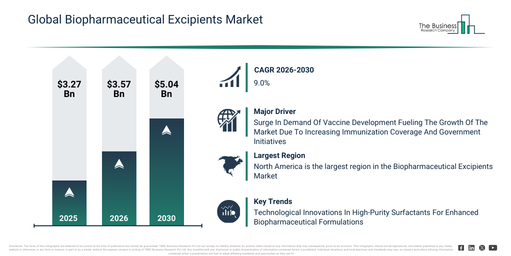
    The biopharmaceutical excipients market has demonstrated robust expansion over recent years. Its valuation is expected to rise from $3.27 billion in 2025 to $3.57 billion in 2026, achieving a compound annual growth rate (CAGR) of 9.2%. This historical growth can be attributed to several factors including a rise in biologic drug approvals, the early implementation of protein stabilizers, an increase in injectable formulations, the broader development of vaccines, and progress in formulation science.

    The biopharmaceutical excipients market is poised for robust expansion in the coming years. It is projected to achieve a value of $5.04 billion by 2030, demonstrating a compound annual growth rate (CAGR) of 9.0%. This anticipated growth can be attributed to several factors, including the increasing intricacy of biologic formulations, a surging demand for products with extended shelf lives, the ongoing expansion of cell and gene therapies, an intensifying regulatory focus on excipient safety, and increased investments in sophisticated drug delivery systems. Key trends anticipated within this period include a heightened demand for high-purity biologic excipients, a growing utilization of multifunctional formulation ingredients, the broadening application of excipients for cell and gene therapies, an increased emphasis on stability-enhancing compounds, and greater customization of excipient solutions.

    Access Your Free Sample Report For In-Depth Market Analysis:

    https://www.thebusinessresearchcompany.com/sample.aspx?id=30214&type=smp

    Which Major Drivers Are Influencing The Expansion Of The Biopharmaceutical Excipients Market?

    The expanding need for vaccine creation is projected to drive the future expansion of the biopharmaceutical excipients market. Vaccine creation involves the method of designing and preparing immunizations aimed at preventing infectious illnesses and enhancing public health, with a dependence on superior excipients to guarantee the stability, effectiveness, and safety of the final vaccine products. This rising requirement for vaccine development originates from a worldwide emphasis on preventing infectious diseases, enhancing readiness in public health, and speeding up research to provide more rapid and potent immunization solutions. Within vaccine formulations, biopharmaceutical excipients perform an essential function by stabilizing antigens, improving solubility, and preserving integrity during storage and distribution. For example, data from 2025, provided by the Centers for Disease Control and Prevention, a US-based national public health agency, indicates that adolescent vaccination rates for important vaccines such as tetanus, diphtheria, and acellular pertussis climbed from 89.9% in 2022 to 91.3% in 2024. Meningococcal conjugate vaccine coverage also saw an increase from 88.6% to 90.1%; and human papillomavirus vaccine coverage (=2 doses) expanded considerably from 76.0% to 92.6% during this identical timeframe. Consequently, the escalating demand for vaccine development is fueling the growth of the biopharmaceutical excipients market.

    How Are Different Segments Classified In The Biopharmaceutical Excipients Market Segment Analysis?

    The biopharmaceutical excipients market covered in this report is segmented –

    1) By Product Types: Binders, Coatings, Diluents, Disintegrants, Lubricants And Glidants, Polyols, Preservatives, Solubilizers And Surfactants Or Emulsifiers, Suspending And Viscosity Agents

    2) By Type Of Biologics: Antibodies, Vaccines, Cell Therapies, Other Biologics

    3) By Functionality: Fillers And Diluents, Binders, Suspending And Viscosity Agents, Flavouring Agents And Sweeteners, Coating Agents, Colourants, Disintegrants, Lubricants And Glidants, Preservatives

    4) By Application: Injectable Formulations, Oral Formulations, Topical Formulations, Transdermal Formulations, Cell and Gene Therapy

    5) By End Users: Biopharmaceutical Companies And Pharmaceutical Companies, Contract Manufacturers, Research Institutes

    Subsegments:

    1) By Binders: Starch Binders, Cellulose Binders, Synthetic Binders, Natural Polymer Binders

    2) By Coatings: Film Coatings, Sugar Coatings, Enteric Coatings, Polymer Coatings

    3) By Diluents: Lactose, Microcrystalline Cellulose, Starch, Mannitol

    4) By Disintegrants: Crosslinked Cellulose, Starch Derivatives, Crospovidone, Sodium Starch Glycolate

    5) By Lubricants And Glidants: Magnesium Stearate, Stearic Acid, Talc, Silicon Dioxide

    6) By Polyols: Sorbitol, Mannitol, Glycerol, Xylitol

    7) By Preservatives: Parabens, Benzoates, Sorbates, Phenols

    8) By Solubilizers And Surfactants Or Emulsifiers: Polysorbates, Polyethylene Glycol, Lecithin, Sodium Lauryl Sulfate

    9) By Suspending And Viscosity Agents: Cellulose Derivatives, Xanthan Gum, Guar Gum, Carbomers

    Which Trends Are Contributing To Changes In The Biopharmaceutical Excipients Market?

    Key players within the biopharmaceutical excipients sector are increasingly emphasizing technological advancements, including ultra-high purity surfactants, to enhance protein stability, mitigate degradation, and ensure adherence to regulatory standards for injectable products. These surfactants represent highly refined surface-active compounds, characterized by extremely low impurity levels and a uniform makeup, specifically developed to guarantee stability, safety, and optimal performance in delicate pharmaceutical and biopharmaceutical preparations. An example of this innovation is the launch of MaxiPure Polysorbate 80 by Evonik Industries AG, a German chemicals company, in September 2025, targeting injectable and biopharmaceutical applications. This particular excipient is formulated with an oleic acid concentration surpassing ninety-eight percent, boasts remarkable clarity, and fully conforms to the rigorous standards set by the European Pharmacopoeia, United States Pharmacopoeia, Japanese Pharmacopoeia, and Chinese Pharmacopoeia. Its capabilities include tackling crucial issues in protein stability, inhibiting oxidative breakdown, facilitating the consistent solubilization of hydrophobic active pharmaceutical ingredients, and bolstering overall formulation reliability. The incorporation of this excipient allows Evonik to support pharmaceutical and biopharmaceutical companies in the efficient development of intricate biologics and injectable therapies, simultaneously guaranteeing both safety and regulatory adherence.

    Who Are The Companies Driving Activity In The Biopharmaceutical Excipients Market?

    Major companies operating in the biopharmaceutical excipients market are The Archer-Daniels-Midland Company, BASF SE, The Dow Chemical Company, Mitsubishi Chemical Group Corporation, Novo Nordisk A/S, Associated British Foods plc, Merck KGaA, Asahi Kasei Corporation, Evonik Industries AG, Kerry Group plc, Wacker Chemie AG, Clariant AG, Shin-Etsu Chemical Co. Ltd., Roquette Frères, IMCD Group N.V., Croda International Plc, Ashland Global Holdings Inc., NOF Corporation, Colorcon Limited, J. Rettenmaier & Söhne GmbH + Co. KG, Spectrum Chemical Manufacturing Corporation, BioSpectra Inc., Sigachi Industries Limited, DFE Pharma, FUJIFILM Toyama Chemical Co. Ltd, Kirsch Pharma GmbH, Meggle Group GmbH, InVitria Inc., BOC Sciences Inc.

    Get The Full Biopharmaceutical Excipients Market Report:

    https://www.thebusinessresearchcompany.com/report/global-biopharmaceutical-excipients-market-report

    Which Region Accounts For The Largest Portion Of The Biopharmaceutical Excipients Market?

    North America was the largest region in the biopharmaceutical excipients market in 2025. Asia-Pacific is expected to be the fastest-growing region in the forecast period. The regions covered in the biopharmaceutical excipients market report are Asia-Pacific, South East Asia, Western Europe, Eastern Europe, North America, South America, Middle East, Africa.

    Request A Customized Biopharmaceutical Excipients Market Report For Competitive Insights:

    https://www.thebusinessresearchcompany.com/report/global-biopharmaceutical-excipients-market-report

    Browse Through More Reports Similar to the Global Biopharmaceutical Excipients Market 2026, By The Business Research Company

    Pharmaceutical Excipient Market Report 2026

    https://www.thebusinessresearchcompany.com/report/pharmaceutical-excipient-global-market-report

    Organic Pharmaceutical Excipients Market Report 2026

    https://www.thebusinessresearchcompany.com/report/organic-pharmaceutical-excipients-global-market-report

    Nutraceutical Excipients Market Report 2026

    https://www.thebusinessresearchcompany.com/report/nutraceutical-excipients-global-market-report

    Get in touch with us:

    The Business Research Company: https://www.thebusinessresearchcompany.com/

    Americas +1 310-496-7795

    Asia +44 7882 955267 & +91 8897263534

    Europe +44 7882 955267

    Email us at: marketing@tbrc.info

    Follow us on:

    LinkedIn: https://in.linkedin.com/company/the-business-research-company

    YouTube: https://www.youtube.com/channel/UC24_fI0rV8cR5DxlCpgmyFQ

    Global Market Model: https://www.thebusinessresearchcompany.com/global-market-model