Category: Pharmaceuticals

  • Inactivated Polio And Rabies Vaccines Market Forecast 2026–2035 Showcasing Industry Insights and Data Patterns

    Inactivated Polio And Rabies Vaccines Market Forecast 2026–2035 Showcasing Industry Insights and Data Patterns

    The Business Research Company’s 2026 market reports include new capabilities such as market attractiveness scoring and analysis, total addressable market analysis, company scoring matrix, interactive excel data dashboard, improved supply chain analysis, upcoming startups in the market, and overview of key products, aimed at improving the depth, usability, and strategic value of the insights delivered.

    What Market Size Increase Is Anticipated For The Inactivated Polio And Rabies Vaccines Market Over The 2026–2030 Period?

    The market size for inactivated polio and rabies vaccines has seen robust growth in recent years. This market is anticipated to expand from $2.27 billion in 2025 to $2.4 billion in 2026, showing a compound annual growth rate (CAGR) of 5.5%. The expansion witnessed in prior periods can be attributed to global initiatives for polio eradication, an increase in rabies occurrences from animal bites, the enlargement of national immunization schemes, greater public sector procurement of vaccines, and vaccination directives from WHO and UNICEF.

    The inactivated polio and rabies vaccines market is set for significant expansion in the coming years, with its size projected to reach $2.97 billion by 2030, exhibiting a compound annual growth rate (CAGR) of 5.5%. This growth throughout the forecast period stems from various factors, including an intensified focus on achieving zero rabies deaths, increasing pediatric immunization coverage in emerging economies, improved access to healthcare in rural areas, an expanding demand for adult post-exposure prophylaxis, and bolstered pandemic preparedness infrastructure. Furthermore, major developments expected during this period involve the expansion of combination ipv and rabies immunization programs, a shift towards intradermal rabies vaccination for optimizing doses, strengthening of cold chain and vaccine logistics infrastructure, an increase in government-led mass immunization campaigns, and a rising adoption of WHO-prequalified inactivated vaccines.

    Download the Free Sample Report to Explore Key Market Insights:

    https://www.thebusinessresearchcompany.com/sample.aspx?id=24252&type=smp

    Which Economic Or Industry Drivers Are Impacting The Inactivated Polio And Rabies Vaccines Market?

    The increasing need for effective vaccination programs is anticipated to drive the expansion of the inactivated polio and rabies vaccines market moving forward. A vaccination program involves a structured effort by a collective or governmental body to provide vaccines to individuals for disease prevention. The rise in these programs stems from heightened government initiatives to prevent outbreaks, minimize healthcare expenditures, and enhance public health. Vaccination programs elevate the demand for inactivated polio and rabies vaccines by improving awareness, securing funding, and expanding coverage in areas at high risk. Consistent vaccine uptake is sustained through widespread campaigns and routine immunizations led by governments and health organizations. For example, in April 2024, the Pan American Health Organization (PAHO), a US-based specialized agency, launched the 22nd Vaccination Week in the Americas (VWA) with the theme “Engage now to protect your future GetVax,” targeting the administration of over 65 million doses to increase vaccination coverage, especially in underserved regions. This initiative focused on countering misinformation and improving vaccine access through community engagement and customized campaigns. Therefore, the growing demand for effective vaccination programs is a significant factor propelling the growth of the inactivated polio and rabies vaccines market.

    How Is The Inactivated Polio And Rabies Vaccines Market Segmented Across Key Categories?

    The inactivated polio and rabies vaccines market covered in this report is segmented –

    1) By Product Type: Inactivated Polio Vaccine, Inactivated Rabies Vaccine

    2) By Method Of Inactivation: Solvent Detergent Method, Radiation Method, pH Concentration, Heat Inactivation, Other Method Of Inactivations

    3) By Distribution Channel: Government, Private

    4) By Application: Pediatrics, Adults

    Subsegments:

    1) By Inactivated Polio Vaccine: Injectable Inactivated Polio Vaccine, Oral Inactivated Polio Vaccine

    2) By Inactivated Rabies Vaccine: Injectable Inactivated Rabies Vaccine, Intradermal Inactivated Rabies Vaccine

    Which Upcoming Trends Are Expected To Influence The Inactivated Polio And Rabies Vaccines Market?

    Major companies in the inactivated polio and rabies vaccines market are concentrating on developing advanced products, including killed virus rabies vaccines, to enhance immunogenicity and address the growing global demand for effective disease prevention. Killed virus rabies vaccines are manufactured by rendering the rabies virus non-infectious through chemical or physical processes. These vaccines stimulate the immune system to produce protective antibodies without inducing the disease, thus ensuring their safety and effectiveness in both pre- and post-exposure prophylaxis. For example, in April 2024, Sanofi, a UK-based pharmaceutical company, launched Verorab, an inactivated rabies vaccine, in the UK for the pre-exposure and post-exposure prophylaxis of rabies across all age groups. The vaccine, licensed in the UK based on comprehensive clinical data from over 13,000 individuals, has already been extensively used in more than 80 countries. Verorab offers an effective immunization solution for travelers visiting high-risk countries and for treatment following rabies exposure, with clinical trials demonstrating strong immune responses and long-lasting protection.

    Who Are The Dominant Players Shaping The Inactivated Polio And Rabies Vaccines Market Landscape?

    Major companies operating in the inactivated polio and rabies vaccines market are Merck & Co Inc., Sanofi S.A., LG Chem Ltd., Boehringer Ingelheim International GmbH, Sinovac Biotech, Zoetis Inc., Cadila Pharmaceuticals, Zydus Lifesciences Limited, Biological E. Limited, Serum Institute of India (SII), Indian Immunologicals Limited (IIL), Instituto Butantan, Valneva SE, Bio Farma, Bharat Biotech, Bilthoven Biologicals, Panacea Biotec, Batavia Biosciences, Hilleman Laboratories, China National Pharmaceutical Group Co Ltd.

    Read the full inactivated polio and rabies vaccines market report here:

    https://www.thebusinessresearchcompany.com/report/inactivated-polio-and-rabies-vaccines-global-market-report

    What Are The Top-Performing Regions Within The Inactivated Polio And Rabies Vaccines Market?

    North America was the largest region in the inactivated polio and rabies vaccines market in 2025. The regions covered in the inactivated polio and rabies vaccines market report are Asia-Pacific, South East Asia, Western Europe, Eastern Europe, North America, South America, Middle East, Africa.

    Request A Tailored Inactivated Polio And Rabies Vaccines Market Research Report For Competitive Advantage:

    https://www.thebusinessresearchcompany.com/customise?id=24252&type=smp

    Browse Through More Reports Similar to the Global Inactivated Polio And Rabies Vaccines Market 2026, By The Business Research Company

    Preventive Vaccines Market Report 2026

    https://www.thebusinessresearchcompany.com/report/preventive-vaccines-global-market-report

    Preventive Vaccines Market Report 2026

    https://www.thebusinessresearchcompany.com/report/preventive-vaccines-global-market-report

    Inactivated Vaccines Market Report 2026

    https://www.thebusinessresearchcompany.com/report/inactivated-vaccines-global-market-report

    Get in touch with us:

    The Business Research Company: https://www.thebusinessresearchcompany.com/

    Americas +1 310-496-7795

    Asia +44 7882 955267 & +91 8897263534

    Europe +44 7882 955267

    Email us at info@tbrc.info

    Follow us on:

    LinkedIn: https://in.linkedin.com/company/the-business-research-company

    YouTube: https://www.youtube.com/channel/UC24_fI0rV8cR5DxlCpgmyFQ

    Global Market Model: https://www.thebusinessresearchcompany.com/global-market-model

  • In Vivo Toxicology Market Outlook 2026–2030 Highlighting Key Drivers and Emerging Trends

    In Vivo Toxicology Market Outlook 2026–2030 Highlighting Key Drivers and Emerging Trends

    The Business Research Company’s 2026 market reports include new capabilities such as market attractiveness scoring and analysis, total addressable market analysis, company scoring matrix, interactive excel data dashboard, improved supply chain analysis, upcoming startups in the market, and overview of key products, aimed at improving the depth, usability, and strategic value of the insights delivered.

    How Much Is The In Vivo Toxicology Market Expected To Grow In Terms Of Market Value Between 2026 And 2030?

    The in vivo toxicology market size has experienced robust expansion in recent years. This market is projected to expand from $5.61 billion in 2025 to reach $6 billion by 2026, exhibiting a compound annual growth rate (CAGR) of 7.0%. Factors contributing to its historical growth include the scarcity of standardized animal models, dependence on manual laboratory processes, heightened pharmaceutical research and development endeavors, the rising occurrence of chronic disease investigations, and the incorporation of fundamental imaging and analytical instruments.

    The in vivo toxicology market is anticipated to experience substantial expansion in the coming years. Its value is projected to reach $7.79 billion by 2030, demonstrating a compound annual growth rate (CAGR) of 6.7%. This projected growth during the forecast period stems from factors such as the creation of genetically modified organisms for specific research, the incorporation of automated and rapid screening technologies, an increase in CRO outsourcing for toxicology assessments, innovations in in vivo imaging and tracking methods, and a greater emphasis on alternative testing models coupled with a reduction in animal experimentation. Key developments anticipated in this period encompass a heightened utilization of rodent and non-human primate models, an escalating need for sophisticated toxicology assay kits and reagents, the broadening of immunotoxicity and genotoxicity evaluation services, a surge in the application of automated liquid handling and imaging solutions, and improved adherence to regulatory and ethical guidelines for animal testing.

    Download the Free Sample Report to Explore Key Market Insights:

    https://www.thebusinessresearchcompany.com/sample.aspx?id=25791&type=smp

    What Major Drivers Are Influencing Demand In The In Vivo Toxicology Market?

    The rising volume of drug discoveries is projected to fuel the expansion of the in vivo toxicology market moving ahead. Drug discovery entails the scientific identification and development of novel compounds intended as treatments or preventive measures for diverse illnesses. Advances in biotechnology have greatly accelerated this process by improving comprehension of disease mechanisms and facilitating the development of more precise treatments. Within drug discovery, in vivo toxicology plays a crucial role by allowing for the assessment of safety, tolerability, and any prospective negative impacts of experimental compounds within living organisms. This practice aids in pinpointing toxicities that limit dosage and guides the formulation and dosage approaches before clinical trials begin. As an illustration, in November 2024, data from the Patented Medicine Prices Review Board (PMPRB), a government agency based in Canada, revealed that more than 12,000 new medicines were undergoing clinical trials in 2023, an increase from approximately 9,000 in 2022. Of these, oncology comprised 33% of the development pipeline, while infectious and central nervous system diseases constituted 13% and 12%, respectively. Consequently, the expanding volume of drug discoveries is propelling the advancement of the in vivo toxicology market.

    What Major Segment Divisions Exist Within The In Vivo Toxicology Market?

    The in vivo toxicology market covered in this report is segmented –

    1) By Product: Consumables, Instruments

    2) By Testing Types: Chronic Toxicity Testing, Sub-Chronic Toxicity Testing, Sub-Acute Toxicity Testing, Acute Toxicity Testing

    3) By Methodology: In Vivo Animal Models, Genetically Modified Organisms, Non-Human Primate Studies, Rodent Models, Larger Mammals

    4) By Application: Immunotoxicity, Systemic Toxicity, Carcinogenicity, Genotoxicity, Developmental And Reproductive Toxicity (DART), Other Applications

    5) By End-User: Pharmaceutical Companies, Biosimilars Manufacturers, Contract Research Organizations (CROs), Academic And Research Institutions, Biotechnology Firms

    Subsegments:

    1) By Consumables: Animal Models, Reagents And Kits, Assay Kits, Toxicology Testing Media, Antibodies, Biochemicals, Buffers And Solutions, Disposable Labware, Animal Feed, Diluents

    2) By Instruments: Imaging Systems, Flow Cytometers, PCR Machines, Spectrophotometers, Microscopes, Analyzers, Centrifuges, Incubators, Animal Monitoring Systems, Automated Liquid Handling Systems

    How Are Trends Shaping The Direction Of The In Vivo Toxicology Market?

    Major companies in the in vivo toxicology market are increasingly focused on developing advanced solutions, such as secure cloud-based real-time data platforms, to optimize study management and accelerate decision-making. These secure cloud-based platforms offer researchers and clients remote and secure access to toxicology study data, milestones, planning tools, and documents, thereby improving collaboration and transparency. For example, in March 2023, Charles River Laboratories International Inc., a US-based contract research organization, launched Apollo, a secure cloud-based platform specifically designed to provide real-time access to toxicology study data. This platform supports in vivo general toxicology studies with integrated tools for data visualization, planning, and milestone tracking. It facilitates quicker and more informed decisions by offering instant access to essential study information. The platform also aids in streamlining project planning and budget estimation throughout the drug development process. By digitizing toxicology workflows, Apollo enhances precision, efficiency, and collaborative efforts in in vivo research.

    Which Companies Are Leading Innovation In The In Vivo Toxicology Market?

    Major companies operating in the in vivo toxicology market are Thermo Fisher Scientific Inc., Laboratory Corporation of America Holdings (Labcorp), Sigma-Aldrich Co. LLC, Eurofins Scientific SE, Agilent Technologies Inc., WuXi AppTec Co. Ltd., Charles River Laboratories International Inc., PerkinElmer Inc., Jubilant Life Sciences Limited, Evotec SE, The Jackson Laboratory, Inotiv Inc., Transcure Bioservices Pvt. Ltd.

    Read the full in vivo toxicology market report here:

    https://www.thebusinessresearchcompany.com/report/in-vivo-toxicology-global-market-report

    Which Region Shows The Strongest Potential For Future Growth In The In Vivo Toxicology Market?

    North America was the largest region in the in-vivo toxicology market in 2025. Asia-Pacific is expected to be the fastest-growing region in the forecast period. The regions covered in the in vivo toxicology market report are Asia-Pacific, South East Asia, Western Europe, Eastern Europe, North America, South America, Middle East, Africa.

    Request A Tailored In Vivo Toxicology Market Research Report For Competitive Advantage:

    https://www.thebusinessresearchcompany.com/customise?id=25791&type=smp

    Browse Through More Reports Similar to the Global In Vivo Toxicology Market 2026, By The Business Research Company

    In Vitro Toxicology Testing Market Report 2026

    https://www.thebusinessresearchcompany.com/report/in-vitro-toxicology-testing-global-market-report

    Adme Toxicology Testing Market Report 2026

    https://www.thebusinessresearchcompany.com/report/adme-toxicology-testing-global-market-report

    Genetic Toxicology Testing Market Report 2026

    https://www.thebusinessresearchcompany.com/report/genetic-toxicology-testing-global-market-report

    Get in touch with us:

    The Business Research Company: https://www.thebusinessresearchcompany.com/

    Americas +1 310-496-7795

    Asia +44 7882 955267 & +91 8897263534

    Europe +44 7882 955267

    Email us at info@tbrc.info

    Follow us on:

    LinkedIn: https://in.linkedin.com/company/the-business-research-company

    YouTube: https://www.youtube.com/channel/UC24_fI0rV8cR5DxlCpgmyFQ

    Global Market Model: https://www.thebusinessresearchcompany.com/global-market-model

  • One of the Primary Drivers of the In Vitro Diagnostics Enzymes Market Is the Key Factors Supporting Market Expansion

    One of the Primary Drivers of the In Vitro Diagnostics Enzymes Market Is the Key Factors Supporting Market Expansion

    The Business Research Company’s 2026 market reports include new capabilities such as market attractiveness scoring and analysis, total addressable market analysis, company scoring matrix, interactive excel data dashboard, improved supply chain analysis, upcoming startups in the market, and overview of key products, aimed at improving the depth, usability, and strategic value of the insights delivered.

    What Market Value Is Expected For The In Vitro Diagnostics Enzymes Market At The End Of The 2026–2030 Forecast Period?

    The in vitro diagnostics enzymes market size has experienced robust growth in recent years. It is anticipated to expand from $2.3 billion in 2025 to $2.48 billion in 2026, demonstrating a compound annual growth rate (CAGR) of 7.8%. Historically, this market expansion can be ascribed to factors such as the enduring utilization of enzymes in clinical chemistry assays, the broadening of laboratory-based diagnostic testing, the widespread adoption of PCR and molecular diagnostics, the development of hospital and diagnostic laboratory infrastructure, and increased screening for infectious and chronic diseases.

    The in vitro diagnostics enzymes market is projected to experience robust expansion in the coming years. Its valuation is anticipated to reach $3.25 billion by 2030, demonstrating a compound annual growth rate (CAGR) of 7.0%. This expansion during the projected timeframe stems from factors such as an escalating incidence of infectious and chronic ailments, a growing need for swift and precise diagnostic tools, the broadening scope of decentralized and point-of-care testing, advancements in personalized and precision diagnostics, and increased funding for sophisticated molecular diagnostic technologies. Key developments shaping the market during this period encompass an elevated requirement for highly specific enzymes within molecular diagnostics, expanding applications of enzymes in test panels for infectious diseases, wider integration of enzyme-dependent point-of-care diagnostic solutions, the proliferation of multiplex diagnostic assays utilizing enzyme systems, and an enhanced emphasis on optimizing enzyme stability and shelf life.

    Download the Free Sample Report to Explore Key Market Insights:

    https://www.thebusinessresearchcompany.com/sample.aspx?id=15830&type=smp

    Which Market Drivers Are Supporting The Expansion Of The In Vitro Diagnostics Enzymes Market?

    The increasing occurrence of cancer is projected to drive the expansion of the in vitro diagnostics enzymes market in the future. Cancer describes a collection of diseases defined by the unchecked development and dispersion of abnormal cells, which can invade and harm healthy tissues. The growing incidence of cancer is attributed to infectious agents, immune system dysfunctions, and hormonal influences. The in vitro diagnostics enzymes market assists cancer care by facilitating accurate diagnostic tests for prompt detection, monitoring disease progression, selecting appropriate treatments, and devising personalized therapeutic methods. For instance, in February 2024, the World Health Organization (WHO), a Switzerland-based intergovernmental organization, projected that worldwide cancer cases would surpass 0.035 billion by 2050, marking a 77% increase from the estimated 0.02 billion cases in 2022. Thus, the escalating prevalence of cancer is fueling the growth of the in vitro diagnostics enzymes market.

    What Segment Types Make Up The In Vitro Diagnostics Enzymes Market?

    The in vitro diagnostics enzymes market covered in this report is segmented –

    1) By Enzyme Type: Proteases, Polymerase And Transcriptase, Ribonuclease, Other Enzyme Types

    2) By Disease Type: Infectious Disease, Diabetes, Oncology, Cardiology, Nephrology, Autoimmune Diseases, Other Disease Types

    3) By Technology: Histology Assays, Molecular Diagnostics, Clinical Chemistry, Other Technologies

    4) By End Use: Pharma And Biotech, Hospital And Diagnostic Labs, Contract Research Organizations (CROs), Academic Labs

    Subsegments:

    1) By Proteases: Trypsin, Pepsin, Proteinase K

    2) By Polymerase And Transcriptase: DNA Polymerase, RNA Polymerase, Reverse Transcriptase

    3) By Ribonuclease: RNase A, RNase H

    4) By Other Enzyme Types: Dehydrogenases, Lipases, Ligases

    Which Market Trends Are Creating New Opportunities In The In Vitro Diagnostics Enzymes Market?

    Leading companies within the in vitro diagnostic enzymes market are prioritizing the creation of novel products, including autoimmune disorder detection kits, aiming to broaden diagnostic capacities, enhance early disease recognition, and solidify their market standing. These autoimmune disorder detection kits are specialized diagnostic instruments employing immunoassays, molecular approaches, and antibody detection methods to pinpoint autoantibodies and biomarkers linked to autoimmune conditions, thereby facilitating precise and prompt diagnoses. An example of this is NeoDx Biotech Labs Pvt Ltd., an Indian in-vitro diagnostic kit producer, which introduced an autoimmune disorder detection IVD kit in September 2023. This kit integrates sophisticated immunoassays, molecular diagnostics, and accurate antibody detection techniques, providing high sensitivity and specificity to assist clinicians in achieving quicker and more dependable diagnoses of autoimmune diseases.

    Who Are The Key Players Driving Competition In The In Vitro Diagnostics Enzymes Market?

    Major companies operating in the in vitro diagnostics enzymes market are F. Hoffmann-La Roche Ltd., Thermo Fisher Scientific Inc., Danaher Corporation, Merck KGaA, Siemens Healthineers AG, Becton Dickinson and Company, Agilent Technologies Inc., Grifols SA, Hologic Inc., PerkinElmer Inc., bioMérieux SA, QuidelOrtho Corporation, Sysmex Corporation, Bio-Rad Laboratories Inc., Qiagen N.V., DiaSorin SpA, Promega Corporation, Randox Laboratories Ltd., Meridian Bioscience Inc., Fujirebio Diagnostics Inc., Sekisui Diagnostics LLC, Trivitron Healthcare, Amicogen Inc., EKF Diagnostics Holdings plc, Advanced Enzymes Technologies Ltd., Biocatalysts Ltd.

    Read the full in vitro diagnostics enzymes market report here:

    https://www.thebusinessresearchcompany.com/report/in-vitro-diagnostics-enzymes-global-market-report

    How Is The In Vitro Diagnostics Enzymes Market Distributed Across Key Geographic Regions?

    North America was the largest region in the in vitro diagnostics enzymes market in 2025. Asia-Pacific is expected to be the fastest-growing region in the forecast period. The regions covered in the in vitro diagnostics enzymes market report are Asia-Pacific, South East Asia, Western Europe, Eastern Europe, North America, South America, Middle East, Africa.

    Request A Tailored In Vitro Diagnostics Enzymes Market Research Report For Competitive Advantage:

    https://www.thebusinessresearchcompany.com/customise?id=15830&type=smp

    Browse Through More Reports Similar to the Global In Vitro Diagnostics Enzymes Market 2026, By The Business Research Company

    In Vitro Diagnostics Enzymes Market Report 2026

    https://www.thebusinessresearchcompany.com/report/in-vitro-diagnostics-enzymes-global-market-report

    In Vitro Diagnostics Market Report 2026

    https://www.thebusinessresearchcompany.com/report/in-vitro-diagnostics-global-market-report

    Enzyme Market Report 2026

    https://www.thebusinessresearchcompany.com/report/enzyme-global-market-report

    Get in touch with us:

    The Business Research Company: https://www.thebusinessresearchcompany.com/

    Americas +1 310-496-7795

    Asia +44 7882 955267 & +91 8897263534

    Europe +44 7882 955267

    Email us at info@tbrc.info

    Follow us on:

    LinkedIn: https://in.linkedin.com/company/the-business-research-company

    YouTube: https://www.youtube.com/channel/UC24_fI0rV8cR5DxlCpgmyFQ

    Global Market Model: https://www.thebusinessresearchcompany.com/global-market-model

  • A Key Trend Influencing the In Silico Protein Design Market Is Advancements in Automated Platforms Accelerating Drug Discovery

    A Key Trend Influencing the In Silico Protein Design Market Is Advancements in Automated Platforms Accelerating Drug Discovery

    The Business Research Company’s 2026 market reports include new capabilities such as market attractiveness scoring and analysis, total addressable market analysis, company scoring matrix, interactive excel data dashboard, improved supply chain analysis, upcoming startups in the market, and overview of key products, aimed at improving the depth, usability, and strategic value of the insights delivered.

    What Is The Estimated Market Size Of The In Silico Protein Design Market During 2026–2030?

    The in silico protein design market has seen substantial expansion in recent years. Its value is expected to rise from $1.87 billion in 2025 to $2.27 billion in 2026, at a compound annual growth rate (CAGR) of 21.2%. This historic growth can be attributed to enhancements in computational biology tools, the increasing availability of protein structure databases, a greater reliance on in silico methods in drug discovery, the broadening scope of academic bioinformatics research, and the escalating need for cost-effective protein design strategies.

    The in silico protein design market size is projected to experience substantial growth in the upcoming years. This market is anticipated to reach $4.86 billion by 2030, exhibiting a compound annual growth rate (CAGR) of 20.9%. This projected growth can be attributed to several factors, including heightened investments in AI-based drug discovery, the increasing uptake of personalized medicine development, the expanding cloud computing infrastructure, the growing application of automation in biological research, and enhanced collaboration between biotechnology and software firms. Key trends foreseen during this period encompass the growing embrace of AI-driven protein modeling platforms, the increasing utilization of cloud-based simulation software, the expanding integration of machine learning in structure prediction, advancements in computational enzyme engineering, and a heightened emphasis on swift protein optimization.

    Download the Free Sample Report to Explore Key Market Insights:

    https://www.thebusinessresearchcompany.com/sample.aspx?id=28248&type=smp

    What Underlying Factors Are Accelerating The Growth Of The In Silico Protein Design Market?

    The in silico protein design market is poised for growth due to the rising demand for personalized medicine. Personalized medicine involves tailoring medical treatments and prevention strategies to an individual’s unique genetic makeup, lifestyle, and environment. This heightened demand for personalized medicine is driven by advancements in genomic technologies and the increasing adoption of value-based care models, which aim to improve patient outcomes while simultaneously reducing overall healthcare costs. Silico protein design supports this need for personalized medicine by enabling the rapid development of customized therapeutic proteins, precisely adapted for individual patient profiles. For instance, in February 2024, the US-based non-profit organization, the Personalized Medicine Coalition (PMC), reported that the FDA authorized 16 new personalized treatments for rare disease patients in 2023, a notable increase compared to just six approvals in 2022. Therefore, the escalating demand for personalized medicine is a key driver for the expansion of the in silico protein design market.

    How Are The Various Segments Of The In Silico Protein Design Market Categorized?

    The in silico protein design market covered in this report is segmented –

    1) By Software Type: Cloud-Based Software, On-Premise Software

    2) By Technology Type: Molecular Modelling, Artificial Intelligence And Machine Learning Algorithms, Homology Modelling, Other Technology Types

    3) By Application: Drug Discovery And Development, Enzyme Engineering, Biomarker Discovery, Vaccinology, Academic Research

    4) By End-User: Pharmaceutical And Biotechnology Companies, Academic And Research Institutes, Other End-Users

    Subsegments:

    1) By Cloud-Based Software: Subscription-Based, Pay-Per-Use, Hybrid Cloud

    2) By On-Premise Software: Enterprise License, Perpetual License, Customized Solutions

    What Trends Are Affecting The Expansion Of The In Silico Protein Design Market?

    Major companies operating in the in silico protein design market are concentrating on creating advanced solutions, such as push-button protein design platforms, to hasten drug discovery, improve therapeutic efficacy, and facilitate the creation of novel biologics. These platforms are tools that allow scientists to quickly create and modify proteins using automated, user-friendly processes that require minimal manual input. For instance, in July 2025, Latent Labs, a UK-based biotechnology company, launched Latent-X, a generative AI model accessible via a web-based push-button platform that allows users without coding expertise to upload targets and design macrocycles and mini-binders at the atomic level. The system yields 91–100% hit rates for macrocycles and 10–64% for mini-binders, achieves picomolar to micromolar binding affinities with lab-verified specificity, and generates complete sequences and structures more than ten times faster than previous methods. This technological progress is broadening accessibility and accelerating innovation in protein therapeutics.

    Which Major Firms Influence Developments In The In Silico Protein Design Market?

    Major companies operating in the in silico protein design market are Dassault Systèmes SE, Schrödinger Inc., Generate Biomedicines Inc., Insilico Medicine Inc., Chemical Computing Group ULC, Arzeda Corp., Outpace Bio Inc., Evozyne Inc., Cradle Bio B.V., Seismic Therapeutics Inc., Profluent Bio Inc., Nabla Bio Inc., Antiverse Ltd., EvolutionaryScale Inc., RevolKa Ltd., Molecular Discovery Ltd., Inte:Ligand GmbH, Kuano Ltd., AI Proteins Inc., Menten AI Inc.

    Read the full in silico protein design market report here:

    https://www.thebusinessresearchcompany.com/report/in-silico-protein-design-global-market-report

    Which Region Is Projected To Dominate The In Silico Protein Design Market During The Forecast Period?

    North America was the largest region in the in silico protein design market in 2025. Asia-Pacific is expected to be the fastest-growing region in the forecast period. The regions covered in the in silico protein design market report are Asia-Pacific, South East Asia, Western Europe, Eastern Europe, North America, South America, Middle East, Africa.

    Request A Tailored In Silico Protein Design Market Research Report For Competitive Advantage:

    https://www.thebusinessresearchcompany.com/customise?id=28248&type=smp

    Browse Through More Reports Similar to the Global In Silico Protein Design Market 2026, By The Business Research Company

    Protein Engineering Market Report 2026

    https://www.thebusinessresearchcompany.com/report/protein-engineering-global-market-report

    Research Grade Proteins Market Report 2026

    https://www.thebusinessresearchcompany.com/report/research-grade-proteins-global-market-report

    Protein Chip Market Report 2026

    https://www.thebusinessresearchcompany.com/report/protein-chip-global-market-report

    Get in touch with us:

    The Business Research Company: https://www.thebusinessresearchcompany.com/

    Americas +1 310-496-7795

    Asia +44 7882 955267 & +91 8897263534

    Europe +44 7882 955267

    Email us at info@tbrc.info

    Follow us on:

    LinkedIn: https://in.linkedin.com/company/the-business-research-company

    YouTube: https://www.youtube.com/channel/UC24_fI0rV8cR5DxlCpgmyFQ

    Global Market Model: https://www.thebusinessresearchcompany.com/global-market-model
  • A Significant Trend in the Immunotoxin Market Is FDA Approval of the First ADC for Metastatic or Recurrent Cervical Cancer

    A Significant Trend in the Immunotoxin Market Is FDA Approval of the First ADC for Metastatic or Recurrent Cervical Cancer

    The Business Research Company’s 2026 market reports include new capabilities such as market attractiveness scoring and analysis, total addressable market analysis, company scoring matrix, interactive excel data dashboard, improved supply chain analysis, upcoming startups in the market, and overview of key products, aimed at improving the depth, usability, and strategic value of the insights delivered.

    What Market Size Expansion Is Predicted For The Immunotoxin Market Between 2026 And 2030?

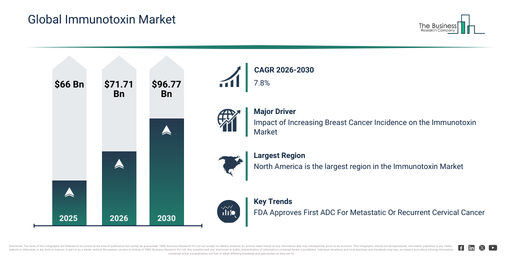
    The immunotoxin market size has experienced significant growth recently. Projections indicate an expansion from $66 billion in 2025 to $71.71 billion in 2026, demonstrating a compound annual growth rate (CAGR) of 8.7%. Historically, this market’s expansion was driven by several factors, including the early success of antibody-toxin conjugates in cancer research, advancements in monoclonal antibody engineering, the unmet need for targeted cancer therapies, the expansion of oncology-focused research laboratories, and an increased understanding of tumor-specific antigens.

    The immunotoxin market size is anticipated to experience substantial growth over the next few years. It is projected to expand to $96.77 billion by 2030, demonstrating a compound annual growth rate (CAGR) of 7.8%. This expansion during the forecast period can be attributed to several factors, including the increasing demand for precision oncology treatments, the broadening of immunotherapy pipelines, a rise in investment in biologics-based cancer drugs, the growing prevalence of treatment-resistant cancers, and continuous innovation in protein engineering technologies. Significant trends in the upcoming period encompass the increasing development of target-specific immunotoxins for cancer therapy, a heightened focus on reducing off-target toxicity and immunogenicity, the expanding application of immunotoxins in hematological malignancies, the growth of clinical research into next-generation immunotoxin constructs, and ongoing exploration of combination immunotoxin therapies.

    Download the Free Sample Report to Explore Key Market Insights:

    https://www.thebusinessresearchcompany.com/sample.aspx?id=15828&type=smp

    Which Growth Drivers Are Contributing To The Progress Of The Immunotoxin Market?

    The increasing incidence of breast cancer is anticipated to drive the future expansion of the immunotoxin market. Breast cancer is characterized as a malignant tumor forming within breast cells, predominantly in the ducts or lobules. The rising prevalence of breast cancer is attributed to enhanced screening programs, lifestyle-associated risk factors, and a longer life expectancy. The immunotoxin market offers crucial support for breast cancer treatment through targeted therapies designed to selectively eliminate cancerous cells, thereby minimizing harm to healthy tissues and leading to fewer side effects compared to conventional chemotherapy. For example, according to the National Breast Cancer Foundation, a US-based organization, it is projected that by January 2025, one in every eight women in the United States will be diagnosed with breast cancer during her lifetime. Furthermore, in 2024, approximately 310,720 women and 2,800 men are expected to be diagnosed with invasive breast cancer. Consequently, the growing incidence of breast cancer is a primary catalyst for the expansion of the immunotoxin market.

    Which Market Segments Are Examined In The Immunotoxin Market Study?

    The immunotoxin market covered in this report is segmented –

    1) By Type: Anthrax Based Toxins, Diphtheria Toxin (DT) And Derivatives, Pseudomonas Exotoxin (PE) And Derivatives, Ribosome Inactivating Proteins Based Immunotoxins, Ribonucleases-Based Immunotoxins, Other Types

    2) By Application: Solid Tumors, Leukemias, Other Applications

    3) By End User: Hospitals And Clinics, Cancer And Radiation Therapy Centers, Research Labs, Other End-Users

    Subsegments:

    1) By Anthrax-Based Toxins: Anthrax Lethal Toxin, Anthrax Protective Antigen

    2) By Diphtheria Toxin (DT) And Derivatives: Diphtheria Toxin, DT Fragment-Based Immunotoxins

    3) By Pseudomonas Exotoxin (PE) And Derivatives: PE38-Based Immunotoxins, PE-Based Fusion Proteins

    4) By Ribosome Inactivating Proteins-Based Immunotoxins: Ricin-Based Immunotoxins, Gelonin-Based Immunotoxins

    5) By Ribonucleases-Based Immunotoxins: Onconase-Based Immunotoxins, Binase-Based Immunotoxins

    6) By Other Types: Shiga Toxin-Based Immunotoxins, Other Toxin-Based Immunotoxins

    Which Trends Are Influencing The Immunotoxin Market?

    Leading companies within the immunotoxin market are concentrating on developing advanced antibody-drug conjugates (ADCs). This strategic focus aims to enhance the specificity and efficacy of cancer treatments while simultaneously minimizing damage to healthy tissues. ADCs are defined as targeted biopharmaceutical therapies that consist of a monoclonal antibody chemically linked to a cytotoxic drug, which enables the precise delivery of the toxic payload directly to cancer cells that express a particular antigen, thereby improving therapeutic outcomes compared to conventional chemotherapy. For instance, in April 2024, Pfizer Inc., a US-based pharmaceutical company, and Genmab A/S, a Denmark-based biotechnology company, secured full U.S. FDA approval for TIVDAK. This antibody-drug conjugate is specifically designed for patients with metastatic or recurrent cervical cancer and incorporates a monomethyl auristatin E payload that functions by disrupting microtubules to induce cancer-cell death, having demonstrated statistically significant improvements in overall survival, positioning it as a promising targeted treatment option for advanced cervical cancer.

    Who Are The Primary Competitors In The Immunotoxin Market?

    Major companies operating in the immunotoxin market are ImmunoGen Inc., Molecular Templates Inc., Mersana Therapeutics, Seagen Inc., MacroGenics Inc., Sutro Biopharma Inc., Celldex Therapeutics, CytImmune Sciences Inc., Pfizer Inc., Roche Holding AG, AbbVie Inc., Bristol Myers Squibb, AstraZeneca plc, Merck KGaA, BioNTech SE, Ipsen Pharma, Innate Pharma Inc., GenScript, Thermo Fisher Scientific Inc., Enzo Life Sciences Inc.

    Read the full immunotoxin market report here:

    https://www.thebusinessresearchcompany.com/report/immunotoxin-global-market-report

    What Are The Leading Geographic Regions In The Immunotoxin Market?

    North America was the largest region in the immunotoxin market in 2025. Asia-Pacific is expected to be the fastest-growing region in the forecast period. The regions covered in the immunotoxin market report are Asia-Pacific, South East Asia, Western Europe, Eastern Europe, North America, South America, Middle East, Africa.

    Request A Tailored Immunotoxin Market Research Report For Competitive Advantage:

    https://www.thebusinessresearchcompany.com/customise?id=15828&type=smp

    Browse Through More Reports Similar to the Global Immunotoxin Market 2026, By The Business Research Company

    Immunotoxin Market Report 2026

    https://www.thebusinessresearchcompany.com/report/immunotoxin-global-market-report

    Immunoglobulins Market Report 2026

    https://www.thebusinessresearchcompany.com/report/immunoglobulins-global-market-report

    Immunoassay Market Report 2026

    https://www.thebusinessresearchcompany.com/report/immunoassay-global-market-report

    Get in touch with us:

    The Business Research Company: https://www.thebusinessresearchcompany.com/

    Americas +1 310-496-7795

    Asia +44 7882 955267 & +91 8897263534

    Europe +44 7882 955267

    Email us at info@tbrc.info

    Follow us on:

    LinkedIn: https://in.linkedin.com/company/the-business-research-company

    YouTube: https://www.youtube.com/channel/UC24_fI0rV8cR5DxlCpgmyFQ

    Global Market Model: https://www.thebusinessresearchcompany.com/global-market-model
  • A Notable Trend in the Immunosuppressants Market Is the Shift Toward Biosimilars to Improve Accessibility and Affordability

    A Notable Trend in the Immunosuppressants Market Is the Shift Toward Biosimilars to Improve Accessibility and Affordability

    The Business Research Company’s 2026 market reports include new capabilities such as market attractiveness scoring and analysis, total addressable market analysis, company scoring matrix, interactive excel data dashboard, improved supply chain analysis, upcoming startups in the market, and overview of key products, aimed at improving the depth, usability, and strategic value of the insights delivered.

    How Large Is The Immunosuppressants Market Projected To Become By 2030 Based On Its 2026 Valuation?

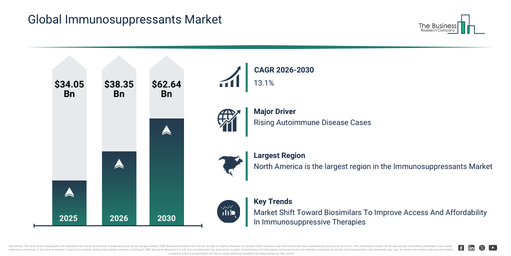
    The size of the immunosuppressants market has seen rapid expansion over recent years. Projections indicate it will expand from $34.05 billion in 2025 to $38.35 billion by 2026, demonstrating a compound annual growth rate (CAGR) of 12.6%. Historically, this expansion can be linked to several factors, including the rising number of organ transplant procedures, the growing prevalence of autoimmune disorders, the widespread use of corticosteroids, the adoption of hospital-based immunosuppressive protocols, and the increasing presence of specialty pharmacies.

    The immunosuppressants market is projected to experience substantial growth over the coming years, with its size anticipated to reach $62.64 billion by 2030, driven by a compound annual growth rate (CAGR) of 13.1%. This expansion during the forecast period is primarily due to factors such as improved transplant survival rates, the advancement of monoclonal antibody therapies, greater adoption of monitoring technologies, the development of safer drug classifications, and widened access in emerging markets. Noteworthy trends for this period include the increased application of immunosuppressants in organ transplantation, a transition towards targeted and biologic immunosuppressants, a heightened focus on long-term safety and patient monitoring, the broader use of immunosuppressants in treating autoimmune diseases, and the growing implementation of personalized immunosuppression regimens.

    Download the Free Sample Report to Explore Key Market Insights:

    https://www.thebusinessresearchcompany.com/sample.aspx?id=3467&type=smp

    What Primary Drivers Are Shaping The Development Of The Immunosuppressants Market?

    The increasing occurrence of autoimmune diseases is expected to propel the growth of the immunosuppressants market. Autoimmune diseases are a broad category of disorders where the immune system, exhibiting an abnormal response, erroneously targets and damages healthy cells, tissues, and organs. Immunosuppressant medications can offer relief for autoimmune conditions like rheumatoid arthritis, a common ailment in the elderly population, by moderating the overactive immune response, thereby alleviating symptoms and slowing disease progression. For instance, in February 2024, Arthritis Australia, an Australia-based non-profit organization, stated that an estimated 212,136 males and 362,137 females are projected to have rheumatoid arthritis (RA) in 2025. These numbers are expected to increase by 2040 to approximately 280,040 males and 479,828 females. Therefore, the increase in instances of autoimmune diseases will drive the immunosuppressants market.

    What Segment Groups Are Identified Within The Immunosuppressants Market?

    The immunosuppressants market covered in this report is segmented –

    1) By Drug Class: Corticosteroids, Monoclonal Antibodies (mAbs), Calcineurin Inhibitors, mTOR Inhibitors, Anti-Proliferative Agents, Other Drug Classes

    2) By Indication: Organ Transplantation, Autoimmune Disorders, Non-Autoimmune Inflammatory Diseases

    3) By Distribution Channel: Hospital Pharmacies, Retail Pharmacies, Online Pharmacies

    Subsegments:

    1) By Corticosteroids: Prednisone, Methylprednisolone, Dexamethasone

    2) By Monoclonal Antibodies (mAbs): Anti-TNF Agents, Anti-CD20 Agents, Anti-IL-6 Agents

    3) By Calcineurin Inhibitors: Cyclosporine, Tacrolimus

    4) By mTOR Inhibitors: Sirolimus, Everolimus

    5) By Anti-Proliferative Agents: Azathioprine, Mycophenolate Mofetil

    6) By Other Drug Classes: Co-Stimulation Blockers, JAK Inhibitors

    What Trends Are Advancing Progress In The Immunosuppressants Market?

    Major companies within the immunosuppressants market are prioritizing the development of advanced biologic and biosimilar therapies. This strategic focus aims to enhance the accessibility of treatments, reduce costs for patients, and improve the long-term management of autoimmune disorders. These innovative approaches seek to provide comparable levels of efficacy and safety to their originator biologic counterparts, thereby expanding the available therapeutic options for conditions such as rheumatoid arthritis, psoriatic arthritis, and inflammatory bowel disease. For example, in January 2023, Amgen Inc., a US-based biopharmaceutical company, launched AMJEVITA, which is the first biosimilar to HUMIRA available in the United States. This product launch signifies a pivotal moment in the immunosuppressants market by introducing greater competition, boosting affordability, and enabling broader patient access to essential biologic treatments. The move is expected to accelerate the adoption of biosimilars across therapies for autoimmune diseases and stimulate further innovation in developing cost-effective immunosuppressant solutions.

    Which Companies Hold Significant Positions In The Immunosuppressants Market?

    Major companies operating in the immunosuppressants market are Pfizer Inc., Johnson & Johnson Services Inc., F Hoffmann La Roche Ltd., AbbVie Inc., Novartis AG, Sanofi SA, Bristol-Myers Squibb Co., Mylan Laboratories Inc., Teva Pharmaceuticals USA Inc., Astellas Pharma Inc., Sandoz Inc., Aurobindo Pharma Limited, Hikma Pharmaceuticals plc, Intas Pharmaceuticals Ltd., Zydus Lifesciences Limited, Glenmark Pharmaceuticals Ltd., Fresenius Kabi USA, Lupin Pharmaceuticals Inc., Strides Pharma Inc., Accord Healthcare Ltd., RPG Life Sciences Limited, Genzyme Transgenics Corp., Apotex Inc.

    Read the full immunosuppressants market report here:

    https://www.thebusinessresearchcompany.com/report/immunosuppressant-global-market-report

    How Does The Immunosuppressants Market Perform Across Major Global Regions?

    North America was the largest region in the immunosuppressants market in 2025. The regions covered in the immunosuppressants market report are Asia-Pacific, South East Asia, Western Europe, Eastern Europe, North America, South America, Middle East, Africa.

    Request A Tailored Immunosuppressants Market Research Report For Competitive Advantage:

    https://www.thebusinessresearchcompany.com/customise?id=3467&type=smp

    Browse Through More Reports Similar to the Global Immunosuppressants Market 2026, By The Business Research Company

    Multiple Sclerosis Drugs Market Report 2026

    https://www.thebusinessresearchcompany.com/report/multiple-sclerosis-drugs-global-market-report

    Dermatology Drugs Market Report 2026

    https://www.thebusinessresearchcompany.com/report/dermatology-drugs-global-market-report

    Gastrointestinal Drug Market Report 2026

    https://www.thebusinessresearchcompany.com/report/gastrointestinal-drug-global-market-report

    Get in touch with us:

    The Business Research Company: https://www.thebusinessresearchcompany.com/

    Americas +1 310-496-7795

    Asia +44 7882 955267 & +91 8897263534

    Europe +44 7882 955267

    Email us at info@tbrc.info

    Follow us on:

    LinkedIn: https://in.linkedin.com/company/the-business-research-company

    YouTube: https://www.youtube.com/channel/UC24_fI0rV8cR5DxlCpgmyFQ

    Global Market Model: https://www.thebusinessresearchcompany.com/global-market-model

  • A Major Factor Driving the Immuno-Oncology Drugs Market Is the Global Rise in Cancer Cases

    A Major Factor Driving the Immuno-Oncology Drugs Market Is the Global Rise in Cancer Cases

    The Business Research Company’s 2026 market reports include new capabilities such as market attractiveness scoring and analysis, total addressable market analysis, company scoring matrix, interactive excel data dashboard, improved supply chain analysis, upcoming startups in the market, and overview of key products, aimed at improving the depth, usability, and strategic value of the insights delivered.

    What Market Value Is Anticipated For The Immuno-Oncology Drugs Market Over The Period 2026–2030?

    The immuno-oncology drugs market has experienced substantial expansion in recent years. Projections indicate a rise from $120.37 billion in 2025 to $136.15 billion by 2026, demonstrating a compound annual growth rate (CAGR) of 13.1%. Historically, this growth stemmed from factors such as the restricted accessibility of immuno-oncology drugs, the dependence on traditional chemotherapy, the rising incidence of cancers like melanoma and lung cancer, expanding research efforts centered on oncology, and the swift regulatory clearances for monoclonal antibodies.

    The immuno-oncology drugs market is projected for substantial expansion in the upcoming years. This market is anticipated to reach $226.31 billion by 2030, exhibiting a compound annual growth rate (CAGR) of 13.5%. Factors contributing to this growth during the forecast period include advancements in bispecific antibodies and oncolytic virus therapies, the spread of personalized immunotherapy solutions, greater investment in adoptive cell transfer therapies, increasing healthcare spending on cancer treatment, and the incorporation of digital platforms for patient oversight and clinical studies. Key trends anticipated for the forecast timeframe encompass the growing acceptance of immune checkpoint inhibitors for various cancer types, an increase in the creation of cancer vaccines and adoptive cell therapies, a heightened emphasis on individualized immuno-oncology treatments, the broadening of immunotherapy programs offered by hospitals and ambulatory surgical centers, and an uptick in clinical trials and research related to monoclonal antibodies.

    Download the Free Sample Report to Explore Key Market Insights:

    https://www.thebusinessresearchcompany.com/sample.aspx?id=3455&type=smp

    Which Major Factors Are Driving The Expansion Of The Immuno-Oncology Drugs Market?

    The rising incidence of cancer cases is anticipated to spur the expansion of the immuno-oncology drugs market in the future. Cancer involves the uncontrolled multiplication of abnormal cells, which can potentially spread throughout the body and impair regular bodily functions. This increase in cancer diagnoses is driven by elements such as aging populations, evolving lifestyles, and advancements in cancer detection methods. Immuno-oncology drugs facilitate this by activating the body’s immune system to target and eradicate cancer cells, thus offering more effective and precise treatment avenues. For instance, in 2023, Cancer Australia, an Australia-based government agency, estimated 164,694 new cancer cases were diagnosed and 51,269 deaths occurred, with prostate, breast, melanoma, colorectal, and lung cancers being the most common, while rare cancers accounted for about one-third of diagnoses and 42% of deaths. Therefore, the increasing frequency of cancer cases is stimulating the growth of the immuno-oncology drugs market.

    How Is The Immuno-Oncology Drugs Market Divided Into Its Major Segments?

    The immuno-oncology drugs market covered in this report is segmented –

    1) By Type: Immune Checkpoint Inhibitors, Immune System Modulators, Other Monoclonal Antibodies, Cancer Vaccines, Other Types

    2) By Therapeutic Application: Melanoma, Lung Cancer, Blood Cancer, Renal Cell Carcinoma, Bladder Cancer, Other Therapeutic Application

    3) By End-Users: Hospitals, Clinics, Ambulatory Surgical Centers, Other End-Users

    Subsegments:

    1) By Immune Checkpoint Inhibitors: PD-1 Inhibitors, PD-L1 Inhibitors, CTLA-4 Inhibitors

    2) By Immune System Modulators: Cytokines, Interferons, Colony-Stimulating Factors

    3) By Other Monoclonal Antibodies: Targeted Monoclonal Antibodies, Bispecific Antibodies

    4) By Cancer Vaccines: Preventive Cancer Vaccines, Therapeutic Cancer Vaccines

    5) By Other Types: Adoptive Cell Transfer Therapies, Oncolytic Virus Therapies

    How Are Trends Transforming The Immuno-Oncology Drugs Market Landscape?

    Leading firms within the immuno-oncology drugs market are engaging in partnerships to create and market an innovative checkpoint antibody, aiming to improve the efficacy of cancer therapies. Such strategic alliances promote innovation by facilitating the exchange of knowledge across various disciplines, accelerating the progress of combination therapies, tailored treatments, and new drug delivery methods. A notable example occurred in March 2023 when BioNTech SE, a company headquartered in Germany, formed a partnership with OncoC4 Inc, a US-based pharmaceutical entity. Their agreement is for the joint development and commercialization of a checkpoint antibody, specifically the anti-CTLA-4 monoclonal antibody candidate designated as ONC-392. The objective of this collaboration is to broaden cancer treatment alternatives across various solid tumor indications.

    Who Are The Prominent Organizations Shaping The Immuno-Oncology Drugs Market?

    Major companies operating in the immuno-oncology drugs market are F. Hoffmann-La Roche Ltd., Merck & Co., Bristol-Myers Squibb Company, Amgen Inc, Johnson & Johnson, AstraZeneca Plc, Eli Lilly and Company, Novartis International AG, Pfizer Inc., Sanofi S.A., Arlak Biotech, Apikos Pharma, Kolaz biotech, CStone Pharma, CARsgen Therapeutics, JW Therapeutics, BeiGene, Takeda Pharmaceuticals, Astellas Pharma Inc, Otsuka Pharmaceutical Co Ltd, Legend Biotech Co, Zai Lab, Daiichi Pharmaceutical and Sankyo, AQVIDA GmbH, GlaxoSmithKline plc, Affimed Therapeutics, Autolus Therapeutics, Cellectis, Celyad, GammaDelta Therapeutics, Immunocore, Celon Pharma, Veropharm, Biocad, Selvita, OncoArendi Therapeutics Mabion, Fate Therapeutics, Forty-Seven, Arcus Biosciences, Gritstone Oncology, Rakuten Medical, Rubius Therapeutics, Allogene Therapeutics, Celgene Corporation, Bayer AG, Incyte Corporation, Recepta Biopharma, Sandoz Brazil, Life Pharma, Julphar, NewBridge Pharmaceuticals.

    Read the full immuno-oncology drugs market report here:

    https://www.thebusinessresearchcompany.com/report/immuno-oncology-drug-global-market-report

    Which Region Currently Holds The Largest Share Of The Immuno-Oncology Drugs Market?

    North America was the largest region in the immuno-oncology drugs market in 2025. The regions covered in the immuno-oncology drugs market report are Asia-Pacific, South East Asia, Western Europe, Eastern Europe, North America, South America, Middle East, Africa.

    Request A Tailored Immuno-Oncology Drugs Market Research Report For Competitive Advantage:

    https://www.thebusinessresearchcompany.com/customise?id=3455&type=smp

    Browse Through More Reports Similar to the Global Immuno-Oncology Drugs Market 2026, By The Business Research Company

    Veterinary Laboratory Testing Services Market Report 2026

    https://www.thebusinessresearchcompany.com/report/veterinary-laboratory-testing-services-global-market-report

    Dermatitis Drugs Market Report 2026

    https://www.thebusinessresearchcompany.com/report/dermatitis-drugs-global-market-report

    Veterinary Diagnostic Equipment Market Report 2026

    https://www.thebusinessresearchcompany.com/report/veterinary-diagnostic-equipment-global-market-report

    Get in touch with us:

    The Business Research Company: https://www.thebusinessresearchcompany.com/

    Americas +1 310-496-7795

    Asia +44 7882 955267 & +91 8897263534

    Europe +44 7882 955267

    Email us at info@tbrc.info

    Follow us on:

    LinkedIn: https://in.linkedin.com/company/the-business-research-company

    YouTube: https://www.youtube.com/channel/UC24_fI0rV8cR5DxlCpgmyFQ

    Global Market Model: https://www.thebusinessresearchcompany.com/global-market-model
  • A Key Driver of the Immunohematology Market Is the Rising Prevalence of Chronic Immunological Conditions Increasing Demand for Long-Term Treatment

    A Key Driver of the Immunohematology Market Is the Rising Prevalence of Chronic Immunological Conditions Increasing Demand for Long-Term Treatment

    The Business Research Company’s 2026 market reports include new capabilities such as market attractiveness scoring and analysis, total addressable market analysis, company scoring matrix, interactive excel data dashboard, improved supply chain analysis, upcoming startups in the market, and overview of key products, aimed at improving the depth, usability, and strategic value of the insights delivered.

    What Is The Expected Market Size Of The Immunology Biosimilars Market From 2026 To 2030?

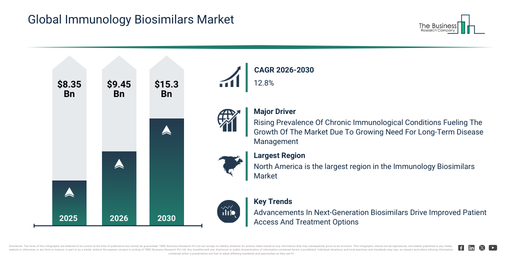
    The immunology biosimilars market size has experienced rapid expansion recently. It is projected to grow from $8.35 billion in 2025 to $9.45 billion in 2026, exhibiting a compound annual growth rate (CAGR) of 13.2%. The historic period’s growth can be attributed to several factors, including the high cost associated with original biologics, the restricted availability of biosimilar alternatives, the increasing prevalence of autoimmune diseases, the rising adoption of biologics in hospitals and clinical settings, and the rigorous regulatory approval processes for biosimilars.

    The immunology biosimilars market size is projected to experience substantial expansion over the coming years. This market is predicted to reach $15.3 billion by 2030, exhibiting a compound annual growth rate (CAGR) of 12.8%. Factors contributing to this growth during the forecast period include the creation of advanced biosimilar molecules, the broadening of homecare and outpatient treatment alternatives, enhanced regulatory alignment, greater patient understanding and willingness to adopt, and the expansion of online and hospital pharmacy sales routes. Key trends anticipated for the forecast period encompass a growing uptake of monoclonal antibody biosimilars, an increase in the application of fusion protein biosimilars, the wider availability of recombinant protein therapies, an expanding market for interferon-related treatments, and improved access to cost-effective immunology treatments.

    Download the Free Sample Report to Explore Key Market Insights:

    https://www.thebusinessresearchcompany.com/sample.aspx?id=25789&type=smp

    What Key Drivers Are Influencing The Growth Of The Immunology Biosimilars Market?

    The rising occurrence of chronic immunological conditions is anticipated to propel the expansion of the immunology biosimilars market moving forward. These conditions are persistent ailments where the immune system functions improperly, either targeting the body’s own tissues or failing to provide adequate protection. This increase in chronic immunological conditions stems from a growing number of individuals affected by enduring immune system disorders that necessitate continuous care, proactive disease management, and consistent healthcare assistance. Immunology biosimilars assist in managing chronic immunological conditions by offering cost-effective and efficient treatment alternatives, supporting long-term disease control, and enhancing patient accessibility to vital therapies that regulate immune system irregularities. For instance, in November 2023, the Multiple Sclerosis International Federation (MSIF), a UK-based international nonprofit organization dedicated to global MS research and advocacy, reported that an estimated 2.9 million people worldwide were living with multiple sclerosis in 2023. Consequently, the growing frequency of chronic immunological conditions is fueling the development of the immunology biosimilars market.

    Which Segments Are Included In The Analysis Of The Immunology Biosimilars Market?

    The immunology biosimilars market covered in this report is segmented –

    1) By Drug Type: Monoclonal Antibodies, Fusion Proteins, Recombinant Proteins, Interferons, Other Biosimilar Immunomodulators

    2) By Disease: Inflammatory Bowel Disease, Arthritis, Other Diseases

    3) By Distribution Channel: Hospital Pharmacies, Retail Pharmacies, Online Pharmacies, Other Distribution Channels

    4) By End User: Hospitals, Clinics, Homecare Settings, Ambulatory Surgical Centers (ASCs)

    Subsegments:

    1) By Monoclonal Antibodies: Anti-Tumor Necrosis Factor Agents, Anti-Interleukin-6 Agents, Anti-Cluster of Differentiation 20 Agents, Anti-Interleukin-12/23 Agents, Other Monoclonal Antibodies

    2) By Fusion Proteins: Etanercept Biosimilars, Other Fusion Protein Biosimilars

    3) By Recombinant Proteins: Recombinant Human Insulin, Recombinant Human Growth Hormone, Recombinant Human Erythropoietin, Other Recombinant Protein Biosimilars

    4) By Interferons: Interferon Alpha, Interferon Beta, Interferon Gamma

    5) By Other Biosimilar Immunomodulators: Interleukin Inhibitors, Janus Kinase Inhibitors, Other Immunomodulatory Biosimilars

    Which Trends Are Impacting The Growth Of The Immunology Biosimilars Market?

    Leading companies in the immunology biosimilars market are concentrating on developing next-generation biosimilar innovations. These include anticipated interchangeability designation, advanced formulations that enhance stability, and novel delivery systems, all aimed at providing patients with more accessible and effective treatment options. This anticipated interchangeability designation indicates that the biosimilar is expected to meet regulatory standards, enabling its substitution for the reference biologic at the pharmacy level without requiring the prescriber’s intervention. For instance, in February 2025, Sandoz Group AG, a Switzerland-based pharmaceutical company, introduced Pyzchiva (ustekinumab-ttwe), a biosimilar to Stelara, designed for the treatment of chronic autoimmune conditions like plaque psoriasis, psoriatic arthritis, Crohn’s disease, and ulcerative colitis. This launch, conducted in partnership with Samsung Bioepis Co. Ltd., a South Korea-based biopharmaceutical company, underscores Sandoz’s dedication to increasing access to immunology biosimilars by offering a cost-effective, patient-centric therapy that features multiple dosing options, extended stability, and the unique capability to be re-refrigerated after initial refrigeration.

    Which Key Industry Participants Are Active In The Immunology Biosimilars Market?

    Major companies operating in the immunology biosimilars market are Pfizer Inc., Novartis AG, Amgen Inc., Sandoz Group AG, Fresenius Kabi AG, Intas Pharmaceuticals Ltd., Dr. Reddy’s Laboratories Ltd., Samsung Bioepis Co. Ltd., Gedeon Richter Plc, Celltrion Inc., Biocon Ltd., Innovent Biologics Inc., Biocad, Mabion S.A.

    Read the full immunology biosimilars market report here:

    https://www.thebusinessresearchcompany.com/report/immunology-biosimilars-global-market-report

    Which Region Is Expected To Register The Fastest Growth In The Immunology Biosimilars Market?

    North America was the largest region in the immunology biosimilars market in 2025. Asia-Pacific is expected to be the fastest-growing region in the forecast period. The regions covered in the immunology biosimilars market report are Asia-Pacific, South East Asia, Western Europe, Eastern Europe, North America, South America, Middle East, Africa.

    Request A Tailored Immunology Biosimilars Market Research Report For Competitive Advantage:

    https://www.thebusinessresearchcompany.com/customise?id=25789&type=smp

    Browse Through More Reports Similar to the Global Immunology Biosimilars Market 2026, By The Business Research Company

    Biosimilar Market Report 2026

    https://www.thebusinessresearchcompany.com/report/biosimilar-global-market-report

    Biosimilar Market Report 2026

    https://www.thebusinessresearchcompany.com/report/biosimilar-global-market-report

    Bevacizumab Biosimilars Market Report 2026

    https://www.thebusinessresearchcompany.com/report/bevacizumab-biosimilars-global-market-report

    Get in touch with us:

    The Business Research Company: https://www.thebusinessresearchcompany.com/

    Americas +1 310-496-7795

    Asia +44 7882 955267 & +91 8897263534

    Europe +44 7882 955267

    Email us at info@tbrc.info

    Follow us on:

    LinkedIn: https://in.linkedin.com/company/the-business-research-company

    YouTube: https://www.youtube.com/channel/UC24_fI0rV8cR5DxlCpgmyFQ

    Global Market Model: https://www.thebusinessresearchcompany.com/global-market-model
  • Global Immunohematology Industry Trends and Growth Forecast for 2026–2030

    Global Immunohematology Industry Trends and Growth Forecast for 2026–2030

    The Business Research Company’s 2026 market reports include new capabilities such as market attractiveness scoring and analysis, total addressable market analysis, company scoring matrix, interactive excel data dashboard, improved supply chain analysis, upcoming startups in the market, and overview of key products, aimed at improving the depth, usability, and strategic value of the insights delivered.

    What Market Valuation Is Forecasted For The Immunohematology Market By 2030 Starting From Its 2026 Size?

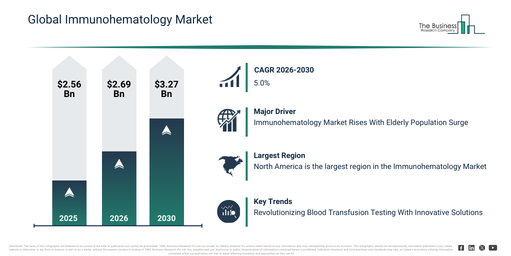
    The immunohematology market size has observed consistent expansion over recent years. It is projected to expand from $2.56 billion in 2025 to $2.69 billion by 2026, demonstrating a compound annual growth rate (CAGR) of 4.9%. The market’s growth in previous periods can be attributed to the increasing prevalence of blood disorders, a rising demand for safe blood transfusions, the development of blood banks, the growth in diagnostic laboratories, and advancements in hematology reagents.

    The immunohematology market is projected to experience substantial expansion in the coming years. By 2030, this market is anticipated to reach a value of $3.27 billion, exhibiting a compound annual growth rate (CAGR) of 5.0%. This projected growth during the forecast period is attributable to several factors, including ongoing technological progress in analyzers, the increasing adoption of artificial intelligence in laboratory diagnostics, the growing prominence of precision medicine, the incorporation of digital health systems, and the broadening reach of blood screening initiatives. Key trends expected within the forecast timeframe encompass sophisticated blood typing methods, enhanced automation in immunohematology tests, individualized transfusion treatment, on-site immune diagnostic tools, and the seamless integration of laboratory information systems.

    Download the Free Sample Report to Explore Key Market Insights:

    https://www.thebusinessresearchcompany.com/sample.aspx?id=10295&type=smp

    What Major Growth Drivers Are Shaping The Outlook Of The Immunohematology Market?

    The expanding elderly demographic is set to fuel the expansion of the immunohematology market moving forward. An aging population is defined as a demographic scenario where the proportion of older individuals within a society or population increases. Immunohematology plays a vital role in addressing transfusion requirements linked to age, guaranteeing the safe application of blood products, and supporting medical procedures for the elderly. For example, as reported in January 2024 by the Population Reference Bureau, a US-based nonprofit organization, the number of Americans aged 65 and older is projected to rise from 58 million in 2022 to 82 million by 2050, representing a 47% increase. Furthermore, this age group’s percentage of the total population is expected to climb from 17% to 23% during the same timeframe. Consequently, the aging population is a significant factor driving the growth of the immunohematology market.

    Which Segment Categories Define The Immunohematology Market?

    The immunohematology market covered in this report is segmented –

    1) By Product: Analyzers And Systems, Reagents

    2) By Technology: Biochips, Erythrocyte-Magnetized Technology (Met), Gel Cards, Microplates, Polymerase Chain Reaction (PCR)

    3) By Disease: Blood-Related Diseases, HIV, Hepatitis

    4) By Application: Pretransfusion Testing, Investigation Of Immune Hemolysis, Perinatal Testing, Blood Group Phenotyping, Leucocyte And Platelet Serology

    5) By End User: Blood Banks, Diagnostic And Reference Laboratories, Hospitals, Academic And Research Institutes

    Subsegments:

    1) By Analyzers And Systems: Blood Typing Analyzers, Cross-Matching Analyzers, Gel Card Systems

    2) By Reagents: Blood Grouping Reagents, Antisera, Control Serum

    What Major Market Trends Are Driving Changes In The Immunohematology Market?

    Major companies in the immunohematology market are concentrating on developing advanced diagnostic methods, such as soluble recombinant proteins, designed to counteract the interference caused by the cancer therapy daratumumab. A soluble recombinant protein is a protein created using recombinant DNA technology that remains correctly folded and functional in a soluble form within a host cell or solution, thus facilitating its application in research and therapeutic contexts. For example, in November 2023, Grifols, S.A., a Spanish pharmaceutical company, introduced its Grifols sCD38 solution. Grifols sCD38 is the first-ever soluble recombinant protein developed to address the interference from the cancer therapy daratumumab in vital blood transfusion compatibility testing. Specifically formulated for multiple myeloma patients, this innovative solution prevents daratumumab from attaching to CD38 proteins on red blood cells, thereby ensuring precise pre-transfusion test results. By streamlining the processes for screening, identification, and crossmatching, Grifols sCD38 enhances blood transfusion protocols and minimizes delays in delivering essential transfusions.

    Who Are The Top Companies Competing In The Immunohematology Market?

    Major companies operating in the immunohematology market are Ortho Clinical Diagnostics Inc., Immunocor Inc., Abbott Laboratories, Siemens Healthineers AG, Grifols S.A., Beckman Coulter Inc., Thermo Fisher Scientific Inc., Becton Dickinson and Company, Merck Co. & KGaA, Bio-Rad Laboratories, Sysmex Corporation, Danaher Corporation, Biosystems S.A., Roche Holdings AG, Mindray Medical International Limited, F.Hoffmann La-Roche Ltd., Biotest AG, Cardinal Health Inc., Quotient Limited, DiaSorin S.p.A., Lorne Laboratories Ltd., Biokit S.A., Avox Technologies, Diagnostic Automation/Cortez Diagnostics Inc., Inno-train Diagnostik GmbH, Drucker Diagnostics Inc., Immundia Diagnostics Pvt. Ltd.

    Read the full immunohematology market report here:

    https://www.thebusinessresearchcompany.com/report/immunohematology-global-market-report

    Which Regions Are Projected To Dominate The Immunohematology Market In The Coming Years?

    North America was the largest region in the immunohematology market in 2025. Asia-Pacific is expected to be the fastest-growing region in the global immunohematology market during the forecast period. The regions covered in the immunohematology market report are Asia-Pacific, South East Asia, Western Europe, Eastern Europe, North America, South America, Middle East, Africa.

    Request A Tailored Immunohematology Market Research Report For Competitive Advantage:

    https://www.thebusinessresearchcompany.com/customise?id=10295&type=smp

    Browse Through More Reports Similar to the Global Immunohematology Market 2026, By The Business Research Company

    Immunohematology Market Report 2026

    https://www.thebusinessresearchcompany.com/report/immunohematology-global-market-report

    Immunoassay Market Report 2026

    https://www.thebusinessresearchcompany.com/report/immunoassay-global-market-report

    Immunodiagnostics Market Report 2026

    https://www.thebusinessresearchcompany.com/report/immunodiagnostics-global-market-report

    Get in touch with us:

    The Business Research Company: https://www.thebusinessresearchcompany.com/

    Americas +1 310-496-7795

    Asia +44 7882 955267 & +91 8897263534

    Europe +44 7882 955267

    Email us at info@tbrc.info

    Follow us on:

    LinkedIn: https://in.linkedin.com/company/the-business-research-company

    YouTube: https://www.youtube.com/channel/UC24_fI0rV8cR5DxlCpgmyFQ

    Global Market Model: https://www.thebusinessresearchcompany.com/global-market-model
  • Immunoglobulins Market Outlook Showing Demand Growth Across 2026–2030

    Immunoglobulins Market Outlook Showing Demand Growth Across 2026–2030

    The Business Research Company’s 2026 market reports include new capabilities such as market attractiveness scoring and analysis, total addressable market analysis, company scoring matrix, interactive excel data dashboard, improved supply chain analysis, upcoming startups in the market, and overview of key products, aimed at improving the depth, usability, and strategic value of the insights delivered.

    How Is The Market Size Of The Immunoglobulins Market Expected To Change Between 2026 And 2030?

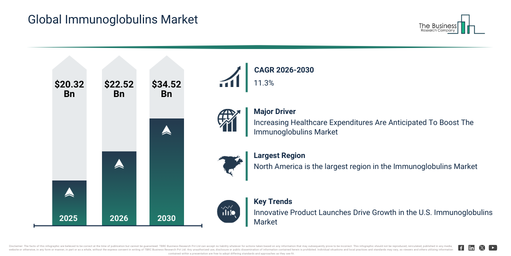
    The immunoglobulins market has experienced significant growth in recent years. It is projected to expand from $20.32 billion in 2025 to $22.52 billion in 2026, achieving a compound annual growth rate (CAGR) of 10.8%. This historical expansion can be attributed to factors such as the rising prevalence of immunodeficiency diseases, an increasing number of autoimmune disorder cases, improvements in hospital infrastructure, technological advancements in plasma fractionation, and broadening awareness about antibody therapies.

    The immunoglobulins market is anticipated to experience substantial expansion over the upcoming years. Its valuation is projected to reach $34.52 billion by 2030, exhibiting a compound annual growth rate (CAGR) of 11.3%. This anticipated expansion throughout the forecast period stems from factors such as progress in personalized medicine, the creation of innovative monoclonal antibodies, a rise in home-based subcutaneous treatments, the broadening of biotechnology and research facilities, and increasing governmental backing for immunotherapy initiatives. Significant developments expected during this forecast span encompass individualized immunoglobulin therapies, a growing preference for subcutaneous delivery techniques, an escalating need for ivig in the treatment of autoimmune conditions, the broadening of available treatments for rare immunodeficiencies, and an increase in research focused on monoclonal antibodies.

    Download the Free Sample Report to Explore Key Market Insights:

    https://www.thebusinessresearchcompany.com/sample.aspx?id=5284&type=smp

    What Drivers Are Expected To Influence The Immunoglobulins Market During The Forecast Period?

    The anticipated increase in healthcare spending is expected to propel the growth of the hyperphosphatemia treatment market going forward. Hyperphosphatemia treatment involves therapies and medications aimed at reducing elevated phosphate levels in the blood, which commonly occur in patients with chronic kidney disease and other related conditions. Greater healthcare spending allows for broader access to such treatments, supports research and development of advanced therapies, and improves patient management strategies. For instance, in November 2023, the Canadian Institute for Health Information projected Canada’s total health spending for 2023 to reach $344 billion, equating to $8,740 per person. This represents a 2.8% increase compared to 2022, which had only a 1.5% growth in health spending, indicating a notable rebound in healthcare investment. Therefore, the increasing healthcare expenditure is a key driver for the growth of the hyperphosphatemia treatment market.

    How Is The Immunoglobulins Market Structured Across Different Segments?

    The immunoglobulins market covered in this report is segmented –

    1) By Product: IGG, IGA, IGM, IGE, IGD

    2) By Mode Of Delivery: Intravenous Mode Of Delivery, Subcutaneous Mode Of Delivery

    3) By Application: Hypogammaglobulinemia, Chronic Inflammatory demyelinating polyneuropathy (CIDP), Immunodeficiency Disease, Myasthenia Gravis, Idiopathic thrombocytopenic purpura (ITP), Other Applications

    Subsegments:

    1) By IGG (Immunoglobulin G): IVIG (Intravenous Immunoglobulin), SCIG (Subcutaneous Immunoglobulin)

    2) By IGA (Immunoglobulin A): Monoclonal IGA, Polyvalent IGA

    3) By IGM (Immunoglobulin M): Monoclonal IGM, Polyvalent IGM

    4) By IGE (Immunoglobulin E): Allergen-Specific IGE, Monoclonal IGE

    5) By IGD (Immunoglobulin D): Research-Use IGD, Monoclonal IGD

    Which Trends Are Shaping The Future Of The Immunoglobulins Market?

    Leading companies within the immunoglobulins market are focused on developing innovative offerings, such as intravenous immunoglobulins, to expand their customer base, boost sales, and enhance revenue. For instance, in September 2024, GC Biopharma, a biotechnology company based in South Korea, launched ALYGLO (Immune Globulin Intravenous, Human-stwk) 10% Liquid in the U.S. market. This product targets the treatment of primary humoral immunodeficiency (PI) in adults aged 17 years and older and is now accessible to patients through specialty pharmacies. This launch is particularly significant given that the U.S. represents the largest immunoglobulin market globally, with an approximate valuation of $11.6 billion. GC Biopharma aims to generate $50 million in sales for ALYGLO in its inaugural year, with projections to increase this figure to $300 million by 2028. This ambitious growth strategy involves forming partnerships with major U.S. pharmacy benefit managers and specialty pharmacies, which are essential for the effective distribution of immunoglobulin products.

    Which Major Players Dominate The Immunoglobulins Market?

    Major companies operating in the immunoglobulins market are Baxter International Inc., CSL Behring LLC, Grifols S. A., Octapharma AG, China Biologic Products Holdings Inc., Kedrion SpA, LFB SA, Biotest AG, Sanquin Blood Supply Foundation, ADMA Biologics Inc., Option Care Health Inc., Shanghai RAAS Blood Products Co. Ltd., Antibody Solutions, Bio Products Laboratory Ltd., Immunovant Inc., Kamada Ltd., Emergent BioSolutions Inc., Fresenius Kabi AG, GlaxoSmithKline plc, Pfizer Inc., Roche Holding AG, Samsung Bioepis Co. Ltd., Takeda Pharmaceutical Company Limited, Teva Pharmaceutical Industries Ltd., Zydus Cadila Healthcare Limited

    Read the full immunoglobulins market report here:

    https://www.thebusinessresearchcompany.com/report/immunoglobulins-global-market-report

    Which Region Is Forecast To Lead The Immunoglobulins Market In Terms Of Market Size?

    North America was the largest region in the immunoglobulins market in 2025. Asia-Pacific is expected to be the fastest-growing region in the forecast period. The regions covered in the immunoglobulins market report are Asia-Pacific, South East Asia, Western Europe, Eastern Europe, North America, South America, Middle East, Africa.

    Request A Tailored Immunoglobulins Market Research Report For Competitive Advantage:

    https://www.thebusinessresearchcompany.com/customise?id=5284&type=smp

    Browse Through More Reports Similar to the Global Immunoglobulins Market 2026, By The Business Research Company

    Immunoglobulins Market Report 2026

    https://www.thebusinessresearchcompany.com/report/immunoglobulins-global-market-report

    Hyperimmune Globulins Market Report 2026

    https://www.thebusinessresearchcompany.com/report/hyperimmune-globulins-global-market-report

    Immunoassay Market Report 2026

    https://www.thebusinessresearchcompany.com/report/immunoassay-global-market-report

    Get in touch with us:

    The Business Research Company: https://www.thebusinessresearchcompany.com/

    Americas +1 310-496-7795

    Asia +44 7882 955267 & +91 8897263534

    Europe +44 7882 955267

    Email us at info@tbrc.info

    Follow us on:

    LinkedIn: https://in.linkedin.com/company/the-business-research-company

    YouTube: https://www.youtube.com/channel/UC24_fI0rV8cR5DxlCpgmyFQ

    Global Market Model: https://www.thebusinessresearchcompany.com/global-market-model