Category: Pharmaceuticals

  • Immunoglobulin Fusion Protein Market Analysis Highlighting Growth Drivers and Opportunities Through 2030

    Immunoglobulin Fusion Protein Market Analysis Highlighting Growth Drivers and Opportunities Through 2030

    The Business Research Company’s 2026 market reports include new capabilities such as market attractiveness scoring and analysis, total addressable market analysis, company scoring matrix, interactive excel data dashboard, improved supply chain analysis, upcoming startups in the market, and overview of key products, aimed at improving the depth, usability, and strategic value of the insights delivered.

    What Is The Market Size Of The Immunoglobulin Fusion Protein Market In 2026 And What Value Is Projected For 2030?

    The immunoglobulin fusion protein market size has experienced rapid growth in recent years. It is anticipated to expand from $46.05 billion in 2025 to $52.44 billion in 2026, achieving a compound annual growth rate (CAGR) of 13.9%. The historical increase in this market can be attributed to factors such as innovation in biologic drugs, the burden posed by autoimmune diseases, the success of monoclonal antibodies, the adoption of biologics within hospital settings, and advancements in chronic disease management.

    The immunoglobulin fusion protein market is projected to experience substantial expansion in the coming years. This market is forecasted to reach $87.21 billion by 2030, demonstrating a compound annual growth rate (CAGR) of 13.6%. Key factors driving this growth during the projection period include advancements in precision biologics development, a robust pipeline for rare disease drugs, increasing competition from biosimilars, sophisticated protein engineering techniques, and a rising need for long-acting therapies. Significant trends anticipated over the forecast timeframe encompass the expanding creation of long-acting biologics, greater adoption of Fc fusion technologies, broader applications in autoimmune and rare diseases, enhanced drug stability and half-life engineering, and increased capital allocation towards protein engineering platforms.

    Download the Free Sample Report to Explore Key Market Insights:

    https://www.thebusinessresearchcompany.com/sample.aspx?id=24568&type=smp

    What Drivers Are Influencing The Immunoglobulin Fusion Protein Market?

    The rising incidence of autoimmune conditions is projected to drive the expansion of the immunoglobulin fusion protein market moving forward. Autoimmune disorders are defined as illnesses where the body’s immune system mistakenly targets its own healthy cells and tissues. The increasing frequency of autoimmune disorders primarily results from a combination of genetic predisposition and environmental factors, where inherited genes heighten individual susceptibility, and triggers like infections or lifestyle contribute to the emergence of these conditions. Immunoglobulin fusion protein aids autoimmune disorders by modulating the immune response to diminish inflammation and prevent the immune system from assaulting the body’s own tissues. For instance, in February 2024, according to the Arthritis Australia, an Australia-based non-profit organization, in 2025, it is estimated that 562,378 people in Australia will have rheumatoid arthritis (RA), accounting for 14% of the total arthritis population. By 2040, the number of Australians with RA is projected to rise by 33%, reaching 748,721 individuals. This represents an increase of 186,343 people living with RA compared to 2025. Hence, the growing prevalence of autoimmune disorders is propelling the growth of the immunoglobulin fusion protein market.

    What Are The Key Segments Of The Immunoglobulin Fusion Protein Market?

    The immunoglobulin fusion protein market covered in this report is segmented –

    1) By Type: Monoclonal Antibodies, Polyclonal Antibodies, Bispecific Antibodies, Recombinant Antibodies

    2) By Drug Class: Immunosuppressive Drugs, Immunostimulatory Drugs

    3) By Mode of Administration: Intravenous, Subcutaneous, Intramuscular

    4) By Application: Autoimmune Disease, Eye Diseases, Diabetes, Hemophilia

    5) By End User: Hospitals, Clinics, Research Institutes

    Subsegments:

    1) By Monoclonal Antibodies: Human Monoclonal Antibodies, Humanized Monoclonal Antibodies, Chimeric Monoclonal Antibodies, Murine Monoclonal Antibodies

    2) By Polyclonal Antibodies: Animal-Derived Polyclonal Antibodies, Human-Derived Polyclonal Antibodies, Recombinant Polyclonal Antibodies

    3) By Bispecific Antibodies: Tandem Single-Chain Variable Fragment, Dual-Variable Domain Antibodies, Bispecific T-Cell Engagers (BiTEs), Dual-Affinity Re-Targeting Antibodies

    4) By Recombinant Antibodies: Fragment Antibodies, Full-Length Recombinant Antibodies, Antibody-Drug Conjugates (ADCs), Engineered Antibody Domains

    What Key Trends Are Influencing The Development Of The Immunoglobulin Fusion Protein Market?

    Major companies within the immunoglobulin fusion protein market are concentrating on clinical trials to create innovative products, such as bispecific antibody fusion proteins, to boost therapeutic effectiveness and address multiple disease pathways. A bispecific antibody fusion protein is a genetically engineered molecule that can concurrently attach to two distinct targets, thereby improving targeted therapy by bringing immune cells closer to tumor cells or simultaneously obstructing various disease pathways. As an example, in February 2025, Innovent Biologics, Inc., a China-based biotechnology firm, secured its second Fast Track Designation (FTD) from the U.S. Food and Drug Administration (FDA) for IBI343, a bispecific antibody fusion protein aimed at advanced solid tumors. IBI343 is designed to simultaneously interact with tumor-associated antigens and immune effector cells, which enhances the accuracy and strength of anti-tumor immune responses. This designation is expected to accelerate IBI343’s clinical development and regulatory review, showcasing its potential to meet significant unmet medical needs in oncology.

    Who Are The Leading Companies Operating In The Immunoglobulin Fusion Protein Market?

    Major companies operating in the immunoglobulin fusion protein market are Amgen Inc., Pfizer Inc., Swedish Orphan Biovitrum AB (Sobi), Regeneron Pharmaceuticals Inc., Sanofi S.A., AbbVie Inc., Bristol-Myers Squibb Company, Roche Holding AG, Genentech Inc., UCB S.A., AstraZeneca PLC, CSL Behring, Takeda Pharmaceutical Company Limited, Novartis AG, Merck & Co. Inc., Biogen Inc., Horizon Therapeutics (Amgen subsidiary), Kyowa Kirin Co. Ltd., Ultragenyx Pharmaceutical Inc., Apellis Pharmaceuticals Inc., Alexion Pharmaceuticals (AstraZeneca subsidiary), Argenx SE, HanAll Biopharma Co. Ltd., Innovent Biologics Inc., 3SBio Inc.

    Read the full immunoglobulin fusion protein market report here:

    https://www.thebusinessresearchcompany.com/report/immunoglobulin-fusion-protein-global-market-report

    Which Regions Are Expected To Experience Rapid Expansion In The Immunoglobulin Fusion Protein Market?

    North America was the largest region in the immunoglobulin fusion proteins market in 2025. Asia-Pacific is expected to be the fastest-growing region in the forecast period. The regions covered in the immunoglobulin fusion protein market report are Asia-Pacific, South East Asia, Western Europe, Eastern Europe, North America, South America, Middle East, Africa.

    Request A Tailored Immunoglobulin Fusion Protein Market Research Report For Competitive Advantage:

    https://www.thebusinessresearchcompany.com/customise?id=24568&type=smp

    Browse Through More Reports Similar to the Global Immunoglobulin Fusion Protein Market 2026, By The Business Research Company

    Immunoglobulins Market Report 2026

    https://www.thebusinessresearchcompany.com/report/immunoglobulins-global-market-report

    Monoclonal Antibodies Market Report 2026

    https://www.thebusinessresearchcompany.com/report/monoclonal-antibodies-global-market-report

    Recombinant Proteins Market Report 2026

    https://www.thebusinessresearchcompany.com/report/recombinant-proteins-global-market-report

    Get in touch with us:

    The Business Research Company: https://www.thebusinessresearchcompany.com/

    Americas +1 310-496-7795

    Asia +44 7882 955267 & +91 8897263534

    Europe +44 7882 955267

    Email us at info@tbrc.info

    Follow us on:

    LinkedIn: https://in.linkedin.com/company/the-business-research-company

    YouTube: https://www.youtube.com/channel/UC24_fI0rV8cR5DxlCpgmyFQ

    Global Market Model: https://www.thebusinessresearchcompany.com/global-market-model
  • Global Immunocytokines Market Expected to Reach $5.44 Billion by 2030 at 8.8% CAGR

    Global Immunocytokines Market Expected to Reach $5.44 Billion by 2030 at 8.8% CAGR

    The Business Research Company’s 2026 market reports include new capabilities such as market attractiveness scoring and analysis, total addressable market analysis, company scoring matrix, interactive excel data dashboard, improved supply chain analysis, upcoming startups in the market, and overview of key products, aimed at improving the depth, usability, and strategic value of the insights delivered.

    What Will Be The Estimated Market Valuation Of The Immunocytokines Market By The End Of 2030?

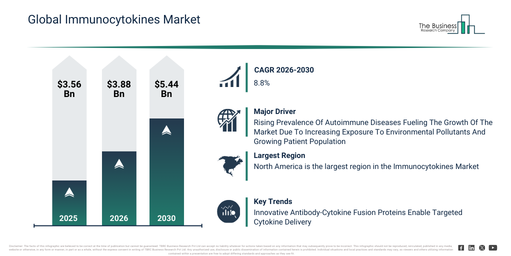
    The immunocytokines market has exhibited significant expansion in recent years. It is anticipated to grow from $3.56 billion in 2025 to $3.88 billion in 2026, progressing at a compound annual growth rate (CAGR) of 9.0%. This past growth can be attributed to factors such as the constrained availability of targeted immunocytokine therapies, the reliance on conventional cytokine treatments, increasing research efforts in oncology and autoimmune diseases, a rise in clinical trials for cytokine therapies, and the adoption of fundamental immune-modulating treatment strategies.

    The immunocytokines market size is anticipated to experience substantial expansion over the upcoming years, projected to reach $5.44 billion by 2030, exhibiting a compound annual growth rate (CAGR) of 8.8%. This projected increase during the forecast period is due to factors such as the advancement of recombinant and modified interleukins, the broadening of tumor necrosis factor-based immunocytokines, a rise in investment toward antibody-cytokine fusion proteins, the growing acceptance in personalized cancer and autoimmune therapies, and the incorporation of immune modulators with sophisticated delivery systems. Key trends anticipated during this period include the increased uptake of immunocytokines in targeted cancer treatments, expanding research into cytokine-based immunotherapies for autoimmune conditions, a heightened emphasis on minimizing systemic toxicity via targeted delivery, the growth of specialty clinics and research institutions utilizing immunocytokines, and the creation of fusion proteins that combine cytokines with new antibody formats.

    Download the Free Sample Report to Explore Key Market Insights:

    https://www.thebusinessresearchcompany.com/sample.aspx?id=27315&type=smp

    What Drivers Are Shaping The Future Growth Of The Immunocytokines Market?

    The increasing occurrence of autoimmune conditions is anticipated to fuel the expansion of the immunocytokines market. Autoimmune diseases are medical conditions where the body’s immune system erroneously targets its own healthy cells and tissues. This rising prevalence largely stems from greater exposure to environmental contaminants, which can impair immune system function and provoke immune responses against the body’s own tissues. Immunocytokines offer a solution for autoimmune diseases by merging targeted immune regulation with precise delivery, which helps in reducing systemic side effects. They boost treatment efficacy by guiding cytokines directly to the diseased tissues, thereby enhancing patient results and safety. As an illustration, in February 2024, data from Arthritis Australia, an Australian non-profit organization, indicated that roughly 562,378 Australians are projected to have RA in 2025, constituting 14% of all arthritis cases that year. This figure is predicted to increase by 33% to 748,721 individuals by 2040, signifying an additional 186,343 Australians living with RA in 2040 compared to 2025. Consequently, the increasing prevalence of autoimmune diseases is stimulating the growth of the immunocytokines market.

    Which Segment Classifications Shape The Immunocytokines Market?

    The immunocytokines market covered in this report is segmented –

    1) By Product Type: Interleukins, Interferons, Tumor Necrosis Factors, Other Product Types

    2) By Mechanism Of Action: Antagonists, Agonists, Immune Modulators

    3) By Application: Cancer, Autoimmune Diseases, Infectious Diseases, Other Applications

    4) By End-User: Hospitals, Research Institutes, Specialty Clinics, Other End-Users

    Subsegments:

    1) By Interleukins: Recombinant Interleukin, Modified Interleukin

    2) By Interferons: Interferon Alpha, Interferon Beta, Interferon Gamma

    3) By Tumor Necrosis Factors: Tumor Necrosis Factor Alpha, Tumor Necrosis Factor Beta, Tumor Necrosis Factor Receptor Fusion Proteins

    4) By Other Product Types: Colony Stimulating Factors, Immunocytokines

    How Are Trends Impacting The Immunocytokines Market?

    Leading companies in the immunocytokines market are concentrating on developing innovative solutions, such as antibody cytokine fusion proteins, to facilitate precise cytokine delivery, thereby enhancing therapeutic effectiveness while minimizing systemic toxicity. Antibody cytokine fusion proteins are engineered molecules that integrate the targeting capabilities of antibodies with the immune-modulating properties of cytokines, enabling direct delivery of therapy to diseased tissues, including tumors or inflamed areas. For example, in July 2023, SunHo BioPharmaceutical Co. Ltd., a China-based biopharmaceutical company, introduced IBB0979 (B7H3–IL-10 immunocytokine), a novel antibody-cytokine fusion protein intended for the treatment of advanced or metastatic solid tumors, which has progressed into Phase I/II clinical trials. This innovative medication combines the tumor-targeting abilities of the B7H3 antibody with the anti-inflammatory and immune-modulating effects of interleukin-10 (IL-10). IBB0979 is engineered to modify the tumor microenvironment by specifically delivering IL-10 to B7H3-expressing tumor cells, thereby reducing inflammation and bolstering the immune response against cancer, potentially offering a new therapeutic strategy for solid tumors that are challenging to treat.

    Which Companies Are Expanding Their Footprint In The Immunocytokines Market?

    Major companies operating in the immunocytokines market are Xencor Inc., Philogen S.p.A, Cytimmune Sciences Inc., Cytune Pharma S.A.S.

    Read the full immunocytokines market report here:

    https://www.thebusinessresearchcompany.com/report/immunocytokines-global-market-report

    Which Geographic Regions Are Influencing Demand In The Immunocytokines Market?

    North America was the largest region in the immunocytokines market in 2025. Asia-Pacific is expected to be the fastest-growing region in the forecast period. The regions covered in the immunocytokines market report are Asia-Pacific, South East Asia, Western Europe, Eastern Europe, North America, South America, Middle East, Africa.

    Request A Tailored Immunocytokines Market Research Report For Competitive Advantage:

    https://www.thebusinessresearchcompany.com/customise?id=27315&type=smp

    Browse Through More Reports Similar to the Global Immunocytokines Market 2026, By The Business Research Company

    Nanotechnology Services Market Report 2026

    https://www.thebusinessresearchcompany.com/report/nanotechnology-services-global-market-report

    Healthcare Nanotechnology Market Report 2026

    https://www.thebusinessresearchcompany.com/report/healthcare-nanotechnology-global-market-report

    Nanotechnology Based Medical Devices Market Report 2026

    https://www.thebusinessresearchcompany.com/report/nanotechnology-based-medical-devices-global-market-report

    Get in touch with us:

    The Business Research Company: https://www.thebusinessresearchcompany.com/

    Americas +1 310-496-7795

    Asia +44 7882 955267 & +91 8897263534

    Europe +44 7882 955267

    Email us at info@tbrc.info

    Follow us on:

    LinkedIn: https://in.linkedin.com/company/the-business-research-company

    YouTube: https://www.youtube.com/channel/UC24_fI0rV8cR5DxlCpgmyFQ

    Global Market Model: https://www.thebusinessresearchcompany.com/global-market-model
  • Ileostomy Products Market Outlook Indicating Growth Toward $2.08 Billion by 2030

    Ileostomy Products Market Outlook Indicating Growth Toward $2.08 Billion by 2030

    The Business Research Company’s 2026 market reports include new capabilities such as market attractiveness scoring and analysis, total addressable market analysis, company scoring matrix, interactive excel data dashboard, improved supply chain analysis, upcoming startups in the market, and overview of key products, aimed at improving the depth, usability, and strategic value of the insights delivered.

    What Market Size Growth Is Projected For The Ileostomy Products Market During The Forecast Period 2026–2030?

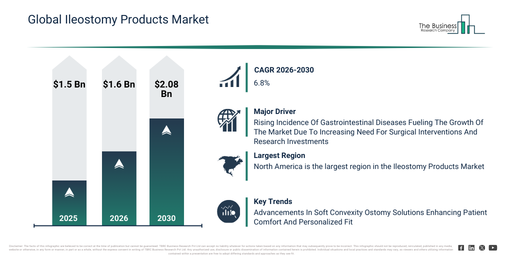
    The ileostomy products market has experienced significant growth in recent years. It is projected to expand from $1.5 billion in 2025 to $1.6 billion in 2026, achieving a compound annual growth rate (CAGR) of 6.8%. The historical growth of this market can be attributed to several factors, including an increase in colorectal and bowel surgeries, enhanced survival rates after gastrointestinal surgeries, the early adoption of basic ostomy systems, hospital-centered post-surgical care, and limited product customization options.

    The ileostomy products market is projected to experience substantial expansion in the coming years. By 2030, its valuation is anticipated to reach $2.08 billion, exhibiting a compound annual growth rate (CAGR) of 6.8%. This projected growth is driven by several factors, including an expanding elderly demographic, a growing inclination towards home healthcare options, innovations in ostomy materials and adhesives, enhanced patient understanding and educational initiatives, and the proliferation of outpatient surgical interventions. Key trends anticipated during this period encompass a heightened demand for products catering to long-term ostomy care, a growing preference for designs that are gentle on the skin and prevent leaks, an increase in managing ostomy care from home, the development of solutions tailored and customized to individual patients, and a greater emphasis on improving comfort and overall quality of life.

    Download the Free Sample Report to Explore Key Market Insights:

    https://www.thebusinessresearchcompany.com/sample.aspx?id=24247&type=smp

    Which Economic Or Industry Drivers Are Impacting The Ileostomy Products Market?

    A rise in the occurrence of gastrointestinal illnesses is projected to drive expansion in the ileostomy products market over the next few years. These conditions impact the digestive system, leading to impaired digestion and reduced nutrient absorption. The increase in gastrointestinal diseases is associated with poor dietary habits, specifically diets rich in processed items and deficient in fiber, which negatively affect gut well-being and foster conditions like IBS and inflammatory bowel disease. For certain gastrointestinal (GI) ailments requiring surgical creation of an ileostomy, ileostomy products are vital for management. They are instrumental in enabling patients to maintain comfort and hygiene following the bypass or removal of a section of their digestive tract. As an illustration, the Turkish Journal Of Gastroenterology, a journal from Turkey, reported in June 2025 that 6.9 million people worldwide currently suffer from inflammatory bowel disease (IBD). Consequently, the growing prevalence of gastrointestinal diseases will stimulate the expansion of the ileostomy products market.

    What Market Segments Are Evaluated Within The Ileostomy Products Market?

    The ileostomy products market covered in this report is segmented –

    1) By Type: Ileostomy Drainable Bags, Pouches, Flanges, Barriers, Accessories

    2) By Application: Permanent Ileostomy, Temporary Ileostomy

    3) By End User: Hospitals, Ambulatory Surgical Centers, Clinics, Other End Users

    Subsegments:

    1) By Ileostomy Drainable Bags: One-Piece Drainable Bags, Two-Piece Drainable Bags, Transparent Drainable Bags, Opaque Drainable Bags

    2) By Pouches: One-Piece Pouches, Two-Piece Pouches, Closed-End Pouches, High-Output Pouches, Urostomy Pouches

    3) By Flanges: Flat Flanges, Convex Flanges, Pre-Cut Flanges, Cut-To-Fit Flanges

    4) By Barriers: Skin Barrier Wafers, Extended Wear Barriers, Standard Wear Barriers, Moldable Barriers

    5) By Accessories: Barrier Rings, Barrier Strips, Ostomy Belt, Adhesive Removers, Deodorants, Skin Protectants, Seals And Pastes

    What Industry Trends Are Redefining The Ileostomy Products Market?

    Leading companies in the ileostomy products market are prioritizing the development of technologically advanced offerings, such as soft convexity ostomy solutions, to improve patient comfort. A soft convexity ostomy solution describes an ostomy appliance crafted with a gently curved (convex) baseplate that exerts light pressure around the stoma. For example, in April 2024, Convatec Group, a UK-based medical products and technology organization, introduced the Esteem Body with Leak Defense. Convatec’s Esteem Body presents eight combinations, featuring four tension locations and two convex depths, which facilitates a customized fit for optimal stoma protrusion and skin flattening. This adaptability ensures that each ostomate, with their distinct requirements, can achieve the most effective fit. The product’s Leak Defense technology merges Convatec’s gold-standard adhesives, Durahesive and Modified Stomahesive, with a soft convexity range to forge a secure seal and inhibit leaks while sustaining a predictable wear time. Furthermore, the new ‘body’ pouch is engineered with a patented ‘8-shape’ design that minimizes sagging as it fills, thereby enhancing both comfort and reliability.

    Who Are The Top Market Participants Influencing The Ileostomy Products Market?

    Major companies operating in the ileostomy products market are 3M Healthcare, B. Braun Melsungen AG, Smith & Nephew Plc, Hollister Incorporated, Coloplast A/S, ConvaTec Group Plc, Salts Healthcare Ltd, Welland Medical Ltd, Alcare Co. Ltd., Torbot Group, Cymed Micro Skin, Perfect Choice Medical Technologies, Schena Ostomy Technologies Inc., Flexicare (Group) Limited, TG Eakin Limited, Merlen Manufacturing Ltd, Pelican Healthcare Ltd, Nu-Hope Labs Inc., PermaType Medical, Fortis Medical Products Inc.

    Read the full ileostomy products market report here:

    https://www.thebusinessresearchcompany.com/report/ileostomy-products-global-market-report

    What Are The Top-Performing Regions Within The Ileostomy Products Market?

    North America was the largest region in the ileostomy products market in 2025. Asia-Pacific is expected to be the fastest-growing region in the forecast period. The regions covered in the ileostomy products market report are Asia-Pacific, South East Asia, Western Europe, Eastern Europe, North America, South America, Middle East, Africa.

    Request A Tailored Ileostomy Products Market Research Report For Competitive Advantage:

    https://www.thebusinessresearchcompany.com/customise?id=24247&type=smp

    Browse Through More Reports Similar to the Global Ileostomy Products Market 2026, By The Business Research Company

    Gastrointestinal Devices Market Report 2026

    https://www.thebusinessresearchcompany.com/report/gastrointestinal-devices-global-market-report

    Incontinence And Ostomy Care Products Market Report 2026

    https://www.thebusinessresearchcompany.com/report/incontinence-and-ostomy-care-products-global-market-report

    Bathroom Products Market Report 2026

    https://www.thebusinessresearchcompany.com/report/bathroom-products-global-market-report

    Get in touch with us:

    The Business Research Company: https://www.thebusinessresearchcompany.com/

    Americas +1 310-496-7795

    Asia +44 7882 955267 & +91 8897263534

    Europe +44 7882 955267

    Email us at info@tbrc.info

    Follow us on:

    LinkedIn: https://in.linkedin.com/company/the-business-research-company

    YouTube: https://www.youtube.com/channel/UC24_fI0rV8cR5DxlCpgmyFQ

    Global Market Model: https://www.thebusinessresearchcompany.com/global-market-model
  • Ibrutinib Market Revenue Forecast to Reach $64.77 Billion by 2030 at 24% CAGR

    Ibrutinib Market Revenue Forecast to Reach $64.77 Billion by 2030 at 24% CAGR

    The Business Research Company’s 2026 market reports include new capabilities such as market attractiveness scoring and analysis, total addressable market analysis, company scoring matrix, interactive excel data dashboard, improved supply chain analysis, upcoming startups in the market, and overview of key products, aimed at improving the depth, usability, and strategic value of the insights delivered.

    How Will The Market Size Of The Ibrutinib Market Evolve From 2026 To 2030?

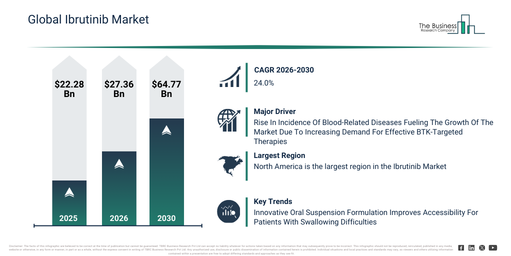
    The ibrutinib market size has undergone substantial expansion in recent years. It is forecast to rise from $22.28 billion in 2025 to $27.36 billion in 2026, achieving a compound annual growth rate (CAGR) of 22.8%. This historical growth can be linked to several contributing factors: the increasing prevalence of b-cell malignancies, the approvals of ibrutinib for cll and sll, the increasing adoption of oral anticancer therapies, advancements in btki research, and a growing awareness of targeted cancer therapies.

    The ibrutinib market is projected to experience substantial growth in the upcoming years. Its valuation is anticipated to reach $64.77 billion by 2030, demonstrating a compound annual growth rate (CAGR) of 24.0%. This expansion during the forecast period is driven by several factors, including the broadened application to new hematologic malignancies, advancements in next-generation BTKi, a rise in collaborations between pharmaceutical and biotechnology firms, increased funding for personalized oncology, and the proliferation of specialty oncology treatment centers. Key trends identified for this period encompass targeted BTK inhibition therapies, customized oncology treatments, the development of oral small-molecule drugs, strategies involving combination therapies, and the increasing establishment of specialty oncology centers.

    Download the Free Sample Report to Explore Key Market Insights:

    https://www.thebusinessresearchcompany.com/sample.aspx?id=13250&type=smp

    What Major Drivers Are Influencing Demand In The Ibrutinib Market?

    The increasing occurrence of blood disorders is anticipated to stimulate the expansion of the ibrutinib market in the future. These conditions involve medical issues impacting the various constituents of blood, including red blood cells, white blood cells, platelets, or plasma. The rise in these diseases is linked to the aging global population, as elderly individuals face a higher risk of ailments like anemia, leukemia, and clotting problems due to diminished immune function and accumulated health complications. Ibrutinib works to manage blood-related diseases by inhibiting BTK signaling, which in turn hinders the proliferation and survival of cancerous B-cells. For example, the American Cancer Society, a US-based cancer organization, reported 62,770 new cases of leukemia in 2024, projected to escalate to 66,890 cases by 2025. Consequently, the growing incidence of blood-related illnesses is propelling the ibrutinib market’s development.

    Which Segment Areas Are Covered In The Ibrutinib Market Analysis?

    The ibrutinib market covered in this report is segmented –

    1) By Type: Capsules, Tablets

    2) By Distribution Channel: Hospital Pharmacies, Retail Pharmacies, Online Pharmacies

    3) By Applications: Chronic Lymphocytic Leukemia (CLL), Small Lymphocytic Lymphoma (SLL), Other Applications

    4) By End-User: Hospitals, Clinics, Specialty Centers, Ambulatory Surgical Centers

    Subsegments:

    1) By Capsules: Hard Gelatin Capsules, Soft Gelatin Capsules

    2) By Tablets: Immediate Release Tablets, Extended Release Tablets

    What Key Developments And Trends Are Impacting The Ibrutinib Market?

    Major companies operating in the ibrutinib market are developing innovative solutions, such as adaptable cancer treatment options that provide a versatile formulation for patients who encounter difficulty swallowing tablets or capsules, thereby enhancing treatment accessibility and convenience. A flexible cancer treatment solution represents a patient-centric methodology designed to improve access and ease of treatment by offering alternatives like orally disintegrating tablets, chewable formulations, granules, or liquid suspensions that can be readily ingested. For instance, in February 2024, Johnson & Johnson, a US-based healthcare company, in collaboration with its alliance partner Pharmacyclics LLC, a US-based biopharmaceutical company, announced the FDA approval of an oral suspension formulation for IMBRUVICA (ibrutinib). This expanded label for IMBRUVICA covers treatment options for adult patients with chronic lymphocytic leukemia (CLL), small lymphocytic lymphoma (SLL), Waldenström’s macroglobulinemia (WM), and chronic graft versus host disease (cGVHD), providing a more accessible alternative for patients who have trouble swallowing tablets or capsules.

    Which Global Companies Are Actively Competing In The Ibrutinib Market?

    Major companies operating in the ibrutinib market are ABBVie Inc., Teva Pharmaceutical Industries Limited, Dr Reddy’s Laboratories Ltd., Apotex Inc., Cipla Limited, Zydus Lifesciences Limited, Sun Pharmaceutical Industries Ltd., Accord Healthcare Limited, Natco Pharma Ltd., Beacon Pharmaceuticals plc, MSN Laboratories Pvt Ltd., Hetero Drugs Ltd., Aurobindo Pharma Ltd., Glenmark Pharmaceuticals Ltd., Mylan N.V., Lupin Limited, Intas Pharmaceuticals Ltd., Cadila Healthcare Ltd., Torrent Pharmaceuticals Ltd., Alembic Pharmaceuticals Ltd.

    Read the full ibrutinib market report here:

    https://www.thebusinessresearchcompany.com/report/ibrutinib-global-market-report

    Which Region Shows The Strongest Potential For Future Growth In The Ibrutinib Market?

    North America was the largest region in the ibrutinib market in 2025. The regions covered in the ibrutinib market report are Asia-Pacific, South East Asia, Western Europe, Eastern Europe, North America, South America, Middle East, Africa.

    Request A Tailored Ibrutinib Market Research Report For Competitive Advantage:

    https://www.thebusinessresearchcompany.com/customise?id=13250&type=smp

    Browse Through More Reports Similar to the Global Ibrutinib Market 2026, By The Business Research Company

    Ibrutinib Market Report 2026

    https://www.thebusinessresearchcompany.com/report/ibrutinib-global-market-report

    Ranibizumab Market Report 2026

    https://www.thebusinessresearchcompany.com/report/ranibizumab-global-market-report

    Irritable Bowel Syndrome Ibs Treatment Market Report 2026

    https://www.thebusinessresearchcompany.com/report/irritable-bowel-syndrome-ibs-treatment-global-market-report

    Get in touch with us:

    The Business Research Company: https://www.thebusinessresearchcompany.com/

    Americas +1 310-496-7795

    Asia +44 7882 955267 & +91 8897263534

    Europe +44 7882 955267

    Email us at info@tbrc.info

    Follow us on:

    LinkedIn: https://in.linkedin.com/company/the-business-research-company

    YouTube: https://www.youtube.com/channel/UC24_fI0rV8cR5DxlCpgmyFQ

    Global Market Model: https://www.thebusinessresearchcompany.com/global-market-model
  • Hypoprothrombinemia Treatment Market Expected to Show Steady Growth, Approaching $2.3 Billion by 2030

    Hypoprothrombinemia Treatment Market Expected to Show Steady Growth, Approaching $2.3 Billion by 2030

    The Business Research Company’s 2026 market reports include new capabilities such as market attractiveness scoring and analysis, total addressable market analysis, company scoring matrix, interactive excel data dashboard, improved supply chain analysis, upcoming startups in the market, and overview of key products, aimed at improving the depth, usability, and strategic value of the insights delivered.

    What Is The Forecasted Market Value Of The Hypoprothrombinemia Treatment Market Across 2026–2030?

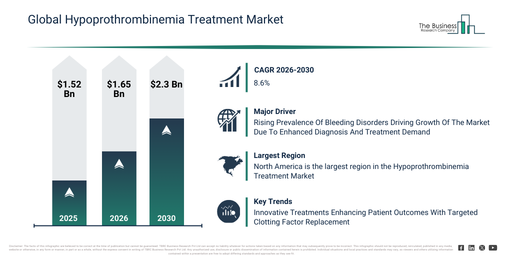
    The hypoprothrombinemia treatment market has witnessed robust growth in recent years. It is anticipated to increase from $1.52 billion in 2025 to $1.65 billion in 2026, achieving a compound annual growth rate (CAGR) of 8.9%. Historically, this growth can be attributed to the prevalence of vitamin K deficiency, complications from liver disease, overuse of anticoagulants, hospital transfusion protocols, and inherited clotting disorders.

    The hypoprothrombinemia treatment market is projected to experience substantial expansion over the upcoming years. This market is forecast to reach $2.3 billion by 2030, exhibiting a compound annual growth rate (CAGR) of 8.6%. Key drivers contributing to this growth during the projection period include advances in recombinant clotting factors, improved emergency care infrastructure, aging population bleeding risks, precision hematology adoption, outpatient coagulation management. Significant trends anticipated throughout the forecast horizon encompass increased use of prothrombin complex concentrates, growing reliance on rapid coagulation correction therapies, expansion of vitamin k-based treatment protocols, improved emergency bleeding management standards, rising adoption of recombinant coagulation factors.

    Download the Free Sample Report to Explore Key Market Insights:

    https://www.thebusinessresearchcompany.com/sample.aspx?id=24566&type=smp

    Which Market Drivers Are Supporting The Expansion Of The Hypoprothrombinemia Treatment Market?

    The hypoprothrombinemia treatment market is anticipated to expand due to the rising occurrence of bleeding disorders, conditions characterized by impaired blood clotting that results in excessive or prolonged bleeding. This increase in bleeding disorder cases is largely attributed to advancements in diagnostic methods and heightened public awareness, facilitating better detection and reporting. Treatments for hypoprothrombinemia aim to reinstate normal blood clotting by supplementing insufficient prothrombin in individuals suffering from bleeding disorders. For example, as reported by BMC Health Services Research, a UK journal focused on healthcare services, in November 2024, data from the United Kingdom between April 2022 and March 2023 revealed 6,662 males diagnosed with hemophilia A, including 5,032 adults (aged 18 and above), with 2,421 receiving treatment through either factor replacement therapy or emicizumab. Concurrently, 1,342 males were documented with hemophilia B during the same timeframe, of whom 1,022 were adults, and 479 underwent treatment with factor replacement. Consequently, the expanding prevalence of these bleeding conditions is projected to stimulate the growth of the hypoprothrombinemia treatment market.

    What Segmentation Levels Are Considered In The Hypoprothrombinemia Treatment Market?

    The hypoprothrombinemia treatment market covered in this report is segmented –

    1) By Type: Type I Deficiency Treatment, Type II Deficiency Treatment

    2) By Drug Type: Vitamin K, Fresh Frozen Plasma, Prothrombin Complex Concentrates, Recombinant Prothrombin

    3) By Indication Based: Vitamin K Deficiency, Liver Diseases, Cirrhosis, Hepatitis, Anticoagulant related Hypoprothrombinemia, Genetic Disorders, Malabsorption Syndromes

    4) By Drug Delivery Method: Oral Delivery, Injectable Delivery, Intravenous, Intramuscular, Transfusion Based Delivery

    5) By End User: Hospitals, Speciality Clinics, Homecare Settings

    Subsegments:

    1) By Type I Deficiency Treatment: Prothrombin Complex Concentrates (PCCs), Fresh Frozen Plasma (FFP), Recombinant Prothrombin, Plasma-derived Coagulation Factors

    2) By Type II Deficiency Treatment: Vitamin K Therapy, Warfarin Reversal Agents, Liver Function Supportive Therapy, Anticoagulant Adjustment Therapies

    What Trends Are Projected To Affect The Hypoprothrombinemia Treatment Market?

    Major companies engaged in hypoprothrombinemia treatment are prioritizing innovative therapies, such as non-activated four-factor prothrombin complex concentrate, to quickly restore clotting factor levels and reduce bleeding risks for patients needing urgent anticoagulation reversal. Non-activated four-factor prothrombin complex concentrate (4F-PCC) is a plasma-derived therapeutic agent comprising clotting factors II, VII, IX, and X, employed to rapidly counteract vitamin K antagonist effects and manage bleeding conditions like hypoprothrombinemia. For instance, in January 2024, Octapharma USA, a US-based healthcare company and subsidiary of Octapharma AG, introduced Balfaxar, a non-activated four-factor prothrombin complex concentrate (4F-PCC) that recently received FDA approval for the urgent reversal of vitamin K antagonist-induced coagulation deficiencies in adults requiring emergency surgery or invasive procedures. This therapy, containing crucial vitamin K-dependent clotting factors and antithrombotic proteins, addresses significant requirements in hypoprothrombinemia management.

    Which Leading Firms Are Contributing To The Growth Of The Hypoprothrombinemia Treatment Market?

    Major companies operating in the hypoprothrombinemia treatment market are Biotest AG, Kedrion Biopharma, LFB S.A., Hualan Biological Engineering Inc., China Biologic Products Holdings Inc., Bio Products Laboratory (BPL), Kamada Ltd., Green Cross Corporation, Shanghai RAAS Blood Products Co. Ltd., SK Plasma Co. Ltd., Emergent BioSolutions Inc., Intas Pharmaceuticals Ltd., Bharat Serums and Vaccines Ltd., ZLB Behring (CSL Behring), Mitsubishi Tanabe Pharma Corporation

    Read the full hypoprothrombinemia treatment market report here:

    https://www.thebusinessresearchcompany.com/report/hypoprothrombinemia-treatment-global-market-report

    How Is The Hypoprothrombinemia Treatment Market Distributed Across Key Geographic Regions?

    North America was the largest region in the hypoprothrombinemia treatment market in 2025. Asia-Pacific is expected to be the fastest-growing region in the forecast period. The regions covered in the hypoprothrombinemia treatment market report are Asia-Pacific, South East Asia, Western Europe, Eastern Europe, North America, South America, Middle East, Africa.

    Request A Tailored Hypoprothrombinemia Treatment Market Research Report For Competitive Advantage:

    https://www.thebusinessresearchcompany.com/customise?id=24566&type=smp

    Browse Through More Reports Similar to the Global Hypoprothrombinemia Treatment Market 2026, By The Business Research Company

    Hypophosphatasia Treatment Market Report 2026

    https://www.thebusinessresearchcompany.com/report/hypophosphatasia-treatment-global-market-report

    Thalassemia Drugs Market Report 2026

    https://www.thebusinessresearchcompany.com/report/thalassemia-drugs-global-market-report

    Anemia And Other Blood Disorder Drugs Market Report 2026

    https://www.thebusinessresearchcompany.com/report/anemia-and-other-blood-disorder-drugs-global-market-report

    Get in touch with us:

    The Business Research Company: https://www.thebusinessresearchcompany.com/

    Americas +1 310-496-7795

    Asia +44 7882 955267 & +91 8897263534

    Europe +44 7882 955267

    Email us at info@tbrc.info

    Follow us on:

    LinkedIn: https://in.linkedin.com/company/the-business-research-company

    YouTube: https://www.youtube.com/channel/UC24_fI0rV8cR5DxlCpgmyFQ

    Global Market Model: https://www.thebusinessresearchcompany.com/global-market-model
  • Hypoparathyroidism Industry Forecast Indicating Market Size of $1.54 Billion by 2030 at 8.2% CAGR

    Hypoparathyroidism Industry Forecast Indicating Market Size of $1.54 Billion by 2030 at 8.2% CAGR

    The Business Research Company’s 2026 market reports include new capabilities such as market attractiveness scoring and analysis, total addressable market analysis, company scoring matrix, interactive excel data dashboard, improved supply chain analysis, upcoming startups in the market, and overview of key products, aimed at improving the depth, usability, and strategic value of the insights delivered.

    What Market Size Increase Is Anticipated For The Hypoparathyroidism Market Over The 2026–2030 Period?

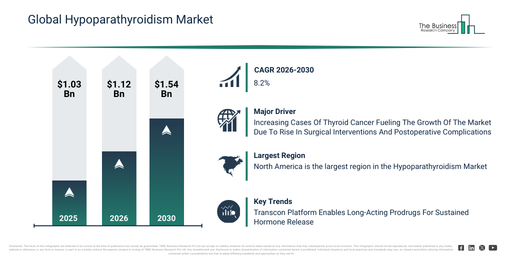
    The hypoparathyroidism market size has shown robust expansion in recent years. It is anticipated to increase from $1.03 billion in 2025 to $1.12 billion in 2026, at a compound annual growth rate (CAGR) of 8.6%. Historically, this growth can be attributed to thyroid surgery complications, calcium deficiency cases, rare disease awareness, hospital endocrine care, and hormone replacement availability.

    The hypoparathyroidism market is projected to experience substantial expansion in the coming years. This market is set to reach $1.54 billion by 2030, demonstrating a compound annual growth rate (CAGR) of 8.2%. This anticipated growth during the forecast period is attributable to several factors, including progress in recombinant therapies, enhanced diagnosis of rare diseases, patient adherence initiatives, the proliferation of specialty clinics, and the integration of precision endocrinology. Key trends identified for the forecast period encompass a rise in the diagnosis of rare endocrine conditions, the increasing application of recombinant parathyroid hormones, the broadening of long-term calcium management strategies, heightened awareness regarding post-surgical complications, and the creation of supplementary supportive treatments.

    Download the Free Sample Report to Explore Key Market Insights:

    https://www.thebusinessresearchcompany.com/sample.aspx?id=24565&type=smp

    What Underlying Factors Are Accelerating The Growth Of The Hypoparathyroidism Market?

    The anticipated expansion of the hypoparathyroidism market is linked to the rising incidence of thyroid cancer. Thyroid cancer is defined by the proliferation of atypical cells within the thyroid gland, frequently manifesting as a neck lump. This increase in thyroid cancer diagnoses is attributed to improvements in diagnostic imaging, which facilitate earlier and more regular identification of minor, symptom-free thyroid nodules. Thyroid cancer contributes to hypoparathyroidism by necessitating more thyroid operations, potentially leading to unintentional harm to the parathyroid glands. Such damage results in an imbalance of calcium and a persistent hormone deficit, thereby boosting the need for ongoing disease management strategies. For example, data from May 2024 by the American Cancer Society, a US-based non-profit organization, indicates that new thyroid cancer cases are projected to rise to 44,020 in 2025 from 43,720 in 2023. Consequently, the growing occurrence of thyroid cancer is a key factor propelling the hypoparathyroidism market’s expansion.

    How Is The Hypoparathyroidism Market Segmented Across Key Categories?

    The hypoparathyroidism market covered in this report is segmented –

    1) By Treatment: Hormone Replacement Therapy, Adjunctive Therapies

    2) By Type: Hormone Replacement Therapy, Calcium And Vitamin D Supplements, Emerging Therapies

    3) By Route Of Administration: Oral, Parenteral

    4) By Distribution Channel: Hospital Pharmacy, Retail Pharmacy, Online Pharmacy

    5) By End User: Hospitals, Specialty Clinics, Homecare Settings

    Subsegments:

    1) By Hormone Replacement Therapy: Recombinant Parathyroid Hormone, Parathyroid Hormone Analogues, Calcimimetics, Calcium And Vitamin D Supplements

    2) By Adjunctive Therapies: Magnesium Supplements, Phosphate Binders, Other Supportive Therapies

    Which Upcoming Trends Are Expected To Influence The Hypoparathyroidism Market?

    Major companies in the hypoparathyroidism market are concentrating on developing technologically advanced products, including transition technology-based products, to boost treatment efficacy and improve patient outcomes. TransCon technology-based products are therapeutics created using TransCon (Transient Conjugation) technology, a proprietary platform designed to optimize drug delivery. For instance, in January 2024, Ascendis Pharma A/S, a Denmark-based biopharmaceutical company, launched YORVIPATH (palopegteriparatide), its second TransCon technology-based product, in Germany and Austria for the treatment of adults with chronic hypoparathyroidism. YORVIPATH is a once-daily prodrug of parathyroid hormone (PTH 1-34) formulated to maintain physiological PTH levels over 24 hours, thereby addressing the underlying hormone deficiency in chronic hypoparathyroidism.

    Who Are The Dominant Players Shaping The Hypoparathyroidism Market Landscape?

    Major companies operating in the hypoparathyroidism market are Pfizer Inc., F. Hoffmann-La Roche Ltd., Merck & Co Inc., AbbVie Inc., Sanofi S.A., Novartis AG, GlaxoSmithKline plc , Takeda Pharmaceutical Company Limited, Eli Lilly and Company, Amgen Inc., Teva Pharmaceutical Industries Ltd., Dr. Reddy’s Laboratories Ltd., Cipla Limited , Lupin Limited, Torrent Pharmaceuticals Ltd., Eagle Pharmaceuticals Inc., BridgeBio Pharma Inc., Ascendis Pharma A/S, Extend Biosciences Inc., Entera Bio Ltd.

    Read the full hypoparathyroidism market report here:

    https://www.thebusinessresearchcompany.com/report/hypoparathyroidism-global-market-report

    Which Region Is Projected To Dominate The Hypoparathyroidism Market During The Forecast Period?

    North America was the largest region in the hypoparathyroidism market in 2025. Asia-Pacific is expected to be the fastest-growing region in the forecast period. The regions covered in the hypoparathyroidism market report are Asia-Pacific, South East Asia, Western Europe, Eastern Europe, North America, South America, Middle East, Africa.

    Request A Tailored Hypoparathyroidism Market Research Report For Competitive Advantage:

    https://www.thebusinessresearchcompany.com/customise?id=24565&type=smp

    Browse Through More Reports Similar to the Global Hypoparathyroidism Market 2026, By The Business Research Company

    Homeopathy Market Report 2026

    https://www.thebusinessresearchcompany.com/report/homeopathy-global-market-report

    Thyroid Function Test Market Report 2026

    https://www.thebusinessresearchcompany.com/report/thyroid-function-test-global-market-report

    Anti Thyroid Drugs Market Report 2026

    https://www.thebusinessresearchcompany.com/report/anti-thyroid-drugs-global-market-report

    Get in touch with us:

    The Business Research Company: https://www.thebusinessresearchcompany.com/

    Americas +1 310-496-7795

    Asia +44 7882 955267 & +91 8897263534

    Europe +44 7882 955267

    Email us at info@tbrc.info

    Follow us on:

    LinkedIn: https://in.linkedin.com/company/the-business-research-company

    YouTube: https://www.youtube.com/channel/UC24_fI0rV8cR5DxlCpgmyFQ

    Global Market Model: https://www.thebusinessresearchcompany.com/global-market-model
  • Hypolipidemics Market Revenue Anticipated to Reach $37.34 Billion by 2030 with a CAGR of 3.3%

    Hypolipidemics Market Revenue Anticipated to Reach $37.34 Billion by 2030 with a CAGR of 3.3%

    The Business Research Company’s 2026 market reports include new capabilities such as market attractiveness scoring and analysis, total addressable market analysis, company scoring matrix, interactive excel data dashboard, improved supply chain analysis, upcoming startups in the market, and overview of key products, aimed at improving the depth, usability, and strategic value of the insights delivered.

    How Much Is The Hypolipidemics Market Expected To Grow In Terms Of Market Value Between 2026 And 2030?

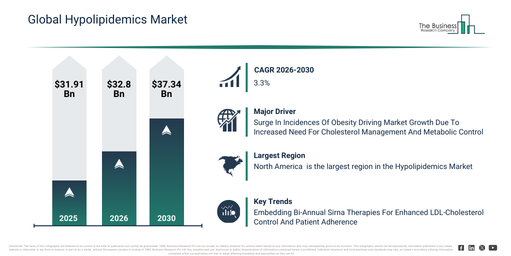
    The hypolipidemics market has demonstrated consistent expansion in recent years. It is anticipated to grow from $31.91 billion in 2025 to $32.8 billion in 2026, achieving a compound annual growth rate (CAGR) of 2.8%. This historical increase can be attributed to several factors, including the rising prevalence of cardiovascular disease, the widespread adoption of statins, increased cholesterol screening rates, improved access to essential cardiovascular drugs, and the expansion of hospital and pharmacy networks.

    The hypolipidemics market size is projected to experience consistent expansion over the upcoming years. This market is forecast to reach $37.34 billion by 2030, demonstrating a compound annual growth rate (CAGR) of 3.3%. Factors contributing to this expansion during the forecast period include the worldwide aging demographic, a greater prevalence of dyslipidemia, a heightened emphasis on preventive cardiology, the proliferation of combination lipid therapies, and broadened healthcare accessibility in developing regions. Key trends anticipated for the forecast period encompass a surge in the long-term application of lipid-lowering treatments, a wider acceptance of combination hypolipidemic medications, an intensified focus on preventive cardiovascular drug therapy, the broader use of generic statins, and enhanced oversight of cholesterol management results.

    Download the Free Sample Report to Explore Key Market Insights:

    https://www.thebusinessresearchcompany.com/sample.aspx?id=2435&type=smp

    Which Growth Drivers Are Contributing To The Progress Of The Hypolipidemics Market?

    An increasing number of obesity cases is anticipated to drive the expansion of the hypolipidemic drugs market moving forward. Obesity, a persistent metabolic condition, is characterized by excessive body fat accumulation, frequently leading to heightened cholesterol levels, insulin resistance, and an elevated risk of cardiovascular issues. The escalating rates of obesity are primarily due to increased consumption of ultra-processed, calorie-dense foods, coupled with reduced physical movement associated with contemporary sedentary lifestyles. In the context of obesity, hypolipidemic medications are utilized to reduce high cholesterol levels, which can pose a risk for cardiovascular complications in individuals carrying excessive body fat. For example, in October 2025, according to Forbes, a US-based business media company, the prevalence of adult obesity in the United States was 40.3%, with women at 41.3% and men at 39.2%, while the global prevalence of obesity among children and adolescents aged 5 to 19 years reached 9.4%. Consequently, the rising instances of obesity are fueling the growth of the hypolipidemic drug market.

    What Major Segment Divisions Exist Within The Hypolipidemics Market?

    The hypolipidemics market covered in this report is segmented –

    1) By Product Type: HMG-CoA Reductase Inhibitors, Nicotinic Acid Drugs

    2) By Drug Type: Statins, Bile Acid Sequestrants, Cholesterol Absorption Inhibitors, PCSK9 Inhibitors, Other Drug Types

    3) By Application: Hospital, Clinics, Pharmacy

    Subsegments:

    1) By HMG-CoA Reductase Inhibitors: Atorvastatin, Rosuvastatin, Simvastatin, Lovastatin, Pravastatin, Fluvastatin

    2) By Nicotinic Acid Drugs: Niacin (Vitamin B3), Extended-release Niacin

    How Are Trends Shaping The Direction Of The Hypolipidemics Market?

    Leading companies in the hypolipidemics market are concentrating on developing innovative products and formulations, such as siRNA-based LDL-cholesterol–lowering treatments administered twice yearly. This effort aims to enhance patient adherence, decrease the burden of treatment, and provide lasting lipid control with fewer injections. These specific therapies integrate powerful lipid-lowering mechanisms with convenient dosing schedules, thereby addressing both clinical results and patient quality of life. For instance, in July 2025, Novartis, a Switzerland-based pharmaceutical firm, announced that its product Leqvio (inclisiran) gained FDA approval for initial use in individuals requiring LDL-cholesterol reduction, allowing a greater number of patients to benefit from its twice-yearly dosing regimen. Inclisiran functions by silencing the PCSK9 gene in the liver through RNA interference, delivering sustained LDL-lowering with just two doses per year. This approval signifies a shift within the hypolipidemics market towards highly effective, long-acting therapies that facilitate long-term cardiovascular risk management without requiring frequent dosing.

    Which Companies Are Leading Innovation In The Hypolipidemics Market?

    Major companies operating in the hypolipidemics market are Pfizer Inc., AstraZeneca Plc, Novartis AG, Sanofi-Aventis, Merck Sharp & Dohme B.V., Amgen Plc, Abbott Laboratories Limited, Daiichi Sankyo Company Limited, Kowa Company Ltd., Viatris Inc., Teva Pharmaceutical Industries Ltd., Sun Pharmaceutical Industries Limited, Dr. Reddy’s Laboratories Ltd., Lupin Limited, Zydus Lifesciences Limited, Torrent Pharmaceuticals Ltd., Cipla Limited, Wockhardt Limited, Alembic Pharmaceuticals Limited, Intas Pharmaceuticals Ltd.

    Read the full hypolipidemics market report here:

    https://www.thebusinessresearchcompany.com/report/hypolipidemics-global-market-report

    What Are The Leading Geographic Regions In The Hypolipidemics Market?

    North America was the largest region in the hypolipidemic drugs market in 2025. The Middle East is expected to be the fastest-growing region in the hypolipidemic drugs market during the forecast period. The regions covered in the hypolipidemics market report are Asia-Pacific, South East Asia, Western Europe, Eastern Europe, North America, South America, Middle East, Africa.

    Request A Tailored Hypolipidemics Market Research Report For Competitive Advantage:

    https://www.thebusinessresearchcompany.com/customise?id=2435&type=smp

    Browse Through More Reports Similar to the Global Hypolipidemics Market 2026, By The Business Research Company

    Hypolipidemics Market Report 2026

    https://www.thebusinessresearchcompany.com/report/hypolipidemics-global-market-report

    Phospholipid Market Report 2026

    https://www.thebusinessresearchcompany.com/report/phospholipid-global-market-report

    Lecithin And Phospholipids Market Report 2026

    https://www.thebusinessresearchcompany.com/report/lecithin-and-phospholipids-global-market-report

    Get in touch with us:

    The Business Research Company: https://www.thebusinessresearchcompany.com/

    Americas +1 310-496-7795

    Asia +44 7882 955267 & +91 8897263534

    Europe +44 7882 955267

    Email us at info@tbrc.info

    Follow us on:

    LinkedIn: https://in.linkedin.com/company/the-business-research-company

    YouTube: https://www.youtube.com/channel/UC24_fI0rV8cR5DxlCpgmyFQ

    Global Market Model: https://www.thebusinessresearchcompany.com/global-market-model
  • Global Hyperuricemia Drugs Market Projected for Strong Growth, Reaching $7.64 Billion by 2030 at 8.1% CAGR

    Global Hyperuricemia Drugs Market Projected for Strong Growth, Reaching $7.64 Billion by 2030 at 8.1% CAGR

    The Business Research Company’s 2026 market reports include new capabilities such as market attractiveness scoring and analysis, total addressable market analysis, company scoring matrix, interactive excel data dashboard, improved supply chain analysis, upcoming startups in the market, and overview of key products, aimed at improving the depth, usability, and strategic value of the insights delivered.

    What Market Value Is Expected For The Hyperuricemia Drugs Market At The End Of The 2026–2030 Forecast Period?

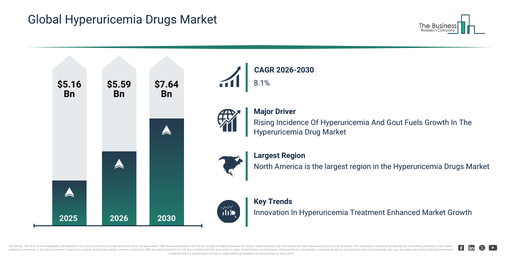
    The hyperuricemia drugs market size has seen substantial growth over recent years. It is projected to expand from $5.16 billion in 2025 to $5.59 billion in 2026, with a compound annual growth rate (CAGR) of 8.4%. Historically, this expansion can be attributed to factors such as the restricted availability of advanced hyperuricemia drugs, an increasing occurrence of gout and kidney stones, a lack of patient understanding about uric acid management, a reliance on traditional anti-inflammatory medications, and the development of hospital and clinic infrastructure.

    The hyperuricemia drugs market size is anticipated to demonstrate significant expansion over the next few years. It is forecast to reach $7.64 billion by 2030, exhibiting a compound annual growth rate (CAGR) of 8.1%. This growth during the forecast period is propelled by factors such as the development of selective uric acid reabsorption inhibitors (suri), increased adoption of combination therapy, growing awareness of preventive care and lifestyle modifications, the expansion of homecare services, and rising government initiatives for metabolic disorder management. Prominent trends within the forecast period include the increasing prevalence of hyperuricemia and gout, greater utilization of xanthine oxidase inhibitors and uricosuric agents, the growth of combination therapy and supportive care medications, the expansion of homecare and specialty clinics for hyperuricemia management, and an emphasis on lifestyle modification and preventive care supplements.

    Download the Free Sample Report to Explore Key Market Insights:

    https://www.thebusinessresearchcompany.com/sample.aspx?id=19517&type=smp

    What Primary Drivers Are Shaping The Development Of The Hyperuricemia Drugs Market?

    The increasing occurrence of hyperuricemia and gout is anticipated to fuel the expansion of the hyperuricemia drug market moving ahead. Hyperuricemia refers to a state marked by abnormally high concentrations of uric acid in the bloodstream, potentially resulting in gout, a severe type of arthritis stemming from the buildup of urate crystals within the joints. Several elements impact the prevalence of hyperuricemia and gout, including genetic susceptibility, eating patterns (especially significant purine consumption), excess weight, renal performance, lifestyle decisions (like drinking alcohol and insufficient hydration), particular drugs, and ongoing health issues such as high blood pressure and diabetes. Medications for hyperuricemia play a crucial role in managing uric acid concentrations, thereby aiding in averting the onset and advancement of hyperuricemia and gout by diminishing uric acid accumulation and easing related discomforts. As an illustration, in July 2024, data released by The Lancet, a UK-based general medical journal, indicated that worldwide, gout was 3.26 times more prevalent in males than in females in 2020 and its occurrence rose with age, anticipating approximately 95.8 million prevalent cases by 2050. Consequently, the increasing occurrence of hyperuricemia and gout is propelling expansion within the hyperuricemia drug market.

    What Segment Types Make Up The Hyperuricemia Drugs Market?

    The hyperuricemia drugs market covered in this report is segmented –

    1) By Type: Asymptomatic Hyperuricemia, Symptomatic Hyperuricemia, Other Types

    2) By Drugs: Nonsteroidal Anti-Inflammatory Drugs, Xanthine Oxidase Inhibitors, Selective Uric Acid Reabsorption Inhibitor (SURI), Uricosuric Agents, Other Drugs

    3) By Diseases: Gout, Kidney Stone, Other Diseases

    4) By End-User: Hospitals, Homecare, Specialty Clinics, Other End-Users

    Subsegments:

    1) By Asymptomatic Hyperuricemia: Uric Acid Lowering Agents, Lifestyle Modification Supplements

    2) By Symptomatic Hyperuricemia: Anti-Inflammatory Drugs, Uric Acid Inhibitors

    3) By Other Types: Combination Therapy, Dietary Supplements

    Which Market Trends Are Creating New Opportunities In The Hyperuricemia Drugs Market?

    Leading firms within the hyperuricemia drug market are prioritizing the creation of novel offerings, specifically therapeutic equivalent generic versions, aiming to deliver affordable options that improve patient access to gout therapy. These generic versions are drugs containing an identical active component to their brand-name counterparts, supplied in the same dosage format, and anticipated to exhibit comparable clinical efficacy and safety characteristics. An illustrative example occurred in January 2024, when Lupin, a pharmaceutical entity based in India, secured clearance from the US health authority for its Febuxostat Tablets (40 mg and 80 mg) and Varenicline Tablets (0.5 mg and 1 mg). The objective of these generic medications is to offer more economical choices for individuals needing hyperuricemia therapy (Febuxostat) and assistance with quitting smoking (Varenicline). Through the introduction of these generics, Lupin intends to broaden availability of crucial medicines, simultaneously gaining a portion of the US pharmaceutical sector and providing patients with economical alternatives for their health requirements.

    Who Are The Key Players Driving Competition In The Hyperuricemia Drugs Market?

    Major companies operating in the hyperuricemia drugs market are Pfizer Inc., Merck & Co., Bayer AG, Sanofi SA, AstraZeneca plc, Novartis AG, Boehringer Ingelheim International GmbH, Teva Pharmaceuticals, Teijin Pharma Limited, Sun Pharmaceutical Industries Ltd., Dr. Reddy’s Laboratories Ltd., Hikma Pharmaceuticals PLC, Amneal Pharmaceuticals Inc., Glenmark Pharmaceuticals Ltd., Kissei Pharmaceutical Co. Ltd., Fuji Yakuhin Co. Ltd.

    Read the full hyperuricemia drugs market report here:

    https://www.thebusinessresearchcompany.com/report/hyperuricemia-drugs-global-market-report

    How Does The Hyperuricemia Drugs Market Perform Across Major Global Regions?

    North America was the largest region in the hyperuricemia drugs market in 2025. The regions covered in the hyperuricemia drugs market report are Asia-Pacific, South East Asia, Western Europe, Eastern Europe, North America, South America, Middle East, Africa.

    Request A Tailored Hyperuricemia Drugs Market Research Report For Competitive Advantage:

    https://www.thebusinessresearchcompany.com/customise?id=19517&type=smp

    Browse Through More Reports Similar to the Global Hyperuricemia Drugs Market 2026, By The Business Research Company

    Acne Drugs Market Report 2026

    https://www.thebusinessresearchcompany.com/report/acne-drugs-global-market-report

    Prostate Cancer Drugs Market Report 2026

    https://www.thebusinessresearchcompany.com/report/prostate-cancer-drugs-global-market-report

    Ovarian Cancer Drugs Market Report 2026

    https://www.thebusinessresearchcompany.com/report/ovarian-cancer-drugs-global-market-report

    Get in touch with us:

    The Business Research Company: https://www.thebusinessresearchcompany.com/

    Americas +1 310-496-7795

    Asia +44 7882 955267 & +91 8897263534

    Europe +44 7882 955267

    Email us at info@tbrc.info

    Follow us on:

    LinkedIn: https://in.linkedin.com/company/the-business-research-company

    YouTube: https://www.youtube.com/channel/UC24_fI0rV8cR5DxlCpgmyFQ

    Global Market Model: https://www.thebusinessresearchcompany.com/global-market-model
  • Hyperphosphatemia Treatment Market Expected to Reach $9.52 Billion by 2030 at a CAGR of 13.4%

    Hyperphosphatemia Treatment Market Expected to Reach $9.52 Billion by 2030 at a CAGR of 13.4%

    The Business Research Company’s 2026 market reports include new capabilities such as market attractiveness scoring and analysis, total addressable market analysis, company scoring matrix, interactive excel data dashboard, improved supply chain analysis, upcoming startups in the market, and overview of key products, aimed at improving the depth, usability, and strategic value of the insights delivered.

    What Is The Estimated Market Size Of The Hyperphosphatemia Treatment Market During 2026–2030?

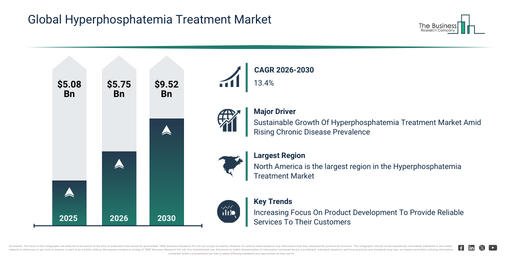
    The hyperphosphatemia treatment market has experienced substantial expansion in recent years. Its value is projected to increase from $5.08 billion in 2025 to $5.75 billion in 2026, demonstrating a compound annual growth rate (CAGR) of 13.2%. Historically, this growth was driven by factors such as a high incidence of renal failure, insufficient knowledge regarding phosphate management, constraints of traditional treatments, hospital-focused therapy provision, and reliance on calcium-based phosphate binders.

    The hyperphosphatemia treatment market is projected for swift expansion in the upcoming years. Its value is anticipated to reach $9.52 billion by 2030, demonstrating a compound annual growth rate (CAGR) of 13.4%. This anticipated expansion during the forecast period is fueled by several factors, including developments in non-calcium phosphate binders, the incorporation of digital health monitoring, a surge in the embrace of precision medicine, growing capital allocation towards innovative therapies, and the proliferation of e-pharmacy channels. Key patterns observed over the forecast horizon involve the escalating occurrence of chronic kidney disease, increased utilization of phosphate binders, the expansion of at-home dialysis options, broadened hospital pharmacy networks, and the creation of new hyperphosphatemia treatments.

    Download the Free Sample Report to Explore Key Market Insights:

    https://www.thebusinessresearchcompany.com/sample.aspx?id=5852&type=smp

    Which Major Factors Are Driving The Expansion Of The Hyperphosphatemia Treatment Market?

    The expanding occurrence of chronic illnesses in patients is propelling the expansion of the hyperphosphatemia treatment market. These conditions are non-contagious and necessitate ongoing medical attention. A significant proportion of these long-term ailments encompass cardiovascular diseases, chronic kidney disease, chronic respiratory conditions, hyperparathyroidism, diabetes, and cancer. For example, in September 2023, the World Health Organization, a specialized UN agency located in Switzerland, reported 41 million deaths annually worldwide, with 74% attributable to non-communicable diseases (NCDs) or chronic diseases. Additionally, data from February 2023 by SingleCare Services LLC, a US-based healthcare savings platform, indicated a rising prevalence of kidney diseases, where untreated kidney failure tragically results in approximately 1 million individuals’ deaths each year. The incidence of hyperphosphatemia has risen among individuals suffering from end-stage renal disease (ESRD), consequently boosting the demand for hyperphosphatemia treatment or medications.

    How Are The Various Segments Of The Hyperphosphatemia Treatment Market Categorized?

    The hyperphosphatemia treatment market covered in this report is segmented –

    1) By Product: Sevelamer, Calcium-Based Phosphate Binders, Iron-Based Phosphate Binders, Lanthanum Carbonate, Other products

    2) By Distribution channel: Hospital Pharmacy, Retail Pharmacy, Online stores

    3) By End-User: Chronic Kidney Disease (CKD) Patients on Dialysis, Non-Dialysis CKD Patients, Post-Kidney Transplant Patients

    Subsegments:

    1) By Sevelamer: Sevelamer Hydrochloride, Sevelamer Carbonate

    2) By Calcium-Based Phosphate Binders: Calcium Acetate, Calcium Carbonate

    3) By Iron-Based Phosphate Binders: Ferric Citrate, Ferric Sulfate

    4) By Lanthanum Carbonate: Lanthanum Carbonate Hydrate

    5) By Other Products: Magnesium-Based Phosphate Binders, Novel Phosphate Binders

    What Trends Are Affecting The Expansion Of The Hyperphosphatemia Treatment Market?

    Leading companies in the hyperphosphatemia treatment market are prioritizing the development of innovative products, such as Xphozah, to boost their revenue. Xphozah is specifically designed to manage hyperphosphatemia, a condition characterized by excessive phosphorus that causes calcium to be removed from bones and various body parts. For instance, in October 2023, Ardelyx Inc., a US-based biopharmaceutical company, received approval for Xphozah. This approval was granted for treating hyperphosphatemia, which leads to calcium depletion from bones and other tissues in the body. An overabundance of phosphorus can contribute to brittle bones, joint discomfort, muscle cramps, and itchy skin. The FDA has approved this medication for use in patients who have not responded adequately to or are intolerant of phosphate binder therapies, which currently represent the standard of care for this condition.

    Which Major Firms Influence Developments In The Hyperphosphatemia Treatment Market?

    Major companies operating in the hyperphosphatemia treatment market are Sanofi SA, Akebia Therapeutics Inc., Ardelyx Inc., Astellas Pharma Inc., Fresenius Medical Care AG & Co. KGaA, Lupin Limited, Sun Pharmaceutical Industries Ltd., Takeda Pharmaceutical Company Limited, Ultragenyx Pharmaceutical Inc., Unicycive Therapeutics Inc., Vifor Pharma Management Ltd., Zeria Pharmaceutical Co. Ltd., Amgen Inc., AstraZeneca plc, Baxter International Inc., Kyowa Kirin Co. Ltd., Ipsen, Shionogi & Co. Ltd., Otsuka Pharmaceutical Co. Ltd., Bayer AG, Boehringer Ingelheim International GmbH, Novartis International AG

    Read the full hyperphosphatemia treatment market report here:

    https://www.thebusinessresearchcompany.com/report/hyperphosphatemia-treatment-global-market-report

    Which Region Currently Holds The Largest Share Of The Hyperphosphatemia Treatment Market?

    North America was the largest region in the hyperphosphatemia treatment market in 2025. Asia-Pacific is expected to be the fastest-growing region in the forecast period. The regions covered in the hyperphosphatemia treatment market report are Asia-Pacific, South East Asia, Western Europe, Eastern Europe, North America, South America, Middle East, Africa.

    Request A Tailored Hyperphosphatemia Treatment Market Research Report For Competitive Advantage:

    https://www.thebusinessresearchcompany.com/customise?id=5852&type=smp

    Browse Through More Reports Similar to the Global Hyperphosphatemia Treatment Market 2026, By The Business Research Company

    Hyperphosphatemia Treatment Market Report 2026

    https://www.thebusinessresearchcompany.com/report/hyperphosphatemia-treatment-global-market-report

    Mineral And Bone Disorder Treatment Market Report 2026

    https://www.thebusinessresearchcompany.com/report/mineral-and-bone-disorder-treatment-global-market-report

    Food Phosphate Market Report 2026

    https://www.thebusinessresearchcompany.com/report/food-phosphate-global-market-report

    Get in touch with us:

    The Business Research Company: https://www.thebusinessresearchcompany.com/

    Americas +1 310-496-7795

    Asia +44 7882 955267 & +91 8897263534

    Europe +44 7882 955267

    Email us at info@tbrc.info

    Follow us on:

    LinkedIn: https://in.linkedin.com/company/the-business-research-company

    YouTube: https://www.youtube.com/channel/UC24_fI0rV8cR5DxlCpgmyFQ

    Global Market Model: https://www.thebusinessresearchcompany.com/global-market-model
  • Hyper-Personalized Medicine Market Forecast 2026–2035 Reflecting Growth Opportunities Across Industries

    Hyper-Personalized Medicine Market Forecast 2026–2035 Reflecting Growth Opportunities Across Industries

    The Business Research Company’s 2026 market reports include new capabilities such as market attractiveness scoring and analysis, total addressable market analysis, company scoring matrix, interactive excel data dashboard, improved supply chain analysis, upcoming startups in the market, and overview of key products, aimed at improving the depth, usability, and strategic value of the insights delivered.

    What Market Size Expansion Is Predicted For The Hyper-Personalized Medicine Market Between 2026 And 2030?

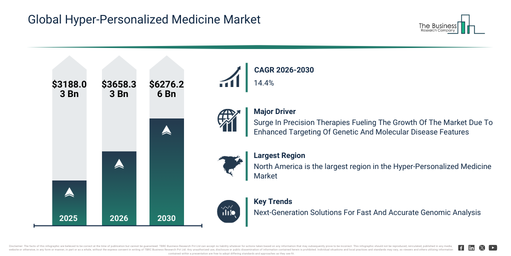
    The hyper-personalized medicine market size has demonstrated substantial growth in recent years. This market is anticipated to expand from $3188.03 billion in 2025 to $3658.33 billion in 2026, at a compound annual growth rate (CAGR) of 14.8%. The historical expansion of this market can be linked to factors such as the initial limited accessibility of personalized medicine solutions, the prevailing reliance on conventional treatment methodologies, an increasing patient demand for customized therapies, heightened investment in genomics research, and the early integration of molecular diagnostics.

    The hyper-personalized medicine market is anticipated to experience swift expansion over the coming years. By 2030, its valuation is projected to reach $6276.26 billion, demonstrating a compound annual growth rate (CAGR) of 14.4%. This anticipated growth during the forecast period is largely due to several factors, including progress in gene and cell therapies, the incorporation of AI and bioinformatics into clinical settings, the expansion of precision nutrition and wellness offerings, increasing governmental support for personalized medicine, and the greater uptake of companion diagnostics along with liquid biopsy technologies. Key trends emerging in this period encompass the wider deployment of AI-powered clinical decision support systems, the increasing acceptance of individualized treatment strategies and precise surgical methods, a growing need for telemedicine and remote patient monitoring solutions, a heightened emphasis on nutrigenomics and customized dietary recommendations, and the creation of RNA-based and targeted therapeutic interventions.

    Download the Free Sample Report to Explore Key Market Insights:

    https://www.thebusinessresearchcompany.com/sample.aspx?id=27313&type=smp

    What Key Drivers Are Influencing The Growth Of The Hyper-Personalized Medicine Market?

    The increasing need for precision therapies is projected to boost the expansion of the hyper-personalized medicine market going forward. Precision therapies refer to medical treatments specifically designed to target distinct genetic, molecular, or cellular features of a disease, allowing for more effective and individualized interventions with fewer side effects compared to traditional treatments. These therapies are gaining prominence due to their capacity to address specific genetic or molecular disease characteristics, leading to enhanced and personalized patient outcomes. Hyper-personalized medicine aids precision therapies by enabling treatments to be precisely tailored to an individual’s unique genetic, molecular, and lifestyle factors, thereby maximizing their effectiveness and minimizing adverse effects. For instance, in February 2024, according to the Personalized Medicine Coalition, a US-based non-profit organization, the Food and Drug Administration (FDA) approved 16 novel personalized therapies for patients with rare diseases in 2023, which is a significant rise from 6 approvals in 2022. Therefore, the heightened demand for precision therapies is actively propelling the growth of the hyper-personalized medicine market.

    Which Market Segments Are Examined In The Hyper-Personalized Medicine Market Study?

    The hyper-personalized medicine market covered in this report is segmented –

    1) By Product: Hyper Personalized Medicine Diagnostics, Hyper Personalized Medicine Therapeutics, Hyper Personalized Medical Care, Hyper Personalized Nutrition And Wellness

    2) By Technology: Genomics, Proteomics, Bioinformatics, Metabolomics

    3) By Application: Oncology, Neurology, Blood Transfusion Safety, Diabetes, Autoimmune Diseases, Cardiology

    4) By End User: Hospitals, Diagnostic Centers, Research And Academic Institutes

    Subsegments:

    1) By Hyper Personalized Medicine Diagnostics: Genomic Sequencing, Biomarker Testing, Molecular Diagnostics, Companion Diagnostics, Liquid Biopsy

    2) By Hyper Personalized Medicine Therapeutics: Targeted Drug Therapies, Gene Therapy, Cell Therapy, Immunotherapy, RNA-based Therapeutics

    3) By Hyper Personalized Medical Care: Telemedicine And Remote Monitoring, Personalized Treatment Plans, AI-driven Clinical Decision Support, Patient-specific Rehabilitation, Precision Surgery

    4) By Hyper Personalized Nutrition And Wellness: Nutrigenomics, Personalized Diet Plans, Microbiome Analysis, Customized Supplements, Wellness Coaching And Monitoring

    Which Trends Are Influencing The Hyper-Personalized Medicine Market?

    Major companies in the hyper-personalized medicine market are increasingly directing their efforts towards innovative solutions, particularly accelerated whole-genome sequencing (WGS) analysis platforms, to meet the growing demand for faster, more precise genomic insights, AI-driven clinical decision support, and scalable companion diagnostics that facilitate genuinely individualized therapies and dosing. Accelerated whole-genome sequencing (WGS) analysis platforms are sophisticated, software-driven systems that rapidly transform raw genomic data into clinically meaningful information, aiding clinicians and researchers in making quicker and more accurate diagnostic and treatment decisions. For instance, in May 2024, SOPHiA GENETICS SA, a Switzerland-based data-driven healthcare and diagnostics company, launched a new WGS application designed to deliver fully analyzed whole-genome insights on an accelerated timeline for clinicians and researchers. The platform incorporates end-to-end automated workflows, from initial FASTQ files to variant interpretation, leveraging cloud computing and optimized algorithms to shorten turnaround times. It also includes clinical decision-support modules for oncology and rare diseases, supports scalability for hospitals and biotech organizations, and often provides analyzed reports on the same day.

    Who Are The Primary Competitors In The Hyper-Personalized Medicine Market?

    Major companies operating in the hyper-personalized medicine market are Pfizer Inc., Johnson & Johnson, Roche Holding AG, Bayer AG, Sanofi S.A., Bristol-Myers Squibb Company, AstraZeneca PLC, Abbott Laboratories, Novartis AG, Danaher Corporation, Amgen Inc., Merck KGaA, GE Healthcare Technologies Inc., Biogen Inc., Illumina Inc., Guardant Health Inc., Berry Genomics Co. Ltd., Sophia Genetics SA, Mapmygenome, InnoCare Pharma.

    Read the full hyper-personalized medicine market report here:

    https://www.thebusinessresearchcompany.com/report/hyper-personalized-medicine-global-market-report

    Which Region Is Expected To Register The Fastest Growth In The Hyper-Personalized Medicine Market?

    North America was the largest region in the hyper-personalized medicine market in 2025. Asia-Pacific is expected to be the fastest-growing region in the forecast period. The regions covered in the hyper-personalized medicine market report are Asia-Pacific, South East Asia, Western Europe, Eastern Europe, North America, South America, Middle East, Africa.

    Request A Tailored Hyper-Personalized Medicine Market Research Report For Competitive Advantage:

    https://www.thebusinessresearchcompany.com/customise?id=27313&type=smp

    Browse Through More Reports Similar to the Global Hyper-Personalized Medicine Market 2026, By The Business Research Company

    Mouse Market Report 2026

    https://www.thebusinessresearchcompany.com/report/mouse-global-market-report

    Museums Historical Sites Zoos And Parks Market Report 2026

    https://www.thebusinessresearchcompany.com/report/museums-historical-sites-zoos-and-parks-global-market-report

    Exhibition Market Report 2026

    https://www.thebusinessresearchcompany.com/report/exhibition-global-market-report

    Get in touch with us:

    The Business Research Company: https://www.thebusinessresearchcompany.com/

    Americas +1 310-496-7795

    Asia +44 7882 955267 & +91 8897263534

    Europe +44 7882 955267

    Email us at info@tbrc.info

    Follow us on:

    LinkedIn: https://in.linkedin.com/company/the-business-research-company

    YouTube: https://www.youtube.com/channel/UC24_fI0rV8cR5DxlCpgmyFQ

    Global Market Model: https://www.thebusinessresearchcompany.com/global-market-model