Blog

  • Metastatic Urothelial Carcinoma Market Analysis 2026: Market Size, Growth Trends And Industry Outlook

    Metastatic Urothelial Carcinoma Market Analysis 2026: Market Size, Growth Trends And Industry Outlook

    Featuring market attractiveness scoring, total addressable market sizing, company benchmarking matrices, interactive Excel dashboards, deeper supply chain intelligence, emerging startup tracking, and granular product-level insights, The Business Research Company’s 2026 market reports are built to deliver research that is both more actionable and more strategically valuable.

    Metastatic Urothelial Carcinoma Market CAGR Outlook And Future Development

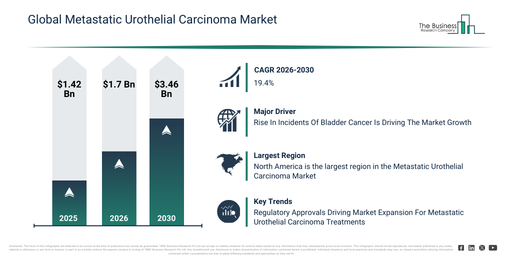
    The metastatic urothelial carcinoma market size has experienced rapid expansion in recent years. It is anticipated to increase from $1.42 billion in 2025 to $1.7 billion in 2026, achieving a compound annual growth rate (CAGR) of 19.9%. This historical growth can be attributed to several factors, including the rising prevalence of bladder cancer, the early adoption of chemotherapy regimens, the increased use of cystoscopy diagnostics, a growing demand for targeted therapy, and advancements in immunotherapy research.

    The metastatic urothelial carcinoma market is projected to experience substantial expansion in the coming years, reaching $3.46 billion by 2030, demonstrating a compound annual growth rate (CAGR) of 19.4%. This anticipated growth during the forecast period is propelled by factors such as the broader availability of fgfr inhibitors, the increasing uptake of combination immunotherapies, advancements in biopsy accuracy technology, greater investment in oncology research and development, and a rising preference for personalized treatment approaches. Key developments anticipated in the forecast period encompass oncology development guided by precision medicine, improvements in diagnostics supported by AI, optimizing cancer treatment through big data integration, assessment utilizing virtual imaging and simulation, and automated solutions for oncology workflows.

    Get A Free Sample Report With In-Depth Market Insights:

    https://thebusinessresearchcompany.com/sample_request?id=51552030&type=smp&name=Metastatic%20Urothelial%20Carcinoma%20Market%20Report%202026&utm_source=Blogs&utm_medium=Paid&utm_campaign=Nov_PR

    Metastatic Urothelial Carcinoma Market Growth Catalysts And Demand Drivers

    The increasing incidence of bladder cancer is anticipated to fuel the expansion of the metastatic urothelial carcinoma market in the future. Bladder cancer is characterized by the development of malignant cells within the bladder’s tissues, frequently originating in the urothelial cells that line it. The growing number of bladder cancer diagnoses stems from factors such as smoking, exposure to chemicals, ongoing bladder inflammation, and enhanced diagnostic techniques. Given its status as an advanced and aggressive form of bladder cancer, metastatic urothelial carcinoma underscores the vital necessity for prompt diagnosis, superior therapeutic interventions, and intensified research initiatives, thereby stimulating innovations and progress in managing bladder cancer and leading to improved patient results in confronting this serious illness. For example, data from February 2023, provided by a Cancer Research UK charity, indicates that new bladder cancer cases in the UK are projected to rise from roughly 9,800 annually between 2023 and 2025 to about 10,700 cases per year by 2038-2040. Consequently, the increasing prevalence of bladder cancer is a key driver for the metastatic urothelial carcinoma market.

    Metastatic Urothelial Carcinoma Market Segment Trends And Revenue Contributors

    The metastatic urothelial carcinoma market covered in this report is segmented –

    1) By Treatment: Chemotherapy, Targeted Therapy, Immunotherapy, Radiation Therapy

    2) By Diagnosis: Urine Lab Tests, Cystoscopy, Intravenous Pyelogram (IVP), Biopsy

    3) By End User: Hospital, Oncology Clinics, Research Institutes, Other End Users

    Subsegments:

    1) By Chemotherapy: Platinum-Based Chemotherapy, Gemcitabine-Based Chemotherapy

    2) By Targeted Therapy: FGFR Inhibitors, Immune Checkpoint Inhibitors

    3) By Immunotherapy: PD-1 Or PD-L1 Inhibitors, CTLA-4 Inhibitors, Combination Immunotherapies

    4) By Radiation Therapy: External Beam Radiation Therapy, Stereotactic Body Radiation Therapy

    Metastatic Urothelial Carcinoma Market Trends Shaping Long-Term Demand

    Leading companies operating within the metastatic urothelial carcinoma market are actively seeking regulatory authorizations for their drug products to expand their reach and solidify their position in the care of adult patients experiencing locally advanced or metastatic urothelial carcinoma (la/mUC). Regulatory approvals denote the formal consent issued by governmental or oversight bodies, allowing a drug, medical device, or treatment to be marketed and made available for public use. As an illustration, in April 2023, Merck & Co. Inc., a pharmaceutical company based in the US, obtained FDA approval for KEYTRUDA (pembrolizumab) for the initial treatment of certain patients diagnosed with locally advanced or metastatic urothelial cancer. This represents a significant achievement in urothelial cancer treatment, as the combination of KEYTRUDA (pembrolizumab) and enfortumab vedotin is now the first anti-PD-1 therapy approved in the U.S. in conjunction with an antibody-drug conjugate for individuals with locally advanced or metastatic urothelial cancer. During the trial, this combination therapy exhibited a statistically meaningful improvement in overall survival (OS) and progression-free survival (PFS) when compared against traditional platinum-based chemotherapy (gemcitabine plus cisplatin or carboplatin). This combined approach provides a new therapeutic choice for these patients who might not have had effective treatment options previously.

    Metastatic Urothelial Carcinoma Market Competitive Landscape: Which Companies Lead The Industry?

    Major companies operating in the metastatic urothelial carcinoma market are Pfizer Inc., Johnson & Johnson Services Inc., F. Hoffmann-La Roche Ltd., Merck & Co., Inc., AbbVie Inc., Bayer AG, Bristol-Myers Squibb Company, AstraZeneca PLC, Eli Lilly and Company, Gilead Sciences Inc., Merck KGaA, Astellas Pharma Inc., Genentech Inc., Genentech Inc., Exelixis Inc., EMD Serono, Zymeworks Inc., Mirati Therapeutics Inc., UroGen Pharma Ltd.

    View The Full Metastatic Urothelial Carcinoma Market Report:

    https://thebusinessresearchcompany.com/report/metastatic-urothelial-carcinoma-global-market-report?utm_source=Blogs&utm_medium=Paid&utm_campaign=Nov_PR

    Metastatic Urothelial Carcinoma Market Geographic Analysis: Where Is Demand Rising Fastest?

    North America was the largest region in the metastatic urothelial carcinoma market in 2025. Asia-Pacific is expected to be the fastest-growing region in the forecast period. The regions covered in the metastatic urothelial carcinoma market report are Asia-Pacific, South East Asia, Western Europe, Eastern Europe, North America, South America, Middle East, Africa.

    Reach Out To Our Team:

    The Business Research Company: https://www.thebusinessresearchcompany.com/

    Americas: +1 310-496-7795

    Asia: +44 7882 955267 & +91 8897263534

    Europe: +44 7882 955267

    Email us at: marketing@tbrc.info

    Follow us on:

    LinkedIn: https://in.linkedin.com/company/the-business-research-company

    YouTube: https://www.youtube.com/channel/UC24_fI0rV8cR5DxlCpgmyFQ

    Global Market Model: https://www.thebusinessresearchcompany.com/global-market-model
  • Metastatic Prostate Cancer Market Growth To $13.16 Billion Creates New Opportunities Across The Industry

    Metastatic Prostate Cancer Market Growth To $13.16 Billion Creates New Opportunities Across The Industry

    Built to provide research that’s more actionable and strategically valuable, The Business Research Company’s 2026 market reports include market attractiveness analysis, total addressable market sizing, company benchmarking matrices, interactive Excel dashboards, broader supply chain intelligence, emerging startup tracking, and in-depth product insights.

    Metastatic Prostate Cancer Market Set To Climb From $9.57 Billion In 2026 To $13.16 Billion By 2030

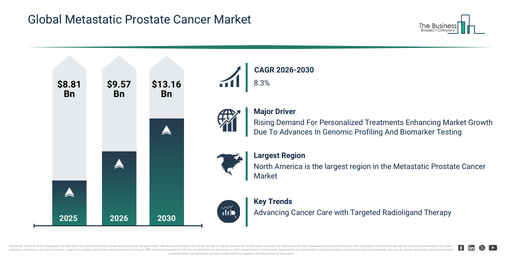
    The metastatic prostate cancer market has experienced substantial expansion in recent years. It is anticipated to increase from $8.81 billion in 2025 to $9.57 billion in 2026, exhibiting a compound annual growth rate (CAGR) of 8.6%. The market’s past growth can be ascribed to a rising occurrence of advanced prostate cancer, the proliferation of oncology treatment centers, enhanced survival rates achieved through early intervention, the availability of diverse therapeutic alternatives, and a greater utilization of chemotherapy protocols.

    The metastatic prostate cancer market is projected to experience substantial expansion over the upcoming years. This market is forecast to reach $13.16 billion by 2030, exhibiting a compound annual growth rate (CAGR) of 8.3%. This anticipated growth during the forecast period is fueled by several factors, including the increasing creation of novel immunotherapies, the growing embrace of personalized cancer treatments, the broadening of clinical trials for advanced therapies, the expanding application of radiopharmaceutical treatments, and an elevated emphasis on improving quality-of-life outcomes. Key trends anticipated within this period involve the increasing uptake of targeted and hormonal therapies, a rising prevalence of combination treatment regimens, an intensified focus on precision oncology methodologies, the proliferation of advanced diagnostic and biomarker testing, and a heightened commitment to patient-centered treatment approaches.

    Get A Free Sample Report With In-Depth Market Insights:

    https://thebusinessresearchcompany.com/sample_request?id=97250346&type=smp&name=Metastatic%20Prostate%20Cancer%20Market%20Report%202026&utm_source=Blogs&utm_medium=Paid&utm_campaign=Nov_PR

    Metastatic Prostate Cancer Market Opportunity Drivers: What’s Unlocking New Revenue Potential?

    The increasing need for customized treatments is anticipated to fuel the expansion of the metastatic prostate cancer market in the future. Customized therapies are medical strategies designed to match an individual’s genetic makeup, lifestyle, and unique disease attributes, aiming for more precise and impactful results. This growing demand for personalized treatments stems from the increasing accessibility of genomic profiling and biomarker testing; these technologies assist in pinpointing particular mutations and biological indicators, enabling healthcare professionals to choose treatments with a higher probability of success for each patient. Personalized therapeutic methods, including biomarker-guided treatments and gene-targeted medications, are revolutionizing the management of metastatic prostate cancer by matching specific interventions to each patient’s distinct tumor characteristics, thereby enhancing efficacy and reducing adverse effects. As an illustration, in February 2024, data from the Personalized Medicine Coalition, a US-based non-profit entity, showed that the US Food and Drug Administration (FDA) sanctioned 16 novel personalized therapies for rare conditions in 2023, an increase from 6 approvals in the year 2022. Consequently, the escalating demand for personalized treatments is a key driver for the expansion of the metastatic prostate cancer market.

    Metastatic Prostate Cancer Market Segment Analysis Spotlighting Growth Areas

    The metastatic prostate cancer market covered in this report is segmented –

    1) By Treatment Type: Chemotherapy, Immunotherapy, Hormonal Therapy, Radiation Therapy, Other Treatments

    2) By Route of Administration: Oral, Parenteral Route, Intravenous

    3) By Distribution Channel: Hospital Pharmacy, Retail Pharmacy, Online Pharmacy, Other Distribution Channels

    4) By End User: Hospitals, Clinics, Cancer Centers, Research Laboratories, Other End-Users

    Subsegments:

    1) By Chemotherapy: Docetaxel, Cabazitaxel, Mitoxantrone, Combination Chemotherapy Regimens

    2) By Immunotherapy: Sipuleucel-T, Immune Checkpoint Inhibitors, Cancer Vaccines, Cytokine Therapies

    3) By Hormonal Therapy: Luteinizing Hormone-Releasing Hormone (LHRH) Agonists, LHRH Antagonists, Anti-Androgens, Androgen Synthesis Inhibitors, Combined Androgen Blockade (CAB)

    4) By Radiation Therapy: External Beam Radiation Therapy (EBRT), Stereotactic Body Radiotherapy (SBRT), Radiopharmaceutical Therapy, Intensity-Modulated Radiation Therapy (IMRT)

    5) By Other Treatments: Targeted Therapy, Bone-Targeted Therapy, Clinical Trial Drugs, Palliative Therapy

    Metastatic Prostate Cancer Market Innovation Trends Shaping Future Development

    Key companies active in the metastatic prostate cancer market are prioritizing technological advancements in cancer treatment, such as advanced targeted radioligand technology designed to deliver precise radiation to cancerous cells while preserving healthy tissues. This advanced targeted radioligand technology is a therapeutic approach that combines a molecule targeting prostate specific membrane antigen PSMA with a radioactive isotope, enabling the selective destruction of cancer cells throughout the body. For instance, in March 2025, Novartis AG, a Switzerland based multinational pharmaceutical company, obtained U.S. Food and Drug Administration (FDA) approval for Pluvicto for its earlier application in patients with PSMA-positive metastatic castration-resistant prostate cancer. Pluvicto is comprised of a prostate-specific membrane antigen (PSMA) targeting ligand linked to a beta-emitting radionuclide; it operates by binding to PSMA-expressing tumor cells and delivering localized radiation to eradicate cancer cells. Its distinct features include high tumor specificity, a favorable safety profile, and the potential for combination with other therapies. Its applications cover advanced-stage prostate cancer treatment, particularly for patients who have progressed after androgen deprivation therapy. The benefits include improved progression-free survival, targeted cytotoxicity, reduced off-target effects, and enhanced patient outcomes.

    Metastatic Prostate Cancer Market Leading Companies: Who Holds The Strongest Market Presence?

    Major companies operating in the metastatic prostate cancer market are Pfizer Inc., Merck & Co. Inc., AbbVie Inc., Bayer AG, Bristol-Myers Squibb Company, AstraZeneca PLC, Novartis AG, Astellas Pharma Inc., Ipsen Group, Exelixis Inc., Ferring Pharmaceuticals, Dendreon Pharmaceuticals LLC, Hinova Pharmaceuticals Inc., Janux Therapeutics Inc., Clarity Pharmaceuticals Ltd., Convergent Therapeutics Inc., Johnson & Johnson, Sanofi, Eli Lilly And Company, Roche Holding AG, Takeda Pharmaceutical Company Limited

    View The Full Metastatic Prostate Cancer Market Report:

    https://thebusinessresearchcompany.com/report/metastatic-prostate-cancer-global-market-report?utm_source=Blogs&utm_medium=Paid&utm_campaign=Nov_PR

    Metastatic Prostate Cancer Market Global Footprint: Which Region Leads The Market?

    North America was the largest region in the metastatic prostate cancer market in 2025. Asia-Pacific is expected to be the fastest-growing region in the forecast period. The regions covered in the metastatic prostate cancer market report are Asia-Pacific, South East Asia, Western Europe, Eastern Europe, North America, South America, Middle East, Africa.

    Reach Out To Our Team:

    The Business Research Company: https://www.thebusinessresearchcompany.com/

    Americas: +1 310-496-7795

    Asia: +44 7882 955267 & +91 8897263534

    Europe: +44 7882 955267

    Email us at: marketing@tbrc.info

    Follow us on:

    LinkedIn: https://in.linkedin.com/company/the-business-research-company

    YouTube: https://www.youtube.com/channel/UC24_fI0rV8cR5DxlCpgmyFQ

    Global Market Model: https://www.thebusinessresearchcompany.com/global-market-model
  • Metastatic Melanoma Therapeutics Market Forecast: Breaking Down The Numbers Behind Future Expansion

    Metastatic Melanoma Therapeutics Market Forecast: Breaking Down The Numbers Behind Future Expansion

    Backed by market attractiveness analysis, total addressable market sizing, company benchmarking matrices, interactive Excel dashboards, wider supply chain intelligence, emerging startup coverage, and detailed product-level insights, The Business Research Company’s 2026 market reports are designed to offer research that is more actionable and strategically valuable than ever.

    Metastatic Melanoma Therapeutics Market Forecast: Value Set To Climb From $10.4 Billion To $16.46 Billion

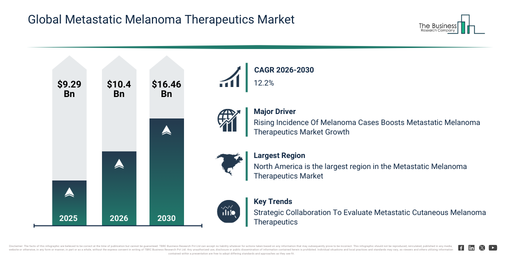
    The metastatic melanoma therapeutics market size has seen rapid growth in recent years. It is projected to expand from $9.29 billion in 2025 to $10.4 billion in 2026, achieving a compound annual growth rate (CAGR) of 11.9%. The historical period’s expansion can be attributed to the increasing incidence of melanoma, the introduction of checkpoint inhibitors, advancements in targeted therapy, the adoption of stereotactic radiosurgery, and growing awareness of early-stage detection.

    The metastatic melanoma therapeutics market is projected to experience substantial expansion in the coming years. It is foreseen to attain a value of $16.46 billion by 2030, growing at a compound annual growth rate (CAGR) of 12.2%. This anticipated growth during the forecast period is primarily fueled by the wider application of combination immunotherapies, the creation of advanced BRAF and MEK inhibitors, increased investment in oncology research and development, enhanced diagnostic accuracy through AI tools, and the rising acceptance of personalized cancer treatments. Prominent trends expected in this period include the integration of precision medicine into melanoma therapy, AI-assisted methods for tumor detection and treatment strategy, optimization of immunotherapy via big data, virtual simulations for oncology education and prognosis, and automated processes for treatment workflows and therapy monitoring.

    Get A Free Sample Report With In-Depth Market Insights:

    https://thebusinessresearchcompany.com/sample_request?id=80417601&type=smp&name=Metastatic%20Melanoma%20Therapeutics%20Market%20Report%202026&utm_source=Blogs&utm_medium=Paid&utm_campaign=Nov_PR

    Metastatic Melanoma Therapeutics Market Growth Momentum: What Factors Are Shaping Demand?

    The increasing occurrence of melanoma cases is anticipated to stimulate the expansion of the metastatic melanoma therapeutics market. Melanoma, a type of skin cancer, originates in melanocytes, the cells responsible for skin pigment regulation. This cancer can manifest anywhere on the skin. Metastatic melanoma therapeutics encompass various treatments designed to obstruct mutant chemicals and inhibit the proliferation of melanoma cells while safeguarding healthy tissue. For example, in January 2023, the American Cancer Society, a US-based voluntary health organization focused on cancer eradication, projected 58,120 new melanoma diagnoses in males and 39,490 in women in the US for 2023, amounting to approximately 97,610 cases, with around 7,990 predicted melanoma deaths. Consequently, the rising prevalence of melanoma is fueling the growth of the metastatic melanoma therapeutics market.

    Metastatic Melanoma Therapeutics Market Segment Performance And Emerging Opportunities

    The metastatic melanoma therapeutics market covered in this report is segmented –

    1) By Therapy: Chemotherapy, Immunotherapy, Targeted Therapy, Radiation Therapy, Surgery

    2) By Line Of Therapy: First-Line, Second-Line, Third-Line

    3) By End User: Hospitals, Specialty Clinics, Home Healthcare, Other End-Users

    Subsegments:

    1) By Chemotherapy: Dacarbazine, Temozolomide, Carboplatin And Cisplatin Combinations

    2) By Immunotherapy: Checkpoint Inhibitors, Interleukin-2 (IL-2), Oncolytic Virus Therapies

    3) By Targeted Therapy: BRAF Inhibitors, MEK Inhibitors, KIT Inhibitors

    4) By Radiation Therapy: Stereotactic Radiosurgery, Palliative Radiation Therapy

    5) By Surgery: Tumor Resection, Sentinel Lymph Node Biopsy, Debulking Surgery

    Metastatic Melanoma Therapeutics Market Trends Redefining Industry Growth

    Leading companies in the metastatic melanoma therapeutics market are dedicating efforts to developing innovative immunotherapies and combination treatment strategies to enhance patient outcomes and improve the effectiveness of first-line treatments. These cutting-edge immunotherapies and combined approaches function by activating or modulating the immune system to fight diseases, frequently paired with other treatments to boost their efficacy and achieve synergistic results. For instance, in March 2024, IO Biotech A/S, a US-based biotechnology company, successfully completed the enrollment of 380 patients in its pivotal Phase 3 trial (IOB-013/KN-D18 NCT05155254). This trial evaluates IO102-IO103 in combination with pembrolizumab (KEYTRUDA) compared to pembrolizumab alone for the first-line treatment of unresectable or metastatic melanoma. The study is sponsored by IO Biotech and conducted in collaboration with Merck, a U.S.-based pharmaceutical company, with Merck supplying pembrolizumab for the research. This particular combination therapy aims to strengthen anti-tumor immune responses, potentially leading to improved overall response rates and long-term clinical outcomes for patients afflicted with advanced melanoma.

    Metastatic Melanoma Therapeutics Market Key Players: Which Companies Lead Industry Competition?

    Major companies operating in the metastatic melanoma therapeutics market are Pfizer Inc., F. Hoffmann-La Roche AG, Merck & Co. Inc., Novartis AG, Bristol-Myers Squibb Company, AstraZeneca PLC, Amgen Inc., Regeneron Pharmaceuticals Inc., Exelixis Inc., Immunocore Holdings plc, Genentech Inc., Iovance Biotherapeutics Inc., Adaptimmune Therapeutics plc, Evaxion Biotech A/S, InxMed Co. Ltd., AiVita Biomedical Inc., Cytovation AS, Biocad, Apexigen Inc., Checkmate Pharmaceuticals, HUYABIO International LLC, IO Biotech, Nykode Therapeutics, Karyopharm Therapeutics, Zucero Therapeutics, Ultimovacs ASA, Immuneering Corporation, TILT Biotherapeutics

    View The Full Metastatic Melanoma Therapeutics Market Report:

    https://thebusinessresearchcompany.com/report/metastatic-melanoma-therapeutics-global-market-report?utm_source=Blogs&utm_medium=Paid&utm_campaign=Nov_PR

    Metastatic Melanoma Therapeutics Market Regional Split: Which Areas Are Fueling Growth?

    North America was the largest region in the metastatic melanoma therapeutics market in 2025. The regions covered in the metastatic melanoma therapeutics market report are Asia-Pacific, South East Asia, Western Europe, Eastern Europe, North America, South America, Middle East, Africa.

    Reach Out To Our Team:

    The Business Research Company: https://www.thebusinessresearchcompany.com/

    Americas: +1 310-496-7795

    Asia: +44 7882 955267 & +91 8897263534

    Europe: +44 7882 955267

    Email us at: marketing@tbrc.info

    Follow us on:

    LinkedIn: https://in.linkedin.com/company/the-business-research-company

    YouTube: https://www.youtube.com/channel/UC24_fI0rV8cR5DxlCpgmyFQ

    Global Market Model: https://www.thebusinessresearchcompany.com/global-market-model
  • Metastatic Lung Adenocarcinoma Treatment Market Expected To Grow At 9.6% CAGR Through 2030: What Businesses Need To Know

    Metastatic Lung Adenocarcinoma Treatment Market Expected To Grow At 9.6% CAGR Through 2030: What Businesses Need To Know

    Featuring market attractiveness scoring, total addressable market sizing, company benchmarking matrices, interactive Excel dashboards, deeper supply chain intelligence, emerging startup tracking, and granular product-level insights, The Business Research Company’s 2026 market reports are built to deliver research that is both more actionable and more strategically valuable.

    Metastatic Lung Adenocarcinoma Treatment Market Revenue Growth On Track For A 9.6% CAGR Through 2030

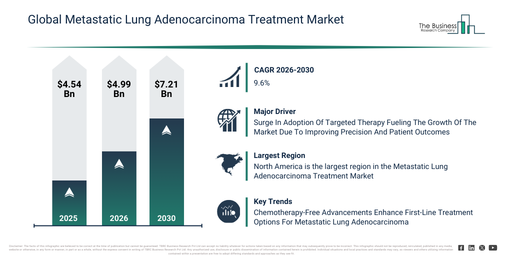
    The market size for metastatic lung adenocarcinoma treatment has experienced substantial growth in recent years. It is anticipated to expand from $4.54 billion in 2025 to $4.99 billion in 2026, exhibiting a compound annual growth rate (CAGR) of 9.9%. Historically, this growth has been fueled by factors such as rising lung cancer prevalence, the adoption of platinum chemotherapy, the early use of egfr inhibitors, an increased reliance on radiation therapy, and growing diagnostic advancements.

    The metastatic lung adenocarcinoma treatment market size is projected for substantial expansion in the coming years, expected to reach $7.21 billion by 2030, exhibiting a compound annual growth rate (CAGR) of 9.6%. This growth during the forecast period is propelled by factors such as the broadening use of alk and ros1 inhibitors, the increased uptake of immunotherapy combinations, advancements in CAR-T cell research for lung cancer, improvements in advanced imaging, and a surge in investment towards targeted therapy development. Key trends anticipated over the forecast period encompass the incorporation of precision medicine into lung adenocarcinoma treatment, the application of AI for tumor detection and optimizing therapies, big data-fueled improvements in immunotherapy, the use of virtual simulation platforms for oncology education, and the development of automated diagnostic and treatment workflow solutions.

    Get A Free Sample Report With In-Depth Market Insights:

    https://thebusinessresearchcompany.com/sample_request?id=78199701&type=smp&name=Metastatic%20Lung%20Adenocarcinoma%20Treatment%20Market%20Report%202026&utm_source=Blogs&utm_medium=Paid&utm_campaign=Nov_PR

    Metastatic Lung Adenocarcinoma Treatment Market Expansion Drivers: What’s Shaping Future Growth?

    The metastatic lung adenocarcinoma treatment market is projected to grow due to the increasing integration of targeted therapy. This cancer treatment method utilizes drugs to precisely inhibit tumor proliferation by targeting specific genes or proteins responsible for cancer development and dissemination. Targeted therapy is gaining prominence as it precisely addresses particular genetic mutations, resulting in more effective clinical outcomes and fewer adverse effects compared to conventional treatments. Specifically for metastatic lung adenocarcinoma, this therapy works by blocking the genetic mutations driving cancer progression and spread, offering a more precise strategy with reduced side effects and potentially significantly enhancing patient survival and quality of life for those with actionable mutations. For example, in July 2023, data from the American Society of Gene and Cell Therapy (ASGCT), a US-based professional membership organization, and Citeline, a US-based provider of drugs and devices, indicated that 247 gene therapies were in Phase II at the end of the first quarter of 2023, which subsequently increased by 5% to 260 by the end of the second quarter. This demonstrates how the rising uptake of targeted therapy is propelling the expansion of the metastatic lung adenocarcinoma treatment market.

    Metastatic Lung Adenocarcinoma Treatment Market Segment Landscape And Growth Outlook

    The metastatic lung adenocarcinoma treatment market covered in this report is segmented –

    1) By Treatment: Chemotherapy, Targeted Therapy, Immunotherapy, Radiation Therapy

    2) By Route Of Administration: Oral, Intravenous

    3) By End-User: Hospitals, Cancer Research Centers, Specialty Clinics

    Subsegments:

    1) By Chemotherapy: Platinum-Based Chemotherapy, Non-Platinum Chemotherapy, Combination Therapy, Single-Agent Chemotherapy

    2) By Targeted Therapy: Epidermal Growth Factor Receptor Inhibitors, Anaplastic Lymphoma Kinase Inhibitors, C-Ros Oncogene 1 Receptor Tyrosine Kinase Inhibitors, V-Raf Murine Sarcoma Viral Oncogene Homolog B1 Inhibitors, Rearranged During Transfection Inhibitors, Mesenchymal-Epithelial Transition Factor Inhibitors, Neurotrophic Tropomyosin Receptor Kinase Inhibitors

    3) By Immunotherapy: PD-1 Inhibitors, PD-L1 Inhibitors, CTLA-4 Inhibitors, Combination Immunotherapy, CAR-T Cell Therapy (Emerging)

    4) By Radiation Therapy: External Beam Radiation Therapy (EBRT), Stereotactic Body Radiotherapy (SBRT), Intensity-Modulated Radiation Therapy (IMRT), Proton Therapy

    Metastatic Lung Adenocarcinoma Treatment Market Strategic Trends: What Defines The Next Growth Phase?

    Leading companies in the metastatic lung adenocarcinoma treatment market are concentrating on developing advanced solutions, such as chemotherapy-free treatments, to improve long-term survival rates by targeting specific genetic mutations and enhancing patient outcomes. Chemotherapy-free treatment refers to cancer therapies that utilize alternative approaches like targeted therapy or immunotherapy, aiming to manage cancer effectively while reducing the severe side effects typically associated with traditional chemotherapy. For instance, in August 2024, Johnson & Johnson, a US-based healthcare company, disclosed that the U.S. Food and Drug Administration (FDA) had granted approval for RYBREVANT (amivantamab-vmjw) in combination with LAZCLUZE (lazertinib) as a first-line, chemotherapy-free treatment for adults diagnosed with locally advanced or metastatic non-small cell lung cancer (NSCLC) characterized by EGFR exon 19 deletions or exon 21 L858R substitution mutations. This approval was backed by results from the Phase 3 MARIPOSA study, which showcased superior progression-free survival compared to osimertinib.

    Metastatic Lung Adenocarcinoma Treatment Market Competitive Landscape: Who Leads The Industry?

    Major companies operating in the metastatic lung adenocarcinoma treatment market are Pfizer Inc., Johnson & Johnson, F. Hoffmann-La Roche Ltd, Merck & Co. Inc., Bristol-Myers Squibb Company, AstraZeneca PLC, Novartis AG, Boehringer Ingelheim International GmbH, BeiGene Ltd., Novocure, Gilead Sciences, Daiichi Sankyo Company Limited, Mirati Therapeutics Inc., Nuvalent Inc., Moderna Therapeutics, Shanghai Henlius Biotech, Duality BioSciences Inc., Arcus Biosciences Inc., NeoImmuneTech Inc., Hutchison Medipharma Limited, Betta Pharma Company Limited, OncoC4 Inc., Xcovery Holding Company, BioNTech SE

    View The Full Metastatic Lung Adenocarcinoma Treatment Market Report:

    https://thebusinessresearchcompany.com/report/metastatic-lung-adenocarcinoma-treatment-global-market-report?utm_source=Blogs&utm_medium=Paid&utm_campaign=Nov_PR

    Metastatic Lung Adenocarcinoma Treatment Market Top Region: Where Does Most Revenue Come From?

    North America was the largest region in the metastatic lung adenocarcinoma treatment market in 2025. Asia-Pacific is expected to be the fastest-growing region in the forecast period. The regions covered in the metastatic lung adenocarcinoma treatment market report are Asia-Pacific, South East Asia, Western Europe, Eastern Europe, North America, South America, Middle East, Africa.

    Reach Out To Our Team:

    The Business Research Company: https://www.thebusinessresearchcompany.com/

    Americas: +1 310-496-7795

    Asia: +44 7882 955267 & +91 8897263534

    Europe: +44 7882 955267

    Email us at: marketing@tbrc.info

    Follow us on:

    LinkedIn: https://in.linkedin.com/company/the-business-research-company

    YouTube: https://www.youtube.com/channel/UC24_fI0rV8cR5DxlCpgmyFQ

    Global Market Model: https://www.thebusinessresearchcompany.com/global-market-model
  • Metastatic HR+/HER2- Breast Cancer Market Forecast To Reach $17.26 Billion By 2030: Key Trends Explained

    Metastatic HR+/HER2- Breast Cancer Market Forecast To Reach $17.26 Billion By 2030: Key Trends Explained

    Built to provide research that’s more actionable and strategically valuable, The Business Research Company’s 2026 market reports include market attractiveness analysis, total addressable market sizing, company benchmarking matrices, interactive Excel dashboards, broader supply chain intelligence, emerging startup tracking, and in-depth product insights.

    Metastatic HR+/HER2- Breast Cancer Market Value Growth And Long-Term Outlook

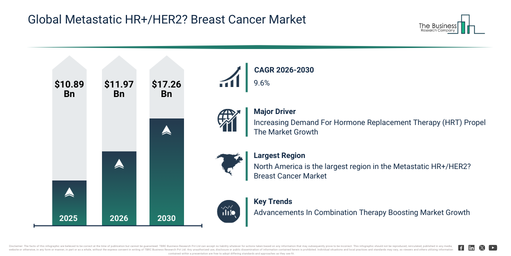
    The metastatic hr+/her2- breast cancer market has demonstrated substantial growth in recent times. Its value is anticipated to rise from $10.89 billion in 2025 to $11.97 billion in 2026, progressing at a compound annual growth rate (CAGR) of 9.9%. This past expansion can be ascribed to an increase in breast cancer prevalence, the widespread use of hormonal therapies, greater application of chemotherapy, the creation of effective early diagnostic instruments, and enhanced survival monitoring.

    The market size for metastatic hr+/her2- breast cancer is anticipated to show robust expansion over the next few years. It is projected to increase to $17.26 billion by 2030, achieving a compound annual growth rate (CAGR) of 9.6%. This growth during the forecast period is attributed to the rise of targeted therapies like cdk4/6 inhibitors, expanding research into immunotherapy, increased application of genomic profiling, a growing demand for combination treatment regimens, and improvements in patient monitoring technologies. Significant trends expected during this period include advancements in precision hormonal therapy, AI-enhanced treatment personalization, data-driven approaches to monitoring treatment response, the use of virtual simulation for oncology training, and the integration of automated diagnostic workflows.

    Get A Free Sample Report With In-Depth Market Insights:

    https://thebusinessresearchcompany.com/sample_request?id=63628740&type=smp&name=Metastatic%20HR%2B%2FHER2%E2%88%92%20Breast%20Cancer%20Market%20Report%202026&utm_source=Blogs&utm_medium=Paid&utm_campaign=Nov_PR

    Metastatic HR+/HER2- Breast Cancer Market Development Factors: What’s Supporting Demand?

    The metastatic HR+/HER2- breast cancer market is anticipated to experience growth, primarily propelled by the rising adoption of hormone replacement therapy (HRT). HRT is a medical intervention designed to supplement or replace hormones that are present at suboptimal levels within the body, most commonly observed during menopause or in instances of various hormone deficiencies. The increased usage of HRT can be attributed to its proven effectiveness in enhancing treatment outcomes, its association with fewer side effects when compared to traditional therapies, and ongoing advancements in precision medicine. Furthermore, HRT can offer support to patients with metastatic HR+/HER2- breast cancer by alleviating symptoms of estrogen deficiency related to menopause, such as hot flashes and vaginal dryness. This is achieved without compromising the effectiveness of existing endocrine therapies, as HRT’s primary focus is on correcting hormone imbalances rather than targeting cancerous cells directly, thereby contributing to an improved quality of life for individuals undergoing cancer treatment. For instance, in October 2023, data from the Health Professional Academy, a UK-based personalized health professional learning platform, indicated that approximately 11 million hormone replacement therapy (HRT) prescriptions were issued in 2022/23, marking an almost 50% increase from the prior year. Thus, the escalating use of hormone replacement therapy (HRT) is a significant driver for the metastatic HR+/HER2- breast cancer market.

    Metastatic HR+/HER2- Breast Cancer Market Breakdown By Product Type And Application

    The metastatic hr+/her2- breast cancer market covered in this report is segmented –

    1) By Drugs: Paclitaxel, Tamoxifen, Docetaxel, Other Drugs

    2) By Treatment: Radiation Therapy, Vitamin Therapy, Macrobiotic Diets, Homeopathy, Herbal Medication

    3) By End-User: Hospitals, Clinics, Other End-User

    Subsegments:

    1) By Paclitaxel: Generic Paclitaxel, Taxol

    2) By Tamoxifen: Generic Tamoxifen, Nolvadex

    3) By Docetaxel: Generic Docetaxel, Taxotere

    4) By Other Drugs: Letrozole, Anastrozole, Exemestane, Palbociclib, Ribociclib, Abemaciclib

    Metastatic HR+/HER2- Breast Cancer Market Transformation Trends: What Innovations Are Driving Change?

    Major companies operating in the metastatic HR+/HER2- breast cancer market are actively developing combination therapy regimens to expand their indications, market reach, and range of treatment options. Combination therapy refers to a therapeutic strategy that entails the simultaneous application of two or more therapeutic agents, potentially including chemotherapy, targeted therapy, immunotherapy, hormone therapy, or other modalities. This approach aims to treat a medical condition more effectively by targeting diverse pathways, thereby enhancing the overall treatment response and reducing the probability of conditions, such as cancer, developing resistance to any singular treatment. For instance, in July 2023, Merck & Co., Inc., a US-based pharmaceutical company, announced the outcomes of its Phase 3 KEYNOTE-756 trial, which assessed KEYTRUDA (pembrolizumab), an anti-PD-1 therapy, in conjunction with chemotherapy approved by the Food and Drug Administration, a US-based government agency. The trial successfully achieved its primary endpoint by demonstrating a significantly improved pathological complete response (pCR) rate in patients with high-risk, early-stage ER+/HER2- breast cancer. KEYNOTE-756 stands as the first positive Phase 3 trial to illustrate a statistically significant improvement in pCR rate with an immunotherapy regimen in the neoadjuvant setting for the patient population. The trial’s protocol involved KEYTRUDA with chemotherapy as a neoadjuvant treatment, followed by adjuvant KEYTRUDA combined with endocrine therapy for high-risk, early-stage ER+/HER2- breast cancer.

    Metastatic HR+/HER2- Breast Cancer Market Company Landscape And Competitive Strategy

    Major companies operating in the metastatic hr+/her2- breast cancer market are Pfizer Inc., F Hoffmann-La Roche AG, AstraZeneca PLC, Eli Lilly and Company, Merck & Co, Arvinas Inc, Olema Pharmaceuticals Inc, Genentech Inc, Veru Pharma, DualityBio Inc, BioNTech SE, Evgen Pharma, EQRx Inc, G1 Therapeutics Inc, Immutep Ltd, RemeGen Co Ltd, SynCore Biotechnology Co Ltd, Allarity Therapeutics AS, Jiangsu Alphamab Biopharmaceuticals Co Ltd, Byondis BV, Jiangsu Hansoh Pharmaceutical Co Ltd, Shanghai Miracogen Inc, Eisai Co Ltd, Tyme Inc, Orion Pharma

    View The Full Metastatic HR+/HER2- Breast Cancer Market Report:

    https://thebusinessresearchcompany.com/report/metastatic-hr-her2-breast-cancer-global-market-report?utm_source=Blogs&utm_medium=Paid&utm_campaign=Nov_PR

    Metastatic HR+/HER2- Breast Cancer Market Regional Breakdown: Where Is Demand Concentrated?

    North America was the largest region in the dominated market in 2025. Asia-Pacific is expected to be the fastest-growing region in the forecast period. The regions covered in the metastatic hr+/her2- breast cancer market report are Asia-Pacific, South East Asia, Western Europe, Eastern Europe, North America, South America, Middle East, Africa.

    Reach Out To Our Team:

    The Business Research Company: https://www.thebusinessresearchcompany.com/

    Americas: +1 310-496-7795

    Asia: +44 7882 955267 & +91 8897263534

    Europe: +44 7882 955267

    Email us at: marketing@tbrc.info

    Follow us on:

    LinkedIn: https://in.linkedin.com/company/the-business-research-company

    YouTube: https://www.youtube.com/channel/UC24_fI0rV8cR5DxlCpgmyFQ

    Global Market Model: https://www.thebusinessresearchcompany.com/global-market-model
  • Metastatic Breast Cancer Treatment Market Size Forecast From 2026 To 2030: Key Industry Trends

    Metastatic Breast Cancer Treatment Market Size Forecast From 2026 To 2030: Key Industry Trends

    Backed by market attractiveness analysis, total addressable market sizing, company benchmarking matrices, interactive Excel dashboards, wider supply chain intelligence, emerging startup coverage, and detailed product-level insights, The Business Research Company’s 2026 market reports are designed to offer research that is more actionable and strategically valuable than ever.

    Metastatic Breast Cancer Treatment Market Poised To Hit $38.63 Billion By 2030 With A 11.6% CAGR

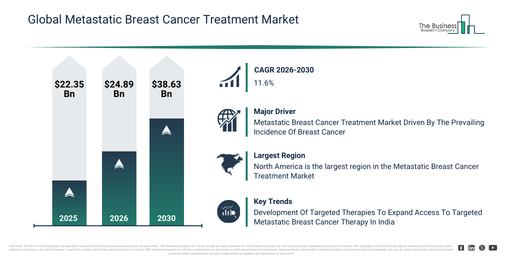
    The metastatic breast cancer treatment market size has demonstrated rapid expansion in recent years. It is projected to increase from $22.35 billion in 2025 to $24.89 billion in 2026, achieving a compound annual growth rate (CAGR) of 11.4%. The surge observed in the past can be attributed to several factors, including the escalating burden of metastatic breast cancer, the adoption of various chemotherapy regimens, the broadened application of hormone therapy, advancements in radiation techniques, and improved cancer screening programs.

    The metastatic breast cancer treatment market size is anticipated to undergo significant expansion in the coming years. It is projected to achieve a value of $38.63 billion by 2030, exhibiting a compound annual growth rate (CAGR) of 11.6%. This growth during the forecast period is fueled by an increasing demand for targeted therapies, the emergence of more immunotherapy options, greater investment in genomic profiling, the broadening of tele-oncology services, and a focus on personalized treatment pathways. Dominant trends expected in this period involve advancements in developing targeted therapies, AI-driven methods for patient monitoring and treatment selection, the integration of digital platforms for providing remote oncology care, improved simulation-based training for oncology procedures, and the automation of diagnostic workflows in cancer screening.

    Get A Free Sample Report With In-Depth Market Insights:

    https://thebusinessresearchcompany.com/sample_request?id=10816&type=smp&name=Metastatic%20Breast%20Cancer%20Treatment%20Market%20Report%202026&utm_source=Blogs&utm_medium=Paid&utm_campaign=Nov_PR

    Metastatic Breast Cancer Treatment Market Industry Drivers: What’s Behind The Revenue Growth?

    The increasing incidence of breast cancer is anticipated to fuel the expansion of the metastatic breast cancer treatment market moving forward. Breast cancer is characterized by the formation of tumors from abnormal cells that begin to grow and divide without control within the breast cells. This condition arises due to various influences, including genetic predispositions, hormonal imbalances, lifestyle choices, and environmental exposures. Metastatic breast cancer treatment plays a crucial role in managing the widespread occurrence of breast cancer by enhancing both the prognosis and the overall well-being of individuals facing advanced-stage disease. For example, a September 2023 report from the American Cancer Society, a US-based non-profit organization, estimated that approximately 297,790 women would be diagnosed with invasive breast cancer in 2023, alongside an expected 55,720 new cases of ductal carcinoma in situ (DCIS). The report also projected about 43,700 women would succumb to breast cancer in the same year. Consequently, the pervasive presence of breast cancer acts as a key driver for the growth of the metastatic breast cancer treatment market.

    Metastatic Breast Cancer Treatment Market Segment Analysis And Revenue Potential

    The metastatic breast cancer treatment market covered in this report is segmented –

    1) By Therapy Type: Chemotherapy, Radiation Therapy, Biologic Targeted Therapy, Breast Surgery, Hormone Therapy

    2) By Molecule Type: Monoclonal Antibody, Peptides, Polymer, Small Molecule, Gene Therapy

    3) By Route Of Administration: Oral, Parenteral

    4) By End-User: Hospitals, Clinics, Ambulatory Surgical Centers, Other End-Users

    Subsegments:

    1) By Chemotherapy: Anthracyclines, Taxanes, Antimetabolites, Platinum Agents

    2) By Radiation Therapy: External Beam Radiation, Stereotactic Radiosurgery, Brachytherapy

    3) By Biologic Targeted Therapy: HER2-Targeted Therapy, CDK4 Or 6 Inhibitors, PARP Inhibitors, PI3K Inhibitors

    4) By Breast Surgery: Lumpectomy, Mastectomy, Sentinel Lymph Node Biopsy, Reconstructive Surgery

    5) By Hormone Therapy: Selective Estrogen Receptor Modulators (SERMs), Aromatase Inhibitors, Estrogen Receptor Downregulators (ERDs)

    #Metastatic Breast Cancer Treatment Market Growth Trends: What’s Shaping The Future Outlook?

    Companies operating within the breast cancer treatment market are primarily focusing on the development of targeted therapies to improve clinical results and expand accessibility for patients suffering from advanced disease. Targeted therapy refers to medications designed to specifically interfere with molecular pathways involved in cancer proliferation, thereby minimizing damage to normal cells while simultaneously enhancing treatment efficacy. For example, in January 2023, BDR Pharmaceuticals, an India-based pharmaceutical company, introduced Bdpalbo (palbociclib) in India for managing advanced and metastatic breast cancer. Bdpalbo, a CDK4/6 inhibitor, is available in three capsule strengths: 125 mg, 100 mg, and 75 mg. This launch aims to improve the availability of treatment for patients with advanced disease by offering a more affordable formulation of palbociclib, thus supporting better therapeutic outcomes through increased accessibility.

    Metastatic Breast Cancer Treatment Market Key Players Shaping Industry Direction

    Major companies operating in the metastatic breast cancer treatment market are Pfizer Inc., AstraZeneca plc, Novartis AG, Eli Lilly & Co., Merck & Co. Inc., Johnson & Johnson Services Inc., F. Hoffmann-La Roche AG, Bristol-Myers Squibb Company, AbbVie Inc., Seattle Genetics Inc., Genentech Inc., MacroGenics Inc., Daiichi Sankyo Company Limited, Celgene Corporation, Mersana Therapeutics Inc., Olema Oncology, RemeGen, SynCore Biotechnology, Allarity Therapeutics, Byondis B.V., Jiangsu Alphamab Biopharmaceuticals Co. Ltd., Shanghai Miracogen Inc., Ambrx Inc., Rhizen Pharmaceuticals SA, Immutep Ltd.

    View The Full Metastatic Breast Cancer Treatment Market Report:

    https://thebusinessresearchcompany.com/report/metastatic-breast-cancer-treatment-global-market-report?utm_source=Blogs&utm_medium=Paid&utm_campaign=Nov_PR

    Metastatic Breast Cancer Treatment Market Geographic Landscape: Which Region Leads Industry Growth?

    North America was the largest region in the metastatic breast cancer treatment market in 2025. Asia-Pacific is expected to be the fastest-growing region in the global metastatic breast cancer treatment market during the forecast period. The regions covered in the metastatic breast cancer treatment market report are Asia-Pacific, South East Asia, Western Europe, Eastern Europe, North America, South America, Middle East, Africa.

    Reach Out To Our Team:

    The Business Research Company: https://www.thebusinessresearchcompany.com/

    Americas: +1 310-496-7795

    Asia: +44 7882 955267 & +91 8897263534

    Europe: +44 7882 955267

    Email us at: marketing@tbrc.info

    Follow us on:

    LinkedIn: https://in.linkedin.com/company/the-business-research-company

    YouTube: https://www.youtube.com/channel/UC24_fI0rV8cR5DxlCpgmyFQ

    Global Market Model: https://www.thebusinessresearchcompany.com/global-market-model
  • Metastatic Bone Disease Market 2026: Market Size, Growth Drivers And Emerging Opportunities

    Metastatic Bone Disease Market 2026: Market Size, Growth Drivers And Emerging Opportunities

    Featuring market attractiveness scoring, total addressable market sizing, company benchmarking matrices, interactive Excel dashboards, deeper supply chain intelligence, emerging startup tracking, and granular product-level insights, The Business Research Company’s 2026 market reports are built to deliver research that is both more actionable and more strategically valuable.

    Metastatic Bone Disease Market Size And Revenue Outlook Through 2030

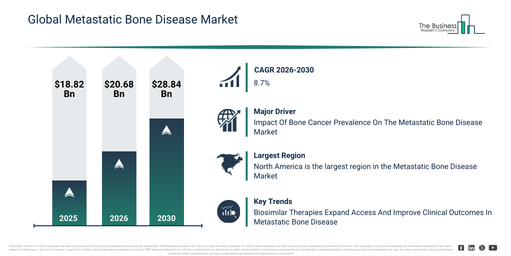
    The metastatic bone disease market size has seen strong expansion in recent years. It is forecast to increase from $18.82 billion in 2025 to $20.68 billion in 2026, reflecting a compound annual growth rate (CAGR) of 9.8%. The historical growth in this market can be attributed to increasing cancer incidence, growing cases of bone metastasis, expanding chemotherapy usage, development of radiation therapy techniques, and rising use of bisphosphonates.

    The market size for metastatic bone disease is expected to witness substantial growth over the next few years. It is projected to expand to $28.84 billion by 2030, achieving a compound annual growth rate (CAGR) of 8.7%. This anticipated growth during the forecast period can be attributed to the rise in targeted bone agents, increasing adoption of immunotherapy combinations, a growing demand for non-invasive tumor ablation, the expansion of personalized treatment approaches, and stronger oncologic diagnostic capabilities. Key trends expected in the forecast period involve advancements in targeted bone metastasis therapies, AI-assisted enhancements in diagnostic imaging, digital platforms for remote symptom monitoring, automation within oncology radiology workflows, and virtual reality-based surgical and treatment training.

    Get A Free Sample Report With In-Depth Market Insights:

    https://thebusinessresearchcompany.com/sample_request?id=52621021&type=smp&name=Metastatic%20Bone%20Disease%20Market%20Report%202026&utm_source=Blogs&utm_medium=Paid&utm_campaign=Nov_PR

    Metastatic Bone Disease Market Growth Factors: What’s Supporting Expansion?

    The escalating incidence of bone cancer is anticipated to drive the future growth of the metastatic bone disease market. Bone cancer is defined as a malignant tumor originating within bone cells. Its prevalence is influenced by genetic factors, radiation exposure, and environmental factors, including exposure to certain chemicals. This condition can lead to metastatic bone disease when cancer cells from the primary tumor disseminate through the bloodstream or lymphatic system, forming new tumors in other bones. For instance, in 2023, the American Cancer Society, a US-based non-profit organization, reported 3,970 new cases of bone and joint cancer, an increase from the 3,910 cases reported in 2022. Thus, the rising occurrence of bone cancer is a significant factor propelling the expansion of the metastatic bone disease market.

    Metastatic Bone Disease Market Segmentation And Category Overview

    The metastatic bone disease market covered in this report is segmented –

    1) By Treatment: Medication, Radiation Therapy, Surgical Intervention, Tumor Ablation Therapy

    2) By Origin: Breast, Lung, Thyroid, Kidney, Prostate, Other Origins

    3) By End-User: Hospitals, Specialty Clinics, Ambulatory Surgical Centers

    Subsegments:

    1) By Medication: Bisphosphonates, Denosumab, Chemotherapy Drugs, Hormonal Therapies, Targeted Therapies, Radiation Therapy

    2) By Radiation Therapy: External Beam Radiation Therapy, Internal Radiation Therapy

    3) By Surgical Intervention: Bone Stabilization Surgery, Bone Resection Surgery, Spinal Decompression Surgery

    4) By Tumor Ablation Therapy: Radiofrequency Ablation, Cryoablation, Microwave Ablation

    Metastatic Bone Disease Market Industry Trends: What’s Reshaping Demand?

    Leading companies operating in the metastatic bone disease market are concentrating on developing biosimilar therapies to enhance patient access and reduce treatment expenses while sustaining clinical efficacy. Biosimilars are biological medical products closely resembling already approved reference medicines, displaying no clinically significant differences in safety or effectiveness. For example, in March 2024, Sandoz, a Switzerland-based biopharmaceutical company, obtained FDA approval for Wyost (denosumab-bbdz) and Jubbonti (denosumab-bbdz), which are the initial and sole FDA-approved biosimilars of denosumab covering all indications of the reference medicines. These indications include preventing skeletal-related events in patients with bone metastases originating from solid tumors. Such progress is expected to improve treatment accessibility and better clinical outcomes for individuals with metastatic bone disease.

    Metastatic Bone Disease Market Competitive Analysis Of Leading Industry Participants

    Major companies operating in the metastatic bone disease market are Pfizer Inc., Johnson & Johnson, Roche Holding AG, Merck & Co. Inc., Bayer AG, Sanofi SA, Bristol-Myers Squibb Company, AstraZeneca plc, Novartis AG, GSK plc, Takeda Pharmaceutical Company Limited, Medtronic plc, Eli Lilly and Company, Amgen Inc., Boston Scientific Corporation, Regeneron Pharmaceuticals Inc., Astellas Pharma Inc., Daiichi Sankyo Company Limited, Jazz Pharmaceuticals Inc., Exelixis Inc., BeiGene Ltd., Mylan N.V., Novocure GmbH, Galapagos NV, Telix Pharmaceuticals Limited

    View The Full Metastatic Bone Disease Market Report:

    https://thebusinessresearchcompany.com/report/metastatic-bone-disease-global-market-report?utm_source=Blogs&utm_medium=Paid&utm_campaign=Nov_PR

    Metastatic Bone Disease Market Largest Region: Which Geography Holds The Biggest Share?

    North America was the largest region in the metastatic bone disease market in 2025. The regions covered in the metastatic bone disease market report are Asia-Pacific, South East Asia, Western Europe, Eastern Europe, North America, South America, Middle East, Africa.

    Reach Out To Our Team:

    The Business Research Company: https://www.thebusinessresearchcompany.com/

    Americas: +1 310-496-7795

    Asia: +44 7882 955267 & +91 8897263534

    Europe: +44 7882 955267

    Email us at: marketing@tbrc.info

    Follow us on:

    LinkedIn: https://in.linkedin.com/company/the-business-research-company

    YouTube: https://www.youtube.com/channel/UC24_fI0rV8cR5DxlCpgmyFQ

    Global Market Model: https://www.thebusinessresearchcompany.com/global-market-model
  • Metal Implants And Medical Alloys Market Set To Expand From $29.62 Billion In 2026: Growth Outlook Through 2030

    Metal Implants And Medical Alloys Market Set To Expand From $29.62 Billion In 2026: Growth Outlook Through 2030

    Built to provide research that’s more actionable and strategically valuable, The Business Research Company’s 2026 market reports include market attractiveness analysis, total addressable market sizing, company benchmarking matrices, interactive Excel dashboards, broader supply chain intelligence, emerging startup tracking, and in-depth product insights.

    Metal Implants And Medical Alloys Market Growth From $19.73 Billion In 2026 To $29.62 Billion By 2030 At A CAGR Of 10.7%

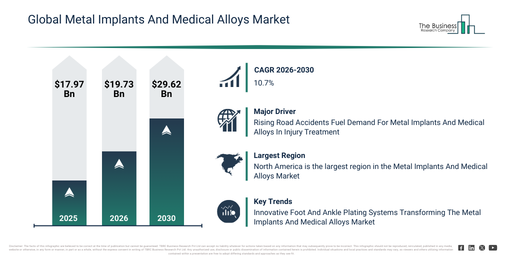
    The metal implants and medical alloys market size has experienced strong expansion in recent years. It is projected to increase from $17.97 billion in 2025 to $19.73 billion in 2026, demonstrating a compound annual growth rate (CAGR) of 9.8%. The growth observed in the past can be attributed to a rise in orthopedic surgery volume, the increasing prevalence of joint disorders, the expanding adoption of dental implants, improvements in surgical techniques, and the growing utilization of titanium alloys.

    The metal implants and medical alloys market size is projected to experience substantial expansion over the upcoming years. This market is predicted to reach $29.62 billion by 2030, exhibiting a compound annual growth rate (CAGR) of 10.7%. The anticipated growth during this period stems from several factors, including advancements in biodegradable metal implants, an increase in demand for minimally invasive implant procedures, greater investment in medical alloy research and development, the broadening of orthopedic trauma care, and a rising preference for customized implant solutions. Key trends anticipated within the forecast period encompass progress in developing biocompatible metal alloys, incorporating artificial intelligence into implant design optimization, automating metal implant manufacturing, implementing circular material recycling for medical alloys, and digitally tracking and monitoring implant performance.

    Get A Free Sample Report With In-Depth Market Insights:

    https://thebusinessresearchcompany.com/sample_request?id=76068406&type=smp&name=Metal%20Implants%20And%20Medical%20Alloys%20Market%20Report%202026&utm_source=Blogs&utm_medium=Paid&utm_campaign=Nov_PR

    Metal Implants And Medical Alloys Market Demand Drivers: What’s Powering Industry Growth?

    The increasing number of road accidents is projected to propel the growth of the metal implants and medical alloys market going forward. A road accident involves a moving vehicle on a public road that causes fatal or non-fatal casualties. Road accidents are rising due to factors such as distracted driving, speeding, poor road conditions, and an increase in vehicle numbers. Metal implants and medical alloys are crucial in road accident surgeries, providing durable support for bone repair and aiding in faster recovery. For instance, in May 2025, according to Transport Canada, a Canada-based government agency, in 2023, motor vehicle fatalities reached 1,964, marking a 1.7% increase from the 1,931 deaths reported in 2022. As a result, the increasing number of road accidents is driving the growth of the metal implants and medical alloys market.

    Metal Implants And Medical Alloys Market Segment Outlook: Which Categories Are Growing Fastest?

    The metal implants and medical alloys market covered in this report is segmented –

    1) By Material: Titanium, Stainless Steel, Cobalt Chromium, Other Materials

    2) By Application: Cardiovascular Applications, Dental Applications, Spinal Fusion Applications, Cranio-Facial Surgeries, Orthopedic Reconstruction Surgeries, Other Applications

    3) By End-User: Hospitals And Clinics, Ambulatory Surgical Centers, Other End-Users

    Subsegments:

    1) By Titanium: Titanium Alloys, Titanium Implants

    2) By Stainless Steel: 316L Stainless Steel, 304 Stainless Steel

    3) By Cobalt Chromium: Cobalt Chromium Alloys, Cobalt Chromium Implants

    4) By Other Materials: Zirconium, Nickel Titanium (Nitinol), Magnesium Alloys

    Metal Implants And Medical Alloys Market Innovation Trends: What Developments Are Reshaping The Industry?

    Leading companies within the metal implants and medical alloys market are concentrating on creating advanced solutions, such as foot and ankle plating systems, aimed at treating foot and ankle ailments. A foot and ankle plating system represents a surgical hardware approach that utilizes metal plates and screws to stabilize and support fractures or deformities in the foot and ankle. For example, in September 2023, MiRus LLC, a US-based medical device company known for its significant proprietary technology in both implants and procedural solutions, unveiled the ATLAS MoRe Foot and Ankle Plating System. This ATLAS MoRe Foot and Ankle Plating System, introduced by MiRus, LLC, is characterized by a modular design, allowing for customizable fixation options tailored to individual patient requirements. Its novel locking mechanism boosts stability and strength, while the system’s low-profile plates facilitate a more anatomical fit, thereby lessening soft tissue irritation. Moreover, the system is engineered to be user-friendly during surgical procedures, enhancing efficiency and patient results.

    Metal Implants And Medical Alloys Market Leading Companies And Competitive Benchmarking

    Major companies operating in the metal implants and medical alloys market are Medtronic plc, Stryker Corporation, B. Braun Melsungen AG, Aperam S.A., Zimmer Biomet Holdings Inc., Smith and Nephew plc, Dentsply Sirona Inc., ATI Specialty Alloys and Components, Carpenter Technology Corporation, Materion Corporation, Integra LifeSciences Holdings Corporation, NuVasive Inc., CONMED Corporation, Wright Medical Group, Fort Wayne Metals Research Products LLC, Ulbrich Stainless Steels & Special Metals Inc., Lisi Medical Jeropa Inc., Shanghai MicroPort Orthopedics Inc., DJO Global Inc., Ametek Specialty Metal Products Inc., Boston Centerless Inc., Anomet Products Inc., AAP Implantate AG, QuesTek Innovations LLC, Supra Alloys Inc., Syntellix AG

    View The Full Metal Implants And Medical Alloys Market Report:

    https://thebusinessresearchcompany.com/report/metal-implants-and-medical-alloys-global-market-report?utm_source=Blogs&utm_medium=Paid&utm_campaign=Nov_PR

    Metal Implants And Medical Alloys Market Regional Analysis: Which Geography Leads On Revenue?

    North America was the largest region in the metal implants and medical alloys market in 2025. Asia-Pacific is expected to be the fastest-growing region in the forecast period. The regions covered in the metal implants and medical alloys market report are Asia-Pacific, South East Asia, Western Europe, Eastern Europe, North America, South America, Middle East, Africa.

    Reach Out To Our Team:

    The Business Research Company: https://www.thebusinessresearchcompany.com/

    Americas: +1 310-496-7795

    Asia: +44 7882 955267 & +91 8897263534

    Europe: +44 7882 955267

    Email us at: marketing@tbrc.info

    Follow us on:

    LinkedIn: https://in.linkedin.com/company/the-business-research-company

    YouTube: https://www.youtube.com/channel/UC24_fI0rV8cR5DxlCpgmyFQ

    Global Market Model: https://www.thebusinessresearchcompany.com/global-market-model
  • Metagenomics In Healthcare Market Size And Growth In 2026: Key Factors Shaping Future Demand

    Metagenomics In Healthcare Market Size And Growth In 2026: Key Factors Shaping Future Demand

    Backed by market attractiveness analysis, total addressable market sizing, company benchmarking matrices, interactive Excel dashboards, wider supply chain intelligence, emerging startup coverage, and detailed product-level insights, The Business Research Company’s 2026 market reports are designed to offer research that is more actionable and strategically valuable than ever.

    Metagenomics In Healthcare Market Expansion Outlook: What Revenue Opportunities Are Ahead?

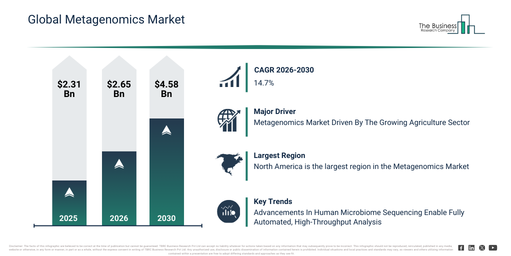
    The metagenomics in healthcare market size has witnessed rapid expansion in recent years. It is projected to increase from $2.44 billion in 2025 to $2.87 billion in 2026, displaying a compound annual growth rate (CAGR) of 17.8%. The growth observed in the historical period can be attributed to advancements in sequencing technologies, a rise in the incidence of infectious diseases, the expansion of microbiome research programs, increasing demand for culture-independent diagnostics, and the availability of clinical-grade sequencing workflows.

    The metagenomics in healthcare market is projected to experience substantial expansion over the upcoming years. This market is anticipated to reach a valuation of $5.46 billion by 2030, exhibiting a compound annual growth rate (CAGR) of 17.5%. This anticipated growth during the forecast timeframe is driven by factors such as the increasing implementation of precise infectious disease diagnostics, greater capital allocation towards microbiome therapeutics, the widening scope of genomic epidemiology programs, the expanding integration of AI in microbial analysis, and a heightened emphasis on individualized treatment approaches. Key developments expected within this period encompass the growing acceptance of metagenomic diagnostics in healthcare environments, the expanding application of microbiome-based disease profiling, the accelerating incorporation of NGS in managing infections, the broadening of research into personalized microbial therapeutics, and an elevated concentration on quickly identifying pathogens.

    Get A Free Sample Report With In-Depth Market Insights:

    https://thebusinessresearchcompany.com/sample_request?id=62761488&type=smp&name=Metagenomics%20In%20Healthcare%20Market%20Report%202026&utm_source=Blogs&utm_medium=Paid&utm_campaign=Nov_PR

    Metagenomics In Healthcare Market Growth Drivers: What’s Behind The Acceleration?

    The expanding occurrence of infectious diseases is projected to fuel the advancement of the metagenomics in healthcare market moving ahead. Infectious illnesses are conditions resulting from detrimental microorganisms like bacteria, viruses, fungi, or parasites, which can be transmitted between individuals through direct or indirect contact. The growing spread of infectious diseases is attributable to increased global travel, which facilitates the swift dissemination of disease-causing agents across national boundaries. Metagenomics in healthcare assists in combating these diseases by allowing for prompt and accurate identification of pathogens, thus playing a vital role in managing infectious outbreaks. It lessens diagnostic ambiguity by examining intricate microbial populations, thereby enhancing patient results and guiding specific treatments. For instance, in February 2024, the UK Health Security Agency, a UK-based government agency, reported that tuberculosis (a contagious bacterial infection that primarily affects the lungs) instances in England climbed to 4,850 in 2023, marking an increase of 10.7% from 4,380 cases recorded in 2022. Consequently, the rising frequency of infectious diseases is propelling the expansion of the metagenomics in healthcare market.

    Metagenomics In Healthcare Market Segment Landscape: Which Areas Lead Development?

    The metagenomics in healthcare market covered in this report is segmented –

    1) By Types: Sample Extraction Kits, Metagenomics Kits

    2) By Technology: Next-Generation Sequencing, Polymerase Chain Reaction, Microarray

    3) By Workflow: Sample Collection, Deoxyribonucleic Acid Extraction, Library Preparation, Sequencing

    4) By Application: Infectious Disease Diagnosis, Genomic Epidemiology, Personalized Medicine, Microbiome Analysis, Drug Discovery

    5) By End User: Hospitals, Diagnostic Laboratories, Research Institutes, Pharmaceutical Companies, Biotechnology Companies

    Subsegments:

    1) By Sample Extraction Kits: Deoxyribonucleic Acid Extraction Kits, Ribonucleic Acid Extraction Kits, Protein Extraction Kits

    2) By Metagenomics Kits: Library Preparation Kits, Sequencing Kits, Target Enrichment Kits

    Metagenomics In Healthcare Market Trends: What’s Defining The Industry’s Next Phase?

    Major companies operating in the metagenomics in healthcare market are prioritizing the development of innovative solutions, such as microbial community profiling, to improve disease diagnostics, enable personalized therapies, and advance precision medicine. Microbial community profiling entails the comprehensive analysis and characterization of diverse microbial populations within a specific environment or sample, utilizing sequencing and bioinformatics tools to identify their composition, diversity, and functional roles. For instance, in August 2024, MGI Tech Co. Ltd., a China-based biotechnology company, introduced a Human Microbiome Metagenomics Sequencing Package to further microbial research and healthcare applications. This package offers an automated, end-to-end microbial community profiling workflow for effectively analyzing human microbiome diversity, function, and disease links using validated high-throughput platforms. It minimizes manual labor, enhances reproducibility, and reduces costs, thereby making large-scale and clinical microbiome research more accessible. Researchers gain advantages from swift and precise microbial identification, alongside adaptable throughput, facilitating biomarker discovery and advancing translational health research.

    Metagenomics In Healthcare Market Industry Leaders And Competitive Landscape

    Major companies operating in the metagenomics in healthcare market are F. Hoffmann-La Roche AG, Eurofins Scientific, Agilent Technologies Inc., Illumina Inc., Bio-Rad Laboratories Inc., QIAGEN N.V., BGI Genomics Co. Ltd., Novogene Corporation, Oxford Nanopore Technologies Limited, Pacific Biosciences of California Inc., MedGenome Labs Limited, Zymo Research Corporation, BaseClear B.V., Psomagen Inc., Karius Inc., Microsynth AG, Macrogen Inc., Norgen Biotek Corp., Tiny Health Inc., CosmosID Inc., Kanvas Biosciences Inc., Phase Genomics Inc., Wobble Genomics Inc.

    View The Full Metagenomics In Healthcare Market Report:

    https://thebusinessresearchcompany.com/report/metagenomics-in-healthcare-global-market-report?utm_source=Blogs&utm_medium=Paid&utm_campaign=Nov_PR

    Metagenomics In Healthcare Market Geographic Spread And Regional Opportunities

    North America was the largest region in the metagenomics in healthcare market in 2025. Asia-Pacific is expected to be the fastest-growing region in the forecast period. The regions covered in the metagenomics in healthcare market report are Asia-Pacific, South East Asia, Western Europe, Eastern Europe, North America, South America, Middle East, Africa.

    Reach Out To Our Team:

    The Business Research Company: https://www.thebusinessresearchcompany.com/

    Americas: +1 310-496-7795

    Asia: +44 7882 955267 & +91 8897263534

    Europe: +44 7882 955267

    Email us at: marketing@tbrc.info

    Follow us on:

    LinkedIn: https://in.linkedin.com/company/the-business-research-company

    YouTube: https://www.youtube.com/channel/UC24_fI0rV8cR5DxlCpgmyFQ

    Global Market Model: https://www.thebusinessresearchcompany.com/global-market-model
  • Metagenomics Market Forecast 2026–2030: Market Size, Trends And Growth Opportunities

    Metagenomics Market Forecast 2026–2030: Market Size, Trends And Growth Opportunities

    Featuring market attractiveness scoring, total addressable market sizing, company benchmarking matrices, interactive Excel dashboards, deeper supply chain intelligence, emerging startup tracking, and granular product-level insights, The Business Research Company’s 2026 market reports are built to deliver research that is both more actionable and more strategically valuable.

    Metagenomics Market Growth Potential: How Will Market Size Shift Through 2030?

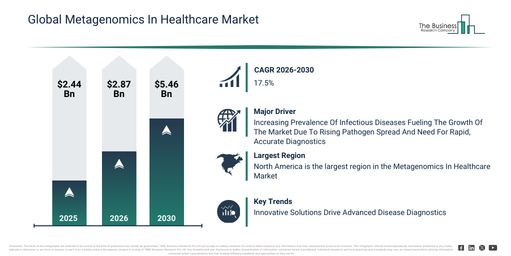
    The metagenomics market has experienced significant growth in its size over recent years. This market is anticipated to increase from $2.31 billion in 2025 to $2.65 billion in 2026, with a compound annual growth rate (CAGR) of 14.5%. Historically, this expansion can be attributed to factors such as the greater adoption of sequencing, a rise in microbial diversity studies, growth in environmental microbiology research, expanding availability of PCR machines, and increased usage in clinical diagnostics.

    The metagenomics market size is anticipated to experience substantial growth over the next few years, reaching $4.58 billion by 2030, demonstrating a compound annual growth rate (CAGR) of 14.7%. This expansion during the forecast period is propelled by advancements in sequencing technologies, a rising demand for microbiome-based therapeutics, increasing research and development efforts in bioinformatics, growing investment in environmental monitoring, and the broadening applications of precision medicine. Key trends expected in the forecast period include the expansion of precision genomics for microbial community profiling, AI-enhanced metagenomic data interpretation, automation in metagenomic sample processing, cloud-based storage for large-scale sequencing data, and IoT-integrated environmental microbial monitoring.

    Get A Free Sample Report With In-Depth Market Insights:

    https://thebusinessresearchcompany.com/sample_request?id=73020377&type=smp&name=Metagenomics%20Market%20Report%202026&utm_source=Blogs&utm_medium=Paid&utm_campaign=Nov_PR

    Metagenomics Market Growth Factors Behind Sustained Expansion

    The expanding agriculture sector is projected to fuel the growth of the metagenomics market in the future. This sector encompasses the extensive industry dedicated to crop cultivation, livestock farming, and the generation of food and other crucial agricultural products vital for global economies and food security. Its expansion is driven by increasing worldwide food demand, progress in sustainable farming practices, and the greater embrace of contemporary technologies that enhance output and resource efficiency. Metagenomics contributes to improved agricultural productivity through the examination of microbial communities associated with soil and crops, facilitating precise farming choices concerning soil vitality, nutrient management, disease prevention, and ecological sustainability. A supporting example is seen in December 2023, when the U.S. Department of Agriculture Economic Research Service, a U.S.-based government agency, reported that U.S. agricultural exports hit 178.7 billion in 2023. This figure underscores the ongoing expansion within the agricultural sector and the increasing integration of advanced technologies to bolster productivity. Consequently, the flourishing agriculture sector is a key driver for the growth of the metagenomics market.

    Metagenomics Market Segments: Where Is Growth Concentrated?

    The metagenomics market covered in this report is segmented –

    1) By Product: Instruments, Kits And Reagents, Software And Services

    2) By Workflow: Sequencing, Pre-Sequencing, Data Analysis

    3) By Application: Environmental, Clinical Diagnostics, Drug Discovery, Biotechnology, Food And Nutrition, Other Applications

    4) By End User: Pharmaceutical Industries, Research Laboratories, Biotechnology Companies, Pathology Laboratories, Academic And Research Institutes

    Subsegments:

    1) By Instruments: DNA Sequencers, PCR Machines, Microarray Systems, Mass Spectrometers

    2) By Kits And Reagents: DNA Extraction Kits, Library Preparation Kits, Amplification Kits, Sequencing Reagents

    3) By Software And Services: Data Analysis Software, Bioinformatics Services, Cloud-Based Data Storage, Consultation Services

    Metagenomics Market Industry Trends Fueling Future Revenue Growth

    Leading companies within the metagenomics market are concentrating on advancing solutions, particularly high-throughput sequencing platforms, to bolster the accuracy, efficiency, and reproducibility of microbiome and microbial community analyses. These platforms are sophisticated technologies designed to rapidly read and analyze millions of DNA or RNA sequences concurrently, thereby enabling extensive genomic or metagenomic studies. As an illustration, in August 2024, MGI Tech Co. Ltd, a China-based sequencing technology company, unveiled its Human Microbiome Metagenomics Sequencing Package. This offering boasts high automation across the complete workflow, from stool collection to data output, presents flexible throughput options suitable for diverse lab sizes, and has validated performance across numerous biological sample types pertinent to human microbiome research. The package is engineered to streamline microbiome investigations by integrating optimized sample processing, library preparation, sequencing, and bioinformatics analysis, empowering researchers to derive accurate, reproducible, and comprehensive insights into microbial communities with reduced manual intervention and operational intricacy.

    Metagenomics Market Key Participants And Competitive Landscape

    Major companies operating in the metagenomics market are Illumina Inc., Promega Corporation, Qiagen N.V., Thermo Fisher Scientific Inc., Perkin Elmer Inc., Bio-Rad Laboratories Inc., F. Hoffmann-La Roche Ltd., Novogene Co. Ltd., Oxford Nanopore Technologies Limited, BGI Group, Eurofins Scientific SE, Arc Bio LLC, Computomics GmbH, Enterome Bioscience, TAKARA BIO INC., Danaher Corporation, ELITechGroup, Metagenomi, Cosmosid Inc., Pattern Ag, Tiny Health, MATIS OHF, Adapsyn Bioscience, Precidiag Inc., One Codex Inc., MetaBi Inc., Zymo Research Corporation, Bluebee Holding BV, Maverix Biomics Inc., Lucigen Corporation

    View The Full Metagenomics Market Report:

    https://thebusinessresearchcompany.com/report/metagenomics-global-market-report?utm_source=Blogs&utm_medium=Paid&utm_campaign=Nov_PR

    Metagenomics Market Top Region By Revenue And Market Share

    North America was the largest region in the global metagenomics market in 2025. Asia-Pacific is expected to be the fastest-growing region in the forecast period. The regions covered in the metagenomics market report are Asia-Pacific, South East Asia, Western Europe, Eastern Europe, North America, South America, Middle East, Africa.

    Reach Out To Our Team:

    The Business Research Company: https://www.thebusinessresearchcompany.com/

    Americas: +1 310-496-7795

    Asia: +44 7882 955267 & +91 8897263534

    Europe: +44 7882 955267

    Email us at: marketing@tbrc.info

    Follow us on:

    LinkedIn: https://in.linkedin.com/company/the-business-research-company

    YouTube: https://www.youtube.com/channel/UC24_fI0rV8cR5DxlCpgmyFQ

    Global Market Model: https://www.thebusinessresearchcompany.com/global-market-model