Blog

  • Prenatal And Newborn Genetic Testing Market Outlook From 2026 To 2030: Key Growth Factors And Future Opportunities

    Prenatal And Newborn Genetic Testing Market Outlook From 2026 To 2030: Key Growth Factors And Future Opportunities

    Featuring market attractiveness scoring, total addressable market sizing, company benchmarking matrices, interactive Excel dashboards, deeper supply chain intelligence, emerging startup tracking, and granular product-level insights, The Business Research Company’s 2026 market reports are built to deliver research that is both more actionable and more strategically valuable.

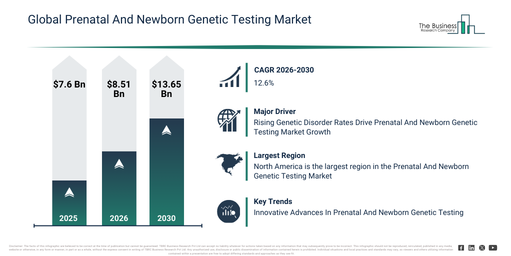
    Prenatal And Newborn Genetic Testing Market Forecast: Value Set To Climb From $8.51 Billion To $13.65 Billion

    The prenatal and newborn genetic testing market has seen rapid expansion in recent years. This market is projected to increase from $7.6 billion in 2025 to $8.51 billion in 2026, demonstrating a compound annual growth rate (CAGR) of 12.0%. Historically, this growth can be attributed to an uptick in awareness regarding genetic disorders, the expansion of maternal and neonatal healthcare services, the emergence of more institutional screening programs, the wider availability of diagnostic laboratories, and enhancements in the precision of genetic testing.

    The prenatal and newborn genetic testing market is poised for significant expansion in the coming years. Projections indicate it will reach $13.65 billion by 2030, demonstrating a compound annual growth rate (CAGR) of 12.6%. This anticipated growth during the forecast period is driven by factors such as the increasing embrace of personalized medicine, a heightened need for detecting diseases early, the broadening scope of newborn screening requirements, greater investments in genomics infrastructure, and the expanded utilization of digital health platforms. Key trends anticipated within the same period encompass the wider adoption of non-invasive prenatal testing, the growing application of sophisticated genetic screening panels, the increasing incorporation of AI in analyzing genetic risk, the proliferation of high-throughput sequencing platforms, and an intensified emphasis on the early identification of congenital disorders.

    Get A Free Sample Report With In-Depth Market Insights:

    https://thebusinessresearchcompany.com/sample_request?id=22334039&type=smp&name=Prenatal%20And%20Newborn%20Genetic%20Testing%20Market%20Report%202026&utm_source=Blogs&utm_medium=Paid&utm_campaign=Nov_PR

    Prenatal And Newborn Genetic Testing Market Growth Factors: What’s Supporting Expansion?

    The increasing occurrence of genetic disorders is anticipated to stimulate the growth of the prenatal and newborn genetic testing market moving forward. Genetic disorders are identified as medical conditions arising from abnormalities or mutations within an individual’s DNA or genetic material. Prenatal and newborn genetic testing facilitates the early identification of these disorders, often before symptoms emerge, thus enabling healthcare providers to initiate timely interventions and treatment plans.

    Prenatal And Newborn Genetic Testing Market Segment Landscape: Which Areas Lead Development?

    The prenatal and newborn genetic testing market covered in this report is segmented –

    1) By Product Type: Consumables, Instruments

    2) By Screening: Non-Invasive Prenatal Testing, Chronic Villus Sampling, Amniocentesis, Maternal Serum Screening, Other Screenings

    3) By Disease: Down Syndrome, Phenylketonuria, Cystic Fibrosis, Sickle Cell Anemia

    4) By End User: Hospital, Maternity And Specialty Clinics, Diagnostic Centers

    Subsegments:

    1) By Consumables: Reagents And Assays, Sample Collection Kits, Test Kits

    2) By Instruments: Polymerase Chain Reaction (PCR) Machines, Sequencers, Microarray Analyzers

    Prenatal And Newborn Genetic Testing Market Trends Shaping Long-Term Demand

    Major companies operating in the prenatal and newborn genetic testing markets are concentrating on developing innovative screening tests, such as noninvasive prenatal screening tests, offering improved accessibility and affordability to provide reliable services to customers. Noninvasive prenatal screening (NIPS), also known as noninvasive prenatal testing (NIPT), is an advanced and safe genetic screening technique conducted during pregnancy to assess the risk of specific fetal chromosomal abnormalities.

    Prenatal And Newborn Genetic Testing Market Industry Leaders And Competitive Landscape

    Major companies operating in the prenatal and newborn genetic testing market are F Hoffmann La Roche AG, Thermo Fisher Scientific Inc, Abbott Laboratories, Danaher Corporation, Siemens Healthineers AG, Becton Dickinson And Company, Quest Diagnostic Incorporated, Agilent Technologies Inc, Illumina Inc, PerkinElmer Genomics, Quidel Corporation, Bio Rad Laboratories Inc, Qiagen NV, Werfen SA, DiaSorin SpA, BGI Group, Natera Inc, Trinity Biotech plc, Meridian Bioscience Inc, Sekisui Diagnostics, Ariosa Diagnostics Inc, AccuBioTech Co Ltd, Sequenom Inc, Roche Diagnostics International AG

    View The Full Prenatal And Newborn Genetic Testing Market Report:

    https://thebusinessresearchcompany.com/report/prenatal-and-newborn-genetic-testing-global-market-report?utm_source=Blogs&utm_medium=Paid&utm_campaign=Nov_PR

    Prenatal And Newborn Genetic Testing Market Largest Region: Which Geography Holds The Biggest Share?

    North America was the largest region in the prenatal and newborn genetic testing market in 2025. Asia-Pacific is expected to be the fastest-growing region in the forecast period. The regions covered in the prenatal and newborn genetic testing market report are Asia-Pacific, South East Asia, Western Europe, Eastern Europe, North America, South America, Middle East, Africa.

    Reach Out To Our Team:

    The Business Research Company: https://www.thebusinessresearchcompany.com/

    Americas: +1 310-496-7795

    Asia: +44 7882 955267 & +91 8897263534

    Europe: +44 7882 955267

    Email us at: marketing@tbrc.info

    Follow us on:

    LinkedIn: https://in.linkedin.com/company/the-business-research-company

    YouTube: https://www.youtube.com/channel/UC24_fI0rV8cR5DxlCpgmyFQ

    Global Market Model: https://www.thebusinessresearchcompany.com/global-market-model
  • Premature Ejaculation Treatment Market Growth Forecast: Market Size, Key Trends And Emerging Opportunities Through 2030

    Premature Ejaculation Treatment Market Growth Forecast: Market Size, Key Trends And Emerging Opportunities Through 2030

    Built to provide research that’s more actionable and strategically valuable, The Business Research Company’s 2026 market reports include market attractiveness analysis, total addressable market sizing, company benchmarking matrices, interactive Excel dashboards, broader supply chain intelligence, emerging startup tracking, and in-depth product insights.

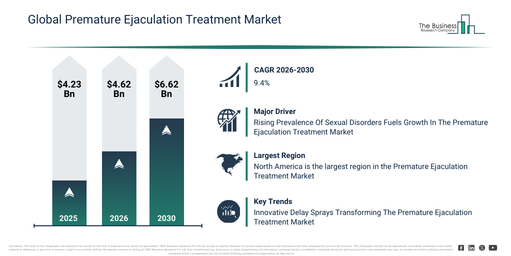
    Premature Ejaculation Treatment Market Revenue Growth On Track For A 9.4% CAGR Through 2030

    The premature ejaculation treatment market size has experienced substantial growth in recent years. It is anticipated to expand from $4.23 billion in 2025 to $4.62 billion in 2026, showing a compound annual growth rate (CAGR) of 9.2%. The historical increase in this market can be linked to heightened awareness of male sexual health, the availability of ssri-based treatments, the expansion of retail pharmacy access, increasing acceptance of pharmacological therapies, and enhancements in treatment efficacy.

    The premature ejaculation treatment market is projected to experience substantial expansion over the upcoming years. This market is anticipated to reach $6.62 billion by 2030, demonstrating a compound annual growth rate (CAGR) of 9.4%. The anticipated growth during this period can be ascribed to several factors, including an escalating demand for customized treatment plans, an uptick in the utilization of digital health platforms dedicated to sexual wellness, the broadening scope of non-invasive therapeutic methods, an increased emphasis on comprehensive sexual health management, and a greater uptake of telemedicine appointments. Key trends foreseen for the forecast period encompass a rising embrace of combination drug treatments, increased consumer preference for topical and oral therapeutic choices, wider acceptance of incorporating behavioral therapy, the broadening of direct-to-consumer treatment avenues, and a heightened emphasis on safeguarding patient privacy and confidentiality.

    Get A Free Sample Report With In-Depth Market Insights:

    https://thebusinessresearchcompany.com/sample_request?id=40023983&type=smp&name=Premature%20Ejaculation%20Treatment%20Market%20Report%202026&utm_source=Blogs&utm_medium=Paid&utm_campaign=Nov_PR

    Premature Ejaculation Treatment Market Demand Drivers: What’s Powering Industry Growth?

    The rising occurrence of sexual disorders is projected to fuel the expansion of the premature ejaculation treatment market in the coming years. A sexual disorder, or dysfunction, describes challenges encountered by individuals of all genders throughout any stage of typical intimate relations. Premature ejaculation itself is a sexual disorder that is managed and treated through various medications or therapeutic interventions.

    Premature Ejaculation Treatment Market Segments: Where Is Growth Concentrated?

    The premature ejaculation treatment market covered in this report is segmented –

    1) By Type: Antidepressants (SSRIs), Phosphodiesterase-5 Inhibitors, Topical Anesthetics, Analgesics, Other Treatment

    2) By Route of Administration: Oral, Topical

    3) By Distribution Channel: Retail, Direct-To-Consumer

    4) By Application: Hospital, Retail Pharmacy, Online Pharmacy, Other Applications

    Subsegments:

    1) By Antidepressants (Ssris): Paroxetine, Sertraline, Dapoxetine, Fluoxetine, Citalopram

    2) By Phosphodiesterase-5 Inhibitors: Sildenafil, Tadalafil, Vardenafil, Avanafil

    3) By Topical Anesthetics: Lidocaine-Based Creams, Prilocaine-Based Creams, Benzocaine-Based Sprays

    4) By Analgesics: Oral Pain Relievers, Topical Pain Relievers

    5) By Other Treatment: Behavioral Therapy, Counseling And Psychotherapy, Pelvic Floor Exercises, Mechanical Devices

    Premature Ejaculation Treatment Market Innovation Trends Shaping Future Development

    Leading companies within the premature ejaculation treatment market are innovating novel solutions, including delay sprays, to boost their earnings. These delay sprays, which are specialized products applied to the penis prior to sexual activity to help men prolong intercourse, function by temporarily numbing penile nerves, reducing sensitivity, and delaying ejaculation.

    Premature Ejaculation Treatment Market Key Participants And Competitive Landscape

    Major companies operating in the premature ejaculation treatment market are Pfizer Inc, Johnson & Johnson, Merck & Co Inc, AbbVie Inc, Bayer AG, Novartis AG, GlaxoSmithKline plc, Takeda Pharmaceutical Company Limited, Eli Lilly And Company, Teva Pharmaceutical Industries Ltd, Sandoz International GmbH, Sun Pharmaceutical Industries Ltd, Menarini Group, Lupin Limited, Amneal Pharmaceuticals Inc, Mankind Pharma Ltd, Cipla Limited, Alembic Pharmaceuticals Limited, Torrent Pharmaceuticals Ltd, ANI Pharmaceuticals Inc, Vivus Inc, Innovus Pharmaceuticals Inc, Apricus Biosciences Inc, Endurance RP Ltd

    View The Full Premature Ejaculation Treatment Market Report:

    https://thebusinessresearchcompany.com/report/premature-ejaculation-treatment-global-market-report?utm_source=Blogs&utm_medium=Paid&utm_campaign=Nov_PR

    Premature Ejaculation Treatment Market Regional Analysis: Which Geography Leads On Revenue?

    North America was the largest region in the premature ejaculation treatment market in 2025, and is expected to be the fastest-growing region in the forecast period. The regions covered in the premature ejaculation treatment market report are Asia-Pacific, South East Asia, Western Europe, Eastern Europe, North America, South America, Middle East, Africa.

    Reach Out To Our Team:

    The Business Research Company: https://www.thebusinessresearchcompany.com/

    Americas: +1 310-496-7795

    Asia: +44 7882 955267 & +91 8897263534

    Europe: +44 7882 955267

    Email us at: marketing@tbrc.info

    Follow us on:

    LinkedIn: https://in.linkedin.com/company/the-business-research-company

    YouTube: https://www.youtube.com/channel/UC24_fI0rV8cR5DxlCpgmyFQ

    Global Market Model: https://www.thebusinessresearchcompany.com/global-market-model
  • Preimplantation Genetic Testing Market CAGR Forecast Through 2030: Key Trends Shaping Industry Expansion

    Backed by market attractiveness analysis, total addressable market sizing, company benchmarking matrices, interactive Excel dashboards, wider supply chain intelligence, emerging startup coverage, and detailed product-level insights, The Business Research Company’s 2026 market reports are designed to offer research that is more actionable and strategically valuable than ever.

    Preimplantation Genetic Testing Market Value Growth And Long-Term Outlook

    The preimplantation genetic testing market size has experienced rapid expansion in recent years. This market is set to grow from $0.92 billion in 2025 to $1.03 billion in 2026, demonstrating a compound annual growth rate (CAGR) of 11.4%. The growth observed in the historic period stems from factors such as the increasing use of assisted reproductive technologies, advances in embryo biopsy techniques, a heightened awareness regarding genetic disease prevention, the proliferation of fertility clinics, and improved outcomes for IVF procedures.

    The preimplantation genetic testing market is projected to experience substantial expansion in the coming years. It is set to reach $1.57 billion by 2030, exhibiting a compound annual growth rate (CAGR) of 11.1%. This anticipated growth throughout the forecast period stems from factors such as a heightened demand for tailored reproductive medicine, increased integration of sophisticated genomic technologies, broader availability of fertility preservation services, expanding investments in reproductive health infrastructure, and greater regulatory approval for genetic screening. Key developments anticipated during this timeframe encompass a surge in the adoption of embryo screening processes, an increase in the application of next-generation sequencing within IVF, the broadening scope of genetic testing in fertility interventions, a rising need for better implantation success rates, and an intensified concentration on mitigating genetic disorders.

    Get A Free Sample Report With In-Depth Market Insights:

    https://thebusinessresearchcompany.com/sample_request?id=48559528&type=smp&name=Preimplantation%20Genetic%20Testing%20Market%20Report%202026&utm_source=Blogs&utm_medium=Paid&utm_campaign=Nov_PR

    Preimplantation Genetic Testing Market Growth Drivers: What’s Behind The Acceleration?

    The expanding number of in vitro fertilization (IVF) procedures is anticipated to fuel the expansion of the preimplantation genetic testing market in the future. IVF involves fertilizing an egg with sperm externally to create an embryo, which is then inserted into the uterus. Advances in reproductive technology, rising infertility rates, and greater public understanding are factors contributing to the increase in IVF procedures. This surge in in vitro fertilization (IVF) procedures is stimulating the preimplantation genetic testing market due to a higher need for genetic evaluation of embryos prior to implantation.

    Preimplantation Genetic Testing Market Segment Analysis: What Are The Core Market Categories?

    The preimplantation genetic testing market covered in this report is segmented –

    1) By Procedure: Preimplantation Genetic Screening, Preimplantation Genetic Diagnosis

    2) By Product: Reagents And Consumables, Instruments, Software

    3) By Technology: Next Generation Sequencing (NGS), Polymerase Chain Reaction (PCR), Fluorescent In Situ Hybridization (FISH), Other Technologies

    4) By Application: Chromosomal Abnormalities, Aneuploidy Screening, X-Linked Diseases, Embryo Testing, Human Leukocyte Antigen (HLA) Typing, Other Applications

    5) By End User: Hospitals, Fertility Centers, Diagnostic Centers, Research Centers And Academic Labs

    Subsegments:

    1) By Preimplantation Genetic Screening (PGS): Array Comparative Genomic Hybridization (aCGH), Next-Generation Sequencing (NGS), Fluorescence In Situ Hybridization (FISH)

    2) By Preimplantation Genetic Diagnosis (PGD): Monogenic Disorders Testing, Chromosomal Abnormalities Testing, HLA Typing for Stem Cell Transplantation

    Preimplantation Genetic Testing Market Trends Redefining Industry Growth

    Major companies operating in the preimplantation genetic testing market are innovating advanced next-generation sequencing (NGS) tools to enhance accuracy, efficiency, and speed in genetic screening, thereby enabling more comprehensive analysis and better-informed decisions for prospective parents. Next-generation sequencing (NGS) tools expedite genetic research with swift, high-throughput analysis of deoxyribonucleic acid (DNA) and ribonucleic acid (RNA), offering detailed insights into genetic variations and gene expression, which improves accuracy and supports personalized medicine.

    Preimplantation Genetic Testing Market Top Companies Driving Competitive Growth

    Major companies operating in the preimplantation genetic testing market are Thermo Fisher Scientific, Abbott Laboratories, Laboratory Corporation of America Holdings, Agilent Technologies Inc., Illumina Inc., Revvity Health Science Inc., CooperSurgical Inc., Natera Inc., Myriad Genetics Inc., Fulgent Genetics Inc., Invitae Corporation, Takara Bio Inc., MedGenome Labs Ltd., Genea Limited, Ovation Fertility, Juno Genetics Ltd, Invicta Genetics, Progenesis, Bioarray SL, PacGenomics, Reproductive Genetic Innovations LLC, SEQUENCE46 LLC

    View The Full Preimplantation Genetic Testing Market Report:

    https://thebusinessresearchcompany.com/report/preimplantation-genetic-testing-global-market-report?utm_source=Blogs&utm_medium=Paid&utm_campaign=Nov_PR

    Preimplantation Genetic Testing Market Geographic Spread And Regional Opportunities

    North America was the largest region in the preimplantation genetic testing market in 2025. Asia-Pacific is expected to be the fastest-growing region in the forecast period. The regions covered in the preimplantation genetic testing market report are Asia-Pacific, South East Asia, Western Europe, Eastern Europe, North America, South America, Middle East, Africa.

    Reach Out To Our Team:

    The Business Research Company: https://www.thebusinessresearchcompany.com/

    Americas: +1 310-496-7795

    Asia: +44 7882 955267 & +91 8897263534

    Europe: +44 7882 955267

    Email us at: marketing@tbrc.info

    Follow us on:

    LinkedIn: https://in.linkedin.com/company/the-business-research-company

    YouTube: https://www.youtube.com/channel/UC24_fI0rV8cR5DxlCpgmyFQ

    Global Market Model: https://www.thebusinessresearchcompany.com/global-market-model
  • Pregnancy Test Kits Market To Witness 7% CAGR Growth Through 2030: Key Industry Drivers

    Pregnancy Test Kits Market To Witness 7% CAGR Growth Through 2030: Key Industry Drivers

    Featuring market attractiveness scoring, total addressable market sizing, company benchmarking matrices, interactive Excel dashboards, deeper supply chain intelligence, emerging startup tracking, and granular product-level insights, The Business Research Company’s 2026 market reports are built to deliver research that is both more actionable and more strategically valuable.

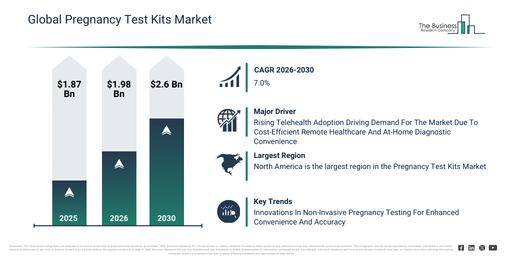
    Pregnancy Test Kits Market Poised To Hit $2.6 Billion By 2030 With A 7% CAGR

    The market size for pregnancy test kits has experienced robust growth in recent years. It is projected to expand from $1.87 billion in 2025 to $1.98 billion in 2026, at a compound annual growth rate (CAGR) of 5.9%. The expansion observed in the past can be ascribed to elements like heightened awareness of reproductive health, the widespread availability of OTC diagnostic products, the enlargement of retail pharmacy networks, a rise in the use of home-based testing, and enhancements in hcg detection sensitivity.

    The pregnancy test kits market size is projected to experience substantial growth in the upcoming years. It is anticipated to reach $2.6 billion by 2030, exhibiting a compound annual growth rate (CAGR) of 7.0%. This expansion during the forecast period is fueled by several factors, including the escalating demand for connected health diagnostics, a heightened focus on women’s health technologies, the broadening of telehealth-supported testing, the increasing uptake of digital readout tests, and a greater emphasis on sustainability within diagnostic products. Key developments expected in this period encompass a rise in the adoption of digital pregnancy test kits, a growing need for early and precise detection, an increased preference for diagnostic solutions used at home, the widening of online distribution channels, and a stronger focus on designing user-friendly tests.

    Get A Free Sample Report With In-Depth Market Insights:

    https://thebusinessresearchcompany.com/sample_request?id=12076556&type=smp&name=Pregnancy%20Test%20Kits%20Market%20Report%202026&utm_source=Blogs&utm_medium=Paid&utm_campaign=Nov_PR

    Pregnancy Test Kits Market Growth Factors Behind Sustained Expansion

    The increased adoption of telehealth is projected to boost the pregnancy test kits market moving forward. Telehealth adoption refers to the expanding use of digital communication tools by both healthcare providers and patients to deliver health services remotely. This rise in telehealth is partly due to its cost-efficiency, as virtual consultations decrease healthcare delivery expenses by reducing hospital visits, lessening the burden on infrastructure, and lowering patient-related costs. Pregnancy test kits support this trend by enabling early at-home pregnancy detection, allowing users to promptly share results with healthcare professionals via teleconsultations, and receive timely advice, follow-up care, or prescriptions without needing an in-person visit.

    The expanding infertility rates are expected to propel the growth of the pregnancy test kits market going forward. Infertility rates refer to the percentage of couples or individuals of reproductive age who are unable to conceive after 12 months of regular, unprotected intercourse. Increasing infertility rates are partly driven by lifestyle factors such as poor diet, obesity, smoking, and stress, which disrupt hormonal balance and impair reproductive health. Pregnancy test kits help address infertility by enabling early detection of conception or identifying difficulties in conceiving, allowing couples and doctors to seek timely fertility evaluation and treatment.

    Pregnancy Test Kits Market Segment Breakdown: Which Categories Lead On Revenue?

    The pregnancy test kits market covered in this report is segmented –

    1) By Type: Blood Test For Human Chorionic Gonadotropin (HCG), Urine Test For Human Chorionic Gonadotropin (HCG)

    2) By Distribution Channel: Retail, Online

    3) By Application: Hospitals, Clinics, Households, Pharmacies

    4) By End-Users: Professionals, Home-Based

    Subsegments:

    1) By Blood Test For Human Chorionic Gonadotropin (HCG): Qualitative Blood Test, Quantitative Blood Test

    2) By Urine Test For Human Chorionic Gonadotropin (HCG): Midstream Tests, Cassette Tests, Digital Tests

    Pregnancy Test Kits Market Strategic Trends: What Defines The Next Growth Phase?

    Leading firms within the pregnancy test kits sector are concentrating on creating novel solutions, including saliva-based pregnancy tests, aiming to boost user ease, facilitate non-invasive procedures, and heighten the precision of early detection. These diagnostic kits identify pregnancy by examining a woman’s saliva for human chorionic gonadotropin (hCG), a hormone appearing in early pregnancy, thus presenting a non-invasive and user-friendly alternative to standard urine tests.

    Pregnancy Test Kits Market Leading Players And Competitive Positioning

    Major companies operating in the pregnancy test kits market are Johnson & Johnson, Procter & Gamble Co, Abbott Laboratories, Church & Dwight Co Inc, Alere Inc, Piramal Enterprises Ltd, Quidel Corporation, Mankind Pharma, Cardinal Health Inc, EKF Diagnostics Holdings PLC, Sugentech Inc, Egens Group, INTEC Group, Medsource Ozone Biomedicals, SPD Swiss Precision Diagnostics, Geratherm Medical AG, Princeton BioMeditech Corporation, Cupid Limited, Easy Healthcare Corporation, Axis Medicare Ltd, AccuQuik Test Kits, Sara Health Care Pvt Ltd, Hicks Thermometers India Limited, Fairhaven Health LLC

    View The Full Pregnancy Test Kits Market Report:

    https://thebusinessresearchcompany.com/report/pregnancy-test-kits-global-market-report?utm_source=Blogs&utm_medium=Paid&utm_campaign=Nov_PR

    Pregnancy Test Kits Market Top Region By Revenue And Market Share

    North America was the largest region in the pregnancy test kits market in 2025. Asia Pacific is expected to be the fastest-growing region in the forecast period. The regions covered in the pregnancy test kits market report are Asia-Pacific, South East Asia, Western Europe, Eastern Europe, North America, South America, Middle East, Africa.

    Reach Out To Our Team:

    The Business Research Company: https://www.thebusinessresearchcompany.com/

    Americas: +1 310-496-7795

    Asia: +44 7882 955267 & +91 8897263534

    Europe: +44 7882 955267

    Email us at: marketing@tbrc.info

    Follow us on:

    LinkedIn: https://in.linkedin.com/company/the-business-research-company

    YouTube: https://www.youtube.com/channel/UC24_fI0rV8cR5DxlCpgmyFQ

    Global Market Model: https://www.thebusinessresearchcompany.com/global-market-model
  • Predictive Genetic Testing And Consumer Genomics Market Projected For Strong Expansion Through 2030: Key Trends And Future Outlook

    Predictive Genetic Testing And Consumer Genomics Market Projected For Strong Expansion Through 2030: Key Trends And Future Outlook

    Built to provide research that’s more actionable and strategically valuable, The Business Research Company’s 2026 market reports include market attractiveness analysis, total addressable market sizing, company benchmarking matrices, interactive Excel dashboards, broader supply chain intelligence, emerging startup tracking, and in-depth product insights.

    Predictive Genetic Testing And Consumer Genomics Market Size And Revenue Outlook Through 2030

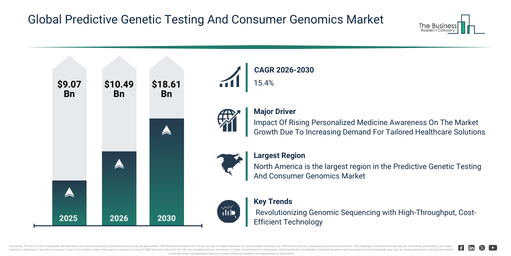
    The predictive genetic testing and consumer genomics market has experienced substantial expansion in recent years. Its valuation is anticipated to climb from $9.07 billion in 2025 to $10.49 billion in 2026, reflecting a compound annual growth rate (CAGR) of 15.7%. Key drivers of this market’s past growth include rising consumer health consciousness, improved accessibility to genetic testing, an increase in the availability of affordable sequencing technologies, growing enthusiasm for ancestry testing, and the development of digital health ecosystems.

    The market for predictive genetic testing and consumer genomics is anticipated to experience substantial expansion over the upcoming years. This sector is projected to reach a value of $18.61 billion by 2030, climbing at a compound annual growth rate (CAGR) of 15.4%. This expansion during the projection period stems from several factors, including a heightened demand for personalized preventive healthcare, greater uptake of pharmacogenomic testing, the broadening of consumer genomics platforms, increased integration with digital health applications, and enhanced regulatory scrutiny over genetic data utilization. Key developments anticipated within this timeframe involve the growing popularity of direct-to-consumer genetic testing, the increased deployment of digital health platforms, a surging need for insights into preventive health, the wider availability of at-home sample collection kits, and an intensified emphasis on data privacy and security.

    Get A Free Sample Report With In-Depth Market Insights:

    https://thebusinessresearchcompany.com/sample_request?id=60017373&type=smp&name=Predictive%20Genetic%20Testing%20And%20Consumer%20Genomics%20Market%20Report%202026&utm_source=Blogs&utm_medium=Paid&utm_campaign=Nov_PR

    Predictive Genetic Testing And Consumer Genomics Market Demand Drivers Opening New Revenue Streams

    The growing understanding of personalized medicine is anticipated to fuel the expansion of the predictive genetic testing and consumer genomics market. Personalized medicine refers to a medical methodology that tailors treatment and prevention strategies based on an individual’s genetic profile, lifestyle, and environmental elements. The recognition of personalized medicine is increasing as it enhances treatment effectiveness by matching therapies to a patient’s specific biological attributes. Predictive genetic testing and consumer genomics contribute to personalized medicine by identifying genetic risks and traits, thus enabling customized prevention, early diagnosis, and treatment approaches aligned with an individual’s genetic profile.

    Predictive Genetic Testing And Consumer Genomics Market Segmentation: How Does The Market Break Down By Category?

    The predictive genetic testing and consumer genomics market covered in this report is segmented –

    1) By Testing Type: Diagnostic Testing, Predictive Testing, Pharmacogenomic Testing, Carrier Screening

    2) By Technology: Polymerase Chain Reaction (PCR), Next-Generation Sequencing (NGS), Microarray Technology, DNA Sequencing

    3) By Service Type: Genetic Counseling Services, Sample Collection And Analysis, Data Interpretation And Reporting

    4) By Application: Breast And Ovarian Cancer, Cardiovascular Screening, Diabetic Screening And Monitoring, Colon Cancer, Parkinsonism Or Alzheimer’s Disease, Urologic Screening Or Prostate Cancer Screening, Orthopedic And Musculoskeletal, Other Cancer Screening, Other Diseases

    5) By End User: Healthcare Providers, Research Institutions, Diagnostic Laboratories, Consumers (Direct-to-Consumer Testing)

    Subsegments:

    1) By Diagnostic Testing: Cancer Diagnostic Testing, Neurological Disorder Testing, Rare Disease Diagnostics

    2) By Predictive Testing: Cancer Risk Prediction, Cardiovascular Disease Risk, Neurodegenerative Disorder Risk

    3) By Pharmacogenomic Testing: Adverse Drug Reaction Prediction, Psychiatric Medication Response, Dosage Optimization

    4) By Carrier Screening: Cystic Fibrosis Carrier Screening, Sickle Cell Anemia Carrier Screening, Tay-Sachs Carrier Screening

    Predictive Genetic Testing And Consumer Genomics Market Transformation Trends: What Innovations Are Driving Change?

    Leading companies within the predictive genetic testing and consumer genomics market are increasingly focused on technological advancements, particularly high-throughput and cost-efficient sequencing, to enable widespread, precise, and economical genomic analysis. This approach to sequencing involves processing a vast number of genomes rapidly while simultaneously reducing the per-genome costs, thereby making population-level testing a viable option.

    Predictive Genetic Testing And Consumer Genomics Market Competitive Overview And Top Companies

    Major companies operating in the predictive genetic testing and consumer genomics market are Thermo Fisher Scientific Inc., Abbott Laboratories, Laboratory Corporation of America Holdings, Quest Diagnostics Incorporated, QIAGEN N.V., Ancestry.com, Myriad Genetics Inc., ARUP Laboratories, BGI Genomics Co. Ltd., Invitae Corporation, 23andMe Inc., Helix Inc., Color Health Inc., Mapmygenome India Ltd., Reliance Life Sciences, Dante Labs Inc., EasyDNA, Gene by Gene Ltd., Nebula Genomics Inc., Pathway Genomics Corporation

    View The Full Predictive Genetic Testing And Consumer Genomics Market Report:

    https://thebusinessresearchcompany.com/report/predictive-genetic-testing-and-consumer-genomics-global-market-report?utm_source=Blogs&utm_medium=Paid&utm_campaign=Nov_PR

    Predictive Genetic Testing And Consumer Genomics Market Regional Analysis And Top Geography

    North America was the largest region in the predictive genetic testing and consumer genomics market in 2025. Asia-Pacific is expected to be the fastest-growing region in the forecast period. The regions covered in the predictive genetic testing and consumer genomics market report are Asia-Pacific, South East Asia, Western Europe, Eastern Europe, North America, South America, Middle East, Africa.

    Reach Out To Our Team:

    The Business Research Company: https://www.thebusinessresearchcompany.com/

    Americas: +1 310-496-7795

    Asia: +44 7882 955267 & +91 8897263534

    Europe: +44 7882 955267

    Email us at: marketing@tbrc.info

    Follow us on:

    LinkedIn: https://in.linkedin.com/company/the-business-research-company

    YouTube: https://www.youtube.com/channel/UC24_fI0rV8cR5DxlCpgmyFQ

    Global Market Model: https://www.thebusinessresearchcompany.com/global-market-model
  • Predictive Genetic Counselling Market Outlook 2026–2030: Growth Trends, Market Dynamics And Emerging Opportunities

    Predictive Genetic Counselling Market Outlook 2026–2030: Growth Trends, Market Dynamics And Emerging Opportunities

    Backed by market attractiveness analysis, total addressable market sizing, company benchmarking matrices, interactive Excel dashboards, wider supply chain intelligence, emerging startup coverage, and detailed product-level insights, The Business Research Company’s 2026 market reports are designed to offer research that is more actionable and strategically valuable than ever.

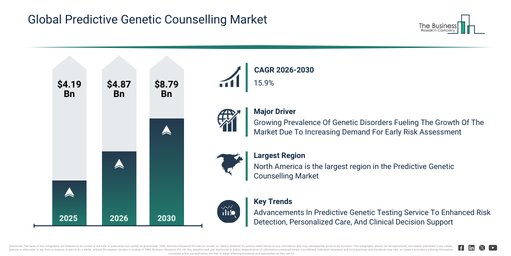
    Predictive Genetic Counselling Market Growth From $4.87 Billion In 2026 To $8.79 Billion By 2030 At A CAGR Of 15.9%

    The predictive genetic counselling market has experienced substantial growth in recent times. This market is projected to expand from $4.19 billion in 2025 to $4.87 billion in 2026, demonstrating a compound annual growth rate (CAGR) of 16.2%. Historically, this expansion has been driven by factors such as a greater reliance on family history assessments, the proliferation of cancer risk screening initiatives, wider adoption of genetic testing, advancements in counseling approaches, and increased public understanding of hereditary conditions.

    The predictive genetic counselling market is projected to experience substantial expansion in the coming years. This market is anticipated to reach $8.79 billion by 2030, driven by a compound annual growth rate (CAGR) of 15.9%. The expansion throughout the forecast period can be primarily ascribed to the increasing incorporation of genomics into standard healthcare practices, the escalating uptake of virtual counseling platforms, the broadening of preventive screening programs, the expanding utilization of AI-based genetic interpretation, and the rising need for personalized health risk insights. Key trends during this period encompass a heightened demand for online genetic counseling services, the increasing application of polygenic risk scoring, the wider acceptance of direct-to-consumer genetic testing, the broadening scope of predictive oncology counseling, and an intensified emphasis on patient education and decision-making support.

    Get A Free Sample Report With In-Depth Market Insights:

    https://thebusinessresearchcompany.com/sample_request?id=31757420&type=smp&name=Predictive%20Genetic%20Counselling%20Market%20Report%202026&utm_source=Blogs&utm_medium=Paid&utm_campaign=Nov_PR

    Predictive Genetic Counselling Market Growth Backed By Core Demand Fundamentals

    An increasing occurrence of genetic disorders is anticipated to stimulate the expansion of the predictive genetic counselling market in the future. Genetic disorders are health issues stemming from alterations or defects in an individual’s DNA, impacting the body’s growth, development, and overall functionality. The surge in genetic disorders is attributed to rising parental age, as older age at conception is associated with a greater probability of genetic mutations in offspring. These conditions support the growth of predictive genetic counselling by heightening the need for risk assessment services that enable individuals to grasp their likelihood of inheriting or transmitting such conditions.

    Predictive Genetic Counselling Market Segment Trends And Revenue Contributors

    The predictive genetic counselling market covered in this report is segmented –

    1) By Service Type: Risk Assessment, Carrier Testing, Predictive Testing, Other Service Types

    2) By Mode Of Delivery: In-Person, Online

    3) By Application: Consumer Genomics, Breast And Ovarian Cancer, Cardiovascular Screening, Diabetic Screening And Monitoring, Colon Cancer, Parkinsonism Or Alzheimer’s Disease, Urologic Screening Or Prostate Cancer Screening, Orthopedic And Musculoskeletal, Other Applications

    4) By End-User: Hospitals And Clinics, Diagnostic Laboratories, Research And Academic Institutes, Other End-Users

    Subsegments:

    1) By Risk Assessment: Family History Evaluation, Lifestyle And Environmental Risk Analysis, Polygenic Risk Score Analysis, Hereditary Disease Susceptibility Screening

    2) By Carrier Testing: Cystic Fibrosis Carrier Testing, Tay-Sachs Carrier Testing, Fragile X Syndrome Testing, Sickle Cell Carrier Testing, Thalassemia Carrier Screening

    3) By Predictive Testing: Breast Cancer Gene 1 (BRCA1) Or Breast Cancer Gene 2 (BRCA2) Mutation Testing, Lynch Syndrome Testing, Huntington’s Disease Testing, Cardiovascular Genetic Risk Testing, Neurological Disorder Prediction Testing

    4) By Other Service Types: Pharmacogenomic Testing, Prenatal Genetic Testing, Newborn Genetic Screening, Direct-To-Consumer Genetic Testing, Whole Genome Sequencing For Prediction

    #Predictive Genetic Counselling Market Growth Trends: What’s Shaping The Future Outlook?

    Leading companies active in the predictive genetic counselling market are focusing on developing advanced solutions, such as the predictive genetic testing service, for early detection of disease risk and to support informed clinical decision-making. A predictive genetic testing service is a medical offering that examines an individual’s DNA to identify genetic variations linked to an elevated risk of developing specific inherited conditions or diseases in the future.

    Predictive Genetic Counselling Market Competitive Landscape: Which Companies Lead The Industry?

    Major companies operating in the predictive genetic counselling market are Thermo Fisher Scientific Inc., Abbott Laboratories, Laboratory Corporation of America Holdings (LabCorp), Quest Diagnostics Inc., Agilent Technologies Inc., Illumina Inc., Bio-Rad Laboratories Inc., QIAGEN NV, Natera Inc, Myriad Genetics Inc., Fulgent Genetics Inc, Invitae Corporation, 23andMe Holding Co, Color Genomics Inc, deCODE genetics, Centogene NV, Admera Health LLC, Mapmygenome, Exact Sciences Corporation, BGI Group

    View The Full Predictive Genetic Counselling Market Report:

    https://thebusinessresearchcompany.com/report/predictive-genetic-counselling-global-market-report?utm_source=Blogs&utm_medium=Paid&utm_campaign=Nov_PR

    Predictive Genetic Counselling Market Geographic Analysis: Where Is Demand Rising Fastest?

    North America was the largest region in the predictive genetic counselling market in 2025. Asia-Pacific is expected to be the fastest-growing region in the forecast period. The regions covered in the predictive genetic counselling market report are Asia-Pacific, South East Asia, Western Europe, Eastern Europe, North America, South America, Middle East, Africa.

    Reach Out To Our Team:

    The Business Research Company: https://www.thebusinessresearchcompany.com/

    Americas: +1 310-496-7795

    Asia: +44 7882 955267 & +91 8897263534

    Europe: +44 7882 955267

    Email us at: marketing@tbrc.info

    Follow us on:

    LinkedIn: https://in.linkedin.com/company/the-business-research-company

    YouTube: https://www.youtube.com/channel/UC24_fI0rV8cR5DxlCpgmyFQ

    Global Market Model: https://www.thebusinessresearchcompany.com/global-market-model
  • Predictive Genetic Counseling Service Market Growth Outlook From $4.4 Billion In 2026 To $6.52 Billion By 2030

    Predictive Genetic Counseling Service Market Growth Outlook From $4.4 Billion In 2026 To $6.52 Billion By 2030

    Featuring market attractiveness scoring, total addressable market sizing, company benchmarking matrices, interactive Excel dashboards, deeper supply chain intelligence, emerging startup tracking, and granular product-level insights, The Business Research Company’s 2026 market reports are built to deliver research that is both more actionable and more strategically valuable.

    Predictive Genetic Counseling Service Market Expansion Outlook: What Revenue Opportunities Are Ahead?

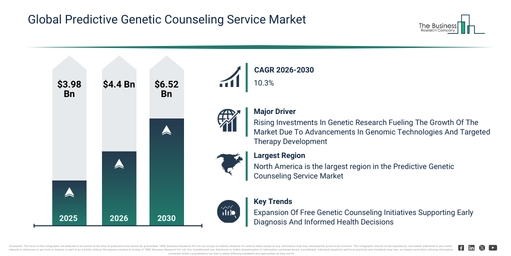
    The predictive genetic counseling service market size has seen significant expansion in recent years. It is forecast to grow from $3.98 billion in 2025 to $4.4 billion in 2026, achieving a compound annual growth rate (CAGR) of 10.6%. This historical growth can be attributed to factors such as a rise in awareness regarding inherited genetic conditions, the broadened availability of genetic testing, increased adoption of prenatal screening services, a surging demand for family risk assessment, and enhancements in molecular diagnostic accuracy.

    The predictive genetic counseling service market is anticipated to experience significant growth in the coming years. It is projected to achieve a size of $6.52 billion by 2030, growing at a compound annual growth rate (CAGR) of 10.3%. This expansion during the forecast period is attributed to factors such as the increasing demand for personalized preventive healthcare, the rising integration of AI in genetic interpretation, the expansion of remote healthcare services, a growing emphasis on early disease prediction, and the increasing adoption of population-scale genetic screening. Major trends expected in this period include the increased utilization of AI-assisted genetic risk assessment, the rising adoption of digital counseling platforms, a growing demand for preventive genetic screening services, the expansion of tele-genetic counseling models, and an enhanced focus on data-driven risk interpretation.

    Get A Free Sample Report With In-Depth Market Insights:

    https://thebusinessresearchcompany.com/sample_request?id=27486417&type=smp&name=Predictive%20Genetic%20Counseling%20Service%20Market%20Report%202026&utm_source=Blogs&utm_medium=Paid&utm_campaign=Nov_PR

    Predictive Genetic Counseling Service Market Growth Catalysts And Demand Drivers

    The rising investments in genetic research are anticipated to drive forward the predictive genetic counseling service market. Genetic research involves the methodical study of genes and heredity to grasp how genetic characteristics are passed down and influence biological functions. These investments are increasing due to advancements in genetic sequencing and precision medicine technologies, which are accelerating the development of targeted therapies and making biomedical research more efficient and commercially attractive. Investments in genetic research bolster the need for predictive genetic counseling services by uncovering new genetic markers for inherited diseases, thus raising the demand for professionals to interpret these findings and guide individuals on their health risks.

    Predictive Genetic Counseling Service Market Segment Analysis Spotlighting Growth Areas

    The predictive genetic counseling service market covered in this report is segmented –

    1) By Type: Premarital Examination Service, Parent Child Identification Service, Antenatal Examination Service, Single Gene Or Polygene Disease Diagnosis Service

    2) By Application: Adult, Child

    3) By End-User: Hospitals, Clinical Laboratories, Academic Institutions, Research Organizations, Pharmaceutical Companies

    Subsegments:

    1) By Premarital Examination Service: Genetic Carrier Screening, Chromosomal Abnormality Testing, Inherited Disorder Risk Assessment

    2) By Parent Child Identification Service: Paternity Testing, Maternity Testing, Kinship Analysis

    3) By Antenatal Examination Service: Non-Invasive Prenatal Testing (NIPT), Chorionic Villus Sampling (CVS), Amniocentesis, Fetal DNA Sequencing

    4) By Single Gene Or Polygene Disease Diagnosis Service: Monogenic Disorder Testing, Polygenic Risk Scoring, Pharmacogenomics Testing, Hereditary Cancer Risk Testing

    Predictive Genetic Counseling Service Market Industry Trends: What’s Reshaping Demand?

    Major companies operating in the predictive genetic counseling service market are concentrating on developing sophisticated solutions, such as complimentary genetic counseling services, to promote early risk assessment and informed decision-making. Complimentary genetic counseling services provide free consultations to individuals, assisting them in understanding their genetic health risks, typically supported by public health programs, research initiatives, or charitable groups.

    Predictive Genetic Counseling Service Market Leading Companies: Who Holds The Strongest Market Presence?

    Major companies operating in the predictive genetic counseling service market are Roche Ltd., Thermo Fisher Scientific Inc., Agilent Technologies Inc., Illumina Inc., Natera Inc., Tempus AI Inc., Fulgent Genetics Inc., Invitae Corporation, Berry Genomics Co. Ltd., Color Genomics Inc., Decode Genetics Inc., Myriad Genetics Inc., Genpath Diagnostics, Genomic Medical Inc., GeneDx Inc., EasyDNA, Blueprint Genetics Inc., Veritas Genetics International Ltd., Abbott Pathology, Bgi Group Ltd.

    View The Full Predictive Genetic Counseling Service Market Report:

    https://thebusinessresearchcompany.com/report/predictive-genetic-counseling-service-global-market-report?utm_source=Blogs&utm_medium=Paid&utm_campaign=Nov_PR

    Predictive Genetic Counseling Service Market Global Footprint: Which Region Leads The Market?

    North America was the largest region in the predictive genetic counseling service market in 2025. Asia-Pacific is expected to be the fastest-growing region in the forecast period. The regions covered in the predictive genetic counseling service market report are Asia-Pacific, South East Asia, Western Europe, Eastern Europe, North America, South America, Middle East, Africa.

    Reach Out To Our Team:

    The Business Research Company: https://www.thebusinessresearchcompany.com/

    Americas: +1 310-496-7795

    Asia: +44 7882 955267 & +91 8897263534

    Europe: +44 7882 955267

    Email us at: marketing@tbrc.info

    Follow us on:

    LinkedIn: https://in.linkedin.com/company/the-business-research-company

    YouTube: https://www.youtube.com/channel/UC24_fI0rV8cR5DxlCpgmyFQ

    Global Market Model: https://www.thebusinessresearchcompany.com/global-market-model
  • Predictive And Presymptomatic Testing Market Forecast To Reach $9.31 Billion By 2030: Key Growth Drivers And Industry Trends

    Predictive And Presymptomatic Testing Market Forecast To Reach $9.31 Billion By 2030: Key Growth Drivers And Industry Trends

    Built to provide research that’s more actionable and strategically valuable, The Business Research Company’s 2026 market reports include market attractiveness analysis, total addressable market sizing, company benchmarking matrices, interactive Excel dashboards, broader supply chain intelligence, emerging startup tracking, and in-depth product insights.

    Predictive And Presymptomatic Testing Market Growth Potential: How Will Market Size Shift Through 2030?

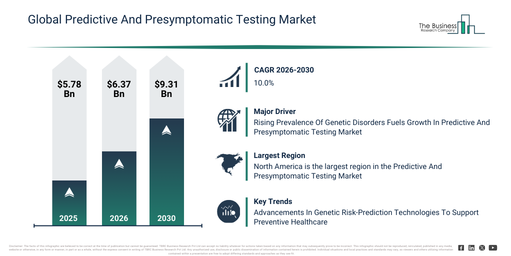
    The predictive and presymptomatic testing market size has experienced significant expansion over recent years. This market is expected to increase from $5.78 billion in 2025 to $6.37 billion in 2026, achieving a compound annual growth rate (CAGR) of 10.3%. The growth observed in the historical period is primarily due to breakthroughs in genetic sequencing technologies, a heightened awareness of inherited disease risks, the proliferation of clinical genetic testing services, the expansion of oncology and neurology testing programs, and a decrease in genetic testing costs.

    The predictive and presymptomatic testing market size is projected to experience substantial expansion over the upcoming years. This market is anticipated to reach a valuation of $9.31 billion by 2030, exhibiting a compound annual growth rate (CAGR) of 10.0%. Several factors contribute to this forecasted growth, including an escalated demand for personalized medicine, the growing incorporation of artificial intelligence into genomic analysis, the enlargement of population-wide screening initiatives, a heightened emphasis on strategies for preventive healthcare, and strengthened regulatory backing for genetic diagnostics. Key trends expected during this period encompass the increasing acceptance of preventive genetic screening, the expanding utilization of risk-based models for disease prediction, the broadening availability of genetic counseling services, a sharpened focus on the early identification of diseases, and the incorporation of genomic information into clinical decision-making processes.

    Get A Free Sample Report With In-Depth Market Insights:

    https://thebusinessresearchcompany.com/sample_request?id=32564591&type=smp&name=Predictive%20And%20Presymptomatic%20Testing%20Market%20Report%202026&utm_source=Blogs&utm_medium=Paid&utm_campaign=Nov_PR

    Predictive And Presymptomatic Testing Market Opportunity Drivers: What’s Unlocking New Revenue Potential?

    The increasing incidence of genetic conditions is anticipated to drive the expansion of the predictive and presymptomatic testing market in the future. These disorders are illnesses stemming from irregularities in deoxyribonucleic acid (DNA), encompassing alterations like gene mutations and chromosomal shifts, exemplified by conditions such as cystic fibrosis and Down syndrome. The growing occurrence of genetic disorders can be linked to elements like older maternal age, environmental influences, and improved diagnostic techniques. Predictive and presymptomatic testing is vital in lowering the frequency of genetic disorders through the early identification of at-risk individuals prior to symptom onset. This proactive strategy facilitates timely interventions or changes in lifestyle that can aid in preventing or lessening the intensity of these conditions.

    Predictive And Presymptomatic Testing Market Segment Performance And Emerging Opportunities

    The predictive and presymptomatic testing market covered in this report is segmented –

    1) By Test Type: Predictive Testing, Presymptomatic Testing

    2) By Application: Cancer Genetic Testing, Cardiovascular Genetic Testing, Neurological Genetic Testing, Other Applications

    3) By End User: Hospitals And Clinics, Diagnostic Laboratories

    Subsegments:

    1) By Predictive Testing: Genetic Testing for Inherited Conditions, Cancer Risk Prediction, Cardiovascular Disease Prediction, Neurodegenerative Disease Risk Prediction, Genetic Screening for Autosomal Dominant Disorders

    2) By Presymptomatic Testing: Huntington’s Disease Testing, Hereditary Cancer Risk Testing, Cystic Fibrosis Presymptomatic Testing, Early-Onset Alzheimer’s Disease Testing, Presymptomatic Genetic Testing for Familial Diseases

    Predictive And Presymptomatic Testing Market Innovation Trends: What Developments Are Reshaping The Industry?

    Leading companies in the predictive and presymptomatic testing market are concentrating on developing innovative multi-gene testing solutions featuring enhanced genetic risk-scoring capabilities. Their aim is to enable earlier disease prediction and improve personalized prevention strategies. Polygenic-enabled panels integrate the sequencing of clinically relevant hereditary-risk genes with the analysis of multiple common variants, offering a more comprehensive and individualized assessment of future disease likelihood compared to traditional single-gene tests. For instance, in November 2025, Myriad Genetics Inc., a U.S.-based molecular diagnostics company, expanded its MyRisk Hereditary Cancer Test to include 63 clinically actionable genes across more than 11 cancer types. This expanded panel integrates next-generation sequencing with personalized lifetime and five-year cancer-risk estimates, allowing physicians to guide proactive clinical decision-making. The product enhances risk detection even in individuals without strong family histories and supports targeted surveillance, earlier screening initiation, and preventive care planning.

    Predictive And Presymptomatic Testing Market Key Players: Which Companies Lead Industry Competition?

    Major companies operating in the predictive and presymptomatic testing market are F. Hoffmann-La Roche AG, Thermo Fisher Scientific Inc., Mayo Clinic, Quest Diagnostics Inc., Illumina Inc., Bio-Rad Laboratories Inc., Qiagen N.V., Peter MacCallum Cancer Centre, Myriad Genetics Inc., SomaLogic Inc., Siteman Cancer Center, Dante Labs S.R.L., Mapmygenome, Manipal Health Enterprises, Gene Vision, Reliance Diagnostic, GenepoweRx, Personal Genomics, Apollo Hospitals Enterprise Limited, Cardio Diagnostics Inc.

    View The Full Predictive And Presymptomatic Testing Market Report:

    https://thebusinessresearchcompany.com/report/predictive-and-presymptomatic-testing-global-market-report?utm_source=Blogs&utm_medium=Paid&utm_campaign=Nov_PR

    Predictive And Presymptomatic Testing Market Regional Split: Which Areas Are Fueling Growth?

    North America was the largest region in the predictive and presymptomatic testing market in 2025. Asia-Pacific is expected to be the fastest-growing region in the forecast period. The regions covered in the predictive and presymptomatic testing market report are Asia-Pacific, South East Asia, Western Europe, Eastern Europe, North America, South America, Middle East, Africa.

    Reach Out To Our Team:

    The Business Research Company: https://www.thebusinessresearchcompany.com/

    Americas: +1 310-496-7795

    Asia: +44 7882 955267 & +91 8897263534

    Europe: +44 7882 955267

    Email us at: marketing@tbrc.info

    Follow us on:

    LinkedIn: https://in.linkedin.com/company/the-business-research-company

    YouTube: https://www.youtube.com/channel/UC24_fI0rV8cR5DxlCpgmyFQ

    Global Market Model: https://www.thebusinessresearchcompany.com/global-market-model
  • Precocious Puberty Treatment Market Research 2026: Market Size, Trends, Segments And Growth Forecast

    Precocious Puberty Treatment Market Research 2026: Market Size, Trends, Segments And Growth Forecast

    Backed by market attractiveness analysis, total addressable market sizing, company benchmarking matrices, interactive Excel dashboards, wider supply chain intelligence, emerging startup coverage, and detailed product-level insights, The Business Research Company’s 2026 market reports are designed to offer research that is more actionable and strategically valuable than ever.

    Precocious Puberty Treatment Market Value Analysis: What Growth Lies Ahead Over The Forecast Period?

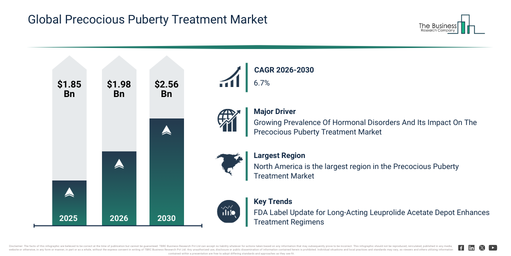
    The precocious puberty treatment market size has demonstrated robust growth in recent years. This market is projected to expand from $1.85 billion in 2025 to $1.98 billion in 2026, exhibiting a compound annual growth rate (CAGR) of 6.8%. Historically, this growth can be attributed to several factors including enhanced diagnostic capabilities for hormonal disorders, a heightened awareness of early puberty conditions, the widespread availability of gonadotropin-releasing hormone analogs, the expansion of pediatric healthcare services, and increasing physician education initiatives.

    The precocious puberty treatment market is projected to experience robust expansion over the next few years. It is expected to achieve a size of $2.56 billion by 2030, demonstrating a compound annual growth rate (CAGR) of 6.7%. This anticipated growth during the forecast period can be attributed to a heightened focus on individualized endocrine care, increasing financial commitments to pediatric rare disease treatments, the wider availability of long-acting injectable formulations, the growing application of digital patient monitoring tools, and improved access to specialized healthcare services. Significant trends identified for the forecast period include the increasing adoption of long-acting hormonal therapies, an amplified emphasis on early diagnosis and intervention, the expanding utilization of personalized treatment protocols, the enlargement of pediatric endocrinology services, and an enhanced understanding of outcomes related to growth preservation.

    Get A Free Sample Report With In-Depth Market Insights:

    https://thebusinessresearchcompany.com/sample_request?id=75126664&type=smp&name=Precocious%20Puberty%20Treatment%20Market%20Report%202026&utm_source=Blogs&utm_medium=Paid&utm_campaign=Nov_PR

    Precocious Puberty Treatment Market Growth Momentum: What Factors Are Shaping Demand?

    The increasing occurrence of hormonal disorders is anticipated to fuel expansion in the precocious puberty treatment market going forward. Hormonal disorders are defined as health conditions characterized by malfunctions or irregularities within the endocrine system, responsible for hormone production and regulation. These disorders can lead to precocious puberty when the normal control of sex hormones is disturbed, resulting in the premature activation of the hypothalamic-pituitary-gonadal (HPG) axis, which governs the start of puberty.

    Precocious Puberty Treatment Market Segment Landscape And Growth Outlook

    The precocious puberty treatment market covered in this report is segmented –

    1) By Drug Class: Leuprorelin, Histrelin, Triptorelin, Nafarelin

    2) By Application: Hospitals, Clinics, Other Applications

    3) By End-User: Pediatric Patients, Adolescent Patients, Other End-Users

    Subsegments:

    1) By Leuprorelin: Leuprorelin Acetate Injection, Leuprorelin For Depot Administration, Leuprorelin For Subcutaneous Administration

    2) By Histrelin: Histrelin Acetate Implant, Histrelin For Depot Injection, Histrelin For Subcutaneous Administration

    3) By Triptorelin: Triptorelin Acetate Injection, Triptorelin For Long-Acting Depot Injection, Triptorelin For Subcutaneous Implantation

    4) By Nafarelin: Nafarelin Acetate Nasal Spray, Nafarelin For Injectable Administration

    Precocious Puberty Treatment Market Trends: What’s Defining The Industry’s Next Phase?

    Leading companies in the precocious puberty treatment market are concentrating on enhancing drug formulations, such as extended-duration leuprolide acetate depot therapies, to boost treatment convenience, safety, and clinical outcomes. Long-acting leuprolide acetate therapies are designed to offer sustained suppression of gonadotropin-releasing hormone (GnRH), thereby delaying premature sexual development and lessening the frequency of dosing.

    Precocious Puberty Treatment Market Competitive Landscape: Who Leads The Industry?

    Major companies operating in the precocious puberty treatment market are Pfizer Inc., AbbVie Inc., Sanofi SA, Abbott Laboratories, Eli Lilly And Company, Glenmark Pharmaceuticals Ltd, Sun Pharmaceutical Industries Ltd, Ipsen Ltd, Ferring Pharmaceuticals Private Limited, Endo Pharmaceuticals Inc, Livzon Pharmaceutical Group Inc, Actiza Pharmaceutical Private Limited, Biocon Limited, Mallinckrodt plc, Arbor Pharmaceuticals LLC, Tolmar Pharmaceuticals Inc, Debiopharm Group, Emcure Pharmaceuticals Ltd, Cadila Pharmaceuticals Limited, Sandoz International GmbH, Foresee Pharmaceuticals Co Ltd, Verity Pharmaceuticals Inc, Aurobindo Pharma Ltd

    View The Full Precocious Puberty Treatment Market Report:

    https://thebusinessresearchcompany.com/report/precocious-puberty-treatment-global-market-report?utm_source=Blogs&utm_medium=Paid&utm_campaign=Nov_PR

    Precocious Puberty Treatment Market Top Region: Where Does Most Revenue Come From?

    North America was the largest region in the precocious puberty treatment market in 2025. Asia-Pacific is expected to be the fastest-growing region in the forecast period. The regions covered in the precocious puberty treatment market report are Asia-Pacific, South East Asia, Western Europe, Eastern Europe, North America, South America, Middle East, Africa.

    Reach Out To Our Team:

    The Business Research Company: https://www.thebusinessresearchcompany.com/

    Americas: +1 310-496-7795

    Asia: +44 7882 955267 & +91 8897263534

    Europe: +44 7882 955267

    Email us at: marketing@tbrc.info

    Follow us on:

    LinkedIn: https://in.linkedin.com/company/the-business-research-company

    YouTube: https://www.youtube.com/channel/UC24_fI0rV8cR5DxlCpgmyFQ

    Global Market Model: https://www.thebusinessresearchcompany.com/global-market-model

  • Preclinical Imaging Market Forecast 2026: Market Size, Competitive Landscape And Growth Drivers

    Preclinical Imaging Market Forecast 2026: Market Size, Competitive Landscape And Growth Drivers

    Featuring market attractiveness scoring, total addressable market sizing, company benchmarking matrices, interactive Excel dashboards, deeper supply chain intelligence, emerging startup tracking, and granular product-level insights, The Business Research Company’s 2026 market reports are built to deliver research that is both more actionable and more strategically valuable.

    Preclinical Imaging Market Size Forecast: How Big Could The Market Get By 2030?

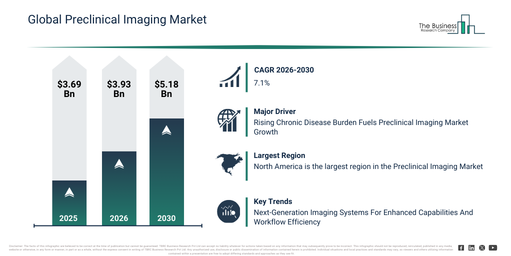
    The preclinical imaging market has demonstrated robust expansion in recent years. Projections indicate its growth from $3.69 billion in 2025 to $3.93 billion by 2026, achieving a compound annual growth rate (CAGR) of 6.7%. This historical expansion is attributable to factors such as the greater utilization of animal models in biomedical studies, the enlargement of oncology and neurology investigations, the growing acceptance of non-invasive imaging methods, increased preclinical drug testing, and the emergence of sophisticated imaging reagents.

    The preclinical imaging market size is anticipated to demonstrate robust expansion in the forthcoming years. It is projected to climb to $5.18 billion by 2030, registering a compound annual growth rate (CAGR) of 7.1%. This growth throughout the forecast period can be attributed to several factors, including an escalating demand for real-time disease visualization, increasing financial commitments to translational research, the broadening scope of precision medicine studies, the rising application of AI-assisted image analysis, and the growing deployment of sophisticated contrast agents. Prominent trends for the forecast duration involve the increasing uptake of multi-modal imaging platforms, a greater reliance on high-resolution imaging systems, the expanding integration of imaging with data analytics, the proliferation of longitudinal disease monitoring studies, and an intensified focus on the precision of translational imaging.

    Get A Free Sample Report With In-Depth Market Insights:

    https://thebusinessresearchcompany.com/sample_request?id=60555847&type=smp&name=Preclinical%20Imaging%20Market%20Report%202026&utm_source=Blogs&utm_medium=Paid&utm_campaign=Nov_PR

    Preclinical Imaging Market Expansion Drivers: What’s Shaping Future Growth?

    The expanding prevalence of chronic diseases is anticipated to drive the future expansion of the preclinical imaging market. Chronic diseases are defined as long-duration health conditions that endure for a prolonged time, usually for at least three months. Such conditions frequently necessitate continuous medical care and can considerably affect an individual’s well-being. Preclinical imaging instruments are employed to identify chronic diseases by visualizing bone structure and lung function. These tools also serve to study chronic diseases, enabling visualization of disease progression and enhancing comprehension.

    Preclinical Imaging Market Breakdown By Product Type And Application

    The preclinical imaging market covered in this report is segmented –

    1) By Modality: Optical Imaging Systems, Preclinical Nuclear Imaging Systems, Micro-Magnetic Resonance Imaging Systems, Micro-Ultrasound Systems, Micro-Computed Tomography Systems, Preclinical Photoacoustic Imaging Systems, Preclinical Magnetic Particle Imaging (MPI) Systems

    2) By Reagents: Preclinical Optical Imaging Reagents, Preclinical Nuclear Imaging Reagents, Preclinical MRI Contrast Agents, Preclinical Ultrasound Contrast Agents, Preclinical CT Contrast Agents

    3) By End User: Hospital, Diagnostics Center, Other End-User

    Subsegments:

    1) By Optical Imaging Systems: Bioluminescence Imaging, Fluorescence Imaging

    2) By Preclinical Nuclear Imaging Systems: Positron Emission Tomography (PET), Single-Photon Emission Computed Tomography (SPECT)

    3) By Micro-Magnetic Resonance Imaging (Micro-MRI) Systems: High-Resolution Micro-MRI Systems, Functional Micro-MRI Systems

    4) By Micro-Ultrasound Systems: High-Frequency Ultrasound Imaging, Real-Time Micro-Ultrasound Systems

    5) By Micro-Computed Tomography (Micro-CT) Systems: In Vivo Micro-CT Systems, Ex Vivo Micro-CT Systems

    6) By Preclinical Photoacoustic Imaging Systems: Multi-Wavelength Photoacoustic Imaging, Hybrid Photoacoustic Imaging Systems

    7) By Preclinical Magnetic Particle Imaging (MPI) Systems: MPI For Cell Tracking, MPI For Vascular Imaging

    Preclinical Imaging Market Industry Trends Fueling Future Revenue Growth

    Leading firms within the preclinical imaging market are intensifying efforts to introduce advanced imaging systems, aiming for a competitive advantage. These advanced systems denote sophisticated and groundbreaking technologies, surpassing existing capabilities by integrating state-of-the-art functionalities.

    Preclinical Imaging Market Company Landscape And Competitive Strategy

    Major companies operating in the preclinical imaging market are Thermo Fisher Scientific Inc, FUJIFILM Visualsonics Inc, Agilent Technologies Inc, PerkinElmer Inc, Bruker Corporation, Miltenyi Biotech, Sofie Biosciences Inc, Ion Beam Applications SA, Piramal Enterprises Ltd, LI COR Biosciences Inc, Aspect Imaging Ltd, Capintec Inc, Spectral Instruments Inc, Mediso Ltd, MR Solutions Ltd, Biospace Lab SA, Scintica Instrumentation Inc, Trifoil Imaging, Bioscan Inc, Inviscan SAS, Kubtec X Ray, MILabs BV, SCANCO Medical AG, Fujifilm Holdings Corporation

    View The Full Preclinical Imaging Market Report:

    https://thebusinessresearchcompany.com/report/preclinical-imaging-global-market-report?utm_source=Blogs&utm_medium=Paid&utm_campaign=Nov_PR

    Preclinical Imaging Market Regional Breakdown: Where Is Demand Concentrated?

    North America was the largest region in the preclinical imaging market in 2025. The regions covered in the preclinical imaging market report are Asia-Pacific, South East Asia, Western Europe, Eastern Europe, North America, South America, Middle East, Africa.

    Reach Out To Our Team:

    The Business Research Company: https://www.thebusinessresearchcompany.com/

    Americas: +1 310-496-7795

    Asia: +44 7882 955267 & +91 8897263534

    Europe: +44 7882 955267

    Email us at: marketing@tbrc.info

    Follow us on:

    LinkedIn: https://in.linkedin.com/company/the-business-research-company

    YouTube: https://www.youtube.com/channel/UC24_fI0rV8cR5DxlCpgmyFQ

    Global Market Model: https://www.thebusinessresearchcompany.com/global-market-model