Blog

  • Glioma Treatment Market Analysis Through 2030: Market Size, Growth Trends And Industry Outlook

    Glioma Treatment Market Analysis Through 2030: Market Size, Growth Trends And Industry Outlook

    Backed by market attractiveness analysis, total addressable market sizing, company benchmarking matrices, interactive Excel dashboards, wider supply chain intelligence, emerging startup coverage, and detailed product-level insights, The Business Research Company’s 2026 market reports are designed to offer research that is more actionable and strategically valuable than ever.

    Glioma Treatment Market Size And Revenue Outlook Through 2030

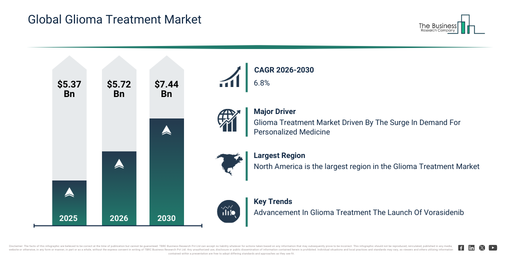
    The glioma treatment market size has shown significant expansion in recent years. It is projected to increase from $5.37 billion in 2025 to $5.72 billion in 2026, driven by a compound annual growth rate (CAGR) of 6.4%. The growth observed in prior periods can be attributed to advances in neurosurgery, the proliferation of radiation oncology, the uptake of chemotherapy, enhanced diagnostic imaging, and the expansion of cancer care facilities.

    The glioma treatment market is anticipated to experience robust expansion in the coming years, with its size projected to reach $7.44 billion by 2030, growing at a compound annual growth rate (CAGR) of 6.8%. This projected increase in the forecast period stems from the integration of precision oncology, the development of novel targeted drugs, an enhanced focus on improving survival outcomes, the expansion of specialty oncology clinics, and the implementation of personalized treatment protocols. Significant trends expected during this period encompass a rise in the use of combination therapy approaches, an increased emphasis on early surgical intervention, the expansion of targeted drug therapies, the growing importance of radiation therapy optimization, and improved long-term disease management strategies.

    Get A Free Sample Report With In-Depth Market Insights:

    https://thebusinessresearchcompany.com/sample_request?id=16708357&type=smp&name=Glioma%20Treatment%20Market%20Report%202026&utm_source=Blogs&utm_medium=Paid&utm_campaign=Nov_PR

    Glioma Treatment Market Industry Drivers: What’s Behind The Revenue Growth?

    The increasing demand for personalized medicine is anticipated to propel the growth of the glioma treatment market going forward. Personalized medicine refers to a tailored healthcare approach that considers individual patient characteristics, including genetics, environment, and lifestyle, to improve treatment effectiveness and outcomes. This rising demand for personalized medicine is driven by various factors, such as advancements in genomics, patient empowerment, and enhanced treatment efficacy. The identification of biomarkers associated with gliomas helps forecast treatment responses and outcomes, enabling the creation of personalized treatment plans customized to each patient’s specific attributes. For instance, in February 2024, according to the Personalized Medicine Coalition, a US-based non-profit organization, the FDA approved 16 novel personalized therapies for patients with rare diseases in 2023, compared to six in 2022. Consequently, the growing demand for personalized medicine drives the growth of the glioma treatment market.

    Glioma Treatment Market Segmentation: How Does The Market Break Down By Category?

    The glioma treatment market covered in this report is segmented –

    1) By Type: Low-Grade, High-Grade

    2) By Disease: Glioblastoma Multiforme, Anaplastic Astrocytoma, Anaplastic Oligodendroglioma, Other Diseases

    3) By Route Of Administration: Oral, Parenteral, Other Routes

    4) By Treatment: Surgery, Radiation Therapy, Chemotherapy, Targeted Drug Therapy, Other Treatments

    5) By End-User: Hospitals, Specialty Clinics, Other End Users

    Subsegments:

    1) By Low-Grade: Astrocytoma, Oligodendroglioma, Mixed Glioma

    2) By High-Grade: Glioblastoma Multiforme, Anaplastic Astrocytoma, Anaplastic Oligodendroglioma

    Glioma Treatment Market Growth Trends Reshaping The Competitive Landscape

    Leading companies in the glioma treatment market are increasingly incorporating innovative products like immunotherapies to enhance patient outcomes and improve tumor targeting efficiency. Immunotherapies work by stimulating or leveraging the body’s immune system to recognize and attack malignant cells. For example, in June 2024, Servier Pharmaceuticals, a France-based pharmaceutical company, obtained FDA approval for VORANIGO (vorasidenib) tablets, an important landmark as the first targeted therapy for Grade 2 IDH-mutant glioma. Vorasidenib is a dual inhibitor designed to target isocitrate dehydrogenase (IDH) 1 and 2 mutations, frequently observed in gliomas. These mutations cause the production of 2-hydroxyglutarate (2-HG), a metabolite that encourages tumor growth and survival. By inhibiting these enzymes, vorasidenib decreases 2-HG levels, thereby potentially impeding tumor progression.

    Glioma Treatment Market Competitive Overview And Top Companies

    Major companies operating in the glioma treatment market are Merck & Co Inc., Amgen Inc., F Hoffmann-La Roche AG, Pfizer Inc., Teva Pharmaceutical Industries Ltd., Sun Pharmaceutical Industries Ltd., Arbor Pharmaceuticals LLC, Amneal Pharmaceuticals Inc., Karyopharm Therapeutics Inc., Bristol-Myers Squibb Co., Rigel Pharmaceuticals Inc., Sumitomo Dainippon Pharma Oncology Inc., Emcure Pharmaceuticals Ltd., Novartis AG, AstraZeneca plc, Eli Lilly and Company, Sanofi S.A., Johnson & Johnson, AbbVie Inc., Takeda Pharmaceutical Company Limited, GlaxoSmithKline plc, Bayer AG, Gilead Sciences Inc., Ipsen Pharma, Eisai Co. Ltd., Genentech Inc., Iovance Biotherapeutics Inc., Agios Pharmaceuticals Inc.

    View The Full Glioma Treatment Market Report:

    https://thebusinessresearchcompany.com/report/glioma-treatment-global-market-report?utm_source=Blogs&utm_medium=Paid&utm_campaign=Nov_PR

    Glioma Treatment Market Top Region By Revenue And Market Share

    North America was the largest region in the glioma treatment market in 2025.Asia-Pacific is expected to be the fastest-growing region in the global glioma treatment market report during the forecast period. The regions covered in the glioma treatment market report are Asia-Pacific, South East Asia, Western Europe, Eastern Europe, North America, South America, Middle East, Africa.

    Reach Out To Our Team:

    The Business Research Company: https://www.thebusinessresearchcompany.com/

    Americas: +1 310-496-7795

    Asia: +44 7882 955267 & +91 8897263534

    Europe: +44 7882 955267

    Email us at: marketing@tbrc.info

    Follow us on:

    LinkedIn: https://in.linkedin.com/company/the-business-research-company

    YouTube: https://www.youtube.com/channel/UC24_fI0rV8cR5DxlCpgmyFQ

    Global Market Model: https://www.thebusinessresearchcompany.com/global-market-model
  • Glioblastoma Multiforme (GBM) Treatment Market Outlook From 2026 To 2030: Key Growth Factors And Future Opportunities

    Glioblastoma Multiforme (GBM) Treatment Market Outlook From 2026 To 2030: Key Growth Factors And Future Opportunities

    Featuring market attractiveness scoring, total addressable market sizing, company benchmarking matrices, interactive Excel dashboards, deeper supply chain intelligence, emerging startup tracking, and granular product-level insights, The Business Research Company’s 2026 market reports are built to deliver research that is both more actionable and more strategically valuable.

    Glioblastoma Multiforme (GBM) Treatment Market Growth From $3.02 Billion In 2026 To $4.46 Billion By 2030 At A CAGR Of 10.2%

    The glioblastoma multiforme (gbm) treatment market size has seen rapid expansion in recent years. It is projected to increase from $2.73 billion in 2025 to $3.02 billion in 2026, exhibiting a compound annual growth rate (CAGR) of 10.7%. Historically, this growth can be attributed to several factors, including restricted survival outcomes, continued reliance on surgery and radiation, the standardization of chemotherapy, the expansion of neuro-oncology centers, and a rise in brain tumor diagnoses.

    The glioblastoma multiforme (gbm) treatment market is projected to experience substantial expansion over the upcoming years. This market is predicted to reach $4.46 billion by 2030, exhibiting a compound annual growth rate (CAGR) of 10.2%. The anticipated market growth can be linked to factors such as advancements in targeted therapies, the broadening of immunotherapy pipelines, the embrace of precision medicine, heightened clinical trial activity, and an increase in research funding. Key developments expected during this period involve the increasing uptake of multimodal treatment regimens, enhanced application of tumor treating field therapy, a stronger emphasis on individualized gbm therapies, the widening of immunotherapy strategies, and refined post-surgical treatment protocols.

    Get A Free Sample Report With In-Depth Market Insights:

    https://thebusinessresearchcompany.com/sample_request?id=89592175&type=smp&name=Glioblastoma%20Multiforme%20%28GBM%29%20Treatment%20Market%20Report%202026&utm_source=Blogs&utm_medium=Paid&utm_campaign=Nov_PR

    Glioblastoma Multiforme (GBM) Treatment Market Growth Factors: What’s Supporting Expansion?

    The increasing occurrence of brain disorders is projected to boost the growth of the glioblastoma multiforme (GBM) treatment market moving forward. Brain disorders involve the abnormal functioning of the brain as well as the nerves located throughout the human body and the spinal cord. The rising prevalence of brain disorders such as glioblastoma multiforme (GBM) can be attributed to various contributing factors like the aging population, compromised immune systems, overdiagnosis, ionizing radiation, air pollution, and other elements, which consequently generates a demand for brain disorder treatment to enhance well-being. For instance, in February 2025, according to Dementia Australia, an Australia-based non-profit organization, approximately 433,300 Australians are living with dementia, a number expected to climb to 812,500 by 2054. Additionally, younger-onset dementia impacts around 29,000 people in 2025, with projections indicating an increase to 41,000 by 2054. Therefore, the growing prevalence of brain disorders is a primary driver for the expansion of the glioblastoma multiforme (GBM) treatment market.

    Glioblastoma Multiforme (GBM) Treatment Market Segment Trends And Revenue Contributors

    The glioblastoma multiforme (gbm) treatment market covered in this report is segmented –

    1) By Treatment: Surgery, Radiation Therapy, Chemotherapy, R Immunotherapy

    2) By Drug Class: Temozolomide, Bevacizumab, Lomustine, Carmustine Wafers, Other Drug Classes

    3) By Route Of Administration: Oral, Parenteral, Other Route Of Administrations

    4) By End-Use: Hospitals, Clinics, Ambulatory Surgical Centers

    Subsegments:

    1) By Surgery: Tumor Resection, Biopsy Procedures

    2) By Radiation Therapy: External Beam Radiation Therapy (EBRT), Stereotactic Radiation Therapy

    3) By Chemotherapy: Standard Chemotherapy, Combination Chemotherapy Regimens

    4) By Immunotherapy: Checkpoint Inhibitors, Vaccine-Based Therapies

    Glioblastoma Multiforme (GBM) Treatment Market Trends Shaping Long-Term Demand

    Major companies operating in the market are prioritizing the development of innovative wearable and portable devices to sustain their position. These advancements aim to offer users enhanced functionality, convenience, and comfort, addressing the growing demand for accessible and efficient healthcare solutions. For instance, in 2023, Novocure, a Jersey-based oncology company, launched Optune Gio, an FDA-approved wearable and portable treatment system for patients newly diagnosed with glioblastoma (GBM). This device utilizes Tumor Treating Fields (TTFields), which are alternating electric fields that disrupt cancer cell division, potentially extending patient survival. Weighing only 2.7 pounds, Optune Gio is designed for comfort, allowing patients to wear it during daily activities.

    Glioblastoma Multiforme (GBM) Treatment Market Competitive Landscape: Which Companies Lead The Industry?

    Major companies operating in the glioblastoma multiforme (gbm) treatment market are Pfizer Inc., F. Hoffmann-La Roche AG, Merck & Co. Inc., AbbVie Inc., Novartis AG, AstraZeneca PLC, Amgen Inc., Teva Pharmaceutical Industries Ltd., Sun Pharmaceutical Industries Limited, Jazz Pharmaceuticals Inc., Sumitomo Dainippon Pharma Oncology Inc., Varian Medical Systems Inc., Amneal Pharmaceuticals Inc., Elekta AB, Loxo Oncology Inc., Karyopharm Therapeutics Inc., EnGeneIC Ltd., Genenta Science S.r.l., Cantex Pharmaceuticals Inc., Vascular Biogenics Ltd., Seelos Therapeutics Inc, Angiochem Inc., Diffusion Pharmaceuticals Inc

    View The Full Glioblastoma Multiforme (GBM) Treatment Market Report:

    https://thebusinessresearchcompany.com/report/glioblastoma-multiforme-GBM-treatment-global-market-report?utm_source=Blogs&utm_medium=Paid&utm_campaign=Nov_PR

    Glioblastoma Multiforme (GBM) Treatment Market Regional Analysis And Top Geography

    North America was the largest region in the glioblastoma multiforme (GBM) treatment market share in 2025. Asia-Pacific is expected to be the fastest-growing region in the forecast period. The regions covered in the glioblastoma multiforme (gbm) treatment market report are Asia-Pacific, South East Asia, Western Europe, Eastern Europe, North America, South America, Middle East, Africa.

    Reach Out To Our Team:

    The Business Research Company: https://www.thebusinessresearchcompany.com/

    Americas: +1 310-496-7795

    Asia: +44 7882 955267 & +91 8897263534

    Europe: +44 7882 955267

    Email us at: marketing@tbrc.info

    Follow us on:

    LinkedIn: https://in.linkedin.com/company/the-business-research-company

    YouTube: https://www.youtube.com/channel/UC24_fI0rV8cR5DxlCpgmyFQ

    Global Market Model: https://www.thebusinessresearchcompany.com/global-market-model

  • Glioblastoma Multiforme Market Growth Forecast: Market Size, Key Trends And Emerging Opportunities Through 2030

    Glioblastoma Multiforme Market Growth Forecast: Market Size, Key Trends And Emerging Opportunities Through 2030

    Built to provide research that’s more actionable and strategically valuable, The Business Research Company’s 2026 market reports include market attractiveness analysis, total addressable market sizing, company benchmarking matrices, interactive Excel dashboards, broader supply chain intelligence, emerging startup tracking, and in-depth product insights.

    Glioblastoma Multiforme Market Expansion Outlook: What Revenue Opportunities Are Ahead?

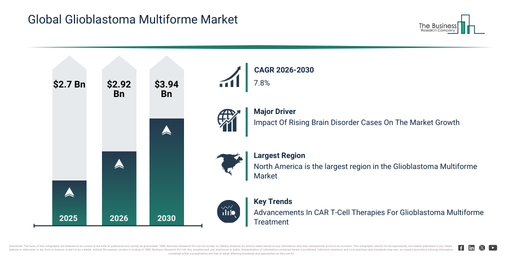
    The glioblastoma multiforme market has experienced significant expansion in recent years. It is anticipated to grow from $2.7 billion in 2025 to $2.92 billion in 2026, exhibiting an 8.1% compound annual growth rate (CAGR). The historical growth of this market can be attributed to several factors including limited treatment options, advancements in neuro-oncology, standardization of chemotherapy, the expansion of cancer research centers, and improvements in imaging technologies.

    The glioblastoma multiforme market is projected to experience substantial growth in the coming years. It is anticipated to expand to $3.94 billion by 2030, demonstrating a compound annual growth rate (CAGR) of 7.8%. This expansion during the forecast period is primarily driven by the development of novel targeted drugs, the broadening of immunotherapy research, the adoption of personalized cancer treatment, increased funding for brain cancer research, and an enhanced focus on improving survival outcomes. Significant trends for the forecast period include a heightened emphasis on targeted cancer therapies, the increasing application of multimodal treatment approaches, the advancement of precision oncology research, the wider integration of advanced imaging diagnostics, and improved participation in clinical trials.

    Get A Free Sample Report With In-Depth Market Insights:

    https://thebusinessresearchcompany.com/sample_request?id=68835117&type=smp&name=Glioblastoma%20Multiforme%20Market%20Report%202026&utm_source=Blogs&utm_medium=Paid&utm_campaign=Nov_PR

    Glioblastoma Multiforme Market Demand Drivers: What’s Powering Industry Growth?

    The glioblastoma multiforme market is projected to be propelled forward by the increasing incidence of brain disorder cases. A brain disorder is defined as a condition that affects the brain’s structure or function, resulting in cognitive, emotional, or physical deficits. The growing number of brain disorder cases stems from factors such as an aging demographic, longer life expectancies, various lifestyle factors, and improved diagnostic capabilities. A deeper comprehension of brain disorders is crucial for progressing research into glioblastoma multiforme (GBM), paving the way for better early detection, novel treatments, and enhanced patient outcomes. By investigating neurological conditions, researchers can identify genetic and molecular connections relevant to GBM’s development. For instance, in February 2025, according to Dementia Australia, an Australia-based non-profit organization, approximately 433,300 Australians are living with dementia, with this number expected to rise to 812,500 by 2054. Additionally, younger-onset dementia affects around 29,000 people in 2025, with projections indicating an increase to 41,000 by 2054. Therefore, the escalating prevalence of brain disorders will stimulate the growth of the glioblastoma multiforme market.

    Glioblastoma Multiforme Market Segment Analysis Spotlighting Growth Areas

    The glioblastoma multiforme market covered in this report is segmented –

    1) By Drug Class: Chemotherapy Agents, Temozolomide, Carmustine, Lomustine, Other Drug Classes

    2) By Diagnostic Tools: Magnetic Resonance Imaging (MRI), Computed Tomography Scan (CT Scan), Biopsy, Other Diagnostic Tools

    3) By Treatment Type: Surgery, Radiation Therapy, Chemotherapy, Immunotherapy, Tumor Treating Field Therapy, Other Treatment Types

    4) By End-User: Hospitals, Cancer Research Institutes, Ambulatory Surgical Centers, Other End-Users

    Subsegments:

    1) By Chemotherapy Agents: Alkylating Agents, Platinum-Based Agents, Antimetabolites

    2) By Temozolomide: Branded (Temodar), Generic Temozolomide

    3) By Carmustine: Injectable Carmustine, Carmustine Wafers (Gliadel)

    4) By Lomustine: Branded (Gleostine), Generic Lomustine

    5) By Other Drug Classes: Targeted Therapy, Immunotherapy, Tumor-Treating Fields (TTF) Therapy

    Glioblastoma Multiforme Market Innovation Trends Shaping Future Development

    Prominent companies operating in the glioblastoma multiforme market are focusing on the development of advanced therapies, such as CAR T-cell therapies, to address the pressing unmet medical needs of this aggressive cancer. CAR T-cell therapies represent a form of immunotherapy that involves modifying a patient’s T-cells to more effectively target and eliminate cancer cells. As an illustration, in June 2023, Chimeric Therapeutics Limited, an Australia-based biotech firm, launched a Phase IB clinical trial for its CHM 1101 (CLXT CAR T) therapy, aimed at recurrent or progressive glioblastoma multiforme (GBM). This multi-center trial seeks to evaluate the therapy’s safety and efficacy while also establishing the recommended Phase 2 dose. Initial Phase 1a results indicated disease stability, and the current trial will expand on these findings to support further development. The company plans to use the collected data to design a registration trial and to obtain regulatory feedback.

    Glioblastoma Multiforme Market Leading Companies: Who Holds The Strongest Market Presence?

    Major companies operating in the glioblastoma multiforme market are Pfizer Inc., F. Hoffmann-La Roche Ltd., AbbVie Inc., Bristol Myers Squibb Company, AstraZeneca PLC, Novartis International AG, Eli Lilly and Company, Amgen Inc., Merck KGaA, Teva Pharmaceutical Industries Ltd., Sun Pharmaceutical Industries Ltd., Zydus Pharmaceuticals (USA) Inc., Accord Healthcare Inc., Sumitomo Dainippon Pharma Oncology Inc., Karyopharm Therapeutics Inc., ITM Isotope Technologies Munich SE, Azurity Pharmaceuticals Inc., Genenta Science S.p.A., Chimeric Therapeutics Limited, VBI Vaccines Inc.

    View The Full Glioblastoma Multiforme Market Report:

    https://thebusinessresearchcompany.com/report/glioblastoma-multiforme-global-market-report?utm_source=Blogs&utm_medium=Paid&utm_campaign=Nov_PR

    Glioblastoma Multiforme Market Geographic Analysis: Where Is Demand Rising Fastest?

    North America was the largest region in the glioblastoma multiforme market in 2025. Asia-Pacific is expected to be the fastest-growing region in the forecast period. The regions covered in the glioblastoma multiforme market report are Asia-Pacific, South East Asia, Western Europe, Eastern Europe, North America, South America, Middle East, Africa.

    Reach Out To Our Team:

    The Business Research Company: https://www.thebusinessresearchcompany.com/

    Americas: +1 310-496-7795

    Asia: +44 7882 955267 & +91 8897263534

    Europe: +44 7882 955267

    Email us at: marketing@tbrc.info

    Follow us on:

    LinkedIn: https://in.linkedin.com/company/the-business-research-company

    YouTube: https://www.youtube.com/channel/UC24_fI0rV8cR5DxlCpgmyFQ

    Global Market Model: https://www.thebusinessresearchcompany.com/global-market-model
  • Glaucoma Market CAGR Forecast Through 2030: Key Trends Shaping Industry Expansion

    Glaucoma Market CAGR Forecast Through 2030: Key Trends Shaping Industry Expansion

    Backed by market attractiveness analysis, total addressable market sizing, company benchmarking matrices, interactive Excel dashboards, wider supply chain intelligence, emerging startup coverage, and detailed product-level insights, The Business Research Company’s 2026 market reports are designed to offer research that is more actionable and strategically valuable than ever.

    Glaucoma Market Growth Potential: How Will Market Size Shift Through 2030?

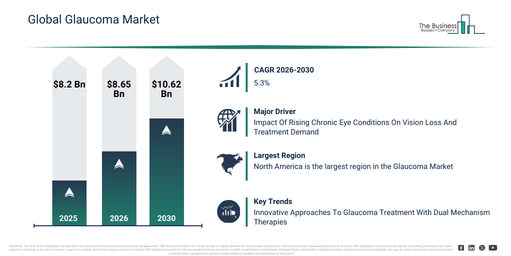
    The glaucoma market size has shown significant expansion in recent years. It is anticipated to increase from $8.2 billion in 2025 to $8.65 billion in 2026, achieving a compound annual growth rate (CAGR) of 5.5%. The historical growth of this market can be attributed to an aging population, a rise in eye disease prevalence, advancements in ophthalmic diagnostics, the early adoption of drug therapy, and the proliferation of eye clinics.

    The glaucoma market size is expected to witness substantial growth in the upcoming years. It is forecast to expand to $10.62 billion by 2030, achieving a compound annual growth rate (CAGR) of 5.3%. This projected expansion can be attributed to advancements in imaging technology, the development of surgical innovations, digital solutions for eye health monitoring, initiatives for early detection, and increasing investments in ophthalmology. Prominent trends throughout this period include the growing adoption of early diagnostic screening, increased utilization of combination drug therapies, the expansion of minimally invasive glaucoma surgery, broader availability of home-based eye monitoring, and enhanced patient awareness programs.

    Get A Free Sample Report With In-Depth Market Insights:

    https://thebusinessresearchcompany.com/sample_request?id=32465716&type=smp&name=Glaucoma%20Market%20Report%202026&utm_source=Blogs&utm_medium=Paid&utm_campaign=Nov_PR

    Glaucoma Market Growth Drivers: What’s Behind The Acceleration?

    The escalating occurrence of chronic eye conditions is anticipated to significantly advance the growth of the glaucoma market. These long-term disorders affect the eyes, frequently causing persistent vision impairment or discomfort and requiring continuous management or treatment. The increase in chronic eye conditions is largely attributed to aging populations, extended screen time, various lifestyle factors, and a higher prevalence of diseases such as diabetes and hypertension. Glaucoma treatment is crucial for these chronic eye conditions to effectively lower intraocular pressure, prevent further optic nerve damage, and preserve vision, as untreated glaucoma carries the risk of irreversible blindness. For instance, in December 2024, the National Health Service (NHS), a publicly funded healthcare system in the UK, reported that over 2 million people in the UK were living with sight loss in 2024. Furthermore, this number is projected to increase by 27%, reaching approximately 2.8 million by 2035. Thus, the increasing prevalence of chronic eye conditions is a primary driver for the glaucoma market.

    Glaucoma Market Segment Performance And Emerging Opportunities

    The glaucoma market covered in this report is segmented –

    1) By Disease Type: Open Angle Glaucoma, Angle Closure Glaucoma, Other Disease Types

    2) By Diagnosis: Tonometry, Ophthalmoscopy, Perimetry, Gonioscopy

    3) By Drug Class: Beta Blockers, Prostaglandins, Alpha Adrenergic Agonist, Carbonic Anhydrase Inhibitors, Combination Drugs, Other Drug Classes

    4) By Administration: Oral, Injections, Intravitreal, Other Administrations

    5) By End-User: Hospitals, Ophthalmic Clinics, Ambulatory Surgical Centers

    Subsegments:

    1) By Open Angle Glaucoma: Primary Open Angle Glaucoma (POAG), Secondary Open Angle Glaucoma

    2) By Angle Closure Glaucoma: Primary Angle Closure Glaucoma, Secondary Angle Closure Glaucoma

    3) By Other Disease Types: Normal-Tension Glaucoma, Pigmentary Glaucoma, Pseudoexfoliative Glaucoma, Congenital Glaucoma

    Glaucoma Market Trends Redefining Industry Growth

    Leading companies within the glaucoma market are concentrating on developing innovative treatments, such as Rho-kinase (ROCK) inhibitors. These therapies offer a dual mechanism of action, which effectively lowers intraocular pressure by both enhancing the outflow of aqueous humor and relaxing trabecular meshwork cells, thereby proving effective in glaucoma management. Rho-kinase (ROCK) inhibitors represent a drug class designed to target and inhibit the activity of Rho-kinase enzymes, which play a role in regulating cell contraction and are used to treat glaucoma by reducing intraocular pressure. For example, in July 2023, Santen Pharmaceutical Co. Ltd., an eye care products company based in Japan, introduced Roclanda into the UK market. Roclanda is a fixed-dose combination (FDC) of latanoprost and netarsudil, a novel Rho-kinase (ROCK) inhibitor, and it is effective at lowering intraocular pressure (IOP) by addressing trabecular meshwork dysfunction. It is prescribed for adult patients diagnosed with primary open-angle glaucoma or ocular hypertension who have not achieved sufficient IOP reduction with a single therapy involving a prostaglandin or netarsudil. Roclanda’s launch in Europe signifies the first new category of glaucoma medication in 25 years, representing a significant advancement in treatment. Through its combination of netarsudil and latanoprost, Roclanda acts synergistically to boost outflow via both trabecular (conventional) and uveoscleral (unconventional) pathways, offering a comprehensive strategy for managing elevated IOP.

    Glaucoma Market Key Players: Which Companies Lead Industry Competition?

    Major companies operating in the glaucoma market are Roche Holding AG, Merck & Co. Inc., AbbVie Inc., Novartis AG, Teva Pharmaceuticals Industries Ltd., Otsuka Pharmaceutical Co. Ltd., Sun Pharmaceutical Industries Ltd., Cipla Limited, Bausch & Lomb Corp., Carl Zeiss Meditec, Santen Pharmaceuticals Co. Ltd., Topcon Corporation, Thea Laboratoires, Corza Ophthalmology, Lumenis Ltd., Alcon Inc., Glaukos Corporation, Iridex Corporation, Nova Eye Medical Ltd., Nidek Co. Ltd., Haag-Streit AG

    View The Full Glaucoma Market Report:

    https://thebusinessresearchcompany.com/report/glaucoma-global-market-report?utm_source=Blogs&utm_medium=Paid&utm_campaign=Nov_PR

    Glaucoma Market Global Footprint: Which Region Leads The Market?

    North America was the largest region in the glaucoma market in 2025. Asia-Pacific is expected to be the fastest-growing region in the forecast period. The regions covered in the glaucoma market report are Asia-Pacific, South East Asia, Western Europe, Eastern Europe, North America, South America, Middle East, Africa.

    Reach Out To Our Team:

    The Business Research Company: https://www.thebusinessresearchcompany.com/

    Americas: +1 310-496-7795

    Asia: +44 7882 955267 & +91 8897263534

    Europe: +44 7882 955267

    Email us at: marketing@tbrc.info

    Follow us on:

    LinkedIn: https://in.linkedin.com/company/the-business-research-company

    YouTube: https://www.youtube.com/channel/UC24_fI0rV8cR5DxlCpgmyFQ

    Global Market Model: https://www.thebusinessresearchcompany.com/global-market-model
  • Gingivitis Market To Witness 4.5% CAGR Growth Through 2030: Key Industry Drivers

    Gingivitis Market To Witness 4.5% CAGR Growth Through 2030: Key Industry Drivers

    Featuring market attractiveness scoring, total addressable market sizing, company benchmarking matrices, interactive Excel dashboards, deeper supply chain intelligence, emerging startup tracking, and granular product-level insights, The Business Research Company’s 2026 market reports are built to deliver research that is both more actionable and more strategically valuable.

    Gingivitis Market Value Analysis: What Growth Lies Ahead Over The Forecast Period?

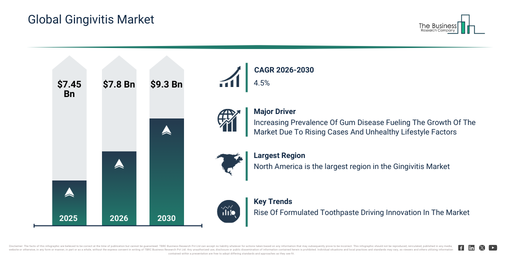
    The gingivitis market has seen consistent growth over recent years. It is anticipated to expand from $7.45 billion in 2025 to $7.8 billion in 2026, advancing at a compound annual growth rate (CAGR) of 4.7%. This historic growth can be linked to factors such as prevalent poor oral hygiene practices, an increase in dental consultations, the early adoption of antiseptic treatments, public health dental programs, and rising sugar consumption.

    The gingivitis market size is projected to experience consistent expansion in the coming years. This market is anticipated to reach $9.3 billion by 2030, driven by a compound annual growth rate (CAGR) of 4.5%. Several factors contribute to this growth during the forecast period, including the increased adoption of preventive dentistry, the broadening availability of oral care products, the rise of digital dental consultations, the implementation of school-based oral health initiatives, and an increase in healthcare literacy. Key trends expected over the forecast period encompass a heightened emphasis on preventive oral care, an uptick in the utilization of non-surgical treatments, the expansion of antibacterial oral care products, a wider array of home-based oral hygiene solutions, and enhanced public understanding of gum health.

    Get A Free Sample Report With In-Depth Market Insights:

    https://thebusinessresearchcompany.com/sample_request?id=76829617&type=smp&name=Gingivitis%20Market%20Report%202026&utm_source=Blogs&utm_medium=Paid&utm_campaign=Nov_PR

    Gingivitis Market Growth Factors Behind Sustained Expansion

    The rising occurrence of gum disease is anticipated to drive future expansion within the gingivitis market. This common oral ailment entails inflammation, infection, or damage to the gums and adjacent tissues, mainly stemming from plaque buildup and insufficient oral hygiene. The growing incidence of gum disease largely results from inadequate oral hygiene, which fosters plaque accumulation and bacterial infections. Diets rich in sugar and processed items contribute to gum inflammation, and smoking diminishes immune system effectiveness, rendering gums more prone to infection. Gingivitis, being the initial phase of gum disease, plays a crucial role in its rising prevalence by acting as a precursor to more severe ailments like periodontitis if not addressed, underscoring the importance of prompt treatment and preventative measures. For example, in January 2024, a report from the UK government’s Office for Health Improvement & Disparities (OHID) indicated that the proportion of adults diagnosed with gum disease rose from 4% in the 16–24 age bracket to 28% for those aged 55–64, demonstrating a greater occurrence as age increases. Consequently, the expanding occurrence of gum disease is fueling the expansion of the gingivitis market.

    Gingivitis Market Segment Landscape And Growth Outlook

    The gingivitis market covered in this report is segmented –

    1) By Treatment Type: Medication, Surgical Procedures, Non-Surgical Treatments

    2) By Route Of Administration: Oral, Topical

    3) By Distribution Channel: Retail Pharmacies, Hospital Pharmacies, Online Pharmacies

    4) By End-User: Hospitals, Dental Clinics, Homecare Settings

    Subsegments:

    1) By Medication: Antibiotics, Antiseptic Mouthwashes, Anti-Inflammatory Drugs, Pain Relievers

    2) By Surgical Procedures: Flap Surgery, Gingivectomy, Gingivoplasty, Laser Therapy

    3) By Non-Surgical Treatments: Scaling and Root Planing, Professional Dental Cleaning, Local Drug Delivery, Lifestyle and Dietary Modifications

    Gingivitis Market Strategic Trends: What Defines The Next Growth Phase?

    Leading companies in the gingivitis market are developing advanced products, such as specialized toothpaste, to effectively address gum inflammation, reduce plaque accumulation, and enhance overall oral health. Specialized toothpaste is specifically designed with particular active ingredients to target oral health concerns like cavities, gingivitis, or sensitivity. For example, in February 2023, Frimline Private Limited, an India-based healthcare and personal care company, unveiled Dente91 She toothpaste. This innovative toothpaste contains lactoferrin, a strong antimicrobial protein that offers protection against oral infections and inflammation. Distinct from traditional toothpastes, Dente91 She is uniquely fortified with folic acid (vitamin B9) and pyridoxine (vitamin B6) to support women’s oral health throughout various hormonal changes, from puberty to menopause.

    Gingivitis Market Competitive Landscape: Who Leads The Industry?

    Major companies operating in the gingivitis market are Procter & Gamble, Colgate-Palmolive Company, Haleon group, Bausch Health Companies Inc., Kivonyx Healthcare Pvt Ltd., ICPA Health Products Limited, Alarsin Pharmaceuticals, Laboratorios KIN, Ikon remedies pvt ltd., Perio Protect LLC, Algen Healthcare Ltd, Neuracle Lifesciences Private Limited, Dental Herb Company, Shreeji Pharma International, Pfizer Inc., Johnson & Johnson, 3M Company, Dentsply Sirona Inc., Sunstar Group, GC Corporation, Ivoclar Vivadent AG, Straumann Group, Ultradent Products Inc, Nobel Biocare Holdings AG

    View The Full Gingivitis Market Report:

    https://thebusinessresearchcompany.com/report/gingivitis-global-market-report?utm_source=Blogs&utm_medium=Paid&utm_campaign=Nov_PR

    Gingivitis Market Regional Split: Which Areas Are Fueling Growth?

    North America was the largest region in the gingivitis market in 2025. The regions covered in the gingivitis market report are Asia-Pacific, South East Asia, Western Europe, Eastern Europe, North America, South America, Middle East, Africa.

    Reach Out To Our Team:

    The Business Research Company: https://www.thebusinessresearchcompany.com/

    Americas: +1 310-496-7795

    Asia: +44 7882 955267 & +91 8897263534

    Europe: +44 7882 955267

    Email us at: marketing@tbrc.info

    Follow us on:

    LinkedIn: https://in.linkedin.com/company/the-business-research-company

    YouTube: https://www.youtube.com/channel/UC24_fI0rV8cR5DxlCpgmyFQ

    Global Market Model: https://www.thebusinessresearchcompany.com/global-market-model
  • Gingival Recession Market Projected For Strong Expansion Through 2030: Key Trends And Future Outlook

    Gingival Recession Market Projected For Strong Expansion Through 2030: Key Trends And Future Outlook

    Built to provide research that’s more actionable and strategically valuable, The Business Research Company’s 2026 market reports include market attractiveness analysis, total addressable market sizing, company benchmarking matrices, interactive Excel dashboards, broader supply chain intelligence, emerging startup tracking, and in-depth product insights.

    Gingival Recession Market Size Forecast: How Big Could The Market Get By 2030?

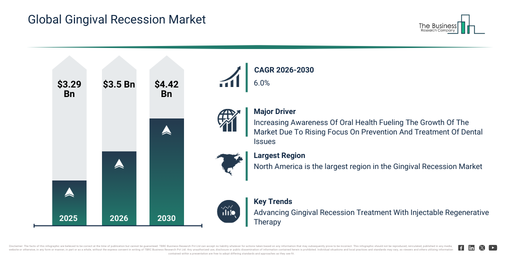
    The gingival recession market size has demonstrated robust growth in recent years. It is forecast to rise from $3.29 billion in 2025 to $3.5 billion in 2026, achieving a compound annual growth rate (CAGR) of 6.3%. This expansion in the historical period can be attributed to the prevalence of periodontal disease, the growth of dental clinics, the early adoption of grafting techniques, the demand for cosmetic dentistry, and increased oral hygiene awareness.

    The market for gingival recession is anticipated to experience substantial expansion in the coming years. This market is projected to reach $4.42 billion by 2030, exhibiting a compound annual growth rate (CAGR) of 6.0%. Factors contributing to this growth during the forecast period include advances in regenerative dentistry, growth of laser-based procedures, increasing dental tourism, patient preference for minimally invasive care, and rising dental expenditure. Key trends expected over the forecast timeframe involve rising demand for minimally invasive procedures, increased use of regenerative dental materials, growing adoption of pinhole surgical technique, improved aesthetic dental outcomes, and expansion of preventive dental care.

    Get A Free Sample Report With In-Depth Market Insights:

    https://thebusinessresearchcompany.com/sample_request?id=99784921&type=smp&name=Gingival%20Recession%20Market%20Report%202026&utm_source=Blogs&utm_medium=Paid&utm_campaign=Nov_PR

    Gingival Recession Market Demand Drivers Opening New Revenue Streams

    The expanding recognition of oral health is anticipated to fuel the expansion of the gingival recession market in the coming years. Oral health encompasses the state of the teeth, gums, and mouth, ensuring their freedom from disease, discomfort, or infection for optimal function and overall well-being. This heightened awareness stems from improved access to information via digital platforms and health campaigns, emphasizing its crucial role in general health. As gingival recession is a prominent and often uncomfortable indicator of inadequate oral health, it prompts individuals to seek knowledge about its origins, prevention, and remedies, thus boosting awareness of appropriate oral hygiene practices. For instance, in January 2024, a report from the Manchester Health and Wellbeing Board, a UK-based partnership organization, revealed that between July 2022 and June 2023, 78,230 children under 18 received treatment from an NHS dentist in Manchester, marking an increase of 13,488 children (20.8%) from the previous year. Consequently, the rising awareness of oral health is propelling the growth of the gingival recession market.

    Gingival Recession Market Breakdown By Product Type And Application

    The gingival recession market covered in this report is segmented –

    1) By Treatment Method: Soft Tissue Grafting, Regenerative Procedures, Pinhole Surgical Technique (PST)

    2) By Product Type: Tissue Regenerative Materials, Bone Grafting Materials

    3) By End-User: Hospitals, Dental Clinics, Research Institutes

    Subsegments:

    1) By Soft Tissue Grafting: Free Gingival Graft, Connective Tissue Graft, Pedicle Graft, Allograft

    2) By Regenerative Procedures: Guided Tissue Regeneration (GTR), Enamel Matrix Derivatives (EMD), Platelet-Rich Fibrin (PRF), Bone Grafting

    3) By Pinhole Surgical Technique (PST): Minimally Invasive Recession Coverage, Collagen Membrane Application, Scalpel-Free Gum Rejuvenation

    Gingival Recession Market Transformation Trends: What Innovations Are Driving Change?

    Leading corporations within the gingival recession market are developing innovative therapies, such as injectable regenerative tissue advancement therapy, to boost soft and hard tissue regeneration, improve treatment results, and meet unaddressed needs in oral healthcare. This type of injectable regenerative tissue therapy represents a minimally invasive approach that stimulates the body’s natural healing and restores both soft and hard tissues by promoting tissue growth. For instance, in February 2025, BioCellgraft, Inc., a US-based biotechnology and regenerative medicine company, introduced OraFyl. OraFyl’s injectable formulation differentiates it from traditional grafting techniques used in oral tissue regeneration. Unlike conventional surgical procedures that demand extensive intervention and prolonged recovery, OraFyl offers a minimally invasive solution for handling gum recession, papilla loss, and alveolar socket management. By utilizing a human connective tissue matrix (HCTM), it supports the body’s inherent healing process, potentially speeding up recovery, reducing patient discomfort, lowering treatment costs, and improving clinical outcomes.

    Gingival Recession Market Company Landscape And Competitive Strategy

    Major companies operating in the gingival recession market are Alfa-Perio Ltd, Zimmer Biomet Dental, Institut Straumann AG, LifeNet Health, BioHorizons, Geistlich Pharma AG, osteocom, Dentevim Dental Clinic, Uniqa Dental LTD, Focus Dental, Premiere Dental Care Center, Dentsply Sirona, ZimVie Inc, Tissue Regenix, Septodont Holding, Medical Consult Implants GmbH, Regedent AG, Regenity Biosciences, Nobel Biocare Services AG, Bioteck S.p.A, Maxigen Biotech Inc

    View The Full Gingival Recession Market Report:

    https://thebusinessresearchcompany.com/report/gingival-recession-global-market-report?utm_source=Blogs&utm_medium=Paid&utm_campaign=Nov_PR

    Gingival Recession Market Top Region: Where Does Most Revenue Come From?

    North America was the largest region in the gingival recession market in 2025. The regions covered in the gingival recession market report are Asia-Pacific, South East Asia, Western Europe, Eastern Europe, North America, South America, Middle East, Africa.

    Reach Out To Our Team:

    The Business Research Company: https://www.thebusinessresearchcompany.com/

    Americas: +1 310-496-7795

    Asia: +44 7882 955267 & +91 8897263534

    Europe: +44 7882 955267

    Email us at: marketing@tbrc.info

    Follow us on:

    LinkedIn: https://in.linkedin.com/company/the-business-research-company

    YouTube: https://www.youtube.com/channel/UC24_fI0rV8cR5DxlCpgmyFQ

    Global Market Model: https://www.thebusinessresearchcompany.com/global-market-model
  • Giant-Cell Arteritis Market Outlook 2026–2030: Growth Trends, Market Dynamics And Emerging Opportunities

    Giant-Cell Arteritis Market Outlook 2026–2030: Growth Trends, Market Dynamics And Emerging Opportunities

    Backed by market attractiveness analysis, total addressable market sizing, company benchmarking matrices, interactive Excel dashboards, wider supply chain intelligence, emerging startup coverage, and detailed product-level insights, The Business Research Company’s 2026 market reports are designed to offer research that is more actionable and strategically valuable than ever.

    Giant-Cell Arteritis Market Revenue Outlook: What CAGR Lies Ahead Through 2030?

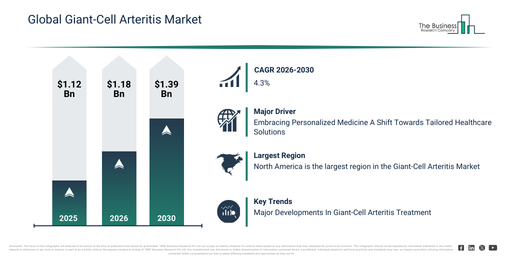
    The giant-cell arteritis market size has shown consistent expansion in recent years. This market is projected to expand from $1.12 billion in 2025 to $1.18 billion in 2026, exhibiting a compound annual growth rate (CAGR) of 4.9%. The historical period’s growth can be attributed to factors such as aging population growth, reliance on corticosteroid therapy, improved rheumatology care, expansion of hospital-based treatment, and increased disease awareness.

    The market size for giant-cell arteritis is anticipated to show consistent growth in the coming years. It is projected to expand to $1.39 billion by 2030, driven by a compound annual growth rate (CAGR) of 4.3%. This expansion during the forecast period can be attributed to factors such as biologic drug approvals, growth in immunology research, improved diagnostic protocols, personalized vasculitis treatment, and the expansion of specialty clinics. Major trends influencing the forecast period include the increased adoption of biologic therapies, a rising focus on early and accurate diagnosis, expanded use of corticosteroid-sparing treatments, improved long-term disease monitoring, and growing awareness of vision loss prevention.

    Get A Free Sample Report With In-Depth Market Insights:

    https://thebusinessresearchcompany.com/sample_request?id=60532318&type=smp&name=Giant-Cell%20Arteritis%20Market%20Report%202026&utm_source=Blogs&utm_medium=Paid&utm_campaign=Nov_PR

    Giant-Cell Arteritis Market Growth Backed By Core Demand Fundamentals

    The giant-cell arteritis market is projected to expand due to an increasing focus on personalized medicine. This approach involves customizing medical care for each patient based on their unique attributes, including genetic makeup, lifestyle choices, and environmental influences. The rise of personalized medicine is driven by breakthroughs in genomics, biotechnology, and data analytics, which facilitate the development of targeted treatments that enhance effectiveness and minimize side effects for individuals. For giant-cell arteritis (GCA), personalized medicine offers the potential for tailored therapies, considering specific patient elements like genetic predispositions, immune profiles, and how the disease manifests. As an illustration, the U.S.-based non-profit Personalized Medicine Coalition (PMC) reported in February 2024 that personalized medicines constituted more than one-third of new drug approvals by the U.S. Food and Drug Administration (FDA) in 2023, marking the fourth consecutive year for this trend. In 2023 alone, the FDA gave its nod to 16 novel personalized treatments for rare diseases, a notable increase from six such approvals in 2022. Furthermore, the 2023 approvals also included seven cancer drugs and three therapies for diverse other conditions. Consequently, the heightened emphasis on personalized medicine is fueling the expansion of the giant-cell arteritis market.

    Giant-Cell Arteritis Market Segment Analysis And Revenue Potential

    The giant-cell arteritis market covered in this report is segmented –

    1) By Therapeutics: Prednisone, Methotrexate, Tocilizumab, Aspirin

    2) By Mechanism Of Action: Corticosteroids, Immunosuppressive Agents, Anticoagulants, Other Mechanisms Of Action

    3) By Route Of Administration: Oral, Intravenous, Subcutaneous, Other Routes Of Administration

    Subsegments:

    1) By Prednisone: Oral Prednisone, Intravenous (IV) Prednisone, Low-Dose Prednisone Therapy, High-Dose Prednisone Therapy

    2) By Methotrexate: Oral Methotrexate, Subcutaneous Methotrexate, Methotrexate Monotherapy, Methotrexate Combination Therapy

    3) By Tocilizumab: Intravenous Tocilizumab, Subcutaneous Tocilizumab, Tocilizumab Monotherapy, Tocilizumab In Combination With Corticosteroids

    4) By Aspirin: Low-Dose Aspirin Therapy, Aspirin For Cardiovascular Risk Management, Aspirin In Combination Therapy, Enteric-Coated Aspirin

    #Giant-Cell Arteritis Market Growth Trends: What’s Shaping The Future Outlook?

    Major companies engaged in the giant-cell arteritis market are actively developing new treatments, such as biosimilars, to broaden available options and address the unmet medical needs of patients. A biosimilar is a biological drug that demonstrates high similarity to an already authorized biological product, possessing no clinically meaningful differences in terms of its safety, purity, or potency. For instance, in April 2024, Fresenius SE & Co. KGaA, a Germany-based healthcare provider, launched Tocilizumab-aazg in the US for managing chronic autoimmune conditions. This biosimilar has gained approval for ailments including rheumatoid arthritis (RA), systemic juvenile idiopathic arthritis (JIA), polyarticular juvenile idiopathic arthritis (PJIA), and giant cell arteritis. Its approval was founded on data from a randomized, double-blind, single-dose, parallel phase 1 trial that compared its pharmacokinetics, safety, and immunogenicity against both US and EU reference tocilizumab across three patient populations.

    Giant-Cell Arteritis Market Key Players Shaping Industry Direction

    Major companies operating in the giant-cell arteritis market are Roche, AbbVie, Novartis, Pfizer, Sanofi, GlaxoSmithKline, Takeda Pharmaceutical Company Limited, Eli Lilly and Company, Amgen, Bristol-Myers Squibb, Johnson & Johnson, UCB S.A., Kiniksa Pharmaceuticals Ltd., Teva Pharmaceutical Industries Ltd., Fresenius SE & Co KGaA, CSL Limited, Dr Reddy’s Laboratories, Tianjin Tianyao Pharmaceutical Co Ltd, Gilead Sciences Inc, Sobi AB

    View The Full Giant-Cell Arteritis Market Report:

    https://thebusinessresearchcompany.com/report/giant-cell-arteritis-global-market-report?utm_source=Blogs&utm_medium=Paid&utm_campaign=Nov_PR

    Giant-Cell Arteritis Market Regional Breakdown: Where Is Demand Concentrated?

    North America was the largest region in the giant-cell arteritis market in 2025. Asia-Pacific is expected to be the fastest-growing region in the forecast period. The regions covered in the giant-cell arteritis market report are Asia-Pacific, South East Asia, Western Europe, Eastern Europe, North America, South America, Middle East, Africa.

    Reach Out To Our Team:

    The Business Research Company: https://www.thebusinessresearchcompany.com/

    Americas: +1 310-496-7795

    Asia: +44 7882 955267 & +91 8897263534

    Europe: +44 7882 955267

    Email us at: marketing@tbrc.info

    Follow us on:

    LinkedIn: https://in.linkedin.com/company/the-business-research-company

    YouTube: https://www.youtube.com/channel/UC24_fI0rV8cR5DxlCpgmyFQ

    Global Market Model: https://www.thebusinessresearchcompany.com/global-market-model
  • GI Stool Testing Market Growth Outlook From $1.51 Billion In 2026 To $1.99 Billion By 2030

    GI Stool Testing Market Growth Outlook From $1.51 Billion In 2026 To $1.99 Billion By 2030

    Featuring market attractiveness scoring, total addressable market sizing, company benchmarking matrices, interactive Excel dashboards, deeper supply chain intelligence, emerging startup tracking, and granular product-level insights, The Business Research Company’s 2026 market reports are built to deliver research that is both more actionable and more strategically valuable.

    GI Stool Testing Market Growth Analysis: How Will Revenue Trend Over The Forecast Period?

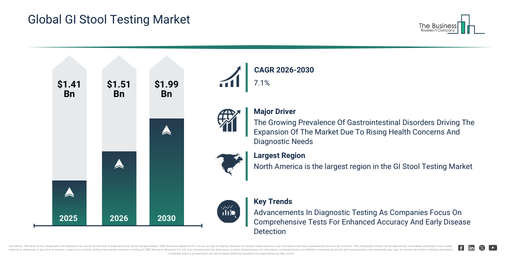
    The gi stool testing market has demonstrated substantial growth in recent years. It is anticipated to increase from $1.41 billion in 2025 to $1.51 billion in 2026, achieving a compound annual growth rate (CAGR) of 7.4%. Historically, this expansion was fueled by factors including the rise in gastrointestinal disorders, progress in diagnostic laboratories, the implementation of early microbiology testing, an uptick in colorectal cancer screening, and improved healthcare awareness.

    The gi stool testing market size is projected to experience substantial expansion over the upcoming years. Its value is anticipated to reach $1.99 billion by 2030, exhibiting a compound annual growth rate (CAGR) of 7.1%. This expansion during the forecast period is primarily driven by factors such as the increasing availability of personalized gut health testing, the rise of home diagnostics, the incorporation of AI-based analysis, the growing acceptance of preventive healthcare, and heightened awareness regarding digestive health. Key trends shaping the market during this period encompass an increasing preference for non-invasive diagnostic tools, a surge in the adoption of microbiome-based testing, greater utilization of molecular diagnostic techniques, the proliferation of home-based stool testing kits, and enhanced capabilities for the early detection of gastrointestinal disorders.

    Get A Free Sample Report With In-Depth Market Insights:

    https://thebusinessresearchcompany.com/sample_request?id=96165026&type=smp&name=GI%20Stool%20Testing%20Market%20Report%202026&utm_source=Blogs&utm_medium=Paid&utm_campaign=Nov_PR

    GI Stool Testing Market Growth Catalysts And Demand Drivers

    The growing occurrence of gastrointestinal conditions is anticipated to boost the GI stool testing market’s expansion in the future. These disorders encompass illnesses impacting the digestive tract, such as the stomach, intestines, and associated organs, leading to symptoms like nausea, diarrhea, constipation, and abdominal discomfort. The uptick in gastrointestinal ailments stems mainly from unhealthy eating patterns; consuming more processed foods, excessive sugar, and diets low in fiber upsets gut flora, diminishes digestive well-being, and fosters conditions like acid reflux, irritable bowel syndrome (IBS), and inflammatory bowel disease (IBD). GI stool testing is essential for gastrointestinal conditions to uncover infections, inflammation, or digestive system imbalances, as it aids in detecting pathogens (like bacteria, viruses, and parasites), indicators of gut inflammation, and deficiencies in digestive enzymes, thereby facilitating precise diagnosis and tailored treatment. An illustration of this trend is seen in September 2024, when the Centers for Disease Control and Prevention, a US government agency, disclosed that from 2024 to 2025, states involved in NoroSTAT documented 1,676 norovirus outbreaks, representing a notable increase from the 729 outbreaks noted in the corresponding period the previous season. Consequently, the expanding incidence of gastrointestinal disorders fuels the growth of the GI stool testing market.

    GI Stool Testing Market Segmentation And Category Overview

    The gi stool testing market covered in this report is segmented –

    1) By Type: Immunoassay Test, Molecular Diagnostic Test, Chromatography-Based Test, Microbiological Culture Test, Enzyme-Linked Immunosorbent Assay (ELISA)

    2) By Sample Type: Fecal Samples, Serum Samples

    3) By Equipment: Automated Analyzers, Benchtop Instruments, Portable Devices

    4) By Application: Diagnosis Of Gastrointestinal Disorders, Screening For Colorectal Cancer, Monitoring Of Inflammatory Bowel Disease (IBD), Detection Of Gastrointestinal Infections, Evaluation Of Digestive Health

    5) By End User: Hospital, Diagnostic Centre And Laboratory, Academic Institution, Research Centre Organization, Homecare, Other End Users

    Subsegments:

    1) By Immunoassay Test: Rapid Immunoassay, Lateral Flow Assay, Fluorescent Immunoassay

    2) By Molecular Diagnostic Test: Polymerase Chain Reaction (PCR), Nucleic Acid Amplification Test (NAAT), Next-Generation Sequencing (NGS)

    3) By Chromatography-Based Test: Gas Chromatography (GC), Liquid Chromatography (LC), Thin-Layer Chromatography (TLC)

    4) By Microbiological Culture Test: Aerobic Culture, Anaerobic Culture, Selective Media Culture

    5) By Enzyme-Linked Immunosorbent Assay (ELISA): Direct ELISA, Indirect ELISA, Sandwich ELISA, Competitive ELISA

    GI Stool Testing Market Industry Trends: What’s Reshaping Demand?

    Leading companies in the GI stool testing market are prioritizing advanced testing technologies, such as comprehensive diagnostic tests, to enhance precision, speed, and early disease detection. A comprehensive diagnostic test serves as an advanced medical tool, evaluating multiple health parameters simultaneously to offer a thorough assessment of a patient’s condition. An illustration of this trend is seen in November 2024, when EmeritusDX, a US-based diagnostics company, introduced GI Detect. This comprehensive diagnostic test was developed to support healthcare providers in identifying gastrointestinal disorders, utilizing a single stool swab to detect 26 bacteria, viruses, and parasites linked to digestive system disruptions. With a 24-hour turnaround time, GI Detect enables swift and informed clinical decision-making. In addition to broad pathogen identification, the test also screens for Helicobacter pylori and its virulence factors VacA, cagA, and babA, as well as common gastrointestinal parasites like Cryptosporidium, Entamoeba histolytica, and Giardia lamblia. This extensive approach guarantees accurate and timely diagnosis of gastrointestinal infections.

    GI Stool Testing Market Competitive Analysis Of Leading Industry Participants

    Major companies operating in the gi stool testing market are Thermo Fisher Scientific Inc., Abbott Laboratories Inc., Hologic Inc., Biomerieux SA, Bio-Rad Laboratories Inc., Meridian BioScience Inc., Diasorin SPA, ELITechGroup, Genova Diagnostics Inc., US BioTek Laboratories LLC, Doctor’s Data Inc., Diagnostic Solutions Laboratory LLC, Functional Medical Institute Pvt. Ltd., Walk-In Lab LLC, ScheBo Biotech AG, Qiagen NV, Roche Diagnostics, Siemens Healthineers, QuidelOrtho Corporation, Biohit Oyj, Exact Sciences Corporation

    View The Full GI Stool Testing Market Report:

    https://thebusinessresearchcompany.com/report/gi-stool-testing-global-market-report?utm_source=Blogs&utm_medium=Paid&utm_campaign=Nov_PR

    GI Stool Testing Market Geographic Landscape: Which Region Leads Industry Growth?

    North America was the largest region in the GI stool testing market in 2025. Asia-Pacific is expected to be the fastest-growing region in the forecast period. The regions covered in the gi stool testing market report are Asia-Pacific, South East Asia, Western Europe, Eastern Europe, North America, South America, Middle East, Africa.

    Reach Out To Our Team:

    The Business Research Company: https://www.thebusinessresearchcompany.com/

    Americas: +1 310-496-7795

    Asia: +44 7882 955267 & +91 8897263534

    Europe: +44 7882 955267

    Email us at: marketing@tbrc.info

    Follow us on:

    LinkedIn: https://in.linkedin.com/company/the-business-research-company

    YouTube: https://www.youtube.com/channel/UC24_fI0rV8cR5DxlCpgmyFQ

    Global Market Model: https://www.thebusinessresearchcompany.com/global-market-model
  • Gestational Trophoblastic Disease Market Forecast To Reach $2.81 Billion By 2030: Key Growth Drivers And Industry Trends

    Gestational Trophoblastic Disease Market Forecast To Reach $2.81 Billion By 2030: Key Growth Drivers And Industry Trends

    Built to provide research that’s more actionable and strategically valuable, The Business Research Company’s 2026 market reports include market attractiveness analysis, total addressable market sizing, company benchmarking matrices, interactive Excel dashboards, broader supply chain intelligence, emerging startup tracking, and in-depth product insights.

    Gestational Trophoblastic Disease Market Forecast: What Value Will The Market Reach By 2030?

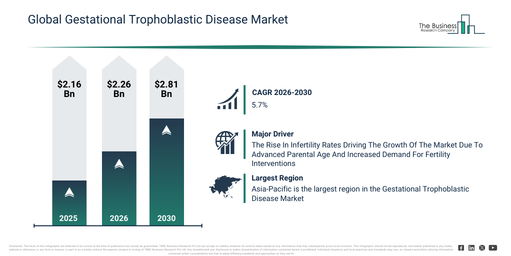
    The gestational trophoblastic disease market has experienced consistent expansion in recent years. This market is projected to expand from $2.16 billion in 2025 to $2.26 billion in 2026, demonstrating a compound annual growth rate (CAGR) of 4.6%. Historically, this expansion has been driven by progress in gynecologic oncology, the accessibility of hcg testing, wider acceptance of surgical treatments, heightened understanding of uncommon pregnancy-related conditions, and the implementation of clinical oncology protocols.

    The market for gestational trophoblastic disease is projected to experience substantial growth in the upcoming years. It is anticipated to reach a valuation of $2.81 billion by 2030, exhibiting a compound annual growth rate (CAGR) of 5.7%. This expansion during the projection period can be attributed to several factors, including enhanced diagnostic precision, the proliferation of oncology centers, the establishment of standardized treatment protocols, greater accessibility to healthcare, and a heightened emphasis on managing rare diseases. Key developments expected during the forecast timeframe encompass more effective hcg-based disease monitoring, an increasing adoption of chemotherapy for gtd management, a stronger emphasis on prompt diagnosis, the expansion of specialized women’s oncology services, and enhanced post-treatment follow-up.

    Get A Free Sample Report With In-Depth Market Insights:

    https://thebusinessresearchcompany.com/sample_request?id=44816133&type=smp&name=Gestational%20Trophoblastic%20Disease%20Market%20Report%202026&utm_source=Blogs&utm_medium=Paid&utm_campaign=Nov_PR

    Gestational Trophoblastic Disease Market Opportunity Drivers: What’s Unlocking New Revenue Potential?

    A future increase in infertility rates is anticipated to drive expansion in the gestational trophoblastic disease market. Infertility rates quantify the percentage of a population (couples or individuals) unable to achieve natural conception following 12 months of consistent, unprotected sexual activity. The rise in infertility is largely attributed to older maternal and paternal ages, since advanced reproductive age links to diminished egg and sperm quality, lower fertility, and increased conception complications. While usually a disease, gestational trophoblastic disease can offer unexpected understanding for infertility therapies by revealing the functions of trophoblastic tissue in implantation and hormone control, thus informing strategies to enhance conception success. For example, in April 2023, the World Health Organization (WHO), a Switzerland-based intergovernmental organization, reported that around 17.5% of adults worldwide, or approximately 1 in 6 individuals, experience infertility, underscoring the urgent necessity for better access to cost-effective, high-quality fertility treatment for impacted persons. Consequently, the increasing incidence of infertility is fueling the gestational trophoblastic disease market. A future increase in cigarette smoking is projected to boost the expansion of the gestational trophoblastic disease market. Cigarette smoking involves igniting tobacco and breathing in the smoke, which holds numerous chemicals and toxins capable of harming various bodily structures. This habit could damage the DNA within trophoblastic cells, vital for placenta formation, potentially causing their abnormal growth and division, thus leading to gestational trophoblastic disease. For example, in October 2024, the European Respiratory Society’s (ERS), a Switzerland-based non-profit organization, published a study on youth smoking trends, indicating a substantial increase in rates, from 22.5% of respondents smoking in 2022 to 40.1% in 2024. Hence, the rise in cigarette smoking is stimulating the gestational trophoblastic disease market.

    Gestational Trophoblastic Disease Market Segment Outlook: Which Categories Are Growing Fastest?

    The gestational trophoblastic disease market covered in this report is segmented –

    1) By Type: Hydatidiform Mole, Choriocarcinoma, Placental-Site Trophoblastic Tumor, Epithelioid Trophoblastic Tumor, Other Types

    2) By Treatment: Surgery, Chemotherapy, Suction Dilation And Curettage (D&C), Radiation Therapy

    3) By End User: Hospital And Clinics, Diagnostic Centers, Other End Users

    Subsegments:

    1) By Hydatidiform Mole: Complete Hydatidiform Mole, Partial Hydatidiform Mole

    2) By Choriocarcinoma: Non-Metastatic Choriocarcinoma, Metastatic Choriocarcinoma

    3) By Placental-Site Trophoblastic Tumor: PSTT With Normal Placentation, PSTT With Abnormal Placentation

    4) By Epithelioid Trophoblastic Tumor: Epithelioid Trophoblastic Tumor With No Evidence Of Metastasis, Epithelioid Trophoblastic Tumor With Metastasis

    5) By Other Types: Trophoblastic Tumor Of Unknown Origin, Non-Gestational Trophoblastic Neoplasia

    Gestational Trophoblastic Disease Market Leading Companies And Competitive Benchmarking

    Major companies operating in the gestational trophoblastic disease market are Pfizer Inc., F. Hoffmann-La Roche AG, AbbVie Inc., Bayer AG, Novartis AG, Merck And Co. Inc., Sun Pharmaceutical Industries Ltd., GSK plc, Bristol-Myers Squibb Company, Sanofi S.A., AstraZeneca plc, Eli Lilly and Company, Daiichi Sankyo Co. Ltd., Eisai Co. Ltd.

    View The Full Gestational Trophoblastic Disease Market Report:

    https://thebusinessresearchcompany.com/report/gestational-trophoblastic-disease-global-market-report?utm_source=Blogs&utm_medium=Paid&utm_campaign=Nov_PR

    Gestational Trophoblastic Disease Market Largest Region: Which Geography Holds The Biggest Share?

    Asia-Pacific was the largest region in the gestational trophoblastic disease market in 2025, and is expected to be the fastest-growing region in the forecast period. The regions covered in the gestational trophoblastic disease market report are Asia-Pacific, South East Asia, Western Europe, Eastern Europe, North America, South America, Middle East, Africa.

    Reach Out To Our Team:

    The Business Research Company: https://www.thebusinessresearchcompany.com/

    Americas: +1 310-496-7795

    Asia: +44 7882 955267 & +91 8897263534

    Europe: +44 7882 955267

    Email us at: marketing@tbrc.info

    Follow us on:

    LinkedIn: https://in.linkedin.com/company/the-business-research-company

    YouTube: https://www.youtube.com/channel/UC24_fI0rV8cR5DxlCpgmyFQ

    Global Market Model: https://www.thebusinessresearchcompany.com/global-market-model
  • Gestational Diabetes Market Research 2026: Market Size, Trends, Segments And Growth Forecast

    Gestational Diabetes Market Research 2026: Market Size, Trends, Segments And Growth Forecast

    Backed by market attractiveness analysis, total addressable market sizing, company benchmarking matrices, interactive Excel dashboards, wider supply chain intelligence, emerging startup coverage, and detailed product-level insights, The Business Research Company’s 2026 market reports are designed to offer research that is more actionable and strategically valuable than ever.

    Gestational Diabetes Market Size Outlook: How Quickly Will Revenue Expand Through 2030?

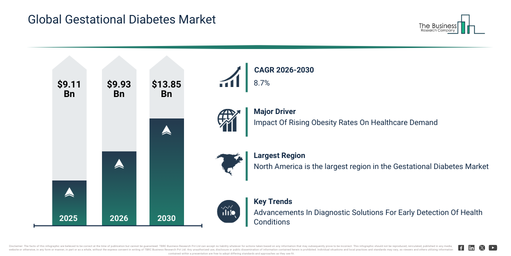
    The gestational diabetes market size has demonstrated significant expansion over recent years. Its valuation is projected to increase from $9.11 billion in 2025 to $9.93 billion in 2026, advancing at a compound annual growth rate (CAGR) of 8.9%. Historically, this growth has been driven by increasing obesity rates, higher maternal age pregnancies, early diabetes screening programs, growth in prenatal care services, and heightened awareness of pregnancy complications.

    The gestational diabetes market is projected to experience substantial expansion over the upcoming years. Its valuation is anticipated to reach $13.85 billion by 2030, exhibiting a compound annual growth rate (CAGR) of 8.7%. This anticipated growth during the forecast timeframe is primarily driven by factors such as an increase in the prevalence of gestational diabetes, the broadening scope of digital health monitoring, advancements in prenatal diagnostics, a heightened emphasis on preventive maternal care, and supportive healthcare policies. Key trends expected to shape this period encompass the increasing uptake of blood glucose monitoring, a rise in the application of insulin therapy during pregnancy, an evolving focus on lifestyle-centric disease management, the expansion of prenatal screening initiatives, and enhanced awareness regarding maternal health.

    Get A Free Sample Report With In-Depth Market Insights:

    https://thebusinessresearchcompany.com/sample_request?id=45703036&type=smp&name=Gestational%20Diabetes%20Market%20Report%202026&utm_source=Blogs&utm_medium=Paid&utm_campaign=Nov_PR

    Gestational Diabetes Market Growth Momentum: What Factors Are Shaping Demand?

    The expanding obese population is anticipated to fuel the growth of the gestational diabetes market in the future. This population consists of individuals with a body mass index (BMI) of 30 or above, signifying excess body fat that could present considerable health dangers. The rise in the obese population is attributed to a combination of inactive lifestyles, increased intake of high-calorie, processed foods, genetic predispositions, and restricted availability of healthy dietary and exercise choices. Managing gestational diabetes is vital for the obese population due to their elevated risk of insulin resistance and substantial weight gain during pregnancy, which, if not controlled, can result in health issues for both the mother and the infant. For example, in May 2025, data from the Office for Health Improvement and Disparities, a UK-based government organization, showed that between 2023 and 2024, approximately 64.5% of adults aged 18 and above in England were classified as overweight or living with obesity, an increase from 64.0% recorded in 2022 to 2023. Consequently, the growing obese population is a significant factor propelling the gestational diabetes market.

    Gestational Diabetes Market Segment Landscape: Which Areas Lead Development?

    The gestational diabetes market covered in this report is segmented –

    1) By Type: Type A1, Type A2, Other Types

    2) By Treatment: Monitoring, Drug Treatment, Non-pharmacological Treatment

    3) By Administration: Oral, Intravenous, Other Administrations

    4) By End User: Hospitals, Clinics, Home Care Settings, Diagnostic Centers

    Subsegments:

    1) By Type A1: Diet-Controlled Gestational Diabetes, Exercise-Controlled Gestational Diabetes

    2) By Type A2: Insulin-Controlled Gestational Diabetes, Oral Medication-Controlled Gestational Diabetes

    3) By Other Types: Pre-Gestational Diabetes, Gestational Diabetes With Complications

    Gestational Diabetes Market Trends: What’s Defining The Industry’s Next Phase?

    Leading companies within the gestational diabetes market are prioritizing the creation of technologically advanced products, such as diagnostic kits specifically for gestational diabetes, to facilitate quick, accurate, and convenient methods for early detection. A diagnostic kit for gestational diabetes functions as a medical instrument employed to assess blood glucose levels and identify atypical glucose tolerance in expectant mothers, thereby aiding in the condition’s prompt identification and management. For instance, in August 2024, DirectSens GmbH, an Austria-based biotechnology firm, introduced the XpressGT RUO kit, a diagnostic solution designed for the diagnosis of gestational diabetes, endometriosis, insulin resistance, and liver disease. This kit accurately quantifies 2-hydroxybutyrate (2-HB) levels found in venous blood, a compound naturally produced by the liver during its normal activities. Elevated 2-HB concentrations are linked to increased reductive stress, which is associated with various endocrine and obesity-related disorders, including insulin resistance. The XpressGT RUO kit works with any available clinical analyzer and provides results in just 8 minutes, offering a rapid and efficient diagnostic solution.

    Gestational Diabetes Market Industry Leaders And Competitive Landscape

    Major companies operating in the gestational diabetes market are Sanofi S.A., Abbott Laboratories, Eli Lilly and Company, Novo Nordisk A/S, Becton Dickinson and Company, Dexcom Inc, Biocon Limited, Ascensia Diabetes Care Holdings AG, Roche Diabetes Care, Medtronic plc, Insulet Corporation, Tandem Diabetes Care Inc, Ypsomed Holding AG, Beta Bionics Inc, Bigfoot Biomedical Inc, Glooko Inc, Philips Healthcare, Sun Pharmaceutical Industries Ltd, Takeda Pharmaceutical Company Ltd, Pfizer Inc, Novartis AG, Adocia SA, Daiichi Sankyo Company Ltd

    View The Full Gestational Diabetes Market Report:

    https://thebusinessresearchcompany.com/report/gestational-diabetes-global-market-report?utm_source=Blogs&utm_medium=Paid&utm_campaign=Nov_PR

    Gestational Diabetes Market Regional Analysis: Which Geography Leads On Revenue?

    North America was the largest region in the gestational diabetes market in 2025. Asia-Pacific is expected to be the fastest-growing region in the forecast period. The regions covered in the gestational diabetes market report are Asia-Pacific, South East Asia, Western Europe, Eastern Europe, North America, South America, Middle East, Africa.

    Reach Out To Our Team:

    The Business Research Company: https://www.thebusinessresearchcompany.com/

    Americas: +1 310-496-7795

    Asia: +44 7882 955267 & +91 8897263534

    Europe: +44 7882 955267

    Email us at: marketing@tbrc.info

    Follow us on:

    LinkedIn: https://in.linkedin.com/company/the-business-research-company

    YouTube: https://www.youtube.com/channel/UC24_fI0rV8cR5DxlCpgmyFQ

    Global Market Model: https://www.thebusinessresearchcompany.com/global-market-model