Blog

  • Gardner Syndrome Treatment Market Forecast 2026: Market Size, Competitive Landscape And Growth Drivers

    Gardner Syndrome Treatment Market Forecast 2026: Market Size, Competitive Landscape And Growth Drivers

    Backed by market attractiveness analysis, total addressable market sizing, company benchmarking matrices, interactive Excel dashboards, wider supply chain intelligence, emerging startup coverage, and detailed product-level insights, The Business Research Company’s 2026 market reports are designed to offer research that is more actionable and strategically valuable than ever.

    Gardner Syndrome Treatment Market Size Outlook: How Quickly Will Revenue Expand Through 2030?

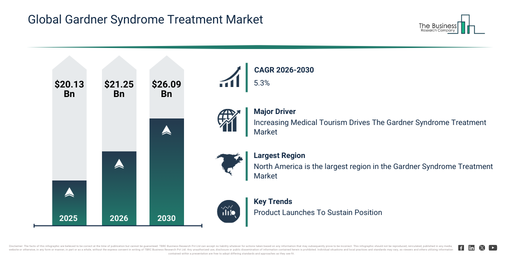
    The gardner syndrome treatment market has experienced robust expansion in recent years. This market is projected to expand from $20.13 billion in 2025 to $21.25 billion in 2026, demonstrating a compound annual growth rate (CAGR) of 5.5%. Historically, this expansion has been driven by factors such as the identification of FAP-related syndromes, progress in endoscopic monitoring, the introduction of surgical interventions, enhanced cancer surveillance, and the increasing acceptance of genetic testing.

    The market for Gardner syndrome treatments is projected to experience substantial expansion in the coming years, anticipated to reach $26.09 billion by 2030, exhibiting a compound annual growth rate (CAGR) of 5.3%. This expansion during the forecast period is fueled by several factors, including the advancement of precision oncology methods, the broadening of prophylactic treatment options, a rise in public understanding of hereditary cancer syndromes, the creation of specific therapeutic interventions, and the incorporation of genetic counseling support. Key trends anticipated for this period encompass a greater emphasis on early genetic testing, an increase in the application of preventive surgical procedures, the extension of long-term patient monitoring initiatives, the expanding significance of comprehensive multidisciplinary cancer management, and a focus on genetic counseling for families.

    Get A Free Sample Report With In-Depth Market Insights:

    https://thebusinessresearchcompany.com/sample_request?id=32055688&type=smp&name=Gardner%20Syndrome%20Treatment%20Market%20Report%202026&utm_source=Blogs&utm_medium=Paid&utm_campaign=Nov_PR

    Gardner Syndrome Treatment Market Industry Drivers: What’s Behind The Revenue Growth?

    The expansion of medical tourism is anticipated to drive the future growth of the Gardner syndrome treatment market. Medical tourism describes the practice where individuals journey to another country or region specifically to receive medical care, health services, or surgical procedures. Destinations known for medical tourism provide advanced medical technologies and diverse treatment modalities for patients looking for the latest in Gardner syndrome treatment. For example, in May 2024, the Ministry of Health and Welfare (MOHW), a South Korea-based national health and social-welfare ministry, reported that South Korea welcomed 606,000 foreign patients in 2023, which was a 2.4-times increase over prior years. Therefore, the rise in medical tourism is propelling the growth of the Gardner syndrome treatment market. The escalating demand for personalized medicine is expected to fuel the growth of the Gardner syndrome treatment market moving forward. Personalized medicine is a medical approach that customizes treatments and therapies by considering an individual’s genetic, environmental, and lifestyle factors to enhance healthcare outcomes. The demand for personalized medicine is increasing primarily because patients and healthcare providers are progressively seeking treatments tailored to an individual’s genetic profile, leading to improved efficacy and reduced adverse effects. Gardner syndrome treatment contributes to this rising demand for personalized medicine by requiring precise, genetics-based interventions that match each patient’s unique mutation profile, thus encouraging the adoption of personalized therapeutic strategies. For instance, in February 2024, the Personalized Medicine Coalition, a US-based non-profit organization, stated that in 2023, the FDA approved 16 new personalized treatments for rare disease patients, an increase from six in 2022. Among these approvals, seven were cancer drugs, while three addressed other diseases and conditions. Consequently, the rising demand for personalized medicine is driving the growth of the Gardner syndrome treatment market.

    Gardner Syndrome Treatment Market Segment Outlook: Which Categories Are Growing Fastest?

    The gardner syndrome treatment market covered in this report is segmented –

    1) By Cancer Type: Colorectal Cancer, Osteomas, Other Cancer Types

    2) By Therapeutics Type: NonSteroidal Anti-Inflammatory Drugs (NSAIDs), COX-2 Inhibitor

    3) By Application: Hospitals, Specialty Clinics, Other Applications

    Subsegments:

    1) By Colorectal Cancer: Pharmacological Treatments, Surgical Interventions

    2) By Osteomas: Surgical Interventions, Supportive Care

    3) By Other Cancer Types: Pharmacological Treatments, Surgical Interventions

    Gardner Syndrome Treatment Market Growth Trends Reshaping The Competitive Landscape

    Major companies operating in the Gardner syndrome treatment market are actively launching new products to sustain their market position. For instance, in November 2023, Takeda Pharmaceutical Company Limited, a Japan-based pharmaceutical company, introduced Fruzaqla (fruquintinib), which received approval from the Food and Drug Administration (FDA), a US-based federal government agency. Fruzaqla (fruquintinib) is a targeted therapy specifically approved for the treatment of metastatic colorectal cancer (mCRC) in adults. This drug, Fruzaqla (fruquintinib), is unique as the first to target all three subtypes of the vascular endothelial growth factor (VEGF) receptor kinases. Patients diagnosed with Gardner syndrome have an increased risk of developing colorectal cancer, a condition for which Fruzaqla (fruquintinib) is an effective treatment.

    Gardner Syndrome Treatment Market Leading Companies And Competitive Benchmarking

    Major companies operating in the gardner syndrome treatment market are Pfizer Inc., Sanofi S.A., Johnson & Johnson Private Limited, F. Hoffmann-La Roche Ltd., GlaxoSmithKline plc, Novartis AG, Merck & Co. Inc., AstraZeneca plc, Bristol Myers Squibb Company, Eli Lilly and Company, AbbVie Inc., Amgen Inc., Takeda Pharmaceutical Company Limited, Cipla Ltd., Dr. Reddy’s Laboratories Ltd., Cadila Healthcare Ltd., Torrent Pharmaceuticals Ltd., Daiichi Sankyo Company Ltd., Mirati Therapeutics Inc., Plus Therapeutics Inc., Processa Pharmaceuticals Inc., Shanghai Henlius Biotech Inc.

    View The Full Gardner Syndrome Treatment Market Report:

    https://thebusinessresearchcompany.com/report/gardner-syndrome-treatment-global-market-report?utm_source=Blogs&utm_medium=Paid&utm_campaign=Nov_PR

    Gardner Syndrome Treatment Market Top Region: Where Does Most Revenue Come From?

    North America was the largest region in the gardner syndrome treatment market in 2025. The regions covered in the gardner syndrome treatment market report are Asia-Pacific, South East Asia, Western Europe, Eastern Europe, North America, South America, Middle East, Africa.

    Reach Out To Our Team:

    The Business Research Company: https://www.thebusinessresearchcompany.com/

    Americas: +1 310-496-7795

    Asia: +44 7882 955267 & +91 8897263534

    Europe: +44 7882 955267

    Email us at: marketing@tbrc.info

    Follow us on:

    LinkedIn: https://in.linkedin.com/company/the-business-research-company

    YouTube: https://www.youtube.com/channel/UC24_fI0rV8cR5DxlCpgmyFQ

    Global Market Model: https://www.thebusinessresearchcompany.com/global-market-model
  • Functional Genomics Market Size In 2026: Regional Growth, Key Segments And Future Outlook

    Functional Genomics Market Size In 2026: Regional Growth, Key Segments And Future Outlook

    Featuring market attractiveness scoring, total addressable market sizing, company benchmarking matrices, interactive Excel dashboards, deeper supply chain intelligence, emerging startup tracking, and granular product-level insights, The Business Research Company’s 2026 market reports are built to deliver research that is both more actionable and more strategically valuable.

    Functional Genomics Market Size, Value And Growth Trajectory Through 2030

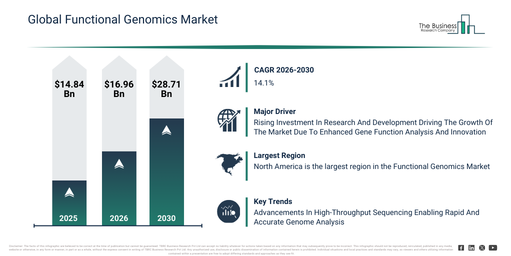
    The functional genomics market has seen rapid expansion in recent years. This market is expected to increase from $14.84 billion in 2025 to $16.96 billion in 2026, exhibiting a compound annual growth rate (CAGR) of 14.3%. Historically, this growth was driven by factors such as the expansion of genomics research funding, the growing availability of sequencing technologies, an increase in academic genomics research, rising demand for functional gene analysis, and enhancements in bioinformatics tools.

    The functional genomics market is poised for significant expansion in the coming years. Projections indicate its value will reach $28.71 billion by 2030, exhibiting a compound annual growth rate (CAGR) of 14.1%. This growth during the forecast period is propelled by factors such as the greater embrace of precision medicine, increasing capital directed towards genomic data analytics, the broadening of gene editing research applications, intensified partnerships between academic institutions and industry, and a heightened emphasis on translational genomics research. Key developments anticipated in this period encompass the wider utilization of high-throughput functional genomics instruments, the enhanced integration of multi-omics analysis platforms, the increasing application of AI in interpreting gene functions, the expansion of automated genomic processes, and a stronger focus on uncovering disease mechanisms.

    Get A Free Sample Report With In-Depth Market Insights:

    https://thebusinessresearchcompany.com/sample_request?id=17498290&type=smp&name=Functional%20Genomics%20Market%20Report%202026&utm_source=Blogs&utm_medium=Paid&utm_campaign=Nov_PR

    Functional Genomics Market Growth Factors: What’s Supporting Expansion?

    Elevated spending on research and development (R&D) is anticipated to drive the expansion of the functional genomics market in the future. R&D represents a structured approach aimed at originating, refining, and advancing products, methods, or understanding through systematic inquiry and practical testing. Businesses are channeling greater funds into R&D as they prioritize innovation to maintain a competitive edge, prompting increased allocation of resources to develop novel products, enhance existing technologies, and seize new market prospects. Such investment greatly aids functional genomics by furthering the discovery and examination of gene roles, thereby deepening comprehension of intricate biological mechanisms and facilitating the development of targeted therapeutic interventions. As an illustration, Biospace, a US-based online pharmaceuticals platform, reported in February 2024 that worldwide biopharma R&D funding increased from $61 billion in 2022 to $72 billion in 2023. Consequently, the growing financial commitment to research and development is fueling the expansion of the functional genomics market.

    Functional Genomics Market Segment Landscape: Which Areas Lead Development?

    The functional genomics market covered in this report is segmented –

    1) By Product: Kits And Assays, Instruments

    2) By Technology: Next-Generation Sequencing (NGS), Microarray Analysis, CRISPR And Gene Editing Technologies, RNA Sequencing (RNA-Seq)

    3) By End-User: Academic And Research Institutes, Pharmaceutical And Biopharmaceutical Companies, Contract Research Organizations (CROs), Clinical Laboratories, Agricultural Biotechnology Companies

    Subsegments:

    1) By Kits And Assays: PCR Kits, Microarray Kits, NGS Kits, Reagents, Enzymes

    2) By Instruments: Sequencers, Microarray Scanners, PCR Instruments, Automation Systems

    Functional Genomics Market Trends Shaping Long-Term Demand

    Leading companies within the functional genomics market are prioritizing the development of sophisticated methodologies, such as high-throughput sequencing, to deliver precise and comprehensive understanding of complex genomes. High-throughput sequencing is a technique that enables the quick and parallel analysis of vast quantities of DNA or RNA, allowing for extensive examination of genetic data. As an illustration, in February 2025, Roche, a pharmaceutical firm based in Switzerland, introduced its sequencing by expansion (SBX) technology, thereby establishing a novel class of next-generation sequencing. The SBX chemistry, when combined with an advanced sensor module, facilitates exceptionally rapid, high-throughput sequencing that is both flexible and expandable for a broad spectrum of applications. This innovative approach converts the sequence of DNA or RNA into an identifiable proxy polymer known as an Xpandomer through a specific biochemical mechanism. These Xpandomers, which are fifty times longer than the original nucleic acid, transform genetic sequence data into robust, clear signals with minimal interference, ensuring unambiguous and dependable identification. By employing a CMOS-based sensor with parallel processing, this method accomplishes remarkably precise single-molecule nanopore sequencing, characterized by outstanding rapidity and adaptability.

    Functional Genomics Market Industry Leaders And Competitive Landscape

    Major companies operating in the functional genomics market are Hoffmann-La Roche Ltd., Thermo Fisher Scientific Inc., Merck KGaA, Becton Dickinson and Company, Agilent Technologies Inc., Illumina Inc., Perkin Elmer Inc., Revvity Inc., Exact Sciences Corporation, Bio-Rad Laboratories Inc., QIAGEN NV, Integrated DNA Technologies Inc., Promega Corporation, Pacific Biosciences of California Inc., Genomics Ltd., MEDiC LLC, Enhanc3D Genomics Ltd., Samplix, Arima Genomics Inc., Phase Genomics Inc.

    View The Full Functional Genomics Market Report:

    https://thebusinessresearchcompany.com/report/functional-genomics-global-market-report?utm_source=Blogs&utm_medium=Paid&utm_campaign=Nov_PR

    Functional Genomics Market Regional Breakdown: Where Is Demand Concentrated?

    North America was the largest region in the functional genomics market in 2025. Asia-Pacific is expected to be the fastest-growing region in the forecast period. The regions covered in the functional genomics market report are Asia-Pacific, South East Asia, Western Europe, Eastern Europe, North America, South America, Middle East, Africa.

    Reach Out To Our Team:

    The Business Research Company: https://www.thebusinessresearchcompany.com/

    Americas: +1 310-496-7795

    Asia: +44 7882 955267 & +91 8897263534

    Europe: +44 7882 955267

    Email us at: marketing@tbrc.info

    Follow us on:

    LinkedIn: https://in.linkedin.com/company/the-business-research-company

    YouTube: https://www.youtube.com/channel/UC24_fI0rV8cR5DxlCpgmyFQ

    Global Market Model: https://www.thebusinessresearchcompany.com/global-market-model
  • Frasier Syndrome Market Growth Forecast Through 2030: Market Size And Trends In 2026

    Frasier Syndrome Market Growth Forecast Through 2030: Market Size And Trends In 2026

    Built to provide research that’s more actionable and strategically valuable, The Business Research Company’s 2026 market reports include market attractiveness analysis, total addressable market sizing, company benchmarking matrices, interactive Excel dashboards, broader supply chain intelligence, emerging startup tracking, and in-depth product insights.

    Frasier Syndrome Market CAGR Outlook And Future Development

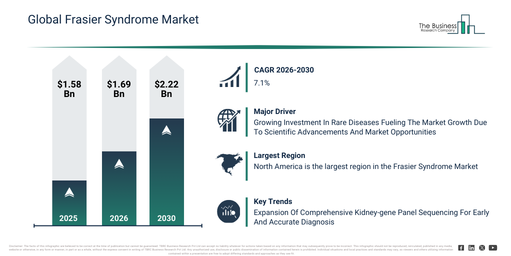
    The frasier syndrome market has experienced substantial expansion in recent years. It is forecast to grow from $1.58 billion in 2025 to $1.69 billion in 2026, achieving a compound annual growth rate (CAGR) of 7.1%. This historical growth can be linked to progress in genetic diagnostics, the discovery of wt1 mutations, enhanced nephrology care, the provision of supportive therapies, and increased investigation into rare diseases.

    The frasier syndrome market is projected to experience substantial expansion over the upcoming years. This market is anticipated to reach a valuation of $2.22 billion by 2030, exhibiting a compound annual growth rate (CAGR) of 7.1%. This projected growth during the forecast period is fueled by several factors, including the wider adoption of genomic screening programs, advancements in precision medicine, greater financial commitments to rare disease treatments, the incorporation of genetic counseling, and enhancements in long-term care frameworks. Significant trends anticipated in this period encompass the increasing application of genetic testing for prompt diagnosis, a heightened emphasis on managing rare diseases, the broadening of treatment strategies involving multiple disciplines, a greater understanding of WT1 gene mutations, and a focus on continuous patient surveillance.

    Get A Free Sample Report With In-Depth Market Insights:

    https://thebusinessresearchcompany.com/sample_request?id=53227308&type=smp&name=Frasier%20Syndrome%20Market%20Report%202026&utm_source=Blogs&utm_medium=Paid&utm_campaign=Nov_PR

    Frasier Syndrome Market Demand Drivers: What’s Powering Industry Growth?

    The increasing financial commitment towards rare diseases is anticipated to boost the expansion of the Frasier syndrome market in the future. Such a condition is defined as a health ailment impacting a minor segment of the population, usually less than 1 in 2,000 individuals, frequently characterized by chronic, progressive nature, and potential to be life-threatening or debilitating. Capital is being directed into rare diseases predominantly because of increased awareness of existing medical gaps and the prospect of significant profits, facilitated by regulatory benefits like orphan drug status, exclusive market rights, and lowered development expenses. Frasier Syndrome underscores the vital requirement for focused research and development, thereby stimulating rare disease investments by illustrating the viability of effective, specialized treatments. An illustrative example shows that in April 2024, data from Global Genes, a US-based nonprofit, revealed that firms working on rare disease medications accumulated $7.1 billion during the first quarter of 2024, representing a 307% rise from the $1.8 billion secured in the corresponding timeframe of 2023. Consequently, the expanding investment in rare diseases is stimulating the development of the Frasier syndrome market.

    Frasier Syndrome Market Segments: Where Is Growth Concentrated?

    The frasier syndrome market covered in this report is segmented –

    1) By Treatment Type: Surgical Intervention, Hormone Therapy, Supportive Care, Genetic Counseling

    2) By Diagnosis Method: Genetic Testing, Clinical Evaluation, Imaging Techniques, Biochemical Testing

    3) By Symptoms: Hypospadias, Nephropathy, Hearing Loss, Dental Anomalies

    4) By End Users: Hospitals, Diagnostic Centers, Research Institutes, Other End Users

    Subsegments:

    1) By Surgical Intervention: Nephrectomy, Renal Transplantation, Testicular Biopsy

    2) By Hormone Therapy: Testosterone Replacement Therapy, Estrogen Therapy, Growth Hormone Therapy

    3) By Supportive Care: Blood Pressure Management, Renal Replacement Therapy (Dialysis), Pain Management

    4) By Genetic Counseling: Preconception Counseling, Post-Diagnosis Counseling, Family Planning Guidance

    Frasier Syndrome Market Innovation Trends Shaping Future Development

    Leading companies operating in the Frasier Syndrome market are concentrating on technological advancements, such as broad kidney-gene panel sequencing, to secure a competitive edge. Broad kidney-gene panel sequencing refers to genetic tests designed to analyze multiple genes associated with kidney and urogenital disorders in a single assay, aiming to detect mutations responsible for rare syndromes, including those involving the WT1 gene. For instance, in October 2024, Natera, a US-based genetic-testing company, launched its updated Renasight panel test, covering 397 genes linked to chronic kidney disease, which includes WT1-related disorders. This panel offers remote sample collection (blood or saliva), provides results in approximately 3 weeks, and includes genetic counseling support. The increasing adoption of such panels enables earlier and more accurate diagnosis of conditions like Frasier Syndrome and supports personalized management; however, the rarity of the syndrome and the variable penetrance of mutations may limit the diagnostic yield.

    Frasier Syndrome Market Key Participants And Competitive Landscape

    Major companies operating in the frasier syndrome market are Quest Diagnostics Incorporated, Illumina Inc., Natera Inc., PTC Therapeutics, Myriad Genetics Inc., Fulgent Genetics Inc., Invitae Corporation, GeneDx LLC, Travere Therapeutics, Centogene N V, Prevention Genetics, Medicover Hospitals, 3billion Inc, Ambry Genetics, Strand Life Sciences Pvt Ltd, REGENXBIO, Ultragenyx Pharmaceutical Inc, Editas Medicine Inc, Passage Bio, Chimeron Bio, Aro Biotherapeutics, Purespring Therapeutics

    View The Full Frasier Syndrome Market Report:

    https://thebusinessresearchcompany.com/report/frasier-syndrome-global-market-report?utm_source=Blogs&utm_medium=Paid&utm_campaign=Nov_PR

    Frasier Syndrome Market Geographic Landscape: Which Region Leads Industry Growth?

    North America was the largest region in the frasier syndrome market in 2025. Europe is expected to be the fastest-growing region in the forecast period. The regions covered in the frasier syndrome market report are Asia-Pacific, South East Asia, Western Europe, Eastern Europe, North America, South America, Middle East, Africa.

    Reach Out To Our Team:

    The Business Research Company: https://www.thebusinessresearchcompany.com/

    Americas: +1 310-496-7795

    Asia: +44 7882 955267 & +91 8897263534

    Europe: +44 7882 955267

    Email us at: marketing@tbrc.info

    Follow us on:

    LinkedIn: https://in.linkedin.com/company/the-business-research-company

    YouTube: https://www.youtube.com/channel/UC24_fI0rV8cR5DxlCpgmyFQ

    Global Market Model: https://www.thebusinessresearchcompany.com/global-market-model
  • Food Allergy Treatment Market Analysis: $8.5 Billion Market Size In 2026 And Future Growth Prospects

    Food Allergy Treatment Market Analysis: $8.5 Billion Market Size In 2026 And Future Growth Prospects

    Backed by market attractiveness analysis, total addressable market sizing, company benchmarking matrices, interactive Excel dashboards, wider supply chain intelligence, emerging startup coverage, and detailed product-level insights, The Business Research Company’s 2026 market reports are designed to offer research that is more actionable and strategically valuable than ever.

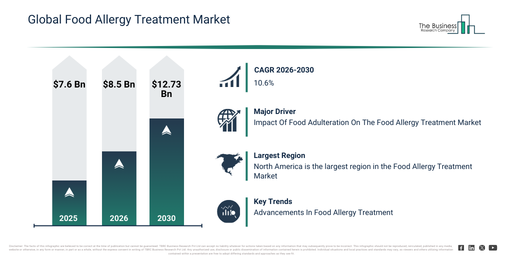
    Food Allergy Treatment Market Set To Climb From $8.5 Billion In 2026 To $12.73 Billion By 2030

    The food allergy treatment market size has seen rapid expansion in recent years. The market is projected to expand from $7.6 billion in 2025 to $8.5 billion in 2026, achieving a compound annual growth rate (CAGR) of 11.8%. Factors contributing to this growth during the historic period include growth in food allergy prevalence, availability of antihistamines, adoption of epinephrine therapy, increased allergy diagnosis rates, and clinical guideline development.

    The food allergy treatment market is projected to experience substantial expansion in the coming years. It is anticipated to reach $12.73 billion by 2030, exhibiting a compound annual growth rate (CAGR) of 10.6%. This anticipated growth during the forecast timeframe stems from advancements in oral immunotherapy, the proliferation of biologic remedies, an increase in pediatric allergy services, the necessity for sustained allergy control, and broader access to healthcare. Key trends for the upcoming period encompass a surge in the acceptance of immunotherapy-driven therapies, a rise in the utilization of epinephrine auto-injectors, a heightened emphasis on proactive allergy prevention, the broadening of customized allergy treatment approaches, and enhanced understanding of food allergy ailments.

    Get A Free Sample Report With In-Depth Market Insights:

    https://thebusinessresearchcompany.com/sample_request?id=46598166&type=smp&name=Food%20Allergy%20Treatment%20Market%20Report%202026&utm_source=Blogs&utm_medium=Paid&utm_campaign=Nov_PR

    Food Allergy Treatment Market Growth Drivers: What’s Behind The Acceleration?

    The rising incidence of food adulteration is anticipated to fuel the expansion of the food allergy treatment market in the future. Food adulteration involves the deliberate modification of food items, either by incorporating inferior, detrimental, or unapproved components, or by extracting essential ingredients, typically to boost volume or improve aesthetics, often compromising quality and safety. This surge in food adulteration stems from various factors, including economic advantages, intricate supply chains, insufficient regulatory oversight, technological advancements, a preference for convenience, globalized markets, environmental influences, consumer understanding, profit maximization, and inadequate enforcement of existing regulations. A primary driver behind the rise in food adulteration is the growing consumer demand for more affordable goods, which prompts manufacturers to reduce expenses and maximize earnings through morally questionable methods. The practice of food adulteration can elevate the likelihood of allergic responses by either introducing allergenic substances into food items or by jeopardizing the safety and purity of the food chain. For example, in 2023, data from the FDA CORE Network, a U.S. government agency, showed its team assessed 69 incidents, addressed 25, and released 10 public health advisories, contrasting with 65 incidents, 28 responses, and 11 advisories recorded in 2022. Consequently, the escalating problem of food adulteration is a significant impetus behind the expansion of the food allergy treatment market.

    Food Allergy Treatment Market Segment Analysis: What Are The Core Market Categories?

    The food allergy treatment market covered in this report is segmented –

    1) By Drug Type: Antihistamines, Decongestants, Corticosteroids, Mast Cell Stabilizers, Leukotriene Inhibitors, Nasal Anti-Cholinergic, Immuno-Modulators, Epinephrine, Immunotherapy

    2) By Route Of Administration: Parenteral, Oral

    3) By Allergen Type: Dairy Products, Poultry Product, Tree Nuts, Peanuts, Shellfish, Wheat, Soys, Other Allergens

    4) By End-Use: Hospital Pharmacies, Retail Pharmacies, Other End-Uses

    Subsegments:

    1) By Antihistamines: Oral Antihistamines, Topical Antihistamines, Intranasal Antihistamines

    2) By Decongestants: Oral Decongestants, Nasal Decongestants

    3) By Corticosteroids: Oral Corticosteroids, Topical Corticosteroids, Intranasal Corticosteroids

    4) By Mast Cell Stabilizers: Cromolyn Sodium, Nedocromil

    5) By Leukotriene Inhibitors: Montelukast, Zafirlukast

    6) By Nasal Anti-Cholinergic: Ipratropium Bromide

    7) By Immuno-Modulators: Omalizumab, Dupilumab

    8) By Epinephrine: Injectable Epinephrine, Auto-Injectors

    9) By Immunotherapy: Oral Immunotherapy (OIT), Sublingual Immunotherapy (SLIT), Epicutaneous Immunotherapy (EPIT)

    Food Allergy Treatment Market Trends Redefining Industry Growth

    Key companies in the food allergy treatment market are advancing innovative therapies, such as monoclonal antibodies, to tackle the fundamental mechanisms of food allergies and deliver more effective patient care. Monoclonal antibodies offer a promising strategy for managing food allergies by specifically targeting immune system components involved in allergic reactions, thus providing more effective and precise treatments for patients. For example, in February 2024, Novartis AG, a pharmaceutical firm based in Switzerland, secured FDA approval for Xolair (omalizumab) to diminish IgE-mediated food allergies. This humanized monoclonal antibody, administered subcutaneously, functions by impeding the binding of IgE antibodies, thereby reducing the release of chemicals responsible for allergy symptoms. The FDA’s approval is underpinned by positive outcomes from the Phase III OUtMATCH study, which indicated that a substantially higher proportion of food allergy patients, including those as young as 1 year, who were treated with Xolair, could tolerate small quantities of peanut, milk, egg, and cashews without an allergic reaction, when compared to the placebo group.

    Food Allergy Treatment Market Top Companies Driving Competitive Growth

    Major companies operating in the food allergy treatment market are Pfizer Inc., F. Hoffmann-La Roche Ltd., Merck & Co. Inc., Bayer AG, Sanofi S.A., AstraZeneca PLC, Novartis AG, Amgen Inc., Regeneron Pharmaceuticals Inc., ALK-Abelló A/S, Stallergenes Greer, Kaleo Inc., HAL Allergy B.V., Vedanta Biosciences Inc., Aimmune Therapeutics, AnaptysBio Inc., Immunomic Therapeutics Inc., Alladapt Immunotherapeutics Inc., Aravax, Prota Therapeutics Pty Ltd., DBV Technologies, Adamis Pharmaceuticals Corporation

    View The Full Food Allergy Treatment Market Report:

    https://thebusinessresearchcompany.com/report/food-allergy-treatment-global-market-report?utm_source=Blogs&utm_medium=Paid&utm_campaign=Nov_PR

    Food Allergy Treatment Market Largest Region: Which Geography Holds The Biggest Share?

    North America was the largest region in the food allergy treatment market in 2025. Asia-Pacific is expected to be the fastest-growing region in the forecast period. The regions covered in the food allergy treatment market report are Asia-Pacific, South East Asia, Western Europe, Eastern Europe, North America, South America, Middle East, Africa.

    Reach Out To Our Team:

    The Business Research Company: https://www.thebusinessresearchcompany.com/

    Americas: +1 310-496-7795

    Asia: +44 7882 955267 & +91 8897263534

    Europe: +44 7882 955267

    Email us at: marketing@tbrc.info

    Follow us on:

    LinkedIn: https://in.linkedin.com/company/the-business-research-company

    YouTube: https://www.youtube.com/channel/UC24_fI0rV8cR5DxlCpgmyFQ

    Global Market Model: https://www.thebusinessresearchcompany.com/global-market-model
  • Food Allergen Testing Market 2026 Market Size And Growth Forecast: Key Trends To Watch

    Food Allergen Testing Market 2026 Market Size And Growth Forecast: Key Trends To Watch

    Featuring market attractiveness scoring, total addressable market sizing, company benchmarking matrices, interactive Excel dashboards, deeper supply chain intelligence, emerging startup tracking, and granular product-level insights, The Business Research Company’s 2026 market reports are built to deliver research that is both more actionable and more strategically valuable.

    Food Allergen Testing Market Forecast: Value Set To Climb From $1.22 Billion To $1.71 Billion

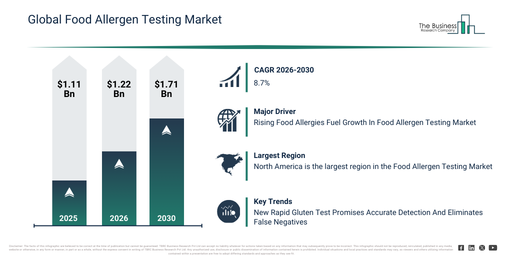
    The food allergen testing market has experienced rapid expansion in recent years. Projections indicate its size will increase from $1.11 billion in 2025 to $1.22 billion in 2026, demonstrating a compound annual growth rate (CAGR) of 10.2%. Historically, this growth can be ascribed to several factors, including the rising prevalence of food allergies, the enforcement of food labeling regulations, the expansion of the packaged food industry, the proliferation of food testing laboratories, and the widespread use of ELISA testing.

    The food allergen testing market is anticipated to experience substantial expansion in the coming years. This market is projected to reach a size of $1.71 billion by 2030, exhibiting a compound annual growth rate (CAGR) of 8.7%. Factors driving this growth during the forecast period include the increasing demand for high-sensitivity detection methods, the rise in global food trade, the broadening application of PCR-based testing, more stringent allergen regulations, and the integration of automation into food testing processes. Key trends anticipated during the same period encompass the escalating demand for food safety testing, more rigorous regulatory compliance requirements, the extended scope of allergen detection in processed foods, the increasing adoption of rapid testing technologies, and the implementation of advanced molecular diagnostic methods.

    Get A Free Sample Report With In-Depth Market Insights:

    https://thebusinessresearchcompany.com/sample_request?id=67794823&type=smp&name=Food%20Allergen%20Testing%20Market%20Report%202026&utm_source=Blogs&utm_medium=Paid&utm_campaign=Nov_PR

    Food Allergen Testing Market Growth Factors Behind Sustained Expansion

    The rising prevalence of food allergies is anticipated to propel the food allergen testing market forward. Food allergies are characterized as adverse immune responses triggered by particular food proteins, potentially resulting in symptoms ranging from mild discomfort to severe reactions. The increasing occurrences of food allergies are attributed to genetic predispositions, environmental influences, dietary changes, and improved awareness and diagnosis. Food allergen testing plays a crucial role in identifying and quantifying allergenic substances in food products, thus helping to prevent allergic reactions in individuals with food allergies. For instance, in March 2024, according to CPD Online College Limited, a UK-based company, it is estimated that approximately 2 million people in the UK have a diagnosed food allergy. In the US, around 33 million people are thought to have allergies. Australia records some of the highest allergy rates globally, with food allergies affecting 10% of infants, 4-8% of children, and 2% of adults. Therefore, the escalating incidences of food allergies are significantly driving the growth of the food allergen testing market.

    Food Allergen Testing Market Segment Breakdown: Which Categories Lead On Revenue?

    The food allergen testing market covered in this report is segmented –

    1) By Test Type: Allergen Testing, Intolerance Testing

    2) By Technology: Biosensors, Immunoassay Or Enzyme Linked Immunosorbent Assay (ELISA), Polymerase Chain Reaction (PCR), Other Technologies

    3) By Application: Seafood And Meat Products, Dairy Products, Beverages, Bakery And Confectionery, Baby Food And Infant Formula, Other Applications

    Subsegments:

    1) By Allergen Testing: Immunoassay-Based Tests, PCR-Based Tests, Mass Spectrometry-Based Tests, Luminex xMAP Technology, Chromatography-Based Tests

    2) By Intolerance Testing: Breath Tests, Blood Tests, Elimination Diets And Food Challenge Testing

    Food Allergen Testing Market Strategic Trends: What Defines The Next Growth Phase?

    Major companies in the food allergen testing market are prioritizing the development of rapid tests, such as immunochromatographic assays, to secure a competitive advantage. An immunochromatographic assay is defined as a fast diagnostic method utilized to identify specific allergenic proteins in food items, leveraging the principles of chromatography and immunological responses. For example, in March 2024, Gold Standard Diagnostics Budapest Kft, a diagnostic solutions company based in Hungary, launched the SENSIStrip Gluten PowerLine lateral flow test with the aim of ensuring quick gluten detection and minimizing the occurrence of false negative results. This particular test employs an immunochromatographic assay and functions as a sensitive detection system built upon a monoclonal antibody, making it especially effective at identifying gluten residues in food matrices, rinse water, and swabs. The swift and sensitive detection of gluten offered by this test is vital for individuals suffering from gluten intolerance or celiac disease. Furthermore, it incorporates an introduced hook line designed to prevent false-negative interpretations for samples that are highly contaminated. Results from this test can be interpreted visually, and a quantitative evaluation is also feasible when used in conjunction with their RapidScan ST5 lateral flow reader.

    Food Allergen Testing Market Leading Players And Competitive Positioning

    Major companies operating in the food allergen testing market are Thermo Fisher Scientific, Ecolab Inc., Eurofins Scientific, SGS SA, Bureau Veritas, Intertek Group plc, Bio-Rad Laboratories Inc., ALS Limited, Neogen Corporation, IEH Laboratories & Consulting Group, AsureQuality Limited, Mérieux NutriSciences, Microbac Laboratories Inc, R-Biopharm AG, TUV SUD America, Symbio Laboratories, Campden BRI, Romer Labs, Q Laboratories Inc., NSL Analytical Services Inc.

    View The Full Food Allergen Testing Market Report:

    https://thebusinessresearchcompany.com/report/food-allergen-testing-global-market-report?utm_source=Blogs&utm_medium=Paid&utm_campaign=Nov_PR

    Food Allergen Testing Market Regional Analysis: Which Geography Leads On Revenue?

    North America was the largest region in the food allergen testing market in 2025. Asia-Pacific is expected to be the fastest-growing region in the forecast period. The regions covered in the food allergen testing market report are Asia-Pacific, South East Asia, Western Europe, Eastern Europe, North America, South America, Middle East, Africa.

    Reach Out To Our Team:

    The Business Research Company: https://www.thebusinessresearchcompany.com/

    Americas: +1 310-496-7795

    Asia: +44 7882 955267 & +91 8897263534

    Europe: +44 7882 955267

    Email us at: marketing@tbrc.info

    Follow us on:

    LinkedIn: https://in.linkedin.com/company/the-business-research-company

    YouTube: https://www.youtube.com/channel/UC24_fI0rV8cR5DxlCpgmyFQ

    Global Market Model: https://www.thebusinessresearchcompany.com/global-market-model
  • Foley Catheters Market Size Forecast: How The Industry Is Expected To Grow From 2026 To 2030

    Foley Catheters Market Size Forecast: How The Industry Is Expected To Grow From 2026 To 2030

    Built to provide research that’s more actionable and strategically valuable, The Business Research Company’s 2026 market reports include market attractiveness analysis, total addressable market sizing, company benchmarking matrices, interactive Excel dashboards, broader supply chain intelligence, emerging startup tracking, and in-depth product insights.

    Foley Catheters Market Revenue Growth On Track For A 6.8% CAGR Through 2030

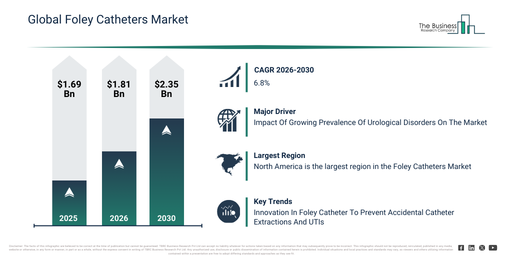
    The foley catheters market has shown robust expansion in recent years. It is forecast to increase from $1.69 billion in 2025 to $1.81 billion in 2026, achieving a compound annual growth rate (CAGR) of 7.0%. Historically, this market’s development has been driven by an escalation in surgical procedures, the widespread incidence of urinary retention disorders, an expanding aging population, the prevalent use of catheters in hospitals, and the accessibility of latex catheters.

    The foley catheters market is projected to experience substantial expansion in the coming years, set to reach $2.35 billion by 2030, exhibiting a compound annual growth rate (CAGR) of 6.8%. This anticipated growth is primarily driven by factors such as the increasing demand for devices that resist infection, the expansion of home healthcare provisions, a growing preference for silicone-based materials, the escalating burden of chronic diseases, and advancements in catheter coating technologies. Key trends identified for this period encompass a surge in the need for long-term urinary drainage solutions, wider application in post-surgical patient care, increasing acceptance of silicone-based catheters, a strong emphasis on preventing infections and developing antibacterial coatings, and the expanding utilization within homecare and elderly care settings.

    Get A Free Sample Report With In-Depth Market Insights:

    https://thebusinessresearchcompany.com/sample_request?id=60158237&type=smp&name=Foley%20Catheters%20Market%20Report%202026&utm_source=Blogs&utm_medium=Paid&utm_campaign=Nov_PR

    Foley Catheters Market Demand Drivers Opening New Revenue Streams

    An increasing incidence of urological conditions is projected to propel the expansion of the Foley catheters market in the future. These disorders encompass ailments affecting the urinary system and male reproductive organs, including kidney stones, bladder infections, prostate issues, and urinary incontinence. The rising occurrence of urological disorders can be linked to multiple elements like an aging population, chronic health problems, lifestyle decisions, and environmental impacts. Foley catheters assist in mitigating urological conditions by facilitating efficient urine drainage, managing urinary retention, and aiding post-surgical recovery, thereby averting complications and improving patient well-being. For example, in October 2023, data from the National Health Service (NHS) England, a UK-based government department, indicated that during the 2022/23 period, 147,285 hospital admissions had a primary diagnosis of urinary tract infection (UTI). Among these, 56% (82,392 cases) concerned patients aged 65 and older. Furthermore, UTIs have been responsible for more than 800,000 hospital admissions across the nation over the past five-year period. Consequently, the increasing incidence of urological conditions is propelling the expansion of the Foley catheters market.

    Foley Catheters Market Segmentation: How Does The Market Break Down By Category?

    The foley catheters market covered in this report is segmented –

    1) By Product Type: 2-Way Foley Catheter, 3-Way Foley Catheter, 4-Way Foley Catheter

    2) By Material Type: Latex, Silicone, Other Materials

    3) By Application Type: Surgery, Benign Prostatic Hyperplasia, Urinary Incontinence, Other Application Types

    4) By End User: Hospitals, Long-Term Care Facilities, Other End Users

    Subsegments:

    1) By 2-Way Foley Catheter: Standard 2-Way Foley Catheters, Antibacterial Coated 2-Way Foley Catheters, Latex 2-Way Foley Catheters, Silicone 2-Way Foley Catheters, Hydrophilic Coated 2-Way Foley Catheters

    2) By 3-Way Foley Catheter: Standard 3-Way Foley Catheters, 3-Way Foley Catheters With Irrigation Port, Latex 3-Way Foley Catheters, Silicone 3-Way Foley Catheters, Antibacterial Coated 3-Way Foley Catheters

    3) By 4-Way Foley Catheter: Standard 4-Way Foley Catheters, 4-Way Foley Catheters With Continuous Bladder Irrigation (Cbi), Latex 4-Way Foley Catheters, Silicone 4-Way Foley Catheters, Antibacterial Coated 4-Way Foley Catheters

    Foley Catheters Market Transformation Trends: What Innovations Are Driving Change?

    Leading companies within the Foley catheters market are prioritizing the development of novel solutions, such as catheter stabilizers, to improve patient comfort and minimize complications associated with catheters. A catheter stabilizer is a medical instrument designed to securely anchor a catheter to a patient’s skin, preventing displacement or movement during lengthy procedures like intravenous (IV) infusions, urinary catheterizations, or dialysis. For example, in January 2023, Cathetrix Inc., an Israel-based medical device company, introduced the Foley/Safe 2.0, an advanced catheter stabilizer developed to prevent accidental Foley catheter removals and urinary tract infections (UTIs). This product incorporates three protective layers: a fixation adhesive patch, an anti-slide smart mechanism, and a disconnection mechanism that safely detaches the catheter when needed. This innovative device seeks to enhance patient safety and reduce the requirement for surgery or extended hospitalizations.

    Foley Catheters Market Competitive Overview And Top Companies

    Major companies operating in the foley catheters market are Cardinal Health Inc, Medtronic PLC, Becton Dickinson and Company, Boston Scientific Corporation, B. Braun Melsungen AG, Coloplast A/S, Teleflex Incorporated, Cook Medical, ConvaTec Group PLC, Lepu Medical Technology, Amsino International Inc, Vygon S.A., Medi-Globe, VOGT Medical, Angiplast Pvt Ltd, Bard Medical, BACTIGUARD AB, AdvaCare Pharma, GWS Surgicals LLP, M. C. Johnson Co. Inc., Ribble International Limited, Advin Health Care, Hospital Equipment Manufacturing Company (HEMC), Sterimed Group

    View The Full Foley Catheters Market Report:

    https://thebusinessresearchcompany.com/report/foley-catheters-global-market-report?utm_source=Blogs&utm_medium=Paid&utm_campaign=Nov_PR

    Foley Catheters Market Geographic Spread And Regional Opportunities

    North America was the largest region in the foley catheters market in 2025. Asia-Pacific is expected to be the fastest-growing region in the forecast period. The regions covered in the foley catheters market report are Asia-Pacific, South East Asia, Western Europe, Eastern Europe, North America, South America, Middle East, Africa.

    Reach Out To Our Team:

    The Business Research Company: https://www.thebusinessresearchcompany.com/

    Americas: +1 310-496-7795

    Asia: +44 7882 955267 & +91 8897263534

    Europe: +44 7882 955267

    Email us at: marketing@tbrc.info

    Follow us on:

    LinkedIn: https://in.linkedin.com/company/the-business-research-company

    YouTube: https://www.youtube.com/channel/UC24_fI0rV8cR5DxlCpgmyFQ

    Global Market Model: https://www.thebusinessresearchcompany.com/global-market-model
  • Fluoxetine Market Reaches $1.27 Billion In 2026: Forecast And Growth Opportunities

    Fluoxetine Market Reaches $1.27 Billion In 2026: Forecast And Growth Opportunities

    Backed by market attractiveness analysis, total addressable market sizing, company benchmarking matrices, interactive Excel dashboards, wider supply chain intelligence, emerging startup coverage, and detailed product-level insights, The Business Research Company’s 2026 market reports are designed to offer research that is more actionable and strategically valuable than ever.

    Fluoxetine Market Value Growth And Long-Term Outlook

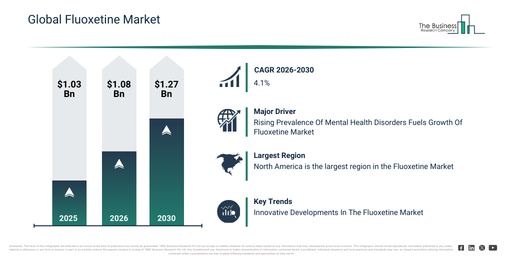
    The fluoxetine market has seen consistent expansion in recent years. Its value is anticipated to increase from $1.03 billion in 2025 to $1.08 billion in 2026, achieving a compound annual growth rate (CAGR) of 4.7%. The historical growth can be ascribed to a high prevalence of depressive disorders, the clinical effectiveness of SSRIs, the availability of generic formulations, a rise in psychiatric consultations, and enhanced diagnosis of mental health conditions.

    The fluoxetine market is projected to experience consistent expansion over the next few years, with its size expected to reach $1.27 billion by 2030, growing at a compound annual growth rate (CAGR) of 4.1%. This anticipated growth during the forecast period is attributed to several factors, including enhanced access to mental health treatment, the expansion of telepsychiatry services, a rise in stress-related disorders, increased application in pediatric and geriatric care, and advancements in antidepressant therapy management. Key trends identified for this period encompass the increasing use of SSRIs in mental health care, a surge in prescriptions for depression and anxiety disorders, the broader adoption of generic fluoxetine, the proliferation of mental health awareness programs, and a preference for oral antidepressant therapies.

    Get A Free Sample Report With In-Depth Market Insights:

    https://thebusinessresearchcompany.com/sample_request?id=28563894&type=smp&name=Fluoxetine%20Market%20Report%202026&utm_source=Blogs&utm_medium=Paid&utm_campaign=Nov_PR

    Fluoxetine Market Growth Backed By Core Demand Fundamentals

    The increasing occurrence of mental health conditions is anticipated to fuel the expansion of the fluoxetine market in the coming years. These disorders cover a wide spectrum of ailments impacting an individual’s cognitive, emotional, and behavioral capabilities, often resulting in significant distress or disruption to daily activities. Their rise is attributed to a multifaceted combination of elements such as societal demands, financial pressures, evolving lifestyles, and improved identification and diagnosis. Fluoxetine is employed in treating these conditions as it assists in mitigating symptoms by elevating serotonin levels within the brain, a neurotransmitter vital for governing mood and feelings. For example, data from August 2024, released by the U.S. government agency, the Substance Abuse and Mental Health Services Administration (SAMHSA), indicated that almost 25 percent of adults reported having experienced some form of mental illness (AMI) in 2023, with approximately 17.1 percent also meeting the criteria for substance use disorder (SUD). Consequently, the growing incidence of mental health disorders is boosting the expansion of the fluoxetine market. Increased spending on healthcare is projected to stimulate the expansion of the fluoxetine market in the future. This rise in healthcare spending is a result of several factors, including the escalating costs of sophisticated medical technologies, a growing elderly demographic, and the widespread occurrence of chronic illnesses. Greater investment in healthcare improves the accessibility and economic viability of drugs like fluoxetine, thereby ensuring better patient access and compliance for those requiring therapy for depression and anxiety conditions. Such improvements can lead to superior overall mental health results and a decrease in long-term medical expenses. For instance, data from May 2024, provided by the UK’s Office for National Statistics, revealed that in 2023, healthcare spending in the UK amounted to roughly $385 billion (£292 billion), an increase from $373 billion (£283 billion) recorded in 2022. Consequently, the rise in healthcare spending is a significant factor propelling the growth of the fluoxetine market.

    Fluoxetine Market Segment Trends And Revenue Contributors

    The fluoxetine market covered in this report is segmented –

    1) By Dosage Form: Tablet, Capsule, Other Dosage Forms

    2) By Route Of Administration: Oral, Other Routes Of Administration

    3) By Demographic: Adult, Pediatric, Geriatric

    4) By Application: Obsessive-Compulsive Disorder, Panic Disorder, Depression, Bulimia Nervosa, Other Applications

    5) By End User: Clinic, Hospital, Other End Users

    Subsegments:

    1) By Tablet: Regular Tablets, Extended-Release Tablets

    2) By Capsule: Standard Capsules, Delayed-Release Capsules

    3) By Other Dosage Forms: Injection Form, Topical Form

    #Fluoxetine Market Growth Trends: What’s Shaping The Future Outlook?

    Major companies in the fluoxetine market are prioritizing the development of innovative products, such as fluoxetine tablets, to address various mental health disorders, including major depressive disorder. Fluoxetine tablets are pharmaceutical formulations containing fluoxetine hydrochloride, an antidepressant medication categorized as a selective serotonin reuptake inhibitor (SSRI). For instance, in April 2024, Strides Pharma Global Pte. Limited, a Singapore-based pharmaceutical company, announced the United States Food and Drug Administration (USFDA) approval for Fluoxetine Tabs 10 mg and 20 mg. This approval expands the company’s fluoxetine product line by introducing fluoxetine tablets alongside its already-approved capsules. Fluoxetine, classified as a selective serotonin reuptake inhibitor (SSRI), functions as an antidepressant medication used to treat conditions such as major depressive disorder (MDD), obsessive-compulsive disorder (OCD), bulimia nervosa, and panic disorder with or without agoraphobia. The introduction of fluoxetine tablets broadens the treatment options available within the company’s fluoxetine portfolio, offering patients and healthcare providers additional flexibility and choices in managing these mental health disorders.

    Fluoxetine Market Competitive Landscape: Which Companies Lead The Industry?

    Major companies operating in the fluoxetine market are Eli Lilly and Company, Viatris Inc., Teva Pharmaceutical Industries Ltd., Sun Pharmaceutical Industries Ltd., Hetero Ltd., Torrent Pharmaceuticals GmbH, Aurobindo Pharma, Cadila Pharmaceuticals Ltd., Dr. Reddy’s Laboratories Limited, Apotex Inc., Amneal Pharmaceuticals Inc., Lupin Ltd., Glenmark Pharmaceuticals Inc., Alvogen, Alembic Pharmaceuticals Limited, Accord Healthcare Ltd., PERRIGO Company plc, Wockhardt Ltd., Jubilant Life Sciences Ltd., Lannett Company Inc., Mayne Pharma International Pty Ltd., Par Pharmaceutical Companies Inc., Zydus Pharmaceuticals USA Inc., Ascend Laboratories LLC

    View The Full Fluoxetine Market Report:

    https://thebusinessresearchcompany.com/report/fluoxetine-global-market-report?utm_source=Blogs&utm_medium=Paid&utm_campaign=Nov_PR

    Fluoxetine Market Top Region By Revenue And Market Share

    North America was the largest region in the fluoxetine market in 2025. Asia-Pacific is expected to be the fastest-growing region in the forecast period. The regions covered in the fluoxetine market report are Asia-Pacific, South East Asia, Western Europe, Eastern Europe, North America, South America, Middle East, Africa.

    Reach Out To Our Team:

    The Business Research Company: https://www.thebusinessresearchcompany.com/

    Americas: +1 310-496-7795

    Asia: +44 7882 955267 & +91 8897263534

    Europe: +44 7882 955267

    Email us at: marketing@tbrc.info

    Follow us on:

    LinkedIn: https://in.linkedin.com/company/the-business-research-company

    YouTube: https://www.youtube.com/channel/UC24_fI0rV8cR5DxlCpgmyFQ

    Global Market Model: https://www.thebusinessresearchcompany.com/global-market-model
  • Fluoropolymer In Healthcare Market Growth In 2026: Market Size, Key Drivers And Future Outlook

    Fluoropolymer In Healthcare Market Growth In 2026: Market Size, Key Drivers And Future Outlook

    Featuring market attractiveness scoring, total addressable market sizing, company benchmarking matrices, interactive Excel dashboards, deeper supply chain intelligence, emerging startup tracking, and granular product-level insights, The Business Research Company’s 2026 market reports are built to deliver research that is both more actionable and more strategically valuable.

    Fluoropolymer In Healthcare Market Poised To Hit $3.85 Billion By 2030 With A 5.7% CAGR

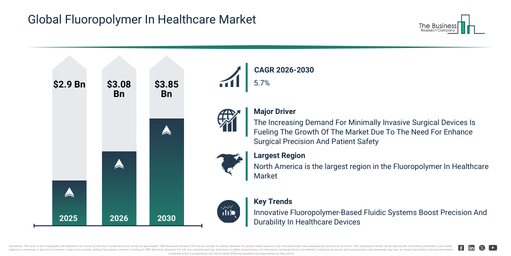
    The fluoropolymer in healthcare market size has shown significant expansion in recent years. It is anticipated to increase from $2.9 billion in 2025 to $3.08 billion in 2026, demonstrating a compound annual growth rate (CAGR) of 6.0%. This historical growth can be linked to factors like the rise in medical device manufacturing, an increasing application of advanced polymer materials, the growing needs for pharmaceutical packaging, a heightened demand for laboratory consumables, and enhancements in fluoropolymer processing technologies.

    The fluoropolymer in healthcare market size is anticipated to experience robust expansion over the coming years, projected to reach $3.85 billion by 2030, exhibiting a compound annual growth rate (CAGR) of 5.7%. The growth during this forecast period is attributed to the increasing adoption of single-use medical devices, a heightened focus on infection control standards, the expansion of high-purity fluid handling systems, rising investments in healthcare material innovation, and a growing regulatory emphasis on material safety. Key trends expected within this period encompass the increasing application of fluoropolymers in medical devices, a rising demand for sterilization-resistant materials, their expanding adoption in pharmaceutical packaging, the broadening of fluoropolymer tubing applications, and a stronger emphasis on biocompatible material design.

    Get A Free Sample Report With In-Depth Market Insights:

    https://thebusinessresearchcompany.com/sample_request?id=93043045&type=smp&name=Fluoropolymer%20In%20Healthcare%20Market%20Report%202026&utm_source=Blogs&utm_medium=Paid&utm_campaign=Nov_PR

    Fluoropolymer In Healthcare Market Growth Catalysts And Demand Drivers

    The rising demand for minimally invasive surgical devices is projected to stimulate the growth of fluoropolymers in the healthcare market moving forward. These advanced instruments, known as minimally invasive surgical devices (MISDs), are employed for performing procedures through small incisions, aiming to reduce recovery times and minimize complications. The increase in minimally invasive surgical devices stems from the desire for quicker recovery, as they reduce physical trauma and shorten hospital stays. Fluoropolymers are crucial in minimally invasive surgical devices due to their chemical resistance, low friction, and biocompatibility, thereby enhancing device performance and patient safety. Their robust nature facilitates precise and reliable surgical procedures. For instance, in January 2025, Intuitive Surgical, Inc., a US-based medical device company, stated that in 2024, surgical products were utilized in nearly 2.7 million procedures, marking a 17% increase from 2023. Therefore, the escalating demand for minimally invasive surgical devices is propelling the growth of fluoropolymers in the healthcare market.

    Fluoropolymer In Healthcare Market Segment Analysis Spotlighting Growth Areas

    The fluoropolymer in healthcare market covered in this report is segmented –

    1) By Type: Polytetrafluoroethylene (PTFE), Polyvinylidene Difluoride (PVDF), Fluorinated Ethylene Propylene (FEP), Ethylene Tetrafluoroethylene (ETFE), Polyvinyl Fluoride (PVF), Other Types

    2) By Form: Films, Coatings, Wrappings, Tubings

    3) By Application: Medical Devices, Pharmaceutical Packaging, Laboratory Equipment, Protective Clothing

    4) By End-User: Hospitals And Clinics, Pharmaceutical Companies, Research Laboratories, Contract Manufacturing Organizations (CMOs)

    Subsegments:

    1) By Polytetrafluoroethylene (PTFE): Expanded Polytetrafluoroethylene (ePTFE), Virgin Polytetrafluoroethylene, Filled Polytetrafluoroethylene, Sintered Polytetrafluoroethylene

    2) By Polyvinylidene Difluoride (PVDF): Homopolymer Polyvinylidene Difluoride (PVDF), Copolymer Polyvinylidene Difluoride (PVDF), Melt-processable Polyvinylidene Difluoride (PVDF), Polyvinylidene Difluoride (PVDF) Membranes

    3) By Fluorinated Ethylene Propylene (FEP): Virgin Fluorinated Ethylene Propylene (FEP), Filled Fluorinated Ethylene Propylene (FEP), Transparent Fluorinated Ethylene Propylene (FEP), High Melt Flow Fluorinated Ethylene Propylene (FEP)

    4) By Ethylene Tetrafluoroethylene (ETFE): Virgin Ethylene Tetrafluoroethylene (ETFE), Filled Ethylene Tetrafluoroethylene (ETFE), Ethylene Tetrafluoroethylene (ETFE) Films, Ethylene Tetrafluoroethylene (ETFE) Coatings

    5) By Polyvinyl Fluoride (PVF): Polyvinyl Fluoride (PVF) Films, Polyvinyl Fluoride (PVF) Coatings, Laminated Polyvinyl Fluoride (PVF), Polyvinyl Fluoride (PVF) Sheets

    6) By Other Types: Perfluoroalkoxy (PFA), Fluorinated Elastomers, Chlorotrifluoroethylene (CTFE), Fluoroethylene Vinyl Ether (FEVE)

    Fluoropolymer In Healthcare Market Industry Trends: What’s Reshaping Demand?

    Leading companies in the fluoropolymers within the healthcare market are focusing on creating advanced offerings, such as fluoropolymer-based fluidic systems, to improve accuracy and longevity in medical devices and diagnostics. Fluoropolymer-based fluidic systems employ fluoropolymer substances for precise and secure fluid management across medical and laboratory settings. Their resistance to chemicals, minimal friction, and biological compatibility guarantee reliable functionality in vital healthcare applications. For example, in May 2023, Biotech Fluidics AB, a Sweden-based supplier of degassing and fluidic solutions, introduced a new line of traceable, certified PEEK and fluoropolymer flexible tubing specifically designed for regulated environments like medical and life sciences. This product adheres to rigorous benchmarks, including ISO 10993, US Pharmacopeia Class VI, FDA Title 21, and EU Regulation 1907/2006 (regarding DEHP content). The tubing is available in bulk and pre-cut quantities with full traceability and can be provided sterilized in cleanroom assemblies when required. This tubing is engineered to fulfill numerous demanding international standards and regulatory requirements, confirming its appropriateness for essential applications where safety, biocompatibility, and traceability are of utmost importance.

    Fluoropolymer In Healthcare Market Leading Companies: Who Holds The Strongest Market Presence?

    Major companies operating in the fluoropolymer in healthcare market are Saint-Gobain S.A., Daikin Industries Ltd., Solvay S.A., AGC Inc., DuPont de Nemours Inc., Arkema S.A., The Chemours Company, Datwyler, Kureha Corporation, Gujarat Fluorochemicals Ltd., Specialty Coating Systems Inc., W.L. Gore & Associates, Everflon Fluoropolymers, Zeus Industrial Products, Hitachi Ltd., Holscot Fluoropolymers Ltd., Shin-Etsu Chemical Co Ltd., Syensqo Specialty Polymers, Toray Industries Inc., Adtech Polymer Engineering Ltd., Dongyue Group Ltd., Zhejiang Juhua Co Ltd., Kuraray Co Ltd.

    View The Full Fluoropolymer In Healthcare Market Report:

    https://thebusinessresearchcompany.com/report/fluoropolymer-in-healthcare-global-market-report?utm_source=Blogs&utm_medium=Paid&utm_campaign=Nov_PR

    Fluoropolymer In Healthcare Market Regional Analysis And Top Geography

    North America was the largest region in the fluoropolymers in the healthcare market in 2025. Asia-Pacific is expected to be the fastest-growing region in the forecast period. The regions covered in the fluoropolymer in healthcare market report are Asia-Pacific, South East Asia, Western Europe, Eastern Europe, North America, South America, Middle East, Africa.

    Reach Out To Our Team:

    The Business Research Company: https://www.thebusinessresearchcompany.com/

    Americas: +1 310-496-7795

    Asia: +44 7882 955267 & +91 8897263534

    Europe: +44 7882 955267

    Email us at: marketing@tbrc.info

    Follow us on:

    LinkedIn: https://in.linkedin.com/company/the-business-research-company

    YouTube: https://www.youtube.com/channel/UC24_fI0rV8cR5DxlCpgmyFQ

    Global Market Model: https://www.thebusinessresearchcompany.com/global-market-model
  • Flowable Hemostats Market Size And Forecast 2026–2030: Trends Driving Industry Expansion

    Flowable Hemostats Market Size And Forecast 2026–2030: Trends Driving Industry Expansion

    Built to provide research that’s more actionable and strategically valuable, The Business Research Company’s 2026 market reports include market attractiveness analysis, total addressable market sizing, company benchmarking matrices, interactive Excel dashboards, broader supply chain intelligence, emerging startup tracking, and in-depth product insights.

    Flowable Hemostats Market Size And Revenue Outlook Through 2030

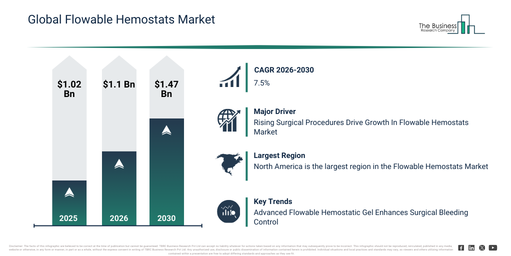
    The flowable hemostats market has experienced robust growth in recent years. This market is projected to expand from $1.02 billion in 2025 to reach $1.1 billion by 2026, demonstrating a compound annual growth rate (CAGR) of 7.8%. Historically, this expansion can be linked to several factors, including an increase in surgical procedure volumes, the rising adoption of advanced surgical tools, the availability of gelatin-based hemostatic agents, the widening scope of specialty surgical disciplines, and enhanced surgeon awareness regarding flowable hemostats.

    The flowable hemostats market size is projected to experience robust expansion over the coming years. This market is set to achieve a value of $1.47 billion by 2030, advancing at a compound annual growth rate (CAGR) of 7.5%. The anticipated growth throughout this period stems from several factors, including a heightened demand for more rapid bleeding control, an increasing emphasis on patient safety outcomes, the widening adoption of minimally invasive and robotic surgeries, ongoing innovation in bioresorbable materials, and their expanded application in emergency and trauma care. Significant trends expected during the forecast timeframe encompass the escalating utilization of flowable hemostats in intricate surgical procedures, a growing embrace of combination hemostatic products, the surging need for prompt hemostasis solutions, the broadening spectrum of minimally invasive surgical applications, and an intensified focus on biocompatible materials.

    Get A Free Sample Report With In-Depth Market Insights:

    https://thebusinessresearchcompany.com/sample_request?id=80818005&type=smp&name=Flowable%20Hemostats%20Market%20Report%202026&utm_source=Blogs&utm_medium=Paid&utm_campaign=Nov_PR

    Flowable Hemostats Market Opportunity Drivers: What’s Unlocking New Revenue Potential?

    The flowable hemostats market is anticipated to expand, driven by a rising count of surgical procedures. This surge in operations can be attributed to an aging populace needing more age-related interventions, alongside technological progress making surgical treatments safer and more accessible. Flowable hemostats prove highly beneficial during surgeries by effectively managing bleeding in hard-to-reach locations or when conventional techniques fall short. As an illustration, a report released in June 2024 by the International Society of Aesthetic Plastic Surgery (ISAPS), a US-based professional non-governmental organization, indicated that in 2023, the combined total of surgical and non-surgical procedures increased by 3.4%, reaching 34.9 million, compared to the preceding year. Consequently, the expanding volume of surgical procedures is fueling the advancement of the flowable hemostats market.

    Flowable Hemostats Market Segment Performance And Emerging Opportunities

    The flowable hemostats market covered in this report is segmented –

    1) By Product: Active Hemostats, Passive Hemostats, Combination Hemostats

    2) By Material: Porcine Gelatin, Bovine Gelatin

    3) By Application: General Surgery, Cardiac Surgery, Vascular Surgery, Neuro And Spine Surgery, Orthopedic Surgery, Other Applications

    4) By End User: Hospital And Clinics, Ambulatory Surgery Centers

    Subsegments:

    1) By Active Hemostats: Fibrin Sealants, Thrombin-Based Hemostats, Collagen-Based Hemostats, Biodegradable Polymer Hemostats

    2) By Passive Hemostats: Gauze-Based Hemostats, Sponges and Pads, Cellulose-Based Hemostats, Granule-Based Hemostats

    3) By Combination Hemostats: Fibrinogen and Thrombin Combination Products, Collagen and Fibrin Combination Products, Synthetic Combination Hemostats, Bioresorbable Combination Hemostats

    Flowable Hemostats Market Innovation Trends: What Developments Are Reshaping The Industry?

    Leading companies in the flowable hemostats market are prioritizing the development of advanced hemostatic agents for surgery, such as no-swell technology, to address the evolving requirements of surgical procedures. No-swell technology describes a feature of a hemostatic agent that prevents it from absorbing liquids and expanding, making it ideal for surgical uses where swelling might lead to complications. For example, in January 2023, Medcura Inc., a US-based surgical technology platform, attained Food and Drug Administration (FDA) breakthrough device designation for its LifeGel flowable technology, which manages bleeding during operations where swelling cannot be tolerated. Medcura’s LifeGel stands as the sole flowable hemostatic gel specifically engineered to overcome issues related to hemostatic swelling. This absorbable agent does not expand since it is fully hydrated and prepared for immediate use, potentially lessening risks associated with swelling, including nerve injury and paralysis. It is also economical, maintains antimicrobial characteristics, appears relatively transparent, and strongly adheres to tissues, thereby presenting a safer and more efficient solution for controlling blood loss in complex surgical interventions.

    Flowable Hemostats Market Key Players: Which Companies Lead Industry Competition?

    Major companies operating in the flowable hemostats market are Pfizer Inc., Johnson & Johnson Services Inc., Medtronic plc, Medline Industries Inc., Stryker Corporation, Baxter International Inc., B Braun Melsungen AG, Becton Dickinson and Company, Cook Medical Inc., Teleflex Incorporated, Mallinckrodt Pharmaceuticals, Integra LifeSciences Holdings Corporation, Gelita Medical GmbH, Ferrosan Medical Devices A/S, Marine Polymer Technologies Inc, Axio Biosolutions Private Limited, Hemostasis LLC, Aegis Lifesciences Private Limited, Medcura Health Inc, Arch Therapeutics Inc., Starch Medical Inc.

    View The Full Flowable Hemostats Market Report:

    https://thebusinessresearchcompany.com/report/flowable-hemostats-global-market-report?utm_source=Blogs&utm_medium=Paid&utm_campaign=Nov_PR

    Flowable Hemostats Market Geographic Analysis: Where Is Demand Rising Fastest?

    North America was the largest region in the flowable hemostats market in 2025. The regions covered in the flowable hemostats market report are Asia-Pacific, South East Asia, Western Europe, Eastern Europe, North America, South America, Middle East, Africa.

    Reach Out To Our Team:

    The Business Research Company: https://www.thebusinessresearchcompany.com/

    Americas: +1 310-496-7795

    Asia: +44 7882 955267 & +91 8897263534

    Europe: +44 7882 955267

    Email us at: marketing@tbrc.info

    Follow us on:

    LinkedIn: https://in.linkedin.com/company/the-business-research-company

    YouTube: https://www.youtube.com/channel/UC24_fI0rV8cR5DxlCpgmyFQ

    Global Market Model: https://www.thebusinessresearchcompany.com/global-market-model
  • Flow Cytometry In Oncology And Immunology Market 2026 Outlook: Market Size, CAGR And Key Growth Opportunities

    Flow Cytometry In Oncology And Immunology Market 2026 Outlook: Market Size, CAGR And Key Growth Opportunities

    Backed by market attractiveness analysis, total addressable market sizing, company benchmarking matrices, interactive Excel dashboards, wider supply chain intelligence, emerging startup coverage, and detailed product-level insights, The Business Research Company’s 2026 market reports are designed to offer research that is more actionable and strategically valuable than ever.

    Flow Cytometry In Oncology And Immunology Market Growth From $2.56 Billion In 2026 To $3.82 Billion By 2030 At A CAGR Of 10.5%

    The flow cytometry in oncology and immunology market size has experienced rapid expansion in recent years. This market is projected to grow from $2.32 billion in 2025 to $2.56 billion in 2026, showcasing a compound annual growth rate (CAGR) of 10.2%. The historical growth within this sector can be attributed to increased funding for cancer research, the expansion of immunotherapy development, the availability of advanced cytometry platforms, heightened clinical trial activity, and a rising demand for immune monitoring.

    The flow cytometry in oncology and immunology market size is projected for significant expansion over the next few years. This market is anticipated to reach $3.82 billion by 2030, exhibiting a compound annual growth rate (CAGR) of 10.5%. The projected growth is largely driven by factors such as the demand for personalized oncology diagnostics, integration with genomic data, the expansion of immuno-oncology therapies, a broadening of clinical research pipelines, and progress in multiplex analysis. Prominent trends expected in the forecast period include the increasing use in cancer biomarker identification, greater adoption in immune cell profiling, the wider application of minimal residual disease detection, its growing role in translational research, and the integration of high-dimensional data analysis.

    Get A Free Sample Report With In-Depth Market Insights:

    https://thebusinessresearchcompany.com/sample_request?id=97670135&type=smp&name=Flow%20Cytometry%20In%20Oncology%20And%20Immunology%20Market%20Report%202026&utm_source=Blogs&utm_medium=Paid&utm_campaign=Nov_PR

    Flow Cytometry In Oncology And Immunology Market Growth Momentum: What Factors Are Shaping Demand?

    The increasing incidence of HIV/AIDS is projected to boost the expansion of flow cytometry within the oncology and immunology market. HIV, a virus, targets the body’s immune system, particularly its CD4 cells, which are vital white blood cells responsible for combating infections. Without treatment, HIV can progress to AIDS, representing the advanced stage of the infection. In both research and clinical contexts for HIV/AIDS, flow cytometry serves as an effective method for analyzing and characterizing cells, especially immune cells, by their physical and chemical attributes. This technique is capable of detecting T cells that are latently infected, meaning they contain the HIV genome but are not actively producing the virus. For example, data from UNAIDS, a UN program based in Switzerland, reported in July 2024 that the global population living with HIV in 2023 was around 39.9 million, an increase from 39.0 million in 2022. Consequently, the growing occurrence of HIV/AIDS is a key factor propelling the flow cytometry market in oncology and immunology.

    Flow Cytometry In Oncology And Immunology Market Segment Landscape And Growth Outlook

    The flow cytometry in oncology and immunology market covered in this report is segmented –

    1) By Type: Immunology, Oncology

    2) By Technology: Cell-Based Flow Cytometry, Bead-Based Flow Cytometry

    3) By Application: Translational Research, Clinical Research

    4) By End User: Hospitals, Diagnostic Laboratories, Reference Laboratories, Pharmaceutical And Biotechnology Companies, Academic Research Institutes, Contract Research Organizations, Other End Users

    Subsegments:

    1) By Immunology: Immune Cell Profiling, Cytokine Detection, T-Cell And B-Cell Analysis, Autoimmune Disease Testing

    2) By Oncology: Cancer Cell Analysis, Tumor Microenvironment Studies, Minimal Residual Disease Detection, Biomarker Discovery And Validation

    Flow Cytometry In Oncology And Immunology Market Trends: What’s Defining The Industry’s Next Phase?

    Major companies in the flow cytometry sector within the oncology and immunology market are focused on developing innovative solutions, such as spectral flow cytometry, to gain a competitive advantage. Spectral flow cytometry is a technology designed to capture the full emission spectrum of each fluorescent marker, rather than detecting fixed, narrow-band signals, thereby enabling much higher parameter, multiparametric cell analysis. For instance, in May 2024, Agilent Technologies, a US-based life science company, unveiled the NovoCyte Opteon spectral flow cytometer, which supports three to five lasers, incorporates up to 73 detectors, and facilitates the analysis of more than 40 markers in a single run. This system bolsters the capacity for deep immunophenotyping in oncology and immunology research. Its advantages include flexibility in panel design, reduced spectral overlap, and improved signal resolution; however, it necessitates more complex data unmixing algorithms, which could potentially extend analysis time.

    Flow Cytometry In Oncology And Immunology Market Competitive Landscape: Who Leads The Industry?

    Major companies operating in the flow cytometry in oncology and immunology market are Thermo Fisher Scientific Inc., Danaher Corporation, Merck KGaA, Becton Dickinson and Company, Agilent Technologies Inc., Sartorius AG, Beckman Coulter Inc., Bio-Rad Laboratories Inc., Sysmex Partec GmbH, Miltenyi Biotec, Luminex Corporation, Q2 Solutions LLC, BioLegend Inc., Cytek Biosciences Inc., Cell Signaling Technology Inc., Standard BioTools Inc., Sony Biotechnology Inc., NanoCellect Biomedical Inc., Nexcelom Bioscience LLC, CytoReason

    View The Full Flow Cytometry In Oncology And Immunology Market Report:

    https://thebusinessresearchcompany.com/report/flow-cytometry-in-oncology-and-immunology-global-market-report?utm_source=Blogs&utm_medium=Paid&utm_campaign=Nov_PR

    Flow Cytometry In Oncology And Immunology Market Global Footprint: Which Region Leads The Market?

    North America was the largest region in the flow cytometry in oncology and immunology market in 2025. The regions covered in the flow cytometry in oncology and immunology market report are Asia-Pacific, South East Asia, Western Europe, Eastern Europe, North America, South America, Middle East, Africa.

    Reach Out To Our Team:

    The Business Research Company: https://www.thebusinessresearchcompany.com/

    Americas: +1 310-496-7795

    Asia: +44 7882 955267 & +91 8897263534

    Europe: +44 7882 955267

    Email us at: marketing@tbrc.info

    Follow us on:

    LinkedIn: https://in.linkedin.com/company/the-business-research-company

    YouTube: https://www.youtube.com/channel/UC24_fI0rV8cR5DxlCpgmyFQ

    Global Market Model: https://www.thebusinessresearchcompany.com/global-market-model