Blog

  • Fifth Generation (5G) Technology In Telehealth Market Set To Expand From $8.49 Billion In 2026: Growth Outlook Through 2030

    Fifth Generation (5G) Technology In Telehealth Market Set To Expand From $8.49 Billion In 2026: Growth Outlook Through 2030

    Backed by market attractiveness analysis, total addressable market sizing, company benchmarking matrices, interactive Excel dashboards, wider supply chain intelligence, emerging startup coverage, and detailed product-level insights, The Business Research Company’s 2026 market reports are designed to offer research that is more actionable and strategically valuable than ever.

    Fifth Generation (5G) Technology In Telehealth Market Size, Value And Growth Trajectory Through 2030

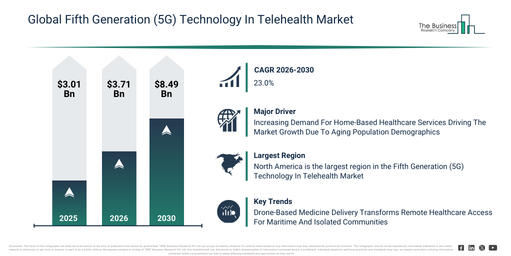
    The market size for fifth generation (5g) technology in telehealth has shown substantial growth in recent years. It is projected to increase from $3.01 billion in 2025 to $3.71 billion in 2026, achieving a compound annual growth rate (CAGR) of 23.3%. This historical expansion can be attributed to the broader adoption of telehealth services, a heightened demand for remote healthcare access, the progression of digital patient engagement tools, enhanced availability of connected health devices, and advancements in mobile healthcare connectivity.

    The market for fifth generation (5g) technology in telehealth is projected to experience rapid expansion over the coming years. This market is predicted to reach a size of $8.49 billion by 2030, demonstrating a compound annual growth rate (CAGR) of 23.0%. Key factors driving this growth during the projection period include heightened investments in nationwide 5g networks, a surge in demand for low-latency telehealth services, the broader adoption of home-based healthcare delivery, an intensified focus on making virtual care more efficient, and the increasing incorporation of AI-driven telehealth analytics. Prominent trends anticipated within the forecast timeframe encompass the wider embrace of real-time virtual consultations, a greater utilization of continuous remote health tracking, the expanded rollout of 5g-enabled wearable devices, an increase in the transmission of high-definition medical imaging, and the improved integration of secure cloud-based telehealth platforms.

    Get A Free Sample Report With In-Depth Market Insights:

    https://thebusinessresearchcompany.com/sample_request?id=55812943&type=smp&name=Fifth%20Generation%20%285G%29%20Technology%20In%20Telehealth%20Market%20Report%202026&utm_source=Blogs&utm_medium=Paid&utm_campaign=Nov_PR

    Fifth Generation (5G) Technology In Telehealth Market Growth Backed By Core Demand Fundamentals

    The rising need for remote healthcare solutions is projected to fuel expansion within the fifth generation (5G) technology in telehealth market. Remote healthcare involves providing clinical medical care to patients using digital communication methods, eliminating the need for physical office visits. This growing demand for remote healthcare stems from its enhanced accessibility and convenience, especially benefiting individuals in rural regions and those with restricted mobility, who can now obtain specialized medical attention irrespective of their location. The fifth generation (5G) technology in telehealth significantly boosts remote healthcare capabilities by offering extremely fast, low-latency connections, which facilitates real-time patient observation, high-definition online consultations, and uninterrupted data transfer, consequently enhancing the availability, standard, and promptness of care no matter where the patient is situated. As an illustration, in August 2023, data from a recent survey by Vivalink, a US-based healthcare technology company, revealed that 81% of clinicians are currently utilizing remote patient monitoring (RPM), marking a 305% increase from just 20% in 2021. Furthermore, 84% of healthcare professionals already employing RPM intend to broaden their adoption of the technology in 2024. Consequently, the escalating demand for remote healthcare services is acting as a primary catalyst for the expansion of the fifth generation (5G) technology in telehealth market.

    Fifth Generation (5G) Technology In Telehealth Market Segmentation: How Does The Market Break Down By Category?

    The fifth generation (5g) technology in telehealth market covered in this report is segmented –

    1) By Component: Hardware, Software, Services

    2) By Connectivity Type: Device Connectivity, Network Connectivity

    3) By Application: Remote Patient Monitoring, Real-Time Consultation, Telemedicine, Mobile Health, Other Applications

    4) By End-User: Hospitals, Clinics, Homecare, Other End-Users

    Subsegments:

    1) By Hardware: Network Equipment, Communication Devices, Sensors, Wearable Devices, Edge Devices

    2) By Software: Telemedicine Platforms, Remote Patient Monitoring Software, Data Analytics Software, Security Software, Cloud Management Software

    3) By Services: Network Deployment Services, Integration Services, Maintenance And Support Services, Consulting Services, Training And Education Services

    #Fifth Generation (5G) Technology In Telehealth Market Growth Trends: What’s Shaping The Future Outlook?

    Leading companies operating in the fifth generation (5G) technology in the telehealth market are focusing on deploying innovative solutions, such as drone-based medicine delivery, to guarantee faster and remote access to healthcare. Drone-based medicine delivery entails the use of unmanned aerial vehicles (drones) for transporting medicines, vaccines, or medical supplies to remote or hard-to-reach locations, which aids in ensuring swifter, dependable, and contactless access to essential healthcare services. For instance, in April 2023, M1 Limited, a telecommunication company based in Singapore, collaborated with Fullerton Health Group, a Singaporean healthcare provider, to launch a 5G-enabled telemedicine service specifically for seafarers. This initiative encompasses live teleconsultations with shore-based healthcare professionals and the deployment of 5G-enabled drones to deliver medicines directly to vessels at sea, thereby ensuring timely and efficient access to healthcare for maritime workers. The service is structured to support both seafarers onboard ships and employees of shipping companies on land, as long as they are connected to the 5G network. This innovation not only enhances the accessibility of medical care for individuals in remote or difficult-to-reach locations but also highlights the transformative capabilities of 5G technology in revolutionizing healthcare delivery, improving safety, and ensuring the wellbeing of workers vital to global trade and supply chains.

    Fifth Generation (5G) Technology In Telehealth Market Competitive Overview And Top Companies

    Major companies operating in the fifth generation (5g) technology in telehealth market are Verizon Communications Inc., AT&T Inc., Huawei Technologies Co. Ltd., Nippon Telegraph and Telephone Corporation, T-Mobile US Inc., Cisco Systems Inc., Intel Corporation, Vodafone Group Plc, Qualcomm Technologies Inc., BT Group plc, Fujitsu Limited, Telefonaktiebolaget LM Ericsson, Nokia Corporation, Siemens Healthineers AG, GE HealthCare Technologies Inc., ZTE Corporation, M1 Limited, GlobalMed Holdings LLC, Visionable Limited, Telit Communications Limited

    View The Full Fifth Generation (5G) Technology In Telehealth Market Report:

    https://thebusinessresearchcompany.com/report/fifth-generation-5g-technology-in-telehealth-global-market-report?utm_source=Blogs&utm_medium=Paid&utm_campaign=Nov_PR

    Fifth Generation (5G) Technology In Telehealth Market Regional Analysis And Top Geography

    North America was the largest region in the fifth generation (5G) technology in telehealth market in 2025. Asia-Pacific is expected to be the fastest-growing region in the forecast period. The regions covered in the fifth generation (5g) technology in telehealth market report are Asia-Pacific, South East Asia, Western Europe, Eastern Europe, North America, South America, Middle East, Africa.

    Reach Out To Our Team:

    The Business Research Company: https://www.thebusinessresearchcompany.com/

    Americas: +1 310-496-7795

    Asia: +44 7882 955267 & +91 8897263534

    Europe: +44 7882 955267

    Email us at: marketing@tbrc.info

    Follow us on:

    LinkedIn: https://in.linkedin.com/company/the-business-research-company

    YouTube: https://www.youtube.com/channel/UC24_fI0rV8cR5DxlCpgmyFQ

    Global Market Model: https://www.thebusinessresearchcompany.com/global-market-model
  • Fifth Generation (5G) Smart Healthcare Market Size And Growth In 2026: Key Factors Shaping Future Demand

    Fifth Generation (5G) Smart Healthcare Market Size And Growth In 2026: Key Factors Shaping Future Demand

    Featuring market attractiveness scoring, total addressable market sizing, company benchmarking matrices, interactive Excel dashboards, deeper supply chain intelligence, emerging startup tracking, and granular product-level insights, The Business Research Company’s 2026 market reports are built to deliver research that is both more actionable and more strategically valuable.

    Fifth Generation (5G) Smart Healthcare Market CAGR Outlook And Future Development

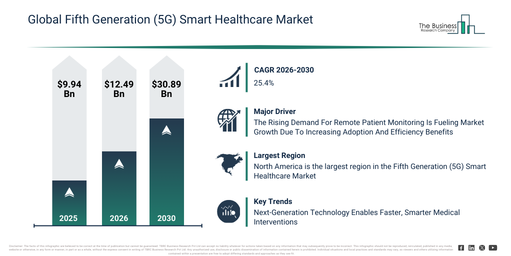
    The fifth generation (5g) smart healthcare market size has expanded considerably in recent years. It is forecast to grow from $9.94 billion in 2025 to $12.49 billion in 2026, achieving a compound annual growth rate (CAGR) of 25.7%. The historic growth of the market can be linked to factors such as the increasing adoption of telemedicine platforms, the expansion of digital health infrastructure, a rising demand for remote patient care solutions, the early deployment of connected medical devices, and improvements in wireless healthcare connectivity.

    The fifth generation (5g) smart healthcare market is projected to experience substantial growth in the coming years. It is anticipated to expand to $30.89 billion by 2030, exhibiting a compound annual growth rate (CAGR) of 25.4%. This anticipated growth during the forecast period can be attributed to several factors, including increasing investments in 5g healthcare infrastructure, a rising demand for real-time clinical decision support, the expansion of smart hospital initiatives, the growing integration of AI-powered healthcare analytics, and an increasing focus on remote and decentralized care models. Key trends during this timeframe involve the increasing adoption of remote surgery enablement, the rising deployment of real-time patient monitoring systems, the growing integration of AI-driven diagnostics over 5g, the expansion of AR and VR-assisted surgical applications, and an enhanced focus on ultra-low latency medical networks.

    Get A Free Sample Report With In-Depth Market Insights:

    https://thebusinessresearchcompany.com/sample_request?id=92551333&type=smp&name=Fifth%20Generation%20%285G%29%20Smart%20Healthcare%20Market%20Report%202026&utm_source=Blogs&utm_medium=Paid&utm_campaign=Nov_PR

    Fifth Generation (5G) Smart Healthcare Market Growth Catalysts And Demand Drivers

    The increasing need for remote patient monitoring is projected to propel the growth of the fifth generation (5G) smart healthcare market in the future. Remote patient monitoring involves the application of digital technologies to track and transmit patients’ health data in real time outside conventional healthcare environments. This upsurge in remote patient monitoring is spurred by the rising prevalence of chronic diseases and the requirement for continuous care, as it enables proactive interventions, reduces hospital visits, and improves patient outcomes. The fifth generation (5G) smart healthcare supports remote patient monitoring by offering high-speed, low-latency connectivity for effortless data exchange and trustworthy virtual healthcare provision. For example, in June 2025, as reported by the National Library of Medicine (NLM), a US-based biomedical library, the use of remote patient monitoring within physician office settings dramatically increased, reaching 5,118,772 services in 2023. Thus, the escalating demand for remote patient monitoring is driving the expansion of the fifth generation (5G) smart healthcare market.

    Fifth Generation (5G) Smart Healthcare Market Segment Trends And Revenue Contributors

    The fifth generation (5g) smart healthcare market covered in this report is segmented –

    1) By Component: Hardware, Software, Services

    2) By Application: Remote Patient Monitoring, Connected Medical Devices, Telemedicine, Augmented Reality (AR) Or Virtual Reality (VR) For Surgery, Other Applications

    3) By End-User: Hospitals, Clinics, Ambulatory Surgical Centers, Other End-Users

    Subsegments:

    1) By Hardware: Wearable Devices, Medical Imaging Equipment, Diagnostic Equipment, Monitoring Devices, Networking Equipment

    2) By Software: Electronic Health Record, Telemedicine Platforms, Health Analytics Software, Patient Management System, Remote Monitoring Software

    3) By Services: Consulting Services, Implementation Services, Maintenance And Support, Training And Education, Data Management Services

    Fifth Generation (5G) Smart Healthcare Market Industry Trends: What’s Reshaping Demand?

    Leading companies within the fifth generation (5G) smart healthcare market are concentrating on utilizing innovative technologies, particularly artificial intelligence (AI), to enable continuous patient monitoring and enhance emergency care results. Artificial intelligence (AI), defined as the replication of human cognitive abilities in machines to analyze information, learn, and make choices, supports healthcare by facilitating immediate patient oversight, prompt diagnosis, and quicker, more precise medical interventions. For example, in July 2025, KIMS Hospitals Private Limited, an India-based healthcare firm, collaborated with Medulance Private Limited, an India-based provider of app-driven technology and comprehensive emergency response services, to unveil Thane region’s inaugural AI-integrated 5G Smart Ambulance. This ambulance facilitates the live transmission of crucial patient data, such as ECG, blood pressure, and oxygen saturation, to the emergency room while the patient is en route. This integration of 5G connectivity with AI-driven analytics empowers emergency physicians to evaluate patient status and initiate treatment protocols before arrival, significantly reducing response times and elevating outcomes in critical emergencies, while simultaneously presenting a reproducible framework for incorporating advanced technology into pre-hospital care across India and other developing markets.

    Fifth Generation (5G) Smart Healthcare Market Competitive Landscape: Which Companies Lead The Industry?

    Major companies operating in the fifth generation (5g) smart healthcare market are Verizon Communications Inc., AT&T Inc., Huawei Technologies Co. Ltd., Nippon Telegraph and Telephone Corporation, T-Mobile US Inc., Cisco Systems Inc., Intel Corporation, Oracle Corporation, Vodafone Group Plc, Qualcomm Technologies Inc., Medtronic plc, BT Group plc, Fujitsu Limited, Telefonaktiebolaget LM Ericsson, Siemens Healthineers AG, GE HealthCare Technologies Inc., ZTE Corporation, Visionable Limited, Somatix Inc., Vigorus Healthtech Pvt. Ltd.

    View The Full Fifth Generation (5G) Smart Healthcare Market Report:

    https://thebusinessresearchcompany.com/report/fifth-generation-5g-smart-healthcare-global-market-report?utm_source=Blogs&utm_medium=Paid&utm_campaign=Nov_PR

    Fifth Generation (5G) Smart Healthcare Market Geographic Analysis: Where Is Demand Rising Fastest?

    North America was the largest region in the fifth generation (5G) smart healthcare market in 2025. The regions covered in the fifth generation (5g) smart healthcare market report are Asia-Pacific, South East Asia, Western Europe, Eastern Europe, North America, South America, Middle East, Africa.

    Reach Out To Our Team:

    The Business Research Company: https://www.thebusinessresearchcompany.com/

    Americas: +1 310-496-7795

    Asia: +44 7882 955267 & +91 8897263534

    Europe: +44 7882 955267

    Email us at: marketing@tbrc.info

    Follow us on:

    LinkedIn: https://in.linkedin.com/company/the-business-research-company

    YouTube: https://www.youtube.com/channel/UC24_fI0rV8cR5DxlCpgmyFQ

    Global Market Model: https://www.thebusinessresearchcompany.com/global-market-model
  • Fibromyalgia Treatment Market Forecast 2026–2030: Market Size, Trends And Growth Opportunities

    Fibromyalgia Treatment Market Forecast 2026–2030: Market Size, Trends And Growth Opportunities

    Built to provide research that’s more actionable and strategically valuable, The Business Research Company’s 2026 market reports include market attractiveness analysis, total addressable market sizing, company benchmarking matrices, interactive Excel dashboards, broader supply chain intelligence, emerging startup tracking, and in-depth product insights.

    Fibromyalgia Treatment Market Set To Climb From $3.01 Billion In 2026 To $3.67 Billion By 2030

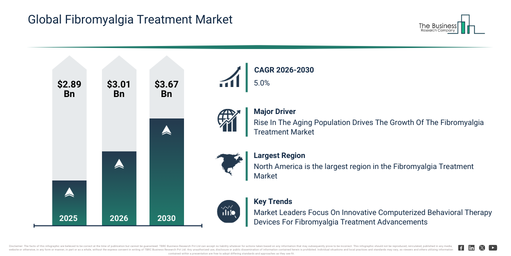
    The fibromyalgia treatment market has experienced consistent growth over recent years. This market is projected to expand from $2.89 billion in 2025 to $3.01 billion in 2026, exhibiting a compound annual growth rate (CAGR) of 4.2%. Historically, this expansion can be linked to factors such as a rise in chronic pain disorder diagnoses, the accessibility of antidepressants and antiepileptics, improved healthcare access, the proliferation of pain clinics, and enhanced awareness of the disease.

    The fibromyalgia treatment market size is anticipated to experience substantial expansion over the upcoming years. This market is projected to reach $3.67 billion by 2030, demonstrating a compound annual growth rate (CAGR) of 5.0%. Factors contributing to this growth during the projection period include the emergence of targeted pain treatments, an increase in personalized care strategies, wider use of digital solutions for pain management, the proliferation of integrative therapeutic approaches, and heightened awareness regarding mental health. Key trends expected over this horizon involve the increasing application of symptom-focused drug treatments, greater adoption of diverse treatment methodologies, a heightened emphasis on managing chronic pain, the growth of non-drug therapies, and enhancements in patient-centric care frameworks.

    Get A Free Sample Report With In-Depth Market Insights:

    https://thebusinessresearchcompany.com/sample_request?id=66118804&type=smp&name=Fibromyalgia%20Treatment%20Market%20Report%202026&utm_source=Blogs&utm_medium=Paid&utm_campaign=Nov_PR

    Fibromyalgia Treatment Market Opportunity Drivers: What’s Unlocking New Revenue Potential?

    The increasing elderly demographic is anticipated to fuel expansion within the fibromyalgia treatment market. This demographic shift denotes a growing percentage of older people in a community or general populace. Treatment for fibromyalgia proves especially beneficial for older demographics, as seniors are more prone to developing the condition and frequently suffer from more intense symptoms owing to age-related elements. As an illustration, in 2023, Age UK, a UK-registered charity, reported 11 million individuals aged over 65 in England during that year. This number is forecasted to grow by 10% over the subsequent five years and by 32% by 2043 (1.1 and 3.5 million people, respectively). Furthermore, the demographic aged 85+, identified as the segment most prone to requiring health and care provisions, is also expected to escalate swiftly, climbing by 8.2% in the next five years and by 62.7% by 2043 (126,000 and 956,000 people, respectively). Consequently, the expanding elderly population fuels the expansion of the fibromyalgia treatment market.

    Fibromyalgia Treatment Market Segment Analysis Spotlighting Growth Areas

    The fibromyalgia treatment market covered in this report is segmented –

    1) By Type: Symptomatic Treatment, Targeted Treatment

    2) By Drug Class: Antidepressants, Antiepileptics, Muscle Relaxants, Analgesics, Other Drugs

    3) By Distribution Channel: Hospital Pharmacy, Retail Pharmacy, Online Pharmacy

    Subsegments:

    1) By Symptomatic Treatment: Pain Relievers, Antidepressants, Anti-seizure Medications, Sleep Aids, Physical Therapy

    2) By Targeted Treatment: Cognitive Behavioral Therapy (CBT), Lifestyle Modifications, Complementary Therapies, Medications Targeting Specific Symptoms

    Fibromyalgia Treatment Market Innovation Trends: What Developments Are Reshaping The Industry?

    Leading companies within the fibromyalgia treatment market are prioritizing the development of technologically advanced solutions, such as computerized behavioral therapy devices, to achieve a competitive advantage. A computerized behavioral therapy device functions as a software-based prescription treatment, delivering structured psychological interventions, like Acceptance and Commitment Therapy (ACT), through a digital platform. For instance, in May 2023, Swing Therapeutics, a U.S.-based digital therapeutics company, secured FDA De Novo authorization for Stanza, a prescription smartphone-based digital therapy that offers a 12-week self-guided ACT program; this program demonstrated significant improvements across pain, fatigue, sleep, and mood in its pivotal PROSPER-FM Phase 3 trial. Stanza is accessible through Swing Care, a virtual specialty clinic that integrates prescription digital therapy with comprehensive fibromyalgia management. This evolution enhances patient access, decreases reliance on pharmacologic treatments, and aligns with guideline-driven non-drug care, although challenges persist regarding scaling reimbursement and clinician adoption.

    Fibromyalgia Treatment Market Leading Companies: Who Holds The Strongest Market Presence?

    Major companies operating in the fibromyalgia treatment market are Pfizer Inc., Johnson and Johnson Services Inc., AbbVie Inc., Eli Lilly and Company, Amgen Inc., Viatris Inc., Teva Pharmaceutical Industries Ltd., Astellas Pharma Inc., Biogen Inc., Daiichi Sankyo Co. Ltd., Sun Pharmaceutical Industries Ltd., Horizon Therapeutics plc, Endo International plc, Amneal Pharmaceuticals Inc., Zydus Lifesciences Limited, Lupin Limited, Tonix Pharmaceuticals, Allergan plc, Aptinyx Inc., Novartis AG, Merck & Co Inc.

    View The Full Fibromyalgia Treatment Market Report:

    https://thebusinessresearchcompany.com/report/fibromyalgia-treatment-global-market-report?utm_source=Blogs&utm_medium=Paid&utm_campaign=Nov_PR

    Fibromyalgia Treatment Market Global Footprint: Which Region Leads The Market?

    North America was the largest region in the fibromyalgia market in 2025. Asia-Pacific is expected to be the fastest-growing region in the forecast period. The regions covered in the fibromyalgia treatment market report are Asia-Pacific, South East Asia, Western Europe, Eastern Europe, North America, South America, Middle East, Africa.

    Reach Out To Our Team:

    The Business Research Company: https://www.thebusinessresearchcompany.com/

    Americas: +1 310-496-7795

    Asia: +44 7882 955267 & +91 8897263534

    Europe: +44 7882 955267

    Email us at: marketing@tbrc.info

    Follow us on:

    LinkedIn: https://in.linkedin.com/company/the-business-research-company

    YouTube: https://www.youtube.com/channel/UC24_fI0rV8cR5DxlCpgmyFQ

    Global Market Model: https://www.thebusinessresearchcompany.com/global-market-model
  • Fibrodysplasia Ossificans Progressiva (FOP) Treatment Market Size Reaches $0.54 Billion In 2026: What Is Driving Growth?

    Fibrodysplasia Ossificans Progressiva (FOP) Treatment Market Size Reaches $0.54 Billion In 2026: What Is Driving Growth?

    Backed by market attractiveness analysis, total addressable market sizing, company benchmarking matrices, interactive Excel dashboards, wider supply chain intelligence, emerging startup coverage, and detailed product-level insights, The Business Research Company’s 2026 market reports are designed to offer research that is more actionable and strategically valuable than ever.

    Fibrodysplasia Ossificans Progressiva (FOP) Treatment Market Forecast: Value Set To Climb From $0.54 Billion To $0.76 Billion

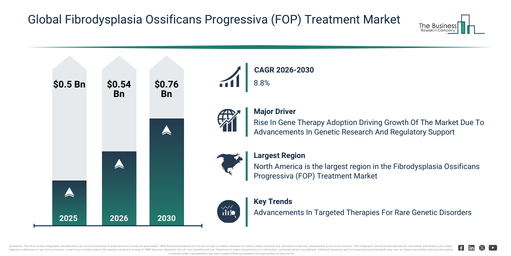
    The fibrodysplasia ossificans progressiva (fop) treatment market has shown significant growth in recent years. It is projected to rise from $0.5 billion in 2025 to $0.54 billion in 2026, achieving a compound annual growth rate (CAGR) of 8.8%. Historically, this market’s expansion can be attributed to several factors including the scarcity of treatment options for rare bone disorders, a rise in rare disease awareness, advancements in genetic research, the proliferation of specialty clinics, and supportive regulatory frameworks.

    The fibrodysplasia ossificans progressiva (fop) treatment market size is projected to experience substantial growth in the forthcoming years. It is expected to reach $0.76 billion by 2030, driven by a compound annual growth rate (CAGR) of 8.8%. This expansion over the forecast period can be attributed to advancements in gene therapy drugs, an increase in orphan drug approvals, rising investment in rare disease research, improvements in diagnostic accuracy, and the broadening application of personalized medicine. Key trends during the forecast period include an increased focus on anti-inflammatory drug therapies, intensified research in gene and molecular therapies, a growing emphasis on early diagnosis and disease monitoring, the expansion of rare disease clinical trials, and enhanced multidisciplinary care approaches.

    Get A Free Sample Report With In-Depth Market Insights:

    https://thebusinessresearchcompany.com/sample_request?id=31957443&type=smp&name=Fibrodysplasia%20Ossificans%20Progressiva%20%28FOP%29%20Treatment%20Market%20Report%202026&utm_source=Blogs&utm_medium=Paid&utm_campaign=Nov_PR

    Fibrodysplasia Ossificans Progressiva (FOP) Treatment Market Growth Momentum: What Factors Are Shaping Demand?

    The fibrodysplasia ossificans progressiva (FOP) treatment market is projected to be boosted by the increasing adoption of gene therapy, a medical treatment involving the alteration or replacement of genes within cells to treat or prevent disease. This increasing adoption stems from advancements in genetic research, improved patient outcomes for previously untreatable conditions, and growing regulatory support for innovative therapies. For fibrodysplasia ossificans progressiva, gene therapy specifically targets and corrects mutations in the ACVR1 gene to prevent abnormal bone formation. For instance, the Bright Cell Healthcare Institute reported in March 2024 that there are currently 36 FDA-approved gene therapies, with approximately 500 candidates in development, and projected 10–20 new approvals annually by 2025, thus positioning the sector for accelerated expansion. Ultimately, the increasing adoption of gene therapy is a significant driver for the growth of the fibrodysplasia ossificans progressiva (FOP) treatment market.

    Fibrodysplasia Ossificans Progressiva (FOP) Treatment Market Segment Performance And Emerging Opportunities

    The fibrodysplasia ossificans progressiva (fop) treatment market covered in this report is segmented –

    1) By Drug Class: Corticosteroids, Non-Steroidal Anti-Inflammatory Drugs (NSAIDs), Bisphosphonates, Other Drug Classes

    2) By Treatment: Surgery, Medication, Occupational Therapy

    3) By Route Of Administration: Oral, Topical, Parenteral

    4) By End-User: Hospitals, Research Institutes, Specialty Clinics

    Subsegments:

    1) By Corticosteroids: Prednisone, Dexamethasone, Methylprednisolone

    2) By Non-Steroidal Anti-Inflammatory Drugs (NSAIDs): Ibuprofen, Naproxen, Celecoxib

    3) By Bisphosphonates: Alendronate, Risedronate, Zoledronic Acid

    4) By Other Drug Classes: Monoclonal Antibodies, Immunosuppressants, Gene Therapy Drugs

    Fibrodysplasia Ossificans Progressiva (FOP) Treatment Market Trends: What’s Defining The Industry’s Next Phase?

    Key companies active in the fibrodysplasia ossificans progressiva (FOP) treatment market are dedicating efforts to creating advanced pharmaceutical solutions, such as retinoid-derived capsules, to fulfill the current unmet medical needs of patients. This approach involves targeting the fundamental genetic mutations linked to the condition, thereby boosting treatment effectiveness and overall life quality. Retinoids, which are vitamin A derivatives, are employed in medical contexts to regulate cell development and bolster immune responses, notably in therapies for skin and certain cancers. For example, in August 2023, Ipsen, a pharmaceutical firm based in France, obtained approval from the US Food and Drug Administration (FDA) for its sohonos capsules. This medication is a retinoid-indicated treatment for fibrodysplasia ossificans progressiva (FOP), specifically formulated to diminish new abnormal bone growth (heterotopic ossification). It presents an essential treatment alternative for both adult and pediatric individuals, aiding in the improvement of mobility and general quality of life.

    Fibrodysplasia Ossificans Progressiva (FOP) Treatment Market Key Players: Which Companies Lead Industry Competition?

    Major companies operating in the fibrodysplasia ossificans progressiva (fop) treatment market are Pfizer Inc., Roche Holding AG, Merck & Co. Inc., Bristol Myers Squibb Company, Novartis AG, AstraZeneca plc, GSK plc, Takeda Pharmaceutical Company Limited, Eli Lilly and Company, Amgen Inc., Boehringer Ingelheim GmbH, Regeneron Pharmaceuticals Inc., UCB S.A., Incyte Corporation, Ipsen Pharma, Alnylam Pharmaceuticals Inc., Blueprint Medicines Corporation, Ashibio, Ultragenyx Pharmaceutical Inc., Scholar Rock Holding Corporation, PTC Therapeutics Inc., Keros Therapeutics Inc., Biogen Inc.

    View The Full Fibrodysplasia Ossificans Progressiva (FOP) Treatment Market Report:

    https://thebusinessresearchcompany.com/report/fibrodysplasia-ossificans-progressiva-fop-treatment-global-market-report?utm_source=Blogs&utm_medium=Paid&utm_campaign=Nov_PR

    Fibrodysplasia Ossificans Progressiva (FOP) Treatment Market Regional Split: Which Areas Are Fueling Growth?

    North America was the largest region in the fibrodysplasia ossificans progressiva (FOP) treatment market in 2025. Asia-Pacific is expected to be the fastest-growing region in the forecast period. The regions covered in the fibrodysplasia ossificans progressiva (fop) treatment market report are Asia-Pacific, South East Asia, Western Europe, Eastern Europe, North America, South America, Middle East, Africa.

    Reach Out To Our Team:

    The Business Research Company: https://www.thebusinessresearchcompany.com/

    Americas: +1 310-496-7795

    Asia: +44 7882 955267 & +91 8897263534

    Europe: +44 7882 955267

    Email us at: marketing@tbrc.info

    Follow us on:

    LinkedIn: https://in.linkedin.com/company/the-business-research-company

    YouTube: https://www.youtube.com/channel/UC24_fI0rV8cR5DxlCpgmyFQ

    Global Market Model: https://www.thebusinessresearchcompany.com/global-market-model
  • Fibrocystic Breast Condition Market Valued At $9.41 Billion In 2026: Key Trends And Growth Drivers

    Fibrocystic Breast Condition Market Valued At $9.41 Billion In 2026: Key Trends And Growth Drivers

    Featuring market attractiveness scoring, total addressable market sizing, company benchmarking matrices, interactive Excel dashboards, deeper supply chain intelligence, emerging startup tracking, and granular product-level insights, The Business Research Company’s 2026 market reports are built to deliver research that is both more actionable and more strategically valuable.

    Fibrocystic Breast Condition Market Revenue Growth On Track For A 5.8% CAGR Through 2030

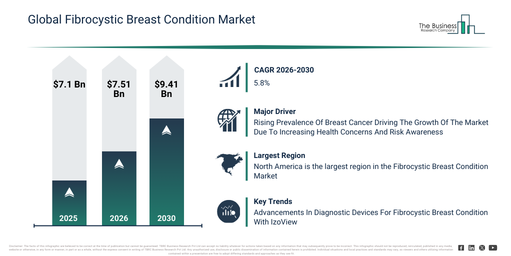
    The fibrocystic breast condition market has shown robust expansion in recent years. Its value is expected to rise from $7.1 billion in 2025 to $7.51 billion in 2026, progressing at a compound annual growth rate (CAGR) of 5.8%. The increase observed in previous periods can be ascribed to several factors, including the high incidence among women of reproductive age, greater understanding of breast health, the accessibility of diagnostic imaging, the broadening of women’s healthcare offerings, and enhancements in clinical assessments.

    The market for fibrocystic breast condition is projected to experience substantial expansion over the coming years. This market is anticipated to reach a valuation of $9.41 billion by 2030, demonstrating a compound annual growth rate (CAGR) of 5.8%. This projected increase during the forecast period stems from factors such as the expansion of preventive women’s healthcare services, the broadening availability of non-invasive diagnostic methods, a heightened emphasis on managing hormonal balance, an increase in patient education programs, and ongoing progress in breast imaging technologies. Key trends expected during this period involve a heightened understanding of benign breast disorders, a greater adoption of non-invasive diagnostic approaches, a rising inclination towards conservative and supportive therapeutic options, the proliferation of women’s health clinics, and the incorporation of lifestyle and dietary interventions.

    Get A Free Sample Report With In-Depth Market Insights:

    https://thebusinessresearchcompany.com/sample_request?id=99980748&type=smp&name=Fibrocystic%20Breast%20Condition%20Market%20Report%202026&utm_source=Blogs&utm_medium=Paid&utm_campaign=Nov_PR

    Fibrocystic Breast Condition Market Expansion Drivers: What’s Shaping Future Growth?

    The expanding occurrence of breast cancer is anticipated to boost the growth of the fibrocystic breast condition market in the future. Breast cancer is a malignancy that begins in the cells of the breast, primarily affecting women. The escalating incidence of breast cancer is attributed to factors such as an aging demographic, unhealthy lifestyle choices, genetic predispositions, increased screening initiatives, and environmental exposures. Fibrocystic breast condition (FBC) can heighten the risk of breast cancer by fostering dense breast tissue, which may encourage cellular alterations, amplified hormone sensitivity, and chronic inflammation, potentially creating an environment conducive to cancer development. For example, data from July 2024, provided by the American Cancer Society Facts and Figures, a US-based professional organization, indicates that the number of new breast cancer cases in the United States is expected to rise from 300,590 in 2023 to 313,510 in 2024. Thus, the increasing prevalence of breast cancer is a significant driver for the fibrocystic breast condition market’s expansion.

    Fibrocystic Breast Condition Market Segment Landscape And Growth Outlook

    The fibrocystic breast condition market covered in this report is segmented –

    1) By Treatment: Medication, Oral Contraceptives, Fine-Needle Aspiration, Other Treatments

    2) By Diagnosis: Mammogram, Ultrasound, Clinical Breast Exam, Other Diagnosis

    3) By End-Users: Hospital, Clinic, Other End-Users

    Subsegments:

    1) By Medication: Over-the-Counter (OTC) Pain Relievers, Prescription Pain Relievers, Hormonal Therapy

    2) By Oral Contraceptives: Combination Pills, Progestin-Only Pills

    3) By Fine-Needle Aspiration: Ultrasound-Guided Fine-Needle Aspiration, Manual Fine-Needle Aspiration

    4) By Other Treatments: Lifestyle And Dietary Changes, Cyst Drainage Procedures, Supportive Therapy, Herbal And Dietary Supplements

    Fibrocystic Breast Condition Market Industry Trends Fueling Future Revenue Growth

    Leading firms within the fibrocystic breast condition market are creating sophisticated technologies, including diagnostic instruments, with the goal of enhancing diagnostic precision and patient care results. Such a device is defined as any apparatus or implement employed to pinpoint, discover, or evaluate the existence of a medical ailment, illness, or health concern. As an illustration, in August 2024, Izotropic Corporation, a medical device firm headquartered in Canada, introduced IzoView, a breast CT imaging system tailored for the diagnosis of breast cancer in women possessing dense breast tissue. This corporation is seeking official regulatory endorsement, supported by a clinical investigation intended to illustrate IzoView’s improved performance when utilized in conjunction with digital breast tomosynthesis (DBT), as opposed to DBT singularly. Featuring high-resolution 3D imaging capabilities and the advantage of not necessitating breast compression, IzoView aims to elevate breast cancer detection rates among women with dense breast tissue, a demographic facing an elevated risk of contracting the illness.

    Fibrocystic Breast Condition Market Competitive Landscape: Who Leads The Industry?

    Major companies operating in the fibrocystic breast condition market are Pfizer Inc., Roche Diagnostics, Merck & Co Inc., Bayer AG, Sanofi SA, Novartis AG, GlaxoSmithKline plc, Eli Lilly and Company, Teva Pharmaceutical Industries Ltd, Hikma Pharmaceuticals plc, Steris Pharma, Lannett Company Inc., AdvaCare Pharma USA LLC, Siemens Healthineers AG, GE Healthcare Technologies Inc., Philips Healthcare, Fujifilm Holdings Corporation, Canon Medical Systems Corporation, Hologic Inc., Hitachi Medical Systems

    View The Full Fibrocystic Breast Condition Market Report:

    https://thebusinessresearchcompany.com/report/fibrocystic-breast-condition-global-market-report?utm_source=Blogs&utm_medium=Paid&utm_campaign=Nov_PR

    Fibrocystic Breast Condition Market Top Region: Where Does Most Revenue Come From?

    North America was the largest region in the fibrocystic breast condition market in 2025. The regions covered in the fibrocystic breast condition market report are Asia-Pacific, South East Asia, Western Europe, Eastern Europe, North America, South America, Middle East, Africa.

    Reach Out To Our Team:

    The Business Research Company: https://www.thebusinessresearchcompany.com/

    Americas: +1 310-496-7795

    Asia: +44 7882 955267 & +91 8897263534

    Europe: +44 7882 955267

    Email us at: marketing@tbrc.info

    Follow us on:

    LinkedIn: https://in.linkedin.com/company/the-business-research-company

    YouTube: https://www.youtube.com/channel/UC24_fI0rV8cR5DxlCpgmyFQ

    Global Market Model: https://www.thebusinessresearchcompany.com/global-market-model

  • Fibroblast Growth Factors (FGFs) Market Size In 2026: Growth Outlook And Forecast Through 2030

    Fibroblast Growth Factors (FGFs) Market Size In 2026: Growth Outlook And Forecast Through 2030

    Built to provide research that’s more actionable and strategically valuable, The Business Research Company’s 2026 market reports include market attractiveness analysis, total addressable market sizing, company benchmarking matrices, interactive Excel dashboards, broader supply chain intelligence, emerging startup tracking, and in-depth product insights.

    Fibroblast Growth Factors (FGFs) Market Value Growth And Long-Term Outlook

    The market for fibroblast growth factors (fgfs) has experienced robust expansion over the past few years. Projections indicate that it will expand from $4.11 billion in 2025 to $4.5 billion by 2026, demonstrating a compound annual growth rate (CAGR) of 9.4%. This historical expansion is attributable to several factors, including the broadened scope of growth factor research programs, a surge in clinical trials utilizing fgfs, the escalating demand for advanced biologics, the expansion of oncology drug development, and improvements in recombinant protein manufacturing techniques.

    The market for fibroblast growth factors (fgfs) is anticipated to experience robust expansion over the coming years. It is projected to reach $6.37 billion by 2030, exhibiting a compound annual growth rate (CAGR) of 9.1%. This projected growth during the forecast period is fueled by several factors, including the expanding adoption of FGF-targeted treatments, escalating investments in the production of biologics, the broadening of regenerative medicine development pipelines, the increasing utilization of precision oncology medications, and the growing number of regulatory approvals for products based on FGFs. Key trends expected during this period encompass the accelerated development of recombinant FGFs, the augmented application of FGFs in cancer therapies, their expanding utility in wound healing interventions, the widening scope of FGF-centric regenerative medicine, and a heightened emphasis on specific FGF inhibitors.

    Get A Free Sample Report With In-Depth Market Insights:

    https://thebusinessresearchcompany.com/sample_request?id=15478611&type=smp&name=Fibroblast%20Growth%20Factors%20%28FGFs%29%20Market%20Report%202026&utm_source=Blogs&utm_medium=Paid&utm_campaign=Nov_PR

    Fibroblast Growth Factors (FGFs) Market Development Factors: What’s Supporting Demand?

    An increasing incidence of chronic diseases is projected to drive the expansion of the fibroblast growth factors (FGFs) market in the future. These are enduring health conditions that manifest gradually and persist over long durations, frequently necessitating ongoing medical attention. This rise in chronic disease prevalence is partly attributable to sedentary lifestyles, given that extended periods of sitting and insufficient physical activity heighten the risk of developing cardiac issues and diabetes. Fibroblast growth factors (FGFs) play a crucial role in managing chronic diseases by encouraging tissue repair and regeneration, thus proving beneficial in addressing prolonged health conditions. They improve healing mechanisms and slow the progression of diseases, thereby enhancing patient results and overall quality of life. As an illustration, in June 2024, data from the National Health Service, a UK-based government department, revealed that 3,615,330 people registered with a general practitioner (GP) were diagnosed with non-diabetic hyperglycemia or pre-diabetes (a state characterized by elevated blood sugar levels, not yet meeting the criteria for diabetes) in 2023. This represented an 18% surge from the 3,065,825 cases recorded in 2022. Consequently, the growing prevalence of chronic diseases is a key factor propelling the growth of the fibroblast growth factors (FGFs) market.

    Fibroblast Growth Factors (FGFs) Market Breakdown By Product Type And Application

    The fibroblast growth factors (fgfs) market covered in this report is segmented –

    1) By Product Type: Recombinant Fibroblast Growth Factor, Purified Fibroblast Growth Factor, Endogenous Fibroblast Growth Factor, Other Product Types

    2) By Drug Type: Palifermin, Erdafitnib, Infigratinib, Futibatinib, Other Drug Types

    3) By Application: Oncology, Hematology, Wound Healing, Dermatology, Cardiovascular Disease, Bone Disorders, Musculoskeletal Disorders, Tissue Regeneration, Other Applications

    4) By End User: Pharmaceutical Companies, Research Institutes, Biotechnology Companies, Other End Users

    Subsegments:

    1) By Recombinant Fibroblast Growth Factor: Recombinant Fibroblast Growth Factor (FGF)-1, Recombinant Fibroblast Growth Factor (FGF)-2, Recombinant Fibroblast Growth Factor (FGF)-7, Recombinant Fibroblast Growth Factor (FGF)-10

    2) By Purified Fibroblast Growth Factor: Purified Fibroblast Growth Factor (FGF)-1, Purified Fibroblast Growth Factor (FGF)-2, Purified Fibroblast Growth Factor (FGF)-7, Purified Fibroblast Growth Factor (FGF)-21

    3) By Endogenous Fibroblast Growth Factor: Endogenous Fibroblast Growth Factor (FGF)-1, Endogenous Fibroblast Growth Factor (FGF)-2, Endogenous Fibroblast Growth Factor (FGF)-8, Endogenous Fibroblast Growth Factor (FGF)-23

    4) By Other Product Types: Synthetic Fibroblast Growth Factors, Modified Fibroblast Growth Factors, Fusion Protein Fibroblast Growth Factors (FGFs), Fibroblast Growth Factors (FGFs) Derived From Stem Cells

    Fibroblast Growth Factors (FGFs) Market Trends Powering Strategic Industry Growth

    Leading companies in the fibroblast growth factors (FGFs) market are increasingly concentrating on creating innovative solutions, such as synthetic peptide-based alternatives to natural growth factors, to decrease expenses, boost consistency, and elevate performance in cell culture and regenerative medicine. These synthetic peptides are chemically manufactured amino acid sequences engineered to replicate the biological actions of natural FGFs by attaching to identical receptors and initiating crucial cellular signaling pathways. This approach facilitates dependable long-term cell growth, enhances stability, and allows for accurate receptor-specific activation. For instance, in October 2024, the Japan-based biotechnology firm PeptiGrowth Inc. introduced PG-011, a synthetic FGFR1c agonist peptide developed to replace natural FGF2 for cultivating stem cells and other rapidly proliferating cell types. PG-011 features a chemically defined, animal-component-free composition, provides superior stability compared to recombinant proteins, and effectively activates receptors even at reduced concentrations. These advantages contribute to improved cost control, ensure consistent quality, and boost scalability for research and emerging cell-based applications.

    Fibroblast Growth Factors (FGFs) Market Company Landscape And Competitive Strategy

    Major companies operating in the fibroblast growth factors (fgfs) market are Merck & Co. Inc., Thermo Fisher Scientific Inc., FUJIFILM Wako Pure Chemical Corporation, Lonza Group AG, Miltenyi Biotec B.V. & Co. KG, GenScript Biotech Corporation, 89bio Inc., R&D Systems Inc., ACROBiosystems Co. Ltd., Elabscience Biotechnology Inc., Cell Signaling Technology Inc., Proteintech Group Inc., Akero Therapeutics Inc., MedChemExpress LLC, Defined Bioscience Inc., Gold Biotechnology Inc. (GoldBio), Nucleus Biologics LLC, ZellBio GmbH, Affinity Biosciences Ltd.

    View The Full Fibroblast Growth Factors (FGFs) Market Report:

    https://thebusinessresearchcompany.com/report/fibroblast-growth-factors-fgfs-global-market-report?utm_source=Blogs&utm_medium=Paid&utm_campaign=Nov_PR

    Fibroblast Growth Factors (FGFs) Market Regional Breakdown: Where Is Demand Concentrated?

    North America was the largest region in the fibroblast growth factors (FGFs) market in 2025. Asia-Pacific is expected to be the fastest-growing region in the forecast period. The regions covered in the fibroblast growth factors (fgfs) market report are Asia-Pacific, South East Asia, Western Europe, Eastern Europe, North America, South America, Middle East, Africa.

    Reach Out To Our Team:

    The Business Research Company: https://www.thebusinessresearchcompany.com/

    Americas: +1 310-496-7795

    Asia: +44 7882 955267 & +91 8897263534

    Europe: +44 7882 955267

    Email us at: marketing@tbrc.info

    Follow us on:

    LinkedIn: https://in.linkedin.com/company/the-business-research-company

    YouTube: https://www.youtube.com/channel/UC24_fI0rV8cR5DxlCpgmyFQ

    Global Market Model: https://www.thebusinessresearchcompany.com/global-market-model
  • Fibroblast Cells Market Trends Supporting 9.3% CAGR Growth Through 2030

    Fibroblast Cells Market Trends Supporting 9.3% CAGR Growth Through 2030

    Backed by market attractiveness analysis, total addressable market sizing, company benchmarking matrices, interactive Excel dashboards, wider supply chain intelligence, emerging startup coverage, and detailed product-level insights, The Business Research Company’s 2026 market reports are designed to offer research that is more actionable and strategically valuable than ever.

    Fibroblast Cells Market Poised To Hit $1.18 Billion By 2030 With A 9.3% CAGR

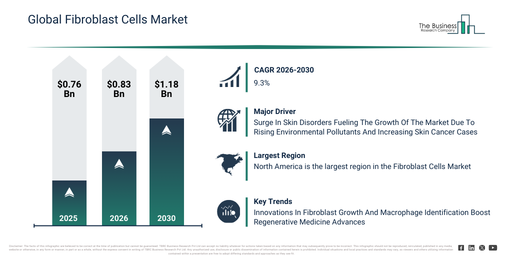
    The fibroblast cells market size has shown significant growth in recent years. It is projected to expand from $0.76 billion in 2025 to $0.83 billion in 2026, achieving a compound annual growth rate (CAGR) of 9.7%. This expansion observed historically can be credited to several factors, including the rising incidence of chronic wounds, the broadening of regenerative medicine research, the increasing application of cell-based assays, the growing requirement for tissue engineering solutions, and better availability of primary cell culture techniques.

    The market for fibroblast cells is projected to experience substantial expansion over the upcoming years. This market is anticipated to reach $1.18 billion by 2030, exhibiting a compound annual growth rate (CAGR) of 9.3%. Factors driving this growth during the forecast period include greater investments in the development of cell therapies, an increased emphasis on personalized medicine strategies, the broader application of fibroblasts in drug screening, the rising uptake of xeno-free media, and the expanding clinical implementation of regenerative treatments. Key trends expected during the forecast period involve the wider acceptance of fibroblast-based regenerative therapies, an escalating need for disease-specific fibroblast models, the increasing utilization of serum-free culture media, the broadening of fibroblast applications in wound healing, and a heightened emphasis on standardized protocols for cell expansion.

    Get A Free Sample Report With In-Depth Market Insights:

    https://thebusinessresearchcompany.com/sample_request?id=61379642&type=smp&name=Fibroblast%20Cells%20Market%20Report%202026&utm_source=Blogs&utm_medium=Paid&utm_campaign=Nov_PR

    Fibroblast Cells Market Industry Drivers: What’s Behind The Revenue Growth?

    The rising incidence of diverse skin conditions is anticipated to stimulate the expansion of the fibroblast cells market moving ahead. Skin disorders refer to medical conditions or illnesses that impact the skin, presenting symptoms such as rashes, itching, inflammation, redness, dryness, or lesions. This increase in skin disorders is attributed to heightened exposure to environmental pollutants, which compromise the skin’s protective layer, thereby contributing to inflammation and an increased susceptibility to skin problems. Fibroblast cells assist in managing skin disorders by fostering tissue repair and regeneration through the production of collagen and other extracellular matrix components, thereby restoring skin strength and elasticity. As an illustration, in February 2025, Cancer Australia, an Australia-based government agency, reported that 18,257 new cases of melanoma of the skin were diagnosed in 2023. Consequently, the growing prevalence of diverse skin disorders is a key factor propelling the expansion of the fibroblast cells market.

    Fibroblast Cells Market Segment Analysis And Revenue Potential

    The fibroblast cells market covered in this report is segmented –

    1) By Type: Tissue-Specific Fibroblasts, Disease-Specific Fibroblasts, Serum-Free Fibroblast Culture Medium

    2) By Application: Adults, Neonatal

    3) By End-Users: Hospitals, Clinics, Research And Academic Institutes, Other End-Users

    Subsegments:

    1) By Tissue-Specific Fibroblasts: Dermal Fibroblasts, Lung Fibroblasts, Cardiac Fibroblasts, Gingival Fibroblasts, Corneal Fibroblasts, Mammary Fibroblasts, Intestinal Fibroblasts, Foreskin Fibroblasts

    2) By Disease-Specific Fibroblasts: Cancer-Associated Fibroblasts (CAFs), Idiopathic Pulmonary Fibrosis Fibroblasts, Scleroderma Fibroblasts, Diabetic Wound Fibroblasts, Rheumatoid Arthritis Fibroblasts, Keloid Fibroblasts, Psoriatic Fibroblasts

    3) By Serum-Free Fibroblast Culture Medium: Dermal Fibroblast Medium, Lung Fibroblast Medium, Cardiac Fibroblast Medium, Cancer-Associated Fibroblast Medium, Human Gingival Fibroblast Medium, Fibroblast Growth Medium (Xeno-Free), Custom Or Defined Media For Fibroblast Expansion

    Fibroblast Cells Market Growth Trends Reshaping The Competitive Landscape

    Leading companies in the fibroblast cells market are concentrating on developing advanced solutions, such as macrophage phenotype identification, with the goal of deepening the understanding of cell interactions and enhancing the effectiveness of fibroblast-based therapies. Macrophage phenotype identification describes the procedure for distinguishing various types of macrophages, mainly M1 and M2, based on their functional roles and molecular markers. For example, in December 2024, Creative Biolabs, a US-based biotech company, introduced Fibroblast Growth Factor 2. This offering comprises two versions, Fibroblast Growth Factor 2 and Fibroblast Growth Factor 2 STAB, specifically designed to foster the growth and proliferation of human mesenchymal stem cells (MSCs) and normal human dermal fibroblasts (NHDFs), thereby supporting advancements in stem cell and regenerative medicine research.

    Fibroblast Cells Market Key Players Shaping Industry Direction

    Major companies operating in the fibroblast cells market are Thermo Fisher Scientific Inc., Lonza Group AG, Sigma-Aldrich Corporation, Bio-Techne Corporation, STEMCELL Technologies Inc., American Type Culture Collection, Creative Bioarray, PromoCell GmbH, Coriell Institute for Medical Research, REPROCELL Inc., Axol Bioscience Ltd., ScienCell Research Laboratories Inc., Cell Applications Inc., ZenBio Inc., Cell Biologics Inc., Lifeline Cell Technology, Celprogen Inc., AMS Biotechnology (Europe) Ltd., Neuromics Inc., Evercyte GmbH, FUJIFILM Irvine Scientific Inc.

    View The Full Fibroblast Cells Market Report:

    https://thebusinessresearchcompany.com/report/fibroblast-cells-global-market-report?utm_source=Blogs&utm_medium=Paid&utm_campaign=Nov_PR

    Fibroblast Cells Market Geographic Landscape: Which Region Leads Industry Growth?

    North America was the largest region in the fibroblast cells market in 2025. The regions covered in the fibroblast cells market report are Asia-Pacific, South East Asia, Western Europe, Eastern Europe, North America, South America, Middle East, Africa.

    Reach Out To Our Team:

    The Business Research Company: https://www.thebusinessresearchcompany.com/

    Americas: +1 310-496-7795

    Asia: +44 7882 955267 & +91 8897263534

    Europe: +44 7882 955267

    Email us at: marketing@tbrc.info

    Follow us on:

    LinkedIn: https://in.linkedin.com/company/the-business-research-company

    YouTube: https://www.youtube.com/channel/UC24_fI0rV8cR5DxlCpgmyFQ

    Global Market Model: https://www.thebusinessresearchcompany.com/global-market-model
  • Fertility Treatments Market Forecast Highlights A $29.7 Billion Opportunity For Industry Participants

    Fertility Treatments Market Forecast Highlights A $29.7 Billion Opportunity For Industry Participants

    Featuring market attractiveness scoring, total addressable market sizing, company benchmarking matrices, interactive Excel dashboards, deeper supply chain intelligence, emerging startup tracking, and granular product-level insights, The Business Research Company’s 2026 market reports are built to deliver research that is both more actionable and more strategically valuable.

    Fertility Treatments Market Size And Revenue Outlook Through 2030

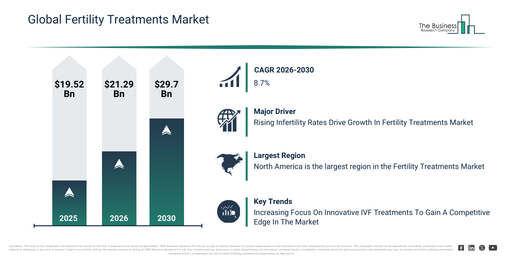
    The fertility treatments market has experienced robust growth in recent years. Projections indicate it will expand from $19.52 billion in 2025 to $21.29 billion in 2026, demonstrating a compound annual growth rate (CAGR) of 9.1%. Historically, this market expansion has been fueled by factors such as growth in infertility rates, availability of fertility drugs, expansion of ivf infrastructure, improved reproductive diagnostics, and increasing healthcare access.

    The fertility treatments market is projected to experience substantial expansion over the upcoming years. By 2030, its valuation is set to reach $29.7 billion, demonstrating a compound annual growth rate (CAGR) of 8.7%. This anticipated growth is largely driven by strides in fertility drug development, the broadening of personalized treatment approaches, an increasing call for minimally invasive fertility methods, heightened fertility awareness, and the expansion of fertility tourism. Key trends for this period encompass the greater embrace of sophisticated fertility treatment techniques, a surge in the application of hormonal and ovulation induction drugs, the proliferation of assisted reproductive technology centers, a rising need for solutions for both male and female infertility, and the incorporation of AI into treatment planning.

    Get A Free Sample Report With In-Depth Market Insights:

    https://thebusinessresearchcompany.com/sample_request?id=45061708&type=smp&name=Fertility%20Treatments%20Market%20Report%202026&utm_source=Blogs&utm_medium=Paid&utm_campaign=Nov_PR

    Fertility Treatments Market Growth Factors: What’s Supporting Expansion?

    The fertility treatments market is projected to experience growth due to a decrease in the global fertility rate. This decline in fertility signifies a reduced ability for individuals or couples to conceive and bear biological children, often influenced by various factors such as age, medical conditions, lifestyle choices, or environmental factors. Fertility treatments provide solutions for infertility through medical interventions like IUI (intrauterine insemination) and IVF (in vitro fertilization), thereby improving the prospects of conception for individuals or couples facing such a decline. As an illustration, in April 2023, the World Health Organization (WHO), a specialized United Nations agency for global public health based in Switzerland, reported that approximately 17.5% of the global adult population, which translates to about one in six individuals, is impacted by infertility. Thus, the growing rates of infertility are a significant impetus for the fertility treatments market.

    Fertility Treatments Market Segmentation And Category Overview

    The fertility treatments market covered in this report is segmented –

    1) By Product: Reagents, Equipment

    2) By Patient Type: Female, Male

    3) By End-User: Fertility Clinics, Hospitals, Surgical Centers, Clinical Research Institutes

    Subsegments:

    1) By Reagents: Ovulation Stimulation Reagents, Hormonal Reagents, Sperm Separation Reagents, Cryopreservation Reagents, Insemination Reagents

    2) By Equipment: In Vitro Fertilization (IVF) Equipment, Fertility Monitors, Sperm Analysis Equipment, Embryo Culture Media Equipment, Cryopreservation Equipment, Ultrasound Equipment For Fertility, Artificial Insemination (AI) Equipment

    Fertility Treatments Market Trends Shaping Long-Term Demand

    Leading companies in the fertility treatments market are prioritizing the development of innovative IVF treatments, such as iPSC-derived ovarian support cell (OSC)-based in vitro maturation (IVM), to achieve a competitive advantage. This technology utilizes lab-engineered support cells, sourced from induced pluripotent stem cells, to replicate the natural ovarian environment and facilitate egg maturation outside the body. For instance, in December 2024, Gameto, a US-based biotechnology company, announced the world’s first live birth using Fertilo, their OSC-IVM product. Fertilo replaces about 80% of hormonal injections, shortens the treatment cycle from 10–14 days to around three days, and reduces risks like ovarian hyperstimulation syndrome. While this approach promises a faster, safer, and more accessible fertility solution, regulatory hurdles and long-term safety continue to be significant challenges.

    Fertility Treatments Market Competitive Analysis Of Leading Industry Participants

    Major companies operating in the fertility treatments market are Apollo Hospitals Enterprise Ltd., Care Fertility Group Limited, Genea Limited, Johns Hopkins Health System Corp., Medicover AB, Monash IVF Group, Progyny Inc., Vitrolife AB, Carolinas Fertility Institute PLLC, OvaScience Inc., Xytex Cryo International Ltd., Merck Group, Cook Group Incorporated, CooperSurgical Inc., Instituto Bernabeu, INVO Bioscience Inc., Cooper Companies Inc., Virtus Health Ltd., CryoChoice LLC, FUJIFILM Irvine Scientific Inc., LABOTECT GMBH, Fertility Focus Limited, Olympus Corporation, Irvine Scientific sales Company Inc., Ferring Pharmaceuticals Inc., Prelude Fertility Inc., Boston IVF, RMA Fertility Clinics, Shady Grove Fertility, CCRM Management Company LLC, IVIRMA Global, CARE Fertility

    View The Full Fertility Treatments Market Report:

    https://thebusinessresearchcompany.com/report/Fertility-Treatments-Global-Market-Report?utm_source=Blogs&utm_medium=Paid&utm_campaign=Nov_PR

    Fertility Treatments Market Largest Region: Which Geography Holds The Biggest Share?

    North America was the largest region in the fertility treatment market in 2025. Western Europe was the second largest region in the fertility treatment market. The regions covered in the fertility treatments market report are Asia-Pacific, South East Asia, Western Europe, Eastern Europe, North America, South America, Middle East, Africa.

    Reach Out To Our Team:

    The Business Research Company: https://www.thebusinessresearchcompany.com/

    Americas: +1 310-496-7795

    Asia: +44 7882 955267 & +91 8897263534

    Europe: +44 7882 955267

    Email us at: marketing@tbrc.info

    Follow us on:

    LinkedIn: https://in.linkedin.com/company/the-business-research-company

    YouTube: https://www.youtube.com/channel/UC24_fI0rV8cR5DxlCpgmyFQ

    Global Market Model: https://www.thebusinessresearchcompany.com/global-market-model
  • Fertility Supplement Market Analysis: How The Industry Is Evolving Toward A $2.8 Billion Future

    Fertility Supplement Market Analysis: How The Industry Is Evolving Toward A $2.8 Billion Future

    Built to provide research that’s more actionable and strategically valuable, The Business Research Company’s 2026 market reports include market attractiveness analysis, total addressable market sizing, company benchmarking matrices, interactive Excel dashboards, broader supply chain intelligence, emerging startup tracking, and in-depth product insights.

    Fertility Supplement Market Growth From $2.09 Billion In 2026 To $2.8 Billion By 2030 At A CAGR Of 7.6%

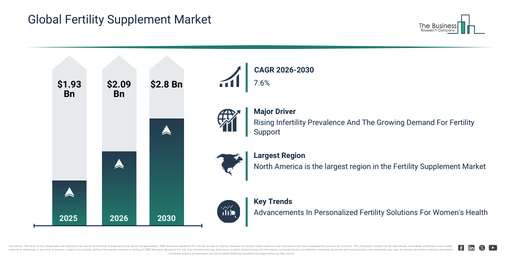
    The fertility supplement market has demonstrated significant expansion in recent years. Its value is anticipated to increase from $1.93 billion in 2025 to $2.09 billion in 2026, progressing at a compound annual growth rate (CAGR) of 7.9%. The market’s past growth can be attributed to several factors including a heightened understanding of reproductive nutrition, an uptick in the consumption of dietary supplements, the proliferation of health retail establishments, growing worries about infertility, and the availability of over-the-counter fertility supplements.

    The market for fertility supplements is projected to experience substantial expansion in the coming years. This market is anticipated to reach a valuation of $2.8 billion by 2030, exhibiting a compound annual growth rate (CAGR) of 7.6%. Factors driving this growth during the projected timeframe include advancements in formulations specifically targeting fertility, an increased focus on preventive reproductive health, a greater uptake of customized supplements, the proliferation of digital health platforms, and growing consumer confidence in nutraceutical products. Key trends anticipated for the forecast period encompass a surge in the consumption of nutritional supplements to aid fertility, a heightened inclination towards natural and herbal components, escalating demand from both male and female users, the broadening availability of over-the-counter fertility solutions, and the expansion of online sales channels for supplements.

    Get A Free Sample Report With In-Depth Market Insights:

    https://thebusinessresearchcompany.com/sample_request?id=44534865&type=smp&name=Fertility%20Supplement%20Market%20Report%202026&utm_source=Blogs&utm_medium=Paid&utm_campaign=Nov_PR

    Fertility Supplement Market Demand Drivers: What’s Powering Industry Growth?

    The growing occurrence of infertility is projected to boost the expansion of the fertility supplement market. Infertility is characterized by the inability to conceive after one year of regular, unprotected intercourse or the inability to carry a pregnancy to term. The rise in infertility stems from factors such as delayed childbearing, shifts in lifestyle, environmental toxins, increasing obesity, and elevated stress levels. Fertility supplements play a vital role in managing infertility by supplying essential vitamins, minerals, and nutrients that support reproductive well-being, hormone equilibrium, and overall fertility function. For instance, in April 2023, the World Health Organization (WHO), a Switzerland-based United Nations specialized agency responsible for global public health, reported that approximately 17.5% of the global adult population, which is about one in six individuals, is impacted by infertility. Thus, the increasing prevalence of infertility is a key driver for the growth of the fertility supplement market.

    Fertility Supplement Market Segment Outlook: Which Categories Are Growing Fastest?

    The fertility supplement market covered in this report is segmented –

    1) By Product: Tablets, Capsules, Powders, Liquids, Soft Gels, Other Products

    2) By Ingredient Type: Natural, Synthetic Or Blend Of Natural And Synthetic

    3) By Distribution Channel: Over-The-Counter, Prescribed, Other Distribution Channels

    4) By End Use: Men, Women

    Subsegments:

    1) By Tablets: Standard Tablets, Effervescent Tablets

    2) By Capsules: Gelatin Capsules, Vegetarian Capsules

    3) By Powders: Drink Mix Powders, Nutritional Powders

    4) By Liquids: Oral Liquid Supplements, Liquid Drops

    5) By Soft Gels: Standard Soft Gels, High-Absorption Soft Gels

    6) By Other Products: Chewable Supplements, Gummy Supplements

    Fertility Supplement Market Innovation Trends Shaping Future Development

    Major companies operating within the fertility supplement market are concentrating on developing customized products, such as natural fertility supplements, to deliver a holistic strategy for enhancing reproductive health. These products utilize plant-based ingredients and essential nutrients, resulting in fewer synthetic chemicals and potential adverse effects compared to conventional treatments. Natural fertility supplements are dietary items crafted from plant-based components, vitamins, and minerals, designed to boost reproductive health and improve fertility by supporting hormonal equilibrium, egg quality, and overall reproductive function. For example, in November 2024, Nestlé, a health and wellness company based in Switzerland, launched its Materna Pre and Materna Nausea solutions. The Materna product range has been expanded with these two new offerings, specifically formulated to support women’s fertility and alleviate common pregnancy-related discomforts, including nausea and vomiting. By incorporating natural ginger and vitamin B6, the new Materna Nausea product has been scientifically proven to lessen the severity of nausea and vomiting experienced during pregnancy. This expansion highlights Materna’s dedication to providing women with tailored, science-backed nutritional solutions that support them before conception, throughout pregnancy, and after childbirth, ultimately aiming to improve health outcomes for both mothers and their babies.

    Fertility Supplement Market Leading Companies And Competitive Benchmarking

    Major companies operating in the fertility supplement market are GNC Holdings LLC, Orthomol Holding, Vitabiotics Ltd., Lenus Pharma GesmbH, Innovamed Ltd., AdvaCare Pharma, Theralogix LLC, Fairhaven Health LLC, Coast Science LLC, Bionova Inc., Extreme V Inc., Crown Fertility, Xena Bio Herbals Pvt. Ltd., Zenith Nutrition Co, Amitamin, Eu Natural Inc., Proxeed, Babystart Ltd., Needed Inc., Ritual, Premama Wellness Company, Pink Stork

    View The Full Fertility Supplement Market Report:

    https://thebusinessresearchcompany.com/report/fertility-supplement-global-market-report?utm_source=Blogs&utm_medium=Paid&utm_campaign=Nov_PR

    Fertility Supplement Market Regional Analysis: Which Geography Leads On Revenue?

    North America was the largest region in the fertility supplement market in 2025. Asia-Pacific is expected to be the fastest-growing region in the forecast period. The regions covered in the fertility supplement market report are Asia-Pacific, South East Asia, Western Europe, Eastern Europe, North America, South America, Middle East, Africa.

    Reach Out To Our Team:

    The Business Research Company: https://www.thebusinessresearchcompany.com/

    Americas: +1 310-496-7795

    Asia: +44 7882 955267 & +91 8897263534

    Europe: +44 7882 955267

    Email us at: marketing@tbrc.info

    Follow us on:

    LinkedIn: https://in.linkedin.com/company/the-business-research-company

    YouTube: https://www.youtube.com/channel/UC24_fI0rV8cR5DxlCpgmyFQ

    Global Market Model: https://www.thebusinessresearchcompany.com/global-market-model
  • Fertility Services Market Outlook Through 2030: Understanding The Growth Opportunity

    Fertility Services Market Outlook Through 2030: Understanding The Growth Opportunity

    Backed by market attractiveness analysis, total addressable market sizing, company benchmarking matrices, interactive Excel dashboards, wider supply chain intelligence, emerging startup coverage, and detailed product-level insights, The Business Research Company’s 2026 market reports are designed to offer research that is more actionable and strategically valuable than ever.

    Fertility Services Market Expansion Outlook: What Revenue Opportunities Are Ahead?

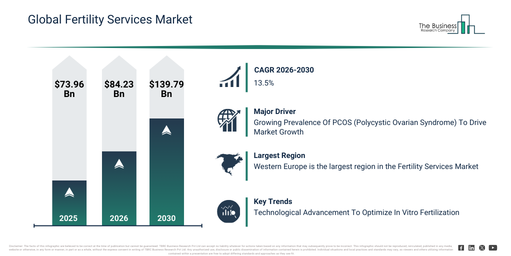
    The fertility services market size has shown substantial growth recently. It is projected to expand from $73.96 billion in 2025 to $84.23 billion in 2026, at a compound annual growth rate (CAGR) of 13.9%. Historically, this growth can be attributed to trends such as delayed parenthood, an increase in infertility prevalence, the expansion of IVF clinics, advancements in reproductive diagnostics, and the rising social acceptance of fertility treatments.

    The fertility services market size is anticipated to experience significant expansion over the coming years. This market is projected to reach $139.79 billion by 2030, exhibiting a compound annual growth rate (CAGR) of 13.5%. This forecasted growth can be attributed to several factors, including advancements in assisted reproduction technologies, an increase in fertility tourism, the growing application of AI in fertility planning, the expansion of fertility preservation services, and rising investment in reproductive healthcare. Key trends during this period are expected to include an escalating demand for assisted reproductive technologies, the proliferation of fertility clinics and centers, an increasing adoption of personalized fertility treatment plans, a rise in cross-border fertility tourism, and the integration of digital tools within fertility counseling.

    Get A Free Sample Report With In-Depth Market Insights:

    https://thebusinessresearchcompany.com/sample_request?id=61799142&type=smp&name=Fertility%20Services%20Market%20Report%202026&utm_source=Blogs&utm_medium=Paid&utm_campaign=Nov_PR

    Fertility Services Market Growth Drivers: What’s Behind The Acceleration?

    The increasing occurrence of Polycystic Ovarian Syndrome (PCOS) is projected to boost the growth of the fertility services market in the coming years. PCOS is a widespread hormonal disorder that affects individuals with ovaries, typically during their reproductive age. As the prevalence of PCOS rises, so too may the demand for fertility services, such as in vitro fertilization (IVF) and other assisted reproductive techniques, thereby stimulating the fertility services market. For example, in June 2023, the World Health Organization, an intergovernmental organization based in Switzerland, reported that approximately 8-13% of women in their reproductive years are estimated to be affected by polycystic ovary syndrome (PCOS), with a significant portion, up to 70%, of those impacted remaining undiagnosed globally. Thus, the growing prevalence of PCOS is a primary driver for the expansion of the fertility services market.

    Fertility Services Market Segment Landscape: Which Areas Lead Development?

    The fertility services market covered in this report is segmented –

    1) By Procedure: Assisted Reproductive Technology (Art), In-Vitro Fertilization, Artificial Insemination

    2) By Service: Fresh Non-Donor, Frozen Non-Donor, Egg And Embryo Banking, Fresh Donor, Frozen Donor

    3) By Application: Male, Female

    Subsegments:

    1) By Assisted Reproductive Technology (ART): Intracytoplasmic Sperm Injection (ICSI), Frozen Embryo Transfer (FET), Donor Egg And Sperm Programs

    2) By In-Vitro Fertilization (IVF): Conventional IVF, Mini IVF (Mild Stimulation IVF), Natural Cycle IVF

    3) By Artificial Insemination: Intrauterine Insemination (IUI), Intracervical Insemination (ICI), Intratubal Insemination (ITI)

    Fertility Services Market Trends Redefining Industry Growth

    Major companies within the fertility services market are actively developing innovative technologies, particularly AI-enabled embryo selection algorithms, to secure a competitive advantage. This AI-powered embryo selection method leverages sophisticated machine learning on time-lapse imaging and morphological data to predict the likelihood of embryo implantation success, thereby enhancing IVF outcomes. As an illustration, in August 2025, Nova IVF Fertility, a UK-based company specializing in fertility services, unveiled Vita Embryo, an AI-driven tool for embryo assessment. This technology provides accurate viability ranking, reduces the length of IVF cycles, and improves the transparency of treatment. Its purpose is to increase pregnancy rates, minimize multiple pregnancies, and boost clinical efficiency. While these AI advancements significantly improve precision and patient care, their adoption also requires addressing challenges such as elevated costs, regulatory supervision, and algorithmic transparency. These technologies are expected to transform the fertility services market by delivering more successful fertility treatments and an improved patient experience worldwide.

    Fertility Services Market Industry Leaders And Competitive Landscape

    Major companies operating in the fertility services market are Vitrolife, Merck KGaA, Progyny Inc., Virtus Health, Medicover Group, Apollo Hospitals Enterprise Ltd., Integramed America, Inc., The Johns Hopkins Health System Corp, Care Fertility, Australian Concept Infertility Medical Center (ACIMC), Bahosi Fertility Centre, Bloom Fertility Center, Center for Advanced Reproductive Medicine and Infertility, Chennai Fertility Center, Cloudnine Fertility, Damai Service Hospital, Flinders Reproductive Medicine Pty Ltd, Genea Oxford Fertility Limited, IHH Healthcare Berhad, IVF NAMBA Clinic, IVF Sri Lanka Life Plus (Pvt) Ltd, KL Fertility & Gynecology Centre, LIFE – Lahore Institute of Fertility & Endocrinology, Maria Fertility Hospital, Morula IVF, Nepal International Fertility Centre, Repromed, SAFE Fertility Center, Southend Fertility and IVF, Thomson Medical Pte Ltd, TMC Fertility Centre, Victory A.R.T. Laboratory Phils. Inc, CHA Fertility Center, United Family Hospital, The New Hope Fertility Center, NOVA IVF Fertility, Baby Joy Fertility and IVF, Fortis La Femme, ART Fertility Clinics, Ferticity Fertility Clinic, Milann Fertility Centre, Fertility First, City Fertility Sydney, Westmead Fertility Centre, Demeter Fertility, Adora Fertility, Rainbow Fertility, Monash IVF Group Limited, Mitra Keluarga Karyasehat Tbk PT, Sarang-i IVF Center, Beyond IVF, Bumrungrad International Hospital, Superior A.R.T, King’s Fertility, Manchester Fertility, St Roch IVF Center, Clinique De La Muette, Institut Marques, Hopital Cochin, iTrust Fertility, Apricity, Agora Clinic, TFP Fertility, Apryl, CCRM Fertility Clinic, ORIGIO, Maven Clinic, Bayonne Centre, Biomedival, Grand Paris Fertility Centre, Ava-Peter Clinic, IVF Russia (The International Centre Of The Reproductive Medicines), Next Generation Clinic, Scandinavia AVA-Peter, Nova Vita Clinic, INVICTA Fertility Clinics, Gyncentrum Fertility Clinic, Md Medical Group, Invo Bioscience, Carolinas Fertility Institute, Newlife Fertility Centre, Dallas Fort Worth Fertility Associates, Overlake Reproductive Health, Fertility Center Of Las Vegas, Weill Cornell Medicine – Center For Reproductive Medicine, UCSF Center For Reproductive Health, Brigham And Women’s Hospital Center For Infertility And Reproductive Surgery, Columbia University Fertility Center, Duke Fertility Center, Advanced Fertility Center Of Texas, Cleveland Clinic Fertility Center, NYU Langone Fertility Center, Mayo Clinic Assisted Reproductive Technologies Rochester, Massachusetts General Hospital Fertility Center, IVF Canada, Bio Fertility Center, The Mexican Institute For Higher Reproductive Technology (Inmater), Select IVF, Fertility Patagonia, In Vitro Buenos Aires, Halitus Instituto Medico, Pregna Medicina Reproductiva, IVF Panama Centro De Reproduccion Punta Pacifica, Colombian Center For Fertility, Sterility, Carrot Fertility, Oya Care, Kitazato, Dubai Fertility Center, Fakih IVF Fertility Center, Orchid Fertility, Bourn Hall Fertility Clinic, Alboshra IVF Center, George’s Memorial Medical Centre, Nordica Fertility Centre, The Olive Branch Clinic, St. Ives Specialist Hospital, Bridge Clinic Fertility Centre, Cairo Fertility Centre, Queens Fertility Centre, BPE Partners, Cleopatra Hospitals Group

    View The Full Fertility Services Market Report:

    https://thebusinessresearchcompany.com/report/Fertility-Services-Global-Market-Report?utm_source=Blogs&utm_medium=Paid&utm_campaign=Nov_PR

    Fertility Services Market Geographic Spread And Regional Opportunities

    Western Europe was the largest region in the fertility services market in 2025. North America was the second largest region in global fertility services market share. The regions covered in the fertility services market report are Asia-Pacific, South East Asia, Western Europe, Eastern Europe, North America, South America, Middle East, Africa.

    Reach Out To Our Team:

    The Business Research Company: https://www.thebusinessresearchcompany.com/

    Americas: +1 310-496-7795

    Asia: +44 7882 955267 & +91 8897263534

    Europe: +44 7882 955267

    Email us at: marketing@tbrc.info

    Follow us on:

    LinkedIn: https://in.linkedin.com/company/the-business-research-company

    YouTube: https://www.youtube.com/channel/UC24_fI0rV8cR5DxlCpgmyFQ

    Global Market Model: https://www.thebusinessresearchcompany.com/global-market-model