Blog

  • Flow Cytometry Market Size Growth: From $8.34 Billion In 2026 To $12.79 Billion By 2030

    Flow Cytometry Market Size Growth: From $8.34 Billion In 2026 To $12.79 Billion By 2030

    Featuring market attractiveness scoring, total addressable market sizing, company benchmarking matrices, interactive Excel dashboards, deeper supply chain intelligence, emerging startup tracking, and granular product-level insights, The Business Research Company’s 2026 market reports are built to deliver research that is both more actionable and more strategically valuable.

    Flow Cytometry Market Expansion Outlook: What Revenue Opportunities Are Ahead?

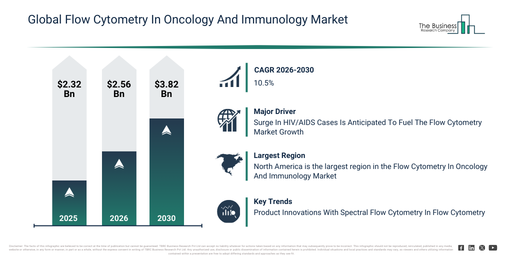
    The flow cytometry market has seen substantial expansion in recent years. Its value is expected to rise from $7.49 billion in 2025 to $8.34 billion in 2026, achieving a compound annual growth rate (CAGR) of 11.3%. This historical growth can be linked to factors like the advancement of biomedical research, the broadening of cancer diagnostics, the availability of cutting-edge cytometers, increased investment in life sciences, and a growing demand for cell-based analytical techniques.

    The flow cytometry market is projected for substantial expansion over the upcoming years. This market is anticipated to reach a valuation of $12.79 billion by 2030, exhibiting a compound annual growth rate (CAGR) of 11.3%. The projected growth during this period is driven by factors such as the incorporation of AI-driven analytics, advancements in precision medicine research, the broadening of stem cell therapies, increased investment in pharmaceutical R&D, and the rising need for high-throughput analysis. Key trends during the forecast horizon encompass the increasing utilization in clinical diagnostics, a heightened demand for multi-parameter cell examination, the expanding application of flow cytometry in drug discovery processes, its growing prominence in immunology and hematology studies, and the integration of sophisticated data analysis software.

    Get A Free Sample Report With In-Depth Market Insights:

    https://thebusinessresearchcompany.com/sample_request?id=16543090&type=smp&name=Flow%20Cytometry%20Market%20Report%202026&utm_source=Blogs&utm_medium=Paid&utm_campaign=Nov_PR

    Flow Cytometry Market Expansion Drivers: What’s Shaping Future Growth?

    The global rise in HIV infections is a key motivator for the flow cytometry market, given that flow cytometry techniques are directly applied in HIV diagnosis. This method utilizes light scattering to ascertain cell identity. Cells are assigned specific markers, known as CDs (clusters of differentiation), based on their scattering characteristics. For instance, in July 2024, UNAIDS, a UN program based in Switzerland, reported that approximately 39.9 million people globally were living with HIV in 2023, an increase from 39.0 million in 2022. Therefore, the escalating number of HIV cases is stimulating the flow cytometry market.

    Flow Cytometry Market Breakdown By Product Type And Application

    The flow cytometry market covered in this report is segmented –

    1) By Type: Instruments, Reagents And Consumables, Software, Accessories, Services

    2) By Technology: Cell-Based, Bead-Based

    3) By Application: Oncology, Drug Discovery, Disease Diagnosis, Stem Cell Therapy, Organ Transplantation, Hematology

    4) By End User: Hospitals And Clinics, Academia And Research Institutes, Pharmaceutical And Biotechnology Companies, Other End Users

    Subsegments:

    1) By Instruments: Cell Analyzers, Cell Sorters, Multi-Parameter Flow Cytometers, High-Throughput Flow Cytometers

    2) By Reagents And Consumables: Antibodies, Dyes And Fluorescent Probes, Kits And Assays, Sample Preparation Consumables (Tubes, Filters)

    3) By Software: Data Analysis Software, Visualization Software, Acquisition Software, Cell Sorting Software

    4) By Accessories: Lasers And Optics, Filters, Flow Cells, Sample Preparation Tools

    5) By Services: Maintenance And Repair Services, Calibration And Validation Services, Training And Support Services

    Flow Cytometry Market Industry Trends Fueling Future Revenue Growth

    Leading firms within the flow cytometry market are concentrating on creating advanced products, such as automated sample preparation systems, to deliver quicker, more precise outcomes and minimize the time technicians spend manually handling tasks. Such systems optimize laboratory operations by automating essential steps like mixing, staining, and dilution, which guarantees uniform and precise sample readiness. This consequently decreases manual labor and boosts operational effectiveness, making them particularly beneficial for high-volume laboratories and clinical diagnostic settings. A notable instance is from June 2023, when Becton, Dickinson, and Company, a US-based medical device company, introduced BD FACSDuet. This high-end sample preparation system is designed to integrate smoothly with the BD FACSLyric clinical flow cytometry system, facilitating a completely automated ‘walkaway’ process. It automates crucial procedures including the cocktailing, washing, and centrifuging of specimens. Samples, once prepared, are moved to the flow cytometer without any human involvement, thereby reducing manual interventions and hands-on time. The system significantly improves standardization and the consistency of results in clinical diagnostics, contributing to enhanced overall laboratory efficiency.

    Flow Cytometry Market Company Landscape And Competitive Strategy

    Major companies operating in the flow cytometry market are Beckman Coulter Inc., Bio-Rad Laboratories Inc, Thermo Fisher Scientific Inc., Luminex Corporation, Miltenyi Biotec Ltd., Becton Dickinson and Company, Danaher Corporation, Apogee Flow Systems Ltd., Stratedigm Inc., EMD Millipore Corporation, Cytonome St LLC, Enzo Life Sciences Inc., Sony Biotechnology Inc., Life Technologies Corporation, ACEA Biosciences Inc., Takara Bio Inc., Union Biometrica Inc., Cytek Biosciences Inc., Nexcelom Bioscience LLC, Verity Software House Inc., Spectral Cytometry Systems GmbH, InstruNor AS

    View The Full Flow Cytometry Market Report:

    https://thebusinessresearchcompany.com/report/Flow-Cytometry-Global-Market-Report?utm_source=Blogs&utm_medium=Paid&utm_campaign=Nov_PR

    Flow Cytometry Market Regional Split: Which Areas Are Fueling Growth?

    North America was the largest region in the flow cytometry market in 2025. Western Europe was the second largest region in the flow cytometry market analysis. The regions covered in the flow cytometry market report are Asia-Pacific, South East Asia, Western Europe, Eastern Europe, North America, South America, Middle East, Africa.

    Reach Out To Our Team:

    The Business Research Company: https://www.thebusinessresearchcompany.com/

    Americas: +1 310-496-7795

    Asia: +44 7882 955267 & +91 8897263534

    Europe: +44 7882 955267

    Email us at: marketing@tbrc.info

    Follow us on:

    LinkedIn: https://in.linkedin.com/company/the-business-research-company

    YouTube: https://www.youtube.com/channel/UC24_fI0rV8cR5DxlCpgmyFQ

    Global Market Model: https://www.thebusinessresearchcompany.com/global-market-model
  • Flexible Payment Fintech for Dental Care Market Analysis 2026: Market Size, Growth Trends And Industry Outlook

    Flexible Payment Fintech for Dental Care Market Analysis 2026: Market Size, Growth Trends And Industry Outlook

    Built to provide research that’s more actionable and strategically valuable, The Business Research Company’s 2026 market reports include market attractiveness analysis, total addressable market sizing, company benchmarking matrices, interactive Excel dashboards, broader supply chain intelligence, emerging startup tracking, and in-depth product insights.

    Flexible Payment Fintech for Dental Care Market Growth Potential: How Will Market Size Shift Through 2030?

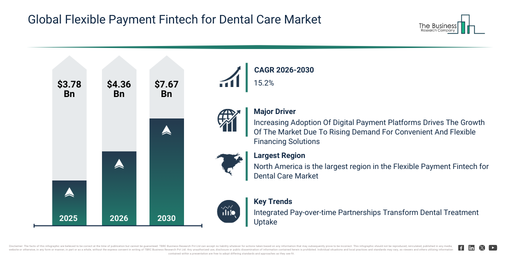
    The market size for flexible payment fintech for dental care has demonstrated substantial growth over recent years. Projections indicate that it is set to increase from $3.78 billion in 2025 to $4.36 billion in 2026, achieving a compound annual growth rate (CAGR) of 15.4%. Historically, this expansion has been driven by factors such as the rising cost of advanced dental treatments, insufficient dental insurance coverage across many regions, a growing consumer willingness to adopt digital payments, the proliferation of private dental clinics, and the spread of fintech healthcare platforms.

    The market for flexible payment fintech in dental care is expected to experience substantial growth in the upcoming years. It is projected to expand to $7.67 billion by 2030, achieving a compound annual growth rate (CAGR) of 15.2%. This anticipated growth during the forecast period is driven by increasing demand for affordable oral healthcare, the rising adoption of cloud-based fintech platforms, a growing preference for cashless healthcare payments, the expansion of personalized financing models, and increasing regulatory clarity for healthcare fintech solutions. Significant trends emerging in the forecast period include the growing acceptance of installment-based dental payments, a rise in the use of buy now pay later models for dental care, the increasing integration of payment platforms with dental practice systems, the expansion of subscription-based dental financing, and an enhanced focus on patient financial transparency.

    Get A Free Sample Report With In-Depth Market Insights:

    https://thebusinessresearchcompany.com/sample_request?id=23812864&type=smp&name=Flexible%20Payment%20Fintech%20for%20Dental%20Care%20Market%20Report%202026&utm_source=Blogs&utm_medium=Paid&utm_campaign=Nov_PR

    Flexible Payment Fintech for Dental Care Market Development Factors: What’s Supporting Demand?

    The flexible payment fintech for dental care market is projected to expand due to the rising uptake of digital payment platforms. These platforms are technology-based systems facilitating electronic transactions for goods and services, characterized by real-time processing, adaptable payment schedules, and smooth integration with business applications. The increased use of digital payment solutions stems from consumers’ growing desire for ease and flexible financing, dental clinics’ need to optimize administrative processes and enhance cash flow, and the broader digital evolution within healthcare. Flexible payment fintech for dental care facilitates the uptake of digital payment platforms by offering specialized, patient-centric financing options that directly integrate with dental practice management systems, consequently improving patient experience and boosting treatment plan acceptance. For example, data from UK Finance, a UK-based trade association, indicated that in October 2025, approximately half of mobile payment users made monthly payments, while 44% paid weekly or more frequently. Usage was highest among 16–24-year-olds at 88%, and there was an increase for those 65+ from 14% in 2023 to 25% in 2024. Consequently, the expanding adoption of digital payment platforms is fueling the expansion of the flexible payment fintech for dental care market.

    Flexible Payment Fintech for Dental Care Market Segment Analysis And Revenue Potential

    The flexible payment fintech for dental care market covered in this report is segmented –

    1) By Solution Type: Point-Of-Sale Financing, Buy Now Pay Later, Subscription Plans, Installment Loans, Other Solution Types

    2) By Deployment Mode: Cloud-Based, On-Premises

    3) By Application: Orthodontics, Cosmetic Dentistry, General Dentistry, Oral Surgery, Other Applications

    4) By End-User: Dental Clinics, Hospitals, Specialty Dental Centers, Other End-Users

    Subsegments:

    1) By Point-Of-Sale Financing: In-Clinic Point-Of-Sale Financing, Mobile Device Point-Of-Sale Financing, Dental Practice Integrated Point-Of-Sale Financing, Third Party Point-Of-Sale Financing Platforms

    2) By Buy Now Pay Later: Short Term Buy Now Pay Later Plans, Long Term Buy Now Pay Later Plans, Interest Free Buy Now Pay Later Services, Low Interest Buy Now Pay Later Services

    3) By Subscription Plans: Preventive Dental Care Subscription Plans, Comprehensive Dental Care Subscription Plans, Family Dental Subscription Plans, Cosmetic Dental Care Subscription Plans

    4) By Installment Loans: Secured Dental Installment Loans, Unsecured Dental Installment Loans, Fixed Interest Installment Loans, Variable Interest Installment Loans

    5) By Other Solution Types: Dental Savings Membership Programs, Employer Sponsored Dental Financing Programs, Charity Based Dental Payment Assistance, Peer To Peer Dental Financing Platforms

    Flexible Payment Fintech for Dental Care Market Trends Powering Strategic Industry Growth

    Major companies operating in the flexible payment fintech for dental care market are concentrating on integrated pay-over-time partnerships, such as point-of-sale buy-now-pay-later (BNPL) platforms, which embed financing directly into practice workflows to increase treatment acceptance and reduce upfront cost friction. These point-of-sale BNPL platforms allow patients to apply for and secure short- or long-term installment financing at the clinic or using a mobile device. They utilize soft or no-hard credit checks, provide near-instant approval decisions, and connect to practice management and billing systems, enabling clinics to automate patient onboarding and repayments. For instance, in September 2023, Sunbit, a US-based financial technology company, launched a partnership with Overjet, a US-based provider of AI-powered dental software, to bring Sunbit’s pay-over-time technology into dental practices. This initiative combined Sunbit’s near-instant mobile and front-desk application flow, known for its high approval rates, with integrations that allow clinicians to present financing alongside Overjet’s AI treatment insights.

    Flexible Payment Fintech for Dental Care Market Key Players Shaping Industry Direction

    Major companies operating in the flexible payment fintech for dental care market are Henry Schein Inc., CareCredit LLC, Affirm Inc., LendingClub Bank National Association, BHG Financial LLC, Sezzle Inc., Sunbit Inc., Wisetack Inc., PatientFi LLC, Splitit Payments Ltd., iCare Financial LLC, Dentulu Inc., Proceed Finance LLC, Prosper Marketplace Inc., United National Credit Advisors LLC, Klarna Inc., Afterpay Limited, PayPal Credit, Greensky Inc., FuturePay LLC

    View The Full Flexible Payment Fintech for Dental Care Market Report:

    https://thebusinessresearchcompany.com/report/global-flexible-payment-fintech-for-dental-care-market-report?utm_source=Blogs&utm_medium=Paid&utm_campaign=Nov_PR

    Flexible Payment Fintech for Dental Care Market Top Region: Where Does Most Revenue Come From?

    North America was the largest region in the flexible payment fintech for dental care market in 2025. Asia-Pacific is expected to be the fastest-growing region in the forecast period. The regions covered in the flexible payment fintech for dental care market report are Asia-Pacific, South East Asia, Western Europe, Eastern Europe, North America, South America, Middle East, Africa.

    Reach Out To Our Team:

    The Business Research Company: https://www.thebusinessresearchcompany.com/

    Americas: +1 310-496-7795

    Asia: +44 7882 955267 & +91 8897263534

    Europe: +44 7882 955267

    Email us at: marketing@tbrc.info

    Follow us on:

    LinkedIn: https://in.linkedin.com/company/the-business-research-company

    YouTube: https://www.youtube.com/channel/UC24_fI0rV8cR5DxlCpgmyFQ

    Global Market Model: https://www.thebusinessresearchcompany.com/global-market-model
  • Flexible And Semi-Rigid Ureteroscopy Market Growth To $1.22 Billion Creates New Opportunities Across The Industry

    Flexible And Semi-Rigid Ureteroscopy Market Growth To $1.22 Billion Creates New Opportunities Across The Industry

    Backed by market attractiveness analysis, total addressable market sizing, company benchmarking matrices, interactive Excel dashboards, wider supply chain intelligence, emerging startup coverage, and detailed product-level insights, The Business Research Company’s 2026 market reports are designed to offer research that is more actionable and strategically valuable than ever.

    Flexible And Semi-Rigid Ureteroscopy Market Value Analysis: What Growth Lies Ahead Over The Forecast Period?

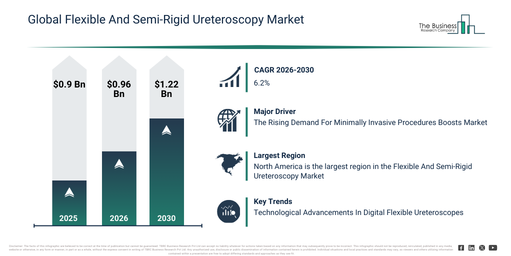
    The flexible and semi-rigid ureteroscopy market size has experienced strong growth in recent years. It is anticipated to expand from $0.9 billion in 2025 to $0.96 billion in 2026, exhibiting a compound annual growth rate (CAGR) of 6.3%. This historical growth can be ascribed to several factors, including an increase in kidney stone prevalence, progress in endoscopic tools, the expansion of urology departments, enhanced surgical outcomes, and a rising patient preference for minimally invasive care.

    The flexible and semi-rigid ureteroscopy market size is anticipated to experience substantial expansion over the next few years. It is forecast to increase to $1.22 billion by 2030, achieving a compound annual growth rate (CAGR) of 6.2%. This growth during the projection period can be attributed to advancements in disposable ureteroscopes, the imperative for infection control solutions, the expansion of ambulatory urology centers, the incorporation of digital imaging, and an increase in outpatient procedures. Significant trends shaping the market in the forecast period include the growing adoption of minimally invasive urological procedures, enhanced usage of flexible ureteroscopes, an escalating need for single-use endoscopic devices, the expansion of urolithiasis treatment procedures, and a preference for high-definition visualization systems.

    Get A Free Sample Report With In-Depth Market Insights:

    https://thebusinessresearchcompany.com/sample_request?id=45128550&type=smp&name=Flexible%20And%20Semi-Rigid%20Ureteroscopy%20Market%20Report%202026&utm_source=Blogs&utm_medium=Paid&utm_campaign=Nov_PR

    Flexible And Semi-Rigid Ureteroscopy Market Industry Drivers: What’s Behind The Revenue Growth?

    The increasing adoption of minimally invasive procedures is anticipated to fuel the expansion of the flexible and semi-rigid ureteroscopy market in the future. These procedures involve medical interventions or operations conducted through smaller incisions or natural body orifices. Patients increasingly favor them due to benefits such as quicker recovery times, reduced pain and scarring, decreased infection risks, and improved surgical outcomes, rendering them safer and more appealing. Flexible and semi-rigid ureteroscopy itself utilizes minimally invasive techniques for diagnosing and treating urinary tract conditions, including kidney stones and tumors, by providing precise access and treatment with minimal trauma. For instance, in January 2024, Intuitive Surgical Inc., a US-based manufacturer of robotic products, reported the placement of 415 da Vinci surgical systems (robotic surgical systems that use a minimally invasive surgical approach) in the fourth quarter of 2023, representing a 12% increase compared to 2022. This increasing demand and preference for minimally invasive procedures is consequently driving the growth of the flexible and semi-rigid ureteroscopy market.

    Flexible And Semi-Rigid Ureteroscopy Market Segmentation And Category Overview

    The flexible and semi-rigid ureteroscopy market covered in this report is segmented –

    1) By Product Type: Flexible Ureteroscopes, Digital Ureteroscopes, Fiberoptic Ureteroscopes, Semi-Rigid Ureteroscopes

    2) By Application: Urinary Stricture, Upper Urinary Tract Infection, Urolithiasis, Kidney Cancer, Other Applications

    3) By End User: Hospitals, Ambulatory Surgical Centers, Other End Users

    Subsegments:

    1) By Flexible Ureteroscopes: Standard Flexible Ureteroscopes, High-Definition Flexible Ureteroscopes, Single-Use Flexible Ureteroscopes, Reusable Flexible Ureteroscopes

    2) By Digital Ureteroscopes: Standard Digital Ureteroscopes, High-Definition Digital Ureteroscopes, Digital Ureteroscopes With Integrated Cameras, Single-Use Digital Ureteroscopes

    3) By Fiberoptic Ureteroscopes: Standard Fiberoptic Ureteroscopes, High-Definition Fiberoptic Ureteroscopes, Semi-Flexible Fiberoptic Ureteroscopes, Single-Use Fiberoptic Ureteroscopes

    4) By Semi-Rigid Ureteroscopes: Standard Semi-Rigid Ureteroscopes, High-Definition Semi-Rigid Ureteroscopes, Semi-Rigid Ureteroscopes With Working Channels, Single-Use Semi-Rigid Ureteroscopes

    Flexible And Semi-Rigid Ureteroscopy Market Growth Trends Reshaping The Competitive Landscape

    Leading companies in the flexible and semi-rigid ureteroscopy market are increasingly focusing on technological enhancements like the digital flexible ureteroscope to boost procedural efficiency and clinical outcomes. This digital flexible ureteroscope is an advanced medical instrument employed in urology for diagnosing and treating urinary tract conditions, such as kidney stones, tumors, and strictures. For instance, in February 2023, Boston Scientific, a US-based medical technology company, secured US FDA clearance for its LithoVue Elite System, which is the first ureteroscope capable of real-time monitoring of intrarenal pressure (IRP) during ureteroscopy procedures, frequently performed to diagnose and address kidney stones. The device boasts unique characteristics such as a single-use design, which mitigates the infection risk tied to reusable scopes and simplifies patient care. The system also features programmable buttons on the ureteroscope handle, facilitating direct command over imaging functions without needing staff coordination.

    Flexible And Semi-Rigid Ureteroscopy Market Competitive Analysis Of Leading Industry Participants

    Major companies operating in the flexible and semi-rigid ureteroscopy market are Olympus Corporation, Boston Scientific Corporation, Richard Wolf GmbH, KARL STORZ SE & Co. KG, Stryker Corporation, Pentax Medical, Vimex Endoscopy, Maxer Endoscopy GmbH, Rocamed SA, OTU Medical Inc., PUSEN Medical, Zhuhai Seesheen Medical Technology, SCHÖLLY FIBEROPTIC GmbH, NeoScope Inc., Dornier MedTech, ProSurg Inc., Clarion Medical Technologies, SOPRO SA, Storz Medical AG, Advin Urology, Ambu A/S, Elmed Medical Systems Inc., Cook Medical Inc., Medtronic plc

    View The Full Flexible And Semi-Rigid Ureteroscopy Market Report:

    https://thebusinessresearchcompany.com/report/flexible-and-semi-rigid-ureteroscopy-global-market-report?utm_source=Blogs&utm_medium=Paid&utm_campaign=Nov_PR

    Flexible And Semi-Rigid Ureteroscopy Market Regional Breakdown: Where Is Demand Concentrated?

    North America was the largest region in the flexible and semi-rigid ureteroscopy market in 2025. Asia-Pacific is expected to be the fastest-growing region in the forecast period. The regions covered in the flexible and semi-rigid ureteroscopy market report are Asia-Pacific, South East Asia, Western Europe, Eastern Europe, North America, South America, Middle East, Africa.

    Reach Out To Our Team:

    The Business Research Company: https://www.thebusinessresearchcompany.com/

    Americas: +1 310-496-7795

    Asia: +44 7882 955267 & +91 8897263534

    Europe: +44 7882 955267

    Email us at: marketing@tbrc.info

    Follow us on:

    LinkedIn: https://in.linkedin.com/company/the-business-research-company

    YouTube: https://www.youtube.com/channel/UC24_fI0rV8cR5DxlCpgmyFQ

    Global Market Model: https://www.thebusinessresearchcompany.com/global-market-model
  • Fixed And Mobile C-Arms Market Forecast: Breaking Down The Numbers Behind Future Expansion

    Fixed And Mobile C-Arms Market Forecast: Breaking Down The Numbers Behind Future Expansion

    Featuring market attractiveness scoring, total addressable market sizing, company benchmarking matrices, interactive Excel dashboards, deeper supply chain intelligence, emerging startup tracking, and granular product-level insights, The Business Research Company’s 2026 market reports are built to deliver research that is both more actionable and more strategically valuable.

    Fixed And Mobile C-Arms Market Size Forecast: How Big Could The Market Get By 2030?

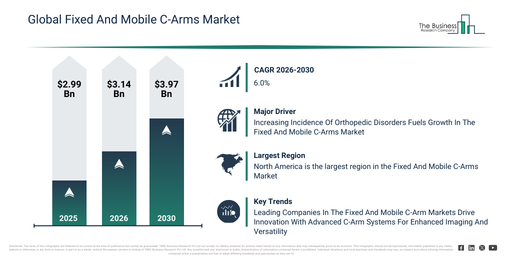
    The fixed and mobile c-arms market has seen consistent expansion in recent years. This market is anticipated to expand from $2.99 billion in 2025 to $3.14 billion in 2026, registering a compound annual growth rate (CAGR) of 5.0%. The historical growth of the market can be linked to factors such as an increase in minimally invasive surgeries, the expansion of hospital infrastructure, a rise in orthopedic procedures, the widespread availability of mobile imaging systems, and ongoing advancements in x-ray technology.

    The market for fixed and mobile c-arms is projected to experience substantial expansion in the coming years. This market is anticipated to reach $3.97 billion by 2030, demonstrating a compound annual growth rate (CAGR) of 6.0%. Factors contributing to this growth during the forecast period include the increasing demand for AI-assisted imaging, the proliferation of outpatient surgical centers, a rise in interventional procedures, growing investments in healthcare, and advancements in flat-panel detector technology. Key trends identified for the forecast period encompass the increasing adoption of minimally invasive surgical imaging, a heightened demand for mobile imaging systems, a stronger inclination towards high-resolution real-time imaging, the broadened application of c-arms in orthopedic and trauma procedures, and the incorporation of sophisticated imaging software.

    Get A Free Sample Report With In-Depth Market Insights:

    https://thebusinessresearchcompany.com/sample_request?id=74947817&type=smp&name=Fixed%20And%20Mobile%20C-Arms%20Market%20Report%202026&utm_source=Blogs&utm_medium=Paid&utm_campaign=Nov_PR

    Fixed And Mobile C-Arms Market Growth Factors: What’s Supporting Expansion?

    The expansion of the fixed and mobile C-arms market is anticipated to be driven by a rising prevalence of orthopedic disorders. An orthopedic disorder, also referred to as an orthopedic impairment, represents a physical disability impacting the musculoskeletal system, which encompasses bones, joints, muscles, tendons, and ligaments. In contemporary orthopedic practice, fixed and mobile C-arms serve as crucial instruments, employed in diverse surgical interventions to boost surgeons’ technical skill, lessen patient morbidity, and better patient outcomes. As an illustration, a June 2023 report from the Centers for Disease Control and Prevention, a US-based national public health institute, indicates that by 2040, 25.9% of the total projected adult population, amounting to 78.4 million individuals aged 18 and older, are expected to be affected by arthritis. Currently, approximately 25.7 million adults face limitations in their daily activities due to arthritis, with this figure projected to increase to 35 million by 2040. Consequently, the escalating incidence of orthopedic disorders is fueling the expansion of the fixed and mobile C-arms market.

    Fixed And Mobile C-Arms Market Segment Outlook: Which Categories Are Growing Fastest?

    The fixed and mobile c-arms market covered in this report is segmented –

    1) By Device Type: Fixed C-Arms, Mobile C-Arms, Full Size C-Arms, Mini C-Arms, Other Device Types

    2) By Technology: Image Intensifiers, Flat Panel

    3) By Application: Gastroenterology, Pain Management, Orthopedics And Trauma, Neurosurgery, Cardiovascular, Other Applications

    4) By End User: Hospitals, Diagnostic, Specialty Clinics, Other End Users

    Subsegments:

    1) By Fixed C-Arms: High-End Fixed C-Arms, Mid-Range Fixed C-Arms, Low-End Fixed C-Arms

    2) By Mobile C-Arms: High-End Mobile C-Arms, Standard Mobile C-Arms, Compact Mobile C-Arms

    3) By Full Size C-Arms: Digital Full-Size C-Arms, Analog Full-Size C-Arms

    4) By Mini C-Arms: Mini C-Arms For Orthopedic Procedures, Mini C-Arms For Podiatric Procedures

    5) By Other Device Types: Dual-Head C-Arms, Cone Beam C-Arms, Specialized C-Arms

    Fixed And Mobile C-Arms Market Trends Shaping Long-Term Demand

    Leading companies in the fixed and mobile C-arm markets are introducing sophisticated C-arm systems to enhance their competitive standing. An advanced C-arm system is a cutting-edge medical imaging device utilized across various medical fields, including surgery, orthopedics, cardiology, and interventional radiology. For example, in May 2023, Koninklijke Philips N.V., a Netherlands-based manufacturer of medical systems, released the Zenition 10 mobile C-arm system, designed for fixed and mobile C-arms. The Zenition 10 aims to increase patient access to standard surgical care. It integrates Philips’ state-of-the-art flat panel detector technology, which delivers high-quality imaging. This system supports a variety of surgical procedures, making it highly versatile and suitable for numerous specialties. The design also focuses on providing an intuitive user experience for healthcare professionals.

    Fixed And Mobile C-Arms Market Leading Companies And Competitive Benchmarking

    Major companies operating in the fixed and mobile c-arms market are Hitachi Medical Corporation, Siemens Healthineers, Fujifilm Holdings Corporation, Philips Healthcare, GE HealthCare Technologies Inc., Canon Medical Systems Corporation, Shimadzu Corporation, ATON GmbH, Toshiba Medical Systems Ltd., Neusoft Medical Systems Co. Ltd., Ziehm Imaging GmbH, Allengers Medical Systems Ltd., Othoscan Inc., Genoray Co. Ltd., Eurocolumbus s.r.l., Intermedical S.r.l., BMI Biomedical International s.r.l., Italray

    View The Full Fixed And Mobile C-Arms Market Report:

    https://thebusinessresearchcompany.com/report/fixed-and-mobile-c-arms-global-market-report?utm_source=Blogs&utm_medium=Paid&utm_campaign=Nov_PR

    Fixed And Mobile C-Arms Market Geographic Landscape: Which Region Leads Industry Growth?

    North America was the largest region in the fixed and mobile C-arms market in 2025. Asia-Pacific is expected to be the fastest-growing region in the forecast period. The regions covered in the fixed and mobile c-arms market report are Asia-Pacific, South East Asia, Western Europe, Eastern Europe, North America, South America, Middle East, Africa.

    Reach Out To Our Team:

    The Business Research Company: https://www.thebusinessresearchcompany.com/

    Americas: +1 310-496-7795

    Asia: +44 7882 955267 & +91 8897263534

    Europe: +44 7882 955267

    Email us at: marketing@tbrc.info

    Follow us on:

    LinkedIn: https://in.linkedin.com/company/the-business-research-company

    YouTube: https://www.youtube.com/channel/UC24_fI0rV8cR5DxlCpgmyFQ

    Global Market Model: https://www.thebusinessresearchcompany.com/global-market-model
  • Fitness Tracker Market Expected To Grow At 17.8% CAGR Through 2030: What Businesses Need To Know

    Fitness Tracker Market Expected To Grow At 17.8% CAGR Through 2030: What Businesses Need To Know

    Built to provide research that’s more actionable and strategically valuable, The Business Research Company’s 2026 market reports include market attractiveness analysis, total addressable market sizing, company benchmarking matrices, interactive Excel dashboards, broader supply chain intelligence, emerging startup tracking, and in-depth product insights.

    Fitness Tracker Market Revenue Outlook: What CAGR Lies Ahead Through 2030?

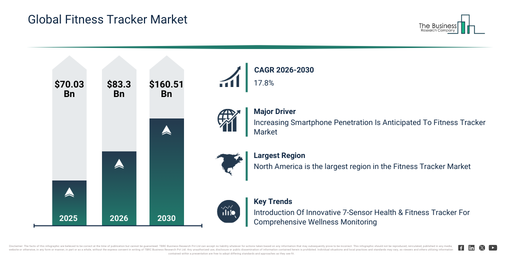
    The fitness tracker market has experienced swift expansion recently. It is projected to increase from $70.03 billion in 2025 to $83.3 billion in 2026, exhibiting a compound annual growth rate (CAGR) of 18.9%. The market’s growth in the past can be credited to an increase in health-conscious consumers, the broader adoption of smartphones, the availability of cost-effective wearables, a rise in preventive healthcare initiatives, and continuous advancements in technological sensors.

    The fitness tracker market is projected to experience substantial expansion in the coming years. Its value is anticipated to reach $160.51 billion by 2030, exhibiting a compound annual growth rate (CAGR) of 17.8%. This projected growth during the forecast period stems from factors such as the integration of AI-driven analytics, the broadening of medical-grade wearables, an increase in remote health monitoring, heightened fitness awareness, and advancements in battery and sensor technologies. Key trends anticipated within this period encompass the increasing adoption of wearable health monitoring devices, an elevated emphasis on sleep and activity tracking, the incorporation of advanced sensors and analytics, rising consumer desire for smart health insights, and the expansion of online sales channels.

    Get A Free Sample Report With In-Depth Market Insights:

    https://thebusinessresearchcompany.com/sample_request?id=51320487&type=smp&name=Fitness%20Tracker%20Market%20Report%202026&utm_source=Blogs&utm_medium=Paid&utm_campaign=Nov_PR

    Fitness Tracker Market Demand Drivers: What’s Powering Industry Growth?

    The fitness tracker market is expected to expand going forward, driven by the increasing penetration of smartphones. A smartphone is a mobile device that integrates cellular phone capabilities with features such as internet access, email, applications, and multimedia. Fitness trackers enhance the utility of smartphones by offering health and activity monitoring functions, empowering users to manage their well-being through their mobile devices. For instance, in October 2023, GSMA, a UK-based telecom industry association, reported that smartphone ownership reached 55 percent of the world’s population in 2023, an increase from 52 percent in 2022. This growing smartphone penetration is consequently propelling the market for fitness trackers.

    Fitness Tracker Market Segment Landscape: Which Areas Lead Development?

    The fitness tracker market covered in this report is segmented –

    1) By Device Type: Smart Watches, Fitness Band, Smart Glasses, Smart Clothing, Other Device Types

    2) By Application: Heart Rate Tracking, Sleep Measurement, Glucose Measurement, Sports, Running, Cycling Tracking

    3) By Distribution Channel: Online, Retail, Other Distribution Channels

    Subsegments:

    1) By Smart Watches: GPS Smart Watches, Hybrid Smart Watches

    2) By Fitness Bands: Basic Fitness Bands, Advanced Fitness Bands With Heart Rate Monitoring

    3) By Smart Glasses: Augmented Reality (AR) Glasses, Heads-Up Display (HUD) Glasses

    4) By Smart Clothing: Fitness Tracking Shirts, Smart Sports Bras, Smart Pants

    5) By Other Device Types: Fitness Trackers (Standalone Devices), Heart Rate Monitors, Smart Shoes

    Fitness Tracker Market Innovation Trends Shaping Future Development

    Leading companies in the fitness tracker market are launching innovative products to maintain their market position. For instance, in March 2023, Tricorder.Zero, a US-based sensor health & fitness tracker, unveiled its cutting-edge health and fitness tracker, which features seven precise sensors. This device enables users to monitor various health metrics, including visualizations of the ear, nose, throat, outer eye, and skin; infrared forehead temperature readings; heart rate; blood oxygenation; heart and lung sounds; EKG patterns; and body fat and muscle tone over a month. Enhanced by AI, it delivers alerts for abnormal readings, advising users to consult professionals. The tracker also provides support for medication tracking and aggregates all data in its user-friendly app, ensuring end-to-end data security.

    Fitness Tracker Market Industry Leaders And Competitive Landscape

    Major companies operating in the fitness tracker market are Fitbit Inc., Apple Inc., Garmin Ltd., Samsung Electronics Co. Ltd., Xiaomi Inc., Huawei Technologies Co. Ltd., NIKE Inc., Adidas Inc., Polar Electro Oy, Ambiotex GmbH, Hexoskin, Fossil Group Inc., TomTom N.V., Misfit Inc., Moov Inc., Lumo Bodytech Inc., Atlas Wearables Inc., Basis Science Inc., Bragi GmbH, Casio Computer Co. Ltd., Coros Wearables Inc., Jaybird LLC, LG Electronics Inc., LifeBEAM Technologies Ltd., Motorola Mobility LLC, Razer Inc., Sony Corporation, Timex Group USA Inc., Under Armour Inc.

    View The Full Fitness Tracker Market Report:

    https://thebusinessresearchcompany.com/report/fitness-tracker-global-market-report?utm_source=Blogs&utm_medium=Paid&utm_campaign=Nov_PR

    Fitness Tracker Market Largest Region: Which Geography Holds The Biggest Share?

    North America was the largest region in the fitness tracker market in 2025. Asia-Pacific is expected to be the fastest-growing region in the forecast period. The regions covered in the fitness tracker market report are Asia-Pacific, South East Asia, Western Europe, Eastern Europe, North America, South America, Middle East, Africa.

    Reach Out To Our Team:

    The Business Research Company: https://www.thebusinessresearchcompany.com/

    Americas: +1 310-496-7795

    Asia: +44 7882 955267 & +91 8897263534

    Europe: +44 7882 955267

    Email us at: marketing@tbrc.info

    Follow us on:

    LinkedIn: https://in.linkedin.com/company/the-business-research-company

    YouTube: https://www.youtube.com/channel/UC24_fI0rV8cR5DxlCpgmyFQ

    Global Market Model: https://www.thebusinessresearchcompany.com/global-market-model
  • Fitness Platforms for Disabled Market Forecast To Reach $7.19 Billion By 2030: Key Trends Explained

    Fitness Platforms for Disabled Market Forecast To Reach $7.19 Billion By 2030: Key Trends Explained

    Backed by market attractiveness analysis, total addressable market sizing, company benchmarking matrices, interactive Excel dashboards, wider supply chain intelligence, emerging startup coverage, and detailed product-level insights, The Business Research Company’s 2026 market reports are designed to offer research that is more actionable and strategically valuable than ever.

    Fitness Platforms for Disabled Market Growth Analysis: How Will Revenue Trend Over The Forecast Period?

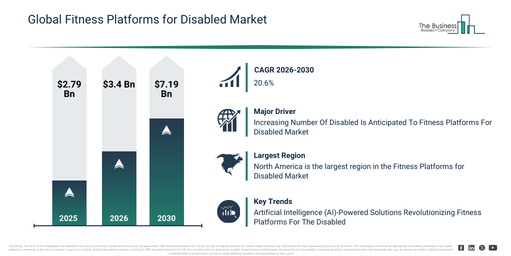
    The market for fitness platforms catering to individuals with disabilities has experienced significant expansion in recent years. This sector is forecast to increase from $2.79 billion in 2025 to $3.4 billion in 2026, achieving a compound annual growth rate (CAGR) of 22.0%. The historical growth trajectory can be linked to factors such as limited accessibility to traditional fitness facilities, increasing awareness surrounding disability, the widespread growth of digital fitness platforms, enhanced advocacy efforts for inclusivity, and ongoing improvements in technological accessibility.

    The market for fitness platforms catering to disabled individuals anticipates significant expansion over the coming years. This sector is projected to reach $7.19 billion by 2030, demonstrating a compound annual growth rate (CAGR) of 20.6%. This projected growth is driven by several factors, including developments in adaptive fitness technologies, the rise of virtual rehabilitation programs, enhanced funding for inclusive wellness initiatives, the incorporation of wearable devices, and the broader availability of tele-fitness services. Key trends for this period encompass a growing need for inclusive fitness options, the proliferation of personalized adaptive training programs, the expansion of remote and virtual fitness offerings, a stronger emphasis on design centered around accessibility, and greater partnerships with rehabilitation specialists.

    Get A Free Sample Report With In-Depth Market Insights:

    https://thebusinessresearchcompany.com/sample_request?id=58778416&type=smp&name=Fitness%20Platforms%20for%20Disabled%20Market%20Report%202026&utm_source=Blogs&utm_medium=Paid&utm_campaign=Nov_PR

    Fitness Platforms for Disabled Market Growth Drivers: What’s Behind The Acceleration?

    The rising population of disabled individuals is projected to drive growth in the fitness platforms for the disabled market moving ahead. Disabled describes persons experiencing physical, sensory, cognitive, or mental impairments that could hinder their participation in specific activities and might necessitate assistance to address these constraints. These fitness platforms for the disabled market offer accessible and inclusive exercise options, serving people with diverse disabilities to foster physical health and enhance their standard of living. As an example, in June 2023, the World Health Organization, a US-based intergovernmental organization, reported that around 1.3 billion people globally lived with considerable disabilities, making up roughly 16% of the world’s population, equivalent to one out of every six individuals. Consequently, the growing population of disabled individuals is fueling the fitness platforms for the disabled market.

    Fitness Platforms for Disabled Market Segments: Where Is Growth Concentrated?

    The fitness platforms for disabled market covered in this report is segmented –

    1) By Platform: Android, iOS, Other Platforms

    2) By Device: Smartphones, Tablets, Wearable Devices

    3) By Application: Exercise and Weight Loss, Diet and Nutrition, Activity Tracking, Other Applications

    Subsegments:

    1) By Android: Mobile Applications, Wearable Device Integration

    2) By iOS: Mobile Applications, Wearable Device Integration

    3) By Other Platforms: Web-Based Platforms, Desktop Applications, Smart TVs And Streaming Devices

    Fitness Platforms for Disabled Market Trends Redefining Industry Growth

    Leading firms within the fitness platforms for the disabled market are strategically integrating artificial intelligence, specifically machine learning adaptive coaching, to secure a competitive edge. This advanced technology analyzes unique movement data, encompassing aspects like strength, balance, and speed, to develop customized exercise regimens that evolve progressively, thereby boosting safety and individualization for individuals with impairments. As an illustration, in October 2023, Accessercise, a UK-headquartered fitness technology enterprise, introduced its application designed for individuals with physical disabilities. This app inquires about particular impairments, such as a missing limb, presents exercise demonstrations performed by individuals sharing similar impairments, and empowers users to construct personalized routines, establish reminders, and review accessible gym facilities. This methodology promotes empowerment, pertinent content, and a sense of community, although its overall efficacy is contingent upon the precision of user-provided information.

    Fitness Platforms for Disabled Market Key Participants And Competitive Landscape

    Major companies operating in the fitness platforms for disabled market are Adaptive Yoga Live, Wheelchair Fitness Solutions, Revolve Fitness, Rehab.com, Future Fitness, Evolve 21, Kakana, Champion’s RX, Kym NonStop, Peloton Interactive Inc., iFit, Aaptiv Inc., Virtuagym, Freeletics GmbH, Sworkit, Daily Burn, FitMind, ClassPass Inc., Orangetheory Fitness, Planet Fitness Inc.

    View The Full Fitness Platforms for Disabled Market Report:

    https://thebusinessresearchcompany.com/report/fitness-platforms-for-disabled-global-market-report?utm_source=Blogs&utm_medium=Paid&utm_campaign=Nov_PR

    Fitness Platforms for Disabled Market Regional Analysis: Which Geography Leads On Revenue?

    North America will be the largest region in the fitness platform market for the disabled in 2025. Asia-Pacific is expected to be the fastest-growing region in the forecast period. The regions covered in the fitness platforms for disabled market report are Asia-Pacific, South East Asia, Western Europe, Eastern Europe, North America, South America, Middle East, Africa.

    Reach Out To Our Team:

    The Business Research Company: https://www.thebusinessresearchcompany.com/

    Americas: +1 310-496-7795

    Asia: +44 7882 955267 & +91 8897263534

    Europe: +44 7882 955267

    Email us at: marketing@tbrc.info

    Follow us on:

    LinkedIn: https://in.linkedin.com/company/the-business-research-company

    YouTube: https://www.youtube.com/channel/UC24_fI0rV8cR5DxlCpgmyFQ

    Global Market Model: https://www.thebusinessresearchcompany.com/global-market-model
  • First Aid Training Market Size Forecast From 2026 To 2030: Key Industry Trends

    First Aid Training Market Size Forecast From 2026 To 2030: Key Industry Trends

    Featuring market attractiveness scoring, total addressable market sizing, company benchmarking matrices, interactive Excel dashboards, deeper supply chain intelligence, emerging startup tracking, and granular product-level insights, The Business Research Company’s 2026 market reports are built to deliver research that is both more actionable and more strategically valuable.

    First Aid Training Market Forecast: What Value Will The Market Reach By 2030?

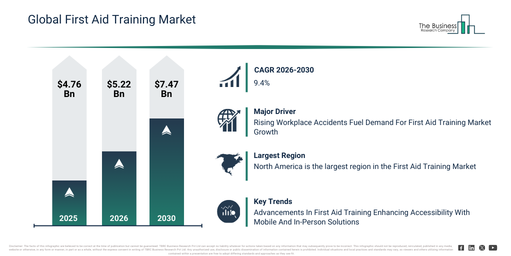
    The first aid training market has experienced robust expansion over recent years. Projected growth indicates an increase from $4.76 billion in 2025 to $5.22 billion in 2026, exhibiting a compound annual growth rate (CAGR) of 9.7%. Historically, this growth has been driven by factors such as compulsory workplace safety rules, the broad adoption of CPR and AED training, the broadening of industrial safety initiatives, heightened public awareness of accidents, and the rise of institutional training organizations.

    The first aid training market is projected to experience robust expansion in the coming years, with its size forecast to reach $7.47 billion by 2030, demonstrating a compound annual growth rate (CAGR) of 9.4%. This growth can be attributed to the increasing use of digital training platforms, a rising demand for remote and on-demand certifications, the expansion of first aid training in schools, growing corporate compliance requirements, and the integration of immersive training technologies. Major trends anticipated during this period include the increasing adoption of virtual first aid training programs, a surging demand for workplace safety certifications, the growing use of simulation-based learning tools, the expansion of blended training models, and an enhanced focus on mental health first aid.

    Get A Free Sample Report With In-Depth Market Insights:

    https://thebusinessresearchcompany.com/sample_request?id=50724481&type=smp&name=First%20Aid%20Training%20Market%20Report%202026&utm_source=Blogs&utm_medium=Paid&utm_campaign=Nov_PR

    First Aid Training Market Growth Factors Behind Sustained Expansion

    The increasing occurrence of workplace accidents is projected to drive the expansion of the first aid training market. Workplace accidents are defined as unforeseen incidents or injuries taking place during work-related activities, resulting in harm to employees or damage to property. The rise in these accidents can be attributed to greater workloads, insufficient safety protocols, and inadequate training in rapidly developing industries. First aid training is crucial for lessening the impact of workplace accidents, as it equips employees to administer immediate care, potentially reducing the severity of injuries and saving lives. For instance, in November 2023, the International Labour Organization (ILO), an intergovernmental organization based in Switzerland, reported that nearly 3 million workers die worldwide each year from work-related accidents and diseases, with approximately 395 million workers experiencing non-fatal work injuries annually. Thus, the rising number of workplace accidents is a significant factor propelling the growth of the first aid training market.

    First Aid Training Market Segment Analysis: What Are The Core Market Categories?

    The first aid training market covered in this report is segmented –

    1) By Course Level: Cardiopulmonary Resuscitation (CPR) And Automated External Defibrillator (AED) Training, Wilderness First Aid, Advanced First Aid, Basic First Aid

    2) By Training Method: Virtual, In-Person, Combination

    3) By Application: Industrial, Government, School, Other Applications

    Subsegments:

    1) By Cardiopulmonary Resuscitation (CPR) And Automated External Defibrillator (AED) Training: Adult CPR and AED Training, Pediatric CPR and AED Training, Basic Life Support (BLS) Certification, CPR for Healthcare Providers

    2) By Wilderness First Aid: Wilderness First Aid Basics, Wilderness First Responder (WFR) Certification, Advanced Wilderness First Aid, Wilderness CPR Training

    3) By Advanced First Aid: Advanced Cardiac Life Support (ACLS), Pediatric Advanced Life Support (PALS), First Aid for Mental Health, Trauma First Aid Training

    4) By Basic First Aid: Standard First Aid Certification, Basic First Aid for the Workplace, First Aid for Children and Infants, First Aid for Home Care

    First Aid Training Market Strategic Trends: What Defines The Next Growth Phase?

    Leading companies within the first aid training market are prioritizing the creation of sophisticated solutions, including smartphone-enabled distance education, to boost accessibility and user involvement. Smartphone-based distance learning describes the use of mobile applications or platforms for remote delivery of educational materials and instruction. For example, in September 2023, the Red Cross of Rwanda, a non-profit organization situated in Rwanda, released the first aid app in Africa. The First Aid in Africa app is obtainable for download on both Google Play and the App Store. It furnishes users with access to 17 first aid subjects, presented in their indigenous languages, alongside quizzes and visual aids to assist learning. The training curriculum is composed of two primary parts: online learning and practical training.

    First Aid Training Market Top Companies Driving Competitive Growth

    Major companies operating in the first aid training market are Stryker Corporation, MediFirst, British Red Cross, Health and Safety Institute (HSI), Cochrane Emergency Training Services, National Safety Council, Royal Lifesaving Society Australia (RLSSA), First Response Training International, American Red Cross, St. John Ambulance, Cleveland Clinic, Vertical Horizonz, First Aid Training Co., HeartSaver, Atlantic Training Center, Safe Response Training, React First Aid Training, First Aid Academy, Riklan Emergency Management Services, Red Cross Training Services, Emergency Response Training LLC, St. Andrew’s First Aid, Pacific First Aid, Training solutions North West

    View The Full First Aid Training Market Report:

    https://thebusinessresearchcompany.com/report/first-aid-training-global-market-report?utm_source=Blogs&utm_medium=Paid&utm_campaign=Nov_PR

    First Aid Training Market Geographic Spread And Regional Opportunities

    North America was the largest region in the first aid training Market in 2025. Asia-Pacific is expected to be the fastest-growing region in the forecast period. The regions covered in the first aid training market report are Asia-Pacific, South East Asia, Western Europe, Eastern Europe, North America, South America, Middle East, Africa.

    Reach Out To Our Team:

    The Business Research Company: https://www.thebusinessresearchcompany.com/

    Americas: +1 310-496-7795

    Asia: +44 7882 955267 & +91 8897263534

    Europe: +44 7882 955267

    Email us at: marketing@tbrc.info

    Follow us on:

    LinkedIn: https://in.linkedin.com/company/the-business-research-company

    YouTube: https://www.youtube.com/channel/UC24_fI0rV8cR5DxlCpgmyFQ

    Global Market Model: https://www.thebusinessresearchcompany.com/global-market-model
  • Filariasis Treatment Market 2026: Market Size, Growth Drivers And Emerging Opportunities

    Filariasis Treatment Market 2026: Market Size, Growth Drivers And Emerging Opportunities

    Built to provide research that’s more actionable and strategically valuable, The Business Research Company’s 2026 market reports include market attractiveness analysis, total addressable market sizing, company benchmarking matrices, interactive Excel dashboards, broader supply chain intelligence, emerging startup tracking, and in-depth product insights.

    Filariasis Treatment Market Size Outlook: How Quickly Will Revenue Expand Through 2030?

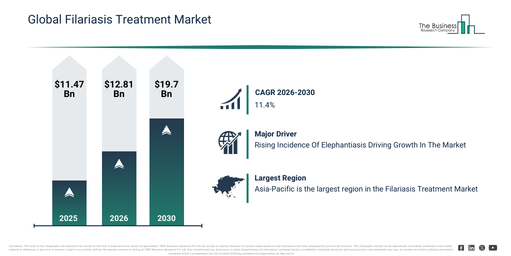
    The filariasis treatment market size has seen substantial growth in recent years. This market is projected to expand from $11.47 billion in 2025 to $12.81 billion in 2026, registering a compound annual growth rate (CAGR) of 11.7%. The growth observed in the past can be attributed to a high disease prevalence in tropical regions, the availability of antiparasitic drugs, global health initiatives, various government funding programs, and enhanced diagnosis.

    The filariasis treatment market is anticipated to experience significant expansion in the coming years. Projections indicate it will reach $19.7 billion by 2030, demonstrating a compound annual growth rate (CAGR) of 11.4%. This projected growth during the forecast period can be linked to factors such as the creation of advanced combination therapies, the broadening of elimination programs, enhanced healthcare funding, upgraded drug distribution networks, and an increase in global health collaborations. Key trends observed in this period encompass the broadening of mass drug administration initiatives, a heightened emphasis on therapies for parasite eradication, the proliferation of government-driven disease control efforts, enhanced availability of combination drug treatments, and an uptick in public health awareness campaigns.

    Get A Free Sample Report With In-Depth Market Insights:

    https://thebusinessresearchcompany.com/sample_request?id=51897693&type=smp&name=Filariasis%20Treatment%20Market%20Report%202026&utm_source=Blogs&utm_medium=Paid&utm_campaign=Nov_PR

    Filariasis Treatment Market Demand Drivers Opening New Revenue Streams

    The increasing occurrence of elephantiasis is projected to boost the expansion of the filariasis treatment market. Elephantiasis is a severe illness caused by parasitic infections, leading to significant swelling and thickening of the skin, typically in the limbs. This escalation in elephantiasis cases stems from multiple factors, including inadequate sanitation and hygiene, insufficient mass drug administration (MDA), ineffective vector control, and poor access to treatment. Treatments for filariasis focus on the underlying parasitic infection, aiming to lessen inflammation and avert lymphatic damage, which can decrease the likelihood of elephantiasis developing and relieve its severe manifestations. As an illustration, in November 2024, the World Health Organization, an intergovernmental body based in Switzerland, reported that in 2023, over 657 million people in 39 countries remained vulnerable to lymphatic filariasis and required prophylactic therapy to stop its spread. Consequently, the rising prevalence of elephantiasis is a key driver for the growth of the filariasis treatment market.

    Filariasis Treatment Market Segment Breakdown: Which Categories Lead On Revenue?

    The filariasis treatment market covered in this report is segmented –

    1) By Drug Type: Diethylcarbamazine, Ivermectin, Albendazole, Other Drug Types

    2) By Treatment Type: Medication, Surgery, Other Treatment Types

    3) By Distribution Channel: Hospital Pharmacies, Retail Pharmacies, Online Pharmacies, Other Distribution Channels

    4) By End-User: Hospitals, Clinics, Ambulatory Surgical Centers, Other End-Users

    Subsegments:

    1) By Diethylcarbamazine: Monotherapy, Combination Therapy

    2) By Ivermectin: Single-Dose Therapy, Mass Drug Administration (MDA)

    3) By Albendazole: Standalone Treatment, Combination With Other Anthelmintics

    4) By Other Drug Types: Doxycycline Therapy, Antihistamines And Anti-Inflammatory Drugs

    Filariasis Treatment Market Leading Players And Competitive Positioning

    Major companies operating in the filariasis treatment market are Merck & Co. Inc., GlaxoSmithKline plc, Eisai Co. Ltd., Pfizer Inc., Sanofi S.A., Bayer AG, Novartis AG, Johnson & Johnson, AstraZeneca plc, Dr Reddy’s Laboratories, Cipla Ltd., Sun Pharmaceutical Industries Ltd., Zydus Lifesciences Ltd., Ipca Laboratories Ltd., Mankind Pharma Ltd.

    View The Full Filariasis Treatment Market Report:

    https://thebusinessresearchcompany.com/report/filariasis-treatment-global-market-report?utm_source=Blogs&utm_medium=Paid&utm_campaign=Nov_PR

    Filariasis Treatment Market Top Region By Revenue And Market Share

    Asia-Pacific was the largest region in the filariasis treatment market in 2025. Asia-Pacific is expected to be the fastest-growing region in the forecast period. The regions covered in the filariasis treatment market report are Asia-Pacific, South East Asia, Western Europe, Eastern Europe, North America, South America, Middle East, Africa.

    Reach Out To Our Team:

    The Business Research Company: https://www.thebusinessresearchcompany.com/

    Americas: +1 310-496-7795

    Asia: +44 7882 955267 & +91 8897263534

    Europe: +44 7882 955267

    Email us at: marketing@tbrc.info

    Follow us on:

    LinkedIn: https://in.linkedin.com/company/the-business-research-company

    YouTube: https://www.youtube.com/channel/UC24_fI0rV8cR5DxlCpgmyFQ

    Global Market Model: https://www.thebusinessresearchcompany.com/global-market-model
  • Fifth Generation (5G) Technology In Telehealth Market Set To Expand From $8.49 Billion In 2026: Growth Outlook Through 2030

    Fifth Generation (5G) Technology In Telehealth Market Set To Expand From $8.49 Billion In 2026: Growth Outlook Through 2030

    Backed by market attractiveness analysis, total addressable market sizing, company benchmarking matrices, interactive Excel dashboards, wider supply chain intelligence, emerging startup coverage, and detailed product-level insights, The Business Research Company’s 2026 market reports are designed to offer research that is more actionable and strategically valuable than ever.

    Fifth Generation (5G) Technology In Telehealth Market Size, Value And Growth Trajectory Through 2030

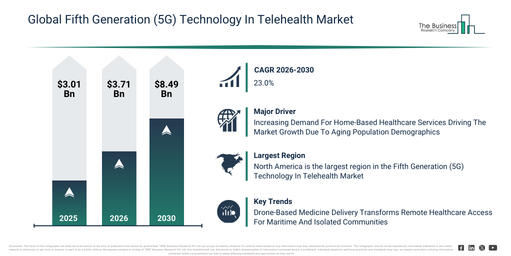
    The market size for fifth generation (5g) technology in telehealth has shown substantial growth in recent years. It is projected to increase from $3.01 billion in 2025 to $3.71 billion in 2026, achieving a compound annual growth rate (CAGR) of 23.3%. This historical expansion can be attributed to the broader adoption of telehealth services, a heightened demand for remote healthcare access, the progression of digital patient engagement tools, enhanced availability of connected health devices, and advancements in mobile healthcare connectivity.

    The market for fifth generation (5g) technology in telehealth is projected to experience rapid expansion over the coming years. This market is predicted to reach a size of $8.49 billion by 2030, demonstrating a compound annual growth rate (CAGR) of 23.0%. Key factors driving this growth during the projection period include heightened investments in nationwide 5g networks, a surge in demand for low-latency telehealth services, the broader adoption of home-based healthcare delivery, an intensified focus on making virtual care more efficient, and the increasing incorporation of AI-driven telehealth analytics. Prominent trends anticipated within the forecast timeframe encompass the wider embrace of real-time virtual consultations, a greater utilization of continuous remote health tracking, the expanded rollout of 5g-enabled wearable devices, an increase in the transmission of high-definition medical imaging, and the improved integration of secure cloud-based telehealth platforms.

    Get A Free Sample Report With In-Depth Market Insights:

    https://thebusinessresearchcompany.com/sample_request?id=55812943&type=smp&name=Fifth%20Generation%20%285G%29%20Technology%20In%20Telehealth%20Market%20Report%202026&utm_source=Blogs&utm_medium=Paid&utm_campaign=Nov_PR

    Fifth Generation (5G) Technology In Telehealth Market Growth Backed By Core Demand Fundamentals

    The rising need for remote healthcare solutions is projected to fuel expansion within the fifth generation (5G) technology in telehealth market. Remote healthcare involves providing clinical medical care to patients using digital communication methods, eliminating the need for physical office visits. This growing demand for remote healthcare stems from its enhanced accessibility and convenience, especially benefiting individuals in rural regions and those with restricted mobility, who can now obtain specialized medical attention irrespective of their location. The fifth generation (5G) technology in telehealth significantly boosts remote healthcare capabilities by offering extremely fast, low-latency connections, which facilitates real-time patient observation, high-definition online consultations, and uninterrupted data transfer, consequently enhancing the availability, standard, and promptness of care no matter where the patient is situated. As an illustration, in August 2023, data from a recent survey by Vivalink, a US-based healthcare technology company, revealed that 81% of clinicians are currently utilizing remote patient monitoring (RPM), marking a 305% increase from just 20% in 2021. Furthermore, 84% of healthcare professionals already employing RPM intend to broaden their adoption of the technology in 2024. Consequently, the escalating demand for remote healthcare services is acting as a primary catalyst for the expansion of the fifth generation (5G) technology in telehealth market.

    Fifth Generation (5G) Technology In Telehealth Market Segmentation: How Does The Market Break Down By Category?

    The fifth generation (5g) technology in telehealth market covered in this report is segmented –

    1) By Component: Hardware, Software, Services

    2) By Connectivity Type: Device Connectivity, Network Connectivity

    3) By Application: Remote Patient Monitoring, Real-Time Consultation, Telemedicine, Mobile Health, Other Applications

    4) By End-User: Hospitals, Clinics, Homecare, Other End-Users

    Subsegments:

    1) By Hardware: Network Equipment, Communication Devices, Sensors, Wearable Devices, Edge Devices

    2) By Software: Telemedicine Platforms, Remote Patient Monitoring Software, Data Analytics Software, Security Software, Cloud Management Software

    3) By Services: Network Deployment Services, Integration Services, Maintenance And Support Services, Consulting Services, Training And Education Services

    #Fifth Generation (5G) Technology In Telehealth Market Growth Trends: What’s Shaping The Future Outlook?

    Leading companies operating in the fifth generation (5G) technology in the telehealth market are focusing on deploying innovative solutions, such as drone-based medicine delivery, to guarantee faster and remote access to healthcare. Drone-based medicine delivery entails the use of unmanned aerial vehicles (drones) for transporting medicines, vaccines, or medical supplies to remote or hard-to-reach locations, which aids in ensuring swifter, dependable, and contactless access to essential healthcare services. For instance, in April 2023, M1 Limited, a telecommunication company based in Singapore, collaborated with Fullerton Health Group, a Singaporean healthcare provider, to launch a 5G-enabled telemedicine service specifically for seafarers. This initiative encompasses live teleconsultations with shore-based healthcare professionals and the deployment of 5G-enabled drones to deliver medicines directly to vessels at sea, thereby ensuring timely and efficient access to healthcare for maritime workers. The service is structured to support both seafarers onboard ships and employees of shipping companies on land, as long as they are connected to the 5G network. This innovation not only enhances the accessibility of medical care for individuals in remote or difficult-to-reach locations but also highlights the transformative capabilities of 5G technology in revolutionizing healthcare delivery, improving safety, and ensuring the wellbeing of workers vital to global trade and supply chains.

    Fifth Generation (5G) Technology In Telehealth Market Competitive Overview And Top Companies

    Major companies operating in the fifth generation (5g) technology in telehealth market are Verizon Communications Inc., AT&T Inc., Huawei Technologies Co. Ltd., Nippon Telegraph and Telephone Corporation, T-Mobile US Inc., Cisco Systems Inc., Intel Corporation, Vodafone Group Plc, Qualcomm Technologies Inc., BT Group plc, Fujitsu Limited, Telefonaktiebolaget LM Ericsson, Nokia Corporation, Siemens Healthineers AG, GE HealthCare Technologies Inc., ZTE Corporation, M1 Limited, GlobalMed Holdings LLC, Visionable Limited, Telit Communications Limited

    View The Full Fifth Generation (5G) Technology In Telehealth Market Report:

    https://thebusinessresearchcompany.com/report/fifth-generation-5g-technology-in-telehealth-global-market-report?utm_source=Blogs&utm_medium=Paid&utm_campaign=Nov_PR

    Fifth Generation (5G) Technology In Telehealth Market Regional Analysis And Top Geography

    North America was the largest region in the fifth generation (5G) technology in telehealth market in 2025. Asia-Pacific is expected to be the fastest-growing region in the forecast period. The regions covered in the fifth generation (5g) technology in telehealth market report are Asia-Pacific, South East Asia, Western Europe, Eastern Europe, North America, South America, Middle East, Africa.

    Reach Out To Our Team:

    The Business Research Company: https://www.thebusinessresearchcompany.com/

    Americas: +1 310-496-7795

    Asia: +44 7882 955267 & +91 8897263534

    Europe: +44 7882 955267

    Email us at: marketing@tbrc.info

    Follow us on:

    LinkedIn: https://in.linkedin.com/company/the-business-research-company

    YouTube: https://www.youtube.com/channel/UC24_fI0rV8cR5DxlCpgmyFQ

    Global Market Model: https://www.thebusinessresearchcompany.com/global-market-model
  • Fifth Generation (5G) Smart Healthcare Market Size And Growth In 2026: Key Factors Shaping Future Demand

    Fifth Generation (5G) Smart Healthcare Market Size And Growth In 2026: Key Factors Shaping Future Demand

    Featuring market attractiveness scoring, total addressable market sizing, company benchmarking matrices, interactive Excel dashboards, deeper supply chain intelligence, emerging startup tracking, and granular product-level insights, The Business Research Company’s 2026 market reports are built to deliver research that is both more actionable and more strategically valuable.

    Fifth Generation (5G) Smart Healthcare Market CAGR Outlook And Future Development

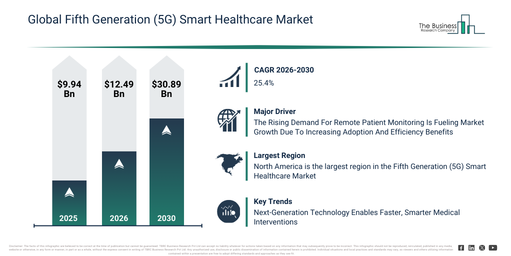
    The fifth generation (5g) smart healthcare market size has expanded considerably in recent years. It is forecast to grow from $9.94 billion in 2025 to $12.49 billion in 2026, achieving a compound annual growth rate (CAGR) of 25.7%. The historic growth of the market can be linked to factors such as the increasing adoption of telemedicine platforms, the expansion of digital health infrastructure, a rising demand for remote patient care solutions, the early deployment of connected medical devices, and improvements in wireless healthcare connectivity.

    The fifth generation (5g) smart healthcare market is projected to experience substantial growth in the coming years. It is anticipated to expand to $30.89 billion by 2030, exhibiting a compound annual growth rate (CAGR) of 25.4%. This anticipated growth during the forecast period can be attributed to several factors, including increasing investments in 5g healthcare infrastructure, a rising demand for real-time clinical decision support, the expansion of smart hospital initiatives, the growing integration of AI-powered healthcare analytics, and an increasing focus on remote and decentralized care models. Key trends during this timeframe involve the increasing adoption of remote surgery enablement, the rising deployment of real-time patient monitoring systems, the growing integration of AI-driven diagnostics over 5g, the expansion of AR and VR-assisted surgical applications, and an enhanced focus on ultra-low latency medical networks.

    Get A Free Sample Report With In-Depth Market Insights:

    https://thebusinessresearchcompany.com/sample_request?id=92551333&type=smp&name=Fifth%20Generation%20%285G%29%20Smart%20Healthcare%20Market%20Report%202026&utm_source=Blogs&utm_medium=Paid&utm_campaign=Nov_PR

    Fifth Generation (5G) Smart Healthcare Market Growth Catalysts And Demand Drivers

    The increasing need for remote patient monitoring is projected to propel the growth of the fifth generation (5G) smart healthcare market in the future. Remote patient monitoring involves the application of digital technologies to track and transmit patients’ health data in real time outside conventional healthcare environments. This upsurge in remote patient monitoring is spurred by the rising prevalence of chronic diseases and the requirement for continuous care, as it enables proactive interventions, reduces hospital visits, and improves patient outcomes. The fifth generation (5G) smart healthcare supports remote patient monitoring by offering high-speed, low-latency connectivity for effortless data exchange and trustworthy virtual healthcare provision. For example, in June 2025, as reported by the National Library of Medicine (NLM), a US-based biomedical library, the use of remote patient monitoring within physician office settings dramatically increased, reaching 5,118,772 services in 2023. Thus, the escalating demand for remote patient monitoring is driving the expansion of the fifth generation (5G) smart healthcare market.

    Fifth Generation (5G) Smart Healthcare Market Segment Trends And Revenue Contributors

    The fifth generation (5g) smart healthcare market covered in this report is segmented –

    1) By Component: Hardware, Software, Services

    2) By Application: Remote Patient Monitoring, Connected Medical Devices, Telemedicine, Augmented Reality (AR) Or Virtual Reality (VR) For Surgery, Other Applications

    3) By End-User: Hospitals, Clinics, Ambulatory Surgical Centers, Other End-Users

    Subsegments:

    1) By Hardware: Wearable Devices, Medical Imaging Equipment, Diagnostic Equipment, Monitoring Devices, Networking Equipment

    2) By Software: Electronic Health Record, Telemedicine Platforms, Health Analytics Software, Patient Management System, Remote Monitoring Software

    3) By Services: Consulting Services, Implementation Services, Maintenance And Support, Training And Education, Data Management Services

    Fifth Generation (5G) Smart Healthcare Market Industry Trends: What’s Reshaping Demand?

    Leading companies within the fifth generation (5G) smart healthcare market are concentrating on utilizing innovative technologies, particularly artificial intelligence (AI), to enable continuous patient monitoring and enhance emergency care results. Artificial intelligence (AI), defined as the replication of human cognitive abilities in machines to analyze information, learn, and make choices, supports healthcare by facilitating immediate patient oversight, prompt diagnosis, and quicker, more precise medical interventions. For example, in July 2025, KIMS Hospitals Private Limited, an India-based healthcare firm, collaborated with Medulance Private Limited, an India-based provider of app-driven technology and comprehensive emergency response services, to unveil Thane region’s inaugural AI-integrated 5G Smart Ambulance. This ambulance facilitates the live transmission of crucial patient data, such as ECG, blood pressure, and oxygen saturation, to the emergency room while the patient is en route. This integration of 5G connectivity with AI-driven analytics empowers emergency physicians to evaluate patient status and initiate treatment protocols before arrival, significantly reducing response times and elevating outcomes in critical emergencies, while simultaneously presenting a reproducible framework for incorporating advanced technology into pre-hospital care across India and other developing markets.

    Fifth Generation (5G) Smart Healthcare Market Competitive Landscape: Which Companies Lead The Industry?

    Major companies operating in the fifth generation (5g) smart healthcare market are Verizon Communications Inc., AT&T Inc., Huawei Technologies Co. Ltd., Nippon Telegraph and Telephone Corporation, T-Mobile US Inc., Cisco Systems Inc., Intel Corporation, Oracle Corporation, Vodafone Group Plc, Qualcomm Technologies Inc., Medtronic plc, BT Group plc, Fujitsu Limited, Telefonaktiebolaget LM Ericsson, Siemens Healthineers AG, GE HealthCare Technologies Inc., ZTE Corporation, Visionable Limited, Somatix Inc., Vigorus Healthtech Pvt. Ltd.

    View The Full Fifth Generation (5G) Smart Healthcare Market Report:

    https://thebusinessresearchcompany.com/report/fifth-generation-5g-smart-healthcare-global-market-report?utm_source=Blogs&utm_medium=Paid&utm_campaign=Nov_PR

    Fifth Generation (5G) Smart Healthcare Market Geographic Analysis: Where Is Demand Rising Fastest?

    North America was the largest region in the fifth generation (5G) smart healthcare market in 2025. The regions covered in the fifth generation (5g) smart healthcare market report are Asia-Pacific, South East Asia, Western Europe, Eastern Europe, North America, South America, Middle East, Africa.

    Reach Out To Our Team:

    The Business Research Company: https://www.thebusinessresearchcompany.com/

    Americas: +1 310-496-7795

    Asia: +44 7882 955267 & +91 8897263534

    Europe: +44 7882 955267

    Email us at: marketing@tbrc.info

    Follow us on:

    LinkedIn: https://in.linkedin.com/company/the-business-research-company

    YouTube: https://www.youtube.com/channel/UC24_fI0rV8cR5DxlCpgmyFQ

    Global Market Model: https://www.thebusinessresearchcompany.com/global-market-model