Blog

  • Antibiotics Active Pharmaceutical Ingredient (API) Market Growth Potential: What The Latest Forecast Reveals

    Built to provide research that’s more actionable and strategically valuable, The Business Research Company’s 2026 market reports include market attractiveness analysis, total addressable market sizing, company benchmarking matrices, interactive Excel dashboards, broader supply chain intelligence, emerging startup tracking, and in-depth product insights.

    Antibiotics Active Pharmaceutical Ingredient (API) Market Revenue Outlook: What CAGR Lies Ahead Through 2030?

    The antibiotics active pharmaceutical ingredient (API) market has seen swift expansion in recent years. Its valuation is projected to increase from $26.4 billion in 2025 to $29.26 billion in 2026, demonstrating a compound annual growth rate (CAGR) of 10.8%. This historical growth can be attributed to factors such as the rise in global antibiotic consumption, the accessibility of cost-effective manufacturing areas, an increase in generic pharmaceutical production, the growing frequency of bacterial infections, and the early practice of outsourcing API manufacturing.

    The antibiotics active pharmaceutical ingredient (api) market size is anticipated to experience significant expansion in the coming years. This market is projected to reach $44.5 billion by 2030, exhibiting a compound annual growth rate (CAGR) of 11.1%. This expansion during the forecast period is driven by several factors, including a heightened focus on managing antimicrobial resistance, increased investments in domestic api manufacturing, a rising need for hospital-grade antibiotics, the broadening of regulated pharmaceutical markets, and a greater emphasis on securing the supply chain. Key developments expected during this period involve a surge in the adoption of fermentation-based api production, a stronger emphasis on high-purity antibiotic apis, an escalating demand for broad-spectrum antibiotics, the expansion of contract api manufacturing services, and a reinforced commitment to regulatory compliance.

    Get A Free Sample Report With In-Depth Market Insights:

    https://thebusinessresearchcompany.com/sample_request?id=10807529&type=smp&name=Antibiotics%20Active%20Pharmaceutical%20Ingredient%20%28API%29%20Market%20Report%202026&utm_source=Blogs&utm_medium=Paid&utm_campaign=Oct_PR

    Antibiotics Active Pharmaceutical Ingredient (API) Market Opportunity Drivers: What’s Unlocking New Revenue Potential?

    The anticipated expansion of the antibiotics active pharmaceutical ingredient (API) market is linked to the increasing occurrence of bacterial infections. These infections are defined as ailments resulting from detrimental bacteria invading the human body, necessitating antibacterial remedies. This increase in bacterial infections stems from the escalating rates of antibiotic-resistant bacteria, which complicate existing therapeutic approaches and contribute to infections becoming more common, serious, and enduring. The antibiotics active pharmaceutical ingredient (API) facilitates the creation and production of potent antibiotic medications designed to combat bacterial infections and address resistance trends, achieved by providing crucial active drug substances for medicines. For example, data from November 2024 by the UK Health Security Agency, a UK-based government department, reported approximately 66,730 significant antibiotic-resistant infections in 2023, coupled with a 2.4% rise in antibiotic consumption from 2022. Consequently, the growing frequency of bacterial infections is a key factor propelling the expansion of the antibiotic active pharmaceutical ingredient (API) market.

    Antibiotics Active Pharmaceutical Ingredient (API) Market Segment Performance And Emerging Opportunities

    The antibiotics active pharmaceutical ingredient (api) market covered in this report is segmented –

    1) By Product Type: Beta-Lactams; Aminoglycosides; Macrolides; Tetracyclines; Glycopeptides; Quinolones; Polypeptides; Sulfonamides

    2) By Formulation Type: Injectable; Oral; Topical; Inhalation

    3) By Route of Administration: Oral Administration; Intravenous Administration; Intramuscular Administration; Topical Application; Inhalation Therapy

    4) By Therapeutic Application: Bacterial Infections; Respiratory Tract Infections; Skin Infections; Sepsis

    5) By End-User: Hospitals; Pharmacies; Clinics; Homecare Settings; Long-Term Care Facilities

    Subsegments:

    1) By Beta-Lactams: Penicillins; Cephalosporins; Carbapenems; Monobactams

    2) By Aminoglycosides: Streptomycin Based Antibiotics; Gentamicin Based Antibiotics; Amikacin Based Antibiotics; Tobramycin Based Antibiotics

    3) By Macrolides: Erythromycin Based Antibiotics; Azithromycin Based Antibiotics; Clarithromycin Based Antibiotics; Roxithromycin Based Antibiotics

    4) By Tetracyclines: Doxycycline Based Antibiotics; Minocycline Based Antibiotics; Oxytetracycline Based Antibiotics; Chlortetracycline Based Antibiotics

    5) By Glycopeptides: Vancomycin Based Antibiotics; Teicoplanin Based Antibiotics; Dalbavancin Based Antibiotics; Oritavancin Based Antibiotics

    6) By Quinolones: Ciprofloxacin Based Antibiotics; Levofloxacin Based Antibiotics; Moxifloxacin Based Antibiotics; Ofloxacin Based Antibiotics

    7) By Polypeptides: Bacitracin Based Antibiotics; Polymyxin Based Antibiotics; Colistin Based Antibiotics; Gramicidin Based Antibiotics

    8) By Sulfonamides: Sulfamethoxazole Based Antibiotics; Sulfadiazine Based Antibiotics; Sulfisoxazole Based Antibiotics; Sulfacetamide Based Antibiotics

    Antibiotics Active Pharmaceutical Ingredient (API) Market Innovation Trends Shaping Future Development

    Leading companies within the antibiotic active pharmaceutical ingredient (API) market are concentrating on enhancing their manufacturing capacities and adhering to regulatory standards to ensure a consistent supply, high quality, and global access for crucial antibiotic medications. Manufacturing capabilities refer to the capacity to produce antibiotic APIs on a large scale while upholding consistent quality, purity, and controlled processes, whereas regulatory compliance verifies these APIs conform to global regulatory and GMP standards, thereby supporting their safety, efficacy, and approval for commercial use. For instance, in March 2024, Zydus Lifesciences, an India-based pharmaceutical company, received approval from the US Food and Drug Administration for commercial production at its Ahmedabad API manufacturing facility. This authorization allows the company to manufacture antibiotic APIs for regulated markets, thus supporting reliable supply chains and compliance with international quality standards. The facility utilizes strong process controls, quality checks, and manufacturing methods that meet regulations to guarantee that the APIs consistently maintain purity, safety, and effectiveness. It is engineered to support large-volume production while upholding stringent compliance requirements, reinforcing supply security for essential antibiotics and addressing global demand for high-quality antimicrobial APIs.

    Antibiotics Active Pharmaceutical Ingredient (API) Market Competitive Landscape: Which Companies Lead The Industry?

    Major companies operating in the antibiotics active pharmaceutical ingredient (api) market are Sanofi S.A., Sun Pharmaceutical Industries Limited, Zydus Lifesciences Limited, Zhejiang NHU Co Ltd, Almac Group Limited, Jubilant Pharmova Limited, Esteve Healthcare S L, Granules India Limited, Teva Pharmaceutical Industries Ltd, Neuland Laboratories Ltd, Fermion Oy, Century Pharmaceuticals Ltd, Sreepathi Lab Private Limited, Virchow Biotech Private Limited, AMGIS Lifescience Ltd., Midas Pharma GmbH, Sinoway Industrial ShanghAI Co Ltd, Penam Laboratories Limited, and Noreva Biotech.

    View The Full Antibiotics Active Pharmaceutical Ingredient (API) Market Report:

    https://thebusinessresearchcompany.com/report/antibiotics-active-pharmaceutical-ingredient-api-market-report?utm_source=Blogs&utm_medium=Paid&utm_campaign=Oct_PR

    Antibiotics Active Pharmaceutical Ingredient (API) Market Regional Outlook: Where Is Opportunity Concentrated?

    North America was the largest region in the antibiotics active pharmaceutical ingredient (API) market in 2025. Asia-Pacific is expected to be the fastest-growing region in the forecast period. The regions covered in the antibiotics active pharmaceutical ingredient (api) market report are Asia-Pacific, South East Asia, Western Europe, Eastern Europe, North America, South America, Middle East, Africa.

    Reach Out To Our Team:

    The Business Research Company: https://www.thebusinessresearchcompany.com/

    Americas: +1 310-496-7795

    Asia: +44 7882 955267 & +91 8897263534

    Europe: +44 7882 955267

    Email us at: marketing@tbrc.info

    Follow us on:

    LinkedIn: https://in.linkedin.com/company/the-business-research-company

    YouTube: https://www.youtube.com/channel/UC24_fI0rV8cR5DxlCpgmyFQ

    Global Market Model: https://www.thebusinessresearchcompany.com/global-market-model
  • Adaptive Neuromodulation Therapy Devices Market Forecast: Breaking Down The Numbers Behind Future Expansion

    Built to provide research that’s more actionable and strategically valuable, The Business Research Company’s 2026 market reports include market attractiveness analysis, total addressable market sizing, company benchmarking matrices, interactive Excel dashboards, broader supply chain intelligence, emerging startup tracking, and in-depth product insights.

    Adaptive Neuromodulation Therapy Devices Market Value Growth And Long-Term Outlook

    The market for adaptive neuromodulation therapy devices has experienced significant growth recently. It is anticipated to expand from $7.09 billion in 2025 to $7.82 billion in 2026, driven by a compound annual growth rate (CAGR) of 10.4%. The historical rise in this market can be attributed to various factors such as advancements in implantable neuromodulation devices, a growing prevalence of neurological disorders, the early adoption of deep brain stimulation therapies, improvements in neural signal processing, and the expansion of specialized neurology centers.

    The adaptive neuromodulation therapy devices market is projected to undergo substantial growth in the upcoming years. Its valuation is expected to reach $11.7 billion by 2030, advancing at a compound annual growth rate (CAGR) of 10.6%. This anticipated expansion over the forecast period is fueled by an escalating demand for individualized neuromodulation therapies, increased investments in brain-computer interface technologies, the broadening scope of non-invasive neuromodulation applications, a heightened focus on managing long-term therapy, and the greater integration of AI-driven adaptive stimulation. Significant trends for the forecast duration include a wider adoption of closed-loop neuromodulation systems, an increased incorporation of real-time neural sensing, the growing utilization of personalized stimulation algorithms, an expansion of wearable and non-invasive neuromodulation devices, and an intensified focus on optimizing therapy and reducing side effects.

    Get A Free Sample Report With In-Depth Market Insights:

    https://thebusinessresearchcompany.com/sample_request?id=65818147&type=smp&name=Adaptive%20Neuromodulation%20Therapy%20Devices%20Market%20Report%202026&utm_source=Blogs&utm_medium=Paid&utm_campaign=Oct_PR

    Adaptive Neuromodulation Therapy Devices Market Demand Drivers Opening New Revenue Streams

    The increasing prevalence of long-term neurological conditions is anticipated to drive the expansion of the adaptive neuromodulation therapy devices market going forward. Long-term neurological conditions encompass chronic disorders affecting the brain, spinal cord, or nervous system, resulting in sustained impairments in movement, cognition, sensation, or behavior. The escalating burden of these conditions is propelled by rising life expectancy, which contributes to a greater incidence of age-related neurological degeneration and long-term disease challenges. Adaptive neuromodulation therapy devices assist in managing long-term neurological conditions by delivering personalized, real-time electrical stimulation that adjusts dynamically to patient-specific neural activity, thereby improving symptom control and long-term neurological outcomes. For instance, in March 2023, the Alzheimer’s Association, a US-based nonprofit voluntary health organization, reported that 6.7 million Americans aged 65+ have Alzheimer’s, a number projected to rise to 13.8 million by 2060. Therefore, the growing prevalence of long-term neurological conditions is stimulating the growth of the adaptive neuromodulation therapy devices market.

    Adaptive Neuromodulation Therapy Devices Market Segment Breakdown: Which Categories Lead On Revenue?

    The adaptive neuromodulation therapy devices market covered in this report is segmented –

    1) By Product Type: Implantable Adaptive Neuromodulation Devices; Non-Implantable Adaptive Neuromodulation Devices; Rechargeable Adaptive Neuromodulation Devices; Non-Rechargeable Adaptive Neuromodulation Devices

    2) By Device Type: Deep Brain Stimulation Systems; Spinal Cord Stimulation Systems; Vagus Nerve Stimulation Systems; Sacral Nerve Stimulation Systems; Responsive Neurostimulation Systems

    3) By Technology: Closed-Loop Electrical Neuromodulation Technology; Closed-Loop Magnetic Neuromodulation Technology; Responsive Neurostimulation Technology; Adaptive Deep Brain Stimulation Technology

    4) By Application: Epilepsy; Parkinson’s Disease (PD); Mixed Urinary Incontinence (MUI); Other Applications

    5) By End User: Hospitals; Neurology Clinics; Specialty Neurosurgical Centers; Research And Academic Institutes

    Subsegments:

    1) By Implantable Adaptive Neuromodulation Devices: Deep Brain Stimulation Systems; Spinal Cord Stimulation Systems; Vagus Nerve Stimulation Systems; Sacral Nerve Stimulation Systems; Peripheral Nerve Stimulation Systems

    2) By Non-Implantable Adaptive Neuromodulation Devices: Transcranial Magnetic Stimulation Devices; Transcranial Direct Current Stimulation Devices; External Vagus Nerve Stimulation Devices; Wearable Neurostimulation Systems

    3) By Rechargeable Adaptive Neuromodulation Devices: Rechargeable Implantable Pulse Generators; Wireless Rechargeable Neurostimulators; Long Life Rechargeable Stimulation Systems

    4) By Non-Rechargeable Adaptive Neuromodulation Devices: Primary Cell Implantable Neurostimulators; Single Use Implantable Stimulation Devices; Fixed Life Pulse Generator Systems

    Adaptive Neuromodulation Therapy Devices Market Trends Powering Strategic Industry Growth

    Major companies in the adaptive neuromodulation therapy devices market are prioritizing the creation of innovative solutions, such as wireless charging with flexibility, to enable patients to remain active during recharging and minimize therapy interruptions. This flexible wireless charging allows individuals to power their neuromodulation devices wirelessly while continuing their daily routines. For instance, in January 2024, Abbott Laboratories, a US-based medical device company, launched the Liberta RC DBS system. This rechargeable deep brain stimulation platform is engineered to treat movement disorders with enhanced flexibility and patient convenience. The system features one of the most compact rechargeable implantable pulse generators available, which improves patient comfort and supports minimally invasive implantation. It also offers remote programming and monitoring, allowing clinicians to adjust therapy settings without requiring frequent in-clinic visits. Furthermore, Liberta RC supports adaptive stimulation capabilities that enable personalized therapy optimization over time based on patient response, enhancing treatment continuity and long-term disease management.

    Adaptive Neuromodulation Therapy Devices Market Leading Players And Competitive Positioning

    Major companies operating in the adaptive neuromodulation therapy devices market are Abbott Laboratories, Medtronic Plc, Boston Scientific Corporation, Biotronik AG, LivaNova plc, Bioventus LLC, NEVRO Corp., Axonics, Inc, Neuronetics, Inc., NeuroPace, Inc., Cala Health Inc, BrainsWay Ltd, SPR Therapeutics, Inc., ElectroCore, Inc., Mainstay Medical Ltd., Blackrock Neurotech, Inc., Soterix Medical Inc., Synapse Biomedical Inc., NeuroSigma, Inc., Aleva Neurotherapeutics SA, Magstim Company Ltd.

    View The Full Adaptive Neuromodulation Therapy Devices Market Report:

    https://thebusinessresearchcompany.com/report/adaptive-neuromodulation-therapy-devices-market-report?utm_source=Blogs&utm_medium=Paid&utm_campaign=Oct_PR

    Adaptive Neuromodulation Therapy Devices Market Regional Split: Which Areas Are Fueling Growth?

    North America was the largest region in the adaptive neuromodulation therapy devices market in 2025. Asia-Pacific is expected to be the fastest-growing region in the forecast period. The regions covered in the adaptive neuromodulation therapy devices market report are Asia-Pacific, South East Asia, Western Europe, Eastern Europe, North America, South America, Middle East, Africa.

    Reach Out To Our Team:

    The Business Research Company: https://www.thebusinessresearchcompany.com/

    Americas: +1 310-496-7795

    Asia: +44 7882 955267 & +91 8897263534

    Europe: +44 7882 955267

    Email us at: marketing@tbrc.info

    Follow us on:

    LinkedIn: https://in.linkedin.com/company/the-business-research-company

    YouTube: https://www.youtube.com/channel/UC24_fI0rV8cR5DxlCpgmyFQ

    Global Market Model: https://www.thebusinessresearchcompany.com/global-market-model
  • Acellular Therapy Market Expected To Grow At 16.9% CAGR Through 2030: What Businesses Need To Know

    Backed by market attractiveness analysis, total addressable market sizing, company benchmarking matrices, interactive Excel dashboards, wider supply chain intelligence, emerging startup coverage, and detailed product-level insights, The Business Research Company’s 2026 market reports are designed to offer research that is more actionable and strategically valuable than ever.

    Acellular Therapy Market Poised To Hit $18.09 Billion By 2030 With A 16.9% CAGR

    The acellular therapy market size has experienced rapid expansion in recent years. This market is projected to expand from $8.3 billion in 2025 to $9.69 billion in 2026, demonstrating a compound annual growth rate (CAGR) of 16.7%. Historically, this growth is a result of several factors, including heightened research activity in regenerative medicine, the early clinical acceptance of acellular matrices, rising demand for immune-safe therapies, broader applications in wound care, and advancements in biomaterial processing techniques.

    The acellular therapy market is projected to experience substantial expansion in the coming years. Its value is anticipated to reach $18.09 billion by 2030, exhibiting a compound annual growth rate (CAGR) of 16.9%. This projected increase during the forecast period is fueled by several factors, including a heightened need for customized regenerative treatments, greater capital allocation towards advanced biomaterials, an broadening range of clinical uses for acellular therapies, a concentrated effort on developing scalable regenerative solutions, and increased regulatory backing for non-cellular therapeutic approaches. Significant developments expected in this period involve a rise in the uptake of therapies based on growth factors, more frequent application of extracellular matrix scaffolds, an increasing emphasis on regenerative solutions that are cell-free, the availability of more ready-to-use regenerative products, and stronger integration of platforms for translational research.

    Get A Free Sample Report With In-Depth Market Insights:

    https://thebusinessresearchcompany.com/sample_request?id=98791747&type=smp&name=Acellular%20Therapy%20Market%20Report%202026&utm_source=Blogs&utm_medium=Paid&utm_campaign=Oct_PR

    Acellular Therapy Market Growth Backed By Core Demand Fundamentals

    The increasing integration of regenerative medicine is anticipated to drive the growth of the acellular therapy market. Regenerative medicine encompasses medical approaches aimed at repairing, replacing, or regenerating human cells, tissues, or organs through biological processes and therapies to restore their normal function. The embrace of regenerative medicine is on the rise as biotechnology research activity expands globally, leading to an increased number of developers, more robust pipelines, and wider therapeutic explorations. Acellular therapy (AT) supports this trend by providing bioactive, cell-free therapeutic materials, including extracellular vesicles, secretomes, and other biologically active components, which enhance regenerative strategies with improved safety and standardized dosing. For instance, in june 2024, data from the Centre for Commercialization of Regenerative Medicine (CCRM), a Canada-based regenerative medicine organization, indicated that there were 2,848 cell and gene therapy developers worldwide as of april 2024, marking an 11% increase from quarter four (Q4) 2023. Furthermore, 1,751 active regenerative medicine clinical trials were underway globally as of april 2024, highlighting sustained clinical engagement and a surge in regenerative research. Therefore, the expanding adoption of regenerative medicine is propelling the growth of the acellular therapy market.

    Acellular Therapy Market Segmentation: How Does The Market Break Down By Category?

    The acellular therapy market covered in this report is segmented –

    1) By Type: Acellular Dermal Matrices; Acellular Amniotic Membranes; Acellular Umbilical Cord Products; Other Types

    2) By Disease: Parkinson’s; Alzheimer’s; Chronic Wounds; Sclerosis; Cancer

    3) By Scaffold: Fused Deposition Modeling (FDM); Cell Laden Hydrogel; Extracellular Matrix (ECM); Selective Laser Sintering (SLS)

    4) By Application: Hepatology; Orthopedic; Cardiology; Neurology; Oncology; Gastroenterology

    5) By End-User: Hospitals; Clinics; Ambulatory Surgical Centers; Research Institutes

    Subsegments:

    1) By Acellular Dermal Matrices: Human Derived Dermal Matrices; Animal Derived Dermal Matrices; Cross Linked Dermal Matrices; Non Cross Linked Dermal Matrices

    2) By Acellular Amniotic Membranes: Cryopreserved Amniotic Membranes; Dehydrated Amniotic Membranes; Lyophilized Amniotic Membranes; Laminated Amniotic Membranes

    3) By Acellular Umbilical Cord Products: Wharton Jelly Based Products; Umbilical Cord Patch Products; Umbilical Cord Powder Products; Umbilical Cord Sheet Products

    4) By Other Types: Acellular Cartilage Matrices; Acellular Bone Matrices; Acellular Vascular Grafts; Acellular Tendon And Ligament Scaffolds

    Acellular Therapy Market Growth Trends Reshaping The Competitive Landscape

    Companies active within the acellular therapy market are primarily focused on developing small extracellular vesicle (sEV) therapies to support tissue regeneration, diminish inflammation, and modify immune responses by directly delivering bioactive vesicles to affected tissues, without incorporating living cells. Small extracellular vesicle (sEV) therapies are categorized as acellular products derived from cultured cells, which carry proteins, ribonucleic acids (RNAs), and signaling molecules, thereby enabling precise regulation of cellular activity, repair of injured tissue, and immunomodulation. For example, in march 2025, evast bio, a US-based biotechnology firm, unveiled a small extracellular vesicle (sEV) therapy for knee osteoarthritis, designed to address crucial challenges in inflammatory joint disease. This therapy delivers exosomes to inflamed cartilage, promoting the regeneration of cartilage extracellular matrix, reducing inflammatory markers, and improving joint function, marking it as a pioneering acellular therapy (AT) for musculoskeletal inflammation and a model for future extracellular vesicle (sEV) based treatments.

    Acellular Therapy Market Competitive Overview And Top Companies

    Major companies operating in the acellular therapy market are Thermo Fisher Scientific, FUJIFILM Holdings Corp., Lonza Group AG, Smith+Nephew, Charles River Laboratories, Sartorius AG, Integra LifeSciences, AGC Biologics, Organogenesis Holdings Inc., MiMedx Group Inc., Vericel Corporation, Avita Medical, Capricor Therapeutics, RoosterBio Inc., Creative Biolabs, Evox Therapeutics Ltd., ILIAS Biologics, Aruna Biomedical, Stem Cell Medicine Ltd., Aegle Therapeutics Corp, Direct Biologics LLC., BioCardia Inc., BioRestorative Therapies Inc., and EverZom.

    View The Full Acellular Therapy Market Report:

    https://thebusinessresearchcompany.com/report/acellular-therapy-market-report?utm_source=Blogs&utm_medium=Paid&utm_campaign=Oct_PR

    Acellular Therapy Market Top Region: Where Does Most Revenue Come From?

    North America was the largest region in the acellular therapy market in 2025. Asia-Pacific is expected to be the fastest-growing region in the forecast period. The regions covered in the acellular therapy market report are Asia-Pacific, South East Asia, Western Europe, Eastern Europe, North America, South America, Middle East, Africa.

    Reach Out To Our Team:

    The Business Research Company: https://www.thebusinessresearchcompany.com/

    Americas: +1 310-496-7795

    Asia: +44 7882 955267 & +91 8897263534

    Europe: +44 7882 955267

    Email us at: marketing@tbrc.info

    Follow us on:

    LinkedIn: https://in.linkedin.com/company/the-business-research-company

    YouTube: https://www.youtube.com/channel/UC24_fI0rV8cR5DxlCpgmyFQ

    Global Market Model: https://www.thebusinessresearchcompany.com/global-market-model
  • Abdominal Surgical Robot Market Forecast To Reach $10.34 Billion By 2030: Key Trends Explained

    Featuring market attractiveness scoring, total addressable market sizing, company benchmarking matrices, interactive Excel dashboards, deeper supply chain intelligence, emerging startup tracking, and granular product-level insights, The Business Research Company’s 2026 market reports are built to deliver research that is both more actionable and more strategically valuable.

    Abdominal Surgical Robot Market Size And Revenue Outlook Through 2030

    The abdominal surgical robot market has experienced substantial expansion in recent years. It is projected to grow from $4.55 billion in 2025 to $5.36 billion in 2026, achieving a compound annual growth rate (CAGR) of 17.6%. Historically, this market expansion can be linked to the increasing adoption of minimally invasive surgeries, rising investments in hospital robotic infrastructure, growing surgeon acceptance of robotic assistance, improvements in surgical imaging technologies, and the expansion of specialized surgical training programs.

    The abdominal surgical robot market size is anticipated to expand rapidly in the coming years. It is projected to achieve a value of $10.34 billion by 2030, demonstrating a compound annual growth rate (CAGR) of 17.9%. This expansion during the forecast period is largely driven by factors such as a heightened demand for precision-guided surgeries, the increasing incorporation of AI-driven decision support systems, the broadened application of robotic-assisted procedures across various medical specialties, rising investments in smart operating room technologies, and an intensified focus on optimizing patient outcomes. Significant trends foreseen in this period include the wider adoption of AI-assisted surgical navigation, the greater integration of advanced robotic instruments, an increased utilization of 3D visualization and imaging systems, the development of modular and upgradeable robotic platforms, and a strengthened emphasis on minimally invasive surgical precision.

    Get A Free Sample Report With In-Depth Market Insights:

    https://thebusinessresearchcompany.com/sample_request?id=86157685&type=smp&name=Abdominal%20Surgical%20Robot%20Market%20Report%202026&utm_source=Blogs&utm_medium=Paid&utm_campaign=Oct_PR

    Abdominal Surgical Robot Market Growth Catalysts And Demand Drivers

    The expanding utilization of minimally invasive surgical techniques is anticipated to boost the abdominal surgical robot market in the future. These medical interventions involve the use of small cuts and sophisticated instruments, including laparoscopic and endoscopic tools, to address health issues with less harm to adjacent tissues. The rise in minimally invasive surgery adoption stems from advantages like quicker recuperation, shorter periods of hospitalization, and a faster return to daily routines when contrasted with conventional open surgeries. Abdominal surgical robots are seeing greater application in intricate minimally invasive abdominal operations, offering superior precision, enhanced dexterity, and excellent three-dimensional imaging. This allows surgeons to execute complex procedures via tiny incisions, leading to less tissue damage and better patient outcomes. As an illustration, in June 2024, the American Society of Plastic Surgeons, a US-based organization, reported a 7% increase in minimally invasive procedures in 2023 compared to the prior year, highlighting the wider growth in the embrace of minimally invasive surgery across various medical fields. Consequently, the rising prevalence of minimally invasive surgeries is propelling the expansion of the abdominal surgical robot market.

    Abdominal Surgical Robot Market Segment Trends And Revenue Contributors

    The abdominal surgical robot market covered in this report is segmented –

    1) By Product Type: Robotic Systems; Instruments And Accessories; Services

    2) By Application: General Surgery; Gynecological Surgery; Urological Surgery; Colorectal Surgery; Other Applications

    3) By End-Users: Hospitals; Ambulatory Surgical Centers; Specialty Clinics; Other End-Users

    Subsegments:

    1) By Robotic Systems: Standalone Robotic Platforms; Integrated Robotic Operating Suites; Modular Robotic Systems

    2) By Instruments And Accessories: Robotic Graspers; Robotic Scissors; Robotic Suturing Instruments; Endoscopic Cameras And Scopes; Energy Devices For Robotic Surgery

    3) By Services: Installation And Setup Services; Maintenance And Technical Support; Surgical Training And Education; Software Updates And Upgrades

    Abdominal Surgical Robot Market Trends Shaping Long-Term Demand

    Major companies engaged in the abdominal surgical robot market are prioritizing technological advancements, integrating capabilities such as advanced visualization, haptic feedback, and AI-driven sensing. These innovations are designed to facilitate more precise, minimally invasive surgeries and streamline surgical workflows. These technologies provide surgeons with improved three-dimensional views of internal anatomy, real-time tactile responses, and data-backed insights, enabling complex procedures to be performed with enhanced accuracy and control. For example, in March 2024, Intuitive Surgical Inc., a US-based technology company, launched the da Vinci 5 robotic system, which features innovative force feedback technology allowing surgeons to perceive subtle tissue forces during operations. The system elevates minimally invasive surgery by reducing tissue force by up to 43%, providing up to 10,000 times greater computing power to support AI analytics, and incorporating an ergonomic design to lessen surgeon fatigue. It is engineered for use across abdominal, urologic, gynecologic, and thoracic procedures via smaller incisions, yielding patient benefits such as faster recovery, reduced pain, lower blood loss, and a decreased risk of infection.

    Abdominal Surgical Robot Market Competitive Landscape: Which Companies Lead The Industry?

    Major companies operating in the abdominal surgical robot market are Johnson & Johnson, Medtronic Plc., Intuitive Surgical Inc., KUKA AG., Meril Life Sciences, Titan Medical Inc., Avatera Medical, CMR Surgical Ltd., Cornerstone Robotics Ltd., Distalmotion, Vicarious Surgical Inc., MicroPort MedBot, Virtual Incision Corporation, Endorobotics Co. Ltd., EndoQuest Robotics, MOON Surgical, SS Innovations International Inc., Beijing Surgerii Robotics Co. Ltd, Medrobotics Corporation, Shandong WEGO Surgery Robot Co. Ltd., Shenzhen Edge Medical Co. Ltd, Sina Robotics and Medical Innovators Co. Ltd.

    View The Full Abdominal Surgical Robot Market Report:

    https://thebusinessresearchcompany.com/report/abdominal-surgical-robot-market-report?utm_source=Blogs&utm_medium=Paid&utm_campaign=Oct_PR

    Abdominal Surgical Robot Market Regional Breakdown: Where Is Demand Concentrated?

    North America was the largest region in the abdominal surgical robot market in 2025. Asia-Pacific is expected to be the fastest-growing region in the forecast period. The regions covered in the abdominal surgical robot market report are Asia-Pacific, South East Asia, Western Europe, Eastern Europe, North America, South America, Middle East, Africa.

    Reach Out To Our Team:

    The Business Research Company: https://www.thebusinessresearchcompany.com/

    Americas: +1 310-496-7795

    Asia: +44 7882 955267 & +91 8897263534

    Europe: +44 7882 955267

    Email us at: marketing@tbrc.info

    Follow us on:

    LinkedIn: https://in.linkedin.com/company/the-business-research-company

    YouTube: https://www.youtube.com/channel/UC24_fI0rV8cR5DxlCpgmyFQ

    Global Market Model: https://www.thebusinessresearchcompany.com/global-market-model
  • Thromboelastography Analyzer Market Size In 2026: Growth Outlook And Forecast Through 2030

    Thromboelastography Analyzer Market Size In 2026: Growth Outlook And Forecast Through 2030

    Backed by market attractiveness analysis, total addressable market sizing, company benchmarking matrices, interactive Excel dashboards, wider supply chain intelligence, emerging startup coverage, and detailed product-level insights, The Business Research Company’s 2026 market reports are designed to offer research that is more actionable and strategically valuable than ever.

    Thromboelastography Analyzer Market Forecast: What Value Will The Market Reach By 2030?

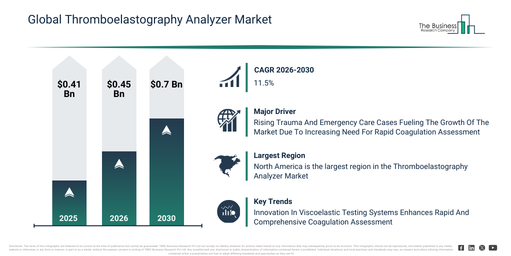
    The thromboelastography analyzer market has experienced substantial expansion in recent years. This market is projected to expand from $0.41 billion in 2025 to $0.45 billion in 2026, demonstrating a compound annual growth rate (CAGR) of 11.2%. Historically, this expansion was driven by factors such as a greater occurrence of bleeding disorders, an uptick in surgical procedures, an increase in trauma and emergency incidents, the development of hospital infrastructure, and enhanced understanding of blood coagulation diagnostics.

    The thromboelastography analyzer market is projected to experience substantial expansion over the upcoming years. This market is anticipated to reach $0.7 billion by 2030, demonstrating a compound annual growth rate (CAGR) of 11.5%. This projected growth is driven by several factors, including an increasing need for personalized medicine strategies, heightened investment in sophisticated diagnostic tools, the expanding elderly demographic, the broadening of critical care services, and the need for quick bedside testing options. Key trends anticipated during this period encompass a greater acceptance of point-of-care coagulation analysis, the development of multi-channel high-throughput analyzers, a heightened requirement for monitoring hemostasis in surgery and trauma, an increase in the use of disposable reagents and consumables, and the incorporation of thorough blood clotting evaluation within critical care settings.

    Get A Free Sample Report With In-Depth Market Insights:

    https://thebusinessresearchcompany.com/sample_request?id=82701669&type=smp&name=Thromboelastography%20Analyzer%20Market%20Report%202026&utm_source=Blogs&utm_medium=Paid&utm_campaign=Oct_PR

    Thromboelastography Analyzer Market Growth Factors: What’s Supporting Expansion?

    The expanding occurrence of trauma and emergency care incidents is anticipated to boost the growth of the thromboelastography analyzer market in the future. These cases involve critical medical scenarios with severe injuries or sudden life-threatening situations necessitating prompt medical intervention to prevent death or lasting incapacitation. The rise in trauma and emergency incidents is linked to factors such as an increase in road traffic accidents. An uptick in road traffic accidents is fueling the need for thromboelastography analyzers, as these instruments facilitate quick evaluation of coagulation in trauma patients, aiding in prompt bleeding control and enhancing emergency care results. For example, in September 2025, the National Health Services, a UK-based government health agency, reported 27.4 million accident and emergency attendances in 2024-25, marking a 4.0% rise from 2023-24. Consequently, the increasing frequency of trauma and emergency care cases is stimulating the expansion of the thromboelastography analyzer market.

    Thromboelastography Analyzer Market Segment Breakdown: Which Categories Lead On Revenue?

    The thromboelastography analyzer market covered in this report is segmented –

    1) By Type: Single And Double Channel, Four Channels, Other Types

    2) By Consumables Or Accessories: Disposable Test Cartridges, Reagent Kits, Sample Cups, Pipettes, Quality Control Materials, Blood Collection Tubes, Analyzer Accessories And Cables

    3) By Technology: Conventional Thromboelastography (TEG), Rotational Thromboelastometry (ROTEM), Other Viscoelastic Hemostatic Assay (VHA) Technologies

    4) By Application: Cardiovascular Surgery, Trauma And Emergency Care, Transplant Surgery, Obstetrics And Gynecology, Liver And Hematologic Disorders

    5) By End-User: Hospitals And Surgical Centers, Diagnostic Laboratories, Maternal And Child Health Services, Other End-Users

    Subsegments:

    1) By Single And Double Channel: Single Sample Analysis, Dual Sample Analysis, Routine Coagulation Testing, Point Of Care Usage

    2) By Four Channels: Multi Sample Parallel Analysis, High Throughput Testing, Advanced Clinical Diagnostics, Critical Care Monitoring

    3) By Other Types: Portable Thromboelastography Systems, Research Oriented Systems, Customized Diagnostic Configurations

    Thromboelastography Analyzer Market Industry Trends: What’s Reshaping Demand?

    Leading companies in the thromboelastography analyzer market are concentrating on developing novel products, such as extended-use assay cartridges for viscoelastic testing systems, to enable wider clinical application and faster, more comprehensive coagulation profiling across diverse patient groups. These extended-use assay cartridges for viscoelastic testing systems are consumable testing modules designed to expand the diagnostic capabilities of thromboelastography analyzers by catering to specific clinical conditions and patient cohorts. For instance, in April 2024, Haemonetics Corporation, a US-based provider of medical technologies and solutions for blood management, announced the U.S. Food and Drug Administration (FDA) approval for its TEG 6s Global Hemostasis. This new cartridge received FDA 510(k) clearance to extend the system’s viscoelastic testing capabilities to fully heparinized patients undergoing adult cardiovascular surgeries and liver transplantation, enhancing its use in both laboratory and point-of-care settings. The Global Hemostasis-HN cartridge provides clinicians with comprehensive insights into a patient’s coagulation profile faster and with greater detail than conventional tests, supported by software that enables remote real-time result viewing and customizable alerts. This innovation helps clinicians make more informed treatment decisions in critical care scenarios where rapid, accurate hemostasis assessment is essential.

    Thromboelastography Analyzer Market Top Companies Driving Competitive Growth

    Major companies operating in the thromboelastography analyzer market are Medtronic plc, Werfen SA, Haemonetics Corporation, Lepu Medical Technology (Beijing) Co. Ltd, Helena Laboratories Corporation, Zircon Corp., Diagnostica Stago Inc., Hemosonics LLC, Chongqing Nanfang Instruments Co. Ltd., Medcaptain Medical Technology Co. Ltd., Render Biotech Co. Ltd., Sienco Inc., Framer Hemologix-Srl, Biomart Inc., Guizhou Jinjiu Biotech Co. Ltd., Xenometrix AG, Zhejiang Shengyu Medical Instrument Co. Ltd., Beijing WITEYE Biotechnology Co. Ltd., UD-BIO, Beijing Succeeder Technology Inc., Sycomed E.K.

    View The Full Thromboelastography Analyzer Market Report:

    https://thebusinessresearchcompany.com/report/thromboelastography-analyzer-market-report?utm_source=Blogs&utm_medium=Paid&utm_campaign=Oct_PR

    Thromboelastography Analyzer Market Global Footprint: Which Region Leads The Industry?

    North America was the largest region in the thromboelastography analyzer market in 2025. Asia-Pacific is expected to be the fastest-growing region in the forecast period. The regions covered in the thromboelastography analyzer market report are Asia-Pacific, South East Asia, Western Europe, Eastern Europe, North America, South America, Middle East, Africa.

    Reach Out To Our Team:

    The Business Research Company: https://www.thebusinessresearchcompany.com/

    Americas: +1 310-496-7795

    Asia: +44 7882 955267 & +91 8897263534

    Europe: +44 7882 955267

    Email us at: marketing@tbrc.info

    Follow us on:

    LinkedIn: https://in.linkedin.com/company/the-business-research-company

    YouTube: https://www.youtube.com/channel/UC24_fI0rV8cR5DxlCpgmyFQ

    Global Market Model: https://www.thebusinessresearchcompany.com/global-market-model
  • Swine Healthcare Market Outlook Through 2030: Understanding The Growth Opportunity

    Swine Healthcare Market Outlook Through 2030: Understanding The Growth Opportunity

    Featuring market attractiveness scoring, total addressable market sizing, company benchmarking matrices, interactive Excel dashboards, deeper supply chain intelligence, emerging startup tracking, and granular product-level insights, The Business Research Company’s 2026 market reports are built to deliver research that is both more actionable and more strategically valuable.

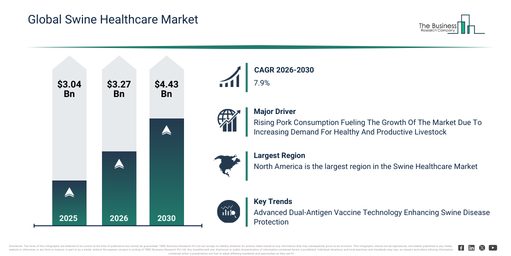
    Swine Healthcare Market Set To Climb From $3.27 Billion In 2026 To $4.43 Billion By 2030

    The swine healthcare market has experienced robust expansion in recent years. Its projected growth trajectory indicates an increase from $3.04 billion in 2025 to $3.27 billion in 2026, achieving a compound annual growth rate (CAGR) of 7.6%. Historically, this expansion has been driven by factors such as a rise in livestock disease outbreaks, an increase in pork consumption demand, the expansion of commercial pig farming, government initiatives for animal health, and improved availability of veterinary services.

    The swine healthcare market is projected to expand significantly over the coming years. This market is set to reach $4.43 billion in 2030, exhibiting a compound annual growth rate (CAGR) of 7.9%. Factors contributing to this growth during the forecast period include an increasing emphasis on preventing zoonotic diseases, greater investment in precision livestock farming, the growing uptake of advanced vaccines, the expansion of data-driven herd management systems, and the demand for sustainable animal production methods. Key trends anticipated within this period involve the broadening of preventive vaccination initiatives, an increase in herd health management services, a surge in demand for disease diagnostic testing, heightened attention to biosecurity and parasite control, and the integration of nutritional advisory and welfare monitoring services.

    Get A Free Sample Report With In-Depth Market Insights:

    https://thebusinessresearchcompany.com/sample_request?id=32415&type=smp&name=Swine%20Healthcare%20Market%20Report%202026&utm_source=Blogs&utm_medium=Paid&utm_campaign=Oct_PR

    Swine Healthcare Market Demand Drivers Opening New Revenue Streams

    The swine healthcare market is anticipated to expand, driven by the increasing consumption of pork. This consumption signifies the quantity of pork meat consumed by individuals or populations, typically quantified as per person intake over a specific timeframe. An uptick in disposable incomes is contributing to the rise in pork consumption, as it allows consumers to allocate more funds towards diets abundant in animal protein. Inadequate biosecurity is among the elements contributing to an increase in swine diseases. Swine healthcare supports pork consumption by enhancing the well-being and productivity of animals, alongside improving meat quality, thereby guaranteeing a consistent availability of secure and premium pork items to satisfy increasing consumer requirements. As an illustration, in January 2025, Canada Pork International, a promotional body based in Canada, reported that in 2023, Canada’s per capita pork intake grew by 2.10 kg, an increase of 14.40%, reaching 16.72 kg (boneless weight). Consequently, the escalating consumption of pork is fueling the expansion of the swine healthcare market.

    Swine Healthcare Market Segment Performance And Emerging Opportunities

    The swine healthcare market covered in this report is segmented –

    1) By Product Type: Therapeutics, Diagnostics, Nutritional Health, Services

    2) By Diseases: Exudative Dermatitis, Coccidiosis, Respiratory Diseases, Swine Dysentery, Porcine Parvovirus, Other Diseases

    3) By Route of Administration: Injectable, Oral, Intranasal Or Mucosal

    4) By Distribution Channel: Direct Sales Or Veterinary Channel, Distributors And Wholesalers, Retail And Online Pharmacies, Service-Integrated Models

    5) By End User: Commercial Farms, Smallholder Farms, Research Institutes

    Subsegments:

    1) By Therapeutics: Vaccines, Antibiotics, Parasiticides

    2) By Diagnostics: Polymerase Chain Reaction, Enzyme Linked Immunosorbent Assay, Serology

    3) By Nutritional Health: Functional Feed Additives, Probiotics

    4) By Services: Herd Health Management, Veterinary Consulting, Reproductive Health

    Swine Healthcare Market Trends Powering Strategic Industry Growth

    Leading companies in the swine healthcare market are concentrating on developing innovative solutions, such as dual-antigen PCV2 vaccine technology, to provide broader and longer-lasting protection against evolving porcine circovirus strains. These dual-antigen PCV2 vaccines are formulations that incorporate antigens from multiple PCV2 genotypes to strengthen immune coverage and enhance herd health outcomes. For instance, in September 2025, Boehringer Ingelheim, a Germany-based provider of animal health vaccines and therapeutics, launched INGELVAC CIRCOFLEX AD, a next-generation swine vaccine designed to protect pigs against predominant PCV2 strains. The vaccine delivers a fast onset of immunity within about two weeks and provides protection for at least six months, aiding in the reduction of disease impact and the improvement of overall herd performance. It includes a trusted adjuvant to support a robust immune response with a single intramuscular administration, offering producers a convenient and effective tool for porcine circovirus control.

    Swine Healthcare Market Competitive Landscape: Who Leads The Industry?

    Major companies operating in the swine healthcare market are Boehringer Ingelheim International GmbH, Evonik Operations GmbH, Nutreco N.V., Novonesis A/S, Elanco Animal Health Incorporated, IDEXX Laboratories Inc., Alltech Inc., Adisseo S.A., Ceva Santé Animale S.A., Kemin Industries Inc., Neogen Corporation, Genus plc, HIPRA S.A., Dechra Pharmaceuticals plc, Vetoquinol S.A., Indian Immunologicals Limited, Bimeda Inc., Pulike Biological Engineering Inc., Merck Animal Health (MSD), Hester Biosciences Limited, Provimi B.V., Huvepharma NV, IDvet Innovative Diagnostics, Indical Bioscience GmbH, Zoetis Inc.

    View The Full Swine Healthcare Market Report:

    https://thebusinessresearchcompany.com/report/swine-healthcare-market-report?utm_source=Blogs&utm_medium=Paid&utm_campaign=Oct_PR

    Swine Healthcare Market Geographic Landscape: Which Region Leads Industry Growth?

    North America was the largest region in the swine healthcare market in 2025. Asia-Pacific is expected to be the fastest-growing region in the forecast period. The regions covered in the swine healthcare market report are Asia-Pacific, South East Asia, Western Europe, Eastern Europe, North America, South America, Middle East, Africa.

    Reach Out To Our Team:

    The Business Research Company: https://www.thebusinessresearchcompany.com/

    Americas: +1 310-496-7795

    Asia: +44 7882 955267 & +91 8897263534

    Europe: +44 7882 955267

    Email us at: marketing@tbrc.info

    Follow us on:

    LinkedIn: https://in.linkedin.com/company/the-business-research-company

    YouTube: https://www.youtube.com/channel/UC24_fI0rV8cR5DxlCpgmyFQ

    Global Market Model: https://www.thebusinessresearchcompany.com/global-market-model
  • Life Science Market Size In 2026: Regional Growth, Key Segments And Future Outlook

    Life Science Market Size In 2026: Regional Growth, Key Segments And Future Outlook

    Built to provide research that’s more actionable and strategically valuable, The Business Research Company’s 2026 market reports include market attractiveness analysis, total addressable market sizing, company benchmarking matrices, interactive Excel dashboards, broader supply chain intelligence, emerging startup tracking, and in-depth product insights.

    Life Science Market Size And Revenue Outlook Through 2030

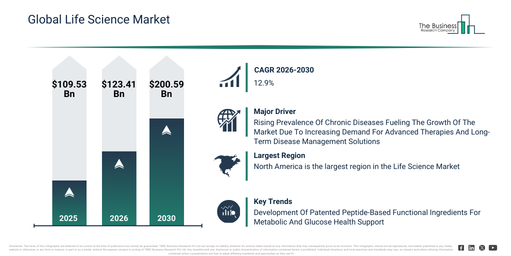
    The life science market has witnessed rapid expansion in recent years. Its value is anticipated to rise from $109.53 billion in 2025 to $123.41 billion in 2026, achieving a compound annual growth rate (CAGR) of 12.7%. Over the past, this growth can be ascribed to elements such as increased pharmaceutical R&D investments, the proliferation of biotechnology companies, the embrace of laboratory automation, a growing need for diagnostics, and the escalating occurrence of chronic and rare diseases.

    The life science market size is anticipated to experience substantial growth over the next few years, projected to attain a value of $200.59 billion by 2030, at a compound annual growth rate (CAGR) of 12.9%. This expansion during the forecast period is attributable to breakthroughs in precision medicine, the proliferation of digital health solutions, the integration of AI and big data analytics into research, a rise in collaborations between academic and commercial research institutions, and the broadening of global clinical trials. Prominent trends for this period involve sophisticated drug discovery platforms, unified clinical trial management, high-throughput laboratory automation, regulatory compliance and consulting provisions, and bioinformatics and data analytics.

    Get A Free Sample Report With In-Depth Market Insights:

    https://thebusinessresearchcompany.com/sample_request?id=23300631&type=smp&name=Life%20Science%20Market%20Report%202026&utm_source=Blogs&utm_medium=Paid&utm_campaign=Oct_PR

    Life Science Market Growth Momentum: What Factors Are Shaping Demand?

    The expanding occurrence of chronic illnesses is anticipated to propel the growth of the life science market in the future. These conditions are defined as long-lasting health issues that typically progress slowly and necessitate continuous oversight rather than brief interventions. The rise in chronic diseases is linked to detrimental lifestyle choices such as inadequate nutrition, lack of physical activity, and growing rates of obesity. The field of life science contributes to tackling chronic diseases through facilitating the development of innovative treatments, diagnostic tools, and biologics, thereby enhancing enduring disease management and results for patients. As an illustration, data from the US-based government agency Centers for Disease Control and Prevention revealed in April 2025 that in 2023, 76.4% (equating to 194 million) of adults in the US reported having at least one chronic condition. This included 59.5% of young adults, 78.4% of midlife adults, and 93.0% of older adults, respectively. Consequently, the rising occurrence of chronic illnesses is a key factor boosting the growth of the life science market.

    Life Science Market Segments: Where Is Growth Concentrated?

    The life science market covered in this report is segmented –

    1) By Type: Biotechnology, Pharmaceuticals, Medical Devices, Life Science Tools, Digital Health Solutions

    2) By Therapeutic Areas: Oncology, Cardiology, Neurology, Immunology, Rare Diseases, Other Therapeutic Areas

    3) By Applications: Drug Discovery And Development, Diagnostics, Therapeutics, Clinical Trials, Research And Development

    4) By End-User: Pharmaceutical Companies, Biotechnology Companies, Academic And Research Institutions, Hospitals And Clinics

    Subsegments:

    1) By Biotechnology: Genetic Engineering, Cell Based Technologies, Microbial Biotechnology, Industrial Biotechnology, Agricultural Biotechnology

    2) By Pharmaceuticals: Prescription Drugs, Over The Counter Drugs, Generic Drugs, Branded Drugs, Specialty Drugs

    3) By Medical Devices: Diagnostic Devices, Therapeutic Devices, Surgical Instruments, Monitoring Devices, Implantable Devices

    4) By Life Science Tools: Laboratory Instruments, Reagents And Consumables, Analytical Tools, Sample Preparation Tools, Research Software Solutions

    5) By Digital Health Solutions: Health Information Systems, Remote Patient Monitoring, Mobile Health Applications, Clinical Decision Support Systems, Healthcare Data Analytics

    Life Science Market Trends Redefining Industry Growth

    Leading companies in the life science market are focusing on developing innovative products, such as patented peptide-based functional ingredients, to offer scientifically proven assistance for glucose management and metabolic well-being. These peptide-based functional ingredients are bioactive, short-chain amino acid compounds engineered to engage with particular metabolic pathways to achieve specific health advantages. For instance, in December 2025, Greenyn Biotechnology Co. Ltd., a Taiwan-based provider of proprietary biotechnology-driven functional ingredients and health supplement solutions, launched Insumate mcIRBP-19 Bitter Melon Peptide, a bioactive peptide designed to support metabolic health in dietary supplement applications. The product incorporates a uniquely identified bitter melon-derived peptide that mimics insulin receptor binding activity, aiding in blood glucose control. Its production involves a low-temperature supercritical extraction process, ensuring the preservation of peptide bioactivity and consistency. Insumate mcIRBP-19 is backed by clinical validation and international certifications, establishing it as a next-generation, evidence-based nutraceutical ingredient for the rapidly growing metabolic health and diabetes-support segment.

    Life Science Market Competitive Analysis Of Leading Industry Participants

    Major companies operating in the life science market are Johnson & Johnson, Roche Holding AG, Pfizer Inc., AbbVie Inc., AstraZeneca plc, Bayer AG, Novartis AG, Bristol-Myers Squibb Company, Sanofi S.A., Abbott Laboratories, Thermo Fisher Scientific Inc., GlaxoSmithKline plc, Novo Nordisk A/S, Amgen Inc., Eli Lily and Company, Takeda Pharmaceutical Company Limited, Gilead Sciences Inc., Merck KGaA, Boehringer Ingelheim International GmbH, Vertex Pharmaceuticals Incorporated, Astellas Pharma Inc., Biogen Inc., bioMérieux SA, Sartorius AG

    View The Full Life Science Market Report:

    https://thebusinessresearchcompany.com/report/life-science-market-report?utm_source=Blogs&utm_medium=Paid&utm_campaign=Oct_PR

    Life Science Market Geographic Distribution And Regional Opportunities

    North America was the largest region in the life science market in 2025. Asia-Pacific is expected to be the fastest-growing region in the forecast period. The regions covered in the life science market report are Asia-Pacific, South East Asia, Western Europe, Eastern Europe, North America, South America, Middle East, Africa.

    Reach Out To Our Team:

    The Business Research Company: https://www.thebusinessresearchcompany.com/

    Americas: +1 310-496-7795

    Asia: +44 7882 955267 & +91 8897263534

    Europe: +44 7882 955267

    Email us at: marketing@tbrc.info

    Follow us on:

    LinkedIn: https://in.linkedin.com/company/the-business-research-company

    YouTube: https://www.youtube.com/channel/UC24_fI0rV8cR5DxlCpgmyFQ

    Global Market Model: https://www.thebusinessresearchcompany.com/global-market-model

  • Intraosseous infusion devices Market Size In 2026 And Beyond: Understanding Future Growth Potential

    Intraosseous infusion devices Market Size In 2026 And Beyond: Understanding Future Growth Potential

    Built to provide research that’s more actionable and strategically valuable, The Business Research Company’s 2026 market reports include market attractiveness analysis, total addressable market sizing, company benchmarking matrices, interactive Excel dashboards, broader supply chain intelligence, emerging startup tracking, and in-depth product insights.

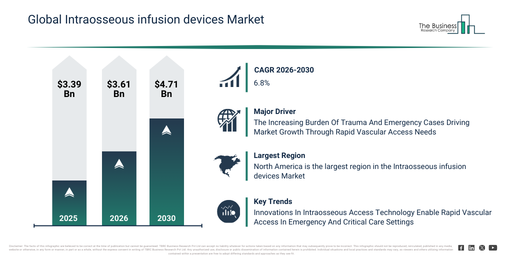
    Intraosseous infusion devices Market Set To Climb From $3.61 Billion In 2026 To $4.71 Billion By 2030

    The intraosseous infusion devices market has experienced significant expansion recently. This market is projected to expand from $3.39 billion in 2025 to $3.61 billion in 2026, demonstrating a compound annual growth rate (CAGR) of 6.6%. Historically, this growth was primarily driven by factors such as a rise in trauma and cardiac emergencies, the necessity for swift vascular access in hospital settings, the uptake of manual IO devices, the expansion of emergency medical services (EMS), and the early application of intraosseous needles in pediatric care.

    The intraosseous infusion devices market size is projected for substantial expansion in the coming years. It is set to reach $4.71 billion by 2030, demonstrating a compound annual growth rate (CAGR) of 6.8%. This growth throughout the forecast period is primarily fueled by the increasing uptake of automated IO devices, the incorporation of IO systems into hospital emergency procedures, the broader application of IO in ambulatory surgical centers, enhanced investment in training and simulation resources, and the creation of multi-site intraosseous access options. Noteworthy trends anticipated during this period encompass expedited emergency vascular access, adaptations for both pediatric and adult devices, the emergence of battery-powered and reusable drivers, the widespread embracing of single-use and disposable devices, and the deeper integration of training and simulation.

    Get A Free Sample Report With In-Depth Market Insights:

    https://thebusinessresearchcompany.com/sample_request?id=43238013&type=smp&name=Intraosseous%20infusion%20devices%20Market%20Report%202026&utm_source=Blogs&utm_medium=Paid&utm_campaign=Oct_PR

    Intraosseous infusion devices Market Growth Momentum: What Factors Are Shaping Demand?

    The intraosseous infusion devices market is projected to expand due to the increasing frequency of trauma and emergency medical situations. These situations encompass urgent medical needs arising from severe injuries, acute illnesses, or critical conditions demanding immediate assessment and intervention. The rise in such cases is largely attributable to an uptick in road traffic accidents, intensified by greater vehicle density and higher travel speeds, leading to more serious injuries and subsequent emergency hospitalizations. Intraosseous infusion devices are crucial in these scenarios, offering quick and reliable access to the bloodstream when conventional intravenous access is challenging, especially in trauma or shock cases. This ensures the prompt delivery of fluids and vital medications, thereby facilitating timely and effective emergency care. For instance, as reported by the National Health Service, a UK government health agency, in September 2025, total accident and emergency attendances reached 27.4 million in 2024–25, marking a 4.0 percent increase compared with 2023–24. Consequently, the rising prevalence of trauma and emergency cases is a key factor propelling the growth of the intraosseous infusion devices market. The Rising Hospital Admissions Driving The Growth Of The Market Due To Increasing Critical Care Needs

    Intraosseous infusion devices Market Segment Landscape: Which Areas Lead Development?

    The intraosseous infusion devices market covered in this report is segmented –

    1) By Product: Bone Injection Gun (B.I.G), First Access For Shock And Trauma 1 (FAST1), Easy Intraosseous (EZ-IO), First Access For Shock And Trauma Responder (FASTR), Intraosseous (IO) Needles, Other Products

    2) By Technology: Manual, Automatic

    3) By Route Of Administration: Sternum, Distal And Proximal Tibia, Distal Femur, Calcaneus, Head Of Humerus

    4) By End User: Emergency Medical Services (EMS), Hospitals, Ambulatory Surgical Centers, Cardiac Care Centers

    Subsegments:

    1) By Bone Injection Gun (B.I.G): Manual Activation, Spring Loaded Mechanism, Single Use Device, Adult Use Variant

    2) By First Access For Shock And Trauma 1 (FAST1): Sternal Access Device, Single Use System, Rapid Vascular Access, Emergency Use Configuration

    3) By Easy Intraosseous (EZ-IO): Battery Powered Device, Multiple Needle Sizes, Reusable Driver System, Emergency And Hospital Use

    4) By First Access For Shock And Trauma Responder (FASTR): Sternal Insertion System, Prehospital Emergency Use, Single Use Configuration, Rapid Deployment Design

    5) By Intraosseous (IO) Needles: Manual Insertion Needles, Powered Insertion Compatible, Pediatric Size Needles, Adult Size Needles

    6) By Other Products: Disposable Intraosseous Devices, Training And Simulation Devices, Accessory And Stabilization Kits, Custom Intraosseous Systems

    Intraosseous infusion devices Market Trends Redefining Industry Growth

    Leading companies engaged in the intraosseous infusion devices market are concentrating on developing advanced systems, such as rapid vascular access devices, to facilitate quicker and more dependable vascular access during life-threatening emergencies. A rapid vascular access device serves as a medical tool that enables fast entry into the circulatory system for the administration of fluids, medications, or blood products in emergency and critical care scenarios. It is particularly employed when traditional intravenous access is difficult, time-consuming, or impractical. For example, in October 2024, BD, a US-based medical technology company, introduced the new BD Intraosseous Vascular Access System, an enhanced intraosseous access system built to establish vascular access within seconds for critical care situations. This system incorporates improved needle control, rapid insertion capability, and a user-friendly design to assist clinicians in high-pressure environments, consequently enhancing procedural efficiency and improving patient outcomes in emergency and acute care settings.

    Intraosseous infusion devices Market Leading Companies And Competitive Benchmarking

    Major companies operating in the intraosseous infusion devices market are Cardinal Health Inc., Medline Industries Inc., Becton Dickinson and Company (BD), B Braun Melsungen AG, ZOLL Medical Corporation, Teleflex Incorporated, Cook Medical LLC, Shandong Weigao Group Co Ltd, Vygon SA, Argon Medical Devices Inc., Life Assist, Istem Medikal, SAM Medical Products, Implox Pty Ltd., BIOPSYBELL S R L (BPB Medica), Medax SRL, Troge Medical GmbH, Taizhou Kindly Medical Devices Co Ltd, PAVmed Inc., and Pyng Medical Corporation

    View The Full Intraosseous infusion devices Market Report:

    https://thebusinessresearchcompany.com/report/intraosseous-infusion-devices-market-report?utm_source=Blogs&utm_medium=Paid&utm_campaign=Oct_PR

    Intraosseous infusion devices Market Top Region By Revenue And Market Share

    North America was the largest region in the intraosseous infusion devices market in 2025. Asia-Pacific is expected to be the fastest-growing region in the forecast period. The regions covered in the intraosseous infusion devices market report are Asia-Pacific, South East Asia, Western Europe, Eastern Europe, North America, South America, Middle East, Africa.

    Reach Out To Our Team:

    The Business Research Company: https://www.thebusinessresearchcompany.com/

    Americas: +1 310-496-7795

    Asia: +44 7882 955267 & +91 8897263534

    Europe: +44 7882 955267

    Email us at: marketing@tbrc.info

    Follow us on:

    LinkedIn: https://in.linkedin.com/company/the-business-research-company

    YouTube: https://www.youtube.com/channel/UC24_fI0rV8cR5DxlCpgmyFQ

    Global Market Model: https://www.thebusinessresearchcompany.com/global-market-model

  • Insulated Shippers Market Size And Growth In 2026: Key Factors Shaping Future Demand

    Insulated Shippers Market Size And Growth In 2026: Key Factors Shaping Future Demand

    Built to provide research that’s more actionable and strategically valuable, The Business Research Company’s 2026 market reports include market attractiveness analysis, total addressable market sizing, company benchmarking matrices, interactive Excel dashboards, broader supply chain intelligence, emerging startup tracking, and in-depth product insights.

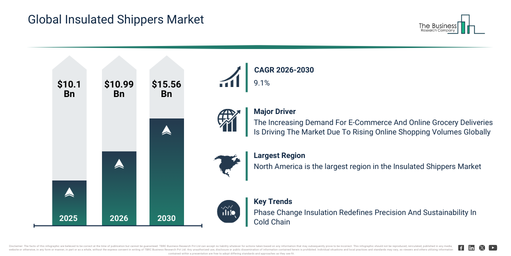
    Insulated Shippers Market Growth From $10.99 Billion In 2026 To $15.56 Billion By 2030 At A CAGR Of 9.1%

    The insulated shippers market has experienced significant growth in recent years. Its value is projected to increase from $10.1 billion in 2025 to $10.99 billion in 2026, achieving a compound annual growth rate (CAGR) of 8.8%. This growth observed in the past can be attributed to a rise in pharmaceutical cold chain shipments, increasing demand for perishable food transport, the expansion of e-commerce and delivery services, the development of foam and gel-pack insulated materials, and the early adoption of vacuum-insulated shippers.

    The insulated shippers market is poised for robust growth over the next few years. Its valuation is expected to climb to $15.56 billion in 2030, achieving a compound annual growth rate (CAGR) of 9.1%. This expansion during the projection period can be attributed to several factors, including an increase in regulatory demands for temperature-sensitive shipments, the adoption of phase change material (pcm) integrated shippers, the growth in biotechnology and biologics transportation, a rise in investment toward smart packaging and IoT-enabled monitoring, and the demand for sustainable and reusable insulated solutions. Key trends influencing this forecast period include innovations in temperature-controlled packaging, the emergence of reusable and eco-friendly shippers, optimization of cold chain logistics, real-time temperature monitoring capabilities, and the development of custom-designed insulated solutions.

    Get A Free Sample Report With In-Depth Market Insights:

    https://thebusinessresearchcompany.com/sample_request?id=30623&type=smp&name=Insulated%20Shippers%20Market%20Report%202026&utm_source=Blogs&utm_medium=Paid&utm_campaign=Oct_PR

    Insulated Shippers Market Growth Drivers: What’s Behind The Acceleration?

    The growing demand for e-commerce and online grocery deliveries is anticipated to drive the expansion of the insulated shippers market moving forward. E-commerce and online grocery deliveries involve the buying and selling of goods or services over the internet, with e-commerce covering all forms of online transactions and online grocery delivery specifically pertaining to ordering groceries online for home delivery. The rise of these services is due to individuals desiring convenient access to a wide range of products for quick home delivery, as well as the ability to compare prices and shop at any time without visiting physical stores. Insulated shippers assist e-commerce and online grocery deliveries by maintaining the necessary temperature for products during transit, thereby protecting them from spoilage and ensuring they arrive at customers in good condition. For instance, in November 2023, data from the United States Census Bureau, a US-based government agency, indicated that retail e-commerce sales in the US reached $271.7 billion in the third quarter of 2023, showing a modest 0.9% increase from the previous quarter and a substantial 7.8% boost compared to the same period in 2022. Thus, the increasing demand for e-commerce and online grocery deliveries is a key factor propelling the growth of the insulated shipper market.

    Insulated Shippers Market Segment Analysis Spotlighting Growth Areas

    The insulated shippers market covered in this report is segmented –

    1) By Product Type: Panel Shippers, Envelope Shippers, Box Shippers, Other Product Types

    2) By Material: Expanded Polystyrene, Polyurethane, Vacuum Insulated Panels, Other Materials

    3) By Application: Pharmaceuticals, Food And Beverages, Chemicals, Other Applications

    4) By Distribution Channel: Direct Sales, Distributors, Online Retail

    5) By End-User: Healthcare, Food Service, E-Commerce, Other End-Users

    Subsegments:

    1) By Panel Shippers: Rigid Insulated Panel Shippers, Collapsible Panel Shippers, Vacuum Insulated Panel (VIP) Shippers, Reusable Panel Shippers, Single-use Panel Shippers

    2) By Envelope Shippers: Bubble-Lined Insulated Envelopes, Foam-Lined Insulated Envelopes, Reflective Foil Insulated Envelopes, Gel-Pack Compatible Envelope Shippers, Lightweight Mailer-type Insulated Envelopes

    3) By Box Shippers: Corrugated Insulated Box Shippers, Foam-insulated Box Shippers, Molded Pulp Insulated Box Shippers, Expanded Polystyrene (EPs) Box Shippers, Temperature-Controlled Box Shippers

    4) By Other Product Types: Pallet-sized Insulated Shippers, Container-based Insulated Shippers, Soft-Sided Insulated Shippers, Custom-Designed Insulated Shippers, Phase Change Material (PCM) Integrated Shippers

    Insulated Shippers Market Trends: What’s Defining The Industry’s Next Phase?

    Leading firms within the insulated shippers market are prioritizing improvements in lightweight insulation options for transport. Examples include phase change materials (PCMs), which enable accurate temperature regulation throughout transit by absorbing and releasing heat as they transition between phases, thereby safeguarding products susceptible to temperature variations. PCMs are defined as materials that either absorb or release thermal energy when they undergo a change in their physical state, such as transitioning from solid to liquid or vice-versa, at a particular temperature. This property allows them to store and release heat, contributing to the maintenance of a consistent temperature in their environment. As an illustration, in December 2025, Cold Chain Technologies, a US-headquartered enterprise focused on temperature-controlled packaging, introduced EcoFlex 3. This product represents a new generation of reusable insulated shippers intended for cold chain logistics, integrating sophisticated phase change materials (PCMs), vacuum insulated panel technology, and air shield dry ice management to ensure dependable temperature consistency and improved handling for pharmaceutical and biologic consignments. Furthermore, it provides various sizes and temperature settings to cater to a wide array of cold chain shipping requirements, complemented by an improved lid design that facilitates simpler packing and dry ice management.

    Insulated Shippers Market Competitive Landscape: Which Companies Lead The Industry?

    Major companies operating in the insulated shippers market are Sonoco ThermoSafe, Sealed Air Corporation, Orora Packaging Solutions, Storopack Hans Reichenecker GmbH, Ranpak Holdings Corp, Snyder Industries Inc, va-Q-tec Thermal Solutions GmbH, SkyCell AG, Drew Foam Companies Inc, Pelican BioThermal (a division of Pelican Products Inc), TCP Reliable Inc, Cryopak, Polar Tech Industries Inc, Intelsius (Global) Ltd, DGP Intelsius, ACH Foam Technologies Inc, Softbox Systems Ltd, Sofrigam, Tempack Ltd, Inmark Global Holdings Ltd, and American Aerogel Corporation.

    View The Full Insulated Shippers Market Report:

    https://thebusinessresearchcompany.com/report/insulated-shippers-market-report?utm_source=Blogs&utm_medium=Paid&utm_campaign=Oct_PR

    Insulated Shippers Market Regional Breakdown: Where Is Demand Concentrated?

    North America was the largest region in the insulated shippers market in 2025. Asia-Pacific is expected to be the fastest-growing region in the forecast period. The regions covered in the insulated shippers market report are Asia-Pacific, South East Asia, Western Europe, Eastern Europe, North America, South America, Middle East, Africa.

    Reach Out To Our Team:

    The Business Research Company: https://www.thebusinessresearchcompany.com/

    Americas: +1 310-496-7795

    Asia: +44 7882 955267 & +91 8897263534

    Europe: +44 7882 955267

    Email us at: marketing@tbrc.info

    Follow us on:

    LinkedIn: https://in.linkedin.com/company/the-business-research-company

    YouTube: https://www.youtube.com/channel/UC24_fI0rV8cR5DxlCpgmyFQ

    Global Market Model: https://www.thebusinessresearchcompany.com/global-market-model

  • Indoor Air Quality Solutions Market Growth Potential: What The Latest Forecast Reveals

    Indoor Air Quality Solutions Market Growth Potential: What The Latest Forecast Reveals

    Built to provide research that’s more actionable and strategically valuable, The Business Research Company’s 2026 market reports include market attractiveness analysis, total addressable market sizing, company benchmarking matrices, interactive Excel dashboards, broader supply chain intelligence, emerging startup tracking, and in-depth product insights.

    Indoor Air Quality Solutions Market Size, Value And Growth Trajectory Through 2030

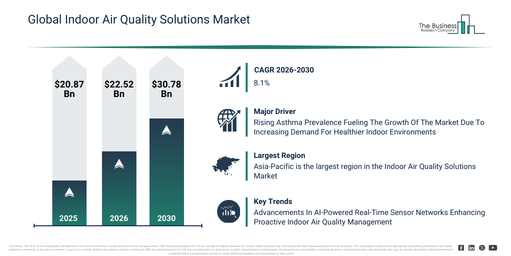
    The indoor air quality solutions market has experienced robust expansion over recent years. Projections indicate its expansion from $20.87 billion in 2025 to $22.52 billion in 2026, exhibiting a compound annual growth rate (CAGR) of 7.9%. This historical growth is largely attributed to heightened consciousness concerning indoor air pollution, an escalating incidence of respiratory illnesses, the widespread adoption of residential air purifiers, the advancement of commercial building management systems, and initial developments in HEPA and activated carbon filtration.

    The indoor air quality solutions market size is anticipated to expand significantly over the next few years. It will grow to $30.78 billion in 2030 at a compound annual growth rate (CAGR) of 8.1%. This projected expansion during the forecast period is fueled by the integration of IoT-enabled sensors, increasing demand for smart ventilation solutions, more rigorous indoor air quality regulations, the growing adoption of UV and photocatalytic oxidation technologies, and greater investment in commercial and educational facilities for air quality management. Prominent trends expected in this timeframe include intelligent indoor air quality monitoring, advanced filtration and purification technologies, optimized ventilation systems, humidity and odor control solutions, and comprehensive integrated air quality management platforms.

    Get A Free Sample Report With In-Depth Market Insights:

    https://thebusinessresearchcompany.com/sample_request?id=23683375&type=smp&name=Indoor%20Air%20Quality%20Solutions%20Market%20Report%202026&utm_source=Blogs&utm_medium=Paid&utm_campaign=Oct_PR

    Indoor Air Quality Solutions Market Industry Drivers: What’s Behind The Revenue Growth?

    An increase in asthma cases is anticipated to stimulate expansion within the indoor air quality solutions market moving ahead. Asthma, a persistent respiratory ailment, involves the inflammation and constriction of airways, resulting in recurring episodes of wheezing, shortness of breath, a tight feeling in the chest, and coughing. The condition’s development can be linked to exposure to allergens such as dust mites, pollen, and pet dander. Elevated exposure to indoor allergens, such as dust mites, mold, and pet dander, is leading to a higher incidence of respiratory ailments like asthma. This, in turn, fuels the need for indoor air quality solutions capable of monitoring, filtering, and managing airborne pollutants to foster healthier interior spaces. For example, data from July 2025 by the Centers for Disease Control and Prevention (CDC), a US government agency, indicated that 8.6% of adults aged 18 years and older and 6.5% of children younger than 18 years currently suffered from asthma. Consequently, the growing occurrence of asthma is a key factor propelling the expansion of the indoor air quality solutions market.

    Indoor Air Quality Solutions Market Segment Analysis: What Are The Core Market Categories?

    The indoor air quality solutions market covered in this report is segmented –

    1) By Product Type: Air Purifiers, Ventilation Systems, Humidifiers Or Dehumidifiers, Sensors And Monitors, Other Product Types

    2) By Technology: High Efficiency Particulate Air (HEPA) Filtration, Activated Carbon Filtration, Ultraviolet (UV) Light Technology, Ionization, Nano Filtration, Photocatalytic Oxidation

    3) By Application: Single-Family Homes, Multi-Family Apartments

    4) By Distribution Channel: Online, Offline

    5) By End-User: Home Owners, Facility Managers, Health Professionals, School Administrators, Business Owners

    Subsegments:

    1) By Air Purifiers: Portable Air Purifiers, Whole House Air Purifiers, Room Based Air Purifiers, Commercial Grade Air Purifiers

    2) By Ventilation Systems: Mechanical Ventilation Systems, Natural Ventilation Systems, Balanced Ventilation Systems, Demand Controlled Ventilation Systems

    3) By Humidifiers Or Dehumidifiers: Central Humidity Control Systems, Portable Humidifier Units, Portable Dehumidifier Units, Industrial Humidity Control Systems

    4) By Sensors And Monitors: Particulate Matter Sensors, Gas Detection Sensors, Temperature And Humidity Monitors, Integrated Air Quality Monitoring Systems

    5) By Other Product Types: Air Quality Control Software, Air Freshening Systems, Source Control Solutions, Air Duct Cleaning Equipment

    #Indoor Air Quality Solutions Market Growth Trends: What’s Shaping The Future Outlook?

    Major companies within the indoor air quality solutions market are concentrating on developing innovative products, such as AI-based real-time sensor networks. These developments aim to enable continuous monitoring and advanced analysis of indoor pollutants, leading to improved preventive health management and occupant well-being in diverse indoor environments. AI-based real-time sensor networks refer to integrated systems that combine high-precision environmental sensors with artificial intelligence and advanced analytics to continuously measure, analyze, and interpret indoor air quality parameters, thereby delivering instant and actionable insights. For instance, in December 2025, the Abu Dhabi Public Health Centre, a public health authority based in the United Arab Emirates, launched the Indoor Air Quality Observatory (HawAQM). The HawAQM observatory integrates cutting-edge monitoring technologies, high-precision sensors, and advanced analytics to provide real-time indoor air quality data across schools, homes, and public facilities. Its digital dashboard visualizes continuous pollutant measurements and trends, empowering specialists and decision-makers to implement timely, data-driven interventions. This innovation supports the indoor air quality solutions market by shifting air quality management from reactive assessments to proactive, intelligence-driven monitoring, strengthening indoor environmental health management at scale.

    Indoor Air Quality Solutions Market Leading Players And Competitive Positioning

    Major companies operating in the indoor air quality solutions market are Siemens AG, LG Electronics Inc., Panasonic Holdings Corporation, Honeywell International Inc., Mitsubishi Electric Corporation, Daikin Industries Ltd., 3M Company, Johnson Controls International plc, Carrier Global Corporation, Trane Technologies plc, Philips Electronics N.V., Dyson Technology Limited, Camfil AB, TSI Incorporated, Blueair AB, QleanAir AB, Sharp Corporation, Airthings AS, Aircuity Inc., IQAir AG, Aeroqual Limited.

    View The Full Indoor Air Quality Solutions Market Report:

    https://thebusinessresearchcompany.com/report/indoor-air-quality-solutions-market-report?utm_source=Blogs&utm_medium=Paid&utm_campaign=Oct_PR

    Indoor Air Quality Solutions Market Regional Distribution: Which Areas Power Market Growth?

    Asia-Pacific was the largest region in the indoor air quality solutions market in 2025. Asia-Pacific is expected to be the fastest-growing region in the forecast period. The regions covered in the indoor air quality solutions market report are Asia-Pacific, South East Asia, Western Europe, Eastern Europe, North America, South America, Middle East, Africa.

    Reach Out To Our Team:

    The Business Research Company: https://www.thebusinessresearchcompany.com/

    Americas: +1 310-496-7795

    Asia: +44 7882 955267 & +91 8897263534

    Europe: +44 7882 955267

    Email us at: marketing@tbrc.info

    Follow us on:

    LinkedIn: https://in.linkedin.com/company/the-business-research-company

    YouTube: https://www.youtube.com/channel/UC24_fI0rV8cR5DxlCpgmyFQ

    Global Market Model: https://www.thebusinessresearchcompany.com/global-market-model