Blog

  • Health Data Lineage Platforms Market Growth To $4.63 Billion Creates New Opportunities Across The Industry

    Health Data Lineage Platforms Market Growth To $4.63 Billion Creates New Opportunities Across The Industry

    Featuring market attractiveness scoring, total addressable market sizing, company benchmarking matrices, interactive Excel dashboards, deeper supply chain intelligence, emerging startup tracking, and granular product-level insights, The Business Research Company’s 2026 market reports are built to deliver research that is both more actionable and more strategically valuable.

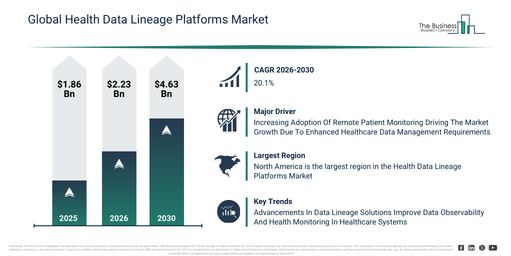
    Health Data Lineage Platforms Market Growth From $2.23 Billion In 2026 To $4.63 Billion By 2030 At A CAGR Of 20.1%

    The health data lineage platforms market size has seen rapid growth in recent years. This market is forecasted to increase from $1.86 billion in 2025 to $2.23 billion in 2026, at a compound annual growth rate (CAGR) of 19.8%. The historical growth can be attributed to several factors including the rising adoption of electronic health records, increasing regulatory demands for health data compliance, the growing need for data-driven clinical decision-making, the early deployment of healthcare IT solutions, and the expansion of clinical analytics capabilities.

    The market for health data lineage platforms is projected to experience substantial expansion in the coming years. Its valuation is anticipated to reach $4.63 billion by 2030, exhibiting a compound annual growth rate (CAGR) of 20.1%. This upward trajectory during the projection period stems from factors such as the proliferation of AI-driven health data lineage tools, a growing need for cloud-based deployment, a heightened emphasis on patient data privacy and consent monitoring, the broadening of integrated healthcare analytics platforms, and stricter interoperability demands within healthcare environments. Key developments during this timeframe encompass the traceability of clinical data, validation of data quality and integrity, mechanisms for tracking consent and access, lineage visualization capabilities for analytical purposes, and preparedness for regulatory compliance and audits.

    Get A Free Sample Report With In-Depth Market Insights:

    https://thebusinessresearchcompany.com/sample_request?id=43431869&type=smp&name=Health%20Data%20Lineage%20Platforms%20Market%20Report%202026&utm_source=Blogs&utm_medium=Paid&utm_campaign=Oct_PR

    Health Data Lineage Platforms Market Opportunity Drivers: What’s Unlocking New Revenue Potential?

    The escalating embrace of remote patient monitoring is set to fuel the expansion of the health data lineage platforms market moving forward. Remote patient monitoring (RPM) is a healthcare innovation that enables patients to gather and convey their health information through connected medical devices to healthcare providers for ongoing oversight and management. The rising uptake of remote patient monitoring is propelled by the broadening of medicare reimbursement policies, which encourage healthcare providers to implement these technologies for managing chronic diseases and offer financial coverage for remote monitoring services. Remote patient monitoring necessitates health data lineage platforms capable of tracking and overseeing the origin, flow, and alteration of health data as it moves from patient devices to provider systems, thereby guaranteeing data accuracy, regulatory adherence, and security throughout the monitoring process. For instance, in August 2025, data from the Department of Health & Human Services, a US-based executive branch department, indicated that in 2024, Medicare expenditure on remote patient monitoring surpassed $536 million, marking a 31% surge compared to 2023. Concurrently, nearly 1 million beneficiaries utilized RPM services, representing a 27% year-over-year increase, and approximately 4,600 medical practices regularly billed for these services. Consequently, the heightened adoption of remote patient monitoring is propelling the expansion of the health data lineage platforms market.

    Health Data Lineage Platforms Market Segment Analysis And Revenue Potential

    The health data lineage platforms market covered in this report is segmented –

    1) By Component: Software, Services

    2) By Deployment Mode: On Premises, Cloud

    3) By Application: Data Governance, Regulatory Compliance, Risk Management, Data Quality Management, Other Applications

    4) By End User: Healthcare Providers, Payers, Life Sciences, Public Health Agencies, Other End Users

    Subsegments:

    1) By Software: Healthcare Data Lineage Tracking Software, Clinical Data Integration Software, Data Governance And Compliance Software, Metadata Management Software, Visualization And Reporting Software

    2) By Services: Implementation And Integration Services, Consulting And Integration Services, Maintenance And Support Services, Training And Education Services, Managed Data Lineage Services

    Health Data Lineage Platforms Market Innovation Trends Shaping Future Development

    Leading companies in the health data lineage platforms market are concentrating on developing advanced data lineage and observability solutions. The goal of these solutions is to enhance data transparency, reliability, and governance within complex healthcare data ecosystems. Data lineage and observability solutions are integrated tools that offer complete visibility into how data is created, transformed, and utilized across systems, simultaneously tracking data quality, accuracy, and performance. This functionality allows organizations to quickly detect data problems, ensure accurate analytics, and maintain regulatory adherence via real-time data health tracking. For example, in June 2023, ThinkData Works Inc., a Canada-based data intelligence company, introduced a data lineage solution specifically designed to boost data observability and health monitoring in enterprise data environments. This solution provides end-to-end visibility into data flows, empowering healthcare organizations to proactively spot data quality problems, monitor data health, and guarantee reliable analytics and reporting for clinical, operational, and research use cases.

    Health Data Lineage Platforms Market Industry Leaders And Competitive Landscape

    Major companies operating in the health data lineage platforms market are Microsoft Corporation, International Business Machines Corporation, Oracle Corporation, SAP SE, SAS Institute Inc., Hitachi Vantara LLC, Informatica Inc., Cloudera Inc., Rocket Software Inc., Qlik Technologies Inc., Precisely Software Inc., Collibra NV, Syniti Inc., Alation Inc., Ataccama Corporation, OvalEdge Inc., data.world Inc, Global IDs Inc., DataKitchen Inc., Alex Solutions Pty Ltd., and Quest Software Inc.

    View The Full Health Data Lineage Platforms Market Report:

    https://thebusinessresearchcompany.com/report/health-data-lineage-platforms-market-report?utm_source=Blogs&utm_medium=Paid&utm_campaign=Oct_PR

    Health Data Lineage Platforms Market Regional Analysis And Top Geography

    North America was the largest region in the health data lineage platforms market in 2025. Asia-Pacific is expected to be the fastest-growing region in the forecast period. The regions covered in the health data lineage platforms market report are Asia-Pacific, South East Asia, Western Europe, Eastern Europe, North America, South America, Middle East, Africa.

    Reach Out To Our Team:

    The Business Research Company: https://www.thebusinessresearchcompany.com/

    Americas: +1 310-496-7795

    Asia: +44 7882 955267 & +91 8897263534

    Europe: +44 7882 955267

    Email us at: marketing@tbrc.info

    Follow us on:

    LinkedIn: https://in.linkedin.com/company/the-business-research-company

    YouTube: https://www.youtube.com/channel/UC24_fI0rV8cR5DxlCpgmyFQ

    Global Market Model: https://www.thebusinessresearchcompany.com/global-market-model
  • Emergency Medical Services Software Market Forecast To Reach $3.6 Billion By 2030: Key Trends Explained

    Emergency Medical Services Software Market Forecast To Reach $3.6 Billion By 2030: Key Trends Explained

    Backed by market attractiveness analysis, total addressable market sizing, company benchmarking matrices, interactive Excel dashboards, wider supply chain intelligence, emerging startup coverage, and detailed product-level insights, The Business Research Company’s 2026 market reports are designed to offer research that is more actionable and strategically valuable than ever.

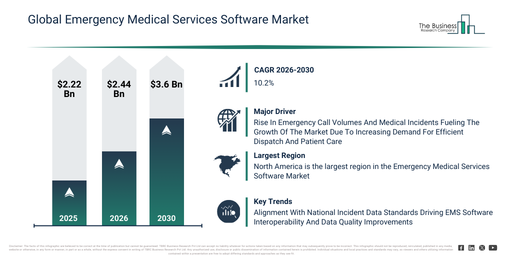
    Emergency Medical Services Software Market Forecast: Value Set To Climb From $2.44 Billion To $3.6 Billion

    The emergency medical services software market has observed strong growth in recent years. It is anticipated to expand from $2.22 billion in 2025 to $2.44 billion in 2026, at a compound annual growth rate (CAGR) of 10.0%. The growth witnessed historically is due to factors such as the increasing demand for efficient pre-hospital care, the greater adoption of digital health solutions, the expansion of emergency medical services infrastructure, the rising need for patient data management, and the integration of communication tools in EMS operations.

    The emergency medical services software market size is anticipated to experience swift expansion over the coming years. This market is projected to reach $3.6 billion in 2030, demonstrating a compound annual growth rate (CAGR) of 10.2%. Factors contributing to this growth during the forecast period include advancements in AI-driven dispatch systems, the emergence of cloud-based emergency services solutions, increased adoption of interoperable health record sharing, the broader integration of telehealth within EMS, and a heightened emphasis on predictive analytics for resource allocation. Key trends anticipated in the same period encompass real-time emergency response coordination, enhanced patient data interoperability, optimization of fleet and resources, adherence to regulatory compliance and reporting standards, and the automation of clinical documentation processes.

    Get A Free Sample Report With In-Depth Market Insights:

    https://thebusinessresearchcompany.com/sample_request?id=32610&type=smp&name=Emergency%20Medical%20Services%20Software%20Market%20Report%202026&utm_source=Blogs&utm_medium=Paid&utm_campaign=Oct_PR

    Emergency Medical Services Software Market Growth Backed By Core Demand Fundamentals

    The increasing number of emergency call volumes and medical incidents is projected to stimulate the growth of the emergency medical services software market in the future. Emergency call volumes and medical incidents refer to the aggregate count of emergency service requests received by dispatch centers and the associated patient care events managed by EMS personnel. These emergency call volumes and medical incidents are rising due to factors such as increasing population density, an aging demographic, and a growing prevalence of chronic health conditions. Emergency medical services software aids in managing elevated call volumes by facilitating faster incident prioritization and more efficient dispatch, thereby enhancing response times when demand is high. For instance, in December 2025, the Midland Fire Department, a US-based provider of fire protection and emergency medical services, indicated that emergency medical services (EMS) calls increased from 14,895 during January to November 2024 to 15,592 over the same period in 2025, representing an approximate year-over-year increase of 4.08%. Therefore, the escalating emergency call volumes and medical incidents are driving the expansion of the emergency medical services software market.

    Emergency Medical Services Software Market Segmentation: How Does The Market Break Down By Category?

    The emergency medical services software market covered in this report is segmented –

    1) By Product Type: Computer-Aided Dispatch, Electronic Patient Care Reporting, Emergency Medical Services (EMS) Billing, Scheduling And Workforce Management, Fleet Management, Other Product Types

    2) By Deployment Mode: Cloud-Based, On-Premises

    3) By Functionality: Incident Reporting, Resource Allocation, Communication And Coordination, Reporting And Analytics, Compliance Management

    4) By Application: Hospitals And Clinics, Emergency Service Providers, Other Applications

    5) By End User: Public Ambulance Services, Private Ambulance Services, Healthcare Organizations, Fire Departments, Other Emergency Services

    Subsegments:

    1) By Computer-Aided Dispatch: Priority Based Dispatch, Real Time Unit Tracking, Call Taking And Triage, Location Based Dispatching, Inter Agency Dispatch Coordination

    2) By Electronic Patient Care Reporting: Clinical Documentation Management, Patient Data Capture, Treatment And Outcome Recording, Interoperable Health Record Sharing, Quality Assurance And Audit Support

    3) By Emergency Medical Services (EMS) Billing: Insurance Claim Processing, Automated Invoice Generation, Reimbursement Management, Revenue Cycle Optimization, Payment Tracking And Reporting

    4) By Scheduling And Workforce Management: Shift Scheduling, Staff Availability Management, Credential And Certification Tracking, Overtime And Leave Management, Workforce Performance Monitoring

    5) By Fleet Management: Vehicle Location Tracking, Maintenance And Service Scheduling, Fuel And Cost Monitoring, Asset And Equipment Tracking, Fleet Utilization Analysis

    6) By Other Product Types: Inventory And Supply Management, Compliance And Regulatory Reporting, Training And Simulation Management, Analytics And Performance Dashboards, Telehealth And Remote Support Integration

    Emergency Medical Services Software Market Growth Trends Reshaping The Competitive Landscape

    Leading companies in the emergency medical services software market are prioritizing the alignment of their platforms with evolving national incident data standards, such as NEMSIS and the National Emergency Response Information System (NERIS), to enhance data quality and usability. These NEMSIS-compliant and NERIS-aligned data architectures are standardized digital frameworks created to structure, validate, and facilitate the exchange of emergency medical and fire incident data, adhering to federal and state reporting requirements. For example, in April 2024, ImageTrend, a US-based public safety and healthcare software company, published a policy position statement explaining its method for NERIS data flow within its EMS and fire data platform. The company stressed its support for NERIS modernization while advocating for a state-centric data submission approach, where incident data proceeds from local agencies to state systems before transmission to NERIS. This endeavor showcases ImageTrend’s deployment of NERIS-aligned data frameworks and transitional resources within its software, designed to assist EMS and fire agencies in adapting to the National Emergency Response Information System while simultaneously upholding data governance, ensuring interoperability, and maintaining compliance with developing federal reporting mandates.

    Emergency Medical Services Software Market Top Companies Driving Competitive Growth

    Major companies operating in the emergency medical services software market are Motorola Solutions Incorporation, Hexagon AB, Tyler Technologies Inc., Eso Solutions Inc., ZOLL Medical Corporation, ImageTrend Inc., Forte Holdings Inc., Sansio, Emergency Reporting, Digitech Computer Inc., Ortivus AB, Traumasoft Inc., AngelTrack LLC, MP Cloud Technologies Inc., AIM System, EPIC EMS, Documed Systems International Inc., Healthware Corp., Macrologic Inc., Emergidata.

    View The Full Emergency Medical Services Software Market Report:

    https://thebusinessresearchcompany.com/report/emergency-medical-services-software-market-report?utm_source=Blogs&utm_medium=Paid&utm_campaign=Oct_PR

    Emergency Medical Services Software Market Global Footprint: Which Region Leads The Market?

    North America was the largest region in the emergency medical services software market in 2025. Asia-Pacific is expected to be the fastest-growing region in the forecast period. The regions covered in the emergency medical services software market report are Asia-Pacific, South East Asia, Western Europe, Eastern Europe, North America, South America, Middle East, Africa.

    Reach Out To Our Team:

    The Business Research Company: https://www.thebusinessresearchcompany.com/

    Americas: +1 310-496-7795

    Asia: +44 7882 955267 & +91 8897263534

    Europe: +44 7882 955267

    Email us at: marketing@tbrc.info

    Follow us on:

    LinkedIn: https://in.linkedin.com/company/the-business-research-company

    YouTube: https://www.youtube.com/channel/UC24_fI0rV8cR5DxlCpgmyFQ

    Global Market Model: https://www.thebusinessresearchcompany.com/global-market-model
  • Embolization Product Market Analysis: Understanding The Drivers Behind 8.6% CAGR Through 2030 Growth

    Embolization Product Market Analysis: Understanding The Drivers Behind 8.6% CAGR Through 2030 Growth

    Featuring market attractiveness scoring, total addressable market sizing, company benchmarking matrices, interactive Excel dashboards, deeper supply chain intelligence, emerging startup tracking, and granular product-level insights, The Business Research Company’s 2026 market reports are built to deliver research that is both more actionable and more strategically valuable.

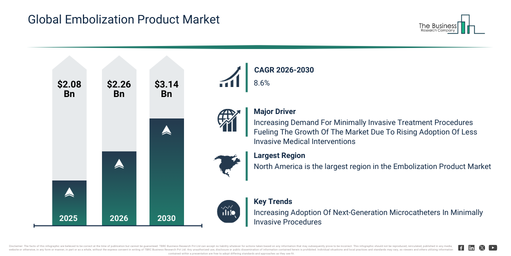
    Embolization Product Market Revenue Growth On Track For A 8.6% CAGR Through 2030

    The embolization product market has recently shown strong expansion. Forecasts indicate it will expand from $2.08 billion in 2025 to $2.26 billion in 2026, registering a compound annual growth rate (CAGR) of 8.8%. Historically, this expansion was largely fueled by factors such as the increasing prevalence of cardiovascular diseases, a rising incidence of aneurysms and vascular malformations, the growing adoption of minimally invasive procedures, greater awareness of interventional radiology, increased demand for targeted cancer treatments, an expanding geriatric population in need of vascular interventions, a growing preference for outpatient procedures, improving healthcare infrastructure in emerging economies, a heightened focus on reducing surgical risks and complications, and continuous technological advancements in embolization devices.

    The embolization product market is projected for substantial growth in the coming years, with its size anticipated to reach $3.14 billion by 2030, demonstrating a compound annual growth rate (CAGR) of 8.6%. This expansion during the forecast period is driven by several factors, including progress in bioresorbable embolic materials, innovations in microcatheter-compatible devices, the integration of image-guided navigation systems, advancements in liquid embolic agents, novel coil and plug designs, the adoption of robotic-assisted interventions, enhanced patient-specific device customization, advanced minimally invasive delivery systems, the incorporation of smart monitoring for real-time feedback, and improvements in cost-effective manufacturing processes. Over the forecast period, prominent trends are expected to include the widespread adoption of minimally invasive treatments, the development of personalized vascular therapies, the integration of sophisticated imaging, breakthroughs in biocompatible materials, and the provision of cost-effective embolization solutions.

    Get A Free Sample Report With In-Depth Market Insights:

    https://thebusinessresearchcompany.com/sample_request?id=18020442&type=smp&name=Embolization%20Product%20Market%20Report%202026&utm_source=Blogs&utm_medium=Paid&utm_campaign=Oct_PR

    Embolization Product Market Growth Catalysts And Demand Drivers

    The growing requirement for minimally invasive treatment procedures is projected to boost the expansion of the embolization product market in the future. These procedures are defined as medical interventions involving minor incisions or catheter-based approaches, which lessen trauma and allow for quicker recuperation compared to conventional surgeries. The increasing inclination towards such treatments is promoting the utilization of embolization products, vital for operations like controlling hemorrhages, addressing vascular malformations, and managing tumors. Embolization products aid minimally invasive treatment methods by enabling doctors to accurately block irregular blood flow to specific areas, thereby diminishing surgical risks, reducing recovery periods, and improving overall patient outcomes. For instance, in August 2025, Dr. M. MacDonald reported that the worldwide total of minimally invasive cosmetic procedures reached nearly 25.4 million in 2023, showcasing a significant upward trend and widespread adoption of less invasive medical interventions. Thus, the escalating demand for minimally invasive treatment procedures is fueling the growth of the embolization product market.

    Embolization Product Market Segment Trends And Revenue Contributors

    The embolization product market covered in this report is segmented –

    1) By Product Type: Embolization Coils, Embolic Agents, Detachable Balloons, Liquid Embolics, Microcatheters, Guidewires

    2) By Material: Metallic, Polymeric, Biological, Hybrid

    3) By Technology: Bioresorbable Technology, Non-Bioresorbable Technology

    4) By Application: Oncology, Neurology, Peripheral Vascular Disease, Urology, Other Applications

    5) By End User: Hospitals, Ambulatory Surgical Centers, Specialty Clinics

    1) By Embolization Coils: Detachable Coils, Pushable Coils, Helical Coils, Complex-Shaped Coils, Hydrogel-Coated Coils, Bare Platinum Coils, Fibered Coils, Microcoils (For Neurovascular Use)

    2) By Embolic Agents: Particulate Embolic Agents, Microspheres (Drug-Eluting And Non-Drug-Eluting), Polyvinyl Alcohol (PVA) Particles, Gelatin Sponge Particles, Radiopaque Embolic Agents, Biodegradable Embolic Agents, Metallic Embolic Particles

    3) By Detachable Balloons: Flow-Occlusion Balloons, Aneurysm Treatment Balloons, Temporary Occlusion Balloons, Permanent Occlusion Balloons, Single-Lumen Detachable Balloons, Dual-Lumen Detachable Balloons

    4) By Liquid Embolics: Ethylene-Vinyl Alcohol Copolymer (EVOH) Agents, Cyanoacrylate-Based Adhesives (Glue Embolics), Polymerizing Liquid Embolics, Precipitating Liquid Embolics, Radiopaque Liquid Embolics, Non-Adhesive Liquid Embolics

    5) By Microcatheters: Single-Lumen Microcatheters, Dual-Lumen Microcatheters, Flow-Directed Microcatheters, Over-The-Wire Microcatheters, High-Flow Microcatheters, Steerable Microcatheters, Neurovascular Microcatheters

    6) By Guidewires: Hydrophilic Guidewires, Hydrophobic Guidewires, Stainless Steel Guidewires, Nitinol Guidewires, Shapeable Or Steerable Guidewires, Micro-Guidewires, Specialty Neurovascular Guidewires

    Embolization Product Market Trends Shaping Long-Term Demand

    Key companies in the embolization products market are concentrating on developing advanced microcatheter solutions, such as next-generation balloon occlusion devices, to enhance procedural efficiency, boost usability, and respond to clinical feedback from physicians. Next-generation balloon occlusion microcatheters are minimally invasive tools designed to obstruct or lessen blood flow in specific blood vessels during embolization procedures, offering superior control, security, and ease of operation. For example, in July 2025, Embolx, a US-based medical device company, introduced the Sniper G3 Balloon Occlusion Microcatheter. This third-generation device offers an extended shelf life, improved user-friendliness, and simplified preparation, directly addressing significant feedback from physician users. It empowers clinicians to execute targeted embolization procedures more efficiently, diminishes procedural complexity, and enhances overall patient outcomes.

    Embolization Product Market Leading Players And Competitive Positioning

    Major companies operating in the embolization product market are Cardinal Health, Abbott Laboratories, Medtronic plc, Stryker Corporation, Boston Scientific Corporation, MicroVention Inc., Terumo Corporation, Kaneka Corporation, Cook Medical, Merit Medical Systems Inc., Penumbra Inc., Guerbet Group, B. Braun Melsungen AG, Sirtex Medical Limited, Medikit Co. Ltd., Balt USA LLC, Acandis GmbH & Co. KG, ABK Biomedical Inc., CeloNova BioSciences, Shape Memory Medical Inc.

    View The Full Embolization Product Market Report:

    https://thebusinessresearchcompany.com/report/embolization-product-market-report?utm_source=Blogs&utm_medium=Paid&utm_campaign=Oct_PR

    Embolization Product Market Regional Split: Which Areas Are Fueling Growth?

    North America was the largest region in the embolization product market in 2025. Asia-Pacific is expected to be the fastest-growing region in the forecast period. The regions covered in the embolization product market report are Asia-Pacific, South East Asia, Western Europe, Eastern Europe, North America, South America, Middle East, Africa.

    Reach Out To Our Team:

    The Business Research Company: https://www.thebusinessresearchcompany.com/

    Americas: +1 310-496-7795

    Asia: +44 7882 955267 & +91 8897263534

    Europe: +44 7882 955267

    Email us at: marketing@tbrc.info

    Follow us on:

    LinkedIn: https://in.linkedin.com/company/the-business-research-company

    YouTube: https://www.youtube.com/channel/UC24_fI0rV8cR5DxlCpgmyFQ

    Global Market Model: https://www.thebusinessresearchcompany.com/global-market-model
  • Drug Development Services Market Outlook 2026–2030: Growth Trends, Market Dynamics And Emerging Opportunities

    Drug Development Services Market Outlook 2026–2030: Growth Trends, Market Dynamics And Emerging Opportunities

    Backed by market attractiveness analysis, total addressable market sizing, company benchmarking matrices, interactive Excel dashboards, wider supply chain intelligence, emerging startup coverage, and detailed product-level insights, The Business Research Company’s 2026 market reports are designed to offer research that is more actionable and strategically valuable than ever.

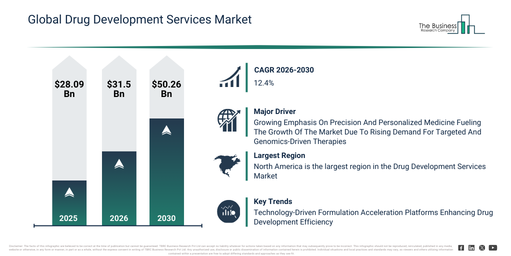
    Drug Development Services Market Size, Value And Growth Trajectory Through 2030

    The drug development services market has experienced significant expansion in recent years. This market is anticipated to grow from $28.09 billion in 2025 to $31.5 billion in 2026, achieving a compound annual growth rate (CAGR) of 12.2%. The historical increase can be attributed to several factors, including heightened research and development investments by pharmaceutical firms, an increase in the outsourcing of drug development services, the rising prevalence of chronic and infectious diseases, stricter regulatory compliance requirements, and advancements in molecular biology and in vitro testing.

    The drug development services market is projected to experience substantial growth in the upcoming years. It is anticipated to increase to $50.26 billion by 2030, demonstrating a compound annual growth rate (CAGR) of 12.4%. This expansion during the forecast period can be attributed to factors such as the adoption of AI and machine learning in drug discovery, the broadening of biologics and personalized medicine pipelines, a rising demand for contract research organizations, the integration of cloud-based clinical data management, and the growth of emerging markets for drug development services. Prominent trends expected in this period include the expansion of preclinical research, optimization of regulatory affairs, enhancement of pharmacovigilance, an increase in clinical data management services, and the reinforcement of quality assurance and compliance services.

    Get A Free Sample Report With In-Depth Market Insights:

    https://thebusinessresearchcompany.com/sample_request?id=24189940&type=smp&name=Drug%20Development%20Services%20Market%20Report%202026&utm_source=Blogs&utm_medium=Paid&utm_campaign=Oct_PR

    Drug Development Services Market Opportunity Drivers: What’s Unlocking New Revenue Potential?

    The increasing focus on precision and personalized medicine is projected to drive the expansion of the drug development services market in the future. This medical strategy involves customizing treatments and interventions for individual patients, taking into account their unique genetic composition, clinical traits, and particular disease profiles. The rise of precision and personalized medicine is attributed to advancements in genomic technologies, which facilitate more precise disease diagnosis and the selection of targeted therapies. Drug development services play a crucial role in precision and personalized medicine by facilitating the creation, testing, and validation of targeted treatments that align with specific genetic, molecular, and patient-specific disease attributes. For example, in February 2024, the Personalized Medicine Coalition, a US-based non-profit organization, stated that the FDA granted approval for 16 new personalized treatments for individuals with rare diseases in 2023, marking a substantial rise from the six approved in 2022. Consequently, the heightened focus on precision and personalized medicine is fueling the expansion of the drug development services market.

    Drug Development Services Market Segment Trends And Revenue Contributors

    The drug development services market covered in this report is segmented –

    1) By Type: Drug Metabolism And Pharmacokinetics, Biological Services, Medicinal Chemistry

    2) By Process: Candidate Validation, Lead Optimization, Hit To Lead Identification, Target Validation, Target Selection

    3) By Drug: Biologics, Infectious Disease Diagnostics, Small Molecules

    4) By Therapeutic Area: Cardiovascular Disease, Digestive System Disease, Immune System And Infectious Disease, Neurology, Oncology, Other Therapeutic Areas

    5) By End User: Pharmaceutical Companies, Biotechnology Companies, Contract Research Organizations, Academic And Research Institutes

    Subsegments:

    1) By Drug Metabolism And Pharmacokinetics: Absorption Studies, Distribution Studies, Metabolism Studies, Excretion Studies, Bioavailability Assessment, Drug Drug Interaction Studies

    2) By Biological Services: Cell Based Assays, Molecular Biology Services, Protein Expression And Purification, Biomarker Discovery, In Vitro Pharmacology

    3) By Medicinal Chemistry: Compound Design And Synthesis, Structure Activity Relationship Studies, Lead Optimization Chemistry, Chemical Library Development, Process Chemistry Development

    Drug Development Services Market Innovation Trends Shaping Future Development

    Major companies operating in the drug development services market are focusing on developing innovative solutions, such as science-driven formulation acceleration platforms, to optimize early-stage drug formulation and reduce time-to-market for complex drug candidates. These platforms are integrated development programs that apply targeted technologies and structured protocols to rapidly enhance drug formulations and advance them toward clinical testing. For instance, in May 2025, Aenova Group GmbH, a Germany-based pharmaceutical company, launched the Aenovation program to accelerate the initial development of pharmaceutical formulations, especially for poorly soluble compounds that are challenging to progress through the pipeline. The program utilizes a three-step approach—comprehensive API profiling and developability classification, rapid formulation and prototype selection using solubility enhancement technologies, and seamless transfer to GMP lab and pilot-scale manufacturing—to deliver right-first-time results and materials for first-in-human trials more quickly. By addressing critical bioavailability challenges and enabling efficient formulation strategies, the Aenovation program helps pharma innovators, including biotech start-ups, bring innovative therapies closer to clinical phases with greater speed and resource efficiency.

    Drug Development Services Market Competitive Landscape: Which Companies Lead The Industry?

    Major companies operating in the drug development services market are IQVIA Holdings Inc., Labcorp Drug Development, Lonza Group AG, SGS Life Sciences, ICON plc, Eurofins Scientific SE, PPD Inc., Syneos Health Inc., WuXi AppTec Co. Ltd., Catalent Inc., Charles River Laboratories International Inc., Parexel International Corporation, Samsung Biologics Co. Ltd., Medpace Holdings Inc., PRA Health Sciences Inc., Fujifilm Diosynth Biotechnologies, Recipharm AB, PCI Pharma Services Inc., Almac Group Limited, Evotec SE, Aenova Group GmbH, Rentschler Biopharma SE, BioReliance Corporation, Covance SE

    View The Full Drug Development Services Market Report:

    https://thebusinessresearchcompany.com/report/drug-development-services-market-report?utm_source=Blogs&utm_medium=Paid&utm_campaign=Oct_PR

    Drug Development Services Market Regional Outlook: Where Is Opportunity Concentrated?

    North America was the largest region in the drug development services market in 2025. Asia-Pacific is expected to be the fastest-growing region in the forecast period. The regions covered in the drug development services market report are Asia-Pacific, South East Asia, Western Europe, Eastern Europe, North America, South America, Middle East, Africa.

    Reach Out To Our Team:

    The Business Research Company: https://www.thebusinessresearchcompany.com/

    Americas: +1 310-496-7795

    Asia: +44 7882 955267 & +91 8897263534

    Europe: +44 7882 955267

    Email us at: marketing@tbrc.info

    Follow us on:

    LinkedIn: https://in.linkedin.com/company/the-business-research-company

    YouTube: https://www.youtube.com/channel/UC24_fI0rV8cR5DxlCpgmyFQ

    Global Market Model: https://www.thebusinessresearchcompany.com/global-market-model
  • Artificial Intelligence (AI) Medical Scribe Software Market Set To Expand From $5.08 Billion In 2026: Growth Outlook Through 2030

    Artificial Intelligence (AI) Medical Scribe Software Market Set To Expand From $5.08 Billion In 2026: Growth Outlook Through 2030

    Featuring market attractiveness scoring, total addressable market sizing, company benchmarking matrices, interactive Excel dashboards, deeper supply chain intelligence, emerging startup tracking, and granular product-level insights, The Business Research Company’s 2026 market reports are built to deliver research that is both more actionable and more strategically valuable.

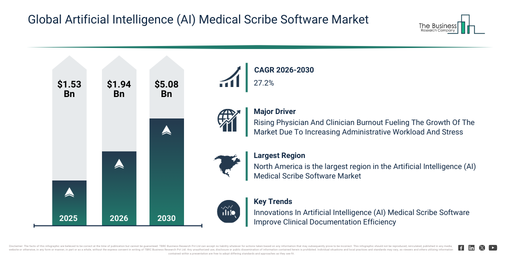
    Artificial Intelligence (AI) Medical Scribe Software Market Forecast: Value Set To Climb From $1.94 Billion To $5.08 Billion

    The artificial intelligence (AI) medical scribe software market size has expanded significantly in recent years. It is forecast to increase from $1.53 billion in 2025 to $1.94 billion in 2026, exhibiting a compound annual growth rate (CAGR) of 26.9%. The historical growth of this market can be attributed to physician burnout, the growth in EHR adoption, the emergence of early speech recognition tools, the digitization of healthcare, and existing documentation inefficiencies.

    The artificial intelligence (AI) medical scribe software market is projected to experience significant expansion over the next few years. It is anticipated to reach a value of $5.08 billion by 2030, exhibiting a compound annual growth rate (CAGR) of 27.2%. This growth during the forecast period is attributed to factors like AI-driven healthcare automation, the expansion of telemedicine, the necessity for regulatory documentation, a focus on clinician productivity, and the rise of cloud healthcare platforms. Major developments expected in this period include automated clinical documentation, real-time speech recognition, optimization of healthcare workflows, AI-powered compliance support, and context-aware medical transcription.

    Get A Free Sample Report With In-Depth Market Insights:

    https://thebusinessresearchcompany.com/sample_request?id=92055440&type=smp&name=Artificial%20Intelligence%20%28AI%29%20Medical%20Scribe%20Software%20Market%20Report%202026&utm_source=Blogs&utm_medium=Paid&utm_campaign=Oct_PR

    Artificial Intelligence (AI) Medical Scribe Software Market Expansion Drivers: What’s Shaping Future Growth?

    The increasing occurrence of physician and clinician burnout is anticipated to fuel the expansion of the artificial intelligence medical scribe software market in the future. This burnout refers to a condition of physical, emotional, and mental depletion resulting from sustained occupational stress within healthcare environments. The growing incidence of physician and clinician burnout primarily stems from an expanding administrative burden, as extensive documentation and electronic health record responsibilities curtail time spent on patient care, leading to stress, weariness, and emotional drain. Artificial intelligence medical scribe software assists in tackling the increasing problem of physician and clinician burnout by automating clinical record-keeping, easing administrative load, and enabling medical professionals to concentrate more on treating patients and less on administrative tasks. For example, data from December 2024, reported by the Australian Journal of General Practice, an Australia-based general practitioner publication, indicated that 71% of 2,000 Australian GPs suffered from burnout in 2023. Consequently, the growing occurrence of physician and clinician burnout is projected to stimulate the expansion of the artificial intelligence medical scribe software market.

    Artificial Intelligence (AI) Medical Scribe Software Market Segment Analysis And Revenue Potential

    The artificial intelligence (AI) medical scribe software market covered in this report is segmented –

    1) By Component: Software, Services

    2) By Deployment Mode: Cloud-Based, On-Premises

    3) By Application: Hospitals, Clinics, Ambulatory Surgical Centers, Specialty Centers, Other Applications

    4) By End-User: Healthcare Providers, Medical Institutions, Other End-Users

    Subsegments:

    1) By Software: Clinical Documentation Software, Speech Recognition Software, Natural Language Processing Software, Workflow Automation Software, Analytics And Reporting Software

    2) By Services: Consulting And Advisory Services, Implementation And Integration Services, Training And Education Services, Support And Maintenance Services, Customization And Optimization Services

    Artificial Intelligence (AI) Medical Scribe Software Market Strategic Trends: What Defines The Next Growth Phase?

    Leading companies in the artificial intelligence medical scribe software market are concentrating on creating innovative solutions, such as native artificial intelligence charting tools, to boost clinical documentation accuracy and ultimately achieve improved patient care outcomes. These native artificial intelligence charting tools are either built-in or integrated with AI-powered data visualization features that automatically generate charts, graphs, and insights from data directly within a platform, eliminating the need for external plugins or manual coding. For instance, in August 2025, Epic, a US-based electronic health records (EHR) software provider, announced the development of its native AI charting tool. This tool utilizes integrated AI to automatically complete portions of a patient’s electronic patient record (EPR), thereby reducing the time spent on documentation and administrative tasks and allowing clinicians to better focus on patient care. This technology combines Microsoft’s Dragon Ambient AI for transcription with Epic’s proprietary processing to generate structured visit documentation directly within the EPR and is projected to be ready for limited deployment by early 2026, with further AI capabilities like discharge planning agents and virtual assistants slated for introduction afterward.

    Artificial Intelligence (AI) Medical Scribe Software Market Competitive Landscape: Who Leads The Industry?

    Major companies operating in the artificial intelligence (AI) medical scribe software market are TruBridge Inc, Innovaccer Inc, CureMDcom Inc, Abridge AI Inc, OmniMD Inc, Notable Health Inc, Nabla Labs Inc, Voicebrook Inc, Tandem Health AB, Sully AI Inc, Freed AI Inc, Heidi Health Pty Ltd, Ambience Healthcare Pty Ltd, Upheal Inc, Tali AI Inc, ScribeAmerica AI Inc, Playback Health Inc, SPRY Therapeutics Inc., Suki AI Inc, and Sunoh AI Inc

    View The Full Artificial Intelligence (AI) Medical Scribe Software Market Report:

    https://thebusinessresearchcompany.com/report/artificial-intelligence-ai-medical-scribe-software-market-report?utm_source=Blogs&utm_medium=Paid&utm_campaign=Oct_PR

    Artificial Intelligence (AI) Medical Scribe Software Market Geographic Landscape: Which Region Dominates Industry Growth?

    North America was the largest region in the artificial intelligence medical scribe software market in 2025. Asia-Pacific is expected to be the fastest-growing region in the forecast period. The regions covered in the artificial intelligence (AI) medical scribe software market report are Asia-Pacific, South East Asia, Western Europe, Eastern Europe, North America, South America, Middle East, Africa.

    Reach Out To Our Team:

    The Business Research Company: https://www.thebusinessresearchcompany.com/

    Americas: +1 310-496-7795

    Asia: +44 7882 955267 & +91 8897263534

    Europe: +44 7882 955267

    Email us at: marketing@tbrc.info

    Follow us on:

    LinkedIn: https://in.linkedin.com/company/the-business-research-company

    YouTube: https://www.youtube.com/channel/UC24_fI0rV8cR5DxlCpgmyFQ

    Global Market Model: https://www.thebusinessresearchcompany.com/global-market-model
  • Transplant Diagnostics Market Analysis Through 2030: Market Size, Growth Trends And Industry Outlook

    Transplant Diagnostics Market Analysis Through 2030: Market Size, Growth Trends And Industry Outlook

    Backed by market attractiveness analysis, total addressable market sizing, company benchmarking matrices, interactive Excel dashboards, wider supply chain intelligence, emerging startup coverage, and detailed product-level insights, The Business Research Company’s 2026 market reports are designed to offer research that is more actionable and strategically valuable than ever.

    Transplant Diagnostics Market Poised To Hit $2.96 Billion By 2030 With A 7.1% CAGR

    The transplant diagnostics market size has experienced significant expansion in recent years. This market is expected to increase from $2.07 billion in 2025 to $2.25 billion in 2026, demonstrating a compound annual growth rate (CAGR) of 8.5%. The historical growth trajectory is largely attributable to a rise in organ transplantation procedures, improvements in histocompatibility testing, a growing incidence of immunogenetic disorders, the proliferation of transplant centers, and governmental financial backing for organ donation initiatives.

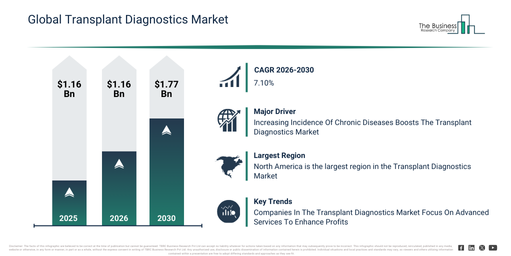
    The transplant diagnostics market size is anticipated to undergo significant expansion over the next few years. It is projected to increase to $2.96 billion in 2030, demonstrating a compound annual growth rate (CAGR) of 7.1%. The expected growth during this forecast period stems from the incorporation of AI and machine learning into testing, the embracing of next-generation sequencing (NGS), the broadening scope of personalized immunotherapy, the rise of cloud-based diagnostics platforms, and greater global awareness about organ donation. Significant trends influencing the forecast period encompass rapid histocompatibility testing, AI-powered systems for matching donors and recipients, the integration of molecular diagnostics, advanced high-throughput screening methods, and cloud-based solutions for managing transplant data.

    Get A Free Sample Report With In-Depth Market Insights:

    https://thebusinessresearchcompany.com/sample_request?id=31914935&type=smp&name=Transplant%20Diagnostics%20Market%20Report%202026&utm_source=Blogs&utm_medium=Paid&utm_campaign=Oct_PR

    Transplant Diagnostics Market Growth Factors Behind Sustained Expansion

    The increasing incidence of chronic diseases is projected to stimulate the growth of the transplant diagnostics market in the coming period. Chronic diseases are enduring health conditions that typically advance slowly, exemplified by diabetes, heart disease, and arthritis, and frequently demand ongoing medical attention and lifestyle modifications to manage symptoms and avert complications. The rise in chronic diseases is largely attributable to unhealthy lifestyle habits, including poor nutrition, lack of physical activity, and smoking, which elevate the risk of developing conditions such as diabetes, heart disease, and obesity. Transplant diagnostics contribute to chronic disease management by enabling precise monitoring of organ health and the timely detection of transplant-related issues. They enhance patient outcomes through guiding prompt interventions, facilitating personalized treatment strategies, and improving long-term organ survival and overall healthcare oversight. For instance, in June 2024, data from the National Health Service, a UK-based government department, indicated that 3,615,330 individuals registered with a general practitioner (GP) received a diagnosis of non-diabetic hyperglycemia or pre-diabetes (a condition with elevated blood sugar levels, not high enough to be classified as diabetes) in 2023, marking an 18% increase from 3,065,825 cases in 2022. Thus, the growing prevalence of chronic diseases is a key factor driving the expansion of the transplant diagnostics market.

    Transplant Diagnostics Market Segment Trends And Revenue Contributors

    The transplant diagnostics market covered in this report is segmented –

    1) By Type: Reagent And Consumables, Instrument, Software And Services

    2) By Transplant Type: Solid Organ, Stem Cell

    3) By Organ: Kidney, Liver, Heart, Lung, Pancreas

    4) By Technology: Non Molecular Assay, Molecular Assay

    5) By End User: Hospitals And Transplant Centers, Research Laboratories AndTransplant Centers, Commercial Service Providers

    Subsegments:

    1) By Reagent And Consumables: PCR Reagents, Antibodies And Antigens, Sample Collection Kits, Control Materials

    2) By Instrument: Flow Cytometers, PCR Machines, Sequencers, Luminometers

    3) By Software And Services: Data Analysis Software, Laboratory Information Management Systems (LIMS), Consulting Services, Technical Support And Maintenance Services

    Transplant Diagnostics Market Industry Trends Fueling Future Revenue Growth

    Leading companies in the transplant diagnostics market are concentrating on introducing advanced transplant diagnostics services to maximize their market profits. Advanced transplant diagnostic services involve the utilization of novel and sophisticated diagnostic tools and technologies to enhance the precision and effectiveness of pre-transplant and post-transplant testing. For instance, in March 2023, Quest Diagnostics, a US-based medical laboratory company, unveiled Quest Advanced Specialized Transplant Services, an extensive suite of innovative diagnostics and support solutions designed to improve access to laboratory tests for solid organ, human cell, and tissue transplants. This offering includes a comprehensive selection of more than 170 specialized transplant and infectious disease tests, offers longitudinal trend analysis of test results within the doctor’s electronic medical record (EMR), and provides continuous support services, including medical consultation to ensure appropriate test selection and interpretation of results impacting patient care. These new services build upon Quest’s prior transplant testing offerings by incorporating fresh capabilities. Such capabilities feature new patient-customized information packets aimed at educating patients about the process and assisting Quest’s phlebotomists in fast-tracking testing for patients visiting any of Quest’s 2,100 patient service centers. Results for some tests can be acquired within 8–24 hours.

    Transplant Diagnostics Market Key Participants And Competitive Landscape

    Major companies operating in the transplant diagnostics market are F. Hoffmann La-Roche AG, Thermo Fisher Scientific Inc., Abbott Laboratories Inc., Becton-Dickinson and Company, Hologic Inc., Illumina Inc., BioMerieus S.A, Biomérieux SA, Grafton Companies, Bio-rad Laboratories Inc., Sigma-Aldrich Corporation, Qiagen N.V., Immucor Transplant Diagnostics Inc., Immucor Inc., Luminex Corporation, Affymetrix Inc., CareDx Company, One Lambda Inc., Eurobio Scientific Group, Gendx BV, Olerup SSp AB, Genome Diagnostics B.V., Transplant Genomics Inc., Omixon Ltd., BAG Healthcare GmbH, Histogenetics Inc., Linkage Biosciences lnc., Gendrive plc

    View The Full Transplant Diagnostics Market Report:

    https://thebusinessresearchcompany.com/report/transplant-diagnostics-global-market-report?utm_source=Blogs&utm_medium=Paid&utm_campaign=Oct_PR

    Transplant Diagnostics Market Geographic Analysis: Where Is Demand Accelerating Fastest?

    North America was the largest region in the transplant diagnostics market in 2025. Western Europe was the second largest region in the transplant diagnostics market report. The regions covered in the transplant diagnostics market report are Asia-Pacific, South East Asia, Western Europe, Eastern Europe, North America, South America, Middle East, Africa.

    Reach Out To Our Team:

    The Business Research Company: https://www.thebusinessresearchcompany.com/

    Americas: +1 310-496-7795

    Asia: +44 7882 955267 & +91 8897263534

    Europe: +44 7882 955267

    Email us at: marketing@tbrc.info

    Follow us on:

    LinkedIn: https://in.linkedin.com/company/the-business-research-company

    YouTube: https://www.youtube.com/channel/UC24_fI0rV8cR5DxlCpgmyFQ

    Global Market Model: https://www.thebusinessresearchcompany.com/global-market-model
  • Transmucosal Drug Delivery Devices Market Outlook From 2026 To 2030: Key Growth Factors And Future Opportunities

    Transmucosal Drug Delivery Devices Market Outlook From 2026 To 2030: Key Growth Factors And Future Opportunities

    Featuring market attractiveness scoring, total addressable market sizing, company benchmarking matrices, interactive Excel dashboards, deeper supply chain intelligence, emerging startup tracking, and granular product-level insights, The Business Research Company’s 2026 market reports are built to deliver research that is both more actionable and more strategically valuable.

    Transmucosal Drug Delivery Devices Market Size And Revenue Outlook Through 2030

    The transmucosal drug delivery devices market size has experienced robust growth in recent years. This market is projected to expand from $54.63 billion in 2025 to $59.61 billion in 2026, exhibiting a compound annual growth rate (CAGR) of 9.1%. Historically, this growth can be attributed to several factors, including the expansion of non-invasive drug delivery approaches, a rising demand for pain management therapies, increased use of hormone replacement treatments, growth in pharmaceutical formulation innovation, and wider acceptance of transmucosal therapies.

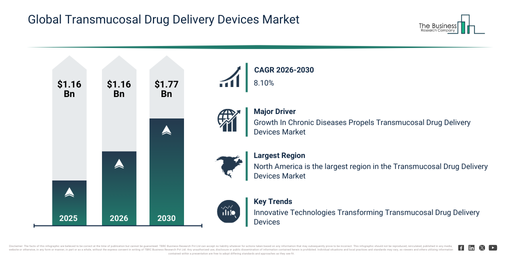
    The transmucosal drug delivery devices market is anticipated to show significant expansion over the coming years, with its value projected to reach $81.52 billion in 2030, growing at a compound annual growth rate (CAGR) of 8.1%. This upward trend during the forecast period can be linked to several factors, including the increasing progress in personalized medicine solutions, heightened investments in advanced drug delivery platforms, a rising need for at-home drug administration devices, the broadening application of biologics and peptide-based drugs, and an increase in regulatory approvals for innovative delivery systems. Noteworthy trends for this period encompass the growing adoption of buccal and sublingual delivery methods, an escalating demand for drug administration with rapid onset, the spread of microneedle and active delivery technologies, an enhanced focus on patient-convenient drug delivery devices, and a stronger emphasis on dose precision and bioavailability.

    Get A Free Sample Report With In-Depth Market Insights:

    https://thebusinessresearchcompany.com/sample_request?id=52265251&type=smp&name=Transmucosal%20Drug%20Delivery%20Devices%20Market%20Report%202026&utm_source=Blogs&utm_medium=Paid&utm_campaign=Oct_PR

    Transmucosal Drug Delivery Devices Market Demand Drivers Opening New Revenue Streams

    The increasing incidence of chronic illnesses is anticipated to boost the expansion of the transmucosal drug delivery devices market in the foreseeable future. A chronic illness is defined as a persistent ailment that usually advances gradually and endures for an extended period, frequently necessitating continuous medical intervention to manage its manifestations and avert adverse effects. The rise in chronic conditions can be attributed to several factors, including lifestyle choices, an aging global demographic, environmental influences, difficulties within healthcare systems, and increasing urbanization. For chronic ailments, transmucosal drug delivery devices serve to ensure regulated and effective administration of medicines, thereby maintaining consistent therapeutic concentrations crucial for symptom control and enhancing patient compliance. As an illustration, in June 2024, data from the National Health Service, a UK-based government department, revealed that 3,615,330 individuals registered with a general practitioner (GP) had a diagnosis of non-diabetic hyperglycemia or pre-diabetes (a state characterized by elevated blood sugar levels, insufficient for a diabetes classification) in 2023. This represented an 18% increase from 3,065,825 cases reported in 2022. Consequently, the expanding occurrence of chronic diseases is fueling the transmucosal drug delivery devices market.

    Transmucosal Drug Delivery Devices Market Segment Analysis Spotlighting Growth Areas

    The transmucosal drug delivery devices market covered in this report is segmented –

    1) By Type: Buccal Drug Delivery Devices, Sublingual Drug Delivery Devices, Nasal Drug Delivery Devices, Rectal Drug Delivery Devices, Vaginal Drug Delivery Devices

    2) By Drug Type: Buccal Tablets, Oral Sprays, Sublingual Films And Wafers, Gels, Medicated Confectionery, Other Drug Types

    3) By Indication: Pain Management, Addiction Treatment, Hormonal Therapies, Others Indications

    4) By End User: Academic And Research Institutes, Pharmaceutical And Biotechnology Companies, Diagnostic Laboratories, Hospitals

    Subsegments:

    1) By Buccal Drug Delivery Devices: Mucoadhesive Buccal Tablets, Buccal Patches, Buccal Films

    2) By Sublingual Drug Delivery Devices: Sublingual Tablets, Sublingual Films, Sublingual Sprays

    3) By Nasal Drug Delivery Devices: Metered Dose Nasal Sprays, Nasal Powder Devices, Nasal Gel Applicators

    4) By Rectal Drug Delivery Devices: Rectal Suppositories, Rectal Gels

    5) By Vaginal Drug Delivery Devices: Vaginal Rings, Vaginal Tablets, Vaginal Gels

    Transmucosal Drug Delivery Devices Market Trends Powering Strategic Industry Growth

    Leading companies in the transmucosal drug delivery sector are developing advanced smart platforms, including proprietary transdermal patch delivery systems that boost drug absorption and enhance patient compliance and convenience. These proprietary transdermal patch delivery platforms refer to specialized, company-owned technologies for administering medications through the skin, ensuring controlled release and improved therapeutic outcomes. For instance, in January 2024, Starton Therapeutics Inc, a US-based biotechnology company, introduced STARSILON, a new proprietary transdermal patch delivery platform, designed for longer-duration therapeutic delivery of difficult-to-formulate active pharmaceutical ingredients (APIs). This expands transdermal drug delivery options for challenging APIs, enhancing therapeutic efficacy with sustained delivery rates.

    Transmucosal Drug Delivery Devices Market Top Companies Driving Competitive Growth

    Major companies operating in the transmucosal drug delivery devices market are Johnson & Johnson, Bayer AG, Sanofi SA, Bristol-Myers Squibb Company, Abbott Laboratories, Novartis AG, Viatris Inc., Teva Pharmaceutical Industries Ltd., Catalent Inc., AptarGroup, Glenmark Pharmaceuticals Limited, Stevanato Group S.p.A, Noven Pharmaceuticals, Antares Pharma Inc., Satsuma Pharmaceuticals Inc., AdvaCare Pharma LLP, Lifevision Healthcare Private Limited, SAVA Healthcare Limited, Kaizen Pharmaceuticals Pvt. Ltd., Maya Biotech Pvt. Ltd

    View The Full Transmucosal Drug Delivery Devices Market Report:

    https://thebusinessresearchcompany.com/report/transmucosal-drug-delivery-devices-global-market-report?utm_source=Blogs&utm_medium=Paid&utm_campaign=Oct_PR

    Transmucosal Drug Delivery Devices Market Global Footprint: Which Region Leads The Industry?

    North America was the largest region in the transmucosal drug delivery devices market in 2025. The regions covered in the transmucosal drug delivery devices market report are Asia-Pacific, South East Asia, Western Europe, Eastern Europe, North America, South America, Middle East, Africa.

    Reach Out To Our Team:

    The Business Research Company: https://www.thebusinessresearchcompany.com/

    Americas: +1 310-496-7795

    Asia: +44 7882 955267 & +91 8897263534

    Europe: +44 7882 955267

    Email us at: marketing@tbrc.info

    Follow us on:

    LinkedIn: https://in.linkedin.com/company/the-business-research-company

    YouTube: https://www.youtube.com/channel/UC24_fI0rV8cR5DxlCpgmyFQ

    Global Market Model: https://www.thebusinessresearchcompany.com/global-market-model
  • Transfection Reagents And Equipment Market Growth Forecast: Market Size, Key Trends And Emerging Opportunities Through 2030

    Transfection Reagents And Equipment Market Growth Forecast: Market Size, Key Trends And Emerging Opportunities Through 2030

    Built to provide research that’s more actionable and strategically valuable, The Business Research Company’s 2026 market reports include market attractiveness analysis, total addressable market sizing, company benchmarking matrices, interactive Excel dashboards, broader supply chain intelligence, emerging startup tracking, and in-depth product insights.

    Transfection Reagents And Equipment Market Growth From $1.93 Billion In 2026 To $2.97 Billion By 2030 At A CAGR Of 11.3%

    The transfection reagents and equipment market size has observed rapid expansion in recent years. It is projected to increase from $1.74 billion in 2025 to $1.93 billion in 2026, at a compound annual growth rate (CAGR) of 11.2%. The historical growth of this market can be ascribed to several factors, including the escalation of molecular biology research activities, the increased utilization of cell-based assays, the growth in recombinant protein production, the rising trend in academic and industrial genomics research, and the availability of advanced transfection chemistries.

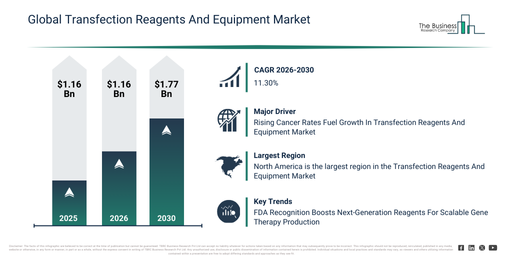
    The transfection reagents and equipment market size is projected to experience rapid expansion over the next few years. This market is anticipated to reach a value of $2.97 billion by 2030, demonstrating a compound annual growth rate (CAGR) of 11.3%. The growth observed during the forecast period can be primarily attributed to the increasing integration of CRISPR and gene therapy research, a rising demand for scalable transfection platforms, the ongoing development and expansion of biopharmaceutical pipelines, augmented investment in precision medicine, and increased automation within life science laboratories. Prominent trends throughout the forecast period include a greater uptake of high-efficiency transfection reagents, a growing requirement for gene editing-compatible delivery systems, an increasing reliance on non-viral transfection methods, the proliferation of automated transfection instruments, and a heightened emphasis on cell-type specific transfection solutions.

    Get A Free Sample Report With In-Depth Market Insights:

    https://thebusinessresearchcompany.com/sample_request?id=56881195&type=smp&name=Transfection%20Reagents%20And%20Equipment%20Market%20Report%202026&utm_source=Blogs&utm_medium=Paid&utm_campaign=Oct_PR

    Transfection Reagents And Equipment Market Growth Backed By Core Demand Fundamentals

    The increasing number of cancer patients globally is anticipated to propel the expansion of the transfection reagents and equipment market. Cancer is defined as a group of diseases characterized by cells that grow abnormally and without control. Transfection reagents are frequently utilized in cancer research to introduce foreign genetic material, such as plasmid DNA or RNA molecules, enabling researchers to investigate various aspects of cancer biology, including gene expression studies, gene silencing, drug screening, and target validation. For instance, in July 2024, projections released by Cancer Research UK, a UK-based cancer charity, indicated that cancer incidence rates in the United Kingdom are expected to rise for the majority of types between 2023-2025 and 2038-2040. These increases range from less than 1% for breast cancer to 50% for eye cancer, while a smaller number of cancers are predicted to decline, with reductions spanning from 2% for lung cancer to 27% for mesothelioma. Consequently, the rising worldwide count of cancer patients is a significant driver for the growth of the transfection reagents and equipment market.

    Transfection Reagents And Equipment Market Segment Performance And Emerging Opportunities

    The transfection reagents and equipment market covered in this report is segmented –

    1) By Product: Instruments, Reagent And Kits

    2) By Types Of Molecule: Plasmid DNA, DNA Oligonucleotides, Small Interfering RNA (SiRNA), Proteins, Ribonucleoprotein Complexes (RNPs), Other Molecules

    3) By End User: Biopharma, Contract Research Organizations (CROs), Academia

    Subsegments:

    1) By Instruments: Electroporation Systems, Microinjection Systems, Particle Bombardment Systems

    2) By Reagent And Kits: Lipid-Based Transfection Reagents, Polymer-Based Transfection Reagents, Protein-Based Transfection Reagents, Nucleic Acid Delivery Kits

    Transfection Reagents And Equipment Market Growth Trends Reshaping The Competitive Landscape

    Leading companies operating in the transfection reagents and equipment market are concentrating on developing innovative advancements, such as GMP-grade AAV transfection reagents, to improve viral vector production efficiency and support large-scale gene therapy manufacturing. A GMP-grade AAV transfection reagent is a regulatory-compliant chemical formulation designed to enable high-efficiency genetic material delivery into suspension cell cultures for the scalable production of recombinant adeno-associated virus vectors. For instance, in July 2025, Yeasen Biotechnology, a China-based biotechnology manufacturer, received U.S. Food and Drug Administration Drug Master File acceptance for its UltraAAV PEI Transfection Reagent—GMP grade. This reagent demonstrates substantially higher viral titers and significantly improved full capsid ratios across multiple adeno-associated virus serotypes, offering superior performance relative to standard formulations. It further enhances manufacturing efficiency by achieving comparable vector yields with reduced reagent usage while adhering to stringent regulatory and quality requirements suitable for clinical and commercial gene therapy production.

    Transfection Reagents And Equipment Market Leading Players And Competitive Positioning

    Major companies operating in the transfection reagents and equipment market are Thermo Fisher Scientific Inc., Promega Corporation, Qiagen N.V., Bio-Rad Laboratories Inc., MaxCyte Inc., Lonza Group Ltd., Merck KGaA, Mirus Bio LLC, OriGene Technologies Inc., Altogen Biosystems, Applied Biological Materials Inc., Bex Co. Ltd., Takara Bio Inc., Polyplus-transfection SA, Sigma-Aldrich Corporation, Transfection Technologies Inc., Viromer, ABM Inc., chemicell GmbH, Genlantis, Biontech Laboratories GmbH, Jena Bioscience GmbH, PromoCell GmbH, PerkinElmer Inc., Sartorius AG, Hoffmann-La Roche Ltd., Bio-Techne Corporation, Biotium Inc., Cell Applications Inc.

    View The Full Transfection Reagents And Equipment Market Report:

    https://thebusinessresearchcompany.com/report/transfection-reagents-and-equipment-global-market-report?utm_source=Blogs&utm_medium=Paid&utm_campaign=Oct_PR

    Transfection Reagents And Equipment Market Regional Distribution: Which Areas Power Market Growth?

    North America was the largest region in the transfection reagents and equipment market in 2025. Asia-Pacific is expected to be the fastest-growing region in the forecast period. The regions covered in the transfection reagents and equipment market report are Asia-Pacific, South East Asia, Western Europe, Eastern Europe, North America, South America, Middle East, Africa.

    Reach Out To Our Team:

    The Business Research Company: https://www.thebusinessresearchcompany.com/

    Americas: +1 310-496-7795

    Asia: +44 7882 955267 & +91 8897263534

    Europe: +44 7882 955267

    Email us at: marketing@tbrc.info

    Follow us on:

    LinkedIn: https://in.linkedin.com/company/the-business-research-company

    YouTube: https://www.youtube.com/channel/UC24_fI0rV8cR5DxlCpgmyFQ

    Global Market Model: https://www.thebusinessresearchcompany.com/global-market-model
  • Transcranial Magnetic Stimulator  Market CAGR Forecast Through 2030: Key Trends Shaping Industry Expansion

    Transcranial Magnetic Stimulator Market CAGR Forecast Through 2030: Key Trends Shaping Industry Expansion

    Backed by market attractiveness analysis, total addressable market sizing, company benchmarking matrices, interactive Excel dashboards, wider supply chain intelligence, emerging startup coverage, and detailed product-level insights, The Business Research Company’s 2026 market reports are designed to offer research that is more actionable and strategically valuable than ever.

    Transcranial Magnetic Stimulator Market Expansion Outlook: What Revenue Opportunities Are Ahead?

    The transcranial magnetic stimulator market has experienced robust expansion in recent years. It is projected to increase from $1.39 billion in 2025 to $1.52 billion in 2026, exhibiting a compound annual growth rate (CAGR) of 9.5%. Historically, this growth can be attributed to the rising prevalence of depression and various neurological disorders, greater awareness of non-pharmacological therapies, the availability of FDA-approved TMS systems, the expansion of mental health clinics, and the increasing acceptance of neuromodulation treatments.

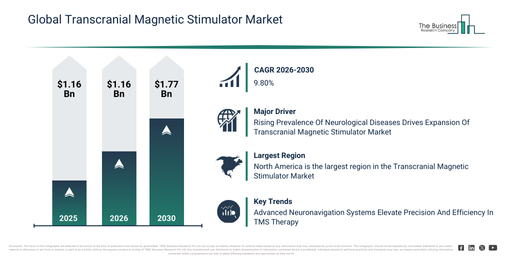
    The transcranial magnetic stimulator market is anticipated to experience robust growth in the upcoming years. It is projected to expand to $2.21 billion by 2030, achieving a compound annual growth rate (CAGR) of 9.8%. This growth during the forecast period can be attributed to the increasing adoption of TMS for a wider array of neurological indications, the rising demand for customized mental health treatments, the expansion of outpatient psychiatric care, the growing integration of digital treatment monitoring systems, and increasing investments in neuromodulation research. Major trends expected within the forecast period include the increasing uptake of non-invasive brain stimulation therapies, the growing use of rTMS in depression treatment, the expanding clinical applications of dTMS, an enhanced focus on personalized neurostimulation protocols, and the continued expansion of outpatient mental health treatments.

    Get A Free Sample Report With In-Depth Market Insights:

    https://thebusinessresearchcompany.com/sample_request?id=83316735&type=smp&name=Transcranial%20Magnetic%20Stimulator%20Market%20Report%202026&utm_source=Blogs&utm_medium=Paid&utm_campaign=Oct_PR

    Transcranial Magnetic Stimulator Market Growth Catalysts And Demand Drivers

    The transcranial magnetic stimulator market is anticipated to expand due to the rising occurrence of neurological diseases. Transcranial magnetic stimulation (TMS) demonstrates significant potential in addressing a range of neurological and psychiatric conditions. This novel technique serves as a treatment for diverse neurological ailments including stroke, spasticity, migraine, dementia, and movement disorders. As an illustration, a December 2022 study conducted by the Parkinson’s Foundation, a US-based non-profit, indicated that the population affected by Parkinson’s disease (PD) is projected to reach 1.2 million by 2030, a rise from 930,000 in 2020. Consequently, the growing incidence of neurological diseases is poised to fuel the expansion of the transcranial magnetic stimulator market.

    Transcranial Magnetic Stimulator Market Segment Landscape And Growth Outlook

    The transcranial magnetic stimulator market covered in this report is segmented –

    1) By Type: Deep Transcranial Magnetic Stimulation (dTMS) Systems, Repetitive Transcranial Magnetic Stimulation (rTMS) Systems, Theta Burst Stimulation (TBS) Systems

    2) By Treatment Protocol: High-Frequency TMS, Low-Frequency TMS, Intermittent Theta Burst Stimulation (iTBS), Continuous Theta Burst Stimulation (cTBS)

    3) By Application: Major Depressive Disorder (MDD), Treatment-Resistant Depression (TRD), Obsessive-Compulsive Disorder (OCD), Parkinson’s Disease, Alzheimer’s Disease and Other Dementias, Epilepsy, Other Applications

    Subsegments:

    1) By Deep Transcranial Magnetic Stimulation (dTMS) Systems: FDA-Approved dTMS Systems, Coil-Based Deep Stimulation Systems

    2) By Repetitive Transcranial Magnetic Stimulation (rTMS) Systems: Standard rTMS Systems, Navigated rTMS Systems

    3) By Theta Burst Stimulation (TBS) Systems: Standalone TBS Systems, TBS-Enabled rTMS Platforms

    Transcranial Magnetic Stimulator Market Trends Shaping Long-Term Demand

    Leading companies in the transcranial magnetic stimulator market are concentrating on developing innovative advancements, such as neuronavigational-guided TMS systems, to enhance coil placement accuracy, improve treatment consistency, and streamline clinical workflows. A neuronavigational-guided TMS system is an image-based guidance platform that integrates patient-specific neuroimaging with real-time coil tracking to ensure precise and reproducible stimulation targeting during transcranial magnetic stimulation procedures. For instance, in March 2023, MagVenture Inc., a US-based medical equipment manufacturer, introduced the MagVenture TMS Atlas Neuro Navigation System. This system optimizes transcranial magnetic stimulator coil positioning with a time-saving, high-precision workflow that is reliable and easy to use. It offers high precision and accuracy for clinical use. Atlas provides the operator with a greater range of movement during TMS treatments by eliminating line-of-sight concerns. It utilizes advanced technology to present patients with a visual depiction of their MRI scan and real-time tracking of the treatment coil relative to their head position, allowing for increased patient involvement in the procedure.

    Transcranial Magnetic Stimulator Market Competitive Overview And Top Companies

    Major companies operating in the transcranial magnetic stimulator market are BrainsWay Ltd., Nexstim Plc., The Magstim Company Limited, Neuronetics Inc., MagVenture Inc., MAG & More GmbH, neurocare group AG, Neurosoft, Neuroelectrics, NeuroConn GmbH, Neurofield Inc., Axilum Robotics, Yiruide Neurotech, Brainbox Ltd., Remed Inc., Soterix Medical Inc., Sinovation Medical Technology Co. Ltd., Shenzhen Yingchi Technology Co. Ltd., Wuhan Greentek Bioengineering Co. Ltd., Vishee Medical Technology Co. Ltd.

    View The Full Transcranial Magnetic Stimulator Market Report:

    https://thebusinessresearchcompany.com/report/transcranial-magnetic-stimulator-global-market-report?utm_source=Blogs&utm_medium=Paid&utm_campaign=Oct_PR

    Transcranial Magnetic Stimulator Market Leading Geography: Which Region Contributes The Most Revenue?

    North America was the largest region in the transcranial magnetic stimulator market in 2025. Asia-Pacific is expected to be the fastest-growing region in the global transcranial magnetic stimulator market report during the forecast period. The regions covered in the transcranial magnetic stimulator market report are Asia-Pacific, South East Asia, Western Europe, Eastern Europe, North America, South America, Middle East, Africa.

    Reach Out To Our Team:

    The Business Research Company: https://www.thebusinessresearchcompany.com/

    Americas: +1 310-496-7795

    Asia: +44 7882 955267 & +91 8897263534

    Europe: +44 7882 955267

    Email us at: marketing@tbrc.info

    Follow us on:

    LinkedIn: https://in.linkedin.com/company/the-business-research-company

    YouTube: https://www.youtube.com/channel/UC24_fI0rV8cR5DxlCpgmyFQ

    Global Market Model: https://www.thebusinessresearchcompany.com/global-market-model
  • Transcatheter Valve Repair System Market To Witness 9.2% CAGR Growth Through 2030: Key Industry Drivers

    Transcatheter Valve Repair System Market To Witness 9.2% CAGR Growth Through 2030: Key Industry Drivers

    Featuring market attractiveness scoring, total addressable market sizing, company benchmarking matrices, interactive Excel dashboards, deeper supply chain intelligence, emerging startup tracking, and granular product-level insights, The Business Research Company’s 2026 market reports are built to deliver research that is both more actionable and more strategically valuable.

    Transcatheter Valve Repair System Market Growth Potential: How Will Market Size Shift Through 2030?

    The transcatheter valve repair system market size has demonstrated significant expansion in recent years. It is anticipated to increase from $5.45 billion in 2025 to $5.93 billion in 2026, achieving a compound annual growth rate (CAGR) of 8.8%. This historical growth can be attributed to several factors, including the increasing occurrence of valvular heart diseases, a growing elderly demographic, advancements in catheter navigation technologies, the expanding expertise of clinicians in transcatheter interventions, and the proliferation of cardiac specialty centers.

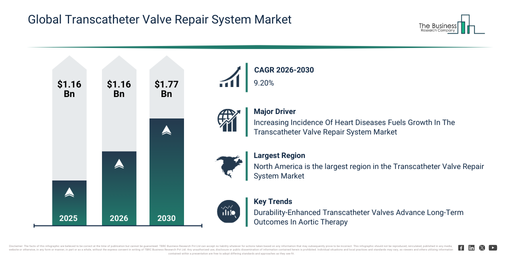
    The transcatheter valve repair system market is projected to experience robust expansion over the coming years, reaching a valuation of $8.42 billion by 2030, driven by a compound annual growth rate (CAGR) of 9.2%. This anticipated growth during the forecast period stems from several factors, including the increasing embrace of minimally invasive valve repair techniques, a growing need for transcatheter mitral interventions, the broadening of structural heart disease programs, continued innovation in multi-valve repair technologies, and a heightened emphasis on customized patient treatment solutions. Key trends identified for the forecast period encompass a wider acceptance of catheter-based valve repair procedures, an escalating demand for mitral valve repair systems, a sharpened focus on high-risk surgical patients, the proliferation of multi-valve repair platforms, and advancements leading to improved device navigability and control.

    Get A Free Sample Report With In-Depth Market Insights:

    https://thebusinessresearchcompany.com/sample_request?id=11596573&type=smp&name=Transcatheter%20Valve%20Repair%20System%20Market%20Report%202026&utm_source=Blogs&utm_medium=Paid&utm_campaign=Oct_PR

    Transcatheter Valve Repair System Market Opportunity Drivers: What’s Unlocking New Revenue Potential?

    The increasing occurrence of heart ailments is projected to drive the expansion of the transcatheter valve repair system market in the future. Heart disease is defined as an ailment impacting either the heart itself or its blood vessels. In the treatment of valvular heart disease, particularly aortic valve disease, transcatheter devices are employed to substitute a faulty aortic valve with an artificial one. For example, data from March 2024, provided by the Office for Health Improvement and Disparities (OHID), a Ul-based government department, revealed that approximately 1,862,500 persons (3%) in England received a GP diagnosis of CHD during the fiscal year concluding in 2023. Consequently, the growing prevalence of heart disease is fueling the expansion of the transcatheter valve repair system market.

    Transcatheter Valve Repair System Market Breakdown By Product Type And Application

    The transcatheter valve repair system market covered in this report is segmented –

    1) By Product Type: Transcatheter Aortic Valve Replacement (TAVR), Transcatheter Mitral Valve Replacement (TMVR), Transcatheter Pulmonary Valve Replacement (TPVR), Transcatheter Tricuspid Valve Replacement (TTVR)

    2) By Application: Aortic Stenosis, Pulmonary Stenosis

    3) By End-user: Hospitals, Specialty Clinics, Other End-Users

    Subsegments:

    1) By Transcatheter Aortic Valve Replacement (TAVR): Self-Expandable TAVR Valves, Balloon-Expandable TAVR Valves, Mechanically Expanded TAVR Valves

    2) By Transcatheter Mitral Valve Replacement (TMVR): Self-Expandable TMVR Devices, Balloon-Expandable TMVR Devices, Transcatheter Mitral Valve Repair Systems

    3) By Transcatheter Pulmonary Valve Replacement (TPVR): Self-Expandable TPVR Valves, Balloon-Expandable TPVR Valves

    4) By Transcatheter Tricuspid Valve Replacement (TTVR): Self-Expandable TTVR Devices, Balloon-Expandable TTVR Devices

    Transcatheter Valve Repair System Market Innovation Trends Shaping Future Development

    Key companies operating within the transcatheter valve repair system market are concentrating on developing advanced innovations, such as durability-enhanced transcatheter valves, to extend long-term valve durability and optimize clinical outcomes for patients undergoing transcatheter valve replacement. A durability-enhanced transcatheter valve is a minimally invasive aortic replacement device constructed with advanced biomaterials to improve structural longevity and sustain effective valve function over time. For instance, in May 2024, Edwards Lifesciences, a Switzerland-based provider of structural heart and critical care technologies, introduced the SAPIEN 3 Ultra RESILIA valve. This device integrates a proprietary anti-calcification tissue technology aimed at reducing structural deterioration and supporting prolonged performance. It also provides dry-tissue storage and exhibited favorable early hemodynamic outcomes, emphasizing its potential to enhance durability and broaden treatment possibilities for patients with aortic valve disease.

    Transcatheter Valve Repair System Market Competitive Landscape: Which Companies Lead The Industry?

    Major companies operating in the transcatheter valve repair system market are Abbott Laboratories, Medtronic Plc., Boston Scientific Corporation, Edwards Lifesciences Corporation, LivaNova Plc., Meril Life Sciences Pvt. Ltd., Cordis Corporation, MicroPort Scientific Corporation., Biotronik Pvt. Ltd, AtriCure Inc., OrbusNeich Medical Group Holdings Limited, Venus Medtech (Hangzhou) Inc., Dura LLC, HLT Medical Inc., Symetis SA, JenaValve Technology Inc., 4C Medical Technologies Inc., Cardiac Dimensions Inc., Valve Solutions Inc., Transcatheter Technologies GmbH, Evalve Corporation, Colibri Heart Valve LLC, Medtentia International Ltd., Coramaze Technologies Ltd., Neovasc Inc., Anteris Technologies Ltd.

    View The Full Transcatheter Valve Repair System Market Report:

    https://thebusinessresearchcompany.com/report/transcatheter-valve-repair-system-global-market-report?utm_source=Blogs&utm_medium=Paid&utm_campaign=Oct_PR

    Transcatheter Valve Repair System Market Regional Outlook: Where Is Opportunity Concentrated?

    North America was the largest region in the transcatheter valve repair systems market in 2025. Asia-Pacific is expected to be the fastest-growing region in the forecast period. The regions covered in the transcatheter valve repair system market report are Asia-Pacific, South East Asia, Western Europe, Eastern Europe, North America, South America, Middle East, Africa.

    Reach Out To Our Team:

    The Business Research Company: https://www.thebusinessresearchcompany.com/

    Americas: +1 310-496-7795

    Asia: +44 7882 955267 & +91 8897263534

    Europe: +44 7882 955267

    Email us at: marketing@tbrc.info

    Follow us on:

    LinkedIn: https://in.linkedin.com/company/the-business-research-company

    YouTube: https://www.youtube.com/channel/UC24_fI0rV8cR5DxlCpgmyFQ

    Global Market Model: https://www.thebusinessresearchcompany.com/global-market-model