Blog

  • Third-Generation Sequencing Technology Market Growth Outlook For 2026: Drivers, Trends And Future Opportunities

    Third-Generation Sequencing Technology Market Growth Outlook For 2026: Drivers, Trends And Future Opportunities

    Featuring market attractiveness scoring, total addressable market sizing, company benchmarking matrices, interactive Excel dashboards, deeper supply chain intelligence, emerging startup tracking, and granular product-level insights, The Business Research Company’s 2026 market reports are built to deliver research that is both more actionable and more strategically valuable.

    Third-Generation Sequencing Technology Market Growth Analysis: How Will Revenue Trend Over The Forecast Period?

    The market size for third-generation sequencing technology has experienced significant expansion recently. Projections indicate it will expand from $14 billion in 2025 to $15.96 billion in 2026, exhibiting a compound annual growth rate (CAGR) of 14.0%. This historical increase is primarily due to factors such as genomics research funding, the constraints of short-read sequencing, increased adoption in academic research, the proliferation of rare disease studies, and advancements in technology.

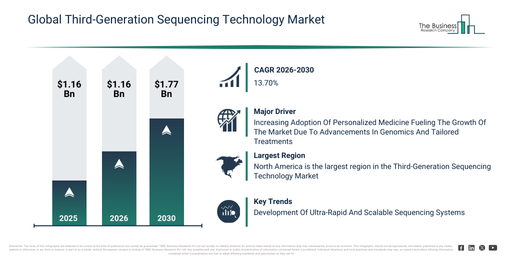
    The third-generation sequencing technology market is set for considerable expansion over the next few years, with projections indicating it will reach $26.71 billion in 2030, growing at a compound annual growth rate (CAGR) of 13.7%. This anticipated rise can be attributed to several factors such as the increasing reach of precision medicine, wider acceptance of clinical diagnostics, ongoing reductions in sequencing costs, enhanced integration with AI analytics, and various population genomics initiatives. Key trends characterizing this forecast period include advancements in long-read sequencing technologies, the development of real-time DNA sequencing, broader clinical genomics adoption, single-molecule sequencing, and the emergence of portable sequencing platforms.

    Get A Free Sample Report With In-Depth Market Insights:

    https://thebusinessresearchcompany.com/sample_request?id=28340&type=smp&name=Third-Generation%20Sequencing%20Technology%20Market%20Report%202026&utm_source=Blogs&utm_medium=Paid&utm_campaign=Oct_PR

    Third-Generation Sequencing Technology Market Demand Drivers Opening New Revenue Streams

    The growing acceptance of personalized medicine is anticipated to fuel the expansion of the third-generation sequencing technology market in the future. Personalized medicine defines a medical approach that customizes treatment and prevention plans to align with an individual’s specific genetic makeup, lifestyle, and environmental factors. The increased adoption of personalized medicine is largely driven by advancements in genomics, which enable the precise identification of genetic variations and the development of personalized treatments. Third-generation sequencing technology enhances personalized medicine by providing long-read, high-accuracy genomic data, facilitating the accurate detection of genetic variations. It supports customized treatment strategies by offering comprehensive insights into individual genomes, leading to improved clinical outcomes and the progression of precision healthcare. For instance, in February 2024, the Personalized Medicine Coalition (PMC), a US-based nonprofit organization, indicated that the U.S. Food and Drug Administration (FDA) approved 26 new personalized medicines in 2023, a notable increase from the 12 approved in 2022. Therefore, the rising adoption of personalized medicine is stimulating the growth of the third-generation sequencing technology market.

    Third-Generation Sequencing Technology Market Segmentation: How Does The Market Break Down By Category?

    The third-generation sequencing technology market covered in this report is segmented –

    1) By Technology Type: Single-Molecule Real-Time Sequencing (SMRT), Nanopore Sequencing

    2) By Workflow: Sample Preparation, Sequencing, Data Analysis, Data Interpretation, Data Storage And Management

    3) By Application: Genomics, Transcriptomics, Epigenomics, Metagenomics, Personalized Medicine, Synthetic Biology

    4) By End-User: Academic Institutions, Clinical Laboratories, Pharmaceutical And Biotechnology Companies, Research Organizations, Government And Non-Profit Organizations

    Subsegments:

    1) By Single-Molecule Real-Time Sequencing (SMRT): Zero-Mode Waveguides (ZMWs), Circular Consensus Sequencing (CCS), High-Fidelity (HiFi) Reads

    2) By Nanopore Sequencing: Portable Nanopore Sequencers, Benchtop Nanopore Sequencers, High-Throughput Nanopore Platforms

    Third-Generation Sequencing Technology Market Trends Powering Strategic Industry Growth

    Leading companies in the third-generation sequencing technology market are concentrating on creating advanced sequencing platforms, such as ultra-rapid and scalable sequencing systems, with the goal of increasing research efficiency, improving clinical relevance, and decreasing both processing times and expenses. Ultra-rapid and scalable sequencing systems denote inventive technologies that allow high-throughput, real-time genomic analysis with exceptional speed and precision, thus enabling thorough genomic profiling across various applications. For example, in February 2025, Roche Holding AG, a Switzerland-based pharmaceutical company, introduced its Sequencing by Expansion (SBX) technology. This is a fully integrated, next-generation sequencing system that utilizes a patented biochemical method to convert DNA or RNA sequences into quantifiable surrogate polymers called Xpandomers, thereby enabling highly accurate single-molecule nanopore sequencing. The SBX platform incorporates ultra-rapid, scalable sequencing functionalities and automated data analysis, yielding whole-genome sequencing results within hours rather than days, without significant manual involvement.

    Third-Generation Sequencing Technology Market Competitive Overview And Top Companies

    Major companies operating in the third-generation sequencing technology market are Oxford Nanopore Technologies, Pacific Biosciences, Quantapore, Ultima Genomics, BGI Genomics, MGI Tech, Complete Genomics, Stratos Genomics, VisiGen Biotechnologies, Helicos Biosciences, Genia Technologies, Electronic Bio Sciences, Quantum Biosystems, Base4 Innovation, Nabsys, Chronix Biomedical, Roche, Nanopore Diagnostics, GenapSys, SomaLogic

    View The Full Third-Generation Sequencing Technology Market Report:

    https://thebusinessresearchcompany.com/report/third-generation-sequencing-technology-global-market-report?utm_source=Blogs&utm_medium=Paid&utm_campaign=Oct_PR

    Third-Generation Sequencing Technology Market Leading Geography: Which Region Contributes The Most Revenue?

    North America was the largest region in the third-generation sequencing technology market in 2025. The regions covered in the third-generation sequencing technology market report are Asia-Pacific, South East Asia, Western Europe, Eastern Europe, North America, South America, Middle East, Africa.

    Reach Out To Our Team:

    The Business Research Company: https://www.thebusinessresearchcompany.com/

    Americas: +1 310-496-7795

    Asia: +44 7882 955267 & +91 8897263534

    Europe: +44 7882 955267

    Email us at: marketing@tbrc.info

    Follow us on:

    LinkedIn: https://in.linkedin.com/company/the-business-research-company

    YouTube: https://www.youtube.com/channel/UC24_fI0rV8cR5DxlCpgmyFQ

    Global Market Model: https://www.thebusinessresearchcompany.com/global-market-model
  • Therapeutic Drug Monitoring Market Size Forecast From 2026 To 2030: Key Industry Trends

    Therapeutic Drug Monitoring Market Size Forecast From 2026 To 2030: Key Industry Trends

    Built to provide research that’s more actionable and strategically valuable, The Business Research Company’s 2026 market reports include market attractiveness analysis, total addressable market sizing, company benchmarking matrices, interactive Excel dashboards, broader supply chain intelligence, emerging startup tracking, and in-depth product insights.

    Therapeutic Drug Monitoring Market Forecast: What Value Will The Market Reach By 2030?

    The therapeutic drug monitoring market has seen substantial expansion in recent years. Its valuation is anticipated to climb from $2.41 billion in 2025 to $2.67 billion in 2026, showing a compound annual growth rate (CAGR) of 10.9%. This past growth is largely due to the increasing utilization of narrow therapeutic index drugs, the expansion of hospital laboratory testing capabilities, the widespread adoption of immunoassay technologies, a rise in the occurrence of chronic diseases, and enhancements in analytical instrumentation.

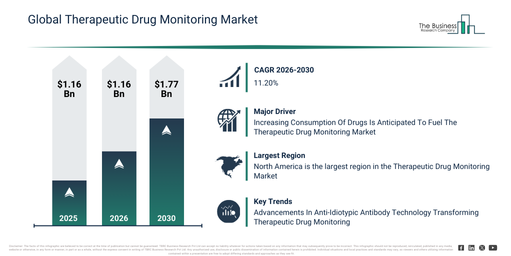
    The therapeutic drug monitoring market is anticipated to experience substantial expansion in the coming years. Its valuation is projected to reach $4.09 billion by 2030, exhibiting a compound annual growth rate (CAGR) of 11.2%. This projected growth throughout the forecast period stems from factors such as the increasing need for precision medicine, the proliferation of automated diagnostic laboratories, a heightened emphasis on patient-specific dosing, progress in mass spectrometry technologies, and the rising uptake of real-time therapeutic monitoring. Significant trends during this period encompass the wider acceptance of LC-MS based monitoring methods, the increasing application of personalized medicine strategies, the broader integration of automated laboratory systems, an expansion in real-time drug level analysis, and a sharpened focus on precision dosing.

    Get A Free Sample Report With In-Depth Market Insights:

    https://thebusinessresearchcompany.com/sample_request?id=44021670&type=smp&name=Therapeutic%20Drug%20Monitoring%20Market%20Report%202026&utm_source=Blogs&utm_medium=Paid&utm_campaign=Oct_PR

    Therapeutic Drug Monitoring Market Growth Backed By Core Demand Fundamentals

    The therapeutic drug monitoring market is projected to grow as drug consumption escalates. Drugs are substances administered for medical purposes to diagnose, treat, or prevent ailments in humans or animals. Therapeutic drug monitoring is utilized to refine drug dosage regimens by quantifying and adjusting drug concentrations within the bloodstream, thereby ensuring therapeutic effectiveness and minimizing adverse effects. For instance, in January 2024, the Office for Health Improvement & Disparities, a UK government department, reported that between April 2022 and March 2023, a total of 12,418 young people under 18 accessed alcohol and drug services, which signifies a 10% increase from the 11,326 cases observed in the preceding year. This escalating use of drugs is consequently propelling the therapeutic drug monitoring market.

    Therapeutic Drug Monitoring Market Segment Trends And Revenue Contributors

    The therapeutic drug monitoring market covered in this report is segmented –

    1) By Product: Consumables, Equipment, Immunoassay Analyzers, Chromatography And Detectors

    2) By Class Of Drug: Antiepileptic Drugs, Antibiotic Drugs, Immunosuppressant Drugs, Antiarrhythmic Drugs, Psychoactive Drugs, Other Drugs

    3) By End-user: Hospital Laboratories, Commercial and Private Laboratories, Other End Users

    Subsegments:

    1) By Consumables: Reagents, Test Kits, Sample Collection Containers, Calibration Standards

    2) By Equipment: Analyzers, Incubators, Centrifuges

    3) By Immunoassay Analyzers: ELISA Analyzers, Chemiluminescent Immunoassay Analyzers, Radioimmunoassay Analyzers

    4) By Chromatography And Detectors: High-Performance Liquid Chromatography (HPLC), Gas Chromatography (GC), Mass Spectrometry (MS)

    Therapeutic Drug Monitoring Market Growth Trends Reshaping The Competitive Landscape

    Leading companies in the therapeutic drug monitoring market are prioritizing the development of anti-idiotypic antibody technology to improve the sensitivity and specificity of assays used for precisely measuring biologic drug levels and evaluating patient immune responses. This anti-idiotypic antibody technology supports therapeutic drug monitoring by enabling exact detection and quantification of biologic drug levels, thereby ensuring accurate dosing and monitoring of patient immune reactions. For example, in June 2024, Bio-Rad Laboratories, a US-based biotechnology company, introduced new anti-idiotypic and anti-monomethyl auristatin E (MMAE) antibodies designed for bioanalytical assays, which enhances pharmacokinetic (PK) and antidrug-antibody (ADA) monitoring. These innovative antibodies increase the reliability of assays for antibody-drug conjugates (ADCs) and are essential for the therapeutic drug monitoring market, facilitating precise evaluations of drug concentrations and immune responses for optimal patient treatment.

    Therapeutic Drug Monitoring Market Competitive Landscape: Which Companies Lead The Industry?

    Major companies operating in the therapeutic drug monitoring market are Abbott Laboratories Inc., F. Hoffmann-La Roche AG, Siemens Healthineers AG, Thermo Fisher Scientific Inc., Sekisui Medical Co., Buehlmann Laboratories AG, Danaher Corporation, Bio-Rad Laboratories Inc., bioMérieux SA, Randox Laboratories Limited, Chromsystems Instruments & Chemicals GmbH, Grifols SA, Merck KGaA, BioChem Pharmaceuticals, Beckman Coulter Inc., DiaSorin S.p.A., Hologic Inc., Immunodiagnostic Systems Holdings plc, Kronus Inc., QuidelOrtho Corporation, Sysmex Corporation, TDM Solutions Inc., Theradiag, Tosoh Bioscience LLC, Trinity Biotech plc, Associated Regional and University Pathologists Inc., Mayo Clinic Laboratories, Quest Diagnostics

    View The Full Therapeutic Drug Monitoring Market Report:

    https://thebusinessresearchcompany.com/report/therapeutic-drug-monitoring-global-market-report?utm_source=Blogs&utm_medium=Paid&utm_campaign=Oct_PR

    Therapeutic Drug Monitoring Market Regional Outlook: Where Is Opportunity Concentrated?

    North America was the largest region in the therapeutic drug monitoring market in 2025. Asia-Pacific is expected to be the fastest-growing region in the global therapeutic drug monitoring market report during the forecast period. The regions covered in the therapeutic drug monitoring market report are Asia-Pacific, South East Asia, Western Europe, Eastern Europe, North America, South America, Middle East, Africa.

    Reach Out To Our Team:

    The Business Research Company: https://www.thebusinessresearchcompany.com/

    Americas: +1 310-496-7795

    Asia: +44 7882 955267 & +91 8897263534

    Europe: +44 7882 955267

    Email us at: marketing@tbrc.info

    Follow us on:

    LinkedIn: https://in.linkedin.com/company/the-business-research-company

    YouTube: https://www.youtube.com/channel/UC24_fI0rV8cR5DxlCpgmyFQ

    Global Market Model: https://www.thebusinessresearchcompany.com/global-market-model
  • Therapeutic Dental Equipment Market 2026: Market Size, Growth Drivers And Emerging Opportunities

    Therapeutic Dental Equipment Market 2026: Market Size, Growth Drivers And Emerging Opportunities

    Backed by market attractiveness analysis, total addressable market sizing, company benchmarking matrices, interactive Excel dashboards, wider supply chain intelligence, emerging startup coverage, and detailed product-level insights, The Business Research Company’s 2026 market reports are designed to offer research that is more actionable and strategically valuable than ever.

    Therapeutic Dental Equipment Market Size Outlook: How Quickly Will Revenue Expand Through 2030?

    The therapeutic dental equipment market size has shown significant growth in recent years. It is projected to expand from $2.39 billion in 2025 to $2.58 billion in 2026, reflecting a compound annual growth rate (CAGR) of 7.9%. The observed growth during the historical period is attributable to the expansion of dental care facilities, an increasing prevalence of oral health disorders, a rising demand for cosmetic dentistry, the wider adoption of modern dental tools, and growing investments in dental healthcare infrastructure.

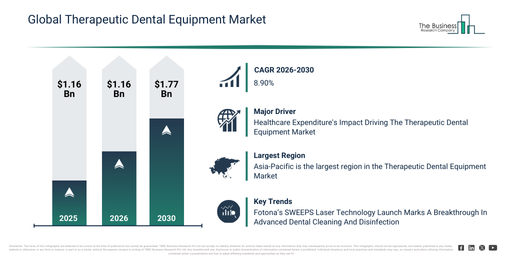
    The therapeutic dental equipment market size is anticipated to experience robust growth in the upcoming years. It will grow to $3.63 billion in 2030 at a compound annual growth rate (CAGR) of 8.9%. This expansion during the forecast period is primarily driven by factors such as a rising demand for advanced dental procedures, increased adoption of laser dentistry technologies, the expansion of outpatient dental clinics, a heightened focus on pain-free treatments, and growing investments in digital dentistry solutions. Key trends observed in this period include the increasing integration of laser-based dental therapies, a surging demand for minimally invasive dental treatments, the expanded use of advanced soft tissue equipment, the proliferation of high-precision dental laser systems, and an enhanced emphasis on patient comfort and treatment accuracy.

    Get A Free Sample Report With In-Depth Market Insights:

    https://thebusinessresearchcompany.com/sample_request?id=26191461&type=smp&name=Therapeutic%20Dental%20Equipment%20Market%20Report%202026&utm_source=Blogs&utm_medium=Paid&utm_campaign=Oct_PR

    Therapeutic Dental Equipment Market Growth Catalysts And Demand Drivers

    The increasing healthcare expenditure is anticipated to drive the future expansion of the therapeutic dental equipment market. Healthcare expenditure signifies the total financial outlay on healthcare costs, representing all money spent on healthcare-related goods and services within a particular healthcare system or economy. The growth in healthcare spending is primarily fueled by the rising prevalence of chronic diseases, which necessitate long-term care, frequent medical interventions, and ongoing management. Healthcare expenditure plays a vital role in supporting the development, ensuring the accessibility, and facilitating the utilization of therapeutic dental equipment. For instance, in April 2025, according to the Office for National Statistics, a UK-based government agency, it was reported that UK healthcare spending in 2024 reached around USD 365.65 billion (£317 billion), making up 11.1% of GDP, a proportion that remained consistent with 2023. Consequently, the rising healthcare expenditure is a key driver of growth for the therapeutic dental equipment market.

    Therapeutic Dental Equipment Market Segment Analysis Spotlighting Growth Areas

    The therapeutic dental equipment market covered in this report is segmented –

    1) By Product: Soft Tissue Lasers, All Tissue Lasers

    2) By End User: Hospitals, Clinics, Dental laboratories

    3) By Therapeutic Area: Restorative Dentistry, Orthodontics, Endodontics, Other Therapeutic Areas

    Subsegments:

    1) By Soft Tissue Lasers: Diode Lasers, CO2 Lasers

    2) By All Tissue Lasers: Er:YAG Lasers, Nd:YAG Lasers

    Therapeutic Dental Equipment Market Trends Shaping Long-Term Demand

    Major companies within the therapeutic dental equipment market are increasingly focusing on technological advancements, such as photoacoustic laser irrigation, to enhance treatment precision, cleaning efficiency, and clinical outcomes across endodontic, periodontal, and oral surgical procedures. This photoacoustic laser irrigation facilitates deeper biofilm removal, improved irrigant penetration, and more effective debridement in complex root canal anatomies when compared to conventional irrigation techniques. For instance, in March 2025, Fotona, a Slovenia-based dental laser technology manufacturer, unveiled its Shock Wave-Enhanced Emission Photoacoustic Streaming (SWEEPS) technology at the International Dental Show (IDS). The system utilizes precisely timed dual laser pulses, supported by its Auto SWEEPS and R-SWEEPS modes, to generate optimized shock waves that enhance cavitation and fluid dynamics, ensuring superior cleaning of root canals, periodontal pockets, and peri-implant sites. This next-generation solution provides clinicians with a powerful, minimally invasive approach to improving disinfection efficiency and overall therapeutic outcomes.

    Therapeutic Dental Equipment Market Competitive Landscape: Who Leads The Industry?

    Major companies operating in the therapeutic dental equipment market are CAO Group, BIOLASE Technology, Dentsply Sirona, Planmeca Group, A-dec, Midmark Corporation, A.R.C. Laser, Carestream Health Inc., The Yoshida Dental Mfg. Co., Ivoclar Vivadent Aktiengesellschaft, Convergent Dental, Den-Mat Holdings, IPG Photonics, Gnatus International Ltda., Takara Belmont Corporation, NSK Nakanishi, Young Innovations, Prime Dental Products Pvt. Ltd, AMD LASERS LLC, GC Corporation, Henry Schein Inc., Septodont, Coltène Whaledent, Kavo Kerr, KaVo Dental, Hu-Friedy Mfg. Co. LLC, BEGO, Ultradent Products Inc., DENTALEZ, StarDental, Aseptico Inc., Parkell Inc.

    View The Full Therapeutic Dental Equipment Market Report:

    https://thebusinessresearchcompany.com/report/therapeutic-dental-equipment-global-market-report?utm_source=Blogs&utm_medium=Paid&utm_campaign=Oct_PR

    Therapeutic Dental Equipment Market Geographic Landscape: Which Region Leads Industry Growth?

    Asia-Pacific was the largest region in the global therapeutic dental equipment market in 2025. Western Europe was the second-largest region in the therapeutic dental equipment market report. The regions covered in the therapeutic dental equipment market report are Asia-Pacific, South East Asia, Western Europe, Eastern Europe, North America, South America, Middle East, Africa.

    Reach Out To Our Team:

    The Business Research Company: https://www.thebusinessresearchcompany.com/

    Americas: +1 310-496-7795

    Asia: +44 7882 955267 & +91 8897263534

    Europe: +44 7882 955267

    Email us at: marketing@tbrc.info

    Follow us on:

    LinkedIn: https://in.linkedin.com/company/the-business-research-company

    YouTube: https://www.youtube.com/channel/UC24_fI0rV8cR5DxlCpgmyFQ

    Global Market Model: https://www.thebusinessresearchcompany.com/global-market-model
  • Test Strips Market Set To Expand From $85.21 Billion In 2026: Growth Outlook Through 2030

    Test Strips Market Set To Expand From $85.21 Billion In 2026: Growth Outlook Through 2030

    Featuring market attractiveness scoring, total addressable market sizing, company benchmarking matrices, interactive Excel dashboards, deeper supply chain intelligence, emerging startup tracking, and granular product-level insights, The Business Research Company’s 2026 market reports are built to deliver research that is both more actionable and more strategically valuable.

    Test Strips Market Size, Value And Growth Trajectory Through 2030

    The test strips market has experienced consistent expansion in recent times. This market is projected to expand from $68.13 billion in 2025 to $71.42 billion in 2026, exhibiting a compound annual growth rate (CAGR) of 4.8%. Historically, this growth was influenced by factors such as the restricted access to home-testing kits, a dependence on conventional laboratory diagnostics, the rising incidence of diabetes, heightened understanding of early disease detection, and limited distribution networks.

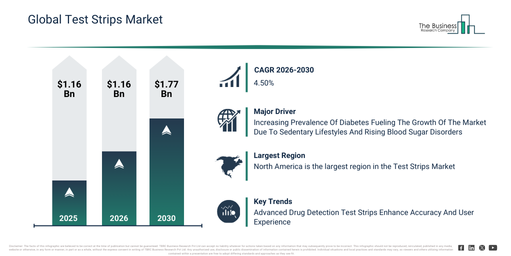
    The test strips market is projected to experience consistent expansion in the coming years. It will grow to $85.21 billion in 2030 at a compound annual growth rate (CAGR) of 4.5%. This expansion during the projection period is primarily driven by advancements in biosensor technology, the increasing uptake of digital health platforms, the broadening of hospital and homecare services, the rising incidence of chronic illnesses, and the incorporation of AI-powered diagnostic instruments. Key trends anticipated over the forecast period encompass a greater adoption of home-based testing options, an increasing need for multi-parameter test strips, seamless integration with mobile health applications, the widespread expansion of point-of-care diagnostic testing, and an enhanced emphasis on swift and precise detection methods.

    Get A Free Sample Report With In-Depth Market Insights:

    https://thebusinessresearchcompany.com/sample_request?id=16195898&type=smp&name=Test%20Strips%20Market%20Report%202026&utm_source=Blogs&utm_medium=Paid&utm_campaign=Oct_PR

    Test Strips Market Opportunity Drivers: What’s Unlocking New Revenue Potential?

    The rising occurrence of diabetes is projected to fuel the expansion of the test strips market in the future. This long-term health issue involves the body’s failure to adequately control blood sugar or glucose concentrations. This growing prevalence stems from inactive lifestyles, since insufficient physical movement contributes to increased weight and diminished insulin responsiveness, both factors elevating the likelihood of acquiring the condition. Test strips assist in monitoring diabetes by offering rapid and precise blood glucose measurements, thereby simplifying and enhancing daily management. These strips present an accessible and uncomplicated method for tracking blood sugar levels, facilitating prompt treatment choices and better health results. For example, data from June 2024, released by the National Health Service, a UK-based government department, indicated that 3,615,330 individuals registered with a general practitioner (GP) received a diagnosis of non-diabetic hyperglycemia or pre-diabetes in 2023, representing an 18% increase compared to 3,065,825 cases in 2022. Consequently, the expanding occurrence of diabetes is propelling the growth of the test strips market.

    Test Strips Market Segment Performance And Emerging Opportunities

    The test strips market covered in this report is segmented –

    1) By Product Type: Blood Test Strips, Urine Test Strips, Other Product Types

    2) By Distribution Channel: Online Retail, Offline Retail, Direct Sales, Hospital Supply Chains, Specialized Distributors

    3) By Application: Diabetes, Infectious Disease, Cardiac Marker Testing, Pregnancy And Fertility Testing, Other Applications

    4) By End User: Hospitals And Clinics, Homecare, Diagnostic Labs, Other End Users

    Subsegments:

    1) By Blood Test Strips: Glucose Test Strips, Cholesterol Test Strips, Hemoglobin Test Strips, Ketone Test Strips, Coagulation Test Strips

    2) By Urine Test Strips: pH Test Strips, Protein Test Strips, Glucose Test Strips, Ketone Test Strips, Leukocyte And Nitrite Test Strips, Specific Gravity Test Strips, Microalbumin Test Strips

    3) By Other Product Types: Saliva Test Strips, Sweat Test Strips, Multi-Parameter Test Strips, Drug of Abuse Test Strips, Fertility Or Pregnancy Test Strips

    Test Strips Market Innovation Trends Shaping Future Development

    Leading companies within the test strip market are focusing their efforts on developing advanced products, such as drug detection test strips, to improve detection capabilities, enhance user experience, and increase accuracy. Drug detection test strips are defined as small, portable devices designed for the rapid identification of specific drugs or their metabolites in biological samples like urine or saliva. For instance, in September 2024, Greenlane Holdings Inc., a US-based cannabis accessories distributor company, launched fentaNYL, Xylazine, and drink spike detection test strips. These are sophisticated safety tools engineered to detect the presence of harmful substances such as fentaNYL, Xylazine, and common drink-spiking agents including benzodiazepines and ketamine. These strips offer high sensitivity and accuracy, delivering reliable results within two minutes. They feature a simple, user-friendly design, typically utilizing a dip-and-read or drop-and-wait format with clear visual indicators for easy interpretation, making them portable and disposable, ideal for use in bars, nightclubs, festivals, and personal safety kits.

    Test Strips Market Company Landscape And Competitive Strategy

    Major companies operating in the test strips market are Johnson & Johnson, F Hoffmann La Roche Ltd, Abbott Laboratories, Abbott Diabetes Care, Siemens Healthcare GmbH, Becton Dickinson and Company, bioMerieux SA, Bio Rad Laboratories Inc, TaiDoc Technology Corporation, Macherey Nagel GmbH and Co KG, OneTouch, EKF Diagnostics Holdings plc, Bionime Corporation, ACON Laboratories Inc, i SENS Inc, BTNX Inc, ARKRAY Inc, Ascensia Diabetes Care, LifeScan Inc, Nova Biomedical, Trividia Health, Nipro Diagnostics

    View The Full Test Strips Market Report:

    https://thebusinessresearchcompany.com/report/test-strips-global-market-report?utm_source=Blogs&utm_medium=Paid&utm_campaign=Oct_PR

    Test Strips Market Largest Region: Which Geography Holds The Biggest Share?

    North America was the largest region in the test strips market in 2025. Asia-Pacific is expected to be the fastest-growing region in the forecast period. The regions covered in the test strips market report are Asia-Pacific, South East Asia, Western Europe, Eastern Europe, North America, South America, Middle East, Africa.

    Reach Out To Our Team:

    The Business Research Company: https://www.thebusinessresearchcompany.com/

    Americas: +1 310-496-7795

    Asia: +44 7882 955267 & +91 8897263534

    Europe: +44 7882 955267

    Email us at: marketing@tbrc.info

    Follow us on:

    LinkedIn: https://in.linkedin.com/company/the-business-research-company

    YouTube: https://www.youtube.com/channel/UC24_fI0rV8cR5DxlCpgmyFQ

    Global Market Model: https://www.thebusinessresearchcompany.com/global-market-model
  • Tendon Repair Market Size And Growth In 2026: Key Factors Shaping Future Demand

    Tendon Repair Market Size And Growth In 2026: Key Factors Shaping Future Demand

    Built to provide research that’s more actionable and strategically valuable, The Business Research Company’s 2026 market reports include market attractiveness analysis, total addressable market sizing, company benchmarking matrices, interactive Excel dashboards, broader supply chain intelligence, emerging startup tracking, and in-depth product insights.

    Tendon Repair Market CAGR Outlook And Future Development

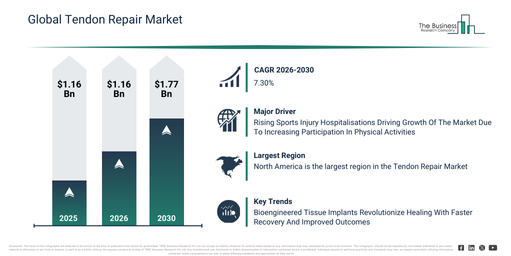
    The tendon repair market size has experienced robust expansion in recent years. It is anticipated to increase from $2.54 billion in 2025 to $2.73 billion in 2026, achieving a compound annual growth rate (CAGR) of 7.5%. Historically, this market expansion can be linked to factors like the escalating frequency of sports injuries, an expanding elderly demographic, a rise in the occurrence of degenerative tendon conditions, inadequate understanding of minimally invasive procedures, and the ongoing use of traditional suture and graft methods.

    The tendon repair market is anticipated to experience substantial expansion over the coming years. This market is projected to reach $3.62 billion by 2030, exhibiting a compound annual growth rate (CAGR) of 7.3%. This anticipated growth during the forecast period is fueled by several factors, including progress in bioinductive and synthetic implants, the incorporation of AI and robotics into surgical procedures, an increase in outpatient surgical facilities, a surge in sports and active lifestyle engagement, and the development of regenerative medicine and biologic therapies. Key trends during this period are expected to encompass minimally invasive surgical approaches, customized tendon repair solutions, the integration of regenerative medicine, sophisticated suture and implant materials, and the expansion of outpatient and ambulatory surgical options.

    Get A Free Sample Report With In-Depth Market Insights:

    https://thebusinessresearchcompany.com/sample_request?id=85068162&type=smp&name=Tendon%20Repair%20Market%20Report%202026&utm_source=Blogs&utm_medium=Paid&utm_campaign=Oct_PR

    Tendon Repair Market Growth Momentum: What Factors Are Shaping Demand?

    The tendon repair market is projected to expand in the future due to the rising occurrence of sports injuries. These injuries, which involve physical harm incurred during athletic activities or workouts, frequently impact muscles, tendons, ligaments, bones, or joints, and typically necessitate medical or surgical treatment. A significant factor contributing to the increase in hospital admissions is the greater involvement in high-intensity and competitive physical pursuits, leading to a heightened risk of both traumatic and overuse injuries. Tendon repair procedures facilitate recovery by re-establishing the structure and function of injured tendons, alleviating discomfort, and allowing for a quicker resumption of activities. For example, data from Insideworldfootball, a UK-based web-based news-driven service, indicated that in October 2024, the total number of sport injuries for the 2023-24 season reached 4,123, representing a 4% rise from the 2022-23 season. Consequently, the growing frequency of sports injuries is a key factor propelling the expansion of the tendon repair market.

    Tendon Repair Market Segment Landscape And Growth Outlook

    The tendon repair market covered in this report is segmented –

    1) By Product Type: Implants, Suture anchor devices, Grafts, Scaffolds, Screws, Tendons repair matrix, Excision, Other Product Types

    2) By Application: Rotator Cuff Repair, Achilles Tendinosis Repair, Cruciate Ligament Repair, Biceps Tenodesis, Other Applications

    3) By End-User: Hospitals, Ambulatory Surgical Centers (ASCs), Specialty Orthopedic Clinics, Sports Medicine Centers

    Subsegments:

    1) By Implants: Bioinductive Implants, Synthetic Implants, Biodegradable Implants

    2) By Suture Anchor Devices: Metallic Suture Anchors, Bioabsorbable Suture Anchors, All-Suture Anchors

    3) By Grafts: Autografts, Allografts, Xenografts

    4) By Scaffolds: Collagen Based Scaffolds, Synthetic Polymer Scaffolds, Hybrid Scaffolds

    5) By Screws: Interference Screws, Cannulated Screws, Bioabsorbable Screws

    6) By Tendon Repair Matrix: Extracellular Matrix Ecm Patches, Acellular Dermal Matrices, Synthetic Matrices

    7) By Excision: Arthroscopic Excision Tools, Open Surgical Excision Tools

    8) By Other Product Types: Surgical Instruments, Tendon Tensioning Devices, Biologic Adhesives

    Tendon Repair Market Trends Redefining Industry Growth

    Major companies operating in the tendon repair market are increasingly focusing on developing advanced technologies, including bioengineered tissue implants, to enhance healing outcomes, shorten recovery periods, and improve the strength and integration of repaired tendons. Bioengineered tissue implants are biological constructs created in laboratories from natural or synthetic materials that mimic the structure and function of native tissue, intended to support, repair, or regenerate damaged or diseased tissues such as tendons. For instance, in July 2023, Smith+Nephew Plc, a UK-based healthcare company, launched the regeneten bioinductive implant to support natural tendon healing and facilitate rotator cuff repair in India. This minimally invasive, collagen-based device is designed to address rotator cuff tendon tears by promoting new tendon tissue growth, resulting in quicker recovery, substantial pain relief, and a lower chance of further degeneration or re-tear. Its benefits include reduced rehabilitation time, a faster return to activity, and a strong safety profile with minimal risk of adverse effects.

    Tendon Repair Market Key Players Shaping Industry Direction

    Major companies operating in the tendon repair market are Johnson And Johnson Services Inc, Stryker Corporation, Zimmer Biomet Holdings Inc, Smith And Nephew plc, Arthrex Inc, Enovis Corporation, Integra LifeSciences Holdings Corporation, CONMED Corporation, MiMedx Group Inc, Anika Therapeutics Inc, Intrauma S P A, Inion Oy, BioPro Inc, Aevumed Inc, Alafair Biosciences Inc, CoNextions Inc, Orthomed S A S, TendoMend Ltd, Parcus Medical LLC, Biorez Inc, Collagen Matrix Inc, Organogenesis Holdings Inc

    View The Full Tendon Repair Market Report:

    https://thebusinessresearchcompany.com/report/tendon-repair-global-market-report?utm_source=Blogs&utm_medium=Paid&utm_campaign=Oct_PR

    Tendon Repair Market Regional Analysis: Which Geography Leads On Revenue?

    North America was the largest region in the tendon repair market in 2025. Asia-Pacific is expected to be the fastest-growing region in the forecast period. The regions covered in the tendon repair market report are Asia-Pacific, South East Asia, Western Europe, Eastern Europe, North America, South America, Middle East, Africa.

    Reach Out To Our Team:

    The Business Research Company: https://www.thebusinessresearchcompany.com/

    Americas: +1 310-496-7795

    Asia: +44 7882 955267 & +91 8897263534

    Europe: +44 7882 955267

    Email us at: marketing@tbrc.info

    Follow us on:

    LinkedIn: https://in.linkedin.com/company/the-business-research-company

    YouTube: https://www.youtube.com/channel/UC24_fI0rV8cR5DxlCpgmyFQ

    Global Market Model: https://www.thebusinessresearchcompany.com/global-market-model
  • Tendon Allograft Market Forecast 2026–2030: Market Size, Trends And Growth Opportunities

    Tendon Allograft Market Forecast 2026–2030: Market Size, Trends And Growth Opportunities

    Backed by market attractiveness analysis, total addressable market sizing, company benchmarking matrices, interactive Excel dashboards, wider supply chain intelligence, emerging startup coverage, and detailed product-level insights, The Business Research Company’s 2026 market reports are designed to offer research that is more actionable and strategically valuable than ever.

    Tendon Allograft Market Set To Climb From $1.69 Billion In 2026 To $2.53 Billion By 2030

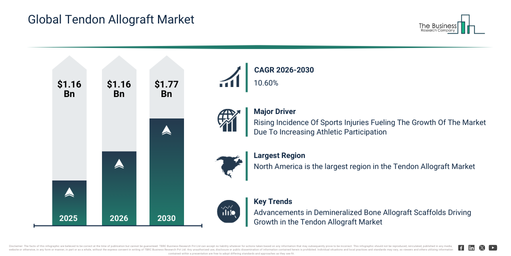
    The tendon allograft market has experienced significant expansion recently. Its valuation is projected to climb from $1.53 billion in 2025 to $1.69 billion in 2026, achieving a compound annual growth rate (CAGR) of 10.5%. Historically, this market’s expansion was driven by factors including the limited availability of donor tendon tissue, reliance on autografts for tendon repair, a surge in sports-related injuries, an increase in orthopedic surgery procedures, and growing awareness regarding tendon reconstruction options.

    The tendon allograft market size is anticipated to experience substantial growth in the coming years, reaching $2.53 billion in 2030, reflecting a compound annual growth rate (CAGR) of 10.6%. This expansion over the forecast period is fueled by the progress in advanced tendon allograft processing techniques, the proliferation of sports medicine and orthopedic clinics, increased investment in tissue engineering and regenerative medicine, the rising adoption of minimally invasive surgery, and intensified research in tendon repair and rehabilitation technologies. Significant trends for this period encompass a surging demand for tendon repair surgeries, greater use of soft tissue allografts, further developments in minimally invasive orthopedic procedures, the growing embrace of patellar and achilles tendon grafts, and the enlargement of rehabilitation and post-surgical care programs.

    Get A Free Sample Report With In-Depth Market Insights:

    https://thebusinessresearchcompany.com/sample_request?id=46962879&type=smp&name=Tendon%20Allograft%20Market%20Report%202026&utm_source=Blogs&utm_medium=Paid&utm_campaign=Oct_PR

    Tendon Allograft Market Expansion Drivers: What’s Shaping Future Growth?

    The increasing frequency of sports injuries is projected to propel the expansion of the tendon allograft market moving forward. Sports injuries are defined as physical harms sustained during athletic pursuits or exercise, affecting muscles, ligaments, tendons, bones, or joints. The occurrence of sports injuries is rising because more people are participating in sports and physical activities, which exposes them to a greater risk of harm. Tendon allografts facilitate recovery from sports injuries by offering readily available tendon tissue for surgical reconstruction, making them highly suitable for athletes and active individuals. They help restore tendon function by supporting tissue integration and healing, thereby improving mobility and speeding up the return to sports. For instance, in 2024, according to the U.S. National Safety Council, a US-based public health and safety organization, the number of sports and recreational injuries reached 564,845 in 2024, an increase from 482,886 injuries in 2023. Thus, the escalating incidence of sports injuries is driving the growth of the tendon allograft market.

    Tendon Allograft Market Breakdown By Product Type And Application

    The tendon allograft market covered in this report is segmented –

    1) By Type Of Allograft: Flexor Tendons, Extensor Tendons, Patellar Tendons, Achilles Tendons, Other Types

    2) By Product Type: Soft Tissue Allografts, Cartilage Allografts, Bone Allografts

    3) By Application: Orthopedic, Dental, Cardiovascular, Wound Care, Other Applications

    4) By Distribution Channel: Direct Sales, Distributors, Online Sales, Surgical Centers, Hospitals

    5) By End-User: Hospitals, Ambulatory Surgical Centers, Specialty Clinics, Rehabilitation Centers, Research Institutions

    Subsegments:

    1) By Flexor Tendons: Finger Flexor Tendon, Wrist Flexor Tendon, Elbow Flexor Tendon, Other Flexor Tendons

    2) By Extensor Tendons: Finger Extensor Tendon, Wrist Extensor Tendon, Elbow Extensor Tendon, Other Extensor Tendons

    3) By Patellar Tendons: Patellar Tendon Mid-Substance, Patellar Tendon Tibial Attachment, Patellar Tendon Quadriceps Attachment

    4) By Achilles Tendons: Achilles Tendon Mid-Substance, Achilles Tendon Calcaneal Attachment

    5) By Other Types: Rotator Cuff Tendons, Hamstring Tendons, Plantaris Tendons, Other Miscellaneous Tendons

    Tendon Allograft Market Strategic Trends: What Defines The Next Growth Phase?

    Major companies in the tendon allograft market are concentrating on technological innovations, such as demineralized bone allograft tendon scaffolds. This emphasis addresses the growing need for biologically active implants that improve tendon-to-bone healing, shorten recovery times, and enhance surgical outcomes in orthopedic and sports medicine. These scaffolds are sourced from demineralized human bone, retaining collagen and growth factors to support tissue regeneration and improve tendon repair, distinguishing them from synthetic grafts. For instance, in February 2024, Tetrous Inc., a US-based regenerative orthopedics company, launched the EnFix TAC, a fully demineralized bone allograft implant designed to complement its EnFix RC line. The EnFix TAC provides structural strength for surgical handling, promotes native tendon-to-bone integration, and can be utilized across various orthopedic tendon repair procedures, offering surgeons a biologically active alternative to traditional tendon grafts.

    Tendon Allograft Market Competitive Analysis Of Leading Industry Participants

    Major companies operating in the tendon allograft market are Stryker Corporation, Regeneration Technologies Inc., Zimmer Biomet Holdings Inc., Smith & Nephew plc, Arthrex Inc., Conmed Corporation, MTF Biologics, MiMedx Group Inc., LifeNet Health Inc., AlloSource Inc., Xtant Medical Holdings Inc., Vivex Biomedical Inc., JRF Ortho Inc., Medtronic plc, RTI Surgical Inc., Integra LifeSciences Corporation, Lattice Biologics Ltd., Tissue Banks International, Aesculap Implant Systems, Organogenesis Holdings Inc., CryoLife Inc., Osiris Therapeutics Inc., Tissue Regenix Group plc.

    View The Full Tendon Allograft Market Report:

    https://thebusinessresearchcompany.com/report/tendon-allograft-global-market-report?utm_source=Blogs&utm_medium=Paid&utm_campaign=Oct_PR

    Tendon Allograft Market Geographic Spread And Regional Opportunities

    North America was the largest region in the tendon allograft market in 2025. Asia-Pacific is expected to be the fastest-growing region in the forecast period. The regions covered in the tendon allograft market report are Asia-Pacific, South East Asia, Western Europe, Eastern Europe, North America, South America, Middle East, Africa.

    Reach Out To Our Team:

    The Business Research Company: https://www.thebusinessresearchcompany.com/

    Americas: +1 310-496-7795

    Asia: +44 7882 955267 & +91 8897263534

    Europe: +44 7882 955267

    Email us at: marketing@tbrc.info

    Follow us on:

    LinkedIn: https://in.linkedin.com/company/the-business-research-company

    YouTube: https://www.youtube.com/channel/UC24_fI0rV8cR5DxlCpgmyFQ

    Global Market Model: https://www.thebusinessresearchcompany.com/global-market-model
  • Temporomandibular Joint (TMJ) Implants Market Size Reaches $5.96 Billion In 2026: What Is Driving Growth?

    Temporomandibular Joint (TMJ) Implants Market Size Reaches $5.96 Billion In 2026: What Is Driving Growth?

    Featuring market attractiveness scoring, total addressable market sizing, company benchmarking matrices, interactive Excel dashboards, deeper supply chain intelligence, emerging startup tracking, and granular product-level insights, The Business Research Company’s 2026 market reports are built to deliver research that is both more actionable and more strategically valuable.

    Temporomandibular Joint (TMJ) Implants Market Forecast: Value Set To Climb From $5.96 Billion To $7.66 Billion

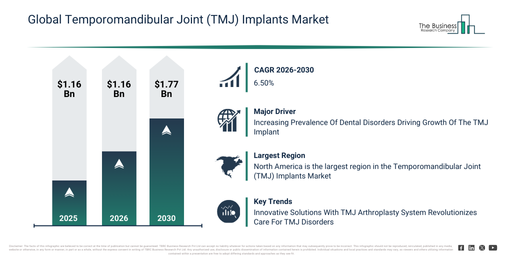
    The temporomandibular joint (tmj) implants market size has shown substantial growth recently. This market is set to expand from $5.6 billion in 2025 to $5.96 billion in 2026, achieving a compound annual growth rate (CAGR) of 6.4%. The increase observed in previous periods is largely due to the rising incidence of tmj disorders, the proliferation of maxillofacial surgical interventions, enhancements in implant material science, a greater understanding of reconstructive treatment possibilities, and the availability of expert surgical knowledge.

    The temporomandibular joint (tmj) implants market size is projected to experience substantial expansion over the upcoming years, reaching $7.66 billion in 2030, at a compound annual growth rate (CAGR) of 6.5%. This anticipated growth throughout the forecast period stems from factors such as the greater embrace of tailored implant options, increased capital flowing into sophisticated oral surgery techniques, a growing demographic of elderly individuals needing joint restoration, the escalating need for less invasive tmj operations, and the wider incorporation of digital planning instruments into implant procedures. Key trends observed over the forecast horizon encompass the heightened acceptance of patient-specific tmj implants, a greater reliance on cutting-edge biocompatible substances, an escalating need for bespoke joint reconstruction services, the broader implementation of computer-aided implant design and manufacturing processes, and a reinforced emphasis on the lasting resilience of implants.

    Get A Free Sample Report With In-Depth Market Insights:

    https://thebusinessresearchcompany.com/sample_request?id=59625220&type=smp&name=Temporomandibular%20Joint%20%28TMJ%29%20Implants%20Market%20Report%202026&utm_source=Blogs&utm_medium=Paid&utm_campaign=Oct_PR

    Temporomandibular Joint (TMJ) Implants Market Development Factors: What’s Supporting Demand?

    The increasing prevalence of dental disorders is projected to drive the growth of the temporomandibular joint (TMJ) implant market moving forward. Dental disorders refer to various conditions affecting the teeth, gums, and oral cavity, leading to pain, dysfunction, and other health issues. The rising occurrence of dental disorders is attributed to poor oral hygiene, trauma, genetic predispositions, and lifestyle choices. Temporomandibular joint (TMJ) implants offer a transformative solution for individuals suffering from temporomandibular joint disorders, providing targeted relief and improved functionality. These advanced implants are designed to address the underlying issues associated with TMJ dysfunction, thereby enhancing both comfort and quality of life for patients struggling with dental-related joint pain and dysfunction. For instance, in September 2023, according to the National Library Of Medicine, a US-based government agency, the older adult population with periodontal disease is expected to increase by 54.57% in 2050. Additionally, the older adult population with carious teeth is estimated to increase by 62.06% in 2050. Therefore, the expanding prevalence of dental disorders significantly influences the temporomandibular joint (TMJ) implant market.

    Temporomandibular Joint (TMJ) Implants Market Segment Analysis And Revenue Potential

    The temporomandibular joint (tmj) implants market covered in this report is segmented –

    1) By Components: Mandibular Components, Fossa Prosthesis, Screws

    2) By Material: Cobalt-Chromium-Molybdenum, Titanium Alloy, Ultra-High Molecular Weight Polyethylene (Uhmwpe), Stainless Steel, Polyether Ether Ketone (PEEK), Other Materials

    3) By Indication: Arthritic Conditions, Ankylosis, Other Indications

    4) By End-User: Hospitals, Dental Clinics, Other End-Users

    Subsegments:

    1) By Mandibular Components: Complete Mandibular Prosthesis, Partial Mandibular Prosthesis, Mandibular Condylar Prosthesis

    2) By Fossa Prosthesis: Non-Adjustable Fossa Prosthesis, Adjustable Fossa Prosthesis, Anatomical Fossa Prosthesis

    3) By Screws: Fixation Screws, Bone Screws, Self-Tapping Screws

    Temporomandibular Joint (TMJ) Implants Market Transformation Trends: What Innovations Are Driving Change?

    Leading companies in the temporomandibular joint (TMJ) implant market are focused on developing innovative solutions, such as the TMJ Total Arthroplasty System, to enhance the precision of joint reconstruction, improve patient outcomes, and reduce recovery times. The TMJ Total Arthroplasty System is a medical device designed for the surgical treatment of severe temporomandibular joint (TMJ) disorders, offering a viable option for patients who have not found relief through other methods. For instance, in February 2024, Materialise NV, a Belgium-based 3D printing company, introduced its latest solution to treat patients requiring total temporomandibular joint (TMJ) arthroplasty. The system includes predrilling and osteotomy guides, crafted from titanium or polyamide, to ensure precise preparation for the implant. It also provides a surgical splint for occlusion management and a TMJ trial implant for the temporal component. The TMJ Total Arthroplasty System brings new hope for patients suffering from TMJ disorders who require total joint replacement. Its comprehensive portfolio and seamless integration with other Materialise solutions establish it as a valuable tool for oral and maxillofacial surgeons.

    Temporomandibular Joint (TMJ) Implants Market Leading Companies And Competitive Benchmarking

    Major companies operating in the temporomandibular joint (tmj) implants market are Stryker Corporation, Zimmer Biomet Holdings Inc., Materialise NV, Auxein Corporation, Dentsply Sirona, Ortho Baltic, Xilloc Medical B.V., Ortho Max Mfg. Co. Pvt. Ltd., RAOMED, TMJ Concepts Inc., KLS Martin Group, DePuy Synthes CMF, Medartis AG, Acumed LLC, Jeil Medical Corporation, Aesculap Inc., Biomet Microfixation (Zimmer Biomet CMF), Medtronic CMF, Johnson & Johnson DePuy CMF, Sientra Inc.

    View The Full Temporomandibular Joint (TMJ) Implants Market Report:

    https://thebusinessresearchcompany.com/report/temporomandibular-joint-tmj-implants-global-market-report?utm_source=Blogs&utm_medium=Paid&utm_campaign=Oct_PR

    Temporomandibular Joint (TMJ) Implants Market Top Region By Revenue And Market Share

    North America was the largest region in the temporomandibular joint (TMJ) implants market in 2025. The regions covered in the temporomandibular joint (tmj) implants market report are Asia-Pacific, South East Asia, Western Europe, Eastern Europe, North America, South America, Middle East, Africa.

    Reach Out To Our Team:

    The Business Research Company: https://www.thebusinessresearchcompany.com/

    Americas: +1 310-496-7795

    Asia: +44 7882 955267 & +91 8897263534

    Europe: +44 7882 955267

    Email us at: marketing@tbrc.info

    Follow us on:

    LinkedIn: https://in.linkedin.com/company/the-business-research-company

    YouTube: https://www.youtube.com/channel/UC24_fI0rV8cR5DxlCpgmyFQ

    Global Market Model: https://www.thebusinessresearchcompany.com/global-market-model
  • Temporary Mechanical Circulatory Support Device Market Valued At $4.1 Billion In 2026: Key Trends And Growth Drivers

    Temporary Mechanical Circulatory Support Device Market Valued At $4.1 Billion In 2026: Key Trends And Growth Drivers

    Built to provide research that’s more actionable and strategically valuable, The Business Research Company’s 2026 market reports include market attractiveness analysis, total addressable market sizing, company benchmarking matrices, interactive Excel dashboards, broader supply chain intelligence, emerging startup tracking, and in-depth product insights.

    Temporary Mechanical Circulatory Support Device Market Revenue Growth On Track For A 9% CAGR Through 2030

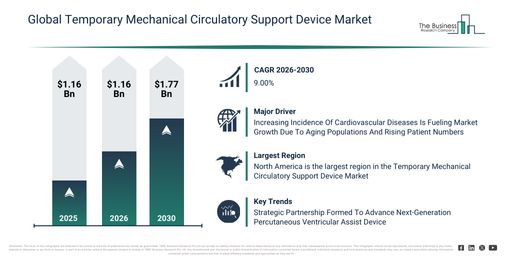
    The temporary mechanical circulatory support device market has shown robust expansion in recent years. Its value is anticipated to rise from $2.66 billion in 2025 to $2.9 billion in 2026, achieving a compound annual growth rate (CAGR) of 9.0%. The historical increase in this market size can be attributed to several factors including the constrained availability of temporary MCS devices, a reliance on invasive open-heart procedures, elevated mortality rates from cardiogenic shock, an escalating demand for acute cardiac care, and a scarcity of portable and wearable solutions.

    The temporary mechanical circulatory support device market is anticipated to experience robust expansion in the coming years, with projections indicating it will reach $4.1 billion by 2030, growing at a compound annual growth rate (CAGR) of 9.0%. This expected growth during the forecast period is attributed to advancements in biomimetic and hybrid devices, a greater adoption of minimally invasive mechanical circulatory support (MCS) techniques, an increase in cardiac surgery volumes, the expansion of outpatient cardiac centers, and the integration of digital monitoring and intelligent hemodynamic management systems. Significant trends for this period include the rising use of percutaneous ventricular assist devices, increased application of extracorporeal membrane oxygenation (ECMO), growth in high-risk cardiac procedures, the broadening of bridge-to-transplant and bridge-to-recovery applications, and a concentrated effort on minimally invasive and portable MCS devices.

    Get A Free Sample Report With In-Depth Market Insights:

    https://thebusinessresearchcompany.com/sample_request?id=39774180&type=smp&name=Temporary%20Mechanical%20Circulatory%20Support%20Device%20Market%20Report%202026&utm_source=Blogs&utm_medium=Paid&utm_campaign=Oct_PR

    Temporary Mechanical Circulatory Support Device Market Industry Drivers: What’s Behind The Revenue Growth?

    The rising occurrence of cardiovascular diseases is projected to drive the growth of the temporary mechanical circulatory support device market in the foreseeable future. Cardiovascular diseases (CVD) are a collection of conditions that impact the heart and blood vessels, leading to complications such as heart attacks, strokes, and hypertension. The surge in cardiovascular diseases is primarily attributable to aging populations, as advanced age elevates the risk of heart and blood vessel ailments. Temporary mechanical circulatory support devices aid patients with cardiovascular diseases by offering provisional support for heart function and enhancing blood flow during critical situations like heart failure or cardiogenic shock. For instance, in December 2024, GOV.UK, a UK-based government agency, reported that in March 2024, approximately 2.24 million adults in England—about 4.4% of those aged 18 and over—had a GP-recorded diagnosis of CKD. This marked an increase from 2.09 million cases recorded in the preceding year. Consequently, the increasing incidence of cardiovascular diseases is stimulating expansion within the temporary mechanical circulatory support device market.

    Temporary Mechanical Circulatory Support Device Market Segmentation And Category Overview

    The temporary mechanical circulatory support device market covered in this report is segmented –

    1) By Type: Left Ventricular Support Devices, Right Support Devices, Biventricular Support Devices

    2) By Technology: Pneumatic Devices, Mechanical Pumps, Biomimetic Devices, Hybrid Systems, Novel Wearable Devices

    3) By Application: Cardiogenic Shock, Bridge To Transplantation, Bridge To Recovery, High-Risk Cardiac Procedures, Other Applications

    4) By End User: Hospitals, Cardiac Surgery Centers, Outpatient Surgical Facilities, Research And Academic Institutions, Other End-Users

    Subsegments:

    1) By Left Ventricular Support Devices: Intra-Aortic Balloon Pump, Percutaneous Ventricular Assist Device, Extracorporeal Membrane Oxygenation

    2) By Right Support Devices: Right Ventricular Assist Device, Extracorporeal Membrane Oxygenation, Percutaneous Right Ventricular Assist Device

    3) By Biventricular Support Devices: Biventricular Assist Device, Temporary Total Artificial Heart, Extracorporeal Membrane Oxygenation

    #Temporary Mechanical Circulatory Support Device Market Growth Trends: What’s Shaping The Future Outlook?

    Leading firms within the temporary mechanical circulatory support (tMCS) device market are establishing strategic alliances to innovate and advance technologies. As an example, VenstraMedical, an Australian cardiovascular medical device company, collaborated with Highcroft Capital, a US-based venture capital firm, in November 2025, obtaining crucial investment to hasten the progress of its next-generation percutaneous ventricular assist device (pVAD). This compact, catheter-delivered pump is engineered to offer comprehensive ventricular unloading and maintain hemodynamic support for individuals experiencing cardiogenic shock or undergoing complex coronary interventions. Safeguarded by numerous patents, this device allows for minimally invasive insertion and is capable of delivering up to 7 liters per minute of cardiac output. This investment underscores VenstraMedical’s ambition to revolutionize temporary mechanical circulatory support within a market exceeding $2 billion, with intentions to proceed towards clinical trials and subsequent commercialization.

    Temporary Mechanical Circulatory Support Device Market Industry Leaders And Competitive Landscape

    Major companies operating in the temporary mechanical circulatory support device market are Abbott Laboratories, Medtronic Plc, Boston Scientific Corporation, Terumo Corporation, Getinge AB, LivaNova PLC, Magenta Medical Ltd., CorWave SA, Procyrion Inc., CardioBridge GmbH, Abiomed Inc., Berlin Heart GmbH, Thoratec Corporation, PulseCath BV, TandemLife Inc., SynCardia Systems LLC, CardiacAssist Inc., Xenios AG, Nihon Kohden Corporation, Eurosets Srl, Senko Medical Instrument Manufacturing Co Ltd, Nipro Medical Corporation, Calon Cardio‑Technology Ltd., Windmill Cardiovascular Systems Inc.

    View The Full Temporary Mechanical Circulatory Support Device Market Report:

    https://thebusinessresearchcompany.com/report/temporary-mechanical-circulatory-support-device-global-market-report?utm_source=Blogs&utm_medium=Paid&utm_campaign=Oct_PR

    Temporary Mechanical Circulatory Support Device Market Regional Analysis And Top Geography

    North America was the largest region in the temporary mechanical circulatory support device market in 2025. Asia-Pacific is expected to be the fastest-growing region in the forecast period. The regions covered in the temporary mechanical circulatory support device market report are Asia-Pacific, South East Asia, Western Europe, Eastern Europe, North America, South America, Middle East, Africa.

    Reach Out To Our Team:

    The Business Research Company: https://www.thebusinessresearchcompany.com/

    Americas: +1 310-496-7795

    Asia: +44 7882 955267 & +91 8897263534

    Europe: +44 7882 955267

    Email us at: marketing@tbrc.info

    Follow us on:

    LinkedIn: https://in.linkedin.com/company/the-business-research-company

    YouTube: https://www.youtube.com/channel/UC24_fI0rV8cR5DxlCpgmyFQ

    Global Market Model: https://www.thebusinessresearchcompany.com/global-market-model
  • Temperature Monitoring Devices Market Size In 2026: Growth Outlook And Forecast Through 2030

    Temperature Monitoring Devices Market Size In 2026: Growth Outlook And Forecast Through 2030

    Backed by market attractiveness analysis, total addressable market sizing, company benchmarking matrices, interactive Excel dashboards, wider supply chain intelligence, emerging startup coverage, and detailed product-level insights, The Business Research Company’s 2026 market reports are designed to offer research that is more actionable and strategically valuable than ever.

    Temperature Monitoring Devices Market Value Growth And Long-Term Outlook

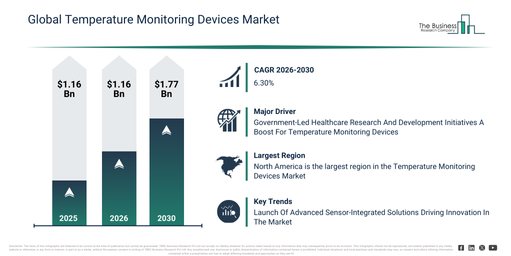
    The temperature monitoring devices market size has experienced strong growth in recent years. This market is set to increase from $1.67 billion in 2025 to $1.75 billion in 2026, exhibiting a compound annual growth rate (CAGR) of 5.1%. The expansion observed in the historic period can be linked to factors such as the development of hospital monitoring infrastructure, a rising demand for patient safety systems, the growing use of electronic medical devices, an increase in home healthcare adoption, and the wider implementation of diagnostic monitoring tools.

    The temperature monitoring devices market is anticipated to experience robust expansion in the coming years. This market is projected to reach $2.23 billion by 2030, demonstrating a compound annual growth rate (CAGR) of 6.3%. This expansion during the forecast period is fueled by the increasing integration of remote patient monitoring, a growing demand for real-time temperature analytics, the wider availability of telehealth services, an elevated focus on infection prevention, and the rising adoption of smart healthcare devices. Significant trends in the forecast period include the increased embrace of continuous temperature monitoring systems, a surge in the utilization of non-contact infrared monitoring devices, the expanding integration of wireless and remote monitoring solutions, the proliferation of multi-sensor temperature platforms, and an intensified focus on accuracy and compliance.

    Get A Free Sample Report With In-Depth Market Insights:

    https://thebusinessresearchcompany.com/sample_request?id=71136149&type=smp&name=Temperature%20Monitoring%20Devices%20Market%20Report%202026&utm_source=Blogs&utm_medium=Paid&utm_campaign=Oct_PR

    Temperature Monitoring Devices Market Growth Factors: What’s Supporting Expansion?

    Government-led initiatives focused on research and development within the healthcare sector are anticipated to drive the future expansion of the temperature monitoring devices market. These initiatives encompass specific actions, programs, policies, or projects undertaken by governmental authorities at various levels to tackle particular issues, achieve defined objectives, or generate beneficial societal transformations. Numerous government bodies are launching diverse healthcare initiatives, extending support to various areas including neutropenia biologic drug treatment. For example, in March 2023, the UK Government, a public authority based in the UK, announced a joint public–private investment totaling US $337.5 million (£277 million) through the Life Sciences Innovative Manufacturing Fund (LSIMF). This funding package was specifically designed to reinforce life sciences manufacturing by targeting advanced diagnostics, vaccine technologies, and next-generation therapeutic production, thereby expanding critical manufacturing capabilities across the country and solidifying the UK’s position in global life sciences innovation. Therefore, the increasing prevalence of government initiatives is a key factor propelling the temperature monitoring devices market.

    Temperature Monitoring Devices Market Segment Outlook: Which Categories Are Growing Fastest?

    The temperature monitoring devices market covered in this report is segmented –

    1) By Type: Contact-based Temperature Monitoring Systems, Non-Contact-based Temperature Monitoring System

    2) By Application: Oral Cavity, Rectum, Ear, Other Applications

    3) By End User: Hospital And Surgical Centers, Nursing Facilities, Ambulatory Care Centers, Home Care, Other End Users

    Subsegments:

    1) By Contact-based Temperature Monitoring Systems: Thermocouples, Resistance Temperature Detectors (RTDs), Thermistors, Bimetallic Temperature Sensors

    2) By Non-Contact-based Temperature Monitoring Systems: Infrared Thermometers, Infrared Sensors, Thermal Cameras, Radiation Pyrometers

    Temperature Monitoring Devices Market Industry Trends: What’s Reshaping Demand?

    Leading companies within the temperature monitoring devices market are concentrating on developing advanced sensor-based solutions, such as integrated digital platforms for humidity and temperature sensing. This initiative aims to boost measurement accuracy, durability, and real-time environmental tracking capabilities across both medical and industrial settings. Integrated digital sensing platforms are defined as compact, high-performance sensor systems that combine temperature and humidity measurement with protective elements, signal processing, and digital output, ensuring reliable performance even amidst challenging environments. As an illustration, in June 2024, Sensirion, a Switzerland-based environmental and flow sensor technology company, introduced its new digital humidity and temperature sensors, which feature a protective cover designed to shield the sensing element from contamination while maintaining swift response times and high precision. These sensors deliver robust and accurate readings, support long-term operational stability, and facilitate seamless integration into medical devices, wearables, and smart monitoring systems, thereby contributing to more reliable and efficient temperature-dependent applications.

    Temperature Monitoring Devices Market Key Participants And Competitive Landscape

    Major companies operating in the temperature monitoring devices market are 3M Company, Drägerwerk AG & Co. KGaA, Cosinuss GmbH, Helen of Troy Limited, Koninklijke Philips N.V., Microlife Corporation, Omron Healthcare Co. Ltd., Terumo Corporation, Welch Allyn Inc., C. R. Bard Inc., Measurement Specialties Inc., Circa Scientific LLC, NOVAMED USA, Truer Medical Inc., Med-link Electronics Tech Co. Ltd., Rongrui (Shanghai) Technology Development Co. Ltd., Exsense Medical Technology Corporation, Medtronic plc, Becton Dickinson and Company, Medline Industries Inc., Amphenol Corporation, Egate Smart Building Innovation’s Inc., Silicon Laboratories Inc., Shinyei Capacitor Co. Ltd., Energy Service Company, Technosoft Solutions India Pvt Ltd., Securitas Healthcare, ABB Ltd., DeltaTRAK Inc., Emerson Electric Co., Fluke Corporation

    View The Full Temperature Monitoring Devices Market Report:

    https://thebusinessresearchcompany.com/report/temperature-monitoring-devices-global-market-report?utm_source=Blogs&utm_medium=Paid&utm_campaign=Oct_PR

    Temperature Monitoring Devices Market Geographic Analysis: Where Is Demand Rising Fastest?

    North America was the largest region in the temperature monitoring devices market in 2025. Western Europe was the second largest region in the temperature monitoring devices market. The regions covered in the temperature monitoring devices market report are Asia-Pacific, South East Asia, Western Europe, Eastern Europe, North America, South America, Middle East, Africa.

    Reach Out To Our Team:

    The Business Research Company: https://www.thebusinessresearchcompany.com/

    Americas: +1 310-496-7795

    Asia: +44 7882 955267 & +91 8897263534

    Europe: +44 7882 955267

    Email us at: marketing@tbrc.info

    Follow us on:

    LinkedIn: https://in.linkedin.com/company/the-business-research-company

    YouTube: https://www.youtube.com/channel/UC24_fI0rV8cR5DxlCpgmyFQ

    Global Market Model: https://www.thebusinessresearchcompany.com/global-market-model
  • Temperature Modulation Devices Market Trends Supporting 7.9% CAGR Growth Through 2030

    Temperature Modulation Devices Market Trends Supporting 7.9% CAGR Growth Through 2030

    Featuring market attractiveness scoring, total addressable market sizing, company benchmarking matrices, interactive Excel dashboards, deeper supply chain intelligence, emerging startup tracking, and granular product-level insights, The Business Research Company’s 2026 market reports are built to deliver research that is both more actionable and more strategically valuable.

    Temperature Modulation Devices Market Poised To Hit $5.17 Billion By 2030 With A 7.9% CAGR

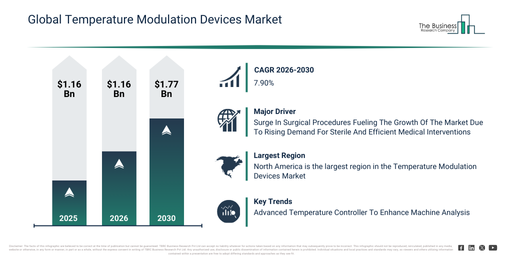
    The market size for temperature modulation devices has shown significant growth in recent years. It is forecast to rise from $3.48 billion in 2025 to $3.81 billion in 2026, reflecting a compound annual growth rate (CAGR) of 9.3%. This historical expansion can be attributed to several factors, including the increased volume of surgical and critical care procedures, heightened awareness regarding the risks of perioperative hypothermia, more widespread implementation of temperature management protocols, the increasing availability of advanced medical devices, and the expansion of intensive care units.

    The temperature modulation devices market is projected to experience substantial expansion in the coming years. Its valuation is anticipated to reach $5.17 billion in 2030, exhibiting a compound annual growth rate (CAGR) of 7.9%. This expansion during the forecast period is propelled by factors such as the increasing need for non-invasive temperature management, the growing uptake of intelligent patient monitoring solutions, the broadening of neonatal and critical care provisions, a heightened emphasis on individualized patient care, and increased healthcare funding directed towards sophisticated therapeutic instruments. Key developments anticipated in this period encompass the wider deployment of advanced patient warming equipment, a rising requirement for exact temperature regulation tools, the expanded incorporation of digital temperature tracking, the proliferation of portable and battery-operated devices, and a stronger commitment to patient well-being and thermal precision.

    Get A Free Sample Report With In-Depth Market Insights:

    https://thebusinessresearchcompany.com/sample_request?id=12139357&type=smp&name=Temperature%20Modulation%20Devices%20Market%20Report%202026&utm_source=Blogs&utm_medium=Paid&utm_campaign=Oct_PR

    Temperature Modulation Devices Market Demand Drivers: What’s Powering Industry Growth?

    The rising volume of surgical procedures is anticipated to fuel expansion within the temperature modulation devices market. These medical interventions, performed for diagnosing, treating, or managing various health conditions, necessitate sterile, well-arranged equipment for precision, safety, and efficiency. The surge in surgical procedures is attributed to breakthroughs in medical technology, a growing elderly demographic requiring more frequent medical care, broader access to healthcare facilities, and better diagnostic capabilities leading to timely treatment. Temperature modulation devices improve surgical efficiency by organizing instruments, thereby ensuring quick, sterile, and secure access for surgical teams. For instance, in May 2025, the British Association of Aesthetic Plastic Surgeons (BAAPS), a UK–based professional association, reported 27,462 cosmetic surgical procedures performed in 2024, which was a 5% increase compared to 2023. Consequently, the increasing number of surgical procedures is propelling the growth of the temperature modulation devices market.

    Temperature Modulation Devices Market Segment Landscape: Which Areas Lead Development?

    The temperature modulation devices market covered in this report is segmented –

    1) By Product: Portable Blood Or IV Fluid Warmers, Conductive Patient Warming Systems, Convective Patient Warming Systems, Conductive Patient Cooling Systems, Other Products

    2) By Application: Perioperative Care, Acute Care, Coronary Care, Newborn Care, Other Applications

    3) By End Use: Hospitals, Ambulatory Surgical Centers, Other End User

    Subsegments:

    1) By Portable Blood Or Iv Fluid Warmers: Battery-Powered Warmers, Rechargeable Warmers

    2) By Conductive Patient Warming Systems: Warming Blankets, Warming Pads

    3) By Convective Patient Warming Systems: Forced Air Warming Systems, Convection Warming Blankets

    4) By Conductive Patient Cooling Systems: Cooling Pads, Cooling Blankets

    5) By Other Products: Temperature Monitoring Devices, Intravenous (Iv) Fluid Cooling Systems

    Temperature Modulation Devices Market Innovation Trends: What Developments Are Reshaping The Industry?

    Major companies within the temperature modulation devices market are focusing on developing advanced technologies that offer unique features, such as waveform digitization functions, to improve the precision and effectiveness of temperature control in clinical settings, thereby enhancing patient outcomes and operational efficiency. A waveform digitization function refers to the conversion of continuous analog signals into discrete digital signals for accurately measuring and controlling temperature modulation across various industries. For instance, in March 2024, Omron Corporation, a Japan-based electrical equipment manufacturing company, launched the OMRON NX-HTC. This temperature controller enables sophisticated machine status analysis by improving its monitoring and regulation capabilities. The NX-HTC utilizes a distinctive waveform digitization function, allowing users to precisely capture and analyze temperature patterns. Additionally, it is equipped with advanced analytics capabilities, facilitating real-time monitoring and analysis of machine status, which supports proactive maintenance, improved efficiency, and reduced downtime. The NX-HTC provides stable automatic control against foreseeable temperature variations, such as those caused by outside air infiltration when doors are opened and closed. It contributes to quality improvement and helps boost production capacity by reducing the wait time until temperature stabilization. It supports measurement temperatures from -50 to 500°C and -50 to 1,000°C types.

    Temperature Modulation Devices Market Top Companies Driving Competitive Growth

    Major companies operating in the temperature modulation devices market are Medtronic plc, FUJIFILM Holdings Corporation, Kimberly-Clark Corporation, Becton Dickinson and Company, Stryker Corporation, Baxter Laboratories Inc., Smiths Group, Drägerwerk AG & Co KGaA, ICU Medical Inc., Masimo Corporation, ZOLL Medical Corporation, Gentherm Medical LLC, Cincinnati Sub-Zero (CSZ) Products LLC, Soma Technology Inc., Belmont Medical Technologies, The Surgical Company, BrainCool AB, Minnesota Mining and Manufacturing Company, EMIT Corporation, Keewell Medical Technology Co Ltd

    View The Full Temperature Modulation Devices Market Report:

    https://thebusinessresearchcompany.com/report/temperature-modulation-devices-global-market-report?utm_source=Blogs&utm_medium=Paid&utm_campaign=Oct_PR

    Temperature Modulation Devices Market Global Footprint: Which Region Leads The Market?

    North America was the largest region in the temperature modulation devices market in 2025. Asia-Pacific is expected to be the fastest-growing region in the forecast period. The regions covered in the temperature modulation devices market report are Asia-Pacific, South East Asia, Western Europe, Eastern Europe, North America, South America, Middle East, Africa.

    Reach Out To Our Team:

    The Business Research Company: https://www.thebusinessresearchcompany.com/

    Americas: +1 310-496-7795

    Asia: +44 7882 955267 & +91 8897263534

    Europe: +44 7882 955267

    Email us at: marketing@tbrc.info

    Follow us on:

    LinkedIn: https://in.linkedin.com/company/the-business-research-company

    YouTube: https://www.youtube.com/channel/UC24_fI0rV8cR5DxlCpgmyFQ

    Global Market Model: https://www.thebusinessresearchcompany.com/global-market-model