Blog

  • Tooth Filling Materials Market Size Forecast: How The Industry Is Expected To Grow From 2026 To 2030

    Tooth Filling Materials Market Size Forecast: How The Industry Is Expected To Grow From 2026 To 2030

    Backed by market attractiveness analysis, total addressable market sizing, company benchmarking matrices, interactive Excel dashboards, wider supply chain intelligence, emerging startup coverage, and detailed product-level insights, The Business Research Company’s 2026 market reports are designed to offer research that is more actionable and strategically valuable than ever.

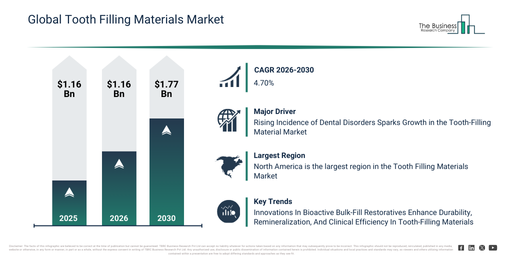
    Tooth Filling Materials Market Revenue Growth On Track For A 4.7% CAGR Through 2030

    The tooth filling materials market size has experienced consistent expansion in recent years. It is anticipated to increase from $1.92 billion in 2025 to $2.01 billion in 2026, exhibiting a compound annual growth rate (CAGR) of 4.8%. The historical growth in this market can be attributed to several factors, including the rising global occurrence of dental caries and tooth decay, the widespread clinical use of amalgam and composite filling materials, an increase in restorative dental procedures within hospitals and clinics, growing public awareness concerning oral health and cavity prevention, and the availability of a variety of filling material choices across different cost ranges.

    The market for tooth filling materials is anticipated to experience consistent expansion over the upcoming years, projected to reach $2.42 billion in 2030, showing a compound annual growth rate (CAGR) of 4.7%. This projected growth during the forecast period is driven by several factors, including the escalating demand for aesthetically pleasing, tooth-colored filling substances, a growing preference for mercury-free and bioactive dental restoratives, the integration of cutting-edge bonding and adhesion methods in fillings, an increase in indirect restorations and multi-layer filling approaches, and the broadening availability of dental care in emerging economies. Key trends identified for this period encompass a growing inclination towards composite resin and glass ionomer fillings for both aesthetic and restorative dental purposes, the increasing implementation of minimally invasive restorative procedures utilizing direct and indirect filling methods, an expanding utilization of multi-material filling systems designed to enhance durability, adhesion, and tooth structure preservation, a widening preference for mercury-free and biocompatible filling options in clinical settings, and an increase in the volume of procedures performed in hospitals and dental clinics, bolstered by the demand for preventive and restorative dental care.

    Get A Free Sample Report With In-Depth Market Insights:

    https://thebusinessresearchcompany.com/sample_request?id=66582385&type=smp&name=Tooth%20Filling%20Materials%20Market%20Report%202026&utm_source=Blogs&utm_medium=Paid&utm_campaign=Oct_PR

    Tooth Filling Materials Market Growth Catalysts And Demand Drivers

    The increasing prevalence of dental disorders is projected to stimulate the expansion of the tooth-filling material market moving forward. Dental disorders refer to a range of conditions or diseases impacting the teeth, gums, jaw, and related oral structures, including ailments like tooth decay, gum disease, and malocclusion. Dental filling material finds application in dental disorders for restoring minor fractures or managing decay within teeth, functioning as a form of restorative dental treatment. For instance, in September 2023, the National Library Of Medicine, a US-based government agency, reported that the older adult population experiencing periodontal disease is anticipated to grow by 54.57% by 2050. Moreover, the older adult population with carious teeth is projected to increase by 62.06% by 2050. Consequently, the elevated incidence rate of dental disorders will drive the growth of the tooth-filling material market.

    Tooth Filling Materials Market Segment Performance And Emerging Opportunities

    The tooth filling materials market covered in this report is segmented –

    1) By Product: Composite Resin, Silver Amalgam, Glass Ionomer, Gold Fillings, Other Products

    2) By Filling: Direct, Indirect

    3) By End Use: Hospitals, Dental Clinics, Other End Uses

    Subsegments:

    1) By Composite Resin: Light-Cured Composite Resins, Dual-Cured Composite Resins

    2) By Silver Amalgam: Dental Amalgam Alloy, Mercury-Based Amalgam

    3) By Glass Ionomer: Resin-Modified Glass Ionomer, Conventional Glass Ionomer

    4) By Gold Fillings: Cast Gold Fillings, Preformed Gold Fillings

    5) By Other Products: Resin Ionomer Fillings, Ceramic Fillings

    Tooth Filling Materials Market Trends Shaping Long-Term Demand

    Major companies within the tooth-filling material market are prioritizing the development of advanced solutions, such as bioactive bulk-fill restoratives, to enhance the long-term performance of restorations, support the natural healing of teeth, and optimize clinical workflows. Bioactive bulk-fill restoratives are specialized dental materials crafted to release beneficial ions, stimulate remineralization, resist recurring decay, and facilitate single-step bulk placement without sacrificing strength or aesthetic appeal. For example, in December 2024, Pulpdent Corporation, a US-based dental materials manufacturer, unveiled ACTIVA BioACTIVE Bulk Flow, a dual-cure bioactive bulk-fill restorative engineered to offer an unlimited depth of cure. Its unique formulation integrates a stress-reducing MODULUS monomer to minimize polymerization shrinkage stress and leverages ShadeFusion universal shade matching to boost remineralization and achieve aesthetic blending. This particular innovation underscores technological progress in tooth-filling materials and promotes superior clinical results.

    Tooth Filling Materials Market Competitive Landscape: Which Companies Lead The Industry?

    Major companies operating in the tooth filling materials market are 3M Corporation, Dentsply Sirona, Kerr Corporation, Ultradent Products Inc., Ivoclar Vivadent AG, Septodont Inc., Shofu Inc., Pentron Clinical Technologies LLC, SDI Limited, DenMat Holdings LLC, GC America Inc., Coltene Group, VOCO GmbH, Zest Dental Solutions, Angelus Indústria de Produtos Odontológicos S/A, Premier Dental Products Company, Centrix Inc., BISCO Dental Products Inc., Vista Dental Products, Parkell Inc., DMG America LLC, Kuraray Noritake Dental Inc., Cosmedent Inc., Tokuyama Dental America Inc

    View The Full Tooth Filling Materials Market Report:

    https://thebusinessresearchcompany.com/report/tooth-filling-materials-global-market-report?utm_source=Blogs&utm_medium=Paid&utm_campaign=Oct_PR

    Tooth Filling Materials Market Regional Breakdown: Where Is Demand Concentrated?

    North America was the largest region in the tooth-filling material market in 2025. Asia-Pacific is expected to be the fastest-growing region in the forecast period. The regions covered in the tooth filling materials market report are Asia-Pacific, South East Asia, Western Europe, Eastern Europe, North America, South America, Middle East, Africa.

    Reach Out To Our Team:

    The Business Research Company: https://www.thebusinessresearchcompany.com/

    Americas: +1 310-496-7795

    Asia: +44 7882 955267 & +91 8897263534

    Europe: +44 7882 955267

    Email us at: marketing@tbrc.info

    Follow us on:

    LinkedIn: https://in.linkedin.com/company/the-business-research-company

    YouTube: https://www.youtube.com/channel/UC24_fI0rV8cR5DxlCpgmyFQ

    Global Market Model: https://www.thebusinessresearchcompany.com/global-market-model
  • Tissue Microarray Market Reaches $23.61 Billion In 2026: Forecast And Growth Opportunities

    Tissue Microarray Market Reaches $23.61 Billion In 2026: Forecast And Growth Opportunities

    Featuring market attractiveness scoring, total addressable market sizing, company benchmarking matrices, interactive Excel dashboards, deeper supply chain intelligence, emerging startup tracking, and granular product-level insights, The Business Research Company’s 2026 market reports are built to deliver research that is both more actionable and more strategically valuable.

    Tissue Microarray Market Value Growth And Long-Term Outlook

    The tissue microarray market has demonstrated substantial growth in recent years. This market is projected to expand from $13.11 billion in 2025 to $14.68 billion in 2026, representing a compound annual growth rate (CAGR) of 12.0%. The market’s historical expansion is largely due to increased cancer research, wider adoption of immunohistochemistry techniques, growth in academic pathology research, a heightened demand for biomarker validation tools, and the accessibility of paraffin-embedded tissue samples.

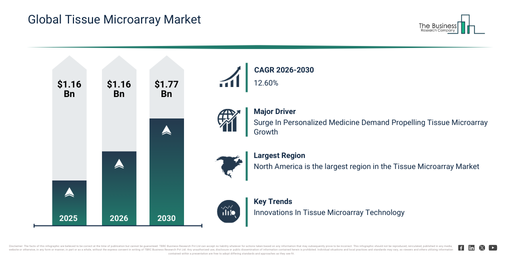
    The tissue microarray market is anticipated to experience significant expansion in the coming years. It is set to reach $23.61 billion by 2030, exhibiting a compound annual growth rate (CAGR) of 12.6%. This expansion during the projection period can be attributed to several factors, including escalating investments in precision oncology research, the increasing uptake of digital pathology solutions, the broadening of translational research initiatives, the surging demand for multi-omics analysis, and the expanding application of tissue microarrays in drug discovery. Key trends anticipated during this forecast encompass the expanding utilization of high-throughput tissue analysis platforms, the rising acceptance of multiplex immunohistochemistry, the increasing need for standardized tissue arrays, the growth in automated tissue microarray construction, and improved integration with molecular diagnostics.

    Get A Free Sample Report With In-Depth Market Insights:

    https://thebusinessresearchcompany.com/sample_request?id=81243119&type=smp&name=Tissue%20Microarray%20Market%20Report%202026&utm_source=Blogs&utm_medium=Paid&utm_campaign=Oct_PR

    Tissue Microarray Market Opportunity Drivers: What’s Unlocking New Revenue Potential?

    The increasing need for personalized medicine is anticipated to drive the expansion of the tissue microarray market in the future. This approach customizes medical therapies based on unique individual traits, leading to more effective and accurate healthcare solutions. Tissue microarrays are employed in personalized medicine to simultaneously examine numerous tissue samples, allowing for swift and effective biomarker evaluation essential for customizing patient therapies. An example of this trend is seen in February 2024, when the USFDA gave approval to 16 new personalized treatments for rare disease patients in 2023, as reported by the US-based nonprofit, the Personalized Medicine Coalition. This marks a substantial rise from the 6 personalized treatments approved in 2022. Consequently, the expanding demand for personalized medicine is fueling the growth within the tissue microarray market.

    Tissue Microarray Market Segment Landscape And Growth Outlook

    The tissue microarray market covered in this report is segmented –

    1) By Type: Immunohistochemistry, Fluorescent In Situ Hybridization, Frozen Tissue Array, Other Types

    2) By Technology: Immunohistochemistry (IHC)–Based Detection, In Situ Hybridization (ISH) Technologies, Digital Pathology and Image Analysis, Tissue Microarray Construction Technologies, Signal Detection and Visualization Technologies

    3) By Application: Oncology Research and Biomarker Validation, Drug Discovery and Development, Translational and Clinical Research, Protein Expression and Localization Analysis, Gene and RNA Expression Analysis (Tissue-Based), Comparative Pathology and Toxicology Studies

    4) By End-User: Pharmaceutical And Biotechnological Companies, Research Organizations, Hospitals

    Subsegments:

    1) By Immunohistochemistry: Automated Immunohistochemistry, Manual Immunohistochemistry, Multiplex Immunohistochemistry

    2) By Fluorescent In Situ Hybridization (FISH): Single-Color FISH, Multi-Color FISH, DNA FISH

    3) By Frozen Tissue Array: Tissue Microarray from Frozen Samples, Snap-Frozen Tissue Array

    4) By Other Types: RNA In Situ Hybridization, Paraffin-Embedded Tissue Array

    Tissue Microarray Market Innovation Trends Shaping Future Development

    Leading companies operating in the tissue microarray market are concentrating on advanced solutions, such as microarray platforms, to improve accuracy and effectiveness in extensive tissue examination. A microarray platform is a technology that enables the concurrent analysis of numerous genes or other biological molecules on a compact area, thereby supporting genetic and expression research. For instance, in June 2023, MARGenomics, a Spain-based hospital del Mar medical research institute, introduced the Applied Biosystems GeneChip 3000 Dx v2, an advanced microarray platform funded by the Carlos III Health Institute (ISCIII) and the European Union’s NextGenerationEU initiative. This platform marks the first microarray system in both Europe and the United States to secure regulatory clearance for diagnostic applications, having achieved IVD-R (In Vitro Diagnosis Regulation) certification. The system offers a wide array of capabilities, including both genomic and expression microarrays.

    Tissue Microarray Market Competitive Landscape: Who Leads The Industry?

    Major companies operating in the tissue microarray market are BioIVT LLC, BioChain Institute Inc., Creative Bioarray Co., 3DHISTECH Ltd., OriGene Technologies Inc., Bio SB Inc., ProteoGenex Inc., US Biomax Inc., AMS Biotechnology Ltd., TissueArray.Com LLC, Pantomics Inc., Zyagen Inc., Asterand Bioscience, Indivumed GmbH, PrecisionMed Inc., Conversant Bio AB, RayBiotech Life Inc., Novus Biologicals LLC, Tristar Group, iSpecimen Inc.

    View The Full Tissue Microarray Market Report:

    https://thebusinessresearchcompany.com/report/tissue-microarray-global-market-report?utm_source=Blogs&utm_medium=Paid&utm_campaign=Oct_PR

    Tissue Microarray Market Geographic Landscape: Which Region Dominates Industry Growth?

    North America was the largest region in the tissue microarray market in 2025. Asia-Pacific is expected to be the fastest-growing region in the tissue microarray market report during the forecast period. The regions covered in the tissue microarray market report are Asia-Pacific, South East Asia, Western Europe, Eastern Europe, North America, South America, Middle East, Africa.

    Reach Out To Our Team:

    The Business Research Company: https://www.thebusinessresearchcompany.com/

    Americas: +1 310-496-7795

    Asia: +44 7882 955267 & +91 8897263534

    Europe: +44 7882 955267

    Email us at: marketing@tbrc.info

    Follow us on:

    LinkedIn: https://in.linkedin.com/company/the-business-research-company

    YouTube: https://www.youtube.com/channel/UC24_fI0rV8cR5DxlCpgmyFQ

    Global Market Model: https://www.thebusinessresearchcompany.com/global-market-model
  • Tissue Heart Valves Market Growth In 2026: Market Size, Key Drivers And Future Outlook

    Tissue Heart Valves Market Growth In 2026: Market Size, Key Drivers And Future Outlook

    Built to provide research that’s more actionable and strategically valuable, The Business Research Company’s 2026 market reports include market attractiveness analysis, total addressable market sizing, company benchmarking matrices, interactive Excel dashboards, broader supply chain intelligence, emerging startup tracking, and in-depth product insights.

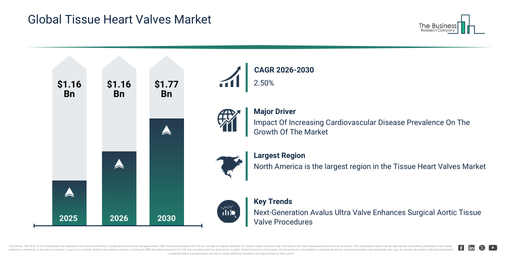
    Tissue Heart Valves Market Poised To Hit $1.72 Billion By 2030 With A 2.5% CAGR

    The market size for tissue heart valves has experienced consistent growth in recent years. It is projected to increase from $1.52 billion in 2025 to $1.56 billion by 2026, displaying a compound annual growth rate (CAGR) of 2.6%. Historically, this growth can be attributed to the rise in cardiovascular diseases, the limitations associated with mechanical valves, the increasing adoption of surgical valve replacement procedures, advancements in hospital cardiac infrastructure, and the expanding aging demographic.

    The tissue heart valves market is anticipated to observe consistent expansion over the upcoming years. It is predicted to attain a size of $1.72 billion by 2030, exhibiting a compound annual growth rate (CAGR) of 2.5%. The projected increase during this period stems from factors such as the expansion of TAVR procedures, the rise in minimally invasive cardiac surgeries, advancements in valve durability, greater access to healthcare, and the growth in cardiology specialization. Key trends expected in the forecast period encompass a rising preference for bioprosthetic valves, an increase in transcatheter valve procedures, enhancements in tissue preservation methods, a decrease in the necessity for long-term anticoagulation, and the demand for valve replacement driven by an aging demographic.

    Get A Free Sample Report With In-Depth Market Insights:

    https://thebusinessresearchcompany.com/sample_request?id=82643204&type=smp&name=Tissue%20Heart%20Valves%20Market%20Report%202026&utm_source=Blogs&utm_medium=Paid&utm_campaign=Oct_PR

    Tissue Heart Valves Market Growth Momentum: What Factors Are Shaping Demand?

    The increasing prevalence of cardiovascular diseases is expected to propel the growth of the tissue heart valves market going forward. Cardiovascular diseases (CVDs) refer to a group of disorders affecting the heart and blood vessels, including conditions such as heart attacks, strokes, and hypertension. The increasing prevalence of cardiovascular diseases (CVDs) is primarily driven by factors such as unhealthy lifestyles, aging populations, increased prevalence of risk factors, poor diets, physical inactivity, smoking, stress, and urbanization, leading to higher rates of heart-related disorders globally. Tissue heart valves are crucial in addressing cardiovascular diseases (CVDs) by providing a biocompatible, durable, and less thrombogenic solution for patients requiring valve replacement, improving long-term heart function, and reducing the risk of complications. For instance, in September 2024, according to a report published by the Heart Failure Society of America (HFSA), a US-based professional organization company, approximately 6.7 million Americans aged 20 and older are currently living with heart failure (HF), with projections indicating this number will increase to 8.7 million by 2030, 10.3 million by 2040, and 11.4 million by 2050 respectively. Therefore, the increasing prevalence of cardiovascular diseases drives the growth of the tissue heart valve market.

    Tissue Heart Valves Market Breakdown By Product Type And Application

    The tissue heart valves market covered in this report is segmented –

    1) By Type: Stented Tissue Heart Valves, Stentless Tissue Heart Valves

    2) By Procedure Type: Surgical Aortic Valve Replacement (SAVR), Transcatheter Aortic Valve Replacement (TAVR)

    3) By End-User: Hospitals, Ambulatory Surgical Centers, Other End-Users

    Subsegments:

    1) By Stented Tissue Heart Valves: Bovine Pericardial Valves, Porcine Valves

    2) By Stentless Tissue Heart Valves: Bovine Pericardial Stentless Valves, Homograft Valves

    Tissue Heart Valves Market Trends Redefining Industry Growth

    Major companies in the tissue heart valves market are concentrating on developing innovative products, such as surgical aortic tissue valves, to simplify their use during implantation and manage patients throughout their lives. A surgical aortic tissue valve is a prosthetic heart valve crafted from biological tissue, typically utilized to replace a diseased or damaged aortic valve in cardiac surgery. For instance, in June 2024, Medtronic plc., an Ireland-based technology company, launched the Avalus Ultra valve, a next-generation surgical aortic tissue valve designed to improve ease of use during implantation and support long-term patient care. Building on 10 years of clinical experience with the Avalus valve, it features a low valve profile, a polyetheretherketone (PEEK) base frame for consistent circularity, and an industry-leading Effective Orifice Area (EOA) to enhance blood flow. The valve also includes a radiopaque coil for clear visibility in future valve-in-valve procedures, offering extended durability for patients with aortic stenosis.

    Tissue Heart Valves Market Company Landscape And Competitive Strategy

    Major companies operating in the tissue heart valves market are Abbott Laboratories, Medtronic PLC, Edwards Lifesciences Corporation, LivaNova PLC, Meril Life Sciences Pvt. Ltd., MicroPort Scientific Corporation, LifeNet Health Inc., TTK Healthcare Ltd., Braile Biomédica, Anteris Technologies Ltd., Labcor Laboratórios Ltd., CARDION s.r.o., CryoLife Inc., Colibri Heart Valve LLC, Foldax Inc., Balance Medical Technologies Co. Ltd., MiCardia Corporation, St. Jude Medical Inc., Sorin Group, Hancock J & Co.

    View The Full Tissue Heart Valves Market Report:

    https://thebusinessresearchcompany.com/report/tissue-heart-valves-global-market-report?utm_source=Blogs&utm_medium=Paid&utm_campaign=Oct_PR

    Tissue Heart Valves Market Largest Region: Which Geography Holds The Highest Market Share?

    North America was the largest region in the tissue heart valves market in 2025. Asia-Pacific is expected to be the fastest-growing region in the forecast period. The regions covered in the tissue heart valves market report are Asia-Pacific, South East Asia, Western Europe, Eastern Europe, North America, South America, Middle East, Africa.

    Reach Out To Our Team:

    The Business Research Company: https://www.thebusinessresearchcompany.com/

    Americas: +1 310-496-7795

    Asia: +44 7882 955267 & +91 8897263534

    Europe: +44 7882 955267

    Email us at: marketing@tbrc.info

    Follow us on:

    LinkedIn: https://in.linkedin.com/company/the-business-research-company

    YouTube: https://www.youtube.com/channel/UC24_fI0rV8cR5DxlCpgmyFQ

    Global Market Model: https://www.thebusinessresearchcompany.com/global-market-model
  • Tissue Fixation Devices Market Size And Forecast 2026–2030: Trends Driving Industry Expansion

    Tissue Fixation Devices Market Size And Forecast 2026–2030: Trends Driving Industry Expansion

    Backed by market attractiveness analysis, total addressable market sizing, company benchmarking matrices, interactive Excel dashboards, wider supply chain intelligence, emerging startup coverage, and detailed product-level insights, The Business Research Company’s 2026 market reports are designed to offer research that is more actionable and strategically valuable than ever.

    Tissue Fixation Devices Market Size And Revenue Outlook Through 2030

    The tissue fixation devices market size has demonstrated significant expansion in recent years. It is anticipated to increase from $16.58 billion in 2025 to $17.53 billion in 2026, registering a compound annual growth rate (CAGR) of 5.8%. This historical growth can be attributed to several factors, including the surge in orthopedic surgery, the occurrence of trauma cases, various sports injuries, ongoing advancements in implant technology, and the expansion of hospital surgical capacity.

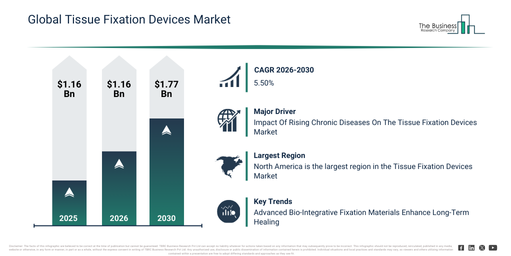
    The tissue fixation devices market is projected to experience substantial growth over the next few years. It is expected to expand to $21.68 billion in 2030, with a compound annual growth rate (CAGR) of 5.5%. The expansion during this forecast period can be attributed to factors like bioabsorbable adoption, the increase in minimally invasive procedures, growth in sports medicine, demand for reconstructive surgery, and an aging population. Key trends identified for the forecast period include a rising demand for bioabsorbable fixation devices, an increase in orthopedic and sports injuries, enhanced utilization in minimally invasive surgeries, continuous innovation in fixation materials, and the expansion of trauma and reconstructive surgeries.

    Get A Free Sample Report With In-Depth Market Insights:

    https://thebusinessresearchcompany.com/sample_request?id=56231501&type=smp&name=Tissue%20Fixation%20Devices%20Market%20Report%202026&utm_source=Blogs&utm_medium=Paid&utm_campaign=Oct_PR

    Tissue Fixation Devices Market Expansion Drivers: What’s Shaping Future Growth?

    The rising occurrence of chronic illnesses is anticipated to boost the expansion of the tissue fixation devices market in the future. These enduring health conditions, such as diabetes, heart disease, and arthritis, typically advance gradually and necessitate continuous medical care and lifestyle adjustments to manage symptoms and avert complications. The rise in chronic diseases is largely attributable to unhealthy habits, including inadequate diet, lack of physical activity, and smoking, which heighten the risk of conditions like diabetes, heart disease, and obesity. Tissue fixation devices play a role in managing chronic diseases by offering dependable and long-lasting options for repairing and stabilizing soft tissues and bones. They enhance patient results by minimizing the likelihood of re-injury and facilitating quicker recuperation, thereby improving overall treatment efficacy and sustained health management. As an illustration, in June 2024, data from the National Health Service, a UK government department, revealed that 3,615,330 individuals registered with a general practitioner (GP) received a diagnosis of non-diabetic hyperglycemia or pre-diabetes (a condition characterized by elevated blood sugar levels, insufficient to be classified as diabetes) in 2023, representing an 18% surge from 3,065,825 cases in 2022. Consequently, the growing prevalence of chronic diseases is propelling the growth of the tissue fixation devices market.

    Tissue Fixation Devices Market Segment Analysis And Revenue Potential

    The tissue fixation devices market covered in this report is segmented –

    1) By Type: Sutures And Suture Anchors, Interference Screws, Plates And Pins, Buttons, Arrows, Darts, Other Types

    2) By Application: Routine Histology, Immunohistochemistry, In Situ Hybridization, Electron Microscopy, Molecular Diagnostics

    3) By End User: Hospitals, Diagnostic Laboratories, Research Institutes, Biomedical Companies, Forensic Laboratories

    Subsegments:

    1) By Sutures And Suture Anchors: Absorbable Sutures, Non-Absorbable Sutures, Metallic Suture Anchors, Bioabsorbable Suture Anchors

    2) By Interference Screws: Bioabsorbable Interference Screws, Metallic Interference Screws

    3) By Plates And Pins: Metallic Plates And Pins, Bioabsorbable Plates And Pins

    4) By Buttons: Cortical Buttons, Toggle Buttons

    5) By Arrows: Bioabsorbable Arrows, Metallic Arrows

    6) By Darts: Bioabsorbable Darts, Metallic Darts

    7) By Other Types: Staples, Spikes, Wires

    Tissue Fixation Devices Market Strategic Trends: What Defines The Next Growth Phase?

    Leading companies in the tissue fixation devices market are concentrating on developing advanced solutions, such as bio-integrative fixation materials, to enhance long-term healing and mitigate implant-related complications. These bio-integrative materials are engineered to gradually merge with bone and tissue, supporting natural regeneration while avoiding the permanence and potential adverse reactions often associated with metal implants. For instance, in June 2025, OSSIO, a US–based orthopedic device company, introduced the OSSIOFiber 2.5 mm Suture Anchor, featuring a novel, metal-free mineral fiber matrix. This anchor delivers enhanced fixation strength, exhibiting 55% greater pull-out resistance compared to market-leading bio-composite anchors, facilitates familiar surgical workflows using standard instrumentation, and integrates into bone over time without leaving a lasting footprint. It employs a slotted drill guide and a drilled insertion path that surgeons are already accustomed to, offering both unloaded and pre-loaded configurations to match individual procedural preferences. The fully bio-integrative design is intended to support applications across extremities including foot, ankle, knee, shoulder, hand, wrist and elbow, combining strong mechanical performance with a biocompatible, resorbable profile.

    Tissue Fixation Devices Market Key Players Shaping Industry Direction

    Major companies operating in the tissue fixation devices market are Medtronic plc, Stryker Corporation, Boston Scientific Corporation, B. Braun Group, Zimmer Biomet Holdings Inc., Smith & Nephew plc, Ethicon Inc., Cook Medical Incorporated, Arthrex Inc., Integra LifeSciences Holdings Corporation, In2Bones Global Inc., Conmed Corporation, Wright Medical Group N.V., Orthofix Medical Inc., LimaCorporate S.p.A., Exactech Inc., RTI Surgical Holdings Inc., Medartis AG, Aap Implantate AG, Promedics Orthopaedic Ltd.

    View The Full Tissue Fixation Devices Market Report:

    https://thebusinessresearchcompany.com/report/tissue-fixation-devices-global-market-report?utm_source=Blogs&utm_medium=Paid&utm_campaign=Oct_PR

    Tissue Fixation Devices Market Regional Analysis: Which Region Leads By Revenue?

    North America was the largest region in the tissue fixation devices market in 2025. The regions covered in the tissue fixation devices market report are Asia-Pacific, South East Asia, Western Europe, Eastern Europe, North America, South America, Middle East, Africa.

    Reach Out To Our Team:

    The Business Research Company: https://www.thebusinessresearchcompany.com/

    Americas: +1 310-496-7795

    Asia: +44 7882 955267 & +91 8897263534

    Europe: +44 7882 955267

    Email us at: marketing@tbrc.info

    Follow us on:

    LinkedIn: https://in.linkedin.com/company/the-business-research-company

    YouTube: https://www.youtube.com/channel/UC24_fI0rV8cR5DxlCpgmyFQ

    Global Market Model: https://www.thebusinessresearchcompany.com/global-market-model
  • Tissue Diagnostic Market 2026 Outlook: Market Size, CAGR And Key Growth Opportunities

    Tissue Diagnostic Market 2026 Outlook: Market Size, CAGR And Key Growth Opportunities

    Featuring market attractiveness scoring, total addressable market sizing, company benchmarking matrices, interactive Excel dashboards, deeper supply chain intelligence, emerging startup tracking, and granular product-level insights, The Business Research Company’s 2026 market reports are built to deliver research that is both more actionable and more strategically valuable.

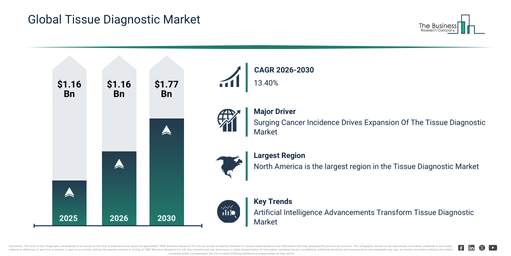
    Tissue Diagnostic Market Growth From $7.25 Billion In 2026 To $11.97 Billion By 2030 At A CAGR Of 13.4%

    The tissue diagnostic market has demonstrated substantial growth in its size over recent years. Forecasts indicate that its value will escalate from $6.38 billion in 2025 to $7.25 billion in 2026, exhibiting a compound annual growth rate (CAGR) of 13.6%. This historical expansion is attributable to several factors, including a rise in cancer diagnostic volumes, the expansion of hospital pathology laboratories, the increasing embrace of immunohistochemistry techniques, greater utilization of automated diagnostic instruments, and enhanced availability of sophisticated reagents.

    The tissue diagnostic market size is projected to experience substantial expansion in the coming years. Its valuation is anticipated to reach $11.97 billion in 2030, exhibiting a compound annual growth rate (CAGR) of 13.4%. This growth during the projection period stems from factors such as heightened demand for precise diagnostic methods, the increasing embrace of AI-powered pathology instruments, the broadening scope of personalized medicine efforts, expanding capital allocation in digital health systems, and a sharpened emphasis on diagnostic precision and processing speed. Key developments expected within this period involve the greater uptake of digital pathology solutions, a surge in the application of automated tissue staining mechanisms, the increasing incorporation of AI-driven image analysis, the widening availability of multiplex tissue assessments, and a heightened commitment to optimizing workflow consistency.

    Get A Free Sample Report With In-Depth Market Insights:

    https://thebusinessresearchcompany.com/sample_request?id=52825754&type=smp&name=Tissue%20Diagnostic%20Market%20Report%202026&utm_source=Blogs&utm_medium=Paid&utm_campaign=Oct_PR

    Tissue Diagnostic Market Development Factors: What’s Supporting Demand?

    The increasing prevalence of cancer is set to drive the expansion of the tissue diagnostic market throughout the forecast period. This disease originates when genetic alterations disrupt normal cellular processes, leading to uncontrolled cell proliferation that damages bodily tissues and forms a mass known as a tumor, which can be either malignant or non-cancerous. Various factors contribute to cancer development, including genetic mutations, exposure to carcinogens (cancer-causing chemicals), smoking, excessive weight, radiation, hormonal influences, among others. With a growing number of cancer cases, there arises a crucial demand for diagnostic methods like tissue diagnostics to accurately identify the disease state. For example, in February 2024, the World Health Organization, a Switzerland-based United Nations agency, projected more than 35 million new cancer cases in 2050, representing a 77% increase from the approximately 20 million cases recorded in 2022. Consequently, the escalating incidence of cancer fuels the growth of the tissue diagnostic market.

    Tissue Diagnostic Market Segmentation And Category Overview

    The tissue diagnostic market covered in this report is segmented –

    1) By Product: Consumables, Antibodies, Kits, Reagents, Probes, Instruments, Slide Staining System, Scanner, Tissue Processing system

    2) By Technology: Immunohistochemistry (IHC), In Situ Hybridization (ISH), Digital Pathology And Workflow Management, Special Staining

    3) By Disease: Breast Cancer, Gastric Cancer, Lymphoma, Prostate Cancer, Non-Small Cell Lung Cancer (NSCLC)

    4) By End User: Hospitals, Research Laboratories, Pharmaceutical Companies, Contract Research Organizations

    Subsegments:

    1) By Consumables: Biopsy Needles, Slides And Cover Slips, Tissue Embedding Materials

    2) By Antibodies: Primary Antibodies, Secondary Antibodies, Monoclonal Antibodies, Polyclonal Antibodies

    3) By Kits: Diagnostic Kits, Assay Kits, Staining Kits

    4) By Reagents: Fixatives, Staining Reagents, Antigen Retrieval Solutions

    5) By Probes: Fluorescent Probes, Molecular Probes, Hybridization Probes

    6) By Instruments: Microscopes, Tissue Microarray Instruments, Laser Capture Microdissection Instruments

    7) By Slide Staining System: Automated Stainers, Manual Staining Systems

    8) By Scanner: Digital Slide Scanners, Whole Slide Imaging Systems

    9) By Tissue Processing System: Tissue Processors, Embedding Centers, Microtomes

    Tissue Diagnostic Market Transformation Trends: What Innovations Are Driving Change?

    Leading companies in the tissue diagnostic market are prioritizing technological innovations, particularly the incorporation of artificial intelligence, to improve the accuracy and efficacy of prostate cancer diagnosis and treatment. This integration of AI in tissue diagnostics involves leveraging artificial intelligence algorithms to analyze and interpret medical images and pathological data, thereby enhancing the precision and speed of disease detection and classification. For instance, in March 2023, Qritive, a Singapore-based healthcare firm, introduced the Qai Prostate, an advanced artificial intelligence (AI)-powered tool designed to aid pathologists in detecting prostate cancer. The QAi prostate cancer diagnosis tool is utilized to pinpoint prostatic adenocarcinoma regions and categorize malignant and benign tumor locations within biopsy tissue samples. Subsequent to identification and classification, the program provides a comprehensive report that includes tumor size and the percentage for each slide or region of interest (ROI) specifically for adenocarcinoma screening.

    Tissue Diagnostic Market Competitive Analysis Of Leading Industry Participants

    Major companies operating in the tissue diagnostic market are F. Hoffmann-La Roche Ltd., Danaher Corporation, Thermo Fisher Scientific Inc., Abbott Laboratories, Agilent Technologies Inc., Merck KGaA, BioGenex Laboratories, Sakura Finetek Co. Ltd., Philips Healthcare NV, Bio-Rad Laboratories, Ventana Medical Systems Inc., Hologic Inc., Becton Dickinson and Company, Sysmex Corporation, Cell Signaling Technology Inc., Enzo Life Sciences Inc., Leica Microsystems GmbH, Menarini Diagnostics S.r.l, PerkinElmer Inc., QIAGEN N.V., Siemens Healthineers AG, Zeiss Group AG

    View The Full Tissue Diagnostic Market Report:

    https://thebusinessresearchcompany.com/report/tissue-diagnostic-global-market-report?utm_source=Blogs&utm_medium=Paid&utm_campaign=Oct_PR

    Tissue Diagnostic Market Geographic Distribution And Regional Opportunities

    North America was the largest region in the tissue diagnostic market in 2025. The regions covered in the tissue diagnostic market report are Asia-Pacific, South East Asia, Western Europe, Eastern Europe, North America, South America, Middle East, Africa.

    Reach Out To Our Team:

    The Business Research Company: https://www.thebusinessresearchcompany.com/

    Americas: +1 310-496-7795

    Asia: +44 7882 955267 & +91 8897263534

    Europe: +44 7882 955267

    Email us at: marketing@tbrc.info

    Follow us on:

    LinkedIn: https://in.linkedin.com/company/the-business-research-company

    YouTube: https://www.youtube.com/channel/UC24_fI0rV8cR5DxlCpgmyFQ

    Global Market Model: https://www.thebusinessresearchcompany.com/global-market-model
  • Tinnitus Medical Devices Market Size Growth: From $1.98 Billion In 2026 To $2.32 Billion By 2030

    Tinnitus Medical Devices Market Size Growth: From $1.98 Billion In 2026 To $2.32 Billion By 2030

    Built to provide research that’s more actionable and strategically valuable, The Business Research Company’s 2026 market reports include market attractiveness analysis, total addressable market sizing, company benchmarking matrices, interactive Excel dashboards, broader supply chain intelligence, emerging startup tracking, and in-depth product insights.

    Tinnitus Medical Devices Market Expansion Outlook: What Revenue Opportunities Are Ahead?

    The market for tinnitus medical devices has observed consistent expansion over recent years. This market is projected to expand from $1.9 billion in 2025 to $1.98 billion in 2026, exhibiting a compound annual growth rate (CAGR) of 4.1%. Historically, this expansion has been driven by the increasing incidence of hearing conditions, an aging global population, the broader accessibility of hearing aid technologies, greater public knowledge concerning tinnitus treatment avenues, and the establishment of more audiology clinics.

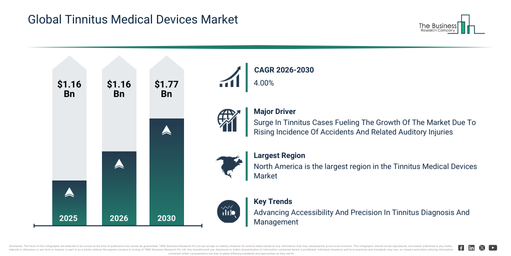
    The tinnitus medical devices market is projected to experience consistent expansion over the upcoming years, reaching $2.32 billion in 2030 at a compound annual growth rate (CAGR) of 4.0%. This anticipated growth during the forecast period is driven by factors such as a heightened demand for personalized tinnitus therapies, the growing uptake of digital health solutions, the broadening of home-based treatment options, escalating investments in neuromodulation research, and the expanded utilization of wearable medical devices. Key developments expected during this period involve the wider implementation of AI-enabled sound therapy devices, the enhanced application of wearable neuromodulation solutions, the expanding incorporation of digital therapeutics for tinnitus, the proliferation of smartphone-based management tools, and a greater emphasis on personalized hearing solutions.

    Get A Free Sample Report With In-Depth Market Insights:

    https://thebusinessresearchcompany.com/sample_request?id=82419504&type=smp&name=Tinnitus%20Medical%20Devices%20Market%20Report%202026&utm_source=Blogs&utm_medium=Paid&utm_campaign=Oct_PR

    Tinnitus Medical Devices Market Industry Drivers: What’s Behind The Revenue Growth?

    The rising prevalence of road accidents is expected to stimulate the future expansion of the tinnitus medical devices market. Accidents are unexpected occurrences that cause injury or damage without prior intent. The escalating number of road accidents is attributed to reckless driving behaviors, including speeding, distracted driving, driving under the influence, and ignoring traffic signals, all of which substantially heighten the risk of collisions and injuries. Tinnitus medical devices provide efficient relief and management for persistent ringing or noise in the ears, frequently initiated by trauma from road accidents and associated injuries, thereby improving auditory health, reducing psychological distress, and aiding the comprehensive recovery process for accident victims. For instance, in October 2025, as per the Road Safety Data Hub, an Australia-based government initiative designed to be a central repository for road safety data, the national road fatality rate for the 12 months concluding in October 2025 was 4.9 deaths per 100,000 population, indicating a 5.2% year-on-year increase compared to the previous comparable period. Therefore, the growing incidence of accidents is fueling the growth of the tinnitus medical devices market.

    Tinnitus Medical Devices Market Segment Outlook: Which Categories Are Growing Fastest?

    The tinnitus medical devices market covered in this report is segmented –

    1) By Product Type: Sound Masking Devices, Notched- Music Devices, Hearing Aids, Other Product Types

    2) By Technology: Wearable Devices, Tabletop Sound Generators, Mobile Apps & Digital Therapeutics

    3) By Distribution Channels: Hospital And Retail Pharmacy, Specialty Clinics, Other Distribution Channels

    4) By End-User: Hospitals And Clinics, Home Healthcare, Specialized Audiology Centers

    Subsegments:

    1) By Sound Masking Devices: White Noise Generators, Tabletop Maskers, Wearable Maskers

    2) By Notched-Music Devices: Standalone Notched Music Players, Integrated Smartphone Applications

    3) By Hearing Aids: Behind-The-Ear (BTE) Hearing Aids, In-The-Ear (ITE) Hearing Aids, Completely-In-Canal (CIC) Hearing Aids, Receiver-In-Canal (RIC) Hearing Aids

    4) By Other Product Types: Tinnitus Retraining Therapy Devices, Neuromodulation Devices

    #Tinnitus Medical Devices Market Growth Trends: What’s Shaping The Future Outlook?

    Key players within the tinnitus medical devices market are concentrating on creating sophisticated products, including cost-effective and mobile diagnostic tools, with the aim of boosting diagnostic precision, customizing treatment approaches, and enhancing patient well-being. An accessible tinnitus diagnosis and management device is a novel system that facilitates exact tinnitus matching, adaptable multimodal management strategies, and tracking of disease advancement, thereby improving diagnostic effectiveness and refining patient support. For instance, in December 2024, the Indian Institute of Technology (IIT) Bombay, an India-based research and technology institution, created an economical device for diagnosing and managing tinnitus. This locally developed device, alongside its intuitive application software, offers a comprehensive solution by accurately determining the nature and frequency of tinnitus, suggesting personalized treatment programs, and enabling healthcare providers to monitor disease progression over time. This affordable and precise diagnostic instrument seeks to render tinnitus management more attainable and impactful, especially in economically disadvantaged areas.

    Tinnitus Medical Devices Market Leading Companies And Competitive Benchmarking

    Major companies operating in the tinnitus medical devices market are Demant A/S, GN Store Nord A/S, WS Audiology A/S, KIND GmbH & Co. KG, RION Co. Ltd., Elkon Pvt. Ltd., Eargo Inc., Guangzhou Melison Medical Instrument Co. Ltd., Neuromod Devices Ltd., Puretone Ltd., Arphi Electronics Private Limited, Foshan Vohom Technology Co. Ltd., Sonova Holding AG, Starkey Laboratories Inc., Widex A/S, Cochlear Ltd., Sivantos Group, Audina Hearing Instruments Inc., Microson S.A., Amplifon S.p.A.

    View The Full Tinnitus Medical Devices Market Report:

    https://thebusinessresearchcompany.com/report/tinnitus-medical-devices-global-market-report?utm_source=Blogs&utm_medium=Paid&utm_campaign=Oct_PR

    Tinnitus Medical Devices Market Largest Region By Revenue And Market Share

    North America was the largest region in the tinnitus medical devices market in 2025. The regions covered in the tinnitus medical devices market report are Asia-Pacific, South East Asia, Western Europe, Eastern Europe, North America, South America, Middle East, Africa.

    Reach Out To Our Team:

    The Business Research Company: https://www.thebusinessresearchcompany.com/

    Americas: +1 310-496-7795

    Asia: +44 7882 955267 & +91 8897263534

    Europe: +44 7882 955267

    Email us at: marketing@tbrc.info

    Follow us on:

    LinkedIn: https://in.linkedin.com/company/the-business-research-company

    YouTube: https://www.youtube.com/channel/UC24_fI0rV8cR5DxlCpgmyFQ

    Global Market Model: https://www.thebusinessresearchcompany.com/global-market-model
  • Tibial Bearings Market Analysis 2026: Market Size, Growth Trends And Industry Outlook

    Tibial Bearings Market Analysis 2026: Market Size, Growth Trends And Industry Outlook

    Backed by market attractiveness analysis, total addressable market sizing, company benchmarking matrices, interactive Excel dashboards, wider supply chain intelligence, emerging startup coverage, and detailed product-level insights, The Business Research Company’s 2026 market reports are designed to offer research that is more actionable and strategically valuable than ever.

    Tibial Bearings Market Growth Potential: How Will Market Size Shift Through 2030?

    The tibial bearings market has witnessed substantial growth in recent years. Its value is projected to increase from $1.29 billion in 2025 to $1.4 billion in 2026, exhibiting a compound annual growth rate (CAGR) of 8.2%. Historically, this expansion has been driven by factors such as the rise in knee osteoarthritis cases, the growth of the aging population, the expansion of joint replacement procedures, improved surgical techniques, and the demand for mobility restoration.

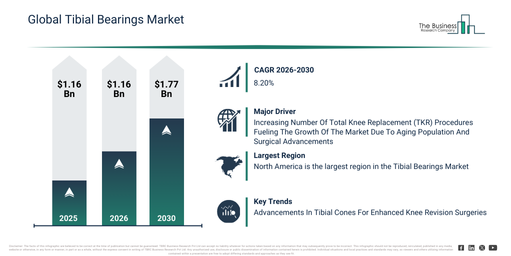
    The tibial bearings market is projected to witness significant growth over the next few years, with its size expanding to $1.91 billion by 2030, demonstrating a compound annual growth rate (CAGR) of 8.2%. This anticipated increase during the forecast period stems from factors such as the demand for customized knee implants, the rise in robotic-assisted knee replacement procedures, the common occurrence of sports injuries, advancements in bearing materials, and wider healthcare access. Noteworthy trends in the forecast period include the increasing use of highly cross-linked polyethylene, a growing preference for mobile bearing systems, the development of high-flex knee implants, a heightened focus on implant durability, and an uptick in revision knee surgeries.

    Get A Free Sample Report With In-Depth Market Insights:

    https://thebusinessresearchcompany.com/sample_request?id=58956475&type=smp&name=Tibial%20Bearings%20Market%20Report%202026&utm_source=Blogs&utm_medium=Paid&utm_campaign=Oct_PR

    Tibial Bearings Market Growth Factors: What’s Supporting Expansion?

    The rising volume of total knee replacement (TKR) procedures is projected to stimulate the growth of the tibial bearings market moving forward. Total knee replacement (TKR) is a surgical operation where damaged knee joint surfaces are substituted with artificial implants to reinstate function and relieve pain. The count of TKR procedures is increasing due to the escalating prevalence of osteoarthritis, driven by an aging demographic and specific lifestyle factors. Tibial bearings enhance the longevity and performance of total knee replacement (TKR), reducing wear and improving patient outcomes, which in turn supports the increasing demand for these procedures. For instance, in September 2024, information from the Australian Orthopedic Association National Joint Replacement Registry, an Australia-based database that compiles and analyzes data on joint replacement surgeries, showed that the number of total knee replacements (TKRs) grew by 19.2% from 2022 to 2023, indicating a substantial increase in procedures performed during this period. Therefore, the growing number of total knee replacement (TKR) procedures is a key driver for the tibial bearings market’s expansion.

    Tibial Bearings Market Segment Landscape: Which Areas Lead Development?

    The tibial bearings market covered in this report is segmented –

    1) By Type Of Bearing System: Fixed Bearing Systems, Mobile Bearing Systems, Conventional Bearing Systems, Hybrid Systems

    2) By Material Type: Polyethylene, Ceramic, Metallic Alloys, Composite Materials

    3) By Distribution Channel: Direct Sales, Authorized Medical Device Distributors, Third-Party Distributors, Medical Supply Stores

    4) By Application: Orthopedic Implants, Primary And Revision Knee Arthroplasty, Knee Reconstruction Surgery, Reconstructive Surgery

    5) By End-User: Hospitals, Orthopedic Clinics, Ambulatory Surgical Centers, Other End-Users

    Subsegments:

    1) By Fixed Bearing Systems: Polyethylene Bearings, Metal-Backed Bearings, Highly Cross-Linked Polyethylene Bearings

    2) By Mobile Bearing Systems: Rotating Platform Bearings, Medial-Pivot Bearings, High-Flex Bearings

    3) By Conventional Bearing Systems: Standard Polyethylene Bearings, Cemented Bearings, Uncemented Bearings

    4) By Hybrid Systems: Metal-Polyethylene Hybrid Bearings, Ceramic-Polyethylene Hybrid Bearings, Advanced Composite Bearings

    Tibial Bearings Market Industry Trends: What’s Reshaping Demand?

    Companies that are prominent in the tibial bearings market are focused on developing tibial cones to enhance the stability of implants, improve bone integration, and address severe bone loss in revision total knee arthroplasty (TKA) procedures. Tibial cones are medical devices implanted during revision total knee arthroplasty (TKA) to manage metaphyseal bone loss in the tibia. For example, in September 2024, MicroPort Orthopaedics, a medical device company based in the US, launched its Evolution Tibial Cones across North America to tackle metaphyseal bone loss in revision total knee arthroplasty (TKA). These cones are made from OsteoSync Ti, a highly porous titanium material that improves structural support, initial fixation, and bone integration. With a superior coefficient of friction compared to competitors, they enhance implant stability and ensure early rigid fixation, which is vital for successful knee revision surgeries.

    Tibial Bearings Market Industry Leaders And Competitive Landscape

    Major companies operating in the tibial bearings market are Stryker Corporation, Zimmer Biomet Holdings Inc., Smith & Nephew plc, DePuy Synthes, Medacta International, Limacorporate SpA, Exactech Inc., Corin Group, MicroPort Orthopedics Inc., Waldemar Link GmbH & Co KG, Conformis Inc., Implantcast GmbH, FH Orthopedics, United Orthopedic Corporation, Jiangsu Gather Biotech Co Ltd, DJO Global, AK Medical Holdings Limited, Mathys Ltd Bettlach, Beijing Chunli Medical Instruments Co. Ltd., Beijing AKEC Medical Co. Ltd., Kyocera Medical Corporation, B. Braun Aesculap

    View The Full Tibial Bearings Market Report:

    https://thebusinessresearchcompany.com/report/tibial-bearings-global-market-report?utm_source=Blogs&utm_medium=Paid&utm_campaign=Oct_PR

    Tibial Bearings Market Regional Analysis And Leading Geography

    North America was the largest region in the tibial bearings market in 2025. Asia-Pacific is expected to be the fastest-growing region in the forecast period. The regions covered in the tibial bearings market report are Asia-Pacific, South East Asia, Western Europe, Eastern Europe, North America, South America, Middle East, Africa.

    Reach Out To Our Team:

    The Business Research Company: https://www.thebusinessresearchcompany.com/

    Americas: +1 310-496-7795

    Asia: +44 7882 955267 & +91 8897263534

    Europe: +44 7882 955267

    Email us at: marketing@tbrc.info

    Follow us on:

    LinkedIn: https://in.linkedin.com/company/the-business-research-company

    YouTube: https://www.youtube.com/channel/UC24_fI0rV8cR5DxlCpgmyFQ

    Global Market Model: https://www.thebusinessresearchcompany.com/global-market-model
  • Thrombectomy Devices Market Forecast To 2030: Starting From $2.48 Billion In 2026

    Thrombectomy Devices Market Forecast To 2030: Starting From $2.48 Billion In 2026

    Featuring market attractiveness scoring, total addressable market sizing, company benchmarking matrices, interactive Excel dashboards, deeper supply chain intelligence, emerging startup tracking, and granular product-level insights, The Business Research Company’s 2026 market reports are built to deliver research that is both more actionable and more strategically valuable.

    Thrombectomy Devices Market Value Analysis: What Growth Lies Ahead Over The Forecast Period?

    The thrombectomy devices market size has shown strong growth in recent years. It is projected to increase from $1.64 billion in 2025 to $1.78 billion in 2026, demonstrating a compound annual growth rate (CAGR) of 8.3%. This expansion observed in the past can be linked to a rising frequency of ischemic stroke cases, more available specialized stroke centers, enhancements in catheter-based intervention techniques, greater clinician understanding of thrombectomy benefits, and the broadening of neurointerventional training programs.

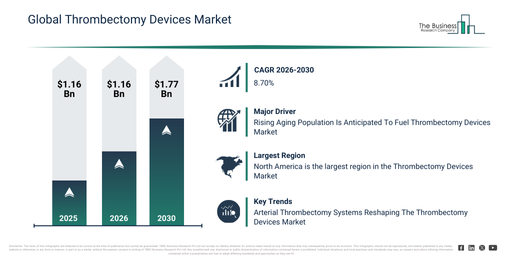
    The thrombectomy devices market is projected to experience robust expansion over the coming years. Its valuation is anticipated to reach $2.48 billion by 2030, exhibiting a compound annual growth rate (CAGR) of 8.7%. This projected growth is attributable to several factors, including the rising implementation of thrombectomy across broader patient demographics, an increasing need for quicker reperfusion results, the development of sophisticated neurovascular infrastructure, heightened investments in cutting-edge thrombectomy devices, and a greater emphasis on integrated therapy methods. Key trends defining this period encompass the wider acceptance of aspiration-based thrombectomy methods, the increased deployment of stent retriever devices, a heightened focus on swift stroke intervention protocols, the proliferation of minimally invasive neurovascular operations, and improvements in device precision and navigability.

    Get A Free Sample Report With In-Depth Market Insights:

    https://thebusinessresearchcompany.com/sample_request?id=67577207&type=smp&name=Thrombectomy%20Devices%20Market%20Report%202026&utm_source=Blogs&utm_medium=Paid&utm_campaign=Oct_PR

    Thrombectomy Devices Market Demand Drivers: What’s Powering Industry Growth?

    The anticipated expansion of the thrombectomy devices market going forward is closely linked to the rising aging population. An aging population refers to a demographic shift characterized by an increasing proportion of elderly individuals within a society over time. Thrombectomy devices play a crucial role in addressing various health concerns in the aging population such as stroke, coronary artery disease, aortic thrombosis, deep vein thrombosis (DVT), and others. For instance, in October 2025, according to the World Health Organization (WHO), a Switzerland-based United Nations (UN) organization, by 2030, one in six people globally will be aged 60 or older, with the population of individuals in this age group projected to double to 2.1 billion by 2050. Therefore, the rising aging population is driving the foot orthotic insoles market.

    Thrombectomy Devices Market Segments: Where Is Growth Concentrated?

    The thrombectomy devices market covered in this report is segmented –

    1) By Product Type: Aspiration Thrombectomy Devices, Mechanical Thrombectomy Devices

    2) By Application: Neurovascular Applications, Peripheral Vascular Applications, Cardiovascular Applications

    3) By End-User: Hospitals, Comprehensive Stroke Centers, Tertiary Care Centers

    Subsegments:

    1) By Aspiration Thrombectomy Devices: Manual Aspiration Devices, Powered Aspiration Devices

    2) By Mechanical Thrombectomy Devices: Stent Retriever Devices, Balloon Thrombectomy Devices

    Thrombectomy Devices Market Innovation Trends: What Developments Are Reshaping The Industry?

    Leading companies within the thrombectomy devices market are concentrating on developing innovative solutions, such as arterial thrombectomy systems. An arterial thrombectomy system is a medical device specifically engineered for the extraction of blood clots (thrombi) from arteries. For instance, in June 2023, Penumbra, Inc., a US-based healthcare company, announced the introduction of ‘Lightning Bolt 7’. Lightning Bolt 7 is the latest arterial thrombectomy system designed to remove blood clots from arteries. This system is equipped with pressure sensors paired with an algorithm to facilitate the removal of large and fibrous blood clots in the arteries with minimal blood loss. It is employed to manage conditions where a blockage restricts blood flow to the intestines, spleen, limbs, and liver. The integration of computer-aided components not only boosts safety but, when combined with its rapid and efficient clot removal, encourages the adoption of an endovascular-first approach in a broader spectrum of cases, prioritizing it over open surgery.

    Thrombectomy Devices Market Key Participants And Competitive Landscape

    Major companies operating in the thrombectomy devices market are Stryker Corporation, Medtronic plc, Boston Scientific Corporation, Terumo Corporation, Penumbra Inc., Abbott Laboratories, Inari Medical Inc., BTG International Ltd., Phenox GmbH, Acandis GmbH & Co. KG, Straub Medical AG, MicroVention Inc., Rapid Medical, Neuravi Limited, Arteria Therapeutics Inc., Johnson and Johnson, Edwards Lifesciences Corporation, Argon Medical Devices Inc., Teleflex Incorporated, AngioDynamics, Koninklijke Philips NV, Spectranetics Corporation, C. R. Bard Inc., Walk Vascular LLC, Kaneka Corporation, Baxter International

    View The Full Thrombectomy Devices Market Report:

    https://thebusinessresearchcompany.com/report/thrombectomy-devices-global-market-report?utm_source=Blogs&utm_medium=Paid&utm_campaign=Oct_PR

    Thrombectomy Devices Market Geographic Analysis: Where Is Demand Accelerating Fastest?

    North America was the largest region in the thrombectomy devices market in 2025. Asia-Pacific is expected to be the fastest-growing region in the global thrombectomy devices market report during the forecast period. The regions covered in the thrombectomy devices market report are Asia-Pacific, South East Asia, Western Europe, Eastern Europe, North America, South America, Middle East, Africa.

    Reach Out To Our Team:

    The Business Research Company: https://www.thebusinessresearchcompany.com/

    Americas: +1 310-496-7795

    Asia: +44 7882 955267 & +91 8897263534

    Europe: +44 7882 955267

    Email us at: marketing@tbrc.info

    Follow us on:

    LinkedIn: https://in.linkedin.com/company/the-business-research-company

    YouTube: https://www.youtube.com/channel/UC24_fI0rV8cR5DxlCpgmyFQ

    Global Market Model: https://www.thebusinessresearchcompany.com/global-market-model
  • Thoracic Surgery Devices Market Size In 2026 And Beyond: Understanding Future Growth Potential

    Thoracic Surgery Devices Market Size In 2026 And Beyond: Understanding Future Growth Potential

    Built to provide research that’s more actionable and strategically valuable, The Business Research Company’s 2026 market reports include market attractiveness analysis, total addressable market sizing, company benchmarking matrices, interactive Excel dashboards, broader supply chain intelligence, emerging startup tracking, and in-depth product insights.

    Thoracic Surgery Devices Market Size Forecast: How Big Could The Market Get By 2030?

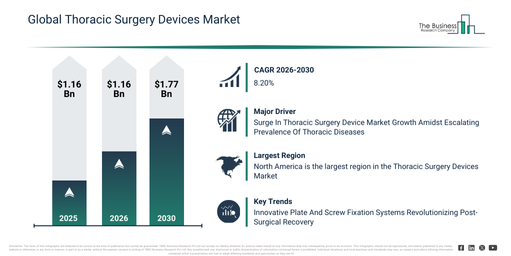
    The thoracic surgery devices market has experienced strong growth in recent years and is projected to expand from $9.67 billion in 2025 to $10.47 billion in 2026, at a compound annual growth rate (CAGR) of 8.2%. This historical growth can be attributed to an increasing prevalence of thoracic and pulmonary disorders requiring surgical intervention, the rising utilization of specialized clamps, staplers, and spreaders in both open and minimally invasive procedures, the expansion of hospital thoracic surgery programs and related surgical infrastructure, a growing clinical emphasis on operative precision and complication reduction, and the availability of diverse thoracic instrument configurations and sizes.

    The thoracic surgery devices market is projected to experience substantial expansion over the coming years. It is anticipated to reach a valuation of $14.34 billion by 2030, exhibiting a compound annual growth rate (CAGR) of 8.2%. This anticipated growth during the forecast period is fueled by several factors, including a heightened demand for sophisticated instrument sets specifically designed for intricate chest operations, the increasing integration of ergonomic and user-friendly device designs for surgeons, the broadening of ambulatory thoracic surgery capabilities for specific procedures, an increase in procedural volumes due to an aging population and prevalent chronic respiratory conditions, and an intensified focus on enhancing patient outcomes and optimizing post-operative recovery. Key trends expected within the forecast timeframe encompass the expanded use of specialized thoracic forceps, graspers, clamps, staplers, and spreaders to facilitate complex chest and lung operations, a rising adoption of precision surgical instruments to improve visualization, control, and accuracy throughout thoracic procedures, increasing procedural volumes for lobectomy, wedge resection, and pneumonectomy, thereby boosting the need for multi-functional instrument sets, the wider expansion of thoracic surgery capabilities across hospitals and ambulatory surgical centers to enhance patient accessibility and results, and a growing inclination towards ergonomically designed needle holders, scissors, and retraction devices to bolster surgeon efficiency.

    Get A Free Sample Report With In-Depth Market Insights:

    https://thebusinessresearchcompany.com/sample_request?id=92099157&type=smp&name=Thoracic%20Surgery%20Devices%20Market%20Report%202026&utm_source=Blogs&utm_medium=Paid&utm_campaign=Oct_PR

    Thoracic Surgery Devices Market Growth Drivers: What’s Behind The Acceleration?

    The increasing occurrence of thoracic diseases is projected to propel the expansion of the thoracic surgery device market in the future. These diseases cover diverse medical issues affecting organs and structures in the chest cavity, such as the heart, lungs, esophagus, trachea, diaphragm, and major blood vessels. Thoracic surgery devices assist surgeons in operations within the chest, ensuring accuracy, effectiveness, and safety. For example, in June 2023, the Australian Institute of Health and Welfare, an Australia-based government agency, reported that chronic obstructive pulmonary disease (COPD) made up 3.6% of the overall disease burden and represented 50% of the total burden of disease linked to respiratory conditions in 2023. Consequently, the growing incidence of thoracic diseases is boosting the thoracic diseases market.

    Thoracic Surgery Devices Market Segment Analysis: What Are The Core Market Categories?

    The thoracic surgery devices market covered in this report is segmented –

    1) By Product: Forceps, Graspers, Clamps And Staplers, Scissors, Spreaders, Needle Holders, Other Products

    2) By Surgery Type: Lobectomy, Wedge Resection, Pneumonectomy, Other Surgery Types

    3) By End-User: Hospitals, Ambulatory Surgical Centers, Other End-Users

    Subsegments:

    1) By Forceps: Straight Forceps, Curved Forceps

    2) By Graspers: Tissue Graspers, Vessel Graspers

    3) By Clamps and Staplers: Surgical Clamps, Stapling Devices

    4) By Scissors: Surgical Scissors, Dissecting Scissors

    5) By Spreaders: Rib Spreaders, Tissue Spreaders

    6) By Needle Holders: Standard Needle Holders, Fine Tip Needle Holders

    7) By Other Products: Electrosurgical Instruments, Surgical Retractors

    Thoracic Surgery Devices Market Trends: What’s Defining The Industry’s Next Phase?

    Leading companies in the thoracic surgery devices market are actively developing advanced plate and screw fixation systems, such as the Rigid internal sternal fixation system, to improve sternal stability and promote optimal bone healing after sternotomy procedures. A Rigid internal sternal fixation system is a surgical device specifically designed to stabilize and support the sternum with plates and screws, ensuring proper alignment and aiding bone recovery following sternotomy or other thoracic surgeries. For example, in August 2024, DePuy Synthes, a US-based medical device company, launched its MatrixSTERNUM fixation system, a plate and screw solution created to stabilize the chest wall after open-heart and various chest surgeries. This innovative system significantly improves patient care in the operating room by providing superior locking strength, faster chest fixation, and thinner, low-profile plates compared to other competitive products. The MatrixSTERNUM system features three times greater locking strength than the leading product, which ensures enhanced sternum fixation throughout the recovery period. Additionally, its multi-hole screw guides allow for rapid and precise plate fixation, substantially reducing the procedure time, while the 1.5 mm low-profile plates are both thin and highly contourable, thereby minimizing their visibility beneath the skin.

    Thoracic Surgery Devices Market Top Companies Driving Competitive Growth

    Major companies operating in the thoracic surgery devices market are Medtronic plc, Danaher Corporation, Stryker Corporation, B. Braun Melsungen AG, Olympus Corporation, Intuitive Surgical, Getinge AB, Teleflex Inc., Richard Wolf GmbH, Scanlan International, OmniGuide Holdings Inc., KLS Martin Group, Sklar Surgical Instruments, Dextera Surgical Inc., Biolitec AG, Johnson & Johnson, Cardio medical GmbH, LivaNova plc, Sinapi Biomedical, Medacta International SA, Aesculap AG, Medline Industries Inc

    View The Full Thoracic Surgery Devices Market Report:

    https://thebusinessresearchcompany.com/report/thoracic-surgery-devices-global-market-report?utm_source=Blogs&utm_medium=Paid&utm_campaign=Oct_PR

    Thoracic Surgery Devices Market Global Footprint: Which Region Leads The Industry?

    North America was the largest region in the thoracic surgery devices market in 2025. The regions covered in the thoracic surgery devices market report are Asia-Pacific, South East Asia, Western Europe, Eastern Europe, North America, South America, Middle East, Africa.

    Reach Out To Our Team:

    The Business Research Company: https://www.thebusinessresearchcompany.com/

    Americas: +1 310-496-7795

    Asia: +44 7882 955267 & +91 8897263534

    Europe: +44 7882 955267

    Email us at: marketing@tbrc.info

    Follow us on:

    LinkedIn: https://in.linkedin.com/company/the-business-research-company

    YouTube: https://www.youtube.com/channel/UC24_fI0rV8cR5DxlCpgmyFQ

    Global Market Model: https://www.thebusinessresearchcompany.com/global-market-model
  • Thoracic Drainage Devices Market Reaches $1.44 Billion In 2026: Key Developments Shaping Expansion

    Thoracic Drainage Devices Market Reaches $1.44 Billion In 2026: Key Developments Shaping Expansion

    Backed by market attractiveness analysis, total addressable market sizing, company benchmarking matrices, interactive Excel dashboards, wider supply chain intelligence, emerging startup coverage, and detailed product-level insights, The Business Research Company’s 2026 market reports are designed to offer research that is more actionable and strategically valuable than ever.

    Thoracic Drainage Devices Market Revenue Outlook: What CAGR Lies Ahead Through 2030?

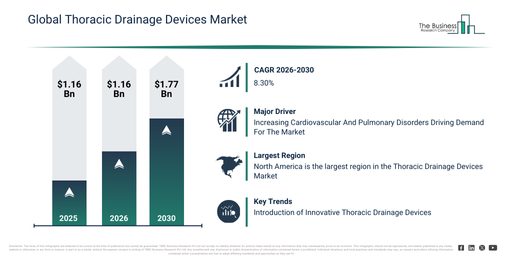
    The thoracic drainage devices market has demonstrated significant growth in recent years. This market is expected to expand from $0.96 billion in 2025 to $1.04 billion in 2026, achieving a compound annual growth rate (CAGR) of 8.4%. Key factors contributing to its past growth include an increase in thoracic surgeries, heightened demand for pneumothorax treatment, the expansion of intensive care units (ICUs), improved management of post-operative complications, and a rise in chest trauma cases.

    The market for thoracic drainage devices is projected to experience substantial expansion over the upcoming years. This market is anticipated to reach a valuation of $1.44 billion by 2030, demonstrating a compound annual growth rate (CAGR) of 8.3%. This expansion during the forecast period is primarily driven by factors such as the increasing adoption of smart drainage systems, the integration of remote patient monitoring, initiatives aimed at reducing hospital stays, the incorporation of advanced sensors, and efforts to optimize surgical outcomes. Key developments expected in this period encompass digital chest drainage systems, capabilities for real-time fluid monitoring, the emergence of minimally invasive drainage solutions, automated pressure regulation mechanisms, and the development of portable thoracic drainage units.

    Get A Free Sample Report With In-Depth Market Insights:

    https://thebusinessresearchcompany.com/sample_request?id=20979&type=smp&name=Thoracic%20Drainage%20Devices%20Market%20Report%202026&utm_source=Blogs&utm_medium=Paid&utm_campaign=Oct_PR

    Thoracic Drainage Devices Market Growth Factors Behind Sustained Expansion

    The expanding occurrence of cardiovascular and pulmonary conditions is anticipated to fuel the expansion of the thoracic drainage devices market. These conditions encompass various ailments affecting the heart, blood vessels, and lungs, which in turn influence overall cardiovascular and respiratory well-being. The rise in cardiovascular and pulmonary disorders stems from inactive lifestyles, poor eating habits, smoking, and insufficient health monitoring, prompting a greater need for specialized treatments and preventative healthcare. Thoracic drainage devices are instrumental in addressing these disorders by efficiently clearing surplus fluid, air, or blood from the pleural or thoracic cavity, thereby ensuring proper lung inflation and cardiovascular operation. As an illustration, in October 2024, data from the Centers for Disease Control and Prevention, a US-based public health institute, indicated that in 2023, approximately 1 out of every 6 deaths resulting from cardiovascular diseases occurred in adults younger than 65 years old, with 919,032 people dying from cardiovascular disease, which accounted for 1 in every 3 deaths. Consequently, the increasing prevalence of cardiovascular and pulmonary disorders is a significant factor driving the growth of the thoracic drainage devices market.

    Thoracic Drainage Devices Market Segment Breakdown: Which Categories Lead On Revenue?

    The thoracic drainage devices market covered in this report is segmented –

    1) By Technology Type: Digital, Traditional

    2) By Product: Thoracic Drainage Systems, Thoracic Drainage Kits, Pleural Drainage Catheters, Other Products

    3) By Application: Cardiac Surgery, Thoracic And Pulmonary Surgery, Other Applications

    4) By End-Users: Hospitals, Ambulatory Surgical Centers, Other End-Users

    Subsegments:

    1) By Digital: Electronic Monitoring Systems, Digital Drainage Units With Real-Time Pressure Measurement, Automated Fluid Monitoring Devices

    2) By Traditional: Suction Drainage Systems, Gravity Drainage Systems, Water-Seal Chest Drains

    Thoracic Drainage Devices Market Industry Trends Fueling Future Revenue Growth

    Key companies operating in the thoracic drainage devices market are concentrating on introducing innovative products, such as evacuated drainage bottles, to enhance operational efficiency and minimize the risk of infection during medical procedures. An evacuated drainage bottle is a medical apparatus employed to collect and store fluid drained from a wound or surgical site, typically under vacuum pressure, to facilitate healing and avert infection. For instance, in September 2023, Merit Medical Systems Inc., a US-based manufacturer of disposable medical devices, introduced the Aspira evacuated drainage bottle. This device is specifically engineered for draining pleural effusions and malignant ascites, offering patients the convenience of self-treatment at home with improved comfort and control over the drainage speed, while also requiring 23% less storage space compared to traditional drainage bottles.

    Thoracic Drainage Devices Market Leading Players And Competitive Positioning

    Major companies operating in the thoracic drainage devices market are Medtronic plc, Terumo Corporation, Smiths Group plc, Teleflex Incorporated, Cook Group Incorporated, Merit Medical Systems, Vygon SA, Poly Medicure Ltd., B. Braun Melsungen AG, Medela AG, Utah Medical Products Inc., Angiplast Private Limited, Sterimed Medical Devices Private Limited, Eurosets s.r.l., Redax S.p.a., Sinapi Biomedical (Pty) Ltd., Rocket Medical plc, ATMOS MedizinTechnik GmbH & Co. KG, Argon Medical Devices Inc., Sterimed Medical Devices Pvt. Ltd.

    View The Full Thoracic Drainage Devices Market Report:

    https://thebusinessresearchcompany.com/report/thoracic-drainage-devices-global-market-report?utm_source=Blogs&utm_medium=Paid&utm_campaign=Oct_PR

    Thoracic Drainage Devices Market Regional Distribution: Which Areas Power Market Growth?

    North America was the largest region in the thoracic drainage devices market in 2025. The regions covered in the thoracic drainage devices market report are Asia-Pacific, South East Asia, Western Europe, Eastern Europe, North America, South America, Middle East, Africa.

    Reach Out To Our Team:

    The Business Research Company: https://www.thebusinessresearchcompany.com/

    Americas: +1 310-496-7795

    Asia: +44 7882 955267 & +91 8897263534

    Europe: +44 7882 955267

    Email us at: marketing@tbrc.info

    Follow us on:

    LinkedIn: https://in.linkedin.com/company/the-business-research-company

    YouTube: https://www.youtube.com/channel/UC24_fI0rV8cR5DxlCpgmyFQ

    Global Market Model: https://www.thebusinessresearchcompany.com/global-market-model