Blog

  • Surgery Tables Market Growth Outlook For 2026: Drivers, Trends And Future Opportunities

    Surgery Tables Market Growth Outlook For 2026: Drivers, Trends And Future Opportunities

    Featuring market attractiveness scoring, total addressable market sizing, company benchmarking matrices, interactive Excel dashboards, deeper supply chain intelligence, emerging startup tracking, and granular product-level insights, The Business Research Company’s 2026 market reports are built to deliver research that is both more actionable and more strategically valuable.

    Surgery Tables Market Revenue Outlook: What CAGR Lies Ahead Through 2030?

    The surgery tables market has shown robust expansion over recent years. It is anticipated to increase from $1.19 billion in 2025 to $1.27 billion in 2026, demonstrating a compound annual growth rate (CAGR) of 6.9%. The historical progression of this market can be attributed to a higher volume of surgical procedures, the expansion of hospital infrastructure, increasing integration of advanced operating room equipment, a growing need for specialized surgical care, and advancements in surgical workflow efficiency.

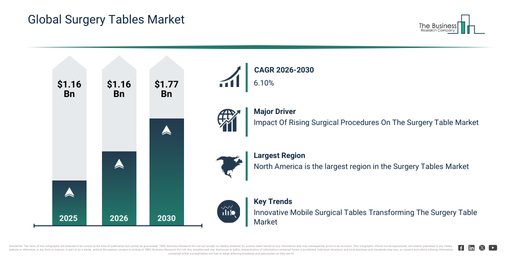
    The market for surgery tables is projected to expand significantly over the coming years. By 2030, its valuation is anticipated to reach $1.61 billion, driven by a compound annual growth rate (CAGR) of 6.1%. This projected growth during the forecast period stems from factors such as increased investments in intelligent operating room technologies, a surge in demand for minimally invasive surgical procedures, the proliferation of ambulatory surgical centers, a heightened emphasis on ergonomic design in surgical settings, and the ongoing replacement of outdated operating tables. Key trends expected during this period involve the wider adoption of powered and motorized surgery tables, an escalating need for radiolucent surgical surfaces, greater incorporation of intelligent positioning systems, the spread of modular and multi-specialty table configurations, and a stronger commitment to patient comfort and safety.

    Get A Free Sample Report With In-Depth Market Insights:

    https://thebusinessresearchcompany.com/sample_request?id=66460936&type=smp&name=Surgery%20Tables%20Market%20Report%202026&utm_source=Blogs&utm_medium=Paid&utm_campaign=Oct_PR

    Surgery Tables Market Growth Catalysts And Demand Drivers

    The increasing number of surgical procedures is anticipated to fuel the expansion of the surgery table market in the future. A surgical procedure involves making an incision using instruments, typically performed in an operating theater, and frequently requiring anesthesia and respiratory support. The growth in surgical procedures is influenced by several elements, including technological advancements, the rising prevalence of chronic illnesses, improved access to healthcare, and greater attention to elective operations. A surgery table is indispensable for surgical procedures, offering a stable, adjustable, and sterile surface that optimizes patient positioning and accessibility for the surgical team. For example, in June 2024, data from the American Society of Plastic Surgeons, a US-based non-profit organization, indicated that minimally invasive procedures climbed by 7% in 2023, surpassing the overall growth rate of surgical procedures by 2%. Furthermore, hand surgeries, such as those for carpal tunnel, arthritis, and trigger finger, totaled 207,887 procedures, representing a 2% increase from 2022. Consequently, the rising volume of surgical procedures is a primary driver for the surgery table market. Government-led initiatives for healthcare research and development are projected to stimulate the growth of the surgical table market moving forward. Government initiatives encompass specific actions, programs, policies, or projects undertaken by governmental authorities at various levels—local, regional, national, or international—to address particular issues, achieve set goals, or bring about positive societal changes. Numerous government bodies are introducing various healthcare initiatives designed to support diverse aspects, including surgical tables. For instance, in December 2024, the Centers for Medicare and Medicaid Services, a US-based Federal Agency, reported that U.S. healthcare spending in 2023 increased by 7.5 percent, reaching a total of $4.9 trillion, which amounts to $14,570 per person. Therefore, government initiatives supporting research and development in healthcare are a key catalyst for the surgical table market.

    Surgery Tables Market Segment Analysis: What Are The Core Market Categories?

    The surgery tables market covered in this report is segmented –

    1) By Operation Mode: Powered, Non-Powered

    2) By Product: General Surgical Beds, Specialty Surgical Beds, Radiolucent Surgical Beds, Pediatric Surgical Beds

    3) By Material: Metal, Composite

    4) By End Users: Hospitals, Ambulatory Surgery Centers, Other End Users

    Subsegments:

    1) By Powered: Electric Surgery Tables, Hydraulic Surgery Tables, Pneumatic Surgery Tables

    2) By Non-Powered: Manual Surgery Tables, Semi-Manual Surgery Tables

    Surgery Tables Market Trends Shaping Long-Term Demand

    Leading firms within the surgery table market are actively crafting innovative solutions, including mobile surgical tables, designed to cater to a variety of surgical demands. These mobile surgical tables represent a category of operating tables characterized by their effortless portability both inside a single operating room and across multiple rooms. As an illustration, in March 2024, Getinge, a medical technology firm based in Sweden, unveiled its Corin operating table. The Maquet Corin OR table stands out as an intelligent mobile surgical table, featuring user-friendly controls and sophisticated feedback lighting. For heightened safety, it incorporates functionalities such as collision detection, mechanisms to prevent tipping, and overload detection. Furthermore, the ability to personalize surgical sequences and preset positions contributes to increased adaptability and streamlined patient positioning.

    Surgery Tables Market Leading Companies And Competitive Benchmarking

    Major companies operating in the surgery tables market are Stryker Corp., Getinge AB, TRUMPF Medizin Systeme GmbH + Co. KG, Steris Corporation, Shenzhen Mindray Bio-Medical Electronics Co. Ltd., Hillrom Holdings Inc., Mizuho OSI Inc., Alvo Medical, Skytron LLC, Merivaara Corp., Mediland Enterprise Corporation, Narang Medical Limited, Allengers Medical Systems Ltd., Lojer Group, STILLE AB, UFSK-International OSYS GmbH, Denyers Pty. Ltd., Infimed Sp. z o.o., AGA Sanitätsartikel GmbH, Allen Medical Systems Inc., Medifa GmbH, OPT SurgiSystems Srl, Eschmann Holdings Ltd., NUVO Surgical

    View The Full Surgery Tables Market Report:

    https://thebusinessresearchcompany.com/report/surgery-tables-global-market-report?utm_source=Blogs&utm_medium=Paid&utm_campaign=Oct_PR

    Surgery Tables Market Top Region By Revenue And Market Share

    North America was the largest region in the surgery table market in 2025. The regions covered in the surgery tables market report are Asia-Pacific, South East Asia, Western Europe, Eastern Europe, North America, South America, Middle East, Africa.

    Reach Out To Our Team:

    The Business Research Company: https://www.thebusinessresearchcompany.com/

    Americas: +1 310-496-7795

    Asia: +44 7882 955267 & +91 8897263534

    Europe: +44 7882 955267

    Email us at: marketing@tbrc.info

    Follow us on:

    LinkedIn: https://in.linkedin.com/company/the-business-research-company

    YouTube: https://www.youtube.com/channel/UC24_fI0rV8cR5DxlCpgmyFQ

    Global Market Model: https://www.thebusinessresearchcompany.com/global-market-model
  • Superconducting Magnet For Medical Magnetic Resonance Imaging (MRI) System Market Size Forecast From 2026 To 2030: Key Industry Trends

    Superconducting Magnet For Medical Magnetic Resonance Imaging (MRI) System Market Size Forecast From 2026 To 2030: Key Industry Trends

    Built to provide research that’s more actionable and strategically valuable, The Business Research Company’s 2026 market reports include market attractiveness analysis, total addressable market sizing, company benchmarking matrices, interactive Excel dashboards, broader supply chain intelligence, emerging startup tracking, and in-depth product insights.

    Superconducting Magnet For Medical Magnetic Resonance Imaging (MRI) System Market Growth Analysis: How Will Revenue Trend Over The Forecast Period?

    The market for superconducting magnets in medical magnetic resonance imaging (MRI) systems has shown significant growth in recent years. This market is expected to increase from $2.13 billion in 2025 to $2.3 billion in 2026, achieving a compound annual growth rate (CAGR) of 8.0%. The expansion observed historically can be attributed to several factors including the limited availability of high-field superconducting magnets, the reliance on liquid helium cooling systems, an increase in neurological and musculoskeletal imaging, the rising adoption of MRI systems in hospitals, and the development of low-temperature superconductors.

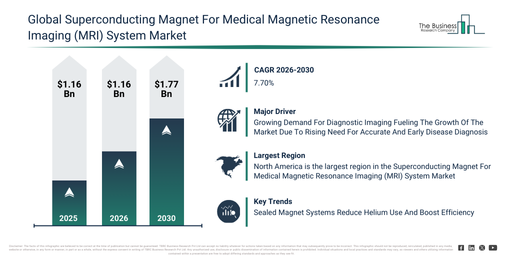
    The superconducting magnet for medical magnetic resonance imaging (mri) system market size is anticipated to undergo significant expansion in the upcoming years. This market is expected to reach $3.09 billion in 2030, with a compound annual growth rate (CAGR) of 7.7%. The expansion during the forecast period stems from factors such as the development of high-temperature superconductors, the increased use of pediatric and oncology imaging applications, growing research and development in superconducting materials, a rising need for open and dedicated mri systems, and the integration of AI and big data in imaging analysis. Prominent trends expected in this period encompass the increasing adoption of high-field mri systems, a surging demand for specialized imaging applications, advancements in superconducting wire materials, the proliferation of diagnostic imaging centers, and an emphasis on reducing helium consumption and cryogenics expenses.

    Get A Free Sample Report With In-Depth Market Insights:

    https://thebusinessresearchcompany.com/sample_request?id=18446040&type=smp&name=Superconducting%20Magnet%20For%20Medical%20Magnetic%20Resonance%20Imaging%20%28MRI%29%20System%20Market%20Report%202026&utm_source=Blogs&utm_medium=Paid&utm_campaign=Oct_PR

    Superconducting Magnet For Medical Magnetic Resonance Imaging (MRI) System Market Opportunity Drivers: What’s Unlocking New Revenue Potential?

    The increasing need for diagnostic imaging is projected to fuel the future expansion of the superconducting magnet for medical magnetic resonance imaging (MRI) system market. Diagnostic imaging refers to methodologies and processes employed to generate visual representations of the body’s internal structures for clinical analysis and medical intervention. The escalating demand for diagnostic imaging stems from the rising prevalence of chronic diseases that necessitate early and precise diagnosis. Superconducting magnets for medical magnetic resonance imaging (MRI) system cater to this diagnostic imaging demand by enabling high-field strength, which ensures clearer and more accurate scans. These magnets not only improve diagnostic precision but also reduce scan times, thereby enhancing patient throughput and clinical efficiency. As an illustration, in November 2024, the National Health Service, a UK-based government agency, reported 47.2 million imaging tests in England for the year ending March 2024, marking a 4.8% rise from the 45.0 million recorded in the preceding year. Consequently, the growing demand for diagnostic imaging is a primary driver for the growth of the superconducting magnet for medical magnetic resonance imaging (MRI) system market.

    Superconducting Magnet For Medical Magnetic Resonance Imaging (MRI) System Market Segment Breakdown: Which Categories Lead On Revenue?

    The superconducting magnet for medical magnetic resonance imaging (mri) system market covered in this report is segmented –

    1) By Type: Low-Temperature Superconductors (LTS), High-Temperature Superconductors (HTS)

    2) By System Type: Open Magnetic Resonance Imaging (MRI) Systems, Closed Magnetic Resonance Imaging (MRI) Systems, Dedicated Magnetic Resonance Imaging (MRI) Systems For Specific Applications

    3) By Magnetic Field Strength: 1.5 Tesla, 3 Tesla, 7 Tesla, Ultra-High Field Magnetic Resonance Imaging (MRI)

    4) By Application: Neurological Imaging, Musculoskeletal Imaging, Cardiac Imaging, Pediatric Imaging, Oncology Imaging

    5) By End-User: Hospitals, Diagnostic Imaging Centers, Research Institutions, Academic Medical Centers

    Subsegments:

    1) By Low-Temperature Superconductors (LTS): Niobium-Titanium (NbTi), Niobium-Tin (Nb₃Sn), Other Low-Temperature Superconductors (LTS) Materials

    2) By High-Temperature Superconductors (HTS): Yttrium Barium Copper Oxide (YBCO), Bismuth Strontium Calcium Copper Oxide (BSCCO)

    Superconducting Magnet For Medical Magnetic Resonance Imaging (MRI) System Market Innovation Trends Shaping Future Development

    Companies operating in the superconducting magnet for medical magnetic resonance imaging (MRI) system market are prioritizing the creation of technologically advanced products, such as sealed magnet systems, to decrease helium consumption, enhance operational efficiency, and improve system reliability. Sealed magnet systems are defined as superconducting magnet technologies designed to function with minimal or zero helium boil-off by containing the cryogen within a fully sealed, maintenance-free cryostat. For instance, in February 2025, GE HealthCare Technologies Inc., a US-based health technology company, launched Freelium, a next-generation sealed magnet platform developed to provide high-quality MRI imaging using less than 1% of the helium typically required by traditional systems. Freelium operates without the need for additional cooling or power infrastructure and incorporates intelligent sensor technology for remote monitoring and automated recovery, thereby reducing reliance on field engineers. This sealed design also simplifies transport and installation, fostering more equitable access to magnetic resonance imaging (MRI) services.

    Superconducting Magnet For Medical Magnetic Resonance Imaging (MRI) System Market Industry Leaders And Competitive Landscape

    Major companies operating in the superconducting magnet for medical magnetic resonance imaging (mri) system market are Hitachi Medical Corporation, Siemens Healthineers AG, Fujifilm Healthcare Corporation, Philips Medical Systems Nederland B.V., GE Healthcare Technologies Inc., Bruker Corporation, Shanghai United Imaging Healthcare Co. Ltd., Oxford Instruments plc, Canon Medical Systems Corporation, Japan Superconductor Technology Inc., Tesla Engineering Ltd., American Magnetics Inc., Cryomagnetics Inc., Scientific Magnetics Ltd., Western Superconducting Technologies Co. Ltd., Ningbo Jansen Superconducting Technologies Co. Ltd., MR Solutions, ASG Superconductors SpA, Mitsubishi Electric, Ankey Magnetic Technologies Corporation, Weifang Xinli Superconducting Technology, Magnetica, SuperConducting Systems Inc., Neusoft Medical Systems Co. Ltd.

    View The Full Superconducting Magnet For Medical Magnetic Resonance Imaging (MRI) System Market Report:

    https://thebusinessresearchcompany.com/report/superconducting-magnet-for-medical-magnetic-resonance-imaging-mri-system-global-market-report?utm_source=Blogs&utm_medium=Paid&utm_campaign=Oct_PR

    Superconducting Magnet For Medical Magnetic Resonance Imaging (MRI) System Market Regional Analysis And Top Geography

    North America was the largest region in the superconducting magnet for medical magnetic resonance imaging (MRI) system market in 2025. Asia-Pacific is expected to be the fastest-growing region in the forecast period. The regions covered in the superconducting magnet for medical magnetic resonance imaging (mri) system market report are Asia-Pacific, South East Asia, Western Europe, Eastern Europe, North America, South America, Middle East, Africa.

    Reach Out To Our Team:

    The Business Research Company: https://www.thebusinessresearchcompany.com/

    Americas: +1 310-496-7795

    Asia: +44 7882 955267 & +91 8897263534

    Europe: +44 7882 955267

    Email us at: marketing@tbrc.info

    Follow us on:

    LinkedIn: https://in.linkedin.com/company/the-business-research-company

    YouTube: https://www.youtube.com/channel/UC24_fI0rV8cR5DxlCpgmyFQ

    Global Market Model: https://www.thebusinessresearchcompany.com/global-market-model
  • Sunglasses Market 2026: Market Size, Growth Drivers And Emerging Opportunities

    Sunglasses Market 2026: Market Size, Growth Drivers And Emerging Opportunities

    Backed by market attractiveness analysis, total addressable market sizing, company benchmarking matrices, interactive Excel dashboards, wider supply chain intelligence, emerging startup coverage, and detailed product-level insights, The Business Research Company’s 2026 market reports are designed to offer research that is more actionable and strategically valuable than ever.

    Sunglasses Market Forecast: What Value Will The Market Reach By 2030?

    The sunglasses market size has shown robust growth over recent years. It is projected to expand from $18.93 billion in 2025 to $19.98 billion in 2026, demonstrating a compound annual growth rate (CAGR) of 5.6%. The expansion observed in the historic period stems from increasing consumer awareness of eye protection, the growth of outdoor recreational activities, rising disposable income levels, enhanced fashion consciousness, and the wider availability of sunglasses across retail channels.

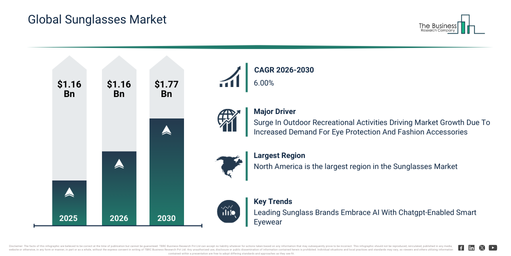
    The sunglasses market is projected to experience robust expansion in the coming years. It will grow to $25.24 billion in 2030 at a compound annual growth rate (CAGR) of 6.0%. This anticipated growth during the forecast period is fueled by several factors, including the escalating demand for sustainable eyewear materials, the expanding online sales of eyewear, the broadening range of customized lens options, the increasing uptake of smart and functional eyewear, and a heightened emphasis on premium sunglass categories. Key trends foreseen for the same period encompass a surge in demand for UV protection sunglasses, the growing appeal of polarized lenses, the wider acceptance of prescription sunglasses, the proliferation of fashion-centric designs, and an increased emphasis on frames that are both lightweight and durable.

    Get A Free Sample Report With In-Depth Market Insights:

    https://thebusinessresearchcompany.com/sample_request?id=25423406&type=smp&name=Sunglasses%20Market%20Report%202026&utm_source=Blogs&utm_medium=Paid&utm_campaign=Oct_PR

    Sunglasses Market Growth Momentum: What Factors Are Shaping Demand?

    An anticipated rise in outdoor leisure pursuits is set to fuel the expansion of the sunglasses market in the future. These activities encompass leisurely endeavors undertaken in natural settings, including hiking, camping, fishing, and cycling, offering physical activity, stress relief, and pleasure. This rise in outdoor engagement stems from factors like more leisure time, remote work arrangements, positive health outcomes, social advantages, and heightened environmental consciousness. Tailored sunglasses are crafted to shield eyes from intense light and enjoy considerable popularity among individuals passionate about sports. For example, in June 2024, data from the Outdoor Industry Association, a US-based nonprofit organization, indicated that the outdoor recreation participation base expanded by 4.1 percent in 2023, reaching an unprecedented 175.8 million participants, which accounted for 57.3 percent of the United States population. Consequently, the increased participation in outdoor recreational activities will stimulate the growth of the sunglasses market.

    Sunglasses Market Segmentation: How Does The Market Break Down By Category?

    The sunglasses market covered in this report is segmented –

    1) By Type: Non-Polarized, Polarized

    2) By Design: Aviator Or Pilot, Rectangle, Round, Square, Oval, Cat Eye, Other Designs

    3) By Frame Metal: Injected, Metal, Acetate, Other Frame Metals

    4) By Distribution Channel: Specialty Stores, Supermarkets And Hypermarkets, Online, Other Distribution Channels

    Subsegments:

    1) By Non-Polarized: Fashion Sunglasses, UV Protection Sunglasses, Prescription Sunglasses

    2) By Polarized: Sport Sunglasses, Outdoor Activity Sunglasses, Fashion Polarized Sunglasses

    Sunglasses Market Trends Redefining Industry Growth

    Leading companies in the sunglasses market are concentrating on enhanced functionality, aesthetic appeal, and sustainability in wearable technology, specifically ChatGPT-enabled smart sunglasses, to cater to shifting consumer tastes. These intelligent eyewear pieces enable users to interact with ChatGPT via voice commands, seamlessly combining artificial intelligence features with stylish wearability for effortless assistance. For example, in May 2024, Innovative Eyewear, Inc., an eyewear company based in the US, introduced the Eddie Bauer Smart Eyewear collection, which includes the world’s inaugural rimless smart eyewear with integrated ChatGPT voice access. Available in four designs, these glasses feature polarized lenses, a Bluetooth range of 100 feet, quadrasonic speakers, and highly clear microphones, making them suitable for outdoor use. Each pair also comes with a patent-pending charging dock that powers the glasses and up to three supplementary devices, ensuring convenience for full-day adventures.

    Sunglasses Market Key Participants And Competitive Landscape

    Major companies operating in the sunglasses market are LVMH Moët Hennessy Louis Vuitton, EssilorLuxottica SA, Kering SA, Luxottica Group S.p.A., Persol Holdings Co Ltd., VSP Global Inc., Fielmann AG, Safilo Group S.p.A., Marcolin S.p.A., De Rigo Vision S.p.A., Oakley Inc., Maui Jim Inc., Julbo SA, Eyeking LLC, Alain Mikli International, Eyevan Inc., Bolon AB, Costa Del Mar Sunglasses Inc., Randolph Engineering Inc., Michael Kors Holdings Limited, Polo Ralph Lauren Corp, Prada SpA, Ralph Lauren Corp, Tiffany & Co, Gianni Versace S.r.l., Ray-Ban Sun Optics Pvt Ltd

    View The Full Sunglasses Market Report:

    https://thebusinessresearchcompany.com/report/sunglasses-global-market-report?utm_source=Blogs&utm_medium=Paid&utm_campaign=Oct_PR

    Sunglasses Market Geographic Analysis: Where Is Demand Rising Fastest?

    North America was the largest region in the sunglasses market in 2025. Asia-Pacific is expected to be the fastest-growing region in the forecast period. The regions covered in the sunglasses market report are Asia-Pacific, South East Asia, Western Europe, Eastern Europe, North America, South America, Middle East, Africa.

    Reach Out To Our Team:

    The Business Research Company: https://www.thebusinessresearchcompany.com/

    Americas: +1 310-496-7795

    Asia: +44 7882 955267 & +91 8897263534

    Europe: +44 7882 955267

    Email us at: marketing@tbrc.info

    Follow us on:

    LinkedIn: https://in.linkedin.com/company/the-business-research-company

    YouTube: https://www.youtube.com/channel/UC24_fI0rV8cR5DxlCpgmyFQ

    Global Market Model: https://www.thebusinessresearchcompany.com/global-market-model
  • Suction And Aspiration Devices Market Set To Expand From $1.83 Billion In 2026: Growth Outlook Through 2030

    Suction And Aspiration Devices Market Set To Expand From $1.83 Billion In 2026: Growth Outlook Through 2030

    Featuring market attractiveness scoring, total addressable market sizing, company benchmarking matrices, interactive Excel dashboards, deeper supply chain intelligence, emerging startup tracking, and granular product-level insights, The Business Research Company’s 2026 market reports are built to deliver research that is both more actionable and more strategically valuable.

    Suction And Aspiration Devices Market Size Outlook: How Quickly Will Revenue Expand Through 2030?

    The suction and aspiration devices market size has experienced robust growth in recent years. This market is projected to expand from $1.18 billion in 2025 to $1.29 billion in 2026, exhibiting a compound annual growth rate (CAGR) of 9.3%. The historic period’s expansion can be linked to factors such as the dependence on manually operated suction devices, the prevalence of limited battery technology for portable devices, an increase in surgical and airway management procedures, expanding hospital infrastructure, and the implementation of venturi-based vacuum systems.

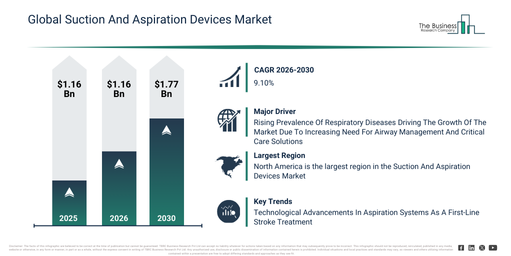
    The suction and aspiration devices market is poised for significant expansion in the next few years, with its valuation expected to reach $1.83 billion by 2030, demonstrating a compound annual growth rate (CAGR) of 9.1%. This growth during the forecast period can be attributed to advancements in rechargeable and dual-powered suction devices, the integration of smart monitoring systems, an increase in pediatric and emergency suction solutions, the growing adoption of wall-mounted and continuous suction units, and regulatory focus on device safety and infection control. Major trends anticipated during this period include a rise in the adoption of portable and handheld suction devices, expansion in emergency and critical care applications, increased use of dual-powered and hybrid suction systems, a greater emphasis on sterilization and infection control, and the broadening application of suction devices in research and diagnostic laboratories.

    Get A Free Sample Report With In-Depth Market Insights:

    https://thebusinessresearchcompany.com/sample_request?id=52698811&type=smp&name=Suction%20And%20Aspiration%20Devices%20Market%20Report%202026&utm_source=Blogs&utm_medium=Paid&utm_campaign=Oct_PR

    Suction And Aspiration Devices Market Expansion Drivers: What’s Shaping Future Growth?

    The expanding incidence of respiratory ailments is projected to boost the growth of the suction and aspiration devices market in the future. Respiratory diseases encompass a category of health conditions impacting the lungs and other components of the respiratory system, crucial for breathing. The escalating occurrence of these illnesses is attributed to air pollution, as prolonged exposure to pollutants like particulate matter and nitrogen dioxide harms the lungs and airways, resulting in conditions such as asthma, COPD, and other long-term respiratory problems. Suction and aspiration devices are vital for respiratory care by effectively clearing airways, enabling uninterrupted airway management, and lowering the risk of complications, making them indispensable in critical and urgent medical environments for enhancing patient outcomes in those with respiratory conditions. For example, in June 2025, the Office for Health Improvement and Disparities, a UK government body, reported that the North East and Yorkshire NHS England region recorded the highest rate of respiratory disease admissions in 2024, at 1,765 admissions per 100,000 population (with a range of 1,753 to 1,777), indicating a 7% rise compared to the preceding year. Consequently, the increasing prevalence of respiratory diseases is stimulating the expansion of the suction and aspiration devices market.

    Suction And Aspiration Devices Market Segment Trends And Revenue Contributors

    The suction and aspiration devices market covered in this report is segmented –

    1) By Type: Alternating Current (AC) Powered Devices, Battery Powered Devices, Dual Powered Devices, Manually Operated Devices

    2) By Portability: Hand Held Suction Device, Wall Mounted Suction Device

    3) By Vacuum System: Electrically Powered, Manual, Venturi

    4) By Application: Airway Clearing, Surgical Applications, Research And Diagnostics

    5) By End User: Gastric, Respiratory, Wound Section, Delivery Rooms, Other End Users

    Subsegments:

    1) By Alternating Current (AC) Powered Devices: Wall-Mounted Suction Units, Portable AC-Powered Aspirators, High-Vacuum Suction Devices, Continuous Suction Systems

    2) By Battery Powered Devices: Rechargeable Handheld Suction Devices, Battery-Powered Portable Suction Pumps, Emergency Medical Suction Units, Pediatric Battery Suction Devices

    3) By Dual Powered Devices: AC Or DC Convertible Suction Systems, Hybrid Emergency Aspirators, Field-Deployable Suction Units, Multi-Mode Hospital Suction Devices

    4) By Manually Operated Devices: Handheld Manual Suction Pumps, Foot-Operated Suction Devices, Manual Mucus Extractors, Manual Resuscitator With Suction Integration

    Suction And Aspiration Devices Market Strategic Trends: What Defines The Next Growth Phase?

    Major companies in the suction and aspiration devices market are concentrating on creating innovative solutions, particularly first-line mechanical thrombectomy techniques, with the goal of improving procedural speed, patient safety, and clinical outcomes in acute ischemic stroke treatment. First-line mechanical thrombectomy techniques refer to the initial method used to extract a blood clot from a blocked cerebral artery during an ischemic stroke. For example, in May 2025, Imperative Care Inc., a US-based medical technology company, introduced a dual-catheter stroke aspiration system for removing oxygen-blocking blood clots. This system offers key features such as simultaneous proximal and distal aspiration, enabling continuous clot engagement and removal; a dual-lumen design that reduces the need for multiple device exchanges; improved trackability and flexibility for navigating intricate cerebral vessels; a strong and consistent suction force for efficient clot retrieval; and an ergonomic, physician-friendly design that enhances procedural efficiency and control during acute ischemic stroke interventions.

    Suction And Aspiration Devices Market Top Companies Driving Competitive Growth

    Major companies operating in the suction and aspiration devices market are Cardinal Health Inc., Medtronic Plc, Stryker Corporation, Boston Scientific Corporation, Draegerwerk AG & Co. KGaA, Cook Medical Inc., Schuco International KG, Penumbra Inc., Laerdal Medical AS, Drive DeVilbiss Healthcare, B. Braun Melsungen AG, Karl Storz SE & Co. KG, Integra Biosciences AG, Amsino International Inc., Labcoco Corporation, Precision Medical Inc., SunMed LLC, Allied Healthcare Products Inc., Pacific Hospital Supply Co. Ltd., Medicop Inc.

    View The Full Suction And Aspiration Devices Market Report:

    https://thebusinessresearchcompany.com/report/suction-and-aspiration-devices-global-market-report?utm_source=Blogs&utm_medium=Paid&utm_campaign=Oct_PR

    Suction And Aspiration Devices Market Global Footprint: Which Region Leads The Market?

    North America was the largest region in the suction and aspiration devices market in 2025. Asia-Pacific is expected to be the fastest-growing region in the forecast period. The regions covered in the suction and aspiration devices market report are Asia-Pacific, South East Asia, Western Europe, Eastern Europe, North America, South America, Middle East, Africa.

    Reach Out To Our Team:

    The Business Research Company: https://www.thebusinessresearchcompany.com/

    Americas: +1 310-496-7795

    Asia: +44 7882 955267 & +91 8897263534

    Europe: +44 7882 955267

    Email us at: marketing@tbrc.info

    Follow us on:

    LinkedIn: https://in.linkedin.com/company/the-business-research-company

    YouTube: https://www.youtube.com/channel/UC24_fI0rV8cR5DxlCpgmyFQ

    Global Market Model: https://www.thebusinessresearchcompany.com/global-market-model
  • Structural Heart Imaging Market Size And Growth In 2026: Key Factors Shaping Future Demand

    Structural Heart Imaging Market Size And Growth In 2026: Key Factors Shaping Future Demand

    Built to provide research that’s more actionable and strategically valuable, The Business Research Company’s 2026 market reports include market attractiveness analysis, total addressable market sizing, company benchmarking matrices, interactive Excel dashboards, broader supply chain intelligence, emerging startup tracking, and in-depth product insights.

    Structural Heart Imaging Market Size, Value And Growth Trajectory Through 2030

    The structural heart imaging market has experienced significant expansion recently. This market is projected to expand from $17.09 billion in 2025 to $18.75 billion by 2026, demonstrating a compound annual growth rate (CAGR) of 9.7%. Factors contributing to this historical growth include a rising occurrence of structural heart conditions, an increase in transcatheter cardiac interventions, continuous improvements in echocardiography and CT imaging technologies, the wider application of imaging within interventional cardiology, and the greater uptake of catheter-based treatments.

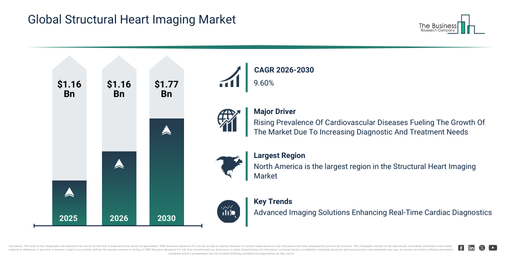
    The structural heart imaging market is anticipated to experience substantial growth over the coming years, reaching $27.02 billion by 2030, exhibiting a compound annual growth rate (CAGR) of 9.6%. This projected expansion during the forecast period is primarily driven by an escalating demand for minimally invasive cardiac procedures, increasing capital allocation towards advanced cardiac imaging platforms, the proliferation of AI-supported diagnostic imaging, a greater reliance on imaging for intricate valve operations, and a heightened emphasis on refining procedural outcomes. Concurrently, significant developments expected during this period encompass the growing acceptance of real-time image-guided cardiac interventions, the increased utilization of sophisticated multimodality imaging systems, the expanding incorporation of AI-powered image analysis, the advancement of 3D and 4D cardiac visualization technologies, and a stronger focus on precision in pre-procedural planning.

    Get A Free Sample Report With In-Depth Market Insights:

    https://thebusinessresearchcompany.com/sample_request?id=60871179&type=smp&name=Structural%20Heart%20Imaging%20Market%20Report%202026&utm_source=Blogs&utm_medium=Paid&utm_campaign=Oct_PR

    Structural Heart Imaging Market Development Factors: What’s Supporting Demand?

    The increasing incidence of cardiovascular diseases is anticipated to boost the structural heart imaging market moving forward. These diseases encompass various conditions impacting the heart and blood vessels, such as heart attacks, strokes, and elevated blood pressure. The rise in cardiovascular disease prevalence stems from unhealthy lifestyles, including poor dietary habits, lack of physical activity, and smoking, which contribute to conditions like obesity, hypertension, and diabetes. Structural heart imaging plays a crucial role in managing cardiovascular diseases by delivering precise and detailed diagnostic images, making it highly effective for identifying heart valve problems and congenital anomalies. It enhances patient outcomes by facilitating early detection and offering accurate guidance for medical procedures. For example, in January 2024, data from the American Heart Association, a US-based non-profit organization, indicated that the age-adjusted death rate from cardiovascular disease rose to 233.3 per 100,000 in 2024, marking a 4.0% increase from 224.4 per 100,000 in 2023. Consequently, the growing prevalence of cardiovascular diseases is a key factor stimulating the expansion of the structural heart imaging market.

    Structural Heart Imaging Market Segment Analysis Spotlighting Growth Areas

    The structural heart imaging market covered in this report is segmented –

    1) By Procedure Type: Transcatheter Aortic Valve Implantation (TAVI), Transcatheter Mitral Valve Replacement (TMVR), Transcatheter Tricuspid Valve Replacement (TTVR), Left Atrial Appendage Closure (LAAC), Patent Foramen Ovale (PFO) Closure

    2) By Imaging Modality: Transesophageal Echocardiography (TEE), Intravascular Ultrasound (IVUS), Fluoroscopy, Cardiac Magnetic Resonance Imaging (CMRI), Computed Tomography (CT)

    3) By Vendor Type: Original Equipment Manufacturers (OEMs), Third-Party Vendors

    4) By Applications: Diagnosis, Surgery

    5) By End-User: Hospitals, Specialty Clinics, Cardiac Centers, Diagnostic Centers, Ambulatory Surgical Centers, Catheterization Laboratories, Other End-Users

    Subsegments:

    1) By Transcatheter Aortic Valve Implantation (TAVI): Balloon-Expandable Valves, Self-Expanding Valves

    2) By Transcatheter Mitral Valve Replacement (TMVR): Mechanical Valves, Bioprosthetic Valves

    3) By Transcatheter Tricuspid Valve Replacement (TTVR): Catheter-Based Approaches, Percutaneous Annuloplasty

    4) By Left Atrial Appendage Closure (LAAC): Endocardial Closure Devices, Epicardial Closure Devices

    5) By Patent Foramen Ovale (PFO) Closure: Occluder Devices, Suture-Based Devices

    Structural Heart Imaging Market Transformation Trends: What Innovations Are Driving Change?

    Major companies operating in the structural heart imaging market are dedicating efforts to advancing technology, particularly through artificial intelligence (AI)-driven ultrasound systems. These sophisticated imaging technologies incorporate artificial intelligence to bolster image quality, streamline measurements, and assist in precise, immediate diagnostic decision-making. For instance, in October 2023, GE HealthCare Technologies Inc., a US-based medical technology and diagnostics company, unveiled artificial intelligence (AI)-powered Venue Family point-of-care ultrasound systems, which include a caption guidance feature. Artificial intelligence (AI)-powered Venue Family point-of-care ultrasound systems improve Structural Heart Imaging by automating cardiac evaluations, optimizing image clarity, and delivering real-time Doppler analysis. Their inherent portability enables swift diagnosis and accurate assessment of valvular and structural heart conditions in both critical care and procedural settings.

    Structural Heart Imaging Market Leading Players And Competitive Positioning

    Major companies operating in the structural heart imaging market are Hitachi Medical Corporation, Abbott Laboratories, Medtronic plc, Siemens Healthineers, Fujifilm Holdings Corporation, GE Healthcare, Koninklijke Philips N.V., Boston Scientific Corporation, Edwards Lifesciences, Shimadzu Corporation, Esaote SpA, Canon Medical Systems Corporation, Circle Cardiovascular Imaging Inc., Pie Medical Imaging B.V., Arineta Ltd, Samsung Medison, United Imaging Healthcare, Bracco Imaging S.p.A., Siemens Medical Solutions USA Inc., Toshiba Medical Systems Corporation

    View The Full Structural Heart Imaging Market Report:

    https://thebusinessresearchcompany.com/report/structural-heart-imaging-global-market-report?utm_source=Blogs&utm_medium=Paid&utm_campaign=Oct_PR

    Structural Heart Imaging Market Regional Split: Which Areas Are Fueling Growth?

    North America was the largest region in the structural heart imaging market in 2025. Asia-Pacific is expected to be the fastest-growing region in the forecast period. The regions covered in the structural heart imaging market report are Asia-Pacific, South East Asia, Western Europe, Eastern Europe, North America, South America, Middle East, Africa.

    Reach Out To Our Team:

    The Business Research Company: https://www.thebusinessresearchcompany.com/

    Americas: +1 310-496-7795

    Asia: +44 7882 955267 & +91 8897263534

    Europe: +44 7882 955267

    Email us at: marketing@tbrc.info

    Follow us on:

    LinkedIn: https://in.linkedin.com/company/the-business-research-company

    YouTube: https://www.youtube.com/channel/UC24_fI0rV8cR5DxlCpgmyFQ

    Global Market Model: https://www.thebusinessresearchcompany.com/global-market-model
  • Structural Heart Devices Market Forecast 2026–2030: Market Size, Trends And Growth Opportunities

    Structural Heart Devices Market Forecast 2026–2030: Market Size, Trends And Growth Opportunities

    Backed by market attractiveness analysis, total addressable market sizing, company benchmarking matrices, interactive Excel dashboards, wider supply chain intelligence, emerging startup coverage, and detailed product-level insights, The Business Research Company’s 2026 market reports are designed to offer research that is more actionable and strategically valuable than ever.

    Structural Heart Devices Market CAGR Outlook And Future Development

    The structural heart devices market size has experienced significant growth in recent years. It is projected to expand from $11.37 billion in 2025 to $12.48 billion in 2026, demonstrating a compound annual growth rate (CAGR) of 9.8%. Historically, this expansion can be linked to factors such as the rising incidence of structural heart conditions, an aging worldwide demographic, the early uptake of valve replacement technologies, the proliferation of cardiac specialty facilities, and advancements in interventional cardiology methods.

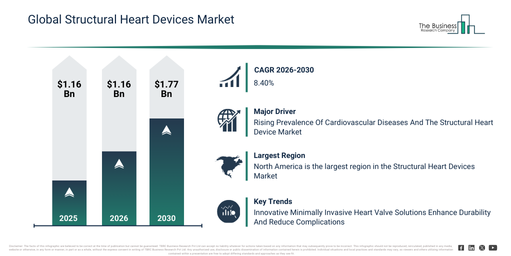
    The structural heart devices market is anticipated to show significant expansion in the upcoming years, with its size projected to reach $17.23 billion in 2030 at a compound annual growth rate (CAGR) of 8.4%. This expansion throughout the forecast period is driven by an increasing preference for minimally invasive procedures, growing investments in cardiovascular innovation, the widening scope of pediatric cardiac interventions, the increasing adoption of AI-assisted diagnostics, and a rising demand for durable and long-lasting implants. Notable trends during this period are expected to encompass the growing acceptance of transcatheter heart valve procedures, an increased demand for minimally invasive cardiac implants, the enhanced integration of advanced imaging and navigation systems, the expansion of catheter-based delivery technologies, and a heightened focus on patient-specific device design.

    Get A Free Sample Report With In-Depth Market Insights:

    https://thebusinessresearchcompany.com/sample_request?id=91064657&type=smp&name=Structural%20Heart%20Devices%20Market%20Report%202026&utm_source=Blogs&utm_medium=Paid&utm_campaign=Oct_PR

    Structural Heart Devices Market Industry Drivers: What’s Behind The Revenue Growth?

    The increasing incidence of cardiovascular diseases is anticipated to drive the expansion of the structural heart device market in the future. These conditions, commonly known as CVDs, encompass a range of ailments impacting the heart and circulatory system, specifically ailments like coronary artery disease, heart attacks, and strokes. Globally, instances of cardiovascular diseases, such as heart disease and stroke, have consistently risen, attributed to factors including inactive lifestyles, unhealthy eating patterns, growing obesity levels, tobacco use, and an aging demographic. Structural heart devices address cardiovascular diseases by mending or substituting impaired heart valves, rectifying anatomical flaws, and enhancing cardiac performance and patient health results. As an example, the American Heart Association, a US-based non-profit body, reported in January 2024 that the age-adjusted mortality rate from cardiovascular disease climbed to 233.3 per 100,000 in 2024, representing a 4.0% increase from 224.4 per 100,000 in 2023. Consequently, the growing frequency of cardiovascular diseases is stimulating the development of the structural heart device market.

    Structural Heart Devices Market Segment Performance And Emerging Opportunities

    The structural heart devices market covered in this report is segmented –

    1) By Type: Heart Valve Devices, Annuloplasty Rings, Occluders, Delivery Systems

    2) By Procedure: Replacement Procedures, Repair Procedures

    3) By Indication: Atrial Septal Defect, Patent Foramen Ovale, Ventricular Septal Defect, Aortic Valve Stenosis, Other Indications

    4) By Age Group: Pediatric, Adults

    Subsegments:

    1) By Heart Valve Devices: Transcatheter Heart Valves, Surgical Heart Valves, Annuloplasty Rings

    2) By Annuloplasty Rings: Mitral Annuloplasty Rings, Aortic Annuloplasty Rings

    3) By Occluders: Atrial Septal Defect (Asd) Occluders, Patent Foramen Ovale (Pfo) Occluders

    4) By Delivery Systems: Balloon Delivery Systems, Catheter-Based Delivery Systems

    #Structural Heart Devices Market Growth Trends: What’s Shaping The Future Outlook?

    Companies operating in the structural heart devices market are prioritizing the development of innovative solutions, such as next-generation transcatheter heart valves, to enhance durability, mitigate complications, and expand minimally invasive treatment options. These next-generation transcatheter heart valves are minimally invasive replacement valves, engineered with advanced materials and features like anti-calcification tissue and improved sealing, to increase longevity and decrease complications when compared to prior valves. For instance, in September 2025, Edwards Lifesciences Corporation, a US-based medical technology company, introduced a next-generation transcatheter heart valve platform in India. This platform offers a durable, minimally invasive treatment for aortic stenosis in individuals unsuitable for open-heart surgery. The key attributes of this sophisticated valve include calcification-resistant tissue technology to deter calcium accumulation and improve lifespan, a taller outer sealing skirt to lessen paravalvular leaks, and dry tissue storage for simpler hospital handling. Additionally, the platform supports a “lifetime management” strategy, enabling minimally invasive valve-in-valve procedures for subsequent interventions and ensuring sustained treatment effectiveness.

    Structural Heart Devices Market Competitive Overview And Top Companies

    Major companies operating in the structural heart devices market are Abbott Laboratories, Medtronic Plc, Boston Scientific Corporation, Terumo Corporation, Edwards Lifesciences Corporation, W. L. Gore & Associates Inc., LivaNova PLC, Meril Life Sciences Pvt. Ltd., CryoLife Inc., Braile Biomédica, Direct Flow Medical Inc., JenaValve Technology Inc., Micro Interventional Devices Inc., CardioKinetix Inc., Xeltis AG, Ancora Heart Inc., JOMDD Inc., Valcare Medical, BioStable Science & Engineering Inc., Comed B.V., Transcatheter Technologies GmbH

    View The Full Structural Heart Devices Market Report:

    https://thebusinessresearchcompany.com/report/structural-heart-devices-global-market-report?utm_source=Blogs&utm_medium=Paid&utm_campaign=Oct_PR

    Structural Heart Devices Market Top Region: Where Does Most Revenue Come From?

    North America was the largest region in the structural heart devices market in 2025. Asia-Pacific is expected to be the fastest-growing region in the forecast period. The regions covered in the structural heart devices market report are Asia-Pacific, South East Asia, Western Europe, Eastern Europe, North America, South America, Middle East, Africa.

    Reach Out To Our Team:

    The Business Research Company: https://www.thebusinessresearchcompany.com/

    Americas: +1 310-496-7795

    Asia: +44 7882 955267 & +91 8897263534

    Europe: +44 7882 955267

    Email us at: marketing@tbrc.info

    Follow us on:

    LinkedIn: https://in.linkedin.com/company/the-business-research-company

    YouTube: https://www.youtube.com/channel/UC24_fI0rV8cR5DxlCpgmyFQ

    Global Market Model: https://www.thebusinessresearchcompany.com/global-market-model
  • Structural Heart Market Size Reaches $17.31 Billion In 2026: What Is Driving Growth?

    Structural Heart Market Size Reaches $17.31 Billion In 2026: What Is Driving Growth?

    Featuring market attractiveness scoring, total addressable market sizing, company benchmarking matrices, interactive Excel dashboards, deeper supply chain intelligence, emerging startup tracking, and granular product-level insights, The Business Research Company’s 2026 market reports are built to deliver research that is both more actionable and more strategically valuable.

    Structural Heart Market Set To Climb From $17.31 Billion In 2026 To $24.6 Billion By 2030

    The structural heart market has observed significant expansion in recent years. It is projected to increase from $15.89 billion in 2025 to $17.31 billion in 2026, achieving a compound annual growth rate (CAGR) of 8.9%. This historical growth can be attributed to several factors including the rising prevalence of valvular heart diseases, a globally aging population, the expansion of catheterization laboratories, the increasing adoption of transcatheter heart technologies, and a heightened awareness of minimally invasive cardiac care.

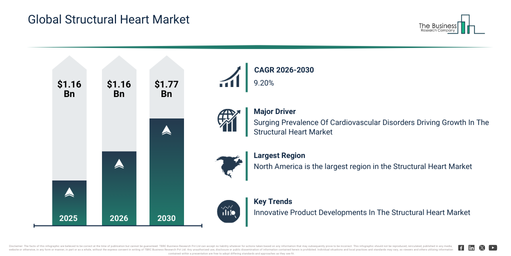
    The structural heart market is projected to experience robust expansion over the coming years. It is anticipated to reach $24.6 billion in 2030, exhibiting a compound annual growth rate (CAGR) of 9.2%. This growth during the projection period can be ascribed to several factors, including the increasing demand for transcatheter therapies, greater investments in structural heart programs, the broadening of cardiac centers of excellence, innovations in device miniaturization, and a heightened emphasis on lowering open-heart surgery rates. Key trends for this forecast timeframe encompass a greater uptake of transcatheter valve procedures, an increase in minimally invasive structural heart interventions, the expanding incorporation of advanced cardiac imaging, the development of catheter-based repair technologies, and a stronger emphasis on individualized patient treatment planning.

    Get A Free Sample Report With In-Depth Market Insights:

    https://thebusinessresearchcompany.com/sample_request?id=78465985&type=smp&name=Structural%20Heart%20Market%20Report%202026&utm_source=Blogs&utm_medium=Paid&utm_campaign=Oct_PR

    Structural Heart Market Growth Factors: What’s Supporting Expansion?

    The increasing occurrence of cardiovascular disorders is projected to boost the growth of the structural heart market. These disorders are conditions impacting the heart and blood vessels, encompassing issues like coronary artery disease, heart failure, and stroke. The growing prevalence of cardiovascular disorders is mainly fueled by an aging population, evolving lifestyles and diets, and rising rates of obesity and diabetes. Structural heart devices and services offer diagnosis and treatment for structural heart anomalies or conditions affecting the valves, chambers, and surrounding tissues, employing minimally invasive procedures rather than open-heart surgery to provide efficient care with fewer complications. For instance, in September 2025, the British Heart Foundation, a UK charity, reported that over 7.6 million people across the UK—more than 4 million men and over 3.6 million women—are living with cardiovascular disease. Projections further suggest that, driven by an aging population and improved survival rates, this number might climb by approximately 1 million by 2030 and around 2 million by 2040. Thus, the increasing prevalence of cardiovascular disorders is propelling the growth of the structural heart market.

    Structural Heart Market Segment Landscape And Growth Outlook

    The structural heart market covered in this report is segmented –

    1) By Product: Occluders, Annuloplasty Rings, Heart Valve Balloons, Other Products

    2) By Procedure: Heart Valve Stenosis, Heart Valve Regurgitation, Left Atrial Appendage Closure

    3) By End Users: Hospitals, Cardiac Centers

    Subsegments:

    1) By Occluders: Atrial Septal Defect (ASD) Occluders, Patent Foramen Ovale (PFO) Occluders, Ventricular Septal Defect (VSD) Occluders

    2) By Annuloplasty Rings: Rigid Annuloplasty Rings, Flexible Annuloplasty Rings, Adjustable Annuloplasty Rings

    3) By Heart Valve Balloons: Balloon Expandable Heart Valve Systems, Valvuloplasty Balloons

    4) By Other Products: Transcatheter Heart Valves, Structural Heart Imaging Devices, Delivery Systems For Structural Heart Procedures

    Structural Heart Market Industry Trends: What’s Reshaping Demand?

    Leading firms within the structural heart market are innovating sophisticated products, including transcatheter edge-to-edge repair (TEER) systems, with the goal of improving minimally invasive treatment approaches for heart valve conditions. These TEER systems are essentially minimally invasive medical instruments employed in managing heart valve disorders, especially mitral valve regurgitation. As an example, in April 2024, Abbott Laboratories, a US-based medical device company, obtained approval for TriClip from the Food and Drug Administration (FDA), a US-based federal agency responsible for safeguarding public health. TriClip stands as an innovative transcatheter edge-to-edge repair (TEER) system. This minimally invasive apparatus is introduced via a leg vein, allowing for valve repair without requiring open-heart surgery, thereby suiting patients at increased risk because of age or pre-existing health complications. Its operation involves utilizing clips to secure and draw together the leaflets of the tricuspid valve, which consequently diminishes regurgitation and boosts blood flow.

    Structural Heart Market Competitive Landscape: Which Companies Lead The Industry?

    Major companies operating in the structural heart market are Abbott Laboratories, Medtronic plc, Boston Scientific Corporation, Edwards Lifesciences Corporation, Lepu Medical Technology Co. Ltd., LivaNova PLC, Venus Medtech (Hangzhou) Inc., CryoLife Inc., Endologix Inc., Braile Biomédica, JenaValve Technology Inc., Corvia Medical Inc., On-X Life Technologies Inc., Symetis SA, Micro Interventional Devices Inc., CardioKinetix Inc., Tendyne Holdings Inc., Neovasc Inc., NVT AG, Biomerics LLC, Shockwave Medical Inc., HLT Medical, Q’Apel Medical Inc., Z-Medical GmbH + Co. KG

    View The Full Structural Heart Market Report:

    https://thebusinessresearchcompany.com/report/structural-heart-global-market-report?utm_source=Blogs&utm_medium=Paid&utm_campaign=Oct_PR

    Structural Heart Market Regional Breakdown: Where Is Demand Concentrated?

    North America was the largest region in the structural heart market in 2025. Asia-Pacific is expected to be the fastest-growing region in the forecast period. The regions covered in the structural heart market report are Asia-Pacific, South East Asia, Western Europe, Eastern Europe, North America, South America, Middle East, Africa.

    Reach Out To Our Team:

    The Business Research Company: https://www.thebusinessresearchcompany.com/

    Americas: +1 310-496-7795

    Asia: +44 7882 955267 & +91 8897263534

    Europe: +44 7882 955267

    Email us at: marketing@tbrc.info

    Follow us on:

    LinkedIn: https://in.linkedin.com/company/the-business-research-company

    YouTube: https://www.youtube.com/channel/UC24_fI0rV8cR5DxlCpgmyFQ

    Global Market Model: https://www.thebusinessresearchcompany.com/global-market-model
  • Structural Biology And Molecular Modeling Techniques Market Valued At $23.53 Billion In 2026: Key Trends And Growth Drivers

    Structural Biology And Molecular Modeling Techniques Market Valued At $23.53 Billion In 2026: Key Trends And Growth Drivers

    Built to provide research that’s more actionable and strategically valuable, The Business Research Company’s 2026 market reports include market attractiveness analysis, total addressable market sizing, company benchmarking matrices, interactive Excel dashboards, broader supply chain intelligence, emerging startup tracking, and in-depth product insights.

    Structural Biology And Molecular Modeling Techniques Market Forecast: Value Set To Climb From $12.19 Billion To $23.53 Billion

    The market for structural biology and molecular modeling techniques has experienced rapid expansion in recent years. It is projected to grow from $10.28 billion in 2025 to $12.19 billion in 2026, exhibiting a compound annual growth rate (CAGR) of 18.5%. This historical growth can be linked to increasing pharmaceutical research activities, expansion of academic structural biology programs, availability of protein structure databases, growth of computational chemistry tools, and rising investments in drug discovery research.

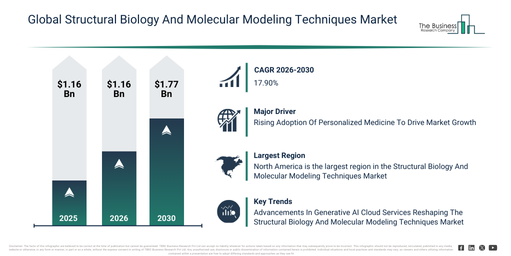
    The structural biology and molecular modeling techniques market is projected for swift expansion in the upcoming years, reaching $23.53 billion in 2030 at a compound annual growth rate (CAGR) of 17.9%. This expansion during the forecast period is driven by factors such as a greater need for faster drug development, increased acceptance of cloud and SaaS modeling tools, the growth of precision medicine research, rising incorporation of AI in life sciences, and the expanded deployment of virtual screening platforms. Key developments expected during this time include the wider uptake of AI-driven molecular modeling tools, greater utilization of cloud-based structural biology platforms, increased integration of simulation and docking software, broader application of data-driven drug discovery, and a stronger emphasis on structure-based drug design.

    Get A Free Sample Report With In-Depth Market Insights:

    https://thebusinessresearchcompany.com/sample_request?id=42601576&type=smp&name=Structural%20Biology%20And%20Molecular%20Modeling%20Techniques%20Market%20Report%202026&utm_source=Blogs&utm_medium=Paid&utm_campaign=Oct_PR

    Structural Biology And Molecular Modeling Techniques Market Demand Drivers: What’s Powering Industry Growth?

    The structural biology and molecular modeling techniques market is projected to expand due to the rising implementation of personalized medicine. Personalized medicine is a novel healthcare strategy focused on customizing medical treatments and interventions for each patient’s unique attributes. These techniques play a vital role in personalized medicine, enabling the identification and validation of molecular targets, aiding drug discovery and development, clarifying genetic variations, forecasting drug-target interactions, enhancing drug delivery, and assisting in biomarker discovery. For instance, in February 2024, data from the Personalized Medicine Coalition (PMC), a US-based nonprofit research organization, revealed that the US Food and Drug Administration sanctioned 16 new personalized treatments for rare disease patients in 2023, an increase from 6 approvals in 2022. Consequently, the widespread integration of personalized medicine is driving the growth of the structural biology and molecular modeling techniques market.

    Structural Biology And Molecular Modeling Techniques Market Breakdown By Product Type And Application

    The structural biology and molecular modeling techniques market covered in this report is segmented –

    1) By Tools: SaaS And Standalone Modeling, Visualization And Analysis, Databases, Other Tools

    2) By Application: Drug Development, Drug Discovery, Other Applications

    3) By End-Users: Pharmaceutical, Biotechnological, Academic

    Subsegments:

    1) By SaaS And Standalone Modeling: Cloud-Based Modeling Tools, Desktop Modeling Software

    2) By Visualization And Analysis: Molecular Visualization Software, Structural Analysis Tools

    3) By Databases: Protein Structure Databases, Molecular Interaction Databases

    4) By Other Tools: Simulation Software, Docking Software, Other Analytical Tools

    Structural Biology And Molecular Modeling Techniques Market Innovation Trends: What Developments Are Reshaping The Industry?

    Leading companies in the structural biology and molecular modelling techniques market are developing innovative models, such as AI cloud services, to gain a competitive edge. AI cloud services involve delivering artificial intelligence capabilities and tools via cloud computing platforms, enabling businesses and developers to access, deploy, and scale AI applications without needing extensive on-premises infrastructure. For instance, in March 2023, Nvidia Corporation, a US-based software company, launched a suite of generative AI cloud services as part of its BioNeMo Cloud offering, under NVIDIA AI Foundations. This service accelerates life sciences research, drug discovery, and protein engineering by offering pretrained AI models and allowing researchers to customize them with proprietary data. The service incorporates six new optimized, open-source models, including AlphaFold2 for protein structure determination and MoFlow for molecular optimization and small molecule generation.

    Structural Biology And Molecular Modeling Techniques Market Competitive Landscape: Who Leads The Industry?

    Major companies operating in the structural biology and molecular modeling techniques market are Agile Molecule Inc., Dassault Systèmes SE, Chemical Computing Group ULC, Biomax Informatics AG, Acellera Ltd., Schrödinger Inc., OpenEye Scientific Software Inc., BioSolveIT GmbH, Optibrium Ltd., Simulations Plus Inc., Certara L.P., Genedata AG, Inte:Ligand GmbH, Molecular Networks GmbH, Molecular Discovery Ltd., Cresset Group Ltd., Biovista Inc., Collaborative Drug Discovery Inc., Dotmatics Ltd., Insilico Biotechnology AG, Leadscope Inc.

    View The Full Structural Biology And Molecular Modeling Techniques Market Report:

    https://thebusinessresearchcompany.com/report/structural-biology-and-molecular-modeling-techniques-global-market-report?utm_source=Blogs&utm_medium=Paid&utm_campaign=Oct_PR

    Structural Biology And Molecular Modeling Techniques Market Geographic Landscape: Which Region Dominates Industry Growth?

    North America was the largest region in the structural biology and molecular modelling techniques market in 2025. The regions covered in the structural biology and molecular modeling techniques market report are Asia-Pacific, South East Asia, Western Europe, Eastern Europe, North America, South America, Middle East, Africa.

    Reach Out To Our Team:

    The Business Research Company: https://www.thebusinessresearchcompany.com/

    Americas: +1 310-496-7795

    Asia: +44 7882 955267 & +91 8897263534

    Europe: +44 7882 955267

    Email us at: marketing@tbrc.info

    Follow us on:

    LinkedIn: https://in.linkedin.com/company/the-business-research-company

    YouTube: https://www.youtube.com/channel/UC24_fI0rV8cR5DxlCpgmyFQ

    Global Market Model: https://www.thebusinessresearchcompany.com/global-market-model
  • Stress Tracking Devices Market Size In 2026: Growth Outlook And Forecast Through 2030

    Stress Tracking Devices Market Size In 2026: Growth Outlook And Forecast Through 2030

    Backed by market attractiveness analysis, total addressable market sizing, company benchmarking matrices, interactive Excel dashboards, wider supply chain intelligence, emerging startup coverage, and detailed product-level insights, The Business Research Company’s 2026 market reports are designed to offer research that is more actionable and strategically valuable than ever.

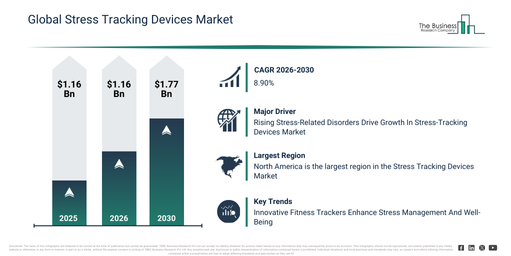
    Stress Tracking Devices Market Revenue Growth On Track For A 8.9% CAGR Through 2030

    The stress tracking devices market size has experienced significant growth in recent years. This market is expected to expand from $3.43 billion in 2025 to $3.74 billion in 2026, demonstrating a compound annual growth rate (CAGR) of 9.2%. Historically, this growth can be attributed to factors such as wearable adoption, increased mental health awareness, the rise in fitness tracking, widespread smartphone usage, and the prevalence of lifestyle diseases.

    The stress tracking devices market size is anticipated to experience robust expansion over the next few years. It is predicted to reach $5.26 billion in 2030, demonstrating a compound annual growth rate (CAGR) of 8.9%. This projected growth can be attributed to factors such as corporate wellness programs, remote work stress, preventive mental healthcare, personalized wellness demand, and digital health adoption. Significant trends anticipated in the forecast period include the increasing uptake of wearable mental wellness devices, the incorporation of stress analytics into smartwatches, a heightened consumer focus on mental health, the broadening of remote wellness monitoring, and the need for personalized stress insights.

    Get A Free Sample Report With In-Depth Market Insights:

    https://thebusinessresearchcompany.com/sample_request?id=16761163&type=smp&name=Stress%20Tracking%20Devices%20Market%20Report%202026&utm_source=Blogs&utm_medium=Paid&utm_campaign=Oct_PR

    Stress Tracking Devices Market Growth Drivers: What’s Behind The Acceleration?

    The expanding occurrence of stress-related conditions is projected to drive the expansion of the stress-tracking devices market in the future. These disorders are medical issues stemming from persistent or intense stress, impacting both mental health, like anxiety and depression, and physical well-being. The growth in such conditions is attributed to escalating work demands and alterations in lifestyle that intensify stress. Stress tracking devices assist in handling stress-related disorders by observing physiological markers of stress, including heart rate and sleep cycles, enabling prompt identification and action to lessen stress effects. For example, in May 2024, data from The American Psychiatric Association, a US-based professional organization of psychiatrists, indicated that 43% of adults reported experiencing anxiety, a rise from 37% in 2023 and 32% in 2022. Consequently, the rising prevalence of stress-related disorders is fueling the expansion of the stress-tracking devices market.

    Stress Tracking Devices Market Segment Analysis And Revenue Potential

    The stress tracking devices market covered in this report is segmented –

    1) By Type: Basic Wearable, Smart Wearable

    2) By Technology: Electrocardiogram (ECG), Heart Rate Sensor, Skin Temperature Sensor, Salivary Sensors, Sweat Cortisol Sensors, Other Technologies

    3) By Sensor Type: Wearable Sensors, Salivary Sensors, Sweat Cortisol Sensors

    4) By Operation Mode: Tethered, Standalone, Both

    5) By Application: Online Sale, Offline Retail

    Subsegments:

    1) By Basic Wearable: Simple Fitness Trackers, Heart Rate Monitors, Basic Sleep Trackers, Step Counters And Pedometers, Non-Smart Fitness Bands

    2) By Smart Wearable: Smartwatches With Stress Tracking Features, Advanced Fitness Trackers With Stress Analytics, Health Monitoring Smart Rings, Wearable ECG Monitors, Smart Glasses With Stress Monitoring Capabilities

    Stress Tracking Devices Market Trends: What’s Defining The Industry’s Next Phase?

    Leading firms within the stress-tracking device market are creating fitness trackers aimed at improving stress management and general well-being. These wearable gadgets are engineered to observe and log diverse physical activities and vital health indicators, including steps, heart rate, caloric expenditure, sleep cycles, and stress levels, thereby assisting individuals in pursuing their fitness objectives and overseeing their health. An example of this is seen in April 2024, when Fitbit, a US-based technology firm, introduced the Fitbit Sense. This device incorporates advanced functionalities centered on stress regulation, cardiovascular health, and comprehensive wellness. The Fitbit Sense stands out as the inaugural smartwatch equipped with an Electrodermal Activity (EDA) sensor, which detects the body’s reaction to stress by sensing minor electrical shifts in the skin’s perspiration. Consequently, users can conduct EDA scans to gain a clearer insight into their personal stress levels. The gadget computes a daily Stress Management Score derived from an individual’s stress responsiveness, their activity performance, and sleep quality. This metric enables users to assess their physiological indicators of stress.

    Stress Tracking Devices Market Company Landscape And Competitive Strategy

    Major companies operating in the stress tracking devices market are Apple Inc., Google LLC, Samsung Group, Xiaomi Corporation, Garmin Ltd., Spire Inc., Zepp Health Corporation, Whoop Inc., Oura Health Oy, NeuroSky Inc., Qardio Inc., Emotiv Inc., Nielsen-Kellerman Co, Leaf Therapeutics LLC, Welltory Inc., Biostrap Inc, Carré Technologies Inc., Emfit Ltd., Pebble Technology Corp, Hanu Health Inc., Gabit Techonologies Private Limited

    View The Full Stress Tracking Devices Market Report:

    https://thebusinessresearchcompany.com/report/stress-tracking-devices-global-market-report?utm_source=Blogs&utm_medium=Paid&utm_campaign=Oct_PR

    Stress Tracking Devices Market Largest Region: Which Geography Holds The Highest Market Share?

    North America was the largest region in the stress-tracking devices market in 2025. Asia-Pacific is expected to be the fastest-growing region in the forecast period. The regions covered in the stress tracking devices market report are Asia-Pacific, South East Asia, Western Europe, Eastern Europe, North America, South America, Middle East, Africa.

    Reach Out To Our Team:

    The Business Research Company: https://www.thebusinessresearchcompany.com/

    Americas: +1 310-496-7795

    Asia: +44 7882 955267 & +91 8897263534

    Europe: +44 7882 955267

    Email us at: marketing@tbrc.info

    Follow us on:

    LinkedIn: https://in.linkedin.com/company/the-business-research-company

    YouTube: https://www.youtube.com/channel/UC24_fI0rV8cR5DxlCpgmyFQ

    Global Market Model: https://www.thebusinessresearchcompany.com/global-market-model
  • Stress Tests Equipment Market Trends Supporting 6.3% CAGR Growth Through 2030

    Stress Tests Equipment Market Trends Supporting 6.3% CAGR Growth Through 2030

    Featuring market attractiveness scoring, total addressable market sizing, company benchmarking matrices, interactive Excel dashboards, deeper supply chain intelligence, emerging startup tracking, and granular product-level insights, The Business Research Company’s 2026 market reports are built to deliver research that is both more actionable and more strategically valuable.

    Stress Tests Equipment Market Value Growth And Long-Term Outlook

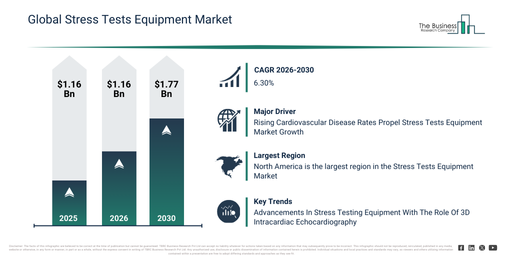
    The stress tests equipment market size has experienced strong growth in recent years. It is projected to expand from $3.19 billion in 2025 to $3.39 billion in 2026, achieving a compound annual growth rate (CAGR) of 6.3%. The growth observed in the past can be linked to the increasing burden of coronary artery disease and the need for cardiovascular risk screening. Additionally, the greater deployment of treadmill and ergometry-based stress testing systems, the early adoption of exercise ECG and echocardiography in cardiac evaluation, the expansion of diagnostic cardiology services within hospitals and specialty centers, and a heightened awareness of functional testing for assessing exercise tolerance have all contributed to this historical market expansion.

    The stress tests equipment market size is projected to experience robust expansion in the coming years. Its valuation is set to reach $4.34 billion by 2030, demonstrating a compound annual growth rate (CAGR) of 6.3%. This anticipated growth during the forecast period is primarily driven by an escalating demand for portable CPET and wireless ECG monitoring solutions, greater integration of stress testing within preventive and sports cardiology programs, increased uptake of equipment in ambulatory care facilities and diagnostic networks, expanding market presence in developing healthcare sectors, and a heightened emphasis on early detection and outcome-oriented cardiac risk management strategies. Key trends anticipated over the forecast period encompass a growing acceptance of stress testing equipment for the early identification of cardiovascular anomalies, increased deployment of exercise ECG, echocardiogram, and CPET systems in cardiac diagnostics, a rising preference for portable and wireless stress test monitoring setups, the broadening of stress testing applications across hospitals, diagnostic centers, and ambulatory care facilities, and a sharpened clinical focus on evaluating exercise tolerance and risk stratification in individuals with cardiac conditions.

    Get A Free Sample Report With In-Depth Market Insights:

    https://thebusinessresearchcompany.com/sample_request?id=56910218&type=smp&name=Stress%20Tests%20Equipment%20Market%20Report%202026&utm_source=Blogs&utm_medium=Paid&utm_campaign=Oct_PR

    Stress Tests Equipment Market Growth Factors Behind Sustained Expansion

    The growing occurrence of cardiovascular diseases is anticipated to drive expansion in the stress tests equipment market. Cardiovascular disease (CVD) encompasses various conditions impacting the heart or blood vessels, such as coronary heart disease, cerebrovascular disease, peripheral arterial disease, and rheumatic heart disease. A stroke, a form of cardiovascular disease, results from an interruption of blood supply to a section of the brain, leading to permanent brain damage, prolonged disability, or mortality. Stress testing equipment is vital for diagnosing specific heart ailments like coronary artery disease and angina, thereby aiding in the early identification and prevention of cardiovascular diseases. For example, a report from September 2024 by the British Heart Foundation (BHF), a UK charity supporting research and awareness for heart and circulatory conditions, revealed that about 7.6 million individuals in the UK suffer from heart and circulatory diseases. Projections indicate that by 2030, the count of individuals with heart and circulatory diseases in the UK could increase by 1 million, and by 2040, this number might rise by 2 million, beyond current figures. Consequently, the rising prevalence of cardiovascular diseases is fueling the expansion of the stress tests equipment market.

    Stress Tests Equipment Market Segmentation And Category Overview

    The stress tests equipment market covered in this report is segmented –

    1) By Product Type: Treadmill Stress Test Systems, Ergometry Equipment, Cardiopulmonary Exercise Testing (CPET) Equipment, Exercise ECG Systems, Echocardiogram, Supplies And Accessories

    2) By Technology: Wired, Wireless

    3) By End-User: Hospitals, Diagnostic Centers, Ambulatory Care Centers, Research Institutes, Other End Users

    Subsegments:

    1) By Treadmill Stress Test Systems: Manual Treadmills, Motorized Treadmills

    2) By Ergometry Equipment: Cycle Ergometers, Arm Ergometers

    3) By Cardiopulmonary Exercise Testing (CPET) Equipment: Portable CPET Systems, Stationary CPET Systems

    4) By Exercise ECG Systems: Wireless ECG Monitors, Standard ECG Machines

    5) By Echocardiogram: Portable Echocardiograms, Stationary Echocardiograms

    6) By Supplies and Accessories: Electrodes, Cables And Connectors, Other Accessories

    Stress Tests Equipment Market Industry Trends Fueling Future Revenue Growth

    Leading companies within the stress testing equipment market are developing advanced products, such as 3D intracardiac echocardiography, to improve the accuracy of cardiac imaging and offer immediate, comprehensive evaluations of heart structures during stress testing and other cardiac interventions. 3D Intracardiac Echocardiography (ICE) is an advanced imaging method that utilizes a specialized catheter equipped with an ultrasound probe to generate three-dimensional images of the heart directly from within its chambers or nearby blood vessels. For instance, in May 2024, Koninklijke Philips N.V., a Philips-based health technology company, launched its VeriSight Pro catheter in hospitals in Hong Kong. The VeriSight Pro catheter represents 3D intracardiac echocardiography, providing high-quality 2D and 3D live imaging that is vital for navigating complex interventional procedures. It enables the simultaneous viewing of multiple scan planes, thus enhancing procedural accuracy. Furthermore, its design is engineered to minimize the need for sedation or general anesthesia, which can contribute to quicker workflows and shorter procedure times.

    Stress Tests Equipment Market Key Players Shaping Industry Direction

    Major companies operating in the stress tests equipment market are Koninklijke Philips N.V., GE Healthcare, Schiller AG, Nihon Kohden Corporation, Meditech Equipment, Contec Medical Systems, BPL Medical Technologies, Progetti Medical, DRE Medical, Medisoft Group, Custo Med GmbH, Ganshorn Medizin Electronic, Nasiff Associates, Norav Medical, Clarity Medical Pvt Ltd, Innomed Medical Developing and Manufacturing, Cortex Biophysik GmbH, Trismed Co. Ltd., Medset Medizintechnik GmbH, Cardionics, MEC – Medical Electronic Construction, ANA-MED Co. Ltd., Nasan Medical Electronics Pvt., SEIVA s.r.o., Piston Medical

    View The Full Stress Tests Equipment Market Report:

    https://thebusinessresearchcompany.com/report/stress-tests-equipment-global-market-report?utm_source=Blogs&utm_medium=Paid&utm_campaign=Oct_PR

    Stress Tests Equipment Market Regional Analysis: Which Region Leads By Revenue?

    North America was the largest region in the stress tests equipment market in 2025. Asia-Pacific is expected to be the fastest-growing region in the forecast period. The regions covered in the stress tests equipment market report are Asia-Pacific, South East Asia, Western Europe, Eastern Europe, North America, South America, Middle East, Africa.

    Reach Out To Our Team:

    The Business Research Company: https://www.thebusinessresearchcompany.com/

    Americas: +1 310-496-7795

    Asia: +44 7882 955267 & +91 8897263534

    Europe: +44 7882 955267

    Email us at: marketing@tbrc.info

    Follow us on:

    LinkedIn: https://in.linkedin.com/company/the-business-research-company

    YouTube: https://www.youtube.com/channel/UC24_fI0rV8cR5DxlCpgmyFQ

    Global Market Model: https://www.thebusinessresearchcompany.com/global-market-model