Blog

  • Veterinary BioBurden Testing Services Market Growth Potential: What The Latest Forecast Reveals

    Veterinary BioBurden Testing Services Market Growth Potential: What The Latest Forecast Reveals

    Built to provide research that’s more actionable and strategically valuable, The Business Research Company’s 2026 market reports include market attractiveness analysis, total addressable market sizing, company benchmarking matrices, interactive Excel dashboards, broader supply chain intelligence, emerging startup tracking, and in-depth product insights.

    Veterinary BioBurden Testing Services Market Value Growth And Long-Term Outlook

    The veterinary bioburden testing services market size has experienced robust expansion in recent years. This market is projected to expand from $0. 99 billion in 2025 to $1. 07 billion in 2026, demonstrating a compound annual growth rate (CAGR) of 8. 3%. Factors contributing to its growth during the past period include a rise in veterinary hospital acquired infections, the dependence on manual microbial testing and culture techniques, an increasing need for sterilization validation within animal healthcare, the broadening of quality control requirements in veterinary pharmaceutical manufacturing, and heightened awareness of hygiene standards in veterinary settings.

    The veterinary bioburden testing services market is projected to experience substantial expansion over the next few years. This market is anticipated to reach $1.49 billion by 2030, exhibiting a compound annual growth rate (CAGR) of 8.5%. This growth during the forecast period can be attributed to several factors, including the integration of AI-powered systems for microbial risk prediction and analysis, the proliferation of automated and robotics-driven laboratory testing platforms, rising adoption of cloud-based bioburden data management systems, more stringent regulatory requirements for veterinary sterilization and infection control, and an increasing need for rapid diagnostic and real-time contamination monitoring solutions. Key trends foreseen for the same period encompass AI-driven detection of microbial contamination and predictive bioburden analytics, cloud-based platforms for laboratory data management and sterilization compliance, IoT-enabled systems for real-time environmental microbial monitoring, automated high-throughput microbiological testing coupled with robotic lab workflows, and blockchain-based systems for sample traceability and contamination audit trails.

    Get A Free Sample Report With In-Depth Market Insights:

    https://thebusinessresearchcompany.com/sample_request?id=12303428&type=smp&name=Veterinary%20BioBurden%20Testing%20Services%20Market%20Report%202026&utm_source=Blogs&utm_medium=Paid&utm_campaign=Oct_PR

    Veterinary BioBurden Testing Services Market Demand Drivers: What’s Powering Industry Growth?

    The escalating occurrence of zoonotic diseases is projected to stimulate the expansion of the veterinary bioburden testing services market moving forward. These diseases are conditions resulting from infectious agents that naturally transfer from animals to humans via direct contact, tainted food or water, or environmental exposure. The increasing prevalence of zoonotic diseases primarily stems from the expanding interaction between humans and animals, as factors such as growing agricultural endeavors, wildlife intrusion, and animal farming intensify direct contact, thereby enabling pathogen transmission. This rise in zoonotic diseases fuels the need for veterinary bioburden testing services, as thorough microbial load evaluation in animals becomes crucial for identifying, tracking, and managing pathogen sources before they spread to human populations. For instance, in June 2025, according to the Centers for Disease Control and Prevention (CDC), a US-based federal public health agency, the number of West Nile virus disease cases, a key zoonotic arboviral disease transmitted from birds to humans via mosquitoes, rose from 1,132 cases in 2022 to 2,628 cases in 2023, reflecting an increase of 1,496 cases. Consequently, the rising incidence of zoonotic diseases is propelling the growth of the veterinary bioburden testing services market.

    Veterinary BioBurden Testing Services Market Segment Outlook: Which Categories Are Growing Fastest?

    The veterinary bioburden testing services market covered in this report is segmented –

    1) By Test Type: Aerobic Plate Count, Anaerobic Plate Count, Fungal Count, Spore Count, Other Test Types

    2) By Animal Type: Companion Animals, Livestock Animals, Other Animal Types

    3) By Application: Pre-Sterilization Validation, Environmental Monitoring, Surgical Site Surveillance, Water Quality Testing, Pharmaceutical Manufacturing Quality Control, Infection Outbreak Investigation

    4) By End User: Veterinary Hospitals, Diagnostic Laboratories, Research Institutes, Other End Users

    Subsegments:

    1) By Aerobic Plate Count: Standard Plate Count, Total Viable Count, Heterotrophic Plate Count, Surface Plate Count, Pour Plate Count

    2) By Anaerobic Plate Count: Clostridium Count, Bacteroides Count, Anaerobic Culture Count, Deep Agar Plate Count, Roll Tube Method Count

    3) By Fungal Count: Yeast Count, Mold Count, Total Fungal Count, Environmental Fungal Count, Pathogenic Fungal Count

    4) By Spore Count: Bacterial Spore Count, Bacillus Spore Count, Clostridium Spore Count, Heat Resistant Spore Count, Thermophilic Spore Count

    5) By Other Test Types: Coliform Count, Enterobacteriaceae Count, Pseudomonas Count, Staphylococcus Count, Salmonella Count

    Veterinary BioBurden Testing Services Market Innovation Trends: What Developments Are Reshaping The Industry?

    Leading companies in the veterinary bioburden testing services market are concentrating on creating sophisticated solutions, such as AI-enabled microbial analysis platforms, to enhance detection precision, shorten processing times, and improve contamination evaluation in animal healthcare and laboratory settings. AI-enabled microbial analysis involves using artificial intelligence technologies to automatically identify, quantify, and classify microorganisms present in samples, thereby supporting faster and more dependable testing outcomes. For instance, in May 2025, Carbgem, a Japan-based biotechnology company, introduced Zone of Inhibition for Veterinary Medicine (ZOI VET), an advanced AI-integrated microbial detection solution designed to boost accuracy in contamination analysis. This solution leverages automated image recognition and data analytics to efficiently detect and quantify microbial loads, empowering veterinary laboratories and research facilities to elevate quality control, ensure adherence to hygiene standards, and foster improved infection prevention strategies.

    Veterinary BioBurden Testing Services Market Competitive Landscape: Who Leads The Industry?

    Major companies operating in the veterinary bioburden testing services market are Thermo Fisher Scientific Inc., Merck KGaA, Laboratory Corporation of America Holdings, Eurofins Scientific SE, SGS SA, Intertek Group plc, Charles River Laboratories International Inc., WuXi Biologics (Cayman) Inc., Element Materials Technology Group Limited, STERIS Laboratories Inc., WuXi AppTec Co. Ltd., Pace Analytical Services LLC, North American Science Associates Inc., Medistri SA, Microbac Laboratories Inc., Almac Group Limited, Boston Analytical Inc., Creative Bioarray, Pacific BioLabs Inc., Accuratus Lab Services Inc.

    View The Full Veterinary BioBurden Testing Services Market Report:

    https://thebusinessresearchcompany.com/report/veterinary-bioburden-testing-services-market-report?utm_source=Blogs&utm_medium=Paid&utm_campaign=Oct_PR

    Veterinary BioBurden Testing Services Market Geographic Landscape: Which Region Dominates Industry Growth?

    North America was the largest region in the veterinary bioburden testing services market in 2025. Asia-Pacific is expected to be the fastest-growing region in the forecast period. The regions covered in the veterinary bioburden testing services market report are Asia-Pacific, South East Asia, Western Europe, Eastern Europe, North America, South America, Middle East and Africa.

    Reach Out To Our Team:

    The Business Research Company: https://www.thebusinessresearchcompany.com/

    Americas: +1 310-496-7795

    Asia: +44 7882 955267 & +91 8897263534

    Europe: +44 7882 955267

    Email us at: marketing@tbrc.info

    Follow us on:

    LinkedIn: https://in.linkedin.com/company/the-business-research-company

    YouTube: https://www.youtube.com/channel/UC24_fI0rV8cR5DxlCpgmyFQ

    Global Market Model: https://www.thebusinessresearchcompany.com/global-market-model
  • Veterinary Asset Tracking Market Growth Outlook: Why Analysts Expect Continued Expansion

    Veterinary Asset Tracking Market Growth Outlook: Why Analysts Expect Continued Expansion

    Backed by market attractiveness analysis, total addressable market sizing, company benchmarking matrices, interactive Excel dashboards, wider supply chain intelligence, emerging startup coverage, and detailed product-level insights, The Business Research Company’s 2026 market reports are designed to offer research that is more actionable and strategically valuable than ever.

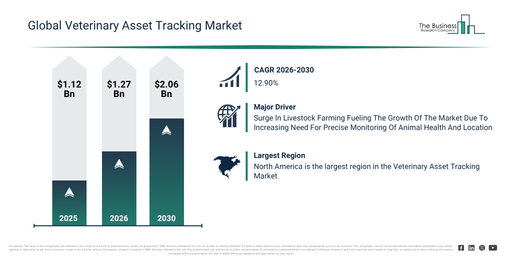
    Veterinary Asset Tracking Market Poised To Hit $2.06 Billion By 2030 With A 12.9% CAGR

    The veterinary asset tracking market has seen rapid expansion in recent years. This market is expected to grow from $1. 12 billion in 2025 to $1. 27 billion in 2026, at a compound annual growth rate (CAGR) of 12. 7%. The historical growth in this sector can be ascribed to factors such as manual inventory and asset tracking systems in veterinary facilities, which led to increasing operational inefficiencies and problems with equipment misplacement. Other contributing factors include the expanding veterinary infrastructure and equipment acquisition, a rising demand for improved inventory accuracy and accountability, and the implementation of basic barcode and spreadsheet-based tracking systems.

    The veterinary asset tracking market is projected to experience substantial expansion over the coming years. By 2030, this market is forecasted to reach $2. 06 billion, demonstrating a compound annual growth rate (CAGR) of 12. 9%. This anticipated growth during the projection period stems from several factors, including the incorporation of IoT and AI-powered asset tracking systems within veterinary facilities, an increasing need for automated inventory management and proactive equipment upkeep, the proliferation of cloud-based veterinary management platforms, intensified regulatory demands for asset traceability and adherence, and the wider uptake of intelligent hospital infrastructure and interconnected veterinary technologies. Key trends expected within the forecast timeframe encompass IoT-driven real-time veterinary asset monitoring and tracking systems, AI-enhanced predictive maintenance and optimization of veterinary equipment utilization, centralized cloud-based platforms for veterinary inventory and asset management, smart tagging solutions integrating RFID and GPS for valuable veterinary assets, and blockchain-supported audit trails and compliance tracking for the use of veterinary equipment.

    Get A Free Sample Report With In-Depth Market Insights:

    https://thebusinessresearchcompany.com/sample_request?id=69540518&type=smp&name=Veterinary%20Asset%20Tracking%20Market%20Report%202026&utm_source=Blogs&utm_medium=Paid&utm_campaign=Oct_PR

    Veterinary Asset Tracking Market Growth Drivers: What’s Behind The Acceleration?

    The expansion of livestock farming practices is anticipated to fuel the progress of the veterinary asset tracking market in the coming years. Livestock farming involves the rearing of domesticated animals under controlled agricultural settings to obtain products like food, fiber, and labor. This sector is growing primarily due to the rising global demand for animal-derived foods, as dietary shifts and population increases lead to greater consumption of meat, milk, and other animal products. The increase in livestock farming boosts the need for veterinary asset tracking because larger animal populations necessitate precise monitoring of their health and whereabouts to prevent disease outbreaks and enhance farm management effectiveness. For instance, the Department of Agriculture, a US-based government entity, reported in December 2025 that global chicken meat production is forecast to rise by approximately 2% in 2026, reaching an unprecedented 109.6 million tons. Furthermore, US production is predicted to expand by about 1% to 22.0 million tons. Consequently, the proliferation of livestock farming practices is propelling the expansion of the veterinary asset tracking market. The increasing prevalence of pet ownership is projected to drive the expansion of the veterinary asset tracking market in the coming period. A pet is an animal kept by humans mainly for camaraderie, emotional bonding, or personal satisfaction, rather than for financial or practical purposes. Pet ownership is on the rise as contemporary lifestyles, marked by increased social isolation and stress, encourage more people to adopt animals for companionship, thereby enhancing emotional well-being and mitigating loneliness. This higher rate of pet ownership creates a need for veterinary asset tracking, as a greater number of pets requires effective monitoring and management to ensure their safety, health, and prompt medical attention both at home and in clinics. For example, data from the American Pet Products Association, a US-based non-profit trade group, revealed in March 2025 that pet ownership has recovered, with 94 million U.S. households owning at least one pet, an increase from 82 million in 2023. Ownership for both dogs and cats has generally climbed, with dogs found in 51% of households (68 million) and cats in 37% (49 million). Thus, the growing trend of pet ownership is a key factor propelling the veterinary asset tracking market.

    Veterinary Asset Tracking Market Segment Landscape: Which Areas Lead Development?

    The veterinary asset tracking market covered in this report is segmented –

    1) By Component: Hardware, Software, Services

    2) By Technology: Radio Frequency Identification, Barcode, Global Positioning System, Internet Of Things, Other Technologies

    3) By Deployment: On-Premises, Cloud-Based

    4) By Application: Equipment Tracking, Inventory Management, Medication Tracking, Animal Identification, Other Applications

    5) By End User: Veterinary Hospitals And Clinics, Research Institutes, Animal Farms, Other End Users

    Subsegments:

    1) By Hardware: Radio Frequency Identification Tags, Global Positioning System Trackers, Barcode Scanners, Sensors, Mobile Devices

    2) By Software: Asset Management Software, Inventory Tracking Software, Fleet Management Software, Cloud-Based Platforms, Analytics Software

    3) By Services: Installation Services, Maintenance Services, Training Services, Consulting Services, Support Services

    Veterinary Asset Tracking Market Company Landscape And Competitive Strategy

    Major companies operating in the veterinary asset tracking market are Honeywell International Inc., Avery Dennison Corporation, Zebra Technologies Corporation, Trimble Inc., Impinj Inc., CenTrak Inc., Invengo Technology Pte. Ltd., Alien Technology LLC, GAO RFID Inc., Identec Solutions AG, CUBEX LLC, Digitail Inc., Asset Panda LLC, SATO Holdings Corporation, Wavetrend Technologies Ltd., EZOfficeInventory, Sortly Inc., Inventory Ally, Angelpaw LLC, Mashura Inc.

    View The Full Veterinary Asset Tracking Market Report:

    https://thebusinessresearchcompany.com/report/veterinary-asset-tracking-market-report?utm_source=Blogs&utm_medium=Paid&utm_campaign=Oct_PR

    Veterinary Asset Tracking Market Largest Region: Which Geography Holds The Highest Market Share?

    North America was the largest region in the veterinary asset tracking market in 2025. Asia-Pacific is expected to be the fastest-growing region in the forecast period. The regions covered in the veterinary asset tracking market report are Asia-Pacific, South East Asia, Western Europe, Eastern Europe, North America, South America, Middle East and Africa.

    Reach Out To Our Team:

    The Business Research Company: https://www.thebusinessresearchcompany.com/

    Americas: +1 310-496-7795

    Asia: +44 7882 955267 & +91 8897263534

    Europe: +44 7882 955267

    Email us at: marketing@tbrc.info

    Follow us on:

    LinkedIn: https://in.linkedin.com/company/the-business-research-company

    YouTube: https://www.youtube.com/channel/UC24_fI0rV8cR5DxlCpgmyFQ

    Global Market Model: https://www.thebusinessresearchcompany.com/global-market-model
  • Veterinary Anti-Tamper Seals With Near Field Communication (NFC) Market Forecast Insights: The Road To $0.97 Billion By 2030

    Veterinary Anti-Tamper Seals With Near Field Communication (NFC) Market Forecast Insights: The Road To $0.97 Billion By 2030

    Featuring market attractiveness scoring, total addressable market sizing, company benchmarking matrices, interactive Excel dashboards, deeper supply chain intelligence, emerging startup tracking, and granular product-level insights, The Business Research Company’s 2026 market reports are built to deliver research that is both more actionable and more strategically valuable.

    Veterinary Anti-Tamper Seals With Near Field Communication (NFC) Market Size And Revenue Outlook Through 2030

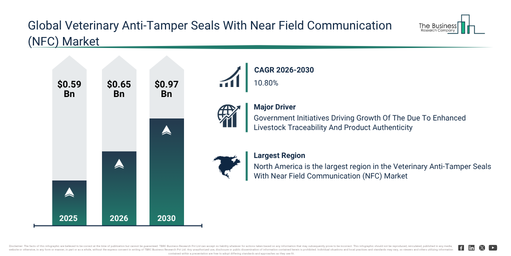
    The market for veterinary anti-tamper seals with near field communication (NFC) has witnessed significant expansion in recent years. This market is projected to grow from $0.59 billion in 2025 to $0.65 billion in 2026, at a compound annual growth rate (CAGR) of 10.5%. The historical increase in market size can be attributed to several factors, including the rising incidence of livestock disease outbreaks and the resulting need for traceability, the growing prevalence of counterfeit veterinary drugs within supply chains, the increasing adoption of basic animal tagging and manual identification systems, the expansion of global livestock trade along with its export compliance requirements, and a heightened demand for robust vaccination and treatment record keeping.

    The market for veterinary anti-tamper seals with near field communication (NFC) is anticipated to experience substantial expansion over the next few years. It is projected to achieve a valuation of $0.97 billion by 2030, reflecting a compound annual growth rate (CAGR) of 10.8%. This growth during the forecast period can be attributed to the integration of NFC and IoT-based smart veterinary identification systems, a rising demand for real-time livestock monitoring and predictive animal health analytics, the expansion of digital veterinary ecosystems and interoperable health records, stricter global regulations on animal welfare and pharmaceutical traceability, and the increasing adoption of smart farming and precision livestock management solutions. Prominent trends for this period include NFC-enabled tamper-evident veterinary identification systems, blockchain-based livestock traceability and compliance authentication, smart animal health data capture alongside cloud-based veterinary record systems, AI-enabled veterinary fraud detection and seal integrity analytics, and connected pharmaceutical and animal sample verification systems.

    Get A Free Sample Report With In-Depth Market Insights:

    https://thebusinessresearchcompany.com/sample_request?id=76635514&type=smp&name=Veterinary%20Anti-Tamper%20Seals%20With%20Near%20Field%20Communication%20%28NFC%29%20Market%20Report%202026&utm_source=Blogs&utm_medium=Paid&utm_campaign=Oct_PR

    Veterinary Anti-Tamper Seals With Near Field Communication (NFC) Market Growth Factors Behind Sustained Expansion

    The increasing government initiatives supporting the livestock sector are expected to propel the growth of the veterinary anti-tamper seals with near field communication (NFC) market going forward. These governmental programs and policies are designed to enhance animal health, productivity, and product traceability. Such initiatives are expanding to ensure food safety and traceability by promoting veterinary monitoring and technologies that prevent counterfeit or substandard products. Government initiatives supporting the livestock sector aid veterinary anti-tamper seals with NFC by fostering traceability and authenticity, thereby encouraging the use of NFC-enabled seals to securely track veterinary products throughout the supply chain. For instance, in September 2023, according to the U. S. Department of Agriculture (USDA), a US-based federal agency, the Portuguese government provided USD 0.013 bn (€12 million) in financial support to the beef cattle sector. Therefore, the increasing government initiatives supporting the livestock sector are driving the growth of the veterinary anti-tamper seals with near field communication (NFC) market. The growing concern over counterfeit veterinary products is anticipated to propel the growth of the veterinary anti-tamper seals with near-field communication (NFC) market going forward. This concern refers to the risk of fake or substandard animal medicines and health products that can harm animals, reduce treatment effectiveness, and cause economic losses. This apprehension is escalating due to the expansion of online and unregulated distribution channels, which facilitate the circulation of unauthorized products. NFC-enabled anti-tamper seals help address this issue by enabling secure product authentication and traceability, allowing veterinarians and farmers to verify the authenticity of medicines before use. For instance, in March 2026, the UK government reported that the Veterinary Medicines Directorate conducted 188 inspections between October and November 2025, initiated 200 enforcement cases, and removed 77 illegal listings. Therefore, the growing concern over counterfeit veterinary products is driving the growth of the veterinary anti-tamper seals with near-field communication (NFC) market.

    Veterinary Anti-Tamper Seals With Near Field Communication (NFC) Market Segments: Where Is Growth Concentrated?

    The veterinary anti-tamper seals with near field communication (nfc) market covered in this report is segmented –

    1) By Product Type: Adhesive Seals, Clip Seals, Band Seals, Other Product Types

    2) By Technology: Near Field Communication Enabled, Radio-Frequency Identification, Barcode, Other Technologies

    3) By Distribution Channel: Direct Sales, Distributors, Online Sales, Other Distribution Channels

    4) By Application: Pharmaceutical Packaging, Medical Devices, Animal Identification, Other Applications

    5) By End User: Veterinary Clinics, Animal Hospitals, Research Laboratories, Other End Users

    Subsegments:

    1) By Adhesive Seals: Void Label Adhesive Seals, Destructible Film Adhesive Seals, Tamper Evident Tape Seals, Security Sticker Seals, Residue Indicating Adhesive Seals, Holographic Adhesive Seals

    2) By Clip Seals: Plastic Clip Seals, Metal Clip Seals, Snap Lock Clip Seals, Adjustable Length Clip Seals, Fixed Length Clip Seals, High Security Clip Seals

    3) By Band Seals: Bottle Neck Band Seals, Cap Band Seals, Heat Shrink Band Seals, Breakable Ring Band Seals, Tamper Evident Sleeve Bands, Perforated Band Seals

    4) By Other Product Types: Tamper Evident Caps And Closures, Security Tapes And Strips, Tamper Evident Pouches, Serialized Security Labels, Smart Packaging Seals, Integrated Sensor Based Seals

    Veterinary Anti-Tamper Seals With Near Field Communication (NFC) Market Key Players Shaping Industry Direction

    Major companies operating in the veterinary anti-tamper seals with near field communication (nfc) market are 3M Company, Medtronic plc, Avery Dennison Corporation, CCL Industries Inc., H. B. Fuller Medical Adhesive Technologies, HID Global Corporation, Datamars, Resource Label Group Inc., Schreiner Group, Identiv Inc., KVP International LLC, Confidex Ltd., LeghornGroup, SAG RFID, National Band & Tag Co., ID Tech Solutions, Kupsan Tag Company, Tageos SAS, Securikett Ulrich & Horn GmbH, SSS TAG INDIA

    View The Full Veterinary Anti-Tamper Seals With Near Field Communication (NFC) Market Report:

    https://thebusinessresearchcompany.com/report/veterinary-anti-tamper-seals-with-near-field-communication-nfc-market-report?utm_source=Blogs&utm_medium=Paid&utm_campaign=Oct_PR

    Veterinary Anti-Tamper Seals With Near Field Communication (NFC) Market Regional Analysis: Which Region Leads By Revenue?

    North America was the largest region in the veterinary anti-tamper seals with near field communication (NFC) market in 2025. Asia-Pacific is expected to be the fastest-growing region in the forecast period. The regions covered in the veterinary anti-tamper seals with near field communication (NFC) market report are Asia-Pacific, South East Asia, Western Europe, Eastern Europe, North America, South America, Middle East and Africa.

    Reach Out To Our Team:

    The Business Research Company: https://www.thebusinessresearchcompany.com/

    Americas: +1 310-496-7795

    Asia: +44 7882 955267 & +91 8897263534

    Europe: +44 7882 955267

    Email us at: marketing@tbrc.info

    Follow us on:

    LinkedIn: https://in.linkedin.com/company/the-business-research-company

    YouTube: https://www.youtube.com/channel/UC24_fI0rV8cR5DxlCpgmyFQ

    Global Market Model: https://www.thebusinessresearchcompany.com/global-market-model
  • Ventricular Catheters Market Analysis: Understanding The Drivers Behind 8.7% CAGR Through 2030 Growth

    Ventricular Catheters Market Analysis: Understanding The Drivers Behind 8.7% CAGR Through 2030 Growth

    Featuring market attractiveness scoring, total addressable market sizing, company benchmarking matrices, interactive Excel dashboards, deeper supply chain intelligence, emerging startup tracking, and granular product-level insights, The Business Research Company’s 2026 market reports are built to deliver research that is both more actionable and more strategically valuable.

    Ventricular Catheters Market Growth Potential: How Will Market Size Shift Through 2030?

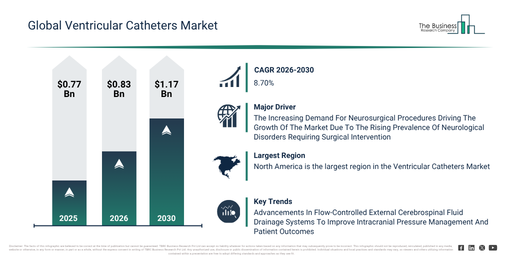
    The ventricular catheters market size has demonstrated substantial growth in recent years. It is forecast to grow from $0.77 billion in 2025 to $0.83 billion in 2026, at a compound annual growth rate (CAGR) of 8.5%. This historical expansion can be attributed to the rising prevalence of hydrocephalus and neurological disorders, an increasing number of traumatic brain injury cases, the growing adoption of neurosurgical procedures in hospitals, the expansion of neurocritical care infrastructure, and increasing awareness of intracranial pressure management.

    The ventricular catheters market is anticipated to show robust expansion over the next few years, reaching $1.17 billion by 2030, with a compound annual growth rate (CAGR) of 8.7%. This growth during the forecast period is primarily driven by progressive developments in neuroimaging and neurosurgical technologies, a rising need for minimally invasive neurosurgical instruments, increased investments in neurocritical care units, the expanding elderly demographic susceptible to neurological ailments, and the growing integration of smart and sensor-equipped medical devices. Significant trends for the forecast period include the increasing adoption of antibiotic-impregnated ventricular catheters to lower infection risks in neurosurgical procedures, a greater demand for minimally invasive cerebrospinal fluid drainage systems in critical care environments, the rising utilization of smart pressure-monitoring ventricular catheters for real-time intracranial pressure tracking, the broader application of advanced biomaterial-based catheters for enhanced biocompatibility and improved patient outcomes, and an increased use of pediatric and neonatal-specific ventricular access devices in specialized neurology care.

    Get A Free Sample Report With In-Depth Market Insights:

    https://thebusinessresearchcompany.com/sample_request?id=72228497&type=smp&name=Ventricular%20Catheters%20Market%20Report%202026&utm_source=Blogs&utm_medium=Paid&utm_campaign=Oct_PR

    Ventricular Catheters Market Growth Catalysts And Demand Drivers

    The ventricular catheters market is anticipated to experience growth due to the escalating demand for neurosurgical procedures. These procedures encompass medical operations performed on the brain, spinal cord, or nervous system, aimed at diagnosing, treating, or managing conditions such as tumors, injuries, or various neurological disorders. The heightened requirement for neurosurgical interventions is a result of the rising prevalence of neurological disorders, which necessitates surgical treatment for a greater number of patients suffering from conditions like brain tumors, stroke, and spinal disorders. Ventricular catheters are essential in supporting neurosurgical procedures by facilitating effective cerebrospinal fluid drainage, intracranial pressure monitoring, and targeted therapeutic interventions for patients with neurological conditions. For instance, in January 2025, according to Great Ormond Street Hospital, a UK-based pediatric hospital, brain tumor neurosurgical procedures saw an increase to 126 during April 2023–March 2024, up from 121 in April 2022–March 2023, reflecting a rise in surgical volume. Consequently, the increasing need for neurosurgical operations is propelling the expansion of the ventricular catheters market.

    Ventricular Catheters Market Segmentation: How Does The Market Break Down By Category?

    The ventricular catheters market covered in this report is segmented –

    1) By Product Type: External Ventricular Drain Catheters, Ventriculoperitoneal Shunt Ventricular Catheters, Intracranial Pressure Monitoring Integrated Ventricular Catheters, Specialty Ventricular Access Catheters

    2) By Coating: Standard, Antibiotic Impregnated, Antimicrobial Silver, Heparin Anti Thrombogenic

    3) By Material: Silicone, Polyurethane, Other Materials

    4) By Indication: Hydrocephalus, Traumatic Brain Injury, Intracerebral Hemorrhage Intraventricular Hemorrhage, Subarachnoid Hemorrhage, Central Nervous System Infection

    5) By End User: Hospitals, Ambulatory Surgical Centers, Specialty Neurology Centers

    Subsegments:

    1) By External Ventricular Drain Catheters: Standard External Ventricular Drain Catheters, Antibiotic Impregnated External Ventricular Drain Catheters, Silver Coated External Ventricular Drain Catheters, Pressure Monitoring External Ventricular Drain Catheters, Tunneled External Ventricular Drain Catheters

    2) By Ventriculoperitoneal Shunt Ventricular Catheters: Standard Ventriculoperitoneal Shunt Catheters, Programmable Valve Ventriculoperitoneal Shunt Catheters, Fixed Pressure Valve Ventriculoperitoneal Shunt Catheters, Anti Siphon Ventriculoperitoneal Shunt Catheters, Flow Regulated Ventriculoperitoneal Shunt Catheters

    3) By Intracranial Pressure Monitoring Integrated Ventricular Catheters: Fiber Optic Sensor Integrated Ventricular Catheters, Strain Gauge Sensor Integrated Ventricular Catheters, Digital Pressure Monitoring Ventricular Catheters, Continuous Monitoring Ventricular Catheters, Dual Function Drainage And Monitoring Ventricular Catheters

    4) By Specialty Ventricular Access Catheters: Reservoir Based Ventricular Access Catheters, Ommaya Reservoir Ventricular Access Catheters, Endoscopic Ventricular Access Catheters, Neonatal Ventricular Access Catheters, Pediatric Ventricular Access Catheters

    Ventricular Catheters Market Trends Shaping Long-Term Demand

    Major companies in the ventricular catheters market are focusing on creating advanced solutions, including sophisticated flow-regulated external ventricular drain (EVD) systems. These efforts aim to boost cerebrospinal fluid drainage efficiency, reduce the risks of catheter blockage and infection, improve intracranial pressure management, and ultimately enhance patient outcomes. Advanced flow-regulated external ventricular drain (EVD) systems are neurosurgical tools specifically designed to automatically manage and maintain steady cerebrospinal fluid drainage from the brain’s ventricles. This allows for more secure and effective intracranial pressure regulation compared to traditional gravity-based systems. For instance, in March 2025, Anuncia Medical Inc., a US-based medical device company, secured approval from the U. S. Food and Drug Administration (FDA) for ReFlow External Ventricular Drain (EVD). This innovative ventricular catheter system is engineered to optimize CSF management for patients who require temporary cerebrospinal fluid diversion. The system features a distinct flow-control mechanism aimed at minimizing catheter obstruction and ensuring consistent CSF drainage without the need for frequent manual adjustments. It is developed to offer more consistent intracranial pressure management, potentially decreasing the complications often linked with conventional external ventricular drainage systems.

    Ventricular Catheters Market Industry Leaders And Competitive Landscape

    Major companies operating in the ventricular catheters market are Medtronic plc, Stryker Corporation, Boston Scientific Corporation, B. Braun Melsungen AG, FUJIFILM Corporation, Teleflex Incorporated, Biotronik Se And Co. Kg, Integra LifeSciences Holdings Corporation, Merit Medical Systems Inc., Lepu Medical Technology (Beijing) Co Ltd., Natus Medical Incorporated, MicroPort NeuroTech Co Ltd., Raumedic Ag, Sophysa SAS, Neuromedex GmbH, Anuncia Medical Inc., DESU Medical, Dispomedica GmbH, Luciole Medical AG, Surgiwear Limited

    View The Full Ventricular Catheters Market Report:

    https://thebusinessresearchcompany.com/report/ventricular-catheters-market-report?utm_source=Blogs&utm_medium=Paid&utm_campaign=Oct_PR

    Ventricular Catheters Market Regional Analysis And Leading Geography

    North America was the largest region in the ventricular catheters market in 2025. Asia-Pacific is expected to be the fastest-growing region in the forecast period. The regions covered in the ventricular catheters market report are Asia-Pacific, South East Asia, Western Europe, Eastern Europe, North America, South America, Middle East and Africa.

    Reach Out To Our Team:

    The Business Research Company: https://www.thebusinessresearchcompany.com/

    Americas: +1 310-496-7795

    Asia: +44 7882 955267 & +91 8897263534

    Europe: +44 7882 955267

    Email us at: marketing@tbrc.info

    Follow us on:

    LinkedIn: https://in.linkedin.com/company/the-business-research-company

    YouTube: https://www.youtube.com/channel/UC24_fI0rV8cR5DxlCpgmyFQ

    Global Market Model: https://www.thebusinessresearchcompany.com/global-market-model
  • Vascular Sealant Market Forecast: Breaking Down The Numbers Behind Future Expansion

    Vascular Sealant Market Forecast: Breaking Down The Numbers Behind Future Expansion

    Built to provide research that’s more actionable and strategically valuable, The Business Research Company’s 2026 market reports include market attractiveness analysis, total addressable market sizing, company benchmarking matrices, interactive Excel dashboards, broader supply chain intelligence, emerging startup tracking, and in-depth product insights.

    Vascular Sealant Market Growth Analysis: How Will Revenue Trend Over The Forecast Period?

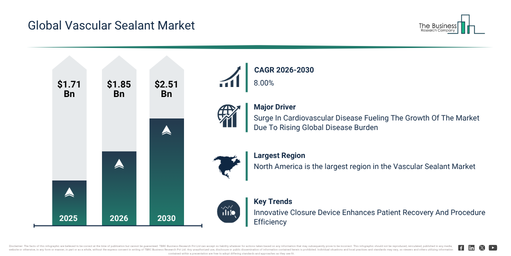
    The vascular sealant market has shown robust growth recently. It is anticipated to expand from $1.71 billion in 2025 to $1.85 billion in 2026, achieving a compound annual growth rate (CAGR) of 7.8%. This historic market expansion is primarily attributed to an escalating number of surgical procedures, the increasing prevalence of cardiovascular diseases, ongoing advancements in surgical technologies, a rising demand for effective hemostasis solutions, and the general expansion of healthcare infrastructure.

    The vascular sealant market size is projected to experience substantial expansion over the upcoming years. This market is anticipated to reach $2.51 billion by 2030, demonstrating a compound annual growth rate (CAGR) of 8.0%. Factors contributing to this growth during the forecast period include the expanding use of minimally invasive surgical procedures, an escalating need for sophisticated biomaterials, increased capital allocation towards surgical advancements, the proliferation of outpatient surgical facilities, and a heightened emphasis on ensuring patient safety and expedited recuperation. Significant trends expected during the forecast period encompass a greater uptake of advanced hemostatic agents in surgical operations, a heightened inclination towards minimally invasive surgical sealants, an increasing requirement for vascular sealants that are both rapid-acting and highly potent, the creation of sealant materials that are bioresorbable and biocompatible, and the broader application of multi-purpose sealants across various surgical domains.

    Get A Free Sample Report With In-Depth Market Insights:

    https://thebusinessresearchcompany.com/sample_request?id=67943234&type=smp&name=Vascular%20Sealant%20Market%20Report%202026&utm_source=Blogs&utm_medium=Paid&utm_campaign=Oct_PR

    Vascular Sealant Market Development Factors: What’s Supporting Demand?

    The expanding incidence of cardiovascular disease is anticipated to drive the future expansion of the vascular sealant market. Cardiovascular disease encompasses various conditions impacting the heart and blood vessels, such as ischemic heart disease and stroke. The rise in these diseases stems from an aging and expanding global population, coupled with greater exposure to risk factors like obesity, diabetes, high blood pressure, unhealthy dietary habits, lack of physical activity, and smoking; these factors collectively increase the risk of developing heart and blood vessel ailments. Vascular sealants play a role in managing cardiovascular disease by facilitating efficient bleeding control, aiding in vascular repair, and minimizing complications during surgical interventions. As an illustration, the Scottish Health Survey 2024, conducted by the Scottish Government, a Scotland-based governmental body, indicated that 16% of adults stated they lived with some form of cardiovascular disease (CVD), with the rate increasing from 4% for individuals aged 16–24 to 42% for adults aged 75 and over. Consequently, the increasing occurrence of cardiovascular disease is fueling the expansion of the vascular sealant market.

    Vascular Sealant Market Segment Landscape And Growth Outlook

    The vascular sealant market covered in this report is segmented –

    1) By Product Type: Fibrin Sealants, Collagen Based Sealants, Synthetic Sealants, Other Product Types

    2) By Material Type: Natural Biological Materials, Synthetic Polymeric Materials, Semi Synthetic Materials

    3) By Form Factor: Liquid, Patch, Spray Or Foam, Pre Filled Applicator Kits

    4) By Application: Cardiovascular Surgery, General Surgery, Neurosurgery, Orthopedic Surgery, Other Applications

    5) By End User: Hospitals, Ambulatory Surgical Centers, Specialty Clinics, Other End Users

    Subsegments:

    1) By Fibrin Sealants: Human Plasma Derived Sealants, Bovine Plasma Derived Sealants, Recombinant Fibrin Sealants, Combination Fibrin Sealants

    2) By Collagen Based Sealants: Bovine Collagen Sealants, Porcine Collagen Sealants, Equine Collagen Sealants, Crosslinked Collagen Sealants

    3) By Synthetic Sealants: Polyethylene Glycol Sealants, Cyanoacrylate Sealants, Albumin Based Sealants, Gelatin Based Sealants

    4) By Other Product Types: Combination Sealants, Hydrogel Sealants, Polysaccharide Based Sealants, Enzymatic Sealants

    Vascular Sealant Market Transformation Trends: What Innovations Are Driving Change?

    Leading companies in the vascular sealant market are increasingly focusing on utilizing innovative technologies like grip technology to achieve quicker hemostasis and improved patient recovery. Grip technology, a system rooted in hydrophilic polymers, establishes a secure and flexible seal at the vascular access site. This contributes to rapid hemostasis, minimizes the risk of bleeding complications, shortens patient recovery time, and facilitates earlier ambulation and discharge, all while presenting a minimally invasive alternative to traditional manual compression methods. For example, in July 2024, Cordis Corporation, a US-based medical device firm, secured U.S. Food and Drug Administration (FDA) approval for the Mynx Control Venous VCD. This innovative device integrates Grip Technology, which is based on hydrophilic, bioinert polyethylene glycol. The Mynx Control Venous VCD delivers effective closure for midbore venous puncture sites, including those employed in electrophysiology procedures, and demonstrated 100% procedural and device success in clinical trials. Its key benefits include a significantly reduced time to hemostasis (2.1 minutes versus 11.4 minutes for manual compression), faster ambulation, and earlier eligibility for discharge, thereby enhancing both patient experience and the operational efficiency of healthcare facilities.

    Vascular Sealant Market Competitive Overview And Top Companies

    Major companies operating in the vascular sealant market are Johnson & Johnson, Pfizer Inc., Medtronic plc, Stryker Corporation, Becton Dickinson and Company, Baxter International Inc., B. Braun Melsungen AG, Grifols S. A., Terumo Corporation, Teleflex Incorporated, Integra LifeSciences Holdings Corporation, CSL Behring LLC, Advanced Medical Solutions Group plc, SkinStitch Inc., Tricol Biomedical Inc., Cellphire Therapeutics Inc., Artivion Inc., GluStitch Inc., CuraMedical B. V., Endomedix Inc.

    View The Full Vascular Sealant Market Report:

    https://thebusinessresearchcompany.com/report/vascular-sealant-market-report?utm_source=Blogs&utm_medium=Paid&utm_campaign=Oct_PR

    Vascular Sealant Market Leading Geography: Which Region Contributes The Most Revenue?

    North America was the largest region in the vascular sealant market in 2025. Asia-Pacific is expected to be the fastest-growing region in the forecast period. The regions covered in the vascular sealant market report are Asia-Pacific, South East Asia, Western Europe, Eastern Europe, North America, South America, Middle East and Africa.

    Reach Out To Our Team:

    The Business Research Company: https://www.thebusinessresearchcompany.com/

    Americas: +1 310-496-7795

    Asia: +44 7882 955267 & +91 8897263534

    Europe: +44 7882 955267

    Email us at: marketing@tbrc.info

    Follow us on:

    LinkedIn: https://in.linkedin.com/company/the-business-research-company

    YouTube: https://www.youtube.com/channel/UC24_fI0rV8cR5DxlCpgmyFQ

    Global Market Model: https://www.thebusinessresearchcompany.com/global-market-model
  • Upstream Bioprocessing Equipment Market Forecast To Reach $18.61 Billion By 2030: Key Trends Explained

    Upstream Bioprocessing Equipment Market Forecast To Reach $18.61 Billion By 2030: Key Trends Explained

    Featuring market attractiveness scoring, total addressable market sizing, company benchmarking matrices, interactive Excel dashboards, deeper supply chain intelligence, emerging startup tracking, and granular product-level insights, The Business Research Company’s 2026 market reports are built to deliver research that is both more actionable and more strategically valuable.

    Upstream Bioprocessing Equipment Market Size Outlook: How Quickly Will Revenue Expand Through 2030?

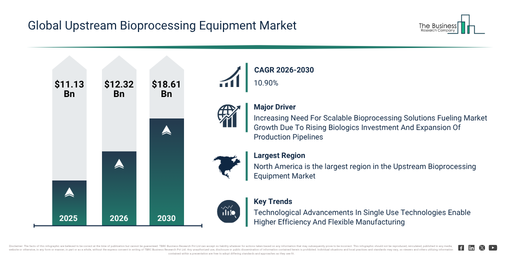
    The upstream bioprocessing equipment market has experienced rapid growth in its size over recent years. Projections indicate it will expand from $11.13 billion in 2025 to reach $12.32 billion by 2026, demonstrating a compound annual growth rate (CAGR) of 10.6%. This historical growth can be attributed to factors such as the increasing demand for monoclonal antibodies and vaccines, greater investment in biopharmaceutical manufacturing capacity, the rising adoption of mammalian cell culture systems, the expansion of contract manufacturing organizations, and an increased focus on process efficiency and yield optimization.

    The upstream bioprocessing equipment market is projected to expand significantly in the coming years, reaching $18. 61 billion by 2030, exhibiting a compound annual growth rate (CAGR) of 10. 9%. This projected expansion is driven by factors such as an expanding pipeline of biosimilars and biologics, the increasing embrace of single-use technologies, a surging demand for personalized medicine, the broadening scope of gene and cell therapy manufacturing, and greater investments in adaptable biomanufacturing facilities. Key trends anticipated during this period include the wider acceptance of single-use bioreactor systems to minimize contamination and enhance adaptability in biologics production. Additionally, there’s an escalating need for perfusion-based cell culture systems for ongoing biologics manufacturing, along with the increased utilization of modular and scalable upstream bioprocessing equipment to expedite facility expansions. The deployment of closed-system bioprocessing solutions is also growing, aiming to boost sterility and operational efficiency, complemented by the greater integration of automated sampling and process control systems for more consistent upstream processes.

    Get A Free Sample Report With In-Depth Market Insights:

    https://thebusinessresearchcompany.com/sample_request?id=82663436&type=smp&name=Upstream%20Bioprocessing%20Equipment%20Market%20Report%202026&utm_source=Blogs&utm_medium=Paid&utm_campaign=Oct_PR

    Upstream Bioprocessing Equipment Market Growth Factors: What’s Supporting Expansion?

    The upstream bioprocessing equipment market is anticipated to expand, driven by the growing demand for scalable bioprocessing solutions. These solutions refer to systems and machinery designed to facilitate a smooth progression from research-level production to commercial manufacturing on a large scale, all while ensuring constant product quality and efficient operations. The rising demand for scalable bioprocessing solutions stems from the rapid growth in biologics development pipelines, which necessitate adaptable manufacturing capabilities across various production capacities. Upstream bioprocessing equipment addresses this requirement by allowing for the efficient scaling of cell culture, fermentation, and production processes, utilizing sophisticated bioreactors and integrated systems. As an illustration, the BioIndustry Association, a UK biotechnology industry body, reported that in January 2025, the UK biotech sector secured around $4. 4 billion in investments, representing a 94% rise from the prior year. Consequently, the escalating demand for scalable bioprocessing solutions is fueling the expansion of the upstream bioprocessing equipment market.

    Upstream Bioprocessing Equipment Market Segment Analysis And Revenue Potential

    The upstream bioprocessing equipment market covered in this report is segmented –

    1) By Product Type: Bioreactors And Fermenters, Cell Culture Vessels, Filtration Systems, Mixing Systems, Sampling Systems, Other Product Types

    2) By Workflow: Media Preparation, Cell Culture, Cell Separation

    3) By Application: Monoclonal Antibodies Production, Vaccines Manufacturing, Recombinant Proteins, Gene Therapy, Other Application

    4) By End User: Pharmaceutical And Biotechnology Companies, Contract Manufacturing Organizations, Academic And Research Institutes

    Subsegments:

    1) By Bioreactors And Fermenters: Stirred Tank Bioreactors, Airlift Bioreactors, Bubble Column Bioreactors, Wave Induced Bioreactors, Packed Bed Bioreactors, Fluidized Bed Bioreactors

    2) By Cell Culture Vessels: Cell Culture Flasks, Cell Culture Plates, Cell Culture Bottles, Spinner Flasks, Roller Bottles, Cell Culture Bags

    3) By Filtration Systems: Depth Filtration Systems, Microfiltration Systems, Ultrafiltration Systems, Nanofiltration Systems, Membrane Filtration Systems, Cross Flow Filtration Systems

    4) By Mixing Systems: Magnetic Mixing Systems, Mechanical Mixing Systems, Static Mixing Systems, Single Use Mixing Systems, High Shear Mixing Systems, Low Shear Mixing Systems

    5) By Sampling Systems: Manual Sampling Systems, Automated Sampling Systems, Aseptic Sampling Systems, In Line Sampling Systems, Off Line Sampling Systems, Closed Sampling Systems

    6) By Other Product Types: Incubators, Centrifuges, Sensors And Probes, Sterilization Equipment, Media Preparation Systems, Single Use Assemblies

    Upstream Bioprocessing Equipment Market Industry Trends: What’s Reshaping Demand?

    Key companies operating in the upstream bioprocessing equipment market are concentrating on advancements in single-use technologies, such as integrated single-use bioreactor intensification systems, to enhance production adaptability, mitigate contamination risks, and improve process efficiency. These integrated single-use bioreactor intensification systems are sophisticated bioprocessing setups that merge disposable bioreactors with built-in cell retention and process control technologies, supporting high-density cell culture and continuous manufacturing without requiring extensive cleaning. For example, in August 2023, Sartorius AG, a Germany-based life sciences firm, unveiled an integrated Biostat STR system that incorporates Repligen’s XCell Alternating Tangential Flow technology. This system features embedded hardware and software modules with predefined control recipes, integrated process analytical technology for real-time observation, and improved cell retention capabilities, which removes the need for separate control units, thereby streamlining upstream processing operations.

    Upstream Bioprocessing Equipment Market Competitive Landscape: Who Leads The Industry?

    Major companies operating in the upstream bioprocessing equipment market are Saint-Gobain Performance Plastics Corporation, Thermo Fisher Scientific Inc., Merck KGaA, Danaher Corporation, Parker-Hannifin Corporation, GE Healthcare Technologies Inc., Corning Incorporated, Lonza Group AG, Avantor Inc., Sartorius AG, Entegris Inc., Getinge AB, Waters Corporation, Eppendorf SE, ZETA GmbH, Repligen Corporation, ABEC Inc., Shelcel Biozeen Technologies Private Limited, PBS Biotech Inc., Bionet Engineering S. r. l., Meissner Filtration Products Inc., ESCO Micro Pte. Ltd., BBI-Biotech GmbH, Morimatsu International Holdings Company Limited, Adolf Kühner AG

    View The Full Upstream Bioprocessing Equipment Market Report:

    https://thebusinessresearchcompany.com/report/upstream-bioprocessing-equipment-market-report?utm_source=Blogs&utm_medium=Paid&utm_campaign=Oct_PR

    Upstream Bioprocessing Equipment Market Geographic Landscape: Which Region Leads Industry Growth?

    North America was the largest region in the upstream bioprocessing equipment market in 2025. Asia-Pacific is expected to be the fastest-growing region in the forecast period. The regions covered in the upstream bioprocessing equipment market report are Asia-Pacific, South East Asia, Western Europe, Eastern Europe, North America, South America, Middle East and Africa.

    Reach Out To Our Team:

    The Business Research Company: https://www.thebusinessresearchcompany.com/

    Americas: +1 310-496-7795

    Asia: +44 7882 955267 & +91 8897263534

    Europe: +44 7882 955267

    Email us at: marketing@tbrc.info

    Follow us on:

    LinkedIn: https://in.linkedin.com/company/the-business-research-company

    YouTube: https://www.youtube.com/channel/UC24_fI0rV8cR5DxlCpgmyFQ

    Global Market Model: https://www.thebusinessresearchcompany.com/global-market-model
  • Udder Health Monitoring Market Projected For Strong Expansion Through 2030: Key Trends And Future Outlook

    Udder Health Monitoring Market Projected For Strong Expansion Through 2030: Key Trends And Future Outlook

    Built to provide research that’s more actionable and strategically valuable, The Business Research Company’s 2026 market reports include market attractiveness analysis, total addressable market sizing, company benchmarking matrices, interactive Excel dashboards, broader supply chain intelligence, emerging startup tracking, and in-depth product insights.

    Udder Health Monitoring Market Value Growth And Long-Term Outlook

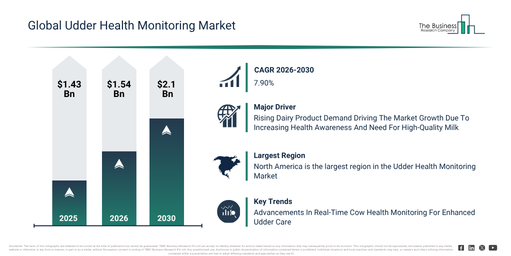
    The udder health monitoring market has demonstrated significant expansion in recent years. Its valuation is anticipated to rise from $1.43 billion in 2025 to $1.54 billion in 2026, achieving a compound annual growth rate (CAGR) of 7.7%. The growth observed in prior periods can be attributed to several factors including the rising occurrence of bovine mastitis, an increasing requirement for high-quality dairy output, insufficient manual oversight of udder health, the expansion of dairy herd sizes within commercial operations, and a heightened awareness concerning the prevention of livestock ailments.

    The udder health monitoring market is anticipated to show considerable expansion over the next few years. It is projected to reach $2.1 billion by 2030, progressing at a compound annual growth rate (CAGR) of 7.9%. This growth during the forecast period can be attributed to several factors, including the wider adoption of precision livestock farming practices, the increasing use of IoT-enabled dairy monitoring systems, a rise in investment towards automated milking systems, a growing demand for real-time animal health analytics, and the greater integration of AI-based disease detection models. Major developments foreseen in this period encompass the increasing implementation of sensor-based real-time udder health monitoring systems, a rising reliance on predictive mastitis detection technologies, an escalating demand for automated milk quality analysis solutions, the expansion of wearable livestock health tracking devices, and the deeper integration of farm management platforms with dairy monitoring systems.

    Get A Free Sample Report With In-Depth Market Insights:

    https://thebusinessresearchcompany.com/sample_request?id=51761895&type=smp&name=Udder%20Health%20Monitoring%20Market%20Report%202026&utm_source=Blogs&utm_medium=Paid&utm_campaign=Oct_PR

    Udder Health Monitoring Market Growth Catalysts And Demand Drivers

    The burgeoning consumer appetite for dairy products is anticipated to fuel the expansion of the udder health monitoring market moving forward. Dairy items encompass various foods and beverages derived from mammal milk, such as milk itself, cheese, butter, yogurt, and cream. The consumption of these products is on an upward trend, driven by heightened health consciousness among individuals who recognize their substantial nutritional content, particularly their crucial supply of calcium and protein vital for strong bones and muscles. Udder health monitoring plays a crucial role in enhancing dairy product quality by enabling early detection and prevention of mastitis and other infections in cows, thereby guaranteeing superior milk quality, safety, and uninterrupted production. For instance, in April 2025, the United States Department of Agriculture, a US-based government agency, reported that total cheese production, excluding cottage cheeses, reached 14. 2 billion pounds, marking a 0. 7 percent increase over 2023 production. Consequently, the rising demand for dairy products is a primary impetus behind the growth of the udder health monitoring market. The expanding digital transformation within veterinary healthcare is projected to spur the growth of the udder health monitoring market in the future. This transformation involves applying digital instruments and technologies to streamline clinical workflows, sharpen decision-making, and deliver more effective and accessible animal care services. The acceleration of digital transformation in veterinary healthcare is largely due to an increasing need for convenient and remote care options, as digital tools facilitate quicker access to veterinary services and boost overall operational efficiency. It significantly improves udder health monitoring through the application of the Internet of Things (IoT), artificial intelligence (AI), and data analytics for real-time and predictive identification of udder issues, thereby enhancing herd health and milk quality. For example, in March 2026, Instinct Science LLC, a US-based veterinary technology company, stated that roughly 90% of veterinary practices employ digital diagnostic and imaging tools, 75% utilize digital communication platforms for client engagement, and 91% have either introduced or updated at least one new technology during the preceding year. Consequently, the increasing digital transformation in veterinary healthcare is a key factor propelling the udder health monitoring market.

    Udder Health Monitoring Market Segment Breakdown: Which Categories Lead On Revenue?

    The udder health monitoring market covered in this report is segmented –

    1) By Component: Hardware, Software, Services

    2) By Technology: Sensors, Imaging Systems, Wearable Devices, Data Analytics

    3) By Distribution Channel: Direct Sales, Distributors, Online

    4) By Application: Mastitis Detection, Milk Quality Monitoring, Reproductive Health, Other Applications

    5) By End-User: Dairy Farms, Veterinary Clinics, Research Institutes, Other End-Users

    Subsegments:

    1) By Hardware: Milk Quality Analysers, Conductivity Sensors, Somatic Cell Count Monitors, Thermal Imaging Devices, Wearable Udder Monitoring Devices

    2) By Software: Data Analytics Platforms, Herd Management Software, Predictive Monitoring Software, Cloud Based Monitoring Software, Disease Detection Software

    3) By Services: Installation And Integration Services, Maintenance And Support Services, Data Monitoring And Analysis Services, Consulting Services, Training And Education Services

    Udder Health Monitoring Market Trends Shaping Long-Term Demand

    Leading companies within the udder health monitoring market are prioritizing the creation of advanced solutions, including remote cow monitoring, to improve udder health, avert mastitis, elevate milk quality, and facilitate real-time, data-informed herd management. This technology utilizes sensors and IoT devices to track cows’ health and behavior in real time, aiding in early disease detection and streamlined herd management. An instance of this is MSD Animal Health Ireland, an Ireland-based veterinary pharmaceutical company, which launched an integrated milk quality monitoring suite under its SenseHub Dairy platform in December 2023. This suite is designed to provide dairy farmers with real-time, cow-level insights to improve both milk quality and udder health. The system highlights elevated somatic cell counts and abnormal milk quality readings through a traffic light display and can automatically segregate affected cows, which facilitates quicker interventions and enhanced udder health management, thereby reducing milk quality penalties for dairy farms.

    Udder Health Monitoring Market Key Participants And Competitive Landscape

    Major companies operating in the udder health monitoring market are Zoetis Inc., GEA Group Aktiengesellschaft, DeLaval Holding AB, Lely Holding S. à r. l., FOSS A/S, Nedap N. V., Dairymaster, BouMatic LLC, smaXtec animal care GmbH, CowManager B. V., Afimilk Ltd., Milkplan S. A., Advanced Animal Diagnostics Inc., Connecterra B. V., EIO Diagnostics Inc., Immunolab GmbH, Allflex Livestock Intelligence, Udder Health Systems Inc., Fullwood Packo Ltd., MastiLine

    View The Full Udder Health Monitoring Market Report:

    https://thebusinessresearchcompany.com/report/udder-health-monitoring-market-report?utm_source=Blogs&utm_medium=Paid&utm_campaign=Oct_PR

    Udder Health Monitoring Market Geographic Analysis: Where Is Demand Rising Fastest?

    North America was the largest region in the udder health monitoring market in 2025. Asia-Pacific is expected to be the fastest-growing region in the forecast period. The regions covered in the udder health monitoring market report are Asia-Pacific, South East Asia, Western Europe, Eastern Europe, North America, South America, Middle East and Africa.

    Reach Out To Our Team:

    The Business Research Company: https://www.thebusinessresearchcompany.com/

    Americas: +1 310-496-7795

    Asia: +44 7882 955267 & +91 8897263534

    Europe: +44 7882 955267

    Email us at: marketing@tbrc.info

    Follow us on:

    LinkedIn: https://in.linkedin.com/company/the-business-research-company

    YouTube: https://www.youtube.com/channel/UC24_fI0rV8cR5DxlCpgmyFQ

    Global Market Model: https://www.thebusinessresearchcompany.com/global-market-model
  • Three-Dimensional (3D) Printed Drugs Market Size And Forecast 2026–2030: Trends Driving Industry Expansion

    Three-Dimensional (3D) Printed Drugs Market Size And Forecast 2026–2030: Trends Driving Industry Expansion

    Backed by market attractiveness analysis, total addressable market sizing, company benchmarking matrices, interactive Excel dashboards, wider supply chain intelligence, emerging startup coverage, and detailed product-level insights, The Business Research Company’s 2026 market reports are designed to offer research that is more actionable and strategically valuable than ever.

    Three-Dimensional (3D) Printed Drugs Market CAGR Outlook And Future Development

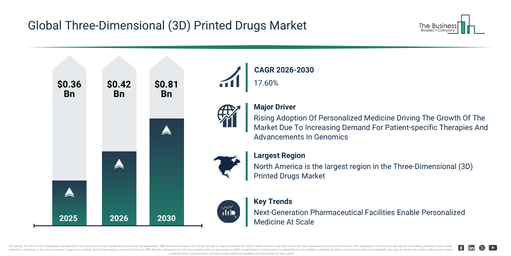
    The three-dimensional (3D) printed drugs market has experienced substantial expansion in recent years. This market is set to expand from $0.36 billion in 2025 to $0.42 billion in 2026, achieving a compound annual growth rate (CAGR) of 17.4%. The surge observed historically can be attributed to a heightened demand for individualized medical solutions, ongoing progress in additive manufacturing technologies, the increasing occurrence of chronic conditions that require bespoke therapies, an expansion of pharmaceutical research and development endeavors, and an intensified focus on improving patient compliance and dosage accuracy.

    The three-dimensional (3D) printed drugs market size is projected to experience rapid expansion over the next few years. It is expected to grow to $0.81 billion by 2030 at a compound annual growth rate (CAGR) of 17.6%. The anticipated growth during the forecast period is largely due to increased investment in digital pharmaceutical manufacturing platforms, the rising acceptance of AI-assisted drug formulation technologies, a growing need for on-demand drug production in healthcare facilities, the expansion of precision medicine applications in oncology and neurology, and increasing innovation in multi-material pharmaceutical printing technologies. Noteworthy trends in the upcoming period include the wider adoption of personalized dosage formulations via 3D printing technologies, the escalating development of complex multi-drug release structures for targeted therapies, the expanding use of layer-by-layer drug fabrication to enhance patient compliance, increasing research into the rapid prototyping of customized oral dosage forms, and a heightened demand for precise low-volume pharmaceutical manufacturing solutions.

    Get A Free Sample Report With In-Depth Market Insights:

    https://thebusinessresearchcompany.com/sample_request?id=35663436&type=smp&name=Three-Dimensional%20%283D%29%20Printed%20Drugs%20Market%20Report%202026&utm_source=Blogs&utm_medium=Paid&utm_campaign=Oct_PR

    Three-Dimensional (3D) Printed Drugs Market Opportunity Drivers: What’s Unlocking New Revenue Potential?

    The 3D printed drugs market is anticipated to expand due to the increasing integration of personalized medicine techniques. These personalized medicine approaches involve customizing drug formulas and treatments according to specific patient attributes, such as their genetic makeup, age, existing health conditions, and how they respond to therapy. The primary factors driving this surge in personalized medicine adoption are a growing demand for treatments tailored to individual patients, the rising occurrence of chronic illnesses, and breakthroughs in genomics and digital health innovations. 3D printed drugs bolster this trend by allowing for exact dose customization, the creation of multi-drug pills (polypill formulation), and drug release profiles precisely aligned with patient requirements. As an illustration, the Personalized Medicine Coalition, a non-profit organization based in the US, reported in February 2024 that the FDA approved 16 new personalized treatments for rare diseases in 2023, marking a substantial rise from the six approvals in 2022. Consequently, the increasing embrace of personalized medicine strategies is a key driver for the expansion of the 3D printed drugs market.

    Three-Dimensional (3D) Printed Drugs Market Segment Breakdown: Which Categories Lead On Revenue?

    The three-dimensional (3d) printed drugs market covered in this report is segmented –

    1) By Technology: Inkjet Printing, Fused Deposition Modeling (FDM), Stereolithography (SLA), Selective Laser Sintering (SLS), Other Technologies

    2) By Drug Type: Immediate Release, Sustained Release, Personalized Medicines, Other Drug Types

    3) By Application: Oncology, Neurology, Infectious Diseases, Cardiovascular, Other Applications

    4) By End-User: Hospitals, Pharmaceutical Companies, Research Institutes, Other End-Users

    Subsegments:

    1) By Inkjet Printing: Continuous Inkjet Printing, Drop-On-Demand Inkjet Printing, Thermal Inkjet Printing, Piezoelectric Inkjet Printing, Electrohydrodynamic Inkjet Printing

    2) By Fused Deposition Modeling (FDM): Filament Extrusion Deposition, Hot Melt Extrusion Deposition, Multi-Material Extrusion, High Precision Layer Deposition, Continuous Filament Deposition

    3) By Stereolithography (SLA): Digital Light Processing Stereolithography, Two-Photon Polymerization Stereolithography, Mask Stereolithography, High Speed Stereolithography, Laser Scanning Stereolithography

    4) By Selective Laser Sintering (SLS): Polymer Powder Laser Sintering, Metal Powder Laser Sintering, Ceramic Powder Laser Sintering, Composite Powder Laser Sintering, High Precision Laser Sintering

    5) By Other Technologies: Binder Jetting Technology, Electron Beam Melting, Laminated Object Manufacturing, Direct Energy Deposition, Continuous Liquid Interface Production

    Three-Dimensional (3D) Printed Drugs Market Innovation Trends Shaping Future Development

    Leading companies in the 3D printed drugs market are concentrating on establishing fully automated digital pharmaceutical production facilities, exemplified by precision 3D-printed drug factories. These facilities are designed to fabricate tablets in successive layers according to digital drug designs, allowing for intricate internal geometries and tailored release profiles while substantially decreasing production stages. Precision 3D-printed drug factories refer to advanced, often compact, pharmaceutical manufacturing units that employ 3D printing technologies to create personalized medications with high accuracy, flexibility, and on-demand capabilities. An instance of this is in October 2025, when Triastek, a China-based pharmaceutical technology company, inaugurated a 3D-printed drug factory in Nanjing. This facility is capable of manufacturing up to 300 million tablets annually by utilizing its digital systems, which replace conventional granulation and coating processes, facilitate internal channels for controlled release, and incorporate over 100,000 monitoring points for quality assurance. Furthermore, this establishment holds China’s initial pharmaceutical production license for 3D-printed drugs and supports product pipelines for anticoagulants and hormone therapies; however, regulatory validation and maintaining consistent printing quality remain crucial as the industry expands.

    Three-Dimensional (3D) Printed Drugs Market Leading Players And Competitive Positioning

    Major companies operating in the three-dimensional (3d) printed drugs market are Merck KGaA, Adare Pharma Solutions Inc., Aprecia Pharmaceuticals Company, Multiply Labs Inc., FabRx Ltd, Laxxon Medical AG, CurifyLabs Oy, MB Therapeutics SAS, Doser Ltd, DiHeSys Digital Health Systems GmbH, Craft Health Pte. Ltd., Triastek Inc., Cycle Pharmaceuticals Ltd, Amply Discovery Inc.

    View The Full Three-Dimensional (3D) Printed Drugs Market Report:

    https://thebusinessresearchcompany.com/report/three-dimensional-3d-printed-drugs-market-report?utm_source=Blogs&utm_medium=Paid&utm_campaign=Oct_PR

    Three-Dimensional (3D) Printed Drugs Market Regional Distribution: Which Areas Power Market Growth?

    North America was the largest region in the 3D printed drugs market in 2025. Asia-Pacific is expected to be the fastest-growing region in the forecast period. The regions covered in the three-dimensional (3D) printed drugs market report are Asia-Pacific, South East Asia, Western Europe, Eastern Europe, North America, South America, Middle East and Africa.

    Reach Out To Our Team:

    The Business Research Company: https://www.thebusinessresearchcompany.com/

    Americas: +1 310-496-7795

    Asia: +44 7882 955267 & +91 8897263534

    Europe: +44 7882 955267

    Email us at: marketing@tbrc.info

    Follow us on:

    LinkedIn: https://in.linkedin.com/company/the-business-research-company

    YouTube: https://www.youtube.com/channel/UC24_fI0rV8cR5DxlCpgmyFQ

    Global Market Model: https://www.thebusinessresearchcompany.com/global-market-model
  • Thermoplastic Elastomers In Medical Devices Market Analysis 2026: Market Size, Growth Trends And Industry Outlook

    Thermoplastic Elastomers In Medical Devices Market Analysis 2026: Market Size, Growth Trends And Industry Outlook

    Backed by market attractiveness analysis, total addressable market sizing, company benchmarking matrices, interactive Excel dashboards, wider supply chain intelligence, emerging startup coverage, and detailed product-level insights, The Business Research Company’s 2026 market reports are designed to offer research that is more actionable and strategically valuable than ever.

    Thermoplastic Elastomers In Medical Devices Market Revenue Growth On Track For A 6.6% CAGR Through 2030

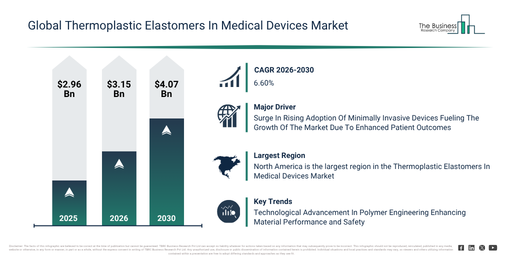
    The market for thermoplastic elastomers in medical devices has experienced robust expansion over recent years. This market is projected to expand from $2.96 billion in 2025 to $3.15 billion in 2026, demonstrating a compound annual growth rate (CAGR) of 6.4%. Historically, this growth has been driven by several factors, including the increasing need for flexible catheter and tubing materials, the growing trend of substituting PVC with biocompatible elastomers, the rise in minimally invasive surgical procedures, the broadening scope of medical device manufacturing, and the wider acceptance of wearable healthcare technologies.

    The thermoplastic elastomers in medical devices market is projected to experience substantial growth in the coming years. It is expected to expand to $4.07 billion by 2030, exhibiting a compound annual growth rate (CAGR) of 6.6%. This growth during the forecast period is attributed to factors such as increased investment in sustainable medical polymers, a rising demand for smart and connected wearable medical devices, the growing application of advanced overmolding and co-injection technologies, the expansion of home healthcare and remote patient monitoring, and continuous innovation in high-performance medical-grade thermoplastic elastomers. Key trends influencing this period include an increasing demand for biocompatible and sterilization-compatible thermoplastic elastomers in medical devices, the rising adoption of soft-touch thermoplastic elastomers for wearable medical equipment, the growing use of recyclable and latex-free elastomer materials in healthcare manufacturing, expanding integration of antimicrobial thermoplastic elastomers in medical components, and the increasing development of lightweight and flexible thermoplastic elastomers for minimally invasive medical devices.

    Get A Free Sample Report With In-Depth Market Insights:

    https://thebusinessresearchcompany.com/sample_request?id=57209451&type=smp&name=Thermoplastic%20Elastomers%20In%20Medical%20Devices%20Market%20Report%202026&utm_source=Blogs&utm_medium=Paid&utm_campaign=Oct_PR

    Thermoplastic Elastomers In Medical Devices Market Development Factors: What’s Supporting Demand?

    An increasing preference for minimally invasive aesthetic procedures is anticipated to fuel the expansion of the thermoplastic elastomers (TPE) market in medical devices. These procedures, which include dermal fillers, botulinum toxin injections, and laser-based treatments, are gaining popularity because they offer cosmetic improvements with less recovery time, discomfort, and risk compared to traditional surgical options. Such treatments frequently depend on sophisticated delivery mechanisms, like syringes, catheters, and flexible tubing, where the properties of the materials used are crucial. Thermoplastic elastomers are essential for these applications, offering flexibility, a soft feel, biocompatibility, and chemical resistance, thereby guaranteeing accuracy, safety, and patient comfort throughout the procedures. As an example, in July 2024, data from the American Society Of Plastic Surgeons, a US-based medical association, indicated a 5% rise in minimally invasive aesthetic procedures, totaling 25.35 million treatments in 2024, up from 24.11 million in 2023. Consequently, the growing use of minimally invasive devices is a significant factor boosting the thermoplastic elastomers in medical devices market.

    Thermoplastic Elastomers In Medical Devices Market Segment Analysis Spotlighting Growth Areas

    The thermoplastic elastomers in medical devices market covered in this report is segmented –

    1) By Type: Styrenic Block Copolymers, Thermoplastic Polyurethane, Thermoplastic Polyolefins, Thermoplastic Vulcanizates, Copolyester Elastomers

    2) By Processing Method: Injection Molding-Grade Thermoplastic Elastomer, Extrusion-Grade Thermoplastic Elastomer, Blow Molding-Grade Thermoplastic Elastomer, Overmolding And Co-Injection Grade Thermoplastic Elastomer

    3) By Application: Catheters And Tubing, Seals And Gaskets, Wearable Medical Devices, Medical Packaging, Surgical Instruments, Drug Delivery Systems

    4) By End-User: Hospitals And Clinics, Ambulatory Surgical Centers, Diagnostic Laboratories, Home Healthcare

    Subsegments:

    1) By Styrenic Block Copolymers: Linear Styrenic Block Copolymers, Radial Styrenic Block Copolymers, Hydrogenated Styrenic Block Copolymers, High Flow Styrenic Block Copolymers, Medical Grade Styrenic Block Copolymers

    2) By Thermoplastic Polyurethane: Polyether Based Thermoplastic Polyurethane, Polyester Based Thermoplastic Polyurethane, Polycaprolactone Based Thermoplastic Polyurethane, Aliphatic Thermoplastic Polyurethane, Aromatic Thermoplastic Polyurethane

    3) By Thermoplastic Polyolefins: Polypropylene Based Thermoplastic Polyolefins, Polyethylene Based Thermoplastic Polyolefins, Elastomer Modified Polyolefins, Reinforced Thermoplastic Polyolefins, Low Density Thermoplastic Polyolefins

    4) By Thermoplastic Vulcanizates: Ethylene Propylene Diene Rubber Based Thermoplastic Vulcanizates, Nitrile Rubber Based Thermoplastic Vulcanizates, Natural Rubber Based Thermoplastic Vulcanizates, Silicone Modified Thermoplastic Vulcanizates, High Temperature Resistant Thermoplastic Vulcanizates

    5) By Copolyester Elastomers: High Performance Copolyester Elastomers, Low Temperature Resistant Copolyester Elastomers, Chemical Resistant Copolyester Elastomers, High Flexibility Copolyester Elastomers, Medical Grade Copolyester Elastomers

    Thermoplastic Elastomers In Medical Devices Market Transformation Trends: What Innovations Are Driving Change?

    Major companies in the thermoplastic elastomers in medical devices market are emphasizing innovative advancements in polymer engineering, notably through bio-based elastomer formulation, to enhance their market position. This approach integrates renewable, plant-derived raw materials into the molecular structure of polymers, aiming to reduce carbon footprints while maintaining crucial medical-grade performance. As an illustration, in January 2024, Avient Corporation, a US-based specialized materials company, launched versaflex hc bio bt218. This specialized grade incorporates bio-based content derived from plant sources, offering exceptional kink resistance vital for biopharmaceutical tubing, and ensuring low levels of extractables to protect sensitive fluids. These innovations significantly improve environmental sustainability and guarantee patient safety throughout critical medical procedures. Thus, continuous technological progress within the thermoplastic elastomers in medical devices market remains a driving force for high-performance healthcare solutions.

    Thermoplastic Elastomers In Medical Devices Market Competitive Landscape: Who Leads The Industry?

    Major companies operating in the thermoplastic elastomers in medical devices market are BASF SE, Dow Inc., Asahi Kasei Corporation, Sibur Holding, Covestro AG, Mitsui Chemicals Inc., DSM-Firmenich, Celanese Corporation, Arkema S. A., Lubrizol Corporation, Kuraray Co. Ltd., Avient Corporation, Hexpol TPE AB, Kraton Corporation, Teknor Apex Company, RTP Company, Kraiburg TPE GmbH & Co. KG, Dynasol Group, Elastron TPE, LCY Chemical Corp.

    View The Full Thermoplastic Elastomers In Medical Devices Market Report:

    https://thebusinessresearchcompany.com/report/thermoplastic-elastomers-in-medical-devices-market-report?utm_source=Blogs&utm_medium=Paid&utm_campaign=Oct_PR

    Thermoplastic Elastomers In Medical Devices Market Geographic Landscape: Which Region Leads Industry Growth?

    North America was the largest region in the thermoplastic elastomers in medical devices market in 2025. Asia-Pacific is expected to be the fastest-growing region in the forecast period. The regions covered in the thermoplastic elastomers in medical devices market report are Asia-Pacific, South East Asia, Western Europe, Eastern Europe, North America, South America, Middle East and Africa.

    Reach Out To Our Team:

    The Business Research Company: https://www.thebusinessresearchcompany.com/

    Americas: +1 310-496-7795

    Asia: +44 7882 955267 & +91 8897263534

    Europe: +44 7882 955267

    Email us at: marketing@tbrc.info

    Follow us on:

    LinkedIn: https://in.linkedin.com/company/the-business-research-company

    YouTube: https://www.youtube.com/channel/UC24_fI0rV8cR5DxlCpgmyFQ

    Global Market Model: https://www.thebusinessresearchcompany.com/global-market-model
  • Therapeutic Pet Nutrition Market Reaches $5.7 Billion In 2026: Key Developments Shaping Expansion

    Therapeutic Pet Nutrition Market Reaches $5.7 Billion In 2026: Key Developments Shaping Expansion

    Backed by market attractiveness analysis, total addressable market sizing, company benchmarking matrices, interactive Excel dashboards, wider supply chain intelligence, emerging startup coverage, and detailed product-level insights, The Business Research Company’s 2026 market reports are designed to offer research that is more actionable and strategically valuable than ever.

    Therapeutic Pet Nutrition Market Size And Revenue Outlook Through 2030

    The therapeutic pet nutrition market has experienced robust expansion in recent years. Its size is projected to increase from $3.74 billion in 2025 to $4.06 billion in 2026, exhibiting a compound annual growth rate (CAGR) of 8.6%. This historical growth can be attributed to several factors, including a global rise in pet ownership, increased awareness regarding pet health and wellness, a growing prevalence of obesity and digestive disorders among pets, the expansion of veterinary healthcare infrastructure, and a rising demand for premium and specialized pet food products.

    The therapeutic pet nutrition market is projected to experience significant growth in the upcoming years. Its valuation is expected to reach $5.7 billion by 2030, growing at a compound annual growth rate (CAGR) of 8.9%. This anticipated expansion during the forecast period is driven by various factors, including the increasing adoption of personalized therapeutic pet nutrition solutions, a rise in investment in veterinary nutritional research and development, a growing demand for dietary products focused on renal and joint health, the expansion of online retail channels for pet nutrition, and an increased focus on preventive and functional pet healthcare. Major developments expected within this period include an increasing demand for prescription diets to manage chronic pet health conditions, a rise in the adoption of functional treats for digestive and immune support, a growing preference for low-allergen and specialized protein pet diets, the expanding use of probiotics and omega fatty acid supplements in pet nutrition, and a heightened focus on preventive healthcare and long-term wellness management for pets.

    Get A Free Sample Report With In-Depth Market Insights:

    https://thebusinessresearchcompany.com/sample_request?id=94072267&type=smp&name=Therapeutic%20Pet%20Nutrition%20Market%20Report%202026&utm_source=Blogs&utm_medium=Paid&utm_campaign=Oct_PR

    Therapeutic Pet Nutrition Market Demand Drivers: What’s Powering Industry Growth?

    The therapeutic pet nutrition market is expected to expand due to increasing pet ownership rates. These rates refer to the percentage of households or individuals that own one or more pets within a defined population or region. The surge in pet ownership is fueled by a growing understanding of the emotional and health advantages pets offer, such as companionship, stress reduction, and enhanced overall well-being. Therapeutic pet nutrition supports the rising pet ownership rates by providing specialized diets that improve pets’ health and extend their lives, thereby giving owners confidence in offering optimal care for their animals. For example, in April 2025, data from the American Pet Products Association (APPA), a US-based industry association, indicated that 94 million households in the United States owned at least one pet, an increase from 82 million in 2023. Consequently, the rising pet ownership rates are driving the growth of the therapeutic pet nutrition market.

    Therapeutic Pet Nutrition Market Breakdown By Product Type And Application

    The therapeutic pet nutrition market covered in this report is segmented –

    1) By Product Type: Prescription Diets, Functional Treats, Supplements, Other Product Types

    2) By Pet Type: Dogs, Cats, Other Pet Types

    3) By Distribution Channel: Veterinary Clinics, Pet Specialty Stores, Online Retailers, Other Distribution Channels

    4) By Application: Weight Management, Digestive Health, Joint Health, Skin And Coat Health, Renal Health, Other Applications

    Subsegments:

    1) By Prescription Diets: Weight Management, Digestive Support, Renal Support, Joint Health, Skin And Coat Health, Urinary Care, Cardiac Support

    2) By Functional Treats: Dental Care, Digestive Health, Immune Support, Calming And Anxiety Relief, Joint Support, Skin And Coat Enhancement

    3) By Supplements: Vitamins And Minerals, Omega Fatty Acids, Probiotics, Antioxidants, Glucosamine And Chondroitin, Herbal Supplements

    4) By Other Product Types: Veterinary Fresh Nutrition, Therapeutic Snacks, Hydration And Electrolyte Support, Behavioral Support Diets, Specialized Protein Diets, Low Allergen Diets

    Therapeutic Pet Nutrition Market Innovation Trends: What Developments Are Reshaping The Industry?

    Major companies in the therapeutic pet nutrition market are concentrating on developing advanced dietary solutions, such as glycemic support diets and veterinary fresh nutrition offerings, to enhance pet health outcomes, manage chronic conditions, and promote overall well-being. Therapeutic pet nutrition refers to specially formulated diets crafted to address specific medical conditions, including diabetes, gastrointestinal disorders, or dermatological issues, thereby aiding clinical management and improving quality of life. For instance, in January 2026, Royal Canin, a France-based pet nutrition company, previewed its upcoming therapeutic innovations at the Veterinary Meeting & Expo (VMX) 2026. These innovations include GLYCOADVANCED, a feline diet formulated for safe caloric restriction in overweight diabetic cats to support healthy blood glucose levels and body weight. Additionally, home care kits and Veterinary Fresh Nutrition diets were introduced, designed to offer comprehensive nutritional support for gastrointestinal, dermatology, and urinary conditions, bridging the gap between diagnosis and treatment compliance while empowering pet owners to improve pet health outcomes.

    Therapeutic Pet Nutrition Market Competitive Analysis Of Leading Industry Participants

    Major companies operating in the therapeutic pet nutrition market are Archer Daniels Midland, DSM-Firmenich, Zoetis Inc., Ceva Santé Animale, The Farmer’s Dog Inc., Dechra Pharmaceuticals Plc, Vetoquinol SA, Merrick Pet Care Inc., Heska Corporation, Stella And Chewy’s LLC, Diamond Pet Foods Inc., JustFoodForDogs LLC, Farmina Pet Foods, Open Farm Inc., Nestlé Purina PetCare Co., Husse Inc., EmerAid LLC, Ziwi Pets, Mars Petcare, Rayne Clinical Nutrition LLC, Trovet, Arden Grange Ltd.

    View The Full Therapeutic Pet Nutrition Market Report:

    https://thebusinessresearchcompany.com/report/therapeutic-pet-nutrition-market-report?utm_source=Blogs&utm_medium=Paid&utm_campaign=Oct_PR

    Therapeutic Pet Nutrition Market Geographic Spread And Regional Opportunities

    North America was the largest region in the therapeutic pet nutrition market in 2025. Asia-Pacific is expected to be the fastest-growing region in the forecast period. The regions covered in the therapeutic pet nutrition market report are Asia-Pacific, South East Asia, Western Europe, Eastern Europe, North America, South America, Middle East and Africa.

    Reach Out To Our Team:

    The Business Research Company: https://www.thebusinessresearchcompany.com/

    Americas: +1 310-496-7795

    Asia: +44 7882 955267 & +91 8897263534

    Europe: +44 7882 955267

    Email us at: marketing@tbrc.info

    Follow us on:

    LinkedIn: https://in.linkedin.com/company/the-business-research-company

    YouTube: https://www.youtube.com/channel/UC24_fI0rV8cR5DxlCpgmyFQ

    Global Market Model: https://www.thebusinessresearchcompany.com/global-market-model