Blog

  • Beauty And Wellness Market Trends Supporting 8.9% CAGR Growth Through 2030

    Beauty And Wellness Market Trends Supporting 8.9% CAGR Growth Through 2030

    Backed by market attractiveness analysis, total addressable market sizing, company benchmarking matrices, interactive Excel dashboards, wider supply chain intelligence, emerging startup coverage, and detailed product-level insights, The Business Research Company’s 2026 market reports are designed to offer research that is more actionable and strategically valuable than ever.

    Beauty And Wellness Market Growth Analysis: How Will Revenue Trend Over The Forecast Period?

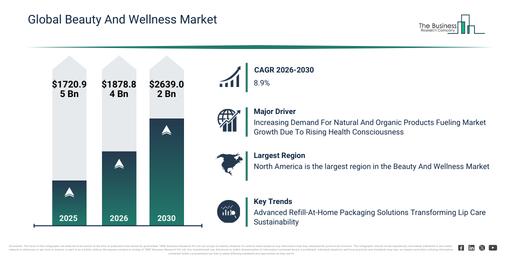
    The beauty and wellness market has demonstrated strong growth in recent years. Its size is projected to expand from $1720.95 billion in 2025 to $1878.84 billion in 2026, progressing at a compound annual growth rate (CAGR) of 9.2%. The observed growth during earlier periods can be ascribed to increased consumer spending on personal care, a heightened awareness of mental and physical wellbeing, the proliferation of retail and e-commerce channels, the expanding influence of social media on beauty trends, and the wider availability of diverse wellness products.

    The beauty and wellness market is anticipated to experience robust expansion over the coming years. It is projected to reach $2639.02 billion by 2030, growing at a compound annual growth rate (CAGR) of 8.9%. This growth during the forecast period is attributable to factors such as increasing demand for science-backed wellness solutions, the rising adoption of personalized skincare and nutrition, the expansion of digital wellness subscriptions, a growing focus on longevity and anti-aging, and advancements in ingredient innovation. Prominent trends expected in this period include an increasing demand for personalized beauty and wellness solutions, a rising adoption of clean and sustainable products, the growing integration of digital wellness platforms, an expansion of holistic health and self-care practices, and an enhanced focus on preventive and long-term wellness.

    Get A Free Sample Report With In-Depth Market Insights:

    https://thebusinessresearchcompany.com/sample_request?id=61906466&type=smp&name=Beauty%20And%20Wellness%20Market%20Report%202026&utm_source=Blogs&utm_medium=Paid&utm_campaign=Oct_PR

    Beauty And Wellness Market Growth Backed By Core Demand Fundamentals

    The increasing consumer desire for natural and organic offerings is projected to fuel the expansion of the beauty and wellness market in the future. These items are formulated using naturally sourced components, devoid of synthetic chemicals, genetically modified organisms (GMOs), and artificial additives. Growing awareness of health concerns is boosting the uptake of natural and organic items, as consumers opt to steer clear of synthetic ingredients to mitigate potential health hazards. Such products contribute to improved beauty and wellness through their use of mild, plant-derived ingredients that lessen irritation. They also foster enduring skin health and contribute to a balanced, glowing complexion. An illustrative example comes from August 2024, where the United States Department of Agriculture, a US-based government agency, reported that in 2023, consumer spending on organic products in the U.S. surpassed $69 billion, accounting for roughly 4% of the total food sales nationwide. Consequently, the escalating preference for natural and organic products is a key factor propelling the expansion of the beauty and wellness market.

    Beauty And Wellness Market Segment Landscape: Which Areas Lead Development?

    The beauty and wellness market covered in this report is segmented –

    1) By Type: Skincare Products, Hair Care Products, Makeup Products, Food And Nutrition Products, Medicinal Products, Wellness Products, Other Types

    2) By Price Range: Mass Market, Mid-Market, Premium, Luxury

    3) By Distribution Channel: Supermarkets And Hypermarkets, Specialty Stores, Online Channels, Other Distribution Channels

    4) By Target Consumers: Women, Men, Generation Z (Gen Z), Millennials, Baby Boomers

    Subsegments:

    1) By Skincare Products: Moisturizers, Cleansers, Serums, Sunscreens, Exfoliators, Toners, Face Masks

    2) By Hair Care Products: Shampoos, Conditioners, Hair Oils, Hair Masks, Styling Products, Hair Colorants, Scalp Treatments

    3) By Makeup Products: Foundations, Lipsticks, Eyeliners, Mascaras, Blushes, Primers, Setting Sprays

    4) By Food And Nutrition Products: Dietary Supplements, Protein Powders, Collagen Drinks, Herbal Teas, Probiotics, Beauty Gummies

    5) By Medicinal Products: Acne Treatments, Anti-Fungal Creams, Dermatological Prescriptions, Hair Loss Medications, Medicated Cleansers

    6) By Wellness Products: Aromatherapy Oils, Yoga Mats, Massage Tools, Sleep Aids, Essential Oils, Wellness Trackers

    7) By Other Types: Oral Care Products, Nail Care Products, Deodorants, Personal Hygiene Items, Intimate Care Products

    Beauty And Wellness Market Growth Trends Reshaping The Competitive Landscape

    Major companies within the beauty and wellness market are increasingly focusing on developing advanced refill-at-home packaging solutions to satisfy the growing consumer demand for sustainable options. A refill-at-home packaging system represents an environmentally friendly approach that allows consumers to replenish their products using refill packs or cartridges at home, thereby minimizing waste, improving reusability, and maintaining both product quality and user convenience. For example, in January 2023, Above & Beyond, a personal care packaging brand based in the UK, introduced a lip balm housed in an aluminum case. This initiative aims to eliminate single-use plastics, addressing the significant environmental concerns related to the hundreds of millions of lip balms that are annually sent to landfills. The aluminum case is endlessly recyclable, offered in various colors, and incorporates a QR code for straightforward reordering. The lip balm refills themselves are crafted from 100% bio-based material, incorporating wood sourced from industrial waste streams and plant-based binders, though it was initially available only in the U.K.

    Beauty And Wellness Market Industry Leaders And Competitive Landscape

    Major companies operating in the beauty and wellness market are Louis Vuitton Moët Hennessy, Procter & Gamble (P&G), Johnson & Johnson, Unilever plc, L’Oréal Group, Estée Lauder Companies, Beiersdorf AG, Shiseido, Coty Inc., Puig, Amorepacific Corporation, Avon Products Inc., Revlon Inc., Oriflame Cosmetics, Glossier, Huda Beauty, Rare Beauty, Drunk Elephant, Himalaya Wellness Company, Kylie Cosmetics

    View The Full Beauty And Wellness Market Report:

    https://thebusinessresearchcompany.com/report/beauty-and-wellness-global-market-report?utm_source=Blogs&utm_medium=Paid&utm_campaign=Oct_PR

    Beauty And Wellness Market Top Region: Where Does Most Revenue Come From?

    North America was the largest region in the beauty and wellness market in 2025. Asia-Pacific is expected to be the fastest-growing region in the forecast period. The regions covered in the beauty and wellness market report are Asia-Pacific, South East Asia, Western Europe, Eastern Europe, North America, South America, Middle East, Africa.

    Reach Out To Our Team:

    The Business Research Company: https://www.thebusinessresearchcompany.com/

    Americas: +1 310-496-7795

    Asia: +44 7882 955267 & +91 8897263534

    Europe: +44 7882 955267

    Email us at: marketing@tbrc.info

    Follow us on:

    LinkedIn: https://in.linkedin.com/company/the-business-research-company

    YouTube: https://www.youtube.com/channel/UC24_fI0rV8cR5DxlCpgmyFQ

    Global Market Model: https://www.thebusinessresearchcompany.com/global-market-model
  • BCL-2 Inhibitors Market Forecast Highlights A $5.39 Billion Opportunity For Industry Participants

    BCL-2 Inhibitors Market Forecast Highlights A $5.39 Billion Opportunity For Industry Participants

    Featuring market attractiveness scoring, total addressable market sizing, company benchmarking matrices, interactive Excel dashboards, deeper supply chain intelligence, emerging startup tracking, and granular product-level insights, The Business Research Company’s 2026 market reports are built to deliver research that is both more actionable and more strategically valuable.

    BCL-2 Inhibitors Market Forecast: What Value Will The Market Reach By 2030?

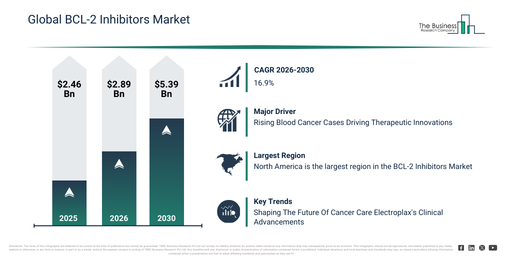
    The bcl-2 inhibitors market size has witnessed rapid expansion in recent years. It is projected to increase from $2.46 billion in 2025 to $2.89 billion by 2026, exhibiting a compound annual growth rate (CAGR) of 17.3%. The historical surge in this market can be ascribed to multiple factors, including breakthroughs in molecular oncology research, an escalating diagnosis of hematologic malignancies, the clinical validation of venetoclax’s effectiveness, the broadening of oncology drug access, and improvements in survival outcomes within leukemia care.

    The bcl-2 inhibitors market size is projected to experience substantial growth in the coming years. This market is expected to expand to $5.39 billion by 2030, driven by a compound annual growth rate (CAGR) of 16.9%. The projected increase over the forecast period can be attributed to several factors, including the escalating development of next-generation bcl-2 inhibitors, the rising application of combination targeted therapies, an increased focus on managing resistance, the expansion of precision oncology diagnostics, and the growing adoption of oral cancer therapeutics. Significant trends identified for this period encompass the increasing deployment of combination oncology regimens, the rising embrace of targeted apoptosis therapies, a heightened emphasis on personalized cancer treatment, the broader utilization of oral oncology drugs, and enhanced surveillance of treatment resistance.

    Get A Free Sample Report With In-Depth Market Insights:

    https://thebusinessresearchcompany.com/sample_request?id=10518091&type=smp&name=BCL-2%20Inhibitors%20Market%20Report%202026&utm_source=Blogs&utm_medium=Paid&utm_campaign=Oct_PR

    BCL-2 Inhibitors Market Growth Catalysts And Demand Drivers

    The increasing incidence of blood cancers is projected to fuel the expansion of the BCL-2 inhibitors market in the future. These cancers involve malignant growths impacting the blood, bone marrow, or lymphatic system, thereby impairing the regular generation and operation of blood cells. This surge in blood cancer cases stems from an aging global demographic, advancements in diagnostic methods, and evolving lifestyle habits, all contributing to higher worldwide detection figures. BCL-2 inhibitors play a role in fighting blood cancers by re-establishing programmed cell death (apoptosis) in malignant cells and enhancing the effectiveness of treatments for conditions like leukemia and lymphoma. As an illustration, the American Cancer Society (ACS), a US-based nonprofit dedicated to cancer research, education, advocacy, and patient support, reported an increase in estimated new cancer cases in the U.S. from 1,918,030 in 2022 to 1,958,310 in 2023, marking an approximate 2.1% rise between 2022 and 2023. Consequently, the growing occurrence of blood cancers is stimulating the expansion of the Bcl-2 inhibitors market.

    BCL-2 Inhibitors Market Segments: Where Is Growth Concentrated?

    The bcl-2 inhibitors market covered in this report is segmented –

    1) By Product: Combination Therapy, Monotherapy

    2) By Application: Chronic Lymphocytic Leukemia, Acute Myeloid Leukemia

    3) By End-User: Hospitals, Pharmacies

    Subsegments:

    1) By Combination Therapy: BCL-2 Inhibitor + Chemotherapy, BCL-2 Inhibitor + Targeted Therapy, BCL-2 Inhibitor + Immunotherapy

    2) By Monotherapy: Single-Agent BCL-2 Inhibitor (Venetoclax), Next-Generation Or Pipeline BCL-2 Inhibitor Monotherapy

    BCL-2 Inhibitors Market Trends Shaping Long-Term Demand

    Major companies in the BCL-2 inhibitors market are concentrating on developing advanced solutions, such as selective BCL-2 inhibitors, to more effectively target cancer cells and minimize off-target effects. A selective BCL-2 inhibitor is a medication designed to specifically target and suppress the B-cell lymphoma 2 (BCL-2) protein, which governs cell survival by inhibiting apoptosis (cell death). For example, in May 2024, Eilean Therapeutics LLC, a US-based company focused on small molecule oncology drug discovery, commenced a clinical trial for eiletoclax. This selective BCL2 inhibitor aims to treat hematological malignancies like acute myeloid leukemia (AML) and chronic lymphocytic leukemia (CLL). This Phase 1 clinical program, approved by the Australian Human Research Ethics Committee, seeks to evaluate the safety and efficacy of eiletoclax. Preclinical studies suggest that eiletoclax exhibits a superior safety profile compared to existing therapies such as venetoclax, with less impact on non-malignant immune cells, potentially enabling outpatient treatment and enhancing patient tolerability.

    BCL-2 Inhibitors Market Key Participants And Competitive Landscape

    Major companies operating in the bcl-2 inhibitors market are AbbVie Inc., Roche Holding AG, BeiGene Ltd., Ascentage Pharma Group Inc., InnoCare Pharma, Zentalis Pharmaceuticals, AstraZeneca plc, Novartis AG, Bristol-Myers Squibb, Merck & Co. Inc., Eli Lilly and Company, Amgen Inc., Laboratoires Servier, Ipsen, Eilean Therapeutics LLC, Guangzhou Lupeng Pharmaceutical Company Ltd., Haisco Pharmaceutical Group, CStone Pharmaceuticals, Daiichi Sankyo Company Limited, Syndax Pharmaceuticals

    View The Full BCL-2 Inhibitors Market Report:

    https://thebusinessresearchcompany.com/report/bcl-2-inhibitors-global-market-report?utm_source=Blogs&utm_medium=Paid&utm_campaign=Oct_PR

    BCL-2 Inhibitors Market Regional Breakdown: Where Is Demand Concentrated?

    North America was the largest region in the BCL-2 inhibitors market in 2025. Asia-Pacific is expected to be the fastest-growing region in the forecast period. The regions covered in the bcl-2 inhibitors market report are Asia-Pacific, South East Asia, Western Europe, Eastern Europe, North America, South America, Middle East, Africa.

    Reach Out To Our Team:

    The Business Research Company: https://www.thebusinessresearchcompany.com/

    Americas: +1 310-496-7795

    Asia: +44 7882 955267 & +91 8897263534

    Europe: +44 7882 955267

    Email us at: marketing@tbrc.info

    Follow us on:

    LinkedIn: https://in.linkedin.com/company/the-business-research-company

    YouTube: https://www.youtube.com/channel/UC24_fI0rV8cR5DxlCpgmyFQ

    Global Market Model: https://www.thebusinessresearchcompany.com/global-market-model

  • B-Cell Maturation Antigen (BCMA) Targeted Therapies Market Analysis: How The Industry Is Evolving Toward A $44.29 Billion Future

    B-Cell Maturation Antigen (BCMA) Targeted Therapies Market Analysis: How The Industry Is Evolving Toward A $44.29 Billion Future

    Built to provide research that’s more actionable and strategically valuable, The Business Research Company’s 2026 market reports include market attractiveness analysis, total addressable market sizing, company benchmarking matrices, interactive Excel dashboards, broader supply chain intelligence, emerging startup tracking, and in-depth product insights.

    B-Cell Maturation Antigen (BCMA) Targeted Therapies Market Size Outlook: How Quickly Will Revenue Expand Through 2030?

    The b-cell maturation antigen (bcma) targeted therapies market has experienced substantial expansion in recent years. Its valuation is projected to increase from $15.09 billion in 2025 to $18.75 billion in 2026, demonstrating a compound annual growth rate (CAGR) of 24.3%. Historically, this growth has been driven by factors such as an enhanced comprehension of bcma biology, the escalating prevalence of multiple myeloma, initial positive results from clinical trials involving bcma-targeted therapies, the expansion of hematology oncology facilities, and increased investment in immuno-oncology research.

    The market for b-cell maturation antigen (bcma) targeted therapies is projected to undergo substantial growth in the coming years. This market is forecasted to reach a valuation of $44.29 billion by 2030, exhibiting a compound annual growth rate (CAGR) of 24.0%. Factors fueling this projected expansion include the rising number of approvals for advanced bcma therapies, a growing need for readily available immunotherapies, the broader application of combined treatment approaches, an intensified emphasis on achieving lasting remission, and the increasing adoption of AI-powered patient selection methods. Key developments expected during this period involve the greater acceptance of CAR-T cell therapies, the advancement of bispecific antibody technologies, the expanded utilization of bcma-targeted ADCs, the proliferation of individualized immunotherapy protocols, and a heightened commitment to treating relapsed and refractory myeloma.

    Get A Free Sample Report With In-Depth Market Insights:

    https://thebusinessresearchcompany.com/sample_request?id=96041040&type=smp&name=B-Cell%20Maturation%20Antigen%20%28BCMA%29%20Targeted%20Therapies%20Market%20Report%202026&utm_source=Blogs&utm_medium=Paid&utm_campaign=Oct_PR

    B-Cell Maturation Antigen (BCMA) Targeted Therapies Market Opportunity Drivers: What’s Unlocking New Revenue Potential?

    The increasing occurrence of multiple myeloma is projected to drive expansion within the b-cell maturation antigen (BCMA) targeted therapies market in the future. Multiple myeloma, a form of cancer, predominantly impacts plasma cells, vital elements of the immune system involved in antibody production. This growing incidence of multiple myeloma stems from various causes, such as an aging global populace, enhanced diagnostic methods, and differing levels of healthcare accessibility. B-cell maturation antigen (BCMA) targeted therapies play a vital role in managing multiple myeloma by specifically identifying and eradicating cancerous plasma cells displaying BCMA, thereby providing a promising path for more precise and potent treatment. To illustrate, in August 2024, data from the American Cancer Society, a US-based professional body, indicated that around 35,780 new multiple myeloma diagnoses were made in the United States in 2024, comprising 19,520 cases among men and 16,260 among women. Furthermore, approximately 12,540 fatalities are predicted, with 7,020 affecting men and 5,520 affecting women. Consequently, the increased prevalence of multiple myeloma is stimulating expansion in the b-cell maturation antigen (BCMA) targeted therapies market.

    B-Cell Maturation Antigen (BCMA) Targeted Therapies Market Segment Analysis: What Are The Core Market Categories?

    The b-cell maturation antigen (bcma) targeted therapies market covered in this report is segmented –

    1) By Product Type: Antibody Drug Conjugates, Chimeric Antigen Receptor T (CAR-T)-Cell Therapy, Bispecific Antibodies

    2) By Indication Type: Multiple Myeloma, Plasma Cell Leukemia

    3) By End User: Hospitals, Specialty Clinics

    Subsegments:

    1) By Antibody Drug Conjugates: BCMA-Targeted ADCs (Antibody-Drug Conjugates), Linker-Payload Technology-Based BCMA ADCs

    2) By Chimeric Antigen Receptor T (CAR-T)-Cell Therapy: BCMA CAR-T Cells (Autologous), Allogeneic BCMA CAR-T Cells

    3) By Bispecific Antibodies: BCMA x CD3 Bispecific Antibodies, BCMA x CD28 Bispecific Antibodies

    B-Cell Maturation Antigen (BCMA) Targeted Therapies Market Innovation Trends Shaping Future Development

    Major companies operating in the B-cell maturation antigen (BCMA) targeted therapies market are prioritizing the development of innovative treatments, including CAR-T cell therapy, to enhance the efficacy and precision of targeting cancer cells. CAR-T cell therapy functions as an immunotherapy, where a patient’s T cells are genetically modified to express chimeric antigen receptors (CARs) capable of targeting and eliminating cancer cells. For example, in April 2024, Johnson & Johnson, a US-based pharmaceutical industry company, obtained U.S. Food and Drug Administration (FDA) approval for CARVYKTI. CARVYKTI (ciltacabtagene autoleucel) is a BCMA-targeted, genetically modified autologous T-cell immunotherapy intended for the treatment of adult patients with relapsed or refractory multiple myeloma who have received at least one prior line of therapy and are refractory to lenalidomide.

    B-Cell Maturation Antigen (BCMA) Targeted Therapies Market Top Companies Driving Competitive Growth

    Major companies operating in the b-cell maturation antigen (bcma) targeted therapies market are Bristol Myers Squibb Company, Novartis, GlaxoSmithKline, Takeda Pharmaceutical Company Limited, Amgen Inc, Regeneron Pharmaceuticals, BeiGene, Arcellx Inc, Poseida Therapeutics, Legend Biotech Corporation, Cartesian Therapeutics, Sutro Biopharma Inc, CARsgen Therapeutics, Precision BioSciences, Eureka Therapeutics Inc, Cellectis, Allogene Therapeutics, Affimed, Bluebird Bio Inc, Roche, Ichnos Sciences

    View The Full B-Cell Maturation Antigen (BCMA) Targeted Therapies Market Report:

    https://thebusinessresearchcompany.com/report/b-cell-maturation-antigen-bcma-targeted-therapies-global-market-report?utm_source=Blogs&utm_medium=Paid&utm_campaign=Oct_PR

    B-Cell Maturation Antigen (BCMA) Targeted Therapies Market Geographic Landscape: Which Region Leads Industry Growth?

    North America was the largest region in the B-cell maturation antigen (BCMA) targeted therapies market in 2025. The regions covered in the b-cell maturation antigen (bcma) targeted therapies market report are Asia-Pacific, South East Asia, Western Europe, Eastern Europe, North America, South America, Middle East, Africa.

    Reach Out To Our Team:

    The Business Research Company: https://www.thebusinessresearchcompany.com/

    Americas: +1 310-496-7795

    Asia: +44 7882 955267 & +91 8897263534

    Europe: +44 7882 955267

    Email us at: marketing@tbrc.info

    Follow us on:

    LinkedIn: https://in.linkedin.com/company/the-business-research-company

    YouTube: https://www.youtube.com/channel/UC24_fI0rV8cR5DxlCpgmyFQ

    Global Market Model: https://www.thebusinessresearchcompany.com/global-market-model
  • Basal Cell Carcinoma Treatment Market Outlook Through 2030: Understanding The Growth Opportunity

    Basal Cell Carcinoma Treatment Market Outlook Through 2030: Understanding The Growth Opportunity

    Backed by market attractiveness analysis, total addressable market sizing, company benchmarking matrices, interactive Excel dashboards, wider supply chain intelligence, emerging startup coverage, and detailed product-level insights, The Business Research Company’s 2026 market reports are designed to offer research that is more actionable and strategically valuable than ever.

    Basal Cell Carcinoma Treatment Market Size, Value And Growth Trajectory Through 2030

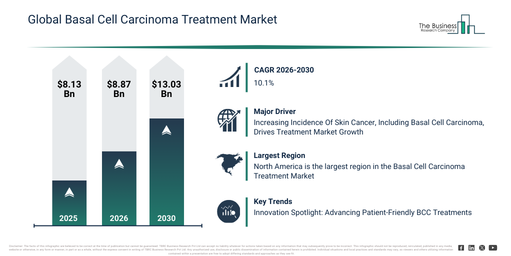
    The basal cell carcinoma treatment market has experienced significant expansion in recent years. Its valuation is set to increase from $8.13 billion in 2025 to $8.87 billion in 2026, exhibiting a compound annual growth rate (CAGR) of 9.1%. This historical growth can be attributed to several factors, including the rising occurrence of non-melanoma skin cancers, improved awareness regarding early skin cancer diagnosis, the availability of established surgical treatment options, the expansion of dermatology specialty clinics, and enhanced access to cancer care services.

    The basal cell carcinoma treatment market is projected to experience swift expansion in the coming years. This market is predicted to reach $13.03 billion by 2030, exhibiting a compound annual growth rate (CAGR) of 10.1%. This anticipated growth during the forecast timeframe is attributable to several factors, including the escalating development of innovative targeted therapies, a heightened demand for outpatient skin cancer treatments, a magnified emphasis on patient-centered care strategies, the broadening application of precision dermatology, and the expanding deployment of digital dermatology platforms. Key trends anticipated within this period encompass the increasing uptake of less invasive surgical methods, a surge in the application of targeted topical treatments, greater incorporation of sophisticated diagnostic imaging, the widening scope of personalized treatment plans, and an intensified focus on timely diagnosis and subsequent monitoring.

    Get A Free Sample Report With In-Depth Market Insights:

    https://thebusinessresearchcompany.com/sample_request?id=10096412&type=smp&name=Basal%20Cell%20Carcinoma%20Treatment%20Market%20Report%202026&utm_source=Blogs&utm_medium=Paid&utm_campaign=Oct_PR

    Basal Cell Carcinoma Treatment Market Growth Momentum: What Factors Are Shaping Demand?

    The rising incidence of skin cancer, including basal cell carcinoma, is projected to drive the expansion of the treatment market. Skin cancer is a condition where abnormal cells proliferate uncontrollably in the skin, often caused by exposure to ultraviolet (UV) radiation from the sun or tanning beds. The increasing prevalence of skin cancer, especially basal cell carcinoma, fosters an elevated need for targeted and specialized treatment options, which encourages the creation and availability of effective medicines designed to address this particular type of cancer. For instance, in January 2023, the American Cancer Society, Inc., a US-based cancer research organization, reported that approximately 5.4 million basal and squamous cell skin cancer cases were identified annually in the United States, impacting about 3.3 million individuals. Furthermore, basal cell carcinoma accounts for eight out of ten cases. Therefore, the increasing incidence of skin cancer, including basal cell carcinoma, will propel the treatment market.

    Basal Cell Carcinoma Treatment Market Segment Breakdown: Which Categories Lead On Revenue?

    The basal cell carcinoma treatment market covered in this report is segmented –

    1) By Treatment: Surgery, Medication, Other Treatments

    2) By Route Of Administration: Oral, Parenteral, Other Routes Of Administration

    3) By Distribution Channel: Hospital Pharmacy, Retail Pharmacy

    4) By End-User: Hospitals, Specialty Clinics, Other End-Users

    Subsegments:

    1) By Surgery: Mohs Micrographic Surgery, Excisional Surgery, Curettage And Electrodessication, Cryosurgery

    2) By Medication: Topical Chemotherapy, Immunotherapy, Systemic Chemotherapy

    3) By Other Treatments: Radiation Therapy, Photodynamic Therapy

    Basal Cell Carcinoma Treatment Market Trends Redefining Industry Growth

    Major companies within the basal cell carcinoma (BCC) treatment market are concentrating on developing innovative solutions, such as non-invasive therapeutic technologies, to address the increasing demand for treatments that avoid surgery, minimize scarring, and enhance patient comfort and clinical outcomes. Non-invasive BCC treatments utilize topical, targeted, or device-based mechanisms to eliminate cancerous cells without surgical excision, offering a less intrusive alternative to traditional procedures that frequently require anesthesia and recovery periods and may lead to cosmetic impact. For instance, in October 2024, Medicus Pharma Ltd., a US-based biotech company, announced the initiation of its Phase 2 clinical trial (SKNJCT-004) in the United Arab Emirates for its non-invasive basal cell carcinoma (BCC) treatment. The first patient has been enrolled, with the study designed to randomize 36 participants across six leading UAE healthcare institutions, including Cleveland Clinic Abu Dhabi, Sheikh Shakbout Medical City, Burjeel Medical City, Rashid Hospital, Clemenceau Medical Center, and American Hospital of Dubai.

    Basal Cell Carcinoma Treatment Market Leading Players And Competitive Positioning

    Major companies operating in the basal cell carcinoma treatment market are Pfizer Inc., F. Hoffmann-La Roche Ltd., Merck & Co. Inc., AbbVie Inc., Bayer AG, Novartis AG, Sanofi SA, AstraZeneca PLC, GlaxoSmithKline PLC, Eli Lilly and Company, Merck KGaA, Teva Pharmaceutical Industries Ltd., Regeneron Pharmaceuticals Inc., Bausch Health Companies Inc., Sun Pharmaceutical Industries Ltd., Incyte Corporation, LEO Pharma A/S, Blueprint Medicines Corporation, Array BioPharma Inc., Genentech USA Inc., Palvella Therapeutics LLC

    View The Full Basal Cell Carcinoma Treatment Market Report:

    https://thebusinessresearchcompany.com/report/basal-cell-carcinoma-treatment-global-market-report?utm_source=Blogs&utm_medium=Paid&utm_campaign=Oct_PR

    Basal Cell Carcinoma Treatment Market Largest Region: Which Geography Holds The Biggest Share?

    North America was the largest region in the basal cell carcinoma treatment market in 2025. Asia-Pacific is expected to be the fastest-growing region in the forecast period. The regions covered in the basal cell carcinoma treatment market report are Asia-Pacific, South East Asia, Western Europe, Eastern Europe, North America, South America, Middle East, Africa.

    Reach Out To Our Team:

    The Business Research Company: https://www.thebusinessresearchcompany.com/

    Americas: +1 310-496-7795

    Asia: +44 7882 955267 & +91 8897263534

    Europe: +44 7882 955267

    Email us at: marketing@tbrc.info

    Follow us on:

    LinkedIn: https://in.linkedin.com/company/the-business-research-company

    YouTube: https://www.youtube.com/channel/UC24_fI0rV8cR5DxlCpgmyFQ

    Global Market Model: https://www.thebusinessresearchcompany.com/global-market-model
  • Bartonellosis Market Growth Potential: What The Latest Forecast Reveals

    Bartonellosis Market Growth Potential: What The Latest Forecast Reveals

    Featuring market attractiveness scoring, total addressable market sizing, company benchmarking matrices, interactive Excel dashboards, deeper supply chain intelligence, emerging startup tracking, and granular product-level insights, The Business Research Company’s 2026 market reports are built to deliver research that is both more actionable and more strategically valuable.

    Bartonellosis Market CAGR Outlook And Future Development

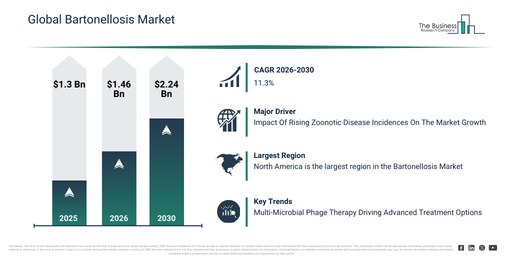
    The bartonellosis market has experienced rapid expansion in recent years. It is projected to grow from $1.3 billion in 2025 to $1.46 billion in 2026, exhibiting a compound annual growth rate (CAGR) of 11.7%. The historical growth can be linked to several factors, including the increasing incidence of cat scratch disease, advancements in diagnostic capabilities for infectious diseases, the availability of antibiotic therapies, the expansion of hospital diagnostic laboratories, and heightened clinician awareness of bartonella infections.

    The bartonellosis market is projected to experience rapid growth in the next few years, set to reach $2.24 billion by 2030, exhibiting a compound annual growth rate (CAGR) of 11.3%. This growth during the forecast period can be attributed to the increasing development of rapid diagnostic assays, a rising focus on early intervention in systemic infections, the expansion of specialized infectious disease care, a growing adoption of precision antibiotic regimens, and increasing investment in zoonotic disease research. Prominent trends throughout this period encompass the increasing adoption of molecular diagnostic techniques, a rising use of PCR-based testing, growing awareness of zoonotic infections, the expansion of targeted antibiotic treatment protocols, and an enhanced focus on early disease identification.

    Get A Free Sample Report With In-Depth Market Insights:

    https://thebusinessresearchcompany.com/sample_request?id=92276488&type=smp&name=Bartonellosis%20Market%20Report%202026&utm_source=Blogs&utm_medium=Paid&utm_campaign=Oct_PR

    Bartonellosis Market Expansion Drivers: What’s Shaping Future Growth?

    The increasing occurrence of zoonotic diseases is anticipated to drive the expansion of the bartonellosis market in the future. These diseases are defined as ailments passed from animals to humans, either directly or via intermediary carriers. The heightened incidence of zoonotic diseases stems from various factors, including heightened interactions between humans and animals, shifts in the environment, deforestation, international travel, and the interspecies transmission of pathogens. Bartonellosis exemplifies zoonotic diseases, illustrating how bacterial pathogens carried by animal vectors like fleas, ticks, and lice can infect people, resulting in diverse clinical symptoms and underscoring the critical need to comprehend vector-borne disease transmission for public health. For example, in December 2024, the European Food Safety Authority (EFSA) and European Centre for Disease Prevention and Control (ECDC), a Europe-based public health body, reported that human campylobacteriosis cases reached 148,181, marking a 4.3% year-over-year increase from 139,225 cases recorded in 2022. Likewise, salmonellosis cases increased to 77,486, showing a 16.9% rise when compared to 65,478 cases in 2022. Consequently, the escalating occurrence of zoonotic diseases is fueling the expansion of the bartonellosis market.

    Bartonellosis Market Segmentation: How Does The Market Break Down By Category?

    The bartonellosis market covered in this report is segmented –

    1) By Disease Type: Cat Scratch Disease (CSD), Trench Fever, Bartonella Endocarditis, Other Disease Types

    2) By Diagnostic Method: Polymerase Chain Reaction (PCR) Testing, Serological Testing, Culture Methods, Histological Testing

    3) By Treatment: Antibiotics, Antibacterial Agents, Supportive Care

    4) By End-User: Hospitals And Clinics, Diagnostic Laboratories, Other End-Users

    Subsegments:

    1) By Cat Scratch Disease (CSD): Immunocompetent Hosts, Immunocompromised Hosts, Neurological Complications

    2) By Trench Fever: Acute Trench Fever, Chronic Trench Fever, Asymptomatic Infections

    3) By Bartonella Endocarditis: Native Valve Endocarditis, Prosthetic Valve Endocarditis, Bloodstream Infections

    4) By Other Disease Types: Bacillary Angiomatosis, Parinaud’s Oculoglandular Syndrome, Bartonella-associated Vasculitis

    Bartonellosis Market Strategic Trends: What Defines The Next Growth Phase?

    Leading firms within the Bartonellosis market are prioritizing technological innovations, specifically multi-microbial phage modulation, to secure a competitive edge. This method, multi-microbial phage modulation, utilizes custom phage cocktails designed to concurrently target various intracellular pathogens, thereby tackling co-infections that often complicate Bartonella therapy. An example of this is Biologix Center, a US-based biotechnology firm, which launched Induced Native Phage Cocktails in November 2024, specifically formulated for individuals experiencing Bartonella and Babesia co-infections. This treatment offers pathogen-specific phage activation, daily adaptive dosing customized to each patient’s microbial profile, and improved penetration into stubborn infection reservoirs. Such innovation facilitates a holistic approach to intricate co-infections, lessens reliance on traditional antibiotics, and underpins precision medicine tactics. Through the application of multi-microbial phage therapy, companies are developing personalized treatment options within the Bartonellosis market, even as they navigate the clinical validation and regulatory processes typical for novel biologic therapies.

    Bartonellosis Market Competitive Overview And Top Companies

    Major companies operating in the bartonellosis market are Mayo Clinic Laboratories, Northwell Health Labs, Laboratory Corporation of America Holdings, Quest Diagnostics Incorporated, IDEXX Laboratories Inc., Bio-Rad Laboratories Inc., Alberta Precision Laboratories, Jiangsu BioPerfectus Technologies Co. Ltd., ARUP Laboratories, Surmodics Inc., Medical Diagnostic Laboratories LLC, Creative Biolabs, IGeneX Inc., Karius Inc., Synnovis Group LLP, Galaxy Diagnostics Inc., Gold Standard Diagnostics, Eurofins Biomnis, AMMAGENOMICS Private Limited, Ringbio

    View The Full Bartonellosis Market Report:

    https://thebusinessresearchcompany.com/report/bartonellosis-global-market-report?utm_source=Blogs&utm_medium=Paid&utm_campaign=Oct_PR

    Bartonellosis Market Regional Analysis: Which Geography Leads On Revenue?

    North America was the largest region in the bartonellosis market in 2025. The regions covered in the bartonellosis market report are Asia-Pacific, South East Asia, Western Europe, Eastern Europe, North America, South America, Middle East, Africa.

    Reach Out To Our Team:

    The Business Research Company: https://www.thebusinessresearchcompany.com/

    Americas: +1 310-496-7795

    Asia: +44 7882 955267 & +91 8897263534

    Europe: +44 7882 955267

    Email us at: marketing@tbrc.info

    Follow us on:

    LinkedIn: https://in.linkedin.com/company/the-business-research-company

    YouTube: https://www.youtube.com/channel/UC24_fI0rV8cR5DxlCpgmyFQ

    Global Market Model: https://www.thebusinessresearchcompany.com/global-market-model
  • Barrett’s Esophagus Market Growth Outlook: Why Analysts Expect Continued Expansion

    Barrett’s Esophagus Market Growth Outlook: Why Analysts Expect Continued Expansion

    Built to provide research that’s more actionable and strategically valuable, The Business Research Company’s 2026 market reports include market attractiveness analysis, total addressable market sizing, company benchmarking matrices, interactive Excel dashboards, broader supply chain intelligence, emerging startup tracking, and in-depth product insights.

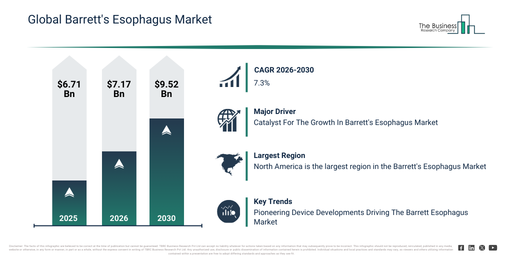
    Barrett’s Esophagus Market Set To Climb From $7.17 Billion In 2026 To $9.52 Billion By 2030

    The barrett’s esophagus market size has shown strong growth in recent years. It is anticipated to expand from $6.71 billion in 2025 to $7.17 billion in 2026, at a compound annual growth rate (CAGR) of 6.9%. This historical growth is attributable to several factors, including the rising incidence of gastroesophageal reflux disease, increased awareness regarding esophageal cancer risk, the widespread availability of endoscopic diagnostic tools, the expansion of gastroenterology specialty care, and improved clinical surveillance protocols.

    The barrett’s esophagus market is anticipated to expand significantly over the coming years, with its value forecast to reach $9.52 billion by 2030, demonstrating a compound annual growth rate (CAGR) of 7.3%. This projected growth is driven by several factors, including the wider adoption of sophisticated endoscopic imaging, the expanding application of precision ablation technologies, a heightened emphasis on early intervention approaches, the spread of outpatient endoscopic treatments, and intensified research aimed at preventing disease progression. Key trends expected during this period encompass the increased uptake of endoscopic surveillance programs, a surge in the application of ablation therapies, a concentrated effort on detecting early dysplasia, the broadening availability of minimally invasive treatment choices, and a stronger focus on continuous disease monitoring.

    Get A Free Sample Report With In-Depth Market Insights:

    https://thebusinessresearchcompany.com/sample_request?id=41453559&type=smp&name=Barrett%27s%20Esophagus%20Market%20Report%202026&utm_source=Blogs&utm_medium=Paid&utm_campaign=Oct_PR

    Barrett’s Esophagus Market Development Factors: What’s Supporting Demand?

    The barrett esophagus market is projected to expand due to the heightened risk of esophageal cancer. This cancer impacts the esophagus, which is a lengthy, hollow tube connecting the throat to the stomach. The incidence of esophageal cancer rises in patients diagnosed with Barrett’s esophagus accompanied by dysplasia, with a significantly elevated risk for those exhibiting high-grade dysplasia. For instance, data from the American Cancer Society indicates that an estimated 21,560 individuals were anticipated to be affected by esophageal cancer in 2023, marking an increase from 20,640 people in 2022. Consequently, the increasing likelihood of esophageal cancer is a key driver for the growth of the barrett esophagus market.

    Barrett’s Esophagus Market Segment Trends And Revenue Contributors

    The barrett’s esophagus market covered in this report is segmented –

    1) By Type: No Dysplasia, Low-Grade Dysplasia, High Grade Dysplasia, Other Types

    2) By Treatment: Medication, Endoscopic Therapy, Surgery, Other Treatments

    3) By Route Of Administration: Oral, Parenteral, Rectal, Other Routes Of Administration

    4) By Distribution Channel: Hospital Pharmacy, Retail Pharmacy, Online Pharmacy, Other Distribution Channels

    Subsegments:

    1) By No Dysplasia: Surveillance Management, Endoscopic Monitoring

    2) By Low-Grade Dysplasia: Endoscopic Surveillance, Ablation Therapies

    3) By High-Grade Dysplasia: Endoscopic Mucosal Resection (EMR), Radiofrequency Ablation (RFA)

    4) By Other Types: Mixed Dysplasia, Rare Variants

    Barrett’s Esophagus Market Transformation Trends: What Innovations Are Driving Change?

    Key players within the Barrett esophagus market are concentrating on developing innovative solutions, such as advanced wireless reflux diagnostic systems, to address the growing demand for more accurate, patient-friendly, and extended-duration monitoring technologies. Wireless pH-capsule testing systems offer prolonged reflux monitoring without the discomfort linked to traditional catheter-based methods, thereby improving patient compliance and providing more reliable diagnostic data for conditions like GERD, which contribute to Barrett esophagus. For instance, in April 2023, Laborie Medical Technologies, a US-based medical technology company, introduced the new alpHaONE wireless pH-capsule reflux testing diagnostic system, designed specifically for diagnosing gastroesophageal reflux disease (GERD). This system is able to monitor for up to 96 hours and features a small design with larger buttons and a fail-safe capsule delivery method. The system also includes a software application equipped with a virtual instruction program and user-customizable symptom buttons.

    Barrett’s Esophagus Market Competitive Landscape: Which Companies Lead The Industry?

    Major companies operating in the barrett’s esophagus market are F. Hoffmann-La Roche Ltd., AstraZeneca plc, Takeda Pharmaceutical Company Limited, Medtronic PLC, Merck KGaA, Boston Scientific Corporation, Olympus Corporation, Eisai Co. Ltd., Steris plc, Aurobindo Pharma Limited, Cook Medical Inc., Endo International plc, Sun Pharmaceutical Industries Limited, Ironwood Pharmaceuticals Inc., Sebela Pharmaceuticals Inc., Phathom Pharmaceuticals Inc., EndoGastric Solutions Inc., NinePoint Medical Inc., Mederi Therapeutics Inc., Zydus Group, Johnson & Johnson Private Limited

    View The Full Barrett’s Esophagus Market Report:

    https://thebusinessresearchcompany.com/report/barretts-esophagus-global-market-report?utm_source=Blogs&utm_medium=Paid&utm_campaign=Oct_PR

    Barrett’s Esophagus Market Geographic Spread And Regional Opportunities

    North America was the largest region in the barrett esophagus market in 2025. Asia-Pacific is expected to be the fastest-growing region in the forecast period. The regions covered in the barrett’s esophagus market report are Asia-Pacific, South East Asia, Western Europe, Eastern Europe, North America, South America, Middle East, Africa.

    Reach Out To Our Team:

    The Business Research Company: https://www.thebusinessresearchcompany.com/

    Americas: +1 310-496-7795

    Asia: +44 7882 955267 & +91 8897263534

    Europe: +44 7882 955267

    Email us at: marketing@tbrc.info

    Follow us on:

    LinkedIn: https://in.linkedin.com/company/the-business-research-company

    YouTube: https://www.youtube.com/channel/UC24_fI0rV8cR5DxlCpgmyFQ

    Global Market Model: https://www.thebusinessresearchcompany.com/global-market-model
  • Balloon Catheters Market Forecast Insights: The Road To $5.25 Billion By 2030

    Balloon Catheters Market Forecast Insights: The Road To $5.25 Billion By 2030

    Backed by market attractiveness analysis, total addressable market sizing, company benchmarking matrices, interactive Excel dashboards, wider supply chain intelligence, emerging startup coverage, and detailed product-level insights, The Business Research Company’s 2026 market reports are designed to offer research that is more actionable and strategically valuable than ever.

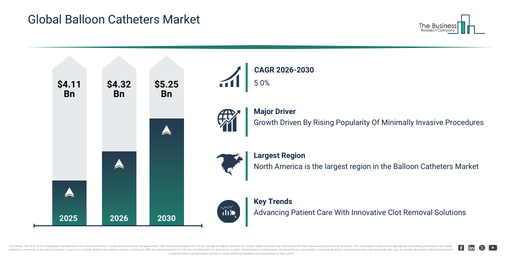
    Balloon Catheters Market Forecast: Value Set To Climb From $4.32 Billion To $5.25 Billion

    The balloon catheters market has experienced substantial growth in recent years. This market is projected to expand from $4.11 billion in 2025 to reach $4.32 billion by 2026, demonstrating a compound annual growth rate (CAGR) of 5.2%. Historically, this expansion can be attributed to several factors, including the increasing prevalence of cardiovascular disease, a rise in the uptake of angioplasty procedures, the proliferation of catheterization laboratories, the introduction of advanced interventional cardiology devices, and the growing clinical expertise in endovascular treatments.

    The balloon catheters market size is anticipated to experience considerable expansion in the upcoming years, with its value projected to reach $5.25 billion by 2030, exhibiting a compound annual growth rate (CAGR) of 5.0%. This growth during the forecast period is fueled by elements such as increasing innovation in balloon catheter coatings, a rising demand for outpatient interventional procedures, the broadening scope of minimally invasive treatment indications, the growing adoption of precision-guided devices, and increased investment in cardiovascular device research and development. Significant trends expected in this period include the increasing adoption of drug-eluting balloon catheters, a rising demand for minimally invasive cardiovascular procedures, the growing utilization of high-pressure and scoring balloons, an expansion of peripheral artery disease treatments, and an enhanced focus on procedural precision and safety.

    Get A Free Sample Report With In-Depth Market Insights:

    https://thebusinessresearchcompany.com/sample_request?id=10990097&type=smp&name=Balloon%20Catheters%20Market%20Report%202026&utm_source=Blogs&utm_medium=Paid&utm_campaign=Oct_PR

    Balloon Catheters Market Industry Drivers: What’s Behind The Revenue Growth?

    The increasing integration of minimally invasive surgeries is anticipated to drive the expansion of the balloon catheters market. These surgical procedures involve minimal incisions, thereby reducing the necessity for extensive cuts or openings in the body. The rise in minimally invasive surgeries is attributed to their advantages, including reduced recovery times, lower complication risks, and less pain, alongside technological advancements facilitating outpatient procedures. Balloon catheters are vital in optimizing the benefits of minimally invasive surgeries by enhancing precision, safety, and comfort during procedures, while also shortening recovery periods and hospital stays. For example, in January 2024, Intuitive Surgical Inc., a US-based manufacturer of robotic products, reported placing 415 da Vinci surgical systems, which utilize a minimally invasive surgical approach, in the fourth quarter of 2023, signifying a 12% increase compared to 2022. Thus, the increasing adoption of minimally invasive surgeries is a key driver for growth in the balloon catheters market.

    Balloon Catheters Market Segment Analysis Spotlighting Growth Areas

    The balloon catheters market covered in this report is segmented –

    1) By Procedure Type: Percutaneous Transluminal Coronary Angioplasty (PTCA) Balloon Catheters, Chronic Total Occlusion (CTO) Balloon Catheters

    2) By Product Type: Normal Balloon Catheter, Drug Eluting Balloon Catheter, Cutting Balloon Catheter, Stent Graft Balloon Catheter, Scoring Balloon Catheter

    3) By Distribution Channel: Direct Tender, Third Party Distribution, Other Distribution Channels

    4) By Application: Coronary Artery Disease, Peripheral Artery Disease, Other Applications

    5) By End User: Hospitals, Specialty Centers, Ambulatory Surgery Centers, Other End Users

    Subsegments:

    1) By Percutaneous Transluminal Coronary Angioplasty (PTCA) Balloon Catheters: Semi-Compliant Balloon Catheters, Non-Compliant Balloon Catheters

    2) By Chronic Total Occlusion (CTO) Balloon Catheters: High-Pressure CTO Balloon Catheters, Low-Profile CTO Balloon Catheters

    #Balloon Catheters Market Growth Trends: What’s Shaping The Future Outlook?

    Leading companies within the balloon catheters market are concentrating on developing solutions for mechanical thrombectomy (MT) procedures, aiming to optimize blood clot removal by precisely managing blood flow during these interventions. MT is a minimally invasive medical procedure employed to extract blood clots from blood vessels, typically in instances of ischemic stroke. As an illustration, in September 2024, CERENOVUS, the neurovascular division of Johnson & Johnson Medical Devices Companies, introduced the EMBOGUARD Balloon Guide Catheter to Europe. This device is specifically engineered for endovascular procedures, including the management of acute ischemic stroke. The EMBOGUARD catheter facilitates more effective clot removal through localized control of blood flow during mechanical thrombectomy procedures. Its implementation has been linked to elevated first-pass recanalization rates, shortened procedure times, and a diminished probability of clot fragments leading to distal emboli, which can trigger subsequent ischemic events. The EMBOGUARD Balloon Guide Catheter is integrated into the CERENOVUS Stroke Solutions portfolio, a collection of technologies crafted to support physicians in performing mechanical thrombectomy procedures.

    Balloon Catheters Market Leading Companies: Who Holds The Strongest Market Presence?

    Major companies operating in the balloon catheters market are Cardinal Health Inc., Johnson & Johnson, Abbott Laboratories, Medtronic plc, Boston Scientific Corporation, Lepu Medical Technology, B. Braun Melsungen AG, Terumo Corporation, Teleflex Incorporated, Cook Medical Inc., Biotronik SE & Co. KG, Merit Medical Systems Inc., Asahi Intecc Co. Ltd., Freudenberg Medical LLC, Biomerics, AngioDynamics Inc., Endologix Inc., Raumedic AG, Otsuka Pharmaceutical Factory Inc., AngioScore Inc., CardioFlow, Endocor GmbH, MicroPort Scientific Corporation, Eureka Medical Inc., Neovasc Inc.

    View The Full Balloon Catheters Market Report:

    https://thebusinessresearchcompany.com/report/balloon-catheters-global-market-report?utm_source=Blogs&utm_medium=Paid&utm_campaign=Oct_PR

    Balloon Catheters Market Top Region By Revenue And Market Share

    North America was the largest region in the balloon catheters market in 2025. Asia-Pacific is expected to be the fastest-growing region in the forecast period. The regions covered in the balloon catheters market report are Asia-Pacific, South East Asia, Western Europe, Eastern Europe, North America, South America, Middle East, Africa.

    Reach Out To Our Team:

    The Business Research Company: https://www.thebusinessresearchcompany.com/

    Americas: +1 310-496-7795

    Asia: +44 7882 955267 & +91 8897263534

    Europe: +44 7882 955267

    Email us at: marketing@tbrc.info

    Follow us on:

    LinkedIn: https://in.linkedin.com/company/the-business-research-company

    YouTube: https://www.youtube.com/channel/UC24_fI0rV8cR5DxlCpgmyFQ

    Global Market Model: https://www.thebusinessresearchcompany.com/global-market-model
  • Balance Rehabilitation Training Market Explained: What Is Fueling Growth To $2.48 Billion By 2030?

    Balance Rehabilitation Training Market Explained: What Is Fueling Growth To $2.48 Billion By 2030?

    Featuring market attractiveness scoring, total addressable market sizing, company benchmarking matrices, interactive Excel dashboards, deeper supply chain intelligence, emerging startup tracking, and granular product-level insights, The Business Research Company’s 2026 market reports are built to deliver research that is both more actionable and more strategically valuable.

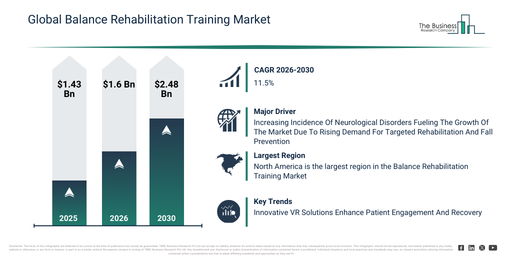
    Balance Rehabilitation Training Market Revenue Growth On Track For A 11.5% CAGR Through 2030

    The balance rehabilitation training market has seen rapid expansion in recent years. It is anticipated to increase from $1.43 billion in 2025 to $1.6 billion in 2026, achieving a compound annual growth rate (CAGR) of 11.8%. This historical growth can be attributed to several factors including an aging global population, the rising occurrence of neurological disorders, broader acceptance of physiotherapy-led rehabilitation initiatives, an increase in services for post-injury recovery, and a greater clinical emphasis on balance assessment.

    The balance rehabilitation training market size is anticipated to undergo significant growth in the coming years. It is projected to expand to $2.48 billion by 2030, exhibiting a compound annual growth rate (CAGR) of 11.5%. The expansion during the forecast period is attributable to a heightened demand for home-based rehabilitation solutions, an increasing adoption of digital physiotherapy platforms, the widening of preventive healthcare initiatives, a greater emphasis on personalized therapy outcomes, and increased investments in rehabilitation technology. Dominant trends during this period are expected to include a rising adoption of sensor-based balance assessment tools, growing integration of digital feedback systems in training, increasing utilization of personalized rehabilitation protocols, the expansion of hybrid and remote balance training programs, and an enhanced focus on fall prevention solutions.

    Get A Free Sample Report With In-Depth Market Insights:

    https://thebusinessresearchcompany.com/sample_request?id=97982725&type=smp&name=Balance%20Rehabilitation%20Training%20Market%20Report%202026&utm_source=Blogs&utm_medium=Paid&utm_campaign=Oct_PR

    Balance Rehabilitation Training Market Growth Factors: What’s Supporting Expansion?

    The anticipated rise in neurological disorder cases is projected to fuel the expansion of the balance rehabilitation training market in the foreseeable future. These disorders represent medical conditions impacting the brain, spinal cord, and nerves, resulting in various symptoms such as cognitive, motor, and sensory deficits. The growing occurrence of neurological disorders is associated with the world’s aging populace, given that aging progressively diminishes neuronal function, lessens brain plasticity, and heightens oxidative stress, thus aiding in the onset and advancement of these conditions. Balance rehabilitation training aids in managing neurological disorders through focused exercises designed to enhance stability, coordination, and motor control. This training boosts patient autonomy by decreasing the risk of falls and encouraging secure movement, thereby elevating their overall quality of life. As an illustration, in July 2024, the National Health Service, a UK government agency, reported 487,432 patients with dementia (a progressive brain disorder impacting memory, thinking, and everyday activities) by June 30, 2024, marking an increase of 3,155 cases from May 31, 2024. Consequently, the rising occurrence of neurological disorders is propelling the growth of the balance rehabilitation training market.

    Balance Rehabilitation Training Market Segment Performance And Emerging Opportunities

    The balance rehabilitation training market covered in this report is segmented –

    1) By Type: Static Balance Training, Dynamic Balance Training, Functional Balance Training, Postural Control Training, Reaction Time Training

    2) By Training Mode: Individual Training, Group Training, Online Training, In-Person Training, Hybrid Training

    3) By Equipment Type: Balanstones, Balancushions, Wobble Boards, Balance Beams, Stability Balls

    4) By Application: Geriatric Rehabilitation, Sports Rehabilitation, Pediatric Rehabilitation, Neurological Rehabilitation, Orthopedic Rehabilitation

    5) By End-User: Hospitals, Rehabilitation Centers, Nursing Homes, Physiotherapy Clinics, Home Care Settings

    Subsegments:

    1) By Static Balance Training: Single Leg Stance Exercises, Tandem Stance Exercises, Romberg Exercises, Balance Board Exercises

    2) By Dynamic Balance Training: Walking Exercises, Stepping Exercises, Perturbation Training, Obstacle Navigation Exercises

    3) By Functional Balance Training: Sit To Stand Exercises, Reaching Exercises, Carrying Object Exercises, Transitional Movements Exercises

    4) By Postural Control Training: Core Stability Exercises, Trunk Control Exercises, Alignment Training, Posture Correction Exercises

    5) By Reaction Time Training: Visual Stimulus Response Exercises, Auditory Stimulus Response Exercises, Multi-Sensory Reaction Exercises, Rapid Direction Change Exercises

    Balance Rehabilitation Training Market Industry Trends: What’s Reshaping Demand?

    Leading companies operating in the balance rehabilitation training market are concentrating on developing innovative solutions, such as virtual reality (VR) platforms, to enhance patient engagement and improve recovery outcomes. Virtual reality (VR) platforms refer to integrated software and hardware ecosystems that create fully immersive, computer-generated environments, allowing users to interact with three-dimensional digital worlds in real time. For instance, in September 2024, Interacoustics A/S, a Denmark-based medical technology company, introduced its Virtualis balance rehabilitation solutions, a virtual reality platform designed to enhance balance, vestibular, and postural rehabilitation. This system combines immersive VR environments with objective measurement tools, such as static and dynamic posturography force plates, enabling patients to engage in interactive and customizable therapy activities. It supports a broad range of rehabilitation programs for neurological, vestibular, and orthopedic conditions, while allowing clinicians to monitor patient progress in real time and personalize therapy plans using secure data analytics.

    Balance Rehabilitation Training Market Key Players: Which Companies Lead Industry Competition?

    Major companies operating in the balance rehabilitation training market are Aretech LLC, Bioventus Inc., Aegis Care Advisors Pvt. Ltd., Fourier Intelligence Co., zebris Medical GmbH, Medica Medizintechnik GmbH, E3 Diagnostics Inc., MedBridge, Wandercraft, Hocoma AG, Neofect Co. Ltd., Motek Medical B.V., Tyromotion GmbH, Lifeward Ltd., BoBo Healthcare Ltd., 360 Neuro Health, Cyclops MedTech Pvt Ltd, Euleria Health S.r.l., NeuroEquilibrium Diagnostic Systems Pvt Ltd, Framiral S.A.S.

    View The Full Balance Rehabilitation Training Market Report:

    https://thebusinessresearchcompany.com/report/balance-rehabilitation-training-global-market-report?utm_source=Blogs&utm_medium=Paid&utm_campaign=Oct_PR

    Balance Rehabilitation Training Market Regional Analysis And Top Geography

    North America was the largest region in the balance rehabilitation training market in 2025. Asia-Pacific is expected to be the fastest-growing region in the forecast period. The regions covered in the balance rehabilitation training market report are Asia-Pacific, South East Asia, Western Europe, Eastern Europe, North America, South America, Middle East, Africa.

    Reach Out To Our Team:

    The Business Research Company: https://www.thebusinessresearchcompany.com/

    Americas: +1 310-496-7795

    Asia: +44 7882 955267 & +91 8897263534

    Europe: +44 7882 955267

    Email us at: marketing@tbrc.info

    Follow us on:

    LinkedIn: https://in.linkedin.com/company/the-business-research-company

    YouTube: https://www.youtube.com/channel/UC24_fI0rV8cR5DxlCpgmyFQ

    Global Market Model: https://www.thebusinessresearchcompany.com/global-market-model
  • Bacterial Vaginosis Market Forecast To Reach $5.13 Billion By 2030: Key Trends Explained

    Bacterial Vaginosis Market Forecast To Reach $5.13 Billion By 2030: Key Trends Explained

    Built to provide research that’s more actionable and strategically valuable, The Business Research Company’s 2026 market reports include market attractiveness analysis, total addressable market sizing, company benchmarking matrices, interactive Excel dashboards, broader supply chain intelligence, emerging startup tracking, and in-depth product insights.

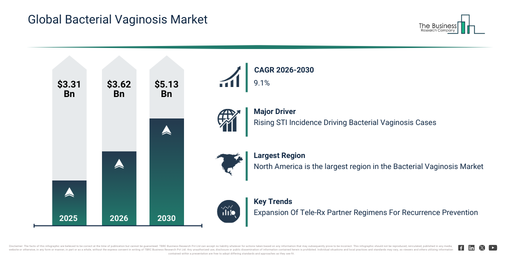
    Bacterial Vaginosis Market Value Growth And Long-Term Outlook

    The bacterial vaginosis market size has experienced significant expansion in recent years. It is projected to increase from $3.31 billion in 2025 to $3.62 billion in 2026, exhibiting a compound annual growth rate (CAGR) of 9.4%. This growth in prior periods can be attributed to several factors, including the increasing prevalence of bacterial vaginosis among women, enhanced access to gynecological healthcare services, the availability of oral and topical antibiotics, the proliferation of diagnostic laboratory services, and a rise in clinical screening initiatives.

    The bacterial vaginosis market size is anticipated to experience robust growth in the upcoming years. Its valuation is set to reach $5.13 billion by 2030, demonstrating a compound annual growth rate (CAGR) of 9.1%. This expansion during the forecast period is driven by the increasing development of microbiome-based therapies, the growing adoption of rapid molecular diagnostics, a rising focus on preventive women’s health, the broadening of telehealth-supported diagnosis, and increased investment in non-antibiotic treatment alternatives. Key trends during this period include the rising uptake of point-of-care diagnostic tests, an increasing demand for targeted antibiotic therapies, growing awareness of vaginal microbiome health, the expansion of home-based testing solutions, and an enhanced focus on early detection and screening.

    Get A Free Sample Report With In-Depth Market Insights:

    https://thebusinessresearchcompany.com/sample_request?id=75899715&type=smp&name=Bacterial%20Vaginosis%20Market%20Report%202026&utm_source=Blogs&utm_medium=Paid&utm_campaign=Oct_PR

    Bacterial Vaginosis Market Demand Drivers: What’s Powering Industry Growth?

    The future expansion of the bacterial vaginosis market is anticipated to be fueled by the rising occurrence of sexually transmitted infections (STIs). STIs are defined as infections predominantly transmitted through sexual contact, stemming from bacterial, viral, or parasitic agents. This upward trend in STI cases can be attributed to elements like engaging in unprotected sex, having multiple sexual partners, insufficient public awareness, and the development of antibiotic resistance. Bacterial vaginosis elevates the risk of acquiring STIs by disturbing the natural bacterial equilibrium in the vagina, thereby facilitating the establishment of infections including HIV and chlamydia. As an illustration, data from the European Centre for Disease Prevention and Control (ECDC), a government agency based in Sweden, indicates a significant increase in specific STI cases. Gonorrhea instances grew from 70,881 in 2022 (17.9 per 100,000) to 96,969 in 2023 (25.0 per 100,000), representing a 31% increase year-over-year. Concurrently, syphilis cases ascended from 35,391 in 2022 (8.5 per 100,000) to 41,051 in 2023 (9.9 per 100,000), which is a 13% surge. Furthermore, chlamydia notifications amounted to 230,199 in 2023, showing a 3% rise in the crude notification rate when compared to 2022. Consequently, the escalating incidence of sexually transmitted infections (STIs) is propelling the expansion of the bacterial vaginosis market.

    Bacterial Vaginosis Market Segment Landscape And Growth Outlook

    The bacterial vaginosis market covered in this report is segmented –

    1) By Type: Point-Of-Care Testing, Laboratory Testing

    2) By Application: Diagnosis, Treatment, Recurrence Prevention Or Maintenance, Screening And Monitoring

    3) By End-User: Hospitals, Homecare, Specialty Clinics

    Subsegments:

    1) By Point-Of-Care Testing: Rapid Diagnostic Tests, Microscopy-based Tests

    2) By Laboratory Testing: Gram Staining, Polymerase Chain Reaction (PCR), DNA Probe Tests

    Bacterial Vaginosis Market Innovation Trends: What Developments Are Reshaping The Industry?

    Leading companies active in the bacterial vaginosis market are concentrating on developing innovative solutions, such as combined prescription regimens for sexual partners, to secure a competitive advantage. These paired prescription regimens involve administering treatment not only to the infected individual but also to their sexual partner, thereby addressing the risk of recurrence at its origin. For instance, in March 2025, Wisp, a U.S.-based women’s telehealth company, launched the first-ever Male BV Partner Treatment, a two-part prescription regimen for male partners that includes oral metronidazole and topical clindamycin. This treatment features synchronized dual therapy, once-daily dosing for seven days, and delivery through Wisp’s telemedicine platform. This strategy harnesses emerging clinical evidence to reduce reinfection rates and supports a shift towards more comprehensive, relationship-aware care, although it might increase regulatory complexities and raise concerns about partner adherence.

    Bacterial Vaginosis Market Competitive Landscape: Who Leads The Industry?

    Major companies operating in the bacterial vaginosis market are Pfizer Inc., Merck & Co. Inc., Bayer AG, Sanofi S.A., Viatris Inc., Organon & Co., Shionogi & Company Limited, Otsuka Pharmaceutical Co. Ltd., Melinta Therapeutics Inc., Evofem Biosciences Inc., Gedea Biotech AB, Hologic Inc., bioMérieux SA, Becton Dickinson and Company, Thermo Fisher Scientific Inc., Roche Holding AG, Abbott Laboratories, Ferring Pharmaceuticals, Mylan N.V., Almirall S.A.

    View The Full Bacterial Vaginosis Market Report:

    https://thebusinessresearchcompany.com/report/bacterial-vaginosis-global-market-report?utm_source=Blogs&utm_medium=Paid&utm_campaign=Oct_PR

    Bacterial Vaginosis Market Geographic Analysis: Where Is Demand Rising Fastest?

    North America was the largest region in the bacterial vaginosis market in 2025. The regions covered in the bacterial vaginosis market report are Asia-Pacific, South East Asia, Western Europe, Eastern Europe, North America, South America, Middle East, Africa.

    Reach Out To Our Team:

    The Business Research Company: https://www.thebusinessresearchcompany.com/

    Americas: +1 310-496-7795

    Asia: +44 7882 955267 & +91 8897263534

    Europe: +44 7882 955267

    Email us at: marketing@tbrc.info

    Follow us on:

    LinkedIn: https://in.linkedin.com/company/the-business-research-company

    YouTube: https://www.youtube.com/channel/UC24_fI0rV8cR5DxlCpgmyFQ

    Global Market Model: https://www.thebusinessresearchcompany.com/global-market-model
  • Bacterial Pneumonia Market Analysis: Understanding The Drivers Behind 8.4% CAGR Through 2030 Growth

    Bacterial Pneumonia Market Analysis: Understanding The Drivers Behind 8.4% CAGR Through 2030 Growth

    Backed by market attractiveness analysis, total addressable market sizing, company benchmarking matrices, interactive Excel dashboards, wider supply chain intelligence, emerging startup coverage, and detailed product-level insights, The Business Research Company’s 2026 market reports are designed to offer research that is more actionable and strategically valuable than ever.

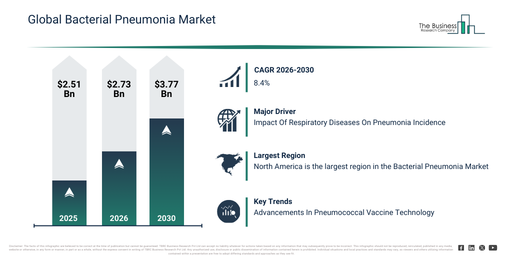
    Bacterial Pneumonia Market Poised To Hit $3.77 Billion By 2030 With A 8.4% CAGR

    The market size for bacterial pneumonia has demonstrated strong growth in recent years. It is expected to expand from $2.51 billion in 2025 to $2.73 billion in 2026, reflecting a compound annual growth rate (CAGR) of 8.7%. This historic growth can be linked to the increasing occurrence of respiratory bacterial infections, higher hospitalization rates among the elderly, the widespread availability of broad-spectrum antibiotics, the expansion of hospital pharmacy networks, and improved clinical understanding of bacterial pneumonia.

    The bacterial pneumonia market is projected to experience substantial expansion over the upcoming years. Its valuation is anticipated to reach $3.77 billion by 2030, exhibiting a compound annual growth rate (CAGR) of 8.4%. This anticipated growth during the forecast period is driven by several factors, including the escalating development of targeted antibacterial medications, the increasing uptake of precision diagnostic methods, a growing commitment to vaccine research, the expansion of outpatient care models, and a heightened emphasis on antimicrobial stewardship initiatives. Key developments expected within the forecast timeframe involve the wider acceptance of advanced antibiotic treatments, an increase in the utilization of rapid diagnostic tests, a reinforced focus on managing antimicrobial resistance, the extension of hospital-based treatment guidelines, and an amplified prioritization of strategies for preventive vaccination.

    Get A Free Sample Report With In-Depth Market Insights:

    https://thebusinessresearchcompany.com/sample_request?id=76792370&type=smp&name=Bacterial%20Pneumonia%20Market%20Report%202026&utm_source=Blogs&utm_medium=Paid&utm_campaign=Oct_PR

    Bacterial Pneumonia Market Growth Drivers: What’s Behind The Acceleration?

    Future expansion of the bacterial pneumonia market is projected to be fueled by the growing occurrence of respiratory illnesses. These conditions encompass health issues that obstruct normal breathing and oxygen exchange, impacting the lung structures and respiratory pathways. Various elements, such as environmental conditions, lifestyle choices, population demographics, and genetic predispositions, are responsible for the elevated incidence of respiratory disorders. Respiratory ailments heighten the risk of developing bacterial pneumonia by compromising the body’s defense mechanisms and harming lung tissue, thereby fostering an ideal setting for bacterial proliferation. An illustrative example from March 2024, data from the Centers for Disease Control and Prevention, a US-based government agency, shows a surge in tuberculosis cases from 8,320 in 2022 to 9,615 in 2023, indicating a rise of 1,295 cases. Consequently, the increased prevalence of respiratory diseases is a significant factor propelling the expansion of the bacterial pneumonia market.

    Bacterial Pneumonia Market Breakdown By Product Type And Application

    The bacterial pneumonia market covered in this report is segmented –

    1) Ву Туре: Community-Acquired Pneumonia (CAP), Hospital-Acquired Pneumonia (HAP)

    2) By Treatments: Vaccines, Drugs

    3) By Distribution Channel: Hospital Pharmacies, Retail Pharmacies, Online Pharmacies

    Subsegments:

    1) By Community-Acquired Pneumonia (CAP): Streptococcus pneumoniae, Haemophilus influenzae, Mycoplasma pneumoniae, Chlamydia pneumoniae, Legionella pneumophila

    2) By Hospital-Acquired Pneumonia (HAP): Pseudomonas aeruginosa, Staphylococcus aureus, Klebsiella pneumoniae, Acinetobacter baumannii, Enterobacter spp

    Bacterial Pneumonia Market Trends: What’s Defining The Industry’s Next Phase?

    Leading companies in the bacterial pneumonia market are increasingly concentrating on advancements in vaccine technology, including the development of conjugate vaccines, to bolster immune responses, increase effectiveness, and offer more extensive protection against various bacterial strains. Conjugate vaccines operate by attaching a weak antigen to a carrier protein, thereby effectively strengthening immunity. A notable example is Merck & Co. Inc., a US-based pharmaceutical company, which secured U.S. Food and Drug Administration (FDA) approval in June 2024 for its CAPVAXIVE (Pneumococcal 21-valent Conjugate Vaccine). This vaccine is designed to prevent invasive pneumococcal disease and pneumonia caused by multiple serotypes of streptococcus pneumoniae, specifically for adult populations aged 18 and older. The introduction of this vaccine holds considerable importance in tackling bacterial pneumonia and related pneumococcal infections.

    Bacterial Pneumonia Market Company Landscape And Competitive Strategy

    Major companies operating in the bacterial pneumonia market are Pfizer Inc., Merck & Co. Inc., AbbVie Inc., Bayer AG, AstraZeneca PLC, Novartis AG, GSK plc, bioMerieux SA, Shionogi & Co. Ltd., Wockhardt Limited., Zai Lab Limited, Innoviva Inc., Eagle Pharmaceuticals Inc., Basilea Pharmaceutica Ltd., Paratek Pharmaceuticals Inc., Cumberland Pharmaceuticals Inc., Melinta Therapeutics Inc., Nabriva Therapeutics plc., Clarametyx Biosciences Inc., Evopoint Biosciences Inc., Vaxcyte Inc., Acurx Pharmaceuticals Inc.

    View The Full Bacterial Pneumonia Market Report:

    https://thebusinessresearchcompany.com/report/bacterial-pneumonia-global-market-report?utm_source=Blogs&utm_medium=Paid&utm_campaign=Oct_PR

    Bacterial Pneumonia Market Global Footprint: Which Region Leads The Market?

    North America was the largest region in the bacterial pneumonia market in 2025. Asia-Pacific is expected to be the fastest-growing region in the forecast period. The regions covered in the bacterial pneumonia market report are Asia-Pacific, South East Asia, Western Europe, Eastern Europe, North America, South America, Middle East, Africa.

    Reach Out To Our Team:

    The Business Research Company: https://www.thebusinessresearchcompany.com/

    Americas: +1 310-496-7795

    Asia: +44 7882 955267 & +91 8897263534

    Europe: +44 7882 955267

    Email us at: marketing@tbrc.info

    Follow us on:

    LinkedIn: https://in.linkedin.com/company/the-business-research-company

    YouTube: https://www.youtube.com/channel/UC24_fI0rV8cR5DxlCpgmyFQ

    Global Market Model: https://www.thebusinessresearchcompany.com/global-market-model