Blog

  • Bacterial Conjunctivitis Market Growth To $5.61 Billion By 2030: What’s Driving The Expansion?

    Bacterial Conjunctivitis Market Growth To $5.61 Billion By 2030: What’s Driving The Expansion?

    Featuring market attractiveness scoring, total addressable market sizing, company benchmarking matrices, interactive Excel dashboards, deeper supply chain intelligence, emerging startup tracking, and granular product-level insights, The Business Research Company’s 2026 market reports are built to deliver research that is both more actionable and more strategically valuable.

    Bacterial Conjunctivitis Market Size And Revenue Outlook Through 2030

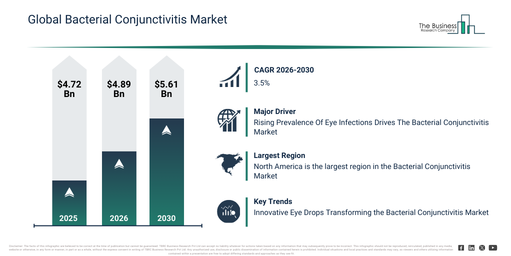
    The market size for bacterial conjunctivitis has demonstrated consistent expansion in recent years. It is anticipated to grow from $4.72 billion in 2025 to $4.89 billion in 2026, reflecting a compound annual growth rate (CAGR) of 3.5%. This historical period’s growth is largely due to the increasing incidence of eye infections, the widespread availability of antibiotic eye drops, improved access to ophthalmic care, the expansion of retail pharmacy networks, and increased awareness of eye hygiene.

    The bacterial conjunctivitis market is anticipated to experience consistent expansion over the upcoming years. Projections indicate it will reach $5.61 billion by 2030, demonstrating a compound annual growth rate (CAGR) of 3.5%. This growth during the forecast period is attributable to several factors, including the escalating development of treatments for antibiotic-resistant strains, a greater uptake of preservative-free formulations, the widening reach of online pharmacy distribution, an increasing emphasis on eye care for pediatric and geriatric populations, and ongoing advancements in ophthalmic drug delivery methods. Key trends observed within the forecast timeframe encompass the increased acceptance of broad-spectrum antibiotic therapies, a growing reliance on topical ophthalmic formulations, a heightened focus on prompt diagnosis and swift treatment, the proliferation of combination drug therapies, and a strengthened commitment to infection control measures.

    Get A Free Sample Report With In-Depth Market Insights:

    https://thebusinessresearchcompany.com/sample_request?id=12096364&type=smp&name=Bacterial%20Conjunctivitis%20Market%20Report%202026&utm_source=Blogs&utm_medium=Paid&utm_campaign=Oct_PR

    Bacterial Conjunctivitis Market Growth Factors Behind Sustained Expansion

    The rising occurrence of eye infections is projected to drive the expansion of the bacterial conjunctivitis market. An eye infection involves the eye being affected by the invasion and multiplication of detrimental microorganisms like bacteria, viruses, fungi, or parasites. This category encompasses conjunctivitis, trachoma, and keratitis. Bacterial conjunctivitis, an eye infection caused by bacteria, is managed with prescribed medications, self-care methods, and hygiene practices. For instance, in September 2023, according to the article “Understanding the Spiking Incidence in Karachi and Lahore” published via the National Center for Biotechnology Information (NCBI), a U.S.-based government-funded archive of the U.S. National Library of Medicine, the province of Punjab recorded 86,133 conjunctivitis (“pink eye”) cases, more than double the 47,205 cases reported in August 2023. Consequently, the growing prevalence of eye infections is indeed fueling the growth of the bacterial conjunctivitis market.

    Bacterial Conjunctivitis Market Segment Analysis And Revenue Potential

    The bacterial conjunctivitis market covered in this report is segmented –

    1) By Type: Hyperacute Bacterial Conjunctivitis, Acute Bacterial Conjunctivitis, Chronic Bacterial Conjunctivitis

    2) By Drug Class: Antibiotics, Fluoroquinolones, Aminoglycosides, Macrolides

    3) By Distribution Channel: Hospital Pharmacy, Retail Pharmacy, Online Pharmacy, Other Distribution Channels

    Subsegments:

    1) By Hyperacute Bacterial Conjunctivitis: Gonococcal Conjunctivitis, Other Hyperacute Infections

    2) By Acute Bacterial Conjunctivitis: Staphylococcus Aureus-Induced Conjunctivitis, Streptococcus Pneumoniae-Induced Conjunctivitis, Haemophilus Influenzae-Induced Conjunctivitis

    3) By Chronic Bacterial Conjunctivitis: Chronic Staphylococcal Conjunctivitis, Chronic Chlamydia Conjunctivitis

    Bacterial Conjunctivitis Market Industry Trends Fueling Future Revenue Growth

    Key companies operating within the bacterial conjunctivitis market are intensifying their efforts to develop innovative eye drops, such as broad-spectrum eye drops, aiming to maximize their revenue in the market. Broad-spectrum eye drops are medications formulated to address various eye infections, including those caused by diverse bacteria. These eye drops incorporate antibiotics effective against a wide range of bacteria, rather than targeting only a specific type. For instance, in June 2023, Harrow Health, a US-based pharmaceutical company, launched Vigamox (moxifloxacin hydrochloride ophthalmic solution) 0.5% in the US. Vigamox is an antibiotic eye drop from the fluoroquinolone class, prescribed for the treatment of bacterial conjunctivitis.

    Bacterial Conjunctivitis Market Key Players Shaping Industry Direction

    Major companies operating in the bacterial conjunctivitis market are Pfizer Inc., Johnson & Johnson, F. Hoffman La-Roche Ltd., Merck & Co. Inc., AbbVie Inc., Bayer AG, Sanofi S.A., AstraZeneca PLC, GlaxoSmithKline plc, Eli Lilly and Company, Teva Pharmaceutical Industries Ltd., Alcon, Sun Pharmaceutical Industries Ltd., Bausch + Lomb, Dr. Reddy’s Laboratories Ltd., Aurobindo Pharma Ltd., Cipla Ltd., Hikma Pharmaceuticals, Santen Pharmaceutical Co. Ltd., Lupin Pharmaceuticals, Glenmark Pharmaceuticals Ltd., Jubilant Life Sciences Ltd., Alembic Pharmaceuticals Ltd., Macleods Pharmaceuticals Ltd., Ocular Therapeutix Inc., Aldeyra Therapeutics, Nicox SA, IACTA Pharmaceuticals Inc., Cellics Therapeutics Inc.

    View The Full Bacterial Conjunctivitis Market Report:

    https://thebusinessresearchcompany.com/report/bacterial-conjunctivitis-global-market-report?utm_source=Blogs&utm_medium=Paid&utm_campaign=Oct_PR

    Bacterial Conjunctivitis Market Regional Split: Which Areas Are Fueling Growth?

    North America was the largest region in the bacterial conjunctivitis market in 2025. Asia-Pacific is expected to be the fastest-growing region in the forecast period. The regions covered in the bacterial conjunctivitis market report are Asia-Pacific, South East Asia, Western Europe, Eastern Europe, North America, South America, Middle East, Africa.

    Reach Out To Our Team:

    The Business Research Company: https://www.thebusinessresearchcompany.com/

    Americas: +1 310-496-7795

    Asia: +44 7882 955267 & +91 8897263534

    Europe: +44 7882 955267

    Email us at: marketing@tbrc.info

    Follow us on:

    LinkedIn: https://in.linkedin.com/company/the-business-research-company

    YouTube: https://www.youtube.com/channel/UC24_fI0rV8cR5DxlCpgmyFQ

    Global Market Model: https://www.thebusinessresearchcompany.com/global-market-model
  • Bacterial And Viral Specimen Collection Market Trends Reshaping Industry Growth Through 2030

    Bacterial And Viral Specimen Collection Market Trends Reshaping Industry Growth Through 2030

    Built to provide research that’s more actionable and strategically valuable, The Business Research Company’s 2026 market reports include market attractiveness analysis, total addressable market sizing, company benchmarking matrices, interactive Excel dashboards, broader supply chain intelligence, emerging startup tracking, and in-depth product insights.

    Bacterial And Viral Specimen Collection Market Growth From $27.14 Billion In 2026 To $44.98 Billion By 2030 At A CAGR Of 13.5%

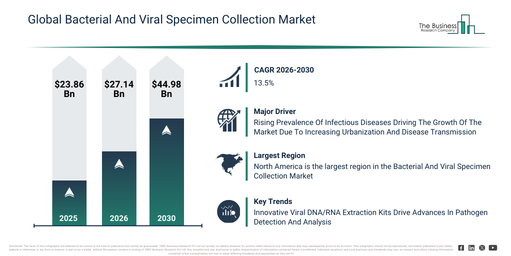
    The bacterial and viral specimen collection market has seen substantial expansion in its size over recent years. This market is projected to expand from $23.86 billion in 2025 to $27.14 billion in 2026, driven by a compound annual growth rate (CAGR) of 13.7%. Historically, this market’s expansion can be attributed to several factors: a higher incidence of infectious diseases, an increase in diagnostic testing volumes, the rise of centralized laboratory testing, greater awareness concerning proper specimen handling, and improvements in the infrastructure for sample transport.

    The bacterial and viral specimen collection market is anticipated to undergo significant expansion in the coming years. It is projected to achieve a size of $44.98 billion by 2030, exhibiting a compound annual growth rate (CAGR) of 13.5%. This growth throughout the forecast period can be attributed to the rising demand for rapid diagnostic testing, the expansion of decentralized healthcare services, the increasing adoption of molecular diagnostics, a growing emphasis on pandemic preparedness, and increased research into emerging pathogens. Prominent trends for the forecast period include a heightened demand for sterile and standardized collection kits, the increasing use of transport media with enhanced stability, a stronger focus on infection control protocols, the expansion of home-based and point-of-care collection solutions, and an increased emphasis on maintaining sample integrity and traceability.

    Get A Free Sample Report With In-Depth Market Insights:

    https://thebusinessresearchcompany.com/sample_request?id=66370951&type=smp&name=Bacterial%20And%20Viral%20Specimen%20Collection%20Market%20Report%202026&utm_source=Blogs&utm_medium=Paid&utm_campaign=Oct_PR

    Bacterial And Viral Specimen Collection Market Demand Drivers Opening New Revenue Streams

    The bacterial and viral specimen collection market is anticipated to expand due to the increasing occurrence of infectious diseases. These illnesses are conditions caused by detrimental microorganisms such as bacteria, viruses, fungi, or parasites, which can be transmitted between individuals through direct or indirect contact. The primary factor behind this growing prevalence of infectious diseases is increasing urbanization, fostering greater population density and closer human interaction, which accelerates disease transmission and establishes optimal conditions for pathogens to disseminate more readily within communities. Collecting bacterial and viral specimens is crucial for managing infectious diseases, as it supplies vital samples necessary for accurate detection and diagnosis, thereby enabling prompt and focused medical treatment. As an illustration, the Centers for Disease Control and Prevention, a US-based government agency, reported in March 2024 that tuberculosis cases increased from 8,320 in 2022 to 9,615 in 2023, representing a rise of 1,295 cases. Concurrently, the incidence rate climbed from 2.5 to 2.9 per 100,000 persons, indicating a notable upward trend during that year. Consequently, the expanding occurrence of infectious diseases is a key driver for the growth of the bacterial and viral specimen collection market.

    Bacterial And Viral Specimen Collection Market Segmentation And Category Overview

    The bacterial and viral specimen collection market covered in this report is segmented –

    1) By Product: Bacterial Specimen Collection, Viral Specimen Collection

    2) By Application: Diagnostics, Research

    3) By End User: Hospitals And Clinics, Diagnostic Laboratories, Academic And Research Institutions, Other End Users

    Subsegments:

    1) By Bacterial Specimen Collection: Swabs, Transport Media, Culture Plates And Media, Blood Culture Bottles, Biopsy And Tissue Collection Kits, Urine Collection Containers, Other Specialized Collection Devices

    2) By Viral Specimen Collection: Viral Transport Media, Blood Collection Tubes, Saliva Collection Kits, Sputum Collection Containers, Stool Collection Kits, Other Specialized Collection Devices

    Bacterial And Viral Specimen Collection Market Trends Powering Strategic Industry Growth

    Leading companies in the bacterial and viral specimen collection market are concentrating on developing innovative solutions, such as viral DNA and RNA extraction kits, to enhance the efficiency, accuracy, and speed of pathogen detection and analysis. A viral DNA and RNA extraction kit serves as a laboratory tool used to isolate and purify viral genetic material from clinical samples, enabling accurate molecular testing and diagnosis. For instance, in April 2024, New England Biolabs, a US-based life sciences company, introduced the Monarch Mag Viral DNA and RNA Extraction Kit. This magnetic bead-based purification kit is designed for rapid, reliable, and highly sensitive extraction of viral DNA and RNA from various sample types, including saliva, respiratory swabs, and wastewater (with enrichment). It supports both manual and automated workflows, being compatible with platforms such as KingFisher Flex and Agilent Bravo, thereby facilitating high-throughput processing. The kit improves detection sensitivity for low viral loads, includes carrier RNA for enhanced recovery, and is suitable for downstream applications such as qPCR, RT-qPCR, ddPCR, and next-generation sequencing (NGS). Its objective is to meet demands in infectious disease testing, viral genome sequencing, and environmental surveillance through scalable, hands-free workflows.

    Bacterial And Viral Specimen Collection Market Competitive Analysis Of Leading Industry Participants

    Major companies operating in the bacterial and viral specimen collection market are Roche Diagnostics International AG, Thermo Fisher Scientific Inc., Becton Dickinson and Company, Lonza Group AG, Hologic Inc., bioMérieux SA, Quidel Corporation, QIAGEN N.V., DiaSorin S.p.A., Greiner Bio-One International GmbH, Spectrum Solutions LLC, Hardy Diagnostics Inc., EKF Diagnostics Holdings Plc, Trinity Biotech Plc, Puritan Medical Products Company LLC, Wuxi NEST Biotechnology Co. Ltd., Copan Diagnostics Inc., VIRCELL S.L., Medical Wire & Equipment Co. Ltd., HiMedia Laboratories Pvt. Ltd., Longhorn Vaccines and Diagnostics LLC, Beaver Biomedical Engineering Co. Ltd.

    View The Full Bacterial And Viral Specimen Collection Market Report:

    https://thebusinessresearchcompany.com/report/bacterial-and-viral-specimen-collection-global-market-report?utm_source=Blogs&utm_medium=Paid&utm_campaign=Oct_PR

    Bacterial And Viral Specimen Collection Market Top Region: Where Does Most Revenue Come From?

    North America was the largest region in the bacterial and viral specimen collection market in 2025. Asia-Pacific is expected to be the fastest-growing region in the forecast period. The regions covered in the bacterial and viral specimen collection market report are Asia-Pacific, South East Asia, Western Europe, Eastern Europe, North America, South America, Middle East, Africa.

    Reach Out To Our Team:

    The Business Research Company: https://www.thebusinessresearchcompany.com/

    Americas: +1 310-496-7795

    Asia: +44 7882 955267 & +91 8897263534

    Europe: +44 7882 955267

    Email us at: marketing@tbrc.info

    Follow us on:

    LinkedIn: https://in.linkedin.com/company/the-business-research-company

    YouTube: https://www.youtube.com/channel/UC24_fI0rV8cR5DxlCpgmyFQ

    Global Market Model: https://www.thebusinessresearchcompany.com/global-market-model
  • Baby Changing Units And Tables Market Growth To $1.64 Billion Creates New Opportunities Across The Industry

    Baby Changing Units And Tables Market Growth To $1.64 Billion Creates New Opportunities Across The Industry

    Backed by market attractiveness analysis, total addressable market sizing, company benchmarking matrices, interactive Excel dashboards, wider supply chain intelligence, emerging startup coverage, and detailed product-level insights, The Business Research Company’s 2026 market reports are designed to offer research that is more actionable and strategically valuable than ever.

    Baby Changing Units And Tables Market Expansion Outlook: What Revenue Opportunities Are Ahead?

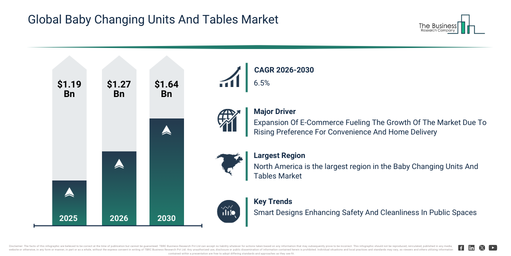
    The market for baby changing units and tables has demonstrated significant growth over recent years. Projections indicate an expansion from $1.19 billion in 2025 to $1.27 billion by 2026, achieving a compound annual growth rate (CAGR) of 6.6%. This historical development can be ascribed to several factors, including increasing urban household formation, escalating birth rates in developing regions, the proliferation of organized baby care retail, a rise in the adoption of childcare furniture, and the broadened availability of public childcare facilities.

    The baby changing units and tables market is projected to experience substantial expansion in the coming years. This market is set to reach $1.64 billion by 2030, exhibiting a compound annual growth rate (CAGR) of 6.5%. This anticipated growth is driven by factors such as the rising demand for high-quality baby care items, a heightened emphasis on public sanitation facilities, the expansion of daycare centers and healthcare services, a growing inclination towards ergonomically designed baby furniture, and the wider acceptance of portable baby care options. Key trends anticipated during this period include a greater demand for compact baby furniture, an uptick in the use of wall-mounted changing units, an intensified focus on safety and cleanliness regulations, the proliferation of multi-functional changing tables, and an increased utilization of resilient and easy-to-maintain materials.

    Get A Free Sample Report With In-Depth Market Insights:

    https://thebusinessresearchcompany.com/sample_request?id=70421690&type=smp&name=Baby%20Changing%20Units%20And%20Tables%20Market%20Report%202026&utm_source=Blogs&utm_medium=Paid&utm_campaign=Oct_PR

    Baby Changing Units And Tables Market Growth Backed By Core Demand Fundamentals

    The increasing presence of e-commerce is projected to boost the expansion of the baby-changing units and tables market in the future. E-commerce involves the online exchange of goods or services, utilizing the internet for transactions and data transfer. This growth in e-commerce is driven by a growing demand for convenience and direct-to-door delivery, particularly among parents-to-be and new parents, who find it simpler to purchase baby items and have them delivered home without needing to step out. E-commerce enhances the accessibility of baby-changing units and tables by providing a diverse selection of products from numerous brands, all readily available online. It enables both consumers and retailers to effortlessly compare product attributes, costs, and customer feedback, thereby facilitating easy, well-informed purchasing decisions. As an illustration, in February 2025, data from the United States Census Bureau, a US-based government agency, indicated that overall e-commerce sales in 2024 amounted to $1,192.6 billion, representing an 8.1% rise from 2023. Consequently, the proliferation of e-commerce is fueling the development of the baby-changing units and tables market.

    Baby Changing Units And Tables Market Segment Outlook: Which Categories Are Growing Fastest?

    The baby changing units and tables market covered in this report is segmented –

    1) By Product Type: Wall-Mounted Changing Units, Foldable Changing Tables, Stationary Changing Tables, Changing Stations For Public Restrooms, Portable Changing Pads

    2) By Material: Plastic, Wood, Metal, Composite Materials, Fabric, Other Materials

    3) By Age Group: Newborn (0-3 Months), Infants (3-12 Months), Toddlers (1-3 Years), Special Needs Children

    4) By Distribution Channel: Online Stores, Supermarkets Or Hypermarkets, Specialty Stores, Other Distribution Channels

    5) By End-User: Residential Use, Commercial Use, Healthcare Facilities, Public Amenities, Daycare Centers, Other End-Users

    Subsegments:

    1) By Wall-Mounted Changing Units: Horizontal Wall-Mounted Units, Vertical Wall-Mounted Units, Compact Wall-Mounted Designs, Commercial Grade Wall Units

    2) By Foldable Changing Tables: Wooden Foldable Tables, Metal Frame Foldable Tables, Travel-Friendly Foldables, Foldable Tables with Storage

    3) By Stationary Changing Tables: Standard Stationary Tables, Stationary Tables with Drawers, Multi-Tiered Stationary Tables, Convertible Crib-Changing Table Combos

    4) By Changing Stations For Public Restrooms: Americans With Disabilities Act Compliant Changing Stations, Antibacterial Surface Stations, Heavy-Duty Commercial Stations, High-Traffic Area Changing Units

    5) By Portable Changing Pads: Waterproof Changing Pads, Padded Travel Changing Mats, Disposable Changing Pads, Roll-Up Portable Changing Pads

    Baby Changing Units And Tables Market Growth Trends Reshaping The Competitive Landscape

    Major companies operating in the baby changing units and tables market are concentrating on developing innovative products, specifically self-sanitizing diaper changing tables, to enhance hygiene, improve user convenience, and meet the increasing consumer demand for safer, more advanced childcare solutions in both public and private environments. A self-sanitizing diaper changing table is a modern, hygiene-centric unit engineered to clean and disinfect its surface following each use, incorporating built-in technology such as UV-C light, antimicrobial surfaces, or automated cleaning sprays to eliminate germs and bacteria. For instance, in March 2023, Pluie Inc., a US-based baby product manufacturing company, introduced a self-sanitizing diaper changing table that utilizes a UV-C light system to purify the surface after every use, effectively eradicating 99.9% of harmful bacteria and viruses, thereby offering reassurance to parents and caregivers. This intelligent hygiene innovation feature helps maintain a sanitary, germ-free environment for babies, significantly reducing the risk of contamination in public settings.

    Baby Changing Units And Tables Market Leading Companies And Competitive Benchmarking

    Major companies operating in the baby changing units and tables market are Inter IKEA Systems B.V., Newell Brands, Carter’s Inc., Graco Children’s Products Inc., Dorel Industries, Goodbaby International Holdings Limited, Baby Bunting, Meubles South Shore Inc., Million Dollar Baby Co., Costway, Dream On Me Inc., Baby Dan A/S, Orchids International, Schüschke GmbH + Co. KG, Badger Basket, Obaby Ltd, Dolphy India Pvt. Ltd., TBS Studio, Infantastic, Gymax

    View The Full Baby Changing Units And Tables Market Report:

    https://thebusinessresearchcompany.com/report/baby-changing-units-and-tables-global-market-report?utm_source=Blogs&utm_medium=Paid&utm_campaign=Oct_PR

    Baby Changing Units And Tables Market Regional Breakdown: Where Is Demand Concentrated?

    North America was the largest region in the baby changing units and tables market in 2025. Asia-Pacific is expected to be the fastest-growing region in the forecast period. The regions covered in the baby changing units and tables market report are Asia-Pacific, South East Asia, Western Europe, Eastern Europe, North America, South America, Middle East, Africa.

    Reach Out To Our Team:

    The Business Research Company: https://www.thebusinessresearchcompany.com/

    Americas: +1 310-496-7795

    Asia: +44 7882 955267 & +91 8897263534

    Europe: +44 7882 955267

    Email us at: marketing@tbrc.info

    Follow us on:

    LinkedIn: https://in.linkedin.com/company/the-business-research-company

    YouTube: https://www.youtube.com/channel/UC24_fI0rV8cR5DxlCpgmyFQ

    Global Market Model: https://www.thebusinessresearchcompany.com/global-market-model

  • Ayurvedic Toothpaste Market Forecast: Breaking Down The Numbers Behind Future Expansion

    Ayurvedic Toothpaste Market Forecast: Breaking Down The Numbers Behind Future Expansion

    Featuring market attractiveness scoring, total addressable market sizing, company benchmarking matrices, interactive Excel dashboards, deeper supply chain intelligence, emerging startup tracking, and granular product-level insights, The Business Research Company’s 2026 market reports are built to deliver research that is both more actionable and more strategically valuable.

    Ayurvedic Toothpaste Market Growth Potential: How Will Market Size Shift Through 2030?

    The ayurvedic toothpaste market size has seen rapid growth in recent years. It is anticipated to expand from $1.28 billion in 2025 to $1.47 billion in 2026, achieving a compound annual growth rate (CAGR) of 15.1%. The historical growth of this market can be attributed to several factors, including increasing consumer awareness of natural healthcare products, the long-established use of ayurvedic remedies, the expansion of traditional medicine retail networks, a growing demand for herbal personal care items, and rising trust in plant-based formulations.

    The ayurvedic toothpaste market is projected to experience substantial expansion over the upcoming years. This market is set to reach $2.55 billion by 2030, exhibiting a compound annual growth rate (CAGR) of 14.8%. This anticipated growth is driven by factors such as a greater embrace of holistic wellness practices, the broadening availability of premium ayurvedic oral care items, the increasing reach of online retail platforms, heightened consumer interest in health, and advancements in herbal product development. Key trends anticipated during this period involve a rising call for herbal and chemical-free oral care solutions, the escalating appeal of ayurvedic components, a growing inclination towards fluoride-free toothpaste options, the proliferation of organic and natural product ranges, and a stronger emphasis on preventative oral health.

    Get A Free Sample Report With In-Depth Market Insights:

    https://thebusinessresearchcompany.com/sample_request?id=59078316&type=smp&name=Ayurvedic%20Toothpaste%20Market%20Report%202026&utm_source=Blogs&utm_medium=Paid&utm_campaign=Oct_PR

    Ayurvedic Toothpaste Market Growth Catalysts And Demand Drivers

    The increasing occurrence of oral diseases is projected to boost the expansion of the ayurvedic toothpaste market in the future. These diseases encompass various conditions impacting the mouth, teeth, gums, tongue, and other oral components, frequently leading to pain, unease, and potential complications for overall systemic health. The growing frequency of oral diseases stems from inadequate oral hygiene, where insufficient brushing and flossing facilitate the accumulation of plaque and bacteria, resulting in tooth decay, inflamed gums, and other dental problems. Ayurvedic toothpaste aids individuals suffering from oral diseases by employing natural herbs and medicinal components possessing antibacterial, anti-inflammatory, and restorative qualities to assist in plaque reduction, gum fortification, and the advancement of general oral well-being. For example, data from November 2024, provided by the World Health Organization, a government body located in Switzerland, indicated that oral diseases were estimated to affect approximately 3.5 billion individuals globally. Additionally, in February 2024, reports from the British Dental Association, a health organization based in the UK, revealed that over 12 million adults in England do not have access to sufficient dental care services. Consequently, the rising prevalence of oral diseases is a significant driver for the ayurvedic toothpaste market.

    Ayurvedic Toothpaste Market Segment Landscape: Which Areas Lead Development?

    The ayurvedic toothpaste market covered in this report is segmented –

    1) By Type: Paste, Cream, Gels, Powdered

    2) By Ingredient: Neem, Mint, Basil, Spice Extract, Meswak, Other Ingredients

    3) By Formulation Type: Herbal, Organic, Natural

    4) By Consumer Age Group: Children, Adults, Seniors

    5) By Distribution Channel: General Store, Hypermarket And Supermarket, Pharmacy Store, Online Retail, Other Distribution Channels

    Subsegments:

    1) By Paste: Herbal Paste, Medicinal Paste, Whitening Paste

    2) By Cream: Herbal Cream, Fluoride-Free Cream, Medicinal Cream

    3) By Gels: Gel with Aloe Vera, Gel with Neem, Whitening Gel

    4) By Powdered: Herbal Powder, Whitening Powder, Medicinal Powder

    Ayurvedic Toothpaste Market Trends Shaping Long-Term Demand

    Leading companies in the ayurvedic toothpaste market are prioritizing the development of innovative toothpastes that feature a prestigious seal of acceptance. This focus aims to bolster consumer trust, confirm product efficacy, and ensure compliance with industry standards for both safety and effectiveness. A prestigious seal of acceptance is defined as a certification or official endorsement provided by a recognized dental, health, or regulatory body, affirming that a product meets specific safety, efficacy, and quality benchmarks. For instance, in November 2024, Dabur Red Paste, an India-based consumer goods company producing ayurvedic toothpaste, achieved a significant milestone by becoming the first homegrown Ayurvedic toothpaste brand in India to be awarded the prestigious Seal of Acceptance from the Indian Dental Association (IDA). This recognition highlights the brand’s dedication to offering safe and effective oral care solutions. Dabur Red Paste incorporates a unique blend of 13 powerful Ayurvedic ingredients. This specific formulation offers a holistic approach to oral health by targeting and eliminating bacteria, viruses, and fungi, thereby minimizing the risk of oral infections.

    Ayurvedic Toothpaste Market Industry Leaders And Competitive Landscape

    Major companies operating in the ayurvedic toothpaste market are Dabur India Ltd., Patanjali Ayurved Ltd., Himalaya Global Holdings Ltd., Vicco Laboratories, Baidyanath, Auromere Inc., Sri Sri Tattva, Khadi Natural, Charak Pharma Pvt. Ltd., Arogya Formulations (P) Ltd., Kerala Ayurveda Ltd., Arya Vaidya Sala Kottakkal, Ayushakti Ayurveda Pvt. Ltd., Herbal Hills, Vasu Healthcare, Zandu Care, Sudarshan Pharma Industries, Organic India Pvt. Ltd., Nagarjuna Ayurvedic Group, Amrutanjan Health Care Ltd.

    View The Full Ayurvedic Toothpaste Market Report:

    https://thebusinessresearchcompany.com/report/ayurvedic-toothpaste-global-market-report?utm_source=Blogs&utm_medium=Paid&utm_campaign=Oct_PR

    Ayurvedic Toothpaste Market Geographic Landscape: Which Region Leads Industry Growth?

    Asia-Pacific was the largest region in the ayurvedic toothpaste market in 2025. North America is expected to be the fastest-growing region in the forecast period. The regions covered in the ayurvedic toothpaste market report are Asia-Pacific, South East Asia, Western Europe, Eastern Europe, North America, South America, Middle East, Africa.

    Reach Out To Our Team:

    The Business Research Company: https://www.thebusinessresearchcompany.com/

    Americas: +1 310-496-7795

    Asia: +44 7882 955267 & +91 8897263534

    Europe: +44 7882 955267

    Email us at: marketing@tbrc.info

    Follow us on:

    LinkedIn: https://in.linkedin.com/company/the-business-research-company

    YouTube: https://www.youtube.com/channel/UC24_fI0rV8cR5DxlCpgmyFQ

    Global Market Model: https://www.thebusinessresearchcompany.com/global-market-model

  • Axial Spondyloarthritis (axSpA) Market Expected To Grow At 8.5% CAGR Through 2030: What Businesses Need To Know

    Axial Spondyloarthritis (axSpA) Market Expected To Grow At 8.5% CAGR Through 2030: What Businesses Need To Know

    Built to provide research that’s more actionable and strategically valuable, The Business Research Company’s 2026 market reports include market attractiveness analysis, total addressable market sizing, company benchmarking matrices, interactive Excel dashboards, broader supply chain intelligence, emerging startup tracking, and in-depth product insights.

    Axial Spondyloarthritis (axSpA) Market Value Analysis: What Growth Lies Ahead Over The Forecast Period?

    The axial spondyloarthritis (axspa) market size has experienced robust growth in recent years. This market is anticipated to expand from $6.56 billion in 2025 to $7.09 billion in 2026, at a compound annual growth rate (CAGR) of 8.1%. The historical expansion of the market can be ascribed to several factors, including heightened awareness of inflammatory spinal disorders, increased utilization of TNF inhibitors, better access to diagnostic imaging, advancements in rheumatology specialty care, and initiatives promoting greater treatment adherence.

    The axial spondyloarthritis (axspa) market size is anticipated to experience robust growth over the next few years. It is projected to expand to $9.83 billion by 2030, achieving a compound annual growth rate (CAGR) of 8.5%. This expansion during the forecast period is driven by the increasing integration of JAK inhibitors and IL therapies, greater investments in personalized medicine, the broadening of early screening initiatives, the rising application of digital disease monitoring platforms, and continuous breakthroughs in biologic drug development. Significant trends expected in the forecast period encompass a wider embrace of biologic treatments, a growing reliance on targeted anti-inflammatory medications, an amplified emphasis on timely diagnosis and disease surveillance, the expansion of individualized treatment methodologies, and better incorporation of digital health tools.

    Get A Free Sample Report With In-Depth Market Insights:

    https://thebusinessresearchcompany.com/sample_request?id=85944210&type=smp&name=Axial%20Spondyloarthritis%20%28axSpA%29%20Market%20Report%202026&utm_source=Blogs&utm_medium=Paid&utm_campaign=Oct_PR

    Axial Spondyloarthritis (axSpA) Market Opportunity Drivers: What’s Unlocking New Revenue Potential?

    The expanding aging population is anticipated to boost the axial spondyloarthritis (axSpa) market in the future. An aging population signifies a demographic shift where older individuals constitute a larger segment or a greater percentage of the total population. Managing axSpA effectively in this demographic offers advantages such as enhanced joint function and mobility, better quality of life, prevention of spinal structural damage, lower healthcare expenditures, avoidance of disability, and refined treatment approaches. For example, Age UK, a UK-registered charity, reported 11 million people aged over 65 in England in 2023. This figure is forecast to grow by 10% over the next five years and by 32% by 2043, translating to 1.1 and 3.5 million additional people, respectively. Furthermore, the 85+ age group, which typically requires more health and care services, is also expected to experience significant growth, rising by 8.2% within the next five years and by 62.7% by 2043, representing 126,000 and 956,000 more individuals, respectively. Consequently, the rising number of elderly people is fueling the expansion of the axial spondyloarthritis (axSpa) market.

    Axial Spondyloarthritis (axSpA) Market Segments: Where Is Growth Concentrated?

    The axial spondyloarthritis (axspa) market covered in this report is segmented –

    1) By Type: Ankylosing Spondylitis (AS), Non-Radiographic Axial Spondyloarthritis (nr-axSpA)

    2) By Commercialized Therapies: Anti-Tumor Necrosis Factor Therapy (TNF), Anti-Interleukin Therapy (IL), Anti-Janus Kinase Therapy (JAK)

    3) By Dosage Form: Tablets, Injections

    4) By Treatment: Tumor Necrosis Factor (TNF) Alpha Inhibitors, Non-Steroidal Anti-Inflammatory Drugs (NSAID), Interleukin Blockers

    5) By End-Use: Hospital Pharmacies, Retailer Pharmacies, Online Pharmacy Stores

    Subsegments:

    1) By Ankylosing Spondylitis (AS): Early-stage AS, Advanced-stage AS

    2) By Non-Radiographic Axial Spondyloarthritis (nr-axSpA): Active nr-axSpA, Low-Disease-Activity nr-axSpA

    Axial Spondyloarthritis (axSpA) Market Innovation Trends Shaping Future Development

    Leading companies in the axial spondyloarthritis (axSpA) market are concentrating on creating innovative solutions, including advanced biologic drug therapies. This focus aims to address the growing need for potent treatments that specifically target inflammation and enhance long-term disease management. Unlike conventional anti-inflammatory drugs, which primarily alleviate symptoms without directly impacting the underlying immune causes, these biologic therapies work by modulating particular immune pathways, providing a more precise treatment method. An example of this progress occurred in June 2023 when UCB SA, a pharmaceutical company based in Belgium, obtained marketing authorization from the New European Commission for BIMZELX (bimekizumab). This drug is indicated for adults suffering from active axial spondyloarthritis (axSpA), non-radiographic axial spondyloarthritis (nr-axSpA), and ankylosing spondylitis (AS), particularly those showing objective signs of inflammation, such as elevated C-reactive protein. These approvals by the European Union (EU) mark the initial global marketing licenses for this drug in the context of axial spondyloarthritis.

    Axial Spondyloarthritis (axSpA) Market Key Participants And Competitive Landscape

    Major companies operating in the axial spondyloarthritis (axspa) market are AbbVie Inc., Pfizer Inc., Novartis AG, Eli Lilly and Company, Johnson & Johnson, UCB S.A., Bristol-Myers Squibb Company, AstraZeneca plc, Sanofi S.A., Regeneron Pharmaceuticals Inc., Merck & Co. Inc., GSK plc, Takeda Pharmaceutical Company Limited, Boehringer Ingelheim International GmbH, Biogen Inc., Amgen Inc., Chugai Pharmaceutical Co. Ltd., Mitsubishi Tanabe Pharma Corporation, Kyowa Kirin Co. Ltd., Janssen Pharmaceuticals, Acelyrin Inc.

    View The Full Axial Spondyloarthritis (axSpA) Market Report:

    https://thebusinessresearchcompany.com/report/axial-spondyloarthritis-axSpA-global-market-report?utm_source=Blogs&utm_medium=Paid&utm_campaign=Oct_PR

    Axial Spondyloarthritis (axSpA) Market Largest Region: Which Geography Holds The Biggest Share?

    North America was the largest region in the axial spondyloarthritis(axSpA) market in 2025. Asia-Pacific is expected to be the fastest-growing region in the forecast period. The regions covered in the axial spondyloarthritis (axspa) market report are Asia-Pacific, South East Asia, Western Europe, Eastern Europe, North America, South America, Middle East, Africa.

    Reach Out To Our Team:

    The Business Research Company: https://www.thebusinessresearchcompany.com/

    Americas: +1 310-496-7795

    Asia: +44 7882 955267 & +91 8897263534

    Europe: +44 7882 955267

    Email us at: marketing@tbrc.info

    Follow us on:

    LinkedIn: https://in.linkedin.com/company/the-business-research-company

    YouTube: https://www.youtube.com/channel/UC24_fI0rV8cR5DxlCpgmyFQ

    Global Market Model: https://www.thebusinessresearchcompany.com/global-market-model
  • Avian Flu Treatment Market Forecast To Reach $20.6 Billion By 2030: Key Trends Explained

    Avian Flu Treatment Market Forecast To Reach $20.6 Billion By 2030: Key Trends Explained

    Backed by market attractiveness analysis, total addressable market sizing, company benchmarking matrices, interactive Excel dashboards, wider supply chain intelligence, emerging startup coverage, and detailed product-level insights, The Business Research Company’s 2026 market reports are designed to offer research that is more actionable and strategically valuable than ever.

    Avian Flu Treatment Market Size Forecast: How Big Could The Market Get By 2030?

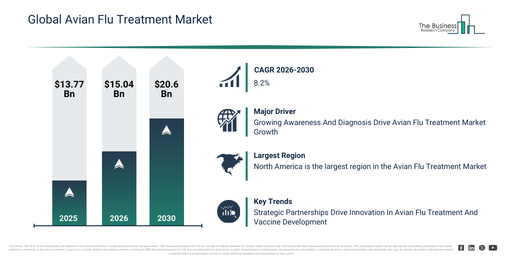
    The avian flu treatment market has demonstrated substantial growth in recent years. It is anticipated to expand from $13.77 billion in 2025 to reach $15.04 billion in 2026, with a compound annual growth rate (CAGR) of 9.3%. This historical growth is primarily attributable to factors such as a rise in avian influenza outbreaks, the implementation of antiviral stockpiling strategies, government-led initiatives for disease control, the expansion of hospital-based infectious disease treatment options, and increased public health awareness.

    The avian flu treatment market is projected to experience substantial expansion in the coming years. This market is forecast to reach $20.6 billion by 2030, demonstrating an 8.2% compound annual growth rate (CAGR). Factors contributing to this growth during the forecast period include greater financial commitments to zoonotic disease research, the ongoing development of advanced vaccines, the broadening of worldwide disease surveillance systems, an increased emphasis on fast-acting therapeutics, and enhanced global cooperation for pandemic readiness. Key trends anticipated for this period involve a wider uptake of sophisticated antiviral treatments, a heightened concentration on platforms for quick vaccine development, the increasing application of monoclonal antibody therapies, the expansion of programs for early detection and monitoring, and a reinforced commitment to pandemic preparedness strategies.

    Get A Free Sample Report With In-Depth Market Insights:

    https://thebusinessresearchcompany.com/sample_request?id=10212997&type=smp&name=Avian%20Flu%20Treatment%20Market%20Report%202026&utm_source=Blogs&utm_medium=Paid&utm_campaign=Oct_PR

    Avian Flu Treatment Market Growth Momentum: What Factors Are Shaping Demand?

    Increasing recognition and identification of avian flu are anticipated to fuel the expansion of the avian flu treatment market in the future. Awareness refers to acknowledging a health condition, whereas diagnosis involves pinpointing a particular problem stemming from that awareness. The necessity for avian flu treatment stems from the critical need to preserve public health, avert possible pandemics, and shield poultry from substantial financial impacts. Prompt recognition and timely diagnosis are vital for successful avian flu treatment, facilitating swift action and control measures to stop its propagation. For example, the World Health Organization (WHO), an intergovernmental body based in Switzerland, reported in April 2024 that over 8000 people in the US were actively monitored between February 9, 2022, and March 29, 2024, following exposure to animals suspected of carrying the HPAI A (H5N1) virus. Consequently, heightened awareness and improved diagnosis are stimulating growth within the avian flu treatment market.

    Avian Flu Treatment Market Segment Analysis: What Are The Core Market Categories?

    The avian flu treatment market covered in this report is segmented –

    1) By Type: Vaccines, Antiviral Agents, Immunoglobulins

    2) By Distribution Channel: Online Pharmacies, Offline Pharmacies

    3) By End User: Hospital, Institutional Health Centers, Clinics

    Subsegments:

    1) By Vaccines: Inactivated Vaccines, Live Attenuated Vaccines, Recombinant Vaccines, Subunit Vaccines, Dna Vaccines, Bivalent And Multivalent Vaccines

    2) By Antiviral Agents: Neuraminidase Inhibitors (Oseltamivir, Zanamivir), Polymerase Inhibitors, Antiviral Combination Therapies

    3) By Immunoglobulins: Human Immunoglobulin (Ivig), Monoclonal Antibodies, Hyperimmune Serum, Polyvalent Immunoglobulins, Avian Flu-Specific Immunoglobulins

    Avian Flu Treatment Market Trends Redefining Industry Growth

    Leading firms within the avian flu treatment sector are concentrating on forging collaborations to improve effectiveness and accelerate the progress of novel therapies. These alliances encompass joint efforts among drug manufacturers, scientific bodies, and state entities to combine assets, exchange knowledge, and carry out advanced clinical studies. As an illustration, during April 2024, CureVac N.V., a biotechnology enterprise located in Germany, collaborated with GSK plc, a pharmaceutical firm based in the UK, to develop an experimental influenza A (H5N1) pre-pandemic vaccine candidate aimed at confronting the prospective future pandemic risk presented by the H5N1 avian influenza virus. The objective of this joint venture is to assess the safety, reactogenicity, and immunogenicity of the monovalent vaccine candidate, which codes for an influenza A H5 antigen utilizing CureVac’s unique second-generation mRNA backbone. The integrated Phase 1/2 investigation will evaluate the safety and efficacy of the vaccine candidate in healthy adults ranging from 18 to 64 years old, along with elderly individuals between 65 and 85 years old.

    Avian Flu Treatment Market Top Companies Driving Competitive Growth

    Major companies operating in the avian flu treatment market are Pfizer Inc., F. Hoffmann-La Roche Ltd., Merck & Co. Inc., Sanofi S.A., GlaxoSmithKline Plc, Novartis AG, AstraZeneca Plc, Gilead Sciences Inc., CSL Limited, Moderna Inc., Shionogi & Co. Ltd., Cipla Ltd., Seqirus, Novavax Inc., Sinovac Biotech Ltd., Valneva SE, CureVac AG, BioCryst Pharmaceuticals Inc., Emergent BioSolutions Inc., Dynavax Technologies Corporation, Baxter International Inc., Takeda Pharmaceutical Company Limited

    View The Full Avian Flu Treatment Market Report:

    https://thebusinessresearchcompany.com/report/avian-flu-treatment-global-market-report?utm_source=Blogs&utm_medium=Paid&utm_campaign=Oct_PR

    Avian Flu Treatment Market Regional Analysis: Which Geography Leads On Revenue?

    North America was the largest region in the avian flu treatment market in 2025. Asia-Pacific is expected to be the fastest growing region in the market. The regions covered in the avian flu treatment market report are Asia-Pacific, South East Asia, Western Europe, Eastern Europe, North America, South America, Middle East, Africa.

    Reach Out To Our Team:

    The Business Research Company: https://www.thebusinessresearchcompany.com/

    Americas: +1 310-496-7795

    Asia: +44 7882 955267 & +91 8897263534

    Europe: +44 7882 955267

    Email us at: marketing@tbrc.info

    Follow us on:

    LinkedIn: https://in.linkedin.com/company/the-business-research-company

    YouTube: https://www.youtube.com/channel/UC24_fI0rV8cR5DxlCpgmyFQ

    Global Market Model: https://www.thebusinessresearchcompany.com/global-market-model

  • Autorefractor Market Analysis Through 2030: Market Size, Growth Trends And Industry Outlook

    Autorefractor Market Analysis Through 2030: Market Size, Growth Trends And Industry Outlook

    Featuring market attractiveness scoring, total addressable market sizing, company benchmarking matrices, interactive Excel dashboards, deeper supply chain intelligence, emerging startup tracking, and granular product-level insights, The Business Research Company’s 2026 market reports are built to deliver research that is both more actionable and more strategically valuable.

    Autorefractor Market Revenue Outlook: What CAGR Lies Ahead Through 2030?

    The autorefractor market size has seen substantial growth over recent years. It is forecast to expand from $1.92 billion in 2025 to $2.14 billion in 2026, achieving a compound annual growth rate (CAGR) of 11.2%. This historical growth can be linked to the widening scope of ophthalmic diagnostic services, an increase in the prevalence of refractive errors, the rising adoption of automated eye testing, the expansion of optometry clinics, and enhanced accessibility of vision care.

    The autorefractor market size is projected for swift expansion in the coming years. It is forecast to reach $3.25 billion by 2030, demonstrating a compound annual growth rate (CAGR) of 11.0%. The market’s growth during this forecast period is propelled by the increasing demand for point-of-care eye diagnostics, the expansion of tele-optometry services, a heightened focus on early vision disorder detection, the growing adoption of smart ophthalmic devices, and rising investments in eye care infrastructure. Key developments expected include the increased adoption of portable automatic autorefractors, a rising integration of AI-based refraction analysis, the growing use of multi-function diagnostic devices, the broadening of vision screening programs, and an enhanced emphasis on rapid eye examinations.

    Get A Free Sample Report With In-Depth Market Insights:

    https://thebusinessresearchcompany.com/sample_request?id=25427318&type=smp&name=Autorefractor%20Market%20Report%202026&utm_source=Blogs&utm_medium=Paid&utm_campaign=Oct_PR

    Autorefractor Market Expansion Drivers: What’s Shaping Future Growth?

    The increasing occurrence of vision diseases is projected to drive the future expansion of the autorefractor market. A vision disease is defined as a medical condition that hinders clear sight, impacting one or more components of the visual system, including the eyes, optic nerves, or brain. The rise in vision diseases stems from factors such as an aging populace, increased screen usage, poor lifestyle choices, and a higher prevalence of chronic conditions. An autorefractor is utilized in diagnosing vision diseases to quickly and precisely measure refractive errors and determine appropriate corrective lenses. For example, a report from the Centers for Disease Control and Prevention, a US-based government agency, published in August 2023, indicated that the number of individuals with vision impairment in the United States is expected to climb to 8.96 million by 2050. Moreover, about 6.8% of children under the age of 18 in the U.S. have been identified with eye and vision problems, with nearly 3% experiencing blindness or visual impairment that remains even with corrective eyewear. Hence, the rising incidence of vision diseases is a key driver for the growth of the autorefractor market.

    Autorefractor Market Segment Breakdown: Which Categories Lead On Revenue?

    The autorefractor market covered in this report is segmented –

    1) By Type: Manual Autorefractor, Automatic Autorefractor

    2) By Application: Hyperopia, Myopia, Other Applications

    3) By End-User: Hospitals, Ophthalmic Clinics, Diagnostic Centers

    Subsegments:

    1) By Manual Autorefractor: Tabletop Manual Autorefractor, Handheld Manual Autorefractor

    2) By Automatic Autorefractor: Desktop Automatic Autorefractor, Portable Automatic Autorefractor

    Autorefractor Market Strategic Trends: What Defines The Next Growth Phase?

    Major companies in the autorefractor market are prioritizing the development of mobile wavefront aberrometry systems, which combine handheld autorefractors with advanced software to capture precise eye measurements, keratometry data, and detailed wavefront analysis in a portable and user-friendly format, thereby enhancing accessibility and efficiency in eye care diagnostics. These mobile wavefront aberrometry systems are essentially portable diagnostic solutions that integrate a handheld autorefractor with sophisticated wavefront analysis software. For example, in February 2025, PlenOptika, a US-based ophthalmic technology company, launched the QuickSee Free Pro Companion App, a mobile platform designed to empower eye care professionals to generate intricate wavefront maps, simulate visual acuity, and produce professional patient reports. This platform consolidates keratometry and autorefractor readings into a unified interface, provides immediate data visualization, and delivers easily understandable patient reports, which improves communication and supports informed decision-making. This innovation serves to streamline clinical workflows, broaden access to advanced refraction diagnostics in distant areas, and bolster patient engagement.

    Autorefractor Market Leading Players And Competitive Positioning

    Major companies operating in the autorefractor market are Topcon Corporation, Nidek Co. Ltd., Canon Medical Systems Corporation, Carl Zeiss Meditec, Rexxam Co. Ltd., Huvitz Co. Ltd., CSO Italia, Righton, Takagi Seiko Co. Ltd., Tomey Corporation, Oculus Optikgeräte GmbH, Kowa Company Ltd., Marco Ophthalmic Inc., Reichert Inc., Visionix Ltd., Luneau Technology GmbH, URK Corporation, Medizs Inc., Optopol Technology, Essilor Instruments, Sonomed Escalon

    View The Full Autorefractor Market Report:

    https://thebusinessresearchcompany.com/report/autorefractor-global-market-report?utm_source=Blogs&utm_medium=Paid&utm_campaign=Oct_PR

    Autorefractor Market Geographic Spread And Regional Opportunities

    North America was the largest region in the autorefractor market in 2025. Asia-Pacific is expected to be the fastest-growing region in the forecast period. The regions covered in the autorefractor market report are Asia-Pacific, South East Asia, Western Europe, Eastern Europe, North America, South America, Middle East, Africa.

    Reach Out To Our Team:

    The Business Research Company: https://www.thebusinessresearchcompany.com/

    Americas: +1 310-496-7795

    Asia: +44 7882 955267 & +91 8897263534

    Europe: +44 7882 955267

    Email us at: marketing@tbrc.info

    Follow us on:

    LinkedIn: https://in.linkedin.com/company/the-business-research-company

    YouTube: https://www.youtube.com/channel/UC24_fI0rV8cR5DxlCpgmyFQ

    Global Market Model: https://www.thebusinessresearchcompany.com/global-market-model
  • Automation In Biopharma Industry Market Outlook From 2026 To 2030: Key Growth Factors And Future Opportunities

    Automation In Biopharma Industry Market Outlook From 2026 To 2030: Key Growth Factors And Future Opportunities

    Built to provide research that’s more actionable and strategically valuable, The Business Research Company’s 2026 market reports include market attractiveness analysis, total addressable market sizing, company benchmarking matrices, interactive Excel dashboards, broader supply chain intelligence, emerging startup tracking, and in-depth product insights.

    Automation In Biopharma Industry Market Growth Analysis: How Will Revenue Trend Over The Forecast Period?

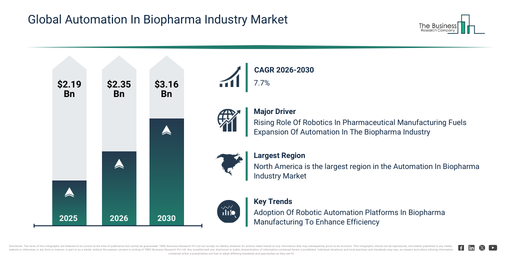
    The market for automation within the biopharma industry has shown strong growth in recent years. It is projected to expand from $2.19 billion in 2025 to $2.35 billion in 2026, demonstrating a compound annual growth rate (CAGR) of 7.1%. Historically, this growth can be ascribed to the increasing complexity of biologic drug production, rising demand for scalable biopharma manufacturing, early adoption of laboratory automation, expansion of contract manufacturing services, and advancements in process control technologies.

    The market size for automation within the biopharma industry is projected to experience substantial expansion over the upcoming years. This market is anticipated to reach a valuation of $3.16 billion by 2030, exhibiting a compound annual growth rate (CAGR) of 7.7%. This projected growth during the forecast timeframe is primarily driven by factors such as a rise in investments towards intelligent biomanufacturing setups, wider acceptance of continuous manufacturing processes, an increase in personalized biologics production, a heightened need for automation that complies with regulations, and a greater emphasis on enhancing manufacturing efficiency. Key trends anticipated during this period encompass the increasing deployment of robotic manufacturing platforms, the growing incorporation of digital twin technologies, an expanded application of automated quality control systems, the broadening of complete end-to-end bioprocess automation, and a sharpened focus on manufacturing approaches guided by data.

    Get A Free Sample Report With In-Depth Market Insights:

    https://thebusinessresearchcompany.com/sample_request?id=70009064&type=smp&name=Automation%20In%20Biopharma%20Industry%20Market%20Report%202026&utm_source=Blogs&utm_medium=Paid&utm_campaign=Oct_PR

    Automation In Biopharma Industry Market Development Factors: What’s Supporting Demand?

    The growing integration of robotic systems within pharmaceutical manufacturing facilities is anticipated to fuel the expansion of the automation in biopharma industry market. These robots represent sophisticated automated systems and machinery designed to execute diverse functions in the production and packaging of pharmaceutical goods. Their deployment spans numerous applications within pharmaceutical manufacturing, including secondary packaging, intralogistics, laboratory automation, pick and place operations, pharmacy process automation, and personalized medicine. This adoption leads to benefits such as increased productivity, improved precision, minimized contamination risk, and heightened worker safety. A notable example is provided by the International Federation of Robotics, a Germany-based professional non-profit organization, which reported that in September 2024, industrial robot installations across the European manufacturing industry climbed by 9%, setting a new peak at 92,393 units. Within this total, 80% were deployed specifically within the European Union, amounting to 73,534 units, which signifies a 2% increase compared to the prior year. Consequently, the expanding use of robots in pharmaceutical manufacturing is poised to propel the growth of the automation in biopharma industry market.

    Automation In Biopharma Industry Market Segmentation: How Does The Market Break Down By Category?

    The automation in biopharma industry market covered in this report is segmented –

    1) By Technology: Automation Technology, Digitization Technology

    2) By Component: Automation Hardware, Automation Software, Services Project Phase, Services Operation Phase

    3) By Application: Clinical Phase, Drug Discovery Phase, Production Phase

    Subsegments:

    1) By Automation Technology: Process Automation, Laboratory Automation, Robotics And Artificial Intelligence, Control Systems, Programmable Logic Controllers (PLCs)

    2) By Digitization Technology: Data Analytics And Visualization, Electronic Lab Notebooks (ELN), Cloud Computing, Internet Of Things (IoT) In Pharma, Digital Twin Technology

    Automation In Biopharma Industry Market Transformation Trends: What Innovations Are Driving Change?

    Leading firms in the biopharma industry market are implementing automation, with an emphasis on creating advanced technologies like robotic cell-therapy manufacturing platforms to achieve scalable, efficient, and error-reduced production of cutting-edge therapies. Such a robotic cell-therapy manufacturing platform integrates mobile robotics, aseptic fluid-handling systems, automated tube welding, and digital process control into an entirely closed and modular setup, thereby superseding conventional manual bioprocessing that typically depends on extensive labor and open systems. An example of this is Cellular Origins, a UK-based life sciences automation company, which introduced Constellation, a customizable robotic platform designed for advanced therapy manufacturing, in May 2023. This platform incorporates autonomous mobile robots, sterile fluid-transfer technology, and modular processing consoles, facilitating smooth incorporation into current bioprocessing workflows. It enhances space efficiency by 30 times, decreases labor needs by 16-fold, and lowers production costs by 51%, while also providing complete digital interconnection for quality control and remote monitoring.

    Automation In Biopharma Industry Market Competitive Overview And Top Companies

    Major companies operating in the automation in biopharma industry market are F. Hoffmann-La Roche Ltd., Thermo Fisher Scientific Inc., Danaher Corporation, ABB Ltd, Siemens Healthineers AG, Emerson Electric Co., Becton Dickinson and Company (BD), Corning Incorporated, Rockwell Automation Inc., Agilent Technologies Inc., PerkinElmer Inc., Sartorius AG, bioMérieux SA, Mettler-Toledo International Inc., Beckman Coulter Inc., Waters Corporation, Pall Corporation, Bruker Corporation, Qiagen N.V., Eppendorf AG, Tecan Group Ltd., Promega Corporation, Brooks Automation Inc., Omron Automation, Hamilton Company, Integra Biosciences AG, Gilson Inc., Analytik Jena AG, BioTek Instruments Inc.

    View The Full Automation In Biopharma Industry Market Report:

    https://thebusinessresearchcompany.com/report/automation-in-biopharma-industry-global-market-report?utm_source=Blogs&utm_medium=Paid&utm_campaign=Oct_PR

    Automation In Biopharma Industry Market Top Region By Revenue And Market Share

    North America was the largest region in the automation in biopharma industry market in 2025. The regions covered in the automation in biopharma industry market report are Asia-Pacific, South East Asia, Western Europe, Eastern Europe, North America, South America, Middle East, Africa.

    Reach Out To Our Team:

    The Business Research Company: https://www.thebusinessresearchcompany.com/

    Americas: +1 310-496-7795

    Asia: +44 7882 955267 & +91 8897263534

    Europe: +44 7882 955267

    Email us at: marketing@tbrc.info

    Follow us on:

    LinkedIn: https://in.linkedin.com/company/the-business-research-company

    YouTube: https://www.youtube.com/channel/UC24_fI0rV8cR5DxlCpgmyFQ

    Global Market Model: https://www.thebusinessresearchcompany.com/global-market-model
  • Automated Sample Preparation Market Growth Forecast: Market Size, Key Trends And Emerging Opportunities Through 2030

    Automated Sample Preparation Market Growth Forecast: Market Size, Key Trends And Emerging Opportunities Through 2030

    Backed by market attractiveness analysis, total addressable market sizing, company benchmarking matrices, interactive Excel dashboards, wider supply chain intelligence, emerging startup coverage, and detailed product-level insights, The Business Research Company’s 2026 market reports are designed to offer research that is more actionable and strategically valuable than ever.

    Automated Sample Preparation Market Forecast: What Value Will The Market Reach By 2030?

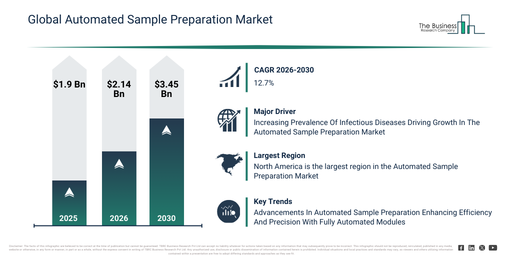
    The automated sample preparation market size has seen significant growth in recent years. It is anticipated to increase from $1.9 billion in 2025 to $2.14 billion in 2026, demonstrating a compound annual growth rate (CAGR) of 13.0%. Historically, this expansion is attributable to the proliferation of laboratory automation initiatives, an increasing volume of clinical and research samples, a heightened emphasis on reproducibility in testing, the expansion of pharmaceutical R&D activities, and the availability of advanced laboratory instruments.

    The market for automated sample preparation is projected to expand quickly over the coming years. This market is forecast to reach $3.45 billion by 2030, exhibiting a compound annual growth rate (CAGR) of 12.7%. Several factors are driving this anticipated growth, including a wider embrace of fully automated laboratories, an escalating need for precision diagnostics, the broadening scope of personalized medicine research, greater capital infusion into smart laboratory infrastructure, and an increasing incorporation of AI-driven analytics into sample preparation processes. Key trends expected during this period involve a growing uptake of robotic liquid handling systems, a heightened requirement for high-throughput sample processing, the increasing integration of automated workstations within laboratory settings, an expansion in sample handling approaches aimed at reducing errors, and improved standardization of laboratory workflows.

    Get A Free Sample Report With In-Depth Market Insights:

    https://thebusinessresearchcompany.com/sample_request?id=68019631&type=smp&name=Automated%20Sample%20Preparation%20Market%20Report%202026&utm_source=Blogs&utm_medium=Paid&utm_campaign=Oct_PR

    Automated Sample Preparation Market Industry Drivers: What’s Behind The Revenue Growth?

    The automated sample preparation market is anticipated to expand due to the rising occurrence of infectious diseases. These diseases are defined as conditions resulting from pathogens like bacteria, viruses, fungi, or parasites, capable of transmission between individuals or via tainted sources. An increase in infectious disease incidents can be linked to poor sanitation, insufficient healthcare accessibility, shifts in climate, and the emergence of drug-resistant pathogens. Automated sample preparation boosts the precision and effectiveness of infectious disease diagnostics by expediting and standardizing the handling of biological samples, which minimizes human mistakes and guarantees uniform outcomes in widespread testing. As an illustration, in March 2024, the Centers for Disease Control and Prevention (CDC), a US-based public health agency, reported that tuberculosis cases climbed from 8,320 in 2022 to 9,615 in 2023, marking an increment of 1,295 cases. Furthermore, the per 100,000 population rate increased from 2.5 in 2022 to 2.9 in 2023. Consequently, the growing occurrence of infectious diseases is fueling the expansion of the automated sample preparation market.

    Automated Sample Preparation Market Segment Trends And Revenue Contributors

    The automated sample preparation market covered in this report is segmented –

    1) By Product Type: Kits And Consumables, Instruments

    2) By Application: Research And Development, Diagnostics

    3) By End User: Biotechnology And Pharmaceutical Companies, Clinical And Diagnostic Laboratories, Academic And Research Institutions

    Subsegments:

    1) By Kits And Consumables: DNA/RNA Extraction Kits, Protein Purification Kits, Sample Collection Consumables, Reagents And Buffers, Assay Kits

    2) By Instruments: Automated Liquid Handling Systems, Magnetic Bead Separation Systems, Centrifuges, Robotically Controlled Pipetting Systems, Workstations For Sample Preparation

    #Automated Sample Preparation Market Growth Trends: What’s Shaping The Future Outlook?

    Companies within the automated sample preparation market are concentrating on creating sophisticated solutions, specifically fully automated sample preparation modules, to boost efficiency, decrease manual errors, and elevate reproducibility in laboratory operations. These modules represent advanced systems crafted to manage all phases of sample processing with minimal human involvement. An example of this trend is Shimadzu Corporation, a Japan-based manufacturer of precision instruments and medical equipment, which introduced the MUP-3100 in July 2024. This fully automated sample preparation module is specifically designed for glycan analysis, simplifying the pretreatment of antibody glycans. By utilizing a 6-axis robot, it automates tasks like reagent dispensing and sample processing, leading to reduced labor, fewer procedural errors, and improved safety. The MUP-3100 can process up to 24 samples in six hours, significantly accelerating workflows when compared to conventional methods that can extend over two days. This advanced system offers particular advantages for pharmaceutical firms and contract manufacturing organizations (CMOs) involved with biosimilars and antibody medications.

    Automated Sample Preparation Market Competitive Landscape: Which Companies Lead The Industry?

    Major companies operating in the automated sample preparation market are F. Hoffmann-La Roche Ltd., Thermo Fisher Scientific Inc., Danaher Corporation, Agilent Technologies, Hitachi High-Technologies Corp, Sartorius AG, Mettler-Toledo International Inc., Shimadzu Corporation, PerkinElmer, Waters Corporation, Bio-Rad Laboratories, Bruker Corporation, QIAGEN NV, Eppendorf, Tecan Group, Hamilton Company, Malvern Panalytical, Promega Corporation, Biotage AB, Gilson Inc., Aurora Biomed

    View The Full Automated Sample Preparation Market Report:

    https://thebusinessresearchcompany.com/report/automated-sample-preparation-global-market-report?utm_source=Blogs&utm_medium=Paid&utm_campaign=Oct_PR

    Automated Sample Preparation Market Regional Analysis And Top Geography

    North America was the largest region in the automated sample preparation market in 2025. The regions covered in the automated sample preparation market report are Asia-Pacific, South East Asia, Western Europe, Eastern Europe, North America, South America, Middle East, Africa.

    Reach Out To Our Team:

    The Business Research Company: https://www.thebusinessresearchcompany.com/

    Americas: +1 310-496-7795

    Asia: +44 7882 955267 & +91 8897263534

    Europe: +44 7882 955267

    Email us at: marketing@tbrc.info

    Follow us on:

    LinkedIn: https://in.linkedin.com/company/the-business-research-company

    YouTube: https://www.youtube.com/channel/UC24_fI0rV8cR5DxlCpgmyFQ

    Global Market Model: https://www.thebusinessresearchcompany.com/global-market-model
  • Automated Next-Generation Sequencing (NGS) Library Preparation Market CAGR Forecast Through 2030: Key Trends Shaping Industry Expansion

    Automated Next-Generation Sequencing (NGS) Library Preparation Market CAGR Forecast Through 2030: Key Trends Shaping Industry Expansion

    Featuring market attractiveness scoring, total addressable market sizing, company benchmarking matrices, interactive Excel dashboards, deeper supply chain intelligence, emerging startup tracking, and granular product-level insights, The Business Research Company’s 2026 market reports are built to deliver research that is both more actionable and more strategically valuable.

    Automated Next-Generation Sequencing (NGS) Library Preparation Market Size Outlook: How Quickly Will Revenue Expand Through 2030?

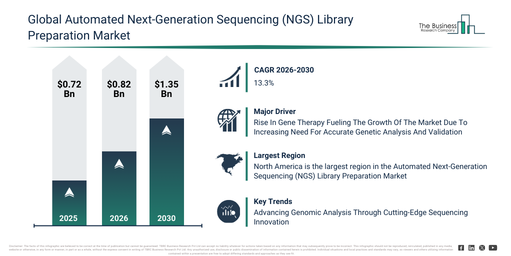
    The market size for automated next-generation sequencing (ngs) library preparation has experienced rapid expansion in recent years. It is projected to increase from $0.72 billion in 2025 to $0.82 billion by 2026, achieving a compound annual growth rate (CAGR) of 13.9%. The historical growth of this market can be attributed to the broader scope of genomic research activities, the growing integration of NGS in clinical research, the progression of precision medicine initiatives, the escalating demand for scalable sequencing workflows, and enhancements in sequencing chemistry technologies.

    The automated next-generation sequencing (ngs) library preparation market is projected to experience swift expansion in the coming years. Its valuation is anticipated to reach $1.35 billion by 2030, exhibiting a compound annual growth rate (CAGR) of 13.3%. This projected growth is driven by several factors, including the expanding application of NGS in diagnostic procedures, heightened investments in automated laboratory setups, the broadening scope of population genomics initiatives, a greater need for quicker sequencing results, and the wider integration of single-cell sequencing methodologies. Key trends anticipated during this period encompass the increased deployment of fully automated library preparation systems, a growing requirement for high-throughput sequencing processes, the augmented incorporation of robotics in sample handling, the development of more standardized and reliable ngs pipelines, and an intensified focus on minimizing errors and ensuring workflow consistency.

    Get A Free Sample Report With In-Depth Market Insights:

    https://thebusinessresearchcompany.com/sample_request?id=79386823&type=smp&name=Automated%20Next-Generation%20Sequencing%20%28NGS%29%20Library%20Preparation%20Market%20Report%202026&utm_source=Blogs&utm_medium=Paid&utm_campaign=Oct_PR

    Automated Next-Generation Sequencing (NGS) Library Preparation Market Growth Factors: What’s Supporting Expansion?

    The expansion of gene therapy is projected to drive the growth of the automated next-generation sequencing (NGS) library preparation market moving forward. Gene therapy is a medical approach that modifies a person’s genes to treat or prevent diseases. The prevalence of gene therapy is increasing due to the rising occurrence of genetic disorders that necessitate targeted and lasting treatment solutions. In gene therapy, automated NGS library preparation is utilized to precisely analyze and confirm genetic alterations by preparing high-quality DNA or RNA samples for sequencing. For example, in April 2024, data from the American Society of Gene and Cell Therapy, a US-based non-profit medical and scientific organization, showed that phase III gene therapy clinical trials grew by 10% in the fourth quarter of 2023, representing the first quarterly increase since the third quarter of 2022. Therefore, the surge in gene therapy is propelling the growth of the automated next-generation sequencing (NGS) library preparation market.

    Automated Next-Generation Sequencing (NGS) Library Preparation Market Segment Analysis Spotlighting Growth Areas

    The automated next-generation sequencing (ngs) library preparation market covered in this report is segmented –

    1) By Type: Targeted Genome Sequencing, Whole Genome Sequencing, Whole Exome Sequencing, Other Sequencing Types

    2) By Workflow: Nucleic Acid Extraction, Fragmentation, Adapter Ligation, Purification And Quantification

    3) By Application: Drug And Biomarker Discovery, Disease Diagnostics, Other Applications

    4) By End-Use: Hospitals And Clinics, Academic And Research Institutions, Pharmaceutical And Biotechnology Companies, Other End-Users

    Subsegments:

    1) By Targeted Genome Sequencing: Amplicon-Based Targeted Sequencing, Hybridization Capture-Based Targeted Sequencing, Custom Targeted Panels, Pre-designed Gene Panels

    2) By Whole Genome Sequencing: Human Whole Genome Sequencing, Animal Whole Genome Sequencing, Plant Whole Genome Sequencing, Microbial Whole Genome Sequencing

    3) By Whole Exome Sequencing: Standard Exome Sequencing, Clinical Exome Sequencing, Custom Exome Panels, Ultra-Rapid Exome Sequencing

    4) By Other Sequencing Types: RNA Sequencing (RNA-Seq), Epigenome Sequencing, Metagenomic Sequencing, Single-Cell Sequencing

    Automated Next-Generation Sequencing (NGS) Library Preparation Market Industry Trends: What’s Reshaping Demand?

    Leading companies in the automated next-generation sequencing (NGS) library preparation market are concentrating on developing advanced technologies, like Xpandomer technology, to improve sequencing speed, enhance data accuracy, and increase scalability, thereby optimizing workflows and supporting more efficient and reliable genomic analysis. Xpandomer technology is an advanced method for deoxyribonucleic acid (DNA) or ribonucleic acid (RNA) sequencing, converting a target nucleic acid molecule into a synthetic, expanded polymer called an Xpandomer, which is approximately 50 times longer than the original deoxyribonucleic acid (DNA) or ribonucleic acid (RNA) strand. For instance, in February 2025, Roche AG, a Switzerland-based biotechnology company, unveiled Sequencing by Expansion, a cutting-edge sequencing platform engineered to boost genomic resolution for advanced diagnostics, disease research, and precision medicine applications. This innovative automated next-generation sequencing (NGS) library preparation system streamlines complex workflows, improves data quality, and accelerates genomic analysis to support advanced research and personalized medicine. The Sequencing by Expansion platform is highly adaptable, enabling precise analysis of various genomic alterations across a wide spectrum of diseases, including cancer and rare genetic disorders, by enhancing resolution and accuracy for deeper biological insights.

    Automated Next-Generation Sequencing (NGS) Library Preparation Market Leading Companies: Who Holds The Strongest Market Presence?

    Major companies operating in the automated next-generation sequencing (ngs) library preparation market are F. Hoffmann-La Roche Ltd., Thermo Fisher Scientific Inc., Agilent Technologies India Private Limited, Illumina Inc., Beckman Coulter Inc., Bio-Rad Laboratories Inc., IDT Corporation, Tecan Group AG, Hamilton Company, Takara Bio Inc., 10x Genomics Inc., Oxford Nanopore Technologies plc, Twist Bioscience Corporation, New England Biolabs Inc., SPT Labtech Limited, Watchmaker Genomics Inc., Pillar Biosciences Inc., Aurora Biomed Inc., BGI Group, SEQWELL INC., Hudson Robotics Inc.

    View The Full Automated Next-Generation Sequencing (NGS) Library Preparation Market Report:

    https://thebusinessresearchcompany.com/report/automated-next-generation-sequencing-ngs-library-preparation-global-market-report?utm_source=Blogs&utm_medium=Paid&utm_campaign=Oct_PR

    Automated Next-Generation Sequencing (NGS) Library Preparation Market Geographic Analysis: Where Is Demand Rising Fastest?

    North America was the largest region in the automated next-generation sequencing (NGS) library preparation market in 2025. Asia-Pacific is expected to be the fastest-growing region in the forecast period. The regions covered in the automated next-generation sequencing (ngs) library preparation market report are Asia-Pacific, South East Asia, Western Europe, Eastern Europe, North America, South America, Middle East, Africa.

    Reach Out To Our Team:

    The Business Research Company: https://www.thebusinessresearchcompany.com/

    Americas: +1 310-496-7795

    Asia: +44 7882 955267 & +91 8897263534

    Europe: +44 7882 955267

    Email us at: marketing@tbrc.info

    Follow us on:

    LinkedIn: https://in.linkedin.com/company/the-business-research-company

    YouTube: https://www.youtube.com/channel/UC24_fI0rV8cR5DxlCpgmyFQ

    Global Market Model: https://www.thebusinessresearchcompany.com/global-market-model