Blog

  • Metronidazole Market Growth Outlook: Why Analysts Expect Continued Expansion

    Metronidazole Market Growth Outlook: Why Analysts Expect Continued Expansion

    Built to provide research that’s more actionable and strategically valuable, The Business Research Company’s 2026 market reports include market attractiveness analysis, total addressable market sizing, company benchmarking matrices, interactive Excel dashboards, broader supply chain intelligence, emerging startup tracking, and in-depth product insights.

    Metronidazole Market Value Analysis: What Growth Lies Ahead Over The Forecast Period?

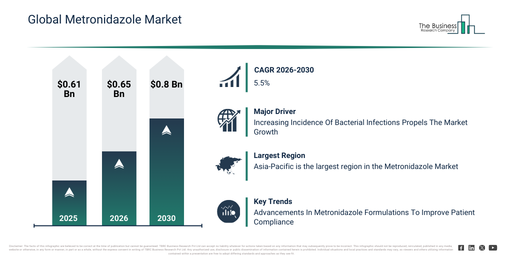
    The metronidazole market has experienced robust expansion in recent years. Projections indicate its growth from $0.61 billion in 2025 to $0.65 billion in 2026, demonstrating a compound annual growth rate (CAGR) of 5.5%. Historically, this expansion has been driven by factors such as the prevalence of bacterial and protozoal infections, its proven long-term clinical effectiveness, widespread inclusion on essential medicine registers, increased hospital use of antibiotics, and an uptick in surgical operations.

    The metronidazole market size is anticipated to demonstrate robust expansion over the forthcoming years, reaching a value of $0.8 billion by 2030, advancing at a compound annual growth rate (CAGR) of 5.5%. This projected growth can be attributed to several factors including an increasing global prevalence of infections, a rise in hospital admissions, ongoing demand for cost-effective antibiotics, the broadening scope of outpatient antimicrobial therapy, and the development of healthcare markets in emerging regions. Significant trends expected during this period include its extensive application in anaerobic bacterial infections, a growing need for broad-spectrum antimicrobials, the introduction of more topical and oral formulations, increased usage in gynecological and gastrointestinal infections, and a rising preference for affordable generic antibiotics.

    Get A Free Sample Report With In-Depth Market Insights:

    https://thebusinessresearchcompany.com/sample_request?id=42060030&type=smp&name=Metronidazole%20Market%20Report%202026&utm_source=Blogs&utm_medium=Paid&utm_campaign=Oct_PR

    Metronidazole Market Demand Drivers Opening New Revenue Streams

    The metronidazole market is anticipated to expand due to the rising occurrence of bacterial infections. These infections are defined as illnesses caused by the multiplication of detrimental bacteria within the human body. The escalating incidence of bacterial infections is influenced by factors such as antibiotic resistance, shifts in environmental conditions, and the growth in immunocompromised individuals. Metronidazole operates by targeting bacterial DNA, inflicting damage that prevents their replication and spread. This action makes it effective against anaerobic bacteria and specific protozoal infections, thereby impeding bacterial growth and treating the infection. For instance, in November 2025, according to the UK Health Security Agency, a UK-based government agency, instances of antibiotic-resistant bacteraemia, a severe infection where bacteria enter the bloodstream, have climbed by 9.3% since 2023, increasing from 18,740 cases in 2023 to 20,484 in 2024. Thus, the increasing incidence of bacterial infections will stimulate the growth of the metronidazole market.

    Metronidazole Market Segment Analysis And Revenue Potential

    The metronidazole market covered in this report is segmented –

    1) By Formulation Type: Tablets, Capsules, Intravenous (IV) Solutions, Topical Creams Or Ointments, Other Formulation Types

    2) By Application: Bacterial Infections, Parasitic Infections, Gynecological Infections, Surgical Prophylaxis, Other Applications

    3) By Distribution Channel: Hospital Pharmacies, Retail Pharmacies, Online Pharmacies, Other Distribution Channels

    4) By End-User: Hospitals, Clinics, Homecare, Other End Users

    Subsegments:

    1) By Tablets: Immediate Release Tablets, Extended Release Tablets

    2) By Capsules: Immediate Release Capsules, Extended Release Capsules

    3) By Intravenous (IV) Solutions: Single-dose IV Solutions, Multi-dose IV Solutions

    4) By Topical Creams Or Ointments: Topical Creams, Topical Ointments

    5) By Other Formulation Types: Oral Suspension, Vaginal Gels Or Suppositories

    Metronidazole Market Trends Powering Strategic Industry Growth

    Major companies within the metronidazole market are prioritizing the development of advanced products, such as ready-to-use oral liquids, to improve patient adherence, especially for individuals who struggle with swallowing tablets or need simpler administration for managing infections. Ready-to-use oral liquids are liquid medications that come pre-formulated, eliminating the need for further preparation or mixing before use, thus providing convenience for patients. As an illustration, in November 2023, Kesin Pharma Corporation, a US-based specialty pharmaceutical company, announced that the Food and Drug Administration (FDA) granted approval for LIKMEZ (metronidazole) oral suspension, 500 mg/5 mL. This is a novel formulation of a common antibiotic drug intended to boost patient adherence and is approved for treating trichomoniasis and anaerobic bacterial infections in adults, as well as amebiasis in adults and children. LIKMEZ is available as a strawberry peppermint-flavored suspension in a 200 mL bottle, featuring a 24-month shelf life and no requirement for refrigeration.

    Metronidazole Market Key Players Shaping Industry Direction

    Major companies operating in the metronidazole market are Pfizer Inc., Merck & Co. Inc., Abbott Laboratories, Fresenius Kabi AG, Baxter International Inc., Sandoz Group AG, Sun Pharmaceutical Industries Ltd., Aurobindo Pharma Limited, Cipla Limited, Dr. Reddy’s Laboratories Ltd., Lupin Pharmaceuticals Inc., Zydus Lifesciences, YiChang HEC ChangJiang Pharmaceutical Co. Ltd., Aarti Drugs Ltd., Unichem Laboratories, Cosette Pharmaceuticals Inc., Saptalis Pharmaceuticals LLC, Huanggang Saikang Pharmaceutical Co. Ltd., Kesin Pharma, Hubei Hongyuan Pharmaceutical Technology Co. Ltd., Huanggang Yinhe Aarti Pharmaceutical Co. Ltd., Higgs Healthcare

    View The Full Metronidazole Market Report:

    https://thebusinessresearchcompany.com/report/metronidazole-global-market-report?utm_source=Blogs&utm_medium=Paid&utm_campaign=Oct_PR

    Metronidazole Market Top Region By Revenue And Market Share

    Asia-Pacific was the largest region in the metronidazole market in 2025. The regions covered in the metronidazole market report are Asia-Pacific, South East Asia, Western Europe, Eastern Europe, North America, South America, Middle East, Africa.

    Reach Out To Our Team:

    The Business Research Company: https://www.thebusinessresearchcompany.com/

    Americas: +1 310-496-7795

    Asia: +44 7882 955267 & +91 8897263534

    Europe: +44 7882 955267

    Email us at: marketing@tbrc.info

    Follow us on:

    LinkedIn: https://in.linkedin.com/company/the-business-research-company

    YouTube: https://www.youtube.com/channel/UC24_fI0rV8cR5DxlCpgmyFQ

    Global Market Model: https://www.thebusinessresearchcompany.com/global-market-model
  • Methylsulfonylmethane (MSM) Supplements Market Forecast Insights: The Road To $2.06 Billion By 2030

    Methylsulfonylmethane (MSM) Supplements Market Forecast Insights: The Road To $2.06 Billion By 2030

    Backed by market attractiveness analysis, total addressable market sizing, company benchmarking matrices, interactive Excel dashboards, wider supply chain intelligence, emerging startup coverage, and detailed product-level insights, The Business Research Company’s 2026 market reports are designed to offer research that is more actionable and strategically valuable than ever.

    Methylsulfonylmethane (MSM) Supplements Market Size Forecast: How Big Could The Market Get By 2030?

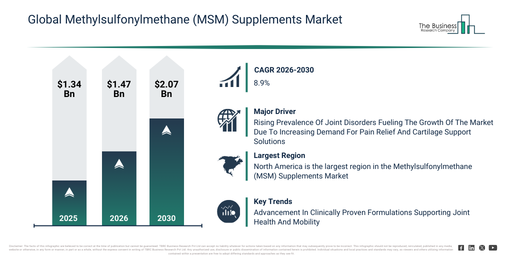
    The methylsulfonylmethane (msm) supplements market has experienced robust growth in recent years. It is projected to expand from $1.34 billion in 2025 to $1.47 billion in 2026, demonstrating a compound annual growth rate (CAGR) of 9.2%. The historical growth can be attributed to a rising prevalence of joint-related conditions, increased participation in fitness and active lifestyles, the expansion of dietary supplement availability, a growing use of natural anti-inflammatory compounds, and wider acceptance of sulfur-based supplements.

    The methylsulfonylmethane (msm) supplements market size is projected to undergo substantial growth in the upcoming years, expanding to $2.07 billion in 2030 with a compound annual growth rate (CAGR) of 8.9%. This expansion throughout the forecast period stems from the increasing adoption of preventive joint care solutions, a surging demand for vegan and non-GMO msm products, the proliferation of personalized supplement regimens, a heightened focus on mobility and aging wellness, and the development of online supplement retail channels. Significant trends anticipated during this period encompass a rising demand for joint health supplements, the increasing integration of msm into sports nutrition, the advancement of combination formulations incorporating vitamins and minerals, an amplified emphasis on clean-label and allergen-free products, and elevated consumer awareness regarding inflammation management.

    Get A Free Sample Report With In-Depth Market Insights:

    https://thebusinessresearchcompany.com/sample_request?id=90041270&type=smp&name=Methylsulfonylmethane%20%28MSM%29%20Supplements%20Market%20Report%202026&utm_source=Blogs&utm_medium=Paid&utm_campaign=Oct_PR

    Methylsulfonylmethane (MSM) Supplements Market Growth Backed By Core Demand Fundamentals

    The increasing prevalence of joint disorders is projected to bolster the growth of the methylsulfonylmethane (MSM) supplements market moving forward. Joint disorders are health conditions that cause damage or inflammation in the joints, leading to discomfort and restricted movement, such as osteoarthritis and rheumatoid arthritis. The occurrence of these conditions is on the rise due to factors like sedentary lifestyles and obesity. MSM supplements are commonly utilized as a complementary approach to support joint health by alleviating pain, reducing inflammation, and potentially aiding cartilage repair, though patient adoption varies. For instance, in March 2025, the Health Equity Evidence Centre, a UK-based organization, estimated that 17.1 million people in England were experiencing a musculoskeletal (MSK) condition, including arthritis or ongoing back or joint problems. Therefore, the growing prevalence of joint disorders is a key factor driving the expansion of the methylsulfonylmethane (MSM) Supplements market.

    Methylsulfonylmethane (MSM) Supplements Market Segmentation And Category Overview

    The methylsulfonylmethane (msm) supplements market covered in this report is segmented –

    1) By Product Form: Powder, Capsule, Tablet, Liquid, Softgel

    2) By Formulation: Organic MSM Supplements, Synthetic MSM Supplements, Non-GMO MSM Supplements, Vegan MSM Supplements, Allergen-Free MSM Supplements

    3) By Distribution Channel: Online Retailers, Supermarkets Or Hypermarkets, Health And Wellness Stores, Pharmacies Or Drugstores, Direct Sales

    4) By Application: Joint Health, Skin Care, Allergies And Immune Support, Sports Nutrition, Other Applications

    5) By End User: Athletes And Bodybuilders, Health-Conscious Consumers, Individuals With Joint Disorders, General Fitness Enthusiasts, Aging Population

    Subsegments:

    1) By Powder: Pure MSM Powder, Flavored MSM Powder, Blended MSM Powder, Organic Or Plant-Derived MSM Powder, Micronized MSM Powder

    2) By Capsule: Standard MSM Capsules, High-Strength MSM Capsules, MSM With Herbal Extracts Capsules, MSM With Vitamins Or Minerals Capsules, Vegetarian Or Vegan Capsules

    3) By Tablet: Regular MSM Tablets, Effervescent MSM Tablets, Chewable MSM Tablets, Coated MSM Tablets, Combination MSM Tablets

    4) By Liquid: Pure MSM Liquid, Flavored MSM Liquid, MSM Liquid Concentrate, MSM Liquid With Added Nutrients, Ready-To-Drink MSM Formulations

    5) By Softgel: Standard MSM Softgels, MSM With Omega-3 Softgels, MSM With Collagen Softgels, MSM With Antioxidant Blends, Rapid Absorption MSM Softgels

    Methylsulfonylmethane (MSM) Supplements Market Growth Trends Reshaping The Competitive Landscape

    Leading companies operating in the methylsulfonylmethane (MSM) supplements market are prioritizing the creation of clinically validated formulations that enhance joint health, mobility, and overall wellness through safe and effective nutritional solutions. For instance, in June 2025, Balchem Corporation, a US-based health products manufacturing company, secured Food with Functional Claims (FFC) approval from Japan’s Consumer Affairs Agency for Balchem’s OptiMSM, making it the first methylsulfonylmethane (MSM) product to receive such recognition. This approval, supported by a clinical study indicating that a 2,000 mg daily dose improved joint comfort and reduced knee pain, affirms OptiMSM’s proven safety and efficacy. Already GRAS-certified in the U.S., OptiMSM is recognized for aiding joint and connective tissue health by supplying essential sulfur for cartilage. The FFC approval now permits manufacturers to include joint health claims on product packaging, further solidifying OptiMSM’s leadership within the joint health and mobility segment of Japan’s expanding functional food market.

    Methylsulfonylmethane (MSM) Supplements Market Competitive Analysis Of Leading Industry Participants

    Major companies operating in the methylsulfonylmethane (msm) supplements market are The Nature’s Bounty Co., NOW Health Group Inc. (NOW Foods), Thorne HealthTech Inc., Jarrow Formulas Inc., Life Extension Foundation Buyers Club Inc., Swanson Health Products Inc., KAL Vitamins (a brand of Nutraceutical Corporation), Pure Encapsulations LLC, Solgar Inc., NutraScience Labs Inc., NutraBio Labs Inc., Bulksupplements.com LLC, Pure Organic Ingredients LLC, Puritan’s Pride Inc., PharmaFreak Holdings Inc., Vita-Flex Nutrition Inc., Source Naturals Inc., Kala Health Inc., Zenwise LLC (Zenwise Health), Bergstrom Nutrition Inc.

    View The Full Methylsulfonylmethane (MSM) Supplements Market Report:

    https://thebusinessresearchcompany.com/report/global-methylsulfonylmethane-msm-supplements-market-report?utm_source=Blogs&utm_medium=Paid&utm_campaign=Oct_PR

    Methylsulfonylmethane (MSM) Supplements Market Regional Analysis And Top Geography

    North America was the largest region in the methylsulfonylmethane (MSM) supplements market in 2025. Asia-Pacific is expected to be the fastest-growing region in the forecast period. The regions covered in the methylsulfonylmethane (msm) supplements market report are Asia-Pacific, South East Asia, Western Europe, Eastern Europe, North America, South America, Middle East, Africa.

    Reach Out To Our Team:

    The Business Research Company: https://www.thebusinessresearchcompany.com/

    Americas: +1 310-496-7795

    Asia: +44 7882 955267 & +91 8897263534

    Europe: +44 7882 955267

    Email us at: marketing@tbrc.info

    Follow us on:

    LinkedIn: https://in.linkedin.com/company/the-business-research-company

    YouTube: https://www.youtube.com/channel/UC24_fI0rV8cR5DxlCpgmyFQ

    Global Market Model: https://www.thebusinessresearchcompany.com/global-market-model
  • Methicillin-Resistant Staphylococcus Aureus (MRSA) Drugs Market Explained: What Is Fueling Growth To $3.24 Billion By 2030?

    Methicillin-Resistant Staphylococcus Aureus (MRSA) Drugs Market Explained: What Is Fueling Growth To $3.24 Billion By 2030?

    Featuring market attractiveness scoring, total addressable market sizing, company benchmarking matrices, interactive Excel dashboards, deeper supply chain intelligence, emerging startup tracking, and granular product-level insights, The Business Research Company’s 2026 market reports are built to deliver research that is both more actionable and more strategically valuable.

    Methicillin-Resistant Staphylococcus Aureus (MRSA) Drugs Market Revenue Outlook: What CAGR Lies Ahead Through 2030?

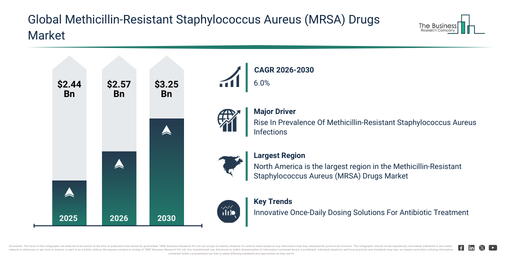
    The methicillin-resistant staphylococcus aureus (mrsa) drugs market has experienced substantial growth in recent years. This market is projected to expand from $2.44 billion in 2025 to $2.57 billion in 2026, reflecting a compound annual growth rate (CAGR) of 5.1%. The growth observed in previous periods is attributable to the widespread adoption of broad-spectrum antibiotics, an increase in hospital-acquired infections, the emergence of community-acquired MRSA, the limited availability of targeted antibiotics, and a heightened awareness of staphylococcus aureus infections.

    The methicillin-resistant staphylococcus aureus (MRSA) drugs market is expected to experience significant expansion in the coming years. By 2030, it is projected to reach $3.25 billion, exhibiting a compound annual growth rate (CAGR) of 6.0%. This growth during the forecast period can be attributed to advancements in genomics-based drug development, a rising demand for precision medicine, the expansion of healthcare infrastructure in emerging markets, an increasing prevalence of chronic and immunocompromised conditions, and a growing number of veterinary applications for MRSA drugs. Major trends anticipated within the forecast period include rising antibiotic resistance among MRSA strains, the development of novel MRSA drug classes, increasing rates of hospital-acquired infections, growth in both pediatric and geriatric patient populations, and an expansion of MRSA treatment within veterinary medicine.

    Get A Free Sample Report With In-Depth Market Insights:

    https://thebusinessresearchcompany.com/sample_request?id=60521080&type=smp&name=Methicillin-Resistant%20Staphylococcus%20Aureus%20%28MRSA%29%20Drugs%20Market%20Report%202026&utm_source=Blogs&utm_medium=Paid&utm_campaign=Oct_PR

    Methicillin-Resistant Staphylococcus Aureus (MRSA) Drugs Market Growth Catalysts And Demand Drivers

    The escalating incidence of Hospital Acquired Infections (HAIs) is anticipated to propel the growth of the methicillin-resistant Staphylococcus aureus drugs market moving forward. HAIs are identified as infections patients acquire during their treatment in a healthcare facility, typically manifesting 48 hours or more after admission. These infections are linked to various factors such as contaminated medical equipment, inadequate hand hygiene among healthcare staff, excessive use of antibiotics, extended hospital stays, and compromised immune systems of patients. Methicillin-resistant Staphylococcus aureus (MRSA) drugs play a crucial role in treating hospital-acquired infections by specifically targeting and eliminating MRSA strains that exhibit resistance to standard antibiotics, thereby curbing the spread and severity of these infections in healthcare settings. For instance, in 2023, the World Health Organization, a Switzerland-based Intergovernmental organization, reported approximately 136 million cases of healthcare-associated antibiotic-resistant infections globally each year. Thus, the rising prevalence of methicillin-resistant Staphylococcus aureus infections is a key factor driving the expansion of the methicillin-resistant Staphylococcus aureus drug market.

    Methicillin-Resistant Staphylococcus Aureus (MRSA) Drugs Market Segment Outlook: Which Categories Are Growing Fastest?

    The methicillin-resistant staphylococcus aureus (mrsa) drugs market covered in this report is segmented –

    1) By Drug Class: Lipopeptides, Oxazolidinones, Cephalosporin, Tetracycline, Folate Antagonist, Lipoglycopeptide, Other Drug Classes

    2) By Indication: Skin Infections, Bone and Joint Infections, Bacteremia, Animal Infections

    3) By MRSA Type: Hospital-Acquired (HA-MRSA), Community-Acquired (CA-MRSA)

    4) By Route of Administration: Oral Administration, Parenteral Administration

    5) By End User: Hospitals and Clinics, Research and Academic Institutes, Other End-Users

    Methicillin-Resistant Staphylococcus Aureus (MRSA) Drugs Market Trends Shaping Long-Term Demand

    Leading companies operating in the Methicillin-Resistant Staphylococcus Aureus (MRSA) drug market are primarily emphasizing once-daily dosing schedules. This focus is intended to enhance patient adherence to treatment protocols, streamline medication management, and improve the overall effectiveness of therapeutic interventions for MRSA infections. Once-daily dosing regimens refer to medication schedules where a drug is administered or consumed just one time daily. As an illustration, in August 2024, Sun Pharma, an India-based biotechnology firm, released Tedizolid Phosphate tablets 200 mg. This product offers a practical once-daily dosing alternative for patients experiencing acute bacterial skin and skin structure infections, including those stemming from MRSA, consequently promoting better treatment compliance and patient outcomes.

    Methicillin-Resistant Staphylococcus Aureus (MRSA) Drugs Market Leading Companies And Competitive Benchmarking

    Major companies operating in the methicillin-resistant staphylococcus aureus (mrsa) drugs market are Basilea Pharmaceutica Ltd., Merck & Co Inc., Pfizer Inc., Cumberland Pharmaceuticals Inc., Innovation Pharmaceuticals Inc., Melinta Therapeutics Inc., Nabriva Therapeutics plc, Paratek Pharmaceuticals Inc., GlaxoSmithKline plc, Johnson & Johnson, Theravance Biopharma Inc., AstraZeneca plc, AmpliPhi Biosciences Corporation, Debiopharm International S.A., AbbVie Inc., Seagen Inc., Astellas Pharma Inc., Eisai Co. Ltd., Exelixis Inc., Zymeworks Inc.

    View The Full Methicillin-Resistant Staphylococcus Aureus (MRSA) Drugs Market Report:

    https://thebusinessresearchcompany.com/report/methicillin-resistant-staphylococcus-aureus-MRSA-drugs-global-market-report?utm_source=Blogs&utm_medium=Paid&utm_campaign=Oct_PR

    Methicillin-Resistant Staphylococcus Aureus (MRSA) Drugs Market Geographic Analysis: Where Is Demand Rising Fastest?

    North America was the largest region in the global methicillin-resistant staphylococcus aureus drugs market in 2025. Asia-Pacific is expected to be the fastest-growing region in the forecast period. The regions covered in the methicillin-resistant staphylococcus aureus (mrsa) drugs market report are Asia-Pacific, South East Asia, Western Europe, Eastern Europe, North America, South America, Middle East, Africa.

    Reach Out To Our Team:

    The Business Research Company: https://www.thebusinessresearchcompany.com/

    Americas: +1 310-496-7795

    Asia: +44 7882 955267 & +91 8897263534

    Europe: +44 7882 955267

    Email us at: marketing@tbrc.info

    Follow us on:

    LinkedIn: https://in.linkedin.com/company/the-business-research-company

    YouTube: https://www.youtube.com/channel/UC24_fI0rV8cR5DxlCpgmyFQ

    Global Market Model: https://www.thebusinessresearchcompany.com/global-market-model
  • Methenamine Hippurate Tablets Market Forecast To Reach $14.48 Billion By 2030: Key Trends Explained

    Methenamine Hippurate Tablets Market Forecast To Reach $14.48 Billion By 2030: Key Trends Explained

    Built to provide research that’s more actionable and strategically valuable, The Business Research Company’s 2026 market reports include market attractiveness analysis, total addressable market sizing, company benchmarking matrices, interactive Excel dashboards, broader supply chain intelligence, emerging startup tracking, and in-depth product insights.

    Methenamine Hippurate Tablets Market Growth Analysis: How Will Revenue Trend Over The Forecast Period?

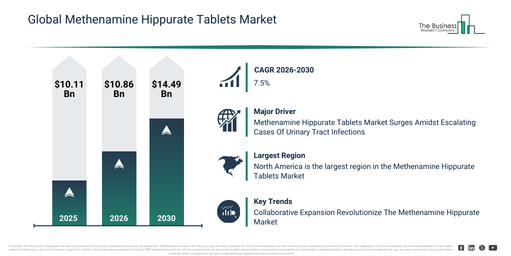
    The methenamine hippurate tablets market size has shown robust expansion in recent years. Its valuation is set to rise from $10.11 billion in 2025 to $10.86 billion in 2026, achieving a compound annual growth rate (CAGR) of 7.4%. Historically, this market growth can be ascribed to factors like limited awareness regarding recurrent UTI prevention, constrained availability of specialized urology care, a low rate of adoption for antimicrobial tablets, dependence on hospital-centric treatment, and conventional packaging styles.

    The methenamine hippurate tablets market is projected to experience robust expansion over the coming years, with its size anticipated to reach $14.49 billion by 2030, exhibiting a compound annual growth rate (CAGR) of 7.5%. This expansion during the forecast period is primarily attributed to factors such as the increasing incidence of urinary tract infections, a rising demand for outpatient and homecare treatment options, advancements in tablet formulation technology, the growing adoption of personalized medicine, and the expansion of online pharmacy channels. Key trends expected throughout this timeframe encompass the escalating prevalence of recurrent UTIs, an increase in the geriatric population, a growing preference for oral antimicrobial therapies, the broadening of home , and the emergence of personalized medication regimens.

    Get A Free Sample Report With In-Depth Market Insights:

    https://thebusinessresearchcompany.com/sample_request?id=88311323&type=smp&name=Methenamine%20Hippurate%20Tablets%20Market%20Report%202026&utm_source=Blogs&utm_medium=Paid&utm_campaign=Oct_PR

    Methenamine Hippurate Tablets Market Opportunity Drivers: What’s Unlocking New Revenue Potential?

    The methenamine hippurate tablets market is anticipated to expand due to an increase in urinary tract infection (UTI) cases. UTIs are prevalent conditions resulting from bacteria entering the urinary tract, typically via the urethra from the skin or rectum. Methenamine hippurate tablets serve to either prevent or manage recurrent urinary tract infections caused by particular bacteria. As an illustration, the National Health Service, a UK-based government department, reported in October 2023 that during the 2022-23 period, 147,285 admissions had urinary tract infections (UTIs) as the primary diagnosis. Among these, 56% (82,392) involved individuals aged 65 and older, with the 80-84 age group experiencing the highest number of admissions, totaling 17,280 admissions. Consequently, the increasing incidence of urinary tract infections is propelling the growth of the methenamine hippurate market.

    Methenamine Hippurate Tablets Market Segment Landscape: Which Areas Lead Development?

    The methenamine hippurate tablets market covered in this report is segmented –

    1) By Type: 20 Tablets Or Bottle, 6 Tablets Or Bottle

    2) By Distribution Channel: Hospital Pharmacy, Online Pharmacy, Retail Pharmacy

    3) By Application: Uncomplicated UTIs, Healthcare-associated UTIs

    4) By End User: Hospitals, Homecare, Specialty Clinics, Other End Users

    Subsegments:

    1) By 20 Tablets per Bottle: Standard Packaging, Bulk Packaging Options

    2) By 6 Tablets per Bottle: Standard Packaging, Sample Or Trial Packaging

    Methenamine Hippurate Tablets Market Innovation Trends Shaping Future Development

    Leading companies within the methenamine hippurate tablets market are forming partnerships to boost their market profitability. A strategic collaboration signifies an intentional alliance between entities aimed at achieving common goals through synchronized efforts, utilizing each other’s distinct strengths and assets. For example, in May 2023, EQL Pharma AB, a pharmaceutical company based in Sweden that offers methenamine hippurate tablets, joined forces with Dr. Pfleger Arzneimittel GmbH. This collaboration allows EQL Pharma AB to plan the launch of Methenamine Hippurate under an EQL-registered brand within the upcoming two years, incorporating standard license fees, specific regulatory and reimbursement milestones, and a supply price dependent on volume, contingent upon regulatory approval. Dr. Pfleger Arzneimittel GmbH is a pharmaceutical firm located in Germany.

    Methenamine Hippurate Tablets Market Industry Leaders And Competitive Landscape

    Major companies operating in the methenamine hippurate tablets market are Alvogen Lux Holdings S.ÀR.L., Micro Labs Inc., Aurobindo Pharma, Amneal Pharmaceuticals Inc., Viatris Inc., Sun Pharmaceutical Industries Ltd., Cipla Ltd., Dr. Reddy’s Laboratories Ltd., Cadila Healthcare Ltd., Torrent Pharmaceuticals Ltd., Glenmark Pharmaceuticals Ltd., Zydus Pharmaceuticals Ltd., Lupin Ltd., Alkem Laboratories Ltd., Ipca Laboratories Ltd., Granules India Ltd., Teva Pharmaceutical Industries Ltd., Apotex Pharmachem Inc., Sandoz International GmbH, Mylan Laboratories Ltd.

    View The Full Methenamine Hippurate Tablets Market Report:

    https://thebusinessresearchcompany.com/report/methenamine-hippurate-tablets-global-market-report?utm_source=Blogs&utm_medium=Paid&utm_campaign=Oct_PR

    Methenamine Hippurate Tablets Market Global Footprint: Which Region Leads The Market?

    North America was the largest region in the methenamine hippurate tablets market in 2025. The regions covered in the methenamine hippurate tablets market report are Asia-Pacific, South East Asia, Western Europe, Eastern Europe, North America, South America, Middle East, Africa.

    Reach Out To Our Team:

    The Business Research Company: https://www.thebusinessresearchcompany.com/

    Americas: +1 310-496-7795

    Asia: +44 7882 955267 & +91 8897263534

    Europe: +44 7882 955267

    Email us at: marketing@tbrc.info

    Follow us on:

    LinkedIn: https://in.linkedin.com/company/the-business-research-company

    YouTube: https://www.youtube.com/channel/UC24_fI0rV8cR5DxlCpgmyFQ

    Global Market Model: https://www.thebusinessresearchcompany.com/global-market-model
  • Metastatic Cancer Drugs Market Analysis: Understanding The Drivers Behind 5.8% CAGR Through 2030 Growth

    Metastatic Cancer Drugs Market Analysis: Understanding The Drivers Behind 5.8% CAGR Through 2030 Growth

    Backed by market attractiveness analysis, total addressable market sizing, company benchmarking matrices, interactive Excel dashboards, wider supply chain intelligence, emerging startup coverage, and detailed product-level insights, The Business Research Company’s 2026 market reports are designed to offer research that is more actionable and strategically valuable than ever.

    Metastatic Cancer Drugs Market Forecast: What Value Will The Market Reach By 2030?

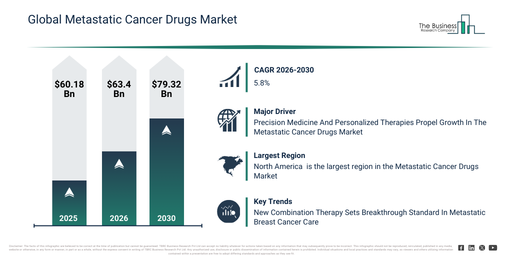
    The metastatic cancer drugs market has shown substantial growth over recent years. Its valuation is anticipated to rise from $60.18 billion in 2025 to $63.4 billion in 2026, demonstrating a compound annual growth rate (CAGR) of 5.3%. This historical expansion can be linked to the increasing occurrence of metastatic cancers, advancements in targeted treatments, rising healthcare expenditure, a surge in oncology research, and the creation of immunotherapy drugs.

    The metastatic cancer drugs market size is anticipated to undergo substantial growth over the next few years. It is forecast to grow to $79.32 billion in 2030, achieving a compound annual growth rate (CAGR) of 5.8%. The expansion during the forecast period can be attributed to the increasing uptake of precision medicine, the broadening of oral administration routes, intensified investment in research and development (R&D), heightened awareness regarding cancer treatments, and the incorporation of artificial intelligence (AI) into drug development. Major developments projected for the forecast period include personalized treatment approaches, the advancement of targeted therapy, combination therapy strategies, an increase in oral cancer medications, and a rise in immunotherapy adoption.

    Get A Free Sample Report With In-Depth Market Insights:

    https://thebusinessresearchcompany.com/sample_request?id=31147821&type=smp&name=Metastatic%20Cancer%20Drugs%20Market%20Report%202026&utm_source=Blogs&utm_medium=Paid&utm_campaign=Oct_PR

    Metastatic Cancer Drugs Market Growth Momentum: What Factors Are Shaping Demand?

    The advancements in precision medicine and personalized therapies are anticipated to propel the growth of the metastatic cancer drugs market going forward. Precision medicine involves tailoring medical care and treatment to the individual patient’s characteristics, taking into account factors such as their genetic makeup, molecular profile, environment, and lifestyle. Precision medicine and personalized therapies utilize metastatic cancer drugs by customizing treatment strategies to the unique genetic and molecular characteristics of individual patients. This approach enables healthcare providers to identify targeted therapies that are more likely to be effective against specific cancer subtypes, thereby improving treatment outcomes and minimizing adverse effects. For instance, in February 2024, according to the Personalized Medicine Coalition, a US-based nonprofit organization, the USFDA approved 16 new personalized treatments for rare disease patients in 2023, which was a significant increase from 6 personalized treatments in 2022. Therefore, the evolution of precision medicine and personalized therapies drives the metastatic cancer drugs market.

    Metastatic Cancer Drugs Market Segments: Where Is Growth Concentrated?

    The metastatic cancer drugs market covered in this report is segmented –

    1) By Drug Class: HER2 Inhibitors, Immune Checkpoints Inhibitors, PARP Inhibitors, Kinase Inhibitors, Other Drug Class

    2) By Cancer: Breast Cancer, Lung Cancer, Liver Cancer, Hematological Cancer, Brain Cancer, Prostate Cancer, Pancreatic Cancer, Other Cancers

    3) By Treatment: Chemotherapy, Immunotherapy, Hormonal Therapy, Surgery, Other Treatments

    4) By Route Of Administration: Intravenous, Intramuscular, Oral, Other Routes Of Administration

    5) By End-Users: Hospitals, Specialty Clinics, Other End-Users

    Subsegments:

    1) By HER2 Inhibitors: Trastuzumab, Ado-trastuzumab emtansine, Lapatinib

    2) By Immune Checkpoint Inhibitors: PD-1 Inhibitors, PD-L1 Inhibitors, CTLA-4 Inhibitors

    3) By PARP Inhibitors: Olaparib, Rucaparib, Niraparib

    4) By Kinase Inhibitors: EGFR Inhibitors, BRAF Inhibitors, ALK Inhibitors

    5) By Other Drug Classes: Chemotherapy Agents, Hormonal Therapies, Targeted Therapies

    Metastatic Cancer Drugs Market Trends Redefining Industry Growth

    Leading companies in the metastatic cancer drugs market are dedicating efforts to developing sophisticated targeted therapies and combination regimens aimed at enhancing treatment response, slowing disease progression, and extending the survival of patients with advanced-stage cancers. These innovations include next-generation antibody–drug conjugates (ADCs), precisely engineered targeted inhibitors, and novel biologic combinations, all designed to overcome resistance to existing treatments and improve clinical outcomes. For example, in November 2025, AstraZeneca Plc, a UK-based biopharmaceutical company, and Daiichi Sankyo, a Japan-based pharmaceutical company, advanced the metastatic cancer treatment landscape considerably when their combination regimen of Enhertu with pertuzumab was granted FDA Priority Review for the first-line treatment of HER2-positive metastatic breast cancer. This followed compelling Phase III data indicating a 44% reduction in the risk of disease progression or death when compared to the current standard of care. Such advancements underscore the industry’s persistent commitment to reshaping therapeutic standards and improving survival prospects for individuals living with metastatic disease.

    Metastatic Cancer Drugs Market Key Participants And Competitive Landscape

    Major companies operating in the metastatic cancer drugs market are Pfizer Inc., F. Hoffmann-La Roche AG, Merck & Co. Inc., AbbVie Inc., Bayer AG, AstraZeneca plc, Novartis AG, Bristol-Myers Squibb Company, Takeda Pharmaceutical Company Limited, Eli Lilly and Company, Amgen Inc., Astellas Pharma Inc., Eisai Co. Ltd., Incyte Corporation, Ipsen SA, Seagen Inc., Exelixis Inc., Zymeworks Inc., Karyopharm Therapeutics Inc., CytomX Therapeutics Inc., Spectrum Pharmaceuticals Inc., GlaxoSmithKline plc, Adaptimmune Therapeutics plc

    View The Full Metastatic Cancer Drugs Market Report:

    https://thebusinessresearchcompany.com/report/metastatic-cancer-drugs-global-market-report?utm_source=Blogs&utm_medium=Paid&utm_campaign=Oct_PR

    Metastatic Cancer Drugs Market Regional Split: Which Areas Are Fueling Growth?

    North America was the largest region in the metastatic cancer drugs market in 2025. Asia-Pacific is expected to be the fastest-growing region in the forecast period. The regions covered in the metastatic cancer drugs market report are Asia-Pacific, South East Asia, Western Europe, Eastern Europe, North America, South America, Middle East, Africa.

    Reach Out To Our Team:

    The Business Research Company: https://www.thebusinessresearchcompany.com/

    Americas: +1 310-496-7795

    Asia: +44 7882 955267 & +91 8897263534

    Europe: +44 7882 955267

    Email us at: marketing@tbrc.info

    Follow us on:

    LinkedIn: https://in.linkedin.com/company/the-business-research-company

    YouTube: https://www.youtube.com/channel/UC24_fI0rV8cR5DxlCpgmyFQ

    Global Market Model: https://www.thebusinessresearchcompany.com/global-market-model
  • Messenger Ribonucleic Acid Quality Monitoring Market Growth To $2.49 Billion By 2030: What’s Driving The Expansion?

    Messenger Ribonucleic Acid Quality Monitoring Market Growth To $2.49 Billion By 2030: What’s Driving The Expansion?

    Featuring market attractiveness scoring, total addressable market sizing, company benchmarking matrices, interactive Excel dashboards, deeper supply chain intelligence, emerging startup tracking, and granular product-level insights, The Business Research Company’s 2026 market reports are built to deliver research that is both more actionable and more strategically valuable.

    Messenger Ribonucleic Acid Quality Monitoring Market Size Outlook: How Quickly Will Revenue Expand Through 2030?

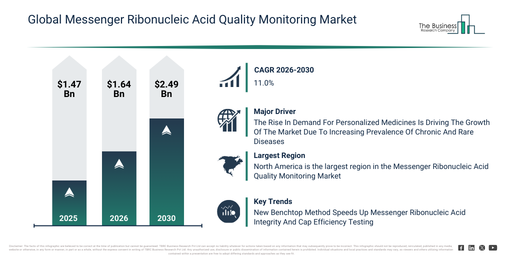
    The messenger ribonucleic acid quality monitoring market has seen substantial growth recently. Its valuation is predicted to rise from $1.47 billion in 2025 to $1.64 billion in 2026, exhibiting a compound annual growth rate (CAGR) of 11.3%. The drivers for this historic expansion include the broadening of mRNA research applications, the initial adoption of analytical validation tools, the rise in academic and clinical research programs, the increasing utilization of mRNA in vaccine development, and the accessibility of specialized quality control reagents.

    The messenger ribonucleic acid quality monitoring market is poised for significant expansion in the coming years. This market is projected to reach $2.49 billion by 2030, exhibiting a compound annual growth rate (CAGR) of 11.0%. This anticipated growth stems from several factors, including the expansion of therapeutic mRNA pipelines, heightened regulatory oversight of mRNA products, increased investment in biopharmaceutical manufacturing, the growing use of real-time quality analytics, and the broader provision of contract research and manufacturing services. Key developments during this period will involve the increasing embrace of standardized mRNA quality control protocols, a rise in the utilization of advanced analytical instrumentation, the growing incorporation of automated quality monitoring systems, the broadening of regulatory compliance testing, and a stronger emphasis on mRNA stability and integrity.

    Get A Free Sample Report With In-Depth Market Insights:

    https://thebusinessresearchcompany.com/sample_request?id=25036591&type=smp&name=Messenger%20Ribonucleic%20Acid%20Quality%20Monitoring%20Market%20Report%202026&utm_source=Blogs&utm_medium=Paid&utm_campaign=Oct_PR

    Messenger Ribonucleic Acid Quality Monitoring Market Expansion Drivers: What’s Shaping Future Growth?

    The rising demand for personalized medicines is anticipated to propel the expansion of the messenger ribonucleic acid quality monitoring market moving forward. Personalized medicines are defined as medical treatments specifically adapted to an individual’s genetic makeup, lifestyle, and environment, aiming to provide the most effective therapy for that particular patient. This heightened demand for personalized medicines arises from the increasing prevalence of chronic and rare diseases, which necessitate targeted, patient-specific therapies to achieve better treatment outcomes. Messenger ribonucleic acid quality monitoring plays a crucial role by ensuring the accuracy, stability, and efficacy of mRNA-based therapies, thereby directly supporting the creation of safe and effective personalized medicines. For instance, in February 2024, the Personalized Medicine Coalition, a US-based non-profit organization, reported that in 2023, the FDA approved 16 new personalized therapies for patients with rare diseases, demonstrating a substantial increase from the 6 approvals registered in 2022. Thus, the growing demand for personalized medicines is a key driver for the growth of the messenger ribonucleic acid quality monitoring market.

    Messenger Ribonucleic Acid Quality Monitoring Market Segment Analysis: What Are The Core Market Categories?

    The messenger ribonucleic acid quality monitoring market covered in this report is segmented –

    1) By Type: Analytical Instruments, Reagents And Consumables, Software And Services

    2) By Technology: Liquid Chromatography-Mass Spectrometry (LC-MS), Electrophoresis, Enzyme-Linked Immunosorbent Assay (ELISA), Polymerase Chain Reaction (PCR) Techniques, Other Technologies

    3) By Application: Vaccine Development, Therapeutic Messenger Ribonucleic Acid Products, Gene Editing

    4) By End User: Biopharmaceutical And Biotechnology Companies, Contract Development And Manufacturing Organizations (CDMOs), Contract Research Organizations (CROs) And Analytical Labs, Academic And Research Institutes Or Centers

    Subsegments:

    1) By Analytical Instruments: Benchtop Analyzers, Microfluidic Systems, Spectrophotometers, Capillary Electrophoresis Systems

    2) By Reagents And Consumables: Ribonucleic Acid Extraction Kits, Complementary Deoxyribonucleic Acid Synthesis Kits, Fluorescent Probes, Quality Control Standards

    3) By Software And Services: Data Analysis Software, Laboratory Information Management Systems, Consulting Services, Validation And Training Services

    Messenger Ribonucleic Acid Quality Monitoring Market Strategic Trends: What Defines The Next Growth Phase?

    Major companies operating in messenger ribonucleic acid quality monitoring are focusing on developing innovative solutions, such as benchtop instruments, for rapid and accurate assessment of messenger ribonucleic acid quality attributes. A benchtop instrument is a compact laboratory device designed to perform specialized analyses or experiments on a laboratory bench, offering convenience, speed, and accessibility without the need for large-scale equipment. For instance, in June 2024, InDevR Inc., a US-based biotechnology and analytical instrumentation company, launched 5’CapQ, a rapid benchtop assay for assessing critical quality attributes (CQAs) of mRNA-based vaccines. The assay measures both the integrity and 5’ capping efficiency of mRNA molecules in under two hours, combining these key quality metrics into a single streamlined test. It works by selectively capturing mRNA molecules with a 5’ cap and fluorescently labeling the poly(A) tail, ensuring that only fully intact, capped mRNA essential for stability and protein translation is quantified. By providing fast, quantitative, and easy-to-use analysis, 5’CapQ helps eliminate testing bottlenecks in mRNA vaccine development without requiring specialized expertise or lengthy processing times.

    Messenger Ribonucleic Acid Quality Monitoring Market Top Companies Driving Competitive Growth

    Major companies operating in the messenger ribonucleic acid quality monitoring market are F. Hoffmann-La Roche Ltd., Thermo Fisher Scientific Inc., Danaher Corporation, Lonza Group AG, Eurofins Scientific SE, Agilent Technologies Inc., Illumina Inc., Intertek Group plc, Sartorius AG, Revvity Inc., Bio-Rad Laboratories Inc., WuXi Biologics (Cayman) Inc., QIAGEN N.V., Bio-Techne Corporation, Fujifilm Diosynth Biotechnologies, GenScript Biotech Corporation, Promega Corporation, Takara Bio Inc., Oxford Nanopore Technologies Ltd., Creative Biolabs Inc., Creative Diagnostics, Jena Bioscience GmbH.

    View The Full Messenger Ribonucleic Acid Quality Monitoring Market Report:

    https://thebusinessresearchcompany.com/report/global-messenger-ribonucleic-acid-quality-monitoring-market-report?utm_source=Blogs&utm_medium=Paid&utm_campaign=Oct_PR

    Messenger Ribonucleic Acid Quality Monitoring Market Top Region: Where Does Most Revenue Come From?

    North America was the largest region in the messenger ribonucleic acid quality monitoring market in 2025. Asia-Pacific is expected to be the fastest-growing region in the forecast period. The regions covered in the messenger ribonucleic acid quality monitoring market report are Asia-Pacific, South East Asia, Western Europe, Eastern Europe, North America, South America, Middle East, Africa.

    Reach Out To Our Team:

    The Business Research Company: https://www.thebusinessresearchcompany.com/

    Americas: +1 310-496-7795

    Asia: +44 7882 955267 & +91 8897263534

    Europe: +44 7882 955267

    Email us at: marketing@tbrc.info

    Follow us on:

    LinkedIn: https://in.linkedin.com/company/the-business-research-company

    YouTube: https://www.youtube.com/channel/UC24_fI0rV8cR5DxlCpgmyFQ

    Global Market Model: https://www.thebusinessresearchcompany.com/global-market-model
  • Messenger ribonucleic acid (mRNA) Synthesis Raw Materials Market Trends Reshaping Industry Growth Through 2030

    Messenger ribonucleic acid (mRNA) Synthesis Raw Materials Market Trends Reshaping Industry Growth Through 2030

    Built to provide research that’s more actionable and strategically valuable, The Business Research Company’s 2026 market reports include market attractiveness analysis, total addressable market sizing, company benchmarking matrices, interactive Excel dashboards, broader supply chain intelligence, emerging startup tracking, and in-depth product insights.

    Messenger ribonucleic acid (mRNA) Synthesis Raw Materials Market Size, Value And Growth Trajectory Through 2030

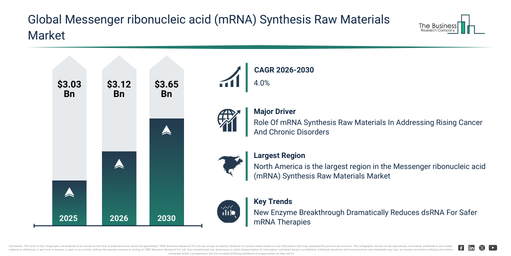
    The messenger ribonucleic acid (mrna) synthesis raw materials market size has experienced consistent expansion in recent years. Its growth is anticipated to be from $3.03 billion in 2025 to $3.12 billion in 2026, reflecting a compound annual growth rate (CAGR) of 3.0%. This historical growth can be ascribed to a growing demand for vaccines, advancements in molecular biology, increasing r&d investments in synthetic biology, the rise of infectious disease outbreaks, and the development of efficient transcription enzymes.

    The market size for messenger ribonucleic acid (mRNA) synthesis raw materials is anticipated to experience consistent growth over the next few years. It will grow to $3.65 billion in 2030 at a compound annual growth rate (CAGR) of 4.0%. This projected growth is primarily fueled by the increasing prevalence of mRNA-based therapeutics, the uptake of automated mRNA synthesis platforms, a surge in personalized medicine initiatives, the expansion of biotechnology manufacturing hubs, and breakthroughs in nucleotide modifications. Significant trends expected during the forecast period include the optimization of synthetic mRNA, the advancement of high-purity raw material development, the implementation of scalable in-vitro transcription processes, the standardization of the supply chain for mRNA production, and stringent quality control coupled with regulatory compliance.

    Get A Free Sample Report With In-Depth Market Insights:

    https://thebusinessresearchcompany.com/sample_request?id=12818127&type=smp&name=Messenger%20ribonucleic%20acid%20%28mRNA%29%20Synthesis%20Raw%20Materials%20Market%20Report%202026&utm_source=Blogs&utm_medium=Paid&utm_campaign=Oct_PR

    Messenger ribonucleic acid (mRNA) Synthesis Raw Materials Market Development Factors: What’s Supporting Demand?

    The increasing occurrence of cancer and persistent health conditions is anticipated to fuel the expansion of the mRNA synthesis raw materials market in the future. Cancer is characterized as a condition where abnormal cells multiply without regulation, capable of invading adjacent tissues and potentially spreading to distant parts of the body through the bloodstream and lymphatic systems. Chronic illnesses are generally defined as health issues that last for at least a year, require ongoing medical care, hinder daily activities, or a combination of these factors. These raw materials for mRNA synthesis find application in drug discovery, vaccine creation, and the production of RNA-based therapeutics, providing enhanced immunogenicity, greater efficacy, and quicker production, suitable for addressing cancer and chronic ailments. For example, data released by the American Cancer Society, a US-based non-profit organization, in January 2024, forecasts that the United States will experience 2,001,140 new cancer cases and 611,720 cancer deaths in 2024, an increase from 1,958,310 cases and 609,820 deaths recorded in 2023. Additionally, as reported by the British Heart Foundation, a UK-based charity, in September 2025, over 7.6 million people in the UK (comprising more than 4 million men and over 3.6 million women) are currently living with cardiovascular disease; forecasts suggest that this figure could increase by roughly 1 million by 2030 and about 2 million by 2040, influenced by an aging populace and better survival statistics. Consequently, the rising prevalence of cancer and chronic disorders acts as a key impetus for the mRNA synthesis of raw materials.

    Messenger ribonucleic acid (mRNA) Synthesis Raw Materials Market Segment Breakdown: Which Categories Lead On Revenue?

    The messenger ribonucleic acid (mrna) synthesis raw materials market covered in this report is segmented –

    1) By Type: Capping Agents, Nucleotides, Plasmid DNA, Other Types

    2) By Applications: Therapeutics Production, Vaccine Production, Other Applications

    3) By End-Users: Biotechnology Companies, Pharmaceutical Companies, Research And Academic Institutions, Other End-Users

    Subsegments:

    1) By Capping Agents: 7-Methyl Guanylate (M7G) Capping Agents, Other Capping Agents

    2) By Nucleotides: Natural Nucleotides, Modified Nucleotides, Triphosphate Nucleotides

    3) By Plasmid DNA: Linearized Plasmid DNA, Circular Plasmid DNA, High-Purity Plasmid DNA

    4) By Other Types: Buffer Solutions, Enzymes, Other Auxiliary Materials

    Messenger ribonucleic acid (mRNA) Synthesis Raw Materials Market Transformation Trends: What Innovations Are Driving Change?

    Leading companies within the messenger ribonucleic acid (mRNA) synthesis raw materials market are increasingly focusing on forming strategic collaborations to bolster their technological capabilities, broaden their range of high-quality raw materials, and accelerate the development of advanced mRNA therapeutics. These strategic collaborations denote formal partnerships established between biotechnology firms, enzyme developers, and nucleic acid technology providers, with the goal of jointly creating sophisticated IVT enzymes, modified nucleotides, capping analogs, or other essential components that improve mRNA yield, purity, stability, and safety. For instance, in September 2024, TriLink Biotechnologies, a US-based biotechnology company, partnered with Alphazyme LLC, a US-based custom molecular biology enzyme company, to introduce the CleanScribe RNA Polymerase. This next-generation IVT enzyme significantly reduces double-stranded RNA formation by up to 85% during mRNA synthesis, thereby contributing to the creation of safer and more potent mRNA therapeutics.

    Messenger ribonucleic acid (mRNA) Synthesis Raw Materials Market Leading Players And Competitive Positioning

    Major companies operating in the messenger ribonucleic acid (mrna) synthesis raw materials market are Thermo Fisher Scientific Inc., Agilent Technologies Inc., Lonza Group Ltd., Bio-Rad Laboratories Inc., Qiagen N.V., Maravai LifeSciences, Takara Bio Inc., GenScript Biotech Corporation, Promega Corporation, Integrated DNA Technologies Inc., LGC Biosearch Technologies, Merck KGaA, GeneCopoeia Inc., Bio-Synthesis Inc., BOC Sciences Inc., Bio Basic Inc., OriGene Technologies Inc., BioCat GmbH, Creative Biogene, Jena Bioscience GmbH, ATDBio Ltd.

    View The Full Messenger ribonucleic acid (mRNA) Synthesis Raw Materials Market Report:

    https://thebusinessresearchcompany.com/report/messenger-ribonucleic-acid-mRNA-synthesis-raw-materials-global-market-report?utm_source=Blogs&utm_medium=Paid&utm_campaign=Oct_PR

    Messenger ribonucleic acid (mRNA) Synthesis Raw Materials Market Regional Breakdown: Where Is Demand Concentrated?

    North America was the largest region in the mRNA synthesis raw materials market in 2025. The regions covered in the messenger ribonucleic acid (mrna) synthesis raw materials market report are Asia-Pacific, South East Asia, Western Europe, Eastern Europe, North America, South America, Middle East, Africa.

    Reach Out To Our Team:

    The Business Research Company: https://www.thebusinessresearchcompany.com/

    Americas: +1 310-496-7795

    Asia: +44 7882 955267 & +91 8897263534

    Europe: +44 7882 955267

    Email us at: marketing@tbrc.info

    Follow us on:

    LinkedIn: https://in.linkedin.com/company/the-business-research-company

    YouTube: https://www.youtube.com/channel/UC24_fI0rV8cR5DxlCpgmyFQ

    Global Market Model: https://www.thebusinessresearchcompany.com/global-market-model
  • Messenger Ribonucleic Acid (mRNA) Synthesis And Manufacturing Market Growth To $9.22 Billion Creates New Opportunities Across The Industry

    Messenger Ribonucleic Acid (mRNA) Synthesis And Manufacturing Market Growth To $9.22 Billion Creates New Opportunities Across The Industry

    Backed by market attractiveness analysis, total addressable market sizing, company benchmarking matrices, interactive Excel dashboards, wider supply chain intelligence, emerging startup coverage, and detailed product-level insights, The Business Research Company’s 2026 market reports are designed to offer research that is more actionable and strategically valuable than ever.

    Messenger Ribonucleic Acid (mRNA) Synthesis And Manufacturing Market CAGR Outlook And Future Development

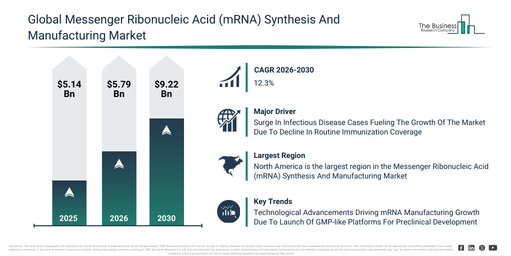
    The messenger ribonucleic acid (mrna) synthesis and manufacturing market size has experienced rapid growth in recent years. It is anticipated to expand from $5.14 billion in 2025 to $5.79 billion in 2026, exhibiting a compound annual growth rate (CAGR) of 12.6%. The expansion observed historically can be ascribed to several factors, including the limited availability of mRNA synthesis platforms, the early stages of research in mRNA therapeutics, a reliance on small-scale laboratory production methods, nascent regulatory frameworks, and the high costs associated with purification and formulation services.

    The messenger ribonucleic acid (mrna) synthesis and manufacturing market size is anticipated to experience significant growth over the next few years. It is projected to expand to $9.22 billion in 2030, exhibiting a compound annual growth rate (CAGR) of 12.3%. This expansion during the forecast period can be attributed to technological improvements in automated mRNA synthesis, the establishment of more commercial-scale mRNA manufacturing facilities, increasing investment in vaccine and therapeutic development, a rising demand for self-amplifying mRNA and new formulations, and an increase in preclinical and clinical research collaborations. Dominant trends during this period include a growing adoption of GMP-compliant mRNA synthesis, an escalating need for large-scale mRNA production, the expansion of mRNA therapeutics and vaccine pipelines, a stronger focus on purification, capping, and tailing services, and the increasing integration of mRNA-LNP formulations and stability testing.

    Get A Free Sample Report With In-Depth Market Insights:

    https://thebusinessresearchcompany.com/sample_request?id=67702416&type=smp&name=Messenger%20Ribonucleic%20Acid%20%28mRNA%29%20Synthesis%20And%20Manufacturing%20Market%20Report%202026&utm_source=Blogs&utm_medium=Paid&utm_campaign=Oct_PR

    Messenger Ribonucleic Acid (mRNA) Synthesis And Manufacturing Market Industry Drivers: What’s Behind The Revenue Growth?

    The increasing prevalence of infectious diseases is anticipated to propel the growth of the messenger ribonucleic acid (mRNA) synthesis and manufacturing market going forward. Infectious diseases are conditions caused by pathogenic microorganisms such as bacteria, viruses, fungi, or parasites, including illnesses like malaria that can spread directly or indirectly. The rising incidence of infectious diseases is a consequence of rapid urbanization, which results in higher population density and close human contact, thus facilitating the spread of infections. mRNA synthesis and manufacturing contribute to combating infectious diseases by enabling the swift development and scalable production of targeted vaccines and therapeutics designed to stimulate a specific immune response. For instance, in October 2024, the World Health Organization, a Switzerland-based international public health organization, indicated that approximately 8.2 million people were newly diagnosed with tuberculosis in 2023, an increase from about 7.5 million in 2022, thereby identifying tuberculosis as the leading infectious disease killer. Consequently, the growing prevalence of infectious diseases is a significant driver for the messenger ribonucleic acid (mRNA) synthesis and manufacturing market’s expansion.

    Messenger Ribonucleic Acid (mRNA) Synthesis And Manufacturing Market Segmentation: How Does The Market Break Down By Category?

    The messenger ribonucleic acid (mrna) synthesis and manufacturing market covered in this report is segmented –

    1) By Service Type: Messenger Ribonucleic Acid (mRNA) Drug Synthesis, Messenger Ribonucleic Acid (mRNA) Vaccine Synthesis

    2) By Scale Of Operation: Preclinical, Clinical, Commercial

    3) By Therapeutic Area: Infectious Diseases, Oncology, Other Therapeutic Areas

    4) By Application: Vaccine Production, Therapeutic Development, Drug Discovery, Other Applications

    Subsegments:

    1) By Messenger Ribonucleic Acid (mRNA) Drug Synthesis: Custom Messenger Ribonucleic Acid (mRNA) Synthesis, GMP-Grade Messenger Ribonucleic Acid (mRNA) Synthesis, Large-Scale Messenger Ribonucleic Acid (mRNA) Synthesis, Modified Messenger Ribonucleic Acid (mRNA) Synthesis, Capping And Tailing Services, Purification Services

    2) By Messenger Ribonucleic Acid (mRNA) Vaccine Synthesis: Preclinical Messenger Ribonucleic Acid (mRNA) Vaccine Synthesis, Clinical-Grade Messenger Ribonucleic Acid (mRNA) Vaccine Synthesis, GMP-Compliant Vaccine Batch Production, Self-Amplifying Messenger Ribonucleic Acid (mRNA) Synthesis, Messenger Ribonucleic Acid (mRNA)-LNP Formulation Services For Vaccines, Stability Testing And QC Services

    #Messenger Ribonucleic Acid (mRNA) Synthesis And Manufacturing Market Growth Trends: What’s Shaping The Future Outlook?

    Leading firms within the messenger ribonucleic acid (mRNA) synthesis and manufacturing market are prioritizing the creation of novel solutions, such as co-transcriptional capping platforms, to expedite early-stage studies and alleviate compliance hurdles. A co-transcriptional capping platform represents an exclusive technique for attaching a safeguarding cap to messenger ribonucleic acid (mRNA) molecules during their creation, thereby improving mRNA resilience, translatability, and management of immune response. As an example, during May 2025, GenScript, a US-headquartered firm specializing in life sciences research instruments, introduced its good manufacturing practice (GMP)-like messenger ribonucleic acid (mRNA) manufacturing service. This service offers scalable, compliance-conscious manufacturing designed to yield highly pure, effective mRNA for preclinical studies supporting Investigational New Drug (IND) applications, encompassing toxicity, distribution within the body, and pharmacokinetics or pharmacodynamics (PK or PD) evaluations. Operating within environments adhering to cleanroom standards and International Organization for Standardization (ISO) 7 classification, it integrates patented co-transcriptional capping technology. Clients can receive tailored mRNA from this service in as few as seven weeks. The innovation effectively spans the critical developmental divide separating research-level production from comprehensive GMP manufacturing, allowing nascent biotechnology and pharmaceutical enterprises to undertake studies that meet regulatory requirements while bypassing the substantial expenses and time inefficiencies associated with conventional GMP processes.

    Messenger Ribonucleic Acid (mRNA) Synthesis And Manufacturing Market Competitive Overview And Top Companies

    Major companies operating in the messenger ribonucleic acid (mrna) synthesis and manufacturing market are Thermo Fisher Scientific Inc., Evonik Industries AG, Moderna Inc., BioNTech SE , AGC Biologics A/S, Eurofins Scientific SE, Lonza Group AG, Catalent Inc., WuXi Biologics (Cayman) Inc., Samsung Biologics Co Ltd., GenScript Biotech Corporation, Arcturus Therapeutics Holdings Inc., New England Biolabs Inc., CureVac N.V., Abzena plc, Creative Biolabs Inc., Aldevron LLC, eTheRNA immunotherapies NV, Bio-Synthesis Inc., TriLink BioTechnologies LLC

    View The Full Messenger Ribonucleic Acid (mRNA) Synthesis And Manufacturing Market Report:

    https://thebusinessresearchcompany.com/report/messenger-ribonucleic-acid-mrna-synthesis-and-manufacturing-global-market-report?utm_source=Blogs&utm_medium=Paid&utm_campaign=Oct_PR

    Messenger Ribonucleic Acid (mRNA) Synthesis And Manufacturing Market Geographic Landscape: Which Region Dominates Industry Growth?

    North America was the largest region in the messenger ribonucleic acid (mRNA) synthesis and manufacturing market in 2025. Asia-Pacific is expected to be the fastest-growing region in the forecast period. The regions covered in the messenger ribonucleic acid (mrna) synthesis and manufacturing market report are Asia-Pacific, South East Asia, Western Europe, Eastern Europe, North America, South America, Middle East, Africa.

    Reach Out To Our Team:

    The Business Research Company: https://www.thebusinessresearchcompany.com/

    Americas: +1 310-496-7795

    Asia: +44 7882 955267 & +91 8897263534

    Europe: +44 7882 955267

    Email us at: marketing@tbrc.info

    Follow us on:

    LinkedIn: https://in.linkedin.com/company/the-business-research-company

    YouTube: https://www.youtube.com/channel/UC24_fI0rV8cR5DxlCpgmyFQ

    Global Market Model: https://www.thebusinessresearchcompany.com/global-market-model
  • Messenger Ribonucleic Acid (mRNA) Capping Enzyme Market Forecast: Breaking Down The Numbers Behind Future Expansion

    Messenger Ribonucleic Acid (mRNA) Capping Enzyme Market Forecast: Breaking Down The Numbers Behind Future Expansion

    Featuring market attractiveness scoring, total addressable market sizing, company benchmarking matrices, interactive Excel dashboards, deeper supply chain intelligence, emerging startup tracking, and granular product-level insights, The Business Research Company’s 2026 market reports are built to deliver research that is both more actionable and more strategically valuable.

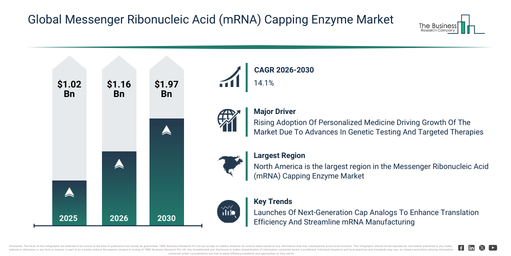
    Messenger Ribonucleic Acid (mRNA) Capping Enzyme Market Set To Climb From $1.16 Billion In 2026 To $1.97 Billion By 2030

    The messenger ribonucleic acid (mRNA) capping enzyme market has expanded rapidly in recent years. It is projected to increase from $1.02 billion in 2025 to $1.16 billion in 2026, demonstrating a compound annual growth rate (CAGR) of 14.4%. The historical surge can be ascribed to the broadening of mRNA research activities, increased application of mRNA in vaccine development, progress in enzymatic synthesis methods, higher funding for genetic research, and the increasing adoption of in vitro transcription technologies.

    The messenger ribonucleic acid (mrna) capping enzyme market size is anticipated to demonstrate significant growth over the next few years. It will grow to $1.97 billion in 2030 at a compound annual growth rate (CAGR) of 14.1%. This expansion during the forecast period is attributable to the increasing development of mrna-based therapeutics, rising investments in advanced vaccine platforms, the expansion of biopharmaceutical manufacturing infrastructure, a growing demand for high-purity mrna components, and an increasing focus on scalable mrna production. Noteworthy trends expected in the forecast period include an increasing demand for high-efficiency mrna capping enzymes, the rising adoption of enzymatic mrna modification techniques, the growing integration of mrna therapeutic manufacturing, the expansion of recombinant enzyme production, and an enhanced focus on cap structure optimization.

    Get A Free Sample Report With In-Depth Market Insights:

    https://thebusinessresearchcompany.com/sample_request?id=28223391&type=smp&name=Messenger%20Ribonucleic%20Acid%20%28mRNA%29%20Capping%20Enzyme%20Market%20Report%202026&utm_source=Blogs&utm_medium=Paid&utm_campaign=Oct_PR

    Messenger Ribonucleic Acid (mRNA) Capping Enzyme Market Growth Factors: What’s Supporting Expansion?

    The expanding utilization of personalized medicine is anticipated to stimulate the growth of the messenger ribonucleic acid (mRNA) capping enzyme market in the future. Personalized medicine represents a healthcare strategy that customizes medical interventions based on an individual’s distinct genetic composition, lifestyle, and environmental factors. The adoption of personalized medicine is gaining momentum due to advancements in genetic testing technologies, which allow for more accurate identification of specific patient requirements, leading to targeted and effective treatments. mRNA capping enzymes provide benefits for personalized medicines by enhancing the stability and correct functionality of therapeutic mRNA, ensuring its efficient translation into proteins tailored to an individual’s treatment needs. For example, in February 2024, as reported by the Personalized Medicine Coalition, a US-based non-profit organization, the FDA sanctioned 16 new personalized treatments for rare disease patients in 2023, indicating a substantial rise from six approvals in 2022. Thus, the increasing uptake of personalized medicine is fueling the growth of the messenger ribonucleic acid (mRNA) capping enzyme market.

    Messenger Ribonucleic Acid (mRNA) Capping Enzyme Market Segment Trends And Revenue Contributors

    The messenger ribonucleic acid (mrna) capping enzyme market covered in this report is segmented –

    1) By Product Type: Recombinant Messenger Ribonucleic Acid (mRNA) Capping Enzymes, Natural Messenger Ribonucleic Acid (mRNA) Capping Enzymes

    2) By Application: Research And Development, Therapeutics, Diagnostics, Other Applications

    3) By End-User: Pharmaceutical And Biotechnology Companies, Research Institutions, Contract Manufacturing Organizations (CMOS)

    Subsegments:

    1) By Recombinant Messenger Ribonucleic Acid (mRNA) Capping Enzymes: Vaccinia Capping Enzyme (VCE), RNA Triphosphatase, Guanylyltransferase, (Guanine-N7)-Methyltransferase

    2) By Natural Messenger Ribonucleic Acid (mRNA) Capping Enzymes: Cap 0 Capping Enzymes, Cap 1 Capping Enzymes, Cap 2 Capping Enzymes

    Messenger Ribonucleic Acid (mRNA) Capping Enzyme Market Industry Trends: What’s Reshaping Demand?

    Leading companies in the mRNA capping enzyme market are increasingly concentrating on next-generation cap analog technologies, such as co-transcriptional cap analogs, to boost mRNA stability, translation efficiency, and therapeutic efficacy. Co-transcriptional cap analogs are chemically altered molecules incorporated into mRNA during its synthesis to mimic the natural 5′ cap, thereby improving mRNA stability and protein production. For instance, in May 2023, TriLink Bio Technologies Inc., a US-based life sciences company, launched the CleanCap M6 analog, which offers superior protein expression compared to enzymatically capped mRNA. This analog achieves high capping efficiency in a simplified one-pot reaction, accelerating mRNA production, and reduces manufacturing costs due to lower reagent and process demands. Its technological attributes include high AU capping efficiency with reduced reagent usage, substantially minimizing double-stranded RNA byproducts to enhance mRNA safety and effectiveness. It also delivers higher yields of fully capped, long-template self-amplifying mRNA, which lowers manufacturing costs and streamlines the production process.

    Messenger Ribonucleic Acid (mRNA) Capping Enzyme Market Competitive Landscape: Which Companies Lead The Industry?

    Major companies operating in the messenger ribonucleic acid (mrna) capping enzyme market are Roche AG, Thermo Fisher Scientific Inc., Merck KGaA, Takara Bio Inc., Aldevron, New England Biolabs Inc., CellScript Inc., Krishgen Biosystems, Yeasen Biotechnology Co. Ltd., Novoprotein Scientific Inc., TriLink Biotechnologies LLC, Jena Bioscience GmbH, OZ Biosciences, SBS Biotech Ltd., Vazyme Biotech Co. Ltd., Enzynomics Inc., Creative Enzymes, Canvax Biotech SL, APExBIO Technology LLC, BOC Sciences, KACTUS Biosystems.

    View The Full Messenger Ribonucleic Acid (mRNA) Capping Enzyme Market Report:

    https://thebusinessresearchcompany.com/report/messenger-ribonucleic-acid-mrna-capping-enzyme-global-market-report?utm_source=Blogs&utm_medium=Paid&utm_campaign=Oct_PR

    Messenger Ribonucleic Acid (mRNA) Capping Enzyme Market Largest Region: Which Geography Holds The Highest Market Share?

    North America was the largest region in the messenger ribonucleic acid (mRNA) capping enzyme market in 2025. Asia-Pacific is expected to be the fastest-growing region in the forecast period. The regions covered in the messenger ribonucleic acid (mrna) capping enzyme market report are Asia-Pacific, South East Asia, Western Europe, Eastern Europe, North America, South America, Middle East, Africa.

    Reach Out To Our Team:

    The Business Research Company: https://www.thebusinessresearchcompany.com/

    Americas: +1 310-496-7795

    Asia: +44 7882 955267 & +91 8897263534

    Europe: +44 7882 955267

    Email us at: marketing@tbrc.info

    Follow us on:

    LinkedIn: https://in.linkedin.com/company/the-business-research-company

    YouTube: https://www.youtube.com/channel/UC24_fI0rV8cR5DxlCpgmyFQ

    Global Market Model: https://www.thebusinessresearchcompany.com/global-market-model
  • Men’s Health Supplements Market Expected To Grow At 11.4% CAGR Through 2030: What Businesses Need To Know

    Men’s Health Supplements Market Expected To Grow At 11.4% CAGR Through 2030: What Businesses Need To Know

    Built to provide research that’s more actionable and strategically valuable, The Business Research Company’s 2026 market reports include market attractiveness analysis, total addressable market sizing, company benchmarking matrices, interactive Excel dashboards, broader supply chain intelligence, emerging startup tracking, and in-depth product insights.

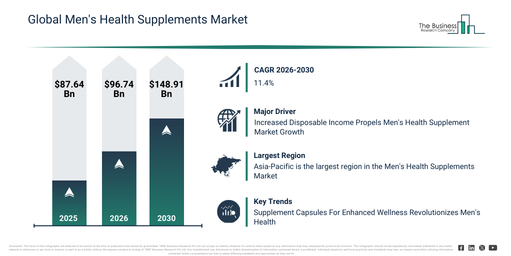
    Men’s Health Supplements Market Forecast: Value Set To Climb From $96.74 Billion To $148.9 Billion

    The men’s health supplements market has seen swift expansion in recent years. Its value is predicted to increase from $87.64 billion in 2025 to $96.74 billion in 2026, registering a compound annual growth rate (CAGR) of 10.4%. Historically, this growth has been driven by heightened awareness concerning male health and wellness, a rise in disposable income, the flourishing gym and fitness culture, the prevalence of herbal and natural remedies, and the prompt adoption of sports supplements.

    The men’s health supplements market is projected to experience substantial growth in the upcoming years. It is forecast to expand to $148.91 billion in 2030, demonstrating a compound annual growth rate (CAGR) of 11.4%. This anticipated growth can be attributed to factors such as the expansion of e-commerce platforms, innovation in personalized nutrition, an increasing prevalence of lifestyle-related male health issues, growth in the male aging population, and a rise in preventive healthcare approaches. Major trends for the forecast period include personalized nutrition plans, a growing demand for herbal and natural supplements, functional fitness supplements, a focus on male hormonal health, and the expansion of online direct-to-consumer sales.

    Get A Free Sample Report With In-Depth Market Insights:

    https://thebusinessresearchcompany.com/sample_request?id=62100161&type=smp&name=Men%27s%20Health%20Supplements%20Market%20Report%202026&utm_source=Blogs&utm_medium=Paid&utm_campaign=Oct_PR

    Men’s Health Supplements Market Demand Drivers: What’s Powering Industry Growth?

    The men’s health supplement market is projected to grow as disposable income increases. This rise in disposable income typically stems from an improved economy, leading to higher wages and salaries, and subsequently boosting healthcare expenditures. With more disposable income, men are able to invest in health supplements, which can enhance their overall well-being, address specific health concerns, and contribute to their general health and fitness. For example, in August 2023, data from the Bureau of Economic Analysis, a US-based government agency, indicated that in July 2023, disposable personal income increased by $7.3 billion (less than 0.1%), and personal consumption expenditures (PCE) grew by $144.6 billion (0.8 percent). Thus, the expansion of disposable income is a significant driver for the growth of the men’s health supplement market.

    Men’s Health Supplements Market Segment Analysis Spotlighting Growth Areas

    The men’s health supplements market covered in this report is segmented –

    1) By Type: Sports Supplements, Reproductive Health Supplements, Bone And Joint Health Supplements, Cardiovascular Health Supplements, Probiotic Supplements, Anti-Aging Supplements, Hair Growth Supplements, Weight Management Supplements, Immune Health Supplements, Other Types

    2) By Age Group: 20-30, 31-45, 46-60, Above 60

    3) By Formulation: Tablets, Capsules, Liquids, Powders, Gummies, Other Formulations

    4) By Distribution Channel: Online, Offline

    Subsegments:

    1) By Sports Supplements: Protein Powders, Creatine, Branched-Chain Amino Acids (BCAAs), Pre-Workout Formulas

    2) By Reproductive Health Supplements: Testosterone Boosters, Fertility Supplements

    3) By Bone And Joint Health Supplements: Glucosamine, Chondroitin, Calcium and Vitamin D

    4) By Cardiovascular Health Supplements: Omega-3 Fatty Acids, Coenzyme Q10 (CoQ10)

    5) By Probiotic Supplements: Multi-Strain Probiotics, Targeted Probiotic Blends

    6) By Anti-Aging Supplements: Antioxidants, Collagen Supplements

    7) By Hair Growth Supplements: Biotin, Saw Palmetto

    8) By Weight Management Supplements: Fat Burners, Appetite Suppressants

    9) By Immune Health Supplements: Vitamin C, Zinc

    10) By Other Types: Herbal Supplements, Nutraceuticals

    Men’s Health Supplements Market Innovation Trends: What Developments Are Reshaping The Industry?

    Leading companies in the men’s health supplement market are prioritizing the development of advanced solutions, such as supplement capsules, to address specific health needs and improve overall well-being. Supplement capsules are oral formulations typically made from gelatin or other materials, containing precise and concentrated amounts of nutritional or bioactive substances, designed to enhance an individual’s diet and offer particular health advantages. For instance, in September 2023, Olly, a US-based supplier of high-quality nutrition and wellness products, unveiled its new Mighty Mojo capsule, which aims to encourage healthy testosterone levels and improve sexual function, priced at $35. This product incorporates key ingredients like tongkat ali, a flowering plant with demonstrated clinical benefits for aiding testosterone levels and general wellness. Moreover, Mighty Mojo contains resveratrol and pine bark, potent antioxidants that may bolster immune function and support overall health. The supplement’s formulation utilizes carefully investigated dosages of these ingredients to ensure their efficacy.

    Men’s Health Supplements Market Leading Companies: Who Holds The Strongest Market Presence?

    Major companies operating in the men’s health supplements market are Haleon plc, Herbalife Nutrition Ltd., GNC Holdings LLC, Vitamin Shoppe Inc., Biotest LLC, Hims & Hers Health Inc., Now Health Group Inc., Thorne Research Inc., Natrol LLC, Irwin Naturals Inc., Pharmavite LLC, Nutrix International LLC, Nordic Naturals Inc., Matsun Nutrition Inc., Makers Nutrition LLC, NutraBio Labs Inc., Vox Nutrition Inc., Nutricap Labs LLC, Nutrivo LLC, Paragon Laboratories Inc., Nutra Solutions USA Inc., Optimum Nutrition Inc., BioThrive Sciences LLC, Nutraceutical Wellness Inc., Botanic Supplements Private Limited, Custom Nutra LLC, Bio-Tech Pharmacal Inc., NutraPak USA, NuMedica LLC

    View The Full Men’s Health Supplements Market Report:

    https://thebusinessresearchcompany.com/report/mens-health-supplements-global-market-report?utm_source=Blogs&utm_medium=Paid&utm_campaign=Oct_PR

    Men’s Health Supplements Market Regional Analysis: Which Region Leads By Revenue?

    Asia-Pacific was the largest region in the men’s health supplements market in 2025. The regions covered in the men’s health supplements market report are Asia-Pacific, South East Asia, Western Europe, Eastern Europe, North America, South America, Middle East, Africa.

    Reach Out To Our Team:

    The Business Research Company: https://www.thebusinessresearchcompany.com/

    Americas: +1 310-496-7795

    Asia: +44 7882 955267 & +91 8897263534

    Europe: +44 7882 955267

    Email us at: marketing@tbrc.info

    Follow us on:

    LinkedIn: https://in.linkedin.com/company/the-business-research-company

    YouTube: https://www.youtube.com/channel/UC24_fI0rV8cR5DxlCpgmyFQ

    Global Market Model: https://www.thebusinessresearchcompany.com/global-market-model