Blog

  • Critical Care Equipment Market Research 2026: Market Size, Trends, Segments And Growth Forecast

    Critical Care Equipment Market Research 2026: Market Size, Trends, Segments And Growth Forecast

    Backed by market attractiveness analysis, total addressable market sizing, company benchmarking matrices, interactive Excel dashboards, wider supply chain intelligence, emerging startup coverage, and detailed product-level insights, The Business Research Company’s 2026 market reports are designed to offer research that is more actionable and strategically valuable than ever.

    Critical Care Equipment Market Growth From $6.66 Billion In 2026 To $9.3 Billion By 2030 At A CAGR Of 8.7%

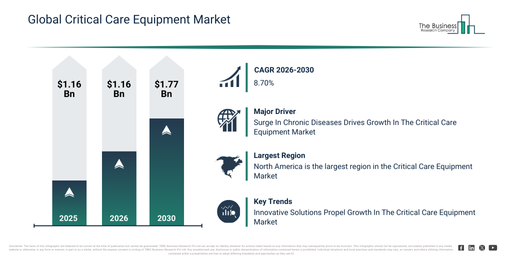
    The critical care equipment market size has seen strong growth in recent years. It is projected to increase from $6.11 billion in 2025 to $6.66 billion in 2026, at a compound annual growth rate (CAGR) of 9.1%. This growth witnessed in the past period can be linked to the increasing occurrence of chronic and critical illnesses, the expansion of intensive care infrastructure, a rising need for advanced life-support equipment, the growing implementation of multiparameter monitoring systems, and the accessibility of advanced medical electronics.

    The critical care equipment market size is projected to experience substantial growth in the coming years. It is expected to reach $9.3 billion in 2030, demonstrating a compound annual growth rate (CAGR) of 8.7%. This expansion during the forecast period is fueled by increasing investments in smart ICU solutions, a rising demand for remote critical care monitoring, the broadening of tele-ICU services, a growing emphasis on patient safety and outcomes, and the increasing adoption of AI-driven clinical analytics. Prominent trends within the forecast period include the increasing deployment of smart patient monitoring systems, a rising uptake of portable and remote ICU equipment, the growing integration of AI-based clinical decision support, the expansion of remote patient monitoring in critical care, and an enhanced focus on workflow automation in ICUs.

    Get A Free Sample Report With In-Depth Market Insights:

    https://thebusinessresearchcompany.com/sample_request?id=97678930&type=smp&name=Critical%20Care%20Equipment%20Market%20Report%202026&utm_source=Blogs&utm_medium=Paid&utm_campaign=Oct_PR

    Critical Care Equipment Market Growth Factors: What’s Supporting Expansion?

    The increasing prevalence of chronic diseases is expected to significantly propel the expansion of the critical care equipment market. Chronic diseases are broadly defined as conditions that persist for a year or longer, necessitating ongoing medical attention and limiting daily activities. Critical care equipment is employed in these chronic conditions to monitor patients and manage their illnesses, often utilized in intensive care units for issues such as surgical complications, severe infections, and serious respiratory problems. This equipment provides vital support to various organs in the body. For instance, according to the World Health Organization, a Switzerland-based government agency, chronic diseases were responsible for the deaths of 41 million people in 2022, which represented 74 percent of all global deaths. Each year, 17 million individuals succumb to chronic diseases before the age of 70. By 2025, it is estimated that 164 million people will be affected by chronic diseases. Therefore, the rise in chronic diseases is a primary driver of growth for the critical care equipment market.

    Critical Care Equipment Market Segment Trends And Revenue Contributors

    The critical care equipment market covered in this report is segmented –

    1) By Product Type: Patient Monitors, Ventilators, Infusion Pumps, Other Products

    2) By Patient Type: Adult, Geriatric, Pediatric, Neonates

    3) By End User: Hospitals, Intensive Care Units (ICUs), Emergency Care Centers, Specialty Critical Care Centers

    Subsegments:

    1) By Patient Monitors: Vital Signs Monitors, Cardiac Monitors, Multi-Parameter Monitors

    2) By Ventilators: Invasive Ventilators, Non-Invasive Ventilators, Portable Ventilators, High-Frequency Ventilators

    3) By Infusion Pumps: Syringe Pumps, Volumetric Pumps, Smart Infusion Pumps

    4) By Other Products: Defibrillators, Suction Devices, Temperature Management Systems

    Critical Care Equipment Market Industry Trends: What’s Reshaping Demand?

    Major companies within the critical care equipment market are concentrating on developing innovative solutions, such as advanced mechanical ventilators, to address the increasing demand for effective respiratory support in intensive care units and the rising prevalence of respiratory illnesses. Mechanical ventilators are devices specifically engineered to assist or replace natural breathing by delivering controlled airflow and oxygen to patients experiencing compromised lung function, offering precise monitoring and customization in contrast to conventional, less automated ventilatory methods. For instance, in January 2023, Getinge AB., a Sweden-based medical technology company, launched its new product ‘Servo-C mechanical ventilator’. This ventilator offers lung-protective therapeutic tools suitable for both pediatric and adult patients. Its design is intended to simplify respiratory support. Its primary unique features include CO2 monitoring and the ability to visualize volume and pressure targets. Additionally, it provides 360-degree alarm visibility, high flow therapy, and personalized lung protection with superior monitoring.

    Critical Care Equipment Market Industry Leaders And Competitive Landscape

    Major companies operating in the critical care equipment market are AKAS Medical, B. Braun Melsungen AG, BPL Medical Technologies Pvt. Ltd., Drägerwerk AG & Co. KGaA, General Electric Company, Koninklijke Philips N.V., MAQUET Holding B.V. & Co. KG, Medtronic plc, Nihon Kohden Corporation, Skanray Technologies Ltd., Smiths Medical Inc., Getinge AB, Fresenius Kabi AG, Baxter International Inc., Hamilton Medical AG, Fisher & Paykel Healthcare Limited, Abbott Laboratories, Edwards Lifesciences Corporation, Teleflex Incorporated, Becton Dickinson and Company, ICU Medical Inc., Masimo Corporation, Mindray Medical International Limited, ZOLL Medical Corporation, Hill-Rom Holdings Inc., Stryker Corporation, Terumo Corporation, Siemens Healthineers AG

    View The Full Critical Care Equipment Market Report:

    https://thebusinessresearchcompany.com/report/critical-care-equipment-global-market-report?utm_source=Blogs&utm_medium=Paid&utm_campaign=Oct_PR

    Critical Care Equipment Market Regional Analysis And Leading Geography

    North America was the largest region in the critical care equipment market in 2025. The regions covered in the critical care equipment market report are Asia-Pacific, South East Asia, Western Europe, Eastern Europe, North America, South America, Middle East, Africa.

    Reach Out To Our Team:

    The Business Research Company: https://www.thebusinessresearchcompany.com/

    Americas: +1 310-496-7795

    Asia: +44 7882 955267 & +91 8897263534

    Europe: +44 7882 955267

    Email us at: marketing@tbrc.info

    Follow us on:

    LinkedIn: https://in.linkedin.com/company/the-business-research-company

    YouTube: https://www.youtube.com/channel/UC24_fI0rV8cR5DxlCpgmyFQ

    Global Market Model: https://www.thebusinessresearchcompany.com/global-market-model
  • Creatine Supplement Market Forecast 2026: Market Size, Competitive Landscape And Growth Drivers

    Creatine Supplement Market Forecast 2026: Market Size, Competitive Landscape And Growth Drivers

    Featuring market attractiveness scoring, total addressable market sizing, company benchmarking matrices, interactive Excel dashboards, deeper supply chain intelligence, emerging startup tracking, and granular product-level insights, The Business Research Company’s 2026 market reports are built to deliver research that is both more actionable and more strategically valuable.

    Creatine Supplement Market Expansion Outlook: What Revenue Opportunities Are Ahead?

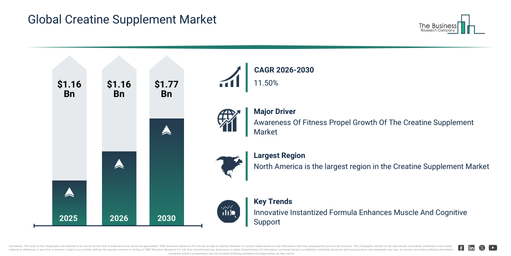
    The creatine supplement market size has shown substantial growth in recent years. It is anticipated to expand from $1.66 billion in 2025 to $1.85 billion in 2026, achieving a compound annual growth rate (CAGR) of 11.4%. The historical expansion can be attributed to factors such as the rise of fitness and bodybuilding culture, increased engagement in sports and athletics, heightened consumer awareness regarding performance supplements, the proliferation of gym and fitness facilities, and the widespread availability of mass-market supplement brands.

    The creatine supplement sector is projected to undergo significant expansion over the next several years. Its valuation is predicted to reach $2.86 billion by 2030, with a compound annual growth rate (CAGR) of 11.5%. This projected growth is primarily driven by an escalating demand from the elderly population for muscle health, a broader embrace of sports nutrition by casual consumers, the proliferation of e-commerce nutrition platforms, a heightened emphasis on evidence-based supplementation, and the implementation of more diverse product differentiation strategies. Significant developments expected in this timeframe encompass a surge in demand for high-purity creatine supplements, the increasing favorability of micronized creatine formulations, the broadening of online supplement sales avenues, an intensified focus on clean-label and certified offerings, and advancements in product innovation within creatine derivatives.

    Get A Free Sample Report With In-Depth Market Insights:

    https://thebusinessresearchcompany.com/sample_request?id=41425503&type=smp&name=Creatine%20Supplement%20Market%20Report%202026&utm_source=Blogs&utm_medium=Paid&utm_campaign=Oct_PR

    Creatine Supplement Market Demand Drivers: What’s Powering Industry Growth?

    The creatine supplement market is poised for future expansion, driven by an increasing understanding of fitness. This heightened awareness of fitness arises from a greater focus on health, the proliferation of lifestyle-related illnesses, and a general desire for comprehensive well-being. Creatine supplements are effective in enhancing physical performance, supporting muscle development and endurance, thereby increasing recognition of their benefits within fitness routines. For example, in July 2024, Eurostat, a Luxembourg-based government agency, stated that the sports sector in the EU provided employment for 1.55 million people in 2023, constituting 0.76% of the region’s entire workforce. This figure represents a 2.2% increase compared to 2022, when employment stood at 1.51 million. Hence, the growing awareness of fitness is a primary driver for the creatine supplement market’s growth.

    Creatine Supplement Market Segment Analysis Spotlighting Growth Areas

    The creatine supplement market covered in this report is segmented –

    1) By Composition: Creatine Monohydrate, Creatine Ethyl Ester, Creatine Hydrochloride, Creatine Nitrate, Other Creatine Derivatives

    2) By Form: Powder, Capsules Or Tablets, Others Forms

    3) By Target Group: Athletes, Bodybuilders, Fitness Enthusiasts, Elderly Population, Other Target Groups

    4) By Application: Muscle Building, Endurance Enhancement, Recovery Acceleration, Cognitive Function Improvement, Other Applications

    5) By Sales Channel: Online Stores, Brick-And-Mortar Stores, Health Food Stores, Fitness Centers, Other Sales Channels

    Subsegments:

    1) By Creatine Monohydrate: Micronized Creatine Monohydrate, Unflavored Creatine Monohydrate, Flavored Creatine Monohydrate

    2) By Creatine Ethyl Ester: Capsules, Powders

    3) By Creatine Hydrochloride: Capsules, Powders, Tablets

    4) By Creatine Nitrate: Pre-Workout Formulations, Post-Workout Formulations

    5) By Other Creatine Derivatives: Creatine Magnesium Chelate, Creatine Anhydrous, Creatine Pyruvate

    Creatine Supplement Market Innovation Trends: What Developments Are Reshaping The Industry?

    Leading companies in the creatine supplement market are concentrating on developing innovative instantized creatine monohydrate powder supplements to enhance their absorption, effectiveness, and convenience for users. Instantized creatine monohydrate powder supplements denote a specially processed form of creatine monohydrate engineered to dissolve quickly and effortlessly in liquid, thereby improving both absorption and usability. For instance, in July 2024, BrainMD, a US-based supplier of science-based supplements, introduced Smart Creatine+, an advanced instantized creatine monohydrate powder supplement created to boost cellular energy production and ATP balance. This innovative formula not only supports brain health, cognitive processing, and memory but also assists users in achieving their fitness goals, improving cognitive function, building lean muscle, and leveraging the advantages of instantized creatine monohydrate.

    Creatine Supplement Market Key Participants And Competitive Landscape

    Major companies operating in the creatine supplement market are Glanbia PLC, GNC Holdings Inc., AlzChem AG, Swanson Health Products Inc., NOW Foods, Myprotein, Universal Nutrition Inc., BPI Sports LLC, MuscleTech, MusclePharm, Kaged Muscle LLC, Optimum Nutrition Inc., Weider Global Nutrition LLC, Bio-Engineered Supplements and Nutrition Inc., Cellucor, BulkSupplements.com Inc., Nutrex Research Inc., Dymatize Enterprises LLC, Sheer Strength Labs LLC, Transparent Labs

    View The Full Creatine Supplement Market Report:

    https://thebusinessresearchcompany.com/report/creatine-supplement-global-market-report?utm_source=Blogs&utm_medium=Paid&utm_campaign=Oct_PR

    Creatine Supplement Market Geographic Analysis: Where Is Demand Accelerating Fastest?

    North America was the largest region in the creatine supplement market in 2025. The regions covered in the creatine supplement market report are Asia-Pacific, South East Asia, Western Europe, Eastern Europe, North America, South America, Middle East, Africa.

    Reach Out To Our Team:

    The Business Research Company: https://www.thebusinessresearchcompany.com/

    Americas: +1 310-496-7795

    Asia: +44 7882 955267 & +91 8897263534

    Europe: +44 7882 955267

    Email us at: marketing@tbrc.info

    Follow us on:

    LinkedIn: https://in.linkedin.com/company/the-business-research-company

    YouTube: https://www.youtube.com/channel/UC24_fI0rV8cR5DxlCpgmyFQ

    Global Market Model: https://www.thebusinessresearchcompany.com/global-market-model
  • C-Reactive Protein Testing Market Size In 2026: Regional Growth, Key Segments And Future Outlook

    C-Reactive Protein Testing Market Size In 2026: Regional Growth, Key Segments And Future Outlook

    Built to provide research that’s more actionable and strategically valuable, The Business Research Company’s 2026 market reports include market attractiveness analysis, total addressable market sizing, company benchmarking matrices, interactive Excel dashboards, broader supply chain intelligence, emerging startup tracking, and in-depth product insights.

    C-Reactive Protein Testing Market Growth Potential: How Will Market Size Shift Through 2030?

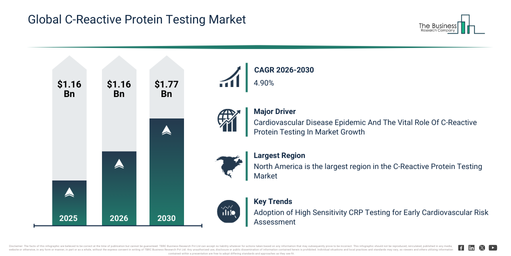
    The c-reactive protein testing market size has experienced robust expansion in recent years. Projections indicate that this market will expand from $3.52 billion in 2025 to $3.7 billion in 2026, demonstrating a compound annual growth rate (CAGR) of 5.1%. Historically, this growth has been driven by factors such as the increasing incidence of inflammatory conditions, the growing application of CRP testing in clinical diagnosis, the development of hospital laboratory infrastructure, heightened awareness regarding early disease identification, and the availability of uniform assay kits.

    The c-reactive protein testing market size is anticipated to show consistent expansion in the coming years. It will grow to $4.48 billion in 2030 at a compound annual growth rate (CAGR) of 4.9%. The factors contributing to this growth during the forecast period include the increasing demand for point-of-care inflammatory testing, the rising integration of automated diagnostics platforms, the expansion of preventive healthcare screening, the growing adoption of high-throughput laboratory systems, and an increasing focus on personalized medicine diagnostics. Significant trends for the forecast period involve the increasing adoption of high-sensitivity CRP assays, the rising use of automated immunoassay systems, the growing demand for rapid inflammation diagnostics, the expansion of CRP testing in cardiovascular risk assessment, and an enhanced focus on laboratory workflow automation.

    Get A Free Sample Report With In-Depth Market Insights:

    https://thebusinessresearchcompany.com/sample_request?id=40788744&type=smp&name=C-Reactive%20Protein%20Testing%20Market%20Report%202026&utm_source=Blogs&utm_medium=Paid&utm_campaign=Oct_PR

    C-Reactive Protein Testing Market Growth Drivers: What’s Behind The Acceleration?

    The rising incidence of cardiovascular diseases (CVD) is projected to fuel the expansion of the c-reactive protein testing market. These diseases encompass various heart conditions, including impaired vessels, structural abnormalities, and blood clots. While the precise etiology of CVD remains unclear, several factors are known to elevate the risk of its development. A significant contributor is behavioral risk, stemming from poor dietary habits, insufficient physical activity, smoking, and alcohol consumption, which leads to the buildup of fatty deposits in the arteries (atherosclerosis), subsequently increasing the likelihood of blood clots. Such behavioral patterns contribute to heightened blood pressure, elevated glucose and blood lipid levels, weight gain, and obesity. The growing prevalence of cardiovascular diseases necessitates c-reactive protein testing to effectively diagnose or forecast the probability of cardiovascular issues, performing at least as well as cholesterol level assessments. For example, data from October 2024, provided by the Centers for Disease Control, a US-based government agency, indicated that in 2023, approximately 919,032 people succumbed to cardiovascular disease, representing 1 in every 3 deaths. Consequently, the escalation in cardiovascular diseases (CVD) cases is a key driver for the C-reactive protein testing market.

    C-Reactive Protein Testing Market Segment Performance And Emerging Opportunities

    The c-reactive protein testing market covered in this report is segmented –

    1) By Assay Type: Enzyme-Linked Immunosorbent Assay (ELISA), Chemiluminescence Immunoassay (CLIA), Immunoturbidimetric Assays

    2) By Application: Diabetes, Rheumatoid Arthritis, Cardiovascular Disease, Inflammatory Bowel Disease, Cancer, Other Applications

    3) By End Use: Clinics, Hospitals, Diagnostic Laboratories

    Subsegments:

    1) By Enzyme-Linked Immunosorbent Assay (ELISA): Direct ELISA, Indirect ELISA, Sandwich ELISA

    2) By Chemiluminescence Immunoassay (CLIA): Luminometer-Based CLIA, Automated CLIA Systems

    3) By Immunoturbidimetric Assays: Nephelometry-Based Immunoturbidimetric Assays, Latex Agglutination Immunoturbidimetric Assays

    C-Reactive Protein Testing Market Trends: What’s Defining The Industry’s Next Phase?

    Leading entities within the C-reactive protein testing market are concentrating on creating advanced technological solutions, specifically high-sensitivity automated immunoassays. These innovations aim to achieve improved accuracy, quicker results, and the detection of even minute CRP levels, which is crucial for early cardiovascular risk stratification and continuous inflammation monitoring. Such high-sensitivity automated immunoassays employ sophisticated immunoturbidimetric or nephelometric methods to identify extremely low CRP concentrations, significantly lower than what standard CRP assays can achieve, thereby facilitating prompt intervention and enhanced prognostic assessment. An illustrative example is the launch of the Atellica CH High Sensitivity C-Reactive Protein 2 (hCRP2) assay by Siemens Healthineers, a Germany-based in vitro diagnostics firm, in January 2024, designed for their Atellica CH Analyzer. This product consists of two ready-to-use reagent packs; one contains a phosphate buffer with surfactant, while the other holds monoclonal anti-CRP antibodies attached to polystyrene particles. The presence of CRP in a patient sample induces the aggregation of these particles, leading to a measurable light scattering event, where the intensity directly correlates with the CRP concentration. This system effectively detects very low-level CRP for cardiovascular risk stratification, is compatible with serum or plasma samples, and provides rapid quantitative results, aiding in prompt clinical decision-making.

    C-Reactive Protein Testing Market Top Companies Driving Competitive Growth

    Major companies operating in the c-reactive protein testing market are Thermo Fisher Scientific Inc., F Hoffmann-La Roche AG, Danaher Corporation, Quest Diagnostics Incorporated, Siemens AG, Abbott Laboratories, Aidian Oy, Boditech Med Inc., Horiba Ltd., Laboratory Corporation, Merck KGAA, Randox Laboratories Limited, Getein Biotech Inc., Bio-Rad Laboratories Inc., DiaSorin S.p.A., Eurofins Scientific SE, Inova Diagnostics Inc., Luminex Corporation, Sekisui Diagnostics LLC, Sysmex Corporation, Tosoh Corporation, Trinity Biotech Plc, WerfenLife Group LLC, ZEUS Scientific Inc., BioMérieux SA, Biomerica Inc., Gold Standard Diagnostics Corp., Immunodiagnostic Systems Holdings PLC, Nova Biomedical Corporation

    View The Full C-Reactive Protein Testing Market Report:

    https://thebusinessresearchcompany.com/report/C-reactive-protein-testing-global-market-report?utm_source=Blogs&utm_medium=Paid&utm_campaign=Oct_PR

    C-Reactive Protein Testing Market Global Footprint: Which Region Leads The Industry?

    North America was the largest region in the c-reactive protein testing market in 2025. Asia-Pacific is expected to be the fastest-growing region in the forecast period. The regions covered in the c-reactive protein testing market report are Asia-Pacific, South East Asia, Western Europe, Eastern Europe, North America, South America, Middle East, Africa.

    Reach Out To Our Team:

    The Business Research Company: https://www.thebusinessresearchcompany.com/

    Americas: +1 310-496-7795

    Asia: +44 7882 955267 & +91 8897263534

    Europe: +44 7882 955267

    Email us at: marketing@tbrc.info

    Follow us on:

    LinkedIn: https://in.linkedin.com/company/the-business-research-company

    YouTube: https://www.youtube.com/channel/UC24_fI0rV8cR5DxlCpgmyFQ

    Global Market Model: https://www.thebusinessresearchcompany.com/global-market-model
  • Craniotomy Equipment Package Market Growth Forecast Through 2030: Market Size And Trends In 2026

    Craniotomy Equipment Package Market Growth Forecast Through 2030: Market Size And Trends In 2026

    Backed by market attractiveness analysis, total addressable market sizing, company benchmarking matrices, interactive Excel dashboards, wider supply chain intelligence, emerging startup coverage, and detailed product-level insights, The Business Research Company’s 2026 market reports are designed to offer research that is more actionable and strategically valuable than ever.

    Craniotomy Equipment Package Market Value Analysis: What Growth Lies Ahead Over The Forecast Period?

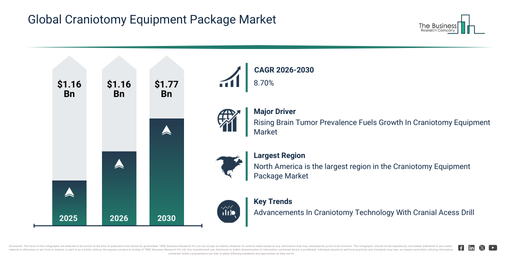
    The craniotomy equipment package market has witnessed substantial growth in recent years. It is anticipated to increase from $14.32 billion in 2025 to $15.61 billion in 2026, achieving a compound annual growth rate (CAGR) of 9.0%. The expansion observed in the historic period can be attributed to several factors, including the reliance on conventional open craniotomy procedures, the limited availability of advanced navigation systems, the increasing incidence of brain tumors, the growth in hospital-based neurosurgery centers, and a rising awareness of surgical precision requirements.

    The craniotomy equipment package market size is projected for substantial expansion in the coming years. This market is set to reach $21.81 billion by 2030, exhibiting a compound annual growth rate (CAGR) of 8.7%. The anticipated growth during this period stems from factors such as advancements in robotic-assisted craniotomy technologies, the spread of minimally invasive neurosurgery, increased financial input in intraoperative imaging, a rise in the acceptance of customizable cranioplasty implants, and the incorporation of AI-enabled surgical planning and guidance systems. Key developments predicted for the forecast period encompass a growing uptake of minimally invasive and robotic craniotomy procedures, the incorporation of image-guided surgery systems, increased application of bioabsorbable and customizable skull implants, the broadening of intraoperative imaging and navigation systems, and an escalating need for high-precision craniotomy drills and positioning devices.

    Get A Free Sample Report With In-Depth Market Insights:

    https://thebusinessresearchcompany.com/sample_request?id=72497661&type=smp&name=Craniotomy%20Equipment%20Package%20Market%20Report%202026&utm_source=Blogs&utm_medium=Paid&utm_campaign=Oct_PR

    Craniotomy Equipment Package Market Growth Factors Behind Sustained Expansion

    The rising occurrence of brain tumors is anticipated to boost the expansion of the craniotomy equipment package market in the future. Brain tumors are defined as unusual cell growths in the brain or central nervous system, which can be cancerous (malignant) or non-cancerous (benign). The growing frequency of brain tumors stems from several factors, including enhanced diagnostic methods, an expanding elderly population, and possible environmental and genetic factors. Craniotomy equipment packages play a crucial role in the surgical management of brain tumors, offering sophisticated tools and technology for accurate tumor excision and better patient results. For example, in January 2024, the American Cancer Society, a US-based nonprofit organization, projected 25,400 new cases of brain and other nervous system cancers in the U.S., comprising 14,420 cases in males and 10,980 in females. The projected deaths totaled 18,760, with 10,690 males and 8,070 females. Additionally, in May 2023, End Brain Cancer, a US-based nonprofit organization dedicated to the brain cancer community, reported approximately 80,000 new primary brain tumor diagnoses in the United States. Consequently, the rising incidence of brain tumors is fueling the expansion of the craniotomy equipment package market.

    Craniotomy Equipment Package Market Segment Landscape And Growth Outlook

    The craniotomy equipment package market covered in this report is segmented –

    1) By Type: Craniotomy Frames And Attachments, Craniotomy Drills And Burs, Craniotomy Skull Plates And Implants, Craniotomy Navigation Systems, Craniotomy Imaging Systems

    2) By Modality: Open Craniotomy, Minimally Invasive Craniotomy, Robotic Craniotomy

    3) By Sales Channel: Direct To Hospitals, Through Distributors, Online Sales

    4) By Application: Tumor Resection, Brain Injury Repair, Vascular Malformations Treatment, Epilepsy Surgery

    5) By End User: Hospitals, Ambulatory Surgery Centers, Neurosurgery Centers

    Subsegments:

    1) By Craniotomy Frames And Attachments: Mayfield Headrests, Craniotomy Positioning Systems, Skull Stabilization Devices

    2) By Craniotomy Drills And Burs: High-Speed Craniotomy Drills, Pneumatic Drills, Specialized Burs For Bone Cutting

    3) By Craniotomy Skull Plates And Implants: Bioabsorbable Skull Plates, Titanium Skull Plates, Customizable Cranioplasty Implants

    4) By Craniotomy Navigation Systems: Optical Navigation Systems, Electromagnetic Navigation Systems, Image-Guided Surgery Systems

    5) By Craniotomy Imaging Systems: Intraoperative MRI Systems, CT Imaging Systems, Fluorescence Imaging Systems

    Craniotomy Equipment Package Market Industry Trends Fueling Future Revenue Growth

    Leading firms in the craniotomy equipment sector are innovating advanced technologies, such as the smart auto-stop mechanism, to boost surgical accuracy, augment patient safety, and simplify the craniotomy process through automation of key functions and reduction of human errors. This smart auto-stop feature is an advanced technology embedded in craniotomy tools that automatically ceases the surgical instrument’s operation once predefined conditions or parameters are satisfied. For example, in May 2023, Hubly Surgical, a US-based technology company, unveiled its Hubly Cranial Access Kit and Drill. This specific drill is engineered to improve craniotomy results by offering precise control and heightened safety, incorporating a smart auto-stop feature that automatically ceases drilling upon meeting preset conditions, thereby mitigating complications. The device seeks to elevate neurosurgical standards through the integration of cutting-edge technology, leading to superior clinical outcomes and enhanced patient safety.

    Craniotomy Equipment Package Market Leading Players And Competitive Positioning

    Major companies operating in the craniotomy equipment package market are Johnson & Johnson, Medtronic plc, Stryker Corporation, Zimmer Biomet Holdings, Integra LifeSciences Corporation, Leica Microsystems GmbH, KLS Martin Group, Brainlab AG, Mizuho America Inc., Narang Medical Limited, PMT Corporation, Hubly Surgical Inc., IRRAS AB, Karl Storz SE & Co KG, Zeta Surgical Inc., Boston Scientific Corporation, ConMed Corporation, Olympus Corporation, Elekta AB, NICO Corporation, Penumbra Inc, Synaptive Medical Inc, IMRIS

    View The Full Craniotomy Equipment Package Market Report:

    https://thebusinessresearchcompany.com/report/craniotomy-equipment-package-global-market-report?utm_source=Blogs&utm_medium=Paid&utm_campaign=Oct_PR

    Craniotomy Equipment Package Market Regional Distribution: Which Areas Power Market Growth?

    North America was the largest region in the craniotomy equipment package market in 2025. Asia-Pacific is expected to be the fastest-growing region in the forecast period. The regions covered in the craniotomy equipment package market report are Asia-Pacific, South East Asia, Western Europe, Eastern Europe, North America, South America, Middle East, Africa.

    Reach Out To Our Team:

    The Business Research Company: https://www.thebusinessresearchcompany.com/

    Americas: +1 310-496-7795

    Asia: +44 7882 955267 & +91 8897263534

    Europe: +44 7882 955267

    Email us at: marketing@tbrc.info

    Follow us on:

    LinkedIn: https://in.linkedin.com/company/the-business-research-company

    YouTube: https://www.youtube.com/channel/UC24_fI0rV8cR5DxlCpgmyFQ

    Global Market Model: https://www.thebusinessresearchcompany.com/global-market-model
  • Craniomaxillofacial (CMF) Devices And Equipment Market Analysis: $2.28 Billion Market Size In 2026 And Future Growth Prospects

    Craniomaxillofacial (CMF) Devices And Equipment Market Analysis: $2.28 Billion Market Size In 2026 And Future Growth Prospects

    Featuring market attractiveness scoring, total addressable market sizing, company benchmarking matrices, interactive Excel dashboards, deeper supply chain intelligence, emerging startup tracking, and granular product-level insights, The Business Research Company’s 2026 market reports are built to deliver research that is both more actionable and more strategically valuable.

    Craniomaxillofacial (CMF) Devices And Equipment Market Size Forecast: How Big Could The Market Get By 2030?

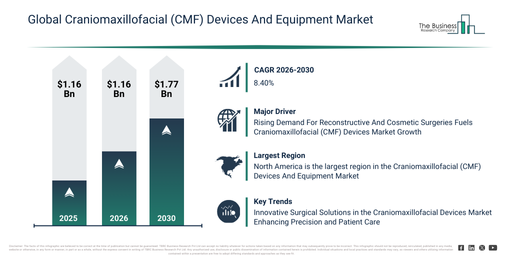
    The craniomaxillofacial (cmf) devices and equipment market has experienced robust growth in recent years. It is projected to expand from $2.12 billion in 2025 to $2.28 billion in 2026, demonstrating a compound annual growth rate (CAGR) of 7.4%. Historically, this market expansion has been fueled by factors including an increasing incidence of craniofacial trauma, the proliferation of reconstructive surgery procedures, the rising adoption of titanium fixation systems, ongoing advancements in maxillofacial surgical techniques, and the accessibility of specialized surgical instruments.

    The craniomaxillofacial (cmf) devices and equipment market is expected to witness substantial expansion over the next few years. It is projected to grow to $3.15 billion in 2030, achieving a compound annual growth rate (CAGR) of 8.4%. This anticipated growth during the forecast period is driven by factors such as an escalating demand for personalized craniofacial implants, the increasing adoption of bioresorbable materials, the expansion of reconstructive and cosmetic surgeries, advancements in surgical planning technology, and a rise in investment in sophisticated trauma care. Significant trends anticipated for this period include the wider utilization of bioabsorbable fixation devices, a surge in the use of patient-specific cmf implants, the growing integration of 3D printing in cmf surgical procedures, the development of advanced fixation and distraction systems, and an intensified focus on minimally invasive surgical techniques.

    Get A Free Sample Report With In-Depth Market Insights:

    https://thebusinessresearchcompany.com/sample_request?id=99227096&type=smp&name=Craniomaxillofacial%20%28CMF%29%20Devices%20And%20Equipment%20Market%20Report%202026&utm_source=Blogs&utm_medium=Paid&utm_campaign=Oct_PR

    Craniomaxillofacial (CMF) Devices And Equipment Market Demand Drivers Opening New Revenue Streams

    The rising need for reconstructive and cosmetic surgical procedures is anticipated to fuel the expansion of the craniomaxillofacial (CMF) devices and equipment market in the coming years. Reconstructive operations aim to correct issues stemming from birth defects, injuries, or health conditions such as cancer, while cosmetic procedures focus on improving overall aesthetic appearance by reshaping and modifying natural anatomy for a more appealing look. CMF devices play a crucial role in enhancing cosmetic appearance through the modification and adjustment of normal anatomical structures to make them visually more attractive. An example illustrating this trend is data from June 2024 by the International Society of Aesthetic Plastic Surgery (ISAPS), a US-based professional association for board-certified aesthetic plastic surgeons, which reported that worldwide aesthetic procedure volumes reached almost 35 million in 2023. This represented a 3.4% increase compared to the previous year, with total surgical and non-surgical treatments totaling 34.9 million. Consequently, the heightened demand for reconstructive and cosmetic surgeries is a key factor driving the growth of the craniomaxillofacial (CMF) devices and equipment market.

    Craniomaxillofacial (CMF) Devices And Equipment Market Breakdown By Product Type And Application

    The craniomaxillofacial (cmf) devices and equipment market covered in this report is segmented –

    1) By Product: Cranial Flap Fixation, CMF Distraction, Temporomandibular Joint Replacement, Thoracic Fixation, MF Plate And Screw Fixation, Other Products

    2) By Material: Metals And Alloys, Polymers, Bioabsorbable Materials, Other Materials

    3) By Application: Neurosurgery And ENT, Orthognathic And Dental Surgery, Plastic Surgery, Other Applications

    4) By End-User: Hospital, Ambulatory Surgical Center, Other End-Users

    Subsegments:

    1) By Cranial Flap Fixation: Titanium Plates and Screws, Bioabsorbable Plates and Screws, Mesh Systems

    2) By CMF Distraction: Distraction Osteogenesis Devices, External Distraction Devices, Internal Distraction Devices

    3) By Temporomandibular Joint Replacement: Total Joint Replacement Systems, Partial Joint Replacement Systems, Custom TMJ Implants

    4) By Thoracic Fixation: Rib Fixation Plates, Sternal Fixation Devices, Intercostal Fixation Systems

    5) By MF Plate and Screw Fixation: Mono-Cortical Plates and Screws, Bi-Cortical Plates and Screws, Locking Plates And Screws

    6) By Other Products: Bone Grafts and Substitutes, Surgical Instruments, CMF Implants And Accessories

    Craniomaxillofacial (CMF) Devices And Equipment Market Trends Powering Strategic Industry Growth

    Leading companies active in the Craniomaxillofacial (CMF) Devices and Equipment market are concentrating on developing technologically advanced surgical solutions to improve precision, better patient outcomes, and streamline surgical procedures. Surgical solutions refer to specialized medical products, methods, or technologies specifically designed to assist in performing surgical procedures effectively and safely. These solutions can include various instruments, devices, and systems that support diagnosis, treatment, and recovery, such as minimally invasive tools, imaging systems, and surgical implants. For example, in February 2024, Materialise NV, a 3D printing company headquartered in Belgium, launched its TMJ Total Arthroplasty System. This system is intended for patients needing total temporomandibular joint (TMJ) arthroplasty, offering significant advantages, including a fully personalized treatment approach that enhances surgical precision and patient outcomes, demonstrated by a 100% success rate reported one year post-surgery. Additionally, patients observe notable improvements in their quality of life, pain levels, and functional abilities like eating, with accurate implant placement achieved in 97% of cases.

    Craniomaxillofacial (CMF) Devices And Equipment Market Competitive Overview And Top Companies

    Major companies operating in the craniomaxillofacial (cmf) devices and equipment market are Johnson & Johnson, Stryker Corporation, Medtronic Plc, Zimmer-Biomet, Integra Lifesciences Corporation, KLS Martin L. P, B. Braun, Medartis AG, Matrix Surgical USA, Acumed, Roche India Pvt Ltd, Abbott India Limited, bioMerieux India, Becton Dickinson Private Limited, Danaher Corporation, Simens Healthcare, Beckman Coulter Inc India, Ortho Clinical Diagnostics, Bio-Rad Laboratories Inc, Sysmex Corporation, Thermo Fisher Scientific Inc, Asymchem, Sino Biological, ACROBiosystems, QPS, Wuxi Biologics, Qiagen Pvt Ltd, INVACARE POIRIER Fondettes, ESSILOR INTERNATIONAL Charenton-le-Pont, TERUMO FRANCE SAS Guyancourt, CAREFUSION FRANCE 309 SAS Le Pont-de-Claix, TOURLAVILLE DISTRIBUTION Cherbourg-Octeville, HARMONIE MEDICAL SERVICE Saint-Benoit, Balton, HTL-Strefa, TZMO, Consultronix, Kelyniam Global Inc, AbbVie Corporation, ABK Biomedical, Acart Equipment Ltd, A.R. Medicom Inc, Delphos Implants, Osteomed Anatomics Pty Ltd, Bioplate Inc., Calavera Surgical Design, Innovasis.

    View The Full Craniomaxillofacial (CMF) Devices And Equipment Market Report:

    https://thebusinessresearchcompany.com/report/craniomaxillofacial-CMF-devices-and-equipment-global-market-report?utm_source=Blogs&utm_medium=Paid&utm_campaign=Oct_PR

    Craniomaxillofacial (CMF) Devices And Equipment Market Leading Geography: Which Region Contributes The Most Revenue?

    North America was the largest region in the global craniomaxillofacial (CMF) devices and equipment market in 2025. Western Europe was the second-largest region in the global craniomaxillofacial (CMF) devices and equipment market. The regions covered in the craniomaxillofacial (cmf) devices and equipment market report are Asia-Pacific, South East Asia, Western Europe, Eastern Europe, North America, South America, Middle East, Africa.

    Reach Out To Our Team:

    The Business Research Company: https://www.thebusinessresearchcompany.com/

    Americas: +1 310-496-7795

    Asia: +44 7882 955267 & +91 8897263534

    Europe: +44 7882 955267

    Email us at: marketing@tbrc.info

    Follow us on:

    LinkedIn: https://in.linkedin.com/company/the-business-research-company

    YouTube: https://www.youtube.com/channel/UC24_fI0rV8cR5DxlCpgmyFQ

    Global Market Model: https://www.thebusinessresearchcompany.com/global-market-model
  • Cranial Implants Market 2026 Market Size And Growth Forecast: Key Trends To Watch

    Cranial Implants Market 2026 Market Size And Growth Forecast: Key Trends To Watch

    Built to provide research that’s more actionable and strategically valuable, The Business Research Company’s 2026 market reports include market attractiveness analysis, total addressable market sizing, company benchmarking matrices, interactive Excel dashboards, broader supply chain intelligence, emerging startup tracking, and in-depth product insights.

    Cranial Implants Market Revenue Outlook: What CAGR Lies Ahead Through 2030?

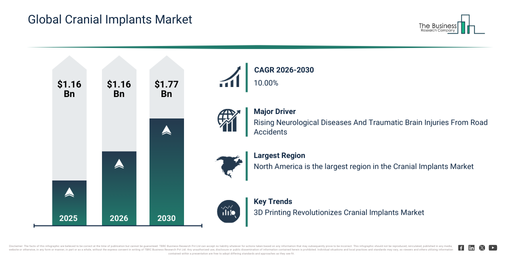
    The cranial implants market has experienced significant expansion in recent years. Its valuation is projected to increase from $1.32 billion in 2025 to $1.45 billion in 2026, achieving a compound annual growth rate (CAGR) of 10.6%. The historical surge in this market can be linked to a rise in traumatic brain injuries, an increasing number of neurosurgical procedures, the introduction of advanced implant materials, the broader application of reconstructive surgery practices, and the growing acceptance of cranial reconstruction techniques.

    The cranial implants market size is anticipated to experience substantial expansion in the upcoming years. It is projected to reach $2.13 billion in 2030, demonstrating a compound annual growth rate (CAGR) of 10.0%. This projected growth during the forecast period can be linked to the increasing application of additive manufacturing in medical implants, a heightened demand for personalized healthcare options, the development of neurosurgical infrastructure within developing markets, a growing emphasis on better surgical results, and increased investment in sophisticated biomaterials. Key developments expected in this period include the wider acceptance of patient-specific cranial implants, the increasing utilization of 3D-printed implant technologies, a rising preference for biocompatible implant substances, the expansion of CAD/CAM-based implant designs, and an intensified focus on both aesthetic and anatomical precision.

    Get A Free Sample Report With In-Depth Market Insights:

    https://thebusinessresearchcompany.com/sample_request?id=64816571&type=smp&name=Cranial%20Implants%20Market%20Report%202026&utm_source=Blogs&utm_medium=Paid&utm_campaign=Oct_PR

    Cranial Implants Market Growth Backed By Core Demand Fundamentals

    The increasing occurrence of neurological conditions is anticipated to drive expansion in the cranial implants market during the projected period. Neurological disorders encompass any ailments affecting the nervous system, which includes the brain, spinal cord, and nerves. The growing incidence of neurological disorders can be attributed to various factors, such as genetic susceptibility, infections, injuries, harmful substances, autoimmune reactions, and tissue breakdown. Cranial implants are crucial in neurological surgery, offering significant advancements in treating diverse conditions by providing structural support and protecting sensitive brain tissue after trauma or surgery. For instance, in April 2024, according to the National Institutes of Health (NIH), a US-based government’s premier biomedical research agency, an estimated 6.9 million Americans aged 65 and older are currently living with Alzheimer’s dementia, and this figure is projected to nearly double to 13.8 million by 2060. Therefore, the rising prevalence of neurological disorders drives the cranial implants market.

    Cranial Implants Market Segment Analysis And Revenue Potential

    The cranial implants market covered in this report is segmented –

    1) By Type: Customized Cranial Implants, Non-customized Cranial Implants

    2) By Material: Polymer, Ceramic, Metal

    3) By End User: Hospital and Trauma Centers, Ambulatory Surgical Centers, Specialty Clinics, Other End-Users

    Subsegments:

    1) By Customized Cranial Implants: 3D-Printed Customized Implants, Patient-Specific Anatomical Models, CAD/CAM Customized Implants

    2) By Non-Customized Cranial Implants: Standard Cranial Plates, Pre-formed Cranial Implants, Mesh Implants

    Cranial Implants Market Growth Trends Reshaping The Competitive Landscape

    Major companies active in the cranial implants market are implementing innovative technologies like 3D printing technology to enhance their market profitability. 3D printing technology is a process used to create three-dimensional objects from a digital blueprint. For instance, in October 2023, 3D Systems, a US-based 3D printer manufacturing company, introduced 3D printing technology for cranial implants. The PEEK (polyetheretherketone) implant is specifically designed for each patient, meaning it is engineered to conform to the individual’s unique anatomy. Custom implants that fulfill legal requirements are producible through 3D printing. This customized methodology ensures an optimized fit and superior patient outcomes.

    Cranial Implants Market Competitive Landscape: Which Companies Lead The Industry?

    Major companies operating in the cranial implants market are B. Braun Melsungen AG, DePuy Synthes Inc., Stryker Corporation, Zimmer Biomet Holdings Inc., Kelyniam Global Inc., Medartis Holding AG, Osteomed LLC, KLS Martin Group, Renishaw plc, Xilloc Medical B.V., Medtronic plc, Evonos GmbH, Synimed GmbH, Johnson & Johnson Services Ltd., Integra LifeSciences Corporation, OssDsign AB, Medicon eG, BIOARCHITECTS, Matrix Meditec Pvt. Ltd., Matrix Surgical USA, Anatomics Pty Ltd., Biomet Microfixation Inc., Cranios USA

    View The Full Cranial Implants Market Report:

    https://thebusinessresearchcompany.com/report/cranial-implants-global-market-report?utm_source=Blogs&utm_medium=Paid&utm_campaign=Oct_PR

    Cranial Implants Market Regional Outlook: Where Is Opportunity Concentrated?

    North America was the largest region in the cranial implants market in 2025. Asia-Pacific is predicted to record the fastest growth over the forecast period. The regions covered in the cranial implants market report are Asia-Pacific, South East Asia, Western Europe, Eastern Europe, North America, South America, Middle East, Africa.

    Reach Out To Our Team:

    The Business Research Company: https://www.thebusinessresearchcompany.com/

    Americas: +1 310-496-7795

    Asia: +44 7882 955267 & +91 8897263534

    Europe: +44 7882 955267

    Email us at: marketing@tbrc.info

    Follow us on:

    LinkedIn: https://in.linkedin.com/company/the-business-research-company

    YouTube: https://www.youtube.com/channel/UC24_fI0rV8cR5DxlCpgmyFQ

    Global Market Model: https://www.thebusinessresearchcompany.com/global-market-model
  • Cranial Fixation And Stabilization Devices Market Size Forecast: How The Industry Is Expected To Grow From 2026 To 2030

    Cranial Fixation And Stabilization Devices Market Size Forecast: How The Industry Is Expected To Grow From 2026 To 2030

    Backed by market attractiveness analysis, total addressable market sizing, company benchmarking matrices, interactive Excel dashboards, wider supply chain intelligence, emerging startup coverage, and detailed product-level insights, The Business Research Company’s 2026 market reports are designed to offer research that is more actionable and strategically valuable than ever.

    Cranial Fixation And Stabilization Devices Market Growth Analysis: How Will Revenue Trend Over The Forecast Period?

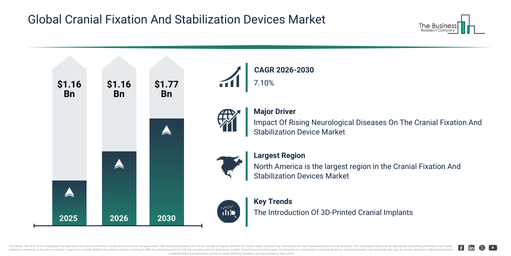
    The cranial fixation and stabilization devices market has seen substantial growth over recent years. It is anticipated to expand from $2.34 billion in 2025 to $2.51 billion in 2026, demonstrating a compound annual growth rate (CAGR) of 7.2%. This past growth can be linked to a rise in traumatic brain injuries, an increased volume of neurosurgical procedures performed, more cases of cranial trauma, the expansion of neurosurgery departments in hospitals, and improved surgical outcomes resulting from the use of fixation devices.

    The cranial fixation and stabilization devices market is projected to experience substantial expansion over the coming years, reaching $3.31 billion in 2030 with a compound annual growth rate (CAGR) of 7.1%. This growth during the forecast period is propelled by factors such as the heightened demand for minimally invasive neurosurgical methods, the increasing use of resorbable fixation systems, a sharpened emphasis on patient safety and surgical precision, the proliferation of advanced trauma care centers, and augmented investment in neurosurgical infrastructure. Key trends anticipated for this period encompass the growing integration of sophisticated cranial fixation systems in neurosurgery, the expanded utilization of resorbable cranial fixation materials, an intensified focus on accuracy and stability during cranial operations, the wider deployment of cranial stabilization devices in trauma management, and an escalating need for ergonomic and customizable surgical positioning systems.

    Get A Free Sample Report With In-Depth Market Insights:

    https://thebusinessresearchcompany.com/sample_request?id=49323542&type=smp&name=Cranial%20Fixation%20And%20Stabilization%20Devices%20Market%20Report%202026&utm_source=Blogs&utm_medium=Paid&utm_campaign=Oct_PR

    Cranial Fixation And Stabilization Devices Market Growth Catalysts And Demand Drivers

    A growing occurrence of neurological conditions is anticipated to fuel the expansion of the cranial fixation and stabilization device market in the future. These disorders impact the nervous system, encompassing the brain, spinal cord, and peripheral nerves, resulting in various symptoms like cognitive impairment, motor difficulties, and sensory issues. Their rise can be attributed to an older demographic, extended life spans, and enhanced awareness alongside improved diagnostic abilities. For neurological interventions, cranial fixation and stabilization devices are essential to firmly hold the head in place and guarantee accurate, steady placement during operations or therapies concerning the brain and skull. As an illustration, data from September 2024, provided by the Australian Institute of Health and Welfare, a government body based in Australia, projects that the population affected by dementia in Australia will more than double from approximately 411,100 in 2023 to 849,300 by 2058, impacting around 315,500 men and 533,800 women. Consequently, the growing incidence of neurological conditions is a key factor propelling the expansion of the cranial fixation and stabilization device market.

    Cranial Fixation And Stabilization Devices Market Segmentation And Category Overview

    The cranial fixation and stabilization devices market covered in this report is segmented –

    1) By Product: Cranial Fixation Devices, Cranial Stabilization Devices

    2) By Material Type: Resorbable Fixation Systems, Nonresorbable Fixation Systems

    3) By End User: Hospitals, Ambulatory Surgical Centers

    Subsegments:

    1) By Cranial Fixation Devices: Skull Clamp Systems, Cranial Braces, Fixation Plates And Screws, Neuro-Immobilization Devices

    2) By Cranial Stabilization Devices: Headrests, Positioning Cushions, Stabilizing Mats, Surgical Positioning Systems

    Cranial Fixation And Stabilization Devices Market Trends Shaping Long-Term Demand

    Leading companies within the cranial fixation and stabilization device market are developing innovative products, such as 3D-printed cranial implants, to offer customers more advanced features. A 3D-printed cranial implant is a customized, patient-specific medical device produced through additive manufacturing technology to repair or reconstruct cranial defects or injuries. For example, in April 2024, 3D Systems, a US-based manufacturer of 3D printers, 3D printing materials, and 3D Printed Parts, publicized the Food and Drug Administration (FDA) approval for its VSP PEEK Cranial Implant. The VSP PEEK Cranial Implant, which is the first FDA-cleared additively manufactured PEEK implant for cranioplasty procedures, is specifically designed to restore skull defects. This high-performance, implant-grade polymer is widely recognized in medical device applications for its exceptional mechanical properties that closely mimic human bone. PEEK’s superior biocompatibility, resistance to bodily fluids, and stability across a broad temperature range make it an optimal choice for medical devices. Furthermore, its inherent radiolucency ensures minimal interference with medical imaging, thereby facilitating a clearer evaluation of the surgical site and the implant’s integrity.

    Cranial Fixation And Stabilization Devices Market Competitive Landscape: Who Leads The Industry?

    Major companies operating in the cranial fixation and stabilization devices market are Johnson & Johnson, Medtronic Plc, Stryker Corporation, Zimmer Biomet Holdings Inc., Integra LifeSciences Corporation, Orthofix Medical Inc., KLS Martin Group, Aesculap Inc., Acumed LLC, OsteoMed, Merivaara Corp., Brainlab AG, Medicon, Evonos GmbH & Co. KG, B. Braun Melsungen AG, Bioplate Inc., Jeil Medical Corporation, Changzhou Huida Medical Instrument Co. Ltd., Micromar, NEOS Surgery SL, Pro Med Instruments Inc., Rebstock Instruments, Nouvag AG

    View The Full Cranial Fixation And Stabilization Devices Market Report:

    https://thebusinessresearchcompany.com/report/cranial-fixation-and-stabilization-devices-global-market-report?utm_source=Blogs&utm_medium=Paid&utm_campaign=Oct_PR

    Cranial Fixation And Stabilization Devices Market Geographic Landscape: Which Region Leads Industry Growth?

    North America was the largest region in the cranial fixation and stabilization devices market in 2025. Asia-Pacific is expected to be the fastest-growing region in the forecast period. The regions covered in the cranial fixation and stabilization devices market report are Asia-Pacific, South East Asia, Western Europe, Eastern Europe, North America, South America, Middle East, Africa.

    Reach Out To Our Team:

    The Business Research Company: https://www.thebusinessresearchcompany.com/

    Americas: +1 310-496-7795

    Asia: +44 7882 955267 & +91 8897263534

    Europe: +44 7882 955267

    Email us at: marketing@tbrc.info

    Follow us on:

    LinkedIn: https://in.linkedin.com/company/the-business-research-company

    YouTube: https://www.youtube.com/channel/UC24_fI0rV8cR5DxlCpgmyFQ

    Global Market Model: https://www.thebusinessresearchcompany.com/global-market-model
  • COVID-19 Rapid Test Kits Market 2026 Outlook: Market Size, CAGR And Key Growth Opportunities

    COVID-19 Rapid Test Kits Market 2026 Outlook: Market Size, CAGR And Key Growth Opportunities

    Featuring market attractiveness scoring, total addressable market sizing, company benchmarking matrices, interactive Excel dashboards, deeper supply chain intelligence, emerging startup tracking, and granular product-level insights, The Business Research Company’s 2026 market reports are built to deliver research that is both more actionable and more strategically valuable.

    COVID-19 Rapid Test Kits Market Forecast: What Value Will The Market Reach By 2030?

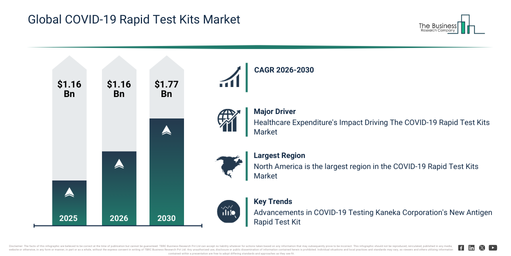
    The covid-19 rapid test kits market size has seen a sharp reduction in recent years. It will grow from $67.38 billion in 2025. This decline in the historical period stems from various factors, including a lower prevalence of infectious diseases, insufficient expansion of diagnostic laboratory infrastructure, limited public health testing initiatives, and restricted rapid test manufacturing capacity.

    Get A Free Sample Report With In-Depth Market Insights:

    https://thebusinessresearchcompany.com/sample_request?id=53207536&type=smp&name=COVID-19%20Rapid%20Test%20Kits%20Market%20Report%202026&utm_source=Blogs&utm_medium=Paid&utm_campaign=Oct_PR

    COVID-19 Rapid Test Kits Market Opportunity Drivers: What’s Unlocking New Revenue Potential?

    The increasing healthcare expenditure is projected to stimulate the growth of the COVID-19 rapid test kits market in the coming years. Healthcare expenditure refers to the total financial outlay on healthcare-related goods and services within a particular healthcare system or economy, encompassing spending on healthcare costs. This expenditure plays a vital role in facilitating the development, accessibility, and availability of COVID-19 rapid test kits. For instance, in June 2025, data from the US-based federal agency, the Centers for Medicare & Medicaid Services (CMS), indicated that National Health Expenditure (NHE) in the US grew by 7.5% to $4.9 trillion in 2023, translating to $14,570 per person, and constituted 17.6% of the Gross Domestic Product (GDP). Hospital expenditures specifically saw a 10.4% rise, reaching $1,519.7 billion in 2023, which was a faster rate compared to the 3.2% growth observed in 2022. Consequently, the escalating healthcare expenditure is a significant factor driving the expansion of the COVID-19 rapid test kits market.

    COVID-19 Rapid Test Kits Market Segment Outlook: Which Categories Are Growing Fastest?

    The covid-19 rapid test kits market covered in this report is segmented –

    1) By Test Type: RT PCR Test, Rapid Antigen Test, Rapid Antibody Test, Other Test Types

    2) By Specimen Type: Nasopharyngeal Swab, Oropharyngeal Swab, Nasal Swab, Blood, Others

    3) By End-Users: Hospitals And Clinics, Diagnostic Laboratories, Home Care, Other End-Users

    Subsegments:

    1) By RT PCR Test: Conventional RT PCR Tests, Real-Time RT PCR Tests, Automated RT PCR Systems

    2) By Rapid Antigen Test: Nasal Swab Antigen Tests, Saliva-Based Antigen Tests, Lateral Flow Assays

    3) By Rapid Antibody Test: IgM Or IgG Rapid Tests, Lateral Flow Serological Tests, Enzyme-Linked Immunosorbent Assay (ELISA) Kits

    4) By Other Test Types: Combination Tests, Molecular Diagnostic Tests, Home Test Kits

    COVID-19 Rapid Test Kits Market Innovation Trends Shaping Future Development

    Leading firms in the COVID-19 Rapid Test Kits sector are introducing novel solutions, including Antigen Rapid Test Kits, aimed at achieving quicker and more precise virus identification, thereby aiding in the effective management of infection dissemination. These Antigen Rapid Test Kits identify viral proteins associated with infections such as COVID-19, delivering outcomes in 15-30 minutes using a nasal or throat swab. Although their sensitivity is lower compared to PCR tests, they prove effective for rapid screening across large groups. An example is the launch by Kaneka Corporation, a chemical manufacturing company from Japan, in June 2023, of their product KANEKA Immunochromatography Flu A/B and SARS-CoV-2 Ag. This particular test kit facilitates swift and accurate detection of both COVID-19 and influenza viruses from a single nasal swab specimen, yielding results in approximately ten minutes. Its intuitive design negates the requirement for specialized apparatus, rendering it suitable for both healthcare establishments and personal self-testing applications. Furthermore, the kit’s capacity for simultaneous detection of multiple viruses increases its value in clinical environments, supporting prompt diagnoses and fitting treatment choices.

    COVID-19 Rapid Test Kits Market Company Landscape And Competitive Strategy

    Major companies operating in the covid-19 rapid test kits market are Abbott Laboratories, F. Hoffmann-La Roche AG, Becton Dickinson and Company, Quidel Corporation, DiaSorin S.p.A., Mylab Discovery Solutions, Beijing Jinwofu Bioengineering Technology Company, Zhejiang Orient Gene Biotech Co. Ltd, Transasia Bio Medicals, Vanguard Diagnostics, SD Biosensor, Getein Biotech, Hangzhou Biotest Biotech, Boditech Med Inc, Beijing Tigsun Diagnostics, Hunan Lituo Biotechnology, Vivacheck Lab, Fujirebio, Atomo Diagnostics, Senova, CerTest Biotec, Omega Diagnostics, Abingdon Health, Novacyt Group, BioMaxima S.A, SensDx S.A, OraSure Technologies Inc, Sorrento Therapeutics, Monocent Inc, Aurora Biomed, Hologic, Mesa Biotech, Healgen Scientific Limited Liability Company, NTBIO Diagnostics, Motologic, ACRO Biotech, Cellex Inc, Advagen Biotech Ltd, BioMedomics, CapeBio

    View The Full COVID-19 Rapid Test Kits Market Report:

    https://thebusinessresearchcompany.com/report/COVID-19-rapid-test-kits-global-market-report?utm_source=Blogs&utm_medium=Paid&utm_campaign=Oct_PR

    COVID-19 Rapid Test Kits Market Largest Region: Which Geography Holds The Biggest Share?

    North America was the largest region in the COVID-19 rapid test kits market in 2025. Western Europe was the second largest region in the global COVID-19 rapid test kits market share. The regions covered in the covid-19 rapid test kits market report are Asia-Pacific, South East Asia, Western Europe, Eastern Europe, North America, South America, Middle East, Africa.

    Reach Out To Our Team:

    The Business Research Company: https://www.thebusinessresearchcompany.com/

    Americas: +1 310-496-7795

    Asia: +44 7882 955267 & +91 8897263534

    Europe: +44 7882 955267

    Email us at: marketing@tbrc.info

    Follow us on:

    LinkedIn: https://in.linkedin.com/company/the-business-research-company

    YouTube: https://www.youtube.com/channel/UC24_fI0rV8cR5DxlCpgmyFQ

    Global Market Model: https://www.thebusinessresearchcompany.com/global-market-model
  • COVID-19 Detection Test Kits and Consumables Market Growth In 2026: Market Size, Key Drivers And Future Outlook

    COVID-19 Detection Test Kits and Consumables Market Growth In 2026: Market Size, Key Drivers And Future Outlook

    Built to provide research that’s more actionable and strategically valuable, The Business Research Company’s 2026 market reports include market attractiveness analysis, total addressable market sizing, company benchmarking matrices, interactive Excel dashboards, broader supply chain intelligence, emerging startup tracking, and in-depth product insights.

    COVID-19 Detection Test Kits and Consumables Market Size Outlook: How Quickly Will Revenue Expand Through 2030?

    The market size for covid-19 detection test kits and consumables has experienced robust growth in recent years. It is anticipated to increase from $8.35 billion in 2025 to $8.94 billion in 2026, reflecting a compound annual growth rate (CAGR) of 7.1%. The expansion observed in the historic period can be attributed to the initial scarcity of covid-19 test kits, a surge in demand from hospitals and public health laboratories, reliance on conventional RT-PCR testing methods, limitations in the supply of swabs and reagents, and a growing awareness regarding pandemic monitoring.

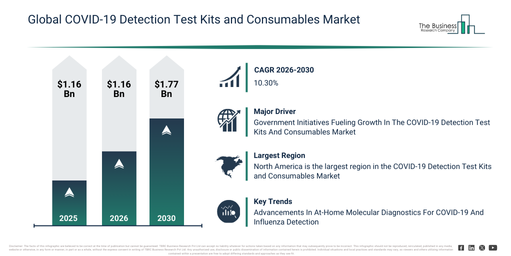
    The covid-19 detection test kits and consumables market is projected to expand significantly in the coming years, with its valuation expected to reach $13.23 billion in 2030, demonstrating a compound annual growth rate (CAGR) of 10.3%. This anticipated growth during the forecast period stems from the advancement of rapid and high-throughput testing kits, the proliferation of private and commercial laboratories, the incorporation of digital reporting and cloud-based data management, the rising uptake of multiplex and combination test kits, and increasing investments in research and diagnostic infrastructure. Key trends anticipated in the forecast period include a growing demand for swift and accurate covid-19 detection kits, the broadening availability of consumables such as swabs, reagents, and viral transport media, an increased adoption of multiplex and combination test kits, a surge in the use of point-of-care and rapid antigen testing, and a concentrated effort on standardization and quality compliance across various laboratories.

    Get A Free Sample Report With In-Depth Market Insights:

    https://thebusinessresearchcompany.com/sample_request?id=22821815&type=smp&name=COVID-19%20Detection%20Test%20Kits%20and%20Consumables%20Market%20Report%202026&utm_source=Blogs&utm_medium=Paid&utm_campaign=Oct_PR

    COVID-19 Detection Test Kits and Consumables Market Growth Momentum: What Factors Are Shaping Demand?

    Growing government initiatives are anticipated to boost the COVID-19 detection test kits and consumables market in the future. These initiatives encompass actions and programs implemented by government bodies to address particular issues, achieve goals, or enhance public welfare. Such efforts are crucial for establishing a supportive environment for the efficient distribution and use of COVID-19 detection test kits and consumables, aiding global attempts to manage and lessen the pandemic’s effects. For example, the American Medical Association, a US-based organization, indicated that US health expenditures increased by 7.5% in 2023, reaching $4.9 trillion, or approximately $14,570 per individual, as reported in 2025. Consequently, the expansion of government initiatives is fueling the growth of the COVID-19 detection test kits and consumables market.

    COVID-19 Detection Test Kits and Consumables Market Segment Landscape: Which Areas Lead Development?

    The covid-19 detection test kits and consumables market covered in this report is segmented –

    1) By Kits: Viral Load Testing Kits (qPCR and RT-PCR), Virus Neutralizing Assay Kits, Antibody Detection Kits (Elisa), Viral Antigen Detection Test Kits, Other Kits

    2) By Consumables: Swabs, Tubes, Viral Transfer Media, Reagents, Other Consumables

    3) By Specimen Type: Nose & Throat Swab, Blood, Sputum, Nasal Aspirate

    4) By End Use: Hospitals, Clinics, Public Health Labs, Private And Commercial Labs, Physicians Labs, Research Institutes, Other End Uses

    Subsegments:

    1) By Viral Load Testing Kits (QPCR And RT-PCR): QPCR Kits, RT-PCR Kits

    2) By Virus Neutralizing Assay Kits: Neutralization Test Kits

    3) By Antibody Detection Kits (Elisa): IgG Detection Kits, IgM Detection Kits

    4) By Viral Antigen Detection Test Kits: Rapid Antigen Test Kits

    5) By Other Kits: Combination Test Kits, Multiplex Test Kits

    COVID-19 Detection Test Kits and Consumables Market Trends Redefining Industry Growth

    Leading companies in the COVID-19 Detection Test Kits and Consumables market are increasingly concentrating on at-home molecular diagnostic platforms, such as Molecular tests, to enhance testing precision, improve user convenience, and support prompt detection of infections. Molecular tests are diagnostic tools designed to identify specific genetic material, including DNA or RNA, from microorganisms, human cells, or other biological markers. For instance, in April 2023, Lucira Health, a US-based medical technology company, launched the Lucira COVID-19 & Flu Home Test, which received FDA Emergency Use Authorization (EUA) as the first OTC, at-home combination molecular test for SARS-CoV-2 and influenza A/B. This single-use kit utilizes a shallow nasal swab that is swirled in a vial, subsequently inserted into a battery-powered test unit; in about 30 minutes, it provides distinct readouts for COVID-19, Flu A, and Flu B, with performance comparable to lab-based PCR in clinical trials. Key benefits include its speed, the ability to differentiate between COVID-19 and flu (conditions that share overlapping symptoms but require different treatment), and the convenience of at-home use with one simple device.

    COVID-19 Detection Test Kits and Consumables Market Key Players Shaping Industry Direction

    Major companies operating in the covid-19 detection test kits and consumables market are Cepheid, BGI Genomics, Abbott Laboratories, bioMérieux SA, Bio-Rad Laboratories, F. Hoffmann-La Roche, GenMark Diagnostics, Mylab Discovery Solutions, Qiagen, Quidel Corporation, Randox Laboratories, SD Biosensor, Seegene Inc., Shenzhen Bioeasy Biotechnology, Thermo Fisher Scientific inc., BioMednomics, Getein Biotech, Sensing Self Ltd., Hangzhou Biotest Biotech Co. Ltd, AmonMed Biotechnology Co., Beijing Tigsun Diagnostics Co Ltd., BioMaxima S.A., CTK Biotech, Hunan Lituo Biotechnology Co., Vivacheck Lab, MD Solutions, FastSense Diagnostics, Altona Diagnostics, Siemens AG, Agilent Technologies Inc., Seasun Biomaterials, BTNX Inc., Rapiim, Canon Medical Systems Corporation, Cellspect Co. Ltd., iHealth Labs Inc., InBios International Inc., iXensor Co. Ltd., Jiangsu Medomics medical technology Co Ltd., Maxim Biomedical Inc., Mologic Inc., OraSure Technologies Inc., OSANG LLC, PHASE Scientific International Ltd., Watmind USA, Xiamen Boson Biotech Co. Ltd.

    View The Full COVID-19 Detection Test Kits and Consumables Market Report:

    https://thebusinessresearchcompany.com/report/COVID-19-detection-test-kits-and-consumables-global-market-report?utm_source=Blogs&utm_medium=Paid&utm_campaign=Oct_PR

    COVID-19 Detection Test Kits and Consumables Market Regional Analysis: Which Geography Leads On Revenue?

    North America was the largest region in the COVID-19 detection test kits and consumables market in 2025. The regions covered in the covid-19 detection test kits and consumables market report are Asia-Pacific, South East Asia, Western Europe, Eastern Europe, North America, South America, Middle East, Africa.

    Reach Out To Our Team:

    The Business Research Company: https://www.thebusinessresearchcompany.com/

    Americas: +1 310-496-7795

    Asia: +44 7882 955267 & +91 8897263534

    Europe: +44 7882 955267

    Email us at: marketing@tbrc.info

    Follow us on:

    LinkedIn: https://in.linkedin.com/company/the-business-research-company

    YouTube: https://www.youtube.com/channel/UC24_fI0rV8cR5DxlCpgmyFQ

    Global Market Model: https://www.thebusinessresearchcompany.com/global-market-model
  • Cough Assist Devices Market Size And Forecast 2026–2030: Trends Driving Industry Expansion

    Cough Assist Devices Market Size And Forecast 2026–2030: Trends Driving Industry Expansion

    Backed by market attractiveness analysis, total addressable market sizing, company benchmarking matrices, interactive Excel dashboards, wider supply chain intelligence, emerging startup coverage, and detailed product-level insights, The Business Research Company’s 2026 market reports are designed to offer research that is more actionable and strategically valuable than ever.

    Cough Assist Devices Market Size, Value And Growth Trajectory Through 2030

    The cough assist devices market size has expanded significantly in recent years. It is expected to grow from $2.14 billion in 2025 to $2.31 billion in 2026, at a compound annual growth rate (CAGR) of 8.0%. This historical expansion can be attributed to the restricted availability of advanced cough assist devices, a rising incidence of neuromuscular disorders, the reliance on hospital-based respiratory care, increasing awareness of airway clearance therapy, and the continued usage of conventional manual resuscitators.

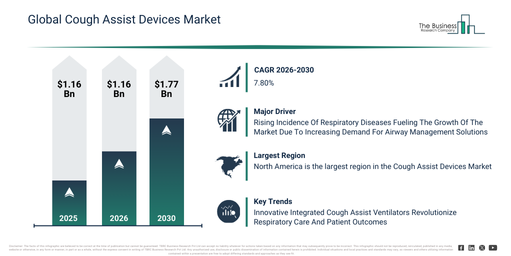
    The cough assist devices market is projected to undergo significant expansion in the foreseeable future. It is set to grow to $3.12 billion in 2030, demonstrating a compound annual growth rate (CAGR) of 7.8%. This anticipated growth is driven by various factors such as advancements in automatic and hybrid cough assist device technologies, the expanding availability of homecare and ambulatory respiratory solutions, increasing demand for respiratory care among pediatric and geriatric populations, the integration of digital monitoring and IoT-enabled respiratory devices, and improved reimbursement and insurance coverage for airway clearance therapy. Major trends expected in this forecast period include the increasing adoption of both automatic and manual cough assist devices, a rising preference for homecare and ambulatory settings, the incorporation of high-frequency chest wall oscillation and in-exsufflation technologies, a growing requirement for pediatric and geriatric respiratory support, and an elevated focus on device portability, ease of use, and adherence to safety standards.

    Get A Free Sample Report With In-Depth Market Insights:

    https://thebusinessresearchcompany.com/sample_request?id=23040700&type=smp&name=Cough%20Assist%20Devices%20Market%20Report%202026&utm_source=Blogs&utm_medium=Paid&utm_campaign=Oct_PR

    Cough Assist Devices Market Expansion Drivers: What’s Shaping Future Growth?

    The rising occurrence of respiratory conditions is projected to drive the expansion of the cough assist devices market in the future. These diseases encompass various medical ailments impacting the lungs and other components of the respiratory system, leading to impaired breathing. The heightened frequency of respiratory illnesses stems from growing air pollution, particularly from vehicle exhausts and industrial operations. Cough assist devices are vital for managing respiratory conditions, helping patients clear airway secretions efficiently, which in turn boosts breathing efficiency, lowers infection risk, and improves overall lung function and life quality. For example, data from February 2025, provided by the Joint Strategic Needs Assessment, a UK-based community health center, showed that in 2023-24, 13,573 people (8.1%) in the Blackpool ICB area suffered from asthma, which marked a slight increase from 7.9% in 2022-23 and exceeded the England average of 6.5%. Consequently, the growing occurrence of respiratory illnesses is fueling the expansion of the cough assist devices market.

    Cough Assist Devices Market Segments: Where Is Growth Concentrated?

    The cough assist devices market covered in this report is segmented –

    1) By Device Mode: Automatic Cough Assist Device, Manual Cough Assist Device

    2) By Product Type: Mechanical Cough Assist Devices, High-Frequency Chest Wall Oscillation, In-Exsufflation Devices

    3) By Age Group: Pediatric, Adult, Geriatric

    4) By End User: Hospitals And Clinics, Ambulatory Care Settings, Homecare, Other End Users

    Subsegments:

    1) By Automatic Cough Assist Device: Pressure-Controlled Automatic Devices, Volume-Controlled Automatic Devices, Hybrid Mode Devices

    2) By Manual Cough Assist Device: Handheld Manual Resuscitators, Manual Percussion Devices, Positive Expiratory Pressure (PEP) Masks

    Cough Assist Devices Market Strategic Trends: What Defines The Next Growth Phase?

    Leading companies in the cough assist devices market are concentrating on developing innovative solutions, such as integrated cough assist ventilators, to improve patient outcomes and optimize respiratory care. These integrated ventilators are advanced medical devices that combine ventilation and cough assistance in a single unit, supporting breathing and effectively clearing airway secretions in patients with respiratory muscle weakness. For instance, in June 2024, React Health, a US-based sleep and respiratory device manufacturer, introduced IntelliPAP as a feature for its V Home, V+ Pro, V+C, and VC+ Pro ventilators. This innovation leverages integrated cough assist technology to streamline airway clearance for patients requiring advanced respiratory support. By unifying ventilation and cough therapy within a single device, these systems enable cough assist delivery at the touch of a button, eliminating the need to disconnect the patient from the ventilator. This integration reduces therapy time from minutes to seconds and helps maintain continuous ventilatory support, thereby enhancing patient safety and comfort. With features such as high-flow therapy and responsive leak compensation, React Health’s integrated approach not only simplifies and accelerates airway clearance but also increases the overall utilization of cough assist therapies in both hospital and home settings.

    Cough Assist Devices Market Competitive Analysis Of Leading Industry Participants

    Major companies operating in the cough assist devices market are McKesson Corporation, Air Liquide Medical Systems S A S, Medtronic plc, Koninklijke Philips N V, Baxter International Inc, ResMed Inc, Hill‑Rom Holdings Inc, ICU Medical Inc, ABM Respiratory Care Inc, Ventec Life Systems Inc, Progetti S r l, O‑Two Medical Technologies Inc, WestCare Medical Ltd, Nidek Medical Products Inc, United Hayek Industries Inc, Dima Italia S r l, Triumph Medical Services Inc, Genotronics Medical Inc, Percussionaire Corporation, Oxycare Medical Group, US Med Equip, Wave Healthcare, Intersurgical Inc, Philips Respironics, PARI Medical, Advantage Medical Systems, Aura Medical LLC, BiWaze Cough System Provider, Eakin Respiratory Products

    View The Full Cough Assist Devices Market Report:

    https://thebusinessresearchcompany.com/report/cough-assist-devices-global-market-report?utm_source=Blogs&utm_medium=Paid&utm_campaign=Oct_PR

    Cough Assist Devices Market Geographic Spread And Regional Opportunities

    North America was the largest region in the cough assist devices market in 2025. Asia-Pacific is expected to be the fastest-growing region in the forecast period. The regions covered in the cough assist devices market report are Asia-Pacific, South East Asia, Western Europe, Eastern Europe, North America, South America, Middle East, Africa.

    Reach Out To Our Team:

    The Business Research Company: https://www.thebusinessresearchcompany.com/

    Americas: +1 310-496-7795

    Asia: +44 7882 955267 & +91 8897263534

    Europe: +44 7882 955267

    Email us at: marketing@tbrc.info

    Follow us on:

    LinkedIn: https://in.linkedin.com/company/the-business-research-company

    YouTube: https://www.youtube.com/channel/UC24_fI0rV8cR5DxlCpgmyFQ

    Global Market Model: https://www.thebusinessresearchcompany.com/global-market-model