Blog

  • Congestive Heart Failure Treatment Devices Market Forecast To Reach $30.07 Billion By 2030: Key Trends Explained

    Congestive Heart Failure Treatment Devices Market Forecast To Reach $30.07 Billion By 2030: Key Trends Explained

    Featuring market attractiveness scoring, total addressable market sizing, company benchmarking matrices, interactive Excel dashboards, deeper supply chain intelligence, emerging startup tracking, and granular product-level insights, The Business Research Company’s 2026 market reports are built to deliver research that is both more actionable and more strategically valuable.

    Congestive Heart Failure Treatment Devices Market Growth Analysis: How Will Revenue Trend Over The Forecast Period?

    The congestive heart failure treatment devices market has experienced robust growth in recent years. It is anticipated to expand from $21.07 billion in 2025 to $22.76 billion in 2026, with a compound annual growth rate (CAGR) of 8.0%. This historical growth can be attributed to the increasing prevalence of congestive heart failure, a rise in cardiovascular disease cases, greater use of implantable cardiac devices, the expansion of specialized cardiac care facilities, and enhanced survival rates for heart failure patients.

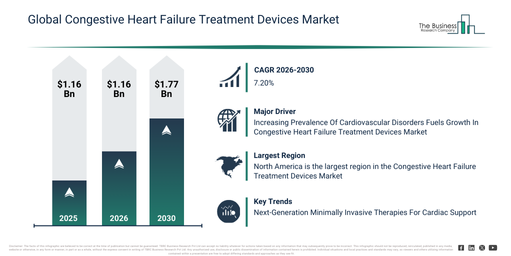
    The congestive heart failure treatment devices market is projected to experience substantial expansion over the upcoming years. This market is anticipated to reach $30.07 billion in 2030, exhibiting a compound annual growth rate (CAGR) of 7.2%. Factors contributing to this growth during the forecast period include a demographic shift towards an older population more susceptible to heart failure, a rising need for less invasive cardiac treatments, an intensified emphasis on prompt intervention and managing the disease, broader availability of sophisticated heart failure treatments in developing regions, and the increasing uptake of prolonged mechanical circulatory support devices. Key trends anticipated during this period involve the growing acceptance of cutting-edge implantable devices for heart failure, a rise in the application of ventricular assist devices for advanced chf, a heightened effort to decrease hospital admissions due to heart failure, the broadening scope of device-based solutions for sustained cardiac assistance, and an escalating requirement for ongoing heart monitoring and management.

    Get A Free Sample Report With In-Depth Market Insights:

    https://thebusinessresearchcompany.com/sample_request?id=31801856&type=smp&name=Congestive%20Heart%20Failure%20Treatment%20Devices%20Market%20Report%202026&utm_source=Blogs&utm_medium=Paid&utm_campaign=Oct_PR

    Congestive Heart Failure Treatment Devices Market Demand Drivers Opening New Revenue Streams

    The rising occurrence of cardiovascular conditions is projected to boost the expansion of the congestive heart failure treatment devices market going forward. These disorders encompass a range of diseases affecting the heart and blood vessels, including coronary artery disease, hypertension, and heart failure, which impact blood circulation and overall heart health. The increasing prevalence of cardiovascular disorders is largely attributable to the growing rates of risk factors such as obesity, sedentary lifestyles, poor diets, and aging populations. Congestive heart failure treatment devices are essential in managing cardiovascular disorders by regulating heart rhythms and improving heart function, thereby significantly enhancing patient outcomes. For instance, in October 2024, according to the Centers for Disease Control and Prevention, a US-based government agency, cardiovascular disease was responsible for 919,032 deaths in 2023, accounting for one in every three deaths. Coronary heart disease remained the most prevalent form of heart disease, and notably, approximately one in six deaths from cardiovascular diseases occurred among adults younger than 65 years. Therefore, the increase in the prevalence of cardiovascular disorders is driving the growth of the congestive heart failure (CHF) treatment devices market.

    Congestive Heart Failure Treatment Devices Market Segment Analysis Spotlighting Growth Areas

    The congestive heart failure treatment devices market covered in this report is segmented –

    1) By Product: Cardiac Pacemaker, Implantable Cardioverter Defibrillators (ICDs), Cardiac Resynchronization Therapy Devices (CRT), Counter Pulsation Devices, Ventricular Assist Devices (VADs)

    2) By Application: Left Ventricular Assist Device (LVAD), Right Ventricular Assist Device (RVAD), Biventricular Assist Device (BIVAD)

    3) By End-User: Hospitals And Clinic, Specialized Cardiovascular Disease Treatment Centers, Ambulatory Surgery Centers

    Subsegments:

    1) By Cardiac Pacemaker: Single Chamber Pacemaker, Dual Chamber Pacemaker, Biventricular Pacemaker

    2) By Implantable Cardioverter Defibrillators (ICDs): Traditional ICDs, Subcutaneous ICDs, CRT-D (Cardiac Resynchronization Therapy Defibrillator)

    3) By Cardiac Resynchronization Therapy Devices (CRT): CRT-P (Cardiac Resynchronization Therapy Pacemaker), CRT-D (Cardiac Resynchronization Therapy Defibrillator)

    4) By Counter Pulsation Devices: Intra-Aortic Balloon Pumps (IABP), External Counterpulsation Devices (ECP)

    5) By Ventricular Assist Devices (VADs): Left Ventricular Assist Devices (LVAD), Right Ventricular Assist Devices (RVAD), Biventricular Assist Devices (BiVAD)

    Congestive Heart Failure Treatment Devices Market Trends Powering Strategic Industry Growth

    Leading companies within the congestive heart failure treatment devices market are concentrating on developing advanced solutions, such as the implant-free atrial septostomy system, to boost hemodynamic relief, simplify procedural complexity, and offer less invasive treatment alternatives for individuals with heart failure. An implant-free atrial septostomy system is a minimally invasive device crafted to create a controlled opening in the atrial septum without leaving a permanent implant, thereby enabling better left atrial pressure reduction and improved cardiac hemodynamics in heart failure patients. For instance, in January 2025, Alleviant Medical Inc., a US-based medical device company, attained significant FDA milestones for its novel no-implant interatrial shunt device for addressing heart failure. This device presents a minimally invasive solution for heart failure by establishing a precise shunt that lowers elevated pressure in the left atrium without requiring a permanent implant. This method reduces complications often associated with implanted devices, encourages lasting shunt patency, and improves symptoms, exercise capacity, and the quality of life for chronic heart failure patients. Its primary aim is to relieve the heart’s burden, alleviate symptoms, and provide a safer, innovative treatment alternative for patients with limited choices.

    Congestive Heart Failure Treatment Devices Market Company Landscape And Competitive Strategy

    Major companies operating in the congestive heart failure treatment devices market are Medtronic plc, Abbott Laboratories, Boston Scientific Corporation, Biotronik SE & Co KG, LivaNova PLC, Berlin Heart GmbH, Jarvik Heart Inc, ReliantHeart Inc, Abiomed Inc, Lepu Medical Technology Co Ltd, Magenta Medical Ltd, MicroPort Inc, EBR Systems Inc, Syncardia Systems LLC, Oscor Inc, OSYPKA Medical GmbH, Calon Cardio‑Technology, CoreWave SA, Zoll Medical Corporation

    View The Full Congestive Heart Failure Treatment Devices Market Report:

    https://thebusinessresearchcompany.com/report/congestive-heart-failure-treatment-devices-global-market-report?utm_source=Blogs&utm_medium=Paid&utm_campaign=Oct_PR

    Congestive Heart Failure Treatment Devices Market Largest Region: Which Geography Holds The Highest Market Share?

    North America was the largest region in the congestive heart failure treatment devices market in 2025. Asia-Pacific is expected to be the fastest-growing region in the forecast period. The regions covered in the congestive heart failure treatment devices market report are Asia-Pacific, South East Asia, Western Europe, Eastern Europe, North America, South America, Middle East, Africa.

    Reach Out To Our Team:

    The Business Research Company: https://www.thebusinessresearchcompany.com/

    Americas: +1 310-496-7795

    Asia: +44 7882 955267 & +91 8897263534

    Europe: +44 7882 955267

    Email us at: marketing@tbrc.info

    Follow us on:

    LinkedIn: https://in.linkedin.com/company/the-business-research-company

    YouTube: https://www.youtube.com/channel/UC24_fI0rV8cR5DxlCpgmyFQ

    Global Market Model: https://www.thebusinessresearchcompany.com/global-market-model
  • Congenital Heart Defect Devices Market Analysis Through 2030: Market Size, Growth Trends And Industry Outlook

    Congenital Heart Defect Devices Market Analysis Through 2030: Market Size, Growth Trends And Industry Outlook

    Backed by market attractiveness analysis, total addressable market sizing, company benchmarking matrices, interactive Excel dashboards, wider supply chain intelligence, emerging startup coverage, and detailed product-level insights, The Business Research Company’s 2026 market reports are designed to offer research that is more actionable and strategically valuable than ever.

    Congenital Heart Defect Devices Market Forecast: What Value Will The Market Reach By 2030?

    The market size for congenital heart defect devices has shown robust growth recently. It is anticipated to expand from $3.11 billion in 2025 to $3.34 billion in 2026, achieving a compound annual growth rate (CAGR) of 7.4%. This historical increase can be attributed to several factors including the rising prevalence of congenital heart defects, continuous advancements in pediatric cardiac surgery, improved survival rates for patients with congenital heart conditions, the expansion of specialized cardiac care centers, and an increased focus on early diagnosis of congenital defects.

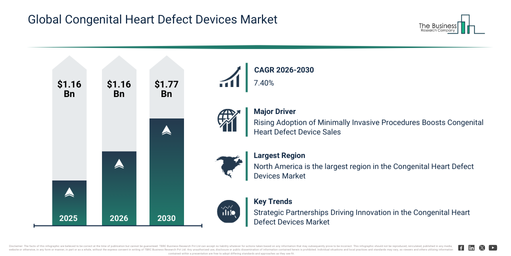
    The congenital heart defect devices market size is projected to experience robust growth in the upcoming years. It is anticipated to expand to $4.45 billion in 2030, demonstrating a compound annual growth rate (CAGR) of 7.4%. This projected expansion during the forecast period can be attributed to an increased emphasis on early diagnosis and intervention, a rising need for minimally invasive pediatric cardiac treatments, wider access to advanced cardiac care in developing markets, a growing population of adults living with congenital heart disease, and continuous innovation in implantable cardiac devices. Significant trends over this period include the increasing adoption of minimally invasive congenital heart procedures, a greater use of transcatheter and implantable cardiac devices, an escalating focus on early-life and pediatric cardiac interventions, the expansion of device-based therapies for complex heart defects, and a heightened demand for long-term cardiac monitoring and support devices.

    Get A Free Sample Report With In-Depth Market Insights:

    https://thebusinessresearchcompany.com/sample_request?id=54986781&type=smp&name=Congenital%20Heart%20Defect%20Devices%20Market%20Report%202026&utm_source=Blogs&utm_medium=Paid&utm_campaign=Oct_PR

    Congenital Heart Defect Devices Market Growth Backed By Core Demand Fundamentals

    The market for congenital heart defect devices is anticipated to expand, driven by the rising volume of minimally invasive procedures. These procedures entail surgical interventions performed via small cuts or natural bodily orifices, frequently employing specialized instruments and methods to lessen injury and improve recuperation. This surge in minimally invasive procedures stems from technological progress, patients favoring less intrusive treatments, enhancements in surgical methods, and the advantages of shorter recovery periods and fewer complications. Congenital heart defect devices are employed in minimally invasive procedures, aiding in the diagnosis, therapy, and handling of cardiac anomalies through methods involving smaller cuts or catheter-guided interventions. An example supporting this is the data from June 2024, where the American Society of Plastic Surgeons, a US-based organization, reported that in 2023, plastic surgeries saw a 5% increase, and minimally invasive procedures grew by 7% year-over-year. Consequently, the growing adoption of minimally invasive procedures is a key factor propelling the congenital heart defect device market.

    Congenital Heart Defect Devices Market Segment Performance And Emerging Opportunities

    The congenital heart defect devices market covered in this report is segmented –

    1) By Device Type: Catheters, Pacemakers, Single-Chamber Pacemakers, Dual-Chamber Pacemakers, Biventricular Pacemakers, Leadless Pacemakers, Implantable Cardioverter Defibrillators, Biventricular Devices, Implanted Cardiac Loop Recorders, Other Device Types

    2) By Defect Type: Atrial Septal Defect, Ventricular Septal Defect, Atrioventricular Septal Defect, Tricuspid Atresia, Truncus Arteriosus, Other Defect Types

    3) By End user: Hospitals, Specialty Clinics, Academic And Research Institute, Other End Users

    Subsegments:

    1) By Catheters: Balloon Catheters, Diagnostic Catheters, Guiding Catheters

    2) By Pacemakers: Single-Chamber Pacemakers, Dual-Chamber Pacemakers, Biventricular Pacemakers, Leadless Pacemakers

    3) By Implantable Cardioverter Defibrillators: Single-Chamber Icds, Dual-Chamber Icds, Subcutaneous Icds

    4) By Biventricular Devices: Crt-P (Cardiac Resynchronization Therapy Pacemakers), Crt-D (Cardiac Resynchronization Therapy Defibrillators)

    5) By Implanted Cardiac Loop Recorders: Traditional Implantable Loop Recorders, Subcutaneous Implantable Loop Recorders

    6) By Other Device Types: Transcatheter Heart Valves, Ventricular Assist Devices (VADS)

    Congenital Heart Defect Devices Market Growth Trends Reshaping The Competitive Landscape

    Leading companies operating within the congenital heart defect devices market are adopting a strategic partnerships approach to develop innovative congenital heart defect devices. These strategic alliances support firms in the congenital heart defect devices sector by consolidating resources and expertise, enhancing research and development efforts, broadening market access, and accelerating commercialization. Ultimately, this collaborative approach stimulates innovation and drives growth across the industry. For instance, in May 2024, SMT (Sahajanand Medical Technologies Pvt Ltd), an India-based manufacturing company, partnered with HeartX, an India-based MedTech firm, to improve patient care within the cardiovascular sector. Through this partnership, Sahajanand Medical Technologies (SMT) strengthens its position in the congenital heart defect (CHD) space by integrating HeartX’s innovative solutions, such as the JOVE VB Stent. This strategic alliance allows SMT to offer advanced CHD devices that enhance treatment efficacy, simplify procedures, and improve patient outcomes.

    Congenital Heart Defect Devices Market Key Players Shaping Industry Direction

    Major companies operating in the congenital heart defect devices market are Johnson & Johnson, Abbott Laboratories, Medtronic plc, Boston Scientific Corporation, W L Gore & Associates Inc, Lepu Medical Technology Beijing Co Ltd, MicroPort Scientific Corporation, Berlin Heart GmbH, Syncardia Systems LLC, Occlutech Holding AG, Sahajanand Medical Technologies Pvt Ltd, Xeltis AG, Procyrion Inc, Heartstitch Inc, Cardia Inc, OSYPKA Medical GmbH, On-X Life Technologies Inc, Ventracor Limited, HemoFlow Technologies, NuPulseCV Inc

    View The Full Congenital Heart Defect Devices Market Report:

    https://thebusinessresearchcompany.com/report/congenital-heart-defect-devices-global-market-report?utm_source=Blogs&utm_medium=Paid&utm_campaign=Oct_PR

    Congenital Heart Defect Devices Market Regional Analysis: Which Region Leads By Revenue?

    North America was the largest region in the congenital heart defect devices market in 2025. Asia-Pacific is expected to be the fastest-growing region in the forecast period. The regions covered in the congenital heart defect devices market report are Asia-Pacific, South East Asia, Western Europe, Eastern Europe, North America, South America, Middle East, Africa.

    Reach Out To Our Team:

    The Business Research Company: https://www.thebusinessresearchcompany.com/

    Americas: +1 310-496-7795

    Asia: +44 7882 955267 & +91 8897263534

    Europe: +44 7882 955267

    Email us at: marketing@tbrc.info

    Follow us on:

    LinkedIn: https://in.linkedin.com/company/the-business-research-company

    YouTube: https://www.youtube.com/channel/UC24_fI0rV8cR5DxlCpgmyFQ

    Global Market Model: https://www.thebusinessresearchcompany.com/global-market-model
  • Cone Beam Computed Tomography Market Outlook From 2026 To 2030: Key Growth Factors And Future Opportunities

    Cone Beam Computed Tomography Market Outlook From 2026 To 2030: Key Growth Factors And Future Opportunities

    Featuring market attractiveness scoring, total addressable market sizing, company benchmarking matrices, interactive Excel dashboards, deeper supply chain intelligence, emerging startup tracking, and granular product-level insights, The Business Research Company’s 2026 market reports are built to deliver research that is both more actionable and more strategically valuable.

    Cone Beam Computed Tomography Market Size Outlook: How Quickly Will Revenue Expand Through 2030?

    The cone beam computed tomography market has experienced rapid expansion in recent years. Its value is projected to rise from $1.47 billion in 2025 to $1.65 billion in 2026, achieving a compound annual growth rate (CAGR) of 11.9%. This historical development can be attributed to elements such as the increasing prevalence of dental disorders, the expansion of orthodontic and implant procedures, the growing adoption of digital dentistry, a rising demand for precise diagnostic imaging, and the availability of advanced imaging hardware.

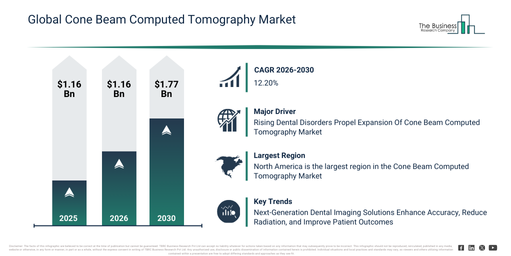
    The cone beam computed tomography market is projected for substantial growth over the coming years, with its valuation set to reach $2.61 billion by 2030, demonstrating a compound annual growth rate (CAGR) of 12.2%. Factors contributing to this growth during the forecast period include greater investments in dental imaging technologies, an escalating demand for minimally invasive diagnostic procedures, the proliferation of dental clinics in developing markets, the expanding application of AI-driven treatment planning, and a heightened emphasis on imaging solutions tailored to individual patients. Key trends anticipated within the forecast timeframe encompass the increasing integration of AI-assisted image reconstruction, a surge in the utilization of high-resolution dental imaging systems, an escalating preference for compact and in-clinic CBCT devices, the broadening scope of multi-application CBCT platforms, and a reinforced commitment to optimizing radiation doses.

    Get A Free Sample Report With In-Depth Market Insights:

    https://thebusinessresearchcompany.com/sample_request?id=37696656&type=smp&name=Cone%20Beam%20Computed%20Tomography%20Market%20Report%202026&utm_source=Blogs&utm_medium=Paid&utm_campaign=Oct_PR

    Cone Beam Computed Tomography Market Growth Catalysts And Demand Drivers

    The rising prevalence of dental disorders is anticipated to fuel the expansion of the cone beam computed tomography market in the future. These oral conditions, such as gum disease, tooth erosion, and cavities, impact oral health and can lead to pain, discomfort, limitations in eating, and a negative effect on self-esteem. Cone beam computed tomography is primarily utilized for the early detection of dental issues, thereby enhancing an endodontist’s capability to identify, assess, and provide care for patients, as well as to evaluate problems concerning the jaw, teeth, and facial skeletal structures. For example, in March 2023, a report published by the World Health Organization (WHO), a Switzerland-based health organization, revealed that nearly 3.5 billion individuals worldwide were affected by oral diseases. Approximately 10 percent of people globally suffer from severe periodontal gum disease, which can cause tooth loss. Additionally, 2.3 billion individuals across the globe have dental caries in their permanent teeth, and 520 million children worldwide experience primary tooth decay. Thus, the increasing incidence of dental disorders is a significant driver for the growth of the cone beam computed tomography market.

    Cone Beam Computed Tomography Market Segment Landscape And Growth Outlook

    The cone beam computed tomography market covered in this report is segmented –

    1) By Patient Position: Standing, Seated, Supine

    2) By Application: Dental Implantology, Oral And Maxillofacial Surgery, Orthodontics, Endodontics, General Dentistry, Temporomandibular Joint (TMJ) Disorders, Periodontics, Forensic Dentistry, Other Applications

    3) By End User: Hospitals, Dental Clinics, Other End-Users

    Subsegments:

    1) By Standing: Upright Standing Position, Upright Standing with Head Stabilization

    2) By Seated: Upright Seated Position, Upright Seated with Head Stabilization

    3) By Supine: Standard Supine Position, Adjustable Supine Position

    Cone Beam Computed Tomography Market Trends Shaping Long-Term Demand

    Leading companies in the cone-beam computed tomography (CBCT) market are concentrating on developing advanced imaging solutions, including optimized exposure protocols, enhanced sensors, and motion-artifact correction technologies, with the aim of boosting diagnostic accuracy, streamlining workflows, and improving patient outcomes. These next-generation imaging advancements provide clearer visualization, reduced radiation dose, and increased reliability, even in challenging clinical scenarios. For instance, in March 2025, Planmeca Oy, a Finland-based dental imaging and technology company, introduced the Planmeca Viso® G1 CBCT at IDS 2025. This system features a field of view up to 11 × 11 cm, incorporates Planmeca’s Ultra Low Dose protocol, and utilizes the CALM motion-artifact correction algorithm to deliver high-quality 3D images even when patient movement occurs, thereby supporting greater diagnostic confidence and improved clinical decision-making.

    Cone Beam Computed Tomography Market Competitive Analysis Of Leading Industry Participants

    Major companies operating in the cone beam computed tomography market are Planmeca Group, Vatech Co. Ltd., Asahi Roentgen Industry Co. Ltd., J Morita Corporation, QR s.r.l., CurveBeam AI, PreXion Inc., Canon Medical Systems Corporation, Fussen Technology Co. Ltd., Genoray Co. Ltd., Carestream Health Inc., Villa Sistemi Medicali S.p.A., Cefla S.C., PointNix Co. Ltd., LargeV Instrument Corp., Idetec Medical Imaging, Dentsply Sirona Inc., ACTEON Group, Owandy Radiology, Ray Co. Ltd.

    View The Full Cone Beam Computed Tomography Market Report:

    https://thebusinessresearchcompany.com/report/cone-beam-computed-tomography-global-market-report?utm_source=Blogs&utm_medium=Paid&utm_campaign=Oct_PR

    Cone Beam Computed Tomography Market Geographic Distribution And Regional Opportunities

    North America was the largest region in the cone beam computed tomography market in 2025. Asia-Pacific is expected to be the fastest-growing region in the global cone beam computed tomography market during the forecast period. The regions covered in the cone beam computed tomography market report are Asia-Pacific, South East Asia, Western Europe, Eastern Europe, North America, South America, Middle East, Africa.

    Reach Out To Our Team:

    The Business Research Company: https://www.thebusinessresearchcompany.com/

    Americas: +1 310-496-7795

    Asia: +44 7882 955267 & +91 8897263534

    Europe: +44 7882 955267

    Email us at: marketing@tbrc.info

    Follow us on:

    LinkedIn: https://in.linkedin.com/company/the-business-research-company

    YouTube: https://www.youtube.com/channel/UC24_fI0rV8cR5DxlCpgmyFQ

    Global Market Model: https://www.thebusinessresearchcompany.com/global-market-model
  • Computed Tomography (CT) Scanners Devices And Equipment Market Growth Forecast: Market Size, Key Trends And Emerging Opportunities Through 2030

    Computed Tomography (CT) Scanners Devices And Equipment Market Growth Forecast: Market Size, Key Trends And Emerging Opportunities Through 2030

    Built to provide research that’s more actionable and strategically valuable, The Business Research Company’s 2026 market reports include market attractiveness analysis, total addressable market sizing, company benchmarking matrices, interactive Excel dashboards, broader supply chain intelligence, emerging startup tracking, and in-depth product insights.

    Computed Tomography (CT) Scanners Devices And Equipment Market Size, Value And Growth Trajectory Through 2030

    The computed tomography (ct) scanners devices and equipment market has shown consistent growth recently. It will grow from $8.47 billion in 2025 to $8.77 billion in 2026 at a compound annual growth rate (CAGR) of 3.6%. The expansion observed historically can be linked to factors such as the rising incidence of chronic diseases, the growth in diagnostic imaging centers, an increasing need for early disease detection, enhancements in x-ray detector technologies, and wider clinical adoption of CT imaging.

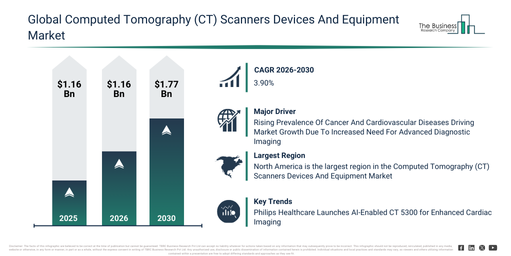
    The computed tomography (ct) scanners devices and equipment market size is anticipated to show steady expansion in the next few years, projected to reach $10.21 billion in 2030 at a compound annual growth rate (CAGR) of 3.9%. This growth during the forecast period is fueled by several factors, including the increasing adoption of AI-driven diagnostic tools, rising investments in advanced imaging infrastructure, a growing demand for precision diagnostics, the expansion of outpatient diagnostic services, and technological advancements in low-dose imaging. Significant trends expected in this period encompass the increasing integration of AI-assisted image reconstruction, a rising demand for high-slice CT scanners, greater incorporation of dose reduction technologies, the broadening of advanced 3D and 4D imaging capabilities, and an enhanced focus on workflow automation.

    Get A Free Sample Report With In-Depth Market Insights:

    https://thebusinessresearchcompany.com/sample_request?id=79785287&type=smp&name=Computed%20Tomography%20%28CT%29%20Scanners%20Devices%20And%20Equipment%20Market%20Report%202026&utm_source=Blogs&utm_medium=Paid&utm_campaign=Oct_PR

    Computed Tomography (CT) Scanners Devices And Equipment Market Opportunity Drivers: What’s Unlocking New Revenue Potential?

    The increasing occurrence of cancer and cardiovascular diseases is anticipated to boost the expansion of the computed tomography (CT) scanner devices and equipment market in the future. Both cancer and cardiovascular diseases (CVD) stem from multiple factors and share significant risk factors such as smoking, metabolic syndrome, radiation exposure, advancing age, and air pollution. The escalating incidence of these conditions arises from common risk factors like chronic inflammation, obesity, and lifestyle choices, all of which contribute to their development and progression via interconnected biological processes. CT scans serve as a diagnostic tool for identifying tumors and other irregularities within the body, including those associated with cancer and CVD. Furthermore, these scans are instrumental in planning and directing interventional or therapeutic procedures, including cryotherapy, radiofrequency ablation, and the insertion of radioactive seeds. For instance, in October 2024, data from the Centers for Disease Control and Prevention, a US-based public health institute, indicated that in 2023, approximately 1 out of every 6 deaths attributed to cardiovascular diseases occurred in adults younger than 65 years old, with a total of 919,032 people succumbing to cardiovascular disease, accounting for 1 in every 3 deaths. Consequently, the growing prevalence of cancer and cardiovascular diseases is a key factor propelling the growth of the computed tomography (CT) scanner devices and equipment market.

    Computed Tomography (CT) Scanners Devices And Equipment Market Breakdown By Product Type And Application

    The computed tomography (ct) scanners devices and equipment market covered in this report is segmented –

    1) By Product Type: Low Slice, Medium Slice, High Slice

    2) By Application: Oncology, Neurology, Cardiovascular, Musculoskeletal, Other Applications

    3) By End User: Clinics, Diagnostic Services, Hospitals

    Subsegments:

    1) By Low Slice: 4-Slice CT Scanners, 8-Slice CT Scanners, Other Low Slice CT Scanners

    2) By Medium Slice: 16-Slice CT Scanners, 32-Slice CT Scanners, Other Medium Slice CT Scanners

    3) By High Slice: 64-Slice CT Scanners, 128-Slice CT Scanners, 256-Slice CT Scanners, 320-Slice CT Scanners, Other High Slice CT Scanners

    Computed Tomography (CT) Scanners Devices And Equipment Market Innovation Trends Shaping Future Development

    Major companies operating in the computed tomography (CT) scanner devices and equipment market are developing innovative products equipped with advanced technologies, such as AI-enabled CT scanners, to better serve patients. An AI-enabled CT (Computed Tomography) scanner refers to a medical imaging device that integrates artificial intelligence (AI) technologies to enhance the quality, speed, and accuracy of CT imaging. For instance, in March 2024, Philips Healthcare, a Netherlands-based health technology company, launched the AI-enabled CT 5300, an advanced computed tomography scanner specifically tailored for cardiac imaging. This innovative system integrates artificial intelligence to enhance diagnostic accuracy and streamline workflows, notably featuring the industry’s first nanopanel precise detector designed for AI-based reconstruction. It significantly improves image quality while reducing radiation exposure by up to 80%, achieving lower noise levels and better low-contrast detectability. Already operational in several European hospitals, the CT 5300 aims to improve patient care and address challenges in healthcare delivery, reflecting Philips’ commitment to advancing cardiac care through cutting-edge technology.

    Computed Tomography (CT) Scanners Devices And Equipment Market Leading Companies And Competitive Benchmarking

    Major companies operating in the computed tomography (ct) scanners devices and equipment market are GE Healthcare, Koninklijke Philips N.V., Hitachi Ltd., Siemens Healthineers, Canon Medical Systems Corporation, Neusoft Medical Systems, NeuroLogica Corp., Samsung Electronics, Shimadzu Corporation, Shenzhen Anke High-Tech, Fujifilm Holdings Corporation, Koning Corporation, ScanCO Medical AG, United Imaging, Carestream Health, Planmed Oy, Dunlee, Shared Imaging, Allengers Medical Systems, Fujifilm Medical Systems, Konica Minolta Healthcare, Toshiba Medical Systems Corporation, Xoran Technologies

    View The Full Computed Tomography (CT) Scanners Devices And Equipment Market Report:

    https://thebusinessresearchcompany.com/report/computed-tomography-CT-scanners-devices-and-equipment-global-market-report?utm_source=Blogs&utm_medium=Paid&utm_campaign=Oct_PR

    Computed Tomography (CT) Scanners Devices And Equipment Market Largest Region By Revenue And Market Share

    North America was the largest region in the computed tomography scanners devices and equipment market in 2025. Western Europe was the second-largest region in the global computed tomography (CT) scanners devices and equipment market share. The regions covered in the computed tomography (ct) scanners devices and equipment market report are Asia-Pacific, South East Asia, Western Europe, Eastern Europe, North America, South America, Middle East, Africa.

    Reach Out To Our Team:

    The Business Research Company: https://www.thebusinessresearchcompany.com/

    Americas: +1 310-496-7795

    Asia: +44 7882 955267 & +91 8897263534

    Europe: +44 7882 955267

    Email us at: marketing@tbrc.info

    Follow us on:

    LinkedIn: https://in.linkedin.com/company/the-business-research-company

    YouTube: https://www.youtube.com/channel/UC24_fI0rV8cR5DxlCpgmyFQ

    Global Market Model: https://www.thebusinessresearchcompany.com/global-market-model
  • Compression Garments And Stockings Market CAGR Forecast Through 2030: Key Trends Shaping Industry Expansion

    Compression Garments And Stockings Market CAGR Forecast Through 2030: Key Trends Shaping Industry Expansion

    Backed by market attractiveness analysis, total addressable market sizing, company benchmarking matrices, interactive Excel dashboards, wider supply chain intelligence, emerging startup coverage, and detailed product-level insights, The Business Research Company’s 2026 market reports are designed to offer research that is more actionable and strategically valuable than ever.

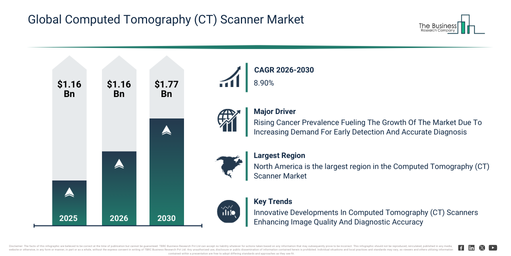
    Computed Tomography (CT) Scanner Market CAGR Outlook And Future Development

    The computed tomography (ct) scanner market has experienced robust expansion in recent years. It will grow from $8.22 billion in 2025 to $8.96 billion in 2026 at a compound annual growth rate (CAGR) of 9.0%. Historically, this market’s growth can be attributed to the development of advanced medical imaging infrastructure, a greater incidence of chronic and acute diseases, the expanding application of CT imaging in diagnostics, the existence of reimbursement frameworks, and the enlargement of hospital imaging departments.

    The computed tomography (ct) scanner market is poised for significant expansion in the coming years. It is forecast to grow to $12.59 billion in 2030, achieving a compound annual growth rate (CAGR) of 8.9%. This anticipated growth over the forecast period is driven by increased investments in advanced imaging technologies, a heightened demand for early disease detection, the spread of outpatient diagnostic centers, an increased emphasis on reducing radiation dosage, and continuous innovation in CT scanner performance. Prominent trends for this period include the wider adoption of high-slice CT systems, the rising acceptance of AI-assisted image reconstruction, a growing need for portable CT scanners, the expansion of low-dose imaging solutions, and an enhanced focus on diagnostic precision.

    Get A Free Sample Report With In-Depth Market Insights:

    https://thebusinessresearchcompany.com/sample_request?id=20847696&type=smp&name=Computed%20Tomography%20%28CT%29%20Scanner%20Market%20Report%202026&utm_source=Blogs&utm_medium=Paid&utm_campaign=Oct_PR

    Computed Tomography (CT) Scanner Market Growth Momentum: What Factors Are Shaping Demand?

    The rising incidence of cancer is anticipated to fuel the expansion of the computed tomography (CT) scanner market in the foreseeable future. Cancer is defined as a collection of illnesses marked by the uncontrolled multiplication and dispersion of atypical cells throughout the body. This increase in cancer cases is largely attributed to the world’s aging population; extended lifespans result in more people reaching older age, where the combined impact of genetic changes, environmental factors, and compromised immune defenses substantially elevates the likelihood of developing diverse cancers. Computed tomography (CT) scanners are vital in cancer management, offering detailed cross-sectional and 3D imaging crucial for early identification, exact tumor positioning, precise staging, therapy formulation, and continuous tumor surveillance, thereby empowering clinicians to make well-informed choices and enhance patient results across the entire spectrum of cancer care. As an illustration, in April 2024, the American Cancer Society, a US-based professional organization, reported an estimated 20 million new cancer cases and 9.7 million deaths globally in 2022, with projections indicating a surge to 35 million cancer cases by 2050. Consequently, the growing occurrence of cancer is a key factor propelling the expansion of the computed tomography (CT) scanner market.

    Computed Tomography (CT) Scanner Market Segment Analysis And Revenue Potential

    The computed tomography (ct) scanner market covered in this report is segmented –

    1) By Type: Stationary Computed Tomography Scanner, Portable Computed Tomography Scanner

    2) By Architecture: O-Arm, Gantry-Based CT Architecture

    3) By Technology: High-Slice Computed Tomography, Mid-Slice Computed Tomography, Low-Slice Computed Tomography, Cone Beam Computed Tomography

    4) By Application: Neurology, Oncology, Cardiovascular, Orthopedics, Other Applications

    5) By End Users: Hospitals And Diagnostics Centers, Research Laboratories, Academic Institutes And Contract Research Organizations, Ambulatory Care Centers, Veterinary Clinics And Hospitals, Other End Users

    Subsegments:

    1) By Stationary Computed Tomography Scanner: Single-Slice Computed Tomography Scanner, Multi-Slice Computed Tomography Scanner, Cone Beam Computed Tomography Scanner, Dual-Source Computed Tomography Scanner

    2) By Portable Computed Tomography Scanner: Compact Mobile CT Scanners, Mobile Computed Tomography Scanner

    Computed Tomography (CT) Scanner Market Trends Redefining Industry Growth

    Leading companies in the computed tomography (CT) scanner market are prioritizing the creation of advanced technologies, such as volume imaging technology, with the aim of improving image quality, shortening scan durations, lowering radiation exposure, and enhancing diagnostic accuracy across numerous clinical applications. Volume imaging technology facilitates the capture of complete anatomical volumes in a single rotation, significantly boosting image resolution and diminishing motion artifacts. As an illustration, in March 2025, GE Healthcare Technologies Inc., a US-based medical technology and diagnostics company, unveiled the Revolution Vibe CT system, which offers unlimited one-beat cardiac imaging and artificial intelligence (AI)-powered workflow improvements. This system produces high-quality images even in complex situations, including atrial fibrillation and heavily calcified coronaries, and streamlines patient preparation by removing the requirement for ECG connections. The Revolution Vibe seeks to increase diagnostic confidence and patient comfort while simultaneously improving workflow efficiency.

    Computed Tomography (CT) Scanner Market Industry Leaders And Competitive Landscape

    Major companies operating in the computed tomography (ct) scanner market are Siemens Healthineers AG, GE HealthCare Technologies Inc., Koninklijke Philips N.V., FUJIFILM Holdings Corporation, Canon Medical Systems Corporation, Shimadzu Corporation, Neusoft Medical Systems Co. Ltd., Shanghai United Imaging Healthcare Co. Ltd., Carestream Health Inc., Analogic Corporation, Trivitron Healthcare Private Limited, Shenzhen Anke High-tech Co. Ltd., Planmed Oy, Xoran Technologies LLC, SinoVision Technologies (Beijing) Co. Ltd., Koning Corporation, CurveBeam AI Inc., MinFound Medical Systems Co. Ltd., Hitachi Ltd. (Medical Systems), Toshiba Medical Systems Corporation, Samsung Healthcare (CT Division), Mediso Ltd., GE Precision Healthcare

    View The Full Computed Tomography (CT) Scanner Market Report:

    https://thebusinessresearchcompany.com/report/computed-tomography-ct-scanner-global-market-report?utm_source=Blogs&utm_medium=Paid&utm_campaign=Oct_PR

    Computed Tomography (CT) Scanner Market Regional Analysis And Leading Geography

    North America was the largest region in the computed tomography (CT) scanner market in 2025. Asia-Pacific is expected to be the fastest-growing region in the forecast period. The regions covered in the computed tomography (ct) scanner market report are Asia-Pacific, South East Asia, Western Europe, Eastern Europe, North America, South America, Middle East, Africa.

    Reach Out To Our Team:

    The Business Research Company: https://www.thebusinessresearchcompany.com/

    Americas: +1 310-496-7795

    Asia: +44 7882 955267 & +91 8897263534

    Europe: +44 7882 955267

    Email us at: marketing@tbrc.info

    Follow us on:

    LinkedIn: https://in.linkedin.com/company/the-business-research-company

    YouTube: https://www.youtube.com/channel/UC24_fI0rV8cR5DxlCpgmyFQ

    Global Market Model: https://www.thebusinessresearchcompany.com/global-market-model
  • Compression Garments And Stockings Market To Witness 6.7% CAGR Growth Through 2030: Key Industry Drivers

    Compression Garments And Stockings Market To Witness 6.7% CAGR Growth Through 2030: Key Industry Drivers

    Featuring market attractiveness scoring, total addressable market sizing, company benchmarking matrices, interactive Excel dashboards, deeper supply chain intelligence, emerging startup tracking, and granular product-level insights, The Business Research Company’s 2026 market reports are built to deliver research that is both more actionable and more strategically valuable.

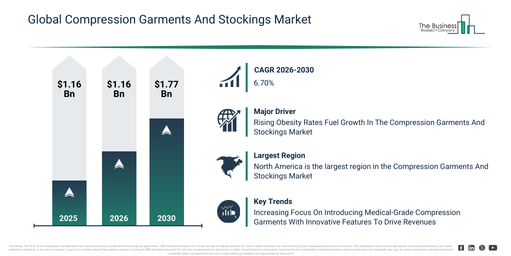
    Compression Garments And Stockings Market Set To Climb From $3.6 Billion In 2026 To $4.66 Billion By 2030

    The compression garments and stockings market has experienced substantial growth in recent years. Its size is expected to increase from $3.41 billion in 2025 to $3.6 billion in 2026, showing a compound annual growth rate (CAGR) of 5.6%. The expansion observed in prior periods can be attributed to the increasing prevalence of venous disorders, a rising adoption of compression therapy in post-surgical care, the broadening of sports injury management practices, an enhanced awareness of circulatory health, and the availability of mass-produced compression products.

    The compression garments and stockings market is set to experience substantial expansion over the next few years. It is projected to increase to $4.66 billion in 2030, achieving a compound annual growth rate (CAGR) of 6.7%. This anticipated growth during the forecast period can be attributed to various factors, including the increasing need for home-based healthcare options, the rising acceptance of compression wear in preventive health, the widening reach of e-commerce distribution channels, a greater emphasis on lifestyle and wellness items, and ongoing product innovation in textile technology. Significant trends foreseen in this period include a heightened demand for medical-grade compression products, the growing integration of compression therapy in sports medicine, the expanded utilization of advanced elastomeric fabrics, the development of customized and patient-specific garments, and an increased focus on comfort and breathability.

    Get A Free Sample Report With In-Depth Market Insights:

    https://thebusinessresearchcompany.com/sample_request?id=78993648&type=smp&name=Compression%20Garments%20And%20Stockings%20Market%20Report%202026&utm_source=Blogs&utm_medium=Paid&utm_campaign=Oct_PR

    Compression Garments And Stockings Market Expansion Drivers: What’s Shaping Future Growth?

    The rising prevalence of obesity is anticipated to drive the expansion of the compression garments and stockings market in the coming years. Obesity refers to a health condition marked by an excessive and potentially detrimental build-up of body fat. These garments aid overweight or obese individuals by easing pain and discomfort during weight loss efforts, in addition to enhancing circulation and decreasing swelling and inflammation, frequently observed in this population. As an illustration, a report from March 2023 by the World Heart Federation, a global cardiovascular community headquartered in Switzerland, indicated that approximately 2.3 billion adults and children worldwide were either obese or overweight. Furthermore, projections based on current obesity trends suggest that the count of individuals affected by obesity will climb to 2.7 billion by 2025. Consequently, the escalating occurrence of obesity is fueling the growth within the compression garments and stockings market.

    Compression Garments And Stockings Market Segmentation And Category Overview

    The compression garments and stockings market covered in this report is segmented –

    1) By Product Type: Compression Garments, Compression Stockings

    2) By Distribution Channel: Hospitals, Ambulatory Surgical Centers, Clinics, Online Sales, Other Healthcare Facilities

    3) By Application Type: Varicose Veins, Wound Care, Burns, Oncology, Other Applications

    Subsegments:

    1) By Compression Garments: Compression Shirts, Compression Sleeves (Arm And Leg), Compression Shorts, Full-Body Compression Suits

    2) By Compression Stockings: Knee-High Compression Stockings, Thigh-High Compression Stockings, Waist-High Compression Stockings, Anti-Embolism Stockings

    Compression Garments And Stockings Market Strategic Trends: What Defines The Next Growth Phase?

    Leading companies in the compression garments and stockings market are intensifying their efforts to introduce medical-grade compression garments equipped with advanced features, such as FlexFit Comfort Ankle, to increase their market revenues. FlexFit Comfort Ankle is a distinct foot design featuring sliding compression sections, which aids in improving blood circulation, lymphatic flow, and ankle flexibility. As an illustration, in July 2023, The Marena Group, a US-based manufacturing firm specializing in medical-grade compression, unveiled a lipedema compression garment that incorporates the innovative FlexFit Comfort Ankle, crucial for ensuring comfort and managing unease during recovery. This product was specifically engineered to support individuals recuperating from lipedema reduction procedures. Furthermore, this new lipedema garment also integrated Marena’s proprietary TriFlex Fabric, predominantly utilized for its post-surgical recovery benefits after liposuction. This fabric delivers multidirectional 3D stretch, moisture-wicking and cooling effects, shape-enhancing qualities, and properties that prevent microbial growth.

    Compression Garments And Stockings Market Key Participants And Competitive Landscape

    Major companies operating in the compression garments and stockings market are 3M Company, BSN Medical Pvt. Ltd., Medi GmBH & Co. KG, SIGVARIS Group, Medical Z, Paul Hartmann AG, Biocompression Systems, 2XU Pty Ltd., Smith & Nephew PLC, Lymphedivas, Narang Medical Limited, Sanyleg SRL, Santemol Group Medikal, Leonisa S.A., Creswell Sock Mills LLC, Spanx Inc., Julius Zorn GmbH, Comfort Plus Corporation, VIM & VIGR LLC, Tommie Copper Inc., Venosan, Tactile Medical, Design Veronique, Medico International Inc., Marena Group LLC, Therafirm LLC, Zensah Company

    View The Full Compression Garments And Stockings Market Report:

    https://thebusinessresearchcompany.com/report/compression-garments-and-stockings-global-market-report?utm_source=Blogs&utm_medium=Paid&utm_campaign=Oct_PR

    Compression Garments And Stockings Market Geographic Analysis: Where Is Demand Accelerating Fastest?

    North America was the largest region in the compression garments and stockings market in 2025. Asia-Pacific is expected to be the fastest-growing region in the forecast period. The regions covered in the compression garments and stockings market report are Asia-Pacific, South East Asia, Western Europe, Eastern Europe, North America, South America, Middle East, Africa.

    Reach Out To Our Team:

    The Business Research Company: https://www.thebusinessresearchcompany.com/

    Americas: +1 310-496-7795

    Asia: +44 7882 955267 & +91 8897263534

    Europe: +44 7882 955267

    Email us at: marketing@tbrc.info

    Follow us on:

    LinkedIn: https://in.linkedin.com/company/the-business-research-company

    YouTube: https://www.youtube.com/channel/UC24_fI0rV8cR5DxlCpgmyFQ

    Global Market Model: https://www.thebusinessresearchcompany.com/global-market-model
  • Complete Blood Count Device Market Projected For Strong Expansion Through 2030: Key Trends And Future Outlook

    Complete Blood Count Device Market Projected For Strong Expansion Through 2030: Key Trends And Future Outlook

    Built to provide research that’s more actionable and strategically valuable, The Business Research Company’s 2026 market reports include market attractiveness analysis, total addressable market sizing, company benchmarking matrices, interactive Excel dashboards, broader supply chain intelligence, emerging startup tracking, and in-depth product insights.

    Complete Blood Count Device Market Forecast: Value Set To Climb From $4.58 Billion To $5.76 Billion

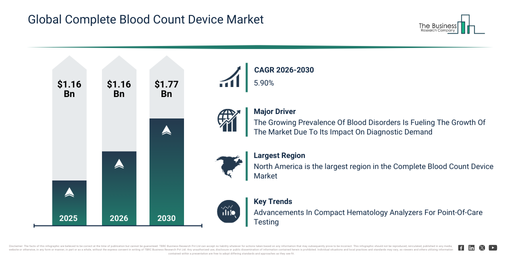
    The market for complete blood count devices has shown robust expansion in size over recent years. This market is forecast to increase from $4.33 billion in 2025 to $4.58 billion in 2026, achieving a compound annual growth rate (CAGR) of 6.0%. The historical growth can be primarily ascribed to the expansion of clinical diagnostic testing volumes, heightened automation in hospital laboratories, the increasing burden of chronic diseases, the widespread availability of standardized blood testing protocols, and a rising demand for routine health screenings.

    The complete blood count device market is anticipated to undergo significant expansion in the coming years. Its valuation is projected to reach $5.76 billion in 2030, demonstrating a compound annual growth rate (CAGR) of 5.9%. This market expansion throughout the forecast period stems from factors such as the increasing integration of decentralized diagnostics, heightened investments in intelligent laboratory infrastructure, an escalating need for swift diagnostic outcomes, the broadening scope of preventive healthcare screenings, and continuous progress in hematology technology. Noteworthy trends for the forecast duration encompass the increasing deployment of automated hematology analyzers, an escalating requirement for point-of-care complete blood count devices, the expanding incorporation of AI-driven diagnostics, the growth of high-throughput laboratory systems, and a more pronounced focus on diagnostic precision and speed.

    Get A Free Sample Report With In-Depth Market Insights:

    https://thebusinessresearchcompany.com/sample_request?id=62990736&type=smp&name=Complete%20Blood%20Count%20Device%20Market%20Report%202026&utm_source=Blogs&utm_medium=Paid&utm_campaign=Oct_PR

    Complete Blood Count Device Market Development Factors: What’s Supporting Demand?

    The increasing occurrence of blood disorders is anticipated to boost the expansion of the complete blood count device market. These conditions are health issues that interfere with the production, operation, or structure of blood cells, leading to compromised blood function. The uptick in blood disorders is connected to the rising incidence of lifestyle-related ailments, where factors like inadequate diet, lack of physical activity, and stress contribute to issues such as anemia and blood clotting problems. A complete blood count (CBC) device assists in detecting blood disorders through the examination of vital blood components and the identification of irregularities, enabling medical professionals to spot clotting conditions and provide swift and accurate treatment. For instance, in May 2024, according to the Canadian Cancer Society, a Canada-based organization, 4,100 individuals were diagnosed with multiple myeloma (a type of blood cancer), while 1,750 succumbed to the disease. Consequently, the rising prevalence of blood disorders is fueling the growth of the complete blood count device market.

    Complete Blood Count Device Market Segment Outlook: Which Categories Are Growing Fastest?

    The complete blood count device market covered in this report is segmented –

    1) By Device Type: Automated Blood Count Analyzers, Manual Blood Count Analyzers, Point-Of-Care Testing Devices, Hematology Analyzers

    2) By Test Type: White Blood Cell Count (WBC Or Leukocyte Count), White Blood Cell (WBC) Differential Count, Red Blood Cell Count (RBC Or Erythrocyte Count), Hematocrit (Hct), Hemoglobin (Hbg), Platelet Count, Mean Platelet Volume (MPV), Mean Corpuscular Hemoglobin (MCH), Other Test Types

    3) By Technology: Impedance Technology, Laser-Based Technology, Flow Cytometry, Microscopy

    4) By Distribution Channel: Direct Sales, Online Sales, Third-Party Distributors, Laboratory Equipment Suppliers

    5) By End-User: Hospital, Diagnostic Laboratories, Research Institutes, Other End-Users

    Subsegments:

    1) By Automated Blood Count Analyzers: 3-Part Differential Analyzers, 5-Part Differential Analyzers, 6-Part And Above Differential Analyzers, Integrated Hematology Systems, High-Throughput Lab Analyzers

    2) By Manual Blood Count Analyzers: Hemocytometers, Microscopes For Manual Differential, Manual Cell Counters, Staining Kits And Reagents

    3) By Point-of-Care Testing Devices: Portable Hematology Analyzers, Handheld Complete Blood Count (CBC) Devices, Fingerstick Blood Test Devices, Rapid Diagnostic Complete Blood Count (CBC) Kits

    4) By Hematology Analyzers: Low-Volume Hematology Analyzers, Mid-Volume Hematology Analyzers, High-Volume Hematology Analyzers, Veterinary Hematology Analyzers, Reagent-Free Analyzers

    Complete Blood Count Device Market Transformation Trends: What Innovations Are Driving Change?

    Leading companies in the complete blood count device market are concentrating on creating advanced products, such as compact hematology analyzers, to offer more precise, quicker, and economical solutions for point-of-care testing. Compact hematology analyzers are mobile, simple-to-use instruments that deliver fast, accurate complete blood count (CBC) outcomes with minimal sample volume, rendering them ideal for point-of-care applications, thereby boosting diagnostic precision, operational effectiveness, and user convenience while remaining cost-efficient and straightforward to maintain. For example, in June 2024, HORIBA, a Japan-based analytical and measurement technology firm, unveiled the Yumizen H550E and H500E hematology analyzers. These compact instruments incorporate erythrocyte sedimentation rate (ESR) testing alongside complete blood count (CBC) and 5-part differential (DIFF) analysis, employing HORIBA’s patented CoRA (correlated rouleaux analysis) technology to provide thorough results from whole blood samples in just 60 seconds.

    Complete Blood Count Device Market Top Companies Driving Competitive Growth

    Major companies operating in the complete blood count device market are Abbott Laboratories, Siemens Healthineers, Mindray Medical International Limited, Beckman Coulter Inc., Sysmex Corporation, Horiba Ltd., Nihon Kohden Corporation, Agappe Diagnostics Ltd., Trivitron Healthcare Pvt. Ltd., HemoCue AB, EKF Diagnostics Holdings plc, Erba Mannheim, Boule Diagnostics AB, Biosystems S.A., Diatron MI Zrt., Labtron Equipment Ltd., Microlab Instruments Co. Pvt. Ltd., URIT Medical Electronic Co. Ltd., Roche Diagnostics, Ortho Clinical Diagnostics, BioSystems Diagnostics Pvt. Ltd., Drew Scientific (subsidiary of EKF), Analyticon Biotechnologies GmbH, Rayto Life and Analytical Sciences Co. Ltd.

    View The Full Complete Blood Count Device Market Report:

    https://thebusinessresearchcompany.com/report/complete-blood-count-device-global-market-report?utm_source=Blogs&utm_medium=Paid&utm_campaign=Oct_PR

    Complete Blood Count Device Market Global Footprint: Which Region Leads The Industry?

    North America was the largest region in the complete blood count device market in 2025. Asia-Pacific is expected to be the fastest-growing region in the forecast period. The regions covered in the complete blood count device market report are Asia-Pacific, South East Asia, Western Europe, Eastern Europe, North America, South America, Middle East, Africa.

    Reach Out To Our Team:

    The Business Research Company: https://www.thebusinessresearchcompany.com/

    Americas: +1 310-496-7795

    Asia: +44 7882 955267 & +91 8897263534

    Europe: +44 7882 955267

    Email us at: marketing@tbrc.info

    Follow us on:

    LinkedIn: https://in.linkedin.com/company/the-business-research-company

    YouTube: https://www.youtube.com/channel/UC24_fI0rV8cR5DxlCpgmyFQ

    Global Market Model: https://www.thebusinessresearchcompany.com/global-market-model
  • Companion Diagnostics Market Outlook 2026–2030: Growth Trends, Market Dynamics And Emerging Opportunities

    Companion Diagnostics Market Outlook 2026–2030: Growth Trends, Market Dynamics And Emerging Opportunities

    Backed by market attractiveness analysis, total addressable market sizing, company benchmarking matrices, interactive Excel dashboards, wider supply chain intelligence, emerging startup coverage, and detailed product-level insights, The Business Research Company’s 2026 market reports are designed to offer research that is more actionable and strategically valuable than ever.

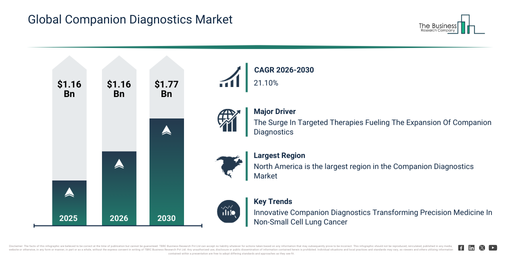
    Companion Diagnostics Market Revenue Growth On Track For A 21.1% CAGR Through 2030

    The companion diagnostics market has experienced substantial expansion in recent years. This market is projected to grow from $8.69 billion in 2025 to $10.54 billion in 2026, demonstrating a compound annual growth rate (CAGR) of 21.3%. In the past, this growth was primarily driven by the increase in targeted cancer therapies, the expansion of oncology clinical trials, enhanced collaboration between pharmaceutical and diagnostics companies, rising cancer incidence rates, and regulatory approvals for companion tests.

    The companion diagnostics market is poised for substantial growth in the upcoming years. It is forecast to grow to $22.7 billion in 2030 at a compound annual growth rate (CAGR) of 21.1%. This projected expansion during the forecast period is driven by factors such as the increasing demand for tailored treatment selection, growing investments in precision medicine, the broadening of immuno-oncology pipelines, the rising adoption of AI-driven diagnostic interpretation, and a heightened regulatory focus on the co-development of diagnostics and drugs. Significant trends expected during this period include the increased embrace of precision oncology diagnostics, the deeper integration of companion diagnostics into drug development, the expanding application of NGS-based diagnostic platforms, the diversification of biomarker-driven therapies, and a reinforced emphasis on personalized medicine.

    Get A Free Sample Report With In-Depth Market Insights:

    https://thebusinessresearchcompany.com/sample_request?id=7038&type=smp&name=Companion%20Diagnostics%20Market%20Report%202026&utm_source=Blogs&utm_medium=Paid&utm_campaign=Oct_PR

    Companion Diagnostics Market Industry Drivers: What’s Behind The Revenue Growth?

    A rising volume of targeted therapies is anticipated to stimulate expansion in the companion diagnostics market. Targeted therapy represents a pharmacological approach focused on specific traits of cancer cells, aiming to suppress disease progression and dissemination. These medications, while circulating systemically, exert a more precise impact compared to chemotherapy, often resulting in fewer side effects. Companion diagnostic testing, utilizing biological markers for targeted cancer treatments, is evolving into a crucial element of individualized cancer management. For example, in February 2024, data from the Personalized Medicine Coalition, a US-based hospital and health care organization, indicated that the FDA approved 16 new personalized treatments for rare disease patients in 2023, an increase from 6 in 2022. Consequently, the rapid increase in targeted therapies fuels the expansion of the companion diagnostics market.

    Companion Diagnostics Market Segment Landscape: Which Areas Lead Development?

    The companion diagnostics market covered in this report is segmented –

    1) By Product And Service: Assays, Kits And Reagents, Software And Services

    2) By Technology: Polymerase Chain Reaction, Next-Generation Sequencing, In Situ Hybridization, Immunohistochemistry

    3) By Indication: Lung Cancer, Breast Cancer, Colorectal Cancer, Leukemia, Melanoma

    4) By End-User: Pharmaceutical And Biopharmaceutical Companies, Reference Laboratories, Contract Research Organizations

    Subsegments:

    1) By Assays: Polymerase Chain Reaction (PCR) Assays, Immunohistochemistry (IHC) Assays, Next-Generation Sequencing (NGS) Assays, In Situ Hybridization (ISH) Assays

    2) By Kits And Reagents: Diagnostic Kits, Detection Reagents, Control Reagents

    3) By Software And Services: Data Analysis Software, Interpretation Software, Custom Development Services, Consulting and Support Services

    #Companion Diagnostics Market Growth Trends: What’s Shaping The Future Outlook?

    Companies prominent in the companion diagnostics market are forming partnerships to create advanced treatment options aimed at advancing personalized medicine, bettering patient results, and maximizing the efficacy of specific therapies. Such cooperative efforts among these firms will quicken the progress and market launch of companion diagnostics (CDx) for treatments in hematology and oncology. As an illustration, in January 2024, Agilent Technologies, Inc., a US-based provider of laboratory instruments, software, services, and consumables, declared a pact with Incyte, a US-based pharmaceutical company. This arrangement will leverage Agilent’s specialized knowledge and established success in creating companion diagnostics (CDx) to aid in the development and market introduction of Incyte’s range of hematology and oncology products. Through this collaboration, Agilent can broaden its CDx offerings with novel biomarkers, simultaneously benefiting Incyte by accessing Agilent’s proficiency in assay creation, navigating regulatory approvals, and commercialization to facilitate clinical trials and CDx registration across the U.S. and Europe.

    Companion Diagnostics Market Leading Players And Competitive Positioning

    Major companies operating in the companion diagnostics market are F Hoffmann-La Roche Ltd., Agilent Technologies Inc., Qiagen NV, Thermo Fisher Scientific Inc., Abbott Laboratories Inc., Amoy Diagnostics Co. Ltd., Danaher Corporation, Guardant Health Inc., Illumina Inc., Myriad Genetics Inc., Siemens Healthcare GmbH, Almac Group, Caris Life Sciences, Cepheid Inc., Diaceutics plc, Epic Sciences Inc., Foundation Medicine Inc., Genomic Health Inc., Grail Inc., Hologic Inc., HTG Molecular Diagnostics Inc., Inivata Ltd., Invivoscribe Inc., MolecularMD Corporation, Natera Inc., NeoGenomics Laboratories Inc., Personal Genome Diagnostics Inc., Precision Therapeutics Inc., Prometheus Laboratories Inc., Sysmex Corporation, Ventana Medical Systems

    View The Full Companion Diagnostics Market Report:

    https://thebusinessresearchcompany.com/report/companion-diagnostics-global-market-report?utm_source=Blogs&utm_medium=Paid&utm_campaign=Oct_PR

    Companion Diagnostics Market Regional Distribution: Which Areas Power Market Growth?

    North America was the largest region in the companion diagnostics market in 2025. The regions covered in the companion diagnostics market report are Asia-Pacific, South East Asia, Western Europe, Eastern Europe, North America, South America, Middle East, Africa.

    Reach Out To Our Team:

    The Business Research Company: https://www.thebusinessresearchcompany.com/

    Americas: +1 310-496-7795

    Asia: +44 7882 955267 & +91 8897263534

    Europe: +44 7882 955267

    Email us at: marketing@tbrc.info

    Follow us on:

    LinkedIn: https://in.linkedin.com/company/the-business-research-company

    YouTube: https://www.youtube.com/channel/UC24_fI0rV8cR5DxlCpgmyFQ

    Global Market Model: https://www.thebusinessresearchcompany.com/global-market-model
  • Coloured Contact Lenses Market Growth Outlook From $4.66 Billion In 2026 To $6.92 Billion By 2030

    Coloured Contact Lenses Market Growth Outlook From $4.66 Billion In 2026 To $6.92 Billion By 2030

    Featuring market attractiveness scoring, total addressable market sizing, company benchmarking matrices, interactive Excel dashboards, deeper supply chain intelligence, emerging startup tracking, and granular product-level insights, The Business Research Company’s 2026 market reports are built to deliver research that is both more actionable and more strategically valuable.

    Coloured Contact Lenses Market Value Growth And Long-Term Outlook

    The coloured contact lenses market has witnessed significant growth in recent years. Its size is anticipated to expand from $4.2 billion in 2025 to $4.66 billion in 2026, achieving a compound annual growth rate (CAGR) of 10.9%. This historical expansion can be attributed to various factors such as an increase in cosmetic eye enhancement trends, the proliferation of optical retail networks, rising levels of disposable income, improved access to soft contact lenses, and a greater embrace of vision correction products.

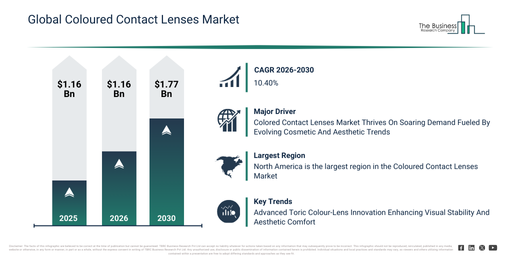
    The coloured contact lenses market is projected to experience substantial expansion in the coming years, with its value expected to reach $6.92 billion by 2030, demonstrating a compound annual growth rate (CAGR) of 10.4%. This growth during the forecast period is attributable to several factors, including a heightened demand for premium and custom color lenses, the increasing adoption of e-commerce eyewear platforms, the expansion of cosmetic trends driven by influencers, a growing focus on sustainable lens materials, and technological advancements in lens pigmentation and oxygen permeability. Prominent trends observed for the forecast period encompass a rising demand for cosmetic and fashion-oriented lenses, the increasing uptake of daily disposable colored lenses, a growing preference for comfort-enhanced lens materials, the expansion of online and direct-to-consumer sales, and an intensified focus on eye safety and quality compliance.

    Get A Free Sample Report With In-Depth Market Insights:

    https://thebusinessresearchcompany.com/sample_request?id=31609711&type=smp&name=Coloured%20Contact%20Lenses%20Market%20Report%202026&utm_source=Blogs&utm_medium=Paid&utm_campaign=Oct_PR

    Coloured Contact Lenses Market Growth Factors: What’s Supporting Expansion?

    Future expansion of the colored contact lens market is anticipated to be driven by evolving cosmetic and aesthetic trends. These trends encompass the evolving tastes and new developments within the beauty and aesthetic sector. Within cosmetic and aesthetic trends, colored contact lens enable individuals to defy conventional beauty standards by trying various eye colors, ranging from understated improvements to striking alterations. Consequently, this empowers people to showcase their distinct identities and challenge preconceived notions. As an illustration, data from June 2024, provided by the International Society of Aesthetic Plastic Surgery (ISAPS), a US-based organization for board-certified aesthetic plastic surgeons, indicated that worldwide aesthetic procedure volumes reached almost 35 million in 2023, representing a 3.4% increase compared to the previous year and totaling 34.9 million surgical and non-surgical treatments. Hence, the escalating cosmetic and aesthetic trends are fueling the expansion of the colored contact lens market.

    Coloured Contact Lenses Market Segments: Where Is Growth Concentrated?

    The coloured contact lenses market covered in this report is segmented –

    1) By Product Type: Soft Contact Lenses, RGP Lenses, Hybrid Lenses

    2) By Material: Polymer, Hydrogen

    3) By Application: With Vision Correction, Without Vision Correction

    4) By End-Users: Retail Stores, Online Stores, Other Stores

    Subsegments:

    1) By Soft Contact Lenses: Daily Disposable Soft Lenses, Bi-weekly Soft Lenses, Monthly Soft Lenses, Extended Wear Soft Lenses

    2) By RGP Lenses (Rigid Gas Permeable): Custom RGP Lenses, Standard RGP Lenses

    3) By Hybrid Lenses: Scleral Hybrid Lenses, Corneal Hybrid Lenses

    Coloured Contact Lenses Market Industry Trends: What’s Reshaping Demand?

    Major companies within the colored contact lenses market are prioritizing the creation of advanced solutions, including toric color-lens designs, to boost visual stability and aesthetic appeal. This toric color-lens technology incorporates stabilization elements with pigment-enhanced materials, enabling individuals with astigmatism to experience both clear sight and vibrant color comfortably. For example, in February 2025, Menicon, a Japan-based eye care organization, unveiled the 1DAY Menicon Rei Toric, a new toric colored lens that joins its 1DAY Menicon Rei series, initially released in 2021. This specific lens features a stabilized toric design with a thicker bottom edge for maintaining proper alignment, an optimized 14.5 mm diameter for comfortable wear, and a subtle guide mark that integrates into the color pattern while aiding correct orientation. This introduction broadens Menicon’s daily colored lens offerings and presents astigmatism wearers with refined color selections like the pinkish-brown “Lucent Mocha.”

    Coloured Contact Lenses Market Competitive Overview And Top Companies

    Major companies operating in the coloured contact lenses market are Johnson & Johnson, Alcon, Bausch + Lomb, CooperVision Inc., Solotica, FreshKon, Clalen, TTDeye, Olens, NEO Vision, Vassen, Desio, Barbie Eyesland, Camax Optical Corp., Clearlab SG Pte Ltd, Maxvue Vision, ColourVue, Sweety Plus, Adore Lenses, LensMe, EOS Lenses, Dueba, Geo Medical, FourVision, ICK Contacts, Beuberry, Princess Pinky, EyeCandys, Dreamcon

    View The Full Coloured Contact Lenses Market Report:

    https://thebusinessresearchcompany.com/report/coloured-contact-lenses-global-market-report?utm_source=Blogs&utm_medium=Paid&utm_campaign=Oct_PR

    Coloured Contact Lenses Market Leading Geography: Which Region Contributes The Most Revenue?

    North America was the largest region in the colored contact lenses market in 2025. The regions covered in the coloured contact lenses market report are Asia-Pacific, South East Asia, Western Europe, Eastern Europe, North America, South America, Middle East, Africa.

    Reach Out To Our Team:

    The Business Research Company: https://www.thebusinessresearchcompany.com/

    Americas: +1 310-496-7795

    Asia: +44 7882 955267 & +91 8897263534

    Europe: +44 7882 955267

    Email us at: marketing@tbrc.info

    Follow us on:

    LinkedIn: https://in.linkedin.com/company/the-business-research-company

    YouTube: https://www.youtube.com/channel/UC24_fI0rV8cR5DxlCpgmyFQ

    Global Market Model: https://www.thebusinessresearchcompany.com/global-market-model
  • Colonoscopes Market Forecast To Reach $2.86 Billion By 2030: Key Growth Drivers And Industry Trends

    Colonoscopes Market Forecast To Reach $2.86 Billion By 2030: Key Growth Drivers And Industry Trends

    Built to provide research that’s more actionable and strategically valuable, The Business Research Company’s 2026 market reports include market attractiveness analysis, total addressable market sizing, company benchmarking matrices, interactive Excel dashboards, broader supply chain intelligence, emerging startup tracking, and in-depth product insights.

    Colonoscopes Market Poised To Hit $2.86 Billion By 2030 With A 7.5% CAGR

    The colonoscopes market has experienced robust growth in recent years. It is forecast to expand from $1.98 billion in 2025 to $2.14 billion in 2026, achieving a compound annual growth rate (CAGR) of 7.9%. This historical expansion can be attributed to factors such as a rise in colorectal cancer screening programs, an increasing prevalence of gastrointestinal disorders, the expansion of hospital endoscopy units, greater public awareness of preventive diagnostics, and the introduction of advanced endoscopic devices.

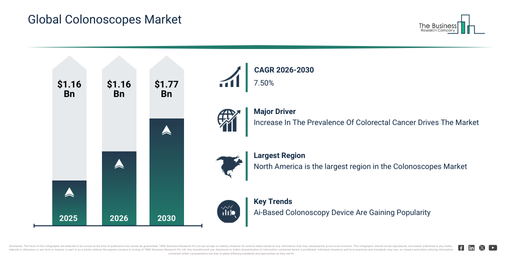
    The colonoscopes market size is projected for substantial expansion over the upcoming years. It is anticipated to reach $2.86 billion by 2030, exhibiting a compound annual growth rate (CAGR) of 7.5%. This growth during the forecast period is attributable to factors such as the increasing integration of AI in endoscopic imaging, the rising demand for outpatient diagnostic procedures, the expansion of ambulatory surgery centers, a growing emphasis on early disease detection, and increasing investments in smart endoscopy systems. Key trends for the forecast period encompass the increasing adoption of high-definition video colonoscopes, the rising utilization of AI-assisted polyp detection, a growing preference for minimally invasive diagnostic procedures, the expansion of wireless colonoscopy technologies, and an enhanced focus on early colorectal cancer screening.

    Get A Free Sample Report With In-Depth Market Insights:

    https://thebusinessresearchcompany.com/sample_request?id=31804903&type=smp&name=Colonoscopes%20Market%20Report%202026&utm_source=Blogs&utm_medium=Paid&utm_campaign=Oct_PR

    Colonoscopes Market Demand Drivers: What’s Powering Industry Growth?

    The increasing prevalence of colorectal cancer is projected to fuel the expansion of the colonoscopes market. Colorectal cancer, also known as colon cancer, is characterized by the uncontrolled proliferation of cells within the colon or rectum. A colonoscope is primarily utilized for screening colorectal cancer, detecting tumors, ulcers, polyps, and areas of bleeding or inflammation in the colon using a flexible, illuminated tube equipped with a viewing lens and a tool for tissue removal. Consequently, the rising occurrence of colorectal cancer directly boosts the demand for colonoscopes. For example, in February 2025, the Office for National Statistics reported that in England and Wales, 15,552 deaths were registered in 2023 due to colorectal cancer, with a provisional count of 15,553 deaths due to colorectal cancer registered in 2024. Therefore, the growing prevalence of colorectal cancer is a significant factor driving the growth of the colonoscopes market.

    Colonoscopes Market Segment Analysis: What Are The Core Market Categories?

    The colonoscopes market covered in this report is segmented –

    1) By Product Type: Fiber Optic Colonoscopy Devices, Video Colonoscopy Devices

    2) By Technology: Instruments, Accessories

    3) By Application: Colorectal Cancer, Lynch Syndrome, Ulcerative Colitis, Crohn’s Disease, Polyp

    4) By End User: Hospitals, Clinics, Ambulatory Surgery Centers, Other End Users

    Subsegments:

    1) By Fiber Optic Colonoscopy Devices: Standard Fiber Optic Colonoscopes, High-Definition Fiber Optic Colonoscopes, Pediatric Fiber Optic Colonoscopes

    2) By Video Colonoscopy Devices: Full-HD Video Colonoscopes, 4K Ultra HD Video Colonoscopes, Wireless Video Colonoscopy Devices

    Colonoscopes Market Innovation Trends: What Developments Are Reshaping The Industry?

    Leading companies in the colonoscope sector are focusing on developing artificial intelligence (AI)-integrated colonoscopy devices to strengthen their position in the market. An AI-based colonoscopy device represents a technologically advanced medical instrument that incorporates AI algorithms to enhance the accuracy and efficiency of colon examinations, thereby aiding in the detection of abnormalities and potential signs of colorectal diseases. For example, in October 2023, Olympus, a Japan-based manufacturer specializing in optical and digital precision technology, launched its EVIS X1 Endoscopy System. The EVIS X1 Endoscopy System is designed to elevate endoscopic procedures by offering advanced imaging capabilities and improved user functionality. This cutting-edge system aims to assist healthcare professionals in performing more precise and efficient endoscopic examinations. The EVIS X1 incorporates innovative technology that enhances visualization and allows for better maneuverability, ultimately leading to improved patient outcomes during these procedures.

    Colonoscopes Market Competitive Landscape: Which Companies Lead The Industry?

    Major companies operating in the colonoscopes market are Fujifilm Holdings Corporation, Karl Storz SE & Co. KG, Olympus Corporation, Endomed Systems GmbH, Boston Scientific Corporation, Hoya Corporation, SonoScape Medical Corporation, PENTAX Medical, Getinge AB, Ambu A/S, Huger Medical Instrument Co. Ltd., EndoChoice Holdings Inc., Medtronic plc, Stryker Corporation, Shenzhen Sonoscape Medical Systems Co. Ltd., Richard Wolf GmbH, Avantis Group, Consis Medical, Endo Technologies, InMotion Medical Inc., Steris Corporation, ESS Medical Inc., Absolute Medical Inc., Pro Scope Systems, Flexicare Medical Limited, SMART Medical Systems Ltd., Gadelius Medical K.K., LocaMed Limited, Renishaw plc, MedWrench LLC

    View The Full Colonoscopes Market Report:

    https://thebusinessresearchcompany.com/report/colonoscopes-global-market-report?utm_source=Blogs&utm_medium=Paid&utm_campaign=Oct_PR

    Colonoscopes Market Regional Outlook: Where Is Opportunity Concentrated?

    North America was the largest region in the colonoscopes market in 2025. The regions covered in the colonoscopes market report are Asia-Pacific, South East Asia, Western Europe, Eastern Europe, North America, South America, Middle East, Africa.

    Reach Out To Our Team:

    The Business Research Company: https://www.thebusinessresearchcompany.com/

    Americas: +1 310-496-7795

    Asia: +44 7882 955267 & +91 8897263534

    Europe: +44 7882 955267

    Email us at: marketing@tbrc.info

    Follow us on:

    LinkedIn: https://in.linkedin.com/company/the-business-research-company

    YouTube: https://www.youtube.com/channel/UC24_fI0rV8cR5DxlCpgmyFQ

    Global Market Model: https://www.thebusinessresearchcompany.com/global-market-model