Blog

  • Continuous Glucose Monitoring Market Growth Outlook: Why Analysts Expect Continued Expansion

    Continuous Glucose Monitoring Market Growth Outlook: Why Analysts Expect Continued Expansion

    Backed by market attractiveness analysis, total addressable market sizing, company benchmarking matrices, interactive Excel dashboards, wider supply chain intelligence, emerging startup coverage, and detailed product-level insights, The Business Research Company’s 2026 market reports are designed to offer research that is more actionable and strategically valuable than ever.

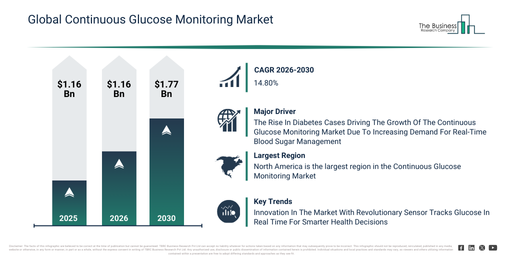
    Continuous Glucose Monitoring Market Revenue Growth On Track For A 14.8% CAGR Through 2030

    The continuous glucose monitoring market has experienced substantial expansion in recent years. It is projected to increase from $9.44 billion in 2025 to $10.87 billion in 2026, exhibiting a compound annual growth rate (CAGR) of 15.1%. The market’s historical growth can be attributed to several factors, including the initial limited availability of real-time glucose monitoring devices, the high cost associated with early continuous glucose monitors (CGMs), increasing awareness regarding diabetes management, the prevalent dependence on finger-prick testing, and the rising adoption of monitoring solutions within hospitals.

    The continuous glucose monitoring market is projected to experience substantial expansion over the upcoming years, reaching $18.86 billion by 2030, driven by a compound annual growth rate (CAGR) of 14.8%. This anticipated growth during the forecast timeframe is attributable to several factors, including advancements in wearable and implantable sensor technology, the integration of these systems with mobile health and telemedicine platforms, the increasing global incidence of diabetes, the emergence of non-invasive glucose monitoring solutions, and the broadening reach of home healthcare and remote patient monitoring services. Key trends anticipated for the forecast period encompass a greater uptake of continuous glucose monitoring devices by individuals with diabetes, ongoing innovation in minimally invasive and implantable sensor designs, the incorporation of real-time data analysis and alert functionalities, the expansion of home-based monitoring and telehealth options, and an increasing need for glucose monitoring solutions tailored for both pediatric and geriatric populations.

    Get A Free Sample Report With In-Depth Market Insights:

    https://thebusinessresearchcompany.com/sample_request?id=42479640&type=smp&name=Continuous%20Glucose%20Monitoring%20Market%20Report%202026&utm_source=Blogs&utm_medium=Paid&utm_campaign=Oct_PR

    Continuous Glucose Monitoring Market Growth Catalysts And Demand Drivers

    The increasing incidence of diabetes is projected to drive the expansion of the continuous glucose monitoring market in the future. Diabetes is a chronic medical condition characterized by the body’s inability to produce sufficient insulin or to utilize the insulin it does produce efficiently, leading to elevated blood sugar (glucose) levels. The growing occurrence of diabetes is largely attributable to poor dietary habits, including foods rich in sugars, fats, and processed ingredients, which are factors in obesity and dysfunctional insulin action. Continuous glucose monitoring aids in managing diabetes by offering immediate insights into blood sugar patterns, thereby facilitating prompt choices regarding diet, medication, and physical activity for improved glucose regulation. As an illustration, the National Health Service, a UK-based government body, reported in June 2024 that 3,615,330 individuals registered with a general practitioner (GP) had been diagnosed with non-diabetic hyperglycemia or pre-diabetes (a state where blood sugar levels are high but not severe enough to be diabetes) in 2023. This represented an 18% surge from 3,065,825 cases recorded in 2022. Consequently, the increasing prevalence of diabetes is a key factor propelling the expansion of the continuous glucose monitoring market.

    Continuous Glucose Monitoring Market Breakdown By Product Type And Application

    The continuous glucose monitoring market covered in this report is segmented –

    1) By Component: Transmitters, Sensors, Receivers

    2) By Age Group: Adults, Children

    3) By End Use: Hospitals, Home Care Settings, Diagnostic Centers And Clinics, Other End Uses

    Subsegments:

    1) By Transmitters: Reusable Transmitters, Disposable Transmitters, Rechargeable Transmitters

    2) By Sensors: Implantable Sensors, Transcutaneous Sensors, Disposable Sensors, Real-Time Sensors

    3) By Receivers: Standalone Receivers, Integrated Receivers, Wearable Display Devices

    Continuous Glucose Monitoring Market Trends Shaping Long-Term Demand

    Leading corporations within the continuous glucose monitoring market are prioritizing the development of innovative products, such as sensor-based glucose monitors, to improve accuracy, facilitate real-time tracking, and enhance patient convenience. These sensor-based glucose monitors are devices that continuously measure blood sugar levels using a small sensor positioned beneath the skin. For instance, in August 2024, DexCom, Inc., a US-based healthcare company, introduced Stelo, which stands as the first over-the-counter (OTC) continuous glucose monitor (CGM) specifically designed for adults who do not use insulin. Stelo provides real-time, 24/7 glucose readings through a compact sensor worn on the back of the upper arm, with data transmitted directly to a smartphone, eliminating the need for a prescription or fingersticks. The device offers personalized insights and trend analysis, helping users understand the impact of factors like diet, exercise, and sleep on their glucose levels, thus empowering smarter lifestyle choices. The sensor functions for up to 15 days, integrates with health apps, and is ideally suited for individuals with Type 2 diabetes not on insulin, those with prediabetes, or anyone monitoring their glucose health.

    Continuous Glucose Monitoring Market Key Players Shaping Industry Direction

    Major companies operating in the continuous glucose monitoring market are Roche Diabetes Care, Abbott Laboratories, Medtronic plc, Dexcom Inc, Insulet Corporation, Tandem Diabetes Care Inc, Ypsomed AG, Nova Biomedical, Ascensia Diabetes Care, Bionime Corporation, Biolinq Inc, Beta Bionics Inc, AgaMatrix Inc, A Menarini Diagnostics SRL, Senseonics Holdings Inc, Medtrum Technologies Inc, Nemaura Medical Inc, LifeScan Inc, EOFlow Co Ltd, POCTech Co Ltd

    View The Full Continuous Glucose Monitoring Market Report:

    https://thebusinessresearchcompany.com/report/continuous-glucose-monitoring-global-market-report?utm_source=Blogs&utm_medium=Paid&utm_campaign=Oct_PR

    Continuous Glucose Monitoring Market Regional Analysis: Which Geography Leads On Revenue?

    North America was the largest region in the continuous glucose monitoring market in 2025. Asia-Pacific is expected to be the fastest-growing region in the forecast period. The regions covered in the continuous glucose monitoring market report are Asia-Pacific, South East Asia, Western Europe, Eastern Europe, North America, South America, Middle East, Africa.

    Reach Out To Our Team:

    The Business Research Company: https://www.thebusinessresearchcompany.com/

    Americas: +1 310-496-7795

    Asia: +44 7882 955267 & +91 8897263534

    Europe: +44 7882 955267

    Email us at: marketing@tbrc.info

    Follow us on:

    LinkedIn: https://in.linkedin.com/company/the-business-research-company

    YouTube: https://www.youtube.com/channel/UC24_fI0rV8cR5DxlCpgmyFQ

    Global Market Model: https://www.thebusinessresearchcompany.com/global-market-model
  • Continuous Glucose Monitor System Market Forecast Insights: The Road To $19.18 Billion By 2030

    Continuous Glucose Monitor System Market Forecast Insights: The Road To $19.18 Billion By 2030

    Featuring market attractiveness scoring, total addressable market sizing, company benchmarking matrices, interactive Excel dashboards, deeper supply chain intelligence, emerging startup tracking, and granular product-level insights, The Business Research Company’s 2026 market reports are built to deliver research that is both more actionable and more strategically valuable.

    Continuous Glucose Monitor System Market Value Growth And Long-Term Outlook

    The continuous glucose monitor system market size has seen significant expansion in recent years. It is projected to rise from $9.6 billion in 2025 to $11.05 billion in 2026, demonstrating a compound annual growth rate (CAGR) of 15.1%. This historical growth can be linked to the increasing prevalence of diabetes worldwide, a growing understanding of glucose self-monitoring, improvements in sensor accuracy and reliability, the expansion of outpatient diabetes management programs, and increased acceptance of wearable medical devices.

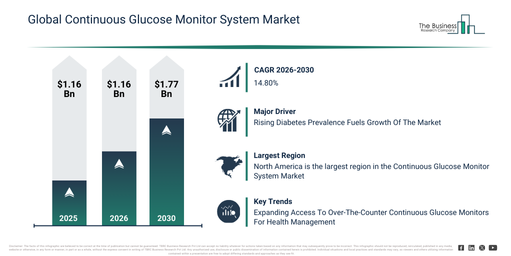
    The continuous glucose monitor system market is projected to experience substantial expansion in the coming years. It is anticipated to reach $19.18 billion by 2030, demonstrating a compound annual growth rate (CAGR) of 14.8%. This anticipated growth during the forecast period stems from factors such as the increasing embrace of closed-loop insulin delivery systems, a heightened need for remote patient monitoring, the development of personalized diabetes management options, enhanced integration with digital health platforms, and a greater emphasis on non-invasive glucose sensing. Significant developments expected in this period include the wider adoption of smartphone-integrated cgm systems, an increase in the utilization of real-time glucose monitoring solutions, the growing incorporation of AI-based glucose analytics, the proliferation of wearable sensor technologies, and a heightened commitment to continuous patient monitoring.

    Get A Free Sample Report With In-Depth Market Insights:

    https://thebusinessresearchcompany.com/sample_request?id=78237208&type=smp&name=Continuous%20Glucose%20Monitor%20System%20Market%20Report%202026&utm_source=Blogs&utm_medium=Paid&utm_campaign=Oct_PR

    Continuous Glucose Monitor System Market Opportunity Drivers: What’s Unlocking New Revenue Potential?

    The increasing prevalence of diabetes is anticipated to propel the growth of the continuous glucose monitor system market moving forward. Diabetes is a chronic medical condition defined by high blood sugar levels, resulting from the body’s inability to produce or utilize insulin effectively. The rise in diabetes cases is primarily linked to factors such as increasing rates of obesity, unhealthy diets, physical inactivity, and an aging population. Continuous glucose monitoring (CGM) systems provide real-time glucose readings, assisting in diabetes management by detecting trends and alerting users to abnormal levels, thus improving glycemic control and minimizing the need for frequent finger pricks. For instance, in June 2024, the National Health Service, a UK-based government department, stated that in 2023, the NHS identified over half a million (549,000) additional individuals in England at risk of developing type 2 diabetes, bringing the total number of people with non-diabetic hyperglycemia, or pre-diabetes, registered with a GP to 3,615,330. This marks a significant increase compared to 3,065,825 in 2022, indicating a rise of nearly 20%. Therefore, the increasing prevalence of diabetes is driving the growth of the continuous glucose monitor system market.

    Continuous Glucose Monitor System Market Segment Analysis And Revenue Potential

    The continuous glucose monitor system market covered in this report is segmented –

    1) By Component: Transmitters, Receivers, Sensor

    2) By Technology: Real Time Continuous Glucose Monitoring, Intermittently Scanned Continuous Glucose Monitoring

    3) By Demography: Child Population, Adult Population

    4) By Application: Type-1 Diabetes, Type-2 Diabetes, Gestational Diabetes

    5) By End-User: Diagnostics Centers, Hospitals, Clinics, Intensive Care Unit (ICUs), Home Healthcare

    Subsegments:

    1) By Transmitters: Bluetooth-Enabled Transmitters, Wireless Transmitters

    2) By Receivers: Dedicated Devices (CGM Receiver), Smartphone-Based Receivers, Cloud-Connected Receivers

    3) By Sensor: Enzyme-Based Sensors, Non-Enzyme-Based Sensors, Electrochemical Sensors

    Continuous Glucose Monitor System Market Innovation Trends Shaping Future Development

    Leading companies within the continuous glucose monitor system market are prioritizing the development of advanced over-the-counter continuous glucose monitors (CGMs) to boost availability and broaden their reach among individuals who do not require a prescription. An over-the-counter (OTC) continuous glucose monitor (CGM) functions as a device that monitors glucose levels in real-time, eliminating the need for a prescription. It grants consumers straightforward and convenient access to independently track their glucose. For example, in September 2024, Abbott Laboratories, a medical device company based in the US, introduced Lingo in the United States. Designed for adults without diabetes, Lingo enables users to observe their glucose levels, offering valuable insights into how diet and exercise influence overall health. With a wearability of up to 14 days, this product aligns with Abbott’s strategy to capitalize on the growing segment of consumers focused on prediabetes management and wellness, all without needing a prescription.

    Continuous Glucose Monitor System Market Competitive Analysis Of Leading Industry Participants

    Major companies operating in the continuous glucose monitor system market are Abbott Corporation, Medtronic PLC, Murata Manufacturing Co. Ltd., Dexcom Inc., Sinocare Inc., Tandem Diabetes Care Inc., Ascensia Diabetes Care Holdings AG, Glooko Inc., DarioHealth Corp., Menarini Diagnostics SRL, Senseonics Holdings Inc., WaveForm Technologies Inc., Medtrum Technologies Inc., Biolinq Incorporated, Ultrahuman Inc., GlySens Incorporated, Glucotrack, EOFLOW CO. LTD., Nemaura Medical Inc., Meiqi Medical Equipment, Nipro Diagnostics UK Limited

    View The Full Continuous Glucose Monitor System Market Report:

    https://thebusinessresearchcompany.com/report/continuous-glucose-monitor-system-global-market-report?utm_source=Blogs&utm_medium=Paid&utm_campaign=Oct_PR

    Continuous Glucose Monitor System Market Geographic Spread And Regional Opportunities

    North America was the largest region in the continuous glucose monitor (CGM) system market in 2025. The regions covered in the continuous glucose monitor system market report are Asia-Pacific, South East Asia, Western Europe, Eastern Europe, North America, South America, Middle East, Africa.

    Reach Out To Our Team:

    The Business Research Company: https://www.thebusinessresearchcompany.com/

    Americas: +1 310-496-7795

    Asia: +44 7882 955267 & +91 8897263534

    Europe: +44 7882 955267

    Email us at: marketing@tbrc.info

    Follow us on:

    LinkedIn: https://in.linkedin.com/company/the-business-research-company

    YouTube: https://www.youtube.com/channel/UC24_fI0rV8cR5DxlCpgmyFQ

    Global Market Model: https://www.thebusinessresearchcompany.com/global-market-model
  • Continuous Blood Glucose Monitoring Market Explained: What Is Fueling Growth To $26.11 Billion By 2030?

    Continuous Blood Glucose Monitoring Market Explained: What Is Fueling Growth To $26.11 Billion By 2030?

    Built to provide research that’s more actionable and strategically valuable, The Business Research Company’s 2026 market reports include market attractiveness analysis, total addressable market sizing, company benchmarking matrices, interactive Excel dashboards, broader supply chain intelligence, emerging startup tracking, and in-depth product insights.

    Continuous Blood Glucose Monitoring Market Poised To Hit $26.11 Billion By 2030 With A 12.5% CAGR

    The continuous blood glucose monitoring market size has experienced significant expansion in recent years. It is anticipated to grow from $14.87 billion in 2025 to $16.29 billion in 2026, at a compound annual growth rate (CAGR) of 9.6%. This historical growth can be attributed to several factors, including the limited availability of real-time glucose monitoring, reliance on finger-prick blood testing, an increasing prevalence of diabetes, rising hospital and clinical monitoring, and the early adoption of insulin pump therapy.

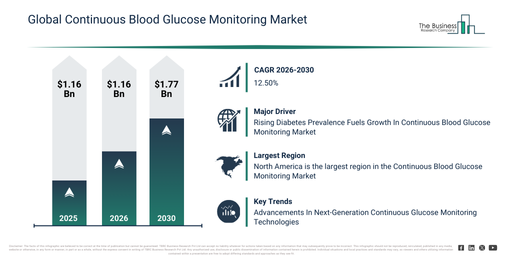
    The continuous blood glucose monitoring market size is poised for significant expansion over the next few years. It is forecast to reach $26.11 billion by 2030, expanding at a compound annual growth rate (CAGR) of 12.5%. This projected growth during the forecast period stems from various factors, including advancements in implantable and flash glucose sensors, the increasing availability of homecare and remote monitoring solutions, integration with digital health platforms, a rise in awareness concerning diabetes self-management, and the adoption of AI-based predictive analytics. Key trends anticipated in the forecast period involve a growing adoption of continuous glucose monitoring devices, their integration with smartphone apps and wearables, the expansion of homecare diagnostics for diabetes management, the development of minimally invasive and implantable sensors, and an increased emphasis on real-time data analytics and alerts.

    Get A Free Sample Report With In-Depth Market Insights:

    https://thebusinessresearchcompany.com/sample_request?id=47317608&type=smp&name=Continuous%20Blood%20Glucose%20Monitoring%20Market%20Report%202026&utm_source=Blogs&utm_medium=Paid&utm_campaign=Oct_PR

    Continuous Blood Glucose Monitoring Market Growth Momentum: What Factors Are Shaping Demand?

    The continuous blood glucose monitoring market is projected to expand due to the rising prevalence of diabetes. This health condition, diabetes, occurs when blood glucose levels fluctuate within the body. Blood glucose monitoring devices are valuable for detecting trends and patterns, providing a more complete picture of a diabetic’s condition. For instance, in June 2024, the National Health Service (NHS), a UK-based government department, reported an increase in individuals under 40, from 173,166 in 2022 to 216,440 in 2023. This significant growth highlights a concerning trend in this age group. The data indicates a rapid escalation in diabetes prevalence among younger populations. Consequently, the increasing prevalence of diabetes is propelling the continuous blood glucose monitoring market growth going forward.

    Continuous Blood Glucose Monitoring Market Segmentation And Category Overview

    The continuous blood glucose monitoring market covered in this report is segmented –

    1) By Component: Insulin Pumps, Sensors, Transmitters, Receivers

    2) By Application: Type 1 Diabetic Patients, Type 2 Diabetic Patients, Gestational Diabetes, Critical Care Patients

    3) By End User: Hospitals, Homecare Diagnostics, Other End Users

    Subsegments:

    1) By Insulin Pumps: Tubeless Insulin Pumps, Tubed Insulin Pumps, Patch Pumps

    2) By Sensors: Continuous Glucose Monitoring Sensors, Flash Glucose Monitoring Sensors, Implantable Sensors

    3) By Transmitters: Integrated Transmitters, Wireless Transmitters, Bluetooth-Enabled Transmitters

    4) By Receivers: Standalone Receivers, Smartphone Apps, Integrated Devices

    Continuous Blood Glucose Monitoring Market Trends Redefining Industry Growth

    Major companies operating in the Continuous Blood Glucose Monitoring (CGM) market are increasingly prioritizing the development of continuous glucose monitoring systems to improve real-time glucose tracking, enhance patient ease, and foster more effective diabetes management outcomes. A Continuous Glucose Monitoring (CGM) system is a medical apparatus that automatically monitors glucose levels around the clock, delivering real-time measurements at consistent intervals, typically every few minutes. For instance, in August 2025, Abbott Laboratories, a US-based healthcare company, released the FreeStyle Libre 2 Plus system, an advanced CGM sensor that provides continuous glucose readings every minute directly to a compatible smartphone, removing the requirement for manual scans. This sensor also features optional low and high glucose alerts, a 15-day wear time, and seamless integration with Abbott’s digital health ecosystem (LibreView, LibreLink Up), allowing both users and caregivers to proactively observe glucose trends. The system is engineered to enhance glycemic control, mitigate hypoglycemia, and offer actionable data, all while eliminating routine finger-sticks.

    Continuous Blood Glucose Monitoring Market Leading Companies And Competitive Benchmarking

    Major companies operating in the continuous blood glucose monitoring market are F. Hoffmann-La Roche Ltd., Medtronic plc., Abbott Laboratories, GlySens Inc., Senseonics Holdings Inc., Glysure Limited, Nemaura Medical Inc., Tandem Diabetes Care Inc., Ypsomed Holding AG, Orsense Ltd., Dexcom Inc., Insulet Corporation, Medtrum Technologies Inc., Beta Bionics Inc., Bigfoot Biomedical Inc., GluSense Ltd., i-SENS Inc., Osang Healthcare Co Ltd., WaveForm Technologies, EyeSense GmbH, Calisto Medical, Biorasis, DirectSens GmbH, Ultrahuman Healthcare

    View The Full Continuous Blood Glucose Monitoring Market Report:

    https://thebusinessresearchcompany.com/report/continuous-blood-glucose-monitoring-global-market-report?utm_source=Blogs&utm_medium=Paid&utm_campaign=Oct_PR

    Continuous Blood Glucose Monitoring Market Top Region By Revenue And Market Share

    North America was the largest region in the continuous blood glucose monitoring market in 2025. The regions covered in the continuous blood glucose monitoring market report are Asia-Pacific, South East Asia, Western Europe, Eastern Europe, North America, South America, Middle East, Africa.

    Reach Out To Our Team:

    The Business Research Company: https://www.thebusinessresearchcompany.com/

    Americas: +1 310-496-7795

    Asia: +44 7882 955267 & +91 8897263534

    Europe: +44 7882 955267

    Email us at: marketing@tbrc.info

    Follow us on:

    LinkedIn: https://in.linkedin.com/company/the-business-research-company

    YouTube: https://www.youtube.com/channel/UC24_fI0rV8cR5DxlCpgmyFQ

    Global Market Model: https://www.thebusinessresearchcompany.com/global-market-model
  • Continuous Bladder Irrigation Devices Market Forecast To Reach $1.86 Billion By 2030: Key Trends Explained

    Continuous Bladder Irrigation Devices Market Forecast To Reach $1.86 Billion By 2030: Key Trends Explained

    Backed by market attractiveness analysis, total addressable market sizing, company benchmarking matrices, interactive Excel dashboards, wider supply chain intelligence, emerging startup coverage, and detailed product-level insights, The Business Research Company’s 2026 market reports are designed to offer research that is more actionable and strategically valuable than ever.

    Continuous Bladder Irrigation Devices Market Size And Revenue Outlook Through 2030

    The continuous bladder irrigation devices market size has seen significant growth in recent years. It is projected to increase from $1.42 billion in 2025 to $1.5 billion in 2026, advancing at a compound annual growth rate (CAGR) of 5.6%. The historical growth of this market can be linked to factors such as the restricted availability of advanced foley catheters, the reliance on hospital-based irrigation systems, the rising incidence of bladder cancer and urinary tract complications, the use of conventional irrigation bags, and the low adoption rates of home-care devices.

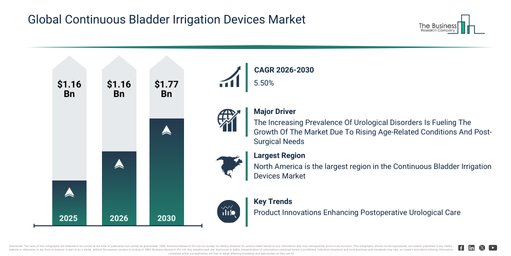
    The continuous bladder irrigation devices market is anticipated to experience robust expansion over the coming years. This market is projected to reach $1.86 billion by 2030, exhibiting a compound annual growth rate (CAGR) of 5.5%. Factors contributing to this growth during the forecast period encompass advancements in silicone and antimicrobial-coated catheters, the expansion of urological care provided at home, an increase in post-surgical procedures, heightened regulatory adherence and quality benchmarks, and the incorporation of smart monitoring and IoT-enabled irrigation systems. Key trends expected over this period involve a greater uptake of continuous bladder irrigation after surgical interventions, the expanded deployment of antimicrobial-coated and temperature-sensing catheters, the proliferation of home-based irrigation setups, an escalating need for sterile and reusable irrigation bags, and a strengthened emphasis on ensuring patient safety and preventing infections.

    Get A Free Sample Report With In-Depth Market Insights:

    https://thebusinessresearchcompany.com/sample_request?id=16402685&type=smp&name=Continuous%20Bladder%20Irrigation%20Devices%20Market%20Report%202026&utm_source=Blogs&utm_medium=Paid&utm_campaign=Oct_PR

    Continuous Bladder Irrigation Devices Market Expansion Drivers: What’s Shaping Future Growth?

    The growing occurrence of urological conditions is projected to drive the expansion of the continuous bladder irrigation devices market. Urological disorders are medical issues impacting the urinary system or male reproductive organs, with their rise primarily linked to an aging population facing increased risks of urinary and prostate problems due to age-related changes. Continuous bladder irrigation (CBI) devices assist in managing these conditions by continuously cleansing the bladder to eliminate clots, debris, or infections, thereby preventing catheter obstructions and supporting recovery, particularly after operations. For example, in October 2023, the National Health Service (NHS) England, a UK-based government body, reported 147,285 hospital admissions for urinary tract infections (UTI) as a primary diagnosis in 2022/23. Of these, individuals over 65 constituted 56% of cases, totaling 82,392 admissions, with the highest number, 17,280 cases, observed in the 80-84 age bracket. Consequently, the increasing prevalence of urological disorders is a key factor propelling the growth of the continuous bladder irrigation devices market.

    Continuous Bladder Irrigation Devices Market Segment Outlook: Which Categories Are Growing Fastest?

    The continuous bladder irrigation devices market covered in this report is segmented –

    1) By Product: Foley 3 Way Catheters, Accessories, Irrigation Bags

    2) By Application: Post-Surgical Irrigation, Bladder Cancer Management, Hemorrhagic Cystitis, Urinary Tract Infections, Trauma And Urinary Retention, Home-Based Irrigation

    3) By End-Use: Hospitals, Long Term Care Facilities, Other End-Uses

    Subsegments:

    1) By Foley 3 Way Catheters: Silicone 3-Way Foley Catheters, Latex 3-Way Foley Catheters, Antimicrobial-Coated Foley Catheters, Pediatric 3-Way Foley Catheters, Temperature Sensing Foley Catheters

    2) By Accessories: Catheter Connectors, Catheter Stabilization Devices, Leg Drainage Bags, Extension Tubing, Clamps And Valves

    3) By Irrigation Bags: Sterile Irrigation Bags, Non-Sterile Irrigation Bags, Pressure Irrigation Bags, Manual Irrigation Bags, Refillable Irrigation Bags

    Continuous Bladder Irrigation Devices Market Strategic Trends: What Defines The Next Growth Phase?

    Leading companies in the continuous bladder irrigation (CBI) devices market are concentrating on developing advanced offerings, such as products for postoperative care, to enhance urological procedures. Postoperative care items are medical supplies and equipment utilized to aid healing, prevent infections, and manage pain after surgery, ensuring a proper recovery. For instance, in January 2025, UNOQUIP GmbH, a medical device company situated in Switzerland, announced the introduction of new postoperative catheter solutions to its existing product line. These new solutions comprise two specialized catheters, specifically the Hematuria Management Catheter and the 3-Way Silicone Foley Catheter, engineered to support effective continuous bladder irrigation following urological operations. These latest products demonstrate Uno Medical’s commitment to improving patient safety and comfort by addressing clinical challenges like clot retention and guaranteeing efficient bladder drainage. This expansion of their product range strengthens their portfolio in the CBI devices segment and positions the company to better serve global healthcare providers with sophisticated urological care solutions.

    Continuous Bladder Irrigation Devices Market Industry Leaders And Competitive Landscape

    Major companies operating in the continuous bladder irrigation devices market are Cardinal Health Inc, Medline Industries LP, Coloplast AS, Teleflex Incorporated, Cook Medical LLC, Hollister Incorporated, B Braun Melsungen AG, Poly Medicure Limited, Angiplast Pvt Ltd, Sterimed Group, Narang Medical Limited, Advin Health Care, AdvaCare Pharma, Ribbel International Ltd, UROMED Kurt Drews KG, Romsons Group Of Industries, GCMEDICA, Medilivescare Manufacturing Pvt Ltd, CODAN Companies, Becton Dickinson Urology Care, Amsino Medical Group, Medtronic Urology Solutions

    View The Full Continuous Bladder Irrigation Devices Market Report:

    https://thebusinessresearchcompany.com/report/continuous-bladder-irrigation-devices-global-market-report?utm_source=Blogs&utm_medium=Paid&utm_campaign=Oct_PR

    Continuous Bladder Irrigation Devices Market Regional Analysis And Top Geography

    North America was the largest region in the continuous bladder irrigation devices market in 2025. The regions covered in the continuous bladder irrigation devices market report are Asia-Pacific, South East Asia, Western Europe, Eastern Europe, North America, South America, Middle East, Africa.

    Reach Out To Our Team:

    The Business Research Company: https://www.thebusinessresearchcompany.com/

    Americas: +1 310-496-7795

    Asia: +44 7882 955267 & +91 8897263534

    Europe: +44 7882 955267

    Email us at: marketing@tbrc.info

    Follow us on:

    LinkedIn: https://in.linkedin.com/company/the-business-research-company

    YouTube: https://www.youtube.com/channel/UC24_fI0rV8cR5DxlCpgmyFQ

    Global Market Model: https://www.thebusinessresearchcompany.com/global-market-model
  • Contact Lenses Market Analysis: Understanding The Drivers Behind 6.5% CAGR Through 2030 Growth

    Contact Lenses Market Analysis: Understanding The Drivers Behind 6.5% CAGR Through 2030 Growth

    Featuring market attractiveness scoring, total addressable market sizing, company benchmarking matrices, interactive Excel dashboards, deeper supply chain intelligence, emerging startup tracking, and granular product-level insights, The Business Research Company’s 2026 market reports are built to deliver research that is both more actionable and more strategically valuable.

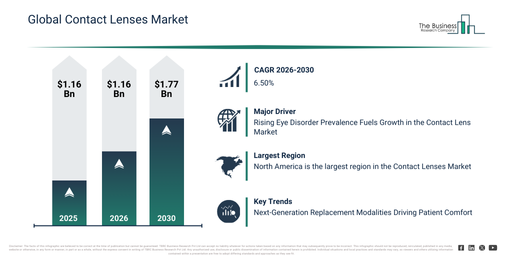
    Contact Lenses Market Growth From $10.37 Billion In 2026 To $13.36 Billion By 2030 At A CAGR Of 6.5%

    The contact lenses market has shown significant growth over recent years. It is anticipated to increase from $9.73 billion in 2025 to $10.37 billion in 2026, achieving a compound annual growth rate (CAGR) of 6.6%. This historical growth can be attributed to the rising prevalence of refractive errors, heightened awareness of vision correction options, increased urbanization and screen usage, the expansion of optometry and ophthalmology services, and the growing acceptance of contact lenses as an alternative to eyeglasses.

    The contact lenses market is projected to experience substantial expansion over the upcoming years. By 2030, its value is anticipated to reach $13.36 billion, demonstrating a compound annual growth rate (CAGR) of 6.5%. This anticipated growth during the forecast period stems from factors such as a rise in the prevalence of myopia and presbyopia, a greater need for easy and sanitary vision correction, increased consumer expenditure on personal aesthetics and optical care, the expansion of online eye care platforms, and the wider embrace of sophisticated lens technologies. Key developments expected in this period encompass a rise in the use of daily disposable contact lenses, increasing demand for multifocal and toric lens types, the growing appeal of cosmetic and lifestyle-focused lenses, wider application of silicone hydrogel lenses, and a greater inclination towards buying contact lenses online.

    Get A Free Sample Report With In-Depth Market Insights:

    https://thebusinessresearchcompany.com/sample_request?id=26533600&type=smp&name=Contact%20Lenses%20Market%20Report%202026&utm_source=Blogs&utm_medium=Paid&utm_campaign=Oct_PR

    Contact Lenses Market Development Factors: What’s Supporting Demand?

    The increasing occurrence of eye conditions is projected to drive the expansion of the contact lens market in the coming years. An eye disorder is defined as a medical ailment affecting the eye’s structure or function, leading to visual impairment, discomfort, or other ocular symptoms. The widespread presence of eye disorders stems from factors such as increased screen time, an aging population, environmental pollution, and evolving lifestyle choices. Contact lenses are utilized for eye disorders by offering corrective solutions for refractive errors, enhancing comfort for dry eyes, managing conditions like keratoconus with specialized lenses, and fulfilling therapeutic needs through protective or bandage lenses. For instance, in March 2024, information from the Office for Health Improvement and Disparities, a UK-based government organization, reported that about 2 million individuals in the UK experience some form of vision loss, and this number is predicted to reach 2.7 million by 2030. Therefore, the rising prevalence of eye disorders is a key driver for the contact lens market.

    Contact Lenses Market Segment Landscape: Which Areas Lead Development?

    The contact lenses market covered in this report is segmented –

    1) By Type: Corrective Lens, Therapeutic Lenses, Cosmetic And Lifestyle Oriented Lens

    2) By Wear Type: Daily Disposable Lenses, Disposable Lenses (Two Weeks or Sooner), Frequent Replacement Lenses (Monthly or Quarterly), Conventional Lenses

    3) By Material: Silicone Hydrogel Soft Contact Lens, Methacrylate Hydrogel Soft Contact Lens, Gas-Permeable Contact Lens, Other Materials

    4) By Design: Spherical Lens, Toric Lens, Multifocal Lens, Other Design

    5) By Distribution Channel: Ophthalmologists, Retail Stores, Online Stores

    Subsegments:

    1) By Corrective Lenses: Spherical Lenses, Toric Lenses, Multifocal Lenses, Bifocal Lenses

    2) By Therapeutic Lenses: Scleral Lenses, Bandage Lenses, Orthokeratology Lenses (Ortho-K)

    3) By Cosmetic And Lifestyle-Oriented Lenses: Colored Lenses, Special Effect Lenses (Costume Or Novelty Lenses), Cosmetic Enhancers

    Contact Lenses Market Transformation Trends: What Innovations Are Driving Change?

    Major companies operating in the contact lenses market are concentrating on developing advanced solutions, such as one-week replacement silicone hydrogel lenses, to enhance wearer convenience, improve ocular health, and provide a more flexible replacement schedule compared to daily or monthly options. A one-week replacement lens refers to a novel modality designed to be worn for seven days before disposal, ensuring consistent comfort, high oxygen permeability, and reduced maintenance for users. For instance, in November 2024, Alcon Inc., a US-based eye care company, launched PRECISION7. This innovative lens is crafted to address the needs of consumers seeking greater convenience and healthier lens-wearing habits, offering a new modality that bridges the gap between daily disposable and monthly replacement lenses while supporting long-lasting comfort and visual performance, ultimately bolstering Alcon’s position in the premium contact lens segment.

    Contact Lenses Market Key Participants And Competitive Landscape

    Major companies operating in the contact lenses market are Abbott Medical Optics Inc., EssilorLuxottica SA, Alcon Inc., Bausch Health Companies Inc., HOYA Corporation, The Cooper Companies Inc., Johnson & Johnson Vision Care Inc., Menicon Co. Ltd., STAAR Surgical Company, SynergEyes Inc., Euclid Systems Corporation, Lenstec Inc., Paragon Vision Sciences, X-Cel Specialty Contacts, Medennium Inc., NEO Vision, Blanchard Contact Lens Inc., Weicon Contact Lens Co. Ltd., Lucid Korea Co. Ltd., Bescon Co. Ltd., Conforma Contact Lens Inc.

    View The Full Contact Lenses Market Report:

    https://thebusinessresearchcompany.com/report/contact-lenses-global-market-report?utm_source=Blogs&utm_medium=Paid&utm_campaign=Oct_PR

    Contact Lenses Market Geographic Analysis: Where Is Demand Rising Fastest?

    North America was the largest region in the contact lenses market in 2025. Asia-Pacific is expected to be the fastest-growing region in the forecast period. The regions covered in the contact lenses market report are Asia-Pacific, South East Asia, Western Europe, Eastern Europe, North America, South America, Middle East, Africa.

    Reach Out To Our Team:

    The Business Research Company: https://www.thebusinessresearchcompany.com/

    Americas: +1 310-496-7795

    Asia: +44 7882 955267 & +91 8897263534

    Europe: +44 7882 955267

    Email us at: marketing@tbrc.info

    Follow us on:

    LinkedIn: https://in.linkedin.com/company/the-business-research-company

    YouTube: https://www.youtube.com/channel/UC24_fI0rV8cR5DxlCpgmyFQ

    Global Market Model: https://www.thebusinessresearchcompany.com/global-market-model
  • Construction Aggregate Market Growth To $584.68 Billion By 2030: What’s Driving The Expansion?

    Construction Aggregate Market Growth To $584.68 Billion By 2030: What’s Driving The Expansion?

    Built to provide research that’s more actionable and strategically valuable, The Business Research Company’s 2026 market reports include market attractiveness analysis, total addressable market sizing, company benchmarking matrices, interactive Excel dashboards, broader supply chain intelligence, emerging startup tracking, and in-depth product insights.

    Construction Aggregate Market Expansion Outlook: What Revenue Opportunities Are Ahead?

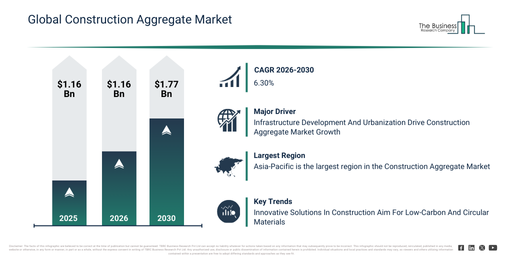
    The construction aggregate market size has experienced significant expansion in recent times. Its valuation is projected to increase from $430.1 billion in 2025 to $457.57 billion in 2026, demonstrating a compound annual growth rate (CAGR) of 6.4%. Historically, this expansion is primarily due to the expansion of urban construction activities, rising demand for road and bridge development, growth of commercial real estate projects, increased quarrying operations, and the availability of large-scale aggregate reserves.

    The construction aggregate market size is projected to experience robust expansion over the coming years, reaching $584.68 billion by 2030, exhibiting a compound annual growth rate (CAGR) of 6.3%. This anticipated growth is driven by factors such as greater investments in modernizing infrastructure, a heightened emphasis on sustainable building materials, the expansion of smart cities, increased utilization of recycled aggregates, and a rising need for high-performance concrete. Key trends during this period are expected to encompass the broader adoption of recycled and manufactured aggregates, an increasing requirement for high-strength construction materials, the proliferation of large-scale infrastructure initiatives, the wider implementation of automated crushing and screening technologies, and a stronger commitment to sustainable quarrying methods.

    Get A Free Sample Report With In-Depth Market Insights:

    https://thebusinessresearchcompany.com/sample_request?id=24003441&type=smp&name=Construction%20Aggregate%20Market%20Report%202026&utm_source=Blogs&utm_medium=Paid&utm_campaign=Oct_PR

    Construction Aggregate Market Industry Drivers: What’s Behind The Revenue Growth?

    The construction aggregate market is anticipated to expand due to infrastructure development and urbanization. These terms refer to the establishment and enlargement of essential facilities and systems, such as transportation and utilities, to accommodate increasing populations and the changing demands of progressively urbanized regions. The impetus behind infrastructure development and urbanization includes rising population figures, demographic shifts towards urban centers, economic advancement, and the escalating demand for improved infrastructure and public services to cater to expanding city populations. Construction aggregate is crucial for infrastructure development and urbanization, as it supplies vital materials like sand, gravel, and crushed stone, which are indispensable for constructing roads, bridges, and buildings. This supports the expansion and modernization of urban areas to meet growing population and economic needs. For instance, in April 2023, according to data published by The World Bank, a US-based international organization, approximately 56% of the world’s population, or 4.4 billion people, lived in cities in 2023. This trend is expected to continue, with a forecasted increase where nearly 70% of people will reside in urban areas by 2050. Therefore, infrastructure development and urbanization are driving the growth of the construction aggregate market.

    Construction Aggregate Market Segments: Where Is Growth Concentrated?

    The construction aggregate market covered in this report is segmented –

    1) By Type: Sand, Gravel, Crushed Stone, Other Types

    2) By Transportation Mode: Truck, Train, Ship

    3) By Application: Residential Use, Commercial Use, Infrastructure Use, Industrial Use

    Subsegments:

    1) By Sand Types: Natural Sand, Manufactured Sand

    2) By Gravel Types: Crushed Gravel, River Gravel

    3) By Crushed Stone Types: Limestone, Granite, Traprock, Sandstone

    4) By Other Types: Recycled Aggregate, Lightweight Aggregate, Specialty Aggregate

    #Construction Aggregate Market Growth Trends: What’s Shaping The Future Outlook?

    Major companies operating in the construction aggregate market are directing their efforts towards developing innovative solutions, such as sustainable construction ecosystems, with the goal of establishing new global standards for sustainable construction materials by decreasing carbon emissions and promoting circularity. A sustainable construction ecosystem encompasses the interconnected processes, materials, and stakeholders within the building industry that emphasize environmental responsibility, resource efficiency, and long-term ecological balance throughout the entire construction lifecycle. For example, in January 2024, Heidelberg Materials, a Germany-based building materials company, launched evoBuild, its new global brand intended to advance low-carbon and circular construction materials. Products under this brand must achieve at least a 30 % CO₂ reduction compared to reference values or incorporate at least 30 % recycled content. This initiative is crucial for enhancing transparency, fostering sustainability, and aligning Heidelberg Materials’ product offerings to meet its target of deriving 50 % of its revenue from sustainable products by 2030.

    Construction Aggregate Market Top Companies Driving Competitive Growth

    Major companies operating in the construction aggregate market are Holcim Group, CRH plc, China National Building Material Co. Ltd, Colas Group, Siam Cement Group (SCG), CEMEX S.A.B. de C.V., Heidelberg Materials AG, EUROVIA Kamenolomy AS, Vulcan Materials Company, Martin Marietta Materials Inc., Fletcher Building, Buzzi S.p.A., Boral Limited, Tarmac, LSR Group, Adbri Limited, Rogers Group Inc., Carmeuse, CEMROS, Eagle Materials Inc., SRC Group

    View The Full Construction Aggregate Market Report:

    https://thebusinessresearchcompany.com/report/construction-aggregate-global-market-report?utm_source=Blogs&utm_medium=Paid&utm_campaign=Oct_PR

    Construction Aggregate Market Global Footprint: Which Region Leads The Market?

    Asia-Pacific was the largest region in the construction aggregate market in 2025. The regions covered in the construction aggregate market report are Asia-Pacific, South East Asia, Western Europe, Eastern Europe, North America, South America, Middle East, Africa.

    Reach Out To Our Team:

    The Business Research Company: https://www.thebusinessresearchcompany.com/

    Americas: +1 310-496-7795

    Asia: +44 7882 955267 & +91 8897263534

    Europe: +44 7882 955267

    Email us at: marketing@tbrc.info

    Follow us on:

    LinkedIn: https://in.linkedin.com/company/the-business-research-company

    YouTube: https://www.youtube.com/channel/UC24_fI0rV8cR5DxlCpgmyFQ

    Global Market Model: https://www.thebusinessresearchcompany.com/global-market-model
  • Connected Wearable Patches Market Trends Reshaping Industry Growth Through 2030

    Connected Wearable Patches Market Trends Reshaping Industry Growth Through 2030

    Backed by market attractiveness analysis, total addressable market sizing, company benchmarking matrices, interactive Excel dashboards, wider supply chain intelligence, emerging startup coverage, and detailed product-level insights, The Business Research Company’s 2026 market reports are designed to offer research that is more actionable and strategically valuable than ever.

    Connected Wearable Patches Market Growth Potential: How Will Market Size Shift Through 2030?

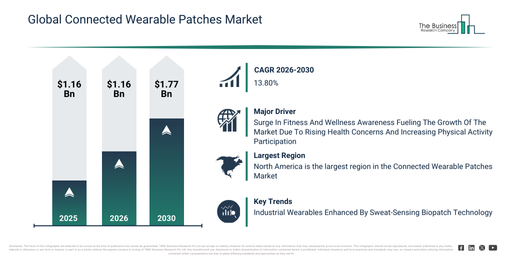
    The market for connected wearable patches has shown swift expansion in recent years. This sector is forecast to increase from $6.42 billion in 2025 to $7.32 billion in 2026, achieving a compound annual growth rate (CAGR) of 14.1%. The expansion observed in the past can be attributed to several factors including the initial limited adoption of connected wearable technologies, a reliance on traditional monitoring devices, the increasing prevalence of chronic diseases, early-stage clinical trials utilizing wearable patches, and a growing awareness of patient-centric healthcare.

    The connected wearable patches market is projected for substantial growth over the next few years. It is anticipated to reach $12.26 billion by 2030, exhibiting a compound annual growth rate (CAGR) of 13.8%. This expansion during the forecast period is largely due to advancements in sensor miniaturization and connectivity, integration with smartphones and cloud platforms, increasing demand for continuous glucose and cardiac monitoring, the broadening of sports and wellness tracking applications, and improved regulatory approvals along with healthcare reimbursement policies. Prominent trends expected in this period involve the development of remote patient monitoring and telehealth solutions, a growing adoption of non-invasive glucose monitoring technologies, the increasing application of wearable patches in fitness and sports performance, the expansion of transdermal drug delivery applications, and a stronger focus on data accuracy, sensor reliability, and patient safety.

    Get A Free Sample Report With In-Depth Market Insights:

    https://thebusinessresearchcompany.com/sample_request?id=44768564&type=smp&name=Connected%20Wearable%20Patches%20Market%20Report%202026&utm_source=Blogs&utm_medium=Paid&utm_campaign=Oct_PR

    Connected Wearable Patches Market Growth Factors: What’s Supporting Expansion?

    The expanding awareness of fitness and wellness is anticipated to fuel the future growth of the connected wearable patches market. This awareness signifies an understanding of the crucial role of consistent physical activity and healthy lifestyle choices for overall well-being. The heightened concern over chronic illnesses is contributing to this increase in fitness and wellness awareness, motivating people to embrace healthier habits for improved long-term health. Connected wearable patches contribute to this by continuously tracking key health indicators, offering immediate feedback, and inspiring users to remain active and uphold healthier routines. For example, data from June 2024, provided by the International Food Information Council (IFIC), a US based non profit organization, indicates that a substantial 54% of Americans adhered to a specific diet or eating pattern in the preceding year. A significant number of individuals are focused on increasing their protein consumption, with interest growing from 59% in 2022 to 67% in 2023, and further to 71% in 2024. Furthermore, approximately half of consumers are prioritizing increased intake of fresh foods, recognized as among the healthiest dietary choices. Consequently, the rising fitness and wellness awareness is a key driver for the expansion of the connected wearable patches market.

    Connected Wearable Patches Market Segment Analysis: What Are The Core Market Categories?

    The connected wearable patches market covered in this report is segmented –

    1) By Type: Glucose Monitoring Patches, Cardiac Monitoring Patches, Electromyography (EMG) Patches, Transdermal Drug Delivery Patches, Electroencephalography (EEG) Patches, Other Types

    2) By Sensor Technology: Electrocardiography (ECG), Photoplethysmography (PPG), Accelerometry, Gyroscope, Temperature Sensing

    3) By Distribution Channel: Online Stores, Pharmacies, Specialty Stores, Other Distribution Channels

    4) By Application: Remote Patient Monitoring, Fitness And Wellness Monitoring, Drug Delivery, Sports And Performance Monitoring, Other Applications

    5) By End User: Hospitals, Home Care, Fitness Centers, Research Institutions, Other End-Users

    Subsegments:

    1) By Glucose Monitoring Patches: Continuous Glucose Monitoring (CGM) Patches, Flash Glucose Monitoring (FGM) Patches, Non-Invasive Glucose Monitoring Patches, Adhesive Enzyme-Based Glucose Patches

    2) By Cardiac Monitoring Patches: Electrocardiography Monitoring Patches, Arrhythmia Detection Patches, Remote Cardiac Telemetry Patches, Holter Monitoring Patches

    3) By Electromyography (EMG) Patches: Surface Electromyography Patches, Wireless Electromyography Sensor Patches, Multi-channel Electromyography Patches, Rehabilitation Monitoring Electromyography Patches

    4) By Transdermal Drug Delivery Patches: Nicotine Delivery Patches, Hormone Replacement Therapy (HRT) Patches, Pain Management Patches (e.g., Fentanyl), Neurological Drug Delivery Patches, Anti-hypertensive Patches

    5) By Electroencephalography (EEG) Patches: Sleep Monitoring Electroencephalography Patches, Seizure Detection Electroencephalography Patches, Brain-Computer Interface (BCI) Patches, Cognitive Performance Monitoring Patches

    6) By Other Types: Hydration Monitoring Patches, Temperature Monitoring Patches, Sweat Analysis Patches, Oxygen Saturation (SpO₂) Monitoring Patches, Respiratory Rate Monitoring Patches

    Connected Wearable Patches Market Industry Trends: What’s Reshaping Demand?

    Major companies operating in the connected wearable patches market are increasingly focusing on advanced technologies, such as sweat-sensing biopatch platforms, to deliver real-time, personalized hydration insights for industrial workers. A sweat-sensing biopatch integrates multiple biosensors to detect fluid and electrolyte loss, body temperature, and movement patterns instantly, facilitating proactive hydration and heat stress management. For instance, in April 2024, Epicore Biosystems, a US-based digital health company, unveiled Connected Hydration alongside a mobile application. This represents a next-generation wearable patch system engineered to help industrial workers prevent dehydration and heat-related injuries through immediate data feedback. This sophisticated solution features a flexible, non-rechargeable biopatch with a 1,000-hour battery life, real-time dehydration alerts delivered via haptic feedback, and a mobile application for tracking fluid intake and biometric trends. Its sturdy design is certified for hazardous environments and incorporates machine learning trained on over 420,000 field data points.

    Connected Wearable Patches Market Leading Players And Competitive Positioning

    Major companies operating in the connected wearable patches market are Abbott Laboratories, Medtronic plc, Koninklijke Philips NV, GE HealthCare Technologies Inc, ZOLL Medical Corporation, Dexcom Inc, Insulet Corporation, MicroPort Scientific Corporation, iRhythm Technologies Inc, Linxens Holding SAS, Biotricity Inc, Blue Spark Technologies Inc, Epicore Biosystems Inc, Cardiac Insight Inc, Delsys Incorporated, G Tech Medical Inc, Leaf Healthcare Inc, VivaLNK Inc, BioIntelliSense Inc, MC10 Inc, LifeSignals Group Inc, Preventice Solutions Inc

    View The Full Connected Wearable Patches Market Report:

    https://thebusinessresearchcompany.com/report/connected-wearable-patches-global-market-report?utm_source=Blogs&utm_medium=Paid&utm_campaign=Oct_PR

    Connected Wearable Patches Market Regional Split: Which Areas Are Fueling Growth?

    North America was the largest region in the connected wearable patches market in 2025. Asia-Pacific is expected to be the fastest-growing region in the forecast period. The regions covered in the connected wearable patches market report are Asia-Pacific, South East Asia, Western Europe, Eastern Europe, North America, South America, Middle East, Africa.

    Reach Out To Our Team:

    The Business Research Company: https://www.thebusinessresearchcompany.com/

    Americas: +1 310-496-7795

    Asia: +44 7882 955267 & +91 8897263534

    Europe: +44 7882 955267

    Email us at: marketing@tbrc.info

    Follow us on:

    LinkedIn: https://in.linkedin.com/company/the-business-research-company

    YouTube: https://www.youtube.com/channel/UC24_fI0rV8cR5DxlCpgmyFQ

    Global Market Model: https://www.thebusinessresearchcompany.com/global-market-model
  • Connected Medical Device Market Growth To $117.68 Billion Creates New Opportunities Across The Industry

    Connected Medical Device Market Growth To $117.68 Billion Creates New Opportunities Across The Industry

    Featuring market attractiveness scoring, total addressable market sizing, company benchmarking matrices, interactive Excel dashboards, deeper supply chain intelligence, emerging startup tracking, and granular product-level insights, The Business Research Company’s 2026 market reports are built to deliver research that is both more actionable and more strategically valuable.

    Connected Medical Device Market Value Analysis: What Growth Lies Ahead Over The Forecast Period?

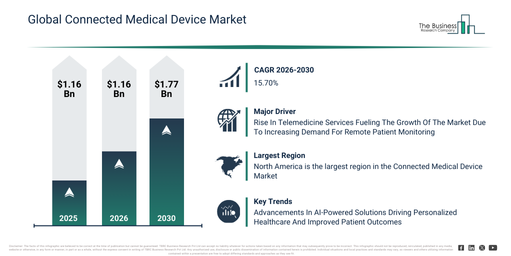
    The connected medical device market has experienced substantial expansion in its size over recent years. Projections indicate it will expand from $56.74 billion in 2025 to reach $65.78 billion by 2026, demonstrating a compound annual growth rate (CAGR) of 15.9%. Key factors contributing to this historic growth include inadequate connectivity infrastructure within healthcare settings, the gradual embrace of digital health innovations, a dependency on conventional patient monitoring approaches, the rising incidence of chronic ailments, and the imperative for immediate patient data acquisition.

    The connected medical device market is anticipated to experience substantial expansion over the upcoming years. It is projected to reach $117.68 billion in 2030, demonstrating a compound annual growth rate (CAGR) of 15.7%. This predicted increase during the forecast period stems from factors such as the proliferation of wearable and implantable medical devices, growing financial commitments to telehealth and remote monitoring, the incorporation of artificial intelligence for producing predictive insights, an increase in the acceptance of home care and long-term care, and enhanced regulatory backing for connected medical devices. Key developments expected during the forecast timeframe encompass the merging of connected devices with electronic health records (ehrs), a wider embrace of remote patient monitoring solutions, an expansion in chronic disease management programs, improved data analytics to aid clinical decision support, and a heightened emphasis on home-based healthcare and telemedicine.

    Get A Free Sample Report With In-Depth Market Insights:

    https://thebusinessresearchcompany.com/sample_request?id=21616220&type=smp&name=Connected%20Medical%20Device%20Market%20Report%202026&utm_source=Blogs&utm_medium=Paid&utm_campaign=Oct_PR

    Connected Medical Device Market Demand Drivers: What’s Powering Industry Growth?

    The expansion of telemedicine services is projected to stimulate the growth of the connected medical device market in the coming years. Telemedicine involves using technology to deliver medical care and consultations from a distance, removing the necessity for in-person visits. The increasing demand for telemedicine is driven by its convenient access to healthcare, allowing patients to quickly consult doctors from their homes, which saves time and lessens the need for travel. This uptick in telemedicine services supports the need for connected medical devices by enabling remote patient monitoring, which mandates real-time data transmission from patients to healthcare providers to ensure accurate diagnosis and timely intervention without physical attendance. For instance, in April 2025, according to the American Hospital Association, a US-based nonprofit trade association, it was reported that in the last quarter of 2023, over 12.6% of Medicare beneficiaries received a telehealth service. Recent data also suggest that the United States will face a physician shortage of up to 86,000 physicians by 2036. Telehealth is a crucial element in addressing the escalating shortage of physicians. Therefore, the increase in telemedicine services will propel the growth of the connected medical device market.

    Connected Medical Device Market Segment Breakdown: Which Categories Lead On Revenue?

    The connected medical device market covered in this report is segmented –

    1) By Product Type: Wearable Devices, Implantable Devices, Stationary Devices

    2) By Connectivity Technology: Bluetooth, Wi-Fi, Cellular, Other Connectivity Technologies

    3) By Application: Remote Patient Monitoring, Telemedicine, Clinical Decision Support, Chronic Disease Management, Fitness And Wellness, Other Applications

    4) By End-User: Hospitals And Clinics, Home Care Settings, Long-Term Care Facilities, Ambulatory Surgical Centers, Other End-Users

    Subsegments:

    1) By Wearable Devices: Fitness Trackers, Smartwatches, Continuous Glucose Monitors (CGM), Wearable ECG Monitors, Blood Pressure Monitors, Pulse Oximeters, Sleep Trackers

    2) By Implantable Devices: Cardiac Pacemakers, Implantable Cardioverter Defibrillators (ICDs), Neurostimulators, Cochlear Implants, Implantable Glucose Sensors, Drug Delivery Implants

    3) By Stationary Devices: Remote Patient Monitoring Stations, Telehealth Kiosks, Connected Imaging Devices, Connected Ventilators, Connected Dialysis Machines, Connected Infusion Pumps

    Connected Medical Device Market Innovation Trends: What Developments Are Reshaping The Industry?

    Leading companies within the connected medical device market are concentrating on developing sophisticated solutions, such as AI-driven platforms, to facilitate customized user experiences by adjusting to unique behaviors and preferences instantly. These AI-driven platforms represent digital frameworks that leverage artificial intelligence capabilities to analyze information, formulate decisions, and automate various tasks with very little human oversight. As an illustration, in October 2023, ZS, a US-based technology enterprise, introduced its ZAIDYN Connected Health solution. This solution uniquely provides reliable, AI-driven insights to assist pharmaceutical firms, healthcare practitioners, and insurers in tackling unresolved medical requirements and improving patient results. Its health insights component pinpoints deficiencies in care and offers tailored advice for doctors, patients, and producers, aiming to enhance access to treatment and its coordination. The patient engagement component is dedicated to comprehending the specific requirements of individual patients to provide bespoke assistance and boost the efficacy of patient initiatives. Furthermore, connected research employs sophisticated digital engagement instruments to collect dependable evidence, thereby assisting healthcare entities in validating novelties and underpinning strategic choices.

    Connected Medical Device Market Competitive Overview And Top Companies

    Major companies operating in the connected medical device market are Johnson and Johnson, Abbott Laboratories, Medtronic plc, F Hoffmann La Roche Ltd, Siemens Healthineers AG, Fresenius Medical Care AG and Co KGaA, Becton Dickinson and Company, Koninklijke Philips NV, GE Healthcare Technologies Inc, Boston Scientific Corporation, Baxter International Inc, Olympus Corporation, Terumo Corporation, Garmin Ltd, ResMed Inc, Omron Healthcare Inc, Epitel Inc, Masimo Corporation, AliveCor Inc, DexCom Inc, Insulet Corporation, iRhythm Technologies Inc

    View The Full Connected Medical Device Market Report:

    https://thebusinessresearchcompany.com/report/connected-medical-device-global-market-report?utm_source=Blogs&utm_medium=Paid&utm_campaign=Oct_PR

    Connected Medical Device Market Top Region: Where Does Most Revenue Come From?

    North America was the largest region in the connected medical device market in 2025. Asia-Pacific is expected to be the fastest-growing region in the forecast period. The regions covered in the connected medical device market report are Asia-Pacific, South East Asia, Western Europe, Eastern Europe, North America, South America, Middle East, Africa.

    Reach Out To Our Team:

    The Business Research Company: https://www.thebusinessresearchcompany.com/

    Americas: +1 310-496-7795

    Asia: +44 7882 955267 & +91 8897263534

    Europe: +44 7882 955267

    Email us at: marketing@tbrc.info

    Follow us on:

    LinkedIn: https://in.linkedin.com/company/the-business-research-company

    YouTube: https://www.youtube.com/channel/UC24_fI0rV8cR5DxlCpgmyFQ

    Global Market Model: https://www.thebusinessresearchcompany.com/global-market-model
  • Connected Health Personal Medical Devices Market Forecast: Breaking Down The Numbers Behind Future Expansion

    Connected Health Personal Medical Devices Market Forecast: Breaking Down The Numbers Behind Future Expansion

    Built to provide research that’s more actionable and strategically valuable, The Business Research Company’s 2026 market reports include market attractiveness analysis, total addressable market sizing, company benchmarking matrices, interactive Excel dashboards, broader supply chain intelligence, emerging startup tracking, and in-depth product insights.

    Connected Health Personal Medical Devices Market Size Forecast: How Big Could The Market Get By 2030?

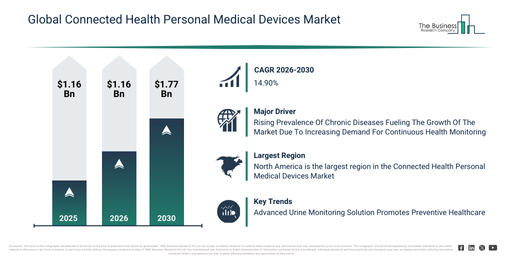
    The connected health personal medical devices market size has seen swift expansion recently. It is projected to increase from $45.71 billion in 2025 to $52.68 billion by 2026, with a compound annual growth rate (CAGR) of 15.2%. Historically, this growth has been driven by the limited accessibility of connected health devices, a dependence on traditional in-clinic monitoring, the gradual embrace of wearable technologies, a rising prevalence of chronic diseases, and an absence of standardized healthcare IT infrastructure.

    The connected health personal medical devices market is poised for significant expansion over the next few years. It is projected to achieve a size of $91.9 billion in 2030, growing at a compound annual growth rate (CAGR) of 14.9%. This anticipated growth is fueled by the rapid advancement of smart wearable medical devices, the increasing reach of home healthcare solutions, deeper integration with cloud-based health platforms, a rise in patient engagement with self-monitoring, and the adoption of predictive and real-time analytics for individualized care. Prominent trends for the forecast period include the escalating adoption of remote patient monitoring devices, the integration of wearable health technologies with mobile applications, a surge in the usage of smart pill dispensers and glucose monitors, a heightened focus on managing chronic diseases and preventive care, and the continued expansion of telemedicine and home .

    Get A Free Sample Report With In-Depth Market Insights:

    https://thebusinessresearchcompany.com/sample_request?id=96773317&type=smp&name=Connected%20Health%20Personal%20Medical%20Devices%20Market%20Report%202026&utm_source=Blogs&utm_medium=Paid&utm_campaign=Oct_PR

    Connected Health Personal Medical Devices Market Growth Drivers: What’s Behind The Acceleration?

    The increasing occurrence of chronic illnesses is anticipated to fuel the expansion of the connected health personal medical devices market in the future. These conditions are long-lasting health issues that develop gradually and persist over extended periods, often demanding ongoing medical attention. A contributing factor to the rising incidence of chronic diseases is inactive lifestyles, as prolonged sedentary behavior and insufficient physical activity heighten the risk of ailments like heart conditions and diabetes. Connected health personal medical devices facilitate the oversight of chronic diseases by enabling real-time health monitoring, making them highly suitable for managing conditions such as diabetes and hypertension from home. They minimize the necessity for frequent medical appointments through the provision of continuous data and prompt notifications, thereby enhancing patient results and ease. For instance, in June 2024, the National Health Service, a UK-based government department, reported that 3,615,330 individuals registered with a general practitioner (GP) were diagnosed with non-diabetic hyperglycemia or pre-diabetes (a condition with elevated blood sugar levels, not high enough to be classified as diabetes) in 2023, which represented an 18% increase from 3,065,825 cases in 2022. Consequently, the growing prevalence of chronic diseases is propelling the expansion of the connected health personal medical devices market.

    Connected Health Personal Medical Devices Market Segmentation: How Does The Market Break Down By Category?

    The connected health personal medical devices market covered in this report is segmented –

    1) By Solution: Healthcare IT, Health Information Exchange, Healthcare Analytics

    2) By Product: Insulin Pumps, Blood Pressure (BP) Monitors, Portable Global Positioning System (GPS) Personal Emergency Response System (PERS), Glucose Monitor, Personal Pulse Oximeter, Smart Pill Dispenser, Personal Electrocardiogram (ECG)

    3) By Connectivity: Bluetooth, Wi-Fi, Cellular, Other Connectivities

    4) By Application: Chronic Disease Management, Fitness And Wellness, Home Healthcare, Other Applications

    5) By End User: Hospitals, Clinics, Homecare Settings, Other End Users

    Subsegments:

    1) By Healthcare IT: Electronic Health Records (EHR), Telemedicine Solutions, Mobile Health (mHealth) Applications, E-Prescribing Systems

    2) By Health Information Exchange: Directed Exchange, Query-Based Exchange, Consumer-Mediated Exchange, Cloud-Based Health Information Platforms

    3) By Healthcare Analytics: Descriptive Analytics, Predictive Analytics, Prescriptive Analytics, Real-Time Analytics

    Connected Health Personal Medical Devices Market Trends: What’s Defining The Industry’s Next Phase?

    Companies within the connected health personal medical devices market are prioritizing the development of sophisticated offerings, such as advanced in-home diagnostic systems, with the goal of enhancing preventive healthcare and user convenience. In-home diagnostic systems refer to medical tools and devices that enable individuals to monitor, test, and manage their health conditions from home, removing the necessity of visiting a healthcare facility. As an example, in January 2023, Withings, a health technology company based in France, introduced U-Scan, a hands-free, in-home urine analysis system designed to fit into a toilet bowl. This system employs a replaceable cartridge that conducts daily tests for as long as three months, evaluating key hydration and nutrition biomarkers. The device links to a smartphone application, supplying users with immediate insights and customized health recommendations. U-Scan’s objective is to make routine health tracking effortless and non-invasive, thereby supporting proactive wellness management.

    Connected Health Personal Medical Devices Market Competitive Landscape: Which Companies Lead The Industry?

    Major companies operating in the connected health personal medical devices market are Johnson and Johnson, F Hoffmann La Roche AG, Abbott Laboratories, Medtronic plc, Siemens Healthineers, Becton Dickinson and Company, GE HealthCare, Philips Healthcare, Omron Healthcare, Masimo Corporation, Oura Health Oy, Whoop Inc, Withings, Eko Health Inc, TytoCare Ltd, AliveCor Inc, DarioHealth Corp, iHealth Labs Inc, Samsung Electronics, Biostrap, Aktiia, Ava Science Inc, Bloomlife Inc, Movano Health, Oxitone Medical Ltd, Qardio Inc

    View The Full Connected Health Personal Medical Devices Market Report:

    https://thebusinessresearchcompany.com/report/connected-health-personal-medical-devices-global-market-report?utm_source=Blogs&utm_medium=Paid&utm_campaign=Oct_PR

    Connected Health Personal Medical Devices Market Regional Breakdown: Where Is Demand Concentrated?

    North America was the largest region in the connected health personal medical devices market in 2025. Asia-Pacific is expected to be the fastest-growing region in the forecast period. The regions covered in the connected health personal medical devices market report are Asia-Pacific, South East Asia, Western Europe, Eastern Europe, North America, South America, Middle East, Africa.

    Reach Out To Our Team:

    The Business Research Company: https://www.thebusinessresearchcompany.com/

    Americas: +1 310-496-7795

    Asia: +44 7882 955267 & +91 8897263534

    Europe: +44 7882 955267

    Email us at: marketing@tbrc.info

    Follow us on:

    LinkedIn: https://in.linkedin.com/company/the-business-research-company

    YouTube: https://www.youtube.com/channel/UC24_fI0rV8cR5DxlCpgmyFQ

    Global Market Model: https://www.thebusinessresearchcompany.com/global-market-model
  • Connected Health and Wellness Solutions Market Expected To Grow At 23.8% CAGR Through 2030: What Businesses Need To Know

    Connected Health and Wellness Solutions Market Expected To Grow At 23.8% CAGR Through 2030: What Businesses Need To Know

    Backed by market attractiveness analysis, total addressable market sizing, company benchmarking matrices, interactive Excel dashboards, wider supply chain intelligence, emerging startup coverage, and detailed product-level insights, The Business Research Company’s 2026 market reports are designed to offer research that is more actionable and strategically valuable than ever.

    Connected Health and Wellness Solutions Market Revenue Outlook: What CAGR Lies Ahead Through 2030?

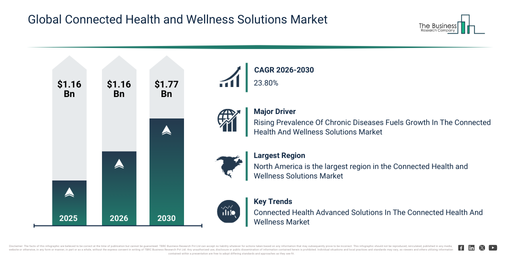
    The connected health and wellness solutions market has seen exponential growth in recent years. Its size is forecast to expand from $82.06 billion in 2025 to $101.69 billion in 2026, achieving a compound annual growth rate (CAGR) of 23.9%. Historically, this growth can be attributed to the increasing prevalence of smartphones and internet connectivity, heightened consumer health awareness, the broader adoption of wearable devices, a rising demand for home-based monitoring, and wider acceptance of digital health tools.

    The connected health and wellness solutions market is projected to experience substantial expansion in the coming years. It is anticipated to achieve a valuation of $238.59 billion by 2030, demonstrating a compound annual growth rate (CAGR) of 23.8%. This growth during the forecast period stems from factors such as the increasing adoption of AI-driven health analytics, a rising demand for continuous health monitoring, the expansion of virtual care models, a growing emphasis on chronic disease management, and the increasing integration of connected devices within healthcare systems. Prominent trends expected in this period include the wider adoption of remote patient monitoring devices, an increased use of wearable health technologies, the growing integration of telehealth platforms, the proliferation of mobile health applications, and an enhanced focus on preventive and wellness monitoring.

    Get A Free Sample Report With In-Depth Market Insights:

    https://thebusinessresearchcompany.com/sample_request?id=52667789&type=smp&name=Connected%20Health%20and%20Wellness%20Solutions%20Market%20Report%202026&utm_source=Blogs&utm_medium=Paid&utm_campaign=Oct_PR

    Connected Health and Wellness Solutions Market Growth Factors Behind Sustained Expansion

    The growing incidence of chronic conditions is anticipated to drive the expansion of the connected health and wellness solutions market in the future. These conditions are characterized as health issues that persist for at least a year, requiring ongoing medical attention, limiting daily functions, or a combination of these factors. In managing such long-term illnesses, connected health and wellness solutions are utilized to offer remote patient surveillance, support for medication compliance, and tailored therapies, thereby improving patient care and bolstering adherence to treatment plans. For instance, a report from March 2025 by the Office for Health Improvement & Disparities (OHID), a UK-based unit of the Department of Health and Social Care, indicated that GP-recorded type 2 diabetes prevalence in adults was 7.0% for those aged 17 and over in England in March 2024, representing a rise from 6.8% in March 2023. Consequently, the rising prevalence of chronic diseases is projected to stimulate the growth of the connected health and wellness solutions market.

    Connected Health and Wellness Solutions Market Segment Trends And Revenue Contributors

    The connected health and wellness solutions market covered in this report is segmented –

    1) By Product: Personal Medical Devices, Wellness Products, Software & Services

    2) By Function: Clinical Monitoring, Telehealth

    3) By Application: Diagnosis & Treatment, Wellness and prevention, Monitoring, Other Applications

    Subsegments:

    1) By Personal Medical Devices: Wearable Health Monitors, Remote Patient Monitoring Devices, Connected Inhalers and Medication Adherence Devices

    2) By Wellness Products: Smart Scales and Body Composition Monitors, Sleep Trackers and Sleep Aids, Smart Thermometers

    3) By Software & Services: Mobile Health Applications (mHealth apps), Telehealth Platforms and Services, Data Analytics and Health Management Solutions

    Connected Health and Wellness Solutions Market Industry Trends Fueling Future Revenue Growth

    Leading companies within the connected health and wellness solutions market are prioritizing the creation of advanced technological products, such as the ZAIDYN connected health solution, aiming to enhance remote patient monitoring and improve healthcare outcomes. ZAIDYN connected health supports pharmaceutical firms, healthcare providers, and payers in their innovation efforts to better identify unmet needs, engage patients, and elevate health outcomes. For instance, in October 2023, ZS Associates Group, Inc., a US-based management consulting and technology firm, unveiled the AI-powered ZAIDYN Connected Health solution as part of the ZAIDYN by ZS platform. It delivers three product suites that help bridge gaps in healthcare and establish a patient-centric future by providing health insights, facilitating patient engagement, and enabling connected research.

    Connected Health and Wellness Solutions Market Competitive Landscape: Who Leads The Industry?

    Major companies operating in the connected health and wellness solutions market are Omron Healthcare Inc., Koninklijke Philips N.V., GE Healthcare Technologies Inc., Abbott Laboratories, Apple Inc., Garmin Ltd., Masimo Corporation, ResMed Inc., Medtronic PLC, Boston Scientific Corporation, Microlife AG, AgaMatrix Inc., Dexcom Inc., Withings S.A., Polar Electro Oy, Suunto Oy, iHealth Labs Inc., AliveCor Inc., Oura Health Oy, WHOOP Inc., Samsung Electronics Co. Ltd., Xiaomi Corporation

    View The Full Connected Health and Wellness Solutions Market Report:

    https://thebusinessresearchcompany.com/report/connected-health-and-wellness-solutions-global-market-report?utm_source=Blogs&utm_medium=Paid&utm_campaign=Oct_PR

    Connected Health and Wellness Solutions Market Geographic Landscape: Which Region Dominates Industry Growth?

    North America was the largest region in the connected health and wellness solutions market in 2025. Asia-Pacific is expected to be the fastest-growing region in the forecast period. The regions covered in the connected health and wellness solutions market report are Asia-Pacific, South East Asia, Western Europe, Eastern Europe, North America, South America, Middle East, Africa.

    Reach Out To Our Team:

    The Business Research Company: https://www.thebusinessresearchcompany.com/

    Americas: +1 310-496-7795

    Asia: +44 7882 955267 & +91 8897263534

    Europe: +44 7882 955267

    Email us at: marketing@tbrc.info

    Follow us on:

    LinkedIn: https://in.linkedin.com/company/the-business-research-company

    YouTube: https://www.youtube.com/channel/UC24_fI0rV8cR5DxlCpgmyFQ

    Global Market Model: https://www.thebusinessresearchcompany.com/global-market-model