Blog

  • Cementless Total Knee Systems Market Forecast To Reach $6.06 Billion By 2030: Key Trends Explained

    Cementless Total Knee Systems Market Forecast To Reach $6.06 Billion By 2030: Key Trends Explained

    Featuring market attractiveness scoring, total addressable market sizing, company benchmarking matrices, interactive Excel dashboards, deeper supply chain intelligence, emerging startup tracking, and granular product-level insights, The Business Research Company’s 2026 market reports are built to deliver research that is both more actionable and more strategically valuable.

    Cementless Total Knee Systems Market Revenue Outlook: What CAGR Lies Ahead Through 2030?

    The market size for cementless total knee systems has shown substantial growth in recent years. This market is expected to expand from $4.68 billion in 2025 to $4.94 billion in 2026, at a compound annual growth rate (CAGR) of 5.6%. Historically, this expansion has been influenced by factors such as the restricted availability of cementless implants, a reliance on conventional cemented knee systems, the increasing elderly demographic with osteoarthritis, a surge in hospital orthopedic surgeries, and greater awareness about the benefits of knee replacement.

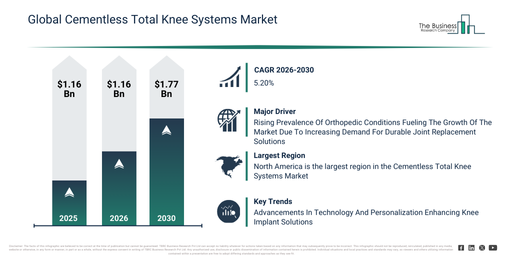
    The cementless total knee systems market is poised for robust expansion in the upcoming years. It is anticipated to achieve a valuation of $6.06 billion in 2030, growing at a compound annual growth rate (CAGR) of 5.2%. This projected growth throughout the forecast period stems from various factors, including breakthroughs in 3D-printing and porous coating technologies, an increasing preference for minimally invasive surgical interventions, the broadening of orthopedic healthcare infrastructure, the rising adoption of robotic-assisted knee replacement procedures, and heightened investment in patient-specific knee implants. Significant trends expected during this period involve the increasing uptake of cementless knee implants, a greater reliance on porous-coated and 3D-printed components, the proliferation of orthopedic centers and specialized hospitals, a continued focus on minimally invasive knee replacement operations, and improvements in both post-operative recovery and patient outcomes.

    Get A Free Sample Report With In-Depth Market Insights:

    https://thebusinessresearchcompany.com/sample_request?id=62864652&type=smp&name=Cementless%20Total%20Knee%20Systems%20Market%20Report%202026&utm_source=Blogs&utm_medium=Paid&utm_campaign=Oct_PR

    Cementless Total Knee Systems Market Growth Catalysts And Demand Drivers

    The increasing occurrence of orthopedic diseases is anticipated to propel the growth of the cementless total knee systems market in the future. These conditions affect the musculoskeletal system, including bones, joints, and muscles, leading to discomfort, reduced movement, and functional issues. The growing prevalence of orthopedic diseases stems from an aging population actively seeking long-term solutions for mobility that alleviate joint pain, improve movement, and enable an active lifestyle with minimal medical intervention. Cementless total knee systems offer a robust and biologically integrated answer for orthopedic conditions by encouraging natural bone integration, minimizing implant instability, and restoring joint function without requiring bone cement. For instance, in January 2024, data from the Office for Health Improvement & Disparities, a UK-based government department, indicated that the percentage of individuals aged 16 and over who self-reported a long-term musculoskeletal (MSK) disease, which is a type of orthopedic disease, rose from 17.6% in 2022 to 18.4% in 2023. Consequently, the rising incidence of orthopedic diseases is driving the expansion of the cementless total knee systems market.

    Cementless Total Knee Systems Market Segmentation: How Does The Market Break Down By Category?

    The cementless total knee systems market covered in this report is segmented –

    1) By Component: Tibial Component, Femoral Component

    2) By Fixation Method: Primary Fixation, Hybrid Fixation

    3) By End User: Hospitals, Orthopedic Centers, Other End Users

    Subsegments:

    1) By Tibial Component: Fixed-Bearing Tibial Baseplates, Mobile-Bearing Tibial Baseplates, Modular Tibial Components, Monoblock Tibial Components, Porous-Coated Tibial Components, 3D-Printed Tibial Components

    2) By Femoral Component: Posterior-Stabilized Femoral Components, Cruciate-Retaining Femoral Components, Ultra-Congruent Femoral Components, Asymmetric Femoral Components, Anatomical Femoral Components, Cementless Porous-Coated Femoral Components

    Cementless Total Knee Systems Market Trends Shaping Long-Term Demand

    Leading companies within the cementless total knee systems market are directing their efforts towards creating sophisticated technologies, including TIDAL technology, to provide advanced porous implants that improve bone integration and implant durability. TIDAL technology represents an innovative 3D-printed porous implant structure designed to optimize bone integration by enhancing mechanical strength, fatigue resistance, and load distribution for enduring implant stability. For instance, in April 2025, Restor3D Inc., a medical device company based in the US, secured Food and Drug Administration (FDA) 510(k) clearance for its iTotal Identity CR 3DP porous total knee system, which is its first cementless patient-specific implant. This groundbreaking system utilizes advanced 3D printing and porous technology to offer superior bone integration and stability, while its personalized design, custom surgical instruments, and pre-navigated surgical approach empower surgeons to achieve greater accuracy and efficiency.

    Cementless Total Knee Systems Market Top Companies Driving Competitive Growth

    Major companies operating in the cementless total knee systems market are Johnson And Johnson Services Inc, Stryker Corporation, Zimmer Biomet Holdings Inc, Smith And Nephew plc, Enovis Corporation, MicroPort Scientific Corporation, Medacta International SA, B Braun Melsungen AG, Waldemar Link GmbH And Co KG, restor3d Inc, implantcast GmbH, United Orthopedic Corporation, Signature Orthopaedics Pty Ltd, Gruppo Bioimpianti Srl, Permedica SPA, Evolutis SAS, Euromed Implants GmbH, X NOV SAS, Beijing Chunli Zhongke Bio Tech Co Ltd, Exactech Inc, Corin Group, LimaCorporate SPA

    View The Full Cementless Total Knee Systems Market Report:

    https://thebusinessresearchcompany.com/report/cementless-total-knee-systems-global-market-report?utm_source=Blogs&utm_medium=Paid&utm_campaign=Oct_PR

    Cementless Total Knee Systems Market Global Footprint: Which Region Leads The Industry?

    North America was the largest region in the cementless total knee systems market in 2025. Asia-Pacific is expected to be the fastest-growing region in the forecast period. The regions covered in the cementless total knee systems market report are Asia-Pacific, South East Asia, Western Europe, Eastern Europe, North America, South America, Middle East, Africa.

    Reach Out To Our Team:

    The Business Research Company: https://www.thebusinessresearchcompany.com/

    Americas: +1 310-496-7795

    Asia: +44 7882 955267 & +91 8897263534

    Europe: +44 7882 955267

    Email us at: marketing@tbrc.info

    Follow us on:

    LinkedIn: https://in.linkedin.com/company/the-business-research-company

    YouTube: https://www.youtube.com/channel/UC24_fI0rV8cR5DxlCpgmyFQ

    Global Market Model: https://www.thebusinessresearchcompany.com/global-market-model
  • Cementless Total Knee Arthroplasty Market Analysis Through 2030: Market Size, Growth Trends And Industry Outlook

    Cementless Total Knee Arthroplasty Market Analysis Through 2030: Market Size, Growth Trends And Industry Outlook

    Backed by market attractiveness analysis, total addressable market sizing, company benchmarking matrices, interactive Excel dashboards, wider supply chain intelligence, emerging startup coverage, and detailed product-level insights, The Business Research Company’s 2026 market reports are designed to offer research that is more actionable and strategically valuable than ever.

    Cementless Total Knee Arthroplasty Market Growth Analysis: How Will Revenue Trend Over The Forecast Period?

    The market for cementless total knee arthroplasty has seen significant expansion in recent years. Its value is set to increase from $2.95 billion in 2025 to $3.31 billion in 2026, reflecting a compound annual growth rate (CAGR) of 12.2%. This historical growth can be attributed to factors such as the increasing incidence of osteoarthritis, an expanding elderly demographic, advancements in conventional knee arthroplasty techniques, a rise in orthopedic surgical interventions, and greater understanding of long-term implant longevity.

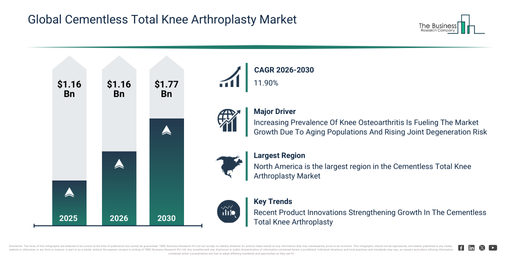
    The cementless total knee arthroplasty market size is projected to experience substantial growth in the upcoming years. This market is anticipated to expand to $5.19 billion in 2030, at a compound annual growth rate (CAGR) of 11.9%. The expansion during the forecast period is propelled by innovations in cementless implant coatings, a growing preference for minimally invasive surgeries, the expansion of orthopedic infrastructure, the adoption of patient-specific implants, and the integration of robotic-assisted knee arthroplasty. Significant developments expected over this period include the increasing uptake of cementless knee implants, a rising demand for minimally invasive knee operations, advancements in porous and coated implant surfaces, the proliferation of orthopedic surgery centers, and an increasing focus on patient-specific knee implants.

    Get A Free Sample Report With In-Depth Market Insights:

    https://thebusinessresearchcompany.com/sample_request?id=29625673&type=smp&name=Cementless%20Total%20Knee%20Arthroplasty%20Market%20Report%202026&utm_source=Blogs&utm_medium=Paid&utm_campaign=Sep_PR

    Cementless Total Knee Arthroplasty Market Opportunity Drivers: What’s Unlocking New Revenue Potential?

    The rising incidence of knee osteoarthritis is anticipated to propel the expansion of the cementless total knee arthroplasty market moving forward. Knee osteoarthritis, a degenerative joint condition, is characterized by pain, swelling, and stiffness in the knee joint, limiting an individual’s freedom of movement. The surge in knee osteoarthritis cases is primarily fueled by the rising prevalence of obesity, as excessive body weight imposes additional stress on knee joints, accelerating cartilage degradation and joint deterioration. Cementless total knee arthroplasty addresses knee osteoarthritis by replacing compromised joint surfaces with prosthetic components that foster natural bone growth for lasting stability and enhanced joint function. For instance, in February 2024, Arthritis Australia, an Australia-based non-profit organization, reported that by 2025, osteoarthritis (OA) is projected to affect 2.35 million Australians, accounting for 57% of the total arthritis population and making it the most common form of arthritis in the country. By 2040, the count of Australians with OA is expected to climb to 3.11 million, indicating a 32% increase from 2025. This equates to an additional 762,515 people living with OA in Australia by 2040 compared to 2025. Hence, the increasing prevalence of knee osteoarthritis is a significant factor driving the growth of the cementless total knee arthroplasty market.

    Cementless Total Knee Arthroplasty Market Segment Trends And Revenue Contributors

    The cementless total knee arthroplasty market covered in this report is segmented –

    1) By Product: Fixed-Bearing, Mobile-Bearing

    2) By Material: Titanium, Cobalt-Chromium, Polyethylene, Ceramic

    3) By Distribution Channels: Direct Sales, Distributors And Resellers

    4) By Application: Primary Total Knee Arthroplasty, Revision Total Knee Arthroplasty

    5) By End User: Hospitals, Specialty Clinics, Ambulatory Surgery Centers, Other End Users

    Subsegments:

    1) By Fixed-Bearing: Posterior Stabilized Fixed-Bearing, Cruciate Retaining Fixed-Bearing, Medial Pivot Fixed-Bearing

    2) By Mobile-Bearing: Rotating Platform Mobile-Bearing, Meniscal Bearing Mobile-Bearing, Dual Mobility Mobile-Bearing

    Cementless Total Knee Arthroplasty Market Innovation Trends Shaping Future Development

    Leading enterprises within the cementless total knee arthroplasty market are increasingly concentrating on the creation of 3D-printed, patient-specific cementless implants. This development aims to satisfy the growing need for prostheses that biologically integrate, offer improved long-term stability, and achieve better outcomes for younger, more active individuals. These implants are produced utilizing additive-manufacturing (3D-printing) technology to form a porous lattice structure, which promotes bone in-growth and thus achieves osseointegration. This differs from traditional cemented knee implants, which depend on bone cement for immediate attachment. As an illustration, in April 2025, restor3D Inc., a medical technology firm based in the US, secured U.S. Food and Drug Administration (FDA) 510(k) clearance for its iTotal Identity CR 3DP Porous Total Knee Replacement System. This signified the company’s inaugural cementless offering within its patient-specific implant portfolio. The system employs restor3d’s proprietary TIDAL Technology, which features a robust porous lattice engineered for enhanced bone ingrowth, fatigue resistance, and load distribution. It comprises femoral, tibial, and patellar components individually tailored to each patient’s anatomy, alongside customized, pre-navigated surgical instruments provided in a sterile, single-use kit. This setup minimizes intraoperative uncertainties and boosts surgical efficiency. Through the combination of patient-matched design and advanced surface engineering, this implant delivers a more natural sensation and durable attachment compared to traditional cemented options.

    Cementless Total Knee Arthroplasty Market Leading Players And Competitive Positioning

    Major companies operating in the cementless total knee arthroplasty market are Johnson & Johnson, Stryker Corporation, Zimmer Biomet Holdings Inc., Smith & Nephew Plc, Enovis Corporation, CONMED Corporation, Globus Medical Inc., MicroPort Scientific Corporation, Medacta Group SA, B. Braun Melsungen SE, TTK Healthcare Limited, Waldemar Link GmbH & Co. KG, United Orthopedic Corporation, Symbios Orthopédie SA, Gruppo Bioimpianti S.p.A., Permedica Orthopaedics S.p.A., Uteshiya Medicare Private Limited, LINK Orthopaedics GmbH, Plus Orthopaedics India Pvt. Ltd., XLO India Pvt. Ltd.

    View The Full Cementless Total Knee Arthroplasty Market Report:

    https://thebusinessresearchcompany.com/report/cementless-total-knee-arthroplasty-global-market-report?utm_source=Blogs&utm_medium=Paid&utm_campaign=Sep_PR

    Cementless Total Knee Arthroplasty Market Regional Distribution: Which Areas Power Market Growth?

    North America was the largest region in the cementless total knee arthroplasty market in 2025. Asia-Pacific is expected to be the fastest-growing region in the forecast period. The regions covered in the cementless total knee arthroplasty market report are Asia-Pacific, South East Asia, Western Europe, Eastern Europe, North America, South America, Middle East, Africa.

    Reach Out To Our Team:

    The Business Research Company: https://www.thebusinessresearchcompany.com/

    Americas: +1 310-496-7795

    Asia: +44 7882 955267 & +91 8897263534

    Europe: +44 7882 955267

    Email us at: marketing@tbrc.info

    Follow us on:

    LinkedIn: https://in.linkedin.com/company/the-business-research-company

    YouTube: https://www.youtube.com/channel/UC24_fI0rV8cR5DxlCpgmyFQ

    Global Market Model: https://www.thebusinessresearchcompany.com/global-market-model
  • Artificial Intelligence Microscopy Market Analysis Through 2030: Market Size, Growth Trends And Industry Outlook

    Artificial Intelligence Microscopy Market Analysis Through 2030: Market Size, Growth Trends And Industry Outlook

    Backed by market attractiveness analysis, total addressable market sizing, company benchmarking matrices, interactive Excel dashboards, wider supply chain intelligence, emerging startup coverage, and detailed product-level insights, The Business Research Company’s 2026 market reports are designed to offer research that is more actionable and strategically valuable than ever.

    Artificial Intelligence Microscopy Market Growth Potential: How Will Market Size Shift Through 2030?

    The artificial intelligence microscopy market has seen rapid expansion in its size over recent years. It is forecast to grow from $1.16 billion in 2025 to $1.33 billion in 2026, at a compound annual growth rate (CAGR) of 15.4%. The expansion observed historically can be attributed to increasing research and academic applications, progress in microscopy hardware, a rising need for precise cell analysis, the adoption of digital microscopy, and the early integration of AI into laboratory settings.

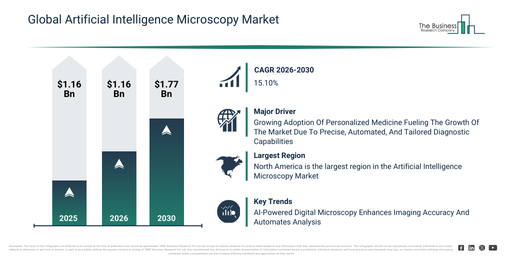
    The artificial intelligence microscopy market is projected to experience substantial expansion in the coming years. This market is set to reach $2.34 billion in 2030 at a compound annual growth rate (CAGR) of 15.1%. Factors contributing to this growth during the forecast period include the expansion of pharmaceutical research, the rising adoption in biotechnology, AI-powered predictive modeling, the integration with laboratory cloud platforms, and the increasing need for industrial quality control. Key trends anticipated within the forecast timeframe encompass automated cellular analysis, AI-supported pathology detection, cloud-based image management solutions, integration with laboratory information systems (LIS), and predictive biological modeling.

    Get A Free Sample Report With In-Depth Market Insights:

    https://thebusinessresearchcompany.com/sample_request?id=20823980&type=smp&name=Artificial%20Intelligence%20Microscopy%20Market%20Report%202026&utm_source=Blogs&utm_medium=Paid&utm_campaign=Sep_PR

    Artificial Intelligence Microscopy Market Growth Factors Behind Sustained Expansion

    The artificial intelligence microscopy market is anticipated to expand due to the increasing integration of personalized medicine. This medical approach customizes treatment and prevention strategies based on an individual’s distinct genetic profile, lifestyle, and surroundings. The rising prevalence of personalized medicine largely stems from progress in genomics, allowing for accurate identification of genetic differences and bespoke therapies for individuals. Artificial intelligence microscopy boosts personalized medicine through its precise and automated analysis of cells and tissues, which facilitates customized treatment plans. This technology cuts down on manual effort and speeds up diagnostic processes, leading to better clinical judgments and improved patient outcomes. For example, in February 2024, the U.S. Food and Drug Administration (FDA) approved 26 new personalized medicines in 2023, marking a substantial increase from the 12 approved in 2022, as reported by the US-based nonprofit organization, Personalized Medicine Coalition (PMC). Consequently, the increased uptake of personalized medicine is fueling the expansion of the artificial intelligence microscopy market.

    Artificial Intelligence Microscopy Market Segment Analysis And Revenue Potential

    The artificial intelligence microscopy market covered in this report is segmented –

    1) By Component: Software, Hardware, Services

    2) By Product Type: Artificial Intelligence-Enabled Cloud Software, Artificial Intelligence-Enabled Microscopes

    3) By Imaging Modalities: Optical Microscopy, Electron Microscopy, Scanning Probe Microscopy

    4) By Technology: Deep Learning, Machine Learning, Computer Vision, Other Technologies

    5) By End-User: Research Institutions, Healthcare Organizations, Pharmaceutical Companies, Biotechnology Firms, Industrial Laboratories

    Subsegments:

    1) By Software: Image Analysis Software, Data Management Software, Visualization Software, Simulation Software

    2) By Hardware: Microscopes, Cameras, Sensors, Computational Units

    3) By Services: Installation Services, Maintenance Services, Training Services, Consulting Service

    Artificial Intelligence Microscopy Market Industry Trends Fueling Future Revenue Growth

    Leading companies in the artificial intelligence microscopy market are prioritizing the development of technologically advanced products, such as digital microscopy, to enhance imaging accuracy and automate analysis. Digital microscopy involves the use of cameras and computer technology to capture, display, and analyze microscopic images, either replacing or complementing traditional optical microscopes. For instance, in February 2025, Honeywell International Inc., a US-based industrial technology company, introduced the Digital Holographic Microscopy (DHM), a new technology that integrates artificial intelligence (AI) for the precise counting and classification of microscopic particles and cells. This technology employs AI algorithms to analyze holographic images captured by a portable device, enabling rapid cell counting and classification without requiring complex sample preparation or staining. It is designed for point-of-care applications, such as diagnosing infections in peritoneal dialysis patients, reducing diagnosis time from days to minutes, and also has uses in environmental monitoring and quality control.

    Artificial Intelligence Microscopy Market Competitive Landscape: Which Companies Lead The Industry?

    Major companies operating in the artificial intelligence microscopy market are Roche Diagnostics International Ltd., Thermo Fisher Scientific Inc., Agilent Technologies Inc., Olympus Corporation, Nikon Corporation, Shimadzu Corporation, Bruker Corporation, Carl Zeiss AG, Jenoptik AG, JEOL Ltd., Leica Microsystems GmbH, OneCell Diagnostics, Scopio Labs Ltd., Park Systems Corp., Ariadne.ai, Mindpeak GmbH, Celly.AI, SVision LLC, aetherAI, Aiforia Technologies Oy

    View The Full Artificial Intelligence Microscopy Market Report:

    https://thebusinessresearchcompany.com/report/artificial-intelligence-microscopy-global-market-report?utm_source=Blogs&utm_medium=Paid&utm_campaign=Sep_PR

    Artificial Intelligence Microscopy Market Regional Outlook: Where Is Opportunity Concentrated?

    North America was the largest region in the artificial intelligence microscopy market in 2025. Asia-Pacific is expected to be the fastest-growing region in the forecast period. The regions covered in the artificial intelligence microscopy market report are Asia-Pacific, South East Asia, Western Europe, Eastern Europe, North America, South America, Middle East, Africa.

    Reach Out To Our Team:

    The Business Research Company: https://www.thebusinessresearchcompany.com/

    Americas: +1 310-496-7795

    Asia: +44 7882 955267 & +91 8897263534

    Europe: +44 7882 955267

    Email us at: marketing@tbrc.info

    Follow us on:

    LinkedIn: https://in.linkedin.com/company/the-business-research-company

    YouTube: https://www.youtube.com/channel/UC24_fI0rV8cR5DxlCpgmyFQ

    Global Market Model: https://www.thebusinessresearchcompany.com/global-market-model
  • Artificial Intelligence (AI)-Powered Remote Vital Sign Camera Market Outlook From 2026 To 2030: Key Growth Factors And Future Opportunities

    Artificial Intelligence (AI)-Powered Remote Vital Sign Camera Market Outlook From 2026 To 2030: Key Growth Factors And Future Opportunities

    Featuring market attractiveness scoring, total addressable market sizing, company benchmarking matrices, interactive Excel dashboards, deeper supply chain intelligence, emerging startup tracking, and granular product-level insights, The Business Research Company’s 2026 market reports are built to deliver research that is both more actionable and more strategically valuable.

    Artificial Intelligence (AI)-Powered Remote Vital Sign Camera Market Value Analysis: What Growth Lies Ahead Over The Forecast Period?

    The artificial intelligence (ai)-powered remote vital sign camera market has witnessed substantial expansion in recent years. This market is projected to expand from $2.19 billion in 2025 to $2.74 billion in 2026, achieving a compound annual growth rate (CAGR) of 24.9%. Historically, this growth has been fueled by factors such as the increasing adoption of telehealth, the necessity for non-invasive monitoring, remote care demands brought about by COVID-19, enhancements in camera sensor technology, and limitations in hospital bed availability.

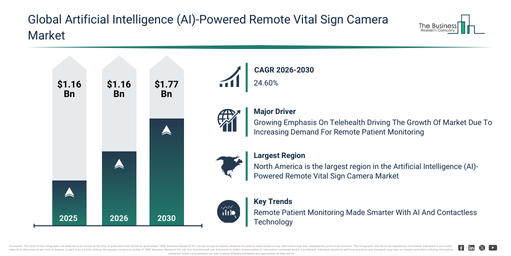
    The artificial intelligence (ai)-powered remote vital sign camera market is projected to experience substantial expansion in the coming years. It is expected to reach $6.6 billion in 2030, demonstrating a compound annual growth rate (CAGR) of 24.6%. This growth during the forecast period is driven by the precision of AI-powered video analytics, the expansion of home healthcare, the need to monitor an aging population, integration with smart hospital systems, and the demand for scalable monitoring tools. Key trends anticipated in this period encompass contactless patient monitoring, real-time physiological signal detection, the deployment of continuous remote care, AI-based motion and noise filtering, and home-based vital monitoring.

    Get A Free Sample Report With In-Depth Market Insights:

    https://thebusinessresearchcompany.com/sample_request?id=24958562&type=smp&name=Artificial%20Intelligence%20%28AI%29-Powered%20Remote%20Vital%20Sign%20Camera%20Market%20Report%202026&utm_source=Blogs&utm_medium=Paid&utm_campaign=Sep_PR

    Artificial Intelligence (AI)-Powered Remote Vital Sign Camera Market Demand Drivers Opening New Revenue Streams

    The escalating focus on telehealth is anticipated to fuel the expansion of the artificial intelligence (AI)-powered remote vital sign camera market in the future. Telehealth involves utilizing digital information and communication technologies, such as computers and mobile devices, to remotely access and manage . This heightened emphasis on telehealth stems from the increasing demand for that are both convenient and easily accessible, enabling patients to consult with providers from a distance without needing to travel to clinics or hospitals. Artificial intelligence (AI)-powered remote vital sign cameras enhance this approach by empowering healthcare professionals to precisely track patients’ vital signs remotely in real time, thereby facilitating prompt diagnosis, continuous health observation, and tailored care without requiring physical appointments. For example, in April 2023, data from FAIR Health Inc., a US-based non-profit organization, indicated a 7.3% increase in national telehealth utilization, climbing from 5.5% of medical claim lines in December 2022 to 5.9% in January 2023. Consequently, the expanding focus on telehealth is a key factor propelling the growth of the artificial intelligence (AI)-powered remote vital sign camera market.

    Artificial Intelligence (AI)-Powered Remote Vital Sign Camera Market Segmentation And Category Overview

    The artificial intelligence (ai)-powered remote vital sign camera market covered in this report is segmented –

    1) By Product Type: Handheld Cameras, Fixed Cameras

    2) By Technology: Computer Vision, Deep Learning

    3) By Vital Sign Monitored: Heart Rate, Respiratory Rate, Temperature

    4) By Distribution Channel: Online, Offline

    5) By End-User: Hospitals And Clinics, Home Care, Telemedicine Providers, Research And Academic Institutes, Other End-Users

    Subsegments:

    1) By Handheld Cameras: Portable Optical Cameras, Infrared Handheld Cameras, Thermal Imaging Handheld Cameras

    2) By Fixed Cameras: Ceiling Mounted Cameras, Wall Mounted Cameras, Desk Mounted Cameras

    Artificial Intelligence (AI)-Powered Remote Vital Sign Camera Market Trends Powering Strategic Industry Growth

    Leading companies in the artificial intelligence (AI)-powered remote vital sign camera market are prioritizing the development of innovative solutions, such as contactless health monitoring, to enable real-time vital sign tracking and early detection of disease risks. These contactless health monitoring solutions are technologies that measure vital signs and health parameters without physical contact. They contribute to real-time health tracking, diminish the necessity for in-person checkups, and facilitate the early identification of medical conditions. For example, in January 2023, NuraLogix Corporation, a Canada-based software company, introduced Anura Telehealth, an AI-powered contactless health monitoring platform designed to perform continuous vital sign measurements during video calls. Utilizing its patented Transdermal Optical Imaging (TOI) technology, Anura extracts facial blood flow information via conventional video cameras to calculate vital signs like heart rate, blood pressure, breathing rate, and more. The platform further delivers health risk assessments for chronic conditions, including type 2 diabetes, hypertension, cardiovascular disease, and mental health issues, thereby enabling healthcare professionals to monitor patients remotely and in real time. This capability supports proactive clinical decision-making, optimization of treatment plans, reduction of hospital visits, improvement in patient engagement, and implementation of early intervention strategies to prevent the progression of chronic illnesses.

    Artificial Intelligence (AI)-Powered Remote Vital Sign Camera Market Competitive Landscape: Who Leads The Industry?

    Major companies operating in the artificial intelligence (ai)-powered remote vital sign camera market are Binah.ai, FaceHeart Inc., NuraLogix Corporation, Oxehealth Limited, PanopticAI Limited, DarwinEdge Technologies Ltd., Vastmindz Ltd., Mindset Medical Inc., Upvio Healthtech Pty Ltd., Shen.AI OÜ, EdgeVitals Inc., VitalSignAI Inc., Rouast Labs Pty Ltd, Vitalerter Ltd., Neurobit Technologies Co. Ltd., Elion Inc., Cardiolyse Oy, Breathing.ai, Vitalthings, Philips

    View The Full Artificial Intelligence (AI)-Powered Remote Vital Sign Camera Market Report:

    https://thebusinessresearchcompany.com/report/artificial-intelligence-ai-powered-remote-vital-sign-camera-global-market-report?utm_source=Blogs&utm_medium=Paid&utm_campaign=Sep_PR

    Artificial Intelligence (AI)-Powered Remote Vital Sign Camera Market Geographic Landscape: Which Region Leads Industry Growth?

    North America was the largest region in the artificial intelligence (AI)-powered remote vital sign camera market in 2025. Asia-Pacific is expected to be the fastest-growing region in the forecast period. The regions covered in the artificial intelligence (AI)-powered remote vital sign camera market report are Asia-Pacific, South East Asia, Western Europe, Eastern Europe, North America, South America, Middle East, Africa.

    Reach Out To Our Team:

    The Business Research Company: https://www.thebusinessresearchcompany.com/

    Americas: +1 310-496-7795

    Asia: +44 7882 955267 & +91 8897263534

    Europe: +44 7882 955267

    Email us at: marketing@tbrc.info

    Follow us on:

    LinkedIn: https://in.linkedin.com/company/the-business-research-company

    YouTube: https://www.youtube.com/channel/UC24_fI0rV8cR5DxlCpgmyFQ

    Global Market Model: https://www.thebusinessresearchcompany.com/global-market-model
  • Artificial Intelligence (AI)-Powered Prosthetics Market Growth Forecast: Market Size, Key Trends And Emerging Opportunities Through 2030

    Artificial Intelligence (AI)-Powered Prosthetics Market Growth Forecast: Market Size, Key Trends And Emerging Opportunities Through 2030

    Built to provide research that’s more actionable and strategically valuable, The Business Research Company’s 2026 market reports include market attractiveness analysis, total addressable market sizing, company benchmarking matrices, interactive Excel dashboards, broader supply chain intelligence, emerging startup tracking, and in-depth product insights.

    Artificial Intelligence (AI)-Powered Prosthetics Market Size Forecast: How Big Could The Market Get By 2030?

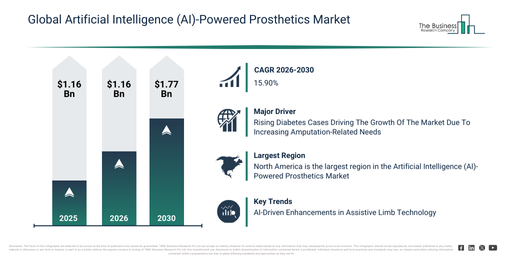
    The artificial intelligence (AI)-powered prosthetics market has undergone rapid expansion in recent years. It is projected to increase from $1.71 billion in 2025 to $1.98 billion in 2026, demonstrating a compound annual growth rate (CAGR) of 15.8%. The historical period’s growth was influenced by factors such as limited AI technology in prosthetics, the high cost of prosthetic devices, a lack of awareness regarding advanced prosthetics, conventional rehabilitation practices, and low adoption in emerging regions.

    The artificial intelligence (ai)-powered prosthetics market is projected for significant expansion over the coming years. Its valuation is anticipated to reach $3.57 billion in 2030, exhibiting a compound annual growth rate (CAGR) of 15.9%. This projected expansion during the forecast period is driven by improvements in AI and machine learning algorithms, increased funding for robotic and myoelectric prosthetics, higher demand from sports and military sectors, the proliferation of prosthetic clinics and rehabilitation facilities, and enhancements in healthcare infrastructure and insurance provisions. Key developments expected during this period involve a heightened need for customized prosthetics, the integration of feedback systems based on sensors, the broadening of rehabilitation and mobility initiatives, increased usage of prosthetics in sports and military contexts, and a growing emphasis on prosthetics for cosmetic and aesthetic purposes.

    Get A Free Sample Report With In-Depth Market Insights:

    https://thebusinessresearchcompany.com/sample_request?id=19062795&type=smp&name=Artificial%20Intelligence%20%28AI%29-Powered%20Prosthetics%20Market%20Report%202026&utm_source=Blogs&utm_medium=Paid&utm_campaign=Sep_PR

    Artificial Intelligence (AI)-Powered Prosthetics Market Growth Backed By Core Demand Fundamentals

    A surge in diabetes cases is anticipated to fuel the expansion of the artificial intelligence (AI)-powered prosthetics market moving forward. Diabetes is a chronic illness where blood sugar levels remain elevated, either because the body produces insufficient insulin or cannot utilize it effectively. The prevalence of diabetes is largely increasing due to inactive lifestyles, as reduced physical activity slows metabolism and leads to weight gain, thereby elevating the risk of insulin resistance. Complications arising from diabetes, such as poor circulation and nerve damage, can necessitate limb amputations, which, in turn, boosts the demand for AI-powered prosthetics that restore mobility and improve patients’ quality of life. For instance, in June 2024, data from the National Health Service, a UK-based publicly funded healthcare system, showed that in 2023, the number of individuals identified by the NHS in England as having pre-diabetes climbed to 3,615,330, representing an 18% increase from 3,065,825 in 2022. Furthermore, among those under 40, cases spiked by nearly 25%, rising from 173,166 in 2022 to 216,440 in 2023. Thus, the escalating incidence of diabetes is driving the growth of the artificial intelligence (AI)-powered prosthetics market.

    Artificial Intelligence (AI)-Powered Prosthetics Market Segment Outlook: Which Categories Are Growing Fastest?

    The artificial intelligence (ai)-powered prosthetics market covered in this report is segmented –

    1) By Type: Implantable Prosthesis, Non-Implantable Prosthesis

    2) By Technology: Microprocessor-Controlled Prosthetics, Myoelectric Prosthetics, Robotic Prosthetics, Electric-Powered Prosthetics, Hybrid Technologies

    3) By Application: Amputee Mobility, Rehabilitation, Sports Prosthetics, Military, Daily Activities

    4) By End User: Hospitals, Prosthetic Clinics, Rehabilitation Centers, Other End Users

    Subsegments:

    1) By Implantable Prosthesis: Cochlear Implants, Retinal Implants, Deep Brain Stimulation Implants, Artificial Heart Valves, Dental Implants, Orthopedic Joint Implants

    2) By Non-Implantable Prosthesis: Upper Limb Prosthetics, Lower Limb Prosthetics, Exoskeletons, Cosmetic Prosthetics, Prosthetic Liners And Sockets

    Artificial Intelligence (AI)-Powered Prosthetics Market Growth Trends Reshaping The Competitive Landscape

    Leading firms within the artificial intelligence (AI)-powered prosthetics market are concentrating on pioneering methods, like neural interface integration, aimed at improving limb capabilities, boosting user adjustment, and granting amputees almost natural movement for both everyday and specialized tasks. This neural interface integration involves AI-powered systems that interpret brain or muscle signals using machine learning algorithms and sensor arrays, allowing for immediate, instinctive command over prosthetic limbs, characterized by human-like traits like accuracy and reactivity. As an example, in May 2025, Esper Bionics, a bionic prosthetics company from Ukraine, introduced its Esper Hand 2, an AI-powered, waterproof prosthetic hand capable of adapting to user actions, providing superior grip strength, and functioning effectively even in difficult conditions, such as rain. This product release represents a notable leap forward in assistive prosthetic technology, supplying users with a smart, robust solution crafted to boost practical functionality and performance in everyday existence.

    Artificial Intelligence (AI)-Powered Prosthetics Market Company Landscape And Competitive Strategy

    Major companies operating in the artificial intelligence (ai)-powered prosthetics market are Ottobock SE & Co. KGaA, Össur hf, Blatchford Limited, BrainCo Inc., BrainRobotics Inc., Open Bionics Ltd., Point Designs Inc., Ambionics Ltd., Coapt LLC, Vincent Systems GmbH, PSYONIC Inc., BionIT Labs Ltd., Aether Biomedical Inc., BionicM Inc., Esper Bionics Inc., Mobius Bionics LLC, Covvi Limited, Unlimited Tomorrow Inc., Prensilia S.r.l., Bioniks Pvt. Ltd.

    View The Full Artificial Intelligence (AI)-Powered Prosthetics Market Report:

    https://thebusinessresearchcompany.com/report/artificial-intelligence-ai-powered-prosthetics-global-market-report?utm_source=Blogs&utm_medium=Paid&utm_campaign=Sep_PR

    Artificial Intelligence (AI)-Powered Prosthetics Market Largest Region: Which Geography Holds The Biggest Share?

    North America was the largest region in the artificial intelligence (AI)-powered prosthetics market in 2025. Asia-Pacific is expected to be the fastest-growing region in the forecast period. The regions covered in the artificial intelligence (AI)-powered prosthetics market report are Asia-Pacific, South East Asia, Western Europe, Eastern Europe, North America, South America, Middle East, Africa.

    Reach Out To Our Team:

    The Business Research Company: https://www.thebusinessresearchcompany.com/

    Americas: +1 310-496-7795

    Asia: +44 7882 955267 & +91 8897263534

    Europe: +44 7882 955267

    Email us at: marketing@tbrc.info

    Follow us on:

    LinkedIn: https://in.linkedin.com/company/the-business-research-company

    YouTube: https://www.youtube.com/channel/UC24_fI0rV8cR5DxlCpgmyFQ

    Global Market Model: https://www.thebusinessresearchcompany.com/global-market-model
  • Artificial Intelligence (AI)-Enhanced Surgical Video Analytics Market CAGR Forecast Through 2030: Key Trends Shaping Industry Expansion

    Artificial Intelligence (AI)-Enhanced Surgical Video Analytics Market CAGR Forecast Through 2030: Key Trends Shaping Industry Expansion

    Backed by market attractiveness analysis, total addressable market sizing, company benchmarking matrices, interactive Excel dashboards, wider supply chain intelligence, emerging startup coverage, and detailed product-level insights, The Business Research Company’s 2026 market reports are designed to offer research that is more actionable and strategically valuable than ever.

    Artificial Intelligence (AI)-Powered Hearing Aid Fitting Assistant Market Revenue Outlook: What CAGR Lies Ahead Through 2030?

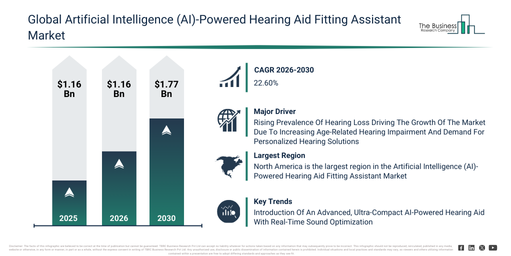
    The market size for the artificial intelligence (ai)-powered hearing aid fitting assistant has experienced rapid expansion over recent years. This market is projected to expand from $1.42 billion in 2025 to $1.74 billion in 2026, demonstrating a compound annual growth rate (CAGR) of 22.8%. Historically, this growth has been driven by factors such as an expanding elderly population, an increase in the prevalence of hearing loss, the digitization of audiology services, the early integration of AI in hearing aids, and the increasing desire for personalized solutions.

    The artificial intelligence (ai)-powered hearing aid fitting assistant market size is expected to experience significant expansion in the coming years. It is projected to reach $3.92 billion in 2030, demonstrating a compound annual growth rate (CAGR) of 22.6%. This anticipated growth can be ascribed to several factors, including the expansion of remote audiology services, the adoption of AI-driven self-fitting technologies, integration with mobile applications, a rising demand for enhanced user comfort, and advancements in cloud-based hearing analytics. Key trends anticipated in this period involve personalized hearing profile optimization, the prevalence of remote hearing aid fitting, the application of continuous learning algorithms, the introduction of self-fitting hearing solutions, and real-time environmental adaptation.

    Get A Free Sample Report With In-Depth Market Insights:

    https://thebusinessresearchcompany.com/sample_request?id=49206931&type=smp&name=Artificial%20Intelligence%20%28AI%29-Powered%20Hearing%20Aid%20Fitting%20Assistant%20Market%20Report%202026&utm_source=Blogs&utm_medium=Paid&utm_campaign=Sep_PR

    Artificial Intelligence (AI)-Powered Hearing Aid Fitting Assistant Market Growth Catalysts And Demand Drivers

    The increasing occurrence of hearing loss is anticipated to propel the growth of the artificial intelligence (AI)-powered hearing aid fitting assistant market. Hearing loss describes a partial or complete inability to perceive sounds, varying from mild to profound and affecting one or both ears. Its prevalence is consistently rising due to the global aging population, where a growing number of older individuals experience the gradual deterioration of inner ear sensory cells, leading to age-related hearing impairment. AI-powered hearing aid fitting assistants facilitate the management of hearing loss by automatically assessing an individual’s hearing profile and real-world surroundings to offer personalized, real-time adjustments. These adjustments work to enhance sound clarity, decrease background noise, and improve overall listening comfort. For example, in February 2025, the World Health Organization (WHO), a Switzerland-based intergovernmental organization, reported that over 1.5 billion people worldwide experience some type of hearing loss, with 430 million needing rehabilitation for disabling hearing loss, a figure expected to surpass 700 million by 2050. Consequently, the rising prevalence of hearing loss is a key factor driving the expansion of the artificial intelligence (AI)-powered hearing aid fitting assistant market.

    Artificial Intelligence (AI)-Powered Hearing Aid Fitting Assistant Market Segment Landscape: Which Areas Lead Development?

    The artificial intelligence (ai)-powered hearing aid fitting assistant market covered in this report is segmented –

    1) By Component: Software, Services

    2) By Distribution Channel: Direct Sales, Online Platforms, Distributors, Other Distribution Channels

    3) By Application: In-Clinic Fitting, Remote Fitting, Self-Fitting, Other Applications

    4) By End-User: Hospitals And Clinics, Audiology Centers, Homecare Settings, Other End-Users

    Subsegments:

    1) By Software: Configuration Tools, Fitting Algorithms, Mobile Applications, Cloud Platforms, Remote Monitoring Systems

    2) By Services: In-Clinic Fitting, Remote Fitting, Technical Support, Maintenance Services, Training And Consultation

    Artificial Intelligence (AI)-Powered Hearing Aid Fitting Assistant Market Trends Shaping Long-Term Demand

    Leading companies in the artificial intelligence (AI)-powered hearing aid fitting assistant market are concentrating on developing sophisticated solutions, such as compact AI-powered hearing aids, to enhance user experience by offering personalized, real-time adjustments and support. These compact AI-powered hearing aids are small, discreet instruments that utilize artificial intelligence to automatically optimize sound quality and customize hearing experiences instantly. For example, in February 2025, GN Store Nord A/S, a Denmark-based manufacturer of hearing aids, introduced its most advanced hearing portfolio, prominently featuring the ReSound Vivia, identified as the world’s smallest AI-powered hearing aid. The ReSound Vivia is a micro-receiver-in-ear hearing aid that employs advanced artificial intelligence, mimicking the brain’s natural sound processing, to improve speech clarity in noisy environments. It includes an exclusive deep neural network chip capable of 4.9 trillion operations daily to prioritize speech and reduce background noise, making it up to 17 times more efficient than competing hearing aids. This device provides up to 30 hours of battery life, Bluetooth LE Audio streaming with Auracast support, and a compact, water- and dust-resistant design.

    Artificial Intelligence (AI)-Powered Hearing Aid Fitting Assistant Market Key Players Shaping Industry Direction

    Major companies operating in the artificial intelligence (ai)-powered hearing aid fitting assistant market are Sonova Holding AG, Demant A/S, GN Store Nord A/S, WS Audiology A/S, Starkey Laboratories Inc., Cochlear Limited, MED-EL GmbH, Eargo Inc., HearX Group Pty Ltd., hear.com GmbH, Nuheara Limited, Alango Technologies Ltd., SonicCloud Inc., Tuned Care, Soundwave Hearing Pty Ltd., Whisper AI, Mimi Hearing Technologies GmbH, Concha Labs Inc., Brainphonics, AudioNotch

    View The Full Artificial Intelligence (AI)-Powered Hearing Aid Fitting Assistant Market Report:

    https://thebusinessresearchcompany.com/report/artificial-intelligence-ai-powered-hearing-aid-fitting-assistant-global-market-report?utm_source=Blogs&utm_medium=Paid&utm_campaign=Sep_PR

    Artificial Intelligence (AI)-Powered Hearing Aid Fitting Assistant Market Regional Analysis: Which Geography Leads On Revenue?

    North America was the largest region in the artificial intelligence (AI)-powered hearing aid fitting assistant market in 2025. Asia-Pacific is expected to be the fastest-growing region in the forecast period. The regions covered in the artificial intelligence (AI)-powered hearing aid fitting assistant market report are Asia-Pacific, South East Asia, Western Europe, Eastern Europe, North America, South America, Middle East, Africa.

    Reach Out To Our Team:

    The Business Research Company: https://www.thebusinessresearchcompany.com/

    Americas: +1 310-496-7795

    Asia: +44 7882 955267 & +91 8897263534

    Europe: +44 7882 955267

    Email us at: marketing@tbrc.info

    Follow us on:

    LinkedIn: https://in.linkedin.com/company/the-business-research-company

    YouTube: https://www.youtube.com/channel/UC24_fI0rV8cR5DxlCpgmyFQ

    Global Market Model: https://www.thebusinessresearchcompany.com/global-market-model
  • Artificial Intelligence (AI)-Enhanced Surgical Video Analytics Market To Witness 23.8% CAGR Growth Through 2030: Key Industry Drivers

    Artificial Intelligence (AI)-Enhanced Surgical Video Analytics Market To Witness 23.8% CAGR Growth Through 2030: Key Industry Drivers

    Featuring market attractiveness scoring, total addressable market sizing, company benchmarking matrices, interactive Excel dashboards, deeper supply chain intelligence, emerging startup tracking, and granular product-level insights, The Business Research Company’s 2026 market reports are built to deliver research that is both more actionable and more strategically valuable.

    Artificial Intelligence (AI)-Enhanced Surgical Video Analytics Market Growth Analysis: How Will Revenue Trend Over The Forecast Period?

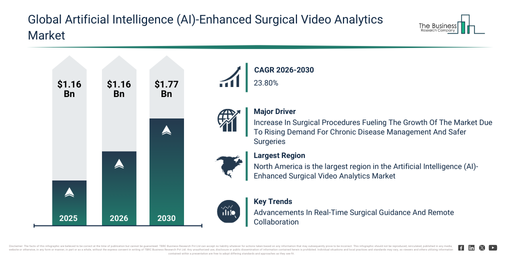
    In recent years, the artificial intelligence (AI)-enhanced surgical video analytics market has seen exponential growth in its size. Forecasts indicate it will expand, increasing from $0.73 billion in 2025 to $0.91 billion in 2026, driven by a compound annual growth rate (CAGR) of 24.1%. Several factors contributed to its historical growth, including the rise in minimally invasive surgeries, the digitization of operating rooms, the increasing availability of surgical video data, the early adoption of computer vision, and the imperative for quality improvement.

    The artificial intelligence (AI)-enhanced surgical video analytics market size is poised for substantial growth over the next few years. This market is predicted to reach $2.14 billion in 2030, exhibiting a compound annual growth rate (CAGR) of 23.8%. The anticipated expansion during the forecast period is attributed to factors like AI-based real-time analytics, integration with robotic surgery platforms, an increasing demand for outcome-based healthcare, the expansion of cloud-based analytics, and advancements in surgeon training optimization. Furthermore, major trends in the forecast period include automated surgical workflow analysis, real-time error detection, data-driven surgical training, performance benchmarking systems, and postoperative quality assessment.

    Get A Free Sample Report With In-Depth Market Insights:

    https://thebusinessresearchcompany.com/sample_request?id=21950694&type=smp&name=Artificial%20Intelligence%20%28AI%29-Enhanced%20Surgical%20Video%20Analytics%20Market%20Report%202026&utm_source=Blogs&utm_medium=Paid&utm_campaign=Sep_PR

    Artificial Intelligence (AI)-Enhanced Surgical Video Analytics Market Opportunity Drivers: What’s Unlocking New Revenue Potential?

    The future expansion of the artificial intelligence (AI)-enhanced surgical video analytics market is anticipated to be fueled by the rising volume of surgical procedures. These medical interventions involve a doctor treating, repairing, or removing bodily tissues, either manually or with instruments, to address health issues or injuries. The growing frequency of surgical procedures stems from the rising occurrence of chronic conditions such as diabetes, heart disease, and cancer, which frequently necessitate operations to manage complications and enhance patient outcomes. AI-enhanced surgical video analytics supports these procedures by providing live guidance, enabling surgeons to precisely identify crucial anatomical structures and make safer, more informed decisions during operations. For example, in June 2024, the American Society of Plastic Surgeons, a US-based organization of board-certified plastic surgeons, reported that Liposuction procedures reached 347,782 in 2023, representing a 7% increase compared to 2022. Consequently, the increasing number of surgical procedures is a key factor propelling the growth of the artificial intelligence (AI)-enhanced surgical video analytics market.

    Artificial Intelligence (AI)-Enhanced Surgical Video Analytics Market Segments: Where Is Growth Concentrated?

    The artificial intelligence (ai)-enhanced surgical video analytics market covered in this report is segmented –

    1) By Component: Software, Hardware, Services

    2) By Deployment Mode: On-Premises, Cloud-Based

    3) By Application: Laparoscopic Surgery, Robotic Surgery, Endoscopic Surgery, Other Applications

    4) By End-User: Hospitals, Ambulatory Surgical Centers, Specialty Clinics, Research Institutes, Other End-Users

    Subsegments:

    1) By Software: Surgical Video Analytics Platforms, Real-Time Data Processing Software, Machine Learning Algorithms

    2) By Hardware: High-Definition Cameras, Edge Computing Devices, Graphics Processing Units

    3) By Services: Integration And Deployment Services, Training And Education Services, Maintenance And Support Services

    Artificial Intelligence (AI)-Enhanced Surgical Video Analytics Market Innovation Trends Shaping Future Development

    Leading firms within the artificial intelligence (AI)-enhanced surgical video analytics market are concentrating on innovating sophisticated methods, including touch surgery live streams, to facilitate immediate surgical direction, distant cooperation, and improved accuracy in procedures. A touch surgery live stream is defined as a digital system allowing the instantaneous transmission of surgical operations, thereby enabling surgeons and healthcare groups to observe, instruct, and work together from various locations for educational purposes, expert advice, and greater procedural precision. As an illustration, Medtronic plc., a healthcare enterprise based in Ireland, introduced a service in April 2024 providing secure, live broadcasting of surgical procedures across over 20 nations, thereby boosting the accessibility and cooperative nature of surgical education. This platform empowers surgeons and those in training to participate in virtual mentorship, acquire valuable knowledge, and exchange procedural details remotely, which in turn advances skill acquisition and operational effectiveness. Furthermore, AI augmentations, utilizing 14 algorithms, conduct post-operative analysis of surgeries, assisting with streamlining workflows, identifying instruments, and detecting anatomical features, which collectively promotes superior training, higher surgical volume, and better patient results.

    Artificial Intelligence (AI)-Enhanced Surgical Video Analytics Market Competitive Analysis Of Leading Industry Participants

    Major companies operating in the artificial intelligence (ai)-enhanced surgical video analytics market are Johnson & Johnson, Medtronic Plc, Intuitive Surgical Inc., Olympus Corporation, Carl Zeiss Meditec AG, Brainlab AG, Surgical Science Sweden AB, Activ-Surgical-Inc., Caresyntax GmbH, Proximie Ltd., Proprio Inc., Surgical Safety Technologies Inc., Apella Health Management Inc., Aibo Health, Beyeonics Surgical Ltd., C-SATS Inc., nSight Surgical Inc., Orsi Academy S.r.l., Pristine Surgical Inc., Theator Inc., Virgo Surgical Technologies Inc., Surgical Data Science Collective (SDSC).

    View The Full Artificial Intelligence (AI)-Enhanced Surgical Video Analytics Market Report:

    https://thebusinessresearchcompany.com/report/artificial-intelligence-ai-enhanced-surgical-video-analytics-global-market-report?utm_source=Blogs&utm_medium=Paid&utm_campaign=Sep_PR

    Artificial Intelligence (AI)-Enhanced Surgical Video Analytics Market Geographic Spread And Regional Opportunities

    North America was the largest region in the artificial intelligence (AI)-enhanced surgical video analytics market in 2025. Asia-Pacific is expected to be the fastest-growing region in the forecast period. The regions covered in the artificial intelligence (AI)-enhanced surgical video analytics market report are Asia-Pacific, South East Asia, Western Europe, Eastern Europe, North America, South America, Middle East, Africa.

    Reach Out To Our Team:

    The Business Research Company: https://www.thebusinessresearchcompany.com/

    Americas: +1 310-496-7795

    Asia: +44 7882 955267 & +91 8897263534

    Europe: +44 7882 955267

    Email us at: marketing@tbrc.info

    Follow us on:

    LinkedIn: https://in.linkedin.com/company/the-business-research-company

    YouTube: https://www.youtube.com/channel/UC24_fI0rV8cR5DxlCpgmyFQ

    Global Market Model: https://www.thebusinessresearchcompany.com/global-market-model
  • Artificial Intelligence (AI)-Enhanced Sleep Apnea Oral Device Market Projected For Strong Expansion Through 2030: Key Trends And Future Outlook

    Artificial Intelligence (AI)-Enhanced Sleep Apnea Oral Device Market Projected For Strong Expansion Through 2030: Key Trends And Future Outlook

    Built to provide research that’s more actionable and strategically valuable, The Business Research Company’s 2026 market reports include market attractiveness analysis, total addressable market sizing, company benchmarking matrices, interactive Excel dashboards, broader supply chain intelligence, emerging startup tracking, and in-depth product insights.

    Artificial Intelligence (AI)-Enhanced Sleep Apnea Oral Device Market Forecast: What Value Will The Market Reach By 2030?

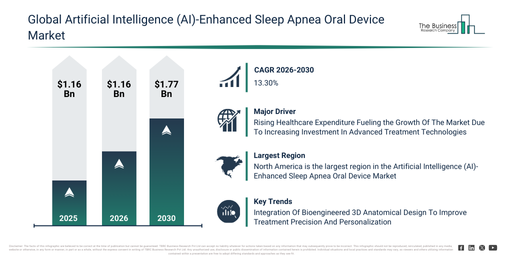
    The market size for artificial intelligence (AI)-enhanced sleep apnea oral devices has seen substantial growth in recent years. This market is set to increase from $1.33 billion in 2025 to $1.51 billion in 2026, achieving a compound annual growth rate (CAGR) of 13.6%. Historically, this expansion has been propelled by factors such as the increasing prevalence of sleep apnea, the limitations inherent in CPAP therapy, the advancements in dental sleep medicine, the early integration of smart oral devices, and a rising awareness concerning sleep health.

    The artificial intelligence (ai)-enhanced sleep apnea oral device market size is anticipated to expand rapidly in the coming years. It is projected to reach $2.5 billion in 2030, demonstrating a compound annual growth rate (CAGR) of 13.3%. The expansion during the forecast period is primarily attributed to AI-enabled adaptive sleep therapy, the increasing adoption of home-based sleep treatment, integration with sleep monitoring apps, a demand for non-invasive solutions, and personalized sleep analytics. Noteworthy trends anticipated in the forecast period include personalized oral appliance therapy, real-time sleep pattern optimization, ai-based comfort adjustment, home sleep disorder management, and data-driven therapy compliance.

    Get A Free Sample Report With In-Depth Market Insights:

    https://thebusinessresearchcompany.com/sample_request?id=66840573&type=smp&name=Artificial%20Intelligence%20%28AI%29-Enhanced%20Sleep%20Apnea%20Oral%20Device%20Market%20Report%202026&utm_source=Blogs&utm_medium=Paid&utm_campaign=Sep_PR

    Artificial Intelligence (AI)-Enhanced Sleep Apnea Oral Device Market Growth Momentum: What Factors Are Shaping Demand?

    The anticipated increase in healthcare spending is projected to boost the expansion of the artificial intelligence (AI)-enhanced sleep apnea oral device market in the future. Healthcare expenditure encompasses all outlays for medical services, treatments, and health-related products aimed at preserving or enhancing the well-being of the population. This expenditure is increasing as a result of the growing occurrence of chronic illnesses, which necessitate ongoing treatments and continuous medical attention, subsequently elevating total healthcare expenses considerably. Such spending facilitates the uptake of artificial intelligence (AI)-enhanced sleep apnea oral devices by allowing for more substantial investment in sophisticated diagnostic and therapeutic technologies, which in turn improve patient results and lower long-term medical expenses. As an illustration, the Office for National Statistics, a government agency located in the UK, reported in April 2025 that government-funded healthcare constitutes the predominant portion of overall health spending within the UK, amounting to $346 billion (£258 billion) in 2024, reflecting a 2.5% actual increase from 2023. Consequently, the increased spending on healthcare is fueling the expansion of the artificial intelligence (AI)-enhanced sleep apnea oral device market.

    Artificial Intelligence (AI)-Enhanced Sleep Apnea Oral Device Market Segment Analysis: What Are The Core Market Categories?

    The artificial intelligence (ai)-enhanced sleep apnea oral device market covered in this report is segmented –

    1) By Product Type: Mandibular Advancement Devices, Tongue Retaining Devices, Hybrid Devices

    2) By Technology: Artificial Intelligence (AI)-Based Monitoring, Smart Sensors, Data Analytics, Other Technologies

    3) By Distribution Channel: Online, Offline

    4) By End User: Hospitals, Sleep Clinics, Homecare Settings, Other End-Users

    Subsegments:

    1) By Mandibular Advancement Devices: Mandibular Repositioning Devices, Adjustable Mandibular Devices, Custom-Fit Mandibular Devices

    2) By Tongue Retaining Devices: Standard Tongue Retaining Devices, Custom Tongue Retaining Devices, Vacuum-Based Tongue Retaining Devices

    3) By Hybrid Devices: Dual-Mechanism Hybrid Devices, Combined Mandibular-Tongue Hybrid Devices

    Artificial Intelligence (AI)-Enhanced Sleep Apnea Oral Device Market Trends Redefining Industry Growth

    Major companies engaged in the artificial intelligence (AI)-enhanced sleep apnea oral device market are prioritizing the development of sophisticated designs, such as bioengineered 3D anatomical designs, to improve device precision, personalization, and treatment effectiveness. Bioengineered 3D anatomical design is an advanced approach that leverages AI and robotic manufacturing to produce custom oral devices that precisely match each patient’s dental and airway structure, thereby increasing comfort, jaw alignment, and breathing efficiency. For instance, in June 2025, ProSomnus Inc., a US-based medical device company, unveiled EVO Guided, a new custom, precision oral device specifically engineered for treating obstructive sleep apnea (OSA). This device offers superior comfort with its lingual-less design, leading to better patient compliance and fewer side effects compared to traditional appliances. Its advanced anatomical fit and patented post mechanism effectively expand airway regions, positioning it as a highly effective, FDA-cleared substitute for CPAP therapy.

    Artificial Intelligence (AI)-Enhanced Sleep Apnea Oral Device Market Leading Companies And Competitive Benchmarking

    Major companies operating in the artificial intelligence (ai)-enhanced sleep apnea oral device market are SomnoMed Limited, ProSomnus Sleep Technologies, Panthera Dental, Glidewell Laboratories Inc., DynaFlex Inc., Vivos Therapeutics Inc., OpenAirway Dental Solutions Ltd., Airway Management Inc., Apnea Sciences Corporation, OravanOSA, Myerson LLC, Braebon Medical Corporation, Klearway Inc., TOMED GmbH, Apex Dental Sleep Lab Inc., Dream Systems LLC, OrthoApnea S.L., Dentulu Inc., Airway Labs, Zyppah Inc.

    View The Full Artificial Intelligence (AI)-Enhanced Sleep Apnea Oral Device Market Report:

    https://thebusinessresearchcompany.com/report/artificial-intelligence-ai-enhanced-sleep-apnea-oral-device-global-market-report?utm_source=Blogs&utm_medium=Paid&utm_campaign=Sep_PR

    Artificial Intelligence (AI)-Enhanced Sleep Apnea Oral Device Market Top Region By Revenue And Market Share

    North America was the largest region in the artificial intelligence (AI)-enhanced sleep apnea oral device market in 2025. Asia-Pacific is expected to be the fastest-growing region in the forecast period. The regions covered in the artificial intelligence (AI)-enhanced sleep apnea oral device market report are Asia-Pacific, South East Asia, Western Europe, Eastern Europe, North America, South America, Middle East, Africa.

    Reach Out To Our Team:

    The Business Research Company: https://www.thebusinessresearchcompany.com/

    Americas: +1 310-496-7795

    Asia: +44 7882 955267 & +91 8897263534

    Europe: +44 7882 955267

    Email us at: marketing@tbrc.info

    Follow us on:

    LinkedIn: https://in.linkedin.com/company/the-business-research-company

    YouTube: https://www.youtube.com/channel/UC24_fI0rV8cR5DxlCpgmyFQ

    Global Market Model: https://www.thebusinessresearchcompany.com/global-market-model
  • Artificial Intelligence (AI)-Enhanced Post-Operative Monitoring Patch Market Outlook 2026–2030: Growth Trends, Market Dynamics And Emerging Opportunities

    Artificial Intelligence (AI)-Enhanced Post-Operative Monitoring Patch Market Outlook 2026–2030: Growth Trends, Market Dynamics And Emerging Opportunities

    Backed by market attractiveness analysis, total addressable market sizing, company benchmarking matrices, interactive Excel dashboards, wider supply chain intelligence, emerging startup coverage, and detailed product-level insights, The Business Research Company’s 2026 market reports are designed to offer research that is more actionable and strategically valuable than ever.

    Artificial Intelligence (AI)-Enhanced Post-Operative Monitoring Patch Market Size Outlook: How Quickly Will Revenue Expand Through 2030?

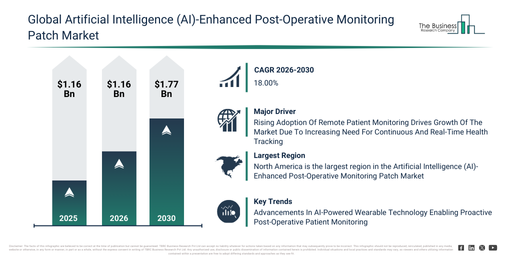
    The artificial intelligence (ai)-enhanced post-operative monitoring patch market size has witnessed rapid expansion over recent years. It is projected to grow from $2.22 billion in 2025 to $2.63 billion in 2026, achieving a compound annual growth rate (CAGR) of 18.3%. The historical increase in this market can be ascribed to several factors, including a rise in surgical procedure volumes, the adoption of wearable medical sensors, a focused effort to reduce hospital readmissions, an increase in outpatient surgeries, and the early embrace of digital health technologies.

    The artificial intelligence (ai)-enhanced post-operative monitoring patch market size is projected to experience substantial growth in the upcoming years. It is forecasted to expand to $5.11 billion in 2030, achieving a compound annual growth rate (CAGR) of 18.0%. This growth during the forecast period is primarily driven by AI-powered predictive recovery analytics, the expansion of remote patient monitoring programs, a notable shift toward home care settings, the integration with hospital information systems, and the rising demand for real-time alerts. Furthermore, significant trends anticipated in this period encompass continuous remote patient monitoring, the early detection of post-surgical complications, wireless wearable recovery tracking, data-driven discharge management, and home-based postoperative care.

    Get A Free Sample Report With In-Depth Market Insights:

    https://thebusinessresearchcompany.com/sample_request?id=81034152&type=smp&name=Artificial%20Intelligence%20%28AI%29-Enhanced%20Post-Operative%20Monitoring%20Patch%20Market%20Report%202026&utm_source=Blogs&utm_medium=Paid&utm_campaign=Sep_PR

    Artificial Intelligence (AI)-Enhanced Post-Operative Monitoring Patch Market Expansion Drivers: What’s Shaping Future Growth?

    The escalating need for remote patient monitoring is anticipated to drive the growth of the artificial intelligence (AI)-enhanced post-operative monitoring patch market moving forward. Remote patient monitoring (RPM) involves using digital technology to track patients’ health data from a distance and transmit it to healthcare providers for continuous assessment and management. This demand for remote patient monitoring is increasing due to the higher prevalence of chronic diseases that necessitate ongoing, real-time health tracking to improve patient outcomes and reduce hospital visits. AI-enhanced postoperative monitoring patches support remote patient monitoring by continuously analyzing patients’ vital signs to detect early signs of complications, thereby enabling timely intervention and reducing hospital readmissions. For instance, in August 2025, the Department of Health and Human Services, a US-based government administration, reported that in 2024, nearly 1 million enrollees received remote patient monitoring, representing a 27-percent increase from 2023. Therefore, the increasing demand for remote patient monitoring is fueling the expansion of the artificial intelligence (AI)-enhanced post-operative monitoring patch market.

    Artificial Intelligence (AI)-Enhanced Post-Operative Monitoring Patch Market Segment Breakdown: Which Categories Lead On Revenue?

    The artificial intelligence (ai)-enhanced post-operative monitoring patch market covered in this report is segmented –

    1) By Product Type: Wearable Patches, Disposable Patches, Reusable Patches

    2) By Distribution Channel: Online, Offline

    3) By Application: Cardiac Monitoring, Respiratory Monitoring, Temperature Monitoring, Mobility Monitoring, Others Applications

    4) By End-User: Hospitals, Ambulatory Surgical Centers, Home Care Settings, Others End-Users

    Subsegments:

    1) By Wearable Patches: Vital Sign Monitoring Patch, Cardiac Monitoring Patch, Temperature Monitoring Patch

    2) By Disposable Patches: Single Use Postoperative Patch, Adhesive Biosensor Patch, Sterile Surgical Recovery Patch

    3) By Reusable Patches: Rechargeable Smart Patch, Washable Sensor Patch

    Artificial Intelligence (AI)-Enhanced Post-Operative Monitoring Patch Market Strategic Trends: What Defines The Next Growth Phase?

    Major companies operating in the artificial intelligence (AI)-enhanced post-operative monitoring patch market are primarily focused on creating advanced solutions, including wearable devices, to assist users in actively managing their health. Wearable devices are electronic instruments designed to be worn on the body, collecting and tracking data related to health, physical activity, or daily routines. As an illustration, in November 2023, BioIntelliSense, a US-based biotechnology firm, partnered with UC Davis Health, a US-based health facility, to launch a continuous monitoring initiative for patients undergoing bone marrow transplants. This program integrates the FDA-cleared BioButton wearable with AI-driven analytics and a clinical intelligence platform to identify subtle changes in vital signs, enabling a timely medical intervention. This sophisticated post-operative monitoring patch records as many as 1,440 vital sign readings per patient daily, aiding in the detection of potential complications after surgery. Worn on the upper left chest, it continuously monitors crucial physiological indicators such as heart rate, respiratory rate, and skin temperature. Employing AI algorithms, the system delivers smart alerts and clear visual insights, facilitating proactive and informed management of post-surgical patients.

    Artificial Intelligence (AI)-Enhanced Post-Operative Monitoring Patch Market Industry Leaders And Competitive Landscape

    Major companies operating in the artificial intelligence (ai)-enhanced post-operative monitoring patch market are Medtronic PLC, Koninklijke Philips N V, Masimo Corporation, ZOLL Medical Corporation, iRhythm Technologies Inc, VitalConnect Inc, BioIntelliSense Inc, Biotricity Inc, Vivalink Inc, Blue Spark Technologies Inc, Biobeat Technologies Ltd, SmartCardia SA, Current Health Ltd, Isansys Lifecare Ltd, Sensium Healthcare Ltd, Mintti Health Pvt Ltd, SmartQare Technologies Pvt Ltd, Pulsify Medical, WearOptimo Ltd, Crely Healthcare Pvt Ltd, Epicore Biosystems Inc

    View The Full Artificial Intelligence (AI)-Enhanced Post-Operative Monitoring Patch Market Report:

    https://thebusinessresearchcompany.com/report/artificial-intelligence-ai-enhanced-post-operative-monitoring-patch-global-market-report?utm_source=Blogs&utm_medium=Paid&utm_campaign=Sep_PR

    Artificial Intelligence (AI)-Enhanced Post-Operative Monitoring Patch Market Regional Analysis And Top Geography

    North America was the largest region in the artificial intelligence (AI)-enhanced post-operative monitoring patch market in 2025. Asia-Pacific is expected to be the fastest-growing region in the forecast period. The regions covered in the artificial intelligence (AI)-enhanced post-operative monitoring patch market report are Asia-Pacific, South East Asia, Western Europe, Eastern Europe, North America, South America, Middle East, Africa.

    Reach Out To Our Team:

    The Business Research Company: https://www.thebusinessresearchcompany.com/

    Americas: +1 310-496-7795

    Asia: +44 7882 955267 & +91 8897263534

    Europe: +44 7882 955267

    Email us at: marketing@tbrc.info

    Follow us on:

    LinkedIn: https://in.linkedin.com/company/the-business-research-company

    YouTube: https://www.youtube.com/channel/UC24_fI0rV8cR5DxlCpgmyFQ

    Global Market Model: https://www.thebusinessresearchcompany.com/global-market-model
  • Artificial Intelligence (AI)-Enhanced Neurorehabilitation Exoskeleton Market Growth Outlook From $1.47 Billion In 2026 To $2.87 Billion By 2030

    Artificial Intelligence (AI)-Enhanced Neurorehabilitation Exoskeleton Market Growth Outlook From $1.47 Billion In 2026 To $2.87 Billion By 2030

    Featuring market attractiveness scoring, total addressable market sizing, company benchmarking matrices, interactive Excel dashboards, deeper supply chain intelligence, emerging startup tracking, and granular product-level insights, The Business Research Company’s 2026 market reports are built to deliver research that is both more actionable and more strategically valuable.

    Artificial Intelligence (AI)-Enhanced Neurorehabilitation Exoskeleton Market Size, Value And Growth Trajectory Through 2030

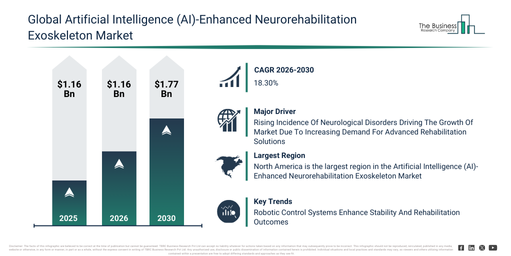
    The artificial intelligence (ai)-enhanced neurorehabilitation exoskeleton market has experienced substantial expansion in recent years. This market is projected to expand from $1.24 billion in 2025 to $1.47 billion in 2026, achieving a compound annual growth rate (CAGR) of 18.6%. During the historic period, this growth was primarily driven by factors such as an increase in the prevalence of neurological disorders, the early adoption of robotic rehabilitation devices, significant advancements in sensor technologies, a rising demand for intensive rehabilitation therapies, and the proliferation of rehabilitation centers.

    The artificial intelligence (ai)-enhanced neurorehabilitation exoskeleton market is projected for swift expansion in the coming years, with its size anticipated to reach $2.87 billion by 2030, exhibiting a compound annual growth rate (CAGR) of 18.3%. This projected growth is primarily driven by factors such as AI-enabled adaptive rehabilitation, the increasing availability of home-based neurorehabilitation solutions, a growing geriatric population, improved reimbursement support for robotic therapy, and the integration of cloud-based analytics. Key emerging trends within this forecast period encompass personalized AI-driven rehabilitation programs, advanced adaptive motion assistance systems, robust data-driven therapy outcome tracking, the rise of home-based robotic rehabilitation, and seamless integration with existing clinical rehabilitation protocols.

    Get A Free Sample Report With In-Depth Market Insights:

    https://thebusinessresearchcompany.com/sample_request?id=62769584&type=smp&name=Artificial%20Intelligence%20%28AI%29-Enhanced%20Neurorehabilitation%20Exoskeleton%20Market%20Report%202026&utm_source=Blogs&utm_medium=Paid&utm_campaign=Sep_PR

    Artificial Intelligence (AI)-Enhanced Neurorehabilitation Exoskeleton Market Development Factors: What’s Supporting Demand?

    The increasing occurrence of neurological disorders is anticipated to drive the expansion of the artificial intelligence (AI)-enhanced neurorehabilitation exoskeleton market going forward. Neurological disorders are health issues impacting the brain, spinal cord, and nerves, which can lead to deficiencies in movement, cognition, sensation, or other bodily functions. The worldwide increase in neurological disorders is primarily attributed to an aging population, given that older adults are more susceptible to ailments such as stroke, dementia, and Parkinson’s disease, all of which typically become more common as people get older. Artificial intelligence (AI)-enhanced neurorehabilitation exoskeletons assist individuals affected by neurological disorders by offering tailored, flexible therapy that enhances motor function, speeds up recuperation, and makes up for restricted motion through continuous observation and smart customization to suit individual patient requirements. For instance, in March 2023, according to the Alzheimer’s Association, a US-based nonprofit voluntary health organization, approximately 6.7 million Americans aged 65 and older are living with Alzheimer’s dementia, and this number is projected to rise to 13.8 million by 2060. Consequently, the increasing prevalence of neurological disorders is propelling the expansion of the artificial intelligence (AI)-enhanced neurorehabilitation exoskeleton market.

    Artificial Intelligence (AI)-Enhanced Neurorehabilitation Exoskeleton Market Segmentation: How Does The Market Break Down By Category?

    The artificial intelligence (ai)-enhanced neurorehabilitation exoskeleton market covered in this report is segmented –

    1) By Component: Hardware, Software, Services

    2) By Mobility Type: Mobile, Stationary

    3) By Application: Stroke Rehabilitation, Spinal Cord Injury, Traumatic Brain Injury, Multiple Sclerosis

    4) By End-User: Hospitals And Clinics, Rehabilitation Centers, Home Care Settings

    Subsegments:

    1) By Hardware: Exoskeleton Frames, Actuators And Motors, Sensors And Wearable Devices, Control Units And Embedded Electronics

    2) By Software: Motion Planning Software, Rehabilitation Protocol Software, Data Analytics And Monitoring Software, Connectivity And Integration Software

    3) By Services: Implementation And Setup Services, Training And Education Services, Maintenance And Support Services, Remote Monitoring And Assistance Services

    Artificial Intelligence (AI)-Enhanced Neurorehabilitation Exoskeleton Market Transformation Trends: What Innovations Are Driving Change?

    Leading firms within the artificial intelligence (AI)-enhanced neurorehabilitation exoskeleton sector are concentrating on incorporating novel solutions like robotic control systems to boost mobility, ensure stability, and customize rehabilitation results. These robotic control systems represent technologies designed to govern and synchronize the actions of a robot or exoskeleton, thereby assisting users in walking, standing, and executing everyday tasks securely and effectively through accurate, steady, and adaptable movement. As an illustration, in May 2025, Wandercraft SAS, a robotics company situated in France, initiated clinical trials in the U.S. for its AI-powered Personal Exoskeleton. This device integrates sophisticated physical AI with robotic control systems to enable individuals suffering from spinal cord injuries, stroke, and other mobility impairments to stand, walk, and traverse different terrains with confidence. By continuously adapting to the user’s movements in real time, it improves mobility, bolsters stability, and optimizes rehabilitation results. Featuring a joystick-controlled system alongside intelligent algorithms that predict alterations in weight, surface type, and speed, the exoskeleton fosters enhanced independence while mitigating secondary health issues associated with extended reliance on wheelchairs.

    Artificial Intelligence (AI)-Enhanced Neurorehabilitation Exoskeleton Market Key Participants And Competitive Landscape

    Major companies operating in the artificial intelligence (ai)-enhanced neurorehabilitation exoskeleton market are Ottobock SE & Co. KGaA, Shanghai Fourier Intelligence Co. Ltd., Kinova Inc., Cyberdyne Inc., Hocoma AG, Myomo Inc., Neofect Co. Ltd., Ekso Bionics Holdings Inc., ReWalk Robotics Ltd., AlterG Inc., RENU ROBOTICS CORPORATION, ExoAtlet Global S.A., REEV Robotics, Bionik Laboratories Corp., Rex Bionics PLC, Wearable Robotics Srl, Gogoa Mobility Robots S.L., Technaid S.L., Bionic Yantra Pvt. Ltd., MediTouch Inc.

    View The Full Artificial Intelligence (AI)-Enhanced Neurorehabilitation Exoskeleton Market Report:

    https://thebusinessresearchcompany.com/report/artificial-intelligence-ai-enhanced-neurorehabilitation-exoskeleton-global-market-report?utm_source=Blogs&utm_medium=Paid&utm_campaign=Sep_PR

    Artificial Intelligence (AI)-Enhanced Neurorehabilitation Exoskeleton Market Geographic Analysis: Where Is Demand Rising Fastest?

    North America was the largest region in the artificial intelligence (AI)-enhanced neurorehabilitation exoskeleton market in 2025. The regions covered in the artificial intelligence (AI)-enhanced neurorehabilitation exoskeleton market report are Asia-Pacific, South East Asia, Western Europe, Eastern Europe, North America, South America, Middle East, Africa.

    Reach Out To Our Team:

    The Business Research Company: https://www.thebusinessresearchcompany.com/

    Americas: +1 310-496-7795

    Asia: +44 7882 955267 & +91 8897263534

    Europe: +44 7882 955267

    Email us at: marketing@tbrc.info

    Follow us on:

    LinkedIn: https://in.linkedin.com/company/the-business-research-company

    YouTube: https://www.youtube.com/channel/UC24_fI0rV8cR5DxlCpgmyFQ

    Global Market Model: https://www.thebusinessresearchcompany.com/global-market-model