Blog

  • Antimicrobial Resistance Diagnostics Market Growth Potential: What The Latest Forecast Reveals

    Antimicrobial Resistance Diagnostics Market Growth Potential: What The Latest Forecast Reveals

    Built to provide research that’s more actionable and strategically valuable, The Business Research Company’s 2026 market reports include market attractiveness analysis, total addressable market sizing, company benchmarking matrices, interactive Excel dashboards, broader supply chain intelligence, emerging startup tracking, and in-depth product insights.

    Antimicrobial Resistance Diagnostics Market Growth Analysis: How Will Revenue Trend Over The Forecast Period?

    The antimicrobial resistance diagnostics market size has shown strong growth in recent years. It is anticipated to increase from $4.41 billion in 2025 to $4.74 billion in 2026, achieving a compound annual growth rate (CAGR) of 7.5%. The expansion witnessed during the historical period can be attributed to the rising occurrence of antibiotic-resistant infections, the reliance on traditional culture-based diagnostics, an increase in hospital-acquired infections, growing consciousness of antimicrobial stewardship, and the broadening of clinical microbiology laboratories.

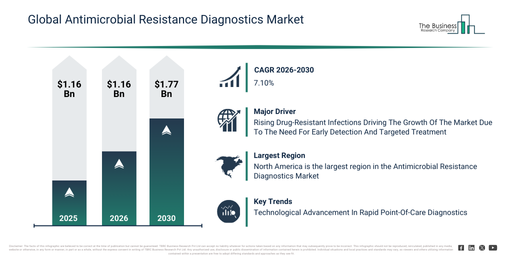
    The antimicrobial resistance diagnostics market is projected to experience robust expansion over the coming years. This market is anticipated to reach $6.23 billion by 2030, exhibiting a compound annual growth rate (CAGR) of 7.1%. Factors contributing to this growth during the forecast period include progress in PCR and NGS diagnostic technologies, an increase in government funding for AMR surveillance initiatives, greater uptake of rapid diagnostic tests, expansion in pharmaceutical and biotechnology research, and the incorporation of data-driven decision support systems. Key trends expected over the forecast period encompass a surge in the adoption of rapid and point-of-care AMR diagnostics, increasing need for targeted and personalized antimicrobial treatments, enhanced monitoring of drug-resistant pathogens, the broadening of molecular and genomic diagnostic testing, and the reinforcement of hospital infection control and stewardship programs.

    Get A Free Sample Report With In-Depth Market Insights:

    https://thebusinessresearchcompany.com/sample_request?id=14390535&type=smp&name=Antimicrobial%20Resistance%20Diagnostics%20Market%20Report%202026&utm_source=Blogs&utm_medium=Paid&utm_campaign=Sep_PR

    Antimicrobial Resistance Diagnostics Market Growth Backed By Core Demand Fundamentals

    The increasing occurrence of drug-resistant infections is projected to stimulate the expansion of the antimicrobial resistance diagnostics market in the future. These infections arise when microorganisms like bacteria, viruses, fungi, or parasites develop ways to withstand medicines that previously worked, rendering conventional treatments ineffective and infections more difficult to manage. The escalating spread of drug-resistant infections stems from the excessive use of antibiotics in farming, where small amounts of antimicrobials are regularly incorporated into animal feed, fostering resistance that can transfer to humans via the food chain. Tools for antimicrobial resistance diagnostics, including quick genetic tests and culture-dependent sensitivity evaluations, are crucial in tackling the rising incidence of drug-resistant infections. They do this by allowing prompt detection of resistant microbes, directing specific treatments, and cutting down on the inappropriate use of wide-spectrum antibiotics. For example, in November 2024, the UK Health Security Agency (UKHSA), a government body located in the UK, indicated that severe antibiotic-resistant infections in England climbed from 58,224 in 2022 to an approximate 66,730 in 2023, concurrently with a rise in antibiotic usage to 2.4% in 2023 from 2022. Consequently, the increasing occurrence of drug-resistant infections is fueling the expansion of the antimicrobial resistance diagnostics market.

    Antimicrobial Resistance Diagnostics Market Breakdown By Product Type And Application

    The antimicrobial resistance diagnostics market covered in this report is segmented –

    1) By Product Type: Kits And Reagents, Instruments And Consumables

    2) By Pathogen: Drug-Resistant Streptococcus Pneumoniae (DRSP), Drug Resistant Campylobacter (DRC), Clostridium Difficile (CD), Methicillin Resistant Staphylococcus Aureus (MRSA), Drug Resistant Neisseria Gonorrhoeae (DRNG), Drug Resistant Salmonella (DRntS), Other Pathogens

    3) By Technology: Microbiology Culture, Immunoassay, PCR (Polymerase Chain Reaction), NGS (Next-Generation Sequencing), Mass Spectrometry, Rapid And Point Of Care, Other Technologies

    4) By End-User: Hospitals And Clinics, Diagnostics Laboratories, Research Institutes, Pharmaceutical And Biotechnology Companies, Other End Users

    Subsegments:

    1) By Kits And Reagents: Deoxyribonucleic Acid (DNA) Extraction Kits, Ribonucleic Acid (RNA) Extraction Kits, Polymerase Chain Reaction (PCR) Reagents, Immunoassay Reagents, Stains And Dyes, Culture Media

    2) By Instruments And Consumables: Polymerase Chain Reaction (PCR) Machines, Ultraviolet-Visible (UV-Vis) Spectrophotometers, Next-Generation Sequencing (NGS) Systems, Microarray Scanners, Automated Liquid Handlers, Sample Collection Tubes And Swabs

    Antimicrobial Resistance Diagnostics Market Growth Trends Reshaping The Competitive Landscape

    Leading firms within the antimicrobial resistance (AMR) diagnostics market are increasingly utilizing cutting-edge technologies, including point-of-care antimicrobial-susceptibility testing (AST) solutions, to boost the rapidity and accuracy of diagnostics and improve antimicrobial-stewardship results. Point-of-care antimicrobial-susceptibility testing (AST) encompasses swift, patient-proximate examinations designed to pinpoint effective antibiotics for specific infections, thereby enabling healthcare professionals to promptly select appropriate and targeted treatments. An example of this trend is Sysmex Corporation, a Japan-based developer of in-vitro diagnostic solutions, which introduced its PA-100 AST System in June 2023. This rapid point-of-care AST platform is engineered to identify bacterial presence and assess antimicrobial susceptibility in urine samples in approximately 30 minutes. The system incorporates microfluidic single-cell analysis, offers near-patient testing capabilities, and provides automated reporting of susceptibility results. This PA-100 AST System enhances clinical decision-making processes, aids in reducing superfluous antibiotic prescriptions, and facilitates prompt, directed treatment strategies to combat antimicrobial resistance.

    Antimicrobial Resistance Diagnostics Market Leading Companies And Competitive Benchmarking

    Major companies operating in the antimicrobial resistance diagnostics market are F Hoffmann La Roche AG, Thermo Fisher Scientific Inc, Abbott Laboratories, Danaher Corporation, Becton Dickinson And Company, bioMerieux SA, Sysmex Corporation, Bio Rad Laboratories Inc, QIAGEN NV, Seegene Inc, Alifax S r l, Accelerate Diagnostics Inc, Molsid SAS, Genetic Signatures Limited, iFAST Diagnostics Ltd, Astek Diagnostics Inc, OpGen Inc, T2 Biosystems, Jiangsu Medomics Medical Technology Co Ltd, Cepheid, Luminex Corporation, Bruker Corporation, Hologic Inc

    View The Full Antimicrobial Resistance Diagnostics Market Report:

    https://thebusinessresearchcompany.com/report/antimicrobial-resistance-diagnostics-global-market-report?utm_source=Blogs&utm_medium=Paid&utm_campaign=Sep_PR

    Antimicrobial Resistance Diagnostics Market Largest Region By Revenue And Market Share

    North America was the largest region in the antimicrobial resistance diagnostics market in 2025. Asia-Pacific is expected to be the fastest-growing region in the forecast period. The regions covered in the antimicrobial resistance diagnostics market report are Asia-Pacific, South East Asia, Western Europe, Eastern Europe, North America, South America, Middle East, Africa.

    Reach Out To Our Team:

    The Business Research Company: https://www.thebusinessresearchcompany.com/

    Americas: +1 310-496-7795

    Asia: +44 7882 955267 & +91 8897263534

    Europe: +44 7882 955267

    Email us at: marketing@tbrc.info

    Follow us on:

    LinkedIn: https://in.linkedin.com/company/the-business-research-company

    YouTube: https://www.youtube.com/channel/UC24_fI0rV8cR5DxlCpgmyFQ

    Global Market Model: https://www.thebusinessresearchcompany.com/global-market-model
  • Antimicrobial Hospital Textiles Market Growth Outlook: Why Analysts Expect Continued Expansion

    Antimicrobial Hospital Textiles Market Growth Outlook: Why Analysts Expect Continued Expansion

    Backed by market attractiveness analysis, total addressable market sizing, company benchmarking matrices, interactive Excel dashboards, wider supply chain intelligence, emerging startup coverage, and detailed product-level insights, The Business Research Company’s 2026 market reports are designed to offer research that is more actionable and strategically valuable than ever.

    Antimicrobial Hospital Textiles Market Forecast: What Value Will The Market Reach By 2030?

    The antimicrobial hospital textiles market has experienced substantial growth in recent years. It is anticipated to expand from $11.13 billion in 2025 to $12.18 billion in 2026, achieving a compound annual growth rate (CAGR) of 9.4%. This historic expansion can be ascribed to several factors, including heightened concerns regarding hospital-acquired infections, the enlargement of healthcare infrastructure, increased utilization of medical uniforms and linens, a growing understanding of hygiene protocols, and the availability of antimicrobial fabric technologies.

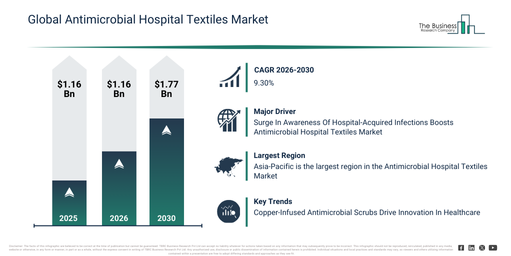
    The antimicrobial hospital textiles market size is anticipated to undergo significant expansion over the next few years. It is projected to reach $17.4 billion in 2030, demonstrating a compound annual growth rate (CAGR) of 9.3%. This anticipated growth is primarily fueled by factors such as the escalating demand for sustainable medical textiles, a heightened emphasis on reusable hospital products, the expansion of infection prevention protocols, the increasing adoption of advanced antimicrobial materials, and a growing regulatory focus on hospital hygiene. Furthermore, prominent trends expected during this forecast period encompass a greater uptake of antimicrobial textile treatments, an increasing need for infection-control hospital fabrics, wider deployment of reusable antimicrobial textiles, the broadening of ICU and surgical textile applications, and an intensified commitment to patient safety and hygiene.

    Get A Free Sample Report With In-Depth Market Insights:

    https://thebusinessresearchcompany.com/sample_request?id=94213183&type=smp&name=Antimicrobial%20Hospital%20Textiles%20Market%20Report%202026&utm_source=Blogs&utm_medium=Paid&utm_campaign=Sep_PR

    Antimicrobial Hospital Textiles Market Growth Catalysts And Demand Drivers

    The growing recognition of hospital-acquired infections is anticipated to boost the antimicrobial hospital textiles market in the future. These infections are those contracted during medical care at a healthcare facility from a practitioner, such as a doctor or nurse. Antimicrobial hospital textiles aid in reducing healthcare-acquired infections by targeting the digestive tract, urinary tract, skin, lungs, and bloodstream with substances designed to prevent the proliferation and spread of bacteria. For instance, in June 2025, information from the Australian Institute of Health and Welfare, an Australia-based government agency, revealed that in 2023–24, hospital-acquired complications were recorded in 150,000 hospitalizations from a total of 12.6 million hospitalizations. Therefore, the increasing awareness regarding hospital-acquired infections is propelling the antimicrobial hospital textiles market.

    Antimicrobial Hospital Textiles Market Segment Analysis And Revenue Potential

    The antimicrobial hospital textiles market covered in this report is segmented –

    1) By Type: Cotton, Polyester, Polyamide, Other Types

    2) By Usability: Disposable, Reusable

    3) By FDA Class: Class I, Class II

    4) By Hospital Department: General Ward, Surgical Room, Infectious Disease Ward, ICU, Other Hospital Departments

    5) By Application: Medical Uniform And Apparels, Upholstery, Surgical textiles, Incontinence Care Garments, Other Applications

    Subsegments:

    1) By Cotton: Conventional Cotton, Organic Cotton, Blended Cotton

    2) By Polyester: Regular Polyester, Recycled Polyester, Blended Polyester

    3) By Polyamide: Nylon 6, Nylon 66, Blended Polyamide

    4) By Other Types: Polyethylene, Polypropylene, Acrylic, Cellulose Acetate

    Antimicrobial Hospital Textiles Market Trends Shaping Long-Term Demand

    Leading entities within the antimicrobial hospital textiles market are concentrating on creating novel products, like copper-integrated, eco-healthtech medical scrubs, to satisfy the increasing need for infection management and the avoidance of hospital-acquired-infection (HAI) in medical environments. These innovative scrubs incorporate copper into natural textiles such as cotton, bamboo, and linen, providing them with lasting antimicrobial characteristics. In contrast to conventional scrubs, which depend entirely on regular washing or external disinfection, these materials intrinsically lower the microbial burden. As an example, in June 2023, Swiss Precision Active, an eco-healthtech clothing firm from Switzerland, introduced its CopperActive antimicrobial scrubs at the FIME Miami Fair. The CopperActive product range is produced from a proprietary mix of copper and organic natural fibers, has been laboratory-tested and confirmed by SGS and other facilities, and aims to eliminate or suppress harmful bacteria progressively. These scrubs are light, wick away moisture, resist odors, and retain their antimicrobial effectiveness even following numerous washes, rendering them particularly appropriate for high-risk hospital settings to minimize the spread of pathogens.

    Antimicrobial Hospital Textiles Market Industry Leaders And Competitive Landscape

    Major companies operating in the antimicrobial hospital textiles market are Sinterama S.p.A., Trevira GmbH, PurThread Technologies Inc., LifeThreads LLC, Thai Acrylic Fiber Co. Ltd., Herculite Products Inc., Toyobo Co. Ltd., Baltex Group Limited, Microban International Ltd., Sciessent LLC, BASF SE, Lonza Group AG, BioCote Limited, Resil Chemicals Pvt. Ltd., Archroma Management LLC, HeiQ Materials AG, Milliken & Company, Vestagen Technical Textiles Inc., Copper Clothing Ltd., Applied Silver Inc., 3M Company, Ahlstrom‑Munksjö Oyj, American Dawn Inc., Medline Industries Inc., Angelica Corporation, Hospital Specialty Company Inc., BSN Medical Inc., Cramer Products Inc.

    View The Full Antimicrobial Hospital Textiles Market Report:

    https://thebusinessresearchcompany.com/report/antimicrobial-hospital-textiles-global-market-report?utm_source=Blogs&utm_medium=Paid&utm_campaign=Sep_PR

    Antimicrobial Hospital Textiles Market Regional Analysis And Leading Geography

    Asia-Pacific was the largest region in the antimicrobial hospital textiles market in 2025. Asia-Pacific is expected to be the fastest-growing region in the antimicrobial hospital textiles market report during the forecast period. The regions covered in the antimicrobial hospital textiles market report are Asia-Pacific, South East Asia, Western Europe, Eastern Europe, North America, South America, Middle East, Africa.

    Reach Out To Our Team:

    The Business Research Company: https://www.thebusinessresearchcompany.com/

    Americas: +1 310-496-7795

    Asia: +44 7882 955267 & +91 8897263534

    Europe: +44 7882 955267

    Email us at: marketing@tbrc.info

    Follow us on:

    LinkedIn: https://in.linkedin.com/company/the-business-research-company

    YouTube: https://www.youtube.com/channel/UC24_fI0rV8cR5DxlCpgmyFQ

    Global Market Model: https://www.thebusinessresearchcompany.com/global-market-model
  • Antibacterial Orthopedic Implant Market Forecast Insights: The Road To $6.81 Billion By 2030

    Antibacterial Orthopedic Implant Market Forecast Insights: The Road To $6.81 Billion By 2030

    Featuring market attractiveness scoring, total addressable market sizing, company benchmarking matrices, interactive Excel dashboards, deeper supply chain intelligence, emerging startup tracking, and granular product-level insights, The Business Research Company’s 2026 market reports are built to deliver research that is both more actionable and more strategically valuable.

    Antibacterial Orthopedic Implant Market Size Outlook: How Quickly Will Revenue Expand Through 2030?

    The antibacterial orthopedic implant market has seen significant growth over recent years. This market is expected to expand from $4.33 billion in 2025 to reach $4.75 billion in 2026, exhibiting a compound annual growth rate (CAGR) of 9.7%. Factors contributing to its growth during previous periods include a significant occurrence of post-surgical infections, a scarcity of antibacterial implants, an increase in orthopedic surgical procedures, a reliance on metallic implants, and insufficient standardized antimicrobial protocols.

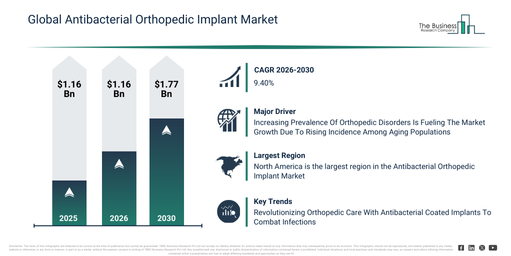
    The antibacterial orthopedic implant market is projected to experience robust expansion over the coming years, anticipated to reach $6.81 billion by 2030, exhibiting a compound annual growth rate (CAGR) of 9.4%. This growth during the forecast period is largely driven by factors such as the development of sophisticated antibacterial bone cements and coatings, a growing elderly demographic and prevalence of orthopedic conditions, the increasing embrace of joint replacement and spinal implants, breakthroughs in polymeric and composite implant technology, and the expansion of healthcare facilities like hospitals and ambulatory surgical centers. Key trends anticipated for this period encompass the increasing integration of antibacterial coatings into orthopedic implants, a rise in the application of silver and other antimicrobial agents, an uptick in joint replacement and spine surgical procedures, a growing preference for biodegradable and polymeric implants, and a concentrated effort to diminish post-surgical infection rates.

    Get A Free Sample Report With In-Depth Market Insights:

    https://thebusinessresearchcompany.com/sample_request?id=80460685&type=smp&name=Antibacterial%20Orthopedic%20Implant%20Market%20Report%202026&utm_source=Blogs&utm_medium=Paid&utm_campaign=Sep_PR

    Antibacterial Orthopedic Implant Market Opportunity Drivers: What’s Unlocking New Revenue Potential?

    The growth of the antibacterial orthopedic implant market is expected to be propelled by the increasing occurrence of orthopedic disorders. Orthopedic disorders are medical conditions that affect the musculoskeletal system, including bones, joints, muscles, tendons, and ligaments. The rising prevalence of these disorders is primarily linked to the aging population, as older adults are more susceptible to conditions such as osteoarthritis, osteoporosis, and joint degeneration due to the natural wear and tear on bones and joints over time. An antibacterial orthopedic implant aids in treating orthopedic disorders by preventing post-surgical infections, promoting faster recovery, and enhancing the long-term success of implant procedures. For instance, in January 2024, according to the UK Parliament, research from the UK-based governmental body Versus Arthritis indicated that more than 20 million people, approximately one-third of the UK population, are living with a musculoskeletal (MSK) condition. Therefore, the increasing prevalence of orthopedic disorders is driving the growth of the antibacterial orthopedic implant market.

    Antibacterial Orthopedic Implant Market Segmentation And Category Overview

    The antibacterial orthopedic implant market covered in this report is segmented –

    1) By Implant Type: Antibacterial Bone Cement, Antibacterial Bone Screws, Antibacterial Bone Plates, Antibacterial Joint Implants, Antibacterial Spinal Implants

    2) By Antibacterial Agent: Silver, Chlorhexidine, Triclosan, Iodine, Vancomycin

    3) By Material Type: Metallic Implants, Polymeric Implants, Ceramic Implants, Composites

    4) By Application: Joint Replacement, Trauma, Spine, Other Applications

    5) By End User: Hospitals, Ambulatory Surgical Centers, Clinics, Academic And Research Institutes, Defense And Military

    Subsegments:

    1) By Antibacterial Bone Cement: High-Viscosity Bone Cement, Low-Viscosity Bone Cement, Medium-Viscosity Bone Cement

    2) By Antibacterial Bone Screws: Titanium-Based Bone Screws, Stainless Steel-Based Bone Screws, Biodegradable Bone Screws

    3) By Antibacterial Bone Plates: Locking Compression Plates (LCP), Dynamic Compression Plates (DCP), Reconstruction Plates, Bone Fixation Plates

    4) By Antibacterial Joint Implants: Antibacterial Hip Implants, Antibacterial Knee Implants, Antibacterial Shoulder Implants, Antibacterial Elbow Implants

    5) By Antibacterial Spinal Implants: Spinal Fusion Implants, Spinal Rods And Screws, Intervertebral Discs, Spinal Spacer Implants

    Antibacterial Orthopedic Implant Market Innovation Trends Shaping Future Development

    Leading firms within the antibacterial orthopedic implant market are prioritizing the creation of advanced products, including antibacterial coated implants, aimed at minimizing infection risks and enhancing patient recovery. These implants feature a covering of antibacterial material, which effectively inhibits bacterial proliferation and lowers the likelihood of infections, thereby promoting better healing and sustained positive results. An example is Onkos Surgical Inc., a U.S.-based medical equipment manufacturer, which secured U.S. Food & Drug Administration (FDA) approval for its Onkos Surgical antibacterial coated implants in April 2024, representing a major achievement for the organization. This authorization permits Onkos to offer a technology specifically developed to tackle the increasing problem of bacterial contamination in orthopedic implants, especially in critical procedures like tumor and revision surgeries. The exclusive coating has demonstrated bactericidal properties, achieving a 99.999% kill rate during in-vitro testing, thus presenting a possible strategy for avoiding severe issues like implant failure, infection, and amputation.

    Antibacterial Orthopedic Implant Market Key Participants And Competitive Landscape

    Major companies operating in the antibacterial orthopedic implant market are Stryker Corporation, Zimmer Biomet Holdings Inc, Smith and Nephew plc, DePuy Synthes Inc, Exactech Inc, MicroPort Orthopedics Inc, Implantcast GmbH, aap Implantate AG, Accentus Medical Ltd, Onkos Surgical Inc, BONESUPPORT AB, Heraeus Medical GmbH, Promimic AB, Silver Bullet Therapeutics Inc, TEKNIMED SAS, BioMedtrix LLC, BioGate AG, Tecres SpA, Kyocera Medical Technologies Inc, Orthofix Medical Inc

    View The Full Antibacterial Orthopedic Implant Market Report:

    https://thebusinessresearchcompany.com/report/antibacterial-orthopedic-implant-global-market-report?utm_source=Blogs&utm_medium=Paid&utm_campaign=Sep_PR

    Antibacterial Orthopedic Implant Market Geographic Analysis: Where Is Demand Accelerating Fastest?

    North America was the largest region in the antibacterial orthopedic implant market in 2025. Asia-Pacific is expected to be the fastest-growing region in the forecast period. The regions covered in the antibacterial orthopedic implant market report are Asia-Pacific, South East Asia, Western Europe, Eastern Europe, North America, South America, Middle East, Africa.

    Reach Out To Our Team:

    The Business Research Company: https://www.thebusinessresearchcompany.com/

    Americas: +1 310-496-7795

    Asia: +44 7882 955267 & +91 8897263534

    Europe: +44 7882 955267

    Email us at: marketing@tbrc.info

    Follow us on:

    LinkedIn: https://in.linkedin.com/company/the-business-research-company

    YouTube: https://www.youtube.com/channel/UC24_fI0rV8cR5DxlCpgmyFQ

    Global Market Model: https://www.thebusinessresearchcompany.com/global-market-model
  • Anoscope Market Explained: What Is Fueling Growth To $22.32 Billion By 2030?

    Anoscope Market Explained: What Is Fueling Growth To $22.32 Billion By 2030?

    Built to provide research that’s more actionable and strategically valuable, The Business Research Company’s 2026 market reports include market attractiveness analysis, total addressable market sizing, company benchmarking matrices, interactive Excel dashboards, broader supply chain intelligence, emerging startup tracking, and in-depth product insights.

    Anoscope Market Size, Value And Growth Trajectory Through 2030

    The anoscope market size has shown substantial growth in recent years. It is anticipated to expand from $15.96 billion in 2025 to $16.94 billion in 2026, achieving a compound annual growth rate (CAGR) of 6.2%. The increase observed in the historic period is attributable to an increased prevalence of anorectal disorders, wider availability of outpatient diagnostic procedures, adoption of minimally invasive examination tools, expansion of colorectal screening programs, and improved access to primary care services.

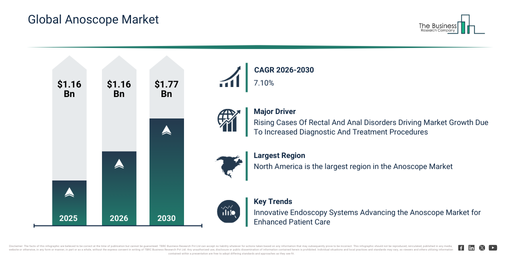
    The anoscope market size is anticipated to experience substantial expansion over the next few years, projected to grow to $22.32 billion in 2030 at a compound annual growth rate (CAGR) of 7.1%. This expansion during the forecast period can be attributed to increased awareness concerning early detection of colorectal diseases, a growing demand for single-use medical devices, the proliferation of ambulatory diagnostic settings, an intensified focus on patient comfort, and the rising adoption of advanced examination accessories. Significant trends expected during this period include the increased embrace of disposable anoscopes, a rising need for improved visualization instruments, a heightened emphasis on infection control solutions, the development of lightweight and ergonomic device designs, and enhanced integration of illumination accessories.

    Get A Free Sample Report With In-Depth Market Insights:

    https://thebusinessresearchcompany.com/sample_request?id=89218844&type=smp&name=Anoscope%20Market%20Report%202026&utm_source=Blogs&utm_medium=Paid&utm_campaign=Sep_PR

    Anoscope Market Growth Momentum: What Factors Are Shaping Demand?

    The anoscope market is expected to grow, driven by an increasing number of rectal and anal disorder cases. These conditions encompass a broad spectrum of medical issues affecting the rectum and anus, which are vital components of the digestive system for waste elimination. The rise in such disorders is often attributed to the widespread occurrence of chronic constipation and straining during bowel movements, frequently linked to diets lacking fiber and inactive lifestyles. Anoscopes play a crucial role in diagnosing and evaluating rectal and anal disorders by offering enhanced visualization of the anal canal, pinpointing sources of bleeding, and enabling healthcare providers to assess tissue health, identify abnormalities, and establish accurate diagnoses. For instance, in January 2024, the American Cancer Society, a US-based cancer research and advocacy organization, reported an estimated 10,540 new cases of anal cancer in the United States in 2023, with 3,360 affecting men and 7,180 affecting women. Additionally, approximately 2,190 deaths were recorded, including 1,000 men and 1,190 women. Consequently, the escalating incidence of rectal and anal disorders is a primary factor driving the expansion of the anoscope market.

    Anoscope Market Segment Outlook: Which Categories Are Growing Fastest?

    The anoscope market covered in this report is segmented –

    1) By Product Type: Anoscope Type, Parts And Accessories

    2) By Age Group: Adult, Pediatrics

    3) By Application: Anal Or Rectal Cancer, Fissures, Fistulas, Anal Or Rectal Abscesses, Hemorrhoids, Other Applications

    4) By End User: Hospitals, Ambulatory Surgical Centers, Clinics, Other End-Users

    Subsegments:

    1) By Anoscope Type: Rigid Anoscope, Flexible Anoscope, Disposable Anoscope

    2) By Parts And Accessories: Anoscope Covers, Light Sources, Insufflation Bulbs, Cleaning Brushes, Other Accessories

    Anoscope Market Trends Redefining Industry Growth

    Leading companies in the anoscope market are concentrating on developing innovative solutions, such as endoscopy systems, to assist physicians in gaining better visibility and performing more extensive interventions for their patients. Endoscopy systems are medical instruments comprising flexible or rigid tubes fitted with cameras and light sources, used to visualize the body’s interior for both diagnostic and therapeutic purposes. For example, in October 2023, Olympus Corporation, a Japan-based manufacturer specializing in optical and digital precision technology, unveiled its EVIS X1 Endoscopy System. This system features sophisticated imaging technologies like Dual Focus, which augments depth perception, and NBI (Narrow Band Imaging) for clearer visualization of vascular structures and mucosal patterns. Additionally, it provides an intuitive user interface with customizable settings and a high-definition display, thereby increasing the overall efficiency and effectiveness of endoscopic procedures.

    Anoscope Market Top Companies Driving Competitive Growth

    Major companies operating in the anoscope market are Medline Industries LP, OBP Medical Corporation, Sklar Surgical Instruments, HEINE Optotechnik GmbH & Co KG, Narang Medical Limited, Kolplast Poly Private Limited, LANTEX Medical Technology, Novo Surgical Inc, Elite Medtek Co Ltd, Parburch Medical Developments Ltd, MEDesign Ltd, QJ Medical, Shandong Harmowell Trade Co Ltd, Shanghai Goldenwell Medical Technology Co Ltd, Richard Wolf GmbH, B Braun Melsungen AG, ConMed Corporation, Teleflex Incorporated, Cook Medical LLC, WellCare (Wuhan) Medical Technology Co Ltd

    View The Full Anoscope Market Report:

    https://thebusinessresearchcompany.com/report/anoscope-global-market-report?utm_source=Blogs&utm_medium=Paid&utm_campaign=Sep_PR

    Anoscope Market Global Footprint: Which Region Leads The Industry?

    North America was the largest region in the anoscope market in 2025. The regions covered in the anoscope market report are Asia-Pacific, South East Asia, Western Europe, Eastern Europe, North America, South America, Middle East, Africa.

    Reach Out To Our Team:

    The Business Research Company: https://www.thebusinessresearchcompany.com/

    Americas: +1 310-496-7795

    Asia: +44 7882 955267 & +91 8897263534

    Europe: +44 7882 955267

    Email us at: marketing@tbrc.info

    Follow us on:

    LinkedIn: https://in.linkedin.com/company/the-business-research-company

    YouTube: https://www.youtube.com/channel/UC24_fI0rV8cR5DxlCpgmyFQ

    Global Market Model: https://www.thebusinessresearchcompany.com/global-market-model
  • Annuloplasty System Market Forecast To Reach $0.97 Billion By 2030: Key Trends Explained

    Annuloplasty System Market Forecast To Reach $0.97 Billion By 2030: Key Trends Explained

    Backed by market attractiveness analysis, total addressable market sizing, company benchmarking matrices, interactive Excel dashboards, wider supply chain intelligence, emerging startup coverage, and detailed product-level insights, The Business Research Company’s 2026 market reports are designed to offer research that is more actionable and strategically valuable than ever.

    Annuloplasty System Market CAGR Outlook And Future Development

    The annuloplasty system market has shown robust expansion over recent years. Its valuation is projected to increase from $0.7 billion in 2025 to $0.75 billion in 2026, reflecting a compound annual growth rate (CAGR) of 7.0%. This market’s historical growth can be attributed to the rising prevalence of valvular heart diseases, the expansion of cardiac surgery programs, the increasing adoption of surgical valve repair instead of replacement, advancements in biomaterials for implants, and improvements in surgical training and techniques.

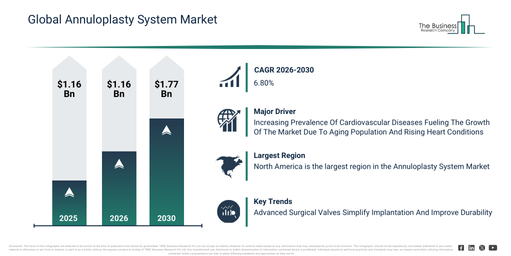
    The annuloplasty system market is projected to experience substantial expansion in the coming years. This market is predicted to reach $0.97 billion by 2030, demonstrating a compound annual growth rate (CAGR) of 6.8%. Key drivers for this growth during the forecast period include the escalating demand for minimally invasive cardiac interventions, an expanding elderly demographic experiencing valve disorders, the increasing integration of robotic cardiac surgery, the broadening availability of transcatheter treatment options, and ongoing advancements in annuloplasty device technology. Prominent trends anticipated within this period encompass a greater acceptance of minimally invasive valve repair methodologies, the expanded application of robotic-assisted annuloplasty, a growing inclination towards adaptable and customizable annuloplasty devices, the proliferation of transcatheter annuloplasty systems, and a heightened emphasis on the sustained durability of heart valves.

    Get A Free Sample Report With In-Depth Market Insights:

    https://thebusinessresearchcompany.com/sample_request?id=41675927&type=smp&name=Annuloplasty%20System%20Market%20Report%202026&utm_source=Blogs&utm_medium=Paid&utm_campaign=Sep_PR

    Annuloplasty System Market Expansion Drivers: What’s Shaping Future Growth?

    The growing occurrence of cardiovascular diseases is projected to drive the expansion of the annuloplasty system market in the future. These diseases encompass various conditions impacting the heart and blood vessels, such as coronary heart disease, heart failure, stroke, and high blood pressure. The rise in cardiovascular disease prevalence stems from an aging demographic, where age-related deterioration of the heart and blood vessels elevates the risk of cardiac issues. Annuloplasty systems assist in treating cardiovascular diseases by offering effective methods for heart valve repair, re-establishing correct valve operation, and enhancing blood circulation. These systems improve patient results through minimally invasive approaches to valve restoration, thereby shortening recovery periods and lowering surgical dangers. For example, in September 2023, data from the World Health Organization, a United Nations specialized agency based in Switzerland, showed 41 million deaths globally each year, accounting for 74% of fatalities from non-communicable diseases (NCDs) or chronic diseases. Among these, 17.9 million deaths were attributed to cardiovascular diseases, 9.3 million to cancer, 4.1 million to chronic respiratory diseases, and 2.0 million to diabetes. Consequently, the increasing prevalence of cardiovascular diseases is a key factor boosting the growth of the annuloplasty system market.

    Annuloplasty System Market Segment Landscape: Which Areas Lead Development?

    The annuloplasty system market covered in this report is segmented –

    1) By Device Type: Annular Rings And Bands, Suture Annuloplasty Devices

    2) By Procedure Type: Open Heart Surgery, Minimally Invasive Annuloplasty, Robotic Assisted Annuloplasty

    3) By Valve Type: Mitral Valve, Tricuspid Valves, Aortic Valves, Pulmonary Valves

    4) By End User: Hospitals, Ambulatory Surgical Centers, Cardiac Care Centers

    Subsegments:

    1) By Annular Rings And Bands: Rigid Annuloplasty Rings, Semi-Rigid Annuloplasty Rings, Flexible Annuloplasty Rings, Complete Annuloplasty Rings, Incomplete Annuloplasty Rings

    2) By Suture Annuloplasty Devices: Adjustable Suture Annuloplasty Devices, Non-Adjustable Suture Annuloplasty Devices, Transcatheter Suture Annuloplasty Systems, Robotic-Assisted Suture Annuloplasty Devices

    Annuloplasty System Market Strategic Trends: What Defines The Next Growth Phase?

    Leading companies in the annuloplasty system market are prioritizing the development of innovative products, such as next-generation surgical valves and devices, to boost procedural efficiency and achieve better long-term patient outcomes. Next-generation surgical valves and devices are advanced, inventive medical tools designed to simplify implantation, reduce surgical complexity, and enhance the precision and durability of valve repairs or replacements. For example, in June 2024, Medtronic plc, a US-based medical technology company, launched the Avalus Ultra valve, which is a next-generation surgical aortic tissue valve. This innovative device simplifies implantation with its low-profile valve holder and durable polyetheretherketone (PEEK) base frame, improving surgical ease and long-term performance. It also enhances blood flow dynamics and provides visibility for future valve-in-valve procedures.

    Annuloplasty System Market Leading Players And Competitive Positioning

    Major companies operating in the annuloplasty system market are Abbott Laboratories, Medtronic PLC, Boston Scientific Corporation, Edwards Lifesciences Corporation, LivaNova PLC, MicroPort Scientific Corporation, Terumo Corporation, B. Braun Melsungen AG, B. Braile Biomedica, Affluent Medical, Micro Interventional Devices Inc., NeoChord Inc., BioVentrix Inc., CryoLife Inc., Genesse BioMedical, BioStable Science & Engineering Inc., FOC Medical S.A., Cardiac Implants LLC, Medtentia International Ltd., Corcym S.r.l.

    View The Full Annuloplasty System Market Report:

    https://thebusinessresearchcompany.com/report/annuloplasty-system-global-market-report?utm_source=Blogs&utm_medium=Paid&utm_campaign=Sep_PR

    Annuloplasty System Market Regional Distribution: Which Areas Power Market Growth?

    North America was the largest region in the annuloplasty system market in 2025. Asia-Pacific is expected to be the fastest-growing region in the forecast period. The regions covered in the annuloplasty system market report are Asia-Pacific, South East Asia, Western Europe, Eastern Europe, North America, South America, Middle East, Africa.

    Reach Out To Our Team:

    The Business Research Company: https://www.thebusinessresearchcompany.com/

    Americas: +1 310-496-7795

    Asia: +44 7882 955267 & +91 8897263534

    Europe: +44 7882 955267

    Email us at: marketing@tbrc.info

    Follow us on:

    LinkedIn: https://in.linkedin.com/company/the-business-research-company

    YouTube: https://www.youtube.com/channel/UC24_fI0rV8cR5DxlCpgmyFQ

    Global Market Model: https://www.thebusinessresearchcompany.com/global-market-model
  • Angioplasty Balloons Market Analysis: Understanding The Drivers Behind 3.9% CAGR Through 2030 Growth

    Angioplasty Balloons Market Analysis: Understanding The Drivers Behind 3.9% CAGR Through 2030 Growth

    Featuring market attractiveness scoring, total addressable market sizing, company benchmarking matrices, interactive Excel dashboards, deeper supply chain intelligence, emerging startup tracking, and granular product-level insights, The Business Research Company’s 2026 market reports are built to deliver research that is both more actionable and more strategically valuable.

    Angioplasty Balloons Market Set To Climb From $2.98 Billion In 2026 To $3.47 Billion By 2030

    The angioplasty balloons market size has experienced steady expansion in recent years. This market is projected to increase from $2.85 billion in 2025 to $2.98 billion in 2026, demonstrating a compound annual growth rate (CAGR) of 4.6%. The historical growth of the market can be ascribed to several factors, including the rising prevalence of coronary artery disease, increased clinical adoption of percutaneous transluminal angioplasty, growth in hospital catheterization laboratory capacity, early availability of normal and compliant balloon catheters, and the expanding burden of peripheral artery disease.

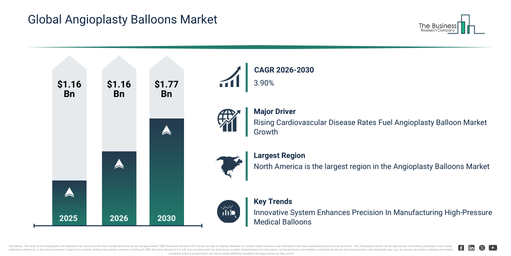
    The angioplasty balloons market is anticipated to show steady expansion in the coming years, with its size projected to reach $3.47 billion by 2030, demonstrating a compound annual growth rate (CAGR) of 3.9%. This growth throughout the forecast period can be attributed to several factors: an increasing demand for drug-eluting and specialty balloons, a rise in the volume of peripheral angioplasty procedures, the growing need for treating complex lesions with scoring and cutting balloons, the broader adoption of minimally invasive cardiovascular therapies, and enhanced investments in interventional cardiology infrastructure. Furthermore, major trends expected during this period include the increased acceptance of drug-eluting balloons for complex coronary and peripheral lesions, a rising utilization of non-compliant and semi-compliant balloons to boost procedural precision, a growing preference for scoring and cutting balloons in cases of resistant and calcified stenoses, the expansion of minimally invasive angioplasty interventions across cardiology and vascular care, and an increasing clinical move towards balloon-based revascularization for patients unsuitable for stenting.

    Get A Free Sample Report With In-Depth Market Insights:

    https://thebusinessresearchcompany.com/sample_request?id=55473211&type=smp&name=Angioplasty%20Balloons%20Market%20Report%202026&utm_source=Blogs&utm_medium=Paid&utm_campaign=Sep_PR

    Angioplasty Balloons Market Development Factors: What’s Supporting Demand?

    The future growth of the angioplasty balloons market is anticipated to be driven by the rising occurrence of cardiovascular diseases. Cardiovascular disease encompasses various conditions impacting the heart and blood vessels, frequently resulting in serious complications like heart attacks or strokes. An upward trend in cardiovascular disease is observed, attributed to factors such as inactive lifestyles, poor eating habits, increasing obesity levels, and an aging demographic. Angioplasty balloons are employed in the treatment of cardiovascular disease to expand constricted or obstructed blood vessels, thereby re-establishing adequate blood flow and mitigating the likelihood of complications like heart attacks or strokes. An illustrative example from September 2024, based on data from the Minnesota Department of Health, a US-based state health agency, indicated that about 30% of adults in Minnesota reported high blood pressure in 2023, amounting to almost 1.4 million individuals. Furthermore, in 2022, hypertensive diseases were identified as the primary or contributing cause of death for 14,225 residents, accounting for nearly 28% of all fatalities within the state. Consequently, the rising prevalence of cardiovascular diseases serves as a key driver for the expansion of the angioplasty balloons market.

    Angioplasty Balloons Market Segments: Where Is Growth Concentrated?

    The angioplasty balloons market covered in this report is segmented –

    1) By Product Type: Normal Balloons, Scoring Balloons, Drug-Eluting Balloons, Cutting Balloons

    2) By Material: Non-Compliant, Semi-Compliant

    3) By Application: Coronary Angioplasty, Peripheral Angioplasty

    4) By End User: Hospitals, Specialty Clinics, Catheterization Laboratories, Ambulatory Surgical Centers, Other End Users

    Subsegments:

    1) By Normal Balloons: Non-Compliant Balloons, Compliant Balloons

    2) By Scoring Balloons: Semi-Compliant Scoring Balloons, Non-Compliant Scoring Balloons

    3) By Drug-Eluting Balloons: Paclitaxel-Eluting Balloons, Sirolimus-Eluting Balloons, Everolimus-Eluting Balloons

    4) By Cutting Balloons: Balloon Catheters With Cutting Blades, Balloon Catheters With Radial Scoring Elements

    Angioplasty Balloons Market Transformation Trends: What Innovations Are Driving Change?

    Companies operating within the angioplasty balloons market are prioritizing the development of innovative products, such as advanced medical balloon forming systems, to enhance precision in manufacturing high-pressure balloons for critical cardiac procedures. The Advanced Medical Balloon Forming System is a specific technology for precisely producing compliant medical balloons utilized in catheter systems. For instance, in June 2024, Interface Catheter Solutions, an innovative US-based catheter technology company, introduced the BFM-5510 High Force Balloon Forming Machine. This sophisticated benchtop system is engineered for the production of low- and non-compliant polymer balloons used in angioplasty, stent placement, and other essential cardiac procedures. Building on the BFM-3310 platform, the BFM-5510 HF employs beryllium copper molds to precisely shape extruded balloon tubing, ensuring stringent quality and tight tolerances across a wide variety of sizes and shapes. This machine offers significantly enhanced production capabilities to accommodate the demands of manufacturing larger, thicker, and more complex medical balloons.

    Angioplasty Balloons Market Competitive Overview And Top Companies

    Major companies operating in the angioplasty balloons market are Johnson & Johnson, Abbott Laboratories, Medtronic Plc, Boston Scientific Corporation, B. Braun SE, Terumo Corporation, Cook Medical, Biotronik SE, Merit Medical Systems Inc, Meril Life Sciences Pvt. Ltd., MicroPort Scientific Corporation, AngioDynamics, Cordis, iVascular, Hexacath, Balton Sp, Cardionovum, QualiMed Innovative Medizinprodukte GmbH, Translumina GmbH, Concept Medical Inc

    View The Full Angioplasty Balloons Market Report:

    https://thebusinessresearchcompany.com/report/angioplasty-balloons-global-market-report?utm_source=Blogs&utm_medium=Paid&utm_campaign=Sep_PR

    Angioplasty Balloons Market Leading Geography: Which Region Contributes The Most Revenue?

    North America was the largest region in the angioplasty balloons market in 2025. Asia-Pacific is expected to be the fastest-growing region in the forecast period. The regions covered in the angioplasty balloons market report are Asia-Pacific, South East Asia, Western Europe, Eastern Europe, North America, South America, Middle East, Africa.

    Reach Out To Our Team:

    The Business Research Company: https://www.thebusinessresearchcompany.com/

    Americas: +1 310-496-7795

    Asia: +44 7882 955267 & +91 8897263534

    Europe: +44 7882 955267

    Email us at: marketing@tbrc.info

    Follow us on:

    LinkedIn: https://in.linkedin.com/company/the-business-research-company

    YouTube: https://www.youtube.com/channel/UC24_fI0rV8cR5DxlCpgmyFQ

    Global Market Model: https://www.thebusinessresearchcompany.com/global-market-model
  • Angiography Equipment Market Growth To $20.39 Billion By 2030: What’s Driving The Expansion?

    Angiography Equipment Market Growth To $20.39 Billion By 2030: What’s Driving The Expansion?

    Built to provide research that’s more actionable and strategically valuable, The Business Research Company’s 2026 market reports include market attractiveness analysis, total addressable market sizing, company benchmarking matrices, interactive Excel dashboards, broader supply chain intelligence, emerging startup tracking, and in-depth product insights.

    Angiography Equipment Market Forecast: Value Set To Climb From $14.98 Billion To $20.39 Billion

    The angiography equipment market has experienced substantial growth in recent years. It is anticipated to expand from $13.83 billion in 2025 to $14.98 billion in 2026, demonstrating a compound annual growth rate (CAGR) of 8.3%. This historical growth can be attributed to the increasing prevalence of cardiovascular diseases, the expansion of diagnostic imaging infrastructure, the rising adoption of catheter-based interventions, the growing availability of angiography systems, and improved healthcare access.

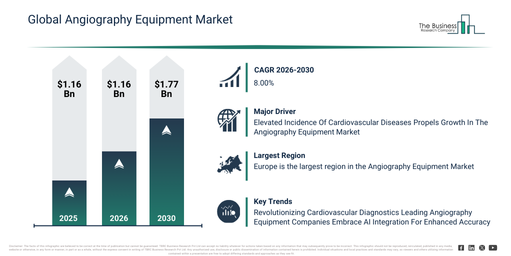
    The angiography equipment market is anticipated to experience substantial growth in the upcoming years, with its size projected to reach $20.39 billion in 2030, demonstrating a compound annual growth rate (CAGR) of 8.0%. This expansion during the forecast period is primarily driven by factors such as the escalating demand for cutting-edge vascular imaging, the increasing preference for minimally invasive diagnostic interventions, the broadened application of neuro and cardiac angiography, rising investments in digital healthcare infrastructure, and a heightened emphasis on the accuracy and efficiency of imaging. Prominent trends expected in this period include the wider adoption of digital angiography systems, the growing utilization of minimally invasive imaging techniques, the progressive integration of AI-driven image analysis, the expansion of hybrid operating rooms, and an enhanced focus on reducing radiation dosage.

    Get A Free Sample Report With In-Depth Market Insights:

    https://thebusinessresearchcompany.com/sample_request?id=76186676&type=smp&name=Angiography%20Equipment%20Market%20Report%202026&utm_source=Blogs&utm_medium=Paid&utm_campaign=Sep_PR

    Angiography Equipment Market Industry Drivers: What’s Behind The Revenue Growth?

    An increase in cardiovascular disease incidence is projected to fuel the angiography equipment market. This system employs X-ray imaging to identify blockages or narrowings in the heart’s blood vessels. The surge in cardiovascular conditions stems from the enduring health effects of the pandemic, given that COVID-19 has been observed to cause prolonged cardiovascular issues and worsen pre-existing heart ailments, resulting in a persistent rise in heart disease instances. A higher prevalence of cardiovascular illnesses directly necessitates increased use of specialized imaging systems, which visualize blood vessels and cardiac structures, thereby allowing medical professionals to diagnose blockages, evaluate heart function, and direct treatment procedures. For example, data from January 2024 released by the American Heart Association, a US-based non-profit, indicated that the age-adjusted mortality rate due to cardiovascular disease reached 233.3 per 100,000 in 2024, representing a 4.0% rise from 224.4 per 100,000 in 2023. Consequently, the growing incidence of cardiovascular illnesses is expected to persistently propel the expansion of the angiography equipment market.

    Angiography Equipment Market Segment Analysis: What Are The Core Market Categories?

    The angiography equipment market covered in this report is segmented –

    1) By Product: Angiography Systems, Angiography Catheters, Angiography Contrast Media, Vascular Closure Devices (VCDs), Angiography Balloons, Angiography Guidewires, Angiography Accessories

    2) By Technology: X-Ray Angiography, CT Angiography, MR Angiography, Other Technologies

    3) By Procedure: Coronary Angiography, Endovascular Angiography, Onco-Angiography, Neuro-Angiography, Other Procedures

    Subsegments:

    1) By Angiography Systems: X-Ray Angiography Systems, CT Angiography Systems, MR Angiography Systems

    2) By Angiography Catheters: Diagnostic Catheters, Interventional Catheters, Specialty Catheters

    3) By Angiography Contrast Media: Iodinated Contrast Agents, Gadolinium-Based Contrast Agents

    4) By Vascular Closure Devices (VCDs): Collagen-Based VCDs, Suture-Based VCDs

    5) By Angiography Balloons: Drug-Eluting Balloons, Non-Compliant Balloons, Compliant Balloons

    6) By Angiography Guidewires: Coated Guidewires, Non-Coated Guidewires, Specialty Guidewires

    7) By Angiography Accessories: Sheaths And Introducers, Access Kits

    #Angiography Equipment Market Growth Trends: What’s Shaping The Future Outlook?

    Leading companies in the angiography equipment market are increasingly concentrating on integrating artificial intelligence (AI) and machine learning to enhance the accuracy of their devices for the early detection of cardiovascular diseases. AI algorithms are instrumental in assisting with image interpretation, elevating diagnostic precision, and improving workflow efficiency. For instance, in October 2023, Abbott, a US-based healthcare and medical devices company, introduced its Ultreon 1.0 Software. This represents a notable progression in angiography equipment specifically designed for Optical Coherence Tomography (OCT) applications within interventional cardiology. The software, through its integration of AI with advanced imaging, significantly enhances decision-making during percutaneous coronary interventions (PCI). Ultreon 1.0 employs OCT technology to furnish physicians with detailed cross-sectional images of coronary arteries, facilitating a more precise assessment of plaque and coronary artery disease when compared to traditional angiography, thereby enabling faster and more accurate stent implantation.

    Angiography Equipment Market Competitive Landscape: Which Companies Lead The Industry?

    Major companies operating in the angiography equipment market are GE HealthCare Technologies Inc., Koninklijke Philips N.V., Siemens Healthineers AG, Canon Corporation, Boston Scientific Corporation, Cordis Corporation, Shimadzu Corporation, Medtronic PLC, Angiodynamics, B. Braun Melsungen, Abbott Laboratories, Terumo Corporation, Toshiba Medical System Corporation, Merit Medical Systems Inc., Hitachi Medical Systems, Carestream Health, Guerbet S.A., Bracco Imaging SpA, Lantheus Medical Imaging Inc., Esaote SpA, Mindray Medical International Limited, Neusoft Medical Systems Co. Ltd., Samsung Medison Co. Ltd., FUJIFILM Medical Systems Inc., Ziehm Imaging GmbH, Allengers Medical Systems Limit

    View The Full Angiography Equipment Market Report:

    https://thebusinessresearchcompany.com/report/angiography-equipment-global-market-report?utm_source=Blogs&utm_medium=Paid&utm_campaign=Sep_PR

    Angiography Equipment Market Regional Outlook: Where Is Opportunity Concentrated?

    Europe was the largest region in the angiography equipment market share in 2025. The regions covered in the angiography equipment market report are Asia-Pacific, South East Asia, Western Europe, Eastern Europe, North America, South America, Middle East, Africa.

    Reach Out To Our Team:

    The Business Research Company: https://www.thebusinessresearchcompany.com/

    Americas: +1 310-496-7795

    Asia: +44 7882 955267 & +91 8897263534

    Europe: +44 7882 955267

    Email us at: marketing@tbrc.info

    Follow us on:

    LinkedIn: https://in.linkedin.com/company/the-business-research-company

    YouTube: https://www.youtube.com/channel/UC24_fI0rV8cR5DxlCpgmyFQ

    Global Market Model: https://www.thebusinessresearchcompany.com/global-market-model
  • Angiographic Catheters Market Trends Reshaping Industry Growth Through 2030

    Angiographic Catheters Market Trends Reshaping Industry Growth Through 2030

    Backed by market attractiveness analysis, total addressable market sizing, company benchmarking matrices, interactive Excel dashboards, wider supply chain intelligence, emerging startup coverage, and detailed product-level insights, The Business Research Company’s 2026 market reports are designed to offer research that is more actionable and strategically valuable than ever.

    Angiographic Catheters Market Revenue Growth On Track For A 9.3% CAGR Through 2030

    The angiographic catheters market has experienced substantial growth in its size over recent years. Projections indicate its expansion from $1.42 billion in 2025 to $1.55 billion in 2026, demonstrating a compound annual growth rate (CAGR) of 9.6%. Historically, this growth was driven by factors such as the dependence on conventional angiographic catheters, restricted integration of imaging technology, a rise in the incidence of cardiovascular diseases, an increase in hospital-based interventional procedures, and the initial embrace of balloon angioplasty.

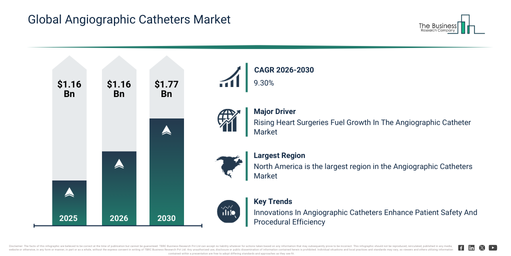
    The angiographic catheters market is projected to experience robust expansion over the coming years, reaching a size of $2.21 billion by 2030, driven by a compound annual growth rate (CAGR) of 9.3%. This anticipated growth during the forecast period is primarily attributed to advancements such as the creation of drug-eluting and scoring balloon catheters, their integration with MRA and CT technologies, increasing requirements from neurology and oncology procedures, the proliferation of cardiac and specialized medical centers, and the implementation of intelligent catheter systems capable of real-time imaging. Key trends expected during this period involve the increasing embrace of minimally invasive techniques, the broader application of drug-eluting and cutting balloon catheters, an expansion in coronary and endovascular uses, the incorporation of sophisticated imaging technologies into catheters, and a heightened emphasis on patient safety coupled with efforts to reduce procedure duration.

    Get A Free Sample Report With In-Depth Market Insights:

    https://thebusinessresearchcompany.com/sample_request?id=44217719&type=smp&name=Angiographic%20Catheters%20Market%20Report%202026&utm_source=Blogs&utm_medium=Paid&utm_campaign=Sep_PR

    Angiographic Catheters Market Growth Factors: What’s Supporting Expansion?

    The increasing number of heart operations is projected to advance the angiographic catheters market moving forward. Heart surgery, also recognized as cardiac surgery, involves various surgical procedures performed on the heart or major blood vessels. The rise in heart surgeries is attributable to several factors, such as an aging demographic, a spike in cardiovascular conditions, improvements in medical technology, and enhanced surgical outcomes. Angiographic catheters find application in heart surgeries for visualizing coronary arteries, facilitating precise diagnosis and treatment of blockages or abnormalities. For instance, in January 2024, the American Heart Association, a US-based non-profit organization, reported that the age-adjusted death rate from cardiovascular disease climbed to 233.3 per 100,000 in 2024, representing a 4.0% increase from 224.4 per 100,000 in 2023. Therefore, the growing volume of heart surgeries is propelling the expansion of the angiographic catheters market.

    Angiographic Catheters Market Segment Breakdown: Which Categories Lead On Revenue?

    The angiographic catheters market covered in this report is segmented –

    1) By Product: Conventional Catheters, Drug Eluting Balloon Catheters, Cutting Balloon Catheters, Scoring Balloon Catheters

    2) By Technology: X-Ray, Magnetic Resonance Angiography (MRA), Computed Tomography (CT)

    3) By Application: Coronary, Endovascular, Neurology, Oncology, Other Applications

    4) By End User: Hospital, Ambulatory Surgical Centers, Cardiac Centers, Brain Centers, Specialty Clinics, Other End Users

    Subsegments:

    1) By Conventional Catheters: Diagnostic Catheters, Guiding Catheters, Balloon Catheters, Drug Eluting Balloon Catheters

    2) By Drug Eluting Balloon Catheters: Paclitaxel-Eluting Balloons, Sirolimus-Eluting Balloons

    3) By Cutting Balloon Catheters: Standard Cutting Balloons, Specialty Cutting Balloons

    4) By Scoring Balloon Catheters: Semi-Compliant Scoring Balloons, Non-Compliant Scoring Balloons

    Angiographic Catheters Market Industry Trends: What’s Reshaping Demand?

    Leading companies within the angiographic catheters market are concentrating on the creation of sophisticated technologies, such as fiber optic realShape (FORS) technology, to facilitate real-time, high-resolution 3D imaging during catheter navigation. This innovation aims to minimize radiation exposure and improve precision in intricate vascular procedures. Fiber Optic RealShape (FORS) technology itself is an advanced imaging platform that utilizes light reflected through optical fibers embedded within medical devices to generate real-time, high-resolution 3D visualizations of their internal shapes, thereby enabling precise navigation throughout minimally invasive procedures. For example, in February 2024, Philips Healthcare, a health technology company based in the Netherlands, launched the LumiGuide, a light-driven, radiation-free catheter guidance system tailored for endovascular aortic procedures. Employing fiber optic realShape (FORS) technology, LumiGuide generates real-time, high-resolution, 3D images of devices within the body, allowing for navigation without the need for X-ray angiography. Its primary characteristics include enhanced 3D visualization of catheters, diminished radiation exposure, instant feedback on device orientation, and AI-supported registration for greater accuracy during complex operations. Currently accessible in select hospitals across Europe and the U.S., LumiGuide seeks to bolster patient safety and procedural efficiency.

    Angiographic Catheters Market Competitive Landscape: Who Leads The Industry?

    Major companies operating in the angiographic catheters market are Abbott Laboratories, Medtronic plc, Koninklijke Philips N.V., Becton Dickinson and Company, Boston Scientific Corporation, B. Braun Melsungen AG, Terumo Corporation, Nipro Corporation, Cook Medical Inc., Teleflex Incorporated, BIOTRONIK SE & Co. KG, Lepu Medical Technology (Beijing) Co Ltd., Merit Medical Systems Inc., Cordis Corporation, MicroPort Scientific Corporation, Asahi Intecc Co Ltd., AngioDynamics Inc., Biosensors International Group Ltd., Alvimedica Medical Technologies, BrosMed Medical Co Ltd., iVascular SLU, Reva Medical Inc.

    View The Full Angiographic Catheters Market Report:

    https://thebusinessresearchcompany.com/report/angiographic-catheters-global-market-report?utm_source=Blogs&utm_medium=Paid&utm_campaign=Sep_PR

    Angiographic Catheters Market Geographic Landscape: Which Region Leads Industry Growth?

    North America was the largest region in the angiographic catheters market in 2025. Asia-Pacific is expected to be the fastest-growing region in the forecast period. The regions covered in the angiographic catheters market report are Asia-Pacific, South East Asia, Western Europe, Eastern Europe, North America, South America, Middle East, Africa.

    Reach Out To Our Team:

    The Business Research Company: https://www.thebusinessresearchcompany.com/

    Americas: +1 310-496-7795

    Asia: +44 7882 955267 & +91 8897263534

    Europe: +44 7882 955267

    Email us at: marketing@tbrc.info

    Follow us on:

    LinkedIn: https://in.linkedin.com/company/the-business-research-company

    YouTube: https://www.youtube.com/channel/UC24_fI0rV8cR5DxlCpgmyFQ

    Global Market Model: https://www.thebusinessresearchcompany.com/global-market-model
  • Angio Suites Market Growth To $2.7 Billion Creates New Opportunities Across The Industry

    Angio Suites Market Growth To $2.7 Billion Creates New Opportunities Across The Industry

    Featuring market attractiveness scoring, total addressable market sizing, company benchmarking matrices, interactive Excel dashboards, deeper supply chain intelligence, emerging startup tracking, and granular product-level insights, The Business Research Company’s 2026 market reports are built to deliver research that is both more actionable and more strategically valuable.

    Angio Suites Market Value Growth And Long-Term Outlook

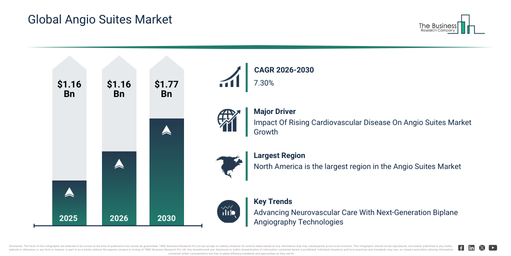
    The angio suites market size has experienced significant growth in recent years. It is projected to increase from $1.9 billion in 2025 to $2.04 billion in 2026, achieving a compound annual growth rate (CAGR) of 7.3%. Historically, this expansion is linked to the escalating burden of cardiovascular and peripheral vascular diseases, a rising demand for minimally invasive interventional procedures, increased hospital investments in advanced imaging infrastructure, the growing availability of x-ray and CT angiography platforms, and a rise in the utilization of cardiac and neuro-angiography procedures.

    The angio suites market is set to witness significant expansion in the upcoming years. It is forecast to grow to $2.7 billion in 2030 at a compound annual growth rate (CAGR) of 7.3%. This projected growth can be ascribed to factors such as the increasing adoption of bi-plane and hybrid angio suite configurations, the enhanced integration of advanced imaging and navigation technologies, the expansion of outpatient and ambulatory interventional care models, the broader penetration of oncology and peripheral vascular interventions, and the rising development of healthcare infrastructure in emerging markets. Prominent trends throughout the forecast period include the increasing deployment of hybrid angio suites to support complex multi-disciplinary interventional procedures, the growing embrace of minimally invasive image-guided vascular and neuro-interventional therapies, an increasing preference for bi-plane systems to enhance visualization accuracy and procedure efficiency, the expanding integration of radiation dose-optimization and patient safety features in angio environments, and the continued establishment of dedicated interventional radiology units across hospitals and specialty centers.

    Get A Free Sample Report With In-Depth Market Insights:

    https://thebusinessresearchcompany.com/sample_request?id=78732717&type=smp&name=Angio%20Suites%20Market%20Report%202026&utm_source=Blogs&utm_medium=Paid&utm_campaign=Sep_PR

    Angio Suites Market Demand Drivers: What’s Powering Industry Growth?

    An anticipated increase in cardiovascular disease is projected to fuel the expansion of the angio suites market in the future. This medical condition encompasses various ailments impacting the heart and blood vessels, such as coronary artery disease, heart attacks, strokes, and hypertension. Furthermore, inactive lifestyles, unhealthy eating habits, and elevated obesity rates substantially contribute to the occurrence of cardiovascular problems. Angio suites offer sophisticated imaging and interventional tools, enabling accurate diagnosis and effective treatment of intricate cardiovascular conditions via real-time visualization and less invasive procedures. For example, data from January 2024 by the American Heart Association, a US-based nonprofit, revealed that cardiovascular diseases accounted for 931,578 deaths, marking an increase of fewer than 3,000 fatalities from the 928,741 recorded in 2023. Additionally, the age-adjusted mortality rate attributable to cardiovascular disease also experienced a slight rise, reaching 233.3 per 100,000, which represents a 4.0% increase over the prior year’s rate of 224.4 per 100,000. Consequently, an increase in cardiovascular disease is poised to stimulate the growth of the angio suites market.

    Angio Suites Market Segmentation: How Does The Market Break Down By Category?

    The angio suites market covered in this report is segmented –

    1) By Type: Single-Plane, Bi-Plane

    2) By Technology: X-ray Angiography, Computed Tomography (CT) Angiography, Magnetic Resonance Angiography (MRA), Other Technologies

    3) By Application: Cardiac Angiography, Neurology Angiography, Oncology Angiography, Peripheral Vascular Angiography, Other Applications

    4) By End-User: Hospitals, Ambulatory Surgical Centers, Diagnostic Imaging Centers, Other End-Users

    Subsegments:

    1) By Single-Plane: Fixed C-arm Single-Plane Systems, Rotating C-arm Single-Plane Systems, Compact Single-Plane Systems

    2) By Bi-Plane: Fixed C-arm Bi-Plane Systems, Rotating C-arm Bi-Plane Systems, Hybrid Bi-Plane Systems

    Angio Suites Market Innovation Trends: What Developments Are Reshaping The Industry?

    Major companies operating in the angio suites market are incorporating advanced imaging technologies, such as biplane angiography systems, to enhance diagnostic accuracy, improve procedural efficiency, and provide comprehensive visualization for complex vascular interventions. A biplane angiography system simultaneously captures two perpendicular X-ray images of the vascular system, delivering real-time, high-resolution 2D and 3D visualization that aids device navigation and shortens procedure times. For instance, on February 2024, Koninklijke Philips N.V., a Netherlands-based health technology company, launched the Azurion Neuro Biplane system. The new system combines enhanced 2D and 3D imaging with flexible C-arm rotation and angulation, comprehensive table-side control, automatic beam rotation for correctly oriented images, and Neuro Suite software with ClarityIQ low-dose imaging to speed diagnosis and treatment for stroke and other neurovascular diseases.

    Angio Suites Market Company Landscape And Competitive Strategy

    Major companies operating in the angio suites market are Siemens Healthineers AG, GE Healthcare, Koninklijke Philips N.V., Canon Medical Systems Corporation, Shimadzu Corporation, Hitachi Ltd, Mindray Medical International Limited, United Imaging Healthcare, Ziehm Imaging GmbH, Omega Medical Imaging, NeuroLogica Corporation, Terumo Corporation, Boston Scientific Corporation, Medtronic plc, Abbott Laboratories, AngioDynamics Inc, Microport Scientific Corporation, Biotronik, Asahi Intecc Co Ltd, Merit Medical Systems Inc

    View The Full Angio Suites Market Report:

    https://thebusinessresearchcompany.com/report/angio-suites-global-market-report?utm_source=Blogs&utm_medium=Paid&utm_campaign=Sep_PR

    Angio Suites Market Largest Region: Which Geography Holds The Biggest Share?

    North America was the largest region in the angio suites market in 2025. Asia-Pacific is expected to be the fastest-growing region in the forecast period. The regions covered in the angio suites market report are Asia-Pacific, South East Asia, Western Europe, Eastern Europe, North America, South America, Middle East, Africa.

    Reach Out To Our Team:

    The Business Research Company: https://www.thebusinessresearchcompany.com/

    Americas: +1 310-496-7795

    Asia: +44 7882 955267 & +91 8897263534

    Europe: +44 7882 955267

    Email us at: marketing@tbrc.info

    Follow us on:

    LinkedIn: https://in.linkedin.com/company/the-business-research-company

    YouTube: https://www.youtube.com/channel/UC24_fI0rV8cR5DxlCpgmyFQ

    Global Market Model: https://www.thebusinessresearchcompany.com/global-market-model
  • Anesthesia Monitoring Devices Market Forecast: Breaking Down The Numbers Behind Future Expansion

    Anesthesia Monitoring Devices Market Forecast: Breaking Down The Numbers Behind Future Expansion

    Built to provide research that’s more actionable and strategically valuable, The Business Research Company’s 2026 market reports include market attractiveness analysis, total addressable market sizing, company benchmarking matrices, interactive Excel dashboards, broader supply chain intelligence, emerging startup tracking, and in-depth product insights.

    Anesthesia Monitoring Devices Market Poised To Hit $4.17 Billion By 2030 With A 4% CAGR

    The market size for anesthesia monitoring devices has shown consistent growth over recent years. This market is set to expand from $3.48 billion in 2025 to $3.57 billion in 2026, achieving a compound annual growth rate (CAGR) of 2.8%. The growth observed in prior periods can be attributed to an increasing volume of surgical procedures, a rising demand for safe anesthesia administration, the expansion of hospital infrastructure, the adoption of basic monitoring devices in operating rooms, and improvements in perioperative care standards.

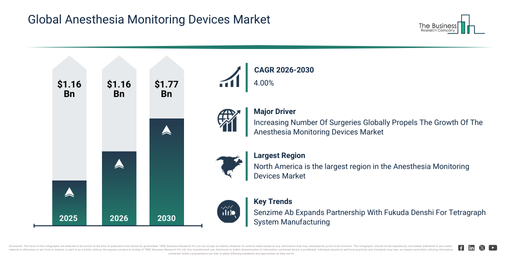
    The anesthesia monitoring devices market is projected to experience consistent expansion over the upcoming years, with its size anticipated to reach $4.17 billion in 2030 at a compound annual growth rate (CAGR) of 4.0%. This growth during the forecast period is attributable to several factors, including the increasing adoption of advanced anesthesia monitoring technologies, a rising focus on personalized anesthesia dosing, the expansion of minimally invasive surgeries, the growing integration of smart operating rooms, and increasing investments in digital healthcare infrastructure. Furthermore, key trends for the forecast period include the increasing adoption of multi-parameter monitoring systems, a rising integration of EEG and depth of anesthesia monitoring, the growing use of real-time data analytics in anesthesia care, the expansion of integrated anesthesia workstations, and an enhanced focus on patient safety and accuracy.

    Get A Free Sample Report With In-Depth Market Insights:

    https://thebusinessresearchcompany.com/sample_request?id=57958658&type=smp&name=Anesthesia%20Monitoring%20Devices%20Market%20Report%202026&utm_source=Blogs&utm_medium=Paid&utm_campaign=Sep_PR

    Anesthesia Monitoring Devices Market Growth Drivers: What’s Behind The Acceleration?

    The global rise in surgical procedures is anticipated to fuel the expansion of the anesthesia monitoring devices market. Specifically, the growing incidence of hip fracture repair, neurosurgical interventions, cesarean sections, and various other surgical operations is directly contributing to an increased need for anesthesia monitoring devices. An illustrative example from June 2024 reveals that, as per the International Society of Aesthetic Plastic Surgery (ISAPS), a US-based society of certified aesthetic plastic surgeons, the aggregate volume of surgical and non-surgical procedures in 2023 saw a 3.4% increment, totaling 34.9 million. Consequently, the expanding volume of surgeries is poised to drive the anesthesia monitoring device market forward.

    Anesthesia Monitoring Devices Market Segment Trends And Revenue Contributors

    The anesthesia monitoring devices market covered in this report is segmented –

    1) By Product: Advanced Anesthesia Monitors, Basic Anesthesia Monitors, Integrated Anesthesia Workstation

    2) By Application: Cardiology, Neurology, Dental, Ophthalmology, Urology, Orthopedics, Other Applications

    3) By End User: Hospitals, Ambulatory Surgical Centers, Clinics, Specialty Surgical Centers

    Subsegments:

    1) By Advanced Anesthesia Monitors: Multi-parameter Monitors, EEG Monitors, Gas Analyzers

    2) By Basic Anesthesia Monitors: Pulse Oximeters, Blood Pressure Monitors, Capnometers

    3) By Integrated Anesthesia Workstation: Anesthesia Delivery Systems, Ventilation Systems, Monitoring Systems

    Anesthesia Monitoring Devices Market Trends: What’s Defining The Industry’s Next Phase?

    Leading companies in the anesthesia monitoring device market are increasingly entering into strategic collaborations. These strategic partnerships represent cooperative relationships established between two or more entities to achieve particular business aims or objectives. For example, in May 2023, Senzime AB, a Swedish firm known for producing patient monitoring systems, revealed an extension of its collaboration with Fukuda Denshi, a prominent Japanese company specializing in patient monitoring. This expanded partnership encompasses the manufacturing of TetraGraph systems, a technology developed by Senzime. TetraGraph technology is employed for monitoring neuromuscular blockade during anesthesia. It operates on electromyography (EMG) technology, which measures the compound muscle action potential and offers accurate and sensitive measurements.

    Anesthesia Monitoring Devices Market Key Players Shaping Industry Direction

    Major companies operating in the anesthesia monitoring devices market are Baxter International Inc., Cardinal Health Inc., Draegerwerk AG & Co. KGaA, GE Healthcare, Heyer Medical AG, Medtronic Inc., Mindray Medical International Limited, Nihon Kohden Corporation, Philips Healthcare, Smiths Medical Inc., Infinium Medical Inc., Fukuda Denshi Co. Ltd., Ambu A/S, ACOMA Medical Industry Co., BPL Medical Technologies, Dixion GmbH, Löwenstein Medical GmbH & Co. KG, Medasense Biometrics Ltd., CNSystems Medizintechnik GmbH, Allied Medical Limited, Criticare Technologies Inc., Masimo Corporation, Spacelabs Healthcare Inc., Mennen Medical Ltd., BrainU Co. Ltd., OSI Systems Inc., Penlon Limited, Schiller AG, Bionet Co. Ltd., DRE Medical Inc., Digicare Biomedical Technology Inc.

    View The Full Anesthesia Monitoring Devices Market Report:

    https://thebusinessresearchcompany.com/report/anesthesia-monitoring-devices-global-market-report?utm_source=Blogs&utm_medium=Paid&utm_campaign=Sep_PR

    Anesthesia Monitoring Devices Market Regional Analysis: Which Geography Leads On Revenue?

    North America was the largest region in the anesthesia monitoring devices market in 2025. Asia-Pacific is expected to be the fastest-growing region in the forecast period. The regions covered in the anesthesia monitoring devices market report are Asia-Pacific, South East Asia, Western Europe, Eastern Europe, North America, South America, Middle East, Africa.

    Reach Out To Our Team:

    The Business Research Company: https://www.thebusinessresearchcompany.com/

    Americas: +1 310-496-7795

    Asia: +44 7882 955267 & +91 8897263534

    Europe: +44 7882 955267

    Email us at: marketing@tbrc.info

    Follow us on:

    LinkedIn: https://in.linkedin.com/company/the-business-research-company

    YouTube: https://www.youtube.com/channel/UC24_fI0rV8cR5DxlCpgmyFQ

    Global Market Model: https://www.thebusinessresearchcompany.com/global-market-model