Blog

  • Arrhythmia Monitoring Devices Market Set To Expand From $13.15 Billion In 2026: Growth Outlook Through 2030

    Arrhythmia Monitoring Devices Market Set To Expand From $13.15 Billion In 2026: Growth Outlook Through 2030

    Featuring market attractiveness scoring, total addressable market sizing, company benchmarking matrices, interactive Excel dashboards, deeper supply chain intelligence, emerging startup tracking, and granular product-level insights, The Business Research Company’s 2026 market reports are built to deliver research that is both more actionable and more strategically valuable.

    Arrhythmia Monitoring Devices Market Revenue Growth On Track For A 9.9% CAGR Through 2030

    The arrhythmia monitoring devices market has experienced rapid expansion in recent years. It is projected to grow from $8.16 billion in 2025 to $9.02 billion in 2026 at a compound annual growth rate (CAGR) of 10.5%. The historical growth can be attributed to the rising prevalence of cardiovascular diseases, increased use of ECG-based diagnostics, expansion of cardiac care facilities, growing awareness of arrhythmia-related risks, and the availability of portable monitoring devices.

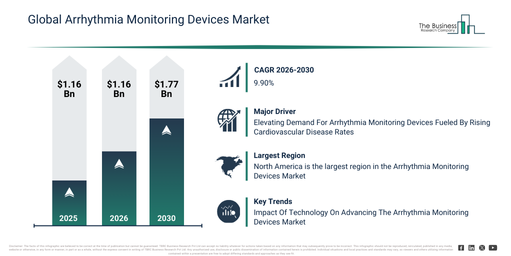
    The arrhythmia monitoring devices market size is projected to experience robust expansion in the coming years, anticipated to reach $13.15 billion by 2030, exhibiting a compound annual growth rate (CAGR) of 9.9%. This growth during the forecast period can be attributed to several factors, including the increasing uptake of remote patient monitoring, a heightened demand for continuous real-time cardiac data, the broadening scope of home-based cardiac diagnostics, the growing incorporation of AI-driven analytics, and an elevated emphasis on preventive cardiology. Key developments expected in this period encompass the wider adoption of remote cardiac monitoring solutions, the increasing utilization of wearable devices for arrhythmia detection, the expanding integration of AI-based rhythm analysis, the proliferation of long-term continuous monitoring systems, and a sharpened focus on the early diagnosis of arrhythmia.

    Get A Free Sample Report With In-Depth Market Insights:

    https://thebusinessresearchcompany.com/sample_request?id=23106874&type=smp&name=Arrhythmia%20Monitoring%20Devices%20Market%20Report%202026&utm_source=Blogs&utm_medium=Paid&utm_campaign=Sep_PR

    Arrhythmia Monitoring Devices Market Opportunity Drivers: What’s Unlocking New Revenue Potential?

    The projected increase in cardiovascular diseases is anticipated to boost the arrhythmia monitoring devices market. Cardiovascular disease (CVD) refers to conditions that impact the heart or blood vessels. Arrhythmia monitoring devices are employed to monitor irregular heart rates, which serves as a primary symptom for most cardiovascular diseases. A rise in the incidence of cardiovascular diseases consequently elevates the need for arrhythmia monitoring devices. For example, in January 2024, the American Heart Association, a US-based non-profit organization, reported that the age-adjusted death rate from cardiovascular disease climbed to 233.3 per 100,000 in 2024, representing an increase of 4.0% from 224.4 per 100,000 in 2023. Thus, the escalating incidence of cardiovascular diseases will act as a driving force for the arrhythmia monitoring devices market.

    Arrhythmia Monitoring Devices Market Segment Outlook: Which Categories Are Growing Fastest?

    The arrhythmia monitoring devices market covered in this report is segmented –

    1) By Type: ECG, Implantable Monitors, Holter Monitors, Mobile Cardiac Telemetry

    2) By Application: Bradycardia, Tachycardia, Atrial Fibrillation, Ventricular Fibrillation, Premature Contraction, Other Applications

    3) By End-User: Hospitals And Diagnostic Centers, Ambulatory Centers

    Subsegments:

    1) By ECG (Electrocardiogram): Resting ECG Machines, Stress ECG Machines, 12-Lead ECG Systems

    2) By Implantable Monitors: Implantable Loop Recorders (ILRs), Subcutaneous Implantable Cardioverter Defibrillators (S-ICDs)

    3) By Holter Monitors: 24-Hour Holter Monitors, 48-Hour Holter Monitors, 7-Day Holter Monitors

    4) By Mobile Cardiac Telemetry: Wireless Telemetry Devices, Smartphone-Integrated Telemetry Systems

    Arrhythmia Monitoring Devices Market Innovation Trends Shaping Future Development

    Technological progress stands out as a critical trend within the arrhythmia monitoring devices market. Major companies active in this market are incorporating innovative technologies such as AI and advanced detection methods to boost accuracy and manage data effectively. For example, in September 2024, iRhythm Technologies, a US-based digital healthcare company, announced it had received Japanese regulatory approval for the Zio ECG Monitoring System. The Zio system signifies a substantial advancement in cardiac arrhythmia diagnostics compared to traditional Holter monitoring, delivering superior clinical accuracy to assist doctors in making precise diagnoses from the outset. iRhythm’s deep learning technology can precisely classify a wide array of distinct arrhythmias, achieving diagnostic performance comparable to that of cardiologists. In clinical practice, this service is poised to reduce the occurrence of misdiagnosed computerized ECG interpretations and improve overall clinical efficiency.

    Arrhythmia Monitoring Devices Market Industry Leaders And Competitive Landscape

    Major companies operating in the arrhythmia monitoring devices market are Abbott Laboratories, Medtronic plc, Biotronik Inc., iRhythm Technologies Inc., GE HealthCare Technologies Inc., Koninklijke Philips NV, ACS Diagnostics Inc., AliveCor Inc., Medi-Lynx Cardiac Monitoring LLC, Spacelabs Healthcare Inc., Fukuda Denshi Co. Ltd., Applied Cardiac Systems Inc., BIOTRONIK SE & Co. KG, Nihon Kohden Corporation, CardioNet LLC, Bardy Diagnostics Inc., BioTelemetry Inc., Boston Scientific Corporation, CardioComm Solutions Inc., Cardiac Insight Inc., Cardiac Science Corporation, Johnson & Johnson, Preventice Solutions Inc., Qardio Inc., ZOLL Medical Corporation

    View The Full Arrhythmia Monitoring Devices Market Report:

    https://thebusinessresearchcompany.com/report/arrhythmia-monitoring-devices-global-market-report?utm_source=Blogs&utm_medium=Paid&utm_campaign=Sep_PR

    Arrhythmia Monitoring Devices Market Regional Analysis And Top Geography

    North America was the largest region in the arrhythmia monitoring devices market in 2025. Asia-Pacific is expected to be the fastest-growing region in the forecast period. The regions covered in the arrhythmia monitoring devices market report are Asia-Pacific, South East Asia, Western Europe, Eastern Europe, North America, South America, Middle East, Africa.

    Reach Out To Our Team:

    The Business Research Company: https://www.thebusinessresearchcompany.com/

    Americas: +1 310-496-7795

    Asia: +44 7882 955267 & +91 8897263534

    Europe: +44 7882 955267

    Email us at: marketing@tbrc.info

    Follow us on:

    LinkedIn: https://in.linkedin.com/company/the-business-research-company

    YouTube: https://www.youtube.com/channel/UC24_fI0rV8cR5DxlCpgmyFQ

    Global Market Model: https://www.thebusinessresearchcompany.com/global-market-model
  • Arrhythmia Market Size And Growth In 2026: Key Factors Shaping Future Demand

    Arrhythmia Market Size And Growth In 2026: Key Factors Shaping Future Demand

    Built to provide research that’s more actionable and strategically valuable, The Business Research Company’s 2026 market reports include market attractiveness analysis, total addressable market sizing, company benchmarking matrices, interactive Excel dashboards, broader supply chain intelligence, emerging startup tracking, and in-depth product insights.

    Arrhythmia Market Value Growth And Long-Term Outlook

    The arrhythmia market has demonstrated substantial expansion in recent years. It is anticipated to grow from $8.28 billion in 2025 to $9.03 billion in 2026, reflecting a compound annual growth rate (CAGR) of 9.0%. Historically, this market’s growth can be ascribed to the increasing prevalence of cardiovascular diseases, a rising aging population, enhanced availability of diagnostic cardiac devices, growing awareness regarding heart rhythm disorders, and the expansion of hospital cardiology departments.

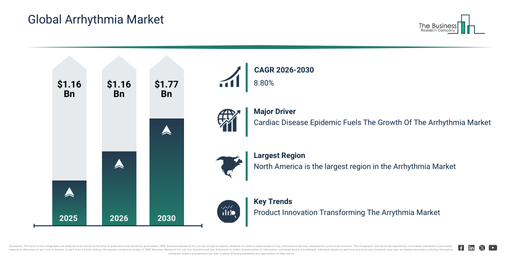
    The arrhythmia market size is anticipated to experience substantial growth in the upcoming years, projected to reach $12.65 billion by 2030, exhibiting a compound annual growth rate (CAGR) of 8.8%. This expansion over the forecast period is propelled by factors such as the increasing embrace of remote patient monitoring solutions, escalating investments in digital cardiology platforms, a heightened demand for early-stage arrhythmia detection, the broadening scope of home-based cardiac care, and continuous technological progress in cardiac diagnostics. Noteworthy trends during the forecast period include the increasing integration of AI-based arrhythmia detection tools, a rising reliance on wearable and remote cardiac monitoring devices, the expanding integration of digital ECG and Holter technologies, the evolution of personalized arrhythmia treatment approaches, and an intensified focus on early diagnosis and continuous monitoring.

    Get A Free Sample Report With In-Depth Market Insights:

    https://thebusinessresearchcompany.com/sample_request?id=57668125&type=smp&name=Arrhythmia%20Market%20Report%202026&utm_source=Blogs&utm_medium=Paid&utm_campaign=Sep_PR

    Arrhythmia Market Growth Momentum: What Factors Are Shaping Demand?

    The increasing occurrence of cardiac disease and other heart-related issues is projected to fuel the expansion of the arrhythmia market going forward. Cardiac disease, or cardiovascular disease, refers to a range of conditions affecting the heart and blood vessels, including ailments such as atherosclerosis, heart attack, stroke, and arrhythmia, among others. A high incidence of heart failure, atrial fibrillation, and other cardiovascular diseases can arise from both functional defects, such as diastolic and systolic dysfunction, and electrical abnormalities, including the development of arrhythmias. For example, in October 2024, the Centers for Disease Control and Prevention, a US-based government agency, reported that in 2023, cardiovascular disease was responsible for 919,032 lives, accounting for one in every three deaths. Coronary heart disease remained the most common form of heart disease, and notably, about one in six deaths from cardiovascular diseases occurred among adults younger than 65 years. Therefore, the growing prevalence of cardiac disease and other heart problems is driving the growth of the arrhythmia market.

    Arrhythmia Market Segment Landscape: Which Areas Lead Development?

    The arrhythmia market covered in this report is segmented –

    1) By Type: Supraventricular Tachycardias, Ventricular Arrhythmias, Bradyarrhythmias, Other Types

    2) By Test Equipment: Electrocardiogram (ECG), Holter Monitor

    3) By Hearth Blocks: First Degree Heart Block, Second Degree Heart Block, Third Degree Heart Block

    4) By Distribution Channel: Hospitals Pharmacies, Retail Pharmacies, Online Pharmacies

    Subsegments:

    1) By Supraventricular Tachycardias: Atrial Fibrillation, Atrial Flutter, Paroxysmal Supraventricular Tachycardia (PSVT)

    2) By Ventricular Arrhythmias: Ventricular Fibrillation, Ventricular Tachycardia, Premature Ventricular Contractions (PVCs)

    3) By Bradyarrhythmias: Sinus Bradycardia, Heart Block

    4) By Other Types: Long QT Syndrome, Wolff-Parkinson-White Syndrome, Torsades de Pointes

    Arrhythmia Market Trends Redefining Industry Growth

    Leading companies operating in the arrythmia market are developing new catheters to maintain their position. A catheter is a thin, flexible, tube-like medical device inserted into the body to either remove or deliver fluids and medications, or to measure various internal parameters. For instance, in July 2023, Biosense Webster, Inc., a US-based medical equipment manufacturing company, launched the Optrell Mapping Catheter with TrueRef Technology to assist electrophysiologists in mapping complex cardiac arrhythmias. It features a fixed array of small electrodes for high-definition mapping of conditions such as atrial fibrillation and tachycardia. Designed for use with the Carto 3 system by Biosense Webster, this catheter helps identify ablation targets more quickly and effectively. It provides improved diagnostic insight, boosting confidence in detecting ablation targets even in the most complex cases, marking a significant advancement in cardiac electrophysiology.

    Arrhythmia Market Key Participants And Competitive Landscape

    Major companies operating in the arrhythmia market are Medtronic PLC, Abbott Laboratories, Boston Scientific Corporation, AliveCor Inc., Biotronik SE & Co. KG, Biotricity Inc., GE Healthcare, Koninklijke Philips N.V., Nihon Kohden Corporation, Spacelabs Healthcare, Welch Allyn Inc., Mylan N.V., Lepu Medical Technology Co. Ltd., iRhythm Technologies Inc., BioTelemetry Inc., Fukuda Denshi Co. Ltd., Smart Solutions Technologies Inc., Biosense Webster Inc., Cardiac Science Corporation, CardioComm Solutions Inc., CardioNet LLC, NUUBO SMART SOLUTIONS S.L., Cardiva Medical Inc., Osypka AG, Johnson & Johnson Services Inc., Pfizer Inc, Teva Pharmaceutical Industries Ltd, Applied Cardiac Systems, Acutus Medical, EP Solutions SA

    View The Full Arrhythmia Market Report:

    https://thebusinessresearchcompany.com/report/arrhythmia-global-market-report?utm_source=Blogs&utm_medium=Paid&utm_campaign=Sep_PR

    Arrhythmia Market Geographic Analysis: Where Is Demand Rising Fastest?

    North America was the largest region in the arrhythmia market in 2025. The regions covered in the arrhythmia market report are Asia-Pacific, South East Asia, Western Europe, Eastern Europe, North America, South America, Middle East, Africa.

    Reach Out To Our Team:

    The Business Research Company: https://www.thebusinessresearchcompany.com/

    Americas: +1 310-496-7795

    Asia: +44 7882 955267 & +91 8897263534

    Europe: +44 7882 955267

    Email us at: marketing@tbrc.info

    Follow us on:

    LinkedIn: https://in.linkedin.com/company/the-business-research-company

    YouTube: https://www.youtube.com/channel/UC24_fI0rV8cR5DxlCpgmyFQ

    Global Market Model: https://www.thebusinessresearchcompany.com/global-market-model
  • Apheresis Equipment Market Forecast 2026–2030: Market Size, Trends And Growth Opportunities

    Apheresis Equipment Market Forecast 2026–2030: Market Size, Trends And Growth Opportunities

    Backed by market attractiveness analysis, total addressable market sizing, company benchmarking matrices, interactive Excel dashboards, wider supply chain intelligence, emerging startup coverage, and detailed product-level insights, The Business Research Company’s 2026 market reports are designed to offer research that is more actionable and strategically valuable than ever.

    Apheresis Equipment Market Poised To Hit $7.77 Billion By 2030 With A 12.3% CAGR

    The apheresis equipment market size has experienced rapid growth in recent years. It is projected to expand from $4.33 billion in 2025 to $4.88 billion in 2026, at a compound annual growth rate (CAGR) of 12.7%. This historic growth can be attributed to several factors, including limited access to automated apheresis equipment, the growing prevalence of renal and hematologic disorders, increasing blood donation initiatives, the adoption of centrifugation-based systems, and regulatory guidelines focused on patient safety.

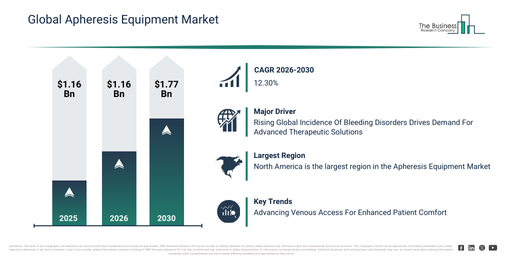
    The apheresis equipment market is projected for significant expansion in the coming years, with its size anticipated to reach $7.77 billion by 2030, demonstrating a compound annual growth rate (CAGR) of 12.3%. This growth over the forecast period can be attributed to factors such as technological progress in photopheresis and LDL apheresis, increased investment in automated and membrane-based systems, the expansion of hospital and ambulatory surgical center (ASC) infrastructure, a rising need for personalized and precision therapies, and the increasing global awareness and acceptance of therapeutic apheresis. Key trends anticipated during this period involve a heightened demand for automated apheresis systems, expanded application of apheresis in hematological and renal treatments, increased integration of membrane filtration technologies, the proliferation of blood donation and therapeutic facilities, and a strong focus on patient safety and stringent quality control protocols.

    Get A Free Sample Report With In-Depth Market Insights:

    https://thebusinessresearchcompany.com/sample_request?id=63596940&type=smp&name=Apheresis%20Equipment%20Market%20Report%202026&utm_source=Blogs&utm_medium=Paid&utm_campaign=Sep_PR

    Apheresis Equipment Market Expansion Drivers: What’s Shaping Future Growth?

    The anticipated increase in blood disorder cases is expected to propel the growth of the apheresis equipment market going forward. Hemophilia is a genetic blood condition characterized by a deficiency in clotting factors, leading to prolonged bleeding and requiring specialized treatments such as plasma and clotting factor replacement. The growing number of patients with hemophilia is driven by improved diagnosis and reporting, as well as population expansion. Apheresis equipment supports the effective management of Hemophilia by enabling the precise separation and collection of blood components for therapeutic use, improving treatment efficiency and patient outcomes. For instance, the World Federation of Hemophilia, a Canada-based organization, indicated in October 2024 that in 2023, there were 390,630 identified patients with hemophilia across 119 countries. Therefore, the rising prevalence of blood disorders is driving the growth of the apheresis equipment market.

    Apheresis Equipment Market Segments: Where Is Growth Concentrated?

    The apheresis equipment market covered in this report is segmented –

    1) By Product Type: Plasmapheresis Equipment, Photopheresis Equipment, Low-Density Lipoprotein (LDL) Apheresis Equipment, Other Product Types

    2) By Technology Type: Centrifugation, Membrane Filtration

    3) By Application: Renal Diseases, Hematology, Neurology, Other Applications

    4) By End User: Hospitals, Ambulatory Surgical Centers (ASCs), Blood Donation Centers, Other End Users

    Subsegments:

    1) By Plasmapheresis Equipment: Automated Plasmapheresis Systems, Manual Plasmapheresis Systems, Plasma Exchange Devices, Plasma Collection Devices, Plasma Filtration Systems

    2) By Photopheresis Equipment: Extracorporeal Photopheresis Systems, In Vivo Photopheresis Devices, Photoactivation Equipment

    3) By Low-Density Lipoprotein (LDL) Apheresis Equipment: Cascade Filtration Systems, Immunoadsorption Systems, Selective Low-Density Lipoprotein Removal Devices

    4) By Other Product Types: Leukapheresis Equipment, Red Blood Cell Apheresis Devices, Plateletpheresis Systems, Stem Cell Apheresis Devices

    Apheresis Equipment Market Strategic Trends: What Defines The Next Growth Phase?

    Leading companies in the apheresis equipment market are concentrating on developing advanced products, such as sophisticated venous access techniques, to enhance patient comfort, decrease procedure time, and improve treatment effectiveness. Venous access techniques encompass advanced methods and technologies designed to make the insertion of needles or catheters into veins easier, safer, and more efficient. For example, in April 2023, Fresenius Kabi AG, a Germany-based medical technology company, introduced a single-needle venous access option for its Amicus extracorporeal photopheresis (ECP) system. This innovation allows clinicians to effortlessly switch between single-needle and double-needle access during procedures. It also features advanced software enhancements and a single-use disposable kit engineered for simple configuration, which further streamlines clinical workflows. This advancement improves patient comfort, minimizes the likelihood of complications, and optimizes the overall efficiency of apheresis treatments.

    Apheresis Equipment Market Top Companies Driving Competitive Growth

    Major companies operating in the apheresis equipment market are Asahi Kasei Medical Co. Ltd., Baxter International Inc., Fresenius Kabi AG, Terumo Blood and Cell Technologies Inc., Kaneka Corporation, Sumitomo Bakelite Co. Ltd., Nikkiso Co. Ltd., Haemonetics Corporation, Miltenyi Biotec GmbH, Macopharma S.A., B. Braun Melsungen AG, Cerus Corporation, Infomed S.A., Medica S.p.A., Baihe Medical Technology Co. Ltd., Brightwake Limited, Kawasumi Laboratories Inc., Haier Biomedical Co. Ltd., Nigale Biomedical Inc., Apheresis Technologies LLC

    View The Full Apheresis Equipment Market Report:

    https://thebusinessresearchcompany.com/report/apheresis-equipment-global-market-report?utm_source=Blogs&utm_medium=Paid&utm_campaign=Sep_PR

    Apheresis Equipment Market Global Footprint: Which Region Leads The Market?

    North America was the largest region in the apheresis equipment market in 2025. Asia-Pacific is expected to be the fastest-growing region in the forecast period. The regions covered in the apheresis equipment market report are Asia-Pacific, South East Asia, Western Europe, Eastern Europe, North America, South America, Middle East, Africa.

    Reach Out To Our Team:

    The Business Research Company: https://www.thebusinessresearchcompany.com/

    Americas: +1 310-496-7795

    Asia: +44 7882 955267 & +91 8897263534

    Europe: +44 7882 955267

    Email us at: marketing@tbrc.info

    Follow us on:

    LinkedIn: https://in.linkedin.com/company/the-business-research-company

    YouTube: https://www.youtube.com/channel/UC24_fI0rV8cR5DxlCpgmyFQ

    Global Market Model: https://www.thebusinessresearchcompany.com/global-market-model
  • Apheresis Consumables And Equipment Market Size Reaches $4.16 Billion In 2026: What Is Driving Growth?

    Apheresis Consumables And Equipment Market Size Reaches $4.16 Billion In 2026: What Is Driving Growth?

    Featuring market attractiveness scoring, total addressable market sizing, company benchmarking matrices, interactive Excel dashboards, deeper supply chain intelligence, emerging startup tracking, and granular product-level insights, The Business Research Company’s 2026 market reports are built to deliver research that is both more actionable and more strategically valuable.

    Apheresis Consumables And Equipment Market Size And Revenue Outlook Through 2030

    The apheresis consumables and equipment market size has experienced rapid growth in recent years. It is projected to expand from $3.76 billion in 2025 to $4.16 billion in 2026, at a compound annual growth rate (CAGR) of 10.7%. The growth observed in the historical period can be attributed to factors such as limited automation in apheresis procedures, a reliance on manual devices, increasing awareness of hematology and renal disease management, a rise in blood donation drives, and the use of conventional filtration and separation methods.

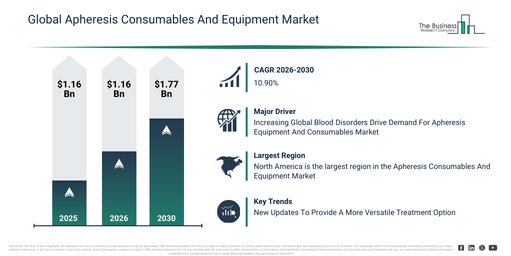
    The apheresis consumables and equipment market is projected to experience substantial expansion over the coming years. Its valuation is anticipated to reach $6.29 billion by 2030, showing a robust compound annual growth rate (CAGR) of 10.9%. This anticipated expansion throughout the forecast period stems from factors such as innovations in automated apheresis technologies, an escalating need for plasma-derived treatments, the proliferation of stem cell harvesting methods, stricter regulatory requirements for single-use items and equipment, and the incorporation of digital monitoring and IoT-powered platforms. Key developments expected during this period encompass a heightened demand for automated apheresis equipment, broader utilization of disposable kits and tubing sets, an increase in plasma and plateletpheresis interventions, the implementation of sophisticated centrifugation and membrane filtration techniques, and an intensified emphasis on patient well-being and the caliber of blood components.

    Get A Free Sample Report With In-Depth Market Insights:

    https://thebusinessresearchcompany.com/sample_request?id=65579193&type=smp&name=Apheresis%20Consumables%20And%20Equipment%20Market%20Report%202026&utm_source=Blogs&utm_medium=Paid&utm_campaign=Sep_PR

    Apheresis Consumables And Equipment Market Development Factors: What’s Supporting Demand?

    The Apheresis Consumables And Equipment Market is expected to expand due to the growing incidence of chronic conditions. Chronic diseases are long-term health issues that persist for extended durations, often throughout an individual’s life, and typically lack a complete cure. Apheresis consumables and equipment are essential for managing these conditions by facilitating the targeted collection or removal of blood components in cases such as autoimmune disorders, familial hypercholesterolemia, sickle cell disease, and stem cell harvesting. For instance, in 2023, a report from the National Library of Medicine, a US-based government medical library, projected that by 2035, approximately 36% of US adults aged 50 and older would have at least one chronic condition, a number anticipated to increase to nearly 48% by 2050. This surge in chronic conditions is therefore a key driver for the apheresis consumables and equipment market.

    Apheresis Consumables And Equipment Market Segment Analysis: What Are The Core Market Categories?

    The apheresis consumables and equipment market covered in this report is segmented –

    1) By Product: Disposables, Devices

    2) By Technology: Centrifugation, Membrane Filtration

    3) By Procedure: Photopheresis, Plasmapheresis, LDL Apheresis, Plateletpheresis, Leukapheresis, Erythrocytapheresis, Other Procedures

    4) By Application: Renal Disease, Neurology, Hematology, Other Applications

    Subsegments:

    1) By Disposables: Apheresis Kits, Tubing Sets, Filters, Collection Bags, Anticoagulants

    2) By Devices: Automated Apheresis Devices, Manual Apheresis Devices, Centrifuges, Plasmapheresis Devices

    Apheresis Consumables And Equipment Market Transformation Trends: What Innovations Are Driving Change?

    Leading companies involved in apheresis consumables and equipment are introducing advanced versions, such as the Amicus Extracorporeal Photopheresis single-needle option, to offer versatile therapy. This Amicus Extracorporeal Photopheresis single-needle feature is an updated component of the Amicus Extracorporeal Photopheresis (ECP) System, which enables the collection and return of blood elements through a singular venous access point during the photopheresis procedure. For example, in April 2023, Fresenius Kabi, a Germany-based healthcare enterprise, unveiled this single-needle choice for its Amicus Extracorporeal Photopheresis (ECP) System. The refinement for the Amicus ECP system comprises new software iterations for the Amicus Separator and the Phelix Photoactivation Device, along with a disposable kit for either single or double-needle venous entry. This improvement provides for more flexible treatment, especially aiding patients who have limited venous access. The system’s principal therapeutic purpose is extracorporeal photopheresis, a leukapheresis-based intervention for cutaneous T-cell lymphoma (CTCL).

    Apheresis Consumables And Equipment Market Leading Players And Competitive Positioning

    Major companies operating in the apheresis consumables and equipment market are Asahi Kasei Medical Co. Ltd., Haemonetics Corporation, Kawasumi Laboratories Inc., Fresenius SE & Co. KGaA, Terumo BCT, Braun Melsungen AG, Therakos Inc., HemaCare Corporation, Cerus Corporation, Kaneka Corporation, Nikkiso Co., Medica SpA, Terumo Corporation, Macopharma, Grifols S.A., Baxter International Inc., Fenwal Inc., Miltenyi Biotec GmbH, Infomed SA, Lmb Technologie GmbH, Medivators Inc., Nigale Biomedical Inc., Aferetica S.r.l., Apheresis Care Group, Beijing Meso-Tech Co. Ltd., Biegler GmbH, Brightwake Ltd., Cytosorbents Corporation, DePuy Synthes Companies, Guangzhou Daji Medical Science and Technology Co. Ltd., Haier Biomedical

    View The Full Apheresis Consumables And Equipment Market Report:

    https://thebusinessresearchcompany.com/report/apheresis-consumables-and-equipment-global-market-report?utm_source=Blogs&utm_medium=Paid&utm_campaign=Sep_PR

    Apheresis Consumables And Equipment Market Regional Split: Which Areas Are Fueling Growth?

    North America was the largest region in the apheresis consumables and equipment market in 2025. Western Europe was the second-largest region in the global apheresis consumables and equipment market share. The regions covered in the apheresis consumables and equipment market report are Asia-Pacific, South East Asia, Western Europe, Eastern Europe, North America, South America, Middle East, Africa.

    Reach Out To Our Team:

    The Business Research Company: https://www.thebusinessresearchcompany.com/

    Americas: +1 310-496-7795

    Asia: +44 7882 955267 & +91 8897263534

    Europe: +44 7882 955267

    Email us at: marketing@tbrc.info

    Follow us on:

    LinkedIn: https://in.linkedin.com/company/the-business-research-company

    YouTube: https://www.youtube.com/channel/UC24_fI0rV8cR5DxlCpgmyFQ

    Global Market Model: https://www.thebusinessresearchcompany.com/global-market-model
  • Aortic Stent Grafts Market Valued At $5.3 Billion In 2026: Key Trends And Growth Drivers

    Aortic Stent Grafts Market Valued At $5.3 Billion In 2026: Key Trends And Growth Drivers

    Built to provide research that’s more actionable and strategically valuable, The Business Research Company’s 2026 market reports include market attractiveness analysis, total addressable market sizing, company benchmarking matrices, interactive Excel dashboards, broader supply chain intelligence, emerging startup tracking, and in-depth product insights.

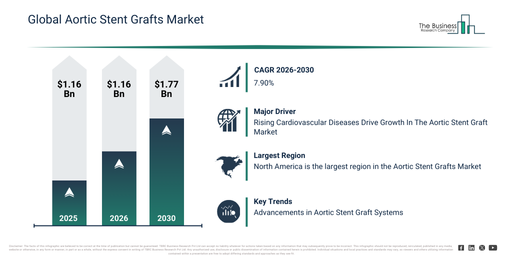
    Aortic Stent Grafts Market Growth From $3.9 Billion In 2026 To $5.3 Billion By 2030 At A CAGR Of 7.9%

    The aortic stent grafts market has demonstrated substantial growth over recent years. Its value is anticipated to rise from $3.59 billion in 2025 to $3.9 billion in 2026, achieving a compound annual growth rate (CAGR) of 8.8%. The observed expansion in past periods can be attributed to the escalating incidence of abdominal and thoracic aortic aneurysms, the prompt adoption of EVAR and TEVAR techniques, enhancements in vascular surgery infrastructure, the wider availability of endovascular device technologies, and the expanding older population with cardiovascular health concerns.

    The aortic stent grafts market is projected to expand significantly over the coming years, reaching $5.3 billion by 2030, driven by a compound annual growth rate (CAGR) of 7.9%. This projected growth is linked to several factors, including a rise in procedural volumes within ambulatory and outpatient surgical centers, a growing demand for advanced and hybrid stent graft systems, the expansion of screening initiatives for detecting aortic aneurysms, increased investments in minimally invasive vascular therapies, and a heightened emphasis on minimizing postoperative complications and duration of hospital stays. Key trends anticipated during this period involve a rising preference for minimally invasive endovascular repair compared to traditional open aortic surgery, the expanding clinical acceptance of customizable and modular aortic stent graft designs, an escalating demand for next-generation graft materials that provide enhanced flexibility and durability, broader application of stent grafts in intricate abdominal and thoracic aneurysm cases, and a growing emphasis on early aneurysm intervention to mitigate rupture risk.

    Get A Free Sample Report With In-Depth Market Insights:

    https://thebusinessresearchcompany.com/sample_request?id=26111078&type=smp&name=Aortic%20Stent%20Grafts%20Market%20Report%202026&utm_source=Blogs&utm_medium=Paid&utm_campaign=Sep_PR

    Aortic Stent Grafts Market Industry Drivers: What’s Behind The Revenue Growth?

    The expanding prevalence of cardiovascular ailments is expected to fuel the expansion of the aortic stent graft market. This surge in cardiovascular conditions largely stems from lifestyle elements like inadequate nutrition, insufficient physical activity, tobacco use, and escalating obesity levels. Aortic stent grafts serve a crucial role in managing cardiovascular disease by mending and strengthening compromised or injured segments of the aorta, especially when aneurysms are present. As an illustration, data from January 2024 by the British Heart Foundation, a UK-based charity focused on cardiovascular research, indicated that coronary heart disease (CHD) was a significant contributor to mortality in the UK, leading to approximately 68,000 fatalities each year. This figure corresponds to an average of 190 deaths daily, equating to about one death every eight minutes. In the UK, CHD is responsible for the deaths of one in eight men and one in 14 women. Consequently, the increasing incidence of cardiovascular diseases is a key factor propelling the development of the aortic stent graft market.

    Aortic Stent Grafts Market Segment Breakdown: Which Categories Lead On Revenue?

    The aortic stent grafts market covered in this report is segmented –

    1) By Product: Abdominal Aortic Stents Graft, Thoracic Aortic Stents Graft

    2) By Indication: Abdominal Aortic Aneurysms, Thoracic Aortic Aneurysms

    3) By End User: Hospitals, Ambulatory Surgical Centers Or Outpatient Surgical Centers, Other End-Users

    Subsegments:

    1) By Abdominal Aortic Stent Graft: Endovascular Aneurysm Repair (EVAR) Stent Grafts, Aortic Aneurysm Stent Grafts

    2) By Thoracic Aortic Stent Graft: Thoracic Endovascular Aortic Repair (TEVAR) Stent Grafts, Hybrid Aortic Stent Grafts

    #Aortic Stent Grafts Market Growth Trends: What’s Shaping The Future Outlook?

    Leading companies operating within the aortic stent graft market are concentrating on developing sophisticated products, such as stent-graft systems that provide improved stability, enhanced flexibility, and reduced risks of complications. A stent-graft system is defined as a medical device utilized in endovascular procedures to address aneurysms, comprising a stent for structural support and a graft to reinforce the vessel wall. For example, in August 2024, Terumo India, a medical device company based in India, introduced the TREO Abdominal Stent-graft system. The TREO Abdominal Stent-Graft System represents an advanced endovascular device crafted for treating infrarenal abdominal aortic aneurysms, featuring characteristics like in situ limb adjustability, superior sealing, and firm fixation, all contributing to greater stability and better long-term patient outcomes.

    Aortic Stent Grafts Market Competitive Overview And Top Companies

    Major companies operating in the aortic stent grafts market are Medtronic plc, W.L. Gore & Associates Inc, Terumo Corporation, Cook Medical Inc, Endologix Inc, Lombard Medical Ltd, MicroPort Scientific Corporation, Jotec GmbH, Braile Biomédica, Merit Medical Systems Inc, Endospan Ltd, Lifetech Scientific (Shenzhen) Co Ltd, Biomerics LLC, Bentley InnoMed GmbH, Trivascular Inc, Abbott Laboratories, Becton Dickinson and Company, Biotronik SE & Co KG, Altura Medical Inc, S&G Biotech Inc

    View The Full Aortic Stent Grafts Market Report:

    https://thebusinessresearchcompany.com/report/aortic-stent-grafts-global-market-report?utm_source=Blogs&utm_medium=Paid&utm_campaign=Sep_PR

    Aortic Stent Grafts Market Top Region: Where Does Most Revenue Come From?

    North America was the largest region in the aortic stent grafts market in 2025. Asia-Pacific is expected to be the fastest-growing region in the forecast period. The regions covered in the aortic stent grafts market report are Asia-Pacific, South East Asia, Western Europe, Eastern Europe, North America, South America, Middle East, Africa.

    Reach Out To Our Team:

    The Business Research Company: https://www.thebusinessresearchcompany.com/

    Americas: +1 310-496-7795

    Asia: +44 7882 955267 & +91 8897263534

    Europe: +44 7882 955267

    Email us at: marketing@tbrc.info

    Follow us on:

    LinkedIn: https://in.linkedin.com/company/the-business-research-company

    YouTube: https://www.youtube.com/channel/UC24_fI0rV8cR5DxlCpgmyFQ

    Global Market Model: https://www.thebusinessresearchcompany.com/global-market-model
  • Aortic Endograft Market Size In 2026: Growth Outlook And Forecast Through 2030

    Aortic Endograft Market Size In 2026: Growth Outlook And Forecast Through 2030

    Backed by market attractiveness analysis, total addressable market sizing, company benchmarking matrices, interactive Excel dashboards, wider supply chain intelligence, emerging startup coverage, and detailed product-level insights, The Business Research Company’s 2026 market reports are designed to offer research that is more actionable and strategically valuable than ever.

    Aortic Endograft Market Expansion Outlook: What Revenue Opportunities Are Ahead?

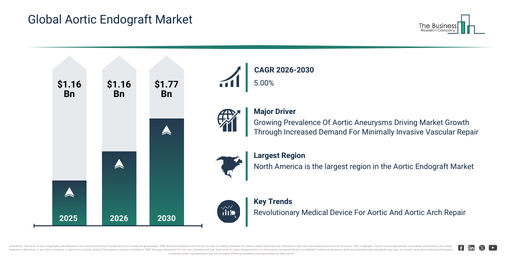
    The aortic endograft market has experienced steady growth in recent years. It is anticipated to expand from $3.52 billion in 2025 to $3.7 billion in 2026, demonstrating a compound annual growth rate (CAGR) of 5.0%. Factors contributing to this historical growth include an increasing incidence of aortic aneurysms, the broader adoption of endovascular surgery, advancements in imaging for vascular interventions, the availability of advanced stent materials, and heightened surgeon expertise in minimally invasive techniques.

    The aortic endograft market is projected to experience consistent expansion over the upcoming years. Its valuation is anticipated to reach $4.5 billion by 2030, demonstrating a compound annual growth rate (CAGR) of 5.0%. This projected growth is primarily driven by factors such as an expanding elderly demographic grappling with vascular conditions, a heightened inclination towards endovascular interventions, the development of customized vascular implants, increased capital directed towards advanced graft materials, and a burgeoning need for quicker post-operative recovery options. Key trends identified for this period encompass a greater uptake of minimally invasive aneurysm repair techniques, an increase in the application of fenestrated and branched endografts, a rising call for tailored stent graft designs, the broadening scope of EVAR procedures, and an intensified emphasis on ensuring the long-term effectiveness of grafts.

    Get A Free Sample Report With In-Depth Market Insights:

    https://thebusinessresearchcompany.com/sample_request?id=11071892&type=smp&name=Aortic%20Endograft%20Market%20Report%202026&utm_source=Blogs&utm_medium=Paid&utm_campaign=Sep_PR

    Aortic Endograft Market Growth Factors: What’s Supporting Expansion?

    The increasing incidence of aortic aneurysms is anticipated to drive the expansion of the aortic endograft market. An aortic aneurysm refers to an abnormal, localized enlargement or protrusion of the aorta, the primary artery in the human body. This surge in aortic aneurysm cases stems from an aging global population and a high occurrence of related health issues such as hypertension and atherosclerosis. The rising prevalence of aortic aneurysms boosts the aortic endograft segment by fueling the need for endovascular repair devices, which offer minimally invasive solutions compared to traditional open surgery, thereby lowering procedural risks and enhancing patient recovery outcomes. As an illustration, data from Government Digital Service, a UK-based public sector information website, showed that in February 2023, approximately 274,800 men were invited for screening, with 79.0% undergoing a conclusive screen, leading to the identification of 1,794 aneurysms. Consequently, the increasing occurrence of aortic aneurysms is a key factor propelling the expansion of the aortic aneurysm market.

    Aortic Endograft Market Segmentation: How Does The Market Break Down By Category?

    The aortic endograft market covered in this report is segmented –

    1) By Product: Abdominal Aortic Grafts, Thoracic Aortic Grafts

    2) By Material: Metallic Endografts, Polymeric Endografts

    3) By Procedure: Open Surgical Repair, Endovascular Aneurysm Repair (EVAR)

    4) By End User: Hospitals, Ambulatory Surgical Centers

    Subsegments:

    1) By Abdominal Aortic Grafts: Fenestrated Aortic Grafts, Branched Aortic Grafts, Conventional Aortic Grafts

    2) By Thoracic Aortic Grafts: Stented Thoracic Aortic Grafts, Non-Stented Thoracic Aortic Grafts, Hybrid Thoracic Aortic Grafts

    Aortic Endograft Market Industry Trends: What’s Reshaping Demand?

    Prominent companies within the aortic endograft market are creating advanced solutions, such as the castor-branched aortic stent graft system, to secure a competitive advantage. This particular system, the castor-branched aortic stent graft, serves as a medical instrument for the less invasive repair of the aorta and its arch, especially in instances of Stanford type B aortic dissection (TBAD). As an illustration, in August 2024, Terumo India, a medical technology firm based in India and a subsidiary of Terumo Corporation, introduced its TREO Stent-Graft System, representing an inventive approach to Endovascular Aneurysm Repair (EVAR). This sophisticated system is engineered for managing infrarenal abdominal aortic aneurysms in adult patients possessing suitable anatomies and stands out as the sole EVAR graft providing both suprarenal and infrarenal active fixation.

    Aortic Endograft Market Competitive Landscape: Which Companies Lead The Industry?

    Major companies operating in the aortic endograft market are Abbott Laboratories, Medtronic Plc, Boston Scientific Corporation, Terumo Corporation, W. L. Gore & Associates Inc., Cook Medical Inc., LifeTech Scientific Corporation, MicroPort Scientific Corporation, CryoLife Inc., Endologix LLC, Braile Biomédica Indústria Comércio e Representações Ltda., Nano Endoluminal S.A., JOTEC GmbH, Lombard Medical Inc., Aptus Endosystems Inc., Lombardi SA, Cardiatis S.A., Endospan Ltd., Transcatheter Technologies GmbH, Vascutek Ltd.

    View The Full Aortic Endograft Market Report:

    https://thebusinessresearchcompany.com/report/aortic-endograft-global-market-report?utm_source=Blogs&utm_medium=Paid&utm_campaign=Sep_PR

    Aortic Endograft Market Regional Breakdown: Where Is Demand Concentrated?

    North America was the largest region in the aortic endograft market in 2025. Asia-Pacific is expected to be the fastest-growing region in the forecast period. The regions covered in the aortic endograft market report are Asia-Pacific, South East Asia, Western Europe, Eastern Europe, North America, South America, Middle East, Africa.

    Reach Out To Our Team:

    The Business Research Company: https://www.thebusinessresearchcompany.com/

    Americas: +1 310-496-7795

    Asia: +44 7882 955267 & +91 8897263534

    Europe: +44 7882 955267

    Email us at: marketing@tbrc.info

    Follow us on:

    LinkedIn: https://in.linkedin.com/company/the-business-research-company

    YouTube: https://www.youtube.com/channel/UC24_fI0rV8cR5DxlCpgmyFQ

    Global Market Model: https://www.thebusinessresearchcompany.com/global-market-model
  • Anti-Snoring Devices Market Trends Supporting 10.9% CAGR Growth Through 2030

    Anti-Snoring Devices Market Trends Supporting 10.9% CAGR Growth Through 2030

    Featuring market attractiveness scoring, total addressable market sizing, company benchmarking matrices, interactive Excel dashboards, deeper supply chain intelligence, emerging startup tracking, and granular product-level insights, The Business Research Company’s 2026 market reports are built to deliver research that is both more actionable and more strategically valuable.

    Anti-Snoring Devices Market Growth Potential: How Will Market Size Shift Through 2030?

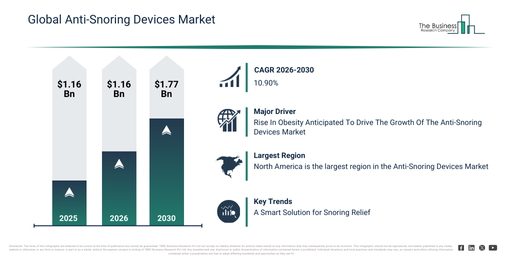
    The anti-snoring devices market has experienced significant growth over recent years. It is projected to expand from $1.9 billion in 2025 to $2.1 billion in 2026, exhibiting a compound annual growth rate (CAGR) of 10.3%. This historical growth is primarily due to factors such as the rising prevalence of sleep-disordered breathing, increased awareness of sleep health, the broader adoption of home healthcare, the availability of over-the-counter snoring solutions, and the expansion of sleep clinics.

    The anti-snoring devices market is projected to experience substantial expansion in the coming years. Its valuation is set to reach $3.18 billion in 2030, exhibiting a compound annual growth rate (CAGR) of 10.9%. This anticipated growth during the forecast period is driven by factors such as a surge in demand for connected sleep monitoring tools, the rising uptake of AI-powered sleep analytics, the broadening scope of preventive sleep healthcare, an intensified focus on non-surgical approaches to snoring management, and increased consumer expenditure on sleep wellness. Key developments expected within this period involve the greater adoption of smart anti-snoring wearables, an uptick in the utilization of mandibular advancement devices, an increasing call for home-based sleep solutions, the expansion of non-invasive snoring treatments, and a heightened emphasis on personalized sleep health devices.

    Get A Free Sample Report With In-Depth Market Insights:

    https://thebusinessresearchcompany.com/sample_request?id=83465761&type=smp&name=Anti-Snoring%20Devices%20Market%20Report%202026&utm_source=Blogs&utm_medium=Paid&utm_campaign=Sep_PR

    Anti-Snoring Devices Market Demand Drivers: What’s Powering Industry Growth?

    The anti-snoring devices market is anticipated to expand in the future due to the rising occurrence of obesity. Obesity is defined as excessive or abnormal weight accumulation that presents health hazards. For obese individuals, anti-snoring devices, such as mouthpieces, help manage snoring by repositioning the jaw forward, which stops the tongue from receding and blocking the airway. A relevant example from May 2025, cited by the Office for Health Improvement and Disparities, a UK government organization, indicated that between 2023 and 2024, approximately 64.5% of English adults aged 18 and above were either overweight or obese. This figure represents an increase from 64.0% recorded from 2022 to 2023. Consequently, the expanding prevalence of obesity is fueling the growth of the anti-snoring devices market.

    Anti-Snoring Devices Market Segment Trends And Revenue Contributors

    The anti-snoring devices market covered in this report is segmented –

    1) By Product Type: Mandibular Advancement Devices (MADS), Tongue Retaining Devices (TRD), Nasal Dilator, Chin Strap, Position Control, Pillow

    2) By Gender: Men, Women

    3) By Age Group: Between 40 And 59 Years, 60 And Above Years, Below 40 Years

    4) By End User: Sleep Clinics, Home Healthcare

    Subsegments:

    1) By Mandibular Advancement Devices (MADS): Adjustable MADS, Fixed MADS

    2) By Tongue Retaining Devices (TRD): Soft TRD, Rigid TRD

    3) By Nasal Dilator: External Nasal Dilators, Internal Nasal Dilators

    4) By Chin Strap: Adjustable Chin Straps, Elastic Chin Straps

    5) By Position Control: Positional Pillows, Sleep Positioners

    6) By Pillow: Anti-Snoring Pillows, Contoured Pillows

    Anti-Snoring Devices Market Innovation Trends: What Developments Are Reshaping The Industry?

    Leading companies in the anti-snoring devices sector are developing sophisticated technologies, including advanced wearable solutions, to improve both comfort and efficacy. Innovative wearable solutions describe high-tech gadgets made to be worn on the body, designed to monitor, track, or enhance various functions and activities. For example, in September 2024, AppYea Inc., an Israel-based technology company, introduced the AppySleep device, an innovative wearable solution. The AppySleep device aims to observe sleep patterns and identify snoring, offering subtle vibrations to encourage users to alter their positions and reduce snoring. Its sleek, intuitive design allows for comfortable use all night, and it synchronizes with a mobile application to deliver personalized insights and suggestions for better sleep quality.

    Anti-Snoring Devices Market Competitive Landscape: Who Leads The Industry?

    Major companies operating in the anti-snoring devices market are SomnoMed Ltd, Apnea Sciences Corporation, Theravent Inc, Tomed GmbH, MPowRx, AccuMed Corp, Contour Products Inc, Rhinomed Limited, ZQuiet, The Pure Sleep Company, Nozovent, Snoring Solutions Inc, Sleeping Well LLC, Signifier Medical Technologies LLC, VVFLY Electronics Co Ltd, DentCare Dental Lab Pvt Ltd, Airway Management Inc, MEDiTAS Ltd, Innovative Health Care Pvt Ltd, PureSleep

    View The Full Anti-Snoring Devices Market Report:

    https://thebusinessresearchcompany.com/report/anti-snoring-devices-global-market-report?utm_source=Blogs&utm_medium=Paid&utm_campaign=Sep_PR

    Anti-Snoring Devices Market Geographic Landscape: Which Region Dominates Industry Growth?

    North America was the largest region in the anti-snoring devices market in 2025. Asia-Pacific is expected to be the fastest-growing region in the global anti-snoring devices market report during the forecast period. The regions covered in the anti-snoring devices market report are Asia-Pacific, South East Asia, Western Europe, Eastern Europe, North America, South America, Middle East, Africa.

    Reach Out To Our Team:

    The Business Research Company: https://www.thebusinessresearchcompany.com/

    Americas: +1 310-496-7795

    Asia: +44 7882 955267 & +91 8897263534

    Europe: +44 7882 955267

    Email us at: marketing@tbrc.info

    Follow us on:

    LinkedIn: https://in.linkedin.com/company/the-business-research-company

    YouTube: https://www.youtube.com/channel/UC24_fI0rV8cR5DxlCpgmyFQ

    Global Market Model: https://www.thebusinessresearchcompany.com/global-market-model
  • Anti-Retropulsion Devices Market Forecast Highlights A $3.51 Billion Opportunity For Industry Participants

    Anti-Retropulsion Devices Market Forecast Highlights A $3.51 Billion Opportunity For Industry Participants

    Built to provide research that’s more actionable and strategically valuable, The Business Research Company’s 2026 market reports include market attractiveness analysis, total addressable market sizing, company benchmarking matrices, interactive Excel dashboards, broader supply chain intelligence, emerging startup tracking, and in-depth product insights.

    Anti-Retropulsion Devices Market Value Analysis: What Growth Lies Ahead Over The Forecast Period?

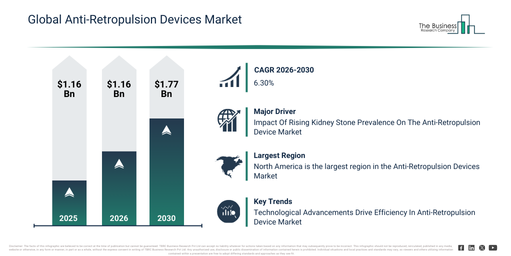
    The anti-retropulsion devices market size has demonstrated strong growth over recent years. It will grow from $2.56 billion in 2025 to $2.75 billion in 2026 at a compound annual growth rate (CAGR) of 7.1%. This historical expansion can be attributed to various factors, such as the increasing occurrence of kidney stones and urolithiasis, the rising adoption of ureteroscopy and lithotripsy procedures, the early introduction of basket and balloon anti-retropulsion devices, an increase in the volume of hospital-based urology surgeries, and a greater focus on stone clearance effectiveness.

    The anti-retropulsion devices market is projected to experience substantial expansion over the upcoming years. This market is forecast to reach a valuation of $3.51 billion by 2030, exhibiting a compound annual growth rate (CAGR) of 6.3%. The anticipated growth during this period stems from several factors, including an escalating demand for technologies that enable minimally invasive stone removal, a greater adoption of disposable anti-retropulsion devices, an increase in ambulatory procedures for stone treatment, ongoing advancements in designing specialized devices for intricate stone cases, and heightened investments in the infrastructure supporting urology care. Key trends anticipated within the forecast timeframe encompass a growing inclination towards sophisticated anti-retropulsion devices to enhance stone stabilization during lithotripsy, an increased deployment of basket and balloon-type devices aimed at reducing proximal stone migration, an evolving clinical paradigm favoring minimally invasive ureteroscopy for stone management, the broader implementation of device designs tailored for specific procedures involving complex ureteral anatomies, and a surging need for disposable and single-use anti-retropulsion devices to mitigate the risk of infection.

    Get A Free Sample Report With In-Depth Market Insights:

    https://thebusinessresearchcompany.com/sample_request?id=18904297&type=smp&name=Anti-Retropulsion%20Devices%20Market%20Report%202026&utm_source=Blogs&utm_medium=Paid&utm_campaign=Sep_PR

    Anti-Retropulsion Devices Market Growth Drivers: What’s Behind The Acceleration?

    The increasing incidence of chronic kidney disease is projected to stimulate expansion in the anti-retropulsion device market in the future. Chronic kidney diseases encompass various conditions impacting the kidneys’ structure and function. Factors such as an unhealthy diet, lack of physical activity, obesity, smoking, and high alcohol consumption contribute to the development of kidney issues. These anti-retropulsion devices are utilized in urological procedures to improve efficacy by stopping kidney stone fragments from returning to the kidney during therapy. As an illustration, the Centers for Disease Control and Prevention, a U.S.-based public health agency, reported in May 2024 that chronic kidney disease affected over 14% of adults in the United States, impacting roughly 35.5 million individuals, an increase from 13% in 2023. Consequently, the growing occurrence of chronic kidney disease is anticipated to fuel the expansion of the anti-retropulsion device market.

    Anti-Retropulsion Devices Market Segment Analysis Spotlighting Growth Areas

    The anti-retropulsion devices market covered in this report is segmented –

    1) By Product Type: Basket Type Anti-Retropulsion Devices, Balloon Type Anti-Retropulsion Devices, Mechanical Retropulsion Devices

    2) By Application: Ureteroscopy, Lithotripsy

    3) By End-User: Hospitals, Ambulatory Surgical Centers, Other End Users

    Subsegments:

    1) By Basket Type Anti-Retropulsion Devices: Self-Expanding Basket Devices, Balloon-Expandable Basket Devices, Balloon Type Anti-Retropulsion Devices,

    2) By Balloon Type Anti-Retropulsion Devices: Single-Lumen Balloon Devices, Multi-Lumen Balloon Devices, Other Anti-Retropulsion Devices,

    3) By Mechanical Retropulsion Devices: Mechanical Retropulsion Devices, Stent-Based Anti-Retropulsion Devices.

    Anti-Retropulsion Devices Market Trends: What’s Defining The Industry’s Next Phase?

    Major companies in the anti-retropulsion device market are concentrating on design enhancements and user-centric innovations, including vacuum-assisted kidney stone removal devices, with the goal of improving patient results and reducing procedure times. These vacuum-assisted kidney stone removal devices are medical instruments specifically engineered to increase the efficiency of urological procedures by utilizing suction to capture and extract kidney stones from the urinary tract. Illustratively, in March 2024, Calyxo, Inc., a US-based medical device company committed to bettering patient care for those with kidney stones, launched its CVAC System. This comprehensive offering is designed for effective and efficient kidney stone removal, employing both irrigation and vacuum aspiration to continually clear stone fragments during and after laser lithotripsy, thus enabling medical professionals to achieve stone-free outcomes.

    Anti-Retropulsion Devices Market Company Landscape And Competitive Strategy

    Major companies operating in the anti-retropulsion devices market are Johnson & Johnson, Medtronic plc, Boston Scientific Corporation, Cook Medical Incorporated, KARL STORZ SE & Co KG, Coloplast A/S, ROCAMED SAM, Endotherapeutics Pty Ltd, Dornier MedTech GmbH, Accordion Medical LLC, Cogentix Medical Inc., NeoScope Inc, OTU Medical, Clarion Medical Technologies, Calyxo Inc, EMS Urology, Happiness Works Medical, PENTAX Medical, UROMED Kurt Drews KG, EndoTheia Inc, Maxer Endoscopy GmbH

    View The Full Anti-Retropulsion Devices Market Report:

    https://thebusinessresearchcompany.com/report/anti-retropulsion-devices-global-market-report?utm_source=Blogs&utm_medium=Paid&utm_campaign=Sep_PR

    Anti-Retropulsion Devices Market Largest Region: Which Geography Holds The Highest Market Share?

    North America was the largest region in the anti-retropulsion devices market in 2025. Asia-Pacific is expected to be the fastest-growing region in the forecast period. The regions covered in the anti-retropulsion devices market report are Asia-Pacific, South East Asia, Western Europe, Eastern Europe, North America, South America, Middle East, Africa.

    Reach Out To Our Team:

    The Business Research Company: https://www.thebusinessresearchcompany.com/

    Americas: +1 310-496-7795

    Asia: +44 7882 955267 & +91 8897263534

    Europe: +44 7882 955267

    Email us at: marketing@tbrc.info

    Follow us on:

    LinkedIn: https://in.linkedin.com/company/the-business-research-company

    YouTube: https://www.youtube.com/channel/UC24_fI0rV8cR5DxlCpgmyFQ

    Global Market Model: https://www.thebusinessresearchcompany.com/global-market-model
  • Anti-Pollution Nasal Spray Market Analysis: How The Industry Is Evolving Toward A $13.98 Billion Future

    Anti-Pollution Nasal Spray Market Analysis: How The Industry Is Evolving Toward A $13.98 Billion Future

    Backed by market attractiveness analysis, total addressable market sizing, company benchmarking matrices, interactive Excel dashboards, wider supply chain intelligence, emerging startup coverage, and detailed product-level insights, The Business Research Company’s 2026 market reports are designed to offer research that is more actionable and strategically valuable than ever.

    Anti-Pollution Nasal Spray Market Size Forecast: How Big Could The Market Get By 2030?

    The anti-pollution nasal spray market has observed considerable growth over recent years. Projections indicate it will expand from $9.37 billion in 2025 to $10.16 billion in 2026, demonstrating a compound annual growth rate (CAGR) of 8.4%. Historically, this expansion is primarily due to several factors, including heightened urban air pollution levels, increased consciousness of respiratory health, the rise of self-care and preventative health practices, the widespread availability of non-prescription nasal sprays, and an evolving consumer emphasis on overall wellness.

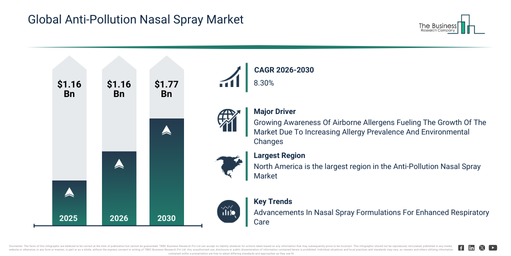
    The anti-pollution nasal spray market is projected to experience robust expansion over the coming years. By 2030, this market is anticipated to reach a valuation of $13.98 billion, demonstrating a compound annual growth rate (CAGR) of 8.3%. This projected expansion can be attributed to several factors, including the greater uptake of preventive respiratory care products, elevated pollution exposure among city dwellers, the broadening reach of e-commerce for pharmaceutical sales, advancements in nasal drug delivery systems, and a heightened call for clean-label healthcare items. Key trends anticipated during this period encompass a surging need for pollution-defense nasal sprays, a rise in the application of natural and herbal ingredients, a developing inclination towards daily preventive nasal care, the proliferation of over-the-counter anti-pollution options, and a greater emphasis on sustained protective barriers.

    Get A Free Sample Report With In-Depth Market Insights:

    https://thebusinessresearchcompany.com/sample_request?id=66735792&type=smp&name=Anti-Pollution%20Nasal%20Spray%20Market%20Report%202026&utm_source=Blogs&utm_medium=Paid&utm_campaign=Sep_PR

    Anti-Pollution Nasal Spray Market Growth Factors Behind Sustained Expansion

    The anti-pollution nasal spray market is anticipated to expand due to increasing understanding of airborne allergens. These are microscopic airborne particles, like pollen or dust, that induce allergic responses upon inhalation. Their rise is largely attributed to climate change and elevated pollution, factors that prolong pollen seasons and boost the spread of allergenic substances. An anti-pollution nasal spray functions by creating a protective layer within the nasal cavity, designed to obstruct and capture airborne allergens, thereby inhibiting them from instigating allergic reactions. As an illustration, in October 2023, data from the World Allergy Organization, a US-based leading entity for clinical allergic research, indicated that allergic rhinitis affects more than 400 million individuals worldwide, with its occurrence varying from 10% to 30% in adults and surpassing 40% in children. Consequently, the heightened awareness regarding airborne allergens is poised to fuel the anti-pollution nasal spray market.

    Anti-Pollution Nasal Spray Market Segment Performance And Emerging Opportunities

    The anti-pollution nasal spray market covered in this report is segmented –

    1) By Product: Pollution Defense Products, Symptomatic Relief Nasal Sprays, Cleansing Nasal Sprays, Hydrating Nasal Sprays, Other Products

    2) By Distribution Channel: Online Channels, Retail Pharmacies, Supermarkets Or General Retail Stores, Other Distribution Channels

    3) By End-User: Hospitals, Clinics, Online Pharmacies

    Subsegments:

    1) By Pollution Defense Products: Activated Charcoal Nasal Sprays, Anti-Allergen Nasal Sprays, Barrier Nasal Sprays

    2) By Symptomatic Relief Nasal Sprays: Decongestant Nasal Sprays, Antihistamine Nasal Sprays, Steroidal Nasal Sprays

    3) By Cleansing Nasal Sprays: Saline Nasal Sprays, Hypertonic Nasal Sprays, Isotonic Nasal Sprays

    4) By Hydrating Nasal Sprays: Aloe Vera Nasal Sprays, Hyaluronic Acid Nasal Sprays, Essential Oil-Based Nasal Sprays

    5) By Other Products: Herbal Nasal Sprays, Vitamin-Infused Nasal Sprays, Homeopathic Nasal Sprays

    Anti-Pollution Nasal Spray Market Industry Trends Fueling Future Revenue Growth

    Leading companies in the anti-pollution nasal spray market are concentrating on developing innovative products with advanced formulations such as monohydrate nasal spray. This focus aims to enhance efficacy, offer prolonged relief, and meet the increasing demand for inventive solutions to combat respiratory problems linked to air pollution. A monohydrate nasal spray features an active ingredient combined with a water molecule to boost its stability and effectiveness in relieving nasal issues. For instance, in March 2024, Aurobindo Pharma Limited, an India-based pharmaceutical company, received final approval from the U.S. Food and Drug Administration (FDA) for its Abbreviated New Drug Application (ANDA) for Mometasone Furoate Monohydrate Nasal Spray, 50 mcg/spray, an AB-rated generic equivalent to Nasonex Nasal Spray. This spray is approved for treating nasal symptoms of seasonal and perennial allergic rhinitis in individuals aged 2 years and older, relieving nasal congestion linked to seasonal allergies for the same age group, preventing seasonal allergic rhinitis symptoms in those aged 12 and older, and treating nasal polyps in patients aged 18 and above.

    Anti-Pollution Nasal Spray Market Key Players Shaping Industry Direction

    Major companies operating in the anti-pollution nasal spray market are Merck KGaA, Bayer AG, Sanofi SA, Novartis AG, GSK Plc, Haleon plc, Bausch Health Companies Inc., Sun Pharmaceutical Industries Ltd., Aurobindo Pharma Limited, Omega Pharma, ALK-Abelló, Stallergenes Greer, Allergy Therapeutics, AdvaCare Pharma, Nasaleze International Ltd., Allermi, Cipla Limited, Himalaya Wellness Company, Dr. Reddy’s Laboratories Ltd., Perrigo Company plc

    View The Full Anti-Pollution Nasal Spray Market Report:

    https://thebusinessresearchcompany.com/report/anti-pollution-nasal-spray-global-market-report?utm_source=Blogs&utm_medium=Paid&utm_campaign=Sep_PR

    Anti-Pollution Nasal Spray Market Regional Analysis: Which Region Leads By Revenue?

    North America was the largest region in the anti-pollution nasal spray market in 2025. The regions covered in the anti-pollution nasal spray market report are Asia-Pacific, South East Asia, Western Europe, Eastern Europe, North America, South America, Middle East, Africa.

    Reach Out To Our Team:

    The Business Research Company: https://www.thebusinessresearchcompany.com/

    Americas: +1 310-496-7795

    Asia: +44 7882 955267 & +91 8897263534

    Europe: +44 7882 955267

    Email us at: marketing@tbrc.info

    Follow us on:

    LinkedIn: https://in.linkedin.com/company/the-business-research-company

    YouTube: https://www.youtube.com/channel/UC24_fI0rV8cR5DxlCpgmyFQ

    Global Market Model: https://www.thebusinessresearchcompany.com/global-market-model
  • Antimicrobial Resistance Surveillance Market Outlook Through 2030: Understanding The Growth Opportunity

    Antimicrobial Resistance Surveillance Market Outlook Through 2030: Understanding The Growth Opportunity

    Featuring market attractiveness scoring, total addressable market sizing, company benchmarking matrices, interactive Excel dashboards, deeper supply chain intelligence, emerging startup tracking, and granular product-level insights, The Business Research Company’s 2026 market reports are built to deliver research that is both more actionable and more strategically valuable.

    Antimicrobial Resistance Surveillance Market Revenue Outlook: What CAGR Lies Ahead Through 2030?

    The antimicrobial resistance surveillance market has experienced significant expansion in recent years. It is anticipated to increase from $7.3 billion in 2025 to $7.91 billion in 2026, at a compound annual growth rate (CAGR) of 8.4%. This historical growth can be attributed to a rise in drug-resistant infections, hospital infection control initiatives, public health surveillance programs, laboratory testing expansion, and antibiotic misuse concerns.

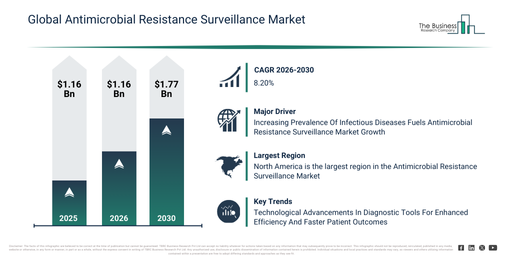
    The antimicrobial resistance surveillance market is anticipated to experience substantial expansion over the coming years, with its value projected to reach $10.85 billion by 2030, demonstrating a compound annual growth rate (CAGR) of 8.2%. This projected increase throughout the forecast period stems from factors such as global initiatives for AMR monitoring, AI-powered predictive surveillance, the adoption of cloud-based data sharing, the expansion of genomic surveillance, and policy-mandated reporting requirements. Key developments anticipated during this period include real-time monitoring of resistance patterns, the implementation of whole genome sequencing for surveillance, AI-driven resistance analytics, the integration of public health databases, and the establishment of hospital-wide AMR tracking systems.

    Get A Free Sample Report With In-Depth Market Insights:

    https://thebusinessresearchcompany.com/sample_request?id=49232660&type=smp&name=Antimicrobial%20Resistance%20Surveillance%20Market%20Report%202026&utm_source=Blogs&utm_medium=Paid&utm_campaign=Sep_PR

    Antimicrobial Resistance Surveillance Market Demand Drivers Opening New Revenue Streams

    The antimicrobial resistance surveillance market is anticipated to expand due to the growing occurrence of infectious diseases. These conditions are triggered by detrimental microorganisms like bacteria, viruses, fungi, or parasites, which can be transmitted between individuals through direct or indirect contact. The escalating incidence of infectious diseases stems from factors including climate change, urbanization, and international travel, all of which facilitate the dissemination of pathogens and increase human contact with novel microbes. Tracking the distribution of resistant pathogens is aided by antimicrobial resistance surveillance, which in turn helps formulate effective treatment approaches and shapes public health initiatives aimed at combating infectious diseases. As an illustration, a report released by the UK Health Security Agency, a UK-based government agency, in February 2024, revealed that tuberculosis (TB) cases in England rose by 10.7% in 2023, totaling 4,850 cases, up from 4,380 in 2022. Consequently, the expanding occurrence of infectious diseases is a key factor boosting the antimicrobial resistance surveillance market.

    Antimicrobial Resistance Surveillance Market Segment Landscape And Growth Outlook

    The antimicrobial resistance surveillance market covered in this report is segmented –

    1) By Solution: Diagnostic Kits, Diagnostic Systems, Surveillance Software, Services

    2) By Application: Clinical Diagnostics, Public Health Surveillance, Other Applications

    3) By End User: Hospitals And Clinics, Research And Academic Institutes, Other End Users

    Subsegments:

    1) By Diagnostic Kits: PCR-Based Kits, Immunoassay Kits, Lateral Flow Assay Kits

    2) By Diagnostic Systems: Automated Susceptibility Testing Systems, Whole Genome Sequencing (WGS) Systems, Mass Spectrometry-Based Systems

    3) By Surveillance Software: Cloud-Based Surveillance Platforms, AI-Powered Data Analytics Tools, Electronic Health Record (EHR)-Integrated Systems

    4) By Services: Laboratory Testing Services, Data Management & Reporting Services, Consultation & Training Services

    Antimicrobial Resistance Surveillance Market Trends Powering Strategic Industry Growth

    Key companies operating in the market are concentrating on advanced technologies, such as innovative diagnostic instruments, to streamline operations, enhance efficiency, improve accuracy, reduce costs, and achieve superior outcomes for patients and end-users. A diagnostic tool is defined as any device, instrument, software, or methodology used to identify, detect, or assess the presence of a condition, disease, malfunction, or issue. For example, in June 2023, Sysmex Astrego AB, a Sweden-based producer and provider of diagnostic products and services, announced the introduction of its PA-100 AST Point-of-Care Testing System. This system facilitates quick and precise detection of antimicrobial resistance at the point of care, offering a notable time reduction compared to conventional laboratory methods, which can take up to several days. By delivering results in just 30 minutes, it enables clinicians to make timely and informed decisions about appropriate infection treatments, thereby lessening the reliance on broad-spectrum antibiotics and assisting in the battle against the spread of antimicrobial resistance.

    Antimicrobial Resistance Surveillance Market Competitive Analysis Of Leading Industry Participants

    Major companies operating in the antimicrobial resistance surveillance market are Roche Diagnostics, Thermo Fisher Scientific Inc., Abbott Laboratories, Danaher Corporation, Becton Dickinson and Company, bioMérieux SA, Bio‑Rad Laboratories Inc., Bruker Corporation, QIAGEN NV, Cepheid Inc., Accelerate Diagnostics Inc., Liofilchem S.r.l., Luminex Corporation, Sysmex Corporation, Werfen, OpGen Inc., Illumina Inc., Oxford Nanopore Technologies plc, Himedia Laboratories Pvt. Ltd., Alifax S.r.l.

    View The Full Antimicrobial Resistance Surveillance Market Report:

    https://thebusinessresearchcompany.com/report/antimicrobial-resistance-surveillance-global-market-report?utm_source=Blogs&utm_medium=Paid&utm_campaign=Sep_PR

    Antimicrobial Resistance Surveillance Market Geographic Distribution And Regional Opportunities

    North America was the largest region in the antimicrobial resistance surveillance market in 2025. Asia-Pacific is expected to be the fastest-growing region in the forecast period. The regions covered in the antimicrobial resistance surveillance market report are Asia-Pacific, South East Asia, Western Europe, Eastern Europe, North America, South America, Middle East, Africa.

    Reach Out To Our Team:

    The Business Research Company: https://www.thebusinessresearchcompany.com/

    Americas: +1 310-496-7795

    Asia: +44 7882 955267 & +91 8897263534

    Europe: +44 7882 955267

    Email us at: marketing@tbrc.info

    Follow us on:

    LinkedIn: https://in.linkedin.com/company/the-business-research-company

    YouTube: https://www.youtube.com/channel/UC24_fI0rV8cR5DxlCpgmyFQ

    Global Market Model: https://www.thebusinessresearchcompany.com/global-market-model