Blog

  • Temporary Bypass Conductor Market 2026 Market Size And Growth Forecast: Key Trends To Watch

    Temporary Bypass Conductor Market 2026 Market Size And Growth Forecast: Key Trends To Watch

    Built to provide research that’s more actionable and strategically valuable, The Business Research Company’s 2026 market reports include market attractiveness analysis, total addressable market sizing, company benchmarking matrices, interactive Excel dashboards, broader supply chain intelligence, emerging startup tracking, and in-depth product insights.

    Temporary Bypass Conductor Market Size Forecast: How Big Could The Market Get By 2030?

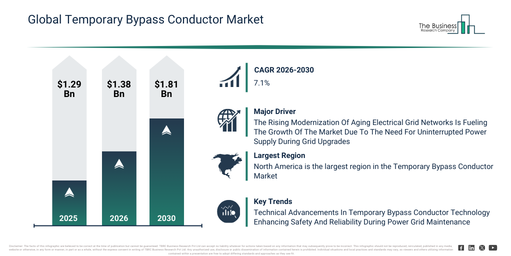
    The temporary bypass conductor market size has witnessed substantial growth over recent years. This market is anticipated to expand from $1.29 billion in 2025 to $1.38 billion in 2026, exhibiting a compound annual growth rate (CAGR) of 6.8%. The historical expansion can be attributed to an increase in grid maintenance activities, the expansion of transmission networks, aging power infrastructure, a rise in planned shutdowns, and a growth in industrial electrical upgrades.

    The temporary bypass conductor market is anticipated to show significant expansion in the coming years. It is projected to achieve a size of $1.81 billion in 2030, demonstrating a compound annual growth rate (CAGR) of 7.1%. This projected growth during the forecast period stems from factors such as the expansion of smart grids, greater integration of renewable energy into the grid, an increase in preventive maintenance programs, more frequent substation upgrades, and heightened investments in grid reliability. Prominent trends within the forecast period include the adoption of high-capacity flexible bypass cables, quick-deploy portable conductor systems, weather-resistant insulated conductors, modular temporary bypass assemblies, and smart monitored bypass lines.

    Get A Free Sample Report With In-Depth Market Insights:

    https://thebusinessresearchcompany.com/sample_request?id=26183186&type=smp&name=Temporary%20Bypass%20Conductor%20Market%20Report%202026&utm_source=Blogs&utm_medium=Paid&utm_campaign=Oct_PR

    Temporary Bypass Conductor Market Opportunity Drivers: What’s Unlocking New Revenue Potential?

    The increasing modernization of older electrical grid networks is anticipated to fuel the expansion of the temporary bypass conductor market in the future. Electrical grid networks are defined as the connected infrastructure responsible for producing and distributing electricity from power generation facilities to consumers. Modernizing old electrical grid networks is prompted by the necessity to improve reliability, given that obsolete infrastructure heightens the potential for malfunctions and power interruptions. During the modernization of aging grids, temporary bypass conductors serve to divert electricity around old or faulty equipment for a period, enabling utility companies to upgrade their lines and substations without cutting off power to users. For example, the International Energy Agency (IEA), an autonomous intergovernmental organization based in France, reported in February 2025 that worldwide investment in power transmission grew by 10% in 2023, totaling $140 billion, and is forecast to require over $200 billion per year by the mid-2030s to meet growing electricity demand. Consequently, the ongoing modernization of aging electrical grid networks is stimulating the expansion of the temporary bypass conductor market.

    Temporary Bypass Conductor Market Segment Landscape And Growth Outlook

    The temporary bypass conductor market covered in this report is segmented –

    1) By Product Type: Insulated Bypass Cables; Retractable Bypass Conductors; Flexible Jumper Cables; Overhead Bypass Conductors; Other Product Types

    2) By Material: Aluminum; Copper; Composite; Other Materials

    3) By Voltage Level: Low Voltage; Medium Voltage; High Voltage

    4) By Application: Transmission Lines; Distribution Lines; Substations; Industrial; Other Applications

    5) By End-User: Utilities; Industrial; Commercial; Other End-Users

    Subsegments:

    1) By Insulated Bypass Cables: Single Core Insulated Bypass Cable; Multi Core Insulated Bypass Cable; Heat Resistant Insulated Bypass Cable; Weather Resistant Insulated Bypass Cable

    2) By Retractable Bypass Conductors: Manually Retractable Bypass Conductor; Spring Loaded Retractable Bypass Conductor; Cable Reel Based Retractable Conductor; Portable Retractable Bypass Conductor

    3) By Flexible Jumper Cables: Low Voltage Flexible Jumper Cable; Medium Voltage Flexible Jumper Cable; High Current Flexible Jumper Cable; Extra Flexible Stranded Jumper Cable

    4) By Overhead Bypass Conductors: Temporary Overhead Aluminum Conductor; Temporary Overhead Alloy Conductor; High Capacity Overhead Bypass Conductor; Lightweight Overhead Bypass Conductor

    5) By Other Product Types: Modular Temporary Bypass Conductor; Portable Temporary Bypass System; Hybrid Temporary Bypass Conductor

    Temporary Bypass Conductor Market Innovation Trends Shaping Future Development

    Companies operating in the temporary bypass conductor market are prioritizing technological advancements, such as XLPE (cross-linked polyethylene) insulated conductors, to facilitate safer and more reliable temporary power rerouting. XLPE insulated conductors specifically refer to copper or aluminum conductors covered with durable cross-linked or high-density polyethylene insulation, providing high electrical, thermal, and weather resistance essential for safe and reliable power transmission. For example, in October 2024, the State Grid Kashgar Power Supply Company, a utility based in China, successfully pioneered a third-category live-line bypass operation using a temporary bypass cable to dismantle a pole-mounted circuit breaker on a 10 kV line. This advanced method ensured an uninterrupted electricity supply during the operation, reducing downtime by 632 customer hours, minimizing service disruptions, and guaranteeing continuous power delivery to downstream customers. Such innovations highlight the increasing importance of advanced bypass conductor technologies in supporting grid modernization, improving operational efficiency, enhancing worker safety, and strengthening overall network resilience.

    Temporary Bypass Conductor Market Industry Leaders And Competitive Landscape

    Major companies operating in the temporary bypass conductor market are General Electric Company, ABB Ltd, Sumitomo Electric Industries Ltd, 3M Company, Eaton Corporation plc, TE Connectivity Ltd, Prysmian SpA, Southwire Company LLC, Nexans Société Anonyme, Furukawa Electric Co Ltd, NKT (Nordiske Kabel- og Traadfabriker) A/S, Belden Inc., APAR Industries Limited, KEI Industries Limited, Sterlite Power Transmission Limited, Houston Wire & Cable Company, Jiangsu Zhongtian Technology Co Ltd, Marmon Utility LLC, Tratos Cavi SpA, and Lamifil NV.

    View The Full Temporary Bypass Conductor Market Report:

    https://thebusinessresearchcompany.com/report/temporary-bypass-conductor-market-report?utm_source=Blogs&utm_medium=Paid&utm_campaign=Oct_PR

    Temporary Bypass Conductor Market Regional Analysis And Top Geography

    North America was the largest region in the temporary bypass conductor market in 2025. Asia-Pacific is expected to be the fastest-growing region in the forecast period. The regions covered in the temporary bypass conductor market report are Asia-Pacific, South East Asia, Western Europe, Eastern Europe, North America, South America, Middle East, Africa.

    Reach Out To Our Team:

    The Business Research Company: https://www.thebusinessresearchcompany.com/

    Americas: +1 310-496-7795

    Asia: +44 7882 955267 & +91 8897263534

    Europe: +44 7882 955267

    Email us at: marketing@tbrc.info

    Follow us on:

    LinkedIn: https://in.linkedin.com/company/the-business-research-company

    YouTube: https://www.youtube.com/channel/UC24_fI0rV8cR5DxlCpgmyFQ

    Global Market Model: https://www.thebusinessresearchcompany.com/global-market-model
  • Synthetic Pretraining Data For Large Language Models (LLMs) Market Size And Forecast 2026–2030: Trends Driving Industry Expansion

    Synthetic Pretraining Data For Large Language Models (LLMs) Market Size And Forecast 2026–2030: Trends Driving Industry Expansion

    Backed by market attractiveness analysis, total addressable market sizing, company benchmarking matrices, interactive Excel dashboards, wider supply chain intelligence, emerging startup coverage, and detailed product-level insights, The Business Research Company’s 2026 market reports are designed to offer research that is more actionable and strategically valuable than ever.

    Synthetic Pretraining Data For Large Language Models (LLMs) Market Size Outlook: How Quickly Will Revenue Expand Through 2030?

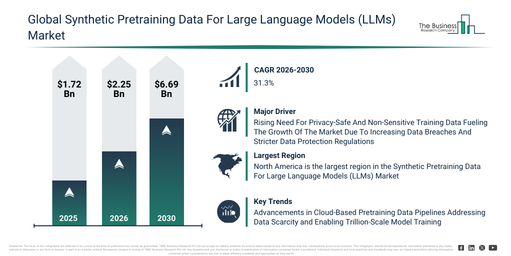
    The market for synthetic pretraining data for large language models (LLMs) has experienced significant expansion in recent years. This market is expected to increase from $1.72 billion in 2025 to $2.25 billion in 2026, achieving a compound annual growth rate (CAGR) of 31.1%. Historically, this growth can be attributed to several factors including the limited availability of labeled text data, strict data privacy restrictions, past shortages of NLP datasets, the increasing need for training large models, and the rising costs associated with data licensing.

    The market for synthetic pretraining data for large language models (LLMs) is anticipated to experience substantial exponential growth in the coming years. It is forecast to reach $6.69 billion in 2030, demonstrating a robust compound annual growth rate (CAGR) of 31.3%. This expansion during the projected period is driven by factors such as the increasing development of foundation models, a rising necessity for safe training datasets, growing demand for multilingual models, heightened regulatory data compliance requirements, and the proliferation of domain-tuned LLMs. Key developments expected within this forecast period include the emergence of domain-specific synthetic text corpora, techniques for generating privacy-safe training data, platforms for multilingual synthetic datasets, sophisticated pipelines for bias-controlled synthetic data, and frameworks for automated data augmentation.

    Get A Free Sample Report With In-Depth Market Insights:

    https://thebusinessresearchcompany.com/sample_request?id=57073122&type=smp&name=Synthetic%20Pretraining%20Data%20For%20Large%20Language%20Models%20%28LLMs%29%20Market%20Report%202026&utm_source=Blogs&utm_medium=Paid&utm_campaign=Oct_PR

    Synthetic Pretraining Data For Large Language Models (LLMs) Market Industry Drivers: What’s Behind The Revenue Growth?

    The increasing necessity for privacy-secure and non-sensitive training data is anticipated to fuel the expansion of the synthetic pretraining data market for large language models (LLMs). This requirement for privacy-safe and non-sensitive training data reflects the intensifying pressure on organizations to protect personal and confidential information, such as health records, financial data, and personally identifiable information, during AI model training and fine-tuning procedures. The demand for privacy-safe training data is on the rise as organizations respond to an increasing number of data breaches and more stringent data protection regulations, which restrict the use of real-world sensitive datasets in AI development. Synthetic pretraining data addresses these challenges by replacing actual personal or proprietary information with artificially generated datasets that retain relevant statistical and semantic characteristics without containing identifiable or sensitive content. For instance, in September 2025, Perforce Software, Inc., a U.S.-based software development company, disclosed that approximately 60% of organizations experienced data breaches or data theft across software development, AI, and analytics environments, representing an 11% year-over-year increase. This trend highlights the escalating risks associated with utilizing real-world data for AI training and reinforces the need for privacy-preserving alternatives. Therefore, the growing need for privacy-safe and non-sensitive training data is propelling the growth of the synthetic pretraining data for large language models (LLMs) market.

    Synthetic Pretraining Data For Large Language Models (LLMs) Market Segment Outlook: Which Categories Are Growing Fastest?

    The synthetic pretraining data for large language models (llms) market covered in this report is segmented –

    1) By Data Type: Text; Code; Multimodal; Domain-Specific; Other Data Types

    2) By Source: Proprietary; Open Source; Third-Party

    3) By Deployment Mode: Cloud; On-Premises

    4) By Application: Model Training; Model Evaluation; Data Augmentation; Other Applications

    5) By End-User: Technology Companies; Research Institutes; Enterprises; Other End-Users

    Subsegments:

    1) By Text: Natural Language Documents; Conversational Text Data; Structured Text Records; Unstructured Text Content

    2) By Code: Programming Language Scripts; Software Development Instructions; Algorithmic Logic Code; Source Code Repositories

    3) By Multimodal: Text And Image Data; Text And Audio Data; Text And Video Data; Integrated Multiformat Content

    4) By Domain-Specific: Healthcare Industry Data; Financial Services Data; Legal And Regulatory Data; Manufacturing And Industrial Data

    5) By Other Data Types: Tabular Data Records; Log And Event Data; Simulated Scenario Data; Annotated Metadata Content

    #Synthetic Pretraining Data For Large Language Models (LLMs) Market Growth Trends: What’s Shaping The Future Outlook?

    Major companies in the synthetic pretraining data for large language models (LLMs) market are concentrating on advancements in cloud-based pretraining data pipelines. These pipelines merge synthetic data generation with extensive data curation and quality-conscious optimization to tackle data scarcity, enhance model performance, and enable the training of trillion-parameter models. Cloud-based synthetic pretraining data pipelines combine artificially produced high-quality datasets with carefully selected proprietary and domain-specific data, improving the efficiency and effectiveness of LLM pretraining beyond conventional web-scale sources. For instance, in August 2025, DatologyAI, a US-based venture-backed AI startup, launched BeyondWeb, an advanced platform for data curation and training optimization designed to extend large language model training beyond traditional web datasets. BeyondWeb prioritizes large-scale synthetic data integration, automated data valuation, and quality-aware filtering to identify and give precedence to high-value training data. These features allow for better model generalization, increased robustness, and improved training efficiency at extreme scales, supporting trillion-parameter model pretraining without a proportional increase in computational cost.

    Synthetic Pretraining Data For Large Language Models (LLMs) Market Competitive Overview And Top Companies

    Major companies operating in the synthetic pretraining data for large language models (llms) market are Amazon Web Services Inc., NVIDIA Corporation, IBM Research, Microsoft Research, OpenAI Inc., Databricks Inc., Anthropic PBC, Cohere Inc., Innodata Inc., AI21 Labs Ltd., Hugging Face Inc., Snorkel AI Inc., Gretel Labs Inc., Meta Platforms Inc., Aleph Alpha GmbH, Bitext Innovations S.L., SuperAnnotate AI Inc., Google LLC, Syntheticus Inc., MOSTLY AI Solutions MP GmbH, YData LDA, Diveplane Corporation

    View The Full Synthetic Pretraining Data For Large Language Models (LLMs) Market Report:

    https://thebusinessresearchcompany.com/report/synthetic-pretraining-data-for-large-language-models-llms-market-report?utm_source=Blogs&utm_medium=Paid&utm_campaign=Oct_PR

    Synthetic Pretraining Data For Large Language Models (LLMs) Market Top Region: Where Does Most Revenue Come From?

    North America was the largest region in the synthetic pretraining data for large language models (LLMs) market in 2025. Asia-Pacific is expected to be the fastest-growing region in the forecast period. The regions covered in the synthetic pretraining data for large language models (llms) market report are Asia-Pacific, South East Asia, Western Europe, Eastern Europe, North America, South America, Middle East, Africa.

    Reach Out To Our Team:

    The Business Research Company: https://www.thebusinessresearchcompany.com/

    Americas: +1 310-496-7795

    Asia: +44 7882 955267 & +91 8897263534

    Europe: +44 7882 955267

    Email us at: marketing@tbrc.info

    Follow us on:

    LinkedIn: https://in.linkedin.com/company/the-business-research-company

    YouTube: https://www.youtube.com/channel/UC24_fI0rV8cR5DxlCpgmyFQ

    Global Market Model: https://www.thebusinessresearchcompany.com/global-market-model
  • Synthetic Media Software Market 2026 Outlook: Market Size, CAGR And Key Growth Opportunities

    Synthetic Media Software Market 2026 Outlook: Market Size, CAGR And Key Growth Opportunities

    Featuring market attractiveness scoring, total addressable market sizing, company benchmarking matrices, interactive Excel dashboards, deeper supply chain intelligence, emerging startup tracking, and granular product-level insights, The Business Research Company’s 2026 market reports are built to deliver research that is both more actionable and more strategically valuable.

    Synthetic Media Software Market Size, Value And Growth Trajectory Through 2030

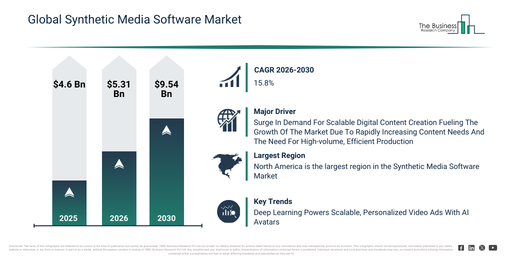
    The synthetic media software market has experienced rapid expansion in recent years. Its valuation is anticipated to climb from $4.6 billion in 2025 to $5.31 billion in 2026, demonstrating a compound annual growth rate (CAGR) of 15.5%. The historical growth trajectory can be ascribed to several factors, including an increase in digital content demand, the proliferation of creator economy platforms, significant past advancements in deep learning models, heightened social media production, and the growing adoption of cloud creative tools.

    The synthetic media software market is set to experience substantial expansion in the upcoming years, with forecasts showing it will achieve $9.54 billion in 2030 at a compound annual growth rate (CAGR) of 15.8%. This projected increase within the forecast period is primarily due to the growing enterprise adoption of generative media, the broadening of virtual content production, an escalating demand for bespoke marketing content, increased utilization in gaming and film sectors, and the continuous rise of AI creative automation. Prominent trends for this period include AI-generated multimodal content tools, advanced realistic voice and video synthesis platforms, deepfake detection and verification software, personalized synthetic content engines, and real-time generative media APIs.

    Get A Free Sample Report With In-Depth Market Insights:

    https://thebusinessresearchcompany.com/sample_request?id=97590806&type=smp&name=Synthetic%20Media%20Software%20Market%20Report%202026&utm_source=Blogs&utm_medium=Paid&utm_campaign=Oct_PR

    Synthetic Media Software Market Growth Factors: What’s Supporting Expansion?

    The increasing need for scalable digital content creation is anticipated to drive expansion in the synthetic media software market in the future. This refers to the capability to quickly produce, tailor, and disseminate substantial quantities of premium digital content through automated and AI-powered technologies across various platforms and to diverse audiences. This need arises from rapidly escalating content requirements, as marketers require quicker, higher-volume output to match growing audience engagement. Synthetic media software is crucial for scalable digital content creation, leveraging AI to automate, personalize, and amplify content output without a proportional rise in time or expense. For example, data from June 2025, based on Adobe’s 2025 research which surveyed over 1,600 global marketers, showed that 96% indicated a rise in content demand; among these, 62% observed a fivefold or greater increase, and 71% foresee content demand expanding more than five times by 2027. Consequently, the expanding demand for scalable digital content creation stands as a primary catalyst for growth within the synthetic media software market.

    Synthetic Media Software Market Segment Landscape: Which Areas Lead Development?

    The synthetic media software market covered in this report is segmented –

    1) By Component: Software; Services

    2) By Deployment Type: On-Premise; Cloud-Based

    3) By Technology: Deep Learning; Natural Language Processing; Generative Adversarial Networks; Computer Vision

    4) By Application: Content Creation; Advertising; Gaming; Film Production

    6) By End Use Industry: Entertainment; Education; Marketing; Healthcare

    Subsegments:

    1) By Software: Text Generation Software; Image Generation Software; Audio Synthesis Software; Video Generation Software; Media Editing And Enhancement Software; Multimodal Content Creation Software

    2) By Services: Consulting And Advisory Services; System Integration Services; Custom Content Development Services; Training And Support Services; Maintenance And Upgradation Services; Managed Synthetic Media Services

    Synthetic Media Software Market Industry Trends: What’s Reshaping Demand?

    Leading corporations within the synthetic media software market are prioritizing the creation of innovative solutions, such as artificial intelligence-powered automated video generation platforms, to address the growing need for scalable, cost-efficient content production, made possible by progress in deep learning–based media generation technologies. These platforms utilize deep neural networks and generative models to produce high-quality videos, dynamic avatars, and synthetic scenes from straightforward inputs like text, images, or URLs, providing capabilities significantly superior to traditional video production workflows that depend on cameras, studios, and extensive post-production editing. As an illustration, in September 2025, DeepBrain AI, a US-based generative artificial intelligence company, introduced Automated UGC Ad Videos, an innovative synthetic media solution leveraging its artificial intelligence Studio platform to create product-use videos featuring lifelike artificial intelligence avatars from just a single product image or a product page URL, thereby removing the necessity of physical filming and cutting down on both development duration and expenses. The platform’s notable functionalities encompass Product Avatar, which enables the generation of scenarios featuring adaptable artificial intelligence characters engaging with products authentically, and Product-to-Video, which autonomously generates promotional videos optimized for concise social media formats, allowing businesses to quickly generate multiple ad variants for testing and deployment.

    Synthetic Media Software Market Competitive Landscape: Which Companies Lead The Industry?

    Major companies operating in the synthetic media software market are Midjourney Inc., ElevenLabs Inc., Synthesia Limited, Stability AI, De-Identification Ltd., Voicemod S.L., DeepBrain AI Inc., VEED Limited, Descript, Colossyan AI, Hour One, Resemble AI, AI Playground Inc., Kaedim Inc., Hyperhuman S.R.L., Deep Art AI GmbH, Kyber Corp, Luma AI Inc., Pika Labs, HeyGen Inc., Genmo Inc., WellSaid Labs Inc., LOVO Inc., Rephrase.AI

    View The Full Synthetic Media Software Market Report:

    https://thebusinessresearchcompany.com/report/synthetic-media-software-market-report?utm_source=Blogs&utm_medium=Paid&utm_campaign=Oct_PR

    Synthetic Media Software Market Regional Breakdown: Where Is Demand Concentrated?

    North America was the largest region in the synthetic media software market in 2025. Asia-Pacific is expected to be the fastest-growing region in the forecast period. The regions covered in the synthetic media software market report are Asia-Pacific, South East Asia, Western Europe, Eastern Europe, North America, South America, Middle East, Africa.

    Reach Out To Our Team:

    The Business Research Company: https://www.thebusinessresearchcompany.com/

    Americas: +1 310-496-7795

    Asia: +44 7882 955267 & +91 8897263534

    Europe: +44 7882 955267

    Email us at: marketing@tbrc.info

    Follow us on:

    LinkedIn: https://in.linkedin.com/company/the-business-research-company

    YouTube: https://www.youtube.com/channel/UC24_fI0rV8cR5DxlCpgmyFQ

    Global Market Model: https://www.thebusinessresearchcompany.com/global-market-model
  • Synchrophasor Data Service Market Size Growth: From $1.38 Billion In 2026 To $2.28 Billion By 2030

    Synchrophasor Data Service Market Size Growth: From $1.38 Billion In 2026 To $2.28 Billion By 2030

    Built to provide research that’s more actionable and strategically valuable, The Business Research Company’s 2026 market reports include market attractiveness analysis, total addressable market sizing, company benchmarking matrices, interactive Excel dashboards, broader supply chain intelligence, emerging startup tracking, and in-depth product insights.

    Synchrophasor Data Service Market CAGR Outlook And Future Development

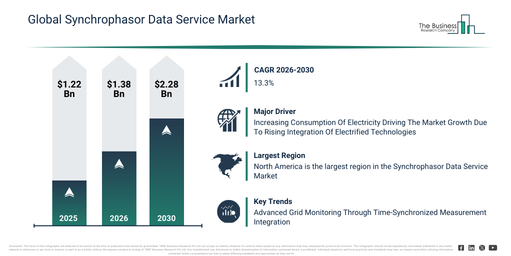
    The synchrophasor data service market has experienced swift expansion recently. This market is projected to expand from $1.22 billion in 2025 to reach $1.38 billion by 2026, demonstrating a compound annual growth rate (CAGR) of 13.1%. Historically, this expansion was driven by factors such as grid blackout incidents, an increase in phasor measurement unit deployments, past grid modernization initiatives, regulatory requirements for reliability, and the increasing complexity of transmission networks.

    The synchrophasor data service market size is expected to undergo rapid expansion in the coming years. It is projected to reach $2.28 billion in 2030, demonstrating a compound annual growth rate (CAGR) of 13.3%. This growth during the forecast period can be attributed to several factors, including the increasing penetration of renewable energy into grids, a rising need for real-time grid visibility, the expansion of digital substations, higher investments in grid analytics platforms, and growing cross-border grid interconnections. Significant trends anticipated in the forecast period include wide-area grid situational awareness platforms, real-time phasor data analytics services, cloud-hosted phasor data management, high-resolution grid event detection, and interoperable phasor data integration frameworks.

    Get A Free Sample Report With In-Depth Market Insights:

    https://thebusinessresearchcompany.com/sample_request?id=33334&type=smp&name=Synchrophasor%20Data%20Service%20Market%20Report%202026&utm_source=Blogs&utm_medium=Paid&utm_campaign=Oct_PR

    Synchrophasor Data Service Market Demand Drivers: What’s Powering Industry Growth?

    The anticipated rise in electricity usage is projected to fuel the expansion of the synchrophasor data service market in the future. Electricity consumption encompasses the overall electrical energy utilized by residential, commercial, industrial, and transport sectors for powering devices, machinery, heating, cooling, and various other activities. This consumption is growing due to rapid urbanization and industrial development, which places a greater burden on power grids and necessitates advanced monitoring, analytics, and grid-stability solutions, including synchrophasor data services. These services assist electricity systems by providing real-time, time-synchronized grid measurements, thereby improving the visibility, stability, and control of power networks. This empowers utilities to effectively handle increasing demand, incorporate renewable energy sources, avert power interruptions, and guarantee a dependable, secure, and resilient electricity supply. As an illustration, in April 2024, data from the Department of Climate Change, Energy, the Environment and Water, an Australia-based government administration, indicated that Australia’s total electricity generation reached approximately 273,106 gigawatt hours (GWh) in 2023. Of this, renewable energy sources contributed about 95,963 GWh, representing 35% of the total generation, which highlights both continuous high electricity usage and increasing grid complexity due to the integration of variable renewables. Consequently, the rising consumption of electricity is propelling the growth of the synchrophasor data service market.

    Synchrophasor Data Service Market Segments: Where Is Growth Concentrated?

    The synchrophasor data service market covered in this report is segmented –

    1) By Component: Software; Hardware; Services

    2) By Deployment Mode: On-Premises; Cloud

    3) By Application: Grid Monitoring; Fault Analysis; State Estimation; Power System Control; Other Applications

    4) By End-User: Utilities; Independent System Operators; Industrial; Other End-Users

    Subsegments:

    1) By Software: Phasor Data Management Software; Real Time Grid Analytics Software; Visualization and Reporting Software; State Estimation Software

    2) By Hardware: Phasor Measurement Units; Phasor Data Concentrators; Time Synchronization Devices; Communication Interface Hardware

    3) By Services: System Integration Services; Data Hosting and Management Services; Monitoring and Analytics Services; Maintenance and Support Services

    Synchrophasor Data Service Market Innovation Trends: What Developments Are Reshaping The Industry?

    Leading companies in the synchrophasor data service market are prioritizing the implementation of advanced solutions for synchrophasor data acquisition and concentration. This strategic focus aims to enhance grid visibility, improve fault detection, facilitate load forecasting, and enable more efficient distribution network planning, especially with increasing renewable energy integration and battery storage adoption. Synchrophasor data services are defined as systems that capture GPS time-synchronized measurements from Phasor Measurement Units (PMUs) and stream them into Phasor Data Concentrators (PDCs), where this information is aligned and made available for real-time analysis and interpretation across the power grid. For example, in June 2023, NOJA Power, an Australia-based electricity distribution equipment provider, unveiled a distribution-level synchrophasor acquisition capability as part of an ARENA-supported trial. This involved using the openPDC platform to aggregate synchrophasor data from around 100 RC-20 recloser controls. This specific implementation allowed engineers to analyze synchronized grid measurements across the distribution network, resulting in improvements to network impedance calculations, equipment failure detection, and operational planning.

    Synchrophasor Data Service Market Competitive Landscape: Who Leads The Industry?

    Major companies operating in the synchrophasor data service market are Siemens AG, Hitachi Energy Ltd., General Electric Company, ABB Ltd., Quanta Technology Inc., XJ Electric Co. Ltd., Schweitzer Engineering Laboratories Inc., CG Power and Industrial Solutions Limited, Qualitrol Company LLC, Electro Industries/GaugeTech, Vizimax Inc., Kalkitech Pvt. Ltd., Power System Engineering Inc., SATEC Global Ltd., Electric Power Group LLC, ERLPhase Power Technologies, NR Electric Co. Ltd., Arcteq Relays Ltd., Arbiter Systems Inc., LogicLab GmbH,

    View The Full Synchrophasor Data Service Market Report:

    https://thebusinessresearchcompany.com/report/synchrophasor-data-service-market-report?utm_source=Blogs&utm_medium=Paid&utm_campaign=Oct_PR

    Synchrophasor Data Service Market Geographic Landscape: Which Region Dominates Industry Growth?

    North America was the largest region in the synchrophasor data service market in 2025. Asia-Pacific` is expected to be the fastest-growing region in the forecast period. The regions covered in the synchrophasor data service market report are Asia-Pacific, South East Asia, Western Europe, Eastern Europe, North America, South America, Middle East, Africa.

    Reach Out To Our Team:

    The Business Research Company: https://www.thebusinessresearchcompany.com/

    Americas: +1 310-496-7795

    Asia: +44 7882 955267 & +91 8897263534

    Europe: +44 7882 955267

    Email us at: marketing@tbrc.info

    Follow us on:

    LinkedIn: https://in.linkedin.com/company/the-business-research-company

    YouTube: https://www.youtube.com/channel/UC24_fI0rV8cR5DxlCpgmyFQ

    Global Market Model: https://www.thebusinessresearchcompany.com/global-market-model
  • Switching Automation Light Grids Market Analysis 2026: Market Size, Growth Trends And Industry Outlook

    Switching Automation Light Grids Market Analysis 2026: Market Size, Growth Trends And Industry Outlook

    Backed by market attractiveness analysis, total addressable market sizing, company benchmarking matrices, interactive Excel dashboards, wider supply chain intelligence, emerging startup coverage, and detailed product-level insights, The Business Research Company’s 2026 market reports are designed to offer research that is more actionable and strategically valuable than ever.

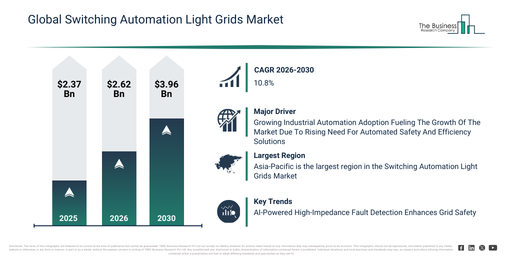
    Switching Automation Light Grids Market Set To Climb From $2.62 Billion In 2026 To $3.96 Billion By 2030

    The switching automation light grids market has experienced rapid growth in recent years. It is projected to expand from $2.37 billion in 2025 to $2.62 billion in 2026, at a compound annual growth rate (CAGR) of 10.6%. In previous periods, this growth was driven by factors such as distribution grid expansion, an increase in outage management requirements, advancements in feeder automation, a rise in industrial power demand, and the implementation of early smart grid pilots.

    The switching automation light grids market is anticipated to experience substantial growth over the coming years. It is projected to reach $3.96 billion by 2030, exhibiting a compound annual growth rate (CAGR) of 10.8%. The expansion during this forecast period is attributable to enhancements in smart distribution grids, an increase in renewable feeder connections, the widespread adoption of automated substations, greater investment in grid reliability, and the proliferation of digital utility programs. Significant trends for the forecast duration encompass the deployment of intelligent switching devices, an uptick in remote-controlled grid switching, broader smart relay integration, increasing embrace of automated fault isolation, and an escalation in sensor-based distribution control.

    Get A Free Sample Report With In-Depth Market Insights:

    https://thebusinessresearchcompany.com/sample_request?id=31181071&type=smp&name=Switching%20Automation%20Light%20Grids%20Market%20Report%202026&utm_source=Blogs&utm_medium=Paid&utm_campaign=Oct_PR

    Switching Automation Light Grids Market Growth Drivers: What’s Behind The Acceleration?

    The increasing embrace of industrial automation is projected to boost the expansion of the switching automation light grids market. Industrial automation involves incorporating technologies like robots, sensors, and computer-controlled systems into manufacturing processes to lessen human involvement and streamline operations. Its rise stems from businesses deploying automated systems to minimize human errors, accelerate production, and make better use of resources, leading to greater output at reduced operational expenses. Switching automation light grids facilitate this adoption by offering accurate, non-contact detection and safety oversight on production lines, allowing for the seamless and dependable coexistence of machinery and personnel. For example, data from the International Federation of Robotics (IFR), a Germany-based non-profit organization, indicated that by September 2025, 393,700 industrial robots were operational in US factories, marking a 3% rise from the previous year, with 34,200 new robots installed in 2024. Consequently, the expanding implementation of industrial automation is propelling the growth of the switching automation light grids market.

    Switching Automation Light Grids Market Segment Analysis: What Are The Core Market Categories?

    The switching automation light grids market covered in this report is segmented –

    1) By Product Type: Through Beam Light Grids; Retro Reflective Light Grids; Diffuse Light Grids

    2) By Voltage: Low Voltage; Medium Voltage; High Voltage

    3) By Application: Object Detection; Parts Counting; Presence Monitoring; Vehicle Separation; Pallet Overhang Detection; Access Guarding

    4) By Distribution Channel: Direct Sales; Distributors; Online Sales

    5) By End User Industry: Energy And Power; Oil And Gas; Manufacturing; Construction; Automotive

    Subsegments:

    1) By Through Beam Light Grids: Single Beam Through Beam Grid; Multi Beam Through Beam Grid; Safety Through Beam Grid; Industrial Through Beam Grid; High Speed Through Beam Grid

    2) By Retro Reflective Light Grids: Standard Retro Reflective Grid; Safety Retro Reflective Grid; Long Range Retro Reflective Grid; Industrial Retro Reflective Grid; High Precision Retro Reflective Grid

    3) By Diffuse Light Grids: Standard Diffuse Grid; Safety Diffuse Grid; Compact Diffuse Grid; Industrial Diffuse Grid; High Accuracy Diffuse Grid

    Switching Automation Light Grids Market Trends: What’s Defining The Industry’s Next Phase?

    Major companies in the switching automation light grids market are prioritizing the development of AI-powered high-impedance (HiZ) fault detection and edge-based grid monitors to elevate accuracy, speed, and safety within electricity distribution networks. This AI-powered high-impedance fault detection is a technological feature embedded in switching automation light grids that autonomously identifies, isolates, and de-energizes low-current faults stemming from damaged equipment or fallen trees, thereby enabling rapid intervention and averting potential wildfire incidents. For example, in March 2025, Eaton Corporation, a US-based power management company, launched its Eaton HiZ Protect solution, an AI-driven innovation deployed in Form-7 recloser controls. This solution is engineered to assist utilities with wildfire prevention and grid resiliency by integrating advanced sensors, machine learning, and edge-based implementation to detect and mitigate high-impedance faults with over 90% accuracy. Key capabilities include real-time fault isolation, the collection of high-fidelity data in remote grid areas, and predictive analytics for proactive system management, all of which empower utilities to improve operational safety and reliability.

    Switching Automation Light Grids Market Company Landscape And Competitive Strategy

    Major companies operating in the switching automation light grids market are Siemens AG, Panasonic Corporation, General Electric Co., Schneider Electric SE, Honeywell International Inc., Mitsubishi Electric Corporation, ABB Ltd., Eaton Corporation Plc, Johnson Controls Inc., Rockwell Automation Inc., Keyence Corporation, Omron Corporation, SICK AG, IFM Electronic GmbH, Banner Engineering Corp., Pepperl Fuchs Inc., Balluff GmbH, Datalogic S.p.A., Turck Inc., Leuze electronic GmbH + Co. KG, Carlo Gavazzi Holding AG, Autonics Corporation, and Contrinex AG.

    View The Full Switching Automation Light Grids Market Report:

    https://thebusinessresearchcompany.com/report/switching-automation-light-grids-market-report?utm_source=Blogs&utm_medium=Paid&utm_campaign=Oct_PR

    Switching Automation Light Grids Market Largest Region: Which Geography Holds The Highest Market Share?

    Asia-Pacific was the largest region in the switching automation light grids market in 2025. Asia-Pacific is expected to be the fastest-growing region in the forecast period. The regions covered in the switching automation light grids market report are Asia-Pacific, South East Asia, Western Europe, Eastern Europe, North America, South America, Middle East, Africa.

    Reach Out To Our Team:

    The Business Research Company: https://www.thebusinessresearchcompany.com/

    Americas: +1 310-496-7795

    Asia: +44 7882 955267 & +91 8897263534

    Europe: +44 7882 955267

    Email us at: marketing@tbrc.info

    Follow us on:

    LinkedIn: https://in.linkedin.com/company/the-business-research-company

    YouTube: https://www.youtube.com/channel/UC24_fI0rV8cR5DxlCpgmyFQ

    Global Market Model: https://www.thebusinessresearchcompany.com/global-market-model
  • Substation Wide Area Monitoring System Market Reaches $2.22 Billion In 2026: Key Developments Shaping Expansion

    Substation Wide Area Monitoring System Market Reaches $2.22 Billion In 2026: Key Developments Shaping Expansion

    Backed by market attractiveness analysis, total addressable market sizing, company benchmarking matrices, interactive Excel dashboards, wider supply chain intelligence, emerging startup coverage, and detailed product-level insights, The Business Research Company’s 2026 market reports are designed to offer research that is more actionable and strategically valuable than ever.

    Substation Wide Area Monitoring System Market Value Growth And Long-Term Outlook

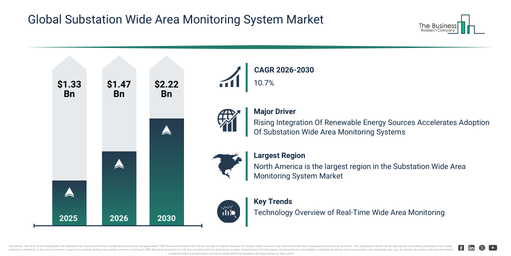
    The substation wide area monitoring system market has seen rapid growth in recent years. It is anticipated to expand from $1.33 billion in 2025 to $1.47 billion in 2026, exhibiting a compound annual growth rate (CAGR) of 10.5%. The historical rise in this market can be attributed to an increase in grid instability events, the expansion of high voltage networks, a surge in substation automation, a heightened focus on blackout prevention, and the development of synchrophasor technology.

    The substation wide area monitoring system market size is projected to experience substantial growth over the next few years. This market is expected to expand to $2.22 billion in 2030, exhibiting a compound annual growth rate (CAGR) of 10.7%. This projected growth can be linked to smart grid modernization programs, increasing renewable energy grid integration, the expansion of cross-border grid links, elevated investment in grid visibility tools, and a growing demand for predictive grid monitoring. Significant trends anticipated during the forecast period include the implementation of phasor measurement networks, the rise of real-time grid analytics platforms, the broadening deployment of high-speed substation sensors, the increasing utilization of event detection software, and the integration of wide area grid visualization tools.

    Get A Free Sample Report With In-Depth Market Insights:

    https://thebusinessresearchcompany.com/sample_request?id=33330&type=smp&name=Substation%20Wide%20Area%20Monitoring%20System%20Market%20Report%202026&utm_source=Blogs&utm_medium=Paid&utm_campaign=Oct_PR

    Substation Wide Area Monitoring System Market Growth Backed By Core Demand Fundamentals

    The incorporation of renewable energy sources is anticipated to drive expansion in the substation wide area monitoring system market in the future. These energy sources are naturally restored within a human timeframe and are capable of repeated use without depletion. The impetus for integrating renewable energy comes from the imperative to decrease greenhouse gas emissions and address climate change. A substation wide area monitoring system (WAMS) facilitates this integration by offering real-time visibility, synchronized operations, and stability surveillance across the electrical grid, thereby allowing operators to handle the fluctuating and intermittent nature of renewable power generation while upholding grid reliability. As an illustration, in January 2024, data from the International Energy Agency (IEA) revealed that worldwide renewable power capacity additions hit an unprecedented 510 GW in 2023, representing the quickest growth in over more than two decades, which substantially increases the demand for sophisticated grid monitoring and automation technologies. Consequently, the integration of renewable energy sources is fueling the expansion of the substation wide area monitoring system market.

    Substation Wide Area Monitoring System Market Segment Trends And Revenue Contributors

    The substation wide area monitoring system market covered in this report is segmented –

    1) By Component: Hardware; Software; Services

    2) By Deployment Type: On-Premises; Cloud-Based

    3) By Technology: Phasor Measurement Units; Wide Area Monitoring Protection and Control; Communication Systems; Other Technologies

    4) By Application: Voltage Monitoring; Current Monitoring

    5) By End-User: Utilities; Industrial Sector; Renewable Energy Sector; Other End-Users

    Subsegments:

    1) By Hardware: Phasor Measurement Units; Global Positioning System Receivers; Data Concentrators; Intelligent Electronic Devices; Communication Equipment

    2) By Software: Wide Area Monitoring Software; Data Analytics and Visualization Software; Event Detection and Alarm Software; System Management and Control Software; Performance Monitoring Software

    3) By Services: System Integration and Deployment Services; Consulting and Advisory Services; Support and Maintenance Services; Training and Education Services; Monitoring and Diagnostic Services

    Substation Wide Area Monitoring System Market Growth Trends Reshaping The Competitive Landscape

    Leading companies within the substation wide area monitoring systems market are increasingly concentrating on developing advanced real-time grid observability solutions to enhance situational awareness and operational reliability. Real-time grid observability utilizes high-frequency data from phasor measurement units (PMUs) to capture the dynamic behavior of power systems across wide areas, thereby enabling proactive decision-making and the early detection of system disturbances. For instance, in August 2024, Hitachi Energy, a Switzerland-based company, introduced a modernized iteration of its Network Manager WAMS, integrating PMU data directly into control room operations alongside traditional energy management system (EMS) measurements. This integration provides operators with detailed visualizations concerning sub-synchronous oscillations, system interactions, and voltage angle stability. The solution integrates seamlessly with Network Manager SCADA/EMS to deliver a unified operational view, allowing high-frequency WAMS analytics to be employed within existing applications for state estimation and voltage stability analysis, consequently offering early warnings of unsafe grid conditions. Additionally, Hitachi Energy launched an intuitive single user interface that unifies SCADA/EMS and WAMS views, while cloud-enabled capabilities facilitate scalable data processing to meet future grid monitoring requirements.

    Substation Wide Area Monitoring System Market Leading Companies And Competitive Benchmarking

    Major companies operating in the substation wide area monitoring system market are Mitsubishi Electric Corporation, Honeywell International Inc., Siemens AG, Hitachi Ltd., Cisco Systems Inc., General Electric Company, Schneider Electric SE, Siemens Energy AG, ABB Ltd, Toshiba Corporation, Eaton Eaton Corporation plc, Emerson Electric Co., Alstom SA, Rockwell Automation Inc, Nexans SA, Schweitzer Engineering Laboratories LLC, Open Systems International Inc., Kalkitech LLC, Quanta Technology LLC, Electric Power Group LLC, Vizimax Inc., Wasion Group Holdings Limited

    View The Full Substation Wide Area Monitoring System Market Report:

    https://thebusinessresearchcompany.com/report/substation-wide-area-monitoring-system-market-report?utm_source=Blogs&utm_medium=Paid&utm_campaign=Oct_PR

    Substation Wide Area Monitoring System Market Largest Region By Revenue And Market Share

    North America was the largest region in the substation wide area monitoring system market in 2025. Asia-Pacific is expected to be the fastest-growing region in the forecast period. The regions covered in the substation wide area monitoring system market report are Asia-Pacific, South East Asia, Western Europe, Eastern Europe, North America, South America, Middle East, Africa.

    Reach Out To Our Team:

    The Business Research Company: https://www.thebusinessresearchcompany.com/

    Americas: +1 310-496-7795

    Asia: +44 7882 955267 & +91 8897263534

    Europe: +44 7882 955267

    Email us at: marketing@tbrc.info

    Follow us on:

    LinkedIn: https://in.linkedin.com/company/the-business-research-company

    YouTube: https://www.youtube.com/channel/UC24_fI0rV8cR5DxlCpgmyFQ

    Global Market Model: https://www.thebusinessresearchcompany.com/global-market-model
  • Substation Battery Charger Market Growth Outlook For 2026: Drivers, Trends And Future Opportunities

    Substation Battery Charger Market Growth Outlook For 2026: Drivers, Trends And Future Opportunities

    Featuring market attractiveness scoring, total addressable market sizing, company benchmarking matrices, interactive Excel dashboards, deeper supply chain intelligence, emerging startup tracking, and granular product-level insights, The Business Research Company’s 2026 market reports are built to deliver research that is both more actionable and more strategically valuable.

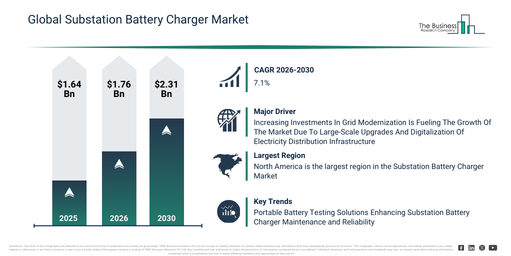
    Substation Battery Charger Market Poised To Hit $2.31 Billion By 2030 With A 7.1% CAGR

    The substation battery charger market size has shown strong growth in recent years. It is anticipated to expand from $1.64 billion in 2025 to $1.76 billion in 2026, achieving a compound annual growth rate (CAGR) of 6.9%. This historical growth can be attributed to factors such as grid expansion projects, the growth of transmission and distribution networks, increasing substation automation, elevated power reliability standards, and the expansion of industrial power infrastructure.

    The substation battery charger market is anticipated to experience robust expansion over the coming years. This market is projected to reach $2.31 billion by 2030, exhibiting a compound annual growth rate (CAGR) of 7.1%. Key drivers for this growth during the forecast period include the increasing deployment of smart grids, a rise in renewable substation installations, the expansion of EV charging grid nodes, greater investment in grid resilience, and more frequent digital substation upgrades. Noteworthy trends expected over the forecast period encompass the embrace of microprocessor-controlled charging units, an increase in modular rectifier-based chargers, greater integration of battery health diagnostics, the broader implementation of high-reliability DC backup systems, and a growing demand for intelligent dual-mode chargers.

    Get A Free Sample Report With In-Depth Market Insights:

    https://thebusinessresearchcompany.com/sample_request?id=31036534&type=smp&name=Substation%20Battery%20Charger%20Market%20Report%202026&utm_source=Blogs&utm_medium=Paid&utm_campaign=Oct_PR

    Substation Battery Charger Market Growth Catalysts And Demand Drivers

    Rising financial commitments to grid modernization are projected to boost the expansion of the substation battery charger market in the future. These investments encompass capital outlays and strategic funding dedicated to enhancing, digitalizing, and enlarging electrical grid infrastructure, thereby boosting reliability, resilience, and supporting advanced technological integration. The surge in grid modernization investments stems from the urgent requirement to modernize outdated grid infrastructure and incorporate renewable energy sources, leading utilities and governments to channel substantial funds into smart grid projects and transmission improvements. Such investments support substation battery chargers through the enhancement of substations with sophisticated power management, automation, and backup energy systems, guaranteeing dependable charging, monitoring, and continuous functioning even during power disruptions. As an illustration, in July 2023, data from the International Energy Agency (IEA), a France-based intergovernmental body, indicated that the European Union’s 2022 action plan projects cumulative electricity grid investments of approximately EUR 584 billion (USD 633 billion) up to 2030. Of this total, roughly EUR 400 billion (USD 434 billion) is designated for distribution network upgrades, with EUR 170 billion (USD 184 billion) specifically earmarked for grid digitalization. Consequently, the escalating investments in grid modernization are fueling the expansion of the substation battery charger market.

    Substation Battery Charger Market Segment Analysis Spotlighting Growth Areas

    The substation battery charger market covered in this report is segmented –

    1) By Type: Float Charger; Boost Charger; Dual-Mode Charger; Other Types

    2) By Battery Type: Lead-Acid; Nickel-Cadmium; Lithium-Ion; Other Battery Types

    3) By Application: Transmission Substations; Distribution Substations; Other Applications

    4) By Sales Channel: Direct Sales; System Integrators; Distributors and Wholesalers

    5) By End-User: Utilities; Industrial; Commercial; Other End-Users

    Subsegments:

    1) By Float Charger: Constant Voltage Float Charging; Automatic Voltage Regulation Float Charging; Temperature Compensated Float Charging; Digital Controlled Float Charging

    2) By Boost Charger: High Current Boost Charging; Timed Boost Charging; Manual Boost Charging; Automatic Boost Charging

    3) By Dual-Mode Charger: Automatic Float and Boost Switching; Microprocessor Controlled Dual Mode Charging; Load Sharing Dual Mode Charging; Battery Health Based Dual Mode Charging

    4) By Other Types: Portable Battery Charging Systems; Customized Industrial Charging Systems; Environment Resistant Charging Systems; Auxiliary Power Charging Systems

    Substation Battery Charger Market Trends Shaping Long-Term Demand

    Leading companies within the substation battery charger market are concentrating on developing advanced solutions, such as portable offerings, to facilitate on-site battery analysis, rapid testing, and preventative upkeep in remote and critical utility environments. Portable solutions are defined as compact, easily movable battery charging and testing apparatus that can be transported to substations or field locations for immediate diagnostics, servicing, and emergency assistance. For example, in November 2025, Trystar LLC, a US-based manufacturer of electrical power solutions, unveiled its ChargePak Portable Battery Testing System (BTS) to assist in the efficient testing and maintenance of vital battery systems. This system supports automated test sequences, real-time data acquisition, and thorough performance reporting to promptly pinpoint battery health concerns. It is engineered to be compatible with a broad spectrum of industrial battery types and capacities, allowing adaptable deployment across substations, utilities, and other critical infrastructure applications, consequently enhancing maintenance efficiency and reliability.

    Substation Battery Charger Market Industry Leaders And Competitive Landscape

    Major companies operating in the substation battery charger market are Siemens AG, Hitachi Energy Ltd., General Electric Company, Schneider Electric SE, ABB Ltd., Eaton Corporation plc, Emerson Electric Co., Exide Industries Limited, Saft Groupe S.A., Narada Power Source Co. Ltd., Socomec Group S.A., C&D Technologies Inc., Benning Elektrotechnik und Elektronik GmbH & Co. KG, AEG Power Solutions GmbH, Statron AG, Alcad Ltd., Unipower LLC, Chloride Power Systems & Solutions Ltd., AEES Power Systems Pvt. Ltd., Powertron India Private Limited.

    View The Full Substation Battery Charger Market Report:

    https://thebusinessresearchcompany.com/report/substation-battery-charger-market-report?utm_source=Blogs&utm_medium=Paid&utm_campaign=Oct_PR

    Substation Battery Charger Market Regional Analysis And Leading Geography

    North America was the largest region in the substation battery charger market in 2025. Asia-Pacific is expected to be the fastest-growing region in the forecast period. The regions covered in the substation battery charger market report are Asia-Pacific, South East Asia, Western Europe, Eastern Europe, North America, South America, Middle East, Africa.

    Reach Out To Our Team:

    The Business Research Company: https://www.thebusinessresearchcompany.com/

    Americas: +1 310-496-7795

    Asia: +44 7882 955267 & +91 8897263534

    Europe: +44 7882 955267

    Email us at: marketing@tbrc.info

    Follow us on:

    LinkedIn: https://in.linkedin.com/company/the-business-research-company

    YouTube: https://www.youtube.com/channel/UC24_fI0rV8cR5DxlCpgmyFQ

    Global Market Model: https://www.thebusinessresearchcompany.com/global-market-model
  • Sovereign Cloud For Financial Services Market Forecast 2026–2030: Market Size, Trends And Growth Opportunities

    Sovereign Cloud For Financial Services Market Forecast 2026–2030: Market Size, Trends And Growth Opportunities

    Backed by market attractiveness analysis, total addressable market sizing, company benchmarking matrices, interactive Excel dashboards, wider supply chain intelligence, emerging startup coverage, and detailed product-level insights, The Business Research Company’s 2026 market reports are designed to offer research that is more actionable and strategically valuable than ever.

    Sovereign Cloud For Financial Services Market Value Analysis: What Growth Lies Ahead Over The Forecast Period?

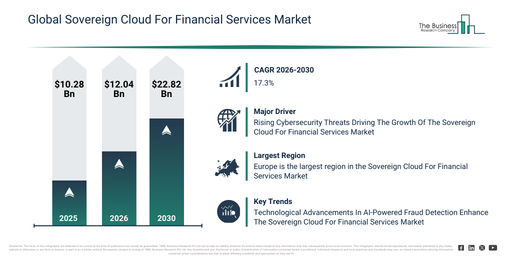
    The sovereign cloud for financial services market size has experienced rapid growth in recent years. Its value is projected to expand from $10.28 billion in 2025 to $12.04 billion in 2026, demonstrating a compound annual growth rate (CAGR) of 17.1%. The historical expansion of this market can be attributed to factors such as a rise in financial data regulations, an increase in cross-border data restrictions, a growth in cyber breach incidents, the expansion of digital banking platforms, and the early adoption of private cloud solutions within the BFSI sector.

    The sovereign cloud for financial services market size is projected for substantial expansion in the coming years. It will grow to $22.82 billion in 2030 at a compound annual growth rate (CAGR) of 17.3%. This projected growth is fueled by factors such as the tightening of national data residency laws, an escalating demand for compliant cloud migration, the expansion of digital payment infrastructure, an increase in regulatory audits within the finance sector, and greater investment in secure cloud stacks. Significant trends anticipated during this forecast period include the increasing adoption of regulated cloud environments, a rising need for in-country data hosting, the advancement of sovereign key management systems, the wider use of jurisdiction-locked cloud zones, and an elevated deployment of financial compliance cloud platforms.

    Get A Free Sample Report With In-Depth Market Insights:

    https://thebusinessresearchcompany.com/sample_request?id=59185996&type=smp&name=Sovereign%20Cloud%20For%20Financial%20Services%20Market%20Report%202026&utm_source=Blogs&utm_medium=Paid&utm_campaign=Oct_PR

    Sovereign Cloud For Financial Services Market Industry Drivers: What’s Behind The Revenue Growth?

    The increasing prevalence of cybersecurity threats is anticipated to fuel the expansion of the sovereign cloud for financial services market. Cybersecurity threats are defined as potential malicious acts or occurrences that exploit weaknesses in digital systems, networks, or data, leading to unauthorized entry, disruption, harm, or theft of information. This escalation in threats stems from the swift digitalization of banking activities and the emergence of ‘Shadow AI,’ which involves unauthorized artificial intelligence tools creating new vulnerabilities that conventional, non-sovereign cloud setups frequently struggle to protect. Sovereign cloud solutions assist financial institutions in confronting these issues by offering ‘security-by-design’ frameworks, encompassing localized encryption key management and physically isolated data areas. These features guarantee that vital financial records stay under domestic legal authority and are safeguarded from foreign legal interference. For example, in October 2025, the UK’s National Cyber Security Centre (NCSC), a UK government body, disclosed a substantial increase in nationally significant cyber incidents, with figures climbing from 89 in the year to August 2024 to 204 in the year to August 2025. Concurrently, the incidence of cyber breaches among major UK businesses stayed high at 74%. Consequently, the escalation in cybersecurity threats is stimulating the growth of the sovereign cloud for financial services market.

    Sovereign Cloud For Financial Services Market Segmentation And Category Overview

    The sovereign cloud for financial services market covered in this report is segmented –

    1) By Component: Software; Hardware; Services

    2) By Deployment Mode: Public Cloud; Private Cloud; Hybrid Cloud

    3) By Enterprise Size: Small And Medium Enterprises; Large Enterprises

    4) By Application: Core Banking; Risk And Compliance Management; Payment Processing; Data Storage And Management; Fraud Detection And Prevention; Other Applications

    5) By End-User: Banks; Insurance Companies; Investment Firms; Credit Unions; Other End-Users

    Subsegments:

    1) By Software: Data Residency Monitoring Software; Sovereign Compliance Management Platforms; Encryption And Key Management Software; Automated Regulatory Reporting Tools; Identity And Access Governance Software

    2) By Hardware: Localized Data Center Infrastructure; Sovereign Server And Storage Systems; Hardware Security Modules; Dedicated Network Security Appliances; Sovereign Graphics Processing Units

    3) By Services: Professional Consulting And Advisory Services; Sovereign Infrastructure Implementation Services; Managed Sovereignty And Security Services; Technical Training And Support Services; Sovereign Compliance Audit Services

    #Sovereign Cloud For Financial Services Market Growth Trends: What’s Shaping The Future Outlook?

    Leading companies active in the sovereign cloud for financial services market are concentrating on technological advancements, such as AI-powered fraud detection, to establish secure, compliant, and autonomous digital environments for regulated industries. AI-powered fraud detection refers to the integration of specialized machine learning models and generative AI agents into sovereign cloud architectures, aimed at identifying complex financial crimes like synthetic identity fraud and deepfake-driven phishing, while ensuring all sensitive transactional data remains within a specific national jurisdiction. For instance, in March 2025, Oracle, a U.S.-based technology company, introduced new agentic AI capabilities within its Oracle Investigation Hub Cloud Service to combat financial crime. These advanced AI agents automate labor-intensive investigations by adhering to predefined plans, gathering cross-silo evidence, and generating consistent, audit-ready narratives, which reduces human error and manual data collection. Through the adoption of these advanced AI-powered tools, companies like Oracle, Google, and Swift illustrate how sovereign-ready frameworks can transform global financial systems by enhancing regional trust and data security.

    Sovereign Cloud For Financial Services Market Competitive Landscape: Which Companies Lead The Industry?

    Major companies operating in the sovereign cloud for financial services market are Amazon Web Services (AWS), Microsoft Azure, Alibaba Cloud, T-Systems (Deutsche Telekom), Tencent Cloud, IBM Cloud, SUSE, Oracle Cloud, Google Cloud Platform (GCP), SAP SE, Salesforce Inc, Thales Group, Hewlett Packard Enterprise (HPE), Fujitsu, Infosys Limited, Capgemini SE, Atos SE, VMware, Orange Business Services, NTT Communications, Rackspace Technology, OVHcloud, ANS Group Sovereign Cloud, TierPoint, Aruba Cloud

    View The Full Sovereign Cloud For Financial Services Market Report:

    https://thebusinessresearchcompany.com/report/sovereign-cloud-for-financial-services-market-report?utm_source=Blogs&utm_medium=Paid&utm_campaign=Oct_PR

    Sovereign Cloud For Financial Services Market Regional Outlook: Where Is Opportunity Concentrated?

    Europe was the largest region in the sovereign cloud for financial services market in 2025. Asia-Pacific is expected to be the fastest-growing region in the forecast period. The regions covered in the sovereign cloud for financial services market report are Asia-Pacific, South East Asia, Western Europe, Eastern Europe, North America, South America, Middle East, Africa.

    Reach Out To Our Team:

    The Business Research Company: https://www.thebusinessresearchcompany.com/

    Americas: +1 310-496-7795

    Asia: +44 7882 955267 & +91 8897263534

    Europe: +44 7882 955267

    Email us at: marketing@tbrc.info

    Follow us on:

    LinkedIn: https://in.linkedin.com/company/the-business-research-company

    YouTube: https://www.youtube.com/channel/UC24_fI0rV8cR5DxlCpgmyFQ

    Global Market Model: https://www.thebusinessresearchcompany.com/global-market-model

  • Solid State Hydrogen Storage Materials Market Size Reaches $1.24 Billion In 2026: What Is Driving Growth?

    Solid State Hydrogen Storage Materials Market Size Reaches $1.24 Billion In 2026: What Is Driving Growth?

    Featuring market attractiveness scoring, total addressable market sizing, company benchmarking matrices, interactive Excel dashboards, deeper supply chain intelligence, emerging startup tracking, and granular product-level insights, The Business Research Company’s 2026 market reports are built to deliver research that is both more actionable and more strategically valuable.

    Solid State Hydrogen Storage Materials Market Size Forecast: How Big Could The Market Get By 2030?

    The solid state hydrogen storage materials market size has seen rapid expansion in recent years. It is projected to grow from $1.06 billion in 2025 to $1.24 billion in 2026, reflecting a compound annual growth rate (CAGR) of 16.1%. The growth witnessed in historical periods can be ascribed to hydrogen energy research programs, fuel cell development, material science advances, clean fuel initiatives, and pilot hydrogen storage projects.

    The solid state hydrogen storage materials market is projected to experience substantial expansion in the coming years, reaching a valuation of $2.26 billion by 2030, exhibiting a compound annual growth rate (CAGR) of 16.3%. This anticipated growth throughout the forecast period is driven by several factors, including the expansion of hydrogen mobility, increasing demand for long-duration energy storage, the development of green hydrogen infrastructure, funding for advanced material research and development, and the necessity for compact storage systems. Key developments expected within this period encompass innovations in metal hydride storage materials, the emergence of MOF-based hydrogen storage media, the utilization of high entropy alloy storage materials, advancements in low-temperature hydrogen absorption materials, and the creation of nanostructured porous storage solids.

    Get A Free Sample Report With In-Depth Market Insights:

    https://thebusinessresearchcompany.com/sample_request?id=11728712&type=smp&name=Solid%20State%20Hydrogen%20Storage%20Materials%20Market%20Report%202026&utm_source=Blogs&utm_medium=Paid&utm_campaign=Oct_PR

    Solid State Hydrogen Storage Materials Market Growth Factors: What’s Supporting Expansion?

    Growing investments in hydrogen infrastructure are anticipated to boost the solid state hydrogen storage materials market’s expansion. This investment encompasses allocating capital to systems for hydrogen production, storage, transport, and end-use, facilitating its widespread use as an energy carrier with low emissions. Such investment is increasing due to robust commitments from both government and private sectors towards achieving decarbonization and ensuring energy security. Consequently, the solid state hydrogen storage materials industry is experiencing higher demand, as the swift growth of hydrogen infrastructure prompts businesses to seek out safer, higher-density, and more efficient storage options for hydrogen. A notable example is found in 2024 data from the International Energy Agency (IEA), a France-based autonomous intergovernmental organization, which reported that capital expenditure on low-emissions hydrogen projects reached $4.3 billion in 2024, representing an 80% increase from 2023. Furthermore, based on recent final investment decisions, this spending is forecast to climb by over 80% in 2025, approaching $8 billion. Hence, the escalating investments in hydrogen infrastructure are fueling the expansion of the solid state hydrogen storage materials market.

    Solid State Hydrogen Storage Materials Market Segment Outlook: Which Categories Are Growing Fastest?

    The solid state hydrogen storage materials market covered in this report is segmented –

    1) By Material Type: Metal Hydrides; Chemical Hydrides; Complex Hydrides; Carbon Based Materials; Other Material Types

    2) By Storage Mechanism: Absorption; Adsorption

    3) By Operating Temperature: Low Temperature; Medium Temperature; High Temperature

    4) By Application: Automotive; Portable Power; Stationary Power; Aerospace; Other Applications

    Subsegments:

    1) By Metal Hydrides: Light Metal Hydrides; Transition Metal Hydrides; Intermetallic Hydrides; Rare Earth Metal Hydrides

    2) By Chemical Hydrides: Sodium Borohydride; Ammonia Borane; Lithium Aluminum Hydride; Potassium Hydride

    3) By Complex Hydrides: Alanates; Borohydrides; Amides; Imides

    4) By Carbon Based Materials: Activated Carbon; Carbon Nanotubes; Graphene; Carbon Nanofibers

    5) By Other Material Types: Metal Organic Frameworks; Covalent Organic Frameworks; Hybrid Composites; Porous Polymers

    Solid State Hydrogen Storage Materials Market Industry Trends: What’s Reshaping Demand?

    Leading companies in the solid state hydrogen storage material market are concentrating on developing innovative products, such as metal-organic framework (MOF)-based solid-state hydrogen storage materials. Their goal is to enhance hydrogen storage capacity, improve safety, and increase energy efficiency, thereby enabling compact and low-pressure hydrogen storage solutions for clean-energy and mobility applications. These MOF-based solid-state hydrogen storage materials are advanced porous crystalline structures that store hydrogen through physical adsorption on their ultra-high-surface-area internal structures. This approach yields a higher gravimetric storage density, improved reversibility, enhanced thermal stability, and safer low-pressure operation compared to conventional compressed or liquid hydrogen storage systems. For instance, in July 2024, H2MOF, a US-based advanced materials company, introduced a solid-state hydrogen storage material derived from Nobel-recognized metal-organic framework (MOF) technology. This newly launched material facilitates high-density hydrogen adsorption within its porous framework, providing a safer and lower-pressure alternative to traditional hydrogen tanks. It also offers improved storage efficiency, enhanced thermal stability, and better reversibility for repeated hydrogen charging and discharging cycles. The product is engineered to support decentralized renewable-energy storage, hydrogen mobility systems, and next-generation clean-energy infrastructure by delivering compact, lightweight, and scalable solid-state hydrogen storage solutions.

    Solid State Hydrogen Storage Materials Market Competitive Landscape: Who Leads The Industry?

    Major companies operating in the solid state hydrogen storage materials market are Mitsui Mining & Smelting Co. Ltd., Nippon Denko Co. Ltd., Ajax TOCCO Magnethermic Corp., Hydrogenious LOHC Technologies GmbH, American Elements Inc., GreenHy2 Limited, Alkali Metals Limited, Hydrexia Holding Limited, Harnyss LLC, Otto Chemie Pvt. Ltd., H2MOF Technology Limited, Jiangsu JITRI Advanced Energy Materials Research Institute Co. Ltd., Ergenics Corporation, Safe Hydrogen LLC, HYSTORSYS LLC, Plasma Kinetics LLC, GRZ Technologies Inc., H2Go Power Limited, Acme Process Systems Private Limited, and Methydor SRL.

    View The Full Solid State Hydrogen Storage Materials Market Report:

    https://thebusinessresearchcompany.com/report/solid-state-hydrogen-storage-materials-market-report?utm_source=Blogs&utm_medium=Paid&utm_campaign=Oct_PR

    Solid State Hydrogen Storage Materials Market Geographic Landscape: Which Region Leads Industry Growth?

    North America was the largest region in the solid state hydrogen storage materials market in 2025. Asia-Pacific is expected to be the fastest-growing region in the forecast period. The regions covered in the solid state hydrogen storage materials market report are Asia-Pacific, South East Asia, Western Europe, Eastern Europe, North America, South America, Middle East, Africa.

    Reach Out To Our Team:

    The Business Research Company: https://www.thebusinessresearchcompany.com/

    Americas: +1 310-496-7795

    Asia: +44 7882 955267 & +91 8897263534

    Europe: +44 7882 955267

    Email us at: marketing@tbrc.info

    Follow us on:

    LinkedIn: https://in.linkedin.com/company/the-business-research-company

    YouTube: https://www.youtube.com/channel/UC24_fI0rV8cR5DxlCpgmyFQ

    Global Market Model: https://www.thebusinessresearchcompany.com/global-market-model
  • Smart Grid Synchronization Market Size In 2026: Growth Outlook And Forecast Through 2030

    Smart Grid Synchronization Market Size In 2026: Growth Outlook And Forecast Through 2030

    Backed by market attractiveness analysis, total addressable market sizing, company benchmarking matrices, interactive Excel dashboards, wider supply chain intelligence, emerging startup coverage, and detailed product-level insights, The Business Research Company’s 2026 market reports are designed to offer research that is more actionable and strategically valuable than ever.

    Smart Grid Synchronization Market Growth Analysis: How Will Revenue Trend Over The Forecast Period?

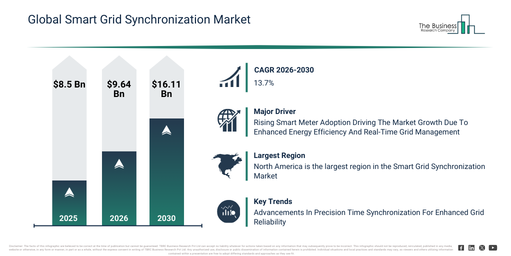
    The smart grid synchronization market has experienced significant expansion in recent times. Projections indicate its expansion from $8.5 billion in 2025 to $9.64 billion in 2026, demonstrating a compound annual growth rate (CAGR) of 13.4%. Historically, this growth stemmed from factors such as phasor measurement unit adoption, wide area monitoring systems, grid stability programs, transmission modernization, and initiatives focused on blackout prevention.

    The smart grid synchronization market is anticipated to experience substantial expansion in the forthcoming years. It is predicted to attain a size of $16.11 billion in 2030, driven by a compound annual growth rate (CAGR) of 13.7%. This projected growth stems from factors such as the management of renewable variability, increasing demand for microgrid synchronization, high penetration of distributed energy resources (DER), the necessity for real-time grid control, and the advancement of grid analytics. Prominent trends throughout this period encompass synchrophasor based grid coordination, the deployment of high precision time synchronization devices, dense PMU deployment networks, real-time phase angle monitoring, and automated grid frequency alignment.

    Get A Free Sample Report With In-Depth Market Insights:

    https://thebusinessresearchcompany.com/sample_request?id=33321&type=smp&name=Smart%20Grid%20Synchronization%20Market%20Report%202026&utm_source=Blogs&utm_medium=Paid&utm_campaign=Oct_PR

    Smart Grid Synchronization Market Growth Drivers: What’s Behind The Acceleration?

    The increasing integration of smart meters is anticipated to fuel expansion within the smart grid synchronization market. These electronic devices are designed to automatically measure and transmit real-time data on electricity, gas, or water consumption directly to utility providers, facilitating precise billing and effective energy management. Their growing prevalence stems from initiatives promoting energy efficiency, given that smart meters offer immediate usage insights, empowering consumers to cut down on consumption and enabling utilities to refine grid operations, thereby reducing expenses and ecological footprint. Crucially, Smart Grid Synchronization facilitates this by ensuring seamless communication between smart meters and the grid infrastructure, which in turn supports automated energy management systems, minimizes power interruptions, and enhances the efficiency of power distribution. As an illustration, figures from Gov.uk, a UK-based government body, indicate that in Q3 2025, major energy suppliers throughout Great Britain deployed a combined total of 680,000 smart and advanced meters, as reported in November 2025. Consequently, the expanding deployment of smart meters is a significant factor propelling the smart grid synchronization market’s growth.

    Smart Grid Synchronization Market Segments: Where Is Growth Concentrated?

    The smart grid synchronization market covered in this report is segmented –

    1) By Component: Hardware; Software; Services

    2) By Deployment: On-Premises; Cloud; Hybrid

    3) By Technology: Phasor Measurement Units; Synchrophasors; Digital Fault Recorders; Smart Meters; Other Technologies

    4) By Application: Transmission; Distribution; Generation; Other Applications

    5) By End-User: Utilities; Industrial; Commercial; Residential; Other End-Users

    Subsegments:

    1) By Hardware: Smart Meters; Sensors; Controllers; Communication Devices; Energy Storage Systems

    2) By Software: Grid Management Software; Data Analytics Platforms; Monitoring and Control Software; Predictive Maintenance Software; Energy Optimization Software

    3) By Services: Installation Services; Integration Services; Consulting Services; Maintenance Services; Training and Support Services

    Smart Grid Synchronization Market Trends: What’s Defining The Industry’s Next Phase?

    Leading companies in the smart grid synchronization market are prioritizing the development of inventive solutions, such as precision time synchronization technologies, to address the escalating need for improved grid reliability, interoperability, and resilient digital power infrastructure. Precision Time Synchronization technologies are defined as methods that accurately align clocks across devices or systems with microsecond or nanosecond precision, enabling coordinated operations within networks, industrial systems, and critical applications. For example, in December 2025, Siemens AG, a Germany-based industrial automation and power systems technology company, introduced the siprotec 5 precision time protocol (PTP) grandmaster clock (GMC), specifically designed to reinforce digital substations and critical grid infrastructure. The Siprotec 5 PTP GMC incorporates Precision Time Protocol (IEEE 1588v2) grandmaster capabilities alongside enhanced cybersecurity features, including strict separation of process bus and station bus networks and patent-pending seamless grandmaster changeover technology to maintain continuous synchronization without disruptive time jumps during clock transitions. This particular innovation facilitates resilient, fail-safe time coordination, which is vital for modern smart grids, enhances protection functions against disturbances, and strengthens overall grid reliability.

    Smart Grid Synchronization Market Key Players Shaping Industry Direction

    Major companies operating in the smart grid synchronization market are Siemens AG., Hitachi Energy Ltd., Cisco Systems Inc., Oracle Corporation, Schneider Electric SE, Honeywell International Inc., ABB Ltd., Eaton Corporation plc., Quanta Technology LLC, Prysmian Group, Emerson Electric Co., Fluence Energy Inc., Itron Inc., Schweitzer Engineering Laboratories Inc., Landis+Gyr Group AG., Bentley Systems Incorporated, Crompton Greaves, S&C Electric Company, Kamstrup A/S, ETAP, Toshiba Corporation, and General Electric Company.

    View The Full Smart Grid Synchronization Market Report:

    https://thebusinessresearchcompany.com/report/smart-grid-synchronization-market-report?utm_source=Blogs&utm_medium=Paid&utm_campaign=Oct_PR

    Smart Grid Synchronization Market Regional Analysis: Which Geography Leads On Revenue?

    North America was the largest region in the smart grid synchronization market in 2025. Asia-Pacific is expected to be the fastest-growing region in the forecast period. The regions covered in the smart grid synchronization market report are Asia-Pacific, South East Asia, Western Europe, Eastern Europe, North America, South America, Middle East, Africa.

    Reach Out To Our Team:

    The Business Research Company: https://www.thebusinessresearchcompany.com/

    Americas: +1 310-496-7795

    Asia: +44 7882 955267 & +91 8897263534

    Europe: +44 7882 955267

    Email us at: marketing@tbrc.info

    Follow us on:

    LinkedIn: https://in.linkedin.com/company/the-business-research-company

    YouTube: https://www.youtube.com/channel/UC24_fI0rV8cR5DxlCpgmyFQ

    Global Market Model: https://www.thebusinessresearchcompany.com/global-market-model