Blog

  • Indoor Air Quality Solutions Market Growth Potential: What The Latest Forecast Reveals

    Built to provide research that’s more actionable and strategically valuable, The Business Research Company’s 2026 market reports include market attractiveness analysis, total addressable market sizing, company benchmarking matrices, interactive Excel dashboards, broader supply chain intelligence, emerging startup tracking, and in-depth product insights.

    Indoor Air Quality Solutions Market Size, Value And Growth Trajectory Through 2030

    The indoor air quality solutions market has experienced robust expansion over recent years. Projections indicate its expansion from $20.87 billion in 2025 to $22.52 billion in 2026, exhibiting a compound annual growth rate (CAGR) of 7.9%. This historical growth is largely attributed to heightened consciousness concerning indoor air pollution, an escalating incidence of respiratory illnesses, the widespread adoption of residential air purifiers, the advancement of commercial building management systems, and initial developments in HEPA and activated carbon filtration.

    The indoor air quality solutions market size is anticipated to expand significantly over the next few years. It will grow to $30.78 billion in 2030 at a compound annual growth rate (CAGR) of 8.1%. This projected expansion during the forecast period is fueled by the integration of IoT-enabled sensors, increasing demand for smart ventilation solutions, more rigorous indoor air quality regulations, the growing adoption of UV and photocatalytic oxidation technologies, and greater investment in commercial and educational facilities for air quality management. Prominent trends expected in this timeframe include intelligent indoor air quality monitoring, advanced filtration and purification technologies, optimized ventilation systems, humidity and odor control solutions, and comprehensive integrated air quality management platforms.

    Get A Free Sample Report With In-Depth Market Insights:

    https://thebusinessresearchcompany.com/sample_request?id=23683375&type=smp&name=Indoor%20Air%20Quality%20Solutions%20Market%20Report%202026&utm_source=Blogs&utm_medium=Paid&utm_campaign=Oct_PR

    Indoor Air Quality Solutions Market Industry Drivers: What’s Behind The Revenue Growth?

    An increase in asthma cases is anticipated to stimulate expansion within the indoor air quality solutions market moving ahead. Asthma, a persistent respiratory ailment, involves the inflammation and constriction of airways, resulting in recurring episodes of wheezing, shortness of breath, a tight feeling in the chest, and coughing. The condition’s development can be linked to exposure to allergens such as dust mites, pollen, and pet dander. Elevated exposure to indoor allergens, such as dust mites, mold, and pet dander, is leading to a higher incidence of respiratory ailments like asthma. This, in turn, fuels the need for indoor air quality solutions capable of monitoring, filtering, and managing airborne pollutants to foster healthier interior spaces. For example, data from July 2025 by the Centers for Disease Control and Prevention (CDC), a US government agency, indicated that 8.6% of adults aged 18 years and older and 6.5% of children younger than 18 years currently suffered from asthma. Consequently, the growing occurrence of asthma is a key factor propelling the expansion of the indoor air quality solutions market.

    Indoor Air Quality Solutions Market Segment Analysis: What Are The Core Market Categories?

    The indoor air quality solutions market covered in this report is segmented –

    1) By Product Type: Air Purifiers, Ventilation Systems, Humidifiers Or Dehumidifiers, Sensors And Monitors, Other Product Types

    2) By Technology: High Efficiency Particulate Air (HEPA) Filtration, Activated Carbon Filtration, Ultraviolet (UV) Light Technology, Ionization, Nano Filtration, Photocatalytic Oxidation

    3) By Application: Single-Family Homes, Multi-Family Apartments

    4) By Distribution Channel: Online, Offline

    5) By End-User: Home Owners, Facility Managers, Health Professionals, School Administrators, Business Owners

    Subsegments:

    1) By Air Purifiers: Portable Air Purifiers, Whole House Air Purifiers, Room Based Air Purifiers, Commercial Grade Air Purifiers

    2) By Ventilation Systems: Mechanical Ventilation Systems, Natural Ventilation Systems, Balanced Ventilation Systems, Demand Controlled Ventilation Systems

    3) By Humidifiers Or Dehumidifiers: Central Humidity Control Systems, Portable Humidifier Units, Portable Dehumidifier Units, Industrial Humidity Control Systems

    4) By Sensors And Monitors: Particulate Matter Sensors, Gas Detection Sensors, Temperature And Humidity Monitors, Integrated Air Quality Monitoring Systems

    5) By Other Product Types: Air Quality Control Software, Air Freshening Systems, Source Control Solutions, Air Duct Cleaning Equipment

    #Indoor Air Quality Solutions Market Growth Trends: What’s Shaping The Future Outlook?

    Major companies within the indoor air quality solutions market are concentrating on developing innovative products, such as AI-based real-time sensor networks. These developments aim to enable continuous monitoring and advanced analysis of indoor pollutants, leading to improved preventive health management and occupant well-being in diverse indoor environments. AI-based real-time sensor networks refer to integrated systems that combine high-precision environmental sensors with artificial intelligence and advanced analytics to continuously measure, analyze, and interpret indoor air quality parameters, thereby delivering instant and actionable insights. For instance, in December 2025, the Abu Dhabi Public Health Centre, a public health authority based in the United Arab Emirates, launched the Indoor Air Quality Observatory (HawAQM). The HawAQM observatory integrates cutting-edge monitoring technologies, high-precision sensors, and advanced analytics to provide real-time indoor air quality data across schools, homes, and public facilities. Its digital dashboard visualizes continuous pollutant measurements and trends, empowering specialists and decision-makers to implement timely, data-driven interventions. This innovation supports the indoor air quality solutions market by shifting air quality management from reactive assessments to proactive, intelligence-driven monitoring, strengthening indoor environmental health management at scale.

    Indoor Air Quality Solutions Market Leading Players And Competitive Positioning

    Major companies operating in the indoor air quality solutions market are Siemens AG, LG Electronics Inc., Panasonic Holdings Corporation, Honeywell International Inc., Mitsubishi Electric Corporation, Daikin Industries Ltd., 3M Company, Johnson Controls International plc, Carrier Global Corporation, Trane Technologies plc, Philips Electronics N.V., Dyson Technology Limited, Camfil AB, TSI Incorporated, Blueair AB, QleanAir AB, Sharp Corporation, Airthings AS, Aircuity Inc., IQAir AG, Aeroqual Limited.

    View The Full Indoor Air Quality Solutions Market Report:

    https://thebusinessresearchcompany.com/report/indoor-air-quality-solutions-market-report?utm_source=Blogs&utm_medium=Paid&utm_campaign=Oct_PR

    Indoor Air Quality Solutions Market Regional Distribution: Which Areas Power Market Growth?

    Asia-Pacific was the largest region in the indoor air quality solutions market in 2025. Asia-Pacific is expected to be the fastest-growing region in the forecast period. The regions covered in the indoor air quality solutions market report are Asia-Pacific, South East Asia, Western Europe, Eastern Europe, North America, South America, Middle East, Africa.

    Reach Out To Our Team:

    The Business Research Company: https://www.thebusinessresearchcompany.com/

    Americas: +1 310-496-7795

    Asia: +44 7882 955267 & +91 8897263534

    Europe: +44 7882 955267

    Email us at: marketing@tbrc.info

    Follow us on:

    LinkedIn: https://in.linkedin.com/company/the-business-research-company

    YouTube: https://www.youtube.com/channel/UC24_fI0rV8cR5DxlCpgmyFQ

    Global Market Model: https://www.thebusinessresearchcompany.com/global-market-model
  • Health Data Lineage Platforms Market Growth To $4.63 Billion Creates New Opportunities Across The Industry

    Featuring market attractiveness scoring, total addressable market sizing, company benchmarking matrices, interactive Excel dashboards, deeper supply chain intelligence, emerging startup tracking, and granular product-level insights, The Business Research Company’s 2026 market reports are built to deliver research that is both more actionable and more strategically valuable.

    Health Data Lineage Platforms Market Growth From $2.23 Billion In 2026 To $4.63 Billion By 2030 At A CAGR Of 20.1%

    The health data lineage platforms market size has seen rapid growth in recent years. This market is forecasted to increase from $1.86 billion in 2025 to $2.23 billion in 2026, at a compound annual growth rate (CAGR) of 19.8%. The historical growth can be attributed to several factors including the rising adoption of electronic health records, increasing regulatory demands for health data compliance, the growing need for data-driven clinical decision-making, the early deployment of healthcare IT solutions, and the expansion of clinical analytics capabilities.

    The market for health data lineage platforms is projected to experience substantial expansion in the coming years. Its valuation is anticipated to reach $4.63 billion by 2030, exhibiting a compound annual growth rate (CAGR) of 20.1%. This upward trajectory during the projection period stems from factors such as the proliferation of AI-driven health data lineage tools, a growing need for cloud-based deployment, a heightened emphasis on patient data privacy and consent monitoring, the broadening of integrated healthcare analytics platforms, and stricter interoperability demands within healthcare environments. Key developments during this timeframe encompass the traceability of clinical data, validation of data quality and integrity, mechanisms for tracking consent and access, lineage visualization capabilities for analytical purposes, and preparedness for regulatory compliance and audits.

    Get A Free Sample Report With In-Depth Market Insights:

    https://thebusinessresearchcompany.com/sample_request?id=43431869&type=smp&name=Health%20Data%20Lineage%20Platforms%20Market%20Report%202026&utm_source=Blogs&utm_medium=Paid&utm_campaign=Oct_PR

    Health Data Lineage Platforms Market Opportunity Drivers: What’s Unlocking New Revenue Potential?

    The escalating embrace of remote patient monitoring is set to fuel the expansion of the health data lineage platforms market moving forward. Remote patient monitoring (RPM) is a healthcare innovation that enables patients to gather and convey their health information through connected medical devices to healthcare providers for ongoing oversight and management. The rising uptake of remote patient monitoring is propelled by the broadening of medicare reimbursement policies, which encourage healthcare providers to implement these technologies for managing chronic diseases and offer financial coverage for remote monitoring services. Remote patient monitoring necessitates health data lineage platforms capable of tracking and overseeing the origin, flow, and alteration of health data as it moves from patient devices to provider systems, thereby guaranteeing data accuracy, regulatory adherence, and security throughout the monitoring process. For instance, in August 2025, data from the Department of Health & Human Services, a US-based executive branch department, indicated that in 2024, Medicare expenditure on remote patient monitoring surpassed $536 million, marking a 31% surge compared to 2023. Concurrently, nearly 1 million beneficiaries utilized RPM services, representing a 27% year-over-year increase, and approximately 4,600 medical practices regularly billed for these services. Consequently, the heightened adoption of remote patient monitoring is propelling the expansion of the health data lineage platforms market.

    Health Data Lineage Platforms Market Segment Analysis And Revenue Potential

    The health data lineage platforms market covered in this report is segmented –

    1) By Component: Software, Services

    2) By Deployment Mode: On Premises, Cloud

    3) By Application: Data Governance, Regulatory Compliance, Risk Management, Data Quality Management, Other Applications

    4) By End User: Healthcare Providers, Payers, Life Sciences, Public Health Agencies, Other End Users

    Subsegments:

    1) By Software: Healthcare Data Lineage Tracking Software, Clinical Data Integration Software, Data Governance And Compliance Software, Metadata Management Software, Visualization And Reporting Software

    2) By Services: Implementation And Integration Services, Consulting And Integration Services, Maintenance And Support Services, Training And Education Services, Managed Data Lineage Services

    Health Data Lineage Platforms Market Innovation Trends Shaping Future Development

    Leading companies in the health data lineage platforms market are concentrating on developing advanced data lineage and observability solutions. The goal of these solutions is to enhance data transparency, reliability, and governance within complex healthcare data ecosystems. Data lineage and observability solutions are integrated tools that offer complete visibility into how data is created, transformed, and utilized across systems, simultaneously tracking data quality, accuracy, and performance. This functionality allows organizations to quickly detect data problems, ensure accurate analytics, and maintain regulatory adherence via real-time data health tracking. For example, in June 2023, ThinkData Works Inc., a Canada-based data intelligence company, introduced a data lineage solution specifically designed to boost data observability and health monitoring in enterprise data environments. This solution provides end-to-end visibility into data flows, empowering healthcare organizations to proactively spot data quality problems, monitor data health, and guarantee reliable analytics and reporting for clinical, operational, and research use cases.

    Health Data Lineage Platforms Market Industry Leaders And Competitive Landscape

    Major companies operating in the health data lineage platforms market are Microsoft Corporation, International Business Machines Corporation, Oracle Corporation, SAP SE, SAS Institute Inc., Hitachi Vantara LLC, Informatica Inc., Cloudera Inc., Rocket Software Inc., Qlik Technologies Inc., Precisely Software Inc., Collibra NV, Syniti Inc., Alation Inc., Ataccama Corporation, OvalEdge Inc., data.world Inc, Global IDs Inc., DataKitchen Inc., Alex Solutions Pty Ltd., and Quest Software Inc.

    View The Full Health Data Lineage Platforms Market Report:

    https://thebusinessresearchcompany.com/report/health-data-lineage-platforms-market-report?utm_source=Blogs&utm_medium=Paid&utm_campaign=Oct_PR

    Health Data Lineage Platforms Market Regional Analysis And Top Geography

    North America was the largest region in the health data lineage platforms market in 2025. Asia-Pacific is expected to be the fastest-growing region in the forecast period. The regions covered in the health data lineage platforms market report are Asia-Pacific, South East Asia, Western Europe, Eastern Europe, North America, South America, Middle East, Africa.

    Reach Out To Our Team:

    The Business Research Company: https://www.thebusinessresearchcompany.com/

    Americas: +1 310-496-7795

    Asia: +44 7882 955267 & +91 8897263534

    Europe: +44 7882 955267

    Email us at: marketing@tbrc.info

    Follow us on:

    LinkedIn: https://in.linkedin.com/company/the-business-research-company

    YouTube: https://www.youtube.com/channel/UC24_fI0rV8cR5DxlCpgmyFQ

    Global Market Model: https://www.thebusinessresearchcompany.com/global-market-model
  • Emergency Medical Services Software Market Forecast To Reach $3.6 Billion By 2030: Key Trends Explained

    Backed by market attractiveness analysis, total addressable market sizing, company benchmarking matrices, interactive Excel dashboards, wider supply chain intelligence, emerging startup coverage, and detailed product-level insights, The Business Research Company’s 2026 market reports are designed to offer research that is more actionable and strategically valuable than ever.

    Emergency Medical Services Software Market Forecast: Value Set To Climb From $2.44 Billion To $3.6 Billion

    The emergency medical services software market has observed strong growth in recent years. It is anticipated to expand from $2.22 billion in 2025 to $2.44 billion in 2026, at a compound annual growth rate (CAGR) of 10.0%. The growth witnessed historically is due to factors such as the increasing demand for efficient pre-hospital care, the greater adoption of digital health solutions, the expansion of emergency medical services infrastructure, the rising need for patient data management, and the integration of communication tools in EMS operations.

    The emergency medical services software market size is anticipated to experience swift expansion over the coming years. This market is projected to reach $3.6 billion in 2030, demonstrating a compound annual growth rate (CAGR) of 10.2%. Factors contributing to this growth during the forecast period include advancements in AI-driven dispatch systems, the emergence of cloud-based emergency services solutions, increased adoption of interoperable health record sharing, the broader integration of telehealth within EMS, and a heightened emphasis on predictive analytics for resource allocation. Key trends anticipated in the same period encompass real-time emergency response coordination, enhanced patient data interoperability, optimization of fleet and resources, adherence to regulatory compliance and reporting standards, and the automation of clinical documentation processes.

    Get A Free Sample Report With In-Depth Market Insights:

    https://thebusinessresearchcompany.com/sample_request?id=32610&type=smp&name=Emergency%20Medical%20Services%20Software%20Market%20Report%202026&utm_source=Blogs&utm_medium=Paid&utm_campaign=Oct_PR

    Emergency Medical Services Software Market Growth Backed By Core Demand Fundamentals

    The increasing number of emergency call volumes and medical incidents is projected to stimulate the growth of the emergency medical services software market in the future. Emergency call volumes and medical incidents refer to the aggregate count of emergency service requests received by dispatch centers and the associated patient care events managed by EMS personnel. These emergency call volumes and medical incidents are rising due to factors such as increasing population density, an aging demographic, and a growing prevalence of chronic health conditions. Emergency medical services software aids in managing elevated call volumes by facilitating faster incident prioritization and more efficient dispatch, thereby enhancing response times when demand is high. For instance, in December 2025, the Midland Fire Department, a US-based provider of fire protection and emergency medical services, indicated that emergency medical services (EMS) calls increased from 14,895 during January to November 2024 to 15,592 over the same period in 2025, representing an approximate year-over-year increase of 4.08%. Therefore, the escalating emergency call volumes and medical incidents are driving the expansion of the emergency medical services software market.

    Emergency Medical Services Software Market Segmentation: How Does The Market Break Down By Category?

    The emergency medical services software market covered in this report is segmented –

    1) By Product Type: Computer-Aided Dispatch, Electronic Patient Care Reporting, Emergency Medical Services (EMS) Billing, Scheduling And Workforce Management, Fleet Management, Other Product Types

    2) By Deployment Mode: Cloud-Based, On-Premises

    3) By Functionality: Incident Reporting, Resource Allocation, Communication And Coordination, Reporting And Analytics, Compliance Management

    4) By Application: Hospitals And Clinics, Emergency Service Providers, Other Applications

    5) By End User: Public Ambulance Services, Private Ambulance Services, Healthcare Organizations, Fire Departments, Other Emergency Services

    Subsegments:

    1) By Computer-Aided Dispatch: Priority Based Dispatch, Real Time Unit Tracking, Call Taking And Triage, Location Based Dispatching, Inter Agency Dispatch Coordination

    2) By Electronic Patient Care Reporting: Clinical Documentation Management, Patient Data Capture, Treatment And Outcome Recording, Interoperable Health Record Sharing, Quality Assurance And Audit Support

    3) By Emergency Medical Services (EMS) Billing: Insurance Claim Processing, Automated Invoice Generation, Reimbursement Management, Revenue Cycle Optimization, Payment Tracking And Reporting

    4) By Scheduling And Workforce Management: Shift Scheduling, Staff Availability Management, Credential And Certification Tracking, Overtime And Leave Management, Workforce Performance Monitoring

    5) By Fleet Management: Vehicle Location Tracking, Maintenance And Service Scheduling, Fuel And Cost Monitoring, Asset And Equipment Tracking, Fleet Utilization Analysis

    6) By Other Product Types: Inventory And Supply Management, Compliance And Regulatory Reporting, Training And Simulation Management, Analytics And Performance Dashboards, Telehealth And Remote Support Integration

    Emergency Medical Services Software Market Growth Trends Reshaping The Competitive Landscape

    Leading companies in the emergency medical services software market are prioritizing the alignment of their platforms with evolving national incident data standards, such as NEMSIS and the National Emergency Response Information System (NERIS), to enhance data quality and usability. These NEMSIS-compliant and NERIS-aligned data architectures are standardized digital frameworks created to structure, validate, and facilitate the exchange of emergency medical and fire incident data, adhering to federal and state reporting requirements. For example, in April 2024, ImageTrend, a US-based public safety and healthcare software company, published a policy position statement explaining its method for NERIS data flow within its EMS and fire data platform. The company stressed its support for NERIS modernization while advocating for a state-centric data submission approach, where incident data proceeds from local agencies to state systems before transmission to NERIS. This endeavor showcases ImageTrend’s deployment of NERIS-aligned data frameworks and transitional resources within its software, designed to assist EMS and fire agencies in adapting to the National Emergency Response Information System while simultaneously upholding data governance, ensuring interoperability, and maintaining compliance with developing federal reporting mandates.

    Emergency Medical Services Software Market Top Companies Driving Competitive Growth

    Major companies operating in the emergency medical services software market are Motorola Solutions Incorporation, Hexagon AB, Tyler Technologies Inc., Eso Solutions Inc., ZOLL Medical Corporation, ImageTrend Inc., Forte Holdings Inc., Sansio, Emergency Reporting, Digitech Computer Inc., Ortivus AB, Traumasoft Inc., AngelTrack LLC, MP Cloud Technologies Inc., AIM System, EPIC EMS, Documed Systems International Inc., Healthware Corp., Macrologic Inc., Emergidata.

    View The Full Emergency Medical Services Software Market Report:

    https://thebusinessresearchcompany.com/report/emergency-medical-services-software-market-report?utm_source=Blogs&utm_medium=Paid&utm_campaign=Oct_PR

    Emergency Medical Services Software Market Global Footprint: Which Region Leads The Market?

    North America was the largest region in the emergency medical services software market in 2025. Asia-Pacific is expected to be the fastest-growing region in the forecast period. The regions covered in the emergency medical services software market report are Asia-Pacific, South East Asia, Western Europe, Eastern Europe, North America, South America, Middle East, Africa.

    Reach Out To Our Team:

    The Business Research Company: https://www.thebusinessresearchcompany.com/

    Americas: +1 310-496-7795

    Asia: +44 7882 955267 & +91 8897263534

    Europe: +44 7882 955267

    Email us at: marketing@tbrc.info

    Follow us on:

    LinkedIn: https://in.linkedin.com/company/the-business-research-company

    YouTube: https://www.youtube.com/channel/UC24_fI0rV8cR5DxlCpgmyFQ

    Global Market Model: https://www.thebusinessresearchcompany.com/global-market-model
  • Embolization Product Market Analysis: Understanding The Drivers Behind 8.6% CAGR Through 2030 Growth

    Featuring market attractiveness scoring, total addressable market sizing, company benchmarking matrices, interactive Excel dashboards, deeper supply chain intelligence, emerging startup tracking, and granular product-level insights, The Business Research Company’s 2026 market reports are built to deliver research that is both more actionable and more strategically valuable.

    Embolization Product Market Revenue Growth On Track For A 8.6% CAGR Through 2030

    The embolization product market has recently shown strong expansion. Forecasts indicate it will expand from $2.08 billion in 2025 to $2.26 billion in 2026, registering a compound annual growth rate (CAGR) of 8.8%. Historically, this expansion was largely fueled by factors such as the increasing prevalence of cardiovascular diseases, a rising incidence of aneurysms and vascular malformations, the growing adoption of minimally invasive procedures, greater awareness of interventional radiology, increased demand for targeted cancer treatments, an expanding geriatric population in need of vascular interventions, a growing preference for outpatient procedures, improving healthcare infrastructure in emerging economies, a heightened focus on reducing surgical risks and complications, and continuous technological advancements in embolization devices.

    The embolization product market is projected for substantial growth in the coming years, with its size anticipated to reach $3.14 billion by 2030, demonstrating a compound annual growth rate (CAGR) of 8.6%. This expansion during the forecast period is driven by several factors, including progress in bioresorbable embolic materials, innovations in microcatheter-compatible devices, the integration of image-guided navigation systems, advancements in liquid embolic agents, novel coil and plug designs, the adoption of robotic-assisted interventions, enhanced patient-specific device customization, advanced minimally invasive delivery systems, the incorporation of smart monitoring for real-time feedback, and improvements in cost-effective manufacturing processes. Over the forecast period, prominent trends are expected to include the widespread adoption of minimally invasive treatments, the development of personalized vascular therapies, the integration of sophisticated imaging, breakthroughs in biocompatible materials, and the provision of cost-effective embolization solutions.

    Get A Free Sample Report With In-Depth Market Insights:

    https://thebusinessresearchcompany.com/sample_request?id=18020442&type=smp&name=Embolization%20Product%20Market%20Report%202026&utm_source=Blogs&utm_medium=Paid&utm_campaign=Oct_PR

    Embolization Product Market Growth Catalysts And Demand Drivers

    The growing requirement for minimally invasive treatment procedures is projected to boost the expansion of the embolization product market in the future. These procedures are defined as medical interventions involving minor incisions or catheter-based approaches, which lessen trauma and allow for quicker recuperation compared to conventional surgeries. The increasing inclination towards such treatments is promoting the utilization of embolization products, vital for operations like controlling hemorrhages, addressing vascular malformations, and managing tumors. Embolization products aid minimally invasive treatment methods by enabling doctors to accurately block irregular blood flow to specific areas, thereby diminishing surgical risks, reducing recovery periods, and improving overall patient outcomes. For instance, in August 2025, Dr. M. MacDonald reported that the worldwide total of minimally invasive cosmetic procedures reached nearly 25.4 million in 2023, showcasing a significant upward trend and widespread adoption of less invasive medical interventions. Thus, the escalating demand for minimally invasive treatment procedures is fueling the growth of the embolization product market.

    Embolization Product Market Segment Trends And Revenue Contributors

    The embolization product market covered in this report is segmented –

    1) By Product Type: Embolization Coils, Embolic Agents, Detachable Balloons, Liquid Embolics, Microcatheters, Guidewires

    2) By Material: Metallic, Polymeric, Biological, Hybrid

    3) By Technology: Bioresorbable Technology, Non-Bioresorbable Technology

    4) By Application: Oncology, Neurology, Peripheral Vascular Disease, Urology, Other Applications

    5) By End User: Hospitals, Ambulatory Surgical Centers, Specialty Clinics

    1) By Embolization Coils: Detachable Coils, Pushable Coils, Helical Coils, Complex-Shaped Coils, Hydrogel-Coated Coils, Bare Platinum Coils, Fibered Coils, Microcoils (For Neurovascular Use)

    2) By Embolic Agents: Particulate Embolic Agents, Microspheres (Drug-Eluting And Non-Drug-Eluting), Polyvinyl Alcohol (PVA) Particles, Gelatin Sponge Particles, Radiopaque Embolic Agents, Biodegradable Embolic Agents, Metallic Embolic Particles

    3) By Detachable Balloons: Flow-Occlusion Balloons, Aneurysm Treatment Balloons, Temporary Occlusion Balloons, Permanent Occlusion Balloons, Single-Lumen Detachable Balloons, Dual-Lumen Detachable Balloons

    4) By Liquid Embolics: Ethylene-Vinyl Alcohol Copolymer (EVOH) Agents, Cyanoacrylate-Based Adhesives (Glue Embolics), Polymerizing Liquid Embolics, Precipitating Liquid Embolics, Radiopaque Liquid Embolics, Non-Adhesive Liquid Embolics

    5) By Microcatheters: Single-Lumen Microcatheters, Dual-Lumen Microcatheters, Flow-Directed Microcatheters, Over-The-Wire Microcatheters, High-Flow Microcatheters, Steerable Microcatheters, Neurovascular Microcatheters

    6) By Guidewires: Hydrophilic Guidewires, Hydrophobic Guidewires, Stainless Steel Guidewires, Nitinol Guidewires, Shapeable Or Steerable Guidewires, Micro-Guidewires, Specialty Neurovascular Guidewires

    Embolization Product Market Trends Shaping Long-Term Demand

    Key companies in the embolization products market are concentrating on developing advanced microcatheter solutions, such as next-generation balloon occlusion devices, to enhance procedural efficiency, boost usability, and respond to clinical feedback from physicians. Next-generation balloon occlusion microcatheters are minimally invasive tools designed to obstruct or lessen blood flow in specific blood vessels during embolization procedures, offering superior control, security, and ease of operation. For example, in July 2025, Embolx, a US-based medical device company, introduced the Sniper G3 Balloon Occlusion Microcatheter. This third-generation device offers an extended shelf life, improved user-friendliness, and simplified preparation, directly addressing significant feedback from physician users. It empowers clinicians to execute targeted embolization procedures more efficiently, diminishes procedural complexity, and enhances overall patient outcomes.

    Embolization Product Market Leading Players And Competitive Positioning

    Major companies operating in the embolization product market are Cardinal Health, Abbott Laboratories, Medtronic plc, Stryker Corporation, Boston Scientific Corporation, MicroVention Inc., Terumo Corporation, Kaneka Corporation, Cook Medical, Merit Medical Systems Inc., Penumbra Inc., Guerbet Group, B. Braun Melsungen AG, Sirtex Medical Limited, Medikit Co. Ltd., Balt USA LLC, Acandis GmbH & Co. KG, ABK Biomedical Inc., CeloNova BioSciences, Shape Memory Medical Inc.

    View The Full Embolization Product Market Report:

    https://thebusinessresearchcompany.com/report/embolization-product-market-report?utm_source=Blogs&utm_medium=Paid&utm_campaign=Oct_PR

    Embolization Product Market Regional Split: Which Areas Are Fueling Growth?

    North America was the largest region in the embolization product market in 2025. Asia-Pacific is expected to be the fastest-growing region in the forecast period. The regions covered in the embolization product market report are Asia-Pacific, South East Asia, Western Europe, Eastern Europe, North America, South America, Middle East, Africa.

    Reach Out To Our Team:

    The Business Research Company: https://www.thebusinessresearchcompany.com/

    Americas: +1 310-496-7795

    Asia: +44 7882 955267 & +91 8897263534

    Europe: +44 7882 955267

    Email us at: marketing@tbrc.info

    Follow us on:

    LinkedIn: https://in.linkedin.com/company/the-business-research-company

    YouTube: https://www.youtube.com/channel/UC24_fI0rV8cR5DxlCpgmyFQ

    Global Market Model: https://www.thebusinessresearchcompany.com/global-market-model
  • Drug Development Services Market Outlook 2026–2030: Growth Trends, Market Dynamics And Emerging Opportunities

    Backed by market attractiveness analysis, total addressable market sizing, company benchmarking matrices, interactive Excel dashboards, wider supply chain intelligence, emerging startup coverage, and detailed product-level insights, The Business Research Company’s 2026 market reports are designed to offer research that is more actionable and strategically valuable than ever.

    Drug Development Services Market Size, Value And Growth Trajectory Through 2030

    The drug development services market has experienced significant expansion in recent years. This market is anticipated to grow from $28.09 billion in 2025 to $31.5 billion in 2026, achieving a compound annual growth rate (CAGR) of 12.2%. The historical increase can be attributed to several factors, including heightened research and development investments by pharmaceutical firms, an increase in the outsourcing of drug development services, the rising prevalence of chronic and infectious diseases, stricter regulatory compliance requirements, and advancements in molecular biology and in vitro testing.

    The drug development services market is projected to experience substantial growth in the upcoming years. It is anticipated to increase to $50.26 billion by 2030, demonstrating a compound annual growth rate (CAGR) of 12.4%. This expansion during the forecast period can be attributed to factors such as the adoption of AI and machine learning in drug discovery, the broadening of biologics and personalized medicine pipelines, a rising demand for contract research organizations, the integration of cloud-based clinical data management, and the growth of emerging markets for drug development services. Prominent trends expected in this period include the expansion of preclinical research, optimization of regulatory affairs, enhancement of pharmacovigilance, an increase in clinical data management services, and the reinforcement of quality assurance and compliance services.

    Get A Free Sample Report With In-Depth Market Insights:

    https://thebusinessresearchcompany.com/sample_request?id=24189940&type=smp&name=Drug%20Development%20Services%20Market%20Report%202026&utm_source=Blogs&utm_medium=Paid&utm_campaign=Oct_PR

    Drug Development Services Market Opportunity Drivers: What’s Unlocking New Revenue Potential?

    The increasing focus on precision and personalized medicine is projected to drive the expansion of the drug development services market in the future. This medical strategy involves customizing treatments and interventions for individual patients, taking into account their unique genetic composition, clinical traits, and particular disease profiles. The rise of precision and personalized medicine is attributed to advancements in genomic technologies, which facilitate more precise disease diagnosis and the selection of targeted therapies. Drug development services play a crucial role in precision and personalized medicine by facilitating the creation, testing, and validation of targeted treatments that align with specific genetic, molecular, and patient-specific disease attributes. For example, in February 2024, the Personalized Medicine Coalition, a US-based non-profit organization, stated that the FDA granted approval for 16 new personalized treatments for individuals with rare diseases in 2023, marking a substantial rise from the six approved in 2022. Consequently, the heightened focus on precision and personalized medicine is fueling the expansion of the drug development services market.

    Drug Development Services Market Segment Trends And Revenue Contributors

    The drug development services market covered in this report is segmented –

    1) By Type: Drug Metabolism And Pharmacokinetics, Biological Services, Medicinal Chemistry

    2) By Process: Candidate Validation, Lead Optimization, Hit To Lead Identification, Target Validation, Target Selection

    3) By Drug: Biologics, Infectious Disease Diagnostics, Small Molecules

    4) By Therapeutic Area: Cardiovascular Disease, Digestive System Disease, Immune System And Infectious Disease, Neurology, Oncology, Other Therapeutic Areas

    5) By End User: Pharmaceutical Companies, Biotechnology Companies, Contract Research Organizations, Academic And Research Institutes

    Subsegments:

    1) By Drug Metabolism And Pharmacokinetics: Absorption Studies, Distribution Studies, Metabolism Studies, Excretion Studies, Bioavailability Assessment, Drug Drug Interaction Studies

    2) By Biological Services: Cell Based Assays, Molecular Biology Services, Protein Expression And Purification, Biomarker Discovery, In Vitro Pharmacology

    3) By Medicinal Chemistry: Compound Design And Synthesis, Structure Activity Relationship Studies, Lead Optimization Chemistry, Chemical Library Development, Process Chemistry Development

    Drug Development Services Market Innovation Trends Shaping Future Development

    Major companies operating in the drug development services market are focusing on developing innovative solutions, such as science-driven formulation acceleration platforms, to optimize early-stage drug formulation and reduce time-to-market for complex drug candidates. These platforms are integrated development programs that apply targeted technologies and structured protocols to rapidly enhance drug formulations and advance them toward clinical testing. For instance, in May 2025, Aenova Group GmbH, a Germany-based pharmaceutical company, launched the Aenovation program to accelerate the initial development of pharmaceutical formulations, especially for poorly soluble compounds that are challenging to progress through the pipeline. The program utilizes a three-step approach—comprehensive API profiling and developability classification, rapid formulation and prototype selection using solubility enhancement technologies, and seamless transfer to GMP lab and pilot-scale manufacturing—to deliver right-first-time results and materials for first-in-human trials more quickly. By addressing critical bioavailability challenges and enabling efficient formulation strategies, the Aenovation program helps pharma innovators, including biotech start-ups, bring innovative therapies closer to clinical phases with greater speed and resource efficiency.

    Drug Development Services Market Competitive Landscape: Which Companies Lead The Industry?

    Major companies operating in the drug development services market are IQVIA Holdings Inc., Labcorp Drug Development, Lonza Group AG, SGS Life Sciences, ICON plc, Eurofins Scientific SE, PPD Inc., Syneos Health Inc., WuXi AppTec Co. Ltd., Catalent Inc., Charles River Laboratories International Inc., Parexel International Corporation, Samsung Biologics Co. Ltd., Medpace Holdings Inc., PRA Health Sciences Inc., Fujifilm Diosynth Biotechnologies, Recipharm AB, PCI Pharma Services Inc., Almac Group Limited, Evotec SE, Aenova Group GmbH, Rentschler Biopharma SE, BioReliance Corporation, Covance SE

    View The Full Drug Development Services Market Report:

    https://thebusinessresearchcompany.com/report/drug-development-services-market-report?utm_source=Blogs&utm_medium=Paid&utm_campaign=Oct_PR

    Drug Development Services Market Regional Outlook: Where Is Opportunity Concentrated?

    North America was the largest region in the drug development services market in 2025. Asia-Pacific is expected to be the fastest-growing region in the forecast period. The regions covered in the drug development services market report are Asia-Pacific, South East Asia, Western Europe, Eastern Europe, North America, South America, Middle East, Africa.

    Reach Out To Our Team:

    The Business Research Company: https://www.thebusinessresearchcompany.com/

    Americas: +1 310-496-7795

    Asia: +44 7882 955267 & +91 8897263534

    Europe: +44 7882 955267

    Email us at: marketing@tbrc.info

    Follow us on:

    LinkedIn: https://in.linkedin.com/company/the-business-research-company

    YouTube: https://www.youtube.com/channel/UC24_fI0rV8cR5DxlCpgmyFQ

    Global Market Model: https://www.thebusinessresearchcompany.com/global-market-model

  • Artificial Intelligence (AI) Medical Scribe Software Market Set To Expand From $5.08 Billion In 2026: Growth Outlook Through 2030

    Featuring market attractiveness scoring, total addressable market sizing, company benchmarking matrices, interactive Excel dashboards, deeper supply chain intelligence, emerging startup tracking, and granular product-level insights, The Business Research Company’s 2026 market reports are built to deliver research that is both more actionable and more strategically valuable.

    Artificial Intelligence (AI) Medical Scribe Software Market Forecast: Value Set To Climb From $1.94 Billion To $5.08 Billion

    The artificial intelligence (AI) medical scribe software market size has expanded significantly in recent years. It is forecast to increase from $1.53 billion in 2025 to $1.94 billion in 2026, exhibiting a compound annual growth rate (CAGR) of 26.9%. The historical growth of this market can be attributed to physician burnout, the growth in EHR adoption, the emergence of early speech recognition tools, the digitization of healthcare, and existing documentation inefficiencies.

    The artificial intelligence (AI) medical scribe software market is projected to experience significant expansion over the next few years. It is anticipated to reach a value of $5.08 billion by 2030, exhibiting a compound annual growth rate (CAGR) of 27.2%. This growth during the forecast period is attributed to factors like AI-driven healthcare automation, the expansion of telemedicine, the necessity for regulatory documentation, a focus on clinician productivity, and the rise of cloud healthcare platforms. Major developments expected in this period include automated clinical documentation, real-time speech recognition, optimization of healthcare workflows, AI-powered compliance support, and context-aware medical transcription.

    Get A Free Sample Report With In-Depth Market Insights:

    https://thebusinessresearchcompany.com/sample_request?id=92055440&type=smp&name=Artificial%20Intelligence%20%28AI%29%20Medical%20Scribe%20Software%20Market%20Report%202026&utm_source=Blogs&utm_medium=Paid&utm_campaign=Oct_PR

    Artificial Intelligence (AI) Medical Scribe Software Market Expansion Drivers: What’s Shaping Future Growth?

    The increasing occurrence of physician and clinician burnout is anticipated to fuel the expansion of the artificial intelligence medical scribe software market in the future. This burnout refers to a condition of physical, emotional, and mental depletion resulting from sustained occupational stress within healthcare environments. The growing incidence of physician and clinician burnout primarily stems from an expanding administrative burden, as extensive documentation and electronic health record responsibilities curtail time spent on patient care, leading to stress, weariness, and emotional drain. Artificial intelligence medical scribe software assists in tackling the increasing problem of physician and clinician burnout by automating clinical record-keeping, easing administrative load, and enabling medical professionals to concentrate more on treating patients and less on administrative tasks. For example, data from December 2024, reported by the Australian Journal of General Practice, an Australia-based general practitioner publication, indicated that 71% of 2,000 Australian GPs suffered from burnout in 2023. Consequently, the growing occurrence of physician and clinician burnout is projected to stimulate the expansion of the artificial intelligence medical scribe software market.

    Artificial Intelligence (AI) Medical Scribe Software Market Segment Analysis And Revenue Potential

    The artificial intelligence (AI) medical scribe software market covered in this report is segmented –

    1) By Component: Software, Services

    2) By Deployment Mode: Cloud-Based, On-Premises

    3) By Application: Hospitals, Clinics, Ambulatory Surgical Centers, Specialty Centers, Other Applications

    4) By End-User: Healthcare Providers, Medical Institutions, Other End-Users

    Subsegments:

    1) By Software: Clinical Documentation Software, Speech Recognition Software, Natural Language Processing Software, Workflow Automation Software, Analytics And Reporting Software

    2) By Services: Consulting And Advisory Services, Implementation And Integration Services, Training And Education Services, Support And Maintenance Services, Customization And Optimization Services

    Artificial Intelligence (AI) Medical Scribe Software Market Strategic Trends: What Defines The Next Growth Phase?

    Leading companies in the artificial intelligence medical scribe software market are concentrating on creating innovative solutions, such as native artificial intelligence charting tools, to boost clinical documentation accuracy and ultimately achieve improved patient care outcomes. These native artificial intelligence charting tools are either built-in or integrated with AI-powered data visualization features that automatically generate charts, graphs, and insights from data directly within a platform, eliminating the need for external plugins or manual coding. For instance, in August 2025, Epic, a US-based electronic health records (EHR) software provider, announced the development of its native AI charting tool. This tool utilizes integrated AI to automatically complete portions of a patient’s electronic patient record (EPR), thereby reducing the time spent on documentation and administrative tasks and allowing clinicians to better focus on patient care. This technology combines Microsoft’s Dragon Ambient AI for transcription with Epic’s proprietary processing to generate structured visit documentation directly within the EPR and is projected to be ready for limited deployment by early 2026, with further AI capabilities like discharge planning agents and virtual assistants slated for introduction afterward.

    Artificial Intelligence (AI) Medical Scribe Software Market Competitive Landscape: Who Leads The Industry?

    Major companies operating in the artificial intelligence (AI) medical scribe software market are TruBridge Inc, Innovaccer Inc, CureMDcom Inc, Abridge AI Inc, OmniMD Inc, Notable Health Inc, Nabla Labs Inc, Voicebrook Inc, Tandem Health AB, Sully AI Inc, Freed AI Inc, Heidi Health Pty Ltd, Ambience Healthcare Pty Ltd, Upheal Inc, Tali AI Inc, ScribeAmerica AI Inc, Playback Health Inc, SPRY Therapeutics Inc., Suki AI Inc, and Sunoh AI Inc

    View The Full Artificial Intelligence (AI) Medical Scribe Software Market Report:

    https://thebusinessresearchcompany.com/report/artificial-intelligence-ai-medical-scribe-software-market-report?utm_source=Blogs&utm_medium=Paid&utm_campaign=Oct_PR

    Artificial Intelligence (AI) Medical Scribe Software Market Geographic Landscape: Which Region Dominates Industry Growth?

    North America was the largest region in the artificial intelligence medical scribe software market in 2025. Asia-Pacific is expected to be the fastest-growing region in the forecast period. The regions covered in the artificial intelligence (AI) medical scribe software market report are Asia-Pacific, South East Asia, Western Europe, Eastern Europe, North America, South America, Middle East, Africa.

    Reach Out To Our Team:

    The Business Research Company: https://www.thebusinessresearchcompany.com/

    Americas: +1 310-496-7795

    Asia: +44 7882 955267 & +91 8897263534

    Europe: +44 7882 955267

    Email us at: marketing@tbrc.info

    Follow us on:

    LinkedIn: https://in.linkedin.com/company/the-business-research-company

    YouTube: https://www.youtube.com/channel/UC24_fI0rV8cR5DxlCpgmyFQ

    Global Market Model: https://www.thebusinessresearchcompany.com/global-market-model

  • Fill-Finish Pharmaceutical Contract Manufacturing Market Analysis: How The Industry Is Evolving Toward A $20.45 Billion Future

    Fill-Finish Pharmaceutical Contract Manufacturing Market Analysis: How The Industry Is Evolving Toward A $20.45 Billion Future

    Backed by market attractiveness analysis, total addressable market sizing, company benchmarking matrices, interactive Excel dashboards, wider supply chain intelligence, emerging startup coverage, and detailed product-level insights, The Business Research Company’s 2026 market reports are designed to offer research that is more actionable and strategically valuable than ever.

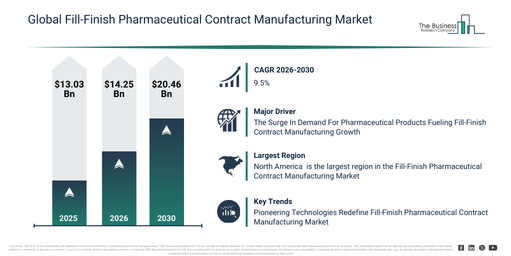
    Fill-Finish Pharmaceutical Contract Manufacturing Market Forecast: Value Set To Climb From $14.24 Billion To $20.45 Billion

    The fill-finish pharmaceutical contract manufacturing market size has experienced substantial growth in recent years. It is projected to expand from $13.03 billion in 2025 to $14.25 billion in 2026, demonstrating a compound annual growth rate (CAGR) of 9.3%. The market’s historic expansion can be attributed to several factors, including the growing demand for outsourced pharmaceutical manufacturing, limited in-house fill-finish capabilities, an increase in biologics and vaccine production, cost pressures on pharmaceutical companies, and the expansion of sterile manufacturing facilities.

    The fill-finish pharmaceutical contract manufacturing market is projected to experience substantial growth over the coming years. This market is anticipated to reach a valuation of $20.46 billion by 2030, exhibiting a compound annual growth rate (CAGR) of 9.5%. Key drivers for this growth during the forecast period include the rising acceptance of prefilled syringes and vials, the expansion of the worldwide biologics market, innovations in fill-finish technologies, the broadening scope of contract manufacturing into developing regions, and more stringent regulatory demands for sterile production. Prominent trends identified for the forecast timeframe encompass the growth of contract manufacturing, a surge in biologics output, wider adoption of prefilled syringes, improved cold chain logistics, and enhanced regulatory adherence along with quality assurance.

    Get A Free Sample Report With In-Depth Market Insights:

    https://thebusinessresearchcompany.com/sample_request?id=12056&type=smp&name=Fill-Finish%20Pharmaceutical%20Contract%20Manufacturing%20Market%20Report%202026&utm_source=Blogs&utm_medium=Paid&utm_campaign=Oct_PR

    Fill-Finish Pharmaceutical Contract Manufacturing Market Industry Drivers: What’s Behind The Revenue Growth?

    The escalating demand for pharmaceutical products is projected to fuel the expansion of the fill-finish pharmaceutical contract manufacturing market moving forward. Pharmaceutical products refer to medicines or drugs specifically formulated for the diagnosis, prevention, treatment, or cure of diseases or medical conditions in humans or animals. Fill-finish pharmaceutical contract manufacturing provides an essential service for the aseptic filling of injectables, biologics, and other pharmaceutical products, ensuring accuracy, compliance with regulations, and optimized manufacturing processes while preserving product quality. For instance, in June 2023, according to the European Federation of Pharmaceutical Industries and Associations (EFPIA), a Belgium-based trade association representing the pharmaceutical industry in Europe, the total pharmaceutical production in Europe was €390,000 million ($422,803 million) in 2023, an increase from €363,300 million ($393,857 million) in 2022. Thus, the rising demand for pharmaceutical products is driving the growth of the fill-finish pharmaceutical contract manufacturing market.

    Fill-Finish Pharmaceutical Contract Manufacturing Market Segment Analysis And Revenue Potential

    The fill-finish pharmaceutical contract manufacturing market covered in this report is segmented –

    1) By Product Type: Prefilled Syringes, Vials, Cartridges, Other Products

    2) By Molecule Type: Large Molecules, Small Molecules

    3) By End-User: Biopharmaceutical Companies, Pharmaceutical Companies

    Subsegments:

    1) By Prefilled Syringes: Glass Prefilled Syringes, Plastic Prefilled Syringes

    2) By Vials: Glass Vials, Plastic Vials

    3) By Cartridges: Glass Cartridges, Plastic Cartridges

    4) By Other Products: Ampoules, Blisters, Pouches

    #Fill-Finish Pharmaceutical Contract Manufacturing Market Growth Trends: What’s Shaping The Future Outlook?

    Major companies within the fill-finish pharmaceutical contract manufacturing market are prioritizing advanced innovations, such as automated aseptic micro-batch filling systems, to improve production precision, mitigate contamination risks, and offer greater adaptability for diverse drug formulations. These automated aseptic micro-batch filling systems are sophisticated, robotics-driven platforms that conduct high-precision filling and finishing operations in controlled environments, minimizing human interaction while enhancing reproducibility, sterility assurance, and throughput efficiency. For example, in January 2023, Steriline s.r.l., an Italy-based provider specializing in aseptic solutions, launched robotic technologies specifically designed for small-batch aseptic filling, which offers increased safety and flexibility in producing both toxic and non-toxic pharmaceutical drugs. These inventive robotic systems are crafted to reduce the potential for human error, elevate overall product quality, and optimize operational efficiency.

    Fill-Finish Pharmaceutical Contract Manufacturing Market Key Players Shaping Industry Direction

    Major companies operating in the fill-finish pharmaceutical contract manufacturing market are Thermo Fisher Scientific Inc., Fresenius Kabi, Eurofins Scientific SE, Lonza Group Ltd., Catalent Inc., West Pharmaceutical Services Inc., Patheon, Samsung Biologics Co.Ltd., WuXi Biologics, Piramal Pharma Solutions, Pfizer CentreOne, Recipharm AB, Emergent BioSolutions Inc., Boehringer Ingelheim BioXcellence, Corden Pharma GmbH, Aenova Group, Baxter BioPharma Solutions, FUJIFILM Diosynth Biotechnologies, AGC Biologics, Rentschler Biopharma SE, Recro Pharma Inc., Cobra Biologics Limited, Grand River Aseptic Manufacturing (GRAM), MabPlex International Ltd., Cerbios-Pharma SA, Symbiosis Pharmaceutical Services Limited

    View The Full Fill-Finish Pharmaceutical Contract Manufacturing Market Report:

    https://thebusinessresearchcompany.com/report/fill-finish-pharmaceutical-contract-manufacturing-global-market-report?utm_source=Blogs&utm_medium=Paid&utm_campaign=Oct_PR

    Fill-Finish Pharmaceutical Contract Manufacturing Market Top Region: Where Does Most Revenue Come From?

    North America was the largest region in the fill-finish pharmaceutical contract manufacturing market in 2025. Asia-Pacific is expected to be the fastest-growing region in the forecast period. The regions covered in the fill-finish pharmaceutical contract manufacturing market report are Asia-Pacific, South East Asia, Western Europe, Eastern Europe, North America, South America, Middle East, Africa.

    Reach Out To Our Team:

    The Business Research Company: https://www.thebusinessresearchcompany.com/

    Americas: +1 310-496-7795

    Asia: +44 7882 955267 & +91 8897263534

    Europe: +44 7882 955267

    Email us at: marketing@tbrc.info

    Follow us on:

    LinkedIn: https://in.linkedin.com/company/the-business-research-company

    YouTube: https://www.youtube.com/channel/UC24_fI0rV8cR5DxlCpgmyFQ

    Global Market Model: https://www.thebusinessresearchcompany.com/global-market-model

  • Filgrastim Biosimilars Market Outlook Through 2030: Understanding The Growth Opportunity

    Filgrastim Biosimilars Market Outlook Through 2030: Understanding The Growth Opportunity

    Featuring market attractiveness scoring, total addressable market sizing, company benchmarking matrices, interactive Excel dashboards, deeper supply chain intelligence, emerging startup tracking, and granular product-level insights, The Business Research Company’s 2026 market reports are built to deliver research that is both more actionable and more strategically valuable.

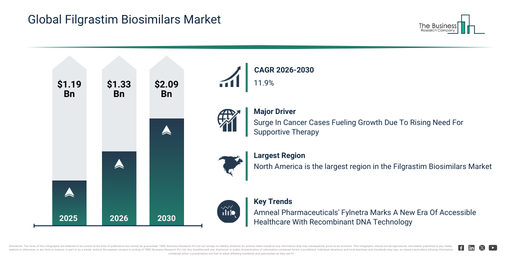
    Filgrastim Biosimilars Market Revenue Growth On Track For A 11.9% CAGR Through 2030

    The filgrastim biosimilars market size has experienced rapid growth in recent years. It is anticipated to increase from $1.19 billion in 2025 to $1.33 billion in 2026, achieving a compound annual growth rate (CAGR) of 11.5%. The expansion witnessed in the historic period can be linked to the high cost of originator filgrastim, the rising prevalence of cancer and blood disorders, constrained access to biologics in developing regions, advancing hospital infrastructure, and swift approvals of biosimilars by regulatory authorities.

    The filgrastim biosimilars market size is projected to experience swift expansion over the coming years. It will grow to $2.09 billion in 2030 at a compound annual growth rate (CAGR) of 11.9%. This anticipated growth is driven by several factors, including the introduction of advanced filgrastim biosimilars, broader contract manufacturing collaborations, increased application in chronic and autoimmune conditions, augmented government backing and reimbursement frameworks, and the evolution of patient-focused distribution and delivery strategies. Key developments expected during this period encompass the growing integration of filgrastim biosimilars in oncology and blood disorder therapies, the expansion of contract manufacturing organizations dedicated to biosimilar production, a greater reliance on internal vertically integrated manufacturing sites, a developing preference for hospital and retail pharmacy distribution channels, and a concentrated effort on affordable biologics and market accessibility in developing regions.

    Get A Free Sample Report With In-Depth Market Insights:

    https://thebusinessresearchcompany.com/sample_request?id=38601368&type=smp&name=Filgrastim%20Biosimilars%20Market%20Report%202026&utm_source=Blogs&utm_medium=Paid&utm_campaign=Oct_PR

    Filgrastim Biosimilars Market Growth Factors: What’s Supporting Expansion?

    An anticipated increase in cancer cases is projected to fuel the expansion of the filgrastim biosimilars market in the future. Cancer encompasses various illnesses characterized by the unchecked proliferation and dissemination of atypical cells within the body, stemming from genetic alterations that impair regular cellular control. This surge in cancer occurrence is partially attributable to an aging populace, given that extended lifespans increase the probability of genetic mutations contributing to cancer development. Filgrastim biosimilars assist individuals with cancer by stimulating the production of white blood cells, thereby mitigating the danger of neutropenia induced by chemotherapy and facilitating safer, uninterrupted cancer therapy. For example, the National Health Service (NHS), a government health organization in the UK, reported in October 2025 that 2023 saw 354,820 new cancer diagnoses, averaging 972 daily, marking an increase of 8,605 from 2022. Consequently, the escalating rate of cancer incidence is propelling the filgrastim biosimilars market.

    Filgrastim Biosimilars Market Segmentation And Category Overview

    The filgrastim biosimilars market covered in this report is segmented –

    1) By Type Of Manufacturing: In-House Manufacturing, Contract Manufacturing organization

    2) By Application: Oncology, Chronic And Autoimmune Diseases, Blood Disorders, Other Applications

    3) By Distribution Channel: Hospital Pharmacy, Retail Pharmacy, Online Pharmacy

    Subsegments:

    1) By In-House Manufacturing: Proprietary In-House Manufacturing Facilities, Company-Owned Production Plants, Vertically Integrated Manufacturing

    2) By Contract Manufacturing Organization: Full-Service Contract Manufacturing, Fill and Finish Services, API (Active Pharmaceutical Ingredient) Manufacturing, Specialized Biosimilar Manufacturing Services

    Filgrastim Biosimilars Market Industry Trends: What’s Reshaping Demand?

    Leading companies in the filgrastim biosimilar market are advancing product development by utilizing sophisticated technologies, such as recombinant DNA technology, to manufacture biosimilars. Recombinant DNA technology is a process involving the creation of hybrid or chimeric DNA by inserting an external sequence into an organism’s DNA. For instance, in May 2023, Amneal Pharmaceuticals, a US-based pharmaceutical company, launched FYLNETRA (pegfilgrastim-pbbk) in the United States. This product, a biosimilar to Amgen’s NEULASTA, is indicated for both the treatment and prevention of febrile neutropenia. It works by encouraging the growth and specialization of neutrophils derived from dedicated precursor cells, triggering their maturation, and improving the viability and efficiency of fully developed neutrophils, which leads to dosage-dependent increases in neutrophil counts. The introduction of Fylnetra contributes to the next generation of affordable medications and expands access for patients, healthcare providers, and payors.

    Filgrastim Biosimilars Market Competitive Analysis Of Leading Industry Participants

    Major companies operating in the filgrastim biosimilars market are Teva Pharmaceutical Industries Ltd, Biocon Limited, Intas Biopharmaceuticals, Dr. Reddy’s Laboratories, Cadila Healthcare Ltd, Reliance Life Science Pvt. Ltd, Gennova Biopharmaceuticals (Emcure), Sandoz Pty Ltd, Mylan, Lupin Limited, Coherus Biosciences Inc., Tonghua Dongbaoare, Adello Biologics, Apobiologix (Apotex), Hospira, Tanvex BioPharma.

    View The Full Filgrastim Biosimilars Market Report:

    https://thebusinessresearchcompany.com/report/Filgrastim-Biosimilar-global-market-report?utm_source=Blogs&utm_medium=Paid&utm_campaign=Oct_PR

    Filgrastim Biosimilars Market Regional Breakdown: Where Is Demand Concentrated?

    North America was the largest region in the filgrastim biosimilar markets market in 2025. Middle East is expected to be the fastest growing region in the global filgrastim biosimilar markets market during the forecast period. The regions covered in the filgrastim biosimilars market report are Asia-Pacific, South East Asia, Western Europe, Eastern Europe, North America, South America, Middle East, Africa.

    Reach Out To Our Team:

    The Business Research Company: https://www.thebusinessresearchcompany.com/

    Americas: +1 310-496-7795

    Asia: +44 7882 955267 & +91 8897263534

    Europe: +44 7882 955267

    Email us at: marketing@tbrc.info

    Follow us on:

    LinkedIn: https://in.linkedin.com/company/the-business-research-company

    YouTube: https://www.youtube.com/channel/UC24_fI0rV8cR5DxlCpgmyFQ

    Global Market Model: https://www.thebusinessresearchcompany.com/global-market-model

  • Fibroblast Activation Protein Inhibitors Market Growth Potential: What The Latest Forecast Reveals

    Fibroblast Activation Protein Inhibitors Market Growth Potential: What The Latest Forecast Reveals

    Built to provide research that’s more actionable and strategically valuable, The Business Research Company’s 2026 market reports include market attractiveness analysis, total addressable market sizing, company benchmarking matrices, interactive Excel dashboards, broader supply chain intelligence, emerging startup tracking, and in-depth product insights.

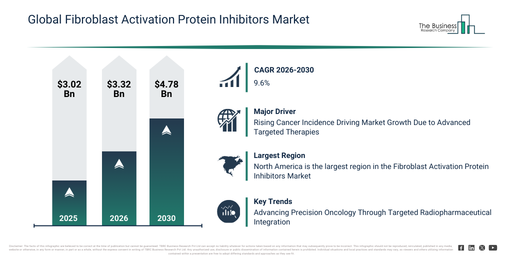
    Fibroblast Activation Protein Inhibitors Market Value Growth And Long-Term Outlook

    The market size for fibroblast activation protein inhibitors has experienced substantial growth in recent years. This market is projected to expand from $3.02 billion in 2025 to $3.32 billion in 2026, representing a compound annual growth rate (CAGR) of 9.9%. Historically, this growth can be attributed to factors such as fibrotic disease prevalence, unmet medical needs, pharmaceutical r&d growth, hospital specialty care, and the evolution of biologics.

    The fibroblast activation protein inhibitors market is projected to experience substantial growth over the coming years, with its size anticipated to reach $4.78 billion by 2030, demonstrating a compound annual growth rate (CAGR) of 9.6%. This expansion during the forecast period can be primarily attributed to the increasing demand for precision therapeutics, the broadening scope of clinical trials, the significant burden of chronic diseases, the approval of targeted drugs, and the growth in specialty pharmacy services. Key trends shaping the market in the forecast period include an increased focus on anti-fibrotic therapies, the expansion of targeted small molecule drugs, advancements in chronic inflammatory disease research, the rising adoption of precision medicine, and the diversification of treatment pipelines for fibrosis indications.

    Get A Free Sample Report With In-Depth Market Insights:

    https://thebusinessresearchcompany.com/sample_request?id=44545693&type=smp&name=Fibroblast%20Activation%20Protein%20Inhibitors%20Market%20Report%202026&utm_source=Blogs&utm_medium=Paid&utm_campaign=Oct_PR

    Fibroblast Activation Protein Inhibitors Market Demand Drivers: What’s Powering Industry Growth?

    The increasing incidence of cancer is anticipated to drive the expansion of the fibroblast activation protein inhibitors market. Cancer is defined as a disease marked by the uncontrolled multiplication of abnormal cells that can infiltrate and spread throughout the body, developing in various tissues and organs and categorized by its cell or tissue of origin. The rising occurrence of cancer stems from factors such as aging populations, evolving lifestyles, environmental elements, and enhanced detection methods. Fibroblast activation protein inhibitors play a role in cancer treatment by targeting and disrupting fibroblasts that support tumors, thereby boosting the efficacy of diagnostic imaging and therapeutic delivery. For instance, in August 2024, Macmillan Cancer Support, a UK-based charity aiding cancer patients, reported that over 3 million people in the UK were living with cancer in 2024; this figure is projected to climb to 3.5 million by 2025, 4 million by 2030, and 5.3 million by 2040. Thus, the growing cancer incidence is a significant catalyst for the fibroblast activation protein inhibitors market.

    Fibroblast Activation Protein Inhibitors Market Segment Outlook: Which Categories Are Growing Fastest?

    The fibroblast activation protein inhibitors market covered in this report is segmented –

    1) By Type: Small Molecule Inhibitors, Monoclonal Antibodies, Peptide Inhibitors

    2) By Indication: Crohn’s, Irritable Bowel, Chronic Prostatitis, Other Indications

    3) By Route Of Administration: Oral, Intravenous, Subcutaneous

    4) By Distribution Channel: Hospital Pharmacy, Online Pharmacy, Retail Pharmacy

    5) By End User: Hospitals, Homecare, Specialty Clinics, Other End Users

    Subsegments:

    1) By Small Molecule Inhibitors: Protease Inhibitors, Multi-Targeted Agents

    2) By Monoclonal Antibodies: Humanized Antibodies, Fully Human Antibodies, Bispecific Antibodies

    3) By Peptide Inhibitors: Synthetic Peptides, Natural Peptide Derivatives, Peptide-Based Conjugates

    Fibroblast Activation Protein Inhibitors Market Innovation Trends: What Developments Are Reshaping The Industry?

    Leading companies in the fibroblast activation protein inhibitors market are actively integrating SAR chelator technology with FAP to improve the targeted delivery of radiopharmaceuticals, enhance the accuracy of diagnostic imaging, and boost therapeutic effectiveness in cancer treatment. SAR chelator technology utilizes specific molecules that tightly bind radioactive metals, enabling researchers to investigate how structural changes influence performance. Its primary application involves precisely guiding radioactive drugs to cancer cells for either imaging or therapy. For instance, in December 2024, Clarity Pharmaceuticals, an Australia-based radiopharmaceutical company, introduced its innovative optimized fibroblast activation protein (FAP)-targeted radiopharmaceutical, representing a breakthrough therapy designed for precision oncology applications. This development expands Clarity’s product pipeline, offering a highly targeted treatment approach for cancers with high FAP expression, with the potential to improve diagnostic accuracy and therapeutic outcomes. The innovation further emphasizes Clarity’s commitment to advancing radiopharmaceuticals for personalized cancer care.

    Fibroblast Activation Protein Inhibitors Market Leading Companies And Competitive Benchmarking

    Major companies operating in the fibroblast activation protein inhibitors market are Telix Pharmaceuticals Ltd., 3B Pharmaceuticals GmbH, Heidelberg Pharma AG, Clovis Oncology, Fusion Pharmaceuticals, POINT Biopharma (Eli Lilly subsidiary), Pentixapharm AG, iTheranostics, Blue Earth Diagnostics (Bracco Group), SOFIE Biosciences (FAP radioligands), Lantheus Holdings Inc., RadioMedix Inc., ImaginAb Inc., Theragnostics Ltd., Isotopen Technologien München (ITM), Q BioMed Inc., Abcam plc, Sino Biological Inc., Creative Biolabs, Bachem Holding AG

    View The Full Fibroblast Activation Protein Inhibitors Market Report:

    https://thebusinessresearchcompany.com/report/fibroblast-activation-protein-inhibitors-global-market-report?utm_source=Blogs&utm_medium=Paid&utm_campaign=Oct_PR

    Fibroblast Activation Protein Inhibitors Market Geographic Landscape: Which Region Dominates Industry Growth?

    North America was the largest region in the fibroblast activation protein inhibitors market in 2025. The regions covered in the fibroblast activation protein inhibitors market report are Asia-Pacific, South East Asia, Western Europe, Eastern Europe, North America, South America, Middle East, Africa.

    Reach Out To Our Team:

    The Business Research Company: https://www.thebusinessresearchcompany.com/

    Americas: +1 310-496-7795

    Asia: +44 7882 955267 & +91 8897263534

    Europe: +44 7882 955267

    Email us at: marketing@tbrc.info

    Follow us on:

    LinkedIn: https://in.linkedin.com/company/the-business-research-company

    YouTube: https://www.youtube.com/channel/UC24_fI0rV8cR5DxlCpgmyFQ

    Global Market Model: https://www.thebusinessresearchcompany.com/global-market-model

  • Fibrate Drugs Market Growth Outlook: Why Analysts Expect Continued Expansion

    Fibrate Drugs Market Growth Outlook: Why Analysts Expect Continued Expansion

    Backed by market attractiveness analysis, total addressable market sizing, company benchmarking matrices, interactive Excel dashboards, wider supply chain intelligence, emerging startup coverage, and detailed product-level insights, The Business Research Company’s 2026 market reports are designed to offer research that is more actionable and strategically valuable than ever.

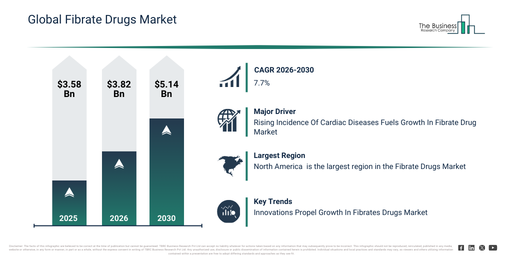
    Fibrate Drugs Market Poised To Hit $5.13 Billion By 2030 With A 7.7% CAGR

    The fibrate drugs market size has demonstrated substantial growth in recent years. It is projected to expand from $3.58 billion in 2025 to $3.82 billion in 2026, achieving a compound annual growth rate (CAGR) of 6.6%. This historical growth can be ascribed to a number of factors, including the increasing prevalence of hypercholesterolemia, a rising incidence of cardiovascular diseases, the preference for fibrate drugs over established lipid-lowering therapies, the expansion of hospital pharmacy networks, and various awareness campaigns focused on heart health.

    The fibrate drugs market is projected to experience substantial expansion in the coming years. This market is predicted to reach $5.14 billion by 2030, exhibiting a compound annual growth rate (CAGR) of 7.7%. This anticipated growth during the forecast period is driven by factors such as advancements in drug formulations, the rise of telemedicine and online pharmacies, a growing need for combination therapies, regulatory clearances for new fibrate drugs, an expanding elderly population, and various preventive healthcare programs. Key trends expected over this period encompass personalized fibrate treatment, combined drug formulations, a heightened emphasis on cardiovascular well-being, the proliferation of online pharmacies, and an increase in preventative health strategies.

    Get A Free Sample Report With In-Depth Market Insights:

    https://thebusinessresearchcompany.com/sample_request?id=35915371&type=smp&name=Fibrate%20Drugs%20Market%20Report%202026&utm_source=Blogs&utm_medium=Paid&utm_campaign=Oct_PR

    Fibrate Drugs Market Growth Drivers: What’s Behind The Acceleration?

    The rising occurrence of cardiac diseases is anticipated to stimulate the expansion of the fibrate drug market in the future. Cardiac diseases cover various ailments impacting both the heart and its associated blood vessels, including conditions such as coronary heart disease and congenital heart disease. Fibrates serve as a therapeutic intervention designed to avert subsequent heart attacks and strokes in individuals already suffering from circulatory system disorders, thereby fueling the fibrate drug market. As an illustration, in September 2024, data released by the Minnesota Department of Health, a US state health agency, indicated that approximately 30% of adults in Minnesota, equating to nearly 1.4 million people, reported having high blood pressure in 2023. Furthermore, in 2022, hypertensive diseases were identified as the primary or secondary cause of death for 14,225 residents, accounting for almost 28% of all fatalities within the state. Consequently, the growing prevalence of cardiac diseases is a key factor driving the growth of the fibrate drugs market.

    Fibrate Drugs Market Segment Landscape: Which Areas Lead Development?

    The fibrate drugs market covered in this report is segmented –

    1) By Drug Type: Clofibrate, Fenofibrates, Fenofibric Acids, Gemfibrozil, Other Drugs

    2) By Indication: Hypercholesterolemia, Heart Attacks, Other Indications

    3) By Distribution Channel: Hospital Pharmacy, Online Pharmacy, Retail Pharmacy

    4) By End User: Hospitals, Homecare, Specialty Clinics, Other End Users

    Subsegments:

    1) By Clofibrate: Standard Clofibrate, Combination Products

    2) By Fenofibrates: Fenofibrate Capsules, Fenofibrate Tablets, Combination Products

    3) By Fenofibric Acids: Fenofibric Acid Capsules, Combination Products

    4) By Gemfibrozil: Standard Gemfibrozil, Combination Products

    5) By Other Drugs: Other Fibrate Formulations, Emerging Fibrate Drugs

    Fibrate Drugs Market Trends: What’s Defining The Industry’s Next Phase?

    Leading firms within the fibrate drugs market are concentrating on creating novel solutions, including fixed-dose combinations, to maintain their competitive standing. A fixed-dose combination is defined as a pharmaceutical preparation containing two or more active components within one dosage unit, which facilitates easier administration and may lead to enhanced therapeutic results. An example illustrating this occurred in May 2023, when Intercept Pharmaceuticals Inc., a US-based biopharmaceutical company, secured U.S. Food and Drug Administration (FDA) approval for orphan drug designation for the fixed-dose combination involving obeticholic acid (OCA) and bezafibrate. This particular combination, functioning as a peroxisome proliferator-activated receptor (PPAR) agonist, is currently under investigation for its potential in treating patients afflicted with primary biliary cholangitis (PBC). While OCA, a farnesoid X receptor (FXR) agonist, is sold by Intercept under the brand Ocaliva in the United States for PBC treatment, bezafibrate, identified as a pan-PPAR agonist, presently lacks U.S. approval for any therapeutic use.

    Fibrate Drugs Market Industry Leaders And Competitive Landscape

    Major companies operating in the fibrate drugs market are Pfizer Inc., F. Hoffmann-La Roche AG, Merck & Co Inc., AbbVie Inc., Bayer AG, Novartis AG, Sanofi SA, Kowa Company Ltd., Bristol-Myers Squibb Co, Abbott Laboratories, AstraZeneca plc, GlaxoSmithKline Plc, Takeda Pharmaceutical Company, Boehringer Ingelheim International GmbH, Teva Pharmaceutical Industries Ltd., Mylan N.V., Daiichi Sankyo Co Ltd., Macleods Pharmaceuticals Ltd., Sun Pharmaceutical Industries Ltd., Dr. Reddy’s Laboratories Ltd., Aurobindo Pharma Limited, Cipla Inc., Zydus Lifesciences Ltd, Lupin Limited, Glenmark Pharmaceuticals, Torrent Pharmaceuticals Ltd., Natco Pharma, Hetero Drugs Ltd

    View The Full Fibrate Drugs Market Report:

    https://thebusinessresearchcompany.com/report/fibrate-drugs-global-market-report?utm_source=Blogs&utm_medium=Paid&utm_campaign=Oct_PR

    Fibrate Drugs Market Largest Region: Which Geography Holds The Highest Market Share?

    North America was the largest region in the fibrate drugs market in 2025. The regions covered in the fibrate drugs market report are Asia-Pacific, South East Asia, Western Europe, Eastern Europe, North America, South America, Middle East, Africa.

    Reach Out To Our Team:

    The Business Research Company: https://www.thebusinessresearchcompany.com/

    Americas: +1 310-496-7795

    Asia: +44 7882 955267 & +91 8897263534

    Europe: +44 7882 955267

    Email us at: marketing@tbrc.info

    Follow us on:

    LinkedIn: https://in.linkedin.com/company/the-business-research-company

    YouTube: https://www.youtube.com/channel/UC24_fI0rV8cR5DxlCpgmyFQ

    Global Market Model: https://www.thebusinessresearchcompany.com/global-market-model