Blog

  • Drug Repurposing Market Analysis Through 2030: Market Size, Growth Trends And Industry Outlook

    Drug Repurposing Market Analysis Through 2030: Market Size, Growth Trends And Industry Outlook

    Featuring market attractiveness scoring, total addressable market sizing, company benchmarking matrices, interactive Excel dashboards, deeper supply chain intelligence, emerging startup tracking, and granular product-level insights, The Business Research Company’s 2026 market reports are built to deliver research that is both more actionable and more strategically valuable.

    Drug Repurposing Market Size Outlook: How Quickly Will Revenue Expand Through 2030?

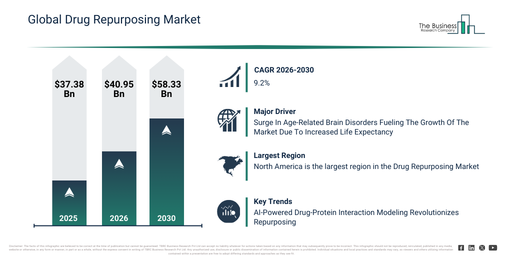
    The drug repurposing market has experienced substantial growth in recent years. It will grow from $37.38 billion in 2025 to $40.95 billion in 2026 at a compound annual growth rate (CAGR) of 9.6%. This historical expansion can be attributed to several factors, including the significant cost and time involved in traditional drug discovery, an increasing number of failed drug candidates, the rising incidence of chronic and rare diseases, a scarcity of therapeutic options for emerging diseases, and the early integration of computational approaches for drug repositioning.

    The drug repurposing market size is expected to show robust expansion in the near future. It is projected to increase to $58.33 billion in 2030, driven by a compound annual growth rate (CAGR) of 9.2%. This projected growth can be attributed to the integration of AI and machine learning in drug repurposing, a surge in investment within biotech and pharma research, the expanding capabilities of contract research organizations (CROs), an increasing demand for affordable therapies, and supportive regulatory environments for repurposed drug approvals. Significant developments anticipated during this forecast period include an intensified focus on phenotypic and target-based screening, the rising adoption of structure-based drug repositioning, advancements in identifying off-target activities, the extended application of drug repurposing for rare and infectious diseases, and the shortening of drug development timelines through the utilization of existing molecules.

    Get A Free Sample Report With In-Depth Market Insights:

    https://thebusinessresearchcompany.com/sample_request?id=51121206&type=smp&name=Drug%20Repurposing%20Market%20Report%202026&utm_source=Blogs&utm_medium=Paid&utm_campaign=Oct_PR

    Drug Repurposing Market Growth Factors Behind Sustained Expansion

    The rising incidence of neurodegenerative diseases is anticipated to boost the expansion of the drug repurposing market in the future. Neurodegenerative diseases represent a collection of disorders characterized by the progressive loss of structure or function in neurons, eventually resulting in their death. The increase in neurodegenerative conditions, such as alzheimer’s dementia, is attributed to extended life expectancy, as aging is the primary risk factor contributing to the gradual decline of neuronal function over time. Drug repurposing assists in combating neurodegenerative diseases by identifying existing drugs with established safety profiles that can be re-directed to target specific disease pathways, thereby accelerating the development of effective treatments. For instance, in March 2023, according to the Alzheimer’s Association, a US-based nonprofit voluntary health organization, approximately 6.7 million Americans aged 65 and older were living with Alzheimer’s dementia in 2023, with forecasts indicating an increase to 13.8 million by 2060. Therefore, the growing prevalence of neurodegenerative diseases is a key driver for the growth of the drug repurposing market.

    Drug Repurposing Market Breakdown By Product Type And Application

    The drug repurposing market covered in this report is segmented –

    1) By Type: Disease-Centric, Target-Centric, Drug-Centric

    2) By Drug Molecules: Biologics, Small Molecule

    3) By Therapeutic Area: Oncology, Neurology, Infectious Diseases, Cardiovascular Diseases, Autoimmune Disorders

    4) By Route Of Administration: Oral, Intravenous, Topical, Inhalation, Intramuscular

    5) By End-User: Pharmaceutical Companies, Research And Academic Institutes, Contract Research Organizations

    Subsegments:

    1) By Disease-Centric: Phenotypic Screening, Epidemiological Analysis, Clinical Observation-Based Repurposing

    2) By Target-Centric: Protein Target Modulation, Pathway Modulation, Biomarker-Based Targeting

    3) By Drug-Centric: Off-Target Activity Identification, Structure-Based Drug Repositioning, Adverse Effect-Based Repurposing

    Drug Repurposing Market Industry Trends Fueling Future Revenue Growth

    Leading firms within the drug repurposing market are concentrating on creating sophisticated technologies, specifically artificial intelligence (AI)-powered drug-protein interaction modeling, to speed up the discovery of novel therapeutic applications for existing medications. This particular modeling approach, driven by AI, utilizes artificial intelligence and machine learning to forecast drug interactions with proteins throughout the human proteome, employing vast datasets to improve both precision and reliability. An example of this is Cosmos Health Inc., a US-based healthcare company, which introduced Cloudscreen 2.0, an advanced AI platform for drug repurposing, in July 2025. This system represents a new generation, built to handle datasets more than 100 times larger than previous versions, facilitating a thorough analysis of drug-protein interactions. The platform incorporates mutagenesis data and tools for examining disordered proteins, allowing it to target conditions like cancer, obesity, and diabetes. Furthermore, scalable processing is enabled by graphics processing unit (GPU)-based cloud computing, establishing the platform as a vital advancement in speeding up research and development for drug repurposing across diverse therapeutic fields.

    Drug Repurposing Market Company Landscape And Competitive Strategy

    Major companies operating in the drug repurposing market are F. Hoffmann-La Roche Ltd , Bayer AG, Takeda Pharmaceutical Company Limited, Amgen Inc., Teva Pharmaceutical Industries Limited, Astellas Pharma Inc., UCB S.A., Eisai Co Ltd., Celltrion Inc., Evotec SE, BenevolentAI Limited, Insilico Medicine Inc., Recursion Pharmaceuticals Inc., Pharnext S.A., Healx Ltd., Algernon Pharmaceuticals Inc., BioXcel Therapeutics Inc.

    View The Full Drug Repurposing Market Report:

    https://thebusinessresearchcompany.com/report/drug-repurposing-global-market-report?utm_source=Blogs&utm_medium=Paid&utm_campaign=Oct_PR

    Drug Repurposing Market Global Footprint: Which Region Leads The Market?

    North America was the largest region in the drug repurposing market in 2025. Asia-Pacific is expected to be the fastest-growing region in the forecast period. The regions covered in the drug repurposing market report are Asia-Pacific, South East Asia, Western Europe, Eastern Europe, North America, South America, Middle East, Africa.

    Reach Out To Our Team:

    The Business Research Company: https://www.thebusinessresearchcompany.com/

    Americas: +1 310-496-7795

    Asia: +44 7882 955267 & +91 8897263534

    Europe: +44 7882 955267

    Email us at: marketing@tbrc.info

    Follow us on:

    LinkedIn: https://in.linkedin.com/company/the-business-research-company

    YouTube: https://www.youtube.com/channel/UC24_fI0rV8cR5DxlCpgmyFQ

    Global Market Model: https://www.thebusinessresearchcompany.com/global-market-model
  • Drug Repositioning Service Market Outlook From 2026 To 2030: Key Growth Factors And Future Opportunities

    Drug Repositioning Service Market Outlook From 2026 To 2030: Key Growth Factors And Future Opportunities

    Built to provide research that’s more actionable and strategically valuable, The Business Research Company’s 2026 market reports include market attractiveness analysis, total addressable market sizing, company benchmarking matrices, interactive Excel dashboards, broader supply chain intelligence, emerging startup tracking, and in-depth product insights.

    Drug Repositioning Service Market Size, Value And Growth Trajectory Through 2030

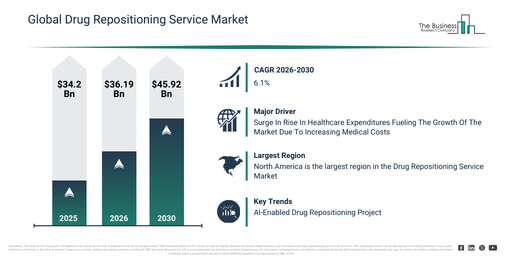
    The drug repositioning service market has seen substantial expansion in recent years. It is anticipated to increase from $34.2 billion in 2025 to $36.19 billion in 2026, exhibiting a compound annual growth rate (CAGR) of 5.8%. This historical growth can be linked to factors like the rising costs of pharmaceutical R&D, the wealth of available legacy drug data, an uptick in unsuccessful clinical trials, the escalating need for quicker drug development cycles, and the early embrace of computational drug discovery.

    The drug repositioning service market is projected to experience robust expansion over the coming years. This market is forecast to reach $45.92 billion by 2030, exhibiting a compound annual growth rate (CAGR) of 6.1%. Several factors are expected to drive this growth during the forecast period, including a heightened demand for economical drug development, the increasing integration of AI-driven discovery solutions, a sharpened focus on rare and orphan conditions, the broadening scope of data-intensive clinical research, and a greater regulatory embrace of drugs that have been repurposed. Key trends anticipated throughout this period involve the wider deployment of AI-powered drug repurposing platforms, an elevated emphasis on re-evaluating drugs that failed in clinical trials, the expanding incorporation of real-world evidence into drug discovery processes, the diversification of precision medicine-focused repositioning efforts, and strengthened partnerships between pharmaceutical companies and contract research organizations (CROs).

    Get A Free Sample Report With In-Depth Market Insights:

    https://thebusinessresearchcompany.com/sample_request?id=29040&type=smp&name=Drug%20Repositioning%20Service%20Market%20Report%202026&utm_source=Blogs&utm_medium=Paid&utm_campaign=Oct_PR

    Drug Repositioning Service Market Demand Drivers Opening New Revenue Streams

    The anticipated expansion of the drug repositioning service market is linked to an increase in healthcare expenditures. These expenditures encompass the total funds allocated to health services, covering prevention, treatment, rehabilitation, and administrative functions. The rise in healthcare spending is primarily driven by escalating medical costs, which are influenced by technological advancements and the growing demand for healthcare provisions. Higher healthcare expenditure benefits drug repositioning services because enhanced funding facilitates more clinical trials and research, thus accelerating the identification of new therapeutic applications for existing drugs. For instance, according to the Office for National Statistics, a UK-based Government department, in May 2024, total healthcare expenditure experienced a significant 5.6% nominal rise from 2022 to 2023. Consequently, the uptick in healthcare expenditures is propelling the growth of the drug repositioning service market.

    Drug Repositioning Service Market Segment Analysis And Revenue Potential

    The drug repositioning service market covered in this report is segmented –

    1) By Type: Generic Drugs, Clinical Trial Failed Drugs

    2) By Therapeutic Area: Oncology, Neurology, Infectious Diseases, Cardiovascular Diseases, Other Therapeutic Area

    3) By End-User: Pharmaceutical Companies, Biotechnology Firms, Contract Research Organizations (CROs), Academic Research Institutions, Hospitals And Ambulatory Surgical Centers.

    Subsegments:

    1) By Generic Drugs: Small Molecule Drugs, Biologics, Biosimilars, Peptide-Based Drugs

    2) By Clinical Trial Failed Drugs: Phase I Failed Drugs, Phase II Failed Drugs, Phase III Failed Drugs, Safety-Related Failed Drugs, Efficacy-Related Failed Drugs

    Drug Repositioning Service Market Trends Powering Strategic Industry Growth

    Leading companies in the drug repositioning service market are prioritizing the integration of artificial intelligence (AI) in drug repositioning, including the use of computational drug repositioning systems. These systems systematically uncover new therapeutic uses for existing drugs through AI-powered analysis of scientific literature and biological data. A computational drug repositioning system functions as a technology-driven platform, employing artificial intelligence, machine learning, and data mining to methodically scrutinize existing drugs, compounds, and biological information. For instance, in November 2024, Japanese firms UBE and FRONTEO initiated a co-creation project. This collaborative framework combines the specialized knowledge of both UBE and FRONTEO to bolster drug repositioning endeavors. It fosters smooth interaction between data analysis (dry research) and biological testing (wet research), thereby improving the progression from initial hypothesis formulation to experimental confirmation. By leveraging FRONTEO’s AI-driven Drug Discovery AI Factory and KIBIT technology, the project aims to systematically identify previously unrecorded connections between diseases and molecules.

    Drug Repositioning Service Market Key Players Shaping Industry Direction

    Major companies operating in the drug repositioning service market are Recursion Pharmaceuticals Inc., Excelra, LifeArc, Cosmos Health Inc., Fios Genomics, Insilico Medicine Inc., Melior Discovery, Delta4, Acubiosys, VeriSIM Life, BioXcel Therapeutics Inc., Pharnext S.S., NuMedii, GVK Biosciences, Plex Research, Paradigm Biopharmaceuticals, BenevolentAI Limited

    View The Full Drug Repositioning Service Market Report:

    https://thebusinessresearchcompany.com/report/drug-repositioning-service-global-market-report?utm_source=Blogs&utm_medium=Paid&utm_campaign=Oct_PR

    Drug Repositioning Service Market Regional Split: Which Areas Are Fueling Growth?

    North America was the largest region in the drug repositioning service market in 2025. Asia-Pacific is expected to be the fastest-growing region in the forecast period. The regions covered in the drug repositioning service market report are Asia-Pacific, South East Asia, Western Europe, Eastern Europe, North America, South America, Middle East, Africa.

    Reach Out To Our Team:

    The Business Research Company: https://www.thebusinessresearchcompany.com/

    Americas: +1 310-496-7795

    Asia: +44 7882 955267 & +91 8897263534

    Europe: +44 7882 955267

    Email us at: marketing@tbrc.info

    Follow us on:

    LinkedIn: https://in.linkedin.com/company/the-business-research-company

    YouTube: https://www.youtube.com/channel/UC24_fI0rV8cR5DxlCpgmyFQ

    Global Market Model: https://www.thebusinessresearchcompany.com/global-market-model
  • Drug Formulation Market Growth Forecast: Market Size, Key Trends And Emerging Opportunities Through 2030

    Drug Formulation Market Growth Forecast: Market Size, Key Trends And Emerging Opportunities Through 2030

    Backed by market attractiveness analysis, total addressable market sizing, company benchmarking matrices, interactive Excel dashboards, wider supply chain intelligence, emerging startup coverage, and detailed product-level insights, The Business Research Company’s 2026 market reports are designed to offer research that is more actionable and strategically valuable than ever.

    Drug Formulation Market CAGR Outlook And Future Development

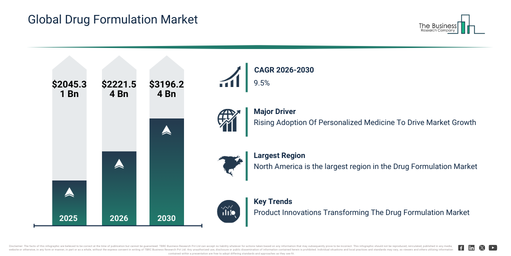
    The drug formulation market size has demonstrated significant expansion in recent years. It is anticipated to expand from $2045.31 billion in 2025 to $2221.54 billion in 2026, achieving a compound annual growth rate (CAGR) of 8.6%. The historical growth within this market can be linked to factors such as an increase in generic drug demand, a rise in the prevalence of chronic diseases, advancements in pharmaceutical research, the expansion of hospital and clinic networks, and growing investments in research and development.

    The drug formulation market is projected to experience substantial expansion over the next few years. It is forecast to reach $3196.24 billion by 2030, showing a compound annual growth rate (CAGR) of 9.5%. The expansion during this forecast period can be attributed to the rise of gene and cell therapies, the integration of AI in drug design, the creation of novel excipients, an increase in biologics and specialty drugs, and the growth of emerging pharmaceutical markets. Key trends anticipated during this period include personalized drug formulations, sophisticated drug delivery systems, the development of biologics and biosimilars, efforts to optimize formulation stability and shelf-life, and a focus on regulatory compliance and quality assurance.

    Get A Free Sample Report With In-Depth Market Insights:

    https://thebusinessresearchcompany.com/sample_request?id=97629752&type=smp&name=Drug%20Formulation%20Market%20Report%202026&utm_source=Blogs&utm_medium=Paid&utm_campaign=Oct_PR

    Drug Formulation Market Growth Backed By Core Demand Fundamentals

    The expanding embrace of personalized medicine is anticipated to drive future growth in the drug formulation market. This innovative healthcare strategy customizes medical treatments and interventions according to each patient’s unique attributes. It entails adapting therapies grounded in specific patient traits, including genetic makeup and biomarkers. Such an approach mandates the creation of bespoke drug formulations to maximize effectiveness and safety for every individual patient. Its influence includes demanding individualized treatment regimens, formulations that incorporate genomic understanding, enhanced drug responses, and specially designed treatments for uncommon diseases. As an illustration, data from the Personalized Medicine Coalition (PMC), a US-based non-profit, indicated that personalized medicines constituted around 38 percent of all newly approved therapeutic molecular entities in 2023, an increase from 34 percent in 2022. Consequently, the rising prevalence of personalized medicine is fueling the expansion of the drug formulation market.

    Drug Formulation Market Segmentation And Category Overview

    The drug formulation market covered in this report is segmented –

    1) By Dosage Form: Oral formulations, Parenteral Formulations, Topical Formulations, Inhalation Formulations

    2) By Formulation: Tablets, Capsules, Injectable, Sprays, Suspensions, Powders, Other Formulations

    3) By Therapy Area: Cardiovascular Diseases (CVDs), Pain, Diabetes, Cancer, Respiratory Diseases, Other Diseases

    4) By End-User: Big Pharma, Small And Medium Pharma, Biotech Companies

    Subsegments:

    1) By Oral Formulations: Tablets, Capsules, Powders, Liquids Or Solutions

    2) By Parenteral Formulations: Injectables, Implants, Infusions

    3) By Topical Formulations: Creams, Ointments, Gels, Transdermal Patches

    4) By Inhalation Formulations: Metered-Dose Inhalers (MDIs), Dry Powder Inhalers (DPIs), Nebulizers

    Drug Formulation Market Growth Trends Reshaping The Competitive Landscape

    Major companies in the drug formulation market are developing new fixed dose combination drugs for type 2 diabetes to gain a competitive edge. A Fixed Dose Combination (FDC) is a pharmaceutical formulation containing two or more active ingredients combined in a fixed ratio of doses within a single dosage form. For instance, in October 2023, Glenmark Pharmaceuticals Limited, an India-based pharmaceutical company, launched its first triple-drug fixed-dose combination under the brand name Zita DM. It includes the DPP4 inhibitor, Teneligliptin (20mg), the SGLT2 inhibitor, Dapagliflozin (10mg), and Metformin SR (500mg/1000mg) in a fixed dose. This medication must be taken once daily, under prescription, to improve glycemic control in patients with Type 2 diabetes.

    Drug Formulation Market Competitive Analysis Of Leading Industry Participants

    Major companies operating in the drug formulation market are AstraZeneca PLC, The Bristol-Myers Squibb Company, Eli Lilly and Company, Gilead Sciences Inc., Merck & Co. Inc., Novartis AG, Pfizer Inc., AbbVie Inc., C.H. Boehringer Sohn AG & Co. KG, F. Hoffmann-La Roche AG, Johnson & Johnson, Bayer AG, Teva Pharmaceutical Industries Ltd., Sanofi S.A., GlaxoSmithKline plc, Novo Nordisk A/S, Amgen Inc., Viatris Inc., Sandoz International GmbH, Takeda Pharmaceutical Company Limited, Sun Pharmaceutical Industries Ltd., Dr. Reddy’s Laboratories Ltd., Cipla Ltd., Lupin Limited, Torrent Pharmaceuticals Limited, Jubilant Life Sciences Limited, Cadila Healthcare Limited, Glenmark Pharmaceuticals Ltd., Wockhardt Ltd., Hikma Pharmaceuticals plc

    View The Full Drug Formulation Market Report:

    https://thebusinessresearchcompany.com/report/drug-formulation-global-market-report?utm_source=Blogs&utm_medium=Paid&utm_campaign=Oct_PR

    Drug Formulation Market Top Region: Where Does Most Revenue Come From?

    North America was the largest region in the drug formulation market in 2025. Asia-Pacific is expected to be the fastest-growing region in the drug formulation market report during the forecast period. The regions covered in the drug formulation market report are Asia-Pacific, South East Asia, Western Europe, Eastern Europe, North America, South America, Middle East, Africa.

    Reach Out To Our Team:

    The Business Research Company: https://www.thebusinessresearchcompany.com/

    Americas: +1 310-496-7795

    Asia: +44 7882 955267 & +91 8897263534

    Europe: +44 7882 955267

    Email us at: marketing@tbrc.info

    Follow us on:

    LinkedIn: https://in.linkedin.com/company/the-business-research-company

    YouTube: https://www.youtube.com/channel/UC24_fI0rV8cR5DxlCpgmyFQ

    Global Market Model: https://www.thebusinessresearchcompany.com/global-market-model
  • Drug Discovery Market CAGR Forecast Through 2030: Key Trends Shaping Industry Expansion

    Drug Discovery Market CAGR Forecast Through 2030: Key Trends Shaping Industry Expansion

    Featuring market attractiveness scoring, total addressable market sizing, company benchmarking matrices, interactive Excel dashboards, deeper supply chain intelligence, emerging startup tracking, and granular product-level insights, The Business Research Company’s 2026 market reports are built to deliver research that is both more actionable and more strategically valuable.

    Drug Discovery Market Set To Climb From $142.53 Billion In 2026 To $250.5 Billion By 2030

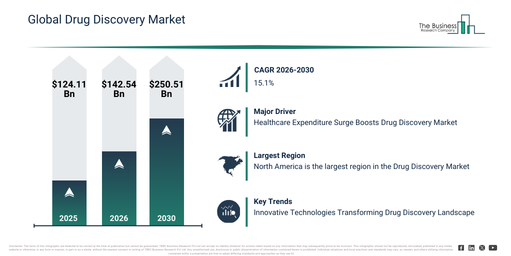
    The drug discovery market size has experienced significant expansion in recent years. It will grow from $124.11 billion in 2025 to $142.54 billion in 2026 at a compound annual growth rate (CAGR) of 14.8%. This historical growth can be attributed to several factors, including an increase in chronic and infectious diseases, advancements in molecular biology techniques, heightened R&D spending by pharmaceutical companies, a rise in biotechnology collaborations, and the availability of research funding.

    The drug discovery market is poised for significant expansion in the coming years. It is projected to reach a valuation of $250.51 billion by 2030, exhibiting a compound annual growth rate (CAGR) of 15.1%. This expected growth during the forecast period is driven by the emergence of AI-driven drug discovery platforms, the expanding scope of personalized medicine, the integration of omics data into drug design, the increasing outsourcing in the biopharmaceutical sector, and the adoption of automation and robotics in laboratory environments. Prominent trends anticipated in this period include advancements in high-throughput screening, the development of targeted drugs, innovative personalized medicine strategies, the incorporation of pharmacogenomics, and the use of nanotechnology in drug discovery.

    Get A Free Sample Report With In-Depth Market Insights:

    https://thebusinessresearchcompany.com/sample_request?id=88969109&type=smp&name=Drug%20Discovery%20Market%20Report%202026&utm_source=Blogs&utm_medium=Paid&utm_campaign=Oct_PR

    Drug Discovery Market Growth Catalysts And Demand Drivers

    The drug discovery market is anticipated to expand due to increasing healthcare spending. Globally, nations allocate a significant portion of their GDP to healthcare costs, encompassing hospital services, doctor and clinic visits, various professional services, dental treatments, additional health, residential, and personal care, home healthcare, nursing homes, continuing care retirement communities, prescription medicines, and other related expenditures. A substantial component of health expenditure is dedicated to drug discovery, crucial for disease treatment and life extension. The demand for novel drugs to address emerging diseases is growing. As an illustration, data from October 2024 from the Centers for Medicare and Medicaid Services, a US-based federal agency, revealed that national health expenditure increased by 4.1% to $4.5 trillion in 2022, equivalent to $13,493 per person. Furthermore, for the period 2023–32, the average national health expenditure growth (5.6%) is projected to surpass the average GDP growth (4.3%), leading to a rise in healthcare spending as a share of GDP from 17.3 percent in 2022 to 19.7 percent in 2032. Consequently, the expansion of the drug discovery market is being propelled by increasing healthcare expenditures.

    Drug Discovery Market Segment Outlook: Which Categories Are Growing Fastest?

    The drug discovery market covered in this report is segmented –

    1) By Drug Type: Small Molecule, Large Molecule

    2) By Process: Target Selection, Target Validation, Hit-To-Lead Identification, Lead Optimization, Candidate Validation

    3) By Technology: High Throughput Screening, Spectroscopy, Combinatorial Chemistry, Biochips, Pharmacogenomics And Pharmacogenetics, Bioinformatics, Metabolomics, Nanotechnology, Other Technologies

    4) By Therapeutic Area: Oncology, Neurology, Infectious And Immune System Diseases, Digestive System Diseases, Cardiovascular Diseases, Diabetes, Respiratory Disease, Other Therapeutic Areas

    5) By End User: Pharmaceutical Companies, CROs, Other End-Users

    Subsegments:

    1) By Small Molecule: Synthetic Small Molecules, Natural Small Molecules, Targeted Small Molecule Drugs

    2) By Large Molecule: Monoclonal Antibodies, Proteins And Peptides, Nucleic Acid-Based Therapies

    Drug Discovery Market Trends Shaping Long-Term Demand

    Major companies operating in the drug discovery market are actively incorporating various innovative technologies, including artificial intelligence and imaging, to decrease the time necessary for drug development. Imaging technology specifically enables the non-invasive visualization, characterization, and quantification of biological activities occurring within organisms when exposed to medications. These techniques, which capitalize on the strengths of either specialized probes or the tissue itself, are essential for deepening the understanding of diseases and identifying new therapeutic options. For instance, in May 2023, Google Cloud launched two advanced AI-powered platforms, namely the Target and Lead Identification Suite and the Multiomics Suite, to expedite drug discovery and refine precision medicine. These tools are engineered to assist biotechnology and pharmaceutical companies in progressing their efforts in drug discovery and precision medicine. The Target and Lead Identification Suite aids in discerning the function of amino acids and proteins, whereas the Multiomics Suite accelerates the discovery and interpretation of genomic data, thereby contributing to the design of personalized treatments.

    Drug Discovery Market Leading Companies And Competitive Benchmarking

    Major companies operating in the drug discovery market are Pfizer Inc., Merck & Co. Inc., Novartis International AG, Thermo Fisher Scientific Inc., WuXi AppTec Group, GlaxoSmithKline plc, Eli Lilly and Company, Laboratory Corporation of America Holdings, Evotec SE, Eurofins Scientific SE, Agilent Technologies Inc., Sanofi S.A., Charles River Laboratories International Inc., Pharmaron Ltd., Viva Biotech Ltd., Albany Molecular Research Inc., Schrödinger Inc., BioDuro Ltd., Aptuit LLC, Selvita S.A., Sygnature Discovery Limited, Jubilant Biosys Limited, Gero Limited, Domainex Ltd., Verge Genomics lnc., Aqemia SAS, BenevolentAI Limited, EPIVAX INC., ProteinQure lnc., Synlogic Inc., ChemPartner Co. Ltd., WuXi Biologics lnc., Abzena plc, Lonza Group Ltd., Catalent lnc., Recursion Pharmaceuticals Inc.

    View The Full Drug Discovery Market Report:

    https://thebusinessresearchcompany.com/report/drug-discovery-global-market-report?utm_source=Blogs&utm_medium=Paid&utm_campaign=Oct_PR

    Drug Discovery Market Regional Breakdown: Where Is Demand Concentrated?

    North America was the largest region in the drug discovery market in 2025. Asia-Pacific is expected to be the fastest-growing region in the forecast period. The regions covered in the drug discovery market report are Asia-Pacific, South East Asia, Western Europe, Eastern Europe, North America, South America, Middle East, Africa.

    Reach Out To Our Team:

    The Business Research Company: https://www.thebusinessresearchcompany.com/

    Americas: +1 310-496-7795

    Asia: +44 7882 955267 & +91 8897263534

    Europe: +44 7882 955267

    Email us at: marketing@tbrc.info

    Follow us on:

    LinkedIn: https://in.linkedin.com/company/the-business-research-company

    YouTube: https://www.youtube.com/channel/UC24_fI0rV8cR5DxlCpgmyFQ

    Global Market Model: https://www.thebusinessresearchcompany.com/global-market-model
  • Doxorubicin Market To Witness 7.2% CAGR Growth Through 2030: Key Industry Drivers

    Doxorubicin Market To Witness 7.2% CAGR Growth Through 2030: Key Industry Drivers

    Built to provide research that’s more actionable and strategically valuable, The Business Research Company’s 2026 market reports include market attractiveness analysis, total addressable market sizing, company benchmarking matrices, interactive Excel dashboards, broader supply chain intelligence, emerging startup tracking, and in-depth product insights.

    Doxorubicin Market Forecast: Value Set To Climb From $1.51 Billion To $2 Billion

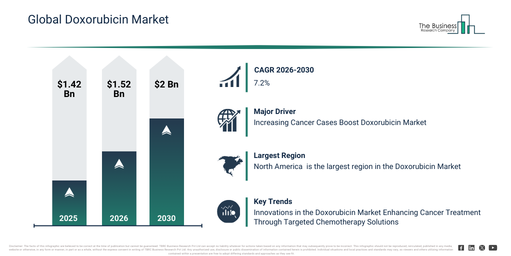
    The doxorubicin market has experienced robust expansion in recent times. Forecasts indicate its size will increase from $1.42 billion in 2025 to $1.52 billion in 2026, demonstrating a compound annual growth rate (CAGR) of 6.9%. Historically, this expansion has been driven by factors such as the rising global incidence of cancer, the broad acceptance of anthracyclines in clinical practice, the development of hospital oncology facilities, an increase in chemotherapy-based treatment approaches, and the prominent integration into national cancer treatment guidelines.

    The doxorubicin market size is projected to undergo significant expansion in the coming years. It is forecast to reach a value of $2 billion by 2030, demonstrating a compound annual growth rate (CAGR) of 7.2%. This expected increase during the forecast period is propelled by the growing need for affordable cancer therapies, the advancement of liposomal and targeted drug delivery systems, improved access to cancer care in developing territories, an increase in approvals for generic formulations, and heightened investment in oncology drug production. Prominent trends anticipated in the forecast period involve the rising acceptance of liposomal doxorubicin formulations, broader application in combination chemotherapy regimens, a growing demand for generic and biosimilar anthracyclines, the broadening of oncology treatment in emerging economies, and enhanced safety and cardiotoxicity management procedures.

    Get A Free Sample Report With In-Depth Market Insights:

    https://thebusinessresearchcompany.com/sample_request?id=73406141&type=smp&name=Doxorubicin%20Market%20Report%202026&utm_source=Blogs&utm_medium=Paid&utm_campaign=Oct_PR

    Doxorubicin Market Opportunity Drivers: What’s Unlocking New Revenue Potential?

    The rising occurrence of cancer is anticipated to propel the doxorubicin market. Cancer constitutes a set of illnesses characterized by the abnormal and uncontrolled proliferation of cells. Doxorubicin, a frequently utilized antibiotic in chemotherapy, addresses various cancer forms by impeding cancer cell growth through DNA damage. Consequently, the escalating incidence of cancer has fueled a greater need for doxorubicin. For example, figures released in January 2024 by the American Cancer Society, a non-profit organization based in the US, indicate that the United States is forecast to record 2,001,140 new cancer diagnoses and 611,720 fatalities from cancer in 2024, an increase compared to 1,958,310 cases and 609,820 deaths reported in 2023. Therefore, the expanding number of cancer patients is a significant impetus for the doxorubicin market.

    Doxorubicin Market Segment Landscape: Which Areas Lead Development?

    The doxorubicin market covered in this report is segmented –

    1) By Drug Formulation: Lyophilized Powder, Doxorubicin Injection

    2) By Application: Breast Cancer, Kidney Cancer, Liver Cancer, Sarcoma, Ovarian Cancer, Lung Cancer, Leukemia, Multiple Myeloma, Other Applications

    3) By Distribution Channel: Hospital Pharmacy, Retail Pharmacy, Online Pharmacy

    Subsegments:

    1) By Lyophilized Powder: Reconstituted Formulations, Freeze-Dried Preparations

    2) By Doxorubicin Injection: Ready-To-Use Solutions, Concentrated Solutions For Dilution, Liposomal Doxorubicin Injections

    Doxorubicin Market Innovation Trends Shaping Future Development

    Leading companies in the doxorubicin market are prioritizing the creation of innovative products, including chemotherapy medications, to boost treatment efficacy and lessen side effects for cancer patients. Chemotherapy medications are drugs employed in cancer treatment to specifically target and eliminate rapidly dividing cancer cells. While they can sometimes impact healthy cells, causing adverse reactions, ongoing developments aim to increase their precision and mitigate these effects. For instance, in August 2024, Lupin Limited, an India-based pharmaceutical company, introduced Doxorubicin Hydrochloride Liposome Injection. This injection is administered to treat advanced ovarian cancer, AIDS-related Kaposi’s sarcoma, and multiple myeloma. Its specialized liposomal formulation allows for targeted delivery, which in turn reduces systemic side effects and improves patient tolerance. This strategy significantly enhances treatment efficacy, establishing it as a crucial option within oncology therapies.

    Doxorubicin Market Industry Leaders And Competitive Landscape

    Major companies operating in the doxorubicin market are Pfizer Inc., Johnson and Johnson, Baxter International Inc., Teva Pharmaceutical Industries Ltd., Dr. Reddy’s Laboratories Ltd., Cipla Limited, Hikma Pharmaceuticals, Mylan Pharmaceuticals Inc., Accord Healthcare Ltd., TTY Biopharm Company Limited, Cadila Pharmaceuticals, Neon Laboratories Limited, APP Pharmaceuticals Manufacturing LLC, Sun Pharmaceutical Industries Ltd., Transo-Pharm Handels GmbH, LGM Pharma, Zhejiang Hisun Pharma, Actavis Pharma, Celon Laboratories Limited, Samarth Life Sciences Pvt. Ltd

    View The Full Doxorubicin Market Report:

    https://thebusinessresearchcompany.com/report/doxorubicin-global-market-report?utm_source=Blogs&utm_medium=Paid&utm_campaign=Oct_PR

    Doxorubicin Market Geographic Landscape: Which Region Dominates Industry Growth?

    North America was the largest region in the doxorubicin market in 2025. Asia-Pacific is expected to be the fastest-growing region in the forecast period. The regions covered in the doxorubicin market report are Asia-Pacific, South East Asia, Western Europe, Eastern Europe, North America, South America, Middle East, Africa.

    Reach Out To Our Team:

    The Business Research Company: https://www.thebusinessresearchcompany.com/

    Americas: +1 310-496-7795

    Asia: +44 7882 955267 & +91 8897263534

    Europe: +44 7882 955267

    Email us at: marketing@tbrc.info

    Follow us on:

    LinkedIn: https://in.linkedin.com/company/the-business-research-company

    YouTube: https://www.youtube.com/channel/UC24_fI0rV8cR5DxlCpgmyFQ

    Global Market Model: https://www.thebusinessresearchcompany.com/global-market-model
  • Dopamine Agonists Market Projected For Strong Expansion Through 2030: Key Trends And Future Outlook

    Dopamine Agonists Market Projected For Strong Expansion Through 2030: Key Trends And Future Outlook

    Backed by market attractiveness analysis, total addressable market sizing, company benchmarking matrices, interactive Excel dashboards, wider supply chain intelligence, emerging startup coverage, and detailed product-level insights, The Business Research Company’s 2026 market reports are designed to offer research that is more actionable and strategically valuable than ever.

    Dopamine Agonists Market Revenue Growth On Track For A 7.1% CAGR Through 2030

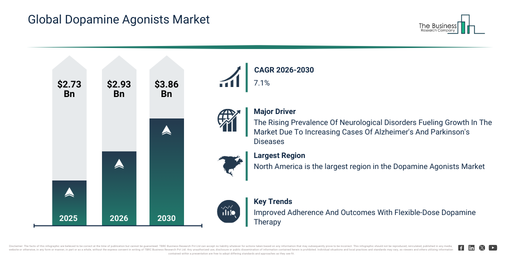
    The dopamine agonists market has experienced strong expansion in recent years. It is anticipated to increase in value from $2.73 billion in 2025 to $2.93 billion in 2026, demonstrating a compound annual growth rate (CAGR) of 7.3%. This historical growth can be attributed to factors such as the rising prevalence of Parkinson’s disease, the initial clinical success of dopamine therapies, the limited availability of alternative treatments for movement disorders, the expansion of neurology care centers, and improved rates of diagnosis.

    The dopamine agonists market is anticipated to experience robust expansion over the coming years. Its valuation is projected to reach $3.86 billion by 2030, exhibiting a compound annual growth rate (CAGR) of 7.1%. This projected growth during the forecast period is primarily driven by factors such as an increasingly elderly global population, the escalating prevalence of neurological disorders, the necessity for enhanced motor symptom management, the expansion of neurological care provided in home settings, and the innovation of formulations that are more convenient for patients. Key trends anticipated within this period encompass the increasing application in Parkinson’s disease treatment, the expanding embrace of non-ergot dopamine agonists, a heightened inclination towards formulations with prolonged action, the wider availability of transdermal administration methods, and a greater deployment in cases of restless legs syndrome.

    Get A Free Sample Report With In-Depth Market Insights:

    https://thebusinessresearchcompany.com/sample_request?id=11206521&type=smp&name=Dopamine%20Agonists%20Market%20Report%202026&utm_source=Blogs&utm_medium=Paid&utm_campaign=Oct_PR

    Dopamine Agonists Market Growth Momentum: What Factors Are Shaping Demand?

    The dopamine agonist market is anticipated to expand due to the increasing occurrence of neurological disorders, which are conditions impacting the brain, spine, or nerves, leading to difficulties with movement, thought processes, or behavior. The growth in the prevalence of neurological disorders is partly linked to extended life expectancies, as the likelihood of conditions such as Alzheimer’s and Parkinson’s increases with age. Dopamine agonists serve to manage neurological disorders, including Parkinson’s disease, by activating dopamine receptors in the brain, thereby enhancing control and alleviating symptoms. For example, in 2024, the Alzheimer’s Disease Facts and Figures report by the Alzheimer’s Association, a US-based nonprofit voluntary health organization that focuses on Alzheimer’s disease care, support, and research, indicated that in 2022, 6.5 million Americans aged 65 and older were diagnosed with Alzheimer’s dementia, a figure projected to rise to 6.9 million in 2024. Consequently, the growing incidence of neurological disorders will fuel the expansion of the dopamine agonist market.

    Dopamine Agonists Market Segments: Where Is Growth Concentrated?

    The dopamine agonists market covered in this report is segmented –

    1) By Product Type: Ergot Based Dopamine Agonists, Non Ergot Based Dopamine Agonists

    2) By Route of Administration: Oral, Parenteral, Transdermal Patches

    3) By Distribution Channel: Hospital Pharmacies, Retail Pharmacies, Other Pharmacies

    4) By Application: Parkinson’s Disease, Restless Legs Syndrome (RLS), Hyperprolactinemia

    5) By End User: Hospitals, Clinics, Home Care Settings

    Subsegments:

    1) By Ergot-Based Dopamine Agonists: Bromocriptine, Cabergoline, Pergolide

    2) By Non-Ergot-Based Dopamine Agonists: Pramipexole, Ropinirole, Rotigotine, Apomorphine

    Dopamine Agonists Market Trends Redefining Industry Growth

    Companies operating in the dopamine agonists market are concentrating on innovations like flexible-dose monotherapy to boost patient adherence, minimize side effects, and offer more individualized treatment options for neurological disorders. This approach involves a single medication with adaptable dosing, enabling doctors to customize the amount for each patient’s specific needs and response. For example, in December 2024, AbbVie Inc., a US-based biopharmaceutical company, reported positive topline results from its Phase 3 TEMPO-2 trial, showing that investigational tavapadon, a flexible-dose monotherapy (5-15 mg once daily), significantly improved motor function in early Parkinson’s disease patients. The trial successfully met its primary endpoint with a notable reduction in MDS-UPDRS Parts II and III scores and achieved key secondary endpoints, demonstrating meaningful improvement in daily motor activities. Tavapadon is the first D1/D5 partial agonist currently being investigated for once-daily Parkinson’s treatment.

    Dopamine Agonists Market Key Participants And Competitive Landscape

    Major companies operating in the dopamine agonists market are Boehringer Ingelheim International GmbH, Teva Pharmaceutical Industries Ltd., Intas Pharmaceuticals Ltd., Dr. Reddy’s Laboratories Ltd., Lupin Limited, Luye Pharma Group Ltd., Kissei Pharmaceutical Co. Ltd., Sun Pharmaceutical Industries Ltd., Aurobindo Pharma Limited, Cipla Limited, Torrent Pharmaceuticals Ltd., Zydus Lifesciences Ltd., Glenmark Pharmaceuticals Ltd., Alembic Pharmaceuticals Ltd., Hetero Drugs Ltd., Mylan N.V., Sandoz Group AG, Hikma Pharmaceuticals PLC, Apotex Inc., Alkem Laboratories Ltd

    View The Full Dopamine Agonists Market Report:

    https://thebusinessresearchcompany.com/report/dopamine-agonists-global-market-report?utm_source=Blogs&utm_medium=Paid&utm_campaign=Oct_PR

    Dopamine Agonists Market Largest Region: Which Geography Holds The Highest Market Share?

    North America was the largest region in the dopamine agonists market in 2025. Asia-Pacific is expected to be the fastest-growing region in the forecast period. The regions covered in the dopamine agonists market report are Asia-Pacific, South East Asia, Western Europe, Eastern Europe, North America, South America, Middle East, Africa.

    Reach Out To Our Team:

    The Business Research Company: https://www.thebusinessresearchcompany.com/

    Americas: +1 310-496-7795

    Asia: +44 7882 955267 & +91 8897263534

    Europe: +44 7882 955267

    Email us at: marketing@tbrc.info

    Follow us on:

    LinkedIn: https://in.linkedin.com/company/the-business-research-company

    YouTube: https://www.youtube.com/channel/UC24_fI0rV8cR5DxlCpgmyFQ

    Global Market Model: https://www.thebusinessresearchcompany.com/global-market-model
  • Neck Pain Treatment Solutions Market Analysis: How The Industry Is Evolving Toward A $8.78 Billion Future

    Neck Pain Treatment Solutions Market Analysis: How The Industry Is Evolving Toward A $8.78 Billion Future

    Backed by market attractiveness analysis, total addressable market sizing, company benchmarking matrices, interactive Excel dashboards, wider supply chain intelligence, emerging startup coverage, and detailed product-level insights, The Business Research Company’s 2026 market reports are designed to offer research that is more actionable and strategically valuable than ever.

    Neck Pain Treatment Solutions Market Expansion Outlook: What Revenue Opportunities Are Ahead?

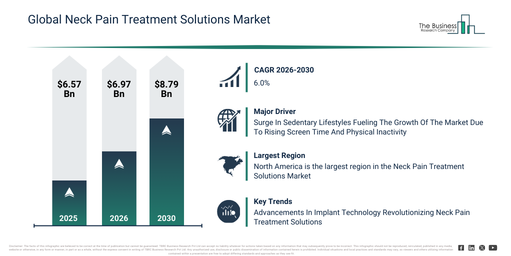
    The neck pain treatment solutions market has demonstrated substantial growth in recent years. Its valuation is anticipated to increase from $6.57 billion in 2025 to $6.97 billion in 2026, at a compound annual growth rate (CAGR) of 6.1%. Historically, this expansion has been driven by increasing sedentary lifestyles, rising workplace-related musculoskeletal disorders, a growing aging population, the expansion of physiotherapy services, and increased use of pain management medications.

    The neck pain treatment solutions market is anticipated to show significant expansion in the upcoming years. Its value is expected to reach $8.79 billion by 2030, growing at a compound annual growth rate (CAGR) of 6.0%. This projected growth stems from several factors, including the spread of remote work culture, a rising demand for sustained pain management, advancements in devices for pain relief, increased understanding of posture-related conditions, and the development of digital rehabilitation platforms. Prominent trends for this period include a greater adoption of diverse neck pain therapies, increased use of at-home neck pain remedies, a growing preference for treatments that are not invasive, the expansion of pain management through telehealth, and a heightened need for solutions focused on ergonomics and prevention.

    Get A Free Sample Report With In-Depth Market Insights:

    https://thebusinessresearchcompany.com/sample_request?id=95758916&type=smp&name=Neck%20Pain%20Treatment%20Solutions%20Market%20Report%202026&utm_source=Blogs&utm_medium=Paid&utm_campaign=Oct_PR

    Neck Pain Treatment Solutions Market Industry Drivers: What’s Behind The Revenue Growth?

    The growing trend of sedentary lifestyles is anticipated to boost the neck pain treatment solutions market in the coming years. Sedentary lifestyles are characterized by extended periods of physical inactivity, often involving prolonged sitting or lying down, which can contribute to various health issues, including discomfort in the neck. The increase in these inactive habits largely stems from extended screen time, which promotes prolonged sitting and reduces physical movement, leading to problems such as neck pain and poor posture. Neck pain treatment solutions provide targeted therapies aimed at alleviating discomfort, improving posture, and encouraging movement, thereby counteracting the negative impacts of prolonged sitting. For instance, in December 2023, the Australian Bureau Of Statistics, an Australia-based government body, reported that roughly 23.9% of people aged 15+ met physical activity guidelines, while 46.9% of employed adults aged 18–64 spent most of their workday sitting. Thus, the expansion of sedentary lifestyles is propelling the growth of the neck pain treatment solutions market.

    Neck Pain Treatment Solutions Market Breakdown By Product Type And Application

    The neck pain treatment solutions market covered in this report is segmented –

    1) By Product Type: Pharmaceuticals, Medical Devices, Physical Therapy, Alternative Treatments

    2) By Patient Age: Adults, Seniors

    3) By Pain Severity: Acute Neck Pain, Chronic Neck Pain, Persistent Neck Pain, Intermittent Neck Pain

    4) By Treatment Setting: In-Clinic Treatments, Home Care Solutions, Telehealth Services, Rehabilitation Centers, Hospital Visits

    5) By Distribution Channel: Online Pharmacies, Retail Pharmacies, Hospital Pharmacies

    Subsegments:

    1) By Pharmaceuticals: Non-Steroidal Anti-Inflammatory Drugs (NSAIDs), Muscle Relaxants, Analgesics, Antidepressants, Corticosteroids, Topical Pain Relievers

    2) By Medical Devices: Cervical Collars, Traction Devices, Electrotherapy Devices, Heat Therapy Devices, Cold Therapy Devices, Orthopedic Support Devices

    3) By Physical Therapy: Manual Therapy, Exercise Therapy, Ultrasound Therapy, Dry Needling, Hydrotherapy, Chiropractic Adjustments

    4) By Alternative Treatments: Acupuncture, Massage Therapy, Herbal Remedies, Yoga And Pilates

    #Neck Pain Treatment Solutions Market Growth Trends: What’s Shaping The Future Outlook?

    Major companies in the neck pain treatment solutions market are prioritizing advancements in medical technology, especially implant technology, to enhance patient outcomes. This focus aims to provide more effective, minimally invasive, and personalized treatment options that improve pain relief and spinal function. Implant technology involves medical devices crafted to replace, support, or augment missing or damaged biological structures inside the body, often made from biocompatible materials and featuring advanced elements such as sensors or drug delivery systems to optimize patient results. For instance, in June 2024, 4WEB Medical, a US-based orthopedic implant company, launched the Cervical Spine Integrated Plating Solution (CSTS-IPS). This innovative product represents the world’s first integrated plating and interbody fusion device specifically for cervical spine surgeries, utilizing advanced 3D-printing technology to offer a stable and simplified alternative to conventional separate plate and cage constructs in spinal fusion procedures.

    Neck Pain Treatment Solutions Market Company Landscape And Competitive Strategy

    Major companies operating in the neck pain treatment solutions market are GlaxoSmithKline (GSK), Medtronic Public Limited Company (Medtronic plc), Stryker Corporation, Globus Medical Inc., Hisamitsu Pharmaceutical Co. Inc., BenchMark Physical Therapy (a part of Upstream Rehabilitation), Nevro Corporation, Hinge Health Inc., Malouf Companies, NeuroSpine Institute, Camber Spine Technologies LLC, DAVID Health Solutions Ltd., ChoiceSpine LP, Converge Medical Technology, Sooma Oy, NeoSpine LLC, Mediflow Inc., Achieve Physical Therapy LLC, NeckCare AB, Coop Cooperative (Coop)

    View The Full Neck Pain Treatment Solutions Market Report:

    https://thebusinessresearchcompany.com/report/neck-pain-treatment-solutions-global-market-report?utm_source=Blogs&utm_medium=Paid&utm_campaign=Oct_PR

    Neck Pain Treatment Solutions Market Geographic Analysis: Where Is Demand Accelerating Fastest?

    North America was the largest region in the neck pain treatment solutions market in 2025. Asia-Pacific is expected to be the fastest-growing region in the forecast period. The regions covered in the neck pain treatment solutions market report are Asia-Pacific, South East Asia, Western Europe, Eastern Europe, North America, South America, Middle East, Africa.

    Reach Out To Our Team:

    The Business Research Company: https://www.thebusinessresearchcompany.com/

    Americas: +1 310-496-7795

    Asia: +44 7882 955267 & +91 8897263534

    Europe: +44 7882 955267

    Email us at: marketing@tbrc.info

    Follow us on:

    LinkedIn: https://in.linkedin.com/company/the-business-research-company

    YouTube: https://www.youtube.com/channel/UC24_fI0rV8cR5DxlCpgmyFQ

    Global Market Model: https://www.thebusinessresearchcompany.com/global-market-model
  • Nebivolol Tablets Market Outlook Through 2030: Understanding The Growth Opportunity

    Nebivolol Tablets Market Outlook Through 2030: Understanding The Growth Opportunity

    Featuring market attractiveness scoring, total addressable market sizing, company benchmarking matrices, interactive Excel dashboards, deeper supply chain intelligence, emerging startup tracking, and granular product-level insights, The Business Research Company’s 2026 market reports are built to deliver research that is both more actionable and more strategically valuable.

    Nebivolol Tablets Market Growth Potential: How Will Market Size Shift Through 2030?

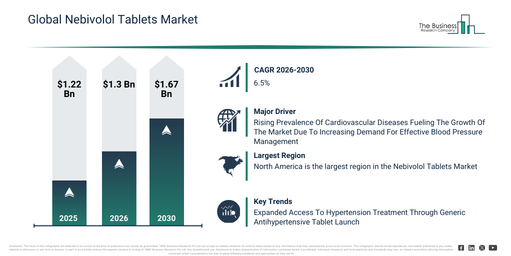
    The market size for nebivolol tablets has witnessed robust expansion over recent years. It is projected to increase from $1.22 billion in 2025 to $1.3 billion in 2026, exhibiting a compound annual growth rate (CAGR) of 6.6%. In the past, this growth was primarily due to factors like the restricted availability of beta-blocker alternatives, a surge in cardiovascular disease incidence, heightened awareness regarding heart health, reliance on hospital-based prescriptions, and traditional pharmacy distribution channels.

    The nebivolol tablets market is projected to experience robust expansion over the coming years. Its value is set to reach $1.67 billion in 2030, at a compound annual growth rate (CAGR) of 6.5%. This anticipated growth during the forecast period is primarily fueled by the creation of innovative nebivolol formulations, the increasing preference for extended-release tablets, the broadening reach of online pharmacy and telemedicine services, a rise in regulatory clearances and clinical studies, and greater understanding and adoption of patient-focused treatment methods. Significant developments anticipated during this period encompass the escalating incidence of hypertension and cardiovascular conditions, an expanding elderly demographic and higher burden of chronic illnesses, the embrace of personalized medicine and targeted treatments, the expansion of hospital and retail pharmacy networks, and the proliferation of online and e-pharmacy platforms.

    Get A Free Sample Report With In-Depth Market Insights:

    https://thebusinessresearchcompany.com/sample_request?id=47564800&type=smp&name=Nebivolol%20Tablets%20Market%20Report%202026&utm_source=Blogs&utm_medium=Paid&utm_campaign=Oct_PR

    Nebivolol Tablets Market Growth Factors: What’s Supporting Expansion?

    The increasing incidence of cardiovascular diseases is projected to fuel the expansion of the nebivolol tablets market in the future. Cardiovascular diseases encompass various conditions affecting the heart and blood vessels, frequently involving restricted blood flow that can result in serious events like heart attacks or strokes. The rise in these diseases is linked to sedentary lifestyles, which reduce physical activity and elevate the likelihood of developing conditions such as obesity, hypertension, and diminished heart function. Nebivolol tablets contribute to the prevention of cardiovascular diseases by lowering blood pressure through selective beta-1 receptor blockade and enhancing vasodilation related to nitric oxide, thereby improving blood circulation and lessening the heart’s exertion. For instance, in October 2024, data from the Centers for Disease Control and Prevention (CDC), a US-based government public health agency, revealed that 919,032 individuals in the United States succumbed to cardiovascular disease in 2023, accounting for approximately one in every three deaths nationwide. Consequently, the growing prevalence of cardiovascular diseases is boosting the growth of the nebivolol tablets market.

    Nebivolol Tablets Market Driver: Growing Demand For Generic Drugs Fueling The Growth Of The Market Due To Increasing Preference For Affordable Cardiovascular Medications

    The rising demand for generic drugs is anticipated to drive the growth of the nebivolol tablets market moving forward. Generic drugs are pharmaceutical products that possess the identical active ingredients, strength, dosage form, and administration route as their branded equivalents, yet they are marketed under their chemical designation once the original drug’s patent has expired. The appeal of generic drugs stems from their cost-effectiveness, as they offer the same therapeutic benefits as branded medications at considerably lower prices, thereby enhancing accessibility for a wider population. Nebivolol tablets play a role in the generic drug sector by providing a cost-effective and therapeutically equivalent option to brand-name treatments for high blood pressure and heart conditions. For example, in September 2024, the Association for Accessible Medicines (AAM), a US-based trade association, reported that savings from biosimilar use surged by over 30% to $12.4 billion in 2023, while total savings from both generics and biosimilars increased by $37 billion, reaching $445 billion from $408 billion in 2022. Thus, the increasing demand for generic drugs is propelling the growth of the nebivolol tablets market.

    Nebivolol Tablets Market Segment Analysis And Revenue Potential

    The nebivolol tablets market covered in this report is segmented –

    1) By Dosage Form: Immediate Release Tablets, Extended Release Tablets

    2) By Strength: 2.5 Mg Tablets, 5 Mg Tablets, 10 Mg Tablets

    3) By Distribution Channel: Hospital Pharmacies, Retail Pharmacies, Online Pharmacies, Other Distribution Channels

    4) By Application: Hypertension, Heart Failure, Other Applications

    Subsegments:

    1) By Immediate Release Tablets: Film-Coated Tablets, Uncoated Tablets, Dispersible Tablets, Orally Disintegrating Tablets

    2) By Extended Release Tablets: Modified-Release Matrix Tablets, Delayed-Release Tablets, Controlled-Release Tablets

    Nebivolol Tablets Market Industry Trends: What’s Reshaping Demand?

    Companies operating prominently in the nebivolol tablets market are concentrating on developing innovative products, such as generic antihypertensive tablets, to enhance the availability of vital hypertension treatments through more economical options. A generic antihypertensive tablet is an unbranded pharmaceutical compound that delivers the identical active ingredient, dosage, safety, and effectiveness as its branded counterpart to assist in managing elevated blood pressure. For instance, in May 2024, Apnar Pharma LP, a US-based pharmaceutical company, released a generic version of Bystolic (Nebivolol Hydrochloride Tablets). The product was introduced in all four available strengths, namely 2.5 milligrams, 5 milligrams, 10 milligrams, and 20 milligrams, offering a complete spectrum of dosage choices for both prescribers and patients. This introduction signifies the company’s strategic move into the United States antihypertensive market and contributes to widening access to an essential cardiovascular treatment.

    Nebivolol Tablets Market Key Players Shaping Industry Direction

    Major companies operating in the nebivolol tablets market are Viatris Inc., Sandoz International GmbH, Macleods Pharmaceuticals Ltd., Menarini Group, Aurobindo Pharma, Cipla Inc., Lupin Limited, Zydus Group, Ranbaxy Laboratories Ltd., Glenmark Pharmaceuticals, Alkem Laboratories Ltd., Torrent Pharmaceuticals Ltd., Zhejiang Huahai Pharmaceutical Co. Ltd., Aristo Pharmaceuticals Pvt. Ltd., Camber Pharmaceuticals Inc., Octavius Pharma

    View The Full Nebivolol Tablets Market Report:

    https://thebusinessresearchcompany.com/report/nebivolol-tablets-global-market-report?utm_source=Blogs&utm_medium=Paid&utm_campaign=Oct_PR

    Nebivolol Tablets Market Global Footprint: Which Region Leads The Industry?

    North America was the largest region in the nebivolol tablets market in 2025. Asia-Pacific is expected to be the fastest-growing region in the forecast period. The regions covered in the nebivolol tablets market report are Asia-Pacific, South East Asia, Western Europe, Eastern Europe, North America, South America, Middle East, Africa.

    Reach Out To Our Team:

    The Business Research Company: https://www.thebusinessresearchcompany.com/

    Americas: +1 310-496-7795

    Asia: +44 7882 955267 & +91 8897263534

    Europe: +44 7882 955267

    Email us at: marketing@tbrc.info

    Follow us on:

    LinkedIn: https://in.linkedin.com/company/the-business-research-company

    YouTube: https://www.youtube.com/channel/UC24_fI0rV8cR5DxlCpgmyFQ

    Global Market Model: https://www.thebusinessresearchcompany.com/global-market-model
  • Nausea Medicine Market Growth Potential: What The Latest Forecast Reveals

    Nausea Medicine Market Growth Potential: What The Latest Forecast Reveals

    Built to provide research that’s more actionable and strategically valuable, The Business Research Company’s 2026 market reports include market attractiveness analysis, total addressable market sizing, company benchmarking matrices, interactive Excel dashboards, broader supply chain intelligence, emerging startup tracking, and in-depth product insights.

    Nausea Medicine Market Value Analysis: What Growth Lies Ahead Over The Forecast Period?

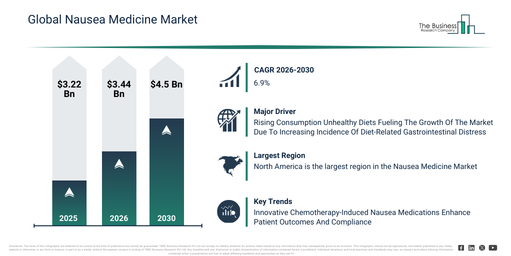
    The nausea medicine market size has exhibited strong expansion in recent years. The market is forecast to increase from $3.22 billion in 2025 to $3.44 billion in 2026, achieving a compound annual growth rate (CAGR) of 7.0%. Historically, this growth was driven by the widespread adoption of chemotherapy-induced nausea drugs, a growing incidence of gastrointestinal disorders, increased travel-related motion sickness, the expansion of hospital pharmacy networks, and the accessibility of otc antiemetic products.

    The nausea medicine market is anticipated to experience substantial expansion over the upcoming years. Projections indicate it will reach $4.5 billion in 2030, exhibiting a compound annual growth rate (CAGR) of 6.9%. This projected growth is driven by several factors, including an increase in cancer treatment volumes, a growing elderly demographic, an elevated need for home-based nausea solutions, ongoing innovations in antiemetic drug development, and the widening reach of online pharmacy platforms. Key trends anticipated during this period encompass the expanded application of antiemetics in oncology, a heightened demand for medications addressing motion sickness, increased uptake of multi-drug antiemetic regimens, the proliferation of over-the-counter nausea remedies, and a greater emphasis on developing drug formulations that are more convenient for patients.

    Get A Free Sample Report With In-Depth Market Insights:

    https://thebusinessresearchcompany.com/sample_request?id=47501048&type=smp&name=Nausea%20Medicine%20Market%20Report%202026&utm_source=Blogs&utm_medium=Paid&utm_campaign=Oct_PR

    Nausea Medicine Market Demand Drivers: What’s Powering Industry Growth?

    The increasing intake of unhealthy diets is projected to drive the expansion of the nausea medicine market in the future. An unhealthy diet involves consuming too many processed foods, sugars, unhealthy fats, and salt, while simultaneously lacking vital nutrients like vitamins, minerals, and fiber. This increase in unhealthy dietary patterns stems from the ease of access and cost-effectiveness of processed and fast foods, which are more readily available than nutritious alternatives. Nausea medicine aids health by alleviating nausea stemming from digestive problems, motion sickness, or adverse drug reactions, thereby helping to diminish the sensation of vomiting and offering relief from symptoms. For example, in April 2025, the American Journal of Preventive Medicine, a US-based government entity, reported that ultra-processed foods contribute to over 124,000 deaths annually in the United States. Consequently, the growing prevalence of unhealthy diets is fueling the expansion of the nausea medicine market.

    Nausea Medicine Market Segmentation And Category Overview

    The nausea medicine market covered in this report is segmented –

    1) By Type: Antagonists, Antihistamines, Canabinoids, Other Types

    2) By Indication: Oncology, Gastroesophageal Reflux Disease, Motion Sickness and Seasickness, Other Indications

    3) By Route of Administration: Oral, Injectable, Transdermal, Rectal, Other Route of Administrations

    4) By Distribution Channel: Retail Pharmacies, Hospital Pharmacies, Online Pharmacies, Other Distribution Channels

    5) By End User: Hospitals, Homecare settings, Ambulatory Surgical centres, Long-term Care Facilities, Individual Consumers

    Subsegments:

    1) By Antagonists: Serotonin Antagonists, Neurokinin-1 (NK1) Receptor Antagonists, Dopamine Antagonists

    2) By Antihistamines: H1 Antihistamines, H2 Antihistamines

    3) By Cannabinoids: THC (Tetrahydrocannabinol), CBD (Cannabidiol)

    4) By Other Types: Corticosteroids, Benzodiazepines, Ginger-Based Medications

    Nausea Medicine Market Innovation Trends: What Developments Are Reshaping The Industry?

    Key companies in the nausea medicine market are concentrating on developing innovative solutions, such as chemotherapy-induced nausea medication, to improve patient outcomes and address cases that are resistant to treatment. Chemotherapy-induced nausea medication refers to drugs specifically formulated to prevent or relieve nausea and vomiting caused by cancer chemotherapy, often by targeting serotonin or neurokinin receptors in the brain. For instance, in January 2023, Glenmark Pharmaceuticals, an India-based pharmaceutical company, introduced AKYNZEO I.V., a ready-to-dilute intravenous injection combining fosnetupitant and palonosetron, for the prevention of chemotherapy-induced nausea and vomiting (CINV). This single-dose intravenous medication combines fosnetupitant and palonosetron, offering protection against both the acute and delayed phases of CINV. This single 30-minute infusion effectively covers both acute and delayed phases of CINV, simplifying treatment by reducing the need for multiple antiemetic drugs and improving patient compliance.

    Nausea Medicine Market Competitive Analysis Of Leading Industry Participants

    Major companies operating in the nausea medicine market are Pfizer Inc., Johnson & Johnson, AbbVie Inc., Bayer Aktiengesellschaft, Merck & Co. Inc., Sanofi S.A., Novartis AG, AstraZeneca PLC, Abbott Laboratories, GlaxoSmithKline plc, Takeda Pharmaceutical Company Limited, Eli Lilly and Company, Helsinn Healthcare SA, Mylan N.V., Viatris Inc., Baxter International Inc., Teva Pharmaceutical Industries Limited, Sun Pharmaceutical Industries Limited, Zydus Lifesciences Limited, Amneal Pharmaceuticals Inc.

    View The Full Nausea Medicine Market Report:

    https://thebusinessresearchcompany.com/report/nausea-medicine-global-market-report?utm_source=Blogs&utm_medium=Paid&utm_campaign=Oct_PR

    Nausea Medicine Market Regional Distribution: Which Areas Power Market Growth?

    North America was the largest region in the nausea medicine market in 2025. Asia-Pacific is expected to be the fastest-growing region in the forecast period. The regions covered in the nausea medicine market report are Asia-Pacific, South East Asia, Western Europe, Eastern Europe, North America, South America, Middle East, Africa.

    Reach Out To Our Team:

    The Business Research Company: https://www.thebusinessresearchcompany.com/

    Americas: +1 310-496-7795

    Asia: +44 7882 955267 & +91 8897263534

    Europe: +44 7882 955267

    Email us at: marketing@tbrc.info

    Follow us on:

    LinkedIn: https://in.linkedin.com/company/the-business-research-company

    YouTube: https://www.youtube.com/channel/UC24_fI0rV8cR5DxlCpgmyFQ

    Global Market Model: https://www.thebusinessresearchcompany.com/global-market-model
  • Natural Killer (NK) Cell Therapeutics Market Growth Outlook: Why Analysts Expect Continued Expansion

    Natural Killer (NK) Cell Therapeutics Market Growth Outlook: Why Analysts Expect Continued Expansion

    Backed by market attractiveness analysis, total addressable market sizing, company benchmarking matrices, interactive Excel dashboards, wider supply chain intelligence, emerging startup coverage, and detailed product-level insights, The Business Research Company’s 2026 market reports are designed to offer research that is more actionable and strategically valuable than ever.

    Natural Killer (NK) Cell Therapeutics Market Size Forecast: How Big Could The Market Get By 2030?

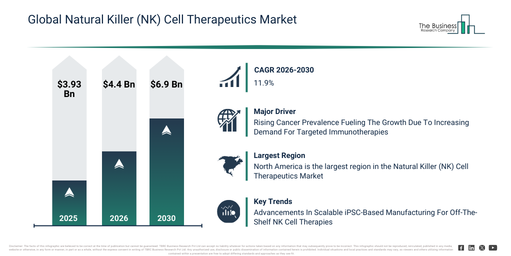
    The natural killer (nk) cell therapeutics market has experienced rapid growth in recent years. It is anticipated to expand from $3.93 billion in 2025 to $4.4 billion in 2026, exhibiting a compound annual growth rate (CAGR) of 12.0%. This historical market expansion is primarily attributable to the limitations of traditional cancer therapies, advancements in immunology research, the successful outcomes of early nk cell therapies, the development of cell therapy infrastructure, and increased funding for oncology research.

    The natural killer (nk) cell therapeutics market is anticipated to undergo significant expansion in the coming years, with its size expected to reach $6.9 billion in 2030, demonstrating a compound annual growth rate (CAGR) of 11.9%. This projected increase during the forecast period is fueled by the expansion of cell and gene therapy pipelines, a rising demand for safer immunotherapies, advancements in cell engineering technologies, increased investment in oncology biologics, and the growing acceptance of allogeneic cell therapies. Prominent trends observed in this timeframe include the rapid development of CAR-NK cell therapies, an increasing adoption of allogeneic NK cell treatments, a heightened focus on off-the-shelf cell therapies, the broader application of NK cells in oncology, and a rise in clinical trials for NK-directed antibodies.

    Get A Free Sample Report With In-Depth Market Insights:

    https://thebusinessresearchcompany.com/sample_request?id=25159766&type=smp&name=Natural%20Killer%20%28NK%29%20Cell%20Therapeutics%20Market%20Report%202026&utm_source=Blogs&utm_medium=Paid&utm_campaign=Oct_PR

    Natural Killer (NK) Cell Therapeutics Market Growth Drivers: What’s Behind The Acceleration?

    The anticipated increase in cancer incidence is projected to boost the expansion of the natural killer (NK) cell therapeutics market in the future. Cancer is characterized by diseases where irregular cells proliferate unchecked, infiltrating adjacent tissues and disseminating to various areas of the body. This condition disrupts typical cellular control, leading to tumor formation and compromising physiological functions. Exposure to environmental factors such as pollutants, tobacco smoke, and various chemicals can harm deoxyribonucleic acid (DNA) and disturb cellular operations, thereby elevating the likelihood of developing cancer. Natural killer (NK) cell therapeutics offer a treatment approach for cancer by directly targeting and eliminating tumor cells without requiring previous sensitization. For example, data from April 2024 by the American Cancer Society, a US-based non-profit organization, forecasts that by 2050, cancer diagnoses are expected to reach 35 million, solely attributed to anticipated population growth. Consequently, the escalating occurrence of cancer is a key factor propelling the expansion of the natural killer (NK) cell therapeutics market.

    Natural Killer (NK) Cell Therapeutics Market Segment Outlook: Which Categories Are Growing Fastest?

    The natural killer (nk) cell therapeutics market covered in this report is segmented –

    1) By Therapeutics: Natural Killer (NK) Cell Directed Antibodies, Natural Killer (NK) Cell Therapies

    2) By Application: Immunoproliferative Disorders, Gastrointestinal Diseases, Cancer, Other Applications

    3) By Distribution Channel: Hospital Pharmacies, Direct Tender, Other Distribution Channels

    4) By End User: Research And Academic Institutes, Hospitals, Specialty Clinics

    Subsegments:

    1) By Natural Killer (NK) Cell Directed Antibodies: Monoclonal Antibodies (mAbs), Bispecific Antibodies (BsAbs), Antibody-Drug Conjugates (ADCs)

    2) By Natural Killer (NK) Cell Therapies: Autologous NK Cell Therapies, Allogeneic NK Cell Therapies, Chimeric Antigen Receptor (CAR)-NK Cell Therapies

    Natural Killer (NK) Cell Therapeutics Market Trends: What’s Defining The Industry’s Next Phase?

    Major companies within the natural killer (NK) cell therapeutics market are focusing on advancements like developing scalable iPSC-based NK cell manufacturing platforms to enable cost-effective, off-the-shelf NK cell therapies. These platforms utilize induced pluripotent stem cells (iPSCs) to generate NK cells in a standardized, feeder-free, closed-system bioreactor environment, ensuring high yields and regulatory compliance. For instance, in April 2025, Cellistic, a Belgium-based biotechnology research company, launched the Echo-NK platform, which is an iPSC-based manufacturing solution for NK cell therapies. The platform offers scalable production of NK cells targeting blood cancers, solid tumors, and autoimmune diseases, with all critical expansion steps performed in bioreactor closed systems within Cellistic’s EMA-certified GMP facility. By integrating Cellistic’s Pulse cell line development capabilities and proprietary STAR-CRISPR technology, the Echo-NK platform accelerates timelines for developing stable iPSC cell lines with specific gene edits, providing a commercially viable solution for off-the-shelf NK cell therapies.

    Natural Killer (NK) Cell Therapeutics Market Leading Companies And Competitive Benchmarking

    Major companies operating in the natural killer (nk) cell therapeutics market are Sanofi S.A., Thermo Fisher Scientific, Lonza AG, Catalent, Kite Pharma, Fate Therapeutics, Artiva Biotherapeutics, Nkarta Inc, Celularity Inc., NKGen Biotech, Dragonfly Therapeutics, Cytovia Therapeutics, Glycostem Therapeutics, Gamida Cell, ONK Therapeutics, Wugen Inc., AGC Biologics, CytoImmune Therapeutics, XNK Therapeutics, Indapta Therapeutics, Neukio Biotherapeutics, Senti Biosciences, WuXi Advanced Therapies, Kiadis Pharma

    View The Full Natural Killer (NK) Cell Therapeutics Market Report:

    https://thebusinessresearchcompany.com/report/natural-killer-nk-cell-therapeutics-global-market-report?utm_source=Blogs&utm_medium=Paid&utm_campaign=Oct_PR

    Natural Killer (NK) Cell Therapeutics Market Leading Geography: Which Region Contributes The Most Revenue?

    North America was the largest region in the natural killer (NK) cell therapeutics market in 2025. Asia-Pacific is expected to be the fastest-growing region in the forecast period. The regions covered in the natural killer (nk) cell therapeutics market report are Asia-Pacific, South East Asia, Western Europe, Eastern Europe, North America, South America, Middle East, Africa.

    Reach Out To Our Team:

    The Business Research Company: https://www.thebusinessresearchcompany.com/

    Americas: +1 310-496-7795

    Asia: +44 7882 955267 & +91 8897263534

    Europe: +44 7882 955267

    Email us at: marketing@tbrc.info

    Follow us on:

    LinkedIn: https://in.linkedin.com/company/the-business-research-company

    YouTube: https://www.youtube.com/channel/UC24_fI0rV8cR5DxlCpgmyFQ

    Global Market Model: https://www.thebusinessresearchcompany.com/global-market-model