Blog

  • Multiple Sclerosis Treatment Market Forecast 2026: Market Size, Competitive Landscape And Growth Drivers

    Multiple Sclerosis Treatment Market Forecast 2026: Market Size, Competitive Landscape And Growth Drivers

    Backed by market attractiveness analysis, total addressable market sizing, company benchmarking matrices, interactive Excel dashboards, wider supply chain intelligence, emerging startup coverage, and detailed product-level insights, The Business Research Company’s 2026 market reports are designed to offer research that is more actionable and strategically valuable than ever.

    Multiple Sclerosis Treatment Market Size Outlook: How Quickly Will Revenue Expand Through 2030?

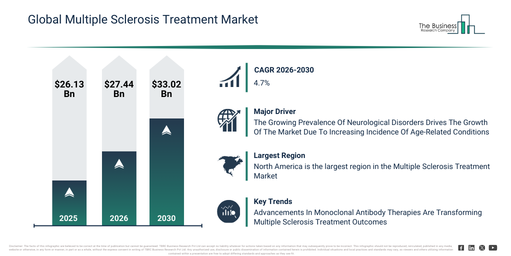
    The multiple sclerosis treatment market size has seen substantial expansion in recent years. This market is projected to increase from $26.13 billion in 2025 to $27.44 billion in 2026, exhibiting a compound annual growth rate (CAGR) of 5.0%. The growth observed in prior periods can be attributed to advancements in autoimmune disease research, the availability of injectable MS therapies, the expansion of neurology clinics, the provision of hospital-based treatment, and the ongoing development of biologics.

    The multiple sclerosis treatment market is projected to experience consistent expansion in the coming years. It is anticipated to reach $33.02 billion in 2030 at a compound annual growth rate (CAGR) of 4.7%. This projected increase during the forecast period stems from factors such as the adoption of oral therapies, the availability of home-based MS care, improved long-term disease management strategies, innovations in advanced imaging diagnostics, and the development of personalized immunotherapy. Key developments expected during this timeframe encompass the wider availability of disease-modifying therapies, an uptick in oral MS medications, a greater emphasis on early diagnosis, the increasing application of monoclonal antibodies, and the implementation of personalized treatment methods.

    Get A Free Sample Report With In-Depth Market Insights:

    https://thebusinessresearchcompany.com/sample_request?id=40998918&type=smp&name=Multiple%20Sclerosis%20Treatment%20Market%20Report%202026&utm_source=Blogs&utm_medium=Paid&utm_campaign=Oct_PR

    Multiple Sclerosis Treatment Market Industry Drivers: What’s Behind The Revenue Growth?

    The increasing occurrence of neurological disorders is anticipated to boost the multiple sclerosis treatment market in the future. These medical conditions impact the brain, spinal cord, and nerves throughout the body, leading to issues with movement, communication, behavior, or other bodily functions. The uptick in neurological disorders is primarily linked to an aging global populace, as extended lifespans elevate the risk of age-related ailments such as Alzheimer’s. Multiple sclerosis treatment assists in managing these conditions by focusing on the immune system to lessen inflammation, avert nerve damage, and ease symptoms, thereby enhancing patients’ quality of life. For instance, in October 2023, according to the World Federation of Neurology, a UK-based association, more than 40% of the world’s population currently experiences some form of neurological condition, with this burden projected to almost double by 2050. Consequently, the rising incidence of neurological disorders is fueling the expansion of the multiple sclerosis treatment market.

    Multiple Sclerosis Treatment Market Segment Performance And Emerging Opportunities

    The multiple sclerosis treatment market covered in this report is segmented –

    1) By Treatment Type: Immunomodulators, Corticosteroids, Symptomatic Treatments, Monoclonal Antibodies, Oral Therapies

    2) By DiseaseType: Clinically Isolated Syndrome, Relapse-Remitting Multiple Sclerosis, Primary Progressive Multiple Sclerosis, Secondary Progressive Multiple Sclerosis

    3) By Route Of Administration: Oral, Injectable, Intravenous

    4) By Distribution Channel: Hospital Pharmacies, Retail Pharmacies, Online Pharmacies

    5) By End-Users: Hospitals, Specialty Clinics, Homecare, Other End-Users

    Subsegments:

    1) By Immunomodulators: Interferon Beta-1A, Interferon Beta-1B, Glatiramer Acetate

    2) By Corticosteroids: Methylprednisolone, Prednisone, Dexamethasone

    3) By Symptomatic Treatments: Muscle Relaxants, Antidepressants, Anticonvulsants, Bladder Dysfunction Drugs

    4) By Monoclonal Antibodies: Natalizumab, Ocrelizumab, Alemtuzumab, Ofatumumab

    5) By Oral Therapies: Fingolimod, Dimethyl Fumarate, Teriflunomide, Cladribine, Siponimod

    #Multiple Sclerosis Treatment Market Growth Trends: What’s Shaping The Future Outlook?

    Leading companies in the multiple sclerosis treatment market are creating sophisticated products, such as monoclonal antibody drugs, to improve treatment effectiveness and patient results. Monoclonal antibody drugs are laboratory-produced molecules specifically designed to target particular antigens, and in multiple sclerosis, they function by reducing inflammation and hindering immune cells from assaulting nerve fibers, thereby controlling the disease’s development. For example, in February 2024, Roche Pharma India, a pharmaceutical company located in India, unveiled Ocrevus (Ocrelizumab) for the management of multiple sclerosis (MS). This drug specifically targets CD20-positive B cells, helping to lessen inflammation and nerve damage in MS. It represents the first approved treatment for both relapsing and primary progressive forms of MS, considerably reducing relapse rates and slowing the advancement of disability with the convenience of twice-yearly infusions.

    Multiple Sclerosis Treatment Market Key Players: Which Companies Lead Industry Competition?

    Major companies operating in the multiple sclerosis treatment market are Biogen Inc., F. Hoffmann-La Roche Ltd, Novartis AG, Bayer AG, Teva Pharmaceutical Industries Ltd, Sanofi Genzyme, Merck KGaA, Bristol Myers Squibb, AbbVie Inc., Johnson & Johnson (Janssen), TG Therapeutics Inc., Acorda Therapeutics Inc., Takeda Pharmaceutical Company Ltd, Mitsubishi Tanabe Pharma Corporation, Chugai Pharmaceutical Co. Ltd., Pfizer Inc., Almirall S.A., Otsuka Pharmaceutical Co. Ltd., Apitope International NV, BrainStorm Cell Therapeutics Inc., Roche Diagnostics, InnoCare Pharma, NervGen Pharma Corp., Receptos Inc., Biogen Idec International GmbH, MedDay Pharmaceuticals SA, Genentech Inc., Roche Holding AG

    View The Full Multiple Sclerosis Treatment Market Report:

    https://thebusinessresearchcompany.com/report/multiple-sclerosis-treatment-global-market-report?utm_source=Blogs&utm_medium=Paid&utm_campaign=Oct_PR

    Multiple Sclerosis Treatment Market Regional Distribution: Which Areas Power Market Growth?

    North America was the largest region in the multiple sclerosis treatment market in 2025. Asia-Pacific is expected to be the fastest-growing region in the forecast period. The regions covered in the multiple sclerosis treatment market report are Asia-Pacific, South East Asia, Western Europe, Eastern Europe, North America, South America, Middle East, Africa.

    Reach Out To Our Team:

    The Business Research Company: https://www.thebusinessresearchcompany.com/

    Americas: +1 310-496-7795

    Asia: +44 7882 955267 & +91 8897263534

    Europe: +44 7882 955267

    Email us at: marketing@tbrc.info

    Follow us on:

    LinkedIn: https://in.linkedin.com/company/the-business-research-company

    YouTube: https://www.youtube.com/channel/UC24_fI0rV8cR5DxlCpgmyFQ

    Global Market Model: https://www.thebusinessresearchcompany.com/global-market-model
  • Multiple Sclerosis Drugs Market Size In 2026: Regional Growth, Key Segments And Future Outlook

    Multiple Sclerosis Drugs Market Size In 2026: Regional Growth, Key Segments And Future Outlook

    Featuring market attractiveness scoring, total addressable market sizing, company benchmarking matrices, interactive Excel dashboards, deeper supply chain intelligence, emerging startup tracking, and granular product-level insights, The Business Research Company’s 2026 market reports are built to deliver research that is both more actionable and more strategically valuable.

    Multiple Sclerosis Drugs Market Size, Value And Growth Trajectory Through 2030

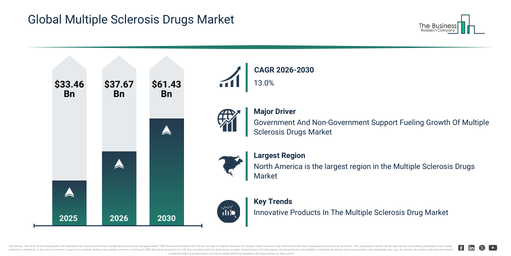
    The multiple sclerosis drugs market size has seen rapid expansion in recent years. It is anticipated to increase from $33.46 billion in 2025 to $37.67 billion in 2026, exhibiting a compound annual growth rate (CAGR) of 12.6%. The market’s past growth can be ascribed to several factors, including the restricted availability of MS therapies, the rising prevalence of multiple sclerosis, heightened awareness among patients and medical practitioners, a dependence on interferon-based treatments, and the broadening of hospital and retail pharmacy networks.

    The multiple sclerosis drugs market size is projected to undergo rapid expansion in the coming years. It is set to reach $61.43 billion in 2030, demonstrating a compound annual growth rate (CAGR) of 13.0%. The anticipated growth during this period can be ascribed to the development of new monoclonal antibodies, the broadening of oral disease-modifying therapies, the integration of personalized medicine into MS treatment, increased investment in research and development for emerging therapies, and the rising adoption of digital health monitoring and telemedicine platforms. Prominent trends expected in the forecast period include the increasing uptake of disease-modifying therapies for multiple sclerosis, the advancement of personalized and targeted MS treatment approaches, the expansion of hospital and retail pharmacy distribution channels, a growing preference for oral and parenteral administration methods, and the emergence of novel immunomodulators, immunosuppressants, and monoclonal antibodies.

    Get A Free Sample Report With In-Depth Market Insights:

    https://thebusinessresearchcompany.com/sample_request?id=90085816&type=smp&name=Multiple%20Sclerosis%20Drugs%20Market%20Report%202026&utm_source=Blogs&utm_medium=Paid&utm_campaign=Oct_PR

    Multiple Sclerosis Drugs Market Growth Factors: What’s Supporting Expansion?

    The expansion of the multiple sclerosis drugs market is significantly bolstered by contributions from both governmental and non-governmental organizations. These bodies allocate funds to various programs and initiatives specifically designed to enhance the quality of life for individuals affected by multiple sclerosis (MS). For instance, the government of Alberta, in partnership with the Department of Economic Development, Trade, and Tourism in Canada, committed $1 million to the Canadian Prospective Cohort Study to Understand Progression in Multiple Sclerosis (CanProCo). This investment was intended to advance research and innovations, thereby improving the understanding and treatment of MS disease. CanProCo is an initiative that unites the efforts of nearly 50 MS researchers from diverse disciplines throughout Canada. The project subsequently received further funding from the Canada Brain Research, Biogen Canada, the MS Society of Canada, and Hoffmann-La Roche Limited (Roche Canada), culminating in a total of $10 million. Such consistent financial backing from governmental and non-governmental organizations effectively stimulates the growth of the multiple sclerosis drugs market.

    Multiple Sclerosis Drugs Market Segment Landscape And Growth Outlook

    The multiple sclerosis drugs market covered in this report is segmented –

    1) By Drug Class: Immunomodulators, Immunosuppressants, Interferons, Other Drug Classes

    2) By Distribution Channels: Hospital Pharmacy, Retail Pharmacy, Online Stores

    3) By Route Of Administration: Oral Drugs, Parenteral Drugs

    Subsegments:

    1) By Immunomodulators: Glatiramer Acetate, Fingolimod, Teriflunomide, Dimethyl Fumarate

    2) By Immunosuppressants: Natalizumab, Alemtuzumab, Ocrelizumab

    3) By Interferons: Interferon Beta-1a, Interferon Beta-1b

    4) By Other Drug Classes: Sphingosine 1-Phosphate Receptor Modulators, Monoclonal Antibodies, Other Emerging Therapies

    Multiple Sclerosis Drugs Market Industry Trends: What’s Reshaping Demand?

    Leading firms within the multiple sclerosis drugs market are concentrating on creating novel solutions aimed at boosting the effectiveness of treatments, elevating the quality of life for patients, and catering to the varied requirements of those afflicted with multiple sclerosis. These innovative solutions encompass fresh and inventive methods, offerings, or technologies conceived to effectively tackle particular difficulties or issues. An example of this is the announcement made in September 2024 by Genentech, a US-based biotechnology company, stating that the U.S. Food and Drug Administration (FDA) has granted approval for Ocrevus Zunovo (ocrelizumab & hyaluronidase-ocsq) to be used in the treatment of relapsing multiple sclerosis (RMS) and primary progressive multiple sclerosis (PPMS). Ocrevus Zunovo stands as the pioneering and sole subcutaneous injection, administered by medical professionals, which requires administration only twice a year and takes about 10 minutes, thereby offering individuals with MS further choices for their treatment.

    Multiple Sclerosis Drugs Market Competitive Landscape: Who Leads The Industry?

    Major companies operating in the multiple sclerosis drugs market are Biogen Inc., Novartis International AG, F. Hoffmann-La Roche Ltd., Bayer HealthCare LLC, Merck & Co. Inc., Sanofi S.A., Teva Pharmaceutical Industries Ltd., GlaxoSmithKline plc, Acorda Therapeutics Inc., EMD Serono Inc., AbbVie Inc., Bayer Schering Pharma AG, Bristol-Myers Squibb Company, Johnson & Johnson, Mitsubishi Tanabe Pharma Corporation, Opexa Therapeutics Inc., Receptos Inc., Synthon Pharmaceuticals Inc., TG Therapeutics Inc., Alkermes plc, Amgen Inc., Atara Biotherapeutics Inc., Celgene Corporation, Genzyme Corporation

    View The Full Multiple Sclerosis Drugs Market Report:

    https://thebusinessresearchcompany.com/report/multiple-sclerosis-drugs-global-market-report?utm_source=Blogs&utm_medium=Paid&utm_campaign=Oct_PR

    Multiple Sclerosis Drugs Market Leading Geography: Which Region Contributes The Most Revenue?

    North America was the largest region in the global multiple sclerosis drug market in 2025. The Middle East is expected to be the fastest-growing region in the forecast period. The regions covered in the multiple sclerosis drugs market report are Asia-Pacific, South East Asia, Western Europe, Eastern Europe, North America, South America, Middle East, Africa.

    Reach Out To Our Team:

    The Business Research Company: https://www.thebusinessresearchcompany.com/

    Americas: +1 310-496-7795

    Asia: +44 7882 955267 & +91 8897263534

    Europe: +44 7882 955267

    Email us at: marketing@tbrc.info

    Follow us on:

    LinkedIn: https://in.linkedin.com/company/the-business-research-company

    YouTube: https://www.youtube.com/channel/UC24_fI0rV8cR5DxlCpgmyFQ

    Global Market Model: https://www.thebusinessresearchcompany.com/global-market-model
  • Multiple Myeloma Drugs Market Growth Forecast Through 2030: Market Size And Trends In 2026

    Multiple Myeloma Drugs Market Growth Forecast Through 2030: Market Size And Trends In 2026

    Built to provide research that’s more actionable and strategically valuable, The Business Research Company’s 2026 market reports include market attractiveness analysis, total addressable market sizing, company benchmarking matrices, interactive Excel dashboards, broader supply chain intelligence, emerging startup tracking, and in-depth product insights.

    Multiple Myeloma Drugs Market CAGR Outlook And Future Development

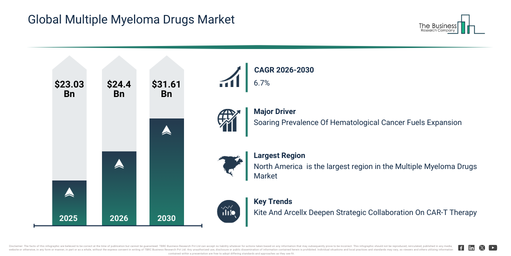
    The multiple myeloma drugs market size has experienced strong growth in recent years. It will grow from $23.03 billion in 2025 to $24.4 billion in 2026 at a compound annual growth rate (CAGR) of 6.0%. The growth observed in the past can be attributed to an increasing prevalence of multiple myeloma, the approval of novel immunomodulatory drugs, rising awareness concerning plasma cell cancers, the development of proteasome inhibitors, and the expansion of hospital pharmacy networks.

    The multiple myeloma drugs market size is projected to experience robust growth in the upcoming years. It is forecast to expand to $31.61 billion by 2030, driven by a compound annual growth rate (CAGR) of 6.7%. This anticipated growth during the forecast period is attributable to an increase in precision medicine adoption, rising investment in biologic therapies, an expanding geriatric population, the growth of online pharmacy distribution, and advancements in monoclonal antibody treatments. Significant trends during this period are expected to encompass the development of personalized therapies, the implementation of combination drug regimens, enhanced bone health management for multiple myeloma, the introduction of targeted drug delivery systems, and the expansion of clinical trials.

    Get A Free Sample Report With In-Depth Market Insights:

    https://thebusinessresearchcompany.com/sample_request?id=49618099&type=smp&name=Multiple%20Myeloma%20Drugs%20Market%20Report%202026&utm_source=Blogs&utm_medium=Paid&utm_campaign=Oct_PR

    Multiple Myeloma Drugs Market Demand Drivers: What’s Powering Industry Growth?

    The rising occurrence of hematological cancer is projected to propel the expansion of the multiple myeloma drugs market in the coming years. These cancers originate in blood-forming tissues, like bone marrow, or in immune system cells, encompassing conditions such as leukemia, lymphoma, and multiple myeloma, among others. Medications for multiple myeloma are frequently administered to address various forms of the disease by eliminating and curbing the multiplication of cancer cells, achieved through slowing cell division via multiple enzymatic pathways, along with strengthening bones and alleviating discomfort in weakened bones. As an illustration, in January 2023, data from the American Cancer Society (ACS), a US-based health organization dedicated to eradicating cancer, indicated approximately 59,610 new diagnoses of leukemia and roughly 20,380 instances of acute myeloid leukemia (AML). Furthermore, the total fatalities linked to leukemia reached 23,710. Consequently, the growing prevalence of hematological cancer is fueling the growth of the multiple myeloma drugs market.

    Multiple Myeloma Drugs Market Breakdown By Product Type And Application

    The multiple myeloma drugs market covered in this report is segmented –

    1) By Drug Type: Immunomodulatory Drugs, Proteasome Inhibitors, Histone Deacetylase Inhibitors, Monoclonal Antibody Drugs, Steroids, Other Drug Types

    2) By Therapy: Targeted Therapy, Biologic Therapy, Chemotherapy, Other Therapies

    3) By Distribution Channel: Hospital Pharmacies, Retail Pharmacies, Online Pharmacies, Other Distribution Channels

    4) By End-User: Men, Women

    Subsegments:

    1) By Immunomodulatory Drugs: Lenalidomide, Thalidomide, Pomalidomide

    2) By Proteasome Inhibitors: Bortezomib, Carfilzomib, Ixazomib

    3) By Histone Deacetylase Inhibitors: Panobinostat, Romidepsin

    4) By Monoclonal Antibody Drugs: Daratumumab, Elotuzumab, Isatuximab

    5) By Steroids: Dexamethasone, Prednisone

    6) By Other Drug Types: Alkylating Agents, Antimetabolites, New Experimental Drugs

    Multiple Myeloma Drugs Market Innovation Trends: What Developments Are Reshaping The Industry?

    Leading companies in the multiple myeloma drug market are enhancing their partnership approaches to jointly create cell therapies, extending their collaborations to hasten the development and market introduction of next-generation CAR T products. Such strategic alliances facilitate combined resource utilization, risk reduction, and quicker scaling for new therapeutic options. As an example, in May 2024, Kite Pharma, a US-based biopharmaceutical company, and Arcellx, Inc., a US-based clinical-stage biotechnology company, announced important operational updates for their partnered BCMA CAR T therapy, anitocabtagene autoleucel (anito cel). The companies revealed the structure of a global Phase 3 trial, named iMMagine 3, which will assess anito cel in patients with relapsed or refractory multiple myeloma who have previously received both an immunomodulatory drug (IMiD) and an anti-CD38 monoclonal antibody. This trial is expected to recruit around 450 patients worldwide.

    Multiple Myeloma Drugs Market Company Landscape And Competitive Strategy

    Major companies operating in the multiple myeloma drugs market are Pfizer Inc., Johnson & Johnson Pvt. Ltd, Merck & Co. Inc., AbbVie Inc., Roche Holding AG, Novartis AG, Bristol-Myers Squibb Company, Takeda Pharmaceutical Company Limited, Eli Lilly and Company, Kite Pharma Inc, Amgen Inc., Teva Pharmaceutical Industries Ltd., Cipla Ltd., ONO Pharmaceutical Co. Ltd., BieGene Ltd., Onyx Pharmaceuticals Inc., Karyopharm Therapeutics Inc., Poseida Therapeutics Inc., ImmunoGen Inc., PharmaMar SA

    View The Full Multiple Myeloma Drugs Market Report:

    https://thebusinessresearchcompany.com/report/multiple-myeloma-drugs-global-market-report?utm_source=Blogs&utm_medium=Paid&utm_campaign=Oct_PR

    Multiple Myeloma Drugs Market Regional Outlook: Where Is Opportunity Concentrated?

    North America was the largest region in the multiple myeloma drugs market in 2025. The regions covered in the multiple myeloma drugs market report are Asia-Pacific, South East Asia, Western Europe, Eastern Europe, North America, South America, Middle East, Africa.

    Reach Out To Our Team:

    The Business Research Company: https://www.thebusinessresearchcompany.com/

    Americas: +1 310-496-7795

    Asia: +44 7882 955267 & +91 8897263534

    Europe: +44 7882 955267

    Email us at: marketing@tbrc.info

    Follow us on:

    LinkedIn: https://in.linkedin.com/company/the-business-research-company

    YouTube: https://www.youtube.com/channel/UC24_fI0rV8cR5DxlCpgmyFQ

    Global Market Model: https://www.thebusinessresearchcompany.com/global-market-model
  • Multidrug Resistant Bacteria Market Analysis: $14.09 Billion Market Size In 2026 And Future Growth Prospects

    Multidrug Resistant Bacteria Market Analysis: $14.09 Billion Market Size In 2026 And Future Growth Prospects

    Backed by market attractiveness analysis, total addressable market sizing, company benchmarking matrices, interactive Excel dashboards, wider supply chain intelligence, emerging startup coverage, and detailed product-level insights, The Business Research Company’s 2026 market reports are designed to offer research that is more actionable and strategically valuable than ever.

    Multidrug Resistant Bacteria Market Set To Climb From $14.09 Billion In 2026 To $18.77 Billion By 2030

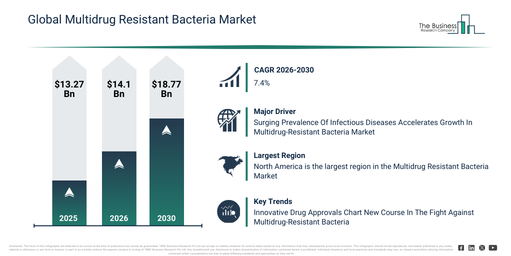
    The multidrug resistant bacteria market size has shown strong growth in recent years. It is anticipated to expand from $13.27 billion in 2025 to $14.1 billion in 2026, achieving a compound annual growth rate (CAGR) of 6.2%. The historical increase can be attributed to several factors including the excessive use of antibiotics in hospitals, inadequate infection control protocols, the slow adoption of rapid diagnostics, limited treatment options for resistant strains, and a high incidence of bloodstream infections.

    The multidrug resistant bacteria market is anticipated to experience substantial growth over the next few years. It is projected to expand to $18.77 billion by 2030, demonstrating a compound annual growth rate (CAGR) of 7.4%. This projected growth is driven by increased investments in antimicrobial research and development, the adoption of AI-driven diagnostic tools, the evolution of precision medicine therapies, governmental efforts for AMR containment, and the broader availability of homecare and outpatient infection management services. Prominent trends within this forecast period include a rise in hospital-acquired infections, more widespread antibiotic resistance awareness initiatives, the creation of innovative antibacterial treatments, the development of point-of-care diagnostic technologies, and the expansion of home healthcare provisions.

    Get A Free Sample Report With In-Depth Market Insights:

    https://thebusinessresearchcompany.com/sample_request?id=10243060&type=smp&name=Multidrug%20Resistant%20Bacteria%20Market%20Report%202026&utm_source=Blogs&utm_medium=Paid&utm_campaign=Oct_PR

    Multidrug Resistant Bacteria Market Growth Drivers: What’s Behind The Acceleration?

    The rising occurrence of infectious diseases is anticipated to fuel the expansion of the multidrug-resistant bacteria market in the future. Infectious diseases are conditions caused by harmful microorganisms, such as bacteria, viruses, fungi, or parasites. Multidrug-resistant bacteria are closely connected to infectious diseases because they are capable of causing infections that are challenging to treat with conventional antibiotics. These bacteria have developed resistance to multiple antibiotics, making them less susceptible to the medications typically used to combat bacterial infections. For instance, in November 2023, an article from the Centers for Disease Control and Prevention, a US-based national public health agency, indicated that the number of tuberculosis patients in the USA rose from 8,320 in 2022 to 9,615 in 2023, signifying an increase of 1,295 cases. Thus, the escalating prevalence of infectious diseases will propel the multidrug-resistant bacteria market.

    Multidrug Resistant Bacteria Market Segment Analysis And Revenue Potential

    The multidrug resistant bacteria market covered in this report is segmented –

    1) By Disease: Urinary Tract Infection, Intra-Abdominal Infections, Blood Stream Infections, Clostridium Difficile Infections, Acute Bacterial Skin And Skin Structure Infections, Hospital Acquired Bacterial Pneumonia, Acquired Bacterial Pneumonia, Other Diseases

    2) By Drug Class: Oxazolidinones, Lipoglycopeptides, Tetracyclines, Cephalosporins, Combination Therapies, Other Drug Classes

    3) By Route Of Administration: Oral, Parenteral, Other Routes Of Administration

    4) By End-User: Hospitals, Specialty Clinics, Homecare, Other End-Users

    Subsegments:

    1) By Urinary Tract Infection: Cystitis, Pyelonephritis

    2) By Intra-Abdominal Infections: Appendicitis, Peritonitis

    3) By Blood Stream Infections: Bacteremia, Sepsis

    4) By Clostridium Difficile Infections: Mild CDI, Severe CDI

    5) By Acute Bacterial Skin And Skin Structure Infections: Cellulitis, Abscesses

    6) By Hospital Acquired Bacterial Pneumonia: Ventilator-Associated Pneumonia, Hospital-Acquired Pneumonia

    7) By Acquired Bacterial Pneumonia: Community-Acquired Pneumonia, Aspiration Pneumonia

    8) By Other Diseases: Bone and Joint Infections, Endocarditis

    Multidrug Resistant Bacteria Market Trends: What’s Defining The Industry’s Next Phase?

    Major companies in the multidrug-resistant bacteria market are concentrating on creating innovative medications and obtaining regulatory approvals to cater to the requirements of a new consumer segment. The approval of drugs for multidrug-resistant bacteria is essential for preventing the spread of antibiotic resistance. As an illustration, in May 2023, Entasis Therapeutics Inc., a US-based biotech firm, received Food and Drug Administration (FDA) approval for Xacduor, a combination antibiotic intended for the treatment of hospital-acquired bacterial pneumonia (HABP) and ventilator-associated bacterial pneumonia (VAP) caused by acinetobacter baumannii. This particular pathogen can be difficult to treat. Xacduor is a blend of ceftolozane and tedizolid phosphate, where ceftolozane is a cephalosporin antibiotic and tedizolid phosphate represents a new entry in the oxazolidinone class. Furthermore, it offers a new alternative for patients infected with Acinetobacter baumannii who have not responded to other treatments. It is administered as an injection, combining the antibiotic beta-lactam sulbactam with the broad-spectrum beta-lactamase inhibitor durlobactam, which helps reduce acinetobacter resistance and allows the antibiotic to be effective.

    Multidrug Resistant Bacteria Market Key Players Shaping Industry Direction

    Major companies operating in the multidrug resistant bacteria market are Pfizer Inc., Johnson And Johnson Private Limited, F. Hoffmann-La Roche Ltd., Merck And Co. Inc., Bayer AG, Novartis AG, Sanofi S.A., Bristol-Myers Squibb Company, AstraZeneca plc, GlaxoSmithKline plc, Eli Lilly and Company, Boehringer Ingelheim International GmbH, Gilead Sciences Inc., Teva Pharmaceutical Industries Ltd., Mylan N.V., Dr. Reddy’s Laboratories Ltd., Lupin Pharmaceuticals Inc., BioMarin Pharmaceuticals Inc., Zydus Lifesciences Limited, Glenmark Pharmaceuticals Ltd., Sun Pharmaceutical Industries Ltd., Alkem Laboratories, Wockhardt Ltd., Basilea Pharmaceutica Ltd., Paratek Pharmaceuticals Inc., Theravance Biopharma Inc., Melinta Therapeutics Inc., Armata Pharmaceuticals Inc., Tetraphase Pharmaceuticals Inc.

    View The Full Multidrug Resistant Bacteria Market Report:

    https://thebusinessresearchcompany.com/report/multidrug-resistant-bacteria-global-market-report?utm_source=Blogs&utm_medium=Paid&utm_campaign=Oct_PR

    Multidrug Resistant Bacteria Market Geographic Landscape: Which Region Leads Industry Growth?

    North America was the largest region in the multidrug-resistant bacteria market in 2025. The regions covered in the multidrug resistant bacteria market report are Asia-Pacific, South East Asia, Western Europe, Eastern Europe, North America, South America, Middle East, Africa.

    Reach Out To Our Team:

    The Business Research Company: https://www.thebusinessresearchcompany.com/

    Americas: +1 310-496-7795

    Asia: +44 7882 955267 & +91 8897263534

    Europe: +44 7882 955267

    Email us at: marketing@tbrc.info

    Follow us on:

    LinkedIn: https://in.linkedin.com/company/the-business-research-company

    YouTube: https://www.youtube.com/channel/UC24_fI0rV8cR5DxlCpgmyFQ

    Global Market Model: https://www.thebusinessresearchcompany.com/global-market-model
  • Mucolipidosis II Market 2026 Market Size And Growth Forecast: Key Trends To Watch

    Mucolipidosis II Market 2026 Market Size And Growth Forecast: Key Trends To Watch

    Featuring market attractiveness scoring, total addressable market sizing, company benchmarking matrices, interactive Excel dashboards, deeper supply chain intelligence, emerging startup tracking, and granular product-level insights, The Business Research Company’s 2026 market reports are built to deliver research that is both more actionable and more strategically valuable.

    Mucolipidosis II Market Forecast: Value Set To Climb From $14.11 Billion To $16.18 Billion

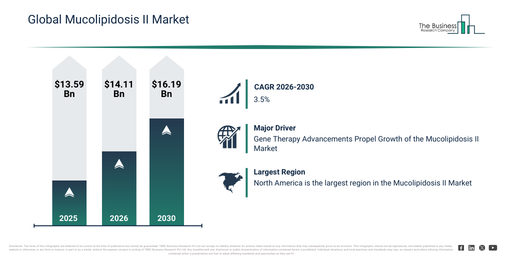
    The mucolipidosis ii market has experienced consistent expansion in recent years. Its value is projected to increase from $13.59 billion in 2025 to $14.11 billion in 2026, demonstrating a compound annual growth rate (CAGR) of 3.8%. This historical growth can be linked to factors such as restricted therapeutic alternatives for lysosomal storage disorders, prompt recognition of enzyme deficiency conditions, increasing understanding of rare pediatric illnesses, initial steps in developing supportive and palliative care methods, and a traditional focus on managing symptoms.

    The mucolipidosis ii market is anticipated to show consistent expansion in the coming years. Its valuation is expected to ascend to $16.19 billion in 2030, achieving a compound annual growth rate (CAGR) of 3.5%. This growth throughout the forecast period can be largely ascribed to advancements in gene therapy research, escalating investment in orphan drug development, augmented government backing for rare disease research, the broadening of enzyme replacement therapy pipelines, and increasing collaborations between biotechnology companies and research institutions. Prominent trends for the forecast duration include an amplified focus on rare genetic disorder research, the proliferation of experimental and gene-based therapies, a heightened emphasis on multidisciplinary symptom management, a rise in clinical trials for enzyme and stem cell therapies, and improved early diagnosis through sophisticated screening techniques.

    Get A Free Sample Report With In-Depth Market Insights:

    https://thebusinessresearchcompany.com/sample_request?id=80999193&type=smp&name=Mucolipidosis%20II%20Market%20Report%202026&utm_source=Blogs&utm_medium=Paid&utm_campaign=Oct_PR

    Mucolipidosis II Market Growth Factors Behind Sustained Expansion

    The growth in gene therapy is projected to boost the mucolipidosis II market in the coming years. Gene therapy represents an advanced medical technique aimed at treating or preventing genetic disorders by correcting flawed genes or introducing new genes into a patient’s cells through various methods, including gene addition, editing, silencing, and regulation. This therapeutic approach offers a promising way to address ML II by targeting the fundamental genetic cause of the condition. The strategy involves inserting a functional copy of the gene into the patient’s cells to restore the necessary enzyme production. For instance, in January 2024, according to the American Society of Gene & Cell Therapy, a US-based organization for gene and cell therapy, in the fourth quarter, the number of gene therapies in Phase III clinical trials increased by 10%, marking the first quarterly growth since third quarter of 2022. Consequently, the expansion of gene therapy will propel the mucolipidosis II market. The increase in research and development (R&D) activities is anticipated to drive the growth of the mucolipidosis II market going forward. Research and development involves structured investigation and experimentation to generate novel knowledge, technologies, and therapeutic solutions. The escalation in R&D efforts is spurred by a rising global emphasis on innovation, competitive advancement, and the necessity to address intricate medical conditions, including rare genetic disorders. Progress in R&D plays a crucial role in enhancing the understanding of mucolipidosis II, supporting the creation of gene therapies, optimizing drug-delivery strategies, and accelerating advancements through preclinical and clinical assessments. For instance, in April 2025, according to the Office for National Statistics (ONS), a UK-based government statistics authority, in 2023, the UK government’s net expenditure on research and development (R&D) increased to $22.7 billion, up from $21.1 billion in 2022, marking an 8.2% rise. Therefore, the growth in research and development activities is propelling the mucolipidosis II market.

    Mucolipidosis II Market Segmentation And Category Overview

    The mucolipidosis ii market covered in this report is segmented –

    1) By Treatment: Antibiotics, Physical Therapy, Hip Replacement, Experimental Therapies, Other Treatments

    2) By Mode Of Administration: Injectable, Oral, Other Modes Of Administration

    3) By Symptoms: Deafness, Lack Of Muscle Tone (Hypotonia), Abnormal Spine Curvature, Changing Proportion of Mental Retardation, Low Growth Of Gross And Fine Motor Skills, Other Symptoms

    4) By End-User: Hospitals, Homecare, Specialty Clinics, Other End-Users

    Subsegments:

    1) By Antibiotics: Antibiotics For Respiratory Infections, Antibiotics For Preventive Care, Intravenous Antibiotics, Oral Antibiotics For Chronic Infections, Antibiotic Therapy For Secondary Infections, Antibiotics For Treating Urinary Tract Infections (UTIS)

    2) By Physical Therapy: Range Of Motion Exercises, Strengthening And Conditioning Exercises, Respiratory Therapy And Pulmonary Rehabilitation, Gait Training And Balance Exercises, Hydrotherapy, Occupational Therapy For Daily Activities, Posture Correction And Spine Support, Stretching And Flexibility Programs

    3) By Hip Replacement: Total Hip Arthroplasty (THA), Hip Resurfacing Surgery, Minimally Invasive Hip Replacement, Ceramic-On-Ceramic Hip Implants, Hip Replacement With Metal-On-Polyethylene, Revision Hip Surgery For Failed Implants, Robotic-Assisted Hip Replacement Surgery, Hip Joint Stabilization Techniques

    4) By Experimental Therapies: Gene Therapy For Mucolipidosis II, Enzyme Replacement Therapy (ERT), Stem Cell Therapy For Mucolipidosis II, Chaperone Therapy For Lysosomal Storage Disorders, Small Molecule Drugs Targeting Cellular Pathways, Experimental Drug Trials (Phase I, II, III), Molecular Chaperones To Improve Enzyme Function, Immunomodulatory Therapies

    5) By Other Treatments: Pain Management (Non-Opioid And Opioid Treatments), Nutritional Support And Diet Modification, Surgical Interventions For Organ Dysfunction, Cognitive And Neurodevelopmental Support, Cardiovascular Care (Heart Monitoring, Medications), Hearing And Vision Supportive Therapies, Psychiatric Support And Behavioral Therapy, Palliative Care And End-Of-Life Management

    Mucolipidosis II Market Competitive Analysis Of Leading Industry Participants

    Major companies operating in the mucolipidosis ii market are Pfizer Inc., Merck & Co. Inc., Sanofi S.A., Novartis AG, Takeda Pharmaceutical Company Limited, Teva Pharmaceutical Industries Ltd., Sun Pharmaceutical Industries Limited, Jazz Pharmaceuticals, Cipla Limited, Lupin Limited, Zydus Lifesciences Limited, Alembic Pharmaceuticals, Ultragenyx Pharmaceutical Inc., Regenxbio Inc., Denali Therapeutics Inc., Mylan N.V., Intellia Therapeutics Inc., Avrobio Inc., Orchard Therapeutics plc, Lysogene S.A., Sio Gene Therapies, Homology Medicines Inc., Abeona Therapeutics Inc

    View The Full Mucolipidosis II Market Report:

    https://thebusinessresearchcompany.com/report/mucolipidosis-ii-global-market-report?utm_source=Blogs&utm_medium=Paid&utm_campaign=Oct_PR

    Mucolipidosis II Market Largest Region: Which Geography Holds The Biggest Share?

    North America was the largest region in the mucolipidosis II market in 2025. The regions covered in the mucolipidosis ii market report are Asia-Pacific, South East Asia, Western Europe, Eastern Europe, North America, South America, Middle East, Africa.

    Reach Out To Our Team:

    The Business Research Company: https://www.thebusinessresearchcompany.com/

    Americas: +1 310-496-7795

    Asia: +44 7882 955267 & +91 8897263534

    Europe: +44 7882 955267

    Email us at: marketing@tbrc.info

    Follow us on:

    LinkedIn: https://in.linkedin.com/company/the-business-research-company

    YouTube: https://www.youtube.com/channel/UC24_fI0rV8cR5DxlCpgmyFQ

    Global Market Model: https://www.thebusinessresearchcompany.com/global-market-model
  • mTOR Inhibitors Market Size Forecast: How The Industry Is Expected To Grow From 2026 To 2030

    mTOR Inhibitors Market Size Forecast: How The Industry Is Expected To Grow From 2026 To 2030

    Built to provide research that’s more actionable and strategically valuable, The Business Research Company’s 2026 market reports include market attractiveness analysis, total addressable market sizing, company benchmarking matrices, interactive Excel dashboards, broader supply chain intelligence, emerging startup tracking, and in-depth product insights.

    mTOR Inhibitors Market Revenue Growth On Track For A 6.2% CAGR Through 2030

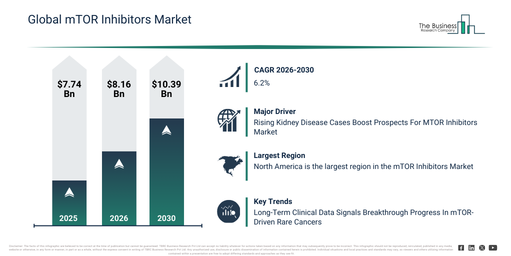
    The mtor inhibitors market has demonstrated substantial growth in recent years. It is anticipated to increase from $7.74 billion in 2025 to $8.16 billion in 2026, showing a compound annual growth rate (CAGR) of 5.5%. Factors contributing to its historical growth include the escalating prevalence of cancer, the increasing demand for targeted therapies, the early acceptance of rapamycin-based treatments, a rise in clinical trials, and advancements in molecular biology research.

    The mtor inhibitors market is projected to experience robust expansion over the coming years. It is anticipated to reach a valuation of $10.39 billion by 2030, exhibiting a compound annual growth rate (CAGR) of 6.2%. This projected growth during the forecast timeframe is attributable to several factors, including an increased emphasis on precision medicine, the proliferation of combination therapies, a rise in organ transplantation procedures, the growing acceptance of both oral and intravenous mtor inhibitors, and significant investment in r&d for novel mtor inhibitors. Key trends anticipated within the forecast period encompass the development of personalized cancer therapies, innovative combination therapy approaches, advancements in targeted drug delivery systems, the broadening of oncology and transplant indications, and enhanced r&d in oral and intravenous formulations.

    Get A Free Sample Report With In-Depth Market Insights:

    https://thebusinessresearchcompany.com/sample_request?id=61001306&type=smp&name=mTOR%20Inhibitors%20Market%20Report%202026&utm_source=Blogs&utm_medium=Paid&utm_campaign=Oct_PR

    mTOR Inhibitors Market Demand Drivers Opening New Revenue Streams

    The increasing occurrence of kidney conditions is projected to drive the expansion of the mTOR inhibitors market in the future. A kidney disease is defined as an ailment where the organs progressively weaken and lose their functional capacity. mTOR inhibitors find application in managing diverse kidney ailments. Immunosuppressive therapies, including mTOR inhibitors like sirolimus and everolimus, are utilized to avert rejection of kidney transplants. With the global prevalence of kidney diseases steadily climbing, the need for mTOR inhibitors is consequently growing. As an illustration, data from May 2024, provided by the American Cancer Society, a US-based non-profit entity, indicates that roughly 81,610 new kidney cancer instances (comprising 52,380 men and 29,230 women) are anticipated in the United States during 2024, alongside an estimated 14,390 fatalities (9,450 men and 4,940 women). Hence, the growing incidence of kidney diseases will undoubtedly foster the expansion of the mTOR inhibitors market.

    mTOR Inhibitors Market Segment Outlook: Which Categories Are Growing Fastest?

    The mtor inhibitors market covered in this report is segmented –

    1) By Product Type: Rapamune, Afinitor, Torisel, Zortress, Other Product Types

    2) By Indication: Oncology, Immunosuppressant, Organ Transplantation, Other Indications

    3) By Route of Administration: Oral, Intravenous

    4) By Application: Tumor Treatment, Kidney Transplant, Other Applications

    5) By Distribution Channel: Hospital Pharmacies, Retail Pharmacies, Online Pharmacies

    mTOR Inhibitors Market Trends Powering Strategic Industry Growth

    Major companies operating within the mTOR inhibitor market are increasingly focusing on generating extensive long-term clinical data to enhance the efficacy and durability of treatments for ultra-rare cancers, including malignant perivascular epithelioid cell tumors (PEComa). Prolonged follow-up studies are crucial for providing insights into sustained patient responses and overall survival, thereby assisting in the optimization of therapeutic strategies for individuals with limited treatment avenues. For instance, Aadi Bioscience, Inc., a U.S.-based biopharmaceutical company, published its three-year follow-up results in March 2024 from the Phase 2 AMPECT trial of FYARRO (nab-sirolimus) specifically for malignant PEComa. According to Aadi, this data indicated a median duration of response of approximately 40 months and a median overall survival surpassing 53 months, which signifies a considerable advancement over historically reported figures. These results underscore a growing inclination in the mTOR inhibitor market, where companies are prioritizing durable clinical benefits and long-term patient outcomes to fortify the therapeutic framework for metastatic PEComa.

    mTOR Inhibitors Market Leading Companies And Competitive Benchmarking

    Major companies operating in the mtor inhibitors market are Novartis AG, Pfizer Inc., Teva Pharmaceutical Industries Ltd., Hikma Pharmaceuticals plc, Exelixis Inc., Dr. Reddy’s Laboratories Ltd., Zydus Lifesciences Limited, Accord Healthcare Inc., Par Pharmaceutical, AbbVie Inc., GlaxoSmithKline plc, Biocon Limited, Alkem Laboratories Ltd., Gland Pharma Ltd., Apotex Inc., Glenmark Pharmaceuticals Ltd., AstraZeneca plc, Bristol-Myers Squibb Company, Eli Lilly and Company, Merck & Co. Inc., Bayer AG, Boehringer Ingelheim International GmbH

    View The Full mTOR Inhibitors Market Report:

    https://thebusinessresearchcompany.com/report/mTOR-inhibitors-global-market-report?utm_source=Blogs&utm_medium=Paid&utm_campaign=Oct_PR

    mTOR Inhibitors Market Regional Analysis: Which Geography Leads On Revenue?

    North America was the largest region in the mTOR inhibitors market in 2025. Asia-Pacific is expected to be the fastest-growing region in the forecast period. The regions covered in the mtor inhibitors market report are Asia-Pacific, South East Asia, Western Europe, Eastern Europe, North America, South America, Middle East, Africa.

    Reach Out To Our Team:

    The Business Research Company: https://www.thebusinessresearchcompany.com/

    Americas: +1 310-496-7795

    Asia: +44 7882 955267 & +91 8897263534

    Europe: +44 7882 955267

    Email us at: marketing@tbrc.info

    Follow us on:

    LinkedIn: https://in.linkedin.com/company/the-business-research-company

    YouTube: https://www.youtube.com/channel/UC24_fI0rV8cR5DxlCpgmyFQ

    Global Market Model: https://www.thebusinessresearchcompany.com/global-market-model
  • MSI-H And dMMR Market Reaches $21.12 Billion In 2026: Forecast And Growth Opportunities

    MSI-H And dMMR Market Reaches $21.12 Billion In 2026: Forecast And Growth Opportunities

    Backed by market attractiveness analysis, total addressable market sizing, company benchmarking matrices, interactive Excel dashboards, wider supply chain intelligence, emerging startup coverage, and detailed product-level insights, The Business Research Company’s 2026 market reports are designed to offer research that is more actionable and strategically valuable than ever.

    MSI-H And dMMR Market Value Growth And Long-Term Outlook

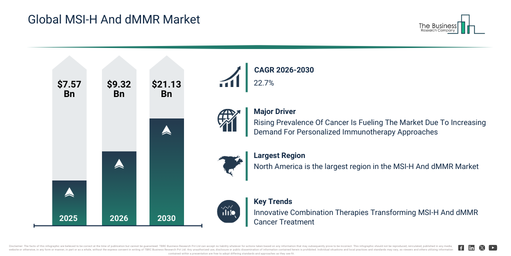
    The market size for msi-h and dmmr has demonstrated exponential growth in recent years. It is anticipated to increase from $7.57 billion in 2025 to $9.32 billion in 2026, at a compound annual growth rate (CAGR) of 23.1%. The growth observed in the historical period can be attributed to factors such as the discovery of msi-h and dmmr biomarkers, the initial success of immune checkpoint inhibitors, a rising incidence of colorectal and endometrial cancer, the expansion of molecular diagnostics, and regulatory approvals for biomarker-based therapies.

    The market for msi-h and dmmr is projected to experience rapid expansion in the coming years. Its valuation is set to reach $21.13 billion by 2030, exhibiting a compound annual growth rate (CAGR) of 22.7%. This anticipated growth during the projected timeframe stems from factors such as increased uptake of precision oncology, a rise in genomic testing applications in cancer treatment, broader approval for immunotherapy uses, higher investment in biomarker studies, and accumulating clinical data favoring tumor-agnostic strategies. Key trends expected over the forecast period encompass a greater acceptance of immunotherapy for msi-h and dmmr tumors, an expanding application of companion diagnostics for classifying patients, an escalating emphasis on cancer treatments that are tumor-agnostic, the proliferation of combination immunotherapy protocols, and heightened understanding of oncology approaches guided by biomarkers.

    Get A Free Sample Report With In-Depth Market Insights:

    https://thebusinessresearchcompany.com/sample_request?id=28529543&type=smp&name=MSI-H%20And%20dMMR%20Market%20Report%202026&utm_source=Blogs&utm_medium=Paid&utm_campaign=Oct_PR

    MSI-H And dMMR Market Growth Backed By Core Demand Fundamentals

    The increasing occurrence of cancer is projected to drive the expansion of the MSI-H and dMMR market in the future. Cancer is defined as a collection of illnesses marked by the unregulated multiplication and dissemination of atypical cells throughout the body. This upward trend in cancer cases is largely attributed to demographic aging, considering that the likelihood of developing cancer rises considerably with advancing age due to the accumulated impact of genetic alterations and extended exposure to various risk factors over a lifetime. In oncology, MSI-H and dMMR markers serve to pinpoint tumors exhibiting elevated mutation rates, a consequence of imperfections in DNA repair processes. These particular biomarkers are instrumental in informing immunotherapy choices, given that these types of tumors show a greater propensity to react positively to immune checkpoint inhibitors; furthermore, they offer valuable information regarding patient prognosis and the possibility of underlying genetic syndromes. For example, data released in January 2024 by the American Cancer Society, a non-profit organization based in the US, indicated that in 2023, approximately 1,958,310 new cancer diagnoses and 609,820 fatalities linked to cancer were anticipated in the United States. These figures are forecast to increase in 2024, with around 2,001,140 new cancer cases and 611,720 deaths expected, thereby underscoring an ongoing escalation in both the occurrence and fatality rates of cancer. Consequently, the expanding incidence of cancer is a key factor fueling the expansion of the MSI-H and dMMR market.

    MSI-H And dMMR Market Segment Landscape: Which Areas Lead Development?

    The msi-h and dmmr market covered in this report is segmented –

    1) By Treatment Type: Immune Checkpoint Inhibitors (ICIs), Combination Therapy

    2) By Indication: Endometrial, Gastric, Colorectal Cancer, Small Intestine Cancer, Cervical Cancer, Other Indications

    3) By Stage: Early Stages, Advanced Stages

    4) By End User: Hospitals, Oncology Clinics, Research Institutions, Homecare

    Subsegments:

    1) By Immune Checkpoint Inhibitors (ICIs): Programmed Cell Death Protein 1 Inhibitors, Programmed Cell Death Ligand 1 Inhibitors, Cytotoxic T-Lymphocyte Antigen 4 Inhibitors

    2) By Combination Therapy: Immune Checkpoint Inhibitor + Chemotherapy, Immune Checkpoint Inhibitor + Targeted Therapy, Immune Checkpoint Inhibitor + Radiation Therapy, Immune Checkpoint Inhibitor + Other Immunotherapies

    MSI-H And dMMR Market Growth Trends Reshaping The Competitive Landscape

    Leading companies in the MSI-H and dMMR market are concentrating on developing innovative treatments, such as combination therapy, to enhance treatment effectiveness and improve patient outcomes. Combination therapy for MSI-H and dMMR cancers involves utilizing two or more distinct treatment modalities, frequently immunotherapy agents like checkpoint inhibitors, or integrating immunotherapy with chemotherapy, targeted therapy, or radiation. This approach aims to boost treatment response, overcome resistance mechanisms, and improve survival rates in patients with tumors exhibiting high microsatellite instability or deficient mismatch repair. For example, in April 2025, Bristol-Myers Squibb Company, a US-based pharmaceutical entity, obtained United States Food and Drug Administration (FDA) approval for the combined use of nivolumab (Opdivo) and ipilimumab (Yervoy) as a first-line treatment for metastatic colorectal cancer (mCRC) with microsatellite instability-high (MSI-H) or mismatch repair deficient (dMMR) characteristics, thereby advancing therapeutic options for this challenging cancer subtype. This approval signifies a major breakthrough in managing MSI-H and dMMR cancers, as it introduces an effective new therapeutic alternative that targets multiple pathways to enhance patient survival and response rates, addressing crucial unmet medical needs in this patient population.

    MSI-H And dMMR Market Industry Leaders And Competitive Landscape

    Major companies operating in the msi-h and dmmr market are Pfizer Inc., F. Hoffmann-La Roche Ltd, Merck & Co. Inc., AbbVie Inc., Bayer AG, Novartis International AG, AstraZeneca PLC, Bristol-Myers Squibb Company, GSK plc., Takeda Pharmaceutical Company, Incyte Corporation, Exact Sciences Corp., BeiGene LTD., Summit Therapeutics Inc., Tempus Labs Inc., Guardant Health, NeoGenomics Laboratories Inc., Promega Corporation, Caris Life Sciences, and Owkin.

    View The Full MSI-H And dMMR Market Report:

    https://thebusinessresearchcompany.com/report/msi-h-and-dmmr-global-market-report?utm_source=Blogs&utm_medium=Paid&utm_campaign=Oct_PR

    MSI-H And dMMR Market Geographic Spread And Regional Opportunities

    North America was the largest region in the MSI-H and dMMR market in 2025. The regions covered in the msi-h and dmmr market report are Asia-Pacific, South East Asia, Western Europe, Eastern Europe, North America, South America, Middle East, Africa.

    Reach Out To Our Team:

    The Business Research Company: https://www.thebusinessresearchcompany.com/

    Americas: +1 310-496-7795

    Asia: +44 7882 955267 & +91 8897263534

    Europe: +44 7882 955267

    Email us at: marketing@tbrc.info

    Follow us on:

    LinkedIn: https://in.linkedin.com/company/the-business-research-company

    YouTube: https://www.youtube.com/channel/UC24_fI0rV8cR5DxlCpgmyFQ

    Global Market Model: https://www.thebusinessresearchcompany.com/global-market-model
  • mRNA Therapeutics CDMO Market Growth In 2026: Market Size, Key Drivers And Future Outlook

    mRNA Therapeutics CDMO Market Growth In 2026: Market Size, Key Drivers And Future Outlook

    Featuring market attractiveness scoring, total addressable market sizing, company benchmarking matrices, interactive Excel dashboards, deeper supply chain intelligence, emerging startup tracking, and granular product-level insights, The Business Research Company’s 2026 market reports are built to deliver research that is both more actionable and more strategically valuable.

    mRNA Therapeutics CDMO Market Poised To Hit $8.26 Billion By 2030 With A 11.7% CAGR

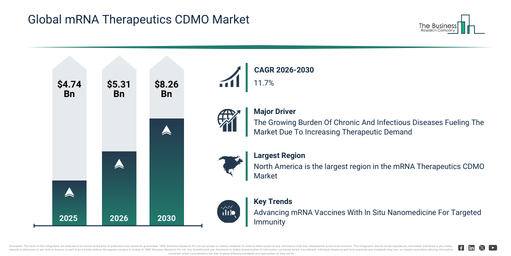
    The mrna therapeutics cdmo market size has experienced rapid growth in recent years. This market is expected to expand from $4.74 billion in 2025 to $5.31 billion in 2026, with a compound annual growth rate (CAGR) of 12.0%. The historical growth can be ascribed to several factors, including the limited availability of specialized mrna cdmo services, a reliance on in-house pharmaceutical manufacturing, an increase in infectious disease outbreaks, the adoption of early-stage analytical testing, and the expansion of academic and research collaborations.

    The mrna therapeutics cdmo market size is poised for significant expansion in the coming years. This market is projected to reach $8.26 billion by 2030, exhibiting a compound annual growth rate (CAGR) of 11.7%. Key factors driving this growth during the forecast period include increasing investment in mRNA therapeutics pipelines, advancements in plasmid DNA and mRNA synthesis technologies, the expansion of cancer immunotherapy and protein replacement therapies, a heightened demand for fill-finish services, and the proliferation of partnerships between biopharmaceutical companies and CDMOs. Significant trends anticipated in the same period involve a growing need for outsourced mRNA development and manufacturing, a sharpened focus on lipid nanoparticle (LNP) formulation technologies, the broadening of viral vaccine and cancer immunotherapy pipelines, improved regulatory compliance and quality assurance protocols, and the wider acceptance of analytical and bioanalytical laboratory services.

    Get A Free Sample Report With In-Depth Market Insights:

    https://thebusinessresearchcompany.com/sample_request?id=25841&type=smp&name=mRNA%20Therapeutics%20CDMO%20Market%20Report%202026&utm_source=Blogs&utm_medium=Paid&utm_campaign=Oct_PR

    mRNA Therapeutics CDMO Market Growth Catalysts And Demand Drivers

    The increasing prevalence of chronic and infectious diseases is anticipated to propel the expansion of the mRNA therapeutics CDMO market in the future. These conditions include enduring health issues like diabetes, cardiovascular disorders, and asthma, alongside illnesses stemming from harmful microorganisms such as viruses, bacteria, and parasites, capable of direct or indirect transmission between individuals. The rise in chronic and infectious diseases is linked to an aging global population, which is more prone to both persistent health conditions and infections. mRNA therapeutics CDMO plays a role in tackling these diseases by offering comprehensive development and production services, speeding up the delivery of precise, customized mRNA treatments to patients. For instance, in October 2024, the World Health Organization, a Switzerland-based international public health organization, reported that new tuberculosis diagnoses reached approximately 8.2 million individuals in 2023, an increase from about 7.5 million in 2022, underscoring the worsening global impact of infectious diseases. Consequently, the expanding challenge posed by chronic and infectious diseases is a primary catalyst for the growth of the mRNA therapeutics CDMO market.

    mRNA Therapeutics CDMO Market Segments: Where Is Growth Concentrated?

    The mrna therapeutics cdmo market covered in this report is segmented –

    1) By Type Of Service: Development Services, Manufacturing Services, Laboratory Services

    2) By Indication: Infectious Diseases, Metabolic And Genetic Diseases, Cardiovascular And Cerebrovascular Diseases

    3) By Application: Viral Vaccines, Protein Replacement Therapies, Cancer Immunotherapies

    4) By End User: Pharmaceutical Companies, Biotechnology Companies, Academic Institutions, Research Organizations

    Subsegments:

    1) By Development Services: Process Development, Analytical Method Development, Formulation Development, Regulatory Support

    2) By Manufacturing Services: Plasmid DNA Manufacturing, mRNA Synthesis, Lipid Nanoparticle (LNP) Formulation, Fill-Finish Services

    3) By Laboratory Services: Quality Control Testing, Stability Testing, Bioanalytical Testing, Preclinical Testing

    mRNA Therapeutics CDMO Market Trends Shaping Long-Term Demand

    Major companies within the mRNA therapeutics CDMO market are concentrating on developing pioneering solutions, such as in situ nanomedicine vaccines, to improve the effectiveness and precision of mRNA-based vaccines through focused immune stimulation. An in situ nanomedicine vaccine represents an advanced mRNA-based therapeutic designed to generate nanomedicines inside the patient’s body, enabling targeted delivery and personalized immune activation via engineered transgene expression. For example, in January 2025, Esphera SynBio Inc., a biotechnology company based in Canada, launched a new project with the backing of the CQDM Quantum Leap program. This undertaking aims to enhance first-generation lipid nanoparticle or messenger RNA (LNP/mRNA) vaccines by integrating proprietary transgene designs that facilitate the in vivo production of immunostimulatory nanomedicines. This methodology allows for exact antigen delivery and customized immune responses, positioning the technology as a potential breakthrough in vaccine innovation.

    mRNA Therapeutics CDMO Market Key Participants And Competitive Landscape

    Major companies operating in the mrna therapeutics cdmo market are Thermo Fisher Scientific Inc., Danaher Corporation, Merck KGaA, FUJIFILM Holdings Corporation, Evonik Industries AG, AGC Biologics GmbH, Eurofins Scientific SA, Samsung Biologics Co. Ltd., Wuxi Biologics, Recipharm AB, EMERGENT BioSolutions Inc., Genscript Biotech, Ginkgo Bioworks Holdings Inc., Corden Pharma Corp., TriLink BioTechnologies LLC, Biocina Pty Ltd., Aldevron LLC, Synbio Technologies LLC, etherna manufacturing, Bio-Synthesis Inc., Biomay AG.

    View The Full mRNA Therapeutics CDMO Market Report:

    https://thebusinessresearchcompany.com/report/mrna-therapeutics-cdmo-global-market-report?utm_source=Blogs&utm_medium=Paid&utm_campaign=Oct_PR

    mRNA Therapeutics CDMO Market Top Region By Revenue And Market Share

    North America was the largest region in the mRNA therapeutics CDMO market in 2025. Asia-Pacific is expected to be the fastest-growing region in the forecast period. The regions covered in the mrna therapeutics cdmo market report are Asia-Pacific, South East Asia, Western Europe, Eastern Europe, North America, South America, Middle East, Africa.

    Reach Out To Our Team:

    The Business Research Company: https://www.thebusinessresearchcompany.com/

    Americas: +1 310-496-7795

    Asia: +44 7882 955267 & +91 8897263534

    Europe: +44 7882 955267

    Email us at: marketing@tbrc.info

    Follow us on:

    LinkedIn: https://in.linkedin.com/company/the-business-research-company

    YouTube: https://www.youtube.com/channel/UC24_fI0rV8cR5DxlCpgmyFQ

    Global Market Model: https://www.thebusinessresearchcompany.com/global-market-model
  • mRNA Therapeutics Market Size And Forecast 2026–2030: Trends Driving Industry Expansion

    mRNA Therapeutics Market Size And Forecast 2026–2030: Trends Driving Industry Expansion

    Built to provide research that’s more actionable and strategically valuable, The Business Research Company’s 2026 market reports include market attractiveness analysis, total addressable market sizing, company benchmarking matrices, interactive Excel dashboards, broader supply chain intelligence, emerging startup tracking, and in-depth product insights.

    mRNA Therapeutics Market Size And Revenue Outlook Through 2030

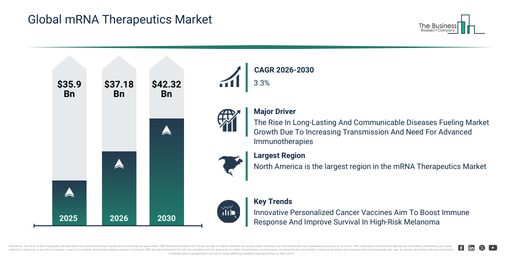
    The mrna therapeutics market has experienced consistent expansion in recent years. This market is projected to expand from $35.9 billion in 2025 to $37.18 billion in 2026, demonstrating a compound annual growth rate (CAGR) of 3.6%. Historically, this growth can be attributed to the breakthrough success of mrna vaccines in infectious diseases, advancements in nucleic acid delivery technologies, an increased understanding of gene expression control, early research validation of mrna-based protein synthesis, and strong public funding for mrna research platforms.

    The mrna therapeutics market is anticipated to experience consistent growth in the coming years. It is projected to expand to $42.32 billion in 2030, demonstrating a compound annual growth rate (CAGR) of 3.3%. This expansion during the forecast period can be attributed to several factors, including an escalating demand for targeted and personalized treatments, the broadening application of mrna in oncology and rare diseases, increased biopharmaceutical investment in mrna development pipelines, a growing number of mrna drugs entering clinical trials, and strategic alliances formed between biotech companies and research organizations. Significant trends expected during this period involve the diversification of mrna therapeutics beyond vaccines, an increasing focus on protein replacement therapies utilizing mrna, a burgeoning clinical pipeline for non-vaccine mrna drugs, heightened investment in lipid nanoparticle delivery systems, and the accelerated development of comprehensive mrna manufacturing capabilities.

    Get A Free Sample Report With In-Depth Market Insights:

    https://thebusinessresearchcompany.com/sample_request?id=41785661&type=smp&name=mRNA%20Therapeutics%20Market%20Report%202026&utm_source=Blogs&utm_medium=Paid&utm_campaign=Oct_PR

    mRNA Therapeutics Market Opportunity Drivers: What’s Unlocking New Revenue Potential?

    The future expansion of the mRNA therapeutics market is anticipated to be fueled by the rising occurrence of chronic and infectious ailments. These are health conditions, such as tuberculosis, HIV/AIDS, and hepatitis, that endure for significant durations and possess the ability to transmit from one person to another. Their increase is attributable to elements like enhanced global travel and shortcomings in medical infrastructure, leading to higher rates of spread and challenges in managing illnesses effectively. mRNA-based therapies aid in better disease management by swiftly prompting the body to generate immune-boosting proteins, thereby accelerating the creation of specific vaccines and medical interventions. As an illustration, data from March 2024 by the US government’s Centers for Disease Control and Prevention indicated a surge in tuberculosis cases, escalating from 8,320 in 2022 to 9,615 in 2023, which signifies a rise of 1,295 cases. Consequently, the expanding occurrence of chronic and infectious diseases is a key factor propelling the development of the mRNA therapeutics market.

    mRNA Therapeutics Market Segment Analysis: What Are The Core Market Categories?

    The mrna therapeutics market covered in this report is segmented –

    1) By Product: Vaccines, Drugs

    2) By Application: Infectious Diseases, Oncology, Rare Genetic Diseases, Respiratory Diseases, Other Applications

    3) By End Use: Hospitals And Clinics, Research Organizations, Other End Uses

    Subsegments:

    1) By Vaccines: Infectious Disease Vaccines, Cancer Vaccines, Other Therapeutic Vaccines

    2) By Drugs: Oncology Drugs, Cardiovascular Drugs, Autoimmune Disease Drugs, Other mRNA-Based Drugs

    mRNA Therapeutics Market Innovation Trends Shaping Future Development

    Leading firms within the mRNA therapeutics market are concentrating on creating novel approaches, like individualized neoantigen vaccines, to boost immune responses and better survival rates for cancer patients. These personalized neoantigen vaccines represent cancer treatments tailored for individual patients, leveraging distinct tumor-specific mutations to activate the immune system to identify and eliminate cancer cells. As an example, in July 2023, Merck & Co., Inc., a US-based biopharmaceutical company focused on research, collaborated with Moderna Therapeutics, Inc., a US-based biotechnology firm, to commence a Phase 3 randomized clinical study (V940-001). This trial aims to assess mRNA-4157 (V940) alongside KEYTRUDA® (pembrolizumab) as an adjuvant therapy for individuals suffering from resected high-risk (Stage IIB-IV) melanoma. This particular investigation is building upon favorable outcomes observed in the Phase 2b KEYNOTE-942/mRNA-4157-P201 trial, where the combination demonstrated a significant advantage compared to KEYTRUDA by itself in lowering the risk of recurrence and distant metastasis. The ongoing Phase 3 trial is designed to validate these initial findings, with its primary and secondary endpoints being the evaluation of relapse-free survival and distant metastasis-free survival, respectively.

    mRNA Therapeutics Market Top Companies Driving Competitive Growth

    Major companies operating in the mrna therapeutics market are Pfizer Inc., Novartis AG, Sanofi AG, AstraZeneca plc, GlaxoSmithKline plc, Hoffmann-La Roche AG, Moderna Therapeutics Inc, BioNTech SE, Vertex Pharmaceuticals Incorporated, Catalent Inc, Alnylam Pharmaceuticals Inc, Sarepta Therapeutics Inc, Arcturus Therapeutics Holdings Inc, CureVac N.V, Ethris GMBH, eTheRNA immunotherapies NV, In-Cell-Art S.A.S., Nutcracker Therapeutics Inc, SCM LifeScience Co Ltd, Suzhou Abogen Biosciences Co Ltd, Tiba Biotech LLC, CSPC Pharmaceutical Group, CRISPR Therapeutics AG

    View The Full mRNA Therapeutics Market Report:

    https://thebusinessresearchcompany.com/report/mrna-therapeutics-global-market-report?utm_source=Blogs&utm_medium=Paid&utm_campaign=Oct_PR

    mRNA Therapeutics Market Regional Analysis And Top Geography

    North America was the largest region in the mRNA therapeutics market in 2025. Asia-Pacific is expected to be the fastest-growing region in the forecast period. The regions covered in the mrna therapeutics market report are Asia-Pacific, South East Asia, Western Europe, Eastern Europe, North America, South America, Middle East, Africa.

    Reach Out To Our Team:

    The Business Research Company: https://www.thebusinessresearchcompany.com/

    Americas: +1 310-496-7795

    Asia: +44 7882 955267 & +91 8897263534

    Europe: +44 7882 955267

    Email us at: marketing@tbrc.info

    Follow us on:

    LinkedIn: https://in.linkedin.com/company/the-business-research-company

    YouTube: https://www.youtube.com/channel/UC24_fI0rV8cR5DxlCpgmyFQ

    Global Market Model: https://www.thebusinessresearchcompany.com/global-market-model
  • mRNA Cancer Vaccines And Therapeutics Market 2026 Outlook: Market Size, CAGR And Key Growth Opportunities

    mRNA Cancer Vaccines And Therapeutics Market 2026 Outlook: Market Size, CAGR And Key Growth Opportunities

    Backed by market attractiveness analysis, total addressable market sizing, company benchmarking matrices, interactive Excel dashboards, wider supply chain intelligence, emerging startup coverage, and detailed product-level insights, The Business Research Company’s 2026 market reports are designed to offer research that is more actionable and strategically valuable than ever.

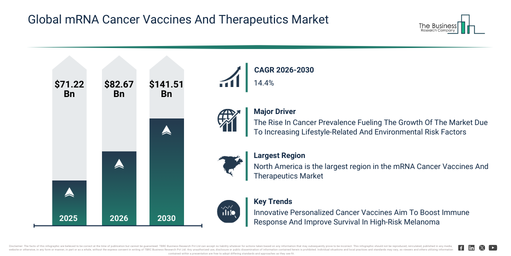
    mRNA Cancer Vaccines And Therapeutics Market Growth From $82.67 Billion In 2026 To $141.51 Billion By 2030 At A CAGR Of 14.4%

    In recent years, the mrna cancer vaccines and therapeutics market has experienced substantial growth in its size. It will grow from $71.22 billion in 2025 to $82.67 billion in 2026 at a compound annual growth rate (CAGR) of 16.1%. This historical expansion can be attributed to factors such as the successful application of mrna platforms in infectious disease vaccines, progress in cancer immunology research, an enhanced understanding of tumor antigens, the early clinical validation of mrna cancer therapies, and increased public and private sector funding directed towards oncology innovation.

    The mrna cancer vaccines and therapeutics market is projected to experience substantial expansion over the coming years. Its valuation is set to reach $141.51 billion in 2030, demonstrating a compound annual growth rate (CAGR) of 14.4%. This anticipated growth throughout the forecast period stems from factors such as an escalating global cancer burden, the increasing need for personalized and targeted cancer therapies, the expansion of mrna manufacturing capabilities, a rise in oncology clinical trials leveraging mrna platforms, and strategic alliances formed between biotechnology and pharmaceutical firms. Key trends anticipated during this period encompass a greater adoption of personalized cancer vaccines, the broadening of mrna-based therapeutics beyond oncology applications, an intensified focus on developing neoantigen-specific vaccines, an expanding clinical pipeline for mrna cancer immunotherapies, and increased capital allocation towards scalable mrna manufacturing platforms.

    Get A Free Sample Report With In-Depth Market Insights:

    https://thebusinessresearchcompany.com/sample_request?id=95488889&type=smp&name=mRNA%20Cancer%20Vaccines%20And%20Therapeutics%20Market%20Report%202026&utm_source=Blogs&utm_medium=Paid&utm_campaign=Oct_PR

    mRNA Cancer Vaccines And Therapeutics Market Growth Momentum: What Factors Are Shaping Demand?

    The growing incidence of cancer is anticipated to drive the expansion of the mRNA cancer vaccine and therapeutic market. Cancer encompasses a range of diseases marked by the uncontrolled proliferation and spread of atypical cells capable of invading and damaging healthy bodily tissues. The rising frequency of cancer cases is largely attributed to elements such as inactive lifestyles, poor dietary choices, and exposure to environmental toxins, all of which elevate the risk of developing diverse malignancies. mRNA cancer vaccines and therapeutics are pivotal in advancing cancer treatment by facilitating personalized, precise immune responses that assist the body in identifying and eliminating cancer cells more efficiently, thus improving therapeutic outcomes. For example, in January 2024, according to the American Cancer Society, Inc., a US-based cancer advocacy organization, it was predicted that the United States would see over 611,000 cancer-related deaths in 2024, which averages out to more than 1,600 fatalities daily. Hence, the increasing prevalence of cancer is propelling the growth of the mRNA cancer vaccine and therapeutic market.

    mRNA Cancer Vaccines And Therapeutics Market Segment Breakdown: Which Categories Lead On Revenue?

    The mrna cancer vaccines and therapeutics market covered in this report is segmented –

    1) By Type: Adeno Carcinomas, Mucinous Carcinomas, Adenosquamous Carcinomas

    2) By Application: Cancer, Other Applications

    3) By End User: Hospitals And Clinics, Ambulatory Surgical Centers, Research Institutes, Other End Users

    Subsegments:

    1) By Adeno Carcinomas: Lung Adenocarcinomas, Colon Adenocarcinomas, Prostate Adenocarcinomas

    2) By Mucinous Carcinomas: Mucinous Ovarian Cancer, Mucinous Breast Cancer, Mucinous Colorectal Cancer

    3) By Adenosquamous Carcinomas: Pancreatic Adenosquamous Carcinoma, Cervical Adenosquamous Carcinoma, Esophageal Adenosquamous Carcinoma

    mRNA Cancer Vaccines And Therapeutics Market Trends Redefining Industry Growth

    Key companies within the mRNA cancer vaccines and therapeutics market are focusing on developing innovative solutions, such as personalized neoantigen vaccines, to improve immune responses and patient survival outcomes in cancer. Personalized neoantigen vaccines are cancer treatments designed specifically for each patient, utilizing unique tumor-specific mutations to stimulate the immune system to target and destroy cancer cells. For example, in July 2023, Merck & Co., Inc., a US-based research-intensive biopharmaceutical company, partnered with Moderna Therapeutics, Inc., a US-based biotechnology company, to initiate a Phase 3 randomized clinical trial (V940-001). This trial will evaluate mRNA-4157 (V940) in combination with KEYTRUDA (pembrolizumab) as an adjuvant therapy for patients with resected high-risk (Stage IIB-IV) melanoma. This study follows positive results from the Phase 2b KEYNOTE-942/mRNA-4157-P201 trial, which indicated a meaningful benefit of the combination over KEYTRUDA alone in reducing the risk of recurrence and distant metastasis. The Phase 3 trial seeks to confirm these findings by assessing relapse-free survival and distant metastasis-free survival as its primary and secondary endpoints, respectively.

    mRNA Cancer Vaccines And Therapeutics Market Leading Players And Competitive Positioning

    Major companies operating in the mrna cancer vaccines and therapeutics market are BioNTech SE, Moderna Therapeutics Inc., CureVac N.V., Arcturus Therapeutics Holdings Inc., Immatics Biotechnologies GmbH, Argos Therapeutics Inc., Anima Biotech, Translate Bio, eTheRNA Immunotherapies NV, Gritstone bio Inc., Neon Therapeutics, Codiak BioSciences, Cartesian Therapeutics, Replimune Group Inc., Precision BioSciences, Acuitas Therapeutics, Ethris GmbH, Strand Therapeutics, Crown Bioscience, Roche (Hoffmann-La Roche AG)

    View The Full mRNA Cancer Vaccines And Therapeutics Market Report:

    https://thebusinessresearchcompany.com/report/mrna-cancer-vaccines-and-therapeutics-global-market-report?utm_source=Blogs&utm_medium=Paid&utm_campaign=Oct_PR

    mRNA Cancer Vaccines And Therapeutics Market Geographic Analysis: Where Is Demand Rising Fastest?

    North America was the largest region in the mRNA cancer vaccination and therapeutics market in 2025. Asia-Pacific is expected to be the fastest-growing region in the forecast period. The regions covered in the mrna cancer vaccines and therapeutics market report are Asia-Pacific, South East Asia, Western Europe, Eastern Europe, North America, South America, Middle East, Africa.

    Reach Out To Our Team:

    The Business Research Company: https://www.thebusinessresearchcompany.com/

    Americas: +1 310-496-7795

    Asia: +44 7882 955267 & +91 8897263534

    Europe: +44 7882 955267

    Email us at: marketing@tbrc.info

    Follow us on:

    LinkedIn: https://in.linkedin.com/company/the-business-research-company

    YouTube: https://www.youtube.com/channel/UC24_fI0rV8cR5DxlCpgmyFQ

    Global Market Model: https://www.thebusinessresearchcompany.com/global-market-model