Blog

  • Morphine Drugs Market Size Growth: From $24.5 Billion In 2026 To $30.16 Billion By 2030

    Morphine Drugs Market Size Growth: From $24.5 Billion In 2026 To $30.16 Billion By 2030

    Featuring market attractiveness scoring, total addressable market sizing, company benchmarking matrices, interactive Excel dashboards, deeper supply chain intelligence, emerging startup tracking, and granular product-level insights, The Business Research Company’s 2026 market reports are built to deliver research that is both more actionable and more strategically valuable.

    Morphine Drugs Market Expansion Outlook: What Revenue Opportunities Are Ahead?

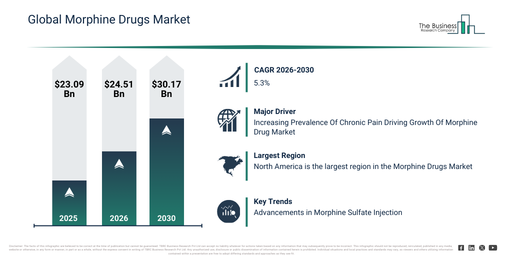
    The morphine drugs market has experienced robust growth recently. It will grow from $23.09 billion in 2025 to $24.51 billion in 2026 at a compound annual growth rate (CAGR) of 6.1%. The expansion observed in the past can be ascribed to a long-standing clinical reliance on morphine for alleviating severe pain, its widespread application in post-surgical and trauma care, its established function in cancer pain management, its inclusion in essential medicines lists, and the availability of numerous generic morphine formulations.

    The morphine drugs market is projected to experience substantial expansion over the upcoming years. Its size is anticipated to reach $30.17 billion in 2030, demonstrating a compound annual growth rate (CAGR) of 5.3%. Factors contributing to this growth during the forecast period include the increasing incidence of cancer necessitating potent analgesics, an escalating demand for palliative care services, the expansion of hospital infrastructure in emerging markets, ongoing requirements for anesthesia and perioperative pain control, and the regulated use of opioids under stricter frameworks. Key trends expected during this period involve a consistent demand for opioid analgesics in managing severe pain, the persistent application of morphine in palliative and end-of-life care, a preference for injectable morphine within hospital environments, the availability of diverse dosage forms offering clinical adaptability, and an increasing focus on the controlled and regulated prescription of opioids.

    Get A Free Sample Report With In-Depth Market Insights:

    https://thebusinessresearchcompany.com/sample_request?id=89348434&type=smp&name=Morphine%20Drugs%20Market%20Report%202026&utm_source=Blogs&utm_medium=Paid&utm_campaign=Oct_PR

    Morphine Drugs Market Expansion Drivers: What’s Shaping Future Growth?

    The rising occurrence of chronic pain conditions is anticipated to fuel the expansion of the morphine drugs market moving ahead. This intricate condition involves enduring discomfort over a prolonged duration, signaling potential injury or illness. Globally, chronic pain has emerged as a significant health issue, influenced by interconnected factors like an aging populace, increasing obesity, inactive lifestyles, mental health challenges including stress, and environmental elements. Morphine is essential for managing chronic pain, given its high efficacy in alleviating discomfort and its adaptability to individual patient requirements. It improves the quality of life, allowing individuals afflicted with chronic pain to accomplish tasks more effectively without constant intense suffering. For example, in May 2021, the Government of Canada, a federal administration situated in Canada, projected that up to 8.3 million Canadians could suffer from chronic pain by 2025, with this number potentially increasing to 9.0 million by 2030. Consequently, the growing occurrence of chronic pain conditions is propelling the expansion of the morphine drug market.

    Morphine Drugs Market Segmentation: How Does The Market Break Down By Category?

    The morphine drugs market covered in this report is segmented –

    1) By Dosage form: Injectable, Oral, Other Dosage Forms

    2) By Distribution channels: Hospital Pharmacy, Retail Pharmacy, Online Pharmacy

    3) By Applications: Pain Management, Palliative Care, Diarrhea Suppressant, Anesthesia, Other Applications

    4) By End Users: Hospitals And Clinics, Ambulatory Surgical Centers, Other End Users

    Subsegments:

    1) By Injectable: Morphine Sulfate Injection, Morphine Hydrochloride Injection, Morphine Extended Release Injection

    2) By Oral: Oral Tablets (Immediate-Release, Extended-Release), Oral Solution Or syrup, Oral Capsules (Extended-Release Capsules)

    3) By Other Dosage Forms: Rectal Suppositories, Sublingual Tablets Or Films

    Morphine Drugs Market Strategic Trends: What Defines The Next Growth Phase?

    Leading companies in the morphine drug market are prioritizing the creation of advanced delivery mechanisms, such as prefilled syringe formats, to elevate efficiency, heighten safety, and decrease medication errors and preparation duration. Prefilled syringes are sterile, single-dose delivery systems already containing a specific medication, thus removing the necessity for manual withdrawal from a vial before administration. As an example, in April 2024, Hikma Pharmaceuticals PLC, a UK-based multinational pharmaceutical company, released Morphine Sulfate Injection USP in a prefilled syringe in the U.S. This product offers a sterile, ready-to-use presentation of the opioid analgesic, which significantly improves convenience for healthcare providers in acute care settings. The prefilled syringe aims to assist in minimizing dosing errors and enhancing workflow efficiency by cutting down preparation stages.

    Morphine Drugs Market Competitive Overview And Top Companies

    Major companies operating in the morphine drugs market are Pfizer Inc., Sanofi S.A., Rusan Pharma Ltd., Johnson & Johnson, Teva Pharmaceutical Industries Ltd., Daiichi Sankyo Company Limited, Sandoz AG, Viatris Inc., Dr. Reddy’s Laboratories Ltd., Apotex Inc., Hikma Pharmaceuticals PLC, Endo Pharmaceuticals Inc., Sun Pharmaceutical Industries Ltd., Johnson Matthey Fine Chemicals, Fresenius Kabi USA LLC, Delpharm SaS, Alvogen Inc., Mallinckrodt Pharmaceuticals, Lannett Company, Mayne Pharma Group Limited, Noramco Inc., Tasmanian Alkaloids, Napp Pharmaceuticals Limited, Alcaliber SA

    View The Full Morphine Drugs Market Report:

    https://thebusinessresearchcompany.com/report/morphine-drugs-global-market-report?utm_source=Blogs&utm_medium=Paid&utm_campaign=Oct_PR

    Morphine Drugs Market Global Footprint: Which Region Leads The Market?

    North America was the largest region in the morphine drugs market in 2025. Asia-Pacific is expected to be the fastest-growing region in the forecast period. The regions covered in the morphine drugs market report are Asia-Pacific, South East Asia, Western Europe, Eastern Europe, North America, South America, Middle East, Africa.

    Reach Out To Our Team:

    The Business Research Company: https://www.thebusinessresearchcompany.com/

    Americas: +1 310-496-7795

    Asia: +44 7882 955267 & +91 8897263534

    Europe: +44 7882 955267

    Email us at: marketing@tbrc.info

    Follow us on:

    LinkedIn: https://in.linkedin.com/company/the-business-research-company

    YouTube: https://www.youtube.com/channel/UC24_fI0rV8cR5DxlCpgmyFQ

    Global Market Model: https://www.thebusinessresearchcompany.com/global-market-model
  • Montelukast Sodium Market Analysis 2026: Market Size, Growth Trends And Industry Outlook

    Montelukast Sodium Market Analysis 2026: Market Size, Growth Trends And Industry Outlook

    Built to provide research that’s more actionable and strategically valuable, The Business Research Company’s 2026 market reports include market attractiveness analysis, total addressable market sizing, company benchmarking matrices, interactive Excel dashboards, broader supply chain intelligence, emerging startup tracking, and in-depth product insights.

    Montelukast Sodium Market Growth Potential: How Will Market Size Shift Through 2030?

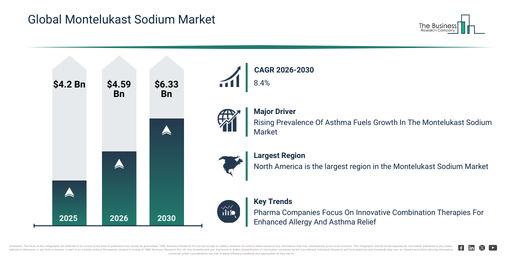
    The montelukast sodium market size has experienced significant expansion in recent years. It is anticipated to grow from $4.2 billion in 2025 to $4.59 billion in 2026, demonstrating a compound annual growth rate (CAGR) of 9.3%. This historic period’s expansion can be attributed to several factors: the long-established clinical application of montelukast in controlling asthma, a rising prevalence of allergic respiratory diseases, its confirmed safety profile for long-term therapy, broad physician acceptance for maintenance treatment, and the availability of affordable generic alternatives.

    The montelukast sodium market is anticipated to experience robust expansion over the coming years, reaching $6.33 billion by 2030, demonstrating a compound annual growth rate (CAGR) of 8.4%. This projected growth is driven by factors such as the increasing worldwide prevalence of asthma and allergic rhinitis, a rise in pediatric asthma diagnoses, greater public understanding of non-steroidal treatments for asthma, wider availability of respiratory medications in developing regions, and ongoing preference for oral maintenance medications. Key trends during this period are expected to encompass an escalating need for leukotriene receptor antagonists in asthma care, the expanding application of montelukast for allergic rhinitis, the proliferation of generic montelukast sodium products, a clear preference for oral solid forms in long-term respiratory treatment, and a surge in prescriptions for both child and adult asthma sufferers.

    Get A Free Sample Report With In-Depth Market Insights:

    https://thebusinessresearchcompany.com/sample_request?id=13102117&type=smp&name=Montelukast%20Sodium%20Market%20Report%202026&utm_source=Blogs&utm_medium=Paid&utm_campaign=Oct_PR

    Montelukast Sodium Market Development Factors: What’s Supporting Demand?

    The rising incidence of asthma is anticipated to drive expansion in the montelukast sodium market in the future. Asthma, a persistent respiratory ailment, is characterized by airway inflammation and narrowing, leading to recurrent episodes of wheezing, shortness of breath, chest tightness, and coughing. The surge in asthma cases is attributed to factors such as environmental contamination, exposure to allergens, genetic factors, increased urbanization, evolving lifestyles, and respiratory illnesses. As a leukotriene receptor antagonist, montelukast sodium is administered for asthma to help avert and control its symptoms by inhibiting the activity of leukotrienes, substances that promote airway inflammation and constriction. An illustrative example comes from October 2024, where the National Asthma Council, an Australia-based non-profit organization, reported that in 2023, Australia experienced 474 asthma-related deaths, consisting of 325 females and 149 males. This number closely mirrors the 473 asthma-related deaths documented in 2022, indicating a stable pattern in asthma mortality across these two years. Consequently, the rising incidence of asthma is a key factor propelling the expansion of the montelukast sodium market.

    Montelukast Sodium Market Segment Trends And Revenue Contributors

    The montelukast sodium market covered in this report is segmented –

    1) By Product: Crystal-like, Form-less Or Amorphous

    2) By Dosage Form: Tablets, Oral Solutions

    3) By Application: Bronchospasm, Allergic Coryza, Asthma, Urticaria, Other Applications

    Subsegments:

    1) By Crystal-Like: Monohydrate Crystal, Anhydrous Crystal, Spherical Crystals, Needle-Like Crystals, Polycrystalline Montelukast Sodium

    2) By Form-Less Or Amorphous: Amorphous Powder, Amorphous Granules, Non-Crystalline Montelukast Sodium

    Montelukast Sodium Market Transformation Trends: What Innovations Are Driving Change?

    Companies operating in the montelukast sodium market are concentrating on creating innovative solutions, such as combination therapies, to offer more extensive allergy and asthma relief and enhance patient adherence. Combination therapies involve treatments that utilize two or more drugs together in a single regimen to address multiple disease pathways for improved efficacy. For instance, in October 2025, Cadila Pharmaceuticals Ltd., an India-based pharmaceutical company, introduced Dlorfast-M tablets, a fixed-dose combination therapy comprising desloratadine (5 mg) and montelukast (10 mg) for managing allergic rhinitis and urticaria. It provides comprehensive symptom control by acting on both histamine and leukotriene pathways through a convenient once-daily oral dosage. This advanced formulation aims to boost patient compliance and deliver lasting relief with good tolerability.

    Montelukast Sodium Market Competitive Landscape: Which Companies Lead The Industry?

    Major companies operating in the montelukast sodium market are Pfizer Inc., Merck & Co. Inc., Sanofi Aventis SA, Teva Pharmaceuticals USA Inc., Hetero Labs Ltd., Sun Pharma Industries Ltd., Aurobindo Pharma Limited, Cipla Inc., Intas Pharmaceuticals Ltd., Seqens Group, Sanyo Chemical Industries Ltd., Morepen Laboratories, Neuland Laboratories Ltd., Medopharm Private Ltd., BEC Chemicals Pvt. Ltd, Delmar Chemicals Inc., Kimia Biosciences Ltd., Ortin Laboratories Ltd., MSN Laboratories Pvt Ltd., Vamsi Labs Ltd., LGM Pharma LLC, HRV Global Life Sciences, Sigmak Lifesciences, Akums Lifesciences Ltd., Anwita Drugs & Chemicals Pvt Ltd

    View The Full Montelukast Sodium Market Report:

    https://thebusinessresearchcompany.com/report/montelukast-sodium-global-market-report?utm_source=Blogs&utm_medium=Paid&utm_campaign=Oct_PR

    Montelukast Sodium Market Regional Split: Which Areas Are Fueling Growth?

    North America was the largest region in the montelukast sodium market in 2025. Asia-Pacific is expected to be the fastest-growing region in the forecast period. The regions covered in the montelukast sodium market report are Asia-Pacific, South East Asia, Western Europe, Eastern Europe, North America, South America, Middle East, Africa.

    Reach Out To Our Team:

    The Business Research Company: https://www.thebusinessresearchcompany.com/

    Americas: +1 310-496-7795

    Asia: +44 7882 955267 & +91 8897263534

    Europe: +44 7882 955267

    Email us at: marketing@tbrc.info

    Follow us on:

    LinkedIn: https://in.linkedin.com/company/the-business-research-company

    YouTube: https://www.youtube.com/channel/UC24_fI0rV8cR5DxlCpgmyFQ

    Global Market Model: https://www.thebusinessresearchcompany.com/global-market-model
  • Monoclonal Antibody Therapeutics Market Forecast To 2030: Starting From $396.1 Billion In 2026

    Monoclonal Antibody Therapeutics Market Forecast To 2030: Starting From $396.1 Billion In 2026

    Backed by market attractiveness analysis, total addressable market sizing, company benchmarking matrices, interactive Excel dashboards, wider supply chain intelligence, emerging startup coverage, and detailed product-level insights, The Business Research Company’s 2026 market reports are designed to offer research that is more actionable and strategically valuable than ever.

    Monoclonal Antibody Therapeutics Market Value Analysis: What Growth Lies Ahead Over The Forecast Period?

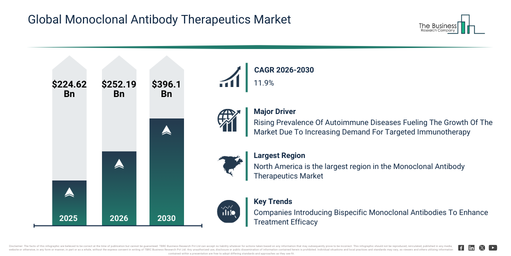
    The monoclonal antibody therapeutics market has experienced substantial growth in recent years. It is projected to expand from $224.62 billion in 2025 to $252.19 billion in 2026, achieving a compound annual growth rate (CAGR) of 12.3%. The market’s historical growth can be attributed to factors like limited antibody engineering technologies, its early adoption in oncology therapeutics, a reliance on traditional clinical trial methods, constrained biologics manufacturing capacity, and increasing awareness of targeted therapies.

    The monoclonal antibody therapeutics market is projected to experience substantial expansion over the coming years, reaching $396.1 billion by 2030, exhibiting a compound annual growth rate (CAGR) of 11.9%. This anticipated growth stems from several factors, including developments in bispecific and multi-specific antibodies, heightened production of biologics and fusion proteins, an increase in the prevalence of autoimmune and infectious diseases, broader adoption by hospitals and private clinics, and the incorporation of AI and automation into drug discovery processes. Key trends for the forecast period encompass greater investment in monoclonal antibody research and development, an expansion of oncology and autoimmune therapeutic applications, increased uptake of antibody-drug conjugates, the advancement of personalized and targeted therapies, and improvements in clinical trial infrastructure and biomanufacturing capacities.

    Get A Free Sample Report With In-Depth Market Insights:

    https://thebusinessresearchcompany.com/sample_request?id=41725916&type=smp&name=Monoclonal%20Antibody%20Therapeutics%20Market%20Report%202026&utm_source=Blogs&utm_medium=Paid&utm_campaign=Oct_PR

    Monoclonal Antibody Therapeutics Market Industry Drivers: What’s Behind The Revenue Growth?

    The increasing occurrence of autoimmune diseases is projected to drive expansion in the monoclonal antibody therapeutics market in the future. These conditions involve the body’s immune system erroneously attacking its own healthy tissues and organs, mistaking them for foreign invaders, which results in persistent inflammation and tissue harm. The rise in autoimmune disease cases is linked to environmental shifts, with greater exposure to contaminants and modified microbial surroundings thought to provoke unusual immune reactions in vulnerable people. Monoclonal antibody therapies are effective for autoimmune disorders because they accurately target and inhibit particular immune pathways that cause inflammation and tissue damage, thereby alleviating symptoms and decelerating the disease’s advancement. For instance, in November 2023, the Multiple Sclerosis International Federation (MSIF), a UK-based international nonprofit organization, reported that an estimated 2.9 million people worldwide were living with multiple sclerosis, a type of autoimmune and immune-mediated disease, in 2023. Consequently, the growing incidence of autoimmune diseases is fueling the expansion of the monoclonal antibody therapeutics market.

    Monoclonal Antibody Therapeutics Market Segment Analysis Spotlighting Growth Areas

    The monoclonal antibody therapeutics market covered in this report is segmented –

    1) By Product Type: Naked, Fusion Protein, Antibody Fragment, Conjugate, Multi-Specific

    2) By Therapy Area: Autoimmune And Inflammatory Disorders, Oncology, Hematology, Ophthalmology, Other Therapy Areas

    3) By Application: Cancer, Autoimmune Diseases, Infection, Hematological Diseases, Other Applications

    4) By End User: Hospitals, Private Clinics, Research Institute

    Subsegments:

    1) By Naked: Fully Human Antibodies, Humanized Antibodies, Chimeric Antibodies

    2) By Fusion Protein: Receptor Fusion Proteins, Ligand Fusion Proteins

    3) By Antibody Fragment: Single-Chain Variable Fragment, Fab Fragments, Diabodies

    4) By Conjugate: Antibody-Drug Conjugates, Radioimmunoconjugates, Immunotoxins

    5) By Multi-Specific: Bispecific Antibodies, Trispecific Antibodies, T-Cell Engagers

    #Monoclonal Antibody Therapeutics Market Growth Trends: What’s Shaping The Future Outlook?

    Leading companies within the monoclonal antibody therapeutics market are concentrating on introducing innovative solutions, such as bispecific monoclonal antibodies, to improve treatment effectiveness by simultaneously targeting two distinct antigens or epitopes. Bispecific monoclonal antibodies represent a specialized category of engineered antibodies designed to concurrently bind to two different antigens or two unique epitopes on the same antigen. As an example, in March 2024, Roche Holding AG, a pharmaceutical company based in Switzerland, introduced Vabysmo (faricimab-svoa). This bispecific monoclonal antibody addresses eye diseases and is formulated to treat neovascular (wet) age-related macular degeneration (nAMD), diabetic macular edema (DME), and macular edema subsequent to retinal vein occlusion (RVO). It targets both VEGF-A and Angiopoietin-2 (Ang-2), leading to enhanced vascular stability and a reduction in retinal fluid leakage. This dual-target mechanism enables extended dosing intervals of up to four months, considerably lessening the treatment burden for patients.

    Monoclonal Antibody Therapeutics Market Leading Companies: Who Holds The Strongest Market Presence?

    Major companies operating in the monoclonal antibody therapeutics market are Pfizer Inc., Johnson & Johnson, F. Hoffmann-La Roche AG, Merck & Co. Inc., AbbVie Inc., Sanofi SA, Bristol-Myers Squibb Company, AstraZeneca plc, Novartis AG, GlaxoSmithKline plc, Takeda Pharmaceutical Company Limited, Eli Lilly and Company, Amgen Inc., Regeneron Pharmaceuticals Inc., Biogen Inc., Daiichi Sankyo Company Limited, UCB S.A., Genmab A/S, ADC Therapeutics, Y-mAbs Therapeutics.

    View The Full Monoclonal Antibody Therapeutics Market Report:

    https://thebusinessresearchcompany.com/report/monoclonal-antibody-therapeutics-global-market-report?utm_source=Blogs&utm_medium=Paid&utm_campaign=Oct_PR

    Monoclonal Antibody Therapeutics Market Top Region: Where Does Most Revenue Come From?

    North America was the largest region in the monoclonal antibody therapeutics market in 2025. Asia-Pacific is expected to be the fastest-growing region in the forecast period. The regions covered in the monoclonal antibody therapeutics market report are Asia-Pacific, South East Asia, Western Europe, Eastern Europe, North America, South America, Middle East, Africa.

    Reach Out To Our Team:

    The Business Research Company: https://www.thebusinessresearchcompany.com/

    Americas: +1 310-496-7795

    Asia: +44 7882 955267 & +91 8897263534

    Europe: +44 7882 955267

    Email us at: marketing@tbrc.info

    Follow us on:

    LinkedIn: https://in.linkedin.com/company/the-business-research-company

    YouTube: https://www.youtube.com/channel/UC24_fI0rV8cR5DxlCpgmyFQ

    Global Market Model: https://www.thebusinessresearchcompany.com/global-market-model
  • Monoclonal Antibodies (MAs) Market Size In 2026 And Beyond: Understanding Future Growth Potential

    Monoclonal Antibodies (MAs) Market Size In 2026 And Beyond: Understanding Future Growth Potential

    Featuring market attractiveness scoring, total addressable market sizing, company benchmarking matrices, interactive Excel dashboards, deeper supply chain intelligence, emerging startup tracking, and granular product-level insights, The Business Research Company’s 2026 market reports are built to deliver research that is both more actionable and more strategically valuable.

    Monoclonal Antibodies (MAs) Market Size Forecast: How Big Could The Market Get By 2030?

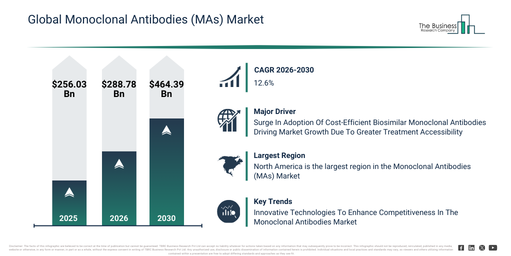
    The monoclonal antibodies (mas) market size has experienced considerable expansion in recent years. Projections indicate it will increase from $256.03 billion in 2025 to $288.78 billion in 2026, demonstrating a compound annual growth rate (CAGR) of 12.8%. Historically, this growth has been driven by advancements in antibody engineering, an increasing burden of cancer and autoimmune diseases, the expansion of biologics approvals, enhanced infusion center infrastructure, and heightened healthcare spending.

    The monoclonal antibodies (mas) market size is projected to experience substantial expansion over the upcoming years, reaching $464.39 billion in 2030, demonstrating a compound annual growth rate (CAGR) of 12.6%. This anticipated expansion during the forecast period is primarily driven by factors such as the expansion of targeted biologics pipelines, increased application in chronic ailments, the proliferation of biosimilars, a surge in immunotherapy uptake, and the development of specialty clinics. Key developments anticipated during this period encompass a heightened demand for therapies based on biologics, greater utilization of monoclonal antibodies in cancer treatment, the broadening of infusion-based treatment environments, an increase in the adoption of humanized and fully human mabs, and an intensified focus on prolonged immunotherapy regimens.

    Get A Free Sample Report With In-Depth Market Insights:

    https://thebusinessresearchcompany.com/sample_request?id=30675538&type=smp&name=Monoclonal%20Antibodies%20%28MAs%29%20Market%20Report%202026&utm_source=Blogs&utm_medium=Paid&utm_campaign=Oct_PR

    Monoclonal Antibodies (MAs) Market Growth Factors: What’s Supporting Expansion?

    The growing availability of affordable biosimilar monoclonal antibodies is projected to stimulate expansion in the monoclonal antibody market. Biosimilars are pharmaceutical products designed to possess comparable characteristics to already approved biological drugs. Their increased uptake stems from rising patient desire for inexpensive biologic treatments, the expiration of patents for key branded monoclonal antibodies, and favorable regulatory frameworks that promote biosimilar development and commercialization. The wider use of cost-effective biosimilar monoclonal antibodies benefits the monoclonal antibody market by broadening treatment accessibility, lowering healthcare expenses, and fostering innovative competition among drug manufacturers. For instance, as per the World Health Organization, a Switzerland-based United Nations agency focused on global public health, in February 2025, biosimilars are approximately 60% less costly than original biologic medicines, offering significant financial savings that can enhance access to crucial biologic therapies. Consequently, the rising prevalence of cost-efficient biosimilar monoclonal antibodies is a key driver for the growth of the monoclonal antibody market.

    Monoclonal Antibodies (MAs) Market Segment Performance And Emerging Opportunities

    The monoclonal antibodies (mas) market covered in this report is segmented –

    1) By Source: Murine, Chimeric, Humanized, Human

    2) By Application: Anti-Cancer, Immunological, Anti-Infective Monoclonal Antibodies (MAs), Neuropharmacological, Cardiovascular And Cerebrovascular, Other Applications

    3) By End Users: Hospitals, Private Clinics, Research Institute

    Subsegments:

    1) By Murine: Fully Murine MAbs, Murine-Derived MAbs

    2) By Chimeric: Chimeric MAbs With Murine Variable Regions, Chimeric MAbs With Human Constant Regions

    3) By Humanized: Humanized MAbs With Minor Murine Components, Fully Humanized MAbs

    4) By Human: Fully Human MAbs, Engineered Human MAbs

    Monoclonal Antibodies (MAs) Market Industry Trends: What’s Reshaping Demand?

    Leading companies in the monoclonal antibodies market are implementing advanced technologies, such as RenMice, to achieve a competitive advantage. RenMice provides significant support in investigating various antibody-based therapies, including fully human monoclonal antibodies, bispecific antibodies, bispecific antibody-drug conjugates (BsADCs), nanobodies, fully human T-cell receptors (TCRs), and TCR-mimic antibodies. For example, in September 2023, Biocytogen Pharmaceuticals, a China-based international biotech firm that spearheads new drug research and development using innovative technologies, introduced the RenMice series, which includes a collection of independently developed fully human antibody mice and TCR mice, all protected by proprietary intellectual property.

    Monoclonal Antibodies (MAs) Market Key Players: Which Companies Lead Industry Competition?

    Major companies operating in the monoclonal antibodies (mas) market are Johnson & Johnson, Merck & Co. Inc., AbbVie Inc., Amgen Inc., Novartis International AG, Pfizer Inc., Thermo Fisher Scientific Inc., Eli Lilly and Company, Bristol-Myers Squibb Company, F. Hoffmann-La Roche Ltd., Sanofi S.A., Abbott Laboratories, Daiichi Sankyo Company Ltd., Seattle Genetics Inc., Shanghai Junshi Biosciences Co. Ltd., GenScript Biotech Corporation, Sigma-Aldrich Co. LLC, AbGenomics Inc., ADC Therapeutics SA, Agensys Inc., Alexion Pharmaceuticals Inc., ALMAC Group Ltd., Ambrx Biopharma Inc., Astellas Pharma Inc., Celgene Corporation, Celldex Therapeutics Inc., Baxter International Inc., Fresenius SE & Co. KGaA, Hikma Pharmaceuticals plc, Jiangsu Hengrui Medicine Co. Ltd., Piramal Enterprises Ltd., CD BioSciences Inc., Creative Biolabs Inc., Advanced ChemTech Inc., Tonbo Biosciences Inc., GlaxoSmithKline plc

    View The Full Monoclonal Antibodies (MAs) Market Report:

    https://thebusinessresearchcompany.com/report/monoclonal-antibodies-global-market-report?utm_source=Blogs&utm_medium=Paid&utm_campaign=Oct_PR

    Monoclonal Antibodies (MAs) Market Regional Breakdown: Where Is Demand Concentrated?

    North America was the largest region in the monoclonal antibodies (MAbS) market in 2025. The regions covered in the monoclonal antibodies (mas) market report are Asia-Pacific, South East Asia, Western Europe, Eastern Europe, North America, South America, Middle East, Africa.

    Reach Out To Our Team:

    The Business Research Company: https://www.thebusinessresearchcompany.com/

    Americas: +1 310-496-7795

    Asia: +44 7882 955267 & +91 8897263534

    Europe: +44 7882 955267

    Email us at: marketing@tbrc.info

    Follow us on:

    LinkedIn: https://in.linkedin.com/company/the-business-research-company

    YouTube: https://www.youtube.com/channel/UC24_fI0rV8cR5DxlCpgmyFQ

    Global Market Model: https://www.thebusinessresearchcompany.com/global-market-model
  • Molecular Targeted Therapy Market Reaches $107.64 Billion In 2026: Key Developments Shaping Expansion

    Molecular Targeted Therapy Market Reaches $107.64 Billion In 2026: Key Developments Shaping Expansion

    Built to provide research that’s more actionable and strategically valuable, The Business Research Company’s 2026 market reports include market attractiveness analysis, total addressable market sizing, company benchmarking matrices, interactive Excel dashboards, broader supply chain intelligence, emerging startup tracking, and in-depth product insights.

    Molecular Targeted Therapy Market Revenue Outlook: What CAGR Lies Ahead Through 2030?

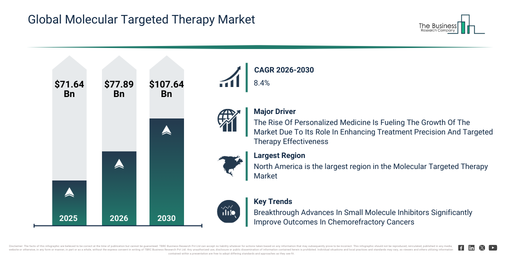
    The molecular targeted therapy market has experienced substantial growth in recent years. This market is projected to expand from $71.64 billion in 2025 to $77.89 billion in 2026, achieving a compound annual growth rate (CAGR) of 8.7%. The observed expansion in past periods can be credited to advancements in cancer genomics research, the development of monoclonal antibodies, numerous oncology drug approvals, the establishment of hospital oncology centers, and the broadening of clinical trials.

    The molecular targeted therapy market is anticipated to experience robust expansion over the next few years, projected to reach $107.64 billion in 2030, demonstrating a compound annual growth rate (CAGR) of 8.4%. This expected growth during the forecast period can be attributed to several factors, including the increasing prevalence of personalized cancer treatments, the broader adoption of next-generation sequencing, advancements in AI-driven drug discovery, the rising global oncology burden, and improved reimbursement for targeted therapies. Significant trends for the forecast period encompass the wider application of precision oncology, a greater uptake of biomarker-based therapies, the expansion of pipelines for targeted cancer drugs, the integration of companion diagnostics, and an increasing utilization of combination targeted therapies.

    Get A Free Sample Report With In-Depth Market Insights:

    https://thebusinessresearchcompany.com/sample_request?id=71063533&type=smp&name=Molecular%20Targeted%20Therapy%20Market%20Report%202026&utm_source=Blogs&utm_medium=Paid&utm_campaign=Oct_PR

    Molecular Targeted Therapy Market Demand Drivers: What’s Powering Industry Growth?

    The growth of the molecular targeted therapy market is anticipated to be fueled by the increasing prominence of personalized medicine. This healthcare approach customizes treatment and prevention based on an individual’s unique genetic profile, lifestyle, and environmental factors. Personalized medicine is gaining traction due to the greater availability of genetic data, enabling therapies specifically designed for individual genomes, leading to enhanced effectiveness and fewer side effects. It supports molecular targeted therapy by analyzing a patient’s tumor for specific genetic mutations or biomarkers, which then guides the selection of therapies that directly target these abnormalities. This methodology enhances treatment accuracy and minimizes harm to healthy tissues. For example, in February 2024, the Personalized Medicine Coalition, a US-based hospital and health care organization, reported that the FDA approved 16 new personalized treatments for rare disease patients in 2023, a significant rise from 6 in 2022. Consequently, the expansion of personalized medicine is a key driver for the molecular targeted therapy market.

    Molecular Targeted Therapy Market Segment Landscape And Growth Outlook

    The molecular targeted therapy market covered in this report is segmented –

    1) By Therapy Type: Monoclonal Antibodies, Small Molecule Inhibitors, Gene Therapy, Cell Therapy

    2) By Mode Of Administration: Oral, Injectable, Topical, Intravenous

    3) By Application: Lung Cancer, Breast Cancer, Colorectal Cancer, Leukemia, Other Applications

    4) By End-User: Hospitals, Clinics, Research Laboratories, Diagnostic Centers

    Subsegments:

    1) By Monoclonal Antibodies: Naked Monoclonal Antibodies, Conjugated Monoclonal Antibodies, Bispecific Monoclonal Antibodies

    2) By Small Molecule Inhibitors: Tyrosine Kinase Inhibitors (TKIs), Proteasome Inhibitors, Poly Adenosine Diphosphate (ADP) Ribose Polymerase (PARP) Inhibitors, Mechanistic Target Of Rapamycin (mTOR) Inhibitors

    3) By Gene Therapy: Viral Vector-Based Gene Therapy, Non-Viral Vector-Based Gene Therapy, Genome Editing

    4) By Cell Therapy: Chimeric Antigen Receptor T-Cell Therapy, T-Cell Receptor (TCR) Therapy, Tumor-Infiltrating Lymphocytes (TILs) Therapy, Dendritic Cell Therapy

    Molecular Targeted Therapy Market Innovation Trends: What Developments Are Reshaping The Industry?

    Leading companies within the molecular targeted therapy market are prioritizing the development of advanced products, such as small molecule inhibitors, to enhance patient outcomes for various cancers and chronic illnesses. Small molecule inhibitors are minute compounds capable of readily penetrating cells and blocking specific proteins that contribute to disease progression. For example, in January 2025, Amgen Inc., a US-based pharmaceutical company, launched Lumakras (sotorasib) in conjunction with Vectibix (panitumumab), following its approval from the US Food and Drug Administration (FDA), a US-based government organization. This therapy is intended for adult patients with KRAS G12C-mutated metastatic colorectal cancer who have previously undergone fluoropyrimidine-, oxaliplatin-, and irinotecan-based chemotherapy, as determined by an FDA-approved diagnostic test. This approval was granted based on the Phase 3 CodeBreaK 300 trial, which indicated that the combination substantially more than doubled progression-free survival when compared to the investigated standard of care, making it the first targeted therapy to demonstrate such a benefit in this patient group resistant to prior chemotherapy.

    Molecular Targeted Therapy Market Competitive Landscape: Who Leads The Industry?

    Major companies operating in the molecular targeted therapy market are Pfizer Inc., Merck & Co. Inc., AbbVie Inc., Sanofi S.A., Bristol-Myers Squibb Company, AstraZeneca PLC, Amgen Inc., Regeneron Pharmaceuticals, Vertex Pharmaceuticals Incorporated, Novartis AG, Incyte Corporation, Exelixis Inc., IDEAYA Biosciences Inc., Prelude Therapeutics Incorporated, Gamida Cell Ltd., Adaptimmune Therapeutics plc, Engine Biosciences Pte. Ltd., Krystal Biotech Inc., Sotio Biotech a.s., Cybrexa Therapeutics Inc.

    View The Full Molecular Targeted Therapy Market Report:

    https://thebusinessresearchcompany.com/report/molecular-targeted-therapy-global-market-report?utm_source=Blogs&utm_medium=Paid&utm_campaign=Oct_PR

    Molecular Targeted Therapy Market Geographic Landscape: Which Region Dominates Industry Growth?

    North America was the largest region in the molecular targeted therapy market in 2025. Asia-Pacific is expected to be the fastest-growing region in the forecast period. The regions covered in the molecular targeted therapy market report are Asia-Pacific, South East Asia, Western Europe, Eastern Europe, North America, South America, Middle East, Africa.

    Reach Out To Our Team:

    The Business Research Company: https://www.thebusinessresearchcompany.com/

    Americas: +1 310-496-7795

    Asia: +44 7882 955267 & +91 8897263534

    Europe: +44 7882 955267

    Email us at: marketing@tbrc.info

    Follow us on:

    LinkedIn: https://in.linkedin.com/company/the-business-research-company

    YouTube: https://www.youtube.com/channel/UC24_fI0rV8cR5DxlCpgmyFQ

    Global Market Model: https://www.thebusinessresearchcompany.com/global-market-model

  • Modular Fill-Finish Micro-Factory Market Growth Outlook For 2026: Drivers, Trends And Future Opportunities

    Backed by market attractiveness analysis, total addressable market sizing, company benchmarking matrices, interactive Excel dashboards, wider supply chain intelligence, emerging startup coverage, and detailed product-level insights, The Business Research Company’s 2026 market reports are designed to offer research that is more actionable and strategically valuable than ever.

    Modular Fill-Finish Micro-Factory Market Growth Analysis: How Will Revenue Trend Over The Forecast Period?

    The modular fill-finish micro-factory market has seen substantial growth in recent years. This market is projected to expand from $1.74 billion in 2025 to $1.94 billion in 2026, registering a compound annual growth rate (CAGR) of 11.4%. The increase observed historically is primarily due to the rise in biologics manufacturing, growing requirements for vaccine production, the expansion of contract manufacturing services, an increasing demand for sterile injectable drugs, and the early embrace of modular production concepts.

    The modular fill-finish micro-factory market is set to undergo significant expansion in the coming years. It is forecast to achieve a valuation of $2.96 billion by 2030, showing a compound annual growth rate (CAGR) of 11.1%. This anticipated growth during the forecast period can be attributed to escalating investments in decentralized production, an increasing need for rapid-response vaccine facilities, the broadening scope of personalized medicine manufacturing, a heightened emphasis on operational flexibility, and greater regulatory acceptance of modular installations. Prominent trends expected in this period involve the wider deployment of modular sterile manufacturing units, a growing embrace of robotic fill-finish systems, an escalating requirement for quick manufacturing scale-up, the expansion of prefabricated GMP facilities, and an intensified focus on adaptable production capacity.

    Get A Free Sample Report With In-Depth Market Insights:

    https://thebusinessresearchcompany.com/sample_request?id=72020722&type=smp&name=Modular%20Fill-Finish%20Micro-Factory%20Market%20Report%202026&utm_source=Blogs&utm_medium=Paid&utm_campaign=Oct_PR

    Modular Fill-Finish Micro-Factory Market Growth Drivers: What’s Behind The Acceleration?

    The growing demand for personalized medicines is anticipated to propel the expansion of the modular fill-finish micro-factory market in the future. Personalized medicine defines a medical approach that customizes the prevention, diagnosis, and treatment of illnesses according to an individual’s genetic, environmental, and lifestyle factors. This escalating demand for personalized medicines is a result of advancements in genomics and biotechnology, which enable the creation of treatments precisely tailored to a person’s genetic makeup for enhanced efficacy and safety. Modular fill-finish micro-factories accelerate the manufacturing of personalized medicines by allowing flexible, small-batch, and rapid production suited to individual patient requirements. For example, in February 2024, the Personalized Medicine Coalition, a US-based non-profit organization, stated that in 2023, the FDA approved 16 new personalized therapies for rare disease patients, indicating a considerable rise from the six approvals observed in 2022. Thus, the increasing demand for personalized medicines is a primary driver for the growth of the modular fill-finish micro-factory market.

    Modular Fill-Finish Micro-Factory Market Breakdown By Product Type And Application

    The modular fill-finish micro-factory market covered in this report is segmented –

    1) By Product Type: Automated Modular Fill-Finish Systems, Semi-Automated Modular Fill-Finish Systems, Manual Modular Fill-Finish Systems

    2) By Scale: Clinical, Commercial

    3) By Application: Pharmaceuticals, Biotechnology, Contract Manufacturing Organizations, Other Applications

    4) By End-User: Pharmaceutical Companies, Biotech Companies, Research Institutes, Other End-Users

    Subsegments:

    1) By Automated Modular Fill-Finish Systems: Robotic Filling Units, Automated Capping Units, Automated Labeling Units, Sterile Transfer Systems, Integrated Packaging Modules

    2) By Semi-Automated Modular Fill-Finish Systems: Semi-Automated Filling Machines, Semi-Automated Capping Machines, Semi-Automated Labeling Machines, Semi-Automated Transfer Systems, Partially Integrated Packaging Units

    3) By Manual Modular Fill-Finish Systems: Manual Filling Stations, Manual Capping Stations, Manual Labeling Stations, Manual Transfer Tools, Manual Packaging Workstations

    Modular Fill-Finish Micro-Factory Market Trends: What’s Defining The Industry’s Next Phase?

    Leading enterprises within the modular fill-finish micro-factory market are concentrating on creating innovative solutions, such as adaptable and interchangeable aseptic filling platforms, to improve manufacturing efficiency, precision, and scalability in sterile production. These flexible and interchangeable aseptic filling platforms represent advanced systems engineered to handle multiple container varieties and batch volumes within a sterile setting, facilitating rapid configuration adjustments to meet diverse product and production requirements. For example, in February 2025, Recipharm AB, a contract development and manufacturing organization based in Sweden, introduced a novel modular sterile filling system intended to support process development, pilot-scale, and clinical supply production. This system functions inside a Grade A isolator and fully adheres to Good Manufacturing Practice (GMP) standards, ensuring a completely GMP-compliant aseptic filling process. Tailored for small-batch manufacturing, ranging from 500 to 50,000 units per batch, it provides outstanding versatility through interchangeable modules compatible with various product forms, including syringes and vials. Its economical design restricts the loss of high-value product to less than 500 mL, rendering it especially suitable for clinical development initiatives in areas like rare diseases, cell and gene therapies, and other cutting-edge modalities.

    Modular Fill-Finish Micro-Factory Market Company Landscape And Competitive Strategy

    Major companies operating in the modular fill-finish micro-factory market are Groninger And Co. GmbH, Lonza Group AG, Sartorius AG, Turner Industries Group LLC, ATS Life Sciences Systems Inc., IMA Group S.p.A., Recipharm AB, Syntegon Technology GmbH, Truking Technology Limited, Optima Packaging Group GmbH, Marchesini Group SPA, Tofflon Science and Technology Co. Ltd., Comecer S.p.A., G-CON Manufacturing Inc., Aseptic Technologies S.A., Steriline S.r.l., Colanar AG, Litek Pharma Solutions Co. Ltd., SKAN AG, Modular Mobile Facility.

    View The Full Modular Fill-Finish Micro-Factory Market Report:

    https://thebusinessresearchcompany.com/report/modular-fill-finish-micro-factory-global-market-report?utm_source=Blogs&utm_medium=Paid&utm_campaign=Oct_PR

    Modular Fill-Finish Micro-Factory Market Largest Region: Which Geography Holds The Highest Market Share?

    North America was the largest region in the modular fill-finish micro-factory market in 2025. Asia-Pacific is expected to be the fastest-growing region in the forecast period. The regions covered in the modular fill-finish micro-factory market report are Asia-Pacific, South East Asia, Western Europe, Eastern Europe, North America, South America, Middle East, Africa.

    Reach Out To Our Team:

    The Business Research Company: https://www.thebusinessresearchcompany.com/

    Americas: +1 310-496-7795

    Asia: +44 7882 955267 & +91 8897263534

    Europe: +44 7882 955267

    Email us at: marketing@tbrc.info

    Follow us on:

    LinkedIn: https://in.linkedin.com/company/the-business-research-company

    YouTube: https://www.youtube.com/channel/UC24_fI0rV8cR5DxlCpgmyFQ

    Global Market Model: https://www.thebusinessresearchcompany.com/global-market-model
  • Minimal Residual Disease Testing Market Size Forecast From 2026 To 2030: Key Industry Trends

    Minimal Residual Disease Testing Market Size Forecast From 2026 To 2030: Key Industry Trends

    Featuring market attractiveness scoring, total addressable market sizing, company benchmarking matrices, interactive Excel dashboards, deeper supply chain intelligence, emerging startup tracking, and granular product-level insights, The Business Research Company’s 2026 market reports are built to deliver research that is both more actionable and more strategically valuable.

    Minimal Residual Disease Testing Market Forecast: What Value Will The Market Reach By 2030?

    The minimal residual disease testing market has experienced substantial growth in its size recently. This market is forecasted to expand from $1.8 billion in 2025 to $2.02 billion in 2026, exhibiting a compound annual growth rate (CAGR) of 12.5%. Historically, this upward trend can be ascribed to factors like the increasing prevalence of hematological malignancies, advancements in molecular diagnostic technologies, heightened awareness about minimal residual disease, a wider embrace of precision medicine, and supportive government healthcare initiatives.

    The minimal residual disease testing market is projected to experience substantial expansion in the coming years, anticipated to reach a valuation of $3.31 billion by 2030, exhibiting a compound annual growth rate (CAGR) of 13.1%. Factors driving this growth during the forecast period include improvements in technologies such as nGS and digital PCR, increased investment in cancer research, stronger partnerships between diagnostic and pharmaceutical firms, a greater need for individualized treatment oversight, and enhancements in healthcare infrastructure within developing economies. Key trends anticipated for this period encompass the widespread use of liquid biopsy, customized cancer monitoring, advances in early detection and prognosis, the incorporation of molecular diagnostics, and a broader scope of oncology research.

    Get A Free Sample Report With In-Depth Market Insights:

    https://thebusinessresearchcompany.com/sample_request?id=50133134&type=smp&name=Minimal%20Residual%20Disease%20Testing%20Market%20Report%202026&utm_source=Blogs&utm_medium=Paid&utm_campaign=Oct_PR

    Minimal Residual Disease Testing Market Growth Factors Behind Sustained Expansion

    The rising incidence of cancer is anticipated to fuel the expansion of the minimal residual disease testing market moving forward. Cancer is defined as a condition where some cells in the body proliferate uncontrollably and disseminate to other areas. Minimal residual disease testing, a highly sensitive technique for identifying cancer cells in the human body, is crucial for detecting cancer stages. This method assists patients in averting the progression of cancer at an early stage, thereby stimulating the minimal residual disease testing market. For example, data from January 2023, released by the National Institutes of Health (NIH), a U.S.-based government body, indicated that the United States was expected to see 1,958,310 new cancer cases and 609,820 cancer deaths in 2023. Consequently, the growing prevalence of cancer is propelling the growth of the minimal residual disease testing market.

    Minimal Residual Disease Testing Market Segment Analysis And Revenue Potential

    The minimal residual disease testing market covered in this report is segmented –

    1) By Test Type: DNA – Based Test, RNA- Based Test, Immunological Test

    2) By Technology: Flow Cytometry, Polymerase Chain Reaction (PCR), Next-Generation Sequencing (NGS), Other Technologies

    3) By Application: Hematological Malignancies, Leukemia, Lymphoma, Solid Tumors, Other Application

    4) By End User: Hospitals And Specialty Clinics, Diagnostic Laboratories, Academic And Research Institutes, Other End Users

    Subsegments:

    1) By DNA-Based Test: Polymerase Chain Reaction (PCR) Tests, Next-Generation Sequencing (NGS), Digital PCR

    2) By RNA-Based Test: Reverse Transcription PCR (RT-PCR), RNA Sequencing, Quantitative PCR (qPCR)

    3) By Immunological Test: Flow Cytometry, Enzyme-Linked Immunosorbent Assay (ELISA), Immunohistochemistry

    Minimal Residual Disease Testing Market Industry Trends Fueling Future Revenue Growth

    Leading companies in the minimal residual disease testing market are introducing cancer research testing solutions to enhance detection sensitivity, improve treatment monitoring, and advance precision medicine approaches for better patient outcomes. The IDT Archer FUSIONPlex Core Solid Tumor Panel refers to a targeted next-generation sequencing assay utilized for identifying gene fusions and mutations in solid tumors, aiding in precision oncology and treatment decision-making. For instance, in April 2023, Integrated DNA Technologies (IDT), a US-based provider of genomic solutions, launched the IDT Archer FUSIONPlex Core Solid Tumor Panel, an enhanced cancer research testing solution, now offering expanded and optimized coverage for single nucleotide variants (SNVs) and indels. This RNA-based sequencing assay simplifies fusion detection and variant calling in solid tumors, using a single sample input and providing researchers with a scalable, user-friendly solution that conserves time, resources, and costs.

    Minimal Residual Disease Testing Market Key Players Shaping Industry Direction

    Major companies operating in the minimal residual disease testing market are Natera Inc., Guardant Health Inc., Laboratory Corporation of America Holdings, QIAGEN NV, F. Hoffmann-La Roche Ltd., Bio-Techne Corporation, Bio-Rad Laboratories Inc., Sysmex Corporation, Exact Sciences Corporation, GRAIL LLC, Veracyte Inc., Cergentis B.V, Mdxhealth SA, NeoGenomics Laboratories Inc., Adaptive Biotechnologies, Thermo Fisher Scientific Inc., Siemens Healthineers AG, PerkinElmer Inc., Agilent Technologies Inc., ArcherDx Inc., Asuragen Inc., Becton Dickinson and Company, Cepheid Inc., Fluidigm Corporation, Illumina Inc., Invitae Corporation, Luminex Corporation, Menarini Silicon Biosystems S.p.A.

    View The Full Minimal Residual Disease Testing Market Report:

    https://thebusinessresearchcompany.com/report/minimal-residual-disease-testing-global-market-report?utm_source=Blogs&utm_medium=Paid&utm_campaign=Oct_PR

    Minimal Residual Disease Testing Market Regional Analysis: Which Region Leads By Revenue?

    North America was the largest region in the minimal residual disease testing market in 2025. The regions covered in the minimal residual disease testing market report are Asia-Pacific, South East Asia, Western Europe, Eastern Europe, North America, South America, Middle East, Africa.

    Reach Out To Our Team:

    The Business Research Company: https://www.thebusinessresearchcompany.com/

    Americas: +1 310-496-7795

    Asia: +44 7882 955267 & +91 8897263534

    Europe: +44 7882 955267

    Email us at: marketing@tbrc.info

    Follow us on:

    LinkedIn: https://in.linkedin.com/company/the-business-research-company

    YouTube: https://www.youtube.com/channel/UC24_fI0rV8cR5DxlCpgmyFQ

    Global Market Model: https://www.thebusinessresearchcompany.com/global-market-model
  • Mineral Supplements Market 2026: Market Size, Growth Drivers And Emerging Opportunities

    Mineral Supplements Market 2026: Market Size, Growth Drivers And Emerging Opportunities

    Built to provide research that’s more actionable and strategically valuable, The Business Research Company’s 2026 market reports include market attractiveness analysis, total addressable market sizing, company benchmarking matrices, interactive Excel dashboards, broader supply chain intelligence, emerging startup tracking, and in-depth product insights.

    Mineral Supplements Market Size Outlook: How Quickly Will Revenue Expand Through 2030?

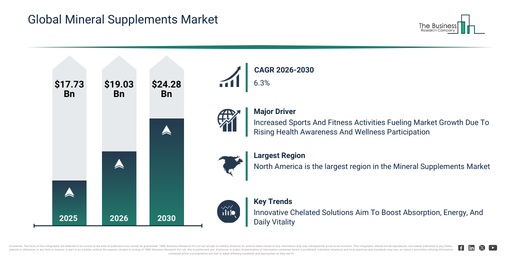
    The mineral supplements market size has demonstrated significant expansion in recent years. It will grow from $17.73 billion in 2025 to $19.03 billion in 2026 at a compound annual growth rate (CAGR) of 7.3%. Historically, this growth can be attributed to several factors such as the high prevalence of mineral deficiencies across populations, the long-standing use of calcium and iron supplements, an increasing public health focus on nutrition, physician recommendations for mineral supplementation, and the widespread retail availability of mineral products.

    The mineral supplements market is projected to experience robust expansion over the coming years. It is anticipated to reach $24.28 billion by 2030, exhibiting a compound annual growth rate (CAGR) of 6.3%. This projected growth is driven by factors such as a globally aging population needing more minerals, a heightened emphasis on immunity and bone well-being, the increasing acceptance of personalized nutrition, growing health awareness among younger demographics, and the proliferation of online channels for supplement sales. Key developments expected during this period include a greater understanding among consumers regarding micronutrient deficiencies, rising demand for supplements for prevention and daily wellness, the availability of mineral supplements in diverse forms, an intensified focus on skeletal, immune, and metabolic health, and the widespread accessibility of cost-effective generic mineral options.

    Get A Free Sample Report With In-Depth Market Insights:

    https://thebusinessresearchcompany.com/sample_request?id=30620815&type=smp&name=Mineral%20Supplements%20Market%20Report%202026&utm_source=Blogs&utm_medium=Paid&utm_campaign=Oct_PR

    Mineral Supplements Market Demand Drivers Opening New Revenue Streams

    The rising prevalence of sports and fitness activities is projected to stimulate the growth of the mineral supplements market moving forward. These activities encompass various physical pursuits intended to enhance overall health, improve physical conditioning, and boost athletic performance. The increased engagement in sports and fitness stems from a growing understanding of health benefits, greater availability of fitness facilities, and a stronger societal emphasis on personal well-being. Mineral supplements play a crucial role in supporting active individuals by helping to satisfy the heightened mineral requirements linked to intense or prolonged physical exertion, thereby fostering optimal muscle function, energy metabolism, and recovery. As an illustration, in February 2024, the Sports And Fitness Industry Association, a US-based Trade Association, reported that in 2023, 78.8% of Americans aged six and older, amounting to 242 million people, participated in at least one sports or fitness activity, indicating a 2.2% increase from 2022. Therefore, the expansion of sports and fitness activities is a significant driver for the growth of the mineral supplements market.

    Mineral Supplements Market Segmentation And Category Overview

    The mineral supplements market covered in this report is segmented –

    1) By Product: Calcium, Magnesium, Iron, Potassium, Zinc, Chromium, Selenium, Other Products

    2) By Formulation: Capsule, Tablet, Powder, Liquid Or Gel, Other Formulations

    3) By Sales Channel: Pharmacies And Drug Stores, Supermarkets And Hypermarkets, Online Channels

    4) By Application: General Health, Bone And Joint Health, Gastrointestinal Health, Immunity, Other Applications

    5) By End Use: Adults, Geriatric, Pregnant Women, Children, Infants

    Subsegments:

    1) By Calcium: Calcium Carbonate, Calcium Citrate, Calcium Gluconate, Calcium Lactate

    2) By Magnesium: Magnesium Citrate, Magnesium Oxide, Magnesium Glycinate, Magnesium Sulfate

    3) By Iron: Ferrous Sulfate, Ferrous Fumarate, Ferrous Gluconate, Iron Polysaccharide Complex

    4) By Potassium: Potassium Chloride, Potassium Citrate, Potassium Gluconate

    5) By Zinc: Zinc Gluconate, Zinc Sulfate, Zinc Picolinate, Zinc Acetate

    6) By Chromium: Chromium Picolinate, Chromium Chloride, Chromium Nicotinate

    7) By Selenium: Selenium Methionine, Sodium Selenite, Selenomethionine

    8) By Other Products: Manganese Supplements, Copper Supplements, Iodine Supplements, Phosphorus Supplements

    Mineral Supplements Market Trends Powering Strategic Industry Growth

    Leading companies in the mineral supplement market are concentrating on developing advanced chelated mineral solutions to improve bioavailability and absorption compared to traditional mineral forms. Chelated mineral solutions are dietary supplements where minerals are chemically bound to amino acids or organic molecules, which enhances their absorption and bioavailability over conventional inorganic mineral forms. For instance, in July 2025, Bayer AG, a Germany-based life sciences company, launched Supradyn Naturals Ginseng, its first multivitamin formulated specifically for men, marketed with the campaign tagline Morning Wala. Josh, Poore Din. This supplement incorporates 30% more active ginseng and antioxidants from grape seed extract, aiming to relieve fatigue and boost daily vitality and stamina. It also supports mental clarity and overall wellness, with the goal of enabling men to maintain energy and focus throughout the day to effectively manage professional and personal demands. The product contains essential vitamins such as B12, C, and D3, and minerals including calcium, magnesium, and zinc, making it a comprehensive option for men’s everyday energy requirements and cognitive health.

    Mineral Supplements Market Competitive Analysis Of Leading Industry Participants

    Major companies operating in the mineral supplements market are Cargill Incorporated, Nestlé S.A., Archer Daniels Midland Company, Pfizer Inc., BASF SE, Bayer AG, Sanofi SA, Abbott Laboratories, GlaxoSmithKline PLC, Otsuka Holdings Co. Ltd., DSM (Koninklijke DSM NV), Amway Corp., Glanbia plc., Orkla, Herbalife International of America Inc., GNC Holdings Inc., Kirkland Signature, Nature’s Way Products LLC, Atrium Innovations Inc., NOW Health Group Inc., Himalaya Wellness Company, Blackmores Limited, Vitabiotics Ltd., MegaFood, Pharmavite LLC

    View The Full Mineral Supplements Market Report:

    https://thebusinessresearchcompany.com/report/mineral-supplements-global-market-report?utm_source=Blogs&utm_medium=Paid&utm_campaign=Oct_PR

    Mineral Supplements Market Geographic Distribution And Regional Opportunities

    North America was the largest region in the mineral supplements market in 2025. The regions covered in the mineral supplements market report are Asia-Pacific, South East Asia, Western Europe, Eastern Europe, North America, South America, Middle East, Africa.

    Reach Out To Our Team:

    The Business Research Company: https://www.thebusinessresearchcompany.com/

    Americas: +1 310-496-7795

    Asia: +44 7882 955267 & +91 8897263534

    Europe: +44 7882 955267

    Email us at: marketing@tbrc.info

    Follow us on:

    LinkedIn: https://in.linkedin.com/company/the-business-research-company

    YouTube: https://www.youtube.com/channel/UC24_fI0rV8cR5DxlCpgmyFQ

    Global Market Model: https://www.thebusinessresearchcompany.com/global-market-model
  • Milk Protein Concentrate (MPC) Market Set To Expand From $4.25 Billion In 2026: Growth Outlook Through 2030

    Milk Protein Concentrate (MPC) Market Set To Expand From $4.25 Billion In 2026: Growth Outlook Through 2030

    Backed by market attractiveness analysis, total addressable market sizing, company benchmarking matrices, interactive Excel dashboards, wider supply chain intelligence, emerging startup coverage, and detailed product-level insights, The Business Research Company’s 2026 market reports are designed to offer research that is more actionable and strategically valuable than ever.

    Milk Protein Concentrate (MPC) Market Size, Value And Growth Trajectory Through 2030

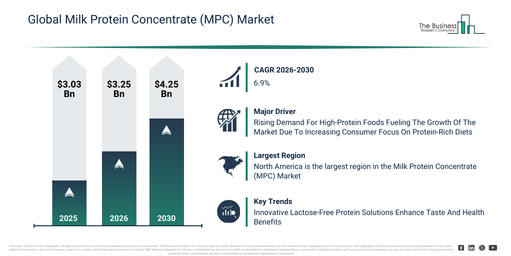
    The milk protein concentrate (mpc) market size has demonstrated significant growth over recent years. It is anticipated to expand from $3.03 billion in 2025 to $3.25 billion in 2026, achieving a compound annual growth rate (CAGR) of 7.2%. The historical expansion of this market can be attributed to advancements in dairy processing, increasing demand for food fortification, the rise of sports nutrition, various applications in infant formula, and the utilization of whey and casein.

    The market for milk protein concentrate (mpc) is projected to experience substantial expansion over the coming years. This market is anticipated to reach $4.25 billion by 2030, demonstrating a compound annual growth rate (CAGR) of 6.9%. Factors contributing to this growth during the forecast period include advancements in plant-dairy blend innovation, increasing consumer demand for protein-enriched foods, the expansion of medical nutrition applications, sustainable dairy processing techniques, and rising consumption in emerging markets. Key trends identified for this period encompass a growing appetite for high-protein nutrition, the proliferation of sports and clinical nutrition products, wider incorporation into functional foods, broader applications of dairy ingredients, and a strong preference for clean-label protein sources.

    Get A Free Sample Report With In-Depth Market Insights:

    https://thebusinessresearchcompany.com/sample_request?id=67839372&type=smp&name=Milk%20Protein%20Concentrate%20%28MPC%29%20Market%20Report%202026&utm_source=Blogs&utm_medium=Paid&utm_campaign=Oct_PR

    Milk Protein Concentrate (MPC) Market Growth Backed By Core Demand Fundamentals

    The market for Milk protein concentrate (MPC) is anticipated to expand in the future due to the increasing preference for high-protein foods. This growing demand indicates that consumers are placing greater emphasis on protein as an essential component of their dietary intake. Furthermore, heightened health consciousness and fitness trends motivate individuals to choose foods that offer prolonged feelings of fullness and support muscle upkeep. Milk protein concentrate addresses this need by providing a concentrated, functional dairy protein source that food manufacturers can integrate into various protein-enhanced items. A relevant example is from July 2025, where the International Food Information Council (IFIC), a US-based nutrition non-profit, reported that 70% of Americans were actively trying to increase their protein intake, and 23% had adopted a high-protein diet in the preceding year, an increase from 18% in 2023. Consequently, the increased consumption of high-protein foods is a primary factor driving the expansion of the Milk protein concentrate (MPC) market.

    Milk Protein Concentrate (MPC) Market Segment Outlook: Which Categories Are Growing Fastest?

    The milk protein concentrate (mpc) market covered in this report is segmented –

    1) By Composition: Milk Protein Concentrate 40%, Milk Protein Concentrate 70%, Milk Protein Concentrate 85%

    2) By Ingredient Type: Total Milk Proteins, Co-Precipitates, Milk Protein Isolates, Blends, Other Ingredient Types

    3) By Nature: Organic, Conventional

    4) By Form: Liquid, Powder

    5) By End-User Industry: Healthcare, Food And Beverage, Automotive, Electronics, Chemicals And Materials

    Subsegments:

    1) By Milk Protein Concentrate 40%: Standard MPC 40% Powder, Instantized MPC 40%, Low-Lactose MPC 40%, Conventional MPC 40%

    2) By Milk Protein Concentrate 70%: Standard MPC 70% Powder, Instantized MPC 70%, High-Functional MPC 70%, Low-Fat MPC 70%

    3) By Milk Protein Concentrate 85%: Ultra-Filtered MPC 85%, High-Purity MPC 85%, Instantized MPC 85%, Sports And Clinical Nutrition Grade MPC 85%

    Milk Protein Concentrate (MPC) Market Growth Trends Reshaping The Competitive Landscape

    Leading firms within the milk protein concentrate market are concentrating on creating novel offerings, like lactose-free milk protein, to cater to lactose-intolerant individuals and broaden their market presence. This particular product, lactose-free milk protein, denotes a milk protein concentrate specifically treated to extract lactose, thereby rendering it appropriate for consumers with lactose intolerance. As an illustration, in November 2023, Valio Ltd., a US-based dairy enterprise, introduced Valio Eila MPC 65, a protein concentrate formulated to improve the flavor and nutritional advantages of high-protein items. This concentrate integrates the inherent whey and casein proteins along with amino acids present in milk, enabling producers to develop high-protein goods that possess a smooth consistency and a delightful milky taste, circumventing the grainy feel and undesirable flavors frequently associated with numerous protein powders. It facilitates more straightforward ingredient declarations, is adaptable for diverse uses ranging from drinks to sweet treats, and contributes to optimizing production by removing the necessity for extra processing stages.

    Milk Protein Concentrate (MPC) Market Leading Companies And Competitive Benchmarking

    Major companies operating in the milk protein concentrate (mpc) market are Lactalis Group, Arla Foods, Fonterra Co-operative Group Limited, Saputo Inc., Royal FrieslandCampina N.V., Agropur Dairy Cooperative, Valio Ltd., Glanbia Nutritionals, Actus Nutrition Inc., California Dairies Inc., Ingredia SA, Numidia Dairy Company, Idaho Milk Products LLC, BioHealth Products Inc., Paras Dairy Foods Pvt. Ltd., Open Country Dairy LLC, Interfood Group A/S, Eurial Coopérative Laitière, Amco Proteins Ltd., Agrocomplex Group

    View The Full Milk Protein Concentrate (MPC) Market Report:

    https://thebusinessresearchcompany.com/report/milk-protein-concentrate-mpc-global-market-report?utm_source=Blogs&utm_medium=Paid&utm_campaign=Oct_PR

    Milk Protein Concentrate (MPC) Market Largest Region By Revenue And Market Share

    North America was the largest region in the milk protein concentrate market in 2025. The regions covered in the milk protein concentrate (mpc) market report are Asia-Pacific, South East Asia, Western Europe, Eastern Europe, North America, South America, Middle East, Africa.

    Reach Out To Our Team:

    The Business Research Company: https://www.thebusinessresearchcompany.com/

    Americas: +1 310-496-7795

    Asia: +44 7882 955267 & +91 8897263534

    Europe: +44 7882 955267

    Email us at: marketing@tbrc.info

    Follow us on:

    LinkedIn: https://in.linkedin.com/company/the-business-research-company

    YouTube: https://www.youtube.com/channel/UC24_fI0rV8cR5DxlCpgmyFQ

    Global Market Model: https://www.thebusinessresearchcompany.com/global-market-model

  • Migraine Drugs Market Size And Growth In 2026: Key Factors Shaping Future Demand

    Migraine Drugs Market Size And Growth In 2026: Key Factors Shaping Future Demand

    Featuring market attractiveness scoring, total addressable market sizing, company benchmarking matrices, interactive Excel dashboards, deeper supply chain intelligence, emerging startup tracking, and granular product-level insights, The Business Research Company’s 2026 market reports are built to deliver research that is both more actionable and more strategically valuable.

    Migraine Drugs Market CAGR Outlook And Future Development

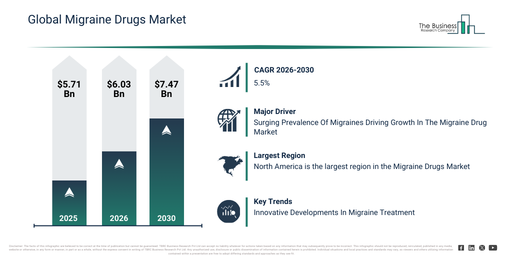
    The migraine drugs market has experienced significant growth in recent years. Its size is projected to expand from $5.71 billion in 2025 to $6.03 billion in 2026, registering a compound annual growth rate (CAGR) of 5.5%. This historical development can be ascribed to the increasing global incidence of migraine, a restricted supply of targeted treatments, enhanced understanding of migraine disorders, a surge in neuropharmacology research, and the enlargement of hospital and pharmacy infrastructures.

    The market size for migraine drugs is anticipated to experience robust expansion over the coming years. This market is projected to reach $7.47 billion by 2030, demonstrating a compound annual growth rate (CAGR) of 5.5%. The projected growth during this period stems from advancements in biologics for migraine, the uptake of digital health and wearable devices, heightened research and development in CGRP inhibitors, an increasing demand for personalized medicine, and a rise in online pharmacy sales. Significant trends during the forecast period include individualized migraine therapies, the creation of CGRP antagonists, wearable devices for headache monitoring, an increase in over-the-counter migraine medications, and the integration of telemedicine for migraine management.

    Get A Free Sample Report With In-Depth Market Insights:

    https://thebusinessresearchcompany.com/sample_request?id=42736857&type=smp&name=Migraine%20Drugs%20Market%20Report%202026&utm_source=Blogs&utm_medium=Paid&utm_campaign=Oct_PR

    Migraine Drugs Market Growth Catalysts And Demand Drivers

    The rising incidence of migraine is anticipated to fuel the expansion of the migraine drug market in the foreseeable future. A migraine headache is defined by repetitive bouts of mild-to-severe throbbing and pulsating discomfort typically affecting one side of the head. This escalating occurrence of migraines fosters a need for migraine medications, thereby encouraging advancements and revenue growth as pharmaceutical firms identify and provide efficacious remedies for the increasing patient base. For instance, in March 2023, as per the Migraine Australia 2022–23 Pre-Budget Submissions, a document issued by the Australian Treasury, an Australia-based economic agency, Australia recorded one of the globe’s highest migraine rates (28%). This condition impacts one in every four people, exceeding the combined prevalence of type 2 diabetes, epilepsy, and asthma. Consequently, the growing prevalence of migraine is stimulating the migraine drug market.

    Migraine Drugs Market Segment Landscape: Which Areas Lead Development?

    The migraine drugs market covered in this report is segmented –

    1) By Drug Class: Triptans, Betablockers, Angiotensin Blockers, Tricyclics, Anticonvulsants

    2) By Route of Administration: Oral, Injectable, Other Routes

    3) By End-User: Hospitals And Clinics, Retail Pharmacy, Online Pharmacy, Other End Users

    Subsegments:

    1) By Triptans: Sumatriptan, Rizatriptan, Zolmitriptan, Eletriptan

    2) By Beta Blockers: Propranolol, Metoprolol, Timolol

    3) By Angiotensin Blockers: Candesartan, Losartan

    4) By Tricyclics: Amitriptyline, Nortriptyline

    5) By Anticonvulsants: Topiramate, Valproate

    Migraine Drugs Market Trends Shaping Long-Term Demand

    Leading companies in the migraine drugs market are concentrating on developing innovative products, such as Zavzpret, to better assist patients and gain a competitive position. Zavzpret is a nasal spray medication developed for the acute treatment of migraines with or without aura in adults. For instance, in March 2023, Pfizer, a US-based pharmaceutical company, secured approval from the Food and Drug Administration, a US-based federal agency, for Zavzpret. It represents the first and only approved zavegepant (CGRP receptor antagonist) nasal spray for the acute treatment of migraine. The medication targets the calcitonin gene-related peptide (CGRP) and is designed for the acute treatment of migraine. The approval of Zavzpret offers a new treatment solution for individuals with migraines, particularly for those who experience nausea and vomiting with migraine attacks and for those unable to use triptans due to cardiovascular risks.

    Migraine Drugs Market Industry Leaders And Competitive Landscape

    Major companies operating in the migraine drugs market are Pfizer Inc., Johnson & Johnson Services Inc., Bayer AG, Merck & Co. Inc., AbbVie Inc., Sanofi SA, Novartis AG, AstraZeneca, Abbott Laboratories, GlaxoSmithKline plc., Eli Lilly and Company, Amgen Inc., Otsuka Holdings Co. Ltd., Teva Pharmaceutical Industries Ltd., Bausch Health Companies Inc., Eisai Co. Ltd., Dr Reddys Laboratories Ltd., H. Lundbeck A/S, Amneal Pharmaceuticals Inc., Endo Pharmaceuticals Inc., Neurelis Inc., ALDER BIOPHARMACEUTICALS INC.

    View The Full Migraine Drugs Market Report:

    https://thebusinessresearchcompany.com/report/migraine-drugs-global-market-report?utm_source=Blogs&utm_medium=Paid&utm_campaign=Oct_PR

    Migraine Drugs Market Regional Analysis And Leading Geography

    North America was the largest region in the migraine market in 2025. Asia-Pacific is expected to be the fastest-growing region in the forecast period. The regions covered in the migraine drugs market report are Asia-Pacific, South East Asia, Western Europe, Eastern Europe, North America, South America, Middle East, Africa.

    Reach Out To Our Team:

    The Business Research Company: https://www.thebusinessresearchcompany.com/

    Americas: +1 310-496-7795

    Asia: +44 7882 955267 & +91 8897263534

    Europe: +44 7882 955267

    Email us at: marketing@tbrc.info

    Follow us on:

    LinkedIn: https://in.linkedin.com/company/the-business-research-company

    YouTube: https://www.youtube.com/channel/UC24_fI0rV8cR5DxlCpgmyFQ

    Global Market Model: https://www.thebusinessresearchcompany.com/global-market-model