Blog

  • Tumor Exosome Profiling Market Size Growth: From $1.32 Billion In 2026 To $2.49 Billion By 2030

    Tumor Exosome Profiling Market Size Growth: From $1.32 Billion In 2026 To $2.49 Billion By 2030

    Built to provide research that’s more actionable and strategically valuable, The Business Research Company’s 2026 market reports include market attractiveness analysis, total addressable market sizing, company benchmarking matrices, interactive Excel dashboards, broader supply chain intelligence, emerging startup tracking, and in-depth product insights.

    Tumor Exosome Profiling Market CAGR Outlook And Future Development

    The tumor exosome profiling market size has seen rapid expansion in recent years. It is anticipated to increase from $1.13 billion in 2025 to $1.32 billion in 2026, exhibiting a compound annual growth rate (CAGR) of 16.9%. The market’s historic growth can be attributed to factors such as the rising prevalence of cancer, continuous advancements in molecular biology techniques, the increasing adoption of liquid biopsy methods, a surge in research funding for oncology, and the growing demand for non-invasive diagnostic tools.

    The tumor exosome profiling market size is projected for swift expansion over the next few years. It is anticipated to reach $2.49 billion by 2030, progressing at a compound annual growth rate (CAGR) of 17.1%. This growth during the forecast period can be attributed to the integration of AI and bioinformatics in exosome profiling, the development of personalized medicine solutions, the expansion of diagnostic laboratories, the adoption of high-throughput exosome analysis platforms, and the growth in cancer biomarker discovery. Significant trends expected during this period include liquid biopsy integration, high-throughput exosome analysis, automated sample preparation, multi-omics data profiling, and personalized cancer therapeutics.

    Get A Free Sample Report With In-Depth Market Insights:

    https://thebusinessresearchcompany.com/sample_request?id=84097660&type=smp&name=Tumor%20Exosome%20Profiling%20Market%20Report%202026&utm_source=Blogs&utm_medium=Paid&utm_campaign=Oct_PR

    Tumor Exosome Profiling Market Demand Drivers: What’s Powering Industry Growth?

    The expanding occurrence of cancer is anticipated to fuel the expansion of the tumor exosome profiling market in the future. Cancer encompasses a collection of illnesses marked by the unregulated proliferation and division of irregular cells, capable of invading adjacent tissues and disseminating throughout the body. The rising incidence of cancer stems from unwholesome lifestyles, such as inadequate diet, insufficient physical activity, smoking, and excessive intake of alcohol, all of which elevate the likelihood of contracting diverse forms of cancer. Tumor exosome profiling assists in combating cancer by facilitating early detection, tracking tumor advancement, and directing tailored treatment approaches via the examination of tumor-originated exosomes found in bodily fluids. For example, data from February 2024, provided by the World Health Organization, a Switzerland-based international entity focused on global health policy and public health endeavors, indicates that more than 35 million new cancer cases are projected for 2050, representing a 77% rise from the approximately 20 million cases recorded in 2022. Consequently, the increasing occurrence of cancer is a primary catalyst for the swift expansion of the tumor exosome profiling market.

    Tumor Exosome Profiling Market Segments: Where Is Growth Concentrated?

    The tumor exosome profiling market covered in this report is segmented –

    1) By Product Type: Kits And Reagents, Instruments, Software, Services

    2) By Sample Type: Blood, Urine, Saliva, Other Sample Types

    3) By Application: Cancer Diagnostics, Prognostics, Therapeutics, Research

    4) By End-User: Hospitals And Clinics, Research Institutes, Diagnostic Laboratories, Other End-Users

    Subsegments:

    1) By Kits And Reagents: Isolation Kits, Detection Kits, Quantification Kits, Labeling Reagents, Antibodies

    2) By Instruments: Flow Cytometers, Nanoparticle Tracking Analyzers, Ultracentrifuges, Microfluidic Devices, Polymerase Chain Reaction Machines (PCR) Machines

    3) By Software: Data Analysis Software, Visualization Software, Bioinformatics Platforms, Statistical Modeling Software, Exosome Tracking Software

    4) By Services: Sample Preparation Services, Exosome Isolation Services, Molecular Profiling Services, Data Analysis Services, Custom Assay Development Services

    Tumor Exosome Profiling Market Innovation Trends: What Developments Are Reshaping The Industry?

    Leading enterprises within the tumor exosome profiling market are concentrating on developing advanced solutions, such as assays based on liquid biopsies of exosomes, to facilitate early cancer detection and personalized treatment monitoring. This type of assay functions as a blood test capable of identifying minute vesicles, called exosomes, released by tumor cells, thus enabling medical practitioners to pinpoint and supervise cancer without resorting to invasive tissue biopsies. For example, in June 2024, Mercy BioAnalytics Inc., a US-based biotechnology company, formed a partnership with University College London (UCL), a UK-based university, to introduce the Mercy Halo Ovarian Cancer Screening Test. This next-generation extracellular vesicle liquid biopsy is engineered to detect ovarian cancer in asymptomatic, postmenopausal women by identifying multiple co-localized cancer biomarkers found on individual tumor-derived vesicles using a low volume blood sample and a quantitative polymerase chain reaction (qPCR) based readout, delivering high sensitivity and specificity several years before clinical diagnosis.

    Tumor Exosome Profiling Market Competitive Landscape: Who Leads The Industry?

    Major companies operating in the tumor exosome profiling market are Thermo Fisher Scientific Inc., Lonza Group Ltd., NanoFCM Inc., QIAGEN N.V., Bio-Techne Corporation, Miltenyi Biotec B.V. And Co. KG, Aethlon Medical Inc., Cusabio Technology LLC, Norgen Biotek Corp., Kimera Labs Inc, Diagenode Inc., Creative Biolabs Inc, Izon Science Ltd., System Biosciences LLC, Mercy Bioanalytics Inc, MtoZ Biolab, Capital Biosciences Inc., ExoCan Healthcare Technologies Private Limited, INOVIQ Ltd, Codiak BioSciences Inc.

    View The Full Tumor Exosome Profiling Market Report:

    https://thebusinessresearchcompany.com/report/tumor-exosome-profiling-market-report?utm_source=Blogs&utm_medium=Paid&utm_campaign=Oct_PR

    Tumor Exosome Profiling Market Geographic Landscape: Which Region Dominates Industry Growth?

    North America was the largest region in the tumor exosome profiling market in 2025. Asia-Pacific is expected to be the fastest-growing region in the forecast period. The regions covered in the tumor exosome profiling market report are Asia-Pacific, South East Asia, Western Europe, Eastern Europe, North America, South America, Middle East, Africa.

    Reach Out To Our Team:

    The Business Research Company: https://www.thebusinessresearchcompany.com/

    Americas: +1 310-496-7795

    Asia: +44 7882 955267 & +91 8897263534

    Europe: +44 7882 955267

    Email us at: marketing@tbrc.info

    Follow us on:

    LinkedIn: https://in.linkedin.com/company/the-business-research-company

    YouTube: https://www.youtube.com/channel/UC24_fI0rV8cR5DxlCpgmyFQ

    Global Market Model: https://www.thebusinessresearchcompany.com/global-market-model

  • Tracheal Tubes And Airway Products Market Analysis 2026: Market Size, Growth Trends And Industry Outlook

    Tracheal Tubes And Airway Products Market Analysis 2026: Market Size, Growth Trends And Industry Outlook

    Backed by market attractiveness analysis, total addressable market sizing, company benchmarking matrices, interactive Excel dashboards, wider supply chain intelligence, emerging startup coverage, and detailed product-level insights, The Business Research Company’s 2026 market reports are designed to offer research that is more actionable and strategically valuable than ever.

    Tracheal Tubes And Airway Products Market Set To Climb From $3.54 Billion In 2026 To $4.56 Billion By 2030

    The tracheal tubes and airway products market has experienced substantial growth in recent years. It is anticipated to expand from $3.33 billion in 2025 to $3.54 billion in 2026, exhibiting a compound annual growth rate (CAGR) of 6.3%. The historical expansion can be attributed to several factors, including an increase in surgical procedures, a rise in emergency care cases, heightened awareness of airway management, the adoption of reusable airway devices, and advancements in anesthesia administration.

    The tracheal tubes and airway products market is projected to experience substantial expansion over the upcoming years. This market is anticipated to reach $4.56 billion by 2030, exhibiting a compound annual growth rate (CAGR) of 6.6%. Several factors contribute to this growth during the forecast period, including the increasing demand for disposable airway products, the integration of video laryngoscopes, the adoption of AI-assisted airway monitoring, the expansion of critical care infrastructure, and the rising prevalence of minimally invasive surgical procedures. Key trends expected within this period encompass the increased adoption of video laryngoscopy, the use of disposable airway devices, the rise of high-flow ventilation systems, the implementation of integrated airway management solutions, and the development of advanced airway monitoring systems.

    Get A Free Sample Report With In-Depth Market Insights:

    https://thebusinessresearchcompany.com/sample_request?id=28784292&type=smp&name=Tracheal%20Tubes%20And%20Airway%20Products%20Market%20Report%202026&utm_source=Blogs&utm_medium=Paid&utm_campaign=Oct_PR

    Tracheal Tubes And Airway Products Market Growth Drivers: What’s Behind The Acceleration?

    The rising occurrence of severe respiratory conditions is anticipated to fuel the expansion of the tracheal tubes and airway products market. These conditions are health disorders that affect the lungs and airways, impeding normal breathing and oxygen exchange. Elevated air pollution levels and the persistent spread of respiratory viruses have contributed to a rise in serious respiratory illnesses, leading to increased hospitalization and ICU admission rates. Tracheal tubes and airway products are vital in addressing these conditions by maintaining airway patency, enabling effective ventilation, and ensuring safe oxygen delivery during emergency care, critical care, and surgical procedures. For instance, in December 2024, data from MedRxiv, an US-based non-profit organization, revealed that respiratory virus-related hospitalizations in the United States climbed to 9.3% of all hospital admissions, a significant rise from 3.0% in late November, which underscores the escalating demand for advanced respiratory support due to acute respiratory illnesses. Thus, the growing occurrence of respiratory diseases is propelling the growth of the tracheal tubes and airway products market.

    Tracheal Tubes And Airway Products Market Segment Analysis: What Are The Core Market Categories?

    The tracheal tubes and airway products market covered in this report is segmented –

    1) By Product Type: Endotracheal Tube, Oral Airway Tube, Nasal Airway Tube, Oral And Nasal Airway Tube, Laryngoscope, Other Product Types

    2) By Material: Polyvinyl Chloride (PVC), Thermoplastic Polyurethane (TPU), Silicone, Polyolefins, Other Materials

    3) By Performance: Single Use Disposable, Reusable, High Flow, Low Flow

    4) By Application: Surgical Procedures, Emergency Care, Critical Care, Anesthesia Administration, Respiratory Therapy

    5) By End User: Hospitals, Ambulatory Surgical Centers, Emergency Medical Services (EMS), Clinics

    Subsegments:

    1) By Endotracheal Tube: Cuffed Endotracheal Tube, Uncuffed Endotracheal Tube, Reinforced Endotracheal Tube, Preformed Endotracheal Tube, Double Lumen Endotracheal Tube, Tapered Cuff Endotracheal Tube

    2) By Oral Airway Tube: Guedel Oral Airway, Berman Oral Airway, Color Coded Oral Airway, Disposable Oral Airway, Reusable Oral Airway

    3) By Nasal Airway Tube: Standard Nasopharyngeal Airway, Flared Nasopharyngeal Airway, Soft Nasal Airway, Pre Lubricated Nasal Airway, Disposable Nasal Airway

    4) By Oral And Nasal Airway Tube: Combination Airway Tube, Dual Channel Airway Tube, Esophageal Tracheal Combitube, Multi Lumen Airway Tube, Disposable Combination Airway Tube

    5) By Laryngoscope: Direct Laryngoscope, Video Laryngoscope, Fiber Optic Laryngoscope, Rigid Laryngoscope, Flexible Laryngoscope, Disposable Blade Laryngoscope

    6) By Other Product Types: Airway Introducer, Intubation Stylet, Airway Exchange Catheter, Bite Block Airway Device, Tracheostomy Tube, Supraglottic Airway Device

    Tracheal Tubes And Airway Products Market Trends: What’s Defining The Industry’s Next Phase?

    Major companies operating in the tracheal tubes and airway products market are intensifying their focus on developing sophisticated airway management solutions, such as closed suction catheters, to enhance patient safety, improve clinical efficiency, and reduce the likelihood of ventilator-associated infections. Closed suction catheters are specialized medical instruments designed to extract respiratory secretions from intubated or tracheostomized individuals without detaching them from mechanical ventilators, thereby sustaining lung volume, oxygenation, and continuous respiratory support. For instance, in November 2025, Dynarex Corporation, a US-based medical device company, introduced the Resp-O₂ Vortex 72 Closed Suction Catheter, engineered for continuous operation for up to 72 hours. This product is formulated to support infection control through its closed-system design and features smooth, flexible tubing, clear depth markings, and is compatible with both endotracheal and tracheostomy applications. Such advancements enable safer suctioning procedures, decrease clinician workload, and promote improved patient outcomes during prolonged mechanical ventilation, reinforcing the growing demand for advanced airway management products.

    Tracheal Tubes And Airway Products Market Company Landscape And Competitive Strategy

    Major companies operating in the tracheal tubes airway products market are Medtronic Public Limited Company, Becton Dickinson Company, Boston Scientific Corporation, Teleflex Incorporated, Karl Storz SE & Co. Kommanditgesellschaft, Cook Medical LLC, ICU Medical Inc., ConvaTec Group Public Limited Company, Nihon Kohden Corporation, Ambu Aktieselskab, Vygon S.A., Atos Medical AB, SunMed LLC, Fuji Systems Corporation, Mercury Medical Inc., Medis Medical (UK) Limited, Penlon Limited, Flexicare Medical Limited, Intersurgical Limited, Well Lead Medical Co. Ltd.

    View The Full Tracheal Tubes And Airway Products Market Report:

    https://thebusinessresearchcompany.com/report/tracheal-tubes-and-airway-products-market-report?utm_source=Blogs&utm_medium=Paid&utm_campaign=Oct_PR

    Tracheal Tubes And Airway Products Market Largest Region: Which Geography Holds The Highest Market Share?

    North America was the largest region in the tracheal tubes and airway products market in 2025. Asia-Pacific is expected to be the fastest-growing region in the forecast period. The regions covered in the tracheal tubes and airway products market report are Asia-Pacific, South East Asia, Western Europe, Eastern Europe, North America, South America, Middle East, Africa.

    Reach Out To Our Team:

    The Business Research Company: https://www.thebusinessresearchcompany.com/

    Americas: +1 310-496-7795

    Asia: +44 7882 955267 & +91 8897263534

    Europe: +44 7882 955267

    Email us at: marketing@tbrc.info

    Follow us on:

    LinkedIn: https://in.linkedin.com/company/the-business-research-company

    YouTube: https://www.youtube.com/channel/UC24_fI0rV8cR5DxlCpgmyFQ

    Global Market Model: https://www.thebusinessresearchcompany.com/global-market-model
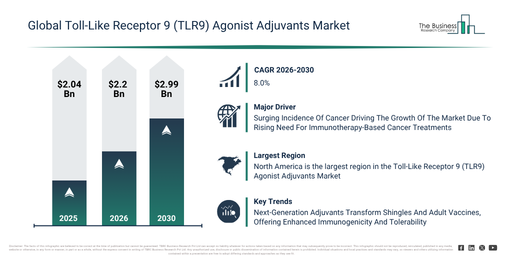
  • Tissue Protectors Market Reaches $2.2 Billion In 2026: Key Developments Shaping Expansion

    Backed by market attractiveness analysis, total addressable market sizing, company benchmarking matrices, interactive Excel dashboards, wider supply chain intelligence, emerging startup coverage, and detailed product-level insights, The Business Research Company’s 2026 market reports are designed to offer research that is more actionable and strategically valuable than ever.

    Tissue Protectors Market Value Growth And Long-Term Outlook

    The tissue protectors market size has shown substantial growth in recent years. It will grow from $1.56 billion in 2025 to $1.66 billion in 2026 at a compound annual growth rate (CAGR) of 7.0%. Historically, this expansion has been driven by increasing surgical procedures globally, rising awareness of surgical site infections, demand for disposable surgical devices, innovations in surgical materials, and the growth of hospital infrastructure.

    The tissue protectors market is projected to experience substantial expansion in the coming years. Its valuation is anticipated to reach $2.2 billion by 2030, demonstrating a compound annual growth rate (CAGR) of 7.2%. This projected growth throughout the forecast period stems from factors such as the increasing adoption of antimicrobial wound edge protectors, their integration with robotic surgery systems, the ongoing development of sustainable surgical materials, the proliferation of ambulatory surgical centers, and the rising demand for automated surgical workflow solutions. Key trends anticipated during this period encompass the widespread adoption of disposable surgical devices, advancements in antimicrobial barrier technologies, greater integration with minimally invasive surgery, continued development of advanced materials, and the implementation of automated surgical workflow solutions.

    Get A Free Sample Report With In-Depth Market Insights:

    https://thebusinessresearchcompany.com/sample_request?id=41778647&type=smp&name=Tissue%20Protectors%20Market%20Report%202026&utm_source=Blogs&utm_medium=Paid&utm_campaign=Oct_PR

    Tissue Protectors Market Growth Backed By Core Demand Fundamentals

    The expansion of the tissue protectors market is anticipated to be driven by an increase in surgical interventions. These procedures involve operative techniques carried out by skilled surgeons to diagnose, manage, or avert illnesses and injuries. The aging demographic in developed nations contributes to this rise, as older individuals frequently need surgeries for age-related issues like joint replacements, heart-related operations, and cancer therapies. Tissue protectors play a crucial role by protecting healthy tissues from harm during operations, thereby enabling surgeons to operate with greater efficiency and precision, minimizing complication risks, and ultimately enhancing patient recuperation and clinical results. For example, Intuitive Surgical Inc., a US-based medical device company, reported approximately 2,683,000 surgical procedures using da Vinci systems in March 2025. This shows an increase from about 2,286,000 procedures in 2023 and 1,875,000 procedures in 2022, demonstrating consistent annual growth in their usage. Consequently, the expanding volume of surgical procedures is fueling the growth of the tissue protectors market.

    Tissue Protectors Market Segment Trends And Revenue Contributors

    The tissue protectors market covered in this report is segmented –

    1) By Product Type: Wound Edge Protectors, Surgical Retractors, Incision Drapes

    2) By Material Type: Polyurethane, Silicone, Polyethylene, Latex-Free Elastomers

    3) By Usability: Disposable, Reusable

    4) By Application: General Surgery, Obstetrics And Gynecology, Colorectal Surgery, Cardiac Surgery

    5) By End User: Hospitals, Ambulatory Surgical Centers, Specialty Clinics

    Subsegments:

    1) By Wound Edge Protectors: Disposable Wound Edge Protectors, Reusable Wound Edge Protectors, Self-Retaining Wound Edge Protectors, Non-Self-Retaining Wound Edge Protectors, Circular Wound Edge Protectors

    2) By Surgical Retractors: Handheld Surgical Retractors, Self-Retaining Surgical Retractors, Rib Spreaders, Abdominal Surgical Retractors, Orthopedic Surgical Retractors

    3) By Incision Drapes: Adhesive Incision Drapes, Non-Adhesive Incision Drapes, Fenestrated Incision Drapes, Non-Fenestrated Incision Drapes, Antimicrobial Incision Drapes

    Tissue Protectors Market Growth Trends Reshaping The Competitive Landscape

    Major companies operating in the tissue protectors market are prioritizing the development of innovative solutions, such as flowable collagen-based gels, to enhance post-surgical recovery and mitigate tissue adhesion. These gels are injectable, collagen-rich hydrogels that conform to complex tissue surfaces, creating a protective barrier that effectively reduces adhesions, supports natural tissue regeneration, minimizes inflammation, and promotes faster, smoother post-surgical healing compared to traditional solid barriers. For instance, in January 2026, TYBR Health Inc., a US-based regenerative medicine and medical device company, introduced the B3 GEL System. This flowable collagen-based tissue protection gel was specifically developed to support post-surgical soft-tissue healing. The system has been applied in orthopedic soft-tissue procedures to assist tendon repair and help reduce tissue tethering during recovery. The B3 GEL system readily conforms to the surgical site, maintains biomechanical separation during the initial healing phase, and is gradually resorbed by the body. Its unique extracellular matrix composition interacts with the body’s native repair mechanisms, promoting tissue regeneration while simultaneously preserving flexibility and glide for tendons and ligaments.

    Tissue Protectors Market Leading Companies And Competitive Benchmarking

    Major companies operating in the tissue protectors market are Cardinal Health Inc., Johnson & Johnson, Medtronic plc, 3M Company, Stryker Corporation, Becton Dickinson Company, B. Braun Melsungen AG, Smith & Nephew plc, Coloplast A/S, Cooper Surgical Inc., Hartmann Group, ConvaTec Group plc, Integra LifeSciences Holdings Corporation, Applied Medical Resources Corporation, Geister Medizintechnik GmbH, Prescient Surgical Inc., BetaTech Medical Inc., SunMedica Inc., PRAN Medsystems LLP, TYBR Health Inc.

    View The Full Tissue Protectors Market Report:

    https://thebusinessresearchcompany.com/report/tissue-protectors-market-report?utm_source=Blogs&utm_medium=Paid&utm_campaign=Oct_PR

    Tissue Protectors Market Largest Region By Revenue And Market Share

    North America was the largest region in the tissue protectors market in 2025. Asia-Pacific is expected to be the fastest-growing region in the forecast period. The regions covered in the tissue protectors market report are Asia-Pacific, South East Asia, Western Europe, Eastern Europe, North America, South America, Middle East, Africa.

    Reach Out To Our Team:

    The Business Research Company: https://www.thebusinessresearchcompany.com/

    Americas: +1 310-496-7795

    Asia: +44 7882 955267 & +91 8897263534

    Europe: +44 7882 955267

    Email us at: marketing@tbrc.info

    Follow us on:

    LinkedIn: https://in.linkedin.com/company/the-business-research-company

    YouTube: https://www.youtube.com/channel/UC24_fI0rV8cR5DxlCpgmyFQ

    Global Market Model: https://www.thebusinessresearchcompany.com/global-market-model
  • Tinnitus Treatment Devices Market Growth Outlook For 2026: Drivers, Trends And Future Opportunities

    Featuring market attractiveness scoring, total addressable market sizing, company benchmarking matrices, interactive Excel dashboards, deeper supply chain intelligence, emerging startup tracking, and granular product-level insights, The Business Research Company’s 2026 market reports are built to deliver research that is both more actionable and more strategically valuable.

    Tinnitus Treatment Devices Market Poised To Hit $3.06 Billion By 2030 With A 7.6% CAGR

    The market size for tinnitus treatment devices has demonstrated robust growth in recent years. It is projected to expand from $2.13 billion in 2025 to $2.28 billion in 2026, achieving a compound annual growth rate (CAGR) of 7.4%. The historical growth of this market can be attributed to factors including the growing prevalence of tinnitus, increasing awareness of auditory health, adoption of conventional hearing aids, a rising geriatric population, and the expansion of otolaryngology clinics.

    The tinnitus treatment devices market is poised for significant expansion in the foreseeable future. It is projected to grow to $3.06 billion in 2030 at a compound annual growth rate (CAGR) of 7.6%. This anticipated growth during the forecast period stems from the integration of AI and ML in tinnitus devices, the development of wearable sound therapy solutions, the increasing reach of tele-audiology services, a growing demand for homecare tinnitus management, and increased investment in personalized auditory devices. Prominent trends expected in this period include personalized sound therapy devices, AI-enabled tinnitus management, wearable monitoring solutions, the adoption of home-based treatments, and integration with mobile health applications.

    Get A Free Sample Report With In-Depth Market Insights:

    https://thebusinessresearchcompany.com/sample_request?id=49185431&type=smp&name=Tinnitus%20Treatment%20Devices%20Market%20Report%202026&utm_source=Blogs&utm_medium=Paid&utm_campaign=Oct_PR

    Tinnitus Treatment Devices Market Growth Catalysts And Demand Drivers

    An increasing incidence of hearing impairment is anticipated to drive the expansion of the tinnitus treatment devices market in the future. Hearing loss is defined as a partial or complete inability to perceive sounds in one or both ears, resulting from issues within the outer, middle, or inner ear, or the auditory nerve. The growing occurrence of hearing loss is primarily due to an aging population, as age-related degeneration of the auditory system increases the risk of impaired hearing and long-term auditory disorders. Tinnitus treatment devices assist in managing hearing loss by providing targeted sound therapy or neuromodulation, which aims to reduce the perception of ringing and enhance auditory function. These devices also improve patient quality of life by alleviating symptoms, supporting communication, and complementing conventional hearing rehabilitation strategies. For example, data from March 2025, provided by the Ministers for the Department of Social Services, an Australia-based government agency, indicates that over 3.6 million people in Australia are living with hearing loss, and this number is expected to double by 2060. Consequently, the rising prevalence of hearing loss is propelling the growth of the tinnitus treatment devices market.

    Tinnitus Treatment Devices Market Segment Analysis Spotlighting Growth Areas

    The tinnitus treatment devices market covered in this report is segmented –

    1) By Product Type: Sound Masking Devices, Notched Music Devices, Hearing Aids, Cochlear Implants

    2) By Technology: Wearable Devices, Non-wearable Devices

    3) By Patient Type: Adults, Pediatrics

    4) By Distribution Channel: Online, Offline

    5) By Application: Hospitals, Ear, Nose, And Throat Clinics, Homecare Settings

    Subsegments:

    1) By Sound Masking Devices: Tabletop Sound Generators, Wearable Sound Generators, In Ear Sound Maskers, Combination Sound And Sleep Devices, Environmental Sound Machines, Bedside White Noise Devices, Smartphone Controlled Sound Maskers

    2) By Notched Music Devices: Customized Frequency Notched Music Players, Software Based Notched Music Therapy Platforms, Portable Notched Music Devices, Integrated Notched Music Hearing Devices, Personalized Streaming Notched Music Applications

    3) By Hearing Aids: Behind The Ear Hearing Aids, Receiver In Canal Hearing Aids, In The Ear Hearing Aids, In The Canal Hearing Aids, Completely In Canal Hearing Aids, Rechargeable Digital Hearing Aids, Bluetooth Enabled Hearing Aids

    4) By Cochlear Implants: Unilateral Cochlear Implants, Bilateral Cochlear Implants, Hybrid Cochlear Implants, Implantable Sound Processor Systems, External Sound Processor Units

    Tinnitus Treatment Devices Market Trends Shaping Long-Term Demand

    Leading companies in the tinnitus treatment devices market are prioritizing the development of innovative products, such as bimodal neuromodulation devices, to deliver non-invasive, personalized relief from persistent tinnitus symptoms. These bimodal neuromodulation devices are wearable medical technologies that integrate precise sound therapy with gentle electrical stimulation, typically applied to the tongue, to re-educate the brain’s auditory pathways, reduce abnormal neural activity, and gradually diminish the perception and severity of tinnitus. For example, in March 2023, Neuromod Devices Ltd., an Ireland-based medical technology company, obtained U.S. Food and Drug Administration approval for Lenire, a bimodal neuromodulation device specifically designed to treat chronic tinnitus. Lenire merges auditory stimulation delivered through headphones with mild electrical pulses directed to the tongue, effectively retraining the brain’s auditory pathways to decrease the sensation of ringing or buzzing. This device aims at the neurological underpinnings of tinnitus rather than simply masking symptoms; furthermore, it is wearable, customizable for individual patient needs, and purposed for home use, offering a non-invasive therapy that has been clinically validated to improve tinnitus outcomes over time. This unique combination of sound and tongue-based electrical stimulation signifies a considerable advancement in neuromodulation therapies for auditory disorders.

    Tinnitus Treatment Devices Market Industry Leaders And Competitive Landscape

    Major companies operating in the tinnitus treatment devices market are Sonova Holding AG, Demant A/S, GN Store Nord A/S, WS Audiology A/S, Starkey Hearing Technologies Inc., Cochlear Limited, Widex A/S, MED-EL Elektromedizinische Geräte GmbH, Starkey Laboratories Inc., Rion Co. Ltd., Neuromod Devices Ltd., Puretone Ltd., Micro-DSP Technology Co. Ltd., Neosensory Inc., Neuromonics Inc., Arches Natural Products Inc., Otoharmonics Corporation, SoundCure Inc., Desyncra Technologies Ltd., AlgorKorea Co. Ltd.

    View The Full Tinnitus Treatment Devices Market Report:

    https://thebusinessresearchcompany.com/report/tinnitus-treatment-devices-market-report?utm_source=Blogs&utm_medium=Paid&utm_campaign=Oct_PR

    Tinnitus Treatment Devices Market Regional Analysis And Leading Geography

    North America was the largest region in the tinnitus treatment devices market in 2025. Asia-Pacific is expected to be the fastest-growing region in the forecast period. The regions covered in the tinnitus treatment devices market report are Asia-Pacific, South East Asia, Western Europe, Eastern Europe, North America, South America, Middle East, Africa.

    Reach Out To Our Team:

    The Business Research Company: https://www.thebusinessresearchcompany.com/

    Americas: +1 310-496-7795

    Asia: +44 7882 955267 & +91 8897263534

    Europe: +44 7882 955267

    Email us at: marketing@tbrc.info

    Follow us on:

    LinkedIn: https://in.linkedin.com/company/the-business-research-company

    YouTube: https://www.youtube.com/channel/UC24_fI0rV8cR5DxlCpgmyFQ

    Global Market Model: https://www.thebusinessresearchcompany.com/global-market-model
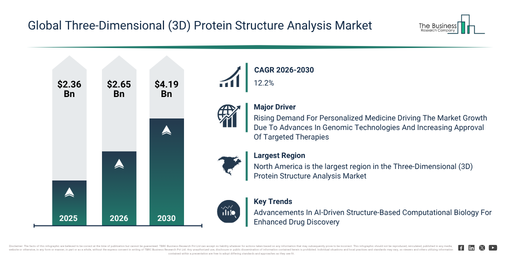
  • Three-Dimensional (3D) Protein Structure Analysis Market 2026: Market Size, Growth Drivers And Emerging Opportunities

    Three-Dimensional (3D) Protein Structure Analysis Market 2026: Market Size, Growth Drivers And Emerging Opportunities

    Backed by market attractiveness analysis, total addressable market sizing, company benchmarking matrices, interactive Excel dashboards, wider supply chain intelligence, emerging startup coverage, and detailed product-level insights, The Business Research Company’s 2026 market reports are designed to offer research that is more actionable and strategically valuable than ever.

    Three-Dimensional (3D) Protein Structure Analysis Market Growth From $2.65 Billion In 2026 To $4.19 Billion By 2030 At A CAGR Of 12.2%

    The three-dimensional (3D) protein structure analysis market size has experienced rapid growth in recent years. It is anticipated to expand from $2.36 billion in 2025 to $2.65 billion in 2026, achieving a compound annual growth rate (CAGR) of 11.9%. The growth observed in the historic period can be linked to increasing investment in structural genomics, the adoption of x-ray crystallography and nmr spectroscopy, the growth of pharmaceutical r&d, a rising demand for biomarker identification, and the development of cryo-em technology.

    The three-dimensional (3D) protein structure analysis market is poised for significant expansion in the coming years. This sector is projected to reach $4.19 billion in 2030, growing at a compound annual growth rate (CAGR) of 12.2%. This forecasted increase is driven by the uptake of AI-driven structure prediction, the broadening use of cloud-based computational tools, the incorporation of multi-modal imaging techniques, an increasing emphasis on enzyme engineering, and a greater need for personalized medicine applications. Key trends anticipated during this period include AI-powered protein structure prediction, advanced high-resolution imaging methods, the integration of computational and experimental workflows, automated data processing and analysis, and the emergence of cloud-based structural biology platforms.

    Get A Free Sample Report With In-Depth Market Insights:

    https://thebusinessresearchcompany.com/sample_request?id=71406395&type=smp&name=Three-Dimensional%20%283D%29%20Protein%20Structure%20Analysis%20Market%20Report%202026&utm_source=Blogs&utm_medium=Paid&utm_campaign=Oct_PR

    Three-Dimensional (3D) Protein Structure Analysis Market Growth Momentum: What Factors Are Shaping Demand?

    The increasing requirement for individualized healthcare is anticipated to fuel the expansion of the three-dimensional (3D) protein structure analysis market. Personalized medicine involves customizing medical care and treatments to align with a patient’s unique biological and clinical profiles. Its wider implementation is propelled by breakthroughs in genomic technologies, which facilitate the discovery of genetic variations linked to diseases and specific molecular targets. Given that personalized medicine progressively depends on molecular insights for drug discovery and therapeutic development, 3D protein structure analysis is crucial in explaining how genetic differences affect protein shape and how drugs bind to them. As an illustration, in February 2024, data from the US-based non-profit Personalized Medicine Coalition revealed that the US Food and Drug Administration had endorsed 16 novel personalized treatments for rare disease patients, an increase from six in 2022, with this total comprising seven cancer therapies. Consequently, the rising demand for personalized medicine is a primary factor behind the expansion of the three-dimensional (3D) protein structure analysis market.

    Three-Dimensional (3D) Protein Structure Analysis Market Segment Landscape And Growth Outlook

    The three-dimensional (3D) protein structure analysis market covered in this report is segmented –

    1) By Component: Instruments and Imaging Systems, Software and Computational Tools, Reagents and Consumables, Services

    2) By Workflow: Sample Preparation, Data Acquisition, Data Processing, Structure Determination, Visualization and Interpretation

    3) By Technology: X-Ray Crystallography, Cryo-Electron Microscopy (Cryo-EM), Nuclear Magnetic Resonance (NMR) Spectroscopy, Small Angle X-Ray Scattering (SAXS), Computational Modeling and AI-Based Prediction, Mass Spectrometry-Based Methods

    4) By Application: Drug Discovery and Development, Structural Genomics, Biomarker Identification, Protein-Protein Interaction Studies, Enzyme Engineering and Industrial Biotech, Academic Research and Education

    5) By End-Use Industry: Pharmaceutical and Biotechnology Companies, Academic and Research Institutes, Contract Research Organizations, Healthcare and Diagnostics Companies, Agricultural and Industrial Biotech Firms

    Subsegments:

    1) By Instruments and Imaging Systems: X Ray Crystallography Systems, Cryogenic Electron Microscopy Systems, Nuclear Magnetic Resonance Spectroscopy Systems, Mass Spectrometry Systems For Structural Analysis, Protein Crystallization And Sample Preparation Instruments

    2) By Software and Computational Tools: Molecular Modeling And Simulation Software, Protein Structure Visualization Software, Structure Prediction And Folding Analysis Software, Molecular Docking And Interaction Analysis Software, Data Processing And Image Reconstruction Software

    3) By Reagents and Consumables: Protein Crystallization Reagents, Sample Preparation Kits, Labeling And Detection Reagents, Buffers And Stabilization Solutions, Microplates And Laboratory Consumables

    4) By Services: Protein Structure Determination Services, Molecular Modeling And Simulation Services, Structural Data Analysis Services, Instrument Maintenance And Technical Support Services, Contract Research And Custom Analysis Services

    Three-Dimensional (3D) Protein Structure Analysis Market Trends Redefining Industry Growth

    Companies engaged in the three-dimensional (3D) protein structure analysis market are concentrating on developing innovative solutions, including structure-based computational biology platforms, to accelerate drug discovery, achieve accurate protein modeling, and enhance target identification through advanced molecular simulations and AI-driven structural analysis. A structure-based computational biology platform functions as a digital system that utilizes three-dimensional protein structure data, molecular modeling, and simulation algorithms to analyze biomolecular interactions and support rational drug design and target validation. For instance, in March 2024, Basecamp Research, a UK-based AI company, introduced BaseFold, a deep learning model that substantially advances 3D protein structure prediction for large, complex proteins. By augmenting AlphaFold2 with its proprietary BaseGraph dataset sourced from global biodiversity, it achieves up to 6-fold higher accuracy and 3-fold better small molecule docking. This breakthrough serves to accelerate AI-driven drug discovery by enabling the precise modeling of challenging protein structures that were previously underrepresented in public data.

    Three-Dimensional (3D) Protein Structure Analysis Market Top Companies Driving Competitive Growth

    Major companies operating in the three-dimensional (3D) protein structure analysis market are Merck KGaA, Lonza Group AG, Agilent Technologies Inc., Dassault Systèmes, WuXi AppTec, Charles River Laboratories Inc., Bruker Corporation, Waters Corporation, Revvity, JEOL Ltd., Greiner Bio-One International GmbH, Cambridge Isotope Laboratories Inc., Creative Biostructure, Cambridge Crystallographic Data Centre, NanoImaging Services Inc., Molecular Dimensions Inc., DNASTAR Inc., Jena Bioscience GmbH, Arinax Scientific Instrumentation, Bio-Prodict B.V., CD ComputaBio, and Discngine SAS.

    View The Full Three-Dimensional (3D) Protein Structure Analysis Market Report:

    https://thebusinessresearchcompany.com/report/three-dimensional-3d-protein-structure-analysis-market-report?utm_source=Blogs&utm_medium=Paid&utm_campaign=Oct_PR

    Three-Dimensional (3D) Protein Structure Analysis Market Global Footprint: Which Region Leads The Industry?

    North America was the largest region in the three-dimensional (3D) protein structure analysis market in 2025. Asia-Pacific is expected to be the fastest-growing region in the forecast period. The regions covered in the three-dimensional (3D) protein structure analysis market report are Asia-Pacific, South East Asia, Western Europe, Eastern Europe, North America, South America, Middle East, Africa.

    Reach Out To Our Team:

    The Business Research Company: https://www.thebusinessresearchcompany.com/

    Americas: +1 310-496-7795

    Asia: +44 7882 955267 & +91 8897263534

    Europe: +44 7882 955267

    Email us at: marketing@tbrc.info

    Follow us on:

    LinkedIn: https://in.linkedin.com/company/the-business-research-company

    YouTube: https://www.youtube.com/channel/UC24_fI0rV8cR5DxlCpgmyFQ

    Global Market Model: https://www.thebusinessresearchcompany.com/global-market-model
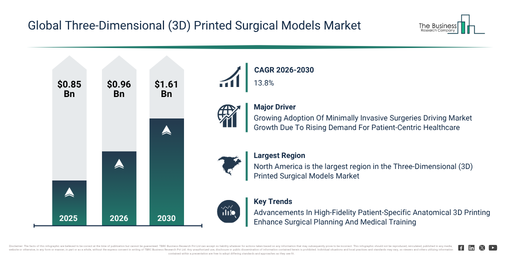
  • Three-Dimensional (3D) Printed Surgical Models Market Set To Expand From $1.61 Billion In 2026: Growth Outlook Through 2030

    Three-Dimensional (3D) Printed Surgical Models Market Set To Expand From $1.61 Billion In 2026: Growth Outlook Through 2030

    Featuring market attractiveness scoring, total addressable market sizing, company benchmarking matrices, interactive Excel dashboards, deeper supply chain intelligence, emerging startup tracking, and granular product-level insights, The Business Research Company’s 2026 market reports are built to deliver research that is both more actionable and more strategically valuable.

    Three-Dimensional (3D) Printed Surgical Models Market Expansion Outlook: What Revenue Opportunities Are Ahead?

    The three-dimensional (3D) printed surgical models market has experienced substantial growth in recent years. This market is projected to expand from $0.85 billion in 2025 to $0.96 billion in 2026, exhibiting a compound annual growth rate (CAGR) of 13.6%. Historically, this expansion has been driven by a rising demand for surgical planning tools, advancements in 3D printing technologies, the adoption of polymer and biomaterials, the growth of medical training programs, and increasing research in anatomical modeling.

    The three-dimensional (3D) printed surgical models market size is projected to experience swift expansion in the coming years. This market is set to reach $1.61 billion by 2030, exhibiting a compound annual growth rate (CAGR) of 13.8%. Several factors contribute to this anticipated growth, including the integration of AI and machine learning, the creation of multi-material and composite models, the growth of surgical simulation centers, the demand for tailored patient-specific solutions, and investments in real-time surgical planning platforms. Key trends expected during this period involve the development of patient-specific models, advanced surgical simulation techniques, integration with medical imaging software, the availability of customizable organ and tissue models, and optimization of preoperative planning processes.

    Get A Free Sample Report With In-Depth Market Insights:

    https://thebusinessresearchcompany.com/sample_request?id=81635611&type=smp&name=Three-Dimensional%20%283D%29%20Printed%20Surgical%20Models%20Market%20Report%202026&utm_source=Blogs&utm_medium=Paid&utm_campaign=Oct_PR

    Three-Dimensional (3D) Printed Surgical Models Market Expansion Drivers: What’s Shaping Future Growth?

    The expanding acceptance of minimally invasive surgeries is anticipated to fuel the expansion of the three-dimensional (3D)-printed surgical models market moving forward. These surgeries involve techniques that restrict the number and size of necessary incisions, often employing small instruments, cameras, and robotic assistance to lessen postoperative issues and shorten recovery periods. The increased embrace of minimally invasive surgeries stems from a rising demand for procedures that decrease patient recuperation time, lessen discomfort, and diminish the likelihood of complications after surgery. In this context, 3D-printed surgical models furnish surgeons with exact, personalized anatomical models, facilitating comprehensive preoperative preparation and rehearsal. This boosts precision and security during minimally invasive operations, simultaneously reducing complication risks. For example, as per the Annual Report 2023 from Intuitive Surgical Inc., a US-based medical device company, roughly 2,286,000 surgical procedures were performed using da Vinci surgical systems in 2023, an increase from approximately 1,875,000 procedures in 2022. Consequently, the rising uptake of minimally invasive surgeries is propelling the development of the three-dimensional (3D) printed surgical models market.

    Three-Dimensional (3D) Printed Surgical Models Market Breakdown By Product Type And Application

    The three-dimensional (3D) printed surgical models market covered in this report is segmented –

    1) By Model Type: Soft Tissue Models, Bone Models, Organ Models, Vascular Models, Tumor Models

    2) By Material Type: Polymer, Metal, Ceramic, Composite, Biomaterials

    3) By Technology: Fused Deposition Modeling, Stereolithography, Selective Laser Sintering, Digital Light Processing, Binder Jetting

    4) By Application: Preoperative Planning, Surgical Training, Patient-Specific Models, Anatomical Education, Surgical Simulation

    5) By End User: Hospitals And Surgical Centers, Diagnostic Imaging Centers, Academic And Research Institutes, Medical Device Companies, Specialty Clinics, Other End Users

    Subsegments:

    1) By Soft Tissue Models: Skin Layer Models, Muscle Structure Models, Ligament And Tendon Models, Cartilage Structure Models, Multilayer Soft Tissue Models, Facial Soft Tissue Models, Reconstructive Soft Tissue Models

    2) By Bone Models: Cranial Bone Models, Dental And Jaw Bone Models, Spinal Bone Models, Orthopedic Bone Models

    3) By Organ Models: Heart Organ Models, Liver Organ Models, Kidney Organ Models, Lung Organ Models, Brain Organ Models, Gastrointestinal Organ Models

    4) By Vascular Models: Arterial System Models, Venous System Models, Cardiac Vascular Models, Neurovascular Models, Peripheral Vascular Models

    5) By Tumor Models: Brain Tumor Models, Breast Tumor Models, Lung Tumor Models, Liver Tumor Models, Bone Tumor Models, Prostate Tumor Models, Customized Tumor Models

    Three-Dimensional (3D) Printed Surgical Models Market Strategic Trends: What Defines The Next Growth Phase?

    Leading companies within the three-dimensional (3D)-printed surgical models market are concentrating on developing advanced products, specifically high-fidelity patient-specific anatomical 3D printers, to boost surgical planning, elevate medical training, and speed up device development. These sophisticated 3D printing systems generate precise, lifelike duplicates of a patient’s anatomy utilizing materials that simulate real tissue and bone, offering surgeons superior tools for procedure planning, medical staff training, and device evaluation compared to conventional generic models or cadavers. For instance, in June 2024, Stratasys Ltd., a US-based 3D printing technology firm, introduced its J5 Digital Anatomy 3D printer, which is designed to produce realistic patient-specific anatomical models with high fidelity. The J5 Digital Anatomy printer incorporates biomechanically accurate materials that replicate human tissue behavior, features a compact office-compatible design, and ensures high repeatability for accurate modeling. It supports uses such as preoperative surgical planning, medical education, and iterative device prototyping, simultaneously decreasing the need for animal testing and reducing operating room expenses.

    Three-Dimensional (3D) Printed Surgical Models Market Leading Players And Competitive Positioning

    Major companies operating in the three-dimensional (3D) printed surgical models market are Stratasys Ltd, 3D Systems Corporation, Formlabs Inc, Materialise NV, WhiteClouds Inc, 3D Medical Support BV, Axial3D Ltd, Onkos Surgical Inc, GPI Prototype & Manufacturing Services LLC, DF3D Creations Private Limited, 3D Surgical, Lazarus 3D LLC, 3D LifePrints U.K. Ltd., 3Deus Dynamics, CliniModel 3D, MedCAD, Graft3D Health Care Solutions Pvt Ltd, MedScan3D, 3D Incredible, Curewith3D, Customy, MCare360.

    View The Full Three-Dimensional (3D) Printed Surgical Models Market Report:

    https://thebusinessresearchcompany.com/report/three-dimensional-3d-printed-surgical-models-market-report?utm_source=Blogs&utm_medium=Paid&utm_campaign=Oct_PR

    Three-Dimensional (3D) Printed Surgical Models Market Regional Distribution: Which Areas Power Market Growth?

    North America was the largest region in the three-dimensional (3D) printed surgical models market in 2025. Asia-Pacific is expected to be the fastest-growing region in the forecast period. The regions covered in the three-dimensional (3D) printed surgical models market report are Asia-Pacific, South East Asia, Western Europe, Eastern Europe, North America, South America, Middle East, Africa.

    Reach Out To Our Team:

    The Business Research Company: https://www.thebusinessresearchcompany.com/

    Americas: +1 310-496-7795

    Asia: +44 7882 955267 & +91 8897263534

    Europe: +44 7882 955267

    Email us at: marketing@tbrc.info

    Follow us on:

    LinkedIn: https://in.linkedin.com/company/the-business-research-company

    YouTube: https://www.youtube.com/channel/UC24_fI0rV8cR5DxlCpgmyFQ

    Global Market Model: https://www.thebusinessresearchcompany.com/global-market-model

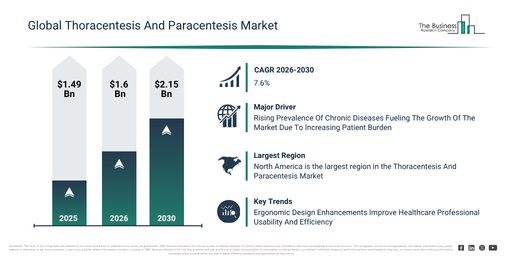
  • Thoracentesis And Paracentesis Market Size Reaches $1.6 Billion In 2026: What Is Driving Growth?

    Thoracentesis And Paracentesis Market Size Reaches $1.6 Billion In 2026: What Is Driving Growth?

    Featuring market attractiveness scoring, total addressable market sizing, company benchmarking matrices, interactive Excel dashboards, deeper supply chain intelligence, emerging startup tracking, and granular product-level insights, The Business Research Company’s 2026 market reports are built to deliver research that is both more actionable and more strategically valuable.

    Thoracentesis And Paracentesis Market Size Forecast: How Big Could The Market Get By 2030?

    The thoracentesis and paracentesis market size has experienced robust expansion in recent years. Its value is projected to increase from $1.49 billion in 2025 to $1.6 billion in 2026, showing a compound annual growth rate (CAGR) of 7.4%. The growth observed in the past can be attributed to several factors including the rising prevalence of ascites and pleural effusion, the widespread adoption of conventional thoracentesis and paracentesis procedures, improvements in hospital infrastructure, increasing awareness of minimally invasive procedures, and a growing demand for diagnostic and therapeutic procedures.

    The thoracentesis and paracentesis market is projected to experience substantial expansion in the coming years. It will grow to $2.15 billion in 2030 at a compound annual growth rate (CAGR) of 7.6%. This anticipated growth over the forecast period is primarily driven by factors such as the increasing acceptance of ultrasound-guided procedures, the creation of sophisticated thoracentesis and paracentesis kits, the incorporation of digital solutions for procedural management, the proliferation of ambulatory surgical centers, and dedicated efforts towards improving patient safety and procedural effectiveness. Key developments expected during this period encompass the widespread adoption of ultrasound-guided procedures, the rise of minimally invasive techniques, the convenience of point-of-care fluid drainage, improved safety protocols for procedures, and the availability of specialized therapeutic kits tailored for specific procedures.

    Get A Free Sample Report With In-Depth Market Insights:

    https://thebusinessresearchcompany.com/sample_request?id=96534162&type=smp&name=Thoracentesis%20And%20Paracentesis%20Market%20Report%202026&utm_source=Blogs&utm_medium=Paid&utm_campaign=Oct_PR

    Thoracentesis And Paracentesis Market Growth Factors: What’s Supporting Expansion?

    The increasing occurrence of chronic diseases is anticipated to drive the expansion of the thoracentesis and paracentesis market moving forward. These long-term health issues endure for extended periods, frequently advance gradually, and usually demand continuous care rather than a definitive cure. The increase in chronic disease prevalence is partly linked to sedentary habits, as extended sitting and limited physical activity elevate the risk of conditions like heart ailments and diabetes. Thoracentesis and paracentesis aid in managing chronic diseases through minimally invasive procedures that remove excess fluid from the pleural or abdominal cavities, thereby easing symptoms and enhancing patient well-being. These procedures facilitate prompt monitoring and treatment for conditions such as heart failure, liver disease, and cancers, leading to fewer complications and an improved overall disease management and quality of life. For example, in April 2025, data from the Centers for Disease Control and Prevention, a US-based government agency, showed that in 2023, around 76.4% of U.S. adults (194 million) had at least one chronic condition, with 51.4% (131 million) suffering from multiple chronic conditions. Consequently, the growing prevalence of chronic diseases is a key factor propelling the growth of the thoracentesis and paracentesis market. Increased healthcare spending is anticipated to boost the growth of the thoracentesis and paracentesis market in the future. Healthcare spending encompasses all financial outlays for medical services, products, and public health initiatives aimed at preventing, diagnosing, treating, and managing diseases, as well as preserving general health. The heightened need for healthcare expenditure stems from the growing incidence of chronic diseases, which necessitate long-term and expensive care. Thoracentesis and paracentesis contribute to lowering healthcare costs by facilitating minimally invasive fluid extraction, thereby shortening hospitalizations, reducing complication rates, and decreasing the reliance on expensive interventions. For example, in May 2024, the Office for National Statistics, a UK-based government department, reported that total healthcare expenditure rose by 5.6% in nominal terms in 2023, representing a 0.9% growth compared to 2022. Thus, the escalating healthcare spending is a key factor propelling the growth of the thoracentesis and paracentesis market.

    Thoracentesis And Paracentesis Market Segment Outlook: Which Categories Are Growing Fastest?

    The thoracentesis and paracentesis market covered in this report is segmented –

    1) By Procedure Type: Ultrasound-Guided Procedures, Blind Or Conventional Procedures

    2) By Product Type: Thoracentesis Kits, Paracentesis Kits, Other Product Types

    3) By Indication: Ascites, Pleural Effusion, Empyema, Hemothorax

    4) By Application: Diagnostic, Therapeutic

    5) By End User: Hospitals, Clinics, Ambulatory Surgical Centers, Other End Users

    Subsegments:

    1) By Ultrasound-Guided Procedures: Diagnostic Ultrasound Guided Procedure, Therapeutic Ultrasound Guided Procedure, Emergency Ultrasound Guided Procedure

    2) By Blind Or Conventional Procedures: Diagnostic Blind Procedure, Therapeutic Blind Procedure, Emergency Blind Procedure

    Thoracentesis And Paracentesis Market Industry Trends: What’s Reshaping Demand?

    Major companies operating in the thoracentesis and paracentesis market are concentrating on developing advanced technological solutions, such as fluid drainage automation, to elevate procedural safety, lessen patient discomfort, boost clinical efficiency, and enable continuous monitoring for improved treatment outcomes. Fluid drainage automation refers to the deployment of devices or systems to automatically manage the removal of bodily fluids from cavities, controlling flow, pressure, and safety to enhance operational efficiency and patient comfort. For instance, in January 2024, Laborie Medical Technologies Inc., a US-based medical technology company, launched the RenovarP Centesis System. This is a fluid drainage device that builds upon an existing paracentesis pump by including an expanded indication for thoracentesis. It incorporates design improvements to its handle and nest, thereby enhancing the overall user experience for healthcare professionals. The system offers a secure, effective, and minimally invasive method for draining fluid from the abdomen (paracentesis) and chest (thoracentesis), aiming to improve patient comfort and shorten recovery times.

    Thoracentesis And Paracentesis Market Competitive Landscape: Who Leads The Industry?

    Major companies operating in the thoracentesis paracentesis market are Cardinal Health Inc., Medtronic plc, Becton Dickinson Company, Boston Scientific Corporation, Teleflex Incorporated, Cook Medical LLC, Merit Medical Systems Inc., Redax S.p.A., Avanos Medical Inc., Poly Medicure Ltd., Axiom Medical Inc., Angiplast Private Limited, Utah Medical Products Inc., Mermaid Medical A/S, PFM Medical AG, ITL Australia Pty Ltd, ATMOS MedizinTechnik GmbH & Co. KG, Vygon SA, PolyMed Medical Devices Pvt. Ltd., Sterimed Medical Devices Pvt. Ltd., Blue Neem Medical Devices Pvt. Ltd.

    View The Full Thoracentesis And Paracentesis Market Report:

    https://thebusinessresearchcompany.com/report/thoracentesis-and-paracentesis-market-report?utm_source=Blogs&utm_medium=Paid&utm_campaign=Oct_PR

    Thoracentesis And Paracentesis Market Geographic Landscape: Which Region Leads Industry Growth?

    North America was the largest region in the thoracentesis and paracentesis market in 2025. Asia-Pacific is expected to be the fastest-growing region in the forecast period. The regions covered in the thoracentesis and paracentesis market report are Asia-Pacific, South East Asia, Western Europe, Eastern Europe, North America, South America, Middle East, Africa.

    Reach Out To Our Team:

    The Business Research Company: https://www.thebusinessresearchcompany.com/

    Americas: +1 310-496-7795

    Asia: +44 7882 955267 & +91 8897263534

    Europe: +44 7882 955267

    Email us at: marketing@tbrc.info

    Follow us on:

    LinkedIn: https://in.linkedin.com/company/the-business-research-company

    YouTube: https://www.youtube.com/channel/UC24_fI0rV8cR5DxlCpgmyFQ

    Global Market Model: https://www.thebusinessresearchcompany.com/global-market-model
  • Tetracyclines Market Valued At $30.14 Billion In 2026: Key Trends And Growth Drivers

    Tetracyclines Market Valued At $30.14 Billion In 2026: Key Trends And Growth Drivers

    Built to provide research that’s more actionable and strategically valuable, The Business Research Company’s 2026 market reports include market attractiveness analysis, total addressable market sizing, company benchmarking matrices, interactive Excel dashboards, broader supply chain intelligence, emerging startup tracking, and in-depth product insights.

    Tetracyclines Market Revenue Outlook: What CAGR Lies Ahead Through 2030?

    The tetracyclines market has experienced steady expansion in recent years. It is anticipated to grow from a value of $25.85 billion in 2025 to $26.6 billion in 2026, exhibiting a compound annual growth rate (CAGR) of 2.9%. This market’s historical growth can be linked to the increasing incidence of bacterial infections, the expansion of hospital facilities, a rise in the production of generic drugs, advancements in pharmaceutical research and development, and governmental programs aimed at improving access to antibiotics.

    The tetracyclines market size is projected to experience consistent expansion over the coming years, reaching $30.14 billion in 2030 at a compound annual growth rate (CAGR) of 3.2%. This anticipated growth during the forecast period is primarily driven by factors such as the increasing demand for advanced tetracycline formulations, the incorporation of AI into drug development, the widening application of personalized medicine, a rise in biotechnology investments, and a concentrated effort on managing antibiotic resistance. Significant trends identified for the forecast period encompass the creation of novel tetracycline derivatives, drug discovery aided by AI, enhancements in oral bioavailability, therapy focused on specific infections, and optimization of formulation processes.

    Get A Free Sample Report With In-Depth Market Insights:

    https://thebusinessresearchcompany.com/sample_request?id=73626583&type=smp&name=Tetracyclines%20Market%20Report%202026&utm_source=Blogs&utm_medium=Paid&utm_campaign=Oct_PR

    Tetracyclines Market Demand Drivers: What’s Powering Industry Growth?

    The expanding occurrence of bacterial infections is anticipated to boost the growth of the tetracyclines market going forward. A bacterial infection is a condition where harmful bacteria invade and multiply in the body, leading to tissue damage and illness. The rise in the prevalence of these infections is increasing due to various factors, including a surge in antibiotic-resistant bacteria cases and poor sanitation and hygiene in certain regions. Tetracyclines provide effective treatment options against a wide range of bacterial pathogens, thus addressing the increasing prevalence of bacterial infections. For instance, according to Gov.UK, a UK-based government agency, there were an estimated 66,730 serious antibiotic-resistant infections in 2023, as reported in November 2024. Therefore, the increasing prevalence of bacterial infections is driving the growth of the tetracyclines market.

    Tetracyclines Market Segment Landscape: Which Areas Lead Development?

    The tetracyclines market covered in this report is segmented –

    1) By Generation: First Generation, Second Generation, Third Generation

    2) By Formulation: Tablets, Capsules, Injectables, Topical

    3) By Route of Administration: Oral, Parenteral, Other Routes of Administration

    4) By Distribution Channel: Hospital Pharmacy, Retail Pharmacy, Online Pharmacy

    5) By Application: Respiratory Infections, Gastrointestinal Tract Infections, Skin Infections, Other Applications

    Subsegments:

    1) By First Generation: Tetracycline, Oxytetracycline, Chlortetracycline, Demethylchlortetracycline

    2) By Second Generation: Doxycycline, Minocycline, Methacycline, Lymecycline

    3) By Third Generation: Tigecycline, Eravacycline, Omadacycline, Sarecycline

    Tetracyclines Market Innovation Trends: What Developments Are Reshaping The Industry?

    Leading companies in the tetracyclines market are concentrating on creating innovative solutions, such as advanced generic formulation development, to secure a competitive edge. This advanced generic formulation development involves applying optimized synthesis processes, bioequivalence engineering, and quality-controlled manufacturing systems to produce therapeutically equivalent antibacterial drugs with enhanced stability and regulatory compliance. For instance, in May 2024, Dr. Reddy’s Laboratories Ltd., an India-based pharmaceutical company, introduced doxycycline for injection USP in the United States. This product is a therapeutically equivalent generic version of vibramycin for injection and is prescribed for treating a wide array of bacterial infections. It provides cost-efficient hospital supplies, adheres to stringent US FDA-compliant manufacturing standards, and features ready-to-use injectable formulations, thereby improving accessibility to antimicrobial treatments.

    Tetracyclines Market Company Landscape And Competitive Strategy

    Major companies operating in the tetracyclines market are Pfizer Inc., Abbott Laboratories, Merck KGaA, Teva Pharmaceutical Industries Ltd., Sun Pharmaceutical Industries Ltd., Aurobindo Pharma Limited, Cipla Limited, Dr. Reddy’s Laboratories Ltd., Ax Pharmaceutical Corporation, DEVA Holding A.S., Hebei Veyong Pharmaceutical Co. Ltd., Century Pharmaceuticals Ltd., Lupin Pharmaceuticals Inc., Hefei TNJ Chemical Industry Co. Ltd., Zydus Lifesciences Limited, Everest Medicines Limited, Jai Radhe Sales, Indian Drugs Pharmaceuticals Limited, Anhui Sinotech Industrial Co. Ltd., Gyma Laboratories of America Inc.

    View The Full Tetracyclines Market Report:

    https://thebusinessresearchcompany.com/report/tetracyclines-market-report?utm_source=Blogs&utm_medium=Paid&utm_campaign=Oct_PR

    Tetracyclines Market Largest Region: Which Geography Holds The Biggest Share?

    North America was the largest region in the tetracyclines market in 2025. Asia-Pacific is expected to be the fastest-growing region in the forecast period. The regions covered in the tetracyclines market report are Asia-Pacific, South East Asia, Western Europe, Eastern Europe, North America, South America, Middle East, Africa.

    Reach Out To Our Team:

    The Business Research Company: https://www.thebusinessresearchcompany.com/

    Americas: +1 310-496-7795

    Asia: +44 7882 955267 & +91 8897263534

    Europe: +44 7882 955267

    Email us at: marketing@tbrc.info

    Follow us on:

    LinkedIn: https://in.linkedin.com/company/the-business-research-company

    YouTube: https://www.youtube.com/channel/UC24_fI0rV8cR5DxlCpgmyFQ

    Global Market Model: https://www.thebusinessresearchcompany.com/global-market-model

  • Telemedicine Triage Artificial Intelligence (AI) Market Analysis: How The Industry Is Evolving Toward A $7.13 Billion Future

    Telemedicine Triage Artificial Intelligence (AI) Market Analysis: How The Industry Is Evolving Toward A $7.13 Billion Future

    Backed by market attractiveness analysis, total addressable market sizing, company benchmarking matrices, interactive Excel dashboards, wider supply chain intelligence, emerging startup coverage, and detailed product-level insights, The Business Research Company’s 2026 market reports are designed to offer research that is more actionable and strategically valuable than ever.

    Telemedicine Triage Artificial Intelligence (AI) Market Size, Value And Growth Trajectory Through 2030

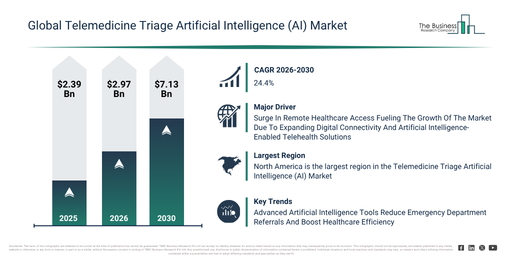
    The telemedicine triage artificial intelligence (AI) market size has experienced significant expansion in recent years. This market is forecast to increase from $2.39 billion in 2025 to $2.97 billion in 2026, at a compound annual growth rate (CAGR) of 24.2%. During the historic period, this growth was influenced by factors including a rising demand for telehealth services, the implementation of basic digital triage tools, escalating challenges in healthcare access, an increase in chronic disease prevalence, and the initial adoption of remote monitoring devices.

    The telemedicine triage artificial intelligence (AI) market is projected to experience significant expansion in the coming years. Its valuation is anticipated to reach $7.13 billion by 2030, propelled by a compound annual growth rate (CAGR) of 24.4%. This projected growth is driven by several factors, including advancements in AI algorithms, the proliferation of cloud-based healthcare platforms, supportive regulatory frameworks for digital health, integration with wearable medical devices, and a growing patient inclination towards virtual consultations. Noteworthy trends during this period encompass AI-powered symptom assessment, remote patient monitoring, predictive care prioritization, integration with electronic health records, and telehealth workflow automation.

    Get A Free Sample Report With In-Depth Market Insights:

    https://thebusinessresearchcompany.com/sample_request?id=88798550&type=smp&name=Telemedicine%20Triage%20Artificial%20Intelligence%20%28AI%29%20Market%20Report%202026&utm_source=Blogs&utm_medium=Paid&utm_campaign=Oct_PR

    Telemedicine Triage Artificial Intelligence (AI) Market Growth Backed By Core Demand Fundamentals

    The future expansion of the telemedicine triage artificial intelligence (AI) market is anticipated due to the growing need for remote healthcare access. Remote healthcare access enables patients to obtain medical or dental advice, consultations, and care remotely via digital tools like telemedicine platforms, mobile applications, and online portals. Enhanced digital connectivity is a key factor boosting remote healthcare access, allowing patients to get medical consultations without needing to attend physical healthcare facilities. Telemedicine triage artificial intelligence (AI) improves remote healthcare access by rapidly evaluating patient symptoms, ranking care requirements, and guiding individuals to suitable virtual or in-person services, eliminating the need for an initial physical appointment. For example, data from FAIR Health Inc., a US non-profit, indicates that in April 2023, national telehealth usage in 2023 saw a 7.3% increase, moving from 5.5% of medical claim lines in December 2022 to 5.9% in January 2023. Consequently, the rising demand for remote healthcare is propelling the expansion of the telemedicine triage artificial intelligence (AI) market.

    Telemedicine Triage Artificial Intelligence (AI) Market Segmentation: How Does The Market Break Down By Category?

    The telemedicine triage artificial intelligence (AI) market covered in this report is segmented –

    1) By Component: Software, Hardware, Services

    2) By Deployment Mode: Cloud Based, On Premises

    3) By Application: Primary Care, Emergency Care, Specialty Care, Mental Health, Other Applications

    4) By End User: Hospitals, Clinics, Telehealth Providers, Homecare, Other End Users

    Subsegments:

    1) By Software: Symptom Checker, Virtual Consultation Platform, Decision Support System, Patient Monitoring Software, Electronic Health Record Integration, Analytics And Reporting Tools

    2) By Hardware: Wearable Devices, Remote Monitoring Devices, Imaging Devices, Diagnostic Devices, Mobile Devices, Server And Storage Infrastructure

    3) By Services: Implementation And Integration Services, Consulting Services, Maintenance And Support Services, Training And Education Services, Cloud Hosting Services, Data Security And Compliance Services

    Telemedicine Triage Artificial Intelligence (AI) Market Growth Trends Reshaping The Competitive Landscape

    Major companies operating in the telemedicine triage artificial intelligence (AI) market are concentrating on developing advanced offerings, such as neurosymbolic AI-driven conversational systems. This focus aims to boost efficiency, enhance clinical safety, and reduce diagnostic uncertainty along with the burden of manual triage. Neurosymbolic AI denotes sophisticated AI mechanisms that merge large language models with structured medical knowledge to reason, validate its logic, and deliver transparent, medically sound guidance. For instance, in January 2026, Infermedica Sp. z o.o., a digital health technology company based in Poland, introduced Conversational Triage as part of its Infermedica 2.0 initiative. This is an agentic AI tool that utilizes a patented neurosymbolic paradigm, ensuring every interaction is anchored in medical knowledge and guidelines, thereby significantly reducing the risk of AI hallucinations and unclear decision-making. It incorporates automatic reasoning and explanation functionality, allowing for seamless adherence to clinical safety standards without relying on operator guesswork. The tool also integrates with multi-agent systems for tasks such as scheduling and EHR coordination, expanding its utility and lowering operational costs for healthcare providers.

    Telemedicine Triage Artificial Intelligence (AI) Market Industry Leaders And Competitive Landscape

    Major companies operating in the telemedicine triage artificial intelligence (AI) market are Google LLC, Microsoft Corporation, Ping An Healthcare Technology Company Ltd., Pager Inc., American Well Corporation, K Health Inc., HealthTap Inc., Ada Health GmbH, Florence Healthcare Inc., Doctorlink Ltd., Infermedica sp. z o.o., Binah.ai Ltd., TriageLogic LLC, MyTriage AI, eVisit Inc., Clearstep Health, Mediktor S.L., Your.MD Limited, Fabric Health Inc., Buoy Health Inc.

    View The Full Telemedicine Triage Artificial Intelligence (AI) Market Report:

    https://thebusinessresearchcompany.com/report/telemedicine-triage-artificial-intelligence-ai-market-report?utm_source=Blogs&utm_medium=Paid&utm_campaign=Oct_PR

    Telemedicine Triage Artificial Intelligence (AI) Market Regional Analysis And Top Geography

    North America was the largest region in the telemedicine triage artificial intelligence (AI) market in 2025. Asia-Pacific is expected to be the fastest-growing region in the forecast period. The regions covered in the telemedicine triage artificial intelligence (AI) market report are Asia-Pacific, South East Asia, Western Europe, Eastern Europe, North America, South America, Middle East, Africa.

    Reach Out To Our Team:

    The Business Research Company: https://www.thebusinessresearchcompany.com/

    Americas: +1 310-496-7795

    Asia: +44 7882 955267 & +91 8897263534

    Europe: +44 7882 955267

    Email us at: marketing@tbrc.info

    Follow us on:

    LinkedIn: https://in.linkedin.com/company/the-business-research-company

    YouTube: https://www.youtube.com/channel/UC24_fI0rV8cR5DxlCpgmyFQ

    Global Market Model: https://www.thebusinessresearchcompany.com/global-market-model