Blog

  • Ribonucleic Acid (RNA) Splicing Modulators Market Analysis 2026: Market Size, Growth Trends And Industry Outlook

    Ribonucleic Acid (RNA) Splicing Modulators Market Analysis 2026: Market Size, Growth Trends And Industry Outlook

    Backed by market attractiveness analysis, total addressable market sizing, company benchmarking matrices, interactive Excel dashboards, wider supply chain intelligence, emerging startup coverage, and detailed product-level insights, The Business Research Company’s 2026 market reports are designed to offer research that is more actionable and strategically valuable than ever.

    Ribonucleic Acid (RNA) Splicing Modulators Market CAGR Outlook And Future Development

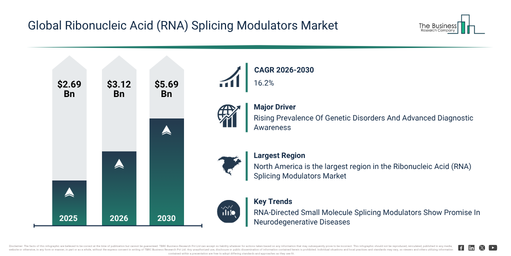
    The ribonucleic acid (RNA) splicing modulators market has seen considerable growth in recent years. Its valuation is expected to rise from $2.69 billion in 2025 to $3.12 billion in 2026, demonstrating a compound annual growth rate (CAGR) of 16.0%. This historical expansion can be attributed to factors such as the increasing prevalence of genetic disorders, advancements in molecular biology techniques, the growth of oncology therapeutics, rising research and development investments, and the adoption of antisense oligonucleotides.

    The ribonucleic acid (RNA) splicing modulators market is projected for substantial expansion in the coming years. Its value is anticipated to reach $5.69 billion by 2030, exhibiting a compound annual growth rate (CAGR) of 16.2%. This projected growth stems from factors such as the creation of AI-driven splicing modulators, the broader adoption of personalized medicine strategies, a rise in partnerships between pharmaceutical and biotechnology firms, improvements in drug delivery methods, and the approval of new therapeutic interventions by regulatory bodies. Key developments expected during this timeframe encompass targeted RNA splicing treatments, individualized genetic medicine, the utilization of high-throughput screening platforms, better incorporation of bioinformatics tools, and sophisticated molecular modeling techniques.

    Get A Free Sample Report With In-Depth Market Insights:

    https://thebusinessresearchcompany.com/sample_request?id=93832742&type=smp&name=Ribonucleic%20Acid%20%28RNA%29%20Splicing%20Modulators%20Market%20Report%202026&utm_source=Blogs&utm_medium=Paid&utm_campaign=Oct_PR

    Ribonucleic Acid (RNA) Splicing Modulators Market Demand Drivers Opening New Revenue Streams

    The ribonucleic acid (RNA) splicing modulators market is projected to expand due to the growing occurrence of genetic disorders. Genetic disorders are defined as conditions or illnesses stemming from irregularities in an individual’s DNA, such as mutations, deletions, or shifts in chromosomes that impair typical biological functions. A heightened awareness combined with improved diagnostic capabilities is leading to an increased identification of these cases, facilitating earlier diagnosis and intervention for inherited conditions. RNA splicing modulators contribute to managing genetic disorders by addressing and correcting abnormal RNA splicing events, thus presenting a therapeutic avenue for treating or controlling the genetic mutations that cause these conditions. For instance, the National Health Service, a UK-based government department, stated in May 2024 that 17,000 individuals live with sickle cell disease, an inherited genetic blood disorder, with approximately 250 new diagnoses occurring annually. Consequently, the increasing prevalence of genetic disorders is a key factor propelling the growth of the ribonucleic acid (RNA) splicing modulators market.

    Ribonucleic Acid (RNA) Splicing Modulators Market Segment Landscape: Which Areas Lead Development?

    The ribonucleic acid (RNA) splicing modulators market covered in this report is segmented –

    1) By Product Type: Small Molecule Modulators, Antisense Oligonucleotides, Small Interfering Ribonucleic Acid, Other Product Types

    2) By Route Of Administration: Subcutaneous, Intravenous, Intrathecal Central Nervous System Adjacent

    3) By Application: Cancer, Genetic Disorders, Neurological Disorders, Other Applications

    4) By End-User: Pharmaceutical Companies, Research Institutes, Hospitals And Clinics, Other End Users

    Subsegments:

    1) By Small Molecule Modulators: Splicing Factor Inhibitors, Ribonucleic Acid Binding Modulators, Kinase Modulators Affecting Splicing, Pre- Messenger Ribonucleic Acid Processing Modulators, Exon Skipping Enhancers

    2) By Antisense Oligonucleotides: Exon Skipping Antisense Oligonucleotides, Splice Site Modifying Antisense Oligonucleotides, Intronic Targeting Antisense Oligonucleotides, Messenger Ribonucleic Acid Degradation Inducing Antisense Oligonucleotides, Gene Expression Modulating Antisense Oligonucleotides

    3) By Small Interfering Ribonucleic Acid: Exon Skipping Small Interfering Ribonucleic Acid, Splice Site Small Interfering Ribonucleic Acid, Intronic Targeting Small Interfering Ribonucleic Acid, Pre- Messenger Ribonucleic Acid Processing Small Interfering Ribonucleic Acid, Gene Silencing Small Interfering Ribonucleic Acid

    4) By Other Product Types: Ribonucleoprotein Complex Modulators, Spliceosome Assembly Modulators, Ribonucleic Acid Editing Enzyme Modulators, Long Non-Coding Ribonucleic Acid Modulators, Messenger Ribonucleic Acid Modulators

    Ribonucleic Acid (RNA) Splicing Modulators Market Trends Powering Strategic Industry Growth

    Leading firms within the ribonucleic acid (RNA) splicing modulators market are prioritizing the development of sophisticated RNA-targeted drug discovery platforms, including RNA-directed small molecule splicing modulators, aiming to boost effectiveness, elevate safety, and tackle previously unaddressed requirements for neurodegenerative conditions. These RNA-directed small molecule splicing modulators function as compact compounds that attach to RNA, subsequently modifying pre-mRNA splicing to rectify or adjust splicing patterns, thereby addressing genetic disorders or malignancies. An example of this is Skyhawk Therapeutics, a US-based biotechnology company, which revealed favorable interim outcomes in September 2025 from its Phase 1 clinical trial for SKY-0515, intended for Huntington’s disease. This is an orally delivered, experimental small molecule RNA splicing modifier, engineered using the firm’s SKYSTAR platform. The trial results showed dose-dependent reductions of mutant huntingtin protein (up to 62%) and PMS1 mRNA in patients, alongside excellent brain penetration and a positive safety profile, indicating a promising dual-mechanism strategy to target fundamental disease processes autonomously.

    Ribonucleic Acid (RNA) Splicing Modulators Market Top Companies Driving Competitive Growth

    Major companies operating in the ribonucleic acid (RNA) splicing modulators market are F. Hoffmann-La Roche Ltd, Pfizer Inc., Novartis AG, Biogen Inc., PTC Therapeutics Inc., Ionis Pharmaceuticals Inc., Abivax SA, Twist Bioscience Corporation, Wave Life Sciences Ltd, Arrakis Therapeutics Inc., Remix Therapeutics Inc., Anima Biotech Inc., Rgenta Therapeutics Inc., Avidity Biosciences Inc., Skyhawk Therapeutics Inc., Stoke Therapeutics Inc., Accent Therapeutics Inc., Chordia Therapeutics Inc., Panorama Medicine Inc., Serna Therapeutics Inc., Ribometrix Inc., Envisagenics Inc., Dyne Therapeutics Inc.

    View The Full Ribonucleic Acid (RNA) Splicing Modulators Market Report:

    https://thebusinessresearchcompany.com/report/ribonucleic-acid-rna-splicing-modulators-market-report?utm_source=Blogs&utm_medium=Paid&utm_campaign=Oct_PR

    Ribonucleic Acid (RNA) Splicing Modulators Market Global Footprint: Which Region Leads The Industry?

    North America was the largest region in the ribonucleic acid (RNA) splicing modulators market in 2025. Asia-Pacific is expected to be the fastest-growing region in the forecast period. The regions covered in the ribonucleic acid (RNA) splicing modulators market report are Asia-Pacific, South East Asia, Western Europe, Eastern Europe, North America, South America, Middle East, Africa.

    Reach Out To Our Team:

    The Business Research Company: https://www.thebusinessresearchcompany.com/

    Americas: +1 310-496-7795

    Asia: +44 7882 955267 & +91 8897263534

    Europe: +44 7882 955267

    Email us at: marketing@tbrc.info

    Follow us on:

    LinkedIn: https://in.linkedin.com/company/the-business-research-company

    YouTube: https://www.youtube.com/channel/UC24_fI0rV8cR5DxlCpgmyFQ

    Global Market Model: https://www.thebusinessresearchcompany.com/global-market-model
  • Reverse Transcription Kits Market Forecast To 2030: Starting From $2.51 Billion In 2026

    Reverse Transcription Kits Market Forecast To 2030: Starting From $2.51 Billion In 2026

    Featuring market attractiveness scoring, total addressable market sizing, company benchmarking matrices, interactive Excel dashboards, deeper supply chain intelligence, emerging startup tracking, and granular product-level insights, The Business Research Company’s 2026 market reports are built to deliver research that is both more actionable and more strategically valuable.

    Reverse Transcription Kits Market Set To Climb From $1.82 Billion In 2026 To $2.51 Billion By 2030

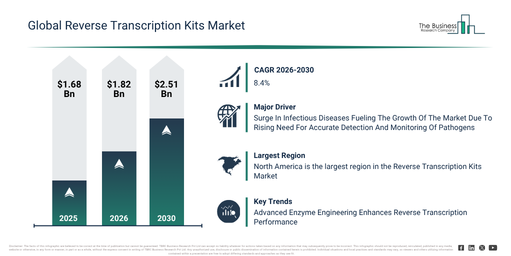
    The reverse transcription kits market has experienced substantial growth in recent years. It is projected to increase from $1.68 billion in 2025 to $1.82 billion in 2026, exhibiting a compound annual growth rate (CAGR) of 8.2%. The expansion observed in the historic period is attributable to the increasing use of reverse transcription in molecular biology research, the growth of academic research initiatives, a rising demand for gene expression analysis, advancements in enzyme technologies, and the adoption of traditional rt-pcr techniques.

    The reverse transcription kits market size is anticipated to expand significantly in the upcoming years. It is projected to achieve a valuation of $2.51 billion in 2030, demonstrating a compound annual growth rate (CAGR) of 8.4%. This growth during the forecast period can be attributed to factors such as the increasing demand for high-throughput reverse transcription kits, their integration with automated laboratory systems, the expansion of pharmaceutical research and development, their growing application in cDNA library construction, and the introduction of multiplex and quantitative kits. Prominent trends for the forecast period include high-fidelity reverse transcription kits, multiplex reverse transcription kits, quantitative cDNA analysis, automated reverse transcription workflows, and integration with next-generation sequencing.

    Get A Free Sample Report With In-Depth Market Insights:

    https://thebusinessresearchcompany.com/sample_request?id=55513999&type=smp&name=Reverse%20Transcription%20Kits%20Market%20Report%202026&utm_source=Blogs&utm_medium=Paid&utm_campaign=Oct_PR

    Reverse Transcription Kits Market Growth Backed By Core Demand Fundamentals

    The future expansion of the reverse transcription kits market is anticipated to be significantly driven by the rising occurrence of infectious diseases. These diseases are defined as conditions resulting from pathogenic microorganisms like bacteria, viruses, parasites, or fungi, capable of spreading between individuals or organisms. The heightened incidence of infectious diseases stems from global population expansion, where denser populations contribute to quicker pathogen transmission and a greater likelihood of outbreaks. Reverse transcription kits play a crucial role in managing infectious diseases by converting viral RNA into complementary DNA, thereby enabling precise detection, tracking, and study of RNA-based pathogens for prompt diagnosis and intervention. For example, the World Health Organization reported in July 2023 that approximately 40-60 million doses of malaria vaccinations will be required globally each year by 2026, with projections indicating an increase to 80-100 million doses annually by 2030. Consequently, the expanding occurrence of infectious diseases is fueling the development of the reverse transcription kits market.

    Reverse Transcription Kits Market Segments: Where Is Growth Concentrated?

    The reverse transcription kits market covered in this report is segmented –

    1) By Product Type: One-Step Reverse Transcription Kits, Two-Step Reverse Transcription Kits, Other Product Types

    2) By Application: Gene Expression Analysis, Complementary DNA Library Construction, Reverse Transcription Polymerase Chain Reaction, Ribonucleic Acid Sequencing, Other Applications

    3) By End-User: Academic And Research Institutes, Pharmaceutical And Biotechnology Companies, Hospitals And Diagnostic Centers, Other End Users

    Subsegments:

    1) By One-Step Reverse Transcription Kits: Standard One-Step Reverse Transcription Kits, High Fidelity One-Step Reverse Transcription Kits, Quantitative One-Step Reverse Transcription Kits, Multiplex One-Step Reverse Transcription Kits

    2) By Two-Step Reverse Transcription Kits: Standard Two-Step Reverse Transcription Kits, High Efficiency Two-Step Reverse Transcription Kits, Quantitative Two-Step Reverse Transcription Kits, Multiplex Two-Step Reverse Transcription Kits

    3) By Other Product Types: Complementary Deoxyribonucleic Acid Synthesis Kits, Ribonucleic Acid Template Preparation Kits, Reverse Transcription Enzyme Kits, Specialized Nucleic Acid Kits

    Reverse Transcription Kits Market Growth Trends Reshaping The Competitive Landscape

    Major companies active in the reverse transcription kits market are prioritizing the development of innovative products, such as high-fidelity reverse transcriptase, to ensure accurate and efficient cDNA synthesis for both research and diagnostic applications. High-fidelity reverse transcription kits are comprehensive, ready-to-use solutions that incorporate engineered enzymes, optimized buffers, and supporting accessories, enabling precise RNA-to-cDNA conversion with excellent yield, sensitivity, and reproducibility for genomics, transcriptomics, and molecular diagnostics. For example, in May 2024, RNAConnect, a US-based life sciences tools firm, introduced UltraMarathonRT (uMRT), an ultra-processive next-generation reverse transcriptase designed to enhance cDNA synthesis efficiency, support longer RNA templates, and improve downstream assay performance. These advanced kits allow for rapid, high-quality reverse transcription with minimal errors, thereby supporting demanding laboratory workflows, high-throughput analyses, and sensitive RNA detection in research, clinical diagnostics, and biotechnology applications.

    Reverse Transcription Kits Market Leading Players And Competitive Positioning

    Major companies operating in the reverse transcription kits market are Roche Holding AG, Thermo Fisher Scientific Inc., Merck KGaA, Agilent Technologies Inc., Illumina Inc., Bio-Rad Laboratories Inc., QIAGEN N.V., Promega Corporation, Bioline, Takara Bio Inc., Analytik Jena AG, Bioneer Corporation, New England Biolabs Inc., Biovendor a.s., Enzo Life Sciences Inc., Zymo Research Corporation, Lucigen Corporation, System Biosciences LLC, Norgen Biotek Corp., Jena Bioscience GmbH, Canvax Biotech S.L., GeneCopoeia Inc., Toyobo Co. Ltd.

    View The Full Reverse Transcription Kits Market Report:

    https://thebusinessresearchcompany.com/report/reverse-transcription-kits-market-report?utm_source=Blogs&utm_medium=Paid&utm_campaign=Oct_PR

    Reverse Transcription Kits Market Regional Distribution: Which Areas Power Market Growth?

    North America was the largest region in the reverse transcription kits market in 2025. Asia-Pacific is expected to be the fastest-growing region in the forecast period. The regions covered in the reverse transcription kits market report are Asia-Pacific, South East Asia, Western Europe, Eastern Europe, North America, South America, Middle East, Africa.

    Reach Out To Our Team:

    The Business Research Company: https://www.thebusinessresearchcompany.com/

    Americas: +1 310-496-7795

    Asia: +44 7882 955267 & +91 8897263534

    Europe: +44 7882 955267

    Email us at: marketing@tbrc.info

    Follow us on:

    LinkedIn: https://in.linkedin.com/company/the-business-research-company

    YouTube: https://www.youtube.com/channel/UC24_fI0rV8cR5DxlCpgmyFQ

    Global Market Model: https://www.thebusinessresearchcompany.com/global-market-model
  • Revenue Cycle Copilots Market Size In 2026 And Beyond: Understanding Future Growth Potential

    Revenue Cycle Copilots Market Size In 2026 And Beyond: Understanding Future Growth Potential

    Built to provide research that’s more actionable and strategically valuable, The Business Research Company’s 2026 market reports include market attractiveness analysis, total addressable market sizing, company benchmarking matrices, interactive Excel dashboards, broader supply chain intelligence, emerging startup tracking, and in-depth product insights.

    Revenue Cycle Copilots Market Forecast: Value Set To Climb From $2.55 Billion To $5.43 Billion

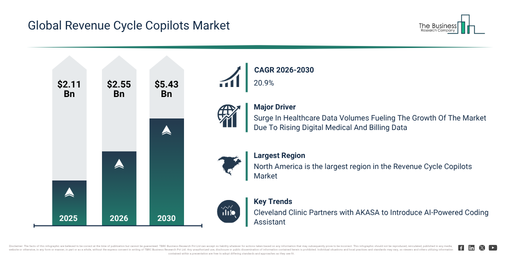
    The revenue cycle copilots market has seen significant expansion in recent years. It will grow from $2.11 billion in 2025 to $2.55 billion in 2026 at a compound annual growth rate (CAGR) of 20.6%. This historical development can be attributed to several factors including manual revenue cycle processes, the increasing intricacy of healthcare billing, the expansion of hospital and clinic networks, an elevated focus on financial performance, and the adoption of standalone software solutions.

    The revenue cycle copilots market size is expected to experience substantial growth in the coming years, with projections indicating it will reach $5.43 billion in 2030, exhibiting a compound annual growth rate (CAGR) of 20.9%. This expansion during the forecast period is attributed to several factors, including AI-driven automation in the revenue cycle, an increase in cloud-based deployment, integration with electronic health records (EHR), a growing demand for predictive analytics in billing, and the broadening of revenue cycle consulting services. Prominent trends anticipated in the forecast period encompass automated billing and coding, optimization of claims accuracy, enhancement of the patient financial experience, automation of revenue analytics and reporting, and improved efficiency in denial management.

    Get A Free Sample Report With In-Depth Market Insights:

    https://thebusinessresearchcompany.com/sample_request?id=83353068&type=smp&name=Revenue%20Cycle%20Copilots%20Market%20Report%202026&utm_source=Blogs&utm_medium=Paid&utm_campaign=Oct_PR

    Revenue Cycle Copilots Market Growth Catalysts And Demand Drivers

    The anticipated expansion of the revenue cycle copilots market throughout the forecast period is largely attributed to the accelerated increase in healthcare data volumes. These volumes encompass the expanding digital information originating from sources such as electronic health records (EHRs), various diagnostic systems, medical imaging, billing platforms, and interconnected healthcare technologies. The broad implementation of EHRs and digital health solutions has led to a significant influx of both structured and unstructured clinical and financial data, thereby fostering an increasing demand for sophisticated data processing and analytical functionalities. Revenue cycle copilots effectively tackle this issue by employing AI-driven automation to efficiently process, analyze, and manage intricate billing and clinical datasets, subsequently enhancing coding accuracy, operational efficiency, and overall revenue cycle performance. For example, data from February 2025 published by Healthcare Asia Magazine, a Singapore-based healthcare industry publication, indicated that the healthcare sector contributed close to 30% of the world’s data volume, with its data experiencing a compound annual growth rate roughly 6% greater than that observed in the manufacturing industry. Consequently, the increasing healthcare data volumes are propelling the expansion of the revenue cycle copilots market.

    Revenue Cycle Copilots Market Segment Analysis: What Are The Core Market Categories?

    The revenue cycle copilots market covered in this report is segmented –

    1) By Component: Software, Services

    2) By Deployment Mode: On-Premises, Cloud-Based

    3) By Organization Size: Small And Medium Healthcare Providers, Large Hospitals Healthcare Systems

    4) By Application: Hospitals, Clinics, Ambulatory Surgical Centers, Specialty Practices, Other Applications

    5) By End-User: Healthcare Providers, Payers, Other End Users

    Subsegments:

    1) By Software: Billing And Coding Software, Claims Management Software, Patient Financial Experience Software, Revenue Analytics And Reporting Software, Payment Processing Software

    2) By Services: Revenue Cycle Consulting Services, Medical Coding And Billing Services, Payment Posting And Reconciliation Services, Denial Management Services, Training And Support Services

    Revenue Cycle Copilots Market Trends Shaping Long-Term Demand

    Leading companies in the revenue cycle copilots market are prioritizing the development of artificial intelligence-driven coding assistance, specifically generative AI tools designed to automatically interpret clinical documentation and suggest accurate medical codes to streamline billing and enhance revenue cycle efficiency. These sophisticated platforms integrate natural language understanding with health-specific coding logic to minimize manual work, improve precision, and decrease claim rejections, concurrently enabling staff to concentrate on more strategic responsibilities. For instance, in April 2025, Cleveland Clinic, a US-based health system, partnered with AKASA to launch AI-driven revenue cycle tools, including an AI-powered coding assistant capable of reviewing clinical documents in seconds and processing large volumes rapidly to support efficient, accurate mid-cycle coding. While such innovations undoubtedly advance automation and fiscal outcomes, validating clinical context accuracy and ensuring integration with diverse electronic health record systems continue to present challenges.

    Revenue Cycle Copilots Market Competitive Overview And Top Companies

    Major companies operating in the revenue cycle copilots market are UnitedHealth Group, Oracle Corporation, GE Healthcare, Cognizant Technology Solutions Corporation, Experian Health, Athenahealth Inc., Conifer Health Solutions, eClinicalWorks LLC, Waystar Inc., Meditech, NextGen Healthcare Inc., Infinx Healthcare, FinThrive Inc., Cedar, AKASA, CombineHealth, Epic Systems Corporation, RapidClaims, Allscripts Healthcare Solutions Inc., AGS Health, Olive AI Inc., nThrive Inc.

    View The Full Revenue Cycle Copilots Market Report:

    https://thebusinessresearchcompany.com/report/revenue-cycle-copilots-market-report?utm_source=Blogs&utm_medium=Paid&utm_campaign=Oct_PR

    Revenue Cycle Copilots Market Leading Geography: Which Region Contributes The Most Revenue?

    North America was the largest region in the revenue cycle copilots market in 2025. Asia-Pacific is expected to be the fastest-growing region in the forecast period. The regions covered in the revenue cycle copilots market report are Asia-Pacific, South East Asia, Western Europe, Eastern Europe, North America, South America, Middle East, Africa.

    Reach Out To Our Team:

    The Business Research Company: https://www.thebusinessresearchcompany.com/

    Americas: +1 310-496-7795

    Asia: +44 7882 955267 & +91 8897263534

    Europe: +44 7882 955267

    Email us at: marketing@tbrc.info

    Follow us on:

    LinkedIn: https://in.linkedin.com/company/the-business-research-company

    YouTube: https://www.youtube.com/channel/UC24_fI0rV8cR5DxlCpgmyFQ

    Global Market Model: https://www.thebusinessresearchcompany.com/global-market-model
  • Respiratory Viral Load Quantification Market Reaches $3.13 Billion In 2026: Key Developments Shaping Expansion

    Respiratory Viral Load Quantification Market Reaches $3.13 Billion In 2026: Key Developments Shaping Expansion

    Backed by market attractiveness analysis, total addressable market sizing, company benchmarking matrices, interactive Excel dashboards, wider supply chain intelligence, emerging startup coverage, and detailed product-level insights, The Business Research Company’s 2026 market reports are designed to offer research that is more actionable and strategically valuable than ever.

    Respiratory Viral Load Quantification Market Revenue Growth On Track For A 11% CAGR Through 2030

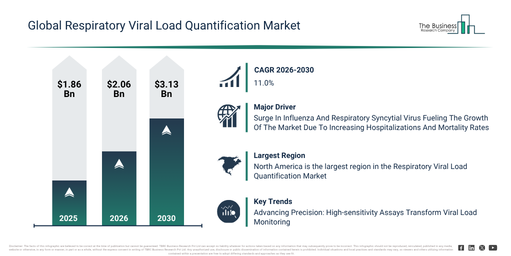
    The size of the respiratory viral load quantification market has expanded considerably in recent years. It is projected to grow from $1.86 billion in 2025 to $2.06 billion in 2026, at a compound annual growth rate (CAGR) of 10.8%. This historical expansion can be attributed to factors such as the rising prevalence of respiratory infections, the widespread adoption of PCR-based diagnostics, increasing demand for laboratory automation, government-funded disease surveillance programs, and the broadening of clinical research activities.

    The respiratory viral load quantification market is projected to experience swift expansion over the coming years. Its valuation is anticipated to reach $3.13 billion by 2030, demonstrating a compound annual growth rate (CAGR) of 11.0%. This anticipated growth during the forecast period is primarily driven by factors such as the incorporation of next-generation sequencing, the increasing adoption of AI-enabled diagnostic platforms, the rising demand for multiplex assays, the expansion in epidemiology and outbreak monitoring efforts, and increased investment in rapid diagnostic technologies. Key trends identified for the forecast timeframe encompass real-time viral load monitoring, enhanced integration with laboratory information systems, advancements in automated sample processing, the development of high-sensitivity diagnostic assays, and the application of predictive disease progression modeling.

    Get A Free Sample Report With In-Depth Market Insights:

    https://thebusinessresearchcompany.com/sample_request?id=22435376&type=smp&name=Respiratory%20Viral%20Load%20Quantification%20Market%20Report%202026&utm_source=Blogs&utm_medium=Paid&utm_campaign=Oct_PR

    Respiratory Viral Load Quantification Market Opportunity Drivers: What’s Unlocking New Revenue Potential?

    An increasing occurrence of influenza and respiratory syncytial virus (RSV) is projected to fuel expansion within the respiratory viral load quantification market during the forecast timeframe. These infections, influenza and RSV, are highly transmissible respiratory diseases stemming from viral agents, impacting the lungs and airways, leading to health consequences from minor sickness to serious respiratory issues. The growing widespread nature of these infections is heightening the need for precise viral load assessment to facilitate prompt diagnosis, track treatment effectiveness, and aid infection management strategies. Measuring respiratory viral load precisely allows for accurate identification and continuous evaluation of the viral presence, assisting medical professionals in making well-informed choices and enhancing patient care. For example, data from February 2026, provided by the Centers for Disease Control and Prevention (CDC), a US-based government department, showed that in 2026, influenza was responsible for around 290,000–450,000 hospitalizations and 34,000–53,000 deaths each year in the United States, whereas RSV contributed to an estimated 190,000–350,000 hospitalizations and 10,000–23,000 deaths. Consequently, the increased occurrence of influenza and respiratory syncytial virus is propelling the expansion of the respiratory viral load quantification market.

    Respiratory Viral Load Quantification Market Segment Breakdown: Which Categories Lead On Revenue?

    The respiratory viral load quantification market covered in this report is segmented –

    1) By Technology: Polymerase Chain Reaction, Next-Generation Sequencing, Immunoassays, Other Technologies

    2) By Product Type: Instruments, Assays And Kits, Software

    3) By Pathogen: Influenza A And B, Respiratory Syncytial Virus, Human Metapneumovirus, Parainfluenza Viruses

    4) By Application: Clinical Diagnostics, Research, Epidemiology, Other Applications

    5) By End-User: Hospitals And Clinics, Diagnostic Laboratories, Research Institutes, Other End Users

    Subsegments:

    1) By Polymerase Chain Reaction: Real Time Polymerase Chain Reaction, Digital Polymerase Chain Reaction, Reverse Transcription Polymerase Chain Reaction, Multiplex Polymerase Chain Reaction

    2) By Next Generation Sequencing: Whole Genome Sequencing, Targeted Sequencing, RNA Sequencing, Metagenomic Sequencing

    3) By Immunoassays: Enzyme Linked Immunosorbent Assay, Chemiluminescent Immunoassay, Fluorescent Immunoassay, Lateral Flow Immunoassay

    4) By Other Technologies: Mass Spectrometry Based Quantification, Microarray Based Detection, Biosensor Based Analysis, Hybridization Based Assays

    Respiratory Viral Load Quantification Market Innovation Trends Shaping Future Development

    Leading companies in the respiratory viral load quantification market are developing innovative solutions, such as high-sensitivity quantitative assays, to enable precise measurement of viral loads and support improved patient monitoring and therapeutic decision-making. These high-sensitivity quantitative assays are molecular- or immunoassay-based platforms designed to detect and quantify viral RNA or antigens with high accuracy, speed, and reproducibility across respiratory pathogens like respiratory syncytial virus (RSV), influenza, and SARS-CoV-2. For instance, in January 2025, Shionogi & Co., Ltd., a Japan-based pharmaceutical company, reported positive Phase 2 trial results for its oral antiviral candidate S-337395, where respiratory viral load quantification was used as a key endpoint to evaluate treatment efficacy and viral suppression. By leveraging advanced molecular detection technologies and optimized assay workflows, these diagnostic solutions facilitate rapid, reliable, and reproducible viral load measurements, supporting clinical trials, therapeutic monitoring, and public health interventions across hospital and laboratory settings.

    Respiratory Viral Load Quantification Market Competitive Landscape: Which Companies Lead The Industry?

    Major companies operating in the respiratory viral load quantification market are Cardinal Health, Johnson & Johnson Services Inc, Roche Diagnostics, Thermo Fisher Scientific, Abbott Laboratories, Siemens Healthineers AG, Danaher Corporation (Cepheid), Becton Dickinson Company (BD), Laboratory Corporation Of America Holdings (LabCorp), Quest Diagnostics Incorporated, Agilent Technologies, Illumina Inc, bioMérieux SA, Hologic Inc, PerkinElmer Inc, Sysmex Corporation, Bio-Rad Laboratories Inc, Qiagen NV, DiaSorin SpA, Seegene Inc, GC Diagnostics Corporation.

    View The Full Respiratory Viral Load Quantification Market Report:

    https://thebusinessresearchcompany.com/report/respiratory-viral-load-quantification-market-report?utm_source=Blogs&utm_medium=Paid&utm_campaign=Oct_PR

    Respiratory Viral Load Quantification Market Regional Outlook: Where Is Opportunity Concentrated?

    North America was the largest region in the respiratory viral load quantification market in 2025. Asia-Pacific is expected to be the fastest-growing region in the forecast period. The regions covered in the respiratory viral load quantification market report are Asia-Pacific, South East Asia, Western Europe, Eastern Europe, North America, South America, Middle East, Africa.

    Reach Out To Our Team:

    The Business Research Company: https://www.thebusinessresearchcompany.com/

    Americas: +1 310-496-7795

    Asia: +44 7882 955267 & +91 8897263534

    Europe: +44 7882 955267

    Email us at: marketing@tbrc.info

    Follow us on:

    LinkedIn: https://in.linkedin.com/company/the-business-research-company

    YouTube: https://www.youtube.com/channel/UC24_fI0rV8cR5DxlCpgmyFQ

    Global Market Model: https://www.thebusinessresearchcompany.com/global-market-model
  • Recurrent Implantation Failure Panels Market Size And Growth In 2026: Key Factors Shaping Future Demand

    Recurrent Implantation Failure Panels Market Size And Growth In 2026: Key Factors Shaping Future Demand

    Built to provide research that’s more actionable and strategically valuable, The Business Research Company’s 2026 market reports include market attractiveness analysis, total addressable market sizing, company benchmarking matrices, interactive Excel dashboards, broader supply chain intelligence, emerging startup tracking, and in-depth product insights.

    Recurrent Implantation Failure Panels Market Expansion Outlook: What Revenue Opportunities Are Ahead?

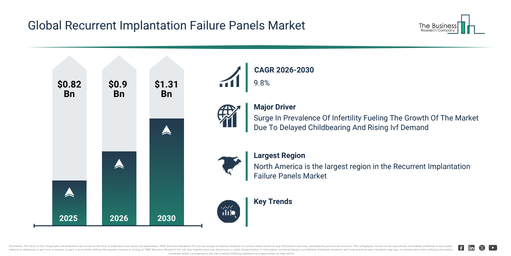
    The recurrent implantation failure panels market has shown robust expansion in its size over recent years. Its expansion is projected to proceed from $0.82 billion in 2025 to reach $0.9 billion by 2026, demonstrating a compound annual growth rate (CAGR) of 9.5%. Historically, this growth has been driven by factors such as increasing awareness of infertility, the widespread adoption of conventional IVF protocols, the proliferation of diagnostic laboratories, the rising application of genetic testing, and the growing demand for endometrial evaluation.

    The recurrent implantation failure panels market is anticipated to experience substantial expansion in the coming years. It will grow to $1.31 billion in 2030 at a compound annual growth rate (CAGR) of 9.8%. This projected growth is driven by factors such as the incorporation of AI and machine learning technologies, the increasing number of fertility clinics, the embracing of multi-omics methodologies, the creation of automated testing systems, and a rising patient preference for tailored fertility solutions. Key developments anticipated during this period involve customized assessment of implantation risk, the consolidation of multi-omics data, AI-driven models for predicting fertility, continuous monitoring of endometrial receptivity, and the automation of genetic and immunological tests.

    Get A Free Sample Report With In-Depth Market Insights:

    https://thebusinessresearchcompany.com/sample_request?id=72874072&type=smp&name=Recurrent%20Implantation%20Failure%20Panels%20Market%20Report%202026&utm_source=Blogs&utm_medium=Paid&utm_campaign=Oct_PR

    Recurrent Implantation Failure Panels Market Growth Factors: What’s Supporting Expansion?

    The global rise in infertility cases is projected to fuel the expansion of the recurrent implantation failure (RIF) panels market throughout the forecast period. Infertility refers to the inability to achieve conception after a year of consistent, unprotected sexual activity. The growing incidence of infertility is largely linked to factors like delaying parenthood, shifts in lifestyle, and the natural decline in reproductive capabilities with age, all of which raise the chances of conception difficulties and unsuccessful outcomes from assisted reproductive procedures. Recurrent implantation failure panels are instrumental in managing infertility by pinpointing genetic, immunological, and hormonal elements that might impede successful embryo implantation, thereby allowing clinicians to devise more customized treatment plans and enhance in vitro fertilization (IVF) success rates. As an illustration, in June 2025, figures from the Human Fertilisation and Embryology Authority (HFEA), a UK-based statutory regulator of fertility treatment, indicated that approximately 52,400 patients underwent more than 77,500 IVF cycles at licensed fertility clinics during 2023. Consequently, the increasing worldwide prevalence of infertility is propelling the growth of the recurrent implantation failure panels market.

    Recurrent Implantation Failure Panels Market Segment Landscape And Growth Outlook

    The recurrent implantation failure panels market covered in this report is segmented –

    1) By Product Type: Genetic Panels, Immunological Panels, Endometrial Receptivity Panels, Combined Panels, Other Product Types

    2) By Technology: Polymerase Chain Reaction (PCR), Next-Generation Sequencing, Microarray, Immunoassay, Other Technologies

    3) By Sample Type: Blood, Tissue, Other Sample Types

    4) By End User: Hospitals And Clinics, Diagnostic Laboratories, Fertility Centers, Other End Users

    Subsegments:

    1) By Genetic Panels: Chromosomal Abnormality Panels, Gene Mutation Panels, Single Nucleotide Variation Panels, Epigenetic Marker Panels

    2) By Immunological Panels: Cytokine Profile Panels, Autoantibody Detection Panels, Natural Killer Cell Activity Panels, T Cell Subset Panels

    3) By Endometrial Receptivity Panels: Gene Expression Profiling Panels, Protein Marker Panels, Microbiome Analysis Panels, Histological Assessment Panels

    4) By Combined Panels: Genetic And Immunological Panels, Genetic And Endometrial Panels, Immunological And Endometrial Panels, Multi Parameter Comprehensive Panels

    5) By Other Product Types: Hormonal Assay Panels, Metabolic Function Panels, Inflammatory Marker Panels, Customized Research Panels

    Recurrent Implantation Failure Panels Market Leading Companies And Competitive Benchmarking

    Major companies operating in the recurrent implantation failure panels market are Thermo Fisher Scientific Inc., Laboratory Corporation of America Holdings (LabCorp), Quest Diagnostics Incorporated, Illumina Inc., Natera Inc., Redcliffe Labs, MedGenome Labs Ltd., Mayo Clinic Laboratories, Fulgent Genetics Inc., LifeCell International, Kindbody Genetics, MapmyGenome, DNA Labs India, Shree IVF Clinic, Inti Labs, Vida Fertility Genetics, Cleveland Clinic, ReceptivaDx (CicloMed), MatriceLab, Reproductive Genetic Innovations (RGI), BGI Genomics Co. Ltd., Embryolab Next Gen IVF, Aksigen IVF, Progenesis IVF, Vani IVF.

    View The Full Recurrent Implantation Failure Panels Market Report:

    https://thebusinessresearchcompany.com/report/recurrent-implantation-failure-panels-market-report?utm_source=Blogs&utm_medium=Paid&utm_campaign=Oct_PR

    Recurrent Implantation Failure Panels Market Top Region By Revenue And Market Share

    North America was the largest region in the recurrent implantation failure panels market in 2025. Asia-Pacific is expected to be the fastest-growing region in the forecast period. The regions covered in the recurrent implantation failure panels market report are Asia-Pacific, South East Asia, Western Europe, Eastern Europe, North America, South America, Middle East, Africa.

    Reach Out To Our Team:

    The Business Research Company: https://www.thebusinessresearchcompany.com/

    Americas: +1 310-496-7795

    Asia: +44 7882 955267 & +91 8897263534

    Europe: +44 7882 955267

    Email us at: marketing@tbrc.info

    Follow us on:

    LinkedIn: https://in.linkedin.com/company/the-business-research-company

    YouTube: https://www.youtube.com/channel/UC24_fI0rV8cR5DxlCpgmyFQ

    Global Market Model: https://www.thebusinessresearchcompany.com/global-market-model
  • Rare Disease Registries Market Size Reaches $1.82 Billion In 2026: What Is Driving Growth?

    Rare Disease Registries Market Size Reaches $1.82 Billion In 2026: What Is Driving Growth?

    Featuring market attractiveness scoring, total addressable market sizing, company benchmarking matrices, interactive Excel dashboards, deeper supply chain intelligence, emerging startup tracking, and granular product-level insights, The Business Research Company’s 2026 market reports are built to deliver research that is both more actionable and more strategically valuable.

    Rare Disease Registries Market Value Analysis: What Growth Lies Ahead Over The Forecast Period?

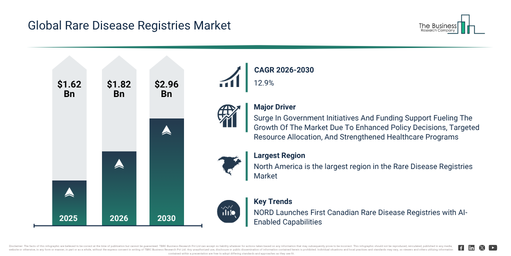
    The rare disease registries market size has seen swift expansion in recent years. It will grow from $1.62 billion in 2025 to $1.82 billion in 2026 at a compound annual growth rate (CAGR) of 12.6%. The expansion observed historically stems from factors such as increasing awareness of rare diseases, a rise in clinical research activities, the development of hospital and population-based registries, regulatory frameworks supporting patient data collection, and the limited availability of structured patient data.

    The rare disease registries market size is anticipated to undergo significant expansion in the coming years. It will grow to $2.96 billion in 2030 at a compound annual growth rate (CAGR) of 12.9%. This growth during the forecast period is propelled by factors such as the adoption of AI-driven registry solutions, the integration of genomic and omics data, the expansion of personalized medicine initiatives, investment in cloud-based interoperable platforms, and enhanced patient engagement and data sharing. Prominent trends for the forecast period encompass real-time patient data collection, integration with electronic health records (EHR), advanced data analytics specific to rare diseases, optimization of patient recruitment and retention, and the implementation of interoperable registry platforms.

    Get A Free Sample Report With In-Depth Market Insights:

    https://thebusinessresearchcompany.com/sample_request?id=94515903&type=smp&name=Rare%20Disease%20Registries%20Market%20Report%202026&utm_source=Blogs&utm_medium=Paid&utm_campaign=Oct_PR

    Rare Disease Registries Market Growth Drivers: What’s Behind The Acceleration?

    The rare disease registries market is anticipated to expand over the forecast period, primarily driven by increasing government initiatives and financial assistance. Such government initiatives and funding support encompass public-sector endeavors and investments aimed at strengthening healthcare infrastructure, fostering innovation, and improving service delivery. The rising public funding signifies efforts to enhance data-informed policymaking, optimize resource distribution, and improve outcomes for underserved patient populations, including individuals affected by rare diseases. Rare disease registries play a crucial role in achieving these objectives by aggregating comprehensive patient data that guides policy decisions, facilitates targeted funding allocation, and enables the development and evaluation of effective healthcare and research programs. For instance, in February 2025, the UK government’s central executive authority allocated approximately £26 billion ($35 billion) over two years to bolster the health and care system, reinforcing investment in data infrastructure and population health initiatives. Thus, the growing government initiatives and funding support are propelling the expansion of the rare disease registries market.

    Rare Disease Registries Market Segment Analysis And Revenue Potential

    The rare disease registries market covered in this report is segmented –

    1) By Type: Product Registries, Health Services Registries, Disease Registries

    2) By Database Type: Population-based, Hospital-based

    3) By Software: Standalone, Integrated

    4) By Function: Data Collection, Data Analysis, Patient Recruitment, Other Functions

    5) By End-User: Pharmaceutical Companies, Research Organizations, Hospitals, Government Agencies, Other End-Users

    Subsegments:

    1) By Product Registries: Drug Product Registries, Biologic Product Registries, Medical Device Registries, Gene Therapy Product Registries

    2) By Health Services Registries: Hospital Based Registries, Clinic Based Registries, National Health Program Registries, Insurance Claims Registries

    3) By Disease Registries: Genetic Disorder Registries, Metabolic Disorder Registries, Neurological Disorder Registries, Oncology Rare Disease Registries

    Rare Disease Registries Market Trends: What’s Defining The Industry’s Next Phase?

    Major companies operating within the rare disease registries market are concentrating on developing sophisticated products, such as an AI-enabled patient registry infrastructure, to enhance real-time data capture, patient monitoring, and research insights across rare diseases. An AI-enabled patient registry infrastructure denotes registry systems that utilize artificial intelligence to efficiently process, analyze, and interpret large-scale patient and clinical data, thereby facilitating predictive analytics, natural history modeling, and real-world evidence generation. For instance, in May 2024, the National Organization for Rare Disorders (NORD), a US-based non-profit advocacy organization dedicated to individuals with rare diseases and the organizations that serve them, introduced the inaugural Canadian rare disease patient registries on its IAMRARE platform for phenylketonuria (PKU) and mucopolysaccharidoses (MPS). This initiative enables real-time cooperative data collection, supports multiple languages and regional consent requirements, and provides valuable insights for clinical trial eligibility, tracking disease progression, and evaluating treatments.

    Rare Disease Registries Market Key Participants And Competitive Landscape

    Major companies operating in the rare disease registries market are disease registries market are Deloitte Touche Tohmatsu Limited, International Business Machines Corporation, Oracle Corporation, BC Platforms Ltd., IQVIA Holdings Inc., ICON plc, Veeva Systems Inc., Alira Health Inc., Phastar Ltd., HealthVerity Inc., OM1 Inc., Synapse Laboratory, Castor EDC, RedCap Cloud, Within3 Inc., Sage Bionetworks, National Organization for Rare Disorders Inc., RTI Health Solutions, ArborMetrix Inc., Evado Clinical Systems Ltd., ClinCapture LLC, Global Vision Technologies Inc., Genetic Alliance UK, Pulse Infoframe.

    View The Full Rare Disease Registries Market Report:

    https://thebusinessresearchcompany.com/report/rare-disease-registries-market-report?utm_source=Blogs&utm_medium=Paid&utm_campaign=Oct_PR

    Rare Disease Registries Market Geographic Analysis: Where Is Demand Rising Fastest?

    North America was the largest region in the rare disease registries market in 2025. Asia-Pacific is expected to be the fastest-growing region in the forecast period. The regions covered in the rare disease registries market report are Asia-Pacific, South East Asia, Western Europe, Eastern Europe, North America, South America, Middle East, Africa.

    Reach Out To Our Team:

    The Business Research Company: https://www.thebusinessresearchcompany.com/

    Americas: +1 310-496-7795

    Asia: +44 7882 955267 & +91 8897263534

    Europe: +44 7882 955267

    Email us at: marketing@tbrc.info

    Follow us on:

    LinkedIn: https://in.linkedin.com/company/the-business-research-company

    YouTube: https://www.youtube.com/channel/UC24_fI0rV8cR5DxlCpgmyFQ

    Global Market Model: https://www.thebusinessresearchcompany.com/global-market-model
  • Rapid Molecular Flu Testing Platforms Market Valued At $4.47 Billion In 2026: Key Trends And Growth Drivers

    Rapid Molecular Flu Testing Platforms Market Valued At $4.47 Billion In 2026: Key Trends And Growth Drivers

    Built to provide research that’s more actionable and strategically valuable, The Business Research Company’s 2026 market reports include market attractiveness analysis, total addressable market sizing, company benchmarking matrices, interactive Excel dashboards, broader supply chain intelligence, emerging startup tracking, and in-depth product insights.

    Rapid Molecular Flu Testing Platforms Market Size Forecast: How Big Could The Market Get By 2030?

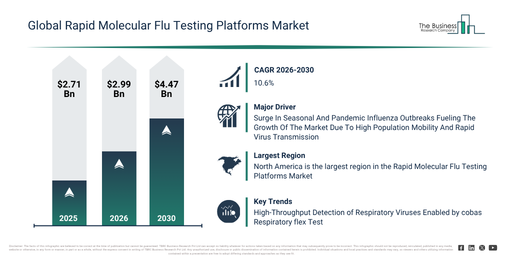
    The rapid molecular flu testing platforms market size has seen substantial expansion in recent years. It is anticipated to increase from $2.71 billion in 2025 to $2.99 billion in 2026, exhibiting a compound annual growth rate (CAGR) of 10.3%. The market’s historical growth can be attributed to factors like the rising prevalence of influenza, the demand for rapid diagnostic results, the adoption of rt-pcr technologies, the development of hospital and clinical testing infrastructure, and increasing awareness of infectious disease management.

    The rapid molecular flu testing platforms market is projected for significant expansion over the next few years. It is predicted to reach $4.47 billion in 2030, exhibiting a compound annual growth rate (CAGR) of 10.6%. This growth during the forecast period is attributable to factors such as the integration of AI and IoT for swift diagnostics, the proliferation of portable and point-of-care platforms, the creation of multiplex and high-throughput testing systems, increased investment in molecular diagnostic technologies, and the expansion of home-based and decentralized testing options. Key trends anticipated during this period encompass the widespread adoption of rapid point-of-care testing, advanced multiplex molecular diagnostics, seamless integration with laboratory information systems, automated sample processing capabilities, and the emergence of high-throughput testing platforms.

    Get A Free Sample Report With In-Depth Market Insights:

    https://thebusinessresearchcompany.com/sample_request?id=60652655&type=smp&name=Rapid%20Molecular%20Flu%20Testing%20Platforms%20Market%20Report%202026&utm_source=Blogs&utm_medium=Paid&utm_campaign=Oct_PR

    Rapid Molecular Flu Testing Platforms Market Growth Factors Behind Sustained Expansion

    The rising occurrence of seasonal and pandemic influenza outbreaks is projected to drive the expansion of the rapid molecular flu testing platforms market. These outbreaks are characterized by the recurrent or extensive spread of influenza infections, stemming from existing or new influenza viruses. The escalating frequency and severity of these outbreaks are fueled by elements like significant population movement, regular international journeys, dense urban populations, viral genetic changes, and inadequate vaccination rates, all contributing to swift virus transmission. Rapid molecular flu testing platforms are essential for handling seasonal and pandemic influenza outbreaks, as they facilitate quick and very precise identification of influenza viruses, aiding prompt clinical choices, early commencement of treatment, and robust infection prevention strategies. For example, data from February 2026, provided by the Centers for Disease Control and Prevention (CDC), a US-based government agency, indicated that during the 2025–2026 influenza season, influenza infections in the United States led to an estimated 290,000–450,000 hospitalizations and 34,000–53,000 deaths, highlighting the considerable public health and financial impact of the illness. Consequently, the rising global occurrence of seasonal and pandemic influenza outbreaks is propelling the expansion of the rapid molecular flu testing platforms market.

    Rapid Molecular Flu Testing Platforms Market Segmentation And Category Overview

    The rapid molecular flu testing platforms market covered in this report is segmented –

    1) By Product Type: Benchtop Platforms, Portable Platforms, Other Product Types

    2) By Sample Type: Nasopharyngeal Swabs, Throat Swabs, Saliva, Other Sample Types

    3) By Technology: Reverse Transcription Polymerase Chain Reaction (RT-PCR), Isothermal Nucleic Acid Amplification, Clustered Regularly Interspaced Short Palindromic Repeats (CRISPR) Based, Other Technologies

    4) By Distribution Channel: Direct Sales, Distributors, Online Sales, Other Distribution Channels

    5) By End User: Hospitals And Clinics, Diagnostic Laboratories, Research Institutes, Other End Users

    Subsegments:

    1) By Benchtop Platforms: Multiplex Testing Platform, High Throughput Platform, Automated Sample Processing Platform, Standard Laboratory Platform

    2) By Portable Platforms: Handheld Testing Platform, Point Of Care Testing Platform, Battery Operated Portable Platform, Field Deployable Platform

    3) By Other Product Types: Integrated Workflow Platform, Compact Diagnostic Platform, Rapid Screening Platform, Custom Configured Platform

    Rapid Molecular Flu Testing Platforms Market Industry Trends Fueling Future Revenue Growth

    Major companies within the rapid molecular flu testing platforms market are increasingly prioritizing the development of sophisticated multiplex molecular solutions, such as temperature-activated generation of signal (TAGS) technology. This focus aims to achieve high-throughput and concurrent detection of multiple respiratory pathogens, including influenza A and B, from a single patient sample. TAGS technology is an advanced PCR innovation that allows for the differentiation of various genetic targets within a singular fluorescence channel, making possible up to 15 diagnostic results in one test well. For example, in September 2024, F. Hoffmann-La Roche Ltd., a Switzerland-based healthcare company, introduced the cobas Respiratory flex test. This test enables the swift identification of up to 12 respiratory viruses, including influenza A and B, when processed on Roche’s cobas 5800, 6800, and 8800 high-throughput molecular systems. Such a solution supports flexible, syndromic panel testing with high throughput, thereby streamlining laboratory workflows and resources while facilitating accurate and timely diagnosis of respiratory infections.

    Rapid Molecular Flu Testing Platforms Market Top Companies Driving Competitive Growth

    Major companies operating in the rapid molecular flu testing platforms market are Roche Diagnostics, Thermo Fisher Scientific, Abbott Laboratories, Siemens Healthineers, Becton Dickinson (BD), bioMérieux, Bio-Rad Laboratories, Qiagen N.V., Seegene Inc., BioPerfectus, Fapon Biotech, Visby Medical, Vircell S.L., QuantuMDx Group, Altona Diagnostics, Creative Diagnostics, Princeton BioMeditech Corporation, Credo Diagnostics, Genetic Signatures Ltd, AccuBioTech, Kogene Co. Ltd., Ameritek Inc., Alpha Diagnostic Intl, Medlere Ltd, ProtonDx Ltd.

    View The Full Rapid Molecular Flu Testing Platforms Market Report:

    https://thebusinessresearchcompany.com/report/rapid-molecular-flu-testing-platforms-market-report?utm_source=Blogs&utm_medium=Paid&utm_campaign=Oct_PR

    Rapid Molecular Flu Testing Platforms Market Global Footprint: Which Region Leads The Market?

    North America was the largest region in the rapid molecular flu testing platforms market in 2025. Asia-Pacific is expected to be the fastest-growing region in the forecast period. The regions covered in the rapid molecular flu testing platforms market report are Asia-Pacific, South East Asia, Western Europe, Eastern Europe, North America, South America, Middle East, Africa.

    Reach Out To Our Team:

    The Business Research Company: https://www.thebusinessresearchcompany.com/

    Americas: +1 310-496-7795

    Asia: +44 7882 955267 & +91 8897263534

    Europe: +44 7882 955267

    Email us at: marketing@tbrc.info

    Follow us on:

    LinkedIn: https://in.linkedin.com/company/the-business-research-company

    YouTube: https://www.youtube.com/channel/UC24_fI0rV8cR5DxlCpgmyFQ

    Global Market Model: https://www.thebusinessresearchcompany.com/global-market-model
  • Radiation Dosimetry Badges Market Trends Supporting 8.2% CAGR Growth Through 2030

    Radiation Dosimetry Badges Market Trends Supporting 8.2% CAGR Growth Through 2030

    Featuring market attractiveness scoring, total addressable market sizing, company benchmarking matrices, interactive Excel dashboards, deeper supply chain intelligence, emerging startup tracking, and granular product-level insights, The Business Research Company’s 2026 market reports are built to deliver research that is both more actionable and more strategically valuable.

    Radiation Dosimetry Badges Market Growth Analysis: How Will Revenue Trend Over The Forecast Period?

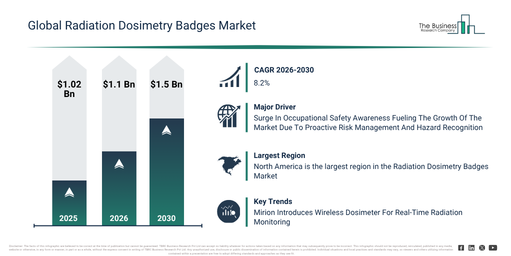
    The market for radiation dosimetry badges has experienced robust expansion in recent years. It is projected to increase from $1.02 billion in 2025 to $1.1 billion in 2026, achieving a compound annual growth rate (CAGR) of 7.9%. Historically, this growth can be attributed to several factors: a heightened awareness of radiation hazards, strict regulatory compliance requirements, the widespread adoption of film and thermoluminescent dosimeters, the proliferation of nuclear and medical facilities, and an increase in industrial applications involving radiation.

    The radiation dosimetry badges market size is anticipated to experience substantial expansion in the coming years. Its value is projected to reach $1.5 billion by 2030, exhibiting a compound annual growth rate (CAGR) of 8.2%. This growth during the forecast period is primarily driven by the increasing adoption of electronic personal dosimeters, the integration of IoT-enabled safety systems, the rising need for real-time exposure monitoring, the expansion of both healthcare and nuclear infrastructure, and greater investment in predictive radiation analytics. Significant developments expected in this period encompass real-time dosimetry monitoring, the emergence of wearable radiation safety devices, their integration with health and safety management systems, automated dose reporting and analytics capabilities, and advanced predictive radiation exposure assessment.

    Get A Free Sample Report With In-Depth Market Insights:

    https://thebusinessresearchcompany.com/sample_request?id=45352874&type=smp&name=Radiation%20Dosimetry%20Badges%20Market%20Report%202026&utm_source=Blogs&utm_medium=Paid&utm_campaign=Oct_PR

    Radiation Dosimetry Badges Market Growth Backed By Core Demand Fundamentals

    Increased awareness of occupational safety is anticipated to boost the expansion of the radiation dosimetry badges market. This awareness involves comprehending and identifying dangers in the workplace, particularly in hazardous settings, and implementing actions to avert accidents and safeguard workers’ well-being. The heightened focus on occupational safety stems from proactive approaches to risk management, more stringent regulatory supervision, and greater employer responsibility, collectively promoting prompt hazard detection and more secure work environments. Radiation dosimetry badges contribute to occupational safety efforts by constantly tracking personal exposure to ionizing radiation, thereby allowing employees and employers to evaluate risks, adhere to exposure boundaries, and enact necessary remedial safety actions. For example, in June 2024, the European Agency for Safety and Health at Work (EU-OSHA) disclosed that around 85–91% of workers in Spain recognized a heightened understanding of workplace safety and occupational safety and health (OSH) risk reduction, marking a 7% increase from 2023. Consequently, the growing occupational safety awareness is fueling the expansion of the radiation dosimetry badges market.

    Radiation Dosimetry Badges Market Segment Landscape: Which Areas Lead Development?

    The radiation dosimetry badges market covered in this report is segmented –

    1) By Product Type: Thermoluminescent Dosimeter Badges, Film Badge Dosimeters, Optically Stimulated Luminescence Dosimeter Badges, Electronic Personal Dosimeters, Other Product Types

    2) By Detection Method: Passive Dosimetry, Active Dosimetry

    3) By Distribution Channel: Direct Sales, Distributors, Online Sales, Other Distribution Channels

    4) By End-User: Hospitals And Medical Institutions, Nuclear Facilities, Research Laboratories, Industrial Facilities, Other End-Users

    Subsegments:

    1) By Thermoluminescent Dosimeter Badges: Card Type Dosimeter, Pocket Dosimeter, Ring Dosimeter, Button Dosimeter

    2) By Film Badge Dosimeters: Single Film Badge, Dual Film Badge, Multi Film Badge, Special Purpose Film Badge

    3) By Optically Stimulated Luminescence Dosimeter Badges: Card Type Dosimeter, Finger Ring Dosimeter, Wearable Dosimeter, Environmental Dosimeter

    4) By Electronic Personal Dosimeters: Portable Dosimeter, Wearable Dosimeter, Real Time Monitoring Dosimeter, Multi Parameter Dosimeter

    5) By Other Product Types: Chemical Dosimeter, Solid State Dosimeter, Pocket Ionization Chamber, Neutron Dosimeter

    Radiation Dosimetry Badges Market Growth Trends Reshaping The Competitive Landscape

    Major companies in the radiation dosimetry badges market are concentrating on developing technological enhancements, such as electronic personal dosimeters equipped with real-time monitoring capabilities, to facilitate continuous exposure tracking, elevate worker safety, and ensure adherence to regulations in radiation-exposed environments. Electronic personal dosimeters with real-time monitoring are sophisticated wearable instruments designed to constantly measure and instantly transmit radiation exposure data, which allows for anticipatory risk management, immediate alerts for hazardous dose levels, and straightforward compliance reporting. For example, in April 2024, Mirion Dosimetry Services, a US-based firm specializing in radiation safety solutions, launched the InstadoseVUE Wireless Dosimeter. This newly introduced device enables the real-time observation of individual radiation exposure, empowering workers and supervisors to continuously monitor doses. It enhances workplace safety and compliance through its wireless data transmission and instant notification system, while also enabling proactive radiation protection measures in settings with elevated risks.

    Radiation Dosimetry Badges Market Competitive Overview And Top Companies

    Major companies operating in the radiation dosimetry badges market are Thermo Fisher Scientific Inc., Honeywell International Inc, SGS SA, Fuji Electric Co. Ltd., CERN Dosimetry Service, Ludlum Measurements Inc., PTW Freiburg, Chiyoda Technol Corp., ECOTEST group, Seibersdorf Labor GmbH, Avanttec Medical Systems, Polimaster, Renentech Laboratories, Best Dosimetry Services Inc., Ultra‑Tech Laboratories, RadPro International GmbH, RadPro Radiation Protection Services Limited, Laurus Systems, Atomic Energy Industrial Laboratories of the Southwest Inc. (AEIL), Xray Dose Company.

    View The Full Radiation Dosimetry Badges Market Report:

    https://thebusinessresearchcompany.com/report/radiation-dosimetry-badges-market-report?utm_source=Blogs&utm_medium=Paid&utm_campaign=Oct_PR

    Radiation Dosimetry Badges Market Top Region: Where Does Most Revenue Come From?

    North America was the largest region in the radiation dosimetry badges market in 2025. Asia-Pacific is expected to be the fastest-growing region in the forecast period. The regions covered in the radiation dosimetry badges market report are Asia-Pacific, South East Asia, Western Europe, Eastern Europe, North America, South America, Middle East, Africa.

    Reach Out To Our Team:

    The Business Research Company: https://www.thebusinessresearchcompany.com/

    Americas: +1 310-496-7795

    Asia: +44 7882 955267 & +91 8897263534

    Europe: +44 7882 955267

    Email us at: marketing@tbrc.info

    Follow us on:

    LinkedIn: https://in.linkedin.com/company/the-business-research-company

    YouTube: https://www.youtube.com/channel/UC24_fI0rV8cR5DxlCpgmyFQ

    Global Market Model: https://www.thebusinessresearchcompany.com/global-market-model
  • Quantum Dermatology Market Forecast Highlights A $5.08 Billion Opportunity For Industry Participants

    Quantum Dermatology Market Forecast Highlights A $5.08 Billion Opportunity For Industry Participants

    Built to provide research that’s more actionable and strategically valuable, The Business Research Company’s 2026 market reports include market attractiveness analysis, total addressable market sizing, company benchmarking matrices, interactive Excel dashboards, broader supply chain intelligence, emerging startup tracking, and in-depth product insights.

    Quantum Dermatology Market Forecast: What Value Will The Market Reach By 2030?

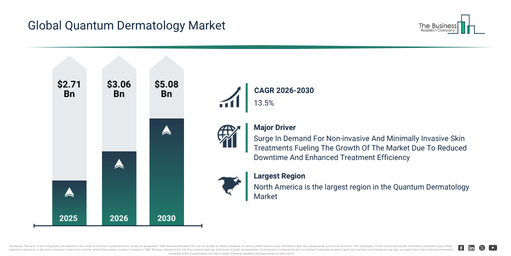
    The quantum dermatology market has witnessed rapid growth in recent years. It is anticipated to expand from $2.71 billion in 2025 to $3.06 billion in 2026, exhibiting a compound annual growth rate (CAGR) of 13.2%. This historical expansion can be ascribed to elements like the escalating demand for cosmetic procedures, continuous advancements in laser and IPL technologies, the proliferation of aesthetic clinics, a heightened awareness of skin health, and the increasing adoption of multi-technology systems.

    The quantum dermatology market is projected to experience substantial expansion over the next few years, with its valuation expected to reach $5.08 billion by 2030, exhibiting a compound annual growth rate (CAGR) of 13.5%. This growth throughout the forecast period can be primarily attributed to the integration of AI in dermatology, the expansion of dermatology clinics, the increasing demand for personalized skin treatments, the adoption of combination systems, and the growth of non-invasive rejuvenation therapies. Prominent trends anticipated in this timeframe include minimally invasive treatment techniques, personalized dermatology solutions, AI-driven skin analysis, non-invasive skin rejuvenation therapies, and real-time treatment monitoring.

    Get A Free Sample Report With In-Depth Market Insights:

    https://thebusinessresearchcompany.com/sample_request?id=22539878&type=smp&name=Quantum%20Dermatology%20Market%20Report%202026&utm_source=Blogs&utm_medium=Paid&utm_campaign=Oct_PR

    Quantum Dermatology Market Growth Catalysts And Demand Drivers

    The rising preference for non-invasive and minimally invasive skin treatments is anticipated to fuel the expansion of the quantum dermatology market. These treatments involve procedures that improve skin appearance or health without major surgical intervention, employing technologies such as laser, energy-based devices, injectables, and light-based methods. Patients increasingly favor these options due to benefits like shorter recovery periods, less discomfort, reduced complication risks, and quicker return to daily activities. Quantum dermatology supports this trend by leveraging sophisticated, precision-focused dermatological technologies and data-driven treatment strategies to enhance procedural accuracy, improve clinical results, and minimize tissue damage and healing time. For instance, in September 2025, Hansard – UK Parliament reported that 7.7 million individuals in the UK underwent cosmetic and dermatological procedures, which included minimally invasive treatments, marking a 12% rise compared to 2023. Consequently, the growing demand for non-invasive and minimally invasive skin treatments is a key driver for the quantum dermatology market’s growth. An increase in healthcare spending is projected to advance the quantum dermatology market. Healthcare expenditure refers to the aggregate spending by both public and private sectors on medical services, products, and initiatives aimed at maintaining and enhancing health. This rise in spending is primarily due to an aging demographic, as a growing number of elderly individuals require more frequent and intricate medical attention. Quantum dermatology assists in controlling healthcare costs by offering advanced, accurate, and non-invasive skin treatments, thereby lessening the necessity for extended therapies and hospital stays. As an illustration, in April 2025, the Office for National Statistics, a UK-based government department, noted that healthcare spending increased by 6.5% in nominal terms and 2.4% in real terms between 2023 and 2024. Thus, the escalating healthcare expenditure is propelling the expansion of the quantum dermatology market.

    Quantum Dermatology Market Segments: Where Is Growth Concentrated?

    The quantum dermatology market covered in this report is segmented –

    1) By Technology: Laser-Based Systems, Intense Pulsed Light (IPL) Systems, Combination Systems, Other Technologies

    2) By Treatment Type: Hair Removal, Pigmented Lesions Treatment, Skin Firming And Tightening, Wrinkle Reduction And Rejuvenation, Vascular Lesion Treatment

    3) By Application: Aesthetic And Cosmetic Treatments, Dermatology Procedures, Skin Rejuvenation Therapies, Hair Reduction Treatments

    4) By End User: Dermatology Clinics, Professional Clinics And Aesthetic Practitioners, Beauty Salons And Spas, Hospitals And Medical Aesthetic Centers, Medical Institutions, Individual Consumers

    Subsegments:

    1) By Laser-Based Systems: Fractional Laser Systems, Ablative Laser Systems, Non Ablative Laser Systems, Pulsed Laser Systems

    2) By Intense Pulsed Light Systems: Hair Removal Systems, Skin Rejuvenation Systems, Vascular Lesion Treatment Systems, Pigmentation Treatment Systems

    3) By Combination Systems: Laser And Intense Pulsed Light Systems, Laser And Radio Frequency Systems, Intense Pulsed Light And Radio Frequency Systems, Other Multi Technology Systems

    4) By Other Technologies: Radio Frequency Systems, Ultrasound Based Systems, Cryotherapy Systems, Photodynamic Therapy Systems

    Quantum Dermatology Market Competitive Landscape: Which Companies Lead The Industry?

    Major companies operating in the quantum dermatology market are Bruker Corporation, El.En. S.p.A., InMode Ltd., Shenzhen GSD Tech Co. Ltd., IDS Medical Systems (IDSMED), Sciton Inc., Strata Skin Sciences Inc., HONKON, Beijing ADSS Development Co. Ltd., Sharplight Technologies Ltd., Hironic Co. Ltd., Aerolase Corporation, Union Medical Co. Ltd., Zimmer MedizinSysteme GmbH, Wontech Co. Ltd., Lynton Lasers Ltd., DEKA M.E.L.A. Srl, DermaSensor Inc., Lasering USA, Telea Medical, Beijing Sincoheren, Eunsung Global Corp., Astiland Medical Aesthetics Technology Co. Ltd., BioWave Health Care.

    View The Full Quantum Dermatology Market Report:

    https://thebusinessresearchcompany.com/report/quantum-dermatology-market-report?utm_source=Blogs&utm_medium=Paid&utm_campaign=Oct_PR

    Quantum Dermatology Market Regional Breakdown: Where Is Demand Concentrated?

    North America was the largest region in the quantum dermatology market in 2025. Asia-Pacific is expected to be the fastest-growing region in the forecast period. The regions covered in the quantum dermatology market report are Asia-Pacific, South East Asia, Western Europe, Eastern Europe, North America, South America, Middle East, Africa.

    Reach Out To Our Team:

    The Business Research Company: https://www.thebusinessresearchcompany.com/

    Americas: +1 310-496-7795

    Asia: +44 7882 955267 & +91 8897263534

    Europe: +44 7882 955267

    Email us at: marketing@tbrc.info

    Follow us on:

    LinkedIn: https://in.linkedin.com/company/the-business-research-company

    YouTube: https://www.youtube.com/channel/UC24_fI0rV8cR5DxlCpgmyFQ

    Global Market Model: https://www.thebusinessresearchcompany.com/global-market-model

  • Protein-Folding Artificial Intelligence (AI) Platform Market Outlook Through 2030: Understanding The Growth Opportunity

    Protein-Folding Artificial Intelligence (AI) Platform Market Outlook Through 2030: Understanding The Growth Opportunity

    Featuring market attractiveness scoring, total addressable market sizing, company benchmarking matrices, interactive Excel dashboards, deeper supply chain intelligence, emerging startup tracking, and granular product-level insights, The Business Research Company’s 2026 market reports are built to deliver research that is both more actionable and more strategically valuable.

    Protein-Folding Artificial Intelligence (AI) Platform Market Size, Value And Growth Trajectory Through 2030

    The protein-folding artificial intelligence (AI) platform market size has experienced exponential growth in recent years. This market is projected to expand from $1.88 billion in 2025 to $2.48 billion in 2026, demonstrating a compound annual growth rate (CAGR) of 32.0%. Historically, this expansion has been driven by factors such as the greater acceptance of computational biology tools, advancements in pharmaceutical research, the widespread availability of structural protein databases, an increasing need for personalized medicine, and the evolution of high-performance computing systems.

    The protein-folding artificial intelligence (AI) platform market is poised for significant expansion in the coming years. It is projected to achieve a valuation of $7.58 billion by 2030, demonstrating a compound annual growth rate (CAGR) of 32.2%. This projected growth is largely driven by the increasing integration of AI and deep learning in protein folding, the expansion of cloud-based bioinformatics platforms, notable investments in specialized AI accelerators, a surge in academic and biotech research initiatives, and the critical demand for expedited drug discovery cycles. Prominent trends anticipated in this forecast period encompass AI-driven protein structure prediction, the incorporation of high-performance computing, automated molecular modeling, the advancement of cloud-based bioinformatics platforms, and sophisticated predictive analytics for drug discovery.

    Get A Free Sample Report With In-Depth Market Insights:

    https://thebusinessresearchcompany.com/sample_request?id=34901881&type=smp&name=Protein-Folding%20Artificial%20Intelligence%20%28AI%29%20Platform%20Market%20Report%202026&utm_source=Blogs&utm_medium=Paid&utm_campaign=Oct_PR

    Protein-Folding Artificial Intelligence (AI) Platform Market Growth Momentum: What Factors Are Shaping Demand?

    The increasing embrace of personalized medicine is anticipated to fuel the expansion of the protein-folding artificial intelligence (AI) platform market. Personalized medicine represents an approach where healthcare and treatments are tailored to a patient’s unique biological and individual characteristics. The rising application of personalized medicine stems from advancements in genomic technologies, which empower healthcare providers to analyze a patient’s genetic information swiftly and precisely, thereby facilitating more targeted and effective treatments. A protein-folding artificial intelligence platform supports personalized medicine by forecasting patient-specific protein structures, which in turn guides the selection of targeted drugs and the development of optimized therapies. For example, in February 2024, the Personalized Medicine Coalition, a US-based non-profit organization, reported that the FDA approved 16 new personalized treatments for rare disease patients in 2023, an increase from six in 2022. The personalized treatments newly approved for 2023 also encompassed seven cancer drugs and three for other diseases and conditions. Consequently, the expanding adoption of personalized medicine is propelling the growth of the protein-folding artificial intelligence (AI) platform market.

    Protein-Folding Artificial Intelligence (AI) Platform Market Segment Breakdown: Which Categories Lead On Revenue?

    The protein-folding artificial intelligence (AI) platform market covered in this report is segmented –

    1) By Component: Software, Hardware, Services

    2) By Deployment Mode: On-Premises, Cloud

    3) By Application: Drug Discovery, Disease Research, Personalized Medicine, Biotechnology, Academic Research, Other Applications

    4) By End-User: Pharmaceutical And Biotechnology Companies, Research Institutes, Healthcare Providers, Other End Users

    Subsegments:

    1) By Software: Protein Structure Prediction Platforms, Molecular Modeling And Simulation Software, Bioinformatics Analysis Software, Data Visualization And Interpretation Tools, Machine Learning And Deep Learning Frameworks, Workflow Management And Automation Software

    2) By Hardware: High Performance Computing Systems, Graphics Processing Units, Central Processing Units, Data Storage Systems, High Speed Networking Infrastructure, Specialized Artificial Intelligence Accelerators

    3) By Services: Consulting And Advisory Services, System Integration Services, Cloud And Infrastructure Management Services, Model Development And Validation Services, Data Annotation And Curation Services, Maintenance And Technical Support Services

    Protein-Folding Artificial Intelligence (AI) Platform Market Company Landscape And Competitive Strategy

    Major companies operating in the protein-folding artificial intelligence (AI) platform market are Schrodinger Inc., XtalPi Inc., Isomorphic Labs Limited, Recursion Pharmaceuticals Inc., Nabla Bio Inc., Arzeda Corporation, Evozyne, ProteinQure Inc., Genesis Therapeutics Inc., Cradle Bio Inc., Profluent Inc., Evaxion Biotech A/S, Iambic Therapeutics Inc., Insilico Medicine Inc., Insitro Inc., Levitate Bio Inc., Shiru Inc., Tamarind Bio, Archon Biosciences, Neoncorte Bio, and Generate Biomedicines Inc.

    View The Full Protein-Folding Artificial Intelligence (AI) Platform Market Report:

    https://thebusinessresearchcompany.com/report/protein-folding-artificial-intelligence-ai-platform-market-report?utm_source=Blogs&utm_medium=Paid&utm_campaign=Oct_PR

    Protein-Folding Artificial Intelligence (AI) Platform Market Largest Region: Which Geography Holds The Highest Market Share?

    North America was the largest region in the protein-folding artificial intelligence (AI) platform market in 2025. Asia-Pacific is expected to be the fastest-growing region in the forecast period. The regions covered in the protein-folding artificial intelligence (AI) platform market report are Asia-Pacific, South East Asia, Western Europe, Eastern Europe, North America, South America, Middle East, Africa.

    Reach Out To Our Team:

    The Business Research Company: https://www.thebusinessresearchcompany.com/

    Americas: +1 310-496-7795

    Asia: +44 7882 955267 & +91 8897263534

    Europe: +44 7882 955267

    Email us at: marketing@tbrc.info

    Follow us on:

    LinkedIn: https://in.linkedin.com/company/the-business-research-company

    YouTube: https://www.youtube.com/channel/UC24_fI0rV8cR5DxlCpgmyFQ

    Global Market Model: https://www.thebusinessresearchcompany.com/global-market-model