Blog

  • Incretin Mimetics Market Forecast To Reach $30.57 Billion By 2030: Key Trends Explained

    Incretin Mimetics Market Forecast To Reach $30.57 Billion By 2030: Key Trends Explained

    Backed by market attractiveness analysis, total addressable market sizing, company benchmarking matrices, interactive Excel dashboards, wider supply chain intelligence, emerging startup coverage, and detailed product-level insights, The Business Research Company’s 2026 market reports are designed to offer research that is more actionable and strategically valuable than ever.

    Incretin Mimetics Market Forecast: Value Set To Climb From $22.61 Billion To $30.57 Billion

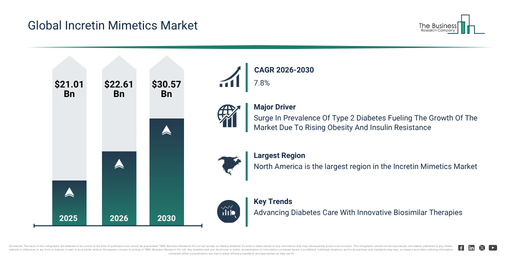
    The incretin mimetics market has demonstrated robust growth in recent years. It is projected to expand from $21.01 billion in 2025 to $22.61 billion in 2026, at a compound annual growth rate (CAGR) of 7.6%. This historical growth can be attributed to several factors including the increasing prevalence of type 2 diabetes, rising global obesity rates, advancements in GLP-1 receptor agonist development, growing awareness of metabolic syndrome management, and the expansion of reimbursement coverage for diabetes therapies.

    The incretin mimetics market is projected for substantial expansion in the coming years. It is anticipated to reach $30.57 billion in 2030, demonstrating a compound annual growth rate (CAGR) of 7.8%. This projected growth is primarily driven by factors such as the increasing demand for dual and triple agonist therapies, the growing acceptance of weight management pharmacotherapy, a heightened focus on cardiovascular risk reduction within diabetes care, the expansion of biologic drug manufacturing capacity, and a rising patient preference for convenient dosing regimens. Key trends anticipated during this period encompass the increasing uptake of once-weekly GLP-1 injectable treatments, a rising demand for oral GLP-1 formulations, the expanding application of incretin mimetics in obesity management, the incorporation of cardiovascular outcome benefits into treatment protocols, and an increase in combination therapy approaches for metabolic disorders.

    Get A Free Sample Report With In-Depth Market Insights:

    https://thebusinessresearchcompany.com/sample_request?id=63573991&type=smp&name=Incretin%20Mimetics%20Market%20Report%202026&utm_source=Blogs&utm_medium=Paid&utm_campaign=Oct_PR

    Incretin Mimetics Market Growth Backed By Core Demand Fundamentals

    The growing occurrence of Type 2 diabetes is anticipated to boost the expansion of the incretin mimetics market over the next few years. This chronic ailment involves the body’s resistance to insulin or inadequate insulin production, leading to high blood glucose levels. The increasing prevalence of Type 2 diabetes is primarily fueled by a higher incidence linked to rising obesity rates, given that excessive body weight considerably increases insulin resistance and the likelihood of developing the condition. Incretin mimetics are crucial for managing Type 2 diabetes, especially for individuals who are overweight or obese, as they improve glucose-dependent insulin secretion, inhibit glucagon release, and encourage weight reduction. For instance, as per Diabetes Australia, an Australia-based non-for-profit organization, approximately 1.5 million Australians (5.6% of the population) were diagnosed with diabetes in 2023, with Type 2 diabetes constituting 86.7% of all cases. Consequently, the expanding occurrence of Type 2 diabetes is propelling the growth of the incretin mimetics market.

    Incretin Mimetics Market Segmentation: How Does The Market Break Down By Category?

    The incretin mimetics market covered in this report is segmented –

    1) By Drug Type: GLP-1 Agonists, DPP-4 Inhibitors

    2) By Route of Administration: Injectable Formulations, Oral Formulations

    3) By Distribution Channel: Hospital Pharmacies, Retail Pharmacies, Online Pharmacies

    4) By Application: Type 2 Diabetes, Obesity, Cardiovascular Diseases

    5) By End User: Hospitals, Specialty Clinics (Diabetology And Endocrinology Clinics), Homecare Settings

    Subsegments:

    1) By GLP-1 Agonists: Exenatide, Liraglutide, Dulaglutide, Semaglutide, Lixisenatide

    2) By DPP-4 Inhibitors: Sitagliptin, Saxagliptin, Linagliptin, Alogliptin, Vildagliptin

    Incretin Mimetics Market Growth Trends Reshaping The Competitive Landscape

    Leading companies in the incretin mimetics market are increasingly concentrating on developing biosimilar and innovative therapeutic approaches to enhance glycemic regulation and improve outcomes for individuals with Type 2 diabetes. These advanced therapeutic solutions are defined as cutting-edge or novel treatments crafted to boost efficacy, safety, affordability, or patient compliance compared to existing conventional therapies. For example, in January 2024, Glenmark Pharmaceuticals Limited, an India-based pharmaceutical firm, introduced a biosimilar variant of the widely used anti-diabetic medication liraglutide in India. This biosimilar GLP-1 receptor agonist intends to offer a more accessible and economical treatment choice, thereby expanding patient access and promoting better treatment adherence. The biosimilar is engineered to provide equivalent efficacy, safety, and quality as its reference product. These kinds of innovations support consistent glycemic control across various patient groups and help reduce disease-related complications, ultimately improving the comprehensive management of Type 2 diabetes.

    Incretin Mimetics Market Top Companies Driving Competitive Growth

    Major companies operating in the incretin mimetics market are Roche Holding AG, Merck Co Inc, Pfizer Inc., Sanofi S.A., AstraZeneca PLC, Eli Lilly Company, Novo Nordisk A/S, Takeda Pharmaceutical Company Limited, Amgen Inc., Boehringer Ingelheim International GmbH, Sun Pharmaceutical Industries Limited, Dr Reddys Laboratories Limited, Cipla Limited, Hikma Pharmaceuticals PLC, Lupin Limited, Biocon Limited, Torrent Pharmaceuticals Limited, Hanmi Pharmaceutical Co Ltd, Innovent Biologics Inc., Zealand Pharma A/S, Gan Lee Pharmaceuticals Co Ltd, Jiangsu Hansoh Pharmaceutical Group Company Limited.

    View The Full Incretin Mimetics Market Report:

    https://thebusinessresearchcompany.com/report/incretin-mimetics-market-report?utm_source=Blogs&utm_medium=Paid&utm_campaign=Oct_PR

    Incretin Mimetics Market Global Footprint: Which Region Leads The Market?

    North America was the largest region in the incretin mimetics market in 2025. Asia-Pacific is expected to be the fastest-growing region in the forecast period. The regions covered in the incretin mimetics market report are Asia-Pacific, South East Asia, Western Europe, Eastern Europe, North America, South America, Middle East, Africa.

    Reach Out To Our Team:

    The Business Research Company: https://www.thebusinessresearchcompany.com/

    Americas: +1 310-496-7795

    Asia: +44 7882 955267 & +91 8897263534

    Europe: +44 7882 955267

    Email us at: marketing@tbrc.info

    Follow us on:

    LinkedIn: https://in.linkedin.com/company/the-business-research-company

    YouTube: https://www.youtube.com/channel/UC24_fI0rV8cR5DxlCpgmyFQ

    Global Market Model: https://www.thebusinessresearchcompany.com/global-market-model
  • In Vitro Diagnostic (IVD) Labware Market Growth To $6.06 Billion By 2030: What’s Driving The Expansion?

    In Vitro Diagnostic (IVD) Labware Market Growth To $6.06 Billion By 2030: What’s Driving The Expansion?

    Built to provide research that’s more actionable and strategically valuable, The Business Research Company’s 2026 market reports include market attractiveness analysis, total addressable market sizing, company benchmarking matrices, interactive Excel dashboards, broader supply chain intelligence, emerging startup tracking, and in-depth product insights.

    In Vitro Diagnostic (IVD) Labware Market Value Growth And Long-Term Outlook

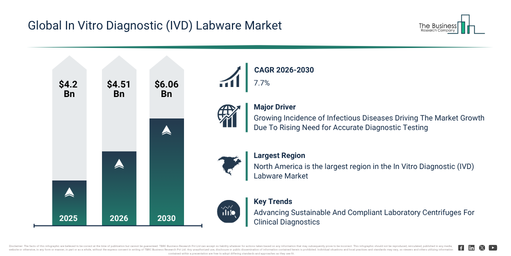
    The in vitro diagnostic (IVD) labware market has shown robust expansion in recent years. Projections indicate a rise from $4.2 billion in 2025 to $4.51 billion in 2026, achieving a compound annual growth rate (CAGR) of 7.4%. This market’s historical growth can be attributed to several factors, including the increasing prevalence of infectious diseases, the expansion of clinical laboratory networks, growth in hospital diagnostic services, a rising demand for routine blood and urine testing, and the adoption of standardized laboratory protocols.

    The in vitro diagnostic (IVD) labware market is anticipated to experience substantial expansion over the coming years. It is projected to reach $6.06 billion by 2030, exhibiting a compound annual growth rate (CAGR) of 7.7%. This expansion during the forecast period can be attributed to increased funding for molecular and genetic testing, growing automation within diagnostic laboratories, a heightened need for point-of-care testing solutions, the development of healthcare infrastructure in developing economies, and an emphasis on environmentally friendly laboratory consumables. Key developments expected during this period include the wider adoption of disposable labware, an escalating requirement for precise sample handling instruments, greater integration of labware compatible with automated systems, an increase in molecular diagnostics testing, and an enhanced focus on preventing contamination and upholding biosafety protocols.

    Get A Free Sample Report With In-Depth Market Insights:

    https://thebusinessresearchcompany.com/sample_request?id=31911203&type=smp&name=In%20Vitro%20Diagnostic%20%28IVD%29%20Labware%20Market%20Report%202026&utm_source=Blogs&utm_medium=Paid&utm_campaign=Oct_PR

    In Vitro Diagnostic (IVD) Labware Market Opportunity Drivers: What’s Unlocking New Revenue Potential?

    An anticipated expansion in the in vitro diagnostics (IVD) labware market is linked to the increasing occurrence of infectious diseases. These diseases are health conditions stemming from detrimental microorganisms like bacteria, viruses, fungi, or parasites, which can spread between individuals or via environmental contact. The uptick in infectious disease cases is attributed to heightened urbanization and denser populations, leading to more frequent human interaction and a faster spread of disease-causing agents. IVD labware plays a crucial role in the identification, surveillance, and control of infectious diseases by facilitating precise and prompt analysis of blood, tissue, and various biological specimens. This capability assists medical practitioners in recognizing pathogens, monitoring disease outbreaks, and applying suitable treatment and preventive strategies. For example, data from March 2024, released by the Centers for Disease Control and Prevention, a US government body, indicated an increase in tuberculosis cases from 8,320 in 2022 to 9,615 in 2023, marking an increment of 1,295 cases. Consequently, the escalating frequency of infectious diseases is propelling the expansion of the in vitro diagnostics (IVD) labware market.

    In Vitro Diagnostic (IVD) Labware Market Segment Analysis Spotlighting Growth Areas

    The in vitro diagnostic (IVD) labware market covered in this report is segmented –

    1) By Product Type: Plastic Labware, Glass Labware, Other Product Types

    2) By Usage Type: Single-Use Labware, Reusable Labware

    3) By Application: Clinical Chemistry, Immunoassays, Molecular Diagnostics, Hematology, Microbiology, Other Applications

    4) By End User: Clinical Laboratories, Hospitals, Academic Institutes, Other End Users

    Subsegments:

    1) By Plastic Labware: Test Tubes, Pipette Tips, Multiwell Plates, Petri Dishes, Cuvettes, Specimen Containers

    2) By Glass Labware: Glass Test Tubes, Beakers, Flasks, Slides And Cover Slips, Measuring Cylinders

    3) By Other Product Types: Ceramic Labware, Metal Labware, Coated Vessels, Specialty Assay Trays

    In Vitro Diagnostic (IVD) Labware Market Innovation Trends Shaping Future Development

    Leading firms within the in vitro diagnostics (IVD) labware market are prioritizing the creation of novel offerings, including IVD-compliant refrigerated centrifuges, with the aim of boosting diagnostic precision and adhering to regulatory standards. These centrifuges are specialized lab instruments designed to separate biological materials, operating under stringent regulatory requirements and featuring accurate temperature regulation, which contributes to achieving precise test outcomes, consistent results, and secure processing of clinical samples. As an illustration, OHAUS Corporation, a US-based producer of laboratory equipment, introduced the frontier multi-pro, multi, and micro IVD series compliant centrifuges in December 2025. This advanced series of IVD-compliant refrigerated centrifuges was specifically developed to fulfill the exacting requirements of clinical diagnostics. The compliant centrifuges in this range incorporate natural R290 refrigerant, possessing a warming potential of just 3, which is more than 700 times lower than typical synthetic coolants, and they simultaneously uphold precise temperature control essential for delicate biological samples. The frontier IVD Series finds diverse utility in settings such as hospitals, diagnostic centers, and research laboratories, guaranteeing robust reproducibility, enhanced safety, and operational efficiency for in vitro testing procedures.

    In Vitro Diagnostic (IVD) Labware Market Competitive Overview And Top Companies

    Major companies operating in the in vitro diagnostics (IVD) labware market are market are Thermo Fisher Scientific Inc., Abbott Laboratories, Corning Incorporated, Avantor Inc., bioMérieux SA, Sartorius AG, Sysmex Corporation, Greiner AG, QIAGEN N.V., Eppendorf SE, Sarstedt AG & Co. KG, Azenta Inc., Biolyst Scientific Inc., Zhejiang Bioland Biotechnology Co. Ltd., WuXi NEST Biotechnology Co. Ltd., Tarsons Products Limited, Abdos Group, Heathrow Scientific LLC, Labcon North America Inc., Kangjian Medical Apparatus Co. Ltd., Accumax Lab Devices Pvt. Ltd.

    View The Full In Vitro Diagnostic (IVD) Labware Market Report:

    https://thebusinessresearchcompany.com/report/in-vitro-diagnostic-ivd-labware-market-report?utm_source=Blogs&utm_medium=Paid&utm_campaign=Oct_PR

    In Vitro Diagnostic (IVD) Labware Market Top Region: Where Does Most Revenue Come From?

    North America was the largest region in the in vitro diagnostics (IVD) labware market in 2025. Asia-Pacific is expected to be the fastest-growing region in the forecast period. The regions covered in the in vitro diagnostics (IVD) labware market report are Asia-Pacific, South East Asia, Western Europe, Eastern Europe, North America, South America, Middle East, Africa.

    Reach Out To Our Team:

    The Business Research Company: https://www.thebusinessresearchcompany.com/

    Americas: +1 310-496-7795

    Asia: +44 7882 955267 & +91 8897263534

    Europe: +44 7882 955267

    Email us at: marketing@tbrc.info

    Follow us on:

    LinkedIn: https://in.linkedin.com/company/the-business-research-company

    YouTube: https://www.youtube.com/channel/UC24_fI0rV8cR5DxlCpgmyFQ

    Global Market Model: https://www.thebusinessresearchcompany.com/global-market-model
  • Implantable Pressure Sensor Market Trends Reshaping Industry Growth Through 2030

    Implantable Pressure Sensor Market Trends Reshaping Industry Growth Through 2030

    Backed by market attractiveness analysis, total addressable market sizing, company benchmarking matrices, interactive Excel dashboards, wider supply chain intelligence, emerging startup coverage, and detailed product-level insights, The Business Research Company’s 2026 market reports are designed to offer research that is more actionable and strategically valuable than ever.

    Implantable Pressure Sensor Market Poised To Hit $7.37 Billion By 2030 With A 11.8% CAGR

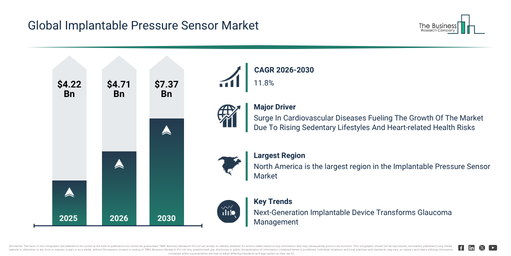
    The implantable pressure sensor market has experienced rapid growth in its size over recent years. It is projected to expand from $4.22 billion in 2025 to $4.71 billion in 2026, exhibiting a compound annual growth rate (CAGR) of 11.6%. This historical growth is primarily due to the rising prevalence of cardiovascular diseases, increasing demand for continuous patient monitoring, technological advances in MEMS technology, growth in minimally invasive surgeries, and expanding hospital infrastructure.

    The implantable pressure sensor market size is projected to experience substantial growth over the next few years. It is forecasted to reach $7.37 billion in 2030, exhibiting a compound annual growth rate (CAGR) of 11.8%. This anticipated growth during the forecast period is primarily attributed to the increasing adoption of remote patient monitoring, greater integration with digital health platforms, a rising demand for personalized treatment solutions, the expanding geriatric population, and heightened investment in implantable medical device research and development. Major trends foreseen in this period include the increasing prevalence of wireless implantable pressure sensors, a rising demand for continuous real-time internal monitoring, the ongoing miniaturization of implantable sensor devices, the expansion of minimally invasive implantation procedures, and growing clinical use in cardiovascular and neurological applications.

    Get A Free Sample Report With In-Depth Market Insights:

    https://thebusinessresearchcompany.com/sample_request?id=37972136&type=smp&name=Implantable%20Pressure%20Sensor%20Market%20Report%202026&utm_source=Blogs&utm_medium=Paid&utm_campaign=Oct_PR

    Implantable Pressure Sensor Market Growth Momentum: What Factors Are Shaping Demand?

    The rising occurrence of cardiovascular diseases (CVDs) is anticipated to drive the expansion of the implantable pressure sensor market in the future. These diseases include various conditions impacting the heart and blood vessels, such as heart failure, coronary artery disease, hypertension, and stroke. Sedentary lifestyles are a primary cause of the growing impact of CVDs, leading to obesity, high blood pressure, and a heightened risk of complications related to the heart. Crucially, implantable pressure sensors aid in managing cardiovascular diseases by allowing for ongoing monitoring of internal heart or artery pressure, especially for individuals with long-term conditions like heart failure. For example, data from October 2024, provided by the US-based Centers for Disease Control and Prevention, a national public health agency, indicates that cardiovascular disease resulted in 919,032 deaths in the US, accounting for about 1 in 3 fatalities, alongside approximately 805,000 heart attacks, comprising 605,000 first-time and 200,000 repeat cases. Consequently, the expanding prevalence of cardiovascular diseases is fueling the development of the implantable pressure sensor market.

    Implantable Pressure Sensor Market Segment Performance And Emerging Opportunities

    The implantable pressure sensor market covered in this report is segmented –

    1) By Product Type: Wireless Implantable Pressure Sensors, Wired Implantable Pressure Sensors

    2) By Technology: Microelectromechanical Systems (MEMS), Fiber Optic, Other Technologies

    3) By Application: Cardiovascular, Neurology, Urology, Intraocular, Other Applications

    4) By End-User: Hospitals, Ambulatory Surgical Centers, Specialty Clinics, Other End-Users

    Subsegments:

    1) By Wireless Implantable Pressure Sensors: Telemetric Pressure Sensor, Inductive Coupling Sensor, Radiofrequency Pressure Sensor

    2) By Wired Implantable Pressure Sensors: Microelectromechanical Pressure Sensor, Strain Gauge Pressure Sensor, Piezoelectric Pressure Sensor

    Implantable Pressure Sensor Market Trends Redefining Industry Growth

    Leading companies in the implantable pressure sensor market are increasingly dedicated to developing cutting-edge implantable devices that facilitate continuous, real-time intraocular pressure (IOP) monitoring, aiming to enhance patient outcomes in glaucoma management. Implantable devices represent medical technologies engineered for placement within the body to monitor, support, or treat physiological functions over prolonged durations. As an illustration, in August 2024, Injectsense Inc., a US-based medical device firm, announced the initial human implantation of its ultraminiaturized intraocular pressure sensor, which also received FDA Breakthrough Device designation. This implantable sensor is engineered to deliver continuous and minimally invasive pressure monitoring, enabling clinicians and patients to more precisely track glaucoma progression and adjust treatment approaches with improved accuracy. The device ensures reliable real-time data collection while minimizing patient discomfort. These innovations support consistent oversight, prompt detection of intraocular pressure fluctuations, and enhanced long-term disease management, thereby leading to better clinical results for patients with glaucoma.

    Implantable Pressure Sensor Market Competitive Landscape: Which Companies Lead The Industry?

    Major companies operating in the implantable pressure sensor market are Abbott Laboratories, Medtronic plc, Koninklijke Philips N.V., TE Connectivity Ltd, Analog Devices Inc., Keller America Inc., ICU Medical Inc., Integra LifeSciences Holdings Corporation, Raumedic AG, Endotronix Inc., Sophysa SA, Silex Microsystems AB, Millar Inc., Spiegelberg GmbH Co. KG, InjectSense Inc., Implandata Ophthalmic Products GmbH, Opsens Inc, MEMSCAP S.A., Aesculap Miethke GmbH Co. KG, First Sensor AG.

    View The Full Implantable Pressure Sensor Market Report:

    https://thebusinessresearchcompany.com/report/implantable-pressure-sensor-market-report?utm_source=Blogs&utm_medium=Paid&utm_campaign=Oct_PR

    Implantable Pressure Sensor Market Regional Breakdown: Where Is Demand Concentrated?

    North America was the largest region in the implantable pressure sensor market in 2025. Asia-Pacific is expected to be the fastest-growing region in the forecast period. The regions covered in the implantable pressure sensor market report are Asia-Pacific, South East Asia, Western Europe, Eastern Europe, North America, South America, Middle East, Africa.

    Reach Out To Our Team:

    The Business Research Company: https://www.thebusinessresearchcompany.com/

    Americas: +1 310-496-7795

    Asia: +44 7882 955267 & +91 8897263534

    Europe: +44 7882 955267

    Email us at: marketing@tbrc.info

    Follow us on:

    LinkedIn: https://in.linkedin.com/company/the-business-research-company

    YouTube: https://www.youtube.com/channel/UC24_fI0rV8cR5DxlCpgmyFQ

    Global Market Model: https://www.thebusinessresearchcompany.com/global-market-model
  • Human Leukocyte Antigen (HLA) Typing For Oncology Immunotherapy Market Expected To Grow At 8% CAGR Through 2030: What Businesses Need To Know

    Human Leukocyte Antigen (HLA) Typing For Oncology Immunotherapy Market Expected To Grow At 8% CAGR Through 2030: What Businesses Need To Know

    Backed by market attractiveness analysis, total addressable market sizing, company benchmarking matrices, interactive Excel dashboards, wider supply chain intelligence, emerging startup coverage, and detailed product-level insights, The Business Research Company’s 2026 market reports are designed to offer research that is more actionable and strategically valuable than ever.

    Human Leukocyte Antigen (HLA) Typing For Oncology Immunotherapy Market Expansion Outlook: What Revenue Opportunities Are Ahead?

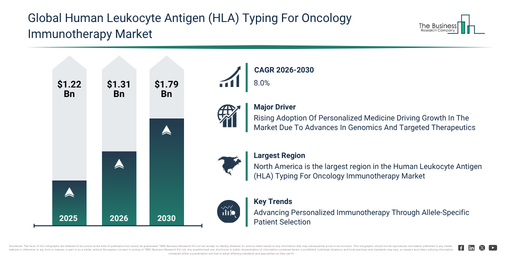
    The human leukocyte antigen (HLA) typing for oncology immunotherapy market size has experienced significant expansion in recent years. This market is anticipated to expand from $1.22 billion in 2025 to $1.31 billion in 2026, demonstrating a compound annual growth rate (CAGR) of 7.8%. Factors contributing to its growth in the past include the increasing global incidence of cancer, advancements in PCR and sequencing technologies, the growing embrace of precision oncology strategies, an uptick in clinical research for immunotherapies, and the broader application of biomarker-driven treatment selection.

    The human leukocyte antigen (HLA) typing for oncology immunotherapy market is projected to experience robust expansion over the coming years. This market is forecast to reach $1.79 billion by 2030, exhibiting a compound annual growth rate (CAGR) of 8.0%. This anticipated growth is driven by factors such as an expanding pipeline of cell and gene therapies, increased investment in personalized immunotherapy research, a growing need for companion diagnostics, the global expansion of oncology clinical trials, and enhanced regulatory backing for precision medicine. Key trends anticipated during this period encompass the wider adoption of next-generation sequencing-based HLA typing, greater integration of HLA profiling into adoptive T-cell therapies, increased utilization of high-resolution HLA typing in clinical trials, the proliferation of personalized cancer vaccine development, and an intensified focus on predictive immune compatibility testing.

    Get A Free Sample Report With In-Depth Market Insights:

    https://thebusinessresearchcompany.com/sample_request?id=79521900&type=smp&name=Human%20Leukocyte%20Antigen%20%28HLA%29%20Typing%20For%20Oncology%20Immunotherapy%20Market%20Report%202026&utm_source=Blogs&utm_medium=Paid&utm_campaign=Oct_PR

    Human Leukocyte Antigen (HLA) Typing For Oncology Immunotherapy Market Industry Drivers: What’s Behind The Revenue Growth?

    The increasing adoption of personalized medicine is anticipated to propel the expansion of the human leukocyte antigen (HLA) typing for oncology immunotherapy market. Personalized medicine involves customizing medical treatments and healthcare decisions based on an individual’s unique genetic, molecular, and clinical characteristics, aiming for more precise and effective therapies. Its rise is primarily attributed to advancements in genomics, which enable clinicians to identify specific genetic variations influencing disease risk and drug responses, leading to more targeted and impactful treatments. Human leukocyte antigen typing is instrumental in personalized oncology immunotherapy by determining a patient’s distinct immune profile, thereby allowing for tailored treatments that optimize tumor antigen recognition and immune response. For example, the US-based nonprofit Personalized Medicine Coalition reported in February 2024 that the FDA approved 16 new personalized treatments for rare disease patients in 2023, a notable increase from 6 in 2022. The 2023 approvals further included 7 cancer drugs and 3 for other diseases and conditions. This growing embrace of personalized medicine is thus a significant factor driving the growth of the human leukocyte antigen (HLA) typing for oncology immunotherapy market.

    Human Leukocyte Antigen (HLA) Typing For Oncology Immunotherapy Market Segment Analysis And Revenue Potential

    The human leukocyte antigen (HLA) typing for oncology immunotherapy market covered in this report is segmented –

    1) By Technology: Polymerase Chain Reaction (PCR)-Based, Sequencing-Based, Sequence-Specific Oligonucleotide (SSO), Sequence-Specific Primer (SSP), Other Technologies

    2) By Product Type: Reagents And Kits, Instruments, Software

    3) By Application: Cancer Diagnosis, Personalized Medicine, Research, Clinical Trials, Other Applications

    4) By End-User: Hospitals And Diagnostic Laboratories, Research Institutes, Academic Centers, Pharmaceutical And Biotechnology Companies, Other End-Users

    Subsegments:

    1) By Polymerase Chain Reaction Based: Real Time Polymerase Chain Reaction, Nested Polymerase Chain Reaction, Multiplex Polymerase Chain Reaction, Digital Polymerase Chain Reaction

    2) By Sequencing Based: Next Generation Sequencing, Sanger Sequencing, Whole Genome Sequencing, Targeted Gene Sequencing

    3) By Sequence Specific Oligonucleotide: Luminex Based Sequence Specific Oligonucleotide, Microarray Based Sequence Specific Oligonucleotide, Bead Based Sequence Specific Oligonucleotide, Plate Based Sequence Specific Oligonucleotide

    4) By Sequence Specific Primer: Conventional Sequence Specific Primer, Multiplex Sequence Specific Primer, Real Time Sequence Specific Primer, Nested Sequence Specific Primer

    5) By Other Technologies: Flow Cytometry Based Typing, Mass Spectrometry Based Typing, Immunoassay Based Typing, Hybridization Based Typing

    #Human Leukocyte Antigen (HLA) Typing For Oncology Immunotherapy Market Growth Trends: What’s Shaping The Future Outlook?

    Major companies within the human leukocyte antigen (HLA) typing for oncology immunotherapy market are concentrating on developing innovative solutions, such as allele-specific patient selection, to enhance personalized immunotherapy efficacy and improve clinical outcomes. Allele-specific patient selection involves identifying patients based on their specific HLA gene variants to tailor immunotherapy for optimal effectiveness. For instance, in August 2024, Thermo Fisher Scientific Inc., a US-based biotechnology company, received approval from the FDA for the SeCore HLA typing kit for use as a companion diagnostic with a T-cell receptor therapy for synovial sarcoma. This approval significantly expands HLA sequencing from transplant diagnostics into oncology immunotherapy by enabling precise patient selection for TCR-based treatments targeting tumor antigens.

    Human Leukocyte Antigen (HLA) Typing For Oncology Immunotherapy Market Key Players Shaping Industry Direction

    Major companies operating in the human leukocyte antigen (HLA) typing for oncology immunotherapy market are Thermo Fisher Scientific Inc., Danaher Corporation, Becton, Dickinson Company, Eurofins Scientific SE, Illumina Inc., Werfen, QIAGEN N.V., Versiti Inc., CareDx Inc., Oxford Nanopore Technologies Plc., Pacific Biosciences of California Inc., Takara Bio Inc., HistoGenetics LLC, Biofortuna Limited, Bio‑Rad Laboratories Inc., DKMS Life Science Lab, ClinImmune Inc., BGI Genomics Co. Ltd., Immudex A/S, ProImmune Ltd.

    View The Full Human Leukocyte Antigen (HLA) Typing For Oncology Immunotherapy Market Report:

    https://thebusinessresearchcompany.com/report/human-leukocyte-antigen-hla-typing-for-oncology-immunotherapy-market-report?utm_source=Blogs&utm_medium=Paid&utm_campaign=Oct_PR

    Human Leukocyte Antigen (HLA) Typing For Oncology Immunotherapy Market Regional Analysis: Which Region Leads By Revenue?

    North America was the largest region in the human leukocyte antigen (HLA) typing for oncology immunotherapy market in 2025. Asia-Pacific is expected to be the fastest-growing region in the forecast period. The regions covered in the human leukocyte antigen (HLA) typing for oncology immunotherapy market report are Asia-Pacific, South East Asia, Western Europe, Eastern Europe, North America, South America, Middle East, Africa.

    Reach Out To Our Team:

    The Business Research Company: https://www.thebusinessresearchcompany.com/

    Americas: +1 310-496-7795

    Asia: +44 7882 955267 & +91 8897263534

    Europe: +44 7882 955267

    Email us at: marketing@tbrc.info

    Follow us on:

    LinkedIn: https://in.linkedin.com/company/the-business-research-company

    YouTube: https://www.youtube.com/channel/UC24_fI0rV8cR5DxlCpgmyFQ

    Global Market Model: https://www.thebusinessresearchcompany.com/global-market-model
  • Human Leukocyte Antigen (HLA) Antibody Screening Market Forecast To Reach $1.47 Billion By 2030: Key Trends Explained

    Human Leukocyte Antigen (HLA) Antibody Screening Market Forecast To Reach $1.47 Billion By 2030: Key Trends Explained

    Featuring market attractiveness scoring, total addressable market sizing, company benchmarking matrices, interactive Excel dashboards, deeper supply chain intelligence, emerging startup tracking, and granular product-level insights, The Business Research Company’s 2026 market reports are built to deliver research that is both more actionable and more strategically valuable.

    Human Leukocyte Antigen (HLA) Antibody Screening Market Growth Potential: How Will Market Size Shift Through 2030?

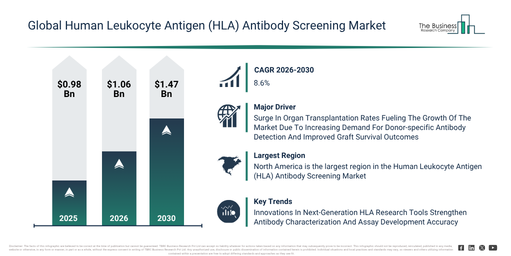
    The human leukocyte antigen (HLA) antibody screening market has experienced substantial growth in its size over recent years. This market is projected to expand from $0.98 billion in 2025 to $1.06 billion by 2026, demonstrating a compound annual growth rate (CAGR) of 8.4%. Historically, this expansion can be linked to several factors, including an escalating number of organ transplant operations, a higher occurrence of end-stage organ failure, enhanced understanding of transplant rejection dangers, the broadening scope of transfusion medicine practices, and advancements in immunoassay platform technology.

    The human leukocyte antigen (HLA) antibody screening market is expected to experience significant expansion in the coming years. Its valuation is projected to reach $1.47 billion by 2030, demonstrating a compound annual growth rate (CAGR) of 8.6%. This anticipated growth during the forecast period is driven by factors such as the increasing need for precise transplant matching, the wider adoption of multiplex bead-based assays, rising investments in transplant immunology research, the broadening of transplant programs in developing markets, and technological advancements in automated HLA antibody screening systems. Dominant trends during this period include the growing utilization of single antigen bead assays for superior sensitivity, an increasing demand for thorough pre-transplant immunological risk assessments, the expanded application of high-throughput flow cytometry in HLA screening, the development of post-transplant antibody monitoring protocols, and enhanced standardization of HLA antibody detection methodologies.

    Get A Free Sample Report With In-Depth Market Insights:

    https://thebusinessresearchcompany.com/sample_request?id=72197599&type=smp&name=Human%20Leukocyte%20Antigen%20%28HLA%29%20Antibody%20Screening%20Market%20Report%202026&utm_source=Blogs&utm_medium=Paid&utm_campaign=Oct_PR

    Human Leukocyte Antigen (HLA) Antibody Screening Market Growth Factors: What’s Supporting Expansion?

    The increasing rates of organ transplantation are anticipated to drive the future expansion of the HLA antibody screening market. Organ transplantation rates quantify the total number of organ transplant operations performed within a specific population over a period, typically expressed annually or per million people. This surge in transplantation procedures is largely a result of the escalating burden of chronic and end-stage diseases; as more patients progress to organ failure, the demand for organ replacement therapies concurrently rises. HLA antibody screening significantly contributes to higher organ transplantation success by ensuring superior donor-recipient compatibility before surgery, thereby reducing the likelihood of immune-mediated rejection. This process minimizes graft loss and complications, enhances long-term transplant outcomes, and facilitates more effective utilization of available donor organs. For example, in January 2025, the Health Resources and Services Administration, a US-based agency of the Department of Health and Human Services, reported that lung transplants saw the highest proportional increase between 2023 and 2024, climbing from 3,026 procedures to 3,340, which indicates a 10.4% growth. Thus, the escalating organ transplantation rates are propelling the growth of the HLA antibody screening market.

    Human Leukocyte Antigen (HLA) Antibody Screening Market Segmentation And Category Overview

    The human leukocyte antigen (HLA) antibody screening market covered in this report is segmented –

    1) By Technology: Enzyme-Linked Immunosorbent Assay (ELISA), Flow Cytometry, Luminex, Other Technologies

    2) By Product Type: Reagents And Kits, Instruments, Software

    3) By Target Class: Human Leukocyte Antigen Class I Antibodies, Human Leukocyte Antigen Class II Antibodies, Non- Human Leukocyte Antigen Antibodies

    4) By Application: Pre-Transplant Screening, Post-Transplant Monitoring, Transfusion Medicine, Research Applications

    5) By End-User: Hospitals And Transplant Centers, Diagnostic Laboratories, Research Institutes, Other End-Users

    Subsegments:

    1) By Enzyme Linked Immunosorbent Assay: Direct Enzyme Linked Immunosorbent Assay, Indirect Enzyme Linked Immunosorbent Assay, Sandwich Enzyme Linked Immunosorbent Assay, Competitive Enzyme Linked Immunosorbent Assay

    2) By Flow Cytometry: Conventional Flow Cytometry, Bead Based Flow Cytometry, Imaging Flow Cytometry, High Throughput Flow Cytometry

    3) By Luminex: Single Antigen Luminex Assay, Multi Antigen Luminex Assay, Bead Based Multiplex Luminex Assay, Custom Luminex Panels

    4) By Other Technologies: Western Blotting, Radioimmunoassay, Complement Dependent Cytotoxicity Assay, Microarray Based Assay

    Human Leukocyte Antigen (HLA) Antibody Screening Market Industry Trends: What’s Reshaping Demand?

    Major companies in the HLA antibody screening market are concentrating on developing advanced HLA research instruments to enhance the accuracy of immune checkpoint research, antibody validation, and assay development. These next-generation HLA research tools integrate innovative recombinant reagents, multiplexed analytical platforms, and high-resolution molecular technologies, which enable precise profiling of HLA molecules and how they interact with antibodies. For example, in November 2025, HLA Protein Technologies, a US-based biotechnology company, unveiled its sHLA-G Monomer and Tetramer Portfolio, an advanced HLA research tool that supports high-fidelity checkpoint biology studies, target validation, and assay development. This portfolio offers structurally validated recombinant HLA-G reagents, optimized for immune receptor interaction studies, thereby facilitating improved characterization of HLA-associated antibodies and driving progress in transplant immunology, oncology, and immune tolerance research applications.

    Human Leukocyte Antigen (HLA) Antibody Screening Market Competitive Analysis Of Leading Industry Participants

    Major companies operating in the human leukocyte antigen (HLA) antibody screening market are Hoffmann-La Roche AG, Thermo Fisher Scientific Inc., Abbott Laboratories, Becton Dickinson Company, Laboratory Corporation of America Holdings, Quest Diagnostics Incorporated, Grifols S A, Beckman Coulter Inc., Bio Rad Laboratories Inc., QIAGEN N V, Takara Bio Inc., Fujirebio Inc., CareDx Inc., Histogenetics LLC, Creative Biolabs Inc., Biofortuna Ltd., Stanford Blood Center, GenDx B V, Omixon Biocomputing Ltd., BAG Diagnostics GmbH, Scisco Genetics Inc., TBG Diagnostics Ltd., American Red Cross.

    View The Full Human Leukocyte Antigen (HLA) Antibody Screening Market Report:

    https://thebusinessresearchcompany.com/report/human-leukocyte-antigen-hla-antibody-screening-market-report?utm_source=Blogs&utm_medium=Paid&utm_campaign=Oct_PR

    Human Leukocyte Antigen (HLA) Antibody Screening Market Geographic Distribution And Regional Opportunities

    North America was the largest region in the human leukocyte antigen (HLA) antibody screening market in 2025. Asia-Pacific is expected to be the fastest-growing region in the forecast period. The regions covered in the human leukocyte antigen (HLA) antibody screening market report are Asia-Pacific, South East Asia, Western Europe, Eastern Europe, North America, South America, Middle East, Africa.

    Reach Out To Our Team:

    The Business Research Company: https://www.thebusinessresearchcompany.com/

    Americas: +1 310-496-7795

    Asia: +44 7882 955267 & +91 8897263534

    Europe: +44 7882 955267

    Email us at: marketing@tbrc.info

    Follow us on:

    LinkedIn: https://in.linkedin.com/company/the-business-research-company

    YouTube: https://www.youtube.com/channel/UC24_fI0rV8cR5DxlCpgmyFQ

    Global Market Model: https://www.thebusinessresearchcompany.com/global-market-model
  • Hospice Indoor Air Quality (IAQ) Monitoring Market Analysis Through 2030: Market Size, Growth Trends And Industry Outlook

    Hospice Indoor Air Quality (IAQ) Monitoring Market Analysis Through 2030: Market Size, Growth Trends And Industry Outlook

    Backed by market attractiveness analysis, total addressable market sizing, company benchmarking matrices, interactive Excel dashboards, wider supply chain intelligence, emerging startup coverage, and detailed product-level insights, The Business Research Company’s 2026 market reports are designed to offer research that is more actionable and strategically valuable than ever.

    Hospice Indoor Air Quality (IAQ) Monitoring Market Value Analysis: What Growth Lies Ahead Over The Forecast Period?

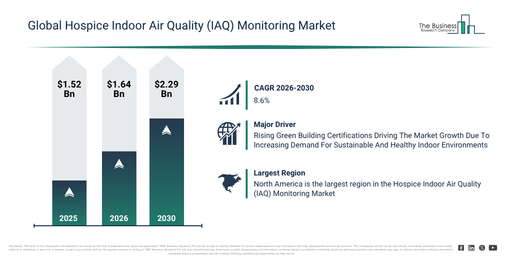
    The hospice indoor air quality (IAQ) monitoring market has experienced substantial growth in recent years. It is projected to increase from $1.52 billion in 2025 to $1.64 billion in 2026, achieving a compound annual growth rate (CAGR) of 8.4%. Historically, this growth has been driven by heightened awareness of indoor air pollution risks, growing respiratory health concerns among elderly patients, the expansion of hospice and palliative care facilities, evolving regulatory standards for healthcare environments, and the implementation of basic sensor-based monitoring systems.

    The hospice indoor air quality (IAQ) monitoring market is set for significant expansion in the coming years, with projections indicating it will reach $2.29 billion in 2030, exhibiting a compound annual growth rate (CAGR) of 8.6%. This anticipated growth is primarily driven by the increasing adoption of smart healthcare infrastructure, greater investment in patient-centric care environments, the growing integration of AI-driven air quality analytics, the expansion of home-based hospice services, and a stronger emphasis on sustainable and energy-efficient ventilation systems. Furthermore, major trends anticipated for this forecast period include the wider deployment of zoned IAQ monitoring systems, an escalating demand for real-time air quality alerts, enhanced integration of IAQ data with HVAC systems, the proliferation of portable multifunction IAQ devices, and a heightened focus on infection control and respiratory comfort.

    Get A Free Sample Report With In-Depth Market Insights:

    https://thebusinessresearchcompany.com/sample_request?id=63673973&type=smp&name=Hospice%20Indoor%20Air%20Quality%20%28IAQ%29%20Monitoring%20Market%20Report%202026&utm_source=Blogs&utm_medium=Paid&utm_campaign=Oct_PR

    Hospice Indoor Air Quality (IAQ) Monitoring Market Demand Drivers: What’s Powering Industry Growth?

    The expansion of green building certifications is anticipated to fuel the demand for the hospice indoor air quality (IAQ) monitoring market in the coming years. These certifications are official recognitions given to structures that fulfill criteria for sustainability, energy efficiency, and a reduced environmental footprint. The increase in such certifications stems from heightened environmental consciousness, which in turn boosts the desire for buildings designed to conserve resources and lower carbon emissions. Hospice IAQ monitoring plays a crucial role in achieving green building certifications by offering ongoing data on air quality, thereby guaranteeing healthy indoor conditions, mitigating pollutants, and assisting in meeting the sustainability and wellness benchmarks necessary for certification. For example, the Green Building Council, a US-based non-profit organization, reported in July 2024 that more than 46,000 residential projects obtained LEED green building certification, indicating an increase of almost 5% in new registrations when compared to 2023. Consequently, the proliferation of green building certifications is a key factor propelling the expansion of the hospice indoor air quality (IAQ) monitoring market. Escalating pollution levels are projected to drive the expansion of the hospice indoor air quality (IAQ) monitoring market in the future. These levels denote the amount of detrimental substances present in air, water, or soil, which can adversely affect health and the environment. The rise in pollution levels is attributed to swift industrialization, leading to the discharge of significant quantities of noxious gases, particulates, and chemicals into the surroundings, thereby degrading air and water quality and impacting public health. Hospice IAQ monitoring assists in managing pollution by consistently identifying airborne contaminants and facilitating prompt ventilation or filtration actions, thereby cultivating a healthier and safer setting for patients and personnel. For example, the United States Environmental Protection Agency, a US-based government agency, reported in February 2026 that roughly 64 million tons of pollutants were discharged into the atmosphere across the United States in 2024. Consequently, the escalating pollution levels are a significant catalyst for the growth of the hospice indoor air quality (IAQ) monitoring market.

    Hospice Indoor Air Quality (IAQ) Monitoring Market Segment Outlook: Which Categories Are Growing Fastest?

    The hospice indoor air quality (IAQ) monitoring market covered in this report is segmented –

    1) By Product Type: Portable Monitors, Fixed Monitors, Wearable Devices, Other Product Types

    2) By Pollutant Type: Particulate Matter, Carbon Dioxide, Volatile Organic Compounds, Biological Contaminants, Other Pollutant Types

    3) By Technology: Sensor-Based, Internet of Things (IoT)-Enabled, Wireless, Other Technologies

    4) By Application: Patient Rooms, Common Areas, Administrative Offices, Other Applications

    5) By End-User: Hospices, Palliative Care Centers, Home Care Settings, Other End-Users

    Subsegments:

    1) By Portable Monitors: Handheld Monitors, Tabletop Portable Stations, Portable Multifunction Devices

    2) By Fixed Monitors: Wall Mounted Fixed Monitors, Networked Fixed Systems, Zoned IAQ Monitoring

    3) By Wearable Devices: Pendant Wearables, Wrist Mounted Monitors, Badge Style Devices

    4) By Other Product Types: Environmental Sensor Kits, Integrated Smart Building Sensors, Retrofit Add On Sensors

    Hospice Indoor Air Quality (IAQ) Monitoring Market Leading Companies And Competitive Benchmarking

    Major companies operating in the hospice indoor air quality (IAQ) monitoring market are Thermo Fisher Scientific Inc., Honeywell International Incorporated, Johnson Controls International plc, Carrier Global Corporation, Trane Technologies plc., Emerson Electric Company, SGS SA, HORIBA Ltd., Camfil AB, Sensirion Aktiengesellschaft, TSI Incorporated, Siemens Aktiengesellschaft, IQAir AG, Airthings ASA, Awair Inc., BGE Indoor Air Quality Solutions Ltd., Testo SE & Co. Kommanditgesellschaft auf Aktien, Anewtech Systems, Aeroqual Limited, Critical Environment Technologies Canada Inc., DevineAir Limited.

    View The Full Hospice Indoor Air Quality (IAQ) Monitoring Market Report:

    https://thebusinessresearchcompany.com/report/hospice-indoor-air-quality-iaq-monitoring-market-report?utm_source=Blogs&utm_medium=Paid&utm_campaign=Oct_PR

    Hospice Indoor Air Quality (IAQ) Monitoring Market Largest Region By Revenue And Market Share

    North America was the largest region in the hospice indoor air quality (IAQ) monitoring market in 2025. Asia-Pacific is expected to be the fastest-growing region in the forecast period. The regions covered in the hospice indoor air quality (IAQ) monitoring market report are Asia-Pacific, South East Asia, Western Europe, Eastern Europe, North America, South America, Middle East, Africa.

    Reach Out To Our Team:

    The Business Research Company: https://www.thebusinessresearchcompany.com/

    Americas: +1 310-496-7795

    Asia: +44 7882 955267 & +91 8897263534

    Europe: +44 7882 955267

    Email us at: marketing@tbrc.info

    Follow us on:

    LinkedIn: https://in.linkedin.com/company/the-business-research-company

    YouTube: https://www.youtube.com/channel/UC24_fI0rV8cR5DxlCpgmyFQ

    Global Market Model: https://www.thebusinessresearchcompany.com/global-market-model
  • High-Plex Protein Biomarker Platforms Market Outlook From 2026 To 2030: Key Growth Factors And Future Opportunities

    High-Plex Protein Biomarker Platforms Market Outlook From 2026 To 2030: Key Growth Factors And Future Opportunities

    Featuring market attractiveness scoring, total addressable market sizing, company benchmarking matrices, interactive Excel dashboards, deeper supply chain intelligence, emerging startup tracking, and granular product-level insights, The Business Research Company’s 2026 market reports are built to deliver research that is both more actionable and more strategically valuable.

    High-Plex Protein Biomarker Platforms Market Size Forecast: How Big Could The Market Get By 2030?

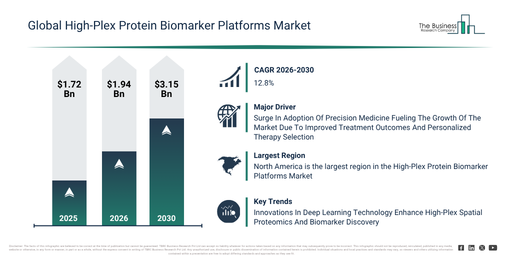
    The high-plex protein biomarker platforms market has experienced significant growth in recent years. It will grow from $1.72 billion in 2025 to $1.94 billion in 2026 at a compound annual growth rate (CAGR) of 12.6%. This historical expansion can be attributed to factors such as increased investment in proteomics research, a rising prevalence of chronic and complex diseases, the expansion of pharmaceutical research and development activities, a growing demand for tools for early disease detection, and advancements in mass spectrometry technologies.

    The high-plex protein biomarker platforms market size is anticipated to experience significant expansion over the coming years. This market is projected to reach $3.15 billion by 2030, demonstrating a compound annual growth rate (CAGR) of 12.8%. Factors contributing to this growth during the forecast period include the increasing uptake of precision medicine initiatives, a rising need for companion diagnostics development, increased funding for translational research programs, the broadening scope of oncology and immunology biomarker studies, and advancements in next-generation proteomic platforms. Key trends anticipated during this period encompass the wider adoption of ultra-high multiplex protein profiling, a surging demand for integrated multi-omics platforms, the increased application of high-sensitivity immunoassay technologies, the broadening of biomarker validation within clinical trials, and an enhanced emphasis on standardization and reproducibility in proteomics.

    Get A Free Sample Report With In-Depth Market Insights:

    https://thebusinessresearchcompany.com/sample_request?id=92473546&type=smp&name=High-Plex%20Protein%20Biomarker%20Platforms%20Market%20Report%202026&utm_source=Blogs&utm_medium=Paid&utm_campaign=Oct_PR

    High-Plex Protein Biomarker Platforms Market Growth Drivers: What’s Behind The Acceleration?

    The expanded use of precision medicine is anticipated to stimulate the growth of the high-plex protein biomarker platforms market in the foreseeable future. Precision medicine signifies a healthcare approach that customizes the prevention, diagnosis, and treatment of illnesses based on an individual’s unique genetic composition, biological characteristics, and environmental influences. The increasing embrace of precision medicine is propelled by enhanced treatment outcomes, given that therapies specifically designed for individual genetic and molecular profiles boost effectiveness while diminishing adverse effects. High-plex protein biomarker platforms aid in accelerating the adoption of precision medicine by enabling comprehensive analysis of multiple protein biomarkers, which facilitates more accurate patient stratification, selection of personalized therapies, and improved monitoring of treatment response. For instance, in February 2024, the Personalized Medicine Coalition, a US-based nonprofit advocacy organization, indicated that 16 new personalized treatments for rare diseases received approval, a rise from six in 2022. Thus, the escalating adoption of precision medicine is driving the growth of the high-plex protein biomarker platforms market.

    High-Plex Protein Biomarker Platforms Market Segment Landscape: Which Areas Lead Development?

    The high-plex protein biomarker platforms market covered in this report is segmented –

    1) By Technology: Mass Spectrometry, Immunoassays, Multiplexed Immunofluorescence, Next-Generation Sequencing, Other Technologies

    2) By Product: Protein Biomarker Detection Instruments, Reagents And Assay Kits, Software And Data Analysis Tools, Consumables And Accessories, Service And Support Contracts

    3) By Application: Biomarker Discovery, Translational Research, Drug Discovery And Development, Clinical Diagnostics, Precision Medicine, Immunology And Oncology Research, Other Applications

    4) By End User: Pharmaceutical And Biotechnology Companies, Academic And Research Institutes, Contract Research Organizations (CROs), Healthcare And Diagnostic Centers, Biopharmaceutical Service Providers

    Subsegments:

    1) By Mass Spectrometry: Matrix Assisted Laser Desorption Ionization, Electrospray Ionization, Tandem Mass Spectrometry, Time Of Flight Mass Spectrometry

    2) By Immunoassays: Enzyme Linked Immunosorbent Assay, Radioimmunoassay, Fluorescence Immunoassay, Chemiluminescence Immunoassay

    3) By Multiplexed Immunofluorescence: Tissue Based Multiplexed Immunofluorescence, Cell Based Multiplexed Immunofluorescence, Quantitative Multiplexed Immunofluorescence

    4) By Next Generation Sequencing: Targeted Protein Sequencing, Whole Proteome Sequencing, Transcriptome Based Protein Sequencing

    5) By Other Technologies: Protein Microarray Platforms, Surface Plasmon Resonance Platforms, Electrochemical Biosensor Platforms, Label Free Detection Platforms

    High-Plex Protein Biomarker Platforms Market Trends: What’s Defining The Industry’s Next Phase?

    Leading companies within the high-plex protein biomarker platforms market are concentrating on developing advanced solutions, such as deep learning-powered spatial proteomics models, to automate multiplexed protein analysis, improve biomarker identification accuracy, and accelerate therapeutic development. These deep learning-powered spatial proteomics models are artificial intelligence-based computational systems that analyze highly multiplexed protein expression data in intact tissue samples, facilitating precise spatial mapping and quantitative profiling of biomarkers at single-cell resolution. For example, Nucleai, a US-based spatial biology company, introduced its pioneering deep learning model in April 2025, designed to automate spatial proteomics analysis. This solution enhances the discovery and validation of protein biomarkers by combining high-dimensional imaging data with AI-driven analytics, thereby supporting the development of antibody-drug conjugates (ADCs), bispecific antibodies, and immunotherapies by offering deeper insights into tumor microenvironments and target expression patterns.

    High-Plex Protein Biomarker Platforms Market Industry Leaders And Competitive Landscape

    Major companies operating in the high-plex protein biomarker platforms market are SomaLogic Inc, F. Hoffmann-La Roche AG, Thermo Fisher Scientific Inc, Merck KGaA, Agilent Technologies Inc, PerkinElmer Inc, Bio-Rad Laboratories Inc, Bio-Techne Corporation, Novogene Co Ltd, Meso Scale Diagnostics LLC, Quanterix Corporation, Akoya Biosciences Inc, RayBiotech Inc, Protavio Ltd, Proteome Sciences plc, Lucence Diagnostics Pte Ltd, Applied Biomics Inc, Sword Bio, BGI Group, Immudex A/S.

    View The Full High-Plex Protein Biomarker Platforms Market Report:

    https://thebusinessresearchcompany.com/report/high-plex-protein-biomarker-platforms-market-report?utm_source=Blogs&utm_medium=Paid&utm_campaign=Oct_PR

    High-Plex Protein Biomarker Platforms Market Regional Analysis And Leading Geography

    North America was the largest region in the high-plex protein biomarker platforms market in 2025. Asia-Pacific is expected to be the fastest-growing region in the forecast period. The regions covered in the high-plex protein biomarker platforms market report are Asia-Pacific, South East Asia, Western Europe, Eastern Europe, North America, South America, Middle East, Africa.

    Reach Out To Our Team:

    The Business Research Company: https://www.thebusinessresearchcompany.com/

    Americas: +1 310-496-7795

    Asia: +44 7882 955267 & +91 8897263534

    Europe: +44 7882 955267

    Email us at: marketing@tbrc.info

    Follow us on:

    LinkedIn: https://in.linkedin.com/company/the-business-research-company

    YouTube: https://www.youtube.com/channel/UC24_fI0rV8cR5DxlCpgmyFQ

    Global Market Model: https://www.thebusinessresearchcompany.com/global-market-model
  • Herpes Simplex Virus (HSV) Polymerase Chain Reaction (PCR) Testing Market CAGR Forecast Through 2030: Key Trends Shaping Industry Expansion

    Herpes Simplex Virus (HSV) Polymerase Chain Reaction (PCR) Testing Market CAGR Forecast Through 2030: Key Trends Shaping Industry Expansion

    Backed by market attractiveness analysis, total addressable market sizing, company benchmarking matrices, interactive Excel dashboards, wider supply chain intelligence, emerging startup coverage, and detailed product-level insights, The Business Research Company’s 2026 market reports are designed to offer research that is more actionable and strategically valuable than ever.

    Herpes Simplex Virus (HSV) Polymerase Chain Reaction (PCR) Testing Market Growth Analysis: How Will Revenue Trend Over The Forecast Period?

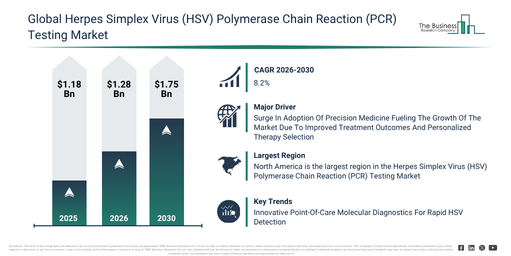
    The herpes simplex virus (HSV) polymerase chain reaction (PCR) testing market has demonstrated robust growth in recent years. This market is projected to expand from $1.18 billion in 2025 to $1.28 billion in 2026, exhibiting a compound annual growth rate (CAGR) of 8.0%. Historically, this expansion has been driven by factors such as the increasing global incidence of HSV infections, heightened public understanding of sexually transmitted infections, the proliferation of molecular diagnostic laboratories, the rising uptake of nucleic acid amplification tests, and the wider availability of antiviral treatments.

    The herpes simplex virus (HSV) polymerase chain reaction (PCR) testing market is projected to experience substantial expansion in the coming years. Its valuation is anticipated to reach $1.75 billion by 2030, exhibiting a compound annual growth rate (CAGR) of 8.2%. This growth over the forecast period is propelled by factors such as the increasing implementation of routine HSV screening programs, a growing need for rapid point-of-care molecular testing, the broadening of precision medicine strategies in infectious diseases, heightened healthcare investments across emerging markets, and continuous technological progress in multiplex and quantitative PCR platforms. Key developments expected during this period include a greater embrace of real-time PCR for swift HSV detection, a surge in the need for prompt diagnosis in neonatal and genital HSV infections, an expanded application of multiplex PCR assays for differentiating diagnoses, the wider availability of high-sensitivity quantitative PCR testing, and a progressive integration of automated sample-to-result systems.

    Get A Free Sample Report With In-Depth Market Insights:

    https://thebusinessresearchcompany.com/sample_request?id=67289701&type=smp&name=Herpes%20Simplex%20Virus%20%28HSV%29%20Polymerase%20Chain%20Reaction%20%28PCR%29%20Testing%20Market%20Report%202026&utm_source=Blogs&utm_medium=Paid&utm_campaign=Oct_PR

    Herpes Simplex Virus (HSV) Polymerase Chain Reaction (PCR) Testing Market Demand Drivers Opening New Revenue Streams

    The herpes simplex virus (HSV) polymerase chain reaction (PCR) testing market is projected to expand, driven by the escalating occurrence of infections. Infections refer to the entry and proliferation of detrimental microorganisms within the body, leading to illness. The rise in infections is attributable to urbanization, where increased population density in urban areas promotes the rapid transmission of pathogens via close human interaction and common resources. Herpes simplex virus (HSV) polymerase chain reaction (PCR) testing is beneficial as it swiftly and precisely identifies HSV DNA, facilitating prompt diagnosis and therapy, thereby averting the exacerbation or dissemination of the infection. An illustrative example is seen in 2023, where the UK Health Security Agency, a government body in the UK, reported a 4% increase in yeast-related bloodstream infections throughout England compared to 2022. Consequently, the growing frequency of infections is a primary catalyst for the expansion of the herpes simplex virus (HSV) polymerase chain reaction (PCR) testing market.

    Herpes Simplex Virus (HSV) Polymerase Chain Reaction (PCR) Testing Market Segment Analysis: What Are The Core Market Categories?

    The herpes simplex virus (HSV) polymerase chain reaction (PCR) testing market covered in this report is segmented –

    1) By Test Type: Polymerase Chain Reaction Testing, Serology Testing, Culture Testing

    2) By Product Type: Instruments, Reagents And Kits, Software

    3) By Sample Type: Vesicular Swabs or Fluid Samples, Cerebrospinal Fluid Samples, Blood or Serum Samples

    4) By Application: Clinical Diagnostics, Research, Blood Screening, Other Applications

    5) By End User: Hospitals And Clinics, Diagnostic Laboratories, Research Institutes, Other End Users

    Subsegments:

    1) By Polymerase Chain Reaction Testing: Real Time Polymerase Chain Reaction, Nested Polymerase Chain Reaction, Multiplex Polymerase Chain Reaction, Quantitative Polymerase Chain Reaction

    2) By Serology Testing: IgM Antibody Testing, IgG Antibody Testing, Western Blot Testing, Enzyme Linked Immunosorbent Assay

    3) By Culture Testing: Cell Culture Isolation, Plaque Assay Culture, Shell Vial Culture, Tissue Culture Infection Assay

    Herpes Simplex Virus (HSV) Polymerase Chain Reaction (PCR) Testing Market Trends Powering Strategic Industry Growth

    Leading companies in the herpes simplex virus (HSV) polymerase chain reaction (PCR) testing market are prioritizing the development of innovative solutions, such as point-of-care molecular diagnostics, to enable rapid, accurate, and decentralized detection of HSV infections for improved patient management. Point-of-care molecular diagnostics are tests designed to swiftly and precisely identify pathogens at the patient’s location without the necessity of a central laboratory. For example, in January 2023, Molbio Diagnostics Pvt. Ltd., an India-based medical technology firm, introduced a Truenat HSV 1/2 chip-based RT-PCR test specifically for diagnosing herpes simplex virus types 1 and 2. This portable, point-of-care assay provides results in under one hour from genital swabs or cerebrospinal fluid (CSF) using the battery-operated Truelab platform, requires no additional equipment, and holds central drugs standard control organisation (CDSCO) approval in India. It aims to support the rapid detection of active herpes simplex virus (HSV) infections, thereby boosting awareness and facilitating early treatment amidst a growing number of cases.

    Herpes Simplex Virus (HSV) Polymerase Chain Reaction (PCR) Testing Market Top Companies Driving Competitive Growth

    Major companies operating in the herpes simplex virus (HSV) polymerase chain reaction (PCR) testing market are F. Hoffmann-La Roche Ltd., Thermo Fisher Scientific Inc., Abbott Laboratories, Danaher Corporation, Becton, Dickinson Company, Quest Diagnostics Incorporated, Hologic Inc., bioMérieux SA, Bio-Rad Laboratories Inc., QIAGEN N.V., DiaSorin S.p.A., Promega Corporation, Meridian Bioscience Inc., Seegene Inc., BioPerfectus Technologies Co. Ltd., altona Diagnostics GmbH, Xi’an Tianlong Science & Technology Co. Ltd., 3B BlackBio Dx Limited, GeneProof s.r.o., Primerdesign Ltd., BioHelix Corporation.

    View The Full Herpes Simplex Virus (HSV) Polymerase Chain Reaction (PCR) Testing Market Report:

    https://thebusinessresearchcompany.com/report/herpes-simplex-virus-hsv-polymerase-chain-reaction-pcr-testing-market-report?utm_source=Blogs&utm_medium=Paid&utm_campaign=Oct_PR

    Herpes Simplex Virus (HSV) Polymerase Chain Reaction (PCR) Testing Market Global Footprint: Which Region Leads The Industry?

    North America was the largest region in the herpes simplex virus (HSV) polymerase chain reaction (PCR) testing market in 2025. Asia-Pacific is expected to be the fastest-growing region in the forecast period. The regions covered in the herpes simplex virus (HSV) polymerase chain reaction (PCR) testing market report are Asia-Pacific, South East Asia, Western Europe, Eastern Europe, North America, South America, Middle East, Africa.

    Reach Out To Our Team:

    The Business Research Company: https://www.thebusinessresearchcompany.com/

    Americas: +1 310-496-7795

    Asia: +44 7882 955267 & +91 8897263534

    Europe: +44 7882 955267

    Email us at: marketing@tbrc.info

    Follow us on:

    LinkedIn: https://in.linkedin.com/company/the-business-research-company

    YouTube: https://www.youtube.com/channel/UC24_fI0rV8cR5DxlCpgmyFQ

    Global Market Model: https://www.thebusinessresearchcompany.com/global-market-model
  • Hereditary Actionable Disorders Screen (HADS) Inherited Predisposition Screening (IPS) Variant Panel Market To Witness 12.6% CAGR Growth Through 2030: Key Industry Drivers

    Hereditary Actionable Disorders Screen (HADS) Inherited Predisposition Screening (IPS) Variant Panel Market To Witness 12.6% CAGR Growth Through 2030: Key Industry Drivers

    Featuring market attractiveness scoring, total addressable market sizing, company benchmarking matrices, interactive Excel dashboards, deeper supply chain intelligence, emerging startup tracking, and granular product-level insights, The Business Research Company’s 2026 market reports are built to deliver research that is both more actionable and more strategically valuable.

    Hereditary Actionable Disorders Screen (HADS) Inherited Predisposition Screening (IPS) Variant Panel Market Forecast: What Value Will The Market Reach By 2030?

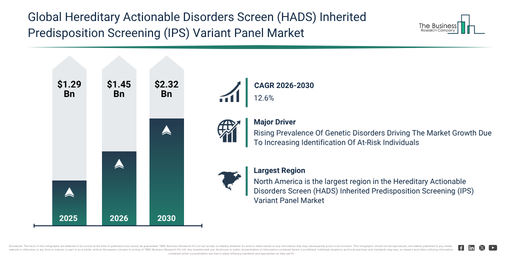
    The hereditary actionable disorders screen (HADS) inherited predisposition screening (IPS) variant panel market size has witnessed substantial growth in recent years. It will grow from $1.29 billion in 2025 to $1.45 billion in 2026 at a compound annual growth rate (CAGR) of 12.3%. The expansion observed in the past can be attributed to increased awareness of hereditary cancer syndromes, the proliferation of clinical genetic testing services, the decreasing cost of sequencing technologies, a rise in the prevalence of inherited cardiovascular disorders, and the increasing adoption of evidence-based screening guidelines.

    The market for the hereditary actionable disorders screen (HADS) inherited predisposition screening (IPS) variant panel is anticipated to undergo rapid expansion in the coming years. It is projected to reach $2.32 billion in 2030, showing a compound annual growth rate (CAGR) of 12.6%. This increase during the forecast period is attributable to the expanding integration of genomic data into routine clinical practices, a rising need for population-level genetic screening, increased investments in precision medicine initiatives, the broadening of reimbursement policies for genetic testing, and the continuous development of multi-gene actionable panels. Significant trends over the forecast period involve the growing adoption of targeted germline variant panels, an escalating demand for preventive genetic screening programs, the enhanced integration of hereditary cancer risk assessments, the proliferation of evidence-based clinical intervention protocols, and a heightened emphasis on the early detection of inherited cardiovascular disorders.

    Get A Free Sample Report With In-Depth Market Insights:

    https://thebusinessresearchcompany.com/sample_request?id=72145526&type=smp&name=Hereditary%20Actionable%20Disorders%20Screen%20%28HADS%29%20Inherited%20Predisposition%20Screening%20%28IPS%29%20Variant%20Panel%20Market%20Report%202026&utm_source=Blogs&utm_medium=Paid&utm_campaign=Oct_PR

    Hereditary Actionable Disorders Screen (HADS) Inherited Predisposition Screening (IPS) Variant Panel Market Growth Backed By Core Demand Fundamentals

    The increasing occurrence of genetic disorders is projected to fuel the expansion of the HADS inherited predisposition screening (IPS) variant panel market. Genetic disorders are conditions stemming from alterations or mutations in an individual’s DNA, which can be passed down from parents or emerge spontaneously. The rise in genetic disorder prevalence is attributed to advancements in genetic testing and screening, leading to the identification of more previously undiagnosed cases, alongside heightened awareness among medical professionals and the public. The HADS IPS variant panel assists in detecting inherited genetic mutations and predispositions in individuals, thereby facilitating early diagnosis, personalized risk evaluation, and informed healthcare decisions to manage or prevent the onset of genetic disorders. For instance, in October 2024, according to the National Health Service (NHS) England, a UK-based government department, as part of a groundbreaking study in NHS hospitals, several hundred newborns have already undergone testing for more than 200 rare genetic conditions, with the initiative aiming to screen up to 100,000 babies across England. Consequently, the growing prevalence of genetic disorders is stimulating the growth of the HADS inherited predisposition screening (IPS) variant panel market. The expanding adoption of personalized medicine is anticipated to drive forward the HADS inherited predisposition screening (IPS) variant panel market. Personalized medicine involves medical treatments specifically designed for individual patients, based on their unique genetic profiles, biomarkers, and molecular characteristics. The increased embrace of personalized medicine is due to innovations in genomic sequencing technologies, which have significantly lowered costs and improved accessibility, enabling widespread genetic profiling in clinical environments. The HADS inherited predisposition screening (IPS) variant panel supports personalized medicine by identifying an individual’s specific genetic risk variants, empowering clinicians to customize prevention tactics, early interventions, and treatment plans uniquely tailored to each patient’s inherited predisposition. For example, in February 2024, the Personalized Medicine Coalition, a US-based non-profit organization, reported that in 2023, the U.S. Food and Drug Administration (FDA) approved 16 new personalized treatments for patients with rare diseases, marking a substantial increase from the six approvals in 2022. Therefore, the increasing adoption of personalized medicine is a key driver for the growth of the HADS inherited predisposition screening (IPS) variant panel market.

    Hereditary Actionable Disorders Screen (HADS) Inherited Predisposition Screening (IPS) Variant Panel Market Segment Breakdown: Which Categories Lead On Revenue?

    The hereditary actionable disorders screen (HADS) inherited predisposition screening (IPS) variant panel market covered in this report is segmented –

    1) By Technology: Polymerase Chain Reaction, Next Generation Sequencing, Microarray, Other Technologies

    2) By Product Type: Assay Kits, Reagents, Instruments, Software

    3) By Application: Clinical Diagnostics, Research, Personalized Medicine, Oncology, Other Applications

    4) By End-User: Hospitals And Clinics, Diagnostic Laboratories, Research Institutes, Other End Users

    Subsegments:

    1) By Polymerase Chain Reaction: Real Time Polymerase Chain Reaction, Digital Polymerase Chain Reaction, Multiplex Polymerase Chain Reaction, Allele Specific Polymerase Chain Reaction, Other Polymerase Chain Reaction Methods

    2) By Next Generation Sequencing: Targeted Sequencing, Whole Genome Sequencing, Whole Exome Sequencing, Single Cell Sequencing, Other Sequencing Approaches

    3) By Microarray: Single Nucleotide Polymorphism Array, Comparative Genomic Hybridization Array, Gene Expression Array, Methylation Array, Other Microarray Technologies

    4) By Other Technologies: Hybrid Capture Based, Bead Based Assays, Electrochemical Detection, Optical Detection, Other Emerging Technologies

    Hereditary Actionable Disorders Screen (HADS) Inherited Predisposition Screening (IPS) Variant Panel Market Leading Players And Competitive Positioning

    Major companies operating in the hereditary actionable disorders screen (HADS) inherited predisposition screening (IPS) variant panel market are Helix Inc.

    View The Full Hereditary Actionable Disorders Screen (HADS) Inherited Predisposition Screening (IPS) Variant Panel Market Report:

    https://thebusinessresearchcompany.com/report/hereditary-actionable-disorders-screen-hads-inherited-predisposition-screening-ips-variant-panel-market-report?utm_source=Blogs&utm_medium=Paid&utm_campaign=Oct_PR

    Hereditary Actionable Disorders Screen (HADS) Inherited Predisposition Screening (IPS) Variant Panel Market Regional Distribution: Which Areas Power Market Growth?

    North America was the largest region in the hereditary actionable disorders screen (HADS) inherited predisposition screening (IPS) variant panel market in 2025. Asia-Pacific is expected to be the fastest-growing region in the forecast period. The regions covered in the hereditary actionable disorders screen (HADS) inherited predisposition screening (IPS) variant panel market report are Asia-Pacific, South East Asia, Western Europe, Eastern Europe, North America, South America, Middle East, Africa.

    Reach Out To Our Team:

    The Business Research Company: https://www.thebusinessresearchcompany.com/

    Americas: +1 310-496-7795

    Asia: +44 7882 955267 & +91 8897263534

    Europe: +44 7882 955267

    Email us at: marketing@tbrc.info

    Follow us on:

    LinkedIn: https://in.linkedin.com/company/the-business-research-company

    YouTube: https://www.youtube.com/channel/UC24_fI0rV8cR5DxlCpgmyFQ

    Global Market Model: https://www.thebusinessresearchcompany.com/global-market-model

  • Hepatitis C Virus (HCV) Viral Load Testing Market Projected For Strong Expansion Through 2030: Key Trends And Future Outlook

    Hepatitis C Virus (HCV) Viral Load Testing Market Projected For Strong Expansion Through 2030: Key Trends And Future Outlook

    Built to provide research that’s more actionable and strategically valuable, The Business Research Company’s 2026 market reports include market attractiveness analysis, total addressable market sizing, company benchmarking matrices, interactive Excel dashboards, broader supply chain intelligence, emerging startup tracking, and in-depth product insights.

    Hepatitis C Virus (HCV) Viral Load Testing Market Size Outlook: How Quickly Will Revenue Expand Through 2030?

    The market for hepatitis c virus (hcv) viral load testing has demonstrated robust expansion over the past few years. This market is projected to expand from $1.39 billion in 2025 to $1.48 billion in 2026, exhibiting a compound annual growth rate (CAGR) of 7.2%. Factors contributing to its historical growth include the escalating worldwide occurrence of hepatitis c infections, heightened consciousness regarding prompt diagnosis, the development of diagnostic laboratory facilities, the embrace of nucleic acid amplification techniques, and the increasing access to antiviral treatments.

    The market for hepatitis c virus (hcv) viral load testing is anticipated to experience robust expansion in the coming years. This market is projected to reach $1.98 billion by 2030, demonstrating a compound annual growth rate (CAGR) of 7.4%. Factors contributing to this projected growth include a rise in government screening initiatives, an increasing need for precise viral load monitoring, the proliferation of decentralized testing sites, greater investment in molecular diagnostics, and innovations in high-sensitivity HCV RNA assays. Key developments expected during this timeframe encompass a wider uptake of real-time PCR-based viral load testing, an escalating requirement for prompt detection and treatment response tracking, the expanded deployment of automated high-throughput diagnostic platforms, the growth of point-of-care HCV RNA testing solutions, and enhanced standardization of viral load quantification assays.

    Get A Free Sample Report With In-Depth Market Insights:

    https://thebusinessresearchcompany.com/sample_request?id=75863008&type=smp&name=Hepatitis%20C%20Virus%20%28HCV%29%20Viral%20Load%20Testing%20Market%20Report%202026&utm_source=Blogs&utm_medium=Paid&utm_campaign=Oct_PR

    Hepatitis C Virus (HCV) Viral Load Testing Market Growth Catalysts And Demand Drivers

    The expansion of personalized medicine is anticipated to fuel the future growth of the hepatitis C virus (HCV) viral load testing market. Personalized medicine represents a healthcare approach that customizes medical interventions and treatments based on an individual’s genetic profile, lifestyle, and environmental factors to achieve optimal clinical outcomes. The increasing adoption of personalized medicine is propelled by advancements in genomic technologies, which enable precise disease identification and targeted therapies, thereby improving treatment effectiveness while minimizing side effects. Hepatitis C viral load testing supports personalized medicine by quantifying the amount of virus present in a patient’s blood, allowing clinicians to tailor antiviral therapy selection, dosage, and treatment duration according to individual responses and disease severity. For instance, in February 2024, the Personalized Medicine Coalition, a US-based non-profit organization, reported that in 2023, the FDA approved 16 new personalized treatments for rare disease patients, an increase from six in 2022, including seven cancer drugs and three therapies for other diseases and conditions. As a result, the development of personalized medicine is driving the growth of the hepatitis C virus (HCV) viral load testing market.

    Hepatitis C Virus (HCV) Viral Load Testing Market Segmentation: How Does The Market Break Down By Category?

    The hepatitis c virus (hcv) viral load testing market covered in this report is segmented –

    1) By Technology: Polymerase Chain Reaction, Nucleic Acid Sequence-Based Amplification, Transcription-Mediated Amplification, Other Technologies

    2) By Product Type: Instruments, Kits And Reagents, Software And Services

    3) By Sample Type: Blood, Plasma, Serum, Other Sample Types

    4) By End User: Hospitals And Clinics, Diagnostic Laboratories, Blood Banks, Other End Users

    Subsegments:

    1) By Polymerase Chain Reaction: Real Time Polymerase Chain Reaction, Digital Polymerase Chain Reaction, Nested Polymerase Chain Reaction, Reverse Transcription Polymerase Chain Reaction

    2) By Nucleic Acid Sequence-Based Amplification: Real Time Nucleic Acid Sequence-Based Amplification, Standard Nucleic Acid Sequence-Based Amplification

    3) By Transcription-Mediated Amplification: Real Time Transcription-Mediated Amplification, Isothermal Transcription-Mediated Amplification

    4) By Other Technologies: Branched Deoxyribonucleic Acid Assay, Signal Mediated Amplification Of Ribonucleic Acid, Hybrid Capture Assay

    Hepatitis C Virus (HCV) Viral Load Testing Market Trends Shaping Long-Term Demand

    Major companies operating in the hepatitis C virus (HCV) viral load testing market are focusing on obtaining regulatory approvals to expand access to rapid and highly accurate molecular diagnostic solutions. Regulatory approvals enable commercial distribution and clinical adoption of advanced nucleic acid amplification tests (NAATs), improving early diagnosis, treatment initiation, and disease monitoring. For instance, in August 2025, Cepheid Inc., a US-based molecular diagnostics company, obtained a medical device license from Health Canada for its Xpert HCV Viral Load test. This assay is designed to detect and quantify hepatitis C virus (HCV) RNA and is conducted on Cepheid’s GeneXpert System platform. The test delivers automated, real-time PCR-based results, enabling faster clinical decision-making, enhanced patient management, and broader access to decentralized HCV testing services.

    Hepatitis C Virus (HCV) Viral Load Testing Market Competitive Overview And Top Companies

    Major companies operating in the hepatitis c virus (hcv) viral load testing market are F. Hoffmann-La Roche Ltd., Thermo Fisher Scientific Inc., Abbott Laboratories, Siemens Healthineers, Danaher Corporation, Hologic Inc., Revvity, Bio-Rad Laboratories Inc., Qiagen N.V., Cepheid Inc., BioPerfectus Technologies Co. Ltd., Enzo Biochem Inc., Vela Diagnostics International Pte. Ltd., Altona Diagnostics GmbH, Certest Biotec S.L., Molbio Diagnostics Private Limited, 3B BlackBio Dx Limited, Anatolia Geneworks, GeneProof a.s., Sacace Biotechnologies S.r.l.

    View The Full Hepatitis C Virus (HCV) Viral Load Testing Market Report:

    https://thebusinessresearchcompany.com/report/hepatitis-c-virus-hcv-viral-load-testing-market-report?utm_source=Blogs&utm_medium=Paid&utm_campaign=Oct_PR

    Hepatitis C Virus (HCV) Viral Load Testing Market Leading Geography: Which Region Contributes The Most Revenue?

    North America was the largest region in the hcv viral load testing market in 2025. Asia-Pacific is expected to be the fastest-growing region in the forecast period. The regions covered in the hcv viral load testing market report are Asia-Pacific, South East Asia, Western Europe, Eastern Europe, North America, South America, Middle East, Africa.

    Reach Out To Our Team:

    The Business Research Company: https://www.thebusinessresearchcompany.com/

    Americas: +1 310-496-7795

    Asia: +44 7882 955267 & +91 8897263534

    Europe: +44 7882 955267

    Email us at: marketing@tbrc.info

    Follow us on:

    LinkedIn: https://in.linkedin.com/company/the-business-research-company

    YouTube: https://www.youtube.com/channel/UC24_fI0rV8cR5DxlCpgmyFQ

    Global Market Model: https://www.thebusinessresearchcompany.com/global-market-model