Blog

  • Surgical Robotics for Gynecology Market Forecast To 2030: Starting From $5.76 Billion In 2026

    Surgical Robotics for Gynecology Market Forecast To 2030: Starting From $5.76 Billion In 2026

    Featuring market attractiveness scoring, total addressable market sizing, company benchmarking matrices, interactive Excel dashboards, deeper supply chain intelligence, emerging startup tracking, and granular product-level insights, The Business Research Company’s 2026 market reports are built to deliver research that is both more actionable and more strategically valuable.

    Surgical Robotics for Gynecology Market Forecast: Value Set To Climb From $3.35 Billion To $5.76 Billion

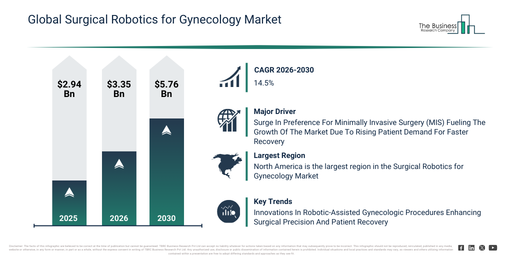
    The market size for surgical robotics in gynecology has experienced swift expansion in recent years. This market is projected to increase from $2.94 billion in 2025 to $3.35 billion in 2026, showing a compound annual growth rate (CAGR) of 14.2%. The historical development can be ascribed to factors such as the rise of minimally invasive gynecology, increasing volumes of women’s health procedures, the growth of robotic surgery centers, improvements in laparoscopic outcomes, and the demand for surgeon ergonomics.

    The surgical robotics for gynecology market is projected to experience substantial expansion over the upcoming years. It is anticipated to reach $5.76 billion in 2030, exhibiting a compound annual growth rate (CAGR) of 14.5%. This projected expansion can be linked to several factors, including increased hospital spending on robotic operating rooms, a rise in intricate gynecological interventions, growing patient demand for less invasive surgical options, the proliferation of robotic training initiatives, and enhanced reimbursement assistance. Key developments anticipated during this period encompass a greater acceptance of robotic hysterectomy platforms, the expansion of minimally invasive gynecological robotics, an increase in single-port robotic procedures, more frequent utilization of advanced surgical visualization tools, and the incorporation of procedure planning software.

    Get A Free Sample Report With In-Depth Market Insights:

    https://thebusinessresearchcompany.com/sample_request?id=98748494&type=smp&name=Surgical%20Robotics%20for%20Gynecology%20Market%20Report%202026&utm_source=Blogs&utm_medium=Paid&utm_campaign=Oct_PR

    Surgical Robotics for Gynecology Market Growth Factors Behind Sustained Expansion

    An increasing demand for minimally invasive surgery is anticipated to fuel the expansion of the surgical robotics for gynecology market in the future. This surgical approach entails conducting gynecological operations, including hysterectomies and myomectomies, via small cuts with either laparoscopic or robotic assistance, leading to reduced tissue damage. The rise in minimally invasive surgery is attributed to innovations in surgical tools and imaging technologies, which allow for enhanced accuracy, less patient injury, and quicker recuperation periods. Within gynecology, surgical robotics improves these minimally invasive operations by providing superior precision, three-dimensional visualization, better maneuverability, and tremor suppression, thereby empowering surgeons to execute intricate procedures more proficiently. As an illustration, in November 2025, Intuitive Surgical Inc., a US-based medical device company, reported that in 2023, approximately 2,286,000 surgical procedures globally utilized da Vinci robotic surgical systems, representing an increase of about 22% from 2022, with the total procedures performed on da Vinci platforms surpassing 14 million. Consequently, the increasing adoption of minimally invasive surgery is propelling the expansion of the surgical robotics for gynecology market.

    Surgical Robotics for Gynecology Market Segment Breakdown: Which Categories Lead On Revenue?

    The surgical robotics for gynecology market covered in this report is segmented –

    1) By Product Type: Robotic Systems; Instruments And Accessories; Services

    2) By Technology: Telerobotics; Minimally Invasive Robotics; Autonomous Robotics

    3) By Application: Hysterectomy; Myomectomy; Oophorectomy; Sacrocolpopexy; Other Applications

    4) By End-User: Hospitals; Ambulatory Surgical Centers; Specialty Clinics; Other End-Users

    Subsegments:

    1) By Robotic Systems: Robotic Surgical Platforms; Robotic Laparoscopy Systems; Robotic Hysterectomy Systems; Robotic Myomectomy Systems; Single Port Robotic Systems

    2) By Instruments And Accessories: Robotic Surgical Instruments; Endoscopic Staplers; Energy Devices; Needle Holders; Trocars And Cannulas

    3) By Services: Installation Services; Maintenance Services; Training And Education Services; Software Upgradation Services; Technical Support Services

    Surgical Robotics for Gynecology Market Industry Trends Fueling Future Revenue Growth

    Major companies operating in the surgical robotics for gynecology market are focusing on developing advanced solutions, such as minimally invasive gynecologic surgery platforms, to enhance surgical precision, reduce patient trauma, and improve clinical outcomes. Minimally invasive gynecologic surgery platforms are robotic systems that allow surgeons to perform complex gynecological procedures through small incisions with improved precision, better visualization, and increased dexterity, helping to reduce blood loss, postoperative pain, and recovery time compared to traditional surgery. For instance, in September 2025, the Royal Free Hospital, a UK-based public healthcare provider, launched a robotic gynaecology surgery programme aimed at expanding access to sophisticated robotic-assisted procedures for women’s health. The programme utilizes state-of-the-art surgical robotics to enable complex gynecological procedures like hysterectomies and cancer-related surgeries to be performed with enhanced precision and control. This robotic platform allows surgeons to perform delicate movements through small incisions, improving visualization of anatomical structures and reducing blood loss compared to traditional techniques. Key benefits include shorter recovery times, a lower risk of infection, reduced postoperative pain, and improved clinical outcomes for patients. This initiative also supports surgeon training and the broader adoption of robotic gynecology across the UK healthcare system.

    Surgical Robotics for Gynecology Market Key Players Shaping Industry Direction

    Major companies operating in the surgical robotics for gynecology market are Johnson & Johnson, Medtronic plc, Intuitive Surgical Inc., Meere Company, Avateramedical GmbH, CMR Surgical Ltd., DistalMotion SA, Distalmotion SA, Ronovo Surgical Inc., OmniGuide Holdings, SS Innovations International Inc., Titan Medical Inc., MicroPort MedBot, Virtual Incision Corporation, Asensus Surgical, Moon Surgical SAS, Virtuoso Surgical Inc., Edge Medical Robotics Corporation, Momentis Surgical Ltd., Medicaroid Corporation.

    View The Full Surgical Robotics for Gynecology Market Report:

    https://thebusinessresearchcompany.com/report/surgical-robotics-for-gynecology-market-report?utm_source=Blogs&utm_medium=Paid&utm_campaign=Oct_PR

    Surgical Robotics for Gynecology Market Regional Analysis: Which Region Leads By Revenue?

    North America was the largest region in the surgical robotics for gynecology market in 2025. Asia-Pacific is expected to be the fastest-growing region in the forecast period. The regions covered in the surgical robotics for gynecology market report are Asia-Pacific, South East Asia, Western Europe, Eastern Europe, North America, South America, Middle East, Africa.

    Reach Out To Our Team:

    The Business Research Company: https://www.thebusinessresearchcompany.com/

    Americas: +1 310-496-7795

    Asia: +44 7882 955267 & +91 8897263534

    Europe: +44 7882 955267

    Email us at: marketing@tbrc.info

    Follow us on:

    LinkedIn: https://in.linkedin.com/company/the-business-research-company

    YouTube: https://www.youtube.com/channel/UC24_fI0rV8cR5DxlCpgmyFQ

    Global Market Model: https://www.thebusinessresearchcompany.com/global-market-model
  • Super Generics Market Size In 2026 And Beyond: Understanding Future Growth Potential

    Super Generics Market Size In 2026 And Beyond: Understanding Future Growth Potential

    Built to provide research that’s more actionable and strategically valuable, The Business Research Company’s 2026 market reports include market attractiveness analysis, total addressable market sizing, company benchmarking matrices, interactive Excel dashboards, broader supply chain intelligence, emerging startup tracking, and in-depth product insights.

    Super Generics Market Revenue Growth On Track For A 8.8% CAGR Through 2030

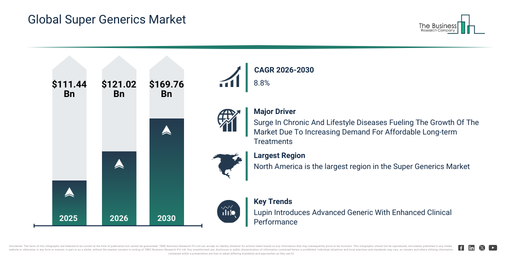
    The super generics market has seen strong expansion in recent years. It is anticipated to increase from $111.44 billion in 2025 to $121.02 billion in 2026, achieving a compound annual growth rate (CAGR) of 8.6%. The historical surge in this market can be ascribed to the patent expiry of branded drugs, a rise in generic drug demand, increasing healthcare cost pressure, the expansion of generic manufacturing, and supportive generic substitution policies.

    The super generics market size is projected for robust expansion in the near future, expected to reach $169.76 billion by 2030, exhibiting a compound annual growth rate (CAGR) of 8.8%. This anticipated growth can be attributed to several factors, including the expanding pipeline of specialty generics, an increasing demand for improved generic medications, the enhancement of complex formulation capabilities, a greater emphasis from payers on cost-effective therapies, and the rising prevalence of chronic diseases. Major trends identified for this period include the development of value-added reformulations, the growth in extended-release generic drugs, increasing adoption of abuse-deterrent formulations, the diversification of drug delivery formats, and an increase in patient-friendly dosage forms.

    Get A Free Sample Report With In-Depth Market Insights:

    https://thebusinessresearchcompany.com/sample_request?id=53679730&type=smp&name=Super%20Generics%20Market%20Report%202026&utm_source=Blogs&utm_medium=Paid&utm_campaign=Oct_PR

    Super Generics Market Demand Drivers Opening New Revenue Streams

    The increasing occurrence of chronic and lifestyle illnesses is anticipated to boost the expansion of the super generics market in the foreseeable future. These conditions are defined as persistent health issues, such as diabetes, cardiovascular disorders, and obesity, which are impacted by elements like dietary habits, lack of physical activity, stress, an aging populace, and enhanced methods of disease identification. The escalating impact of these ailments has generated a continuous need for enduring and economically viable treatment solutions. Super generics are crucial in addressing chronic and lifestyle diseases, providing accessible, premium versions of intricate and beneficial drugs, especially across fields like cardiovascular, metabolic, and respiratory care. This enhances patient availability and aids in ongoing disease management. For example, recent information presented by Wecovr, drawing from UK health statistics, indicates that over 17 million adults in England—more than one-third of the populace—are coping with at least two chronic conditions, with a rising percentage of those in their 40s and 50s being impacted. Consequently, the expanding incidence of chronic and lifestyle diseases represents a major impetus for the growth within the super generics market.

    Super Generics Market Segmentation: How Does The Market Break Down By Category?

    The super generics market covered in this report is segmented –

    1) By Product Type: Generic Pharmaceuticals; Branded Generic Pharmaceuticals; Over-the-Counter (OTC) Products

    2) By Therapeutic Area: Cardiovascular; Oncology; Neurology; Diabetes; Anti-infective

    3) By Formulation Type: Tablet; Capsule; Injectable; Topical; Syrup

    4) By Distribution Channel: Hospital Pharmacies; Retail Pharmacies; Online

    5) By End User: Hospitals and Specialty Clinics; Homecare Settings; Ambulatory Surgical Centers

    Subsegments:

    1) By Generic Pharmaceuticals: Immediate Release Formulations; Modified Release Formulations; Fixed Dose Combination Products; Improved Bioavailability Formulations

    2) By Branded Generic Pharmaceuticals: Value Added Formulations; Patient Friendly Dosage Forms; Therapeutically Enhanced Products; Reformulated Established Medicines

    3) By Over The Counter Products: Pain Relief Products; Cold and Cough Remedies; Digestive Health Products; Vitamin and Mineral Supplements

    Super Generics Market Trends Powering Strategic Industry Growth

    Leading companies in the super generics market are increasingly concentrating on developing sophisticated solutions, like advanced formulation platforms, to enhance drug performance and offer economical therapeutic alternatives. These enhanced formulation platforms involve altering existing drug compositions or delivery methods to improve aspects such as bioavailability, stability, ease of dosing, or patient adherence, all while maintaining their established safety and efficacy. These methods allow businesses to differentiate their products from conventional generics and address unmet medical needs without creating entirely new molecules. For example, Lupin, an India-based pharmaceutical firm, has expanded its super generics range in the United States by launching value-added formulations aimed at therapeutic segments with high demand. Such products are designed to provide superior clinical performance compared to standard generics, while also remaining cost-effective for healthcare systems and providers. By utilizing advanced formulation technologies, stringent quality controls, and manufacturing processes compliant with regulations, companies seek to ensure consistent potency, safety, and reliability.

    Super Generics Market Competitive Analysis Of Leading Industry Participants

    Major companies operating in the super generics market are Teva Pharmaceutical Industries Ltd, Viatris Inc., Baxter International Inc., Sandoz Group AG, Sun Pharmaceutical Industries Ltd, Aurobindo Pharma, Dr. Reddy’s Laboratories Ltd, Cipla Ltd, Hikma Pharmaceuticals, Lupin Limited, Zydus Lifesciences., Glenmark Pharmaceuticals, Torrent Pharmaceuticals, Ascendia Pharmaceutical Solutions, Accord Healthcare, Neurelis Inc, Latitude Pharmaceuticals, Biovista Inc, CritiTech Inc, Crossject SA

    View The Full Super Generics Market Report:

    https://thebusinessresearchcompany.com/report/super-generics-market-report?utm_source=Blogs&utm_medium=Paid&utm_campaign=Oct_PR

    Super Generics Market Geographic Distribution And Regional Opportunities

    North America was the largest region in the super generics market in 2025. Asia-Pacific is expected to be the fastest-growing region in the forecast period. The regions covered in the super generics market report are Asia-Pacific, South East Asia, Western Europe, Eastern Europe, North America, South America, Middle East, Africa.

    Reach Out To Our Team:

    The Business Research Company: https://www.thebusinessresearchcompany.com/

    Americas: +1 310-496-7795

    Asia: +44 7882 955267 & +91 8897263534

    Europe: +44 7882 955267

    Email us at: marketing@tbrc.info

    Follow us on:

    LinkedIn: https://in.linkedin.com/company/the-business-research-company

    YouTube: https://www.youtube.com/channel/UC24_fI0rV8cR5DxlCpgmyFQ

    Global Market Model: https://www.thebusinessresearchcompany.com/global-market-model
  • Subdermal Neural Display Market Size Forecast From 2026 To 2030: Key Industry Trends

    Subdermal Neural Display Market Size Forecast From 2026 To 2030: Key Industry Trends

    Built to provide research that’s more actionable and strategically valuable, The Business Research Company’s 2026 market reports include market attractiveness analysis, total addressable market sizing, company benchmarking matrices, interactive Excel dashboards, broader supply chain intelligence, emerging startup tracking, and in-depth product insights.

    Subdermal Neural Display Market Size And Revenue Outlook Through 2030

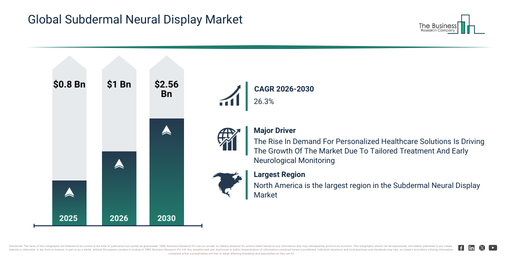
    The subdermal neural display market has experienced exponential expansion in its size during recent years. Its valuation is forecast to climb from $0.8 billion in 2025 to $1 billion in 2026, advancing at a compound annual growth rate (CAGR) of 26.1%. The factors contributing to this historic growth include an increase in neural interface research, a rise in brain-computer interface trials, the expansion of implantable medical electronics, greater neuroscience funding, and the early adoption of EEG-based interfaces.

    The subdermal neural display market is forecast to undergo significant expansion in the upcoming years. It is projected to reach a value of $2.56 billion by 2030, demonstrating a compound annual growth rate (CAGR) of 26.3%. This anticipated growth during the forecast period stems from factors such as increasing neurotechnology investments, a rising demand for cognitive augmentation tools, the expansion of clinical neural implants, the development of defense neurotech programs, and greater funding for human-machine interface research. Prominent trends for the forecast period include the increasing development of implantable neural interfaces, a rising adoption of wireless neural signal transmission, the expansion of miniaturized neural electrode arrays, enhanced integration of brain-computer interface modules, and a stronger focus on closed-loop neural feedback systems.

    Get A Free Sample Report With In-Depth Market Insights:

    https://thebusinessresearchcompany.com/sample_request?id=49109711&type=smp&name=Subdermal%20Neural%20Display%20Market%20Report%202026&utm_source=Blogs&utm_medium=Paid&utm_campaign=Oct_PR

    Subdermal Neural Display Market Opportunity Drivers: What’s Unlocking New Revenue Potential?

    A growing need for customized healthcare options is anticipated to boost the subdermal neural display market. These tailored healthcare approaches and services focus on individual patient characteristics to enhance treatment efficacy and minimize adverse effects. The surge in demand for such personalized solutions stems from the rising occurrence of chronic and lifestyle illnesses, which necessitate individualized prevention, monitoring, and treatment plans. Subdermal neural displays support personalized healthcare by enabling direct tracking and stimulation of neural activity, providing immediate health insights for early detection of neurological issues and customized neurofeedback therapies adapted to each person’s unique brain and body signals. For instance, in February 2024, the Personalized Medicine Coalition, a US-based non-profit, stated that in 2023, the FDA sanctioned 16 novel personalized treatments for patients with rare diseases, an increase from six in 2022. The new personalized treatments approved in 2023 also encompassed seven cancer drugs and three for other diseases and conditions. Consequently, the escalating demand for personalized healthcare solutions is fueling the expansion of the subdermal neural display market. The increasing occurrence of neurological disorders is anticipated to stimulate the expansion of the subdermal neural display market in the future. A neurological disorder refers to any illness or condition impacting the standard structure or function of the central nervous system (brain and spinal cord) or peripheral nervous system (nerves throughout the body). This growing prevalence of neurological disorders is mainly attributable to aging demographics, as the likelihood of conditions such as Alzheimer’s, Parkinson’s, and stroke escalates with age, resulting in a higher overall incidence among older groups. Subdermal Neural Displays aid in managing neurological disorders by facilitating real-time, personalized observation and adjustment of neural activity directly within the brain, thereby supporting quicker diagnoses, accurate therapy modifications, and enhanced long-term care for these conditions. For instance, in March 2023, the Alzheimer’s Association, a US-based nonprofit voluntary health organization, reported that around 6.7 million Americans aged 65 and above are affected by Alzheimer’s dementia in 2023, a figure expected to reach 13.8 million by 2060. Consequently, the growing prevalence of neurological disorders is propelling the growth of the subdermal neural display market.

    Subdermal Neural Display Market Segment Performance And Emerging Opportunities

    The subdermal neural display market covered in this report is segmented –

    1) By Component Type: Hardware; Software

    2) By Product Type: Implantable Neural Display Devices; Wearable Neural Interface Devices; Subdermal Electrode Arrays; Implantable Display Modules; Wireless Neural Transmitters; Neural Signal Amplifiers

    3) By Technology: Electroencephalography (EEG); Electrocorticography (ECoG); Optogenetics; Other Technologies

    4) By End-User: Hospitals And Clinics; Research Institutes; Consumer Electronics; Military And Defense; Other End-Users

    Subsegments:

    1) By Hardware: Electrode Arrays; Implantable Sensors; Microcontroller Units; Power Management Modules; Signal Amplification Units

    2) By Software: Neural Signal Processing Software; Data Visualization Software; Device Control Software; Algorithm Development Software; Simulation And Modeling Software

    Subdermal Neural Display Market Key Participants And Competitive Landscape

    Major companies operating in the subdermal neural display market are Synchron Inc., BrainCo Inc., MindMaze SA, INBRAIN Neuroelectronics SL, Axoft Inc., VisionCare Ophthalmic Technologies Inc., Blackrock Neurotech Inc., LambdaVision Inc., Advanced Brain Monitoring Inc., iBionics Inc., CorTec GmbH, Bionic Vision Technologies, Braingrade Inc., Nano Retina Inc., Neurable Inc., OpenBCI LLC, Optobionics Corporation, Pixium Vision SA, Precision Neuroscience Corporation, Cognixion Inc.

    View The Full Subdermal Neural Display Market Report:

    https://thebusinessresearchcompany.com/report/subdermal-neural-display-market-report?utm_source=Blogs&utm_medium=Paid&utm_campaign=Oct_PR

    Subdermal Neural Display Market Geographic Analysis: Where Is Demand Accelerating Fastest?

    North America was the largest region in the subdermal neural display market in 2025. Asia-Pacific is expected to be the fastest-growing region in the forecast period. The regions covered in the subdermal neural display market report are Asia-Pacific, South East Asia, Western Europe, Eastern Europe, North America, South America, Middle East, Africa.

    Reach Out To Our Team:

    The Business Research Company: https://www.thebusinessresearchcompany.com/

    Americas: +1 310-496-7795

    Asia: +44 7882 955267 & +91 8897263534

    Europe: +44 7882 955267

    Email us at: marketing@tbrc.info

    Follow us on:

    LinkedIn: https://in.linkedin.com/company/the-business-research-company

    YouTube: https://www.youtube.com/channel/UC24_fI0rV8cR5DxlCpgmyFQ

    Global Market Model: https://www.thebusinessresearchcompany.com/global-market-model
  • Stuttering Treatment Market 2026: Market Size, Growth Drivers And Emerging Opportunities

    Stuttering Treatment Market 2026: Market Size, Growth Drivers And Emerging Opportunities

    Backed by market attractiveness analysis, total addressable market sizing, company benchmarking matrices, interactive Excel dashboards, wider supply chain intelligence, emerging startup coverage, and detailed product-level insights, The Business Research Company’s 2026 market reports are designed to offer research that is more actionable and strategically valuable than ever.

    Stuttering Treatment Market Growth From $2.86 Billion In 2026 To $4.06 Billion By 2030 At A CAGR Of 9.2%

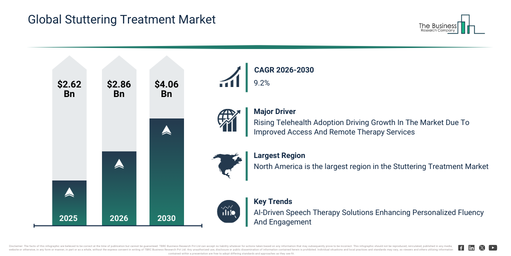
    The stuttering treatment market has seen robust growth in recent years. It is projected to expand from $2.62 billion in 2025 to $2.86 billion in 2026, demonstrating a compound annual growth rate (CAGR) of 8.9%. This historical growth can be attributed to factors such as increased awareness of speech disorders, the expansion of speech therapy clinics, the proliferation of school screening programs, the broader availability of pediatric therapy services, and the early application of fluency shaping methods.

    The stuttering treatment market is anticipated to experience robust expansion in the upcoming years, with its valuation expected to reach $4.06 billion by 2030, growing at a compound annual growth rate (CAGR) of 9.2%. This growth over the forecast period is attributed to several factors including the increasing embrace of teletherapy, the rising incorporation of mental health services into speech care, the proliferation of digital therapy platforms, enhanced insurance coverage for speech therapy, and an uptick in early diagnosis rates. Prominent trends for the forecast period encompass a growing uptake of app-based speech therapy, increased utilization of virtual speech therapy sessions, an expansion of early childhood fluency programs, greater integration of behavioral counseling, and more widespread use of assistive fluency devices.

    Get A Free Sample Report With In-Depth Market Insights:

    https://thebusinessresearchcompany.com/sample_request?id=65680183&type=smp&name=Stuttering%20Treatment%20Market%20Report%202026&utm_source=Blogs&utm_medium=Paid&utm_campaign=Oct_PR

    Stuttering Treatment Market Growth Momentum: What Factors Are Shaping Demand?

    The increasing integration of telehealth services is projected to fuel the expansion of the stuttering treatment market in the coming years. Telehealth involves delivering healthcare support from a distance through various digital communication platforms, such as video consultations, mobile applications, and online therapy platforms. Its prevalence is on the rise as it improves individuals’ ability to access care, especially for those in remote or less-served regions, while simultaneously reducing the need for travel and removing scheduling obstacles. Stuttering treatment is particularly well-suited for telehealth delivery, given that speech therapy sessions can be effectively conducted through live video interactions. Telehealth allows patients to receive continuous, convenient, and tailored speech therapy directly from their homes, which can enhance therapy adherence and broaden access to qualified speech-language pathologists. For instance, in September 2024, the Australian Bureau of Statistics (ABS), Australia’s national statistical agency, indicated that in 2023–24, 83.5% of males reported utilizing telehealth services, an increase from 78.6% in 2022–23. Consequently, the rising uptake of telehealth is propelling the growth of the stuttering treatment market.

    Stuttering Treatment Market Segment Landscape And Growth Outlook

    The stuttering treatment market covered in this report is segmented –

    1) By Treatment Type: Speech Therapy; Digital And App-Based Therapy; Pharmacological Treatment; Assistive Devices And Wearables

    2) By Age Group: Children; Adolescents; Adults

    3) By End User: Speech And Language Clinics; Hospitals And Rehabilitation Centers; Schools And Educational Institutions; Direct-To-Consumer Platforms

    Subsegments:

    1) By Speech Therapy: Articulation Therapy; Fluency Shaping Therapy; Stuttering Modification Therapy; Cognitive Behavioral Therapy

    2) By Digital And App-Based Therapy: Mobile Application Based Therapy; Online Video Therapy Sessions; Virtual Reality Based Therapy; Interactive Software Tools

    3) By Pharmacological Treatment: Anti Anxiety Medication; Dopamine Modulators; Beta Blockers; Other Prescription Drugs

    4) By Assistive Devices And Wearables: Speech Feedback Devices; Delayed Auditory Feedback Devices; Electronic Fluency Devices; Wearable Therapy Devices

    Stuttering Treatment Market Trends Redefining Industry Growth

    Leading companies within the stuttering treatment market are increasingly prioritizing the development of cutting-edge solutions, notably AI-powered speech therapy applications, with the goal of enhancing personalization, improving adherence to therapy, and fostering superior speech fluency outcomes. These AI-powered speech therapy applications function as digital platforms that utilize artificial intelligence to analyze speech patterns, deliver immediate feedback, and provide customized therapy exercises specifically designed to help individuals manage stuttering more effectively. Such innovations offer scalable, continuous intervention outside conventional clinical environments. As an illustration, in December 2025, Iyaso Softwares Private Limited, an India-based health technology company, unveiled Eloquent, an AI-powered speech therapy application crafted to assist individuals who stutter in boosting fluency and speaking confidence through consistent practice. The app integrates evidence-based techniques, including gentle onsets, rhythmic speech, and simulated real-life conversations. The company stated that users who regularly engaged in daily sessions observed measurable improvements in stuttering severity and speaking confidence, thereby highlighting the potential effectiveness of AI-enabled, app-based therapy solutions.

    Stuttering Treatment Market Top Companies Driving Competitive Growth

    Major companies operating in the stuttering treatment market are Mayo Clinic, Cleveland Clinic, Vanderbilt Health, Houston Methodist, Texas Children’s Hospital, Boston Children’s Hospital, Apollo Hospitals Enterprise Limited, Practo Technologies Pvt. Ltd. (Practo), Ruby Hall Clinic, All India Institute of Speech and Hearing (AIISH) Mysore, McGuire Programme, Perley Health, Tender Palm Super Speciality Hospital, American Institute for Stuttering (AIS), Wasatch Speech & Language Center, Michael Palin Centre for Stammering, National Stuttering Association, Speech & Stuttering Institute, Australian Stuttering Research Centre, Curtin Stuttering Treatment Clinic

    View The Full Stuttering Treatment Market Report:

    https://thebusinessresearchcompany.com/report/stuttering-treatment-market-report?utm_source=Blogs&utm_medium=Paid&utm_campaign=Oct_PR

    Stuttering Treatment Market Global Footprint: Which Region Leads The Industry?

    North America was the largest region in the stuttering treatment market in 2025. Asia-Pacific is expected to be the fastest-growing region in the forecast period. The regions covered in the stuttering treatment market report are Asia-Pacific, South East Asia, Western Europe, Eastern Europe, North America, South America, Middle East, Africa.

    Reach Out To Our Team:

    The Business Research Company: https://www.thebusinessresearchcompany.com/

    Americas: +1 310-496-7795

    Asia: +44 7882 955267 & +91 8897263534

    Europe: +44 7882 955267

    Email us at: marketing@tbrc.info

    Follow us on:

    LinkedIn: https://in.linkedin.com/company/the-business-research-company

    YouTube: https://www.youtube.com/channel/UC24_fI0rV8cR5DxlCpgmyFQ

    Global Market Model: https://www.thebusinessresearchcompany.com/global-market-model
  • Spiral Computed Tomography (SCT) Market Set To Expand From $13.24 Billion In 2026: Growth Outlook Through 2030

    Spiral Computed Tomography (SCT) Market Set To Expand From $13.24 Billion In 2026: Growth Outlook Through 2030

    Featuring market attractiveness scoring, total addressable market sizing, company benchmarking matrices, interactive Excel dashboards, deeper supply chain intelligence, emerging startup tracking, and granular product-level insights, The Business Research Company’s 2026 market reports are built to deliver research that is both more actionable and more strategically valuable.

    Spiral Computed Tomography (SCT) Market Expansion Outlook: What Revenue Opportunities Are Ahead?

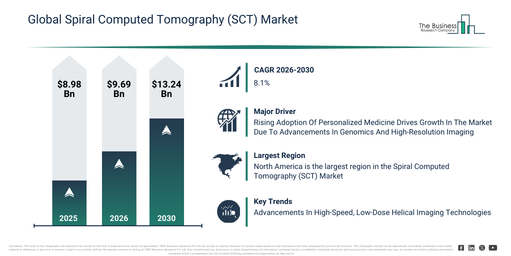
    The spiral computed tomography (sct) market size has experienced strong growth in recent years. It is projected to expand from $8.98 billion in 2025 to $9.69 billion in 2026, achieving a compound annual growth rate (CAGR) of 7.9%. This historical growth can be attributed to several factors including an increase in chronic disease diagnosis, enhanced hospital imaging capacity, growing oncology screening rates, the expansion of radiology departments, and the early replacement of conventional CT systems.

    The market for spiral computed tomography (sct) is anticipated to experience robust expansion over the coming years. This market is projected to reach $13.24 billion in 2030, exhibiting a compound annual growth rate (CAGR) of 8.1%. This expansion during the projection period stems from factors such as an expanding aging demographic, an increasing need for imaging for early diagnosis, the broadening of emergency diagnostic services, escalating investments in sophisticated radiology, and elevated outpatient imaging volumes. Key trends anticipated within the forecast timeframe encompass the increasing deployment of multi slice spiral scanners, the growing implementation of low dose imaging protocols, the advancement of three-dimensional reconstruction software, the rising incorporation of AI-assisted image analysis, and a greater need for rapid scan trauma imaging.

    Get A Free Sample Report With In-Depth Market Insights:

    https://thebusinessresearchcompany.com/sample_request?id=21375294&type=smp&name=Spiral%20Computed%20Tomography%20%28SCT%29%20Market%20Report%202026&utm_source=Blogs&utm_medium=Paid&utm_campaign=Oct_PR

    Spiral Computed Tomography (SCT) Market Expansion Drivers: What’s Shaping Future Growth?

    The increasing integration of personalized medicine is a key factor driving the expansion of the spiral computed tomography (SCT) market. Personalized medicine represents a healthcare strategy where disease prevention, diagnosis, and treatment are customized according to an individual’s unique genetic, molecular, and cellular profile. This approach is gaining traction thanks to advancements in genomics and molecular diagnostics, allowing therapies to be specifically adapted to a patient’s genetic makeup and disease attributes. Spiral computed tomography (SCT) plays a crucial role in personalized medicine by offering high-resolution, three-dimensional imaging. This capability allows clinicians to accurately visualize specific anatomical and pathological features, facilitating customized diagnosis, treatment planning, and ongoing monitoring tailored to each patient’s particular condition. For example, data from February 2024, reported by the US-based nonprofit organization Personalized Medicine Coalition (PMC), shows that the FDA approved 16 novel personalized treatments for rare diseases in 2023. This represents a substantial rise from the six approvals noted in 2022. Consequently, the growing acceptance of personalized medicine has been a significant driver for the growth of the Spiral Computed Tomography (SCT) market.

    Spiral Computed Tomography (SCT) Market Breakdown By Product Type And Application

    The spiral computed tomography (sct) market covered in this report is segmented –

    1) By Component: Hardware; Software; Services

    2) By Technology: Single-Slice Spiral Computed Tomography; Multi-Slice Spiral Computed Tomography

    3) By Detector Type: Ionization Chamber Detectors; Solid-State Detectors

    4) By Application: Oncology; Cardiology; Neuroscience; Pulmonology; Trauma Care

    5) By End-User: Hospitals; Diagnostic Imaging Centers; Outpatient Care Centers; Research Institutions

    Subsegments:

    1) By Hardware: Computed Tomography Scanner Systems; Extended Ray Tubes; Detector Arrays; Gantry And Patient Table Components; Data Acquisition Systems

    2) By Software: Image Reconstruction Software; Three Dimensional Visualization Software; Dose Management Software; Workflow Management Software; Diagnostic Analysis Software

    3) By Services: Installation And Commissioning Services; Maintenance And Repair Services; Calibration And Quality Assurance Services; Training And Education Services; Technical Support Services

    Spiral Computed Tomography (SCT) Market Strategic Trends: What Defines The Next Growth Phase?

    Leading companies in the spiral computed tomography (SCT) market are concentrating on developing advanced spiral CT technology solutions to meet the escalating demand for quicker, more accurate, and lower-radiation diagnostic imaging. This demand is fueled by the rising incidence of chronic diseases and the critical need for efficient early detection. Spiral CT technology operates by employing a continuously rotating X-ray tube and a moving patient table to create detailed three-dimensional body images, offering faster acquisition and improved spatial resolution compared to traditional step-and-shoot CT scanners, which capture images in discrete slices rather than a helical volume. For example, in June 2024, FUJIFILM Healthcare Americas Corporation, a US–based provider of diagnostic imaging solutions, unveiled the FCT iStream 128-Slice Computed Tomography System. This innovative CT scanner integrates proprietary technologies such as HiMAR Plus for high image quality metal artifact reduction, Intelli IPV for iterative progressive reconstruction that significantly reduces image noise, IntelliODM for organ-based dose modulation, and SynergyDrive for automated workflow optimization. This compact, AI-enabled system captures up to 60 images per second, improves diagnostic capabilities, and substantially lowers patient radiation exposure across a broad spectrum of radiological applications, ranging from routine body imaging to advanced cardiac CT angiography, while also enhancing patient comfort with its wide bore design.

    Spiral Computed Tomography (SCT) Market Leading Players And Competitive Positioning

    Major companies operating in the spiral computed tomography (sct) market are Hitachi Ltd., Siemens Healthineers AG, FUJIFILM Holdings Corporation, Koninklijke Philips N.V., GE HealthCare Technologies Inc., Analogic Corporation, Shimadzu Corporation, Canon Medical Systems Corporation, United Imaging Healthcare Co. Ltd., Carestream Health Inc., Accuray Incorporated, Neusoft Medical Systems Co. Ltd., MinFound Medical Systems Co. Ltd., North Star Imaging Inc., Xoran Technologies LLC, Koning Corporation, Shenzhen Anke High-tech Co. Ltd., Planmed Oy, NeuroLogica Corporation, Comet Yxlon GmbH.

    View The Full Spiral Computed Tomography (SCT) Market Report:

    https://thebusinessresearchcompany.com/report/spiral-computed-tomography-sct-market-report?utm_source=Blogs&utm_medium=Paid&utm_campaign=Oct_PR

    Spiral Computed Tomography (SCT) Market Regional Distribution: Which Areas Power Market Growth?

    North America was the largest region in the spiral computed tomography (SCT) market in 2025. Asia-Pacific is expected to be the fastest-growing region in the forecast period. The regions covered in the spiral computed tomography (sct) market report are Asia-Pacific, South East Asia, Western Europe, Eastern Europe, North America, South America, Middle East, Africa.

    Reach Out To Our Team:

    The Business Research Company: https://www.thebusinessresearchcompany.com/

    Americas: +1 310-496-7795

    Asia: +44 7882 955267 & +91 8897263534

    Europe: +44 7882 955267

    Email us at: marketing@tbrc.info

    Follow us on:

    LinkedIn: https://in.linkedin.com/company/the-business-research-company

    YouTube: https://www.youtube.com/channel/UC24_fI0rV8cR5DxlCpgmyFQ

    Global Market Model: https://www.thebusinessresearchcompany.com/global-market-model
  • Spinal Immobilizer Market Size And Growth In 2026: Key Factors Shaping Future Demand

    Spinal Immobilizer Market Size And Growth In 2026: Key Factors Shaping Future Demand

    Built to provide research that’s more actionable and strategically valuable, The Business Research Company’s 2026 market reports include market attractiveness analysis, total addressable market sizing, company benchmarking matrices, interactive Excel dashboards, broader supply chain intelligence, emerging startup tracking, and in-depth product insights.

    Spinal Immobilizer Market Growth Potential: How Will Market Size Shift Through 2030?

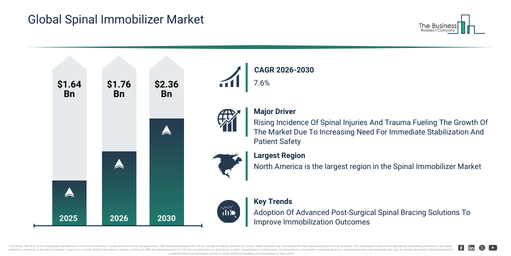
    The spinal immobilizer market has demonstrated significant growth in recent years. This market is expected to expand from $1.64 billion in 2025 to $1.76 billion in 2026, exhibiting a compound annual growth rate (CAGR) of 7.4%. The historical expansion of this market can be ascribed to a surge in road traffic accidents, the advancement of emergency medical services, an increase in sports injury incidents, the proliferation of trauma care centers, and the early integration of cervical collars.

    The spinal immobilizer market size is projected to experience substantial expansion in the upcoming period. It will grow to $2.36 billion in 2030 at a compound annual growth rate (CAGR) of 7.6%. This anticipated growth is primarily driven by factors such as a rise in trauma incidents, increased investments in emergency response, the expansion of ambulance fleets, elevated hospital safety standards, and broader disaster preparedness initiatives. Key developments expected during this forecast period involve an increasing need for lightweight immobilization solutions, greater utilization of radiolucent spinal boards, the development of specialized pediatric immobilizers, a higher rate of adoption for disposable immobilizer systems, and a stronger emphasis on ergonomic designs for emergency transport.

    Get A Free Sample Report With In-Depth Market Insights:

    https://thebusinessresearchcompany.com/sample_request?id=57361975&type=smp&name=Spinal%20Immobilizer%20Market%20Report%202026&utm_source=Blogs&utm_medium=Paid&utm_campaign=Oct_PR

    Spinal Immobilizer Market Development Factors: What’s Supporting Demand?

    The increasing occurrence of spinal injuries and trauma is projected to drive the expansion of the spinal immobilizer market in the future. These conditions involve acute damage to the spinal column or cord, often stemming from events like road traffic accidents, falls, violence, or sports mishaps, necessitating prompt immobilization to avoid additional harm. The rise in spinal injuries and trauma can be attributed to a growing number of road traffic accidents, linked to fast urbanization and greater vehicle utilization. Spinal immobilizers play a crucial role in managing these injuries by ensuring the stability of the spine and head during rescue operations, transport, and initial medical care, thus mitigating the likelihood of secondary neurological damage and enhancing patient safety results. As an illustration, data from October 2024, provided by the Congressionally Directed Medical Research Programs, a US-based reputable clinical services platform, indicates that approximately 300,000 individuals in the U.S. live with spinal cord injuries (SCI), with more than 17,000 new cases emerging yearly, and these figures are consistently increasing. Consequently, the growing frequency of spinal injuries and trauma is fueling the expansion of the spinal immobilizer market.

    Spinal Immobilizer Market Segment Analysis And Revenue Potential

    The spinal immobilizer market covered in this report is segmented –

    1) By Product Type: Cervical Immobilizers; Spinal Boards; Vacuum Mattresses; Soft Collars; Hard Collars

    2) By Material: Plastic; Metal; Foam; Composite Materials; Fabric

    3) By Sales Channel: Direct Sales; Indirect Sales; Online Platforms

    4) By Application: Trauma Cases; Surgical Procedures; Sports Injuries; Emergency Medical Services; Transportation of Patients

    5) By End User: Hospitals; Ambulance Services; Rehabilitation Centers; Home Care Settings; Sports Facilities

    Subsegments:

    1) By Cervical Immobilizers: Rigid Cervical Immobilizers; Adjustable Cervical Immobilizers; Pediatric Cervical Immobilizers; Disposable Cervical Immobilizers

    2) By Spinal Boards: Rigid Spinal Boards; Radiolucent Spinal Boards; Pediatric Spinal Boards; Foldable Spinal Boards

    3) By Vacuum Mattresses: Full Body Vacuum Mattresses; Pediatric Vacuum Mattresses; Multi Chamber Vacuum Mattresses; Reusable Vacuum Mattresses

    4) By Soft Collars: Foam Soft Collars; Contoured Soft Collars; Adjustable Soft Collars; Post Injury Support Collars

    5) By Hard Collars: Two Piece Hard Collars; Adjustable Hard Collars; Emergency Trauma Hard Collars; Post Surgical Hard Collars

    Spinal Immobilizer Market Transformation Trends: What Innovations Are Driving Change?

    Leading companies in the spinal immobilizer market are concentrating on developing innovative products, such as sophisticated post-surgical thoracolumbosacral orthoses, to address the increasing need for improved postoperative spinal stability and reduced complication rates. These advanced orthoses are pre-manufactured spinal supports designed to provide precise flexion control, comprehensive stabilization, and enhanced comfort, offering superior biomechanical support and patient adherence compared with traditional hyperextension braces, which may lack optimal pressure distribution and comfort features. For example, in August 2024, Aspen Medical Products, a US-based medical device company specializing in spinal orthopedics and pain therapy solutions, introduced the Align Orthosis. This innovative prefabricated thoracolumbosacral orthosis is designed to help lessen the incidence of proximal junctional kyphosis after spinal deformity surgery. The Align Orthosis incorporates a three-point pressure system that contacts key points at the chest, lower abdomen, and mid-back to re-establish symmetrical spinal loads and guide proper spinal biomechanics. It also features improved flexion control with enhanced comfort for better patient compliance, and its design supports safer postoperative movement, potentially reducing readmission and revision surgery rates compared with conventional braces.

    Spinal Immobilizer Market Competitive Overview And Top Companies

    Major companies operating in the spinal immobilizer market are Medline Industries Inc., Trulife Inc., Össur hf., Orthofix Medical Inc., DeRoyal Industries Inc., Laerdal Medical AS, Medi USA Inc., Breg Inc., Ferno-EMS, Allied Healthcare Products Inc., Thuasne USA Inc., Aspen Medical Products Inc., Bird & Cronin Inc., Spinal Technology Inc., Zhangjiagang Herui Medical Equipment Co. Ltd., DJO Global Inc., Red Leaf Medical Inc., Live Action Safety, Dynarex Corporation, Asia Connection Co. Ltd., ShanghAI EMSS Medical & Technology Co. Ltd., SAM Medical Products Inc.

    View The Full Spinal Immobilizer Market Report:

    https://thebusinessresearchcompany.com/report/spinal-immobilizer-market-report?utm_source=Blogs&utm_medium=Paid&utm_campaign=Oct_PR

    Spinal Immobilizer Market Leading Geography: Which Region Contributes The Most Revenue?

    North America was the largest region in the spinal immobilizer market in 2025. Asia-Pacific is expected to be the fastest-growing region in the forecast period. The regions covered in the spinal immobilizer market report are Asia-Pacific, South East Asia, Western Europe, Eastern Europe, North America, South America, Middle East, Africa.

    Reach Out To Our Team:

    The Business Research Company: https://www.thebusinessresearchcompany.com/

    Americas: +1 310-496-7795

    Asia: +44 7882 955267 & +91 8897263534

    Europe: +44 7882 955267

    Email us at: marketing@tbrc.info

    Follow us on:

    LinkedIn: https://in.linkedin.com/company/the-business-research-company

    YouTube: https://www.youtube.com/channel/UC24_fI0rV8cR5DxlCpgmyFQ

    Global Market Model: https://www.thebusinessresearchcompany.com/global-market-model
  • Smart Tissue Autonomous Robot (STAR) Market Valued At $0.77 Billion In 2026: Key Trends And Growth Drivers

    Smart Tissue Autonomous Robot (STAR) Market Valued At $0.77 Billion In 2026: Key Trends And Growth Drivers

    Built to provide research that’s more actionable and strategically valuable, The Business Research Company’s 2026 market reports include market attractiveness analysis, total addressable market sizing, company benchmarking matrices, interactive Excel dashboards, broader supply chain intelligence, emerging startup tracking, and in-depth product insights.

    Smart Tissue Autonomous Robot (STAR) Market Revenue Outlook: What CAGR Lies Ahead Through 2030?

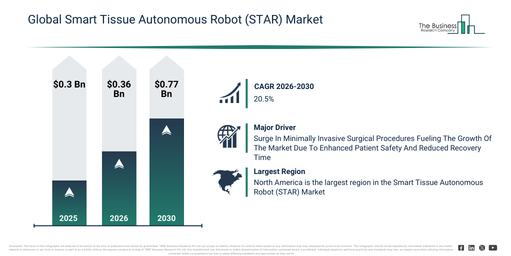
    The smart tissue autonomous robot (star) market size has experienced significant expansion in recent years. It is anticipated to increase from $0.3 billion in 2025 to $0.36 billion in 2026, at a compound annual growth rate (CAGR) of 20.3%. This historical growth can be attributed to an increase in robotic surgery platforms, the demand for minimally invasive surgery, advancements in surgical imaging, investments in hospital robotics, and the requirements for precision surgery.

    The smart tissue autonomous robot (star) market size is projected to experience substantial growth in the coming years. It will grow to $0.77 billion in 2030 at a compound annual growth rate (CAGR) of 20.5%. This expansion during the forecast period is attributable to the growth of autonomous surgery research, the integration of AI into surgical workflows, the increasing demand for advanced sensing instruments, a focus on reproducible surgical outcomes, and funding for next-generation surgical robotics. Significant trends expected in the forecast period include autonomous soft tissue suturing systems, AI-guided surgical decision engines, real-time tissue tracking robotics, force feedback surgical instruments, and image-driven robotic navigation.

    Get A Free Sample Report With In-Depth Market Insights:

    https://thebusinessresearchcompany.com/sample_request?id=75316689&type=smp&name=Smart%20Tissue%20Autonomous%20Robot%20%28STAR%29%20Market%20Report%202026&utm_source=Blogs&utm_medium=Paid&utm_campaign=Oct_PR

    Smart Tissue Autonomous Robot (STAR) Market Demand Drivers: What’s Powering Industry Growth?

    The increasing need for minimally invasive surgical techniques is projected to drive expansion in the smart tissue autonomous robot (STAR) market. These procedures involve operations carried out via small cuts or natural body openings, utilizing specialized tools to lessen tissue damage, blood loss, and recovery periods, all while maintaining surgical accuracy. This growing demand primarily stems from improved patient safety. The smart tissue autonomous robot (STAR) aids this demand by precisely performing intricate soft-tissue actions through small incisions, thereby decreasing human error, minimizing tissue trauma, and enhancing overall surgical precision and patient recuperation. As an illustration, in June 2024, data from the American Society of Plastic Surgeons, a US-based non-profit organization, revealed that hyaluronic acid filler minimally invasive procedures reached 5.29 million in 2023, marking an 8% increase compared to 2022. Consequently, the heightened demand for minimally invasive surgical procedures is fueling the growth of the smart tissue autonomous robot (STAR) market.

    Smart Tissue Autonomous Robot (STAR) Market Segment Landscape: Which Areas Lead Development?

    The smart tissue autonomous robot (star) market covered in this report is segmented –

    1) By Component: Hardware; Software

    2) By Surgical Technique: Open Surgery; Minimally Invasive Surgery; Endoscopic Surgery

    3) By Technology: Artificial Intelligence; Machine Learning; Computer Vision; Robotic Manipulation

    4) By Application: Soft Tissue Surgery; Plastic And Reconstructive Surgery; Orthopedic Surgery; Gastrointestinal Surgery; Cardiothoracic Surgery

    5) By End-User: Hospitals; Ambulatory Surgical Centers; Research Institutions; Clinics

    Subsegments:

    1) By Hardware: Sensors; Actuators; Robotic Arms; Control Units; Imaging Modules; Power Systems

    2) By Software: Algorithmic Control Software; Machine Learning Platforms; Surgical Planning Software; Real Time Navigation Software; Image Processing Software; Data Analytics Software

    Smart Tissue Autonomous Robot (STAR) Market Company Landscape And Competitive Strategy

    Major companies operating in the smart tissue autonomous robot (star) market are Johnson & Johnson, Medtronic, ABB Ltd, Siemens Healthineers, Stryker Corporation, Philips, Boston Scientific, Zimmer Biomet Holdings, Inc., Intuitive Surgical, Smith & Nephew plc, KARL STORZ, Globus Medical, Inc., Renishaw plc, CMR Surgical Limited, Osso VR, Caresyntax, Think Surgical, Inc, Activ Surgical, Tuodao Medical, Sina Robotics & Medical Innovators Co

    View The Full Smart Tissue Autonomous Robot (STAR) Market Report:

    https://thebusinessresearchcompany.com/report/smart-tissue-autonomous-robot-star-market-report?utm_source=Blogs&utm_medium=Paid&utm_campaign=Oct_PR

    Smart Tissue Autonomous Robot (STAR) Market Largest Region: Which Geography Holds The Biggest Share?

    North America was the largest region in the smart tissue autonomous robot (STAR) market in 2025. Asia-Pacific is expected to be the fastest-growing region in the forecast period. The regions covered in the smart tissue autonomous robot (star) market report are Asia-Pacific, South East Asia, Western Europe, Eastern Europe, North America, South America, Middle East, Africa.

    Reach Out To Our Team:

    The Business Research Company: https://www.thebusinessresearchcompany.com/

    Americas: +1 310-496-7795

    Asia: +44 7882 955267 & +91 8897263534

    Europe: +44 7882 955267

    Email us at: marketing@tbrc.info

    Follow us on:

    LinkedIn: https://in.linkedin.com/company/the-business-research-company

    YouTube: https://www.youtube.com/channel/UC24_fI0rV8cR5DxlCpgmyFQ

    Global Market Model: https://www.thebusinessresearchcompany.com/global-market-model
  • Sleep Diagnostics Artificial Intelligence Market Analysis: How The Industry Is Evolving Toward A $2.68 Billion Future

    Sleep Diagnostics Artificial Intelligence Market Analysis: How The Industry Is Evolving Toward A $2.68 Billion Future

    Backed by market attractiveness analysis, total addressable market sizing, company benchmarking matrices, interactive Excel dashboards, wider supply chain intelligence, emerging startup coverage, and detailed product-level insights, The Business Research Company’s 2026 market reports are designed to offer research that is more actionable and strategically valuable than ever.

    Sleep Diagnostics Artificial Intelligence Market Size, Value And Growth Trajectory Through 2030

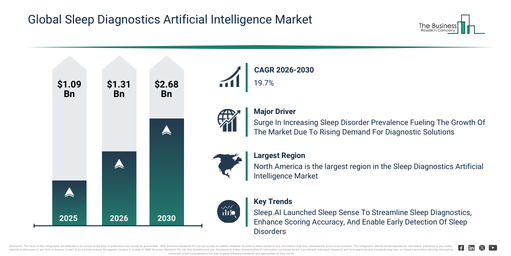
    The sleep diagnostics artificial intelligence market has experienced significant expansion recently. Projections indicate it will escalate from $1.09 billion in 2025 to $1.31 billion in 2026, achieving a compound annual growth rate (CAGR) of 19.4%. This historical growth was primarily driven by an increase in sleep disorder cases, the proliferation of wearable devices, a surge in digital health analytics, more sleep lab studies, and a demand for quicker diagnostic methods.

    The sleep diagnostics artificial intelligence market is anticipated to experience significant expansion over the coming years. Projections indicate it will reach $2.68 billion by 2030, demonstrating a robust compound annual growth rate (CAGR) of 19.7%. This projected increase during the forecast period is driven by several factors, including the uptake of AI clinical decision tools, the growing prevalence of remote sleep monitoring, an increase in home based diagnostics, the emergence of personalized sleep therapy, and its integration with various digital health platforms. Additionally, key trends expected during this period involve AI based sleep stage scoring, wearable integrated sleep analytics, cloud based sleep diagnostic platforms, the development of predictive sleep disorder models, and automated polysomnography interpretation.

    Get A Free Sample Report With In-Depth Market Insights:

    https://thebusinessresearchcompany.com/sample_request?id=38474838&type=smp&name=Sleep%20Diagnostics%20Artificial%20Intelligence%20Market%20Report%202026&utm_source=Blogs&utm_medium=Paid&utm_campaign=Oct_PR

    Sleep Diagnostics Artificial Intelligence Market Growth Backed By Core Demand Fundamentals

    The anticipated expansion of the sleep diagnostics artificial intelligence market is expected to be propelled by the increasing occurrence of sleep disorders. These conditions are defined as medical issues that disrupt typical sleep patterns, affecting the quality, timing, or duration of sleep and leading to daytime discomfort or reduced functioning. This rising prevalence is attributed to factors such as aging populations, lifestyle-related stress, and a greater awareness of sleep health, which collectively have boosted screening, diagnosis, and reporting. Sleep diagnostics artificial intelligence assists in tackling sleep disorders by enabling automated, accurate, and scalable analysis of sleep data, thus supporting early detection, personalized treatment, and enhanced clinical outcomes. For example, in November 2023, NHS England indicated that 64.9% of young people aged 17 to 23 reported experiencing sleep problems three or more times in the previous week, underscoring a growing burden of sleep-related issues and an increased necessity for diagnostic solutions. As a result, the rising prevalence of sleep disorders stands as a primary driver of growth in the sleep diagnostics artificial intelligence market.

    Sleep Diagnostics Artificial Intelligence Market Segmentation: How Does The Market Break Down By Category?

    The sleep diagnostics artificial intelligence market covered in this report is segmented –

    1) By Component: Software; Hardware; Services

    2) By Technology: Machine Learning; Deep Learning; Natural Language Processing; Ensemble Learning

    3) By Deployment Mode: On Premises; Cloud Based

    4) By Application: Sleep Apnea; Insomnia; Narcolepsy; Restless Legs Syndrome; Circadian Rhythm Disorders; Other Applications

    5) By End User: Hospitals; Sleep Centers And Clinics; Home Care Settings; Research Institutes; Other End Users

    Subsegments:

    1) By Software: Sleep Scoring Software; Predictive Analytics Software; Electronic Health Record Integration Software

    2) By Hardware: Wearable Devices; Portable Diagnostic Devices; In Lab Monitoring Equipment

    3) By Services: Consulting Services; Implementation Services; Maintenance And Support Services

    Sleep Diagnostics Artificial Intelligence Market Growth Trends Reshaping The Competitive Landscape

    Major companies within the sleep diagnostics artificial intelligence market are concentrating on technological enhancements in automated sleep scoring, aiming to decrease clinician dependency and diagnostic variability, primarily through frictionless sleep monitoring technology, to secure a competitive advantage. Frictionless sleep monitoring technology is defined as a contactless, AI-powered system designed to automatically capture and analyze sleep patterns, stages, and disturbances without the need for wearable devices, thereby enabling accurate and convenient sleep diagnostics. As an illustration, in December 2025, Sleep.ai, a U.S.-based digital health company, launched Sleep Sense, a frictionless sleep monitoring technology that transforms any smartphone into a privacy-aware sleep sensor, allowing for near-universal sleep data capture without wearables or manual input. This system utilizes advanced AI boundary detection alongside hybrid spatio-temporal models to precisely identify bedtime and wake time, offering accuracy comparable to PSG-validated trackers. Moreover, through its multimodal contextual modeling, it analyzes various signals, including motion, ambient light, and device usage patterns, to generate reliable sleep insights even when data is noisy or limited.

    Sleep Diagnostics Artificial Intelligence Market Industry Leaders And Competitive Landscape

    Major companies operating in the sleep diagnostics artificial intelligence market are ResMed Inc., Neurosoft Ltd., Nox Health Inc., Itamar Medical Ltd., Compumedics Limited, Beacon Biosignals Inc., Onera Health Inc., EnsoData Inc., SleepImage Inc., Zeto Inc., HoneyNaps Co. Ltd., SOMNOmedics GmbH, SleepScore Labs, Nox Medical A/S, Sleep.AI Inc., Sleepacta S.r.l.

    View The Full Sleep Diagnostics Artificial Intelligence Market Report:

    https://thebusinessresearchcompany.com/report/sleep-diagnostics-artificial-intelligence-market-report?utm_source=Blogs&utm_medium=Paid&utm_campaign=Oct_PR

    Sleep Diagnostics Artificial Intelligence Market Regional Analysis And Top Geography

    North America was the largest region in the sleep diagnostics artificial intelligence (AI) market in 2025. Asia-Pacific is expected to be the fastest-growing region in the forecast period. The regions covered in the sleep diagnostics artificial intelligence market report are Asia-Pacific, South East Asia, Western Europe, Eastern Europe, North America, South America, Middle East, Africa.

    Reach Out To Our Team:

    The Business Research Company: https://www.thebusinessresearchcompany.com/

    Americas: +1 310-496-7795

    Asia: +44 7882 955267 & +91 8897263534

    Europe: +44 7882 955267

    Email us at: marketing@tbrc.info

    Follow us on:

    LinkedIn: https://in.linkedin.com/company/the-business-research-company

    YouTube: https://www.youtube.com/channel/UC24_fI0rV8cR5DxlCpgmyFQ

    Global Market Model: https://www.thebusinessresearchcompany.com/global-market-model
  • Sleep Apnea Implants Market Outlook Through 2030: Understanding The Growth Opportunity

    Sleep Apnea Implants Market Outlook Through 2030: Understanding The Growth Opportunity

    Featuring market attractiveness scoring, total addressable market sizing, company benchmarking matrices, interactive Excel dashboards, deeper supply chain intelligence, emerging startup tracking, and granular product-level insights, The Business Research Company’s 2026 market reports are built to deliver research that is both more actionable and more strategically valuable.

    Sleep Apnea Implants Market CAGR Outlook And Future Development

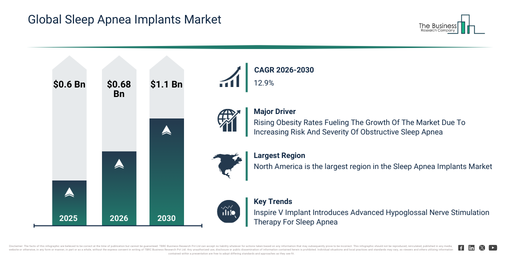
    The sleep apnea implants market size has demonstrated significant expansion in recent years. Its valuation is anticipated to increase from $0.6 billion in 2025 to $0.68 billion in 2026, showing a compound annual growth rate (CAGR) of 12.6%. The market’s past growth can be attributed to factors such as the increasing prevalence of sleep apnea, higher rates of CPAP intolerance, improved diagnosis of sleep disorders, a rise in obesity levels, and the expansion of sleep clinics.

    The sleep apnea implants market size is anticipated to undergo significant expansion in the coming years, reaching $1.1 billion in 2030, exhibiting a compound annual growth rate (CAGR) of 12.9%. This projected increase during the forecast period is largely due to factors such as a heightened demand for long-term implant therapy, the development of minimally invasive procedures, an escalating awareness of sleep health issues, broader reimbursement coverage, and advancements in neurostimulation devices. Prominent trends expected in this period include hypoglossal nerve stimulation devices, implantable airway support systems, programmable neurostimulation implants, minimally invasive sleep implants, and wireless-controlled implant platforms.

    Get A Free Sample Report With In-Depth Market Insights:

    https://thebusinessresearchcompany.com/sample_request?id=20685070&type=smp&name=Sleep%20Apnea%20Implants%20Market%20Report%202026&utm_source=Blogs&utm_medium=Paid&utm_campaign=Oct_PR

    Sleep Apnea Implants Market Growth Catalysts And Demand Drivers

    An increase in obesity rates is projected to drive the expansion of the sleep apnea implants market in the future. Obesity is a medical condition characterized by an excessive buildup of body fat, which substantially elevates the likelihood of negative health consequences and chronic illnesses. The primary reason for the rise in obesity is the greater intake of calorie-rich, ultra-processed foods that offer surplus energy but little nutritional content, thus contributing to sustained weight gain. The growing prevalence of obesity fuels the demand for sleep apnea implants because extra fat deposits around the neck and upper airway heighten both the risk and seriousness of obstructive sleep apnea, prompting more patients unable to tolerate CPAP to seek permanent implantable treatment options. For example, data from May 2024, released by the Office for Health Improvement and Disparities, a UK-based government department, indicated that an estimated 64% of adults aged 18 and above in England were considered overweight or obese. This figure was distinctly higher for men, at about 69%, versus approximately 59% for women. Consequently, the increasing incidence of obesity is a key factor propelling the expansion of the sleep apnea implants market.

    Sleep Apnea Implants Market Segment Trends And Revenue Contributors

    The sleep apnea implants market covered in this report is segmented –

    1) By Product: Phrenic Nerve Stimulator; Hypoglossal Neurostimulation Devices; Bone Screw Implant System; Palatal Implants; Pillar Procedure

    2) By Indication: Central Sleep Apnea; Obstructive Sleep Apnea

    3) By Distribution Channel: Direct Sales to Hospitals; Medical Device Distributors; Specialty Medical Suppliers

    4) By End Use: Hospitals; Ambulatory Surgical Centers

    Subsegments:

    1) By Phrenic Nerve Stimulator: Implantable Phrenic Nerve Stimulators; Rechargeable Phrenic Nerve Stimulators; Fully Programmable Phrenic Nerve Stimulators; Wireless Controlled Phrenic Nerve Stimulators; Long Term Use Phrenic Nerve Stimulators

    2) By Hypoglossal Neurostimulation Devices: Implantable Hypoglossal Neurostimulation Devices; Rechargeable Hypoglossal Neurostimulation Devices; Programmable Hypoglossal Neurostimulation Devices; Wireless Controlled Hypoglossal Neurostimulation Devices; Sleep Activated Hypoglossal Neurostimulation Devices

    3) By Bone Screw Implant System: Titanium Bone Screw Implant Systems; Adjustable Bone Screw Implant Systems; Self Tapping Bone Screw Implant Systems; Long Term Fixation Bone Screw Implant Systems; Minimally Invasive Bone Screw Implant Systems

    4) By Palatal Implants: Soft Palate Implants; Rigid Palatal Implants; Bio Compatible Palatal Implants; Permanent Palatal Implants; Minimally Invasive Palatal Implants

    5) By Pillar Procedure: Single Implant Pillar Procedures; Multiple Implant Pillar Procedures; Office Based Pillar Procedures; Minimally Invasive Pillar Procedures; Outpatient Pillar Procedures

    Sleep Apnea Implants Market Trends Shaping Long-Term Demand

    Leading companies within the sleep apnea implants market are prioritizing technological advancements, particularly hypoglossal nerve stimulation (HNS) therapy, to improve airway patency and decrease instances of obstructive sleep apnea. Hypoglossal nerve stimulation (HNS) therapy is an implantable medical intervention designed to address obstructive sleep apnea by electrically stimulating the hypoglossal nerve, which controls tongue movements, thereby maintaining an open airway during sleep. For example, in November 2025, Children’s Hospital of Pittsburgh, a US-based pediatric hospital, pioneered the use of the Inspire V implant with its inaugural implantation, which incorporates an integrated respiratory sensor, streamlining the implanted system from three components to two, alongside enhanced software designed to boost patient management efficiency and accessibility, with a brief recovery period typically involving one night of observation. The Inspire V implant system tackles obstructive sleep apnea by stimulating the hypoglossal nerve to sustain an open breathing passage during sleep, offering patients advantages such as an integrated respiratory sensor, a simplified two-component design, and updated software that enhances therapy management and lessens procedural complexity.

    Sleep Apnea Implants Market Key Participants And Competitive Landscape

    Major companies operating in the sleep apnea implants market are Medtronic Plc, Koninklijke Philips N.V., Asahi Kasei Corporation, Nyxoah SA, Fisher & Paykel Healthcare Limited, LivaNova Plc, Contec Medical Systems Co. Ltd., Inspire Medical Systems Inc., Drive DeVilbiss Healthcare GmbH, Pillar Palatal LLC, SomnoMed Limited, Respicardia, Inc., Sibel Health Inc., LinguaFlex LLC, Advanced Brain Monitoring Inc, Cleveland Medical Devices Inc., Siesta Medical, Inc., Avery Biomedical Devices Inc., and Nox Medical, Somnowell Ltd.

    View The Full Sleep Apnea Implants Market Report:

    https://thebusinessresearchcompany.com/report/sleep-apnea-implants-market-report?utm_source=Blogs&utm_medium=Paid&utm_campaign=Oct_PR

    Sleep Apnea Implants Market Geographic Analysis: Where Is Demand Rising Fastest?

    North America was the largest region in the sleep apnea implants market in 2025. Asia-Pacific is expected to be the fastest-growing region in the forecast period. The regions covered in the sleep apnea implants market report are Asia-Pacific, South East Asia, Western Europe, Eastern Europe, North America, South America, Middle East, Africa.

    Reach Out To Our Team:

    The Business Research Company: https://www.thebusinessresearchcompany.com/

    Americas: +1 310-496-7795

    Asia: +44 7882 955267 & +91 8897263534

    Europe: +44 7882 955267

    Email us at: marketing@tbrc.info

    Follow us on:

    LinkedIn: https://in.linkedin.com/company/the-business-research-company

    YouTube: https://www.youtube.com/channel/UC24_fI0rV8cR5DxlCpgmyFQ

    Global Market Model: https://www.thebusinessresearchcompany.com/global-market-model
  • Single-use Membrane Chromatography Systems Market Growth Potential: What The Latest Forecast Reveals

    Single-use Membrane Chromatography Systems Market Growth Potential: What The Latest Forecast Reveals

    Built to provide research that’s more actionable and strategically valuable, The Business Research Company’s 2026 market reports include market attractiveness analysis, total addressable market sizing, company benchmarking matrices, interactive Excel dashboards, broader supply chain intelligence, emerging startup tracking, and in-depth product insights.

    Single-use Membrane Chromatography Systems Market Set To Climb From $1.21 Billion In 2026 To $1.96 Billion By 2030

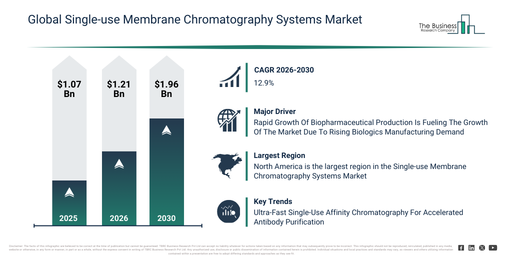
    The market size for single-use membrane chromatography systems has seen rapid expansion over recent years. It is projected to expand from $1.07 billion in 2025 to $1.21 billion in 2026, exhibiting a compound annual growth rate (CAGR) of 12.6%. This historical growth can be attributed to several factors, including an increase in biologics manufacturing, the expansion of vaccine production, a rise in single-use bioprocessing, the demand for faster purification cycles, and an uptick in contract manufacturing.

    The market for single-use membrane chromatography systems is anticipated to experience substantial expansion in the coming years. This market is projected to reach a value of $1.96 billion by 2030, exhibiting a compound annual growth rate (CAGR) of 12.9%. Several factors are driving this expansion during the forecast period, including advances in gene and cell therapy, the broader implementation of modular bioprocess facilities, an increasing need for adaptable purification methods, their use in viral vector manufacturing, and the scaling up of continuous bioprocessing. Key trends emerging in this period encompass disposable high-flow membrane modules, swift downstream purification platforms, pre-packed single-use capsules, continuous membrane processing systems, and designs focused on minimal buffer consumption.

    Get A Free Sample Report With In-Depth Market Insights:

    https://thebusinessresearchcompany.com/sample_request?id=95404566&type=smp&name=Single-use%20Membrane%20Chromatography%20Systems%20Market%20Report%202026&utm_source=Blogs&utm_medium=Paid&utm_campaign=Oct_PR

    Single-use Membrane Chromatography Systems Market Opportunity Drivers: What’s Unlocking New Revenue Potential?

    The market for single-use membrane chromatography systems is anticipated to expand, fueled by the swift increase in biopharmaceutical output. This surge in biopharmaceutical manufacturing stems from a global increase in demand for biologic treatments, encompassing monoclonal antibodies, vaccines, and advanced therapies. These systems play a crucial role in biopharmaceutical production, offering high-throughput, disposable purification solutions that facilitate quicker and more effective processing of biologics, including monoclonal antibodies. An example of this growth is observed in South Korea, where, as per a report from the Ministry of Trade, Industry and Resources in November 2025, the nation’s bioindustry production hit KRW 22.9 trillion, representing a 9.8% rise compared to the prior year. Consequently, the substantial expansion of biopharmaceutical production has propelled the growth of the single-use membrane chromatography systems market.

    Single-use Membrane Chromatography Systems Market Segment Analysis Spotlighting Growth Areas

    The single-use membrane chromatography systems market covered in this report is segmented –

    1) By Product Type: Anion Exchange Membrane Chromatography; Cation Exchange Membrane Chromatography; Mixed-Mode Membrane Chromatography

    2) By Technique: Ion Exchange Membrane Chromatography; Affinity Membrane Chromatography; Hydrophobic Interaction Membrane Chromatography; Mixed-Mode Membrane Chromatography

    3) By Application: Biopharmaceuticals; Clinical Research; Academic Research; Other Applications

    4) By End-User: Pharmaceutical and Biotechnology Companies; Academic and Research Institutes; Contract Research Organizations; Other End-Users

    Subsegments:

    1) By Anion Exchange Membrane Chromatography: High Capacity Anion Exchange Membrane; Strong Anion Exchange Membrane; Weak Anion Exchange Membrane; Disposable Anion Exchange Membrane

    2) By Cation Exchange Membrane Chromatography: Strong Cation Exchange Membrane; Weak Cation Exchange Membrane; High Capacity Cation Exchange Membrane; Disposable Cation Exchange Membrane

    3) By Mixed-Mode Membrane Chromatography: Cation Anion Mixed Mode Membrane; Hydrophobic Interaction Mixed Mode Membrane; Affinity Mixed Mode Membrane; Disposable Mixed Mode Membrane

    Single-use Membrane Chromatography Systems Market Innovation Trends Shaping Future Development

    Major companies within the single-use membrane chromatography systems market are strategically pursuing technological advancements, including ultra-fast single-use affinity chromatography, to enhance downstream processing efficiency, accelerate antibody capture, reduce purification cycle times, and improve scalability from research to commercial manufacturing. Ultra-fast single-use affinity chromatography refers to disposable, membrane-based systems that employ high-flow affinity ligands for capturing target biomolecules. As an illustration, Sartorius AG, a Germany-based company, unveiled Sartobind Rapid A Lab in October 2024. This innovative plug-and-play, single-use Protein A membrane chromatography solution is engineered to streamline antibody purification workflows. It achieves ultra-fast antibody capture in less than three minutes, leveraging a high-flow membrane matrix that delivers considerably higher lifetime yields compared to traditional resin columns. The unit operates without requiring column packing, buffer degassing, or cleaning-in-place, which significantly reduces process complexity and setup duration. Additionally, its flexible operation with syringes, pumps, or liquid chromatography systems eliminates the necessity for dedicated chromatography infrastructure.

    Single-use Membrane Chromatography Systems Market Top Companies Driving Competitive Growth

    Major companies operating in the single-use membrane chromatography systems market are Thermo Fisher Scientific Inc., 3M Company, Merck Millipore, Danaher Corporation, GE Healthcare, Asahi Kasei Corporation, Agilent Technologies Inc., Cytiva, Sartorius AG, Bio-Rad Laboratories Inc., Repligen Corporation, Phenomenex Inc., Cole-Parmer Instrument Company LLC, Membrane Solutions LLC, Graver Technologies LLC, Regis Technologies Inc., Purilogics Inc., BIA Separations d.o.o., Cobetter Filtration Equipment Co. Ltd., i3 Membrane Partnership Ltd.

    View The Full Single-use Membrane Chromatography Systems Market Report:

    https://thebusinessresearchcompany.com/report/single-use-membrane-chromatography-systems-market-report?utm_source=Blogs&utm_medium=Paid&utm_campaign=Oct_PR

    Single-use Membrane Chromatography Systems Market Global Footprint: Which Region Leads The Market?

    North America was the largest region in the single-use membrane chromatography systems market in 2025. Asia-Pacific is expected to be the fastest-growing region in the forecast period. The regions covered in the single-use membrane chromatography systems market report are Asia-Pacific, South East Asia, Western Europe, Eastern Europe, North America, South America, Middle East, Africa.

    Reach Out To Our Team:

    The Business Research Company: https://www.thebusinessresearchcompany.com/

    Americas: +1 310-496-7795

    Asia: +44 7882 955267 & +91 8897263534

    Europe: +44 7882 955267

    Email us at: marketing@tbrc.info

    Follow us on:

    LinkedIn: https://in.linkedin.com/company/the-business-research-company

    YouTube: https://www.youtube.com/channel/UC24_fI0rV8cR5DxlCpgmyFQ

    Global Market Model: https://www.thebusinessresearchcompany.com/global-market-model