Blog

  • Drug Concentration Analysis System Market Forecast To Reach $3.57 Billion By 2030: Key Growth Drivers And Industry Trends

    Drug Concentration Analysis System Market Forecast To Reach $3.57 Billion By 2030: Key Growth Drivers And Industry Trends

    Built to provide research that’s more actionable and strategically valuable, The Business Research Company’s 2026 market reports include market attractiveness analysis, total addressable market sizing, company benchmarking matrices, interactive Excel dashboards, broader supply chain intelligence, emerging startup tracking, and in-depth product insights.

    Drug Concentration Analysis System Market CAGR Outlook And Future Development

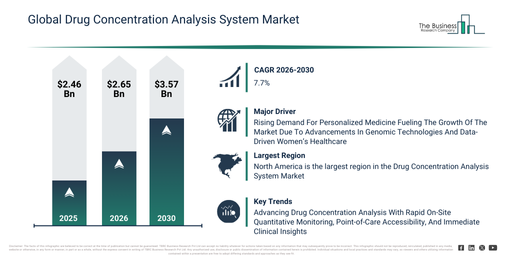
    The market size for drug concentration analysis systems has shown substantial growth in recent years. This market is expected to increase from $2.46 billion in 2025 to $2.65 billion in 2026, achieving a compound annual growth rate (CAGR) of 8.0%. Historically, this expansion has been driven by factors such as the increasing prevalence of chronic diseases, rising healthcare expenditure, the growth in pharmaceutical research, an escalating demand for therapeutic drug monitoring, and more stringent regulatory quality control requirements.

    The drug concentration analysis system market is projected to experience substantial growth over the coming years. By 2030, this market is anticipated to reach $3.57 billion, exhibiting a compound annual growth rate (CAGR) of 7.7%. Several factors contribute to this projected expansion, including heightened investments in healthcare infrastructure, a rising need for accurate drug monitoring, the expansion of pharmaceutical and biotechnology industries, the increasing integration of personalized medicine, and greater spending on pharmaceutical research and development. Key trends shaping the market during this period encompass advancements in analytical instrument technology, the emergence of point-of-care drug concentration systems, the incorporation of automation and high-throughput testing, the utilization of sophisticated bioanalytics techniques, and an increased emphasis on regulatory adherence and quality assurance.

    Get A Free Sample Report With In-Depth Market Insights:

    https://thebusinessresearchcompany.com/sample_request?id=74013355&type=smp&name=Drug%20Concentration%20Analysis%20System%20Market%20Report%202026&utm_source=Blogs&utm_medium=Paid&utm_campaign=Oct_PR

    Drug Concentration Analysis System Market Industry Drivers: What’s Behind The Revenue Growth?

    The increasing need for personalized medicine is anticipated to drive the expansion of the drug concentration analysis system market in the future. Personalized medicine represents a healthcare strategy focused on customizing treatments for individual patients, considering their genetic makeup, environmental influences, and lifestyle habits, thereby optimizing results and enhancing overall patient care. The escalating demand for personalized medicine stems from breakthroughs in genomic technologies, allowing for the accurate detection of genetic differences and the development of customized therapies for individuals. Drug concentration analysis systems contribute to personalized medicine by precisely quantifying drug levels within each patient, facilitating customized dosages and improved treatment plans. These systems enhance therapeutic results through the reduction of adverse effects and by guaranteeing that every patient gets the most efficacious and secure medication approach. An illustrative example is that in February 2024, the U.S. Food and Drug Administration (FDA) sanctioned 26 new personalized medicines in 2023, marking a considerable rise from the 12 approved in 2022, as reported by the Personalized Medicine Coalition (PMC), a US-based nonprofit organization. Consequently, the heightened demand for personalized medicine is fueling the expansion of the drug concentration analysis system market.

    Drug Concentration Analysis System Market Segment Trends And Revenue Contributors

    The drug concentration analysis system market covered in this report is segmented –

    1) By Product Type: Liquid Chromatography Systems, Mass Spectrometry Systems, Spectrophotometry Systems, Immunoassays

    2) By Sample Type: Blood Or Plasma Or Serum, Urine, Tissue Samples, Saliva, Cell Culture And Bioprocess Samples, Cerebrospinal Fluid (CSF), Other Biological Or Chemical Matrices

    3) By Distribution Channel: Online Distribution, Offline Distribution, Direct Sales, Third Party Distributors, Retail Outlets

    4) By Application: Therapeutic Drug Monitoring, Pharmaceutical Research And Development, Clinical Trials, Bioavailability Or Bioequivalence

    5) By End-User: Hospitals And Clinics, Pharmaceutical Companies, Contract Research Organizations (CROs), Academic And Research Institutions, Homecare Settings

    Subsegments:

    1) By Liquid Chromatography Systems: High Performance Liquid Chromatography, Ultra High Performance Liquid Chromatography, Fast Protein Liquid Chromatography, Ion Exchange Liquid Chromatography, Size Exclusion Liquid Chromatography

    2) By Mass Spectrometry Systems: Quadrupole Mass Spectrometry, Time Of Flight Mass Spectrometry, Ion Trap Mass Spectrometry, Fourier Transform Ion Cyclotron Resonance Mass Spectrometry, Orbitrap Mass Spectrometry

    3) By Spectrophotometry Systems: Ultraviolet Visible Spectrophotometry, Infrared Spectrophotometry, Fluorescence Spectrophotometry, Atomic Absorption Spectrophotometry, Raman Spectrophotometry

    4) By Immunoassays: Enzyme Linked Immunosorbent Assay, Radioimmunoassay, Chemiluminescent Immunoassay, Fluoroimmunoassay, Lateral Flow Immunoassay

    #Drug Concentration Analysis System Market Growth Trends: What’s Shaping The Future Outlook?

    Leading companies in the drug concentration analysis system market are concentrating on developing advanced products, such as rapid on-site testing platforms. This effort aims to boost treatment optimization, enhance personalized care, and reduce the time and costs typically associated with traditional laboratory testing. Rapid on-site testing platforms are sophisticated diagnostic systems that allow for immediate, quantitative measurement of drug levels within a clinical environment. For example, in October 2023, ProciseDx Inc., a US-based in vitro diagnostics company, secured de novo FDA clearance for its therapeutic drug monitoring (TDM) tests for adalimumab (Humira and biosimilar Amgevita) and infliximab (Remicade and biosimilars Inflectra and Renflexis). These assays, named Procise ADL and Procise IFX, employ time-resolved fluorescence resonance energy transfer immunoassay technology to quantify drug concentrations in serum, delivering results in approximately five minutes. This capability facilitates near-immediate clinical decisions during patient visits. The introduction of these products signifies a major shift toward point-of-care drug concentration analysis systems, which merge quantitative precision with operational simplicity, thereby supporting personalized dosing strategies for patients with conditions like inflammatory bowel disease.

    Drug Concentration Analysis System Market Top Companies Driving Competitive Growth

    Major companies operating in the drug concentration analysis system market are F. Hoffmann-La Roche AG, Thermo Fisher Scientific Inc., Abbott Laboratories, Siemens Healthineers AG, Siemens Healthineers AG, Danaher Corporation, Agilent Technologies Inc., BioMérieux Inc., Sartorius AG, Shimadzu Corporation, PerkinElmer Inc., Bruker Corporation, Waters Corporation, Bio-Rad Laboratories Inc., Tecan Group Ltd., Randox Laboratories Ltd., Analytik Jena GmbH & Co. KG, KNAUER Wissenschaftliche Geräte GmbH, Chromsystems Instruments & Chemicals GmbH, American Laboratory Products Company Ltd.

    View The Full Drug Concentration Analysis System Market Report:

    https://thebusinessresearchcompany.com/report/drug-concentration-analysis-system-market-report?utm_source=Blogs&utm_medium=Paid&utm_campaign=Oct_PR

    Drug Concentration Analysis System Market Global Footprint: Which Region Leads The Market?

    North America was the largest region in the drug concentration analysis system market in 2025. Asia-Pacific is expected to be the fastest-growing region in the forecast period. The regions covered in the drug concentration analysis system market report are Asia-Pacific, South East Asia, Western Europe, Eastern Europe, North America, South America, Middle East, Africa.

    Reach Out To Our Team:

    The Business Research Company: https://www.thebusinessresearchcompany.com/

    Americas: +1 310-496-7795

    Asia: +44 7882 955267 & +91 8897263534

    Europe: +44 7882 955267

    Email us at: marketing@tbrc.info

    Follow us on:

    LinkedIn: https://in.linkedin.com/company/the-business-research-company

    YouTube: https://www.youtube.com/channel/UC24_fI0rV8cR5DxlCpgmyFQ

    Global Market Model: https://www.thebusinessresearchcompany.com/global-market-model
  • Disposable Specimen Container Market Research 2026: Market Size, Trends, Segments And Growth Forecast

    Disposable Specimen Container Market Research 2026: Market Size, Trends, Segments And Growth Forecast

    Backed by market attractiveness analysis, total addressable market sizing, company benchmarking matrices, interactive Excel dashboards, wider supply chain intelligence, emerging startup coverage, and detailed product-level insights, The Business Research Company’s 2026 market reports are designed to offer research that is more actionable and strategically valuable than ever.

    Disposable Specimen Container Market Set To Climb From $2.89 Billion In 2026 To $3.97 Billion By 2030

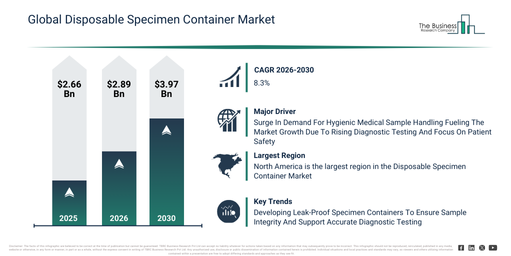
    The disposable specimen container market has demonstrated significant growth over recent years. Its valuation is anticipated to rise from $2.66 billion in 2025 to $2.89 billion in 2026, achieving a compound annual growth rate (CAGR) of 8.6%. This historical expansion can be ascribed to several factors, including an escalating demand for diagnostic examinations, the continuous development of healthcare infrastructure, increased consciousness regarding infection prevention, the surging incidence of chronic and infectious ailments, and the expanding utilization of point-of-care testing.

    The disposable specimen container market is anticipated to experience robust expansion over the next few years, with its valuation expected to reach $3.97 billion by 2030, demonstrating a compound annual growth rate (CAGR) of 8.3%. This projected growth throughout the forecast period stems from factors such as the increasing prevalence of home healthcare testing, a greater embrace of molecular diagnostics, amplified government and private sector funding for laboratories, the expansion of clinical trial endeavors, and a growing requirement for sterile and leak-proof containment solutions. Significant trends emerging during this period include advancements in container design and material science, the integration of technology to boost safety and operational efficiency, innovations in bio-based and recyclable material development, dedicated research and development for specialized containers for molecular diagnostics, and the incorporation of automation and robotics into specimen processing workflows.

    Get A Free Sample Report With In-Depth Market Insights:

    https://thebusinessresearchcompany.com/sample_request?id=88444007&type=smp&name=Disposable%20Specimen%20Container%20Market%20Report%202026&utm_source=Blogs&utm_medium=Paid&utm_campaign=Oct_PR

    Disposable Specimen Container Market Growth Factors: What’s Supporting Expansion?

    The growing need for clean medical sample handling is anticipated to stimulate the expansion of the disposable specimen container market. Clean medical sample handling involves using sterile, single-use equipment to securely collect, store, and transport biological samples without contamination, which is vital for precise diagnostics and preventing infections in healthcare environments. The heightened demand for hygienic sample handling stems from an increase in diagnostic testing volumes and a greater emphasis on patient safety, compelling healthcare providers to implement more stringent infection-control measures. Disposable specimen containers facilitate hygienic medical sample handling by preserving specimen integrity, preventing cross-contamination, and enabling dependable laboratory analysis across various healthcare facilities. For instance, in August 2024, according to NHS England, a UK-based government health authority, the number of diagnostic tests performed rose from 2,254,600 in June 2023 to 2,328,300 in June 2024, indicating a 3.3% increase year over year. Consequently, the increasing demand for hygienic medical sample handling is a driving force behind the growth of the disposable specimen container market. The escalating occurrence of chronic diseases is projected to spur the growth of the disposable specimen container market. Chronic diseases are enduring health conditions that typically advance gradually, such as diabetes, heart disease, and arthritis, often necessitating continuous medical oversight and lifestyle adjustments to manage symptoms and avert complications. The rise in chronic diseases is largely attributable to unhealthy lifestyle choices, including poor diet, physical inactivity, and smoking, which elevate the risk of conditions like diabetes, heart disease, and obesity. Disposable specimen containers assist in diagnosing chronic diseases by facilitating the secure, sanitary, and contamination-free collection of biological samples for accurate laboratory analysis. They enhance diagnostic accuracy and patient care by supporting consistent monitoring and the early identification of disease progression. For instance, in June 2024, according to the National Health Service, a UK-based government department, 3,615,330 individuals registered with a general practitioner (GP) were diagnosed with non-diabetic hyperglycemia or pre-diabetes (a condition with elevated blood sugar levels, not high enough to be classified as diabetes) in 2023, showing an 18% increase from 3,065,825 cases in 2022. Therefore, the growing prevalence of chronic diseases is propelling the expansion of the disposable specimen container market.

    Disposable Specimen Container Market Segment Analysis Spotlighting Growth Areas

    The disposable specimen container market covered in this report is segmented –

    1) By Product Type: Urine Specimen Containers, Stool Specimen Containers, Sputum Specimen Containers, Blood Specimen Containers, Multi-Purpose Specimen Containers

    2) By Sterility: Sterile Disposable Specimen Containers, Non-Sterile Disposable Specimen Containers

    3) By Raw Material: Polypropylene, High Density Polyethylene, Polyvinyl Chloride, Other Materials

    4) By Distribution Channel: Direct Sales, Medical Device Distributors, Online Sales Channels

    5) By End User: Hospitals, Diagnostic Laboratories, Clinics And Physician Offices, Research And Academic Institutes, Home Healthcare Settings

    Subsegments:

    1) By Urine Specimen Containers: Sterile Urine Specimen Containers, Non Sterile Urine Specimen Containers, Graduated Urine Specimen Containers, Leak Proof Urine Specimen Containers, Child Resistant Urine Specimen Containers

    2) By Stool Specimen Containers: Wide Mouth Stool Specimen Containers, Scoop Integrated Stool Specimen Containers, Leak Proof Stool Specimen Containers, Preservative Containing Stool Specimen Containers, Sterile Stool Specimen Containers

    3) By Sputum Specimen Containers: Wide Neck Sputum Specimen Containers, Sterile Sputum Specimen Containers, Leak Proof Sputum Specimen Containers, Screw Cap Sputum Specimen Containers, Transparent Sputum Specimen Containers

    4) By Blood Specimen Containers: Vacuum Blood Specimen Containers, Non Vacuum Blood Specimen Containers, Anticoagulant Containing Blood Specimen Containers, Clot Activator Blood Specimen Containers, Sterile Blood Specimen Containers

    5) By Multi Purpose Specimen Containers: Universal Specimen Containers, Sterile Multi Purpose Specimen Containers, Graduated Multi Purpose Specimen Containers, Leak Proof Multi Purpose Specimen Containers, Screw Cap Multi Purpose Specimen Containers

    Disposable Specimen Container Market Industry Trends: What’s Reshaping Demand?

    Major companies in the disposable specimen container market are concentrating on creating improved specimen containers, such as multi-click seal vials and containers. These products offer a clear sign of correct sealing, ensuring secure sample collection and transport. Their design aims to preserve sample integrity during handling, storage, and transportation, while simultaneously reducing the risks of contamination or spillage. For instance, Thermo Fisher Scientific, a US-based life sciences company, introduced Samco Clicktainer Vials and Specimen Containers in April 2025. These containers feature an audible, visual, and tactile multi-click seal closure to verify proper sealing, are compatible with both sterile and non-sterile setups for various clinical workflows, and provide a wide array of cap color options to assist in sample differentiation. This introduction signifies a notable technological leap, bringing together usability, safety, and versatility, thereby offering laboratories a dependable solution for secure specimen management and precise diagnostic testing.

    Disposable Specimen Container Market Leading Players And Competitive Positioning

    Major companies operating in the disposable specimen container market are Cardinal Health Inc., Thermo Fisher Scientific Inc., Becton Dickinson and Company, SARSTEDT AG & Co. KG, Greiner Bio-One International GmbH, Kabe Labortechnik GmbH, Jiangsu Kangjin Medical Instruments Co. Ltd., Polymed Medical Devices, Citotest Scientific Co. Ltd., HiMedia Laboratories Pvt. Ltd., CML Biotech Pvt. Ltd., Deltalab S.L., Medline Industries LP, Simport Scientific Inc., Abdos Labtech Pvt. Ltd., Globe Scientific Inc., Heathrow Scientific LLC, VITLAB GmbH, FL Medical S.r.l., Aptaca S.p.A., Kartell S.p.A.

    View The Full Disposable Specimen Container Market Report:

    https://thebusinessresearchcompany.com/report/disposable-specimen-container-market-report?utm_source=Blogs&utm_medium=Paid&utm_campaign=Oct_PR

    Disposable Specimen Container Market Regional Split: Which Areas Are Fueling Growth?

    North America was the largest region in the disposable specimen container market in 2025. Asia-Pacific is expected to be the fastest-growing region in the forecast period. The regions covered in the disposable specimen container market report are Asia-Pacific, South East Asia, Western Europe, Eastern Europe, North America, South America, Middle East, Africa.

    Reach Out To Our Team:

    The Business Research Company: https://www.thebusinessresearchcompany.com/

    Americas: +1 310-496-7795

    Asia: +44 7882 955267 & +91 8897263534

    Europe: +44 7882 955267

    Email us at: marketing@tbrc.info

    Follow us on:

    LinkedIn: https://in.linkedin.com/company/the-business-research-company

    YouTube: https://www.youtube.com/channel/UC24_fI0rV8cR5DxlCpgmyFQ

    Global Market Model: https://www.thebusinessresearchcompany.com/global-market-model
  • Digital Stethoscope Tele-auscultation Hubs Market Growth Forecast Through 2030: Market Size And Trends In 2026

    Digital Stethoscope Tele-auscultation Hubs Market Growth Forecast Through 2030: Market Size And Trends In 2026

    Backed by market attractiveness analysis, total addressable market sizing, company benchmarking matrices, interactive Excel dashboards, wider supply chain intelligence, emerging startup coverage, and detailed product-level insights, The Business Research Company’s 2026 market reports are designed to offer research that is more actionable and strategically valuable than ever.

    Digital Stethoscope Tele-auscultation Hubs Market Value Growth And Long-Term Outlook

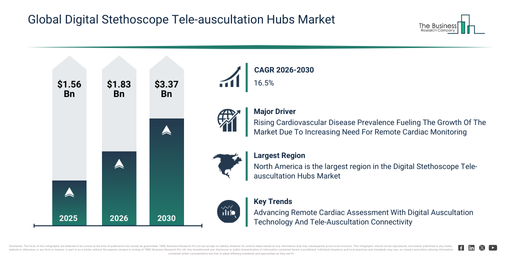
    The digital stethoscope tele-auscultation hubs market size has seen rapid expansion over recent years. It is anticipated to grow from $1.56 billion in 2025 to $1.83 billion in 2026, exhibiting a compound annual growth rate (CAGR) of 16.8%. The growth observed historically can be ascribed to the increasing prevalence of hypertension, the rising adoption of home healthcare solutions, the heightened requirement for continuous patient monitoring, the expanding utilization of digital health tools, and the growing patient awareness regarding self-monitoring.

    The market for digital stethoscope tele-auscultation hubs is projected to experience substantial expansion in the coming years, with its size expected to reach $3.37 billion in 2030, growing at a compound annual growth rate (CAGR) of 16.5%. This growth over the forecast period is primarily driven by factors such as the rising demand for remote monitoring solutions, increasing integration of smart connected devices, a growing shift toward preventive healthcare, expanding telehealth reimbursement support, and an increasing focus on chronic disease management. Furthermore, significant trends anticipated during this period include technology advancements in telemonitoring platforms, innovations in wireless blood pressure devices, developments in artificial intelligence-based analytics, research and developments in remote patient monitoring systems, and advancements in cloud-based health data integration.

    Get A Free Sample Report With In-Depth Market Insights:

    https://thebusinessresearchcompany.com/sample_request?id=17398472&type=smp&name=Digital%20Stethoscope%20Tele-auscultation%20Hubs%20Market%20Report%202026&utm_source=Blogs&utm_medium=Paid&utm_campaign=Oct_PR

    Digital Stethoscope Tele-auscultation Hubs Market Growth Factors Behind Sustained Expansion

    An increase in cardiovascular diseases is projected to fuel the expansion of the digital stethoscope tele-auscultation hubs market moving ahead. These conditions encompass illnesses impacting the heart and blood vessels, such as heart attacks, strokes, and high blood pressure. The rise in cardiovascular ailments stems from detrimental lifestyle choices like inadequate nutrition, insufficient physical activity, and tobacco use. Digital stethoscopes and tele-auscultation hubs facilitate the management of cardiovascular conditions through remote, immediate monitoring and examination of heart sounds. These technologies enhance patient results by allowing for prompt identification, ongoing observation, and appropriate actions for heart-related issues. For example, data from the Centers for Disease Control, a US-based government agency, indicated in October 2024 that around 919,032 individuals succumbed to cardiovascular disease in 2023, representing 1 in every 3 deaths. Consequently, the growing incidence of cardiovascular diseases is a key factor propelling the expansion of the digital stethoscope tele-auscultation hubs market.

    Digital Stethoscope Tele-auscultation Hubs Market Breakdown By Product Type And Application

    The digital stethoscope tele-auscultation hubs market covered in this report is segmented –

    1) By Component: Hardware, Software, Services

    2) By Product Type: Wired Digital Stethoscopes, Wireless Digital Stethoscopes, Integrated Tele-auscultation Systems

    3) By Technology: Artificial Intelligence (AI) Enabled Auscultation, Internet Of Things (IoT) Integrated Platforms, Cloud Based Tele-Auscultation Systems, Bluetooth Enabled Diagnostic Devices, Others Type

    4) By Application: Cardiology, Pulmonology, Primary Care, Remote Patient Monitoring, Other Applications

    5) By End User: Hospitals, Clinics, Ambulatory Surgical Centers, Homecare Settings, Other End-Users

    Subsegments:

    1) By Hardware: High Fidelity Digital Stethoscopes, Wireless Auscultation Devices, Bluetooth Enabled Stethoscopes, Smart Connected Stethoscopes, Diagnostic Integration Tools

    2) By Software: Cloud Based Tele-Auscultation Platforms, Artificial Intelligence (Artificial Intelligence) Enabled Analysis Software, Mobile Health Application Software, Real Time Sound Processing Software, Data Encryption And Security Software

    3) By Services: Remote Patient Monitoring Services, Telemedicine Consultation Services, Device Maintenance And Support Services, Clinical Training And Implementation Services, Software Subscription And Update Services

    Digital Stethoscope Tele-auscultation Hubs Market Industry Trends Fueling Future Revenue Growth

    Major companies operating in the digital stethoscope tele-auscultation hubs market are concentrating on developing advanced solutions, such as digital auscultation technology, to allow clinicians to remotely listen, record, and share heart and lung sounds with clinical precision. Digital auscultation technology improves traditional listening by amplifying sounds, reducing ambient noise, and converting acoustic signals into digital data suitable for telehealth workflows. For instance, in April 2025, Eko Health Inc., a US-based digital health company specializing in AI-powered cardiac care solutions, introduced its CORE 500 Digital Stethoscope and Eko+ membership in Canada. This offering provides clinicians with a digital auscultation device featuring patented audio technology designed to improve clinical evaluations. It incorporates three specialized listening modes (pulmonary, wide, and cardiac), simultaneous electrocardiogram (ECG) capability, and active noise cancellation to ensure clear auscultation. The membership also offers seamless connectivity with Eko’s web and mobile applications for capturing patient data, along with remote sharing and monitoring, aiming to enhance workflow efficiency and patient care coordination for healthcare providers.

    Digital Stethoscope Tele-auscultation Hubs Market Competitive Landscape: Who Leads The Industry?

    Major companies operating in the digital stethoscope tele-auscultation hubs market are 3M Company, Baxter International Inc., Solventum Corp., TaiDoc Technology Corporation, GlobalMed, Linktop, Thinklabs Medical, Visionflex Pty Ltd., Eko Health Inc., HD Medical Inc., Cardionics Inc., Ayu Devices Pvt. Ltd., Ai Health Highway India Pvt Ltd., Aevice Health Pte Ltd., Strados Labs, Sonavi Labs Inc., GV Concepts Inc., Stethome Sp. z o.o., CliniCloud, Saintiant Technologies

    View The Full Digital Stethoscope Tele-auscultation Hubs Market Report:

    https://thebusinessresearchcompany.com/report/digital-stethoscope-tele-auscultation-hubs-market-report?utm_source=Blogs&utm_medium=Paid&utm_campaign=Oct_PR

    Digital Stethoscope Tele-auscultation Hubs Market Geographic Landscape: Which Region Dominates Industry Growth?

    North America was the largest region in the digital stethoscope tele-auscultation hubs in 2025. Asia-Pacific is expected to be the fastest-growing region in the forecast period. The regions covered in the digital stethoscope tele-auscultation hubs market report are Asia-Pacific, South East Asia, Western Europe, Eastern Europe, North America, South America, Middle East, Africa.

    Reach Out To Our Team:

    The Business Research Company: https://www.thebusinessresearchcompany.com/

    Americas: +1 310-496-7795

    Asia: +44 7882 955267 & +91 8897263534

    Europe: +44 7882 955267

    Email us at: marketing@tbrc.info

    Follow us on:

    LinkedIn: https://in.linkedin.com/company/the-business-research-company

    YouTube: https://www.youtube.com/channel/UC24_fI0rV8cR5DxlCpgmyFQ

    Global Market Model: https://www.thebusinessresearchcompany.com/global-market-model

  • Digital Slide Scanners Market Analysis: $1.02 Billion Market Size In 2026 And Future Growth Prospects

    Digital Slide Scanners Market Analysis: $1.02 Billion Market Size In 2026 And Future Growth Prospects

    Featuring market attractiveness scoring, total addressable market sizing, company benchmarking matrices, interactive Excel dashboards, deeper supply chain intelligence, emerging startup tracking, and granular product-level insights, The Business Research Company’s 2026 market reports are built to deliver research that is both more actionable and more strategically valuable.

    Digital Slide Scanners Market Poised To Hit $1.79 Billion By 2030 With A 15% CAGR

    The digital slide scanners market has expanded considerably over recent years. It is forecast to increase from $0.89 billion in 2025 to $1.02 billion in 2026, exhibiting a compound annual growth rate (CAGR) of 15.3%. The market’s historical growth can be linked to the growing embrace of digital pathology, a heightened demand for high-resolution imaging, the escalating need for efficient pathology workflows, the wider deployment of telepathology solutions, and an increased focus on accurate disease diagnosis.

    The digital slide scanners market is projected to experience substantial expansion over the coming years. This market is anticipated to reach a valuation of $1.79 billion by 2030, exhibiting a compound annual growth rate (CAGR) of 15.0%. This projected growth during the forecast period is attributable to several factors, including the increasing integration of AI-assisted slide analysis, a rising demand for remote diagnostic capabilities, the growing adoption of whole-slide imaging in hospital settings, expanding investments in digital pathology infrastructure, and a heightened emphasis on workflow automation within laboratories. Key trends anticipated over this period encompass technological advancements in high-speed slide scanning, innovations in AI-driven image interpretation, new developments in cloud-based pathology platforms, ongoing research and development into ultra-high-resolution imaging systems, and improvements in interoperable digital pathology ecosystems.

    Get A Free Sample Report With In-Depth Market Insights:

    https://thebusinessresearchcompany.com/sample_request?id=80255050&type=smp&name=Digital%20Slide%20Scanners%20Market%20Report%202026&utm_source=Blogs&utm_medium=Paid&utm_campaign=Oct_PR

    Digital Slide Scanners Market Demand Drivers Opening New Revenue Streams

    The expanding occurrence of cancer is projected to boost the growth of the digital slide scanners market in the foreseeable future. Cancer, a condition marked by the uncontrolled proliferation and dissemination of atypical cells, can harm adjacent tissues and organs if left untreated. Its increasing prevalence is linked to lifestyle factors such as inadequate diet, smoking, alcohol use, and exposure to environmental contaminants, which heighten the likelihood of developing different types of cancer. Digital slide scanners assist in managing cancer by transforming physical tissue samples into detailed digital images for examination and dissemination. These devices enhance diagnostic precision, facilitate remote consultations, and optimize pathology processes, aiding prompt and accurate treatment choices. As an illustration, in October 2025, NHS Digital, a UK government organisation, reported 354,820 new cancer diagnoses in England in 2023, averaging 972 diagnoses daily and marking an increase of 8,605 cases from 2022. Prostate cancer was the most frequently diagnosed at 58,137 new cases, showing a 6% rise in registrations compared to the prior year. Consequently, the increasing prevalence of cancer is fueling the growth of the digital slide scanners market.

    Digital Slide Scanners Market Segment Analysis And Revenue Potential

    The digital slide scanners market covered in this report is segmented –

    1) By Product Type: Brightfield Scanners, Fluorescence Scanners, Whole Slide Imaging Scanners, Other Product Types

    2) By Technology: Automated, Semi-Automated, Manual

    3) By Distribution Channel: Direct Sales, Distributors, Online Retail, Third-Party E-Commerce Platforms

    4) By Application: Pathology, Research, Education, Other Applications

    5) By End-User: Hospitals, Diagnostic Laboratories, Academic And Research Institutes, Other End-Users

    Subsegments:

    1) By Brightfield Scanners: High Resolution Brightfield Imaging Units, Automated Tissue Section Scanning Systems, Rapid Slide Digitization Modules, Clinical Grade Brightfield Scanner Device, Multi Magnification Brightfield Imaging Platforms

    2) By Fluorescence Scanners: Multi Channel Fluorescence Imaging Units, High Sensitivity Fluorescent Detection Systems, Advanced Fluorescent Marker Scanning Modules, Low Noise Fluorescence Signal Capture Devices, Multi Spectrum Fluorescence Imaging Platforms

    3) By Whole Slide Imaging Scanners: Large Format Whole Slide Capture Systems, High Throughput Slide Imaging Units, Automated Pathology Slide Digitization Platforms, Ultra High Resolution Whole Slide Scanning Devices, Multi Modal Whole Slide Imaging Modules

    4) By Other Product Types: Hybrid Brightfield And Fluorescence Scanners, Portable Digital Slide Scanning Devices, Cloud Connected Slide Imaging Units, Specialized Research Grade Scanning Platforms, Innovative Digital Pathology Imaging Systems

    Digital Slide Scanners Market Trends Powering Strategic Industry Growth

    Leading companies within the digital slide scanners market are concentrating on developing advanced products, such as high-throughput, high-capacity slide scanner systems, to accelerate the adoption of digital pathology, enhance operational efficiency, and support extensive diagnostic workflows. These high-throughput, high-capacity slide scanner systems refer to automated digital pathology scanners that can rapidly digitize large batches of glass slides in a single run, maintaining consistent diagnostic-grade image quality with minimal manual intervention. For instance, in April 2025, Hamamatsu Photonics K.K., a Japan-based imaging technology company, introduced the NanoZoomer S540MD slide scanner system. This system offers a high-throughput scanner specifically designed for large digital pathology workflows, capable of processing up to 540 slides per batch, and allows for continuous cassette loading to boost efficiency and shorten turnaround without sacrificing image quality. It incorporates a touchscreen interface and supports common slide racks from brands such as Leica and Sakura, enabling smooth integration into existing laboratory setups.

    Digital Slide Scanners Market Company Landscape And Competitive Strategy

    Major companies operating in the digital slide scanners market are F. Hoffmann-La Roche AG, Danaher Corporation, Koninklijke Philips N.V., Olympus Corporation, Nikon Corporation, Hologic Inc., Carl Zeiss Microscopy GmbH, Excelitas Technologies Corp., Hamamatsu Photonics K.K., Motic Instruments Inc., Dakewe Medical Equipment Co. Ltd., OptraSCAN Inc., Paige AI Inc., Proscia Inc., Pramana Inc., Grundium Oy, 3DHISTECH Ltd., Ibex Medical Analytics Ltd., Huron Technologies International Inc., Mikroscan Technologies Inc.

    View The Full Digital Slide Scanners Market Report:

    https://thebusinessresearchcompany.com/report/digital-slide-scanners-market-report?utm_source=Blogs&utm_medium=Paid&utm_campaign=Oct_PR

    Digital Slide Scanners Market Largest Region: Which Geography Holds The Highest Market Share?

    North America was the largest region in the digital slide scanners market in 2025. Asia-Pacific is expected to be the fastest-growing region in the forecast period. The regions covered in the digital slide scanners market report are Asia-Pacific, South East Asia, Western Europe, Eastern Europe, North America, South America, Middle East, Africa.

    Reach Out To Our Team:

    The Business Research Company: https://www.thebusinessresearchcompany.com/

    Americas: +1 310-496-7795

    Asia: +44 7882 955267 & +91 8897263534

    Europe: +44 7882 955267

    Email us at: marketing@tbrc.info

    Follow us on:

    LinkedIn: https://in.linkedin.com/company/the-business-research-company

    YouTube: https://www.youtube.com/channel/UC24_fI0rV8cR5DxlCpgmyFQ

    Global Market Model: https://www.thebusinessresearchcompany.com/global-market-model

  • Digital Papanicolaou (PAP) Smear Analyzer Market Reaches $1.25 Billion In 2026: Forecast And Growth Opportunities

    Digital Papanicolaou (PAP) Smear Analyzer Market Reaches $1.25 Billion In 2026: Forecast And Growth Opportunities

    Featuring market attractiveness scoring, total addressable market sizing, company benchmarking matrices, interactive Excel dashboards, deeper supply chain intelligence, emerging startup tracking, and granular product-level insights, The Business Research Company’s 2026 market reports are built to deliver research that is both more actionable and more strategically valuable.

    Digital Papanicolaou (PAP) Smear Analyzer Market Expansion Outlook: What Revenue Opportunities Are Ahead?

    The digital papanicolaou (PAP) smear analyzer market size has seen significant expansion in recent years. It will grow from $0.72 billion in 2025 to $0.80 billion in 2026 at a compound annual growth rate (CAGR) of 11.9%. The growth observed in the past can be attributed to the increasing global prevalence of cervical cancer, higher government funding for women’s health programs, broader adoption of liquid-based cytology (LBC), a rising requirement to lessen human bias in slide assessment, and the expanding implementation of laboratory automation for high throughput.

    The digital papanicolaou (PAP) smear analyzer market is projected to experience substantial expansion over the upcoming years. Its valuation is anticipated to reach $1.25 billion by 2030, exhibiting a compound annual growth rate (CAGR) of 11.6%. This growth during the forecast period is fueled by several factors, including the increasing integration of AI-powered primary screening algorithms, the wider embrace of co-testing methods that combine HPV and digital PAP, the escalating need for integrated telepathology and remote diagnostic solutions, the broadening of screening programs in low- and middle-income countries, and increased financial commitments from hospitals towards digital health infrastructure. Key developments expected in this period encompass technological leaps in deep learning algorithms for classifying cells, breakthroughs in volumetric imaging and whole-slide scanning precision, advancements in robotic automation for staining and slide preparation, ongoing research into the fusion of dual-stain cytology with AI, and enhancements in cloud-based platforms for data analysis and secure storage.

    Get A Free Sample Report With In-Depth Market Insights:

    https://thebusinessresearchcompany.com/sample_request?id=54985838&type=smp&name=Digital%20Papanicolaou%20%28PAP%29%20Smear%20Analyzer%20Market%20Report%202026&utm_source=Blogs&utm_medium=Paid&utm_campaign=Oct_PR

    Digital Papanicolaou (PAP) Smear Analyzer Market Opportunity Drivers: What’s Unlocking New Revenue Potential?

    The expansion of the digital papanicolaou (PAP) smear analyzer market is anticipated to be propelled by the increasing prevalence of cervical cancer screening programs. These initiatives are organized public health efforts designed to detect precancerous changes and early-stage cancers in the cervix, thereby preventing disease progression. The growth in cervical cancer screening programs is attributed to heightened awareness of the advantages of early detection, along with more robust government and public health campaigns that broaden access to PAP and HPV testing for women at risk. Digital PAP smear analyzers support these screening programs by automating the analysis of cytology slides, which enhances diagnostic accuracy, minimizes manual workload, and speeds up result turnaround times for large-scale screenings. For instance, in May 2025, NHS England, the principal body of the UK-based publicly funded healthcare system, reported that cervical screening coverage for women aged 25 to 49 was 67.0% in March 2023, experiencing a slight increase to 67.5% by March 2024, indicating a 0.5 percentage point rise year-over-year. Thus, the increasing number of cervical cancer screening programs is a key driver for the growth of the digital papanicolaou (PAP) smear analyzer market.

    Digital Papanicolaou (PAP) Smear Analyzer Market Segment Landscape: Which Areas Lead Development?

    The digital papanicolaou (pap) smear analyzer market covered in this report is segmented –

    1) By Product Type: Standalone Systems, Integrated Systems

    2) By Technology: Image Analysis, Artificial Intelligence, Computer-Assisted Screening

    3) By Distribution Channel Segment: Direct Sales, Distributors Or Wholesalers, E-commerce Platforms, Retail

    4) By End-User: Hospitals, Diagnostic Centers, Academic And Research Institutes, Others End User

    Subsegments:

    1) By Standalone Systems: Manual Slide Scanning Units, Automated Slide Scanning Units, Basic Digital Imaging Units, Enhanced High-Resolution Imaging Units, Computer-Linked Digital Viewing Units

    2) By Integrated Systems: Fully Automated Digital Cytology Platforms, Workflow-Integrated Imaging And Analysis Systems, High-Throughput Digital Screening Systems, Artificial Intelligence-Enabled Cytology Platforms, Laboratory Information System Integrated Solutions

    Digital Papanicolaou (PAP) Smear Analyzer Market Innovation Trends Shaping Future Development

    Leading companies in the digital papanicolaou (PAP) smear analyzer market are concentrating on developing advanced analytical techniques, such as deep-learning-based artificial intelligence volumetric imaging, with the aim of improving the accuracy of disease detection. This deep-learning AI volumetric imaging system digitizes glass slides and applies sophisticated algorithms to identify pre-cancerous lesions and cancer cells more accurately than traditional microscopic reviews, which facilitates remote collaboration among pathologists and decreases the rate of false negatives. For example, in January 2024, Hologic Inc., a US-based medical technology company specializing in women’s health, obtained Food and Drug Administration (FDA) clearance for its Genius Digital Diagnostics System. This platform is engineered to be the premier digital cytology system to combine AI with advanced volumetric imaging, integrating the Genius Cervical AI algorithm to precisely locate suspicious cells for examination. The solution additionally provides a scalable ecosystem encompassing image acquisition, management, and remote review stations, thus accelerating workflow efficiency and delivering a 28% reduction in false negatives for high-grade lesions when compared to standard methods.

    Digital Papanicolaou (PAP) Smear Analyzer Market Leading Companies And Competitive Benchmarking

    Major companies operating in the digital papanicolaou (pap) smear analyzer market are Siemens Healthineers AG, Hologic Inc., Hamamatsu Photonics K.K., Leica Biosystems GmbH, Motic Digital Pathology, OptraScan Inc, Proscia Inc., Techcyte Inc., 3DHISTECH Fejleszto Korlátolt Felelosségu Társaság, Visiopharm A/S, Indica Labs Inc., Grundium Oy, West Medica Produktions-und Handels-GmbH, CellSolutions LLC, Noul Co. Ltd., WM-Vision GmbH, Wuhan Landing Intelligence Medical Co. Ltd., Konfoong Bioinformation Tech Co. Ltd., EPS Bio Technology Corp.

    View The Full Digital Papanicolaou (PAP) Smear Analyzer Market Report:

    https://thebusinessresearchcompany.com/report/digital-papanicolaou-pap-smear-analyzer-market-report?utm_source=Blogs&utm_medium=Paid&utm_campaign=Oct_PR

    Digital Papanicolaou (PAP) Smear Analyzer Market Largest Region By Revenue And Market Share

    North America was the largest region in the digital papanicolaou (PAP) smear analyzer market in 2025. Asia-Pacific is expected to be the fastest-growing region in the forecast period. The regions covered in the digital papanicolaou (pap) smear analyzer market report are Asia-Pacific, South East Asia, Western Europe, Eastern Europe, North America, South America, Middle East, Africa.

    Reach Out To Our Team:

    The Business Research Company: https://www.thebusinessresearchcompany.com/

    Americas: +1 310-496-7795

    Asia: +44 7882 955267 & +91 8897263534

    Europe: +44 7882 955267

    Email us at: marketing@tbrc.info

    Follow us on:

    LinkedIn: https://in.linkedin.com/company/the-business-research-company

    YouTube: https://www.youtube.com/channel/UC24_fI0rV8cR5DxlCpgmyFQ

    Global Market Model: https://www.thebusinessresearchcompany.com/global-market-model

  • Digital Neuro Biomarkers Market Growth In 2026: Market Size, Key Drivers And Future Outlook

    Digital Neuro Biomarkers Market Growth In 2026: Market Size, Key Drivers And Future Outlook

    Built to provide research that’s more actionable and strategically valuable, The Business Research Company’s 2026 market reports include market attractiveness analysis, total addressable market sizing, company benchmarking matrices, interactive Excel dashboards, broader supply chain intelligence, emerging startup tracking, and in-depth product insights.

    Digital Neuro Biomarkers Market Growth Potential: How Will Market Size Shift Through 2030?

    The digital neuro biomarkers market has seen rapid expansion lately. It is forecast to expand from $0.95 billion in 2025 to $1.22 billion in 2026, achieving a compound annual growth rate (CAGR) of 27.5%. Historically, this expansion has been driven by factors such as the increasing occurrence of neurological conditions, a greater uptake of wearable technologies, enhanced attention on cognitive evaluation, improvements in neuroimaging techniques, and initial studies in digital biomarker creation.

    The digital neuro biomarkers market size is poised for rapid expansion over the coming years. This market is projected to reach $3.19 billion by 2030, demonstrating a compound annual growth rate (CAGR) of 27.2%. The anticipated growth during this period can be attributed to factors such as the increasing incorporation of artificial intelligence in neurological diagnostics, a rising need for remote patient monitoring, the enlargement of tele-neurology services, escalating investments in neuroscience research, and the creation of tailored neurology treatment approaches. Key developments expected in the forecast timeframe include a broader application of cloud-based neurological data analytics, the implementation of real-time brain monitoring technologies, an increase in mobile cognitive assessment applications, the incorporation of machine learning into biomarker analysis, and the proliferation of predictive and precision neurology platforms.

    Get A Free Sample Report With In-Depth Market Insights:

    https://thebusinessresearchcompany.com/sample_request?id=88485409&type=smp&name=Digital%20Neuro%20Biomarkers%20Market%20Report%202026&utm_source=Blogs&utm_medium=Paid&utm_campaign=Oct_PR

    Digital Neuro Biomarkers Market Growth Momentum: What Factors Are Shaping Demand?

    The expanding emphasis on the timely identification and ongoing observation of neurological conditions is projected to boost the expansion of the digital neuro biomarkers market. This process utilizes digital tools like wearable technology, mobile apps, and sensor-based systems to continually evaluate neurological function, cognitive abilities, and behavioral patterns, facilitating the prompt recognition of neurological conditions. This sharpened attention is driven by public health campaigns and clinical objectives focused on detecting cognitive decline and neurodegenerative illnesses before advanced symptoms manifest. Digital neuro biomarkers aid these endeavors by providing objective, live data, assisting clinicians and researchers in identifying minor neurological shifts and implementing early treatments. For example, the U.S. Centres for Disease Control and Prevention’s Healthy Brain Initiative reported in 2024 that approximately one billion people worldwide are impacted by neurological disorders, with roughly 50 million suffering from epilepsy and 24 million from Alzheimer’s disease. Consequently, the heightened emphasis on early detection and continuous monitoring of neurological disorders via digital solutions is stimulating the growth of the digital neuro biomarkers market.

    Digital Neuro Biomarkers Market Segments: Where Is Growth Concentrated?

    The digital neuro biomarkers market covered in this report is segmented –

    1) By Type: Wearable, Mobile-Based Applications, Sensors, Other Types

    2) By Deployment Mode: Cloud-Based Platforms, On-Premise Platforms, Hybrid Deployment Models

    3) By Biomarker Type: Cognitive Digital Biomarkers, Motor Function Digital Biomarkers, Speech And Language Digital Biomarkers, Behavioral Digital Biomarkers

    4) By End-User: Healthcare Companies, Healthcare Providers, Payers, Other End-Users

    Subsegments:

    1) By Wearable: Smart Wristbands, Smart Headbands, Smart Watches, Smart Clothing, Implantable Devices

    2) By Mobile-Based Applications: Cognitive Assessment Applications, Neurological Monitoring Applications, Mental Health Tracking Applications, Motor Function Assessment Applications, Speech And Language Tracking Applications

    3) By Sensors: Electroencephalography Sensors, Electrocardiography Sensors, Eye Tracking Sensors, Motion Tracking Sensors, Biometric Monitoring Sensors

    4) By Other Types: Cloud Based Platforms, Data Analytics Tools, Digital Therapeutic Platforms, Artificial Intelligence Enabled Assessment Tools, Virtual Reality Based Assessment Tools

    Digital Neuro Biomarkers Market Trends Redefining Industry Growth

    Leading companies in the digital neuro biomarkers market are concentrating on developing accessible research infrastructures, such as WearGait PD, to support the creation, validation, and regulatory assessment of wearable-based digital neuro biomarkers for neurological disorders. WearGait PD represents a regulatory science dataset that offers synchronized wearable sensor and gait information from individuals with Parkinson’s disease and age-matched controls, enabling the extraction and evaluation of gait-derived digital biomarkers for monitoring disease and assessing its progression. For example, in July 2024, the U.S. Food and Drug Administration (FDA), a U.S.-based regulatory agency, released “WearGait PD: Wearables Dataset for Gait in Parkinson’s Disease and Age-Matched Controls,” an open-access dataset intended to assist researchers and industry developers in deriving and validating digital biomarkers. This dataset comprises raw inertial measurement unit (IMU) acceleration and rotational velocity data, insole pressure recordings, and synchronized gait annotations, which collectively facilitate algorithm testing, metric validation, and the development of wearable sensor-based monitoring tools.

    Digital Neuro Biomarkers Market Industry Leaders And Competitive Landscape

    Major companies operating in the digital neuro biomarkers market are F. Hoffmann-La Roche AG, Merck KGaA, Biogen Inc., Evidation Health Inc., Huma Therapeutics Limited, Altoida Inc, Cogstate Limited, Quibim S.L., Empatica Inc., Linus Health Inc., Cambridge Cognition Holdings plc, Brainomix Limited, Mindstrong Health Inc., Neurotrack Technologies Inc., Feel Therapeutics Inc., BrainCheck Inc., IXICO plc, NeuraMetrix Inc., NeuraLight Ltd., Koneksa Health Inc., Sonde Health Inc., Aural Analytics Inc., Winterlight Labs Inc.

    View The Full Digital Neuro Biomarkers Market Report:

    https://thebusinessresearchcompany.com/report/digital-neuro-biomarkers-market-report?utm_source=Blogs&utm_medium=Paid&utm_campaign=Oct_PR

    Digital Neuro Biomarkers Market Regional Analysis And Leading Geography

    North America was the largest region in the digital neuro biomarkers market in 2025. Asia-Pacific is expected to be the fastest-growing region in the forecast period. The regions covered in the digital neuro biomarkers market report are Asia-Pacific, South East Asia, Western Europe, Eastern Europe, North America, South America, Middle East, Africa.

    Reach Out To Our Team:

    The Business Research Company: https://www.thebusinessresearchcompany.com/

    Americas: +1 310-496-7795

    Asia: +44 7882 955267 & +91 8897263534

    Europe: +44 7882 955267

    Email us at: marketing@tbrc.info

    Follow us on:

    LinkedIn: https://in.linkedin.com/company/the-business-research-company

    YouTube: https://www.youtube.com/channel/UC24_fI0rV8cR5DxlCpgmyFQ

    Global Market Model: https://www.thebusinessresearchcompany.com/global-market-model
  • Deoxyribonucleic Acid (DNA)–Based Personalized Nutrition Kit Market 2026 Outlook: Market Size, CAGR And Key Growth Opportunities

    Deoxyribonucleic Acid (DNA)–Based Personalized Nutrition Kit Market 2026 Outlook: Market Size, CAGR And Key Growth Opportunities

    Featuring market attractiveness scoring, total addressable market sizing, company benchmarking matrices, interactive Excel dashboards, deeper supply chain intelligence, emerging startup tracking, and granular product-level insights, The Business Research Company’s 2026 market reports are built to deliver research that is both more actionable and more strategically valuable.

    Deoxyribonucleic Acid (DNA)–Based Personalized Nutrition Kit Market Size Forecast: How Big Could The Market Get By 2030?

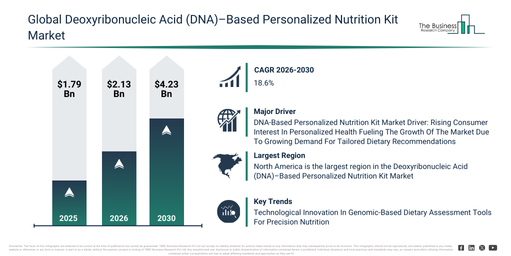
    The DNA-based personalized nutrition kit market has seen substantial growth recently. This market is expected to expand from $1.79 billion in 2025 to $2.13 billion in 2026, achieving a compound annual growth rate (CAGR) of 18.9%. This historical development can be ascribed to factors such as rising consumer enthusiasm for personalized nutrition, increased utilization of direct-to-consumer DNA testing, heightened recognition of genetic predispositions linked to diet-related conditions, wider availability of cost-effective genetic testing kits, and the growing incorporation of nutritional data into wellness programs.

    The DNA-based personalized nutrition kit market is projected for significant expansion in the coming years. This market is set to reach a value of $4.23 billion by 2030, exhibiting a compound annual growth rate (CAGR) of 18.6%. This projected growth over the forecast period is driven by several factors, including the escalating demand for precision health solutions, the wider acceptance of AI-based nutrition recommendations, a heightened emphasis on preventive healthcare, the increasing accessibility of advanced genomic analysis platforms, and a growing consumer preference for personalized wellness products. Key trends anticipated during this period encompass enhancements in bioinformatics and genetic interpretation tools, novel developments in multi-omics-based nutrition solutions, the creation of integrated digital nutrition platforms, intensified research and development within nutrigenomics applications, and the rise of real-time AI-powered personalized diet planning tools.

    Get A Free Sample Report With In-Depth Market Insights:

    https://thebusinessresearchcompany.com/sample_request?id=51009332&type=smp&name=Deoxyribonucleic%20Acid%20%28DNA%29%E2%80%93Based%20Personalized%20Nutrition%20Kit%20Market%20Report%202026&utm_source=Blogs&utm_medium=Paid&utm_campaign=Oct_PR

    Deoxyribonucleic Acid (DNA)–Based Personalized Nutrition Kit Market Development Factors: What’s Supporting Demand?

    The increasing consumer demand for tailored health solutions is anticipated to drive the expansion of the deoxyribonucleic acid (DNA)-based personalized nutrition kit market in the future. This concept, personalized health, denotes a wellness and healthcare strategy that customizes preventive measures, therapies, dietary advice, and lifestyle suggestions according to an individual’s distinct attributes, including genetic profile, biological markers, past health records, surroundings, and habits, thereby enhancing health results and general welfare. Progress in genomic sequencing technology contributes to this growing consumer appeal by rendering genetic information more readily available, economical, and relevant for daily health and dietary choices. Utilizing these technological strides, deoxyribonucleic acid (DNA)-based personalized nutrition kits examine individual genetic markers to produce bespoke dietary regimes, suggesting particular nutrient consumption levels and food selections that correspond with a person’s metabolic profile. Increasing public participation in genomic research further reinforces this development. As an illustration, in January 2025, the National Institutes of Health, a medical research agency based in the US, reported that its All of Us Research Program had registered over 832,000 participants by August 24, 2024, with more than 566,000 participants having finished the program’s preliminary stages. Moreover, the program’s researcher workbench data was expanded in September 2024, boosting the total participant count from 413,000 to 633,000, which signifies a 53% rise. Consequently, the growing consumer focus on personalized health is propelling the expansion of the deoxyribonucleic acid (DNA)-based personalized nutrition kit market.

    Deoxyribonucleic Acid (DNA)–Based Personalized Nutrition Kit Market Segment Breakdown: Which Categories Lead On Revenue?

    The deoxyribonucleic acid (dna)–based personalized nutrition kit market covered in this report is segmented –

    1) By Product Type: Test Kits, Analysis Services, Supplements, Other Product Types

    2) By Sample Type: Saliva, Blood, Buccal Swab, Other Sample Types

    3) By Distribution Channel: Online, Pharmacies, Wellness Centers, Other Distribution Channels

    4) By Application: Weight Management, Sports Nutrition, Digestive Health, Chronic Disease Management, Other Applications

    5) By End-User: Individuals, Healthcare Professionals, Fitness Centers, Other End-Users

    Subsegments:

    1) By Test Kits: Genetic Testing Kits, Nutrigenomic Testing Kits, Diet Response Testing Kits, Metabolic Function Testing Kits, Wellness Assessment Kits

    2) By Analysis Services: Genetic Data Interpretation Services, Personalized Nutrition Planning Services, Health Risk Assessment Services, Diet Optimization Services, Lifestyle Recommendation Services

    3) By Supplements: Personalized Vitamin Supplements, Personalized Mineral Supplements, Personalized Probiotic Supplements, Personalized Herbal Supplements, Personalized Amino Acid Supplements

    4) By Other Product Types: Personalized Meal Plans, Nutritional Coaching Programs, Mobile Health Applications, Genetic Wellness Reports, Lifestyle Modification Guides

    Deoxyribonucleic Acid (DNA)–Based Personalized Nutrition Kit Market Transformation Trends: What Innovations Are Driving Change?

    Leading companies in the deoxyribonucleic acid (DNA)-based personalized nutrition kit market are increasingly prioritizing technological advancements, particularly in developing sophisticated dietary assessment tools that integrate genetic data with real-time food intake analysis. These innovations aim to overcome the limitations of static genetic reports by connecting long-term genetic predispositions with users’ daily eating behaviors. By comparing actual nutritional intake against genetically informed dietary requirements, these tools empower users to pinpoint specific nutrient gaps and receive practical, food-based recommendations applicable to daily life. For example, in October 2025, GenoPalate Inc., a US-based genomic nutrition company, announced the introduction of Diet Snapshot, a food frequency questionnaire incorporated into its platform. This feature evaluates a member’s current diet and contrasts it with personalized nutritional targets derived from hundreds of genetic variants and lifestyle inputs. By identifying actionable opportunities to close nutrient gaps via specific food choices, the tool enhances the personalization of GenoVit multivitamin formulations, ensuring members receive precise nutrient dosages aligned with their biological needs and lifestyle.

    Deoxyribonucleic Acid (DNA)–Based Personalized Nutrition Kit Market Top Companies Driving Competitive Growth

    Major companies operating in the deoxyribonucleic acid (dna)–based personalized nutrition kit market are 23andMe Inc., Viome Life Sciences Inc., VitaGene Inc., ORIG3N Inc., Helix OpCo Inc., MapmyGenome Pvt. Ltd., DNAlysis Biotechnology, InsideTracker Inc., Nutrigenomix Inc., Pathway Genomics, 3X4 Genetics Inc., FitnessGenes Ltd., Gene by Gene Ltd., Gene Food Inc., Genomelink Inc., GenoPalate Inc., Life X DNA, LifeDNA Inc., myDNA Life Pty Ltd., Xcode Life

    View The Full Deoxyribonucleic Acid (DNA)–Based Personalized Nutrition Kit Market Report:

    https://thebusinessresearchcompany.com/report/deoxyribonucleic-acid-dna-based-personalized-nutrition-kit-market-report?utm_source=Blogs&utm_medium=Paid&utm_campaign=Oct_PR

    Deoxyribonucleic Acid (DNA)–Based Personalized Nutrition Kit Market Global Footprint: Which Region Leads The Industry?

    North America was the largest region in the DNA-based personalized nutrition kit market in 2025. Asia-Pacific is expected to be the fastest-growing region in the forecast period. The regions covered in the deoxyribonucleic acid (dna)–based personalized nutrition kit market report are Asia-Pacific, South East Asia, Western Europe, Eastern Europe, North America, South America, Middle East, Africa.

    Reach Out To Our Team:

    The Business Research Company: https://www.thebusinessresearchcompany.com/

    Americas: +1 310-496-7795

    Asia: +44 7882 955267 & +91 8897263534

    Europe: +44 7882 955267

    Email us at: marketing@tbrc.info

    Follow us on:

    LinkedIn: https://in.linkedin.com/company/the-business-research-company

    YouTube: https://www.youtube.com/channel/UC24_fI0rV8cR5DxlCpgmyFQ

    Global Market Model: https://www.thebusinessresearchcompany.com/global-market-model
  • Deep Brain Stimulation In Parkinson`s Disease Market Size Growth: From $3.49 Billion In 2026 To $4.49 Billion By 2030

    Deep Brain Stimulation In Parkinson`s Disease Market Size Growth: From $3.49 Billion In 2026 To $4.49 Billion By 2030

    Built to provide research that’s more actionable and strategically valuable, The Business Research Company’s 2026 market reports include market attractiveness analysis, total addressable market sizing, company benchmarking matrices, interactive Excel dashboards, broader supply chain intelligence, emerging startup tracking, and in-depth product insights.

    Deep Brain Stimulation In Parkinson`s Disease Market Revenue Outlook: What CAGR Lies Ahead Through 2030?

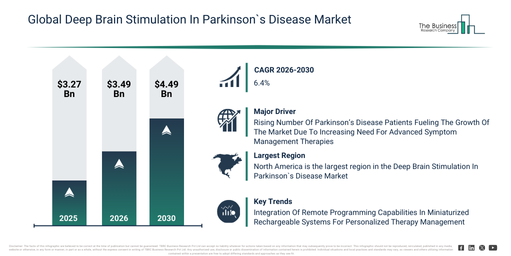
    The market for deep brain stimulation in Parkinson’s disease has experienced strong growth in recent years. It is forecast to grow from $3.27 billion in 2025 to $3.49 billion in 2026, achieving a compound annual growth rate (CAGR) of 6.7%. The expansion observed in prior periods can be attributed to the rising occurrence of Parkinson’s disease, increased adoption of DBS devices, enhanced awareness of advanced neuromodulation therapies, the development of neurosurgical infrastructure, and growing healthcare spending.

    The deep brain stimulation in parkinson’s disease market size is poised for robust expansion in the upcoming years. It is forecast to grow to $4.49 billion in 2030 at a compound annual growth rate (CAGR) of 6.4%. This anticipated growth throughout the forecast period can be attributed to several factors: a rising demand for tailored neuromodulation therapies, increased investments in research and clinical trials, enhanced access to tele-neurology services, expanded reimbursement coverage, and a greater adoption of MRI-compatible and rechargeable devices. Significant trends expected during this period include technological advancements in closed-loop and directional stimulation, innovations in rechargeable and long-life IPGs, progress in AI-assisted DBS programming, continuous research and development in minimally invasive surgical techniques, and advancements in remote monitoring and telemedicine functionalities.

    Get A Free Sample Report With In-Depth Market Insights:

    https://thebusinessresearchcompany.com/sample_request?id=17396746&type=smp&name=Deep%20Brain%20Stimulation%20In%20Parkinson%60s%20Disease%20Market%20Report%202026&utm_source=Blogs&utm_medium=Paid&utm_campaign=Oct_PR

    Deep Brain Stimulation In Parkinson`s Disease Market Industry Drivers: What’s Behind The Revenue Growth?

    The increasing population of individuals diagnosed with Parkinson’s disease is projected to stimulate expansion within the deep brain stimulation in Parkinson’s disease market. Parkinson’s disease, a progressive neurological condition, impairs movement through symptoms such as tremors, rigidity, slowed motion, and balance issues, stemming from the deterioration of dopamine-producing neurons in the brain. The increase in Parkinson’s disease patient numbers is linked to an aging demographic, as the likelihood of developing the condition significantly escalates with advancing age. Deep brain stimulation offers a management strategy for Parkinson’s disease by delivering precise electrical impulses to specific brain areas, thereby alleviating motor symptoms, enhancing patients’ quality of life, and lessening reliance on long-term medications. For example, the Parkinson’s Foundation, a US-based non-profit organization, estimated that in 2025, approximately 1.1 million people in the United States are living with Parkinson’s disease, a figure expected to climb to 1.2 million by 2030, with almost 90,000 new diagnoses each year and more than 10 million people affected worldwide. Consequently, the growing prevalence of Parkinson’s disease patients is a key driver for the growth of the deep brain stimulation in Parkinson’s disease market.

    Deep Brain Stimulation In Parkinson`s Disease Market Segmentation: How Does The Market Break Down By Category?

    The deep brain stimulation in parkinson`s disease market covered in this report is segmented –

    1) By Product Type: Implantable Pulse Generators (IPGs), Electrodes And Leads, External Programmers, Accessories And Consumables

    2) By Technology: Conventional Deep Brain Stimulation (DBS) Systems, Closed Loop Deep Brain Stimulation (DBS) Systems, Wireless Deep Brain Stimulation (DBS) Systems

    3) By Service Type: Pre-Surgical Evaluation Services, Surgical Implantation Services, Device Programming Services, Patient Monitoring Services, Maintenance And Follow-Up Services, Rehabilitation Support Services, Tele-Neurology Support Services, Training And Education Services

    4) By Application: Tremor Management, Rigidity And Stiffness Management, Bradykinesia (Slow Movement) Management, Dyskinesia Management

    5) By End-Users: Hospitals, Ambulatory Surgical Centres, Neurology Clinics

    Subsegments:

    1) By Implantable Pulse Generators (IPGs): Rechargeable Implantable Pulse Generators, Non-Rechargeable Implantable Pulse Generators, Directional Implantable Pulse Generators

    2) By Electrodes And Leads: Cylindrical Electrodes, Directional Electrodes, Stimulation Leads

    3) By External Programmers: Handheld External Programmers, Desktop External Programmers, Wireless External Programmers

    4) By Accessories And Consumables: Extension Cables, Battery Chargers, Surgical Tool Kits

    #Deep Brain Stimulation In Parkinson`s Disease Market Growth Trends: What’s Shaping The Future Outlook?

    Leading companies in the deep brain stimulation in Parkinson’s disease market are concentrating on developing sophisticated products, including miniaturized rechargeable implantable pulse generators and integrated remote programming platforms, to enhance patient comfort and access to care. Miniaturizing rechargeable implantable pulse generators involves crafting these battery-powered neurostimulation devices into much smaller, thinner forms, allowing for less invasive implantation while still delivering consistent therapeutic electrical pulses over extended durations. For instance, in January 2024, Abbott Laboratories, a US-based multinational medical devices and healthcare company, launched its Liberta RC DBS system. This platform is a miniaturized rechargeable deep brain stimulation system featuring remote programming capabilities, designed to treat individuals living with movement disorders such as Parkinson’s disease and essential tremor. Furthermore, this solution offers the longest recharge interval of any FDA-approved DBS system, requiring only 10 recharge sessions a year for most people, and utilizes the NeuroSphere Virtual Clinic to enable patients to communicate with their doctors and receive treatment adjustments from the convenience of their homes.

    Deep Brain Stimulation In Parkinson`s Disease Market Leading Players And Competitive Positioning

    Major companies operating in the deep brain stimulation in parkinson`s disease market are Abbott Laboratories, Medtronic plc, Boston Scientific Corporation, Mayo Foundation for Medical Education and Research, Cleveland Clinic, Renishaw plc, Neuralink Corp., NeuroPace Inc., PINS Medical Co. Ltd., Neurosoft Ltd., BrainsWay Ltd., Medscape, Inomed Medizintechnik GmbH, SceneRay Corporation Ltd., Neuroelectrics Barcelona S.L., Soterix Medical Inc., CorTec GmbH, Aleva Neurotherapeutics SA, NeuroSigma Inc., BrainGate Company Inc.

    View The Full Deep Brain Stimulation In Parkinson`s Disease Market Report:

    https://thebusinessresearchcompany.com/report/deep-brain-stimulation-in-parkinsons-disease-market-report?utm_source=Blogs&utm_medium=Paid&utm_campaign=Oct_PR

    Deep Brain Stimulation In Parkinson`s Disease Market Regional Distribution: Which Areas Power Market Growth?

    North America was the largest region in the deep brain stimulation in parkinson’s disease market in 2025. Asia-Pacific is expected to be the fastest-growing region in the forecast period. The regions covered in the deep brain stimulation in parkinson`s disease market report are Asia-Pacific, South East Asia, Western Europe, Eastern Europe, North America, South America, Middle East, Africa.

    Reach Out To Our Team:

    The Business Research Company: https://www.thebusinessresearchcompany.com/

    Americas: +1 310-496-7795

    Asia: +44 7882 955267 & +91 8897263534

    Europe: +44 7882 955267

    Email us at: marketing@tbrc.info

    Follow us on:

    LinkedIn: https://in.linkedin.com/company/the-business-research-company

    YouTube: https://www.youtube.com/channel/UC24_fI0rV8cR5DxlCpgmyFQ

    Global Market Model: https://www.thebusinessresearchcompany.com/global-market-model
  • Craniomaxillofacial Bone Plate Market Size In 2026 And Beyond: Understanding Future Growth Potential

    Craniomaxillofacial Bone Plate Market Size In 2026 And Beyond: Understanding Future Growth Potential

    Built to provide research that’s more actionable and strategically valuable, The Business Research Company’s 2026 market reports include market attractiveness analysis, total addressable market sizing, company benchmarking matrices, interactive Excel dashboards, broader supply chain intelligence, emerging startup tracking, and in-depth product insights.

    Craniomaxillofacial Bone Plate Market Size Outlook: How Quickly Will Revenue Expand Through 2030?

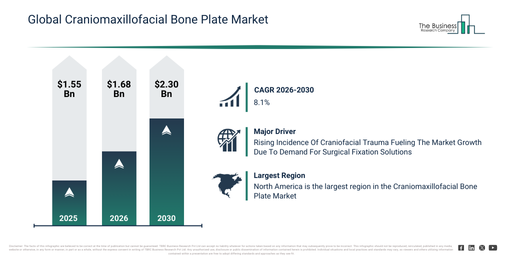
    The craniomaxillofacial bone plate market has demonstrated substantial expansion in recent years. It is anticipated to increase from $1.55 billion in 2025 to $1.68 billion in 2026, progressing at a compound annual growth rate (CAGR) of 8.4%. Historically, this expansion has been driven by several key factors, including a higher incidence of facial trauma, an escalating demand for reconstructive surgical procedures, the increased acceptance of titanium plates, the broadening reach of hospitals and specialty clinics, and an enhanced understanding of minimally invasive surgical techniques.

    The craniomaxillofacial bone plate market size is anticipated to experience substantial expansion in the coming years. This market is projected to reach $2.30 billion by 2030, exhibiting a compound annual growth rate (CAGR) of 8.1%. The expansion during this forecast period is driven by factors such as a growing preference for patient-specific implants, increasing embrace of bioresorbable materials, rising investments in 3D printing technologies, broader application of robotic-assisted surgeries, and the development of healthcare infrastructure in emerging economies. Key trends anticipated in the forecast horizon include advancements in 3D printing technology, breakthroughs in bioresorbable materials, the creation of less invasive fixation methods, exploration into antibacterial and drug-eluting coatings, and the integration of AI and AR into surgical planning.

    Get A Free Sample Report With In-Depth Market Insights:

    https://thebusinessresearchcompany.com/sample_request?id=28527037&type=smp&name=Craniomaxillofacial%20Bone%20Plate%20Market%20Report%202026&utm_source=Blogs&utm_medium=Paid&utm_campaign=Oct_PR

    Craniomaxillofacial Bone Plate Market Growth Drivers: What’s Behind The Acceleration?

    The increasing occurrence of facial injuries and accidents is anticipated to boost the expansion of the craniomaxillofacial bone plate market in the future. These involve harm to the skull and facial bones, frequently necessitating surgical stabilization, such as bone plates, to rebuild anatomical form and aid recovery. This rise in facial trauma and accidents stems from a greater volume of emergency room visits for unintentional injuries, indicating increased vulnerability to falls, mishaps, and various forms of trauma. Craniomaxillofacial bone plates facilitate the treatment of facial trauma and accidents by allowing surgeons to reconstruct the affected anatomy and enhance patient recovery. For example, in April 2025, data from the Royal Society for the Prevention of Accidents, a UK-based charity dedicated to preventing accidents, revealed that accident-related hospital admissions for severe injuries in England have climbed by 48% over the past two decades, with over 740,000 people hospitalized due to an accident in England in 2022/23 and over 870,000 people throughout the United Kingdom. Consequently, the increasing frequency of facial trauma and accidents is a key factor driving the expansion of the craniomaxillofacial bone plate market.

    Craniomaxillofacial Bone Plate Market Segment Performance And Emerging Opportunities

    The craniomaxillofacial bone plate market covered in this report is segmented –

    1) By Product Type: Locking Plates, Non-Locking Plates, Reconstruction Plates, Mesh And Flap Fixation Systems

    2) By Material Type: Titanium, Polylactic Acid, Other Material Types

    3) By Mechanism: Standard Plates, Customized And Patient-Specific Implants

    4) By Application: Orthognathic Surgery, Neurosurgery, Plastic Surgery, ENT Surgery, Other Applications

    5) By End-User: Hospitals, Ambulatory Surgical Centers, Specialty Clinics, Other End-Users

    Subsegments:

    1) By Locking Plates: Pre-Contoured Plates, Straight Plates, Mini Plates, Micro Plates, Pediatric Plates

    2) By Non-Locking Plates: Standard Plates, Reconstruction Plates, Mini Plates, Micro Plates

    3) By Reconstruction Plates: Mandibular Plates, Maxillofacial Plates, Zygomatic Plates, Orbital Plates

    4) By Mesh and Flap Fixation Systems: Titanium Mesh, Resorbable Mesh, Bone Flap Fixation System, Plate and Screw System

    Craniomaxillofacial Bone Plate Market Competitive Landscape: Who Leads The Industry?

    Major companies operating in the craniomaxillofacial bone plate market are Johnson & Johnson, Medtronic plc, Stryker Corporation, B. Braun Melsungen AG, Zimmer Biomet Holdings Inc., Integra LifeSciences Corporation, Orthofix Medical Inc., KLS Martin Group, Medartis AG, Acumed LLC, Titaniumfix GmbH, Inion Oy, Jeil Medical Corporation, Aesculap Implant Systems LLC, OsteoMed L.P., Stema Medizintechnik GmbH, Changzhou Huida Medical Equipment Co. Ltd., Xilloc Medical B.V., Zhengtian Medical, Calavera Surgical Design

    View The Full Craniomaxillofacial Bone Plate Market Report:

    https://thebusinessresearchcompany.com/report/craniomaxillofacial-bone-plate-market-report?utm_source=Blogs&utm_medium=Paid&utm_campaign=Oct_PR

    Craniomaxillofacial Bone Plate Market Geographic Landscape: Which Region Leads Industry Growth?

    North America was the largest region in the craniomaxillofacial bone plate market in 2025. Asia-Pacific is expected to be the fastest-growing region in the forecast period. The regions covered in the craniomaxillofacial bone plate market report are Asia-Pacific, South East Asia, Western Europe, Eastern Europe, North America, South America, Middle East, Africa.

    Reach Out To Our Team:

    The Business Research Company: https://www.thebusinessresearchcompany.com/

    Americas: +1 310-496-7795

    Asia: +44 7882 955267 & +91 8897263534

    Europe: +44 7882 955267

    Email us at: marketing@tbrc.info

    Follow us on:

    LinkedIn: https://in.linkedin.com/company/the-business-research-company

    YouTube: https://www.youtube.com/channel/UC24_fI0rV8cR5DxlCpgmyFQ

    Global Market Model: https://www.thebusinessresearchcompany.com/global-market-model
  • Cortical Grid Electrodes Market Reaches $1.77 Billion In 2026: Key Developments Shaping Expansion

    Cortical Grid Electrodes Market Reaches $1.77 Billion In 2026: Key Developments Shaping Expansion

    Backed by market attractiveness analysis, total addressable market sizing, company benchmarking matrices, interactive Excel dashboards, wider supply chain intelligence, emerging startup coverage, and detailed product-level insights, The Business Research Company’s 2026 market reports are designed to offer research that is more actionable and strategically valuable than ever.

    Cortical Grid Electrodes Market Size, Value And Growth Trajectory Through 2030

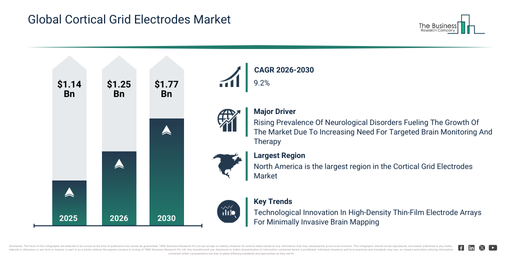
    The cortical grid electrodes market has experienced robust growth in recent years. Its valuation is projected to increase from $1.14 billion in 2025 to $1.25 billion by 2026, demonstrating a compound annual growth rate (CAGR) of 9.4%. This historical expansion can be attributed to several factors, including the rising demand for neuroprosthetics, increased funding for neurological research, a growing prevalence of neurological disorders, the broadening applications of brain-computer interfaces, and technological advancements in electrodes.

    The market size for cortical grid electrodes is projected to experience robust expansion over the next few years. It is forecast to increase to $1.77 billion in 2030, achieving a compound annual growth rate (CAGR) of 9.2%. This growth during the forecast period is primarily driven by an increasing demand for neurological treatments, wider applications in brain research, growing investments in research and development, expanded clinical adoption, and a heightened focus on personalized neuromodulation therapies. Significant trends anticipated in this period encompass technological progress in electrode miniaturization, innovations in conductive polymer materials, the development of high-density electrode systems, research and advancements in AI-based brain mapping, and improved integration with neurosurgical platforms.

    Get A Free Sample Report With In-Depth Market Insights:

    https://thebusinessresearchcompany.com/sample_request?id=22468341&type=smp&name=Cortical%20Grid%20Electrodes%20Market%20Report%202026&utm_source=Blogs&utm_medium=Paid&utm_campaign=Oct_PR

    Cortical Grid Electrodes Market Growth Factors Behind Sustained Expansion

    The growing incidence of neurological disorders is anticipated to drive the expansion of the cortical grid electrodes market moving forward. These medical conditions impact the brain, spinal cord, and nerves, leading to diverse symptoms including cognitive, motor, and sensory impairments. The heightened prevalence of neurological disorders is associated with the aging population, as aging gradually diminishes neuronal function, reduces brain plasticity, and elevates oxidative stress, contributing to the onset and progression of these conditions. Cortical grid electrodes assist in treating neurological disorders by enabling precise monitoring and stimulation of brain activity to restore or modify neural function. They enhance patient outcomes by supporting targeted therapies for conditions such as epilepsy, movement disorders, and chronic pain. For instance, in July 2024, according to the National Health Service, a UK-based government agency, there were 487,432 patients diagnosed with dementia by June 30, 2024, representing an increase of 3,155 cases compared to May 31, 2024. Therefore, the increasing prevalence of neurological disorders is fueling the growth of the cortical grid electrodes market.

    Cortical Grid Electrodes Market Segment Landscape And Growth Outlook

    The cortical grid electrodes market covered in this report is segmented –

    1) By Product: Epidural Cortical Grid Electrodes, High-Density Cortical Grid Electrodes, Flexible Cortical Grid Electrodes, Penetrating Cortical Grid Electrodes, Multi-Contact Cortical Grid Electrodes, Customized Cortical Grid Electrodes, Reusable Cortical Grid Electrodes

    2) By Material Type: Silicone, Polyimide, Metal, Conductive Polymer

    3) By Electrode Configuration: Strip Electrode, Grid Electrode, Cylindrical Electrode, Custom Designs

    4) By Application: Neuroprosthetics, Brain Mapping, Seizure Monitoring, Research

    5) By End User: Hospitals, Research Institutions, Neurology Clinics, Educational Institutions

    Subsegments:

    1) By Epidural Cortical Grid Electrodes: Single Contact Epidural Electrode, Multi Contact Epidural Electrode, Strip Epidural Electrode, Square Grid Epidural Electrode, Rectangular Grid Epidural Electrode

    2) By High Density Cortical Grid Electrodes: Ultra High Density Electrode, Dense Array Electrode, Small Contact Spacing Electrode, High Resolution Electrode, Compact High Density Electrode

    3) By Flexible Cortical Grid Electrodes: Silicone Based Flexible Electrode, Polyimide Flexible Electrode, Stretchable Flexible Electrode, Conformable Flexible Electrode, Thin Film Flexible Electrode

    4) By Penetrating Cortical Grid Electrodes: Microwire Penetrating Electrode, Depth Penetrating Electrode, Multi Shank Penetrating Electrode, Linear Array Penetrating Electrode, Three Dimensional Penetrating Electrode

    5) By Multi Contact Cortical Grid Electrodes: Double Contact Electrode, Triple Contact Electrode, Quadruple Contact Electrode, Multiple Contact Strip Electrode, High Contact Count Electrode

    6) By Customized Cortical Grid Electrodes: Patient Specific Electrode, Tailor Made Electrode, Bespoke Size Electrode, Custom Shape Electrode, Special Design Electrode

    7) By Reusable Cortical Grid Electrodes: Sterilizable Reusable Electrode, Durable Reusable Electrode, Long Life Reusable Electrode, Multiple Use Reusable Electrode, Washable Reusable Electrode

    Cortical Grid Electrodes Market Industry Trends Fueling Future Revenue Growth

    Leading companies in the cortical grid electrodes market are focusing on developing advanced products, such as high-density thin-film electrode arrays, to improve the resolution and safety of neural recording. These high-density thin-film electrode arrays utilize flexible, biocompatible substrates like polyimide to create micro-electrode arrays that conform closely to the brain’s surface, enabling the recording of thousands of channels of neural data with minimal tissue displacement and reversibility, thereby overcoming the limitations of traditional, rigid subdural grids. For instance, in March 2025, Precision Neuroscience Corporation, a US-based brain-computer interface company, received Food and Drug Administration (FDA) 510(k) clearance for its Layer 7-T (Layer 7 Cortical Interface). This device is a high-density thin-film 1024-channel cortical electrode array designed for temporary use (less than 30 days) to record, monitor, and stimulate electrical signals on the brain’s surface. The system allows surgeons to map brain activity with unprecedented resolution using a minimally invasive micro-slit technique, facilitating the preservation of eloquent tissue during neurosurgical procedures.

    Cortical Grid Electrodes Market Company Landscape And Competitive Strategy

    Major companies operating in the cortical grid electrodes market are Abbott Laboratories, Medtronic plc, Integra Life Sciences Corporation, Nihon Kohden Corporation, Natus Medical Incorporated, NeuroPace Inc., Blackrock Neurotech LLC, Cadwell Industries Inc., Precision Neuroscience Corporation, AD-tech Medical Instrument, Inomed Medizintechnik Gmbh, PMT Corporation, Ripple Neuro LLC, Neuroone Medical Technology corporation, Plexon Inc., Cortec Gmbh, Microprobes for Lifesciences Inc, Dixi Medical SAS, Cortera Neurotechnologies Inc., Neurosoft Bioelectronics Ltd., Alpha Omega Engineering Ltd.

    View The Full Cortical Grid Electrodes Market Report:

    https://thebusinessresearchcompany.com/report/cortical-grid-electrodes-market-report?utm_source=Blogs&utm_medium=Paid&utm_campaign=Oct_PR

    Cortical Grid Electrodes Market Largest Region: Which Geography Holds The Biggest Share?

    North America was the largest region in the cortical grid electrodes market in 2025. Asia-Pacific is expected to be the fastest-growing region in the forecast period. The regions covered in the cortical grid electrodes market report are Asia-Pacific, South East Asia, Western Europe, Eastern Europe, North America, South America, Middle East, Africa.

    Reach Out To Our Team:

    The Business Research Company: https://www.thebusinessresearchcompany.com/

    Americas: +1 310-496-7795

    Asia: +44 7882 955267 & +91 8897263534

    Europe: +44 7882 955267

    Email us at: marketing@tbrc.info

    Follow us on:

    LinkedIn: https://in.linkedin.com/company/the-business-research-company

    YouTube: https://www.youtube.com/channel/UC24_fI0rV8cR5DxlCpgmyFQ

    Global Market Model: https://www.thebusinessresearchcompany.com/global-market-model