Blog

  • Artificial Intelligence (AI) In Blood Pressure Monitoring Market Forecast 2026–2030: Market Size, Trends And Growth Opportunities

    Artificial Intelligence (AI) In Blood Pressure Monitoring Market Forecast 2026–2030: Market Size, Trends And Growth Opportunities

    Backed by market attractiveness analysis, total addressable market sizing, company benchmarking matrices, interactive Excel dashboards, wider supply chain intelligence, emerging startup coverage, and detailed product-level insights, The Business Research Company’s 2026 market reports are designed to offer research that is more actionable and strategically valuable than ever.

    Artificial Intelligence (AI) In Blood Pressure Monitoring Market Value Growth And Long-Term Outlook

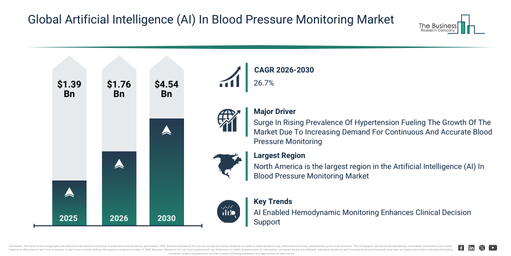
    The artificial intelligence (AI) in blood pressure monitoring market has expanded significantly over recent years. Its size is anticipated to grow from $1.39 billion in 2025 to $1.76 billion in 2026, achieving a compound annual growth rate (CAGR) of 27.0%. This market’s past growth can be ascribed to factors such as the increasing prevalence of hypertension, the rising adoption of digital health tools, greater awareness of home monitoring, the expanding use of wearable sensors, and increased healthcare expenditure.

    The artificial intelligence (AI) in blood pressure monitoring market is anticipated to experience substantial expansion over the next few years. It is projected to achieve a size of $4.54billion by 2030, demonstrating a compound annual growth rate (CAGR) of 26.7%. This growth during the forecast period is fueled by an escalating demand for continuous monitoring, the increasing integration of artificial intelligence (AI)-powered diagnostics, broader telehealth adoption, a heightened focus on preventive healthcare, and expanding investment in medical artificial intelligence. Prominent trends expected in this period include technological improvements in sensor accuracy, innovations in artificial intelligence (AI)-driven predictive analytics, advancements in cuffless monitoring solutions, ongoing research and development in multimodal biometrics, and enhancements in cloud-based health data platforms.

    Get A Free Sample Report With In-Depth Market Insights:

    https://thebusinessresearchcompany.com/sample_request?id=10527066&type=smp&name=Artificial%20Intelligence%20%28AI%29%20In%20Blood%20Pressure%20Monitoring%20Market%20Report%202026&utm_source=Blogs&utm_medium=Paid&utm_campaign=Oct_PR

    Artificial Intelligence (AI) In Blood Pressure Monitoring Market Industry Drivers: What’s Behind The Revenue Growth?

    The increasing incidence of hypertension is anticipated to drive the expansion of artificial intelligence (AI) within the blood pressure monitoring market moving ahead. Hypertension, a chronic health condition, is defined by consistently high blood pressure, which heightens the likelihood of cardiovascular ailments, strokes, and kidney issues, frequently necessitating continuous monitoring and long-term management. The occurrence of hypertension is increasing due to various factors including diets rich in salt and fat, lack of physical activity, obesity, stress, and an aging demographic, leading to an increasing population requiring consistent and precise blood pressure checks. AI-driven blood pressure monitoring solutions aid in managing hypertension through features like continuous or real-time tracking, predictive analysis, and customized alerts, which facilitate early detection of irregular patterns and support prompt medical interventions. For example, data from March 2025, released by the U.S. National Center for Biotechnology Information (NCBI), a US-based government research institution, indicated that the age-adjusted prevalence of hypertension among adults climbed to 27.5% in 2023 from 27.2% in 2022, demonstrating a consistent rise in instances of high blood pressure. Consequently, the growing prevalence of hypertension is accelerating the acceptance and expansion of artificial intelligence (AI) within the blood pressure monitoring market.

    Artificial Intelligence (AI) In Blood Pressure Monitoring Market Segment Outlook: Which Categories Are Growing Fastest?

    The artificial intelligence (AI) in blood pressure monitoring market covered in this report is segmented –

    1) By Product Type: Wearable Devices, Smart Cuffs, Mobile Applications, Standalone Artificial Intelligence (AI) Systems

    2) By Delivery Mode: On-Device Artificial Intelligence (AI), Cloud-Based Artificial Intelligence (AI), Hybrid Artificial Intelligence (AI)

    3) By Technology: Machine Learning Algorithms, Natural Language Processing (NLP), Computer Vision Techniques

    4) By Application: Continuous Monitoring, Diagnostic Support, Remote Patient Management, Clinical Decision Support

    5) By End Use: Hospitals, Home Healthcare, Ambulatory Care Centers, Specialty Clinics

    Subsegments:

    1) By Wearable Devices: Smart Wristbands, Smart Watches, Chest Strap Monitors, Arm Band Sensors, Finger Clip Sensors

    2) By Smart Cuffs: Upper Arm Smart Cuffs, Wrist Smart Cuffs, Forearm Smart Cuffs, Bluetooth Enabled Cuffs, Voice Assisted Smart Cuffs

    3) By Mobile Applications: Blood Pressure Tracking Applications, Heart Health Management Applications, Lifestyle And Wellness Monitoring Applications, Remote Patient Monitoring Applications, Data Analytics And Insights Applications

    4) By Standalone Artificial Intelligence (AI) Systems: Clinic Based AI Monitoring Systems, Home Based AI Monitoring Stations, Real Time Diagnostic AI Systems, Cloud Connected AI Monitoring Platforms, Predictive Health Assessment Systems

    #Artificial Intelligence (AI) In Blood Pressure Monitoring Market Growth Trends: What’s Shaping The Future Outlook?

    Major companies engaged in the AI in blood pressure monitoring market are concentrating on developing innovative solutions, such as hemodynamic monitoring platforms, to achieve a competitive edge. Hemodynamic monitoring platforms refer to systems and devices that consistently measure and assess the blood flow, blood pressure, and cardiac output within the cardiovascular system to inform patient management and treatment decisions. For instance, in April 2025, BD, a US-based medical technology company, introduced the Hemosphere Alta advanced hemodynamic monitoring platform, which includes the cerebral autoregulation index for individualized blood flow assessment, the Acumen hypotension prediction index for early detection of blood pressure drops, and a high resolution touchscreen with voice and gesture controls for enhanced usability. The platform also enables smooth integration with electronic health record systems, facilitating thorough patient data management.

    Artificial Intelligence (AI) In Blood Pressure Monitoring Market Key Players Shaping Industry Direction

    Major companies operating in the artificial intelligence (AI) in blood pressure monitoring market are Apple Inc., Samsung Electronics Co. Ltd., Huawei Technologies Co. Ltd., Masimo Corporation, Shen AI, Omron Healthcare Inc., A&D Company Limited, Valencell Inc., Binah.ai Ltd., Lifelight.AI, BioIntelliSense Inc., Nanowear Inc., FaceHeart Corporation, Hilo Group GmbH, Vastmindz AI Ltd., Biospectal SA, Briah.ai, Biobeat Technologies, Biozen LLC, Dynocardia Inc., Sensifree Co. Ltd.

    View The Full Artificial Intelligence (AI) In Blood Pressure Monitoring Market Report:

    https://thebusinessresearchcompany.com/report/artificial-intelligence-ai-in-blood-pressure-monitoring-market-report?utm_source=Blogs&utm_medium=Paid&utm_campaign=Oct_PR

    Artificial Intelligence (AI) In Blood Pressure Monitoring Market Regional Analysis: Which Region Leads By Revenue?

    North America was the largest region in the artificial intelligence (AI) in blood pressure monitoring market in 2025. Asia-Pacific is expected to be the fastest-growing region in the forecast period. The regions covered in the artificial intelligence (AI) in blood pressure monitoring market report are Asia-Pacific, South East Asia, Western Europe, Eastern Europe, North America, South America, Middle East, Africa.

    Reach Out To Our Team:

    The Business Research Company: https://www.thebusinessresearchcompany.com/

    Americas: +1 310-496-7795

    Asia: +44 7882 955267 & +91 8897263534

    Europe: +44 7882 955267

    Email us at: marketing@tbrc.info

    Follow us on:

    LinkedIn: https://in.linkedin.com/company/the-business-research-company

    YouTube: https://www.youtube.com/channel/UC24_fI0rV8cR5DxlCpgmyFQ

    Global Market Model: https://www.thebusinessresearchcompany.com/global-market-model
  • Artificial Intelligence (AI) Brain Magnetic Resonance Imaging (MRI) Lesion Detection Market Trends Supporting 27.9% CAGR Growth Through 2030

    Artificial Intelligence (AI) Brain Magnetic Resonance Imaging (MRI) Lesion Detection Market Trends Supporting 27.9% CAGR Growth Through 2030

    Featuring market attractiveness scoring, total addressable market sizing, company benchmarking matrices, interactive Excel dashboards, deeper supply chain intelligence, emerging startup tracking, and granular product-level insights, The Business Research Company’s 2026 market reports are built to deliver research that is both more actionable and more strategically valuable.

    Artificial Intelligence (AI) Brain Magnetic Resonance Imaging (MRI) Lesion Detection Market Expansion Outlook: What Revenue Opportunities Are Ahead?

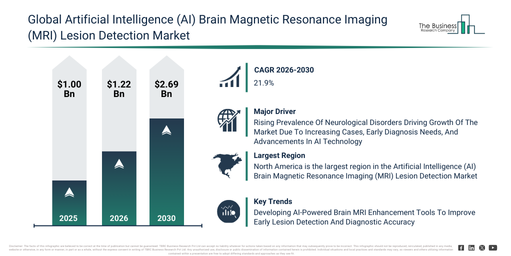
    The market size for AI brain MRI lesion detection has experienced rapid expansion over recent years. Its valuation is projected to increase from $1.00 billion in 2025 to $1.22 billion in 2026, demonstrating a compound annual growth rate (CAGR) of 22.2%. Historically, this growth has been driven by factors such as the greater utilization of MRI in neurology, the increasing acceptance of digital radiology, the rising occurrence of brain tumors and stroke, expanding investments by hospitals in imaging systems, and a growing demand for prompt disease diagnosis.

    The AI brain MRI lesion detection market is projected to experience substantial growth over the coming years. This market is forecast to reach $2.69 billion in 2030, advancing at a compound annual growth rate (CAGR) of 21.9%. This anticipated growth, along with major trends during the forecast period, is primarily attributed to an escalating demand for AI-enabled diagnostics, increased governmental backing for AI within healthcare, the expanding adoption of cloud medical imaging, greater integration of AI with PACS systems, and rising investment in tele-radiology solutions.

    Get A Free Sample Report With In-Depth Market Insights:

    https://thebusinessresearchcompany.com/sample_request?id=63098240&type=smp&name=Artificial%20Intelligence%20%28AI%29%20Brain%20Magnetic%20Resonance%20Imaging%20%28MRI%29%20Lesion%20Detection%20Market%20Report%202026&utm_source=Blogs&utm_medium=Paid&utm_campaign=Oct_PR

    Artificial Intelligence (AI) Brain Magnetic Resonance Imaging (MRI) Lesion Detection Market Growth Factors Behind Sustained Expansion

    The rising occurrence of neurological disorders is anticipated to fuel the expansion of the artificial intelligence (AI) brain MRI lesion detection market in the future. These conditions are medical ailments impacting the brain, spinal cord, and nerves, thereby disturbing typical nervous system operations and resulting in impairments in movement, cognition, sensation, behavior, or overall bodily control. The growing incidence of neurological disorders stems from detrimental lifestyle practices, such as inadequate diet, lack of physical activity, smoking, excessive alcohol intake, and persistent stress. AI brain MRI lesion detection offers assistance to individuals suffering from neurological disorders by allowing for quicker and more precise identification of brain abnormalities, which aids in early diagnosis, tailored treatment strategies, and enhanced patient results. For example, in April 2024, as per the National Institutes of Health (NIH), a leading US government biomedical research institution, approximately 6.9 million Americans aged 65 and above are presently afflicted with Alzheimer’s dementia, a number predicted to nearly double to 13.8 million by 2060. Consequently, the increasing prevalence of neurological disorders is a key driver for the artificial intelligence (AI) brain MRI lesion detection market.

    Artificial Intelligence (AI) Brain Magnetic Resonance Imaging (MRI) Lesion Detection Market Segment Breakdown: Which Categories Lead On Revenue?

    The artificial intelligence (AI) brain magnetic resonance imaging (mri) lesion detection market covered in this report is segmented –

    1) By Component: Software, Hardware, Services

    2) By Lesion Type: Tumor Lesions, Vascular Lesions, Demyelinating Lesions, Traumatic Lesions, Other Lesion Types

    3) By Modality: 3D MRI, 2D MRI, Other Modalitys

    4) By Application: Tumor Detection, Multiple Sclerosis, Stroke, Traumatic Brain Injury, Other Applications

    5) By End-User: Hospitals, Diagnostic Imaging Centers, Research Institutes, Other End-Users

    Subsegments:

    1) By Software: Deep Learning Detection Software, Image Processing Software, Clinical Decision Support Software, Diagnostic Reporting Software, Annotation and Labeling Software

    2) By Hardware: Magnetic Resonance Imaging Scanners, Graphics Processing Units, Edge Computing Devices, Image Acquisition Systems

    3) By Services: Installation And Integration Services, Model Training And Customization Services, Maintenance And Support Services, Data Annotation And Validation Services

    Artificial Intelligence (AI) Brain Magnetic Resonance Imaging (MRI) Lesion Detection Market Industry Trends Fueling Future Revenue Growth

    Leading companies in the artificial intelligence (AI) brain MRI lesion detection market are prioritizing the creation of advanced solutions, such as AI-driven contrast enhancement systems, to improve the early identification of subtle brain abnormalities and elevate diagnostic precision. These AI-powered systems employ sophisticated algorithms to enhance lesion visibility on contrast-enhanced MRI scans, consequently improving lesion-to-brain and contrast-to-noise ratios without modifying standard acquisition protocols. For example, in October 2024, Bracco Diagnostics, a US-based medical imaging company, and Subtle Medical, a US-based AI healthcare company, introduced AiMIFY software. This AI-based brain MRI enhancement tool increases contrast enhancement up to two times compared with standard gadolinium-based imaging and improves the clarity of lesions while preserving existing scanning workflows. This launch signifies a substantial technological step forward, integrating AI with conventional imaging and linking advanced computational analysis with clinical radiology practice. It delivers a scalable, efficient method for strengthening diagnostic confidence and enabling early lesion detection in neurological imaging.

    Artificial Intelligence (AI) Brain Magnetic Resonance Imaging (MRI) Lesion Detection Market Key Participants And Competitive Landscape

    Major companies operating in the artificial intelligence (AI) brain magnetic resonance imaging (mri) lesion detection market are Aidoc Medical Ltd., RapidAI Inc., Annalise.ai Pty Ltd., Quibim S.L., Olea Medical Imaging SAS, DeepTek.ai Inc., Image Analysis Group Ltd., Subtle Medical Inc., Gleamer SAS, Raidium Ltd., Invicro LLC, CorTechs.ai Inc., Omniscient Neurotechnology Inc., NeoSoma Inc., Oxipit Ltd., Cerebriu Inc., BrainReader ApS, MedImaging AI Solutions Ltd., NeuroVision Imaging Inc., NeuroQuant Analytics Inc.

    View The Full Artificial Intelligence (AI) Brain Magnetic Resonance Imaging (MRI) Lesion Detection Market Report:

    https://thebusinessresearchcompany.com/report/artificial-intelligence-ai-brain-magnetic-resonance-imaging-mri-lesion-detection-market-report?utm_source=Blogs&utm_medium=Paid&utm_campaign=Oct_PR

    Artificial Intelligence (AI) Brain Magnetic Resonance Imaging (MRI) Lesion Detection Market Geographic Analysis: Where Is Demand Accelerating Fastest?

    North America was the largest region in the AI brain MRI lesion detection market in 2025. Asia-Pacific is expected to be the fastest-growing region in the forecast period. The regions covered in the artificial intelligence (AI) brain magnetic resonance imaging (mri) lesion detection market report are Asia-Pacific, South East Asia, Western Europe, Eastern Europe, North America, South America, Middle East, Africa.

    Reach Out To Our Team:

    The Business Research Company: https://www.thebusinessresearchcompany.com/

    Americas: +1 310-496-7795

    Asia: +44 7882 955267 & +91 8897263534

    Europe: +44 7882 955267

    Email us at: marketing@tbrc.info

    Follow us on:

    LinkedIn: https://in.linkedin.com/company/the-business-research-company

    YouTube: https://www.youtube.com/channel/UC24_fI0rV8cR5DxlCpgmyFQ

    Global Market Model: https://www.thebusinessresearchcompany.com/global-market-model
  • Artificial Intelligence (AI) Arrhythmia Burden Analytics Market Forecast Highlights A $8.72 Billion Opportunity For Industry Participants

    Artificial Intelligence (AI) Arrhythmia Burden Analytics Market Forecast Highlights A $8.72 Billion Opportunity For Industry Participants

    Built to provide research that’s more actionable and strategically valuable, The Business Research Company’s 2026 market reports include market attractiveness analysis, total addressable market sizing, company benchmarking matrices, interactive Excel dashboards, broader supply chain intelligence, emerging startup tracking, and in-depth product insights.

    Artificial Intelligence (AI) Arrhythmia Burden Analytics Market Growth Potential: How Will Market Size Shift Through 2030?

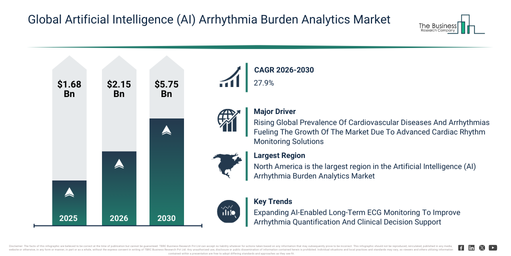
    The market size for artificial intelligence (AI) arrhythmia burden analytics has recently undergone exponential growth. This market is anticipated to expand from $1.68 billion in 2025 to $2.15 billion in 2026, at a compound annual growth rate (CAGR) of 28.2%. Its past growth can be ascribed to several contributing factors, including the increasing prevalence of cardiovascular diseases, the growing adoption of wearable ECG monitors, a rising demand for early arrhythmia detection, the expansion of remote patient monitoring platforms, and elevated investment in digital health infrastructure.

    The artificial intelligence (AI) arrhythmia burden analytics market size is projected to experience substantial growth in the coming years. This market is anticipated to reach $5.75 billion by 2030, demonstrating a compound annual growth rate (CAGR) of 27.9%. The expansion during the forecast period can be attributed to various factors, including the increasing integration of AI into healthcare IT systems, a growing focus on predictive and personalized cardiac care, the rising deployment of cloud-based AI solutions, the expansion of AI research and development efforts, and increasing regulatory support for AI-driven medical devices. Significant trends for the forecast period include innovation in predictive algorithms, advancements in cloud-based deployment, the integration of technology with wearable devices, investment in data analytics platforms, and the development of AI-enabled diagnostic software.

    Get A Free Sample Report With In-Depth Market Insights:

    https://thebusinessresearchcompany.com/sample_request?id=65783777&type=smp&name=Artificial%20Intelligence%20%28AI%29%20Arrhythmia%20Burden%20Analytics%20Market%20Report%202026&utm_source=Blogs&utm_medium=Paid&utm_campaign=Oct_PR

    Artificial Intelligence (AI) Arrhythmia Burden Analytics Market Demand Drivers Opening New Revenue Streams

    The increasing global incidence of cardiovascular diseases and arrhythmias is projected to drive the expansion of the artificial intelligence (AI) arrhythmia burden analytics market. Cardiovascular diseases and arrhythmias encompass a rising number of individuals globally suffering from heart and blood vessel conditions, including irregular heart rhythms such as atrial fibrillation, which are primary causes of death and disability worldwide. This increase in prevalence is attributed to aging populations and greater exposure to risk factors like hypertension, obesity, and diabetes, which elevate the probability of arrhythmias. Artificial intelligence (AI) arrhythmia burden analytics assists in managing cardiovascular diseases and arrhythmias by enabling ongoing, accurate analysis of cardiac rhythm data, thereby improving the early detection and management of arrhythmic events. For instance, in August 2025, data from the Centers for Disease Control and Prevention, a Switzerland-based public health agency, revealed that 90% of the nation’s 4.9 trillion dollars in annual health care spending is allocated to individuals with chronic and mental health conditions, with over 84,000 Americans dying each year from heart disease or stroke, and costs associated with cardiovascular diseases are anticipated to reach roughly 2 trillion dollars by 2050. Hence, the rising global prevalence of cardiovascular diseases and arrhythmias is fueling the growth of the artificial intelligence (AI) arrhythmia burden analytics market.

    Artificial Intelligence (AI) Arrhythmia Burden Analytics Market Segmentation: How Does The Market Break Down By Category?

    The artificial intelligence (AI) arrhythmia burden analytics market covered in this report is segmented –

    1) By Component: Software, Hardware, Services

    2) By Technology: Machine Learning (ML), Deep Learning (DL), Natural Language Processing (NLP)

    3) By Deployment Mode: On-Premises, Cloud-Based

    4) By Application: Arrhythmia Detection, Burden Quantification, Predictive Risk Assessment, Treatment Efficacy Monitoring, Clinical Decision Support

    5) By End-User: Healthcare Providers, Diagnostic Centers, Academic And Research Institutes, Other End-Users

    Subsegments:

    1) By Software: Data Management, Predictive Analytics, Visualization Tools, Reporting Platforms, Algorithm Development

    2) By Hardware: Monitoring Devices, Wearable Sensors, Data Storage Units, Processing Units, Connectivity Modules

    3) By Services: Consulting Services, Implementation Services, Maintenance And Support, Training Services, Cloud Hosting Services

    Artificial Intelligence (AI) Arrhythmia Burden Analytics Market Trends Powering Strategic Industry Growth

    Major companies in the artificial intelligence (AI) arrhythmia burden analytics market are prioritizing the development of advanced products, such as AI-powered arrhythmia detection systems, to bolster diagnostic accuracy, improve patient compliance, and reduce the chance of misdiagnosis and repeat testing. These AI-powered arrhythmia detection systems involve sophisticated algorithms within cardiac monitors that automatically analyze continuous electrocardiogram (ECG) data to precisely identify and categorize irregular heart rhythms. As an illustration, in May 2025, iRhythm Technologies, a US-based digital health company, launched its Zio ECG Recording and Analysis System in Japan. This is a prescription-only, long-term continuous monitoring system that incorporates a deep-learned artificial intelligence (AI) algorithm approved by Japan’s Pharmaceuticals and Medical Devices Agency (PMDA). It consists of a patch-based monitor, worn for up to 14 days, and an analysis service providing comprehensive reports, which facilitates the seamless detection of 13 arrhythmia types without significant patient burden. Additionally, it includes certified clinical review and is linked to a high diagnostic yield and low retesting rates, ultimately enhancing clinical efficiency for healthcare providers.

    Artificial Intelligence (AI) Arrhythmia Burden Analytics Market Top Companies Driving Competitive Growth

    Major companies operating in the artificial intelligence (AI) arrhythmia burden analytics market are Medtronic plc, Koninklijke Philips N.V., GE HealthCare Technologies Inc., Boston Scientific Corporation, iRhythm Technologies Inc., Bittium Corporation, Cardiac Rhythm Management, AliveCor Inc., VivaLNK Inc., Biotricity Inc., InfoBionic Inc., Cardiac Insight Inc., Cortrium ApS, Eko Health Inc., CardioComm Solutions Inc., Medi-Lynx Cardiac Monitoring LLC, QT Medical Inc., Wearable Sensors Ltd., HeartVista Inc., iCardiac Technologies Inc.

    View The Full Artificial Intelligence (AI) Arrhythmia Burden Analytics Market Report:

    https://thebusinessresearchcompany.com/report/artificial-intelligence-ai-arrhythmia-burden-analytics-market-report?utm_source=Blogs&utm_medium=Paid&utm_campaign=Oct_PR

    Artificial Intelligence (AI) Arrhythmia Burden Analytics Market Global Footprint: Which Region Leads The Industry?

    North America was the largest region in the artificial intelligence (AI) arrhythmia burden analytics market in 2025. Asia-Pacific is expected to be the fastest-growing region in the forecast period. The regions covered in the artificial intelligence (AI) arrhythmia burden analytics market report are Asia-Pacific, South East Asia, Western Europe, Eastern Europe, North America, South America, Middle East, Africa.

    Reach Out To Our Team:

    The Business Research Company: https://www.thebusinessresearchcompany.com/

    Americas: +1 310-496-7795

    Asia: +44 7882 955267 & +91 8897263534

    Europe: +44 7882 955267

    Email us at: marketing@tbrc.info

    Follow us on:

    LinkedIn: https://in.linkedin.com/company/the-business-research-company

    YouTube: https://www.youtube.com/channel/UC24_fI0rV8cR5DxlCpgmyFQ

    Global Market Model: https://www.thebusinessresearchcompany.com/global-market-model
  • 4D Radiotherapy Equipment Market Growth To $2.99 Billion Creates New Opportunities Across The Industry

    4D Radiotherapy Equipment Market Growth To $2.99 Billion Creates New Opportunities Across The Industry

    Featuring market attractiveness scoring, total addressable market sizing, company benchmarking matrices, interactive Excel dashboards, deeper supply chain intelligence, emerging startup tracking, and granular product-level insights, The Business Research Company’s 2026 market reports are built to deliver research that is both more actionable and more strategically valuable.

    4D Radiotherapy Equipment Market Revenue Growth On Track For A 9.3% CAGR Through 2030

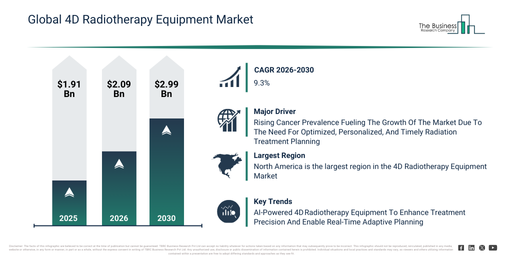
    The 4D radiotherapy equipment market size has experienced significant expansion over recent years. It is anticipated to increase from $1.91 billion in 2025 to $2.09 billion in 2026, demonstrating a compound annual growth rate (CAGR) of 9.6%. This historical growth can be ascribed to several factors, including the rising demand for motion-adaptive radiation therapy, the increasing adoption of advanced imaging systems, a heightened focus on minimizing treatment errors, the expanding utilization of real-time patient monitoring, and a growing preference for high-precision radiotherapy.

    The 4D radiotherapy equipment market is projected to experience robust expansion over the coming years. This market is anticipated to reach $2.99 billion by 2030, demonstrating a compound annual growth rate (CAGR) of 9.3%. This anticipated growth during the forecast period stems from factors such as increasing investments in advanced radiotherapy technologies, the wider acceptance of 4D treatment systems, a heightened need for precise tumor-tracking solutions, the broadened incorporation of AI-powered motion management, and a growing requirement for individualized radiation therapy. Key developments anticipated for this period encompass technological progress in motion-synchronized radiotherapy systems, breakthroughs in real-time imaging functionalities, the evolution of adaptive treatment delivery platforms, ongoing research and development in tumor-tracking innovations, and improvements in imaging-guided radiotherapy solutions.

    Get A Free Sample Report With In-Depth Market Insights:

    https://thebusinessresearchcompany.com/sample_request?id=22834228&type=smp&name=4D%20Radiotherapy%20Equipment%20Market%20Report%202026&utm_source=Blogs&utm_medium=Paid&utm_campaign=Oct_PR

    4D Radiotherapy Equipment Market Growth Factors Behind Sustained Expansion

    An anticipated surge in cancer cases is projected to fuel the expansion of the 4D radiotherapy equipment market in the future. Cancer, a condition marked by the unchecked proliferation and dissemination of abnormal cells, can harm adjacent tissues and organs if left untreated. The rise in cancer prevalence stems from lifestyle-related factors such as unhealthy eating habits, smoking, alcohol intake, and exposure to environmental contaminants, all of which heighten the risk of developing various forms of cancer. 4D radiotherapy equipment aids in cancer treatment by delivering exceptionally precise, motion-compensated radiation therapies that account for tumor movement during respiration. This technology enhances patient results by optimizing tumor targeting, reducing harm to healthy tissues, and boosting treatment efficacy. For example, in October 2025, NHS Digital, a UK government organisation, reported 354,820 new cancer diagnoses in England during 2023, equating to an average of 972 diagnoses daily and indicating an increase of 8,605 cases compared to 2022. Prostate cancer was the most frequently diagnosed at 58,137 new cases, showing a 6% rise in registrations over the prior year. Consequently, the increasing incidence of cancer is propelling the growth of the 4D radiotherapy equipment market. The growth of the 4D radiotherapy equipment market is anticipated to be propelled by increasing healthcare expenditure. Healthcare spending in emerging markets involves investments by governmental bodies, private entities, and medical service providers aimed at enhancing medical infrastructure, access to advanced therapies, and patient care services. This spending is escalating in emerging markets due to expanding middle-class populations experiencing greater incomes and extended lifespans, which, in turn, boosts the need for superior medical services, hospital facilities, and insurance coverage. 4D radiotherapy equipment supports this trend by delivering precise, image-guided radiation treatment that accounts for tumor movement, thereby improving treatment results while minimizing harm to surrounding healthy tissue. As an illustration, in June 2025, according to Statistics Austria, the national statistical office of Austria, total healthcare expenditure in Austria reached approximately $61.6 billion (€57 billion) in 2024, with contributions from both public and private sectors. This represented an increase of about $4.6 billion (€4.25 billion) compared to the previous year, and the share of healthcare spending as a proportion of gross domestic product rose from 11.2% in 2023 to 11.8% in 2024. Therefore, the rising healthcare spending in emerging markets is a key driver for the 4D radiotherapy equipment market.

    4D Radiotherapy Equipment Market Segment Analysis: What Are The Core Market Categories?

    The 4D radiotherapy equipment market covered in this report is segmented –

    1) By Product Type Or Component: 4D Gating/RT Systems, Linear Accelerators (LINACs), 4D Imaging Modalities, SGRT Systems, Treatment Planning Software

    2) By Motion Management Technique: Respiratory Gating, Real-Time Tumor Tracking, Breath-Hold Techniques, Adaptive Radiotherapy (ART)

    3) By Application: Lung Cancer, Liver Cancers, Pancreatic Cancer, Breast Cancer, Lymphoma, Other Cancers

    4) By End User: Hospitals, Cancer Treatment Centers, Specialty Radiotherapy Clinics, Research Institutions

    Subsegments:

    1) By 4D Gating / RT Systems: Respiratory Gating Systems, Real-Time Tumor Tracking Systems, Motion Management Platforms, Adaptive Radiation Delivery Systems

    2) By Linear Accelerators: Standard Linear Accelerators, Image Guided Linear Accelerators, Motion Compensated Linear Accelerators, Stereotactic Body Radiation Therapy Linear Accelerators

    3) By 4D Imaging Modalities: Four Dimensional Computed Tomography, Four Dimensional Magnetic Resonance Imaging, Four Dimensional Positron Emission Tomography, Four Dimensional Cone Beam Computed Tomography

    4) By SGRT Systems: Surface Guided Patient Positioning Systems, Optical Surface Monitoring Systems, Real-Time Surface Tracking Systems, Motion Compensated Surface Imaging Systems

    5) By Treatment Planning Software: Motion Adaptive Planning Software, Dose Calculation Software, Image Fusion Planning Software, Tumor Contouring And Delineation Software

    4D Radiotherapy Equipment Market Industry Trends Fueling Future Revenue Growth

    Major companies engaged in the 4D radiotherapy equipment market are concentrating on developing advanced imaging systems, such as AI-powered CT-Linac platforms, to improve treatment accuracy, facilitate real-time adjustments to treatment plans, and enhance operational efficiency. AI-powered CT-Linac platforms refer to integrated computed tomography–linear accelerator systems that utilize artificial intelligence for high-definition imaging, adaptive treatment planning, and real-time dose adjustments to deliver highly precise personalized radiation therapy for cancer patients. For instance, in May 2024, Elekta AB, a medical technology company based in Sweden, introduced Elekta Evo, a CT-Linac equipped with AI-enhanced imaging and both online and offline adaptive radiotherapy capabilities. This system allows clinicians to visualize target anatomy with clarity and modify radiation delivery during each session to account for patient movement and anatomical changes. This launch signifies a substantial technological advancement by incorporating high-precision imaging and adaptive therapy into routine clinical workflows, bridging traditional radiotherapy with AI-driven adaptive 4D planning, and providing clinicians with a scalable, efficient solution for improved patient outcomes.

    4D Radiotherapy Equipment Market Top Companies Driving Competitive Growth

    Major companies operating in the 4D radiotherapy equipment market are Hitachi Ltd., Siemens Healthineers AG, GE HealthCare Technologies Inc., Koninklijke Philips N.V., Varian Medical Systems Inc., Elekta AB, Shanghai United Imaging Healthcare Co. Ltd., Accuray Incorporated, Brainlab AG, Canon Medical Systems Corporation, RefleXion Medical, Vision RT Ltd., C-Rad AB, MVision AI Ltd., Anzai Medical Co. Ltd., ViewRay Technologies Inc., DYN’R Medical Systems, Ion Beam Applications SA (IBA SA)

    View The Full 4D Radiotherapy Equipment Market Report:

    https://thebusinessresearchcompany.com/report/4d-radiotherapy-equipment-market-report?utm_source=Blogs&utm_medium=Paid&utm_campaign=Oct_PR

    4D Radiotherapy Equipment Market Global Footprint: Which Region Leads The Market?

    North America was the largest region in the 4D radiotherapy equipment market in 2025. Asia-Pacific is expected to be the fastest-growing region in the forecast period. The regions covered in the 4D radiotherapy equipment market report are Asia-Pacific, South East Asia, Western Europe, Eastern Europe, North America, South America, Middle East, Africa.

    Reach Out To Our Team:

    The Business Research Company: https://www.thebusinessresearchcompany.com/

    Americas: +1 310-496-7795

    Asia: +44 7882 955267 & +91 8897263534

    Europe: +44 7882 955267

    Email us at: marketing@tbrc.info

    Follow us on:

    LinkedIn: https://in.linkedin.com/company/the-business-research-company

    YouTube: https://www.youtube.com/channel/UC24_fI0rV8cR5DxlCpgmyFQ

    Global Market Model: https://www.thebusinessresearchcompany.com/global-market-model
  • 3D Neuroscience Market Forecast: Breaking Down The Numbers Behind Future Expansion

    3D Neuroscience Market Forecast: Breaking Down The Numbers Behind Future Expansion

    Built to provide research that’s more actionable and strategically valuable, The Business Research Company’s 2026 market reports include market attractiveness analysis, total addressable market sizing, company benchmarking matrices, interactive Excel dashboards, broader supply chain intelligence, emerging startup tracking, and in-depth product insights.

    3D Neuroscience Market Value Growth And Long-Term Outlook

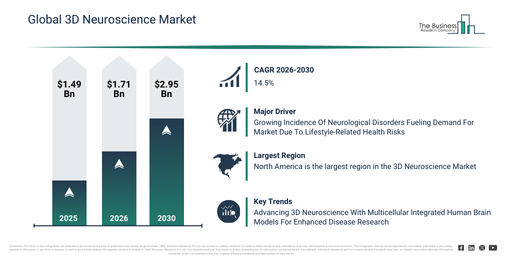
    The three-dimensional (3D) neuroscience market has experienced swift expansion recently. It will grow from $1.49 billion in 2025 to $1.71 billion in 2026 at a compound annual growth rate (CAGR) of 14.8%. Historically, this expansion is linked to the increased embrace of three-dimensional (3D) brain modeling techniques, a heightened need for sophisticated neurological research instruments, its expanding application in drug discovery and neuropharmacology, the development of imaging and visualization technologies, and a greater emphasis on comprehending intricate neural networks.

    The three-dimensional (3D) neuroscience market size is expected to experience rapid growth in the coming years, projected to reach $2.95 billion in 2030 at a compound annual growth rate (CAGR) of 14.5%. This growth over the forecast period is attributable to the increasing integration of three-dimensional (3D) models with artificial intelligence (AI) analytics, rising investment in personalized neuroscience research, growing adoption in disease modeling and therapeutic development, the expansion of high-resolution imaging and data acquisition platforms, and a rise in demand for predictive and translational neuroscience studies. Major trends for this period include technology-driven innovations in three-dimensional (3D) neural tissue modeling, advancements in artificial intelligence (AI)-enabled data analysis, developments in organoid and lab-grown neural systems, rising research and development in imaging and simulation platforms, and innovation in integrated neuroscience modeling and visualization tools.

    Get A Free Sample Report With In-Depth Market Insights:

    https://thebusinessresearchcompany.com/sample_request?id=51372795&type=smp&name=3D%20Neuroscience%20Market%20Report%202026&utm_source=Blogs&utm_medium=Paid&utm_campaign=Oct_PR

    3D Neuroscience Market Demand Drivers Opening New Revenue Streams

    The expanding occurrence of neurological conditions is anticipated to fuel the expansion of the 3D neuroscience market in the future. These medical conditions impact the brain, spinal cord, and nerves, interfering with typical nervous system operations and resulting in difficulties with movement, thought, feeling, conduct, or general body regulation. The rise in these disorders stems from detrimental lifestyle practices such as inadequate nutrition, lack of physical activity, smoking, heavy drinking, and prolonged stress. 3D neuroscience improves comprehension of the brain’s anatomy and operation, facilitating more accurate diagnoses and tailored therapies for individuals with neurological issues. For example, as reported in April 2024 by the National Institutes of Health (NIH), a US-based government agency, approximately 6.9 million Americans aged 65 and above are presently suffering from Alzheimer’s dementia, a number predicted to almost double to 13.8 million by 2060. Consequently, the rising incidence of neurological disorders propels the 3D neuroscience market.

    3D Neuroscience Market Segment Breakdown: Which Categories Lead On Revenue?

    The 3D neuroscience market covered in this report is segmented –

    1) By Component: Instruments And Consumables, Software And Services

    2) By Technology: Brain Imaging, Neuro-Microscopy, Electrophysiology, Neurophotonic Analysis, Other Technologies

    3) By Scale Of Analysis: Macro-Scale Connectomics (MSC), Meso-Scale Connectomics (MeSC), Micro-Scale Connectomics (MiSC), Nanoscale Or Synaptic Analysis (NSA)

    4) By Application: Disease Modeling And Drug Discovery, Brain Mapping And Connectomics, Developmental Neuroscience, Diagnostics And Surgical Planning

    5) By End-User: Hospitals, Diagnostic Laboratories, Research and Academic Institutes, Other End-Users

    Subsegments:

    1) By Instruments And Consumables: Imaging Devices, Microelectrodes, Sensors, Reagents, Laboratory Consumables

    2) By Software And Services: Data Analysis Software, Visualization Software, Modeling And Simulation Software, Technical Support Services, Training And Consultation Services

    3D Neuroscience Market Trends Powering Strategic Industry Growth

    Major companies operating in the 3D neuroscience market are prioritizing the development of advanced 3D human brain tissue platforms, such as multicellular integrated brain models. This focus aims to improve disease modeling, accelerate drug testing, and produce more physiologically relevant outcomes. Multicellular integrated brain models are defined as laboratory-cultured three-dimensional constructs derived from induced pluripotent stem cells, integrating multiple primary brain cell types. This allows for in-depth examination of cellular interactions, pathology, and responses to drugs. For instance, in November 2025, Massachusetts Institute of Technology (MIT), a US-based research institution, launched Multicellular Integrated Brains (miBrains), a customizable 3D human brain tissue system. This platform incorporates six major brain cell types, supports genetic engineering for personalized disease studies, and can be scaled for large-scale research projects, thus enhancing the availability and utility of complex in vitro models for neuroscience research.

    3D Neuroscience Market Leading Players And Competitive Positioning

    Major companies operating in the 3D neuroscience market are Siemens Healthineers AG, Merck KGaA, Koninklijke Philips N.V., GE Healthcare Technologies Inc., Corning Incorporated, Bruker Corporation, STEMCELL Technologies Inc., Greiner Bio-One International GmbH, American Type Culture Collection, Cellink AB, Aspect Biosystems Ltd., InSphero AG, Axion BioSystems Inc., Emulate Inc., Mimetas B.V., NeuroNexus Technologies Inc., Tessara Therapeutics Inc., TheWell Bioscience Inc., Kirkstall Ltd., Pelobiotech GmbH, 3D Biotek LLC, Mightex Systems Inc., Advanced BioMatrix Inc.

    View The Full 3D Neuroscience Market Report:

    https://thebusinessresearchcompany.com/report/3d-neuroscience-market-report?utm_source=Blogs&utm_medium=Paid&utm_campaign=Oct_PR

    3D Neuroscience Market Regional Split: Which Areas Are Fueling Growth?

    North America was the largest region in the three dimensional (3D) neuroscience market in 2025. Asia-Pacific is expected to be the fastest-growing region in the forecast period. The regions covered in the 3D neuroscience market report are Asia-Pacific, South East Asia, Western Europe, Eastern Europe, North America, South America, Middle East, Africa.

    Reach Out To Our Team:

    The Business Research Company: https://www.thebusinessresearchcompany.com/

    Americas: +1 310-496-7795

    Asia: +44 7882 955267 & +91 8897263534

    Europe: +44 7882 955267

    Email us at: marketing@tbrc.info

    Follow us on:

    LinkedIn: https://in.linkedin.com/company/the-business-research-company

    YouTube: https://www.youtube.com/channel/UC24_fI0rV8cR5DxlCpgmyFQ

    Global Market Model: https://www.thebusinessresearchcompany.com/global-market-model
  • 3D Digital X-Ray Systems Market Expected To Grow At 7.8% CAGR Through 2030: What Businesses Need To Know

    3D Digital X-Ray Systems Market Expected To Grow At 7.8% CAGR Through 2030: What Businesses Need To Know

    Backed by market attractiveness analysis, total addressable market sizing, company benchmarking matrices, interactive Excel dashboards, wider supply chain intelligence, emerging startup coverage, and detailed product-level insights, The Business Research Company’s 2026 market reports are designed to offer research that is more actionable and strategically valuable than ever.

    3D Digital X-Ray Systems Market Poised To Hit $8.81 Billion By 2030 With A 7.8% CAGR

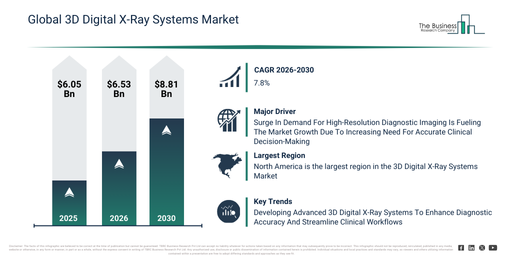
    The 3D digital X-Ray systems market has demonstrated robust expansion in recent years. Its value is projected to climb from $6.05 billion in 2025 to $6.53 billion in 2026, at a compound annual growth rate (CAGR) of 8.1%. The growth observed in prior periods is attributable to factors such as a heightened demand for advanced diagnostic imaging, an increasing occurrence of chronic and orthopedic illnesses, broader acceptance of digital radiography, expanded application of 3D imaging in dental treatments, greater public awareness concerning early disease identification, a general movement toward diagnostic procedures that are minimally invasive, enhanced incorporation of imaging technologies in outpatient environments, escalating healthcare spending, the wider availability of portable 3D x-ray devices, and a stronger inclination towards highly precise diagnostic tools.

    The 3D digital X-Ray systems market is anticipated to experience robust expansion in the coming years. It is projected to reach $8.81 billion by 2030, demonstrating a compound annual growth rate (CAGR) of 7.8%. This growth during the forecast period can be attributed to the increasing adoption of digital radiography, a rising preference for accurate 3D imaging, a growing demand for early diagnosis tools, increased investment in imaging innovations, the rise of hospital modernization programs, the expanding use of imaging in chronic disease management, a shift towards automated radiology tools, increasing tele-radiology adoption, a growing preference for low-dose imaging, and the increasing deployment of portable digital x-ray units. Significant trends anticipated in this period include advancements in high-resolution 3D imaging technology, progress in low-dose radiation solutions, developments in portable 3D x-ray devices, innovations in AI-based diagnostic tools, new approaches to automated image enhancement, novel workflow-digital platforms, integration with cloud-based storage, integration within hospital digital ecosystems, the merging of 3D imaging with robotics, and advancements making digital radiography more affordable.

    Get A Free Sample Report With In-Depth Market Insights:

    https://thebusinessresearchcompany.com/sample_request?id=62183297&type=smp&name=3D%20Digital%20X-Ray%20Systems%20Market%20Report%202026&utm_source=Blogs&utm_medium=Paid&utm_campaign=Oct_PR

    3D Digital X-Ray Systems Market Growth Backed By Core Demand Fundamentals

    The burgeoning need for high-resolution diagnostic imaging is anticipated to drive the expansion of the 3D Digital X-Ray Systems market moving forward. High-resolution diagnostic imaging involves medical imaging methods that produce clear, detailed views of internal bodily structures, facilitating precise diagnoses and effective clinical choices. This demand for advanced imaging is increasing as healthcare systems broaden their services to identify intricate illnesses sooner, enhance patient care, and boost diagnostic efficiency. The 3D Digital X-Ray Systems facilitates high-resolution diagnostic imaging by offering sophisticated imaging solutions that provide excellent image resolution, boost diagnostic accuracy, and optimize patient flow in clinical environments. For example, in March 2024, data from the Australian Institute of Health and Welfare (AIHW), an Australia-based government health authority, revealed that nearly 2 in 5 Australians (39%) utilized more than 27 million Medicare-subsidised diagnostic imaging services, with the rate of imaging services per 100 people climbing from 103 in 2022–23 to 106 in 2023–24, demonstrating a year-over-year increase and expanded adoption of advanced imaging technologies. Consequently, the increasing requirement for high-resolution diagnostic imaging is fueling the growth of the 3D Digital X-Ray Systems market.

    3D Digital X-Ray Systems Market Segmentation: How Does The Market Break Down By Category?

    The 3D digital x-ray systems market covered in this report is segmented –

    1) By Product Type: Stationary 3D Digital X-Ray Systems, Portable 3D Digital X-Ray Systems, Mobile 3D Digital X-Ray Systems

    2) By Detector Type: Flat Panel Detectors, Charge-Coupled Devices (CCD), Image Intensifier Detectors, Computed Radiography (CR) Systems, Line-Scanning Detectors

    3) By Technology: Computed Tomography (CT) Systems, Digital Radiography (DR) Systems, Fluoroscopy Systems, X-Ray Systems With Dual Energy, Portable X-Ray Systems

    4) By Application: Orthopedics, Dental Imaging, Oncology, Pediatric Imaging, Cardiology

    5) By End-User: Hospitals, Diagnostic Imaging Centers, Outpatient Surgery Centers, Research Institutions, Veterinary Clinics

    Subsegments:

    1) By Stationary 3D Digital X-Ray Systems: Fixed-Room 3D Imaging Systems, Hospital Radiology Department Systems, High-Capacity 3D X-Ray Units, Floor-Mounted 3D X-Ray Systems, Ceiling-Mounted 3D X-Ray Systems, Advanced Diagnostic 3D Systems, Large-Format 3D Orthopedic Imaging Units

    2) By Portable 3D Digital X-Ray Systems: Handheld 3D X-Ray Devices, Backpack-Style Portable 3D Systems, Battery-Powered Portable 3D X-Ray Units, Emergency Or Trauma Portable 3D Systems, Field-Use Portable 3D Devices, Compact Point-Of-Care 3D X-Ray Units

    3) By Mobile 3D Digital X-Ray Systems: Cart-Based Mobile 3D X-Ray Systems, Motorized Mobile 3D Systems, Mobile 3D C-Arm Units, ICU Or Mobile Ward 3D Imaging Systems, Mobile Surgical 3D X-Ray Units, Mobile Diagnostic Screening Units

    3D Digital X-Ray Systems Market Growth Trends Reshaping The Competitive Landscape

    Leading companies within the 3D digital X-ray systems market are concentrating on the creation of clinical imaging solutions, such as multi-purpose 3D dental imaging platforms, to improve diagnostic precision, facilitate treatment planning, and streamline surgical procedures. These platforms are technologies designed to acquire volumetric images, assist in planning interventions, and support accurate clinical decision-making in dental and oral surgery practices. For instance, in September 2024, Dental Imaging Technologies Corporation (DEXIS), a US-based firm specializing in dental imaging technology, introduced the ORTHOPANTOMOGRAPH OP 3D EX. This particular 3D X-ray platform features adaptable field of view choices, sophisticated imaging software tailored for chairside treatment planning, and built-in tools that enable rapid generation of surgical guides within clinical settings. It is specifically developed for general practitioners who aim to enhance their diagnostic capacities using 3D imaging, offering support for various clinical indications through a broad spectrum of field of view sizes.

    3D Digital X-Ray Systems Market Competitive Overview And Top Companies

    Major companies operating in the 3D digital x-ray systems market are Siemens Healthineers AG, Fujifilm Holdings Corporation, Koninklijke Philips N.V., GE HealthCare Technologies Inc., Mindray Medical International Limited, Dentsply Sirona Inc., Shimadzu Corporation, Canon Medical Systems Corporation, Acteon Group Ltd., United Imaging Healthcare Co. Ltd., Hamamatsu Photonics K.K., Agfa-Gevaert Group, Carestream Health Inc., Samsung Medison Co. Ltd., Analogic Corporation, Planmed Oy, Vatech Co. Ltd., Carestream Dental LLC, Ziehm Imaging GmbH, EOS Imaging S.A.

    View The Full 3D Digital X-Ray Systems Market Report:

    https://thebusinessresearchcompany.com/report/3d-digital-x-ray-systems-market-report?utm_source=Blogs&utm_medium=Paid&utm_campaign=Oct_PR

    3D Digital X-Ray Systems Market Top Region: Where Does Most Revenue Come From?

    North America was the largest region in the 3D digital X-Ray systems market in 2025. Asia-Pacific is expected to be the fastest-growing region in the forecast period. The regions covered in the 3D digital x-ray systems market report are Asia-Pacific, South East Asia, Western Europe, Eastern Europe, North America, South America, Middle East, Africa.

    Reach Out To Our Team:

    The Business Research Company: https://www.thebusinessresearchcompany.com/

    Americas: +1 310-496-7795

    Asia: +44 7882 955267 & +91 8897263534

    Europe: +44 7882 955267

    Email us at: marketing@tbrc.info

    Follow us on:

    LinkedIn: https://in.linkedin.com/company/the-business-research-company

    YouTube: https://www.youtube.com/channel/UC24_fI0rV8cR5DxlCpgmyFQ

    Global Market Model: https://www.thebusinessresearchcompany.com/global-market-model

  • Alloy Steel Forging Market Forecast To Reach $19.81 Billion By 2030: Key Trends Explained

    Backed by market attractiveness analysis, total addressable market sizing, company benchmarking matrices, interactive Excel dashboards, wider supply chain intelligence, emerging startup coverage, and detailed product-level insights, The Business Research Company’s 2026 market reports are designed to offer research that is more actionable and strategically valuable than ever.

    Alloy Steel Forging Market Size, Value And Growth Trajectory Through 2030

    The alloy steel forging market size has seen significant expansion in recent years. Its value is expected to increase from $14.10 billion in 2025 to $15.12 billion in 2026, driven by a compound annual growth rate (CAGR) of 7.3%. Historically, this growth can be ascribed to escalating demand within automotive manufacturing, expanding applications across construction and heavy machinery, a heightened requirement for robust components in oil and gas operations, and the increasing integration of forged alloy steel in aerospace equipment.

    The alloy steel forging market is projected to undergo significant expansion over the next few years, with its valuation expected to climb to $19.81 billion by 2030, demonstrating a compound annual growth rate (CAGR) of 7.0%. This projected increase is largely due to the expanding output of electric vehicles, a worldwide surge in infrastructure investments, continuous technological progress in forging automation, the rising demand for stronger yet lighter materials, and the increasing application of precision forging in demanding industries. Dominant trends anticipated during this period encompass enhancements in automated forging presses and robotics, novel developments in heat treatment and alloy composition optimization, the integration of digital twins and simulation-driven forging design, improvements in energy-efficient forging techniques, and new innovations in near-net-shape forging methodologies.

    Get A Free Sample Report With In-Depth Market Insights:

    https://thebusinessresearchcompany.com/sample_request?id=30496&type=smp&name=Alloy%20Steel%20Forging%20Market%20Report%202026&utm_source=Blogs&utm_medium=Paid&utm_campaign=Oct_PR

    Alloy Steel Forging Market Industry Drivers: What’s Behind The Revenue Growth?

    The increasing need from the automotive and aerospace sectors is anticipated to drive expansion in the alloy steel forging market in the future. These industries encompass fields involved in creating, producing, and servicing land vehicles like cars, trucks, and buses, alongside aerial and extraterrestrial vehicles such as airplanes, helicopters, satellites, and spacecraft. The demand from these sectors is escalating because manufacturers are increasingly focusing on lightweight, high-performance parts to boost fuel economy, comply with strict emission regulations, and improve overall safety and dependability. Alloy steel forging aids these industries by allowing the mass production of parts with superior mechanical characteristics that fulfill rigorous performance criteria for both vehicles and aircraft. For example, reports from the US government body, the Securities and Exchange Commission, in April 2025, showed that total revenue for 2024 reached around $7.4 billion, marking a 12% rise from 2023, primarily due to significant annual growth across all three aerospace segments. Consequently, the increased demand from the automotive and aerospace industries is a key factor propelling the expansion of the alloy steel forging market.

    Alloy Steel Forging Market Segmentation And Category Overview

    The alloy steel forging market covered in this report is segmented –

    1) By Type: Open Die Forging, Closed Die Forging, Ring Rolling, Upset Forging

    2) By Alloy Type: Low Alloy Steel, Medium Alloy Steel, High Alloy Steel

    3) By End-Use Industry: Automotive, Aerospace And Defense, Oil And Gas, Construction, Heavy Engineering, Mining, Power Generation

    Subsegments:

    1) By Open Die Forging: Heavy Shaft Forging, Large Rotor Forging, Bar And Billet Forging, Disc And Plate Forging, Block Forging, Custom Large-Component Forging

    2) By Closed Die Forging: Precision Automotive Parts Forging, Aerospace Components Forging, Industrial Machinery Parts Forging, Medical Implant Forging, Hardware And Tools Forging, Small-To-Medium Complex Shape Forging

    3) By Ring Rolling: Seamless Rolled Rings, Large-Diameter Rings, Thin-Wall Rings, Bearing Rings, Gear And Turbine Rings, Aerospace Or Defense Rings

    4) By Upset Forging: Bolts And Fasteners, Flanges, Valve Components, Automotive Axle And Drive Components, Pipe Fittings, Engine Parts

    Alloy Steel Forging Market Competitive Analysis Of Leading Industry Participants

    Major companies operating in the alloy steel forging market are Nippon Steel Corporation, Thyssenkrupp AG, Howmet Aerospace Inc., Allegheny Technologies Incorporated, OTTO FUCHS KG, Aichi Steel Corporation, The Japan Steel Works Ltd., Bharat Forge Limited, Sundram Fasteners Limited, Doncasters Group Limited, ELLWOOD Group Inc., Ramkrishna Forgings Limited, Cornell Forge Company, Kobe Steel Ltd., MM Forgings Limited, A. Finkl & Sons Company, Scot Forge Company, SIFCO Industries Inc., FRISA Forjados S.A. de C.V., Balu Forge Industries Limited, Western Forge & Flange Company, Ladish Company Inc., Saarschmiede GmbH Freiformschmiede, Happy Forgings Limited, North American Forgemasters Inc.

    View The Full Alloy Steel Forging Market Report:

    https://thebusinessresearchcompany.com/report/alloy-steel-forging-market-report?utm_source=Blogs&utm_medium=Paid&utm_campaign=Oct_PR

    Alloy Steel Forging Market Geographic Spread And Regional Opportunities

    Asia-Pacific was the largest region in the alloy steel forging market in 2025. Asia-Pacific is expected to be the fastest-growing region in the forecast period. The regions covered in the alloy steel forging market report are Asia-Pacific, South East Asia, Western Europe, Eastern Europe, North America, South America, Middle East, Africa.

    Reach Out To Our Team:

    The Business Research Company: https://www.thebusinessresearchcompany.com/

    Americas: +1 310-496-7795

    Asia: +44 7882 955267 & +91 8897263534

    Europe: +44 7882 955267

    Email us at: marketing@tbrc.info

    Follow us on:

    LinkedIn: https://in.linkedin.com/company/the-business-research-company

    YouTube: https://www.youtube.com/channel/UC24_fI0rV8cR5DxlCpgmyFQ

    Global Market Model: https://www.thebusinessresearchcompany.com/global-market-model

  • Agtech Market Analysis: Understanding The Drivers Behind 15.6% CAGR Through 2030 Growth

    Featuring market attractiveness scoring, total addressable market sizing, company benchmarking matrices, interactive Excel dashboards, deeper supply chain intelligence, emerging startup tracking, and granular product-level insights, The Business Research Company’s 2026 market reports are built to deliver research that is both more actionable and more strategically valuable.

    Agtech Market CAGR Outlook And Future Development

    The AgTech market size has experienced considerable growth in recent years. It is projected to expand from $26.02 billion in 2025 to $30.15 billion in 2026, achieving a compound annual growth rate (CAGR) of 15.9%. This historical growth can be attributed to factors such as the increasing adoption of precision agriculture, the growing demand for higher crop productivity, the rising utilization of farm management software, the expansion of greenhouse and controlled environment farming, and the increased integration of Internet of Things (IoT) devices.

    The AgTech market size is projected to experience substantial growth in the near future. By 2030, it is anticipated to attain a valuation of $53.83 billion, advancing at a compound annual growth rate (CAGR) of 15.6%. This expansion during the forecast period is propelled by factors such as an increasing shift towards autonomous farming systems, the growing integration of artificial intelligence and machine learning tools, the rising presence of robotics in field operations, the proliferation of data-driven decision platforms, and the expanding application of biotechnology solutions for crop improvement. Prominent trends expected over this period include technological progress in autonomous robots, innovations in satellite imaging and remote sensing, developments in smart greenhouse automation, focused research and development in biological inputs, and advancements in machine learning-based yield prediction.

    Get A Free Sample Report With In-Depth Market Insights:

    https://thebusinessresearchcompany.com/sample_request?id=86838088&type=smp&name=Agtech%20Market%20Report%202026&utm_source=Blogs&utm_medium=Paid&utm_campaign=Oct_PR

    Agtech Market Growth Factors: What’s Supporting Expansion?

    A heightened emphasis on enhancing crop yield and quality is projected to stimulate the expansion of the agricultural technology (agtech) market moving forward. This dedication to improving crop yield and quality encompasses the adoption of advanced agricultural technologies, data-driven instruments, and precision farming techniques, assisting farmers in optimizing resources, fostering plant health, and elevating overall farm productivity. The increased attention to improving crop yield and quality arises from the escalating demand to sustain a rising global population amidst limited arable land and increasingly volatile climate conditions. Agricultural technology (agtech) aids in boosting crop yield and quality by supplying integrated digital platforms and cutting-edge equipment that facilitate real-time decision-making, sustainable cultivation, and enhanced efficiency across all agricultural operations. For instance, in December 2025, according to the Department for Environment, Food & Rural Affairs, a UK-based government agency, the oilseed rape production increased by 7.0% to 893 thousand tonnes in 2025. Hence, the growing focus on improving crop yield and quality is a significant driver for the agricultural technology (agtech) market’s growth.

    Agtech Market Segment Outlook: Which Categories Are Growing Fastest?

    The agtech market covered in this report is segmented –

    1) By Component: Hardware, Software, Services

    2) By Technology: Precision Agriculture, Biotechnology, Automation And Robotics, Farm Management Software

    3) By Farm Size: Small Scale, Medium Scale, Large Scale

    4) By Application: Crop Management, Soil Management, Livestock Management, Greenhouse Management

    5) By End Use: Farms, Agricultural Cooperatives, Research Institutions

    Subsegments:

    1) By Hardware: Sensor Devices, Monitoring Devices, Automated Machinery, Drone Based Equipment, Irrigation Control Systems

    2) By Software: Farm Management Platforms, Data Analytics Software, Supply Chain Tracking Software, Weather Forecasting Software, Crop Modeling Software

    3) By Services: Consulting Services, Integration Services, Maintenance Services, Training Services, Support Services

    Agtech Market Industry Trends: What’s Reshaping Demand?

    Companies operating in the agtech market are primarily focused on developing advanced processes, such as climate-adaptive crop developments, to address the pressing issues of global food security, environmental stressors, and the improvement of sustainable yield. Climate-adaptive crop development encompasses the integration of sophisticated biological and data-driven methodologies to create crop varieties that can endure drought, heat, and other climatic pressures while simultaneously maintaining their productivity and resilience. For instance, in May 2025, the Vlaams Instituut voor Biotechnologie, an entrepreneurial non-profit life sciences research institute based in Belgium, launched Rainbow Crops, a next-generation AgTech spin-off dedicated to high-value, climate-adaptive crop development. The company’s integrated Trait Foundry platform combines continuously trained artificial intelligence models with multiplex genome editing, precision breeding, and automated phenotyping to enhance multiple agronomic traits simultaneously. This approach facilitates the engineering of crops optimized for drought tolerance, heat resilience, and input efficiency, which are traits that have historically been difficult to improve through traditional breeding techniques.

    Agtech Market Leading Companies And Competitive Benchmarking

    Major companies operating in the agtech market are Cargill Incorporated, Archer-Daniels-Midland Company, BASF SE, Marubeni Corporation, Deere & Company, Bayer AG, Olam Group Limited, Trimble Inc., Nutrien Ltd., AgroStar Agritech Pvt. Ltd., Topcon Corporation, Confluence Genetics, Bowery Farming Inc., Indigo Agriculture Inc., Koltiva AG, Semios Group, Ceres Imaging Inc, CropX Ltd., Syngenta Group AG, AGRIInject Inc., Traction Ag Inc., LettUs Grow Ltd.

    View The Full Agtech Market Report:

    https://thebusinessresearchcompany.com/report/agtech-market-report?utm_source=Blogs&utm_medium=Paid&utm_campaign=Oct_PR

    Agtech Market Top Region By Revenue And Market Share

    North America was the largest region in the AgTech market in 2025. Asia-Pacific is expected to be the fastest-growing region in the forecast period. The regions covered in the agtech market report are Asia-Pacific, South East Asia, Western Europe, Eastern Europe, North America, South America, Middle East, Africa.

    Reach Out To Our Team:

    The Business Research Company: https://www.thebusinessresearchcompany.com/

    Americas: +1 310-496-7795

    Asia: +44 7882 955267 & +91 8897263534

    Europe: +44 7882 955267

    Email us at: marketing@tbrc.info

    Follow us on:

    LinkedIn: https://in.linkedin.com/company/the-business-research-company

    YouTube: https://www.youtube.com/channel/UC24_fI0rV8cR5DxlCpgmyFQ

    Global Market Model: https://www.thebusinessresearchcompany.com/global-market-model

  • Aerospace And Defense Thermal Management Systems Market Growth To $35.09 Billion By 2030: What’s Driving The Expansion?

    Built to provide research that’s more actionable and strategically valuable, The Business Research Company’s 2026 market reports include market attractiveness analysis, total addressable market sizing, company benchmarking matrices, interactive Excel dashboards, broader supply chain intelligence, emerging startup tracking, and in-depth product insights.

    Aerospace And Defense Thermal Management Systems Market Set To Climb From $26.26 Billion In 2026 To $35.09 Billion By 2030

    The aerospace and defense thermal management systems market has experienced robust expansion over recent years. Its valuation is projected to rise from $24.35 billion in 2025 to $26.26 billion in 2026, exhibiting a compound annual growth rate (CAGR) of 7.8%. This historical growth can be ascribed to a heightened need for sophisticated cooling solutions, the increasing integration of unmanned aerial vehicles, a greater imperative for effective engine thermal management, the broadening scope of avionics and electronics systems, and progressing military modernization initiatives.

    The market for aerospace and defense thermal management systems is anticipated to experience substantial growth over the next few years. It is projected to achieve a value of $35.09 billion by 2030, expanding at a compound annual growth rate (CAGR) of 7.5%. This projected increase in the forecast period can be attributed to a heightened focus on energy-efficient thermal systems, the increasing integration of thermal management with power and propulsion systems, growing investments in research and development for innovative materials, the expansion of space and satellite programs, and a rising demand for lightweight and compact thermal solutions. Significant trends expected during this forecast period include advancements in phase-change and two-phase cooling technologies, innovations in thermal interface materials, the development of smart and adaptive thermal control systems, ongoing research and development into hybrid and integrated thermal solutions, and a greater adoption of predictive thermal management software.

    Get A Free Sample Report With In-Depth Market Insights:

    https://thebusinessresearchcompany.com/sample_request?id=30494&type=smp&name=Aerospace%20And%20Defense%20Thermal%20Management%20Systems%20Market%20Report%202026&utm_source=Blogs&utm_medium=Paid&utm_campaign=Oct_PR

    Aerospace And Defense Thermal Management Systems Market Demand Drivers: What’s Powering Industry Growth?

    The aerospace and defense thermal management systems market is projected to expand due to the increasing complexity and heat generation in advanced avionics, radar, and electronic warfare systems. This phenomenon signifies the escalating waste heat generated by high-power, high-density electronic and propulsion systems in contemporary aerospace and defense platforms, necessitating engineered solutions to regulate, dissipate, and control temperatures for sustained performance, reliability, and safety. This surge in heat stems from the integration of more powerful processors, megawatt-level electrified aircraft propulsion systems, advanced radar modules, and next-generation electronic warfare suites, all operating at significantly higher power levels than their legacy counterparts. Aerospace and defense thermal management systems are vital for mitigating this heat by facilitating the early and efficient removal of waste heat, maintaining safe operating temperatures, and guaranteeing the reliable function of high-performance electronics even under extreme operational conditions. For example, in April 2025, according to National Aeronautics and Space Administration (NASA), a US-based government space agency, future electrified aircraft concepts like NASA’s STARC-ABL are capable of producing between 600 kilowatts (kW) and 6 megawatts (MW) of heat, while other hybrid-electric aircraft concepts can generate 200 kW to 1 MW of heat, illustrating substantially elevated thermal loads compared to conventional systems. Consequently, the rising complexity and heat generation of advanced avionics, radar, and electronic warfare systems are driving the growth of the aerospace and defense thermal management systems market.

    Aerospace And Defense Thermal Management Systems Market Segment Landscape: Which Areas Lead Development?

    The aerospace and defense thermal management systems market covered in this report is segmented –

    1) By System Type: Active Thermal Management Systems, Passive Thermal Management Systems

    2) By Component: Heat Exchangers, Thermal Control Units, Cooling Systems, Radiators, Heat Pipes, Thermal Insulation Materials, Temperature Sensors, Thermal Management Software, Valves And Actuators, Pumps And Compressors, Fans And Blowers

    3) By Platform: Aircraft, Spacecraft, Land Systems, Naval Systems

    4) By Service: Design And Engineering Services, Testing And Validation Services, Installation Services, Overhaul (MRO) Services, Consulting And Research And Development Services

    5) By Application: Avionics And Electronics Cooling, Engine Cooling, Energy Storage Cooling, Weapons Systems Cooling, Cabin Comfort, Other Applications

    Subsegments:

    1) By Active Thermal Management Systems: Liquid Cooling Solutions, Air Cooling Solutions, Vapor Cycle Cooling Systems, Refrigerant-Based Cooling Systems, Thermoelectric Cooling Modules

    2) By Passive Thermal Management Systems: Heat Pipes, Phase Change Materials, Thermal Insulation Materials, Radiative Cooling Solutions, Conduction-Based Heat Spreaders

    Aerospace And Defense Thermal Management Systems Market Innovation Trends: What Developments Are Reshaping The Industry?

    Companies operating within the aerospace & defense thermal management systems market are concentrating their efforts on creating sophisticated technologies, such as pumped two-phase architecture, to enable accurate temperature management for high-performance avionics, propulsion components, and space systems. Pumped two-phase architecture describes a thermal management design where a working fluid is circulated through interconnected liquid and vapor phases using active pumping. This design facilitates highly efficient heat absorption and dissipation across broad operational ranges, which is essential for aerospace and defense environments where thermal stability directly influences system performance and reliability. As an illustration, in June 2023, Intergalactic Aerospace Corporation, a US-based developer of advanced space propulsion and spacecraft systems, introduced the GS1-EV Eagle5, the first orbital delivery spacecraft to incorporate a pumped two-phase architecture for its thermal control. This innovative system employs actively pumped two-phase loops to handle heat generated by onboard electronics, power systems, and environmental loads throughout all mission phases, ensuring components stay within optimal temperature thresholds without incurring undue mass or power penalties.

    Aerospace And Defense Thermal Management Systems Market Industry Leaders And Competitive Landscape

    Major companies operating in the aerospace and defense thermal management systems market are Lockheed Martin Corporation, Northrop Grumman Corporation, Honeywell International Inc., BAE Systems Plc, Safran Aerosystems, Parker Hannifin Corporation, L3Harris Technologies Inc., RTX Corp., Boyd Corporation, Meggitt Plc, Materion Corporation, CoorsTek Inc., Thermal Management Solutions Group, Senior Plc, Rogers Corporation, KULR Technology Group, Marotta Controls Inc., Airborne Systems, Creare LLC, Lytron, Ultramet, Advanced Cooling Technologies (ACT) Inc., Vacuum Process Engineering (VPE) Inc.

    View The Full Aerospace And Defense Thermal Management Systems Market Report:

    https://thebusinessresearchcompany.com/report/aerospace-and-defense-thermal-management-systems-market-report?utm_source=Blogs&utm_medium=Paid&utm_campaign=Oct_PR

    Aerospace And Defense Thermal Management Systems Market Regional Analysis And Top Geography

    North America was the largest region in the aerospace and defense thermal management systems market in 2025. Asia-Pacific is expected to be the fastest-growing region in the forecast period. The regions covered in the aerospace and defense thermal management systems market report are Asia-Pacific, South East Asia, Western Europe, Eastern Europe, North America, South America, Middle East, Africa.

    Reach Out To Our Team:

    The Business Research Company: https://www.thebusinessresearchcompany.com/

    Americas: +1 310-496-7795

    Asia: +44 7882 955267 & +91 8897263534

    Europe: +44 7882 955267

    Email us at: marketing@tbrc.info

    Follow us on:

    LinkedIn: https://in.linkedin.com/company/the-business-research-company

    YouTube: https://www.youtube.com/channel/UC24_fI0rV8cR5DxlCpgmyFQ

    Global Market Model: https://www.thebusinessresearchcompany.com/global-market-model

  • Active Semiconductor Disk Lasers Market Trends Reshaping Industry Growth Through 2030

    Backed by market attractiveness analysis, total addressable market sizing, company benchmarking matrices, interactive Excel dashboards, wider supply chain intelligence, emerging startup coverage, and detailed product-level insights, The Business Research Company’s 2026 market reports are designed to offer research that is more actionable and strategically valuable than ever.

    Active Semiconductor Disk Lasers Market Forecast: Value Set To Climb From $1.94 Billion To $2.72 Billion

    The active semiconductor disk lasers market size has demonstrated robust growth in recent years. This market is projected to expand from $1.78 billion in 2025 to $1.94 billion in 2026, reflecting a compound annual growth rate (CAGR) of 9.1%. The historical increase can be attributed to several factors, including rising demand for high-power laser applications, increasing adoption in telecommunications, growing use in medical and industrial equipment, the expansion of semiconductor manufacturing capabilities, and increasing research focused on laser efficiency.

    The active semiconductor disk lasers market size is anticipated to undergo significant expansion over the next few years. It is predicted to reach $2.72 billion by 2030, exhibiting a compound annual growth rate (CAGR) of 8.8%. This growth throughout the forecast period is driven by the escalating need for precision machining, increasing demand within defense and aerospace sectors, rising adoption in automotive electronics, the expansion of data storage and communication applications, and the growing integration into consumer electronics. Prominent trends for the forecast period include technological advancements in laser diode efficiency, innovations in thermal management systems, developments in high-speed modulation, research and developments concerning new semiconductor materials, and innovations in compact disk laser designs.

    Get A Free Sample Report With In-Depth Market Insights:

    https://thebusinessresearchcompany.com/sample_request?id=14691192&type=smp&name=Active%20Semiconductor%20Disk%20Lasers%20Market%20Report%202026&utm_source=Blogs&utm_medium=Paid&utm_campaign=Oct_PR

    Active Semiconductor Disk Lasers Market Growth Drivers: What’s Behind The Acceleration?

    The active semiconductor disk lasers market is projected to grow as industrial manufacturing and cutting technologies continue to expand. These technologies encompass sophisticated production methods leveraging high-accuracy tools and automated setups for various operations, including cutting, welding, drilling, and material processing, across sectors like automotive, aerospace, electronics, and heavy machinery. This expansion stems from an increasing need for high-precision components, deliverable at reduced costs and quicker lead times, prompting manufacturers to integrate automated CNC systems, modern lasers, and robotics to enhance output and sustain global competitive edge. Active semiconductor disk lasers contribute significantly to industrial manufacturing and cutting by providing high beam quality, enhanced power efficiency, and effective thermal control, thus facilitating accurate and rapid cutting and processing of both metals and other advanced materials. As an illustration, the Association for Manufacturing Technology, a US trade body, reported in February 2025 that machine shops and other manufacturers placed orders totaling $513.8 million for capital equipment related to metal cutting, forming, and fabricating in December 2024. This represented a 15.0% rise compared to November and a 5.3% increase from December 2023. Consequently, the growth of the active semiconductor disk lasers market is being driven by the ongoing expansion of industrial manufacturing and cutting technologies.

    Active Semiconductor Disk Lasers Market Segments: Where Is Growth Concentrated?

    The active semiconductor disk lasers market covered in this report is segmented –

    1) By Type: Solid-State Lasers, Fiber Lasers, Semiconductor Lasers, Diode Lasers, Other Types

    2) By Wavelength: Infrared, Visible, Ultraviolet

    3) By Technology: Vertical-Cavity Surface-Emitting Lasers (VCSELs), Edge-Emitting Lasers, Quantum Dot Lasers, Quantum Cascade Lasers, Other Laser Technologies

    4) By Application: Material Processing, Medical Applications, Scientific Research, Communications, Laser Display Systems

    5) By End-Use Application: Consumer Electronics, Industrial Manufacturing, Medical Devices, Telecommunications, Aerospace And Defense

    Subsegments:

    1) By Solid-State Lasers: Thin Disk Lasers, Rod Lasers, Disk Lasers, Slab Lasers

    2) By Fiber Lasers: Single Mode Fiber Lasers, Multi Mode Fiber Lasers, Polarization Maintaining Fiber Lasers

    3) By Semiconductor Lasers: Quantum Well Lasers, Quantum Dot Lasers, Vertical External Cavity Surface Emitting Lasers

    4) By Diode Lasers: Edge Emitting Lasers, Surface Emitting Lasers, High Power Diode Lasers

    5) By Other Types: Dye Lasers, Gas Lasers, Excimer Lasers, Free Electron Lasers

    Active Semiconductor Disk Lasers Market Key Participants And Competitive Landscape

    Major companies operating in the active semiconductor disk lasers market are Hamamatsu Photonics K.K., Panasonic Corporation, Mitsubishi Electric Corporation, Broadcom Inc., Coherent Corp., TRUMPF SE + Co. KG, ams-OSRAM AG, Lumentum Holdings Inc., Jenoptik AG, Applied Optoelectronics Inc., Gooch & Housego, Santec Holdings Corporation, Scantech Laser Pvt Ltd., NECSEL IP Inc., Laserline GmbH, DenseLight Semiconductors Pte Ltd., Vexlum Ltd., MKS Inc., VERTILAS GmbH, Ace Photonics Co. Ltd.

    View The Full Active Semiconductor Disk Lasers Market Report:

    https://thebusinessresearchcompany.com/report/active-semiconductor-disk-lasers-market-report?utm_source=Blogs&utm_medium=Paid&utm_campaign=Oct_PR

    Active Semiconductor Disk Lasers Market Geographic Analysis: Where Is Demand Rising Fastest?

    North America was the largest region in the active semiconductor disk lasers market in 2025. Asia-Pacific is expected to be the fastest-growing region in the forecast period. The regions covered in the active semiconductor disk lasers market report are Asia-Pacific, South East Asia, Western Europe, Eastern Europe, North America, South America, Middle East, Africa.

    Reach Out To Our Team:

    The Business Research Company: https://www.thebusinessresearchcompany.com/

    Americas: +1 310-496-7795

    Asia: +44 7882 955267 & +91 8897263534

    Europe: +44 7882 955267

    Email us at: marketing@tbrc.info

    Follow us on:

    LinkedIn: https://in.linkedin.com/company/the-business-research-company

    YouTube: https://www.youtube.com/channel/UC24_fI0rV8cR5DxlCpgmyFQ

    Global Market Model: https://www.thebusinessresearchcompany.com/global-market-model