Blog

  • Global Temporary Mechanical Circulatory Support Device Market Insights 2029: Drivers, Challenges, and Revenue Forecast

    Global Temporary Mechanical Circulatory Support Device Market Insights 2029: Drivers, Challenges, and Revenue Forecast

    Uncover key drivers, emerging technologies, and competitive movements shaping the temporary mechanical circulatory support device market from 2025–2034 with trusted insights from The Business Research Company

    What CAGR And Valuation Are Anticipated For The Temporary Mechanical Circulatory Support Device Market?

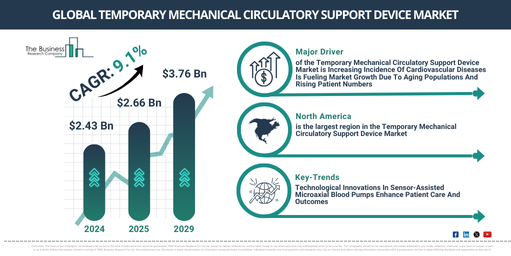
    The temporary mechanical circulatory support device market has demonstrated robust expansion recently. It is projected to increase from $2.43 billion in 2024 to $2.66 billion in 2025, achieving a compound annual growth rate (CAGR) of 9.5%. This historical growth can be linked to the rising incidence of acute myocardial infarction, the growing prevalence of heart failure, the increased utilization of intra-aortic balloon pumps, an expanding aging population, and heightened awareness of temporary support solutions.

    The temporary mechanical circulatory support device market is projected for significant expansion over the next few years. It is anticipated to reach a size of $3.76 billion by 2029, growing at a compound annual growth rate (CAGR) of 9.1%. This growth during the forecast period can be attributed to several factors: a rising demand for minimally invasive cardiac support, an increasing heart transplant waiting list, a higher incidence of high-risk percutaneous coronary intervention (PCI) procedures, expanding utilization in pediatric cardiac care, and increased healthcare spending. Noteworthy trends expected in this period include the integration of artificial intelligence (AI) for patient monitoring, the development of magnetically levitated pumps, advancements in biocompatible and anti-thrombotic materials, the incorporation of 3D-printed components for customization, and innovations in cloud-connected hemodynamic analytics.

    Get A Free Sample Of The Report:

    https://www.thebusinessresearchcompany.com/sample.aspx?id=27434&type=smp

    What Market Forces Are Contributing To The Growth Of The Temporary Mechanical Circulatory Support Device Market?

    The anticipated rise in cardiovascular disease cases is projected to boost the expansion of the temporary mechanical circulatory support device market in the future. These disorders, known as cardiovascular diseases (CVD), encompass conditions impacting the heart and blood vessels, manifesting as issues like heart attacks, strokes, and high blood pressure. The increase in CVDs is primarily attributed to aging populations, given that advanced age heightens the susceptibility to heart and vascular problems. Temporary mechanical circulatory support devices assist individuals suffering from cardiovascular diseases by offering transient aid to heart function and enhancing circulation during severe situations like heart failure or cardiogenic shock. For example, in January 2025, the American Heart Association, a US-based non-profit, reported approximately 942,000 deaths in the US from cardiovascular disease (CVD) in 2022, in contrast to 19.41 million global deaths in 2021. Consequently, the growing frequency of cardiovascular diseases is fueling the development within the temporary mechanical circulatory support device market.

    Which Segmentation Factors Are Critical In The Temporary Mechanical Circulatory Support Device Market Analysis?

    The temporary mechanical circulatory support device market covered in this report is segmented

    1) By Type: Left Ventricular Support Devices, Right Support Devices, Biventricular Support Devices

    2) By Technology: Pneumatic Devices, Mechanical Pumps, Biomimetic Devices, Hybrid Systems, Novel Wearable Devices

    3) By Application: Cardiogenic Shock, Bridge To Transplantation, Bridge To Recovery, High-Risk Cardiac Procedures, Other Medical Conditions

    4) By End User: Hospitals, Cardiac Surgery Centers, Outpatient Surgical Facilities, Research And Academic Institutions, Other Healthcare Institutions

    Subsegment:

    1) By Left Ventricular Support Devices: Intra-Aortic Balloon Pump, Percutaneous Ventricular Assist Device, Extracorporeal Membrane Oxygenation

    2) By Right Support Devices: Right Ventricular Assist Device, Extracorporeal Membrane Oxygenation, Percutaneous Right Ventricular Assist Device

    3) By Biventricular Support Devices: Biventricular Assist Device, Temporary Total Artificial Heart, Extracorporeal Membrane Oxygenation

    What Are The Dominant Trends Currently Seen In The Temporary Mechanical Circulatory Support Device Market?

    Leading companies in the temporary mechanical circulatory support device market are concentrating on developing sophisticated solutions, like sensor-assisted microaxial blood pumps, to provide advanced heart support that enhances patient outcomes and enables more accurate management of cardiac issues during critical care. Sensor-assisted microaxial blood pumps are compact, implantable devices that utilize integrated sensors to monitor and regulate blood flow instantaneously, offering precise mechanical support to the heart. For example, in October 2022, Abiomed Inc., a US-based medical device company, launched Impella RP Flex with SmartAssist, a temporary right ventricular support pump featuring internal jugular venous access, dual sensor technology for real-time hemodynamic monitoring, and an anticoagulant-free purge system. These innovations contribute to improved patient mobility, simplified pump management, and reduced bleeding risks. The technology also enhances early detection and adjustment of pump function, supporting meticulous patient care.

    Which Organizations Are At The Forefront Of The Temporary Mechanical Circulatory Support Device Market?

    Major companies operating in the temporary mechanical circulatory support device market are Johnson & Johnson, Abbott Laboratories, Medtronic Plc, Fresenius Medical Care AG & Co. KGaA, Boston Scientific Corporation, Terumo Corporation, Getinge AB, Meril Life Sciences Pvt. Ltd., Teleflex Incorporated, LivaNova PLC, MicroPort Scientific Corporation, Supira Medical Inc., Magenta Medical Ltd., CorWave SA, Jarvik Heart Inc., Carmat SAS, Procyrion Inc., BiVACOR Inc., CardioBridge GmbH, and BrioHealth Solutions Inc.

    Access The Complete Report Here:

    https://www.thebusinessresearchcompany.com/report/temporary-mechanical-circulatory-support-device-global-market-report

    Which Region Is Leading Innovation In The Temporary Mechanical Circulatory Support Device Market?

    North America was the largest region in the temporary mechanical circulatory support device market in 2024. Asia-Pacific is expected to be the fastest-growing region in the forecast period. The regions covered in the temporary mechanical circulatory support device market report are Asia-Pacific, Western Europe, Eastern Europe, North America, South America, Middle East, Africa.

    Customize Your Report Here:

    https://www.thebusinessresearchcompany.com/customise?id=27434&type=smp

    Browse Through More Reports Similar to the Global Temporary Mechanical Circulatory Support Device Market 2025, By The Business Research Company

    Roof Insulation Global Market Report 2025

    https://www.thebusinessresearchcompany.com/report/roof-insulation-global-market-report

    Automotive Roof System Global Market Report 2025

    https://www.thebusinessresearchcompany.com/report/automotive-roof-system-global-market-report

    Roofing Global Market Report 2025

    https://www.thebusinessresearchcompany.com/report/roofing-global-market-report

    About The Business Research Company:

    With over 15000+ reports from 27 industries covering 60+ geographies, The Business Research Company has built a reputation for offering comprehensive, data-rich research and insights. Armed with 1,500,000 datasets, the optimistic contribution of in-depth secondary research, and unique insights from industry leaders, you can get the information you need to stay ahead in the game.

    Get in touch with us:

    The Business Research Company: https://www.thebusinessresearchcompany.com/

    Americas +1 310-496-7795

    Asia +44 7882 955267 & +91 8897263534

    Europe +44 7882 955267

    Email us at info@tbrc.info

    Follow us on:

    LinkedIn: https://in.linkedin.com/company/the-business-research-company

    YouTube: https://www.youtube.com/channel/UC24_fI0rV8cR5DxlCpgmyFQ

    Global Market Model: https://www.thebusinessresearchcompany.com/global-market-model
  • Global Temporary Healthcare Staffing Market Trends and Future Outlook to 2029

    Global Temporary Healthcare Staffing Market Trends and Future Outlook to 2029

    Uncover key drivers, emerging technologies, and competitive movements shaping the temporary healthcare staffing market from 2025–2034 with trusted insights from The Business Research Company

    What Are The Market Size Estimates For The Temporary Healthcare Staffing Market?

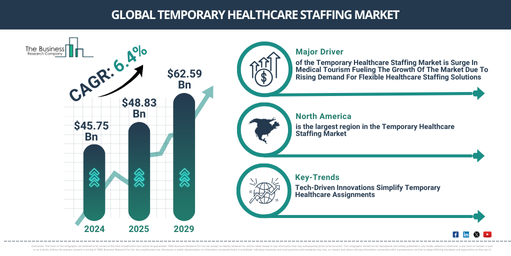
    The temporary healthcare staffing market size has seen robust expansion in recent years. It is anticipated to expand from $45.75 billion in 2024 to $48.83 billion in 2025, achieving a compound annual growth rate (CAGR) of 6.7%. The growth observed in the past can be attributed to several factors, including a growing scarcity of healthcare professionals, an increasing need for adaptable workforces in healthcare settings, rising rates of burnout and resignations among permanent medical staff, increased healthcare utilization due to broader insurance coverage, and the growing adoption of gig and travel nursing employment models.

    The temporary healthcare staffing market is expected to experience significant expansion in the coming years, with projections indicating it will reach $62.59 billion by 2029, growing at a compound annual growth rate (CAGR) of 6.4%. This anticipated growth is driven by factors such as the increasing occurrence of public health emergencies and pandemics, rising expenses associated with full-time employment, the expanding availability of ambulatory and home care services, a growing necessity for coverage in rural and underserved areas, and escalating accreditation and compliance standards. Major trends expected during this forecast period include advancements in digital staffing platforms, the integration of workforce management systems, technology-enhanced credentialing and background checks, improvements in predictive analytics for staffing requirements, and developments in cloud-based scheduling tools.

    Get A Free Sample Of The Report:

    https://www.thebusinessresearchcompany.com/sample.aspx?id=27433&type=smp

    What Drivers Are Accelerating Expansion Of The Temporary Healthcare Staffing Market?

    The anticipated expansion of medical tourism is set to drive the advancement of the temporary healthcare staffing market moving ahead. This practice involves individuals journeying to different nations for medical treatment, frequently in pursuit of cost-effective, excellent, or specialized care. The surge in medical tourism stems from the increasing expenses of healthcare in advanced nations, prompting patients to look for more economical but still high-quality medical services overseas. Support for medical tourism comes from temporary healthcare staffing, which guarantees a consistent supply of proficient experts to manage abrupt surges in patient numbers, ensuring uninterrupted, top-tier care. As an illustration, in February 2025, data from the US-ASEAN Business Council, a non-profit organization based in the US, indicated that Thailand welcomed 2.86 million medical tourists in 2023, generating $850. Furthermore, this figure is projected to climb by 7.3%, reaching 3.07 million visitors in 2024. Consequently, the expansion of medical tourism is fueling the development of the temporary healthcare staffing market.

    What Are The Key Segment Trends Observed In The Temporary Healthcare Staffing Market?

    The temporary healthcare staffing market covered in this report is segmented

    1) By Service Type: Nursing, Allied Health, Physicians, Administrative, Other Service Types

    2) By Duration Of Staffing Needs: Short-Term Assignments, Long-Term Assignments, Per Diem Staffing, Seasonal Staffing

    3) By Skill Level Of Healthcare Professionals: Entry-Level Professionals, Mid-Level Professionals, Highly Experienced Professionals, Specialized Medical Practitioners

    4) By End-User: Hospitals, Clinics, Nursing Homes, Home Care, Other End-Users

    Subsegments:

    1) By Nursing: Registered Nurse, Licensed Practical Nurse, Certified Nursing Assistant, Travel Nurse, Clinical Nurse Specialist

    2) By Allied Health: Physical Therapist, Occupational Therapist, Respiratory Therapist, Radiologic Technologist, Medical Laboratory Technician

    3) By Physicians: General Practitioner, Surgeon, Anesthesiologist, Psychiatrist, Emergency Medicine Physician

    4) By Administrative: Medical Receptionist, Medical Billing Specialist, Health Information Technician, Scheduler, Medical Office Assistant

    5) By Other Service Types: Pharmacist, Dietitian, Social Worker, Case Manager, Medical Interpreter

    Which Disruptive Trends Are Driving Change Across The Temporary Healthcare Staffing Market?

    Leading companies in the temporary healthcare staffing market are concentrating on developing advanced solutions, such as biometric-enabled locum tenens management, to boost efficiency and decrease administrative burdens for healthcare professionals on temporary assignments. Biometric-enabled locum tenens management functions as a secure, mobile-first platform that utilizes biometric authentication to streamline administrative tasks and optimize the supervision of temporary healthcare professionals undertaking locum tenens assignments. For instance, in April 2024, CHG Healthcare Services Inc., a US-based healthcare services company, introduced MyCompHealth and MyWeatherby. These are two mobile-first, biometric-enabled applications designed to simplify administrative duties for locum tenens providers, encompassing shift scheduling, travel management, time entry, and support access. This launch signifies a major advancement in temporary healthcare staffing through biometric-enabled locum tenens management, aiming to reduce administrative workload and enhance the clinician experience.

    Who Are The Major Stakeholders Operating In The Temporary Healthcare Staffing Market?

    Major companies operating in the temporary healthcare staffing market are The Adecco Group AG, Amergies LLC, AMN Healthcare Services Inc., Jackson Healthcare Co., Aya Healthcare Inc., Aveanna Healthcare Holdings Inc., ProLink Services LLC, FlexCare LLC, A-Line Staffing Solutions LLC, Atlas MedStaff LLC, Nomad Health Inc., Anders Group LLC, Globe Locums Limited, Precedo Healthcare Services Ltd., Binding Minds Inc., Marvel Medical Staffing Inc., Interact Medical Ltd., 22nd Century Technologies Inc., Ambe International, and Alpha Apex Group Inc.

    Access The Complete Report Here:

    https://www.thebusinessresearchcompany.com/report/temporary-healthcare-staffing-global-market-report

    What Regional Factors Are Accelerating Growth In The Temporary Healthcare Staffing Market?

    North America was the largest region in the temporary healthcare staffing market in 2024. Asia-Pacific is expected to be the fastest-growing region in the forecast period. The regions covered in the temporary healthcare staffing market report are Asia-Pacific, Western Europe, Eastern Europe, North America, South America, Middle East, Africa.

    Customize Your Report Here:

    https://www.thebusinessresearchcompany.com/customise?id=27433&type=smp

    Browse Through More Reports Similar to the Global Temporary Healthcare Staffing Market 2025, By The Business Research Company

    Thermal Paper Global Market Report 2025

    https://www.thebusinessresearchcompany.com/report/thermal-paper-global-market-report

    Amusement Parks And Arcades Global Market Report 2025

    https://www.thebusinessresearchcompany.com/report/amusement-parks-and-arcades-market

    Wear Parts Global Market Report 2025

    https://www.thebusinessresearchcompany.com/report/wear-parts-global-market-report

    About The Business Research Company:

    With over 15000+ reports from 27 industries covering 60+ geographies, The Business Research Company has built a reputation for offering comprehensive, data-rich research and insights. Armed with 1,500,000 datasets, the optimistic contribution of in-depth secondary research, and unique insights from industry leaders, you can get the information you need to stay ahead in the game.

    Get in touch with us:

    The Business Research Company: https://www.thebusinessresearchcompany.com/

    Americas +1 310-496-7795

    Asia +44 7882 955267 & +91 8897263534

    Europe +44 7882 955267

    Email us at info@tbrc.info

    Follow us on:

    LinkedIn: https://in.linkedin.com/company/the-business-research-company

    YouTube: https://www.youtube.com/channel/UC24_fI0rV8cR5DxlCpgmyFQ

    Global Market Model: https://www.thebusinessresearchcompany.com/global-market-model
  • Global Technology Spending On Core Administration In Healthcare Market Growth Prospects and Strategic Opportunities Through 2029

    Global Technology Spending On Core Administration In Healthcare Market Growth Prospects and Strategic Opportunities Through 2029

    Uncover key drivers, emerging technologies, and competitive movements shaping the technology spending on core administration in healthcare market from 2025–2034 with trusted insights from The Business Research Company

    How Is The Technology Spending On Core Administration In Healthcare Market Expected To Grow In Terms Of Size?

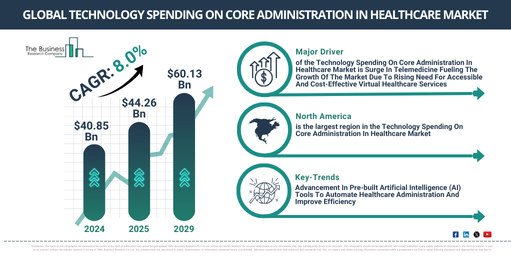
    The healthcare market has witnessed substantial growth in technology spending on core administration recently. This expenditure is set to rise from $40.85 billion in 2024 to $44.26 billion in 2025, achieving a compound annual growth rate (CAGR) of 8.3%. Factors contributing to this historic growth include the surging demand for automation in billing and claims processing, the expanding volume of healthcare data requiring efficient records management systems, increasing regulatory complexities driving compliance-related tech investments, a growing emphasis on patient experience and engagement platforms, and rising operational costs prompting administrative optimization.

    Expenditure on technology for core administration within the healthcare market is projected to experience substantial growth over the coming years. This spending is anticipated to reach $60.13 billion by 2029, exhibiting a compound annual growth rate (CAGR) of 8.0%. Factors contributing to this growth during the forecast period include the increasing adoption of cloud-based administrative platforms, a heightened emphasis on value-based care models, a surge in federal and state incentives promoting health information technology, an elevated focus on cybersecurity and data protection within administrative frameworks, and the expanding use of self-service portals for both patients and personnel. Key trends anticipated during the forecast period encompass technological enhancements facilitating real-time scheduling and appointment management, improvements in automation tools for processing claims and billing, progress in cloud-based infrastructure to support scalable administrative functions, the integration of telehealth platforms with administrative backend operations, and ongoing innovations in cybersecurity solutions designed to safeguard administrative data.

    Get A Free Sample Of The Report:

    https://www.thebusinessresearchcompany.com/sample.aspx?id=27432&type=smp

    Which Key Factors Are Fueling Growth In The Technology Spending On Core Administration In Healthcare Market?

    The rising need for telemedicine is projected to stimulate an increase in technology expenditure on core administrative functions within the healthcare market moving ahead. Telemedicine involves delivering medical care remotely, utilizing digital tools like video calls, text messages, or mobile applications for patient diagnosis, treatment, and monitoring. The wider embrace of telemedicine enables individuals to receive medical attention from afar, cutting down on travel requirements and enhancing accessibility, particularly for populations in remote or poorly served regions. Allocating resources to core administrative technology in healthcare improves telemedicine by automating tasks such as patient registration, appointment setting, invoicing, and claims handling. This boosts operational efficiency and minimizes wait times, allowing healthcare providers to concentrate on delivering timely virtual services. As an illustration, in April 2023, data from FAIR Health Inc., a US-based non-profit organization, indicated a national telehealth usage rise of 7.3%, moving from 5.5% of medical claim lines in December 2022 to 5.9% in January 2023. Consequently, the heightened demand for telemedicine is propelling increased technology expenditure on core administrative functions within the healthcare market.

    How Is The Technology Spending On Core Administration In Healthcare Market Categorized Across Applications And Types?

    The technology spending on core administration in healthcare market covered in this report is segmented

    1) By Type: Software, Hardware, Services

    2) By Technology: Electronic Health Records (EHRs), Patient Management Systems, Financial Management Systems, Supply Chain Management Systems, Revenue Cycle Management System

    3) By Deployment Mode: On-Premise, Cloud-Based, Hybrid

    4) By Application: Patient Management, Staff Management, Inventory Management, Other Applications

    5) By End-User: Hospitals, Clinics, Insurance Providers, Other End-Users

    Subsegments:

    1) By Software: Electronic Health Record (EHR) Systems, Practice Management Software, Revenue Cycle Management (RCM) Software, Patient Scheduling Software, Claims Management Software

    2) By Hardware: Servers and Storage Devices, Workstations and Desktops, Networking Equipment, Scanners and Imaging Devices, Point-of-Care Devices

    3) By Services: Information Technology Consulting and Support, System Integration Services, Managed Services, Training and Education Services, Maintenance and Upgrades

    How Are Market Trends Influencing Competition In The Technology Spending On Core Administration In Healthcare Market?

    Companies operating significantly in the technology spending on core administration within the healthcare market are concentrating on creating sophisticated solutions, specifically prebuilt artificial intelligence tools for healthcare, to streamline administrative duties and enhance the precision of decision-making. Prebuilt artificial intelligence tools are readily available AI solutions that eliminate the need for extensive customized development, facilitating rapid integration of advanced functionalities such as automation, data analysis, and predictive capabilities for more efficient workflows. For example, in February 2025, Salesforce Inc., a US-based cloud software provider, introduced Agentforce for Health. This platform is a collection of prebuilt agentic AI tools designed to automate time-consuming administrative, clinical, and public health responsibilities within the healthcare sector. Its functionalities include scheduling patient appointments, verifying eligibility with insurers, and providing support for care coordination. Additionally, it aids in disease surveillance and matching clinical trials by extracting data from various registries. The overall objective is to lessen administrative workload, address workforce burnout, and boost operational efficiency for both healthcare providers and payers.

    Which Firms Are Making The Biggest Impact In The Technology Spending On Core Administration In Healthcare Market?

    Major companies operating in the technology spending on core administration in healthcare market are Microsoft Corporation, Siemens AG, International Business Machines Corporation, Oracle Corporation, Tata Consultancy Services (TCS) Limited, Cognizant Technology Solutions Corporation, GE Healthcare Technologies Inc., Infosys Limited, Prime Healthcare Services Inc., Conduent Incorporated, Evolent Health Inc., Veradigm Inc., Tempus AI Inc., Tebra Inc., 314e Corporation, Qventus Inc., Meditab Software Inc., CodaMetrix Inc., Raintree Systems Inc., ReLi Med Solutions Inc.

    Access The Complete Report Here:

    https://www.thebusinessresearchcompany.com/report/technology-spending-on-core-administration-in-healthcare-global-market-report

    Which Region Holds The Greatest Opportunity For Technology Spending On Core Administration In Healthcare Market Expansion?

    North America was the largest region in the technology spending on core administration in healthcare market in 2024. Asia-Pacific is expected to be the fastest-growing region in the forecast period. The regions covered in the technology spending on core administration in healthcare market report are Asia-Pacific, Western Europe, Eastern Europe, North America, South America, Middle East, Africa.

    Customize Your Report Here:

    https://www.thebusinessresearchcompany.com/customise?id=27432&type=smp

    Browse Through More Reports Similar to the Global Technology Spending On Core Administration In Healthcare Market 2025, By The Business Research Company

    Religious Buildings Global Market Report 2025

    https://www.thebusinessresearchcompany.com/report/religious-buildings-global-market-report

    Hospitality Global Market Report 2025

    https://www.thebusinessresearchcompany.com/report/hospitality-global-market-report

    Casino Global Market Report 2025

    https://www.thebusinessresearchcompany.com/report/casino-global-market-report

    About The Business Research Company:

    With over 15000+ reports from 27 industries covering 60+ geographies, The Business Research Company has built a reputation for offering comprehensive, data-rich research and insights. Armed with 1,500,000 datasets, the optimistic contribution of in-depth secondary research, and unique insights from industry leaders, you can get the information you need to stay ahead in the game.

    Get in touch with us:

    The Business Research Company: https://www.thebusinessresearchcompany.com/

    Americas +1 310-496-7795

    Asia +44 7882 955267 & +91 8897263534

    Europe +44 7882 955267

    Email us at info@tbrc.info

    Follow us on:

    LinkedIn: https://in.linkedin.com/company/the-business-research-company

    YouTube: https://www.youtube.com/channel/UC24_fI0rV8cR5DxlCpgmyFQ

    Global Market Model: https://www.thebusinessresearchcompany.com/global-market-model
  • Global Precision Oncology Market Revenue and CAGR Forecast Analysis 2025–2029

    Global Precision Oncology Market Revenue and CAGR Forecast Analysis 2025–2029

    Uncover key drivers, emerging technologies, and competitive movements shaping the precision oncology market from 2025–2034 with trusted insights from The Business Research Company

    What Is The Current Size And Growth Outlook For The Precision Oncology Market?

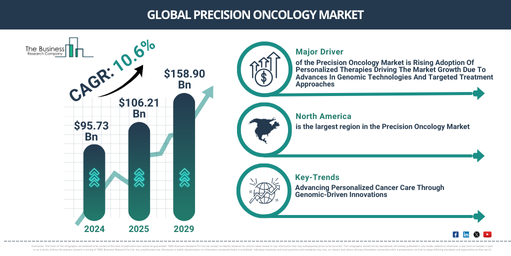
    The precision oncology market has experienced significant growth in recent years. Projections indicate it will expand from $95.73 billion in 2024 to reach $106.21 billion by 2025, driven by a compound annual growth rate (CAGR) of 11.0%. This historical expansion can be attributed to several factors, including an increasing number of companion diagnostics approvals, a heightened focus on biomarker discovery and validation, growing investments in oncology research and innovation, a rise in precision oncology clinical trials, and an increasing preference for minimally invasive diagnostic techniques.

    The precision oncology market is poised for significant expansion over the next few years, with its value forecast to reach $158.90 billion by 2029, exhibiting a compound annual growth rate (CAGR) of 10.6%. This expected growth during the forecast period stems from factors such as the increasing prevalence of cancer, the rising adoption of genomics-based diagnostic tools, greater awareness among patients and clinicians, the expanding utilization of next-generation sequencing, and a growing demand for targeted cancer therapies. Prominent trends anticipated in the forecast period include advancements in liquid biopsy technologies, the sophisticated application of single-cell sequencing in tumor analysis, the development of decentralized testing platforms, innovations in radiogenomics for treatment planning, and progress in patient-specific cancer vaccines.

    Get A Free Sample Of The Report:

    https://www.thebusinessresearchcompany.com/sample.aspx?id=27395&type=smp

    What Core Drivers Are Expected To Influence The Precision Oncology Market?

    The future expansion of the precision oncology market is anticipated to be fueled by growing recognition and a move towards personalized therapeutic approaches. Personalized therapies are defined as treatments specifically tailored to an individual’s genetic composition, biological markers, and distinct disease attributes, aiming to boost efficacy and minimize adverse reactions. The proliferation of these therapies is attributed to breakthroughs in genomic technologies, which facilitate the accurate detection of disease-causing mutations, enabling more potent and targeted interventions. Precision oncology significantly contributes to the advancement of personalized therapies through the application of genomic and molecular profiling, which customizes cancer treatment to align with the unique genetic profile of a patient’s tumor. An illustrative example occurred in February 2023, when the Health and Social Care Secretary, per GOV.UK, a UK-based government department, entered into a Memorandum of Understanding with BioNTech SE to further cancer vaccine research in England, with an objective to provide 10,000 personalized therapy doses to UK patients by 2030. Consequently, the rising awareness and adoption of personalized therapies are indeed propelling the growth of the precision oncology market.

    Which Segmentation Categories Are Highlighted In The Precision Oncology Market Analysis?

    The precision oncology market covered in this report is segmented

    1) By Type: Genomic Sequencing, Immunotherapy

    2) By Product Type: Genetic Tests, Biomarker-Based Tests, Therapeutics

    3) By Cancer Type: Breast Cancer, Lung Cancer, Colorectal Cancer, Prostate Cancer, Skin Cancer, Stomach Cancer, Other Cancers

    4) By Technology: Next-Generation Sequencing, Bioinformatics, Molecular Imaging, Liquid Biopsy

    5) By End-users: Hospitals, Research Laboratories, Pharmaceutical Companies, Diagnostic Centers

    Subsegments:

    1) By Genomic Sequencing: Whole Genome Sequencing, Whole Exome Sequencing, Targeted Gene Sequencing

    2) By Immunotherapy: Immune Checkpoint Inhibitors, Cancer Vaccines, Adoptive Cell Therapy

    Which Market Trends Are Expected To Define The Future Of The Precision Oncology Market?

    Leading firms within the precision oncology sector are concentrating on creating novel methodologies, like the molecular tumor board, to facilitate individualized treatment choices through the combination of genomic data and clinical understanding. A molecular tumor board is defined as a specialized group of experts who examine and decode intricate genomic and molecular test results to guide precise cancer treatments customized to each patient’s unique tumor traits. As an example, in December 2024, Aster DM Healthcare Ltd., a healthcare provider based in the UAE, launched a precision oncology clinic. This was one of three personalized cancer care programs aimed at revolutionizing treatment via data-driven, genomics-centered approaches. This clinic provides bespoke cancer therapy founded on the genetic profile of each patient’s tumor, leading to more accurate and potent treatments with fewer adverse effects. This methodology improves treatment results, lessens toxicity, and enhances quality of life by matching therapies to the distinct molecular attributes of a patient’s cancer.

    Who Are The Dominant Players In The Precision Oncology Market Today?

    Major companies operating in the precision oncology market are Pfizer Inc., F. Hoffmann-La Roche Ltd., Bayer AG, Bristol Myers Squibb Company, Thermo Fisher Scientific Inc., AstraZeneca plc., Novartis AG, Eli Lilly and Company, Amgen Inc., Agilent Technologies Inc., Illumina Inc., Sysmex Corporation, Qiagen N.V., Exact Sciences Corporation, NeoGenomics Laboratories Inc., Myriad Genetics Inc., Invitae Corporation, Caris Life Sciences, Foundation Medicine Inc., NanoString Technologies Inc., Personalis Inc., Strata Oncology Inc.

    Access The Complete Report Here:

    https://www.thebusinessresearchcompany.com/report/precision-oncology-global-market-report

    Which Regional Markets Are Emerging As Key Hubs For The Precision Oncology Market?

    North America was the largest region in the precision oncology market in 2024. Asia-Pacific is expected to be the fastest-growing region in the forecast period. The regions covered in the precision oncology market report are Asia-Pacific, Western Europe, Eastern Europe, North America, South America, Middle East, Africa.

    Customize Your Report Here:

    https://www.thebusinessresearchcompany.com/customise?id=27395&type=smp

    Browse Through More Reports Similar to the Global Precision Oncology Market 2025, By The Business Research Company

    Precast Concrete Global Market Report 2025

    https://www.thebusinessresearchcompany.com/report/precast-concrete-market

    Drill Pipe Global Market Report 2025

    https://www.thebusinessresearchcompany.com/report/drill-pipe-global-market-report

    Pipeline Construction Global Market Report 2025

    https://www.thebusinessresearchcompany.com/report/pipeline-construction-global-market-report

    About The Business Research Company:

    With over 15000+ reports from 27 industries covering 60+ geographies, The Business Research Company has built a reputation for offering comprehensive, data-rich research and insights. Armed with 1,500,000 datasets, the optimistic contribution of in-depth secondary research, and unique insights from industry leaders, you can get the information you need to stay ahead in the game.

    Get in touch with us:

    The Business Research Company: https://www.thebusinessresearchcompany.com/

    Americas +1 310-496-7795

    Asia +44 7882 955267 & +91 8897263534

    Europe +44 7882 955267

    Email us at info@tbrc.info

    Follow us on:

    LinkedIn: https://in.linkedin.com/company/the-business-research-company

    YouTube: https://www.youtube.com/channel/UC24_fI0rV8cR5DxlCpgmyFQ

    Global Market Model: https://www.thebusinessresearchcompany.com/global-market-model
  • Global Precision Medicine Software Market Insights 2029: Drivers, Challenges, and Revenue Forecast

    Global Precision Medicine Software Market Insights 2029: Drivers, Challenges, and Revenue Forecast

    Uncover key drivers, emerging technologies, and competitive movements shaping the precision medicine software market from 2025–2034 with trusted insights from The Business Research Company

    What Is The Predicted Market Size Of The Precision Medicine Software Industry By 2029?

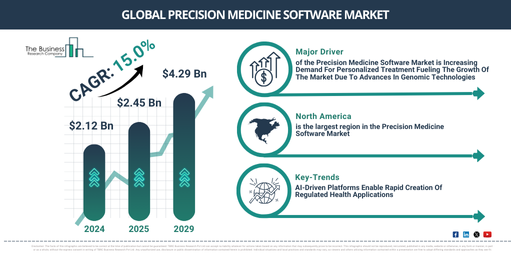
    The precision medicine software market has observed rapid expansion in recent years. Its value is projected to escalate from $2.12 billion in 2024 to $2.45 billion in 2025, achieving a compound annual growth rate (CAGR) of 15.4%. The historical progression can be linked to the rising adoption of electronic health records (EHRs), an increase in genomic sequencing initiatives, growing investments in biotechnology and personalized medicine, the growth in cancer genomics and targeted therapy research, and increasing collaboration between healthcare and tech sectors.

    The precision medicine software market size is projected to experience significant expansion in the coming years. This market is forecast to reach $4.29 billion by 2029, exhibiting a compound annual growth rate (CAGR) of 15.0%. Several factors contribute to this anticipated growth, including a surge in demand for tailored treatment methods, a heightened emphasis on rare diseases and the development of orphan drugs, an expansion in direct-to-consumer genetic testing, and enhanced regulatory backing coupled with data standardization initiatives. Key trends expected during this period involve the broadening of multi-omics data integration, a move towards cloud-native platforms, a focus on providing real-time clinical decision support, progress in federated and privacy-preserving data models, and the incorporation of digital twins into personalized treatment strategies.

    Get A Free Sample Of The Report:

    https://www.thebusinessresearchcompany.com/sample.aspx?id=27394&type=smp

    Which Industry Forces Are Driving The Precision Medicine Software Market Forward?

    The anticipated expansion of the precision medicine software market in the future is closely linked to the growing need for personalized treatment. Personalized treatment involves customizing medical care based on an individual’s distinct genetic profile, lifestyle choices, and medical background, aiming for improved health outcomes. This heightened demand stems from progress in genomic technologies, which enable the precise identification of genetic variations and the development of tailored treatments for individuals. Precision medicine software supports personalized treatment by evaluating genetic, clinical, and lifestyle data to customize healthcare decisions. This software improves the precision of diagnoses and the efficacy of treatments, thereby facilitating more focused and streamlined patient management. For example, as reported by the Personalized Medicine Coalition (PMC), a US-based nonprofit organization, in February 2024, the U.S. Food and Drug Administration (FDA) gave its approval to 26 new personalized medicines in 2023, which represents a substantial rise from the 12 approved in 2022. Consequently, the rising requirement for personalized treatment is fueling the expansion of the precision medicine software market.

    What Is The Segment Breakdown Of The Precision Medicine Software Market?

    The precision medicine software market covered in this report is segmented

    1) By Software Type: Clinical Decision Support Systems (CDSS), Genomic Data Analysis Tools, Data Integration And Management Software, Patient Management Software, Bioinformatics Tools

    2) By Technology: Artificial Intelligence And Machine Learning, Big Data Analytics, Blockchain Technology, Internet of Medical Things (IoMT), Clustered Regularly Interspaced Short Palindromic Repeats (CRISPR) And Gene Editing Tools

    3) By Deployment: Cloud, On-Premise

    4) By Application: Oncology, Central Nervous System, Immunology, Cardiovascular, Other Applications

    5) By End User: Healthcare Providers, Research Centers And Government Institutes, Pharmaceutical And Biotechnology Companies, Other End Users

    Subsegments:

    1) By Clinical Decision Support Systems (CDSS): Diagnostic Decision Support, Therapeutic Decision Support, Clinical Guidelines And Protocols, Drug-Drug Interaction Alerts, Risk Assessment Modules

    2) By Genomic Data Analysis Tools: Variant Calling And Annotation Tools, Genome Alignment Software, Gene Expression Analysis, Next-Generation Sequencing (NGS) Data Analysis, Pathway Analysis Tools

    3) By Data Integration And Management Software: Electronic Health Record (EHR) Integration, Laboratory Information Management Systems (LIMS), Clinical Data Warehousing, Data Cleaning And Normalization, Metadata Management

    4) By Patient Management Software: Appointment Scheduling, Patient Registry Software, Care Coordination Tools, Patient Engagement Platforms, Remote Monitoring Systems

    5) By Bioinformatics Tools: Sequence Analysis Software, Structural Bioinformatics Tools, Functional Genomics Platforms, Molecular Modeling And Simulation, Proteomics And Metabolomics Tools

    How Are Global Trends Impacting The Development Of The Precision Medicine Software Market?

    Leading companies operating in the precision medicine software market are concentrating on developing advanced solutions, such as digital healthcare, to streamline the creation of digital health products, consequently reducing both development time and expenses. Digital healthcare involves utilizing digital technologies and tools to deliver, manage, and enhance healthcare services and outcomes. For instance, in July 2024, Huma Therapeutics Ltd, a UK-based digital health company, launched its Cloud Platform. This platform is designed to democratize digital-first healthcare by allowing for the rapid, no-code development and deployment of regulated health applications powered by artificial intelligence (AI). It features ready-made components, connects with various devices, and adheres to crucial regulatory standards (FDA Class II, EU MDR IIb, Saudi FDA C), thereby enabling organizations of any size to offer effective and cost-efficient digital health solutions. The Huma cloud platform effectively accelerates digital health innovation, expands access, and supports proactive, artificial intelligence (AI)-driven care and research.

    Which Companies Are Contributing Significantly To The Precision Medicine Software Market Growth?

    Major companies operating in the precision medicine software market are Koninklijke Philips N.V., Palantir Technologies Inc., Tempus Labs Inc., Myriad Genetics Inc., Foundation Medicine Inc., Guardant Health Inc., Color Genomics Inc., NantHealth Inc., SOPHiA GENETICS SA, Aignostics GmbH, MVision AI Oy, Fabric Genomics Inc., QUIBIM S.L., Syapse Inc., PierianDx Inc., 2bPrecise LLC, SimBioSys Inc., Navignostics AG, xCures Inc., LifeOmic Holdings LLC.

    Access The Complete Report Here:

    https://www.thebusinessresearchcompany.com/report/precision-medicine-software-global-market-report

    Which Region Is Leading Innovation In The Precision Medicine Software Market?

    North America was the largest region in the precision medicine software market in 2024. The regions covered in the precision medicine software market report are Asia-Pacific, Western Europe, Eastern Europe, North America, South America, Middle East, Africa.

    Customize Your Report Here:

    https://www.thebusinessresearchcompany.com/customise?id=27394&type=smp

    Browse Through More Reports Similar to the Global Precision Medicine Software Market 2025, By The Business Research Company

    Financial Guarantee Global Market Report 2025

    https://www.thebusinessresearchcompany.com/report/financial-guarantee-global-market-report

    Revenue Based Financing Global Market Report 2025

    https://www.thebusinessresearchcompany.com/report/revenue-based-financing-global-market-report

    Debt Financing Global Market Report 2025

    https://www.thebusinessresearchcompany.com/report/debt-financing-global-market-report

    About The Business Research Company:

    With over 15000+ reports from 27 industries covering 60+ geographies, The Business Research Company has built a reputation for offering comprehensive, data-rich research and insights. Armed with 1,500,000 datasets, the optimistic contribution of in-depth secondary research, and unique insights from industry leaders, you can get the information you need to stay ahead in the game.

    Get in touch with us:

    The Business Research Company: https://www.thebusinessresearchcompany.com/

    Americas +1 310-496-7795

    Asia +44 7882 955267 & +91 8897263534

    Europe +44 7882 955267

    Email us at info@tbrc.info

    Follow us on:

    LinkedIn: https://in.linkedin.com/company/the-business-research-company

    YouTube: https://www.youtube.com/channel/UC24_fI0rV8cR5DxlCpgmyFQ

    Global Market Model: https://www.thebusinessresearchcompany.com/global-market-model
  • Global Tardive Dyskinesia Treatment Market Forecast 2029: Size, Share, and Competitive Landscape

    Global Tardive Dyskinesia Treatment Market Forecast 2029: Size, Share, and Competitive Landscape

    Uncover key drivers, emerging technologies, and competitive movements shaping the tardive dyskinesia treatment market from 2025–2034 with trusted insights from The Business Research Company

    What Is The Projected Valuation Of The Tardive Dyskinesia Treatment Market In The Coming Years?

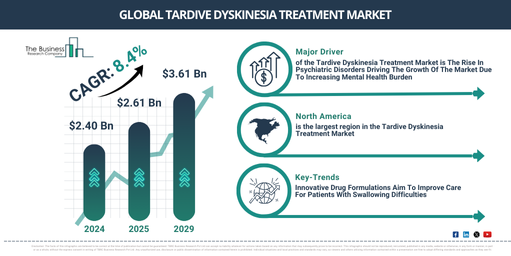
    The tardive dyskinesia treatment market has demonstrated substantial growth in recent years. It is projected to expand from $2.40 billion in 2024 to $2.61 billion in 2025, exhibiting a compound annual growth rate (CAGR) of 8.7%. This historical expansion stems from factors such as the increasing use of antipsychotic medications, a heightened awareness of drug-induced movement disorders, an uptick in the incidence of schizophrenia and bipolar disorders, increased off-label application of antipsychotics, and the expanding geriatric demographic utilizing psychotropic drugs.

    The tardive dyskinesia treatment market size is projected to experience substantial expansion over the next few years. It is set to reach $3.61 billion in 2029, growing at a compound annual growth rate (CAGR) of 8.4%. This projected growth throughout the forecast period is driven by factors such as an increasing demand for safer antipsychotic therapies, enhanced awareness through advocacy and education campaigns, a greater emphasis on personalized mental health treatments, rising healthcare spending dedicated to neurological and psychiatric disorders, and an expanding number of psychiatric patients receiving long-term therapy. Significant trends anticipated during this period encompass the development of neuroprotective strategies, the creation of dual-action therapies, the integration of real-world evidence (RWE) in evaluating drugs, the incorporation of digital biomarkers, and innovations within non-dopaminergic therapeutics.

    Get A Free Sample Of The Report:

    https://www.thebusinessresearchcompany.com/sample.aspx?id=27431&type=smp

    Which Market Dynamics Are Playing A Critical Role In The Growth Of The Tardive Dyskinesia Treatment Market?

    The rising occurrence of psychiatric disorders is projected to fuel the expansion of the tardive dyskinesia treatment market in the foreseeable future. Psychiatric disorders encompass diverse mental health conditions impacting an individual’s mood, thought processes, behavior, and general functioning, frequently necessitating clinical diagnosis and therapeutic intervention. The increasing frequency of psychiatric disorders is attributed to heightened stress and modern lifestyle pressures stemming from demanding workloads, social detachment, and insufficient time for personal well-being. Treatment for tardive dyskinesia assists in controlling involuntary movement symptoms, thereby enhancing overall therapeutic results and the quality of life for patients with psychiatric disorders on prolonged antipsychotic medication. For example, data from March 2024, provided by the House of Commons Library, a UK research and information body, revealed that in 2022, the percentage of 17- to 19-year-olds exhibiting a probable mental disorder rose from 17% in 2021 to 26%. Consequently, the expanding prevalence of psychiatric disorders is a significant factor propelling the tardive dyskinesia treatment market’s growth.

    Which Sub-Segments Are Driving Growth Within The Tardive Dyskinesia Treatment Market?

    The tardive dyskinesia treatment market covered in this report is segmented

    1) By Treatment Type: Medications, Botulinum Toxin Injections, Deep Brain Stimulation, Other Treatment Types

    2) By Drug: Valbenazine, Amantadine, Tetrabenazine, Clonazepam, Other Drugs

    3) By Route Of Administration: Oral Administration, Injection, Transdermal Patches

    4) By Distribution Channel: Hospital Pharmacies, Retail Pharmacies, Other Distribution Channels

    5) By End-Users: Hospitals, Specialty Clinics, Other End-Users

    Subsegments:

    1) By Medications: Antipsychotic Medications, Benzodiazepines, Dopamine-Depleting Agents, Anticholinergic Agents

    2) By Botulinum Toxin Injections: Facial Muscle Injections, Neck Muscle Injections, Limb Muscle Injections, Customized Injection Protocols

    3) By Deep Brain Stimulation: Subthalamic Nucleus Stimulation, Globus Pallidus Interna Stimulation, Thalamic Stimulation, Multi-Target Stimulation

    4) By Other Treatment Types: Supportive Therapies, Cognitive Behavioral Therapy, Physical Rehabilitation, Emerging Experimental Treatments

    What Future-Focused Trends Are Anticipated In The Tardive Dyskinesia Treatment Market?

    Leading companies active in the tardive dyskinesia treatment market are concentrating on developing innovative medications, such as sprinkle capsule formulations, to improve patient adherence for those experiencing swallowing difficulties. These sprinkle capsule formulations are drugs designed to be opened and sprinkled onto soft food, making them easier to ingest for patients with dysphagia or trouble taking whole capsules. For example, in July 2024, Neurocrine Biosciences Inc., a US-based biotechnology company, launched Ingrezza sprinkle (valbenazine) capsules. This product is the leading prescribed vesicular monoamine transporter 2 (VMAT2) inhibitor for treating adults with tardive dyskinesia and chorea associated with Huntington’s disease. This VMAT2 inhibitor functions by regulating dopamine levels in the brain to aid in managing involuntary movements. The medication is offered as a once-daily oral capsule, which includes a sprinkle formulation specifically crafted to simplify administration for patients who find swallowing challenging.

    Which Players Are Shaping The Competitive Landscape Of The Tardive Dyskinesia Treatment Market?

    Major companies operating in the tardive dyskinesia treatment market are AbbVie Inc., Takeda Pharmaceutical Company Limited, Teva Pharmaceutical Industries Limited, Otsuka Pharmaceutical Co. Ltd., Jazz Pharmaceuticals plc, Kyowa Kirin Co Ltd., H. Lundbeck A/S, Zydus Lifesciences Limited, Neurocrine Biosciences Inc., Luye Pharma Group Ltd., Acadia Pharmaceuticals Inc., Upsher-Smith Laboratories LLC, SteriMax Inc., Adamas Pharmaceuticals Inc., ChemWerth Inc, Sunovion Pharmaceuticals Inc., Mitsubishi Tanabe Pharma Corporation, Synnat Pharma Pvt. Ltd, LGM Pharma LLC, and SOM Biotech S.A.

    Access The Complete Report Here:

    https://www.thebusinessresearchcompany.com/report/tardive-dyskinesia-treatment-global-market-report

    How Do Regional Dynamics Influence The Tardive Dyskinesia Treatment Market Performance?

    North America was the largest region in the tardive dyskinesia treatment market in 2024. Asia-Pacific is expected to be the fastest-growing region in the forecast period. The regions covered in the tardive dyskinesia treatment market report are Asia-Pacific, Western Europe, Eastern Europe, North America, South America, Middle East, Africa.

    Customize Your Report Here:

    https://www.thebusinessresearchcompany.com/customise?id=27431&type=smp

    Browse Through More Reports Similar to the Global Tardive Dyskinesia Treatment Market 2025, By The Business Research Company

    Tax Preparation Services Global Market Report 2025

    https://www.thebusinessresearchcompany.com/report/tax-preparation-services-global-market-report

    Tax Management Global Market Report 2025

    https://www.thebusinessresearchcompany.com/report/tax-management-global-market-report

    Pet Tech Global Market Report 2025

    https://www.thebusinessresearchcompany.com/report/pet-tech-global-market-report

    About The Business Research Company:

    With over 15000+ reports from 27 industries covering 60+ geographies, The Business Research Company has built a reputation for offering comprehensive, data-rich research and insights. Armed with 1,500,000 datasets, the optimistic contribution of in-depth secondary research, and unique insights from industry leaders, you can get the information you need to stay ahead in the game.

    Get in touch with us:

    The Business Research Company: https://www.thebusinessresearchcompany.com/

    Americas +1 310-496-7795

    Asia +44 7882 955267 & +91 8897263534

    Europe +44 7882 955267

    Email us at info@tbrc.info

    Follow us on:

    LinkedIn: https://in.linkedin.com/company/the-business-research-company

    YouTube: https://www.youtube.com/channel/UC24_fI0rV8cR5DxlCpgmyFQ

    Global Market Model: https://www.thebusinessresearchcompany.com/global-market-model
  • Global Post-Marketing Pharmacovigilance And Medical Information Market Trends and Future Outlook to 2029

    Global Post-Marketing Pharmacovigilance And Medical Information Market Trends and Future Outlook to 2029

    Uncover key drivers, emerging technologies, and competitive movements shaping the post-marketing pharmacovigilance and medical information market from 2025–2034 with trusted insights from The Business Research Company

    What CAGR And Valuation Are Anticipated For The Post-Marketing Pharmacovigilance And Medical Information Market?

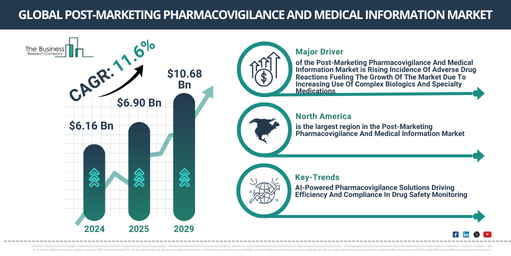
    The post-marketing pharmacovigilance and medical information market has experienced swift expansion recently. Its value is set to increase from $6.16 billion in 2024 to $6.90 billion in 2025, with a compound annual growth rate (CAGR) of 11.9%. Historically, this growth has been driven by factors such as the increasing incorporation of AI into pharmacovigilance procedures, a rising need for outsourced drug safety solutions, the escalating complexity of biopharmaceutical goods, an enhanced emphasis on patient-reported outcomes, and strengthened cooperation between regulatory bodies and the industry.

    The post-marketing pharmacovigilance and medical information market size is projected for swift expansion in the coming years, with expectations to reach $10.68 billion by 2029, exhibiting a compound annual growth rate (CAGR) of 11.6%. This expansion during the forecast period stems from several factors, including enhancements in drug safety analytics tools, the increasing uptake of cloud-based pharmacovigilance solutions, the introduction of more novel therapeutics, a heightened focus on proactive risk management approaches, and expanding pharmacovigilance demands within developing economies. Significant tendencies anticipated during this period encompass improvements in automated adverse event detection, the creation of integrated pharmacovigilance platforms, novel approaches to real-time safety data surveillance, better patient engagement instruments for reporting safety concerns, and the evolution of predictive analytics for evaluating drug risks.

    Get A Free Sample Of The Report:

    https://www.thebusinessresearchcompany.com/sample.aspx?id=27393&type=smp

    What Are The Primary Factors Supporting The Post-Marketing Pharmacovigilance And Medical Information Market Expansion?

    The increasing occurrence of adverse drug reactions is projected to drive the expansion of the post-marketing pharmacovigilance and medical information market in the future. Adverse drug reactions are defined as detrimental or unexpected consequences arising from medication use at prescribed dosages for purposes such as prevention, diagnosis, or treatment. The frequency of adverse drug reactions is escalating because the growing elderly population frequently necessitates remedies for various chronic illnesses, resulting in concurrent use of numerous medicines, which elevates the potential for detrimental drug interactions and unforeseen side effects. Post-marketing pharmacovigilance and medical information aid in addressing adverse drug reactions by identifying, monitoring, and disseminating information about possible side effects once a drug is introduced to the market, thereby assisting in upholding its safety and efficacy. As an illustration, in January 2023, Navikenz, a US-based artificial intelligence-focused IT services company, reported that in the US, adverse drug reactions are estimated to cause 200,000 to 400,000 deaths annually, surpassing the combined fatalities from stroke and diabetes, alongside approximately 2.7 million cases each year leading to over 100,000 hospitalizations and more than 15,000 deaths. Consequently, the increasing occurrence of adverse drug reactions is fueling the expansion of the post-marketing pharmacovigilance and medical information market.

    Which Segments Define The Structure Of The Post-Marketing Pharmacovigilance And Medical Information Market?

    The post-marketing pharmacovigilance and medical information market covered in this report is segmented

    1) By Type: Spontaneous Reporting, Intensified Adverse Drug Reaction (ADR) Reporting, Targeted Spontaneous Reporting, Cohort Event Monitoring, Electronic Health Record (EHR) Mining

    2) By Product: Books, Online Media, Journals

    3) By End User: Hospitals, Research Organizations, Other End-Users

    Subsegments:

    1) By Spontaneous Reporting: Consumer Reporting, Healthcare Professional Reporting, Regulatory Authority Reporting, Pharmaceutical Company Reporting, Digital App-Based Reporting

    2) By Intensified Adverse Drug Reaction (ADR) Reporting: Hospital-Based Surveillance, Program-Specific Monitoring, Disease-Specific Monitoring, Product-Specific Monitoring, Real-Time Monitoring Systems

    3) By Targeted Spontaneous Reporting: Risk Population-Based Reporting, Therapeutic Class-Based Reporting, Adverse Drug Reaction Focused Reporting, Region-Specific Reporting, Healthcare Setting-Specific Reporting

    4) By Cohort Event Monitoring: Prospective Cohort Monitoring, Retrospective Cohort Monitoring, Active Follow-Up Monitoring, New Drug User Monitoring, Disease Registry-Linked Monitoring

    5) By Electronic Health Record (EHR) Mining: Natural Language Processing-Based Mining, Artificial Intelligence (AI) And Machine Learning Algorithms, Rule-Based Signal Detection, Longitudinal Patient Data Analysis, Integrated Hospital Data Systems

    What Strategic Shifts And Innovations Are Influencing The Post-Marketing Pharmacovigilance And Medical Information Market?

    Leading entities within the post-marketing pharmacovigilance and medical information market are concentrating on creating sophisticated solutions, such as AI-powered pharmacovigilance workflows, to elevate the precision of adverse event detection and facilitate real-time safety oversight for superior patient results. These AI-powered workflows leverage artificial intelligence to automate drug safety monitoring, allowing for quicker adverse event identification and better adherence to regulations. As an illustration, in January 2024, PubHive Ltd., a UK-based cloud-based software-as-a-service (SaaS) company, launched a unified Summary of Product Characteristics (SmPC) management system designed for life science firms and research organizations. This platform brings together vital drug safety data into a singular, readily available repository, automates literature surveillance and regulatory submissions, improves team cooperation, and optimizes compliance procedures through advanced AI functionalities. Consequently, pharmacovigilance teams can operate more effectively and preemptively, guaranteeing both patient well-being and conformity to regulatory norms.

    Who Are The Primary Market Leaders In The Post-Marketing Pharmacovigilance And Medical Information Market?

    Major companies operating in the post-marketing pharmacovigilance and medical information market are Cencora Inc., Cardinal Health Inc., Accenture plc, Sanofi S.A., Thermo Fisher Scientific Inc., Capgemini SE, Merck & Co. Inc., Cognizant Technology Solutions Corporation, IQVIA Holdings Inc., HCL Technologies Limited, Laboratory Corporation of America Holdings, ICON plc, WuXi AppTec Co. Ltd., Syneos Health Inc., Genpact Limited, Charles River Laboratories International Inc., Parexel International Corporation, Avalere Health LLC, Quanticate Limited, Inizio Consulting LLC.

    Access The Complete Report Here:

    https://www.thebusinessresearchcompany.com/report/post-marketing-pharmacovigilance-and-medical-information-global-market-report

    What Regional Factors Are Accelerating Growth In The Post-Marketing Pharmacovigilance And Medical Information Market?

    North America was the largest region in the post-marketing pharmacovigilance and medical information market in 2024. Asia-Pacific is expected to be the fastest-growing region in the forecast period. The regions covered in the post-marketing pharmacovigilance and medical information market report are Asia-Pacific, Western Europe, Eastern Europe, North America, South America, Middle East, Africa.

    Customize Your Report Here:

    https://www.thebusinessresearchcompany.com/customise?id=27393&type=smp

    Browse Through More Reports Similar to the Global Post-Marketing Pharmacovigilance And Medical Information Market 2025, By The Business Research Company

    Drain Cleaning Equipment Global Market Report 2025

    https://www.thebusinessresearchcompany.com/report/drain-cleaning-equipment-global-market-report

    Prefabricated Buildings Global Market Report 2025

    https://www.thebusinessresearchcompany.com/report/prefabricated-buildings-global-market-report

    Medical And Surgical Drainage System Global Market Report 2025

    https://www.thebusinessresearchcompany.com/report/medical-and-surgical-drainage-system-global-market-report

    About The Business Research Company:

    With over 15000+ reports from 27 industries covering 60+ geographies, The Business Research Company has built a reputation for offering comprehensive, data-rich research and insights. Armed with 1,500,000 datasets, the optimistic contribution of in-depth secondary research, and unique insights from industry leaders, you can get the information you need to stay ahead in the game.

    Get in touch with us:

    The Business Research Company: https://www.thebusinessresearchcompany.com/

    Americas +1 310-496-7795

    Asia +44 7882 955267 & +91 8897263534

    Europe +44 7882 955267

    Email us at info@tbrc.info

    Follow us on:

    LinkedIn: https://in.linkedin.com/company/the-business-research-company

    YouTube: https://www.youtube.com/channel/UC24_fI0rV8cR5DxlCpgmyFQ

    Global Market Model: https://www.thebusinessresearchcompany.com/global-market-model
  • Global Portable Bioprocessing Bioreactors Market Growth Prospects and Strategic Opportunities Through 2029

    Global Portable Bioprocessing Bioreactors Market Growth Prospects and Strategic Opportunities Through 2029

    Uncover key drivers, emerging technologies, and competitive movements shaping the portable bioprocessing bioreactors market from 2025–2034 with trusted insights from The Business Research Company

    What Are The Market Size Estimates For The Portable Bioprocessing Bioreactors Market?

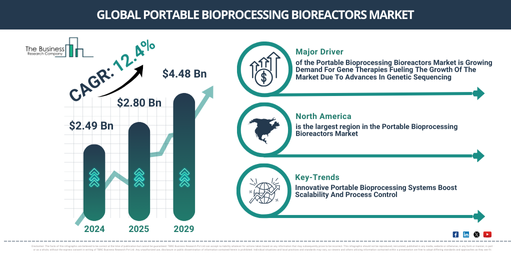
    The market for portable bioprocessing bioreactors has experienced significant growth in recent years. Its value is anticipated to climb from $2.49 billion in 2024 to $2.80 billion by 2025, at a compound annual growth rate (CAGR) of 12.8%. This historic expansion is largely due to the increasing demand for on-site biopharmaceutical manufacturing, the rising acceptance of personalized medicine, a growing requirement for decentralized and point-of-care bioprocessing, increased investments in biotechnology research and development, and the escalating prevalence of infectious diseases driving innovations in bioprocessing.

    The portable bioprocessing bioreactors market is anticipated to experience significant expansion in the upcoming years. Projections indicate its value will reach $4.48 billion by 2029, achieving a compound annual growth rate (CAGR) of 12.4%. This projected growth is driven by several factors, including the increasing integration of continuous bioprocessing techniques, the heightened need for portable bioprocessing solutions in geographically isolated and resource-scarce regions, a stronger focus on eco-friendly and sustainable bioprocessing approaches, and higher capital allocation for cell and gene therapy production. Significant trends expected over this period encompass improvements in mobile biomanufacturing setups, sophisticated miniaturization of bioreactor systems, breakthroughs in real-time monitoring and analytical capabilities, the incorporation of intelligent sensors for optimizing processes, and progress in disposable bioreactor technologies.

    Get A Free Sample Of The Report:

    https://www.thebusinessresearchcompany.com/sample.aspx?id=27392&type=smp

    Which Growth Drivers Are Shaping The Portable Bioprocessing Bioreactors Market Outlook?

    The expanding need for gene therapies is projected to boost the portable bioprocessing bioreactors market in the future. Gene therapy is defined as a medical approach where faulty genes are altered or substituted to manage or avert illnesses. This rising demand stems from breakthroughs in genetic sequencing and diagnostic methods, allowing for accurate identification of disease-causing genes for specific treatments. Portable bioprocessing bioreactors expedite gene therapies through flexible, on-site manufacturing capabilities, offering scalable and regulated conditions. These bioreactors cut down on processing duration and intricacy, enhancing the swiftness and effectiveness of creating tailored treatments. For example, data from December 2024 by the American Society of Gene & Cell Therapy (ASGCT), a US-based non-profit medical and scientific organization, indicates that the Food and Drug Administration (FDA) cleared six gene therapy products in 2023, an increase from five approvals in 2022. Consequently, the escalating demand for gene therapies is fueling the expansion of the portable bioprocessing bioreactors market.

    What Are The Primary Segmentation Parameters In The Portable Bioprocessing Bioreactors Market?

    The portable bioprocessing bioreactors market covered in this report is segmented

    1) By Product Type: Single-Use Bioreactors, Stainless Steel Bioreactors, Glass Bioreactors, Multi-Use Bioreactors, Smart Bioreactors

    2) By Mode Of Operation: Batch Bioreactors, Fed-Batch Bioreactors, Continuous Bioreactors, Perfusion Bioreactors

    3) By Capacity: 100L–500L, 50L–100L, 10L–50L, 1L–10L

    4) By Application: Cell Therapy And Regenerative Medicine, Vaccine And Biologic Development, Biopharmaceutical Production, Biologics And Biosimilars Manufacturing, Tissue Engineering

    5) By End-User: Academic And Research Institutions, Biopharmaceutical Companies, Contract Research Organizations (CROs), Food And Beverage Manufacturers, Chemical And Petrochemical Industries

    Subsegments:

    1) By Single-Use Bioreactors: Disposable Bags, Stirred Tank, Rocking Motion, Fixed Bed, Wave Bioreactors

    2) By Stainless Steel Bioreactors: Jacketed, Half Pipe, Coil, External, Internal

    3) By Glass Bioreactors: Jacketed, Non-Jacketed, Double Jacketed

    4) By Multi-Use Bioreactors: Airlift, Bubble Column

    5) By Smart Bioreactors: Automated Control, Sensor Integrated, Remote Monitoring, Data Analytics Enabled

    Which Emerging Trends Are Reshaping The Portable Bioprocessing Bioreactors Market Landscape?

    Major companies operating in the portable bioprocessing bioreactors market are focusing on developing technologically advanced products, such as single-use bioreactors, to enhance flexibility and streamline cell therapy manufacturing. Single-use bioreactors are disposable systems using pre-sterilized plastic bags instead of reusable vessels, allowing faster setup, reduced contamination, and lower cleaning costs in biomanufacturing. For instance, in April 2025, Thermo Fisher Scientific, a US-based biotechnology company, launched the 5L DynaDrive single-use bioreactor, a cutting-edge portable bioprocessing system designed to improve scalability and process control for cell culture applications. This bioreactor enables seamless scaling from 1 to 5,000 liters while maintaining consistent reactor design and film quality, resulting in a 27% boost in productivity compared to conventional glass bioreactors. It boasts a compact, user-friendly benchtop design and incorporates biobased films along with BioTitan retention devices to reduce product loss and promote sustainability.

    Which Organizations Are At The Forefront Of The Portable Bioprocessing Bioreactors Market?

    Major companies operating in the portable bioprocessing bioreactors market are Thermo Fisher Scientific Inc., Merck KGaA, GE Healthcare, Avantor Fluid Handling LLC, Cytiva Bioscience Holding Ltd., Sartorius AG, Getinge AB, Pall Corporation, ZETA Holding GmbH, Tecnic S.r.l., IKA-Werke GmbH & Co. KG, PBS Biotech Inc., Fabtech Technologies Ltd, Culture Biosciences Inc., Distek Inc., Solida Biotech Inc., Biosan Laboratories Ltd., CerCell A/S, FermEx Inc., Uma Pharmatech Machinery Pvt. Ltd.

    Access The Complete Report Here:

    https://www.thebusinessresearchcompany.com/report/portable-bioprocessing-bioreactors-global-market-report

    Which Region Holds The Greatest Opportunity For Portable Bioprocessing Bioreactors Market Expansion?

    North America was the largest region in the portable bioprocessing bioreactors market in 2024. Asia-Pacific is expected to be the fastest-growing region in the forecast period. The regions covered in the portable bioprocessing bioreactors market report are Asia-Pacific, Western Europe, Eastern Europe, North America, South America, Middle East, Africa.

    Customize Your Report Here:

    https://www.thebusinessresearchcompany.com/customise?id=27392&type=smp

    Browse Through More Reports Similar to the Global Portable Bioprocessing Bioreactors Market 2025, By The Business Research Company

    Prefabricated Buildings Global Market Report 2025

    https://www.thebusinessresearchcompany.com/report/prefabricated-buildings-global-market-report

    Multifamily Modular And Prefabricated Housing Construction Global Market Report 2025

    https://www.thebusinessresearchcompany.com/report/multifamily-modular-and-prefabricated-housing-construction-global-market-report

    Modular And Prefabricated Nonresidential Building Construction Global Market Report 2025

    https://www.thebusinessresearchcompany.com/report/modular-and-prefabricated-nonresidential-building-construction-global-market-report

    About The Business Research Company:

    With over 15000+ reports from 27 industries covering 60+ geographies, The Business Research Company has built a reputation for offering comprehensive, data-rich research and insights. Armed with 1,500,000 datasets, the optimistic contribution of in-depth secondary research, and unique insights from industry leaders, you can get the information you need to stay ahead in the game.

    Get in touch with us:

    The Business Research Company: https://www.thebusinessresearchcompany.com/

    Americas +1 310-496-7795

    Asia +44 7882 955267 & +91 8897263534

    Europe +44 7882 955267

    Email us at info@tbrc.info

    Follow us on:

    LinkedIn: https://in.linkedin.com/company/the-business-research-company

    YouTube: https://www.youtube.com/channel/UC24_fI0rV8cR5DxlCpgmyFQ

    Global Market Model: https://www.thebusinessresearchcompany.com/global-market-model
  • Global Point-Of-Care-Testing (POCT) Market Forecast 2029: Size, Share, and Competitive Landscape

    Global Point-Of-Care-Testing (POCT) Market Forecast 2029: Size, Share, and Competitive Landscape

    Uncover key drivers, emerging technologies, and competitive movements shaping the point-of-care-testing (poct) market from 2025–2034 with trusted insights from The Business Research Company

    How Is The Point-Of-Care-Testing (POCT) Market Expected To Grow In Terms Of Size?

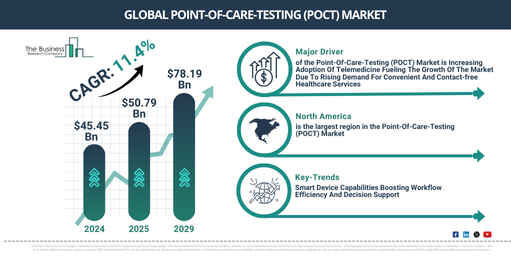
    The point-of-care-testing (POCT) market size has experienced swift expansion in recent years. It is anticipated to increase from $45.45 billion in 2024 to $50.79 billion in 2025, demonstrating a compound annual growth rate (CAGR) of 11.8%. The reasons for this growth in previous periods include a heightened emphasis on personalized medicine, increased financial commitments to healthcare infrastructure, a rise in urgent care incidents, the expanding utilization of point-of-care molecular testing, and the growing incorporation of artificial intelligence in diagnostic methods.

    The market for point-of-care-testing (POCT) is projected to experience swift expansion over the coming years. This market is anticipated to reach $78.19 billion by 2029, exhibiting a compound annual growth rate (CAGR) of 11.4%. Factors contributing to this growth during the projection period include a heightened demand for personalized medicine, the expansion of telehealth and remote monitoring practices, improved access to healthcare in developing regions, the broader utilization of POCT in unconventional environments, and the increasing uptake of wearable diagnostic tools. Key trends foreseen in the forecast timeframe encompass improvements in multiplex testing platforms, the creation of portable molecular diagnostic equipment, breakthroughs in smartphone-dependent diagnostic instruments, progress in connectivity and data integration, and the formulation of AI-driven POCT remedies.

    Get A Free Sample Of The Report:

    https://www.thebusinessresearchcompany.com/sample.aspx?id=27391&type=smp

    What Market Forces Are Contributing To The Growth Of The Point-Of-Care-Testing (POCT) Market?

    The point-of-care-testing (POCT) market is projected to expand due to the rising integration of telemedicine. Telemedicine involves providing healthcare services from a distance, utilizing digital communication tools like video conferencing, telephone calls, or secure messaging platforms. Its widespread use stems from the growing need for accessible, prompt, and touchless medical consultations, a trend significantly bolstered by the COVID-19 pandemic. Point-of-care testing (POCT) complements telemedicine by delivering swift and dependable diagnostic outcomes that can be immediately transmitted to distant medical professionals. An illustrative example comes from February 2023: a survey conducted between July 12 and August 22, 2022, by Rock Health, a US-based health technology company, involved 8,014 respondents. The findings showed that 76% of individuals aged over 55 had utilized telemedicine, and 80% of all participants indicated they had accessed care through telemedicine at some point, marking an 8% increase from 72% in 2021. Consequently, the expanding use of telemedicine is fueling the expansion of the point-of-care-testing (POCT) market.

    How Is The Point-Of-Care-Testing (POCT) Market Segmented Across Key Categories?

    The point-of-care-testing (POCT) market covered in this report is segmented

    1) By Type: Blood Glucose Testing, Infectious Diseases Testing, Cardiac Markers Testing, Coagulation Testing, Pregnancy And Fertility Testing, Blood Gas Or Electrolytes Testing, Urinalysis Testing, Other Types

    2) By Mode Of Purchase: Over-The-Counter Products, Prescribed Based Products

    3) By Technology: Immunoassays, Molecular Diagnostics, Microbial Detection, Polymerase Chain Reaction (PCR) Testing, Biochemical Testing

    4) By End-User: Clinical Laboratories, Ambulatory Care Facilities And Physician Offices, Pharmacies, Retail Clinics And E-Comm Platforms, Hospitals, Critical Care Centres, Urgent Care Centres, Home Care And Self-Testing, Other End-Users

    Subsegments:

    1) By Blood Glucose Testing: Self-Monitoring Blood Glucose Devices, Continuous Glucose Monitoring Devices, Flash Glucose Monitoring Devices

    2) By Infectious Diseases Testing: Human Immunodeficiency Virus (HIV) Testing, Hepatitis Testing, Influenza Testing, COVID-19 Testing, Other Infectious Diseases Testing

    3) By Cardiac Markers Testing: Troponin Testing, Creatine Kinase-MB (CK-MB) Testing, Myoglobin Testing, B-type Natriuretic Peptide (BNP) Testing

    4) By Coagulation Testing: Prothrombin Time (PT) Testing, Activated Partial Thromboplastin Time (aPTT) Testing, International Normalized Ratio (INR) Testing

    5) By Pregnancy And Fertility Testing: Pregnancy Test Kits, Ovulation Test Kits, Fertility Hormone Testing

    6) By Blood Gas Or Electrolytes Testing: Arterial Blood Gas Testing, Venous Blood Gas Testing, Electrolyte Testing

    7) By Urinalysis Testing: Urine Chemistry Analysis, Microscopic Urine Analysis, Urine Culture Testing

    8) By Other Types: Drug Abuse Testing, Allergy Testing, Cholesterol Testing, Thyroid Function Testing

    What Key Trends Are Driving Growth In The Point-Of-Care-Testing (POCT) Market?

    Leading firms within the point-of-care-testing (POCT) market are concentrating their efforts on creating novel products, like blood glucose management solutions, aimed at enhancing diagnostic speed, precision, and patient results in close proximity to patients. These blood glucose management solutions encompass instruments, devices, and systems employed for monitoring, tracing, and regulating blood sugar levels to manage conditions like diabetes. An example is the launch of the Cobas pulse system in January 2022 by F. Hoffmann-La Roche AG, a pharmaceutical company based in Switzerland. The Cobas pulse system presents an advanced connected platform, integrating sophisticated point-of-care blood glucose testing with the functionalities of smart devices. This system facilitates smooth integration with hospital information technology (IT) systems, allowing for automated result transfers and immediate access to clinical data. Furthermore, the device supports healthcare applications, which improve decision-making assistance and operational efficiency directly with the patient.

    Who Are The Major Stakeholders Operating In The Point-Of-Care-Testing (POCT) Market?

    Major companies operating in the point-of-care-testing (POCT) market are Johnson & Johnson, F. Hoffmann-La Roche Ltd., Thermo Fisher Scientific Inc., Abbott Laboratories, Danaher Corporation, Siemens Healthineers AG, Becton Dickinson and Company, Zoetis Inc., BioMérieux SA, QuidelOrtho Corporation, Sysmex Corporation, Bio-Rad Laboratories Inc., QIAGEN NV, Nova Biomedical Corporation, LifeScan Inc., Ascensia Diabetes Care Holdings AG, Trividia Health Inc., Trinity Biotech Plc, SiPhox Inc., and Sinocare Inc.

    Access The Complete Report Here:

    https://www.thebusinessresearchcompany.com/report/point-of-care-testing-poct-global-market-report

    How Do Regional Dynamics Influence The Point-Of-Care-Testing (POCT) Market Performance?

    North America was the largest region in the point-of-care testing (POCT) market in 2024. Asia-Pacific is expected to be the fastest-growing region in the forecast period. The regions covered in the point-of-care-testing (POCT) market report are Asia-Pacific, Western Europe, Eastern Europe, North America, South America, Middle East, Africa.

    Customize Your Report Here:

    https://www.thebusinessresearchcompany.com/customise?id=27391&type=smp

    Browse Through More Reports Similar to the Global Point-Of-Care-Testing (POCT) Market 2025, By The Business Research Company

    Precast Concrete Global Market Report 2025

    https://www.thebusinessresearchcompany.com/report/precast-concrete-market

    Modular And Prefabricated Nonresidential Building Construction Global Market Report 2025

    https://www.thebusinessresearchcompany.com/report/modular-and-prefabricated-nonresidential-building-construction-global-market-report

    Ready Mix Concrete Global Market Report 2025

    https://www.thebusinessresearchcompany.com/report/ready-mix-concrete-global-market-report

    About The Business Research Company:

    With over 15000+ reports from 27 industries covering 60+ geographies, The Business Research Company has built a reputation for offering comprehensive, data-rich research and insights. Armed with 1,500,000 datasets, the optimistic contribution of in-depth secondary research, and unique insights from industry leaders, you can get the information you need to stay ahead in the game.

    Get in touch with us:

    The Business Research Company: https://www.thebusinessresearchcompany.com/

    Americas +1 310-496-7795

    Asia +44 7882 955267 & +91 8897263534

    Europe +44 7882 955267

    Email us at info@tbrc.info

    Follow us on:

    LinkedIn: https://in.linkedin.com/company/the-business-research-company

    YouTube: https://www.youtube.com/channel/UC24_fI0rV8cR5DxlCpgmyFQ

    Global Market Model: https://www.thebusinessresearchcompany.com/global-market-model
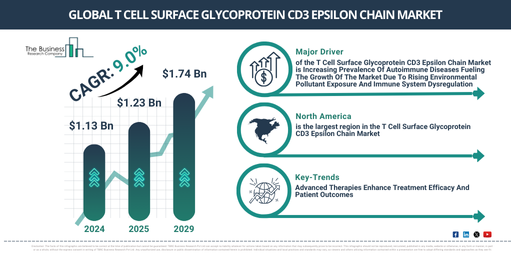
  • T Cell Surface Glycoprotein CD3 Epsilon Chain Market – Opportunities, Share, Growth and Competitive Analysis and Forecast 2029

    T Cell Surface Glycoprotein CD3 Epsilon Chain Market – Opportunities, Share, Growth and Competitive Analysis and Forecast 2029

    Uncover key drivers, emerging technologies, and competitive movements shaping the t cell surface glycoprotein cd3 epsilon chain market from 2025–2034 with trusted insights from The Business Research Company

    How Much Will The T Cell Surface Glycoprotein CD3 Epsilon Chain Market Be Worth By 2029?

    The market for T cell surface glycoprotein CD3 epsilon chain has experienced robust expansion in recent years. It is anticipated to increase from $1.13 billion in 2024 to $1.23 billion in 2025, demonstrating a compound annual growth rate (CAGR) of 9.3%. This historical growth can be attributed to several factors, including the rising incidence of autoimmune disorders, increased demand for targeted immunotherapies, the wider use of monoclonal antibody therapies, early positive clinical results for cluster of differentiation 3-based agents, and growing financial commitments to oncology research.

    The market size for T cell surface glycoprotein CD3 epsilon chain is projected to show significant expansion over the next few years. It is expected to reach $1.74 billion by 2029, growing at a compound annual growth rate (CAGR) of 9.0%. This anticipated growth during the forecast period stems from the increasing adoption of bispecific antibodies, wider application in solid tumor indications, a rise in strategic partnerships and licensing deals, escalating cancer incidence rates, and supportive regulatory pathways for immunotherapies. Noteworthy trends during this period involve advancements in recombinant antibody engineering, the integration of artificial intelligence in drug discovery, innovations in bispecific and trispecific antibodies, sustained research and development in cluster of differentiation 3 epsilon chain modulation, and a strong focus on personalized immunotherapy.

    Get A Free Sample Of The Report:

    https://www.thebusinessresearchcompany.com/sample.aspx?id=27430&type=smp

    What External And Internal Drivers Are Influencing The T Cell Surface Glycoprotein CD3 Epsilon Chain Market?

    The escalating occurrence of autoimmune diseases is projected to stimulate the expansion of the T cell surface glycoprotein CD3 epsilon chain market in the coming years. Autoimmune diseases are conditions where the body’s immune system mistakenly targets its own healthy cells and tissues. This rise in prevalence is primarily attributed to increased exposure to environmental pollutants, which can disrupt immune functions and provoke attacks on the body’s own tissues. The T cell surface glycoprotein CD3 epsilon chain plays a vital role in enhancing autoimmune disease management by regulating T cell activity, thereby becoming a crucial therapeutic target. It effectively helps to manage overactive immune responses, leading to reduced tissue damage and improved outcomes for patients. As an illustration, a survey study conducted in November 2024 by Versorgungsatlas.de, a Germany-based organization, which surveyed 68,959,472 individuals in 2012 and 73,241,305 in 2022, revealed that among 73,241,305 insured individuals in 2022, 6,304,340 were diagnosed with at least one autoimmune disease, representing a raw prevalence rate of 8.61%. Consequently, the increasing prevalence of autoimmune diseases is a significant driver for the growth of the T cell surface glycoprotein CD3 epsilon chain market.

    What Segmentation Insights Are Provided In The T Cell Surface Glycoprotein CD3 Epsilon Chain Market Research?

    The t cell surface glycoprotein cd3 epsilon chain market covered in this report is segmented

    1) By Product Type: Antibodies, Reagents, Kits, Cell Lines

    2) By Technology: Monoclonal Antibodies Technology, Recombinant Deoxyribonucleic Acid Technology, Cell Culture Technology, Flow Cytometry Technology

    3) By Research Purpose: Basic Research, Translational Research, Clinical Research, Pharmacological Research

    4) By Application: Cancer Immunotherapy, Autoimmune Disease Treatment, Transplant Rejection, Infectious Disease Treatment, Research And Development

    5) By End-User: Pharmaceutical Companies, Biotechnology Firms, Research Institutes, Academic Institutions, Hospitals And Clinics

    Subsegments:

    1) By Antibodies: Monoclonal Antibodies, Polyclonal Antibodies, Recombinant Antibodies

    2) By Reagents: Blocking Reagents, Labeling Reagents, Detection Reagents, Isotype Controls

    3) By Kits: Enzyme Linked Immunosorbent Assay Kits, Flow Cytometry Kits, Western Blot Kits, Immunoprecipitation Kits

    4) By Cell Lines: Human Cell Lines, Mouse Cell Lines, Rat Cell Lines, Hybridoma Cell Lines

    Which Notable Trends Are Transforming The T Cell Surface Glycoprotein CD3 Epsilon Chain Market Outlook?

    Companies active in the T cell surface glycoprotein CD3 epsilon chain market are concentrating on creating advanced therapeutic options, including bispecific antibodies, with the aim of boosting treatment effectiveness, bettering patient results, and addressing cancers that are difficult to treat. These bispecific antibodies are engineered molecules capable of simultaneously attaching to two distinct antigens, for instance, CD3 on T cells and a tumor-specific antigen, thereby directing immune cells to target cancer cells. As an example, in August 2023, Janssen Pharmaceutical Companies of Johnson & Johnson, a US pharmaceutical firm, gained accelerated approval from the US Food and Drug Administration (FDA) for TALVEY (talquetamab-tgvs). This drug is a first-in-class bispecific T-cell engaging antibody intended for adults suffering from relapsed or refractory multiple myeloma after receiving at least four previous lines of treatment. TALVEY is administered either weekly or biweekly through subcutaneous injection after an initial step-up dosing phase, offering adaptable treatment schedules. It targets the CD3 epsilon chain on T cells and GPRC5D on myeloma cells concurrently, thereby activating the immune system to combat cancer cells.

    Who Are The Leading Companies Driving The T Cell Surface Glycoprotein CD3 Epsilon Chain Market?

    Major companies operating in the t cell surface glycoprotein cd3 epsilon chain market are Merck & Co. Inc., Becton Dickinson and Company, Bio-Techne Corporation, Abcam plc, Sino Biological Inc., MacroGenics Inc., ACROBiosystems Inc., ABclonal Technology Co Ltd., GeneTex Inc., Santa Cruz Biotechnology Inc., Novus Biologicals LLC, Bioss Antibodies Inc., MedChemExpress MCE LLC, Biorbyt Ltd., Boster Biological Technology Co Ltd., Abbexa Limited, Novatein Biosciences LLC, AssayPro LLC, ProteoGenix, Cloud‑Clone Corp.

    Access The Complete Report Here:

    https://www.thebusinessresearchcompany.com/report/t-cell-surface-glycoprotein-cd3-epsilon-chain-global-market-report

    Which Geographic Regions Are Creating Strong Demand In The T Cell Surface Glycoprotein CD3 Epsilon Chain Market?

    North America was the largest region in the T cell surface glycoprotein CD3 epsilon chain market in 2024. Asia-Pacific is expected to be the fastest-growing region in the forecast period. The regions covered in the t cell surface glycoprotein cd3 epsilon chain market report are Asia-Pacific, Western Europe, Eastern Europe, North America, South America, Middle East, Africa.

    Customize Your Report Here:

    https://www.thebusinessresearchcompany.com/customise?id=27430&type=smp

    Browse Through More Reports Similar to the Global T Cell Surface Glycoprotein CD3 Epsilon Chain Market 2025, By The Business Research Company

    Green Technology And Sustainability Global Market Report 2025

    https://www.thebusinessresearchcompany.com/report/green-technology-and-sustainability-global-market-report

    Management System Certification Global Market Report 2025

    https://www.thebusinessresearchcompany.com/report/management-system-certification-global-market-report

    Sustainable Finance Global Market Report 2025

    https://www.thebusinessresearchcompany.com/report/sustainable-finance-global-market-report

    About The Business Research Company:

    With over 15000+ reports from 27 industries covering 60+ geographies, The Business Research Company has built a reputation for offering comprehensive, data-rich research and insights. Armed with 1,500,000 datasets, the optimistic contribution of in-depth secondary research, and unique insights from industry leaders, you can get the information you need to stay ahead in the game.

    Get in touch with us:

    The Business Research Company: https://www.thebusinessresearchcompany.com/

    Americas +1 310-496-7795

    Asia +44 7882 955267 & +91 8897263534

    Europe +44 7882 955267

    Email us at info@tbrc.info

    Follow us on:

    LinkedIn: https://in.linkedin.com/company/the-business-research-company

    YouTube: https://www.youtube.com/channel/UC24_fI0rV8cR5DxlCpgmyFQ

    Global Market Model: https://www.thebusinessresearchcompany.com/global-market-model