Blog

  • Point-of-Care Technology Market – Opportunities, Share, Growth and Competitive Analysis and Forecast 2029

    Point-of-Care Technology Market – Opportunities, Share, Growth and Competitive Analysis and Forecast 2029

    Uncover key drivers, emerging technologies, and competitive movements shaping the point-of-care technology market from 2025–2034 with trusted insights from The Business Research Company

    What Is The Projected Valuation Of The Point-of-Care Technology Market In The Coming Years?

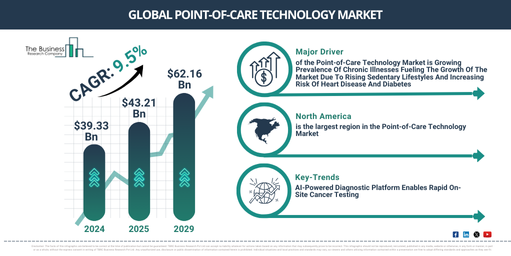
    The point-of-care technology market size has demonstrated significant expansion in recent years. This market is expected to grow from $39.33 billion in 2024 to $43.21 billion in 2025, achieving a compound annual growth rate (CAGR) of 9.9%. The market’s past growth can be attributed to factors such as the increasing decentralization of healthcare services, the heightened demand for immediate diagnosis in critical situations, the expanding requirement for rapid infection screening, the rising deployment of mobile testing units, and an accelerated focus on cost-efficient diagnostic workflows.

    The point-of-care technology market is projected to experience robust expansion over the coming years. This market is anticipated to reach $62.16 billion by 2029, demonstrating a compound annual growth rate (CAGR) of 9.5%. Several factors will contribute to this growth during the forecast period, including the proliferation of telemedicine platforms, a heightened focus on personalized and predictive healthcare, the widening application in home-based health monitoring, and enhanced government initiatives promoting decentralized testing. Key trends expected during this period involve progress in artificial intelligence-powered diagnostic algorithms, the creation of portable multiplex testing devices, novel developments in wearable health monitoring tools, enhancements in cloud-based data integration, and the establishment of home-based telehealth ecosystems.

    Get A Free Sample Of The Report:

    https://www.thebusinessresearchcompany.com/sample.aspx?id=27390&type=smp

    What Drivers Are Accelerating Expansion Of The Point-of-Care Technology Market?

    The increasing occurrence of chronic diseases is anticipated to drive the expansion of the point-of-care technology market in the future. These conditions are long-lasting health problems requiring ongoing management and changes in daily habits. A rise in chronic ailments is linked to sedentary lifestyles, where extended periods of sitting and insufficient exercise elevate the likelihood of developing illnesses like heart conditions and diabetes. Point-of-care technology aids in the management of chronic illnesses through quick, localized diagnostic testing, making it well-suited for use in clinics, private residences, and distant healthcare environments. This technology lessens treatment delays by delivering immediate results, enhancing patient oversight, and contributing to overall healthcare ease. For example, data from June 2024 from the National Health Service, a UK-based government department, revealed that 3,615,330 individuals registered with a general practitioner (GP) received a diagnosis of non-diabetic hyperglycemia or pre-diabetes in 2023, which represents an 18% increase from 3,065,825 cases observed in 2022. Consequently, the increasing occurrence of chronic illnesses is fueling the expansion of the point-of-care technology market.

    How Is The Global Point-of-Care Technology Market Broken Down By Segment?

    The point-of-care technology market covered in this report is segmented

    1) By Product Type: Diagnostics Devices, Monitoring Devices, Therapeutic Devices, Data Management Systems

    2) By Ownership Model: Standalone Solutions, Integrated Solutions, Cloud-Based Solutions

    3) By Technology: Microfluidics, Polymerase Chain Reaction (PCR), Immunoassays

    4) By Application: Infectious Disease Testing, Glucose Monitoring, Cardiometabolic Monitoring, Pregnancy And Fertility Testing, Other Applications

    5) By End-User: Hospitals, Clinics, Homecare Settings, Ambulatory Surgical Centers

    Subsegments:

    1) By Diagnostics Devices: Blood Glucose Monitoring Devices, Infectious Disease Testing Devices, Cardiac Marker Testing Devices, Coagulation Testing Devices, Pregnancy And Fertility Testing Devices, Urinalysis Testing Devices, Hematology Testing Devices, Cholesterol Testing Devices

    2) By Monitoring Devices: Vital Signs Monitoring Devices, Continuous Glucose Monitoring Devices, Cardiac Monitoring Devices, Respiratory Monitoring Devices

    3) By Therapeutic Devices: Insulin Delivery Devices, Nebulizers, Dialysis Machines, Infusion Pumps

    4) By Data Management Systems: Point Of Care (POC) Data Integration Systems, Point Of Care (POC) Middleware Solutions, Point Of Care (POC) Data Analytics Platforms

    Which Trends Are Likely To Redefine Growth Paths In The Point-of-Care Technology Market?

    Leading companies in the point-of-care technology market are prioritizing the development of advanced solutions, specifically AI-powered diagnostic platforms, to improve the accuracy, speed, and accessibility of disease detection. These AI-powered diagnostic platforms are sophisticated systems that harness artificial intelligence to quickly analyze medical data, enabling real-time, on-site testing for critical conditions like cancer. As an illustration, in February 2025, Avitia Inc., a point-of-care diagnostics company based in Canada, unveiled an AI-powered platform created for rapid, point-of-care cancer testing. This platform combines machine learning algorithms with portable diagnostic devices, allowing healthcare providers to perform swift and precise cancer screening outside traditional laboratory environments. This advancement shortens turnaround times, enhances early detection capabilities, and reduces the need for complex infrastructure, thereby making advanced diagnostics more accessible in remote or underserved areas.

    Which Firms Are Making The Biggest Impact In The Point-of-Care Technology Market?

    Major companies operating in the point-of-care technology market are F. Hoffmann-La Roche AG, Thermo Fisher Scientific Inc., Abbott Laboratories, Danaher Corporation, Siemens Healthineers AG, Hologic Inc., bioMérieux SA, Quidel Corporation, Sysmex Corporation, Cepheid Inc., Radiometer Medical ApS, Nova Biomedical, Sekisui Diagnostics LLC, Abaxis Inc., BHR Biosynex, EKF Diagnostics Holdings plc, Acon Laboratories Inc., Trinity Biotech plc, Chembio Diagnostics Inc., Arkray Inc., Orchard Software Corporation, Point of Care Biomedical Private Limited.

    Access The Complete Report Here:

    https://www.thebusinessresearchcompany.com/report/point-of-care-technology-global-market-report

    Which Geographic Regions Are Creating Strong Demand In The Point-of-Care Technology Market?

    North America was the largest region in the point-of-care technology market in 2024. Asia-Pacific is expected to be the fastest-growing region in the forecast period. The regions covered in the point-of-care technology market report are Asia-Pacific, Western Europe, Eastern Europe, North America, South America, Middle East, Africa.

    Customize Your Report Here:

    https://www.thebusinessresearchcompany.com/customise?id=27390&type=smp

    Browse Through More Reports Similar to the Global Point-of-Care Technology Market 2025, By The Business Research Company

    Concrete Sealer Global Market Report 2025

    https://www.thebusinessresearchcompany.com/report/concrete-sealer-global-market-report

    Surgical Sealants And Adhesives Global Market Report 2025

    https://www.thebusinessresearchcompany.com/report/surgical-sealants-and-adhesives-market

    Dental Adhesives And Sealants Global Market Report 2025

    https://www.thebusinessresearchcompany.com/report/dental-adhesives-and-sealants-global-market-report

    About The Business Research Company:

    With over 15000+ reports from 27 industries covering 60+ geographies, The Business Research Company has built a reputation for offering comprehensive, data-rich research and insights. Armed with 1,500,000 datasets, the optimistic contribution of in-depth secondary research, and unique insights from industry leaders, you can get the information you need to stay ahead in the game.

    Get in touch with us:

    The Business Research Company: https://www.thebusinessresearchcompany.com/

    Americas +1 310-496-7795

    Asia +44 7882 955267 & +91 8897263534

    Europe +44 7882 955267

    Email us at info@tbrc.info

    Follow us on:

    LinkedIn: https://in.linkedin.com/company/the-business-research-company

    YouTube: https://www.youtube.com/channel/UC24_fI0rV8cR5DxlCpgmyFQ

    Global Market Model: https://www.thebusinessresearchcompany.com/global-market-model
  • Global Point-Of-Care Data Management Software Market Trends 2025–2029: Regional Outlook and Sizing Analysis

    Global Point-Of-Care Data Management Software Market Trends 2025–2029: Regional Outlook and Sizing Analysis

    Uncover key drivers, emerging technologies, and competitive movements shaping the point-of-care data management software market from 2025–2034 with trusted insights from The Business Research Company

    How Much Will The Point-Of-Care Data Management Software Market Be Worth By 2029?

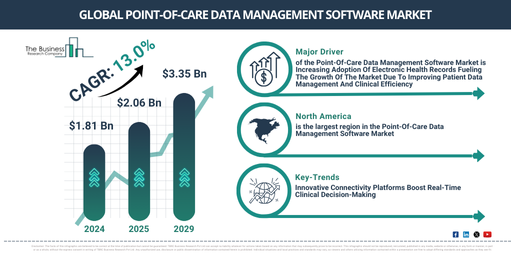
    The point-of-care data management software market has seen rapid expansion over recent years. This market is expected to increase from $1.81 billion in 2024 to $2.06 billion by 2025, achieving a compound annual growth rate (CAGR) of 13.4%. Historically, this growth has been driven by the increasing adoption of point-of-care testing in clinical workflows, a growing demand for rapid diagnostic decision-making, the expanding use of electronic medical records in primary care, heightened awareness of the benefits of decentralized diagnostics, and the rising need for remote monitoring solutions in rural healthcare settings.

    The point-of-care data management software market is projected to experience substantial expansion in the coming years. By 2029, its value is anticipated to reach $3.35 billion, demonstrating a compound annual growth rate (CAGR) of 13.0%. This expansion throughout the forecast period stems from several key factors, including the increasing need for immediate patient data access, greater dependence on telemedicine solutions for diagnostic purposes, an amplified emphasis on interoperability across various healthcare systems, escalating investments in cybersecurity to safeguard medical data, and the emerging requirement for predictive diagnostics within preventive healthcare. Significant trends expected during this period involve progress in artificial intelligence-powered point-of-care analytics, the establishment of standardized interoperable data exchange protocols, breakthroughs in blockchain technology for health data security, improvements in real-time cloud integration for diagnostic processes, and the creation of data management platforms compatible with wearable devices.

    Get A Free Sample Of The Report:

    https://www.thebusinessresearchcompany.com/sample.aspx?id=27389&type=smp

    Which Key Factors Are Fueling Growth In The Point-Of-Care Data Management Software Market?

    The future expansion of the point-of-care data management software market is anticipated to be driven by the rising uptake of electronic health records. Electronic Health Records (EHRs) represent digital compilations of a patient’s medical history, treatments, and test results, crafted for secure information exchange among healthcare providers to elevate care quality and coordination. The increasing acceptance of electronic health records stems from the growing demand for effective patient data management, which facilitates easy access, enhances precision, and improves care collaboration. Point-of-care data management software augments electronic health record systems by providing real-time data collection and smooth integration, making it perfectly suited for clinics and diagnostic settings at the patient’s bedside. It minimizes manual data input through automated patient record updates, thereby boosting clinical efficiency and aiding decision-making. As an illustration, in June 2022, the Department of Health and Social Care, a UK-based government department, reported that 90% of National Health Service (NHS) trusts had implemented electronic health records by December 2023, with projections to reach 100% by March 2025. Consequently, the increasing use of electronic health records is a key factor propelling the growth of the point-of-care data management software market.

    Which Segmentation Factors Are Critical In The Point-Of-Care Data Management Software Market Analysis?

    The point-of-care data management software market covered in this report is segmented

    1) By Type: Standalone Software, Integrated Software

    2) By Deployment Mode: Cloud-Based, On-Premises, Hybrid Solutions

    3) By Technology: Artificial Intelligence, Machine Learning, Blockchain, Internet Of Things (IoT), Big Data Analytics

    4) By Applications: Infectious Disease Devices, Glucose Monitoring, Coagulation Monitoring, Urinalysis, Cardiometabolic Monitoring, Cancer Markers, Hematology, Other Point-Of-Care Applications

    5) By End User: Hospitals, Clinics, Ambulatory Care Center, Home Healthcare, Diagnostic Laboratories

    Subsegments:

    1) By Standalone Software: Device-Specific Data Management Systems, Modular Clinical Information Systems, Laboratory Data Analysis Tools, Remote Patient Monitoring Software

    2) By Integrated Software: Hospital Information System Integrated Platforms, Electronic Health Record Embedded Solutions, Cloud-Based Interoperable Platforms, Multi-Device Connectivity And Data Integration Systems

    What Are The Dominant Trends Currently Seen In The Point-Of-Care Data Management Software Market?

    Major companies operating in the point-of-care data management software market are focusing on developing technologically advanced solutions, such as middleware connectivity platforms. These platforms aim to seamlessly integrate data from multiple diagnostic devices and enhance real-time clinical decision-making. Middleware connectivity platforms are software solutions that function as intermediaries between point-of-care devices and hospital information systems, enabling effortless data exchange, integration, and interoperability. For instance, in May 2022, EKF Diagnostics Holdings plc, a UK-based healthcare company, launched EKF Link, a middleware connectivity solution for the secure management and centralized integration of point-of-care (POC) analyzers and their data. This adaptable, open platform enables healthcare providers to connect, monitor, and manage multiple POC analyzers in real time from a single centralized interface. Its key features include remote instrument configuration, operator and report management, quality control oversight, and seamless integration with hospital or laboratory IT systems using standard protocols such as HL7 and LIS2A.

    Which Players Are Shaping The Competitive Landscape Of The Point-Of-Care Data Management Software Market?

    Major companies operating in the point-of-care data management software market are F. Hoffmann-La Roche Ltd., Oracle Health Inc., Thermo Fisher Scientific Inc., Abbott Point of Care Inc., Danaher Corporation, Siemens Healthineers AG, GE HealthCare Technologies Inc., Athenahealth Inc., InterSystems Corporation, eClinicalWorks LLC, Medical Information Technology Inc., NextGen Healthcare Inc., Randox Laboratories Ltd., Greenway Health LLC, Care Cloud Inc., CureMD.com Inc., Telcor Inc., Orchard Software Corporation, HealthEC LLC, Sunquest Information Systems Inc.

    Access The Complete Report Here:

    https://www.thebusinessresearchcompany.com/report/point-of-care-data-management-software-global-market-report

    Which Region Is Likely To Register The Fastest Growth In The Point-Of-Care Data Management Software Market?

    North America was the largest region in the point-of-care data management software market in 2024. Asia-Pacific is expected to be the fastest-growing region in the forecast period. The regions covered in the point-of-care data management software market report are Asia-Pacific, Western Europe, Eastern Europe, North America, South America, Middle East, Africa.

    Customize Your Report Here:

    https://www.thebusinessresearchcompany.com/customise?id=27389&type=smp

    Browse Through More Reports Similar to the Global Point-Of-Care Data Management Software Market 2025, By The Business Research Company

    Pre Engineered Buildings Global Market Report 2025

    https://www.thebusinessresearchcompany.com/report/pre-engineered-buildings-global-market-report

    Multifamily Modular And Prefabricated Housing Construction Global Market Report 2025

    https://www.thebusinessresearchcompany.com/report/multifamily-modular-and-prefabricated-housing-construction-global-market-report

    Wood Manufacturing Global Market Report 2025

    https://www.thebusinessresearchcompany.com/report/wood-manufacturing-global-market-report

    About The Business Research Company:

    With over 15000+ reports from 27 industries covering 60+ geographies, The Business Research Company has built a reputation for offering comprehensive, data-rich research and insights. Armed with 1,500,000 datasets, the optimistic contribution of in-depth secondary research, and unique insights from industry leaders, you can get the information you need to stay ahead in the game.

    Get in touch with us:

    The Business Research Company: https://www.thebusinessresearchcompany.com/

    Americas +1 310-496-7795

    Asia +44 7882 955267 & +91 8897263534

    Europe +44 7882 955267

    Email us at info@tbrc.info

    Follow us on:

    LinkedIn: https://in.linkedin.com/company/the-business-research-company

    YouTube: https://www.youtube.com/channel/UC24_fI0rV8cR5DxlCpgmyFQ

    Global Market Model: https://www.thebusinessresearchcompany.com/global-market-model
  • Global T Cell Specific Surface Glycoprotein CD28 Market Trends 2025–2029: Regional Outlook and Sizing Analysis

    Global T Cell Specific Surface Glycoprotein CD28 Market Trends 2025–2029: Regional Outlook and Sizing Analysis

    Uncover key drivers, emerging technologies, and competitive movements shaping the t cell specific surface glycoprotein cd28 market from 2025–2034 with trusted insights from The Business Research Company

    What Is The Present And Forecasted Size Of The T Cell Specific Surface Glycoprotein CD28 Market?

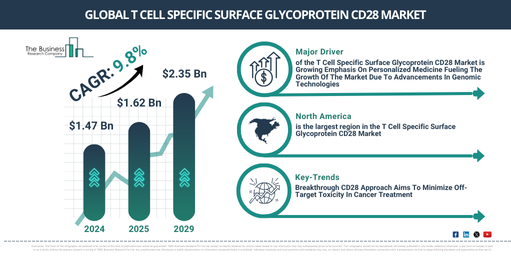
    The T cell-specific surface glycoprotein CD28 market has experienced substantial expansion recently. Forecasts indicate a rise from $1.47 billion in 2024 to $1.62 billion in 2025, demonstrating a compound annual growth rate (CAGR) of 10.1%. This historical growth is attributable to factors such as expanded research in immunotherapy, the escalating prevalence of cancer, an increase in autoimmune disease cases, a rise in clinical trials, and greater uptake of monoclonal antibodies.

    The market for T cell-specific surface glycoprotein CD28 is projected to experience substantial expansion over the upcoming years. By 2029, this market is anticipated to reach a valuation of $2.35 billion, achieving a compound annual growth rate (CAGR) of 9.8%. This anticipated growth during the forecast period stems from several factors, including the escalating demand for personalized medicine, a heightened emphasis on T-cell-based therapeutic approaches, increased recognition of immuno-oncology, an expanding array of targeted therapies in development, augmented investments from pharmaceutical firms, and broader applications in the treatment of chronic diseases. Key trends defining this period involve significant progress in cell engineering technologies, sophisticated advancements in the development of bispecific antibodies, novel innovations within targeted immunotherapies, the incorporation of AI into drug discovery processes, and enhancements in biologics manufacturing.

    Get A Free Sample Of The Report:

    https://www.thebusinessresearchcompany.com/sample.aspx?id=27429&type=smp

    What Underlying Factors Are Supporting The T Cell Specific Surface Glycoprotein CD28 Market Growth?

    The market for T cell-specific surface glycoprotein CD28 is expected to grow due to the increasing emphasis on personalized medicine moving forward. Personalized medicine is a medical approach that customizes treatments for individual patients based on their genetic, environmental, and lifestyle factors to optimize outcomes and enhance care. The demand for personalized medicine is on the rise, driven by advancements in genomic technologies that enable precise identification of genetic variations and the creation of tailored treatments. T cell-specific surface glycoprotein CD28 aids personalized medicine by facilitating targeted immune modulation, which results in more precise and effective therapies. It improves treatment efficacy by promoting optimal T cell activation, thereby enhancing patient-specific immune responses. As an illustration, in February 2024, the Personalized Medicine Coalition (PMC), a US-based nonprofit organization, reported that the U.S. Food and Drug Administration (FDA) approved 26 new personalized medicines in 2023, an increase from 12 approvals in 2022. Therefore, the expanding focus on personalized medicine is propelling the growth of the T cell-specific surface glycoprotein CD28 market.

    How Does The T Cell Specific Surface Glycoprotein CD28 Market Differ By Segment?

    The t cell specific surface glycoprotein cd28 market covered in this report is segmented

    1) By Type: FPT 155, FR 104, Lulizumab Pegol, Other Types

    2) By Technology: Flow Cytometry, EnzymeLinked Immunosorbent Assay (ELISA), Polymerase Chain Reaction (PCR), Weste Blotting, Immunohistochemistry

    3) By Distribution Channel: Direct Sales, Distributors, Ecommerce, Retail Pharmacies, Wholesalers

    4) By Application: Immunology Research, Cancer Research, Autoimmune Diseases, Infectious Diseases, Stem Cell Research

    5) By End-User: Hospitals, Research Laboratories, Academic Institutions, Pharmaceutical Companies, Diagnostic Laboratories

    Subsegments:

    1) By FPT 155: Preclinical Studies, Clinical Trials, Oncology Applications, Licensing And Partnerships

    2) By FR 104: Autoimmune Disease Applications, Rheumatoid Arthritis Trials, Transplant Rejection Studies, Research Collaborations

    3) By Lulizumab Pegol: Systemic Lupus Erythematosus (SLE) Studies, Immunomodulation Research, Biopharmaceutical Development, Monoclonal Antibody Engineering

    4) By Other Types: Novel CD28 Inhibitors, Combination Therapies, Biosimilars And Biobetters, Emerging Research Compounds

    What New Opportunities Are Emerging From Trends In The T Cell Specific Surface Glycoprotein CD28 Market?

    Major companies engaged in the T cell-specific surface glycoprotein CD28 market are directing their efforts towards creating innovative products, including combination immunotherapies, to improve T cell activation, anti-tumor efficacy, and patient treatment results. Combination immunotherapies are treatments that integrate multiple immune-based strategies to enhance the body’s capability to combat disease. For example, in February 2025, Rondo Therapeutics Inc., a US-based biopharmaceutical company, disclosed preclinical data concerning RNDO 564, an innovative CD28 Nectin 4 costimulatory bispecific antibody designed for advanced bladder cancer. It is specifically engineered to activate CD28 on T cells upon attachment to Nectin-4-expressing tumor cells, thereby augmenting T-cell-mediated tumor killing while reducing off-target toxicity. The data showcased strong anti-tumor activity in preclinical models, supporting its continued development as a potential therapy for patients suffering from metastatic urothelial carcinoma.

    Who Are The Global Leaders Steering The T Cell Specific Surface Glycoprotein CD28 Market Forward?

    Major companies operating in the t cell specific surface glycoprotein cd28 market are Gilead Sciences Inc., Johnson & Johnson, Novartis AG, Bristol-Myers Squibb Company, Takeda Pharmaceutical Company Limited, Becton Dickinson and Company, Regeneron Pharmaceuticals Inc., Bio-Techne Corporation, STEMCELL Technologies Inc., Miltenyi Biotec B.V. & Co. KG, Sino Biological Inc., Xencor Inc., ACROBiosystems Co. Ltd., Fate Therapeutics Inc., Medigene AG, Alpine Immune Sciences Inc., Adaptimmune Therapeutics plc, OSE Immunotherapeutics SA, Creative Biolabs Inc., Rondo Therapeutics Inc.

    Access The Complete Report Here:

    https://www.thebusinessresearchcompany.com/report/t-cell-specific-surface-glycoprotein-cd28-global-market-report

    Which Region Is Likely To Register The Fastest Growth In The T Cell Specific Surface Glycoprotein CD28 Market?

    North America was the largest region in the T cell-specific surface glycoprotein CD28 market in 2024. Asia-Pacific is expected to be the fastest-growing region in the forecast period. The regions covered in the t cell specific surface glycoprotein cd28 market report are Asia-Pacific, Western Europe, Eastern Europe, North America, South America, Middle East, Africa.

    Customize Your Report Here:

    https://www.thebusinessresearchcompany.com/customise?id=27429&type=smp

    Browse Through More Reports Similar to the Global T Cell Specific Surface Glycoprotein CD28 Market 2025, By The Business Research Company

    Monitor Global Market Report 2025

    https://www.thebusinessresearchcompany.com/report/monitor-global-market-report

    Holter Monitor Global Market Report 2025

    https://www.thebusinessresearchcompany.com/report/holter-monitor-global-market-report

    Steam And Air Conditioning Supply Global Market Report 2025

    https://www.thebusinessresearchcompany.com/report/steam-and-air-conditioning-supply-global-market-report

    About The Business Research Company:

    With over 15000+ reports from 27 industries covering 60+ geographies, The Business Research Company has built a reputation for offering comprehensive, data-rich research and insights. Armed with 1,500,000 datasets, the optimistic contribution of in-depth secondary research, and unique insights from industry leaders, you can get the information you need to stay ahead in the game.

    Get in touch with us:

    The Business Research Company: https://www.thebusinessresearchcompany.com/

    Americas +1 310-496-7795

    Asia +44 7882 955267 & +91 8897263534

    Europe +44 7882 955267

    Email us at info@tbrc.info

    Follow us on:

    LinkedIn: https://in.linkedin.com/company/the-business-research-company

    YouTube: https://www.youtube.com/channel/UC24_fI0rV8cR5DxlCpgmyFQ

    Global Market Model: https://www.thebusinessresearchcompany.com/global-market-model
  • Global Point Of Care Hematology Diagnostics Market 2025–2029: Unveiling Growth Developments with the Latest Updates

    Global Point Of Care Hematology Diagnostics Market 2025–2029: Unveiling Growth Developments with the Latest Updates

    Uncover key drivers, emerging technologies, and competitive movements shaping the point of care hematology diagnostics market from 2025–2034 with trusted insights from The Business Research Company

    What Is The Present And Forecasted Size Of The Point Of Care Hematology Diagnostics Market?

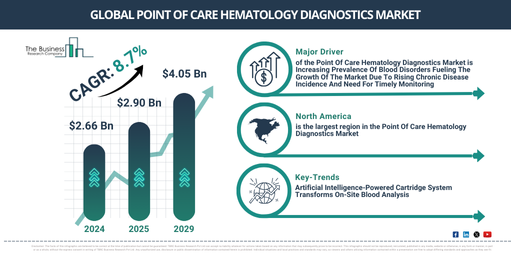
    The point of care hematology diagnostics market size has demonstrated robust growth over recent years. It is anticipated to expand from $2.66 billion in 2024 to $2.90 billion in 2025, at a compound annual growth rate (CAGR) of 9.1%. This historical market expansion is primarily due to the increasing occurrence of hematological conditions, the expansion of decentralized healthcare models, a greater emphasis on early disease identification, rising healthcare investments in developing markets, and the wider deployment of portable diagnostic instruments.

    The point of care hematology diagnostics market size is anticipated to experience robust expansion over the coming years. This market is projected to reach $4.05 billion by 2029, growing at a compound annual growth rate (CAGR) of 8.7%. This projected growth during the forecast period is primarily driven by the increasing adoption of personalized medicine, a rising demand for immediate clinical decisions, the expanding need for home healthcare diagnostics, the growing prevalence of blood-related disorders, and enhanced awareness regarding preventive healthcare. Significant trends anticipated in the forecast period involve advanced connectivity features in hematology analyzers, ongoing innovation in sample preparation methods, the integration of artificial intelligence into diagnostic tools, developments in single-cell analysis, the incorporation of cloud-based data platforms, and progress in lab-on-a-chip solutions.

    Get A Free Sample Of The Report:

    https://www.thebusinessresearchcompany.com/sample.aspx?id=27388&type=smp

    Which Market Dynamics Are Playing A Critical Role In The Growth Of The Point Of Care Hematology Diagnostics Market?

    The expanding occurrence of blood-related ailments is anticipated to fuel the expansion of the point-of-care hematology diagnostics market in the future. These conditions involve abnormalities in the various constituents of blood, such as red blood cells, white blood cells, platelets, or plasma. The heightened incidence of blood disorders largely stems from the growing presence of chronic illnesses, which directly affect blood health and necessitate continuous oversight. Point-of-care hematology diagnostics facilitate prompt detection and ongoing surveillance of blood disorders by delivering fast, precise results directly at or close to the patient care location, leading to faster clinical judgments and enhanced disease control. For example, in April 2024, the Perth Blood Institute, an Australian non-profit, reported that the count of individuals diagnosed with hemophilia (a hereditary blood condition where blood fails to clot properly, leading to extended bleeding) reached 257,146 in 2022, an increase from 233,577 in 2021. Consequently, the increasing frequency of blood disorders is propelling the development of the point-of-care hematology diagnostics market.

    What Are The Key Segment Trends Observed In The Point Of Care Hematology Diagnostics Market?

    The point of care hematology diagnostics market covered in this report is segmented

    1) By Type: Complete Blood Count, Coagulation Testing, Hemoglobin Testing, Anemia Diagnosis, Other Types

    2) By Product: Consumables, Systems

    3) By Mode Of Prescription: Prescription Based Product, Over-The-Counter Based Product

    4) By End User: Diagnostic Centers, Hospitals, Blood Banks, Transfusion Centers, Other End Users

    Subsegments:

    1) By Complete Blood Count: White Blood Cell Count, Red Blood Cell Count, Platelet Count, Hematocrit, Hemoglobin Concentration, Mean Corpuscular Volume (MCV)

    2) By Coagulation Testing: Prothrombin Time (PT), Activated Partial Thromboplastin Time (aPTT), International Normalized Ratio (INR), D-Dimer Test, Fibrinogen Level

    3) By Hemoglobin Testing: Total Hemoglobin, Glycated Hemoglobin (HbA1c), Oxyhemoglobin, Carboxyhemoglobin, Methemoglobin

    4) By Anemia Diagnosis: Iron Studies, Vitamin B12 Levels, Folate Levels, Reticulocyte Count, Ferritin Test, Transferrin Saturation

    5) By Other Types: Blood Typing And Crossmatching, Erythrocyte Sedimentation Rate, Malaria Parasite Detection, Sickle Cell Screening, C-Reactive Protein Testing

    Which Disruptive Trends Are Driving Change Across The Point Of Care Hematology Diagnostics Market?

    Leading companies within the point-of-care hematology diagnostics market are concentrating on developing state-of-the-art products, such as cartridge-based AI-powered hematology analyzers, to provide quick, precise, and on-site blood analysis for better patient care. These analyzers are compact diagnostic devices that utilize single-use reagent cartridges and artificial intelligence algorithms to efficiently and accurately analyze blood samples directly at the point of care. For example, in September 2024, Zoetis Inc., a US-based veterinary health company, launched Vetscan OptiCell, which is a cartridge-based, AI-powered hematology analyzer specifically designed for veterinary applications. This innovative system delivers rapid, reference laboratory-quality complete blood count (CBC) results in mere minutes at the point of care, while also reducing maintenance and operational time. It features advanced AI-driven image analysis and viscoelastic focusing technology that meticulously aligns cells for clear imaging, allowing for accurate blood cell classification and automated abnormality detection, thereby ensuring efficient and reliable veterinary diagnostics.

    Who Are The Leading Companies Driving The Point Of Care Hematology Diagnostics Market?

    Major companies operating in the point of care hematology diagnostics market are F. Hoffmann-La Roche Ltd., Thermo Fisher Scientific Inc., Abbott Laboratories, Danaher Corporation, Siemens Healthineers AG, Shenzhen Mindray Bio-Medical Electronics Co. Ltd., Sysmex Corporation, HORIBA Ltd., Nova Biomedical Corp., S.D. Sight Diagnostics Ltd., EKF Diagnostics Holdings plc., Medsource Ozone Biomedicals Pvt. Ltd., BioSystems S.A., Chengdu Seamaty Technology Co. Ltd., Drucker Diagnostics LLC, Diamond Diagnostics Inc., DIAGON Kft., BioMedomics Inc., Norma Instruments Zrt., PixCell Medical Technologies Ltd.

    Access The Complete Report Here:

    https://www.thebusinessresearchcompany.com/report/point-of-care-hematology-diagnostics-global-market-report

    Which Region Is Forecasted To Lead The Point Of Care Hematology Diagnostics Market In The Coming Years?

    North America was the largest region in the point of care hematology market in 2024. Asia-Pacific is expected to be the fastest-growing region in the forecast period. The regions covered in the point of care hematology diagnostics market report are Asia-Pacific, Western Europe, Eastern Europe, North America, South America, Middle East, Africa.

    Customize Your Report Here:

    https://www.thebusinessresearchcompany.com/customise?id=27388&type=smp

    Browse Through More Reports Similar to the Global Point Of Care Hematology Diagnostics Market 2025, By The Business Research Company

    Pre Engineered Buildings Global Market Report 2025

    https://www.thebusinessresearchcompany.com/report/pre-engineered-buildings-global-market-report

    Architectural And Structural Metals Global Market Report 2025

    https://www.thebusinessresearchcompany.com/report/architectural-and-structural-metals-global-market-report

    Buildings Construction Global Market Report 2025

    https://www.thebusinessresearchcompany.com/report/buildings-construction-global-market-report

    About The Business Research Company:

    With over 15000+ reports from 27 industries covering 60+ geographies, The Business Research Company has built a reputation for offering comprehensive, data-rich research and insights. Armed with 1,500,000 datasets, the optimistic contribution of in-depth secondary research, and unique insights from industry leaders, you can get the information you need to stay ahead in the game.

    Get in touch with us:

    The Business Research Company: https://www.thebusinessresearchcompany.com/

    Americas +1 310-496-7795

    Asia +44 7882 955267 & +91 8897263534

    Europe +44 7882 955267

    Email us at info@tbrc.info

    Follow us on:

    LinkedIn: https://in.linkedin.com/company/the-business-research-company

    YouTube: https://www.youtube.com/channel/UC24_fI0rV8cR5DxlCpgmyFQ

    Global Market Model: https://www.thebusinessresearchcompany.com/global-market-model
  • Point Of Care Devices Market Emerging Trends and Growth Drivers Through 2029 | Reach USD $44.84 Billion

    Point Of Care Devices Market Emerging Trends and Growth Drivers Through 2029 | Reach USD $44.84 Billion

    Uncover key drivers, emerging technologies, and competitive movements shaping the point of care devices market from 2025–2034 with trusted insights from The Business Research Company

    How Big Is The Point Of Care Devices Market Today And What Is Its Future Size?

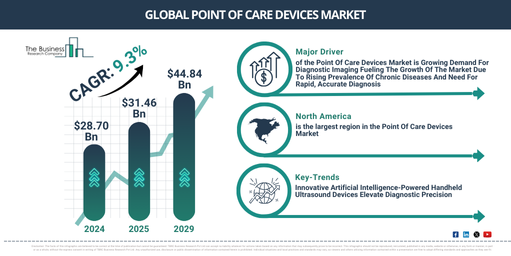
    The point of care devices market size has experienced robust growth in recent years. Projections indicate it will expand from $28.70 billion in 2024 to $31.46 billion in 2025, at a compound annual growth rate (CAGR) of 9.6%. This historical expansion is attributable to several factors, including increasing awareness of early disease detection, greater adoption of portable healthcare devices, an increasing demand for decentralized testing, growing government initiatives focused on healthcare accessibility, and rising healthcare expenditure across the globe.

    The point of care devices market is expected to experience significant expansion in the coming years, reaching $44.84 billion by 2029, demonstrating a compound annual growth rate (CAGR) of 9.3%. This growth during the forecast period is driven by factors such as the increasing adoption of wireless and interconnected devices, a greater focus on point-of-care testing in remote locations, a rising emphasis on cost-effective diagnostic tools, increased investments in healthcare infrastructure, the growing prevalence of infectious diseases, and an escalating demand for multi-parameter testing devices. Prominent trends anticipated in this period include advancements in lab-on-a-chip technology, the development of artificial intelligence-powered diagnostic platforms, innovations in smartphone-integrated testing devices, improvements in multiplex testing capabilities, and the creation of cloud-connected point-of-care systems.

    Get A Free Sample Of The Report:

    https://www.thebusinessresearchcompany.com/sample.aspx?id=27387&type=smp

    What External And Internal Drivers Are Influencing The Point Of Care Devices Market?

    The increasing need for diagnostic imaging is anticipated to fuel the expansion of the point-of-care devices market in the future. Diagnostic imaging involves methods and procedures that generate visual depictions of a body’s internal structures for medical assessment and treatment. The uptake of diagnostic imaging is on the rise, driven by the increasing occurrence of chronic illnesses that necessitate prompt and precise diagnosis. Point-of-care instruments improve diagnostic imaging capabilities through their compact and portable designs, rendering them highly suitable for use in clinics, at the patient’s bedside, and in distant healthcare environments. These devices expedite processes by delivering quick and precise imaging outcomes, thereby enhancing clinical decision-making and the effectiveness of patient care. As an illustration, a survey published by the National Library of Medicine, a US-based federal government entity, in February 2025, which analyzed 348,214,053 insured individuals across Medicare fee-for-service, Medicare Advantage, Medicaid, and commercial insurance plans from 2018 to 2022, indicated that imaging utilization is predicted to be 16.9% to 26.9% greater in 2055 than in 2023. Consequently, the expanding need for diagnostic imaging is propelling the expansion of the point-of-care devices market.

    How Is The Point Of Care Devices Market Categorized Across Applications And Types?

    The point of care devices market covered in this report is segmented

    1) By Type Of Device: Diagnostic Devices, Therapeutic Devices, Monitoring Devices, Treatment Devices, Support Devices

    2) By Technology: Biochemical Technology, Microfluidics, Immunoassay Technology, Nucleic Acid Testing, Wearable Technology

    3) By Application: Cardiology, Diabetes Management, Infectious Diseases, Oncology, Pediatrics

    4) By Distribution Channel: Direct Sales, Distributors, Online Sales, Retail Pharmacies, Healthcare Institutions

    5) By End User: Hospitals, Clinics, Home Care Settings, Diagnostic Laboratories, Emergency Medical Services (EMS)

    Subsegments:

    1) By Diagnostic Devices: Blood Glucose Monitors, Hematology Analyzers, Coagulation Analyzers, Urinalysis Devices, Molecular Diagnostics

    2) By Therapeutic Devices: Infusion Pumps, Respiratory Therapy Devices, Pain Management Devices, Wound Care Devices, Dialysis Devices

    3) By Monitoring Devices: Vital Signs Monitors, Cardiac Monitors, Pulse Oximeters, Temperature Monitors, Respiratory Monitors

    4) By Treatment Devices: Defibrillators, Surgical Devices, Laser Therapy Devices, Physical Therapy Devices

    5) By Support Devices: Sample Collection Devices, Specimen Transport Devices, Data Management Devices, Calibration And Maintenance Devices

    How Are Market Trends Influencing Competition In The Point Of Care Devices Market?

    Leading companies in the point-of-care devices market are concentrating on developing advanced technological solutions, such as artificial intelligence-powered handheld ultrasound systems, to enhance diagnostic accuracy and portability. Artificial intelligence-enhanced handheld ultrasound systems represent portable imaging devices that leverage AI algorithms to assist in capturing and interpreting ultrasound images, leading to faster and more accurate diagnoses. For instance, in October 2023, Koninklijke Philips N.V., a Netherlands-based healthcare technology company, introduced the Compact 5000 Series, an AI-enhanced point-of-care ultrasound system. This portable device provides superior image quality along with advanced AI-driven automation for measurements and streamlined workflows, enabling rapid and precise diagnostics across various healthcare settings. It features user-friendly controls, supports multiple transducers, and integrates smoothly with telemedicine platforms to facilitate collaborative remote clinical care.

    Who Are The Global Leaders Steering The Point Of Care Devices Market Forward?

    Major companies operating in the point of care devices market are Johnson & Johnson, F. Hoffmann-La Roche AG, Thermo Fisher Scientific Inc., Abbott Laboratories, Danaher Corporation, Siemens Healthineers AG, Becton, Dickinson and Company, Hologic Inc., BioMérieux SA, Quidel Corporation, OraSure Technologies Inc., Nova Biomedical Corporation, Sekisui Diagnostics LLC, Abaxis Inc., EKF Diagnostics Holdings plc, Trinity Biotech plc, Chembio Diagnostics Inc., PTS Diagnostics LLC, MeMed, Alere Inc., Diagnostics For All Inc.

    Access The Complete Report Here:

    https://www.thebusinessresearchcompany.com/report/point-of-care-devices-global-market-report

    What Are The Emerging Regional Trends Driving The Point Of Care Devices Market?

    North America was the largest region in the point of care devices market in 2024. Asia-Pacific is expected to be the fastest-growing region in the forecast period. The regions covered in the point of care devices market report are Asia-Pacific, Western Europe, Eastern Europe, North America, South America, Middle East, Africa.

    Customize Your Report Here:

    https://www.thebusinessresearchcompany.com/customise?id=27387&type=smp

    Browse Through More Reports Similar to the Global Point Of Care Devices Market 2025, By The Business Research Company

    Ai In Inventory Management Global Market Report 2025

    https://www.thebusinessresearchcompany.com/report/ai-in-inventory-management-global-market-report

    Artificial Intelligence Ai In Retail Global Market Report 2025

    https://www.thebusinessresearchcompany.com/report/artificial-intelligence-ai-in-retail-global-market-report

    Ai In Fintech Global Market Report 2025

    https://www.thebusinessresearchcompany.com/report/ai-in-fintech-global-market-report

    About The Business Research Company:

    With over 15000+ reports from 27 industries covering 60+ geographies, The Business Research Company has built a reputation for offering comprehensive, data-rich research and insights. Armed with 1,500,000 datasets, the optimistic contribution of in-depth secondary research, and unique insights from industry leaders, you can get the information you need to stay ahead in the game.

    Get in touch with us:

    The Business Research Company: https://www.thebusinessresearchcompany.com/

    Americas +1 310-496-7795

    Asia +44 7882 955267 & +91 8897263534

    Europe +44 7882 955267

    Email us at info@tbrc.info

    Follow us on:

    LinkedIn: https://in.linkedin.com/company/the-business-research-company

    YouTube: https://www.youtube.com/channel/UC24_fI0rV8cR5DxlCpgmyFQ

    Global Market Model: https://www.thebusinessresearchcompany.com/global-market-model
  • Plasmonic Laser Ablation Device Market Size, Share & Trends Analysis Report By Product | Forecast to 2029

    Plasmonic Laser Ablation Device Market Size, Share & Trends Analysis Report By Product | Forecast to 2029

    Uncover key drivers, emerging technologies, and competitive movements shaping the plasmonic laser ablation device market from 2025–2034 with trusted insights from The Business Research Company

    How Will The Plasmonic Laser Ablation Device Market Valuation Change Between Now And 2029?

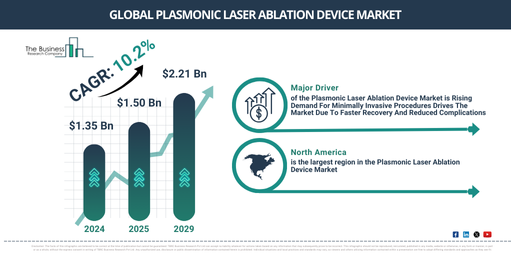
    The market for plasmonic laser ablation devices has experienced rapid expansion in recent years. This market is projected to expand from $1.35 billion in 2024 to $1.50 billion in 2025, achieving a compound annual growth rate (CAGR) of 10.6%. The historical growth was driven by the rising prevalence of cancer and chronic diseases, increased investment in medical research and clinical trials, the growing integration of plasmonic in biomedical applications, its expanding adoption in material science and nanotechnology, and an increasing emphasis on patient safety and recovery.

    The plasmonic laser ablation device market size is anticipated to experience substantial expansion over the upcoming years. This market is projected to reach $2.21 billion by 2029, exhibiting a compound annual growth rate (CAGR) of 10.2%. The expansion during the projected timeframe stems from factors such as the expanding application of femtosecond and nanosecond laser pulses, an escalating need for outpatient and day-care surgical interventions, the evolving inclination towards precision medicine, greater implementation in dermatological and cosmetic treatments, and an increasing requirement for image-guided surgical solutions. Key trends anticipated for this forecast period encompass progress in femtosecond and nanosecond laser technologies, the incorporation of real-time imaging capabilities, innovations in biocompatible nanoparticle formulations, enhancements in surface plasmon resonance (SPR) monitoring, and breakthroughs concerning photothermal and photomechanical effects.

    Get A Free Sample Of The Report:

    https://www.thebusinessresearchcompany.com/sample.aspx?id=27386&type=smp

    What Underlying Factors Are Supporting The Plasmonic Laser Ablation Device Market Growth?

    A growing need for minimally invasive procedures is anticipated to propel the plasmonic laser ablation device market’s expansion. These procedures involve medical techniques conducted via small cuts or natural bodily openings, employing specialized instruments to lessen pain, scarring, and recuperation periods. The rise in minimally invasive procedures stems from their quicker recovery times, enabling patients to resume regular activities sooner with fewer issues. Plasmonic laser ablation devices find application in these procedures for extremely accurate and localized tissue removal, ensuring minimal heat damage to adjacent regions, which in turn diminishes incision dimensions and speeds up recovery. For example, in June 2024, data from the American Society of Plastic Surgeons, a US-based professional society, indicated that roughly 25.4 million minimally invasive procedures were carried out in 2023, marking a 7% increase from 2022. Consequently, the heightened demand for minimally invasive procedures is fueling the growth of the plasmonic laser ablation device market. The escalating healthcare expenditure is projected to advance the plasmonic laser ablation device market. Healthcare expenditure denotes the overall financial outlay by individuals, governments, and organizations on medical services, treatments, and health-related assets. This spending is on the rise because of an aging global population, as older individuals generally need more frequent and expensive medical attention for chronic ailments and conditions linked to age. Greater healthcare expenditure facilitates the creation and uptake of sophisticated technologies like plasmonic laser ablation devices by allocating funds for research, acquisition, and assimilation into clinical use. As an illustration, in March 2022, the Centers for Medicare and Medicaid Services (CMS), a US-based federal agency, forecasted that the yearly rise in national health spending would average 5.1% from 2021 to 2030, anticipated to hit around $6.8 trillion by 2030. Thus, increasing healthcare spending is propelling the expansion of the plasmonic laser ablation device market.

    Which Sub-Segments Are Driving Growth Within The Plasmonic Laser Ablation Device Market?

    The plasmonic laser ablation device market covered in this report is segmented

    1) By Type: Yttrium Aluminum Garnet Laser, Carbon Dioxide Laser, Other Types

    2) By Device Type: Pulsed Plasmonic Laser Ablation Devices, Continuous Wave Plasmonic Laser Ablation Devices, Femtosecond Plasmonic Laser Ablation Devices, Nanosecond Plasmonic Laser Ablation Devices

    3) By Technology: Surface Plasmon Resonance (SPR) Technology, Nanoparticle Mediated Laser Ablation, Optical Coherence Tomography (OCT)

    4) By Application: Medical Applications, Material Processing, Research And Development

    5) By End-User: Hospitals, Research Institutes, Manufacturing Industries, Other Users

    Subsegments:

    1) By Yttrium Aluminum Garnet: Nanosecond Yttrium Aluminum Garnet Laser, Picosecond Yttrium Aluminum Garnet Laser, Q-switched Yttrium Aluminum Garnet Laser

    2) By Carbon Dioxide (CO₂) Laser: Continuous Wave Carbon Dioxide Laser, Pulsed Carbon Dioxide Laser, rational Carbon Dioxide Laser

    3) By Other Types: Femtosecond Laser, Excimer Laser, Ultrafast Laser

    Which Companies Hold A Competitive Edge In The 191 Market?

    Major companies operating in the plasmonic laser ablation device market are Mitsubishi Electric Corporation, Boston Scientific Corporation, Trumpf Group, Coherent Corp., Han’s Laser Technology Industry Group Co. Ltd., Lumentum Holdings Inc., Thorlabs Inc., Edmund Optics Inc, Jenoptik AG, Universal Laser Systems Inc., Cincinnati Incorporated, Epilog Laser, RPMC Lasers, Dongguan Mactron Technology Co. Ltd., Aesthetic World, Astanza Laser LLC, Boss Laser LLc, Quantum Composers, Laser Photonics Corporation, Medioxra LLP.

    Access The Complete Report Here:

    https://www.thebusinessresearchcompany.com/report/plasmonic-laser-ablation-device-global-market-report

    Which Region Dominates The Plasmonic Laser Ablation Device Market Today?

    North America was the largest region in the plasmonic laser ablation device market in 2024. Asia-Pacific is expected to be the fastest-growing region in the forecast period. The regions covered in the plasmonic laser ablation device market report are Asia-Pacific, Western Europe, Eastern Europe, North America, South America, Middle East, Africa.

    Customize Your Report Here:

    https://www.thebusinessresearchcompany.com/customise?id=27386&type=smp

    Browse Through More Reports Similar to the Global Plasmonic Laser Ablation Device Market 2025, By The Business Research Company

    Precast Concrete Global Market Report 2025

    https://www.thebusinessresearchcompany.com/report/precast-concrete-market

    Ready Mix Concrete Global Market Report 2025

    https://www.thebusinessresearchcompany.com/report/ready-mix-concrete-global-market-report

    Insulated Concrete Form Global Market Report 2025

    https://www.thebusinessresearchcompany.com/report/insulated-concrete-form-global-market-report

    About The Business Research Company:

    With over 15000+ reports from 27 industries covering 60+ geographies, The Business Research Company has built a reputation for offering comprehensive, data-rich research and insights. Armed with 1,500,000 datasets, the optimistic contribution of in-depth secondary research, and unique insights from industry leaders, you can get the information you need to stay ahead in the game.

    Get in touch with us:

    The Business Research Company: https://www.thebusinessresearchcompany.com/

    Americas +1 310-496-7795

    Asia +44 7882 955267 & +91 8897263534

    Europe +44 7882 955267

    Email us at info@tbrc.info

    Follow us on:

    LinkedIn: https://in.linkedin.com/company/the-business-research-company

    YouTube: https://www.youtube.com/channel/UC24_fI0rV8cR5DxlCpgmyFQ

    Global Market Model: https://www.thebusinessresearchcompany.com/global-market-model
  • Global T Cell Receptor (TCR) Based Antibody Market 2025–2029: Unveiling Growth Developments with the Latest Updates

    Global T Cell Receptor (TCR) Based Antibody Market 2025–2029: Unveiling Growth Developments with the Latest Updates

    Uncover key drivers, emerging technologies, and competitive movements shaping the t cell receptor (tcr) based antibody market from 2025–2034 with trusted insights from The Business Research Company

    How Big Is The T Cell Receptor (TCR) Based Antibody Market Today And What Is Its Future Size?

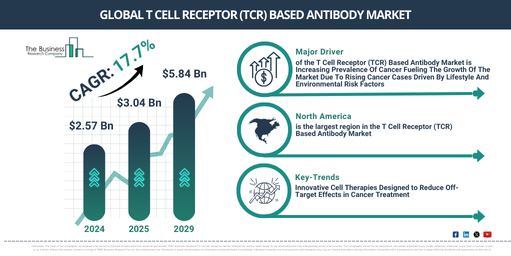
    The T-cell receptor (TCR)-based antibody market size has experienced swift growth in recent years. It is forecast to grow from $2.57 billion in 2024 to $3.04 billion in 2025, achieving a compound annual growth rate (CAGR) of 18.1%. The expansion observed in the past can be ascribed to an escalating demand for targeted cancer therapies, an increased focus on targeting intracellular antigens, a rise in clinical research concerning T cell receptor-based modalities, growing investment in immunotherapy platforms, and the increasing adoption of personalized medicine approaches.

    The T-cell receptor (TCR)-based antibody market size is projected to experience swift expansion over the coming years. This market is anticipated to reach a valuation of $5.84 billion by 2029, demonstrating a compound annual growth rate (CAGR) of 17.7%. Factors contributing to this growth during the forecast period include an escalating demand for precise and targeted therapies, a rising emphasis on neoantigen targeting for cancer treatment, an increasing number of orphan drug approvals for rare cancers, augmented public and private investment in immuno-oncology, and a continued focus on neoantigen targeting. Key trends expected during this period encompass enhancements in T cell receptor-mimic antibody design, the creation of bispecific T cell receptor-antibody formats, breakthroughs in major histocompatibility complex-restricted antigen targeting, progress in artificial intelligence-driven epitope discovery, and the introduction of off-the-shelf T cell receptor-based therapeutics.

    Get A Free Sample Of The Report:

    https://www.thebusinessresearchcompany.com/sample.aspx?id=27428&type=smp

    Which Demand Drivers Are Strengthening The T Cell Receptor (TCR) Based Antibody Market?

    The T-cell receptor-based antibody market is projected to expand significantly due to the rising prevalence of cancer. Cancer prevalence refers to the total number of individuals, both newly and previously diagnosed, who are alive with a history of cancer at a specific point in time. This increase in cancer prevalence is attributed to lifestyle-related factors such as poor diet, smoking, alcohol consumption, and exposure to environmental pollutants, which elevate the risk of developing various cancers. T-cell receptor-based antibodies improve cancer treatment by precisely targeting tumor cells, thus enhancing therapeutic accuracy. They enable the immune system to recognize and destroy cancer cells more effectively, leading to increased treatment efficacy and reduced side effects. For instance, in July 2024, the Australian Institute of Health and Welfare, an Australia-based government agency, reported that the number of cancer cases diagnosed in Australia reached 160,570 in 2022, indicating an increase of 3,789 cases from 156,781 in 2021. Therefore, the increasing prevalence of cancer is a primary catalyst for the growth of the T-cell receptor-based antibody market.

    Which Segment Accounts For The Largest Share In The T Cell Receptor (TCR) Based Antibody Market?

    The T cell receptor (TCR) based antibody market covered in this report is segmented

    1) By Type Of Antibody: Monoclonal Antibodies, Polyclonal Antibodies, Bispecific Antibodies, Conjugated Antibodies

    2) By Target Antigen: Tumor-Associated Antigens, Viral Antigens, Autoimmune Antigens, Others Target Antigens

    3) By Therapeutic Approach: Cytotoxic T-Cell Therapies, Regulator T-Cell Therapies, Dual-Targeting Therapies

    4) By Application: Cancer Immunotherapy, Infectious Diseases, Autoimmune Diseases, Transplant Rejection, Diagnostic Testing

    5) By End-Users: Hospitals, Research Institutes, Specialty Clinics, Other End-Users

    Subsegments:

    1) By Monoclonal Antibodies: Fully Human Antibodies, Humanized Antibodies, Chimeric Antibodies, Murine Antibodies

    2) By Polyclonal Antibodies: Rabbit Derived Antibodies, Goat Derived Antibodies, Sheep Derived Antibodies, Donkey Derived Antibodies

    3) By Bispecific Antibodies: Tandem Single Chain Variable Fragment Antibodies, Dual Variable Domain Immunoglobulin Antibodies, Bispecific T Cell Engager Antibodies, Dual Affinity Re-Targeting Antibodies

    4) By Conjugated Antibodies: Antibody Drug Conjugates, Radioimmunoconjugates, Immunotoxins, Fluorescent Conjugated Antibodies

    Which Long-Term Trends Will Play A Crucial Role In The T Cell Receptor (TCR) Based Antibody Market?

    Leading organizations within the **T cell receptor-based antibody market** are prioritizing the creation of advanced products, such as TCR mimic antibodies, to boost precision, improve therapeutic effectiveness, and broaden treatment possibilities for cancer and other illnesses. **T cell receptor (TCR) mimic antibodies** are specially engineered antibodies capable of identifying intracellular antigens presented by MHC molecules, similar to how natural T cell receptors function, thereby enabling focused immune responses against diseased cells. An illustrative example of this trend occurred in **September 2022**, when **Biocytogen Pharmaceuticals (Beijing) Co. Ltd.**, a biotechnology firm based in **China**, formed a collaboration with **Guangzhou FineImmune Biotechnology Co. Ltd.**, also a **China-based** biotechnology company, to introduce TCR-mimic antibody-based cell therapies designed for cancer treatment. In this partnership, **Biocytogen** plans to utilize its exclusive RenMice platform to develop fully human antibodies targeting specific peptide-MHC complexes, while **FineImmune** will provide its specialized knowledge in T cell engager and cell therapy development. This joint effort aims to propel next-generation immunotherapies forward, enhancing their specificity and minimizing unwanted off-target effects, potentially delivering innovative solutions for individuals battling difficult-to-treat cancers.

    Which Companies Hold A Competitive Edge In The 233 Market?

    Major companies operating in the t cell receptor (tcr) based antibody market are Pfizer Inc., Bristol-Myers Squibb Company, Novartis AG, GSK plc, Amgen Inc., Bio-Rad Laboratories Inc., GenScript Biotech Corporation, Biocytogen Pharmaceuticals Co. Ltd., Abcam plc, Immunocore Holdings plc, Xencor Inc., Fate Therapeutics Inc., Eureka Therapeutics Inc., Proteintech Group Inc., Santa Cruz Biotechnology Inc., Creative Biolabs Inc., TScan Therapeutics Inc., Alloy Therapeutics Inc., Affini-T Therapeutics Inc., Medigene AG, 3T Biosciences Inc., Nona Biosciences, Alithea Biotechnology GmbH, Nextera Therapeutics Inc., TCRCure Biopharma Ltd.

    Access The Complete Report Here:

    https://www.thebusinessresearchcompany.com/report/t-cell-receptor-tcr-based-antibody-global-market-report

    Which Region Is Forecasted To Lead The T Cell Receptor (TCR) Based Antibody Market In The Coming Years?

    North America was the largest region in the T cell receptor (TCR)-based antibody market in 2024. Asia-Pacific is expected to be the fastest-growing region in the forecast period. The regions covered in the T cell receptor (TCR) based antibody market report are Asia-Pacific, Western Europe, Eastern Europe, North America, South America, Middle East, Africa.

    Customize Your Report Here:

    https://www.thebusinessresearchcompany.com/customise?id=27428&type=smp

    Browse Through More Reports Similar to the Global T Cell Receptor (TCR) Based Antibody Market 2025, By The Business Research Company

    Steam Turbine Global Market Report 2025

    https://www.thebusinessresearchcompany.com/report/steam-turbine-global-market-report

    Steam And Air Conditioning Supply Global Market Report 2025

    https://www.thebusinessresearchcompany.com/report/steam-and-air-conditioning-supply-global-market-report

    Fishing Hunting And Trapping Global Market Report 2025

    https://www.thebusinessresearchcompany.com/report/fishing-hunting-and-trapping-global-market-report

    About The Business Research Company:

    With over 15000+ reports from 27 industries covering 60+ geographies, The Business Research Company has built a reputation for offering comprehensive, data-rich research and insights. Armed with 1,500,000 datasets, the optimistic contribution of in-depth secondary research, and unique insights from industry leaders, you can get the information you need to stay ahead in the game.

    Get in touch with us:

    The Business Research Company: https://www.thebusinessresearchcompany.com/

    Americas +1 310-496-7795

    Asia +44 7882 955267 & +91 8897263534

    Europe +44 7882 955267

    Email us at info@tbrc.info

    Follow us on:

    LinkedIn: https://in.linkedin.com/company/the-business-research-company

    YouTube: https://www.youtube.com/channel/UC24_fI0rV8cR5DxlCpgmyFQ

    Global Market Model: https://www.thebusinessresearchcompany.com/global-market-model
  • What Are The Strategic Insights Behind The Plasmid Purification Market Expansion To $3.88 Billion?

    What Are The Strategic Insights Behind The Plasmid Purification Market Expansion To $3.88 Billion?

    Uncover key drivers, emerging technologies, and competitive movements shaping the plasmid purification market from 2025–2034 with trusted insights from The Business Research Company

    What Are The Future Growth Projections For The Plasmid Purification Market Size?

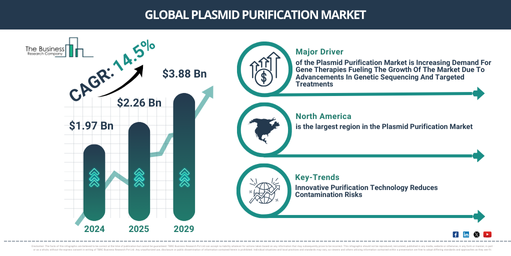
    The plasmid purification market has witnessed substantial growth in recent years. Its value is projected to climb from $1.97 billion in 2024 to $2.26 billion in 2025, achieving a compound annual growth rate (CAGR) of 14.9%. This historical expansion can be primarily ascribed to the escalating demand for recombinant proteins, an increase in gene therapy research, a rise in vaccine development, the continuous expansion of biotechnology and pharmaceutical industries, and a surge in personalized medicine initiatives.

    The plasmid purification market size is expected to undergo rapid expansion in the coming years. It is projected to grow to $3.88 billion by 2029, achieving a compound annual growth rate (CAGR) of 14.5%. This growth during the forecast period is largely attributed to the increase in gene and cell therapy applications, the demand for high-purity plasmid DNA for diagnostics, advancements in synthetic biology research, the increasing adoption of automated plasmid purification systems, and a rising focus on the development of next-generation therapeutics. Major trends anticipated within the forecast period include the automation of plasmid purification processes, the integration of microfluidics for plasmid isolation, progress in endotoxin-free purification methods, the incorporation of artificial intelligence for optimizing processes, and the miniaturization of plasmid purification devices.

    Get A Free Sample Of The Report:

    https://www.thebusinessresearchcompany.com/sample.aspx?id=27385&type=smp

    Which Demand Drivers Are Strengthening The Plasmid Purification Market?

    The growing need for gene therapies is anticipated to stimulate the expansion of the plasmid purification market moving ahead. Gene therapy is a medical approach focused on altering or substituting faulty genes to address or prevent illnesses. This rising demand for gene therapy stems from progress in genetic sequencing and diagnostic methods, which allow for the accurate detection of disease-causing genes for specific treatments. Plasmid purification aids gene therapy development by supplying high-quality, unadulterated plasmid DNA, which is crucial for effective and secure therapeutic uses. It also alleviates production constraints through scalable and repeatable plasmid isolation, thereby enhancing research and biomanufacturing results. For instance, the American Society of Gene & Cell Therapy (ASGCT), a US-based non-profit medical and scientific organization, reported in December 2024 that the Food and Drug Administration (FDA) cleared six gene therapy products in 2023, an increase from five approvals in 2022. Consequently, the heightened demand for gene therapies is propelling the growth of the plasmid purification market.

    What Segmentation Insights Are Provided In The Plasmid Purification Market Research?

    The plasmid purification market covered in this report is segmented

    1) By Product Type: Mini Plasmid Purification Kits, Midi Plasmid Purification Kits, Maxi Plasmid Purification Kits, Reagents And Consumables, Instruments And Systems, Other Product Types

    2) By Technology: Alkaline Lysis Method, Spin Column Method, Magnetic Bead-Based Method, Filter-Based Method

    3) By Application: Genetic Engineering, Cloning, Transfection, Vaccines Development

    4) By End-User: Academic Research Institutions, Pharmaceutical Companies, Biotechnology Firms, Contract Research Organizations (CROs)

    Subsegments:

    1) By Mini Plasmid Purification Kits: Spin Column Kits, Magnetic Bead Kits, Filter Plate Kits, Manual Kit Systems

    2) By Midi Plasmid Purification Kits: Spin Column Kits, Gravity Flow Kits, Vacuum Filtration Kits, Automated Midi Kits

    3) By Maxi Plasmid Purification Kits: Gravity Flow Kits, Vacuum Filtration Kits, Large-Scale Automated Kits, Membrane Adsorption Kits

    4) By Reagents And Consumables: Buffers, Enzymes, Solutions, Columns, Membranes

    5) By Instruments And Systems: Automated Purification Systems, Centrifuges, Magnetic Separators, Filtration Devices

    6) By Other Product Types: Kits For Endotoxin Removal, Kits For Ribonucleic Acid (RNA) Removal, Kits For Genomic Deoxyribonucleic Acid (DNA) Removal, Accessories And Others

    Which Notable Trends Are Transforming The Plasmid Purification Market Outlook?

    Leading firms within the plasmid purification market are concentrating efforts on creating sophisticated products, including the automated plasmid maxi-prep purification system, aimed at boosting operational efficiency, increasing output, and achieving superior plasmid DNA purity. Such a system represents a technology capable of autonomously isolating substantial quantities of high-purity plasmid DNA from bacterial cultures, thereby optimizing the purification workflow for greater effectiveness and uniformity. As an illustration, in June 2023, GenScript Biotech Corporation, a biotechnology company based in the US, introduced the AmMag Quatro, which is an advanced, fully automated high-throughput system designed for plasmid maxi-prep purification. This platform, characterized by its scalability and modularity, is capable of simultaneously operating up to four distinct purification modules, enabling the processing of a total of 24 samples within approximately two hours. The AmMag Quatro utilizes magnetic silica bead technology to provide high-quality, transfection-grade plasmid DNA, featuring low endotoxin levels and a significant supercoiled DNA ratio, thus guaranteeing plasmids are prepared for subsequent applications. Its inventive construction guarantees excellent reproducibility, minimizes risks of contamination, and substantially enhances processing capacity, rendering it perfectly suited for extensive research and bioproduction uses.

    Which Firms Are Driving Innovation Within The Plasmid Purification Market?

    Major companies operating in the plasmid purification market are Thermo Fisher Scientific Inc., Merck KGaA, Agilent Technologies Inc., Illumina Inc., Bio-Rad Laboratories Inc., Qiagen N.V., GenScript Biotech Corporation, Takara Bio Inc., Promega Corporation, Aldevron LLC, Sino Biological Inc., New England Biolabs Inc., Origene Technologies Inc., Applied Biological Materials, InvivoGen, Omega Bio-tek Inc., ABP Biosciences, Zymo Research Corporation, Lucigen Corporation, Oxford Genetics Ltd., Mirus Bio LLC, Norgen Biotek Corp., PlasmidFactory GmbH & Co. KG, Lamda Biotech.

    Access The Complete Report Here:

    https://www.thebusinessresearchcompany.com/report/plasmid-purification-global-market-report

    Which Regional Markets Are Emerging As Key Hubs For The Plasmid Purification Market?

    North America was the largest region in the plasmid purification market in 2024. Asia-Pacific is expected to be the fastest-growing region in the forecast period. The regions covered in the plasmid purification market report are Asia-Pacific, Western Europe, Eastern Europe, North America, South America, Middle East, Africa.

    Customize Your Report Here:

    https://www.thebusinessresearchcompany.com/customise?id=27385&type=smp

    Browse Through More Reports Similar to the Global Plasmid Purification Market 2025, By The Business Research Company

    Precast Concrete Global Market Report 2025

    https://www.thebusinessresearchcompany.com/report/precast-concrete-market

    Industrial Cable Reels Global Market Report 2025

    https://www.thebusinessresearchcompany.com/report/industrial-cable-reels-global-market-report

    Spring Loaded Industrial Cable Reels Global Market Report 2025

    https://www.thebusinessresearchcompany.com/report/spring-loaded-industrial-cable-reels-global-market-report

    About The Business Research Company:

    With over 15000+ reports from 27 industries covering 60+ geographies, The Business Research Company has built a reputation for offering comprehensive, data-rich research and insights. Armed with 1,500,000 datasets, the optimistic contribution of in-depth secondary research, and unique insights from industry leaders, you can get the information you need to stay ahead in the game.

    Get in touch with us:

    The Business Research Company: https://www.thebusinessresearchcompany.com/

    Americas +1 310-496-7795

    Asia +44 7882 955267 & +91 8897263534

    Europe +44 7882 955267

    Email us at info@tbrc.info

    Follow us on:

    LinkedIn: https://in.linkedin.com/company/the-business-research-company

    YouTube: https://www.youtube.com/channel/UC24_fI0rV8cR5DxlCpgmyFQ

    Global Market Model: https://www.thebusinessresearchcompany.com/global-market-model
  • How Will The Pigmented Lesion Treatment Market Reach $4.73 Billion By 2029 Amid Global Shifts?

    How Will The Pigmented Lesion Treatment Market Reach $4.73 Billion By 2029 Amid Global Shifts?

    Uncover key drivers, emerging technologies, and competitive movements shaping the pigmented lesion treatment market from 2025–2034 with trusted insights from The Business Research Company

    What Is The Current Size And Growth Outlook For The Pigmented Lesion Treatment Market?

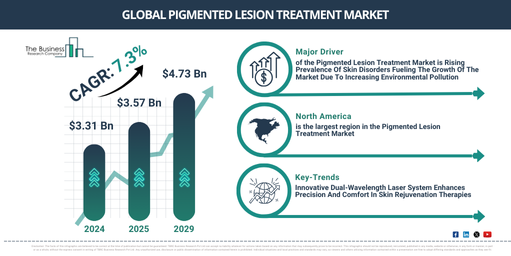
    The pigmented lesion treatment market has experienced robust expansion over recent years. Its size is projected to increase from $3.31 billion in 2024 to reach $3.57 billion by 2025, demonstrating a compound annual growth rate (CAGR) of 7.7%. Factors contributing to this historical growth include the growing incidence of hyperpigmentation disorders, heightened public awareness concerning aesthetic dermatology, a rise in disposable incomes, greater demand for cosmetic procedures that are non-invasive, and an intensified emphasis on maintaining skin health and appearance.

    The pigmented lesion treatment market is projected to experience significant growth in the coming years, reaching $4.73 billion by 2029, with a compound annual growth rate (CAGR) of 7.3%. This expansion during the forecast period is driven by increased consumer spending on aesthetic procedures, the growing acceptance of home-use pigmentation devices, a heightened demand for personalized skin treatments, the increasing influence of beauty and wellness professionals, a greater acceptance of male aesthetic treatments, and the expanding availability of combination therapies. Key trends anticipated in this period involve the integration of teledermatology services, advancements in non-invasive treatment modalities, the development of personalized treatment protocols, the incorporation of multi-modal therapies, and the integration of electronic health records.

    Get A Free Sample Of The Report:

    https://www.thebusinessresearchcompany.com/sample.aspx?id=27384&type=smp

    What Growth-Enabling Forces Are Impacting The Pigmented Lesion Treatment Market?

    An increase in skin disorders is anticipated to fuel the expansion of the pigmented lesion treatment market in the future. These conditions encompass various ailments impacting the skin’s structure, functionality, or look, frequently leading to symptoms like inflammation, irritation, or unusual growths. Examples include acne, eczema, psoriasis, dermatitis, vitiligo, fungal infections, warts, and skin cancer. The growing occurrence of skin disorders is linked to increasing environmental pollution, given that contaminants can compromise the skin’s protective barrier and provoke inflammatory or allergic responses. Treatment for pigmented lesions aids in managing skin disorders by targeting unusual skin discoloration, proving effective for conditions like age spots, melasma, and freckles. This treatment enhances skin aesthetics using advanced technologies, thereby improving dermatological care and boosting patient confidence. For example, in 2023, Cancer Australia, an Australia-based government agency, reported around 8,257 new diagnoses of melanoma of the skin, which represented 2.6% of all cancer-related deaths. Consequently, the escalating incidence of skin disorders is a primary driver for the expansion of the pigmented lesion treatment market.

    How Does The Pigmented Lesion Treatment Market Differ By Segment?

    The pigmented lesion treatment market covered in this report is segmented

    1) By Treatment Type: Laser Therapy, Topical Creams, Chemical Peels, Microdermabrasion, Other Treatment Types

    2) By Product Type: Lasers And Energy-Based Devices, Radiofrequency (RF) Devices, Micro-Focused Ultrasound, Intense Pulsed Light Devices

    3) By Age Group: Children, Adults, Older Adults

    4) By Application: Melasma, Freckles, Age Spots, Nevus, Other Applications

    5) By End User: Dermatology Clinics, Beauty Clinics, Other End Users

    Subsegments:

    1) By Laser Therapy: Fractional Laser Treatment, Q-Switched Laser Treatment, Intense Pulsed Light Therapy, Picosecond Laser Treatment, Ablative Laser Treatment

    2) By Topical Creams: Hydroquinone-Based Creams, Retinoid-Based Creams, Corticosteroid Creams, Azelaic Acid Creams, Kojic Acid Creams

    3) By Chemical Peels: Glycolic Acid Peels, Salicylic Acid Peels, Trichloroacetic Acid Peels, Lactic Acid Peels, Phenol Peels

    4) By Microdermabrasion: Crystal Microdermabrasion, Diamond Tip Microdermabrasion, Hydra Microdermabrasion, At-Home Microdermabrasion Kits, Medical-Grade Microdermabrasion

    5) By Other Treatment Types: Cryotherapy, Radiofrequency Therapy, Ultrasound Therapy, Dermabrasion, Natural And Herbal Remedies

    What New Opportunities Are Emerging From Trends In The Pigmented Lesion Treatment Market?

    Leading firms within the pigmented lesion treatment market are concentrating on creating sophisticated products, including dual-wavelength fractional laser systems, with the aim of improving the accuracy and success of treatments for diverse skin pigmentation problems. These dual-wavelength fractional laser systems represent advanced dermatological equipment that integrates two distinct laser wavelengths to address both the superficial and deeper layers of the skin concurrently, facilitating more efficient treatment of pigmented lesions and promoting skin rejuvenation. As an illustration, in April 2025, Bausch Health Companies Inc., a pharmaceutical entity headquartered in Canada, alongside Solta Medical Corporation, an aesthetics business division of Bausch Health Companies Inc. situated in the US, introduced Fraxel FTX, which is an advanced laser resurfacing system. This novel device incorporates dual-wavelength fractional lasers, specifically 1550 nm erbium-glass and 1927 nm thulium, engineered to address both the deeper and more superficial skin layers. It comes with a re-engineered handpiece that is 20% lighter and features built-in cooling technology, intended to boost patient comfort. Furthermore, the system integrates intelligent optical tracking via Accutrac for accurate and uniform treatment application, coupled with a contemporary color touchscreen interface that allows for personalized treatment configurations.

    Who Are The Most Influential Companies In The Pigmented Lesion Treatment Market?

    Major companies operating in the pigmented lesion treatment market are EL.EN S.p.A., Candela Medical Corporation, Alma Lasers Ltd., Cutera Inc., Lutronic Corporation, Fotona d.o.o., Sciton Inc., Solta Medical Inc., Inmode Ltd., Strata Skin Sciences Inc., Lumenis Ltd., Syneron Medical Ltd., Quanta System S.P.A, Sharplight Technologies Ltd., Beijing Sincoheren Science and Technology Development Co. Ltd., Venus Concept Inc., Lynton Lasers Ltd., Eufoton S.R.L., Asclepion Laser Technologies Gmbh, DEKA M.E.L.A. Srl.

    Access The Complete Report Here:

    https://www.thebusinessresearchcompany.com/report/pigmented-lesion-treatment-global-market-report

    Which Region Is Leading Innovation In The Pigmented Lesion Treatment Market?

    North America was the largest region in the pigmented lesion treatment market in 2024. Asia-Pacific is expected to be the fastest-growing region in the forecast period. The regions covered in the pigmented lesion treatment market report are Asia-Pacific, Western Europe, Eastern Europe, North America, South America, Middle East, Africa.

    Customize Your Report Here:

    https://www.thebusinessresearchcompany.com/customise?id=27384&type=smp

    Browse Through More Reports Similar to the Global Pigmented Lesion Treatment Market 2025, By The Business Research Company

    Mining Drill Bits Global Market Report 2025

    https://www.thebusinessresearchcompany.com/report/mining-drill-bits-global-market-report

    Mining Drill Bits Global Market Report 2025

    https://www.thebusinessresearchcompany.com/report/mining-drill-bits-global-market-report

    Rotary Drilling Rig Global Market Report 2025

    https://www.thebusinessresearchcompany.com/report/rotary-drilling-rig-global-market-report

    About The Business Research Company:

    With over 15000+ reports from 27 industries covering 60+ geographies, The Business Research Company has built a reputation for offering comprehensive, data-rich research and insights. Armed with 1,500,000 datasets, the optimistic contribution of in-depth secondary research, and unique insights from industry leaders, you can get the information you need to stay ahead in the game.

    Get in touch with us:

    The Business Research Company: https://www.thebusinessresearchcompany.com/

    Americas +1 310-496-7795

    Asia +44 7882 955267 & +91 8897263534

    Europe +44 7882 955267

    Email us at info@tbrc.info

    Follow us on:

    LinkedIn: https://in.linkedin.com/company/the-business-research-company

    YouTube: https://www.youtube.com/channel/UC24_fI0rV8cR5DxlCpgmyFQ

    Global Market Model: https://www.thebusinessresearchcompany.com/global-market-model
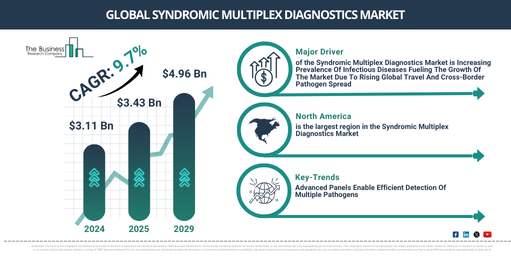
  • Syndromic Multiplex Diagnostics Market Emerging Trends and Growth Drivers Through 2029 | Reach USD $4.96 Billion

    Syndromic Multiplex Diagnostics Market Emerging Trends and Growth Drivers Through 2029 | Reach USD $4.96 Billion

    Uncover key drivers, emerging technologies, and competitive movements shaping the syndromic multiplex diagnostics market from 2025–2034 with trusted insights from The Business Research Company

    How Will The Syndromic Multiplex Diagnostics Market Valuation Change Between Now And 2029?

    The syndromic multiplex diagnostics market has experienced rapid growth in its size over recent years. It is projected to expand from $3.11 billion in 2024 to reach $3.43 billion by 2025, at a compound annual growth rate (CAGR) of 10.0%. This historical growth can be attributed to factors such as an escalating demand for swift and precise diagnostic tools, increased awareness regarding the early detection of diseases, a rise in hospital-acquired infections, the growing adoption of molecular diagnostics, augmented healthcare expenditure, and an increasing need for point-of-care testing.

    The syndromic multiplex diagnostics market is projected to experience robust expansion over the coming years. This market is anticipated to reach a value of $4.96 billion by 2029, exhibiting a compound annual growth rate (CAGR) of 9.7%. Several factors are expected to fuel this growth during the forecast period, including higher investments in research and development, increased uptake in settings with limited resources, expanding healthcare infrastructure in emerging economies, heightened government efforts to control infectious diseases, and an escalating need for testing solutions that are decentralized. Key trends for the forecast period encompass progress in multiplex polymerase chain reaction (PCR) technologies, breakthroughs in microfluidics and lab-on-chip systems, enhanced automation for sample processing, novel point-of-care molecular platforms, the incorporation of cloud-based diagnostic data systems, and improvements in portable diagnostic devices.

    Get A Free Sample Of The Report:

    https://www.thebusinessresearchcompany.com/sample.aspx?id=27427&type=smp

    What Growth-Enabling Forces Are Impacting The Syndromic Multiplex Diagnostics Market?

    The syndromic multiplex diagnostics market is anticipated to expand due to the growing occurrence of infectious diseases. Infectious ailments arise from detrimental microorganisms such as bacteria, viruses, fungi, or parasites, which infiltrate the body, proliferate, and lead to symptoms and health issues. The surge in these diseases is fueled by increased global travel, which facilitates the rapid spread of pathogens across regions and populations. Syndromic multiplex diagnostics improve the management of infectious diseases by offering swift and concurrent detection of multiple pathogens from a single specimen. They enhance diagnostic precision and speed, thereby supporting prompt treatment decisions and superior patient outcomes. For illustration, in March 2023, the Centers for Disease Control and Prevention, a US-based national public health organization, reported 8,331 cases of tuberculosis (TB) in 2022, marking an increase of 5.9% from 7,874 cases recorded in 2021. Consequently, the rising occurrence of infectious diseases is a key factor driving the expansion of the syndromic multiplex diagnostics market.

    What Are The Main Segment Classifications In The Syndromic Multiplex Diagnostics Market?

    The syndromic multiplex diagnostics market covered in this report is segmented

    1) By Product Type: Instruments, Reagents, Software And Services

    2) By Sample Type: Blood Samples, Urine Samples, Saliva Samples, Tissue Samples

    3) By Technology: Polymerase Chain Reaction, Mass Spectrometry, Nucleic Acid Amplification Tests, Next-Generation Sequencing

    4) By Application: Infectious Diseases, Respiratory Diseases, Gastrointestinal Diseases, Sexually Transmitted Infections, Central Nervous System Diseases

    5) By End User: Clinical Laboratories, Hospitals, Pharmaceutical And Biotechnology Companies, Research Institutes, Other End Users

    Subsegments:

    1) By Instruments: Real-Time Polymerase Chain Reaction (PCR) Systems, Microfluidic-Based Systems, Automated Sample-To-Answer Systems, Cartridge-Based Systems, Multiplex Polymerase Chain Reaction (PCR) Platforms

    2) By Reagents: Assay Panels, Primers And Probes, Enzymes, Buffers And Solutions, Sample Preparation Reagents

    3) By Software And Services: Data Analysis Software, Cloud-Based Diagnostic Platforms, Integration And Connectivity Solutions, Technical Support Services, Maintenance And Calibration Services, Training And Installation Services

    How Are Industry Trends Steering The Expansion Of The Syndromic Multiplex Diagnostics Market?

    Leading companies operating within the syndromic multiplex diagnostics market are concentrating on developing technologically advanced solutions, such as AI-enhanced diagnostic algorithms, to boost the speed, accuracy, and thoroughness of pathogen detection. AI-enhanced diagnostic algorithms represent sophisticated computational tools that utilize artificial intelligence, particularly machine learning and deep learning techniques, to analyze complex clinical and laboratory data for faster and more precise disease diagnosis. For example, in January 2024, Qiagen N.V., a Netherlands-based molecular diagnostics company, unveiled two syndromic testing panels, specifically the Gastrointestinal Panel 2 and the Meningitis and Encephalitis Panel, for its QIAstat Dx platform. These panels allow for the rapid and accurate diagnosis of infectious diseases by identifying multiple pathogens in one test, thereby improving clinical decision-making and patient outcomes. The QIAstat-Dx system also integrates advanced data analytics, aiding healthcare professionals in efficiently identifying and managing infectious disease outbreaks.

    Which Firms Are Driving Innovation Within The Syndromic Multiplex Diagnostics Market?

    Major companies operating in the syndromic multiplex diagnostics market are Roche Molecular Systems Inc., Abbott Laboratories, Becton Dickinson and Company, Hologic Inc., Bio‑Rad Laboratories Inc., Qiagen N.V., Cepheid, Bosch Healthcare Solutions GmbH, Biocartis NV, Luminex Corporation, Curetis GmbH, Accelerate Diagnostics Inc., Applied BioCode Inc., Ador Diagnostics Ltd., Akonni Biosystems Inc., Alveo Technologies Inc., Atlas Genetics Ltd., BioFire Diagnostics LLC, Nanomix Inc., Primerdesign Ltd.

    Access The Complete Report Here:

    https://www.thebusinessresearchcompany.com/report/syndromic-multiplex-diagnostics-global-market-report

    What Are The Emerging Regional Trends Driving The Syndromic Multiplex Diagnostics Market?

    North America was the largest region in the syndromic multiplex diagnostics market in 2024. Asia-Pacific is expected to be the fastest-growing region in the forecast period. The regions covered in the syndromic multiplex diagnostics market report are Asia-Pacific, Western Europe, Eastern Europe, North America, South America, Middle East, Africa.

    Customize Your Report Here:

    https://www.thebusinessresearchcompany.com/customise?id=27427&type=smp

    Browse Through More Reports Similar to the Global Syndromic Multiplex Diagnostics Market 2025, By The Business Research Company

    Scissor Lift Global Market Report 2025

    https://www.thebusinessresearchcompany.com/report/scissor-lift-global-market-report

    Artificial Lift System Global Market Report 2025

    https://www.thebusinessresearchcompany.com/report/artificial-lift-system-global-market-report

    Medical Lifting Sling Global Market Report 2025

    https://www.thebusinessresearchcompany.com/report/medical-lifting-sling-global-market-report

    About The Business Research Company:

    With over 15000+ reports from 27 industries covering 60+ geographies, The Business Research Company has built a reputation for offering comprehensive, data-rich research and insights. Armed with 1,500,000 datasets, the optimistic contribution of in-depth secondary research, and unique insights from industry leaders, you can get the information you need to stay ahead in the game.

    Get in touch with us:

    The Business Research Company: https://www.thebusinessresearchcompany.com/

    Americas +1 310-496-7795

    Asia +44 7882 955267 & +91 8897263534

    Europe +44 7882 955267

    Email us at info@tbrc.info

    Follow us on:

    LinkedIn: https://in.linkedin.com/company/the-business-research-company

    YouTube: https://www.youtube.com/channel/UC24_fI0rV8cR5DxlCpgmyFQ

    Global Market Model: https://www.thebusinessresearchcompany.com/global-market-model