Blog

  • Global Chikungunya Market Trends and Future Outlook to 2029

    Global Chikungunya Market Trends and Future Outlook to 2029

    Claim your 20% discount on Global Market Reports with code ONLINE20. Limited time only.

    What CAGR And Valuation Are Anticipated For The Chikungunya Market?

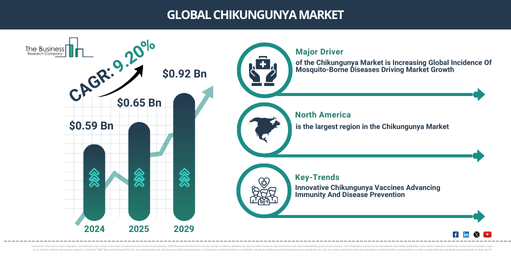
    Over the past few years, the chikungunya market has experienced considerable growth. Its expansion is predicted to continue, rising from $0.59 billion in 2024 to $0.65 billion in 2025, with a compound annual growth rate (CAGR) of 9.4%. This growth during the historical period can be credited to factors such as an increase in individual healthcare spending, a surge in newly emerging and re-emerging infectious disease cases, rising personal disposable income, changes in climate, and heightened awareness about mosquito-borne diseases.

    In the coming years, a substantial expansion is projected for the chikungunya market. By 2029, the market size is set to hit $0.92 billion with a compound annual growth rate (CAGR) of 9.2%. The growth forecast can be linked to various factors such as an upsurge in international clinical trials, an expanding aged population, escalated immunization requirements, rising initiatives from the government and other organizations, increased government investments, and beneficial policies. Also, major trend indicators during the forecasted period include the advancement in biotechnological processes in vaccine development, fresh opportunities in the vaccine sector, utilization of CRISPR and AI in innovative solutions, strategic alliances among pharmaceutical giants, and the inclusion of telemedicine services.

    Get A Free Sample Of The Report:

    https://www.thebusinessresearchcompany.com/sample.aspx?id=21137&type=smp

    What Are The Primary Factors Supporting The Chikungunya Market Expansion?

    The increasing occurrence of diseases transmitted by mosquitoes is forecasted to stimulate the expansion of the chikungunya market in the future. Mosquito-borne ailments, for example, chikungunya, dengue, and zika virus, which are circulated to humans through infected Aedes mosquitoes, present considerable worldwide public health challenges. Rising global incidences of these diseases can be attributed to factors such as climate change, urban growth, deforestation, the buildup of stagnant water, insufficient vector control strategies, elevated levels of international travel, and a resistance to insecticides. Treatments for chikungunya help patients suffering from mosquito-borne diseases by alleviating symptoms like fever, joint pain, and inflammation, which enhances the patient’s overall level of comfort and mobility, mitigates the likelihood of complications, and speeds up recovery through measures like hydration, pain management, and supportive care. For instance, the UK Health Security Agency, a UK government agency, reported in December 2024 that between January and June 2024, dengue cases among returning travelers in England, Wales, and Northern Ireland rose to 473, presenting a 201% increase from the 157 cases reported over the same time frame in 2023. As a result, the escalating global instances of mosquito-borne diseases are stimulating the expansion of the chikungunya market.

    Which Segments Define The Structure Of The Chikungunya Market?

    The chikungunyamarket covered in this report is segmented –

    1) By Type: Antiviral Drugs; Herbal And Complementary Treatments; Supportive Care; Vaccines

    2) By Product Form: Liquid Form; Powder; Solid Form

    3) By Disease Stage: Acute; Chronic; Post-Infection

    4) By Sales Channel: Hospital Pharmacies; Online Pharmacies; Retail Pharmacies; Supermarkets

    5) By End User: Caregivers; Healthcare Professionals; Patients

    Subsegments:

    1) By Antiviral Drugs: Nucleoside Analogues; Protease Inhibitors

    2) By Herbal And Complementary Treatments: Ayurvedic Remedies; Homeopathic Treatments; Traditional Chinese Medicine

    3) By Supportive Care: Pain Relievers (NSAIDs, Acetaminophen); Fluid Therapy; Physiotherapy

    4) By Vaccines: Live-Attenuated Vaccines; Inactivated Vaccines; mRNA-Based Vaccines

    What Strategic Shifts And Innovations Are Influencing The Chikungunya Market?

    Leading players in the chikungunya market are channeling their efforts to create innovative vaccines to boost immunity, subdue potential epidemics, and handle the rising worldwide health issue of chikungunya virus infection. A live attenuated chikungunya vaccine leverages a weakened version of the chikungunya virus to trigger an immune reaction without provoking the disease, thus providing durable resistance. For example, Valneva SE, a biotech firm based in France, announced in November 2023 that the US-based government agency, Food and Drug Administration (FDA), had approved its live attenuated chikungunya vaccine, IXCHIQ. The FDA granted the approval rapidly based on anti-CHIKV neutralizing antibody titers, with continuing approval reliant on the confirmation of clinical benefits in supplementary studies. Valneva secured a Priority Review Voucher (PRV) from the FDA, which it plans to leverage in financing its research and development initiatives. Ixchiq is administered as a single-dose muscle injection, containing a live, attenuated version of the chikungunya virus, which could lead to symptoms in recipients mirroring those of chikungunya sickness.

    Who Are The Primary Market Leaders In The Chikungunya Market?

    Major companies operating in the chikungunya market are F. Hoffmann-La Roche Ltd., Merck & Co. Inc., Thermo Fisher Scientific Inc., Takeda Pharmaceutical Company Limited, Quest Diagnostics Incorporated, Eurofins Scientific SE, Grifols Diagnostic Solutions Inc., bioMérieux SA, Bio-Rad Laboratories Inc., DiaSorin S.p.A., Euroimmun AG, Evotec SE, Valneva SE, ELITechGroup S.A.S., Vaxart Inc., BioPerfectus Biotechnology Co. Ltd., CTK Biotech Inc., Creative Diagnostics Inc., Inovio Pharmaceuticals Inc., Biotrol Laboratories Pvt. Ltd.

    Access The Complete Report Here:

    https://www.thebusinessresearchcompany.com/report/chikungunya-global-market-report

    What Regional Factors Are Accelerating Growth In The Chikungunya Market?

    North America was the largest region in the chikungunya market in 2024. Asia-Pacific is expected to be the fastest-growing region in the forecast period. The regions covered in the chikungunya market report are Asia-Pacific, Western Europe, Eastern Europe, North America, South America, Middle East, Africa.

    Customize Your Report Here:

    https://www.thebusinessresearchcompany.com/customise?id=21137&type=smp

    Browse Through More Reports Similar to the Global Chikungunya Market 2025, By The Business Research Company

    Respiratory Disease Testing Global Market Report 2025

    https://www.thebusinessresearchcompany.com/report/respiratory-disease-testing-global-market-report

    Respiratory Disease Vaccine Global Market Report 2025

    https://www.thebusinessresearchcompany.com/report/respiratory-disease-vaccine-global-market-report

    Artificial Intelligence Ai In Respiratory Diseases Global Market Report 2025

    https://www.thebusinessresearchcompany.com/report/artificial-intelligence-ai-in-respiratory-diseases-global-market-report

    About The Business Research Company:

    With over 15000+ reports from 27 industries covering 60+ geographies, The Business Research Company has built a reputation for offering comprehensive, data-rich research and insights. Armed with 1,500,000 datasets, the optimistic contribution of in-depth secondary research, and unique insights from industry leaders, you can get the information you need to stay ahead in the game.

    Get in touch with us:

    The Business Research Company: https://www.thebusinessresearchcompany.com/

    Americas +1 310-496-7795

    Asia +44 7882 955267 & +91 8897263534

    Europe +44 7882 955267

    Email us at info@tbrc.info

    Follow us on:

    LinkedIn: https://in.linkedin.com/company/the-business-research-company

    YouTube: https://www.youtube.com/channel/UC24_fI0rV8cR5DxlCpgmyFQ

    Global Market Model: https://www.thebusinessresearchcompany.com/global-market-model
  • Which Factors Will Push The Smart Wearable Kidney Monitor Market To Achieve $2.09 Billion By 2029?

    Which Factors Will Push The Smart Wearable Kidney Monitor Market To Achieve $2.09 Billion By 2029?

    Uncover key drivers, emerging technologies, and competitive movements shaping the smart wearable kidney monitor market from 2025–2034 with trusted insights from The Business Research Company

    How Much Will The Smart Wearable Kidney Monitor Market Be Worth By 2029?

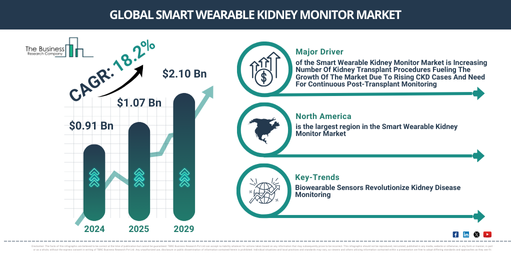
    The smart wearable kidney monitor market has experienced significant expansion in recent years. Its valuation is set to increase from $0.91 billion in 2024 to $1.07 billion by 2025, reflecting a compound annual growth rate (CAGR) of 18.6%. The market’s historical growth is attributable to elevated investment in nephrology-focused digital health startups, a rise in government initiatives, an increase in clinical trials, the broadening of home-based healthcare services, and the emergence of digital health startups.

    The market size for smart wearable kidney monitors is projected to experience substantial expansion in the upcoming period. This market is predicted to reach $2.10 billion by 2029, exhibiting a compound annual growth rate (CAGR) of 18.2%. Factors contributing to this growth over the projected timeframe include increasing healthcare spending, a higher incidence of chronic kidney diseases, wider adoption of e-commerce platforms, the rising occurrence of diabetes and hypertension, and an increase in kidney transplant operations. Key trends anticipated during this period encompass the incorporation of telemedicine, the adoption of artificial intelligence, the reduction in sensor size, and progress in biosensor technology.

    Get A Free Sample Of The Report:

    https://www.thebusinessresearchcompany.com/sample.aspx?id=27419&type=smp

    Which Key Factors Are Fueling Growth In The Smart Wearable Kidney Monitor Market?

    Future expansion of the smart wearable kidney monitor market is anticipated due to the rising volume of kidney transplant operations. These procedures involve surgically implanting a donor’s healthy kidney into a patient suffering from kidney failure to restore normal renal function. The increase in kidney transplant numbers stems from the expanding occurrence of chronic kidney disease (CKD), leading more individuals to advance to end-stage renal failure, where transplantation becomes essential for survival. A smart wearable kidney monitor supports kidney transplant management by offering ongoing, non-invasive monitoring of kidney activity, facilitating the prompt identification of potential complications. These devices also contribute to tailored treatment plans and fewer hospital visits, thereby enhancing outcomes after transplantation and improving patient comfort. As an illustration, the U.S. Department of Health & Human Services, a US-based government agency, reported in January 2025 that kidney transplants totaled 27,759 in 2024, marking a 1.6% rise from 2023. Consequently, the growing frequency of kidney transplant operations is driving the expansion of the smart wearable kidney monitor market.

    Which Segmentation Factors Are Critical In The Smart Wearable Kidney Monitor Market Analysis?

    The smart wearable kidney monitor market covered in this report is segmented

    1) By Product Type: Patch-Based Monitors, Wristband Monitors, Belt Monitors, Other Types

    2) By Distribution Channel: Online, Offline

    3) By Application: Chronic Kidney Disease Monitoring, Dialysis Monitoring, Post-Transplant Monitoring, Other Applications

    4) By End-User: Hospitals And Clinics, Home Care Settings, Ambulatory Surgical Centers, Other End-Users

    Subsegments:

    1) By Patch-Based Monitors: Electrolyte Monitoring Patches, Hydration Monitoring Patches, Uremic Toxin Monitoring Patches, Hemodynamic Monitoring Patches, Multi-Parameter Biomarker Monitoring Patches

    2) By Wristband Monitors: Potassium Monitoring Wristbands, Fluid Balance Tracking Wristbands, Blood Pressure Monitoring Wristbands, Heart Rate And Vital Sign Monitoring Wristbands, Smart Alert-Enabled Wristbands

    3) By Belt Monitors: Dialysate Flow Tracking Belts, Portable Hemodialysis Support Belts, Renal Function Monitoring Belts, Wireless Data-Transmission Belts

    4) By Other Types: Smart Clothing With Embedded Renal Sensors, Implantable Kidney Monitoring Devices, Clip-On Monitoring Modules, Wearable Artificial Kidney Devices, Sensor-Integrated Headbands Or Chest Straps

    What Are The Dominant Trends Currently Seen In The Smart Wearable Kidney Monitor Market?

    Major companies in the smart wearable kidney monitor market are concentrating on developing state-of-the-art products, such as biowearable sensors, to enhance accuracy, improve patient outcomes, and enable real-time tracking of chronic kidney disease (CKD). Biowearable sensors are compact, non-invasive tools that continuously monitor key biomarkers linked to kidney function, including creatinine and urea levels, through the analysis of sweat or interstitial fluid. For instance, in April 2024, Metyos, a biowearable technology company from France, launched a biowearable sensor device. This lightweight, wrist-worn biosensor measures critical kidney biomarkers in real time, providing patients and healthcare providers with continuous data to better manage the condition. The biowearable device incorporates advanced nanotechnology and AI-driven analytics to detect early signs of kidney dysfunction, reducing the need for frequent blood tests and hospital visits. Additionally, the device synchronizes with a mobile app, offering personalized health insights and alerts for abnormal biomarker levels, which facilitates proactive care and timely medical intervention.

    Which Players Are Shaping The Competitive Landscape Of The Smart Wearable Kidney Monitor Market?

    Major companies operating in the smart wearable kidney monitor market are Cardinal Peak Inc., KidneyX, Alio Inc., Nephria Bio Inc., Vivance Technologies Inc., GFR90 Inc., Kite Medical Ltd., Metyos SAS, Proton Intelligence Inc., Kalium Health Ltd., WearTech Applied Research Center.

    Access The Complete Report Here:

    https://www.thebusinessresearchcompany.com/report/smart-wearable-kidney-monitor-global-market-report

    Which Region Is Likely To Register The Fastest Growth In The Smart Wearable Kidney Monitor Market?

    North America was the largest region in the smart wearable kidney monitor market in 2024. Asia-Pacific is expected to be the fastest-growing region in the forecast period. The regions covered in the smart wearable kidney monitor market report are Asia-Pacific, Western Europe, Eastern Europe, North America, South America, Middle East, Africa.

    Customize Your Report Here:

    https://www.thebusinessresearchcompany.com/customise?id=27419&type=smp

    Browse Through More Reports Similar to the Global Smart Wearable Kidney Monitor Market 2025, By The Business Research Company

    Nanomaterials Global Market Report 2025

    https://www.thebusinessresearchcompany.com/report/nanomaterials-global-market-report

    Nanotechnology In Energy Applications Global Market Report 2025

    https://www.thebusinessresearchcompany.com/report/nanotechnology-in-energy-applications-global-market-report

    Advanced Materials Global Market Report 2025

    https://www.thebusinessresearchcompany.com/report/advanced-materials-global-market-report

    About The Business Research Company:

    With over 15000+ reports from 27 industries covering 60+ geographies, The Business Research Company has built a reputation for offering comprehensive, data-rich research and insights. Armed with 1,500,000 datasets, the optimistic contribution of in-depth secondary research, and unique insights from industry leaders, you can get the information you need to stay ahead in the game.

    Get in touch with us:

    The Business Research Company: https://www.thebusinessresearchcompany.com/

    Americas +1 310-496-7795

    Asia +44 7882 955267 & +91 8897263534

    Europe +44 7882 955267

    Email us at info@tbrc.info

    Follow us on:

    LinkedIn: https://in.linkedin.com/company/the-business-research-company

    YouTube: https://www.youtube.com/channel/UC24_fI0rV8cR5DxlCpgmyFQ

    Global Market Model: https://www.thebusinessresearchcompany.com/global-market-model
  • What Is The Long-Term Forecast For The Global Next Generation Tissue Biomarkers Market Growing At 12.7% CAGR?

    What Is The Long-Term Forecast For The Global Next Generation Tissue Biomarkers Market Growing At 12.7% CAGR?

    Uncover key drivers, emerging technologies, and competitive movements shaping the next generation tissue biomarkers market from 2025–2034 with trusted insights from The Business Research Company

    What CAGR And Valuation Are Anticipated For The Next Generation Tissue Biomarkers Market?

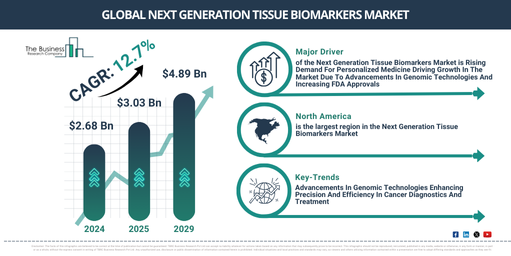
    The next generation tissue biomarkers market size has experienced rapid expansion in recent years. It is anticipated to increase from $2.68 billion in 2024 to $3.03 billion in 2025, exhibiting a compound annual growth rate (CAGR) of 13.1%. The market’s historical growth can be linked to the escalating demand for personalized medicine, the broader adoption of immunohistochemistry techniques, the increasing necessity for early disease detection, heightened healthcare spending, the proliferation of diagnostic imaging technologies, growing understanding of biomarker-based diagnostics, and an intensified concentration on companion diagnostics.

    The next generation tissue biomarkers market size is projected to experience rapid growth in the coming years, with expectations to reach $4.89 billion by 2029, exhibiting a compound annual growth rate (CAGR) of 12.7%. This expansion during the forecast period can be attributed to factors such as the growing demand for multiplex biomarker assays, the rising adoption of next-generation sequencing, increasing investment in cancer research, the broadening applications of digital pathology, the growing use of AI in diagnostics, a surge in clinical trials for targeted therapies, and the increasing availability of tissue-based genomic data. Major trends anticipated in this period include continued advancements in next-generation sequencing, the integration of artificial intelligence (AI) in digital pathology, the development of advanced mass spectrometry-based proteomics, innovations in ribonucleic acid biomarker detection technologies, and enhanced integration with cloud-based data platforms.

    Get A Free Sample Of The Report:

    https://www.thebusinessresearchcompany.com/sample.aspx?id=27363&type=smp

    What Are The Primary Factors Supporting The Next Generation Tissue Biomarkers Market Expansion?

    The increasing need for individualized medical care is projected to stimulate the expansion of the next generation tissue biomarkers market moving forward. Personalized medicine represents a healthcare strategy that customizes treatment based on an individual’s genetic makeup, lifestyle, and environmental factors. Its adoption is on the rise due to continuous advancements in genomic technologies, which facilitate highly specific and tailored treatment approaches. This demand for personalized medicine is fostering the development of next-generation tissue biomarkers, as they supply precise and individualized data necessary to adapt treatments to each patient’s distinct tissue profile. For instance, in February 2024, as reported by the Personalized Medicine Coalition, a US-based non-profit organization, the FDA approved 16 new personalized treatments for rare disease patients in 2023, a rise from six in 2022. The personalized treatments newly sanctioned for 2023 also encompassed seven cancer drugs and three for various other conditions. Therefore, the expanding demand for personalized medicine is propelling the growth of the next generation tissue biomarkers market.

    Which Segments Define The Structure Of The Next Generation Tissue Biomarkers Market?

    The next generation tissue biomarkers market covered in this report is segmented

    1) By Type: Genomic Biomarkers, Proteomic Biomarkers, Epigenetic Biomarkers, Transcriptomic Biomarkers, Metabolomic Biomarkers

    2) By Technology: Immunohistochemistry, Next-Generation Sequencing, Mass Spectrometry (Ms)-Based Proteomics, Spatial Biology Platforms, Digital Pathology And Artificial Intelligence Analysis, Other Technologies

    3) By Application: Oncology, Companion Diagnostics, Drug Discovery And Development, Neurology, Other Applications

    4) By End Use: Hospitals And Reference Labs, Pharma And Biotech Companies, Academic And Research Institutes, Contract Research Organizations

    Subsegments:

    1) By Genomic Biomarkers: Single Nucleotide Polymorphisms, Copy Number Variations, Gene Fusions

    2) By Proteomic Biomarkers: Protein Expression Levels, Post-Translational Modifications, Protein-Protein Interactions

    3) By Epigenetic Biomarkers: Histone Modification Patterns, Chromatin Remodeling Biomarkers, Non-Coding Ribonucleic Acid Regulation

    4) By Transcriptomic Biomarkers: Long Non-Coding Ribonucleic Acids, Circular Ribonucleic Acids, Alternative Splicing Variants

    5) By Metabolomic Biomarkers: Lipid Profiles, Amino Acid Signatures, Organic Acids

    What Strategic Shifts And Innovations Are Influencing The Next Generation Tissue Biomarkers Market?

    Leading companies in the next generation tissue biomarkers market are concentrating on creating advanced solutions, such as genomic diagnostic assays and sequencing solutions, to boost the accuracy, speed, and individualized approach to cancer diagnosis and treatment. These genomic-based diagnostic assays and sequencing solutions are tools and methods that analyze genetic data to identify disease-specific biomarkers, facilitating more precise and tailored strategies for diagnosis and therapy. For example, in August 2024, Illumina Inc., a US-based biotechnology company, obtained FDA approval for its TruSight Oncology Comprehensive test, along with two accompanying diagnostics, to swiftly connect cancer patients with targeted therapies. This test profiles over 500 genes from a single tissue sample, enabling exact treatment selection for various solid tumors. Furthermore, it automates biomarker detection and supports continuous deployment, considerably reducing turnaround times and improving clinical efficiency, showcasing a modern strategy for streamlining cancer diagnostics within a regulated context.

    Who Are The Primary Market Leaders In The Next Generation Tissue Biomarkers Market?

    Major companies operating in the next generation tissue biomarkers market are Roche Diagnostics, Thermo Fisher Scientific Inc., LabCorp., Quest Diagnostics Incorporated, Agilent Technologies Inc., Illumina Inc., Bio-Rad Laboratories Inc., QIAGEN N.V., Bio-Techne Corporation, Myriad Genetics Inc., NeoGenomics Laboratories Inc., Guardant Health Inc., Foundation Medicine Inc., NanoString Technologies Inc., PathAI Inc., Biocartis Group NV, Personalis Inc., Ultivue Inc., Indica Labs Inc., Strata Oncology Inc., Genialis Inc., Alida Biosciences Inc., and Biofidelity Ltd.

    Access The Complete Report Here:

    https://www.thebusinessresearchcompany.com/report/next-generation-tissue-biomarkers-global-market-report

    What Regional Factors Are Accelerating Growth In The Next Generation Tissue Biomarkers Market?

    North America was the largest region in the next generation tissue biomarkers market in 2024. Asia-Pacific is expected to be the fastest-growing region in the forecast period. The regions covered in the next generation tissue biomarkers market report are Asia-Pacific, Western Europe, Eastern Europe, North America, South America, Middle East, Africa.

    Customize Your Report Here:

    https://www.thebusinessresearchcompany.com/customise?id=27363&type=smp

    Browse Through More Reports Similar to the Global Next Generation Tissue Biomarkers Market 2025, By The Business Research Company

    Nail Care Products Global Market Report 2025

    https://www.thebusinessresearchcompany.com/report/nail-care-products-global-market-report

    Nail Polish Global Market Report 2025

    https://www.thebusinessresearchcompany.com/report/nail-polish-global-market-report

    Smart Pneumatics Global Market Report 2025

    https://www.thebusinessresearchcompany.com/report/smart-pneumatics-global-market-report

    About The Business Research Company:

    With over 15000+ reports from 27 industries covering 60+ geographies, The Business Research Company has built a reputation for offering comprehensive, data-rich research and insights. Armed with 1,500,000 datasets, the optimistic contribution of in-depth secondary research, and unique insights from industry leaders, you can get the information you need to stay ahead in the game.

    Get in touch with us:

    The Business Research Company: https://www.thebusinessresearchcompany.com/

    Americas +1 310-496-7795

    Asia +44 7882 955267 & +91 8897263534

    Europe +44 7882 955267

    Email us at info@tbrc.info

    Follow us on:

    LinkedIn: https://in.linkedin.com/company/the-business-research-company

    YouTube: https://www.youtube.com/channel/UC24_fI0rV8cR5DxlCpgmyFQ

    Global Market Model: https://www.thebusinessresearchcompany.com/global-market-model
  • Global Cerebral Amyloid Angiopathy Treatment Market Growth Prospects and Strategic Opportunities Through 2029

    Global Cerebral Amyloid Angiopathy Treatment Market Growth Prospects and Strategic Opportunities Through 2029

    Claim your 20% discount on Global Market Reports with code ONLINE20. Limited time only.

    What Are The Market Size Estimates For The Cerebral Amyloid Angiopathy Treatment Market?

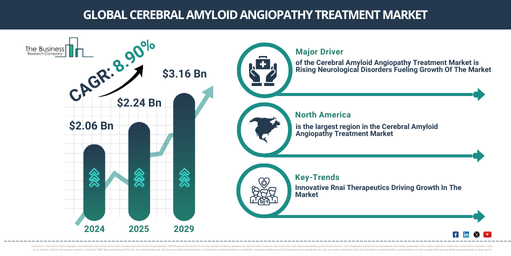
    In recent years, there has been robust expansion in the cerebral amyloid angiopathy treatment market, which is projected to escalate from $2.06 billion in 2024 to $2.24 billion in 2025. This expansion reflects a compound annual growth rate (CAGR) of 9.0%. The impressive growth witnessed during the previous years can be credited to the augmenting prevalence of elderly populations, greater recognition of cerebrovascular diseases, an upsurge in instances of intracerebral hemorrhage, escalating government investments in neurological research, reliance on symptom-based treatment, and the extensive usage of MRI and neuroimaging for diagnosis.

    In the coming years, the cerebral amyloid angiopathy treatment market is projected to witness significant progress, eventually reaching a worth of $3.16 billion in 2029 with a compound annual growth rate (CAGR) of 8.9%. This robust growth in the forecast period can be attributed to factors like the growing trend of personalized medicine, the rise in biomarker-based detection techniques, intensified research into treatments for neuroinflammation, escalating investments in the development of neurological drugs, an inclining preference for minimally invasive treatment methodologies, and amplified funding towards studies of neurological disorders. Key trends predicted to affect the market in the forecast period encompass the exploration of combination therapies, advances in MRI and PET imaging techniques, enhancement of healthcare infrastructure in emerging markets, the progress in minimally invasive treatments, collaborations amongst pharma and biotech companies, and the rising adoption of wearable technology for patient monitoring.

    Get A Free Sample Of The Report:

    https://www.thebusinessresearchcompany.com/sample.aspx?id=21136&type=smp

    Which Growth Drivers Are Shaping The Cerebral Amyloid Angiopathy Treatment Market Outlook?

    The climb in the prevalence of neurological disorders is anticipated to fuel the expansion of the cerebral amyloid angiopathy treatment market. Neurological disorders are medical issues that disrupt the functions of the brain, spinal cord, or nerves, resulting in impairments in motion, sensation, cognition or various other bodily functions. The rise in the prevalence of these disorders can be linked to factors such as aging demographics, lifestyle choices, environmental exposures, genetic predisposition, and enhanced diagnostic capabilities. Treatment for cerebral amyloid angiopathy aids neurological disorders by managing amyloid accumulation in blood vessels, promoting cerebral circulation, and reducing the risk of cognitive deterioration and complications related to stroke. For example, data from the Alzheimer’s Association, a US-based nonprofit voluntary health organization, reveals that approximately 6.7 million Americans aged 65 and older are battling Alzheimer’s dementia in March 2023, with forecasts predicting an escalation to 13.8 million by the year 2060. Thus, the escalating prevalence of neurological disorders is propelling the advancement of the cerebral amyloid angiopathy treatment market.

    What Are The Primary Segmentation Parameters In The Cerebral Amyloid Angiopathy Treatment Market?

    The cerebral amyloid angiopathy treatmentmarket covered in this report is segmented –

    1) By Type: Medication; Therapeutic Procedures; Surgery; Supportive Care

    2) By Route Of Administration: Oral; Intravenous; Intramuscular

    3) By Patient Type: Geriatric; Adult; Pediatric

    4) By End User: Hospitals; Clinics; Homecare Settings

    Subsegments:

    1) By Medication: Antihypertensive Drugs; Antiplatelet Drugs; Statins; Monoclonal Antibodies; Anti-amyloid Agents

    2) By Therapeutic Procedures: Plasma Exchange; Gene Therapy; Immunotherapy

    3) By Surgery: Cranial Decompression Surgery; Surgical Drainage Of Hematomas; Vascular Reconstruction Surgery

    4) By Supportive Care: Cognitive Rehabilitation; Physical Therapy; Pain Management; Nutritional Support

    Which Emerging Trends Are Reshaping The Cerebral Amyloid Angiopathy Treatment Market Landscape?

    Key players in the cerebral amyloid angiopathy treatment market are concentrating on the creation of novel products such as RNAi therapeutics to tackle disease-related gene expression and lessen amyloid accumulation in cerebral vessels. RNAi therapeutics denote a category of medications that employs RNA interference (RNAi) to mute specific genes, thereby blocking the creation of disease-promoting proteins. For example, Alnylam Pharmaceuticals Inc., a pharmaceutical firm based in the US, is scheduled to initiate the multiple-dose phase of its ALN-APP clinical trial in authorized regions in July 2023. The ALN-APP trial is tailored to evaluate the safety and appropriateness of RNAi-related therapeutics in minimizing amyloid precursor proteins (APP), significant contributors to amyloid plaque development in the brain. The trial, by muting the gene responsible for generating these proteins, seeks to determine if ALN-APP can contribute to the prevention or even reversal of the development of cerebral amyloid angiopathy (CAA).

    Which Organizations Are At The Forefront Of The Cerebral Amyloid Angiopathy Treatment Market?

    Major companies operating in the cerebral amyloid angiopathy treatment market are Pfizer Inc., Johnson & Johnson Services Inc., F. Hoffmann-La Roche Limited, Merck & Co. Inc., Bayer AG, Novartis International AG, Sanofi S.A., Bristol-Myers Squibb Company, AstraZeneca Public Limited Company, Abbott Laboratories, GlaxoSmithKline plc, Medtronic PLC, Eli Lilly and Company, Boehringer Ingelheim International Limited, Viatris Incorporated, Biogen Idec Inc., Sandoz Group AG, Daiichi Sankyo Company Limited, Amneal Pharmaceuticals LLC, Lupin Limited, Glenmark Pharmaceuticals Limited, Alnylam Pharmaceuticals Incorporated, Amydis Inc.

    Access The Complete Report Here:

    https://www.thebusinessresearchcompany.com/report/cerebral-amyloid-angiopathy-treatment-global-market-report

    Which Region Holds The Greatest Opportunity For Cerebral Amyloid Angiopathy Treatment Market Expansion?

    North America was the largest region in the Largest cerebral amyloid angiopathy treatment market in 2024. The regions covered in the cerebral amyloid angiopathy treatment market report are Asia-Pacific, Western Europe, Eastern Europe, North America, South America, Middle East, Africa.

    Customize Your Report Here:

    https://www.thebusinessresearchcompany.com/customise?id=21136&type=smp

    Browse Through More Reports Similar to the Global Cerebral Amyloid Angiopathy Treatment Market 2025, By The Business Research Company

    Transthyretin Amyloidosis Treatment Global Market Report 2025

    https://www.thebusinessresearchcompany.com/report/transthyretin-amyloidosis-treatment-global-market-report

    Pulmonary Arterial Hypertension Global Market Report 2025

    https://www.thebusinessresearchcompany.com/report/pulmonary-arterial-hypertension-global-market-report

    Ocular Hypertension Treatment Global Market Report 2025

    https://www.thebusinessresearchcompany.com/report/ocular-hypertension-treatment-global-market-report

    About The Business Research Company:

    With over 15000+ reports from 27 industries covering 60+ geographies, The Business Research Company has built a reputation for offering comprehensive, data-rich research and insights. Armed with 1,500,000 datasets, the optimistic contribution of in-depth secondary research, and unique insights from industry leaders, you can get the information you need to stay ahead in the game.

    Get in touch with us:

    The Business Research Company: https://www.thebusinessresearchcompany.com/

    Americas +1 310-496-7795

    Asia +44 7882 955267 & +91 8897263534

    Europe +44 7882 955267

    Email us at info@tbrc.info

    Follow us on:

    LinkedIn: https://in.linkedin.com/company/the-business-research-company

    YouTube: https://www.youtube.com/channel/UC24_fI0rV8cR5DxlCpgmyFQ

    Global Market Model: https://www.thebusinessresearchcompany.com/global-market-model
  • Which Emerging Trends Are Driving The Next Generation Surgical Robotics Market Toward $15.12 Billion By 2029?

    Which Emerging Trends Are Driving The Next Generation Surgical Robotics Market Toward $15.12 Billion By 2029?

    Uncover key drivers, emerging technologies, and competitive movements shaping the next generation surgical robotics market from 2025–2034 with trusted insights from The Business Research Company

    What Are The Market Size Estimates For The Next Generation Surgical Robotics Market?

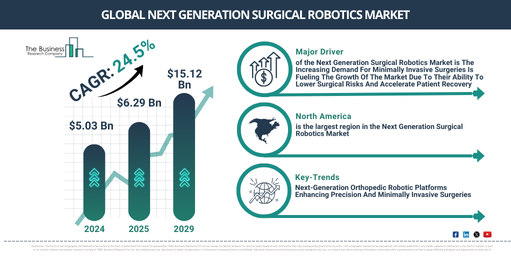
    The next-generation surgical robotics market has experienced substantial growth in recent years. Projections indicate it will expand from $5.03 billion in 2024 to $6.29 billion by 2025, demonstrating a compound annual growth rate (CAGR) of 24.9%. This historical expansion is linked to several factors, including the greater uptake of minimally invasive surgeries, an increasing need for accurate surgical interventions, an expanding older adult demographic, enhancements in hospital facilities, and heightened knowledge of surgery assisted by robotics.

    The next-generation surgical robotics market size is expected to undergo substantial expansion in the coming years. It is predicted to reach $15.12 billion by 2029, exhibiting a compound annual growth rate (CAGR) of 24.5%. This growth throughout the forecast period can be attributed to heightened investment in healthcare automation, an increased need for outpatient surgical procedures, the enlargement of surgical robotics training programs, supportive reimbursement policies, and a growing focus on precise surgery. Dominant trends during the forecast period include the reduction in size of robotic systems, the advancement of autonomous robotic systems, considerable investment in research and development, novel developments in haptic feedback and imaging, and improvements in cloud-based surgical platforms.

    Get A Free Sample Of The Report:

    https://www.thebusinessresearchcompany.com/sample.aspx?id=27362&type=smp

    Which Growth Drivers Are Shaping The Next Generation Surgical Robotics Market Outlook?

    The rising need for minimally invasive procedures is anticipated to fuel the expansion of the next-generation surgical robotics market in the future. These surgeries entail conducting operations via small cuts using specialized instruments, aiming to reduce discomfort, quicken recuperation, and decrease operative hazards. The growing popularity of minimally invasive procedures stems from their capacity to lessen incisions, thereby alleviating patient pain, diminishing infection risk, shortening hospital duration, and speeding up healing. Next-generation surgical robotics improves minimally invasive operations by providing surgeons with enhanced accuracy, better sight, and superior control over tools, concurrently lessening mistakes, minimizing harm to tissue, and accelerating patient recuperation. As an illustration, in March 2023, data from the British Association of Aesthetic Plastic Surgeons, a surgical entity based in the UK, indicated that approximately 31,057 minimally invasive cosmetic surgeries were performed in 2022 within the UK, signifying a remarkable 102% surge compared to the prior year. Consequently, the heightened demand for minimally invasive procedures is boosting the expansion of the next-generation surgical robotics market.

    What Are The Primary Segmentation Parameters In The Next Generation Surgical Robotics Market?

    The next generation surgical robotics market covered in this report is segmented

    1) By Components: Systems, Accessories, Services

    2) By Technology: Master-Slave Robotic Technology, Minimally Invasive Robotic Technology, Robotic-Assisted Laparoscopy, Artificial Intelligence and Machine Learning Integration

    3) By Application: Gynecological Surgery, Urological Surgery, Neurosurgery, Orthopedic Surgery, General Surgery, Other Applications

    4) By End-User: Hospitals, Ambulatory Surgical Centers, Other End-Users

    Subsegments:

    1) By Systems: Autonomous Surgical Robots, Semi-Autonomous Surgical Robots, Telesurgical Robots, Haptic Feedback Robots

    2) By Accessories: Surgical Instrument Sets, Endoscopic Tools, Robotic Arms And Graspers, Visualization And Imaging Modules

    3) By Services: Maintenance And Support Services, Training And Education Services, Software Updates And Integration Services, Consulting And Implementation Services

    Which Emerging Trends Are Reshaping The Next Generation Surgical Robotics Market Landscape?

    Major companies in the next-generation surgical robotics market are concentrating on developing innovative technology, such as orthopedic robotic platforms, to deliver superior patient outcomes through minimally invasive techniques. Advanced orthopedic robotic platforms assist surgeons in performing highly precise bone and joint surgeries, simultaneously improving implant placement and facilitating minimally invasive procedures. For instance, in March 2025, Stryker Corporation, a US-based medical technology company, launched Mako 4, which is the fourth generation of its Mako SmartRobotics system. This system integrates advanced three-dimensional CT-based planning and the company’s fourth-generation Q Guidance System, expanding its applications across hip, knee, spine, and shoulder procedures. It is designed to aid surgeons in both primary and revision procedures by enabling personalized surgical planning, real-time intraoperative guidance, and enhanced workflow efficiency, while also supporting complex cases such as robotic hip revision with features including augment and screw planning, intraoperative screw trajectory guidance, and compatibility with revision implant portfolios.

    Which Organizations Are At The Forefront Of The Next Generation Surgical Robotics Market?

    Major companies operating in the next generation surgical robotics market are Johnson & Johnson Services Inc., Medtronic plc, Stryker Corporation, Zimmer Biomet Holdings Inc., Smith & Nephew plc, Intuitive Surgical Inc., Accuray Incorporated, Medical Microinstruments Inc., PROCEPT BioRobotics Corporation, CMR Surgical Ltd., Noah Medical Inc., Distalmotion SA, Stereotaxis Inc., Neocis Inc., Moon Surgical SAS, Quantum Surgical SAS, Activ Surgical Inc., THINK Surgical Inc., Mendaera Inc., Galen Robotics Inc.

    Access The Complete Report Here:

    https://www.thebusinessresearchcompany.com/report/next-generation-surgical-robotics-global-market-report

    Which Region Holds The Greatest Opportunity For Next Generation Surgical Robotics Market Expansion?

    North America was the largest region in the next-generation surgical robotics market in 2024. Asia-Pacific is expected to be the fastest-growing region in the forecast period. The regions covered in the next generation surgical robotics market report are Asia-Pacific, Western Europe, Eastern Europe, North America, South America, Middle East, Africa.

    Customize Your Report Here:

    https://www.thebusinessresearchcompany.com/customise?id=27362&type=smp

    Browse Through More Reports Similar to the Global Next Generation Surgical Robotics Market 2025, By The Business Research Company

    Woodworking Machinery Global Market Report 2025

    https://www.thebusinessresearchcompany.com/report/woodworking-machinery-global-market-report

    Downhole Tools Global Market Report 2025

    https://www.thebusinessresearchcompany.com/report/downhole-tools-global-market-report

    Woodworking And Paper Machinery Global Market Report 2025

    https://www.thebusinessresearchcompany.com/report/woodworking-and-paper-machinery-global-market-report

    About The Business Research Company:

    With over 15000+ reports from 27 industries covering 60+ geographies, The Business Research Company has built a reputation for offering comprehensive, data-rich research and insights. Armed with 1,500,000 datasets, the optimistic contribution of in-depth secondary research, and unique insights from industry leaders, you can get the information you need to stay ahead in the game.

    Get in touch with us:

    The Business Research Company: https://www.thebusinessresearchcompany.com/

    Americas +1 310-496-7795

    Asia +44 7882 955267 & +91 8897263534

    Europe +44 7882 955267

    Email us at info@tbrc.info

    Follow us on:

    LinkedIn: https://in.linkedin.com/company/the-business-research-company

    YouTube: https://www.youtube.com/channel/UC24_fI0rV8cR5DxlCpgmyFQ

    Global Market Model: https://www.thebusinessresearchcompany.com/global-market-model
  • Global Cerebral Adrenoleukodystrophy (CALD) Market Forecast 2029: Size, Share, and Competitive Landscape

    Global Cerebral Adrenoleukodystrophy (CALD) Market Forecast 2029: Size, Share, and Competitive Landscape

    Claim your 20% discount on Global Market Reports with code ONLINE20. Limited time only.

    How Is The Cerebral Adrenoleukodystrophy (CALD) Market Expected To Grow In Terms Of Size?

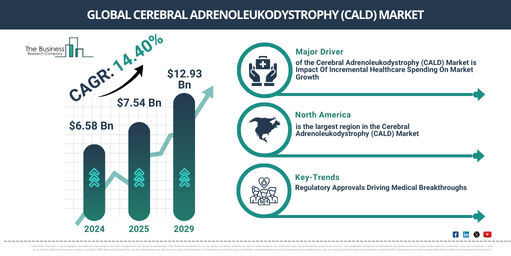
    The market size for cerebral adrenoleukodystrophy (cald) has seen a speedy expansion in the recent past. The market which is projected to be worth $6.58 billion in 2024, is estimated to escalate to $7.54 billion in 2025 showing a compound annual growth rate (CAGR) of 14.6%. Factors such as growing knowledge of uncommon health conditions, increasing initiation of newborn screening programs, a rising interest in neurodegenerative diseases, the introduction of Lorenzo’s Oil, investigating peroxisomal disorders, advocacy initiatives led by patient support groups, and enhancement in healthcare infrastructure have contributed to the growth during the historical period.

    The market value for cerebral adrenoleukodystrophy (cald) is slated to experience a swift escalation in the coming years, with projected figures reaching $12.93 billion in 2029, buoyed by a compound annual growth rate (CAGR) of 14.4%. Factors contributing to this anticipated rise during the forecasted timeframe encompass breakthroughs in gene therapy methodologies, advancements in newborn screening technology, progression in precise drug delivery systems, increasing funding towards rare disease research, expanding application of digital health equipment, escalating demand for customized treatments, collaborative efforts between biotechnology and pharmaceutical companies and improved awareness driven by international advocacy movements. Key trends in the forecast period are set to include gene modification via clustered regularly interspaced short palindromic repeats (CRISPR), AI-integrated diagnostic processes, evolved neuroimaging methods, strides in next-generation sequencing, development of brain-focused nanomedicine, wearable gadgets for neurological monitoring, digital twin modeling, sharing of genomic data through cloud-based platforms, the use of virtual reality for caregiver instruction, and the application of blockchain technology in assuring secure patient data management.

    Get A Free Sample Of The Report:

    https://www.thebusinessresearchcompany.com/sample.aspx?id=21135&type=smp

    What Market Forces Are Contributing To The Growth Of The Cerebral Adrenoleukodystrophy (CALD) Market?

    The expected growth of the cerebral adrenoleukodystrophy (CALD) market is chiefly driven by the rise in healthcare expenditure. Factors contributing to this rising healthcare expenditure include elderly populations, persistent diseases, advancements in the medical field, surging drug prices, and the extension of health insurance coverage. The drive in healthcare expenditure facilitates the development of diagnostic tools for cerebral adrenoleukodystrophy (CALD), funds innovative therapies like gene therapy and stem cell transplantation, and boosts patient access to expert care and prompt treatment. For instance, in December 2024, the Centers for Medicare and Medicaid Services (CMS), a US federal agency, reported that national health expenditures (NHE) grew by 7.5% in 2023, surpassing the gross domestic product (GDP) growth of 6.1%. From 2023 to 2032, the average annual growth rate of national health expenditures (NHE) is anticipated to be 5.6%, raising the share of health spending in domestic product (GDP) from 17.3% in 2022 to 19.7% in 2032. As such, the upsurge in healthcare outlay is a key contributing factor to the expansion of the cerebral adrenoleukodystrophy (CALD) market.

    How Is The Cerebral Adrenoleukodystrophy (CALD) Market Segmented Across Key Categories?

    The cerebral adrenoleukodystrophy (cald)market covered in this report is segmented –

    1) By Type Of Treatment: Dietary Management; Medications; Stem Cell Therapy

    2) By Patient Age Group: Adults; Children; Infants; Teens

    3) By End User: Healthcare Facilities; Patients And Caregivers; Pharmaceutical Companies

    Subsegments:

    1) By Dietary Management: Lorenzo’s Oil; Omega-3 Fatty Acids; Fatty Acid Supplements

    2) By Medications: Corticosteroids; Antioxidants; Anti-inflammatory Drugs

    3) By Stem Cell Therapy: Hematopoietic Stem Cell Transplantation (HSCT); Gene Therapy

    What Key Trends Are Driving Growth In The Cerebral Adrenoleukodystrophy (CALD) Market?

    Key players in the cerebral adrenoleukdystrophy (CALD) market are prioritizing the creation of novel treatments, such as gene therapies, which might provide superior and enduring solutions to halt disease progression, enhance patient results, and could possibly provide remedial treatment for this serious and potentially fatal disorder. Gene therapy is a medical procedure that modifies or substitutes defective genes within a patient’s cells to address or rectify diseases. For example, in September 2022, Bluebird Bio Inc, a biotechnology firm based in the US, obtained expedited approval for Skysona (elivaldogene autotemcel) from the United States Food and Drug Administration (FDA). This was to inhibit the deterioration of neurologic function in boys aged 4-17 suffering from early active cerebral adrenoleukodystrophy (CALD). Skysona is a one-off gene therapy that employs ex-vivo transduction with the Lenti-D lentiviral vector (LVV) to incorporate working copies of the ABCD1 gene into a patient’s hematopoietic stem cells (HSCs). This fresh gene enables patients to generate the ALD protein (ALDP), which can be involved in the area-specific breakdown of very long-chain fatty acids (VLCFAs), a process thought to slow or potentially halt further inflammation and demyelination.

    Who Are The Major Stakeholders Operating In The Cerebral Adrenoleukodystrophy (CALD) Market?

    Major companies operating in the cerebral adrenoleukodystrophy (CALD) market are Pfizer Inc., Sanofi S.A., Novartis AG, Regeneron Pharmaceuticals, Vertex Pharmaceuticals, Poxel S.A., Neuraxpharm Group, Viking Therapeutics Inc., MedDay Pharmaceuticals SAS, Calico Life Sciences, Magenta Therapeutics Inc., SOM Biotech, Minoryx Therapeutics S.L., NeuroVia Inc., SwanBio Therapeutics Inc., Autobahn Therapeutics Inc., Bluebird Bio Inc., Orpheris Inc., Sperogenix Therapeutics, Abliva

    Access The Complete Report Here:

    https://www.thebusinessresearchcompany.com/report/cerebral-adrenoleukodystrophy-cald-global-market-report

    How Do Regional Dynamics Influence The Cerebral Adrenoleukodystrophy (CALD) Market Performance?

    North America was the largest region in the cerebral adrenoleukodystrophy (CALD) market in 2024. The regions covered in the cerebral adrenoleukodystrophy (CALD) market report are Asia-Pacific, Western Europe, Eastern Europe, North America, South America, Middle East, Africa.

    Customize Your Report Here:

    https://www.thebusinessresearchcompany.com/customise?id=21135&type=smp

    Browse Through More Reports Similar to the Global Cerebral Adrenoleukodystrophy (CALD) Market 2025, By The Business Research Company

    Cerebral Palsy Treatment Global Market Report 2025

    https://www.thebusinessresearchcompany.com/report/cerebral-palsy-treatment-global-market-report

    Genetic Testing Global Market Report 2025

    https://www.thebusinessresearchcompany.com/report/genetic-testing-global-market-report

    Direct To Consumer Dtc Genetic Testing Global Market Report 2025

    https://www.thebusinessresearchcompany.com/report/direct-to-consumer-dtc-genetic-testing-global-market-report

    About The Business Research Company:

    With over 15000+ reports from 27 industries covering 60+ geographies, The Business Research Company has built a reputation for offering comprehensive, data-rich research and insights. Armed with 1,500,000 datasets, the optimistic contribution of in-depth secondary research, and unique insights from industry leaders, you can get the information you need to stay ahead in the game.

    Get in touch with us:

    The Business Research Company: https://www.thebusinessresearchcompany.com/

    Americas +1 310-496-7795

    Asia +44 7882 955267 & +91 8897263534

    Europe +44 7882 955267

    Email us at info@tbrc.info

    Follow us on:

    LinkedIn: https://in.linkedin.com/company/the-business-research-company

    YouTube: https://www.youtube.com/channel/UC24_fI0rV8cR5DxlCpgmyFQ

    Global Market Model: https://www.thebusinessresearchcompany.com/global-market-model
  • What Is The Predicted Revenue Outlook For The Global Next Generation Sequencing (NGS) In Agrigenomics Market To Surpass $4 Billion?

    What Is The Predicted Revenue Outlook For The Global Next Generation Sequencing (NGS) In Agrigenomics Market To Surpass $4 Billion?

    Uncover key drivers, emerging technologies, and competitive movements shaping the next generation sequencing (ngs) in agrigenomics market from 2025–2034 with trusted insights from The Business Research Company

    How Is The Next Generation Sequencing (NGS) In Agrigenomics Market Expected To Grow In Terms Of Size?

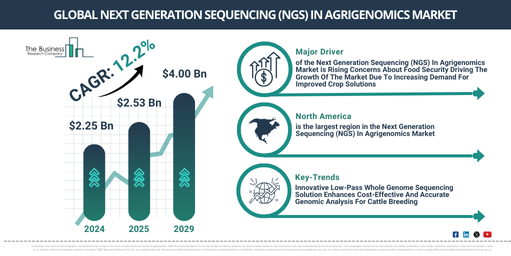
    The next-generation sequencing (NGS) in the agrigenomics market has experienced significant expansion in recent years. This market is forecasted to increase from $2.25 billion in 2024 to $2.53 billion in 2025, achieving a compound annual growth rate (CAGR) of 12.5%. The historical growth of this market is attributable to factors such as the increasing demand for high-yield and disease-resistant crop varieties, a rising necessity for sustainable agricultural practices to mitigate climate change, the growing implementation of precision farming and genomics-assisted breeding techniques, increasing investment in agricultural biotechnology research and development, and heightened awareness of food security and the significance of genetic diversity.

    The size of the next-generation sequencing (NGS) in the agrigenomics market is projected for significant expansion over the coming years. This market is anticipated to reach $4.00 billion by 2029, exhibiting a compound annual growth rate (CAGR) of 12.2%. This projected growth is driven by several factors, including increased government funding and favorable policies for agrigenomics initiatives, enhanced access to sophisticated sequencing technologies, the expanding incorporation of big data and bioinformatics for enhancing crops and livestock, stronger partnerships among agribiotech firms, research bodies, and agricultural producers, and a heightened emphasis on boosting livestock health and productivity through genetic analysis. Key developments expected during this period involve breakthroughs in high-throughput sequencing methods, the convergence of bioinformatics with big data analytics, technological enhancements leading to reduced costs and complexity, progress in long-read sequencing approaches, and improvements in gene editing instruments.

    Get A Free Sample Of The Report:

    https://www.thebusinessresearchcompany.com/sample.aspx?id=27361&type=smp

    What Market Forces Are Contributing To The Growth Of The Next Generation Sequencing (NGS) In Agrigenomics Market?

    Increasing apprehension concerning food security is projected to fuel the growth of next-generation sequencing (NGS) in the agrigenomics market moving forward. Food security refers to ensuring all individuals consistently have access to sufficient, safe, and nutritious food to fulfill their dietary requirements for an active and healthy existence. The escalating worries regarding food security are attributed to factors such as population growth, which elevates food demand beyond the present agricultural production capacity. Next-generation sequencing (NGS) in agrigenomics supports food security by enabling the development of enhanced crop varieties with higher yields, disease resistance, and climate adaptability. For instance, in August 2025, according to the United States Department of Agriculture, a US-based government agency, food insecurity impacted 13.5% (18.0 million) of American families in 2023, marking a statistically significant increase from 12.8% (17.0 million) in 2022. Therefore, the growing concerns about food security are driving expansion in the next-generation sequencing (NGS) in the agrigenomics market.

    How Is The Next Generation Sequencing (NGS) In Agrigenomics Market Segmented Across Key Categories?

    The next generation sequencing (NGS) in agrigenomics market covered in this report is segmented

    1) By Types: Nanopore, NextSeq, NovaSeq, Sequel

    2) By Sample Type: Blood Samples, Plant Tissue Samples, Soil Samples, Microbial Cultures, Seed Samples

    3) By Workflow Type: Sample Preparation, Sequencing, Data Analysis, Data Interpretation, Bioinformatics, Management

    4) By Application: Plant Genomics, Animal Genomics, Microbial Genomics, Food Safety Testing, Biodiversity Conservation

    5) By End-User Type: Agricultural Biotechnology Companies, Research Institutions, Food And Beverage Companies, Government, Regulatory Bodies, Farmers

    Subsegments:

    1) By Nanopore: MinION, GridION, PromethION

    2) By NextSeq: NextSeq 500, NextSeq 550

    3) By NovaSeq: NovaSeq 6000, NovaSeq X

    4) By Sequel: Sequel I, Sequel II, Sequel Iie

    What Key Trends Are Driving Growth In The Next Generation Sequencing (NGS) In Agrigenomics Market?

    Major companies operating in the next generation sequencing (NGS) in agrigenomics market are prioritizing the creation of advanced solutions, such as single-reaction sequencing, to provide cost-effective and accurate genomic insights that expedite crop and livestock improvement for sustainable agriculture. Single-reaction sequencing represents a method integrating multiple sequencing processes into one molecular assay, allowing for simultaneous genome-wide sequencing and targeted genotyping efficiently. For instance, in May 2022, Gencove Inc., a US-based biotechnology company, unveiled InfiniSEEK in collaboration with NEOGEN Corporation, a US-based company focused on developing products for food and animal safety. This solution integrates low-pass whole genome sequencing with high-coverage genotyping in a single assay, delivering cost-effective, accurate genomic insights. The technology facilitates comprehensive sequencing of cattle populations, thereby preventing selection bias, uncovering new genetic traits, and overseeing over 400 bovine traits with clinical-grade accuracy validated to be over 99% concordant with deep sequencing.

    Who Are The Major Stakeholders Operating In The Next Generation Sequencing (NGS) In Agrigenomics Market?

    Major companies operating in the next generation sequencing (ngs) in agrigenomics market are Thermo Fisher Scientific Inc., Eurofins Scientific SE, Agilent Technologies Inc., Illumina Inc., Daicel Corporation, Takara Holdings Inc., Tecan Group Ltd., Azenta Life Sciences, 10x Genomics Inc., Novogene Corporation, Twist Bioscience Inc., Oxford Nanopore Technologies Ltd., Genotypic Technology Pvt. Ltd., CD Genomics Inc., Zymo Research Corp., Genome Life Sciences Pvt. Ltd., Arraygen Technologies Pvt. Ltd., SciGenom Labs Pvt. Ltd., BGI Group, and Paragon Genomics Inc.

    Access The Complete Report Here:

    https://www.thebusinessresearchcompany.com/report/next-generation-sequencing-ngs-in-agrigenomics-global-market-report

    How Do Regional Dynamics Influence The Next Generation Sequencing (NGS) In Agrigenomics Market Performance?

    North America was the largest region in the next generation sequencing (NGS) in agrigenomics market in 2024. Asia-Pacific is expected to be the fastest-growing region in the forecast period. The regions covered in the next generation sequencing (NGS) in agrigenomics market report are Asia-Pacific, Western Europe, Eastern Europe, North America, South America, Middle East, Africa.

    Customize Your Report Here:

    https://www.thebusinessresearchcompany.com/customise?id=27361&type=smp

    Browse Through More Reports Similar to the Global Next Generation Sequencing (NGS) In Agrigenomics Market 2025, By The Business Research Company

    Waterproof Adhesives And Sealants Global Market Report 2025

    https://www.thebusinessresearchcompany.com/report/waterproof-adhesives-and-sealants-global-market-report

    Underwater Connector Global Market Report 2025

    https://www.thebusinessresearchcompany.com/report/underwater-connector-global-market-report

    Underwater Connectors Global Market Report 2025

    https://www.thebusinessresearchcompany.com/report/underwater-connectors-global-market-report

    About The Business Research Company:

    With over 15000+ reports from 27 industries covering 60+ geographies, The Business Research Company has built a reputation for offering comprehensive, data-rich research and insights. Armed with 1,500,000 datasets, the optimistic contribution of in-depth secondary research, and unique insights from industry leaders, you can get the information you need to stay ahead in the game.

    Get in touch with us:

    The Business Research Company: https://www.thebusinessresearchcompany.com/

    Americas +1 310-496-7795

    Asia +44 7882 955267 & +91 8897263534

    Europe +44 7882 955267

    Email us at info@tbrc.info

    Follow us on:

    LinkedIn: https://in.linkedin.com/company/the-business-research-company

    YouTube: https://www.youtube.com/channel/UC24_fI0rV8cR5DxlCpgmyFQ

    Global Market Model: https://www.thebusinessresearchcompany.com/global-market-model
  • Central Nervous System Lymphoma Treatment Market – Opportunities, Share, Growth and Competitive Analysis and Forecast 2029

    Central Nervous System Lymphoma Treatment Market – Opportunities, Share, Growth and Competitive Analysis and Forecast 2029

    Claim your 20% discount on Global Market Reports with code ONLINE20. Limited time only.

    What Is The Projected Valuation Of The Central Nervous System Lymphoma Treatment Market In The Coming Years?

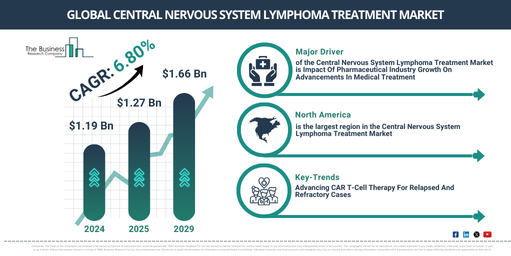
    In recent times, the central nervous system lymphoma treatment market has been on a steady rise. It’s expected to expand from a worth of $1.19 billion in 2024 to $1.27 billion in 2025, exhibiting a compound annual growth rate (CAGR) of 6.9%. Factors lending to this solid growth during the historic phase include a higher incidence of central nervous system (CNS) lymphoma, a growing trend towards targeted therapies, an increase in cancer awareness initiatives, rising healthcare spending, advancements in immunotherapy, the advent of high-dose chemotherapy, extensive clinical trial activities, and better access to specialized healthcare services.

    The market for central nervous system lymphoma treatment is predicted to exhibit robust growth in the imminent years, with an expected market size of $1.66 billion by 2029, advancing at a CAGR of 6.8%. This escalation during the forecast period is likely to be motivated by factors such as growing inclination towards personalized medicine, focus on early diagnosis, elevated investments in cancer research, advent of innovative drug delivery systems, expansion of healthcare framework in developing markets, proliferation of autoimmune diseases, formulation of combination therapies, increased accessibility of biosimilars and the rising use of telemedicine in cancer treatment. The forecast period will also be marked by future trends such as progression in the field of precision medicine, incorporation of artificial intelligence in diagnostic procedures, utilization of liquid biopsy for surveillance, acceptance of nanotechnology for drug delivery, improvements in imaging technology, creation of bispecific antibodies, employment of gene editing techniques like CRISPR, adoption of wearable devices for health monitoring, and augmentation of telehealth channels for the delivery of oncology care.

    Get A Free Sample Of The Report:

    https://www.thebusinessresearchcompany.com/sample.aspx?id=21134&type=smp

    What Drivers Are Accelerating Expansion Of The Central Nervous System Lymphoma Treatment Market?

    Accelerated advancements in the pharmaceutical sector are envisioned to fuel the expansion of the market for treatments for central nervous system lymphoma. The pharmaceutical sector, which is committed to the research, creation, production, and dissemination of medical drugs for disease prevention, management, and treatment, finds its growth invigorated by numerous factors. These include revolutionary medical research, an older population, improved worldwide access to healthcare, escalating chronic maladies, global health emergencies, regulatory backing, and boosted healthcare expenditure. The pharmaceutical sector’s expansion propels the central nervous system lymphoma treatment market by facilitating innovation in targeted therapies, heightening diagnostic competence, and intensifying research and investment for uncommon cancers. For example, as per the European Federation of Pharmaceutical Industries and Associations (EFPIA), a Belgian trade union representing the pharmaceutical industry, total pharmaceutical production in Europe was worth $4,17,300 million (€390,000 million) in 2023, marking an increase from $3,88,141 million (€363,300 million) the previous year. Hence, the swift expansion in the pharmaceutical sector is priming the growth of the market for central nervous system lymphoma treatments.

    How Is The Global Central Nervous System Lymphoma Treatment Market Broken Down By Segment?

    The central nervous system lymphoma treatmentmarket covered in this report is segmented –

    1) By Treatment Type: Chemotherapy; Radiation Therapy; Targeted Therapy; Corticosteroids; Immunotherapy

    2) By Route Of Administration: Intravenous; Oral; Intrathecal

    3) By Distribution Channel: Direct Sales; Third-Party Distributors

    4) By End User: Hospitals; Clinics; Ambulatory Surgical Centers

    Subsegments:

    1) By Chemotherapy: High-Dose Methotrexate; Temozolomide; Rituximab-Based Regimens; Carmustine; Cytarabine

    2) By Radiation Therapy: Whole Brain Radiation Therapy (WBRT); Stereotactic Radiosurgery (SRS); Brachytherapy

    3) By Targeted Therapy: Monoclonal Antibodies; Tyrosine Kinase Inhibitors; B-Cell Antigen Inhibitors; PI3K Inhibitors

    4) By Corticosteroids: Dexamethasone; Prednisone; Methylprednisolone

    5) By Immunotherapy: Checkpoint Inhibitors; Chimeric Antigen Receptor T-Cell (CAR-T) Therapy; Monoclonal Antibodies; Immune Modulators

    Which Notable Trends Are Transforming The Central Nervous System Lymphoma Treatment Market Outlook?

    Leading businesses in the central nervous system lymphoma market are concentrating their efforts on creating advanced therapies, such as chimeric antigen receptor (CAR) T-cell therapy. This is done to increase the effectiveness of treatments, offer customised therapy choices, and enhance patient results, mainly in cases of relapse or resistance. CAR T-cell immunotherapy modifies a patient’s T-cells enabling them to detect and eliminate cancer cells more efficiently. For example, in June 2024, Kite Pharma, a US-based drug company, in partnership with Dana-Farber Cancer Institute, a US-based cancer care facility, revealed Yescarta (axicabtagene ciloleucel). This has been considered tolerable in patients suffering from relapsed or refractory primary or secondary central nervous system lymphoma (PCNSL and SCNSL). Yescarta (axicabtagene ciloleucel) gathers a patient’s T-cells, modifies them to target cancer cells, and reintroduces them into the body. These modified T-cells aid in killing lymphoma cells, including those residing in the central nervous system, specifically in cases of relapse or where normal treatments prove unsuccessful.

    Which Firms Are Making The Biggest Impact In The Central Nervous System Lymphoma Treatment Market?

    Major companies operating in the central nervous system lymphoma treatment market are Pfizer Inc., Johnson & Johnson, F Hoffmann-La Roche AG, Merck & Co. Inc, AbbVie Inc., Bristol-Myers Squibb, Astrazeneca plc, Novartis AG, GlaxoSmithKline Plc, Gilead Sciences, Amgen Inc, Viatris Inc., Teva Pharmaceutical Industries Ltd., Baxter International Inc., Regeneron Pharmaceuticals, Biogen Inc., UCB Pharma, Incyte Corporation, Takeda Pharmaceutical Company Limited, Seagen Inc., MorphoSys AG, Nurix Therapeutics, Fresenius SE & Co KGaA, Astellas Pharma, Sandoz Group AG, BeiGene Ltd.

    Access The Complete Report Here:

    https://www.thebusinessresearchcompany.com/report/central-nervous-system-lymphoma-treatment-global-market-report

    Which Geographic Regions Are Creating Strong Demand In The Central Nervous System Lymphoma Treatment Market?

    North America was the largest region in the central nervous system lymphoma treatment market in 2024. Asia-Pacific is expected to be the fastest-growing region in the forecast period. The regions covered in the central nervous system lymphoma treatment market report are Asia-Pacific, Western Europe, Eastern Europe, North America, South America, Middle East, Africa.

    Customize Your Report Here:

    https://www.thebusinessresearchcompany.com/customise?id=21134&type=smp

    Browse Through More Reports Similar to the Global Central Nervous System Lymphoma Treatment Market 2025, By The Business Research Company

    Generic Central Nervous System Drugs Global Market Report 2025

    https://www.thebusinessresearchcompany.com/report/generic-central-nervous-system-drugs-global-market-report

    Central Nervous System Biomarkers Global Market Report 2025

    https://www.thebusinessresearchcompany.com/report/central-nervous-system-biomarkers-global-market-report

    Non Hodgkin Lymphoma Nhl Global Market Report 2025

    https://www.thebusinessresearchcompany.com/report/non-hodgkin-lymphoma-nhl-global-market-report

    About The Business Research Company:

    With over 15000+ reports from 27 industries covering 60+ geographies, The Business Research Company has built a reputation for offering comprehensive, data-rich research and insights. Armed with 1,500,000 datasets, the optimistic contribution of in-depth secondary research, and unique insights from industry leaders, you can get the information you need to stay ahead in the game.

    Get in touch with us:

    The Business Research Company: https://www.thebusinessresearchcompany.com/

    Americas +1 310-496-7795

    Asia +44 7882 955267 & +91 8897263534

    Europe +44 7882 955267

    Email us at info@tbrc.info

    Follow us on:

    LinkedIn: https://in.linkedin.com/company/the-business-research-company

    YouTube: https://www.youtube.com/channel/UC24_fI0rV8cR5DxlCpgmyFQ

    Global Market Model: https://www.thebusinessresearchcompany.com/global-market-model
  • What Key Growth Drivers Are Shaping The Smart Wearable Breathing Trainer Market Forecast Toward $2.04 Billion?

    What Key Growth Drivers Are Shaping The Smart Wearable Breathing Trainer Market Forecast Toward $2.04 Billion?

    Uncover key drivers, emerging technologies, and competitive movements shaping the smart wearable breathing trainer market from 2025–2034 with trusted insights from The Business Research Company

    What Is The Present And Forecasted Size Of The Smart Wearable Breathing Trainer Market?

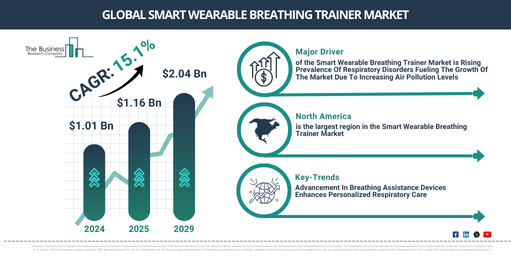
    The market for smart wearable breathing trainers has experienced rapid expansion in recent years. Its size is projected to increase from $1.01 billion in 2024 to $1.16 billion in 2025, achieving a compound annual growth rate (CAGR) of 15.5%. The historical growth of this market can be attributed to factors such as increased government support, a rise in smartphone-connected medical devices, an increase in insurance coverage, escalating global air pollution levels, and the expansion of e-commerce channels.

    The smart wearable breathing trainer market is anticipated to experience substantial growth in the upcoming years. It is projected to expand to $2.04 billion by 2029, achieving a compound annual growth rate (CAGR) of 15.1%. This expansion during the forecast period is fueled by factors such as the increasing incidence of respiratory disorders, the rising prevalence of chronic respiratory conditions, an expanding aging demographic, the growth of middle-class populations, and a heightened focus on preventive healthcare. Significant trends expected in this period include ongoing technological advancements, the integration of AI, the adoption of digital twin technology, the development of cloud-based respiratory health data platforms, and sophisticated data visualization dashboards.

    Get A Free Sample Of The Report:

    https://www.thebusinessresearchcompany.com/sample.aspx?id=27418&type=smp

    Which Market Dynamics Are Playing A Critical Role In The Growth Of The Smart Wearable Breathing Trainer Market?

    The increasing incidence of respiratory conditions is expected to drive the expansion of the smart wearable breathing trainer market. Respiratory disorders encompass various conditions affecting the lungs and airways, including asthma, chronic obstructive pulmonary disease (COPD), and sleep apnea, frequently resulting in reduced lung capacity and breathing difficulties. The occurrence of respiratory disorders is escalating due to rising air pollution levels, as prolonged exposure to contaminated air impairs lung function and increases vulnerability to chronic respiratory issues. A smart wearable breathing trainer assists with respiratory disorders by delivering real-time feedback and guided breathing exercises that contribute to improved lung function and stronger respiratory muscles. For instance, in March 2024, the Centers for Disease Control and Prevention, a US-based government agency, reported that tuberculosis cases increased from 8,320 in 2022 to 9,615 in 2023, showing a rise of 1,295 cases. Therefore, the growing prevalence of respiratory disorders is propelling the growth of the smart wearable breathing trainer market.

    What Are The Key Segment Trends Observed In The Smart Wearable Breathing Trainer Market?

    The smart wearable breathing trainer market covered in this report is segmented

    1) By Product Type: Electronic Breathing Trainers, Mechanical Breathing Trainers, Hybrid Breathing Trainers

    2) By Distribution Channel: Online Stores, Specialty Stores, Pharmacies, Other Distribution Channels

    3) By Application: Sports And Fitness, Medical And Healthcare, Wellness And Rehabilitation, Other Applications

    4) By End-User: Adults, Children, Elderly

    Subsegment:

    1) By Electronic Breathing Trainers: App-Connected Breathing Trainers, Sensor-Integrated Respiratory Wearables, Bluetooth-Enabled Spirometry Devices, AI-Guided Breath Coaching Devices, Visual Feedback Trainers, Audio-Guided Biofeedback Trainers

    2) By Mechanical Breathing Trainers: Inspiratory Muscle Training Devices, Expiratory Resistance Devices, Threshold Loading Devices, Flow-Based Resistance Devices, Manual Breath Exercisers Without Electronics

    3) By Hybrid Breathing Trainers: Electronic-Mechanical Dual Feedback Trainers, App-Synced Mechanical Resistance Trainers, Smart Inspiratory Muscle Training Devices With Digital Tracking, Multi-Mode Trainers, Breathing Trainers With Both Analog And Digital Controls

    Which Disruptive Trends Are Driving Change Across The Smart Wearable Breathing Trainer Market?

    Leading companies in the smart wearable breathing trainer market are prioritizing the development of advanced products, such as smart respiratory training devices, to improve lung performance, deliver real-time feedback, and support individualized respiratory therapies. These devices are technologically driven tools designed to enhance breathing efficiency through instant feedback and customized respiratory exercises. For example, in November 2022, Xplore Health Technologies, an India-based health-tech firm, collaborated with Airofit A/S, a Denmark-based health technology company, to introduce Airofit PRO, a smart respiratory training device. This device connects with a smartphone to provide 17 guided breathing sessions, specifically tailored to an individual’s lung capacity and muscle strength. Users receive immediate feedback and can monitor their progress across metrics like inspiratory and expiratory muscle strength, vital capacity, anaerobic threshold, and relaxation. A notable innovation is its adjustable resistance mechanism, which trains the diaphragm and other respiratory muscles using resistance-based exercises, thereby boosting muscle endurance. The overall result is a versatile instrument suitable for elevating both athletic performance and respiratory health.

    Who Are The Leading Companies Driving The Smart Wearable Breathing Trainer Market?

    Major companies operating in the smart wearable breathing trainer market are Oxa Life Ltd., B-Arm Medical Co. Ltd., Airofit A/S, Powerbreathe International Ltd., Oumua Inc., CHASKi Health Technologies Inc., POWERbreathe International Ltd., Hexoskin (Carré Technologies Inc.), Prana Tech LLC, SpiroTiger (Idiag AG), Tymewear Inc., ProSwimwear Ltd., Alvio Inc., Shenzhen Viatom Technology Co. Ltd, Opump Health Technology Co. Ltd., HelloEd Ltd., BRISH Co. Ltd., Zhongshan Huagong Technology Co. Ltd., GH Innotek Co. Ltd., Shenzhen Lanxiaozhichuang Technology Co. Ltd.

    Access The Complete Report Here:

    https://www.thebusinessresearchcompany.com/report/smart-wearable-breathing-trainer-global-market-report

    Which Region Is Forecasted To Lead The Smart Wearable Breathing Trainer Market In The Coming Years?

    North America was the largest region in the smart wearable breathing trainer market in 2024. Asia-Pacific is expected to be the fastest-growing region in the forecast period. The regions covered in the smart wearable breathing trainer market report are Asia-Pacific, Western Europe, Eastern Europe, North America, South America, Middle East, Africa.

    Customize Your Report Here:

    https://www.thebusinessresearchcompany.com/customise?id=27418&type=smp

    Browse Through More Reports Similar to the Global Smart Wearable Breathing Trainer Market 2025, By The Business Research Company

    Smart Hospital Global Market Report 2025

    https://www.thebusinessresearchcompany.com/report/smart-hospital-global-market-report

    Smart Government Global Market Report 2025

    https://www.thebusinessresearchcompany.com/report/smart-government-global-market-report

    Smart Stadium Global Market Report 2025

    https://www.thebusinessresearchcompany.com/report/smart-stadium-global-market-report

    About The Business Research Company:

    With over 15000+ reports from 27 industries covering 60+ geographies, The Business Research Company has built a reputation for offering comprehensive, data-rich research and insights. Armed with 1,500,000 datasets, the optimistic contribution of in-depth secondary research, and unique insights from industry leaders, you can get the information you need to stay ahead in the game.

    Get in touch with us:

    The Business Research Company: https://www.thebusinessresearchcompany.com/

    Americas +1 310-496-7795

    Asia +44 7882 955267 & +91 8897263534

    Europe +44 7882 955267

    Email us at info@tbrc.info

    Follow us on:

    LinkedIn: https://in.linkedin.com/company/the-business-research-company

    YouTube: https://www.youtube.com/channel/UC24_fI0rV8cR5DxlCpgmyFQ

    Global Market Model: https://www.thebusinessresearchcompany.com/global-market-model
  • How Is The Next Generation Complement Therapeutics Market Expected To Grow At 15.7% CAGR Over 2025–2029?

    How Is The Next Generation Complement Therapeutics Market Expected To Grow At 15.7% CAGR Over 2025–2029?

    Uncover key drivers, emerging technologies, and competitive movements shaping the next generation complement therapeutics market from 2025–2034 with trusted insights from The Business Research Company

    What Is The Projected Valuation Of The Next Generation Complement Therapeutics Market In The Coming Years?

    The next generation complement therapeutics market has seen swift expansion over recent years. It is anticipated to expand from $6.36 billion in 2024 to $7.38 billion in 2025, achieving a compound annual growth rate (CAGR) of 16.1%. This historical surge is linked to factors such as the increasing integration of companion diagnostics, a rise in personalized treatment strategies, the broader reach of telemedicine and digital health platforms, a heightened focus on rare and orphan conditions, and the growing application of AI and machine learning in the discovery of new drugs.

    The next generation of complement therapeutics market is anticipated to experience substantial expansion in the coming years. This market is projected to reach a size of $13.24 billion by 2029, exhibiting a compound annual growth rate (CAGR) of 15.7%. Factors driving this growth during the forecast period include increased investment from venture capital and private equity firms, the globalization of clinical trials, a greater reliance on real-world evidence (RWE), an uptick in neurodegenerative disease diagnosis rates, and the emergence of microbiome-based therapeutics. Key trends expected over this period encompass the incorporation of digital biomarkers into clinical trials, the embrace of CRISPR and gene editing technologies, the creation of multi-specific antibodies, the utilization of digital twins for patient simulation and precise care, and the application of 3D bioprinting for customized drug testing and implants.

    Get A Free Sample Of The Report:

    https://www.thebusinessresearchcompany.com/sample.aspx?id=27360&type=smp

    What Drivers Are Accelerating Expansion Of The Next Generation Complement Therapeutics Market?

    The next-generation complement therapeutics market is anticipated to expand due to the increasing occurrence of chronic diseases. These enduring health conditions necessitate continuous management to alleviate symptoms and enhance an individual’s quality of life. The rise in chronic diseases stems from inactive lifestyles, which restrict physical movement, disturb metabolic processes, and heighten prolonged health dangers. Next-generation complement therapeutics address chronic illnesses by precisely targeting and adjusting the excessively active complement system, thereby diminishing inflammation and safeguarding against tissue harm. For example, data from January 2022, released by the American Cancer Society, a US-based cancer awareness non-profit organization, projected around 1.9 million new cancer cases and 609,360 cancer-related fatalities in the US, translating to roughly 1,670 deaths daily. Consequently, the expanding prevalence of chronic diseases is fueling the development of the next-generation complement therapeutics market.

    How Is The Global Next Generation Complement Therapeutics Market Broken Down By Segment?

    The next generation complement therapeutics market covered in this report is segmented

    1) By Type Of Therapy: Monotherapy, Adjunctive Therapy

    2) By Molecule Type: Biologic, Small Molecule

    3) By Route Of Administration: Intravenous, Oral, Intravitreal, Subcutaneous

    4) By Indication: Paroxysmal Nocturnal Hemoglobinuria, Geographic Atrophy (GA) Secondary To Age-Related Macular Degeneration, Generalized Myasthenia Gravis, Atypical Hemolytic Uremic Syndrome, Other Indications

    5) By Therapeutic Area: Hematology, Ophthalmology, Neurology, Immunology Or Rheumatology, Other Therapeutic Areas

    Subsegments:

    1) By Monotherapy: C3 Inhibitors, C5 Inhibitors, Factor D Inhibitors, Factor B Inhibitors, C1 Inhibitors, MASP-2 Inhibitors

    2) By Adjunctive Therapy: Combination With Immunosuppressants, Combination With Steroids, Combination With Plasma Exchange, Combination With Biologics, Combination With Chemotherapeutics, Combination With Anticoagulants

    Which Trends Are Likely To Redefine Growth Paths In The Next Generation Complement Therapeutics Market?

    Leading companies active in the next-generation complement therapeutics market are concentrating on developing advanced therapies, such as novel anti-C5 recycling monoclonal antibodies, to provide more effective and less frequently required treatments for complement-mediated disorders. An anti-C5 recycling monoclonal antibody is a bioengineered molecule designed to target and inhibit complement protein C5, thereby suppressing inflammation, while also recycling within the body to enhance its half-life and therapeutic impact. For instance, in December 2022, Roche AG, a Switzerland-based pharmaceutical firm, announced promising Phase III data from its COMMODORE 3 study, revealing that crovalimab, a novel anti-C5 antibody, proved effective and well-tolerated in individuals with PNH in China. The treatment successfully met its primary goals of reducing the need for blood transfusions and controlling hemolysis. Designed for subcutaneous administration every four weeks, crovalimab offers a convenient, self-administered alternative to currently available therapies. With Priority Review granted by Chinese regulators, it may soon emerge as a valuable treatment option for PNH, especially where access to C5 inhibitors is currently very restricted.

    Which Firms Are Making The Biggest Impact In The Next Generation Complement Therapeutics Market?

    Major companies operating in the next generation complement therapeutics market are AstraZeneca PLC, Novartis AG, Amgen Inc., Regeneron Pharmaceuticals Inc., Astellas Pharma Inc., Vertex Pharmaceuticals, Genentech Inc., Genmab A/S, Mallinckrodt Pharmaceuticals Ltd., Alnylam Pharmaceuticals Inc., Apellis Pharmaceuticals Inc., Omeros Corporation, CANbridge Pharmaceuticals Inc., Alexion Pharmaceuticals Inc., Molecular Partners AG, NovelMed Therapeutics Inc., InflaRx GmbH, Amyndas Pharmaceuticals S.A., Kira Pharmaceuticals Inc., ReAlta Life Sciences Inc.

    Access The Complete Report Here:

    https://www.thebusinessresearchcompany.com/report/next-generation-complement-therapeutics-global-market-report

    Which Geographic Regions Are Creating Strong Demand In The Next Generation Complement Therapeutics Market?

    North America was the largest region in the next generation complement therapeutics market in 2024. Asia-Pacific is expected to be the fastest-growing region in the forecast period. The regions covered in the next generation complement therapeutics market report are Asia-Pacific, Western Europe, Eastern Europe, North America, South America, Middle East, Africa.

    Customize Your Report Here:

    https://www.thebusinessresearchcompany.com/customise?id=27360&type=smp

    Browse Through More Reports Similar to the Global Next Generation Complement Therapeutics Market 2025, By The Business Research Company

    Payment Gateway Global Market Report 2025

    https://www.thebusinessresearchcompany.com/report/payment-gateway-global-market-report

    Quantum Technology Global Market Report 2025

    https://www.thebusinessresearchcompany.com/report/quantum-technology-global-market-report

    Payment Processing Solutions Global Market Report 2025

    https://www.thebusinessresearchcompany.com/report/payment-processing-solutions-global-market-report

    About The Business Research Company:

    With over 15000+ reports from 27 industries covering 60+ geographies, The Business Research Company has built a reputation for offering comprehensive, data-rich research and insights. Armed with 1,500,000 datasets, the optimistic contribution of in-depth secondary research, and unique insights from industry leaders, you can get the information you need to stay ahead in the game.

    Get in touch with us:

    The Business Research Company: https://www.thebusinessresearchcompany.com/

    Americas +1 310-496-7795

    Asia +44 7882 955267 & +91 8897263534

    Europe +44 7882 955267

    Email us at info@tbrc.info

    Follow us on:

    LinkedIn: https://in.linkedin.com/company/the-business-research-company

    YouTube: https://www.youtube.com/channel/UC24_fI0rV8cR5DxlCpgmyFQ

    Global Market Model: https://www.thebusinessresearchcompany.com/global-market-model