Blog

  • Global Central Nervous System (CNS) Lymphoma Market Trends 2025–2029: Regional Outlook and Sizing Analysis

    Global Central Nervous System (CNS) Lymphoma Market Trends 2025–2029: Regional Outlook and Sizing Analysis

    Claim your 20% discount on Global Market Reports with code ONLINE20. Limited time only.

    How Much Will The Central Nervous System (CNS) Lymphoma Market Be Worth By 2029?

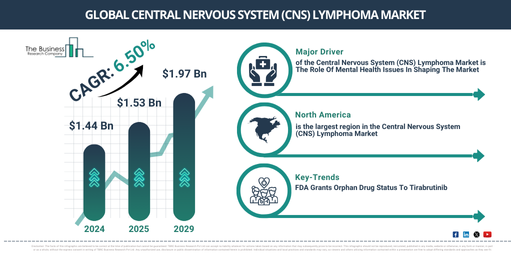
    Over the past few years, the market size for the central nervous system (cns) lymphoma has seen a robust growth. The forecast suggests an expansion from $1.44 billion in 2024 to $1.53 billion in 2025, at a compound annual growth rate (CAGR) of 6.7%. This growth in previous years can be credited to increased awareness and detection, a rising count of lymphoma cases, a surge in the initiation of clinical trials, escalated funding for the research of cancer, and an uptick in the utilization of biomarkers for targeted therapies.

    The market size for central nervous system (CNS) lymphoma is anticipated to experience robust growth in the upcoming years, projected to reach $1.97 billion in 2029 with a Compound Annual Growth Rate (CAGR) of 6.5%. This predicted growth during the forecast period is primarily due to factors such as increased use of immunotherapy, a heightened focus on targeted treatments, rising incidence of CNS lymphoma, improved patient access to medical care, government assistance, and initiatives. Key trends within this period will involve the incorporation of artificial intelligence in diagnostic procedures, the formulation of next-gen monoclonal antibodies, a movement towards less invasive treatment options, advancements in precision medicine technology, and progress in diagnostic methods.

    Get A Free Sample Of The Report:

    https://www.thebusinessresearchcompany.com/sample.aspx?id=21133&type=smp

    Which Key Factors Are Fueling Growth In The Central Nervous System (CNS) Lymphoma Market?

    The surge in psychological disorder prevalence is anticipated to fuel the expansion of the central nervous system (CNS) lymphoma market in the future. Mental health conditions such as psychological disorders disrupt thinking, emotions, and behavior, leading to distress or impairment. Factors like stress, social isolation, economic pressures, genetic factors, substance misuse, and digital overexposure are driving the rise in psychological disorders. CNS lymphoma contributes to advancements in neuro-oncology research by improving our understanding of brain inflammation, immune interactions, and the blood-brain barrier. This understanding is crucial for developing improved treatments for both cancer and psychological disorders. As a case in point, by 2024, the National Alliance On Mental Illness, a US-based organization, estimates that psychosis spectrum and mood disorders will lead to nearly 600,000 hospitalizations each year among U.S. individuals aged 18-44. Consequently, the growing number of psychological disorder cases is propelling growth in the CNS lymphoma market.

    Which Segmentation Factors Are Critical In The Central Nervous System (CNS) Lymphoma Market Analysis?

    The central nervous system (cns) lymphomamarket covered in this report is segmented –

    1) By Class Of Drugs: Monoclonal antibodies; Chemotherapeutic Agents; Corticosteroids

    2) By Treatment: Chemotherapy; Radiation Therapy; Steroid Therapy; Targeted Therapy

    3) By Application: Hospitals; Clinics; Ambulatory Surgical Services; Other Applications

    Subsegments:

    1) By Monoclonal Antibodies: Anti-CD20 Monoclonal Antibodies; Anti-PD-1 Monoclonal Antibodies; Other Targeted Monoclonal Antibodies

    2) By Chemotherapeutic Agents: Alkylating Agents; Antimetabolites; Topoisomerase Inhibitors

    3) By Corticosteroids: Dexamethasone; Prednisolone; Methylprednisolone

    What New Opportunities Are Emerging From Trends In The Central Nervous System (CNS) Lymphoma Market?

    Major players in the central nervous system (CNS) lymphoma industry are concentrating their efforts on the development of innovative therapies like Tirabrutinib for primary central nervous system (CNS) lymphoma treatment. Tirabrutinib is a precise inhibitor of Bruton’s tyrosine kinase (BTK) and it’s designed to treat B-cell malignancies, such as primary central nervous system lymphoma (PCNSL), by hindering pathways crucial for cancer cells survival and multiplication. For example, in March 2023, ONO Pharma Inc., a pharmaceutical firm based in the US, declared that the U.S. Food and Drug Administration (FDA) has assigned orphan drug status to tirabrutinib (ONO-4059) for the treatment of primary central nervous system lymphoma (PCNSL). Currently, tirabrutinib is under examination in the phase 2 PROSPECT study (NCT04947319), an effective BTK inhibitor aiming at B-cell growth and survival. Tirabrutinib modulates cellular proliferation and activation using the B-cell receptor, promoting survival, differentiation, and clonal expansion of B-cells.

    Which Players Are Shaping The Competitive Landscape Of The Central Nervous System (CNS) Lymphoma Market?

    Major companies operating in the central nervous system (CNS) lymphoma market are F. Hoffmann-La Roche Ltd., Merck & Co. Inc., AbbVie Inc., Sanofi S.A., Novartis International AG, Takeda Pharmaceutical Company Limited, Eli Lilly and Company, Gilead Sciences Inc., Amgen Inc., Fresenius SE & Co. KGaA, Incyte Corporation, ONO PHARMA USA Inc., Kazia Therapeutics Limited, Simcere Pharmaceutical Group Limited, Karyopharm Therapeutics Inc., Nurix Therapeutics Inc., CNS Pharmaceuticals Inc., JW Therapeutics, PentixaPharm Pty Ltd, Cellectar Biosciences Inc.

    Access The Complete Report Here:

    https://www.thebusinessresearchcompany.com/report/central-nervous-system-cns-lymphoma-global-market-report

    Which Region Is Likely To Register The Fastest Growth In The Central Nervous System (CNS) Lymphoma Market?

    North America was the largest region in the central nervous system (CNS) lymphoma market in 2024. Asia-Pacific is expected to be the fastest-growing region in the forecast period. The regions covered in the central nervous system (CNS) lymphoma market report are Asia-Pacific, Western Europe, Eastern Europe, North America, South America, Middle East, Africa.

    Customize Your Report Here:

    https://www.thebusinessresearchcompany.com/customise?id=21133&type=smp

    Browse Through More Reports Similar to the Global Central Nervous System (CNS) Lymphoma Market 2025, By The Business Research Company

    Generic Central Nervous System Drugs Global Market Report 2025

    https://www.thebusinessresearchcompany.com/report/generic-central-nervous-system-drugs-global-market-report

    Central Nervous System Biomarkers Global Market Report 2025

    https://www.thebusinessresearchcompany.com/report/central-nervous-system-biomarkers-global-market-report

    Non Hodgkin Lymphoma Nhl Global Market Report 2025

    https://www.thebusinessresearchcompany.com/report/non-hodgkin-lymphoma-nhl-global-market-report

    About The Business Research Company:

    With over 15000+ reports from 27 industries covering 60+ geographies, The Business Research Company has built a reputation for offering comprehensive, data-rich research and insights. Armed with 1,500,000 datasets, the optimistic contribution of in-depth secondary research, and unique insights from industry leaders, you can get the information you need to stay ahead in the game.

    Get in touch with us:

    The Business Research Company: https://www.thebusinessresearchcompany.com/

    Americas +1 310-496-7795

    Asia +44 7882 955267 & +91 8897263534

    Europe +44 7882 955267

    Email us at info@tbrc.info

    Follow us on:

    LinkedIn: https://in.linkedin.com/company/the-business-research-company

    YouTube: https://www.youtube.com/channel/UC24_fI0rV8cR5DxlCpgmyFQ

    Global Market Model: https://www.thebusinessresearchcompany.com/global-market-model
  • Which Factors Will Push The Neurosurgical Robotics Market To Achieve $7.05 Billion By 2029?

    Which Factors Will Push The Neurosurgical Robotics Market To Achieve $7.05 Billion By 2029?

    Uncover key drivers, emerging technologies, and competitive movements shaping the neurosurgical robotics market from 2025–2034 with trusted insights from The Business Research Company

    How Much Will The Neurosurgical Robotics Market Be Worth By 2029?

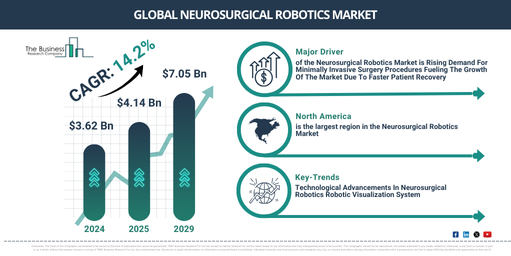
    The neurosurgical robotics market has seen substantial growth in recent years. It is projected to expand from $3.62 billion in 2024 to $4.14 billion in 2025, representing a compound annual growth rate (CAGR) of 14.6%. The market’s historic growth can be attributed to factors such as increasing demand for minimally invasive surgeries, the rising prevalence of neurological disorders, a globally expanding aging population, the growth of the neurosurgeon workforce and training programs, and increasing healthcare spending in developed nations.

    The neurosurgical robotics market is anticipated to experience substantial expansion in the coming years. This market is projected to reach $7.05 billion by 2029, exhibiting a compound annual growth rate (CAGR) of 14.2%. Factors contributing to this growth during the projected period include the escalating need for accuracy in intricate neurosurgical operations, the broader availability of reimbursement schemes, the development of healthcare infrastructure in developing nations, increasing recognition of the advantages of robotic surgery, and a rise in collaborations between medical technology firms and healthcare institutions. Key trends anticipated within this timeframe involve progress in neurosurgical navigation technology, ongoing development in robotic arms and instrumentation, increased funding for research and development, improvements in real-time imaging capabilities, and the broadening incorporation of cloud-based data systems into surgical platforms.

    Get A Free Sample Of The Report:

    https://www.thebusinessresearchcompany.com/sample.aspx?id=27359&type=smp

    Which Key Factors Are Fueling Growth In The Neurosurgical Robotics Market?

    The increasing need for minimally invasive surgical procedures is anticipated to fuel the expansion of the neurosurgical robotics market moving forward. Minimally invasive surgery refers to techniques that restrict the size and quantity of incisions, thereby diminishing physical trauma during operations. This escalating demand for minimally invasive surgical (MIS) procedures is driven by more rapid patient recovery, as these methods inflict less trauma, leading to shorter hospital stays, reduced discomfort, and a swifter return to regular activities. Neurosurgical robotics facilitates minimally invasive surgical (MIS) procedures by enhancing surgical precision, stability, and control, enabling surgeons to operate through smaller incisions with improved accuracy and a lower likelihood of complications. For instance, in June 2024, data from the American Society of Plastic Surgeons, a US-based organization of board-certified plastic surgeons, indicated that minimally invasive procedures experienced a 7% rise in 2023, with the overall count surpassing 25 million. Thus, the growing demand for minimally invasive surgical procedures is propelling the growth of the neurosurgical robotics market.

    Which Segmentation Factors Are Critical In The Neurosurgical Robotics Market Analysis?

    The neurosurgical robotics market covered in this report is segmented

    1) By Type Of Robot: Precision Robotic Systems, Navigation Systems, Surgical Assist Systems

    2) By Surgery Type: Minimally Invasive, Open Surgery

    3) By Application: Brain Tumor Resection, Deep Brain Stimulation (DBS), Spine Surgery

    4) By End User: Hospitals, Ambulatory Surgical Centers

    Subsegments:

    1) By Precision Robotic Systems: Robotic Tumor Resection Systems, Robotic Biopsy Devices, Robotic Laser Ablation Systems

    2) By Navigation Systems: Image-Guided Navigation Platforms, Electromagnetic Tracking Systems, Optical Tracking Navigation Systems

    3) By Surgical Assist Systems: Robotic Arm Positioning Devices, Endoscopic Assistance Robots, Instrument Guidance And Stabilization Systems

    What Are The Dominant Trends Currently Seen In The Neurosurgical Robotics Market?

    Leading companies within the neurosurgical robotics market are concentrating on developing advanced solutions, such as robotic exoscope systems, to improve surgical precision, visualization, and minimally invasive capabilities during complex cranial and spinal procedures. A robotic exoscope system is defined as a sophisticated surgical visualization device that integrates a high-resolution external scope (exoscope) with robotic-assisted controls, providing enhanced, hands-free imaging throughout surgery. For instance, in September 2024, Zeiss Medical Technology, a Germany-based provider of medical technology solutions, introduced the Kinevo 900 S robotic visualization system for neurosurgery procedures. The ZEISS KINEVO 900 S robotic visualization system offers unique features that significantly enhance neurosurgical precision and workflow. It combines high-resolution 4K 3D hybrid visualization, allowing surgeons to seamlessly switch between optical and digital views for greater comfort and accuracy. The system includes advanced cobotic functionalities such as PointLock, PositionMemory, and AutoCenter, enabling hands-free, AI-assisted positioning of the surgical view. Its DepthPro mode enhances depth of field with a single click, ensuring more of the surgical field stays in sharp focus.

    Which Players Are Shaping The Competitive Landscape Of The Neurosurgical Robotics Market?

    Major companies operating in the neurosurgical robotics market are Medtronic Plc, Stryker Corporation, Zimmer Biomet Holdings Inc., Renishaw Plc, Brainlab AG, Panda Surgical Limited, Monteris Medical Inc., Synaptive Medical Inc., Novarad Corporation, Myomo Inc., ClearPoint Neuro Inc., ZAP Surgical Systems Inc., Robeauté SAS, Galen Robotics Limited, Axilum Robotics SA, AiM Medical Robotics Inc., NaoTrac, Zeta Surgical Inc., Brain Navi Biotechnology Co. Ltd., and Artedrone SAS.

    Access The Complete Report Here:

    https://www.thebusinessresearchcompany.com/report/neurosurgical-robotics-global-market-report

    Which Region Is Likely To Register The Fastest Growth In The Neurosurgical Robotics Market?

    North America was the largest region in the neurosurgical robotics market in 2024. Asia-Pacific is expected to be the fastest-growing region in the forecast period. The regions covered in the neurosurgical robotics market report are Asia-Pacific, Western Europe, Eastern Europe, North America, South America, Middle East, Africa.

    Customize Your Report Here:

    https://www.thebusinessresearchcompany.com/customise?id=27359&type=smp

    Browse Through More Reports Similar to the Global Neurosurgical Robotics Market 2025, By The Business Research Company

    Plastic Pipes And Shapes Global Market Report 2025

    https://www.thebusinessresearchcompany.com/report/plastic-pipes-and-shapes-market

    Polyethylene Pipes Global Market Report 2025

    https://www.thebusinessresearchcompany.com/report/polyethylene-pipes-global-market-report

    Lined Valve Global Market Report 2025

    https://www.thebusinessresearchcompany.com/report/lined-valve-global-market-report

    About The Business Research Company:

    With over 15000+ reports from 27 industries covering 60+ geographies, The Business Research Company has built a reputation for offering comprehensive, data-rich research and insights. Armed with 1,500,000 datasets, the optimistic contribution of in-depth secondary research, and unique insights from industry leaders, you can get the information you need to stay ahead in the game.

    Get in touch with us:

    The Business Research Company: https://www.thebusinessresearchcompany.com/

    Americas +1 310-496-7795

    Asia +44 7882 955267 & +91 8897263534

    Europe +44 7882 955267

    Email us at info@tbrc.info

    Follow us on:

    LinkedIn: https://in.linkedin.com/company/the-business-research-company

    YouTube: https://www.youtube.com/channel/UC24_fI0rV8cR5DxlCpgmyFQ

    Global Market Model: https://www.thebusinessresearchcompany.com/global-market-model
  • Global CD20 Antibody Market 2025–2029: Unveiling Growth Developments with the Latest Updates

    Global CD20 Antibody Market 2025–2029: Unveiling Growth Developments with the Latest Updates

    Claim your 20% discount on Global Market Reports with code ONLINE20. Limited time only.

    What Is The Present And Forecasted Size Of The CD20 Antibody Market?

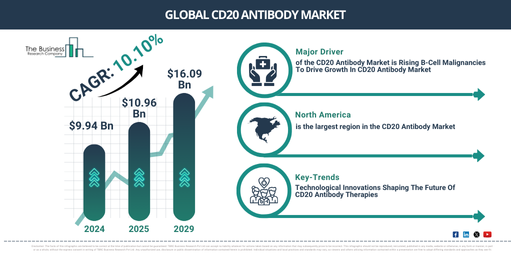
    The market size for the CD20 antibody has seen swift expansion in the past few years. A jump from $9.94 billion in 2024 to $10.96 billion in 2025, accounting for a Compound Annual Growth Rate (CAGR) of 10.3% is expected. Factors leading to this historical period of growth include a rise in B-cell malignancies occurrence, an increased rate of autoimmune diseases, a growing requirement for targeted treatments, approval spikes for biosimilars, enhanced healthcare spending, bettered healthcare infrastructure, and a rising consciousness of the benefits linked to immunotherapy.

    The market for cd20 antibodies is projected to experience significant expansion in the coming years, reaching a valuation of $16.09 billion by 2029, growing at a compound annual growth rate (CAGR) of 10.1%. This predicted growth during the forecast period is tied to the escalating demands for advanced cancer immunotherapies, increased rates of autoimmune diseases, heightened usage of biosimilar CD20 antibodies, and the broadening range of their application in combination therapies. Additional growth factors include increased investments in biopharmaceutical research and greater awareness about personalized medicine. Major trends anticipated during the forecast period are the evolution of next-generation CD20 antibodies, progressing advancements in antibody-drug conjugates, the application of artificial intelligence in designing antibodies, enhancement of bispecific antibody technology, the emergence of CAR-T cell therapies that target CD20, the use of nanotechnology for better delivery, and progress in high-throughput screening procedures.

    Get A Free Sample Of The Report:

    https://www.thebusinessresearchcompany.com/sample.aspx?id=21131&type=smp

    Which Market Dynamics Are Playing A Critical Role In The Growth Of The CD20 Antibody Market?

    The escalating occurrences of B-cell malignancies are anticipated to boost the expansion of the CD20 antibody market in the future. The term B-cell malignancies indicates the mounting instances of cancers affecting B cells, a specific kind of white blood cell contributing to the immune response. The attributing factors for this include an aging population, genetic elements, environmental exposure, lifestyle changes, bettered detection techniques and alterations in the immune system. CD20 antibodies like rituximab aim to eliminate harmful B-cells in B-cell malignancies such as Non-Hodgkin lymphoma and chronic lymphocytic leukemia, thereby improving treatment results. For example, a report from the American College of Cardiology, a nonprofit medical association based in the US, projected that in the year 2025, almost 80,350 individuals (comprising of 45,140 males and 35,210 females) including both adults and children, will be identified with non-Hodgkin lymphoma (NHL). Furthermore, nearly 19,390 people (consisting of 11,060 males and 8,330 females) will likely succumb to this cancer. Consequently, the ever-increasing rates of B-cell malignancies is positively influencing the expansion of the CD-19 antibody market.

    What Are The Key Segment Trends Observed In The CD20 Antibody Market?

    The cd20 antibodymarket covered in this report is segmented –

    1) By Type: Monoclonal Antibody; Polyclonal Antibody

    2) By Application: Flow Cytometry; Enzyme-Linked Immunosorbent Assay (ELISA); Western Blot; Immunoprecipitation; Immunofluorescence

    3) By End User: Hospitals; Specialty Clinics; Ambulatory Surgical Centers; Other End Users

    Subsegments:

    1) By Monoclonal Antibody: Rituximab; Obinutuzumab; Ofatumumab

    2) By Polyclonal Antibody: Conventional Polyclonal Antibodies; Human Polyclonal Antibodies; Recombinant Polyclonal Antibodies

    Which Long-Term Trends Will Play A Crucial Role In The CD20 Antibody Market?

    Key players in the CD20 antibody market are turning their focus towards technological breakthroughs such as biosimilars in an effort to improve access to treatment, cut down healthcare costs, and meet the rising need for cost-effective and potent therapies for B-cell malignancies and autoimmune diseases. Biosimilars are bio-medical products that are extremely similar to an already approved reference product, with no real differences in terms of safety, purity, or effectiveness. As an example, in July 2024, Dr. Reddy’s Laboratories, a pharmaceutical firm based in India, revealed that they had received a complete response letter (CRL) from the US Food and Drug Administration regarding its rituximab biosimilar candidate. The company also declared its intention to work closely with the USFDA to address and resolve any issues within the given deadlines, with the objective of making the biosimilar rituximab accessible to patients in the United States. Rituximab biosimilar operates by targeting the CD20 protein present on B-cells, initiating a response leading to these abnormal or hyperactive B-cells’ destruction.

    Who Are The Leading Companies Driving The CD20 Antibody Market?

    Major companies operating in the CD20 antibody market are F Hoffmann-La Roche AG, Merck & Co Inc, Thermo Fisher Scientific Inc, Novartis AG, GlaxoSmithKline plc, Amgen Inc, Teva Pharmaceutical Industries Ltd, Biogen Inc, Genentech Inc, Bio-Rad Laboratories Inc, Genmab A/S, Bio-Techne, LFB Biotechnologies SA, Abcam Limited, Sino Biological Inc, Mylan NV, Immunomedics Inc, Spectrum Pharmaceuticals Inc, MyBiosource Inc, IGM Biosciences Inc, TG Therapeutics Inc

    Access The Complete Report Here:

    https://www.thebusinessresearchcompany.com/report/cd20-antibody-global-market-report

    Which Region Is Forecasted To Lead The CD20 Antibody Market In The Coming Years?

    North America was the largest region in the CD20 antibody market in 2024. The regions covered in the CD20 antibody market report are Asia-Pacific, Western Europe, Eastern Europe, North America, South America, Middle East, Africa.

    Customize Your Report Here:

    https://www.thebusinessresearchcompany.com/customise?id=21131&type=smp

    Browse Through More Reports Similar to the Global CD20 Antibody Market 2025, By The Business Research Company

    Antibody Drug Conjugates Global Market Report 2025

    https://www.thebusinessresearchcompany.com/report/antibody-drug-conjugates-global-market-report

    Antibody Contract Manufacturing Global Market Report 2025

    https://www.thebusinessresearchcompany.com/report/antibody-contract-manufacturing-global-market-report

    Next Generation Antibody Therapeutics Global Market Report 2025

    https://www.thebusinessresearchcompany.com/report/next-generation-antibody-therapeutics-global-market-report

    About The Business Research Company:

    With over 15000+ reports from 27 industries covering 60+ geographies, The Business Research Company has built a reputation for offering comprehensive, data-rich research and insights. Armed with 1,500,000 datasets, the optimistic contribution of in-depth secondary research, and unique insights from industry leaders, you can get the information you need to stay ahead in the game.

    Get in touch with us:

    The Business Research Company: https://www.thebusinessresearchcompany.com/

    Americas +1 310-496-7795

    Asia +44 7882 955267 & +91 8897263534

    Europe +44 7882 955267

    Email us at info@tbrc.info

    Follow us on:

    LinkedIn: https://in.linkedin.com/company/the-business-research-company

    YouTube: https://www.youtube.com/channel/UC24_fI0rV8cR5DxlCpgmyFQ

    Global Market Model: https://www.thebusinessresearchcompany.com/global-market-model
  • What Key Growth Drivers Are Shaping The Neuroregeneration Therapy Market Forecast Toward $18.23 Billion?

    What Key Growth Drivers Are Shaping The Neuroregeneration Therapy Market Forecast Toward $18.23 Billion?

    Uncover key drivers, emerging technologies, and competitive movements shaping the neuroregeneration therapy market from 2025–2034 with trusted insights from The Business Research Company

    What Is The Present And Forecasted Size Of The Neuroregeneration Therapy Market?

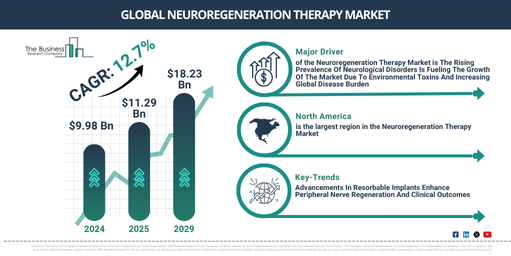
    The neuroregeneration therapy market has observed significant expansion in recent years. Its size is projected to increase from $9.98 billion in 2024 to $11.29 billion in 2025, exhibiting a compound annual growth rate (CAGR) of 13.1%. The historical growth trajectory can be attributed to several key drivers, such as the increasing occurrence of neurological disorders, a globally expanding elderly demographic, rising investments in research and development, enhanced government support and funding, and an increase in collaborations between academic institutions and industry.

    The neuroregeneration therapy market size is anticipated to experience rapid expansion over the next few years. It is projected to grow to $18.23 billion by 2029, demonstrating a compound annual growth rate (CAGR) of 12.7%. This growth during the forecast period can be attributed to a rising demand for neuroregeneration therapies, an increasing need for cell therapies, growing healthcare requirements, higher investment in biotechnology, and an expanding aging population. Significant trends for the forecast period include advancements in stem cell-based therapies, the development of personalized medicine, innovations in gene editing for neurodegenerative diseases, the use of nanotechnology in drug delivery, and the evolution of pharma-biotech.

    Get A Free Sample Of The Report:

    https://www.thebusinessresearchcompany.com/sample.aspx?id=27358&type=smp

    Which Market Dynamics Are Playing A Critical Role In The Growth Of The Neuroregeneration Therapy Market?

    The increasing prevalence of neurological conditions is projected to drive the expansion of the neuroregeneration therapy market in the coming years. These disorders, which affect the brain, spinal cord, or peripheral nerves, disrupt the nervous system’s normal functioning. A rise in such conditions is attributed to environmental toxins; sustained exposure to pollutants like heavy metals, pesticides, and industrial chemicals can harm the nervous system and heighten the risk of developing neurodegenerative diseases. Neuroregeneration therapy offers treatment for these neurological disorders by mending or replacing damaged neurons and tissues, thereby restoring lost functions, promoting healing in the brain, spinal cord, or nerves, and ultimately enhancing mobility, sensation, and overall quality of life. For example, data from October 2023 by the World Federation of Neurology, a UK-based association of national neurological societies, indicates that over 40% of the global populace currently experiences some form of neurological condition, with this burden anticipated to nearly double by 2050. Consequently, the growing incidence of neurological disorders is fueling the growth of the neuroregeneration therapy market. The expanding aging population is also expected to boost the neuroregeneration therapy market moving forward. An aging population describes a demographic trend where the proportion of older individuals within a society increases, posing potential societal and economic challenges. This demographic shift is primarily due to longer life expectancies, a result of advancements in healthcare and improved living standards, leading to a greater number of elderly people. Neuroregeneration therapy supports the aging population by repairing compromised nerve cells to enhance brain function and mobility, while also slowing cognitive decline, thereby improving the quality of life for those with neurological conditions. For instance, in July 2024, the House of Commons Library, a UK-based parliamentary information resource, reported that in 2022, individuals aged 65 and over constituted approximately 19% of the UK’s total population, totaling around 12.7 million people. This segment is projected to grow significantly, reaching 22.1 million individuals and representing 27% of the population by 2072. Thus, the rising aging population is a key driver for the growth of the neuroregeneration therapy market.

    What Are The Key Segment Trends Observed In The Neuroregeneration Therapy Market?

    The neuroregeneration therapy market covered in this report is segmented

    1) By Type Of Neuroregeneration Therapy: Stem Cell Therapy, Gene Therapy, Pharmacological Therapy, Neurostimulation Therapy, Other Types Of Neuroregeneration Therapy

    2) By Technology: Tissue Engineering, Cranial And Spinal Stimulation, Nanotechnology In Drug Delivery, Biomaterials Development

    3) By Mode Of Administration: Oral, Injectable, Implantable, Other Modes Of Administration

    4) By Indication: Spinal Cord Injury, Traumatic Brain Injury, Stroke, Parkinson’s Disease, Multiple Sclerosis, Alzheimer’s Disease, Peripheral Nerve Injury, Other Indications

    5) By End-User: Hospitals, Clinical Research Institutes, Academic Institutions, Pharmaceutical And Biotechnology Companies

    Subsegment:

    1) By Stem Cell Therapy: Embryonic Stem Cell Therapy, Mesenchymal Stem Cell Therapy, Neural Stem Cell Therapy, Induced Pluripotent Stem Cell Therapy, Hematopoietic Stem Cell Therapy

    2) By Gene Therapy: In Vivo Gene Therapy, Ex Vivo Gene Therapy, Viral Vector Based Gene Therapy, Non Viral Vector Based Gene Therapy, Genome Editing Gene Therapy

    3) By Pharmacological Therapy: Neuroprotective Drugs, Neurotrophic Factor Based Drugs, Anti Inflammatory Drugs, Antioxidant Drugs, Cholinesterase Inhibitors

    4) By Neurostimulation Therapy: Deep Brain Stimulation, Transcranial Magnetic Stimulation, Vagus Nerve Stimulation, Spinal Cord Stimulation, Transcranial Direct Current Stimulation

    5) By Other Types Of Neuroregeneration Therapy: Nanotechnology Based Therapy, Exosome Based Therapy, Biomaterial Based Therapy, Electromagnetic Field Therapy, Hyperbaric Oxygen Therapy

    Which Disruptive Trends Are Driving Change Across The Neuroregeneration Therapy Market?

    Companies leading in the neuroregeneration therapy market are concentrating on developing advanced offerings, such as biodegradable implants, to improve nerve regeneration by fostering axonal growth and enhancing patient outcomes in peripheral nerve repair. A biodegradable implant is a medical device intended to progressively dissolve and be absorbed by the body once its function is complete, thereby removing the necessity for surgical removal. As an example, in March 2022, Integra LifeSciences Holdings Corporation, a US-based biotechnology firm, introduced the NeuraGen 3D Nerve Guide Matrix, specifically created for addressing peripheral nerve discontinuities. This product was developed to establish an ideal environment for nerve healing through the use of Integra’s bovine type 1 collagen combined with an innovative inner matrix featuring porous channels, which facilitates Schwann cell migration and guides axonal development. This introduction marked a notable leap forward in peripheral nerve repair, offering surgeons a novel option for nerve gaps ranging from short to medium, and resulted from extensive research and technological cooperation aimed at enhancing patients’ functional recovery following nerve damage.

    Who Are The Leading Companies Driving The Neuroregeneration Therapy Market?

    Major companies operating in the neuroregeneration therapy market are F. Hoffmann-La Roche Ltd., Merck & Co. Inc., AbbVie Inc., Sanofi S.A., AstraZeneca PLC, Novartis International AG, Stryker Corporation, Biogen Inc., Synovis Life Technologies Inc., Integra LifeSciences Holdings Corporation, AxoGen Inc., Denali Therapeutics Inc., Aspen Neuroscience Inc., Neurona Therapeutics Inc., Lineage Cell Therapeutics Inc., Checkpoint Surgical Inc., Stemedica Cell Technologies Inc., Polyganics B.V., Epineuron Technologies Inc., NeuExcell Therapeutics Inc.

    Access The Complete Report Here:

    https://www.thebusinessresearchcompany.com/report/neuroregeneration-therapy-global-market-report

    Which Region Is Forecasted To Lead The Neuroregeneration Therapy Market In The Coming Years?

    North America was the largest region in the neuroregeneration therapy market in 2024. Asia-Pacific is expected to be the fastest-growing region in the forecast period. The regions covered in the neuroregeneration therapy market report are Asia-Pacific, Western Europe, Eastern Europe, North America, South America, Middle East, Africa.

    Customize Your Report Here:

    https://www.thebusinessresearchcompany.com/customise?id=27358&type=smp

    Browse Through More Reports Similar to the Global Neuroregeneration Therapy Market 2025, By The Business Research Company

    Construction Plastics Global Market Report 2025

    https://www.thebusinessresearchcompany.com/report/construction-plastics-global-market-report

    Plastic Products Global Market Report 2025

    https://www.thebusinessresearchcompany.com/report/plastic-products-global-market-report

    Engineering Plastics Global Market Report 2025

    https://www.thebusinessresearchcompany.com/report/engineering-plastics-global-market-report

    About The Business Research Company:

    With over 15000+ reports from 27 industries covering 60+ geographies, The Business Research Company has built a reputation for offering comprehensive, data-rich research and insights. Armed with 1,500,000 datasets, the optimistic contribution of in-depth secondary research, and unique insights from industry leaders, you can get the information you need to stay ahead in the game.

    Get in touch with us:

    The Business Research Company: https://www.thebusinessresearchcompany.com/

    Americas +1 310-496-7795

    Asia +44 7882 955267 & +91 8897263534

    Europe +44 7882 955267

    Email us at info@tbrc.info

    Follow us on:

    LinkedIn: https://in.linkedin.com/company/the-business-research-company

    YouTube: https://www.youtube.com/channel/UC24_fI0rV8cR5DxlCpgmyFQ

    Global Market Model: https://www.thebusinessresearchcompany.com/global-market-model
  • How Will The Smart Prosthetics Market Expand At A CAGR Of 9.4% Through 2029?

    How Will The Smart Prosthetics Market Expand At A CAGR Of 9.4% Through 2029?

    Uncover key drivers, emerging technologies, and competitive movements shaping the smart prosthetics market from 2025–2034 with trusted insights from The Business Research Company

    How Big Is The Smart Prosthetics Market Today And What Is Its Future Size?

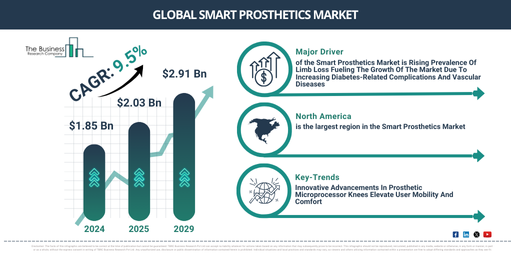
    The smart prosthetics market has seen substantial growth over recent years. It is forecast to increase from $1.85 billion in 2024 to $2.03 billion by 2025, at a compound annual growth rate (CAGR) of 9.8%. This past expansion is attributable to several factors, including a rise in military conflict injuries, an increase in vascular diseases, the evolving needs of a growing aging population, the increasing adoption of bionic technology, a rising demand for customized prosthetics, and the growing prevalence of amputations linked to diabetes.

    The smart prosthetics market is projected to experience substantial expansion in the coming years. Its valuation is set to reach $2.91 billion by 2029, exhibiting a compound annual growth rate (CAGR) of 9.5%. This anticipated growth during the forecast period is fueled by several factors, including heightened investment in neural interface technologies, a rising need for pediatric prosthetic solutions, enhanced 3D-printed customization options, increasing worldwide spending on rehabilitation healthcare, and a greater incidence of limb loss. Key trends foreseen over this period encompass progress in AI-powered neural control, the creation of cost-effective 3D-printed prosthetics, breakthroughs in haptic feedback systems, the incorporation of IoT for distant oversight, and improvements in lightweight smart materials.

    Get A Free Sample Of The Report:

    https://www.thebusinessresearchcompany.com/sample.aspx?id=27417&type=smp

    What External And Internal Drivers Are Influencing The Smart Prosthetics Market?

    The escalating incidence of limb loss is poised to drive the expansion of the smart prosthetics market moving forward. Limb loss describes the state where one or more limbs have been partially or entirely removed due to injuries, diseases, or congenital factors. The prevalence of limb loss is on the rise, primarily due to an increase in the global occurrence of diabetes-related complications, particularly peripheral artery disease and neuropathic ulcers, which often lead to non-traumatic lower limb amputations. Smart prosthetics empower patients with limb loss to regain natural movement by interpreting muscle signals and adjusting to activities instantly, thereby improving mobility, independence, dexterity, control, and comfort to enhance daily functionality and overall quality of life. For illustration, a December 2024 report from the Archives of Rehabilitation Research and Clinical Translation, a US-based peer-reviewed medical journal, estimated that 2,309,000 people in the US are living with limb loss, with roughly 91% having undergone lower extremity amputations and 9.2% upper extremity amputations, and this figure is projected to surge by 145% by 2060. Hence, the increasing prevalence of limb loss is fueling the growth of the smart prosthetics market.

    How Is The Smart Prosthetics Market Categorized Across Applications And Types?

    The smart prosthetics market covered in this report is segmented

    1) By Product Type: Bionic Limbs, Myoelectric Prosthetics, Hybrid Prosthetics, Other Product Types

    2) By Technology: Microprocessor-Controlled, Bluetooth-Enabled, Sensor-Integrated, Other Technologies

    3) By Distribution Channel: Direct Sales, Distributors, Online Sales, Other Distribution Channels

    4) By Application: Orthopedic Clinics, Hospitals, Rehabilitation Centers, Other Applications

    5) By End-User: Adults, Pediatrics

    Subsegments:

    1) By Bionic Limbs: Mechanical Prosthetic Limbs, Electromechanical Prosthetic Limbs, Hydraulic Prosthetic Limbs, Pneumatic Prosthetic Limbs

    2) By Myoelectric Prosthetics: Single Channel Myoelectric Prosthetics, Multi Channel Myoelectric Prosthetics, Pattern Recognition Myoelectric Prosthetics

    3) By Hybrid Prosthetics: Combination Of Mechanical And Myoelectric, Combination Of Hydraulic And Electromechanical, Combination Of Pneumatic And Mechanical

    4) By Other Product Types: Cosmetic Prosthetics, Body Powered Prosthetics, Activity Specific Prosthetics

    How Are Market Trends Influencing Competition In The Smart Prosthetics Market?

    Leading companies within the smart prosthetics market are concentrating on creating innovative products, such as prosthetic microprocessor knees, designed to improve user movement, enhance stability, and decrease energy consumption during activity. Prosthetic microprocessor knees are artificial knee joints containing embedded computers that automatically modify movement, enabling smoother, safer, and more natural walking. For example, in July 2024, Ottobock UK, a medical equipment producer based in the UK, released the Genium X4. This product is the latest iteration of their prosthetic microprocessor knee (MPK) and marks a substantial progression in mobility technology. The Genium X4 utilizes Optimized Physiological Gait (OPG) 3.0 technology, delivering a fluid and almost authentic walking experience. Its principal features include enhanced uphill climbing, a start-to-walk function, greater stability during the stance phase, dynamic backward movement, and an intuitive cycling mode. This knee is entirely waterproof and resistant to corrosion, offers up to five days of battery operation, and includes customizable MyMode presets.

    Who Are The Global Leaders Steering The Smart Prosthetics Market Forward?

    Major companies operating in the smart prosthetics market are Hanger Inc., Ottobock SE & Co. KGaA, Össur hf., Blatchford Group Limited, Trulife Limited, RSLSteeper, PROTEOR SAS, Fillauer LLC, WillowWood LLC, CURE International Inc., Advanced Arm Dynamics Inc., Open Bionics Ltd., Syntouch LLC, Coapt LLC, COVVI Ltd., Endolite India Private Limited, Medical Center Orthotics & Prosthetics Inc., Infinite Biomedical Technologies, Taska Prosthetics, LimbLogic Prosthetics.

    Access The Complete Report Here:

    https://www.thebusinessresearchcompany.com/report/smart-prosthetics-global-market-report

    What Are The Emerging Regional Trends Driving The Smart Prosthetics Market?

    North America was the largest region in the smart prosthetics market in 2024. Asia-Pacific is expected to be the fastest-growing region in the forecast period. The regions covered in the smart prosthetics market report are Asia-Pacific, Western Europe, Eastern Europe, North America, South America, Middle East, Africa.

    Customize Your Report Here:

    https://www.thebusinessresearchcompany.com/customise?id=27417&type=smp

    Browse Through More Reports Similar to the Global Smart Prosthetics Market 2025, By The Business Research Company

    Smart Contracts Global Market Report 2025

    https://www.thebusinessresearchcompany.com/report/smart-contracts-global-market-report

    Usage Based Insurance Global Market Report 2025

    https://www.thebusinessresearchcompany.com/report/usage-based-insurance-market

    Blockchain In Insurance Global Market Report 2025

    https://www.thebusinessresearchcompany.com/report/blockchain-in-insurance-global-market-report

    About The Business Research Company:

    With over 15000+ reports from 27 industries covering 60+ geographies, The Business Research Company has built a reputation for offering comprehensive, data-rich research and insights. Armed with 1,500,000 datasets, the optimistic contribution of in-depth secondary research, and unique insights from industry leaders, you can get the information you need to stay ahead in the game.

    Get in touch with us:

    The Business Research Company: https://www.thebusinessresearchcompany.com/

    Americas +1 310-496-7795

    Asia +44 7882 955267 & +91 8897263534

    Europe +44 7882 955267

    Email us at info@tbrc.info

    Follow us on:

    LinkedIn: https://in.linkedin.com/company/the-business-research-company

    YouTube: https://www.youtube.com/channel/UC24_fI0rV8cR5DxlCpgmyFQ

    Global Market Model: https://www.thebusinessresearchcompany.com/global-market-model
  • Cardiac Tissue Engineering Market Emerging Trends and Growth Drivers Through 2029 | Reach USD $1.62 Billion

    Cardiac Tissue Engineering Market Emerging Trends and Growth Drivers Through 2029 | Reach USD $1.62 Billion

    Claim your 20% discount on Global Market Reports with code ONLINE20. Limited time only.

    How Big Is The Cardiac Tissue Engineering Market Today And What Is Its Future Size?

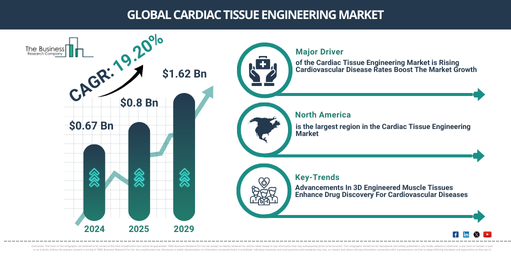
    The market for cardiac tissue engineering has been expanding swiftly over the past few years. A notable growth from $0.67 billion in 2024 to $0.8 billion in 2025, indicating a compound annual growth rate (CAGR) of 19.4%, is expected. The expansion during the past few years is linked to the scarcity of organ donors, a steady rise in cardiovascular diseases, advancements in biomaterials, increased investment in regenerative medicine, personalized medicine demand, development in bioreactor systems, escalated government support for biomedical studies, and an increased emphasis on less invasive treatments.

    Anticipated swift enlargement in the upcoming years is projected for the cardiac tissue engineering market, escalating to $1.62 billion in 2029 with a compound annual growth rate (CAGR) of 19.2%. A surge in personalized cardiac treatment requirements, a heightened emphasis on bioengineered heart tissues, the broadening scope of regenerative medicine applications, a rise in alliances between biotech organizations and academic institutions, an increment in investment towards preclinical testing platforms, and an uptick in chronic heart disease incidence, all contribute to this growth during the forecast period. Significant trends expected in this period cover the assimilation of AI into tissue engineering, progress in nanotechnology-based scaffolding, the emergence of biodegradable hydrogels, advancements in the accuracy of 3D bioprinting, the employment of bioreactors for tissue maturation, and the application of gene editing for cardiac cell improvement.

    Get A Free Sample Of The Report:

    https://www.thebusinessresearchcompany.com/sample.aspx?id=21129&type=smp

    What External And Internal Drivers Are Influencing The Cardiac Tissue Engineering Market?

    The cardiac tissue engineering market is set to grow due to an escalating prevalence of cardiovascular diseases. The intent of cardiac tissue engineering, a cross-disciplinary field, is to create bioartificial or biological constructs to replace, regenerate, or repair damaged heart tissue. Unhealthy lifestyle practices including a poor diet, physical inactivity, increased obesity and diabetes rates, and smoking mainly drive the surge in cardiovascular diseases. Cardiac tissue engineering aims to develop biomaterials, bioengineered tissues, and cell-based therapies in response to cardiovascular diseases, intending to restore cardiac function and regenerate or repair damaged heart muscles. For instance, as reported by the US-based governmental agency, the Centers for Disease Control and Prevention, there was a minor rise in the percentage of coronary heart disease in adult women aged 18 and above, from 3.6% in 2022 to 3.7% in May 2023. Thus, the escalating prevalence of cardiovascular diseases continues to fuel the expansion of the cardiac tissue engineering market.

    How Is The Cardiac Tissue Engineering Market Categorized Across Applications And Types?

    The cardiac tissue engineeringmarket covered in this report is segmented –

    1) By Product: Heart Valves, Vascular Grafts

    2) By Material: Stem Cells, Scaffolds

    3) By Application: Myocardial Infarction, Heart Valve Repair Or Replacement, Congenital Heart Disease Treatment, Other Applications

    4) By End Users: Hospitals And Clinics, Academic And Research Institutes, Other End Users

    Subsegments:

    1) By Heart Valves: Bioprosthetic Heart Valves; Mechanical Heart Valves; Tissue-Engineered Heart Valves

    2) By Vascular Grafts: Synthetic Vascular Grafts; Biologic Vascular Grafts; Tissue-Engineered Vascular Grafts

    How Are Industry Trends Steering The Expansion Of The Cardiac Tissue Engineering Market?

    Key players in the cardiac tissue engineering market are striving to make technological leaps, such as the development of 3D-engineered muscle tissues, in an effort to improve the precision and efficacy of drug discovery for reliable cardiovascular disease treatments. 3D-engineered muscle tissues are bioengineered constructs which mimic the structure and function of human muscle, primarily utilized for drug testing and disease modeling. For instance, Curi Bio Inc., a biotech firm based in the US, introduced the Mantarray platform in July 2022, designed for 3D heart and skeletal engineered muscle tissue (EMT) contractility analysis. The platform employs advanced tissue culture methodologies to create highly functional muscle tissues which simulate the mechanical properties and behavior of natural muscle, presenting a more accurate model for drug testing. The technology is aimed at boosting the development of therapeutic remedies by enabling researchers to examine muscle contraction, reaction to stimuli, and disease modeling at the cellular level.

    Who Are The Global Leaders Steering The Cardiac Tissue Engineering Market Forward?

    Major companies operating in the cardiac tissue engineering market are Biotronik SE & Co. KG, Terumo Corporation, Artivion Inc., Tissue Regenix Group plc, PromoCell GmbH, Xeltis AG, Carmat S.A., Bioheart Inc., Prellis Biologics Inc., Cytograft Tissue Engineering Inc., Avery Therapeutics Inc., Vascudyne Inc., Auto Tissue Berlin GmbH, CorMatrix Cardiovascular Inc., Humacyte Inc., BioCardia Inc., Osiris Therapeutics Inc., StemCells Inc., ViroMed Co. Ltd., Cardio3 Biosciences

    Access The Complete Report Here:

    https://www.thebusinessresearchcompany.com/report/cardiac-tissue-engineering-global-market-report

    What Are The Emerging Regional Trends Driving The Cardiac Tissue Engineering Market?

    North America was the largest region in the cardiac tissue engineering market in 2024. The regions covered in the cardiac tissue engineering market report are Asia-Pacific, Western Europe, Eastern Europe, North America, South America, Middle East, Africa.

    Customize Your Report Here:

    https://www.thebusinessresearchcompany.com/customise?id=21129&type=smp

    Browse Through More Reports Similar to the Global Cardiac Tissue Engineering Market 2025, By The Business Research Company

    Implantable Cardiac Rhythm Management Device Global Market Report 2025

    https://www.thebusinessresearchcompany.com/report/implantable-cardiac-rhythm-management-device-global-market-report

    Cardiac Safety Services Global Market Report 2025

    https://www.thebusinessresearchcompany.com/report/cardiac-safety-services-global-market-report

    Cardiac Biomarkers Global Market Report 2025

    https://www.thebusinessresearchcompany.com/report/cardiac-biomarkers-global-market-report

    About The Business Research Company:

    With over 15000+ reports from 27 industries covering 60+ geographies, The Business Research Company has built a reputation for offering comprehensive, data-rich research and insights. Armed with 1,500,000 datasets, the optimistic contribution of in-depth secondary research, and unique insights from industry leaders, you can get the information you need to stay ahead in the game.

    Get in touch with us:

    The Business Research Company: https://www.thebusinessresearchcompany.com/

    Americas +1 310-496-7795

    Asia +44 7882 955267 & +91 8897263534

    Europe +44 7882 955267

    Email us at info@tbrc.info

    Follow us on:

    LinkedIn: https://in.linkedin.com/company/the-business-research-company

    YouTube: https://www.youtube.com/channel/UC24_fI0rV8cR5DxlCpgmyFQ

    Global Market Model: https://www.thebusinessresearchcompany.com/global-market-model
  • How Will The Nanotechnology In Cancer Treatment Market Expand At A CAGR Of 15% Through 2029?

    How Will The Nanotechnology In Cancer Treatment Market Expand At A CAGR Of 15% Through 2029?

    Uncover key drivers, emerging technologies, and competitive movements shaping the nanotechnology in cancer treatment market from 2025–2034 with trusted insights from The Business Research Company

    How Big Is The Nanotechnology In Cancer Treatment Market Today And What Is Its Future Size?

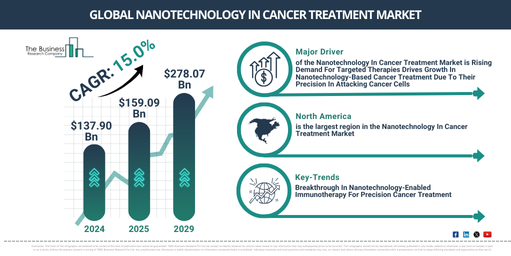
    The market size for nanotechnology in cancer treatment has experienced swift expansion recently. It is projected to increase from $137.90 billion in 2024 to $159.09 billion in 2025, demonstrating a compound annual growth rate (CAGR) of 15.4%. Historical expansion in this market is primarily due to the escalating global prevalence of cancer, heightened awareness regarding early cancer detection, a surge in research and development investments within nanomedicine, the growing embrace of minimally invasive treatments, and increased government financial support for oncology nanotech research.

    The nanotechnology in the cancer treatment market size is projected to experience swift expansion over the coming years. This market is anticipated to reach $278.07 billion by 2029, demonstrating a compound annual growth rate (CAGR) of 15.0%. The expansion during the forecast period is attributable to the increasing demand for targeted cancer treatments, the heightened incorporation of nanotechnology into drug delivery mechanisms, a greater emphasis on individualized oncology approaches, a surge in clinical trials for nano-based cancer medications, and the increasing use of nanotheranostics in cancer management. Significant trends for the forecast timeframe encompass progress in nanoparticle drug delivery platforms, novel developments in cancer-specific nanocarriers, the fusion of AI with nanotechnology for precise oncology, the creation of versatile nanodevices for diagnostic and therapeutic applications, and the broadened application of nanotheranostics within personalized medicine.

    Get A Free Sample Of The Report:

    https://www.thebusinessresearchcompany.com/sample.aspx?id=27357&type=smp

    What External And Internal Drivers Are Influencing The Nanotechnology In Cancer Treatment Market?

    The increasing need for targeted therapies is anticipated to drive the expansion of nanotechnology within the cancer treatment market in the future. These treatments focus on specific molecular indicators or biological routes crucial for tumor development and spread. Their growing appeal stems from their capacity to accurately target cancer cells, thereby limiting harm to healthy tissues and reducing adverse reactions. Within cancer treatment, nanotechnology boosts targeted therapies by facilitating the exact delivery of medications straight to malignant cells, enhancing efficacy and lessening damage to healthy cells. As an illustration, a report released in July 2023 by the American Society of Gene & Cell Therapy (ASGCT), a US-based professional membership organization, indicated that the count of gene therapies in Phase II was 247 at the close of Q1 2023, increasing by 5% to 260 by the end of Q2 2023. Consequently, the increasing requirement for targeted therapies is fueling the expansion of nanotechnology in the cancer treatment market.

    How Is The Nanotechnology In Cancer Treatment Market Categorized Across Applications And Types?

    The nanotechnology in cancer treatment market covered in this report is segmented

    1) By Nanotechnology Type: Liposomes, Dendrimers, Nanoparticles

    2) By Treatment Type: Chemotherapy, Immunotherapy, Targeted Therapy, Combined Therapy Approaches, Surgery Assistance

    3) By Cancer Type: Breast Cancer, Lung Cancer, Prostate Cancer, Colorectal Cancer, Blood Cancer, Other Cancer Types

    4) By Application: Targeted Drug Delivery, Photothermal Therapy, Radiation Therapy Enhancement, Diagnostics And Imaging, Gene Delivery Systems

    5) By End-User: Hospitals, Research Institutions, Diagnostics Laboratories, Pharmaceutical Companies, Contract Research Organizations (CROs)

    Subsegments:

    1) By Liposomes: Conventional Liposomes, Stealth Liposomes, Cationic Liposomes, Immunoliposomes

    2) By Dendrimers: Polyamidoamine Dendrimers, Polypropyleneimine Dendrimers, Peptide-Based Dendrimers, Carbosilane Dendrimers

    3) By Nanoparticles: Gold Nanoparticles, Magnetic Nanoparticles, Polymeric Nanoparticles, Quantum Dots, Lipid Nanoparticles

    How Are Market Trends Influencing Competition In The Nanotechnology In Cancer Treatment Market?

    Major companies operating in the nanotechnology in cancer treatment market are concentrating on developing sophisticated treatments, such as immunotherapy nano formulation, to improve immune system targeting and reduce adverse effects in cancer patients. Immunotherapy nano formulation leverages nanotechnology to deliver immune-based therapies directly to specific target sites, thereby enhancing treatment precision while simultaneously boosting drug stability, bioavailability, and the activation of an immune response. For instance, in December 2023, Cello Therapeutics, a US-based biotechnology company, introduced CE120, a broad-spectrum therapeutic cancer nano vaccine that secured Food and Drug Administration clearance. This therapy marks the first clinical use of platelet membrane-coated nanoparticles for treating solid tumors. CE120 integrates targeted drug delivery with immune system activation, aiming to destroy tumors and prevent recurrence. Its unique nanotechnology platform enhances both therapeutic precision and immune response. This milestone establishes CE120 as a pioneering nanomedicine in cancer treatment.

    Who Are The Global Leaders Steering The Nanotechnology In Cancer Treatment Market Forward?

    Major companies operating in the nanotechnology in cancer treatment market are Pfizer Inc., AstraZeneca PLC, Novartis AG, Amgen Inc., GE Healthcare Technologies Inc., Eisai Co. Ltd., Jazz Pharmaceuticals plc, Arrowhead Pharmaceuticals Inc., Nanobiotix S.A., EnGeneIC Ltd., Nanospectra Biosciences Inc., Sona Nanotech Inc., CritiTech Inc., Immix Biopharma Inc., DNA Nanobots LLC, Nanovery Limited, CytImmune Sciences Inc., NanOlogy LLC, NanoApps Medical Inc., ARIZ Precision Medicine.

    Access The Complete Report Here:

    https://www.thebusinessresearchcompany.com/report/nanotechnology-in-cancer-treatment-global-market-report

    What Are The Emerging Regional Trends Driving The Nanotechnology In Cancer Treatment Market?

    North America was the largest region in the nanotechnology in cancer treatment market in 2024. Asia-Pacific is expected to be the fastest-growing region in the forecast period. The regions covered in the nanotechnology in cancer treatment market report are Asia-Pacific, Western Europe, Eastern Europe, North America, South America, Middle East, Africa.

    Customize Your Report Here:

    https://www.thebusinessresearchcompany.com/customise?id=27357&type=smp

    Browse Through More Reports Similar to the Global Nanotechnology In Cancer Treatment Market 2025, By The Business Research Company

    Biosurfactants Global Market Report 2025

    https://www.thebusinessresearchcompany.com/report/biosurfactants-global-market-report

    Biomaterials Global Market Report 2025

    https://www.thebusinessresearchcompany.com/report/biomaterials-global-market-report

    Biosurgery Global Market Report 2025

    https://www.thebusinessresearchcompany.com/report/biosurgery-global-market-report

    About The Business Research Company:

    With over 15000+ reports from 27 industries covering 60+ geographies, The Business Research Company has built a reputation for offering comprehensive, data-rich research and insights. Armed with 1,500,000 datasets, the optimistic contribution of in-depth secondary research, and unique insights from industry leaders, you can get the information you need to stay ahead in the game.

    Get in touch with us:

    The Business Research Company: https://www.thebusinessresearchcompany.com/

    Americas +1 310-496-7795

    Asia +44 7882 955267 & +91 8897263534

    Europe +44 7882 955267

    Email us at info@tbrc.info

    Follow us on:

    LinkedIn: https://in.linkedin.com/company/the-business-research-company

    YouTube: https://www.youtube.com/channel/UC24_fI0rV8cR5DxlCpgmyFQ

    Global Market Model: https://www.thebusinessresearchcompany.com/global-market-model
  • Cardiac Amyloidosis Market Size, Share & Trends Analysis Report By Product | Forecast to 2029

    Cardiac Amyloidosis Market Size, Share & Trends Analysis Report By Product | Forecast to 2029

    Claim your 20% discount on Global Market Reports with code ONLINE20. Limited time only.

    How Will The Cardiac Amyloidosis Market Valuation Change Between Now And 2029?

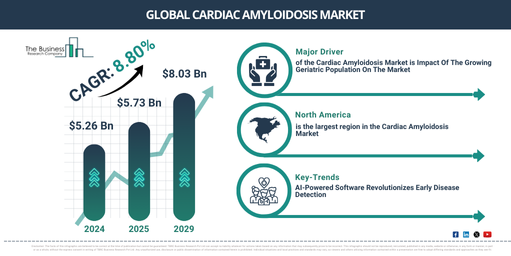
    In the past few years, the market size for cardiac amyloidosis has seen robust growth. The market, which is projected to amount to $5.26 billion in 2024, is expected to expand to $5.73 billion by 2025, exhibiting a compound annual growth rate (CAGR) of 8.9%. The significant growth during the historical period is due to several factors including an increase in the number of amyloidosis-related conditions, heightened incidence of genetic mutations, growing awareness, a rise in the number of transthyretin amyloidosis cases, as well as an expanding geriatric population.

    In the coming years, the market size for cardiac amyloidosis is projected to experience substantial growth. It is estimated to reach $8.03 billion by 2029, with a compound annual growth rate (CAGR) of 8.8%. This growth during the forecast period can be attributed to factors such as higher diagnosis rates, government influences and initiatives, a surge in genetic mutations instances, and programs aimed at helping patients. The projected period will also see significant trends including the development of therapies like vulrisiran, increased research in gene therapy, a shift towards precision medicine, improvements in diagnostic technology, and the creation of new treatments.

    Get A Free Sample Of The Report:

    https://www.thebusinessresearchcompany.com/sample.aspx?id=21128&type=smp

    What Underlying Factors Are Supporting The Cardiac Amyloidosis Market Growth?

    The anticipated growth of the cardiac amyloidosis market is largely due to the rapidly expanding geriatric population. This population segment refers to individuals aged 65 and above who often need specialized healthcare and support due to changes with age. This group is expanding as a result of increasing life expectancy, improved healthcare, and lower birth rates. This increased geriatric population means more instances of cardiac amyloidosis, given that amyloid protein build-up in the heart is often associated with aging. For instance, the Population Reference Bureau, a US nonprofit organization, estimated in January 2024 that the US population of those aged 65 and older would jump from 58 million in 2022 to 82 million by 2050, an increase of 47%. Consequently, the expanding geriatric population will drive the cardiac amyloidosis market forward.

    Which Sub-Segments Are Driving Growth Within The Cardiac Amyloidosis Market?

    The cardiac amyloidosismarket covered in this report is segmented –

    1) By Product Type: Light Chain Amyloidosis; Transthyretin Amyloidosis

    2) By Treatment: Chemotherapy; Surgery; Supportive Care; Stem Cell Transplant; Targeted Therapy

    3) By End-User: Hospitals; Ambulatory Surgical Centres; Clinics

    Subsegments:

    1) By Light Chain Amyloidosis: Immunoglobulin Light Chain (AL) Amyloidosis; Primary Light Chain Amyloidosis; Secondary Light Chain Amyloidosis

    2) By Transthyretin Amyloidosis: Hereditary Transthyretin Amyloidosis (ATTRm); Wild-type Transthyretin Amyloidosis (ATTRwt)

    What Current And Upcoming Trends Are Shaping The Cardiac Amyloidosis Market?

    Major corporations in the cardiac amyloidosis market are concentrating their efforts on technological advancements, such as artificial intelligence (AI)-based diagnostic applications, in order to facilitate early detection and better clinical results for patients suffering from this often undetected disease. A diagnostic device that is software-based and uses AI to detect cardiac amyloidosis is devised to scrutinize echocardiographic images and pinpoint symptoms of the disease, without the need for extra hardware or in-depth clinical information. To illustrate, Ultromics Ltd., a health tech company based in the UK, acquired FDA approval for EchoGo Amyloidosis, an AI-enhanced clinical device purposed for early detection of cardiac amyloidosis, in November 2024. It is the inaugural device in the FDA’s Total Product Lifecycle Advisory Program (TAP) to be granted marketing authorization. EchoGo Amyloidosis employs artificial intelligence to examine echocardiograms in order to identify the disease using just a single clip, addressing the critical need for earlier diagnosis before the disease advances undetected.

    Which Companies Hold A Competitive Edge In The 1371 Market?

    Major companies operating in the cardiac amyloidosis market are Pfizer Inc., Sanofi S.A., AstraZeneca plc, GlaxoSmithKline plc, Takeda Pharmaceutical Company Limited, Novo Nordisk A/S, Alexion Pharmaceuticals Inc., Dr. Reddy’s Laboratories, Alnylam Pharmaceuticals Inc., Ionis Pharmaceuticals Inc., Akcea Therapeutics Inc., BridgeBio Pharma Inc., Prothena Corp, Intellia Therapeutics Inc., Amylyx Pharmaceuticals, Neurimmune AG, SOM Biotech, Oncopeptides, Attralus Inc., Eidos Therapeutics.

    Access The Complete Report Here:

    https://www.thebusinessresearchcompany.com/report/cardiac-amyloidosis-global-market-report

    Which Region Dominates The Cardiac Amyloidosis Market Today?

    North America was the largest region in the cardiac amyloidosis market in 2024. Asia-Pacific is expected to be the fastest-growing region in the forecast period. The regions covered in the cardiac amyloidosis market report are Asia-Pacific, Western Europe, Eastern Europe, North America, South America, Middle East, Africa.

    Customize Your Report Here:

    https://www.thebusinessresearchcompany.com/customise?id=21128&type=smp

    Browse Through More Reports Similar to the Global Cardiac Amyloidosis Market 2025, By The Business Research Company

    Cardiac Pacemakers Global Market Report 2025

    https://www.thebusinessresearchcompany.com/report/cardiac-pacemakers-global-market-report

    Cardiac Valve Global Market Report 2025

    https://www.thebusinessresearchcompany.com/report/cardiac-valve-global-market-report

    Cardiac Arrhythmia Monitoring Devices Global Market Report 2025

    https://www.thebusinessresearchcompany.com/report/cardiac-arrhythmia-monitoring-devices-global-market-report

    About The Business Research Company:

    With over 15000+ reports from 27 industries covering 60+ geographies, The Business Research Company has built a reputation for offering comprehensive, data-rich research and insights. Armed with 1,500,000 datasets, the optimistic contribution of in-depth secondary research, and unique insights from industry leaders, you can get the information you need to stay ahead in the game.

    Get in touch with us:

    The Business Research Company: https://www.thebusinessresearchcompany.com/

    Americas +1 310-496-7795

    Asia +44 7882 955267 & +91 8897263534

    Europe +44 7882 955267

    Email us at info@tbrc.info

    Follow us on:

    LinkedIn: https://in.linkedin.com/company/the-business-research-company

    YouTube: https://www.youtube.com/channel/UC24_fI0rV8cR5DxlCpgmyFQ

    Global Market Model: https://www.thebusinessresearchcompany.com/global-market-model
  • What Is The Forecast Valuation Of The Global Mutation Detection Kits In Genome Editing AD13Market Projected To Reach $1.86 Billion By 2029?

    What Is The Forecast Valuation Of The Global Mutation Detection Kits In Genome Editing AD13Market Projected To Reach $1.86 Billion By 2029?

    Uncover key drivers, emerging technologies, and competitive movements shaping the mutation detection kits in genome editing market from 2025–2034 with trusted insights from The Business Research Company

    How Will The Mutation Detection Kits In Genome Editing Market Valuation Change Between Now And 2029?

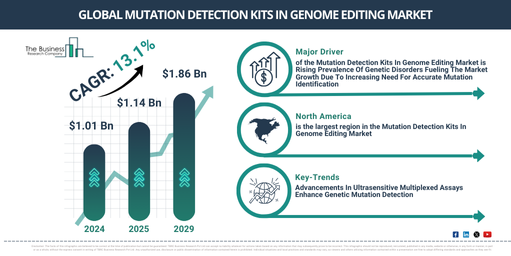
    The market size for mutation detection kits in the genome editing sector has experienced rapid expansion in recent years. It is forecast to grow from $1.01 billion in 2024 to $1.14 billion in 2025, achieving a compound annual growth rate (CAGR) of 13.4%. This historical growth can be attributed to increased research efforts in genetic disorders, a rise in government funding allocated to genomics, an escalation in academic and clinical research collaborations, the expanding availability of advanced molecular biology tools, and growing investments from biotech companies.

    The mutation detection kits in the genome editing market are projected to experience significant expansion in the next few years. This segment is forecast to reach $1.86 billion by 2029, driven by a compound annual growth rate (CAGR) of 13.1%. The growth over the forecast period is primarily due to the increasing adoption of autonomous mobile robots (AMRs), a greater emphasis on supply chain visibility, rising investments in digital twin technologies, a burgeoning demand for real-time asset tracking, and the wider implementation of industrial automation. Major trends expected during this period include advancements in real-time location systems (RTLS), innovations in AI-powered asset tracking, the integration of RFID with IoT platforms, progress in ultra-wideband (UWB) technology, and the incorporation of digital twin solutions for industrial automation.

    Get A Free Sample Of The Report:

    https://www.thebusinessresearchcompany.com/sample.aspx?id=27356&type=smp

    What Underlying Factors Are Supporting The Mutation Detection Kits In Genome Editing Market Growth?

    The increasing occurrence of genetic conditions is anticipated to fuel the expansion of mutation detection kits within the genome editing market moving ahead. Such disorders are defined as illnesses or states arising from irregularities in an individual’s DNA, which can be inherited or emerge from novel genetic alterations. The uptick in genetic disorders stems from heightened public understanding and advanced diagnostic tools, facilitating earlier and more precise identification of these conditions, consequently leading to increased documented prevalence rates. Genome editing mutation detection kits are instrumental in tackling genetic disorders by accurately pinpointing gene mutations responsible for diseases, thereby enabling focused research and the creation of targeted therapeutic solutions. For instance, in May 2024, according to the National Health Service, a UK-based government department, in England, approximately 17,000 people live with sickle cell disease, an inherited blood disorder, with around 250 new cases diagnosed each year. Consequently, the growing prevalence of genetic disorders is acting as a catalyst for the growth of mutation detection kits in the genome editing market.

    Which Sub-Segments Are Driving Growth Within The Mutation Detection Kits In Genome Editing Market?

    The mutation detection kits in genome editing market covered in this report is segmented

    1) By Product Type: Reagents, Kits, Software Solutions

    2) By Technology: Clustered Regularly Interspaced Short Palindromic Repeats (CRISPR), Transcription Activator-Like Effector Nucleases Or Meganuclease-TAL Effector Nucleases (TALENs/MegaTALs), Zinc Finger Nucleases (ZFN), Other Technologies

    3) By Application: Research, Clinical Diagnostics, Drug Development, Other Applications

    4) By End Use: Academic Institutions, Hospitals And Diagnostic Centers, Biotechnology Companies

    Subsegments:

    1) By Reagents: Deoxyribonucleic Acid Polymerases (DNA) Polymerases, Nucleases, Buffers And Enzymes, Fluorescent Dyes And Probes, Primers And Oligonucleotides

    2) By Kits: Polymerase Chain Reaction (PCR)-Based Mutation Detection Kits, Next-Generation Sequencing-Based Mutation Analysis Kits, Clustered Regularly Interspaced Short Palindromic Repeats (CRISPR) Mutation Validation Kits, Gel Electrophoresis-Based Detection Kits

    3) By Software Solutions: Mutation Analysis And Visualization Tools, Clustered Regularly Interspaced Short Palindromic Repeats (CRISPR) Off-Target Prediction Software, Genomic Alignment and Annotation Software, Data Interpretation Platforms For Next-Generation Sequencing, Cloud-Based Bioinformatics Platforms

    What Future-Focused Trends Are Anticipated In The Mutation Detection Kits In Genome Editing Market?

    Leading firms involved in mutation detection kits within the genome editing sector are prioritizing the creation of sophisticated solutions like ultrasensitive multiplexed assays. This focus aims to boost the precision, swiftness, and responsiveness of genetic mutation identification. These ultrasensitive multiplexed assays represent cutting-edge diagnostic tools capable of identifying and quantifying numerous genetic mutations concurrently, even at extremely low concentrations. Such capabilities empower researchers and clinicians to perform quicker, more precise, and thorough mutation analyses, thereby improving disease diagnosis and monitoring treatment efficacy. As an illustration, Bio-Rad Laboratories Inc., a research enterprise based in the US, introduced the ddPLEX ESR1 Mutation Detection Kit in April 2024. This product is an ultrasensitive multiplexed digital PCR assay specifically developed for identifying breast cancer mutations. The kit facilitates the concurrent detection and accurate measurement of seven ESR1 mutations, achieving an analytical sensitivity as low as 0.01% variant allele fraction, and supports analysis from both plasma and tissue samples. Innovations of this nature underscore the industry’s dedication to enhancing diagnostic precision and facilitating more efficient disease oversight and tailored therapeutic approaches.

    Which Companies Hold A Competitive Edge In The 161 Market?

    Major companies operating in the mutation detection kits in genome editing market are F. Hoffmann-La Roche Ltd, Merck KGaA, Thermo Fisher Scientific Inc., QIAGEN N.V., Eurofins Scientific SE, Agilent Technologies Inc., Illumina Inc., Bio-Rad Laboratories Inc., Integrated DNA Technologies Inc., GenScript Biotech Corporation, Takara Bio Inc., Promega Corporation, Analytik Jena AG, Twist Bioscience Corporation, New England Biolabs Inc., Applied Biological Materials Inc., Synthego Corporation, Cell Signaling Technology Inc., BioVision Inc., Creative Biogene Corporation.

    Access The Complete Report Here:

    https://www.thebusinessresearchcompany.com/report/mutation-detection-kits-in-genome-editing-global-market-report

    Which Region Dominates The Mutation Detection Kits In Genome Editing Market Today?

    North America was the largest region in the mutation detection kits in genome editing market in 2024. Asia‑Pacific is expected to be the fastest-growing region in the forecast period. The regions covered in the mutation detection kits in genome editing market report are Asia-Pacific, Western Europe, Eastern Europe, North America, South America, Middle East, Africa.

    Customize Your Report Here:

    https://www.thebusinessresearchcompany.com/customise?id=27356&type=smp

    Browse Through More Reports Similar to the Global Mutation Detection Kits In Genome Editing Market 2025, By The Business Research Company

    Pet Insurance Global Market Report 2025

    https://www.thebusinessresearchcompany.com/report/pet-insurance-global-market-report

    Accidental Death Insurance Global Market Report 2025

    https://www.thebusinessresearchcompany.com/report/accidental-death-insurance-global-market-report

    Insurance Global Market Report 2025

    https://www.thebusinessresearchcompany.com/report/insurance-global-market-report

    About The Business Research Company:

    With over 15000+ reports from 27 industries covering 60+ geographies, The Business Research Company has built a reputation for offering comprehensive, data-rich research and insights. Armed with 1,500,000 datasets, the optimistic contribution of in-depth secondary research, and unique insights from industry leaders, you can get the information you need to stay ahead in the game.

    Get in touch with us:

    The Business Research Company: https://www.thebusinessresearchcompany.com/

    Americas +1 310-496-7795

    Asia +44 7882 955267 & +91 8897263534

    Europe +44 7882 955267

    Email us at info@tbrc.info

    Follow us on:

    LinkedIn: https://in.linkedin.com/company/the-business-research-company

    YouTube: https://www.youtube.com/channel/UC24_fI0rV8cR5DxlCpgmyFQ

    Global Market Model: https://www.thebusinessresearchcompany.com/global-market-model
  • What Are The Strategic Insights Behind The Carcinoid Tumor Market Expansion To $2.62 Billion?

    What Are The Strategic Insights Behind The Carcinoid Tumor Market Expansion To $2.62 Billion?

    Claim your 20% discount on Global Market Reports with code ONLINE20. Limited time only.

    What Are The Future Growth Projections For The Carcinoid Tumor Market Size?

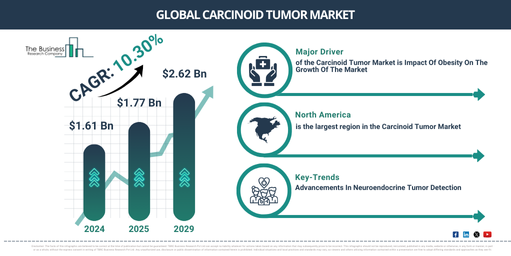
    In the past few years, the market size for carcinoid tumors has witnessed notable expansion. It is projected to increase from $1.61 billion in 2024 to $1.77 billion in 2025, yielding a compound annual growth rate (CAGR) of 10.4%. This growth in the historic timeline can be credited to factors such as an elevated incidence rate of neuroendocrine tumors, heightened awareness about rare cancers, enhancements in healthcare infrastructures, accessibility to targeted therapies, and the broadening scope of clinical trials to explore innovative treatment alternatives.

    In the forthcoming years, the market size for carcinoid tumors is anticipated to experience significant growth, projected to reach $2.62 billion in 2029 with a compound annual growth rate (CAGR) of 10.3%. Factors propelling growth during this period include the escalating demand for customized medication, a heightened emphasis on early diagnosis and detection, a surge in the preference for less invasive surgical procedures, expanded investigation into innovative treatments, and more frequent utilization of molecular targeted therapies. Standout trends for this period encompass the incorporation of artificial intelligence and machine learning into diagnostic processes, a lean towards combination therapies, advancements in telemedicine and remote patient monitoring, a focus on patient-oriented care, and collaborative research undertakings.

    Get A Free Sample Of The Report:

    https://www.thebusinessresearchcompany.com/sample.aspx?id=21127&type=smp

    Which Demand Drivers Are Strengthening The Carcinoid Tumor Market?

    The expansion of the carcinoid tumor market is set to be fueled by the escalation in the obese population. This demographic is made up of individuals with a body mass index (BMI) of 30 or more, showing an extreme accumulation of body fat. The rise in obesity rates is credited to factors like unhealthy eating patterns, sedentary behavior, a dearth of physical movement, and a surge in the intake of high-calorie, processed foods. Obesity can lead to the development of carcinoid tumors by inducing chronic inflammation, insulin resistance, and an enhanced secretion of growth factors that aid in tumor growth. For example, in September 2023, it was reported by the Centers for Disease Control and Prevention, a government agency based in the US, that in 2022, the rate of adult obesity was 35% or more in 22 states, a rise from 19 states the previous year, in 2021. Thus, the escalating obese population is steering the carcinoid tumor market’s growth.

    What Segmentation Insights Are Provided In The Carcinoid Tumor Market Research?

    The carcinoid tumormarket covered in this report is segmented –

    1) By Disease Type: Gastrointestinal Neuroendocrine Tumor; Pancreatic Neuroendocrine Tumor; Lung Neuroendocrine Tumor; Other Disease Types

    2) By Treatment: Octreotide; Lanreotide; Telotristat ethyl; Capecitabine (Xeloda); 5-Fluorouracil (5-FU); Doxorubicin (Adriamycin); Etoposide (VP-16); Dacarbazine (DTIC); Streptozocin; Other Treatments

    3) By Route Of Administration: Oral; Parenteral; Other Routes Of Administration

    4) By Distribution Channel: Online Channel; Offline Channel

    5) By End User: Hospital And Clinics; Academic Institutions; Research Organizations

    Subsegments:

    1) By Gastrointestinal Neuroendocrine Tumor: Small Bowel Neuroendocrine Tumors; Colorectal Neuroendocrine Tumors; Appendiceal Neuroendocrine Tumors

    2) By Pancreatic Neuroendocrine Tumor: Insulinoma; Non-insulinoma; Glucagonoma

    3) By Lung Neuroendocrine Tumor: Typical Carcinoid Tumors; Atypical Carcinoid Tumors

    4) By Other Disease Types: Thymic Neuroendocrine Tumors; Ovarian Neuroendocrine Tumors

    Which Market Trends Are Expected To Define The Future Of The Carcinoid Tumor Market?

    Leading firms in the carcinoid tumor market are concentrating on developing advanced diagnostic technologies to amplify early detection and treatment efficiency. This includes the full-scale automation of the chromogranin A (CgA) test, which is used as a diagnostic tool to evaluate the presence of chromogranin A, often linked with neuroendocrine and carcinoid tumors. In the month of October 2023, Thermo Fisher Scientific Inc., an American biotechnology research corporation, was granted FDA approval for its invention of the Thermo Scientific B·R·A·H·M·S CgA II KRYPTOR immunoassay. This is recognized as the first FDA-authorized Chromogranin A (CgA) test, and the sole automated immunoassay used globally for monitoring tumor growth in patients with gastroenteropancreatic neuroendocrine tumor (GEP-NET). Engineered to calculate the CgA levels in human serum, the test provides laboratories and cancer centers with the means to monitor tumor evolution and evaluate the success of treatments. It enhances lab productivity and offers improved interpretation of results by substituting manually conducted lab tests. The Thermo Scientific B·R·A·H·M·S KRYPTOR compact PLUS random-access immunoassay analyzer, which employs TRACE technology, is used for the test and delivers accurate outcomes within 30 minutes.

    Which Firms Are Driving Innovation Within The Carcinoid Tumor Market?

    Major companies operating in the carcinoid tumor market are Pfizer Inc., Johnson & Johnson, F. Hoffmann-La Roche Ltd., Merck & Co. Inc., Sanofi S.A., Abbott Laboratories, Novartis AG, GlaxoSmithKline plc, Eli Lilly and Company, Siemens Healthineers AG, Boston Scientific Corporation, Boehringer Ingelheim International GmbH, Catalent Inc, Ipsen S.A., Exelixis Inc, Novocure Limited, Hutchison MediPharma Limited (A subsidiary of HUTCHMED), Tarveda Therapeutics Inc., Lexicon Pharmaceuticals Inc., Dauntless Pharmaceuticals Inc.

    Access The Complete Report Here:

    https://www.thebusinessresearchcompany.com/report/carcinoid-tumor-global-market-report

    Which Regional Markets Are Emerging As Key Hubs For The Carcinoid Tumor Market?

    North America was the largest region in the carcinoid tumor market in 2024. Asia-Pacific is expected to be the fastest-growing region in the forecast period. The regions covered in the carcinoid tumor market report are Asia-Pacific, Western Europe, Eastern Europe, North America, South America, Middle East, Africa.

    Customize Your Report Here:

    https://www.thebusinessresearchcompany.com/customise?id=21127&type=smp

    Browse Through More Reports Similar to the Global Carcinoid Tumor Market 2025, By The Business Research Company

    Cancer Tumor Profiling Global Market Report 2025

    https://www.thebusinessresearchcompany.com/report/cancer-tumor-profiling-global-market-report

    Circulating Tumor Cells Global Market Report 2025

    https://www.thebusinessresearchcompany.com/report/circulating-tumor-cells-global-market-report

    Tumor Necrosis Factor Inhibitor Drugs Global Market Report 2025

    https://www.thebusinessresearchcompany.com/report/tumor-necrosis-factor-inhibitor-drugs-global-market-report

    About The Business Research Company:

    With over 15000+ reports from 27 industries covering 60+ geographies, The Business Research Company has built a reputation for offering comprehensive, data-rich research and insights. Armed with 1,500,000 datasets, the optimistic contribution of in-depth secondary research, and unique insights from industry leaders, you can get the information you need to stay ahead in the game.

    Get in touch with us:

    The Business Research Company: https://www.thebusinessresearchcompany.com/

    Americas +1 310-496-7795

    Asia +44 7882 955267 & +91 8897263534

    Europe +44 7882 955267

    Email us at info@tbrc.info

    Follow us on:

    LinkedIn: https://in.linkedin.com/company/the-business-research-company

    YouTube: https://www.youtube.com/channel/UC24_fI0rV8cR5DxlCpgmyFQ

    Global Market Model: https://www.thebusinessresearchcompany.com/global-market-model