Blog

  • Wiskott-Aldrich Syndrome Treatment Industry Overview 2025: Growth Projections and Market Trends

    Wiskott-Aldrich Syndrome Treatment Industry Overview 2025: Growth Projections and Market Trends

    Unlock Global Insights – Save 20% on Market Reports with Code ONLINE20

    What Are The Growth Projections For The Wiskott-Aldrich Syndrome Treatment Market Size During 2025–2029?

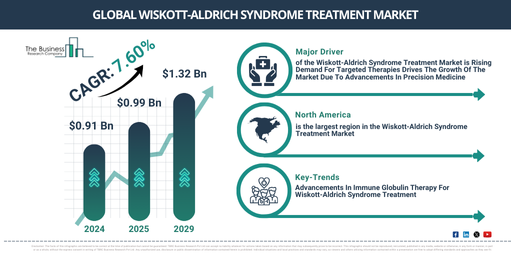
    The wiskott-aldrich syndrome treatment market has seen significant expansion in recent years. Its value is expected to rise from $0.91 billion in 2024 to $0.99 billion in 2025, progressing at a compound annual growth rate (CAGR) of 8.5%. The historical growth of this market is attributable to the increase in genetic disorders, enhanced patient awareness, a greater number of clinical studies, and the rising prevalence of wiskott-aldrich syndrome.

    The market size for wiskott-aldrich syndrome treatment is anticipated to undergo significant growth over the coming years. It is projected to reach $1.32 billion by 2029, demonstrating a compound annual growth rate (CAGR) of 7.6%. This expansion during the forecast timeframe is primarily driven by an increasing emphasis on targeted therapies, a rising need for diagnostic tests, an uptick in government initiatives, and a growing demand for personalized medicine. Prominent trends throughout this period include technological advancements, the formulation of effective treatments, progress in genetic testing, and developments in medical research.

    Unlock Your Free Sample Report for Exclusive Market Data:

    https://www.thebusinessresearchcompany.com/sample.aspx?id=23584&type=smp

    What Are The Drivers Pushing New Developments In The Wiskott-Aldrich Syndrome Treatment Market?

    An anticipated increase in the demand for targeted therapies is set to drive the expansion of the wiskott-aldrich syndrome treatment market in the future. These therapies zero in on distinct molecules or cellular pathways implicated in disease development, especially in cancer, enabling them to specifically target aberrant cells while minimizing damage to healthy ones. The proliferation of targeted therapies stems from precision medicine, a field that boosts effectiveness by addressing particular genetic mutations and simultaneously reducing adverse effects. Specifically, gene therapy, a type of targeted therapy, aids in rectifying the faulty WAS gene, thereby re-establishing proper immune function and platelet generation, leading to enhanced patient results and decreased reliance on continuous treatments. For example, reports from the American Society of Gene and Cell Therapy (ASGCT), a professional membership organization based in the US, indicated that in July 2024, a total of 76 gene therapy trials commenced during the second quarter of 2024, representing a 25 % surge from the preceding quarter. Consequently, the growing need for targeted therapies is fueling the expansion of the wiskott-aldrich syndrome treatment market.

    How Is The Wiskott-Aldrich Syndrome Treatment Market Segmented?

    The wiskott-aldrich syndrome treatmentmarket covered in this report is segmented –

    1) By Treatment Type: Immunoglobulin Replacement Therapy; Antibiotic Therapy; Stem Cell Transplantation; Gene Therapy

    2) By Diagnosis: Blood tests; Genetic testing; Other Diagnosis

    3) By Distribution Channel: Hospital Pharmacy; Retail Pharmacy; Online Pharmacies; Other Distribution Channels

    4) By End-Users: Hospitals; Research Institutes; Specialty Clinics

    Subsegments:

    1) By Immunoglobulin Replacement Therapy: Intravenous Immunoglobulin (IVIG); Subcutaneous Immunoglobulin (SCIG)

    2) By Antibiotic Therapy: Broad-Spectrum Antibiotics; Narrow-Spectrum Antibiotics

    3) By Stem Cell Transplantation: Allogeneic Hematopoietic Stem Cell Transplantation (HSCT); Autologous Stem Cell Transplantation

    4) By Gene Therapy: Lentiviral Vector-Based Gene Therapy; Retroviral Vector-Based Gene Therapy

    Which Competitive Trends Are Defining The Wiskott-Aldrich Syndrome Treatment Market Structure?

    Major companies in the wiskott-aldrich syndrome treatment market are focusing on creating novel products, such as intravenous immune globulin, to improve immune system functionality and control infections. Immune globulin intravenous (IVIG) is a therapeutic method that directly introduces purified human immunoglobulin G (IgG) antibodies into the bloodstream to strengthen immune responses. It is utilized for managing immune deficiencies, autoimmune disorders, and infections by providing passive immunity and modulating the immune system. As an illustration, in September 2024, GC Biopharma USA, Inc., a US-based biopharma company, launched ALYGLO, a 10% immune globulin intravenous liquid, in the US market. This product, approved by the Food and Drug Administration (FDA), is designed for the treatment of primary humoral immunodeficiency (PI) indication, which encompasses Wiskott-Aldrich syndrome in adults. It is produced from pooled human plasma and supplies a wide array of antibodies to combat infections. The product is available through a network of specialty pharmacies and distributors across the US, marking a significant milestone for GC Biopharma in expanding its presence in the US healthcare market.

    Which Key Players Are Driving Competition In The Wiskott-Aldrich Syndrome Treatment Market?

    Major companies operating in the wiskott-aldrich syndrome treatment market are Pfizer Inc., Boston Children’s Hospital, Grifols S.A., The Children’s Hospital of Philadelphia, Seattle Children’s Research Institute, CSL Behring LLC,GC Biopharma USA Inc., St. Jude Children’s Research Hospital, Great Ormond Street Hospital , Octapharma AG, Bio Products Laboratory Limited, ADMA Biologics Inc., Ospedale San Raffaele – Milano, Mary Ann Libert Inc, Orchard Therapeutics plc, Genethon, Sage Therapeutics Inc., Yposkesi, Telethon Foundation.

    Download The Full Report For Exclusive Market Findings:

    https://www.thebusinessresearchcompany.com/report/wiskott-aldrich-syndrome-treatment-global-market-report

    How Do Regional Market Performances Compare Within The Wiskott-Aldrich Syndrome Treatment Industry?

    North America was the largest region in the wiskott-aldrich syndrome treatment market in 2024. The regions covered in the wiskott-aldrich syndrome treatment market report are Asia-Pacific, Western Europe, Eastern Europe, North America, South America, Middle East, Africa.

    Request A Customized Version Of The Wiskott-Aldrich Syndrome Treatment Market Report:

    https://www.thebusinessresearchcompany.com/customise?id=23584&type=smp

    Browse Through More Reports Similar to the Global Wiskott-Aldrich Syndrome Treatment Market 2025, By The Business Research Company

    Cancer Immunotherapy Global Market Report 2025

    https://www.thebusinessresearchcompany.com/report/cancer-immunotherapy-global-market-report

    Immunofluorescence Assay Global Market Report 2025

    https://www.thebusinessresearchcompany.com/report/immunofluorescence-assay-global-market-report

    Intravenous Immunoglobulin Global Market Report 2025

    https://www.thebusinessresearchcompany.com/report/intravenous-immunoglobulin-global-market-report

    Get in touch with us:

    The Business Research Company: https://www.thebusinessresearchcompany.com/

    Americas +1 310-496-7795

    Asia +44 7882 955267 & +91 8897263534

    Europe +44 7882 955267

    Email us at info@tbrc.info

    Follow us on:

    LinkedIn: https://in.linkedin.com/company/the-business-research-company

    YouTube: https://www.youtube.com/channel/UC24_fI0rV8cR5DxlCpgmyFQ

    Global Market Model: https://www.thebusinessresearchcompany.com/global-market-model

  • Wilms Tumor Market Size Forecast: Revenue and CAGR by 2029

    Wilms Tumor Market Size Forecast: Revenue and CAGR by 2029

    Unlock Global Insights – Save 20% on Market Reports with Code ONLINE20

    What Is The Global Market Value Of The Wilms Tumor Industry In 2025?

    The wilms tumor market size has shown consistent expansion over recent years. It is anticipated to increase from $1.64 billion in 2024 to $1.71 billion in 2025, achieving a compound annual growth rate (CAGR) of 4.6%. The historical surge in growth can be attributed to heightened awareness concerning early cancer detection, escalating government programs, an increasing occurrence of genetic predisposition, greater investments in pediatric oncology drug development, and rising healthcare spending on pediatric oncology interventions.

    The Wilms tumor market size is predicted to experience consistent expansion over the upcoming years. Its valuation is set to reach $2.06 billion by 2029, exhibiting a compound annual growth rate (CAGR) of 4.7%. This anticipated growth during the forecast period is fueled by an intensifying focus on personalized medicine, an increase in the application of radiotherapy techniques, a rising incidence of lifestyle-related risk factors, an expanding number of pediatric oncologists, and enhanced awareness initiatives from healthcare organizations. Prominent trends for the forecast duration encompass the progression of CAR-T cell therapies, the formulation of innovative chemotherapy regimens, the broadening use of combination therapies, the evolution of biomarker-driven diagnostics, and the integration of wearable health monitoring devices.

    Unlock Your Free Sample Report for Exclusive Market Data:

    https://www.thebusinessresearchcompany.com/sample.aspx?id=23582&type=smp

    What Are The Emerging Market Drivers Creating New Opportunities In The Wilms Tumor Industry?

    The expanding occurrence of pediatric cancer is anticipated to boost the growth of the Wilms tumor market in the coming years. Pediatric cancer signifies malignancies affecting children aged 0–14 years, characterized by abnormal cell development across various tissues and organs. The widespread presence of pediatric cancer stems from factors like exposure to environmental pollutants, genetic predispositions, infections, and immune system elements. Insights gleaned from pediatric cancer cases are crucial for advancing early diagnosis, treatment strategies, and understanding genetic factors, ultimately improving survival rates. This information also facilitates the creation of personalized therapies, which enhance outcomes and the quality of life for affected children. For instance, in January 2025, the Cancer Network, a US-based cancer research organization, estimated that 9,550 children (aged 0–14 years) would be diagnosed with cancer, and 1,050 would unfortunately die from the disease. Thus, the rising prevalence of pediatric cancer is a primary catalyst for the expansion of the Wilms tumor market.

    What Are The Key Segments In The Wilms Tumor Market?

    The wilms tumormarket covered in this report is segmented –

    1) By Type: Favorable Histology; Anaplastic Histology

    2) By Stages: Stage I; Stage II; Stage III; Stage IV; Stage V

    3) By Diagnosis: Physical Examination; Imaging Tests; Lab Tests

    4) By Treatment: Surgery; Chemotherapy; Radiation Therapy

    5) By End-User: Cancer Research Institutes; Diagnostic Laboratories; Hospitals; Other End-Users

    Subsegments:

    1) By Favorable Histology: Unilateral Wilms Tumor; Bilateral Wilms Tumor; Nephroblastomatosis

    2) By Anaplastic Histology: Diffuse Anaplastic Wilms Tumor; Focal Anaplastic Wilms Tumor; Mixed Anaplastic Wilms Tumor

    Who Are The Top Performing Companies In The Wilms Tumor Market In Recent Years?

    Major companies operating in the wilms tumor market are Thermo Fisher Scientific Inc., Medline Industries LP, Agilent Technologies Inc., Apollo Hospital, Exelixis Inc., Abcam plc, Sino Biological Inc., OriGene Technologies Inc., Cell Signaling Technology Inc., Proteintech Group Inc., Santa Cruz Biotechnology Inc., Novus Biologicals LLC, Recordati Rare Diseases, Getwell Pharmaceuticals, AdvaCare Pharma, Florencia Healthcare, Boster Biological Technology, NanoSmart Pharmaceuticals Inc., BLK-Max Hospital, Plunes Healthcare

    Download The Full Report For Exclusive Market Findings:

    https://www.thebusinessresearchcompany.com/report/wilms-tumor-global-market-report

    Which Region Currently Holds The Largest Share Of The Wilms Tumor Market?

    North America was the largest region in the wilms tumor market in 2024. Asia-Pacific is expected to be the fastest-growing region in the forecast period. The regions covered in the wilms tumor market report are Asia-Pacific, Western Europe, Eastern Europe, North America, South America, Middle East, Africa.

    Request A Customized Version Of The Wilms Tumor Market Report:

    https://www.thebusinessresearchcompany.com/customise?id=23582&type=smp

    Browse Through More Reports Similar to the Global Wilms Tumor Market 2025, By The Business Research Company

    Solid Tumor Cancer Treatment Global Market Report 2025

    https://www.thebusinessresearchcompany.com/report/solid-tumor-cancer-treatment-global-market-report

    Intratumoral Cancer Therapies Global Market Report 2025

    https://www.thebusinessresearchcompany.com/report/intratumoral-cancer-therapies-global-market-report

    Neuroendocrine Tumor Treatment Global Market Report 2025

    https://www.thebusinessresearchcompany.com/report/neuroendocrine-tumor-treatment-global-market-report

    Get in touch with us:

    The Business Research Company: https://www.thebusinessresearchcompany.com/

    Americas +1 310-496-7795

    Asia +44 7882 955267 & +91 8897263534

    Europe +44 7882 955267

    Email us at info@tbrc.info

    Follow us on:

    LinkedIn: https://in.linkedin.com/company/the-business-research-company

    YouTube: https://www.youtube.com/channel/UC24_fI0rV8cR5DxlCpgmyFQ

    Global Market Model: https://www.thebusinessresearchcompany.com/global-market-model
  • Global Wearable Robot Technology Market Trends and Growth Analysis 2025–2029

    Global Wearable Robot Technology Market Trends and Growth Analysis 2025–2029

    Unlock Global Insights – Save 20% on Market Reports with Code ONLINE20

    By How Much Is The Wearable Robot Technology Market Expected To Expand Between 2025 And 2029?

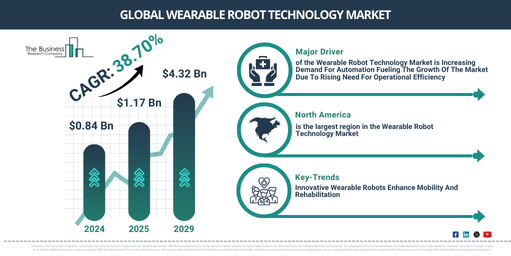
    The wearable robot technology market has experienced significant expansion in recent years. Its valuation is expected to rise from $0.84 billion in 2024 to $1.17 billion by 2025, achieving a compound annual growth rate (CAGR) of 39.0%. The expansion observed historically can be ascribed to several factors, including the increasing need for rehabilitation tools, greater spending within the healthcare sector, the growing necessity for elderly care services, increased funding for research and development efforts, and the rising demand for solutions assisting both the elderly and individuals with disabilities.

    The wearable robot technology market is projected to experience substantial expansion over the upcoming years. This market is anticipated to reach $4.32 billion by 2029, exhibiting a compound annual growth rate (CAGR) of 38.7%. This projected increase throughout the forecast period stems from the increasing need for personalized healthcare solutions, a rising requirement for assistive robots within healthcare, greater use of robotics in physical therapy, an elevated focus on multi-functional wearable robots, and the expanding popularity of health and fitness tracking devices. Key developments expected during this timeframe encompass technological progress in materials, the creation of modular wearable robots, the merging of wearables with smart fabrics, breakthroughs in haptic feedback, and the development of adaptive control systems.

    Unlock Your Free Sample Report for Exclusive Market Data:

    https://www.thebusinessresearchcompany.com/sample.aspx?id=23579&type=smp

    Which Drivers Are Impacting The Wearable Robot Technology Market?

    The rising need for automation is projected to boost the expansion of the wearable robot technology market in the future. Automation involves utilizing technology or machinery to execute tasks with little to no human involvement. This demand for automation is escalating because businesses seek greater operational efficiency, aiming to lower expenses, decrease mistakes, and enhance output. Wearable robot technology improves automation through the integration of human-machine cooperation, making it particularly suitable for sectors requiring significant labor and for healthcare environments. Such technology lessens physical exertion by enhancing human movement and strength, thereby boosting productivity and operational effectiveness. For example, data from the International Federation of Robotics, a Germany-based non-profit organization, indicated that approximately 4.2 million robotic units were operational in factories worldwide in 2023, representing a 10% rise from 3.9 million units in 2022, as reported in September 2024. Consequently, the growing requirement for automation is propelling the expansion of the wearable robot technology market.

    What Are The Leading Segments Analyzed In The Wearable Robot Technology Market?

    The wearable robot technologymarket covered in this report is segmented –

    1) By Type: Rigid Type; Soft Type

    2) By Mode Of Operation: Passive; Active And Powered

    3) By Product: Wristwear; Headwear; Footwear; Fashion And Jewelry; Bodywear; Other Wearable Technology

    4) By Application: Rehabilitation; Assistive; Body Parts Support; Sports; Supply Chain Industry; Other Applications

    5) By End User: Healthcare; Consumer Electronics; Enterprise And Industrial Applications; Othe End User Industries

    Subsegments:

    1) By Rigid Type: Exoskeletons With Metallic Frames; Powered Rigid Suits For Industrial Lifting; Military-Grade Wearable Robots; Medical Rehabilitation Robots; Full-Body Rigid Assistive Devices

    2) By Soft Type: Soft Robotic Exosuits; Pneumatic; Textile-Based Wearable Assistive Devices; Cable-Driven Flexible Actuators; Soft Wearable Robots For Elderly Mobility Support

    What Trends Are Redefining The Wearable Robot Technology Market Dynamics?

    Leading companies operating in the wearable robot technology market are concentrating on developing innovative solutions, such as wearable assistive robotics, to enhance users’ mobility and improve their quality of life. Wearable assistive robotics refers to robotic devices designed to be worn on the body that either support or augment physical movement, often assisting individuals with mobility impairments or physical limitations. For instance, in July 2024, CosmoRobotics Co., Ltd., a technology firm based in South Korea, launched a series of innovative wearable robots. These products include Bambini Teens, EA2Pro, EAM, GRANY, and EXA-W, which are engineered to enhance daily life by providing assistance with muscle strength and rehabilitation. Key features of these robots include Bambini Teens, specifically designed for children, and EA2Pro, a second-generation exoskeleton featuring advanced motor sensors and an ergonomic design for rehabilitation.

    Which Leading Companies Dominate The Wearable Robot Technology Market Share?

    Major companies operating in the wearable robot technology market are Toyota Corporation, Samsung Electronics Co Ltd., Hyundai Motor Company, Lockheed Martin Corporation, Honda Motor Co. Ltd., Parker Hannifin Corporation, Myomo Inc, Sarcos Technology and Robotics Corporation, Zimmer Biomet Holdings Inc, Ottobock SE & Co. KGaA, Comau LLC, Cyberdyne Inc., Hocoma AG., Ekso Bionics Holdings Inc., Laevo B.V. , Innophys Co Ltd., Marsi Bionics, Näder Holding GmbH & Co. KG, Technaid. S.L. , ReWalk Robotics Ltd

    Download The Full Report For Exclusive Market Findings:

    https://www.thebusinessresearchcompany.com/report/wearable-robot-technology-global-market-report

    What Regional Growth Trends Are Shaping The Wearable Robot Technology Market Outlook?

    North America was the largest region in the wearable robot technology market in 2024. Asia-Pacific is expected to be the fastest-growing region in the forecast period. The regions covered in the wearable robot technology market report are Asia-Pacific, Western Europe, Eastern Europe, North America, South America, Middle East, Africa.

    Request A Customized Version Of The Wearable Robot Technology Market Report:

    https://www.thebusinessresearchcompany.com/customise?id=23579&type=smp

    Browse Through More Reports Similar to the Global Wearable Robot Technology Market 2025, By The Business Research Company

    Robotic Process Automation Global Market Report 2025

    https://www.thebusinessresearchcompany.com/report/robotic-process-automation-global-market-report

    Wearable Robotic Exoskeleton Global Market Report 2025

    https://www.thebusinessresearchcompany.com/report/wearable-robotic-exoskeleton-global-market-report

    Healthcare Assistive Robot Global Market Report 2025

    https://www.thebusinessresearchcompany.com/report/healthcare-assistive-robot-global-market-report

    Get in touch with us:

    The Business Research Company: https://www.thebusinessresearchcompany.com/

    Americas +1 310-496-7795

    Asia +44 7882 955267 & +91 8897263534

    Europe +44 7882 955267

    Email us at info@tbrc.info

    Follow us on:

    LinkedIn: https://in.linkedin.com/company/the-business-research-company

    YouTube: https://www.youtube.com/channel/UC24_fI0rV8cR5DxlCpgmyFQ

    Global Market Model: https://www.thebusinessresearchcompany.com/global-market-model

  • Vitreoretinal Disorder Market Forecast: What to Expect by 2029

    Vitreoretinal Disorder Market Forecast: What to Expect by 2029

    Unlock Global Insights – Save 20% on Market Reports with Code ONLINE20

    #What Is The Projected Market Size Of The Vitreoretinal Disorder Market By 2029?

    The vitreoretinal disorder market size has demonstrated strong expansion in recent years. It is forecast to increase from $4.3 billion in 2024 to $4.63 billion in 2025, at a compound annual growth rate (CAGR) of 7.6%. The market’s growth during the preceding period can be linked to factors such as the rising incidence of diabetic retinopathy, an expanding aging population, heightened awareness of retinal conditions, improvements in healthcare infrastructure, and the initial adoption of anti-vascular endothelial growth factor (VEGF) therapy.

    The vitreoretinal disorder market is projected to experience substantial growth in the coming years, reaching a valuation of $6.25 billion by 2029, demonstrating a compound annual growth rate (CAGR) of 7.8%. This expansion is driven by several factors, including the increasing prevalence of age-related macular degeneration, a rising incidence of diabetic retinopathy, growing investments in regenerative stem cell therapies, higher healthcare spending on ophthalmic conditions, enhanced awareness regarding the early detection of retinal diseases, and various governmental initiatives. Key developments anticipated during this period encompass artificial intelligence (AI)-driven detection of retinal disorders, robot-assisted vitreoretinal surgical procedures, drug delivery systems based on nanotechnology, smart contact lenses for continuous eye monitoring, adaptive optics imaging with ultra-high resolution, and biodegradable implants administered intravitreally.

    Unlock Your Free Sample Report for Exclusive Market Data:

    https://www.thebusinessresearchcompany.com/sample.aspx?id=23574&type=smp

    Which Industry Drivers Are Expected To Accelerate The Vitreoretinal Disorder Market From 2025 To 2029?

    An increasing occurrence of diabetic retinopathy is projected to drive expansion within the vitreoretinal disorder market in the future. This condition, diabetic retinopathy, is an ocular ailment resulting from harm to retinal blood vessels, induced by elevated blood sugar concentrations in individuals with diabetes. The frequency of diabetic retinopathy is escalating because of the rising prevalence of diabetes, which is fueled by inactive routines and inadequate blood sugar management, leading to damage to retinal blood vessels. Managing vitreoretinal disorders is vital for treating diabetic retinopathy, as it tackles complications like vitreous hemorrhage and tractional retinal detachment, thus safeguarding vision and averting additional retinal harm. For example, in October 2024, data from the Australian Institute of Health and Welfare, an Australia-based government body, indicated that in 2022–23, 1.8% of screened First Nations people in Australia underwent treatment for diabetic retinopathy, presenting an age-standardized treatment rate (1.3%) that was lower compared to non-Indigenous Australians (1.5%). Consequently, the increasing occurrence of diabetic retinopathy is a key factor propelling the expansion of the vitreoretinal disorder market.

    What Are The Segment Types Shaping The Vitreoretinal Disorder Market?

    The vitreoretinal disordermarket covered in this report is segmented –

    1) By Type: Retinal Tear; Retinal Detachment; Diabetic Retinopathy; Macular Degeneration; Macular Hole; Other Types

    2) By Diagnosis: Digital Fluorescein Angiography; Optical Coherence Tomography; Heidelberg Retinal Tomography; Indocyanine Green Angiography; Other Diagnosis

    3) By Treatment: Surgery; Medication; Other Treatments

    4) By Distribution Channel: Hospital Pharmacy; Online Pharmacy; Retail Pharmacy

    5) By End User: Hospitals; Homecare; Specialty Clinics; Other End Users

    Subsegments:

    1) By Retinal Tear: Atrophic Retinal Tear; Operculated Retinal Tear; Horseshoe Retinal Tear; Giant Retinal Tear

    2) By Retinal Detachment: Rhegmatogenous Retinal Detachment; Tractional Retinal Detachment; Exudative Retinal Detachment

    3) By Diabetic Retinopathy: Non-Proliferative Diabetic Retinopathy; Proliferative Diabetic Retinopathy; Diabetic Macular Edema

    4) By Macular Degeneration: Dry Macular Degeneration; Wet Macular Degeneration

    5) By Macular Hole: Full-Thickness Macular Hole; Lamellar Macular Hole; Tractional Macular Hole

    6) By Other Types: Epiretinal Membrane; Retinal Vein Occlusion; Retinal Artery Occlusion; Retinitis Pigmentosa; Uveitis; Vitreous Hemorrhage; Macular Edema; Central Serous Retinopathy; Proliferative Vitreoretinopathy

    How Are Emerging Market Trends Shaping The Vitreoretinal Disorder Industry Landscape?

    Leading firms within the vitreoretinal disorder market are concentrating on creating advanced therapies, including methotrexate for treating primary vitreoretinal lymphoma, to tackle the outstanding medical requirements linked to uncommon and severe retinal cancers. The application of methotrexate for treating primary vitreoretinal lymphoma involves the intravitreal administration of a chemotherapeutic agent designed to target and inhibit malignant cells present in the retina and vitreous, thereby providing a localized and potent therapy for this uncommon ocular malignancy. As an illustration, in December 2022, Aldeyra Therapeutics Inc., a US-based biotechnology enterprise, reported a favorable pre-New Drug Application meeting with the FDA concerning ADX-2191, which is a new, preservative-free version of methotrexate intended for treating primary vitreoretinal lymphoma (PVRL), an infrequent and aggressive retinal cancer.

    Who Are The Major Companies Operating In The Vitreoretinal Disorder Market?

    Major companies operating in the vitreoretinal disorder market are Pfizer Inc., Johnson & Johnson, F. Hoffmann-La Roche AG, Merck & Co. Inc., AbbVie Inc., Bayer AG, Novartis AG, GSK plc, Teva Pharmaceutical Industries Ltd., Baxter International, Regeneron Pharmaceuticals Inc., Astellas Pharma Inc., Alcon Inc., Bausch Health Companies Inc., Santen Pharmaceutical Co. Ltd. , Topcon Corporation, Ocular Therapeutix Inc., Carl Zeiss Meditec AG, EyePoint Pharmaceuticals Inc., Kodiak Sciences Inc., Clearside Biomedical.

    Download The Full Report For Exclusive Market Findings:

    https://www.thebusinessresearchcompany.com/report/vitreoretinal-disorder-global-market-report

    Which Regional Markets Are Contributing Most To The Vitreoretinal Disorder Industry Expansion?

    North America was the largest region in the vitreoretinal disorder market in 2024. The regions covered in the vitreoretinal disorder market report are Asia-Pacific, Western Europe, Eastern Europe, North America, South America, Middle East, Africa.

    Request A Customized Version Of The Vitreoretinal Disorder Market Report:

    https://www.thebusinessresearchcompany.com/customise?id=23574&type=smp

    Browse Through More Reports Similar to the Global Vitreoretinal Disorder Market 2025, By The Business Research Company

    Vitreoretinal Surgery Devices Global Market Report 2025

    https://www.thebusinessresearchcompany.com/report/vitreoretinal-surgery-devices-global-market-report

    Retinal Biologics Global Market Report 2025

    https://www.thebusinessresearchcompany.com/report/retinal-biologics-global-market-report

    Retinal Disorder Treatment Global Market Report 2025

    https://www.thebusinessresearchcompany.com/report/retinal-disorder-treatment-global-market-report

    Get in touch with us:

    The Business Research Company: https://www.thebusinessresearchcompany.com/

    Americas +1 310-496-7795

    Asia +44 7882 955267 & +91 8897263534

    Europe +44 7882 955267

    Email us at info@tbrc.info

    Follow us on:

    LinkedIn: https://in.linkedin.com/company/the-business-research-company

    YouTube: https://www.youtube.com/channel/UC24_fI0rV8cR5DxlCpgmyFQ

    Global Market Model: https://www.thebusinessresearchcompany.com/global-market-model
  • Visceral Leishmaniasis Industry Insights: Market Forecast to 2029

    Visceral Leishmaniasis Industry Insights: Market Forecast to 2029

    Unlock Global Insights – Save 20% on Market Reports with Code ONLINE20

    How Much Was The Visceral Leishmaniasis Market Worth In 2025, And What Is Its Anticipated Value By 2029?

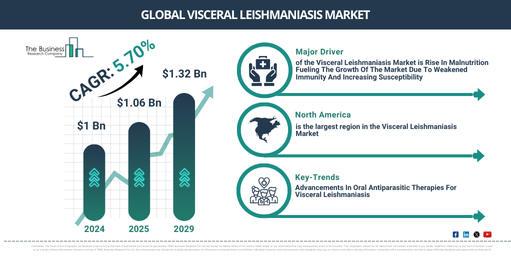
    The market for visceral leishmaniasis has experienced robust expansion over recent years. This market is projected to expand from $1 billion in 2024 to $1.06 billion in 2025, demonstrating a compound annual growth rate (CAGR) of 5.7%. Historically, this expansion has been driven by factors such as an escalating disease burden, increased government funding, the introduction of amphotericin B, the development of miltefosine, expanding awareness initiatives, enhanced healthcare accessibility in affected regions, and the formation of public-private collaborations.

    The visceral leishmaniasis market size is anticipated to experience substantial expansion over the next few years. It is projected to reach $1.32 billion by 2029, demonstrating a compound annual growth rate (CAGR) of 5.7%. This expected growth during the forecast period stems from increased investment in vaccine development, strengthened global disease surveillance programs, growing public-private collaborations, improved funding for neglected tropical diseases, and the advancement of gene-based therapies. Prominent trends for the forecast period include CRISPR-based gene editing, artificial intelligence (AI)-driven drug discovery, nanotechnology-enhanced drug delivery, next-generation sequencing for parasite analysis, wearable biosensors for early detection, blockchain for medical supply chain management, smartphone-based diagnostic tools, and three-dimensional (3D) bioprinting for personalized treatment research.

    Unlock Your Free Sample Report for Exclusive Market Data:

    https://www.thebusinessresearchcompany.com/sample.aspx?id=23573&type=smp

    What Are The Top Growth Drivers Impacting The Visceral Leishmaniasis Market Outlook?

    The escalating prevalence of malnutrition is projected to boost the expansion of the visceral leishmaniasis market. Malnutrition itself is a physiological state stemming from inadequate or imbalanced nutrient intake crucial for optimal bodily functions. The uptick in malnutrition is attributed to food insecurity, which limits the availability of nutritious food, thereby leading to undernourishment and deficiencies in micronutrients that weaken the body’s immune defenses. Such impaired immune function renders the body more vulnerable to various infections, including visceral leishmaniasis. Insufficient nutrients compromise defense mechanisms, heightening the risk of severe disease and related complications. For example, in July 2024, figures from the Food and Agriculture Organization, an Italy-based specialized agency of the United Nations, showed that the number of undernourished people surged to 723.8 million in 2022, increasing from 708.7 million in 2021. Therefore, the ongoing rise in malnutrition is a key factor driving the growth of the visceral leishmaniasis market.

    What Are The Different Segment Classifications Within The Visceral Leishmaniasis Market?

    The visceral leishmaniasismarket covered in this report is segmented –

    1) By Treatment: Antiparasitic; Antifungal; Other Treatments

    2) By Diagnosis Method: Serological Tests; Molecular Tests; Microscopy; Culture Methods

    3) By Route Of Administration: Oral; Injectable; Other Routes Of Administration

    4) By Distribution Channel: Hospital Pharmacy; Online Pharmacy; Retail Pharmacy

    5) By End-User: Hospitals; Homecare; Specialty Clinics; Other End-Users

    Subsegments:

    1) By Antiparasitic: Pentavalent Antimonials; Miltefosine; Paromomycin; Sitamaquine; Combination Therapy

    2) By Antifungal: Amphotericin B; Liposomal Amphotericin B (AmBisome); Azoles; Echinocandins; Polyenes

    3) By Other Treatments: Immunotherapy; Monoclonal Antibodies; Vaccine-Based Approaches; Photodynamic Therapy; Gene Therapy

    Which Key Trends Are Expected To Influence The Visceral Leishmaniasis Market In The Coming Years?

    Firms active in the visceral leishmaniasis market are concentrating on creating improved treatment choices, including antiparasitic medications, to boost effectiveness and broaden patient access, especially in areas where the disease is prevalent. Antiparasitic drugs are medicinal compounds employed to combat parasitic infections, functioning by targeting the parasite’s biological processes and impeding its growth, replication, or persistence within the host organism. As an example, Zydus Lifesciences Limited, an Indian pharmaceutical firm, secured World Health Organization (WHO) prequalification in February 2024 for both the active pharmaceutical ingredient (API) and the formulation of miltefosine, intended for addressing leishmaniasis or kala-azar. Miltefosine operates as an oral antiparasitic medication by disturbing the cell membrane of the parasite and interfering with its metabolic activities, ultimately resulting in cellular demise. Furthermore, it suppresses the parasite’s growth and survival, thereby establishing itself as an effective oral therapeutic choice for visceral leishmaniasis or kala azar.

    Which Global Market Leaders Are Shaping The Future Of The Visceral Leishmaniasis Sector?

    Major companies operating in the visceral leishmaniasis market are Pfizer Inc., Bristol-Myers Squibb Company, Abbott Laboratories, Novartis AG, GSK plc, Takeda Pharmaceutical Company Limited, Gilead Sciences Inc., Sun Pharmaceutical Industries Ltd., Dr. Reddy’s Laboratories, Aurobindo Pharma Limited, Cipla Limited, Zydus Lifesciences Limited, Glenmark Pharmaceuticals Limited, Alkem Laboratories Ltd, Xellia Pharmaceuticals, Knight Therapeutics Inc, Gufic Biosciences Ltd., United Biotech Private Limited, DNDi, TLC.

    Download The Full Report For Exclusive Market Findings:

    https://www.thebusinessresearchcompany.com/report/visceral-leishmaniasis-global-market-report

    How Does The Visceral Leishmaniasis Market Perform Across Key Geographic Regions?

    North America was the largest region in the visceral leishmaniasis market in 2024. Asia-Pacific is expected to be the fastest-growing region in the forecast period. The regions covered in the visceral leishmaniasis market report are Asia-Pacific, Western Europe, Eastern Europe, North America, South America, Middle East, Africa.

    Request A Customized Version Of The Visceral Leishmaniasis Market Report:

    https://www.thebusinessresearchcompany.com/customise?id=23573&type=smp

    Browse Through More Reports Similar to the Global Visceral Leishmaniasis Market 2025, By The Business Research Company

    Visceral Pain Global Market Report 2025

    https://www.thebusinessresearchcompany.com/report/visceral-pain-global-market-report

    Liver Cancer Diagnostics Global Market Report 2025

    https://www.thebusinessresearchcompany.com/report/liver-cancer-diagnostics-global-market-report

    Gene Delivery Technologies Global Market Report 2025

    https://www.thebusinessresearchcompany.com/report/gene-delivery-technologies-global-market-report

    Get in touch with us:

    The Business Research Company: https://www.thebusinessresearchcompany.com/

    Americas +1 310-496-7795

    Asia +44 7882 955267 & +91 8897263534

    Europe +44 7882 955267

    Email us at info@tbrc.info

    Follow us on:

    LinkedIn: https://in.linkedin.com/company/the-business-research-company

    YouTube: https://www.youtube.com/channel/UC24_fI0rV8cR5DxlCpgmyFQ

    Global Market Model: https://www.thebusinessresearchcompany.com/global-market-model

  • Virtual And Remote Laboratories Market Size and Growth Forecast for Businesses 2025–2029

    Virtual And Remote Laboratories Market Size and Growth Forecast for Businesses 2025–2029

    Unlock Global Insights – Save 20% on Market Reports with Code ONLINE20

    What Is The Future Market Size Estimation For The Virtual And Remote Laboratories Market Covering 2025–2034?

    The market for virtual and remote laboratories has experienced rapid expansion in recent years. It is projected to increase from $1.37 billion in 2024 to $1.57 billion in 2025, achieving a compound annual growth rate (CAGR) of 14.3%. This historical growth is primarily due to increasing digital transformation in education, increasing demand for cost-effective laboratory solutions, rising global internet penetration, increasing government funding for digital education, and increasing application of virtual labs in corporate training.

    The virtual and remote laboratories market is anticipated to experience significant expansion in the coming years. This market is projected to reach $2.63 billion by 2029, growing at a compound annual growth rate (CAGR) of 13.9%. The growth during the forecast period can be attributed to the increasing adoption of e-learning platforms, a growing demand for scalable lab infrastructure, a rising emphasis on personalized learning environments, an increasing number of edtech startups offering lab simulations, and a continued growing demand for scalable lab infrastructure. Noteworthy trends for this period include the development of cross-platform compatibility, the creation of low-cost virtual lab kits, integration with learning management systems, the blending of simulation and real-device control, and the incorporation of video conferencing tools.

    Unlock Your Free Sample Report for Exclusive Market Data:

    https://www.thebusinessresearchcompany.com/sample.aspx?id=23570&type=smp

    Which Major Market Drivers Are Shaping The Future Of The Virtual And Remote Laboratories Market?

    The expanding integration of online education and e-learning is projected to fuel the expansion of the virtual and remote laboratories market in the future. Online education and e-learning entail the provision of educational materials and instruction via digital channels and the internet, enabling students to engage with courses, training, or academic curricula remotely and flexibly. The rise of online education and e-learning is spurred by a growing need for adaptable and accessible learning options, empowering individuals to learn at their convenience, from any location, and at their own speed. Virtual and remote laboratories augment online education and e-learning by providing interactive, practical experiences in digital formats, making them highly suitable for distance learners and institutions lacking physical laboratory facilities. They contribute to better learning results by replicating real-world experiments, thereby boosting engagement and practical comprehension. For example, data released in January 2024 by Eurostat, a Luxembourg-based governing body, revealed that in 2023, 30 % of European Union internet users (aged 16–74) utilized online learning tools, an increase from 28 % in 2022. Consequently, the increasing adoption of online education and e-learning is a key driver for the growth of the virtual and remote laboratories market.

    What Are The Primary Types Of Segments Analyzed In The Virtual And Remote Laboratories Market?

    The virtual and remote laboratoriesmarket covered in this report is segmented –

    1) By Component: Software; Hardware; Services

    2) By Deployment Mode: On-Premises; Cloud

    3) By Application: Education; Research And Development; Quality Control; Training; Other Application

    4) By End-User: Academic Institutions; Enterprises; Government; Other End-Users

    Subsegments:

    1) By Software: Lab Management Software; Simulation Software; Remote Access Software; Virtual Reality And Augmented Reality Software; Learning Management System Integration; Data Analytics And Reporting Tools

    2) By Hardware: Experimentation Devices; Remote Control Equipment; Data Acquisition Systems; Virtual Reality Headsets And Devices; Network And Communication Infrastructure; Cameras And Monitoring Equipment

    3) By Services: System Integration And Deployment; Technical Support And Maintenance; Training And Consulting Services; Content Development And Customization; Cloud Hosting And Infrastructure Services

    What Are The Major Trends Driving The Growth Of The Virtual And Remote Laboratories Market?

    Leading companies within the virtual and remote laboratories market are concentrating on developing innovative platforms, such as virtual labs, to deliver accessible, scalable, and immersive learning environments for users. Virtual labs are defined as simulated, computer-based settings that enable individuals to conduct experiments and interact remotely with educational or scientific resources, frequently replicating actual laboratory activities for learning or research. For example, in June 2023, HTE GmbH, a technology and services company located in Germany, introduced a virtual lab for digitalized research and development (R&D). This launch was intended to enhance research capabilities in catalysis and materials research and development across various industries, including energy, refining, chemicals, and battery production. This lab incorporates advanced technologies and workflows that integrate reactor systems, software, and analytics, thereby creating efficient lab processes specifically tailored for energy, refining, chemicals, and batteries. It features realistic 3D reactor systems, offers modular customization of testing units, and provides case studies to address challenges like CO₂ management, resource-efficient production, and battery material synthesis.

    Which Industry Leaders Are Driving Innovation Across The Virtual And Remote Laboratories Market?

    Major companies operating in the virtual and remote laboratories market are HPE Virtual Labs, LabXchange, Immersive Labz, Immersive Labz Private Limited, Emerald Cloud Lab Inc., Labster ApS, Anatomage Inc., Fast Lane Institute for Knowledge Transfer GmbH, Shamrock Capital Advisors LLC, SimBiotic Software Inc., Beyond Labz, OpenLab VR, CorpAcademia iTechnovations Pvt. Ltd, VRLab Academy, Smart Science Labs, iXR Labs, MERLOT Virtual Labs , PraxiLabs, Amrita Virtual Labs, Inq-ITS

    Download The Full Report For Exclusive Market Findings:

    https://www.thebusinessresearchcompany.com/report/virtual-and-remote-laboratories-global-market-report

    Which Region Is Expected To Witness The Fastest Growth In The Virtual And Remote Laboratories Market?

    North America was the largest region in the virtual and remote laboratories market in 2024. Asia-Pacific is expected to be the fastest-growing region in the forecast period. The regions covered in the virtual and remote laboratories market report are Asia-Pacific, Western Europe, Eastern Europe, North America, South America, Middle East, Africa.

    Request A Customized Version Of The Virtual And Remote Laboratories Market Report:

    https://www.thebusinessresearchcompany.com/customise?id=23570&type=smp

    Browse Through More Reports Similar to the Global Virtual And Remote Laboratories Market 2025, By The Business Research Company

    Virtual Reality In Healthcare Global Market Report 2025

    https://www.thebusinessresearchcompany.com/report/virtual-reality-in-healthcare-global-market-report

    Virtual Data Room Global Market Report 2025

    https://www.thebusinessresearchcompany.com/report/virtual-data-room-global-market-report

    Virtual Clinical Trials Global Market Report 2025

    https://www.thebusinessresearchcompany.com/report/virtual-clinical-trials-global-market-report

    Get in touch with us:

    The Business Research Company: https://www.thebusinessresearchcompany.com/

    Americas +1 310-496-7795

    Asia +44 7882 955267 & +91 8897263534

    Europe +44 7882 955267

    Email us at info@tbrc.info

    Follow us on:

    LinkedIn: https://in.linkedin.com/company/the-business-research-company

    YouTube: https://www.youtube.com/channel/UC24_fI0rV8cR5DxlCpgmyFQ

    Global Market Model: https://www.thebusinessresearchcompany.com/global-market-model

  • Global Vestibular Neuronitis Treatment Market Overview: Trends Shaping Growth to 2029

    Global Vestibular Neuronitis Treatment Market Overview: Trends Shaping Growth to 2029

    Unlock Global Insights – Save 20% on Market Reports with Code ONLINE20

    What Is The Expected Total Market Size Of The Vestibular Neuronitis Treatment Industry By The Forecast Year 2029?

    The vestibular neuronitis treatment market size has experienced substantial growth in recent years. It is anticipated to expand from $2.08 billion in 2024 to $2.2 billion in 2025, at a compound annual growth rate (CAGR) of 5.9%. The historical growth of this market can be ascribed to factors such as increasing awareness of vestibular disorders, a rise in the prevalence of chronic diseases, a greater occurrence of various vestibular disorders, an expanding geriatric population, and the escalating prevalence of vestibular neuronitis.

    The vestibular neuronitis treatment market is projected to experience substantial expansion over the upcoming years. Its valuation is anticipated to reach $2.77 billion by 2029, exhibiting a compound annual growth rate (CAGR) of 5.9%. This projected growth during the forecast timeframe is attributable to factors such as higher healthcare spending, the growing occurrence of neurological disorders, an increasing rate of sarcoma diagnoses, a surge in ear infection cases, and enhanced understanding of balance disorders. Key trends anticipated within this period encompass breakthroughs in artificial intelligence (AI) and machine learning (ML), progress in vestibular testing technologies, novel approaches to drug delivery, the utilization of telemedicine for distant vestibular therapy, and enhanced imaging solutions for evaluating the inner ear.

    Unlock Your Free Sample Report for Exclusive Market Data:

    https://www.thebusinessresearchcompany.com/sample.aspx?id=23567&type=smp

    What Are The Main Drivers Boosting The Vestibular Neuronitis Treatment Industry’s Expansion?

    The projected expansion of the vestibular neuronitis treatment market is anticipated due to the increasing prevalence of viral infections. These infections are illnesses caused by viruses that invade and replicate within a host organism’s cells, leading to various symptoms and potential tissue damage. The surge in viral infections is largely attributed to global travel and urbanization, which contribute to higher population density and increased human interactions, making it easier for viruses to spread through airborne droplets, direct contact, and contaminated surfaces. Vestibular neuronitis treatment plays a role in managing viral infections by reducing inflammation of the vestibular nerve, alleviating dizziness and balance issues, and aiding recovery through medications, rehabilitation therapy, and supportive care. For instance, in October 2024, according to the UK Health Security Agency, a UK-based government agency, human immunodeficiency virus (HIV) diagnoses in England reached 6,008 in 2023, marking a 51% increase from 3,975 in 2022 and a 56% rise from 3,859 in 2019. Thus, the escalating incidence of viral infections is propelling the vestibular neuronitis treatment market.

    Which Key Segments Fueling The Vestibular Neuronitis Treatment Market?

    The vestibular neuronitis treatmentmarket covered in this report is segmented –

    1) By Treatment Type: Medication; Physical Therapy; Surgery; Alternative Therapy

    2) By Route Of Administration: Oral; Intravenous; Intramuscular

    3) By Age Group: Children; Adults; Elderly

    4) By Symptoms: Sudden Vertigo; Balance Issues; Nausea And Vomiting; Dizziness; Trouble Concentrating

    5) By End Users: Hospitals; Clinics; Other End Users

    Subsegments:

    1) By Medication: Corticosteroids; Antihistamines; Benzodiazepines; Antiemetics; Antiviral Drugs; Antibiotics

    2) By Physical Therapy: Vestibular Rehabilitation Therapy (VRT); Balance Training Exercises; Canalith Repositioning Maneuvers

    3) By Surgery: Labyrinthectomy; Vestibular Nerve Section; Endolymphatic Sac Decompression

    4) By Alternative Therapy: Acupuncture; Herbal Medicine; Chiropractic Therapy; Homeopathic Treatment; Dietary Supplements

    What Trends Are Expected To Drive The Vestibular Neuronitis Treatment Market?

    Key companies active in the vestibular neuronitis treatment market are prioritizing the creation of innovative solutions, including vestibular modulators, to bolster vestibular compensation, hasten recovery from vertigo, and elevate treatment efficacy for individuals grappling with balance disorders. Vestibular modulators are therapeutic compounds designed to regulate vestibular system activity, thereby improving balance, alleviating vertigo, and strengthening vestibular compensation. As an illustration, in June 2023, Altamira Therapeutics Ltd., a biopharmaceutical company based in Switzerland, secured investigational new drug (IND) clearance from the U.S. Food and Drug Administration for AM-125 (betahistine nasal spray) intended for acute vestibular syndrome (AVS). AM-125 acts as a vestibular modulator, combating vestibular neuronitis by enhancing histamine release, improving vestibular compensation, and increasing blood flow within the inner ear to diminish vertigo and balance issues. Its intranasal administration route guarantees faster absorption and higher bioavailability, resulting in quicker symptom relief.

    Who Are The Key Multinational Companies Dominating The Vestibular Neuronitis Treatment Market?

    Major companies operating in the vestibular neuronitis treatment market are Kaiser Permanente, Pfizer Inc., Johnson & Johnson, F. Hoffmann-La Roche AG, Merck & Co. Inc., AbbVie Inc., Abbott Laboratories, Novartis AG, GSK plc, Bupa, Teva Pharmaceutical Industries Ltd., Bausch Health Companies Inc., Cipla Limited, Dr. Reddy’s Laboratories Ltd. , Zydus Lifesciences Limited, Recordati S.p.A., ANI Pharmaceuticals Inc., Prestige Consumer Healthcare Inc., Sun Pharmaceutical Industries Ltd., LGM Pharma

    Download The Full Report For Exclusive Market Findings:

    https://www.thebusinessresearchcompany.com/report/vestibular-neuronitis-treatment-global-market-report

    Which Global Regions Are Influencing The Competitive Landscape Of The Vestibular Neuronitis Treatment Market?

    North America was the largest region in the vestibular neuronitis treatment market in 2024. Asia-Pacific is expected to be the fastest-growing region in the forecast period. The regions covered in the vestibular neuronitis treatment market report are Asia-Pacific, Western Europe, Eastern Europe, North America, South America, Middle East, Africa.

    Request A Customized Version Of The Vestibular Neuronitis Treatment Market Report:

    https://www.thebusinessresearchcompany.com/customise?id=23567&type=smp

    Browse Through More Reports Similar to the Global Vestibular Neuronitis Treatment Market 2025, By The Business Research Company

    Neurophysiology Devices And Equipment Global Market Report 2025

    https://www.thebusinessresearchcompany.com/report/neurophysiology-devices-and-equipment-global-market-report

    Neurostimulation Devices Global Market Report 2025

    https://www.thebusinessresearchcompany.com/report/neurostimulation-devices-global-market-report

    Neurodegenerative Disorder Therapeutic Global Market Report 2025

    https://www.thebusinessresearchcompany.com/report/neurodegenerative-disorder-therapeutic-global-market-report

    Get in touch with us:

    The Business Research Company: https://www.thebusinessresearchcompany.com/

    Americas +1 310-496-7795

    Asia +44 7882 955267 & +91 8897263534

    Europe +44 7882 955267

    Email us at info@tbrc.info

    Follow us on:

    LinkedIn: https://in.linkedin.com/company/the-business-research-company

    YouTube: https://www.youtube.com/channel/UC24_fI0rV8cR5DxlCpgmyFQ

    Global Market Model: https://www.thebusinessresearchcompany.com/global-market-model

  • Vasovagal Syncope Treatment Market Growth Opportunities: Insights from 2025–2029

    Vasovagal Syncope Treatment Market Growth Opportunities: Insights from 2025–2029

    Unlock Global Insights – Save 20% on Market Reports with Code ONLINE20

    How Does The Market Size Of The Vasovagal Syncope Treatment Industry Compare Between 2025 And 2029?

    The vasovagal syncope treatment market has experienced robust expansion recently. This market is projected to expand from $1.58 billion in 2024 to $1.68 billion in 2025, demonstrating a compound annual growth rate (CAGR) of 6.0%. Historical growth in this sector is primarily driven by factors such as the expanded application of pharmacological remedies, increasing focus on individualized treatment approaches, an increase in healthcare professionals, an enhanced comprehension of autonomic regulation and the vagus nerve, and improved accessibility to medical care and therapies.

    The vasovagal syncope treatment market is projected to experience significant expansion in the coming years. This market is expected to reach $2.12 billion by 2029, growing at a compound annual growth rate (CAGR) of 6.0%. The expansion over the forecast period is primarily driven by rising advancements in personalized medicine, an increasing focus on neurocardiogenic mechanisms, growing awareness of psychological factors, the rising integration of multidisciplinary care, and increasing public awareness. Furthermore, major developments anticipated during this period include the integration of digital health tools, the continued integration of multidisciplinary care, pharmacological innovations, wearable technology and remote monitoring, artificial intelligence (AI), and machine learning.

    Unlock Your Free Sample Report for Exclusive Market Data:

    https://www.thebusinessresearchcompany.com/sample.aspx?id=23563&type=smp

    Which Factors And Drivers Are Influencing The Vasovagal Syncope Treatment Market In 2025?

    Future expansion of the vasovagal syncope treatment market is anticipated, driven by an increasing prevalence of cardiovascular issues. These issues encompass various conditions impacting the heart and blood vessels, including heart disease, hypertension, stroke, and arrhythmias. Unhealthy dietary habits, characterized by high intake of processed foods, saturated fats, and sodium, are largely responsible for the escalation of cardiovascular issues, contributing to conditions like hypertension, obesity, and high cholesterol, thereby substantially elevating the risk of heart disease. Treatment for vasovagal syncope assists in managing cardiovascular problems through blood pressure stabilization, enhanced autonomic regulation, and by averting abrupt declines in heart rate that can result in fainting and diminished blood flow to critical organs. An example highlighting this trend is seen in data from the American Heart Association, a US-based non-profit, which reported in January 2025 that cardiovascular disease (CVD) accounted for 941,652 deaths in the U.S. in 2022. This figure indicates an increase of over 10,000 fatalities when compared to the 931,578 CVD deaths recorded in 2021. Consequently, the growing incidence of cardiovascular issues is a primary catalyst for the expansion of the vasovagal syncope treatment market.

    How Is The Vasovagal Syncope Treatment Market Classified Into Different Segments?

    The vasovagal syncope treatmentmarket covered in this report is segmented –

    1) By Treatment Method: Medication; Lifestyle Modification; Surgical Intervention; Psychological Therapy

    2) By Diagnosis Type: Electrocardiogram; Tilt Table Test; Electrophysiological Study

    3) By Patient Age Group: Pediatric; Adult; Geriatric

    4) By Application: Cardiogenic; Neurological; Metabolic; Vasomotor; Other Applications

    5) By End User: Hospitals; Specialty Clinics; Home; Healthcare

    Subsegments:

    1) By Medication: Prescription Drugs; Over-The-Counter (OTC) Medications; Herbal Or Alternative Medications; Injections Or Infusions

    2) By Lifestyle Modification: Dietary Changes; Physical Activity; Sleep Hygiene; Stress Management; Substance Avoidance

    3) By Surgical Intervention: Minimally Invasive Surgeries; Major Surgical Procedures; Cosmetic Surgery; Bariatric Surgery; Orthopedic Surgeries

    4) By Psychological Therapy: Cognitive Behavioral Therapy (CBT); Psychodynamic Therapy; Dialectical Behavior Therapy (DBT); Interpersonal Therapy (IPT); Group Therapy; Family Therapy; Supportive Therapy; Play Therapy

    Which Leading Players Are Enhancing Their Vasovagal Syncope Treatment Market Presence Worldwide?

    Major companies operating in the vasovagal syncope treatment market are Johnson & Johnson, Sanofi S.A., Bristol-Myers Squibb Company, Abbott Laboratories, Novartis AG, Medtronic plc, Gilead Sciences Inc., Amgen Inc., Siemens Healthineers AG, Stryker Corporation, Regeneron Pharmaceuticals Inc., C.H. Boehringer Sohn AG & Co. KG, Boston Scientific Corporation, Terumo Corporation, Ipsen S.A., Amneal Pharmaceuticals Inc., Mallinckrodt plc, Biotronik SE & Co. KG, AtriCure Inc., Impax Laboratories Inc.

    Download The Full Report For Exclusive Market Findings:

    https://www.thebusinessresearchcompany.com/report/vasovagal-syncope-treatment-global-market-report

    What Are The Regional Market Dynamics Impacting The Vasovagal Syncope Treatment Industry?

    North America was the largest region in the vasovagal syncope treatment market in 2024. The regions covered in the vasovagal syncope treatment market report are Asia-Pacific, Western Europe, Eastern Europe, North America, South America, Middle East, Africa.

    Request A Customized Version Of The Vasovagal Syncope Treatment Market Report:

    https://www.thebusinessresearchcompany.com/customise?id=23563&type=smp

    Browse Through More Reports Similar to the Global Vasovagal Syncope Treatment Market 2025, By The Business Research Company

    Diagnostic And Monitoring Ophthalmic Devices And Equipment Market 2025

    https://www.thebusinessresearchcompany.com/report/diagnostic-and-monitoring-ophthalmic-devices-and-equipment-market

    Respiratory Devices And Equipment Therapeutic And Diagnostic Global Market Report 2025

    https://www.thebusinessresearchcompany.com/report/respiratory-devices-and-equipment-therapeutic-and-diagnostic-global-market-report

    Cardiovascular Monitoring And Diagnostic Devices And Equipment Global Market Report 2025

    https://www.thebusinessresearchcompany.com/report/cardiovascular-monitoring-and-diagnostic-devices-and-equipment-global-market-report

    Get in touch with us:

    The Business Research Company: https://www.thebusinessresearchcompany.com/

    Americas +1 310-496-7795

    Asia +44 7882 955267 & +91 8897263534

    Europe +44 7882 955267

    Email us at info@tbrc.info

    Follow us on:

    LinkedIn: https://in.linkedin.com/company/the-business-research-company

    YouTube: https://www.youtube.com/channel/UC24_fI0rV8cR5DxlCpgmyFQ

    Global Market Model: https://www.thebusinessresearchcompany.com/global-market-model
  • Vasopressor Market Expansion Outlook: $4.81 Billion by 2029 Forecast

    Vasopressor Market Expansion Outlook: $4.81 Billion by 2029 Forecast

    Unlock Global Insights – Save 20% on Market Reports with Code ONLINE20

    What Is The Predicted Market Size Trajectory For The Vasopressor Market From 2025 To 2034?

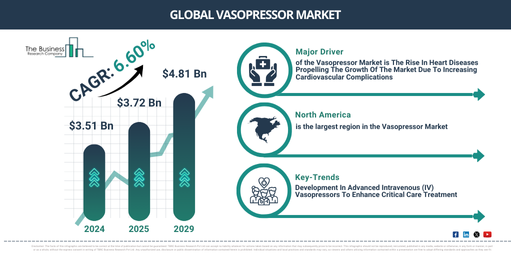
    The vasopressor market has experienced substantial growth in recent years. This market is projected to expand from $3.51 billion in 2024 to $3.72 billion in 2025, exhibiting a compound annual growth rate (CAGR) of 6.1%. Historically, this expansion was driven by an increasing geriatric population, rising healthcare expenditure, growing government initiatives, a proliferation of hospitals, and an increasing prevalence of cardiovascular diseases.

    The vasopressor market is anticipated to experience significant growth in the upcoming years. Its size is projected to expand to $4.81 billion by 2029, demonstrating a compound annual growth rate (CAGR) of 6.6%. This expected expansion throughout the forecast period stems from factors such as the increasing incidence of hypertension, the greater adoption of advanced sepsis management guidelines, rising investments in critical care technologies, a growing prevalence of septic shock, and an escalating demand for personalized critical care. Noteworthy trends anticipated during this period include advancements in drug formulations, the development of tailored therapies, technological progress in smart infusion pumps, the integration of telemedicine into vasopressor therapy, and innovations in biodegradable vasopressor implants.

    Unlock Your Free Sample Report for Exclusive Market Data:

    https://www.thebusinessresearchcompany.com/sample.aspx?id=23562&type=smp

    What Are The Key Drivers Of Growth In The Vasopressor Market?

    An anticipated increase in heart diseases is projected to stimulate expansion within the vasopressor market moving ahead. These conditions encompass a range of ailments impacting cardiac structure and function, such as coronary artery disease, arrhythmias, heart failure, and congenital heart defects. Growing prevalence of inactive lifestyles contributes to obesity and compromised cardiovascular well-being, substantially elevating the likelihood of developing heart disease. Vasopressors assist in treating heart conditions by narrowing blood vessels, consequently raising blood pressure and enhancing vital organ perfusion, thus sustaining cardiovascular function during severe states. As an illustration, data from December 2023, provided by the Australian Institute of Health and Welfare, an Australia-based government agency, indicated that doctor-certified deaths due to coronary heart disease (CHD) were 14,100 in 2021, climbing to 14,900 in 2022. Consequently, the growing incidence of heart disease acts as a catalyst for the expansion of the vasopressor market.

    What Are The Major Segments Identified In The Vasopressor Market?

    The vasopressormarket covered in this report is segmented –

    1) By Type: Catecholamines; Non-Catecholamines; Vasopressin

    2) By Route Of Administration: Intravenous (IV); Intraosseous; Inhalational

    3) By Applications: Hypotension Management; Septic Shock Treatment; Cardiogenic Shock Support; Post-Surgical Management; Other Critical Care Applications

    4) By End Users: Hospitals; Ambulatory Surgical Centers; Emergency Medical Services; Home Care Settings

    Subsegments:-

    1) By Catecholamines: Norepinephrine; Epinephrine; Dopamine; Isoproterenol

    2) By Non-Catecholamines: Phenylephrine; Angiotensin II

    3) By Vasopressin: Vasopressin

    What Long-Term Trends Will Shape The Future Growth Of The Vasopressor Industry?

    Leading companies in the vasopressor market are prioritizing the development of advanced products, such as intravenous (IV) vasopressors, to improve blood pressure regulation and enhance patient outcomes. Intravenous (IV) vasopressors are utilized to constrict blood vessels and elevate blood pressure in individuals experiencing severe hypotension or shock, ensuring adequate blood supply to vital organs. For instance, in June 2023, Fresenius Kabi AG, a Germany-based pharmaceutical company, introduced Vasopressin Injection, USP, a generic equivalent to Vasostrict, in the United States, thereby expanding its critical care portfolio. This specific medication is indicated for adults with vasodilatory shock who remain hypotensive despite receiving fluids and catecholamines. It is supplied in a single-dose vial, containing 20 units per 1 mL.

    Which Major Firms Are Strengthening Their Position In The Vasopressor Industry?

    Major companies operating in the vasopressor market are Pfizer Inc., Merck And Co Inc., Novartis AG, Baxter International Inc., Fresenius Kabi AG, Bauch & Lomb Incorporated, Dr. Reddy’s Laboratories Limited, Hikma Pharmaceuticals PLC, Endo Inc., Amphastar Pharmaceuticals Inc., American Regent Incorporated, Celon Laboratories Ltd., Athenex Inc., Sagent Pharmaceuticals Inc., Civica Rx, Eton Pharmaceuticals Inc., Amomed Pharma GmbH, Health Biotech Limited, Samarth Life Sciences Pvt. Ltd, Pace Biotech Limited.

    Download The Full Report For Exclusive Market Findings:

    https://www.thebusinessresearchcompany.com/report/vasopressor-global-market-report

    Which Region Shows The Highest Potential For Future Expansion In The Vasopressor Market?

    North America was the largest region in the vasopressor market in 2024. Asia-Pacific is expected to be the fastest-growing region in the forecast period. The regions covered in the vasopressor market report are Asia-Pacific, Western Europe, Eastern Europe, North America, South America, Middle East, Africa.

    Request A Customized Version Of The Vasopressor Market Report:

    https://www.thebusinessresearchcompany.com/customise?id=23562&type=smp

    Browse Through More Reports Similar to the Global Vasopressor Market 2025, By The Business Research Company

    Vascular Grafts Global Market Report 2025

    https://www.thebusinessresearchcompany.com/report/vascular-grafts-global-market-report

    Vascular Endothelial Growth Factor Inhibitors Global Market Report 2025

    https://www.thebusinessresearchcompany.com/report/vascular-endothelial-growth-factor-inhibitors-global-market-report

    Antisense Rnai Therapeutics Market 2025

    https://www.thebusinessresearchcompany.com/report/antisense-rnai-therapeutics-market

    Get in touch with us:

    The Business Research Company: https://www.thebusinessresearchcompany.com/

    Americas +1 310-496-7795

    Asia +44 7882 955267 & +91 8897263534

    Europe +44 7882 955267

    Email us at info@tbrc.info

    Follow us on:

    LinkedIn: https://in.linkedin.com/company/the-business-research-company

    YouTube: https://www.youtube.com/channel/UC24_fI0rV8cR5DxlCpgmyFQ

    Global Market Model: https://www.thebusinessresearchcompany.com/global-market-model

  • Global Vasoactive Intestinal Peptide Tumor Industry Trends: Where the Market Is Headed by 2029

    Global Vasoactive Intestinal Peptide Tumor Industry Trends: Where the Market Is Headed by 2029

    Unlock Global Insights – Save 20% on Market Reports with Code ONLINE20

    How Much Larger Is The Vasoactive Intestinal Peptide Tumor Market Expected To Become By 2029 Compared With Its 2025 Level?

    The vasoactive intestinal peptide tumor market has experienced significant growth over the past few years. Projections indicate an increase from $1.51 billion in 2024 to $1.61 billion in 2025, driven by a 6.3% compound annual growth rate (CAGR). The historical expansion of this market is attributable to a number of factors, including the rising incidence of VIP tumors, a heightened emphasis on R&D, growing awareness of healthcare issues, the development of healthcare infrastructure, and strategic alliances formed by biotech companies and research organizations.

    The market for vasoactive intestinal peptide tumors is projected to experience robust expansion over the coming years. This market is anticipated to reach $2.03 billion by 2029, exhibiting a compound annual growth rate (CAGR) of 6.1%. Key factors contributing to this anticipated growth include a heightened demand for chemotherapy, accelerated drug approvals, an increase in the adoption of oral medications, greater disease awareness, and a rising incidence of tumors. Noteworthy trends expected during the forecast period involve advancements in targeted therapies, improvements in diagnostic techniques, developments in treatment options, the increasing prevalence of personalized medicine, a continued focus on targeted therapies, and the launch of innovative products.

    Unlock Your Free Sample Report for Exclusive Market Data:

    https://www.thebusinessresearchcompany.com/sample.aspx?id=23561&type=smp

    Which Drivers Are Supporting Growth Of The Vasoactive Intestinal Peptide Tumor Market?

    The anticipated increase in targeted therapy is projected to fuel the expansion of the vasoactive intestinal peptide tumor market in the foreseeable future. These therapies involve treatments that home in on particular molecules or pathways implicated in disease progression, especially in cancer, allowing for selective targeting of abnormal cells with minimal harm to healthy ones. The proliferation of targeted therapies is underpinned by precision medicine, which enhances their efficacy by focusing on specific genetic mutations and simultaneously reducing side effects. In the context of VIP tumors, targeted therapies function by blocking critical pathways responsible for tumor proliferation and hormone release. This mechanism helps to diminish VIP levels, thereby alleviating symptoms such as severe diarrhea and slowing down the disease’s advancement. For instance, in July 2024, the American Society of Gene and Cell Therapy (ASGCT), a US-based professional membership organization, reported that 76 gene therapy trials began in the second quarter of 2024, marking a 25 % increase compared to the previous quarter. Therefore, the surge in targeted therapy is significantly driving the growth of the vasoactive intestinal peptide tumor market.

    What Are The Emerging Segments Gaining Attention In The Vasoactive Intestinal Peptide Tumor Market?

    The vasoactive intestinal peptide tumormarket covered in this report is segmented –

    1) By Treatment: Surgical Intervention; Radiotherapy; Chemotherapy; Targeted Therapy

    2) By Diagnosis: Imaging Techniques; Biopsy; Endoscopic Ultrasound

    3) By Therapeutic Approach: Palliative Care; Curative Treatment; Adjuvant Treatment

    4) By End-User: Hospitals; Cancer Specialty Clinics; Diagnostic Laboratories

    Subsegments:

    1) By Surgical Intervention: Tumor Resection; Debulking Surgery; Minimally Invasive Surgery

    2) By Radiotherapy: External Beam Radiation Therapy (EBRT); Stereotactic Body Radiation Therapy (SBRT); Proton Therapy

    3) By Chemotherapy: Cytotoxic Chemotherapy; Combination Chemotherapy; Adjuvant And Neoadjuvant Chemotherapy

    4) By Targeted Therapy: Somatostatin Analog Therapy; Tyrosine Kinase Inhibitors (TKIs); Monoclonal Antibodies

    Which Market Trends Are Creating New Opportunities In The Vasoactive Intestinal Peptide Tumor Industry?

    Companies primarily engaged in the vasoactive intestinal peptide tumor market are concentrating on developing advanced products, such as long-acting injectable suspensions, to enhance the effectiveness of treatments, improve patient compliance, and provide sustained relief from symptoms. Long-acting injectable suspensions are pharmaceutical formulations engineered to release their active ingredients progressively over an extended duration, thereby reducing the necessity for frequent dosing. For example, in October 2024, Teva Pharmaceutical Industries Ltd., a US-based pharmaceutical company, launched the first and only generic version of Sandostatin LAR Depot (octreotide acetate for injectable suspension) in the U.S. This medication is prescribed for long-term maintenance therapy in acromegaly patients who have had an inadequate response to prior surgery or radiotherapy. It also effectively treats severe diarrhea and flushing associated with metastatic carcinoid tumors and VIP-secreting tumors. This introduction strengthens Teva’s expertise in complex generic medications and supports its strategic goal of maintaining a significant presence in the generic pharmaceuticals market.

    Who Are The Primary Competitors In The Global Vasoactive Intestinal Peptide Tumor Market?

    Major companies operating in the vasoactive intestinal peptide tumor market are Pfizer Inc., Novartis AG, Mayo Clinic, Labcorp Holdings Inc., Mount Sinai Hospital, Cleveland Clinic Laboratories, Penn Medicine, Stanford Health Care, UCSF Health, ARUP Laboratories, Dr. Lal PathLabs, Cancer Research UK, Medicover Hospitals, NuView Life Sciences Inc., DNA Labs India, Inter Science Institute, Ulta Lab Tests, True Health Labs, Ganesh Diagnostic, Agilus Diagnostics.

    Download The Full Report For Exclusive Market Findings:

    https://www.thebusinessresearchcompany.com/report/vasoactive-intestinal-peptide-tumor-global-market-report

    How Is Vasoactive Intestinal Peptide Tumor Market Demand Varying Across Different Regions?

    North America was the largest region in the vasoactive intestinal peptide tumor market in 2024. The regions covered in the vasoactive intestinal peptide tumor market report are Asia-Pacific, Western Europe, Eastern Europe, North America, South America, Middle East, Africa.

    Request A Customized Version Of The Vasoactive Intestinal Peptide Tumor Market Report:

    https://www.thebusinessresearchcompany.com/customise?id=23561&type=smp

    Browse Through More Reports Similar to the Global Vasoactive Intestinal Peptide Tumor Market 2025, By The Business Research Company

    Tumor Necrosis Factor Inhibitor Drugs Global Market Report 2025

    https://www.thebusinessresearchcompany.com/report/tumor-necrosis-factor-inhibitor-drugs-global-market-report

    Tumor Infiltrating Lymphocytes Global Market Report 2025

    https://www.thebusinessresearchcompany.com/report/tumor-infiltrating-lymphocytes-global-market-report

    Solid Tumor Cancer Treatment Global Market Report 2025

    https://www.thebusinessresearchcompany.com/report/solid-tumor-cancer-treatment-global-market-report

    Get in touch with us:

    The Business Research Company: https://www.thebusinessresearchcompany.com/

    Americas +1 310-496-7795

    Asia +44 7882 955267 & +91 8897263534

    Europe +44 7882 955267

    Email us at info@tbrc.info

    Follow us on:

    LinkedIn: https://in.linkedin.com/company/the-business-research-company

    YouTube: https://www.youtube.com/channel/UC24_fI0rV8cR5DxlCpgmyFQ

    Global Market Model: https://www.thebusinessresearchcompany.com/global-market-model