Blog

  • Orthotic Gel Insole Market Expansion Outlook: $3.07 Billion by 2029 Forecast

    Orthotic Gel Insole Market Expansion Outlook: $3.07 Billion by 2029 Forecast

    Unlock Global Insights – Save 20% on Market Reports with Code ONLINE20

    What Are The Forecasted Market Size Estimates For The Orthotic Gel Insole Market Between 2025 And 2029?

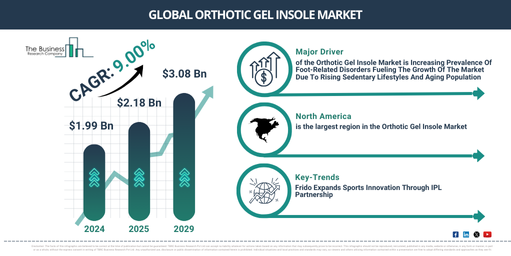
    The orthotic gel insole market has experienced robust expansion over recent years. This market is projected to expand from $1.99 billion in 2024 to $2.18 billion in 2025, demonstrating a compound annual growth rate (CAGR) of 9.4%. Historically, this expansion has been driven by factors such as the growing occurrence of chronic foot ailments, an expanding aging and elderly demographic, increased demand for personalized orthotic products, greater involvement in sports with an emphasis on injury prevention, and heightened understanding of foot wellness and preventative measures.

    The orthotic gel insole market size is projected to demonstrate significant expansion in the coming years, reaching a value of $3.08 billion by 2029, at a compound annual growth rate (CAGR) of 9.0%. This anticipated growth throughout the forecast period stems from factors such as the increasing adoption of 3D-printed custom insoles, a growing emphasis on sustainable and eco-friendly materials, the expansion of direct-to-consumer and home-fitting services, and greater healthcare reimbursement support. Prominent trends expected in this period include innovations in sustainable bio-ethylene vinyl acetate (EVA) and recycled foam materials, the integration of digital workflows to facilitate rapid custom fabrication, advancements in carbon-fiber composite insoles for improved performance, and new home-use fit-while-you-wait kiosk solutions.

    Unlock Your Free Sample Report for Exclusive Market Data:

    https://www.thebusinessresearchcompany.com/sample.aspx?id=28288&type=smp

    Which Drivers Are Supporting Growth Of The Orthotic Gel Insole Market?

    The rising occurrence of foot-related ailments is projected to boost the growth of the orthotic gel insole market moving forward. These medical conditions affect the structure, function, or overall health of the feet, leading to pain, discomfort, or difficulties with movement. The increasing incidence of foot-related disorders is attributed to increasingly sedentary lifestyles, which contribute to obesity and excess strain on the feet. Orthotic gel insoles assist in managing foot-related disorders by offering specific cushioning and support, making them beneficial for individuals experiencing conditions such as plantar fasciitis, heel pain, and flat feet. They alleviate discomfort and enhance mobility by reducing pressure on the feet, thereby improving overall daily comfort and activity. For instance, in June 2024, according to Orthopaedic Research UK, a UK-based medical research charity, approximately 23% of adults aged 18 to 65 are living with hallux valgus (bunions), with the prevalence increasing to 36% in individuals over 65. Consequently, the growing prevalence of foot-related disorders is driving the expansion of the orthotic gel insole market.

    What Are The Different Segment Classifications Within The Orthotic Gel Insole Market?

    The orthotic gel insole market covered in this report is segmented as

    1) By Product Type: Full-Length Insoles, 3/4 Length Insoles, Heel Inserts, Arch Support Insoles, Other Products

    2) By Material: Silicone Gel, Polyurethane Gel, Thermoplastic Gel, Other Materials

    3) By Distribution Channel: Online Stores, Pharmacies And Drug Stores, Specialty Stores, Supermarkets Or Hypermarkets, Other Distribution Channels

    4) By Application: Sports And Athletics, Medical, Personal Use, Other Applications

    5) By End-User: Adults, Children, Elderly

    Subsegments:

    1) By Full-Length Insoles: Cushioning Gel Insoles, Shock Absorption Gel Insoles, Memory Foam Gel Insoles, Sport Performance Gel Insoles, Medical Or Therapeutic Gel Insoles

    2) By 3/4 Length Insoles: Arch Support Gel Insoles, Heel Cushion Gel Insoles, Forefoot Gel Pads, Metatarsal Gel Inserts

    3) By Heel Inserts: Gel Heel Cups, Gel Heel Pads, Anti-Fatigue Gel Inserts, Plantar Fasciitis Gel Heel Supports

    4) By Arch Support Insoles: High Arch Gel Insoles, Medium Arch Gel Insoles, Flat Arch Or Low Arch Gel Insoles, Orthopedic Or Therapeutic Arch Gel Insoles

    5) By Other Products: Gel Toe Separators Or Protectors, Gel Ball-Of-Foot Cushions, Gel Insoles For Diabetic Care, Gel Insoles For Work Or Industrial Shoes

    Which Market Trends Are Creating New Opportunities In The Orthotic Gel Insole Industry?

    Leading companies within the orthotic gel insole market are increasingly adopting a strategic partnership approach to bolster technology integration and broaden their market footprint. This strategic partnership model signifies a collaborative alliance between two or more entities, where they merge their assets, specialized knowledge, and efforts to reach shared goals or objectives. As an illustration, in March 2024, Frido, an India-based consumer healthcare brand, formed a partnership with Royal Challengers Bengaluru (RCB), an India-based professional T20 cricket franchise; this marked an unprecedented collaboration between an insole brand and a T20 League team. This venture involves the introduction of a special edition sports insole and technical socks, engineered to alleviate knee and foot ailments like plantar fasciitis, heel pain, and other lower body discomforts. The alliance emphasizes Frido’s dedication to pioneering sports and orthotic innovations, expanding its product range through a focused and prominent engagement with the Indian Premier League (IPL) franchise.

    Which Key Market Players Are Investing In Expansion And Innovation Of Orthotic Gel Insole Market?

    Major companies operating in the orthotic gel insole market are New Balance Athletics Inc., Aetrex Worldwide Inc., Bauerfeind AG, Superfeet Worldwide Inc., Sorbothane Inc., ProFoot Inc., Sidas SAS, Spenco Medical Corporation, Protalus Inc., PolyGel LLC, Medi-Dyne Healthcare Products Ltd., FootBalance System Ltd., Sole Sports & Health Ltd., Currex GmbH, FORM Insoles Inc., Foot Science International Ltd., Scholl’s Wellness Company LLC, Scheinkopf GmbH, Stable Step LLC, FootActive Ltd., Pedors Shoes Inc., Implus Footcare LLC, Vive Health LLC, and Dr. Frederick’s Original LLC.

    Download The Full Report For Exclusive Market Findings:

    https://www.thebusinessresearchcompany.com/report/orthotic-gel-insole-global-market-report

    Which Geographies Are Emerging As Strong Markets For The Orthotic Gel Insole Industry?

    North America was the largest region in the orthotic gel insole market in 2024. Asia-Pacific is expected to be the fastest-growing region in the forecast period. The regions covered in orthotic gel insole report are Asia-Pacific, Western Europe, Eastern Europe, North America, South America, Middle East and Africa.

    Request A Customized Version Of The Orthotic Gel Insole Market Report:

    https://www.thebusinessresearchcompany.com/customise?id=28288&type=smp

    Browse Through More Reports Similar to the Global Orthotic Gel Insole Market 2025, By The Business Research Company

    Foot Orthotic Insoles Global Market Report 2025

    https://www.thebusinessresearchcompany.com/report/foot-orthotic-insoles-global-market-report

    Prosthetics And Orthotics Global Market Report 2025

    https://www.thebusinessresearchcompany.com/report/prosthetics-and-orthotics-global-market-report

    Gel Implants Global Market Report 2025

    https://www.thebusinessresearchcompany.com/report/gel-implants-global-market-report

    Get in touch with us:

    The Business Research Company: https://www.thebusinessresearchcompany.com/

    Americas +1 310-496-7795

    Asia +44 7882 955267 & +91 8897263534

    Europe +44 7882 955267

    Email us at info@tbrc.info

    Follow us on:

    LinkedIn: https://in.linkedin.com/company/the-business-research-company

    YouTube: https://www.youtube.com/channel/UC24_fI0rV8cR5DxlCpgmyFQ

    Global Market Model: https://www.thebusinessresearchcompany.com/global-market-model
  • Global Orphan Drugs Service Industry Trends: Where the Market Is Headed by 2029

    Global Orphan Drugs Service Industry Trends: Where the Market Is Headed by 2029

    Unlock Global Insights – Save 20% on Market Reports with Code ONLINE20

    How Is The Orphan Drugs Service Market Size Likely To Evolve From 2025 Through 2034?

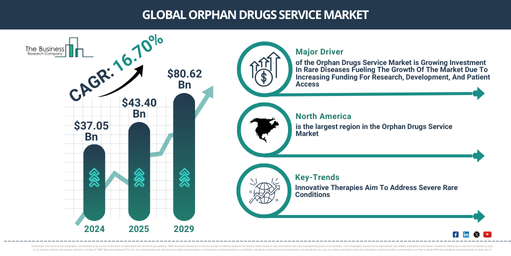
    The orphan drugs service market has witnessed rapid expansion in recent years. Its size is expected to increase from $37.05 billion in 2024 to $43.40 billion in 2025, reflecting a compound annual growth rate (CAGR) of 17.1%. The expansion observed historically can be attributed to the rising prevalence of rare diseases, increasing government support, expanding initiatives by patient advocacy groups, a heightened focus on unmet medical needs, and growing collaboration between healthcare providers and researchers.

    The orphan drugs service market size is projected for significant expansion in the coming years. This market is set to reach $80.62 billion by 2029, demonstrating a compound annual growth rate (CAGR) of 16.7%. The anticipated growth during this period is driven by factors such as enhanced investment in biopharmaceutical research, increasing demand for precision medicine, wider adoption of sophisticated clinical trial designs, a surge in funding from venture capital firms, and a heightened focus on harmonizing global regulations. Key trends anticipated for the forecast period encompass technological progress in drug discovery platforms, advancements in cell and gene therapy services, significant investment in artificial intelligence for clinical trials, evolution in biomarker-based patient selection methodologies, and novel approaches to integrating digital health for patient surveillance.

    Unlock Your Free Sample Report for Exclusive Market Data:

    https://www.thebusinessresearchcompany.com/sample.aspx?id=28287&type=smp

    Which Drivers Are Shaping The Orphan Drugs Service Industry’s Market Share?

    The orphan drugs service market is projected to expand due to increasing investment in rare diseases. A rare disease is defined as a medical condition impacting a small fraction of the population, specifically fewer than 1 in 2,000 individuals, often being chronic, progressive, and potentially life-threatening or debilitating. This investment is mainly spurred by the growing awareness of unmet medical requirements and the prospect of significant returns through regulatory benefits like orphan drug designation, market exclusivity, and reduced development expenses. Increased investment in rare diseases improves orphan drug services by boosting funding for research and development, enabling the creation of treatments for conditions previously overlooked. It also speeds up drug accessibility by facilitating clinical trials, regulatory approvals, and patient access, thereby enhancing treatment options for those with rare diseases. For instance, in April 2024, Global Genes, a US-based nonprofit organization, reported that companies engaged in developing drugs for rare diseases secured $7.1 billion in the first quarter of 2024, representing a 307% surge compared to the $1.8 billion raised during the same period in 2023. Consequently, the rising investment in rare diseases is a key factor propelling the expansion of the orphan drugs service market.

    What Are The Primary Types Of Segments Analyzed In The Orphan Drugs Service Market?

    The orphan drugs service market covered in this report is segmented as

    1) By Type: Congenital Disease, Genetic Disease, Tumors And Cancer, Chronic, Other Types

    2) By Therapeutic Area: Oncology, Metabolic Disorders, Neurological Disorders, Hematology, Infectious Diseases, Other Rare Diseases

    3) By Application: Aldult, Children

    Subsegments:

    1) By Congenital Disease: Heart Defects, Cleft Lip And Palate, Spina Bifida, Down Syndrome

    2) By Genetic Disease: Cystic Fibrosis, Huntington Disease, Sickle Cell Anemia, Muscular Dystrophy

    3) By Tumors And Cancer: Leukemia, Lymphoma, Neuroblastoma, Sarcoma

    4) By Chronic: Rare Metabolic Disorders, Rare Endocrine Disorders, Rare Cardiovascular Disorders, Rare Neurological Disorders

    5) By Other Types: Rare Infectious Diseases, Rare Immunological Disorders, Rare Dermatological Conditions, Rare Ophthalmological Disorders

    How Are Trends Influencing The Orphan Drugs Service Market?

    Major companies within the orphan drugs service market are prioritizing the attainment of regulatory approvals to accelerate the creation and availability of treatments for uncommon diseases. These regulatory approvals represent formal authorizations from governmental bodies, permitting the legal testing, production, and sale of a drug or therapy for patient use. For example, in February 2023, Askbio GmbH, a US-based gene therapy firm, obtained orphan drug designation from the European Commission for AB-1003, an innovative investigational gene therapy designed for limb-girdle muscular dystrophy. This therapy, based on adeno-associated virus (AAV), seeks to restore the FKRP enzyme activity in muscle cells through a single intravenous infusion. AB-1003 has received orphan drug designation from both the European Commission and the U.S. Food and Drug Administration (FDA), alongside rare pediatric disease and fast track designations from the FDA, underscoring the pressing unmet medical requirements. It is presently undergoing a Phase 1/2 clinical trial (LION-CS101), assessing its safety and effectiveness in adults with genetically confirmed limb-girdle muscular dystrophy type 2I/R9 (LGMD2I/R9).

    Who Are The Core Companies Influencing The Orphan Drugs Service Market Landscape?

    Major companies operating in the orphan drugs service market are Johnson & Johnson Services Inc., F. Hoffmann-La Roche Ltd., Pfizer Inc., AbbVie Inc., Bayer AG, Sanofi S.A., Novartis AG, AstraZeneca PLC, The Bristol-Myers Squibb Company, GSK plc., Eli Lilly and Company, Takeda Pharmaceutical Company Limited, Amgen Inc., IQVIA Inc., CSL Behring GmbH, Lonza Group AG, BioMarin Pharmaceutical Inc., Fortrea Holdings Inc., Medpace Inc., Sarepta Therapeutics, Caidya Inc., and Cevidra Inc.

    Download The Full Report For Exclusive Market Findings:

    https://www.thebusinessresearchcompany.com/report/orphan-drugs-service-global-market-report

    Which Region Is Projected To Lead The Orphan Drugs Service Market During The Forecast Period?

    North America was the largest region in the orphan drugs service market in 2024. Asia-Pacific is expected to be the fastest-growing region in the forecast period. The regions covered in orphan drugs service report are Asia-Pacific, Western Europe, Eastern Europe, North America, South America, Middle East and Africa.

    Request A Customized Version Of The Orphan Drugs Service Market Report:

    https://www.thebusinessresearchcompany.com/customise?id=28287&type=smp

    Browse Through More Reports Similar to the Global Orphan Drugs Service Market 2025, By The Business Research Company

    Drug Discovery Services Global Market Report 2025

    https://www.thebusinessresearchcompany.com/report/drug-discovery-services-global-market-report

    Child And Youth Services Global Market Report 2025

    https://www.thebusinessresearchcompany.com/report/child-and-youth-services-global-market-report

    Pharmaceuticals Market 2025

    https://www.thebusinessresearchcompany.com/report/pharmaceuticals-market

    Get in touch with us:

    The Business Research Company: https://www.thebusinessresearchcompany.com/

    Americas +1 310-496-7795

    Asia +44 7882 955267 & +91 8897263534

    Europe +44 7882 955267

    Email us at info@tbrc.info

    Follow us on:

    LinkedIn: https://in.linkedin.com/company/the-business-research-company

    YouTube: https://www.youtube.com/channel/UC24_fI0rV8cR5DxlCpgmyFQ

    Global Market Model: https://www.thebusinessresearchcompany.com/global-market-model
  • Organoid Kit Industry Forecast to Hit $2.37 Billion by 2029 With a Strong 16% CAGR

    Organoid Kit Industry Forecast to Hit $2.37 Billion by 2029 With a Strong 16% CAGR

    Unlock Global Insights – Save 20% on Market Reports with Code ONLINE20

    What Are The Growth Projections For The Organoid Kit Market Size During 2025–2029?

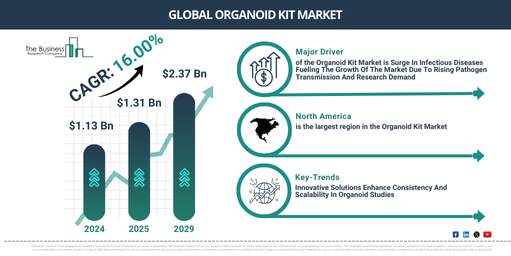
    The organoid kit market has seen substantial expansion in recent years. Its size is anticipated to climb from $1.13 billion in 2024 to $1.31 billion in 2025, achieving a compound annual growth rate (CAGR) of 16.4%. This past growth is largely driven by factors such as increased research in stem cell biology, broader applications in drug toxicity testing, more widespread use of organoids in cancer research, improved access to specialized cell culture media, and the growing importance of testing models that are free of animal components.

    The organoid kit market is projected to experience substantial expansion in the coming years. This market is anticipated to reach a value of $2.37 billion by 2029, exhibiting a compound annual growth rate (CAGR) of 16.0%. Several factors are expected to drive this growth during the forecast period, including increased integration with artificial intelligence (AI) and automation, a surge in the application of organoids for gene editing, the expansion of customized organoid kit development, a boost in funding for advanced 3D bioprinting technologies, and the rising adoption of organoids for modeling rare diseases. Key trends anticipated during this period involve progress in organ-on-a-chip technology, the incorporation of AI for personalized medical treatments, novel developments in 3D cell culture systems, the broadening of organoid-based platforms for drug discovery, and increased partnerships between biotechnology companies and academic institutions.

    Unlock Your Free Sample Report for Exclusive Market Data:

    https://www.thebusinessresearchcompany.com/sample.aspx?id=28286&type=smp

    What Are The Drivers Pushing New Developments In The Organoid Kit Market?

    A rising occurrence of infectious diseases is anticipated to drive forward the expansion of the organoid kit market. These diseases are defined as ailments resulting from disease-causing microorganisms, including bacteria, viruses, fungi, or parasites, capable of transmission between individuals through direct or indirect means. The surge in infectious diseases stems from inadequate sanitation and congested living conditions, which facilitate the easier spread of pathogens and higher rates of infection. Organoid kits are instrumental in combating infectious diseases by empowering researchers to create models of human tissues in laboratory settings, thereby permitting accurate investigation of pathogen characteristics, infection pathways, and the evaluation of prospective therapies. For example, the UK Health Security Agency (UKHSA), a government body based in the UK, indicated that in 2025, tuberculosis (TB) continues to pose a substantial public health issue within England. Furthermore, current statistics reveal an 11% rise in documented tuberculosis cases, amounting to almost 500 more notifications, as numbers climbed from 4,380 in 2022 to 4,855 in 2023. Consequently, the expanding occurrence of infectious diseases is fueling the advancement of the organoid kit market.

    Which Key Segments Fueling The Organoid Kit Market?

    The organoid kit market covered in this report is segmented as

    1) By Type, Brain Organoids, Kidney Organoids, Intestinal Organoids, Liver Organoids, Other Organoid Types

    2) By Technology, 3D Cell Culture Technology, Microfluidics Technology, Bioprinting Technology, Electrospinning Technology

    3) By Source, Human-Derived Organoids, Animal-Derived Organoids, Cell Line-Derived Organoids

    4) By Application, Drug Discovery and Development, Disease Modeling, Personalized Medicine, Regenerative Medicine, Other Applications

    5) By End-User, Research Institutes, Pharmaceutical Companies, Contract Research Organizations, Biotech Companies

    Subsegments:

    1) By Brain Organoids, Cerebral Organoids, Midbrain Organoids, Retinal Organoids

    2) By Kidney Organoids, Nephron Organoids, Collecting Duct Organoids, Glomerular Organoids

    3) By Intestinal Organoids, Small Intestine Organoids, Colon Organoids, Gastric Organoids

    4) By Liver Organoids, Hepatic Organoids, Cholangiocyte Organoids, Biliary Organoids

    5) By Other Organoid Types, Pancreatic Organoids, Lung Organoids, Heart Organoids, Tumor Organoids

    What Key Innovation Trends Are Fueling Advancements In The Organoid Kit Market?

    Major companies in the organoid kit market are concentrating on developing quick aggregate formations to speed up organoid development timelines, enhance reproducibility, and enable high-throughput applications for drug discovery, disease modeling, and personalized medicine. Rapid aggregate formation describes the capacity to swiftly generate thousands of uniform pluripotent stem cell aggregates in a single day, significantly reducing the overall organoid development period. For instance, in June 2025, Pluristyx Inc., a US-based biotechnology company, launched its PluriForm Organoid Kit. This kit is designed to simplify the creation of pluripotent stem cell aggregates and accelerate organoid development. It offers a ready-to-use platform that shortens the timeline for producing mature organoids from months to just weeks. The kit integrates optimized growth media and standardized protocols, which ensures reproducible results across various cell types, and supports high-throughput applications, making it suitable for large-scale disease modeling and drug screening.

    Which Major Industry Participants Are Leading The Organoid Kit Market Growth?

    Major companies operating in the organoid kit market are Thermo Fisher Scientific Inc., bioGenous Inc., Bio-Techne Corporation, STEMCELL Technologies Inc., Molecular Devices LLC, Takara Bio Inc., American Type Culture Collection (ATCC), ACROBiosystems Inc., Crown Bioscience International, Creative Biolabs Inc., Emulate Inc., CN Bio Innovations Limited, Novoprotein Scientific Inc., MedChemExpress LLC, Xylyx Bio Inc., MIMETAS B.V., Prellis Biologics Inc., TheWell Bioscience Inc., InSCREENeX GmbH, AMS Biotechnology (Europe) Limited (AMSBIO).

    Download The Full Report For Exclusive Market Findings:

    https://www.thebusinessresearchcompany.com/report/organoid-kit-global-market-report

    What Are The Key Regional Factors Influencing The Organoid Kit Market Growth?

    North America was the largest region in the organoid kit market in 2024. Asia-Pacific is expected to be the fastest-growing region in the forecast period. The regions covered in organoid kit report are Asia-Pacific, Western Europe, Eastern Europe, North America, South America, Middle East and Africa.

    Request A Customized Version Of The Organoid Kit Market Report:

    https://www.thebusinessresearchcompany.com/customise?id=28286&type=smp

    Browse Through More Reports Similar to the Global Organoid Kit Market 2025, By The Business Research Company

    Organoids Global Market Report 2025

    https://www.thebusinessresearchcompany.com/report/organoids-global-market-report

    Organoids And Spheroids Global Market Report 2025

    https://www.thebusinessresearchcompany.com/report/organoids-and-spheroids-global-market-report

    Artificial Organ Global Market Report 2025

    https://www.thebusinessresearchcompany.com/report/artificial-organ-global-market-report

    Get in touch with us:

    The Business Research Company: https://www.thebusinessresearchcompany.com/

    Americas +1 310-496-7795

    Asia +44 7882 955267 & +91 8897263534

    Europe +44 7882 955267

    Email us at info@tbrc.info

    Follow us on:

    LinkedIn: https://in.linkedin.com/company/the-business-research-company

    YouTube: https://www.youtube.com/channel/UC24_fI0rV8cR5DxlCpgmyFQ

    Global Market Model: https://www.thebusinessresearchcompany.com/global-market-model
  • Ophthalmic Artificial Intelligence-Assisted Diagnosis Market to Reach $4.25 Billion by 2029, Growing at a CAGR of 18.3%

    Ophthalmic Artificial Intelligence-Assisted Diagnosis Market to Reach $4.25 Billion by 2029, Growing at a CAGR of 18.3%

    Unlock Global Insights – Save 20% on Market Reports with Code ONLINE20

    What Is The Global Market Value Of The Ophthalmic Artificial Intelligence-Assisted Diagnosis Industry In 2025?

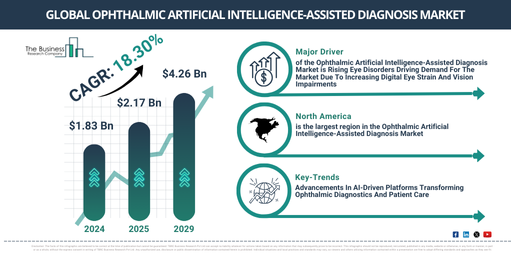
    The ophthalmic artificial intelligence-assisted diagnosis market has experienced swift expansion recently. Projections indicate its expansion from $1.83 billion in 2024 to $2.17 billion in 2025, demonstrating a compound annual growth rate (CAGR) of 18.7%. Key drivers behind its past expansion encompass rising awareness about early diagnosis of ocular disorders, increasing demand for efficient and accurate retinal imaging, rising incidence of diabetic retinopathy, a growing geriatric population, and increasing investment in healthcare infrastructure.

    The ophthalmic artificial intelligence-assisted diagnosis market size is projected for substantial expansion in the coming years, anticipated to reach a value of $4.26 billion by 2029, demonstrating a compound annual growth rate (CAGR) of 18.3%. This forecasted expansion is primarily driven by factors such as the expanding application of AI in teleophthalmology, a heightened need for accessible and remote eye care services, increased emphasis on proactive eye health, the rise of remote diagnostics and teleophthalmology, and a growing number of regulatory endorsements for AI-powered ophthalmic instruments. Key developments expected during this period involve enhancements in deep learning algorithms for analyzing retinal images, the creation of innovative portable and self-contained AI eye screening tools, the incorporation of AI diagnostics into electronic health records, breakthroughs in platforms designed for detecting multiple diseases, and the integration of artificial intelligence with telemedicine to facilitate remote eye examinations.

    Unlock Your Free Sample Report for Exclusive Market Data:

    https://www.thebusinessresearchcompany.com/sample.aspx?id=28285&type=smp

    What Are The Emerging Market Drivers Creating New Opportunities In The Ophthalmic Artificial Intelligence-Assisted Diagnosis Industry?

    An anticipated increase in eye disorders is set to drive the expansion of the ophthalmic artificial intelligence-assisted diagnosis market in the future. These disorders are defined as medical conditions or structural/functional abnormalities of the eye that can compromise vision or overall ocular health. Their escalation is linked to extended screen time from digital devices, leading to digital eye strain, dryness, and prolonged vision problems stemming from prolonged blue light exposure and decreased blinking. Ophthalmic artificial intelligence-assisted diagnosis provides assistance by examining medical imagery and patient data to identify, categorize, and foresee eye disorders precisely and at an early stage, facilitating prompt intervention and lowering the chance of vision loss. For example, in September 2023, the Association of Optometrists, a UK-based representative membership organization, indicated that England recorded 22,552 new certifications for vision impairment in 2022. Among these, 1,344 instances were attributed to diabetic eye disease, 3,614 were connected to glaucoma, and 10,865 related to age-related macular degeneration. Consequently, the growing incidence of eye disorders is fueling the expansion of the ophthalmic artificial intelligence-assisted diagnosis market.

    How Is The Ophthalmic Artificial Intelligence-Assisted Diagnosis Market Classified Into Different Segments?

    The ophthalmic artificial intelligence-assisted diagnosis market covered in this report is segmented as

    1) By Type: Cloud-Based, On-Premises

    2) By Technology: Deep Learning, Machine Learning, Natural Language Processing (NLP), Computer Vision, Other Technologies

    3) By Application: Hospital, Clinic, Imaging Centre

    Subsegments:

    1) By Cloud-Based: Public Cloud, Private Cloud, Hybrid Cloud

    2) By On-Premises: Local Server Deployment, Enterprise Data Center Deployment, Private Network Deployment

    Which Ongoing Trends Are Expected To Shape The Ophthalmic Artificial Intelligence-Assisted Diagnosis Market Outlook?

    Leading companies in the ophthalmic artificial intelligence-assisted diagnosis market are focusing on creating innovative solutions, such as an ocular data-as-a-service platform, to enhance diagnostic accuracy, streamline patient care, and enable predictive insights for eye disorders. An ocular data-as-a-service platform refers to a digital solution that provides eye health data on demand, allowing ophthalmologists, clinics, and AI diagnostic tools to access, share, and analyze retinal images and other ocular information remotely for improved diagnosis, monitoring, and research. For instance, in May 2025, Topcon Healthcare Solutions Inc., a US-based digital healthcare solutions company, launched IDHea, designed to streamline ophthalmic diagnostics and improve patient outcomes. It’s a cloud-based platform that accelerates AI and digital health innovation by providing fast, secure access to real-world and clinical ocular datasets. It empowers researchers to drive breakthroughs in both eye and systemic disease care by transforming clinical data into actionable, AI-powered insights. Built on the FAST principle – Fast, Accessible, Safe, and Transparent – IDHea enables predictive, personalized, and proactive patient care while upholding rigorous privacy and governance standards.

    Who Are The Prominent Global Companies Shaping The Ophthalmic Artificial Intelligence-Assisted Diagnosis Market?

    Major companies operating in the ophthalmic artificial intelligence-assisted diagnosis market are Canon Medical Systems Corporation, IDx Technologies Inc., Optos PLC, Digital Diagnostics Inc., Ophtai, Oivi Tech Private Limited, Altris Inc., AEYE Health Inc., Eyenuk Inc., JuneBrain Inc., Mediwhale Inc., Mikajaki SA, MONA.health BV, Remidio Innovative Solutions Pvt. Ltd., Retinalyze System A/S, Retinarisk, VoxelCloud Inc., Voxeleron LLC, Ikerian AG, Retmarker, and Synapxe Pte Ltd.

    Download The Full Report For Exclusive Market Findings:

    https://www.thebusinessresearchcompany.com/report/ophthalmic-artificial-intelligence-assisted-diagnosis-global-market-report

    How Do Regional Market Performances Compare Within The Ophthalmic Artificial Intelligence-Assisted Diagnosis Industry?

    North America was the largest region in the ophthalmic artificial intelligence-assisted diagnosis market in 2024. Asia-Pacific is expected to be the fastest-growing region in the forecast period. The regions covered in ophthalmic artificial intelligence-assisted diagnosis report are Asia-Pacific, Western Europe, Eastern Europe, North America, South America, Middle East and Africa.

    Request A Customized Version Of The Ophthalmic Artificial Intelligence-Assisted Diagnosis Market Report:

    https://www.thebusinessresearchcompany.com/customise?id=28285&type=smp

    Browse Through More Reports Similar to the Global Ophthalmic Artificial Intelligence-Assisted Diagnosis Market 2025, By The Business Research Company

    Diagnostic And Monitoring Ophthalmic Devices And Equipment Market 2025

    https://www.thebusinessresearchcompany.com/report/diagnostic-and-monitoring-ophthalmic-devices-and-equipment-market

    Ophthalmic Devices Global Market Report 2025

    https://www.thebusinessresearchcompany.com/report/ophthalmic-devices-global-market-report

    Ophthalmic Workstations Global Market Report 2025

    https://www.thebusinessresearchcompany.com/report/ophthalmic-workstations-global-market-report

    Get in touch with us:

    The Business Research Company: https://www.thebusinessresearchcompany.com/

    Americas +1 310-496-7795

    Asia +44 7882 955267 & +91 8897263534

    Europe +44 7882 955267

    Email us at info@tbrc.info

    Follow us on:

    LinkedIn: https://in.linkedin.com/company/the-business-research-company

    YouTube: https://www.youtube.com/channel/UC24_fI0rV8cR5DxlCpgmyFQ

    Global Market Model: https://www.thebusinessresearchcompany.com/global-market-model
  • Global Omics Lab Services Market Size Projected to Reach $194.52 Billion During the Forecast Period

    Global Omics Lab Services Market Size Projected to Reach $194.52 Billion During the Forecast Period

    Unlock Global Insights – Save 20% on Market Reports with Code ONLINE20

    By How Much Is The Omics Lab Services Market Expected To Expand Between 2025 And 2029?

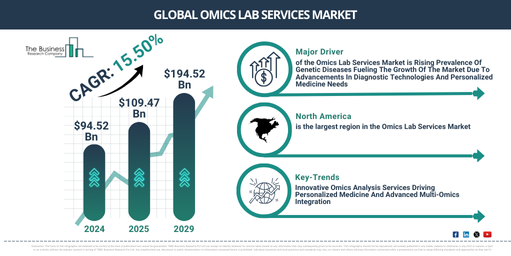
    The omics lab services market has seen rapid expansion in recent years. Its size is anticipated to grow from $94.52 billion in 2024 to $109.47 billion in 2025, achieving a compound annual growth rate (CAGR) of 15.8%. Historically, this market’s growth can be linked to increasing government funding, the development of personalized medicine, the high prevalence of chronic diseases, the expansion of precision oncology, and the rise of biotechnology and pharma sectors.

    The omics lab services market is anticipated to experience substantial expansion in the coming years. It is projected to reach $194.52 billion by 2029, exhibiting a compound annual growth rate (CAGR) of 15.5%. This growth during the forecast period can be linked to factors such as the rise of companion diagnostics, the expanding application of liquid biopsies, the worldwide reach of clinical trials, the growing incidence of chronic diseases, and augmented investments in biotechnology. Key trends expected within this period encompass swift technological progress, the creation of products for human genome sequencing, the incorporation of cloud analytics and big-data platforms, multi-omics integration, and partnerships among pharmaceutical firms.

    Unlock Your Free Sample Report for Exclusive Market Data:

    https://www.thebusinessresearchcompany.com/sample.aspx?id=28284&type=smp

    Which Drivers Are Impacting The Omics Lab Services Market?

    The increasing occurrence of genetic diseases is set to advance the omics lab services market. Genetic diseases are conditions arising from abnormalities or mutations in an individual’s DNA, which can be inherited or emerge spontaneously. The rise in their prevalence stems from improvements in diagnostic technologies, particularly next-generation sequencing and other genomic tools, which have greatly enhanced the detection and identification of various genetic disorders previously overlooked or misclassified. Omics lab services contribute to managing genetic diseases by scrutinizing complex biological data to pinpoint mutations and molecular alterations, thereby enabling early diagnosis and customized treatment. For instance, in October 2024, data from the Cystic Fibrosis Trust, a UK-based charity, indicated that 11,148 cystic fibrosis patients were registered in 2022, a figure that climbed to 11,318 in 2023, representing a 1.5% increase in patient registrations year-over-year. Thus, the growing prevalence of genetic diseases is a primary catalyst for the expansion of the omics lab services market.

    What Are The Major Segments Identified In The Omics Lab Services Market?

    The omics lab services market covered in this report is segmented as

    1) By Type Of Omics Services: Genomics, Transcriptomics, Proteomics, Metabolomics, Epigenomics

    2) By Service Model: Contract Services, In-House Services, Consultative Services, Collaborative Research, Custom Solutions

    3) By Technology Platform: Next-Generation Sequencing (NGS), Microarray Technology, Mass Spectrometry, Chromatography, Bioinformatics Tools

    4) By Application: Drug Discovery, Diagnostics, Personalized Medicine, Other Applications

    5) By End Users: Research Institutions, Pharmaceutical Companies, Biotechnology Firms, Academic Institutions, Clinical Laboratories

    Subsegments:

    1) By Genomics: Whole Genome Sequencing, Whole Exome Sequencing, Targeted Gene Sequencing, Single-Cell Genomics, Comparative Genomic Hybridization

    2) By Transcriptomics: Messenger Ribonucleic Acid (RNA) Sequencing, Non-Coding Ribonucleic Acid (RNA) Sequencing, Expression Profiling, Ribonucleic Acid (RNA) Microarrays, Single-Cell Transcriptomics

    3) By Proteomics: Protein Identification, Protein Quantification, Post-Translational Modifications Analysis, Protein-Protein Interaction Mapping, Structural Proteomics

    4) By Metabolomics: Targeted Metabolomics, Untargeted Metabolomics, Lipidomics, Fluxomics, Metabolic Fingerprinting

    5) By Epigenomics: Deoxyribonucleic Acid (DNA) Methylation Analysis, Histone Modification Profiling, Chromatin Accessibility Assays, Chromatin Immunoprecipitation Sequencing, Non-Coding Ribonucleic Acid (RNA) Epigenetic Regulation

    Which Competitive Trends Are Defining The Omics Lab Services Market Structure?

    Major companies operating in the omics lab services market are concentrating on introducing advanced solutions, such as omics analysis services, to aid the development of personalized medicine through comprehensive multi-omics integration and sophisticated data analytics. Omics analysis services involve extensive, data-driven studies of genes, ribonucleic acid (RNA), proteins, metabolites, and epigenetic modifications, aiming to comprehend complex biological systems and support diverse applications. For instance, in May 2022, Bertis Inc., a South Korea-based biotechnology firm, introduced Pan-omics Analysis Service & Solution (PASS), an integrated platform for analyzing pan-omics data. PASS is designed to facilitate clinical research and drug development by integrating mass spectrometry-based proteomics with its proprietary bioinformatics and AI technologies. It provides services such as protein identification, biomarker discovery, support for drug development, and clinical research analytics. This introduction signifies Bertis’s deliberate expansion from diagnostics into advanced analytics, allowing for more profound insights into disease mechanisms and personalized medicine.

    Which Key Players Are Driving Competition In The Omics Lab Services Market?

    Major companies operating in the omics lab services market are Thermo Fisher Scientific Inc., Eurofins Scientific SE, Agilent Technologies Inc., Illumina Inc., Revvity Inc., QIAGEN N.V., Novogene Co. Ltd., Oxford Nanopore Technologies plc, Pacific Biosciences of California Inc., Macrogen Inc., MedGenome Labs Ltd., Metabolon Inc., Zymo Research Corporation, CD Genomics, BaseClear B.V., Strand Life Sciences Pvt. Ltd., Sengenics Corporation Pte Ltd., Psomagen Inc., Biocrates Life Sciences AG, Creative Proteomics.

    Download The Full Report For Exclusive Market Findings:

    https://www.thebusinessresearchcompany.com/report/omics-lab-services-global-market-report

    Which Region Currently Holds The Largest Share Of The Omics Lab Services Market?

    North America was the largest region in the omics lab services market in 2024. Asia-Pacific is expected to be the fastest-growing region in the forecast period. The regions covered in this report are Asia-Pacific, Western Europe, Eastern Europe, North America, South America, Middle East and Africa.

    Request A Customized Version Of The Omics Lab Services Market Report:

    https://www.thebusinessresearchcompany.com/customise?id=28284&type=smp

    Browse Through More Reports Similar to the Global Omics Lab Services Market 2025, By The Business Research Company

    Laboratory Testing Services Global Market Report 2025

    https://www.thebusinessresearchcompany.com/report/laboratory-testing-services-global-market-report

    Medical And Diagnostic Laboratory Services Global Market Report 2025

    https://www.thebusinessresearchcompany.com/report/medical-and-diagnostic-laboratory-services-global-market-report

    Medical And Diagnostic Laboratory Services Global Market Report 2025

    https://www.thebusinessresearchcompany.com/report/medical-and-diagnostic-laboratory-services-global-market-report

    Get in touch with us:

    The Business Research Company: https://www.thebusinessresearchcompany.com/

    Americas +1 310-496-7795

    Asia +44 7882 955267 & +91 8897263534

    Europe +44 7882 955267

    Email us at info@tbrc.info

    Follow us on:

    LinkedIn: https://in.linkedin.com/company/the-business-research-company

    YouTube: https://www.youtube.com/channel/UC24_fI0rV8cR5DxlCpgmyFQ

    Global Market Model: https://www.thebusinessresearchcompany.com/global-market-model
  • Ocular Genetic Diagnostic Industry Anticipated to Expand at 9.4% CAGR During the Forecast Period

    Ocular Genetic Diagnostic Industry Anticipated to Expand at 9.4% CAGR During the Forecast Period

    Unlock Global Insights – Save 20% on Market Reports with Code ONLINE20

    #What Is The Projected Market Size Of The Ocular Genetic Diagnostic Market By 2029?

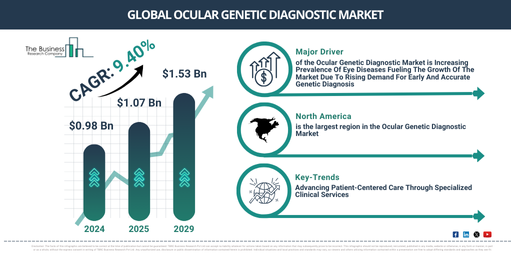
    The ocular genetic diagnostics market has experienced robust expansion in recent years. It is projected to increase from $0.98 billion in 2024 to $1.07 billion by 2025, at a compound annual growth rate (CAGR) of 9.7%. This growth over the historic period can be ascribed to factors such as the early adoption of molecular diagnostic techniques, a heightened awareness of inherited eye disorders, the expansion of academic and clinical research, an escalating incidence of retinal dystrophies, and a significant rise in demand for pediatric genetic testing.

    The ocular genetic diagnostics market size is anticipated to undergo significant expansion in the coming years. By 2029, it is projected to reach $1.53 billion, demonstrating a compound annual growth rate (CAGR) of 9.4%. This projected growth during the forecast period is fueled by several factors, including the increasing need for personalized ophthalmic care, the wider availability of direct-to-consumer genetic tests, greater investment in gene therapy trials, the advancement of precision medicine initiatives, and the incorporation of artificial intelligence in interpreting genetic data. Noteworthy trends expected during this period encompass the rising utilization of artificial intelligence-powered genetic analysis, the proliferation of at-home genetic testing kits, an escalating demand for prenatal ocular genetic screening, the creation of gene-specific diagnostic platforms, and progress in cloud-based genetic data storage.

    Unlock Your Free Sample Report for Exclusive Market Data:

    https://www.thebusinessresearchcompany.com/sample.aspx?id=28283&type=smp

    Which Industry Drivers Are Expected To Accelerate The Ocular Genetic Diagnostic Market From 2025 To 2029?

    The future expansion of the ocular genetic diagnostic market is anticipated to be driven by the rising incidence of eye diseases. These diseases are various medical conditions impacting the eye’s structure or how it functions, which can result in impaired vision or blindness if left unaddressed. The increase in eye diseases is largely attributable to greater screen time and digital device usage, contributing to eye strain, dry eye, and other vision problems. Ocular genetic diagnostics offers advantages for eye diseases by enabling early detection of inherited genetic factors, providing better understanding of disease origins, and assisting in more accurate diagnosis and treatment. For example, a survey conducted in February 2025 by the American Foundation for the Blind, a US-based organization dedicated to individuals with vision loss, revealed that 51.9 million American adults aged 18 and older reported experiencing some degree of vision difficulty. Of these, 3.7 million faced significant challenges seeing even with corrective lenses, and 307,000 were entirely blind. The remaining 47.9 million indicated mild vision issues despite wearing glasses. Consequently, the growing prevalence of eye diseases is fueling the development of the ocular genetic diagnostic market.

    What Are The Emerging Segments Gaining Attention In The Ocular Genetic Diagnostic Market?

    The ocular genetic diagnostic market covered in this report is segmented as

    1) By Test Type: Single Gene Testing, Panel Testing, Whole Exome Sequencing, Whole Genome Sequencing

    2) By Technology Type: Sequencing Technology, Polymerase Chain Reaction (PCR), Microarray Technology, Next-Generation Sequencing (NGS)

    3) By Application: Retinal Disorders, Cataract Diagnosis, Inherited Ocular Disorders, Age-Related Macular Degeneration

    4) By End User: Hospitals, Diagnostic Laboratories, Academic And Research Institutes, Other End Users

    Subsegments:

    1) By Single Gene Testing: Retinoblastoma Gene Testing (RB1), RPE65 Gene Mutation Testing, MYOC Gene Testing (Glaucoma), OPA1 Gene Testing (Optic Atrophy), BEST1 Gene Testing (Best Disease)

    2) By Panel Testing: Inherited Retinal Disease (IRD) Panels, Glaucoma Genetic Panels, Macular Dystrophy Panels, Optic Neuropathy Panels, Syndromic Ocular Disorder Panels

    3) By Whole Exome Sequencing (WES): Trio Exome Sequencing, Diagnostic Exome Sequencing, Exome Reanalysis Services, Rapid Exome Testing, Prenatal Exome Sequencing

    4) By Whole Genome Sequencing (WGS): Clinical Whole Genome Sequencing, Rapid Whole Genome Sequencing, Pediatric Genome Sequencing, Prenatal Whole Genome Sequencing, Ultra-Rare Eye Disease Genome Sequencing

    What Are The Latest Industry Trends Transforming The Ocular Genetic Diagnostic Market?

    Leading companies operating within the ocular genetic diagnostic market are concentrating on developing advanced offerings, such as clinical services, to improve early identification, diagnostic accuracy, and personalized treatment for inherited eye diseases. A clinical service is a healthcare activity provided by professionals to evaluate, diagnose, treat, and manage the health conditions of patients. For instance, in October 2024, the Singapore National Eye Centre (SNEC), a Singapore-based public-sector specialty eye hospital, launched the Ocular Genetics Service (OGS), a clinical service intended to provide specialized care for patients with hereditary eye conditions. This dedicated service consolidates genetic testing, counselling, and tailored clinical management under one roof, ensuring timely diagnosis and intervention for rare genetic eye conditions. By integrating multidisciplinary expertise, the OGS boosts diagnostic precision and allows patients to access personalized care plans based on their genetic profile. Such introductions of clinical services demonstrate a broader trend in the ocular genetic diagnostics market favoring precision medicine and comprehensive, patient-centered care models.

    Who Are The Top Performing Companies In The Ocular Genetic Diagnostic Market In Recent Years?

    Major companies operating in the ocular genetic diagnostic market are Thermo Fisher Scientific Inc., Quest Diagnostics Inc., Illumina Inc., The Children’s Hospital of Philadelphia, University of Iowa Hospitals and Clinics, PerkinElmer Inc., Natera Inc., Myriad Genetics Inc., Fulgent Genetics Inc., ARUP Laboratories Inc., Invitae Corporation, Spark Therapeutics Inc., GeneDx LLC, Blueprint Genetics Oy, Medgenome Labs Inc., Centogene NV, PreventionGenetics LLC, Molecular Vision Laboratory LLC, Casey Eye Institute, and Moorfields Eye Hospital & UCL Institute of Ophthalmology.

    Download The Full Report For Exclusive Market Findings:

    https://www.thebusinessresearchcompany.com/report/ocular-genetic-diagnostic-global-market-report

    What Regional Growth Trends Are Shaping The Ocular Genetic Diagnostic Market Outlook?

    North America was the largest region in the ocular genetic diagnostics market in 2024. Asia-Pacific is expected to be the fastest-growing region in the forecast period. The regions covered in ocular genetic diagnostic report are Asia-Pacific, Western Europe, Eastern Europe, North America, South America, Middle East and Africa.

    Request A Customized Version Of The Ocular Genetic Diagnostic Market Report:

    https://www.thebusinessresearchcompany.com/customise?id=28283&type=smp

    Browse Through More Reports Similar to the Global Ocular Genetic Diagnostic Market 2025, By The Business Research Company

    Genetic Testing Global Market Report 2025

    https://www.thebusinessresearchcompany.com/report/genetic-testing-global-market-report

    Dry Eye Syndrome Global Market Report 2025

    https://www.thebusinessresearchcompany.com/report/dry-eye-syndrome-global-market-report

    Ocular Implants Global Market Report 2025

    https://www.thebusinessresearchcompany.com/report/ocular-implants-global-market-report

    Get in touch with us:

    The Business Research Company: https://www.thebusinessresearchcompany.com/

    Americas +1 310-496-7795

    Asia +44 7882 955267 & +91 8897263534

    Europe +44 7882 955267

    Email us at info@tbrc.info

    Follow us on:

    LinkedIn: https://in.linkedin.com/company/the-business-research-company

    YouTube: https://www.youtube.com/channel/UC24_fI0rV8cR5DxlCpgmyFQ

    Global Market Model: https://www.thebusinessresearchcompany.com/global-market-model
  • Global Next-Generation Sequencing Informatics Market Projected to Expand at 16.7% CAGR by 2029

    Global Next-Generation Sequencing Informatics Market Projected to Expand at 16.7% CAGR by 2029

    Unlock Global Insights – Save 20% on Market Reports with Code ONLINE20

    How Much Was The Next-Generation Sequencing Informatics Market Worth In 2025, And What Is Its Anticipated Value By 2029?

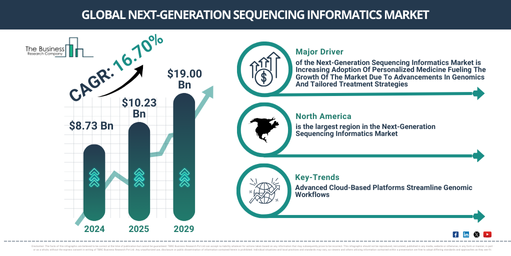
    The next-generation sequencing informatics market has experienced substantial growth in recent years. It is projected to expand from $8.73 billion in 2024 to $10.23 billion by 2025, achieving a compound annual growth rate (CAGR) of 17.1%. This historical expansion can be attributed to several factors, including the increasing adoption of personalized medicine, the rising applications of next-generation sequencing (NGS) in disease diagnosis, a growing demand for biomarker discovery, a heightened focus on genomic research, and the increasing integration of artificial intelligence (AI) within sequencing informatics.

    The next-generation sequencing informatics market is projected to experience substantial expansion in the coming years, anticipated to reach a valuation of $19.00 billion by 2029, exhibiting a compound annual growth rate (CAGR) of 16.7%. Key factors contributing to this growth during the forecast period include the expanding application of sequencing informatics in clinical diagnostics, the growing adoption of artificial intelligence (AI) in drug discovery processes, heightened demand for multi-omics data analysis, increased uptake of cloud-based next-generation sequencing (NGS) analytics, and a greater focus on precision medicine. Significant trends expected within the forecast period encompass progress in cloud-based next-generation sequencing (NGS) solutions, enhancements in data analysis tools specifically for next-generation sequencing (NGS) informatics, the incorporation of artificial intelligence (AI) and machine learning (ML) into genomic data interpretation, the creation of improved visualization and workflow management systems, and ongoing advancements in personalized medicine.

    Unlock Your Free Sample Report for Exclusive Market Data:

    https://www.thebusinessresearchcompany.com/sample.aspx?id=28282&type=smp

    What Are The Top Growth Drivers Impacting The Next-Generation Sequencing Informatics Market Outlook?

    The expanding embrace of personalized medicine is anticipated to fuel the expansion of the next-generation sequencing informatics market in the foreseeable future. Personalized medicine describes a healthcare strategy that customizes treatment and prevention plans based on an individual’s distinct genetic composition, way of life, and surroundings. The growing acceptance of personalized medicine stems largely from breakthroughs in genomics, allowing for the accurate detection of genetic differences and customized therapies. Next-generation sequencing informatics bolsters personalized medicine through its offering of thorough genomic data analysis, rendering it perfectly suited for bespoke treatment approaches and precision healthcare. It lessens diagnostic ambiguity by pinpointing genetic variations and forecasting disease susceptibility, thereby enhancing clinical judgment and patient results. For example, in February 2024, the Personalized Medicine Coalition (PMC), a US-based nonprofit organization, reported that the U.S. Food and Drug Administration (FDA) sanctioned 26 new personalized medicines in 2023, marking a considerable rise from the 12 approved in 2022. Consequently, the rising adoption of personalized medicine is propelling the development of the next-generation sequencing informatics market.

    What Are The Major Segment Types Covered In The Next-Generation Sequencing Informatics Market?

    The next-generation sequencing informatics market covered in this report is segmented as

    1) By Offering: Software, Platforms, Services

    2) By Product And Services: Storage And Computing Tools, Commercial Data Analysis, Data Interpretation And Reporting Tools, Informatics Services, Laboratory Information Management Systems (LIMS)

    3) By Deployment Mode: Cloud, On-Premise, Hybrid

    4) By Application: Research And Development, Clinical Diagnostics, Drug Discovery, Agrigenomics

    5) By End User: Academic And Research Institutes, Pharmaceutical And Biotechnology Companies, Hospitals And Clinical Laboratories, Agricultural Biotechnology Companies

    Subsegments:

    1) By Software: Data Analysis Software, Data Management And Storage Tools, Workflow Management Software, Sequence Alignment Tools, Variant Analysis Software, Clinical Interpretation Software

    2) By Platforms: On-Premises Platforms, Cloud-Based Platforms, Hybrid Platforms

    3) By Services: Data Analysis Services, Consulting And Implementation Services, Data Management And Storage Services, Technical Support And Maintenance Services, Training And Education Services

    What Trends Are Redefining The Next-Generation Sequencing Informatics Market Dynamics?

    Leading companies in the next-generation sequencing informatics (NGS) market are concentrating on developing advanced solutions, such as cloud-based platforms, to enhance scalability, improve data security, and optimize genomic workflows. Cloud-based platforms are defined as digital infrastructures that enable researchers and clinicians to store, process, and analyze large volumes of sequencing data either using remote servers or within local institutional settings. For instance, in March 2023, Illumina Inc., a US-based biotechnology company, unveiled Connected Insights, a new cloud-based software specifically designed for the tertiary analysis of clinical next-generation sequencing (NGS) data. This platform streamlines genomic data interpretation and reporting, integrates over 45 third-party knowledge sources, and reduces the turnaround times for clinical reports. It automates variant interpretation and report generation, thereby minimizing manual effort and standardizing workflows across various assay types, including comprehensive genomic profiling (CGP) panels, whole-exome sequencing (WES), and transcriptomic data.

    Which Leading Companies Dominate The Next-Generation Sequencing Informatics Market Share?

    Major companies operating in the next-generation sequencing informatics market are F. Hoffmann-La Roche Ltd., Thermo Fisher Scientific Inc., Eurofins Scientific SE, Agilent Technologies, Illumina Inc., Bio-Rad Laboratories Inc., QIAGEN N.V., BGI Genomics Co. Ltd., Oxford Nanopore Technologies Ltd., GeneDx Holdings Corp., Macrogen Inc., MedGenome Inc., Sophia Genetics SA, DNAnexus Inc., Clear Labs, DNASTAR Inc., Sapio Sciences Inc., Geneious Biomatters Ltd., Genomatix Software GmbH, and CosmosID Inc.

    Download The Full Report For Exclusive Market Findings:

    https://www.thebusinessresearchcompany.com/report/next-generation-sequencing-informatics-global-market-report

    Which Regional Markets Are Contributing Most To The Next-Generation Sequencing Informatics Industry Expansion?

    North America was the largest region in the next-generation sequencing informatics market in 2024. Asia-Pacific is expected to be the fastest-growing region in the forecast period. The regions covered in next-generation sequencing informatics report are Asia-Pacific, Western Europe, Eastern Europe, North America, South America, Middle East and Africa.

    Request A Customized Version Of The Next-Generation Sequencing Informatics Market Report:

    https://www.thebusinessresearchcompany.com/customise?id=28282&type=smp

    Browse Through More Reports Similar to the Global Next-Generation Sequencing Informatics Market 2025, By The Business Research Company

    Next Generation Sequencing Market 2025

    https://www.thebusinessresearchcompany.com/report/next-generation-sequencing-market

    Clinical Oncology Next Generation Sequencing Global Market Report 2025

    https://www.thebusinessresearchcompany.com/report/clinical-oncology-next-generation-sequencing-global-market-report

    Clinical Next Generation Sequencing Ngs Data Analysis Global Market Report 2025

    https://www.thebusinessresearchcompany.com/report/clinical-next-generation-sequencing-ngs-data-analysis-global-market-report

    Get in touch with us:

    The Business Research Company: https://www.thebusinessresearchcompany.com/

    Americas +1 310-496-7795

    Asia +44 7882 955267 & +91 8897263534

    Europe +44 7882 955267

    Email us at info@tbrc.info

    Follow us on:

    LinkedIn: https://in.linkedin.com/company/the-business-research-company

    YouTube: https://www.youtube.com/channel/UC24_fI0rV8cR5DxlCpgmyFQ

    Global Market Model: https://www.thebusinessresearchcompany.com/global-market-model
  • Next-Generation Sequencing (NGS)-Based Molecular Diagnostics Market to Grow at a CAGR of 7.4% from 2025 to 2029

    Next-Generation Sequencing (NGS)-Based Molecular Diagnostics Market to Grow at a CAGR of 7.4% from 2025 to 2029

    Unlock Global Insights – Save 20% on Market Reports with Code ONLINE20

    What Is The Future Market Size Estimation For The Next-Generation Sequencing (NGS)-Based Molecular Diagnostics Market Covering 2025–2034?

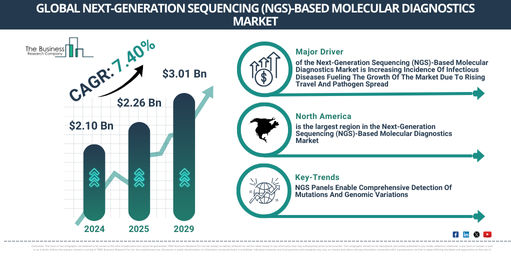
    The next-generation sequencing (NGS)-based molecular diagnostics market has shown robust growth recently. Its value is projected to climb from $2.10 billion in 2024 to $2.26 billion in 2025, demonstrating a compound annual growth rate (CAGR) of 7.8%. The expansion observed historically stems from an escalated demand for personalized medicine, a greater integration of next-generation sequencing in clinical environments, heightened awareness among medical professionals and patients, the improved accessibility of affordable next-generation sequencing platforms, and the expanding utility in non-invasive prenatal testing.

    The next-generation sequencing (NGS)-based molecular diagnostics market is anticipated to experience substantial expansion over the next few years, with projections indicating it will reach $3.01 billion by 2029, demonstrating a compound annual growth rate (CAGR) of 7.4%. This growth during the forecast period can be attributed to an increasing need for decentralized diagnostic solutions, the rising integration of artificial intelligence in next-generation sequencing data interpretation, the escalating issue of antibiotic resistance, growing regulatory support for next-generation sequencing-based tests, and the expanding application of next-generation sequencing in pharmacogenomics. Key trends expected in this timeframe include technological advancements enhancing sequencing accuracy, automation driven by technology in sample preparation, integration with pharmaceutical development pipelines, the incorporation of next-generation sequencing into public health surveillance, and the development of specialized disease-specific next-generation sequencing panels.

    Unlock Your Free Sample Report for Exclusive Market Data:

    https://www.thebusinessresearchcompany.com/sample.aspx?id=28281&type=smp

    Which Major Market Drivers Are Shaping The Future Of The Next-Generation Sequencing (NGS)-Based Molecular Diagnostics Market?

    The rising occurrence of infectious diseases is set to drive the expansion of the next-generation sequencing (NGS)-based molecular diagnostics market moving forward. These disorders, caused by microorganisms such as bacteria, viruses, fungi, or parasites, invade the body, multiply, and disrupt normal bodily functions. The prevalence of infectious diseases is increasing as greater travel and migration accelerate pathogen transmission across different regions and international borders. Next-generation sequencing (NGS)-based molecular diagnostics assists in detecting infectious diseases by offering comprehensive and precise pathogen analysis. It shortens diagnostic time by simultaneously identifying multiple microorganisms, which improves the accuracy of treatment and patient care. For instance, in February 2024, the UK Health Security Agency, a UK-based government agency, reported that tuberculosis cases in England, a contagious bacterial infection primarily affecting the lungs, escalated to 4,850 in 2023, marking an increase of 10.7% from 4,380 cases in 2022. Thus, the growing incidence of infectious diseases is a significant factor propelling the growth of the next-generation sequencing (NGS)-based molecular diagnostics market.

    What Are The Major Segment Categories Driving The Next-Generation Sequencing (NGS)-Based Molecular Diagnostics Market Growth?

    The next-generation sequencing (NGS)-based molecular diagnostics market covered in this report is segmented as

    1) By Type: Instruments, Reagents And Consumables, Software And Services, Panels And Assays, Sample Preparation Kits

    2) By Application: Microbiology, Infectious Diseases, Oncology, Genetic Tests, Other Applications

    3) By End User: Research Centers And Academics, Hospitals And Clinical Laboratories, Other End Users

    Subsegments:

    1) By Instruments: Benchtop Sequencers, High-Throughput Sequencers, Portable Or Handheld Sequencers, Clinical Or Diagnostic Sequencers, Automated Library Preparation Systems, Data Analysis And Bioinformatics Hardware

    2) By Reagents And Consumables: Sequencing Reagents And Kits, Library Preparation Reagents, Target Enrichment Reagents, Amplification Reagents, Sequencing Flow Cells And Chips, Deoxyribonucleic Acid (DNA) Or Ribonucleic Acid (RNA) Extraction Reagents, Quality Control Reagents

    3) By Software And Services: Data Analysis Software, Bioinformatics Pipelines, Cloud-Based Genomic Platforms, Clinical Interpretation Tools, Data Storage And Management Services, Custom Bioinformatics Services, Genomic Database Services

    4) By Panels And Assays: Oncology Panels, Infectious Disease Panels, Carrier Screening Panels, Reproductive Health Panels, Rare Disease Or Genetic Disorder Panels, Pharmacogenomics Panels, Whole-Exome Or Whole-Genome Assays

    5) By Sample Preparation Kits: Deoxyribonucleic Acid (DNA) Extraction Kits, Ribonucleic Acid (RNA) Extraction Kits, Library Preparation Kits, Target Enrichment Kits, Amplification And Cleanup Kits, Single-Cell Preparation Kits, Low-Input Or Degraded Sample Kits

    How Are Emerging Market Trends Shaping The Next-Generation Sequencing (NGS)-Based Molecular Diagnostics Industry Landscape?

    Leading companies in the next-generation sequencing (NGS)-based molecular diagnostics market are concentrating on developing technologically advanced products, such as NGS-based panels, to improve the accuracy, accessibility, and efficiency of genetic testing. Next-generation sequencing (NGS)-based panels are specific sets of genes or genomic regions that are analyzed simultaneously using NGS technology to detect particular hereditary or somatic mutations, leading to faster and more precise molecular diagnostics. For instance, in May 2022, Genes2Me Pvt. Ltd., an India-based medical equipment manufacturer, introduced a comprehensive range of next-generation sequencing (NGS)-based panels designed for oncology, personalized medicine, and hereditary disease diagnostics. These panels cover clinically significant genes with high sensitivity and extensive variant detection, including single-nucleotide variations, insertions or deletions, copy number variations, microsatellite instability, fusions, and oncogenic viruses, while also measuring tumor mutation burden. The Genes2Me PAN cancer panel covers around 525 genes, requires just 50 ng of nucleic acid, and offers streamlined workflows compatible with major NGS platforms.

    Who Are The Major Companies Operating In The Next-Generation Sequencing (NGS)-Based Molecular Diagnostics Market?

    Major companies operating in the next-generation sequencing (ngs)-based molecular diagnostics market are Thermo Fisher Scientific, Siemens Healthineers AG, Agilent Technologies Inc., Illumina Inc., PerkinElmer Inc., Bio-Rad Laboratories Inc., Qiagen N.V., Amoy Diagnostics Co. Ltd., Tempus Labs Inc., Myriad Genetics Inc., Epigenomics AG, Precision for Medicine Inc., Invitae Corporation, NeoGenomics Laboratories Inc., Guardant Health Inc., Caris Life Sciences Inc., Foundation Medicine Inc., Oxford Nanopore Technologies Ltd., Freenome Inc., Burning Rock Biotech, Element Biosciences Inc., Asuragen Inc., Bionano Genomics Inc., Genomic Health Inc., and TATAA Biocenter AB.

    Download The Full Report For Exclusive Market Findings:

    https://www.thebusinessresearchcompany.com/report/next-generation-sequencing-ngs-based-molecular-diagnostics-global-market-report

    How Does The Next-Generation Sequencing (NGS)-Based Molecular Diagnostics Market Perform Across Key Geographic Regions?

    North America was the largest region in the next-generation sequencing (NGS)-based molecular diagnostics market in 2024. Asia-Pacific is expected to be the fastest-growing region in the forecast period. The regions covered in next-generation sequencing (NGS)-based molecular diagnostics report are Asia-Pacific, Western Europe, Eastern Europe, North America, South America, Middle East and Africa.

    Request A Customized Version Of The Next-Generation Sequencing (NGS)-Based Molecular Diagnostics Market Report:

    https://www.thebusinessresearchcompany.com/customise?id=28281&type=smp

    Browse Through More Reports Similar to the Global Next-Generation Sequencing (NGS)-Based Molecular Diagnostics Market 2025, By The Business Research Company

    Clinical Next Generation Sequencing Ngs Data Analysis Global Market Report 2025

    https://www.thebusinessresearchcompany.com/report/clinical-next-generation-sequencing-ngs-data-analysis-global-market-report

    Ngs Based Rna Sequencing Global Market Report 2025

    https://www.thebusinessresearchcompany.com/report/ngs-based-rna-sequencing-global-market-report

    Next Generation Sequencing Market 2025

    https://www.thebusinessresearchcompany.com/report/next-generation-sequencing-market

    Get in touch with us:

    The Business Research Company: https://www.thebusinessresearchcompany.com/

    Americas +1 310-496-7795

    Asia +44 7882 955267 & +91 8897263534

    Europe +44 7882 955267

    Email us at info@tbrc.info

    Follow us on:

    LinkedIn: https://in.linkedin.com/company/the-business-research-company

    YouTube: https://www.youtube.com/channel/UC24_fI0rV8cR5DxlCpgmyFQ

    Global Market Model: https://www.thebusinessresearchcompany.com/global-market-model
  • Global Next-Generation Sequencing (NGS) In Precision Medicine Market 2025–2029: Competitive Insights and Opportunities

    Global Next-Generation Sequencing (NGS) In Precision Medicine Market 2025–2029: Competitive Insights and Opportunities

    Unlock Global Insights – Save 20% on Market Reports with Code ONLINE20

    What Is The Expected Total Market Size Of The Next-Generation Sequencing (NGS) In Precision Medicine Industry By The Forecast Year 2029?

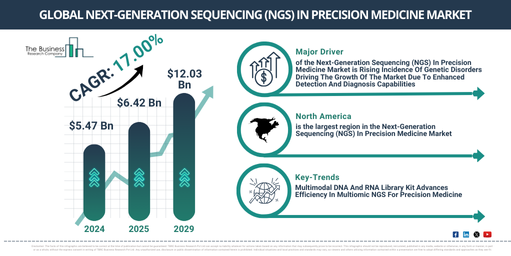
    The market size for next-generation sequencing (NGS) in precision medicine has experienced rapid expansion in recent years. This market is expected to rise from $5.47 billion in 2024 to $6.42 billion in 2025, achieving a compound annual growth rate (CAGR) of 17.3%. Historically, this growth can be attributed to several factors, including increased government funding for genomics research, the rising prevalence of genetic diseases, the development of national biobank initiatives, an increased demand for targeted drugs and biomarker discovery, and the emergence of multi-omics platforms.

    The next-generation sequencing (NGS) in precision medicine market size is anticipated to expand significantly over the coming years, reaching $12.03 billion by 2029, exhibiting a compound annual growth rate (CAGR) of 17.0%. This projected growth is driven by the increasing demand for personalized medicine, the broadening of applications beyond human genomics, the rising prevalence of cancer, the expansion into non-communicable disease detection, and greater awareness and accessibility of genetic testing. Notable trends expected during this forecast period include the integration with next-generation sequencing, the emergence of artificial intelligence-enabled bioinformatics pipelines, the incorporation of advanced imaging to enhance diagnostics and treatment, progress in sequencing chemistry, and the development of cloud-based bioinformatics.

    Unlock Your Free Sample Report for Exclusive Market Data:

    https://www.thebusinessresearchcompany.com/sample.aspx?id=28280&type=smp

    What Are The Main Drivers Boosting The Next-Generation Sequencing (NGS) In Precision Medicine Industry’s Expansion?

    The increasing occurrence of genetic disorders is anticipated to stimulate the expansion of the next-generation sequencing (NGS) in precision medicine market moving forward. Genetic disorders are conditions or diseases stemming from irregularities in an individual’s DNA, which can be passed down or emerge from mutations. The frequency of genetic disorders is escalating as advancements in diagnostic technologies, such as genetic screening and next-generation sequencing, enable medical professionals to identify previously undetected cases, thus leading to a higher reported prevalence. Next-generation sequencing in precision medicine aids in detecting genetic mutations, facilitating accurate diagnosis, personalized treatment, and early intervention for these disorders. For example, in May 2024, according to the National Health Service, a UK-based government department, in England, approximately 17,000 people live with sickle cell disease, an inherited blood disorder, with around 250 new cases diagnosed each year. Consequently, the rising incidence of genetic disorders is driving the growth of the next-generation sequencing (NGS) in precision medicine market.

    How Is The Next-Generation Sequencing (NGS) In Precision Medicine Market Segmented?

    The next-generation sequencing (NGS) in precision medicine market covered in this report is segmented as

    1) By Product And Service: Sequencing Instruments, Consumables And Reagents, Library Preparation Kits, Bioinformatics Software, Next-Generation Sequencing (NGS) Services

    2) By Technology: Whole Genome Sequencing (WGS), Whole Exome Sequencing (Wes), Targeted Sequencing, Ribonucleic Acid (RNA) Sequencing, Single-Cell Sequencing

    3) By Application: Oncology, Infectious Disease, Rare And Inherited Disorders, Prenatal And Reproductive Health, Pharmacogenomics

    4) By End Use: Hospitals And Clinics, Academic And Research Institutions, Biopharmaceutical Companies, Diagnostic Laboratories, Contract Research Organizations (CROs)

    Subsegments:

    1) By Sequencing Instruments: Benchtop Sequencers, High Throughput Sequencers, Portable Sequencers

    2) By Consumables And Reagents: Sequencing Reagents, Sequencing Chips, Flow Cells, Sample Preparation Reagents

    3) By Library Preparation Kits: Deoxyribonucleic Acid (DNA) Library Preparation Kits, Ribonucleic Acid (RNA) Library Preparation Kits, Whole Genome Amplification Kits, Target Enrichment Kits

    4) By Bioinformatics Software: Data Analysis Software, Data Management Software, Sequence Alignment Software, Variant Calling Software

    5) By Next-Generation Sequencing Services: Whole Genome Sequencing Services, Whole Exome Sequencing Services, Targeted Sequencing Services, Ribonucleic Acid (RNA) Sequencing Services, Epigenomic Sequencing Services

    Which Key Trends Are Expected To Influence The Next-Generation Sequencing (NGS) In Precision Medicine Market In The Coming Years?

    Leading companies in the next-generation sequencing (NGS) in precision medicine market are concentrating on developing inventive solutions, such as multimodal DNA and RNA library kits, to boost the efficiency and accuracy of genomic analyses. A multimodal DNA and RNA library kit is a laboratory tool that enables the concurrent preparation of sequencing libraries from both DNA and RNA within a single workflow, allowing for comprehensive analysis of a sample’s genome and transcriptome. For example, in May 2024, Qiagen N.V., a Germany-based provider of sample and assay technologies for molecular diagnostics, introduced the QIAseq Multimodal DNA and RNA Library Kit. This next-generation sequencing solution facilitates multiomic studies and advances precision medicine by enabling streamlined DNA and RNA library preparation from a single sample. The kit supports whole genome and whole transcriptome sequencing and downstream target enrichment, assisting multiomic studies by combining optimized chemistry for DNA and RNA simultaneously. It reduces the need for large sample quantities and the labor-intensive procedures associated with traditional, separate DNA and RNA workflows. By improving efficiency in multiomic research, this kit propels precision medicine forward through enhanced biomarker discovery and a deeper understanding of diseases, particularly in cancer research.

    Which Global Market Leaders Are Shaping The Future Of The Next-Generation Sequencing (NGS) In Precision Medicine Sector?

    Major companies operating in the next-generation sequencing (NGS) in precision medicine market are Thermo Fisher Scientific Inc., Eurofins Scientific SE, Agilent Technologies Inc., Illumina Inc., Bio-Rad Laboratories Inc., Exact Sciences Corporation, QIAGEN N.V., Natera Inc., Tempus Labs Inc., 10x Genomics Inc., BGI Genomics Co. Ltd., Guardant Health Inc., Caris Life Sciences Inc., Fulgent Genetics Inc., Twist Bioscience Corporation, Pacific Biosciences of California Inc., Macrogen Inc., Ultima Genomics Inc., Personalis Inc., Element Biosciences Inc., Genomenon Inc., Strand Life Sciences Pvt. Ltd., and Singular Genomics Systems Inc.

    Download The Full Report For Exclusive Market Findings:

    https://www.thebusinessresearchcompany.com/report/next-generation-sequencing-ngs-in-precision-medicine-global-market-report

    Which Region Is Expected To Witness The Fastest Growth In The Next-Generation Sequencing (NGS) In Precision Medicine Market?

    North America was the largest region in the next-generation sequencing (NGS) in precision medicine market in 2024. Asia-Pacific is expected to be the fastest-growing region in the forecast period. The regions covered in next-generation sequencing (NGS) in precision medicine report are Asia-Pacific, Western Europe, Eastern Europe, North America, South America, Middle East and Africa.

    Request A Customized Version Of The Next-Generation Sequencing (NGS) In Precision Medicine Market Report:

    https://www.thebusinessresearchcompany.com/customise?id=28280&type=smp

    Browse Through More Reports Similar to the Global Next-Generation Sequencing (NGS) In Precision Medicine Market 2025, By The Business Research Company

    Clinical Next Generation Sequencing Ngs Data Analysis Global Market Report 2025

    https://www.thebusinessresearchcompany.com/report/clinical-next-generation-sequencing-ngs-data-analysis-global-market-report

    Ngs Based Rna Sequencing Global Market Report 2025

    https://www.thebusinessresearchcompany.com/report/ngs-based-rna-sequencing-global-market-report

    Next Generation Sequencing Market 2025

    https://www.thebusinessresearchcompany.com/report/next-generation-sequencing-market

    Get in touch with us:

    The Business Research Company: https://www.thebusinessresearchcompany.com/

    Americas +1 310-496-7795

    Asia +44 7882 955267 & +91 8897263534

    Europe +44 7882 955267

    Email us at info@tbrc.info

    Follow us on:

    LinkedIn: https://in.linkedin.com/company/the-business-research-company

    YouTube: https://www.youtube.com/channel/UC24_fI0rV8cR5DxlCpgmyFQ

    Global Market Model: https://www.thebusinessresearchcompany.com/global-market-model
  • Neurotoxin-Inspired Peptide Market Trends 2025–2029: Forecasts for Key Growth Segments

    Neurotoxin-Inspired Peptide Market Trends 2025–2029: Forecasts for Key Growth Segments

    Unlock Global Insights – Save 20% on Market Reports with Code ONLINE20

    How Does The Market Size Of The Neurotoxin-Inspired Peptide Industry Compare Between 2025 And 2029?

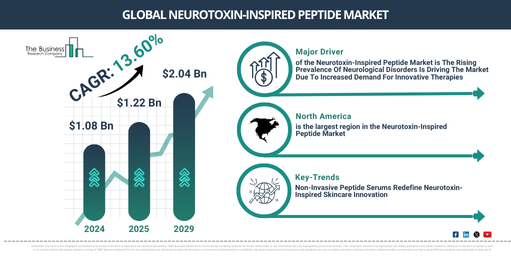
    The neurotoxin-inspired peptide market has seen substantial expansion in recent years. It will grow from $1.08 billion in 2024 to $1.22 billion in 2025 at a compound annual growth rate (CAGR) of 13.9%. This historical growth can be linked to increasing investment in neuropharmacology research, a heightened focus on naturally derived therapeutic agents, greater collaboration between academic and industrial sectors, the rising prevalence of neurological disorders boosting demand for new therapeutics, and an increasing interest in marine and terrestrial toxin research.

    The neurotoxin-inspired peptide market size is anticipated to experience substantial growth in the upcoming years. It is projected to expand to $2.04 billion by 2029, demonstrating a compound annual growth rate (CAGR) of 13.6%. The expansion during the forecast period can be attributed to the rising demand for targeted neurological therapeutics, the increasing integration of artificial intelligence in peptide discovery processes, a growing emphasis on precision medicine approaches, escalating investments in biopharmaceutical manufacturing infrastructure, and the wider adoption of non-invasive delivery systems. Significant trends expected in the forecast period include the advancement of high-throughput peptide screening platforms, the increasing utilization of computational modeling for analyzing peptide-receptor interactions, the development of next-generation peptide stabilization techniques, the enhancement of peptide delivery systems through nanoformulations, and the incorporation of machine learning algorithms in structure-activity optimization efforts.

    Unlock Your Free Sample Report for Exclusive Market Data:

    https://www.thebusinessresearchcompany.com/sample.aspx?id=28279&type=smp

    Which Factors And Drivers Are Influencing The Neurotoxin-Inspired Peptide Market In 2025?

    The escalating occurrence of neurological conditions is anticipated to fuel the expansion of the neurotoxin-inspired peptide market in the future. These disorders encompass a wide spectrum of ailments impacting the central and peripheral nervous systems, specifically the brain, spinal cord, cranial nerves, and peripheral nerves, consequently hindering motor, sensory, cognitive, and autonomic functions. A key contributor to the growing incidence of neurological disorders is the worldwide increase in human longevity, given that extended lifespans enhance the probability of age-related deterioration within the nervous system, subsequently increasing the occurrence of these conditions. Neurotoxin-inspired peptides present novel therapeutic strategies designed to precisely target particular neurological pathways, potentially leading to better treatment results and fulfilling the unaddressed medical demands linked to the increasing burden of these illnesses. To illustrate, in October 2023, data from the World Federation of Neurology, a UK-based association of national neurological societies, indicated that the global population living with brain diseases is anticipated to double by 2050, concurrently, stroke-related deaths worldwide are predicted to increase by 50% to reach 9.7 million annually by the same year. Consequently, the escalating incidence of neurological conditions will propel the neurotoxin-inspired peptide market.

    What Are The Key Segments In The Neurotoxin-Inspired Peptide Market?

    The neurotoxin-inspired peptide market covered in this report is segmented as

    1) By Product Type: Synthetic Peptides, Recombinant Peptides, Natural Peptides, Other Product Types

    2) By Distribution Channel: Direct Sales, Online Sales, Distributors, Other Distribution Channels

    3) By Application: Pharmaceuticals, Cosmetics, Research And Development, Other Applications

    4) By End User: Hospitals And Clinics, Research Institutes, Biotechnology Companies, Other End Users

    Subsegments:

    1) By Synthetic Peptides: Solid Phase Peptide Synthesis, Liquid Phase Peptide Synthesis, Hybrid Phase Peptide Synthesis

    2) By Recombinant Peptides: Bacterial Expression Systems, Yeast Expression Systems, Mammalian Cell Expression Systems

    3) By Natural Peptides: Animal Derived Peptides, Plant Derived Peptides, Microbial Derived Peptides

    4) By Other Product Types: Peptide Conjugates, Peptide Mimetics, Peptide Libraries

    What Are The Major Trends Driving The Growth Of The Neurotoxin-Inspired Peptide Market?

    Leading companies in the neurotoxin-inspired peptide market are concentrating on developing innovative products, such as neurotoxin-inspired peptide serums, to offer non-invasive skincare solutions that provide wrinkle-reducing effects comparable to injectable treatments. A neurotoxin-inspired peptide serum is a topical formulation that utilizes biomimetic peptides and complementary active ingredients to diminish expression lines associated with facial muscles and enhance overall skin texture and radiance without requiring invasive procedures. For instance, in July 2024, SkinCeuticals, a US-based medical skincare brand, introduced P-TIOX. This serum blends an advanced peptide complex with exfoliating and hydrating agents in a patent-pending formulation specifically designed to visibly smooth skin, refine pores, and decrease the appearance of various types of contraction lines. It has undergone clinical evaluation for both standalone application and as a complement to injectable neurotoxin procedures, establishing its position as a significant non-invasive advancement within the anti-aging skincare category.

    Which Industry Leaders Are Driving Innovation Across The Neurotoxin-Inspired Peptide Market?

    Major companies operating in the neurotoxin-inspired peptide market are AbbVie Inc., Galderma, Ipsen Pharma, Biolab Farmaceutica, Daewoong Pharmaceutical, Luye Pharma Group, CordenPharma, Syngene International, Shanghai Haohai Bio., Hugel Inc., Merz Pharma, Evolus Inc., Medytox Inc., US WorldMeds, Smartox Biotechnology, Venomtech Ltd., Latoxan, Pepscan Therapeutics, ToxinTech Inc., AEON Biopharma Inc.

    Download The Full Report For Exclusive Market Findings:

    https://www.thebusinessresearchcompany.com/report/neurotoxin-inspired-peptide-global-market-report

    Which Global Regions Are Influencing The Competitive Landscape Of The Neurotoxin-Inspired Peptide Market?

    North America was the largest region in the neurotoxin-inspired peptide market in 2024. Asia-Pacific is expected to be the fastest-growing region in the forecast period. The regions covered in neurotoxin-inspired peptide report are Asia-Pacific, Western Europe, Eastern Europe, North America, South America, Middle East and Africa.

    Request A Customized Version Of The Neurotoxin-Inspired Peptide Market Report:

    https://www.thebusinessresearchcompany.com/customise?id=28279&type=smp

    Browse Through More Reports Similar to the Global Neurotoxin-Inspired Peptide Market 2025, By The Business Research Company

    Neurotoxin Global Market Report 2025

    https://www.thebusinessresearchcompany.com/report/neurotoxin-global-market-report

    Peptide Therapeutics Global Market Report 2025

    https://www.thebusinessresearchcompany.com/report/peptide-therapeutics-global-market-report

    Peptide Synthesis Global Market Report 2025

    https://www.thebusinessresearchcompany.com/report/peptide-synthesis-global-market-report

    Get in touch with us:

    The Business Research Company: https://www.thebusinessresearchcompany.com/

    Americas +1 310-496-7795

    Asia +44 7882 955267 & +91 8897263534

    Europe +44 7882 955267

    Email us at info@tbrc.info

    Follow us on:

    LinkedIn: https://in.linkedin.com/company/the-business-research-company

    YouTube: https://www.youtube.com/channel/UC24_fI0rV8cR5DxlCpgmyFQ

    Global Market Model: https://www.thebusinessresearchcompany.com/global-market-model