Blog

  • Neurocutaneous Disorder Market Forecast 2025–2034: Where Businesses Should Invest Next

    Neurocutaneous Disorder Market Forecast 2025–2034: Where Businesses Should Invest Next

    Unlock Global Insights – Save 20% on Market Reports with Code ONLINE20

    What Is The Predicted Market Size Trajectory For The Neurocutaneous Disorder Market From 2025 To 2034?

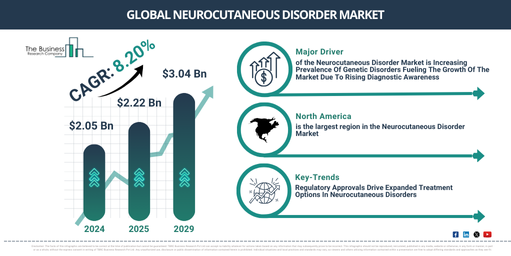
    The neurocutaneous disorder market size has shown substantial expansion in recent years. It is anticipated to increase from $2.05 billion in 2024 to $2.22 billion in 2025, exhibiting a compound annual growth rate (CAGR) of 8.5%. The growth observed in prior periods is attributable to the rising prevalence of genetic disorders, heightened awareness of rare neurological conditions, increased adoption of diagnostic imaging, a greater number of patient visits to specialty clinics, and an intensifying clinical focus on pediatric neurology.

    The neurocutaneous disorder market is expected to demonstrate substantial growth in the upcoming years. It is projected to expand to $3.04 billion by 2029, achieving a compound annual growth rate (CAGR) of 8.2%. This anticipated growth is driven by factors such as the increasing demand for targeted drug therapies, a rise in clinical trial activities for rare diseases, growing collaborations between research institutes, the expanding adoption of genetic testing services, and increasing healthcare expenditure on neurological care. Significant trends for this period include technological progress in genomic sequencing, advancements in gene therapy applications, greater investment in research and development for novel treatments, the development of digital health monitoring tools, and innovations in biomarker-based diagnostics.

    Unlock Your Free Sample Report for Exclusive Market Data:

    https://www.thebusinessresearchcompany.com/sample.aspx?id=28278&type=smp

    What Are The Key Drivers Of Growth In The Neurocutaneous Disorder Market?

    The expanding occurrence of genetic disorders is projected to fuel the expansion of the neurocutaneous disorder market in the future. Genetic disorders are conditions that stem from anomalies in an individual’s DNA, which can be inherited or develop spontaneously. Neurocutaneous disorders, exemplified by tuberous sclerosis complex and neurofibromatosis, result from specific genetic mutations impacting both the nervous system and the skin, manifesting as neurological symptoms alongside distinctive skin irregularities. Progress in genetic testing and heightened awareness are facilitating earlier detection, thus contributing to an elevated reported prevalence. For instance, in November 2024, the Centers for Disease Control and Prevention (CDC), a US-based government agency, reported that approximately 1 in every 33 newborns in the US is born with a birth defect, many of which have genetic origins. Consequently, the rising prevalence of genetic disorders is boosting the growth of the neurocutaneous disorder market.

    What Are The Leading Segments Analyzed In The Neurocutaneous Disorder Market?

    The neurocutaneous disorder market covered in this report is segmented as

    1) By Type Of Neurocutaneous Disorder: Neurofibromatosis, Tuberous Sclerosis Complex, Sturge-Weber Syndrome, Angiomatosis, Hypomelanosis Of Ito

    2) By Treatment Type: Pharmacological Treatment, Surgical Intervention, Laser Therapy, Physical Therapy, Psychosocial Support

    3) By Age Group: Pediatric Patients (0-18 Years), Adult Patients (19-65 Years), Geriatric Patients (65 Years And Above)

    4) By Severity Of Condition: Mild Cases, Moderate Cases, Severe Cases, Critical Cases

    5) By End User: Hospitals, Specialist Clinics, Homecare Settings, Research Organizations, Pharmaceutical Companies

    Subsegments:

    1) By Neurofibromatosis: Peripheral Neurofibromatosis, Central Neurofibromatosis, Plexiform Neurofibromatosis

    2) By Tuberous Sclerosis Complex: Classic Tuberous Sclerosis, Infantile-Onset Tuberous Sclerosis, Adult-Onset Tuberous Sclerosis

    3) By Sturge-Weber Syndrome: Facial Sturge-Weber Syndrome, Cerebral Sturge-Weber Syndrome, Ophthalmic Sturge-Weber Syndrome

    4) By Angiomatosis: Generalized Angiomatosis, Localized Angiomatosis, Mixed Angiomatosis

    5) By Hypomelanosis Of Ito: Linear Hypomelanosis, Segmental Hypomelanosis, Whorled Hypomelanosis

    What Are The Major Trends Driving The Growth Of The Neurocutaneous Disorder Market?

    Leading firms within the neurocutaneous disorder market are prioritizing securing regulatory permissions to broaden their range of treatments, improve patient results, and leverage the increasing need for novel medical solutions. These approvals represent formal authorizations issued by governmental bodies, enabling a company to lawfully market, distribute, or evaluate a drug or treatment once its safety and efficacy have been validated. An example of this is in September 2025, when AstraZeneca plc, a pharmaceutical and biotechnology firm based in the UK, obtained Food and Drug Administration (FDA) approval for selumetinib (marketed as Koselugo). This approval is for the treatment of pediatric patients aged 1 year and older diagnosed with neurofibromatosis type 1 (NF1) presenting with symptomatic, inoperable plexiform neurofibromas (PNs). This particular approval broadens the prior indication, which had applied to children aged 2 years and older. Selumetinib, classified as a MEK inhibitor, functions by inhibiting the MAPK pathway, which is instrumental in the growth of tumors in NF1. Patients are administered oral selumetinib twice daily, continuing until either the disease advances or intolerable side effects emerge; frequently reported adverse effects encompass gastrointestinal, skin, cardiac, and ocular toxicities. Consequently, this approval provides a vital treatment alternative for young children afflicted by these difficult and often disfiguring tumors, which are often problematic to address through surgery.

    Who Are The Key Multinational Companies Dominating The Neurocutaneous Disorder Market?

    Major companies operating in the neurocutaneous disorder market are Merck KGaA, AbbVie Inc., Sanofi S.A., Novartis AG, Recursion Pharmaceuticals Inc., Takeda Pharmaceutical Company Limited, Labcorp Holdings Inc., Quest Diagnostics Incorporated, Eurofins Scientific SE, Fosun Pharmaceutical Group Co. Ltd., ioMarin Pharmaceutical Inc., Simcere Pharmaceutical Group, Marinus Pharmaceuticals Inc., Inhibikase Therapeutics Inc., Healx Limited, NF2 Therapeutics Inc., NFlection Therapeutics Inc., Ovid Therapeutics Inc., CureAge Therapeutics, GW Pharmaceuticals plc.

    Download The Full Report For Exclusive Market Findings:

    https://www.thebusinessresearchcompany.com/report/neurocutaneous-disorder-global-market-report

    What Are The Regional Market Dynamics Impacting The Neurocutaneous Disorder Industry?

    North America was the largest region in the neurocutaneous disorder market in 2024. Asia-Pacific is expected to be the fastest-growing region in the forecast period. The regions covered in neurocutaneous disorder report are Asia-Pacific, Western Europe, Eastern Europe, North America, South America, Middle East and Africa.

    Request A Customized Version Of The Neurocutaneous Disorder Market Report:

    https://www.thebusinessresearchcompany.com/customise?id=28278&type=smp

    Browse Through More Reports Similar to the Global Neurocutaneous Disorder Market 2025, By The Business Research Company

    Cutaneous Lupus Erythematosus Global Market Report 2025

    https://www.thebusinessresearchcompany.com/report/cutaneous-lupus-erythematosus-global-market-report

    Nephrologists Market Global Report 2020 2030 Covid 19 Implications And Growth 2025

    https://www.thebusinessresearchcompany.com/report/nephrologists-market-global-report-2020-2030-covid-19-implications-and-growth

    Scleroderma Global Market Report 2025

    https://www.thebusinessresearchcompany.com/report/scleroderma-global-market-report

    Get in touch with us:

    The Business Research Company: https://www.thebusinessresearchcompany.com/

    Americas +1 310-496-7795

    Asia +44 7882 955267 & +91 8897263534

    Europe +44 7882 955267

    Email us at info@tbrc.info

    Follow us on:

    LinkedIn: https://in.linkedin.com/company/the-business-research-company

    YouTube: https://www.youtube.com/channel/UC24_fI0rV8cR5DxlCpgmyFQ

    Global Market Model: https://www.thebusinessresearchcompany.com/global-market-model
  • Global Neonatal Point Of Care Testing Market Analysis 2025–2029: Opportunities for Strategic Growth

    Global Neonatal Point Of Care Testing Market Analysis 2025–2029: Opportunities for Strategic Growth

    Unlock Global Insights – Save 20% on Market Reports with Code ONLINE20

    How Much Larger Is The Neonatal Point Of Care Testing Market Expected To Become By 2029 Compared With Its 2025 Level?

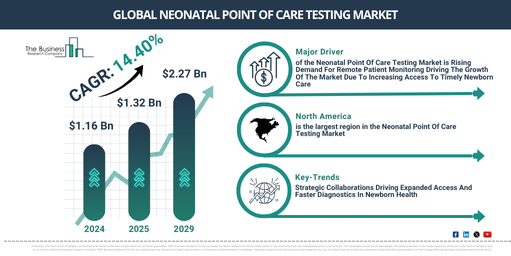
    The neonatal point of care testing market has seen significant expansion in recent years. This market is projected to grow from $1.16 billion in 2024 to $1.32 billion in 2025, reflecting a compound annual growth rate (CAGR) of 14.6%. The historical growth of this market was influenced by an increasing incidence of neonatal disorders, a rising demand for swift diagnostic results, heightened awareness of neonatal health risks, a growing prevalence of preterm births, and the increasing adoption of bedside testing in hospitals.

    The neonatal point of care testing market is projected to experience substantial expansion over the upcoming years. This market is anticipated to reach a valuation of $2.27 billion by 2029, demonstrating a compound annual growth rate (CAGR) of 14.4%. This anticipated growth throughout the forecast period stems from several factors, including a heightened demand for customized neonatal care, the increasing integration of portable testing devices, a stronger inclination towards early disease identification, an intensified effort to lower neonatal mortality rates, and a greater allocation of resources to sophisticated diagnostic instruments. Key developments expected during this timeframe encompass breakthroughs in biosensor technology, advancements in microfluidic diagnostic platforms, significant investment in the research and development of multiplex assays, progress in wireless neonatal monitoring systems, and novel approaches in point of care molecular testing.

    Unlock Your Free Sample Report for Exclusive Market Data:

    https://www.thebusinessresearchcompany.com/sample.aspx?id=28277&type=smp

    Which Drivers Are Supporting Growth Of The Neonatal Point Of Care Testing Market?

    The escalating demand for remote patient monitoring is projected to propel the expansion of the neonatal point of care testing market in the coming period. Remote patient monitoring entails the delivery of healthcare services through technology, connecting patients with medical professionals from a distance. The need for remote patient monitoring is increasing due to the growing requirement for accessible and convenient medical care, particularly for individuals in remote or underserved regions. Neonatal point-of-care testing supports remote patient monitoring by providing immediate diagnostic results at the bedside, enabling healthcare providers to swiftly identify and manage crucial conditions in newborns without relying on a central laboratory. For example, in February 2023, a survey conducted by Rock Health, a US-based health technology company, among 8,014 respondents, found that 76% of people over the age of 55 had used telemedicine, and 80% of all respondents stated they had accessed care via telemedicine at some point in their lives, an increase of 8% from 72% in 2021. Therefore, the heightened demand for remote patient monitoring is anticipated to drive the growth of the neonatal point of care testing market.

    What Are The Segment Types Shaping The Neonatal Point Of Care Testing Market?

    The neonatal point of care testing market covered in this report is segmented as

    1) By Product: Instruments, Assay

    2) By Test Type: Neonatal Bilirubin Testing, Newborn Metabolic Screening, Blood Glucose Testing, Infectious Disease Screening, Electrolyte Testing, Other Test Types

    3) By End-Users: Hospitals, Diagnostic Centers, Maternity And Specialty Clinics, Other End-Users

    Subsegments:

    1) By Instruments: Blood Gas Analyzers, Bilirubinometers, Glucose Meters, Hematology Analyzers, Multiparameter Monitors

    2) By Assay: Bilirubin Assays, Glucose Assays, Infectious Disease Assays, Hematology Assays, Cardiac Marker Assays, Electrolyte Assays, Blood Gas Assays

    What Trends Are Expected To Drive The Neonatal Point Of Care Testing Market?

    Leading companies in the neonatal point of care testing market are prioritizing the establishment of strategic collaborations to more effectively penetrate new markets and expand their customer bases. Strategic collaborations involve alliances between organizations that merge resources and expertise to achieve common business objectives. For instance, in January 2025, QIAGEN, a Netherlands-based supplier of sample and assay technologies, entered into a partnership with Genomics England, a UK-based genomic medicine company. This collaboration has paved the way for the launch of the Generation Study, which intends to sequence the genomes of 100,000 newborns in England to identify more than 200 actionable genetic conditions. QIAGEN will furnish distinctive clinically relevant variant information for the genes included in the point-of-care sequencing test. This data will enable quicker interpretation and reporting of sequencing results, thereby supporting earlier identification and treatment of rare conditions. Officially commencing in October 2024, the study focuses on conditions that may impact roughly 3,000 newborns each year in the UK.

    Which Leading Players Are Enhancing Their Neonatal Point Of Care Testing Market Presence Worldwide?

    Major companies operating in the neonatal point of care testing market are Abbott Laboratories, Siemens Healthineers AG, Koninklijke Philips N.V., GE Healthcare Technologies Inc., Konica Minolta Inc., Dräger Ag Co. Kg, Bio-Rad Laboratories Inc., Masimo Corporation, QIAGEN Inc., Radiometer Ltd., Contec Medical Systems Co. Ltd., Owen Mumford Ltd., Nova Biomedical, Heal Force Bio Meditech Holdings Ltd., Edan Instruments Inc., Trivitron Healthcare, Bistos Co. Ltd., Bilimetrix S.r.I, GINEVRI srl, Hadleigh Health Technologies.

    Download The Full Report For Exclusive Market Findings:

    https://www.thebusinessresearchcompany.com/report/neonatal-point-of-care-testing-global-market-report

    Which Region Shows The Highest Potential For Future Expansion In The Neonatal Point Of Care Testing Market?

    North America was the largest region in the neonatal point of care testing market in 2024. Asia-Pacific is expected to be the fastest-growing region in the forecast period. The regions covered in neonatal point of care testing report are Asia-Pacific, Western Europe, Eastern Europe, North America, South America, Middle East and Africa.

    Request A Customized Version Of The Neonatal Point Of Care Testing Market Report:

    https://www.thebusinessresearchcompany.com/customise?id=28277&type=smp

    Browse Through More Reports Similar to the Global Neonatal Point Of Care Testing Market 2025, By The Business Research Company

    Neonatal Infant Care Global Market Report 2025

    https://www.thebusinessresearchcompany.com/report/neonatal-infant-care-global-market-report

    Pediatric And Neonatal Testing Kit Global Market Report 2025

    https://www.thebusinessresearchcompany.com/report/pediatric-and-neonatal-testing-kit-global-market-report

    Prenatal Testing And Newborn Screening Global Market Report 2025

    https://www.thebusinessresearchcompany.com/report/prenatal-testing-and-newborn-screening-global-market-report

    Get in touch with us:

    The Business Research Company: https://www.thebusinessresearchcompany.com/

    Americas +1 310-496-7795

    Asia +44 7882 955267 & +91 8897263534

    Europe +44 7882 955267

    Email us at info@tbrc.info

    Follow us on:

    LinkedIn: https://in.linkedin.com/company/the-business-research-company

    YouTube: https://www.youtube.com/channel/UC24_fI0rV8cR5DxlCpgmyFQ

    Global Market Model: https://www.thebusinessresearchcompany.com/global-market-model
  • Nanomaterials In Personalized Medicine Industry Overview 2025: Growth Projections and Market Trends

    Nanomaterials In Personalized Medicine Industry Overview 2025: Growth Projections and Market Trends

    Unlock Global Insights – Save 20% on Market Reports with Code ONLINE20

    #What Are The Current (2025) And Forecast (2029) Sizes Of The Nanomaterials In Personalized Medicine Market?

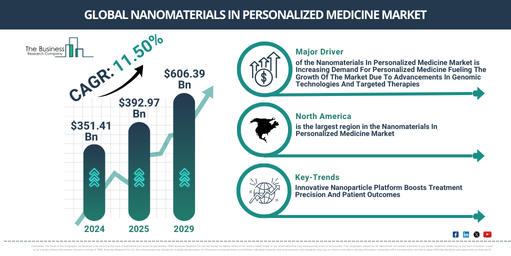
    The market size for nanomaterials in personalized medicine has expanded rapidly in recent years. It is projected to grow from $351.41 billion in 2024 to $392.97 billion in 2025, achieving a compound annual growth rate (CAGR) of 11.8%. This historical growth can be attributed to the increasing integration of nanotechnology in drug delivery, a rising demand for targeted therapies, greater awareness regarding the benefits of personalized medicine, an expansion of research into biomarker identification, and the growing prevalence of chronic diseases.

    The nanomaterials in personalized medicine market is anticipated to show significant expansion over the next few years, set to reach $606.39 billion by 2029, exhibiting a compound annual growth rate (CAGR) of 11.5%. This upward trajectory during the forecast period is fueled by factors such as the increasing demand for precision medicine, greater government investment in nanomedicine, a surge in partnerships between biotech and pharma firms, the growing use of advanced diagnostic technologies, and an intensified focus on patient-specific treatment approaches. Prominent developments expected in this period include ongoing technological improvements in nanoparticle design, the emergence of new nano-based drug formulations, innovations in targeted delivery systems, increased spending on research and development for personalized therapies, and the progression of hybrid nanomaterials for medical uses.

    Unlock Your Free Sample Report for Exclusive Market Data:

    https://www.thebusinessresearchcompany.com/sample.aspx?id=28276&type=smp

    Which Drivers Are Shaping The Nanomaterials In Personalized Medicine Industry’s Market Share?

    The rising need for individualized healthcare approaches is anticipated to fuel the expansion of the nanomaterials in personalized medicine market. Personalized medicine refers to a healthcare strategy where treatments are customized for patients considering their unique genetic, environmental, and lifestyle attributes to enhance results and patient care. This surge in demand is attributed to progress in genomic technologies, allowing for accurate detection of genetic differences and the development of specific therapies. Within this context, nanomaterials in personalized medicine improve personalized treatments by facilitating targeted and unique patient therapies, thus boosting effectiveness and safety. They facilitate the accurate delivery of drugs, genes, or RNA, minimizing adverse effects and maximizing therapeutic results. As an illustration, in February 2024, data from the Personalized Medicine Coalition (PMC), a US-based nonprofit, showed that the U.S. Food and Drug Administration (FDA) approved 26 new personalized medicines in 2023, marking a notable rise from the 12 approved in 2022. Consequently, the escalating demand for personalized medicine is serving as a key driver for the expansion of the nanomaterials in personalized medicine market.

    What Are The Different Segment Classifications Within The Nanomaterials In Personalized Medicine Market?

    The nanomaterials in personalized medicine market covered in this report is segmented as

    1) By Type Of Nanomaterials: Carbon-Based Nanomaterials, Metallic Nanoparticles, Polymeric Nanomaterials, Nanostructured Materials, Silica Nanoparticles

    2) By Formulation Type: Nanoparticles, Nanosuspensions, Nanoemulsions, Nanocrystals, Nanoformulations For Targeted Delivery

    3) By Technology Utilized: Nanofabrication Techniques, Bioconjugation Methods, Surface Modification Techniques, Molecular Imaging Techniques, Nanotechnology-Based Screening Methods

    4) By Application Areas: Drug Delivery Systems, Diagnostics And Imaging, Therapeutics, Regenerative Medicine, Vaccines

    5) By End-Users: Hospitals And Clinics, Research Laboratories, Pharmaceutical Companies, Biotechnology Firms, Academic Institutions

    Subsegments:

    1) By Carbon-Based Nanomaterials: Fullerenes, Carbon Nanotubes, Graphene, Carbon Dots

    2) By Metallic Nanoparticles: Gold Nanoparticles, Silver Nanoparticles, Iron Oxide Nanoparticles, Copper Nanoparticles

    3) By Polymeric Nanomaterials: Dendrimers, Micelles, Polymeric Nanoparticles, Hydrogels

    4) By Nanostructured Materials: Quantum Dots, Nanowires, Nanosheets, Nanorods

    5) By Silica Nanoparticles: Mesoporous Silica Nanoparticles, Colloidal Silica Nanoparticles, Porous Silica Nanoparticles, Functionalized Silica Nanoparticles

    Which Trends Are Impacting The Nanomaterials In Personalized Medicine Market?

    Leading companies operating within the nanomaterials in personalized medicine market are primarily focused on implementing strategic collaborations to expedite clinical application, broaden therapeutic uses, and reduce the time to market, all while conforming to evolving regulatory benchmarks. Strategic collaborations are defined as partnerships where organizations or institutions pool their expertise and resources to accelerate innovation and expand possibilities in personalized medicine. As an illustration, in May 2025, Acuitas Therapeutics Inc., a biotechnology company based in Canada, partnered with Integrated DNA Technologies Inc., a US-based genomics solutions provider, to introduce a personalized CRISPR gene-editing therapy delivery system. This system, utilizing their lipid nanoparticles platform, successfully treated a single baby with a rare genetic disease, featuring accurately targeted CRISPR payloads, custom dose tuning, and swift custom formulation. This advancement accelerates unique, highly individualized treatments. It significantly improves therapeutic precision and patient outcomes, though it also introduces challenges in scalable manufacturing, stringent regulatory adaptation, and ultra-low-volume production.

    Which Major Firms Are Strengthening Their Position In The Nanomaterials In Personalized Medicine Industry?

    Major companies operating in the nanomaterials in personalized medicine market are Pfizer & Co. Inc., BASF SE, Sanofi S.A., The Bristol-Myers Squibb Company, Thermo Fisher Scientific Inc., Abbott Laboratories, Merck KGaA Darmstadt Germany, Evonik Industries AG, Eisai Co. Ltd., TÜV Rheinland AG, OCSiAl S.A., American Elements Inc., Cour Pharmaceuticals Inc., Nanocomposix Inc., NoPo Nanotechnologies Private Limited, Matexcel Biotech Inc., OncoNano Medicine Inc., Molecular Rebar Design Inc., Cello Therapeutics Inc., Apurano Pharmaceuticals GmbH, SGN Nanopharma Inc.

    Download The Full Report For Exclusive Market Findings:

    https://www.thebusinessresearchcompany.com/report/nanomaterials-in-personalized-medicine-global-market-report

    How Is Nanomaterials In Personalized Medicine Market Demand Varying Across Different Regions?

    North America was the largest region in the nanomaterials in personalized medicine market in 2024. Asia-Pacific is expected to be the fastest-growing region in the forecast period. The regions covered in nanomaterials in personalized medicine report are Asia-Pacific, Western Europe, Eastern Europe, North America, South America, Middle East and Africa.

    Request A Customized Version Of The Nanomaterials In Personalized Medicine Market Report:

    https://www.thebusinessresearchcompany.com/customise?id=28276&type=smp

    Browse Through More Reports Similar to the Global Nanomaterials In Personalized Medicine Market 2025, By The Business Research Company

    Nanomaterials In Cosmetic And Personal Care Global Market Report 2025

    https://www.thebusinessresearchcompany.com/report/nanomaterials-in-cosmetic-and-personal-care-global-market-report

    Nanomedicine Global Market Report 2025

    https://www.thebusinessresearchcompany.com/report/nanomedicine-global-market-report

    Healthcare Nanotechnology Global Market Report 2025

    https://www.thebusinessresearchcompany.com/report/healthcare-nanotechnology-global-market-report

    Get in touch with us:

    The Business Research Company: https://www.thebusinessresearchcompany.com/

    Americas +1 310-496-7795

    Asia +44 7882 955267 & +91 8897263534

    Europe +44 7882 955267

    Email us at info@tbrc.info

    Follow us on:

    LinkedIn: https://in.linkedin.com/company/the-business-research-company

    YouTube: https://www.youtube.com/channel/UC24_fI0rV8cR5DxlCpgmyFQ

    Global Market Model: https://www.thebusinessresearchcompany.com/global-market-model
  • Nanocarriers Market Size Forecast: Revenue and CAGR by 2029

    Nanocarriers Market Size Forecast: Revenue and CAGR by 2029

    Unlock Global Insights – Save 20% on Market Reports with Code ONLINE20

    What Market Value Is The Nanocarriers Industry Expected To Reach By 2029, Starting From 2025 Levels?

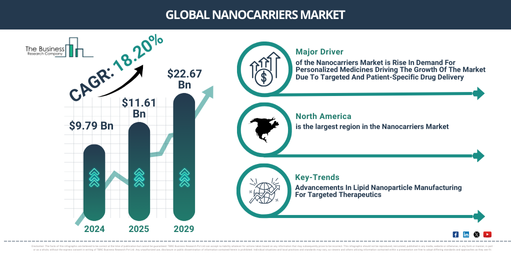
    The nanocarriers market has experienced substantial expansion in recent years. Its size is forecast to grow from $9.79 billion in 2024 to $11.61 billion in 2025, at a compound annual growth rate (CAGR) of 18.5%. Historically, this growth was primarily driven by the escalating burden of chronic and oncologic diseases, a greater number of approvals for targeted and personalized therapies, the widespread implementation of national immunization programs and booster initiatives, advancements in biopharmaceutical research and development, and elevated healthcare spending.

    The nanocarriers market is projected to experience substantial expansion over the upcoming years. This market is anticipated to reach $22.67 billion by 2029, demonstrating a compound annual growth rate (CAGR) of 18.2%. Factors driving this growth during the projection period include the expanding aging demographic, the ongoing increase in lifestyle-related ailments, greater utilization of metal and metallic oxide particles, heightened focus on personalized medicine, and increased involvement in clinical trials. Key trends anticipated for the forecast timeframe encompass progress in healthcare technologies, the creation of personalized and adaptive drug delivery mechanisms, the evolution of stimuli-responsive nanocarriers, improvements in 3D printing technologies, and the establishment of adaptable nanocarrier platforms.

    Unlock Your Free Sample Report for Exclusive Market Data:

    https://www.thebusinessresearchcompany.com/sample.aspx?id=28275&type=smp

    What Are The Drivers Pushing New Developments In The Nanocarriers Market?

    The growing need for personalized medicines is projected to fuel the expansion of the nanocarriers market moving forward. Personalized medicine refers to the approach of tailoring medical treatment to each patient’s specific characteristics, utilizing genetic, biomarker, and molecular information. The focus on personalized medicine is intensifying as it allows doctors to customize cancer treatments based on a patient’s genetic profile, thereby improving effectiveness and minimizing unnecessary side effects. Nanocarriers play a crucial role in personalized medicine by delivering drugs precisely to patient-specific targets, regulating their release, enhancing bioavailability, and enabling customized combination therapies aligned with individual biological profiles. For instance, in February 2024, the Personalized Medicine Coalition, a US-based non-profit organization, stated that in 2023, the United States Food and Drug Administration (FDA) approved 16 new personalized therapies for patients with rare diseases, which was a significant increase from just six approvals in 2022. Thus, the increasing demand for personalized medicines is a key driver for the growth of the nanocarriers market.

    What Are The Primary Types Of Segments Analyzed In The Nanocarriers Market?

    The nanocarriers market covered in this report is segmented as

    1) By Type: Polymeric Nanocarriers, Lipid-Based Nanocarriers, Inorganic Nanocarriers, Other Types

    2) By Application: Drug Delivery, Diagnostics, Vaccines, Gene Therapy, Other Applications

    3) By End-User: Pharmaceutical And Biotechnology Companies, Hospitals And Clinics, Research Institutes, Other End-Users

    Subsegments:

    1) By Polymeric Nanocarriers: Nanoparticles Of Poly Lactic Acid, Nanoparticles Of Poly Lactic-Co-Glycolic Acid, Nanoparticles Of Chitosan, Nanoparticles Of Gelatin, Nanoparticles Of Polycaprolactone

    2) By Lipid-Based Nanocarriers: Solid Lipid Nanoparticles, Nanostructured Lipid Carriers, Liposomes, Nanoemulsions, Self-Emulsifying Drug Delivery Systems

    3) By Inorganic Nanocarriers: Gold Nanoparticles, Silver Nanoparticles, Silica Nanoparticles, Magnetic Nanoparticles, Quantum Dots

    4) By Other Types: Dendrimers, Protein-Based Nanocarriers, Carbon Nanotubes, Nanocrystals, Exosomes

    What Long-Term Trends Will Shape The Future Growth Of The Nanocarriers Industry?

    Leading companies in the nanocarriers market are prioritizing the development of advanced formulations, including lipid nanoparticle technologies, to enhance targeted drug delivery and improve therapeutic efficacy. Lipid nanoparticle technologies are nanoscale, fat-based carriers engineered to deliver drugs or genetic therapies safely and efficiently to specific cells or tissues. For instance, in July 2023, Cytiva, a US-based biotechnology company, launched the NanoAssemblr commercial formulation system, a single-use, fully automated platform designed to enable end-to-end clinical and commercial manufacturing of lipid nanoparticle (LNP) medicines. This system utilizes Cytiva’s NxGen technology to provide controlled, reproducible mixing for consistent quality throughout all stages from research to large-scale manufacturing under cGMP conditions. The platform reduces cross-contamination risk with its single-use fluid path and supports efficient multi-product manufacturing in one facility. It also features intuitive software compliant with regulatory standards that automates workflows and enables electronic batch records, streamlining production of genomic medicines such as mRNA vaccines, gene therapies, and cancer vaccines.

    Who Are The Primary Competitors In The Global Nanocarriers Market?

    Major companies operating in the nanocarriers market are F. Hoffmann-La Roche Ltd, Pfizer Inc., Sanofi S.A., Novartis AG, Bristol-Myers Squibb Company, Amgen Inc., Evonik Industries AG, Matinas BioPharma Holdings Inc., Luye Pharma Group Ltd., Ascendia Pharmaceuticals Inc., Arcturus Therapeutics Holdings Inc., Nanobiotix S.A., Polymun Scientific Immunbiologische Forschung GmbH, ReCode Therapeutics Inc., Celsion Corporation, Starpharma Holdings Limited, EnGeneIC Ltd., Acuitas Therapeutics Inc., Altamira Therapeutics Ltd., Nanexa AB.

    Download The Full Report For Exclusive Market Findings:

    https://www.thebusinessresearchcompany.com/report/nanocarriers-global-market-report

    Which Geographies Are Emerging As Strong Markets For The Nanocarriers Industry?

    North America was the largest region in the nanocarriers market in 2024. The regions covered in nanocarriers report are Asia-Pacific, Western Europe, Eastern Europe, North America, South America, Middle East and Africa.

    Request A Customized Version Of The Nanocarriers Market Report:

    https://www.thebusinessresearchcompany.com/customise?id=28275&type=smp

    Browse Through More Reports Similar to the Global Nanocarriers Market 2025, By The Business Research Company

    Microcarrier Global Market Report 2025

    https://www.thebusinessresearchcompany.com/report/microcarrier-global-market-report

    Nanomaterials Global Market Report 2025

    https://www.thebusinessresearchcompany.com/report/nanomaterials-global-market-report

    Nanofibers Global Market Report 2025

    https://www.thebusinessresearchcompany.com/report/nanofibers-global-market-report

    Get in touch with us:

    The Business Research Company: https://www.thebusinessresearchcompany.com/

    Americas +1 310-496-7795

    Asia +44 7882 955267 & +91 8897263534

    Europe +44 7882 955267

    Email us at info@tbrc.info

    Follow us on:

    LinkedIn: https://in.linkedin.com/company/the-business-research-company

    YouTube: https://www.youtube.com/channel/UC24_fI0rV8cR5DxlCpgmyFQ

    Global Market Model: https://www.thebusinessresearchcompany.com/global-market-model
  • Global Molecular Tumor Board Solutions Market Trends and Growth Analysis 2025–2029

    Global Molecular Tumor Board Solutions Market Trends and Growth Analysis 2025–2029

    Unlock Global Insights – Save 20% on Market Reports with Code ONLINE20

    What Is The Anticipated Size Of The Molecular Tumor Board Solutions Market Over The Five-Year Period 2025–2029?

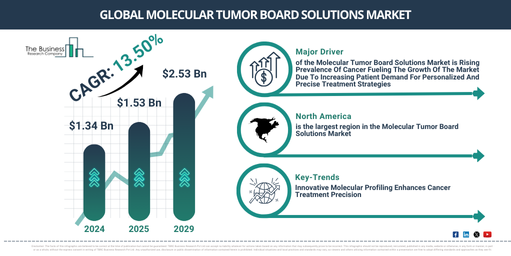
    The molecular tumor board solutions market has experienced swift expansion recently. Projections indicate its size will expand from $1.34 billion in 2024 to $1.53 billion in 2025, showing a compound annual growth rate (CAGR) of 13.9%. Historically, this expansion has been driven by factors such as the greater uptake of genomic profiling, a heightened need for precision oncology, increased understanding of molecular diagnostics, the broadening of cancer research efforts, and enhanced partnerships between hospitals and biotechnology companies.

    The molecular tumor board solutions market size is anticipated to expand rapidly over the next few years, projecting an increase to $2.53 billion by 2029, achieving a compound annual growth rate (CAGR) of 13.5%. This growth during the forecast period is primarily driven by the increasing demand for multidisciplinary tumor boards, the expansion of cloud-based molecular data platforms, growing regulatory support for genomic testing, a heightened focus on patient-centric oncology care, and the rising incidence of cancer cases. Prominent trends for the same forecast period include ongoing developments in genomic sequencing tools, substantial investment in research and development for molecular solutions, innovation in clinical decision support software, advancements in data analytics and visualization, and the integration of machine learning for refining treatment recommendations.

    Unlock Your Free Sample Report for Exclusive Market Data:

    https://www.thebusinessresearchcompany.com/sample.aspx?id=28274&type=smp

    What Are The Emerging Market Drivers Creating New Opportunities In The Molecular Tumor Board Solutions Industry?

    The expanding occurrence of cancer is projected to fuel the advancement of the molecular tumor board solutions market moving ahead. Cancer, a collection of illnesses, is defined by the unrestrained multiplication and dissemination of atypical cells within the body. This growing incidence of cancer stems from lifestyle decisions like inadequate nutrition, tobacco use, sedentary habits, and excessive drinking of alcohol. Molecular tumor board solutions contribute to cancer management by offering an expert, diverse review of patients’ genetic and clinical information, thus facilitating tailored treatment approaches. These solutions improve clinical judgments through the incorporation of molecular profiling and insights generated by AI, which in turn enhances patient results and the accuracy of treatments. An illustrative example is that in October 2024, data from the National Health Service, a UK-based government department, showed new cancer diagnoses increased by 5% from 329,664 in 2021 to 346,217 in 2022, amounting to an average of 948 cases daily. Consequently, the escalating occurrence of cancer is a key factor propelling the expansion of the molecular tumor board solutions market.

    Which Key Segments Fueling The Molecular Tumor Board Solutions Market?

    The molecular tumor board solutions market covered in this report is segmented as

    1) By Component: Software, Services

    2) By Deployment Mode: On-Premises, Cloud-Based

    3) By Application: Clinical Decision Support, Genomic Data Interpretation, Patient Management, Other Applications

    4) By End-User: Hospitals, Cancer Centers, Research Institutes, Other End-Users

    Subsegments:

    1) By Software: Clinical Decision Support, Data Analytics, Reporting And Visualization, Integration Platforms

    2) By Services: Consulting, Implementation, Training And Support, Maintenance And Upgrades

    Which Market Trends Are Creating New Opportunities In The Molecular Tumor Board Solutions Industry?

    Major companies operating in the molecular tumor board solutions market are focusing on developing innovative solutions, such as molecular profiling tests, to enhance the precision and effectiveness of cancer diagnostics and treatment planning. Molecular profiling tests are diagnostic tools that analyze a tumor’s genetic and molecular characteristics to inform personalized cancer treatment decisions. For instance, in April 2025, Guardant Health Inc., a US-based biotechnology and precision oncology company, launched Guardant360 Tissue, an innovative molecular profiling test for tumor tissue that integrates comprehensive multiomic analysis, including DNA, RNA, AI-powered PD-L1, and genome-wide methylation data. This advanced test, powered by the Guardant Infinity smart liquid biopsy platform, provides a more complete and multidimensional view of cancer, enabling higher resolution tumor classification and subtyping. Guardant360 Tissue delivers results in under two weeks, is covered by Medicare for eligible patients, and aims to enhance precision oncology by providing deeper insights to guide treatment decisions, including for therapies such as poly (ADP-ribose) polymerase (PARP) inhibitors and immunotherapies.

    Which Key Market Players Are Investing In Expansion And Innovation Of Molecular Tumor Board Solutions Market?

    Major companies operating in the molecular tumor board solutions market are F. Hoffmann-La Roche Ltd, Thermo Fisher Scientific Inc., Siemens Healthineers AG, Koninklijke Philips N.V., Illumina Inc., Novogene Co. Ltd., QIAGEN N.V., Myriad Genetics Inc., BGI Genomics Co. Ltd., Guardant Health Inc., Caris Life Sciences Inc., Mayo Clinic Laboratories, Sectra AB, GenomOncology LLC, MedGenome Labs Ltd., Burning Rock Biotech Limited, NantHealth Inc., SOPHiA GENETICS SA, Variantyx Inc., Baylor Genetics, Molecular Health GmbH, PierianDx Inc., Oncompass Medicine, and CureMatch Inc.

    Download The Full Report For Exclusive Market Findings:

    https://www.thebusinessresearchcompany.com/report/molecular-tumor-board-solutions-global-market-report

    Which Region Is Projected To Lead The Molecular Tumor Board Solutions Market During The Forecast Period?

    North America was the largest region in the molecular tumor board solutions market in 2024. Asia-Pacific is expected to be the fastest-growing region in the forecast period. The regions covered in molecular tumor board solutions report are Asia-Pacific, Western Europe, Eastern Europe, North America, South America, Middle East and Africa.

    Request A Customized Version Of The Molecular Tumor Board Solutions Market Report:

    https://www.thebusinessresearchcompany.com/customise?id=28274&type=smp

    Browse Through More Reports Similar to the Global Molecular Tumor Board Solutions Market 2025, By The Business Research Company

    Circulating Tumor Cells Global Market Report 2025

    https://www.thebusinessresearchcompany.com/report/circulating-tumor-cells-global-market-report

    Anti Cancer Mabs Global Market Report 2025

    https://www.thebusinessresearchcompany.com/report/anti-cancer-mabs-global-market-report

    Oncology Devices Global Market Report 2025

    https://www.thebusinessresearchcompany.com/report/oncology-devices-global-market-report

    Get in touch with us:

    The Business Research Company: https://www.thebusinessresearchcompany.com/

    Americas +1 310-496-7795

    Asia +44 7882 955267 & +91 8897263534

    Europe +44 7882 955267

    Email us at info@tbrc.info

    Follow us on:

    LinkedIn: https://in.linkedin.com/company/the-business-research-company

    YouTube: https://www.youtube.com/channel/UC24_fI0rV8cR5DxlCpgmyFQ

    Global Market Model: https://www.thebusinessresearchcompany.com/global-market-model
  • Mobile Health (mHealth) Adverse-Event Reporting Apps Market Forecast: What to Expect by 2029

    Mobile Health (mHealth) Adverse-Event Reporting Apps Market Forecast: What to Expect by 2029

    Unlock Global Insights – Save 20% on Market Reports with Code ONLINE20

    What Are The Forecasted Market Size Estimates For The Mobile Health (mHealth) Adverse-Event Reporting Apps Market Between 2025 And 2029?

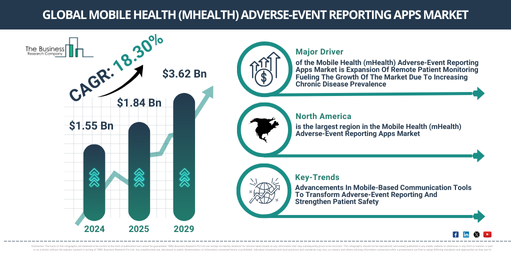
    The mobile health (mHealth) adverse-event reporting apps market has experienced rapid expansion recently. Projections indicate its size will increase from $1.55 billion in 2024 to $1.84 billion in 2025, demonstrating a compound annual growth rate (CAGR) of 18.7%. Historically, this growth was driven by factors such as regulatory initiatives promoting pharmacovigilance compliance, increasing adoption of smartphones and internet, greater patient involvement in healthcare, heightened awareness of adverse drug reactions, and the broadening of digital health ecosystems.

    The mobile health (mHealth) adverse-event reporting apps market size is anticipated to experience substantial growth over the next few years. It is projected to expand to $3.62 billion by 2029, achieving a compound annual growth rate (CAGR) of 18.3%. This expansion during the forecast period is attributable to the integration with electronic health records (EHR/EMR), rising adoption of remote patient monitoring, supportive government digital health initiatives, an increased focus on real-time drug safety surveillance, and the growing demand for personalized and patient-centric healthcare. Significant trends expected in the forecast period include artificial intelligence-driven adverse event detection, blockchain-enabled data security, cloud-based reporting platforms, integration with wearable devices, and natural language processing for patient feedback.

    Unlock Your Free Sample Report for Exclusive Market Data:

    https://www.thebusinessresearchcompany.com/sample.aspx?id=28273&type=smp

    Which Drivers Are Impacting The Mobile Health (mHealth) Adverse-Event Reporting Apps Market?

    The projected expansion of remote patient monitoring is anticipated to fuel the growth of the mobile health (mHealth) adverse-event reporting apps market in the future. Remote patient monitoring (RPM) involves using digital technologies to gather medical and health-related data from patients outside traditional healthcare environments. The increase in RPM is largely attributed to the rising prevalence of chronic diseases, which creates a demand for continuous, real-time patient monitoring beyond conventional healthcare settings to enhance outcomes and reduce hospital visits. Remote patient monitoring supports the advancement of mobile health (mHealth) adverse-event reporting apps by enabling ongoing collection of patient health data, facilitating prompt reporting and tracking of adverse drug reactions or treatment side effects through mobile platforms. For instance, in August 2023, according to Vivalink, a US-based healthcare technology company, 81% of clinicians now utilize remote patient monitoring (RPM), a significant jump from just 20% in 2021, representing a 305% increase. Furthermore, 84% of current RPM users intend to expand their use of the technology in 2024. Consequently, the expansion of remote patient monitoring is a key driver for the growth of the mobile health (mHealth) adverse-event reporting apps market.

    How Is The Mobile Health (mHealth) Adverse-Event Reporting Apps Market Classified Into Different Segments?

    The mobile health (mhealth) adverse-event reporting apps market covered in this report is segmented as

    1) By App Type: Standalone Adverse-Event Reporting Apps, Integrated mHealth Platforms

    2) By Platform: Android, iPhone Operating System (IOS), Web-Based

    3) By Application: Pharmacovigilance, Clinical Trials, Patient Safety Monitoring, Other Applications

    4) By End-User: Hospitals And Clinics, Pharmaceutical Companies, Research Organizations, Patients, Other End Users

    Subsegments:

    1) By Standalone Adverse-Event Reporting Apps: Patient-Centric Reporting Apps, Healthcare Provider Reporting Apps, Regulator-Focused Reporting Apps, Pharmacovigilance Reporting Apps

    2) By Integrated mHealth Platforms: Electronic Health Record or Electronic Medical Record Integrated Reporting Modules, Telemedicine Platform-Integrated Reporting, Clinical Trial and Research Platform Integration, Hospital and Pharmacy Management System Integration

    How Are Trends Influencing The Mobile Health (mHealth) Adverse-Event Reporting Apps Market?

    Leading companies in the mobile health (mHealth) adverse-event reporting apps market are concentrating on developing advanced solutions, such as mobile-based communication tools, to speed up adverse-event detection and improve overall drug safety monitoring. Mobile-based communication tools are digital platforms or applications that facilitate seamless interaction, reporting, and information sharing through smartphones or tablets, allowing real-time connectivity between patients, healthcare providers, and regulators for quicker decision-making and better healthcare outcomes. For instance, in September 2023, Bharat Serums and Vaccines Limited (BSV), an India-based biopharmaceutical company, introduced the BSV AER, a new mobile-based communication application. This app permits healthcare professionals, consumers, and company personnel to electronically report potential adverse events from BSV products using smartphones or tablets anywhere in India, at no cost. BSV AER is directly integrated with BSV’s pharmacovigilance system, thereby streamlining the timely reporting and evaluation of adverse events to support patient safety through efficient management and swift responses.

    Who Are The Core Companies Influencing The Mobile Health (mHealth) Adverse-Event Reporting Apps Market Landscape?

    Major companies operating in the mobile health (mhealth) adverse-event reporting apps market are IQVIA Holdings Inc., Veeva Systems Inc., Itransition Group Inc., Bharat Serums and Vaccines Limited, ArisGlobal LLC, Saama Technologies Inc., Optimal Strategix Group Inc., OSP Labs Private Limited, K Health Inc., SafetyCall International PLLC, Medwatcher, Healthy.io Ltd., InPhase Technologies Ltd., Tiga Healthcare Technologies Inc., Qualityze Inc., iVigee Services AS, Advera Health Analytics Inc., Preventice Solutions Inc., Luscii Healthtech BV, and My Mhealth Limited.

    Download The Full Report For Exclusive Market Findings:

    https://www.thebusinessresearchcompany.com/report/mobile-health-mhealth-adverse-event-reporting-apps-global-market-report

    What Are The Key Regional Factors Influencing The Mobile Health (mHealth) Adverse-Event Reporting Apps Market Growth?

    North America was the largest region in the mobile health (mHealth) adverse event reporting apps market in 2024. The regions covered in mobile health (mHealth) adverse event reporting apps report are Asia-Pacific, Western Europe, Eastern Europe, North America, South America, Middle East and Africa.

    Request A Customized Version Of The Mobile Health (mHealth) Adverse-Event Reporting Apps Market Report:

    https://www.thebusinessresearchcompany.com/customise?id=28273&type=smp

    Browse Through More Reports Similar to the Global Mobile Health (mHealth) Adverse-Event Reporting Apps Market 2025, By The Business Research Company

    Mhealth Apps Global Market Report 2025

    https://www.thebusinessresearchcompany.com/report/mhealth-apps-global-market-report

    Disease Management Apps Global Market Report 2025

    https://www.thebusinessresearchcompany.com/report/disease-management-apps-global-market-report

    Womens Health App Global Market Report 2025

    https://www.thebusinessresearchcompany.com/report/womens-health-app-global-market-report

    Get in touch with us:

    The Business Research Company: https://www.thebusinessresearchcompany.com/

    Americas +1 310-496-7795

    Asia +44 7882 955267 & +91 8897263534

    Europe +44 7882 955267

    Email us at info@tbrc.info

    Follow us on:

    LinkedIn: https://in.linkedin.com/company/the-business-research-company

    YouTube: https://www.youtube.com/channel/UC24_fI0rV8cR5DxlCpgmyFQ

    Global Market Model: https://www.thebusinessresearchcompany.com/global-market-model
  • Minor Cut Hydrocolloid Film Industry Insights: Market Forecast to 2029

    Minor Cut Hydrocolloid Film Industry Insights: Market Forecast to 2029

    Unlock Global Insights – Save 20% on Market Reports with Code ONLINE20

    How Is The Minor Cut Hydrocolloid Film Market Size Likely To Evolve From 2025 Through 2034?

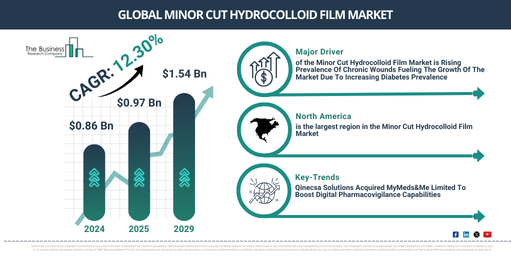
    The minor cut hydrocolloid film market size has expanded quickly in recent years. It is projected to increase from $0.86 billion in 2024 to $0.97 billion in 2025, showing a compound annual growth rate (CAGR) of 12.6%. The historical growth can be attributed to several factors: an increasing consumer emphasis on personal hygiene, the growing adoption of over-the-counter wound care products, a rising geriatric population with fragile skin, more instances of accidental cuts in household activities, and an expanding use of protective dressings in occupational settings.

    The market for minor cut hydrocolloid films is projected to experience substantial expansion over the upcoming years. This market is anticipated to reach a valuation of $1.54 billion by 2029, exhibiting a compound annual growth rate (CAGR) of 12.3%. This projected growth during the forecast timeframe is attributable to several factors, including heightened public understanding of rapid healing advantages, a rising need from both children’s and elder care sectors, the increasing appeal of user-friendly wound care solutions, the expansion of retail and online sales avenues, and an increased focus on proactive health measures. Significant developments expected during this period encompass enhancements in dermal-friendly adhesive substances, the creation of environmentally sustainable and naturally degradable films, breakthroughs in incredibly thin clear dressings, improvements in packaging designed for extended product longevity, and the introduction of versatile films possessing germ-fighting capabilities.

    Unlock Your Free Sample Report for Exclusive Market Data:

    https://www.thebusinessresearchcompany.com/sample.aspx?id=28272&type=smp

    Which Industry Drivers Are Expected To Accelerate The Minor Cut Hydrocolloid Film Market From 2025 To 2029?

    The increasing occurrence of chronic wounds is projected to drive the expansion of the minor cut hydrocolloid film market in the future. These wounds are characterized by their inability to heal through the usual stages within a normal timeframe, often lasting beyond 4–6 weeks even with proper treatment. The growing incidence of diabetes is a key factor behind the rise in chronic wounds, as elevated blood sugar levels hinder circulation and impede the body’s intrinsic healing capabilities. Minor cut hydrocolloid films assist in managing chronic wounds by fostering a damp healing environment, guarding against infections, and accelerating tissue regeneration, offering advantages over conventional dressings. For instance, in July 2025, National Seniors Australia, a non-profit organization based in Australia, reported that over 450,000 Australians suffer from chronic wounds, imposing an annual cost exceeding $6 billion on the healthcare system. Consequently, the increasing prevalence of chronic wounds is a significant impetus for the growth of the minor cut hydrocolloid film market. The growing healthcare expenditure is anticipated to advance the minor cut hydrocolloid film market in the future. Healthcare expenditure signifies the cumulative financial outlay on medical services, therapies, facilities, research, and public health programs aimed at preserving or enhancing health results. The heightened need for healthcare spending stems from the increasing incidence of chronic diseases, which necessitate extended and expensive care. Elevated healthcare expenditure bolsters the minor cut hydrocolloid film market by facilitating greater access to and adoption of advanced wound care solutions for both patients and healthcare providers. This expansion supports the deployment of cutting-edge products that accelerate healing and mitigate complications, thereby enhancing patient results and overall treatment effectiveness. For example, in May 2024, the Office for National Statistics, a UK government body, reported that total healthcare expenditure experienced a 5.6% rise in nominal terms in 2023, representing a 0.9% increase over 2022. Consequently, the surge in healthcare expenditure is propelling the expansion of the minor cut hydrocolloid film market.

    What Are The Major Segments Identified In The Minor Cut Hydrocolloid Film Market?

    The minor cut hydrocolloid film market covered in this report is segmented as

    1) By Product Type: Adhesive Hydrocolloid Film, Non-Adhesive Hydrocolloid Film, Transparent Hydrocolloid Film, Other Product Types

    2) By Application: Hospitals, Clinics, Homecare, Other Applications

    3) By Distribution Channel: Hospital Pharmacies, Retail Pharmacies, Online Pharmacies, Other Distribution Channels

    4) By End-User: Adults, Pediatrics, Geriatrics

    Subsegments:

    1) By Adhesive Hydrocolloid Film: Thin Layer, Flexible Sheet, Pre-Cut Shapes, Roll Form

    2) By Non-Adhesive Hydrocolloid Film: Sheet Dressing, Pocket Dressing, Layered Dressing

    3) By Transparent Hydrocolloid Film: Clear Sheet, Window Dressing, Protective Film

    4) By Other Product Types: Composite Dressing, Foam Backed Dressing, Hybrid Film

    What Key Innovation Trends Are Fueling Advancements In The Minor Cut Hydrocolloid Film Market?

    Major companies engaged in the minor cut hydrocolloid film market are prioritizing the creation of innovative solutions, such as sophisticated hydrocolloid plasters, to expedite wound healing and minimize the appearance of scars. Advanced hydrocolloid plasters function as wound dressings that establish a moist healing environment, safeguard the wound against infection, and encourage a faster, higher-quality recovery in contrast to traditional bandages. For example, in January 2025, Beiersdorf AG, a consumer goods and personal care company based in Germany, launched its next-generation Second Skin Protection plasters. These plasters are engineered to support quicker, high-quality wound healing while simultaneously reducing the risk of infection and scarring. They utilize advanced hydrocolloid technology that absorbs wound exudate and forms a protective healing capsule, thereby fostering a moist environment that accelerates natural recovery. These plasters also feature a 100% waterproof yet breathable outer layer, which protects wounds from dirt and bacteria while enabling excess moisture to evaporate. Their ultra-thin, flexible design ensures comfort and strong adhesion, even on challenging body parts like knees and elbows.

    Which Major Industry Participants Are Leading The Minor Cut Hydrocolloid Film Market Growth?

    Major companies operating in the minor cut hydrocolloid film market are Cardinal Health Inc., 3M Company, Beiersdorf Aktiengesellschaft, B. Braun Melsungen AG, Smith & Nephew plc, Coloplast Aktieselskab, Paul Hartmann AG, Mölnlycke Health Care Aktiebolag, ConvaTec Group plc, Hollister Incorporated, Acelity L.P Inc., BSN medical GmbH, Derma Sciences Inc., Urgo Medical, Winner Medical Co. Ltd., Scapa Healthcare, Medline Industries LP, Covalon Technologies Ltd., Hi-Tech Products, and Sundaram Medical Devices.

    Download The Full Report For Exclusive Market Findings:

    https://www.thebusinessresearchcompany.com/report/minor-cut-hydrocolloid-film-global-market-report

    How Do Regional Market Performances Compare Within The Minor Cut Hydrocolloid Film Industry?

    North America was the largest region in the minor cut hydrocolloid film market in 2024. Asia-Pacific is expected to be the fastest-growing region in the forecast period. The regions covered in minor cut hydrocolloid film report are Asia-Pacific, Western Europe, Eastern Europe, North America, South America, Middle East and Africa.

    Request A Customized Version Of The Minor Cut Hydrocolloid Film Market Report:

    https://www.thebusinessresearchcompany.com/customise?id=28272&type=smp

    Browse Through More Reports Similar to the Global Minor Cut Hydrocolloid Film Market 2025, By The Business Research Company

    Hydrocolloids Global Market Report 2025

    https://www.thebusinessresearchcompany.com/report/hydrocolloids-global-market-report

    Food Hydrocolloids Global Market Report 2025

    https://www.thebusinessresearchcompany.com/report/food-hydrocolloids-global-market-report

    Greenhouse Film Global Market Report 2025

    https://www.thebusinessresearchcompany.com/report/greenhouse-film-global-market-report

    Get in touch with us:

    The Business Research Company: https://www.thebusinessresearchcompany.com/

    Americas +1 310-496-7795

    Asia +44 7882 955267 & +91 8897263534

    Europe +44 7882 955267

    Email us at info@tbrc.info

    Follow us on:

    LinkedIn: https://in.linkedin.com/company/the-business-research-company

    YouTube: https://www.youtube.com/channel/UC24_fI0rV8cR5DxlCpgmyFQ

    Global Market Model: https://www.thebusinessresearchcompany.com/global-market-model
  • Microbiome Testing Kit Market Size and Growth Forecast for Businesses 2025–2029

    Microbiome Testing Kit Market Size and Growth Forecast for Businesses 2025–2029

    Unlock Global Insights – Save 20% on Market Reports with Code ONLINE20

    What Are The Growth Projections For The Microbiome Testing Kit Market Size During 2025–2029?

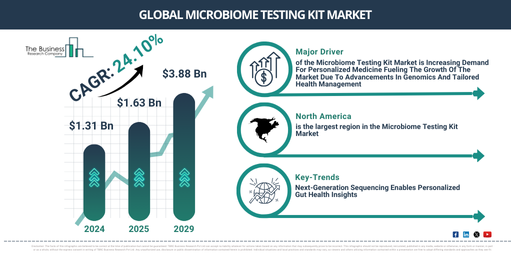
    The microbiome testing kit market has experienced significant expansion in recent years. Its size is projected to expand from $1.31 billion in 2024 to $1.63 billion by 2025, demonstrating a compound annual growth rate (CAGR) of 24.5%. This historical expansion is linked to several factors, including a heightened public interest in digestive health, increased uptake of nutrigenomics testing, enhanced consumer understanding of microbiome roles, an increase in preventive healthcare initiatives, and the growing occurrence of lifestyle-related illnesses.

    The microbiome testing kit market is set to experience significant expansion in the coming years, with projections indicating it will reach $3.88 billion by 2029, growing at a compound annual growth rate (CAGR) of 24.1%. This anticipated growth can be attributed to several factors, including an increasing demand for personalized medicine, a rising adoption of at-home self-testing, the growing prevalence of gut-brain related disorders, an increase in investment toward microbiome therapeutics, and a growing demand for evidence-based medicine and precision therapeutics. Key trends expected during this forecast period include advancements in next-generation sequencing technologies, integration with mobile health applications, innovations in artificial intelligence-driven microbiome analytics, the development of rapid home testing kits, and improvements in standardized clinical reporting tools.

    Unlock Your Free Sample Report for Exclusive Market Data:

    https://www.thebusinessresearchcompany.com/sample.aspx?id=28271&type=smp

    What Are The Top Growth Drivers Impacting The Microbiome Testing Kit Market Outlook?

    The escalating need for personalized medicine is anticipated to fuel the expansion of the microbiome testing kit market in the foreseeable future. This medical approach involves customizing treatment and preventative measures to align with a person’s distinct genetic profile, lifestyle, and surroundings. Its growing acceptance largely stems from progress in genomics, allowing for the accurate detection of genetic differences and the development of custom treatments for patients. Microbiome testing kits augment personalized medicine by providing specific data on an individual’s microbial makeup, thus becoming crucial tools for customized health management. These kits minimize speculation in dietary and lifestyle choices through accurate, evidence-based advice, thereby enhancing overall well-being and averting illness. For example, in February 2024, the Personalized Medicine Coalition (PMC), a US-based nonprofit, reported that the U.S. Food and Drug Administration (FDA) sanctioned 26 new personalized medicines in 2023, marking a notable rise from the 12 approved in 2022. Consequently, the rising demand for personalized medicine is a key impetus behind the growth of the microbiome testing kit market.

    What Are The Emerging Segments Gaining Attention In The Microbiome Testing Kit Market?

    The microbiome testing kit market covered in this report is segmented as

    1) By Product Type: At-Home Testing Kits, Laboratory-Based Testing Kits

    2) By Sample Type: Stool, Saliva, Skin, Other Sample Types

    3) By Application: Gut Health, Skin Health, Nutrition And Diet, Disease Risk Assessment, Other Applications

    4) By Distribution Channel: Online, Pharmacies, Retail Stores, Other Distribution Channel

    5) By End-User: Individuals, Hospitals And Clinics, Research And Academic Institutes, Other End-Users

    Subsegments:

    1) By At-Home Testing Kits: Gut Health Analysis, Digestive Function Assessment, Personalized Nutrition Guidance, Probiotic Response Evaluation

    2) By Laboratory-Based Testing Kits, By Type: Microbial Diversity Profiling, Pathogen Detection, Metabolic Activity Analysis, Antibiotic Resistance Screening

    Which Ongoing Trends Are Expected To Shape The Microbiome Testing Kit Market Outlook?

    Leading firms within the microbiome testing kit market are concentrating on creating cutting-edge solutions, including next-generation sequencing for gut microbiome analysis, to deliver customized understandings of gut well-being and nutritional advice. This next-generation sequencing approach to gut microbiome analysis involves swiftly deciphering the deoxyribonucleic acid of all gut microbes to ascertain their varieties, quantities, and prospective effects on health. As an example, in January 2025, CJ Bioscience Inc., a biotechnology firm located in South Korea, introduced SMILE GUT, a direct-to-consumer gut microbiome testing kit crafted to provide individualized insights into gut health. Utilizing next-generation sequencing and artificial intelligence, the kit analyzes stool samples and produces a gut microbiome index score. This score indicates microbial diversity, the equilibrium of helpful and detrimental bacteria, and how well it matches healthy gut characteristics. Furthermore, it offers customized health suggestions, such as probiotic guidance and dietary recommendations, with outcomes available within 14 business days, thereby empowering users to actively maintain their gut health.

    Who Are The Prominent Global Companies Shaping The Microbiome Testing Kit Market?

    Major companies operating in the microbiome testing kit market are OraSure Technologies Inc., Genova Diagnostics Inc., Ombre Health Inc., Viome Inc., Zymo Research Corporation, EasyDNA Pty Ltd., Psomagen Inc., DayTwo Ltd., Atlas Biomed Group Limited., BIOHM Health Inc., Mapmygenome India Limited, Biomes NGS GmbH, Carbiotix AB, CosmosID Inc., Juno Bio Ltd., Microba Life Sciences Limited., Sun Genomics Inc., Unseen Bio ApS, InnerBuddies, and MyMicroZoo B.V.

    Download The Full Report For Exclusive Market Findings:

    https://www.thebusinessresearchcompany.com/report/microbiome-testing-kit-global-market-report

    Which Region Currently Holds The Largest Share Of The Microbiome Testing Kit Market?

    North America was the largest region in the personalized genomics market in 2024. Asia-Pacific is expected to be the fastest-growing region in the forecast period. The regions covered in microbiome testing kit report are Asia-Pacific, Western Europe, Eastern Europe, North America, South America, Middle East and Africa.

    Request A Customized Version Of The Microbiome Testing Kit Market Report:

    https://www.thebusinessresearchcompany.com/customise?id=28271&type=smp

    Browse Through More Reports Similar to the Global Microbiome Testing Kit Market 2025, By The Business Research Company

    Microbiomes Global Market Report 2025

    https://www.thebusinessresearchcompany.com/report/microbiomes-global-market-report

    Microbiology And Bacterial Culture For Industrial Testing Global Market Report 2025

    https://www.thebusinessresearchcompany.com/report/microbiology-and-bacterial-culture-for-industrial-testing-global-market-report

    Gastrointestinal Pathogen Testing Global Market Report 2025

    https://www.thebusinessresearchcompany.com/report/gastrointestinal-pathogen-testing-global-market-report

    Get in touch with us:

    The Business Research Company: https://www.thebusinessresearchcompany.com/

    Americas +1 310-496-7795

    Asia +44 7882 955267 & +91 8897263534

    Europe +44 7882 955267

    Email us at info@tbrc.info

    Follow us on:

    LinkedIn: https://in.linkedin.com/company/the-business-research-company

    YouTube: https://www.youtube.com/channel/UC24_fI0rV8cR5DxlCpgmyFQ

    Global Market Model: https://www.thebusinessresearchcompany.com/global-market-model
  • Global Microbiome Sequencing Service Market Overview: Trends Shaping Growth to 2029

    Global Microbiome Sequencing Service Market Overview: Trends Shaping Growth to 2029

    Unlock Global Insights – Save 20% on Market Reports with Code ONLINE20

    What Is The Global Market Value Of The Microbiome Sequencing Service Industry In 2025?

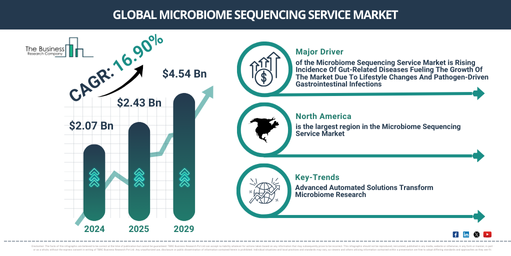
    The market for microbiome sequencing services has experienced substantial growth in recent times. This market is projected to expand from $2.07 billion in 2024 to $2.43 billion by 2025, demonstrating a compound annual growth rate (CAGR) of 17.3%. Historically, this expansion has been driven by several factors, including increasing interest in human microbiota studies, the rising prevalence of gastrointestinal disorders, growing antibiotic resistance concerns, expanding applications in disease diagnostics, and an increase in collaborations among research institutions.

    The microbiome sequencing service market size is anticipated to experience significant expansion in the coming years. This market is projected to reach $4.54 billion by 2029, growing at a compound annual growth rate (CAGR) of 16.9%. The expansion during this forecast period stems from factors such as a growing move towards precision nutrition, increasing demand for microbiome-based treatments, heightened consumer emphasis on preventive healthcare, more extensive utilization of microbiome data in drug discovery processes, and wider integration of microbiome testing in clinical settings. Key trends expected within the forecast timeframe encompass progress in metagenomic sequencing methodologies, the creation of microbiome-based diagnostic instruments, innovations in bioinformatics platforms designed for data analysis, improvements in integrating multi-omics research, and the evolution of personalized microbiome-based therapies.

    Unlock Your Free Sample Report for Exclusive Market Data:

    https://www.thebusinessresearchcompany.com/sample.aspx?id=28270&type=smp

    Which Major Market Drivers Are Shaping The Future Of The Microbiome Sequencing Service Market?

    The increasing occurrence of gut-related illnesses is anticipated to boost the expansion of the microbiome sequencing service market moving forward. Gut-related diseases are defined as medical conditions impacting the gastrointestinal (GI) tract, which includes the stomach, intestines, and associated organs like the liver, pancreas, and gallbladder. The escalating frequency of these diseases is attributed to shifts in lifestyle and dietary patterns, such as significant consumption of processed foods and insufficient fiber intake, which disrupts the balance of gut microbiota. The microbiome sequencing service supports the management of gut-related diseases by providing detailed insights into gut microbial composition, making it highly effective for diagnosing and monitoring gastrointestinal conditions. This service enables targeted interventions by identifying microbial imbalances, thus improving personalized treatment and overall gut health management. For instance, in June 2025, the UK Health Security Agency, a UK-based government agency, indicated that laboratory reports for Campylobacter increased by 27.0% from 96.1 to 122.0 per 100,000 population between 2022 and 2024. Therefore, the rising incidence of gut-related diseases is propelling the growth of the microbiome sequencing service market.

    What Are The Major Segment Types Covered In The Microbiome Sequencing Service Market?

    The microbiome sequencing service market covered in this report is segmented as

    1) By Service: Sample Preparation, Sequencing And Library Preparation, Data Analysis

    2) By Technology: Sequencing By Litigation (SBL), Sequencing By Synthesis (SBS), Short Gun Sequencing, Targeted Gene Sequencing, RNA Sequencing, Other Technologies

    3) By Application: Autoimmune Disorder, Cancer, Gastrointestinal Disorders, Other Applications

    4) By End-User: Pharmaceutical And Biotechnology Companies, Academic Research Institutes, Other End-Users

    Subsegments:

    1) By Sample Preparation: Deoxyribonucleic Acid (DNA) Extraction, Ribonucleic Acid (RNA) Extraction, Protein Extraction, Cell Lysis, Library Construction

    2) By Sequencing And Library Preparation: Whole Genome Sequencing, Metagenomic Sequencing, Amplicon Sequencing, Shotgun Sequencing, Targeted Sequencing

    3) By Data Analysis: Taxonomic Profiling, Functional Profiling, Comparative Analysis, Statistical Analysis, Pathway Analysis

    Which Competitive Trends Are Defining The Microbiome Sequencing Service Market Structure?

    Leading companies in the microbiome sequencing service market are concentrating on developing sophisticated solutions, including automated metagenomics sequencing solutions, aimed at enhancing efficiency, accuracy, and scalability within microbiome research and analysis. An automated metagenomics sequencing solution functions as a comprehensive system, enabling the sequencing and analysis of microbial communities with minimal manual involvement, thus ensuring high accuracy, reproducibility, and scalable throughput. For instance, in July 2024, MGI Tech Co. Ltd., a China-based biotechnology company, introduced its Human Microbiome Metagenomics Sequencing Package. This offering provides a fully integrated workflow, encompassing automated sample pretreatment, nucleic acid extraction, library preparation, sequencing, and data analysis, designed to support high-throughput and cost-efficient microbiome research. Its validated performance on a substantial number of human stool samples confirms its reproducibility and accuracy, thereby setting a new benchmark for large-scale human microbiome studies.

    Which Key Players Are Driving Competition In The Microbiome Sequencing Service Market?

    Major companies operating in the microbiome sequencing service market are Eurofins Scientific LLC, Illumina Inc., Charles River Laboratories, QIAGEN N.V., Mérieux NutriSciences Corporation, OraSure Technologies Inc., Zifo RnD Solutions, Novogene Co. Ltd., Oxford Nanopore Technologies Plc, Macrogen Inc., Zymo Research Corporation, CD Genomics, Molzym GmbH & Co. KG (Gradian Diagnostics), Baseclear BV, Psomagen Inc., Mapmygenome, Rancho Biosciences LLC, Boster Biological Technology Ltd., Clinical Microbiomics, and Microba Life Sciences Limited.

    Download The Full Report For Exclusive Market Findings:

    https://www.thebusinessresearchcompany.com/report/microbiome-sequencing-service-global-market-report

    What Regional Growth Trends Are Shaping The Microbiome Sequencing Service Market Outlook?

    North America was the largest region in the microbiome sequencing service market in 2024. Asia-Pacific is expected to be the fastest-growing region in the forecast period. The regions covered in microbiome sequencing service report are Asia-Pacific, Western Europe, Eastern Europe, North America, South America, Middle East and Africa.

    Request A Customized Version Of The Microbiome Sequencing Service Market Report:

    https://www.thebusinessresearchcompany.com/customise?id=28270&type=smp

    Browse Through More Reports Similar to the Global Microbiome Sequencing Service Market 2025, By The Business Research Company

    Rna Sequencing Services Global Market Report 2025

    https://www.thebusinessresearchcompany.com/report/rna-sequencing-services-global-market-report

    Genomics Services Global Market Report 2025

    https://www.thebusinessresearchcompany.com/report/genomics-services-global-market-report

    Microbiomes Global Market Report 2025

    https://www.thebusinessresearchcompany.com/report/microbiomes-global-market-report

    Get in touch with us:

    The Business Research Company: https://www.thebusinessresearchcompany.com/

    Americas +1 310-496-7795

    Asia +44 7882 955267 & +91 8897263534

    Europe +44 7882 955267

    Email us at info@tbrc.info

    Follow us on:

    LinkedIn: https://in.linkedin.com/company/the-business-research-company

    YouTube: https://www.youtube.com/channel/UC24_fI0rV8cR5DxlCpgmyFQ

    Global Market Model: https://www.thebusinessresearchcompany.com/global-market-model
  • Microbial Sealant Market Growth Opportunities: Insights from 2025–2029

    Microbial Sealant Market Growth Opportunities: Insights from 2025–2029

    Unlock Global Insights – Save 20% on Market Reports with Code ONLINE20

    By How Much Is The Microbial Sealant Market Expected To Expand Between 2025 And 2029?

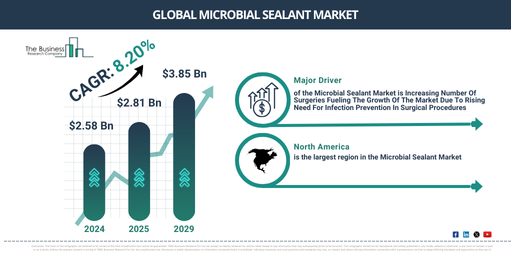
    The microbial sealant market has demonstrated substantial growth in recent times. It is projected to expand from $2.58 billion in 2024 to $2.81 billion in 2025, at a compound annual growth rate (CAGR) of 8.6%. The historical growth can be linked to several factors, including an uptick in surgical site infections, the broader uptake of infection-control practices, an increase in surgical procedures, more rigorous healthcare regulations, heightened patient safety awareness, and the worldwide expansion of hospital infrastructure.

    The microbial sealant market size is anticipated to experience substantial growth in the upcoming years. It is projected to reach $3.85 billion by 2029, showcasing a compound annual growth rate (CAGR) of 8.2%. This expansion during the forecast period is driven by the increasing adoption of minimally invasive surgeries, a greater emphasis on infection control protocols, the rising demand for antimicrobial surgical solutions, the growth of outpatient and ambulatory surgical centers, regulatory support for advanced surgical products, and heightened awareness among healthcare providers concerning surgical site infection prevention. Prominent trends for the forecast period include innovations in antimicrobial formulations, the development of faster-drying sealants, integration with minimally invasive surgical techniques, the adoption of biocompatible and eco-friendly materials, and the application of nanotechnology for enhanced protection.

    Unlock Your Free Sample Report for Exclusive Market Data:

    https://www.thebusinessresearchcompany.com/sample.aspx?id=28269&type=smp

    What Are The Main Drivers Boosting The Microbial Sealant Industry’s Expansion?

    The expanding volume of surgical procedures is anticipated to propel the growth of the microbial sealant market going forward. Surgery involves medical professionals utilizing specialized tools to address injuries, illnesses, or various conditions by incising the body or mending internal tissues and organs. This increase in surgical interventions stems from the rising occurrence of chronic ailments that frequently necessitate operative care. Microbial sealant plays a crucial role in these procedures by forming a durable barrier on the skin, which thwarts microbial contamination, thereby diminishing the likelihood of surgical site infections and fostering a more secure operative setting. For instance, the Australian Institute of Health and Welfare, an Australia-based government organization, stated in April 2025 that public hospitals recorded 778,500 admissions from elective surgery waitlists in 2023–24, indicating a 5.8% increase compared to 735,500 admissions in 2022–23. Consequently, the increasing frequency of surgeries is a key factor driving the expansion of the microbial sealants market. The growing incidence of sports injuries is anticipated to significantly contribute to the expansion of the microbial sealant market moving forward. Sports injuries encompass physical harm or trauma sustained during participation in athletic endeavors or leisure pursuits. The escalation in sports injuries can be attributed to the rise in rigorous physical activities and increased involvement in competitive sports. Microbial sealants are employed for sports injuries to establish an antimicrobial layer over wounds, thereby lowering the risk of infection and facilitating quicker recovery. For instance, Howden Group Holdings Ltd, a UK-based insurance intermediary company, reported in November 2023 that the severity of ankle injuries in the English Premier League saw a 170% increase between October 2022 and January 2023, with calf/shin injuries climbing by 200% and hamstring injuries by 130%, following the FIFA World Cup Qatar 2022. Hence, the surging number of sports-related injuries is a key impetus for the growth of the microbial sealant market.

    What Are The Major Segment Categories Driving The Microbial Sealant Market Growth?

    The microbial sealant market covered in this report is segmented as

    1) By Product Type: Natural Microbial Sealants, Synthetic Microbial Sealants

    2) By Type: Ethylene Oxide, Cyanoacrylate

    3) By Application: Surgical Procedures, Wound Care, Dental Care, Other Applications

    4) By End-User: Hospitals, Ambulatory Surgical Centers, Clinics, Other End Users

    Subsegments:

    1) By Natural Microbial Sealants: Plant-Derived Sealants, Animal-Derived Sealants, Marine-Derived Sealants, Microorganism-Derived Sealants

    2) By Synthetic Microbial Sealants: Polymeric Sealants, Cyanoacrylate-Based Sealants, Hydrogel-based Sealants, Composite Or Hybrid Sealants

    Who Are The Top Performing Companies In The Microbial Sealant Market In Recent Years?

    Major companies operating in the microbial sealant market are Johnson & Johnson, Medtronic plc, 3M Company, The Sherwin-Williams Company, Kimberly-Clark Health Care, Becton Dickinson and Company (BD), Evonik Industries AG, Sika AG, B. Braun AG, H.B. Fuller Company, Bostik Inc., Integra LifeSciences Holdings Corporation, Soudal N.V., Technetics Group, Advanced Medical Solutions Group plc, Polymères Technologies Inc., Microban International Ltd., Hodgson Sealants Ltd., Nano-Care Deutschland AG, BioCote Limited.

    Download The Full Report For Exclusive Market Findings:

    https://www.thebusinessresearchcompany.com/report/microbial-sealant-global-market-report

    Which Regional Markets Are Contributing Most To The Microbial Sealant Industry Expansion?

    North America was the largest region in the microbial sealant market in 2024. Asia-Pacific is expected to be the fastest-growing region in the forecast period. The regions covered in microbial sealant report are Asia-Pacific, Western Europe, Eastern Europe, North America, South America, Middle East and Africa.

    Request A Customized Version Of The Microbial Sealant Market Report:

    https://www.thebusinessresearchcompany.com/customise?id=28269&type=smp

    Browse Through More Reports Similar to the Global Microbial Sealant Market 2025, By The Business Research Company

    Pharmaceutical Processing Seals Global Market Report 2025

    https://www.thebusinessresearchcompany.com/report/pharmaceutical-processing-seals-global-market-report

    Surgical Sealants And Adhesives Global Market Report 2025

    https://www.thebusinessresearchcompany.com/report/surgical-sealants-and-adhesives-global-market-report

    Microbial Identification Global Market Report 2025

    https://www.thebusinessresearchcompany.com/report/microbial-identification-global-market-report

    Get in touch with us:

    The Business Research Company: https://www.thebusinessresearchcompany.com/

    Americas +1 310-496-7795

    Asia +44 7882 955267 & +91 8897263534

    Europe +44 7882 955267

    Email us at info@tbrc.info

    Follow us on:

    LinkedIn: https://in.linkedin.com/company/the-business-research-company

    YouTube: https://www.youtube.com/channel/UC24_fI0rV8cR5DxlCpgmyFQ

    Global Market Model: https://www.thebusinessresearchcompany.com/global-market-model