Blog

  • Kidney Stone Management Market to Grow at a CAGR of 6.6% from 2025 to 2029

    Kidney Stone Management Market to Grow at a CAGR of 6.6% from 2025 to 2029

    Unlock Global Insights – Save 20% on Market Reports with Code ONLINE20

    What Are The Growth Projections For The Kidney Stone Management Market Size During 2025–2029?

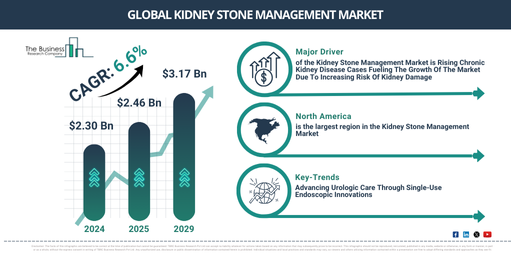
    The kidney stone management market has demonstrated significant expansion over recent years. It is anticipated to expand from $2.30 billion in 2024 to $2.46 billion in 2025, achieving a compound annual growth rate (CAGR) of 6.9%. The growth observed in previous periods stems from an uptick in kidney stone cases, increasing obesity levels, an expanding elderly population, greater recognition of kidney health importance, and improved access to healthcare facilities.

    The kidney stone management market size is forecast to demonstrate robust expansion over the next few years, with projections indicating it will reach $3.17 billion by 2029, growing at a compound annual growth rate (CAGR) of 6.6%. This anticipated growth throughout the forecast period stems from factors such as an expanding aging population, the rising adoption of minimally invasive procedures, the increased utilization of advanced imaging technologies, the proliferation of telehealth and digital health solutions, escalating healthcare expenditure, and a heightened awareness concerning kidney health. Significant trends expected during this period include progress in non-invasive treatment technologies, artificial intelligence-powered diagnostics, miniaturized surgical instrumentation, enhanced imaging techniques, smart wearable monitoring devices, precision-targeted therapies, and more comprehensive telehealth integration.

    Unlock Your Free Sample Report for Exclusive Market Data:

    https://www.thebusinessresearchcompany.com/sample.aspx?id=27322&type=smp

    Which Factors And Drivers Are Influencing The Kidney Stone Management Market In 2025?

    The increasing occurrence of chronic kidney disease (CKD) is projected to boost the expansion of the kidney stone management market in the future. Chronic kidney disease (CKD) involves a progressive reduction in kidney function across a period, often triggered by conditions such as diabetes, high blood pressure, and genetic factors. The growing incidence of chronic kidney disease is primarily attributed to the widespread increase in diabetes, a major contributor to prolonged renal impairment. For those with chronic kidney disease, kidney stone management offers advantages by averting obstructions and infections, thus safeguarding the kidneys from additional harm and assisting in preserving their functionality. As an illustration, figures from June 2024, provided by the Australian Institute of Health and Welfare, an Australia-based government body, indicate that chronic kidney disease (CKD) mortality rates rose by 4.2% in 2021 and 6.2% in 2022. During the period of 2021–22, CKD was identified in approximately 2 million hospitalizations, making up 18% of all hospitalizations in Australia. Consequently, the escalating prevalence of chronic kidney disease (CKD) is propelling the expansion of the kidney stone management market.

    What Are The Segment Types Shaping The Kidney Stone Management Market?

    The kidney stone management market covered in this report is segmented

    1) By Treatment: Extracorporeal Shock Wave Lithotripsy (ESWL), Ureteroscopy, Percutaneous Nephrolithotomy (PCNL), Other Treatments

    2) By Product Type: Lithotripter, Stone Removal Baskets, Ureteral Stents, Ureterorenoscopes

    3) By Diagnostics Method: Abdominal X-Ray, Computed Tomography, Ultrasound, Abdominal MRI, Intravenous Pyelography, Other Diagnostics Method

    4) By Distribution Channel: Retail Pharmacies, Online Pharmacies, Other Distribution Channels

    5) By End User: Hospitals, Specialty Clinics, Ambulatory Surgical Centres, Other End-Users

    Subsegments:

    1) By Extracorporeal Shock Wave Lithotripsy (ESWL): Fixed-Site ESWL systems, Mobile ESWL systems, Integrated imaging ESWL systems

    2) By Ureteroscopy: Flexible Ureteroscopes, Semi-Rigid Ureteroscopes, Disposable Ureteroscopes, Reusable Ureteroscopes

    3) By Percutaneous Nephrolithotomy (PCNL): Standard PCNL, Mini-PCNL, Ultra-Mini PCNL, Micro-PCNL

    4) By Other Treatments: Open Surgery, Laparoscopic Stone Removal, Medical Expulsive Therapy (MET), Pharmacological Stone Dissolution Therapy

    What Are The Major Trends Driving The Growth Of The Kidney Stone Management Market?

    Major companies within the kidney stone management market are concentrating on developing sophisticated solutions, such as the Ascend ureteroscopes, to better equip urology clients with thorough stone management options. The Ascend ureteroscope offers adaptable endoscopic access to the urinary tract, including the ureter and kidney, allowing for the visualization, diagnosis, and treatment of conditions like kidney stones. For instance, in May 2024, Cook Medical Inc., a US-based medical device company, launched the Ascend single-use ureteroscope, which is disposable endoscopic equipment designed for urologic operations, specifically kidney stone management. It incorporates a 275-degree up/down deflection and a deflection lock that secures the selected angle, thereby improving precision during complex procedures. Furthermore, the Ascend ureteroscope’s approval for Medicare’s Transitional Pass-through (TPT) payment scheme enhances its availability in clinical practice.

    Who Are The Core Companies Influencing The Kidney Stone Management Market Landscape?

    Major companies operating in the kidney stone management market are Medtronic plc, Siemens Healthineers AG, C.R. Bard Inc., Stryker Corporation, Boston Scientific Corporation, Olympus Corporation, Coloplast A/S, Karl Storz GmbH & Co. KG, Cook Medical Inc., Richard Wolf GmbH, Lumenis Ltd., MorphoSys AG, Dornier MedTech, EDAP TMS S.A., E.M.S. Electro Medical Systems S.A., Dyax Corp., STORZ MEDICAL AG, Medispec Ltd., DirexGroup SA, and Elmed Medical Systems Ltd.

    Download The Full Report For Exclusive Market Findings:

    https://www.thebusinessresearchcompany.com/report/kidney-stone-management-global-market-report

    Which Geographies Are Emerging As Strong Markets For The Kidney Stone Management Industry?

    North America was the largest region in the kidney stone management market in 2024. Asia-Pacific is expected to be the fastest-growing region in the forecast period. The regions covered in the kidney stone management market report are Asia-Pacific, Western Europe, Eastern Europe, North America, South America, Middle East, Africa.

    Request A Customized Version Of The Kidney Stone Management Market Report:

    https://www.thebusinessresearchcompany.com/customise?id=27322&type=smp

    Browse Through More Reports Similar to the Global Kidney Stone Management Market 2025, By The Business Research Company

    Air Quality Control System Global Market Report 2025

    https://www.thebusinessresearchcompany.com/report/air-quality-control-system-global-market-report

    Fire Control System Global Market Report 2025

    https://www.thebusinessresearchcompany.com/report/fire-control-system-global-market-report

    Air Management System Global Market Report 2025

    https://www.thebusinessresearchcompany.com/report/air-management-system-global-market-report

    Get in touch with us:

    The Business Research Company: https://www.thebusinessresearchcompany.com/

    Americas +1 310-496-7795

    Asia +44 7882 955267 & +91 8897263534

    Europe +44 7882 955267

    Email us at info@tbrc.info

    Follow us on:

    LinkedIn: https://in.linkedin.com/company/the-business-research-company

    YouTube: https://www.youtube.com/channel/UC24_fI0rV8cR5DxlCpgmyFQ

    Global Market Model: https://www.thebusinessresearchcompany.com/global-market-model
  • Global Ischemic Stroke Aspiration Systems Market 2025–2029: Competitive Insights and Opportunities

    Global Ischemic Stroke Aspiration Systems Market 2025–2029: Competitive Insights and Opportunities

    Unlock Global Insights – Save 20% on Market Reports with Code ONLINE20

    What Is The Global Market Value Of The Ischemic Stroke Aspiration Systems Industry In 2025?

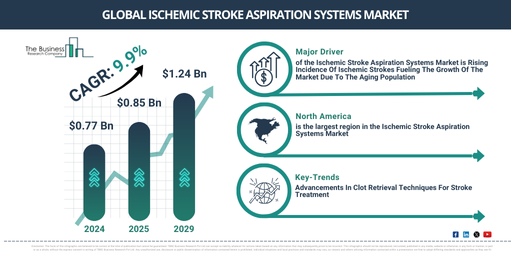
    The ischemic stroke aspiration systems market has undergone rapid expansion in recent years. Its value is anticipated to rise from $0.77 billion in 2024 to $0.85 billion in 2025, achieving a compound annual growth rate (CAGR) of 10.3%. This historical growth can be attributed to a confluence of factors, such as increased hospital investments, greater public awareness of stroke symptoms and available treatments, an expanding demographic of elderly patients, enhanced accessibility to emergency medical services, and the broader acceptance of mechanical thrombectomy.

    The ischemic stroke aspiration systems market is projected to experience robust expansion over the coming years. This market is anticipated to reach a valuation of $1.24 billion by 2029, exhibiting a compound annual growth rate (CAGR) of 9.9%. Factors contributing to this growth during the forecast timeframe include the expanded application of aspiration systems, greater investments in healthcare infrastructure, a heightened demand for quicker stroke recovery options, an intensified emphasis on enhancing patient outcomes, and the wider integration of image-guided procedures. Key trends expected within this period encompass advancements in the design of aspiration catheters, novel developments in neurovascular imaging integration, the emergence of robotic-assisted interventions for stroke, the development of portable devices for stroke treatment, and breakthroughs in real-time procedure monitoring systems.

    Unlock Your Free Sample Report for Exclusive Market Data:

    https://www.thebusinessresearchcompany.com/sample.aspx?id=27321&type=smp

    What Are The Key Drivers Of Growth In The Ischemic Stroke Aspiration Systems Market?

    The increasing incidence of stroke risk is anticipated to drive the expansion of the ischemic stroke aspiration systems market in the coming period. Stroke risk denotes the probability of an individual suffering a stroke, determined by existing medical conditions, lifestyle choices, and genetic factors. This escalating stroke risk stems from an aging demographic, whose susceptibility to stroke naturally rises with age owing to physiological alterations and a greater chance of developing conditions like hypertension, atrial fibrillation, and atherosclerosis. Ischemic stroke aspiration systems contribute to mitigating stroke-related dangers by allowing for the swift and efficient removal of blood clots, consequently lessening brain damage and enhancing patient outcomes for those at high risk of stroke. As an illustration, a report released in August 2022 by the American College of Cardiology, a US-based non-profit medical association, indicated that in the United States, hypertension is forecast to grow by 25.1% between 2025 and 2060, affecting approximately 162 million people. Furthermore, stroke is predicted to exhibit the most substantial surge in cardiovascular disease rates in the U.S., with a projected rise of 33.8%, impacting 15 million individuals. Consequently, the growing incidence of stroke risk is fueling the expansion of the ischemic stroke aspiration systems market.

    What Are The Different Segment Classifications Within The Ischemic Stroke Aspiration Systems Market?

    The ischemic stroke aspiration systems market covered in this report is segmented

    1) By Product Type: Aspiration Catheters, Aspiration Pumps, Tubing And Canisters, Accessories

    2) By Application: Acute Ischemic Stroke Intervention, Large Vessel Occlusion (LVO) Treatment, Thrombectomy Assisted Aspiration, Rescue Therapy After Failed Stent Retriever Use, Direct Aspiration First Pass Technique (ADAPT)

    3) By End User: Hospitals, Ambulatory Surgical Centers, Specialty Clinics, Other End Users

    Subsegments:

    1) By Aspiration Catheters: Mechanical Aspiration Catheters, Large-Bore Aspiration Catheters, Distal Access Catheters, Guide Catheters, Dual-Lumen Aspiration Catheters

    2) By Aspiration Pumps: Manual Aspiration Pumps, Electric Aspiration Pumps, Portable Aspiration Units, Battery-Operated Pumps, High-Flow Vacuum Pumps

    3) By Tubing And Canisters: Disposable Tubing Sets, Reusable Tubing Systems, Fluid Collection Canisters, Overflow Protection Canisters, Anti-Reflux Canister Systems

    4) By Accessories: Catheter Introducers, Aspiration Syringes, Guidewires, Connectors And Valves, Cleaning Brushes

    What Are The Major Trends Driving The Growth Of The Ischemic Stroke Aspiration Systems Market?

    Leading companies in the ischemic stroke aspiration systems market are concentrating on developing advanced solutions, such as first-line mechanical thrombectomy techniques, to enhance procedural efficiency, patient outcomes, and the speed of clot retrieval in acute ischemic stroke treatment. These first-line mechanical thrombectomy techniques refer to the initial or primary method utilized to remove a blood clot from a blocked artery in the brain during an acute ischemic stroke. For instance, in July 2025, Microvention, Inc., a US-based provider of catheter-based technologies, introduced the SOFIA aspiration system as a first-line technique for treating acute ischemic stroke, aiming to establish the standard for over 10 years with its renowned trackability, speed, and proven clinical performance. The SOFIA Aspiration System features several unique attributes that enhance its clinical effectiveness. It combines exceptional trackability and flexibility with a large inner lumen, enabling efficient navigation through tortuous cerebral vessels and effective clot aspiration. The system’s soft distal tip reduces the risk of vessel trauma, while its optimized catheter design supports rapid recanalization with minimal device exchanges. These qualities make SOFIA particularly well-suited for aspiration-first approaches, facilitating faster and safer clot removal in time-critical stroke interventions.

    Which Major Industry Participants Are Leading The Ischemic Stroke Aspiration Systems Market Growth?

    Major companies operating in the ischemic stroke aspiration systems market are Johnson & Johnson, Medtronic Plc, Stryker Corporation, Terumo Corporation, Lepu Medical Technology Co. Ltd., MicroPort Scientific Corporation, MicroVention Inc., Penumbra Inc., Imperative Care Inc., Balt Extrusion S.A.S., Acandis GmbH, Rapid Medical Ltd., NeuroSafe Medical Co. Ltd., InNeuroCo Inc., Zylox-Tonbridge Medical Technology Co. Ltd., S3V Vascular Technologies Limited, Vesalio LLC, Wallaby Medical Inc., Kaneka Medix Corporation, and Insera Therapeutics Inc.

    Download The Full Report For Exclusive Market Findings:

    https://www.thebusinessresearchcompany.com/report/ischemic-stroke-aspiration-systems-global-market-report

    Which Region Is Projected To Lead The Ischemic Stroke Aspiration Systems Market During The Forecast Period?

    North America was the largest region in the ischemic stroke aspiration systems market in 2024. Asia-Pacific is expected to be the fastest-growing region in the forecast period. The regions covered in the ischemic stroke aspiration systems market report are Asia-Pacific, Western Europe, Eastern Europe, North America, South America, Middle East, Africa.

    Request A Customized Version Of The Ischemic Stroke Aspiration Systems Market Report:

    https://www.thebusinessresearchcompany.com/customise?id=27321&type=smp

    Browse Through More Reports Similar to the Global Ischemic Stroke Aspiration Systems Market 2025, By The Business Research Company

    Resilient Flooring Global Market Report 2025

    https://www.thebusinessresearchcompany.com/report/resilient-flooring-global-market-report

    Hard Surface Flooring Global Market Report 2025

    https://www.thebusinessresearchcompany.com/report/hard-surface-flooring-global-market-report

    Commercial Flooring Global Market Report 2025

    https://www.thebusinessresearchcompany.com/report/commercial-flooring-global-market-report

    Get in touch with us:

    The Business Research Company: https://www.thebusinessresearchcompany.com/

    Americas +1 310-496-7795

    Asia +44 7882 955267 & +91 8897263534

    Europe +44 7882 955267

    Email us at info@tbrc.info

    Follow us on:

    LinkedIn: https://in.linkedin.com/company/the-business-research-company

    YouTube: https://www.youtube.com/channel/UC24_fI0rV8cR5DxlCpgmyFQ

    Global Market Model: https://www.thebusinessresearchcompany.com/global-market-model
  • Robot-Assisted Percutaneous Coronary Intervention (PCI) Market Size Forecast: Revenue and CAGR by 2029

    Robot-Assisted Percutaneous Coronary Intervention (PCI) Market Size Forecast: Revenue and CAGR by 2029

    Unlock Global Insights – Save 20% on Market Reports with Code ONLINE20

    What Is The Expected Total Market Size Of The Robot-Assisted Percutaneous Coronary Intervention (PCI) Industry By The Forecast Year 2029?

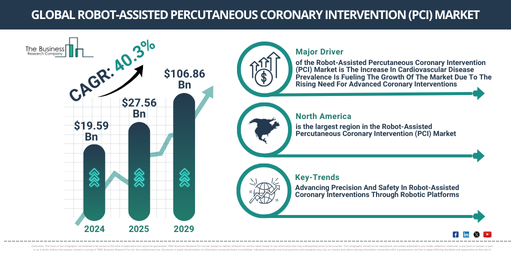
    The robot-assisted percutaneous coronary intervention (PCI) market size has witnessed substantial growth in recent years. It is forecast to climb from $19.59 billion in 2024 to $27.56 billion in 2025, demonstrating a compound annual growth rate (CAGR) of 40.7%. The expansion observed during the past period stemmed from factors such as the increasing number of clinical trials validating robotic percutaneous coronary intervention, improved procedural success rates when compared to conventional percutaneous coronary intervention, the growth of physician training programs for robotic systems, a rising patient inclination towards innovative treatment approaches, and the expanding availability of reimbursement policies in developed regions.

    The robot-assisted percutaneous coronary intervention (PCI) market is projected to expand significantly in the coming years, reaching $106.86 billion by 2029, exhibiting a compound annual growth rate (CAGR) of 40.3%. This expansion during the forecast period is fueled by factors such as the increasing integration of 5G and remote real-time operation capabilities, the wider deployment of robotic percutaneous coronary intervention systems in ambulatory surgical centers, a heightened emphasis on shortening hospital stays following percutaneous coronary intervention, growing venture capital investment in robotic cardiology startups, and the greater adoption of machine learning for guiding and planning procedures. Key trends anticipated in this period encompass improvements in cloud-based robotic percutaneous coronary intervention platforms to facilitate real-time data sharing, sophisticated cybersecurity protocols to safeguard robotic-assisted procedural data, the creation of robotic systems specifically designed for outpatient cardiac care, advancements in artificial intelligence-driven robotic learning from procedural data, and progress in miniaturized robotic instruments for highly precise coronary navigation.

    Unlock Your Free Sample Report for Exclusive Market Data:

    https://www.thebusinessresearchcompany.com/sample.aspx?id=27408&type=smp

    Which Drivers Are Impacting The Robot-Assisted Percutaneous Coronary Intervention (PCI) Market?

    The increasing occurrence of cardiovascular diseases is projected to fuel the expansion of the robot-assisted percutaneous coronary intervention (PCI) market moving forward. These diseases are a category of conditions involving the heart and blood vessels, including issues like coronary artery disease, heart attacks, and stroke. The escalation in cardiovascular diseases is largely attributable to inactive lifestyles, which contribute to obesity, hypertension, and compromised heart health. Robot-assisted percutaneous coronary intervention (PCI) offers a treatment for cardiovascular diseases by accurately re-opening obstructed or narrowed coronary arteries to reinstate blood flow to the heart, while also reducing procedural risks and radiation exposure and enhancing patient outcomes. For instance, data from January 2024, provided by the American Heart Association, a US-based nonprofit organization, indicated that 131,454 deaths were primarily linked to high blood pressure in 2022, an increase from 124,508 deaths in 2021. Consequently, the rising prevalence of cardiovascular diseases is a key driver for the growth of the robot-assisted percutaneous coronary intervention (PCI) market.

    What Are The Emerging Segments Gaining Attention In The Robot-Assisted Percutaneous Coronary Intervention (PCI) Market?

    The robot-assisted percutaneous coronary intervention (PCI) market covered in this report is segmented

    1) By Component: Robotic Systems, Catheters And Guidewires, Control Consoles

    2) By Application: Coronary Angioplasty, Stent Placement, Thrombectomy

    3) By End-User: Hospitals, Cardiac Catheterization Laboratories, Ambulatory Surgical Centers, Other End-Users

    Subsegments:

    1) By Robotic Systems: Electromechanical Robotic Arms, Imaging Integration Units, Robotic Drive Systems

    2) By Catheters And Guidewires: Coronary Guidewires, Balloon Catheters, Drug-Eluting Catheters

    3) By Control Consoles: Touchscreen Interfaces, Joystick Controllers, Imaging Display Panels

    How Are Emerging Market Trends Shaping The Robot-Assisted Percutaneous Coronary Intervention (PCI) Industry Landscape?

    Leading companies in the robot-assisted percutaneous coronary intervention (PCI) market are focusing on developing advanced robotic cardiologist platforms to enhance patient safety and streamline complex coronary interventions. Such a robotic cardiology platform is a high-tech system designed to assist cardiologists in performing accurate and controlled coronary procedures, thereby improving precision, minimizing human error, and reducing radiation exposure for both patients and medical staff. For example, in May 2023, Robocath SAS, a France-based company specializing in robotic solutions for vascular interventions, introduced its R-One+. This advanced robotic solution enables interventional cardiologists to perform coronary angioplasties (percutaneous coronary intervention, or PCI) by remotely controlling devices through an integrated command unit located within the catheterization lab or a control room. The R-One+ improves precision in device manipulation, boosts safety for both patients and medical staff by lowering radiation exposure, and offers more comfortable working conditions for operators. Its launch took place at the EuroPCR conference in Paris, where the platform showcased new capabilities designed to make PCI procedures easier and safer, while also protecting the cardiology team from radiation-induced injuries. This innovation reflects Robocath’s dedication to advancing cardiovascular disease treatments through smart robotic assistance.

    Who Are The Major Companies Operating In The Robot-Assisted Percutaneous Coronary Intervention (PCI) Market?

    Major companies operating in the robot-assisted percutaneous coronary intervention (pci) market are Medtronic plc, Siemens Healthineers AG, Stryker Corporation, Boston Scientific Corporation, Intuitive Surgical, BIOTRONIK SE & Co. KG, MicroPort Scientific Corporation, Biosensors International Group Ltd., OrbusNeich Medical Group Holdings Limited, Medical Microinstruments, Quantum Surgical, Stereotaxis Inc., THINK Surgical Inc., Perfint Healthcare, Robocath Inc., SS Innovations, Auris Health, EP Solutions SA, NDR Medical Technology, Meril Life Sciences Pvt. Ltd.

    Download The Full Report For Exclusive Market Findings:

    https://www.thebusinessresearchcompany.com/report/robot-assisted-percutaneous-coronary-intervention-pci-global-market-report

    Which Regional Markets Are Contributing Most To The Robot-Assisted Percutaneous Coronary Intervention (PCI) Industry Expansion?

    North America was the largest region in the robot-assisted percutaneous coronary intervention (PCI) market in 2024. Asia-Pacific is expected to be the fastest-growing region in the forecast period. The regions covered in the robot-assisted percutaneous coronary intervention (PCI) market report are Asia-Pacific, Western Europe, Eastern Europe, North America, South America, Middle East, Africa.

    Request A Customized Version Of The Robot-Assisted Percutaneous Coronary Intervention (PCI) Market Report:

    https://www.thebusinessresearchcompany.com/customise?id=27408&type=smp

    Browse Through More Reports Similar to the Global Robot-Assisted Percutaneous Coronary Intervention (PCI) Market 2025, By The Business Research Company

    Recycled Plastics Global Market Report 2025

    https://www.thebusinessresearchcompany.com/report/recycled-plastics-global-market-report

    Post Consumer Recycled Plastics Global Market Report 2025

    https://www.thebusinessresearchcompany.com/report/post-consumer-recycled-plastics-global-market-report

    Plastic Recycling Global Market Report 2025

    https://www.thebusinessresearchcompany.com/report/plastic-recycling-global-market-report

    Get in touch with us:

    The Business Research Company: https://www.thebusinessresearchcompany.com/

    Americas +1 310-496-7795

    Asia +44 7882 955267 & +91 8897263534

    Europe +44 7882 955267

    Email us at info@tbrc.info

    Follow us on:

    LinkedIn: https://in.linkedin.com/company/the-business-research-company

    YouTube: https://www.youtube.com/channel/UC24_fI0rV8cR5DxlCpgmyFQ

    Global Market Model: https://www.thebusinessresearchcompany.com/global-market-model
  • Iron Oxide Nanopowders Market Trends 2025–2029: Forecasts for Key Growth Segments

    Iron Oxide Nanopowders Market Trends 2025–2029: Forecasts for Key Growth Segments

    Unlock Global Insights – Save 20% on Market Reports with Code ONLINE20

    By How Much Is The Iron Oxide Nanopowders Market Expected To Expand Between 2025 And 2029?

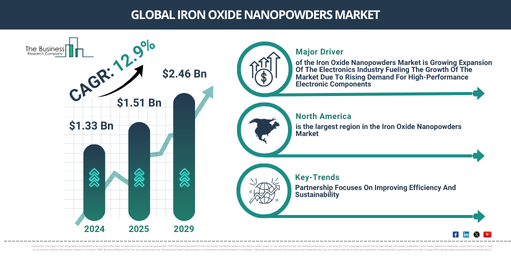
    The iron oxide nanopowders market has seen substantial growth in recent years. It is anticipated to expand from $1.33 billion in 2024 to $1.51 billion in 2025, achieving a compound annual growth rate (CAGR) of 13.3%. The historical drivers for this growth include a rising demand for pigments, increased utilization in electronics, expanding needs for magnetic storage, a surge in water treatment applications, and an escalating demand for drug delivery systems.

    The iron oxide nanopowders market is projected to experience substantial growth over the next few years, with its size expected to reach $2.46 billion by 2029, growing at a compound annual growth rate (CAGR) of 12.9%. This expansion during the forecast period is primarily driven by the increasing adoption in catalysis, greater utilization as battery materials, a rise in nanomedicine research funding, growing demand in coatings, and increasing requirements for environmental remediation. Noteworthy trends anticipated in this period include advancements in synthesis and surface engineering, innovation-led expansion into novel applications, the integration of this technology into battery and energy storage systems, progress in nanotechnology, and the development of eco-friendly and bio-based pigment platforms.

    Unlock Your Free Sample Report for Exclusive Market Data:

    https://www.thebusinessresearchcompany.com/sample.aspx?id=27320&type=smp

    Which Drivers Are Supporting Growth Of The Iron Oxide Nanopowders Market?

    The increasing expansion of the electronics sector is anticipated to drive the growth of the iron oxide nanopowders market in the coming years. The electronics industry pertains to the segment that designs, manufactures, and distributes electronic devices and components utilized in consumer, industrial, and communication technologies. This growing expansion of the electronics industry stems from the rising demand for consumer electronics, propelled by increasing digitalization and the widespread adoption of smart devices. Iron oxide nanopowders offer essential support to the electronics industry through their unique magnetic and conductive properties, making them indispensable for sensors, data storage devices, and various electronic components. They contribute to enhanced device performance by enabling miniaturization and improving energy efficiency, thus fostering innovation in modern electronics. For instance, in July 2024, the Semiconductor Industry Association, a US-based trade association, reported that global semiconductor industry sales reached $49.1 billion in May 2024, marking a 19.3% increase from $41.2 billion in May 2023. Therefore, the expanding electronics industry is a significant impetus for the iron oxide nanopowders market.

    What Are The Primary Types Of Segments Analyzed In The Iron Oxide Nanopowders Market?

    The iron oxide nanopowders market covered in this report is segmented

    1) By Product Type: Magnetite, Hematite, Wüstite, Other Product Types

    2) By Form: Dry Form, Wet Form

    3) By Size: Below 50 Nanometer (NM), 50-100 Nanometer (NM), Above 100 Nanometer (NM)

    4) By Application: Electronics, Catalysts, Paints And Coatings, Energy Storage, Environmental Remediation, Biomedical, Agriculture

    5) By End-User Industry: Construction, Automotive, Aerospace, Healthcare, Consumer Goods

    Subsegments:

    1) By Magnetite: Magnetic Resonance Imaging Contrast Agents, Targeted Drug Delivery Systems, Magnetic Data Storage Devices, Ferrofluids For Cooling Applications, Wastewater Treatment Adsorbents

    2) By Hematite: Photocatalysts For Water Splitting, Anti-Corrosion Pigment Coatings, Gas Sensor Components, Lithium Ion Battery Electrodes, Ceramic And Glass Colorants

    3) By Wüstite: Steel Manufacturing Additives, High Temperature Catalysts, Fuel Cell Electrode Materials, Iron-Based Nanocomposites, Ceramic Sintering Aids

    4) By Other Product Types: Maghemite For Magnetic Imaging, Iron Oxide Nanorods, Coated Iron Nanoparticles, Iron Oxide Quantum Dots, Doped Iron Oxide Nanoparticles

    What Trends Are Expected To Drive The Iron Oxide Nanopowders Market?

    Major companies operating within the iron oxide nanopowders market are prioritizing a strategic partnership approach to boost technology integration and expand their market presence. A strategic partnership typically denotes a collaborative relationship among multiple organizations where they combine their respective resources, expertise, and endeavors to achieve shared goals or objectives. For example, in January 2024, LANXESS AG, a Germany-based specialty chemicals company, formed a partnership with IBU-tec advanced materials AG, a Germany-based specialty materials manufacturing company, to develop innovative iron oxides aimed at optimizing the performance of lithium iron phosphate (LFP) battery cathode materials. This collaboration seeks to leverage LANXESS’s expertise in high-performance iron oxide production and IBU-tec’s advanced material processing technologies to enhance the efficiency, sustainability, and scalability of LFP battery materials. This partnership also concentrates on refining iron oxide nanopowders to improve battery performance, including energy density, cycle life, and cost-effectiveness, addressing the increasing demand for next-generation energy storage solutions.

    Who Are The Prominent Global Companies Shaping The Iron Oxide Nanopowders Market?

    Major companies operating in the iron oxide nanopowders market are American Elements Corporation, Saveer Biotech Limited, Inframat Corporation, NN-LABS LLC, Techinstro, PlasmaChem GmbH, CDH Fine Chemical, Nanoshel LLC, Skyspring Nanomaterials Inc., Adnano Technologies Pvt. Ltd., Nano Research Elements Inc., Nanostructured & Amorphous Materials Inc., Ocean NanoTech LLC, Shilpa Enterprises, Aritech Chemazone Private Limited, MKNano Inc., Vedayukt India Private Limited, Platonic Nanotech Pvt. Ltd., Sood Chemical Industries Pvt. Ltd., US Research Nanomaterials Inc.

    Download The Full Report For Exclusive Market Findings:

    https://www.thebusinessresearchcompany.com/report/iron-oxide-nanopowders-global-market-report

    What Are The Key Regional Factors Influencing The Iron Oxide Nanopowders Market Growth?

    North America was the largest region in the iron oxide nanopowders market in 2024. Asia-Pacific is expected to be the fastest-growing region in the forecast period. The regions covered in the iron oxide nanopowders market report are Asia-Pacific, Western Europe, Eastern Europe, North America, South America, Middle East, Africa.

    Request A Customized Version Of The Iron Oxide Nanopowders Market Report:

    https://www.thebusinessresearchcompany.com/customise?id=27320&type=smp

    Browse Through More Reports Similar to the Global Iron Oxide Nanopowders Market 2025, By The Business Research Company

    Electrical Conduit Global Market Report 2025

    https://www.thebusinessresearchcompany.com/report/electrical-conduit-global-market-report

    Superconducting Materials Global Market Report 2025

    https://www.thebusinessresearchcompany.com/report/superconducting-materials-global-market-report

    Aluminum Wires Market 2025

    https://www.thebusinessresearchcompany.com/report/aluminum-wires-market

    Get in touch with us:

    The Business Research Company: https://www.thebusinessresearchcompany.com/

    Americas +1 310-496-7795

    Asia +44 7882 955267 & +91 8897263534

    Europe +44 7882 955267

    Email us at info@tbrc.info

    Follow us on:

    LinkedIn: https://in.linkedin.com/company/the-business-research-company

    YouTube: https://www.youtube.com/channel/UC24_fI0rV8cR5DxlCpgmyFQ

    Global Market Model: https://www.thebusinessresearchcompany.com/global-market-model
  • In-vitro Colorectal Cancer Screening Tests Market Forecast 2025–2034: Where Businesses Should Invest Next

    In-vitro Colorectal Cancer Screening Tests Market Forecast 2025–2034: Where Businesses Should Invest Next

    Unlock Global Insights – Save 20% on Market Reports with Code ONLINE20

    #What Is The Projected Market Size Of The In-vitro Colorectal Cancer Screening Tests Market By 2029?

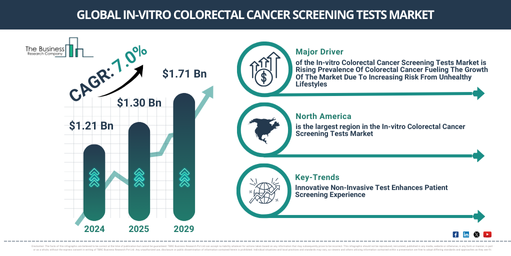
    The in-vitro colorectal cancer screening tests market has experienced significant expansion in recent years. Its valuation is predicted to climb from $1.21 billion in 2024 to $1.30 billion in 2025, registering a compound annual growth rate (CAGR) of 7.4%. This historical growth can be attributed to several factors, including increasing awareness of early cancer detection, a rise in government screening programs, increasing adoption of non-invasive testing methods, growing healthcare expenditure, and increasing availability of at-home screening kits.

    The market size for in-vitro colorectal cancer screening tests is anticipated to experience robust expansion over the next few years. It is projected to reach $1.71 billion by 2029, demonstrating a compound annual growth rate (CAGR) of 7.0%. This growth during the forecast period stems from various factors such as a heightened focus on personalized medicine, an increasing demand for economical diagnostic solutions, growing investments in cancer research, the rising adoption of molecular diagnostic techniques, the increasing incidence of colorectal cancer, and enhanced accessibility of testing in emerging markets. Significant trends expected in the forecast period include progress in liquid biopsy technologies, advancements in biomarker discovery, the integration of artificial intelligence into test analysis, sophisticated development of multi-target stool deoxyribonucleic acid tests, innovations in sample collection and processing, improvements in automation and digital pathology, and the incorporation of cloud-based diagnostic platforms.

    Unlock Your Free Sample Report for Exclusive Market Data:

    https://www.thebusinessresearchcompany.com/sample.aspx?id=27319&type=smp

    Which Drivers Are Shaping The In-vitro Colorectal Cancer Screening Tests Industry’s Market Share?

    A projected increase in the incidence of colorectal cancer is anticipated to fuel the expansion of the in vitro colorectal cancer screening tests market in the coming years. This form of cancer originates in the colon or rectum, frequently developing from polyps that are precancerous. This growing occurrence is linked to detrimental lifestyle choices, given that an unhealthy diet, insufficient physical activity, and excess weight elevate the likelihood of polyp formation and subsequent cancer development. In-vitro colorectal cancer screening tests contribute to its diagnosis by providing non-invasive techniques for identifying early cancer indicators. These tests boost screening precision through advanced biomarker identification, which in turn facilitates prompt intervention and better patient prognoses. As an illustration, the American Cancer Society, a US-based nonprofit entity, reported an estimated 154,270 new colorectal cancer cases in February 2025, marking an ascent from 152,810 cases recorded in 2024. Consequently, the increasing prevalence of colorectal cancer is propelling the growth of the in vitro colorectal cancer screening tests market.

    Which Key Segments Fueling The In-vitro Colorectal Cancer Screening Tests Market?

    The in-vitro colorectal cancer screening tests market covered in this report is segmented

    1) By Test Type: Fecal Occult Blood Test, Stool Deoxyribonucleic Acid Test, Blood Biomarker Test, Other Test Types

    2) By Imaging Type: Colonoscopy, Proctoscopy, Computed Tomography Scan, Ultrasound, Magnetic Resonance Imaging, Positron Emission Tomography Scan

    3) By Application: Screening, Diagnosis, Monitoring, Risk Assessment, Post-Treatment Surveillance

    4) By End User: Hospitals, Diagnostic Laboratories, Outpatient Clinics, Home Care Settings, Research Institutions

    Subsegments:

    1) By Fecal Occult Blood Test: Guaiac Based Fecal Occult Blood Test, Immunochemical Fecal Occult Blood Test

    2) By Stool Deoxyribonucleic Acid Test: Single Target Stool Deoxyribonucleic Acid Test, Multi Target Stool Deoxyribonucleic Acid Test

    3) By Blood Biomarker Test: Methylated Septin 9 Deoxyribonucleic Acid Test, Circulating Tumor Deoxyribonucleic Acid Test, Protein Biomarker Based Blood Test

    4) By Other Test Types: Urine Based Biomarker Test, Serum Based Biomarker Test, Breath Based Volatile Organic Compound Test

    Which Trends Are Impacting The In-vitro Colorectal Cancer Screening Tests Market?

    Major companies operating in the in vitro colorectal cancer screening tests market are concentrating on developing sophisticated diagnostic solutions, such as multi-target stool DNA tests, to elevate early detection accuracy, enhance patient convenience, and reduce colorectal cancer mortality rates. Multi-target stool DNA tests are innovative screening instruments that examine stool samples for genetic and biochemical markers associated with colorectal cancer and precancerous lesions. For instance, in March 2025, Exact Sciences Corp., a US-based molecular diagnostics company, introduced Cologuard Plus, an improved at-home colorectal cancer screening test for average-risk adults aged 45 and older. This test incorporates advanced biomarker technology, providing higher sensitivity and specificity compared to its predecessor. It utilizes a refined algorithm to detect DNA mutations and hemoglobin biomarkers, thereby enhancing the detection of both colorectal cancer and advanced adenomas. The Cologuard Plus test offers a non-invasive and convenient screening option that eliminates the need for bowel preparation or dietary restrictions, consequently increasing patient adherence to recommended screening guidelines.

    Which Key Players Are Driving Competition In The In-vitro Colorectal Cancer Screening Tests Market?

    Major companies operating in the in-vitro colorectal cancer screening tests market are Thermo Fisher Scientific Inc., Abbott Laboratories, Siemens Healthineers, Quest Diagnostics Incorporated, Roche Diagnostics International AG, Illumina Inc., Sysmex Corporation, Bio-Rad Laboratories Inc., Qiagen N.V., Exact Sciences Corporation, Natera Inc., Leica Biosystems Nussloch GmbH, BGI Genomics Co. Ltd., NeoGenomics Inc., Guardant Health Inc., CellMax Life Inc., Epigenomics AG, Acuamark Diagnostics Inc., Beacon Biomedical Inc., Mainz Biomed NV.

    Download The Full Report For Exclusive Market Findings:

    https://www.thebusinessresearchcompany.com/report/in-vitro-colorectal-cancer-screening-tests-global-market-report

    How Do Regional Market Performances Compare Within The In-vitro Colorectal Cancer Screening Tests Industry?

    North America was the largest region in the in-vitro colorectal cancer screening tests market in 2024. Asia-Pacific is expected to be the fastest-growing region in the forecast period. The regions covered in the in-vitro colorectal cancer screening tests market report are Asia-Pacific, Western Europe, Eastern Europe, North America, South America, Middle East, Africa.

    Request A Customized Version Of The In-vitro Colorectal Cancer Screening Tests Market Report:

    https://www.thebusinessresearchcompany.com/customise?id=27319&type=smp

    Browse Through More Reports Similar to the Global In-vitro Colorectal Cancer Screening Tests Market 2025, By The Business Research Company

    Buildings Construction Global Market Report 2025

    https://www.thebusinessresearchcompany.com/report/buildings-construction-global-market-report

    Residential Building Construction Global Market Report 2025

    https://www.thebusinessresearchcompany.com/report/residential-building-construction-global-market-report

    Construction Global Market Report 2025

    https://www.thebusinessresearchcompany.com/report/construction-global-market-report

    Get in touch with us:

    The Business Research Company: https://www.thebusinessresearchcompany.com/

    Americas +1 310-496-7795

    Asia +44 7882 955267 & +91 8897263534

    Europe +44 7882 955267

    Email us at info@tbrc.info

    Follow us on:

    LinkedIn: https://in.linkedin.com/company/the-business-research-company

    YouTube: https://www.youtube.com/channel/UC24_fI0rV8cR5DxlCpgmyFQ

    Global Market Model: https://www.thebusinessresearchcompany.com/global-market-model
  • Global Interventional Oncology Market Analysis 2025–2029: Opportunities for Strategic Growth

    Global Interventional Oncology Market Analysis 2025–2029: Opportunities for Strategic Growth

    Unlock Global Insights – Save 20% on Market Reports with Code ONLINE20

    How Much Was The Interventional Oncology Market Worth In 2025, And What Is Its Anticipated Value By 2029?

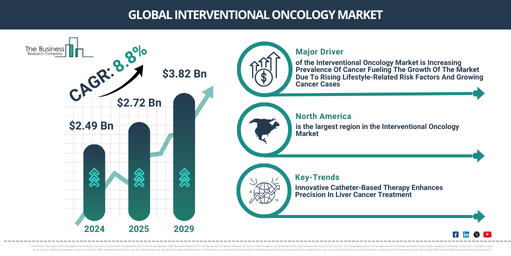
    The interventional oncology market size has shown strong growth in recent times. It is anticipated to increase from $2.49 billion in 2024 to $2.72 billion in 2025, reflecting a compound annual growth rate (CAGR) of 9.2%. The expansion during prior periods can be attributed to the rising global occurrence of cancer, the heightened adoption of procedures that are minimally invasive, increasing healthcare investments in emerging economies, a growing demand for image-guided therapies, and greater public awareness of the benefits of interventional oncology.

    The interventional oncology market is anticipated to experience substantial expansion in the coming years. This market is projected to reach $3.82 billion by 2029, exhibiting a compound annual growth rate (CAGR) of 8.8%. Factors contributing to this growth during the forecast period include an increased demand for outpatient oncology procedures, the expanding application of combination therapies alongside immuno-oncology, a rise in clinical trials focused on image-guided therapies, broader access to interventional oncology within emerging markets, and the increasing significance of precision medicine in developing treatment plans. Key trends anticipated over the forecast period encompass advancements in image-guided ablation technologies, the creation of artificial intelligence-powered diagnostic tools, breakthroughs in targeted drug-delivery systems, enhancements in minimally invasive treatment devices, and the evolution of personalized oncology treatment solutions.

    Unlock Your Free Sample Report for Exclusive Market Data:

    https://www.thebusinessresearchcompany.com/sample.aspx?id=27318&type=smp

    What Are The Drivers Pushing New Developments In The Interventional Oncology Market?

    The increasing prevalence of cancer is projected to stimulate the growth of the interventional oncology market moving forward. The term “prevalence of cancer” denotes the total count of individuals, both newly and previously diagnosed, who are currently alive with a history of the disease at a specific juncture. This increase in cancer prevalence is attributed to lifestyle-related risk factors such as poor dietary choices, smoking, alcohol consumption, and exposure to environmental pollutants, all of which elevate the likelihood of developing various cancers. Interventional oncology assists in treating cancer by offering minimally invasive, precise therapies that target tumors directly. It improves patient outcomes by minimizing damage to healthy tissues and ensuring faster recovery periods compared to traditional treatments. For instance, in July 2024, data from the Australian Institute of Health and Welfare, an Australia-based government agency, indicated that cancer cases diagnosed in Australia totaled 160,570 in 2022, representing an increase of 3,789 cases from 156,781 in 2021. Thus, the growing prevalence of cancer is a key driver for the expansion of the interventional oncology market.

    How Is The Interventional Oncology Market Classified Into Different Segments?

    The interventional oncology market covered in this report is segmented

    1) By Type: Radiation Therapy Devices, Ablation Devices, Embolization Devices

    2) By Technology Type: Ultrasound, Computed Tomography Guided, Magnetic Resonance-Guided

    3) By Procedure: Tumor Ablation, Tumor Biopsy, Vascular Interventions, Palliative Care

    4) By Application Areas: Liver Cancer, Lung Cancer, Kidney Cancer, Pancreatic Cancer, Prostate Cancer

    5) By End-Users: Hospitals, Ambulatory Surgical Centers, Specialty Clinics, Research And Academic Institutions

    Subsegments:

    1) By Radiation Therapy Devices: Linear Accelerators, Proton Therapy Systems, Brachytherapy Devices

    2) By Ablation Devices: Radiofrequency Ablation Devices, Microwave Ablation Devices, Cryoablation Devices, Irreversible Electroporation Systems

    3) By Embolization Devices: Microspheres, Coil Embolization Devices, Liquid Embolic Agents, Embolic Protection Devices

    What Long-Term Trends Will Shape The Future Growth Of The Interventional Oncology Industry?

    Leading companies in the interventional oncology market are prioritizing the development of sophisticated products, such as microcatheter-based embolization systems. These innovations aim to deliver precise, targeted cancer therapy while effectively minimizing damage to surrounding healthy tissue. Microcatheter-based embolization systems themselves refer to medical devices that employ tiny, flexible catheters to accurately deliver embolic agents into blood vessels, aiming to block or reduce blood flow, typically utilized for treating tumors, vascular malformations, or internal bleeding. For instance, in March 2025, Terumo Corporation, a Japan-based medical device company, unveiled the Occlusafe balloon occlusion catheter. This product is based on their advanced Balloon-TACE (B-TACE) therapy, specifically developed for the management of liver cancer, particularly hepatocellular carcinoma (HCC). This specialized microcatheter skillfully uses the pressure gradient effect to redirect blood flow and gain access to the microcirculation, which allows for higher concentrations of therapeutic agents directly at the tumor site while significantly minimizing off-target embolization. This focused approach seeks to improve clinical outcomes in challenging liver cancer cases by enhancing the precision of drug delivery and offering superior visualization during procedures.

    Who Are The Top Performing Companies In The Interventional Oncology Market In Recent Years?

    Major companies operating in the interventional oncology market are Johnson & Johnson, Siemens Healthineers AG, Stryker Corporation, GE HealthCare Technologies Inc., Boston Scientific Corporation, Terumo Corporation, Hologic Inc., Teleflex Incorporated, Lantheus Holdings Inc., Penumbra Inc., Merit Medical Systems Inc., Guerbet S.A, Asahi Intecc Co. Ltd., AngioDynamics Inc., Sirtex Medical Limited., Delcath Systems Inc., ABK Biomedical Inc., Profound Medical Inc., IceCure Medical Ltd., Minimax Medical Holding Group.

    Download The Full Report For Exclusive Market Findings:

    https://www.thebusinessresearchcompany.com/report/interventional-oncology-global-market-report

    Which Region Currently Holds The Largest Share Of The Interventional Oncology Market?

    North America was the largest region in the interventional oncology market in 2024. Asia-Pacific is expected to be the fastest-growing region in the forecast period. The regions covered in the interventional oncology market report are Asia-Pacific, Western Europe, Eastern Europe, North America, South America, Middle East, Africa.

    Request A Customized Version Of The Interventional Oncology Market Report:

    https://www.thebusinessresearchcompany.com/customise?id=27318&type=smp

    Browse Through More Reports Similar to the Global Interventional Oncology Market 2025, By The Business Research Company

    Motor Insurance Global Market Report 2025

    https://www.thebusinessresearchcompany.com/report/motor-insurance-global-market-report

    Golf Cart And Neighborhood Electric Vehicle Nev Global Market Report 2025

    https://www.thebusinessresearchcompany.com/report/golf-cart-and-neighborhood-electric-vehicle-nev-global-market-report

    Renewable Energy Insurance Global Market Report 2025

    https://www.thebusinessresearchcompany.com/report/renewable-energy-insurance-global-market-report

    Get in touch with us:

    The Business Research Company: https://www.thebusinessresearchcompany.com/

    Americas +1 310-496-7795

    Asia +44 7882 955267 & +91 8897263534

    Europe +44 7882 955267

    Email us at info@tbrc.info

    Follow us on:

    LinkedIn: https://in.linkedin.com/company/the-business-research-company

    YouTube: https://www.youtube.com/channel/UC24_fI0rV8cR5DxlCpgmyFQ

    Global Market Model: https://www.thebusinessresearchcompany.com/global-market-model
  • Global Ribonucleic Acid (RNA) Editing Market Trends and Growth Analysis 2025–2029

    Global Ribonucleic Acid (RNA) Editing Market Trends and Growth Analysis 2025–2029

    Unlock Global Insights – Save 20% on Market Reports with Code ONLINE20

    How Does The Market Size Of The Ribonucleic Acid (RNA) Editing Industry Compare Between 2025 And 2029?

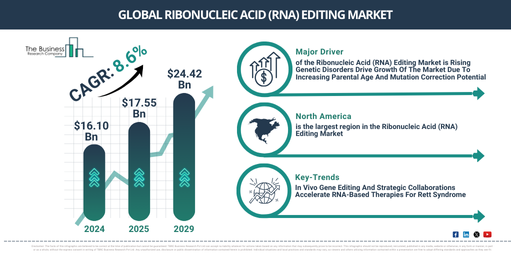
    The ribonucleic acid (RNA) editing market size has experienced robust growth in recent years. This market is projected to expand from $16.10 billion in 2024 to $17.55 billion in 2025, reflecting a compound annual growth rate (CAGR) of 9.0%. The expansion observed in the past can be attributed to a burgeoning demand for transient and reversible editing methodologies, increased application in neurodegenerative disease investigations, the escalating prevalence of rare and orphan diseases, a developing interest in synthetic biology and bioengineering, and a rise in academic and translational research initiatives.

    The ribonucleic acid (RNA) editing market is anticipated to experience substantial expansion over the coming years. This sector is projected to reach a value of $24.42 billion by 2029, demonstrating a compound annual growth rate (CAGR) of 8.6%. This expected growth during the forecast period is primarily fueled by the increasing occurrence of genetic disorders, a heightened emphasis on personalized medicine, expanding applications in cancer treatment, ongoing advancements in delivery systems, and greater support from governmental and regulatory bodies. Significant trends foreseen for this period encompass technological breakthroughs in RNA editing platforms, progress in in vivo delivery technologies, continued technological development in sequencing and transcriptomics, innovations in transient gene modulation techniques, and evolutions in synthetic biology applications.

    Unlock Your Free Sample Report for Exclusive Market Data:

    https://www.thebusinessresearchcompany.com/sample.aspx?id=27407&type=smp

    Which Industry Drivers Are Expected To Accelerate The Ribonucleic Acid (RNA) Editing Market From 2025 To 2029?

    An anticipated increase in genetic disorders is poised to fuel the expansion of the ribonucleic acid (RNA) editing market in the future. These disorders are conditions resulting from alterations or defects in an individual’s genetic makeup, which can be passed down from parents or emerge without prior inheritance. The prevalence of genetic disorders is increasing, attributed to an aging parental population, given that older parents face an elevated risk of transmitting chromosomal irregularities. Ribonucleic acid (RNA) editing offers a therapeutic approach for genetic disorders by rectifying mutations at the RNA stage, thereby enabling cells to generate working proteins without modifying the fundamental DNA structure. As an illustration, data from May 2024, provided by the US-based public health agency, the Centers for Disease Control and Prevention (CDC), indicates that approximately 100,000 individuals in the United States are impacted by sickle cell disease (SCD). Consequently, the growing incidence of genetic disorders is serving as a primary impetus for the expansion of the ribonucleic acid (RNA) editing market.

    What Are The Major Segment Types Covered In The Ribonucleic Acid (RNA) Editing Market?

    The ribonucleic acid (RNA) editing market covered in this report is segmented

    1) By Type: Messenger Ribonucleic Acid (RNA) Modification, Transfer Ribonucleic Acid (RNA) Modification, Ribosomal Ribonucleic Acid (RNA) Modification

    2) By Technique: Insertion Or Deletion, Deamination

    3) By Application: Cancer, Genetic Disorders, Temporary Maladies

    Subsegments:

    1) By Messenger Ribonucleic Acid (MRNA) Modification: Base Editing, Adenosine Deaminase Acting On Ribonucleic Acid (RNA)-Mediated Editing, Site-Directed Ribonucleic Acid(RNA) Editing

    2) By Transfer Ribonucleic Acid (TRNA) Modification: Pseudouridylation, Transfer Ribonucleic Acid Splicing, Inosine Modification

    3) By Ribosomal Ribonucleic Acid (Rrna) Modification: Pseudouridylation, Ribosomal Ribonucleic Acid (RNA) Maturation Pathway Modulation, Site-Specific Ribosomal Ribonucleic Acid (RNA) Editing

    Which Key Trends Are Expected To Influence The Ribonucleic Acid (RNA) Editing Market In The Coming Years?

    Prominent companies operating in the ribonucleic acid (RNA) editing market are dedicating efforts to pioneering strategies, such as in vivo gene editing, to facilitate accurate and efficient correction of disease-causing mutations within living organisms. In vivo gene editing denotes the direct modification of genes inside a living being’s cells to rectify genetic abnormalities or alter gene activity for therapeutic application. For instance, in April 2024, the Rett Syndrome Research Trust, a US-based non-profit organization, inaugurated the MECP2 Editing Consortium to propel gene editing treatments for Rett syndrome. This endeavor unites six leading laboratories to devise DNA and RNA editing therapies that target the genetic basis of Rett syndrome, with the objective of accelerating their move towards clinical trials. Its cooperative framework fosters more rapid development by aggregating expertise to provide precise and potentially curative interventions for this serious neurological condition.

    Which Global Market Leaders Are Shaping The Future Of The Ribonucleic Acid (RNA) Editing Sector?

    Major companies operating in the ribonucleic acid (RNA) editing market are Moderna Inc., Arcturus Therapeutics Holdings Inc., CureVac AG, Beam Therapeutics Inc., EdiGene Inc., Ethris GmbH, Deep Genomics Incorporated, ProQR Therapeutics NV, ReCode Therapeutics, Capstan Therapeutics Inc., TriLink BioTechnologies, ADARx Pharmaceuticals Inc., Storm Therapeutics Limited, Ascidian Therapeutics Inc., Rznomics Inc., Airna Biotech S.L., hC Bioscience Inc., Korro Bio Inc., Shape TX, and Turn Biotechnologies.

    Download The Full Report For Exclusive Market Findings:

    https://www.thebusinessresearchcompany.com/report/ribonucleic-acid-rna-editing-global-market-report

    How Does The Ribonucleic Acid (RNA) Editing Market Perform Across Key Geographic Regions?

    North America was the largest region in the ribonucleic acid (RNA) editing market in 2024. Asia-Pacific is expected to be the fastest-growing region in the forecast period. The regions covered in the ribonucleic acid (RNA) editing market report are Asia-Pacific, Western Europe, Eastern Europe, North America, South America, Middle East, Africa.

    Request A Customized Version Of The Ribonucleic Acid (RNA) Editing Market Report:

    https://www.thebusinessresearchcompany.com/customise?id=27407&type=smp

    Browse Through More Reports Similar to the Global Ribonucleic Acid (RNA) Editing Market 2025, By The Business Research Company

    Recycled Glass Global Market Report 2025

    https://www.thebusinessresearchcompany.com/report/recycled-glass-global-market-report

    Container Glass Global Market Report 2025

    https://www.thebusinessresearchcompany.com/report/container-glass-global-market-report

    Glass Substrate Global Market Report 2025

    https://www.thebusinessresearchcompany.com/report/glass-substrate-global-market-report

    Get in touch with us:

    The Business Research Company: https://www.thebusinessresearchcompany.com/

    Americas +1 310-496-7795

    Asia +44 7882 955267 & +91 8897263534

    Europe +44 7882 955267

    Email us at info@tbrc.info

    Follow us on:

    LinkedIn: https://in.linkedin.com/company/the-business-research-company

    YouTube: https://www.youtube.com/channel/UC24_fI0rV8cR5DxlCpgmyFQ

    Global Market Model: https://www.thebusinessresearchcompany.com/global-market-model
  • Influenza Drug Industry Overview 2025: Growth Projections and Market Trends

    Influenza Drug Industry Overview 2025: Growth Projections and Market Trends

    Unlock Global Insights – Save 20% on Market Reports with Code ONLINE20

    What Is The Future Market Size Estimation For The Influenza Drug Market Covering 2025–2034?

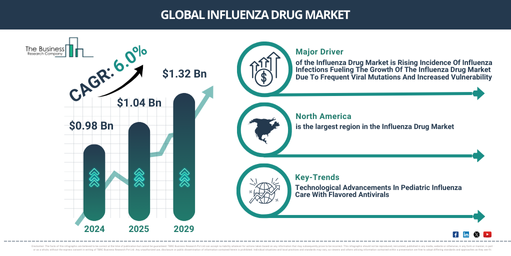
    The influenza drug market size has experienced robust growth in recent years. It is anticipated to increase from $0.98 billion in 2024 to $1.04 billion in 2025, achieving a compound annual growth rate (CAGR) of 6.4%. This historical expansion can be attributed to several factors, including a rise in seasonal influenza outbreaks, elevated healthcare expenditure, greater public awareness of vaccination, the broadening use of antiviral medications, and an increase in government immunization programs.

    The influenza drug market size is anticipated to experience substantial growth over the next few years. It is projected to reach $1.32 billion by 2029, growing at a compound annual growth rate (CAGR) of 6.0%. This expansion during the forecast period can be attributed to factors such as the increasing prevalence of influenza-like illnesses, improved global healthcare access, the expansion of healthcare infrastructure in emerging economies, a rising demand for combination therapies, and an increasing focus on preventive healthcare. Notable trends for the upcoming period include innovation in vaccine development, advancements in diagnostic capabilities, the development of next-generation antivirals, progress in antiviral research, and enhancements in drug delivery systems.

    Unlock Your Free Sample Report for Exclusive Market Data:

    https://www.thebusinessresearchcompany.com/sample.aspx?id=27317&type=smp

    What Are The Emerging Market Drivers Creating New Opportunities In The Influenza Drug Industry?

    The escalating frequency of influenza infections is anticipated to boost the expansion of the influenza drug market going forward. Influenza infections are contagious respiratory ailments caused by influenza viruses, leading to signs such as fever, cough, sore throat, and muscle aches. The increasing occurrence of influenza infections is driven by frequent viral mutations that compromise vaccine effectiveness and raise population vulnerability to outbreaks. Influenza drugs help prevent the rising incidence of influenza infections by offering effective therapeutic options that assist in reducing disease severity and controlling widespread transmission. For instance, in September 2023, according to the Centers for Disease Control and Prevention (CDC), a US-based national public health agency of the United States, in the 2022–2023 season, preliminary in-season estimates indicate that influenza virus infections in the United States caused 31 million symptomatic illnesses, 14 million medical visits, 360,000 hospitalizations, and 21,000 deaths. Therefore, the growing incidence of influenza infections is a key factor propelling the growth of the influenza drug market.

    What Are The Major Segments Identified In The Influenza Drug Market?

    The influenza drug market covered in this report is segmented

    1) By Type: Influenza A, Influenza B, Influenza C

    2) By Distribution Channel: Hospital Pharmacies, Retail Pharmacies, Online Pharmacies

    3) By Route Of Administration: Oral, Intranasal, Intravenous, Intramuscular, Subcutaneous

    4) By Mechanism Of Action: Neuraminidase Inhibitors, Cap-Dependent Endonuclease Inhibitors, Fusion Inhibitors, M2 Ion Channel Inhibitors, Host Cell Protease Inhibitors, Immunomodulatory Agents, Ribonucleic Acid (RNA) Polymerase Inhibitors, Hemagglutinin Stem Binders, Cytokine Inhibitors, Host Factor Targeting

    5) By End-User: Hospitals And Clinics, Pharmacies, Vaccination Centers, Research Institutions, Government Health Agencies, Long-Term Care Facilities, Community Health Centers, Corporate Health Programs

    Which Market Trends Are Creating New Opportunities In The Influenza Drug Industry?

    Major companies in the influenza drug market are concentrating on technological advancements, particularly in drug formulation, to improve treatment effectiveness, patient compliance, and overall therapeutic outcomes. Drug formulation typically involves blending inert materials and excipients with active pharmaceutical ingredients (APIs) to produce viable drug products with desired characteristics. For instance, in August 2024, F. Hoffmann-La Roche Ltd., a Switzerland-based company focused on pharmaceuticals and diagnostics, launched Baloxavir Marboxil for Suspension, a strawberry-flavored, single-dose oral antiviral developed for children. This enables parents to administer accurate weight-based dosing, enhancing ease of administration and compliance. This innovation introduces a precise home-based medication delivery alternative, consistent with prescription delivery services, by allowing carers to conveniently manage pediatric influenza treatment at home, following a prescription. Its strengths include a novel mechanism specificity and improved adherence; however, resistance may emerge over time, especially among pediatric patients.

    Which Leading Companies Dominate The Influenza Drug Market Share?

    Major companies operating in the influenza drug market are F. Hoffmann-La Roche Ltd., Pfizer Inc., AstraZeneca PLC, GlaxoSmithKline plc, Daiichi Sankyo Co. Ltd., Moderna Inc., BioNTech SE, Shionogi & Co. Ltd., Green Cross Corp, Emergent BioSolutions Inc., Novavax Inc., Hualan Biological Engineering Inc., Serum Institute of India Pvt. Ltd., CSL Seqirus Pty Ltd., BioCryst Pharmaceuticals, Inc., SAB Biotherapeutics Inc., Viriom Inc., Osivax SAS, Cocrystal Pharma Inc., Sinovac Biotech Ltd.

    Download The Full Report For Exclusive Market Findings:

    https://www.thebusinessresearchcompany.com/report/influenza-drug-global-market-report

    What Regional Growth Trends Are Shaping The Influenza Drug Market Outlook?

    North America was the largest region in the influenza drug market in 2024. Asia-Pacific is expected to be the fastest-growing region in the forecast period. The regions covered in the influenza drug market report are Asia-Pacific, Western Europe, Eastern Europe, North America, South America, Middle East, Africa.

    Request A Customized Version Of The Influenza Drug Market Report:

    https://www.thebusinessresearchcompany.com/customise?id=27317&type=smp

    Browse Through More Reports Similar to the Global Influenza Drug Market 2025, By The Business Research Company

    Acoustic Insulation Global Market Report 2025

    https://www.thebusinessresearchcompany.com/report/acoustic-insulation-global-market-report

    Noise Mitigation System Global Market Report 2025

    https://www.thebusinessresearchcompany.com/report/noise-mitigation-system-global-market-report

    Automotive Noise Insulation Parts Global Market Report 2025

    https://www.thebusinessresearchcompany.com/report/automotive-noise-insulation-parts-global-market-report

    Get in touch with us:

    The Business Research Company: https://www.thebusinessresearchcompany.com/

    Americas +1 310-496-7795

    Asia +44 7882 955267 & +91 8897263534

    Europe +44 7882 955267

    Email us at info@tbrc.info

    Follow us on:

    LinkedIn: https://in.linkedin.com/company/the-business-research-company

    YouTube: https://www.youtube.com/channel/UC24_fI0rV8cR5DxlCpgmyFQ

    Global Market Model: https://www.thebusinessresearchcompany.com/global-market-model
  • Reprocessed Medical Devices Market Forecast: What to Expect by 2029

    Reprocessed Medical Devices Market Forecast: What to Expect by 2029

    Unlock Global Insights – Save 20% on Market Reports with Code ONLINE20

    What Is The Predicted Market Size Trajectory For The Reprocessed Medical Devices Market From 2025 To 2034?

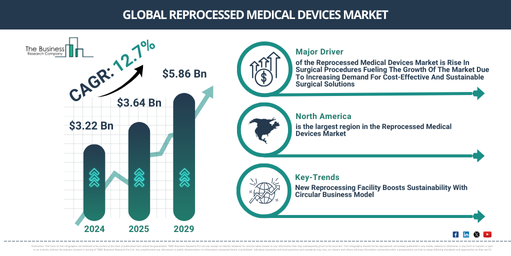
    The reprocessed medical devices market has experienced rapid expansion in recent years. It is projected to increase from $3.22 billion in 2024 to $3.64 billion in 2025, achieving a compound annual growth rate (CAGR) of 13.0%. This historical growth can be attributed to factors including increasing healthcare costs, rising environmental concerns, the increasing prevalence of chronic diseases, the growing adoption of minimally invasive procedures, and a heightened awareness of waste reduction.

    The reprocessed medical devices market size is projected to experience substantial expansion over the upcoming years. This market is anticipated to reach $5.86 billion by 2029, exhibiting a compound annual growth rate (CAGR) of 12.7%. The expansion during this projected timeframe can be linked to several factors, including an escalating emphasis on the circular economy within healthcare, an intensified focus on patient safety and quality assurance, larger hospital allocations for sustainability efforts, expanding collaborations between healthcare facilities and reprocessing firms, and heightened demands from healthcare payers for cost reduction. Significant developments expected over the forecast period encompass improvements in sterilization techniques, progress in cleaning and decontamination methods, the incorporation of data analytics for ensuring quality, material science technological breakthroughs, and enhancements in automated reprocessing machinery.

    Unlock Your Free Sample Report for Exclusive Market Data:

    https://www.thebusinessresearchcompany.com/sample.aspx?id=27406&type=smp

    What Are The Top Growth Drivers Impacting The Reprocessed Medical Devices Market Outlook?

    An increasing volume of surgical operations is anticipated to drive the expansion of the reprocessed medical devices market in the future. These procedures encompass medical interventions utilizing manual or instrumental methods carried out by surgeons for the diagnosis, treatment, or prevention of various ailments, injuries, or other medical issues. The rise in surgical procedures stems from innovations in medical technology, making operations safer, less intrusive, and more efficacious, consequently boosting patient demand and widening the scope of surgical application. Reprocessed medical devices support surgical interventions by offering cost savings and guaranteeing a steady supply of premium, sterilized instruments suitable for repeated, safe utilization. As an illustration, data from June 2024, provided by the International Society of Aesthetic Plastic Surgery (ISAPS), a US-based professional body for board-certified aesthetic plastic surgeons, indicated that in 2024, liposuction surpassed breast augmentation to become the most frequent surgical procedure for women, accounting for 1.8 million operations, representing a 29% rise from 2021. Consequently, the increasing volume of surgical procedures is fueling the expansion of the reprocessed medical devices market.

    What Are The Major Segment Categories Driving The Reprocessed Medical Devices Market Growth?

    The reprocessed medical devices market covered in this report is segmented

    1) By Type: Third-Party Reprocessing, In-House Reprocessing

    2) By Device Type: Electrophysiology Devices, Surgical Instruments, Catheters, Endoscopes, Implants, Dialysis Devices

    3) By Material: Metal, Plastic, Silicone, Rubber, Composite Materials

    4) By Application: Cardiology, Orthopedics, Gastroenterology, Urology, Neurology, Oncology

    5) By End User: Hospitals, Clinics, Ambulatory Surgical Centers, Community Healthcare, Diagnostic Laboratories, Other End Users

    Subsegments:

    1) By Third-Party Reprocessing: Cardiovascular Devices, Gastroenterology Devices, Laparoscopic Devices, Orthopedic Devices, General Surgery Devices, Other Devices

    2) By In-House Reprocessing: Surgical Instruments, Respiratory Devices, Endoscopy Devices, Ultrasound Probes, Other Devices

    What Are The Major Trends Driving The Growth Of The Reprocessed Medical Devices Market?

    Major companies operating in the reprocessed medical devices market are prioritizing facility expansion, often adopting a circular business model to decrease environmental impact, reduce costs, and promote sustainable healthcare practices. A circular business model signifies a sustainable method that focuses on reusing, refurbishing, and recycling products and materials to extend their life cycle and minimize waste. For example, in August 2024, Arjo, a Sweden-based medical technology company, launched a new cutting-edge facility for reprocessing medical devices. This facility is 50% larger than the prior site and is engineered to satisfy growing customer demand with enhanced efficiency. This will strengthen Arjo’s commitment to sustainability by endorsing a circular business model through its Arjo ReNu initiative. It includes advanced automated cleaning, disinfection, and testing systems to guarantee medical beds, patient lifts, slings, and hygiene systems meet rigorous safety and quality standards before reuse. The enlarged space supports Arjo’s sustainability objectives by reducing water and energy consumption while facilitating circular healthcare practices that extend device lifespan and decrease medical waste.

    Which Industry Leaders Are Driving Innovation Across The Reprocessed Medical Devices Market?

    Major companies operating in the reprocessed medical devices market are Cardinal Health Inc., Johnson & Johnson, Siemens AG, 3M Company, Medline Industries, LP, Fresenius SE & Co. KGaA, Stryker Corporation, GE HealthCare Technologies Inc., Olympus Corporation, Getinge AB, Arjo AB, Vanguard AG, Nanosonics Limited, Steripro Canada Inc., Integrity Medical Systems Inc., Innovative Health Inc., Medicon eG, NEScientific Inc., SureTek Medical, and Vitruvia Medical AG.

    Download The Full Report For Exclusive Market Findings:

    https://www.thebusinessresearchcompany.com/report/reprocessed-medical-devices-global-market-report

    Which Region Is Expected To Witness The Fastest Growth In The Reprocessed Medical Devices Market?

    North America was the largest region in the reprocessed medical devices market in 2024. Asia-Pacific is expected to be the fastest-growing region in the forecast period. The regions covered in the reprocessed medical devices market report are Asia-Pacific, Western Europe, Eastern Europe, North America, South America, Middle East, Africa.

    Request A Customized Version Of The Reprocessed Medical Devices Market Report:

    https://www.thebusinessresearchcompany.com/customise?id=27406&type=smp

    Browse Through More Reports Similar to the Global Reprocessed Medical Devices Market 2025, By The Business Research Company

    Wooden Furniture Global Market Report 2025

    https://www.thebusinessresearchcompany.com/report/wooden-furniture-global-market-report

    Wood Manufacturing Global Market Report 2025

    https://www.thebusinessresearchcompany.com/report/wood-manufacturing-global-market-report

    Wood Processing Market 2025

    https://www.thebusinessresearchcompany.com/report/wood-processing-market

    Get in touch with us:

    The Business Research Company: https://www.thebusinessresearchcompany.com/

    Americas +1 310-496-7795

    Asia +44 7882 955267 & +91 8897263534

    Europe +44 7882 955267

    Email us at info@tbrc.info

    Follow us on:

    LinkedIn: https://in.linkedin.com/company/the-business-research-company

    YouTube: https://www.youtube.com/channel/UC24_fI0rV8cR5DxlCpgmyFQ

    Global Market Model: https://www.thebusinessresearchcompany.com/global-market-model
  • Implantable Remote Patient Monitoring Devices Market Size Forecast: Revenue and CAGR by 2029

    Implantable Remote Patient Monitoring Devices Market Size Forecast: Revenue and CAGR by 2029

    Unlock Global Insights – Save 20% on Market Reports with Code ONLINE20

    What Is The Expected Total Market Size Of The Implantable Remote Patient Monitoring Devices Industry By The Forecast Year 2029?

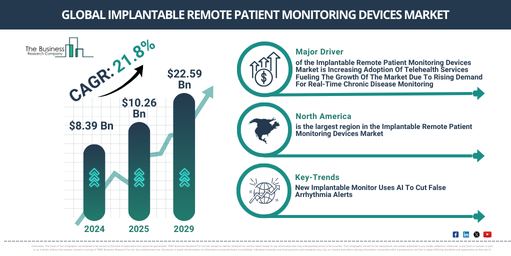
    The implantable remote patient monitoring devices market size has experienced exponential growth in recent years. It is anticipated to expand from $8.39 billion in 2024 to $10.26 billion in 2025, achieving a compound annual growth rate (CAGR) of 22.2%. The past growth can be attributed to several factors: the increasing prevalence of chronic and cardiovascular diseases, a rising demand for early diagnosis and continuous monitoring, a growing aging population requiring long-term care, an increasing shift toward home-based healthcare, and rising healthcare costs that encourage preventive monitoring.

    The implantable remote patient monitoring devices market size is projected to experience substantial growth in the upcoming years, reaching $22.59 billion by 2029, exhibiting a compound annual growth rate (CAGR) of 21.8%. The expansion during the forecast period can be attributed to increased government backing and reimbursement coverage, rising awareness concerning personalized and precision medicine, growing investments in digital health and MedTech startups, and an increase in post-surgical complications and rehospitalizations. Significant trends anticipated in this period include advancements in miniaturization and biocompatible materials, the integration of artificial intelligence (AI) and machine learning for predictive analytics, technology convergence with 5G and Internet of Things (IoT) networks, developments in battery-free and energy-harvesting implants, and enhancements in cybersecurity protocols for medical implants.

    Unlock Your Free Sample Report for Exclusive Market Data:

    https://www.thebusinessresearchcompany.com/sample.aspx?id=27316&type=smp

    Which Drivers Are Impacting The Implantable Remote Patient Monitoring Devices Market?

    The future expansion of the implantable remote patient monitoring devices market is anticipated to be significantly boosted by the rising uptake of telehealth services. Telehealth services encompass healthcare delivery from a distance, leveraging tools like phones, video conferencing, or applications, enabling patients to seek medical advice without physical clinic or hospital visits. This increase in telehealth service utilization stems from a rising need for ongoing and immediate health tracking for individuals with long-term illnesses, facilitating prompt medical actions while reducing the necessity for repeated hospital trips. Telehealth functionalities augment implantable remote patient monitoring devices through real-time data exchange between patients and medical professionals, thereby aiding quick medical judgments and lessening the requirement for physical consultations. These services enhance the management of chronic diseases by providing continuous oversight and early intervention, which in turn boosts healthcare efficiency and patient convenience. A notable example is data from May 2024 by the Australian Digital Health Agency, an Australia-based government organization, which reported that between March 2020 and July 2022, more than 95,000 practitioners delivered 118.2 million telehealth services to 18 million patients. Consequently, the expanding use of telehealth services is a significant catalyst for the growth of the implantable remote patient monitoring devices market.

    What Are The Emerging Segments Gaining Attention In The Implantable Remote Patient Monitoring Devices Market?

    The implantable remote patient monitoring devices market covered in this report is segmented

    1) By Product: Blood Glucose Monitoring Systems, Cardiac Monitoring Devices, Weight Monitoring Devices, Other Products

    2) By Application: Cardiovascular Diseases, Neurological Disorders, Diabetes, Other Applications

    3) By End User: Hospital, Ambulatory Surgery Centers, Home Care Settings, Other End Users

    Subsegments:

    1) By Blood Glucose Monitoring Systems: Continuous Glucose Monitoring (CGM) Devices, Self-Monitoring Blood Glucose (SMBG) Devices, Lancets And Lancing Devices, Glucose Test Strips, Blood Glucose Meters,

    2) By Cardiac Monitoring Devices: Electrocardiogram (ECG) Devices, Implantable Loop Recorders, Holter Monitors, Event Monitors, Mobile Cardiac Telemetry Devices,

    3) By Weight Monitoring Devices: Digital Weighing Scales, Smart Body Composition Monitors, Infant Scales, Chair Scales, Bed Scales,

    4) By Other Products: Respiratory Monitoring Devices, Multiparameter Monitors, Fetal And Neonatal Monitoring Devices, Temperature Monitoring Devices, Neuromonitoring Devices

    How Are Trends Influencing The Implantable Remote Patient Monitoring Devices Market?

    Leading companies in the implantable remote patient monitoring devices market are concentrating on creating advanced products, such as implantable cardiac monitors, to boost the accuracy of monitoring for cardiac arrhythmias. An implantable cardiac monitor (ICM), also known as an implantable loop recorder (ILR), is a compact device placed just under the skin, typically on the left side of the chest, designed to continuously track and record the heart’s electrical activity over an extended duration. For example, in June 2023, Biotronik AG, a Switzerland-based medical technology company, launched its BIOMONITOR IV implantable cardiac monitor. This cutting-edge ICM combines BIOTRONIK’s SmartECG technology with artificial intelligence to decrease all false positive detections by 86% while maintaining 98% of true episodes. This monitor also has the ability to distinguish between premature atrial contractions (PACs) and premature ventricular contractions (PVCs), providing healthcare professionals with enhanced tools for risk stratification and diagnosis.

    Who Are The Major Companies Operating In The Implantable Remote Patient Monitoring Devices Market?

    Major companies operating in the implantable remote patient monitoring devices market are Abbott Laboratories, Honeywell Life Sciences, Medtronic plc, Siemens Healthineers, Philips Healthcare, GE HealthCare Technologies Inc., Boston Scientific Corporation, Dexcom Inc., Zoll Medical Corporation, Nihon Kohden Corporation, LivaNova PLC, MicroPort Scientific Corporation, iRhythm Technologies Inc., NeuroPace Inc., Profusa Inc., Senseonics Holdings Inc., Xeltis AG, GlySens Inc., Kenzen Inc., Qura Inc.

    Download The Full Report For Exclusive Market Findings:

    https://www.thebusinessresearchcompany.com/report/implantable-remote-patient-monitoring-devices-global-market-report

    Which Regional Markets Are Contributing Most To The Implantable Remote Patient Monitoring Devices Industry Expansion?

    North America was the largest region in the implantable remote patient monitoring devices market in 2024. The regions covered in the implantable remote patient monitoring devices market report are Asia-Pacific, Western Europe, Eastern Europe, North America, South America, Middle East, Africa.

    Request A Customized Version Of The Implantable Remote Patient Monitoring Devices Market Report:

    https://www.thebusinessresearchcompany.com/customise?id=27316&type=smp

    Browse Through More Reports Similar to the Global Implantable Remote Patient Monitoring Devices Market 2025, By The Business Research Company

    Automotive Usage Based Insurance Global Market Report 2025

    https://www.thebusinessresearchcompany.com/report/automotive-usage-based-insurance-global-market-report

    Motor Insurance Global Market Report 2025

    https://www.thebusinessresearchcompany.com/report/motor-insurance-global-market-report

    Car Insurance Aggregators Global Market Report 2025

    https://www.thebusinessresearchcompany.com/report/car-insurance-aggregators-global-market-report

    Get in touch with us:

    The Business Research Company: https://www.thebusinessresearchcompany.com/

    Americas +1 310-496-7795

    Asia +44 7882 955267 & +91 8897263534

    Europe +44 7882 955267

    Email us at info@tbrc.info

    Follow us on:

    LinkedIn: https://in.linkedin.com/company/the-business-research-company

    YouTube: https://www.youtube.com/channel/UC24_fI0rV8cR5DxlCpgmyFQ

    Global Market Model: https://www.thebusinessresearchcompany.com/global-market-model